SWISSWATCHES La Maison

Chopard Artisans of Emotions

Mains d’Art

The Essence of Chopard

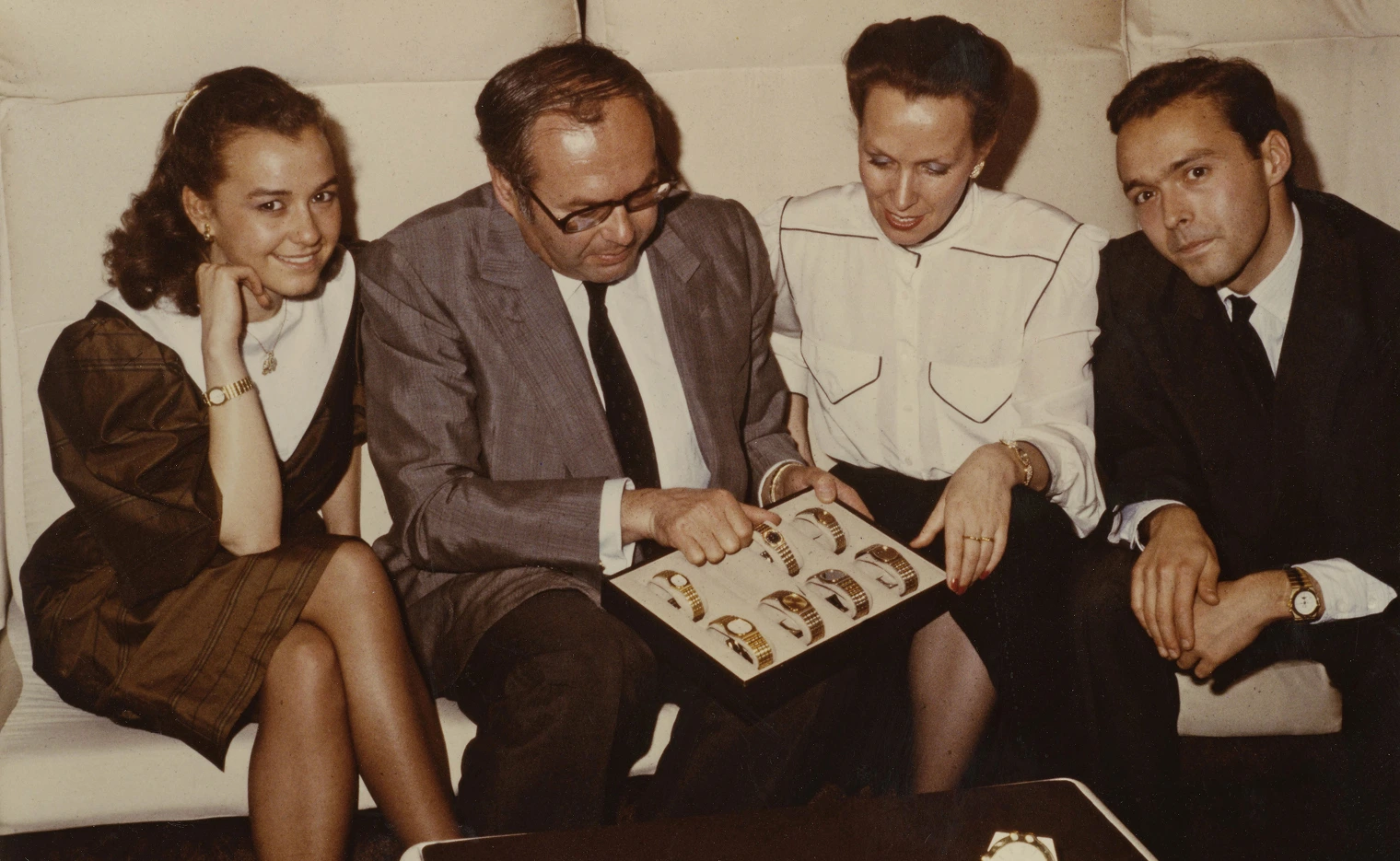
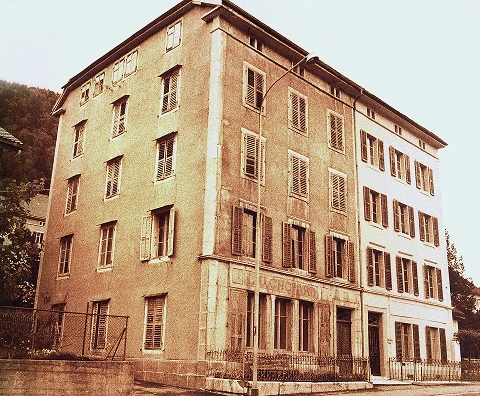
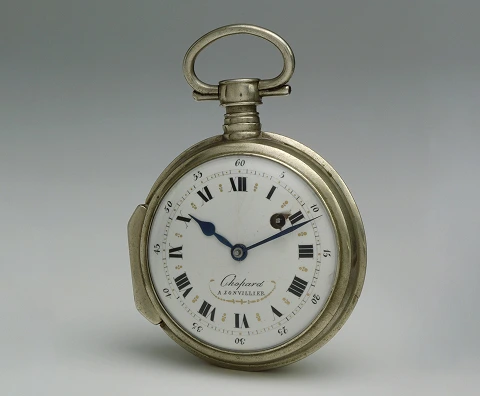
Since its founding by Louis-Ulysse Chopard in 1860, Chopard has remained deeply rooted in family values. The company remained with the Chopard family until 1963, when it was passed on to German watchmaker and goldsmith Karl Scheufele III, whose family continues to lead the manufacture to this day.

Caroline, Karl, Karin and Karl-Friedrich Scheufele at Baselworld (1980s)

Chopard Ad from 1975

1960

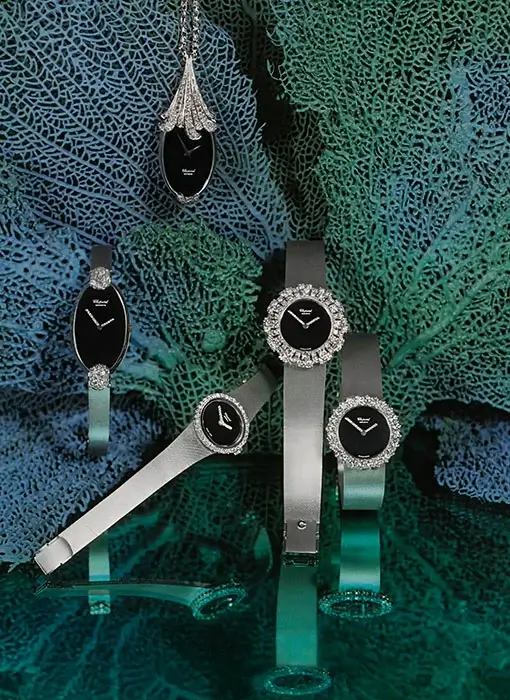
In the late 1960s, Chopard began creating ornate jewellery watches that blurred the line between timepiece and jewellery. These dazzling cocktail watches often featured dials framed by diamond-set bezels and integrated into sculptural bracelets of textured gold. During this era, the Maison launched a line of diamond-set models that would later inspire the contemporary L’Heure du Diamant collection. These pieces marked Chopard’s move into the world of diamond-set timepieces, setting the stage for the Maison’s creative explosion in the following decade.
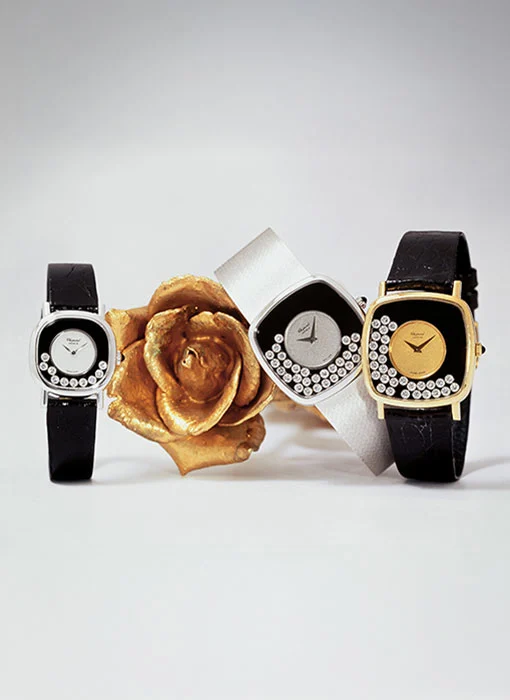
Chopard first happy diamonds watches

1976

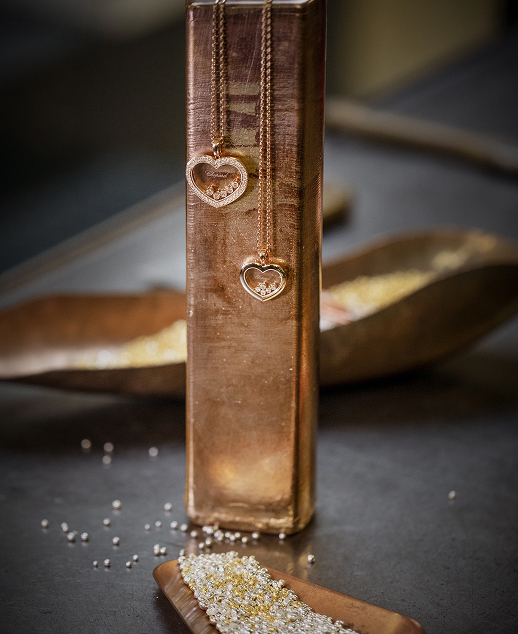
Manufactured in Chopard’s workshops in 1976, Happy Diamonds upended watchmaking and jewellery codes by setting diamonds free for the first time – an idea inspired by the water droplets of a waterfall. Dancing between two sapphire crystals, diamonds move with the wearer, delivering an unprecedented sparkle and a powerful symbol of the era’s growing freedom captured in the line, “Diamonds are happier when they are free.” This patented concept remains a Chopard signature today, with diamonds sourced exclusively from Responsible Jewellery Council-certified suppliers.

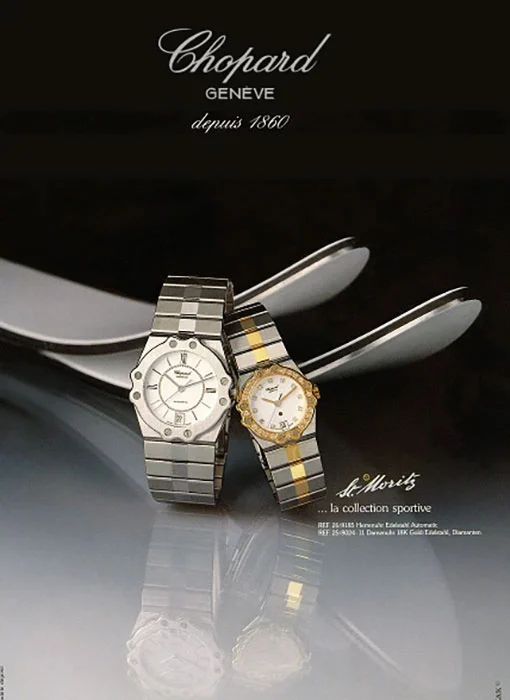
Chopard St- Moritz Collection - Sport watches

1980

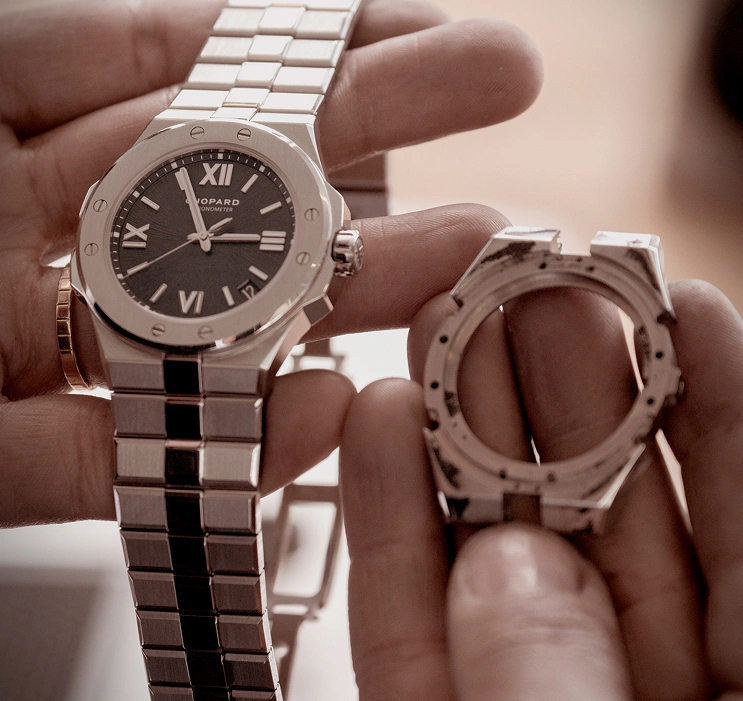
In 1980, Chopard made a decisive leap into the steel “sport-chic” arena with the St. Moritz, a watch that marked a new chapter for the maison and laid the groundwork for what would later become the Alpine Eagle. Designed by 22-year-old Karl-Friedrich Scheufele as his first major project within the family business, it channelled the spirit of its namesake Alpine resort into a confident, modern silhouette. With its integrated bracelet, sharp interplay of brushed and polished surfaces, and a bezel defined by prominent screws, the St. Moritz delivered Chopard’s answer to a fast-changing era – and its DNA still resonates clearly in today’s collection.

A NEW CHAPTER IN FLEURIER

block-5-chopard-manufacture-fleurier-switzerland

In 1996, Chopard inaugurated its manufacture in Fleurier, in Switzerland’s canton of Neuchâtel, marking a decisive step toward full mechanical independence. The move laid the foundations for the in-house development of movements and the emergence of the Maison’s most technically ambitious watches. At the pinnacle of this evolution sit the L.U.C calibres, conceived as Chopard’s purest expressions of fine watchmaking, where precision, finish and mechanical coherence are treated as inseparable.

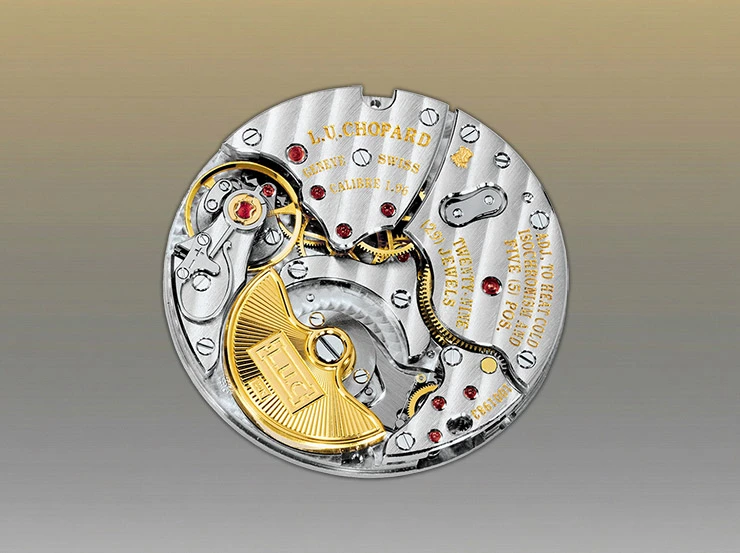
Chopard first in-house luc calibre - L.U.C 1.96

Across its collections, Chopard develops a broad spectrum of movements, encompassing manual and automatic winding, high-frequency constructions and long power-reserve architectures. This technical breadth began with the Maison’s first in-house calibre (L.U.C 1.96), introduced alongside the Fleurier manufacture, which in 2026 will mark 30 years of continuous development.
Longevity and reliability remain central concerns, reflecting a philosophy in which performance and craftsmanship are equally weighted.

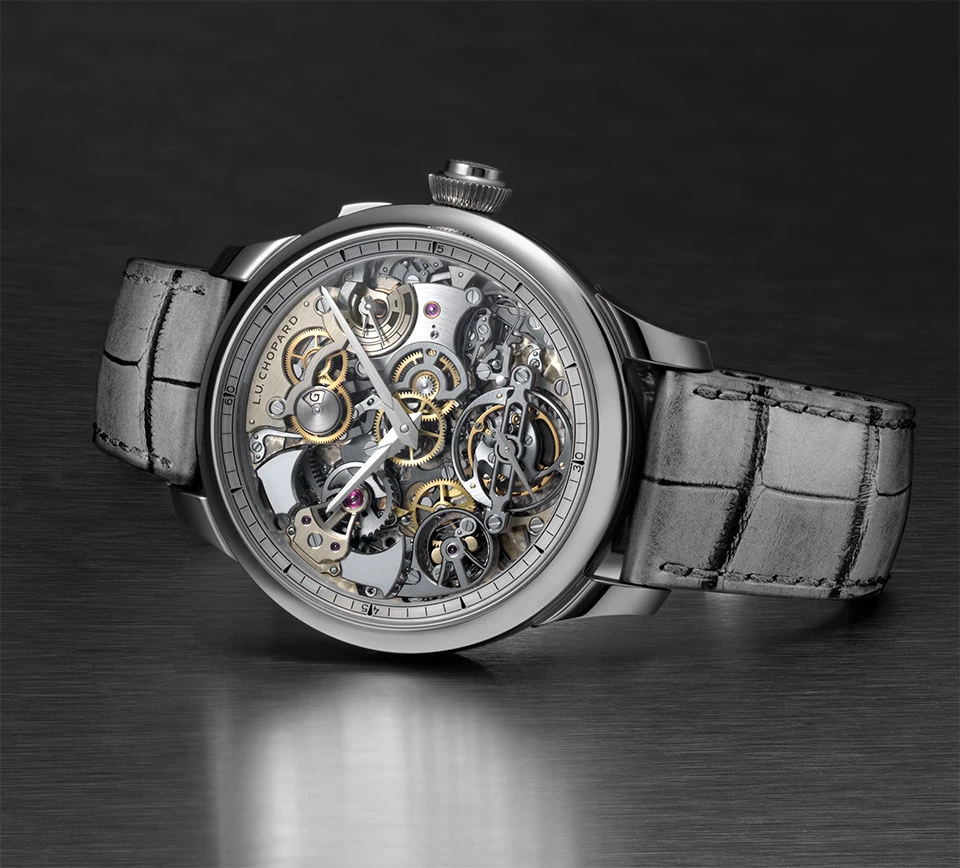
Chopard L.U.C Grand Strike - Ref. 161994-1001

L.U.C Grand Strike

The Chopard L.U.C Grand Strike distils the in-house expertise accumulated since the founding of the Manufacture – an emblem of its 30-year watchmaking journey – and stands as the brand’s most complex watch up to date. It combines a grande and petite sonnerie with a minute repeater and tourbillon in a 43.00 mm ethical white-gold case measuring 14.08 mm in height.

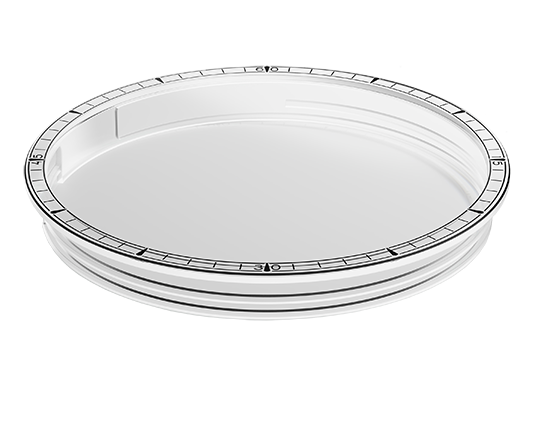
Chopard’s celebrated monobloc sapphire system integrates the watch glass and gongs into a single sapphire block, producing a uniquely pure and resonant acoustic profile. This ingenious design projects sound directly through the crystal, ensuring a clear chime that remains vibrant without the need for specialised casebacks or external amplification.

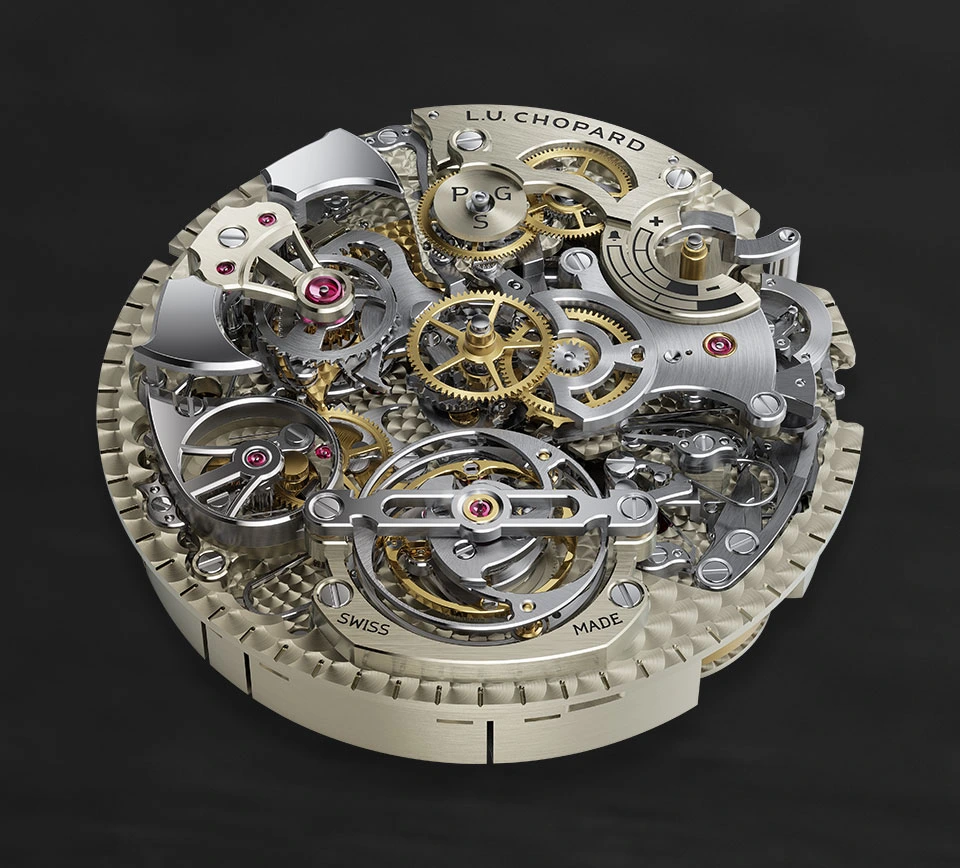
Chopard L.U.C Grand Strike Movement - Calibre L.U.C 08.03-L

Calibre L.U.C 08.03-L

Comprising 686 components and operating at an unusually high 4 Hz frequency, the hand-wound calibre L.U.C 08.03-L features a dual-barrel system that ensures a 70-hour power reserve alongside 12 hours of continuous grande sonnerie strikes. Developed over 11,000 hours, this movement incorporates ten proprietary patents, five of which were newly developed for it specifically. It is the world’s only watch of its kind to hold both COSC and Geneva Seal certifications.

Chopard: Masters of crafts

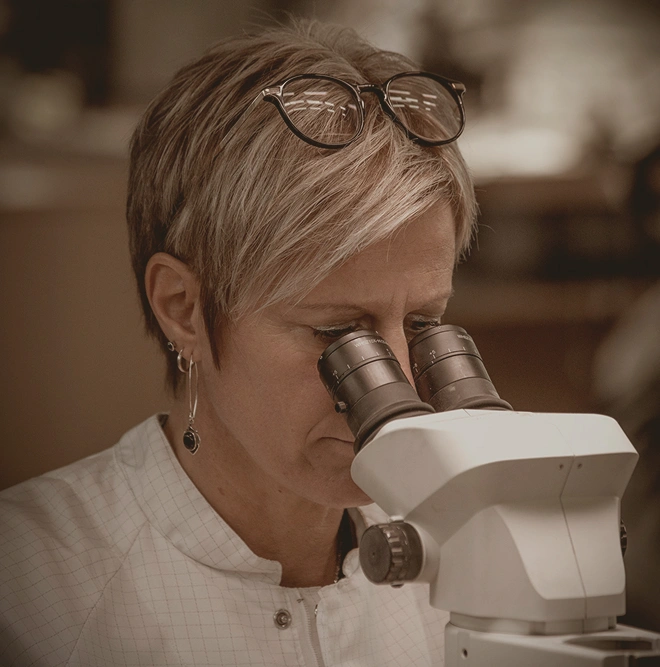
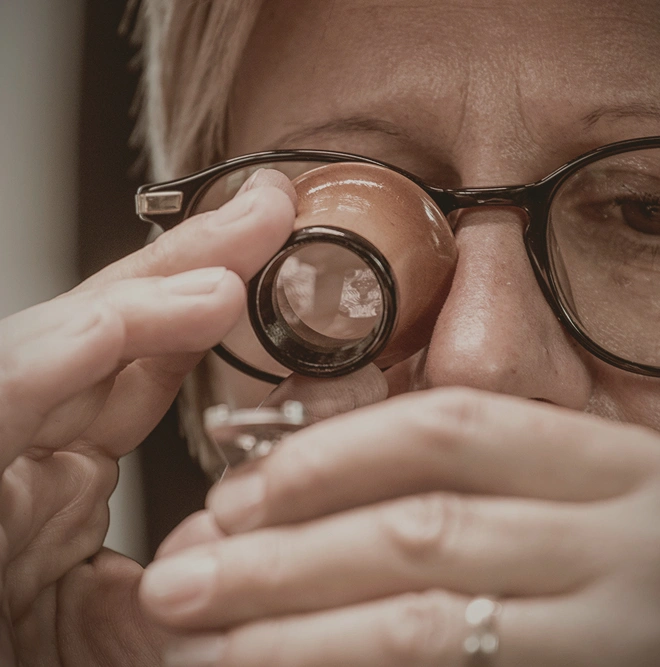
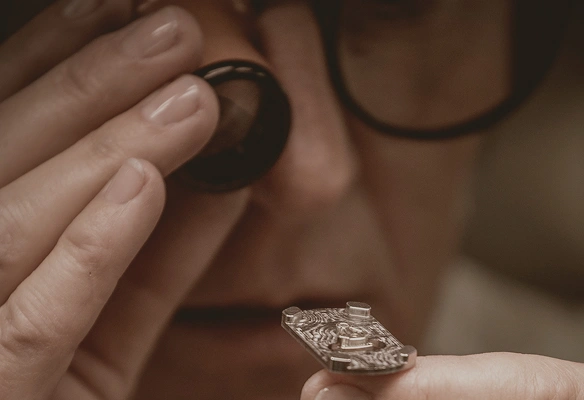
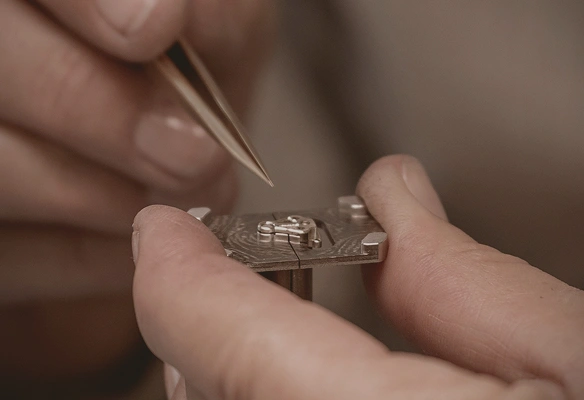
Chopard continually works to ensure that its employees evolve with changing times – all while maintaining a strong sense for traditional crafts that deserve to be preserved.

Each Chopard artisan has a deep and passionate understanding of their craft. These employees are not only experts in their field, but also artisans with an understanding of how Chopard products may – just like art – stir up emotions in those who experience them.

World of Chopard Timepieces

L.U.C

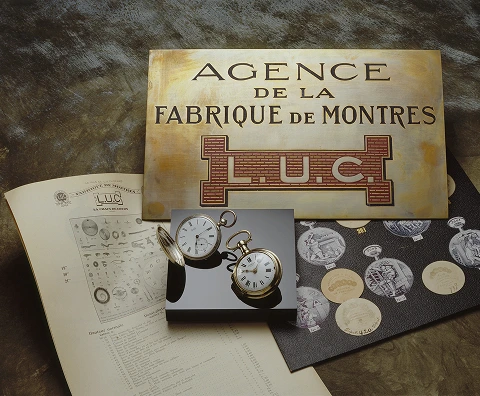
The first advert for La fabrique de montre L.U.C was run by Louis-Ulysse Chopard in 1913. A few years later, between 1914 and 1917, Louis-Ulysse Chopard’s son, Paul-Louis, took over the business. In 1918, he launched a new ad under the name L.U.C, le fils de L.-U. Chopard.

Today, we know the Maison simply as Chopard: yet the L.U.C name lives on in the form of Chopard’s exceptionally high-end watch collection since 1997. The L.U.C watches of today are, naturally, all crafted in-house, and strive to encompass the entire spectrum of horological complications.

The precision of the majority of these timepieces is attested by COSC, the Official Swiss Chronometer Testing Institute. Thanks to the maison’s artisans, who endow L.U.C movements with such decorative techniques as Côtes de Genève, bevelling, circular-graining, circular satin-brushing, sunray patterning, and Fleurisanne engraving, the L.U.C watches also earn the reputable ‘Poinçon de Genève’ or ‘Geneva Seal’ quality hallmark: the highest recognition of quality in Swiss watchmaking.

In addition, several Chopard watches meet the exacting standards of another independent certification—Qualité Fleurier, introduced in 2001 and regarded as one of the most rigorous in Swiss watchmaking. Unlike COSC or the Geneva Seal, it evaluates the entire finished watch, not just the often complex movement. To qualify, the Chopard timepiece must be 100 percent Swiss-made, achieve COSC chronometer status, pass the Fleuritest simulator (a 24-hour real-wear accuracy test), endure the Chronofiable protocol (an accelerated aging cycle of shocks, magnetism, and temperature changes) and additionally meet the highest standards of artisanal finishing. Chopard reserves this revered label for select models in its L.U.C collection, underscoring its dedication to both technical performance and haute horlogerie craftsmanship.

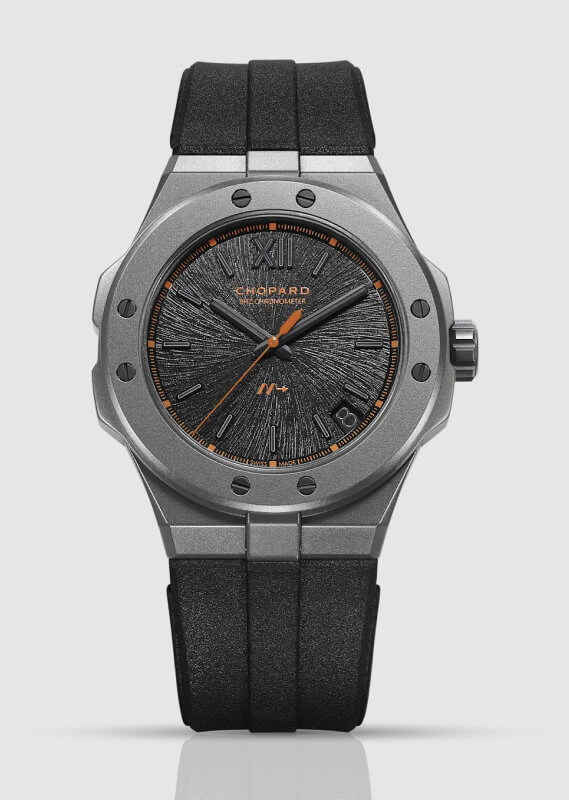
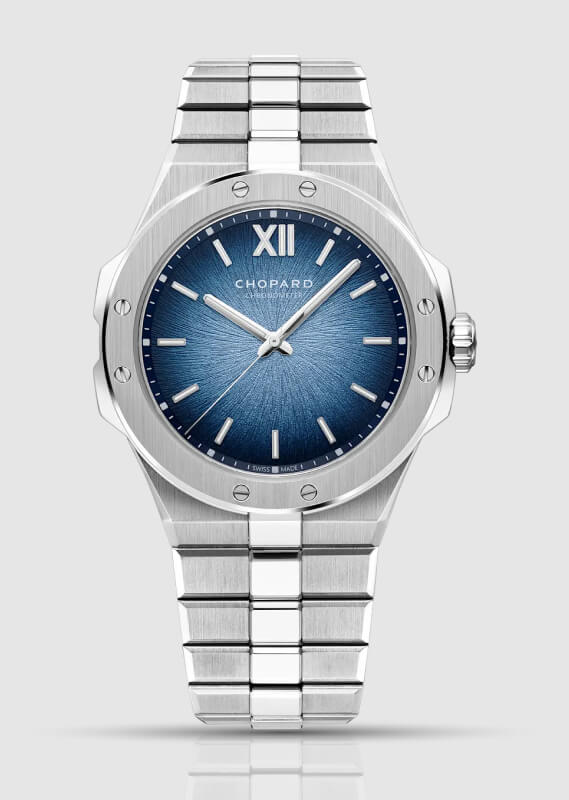
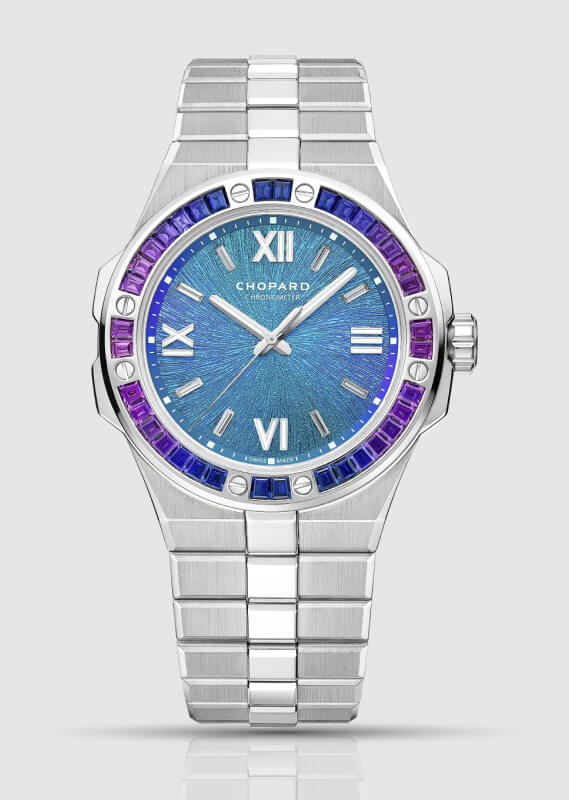
Alpine Eagle

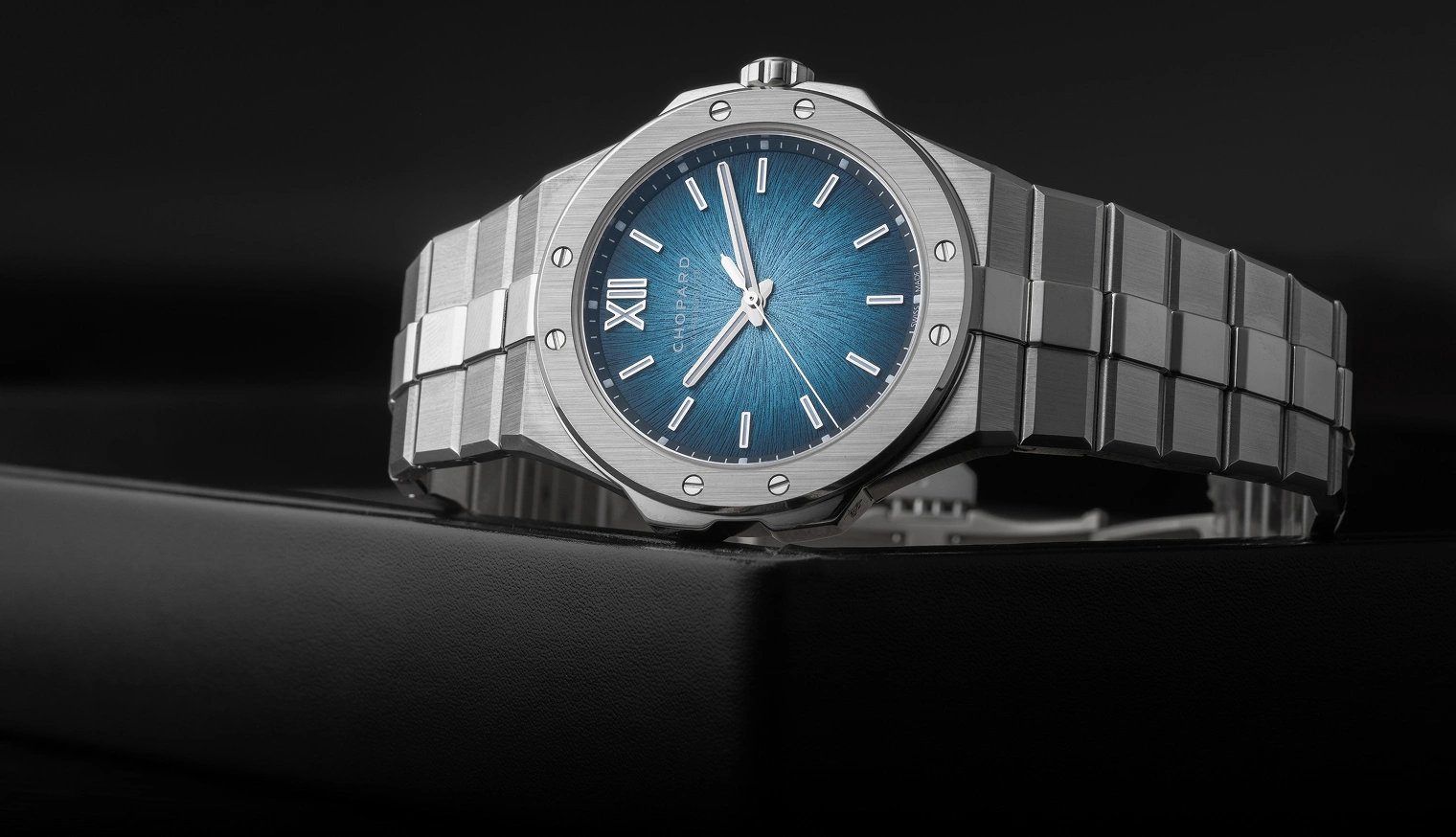
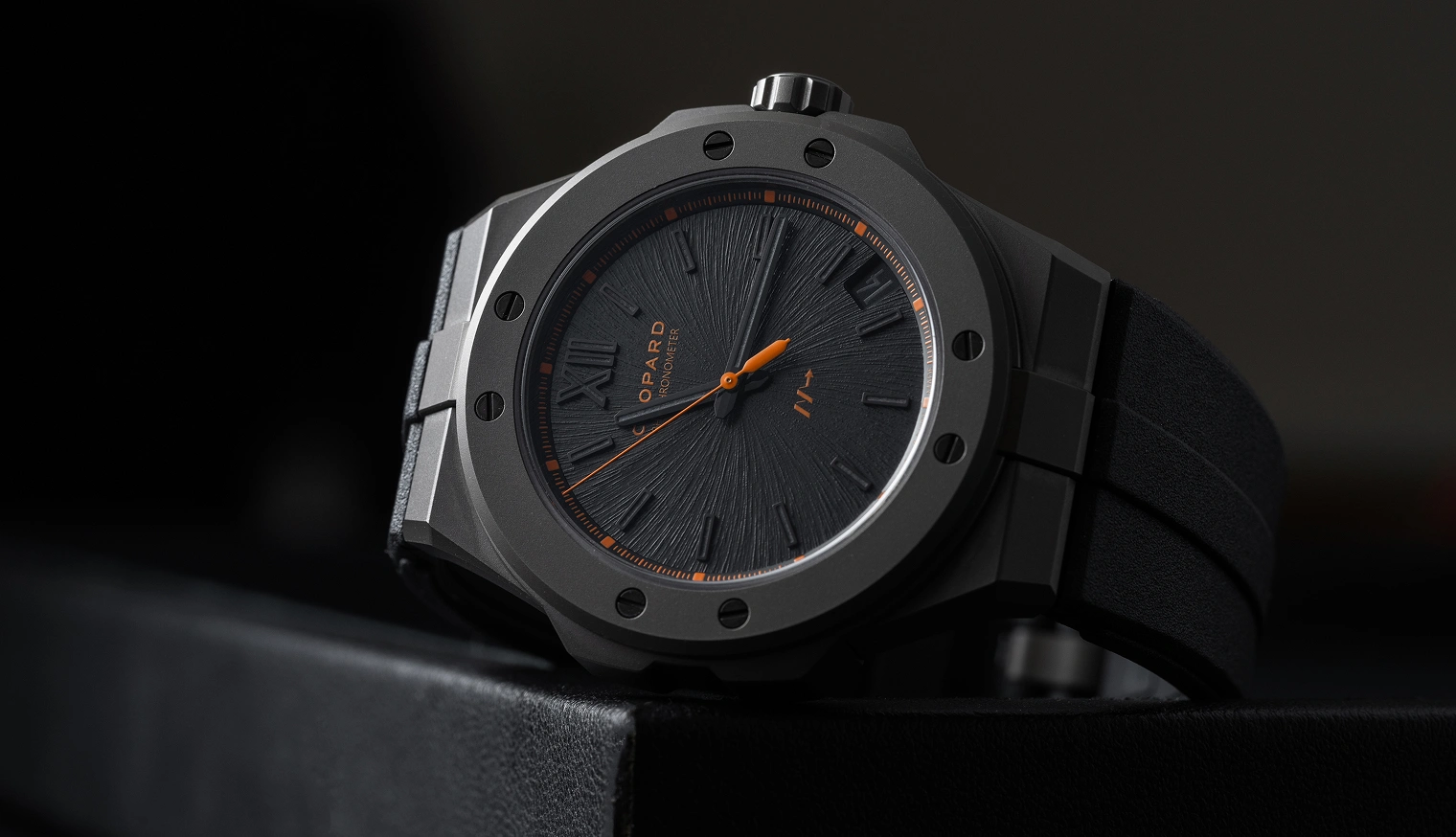
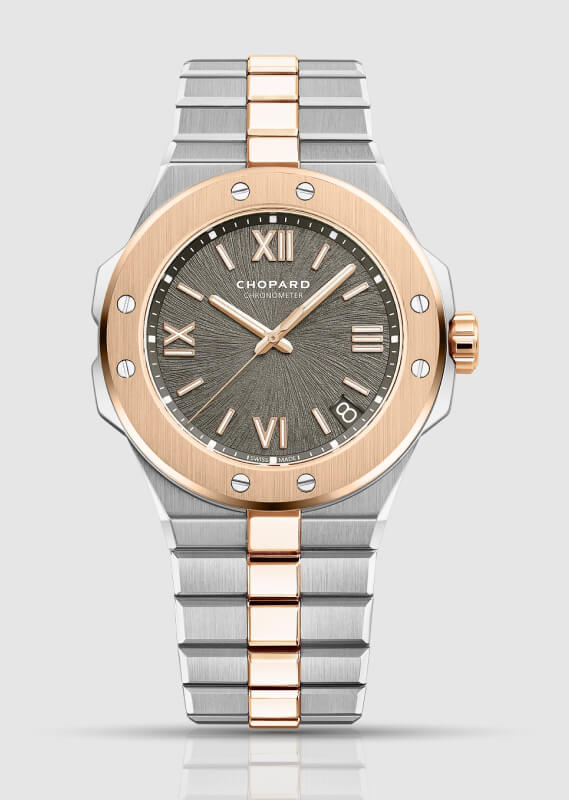
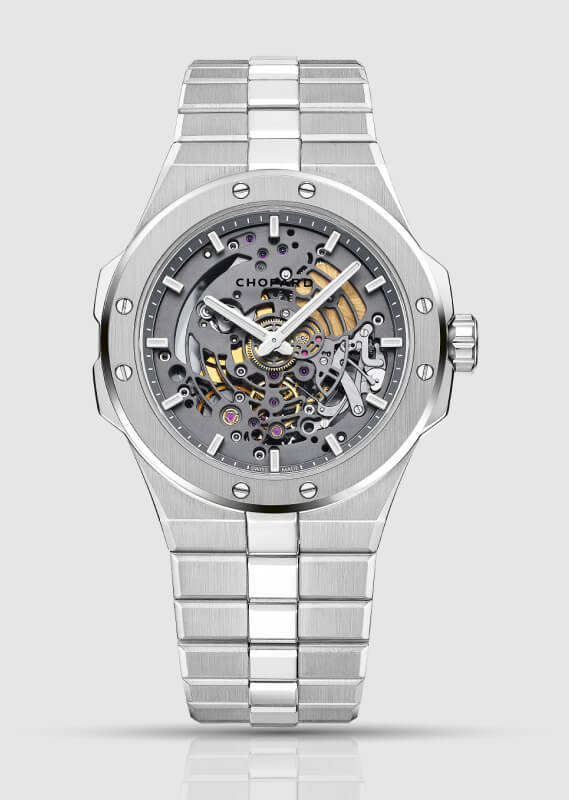
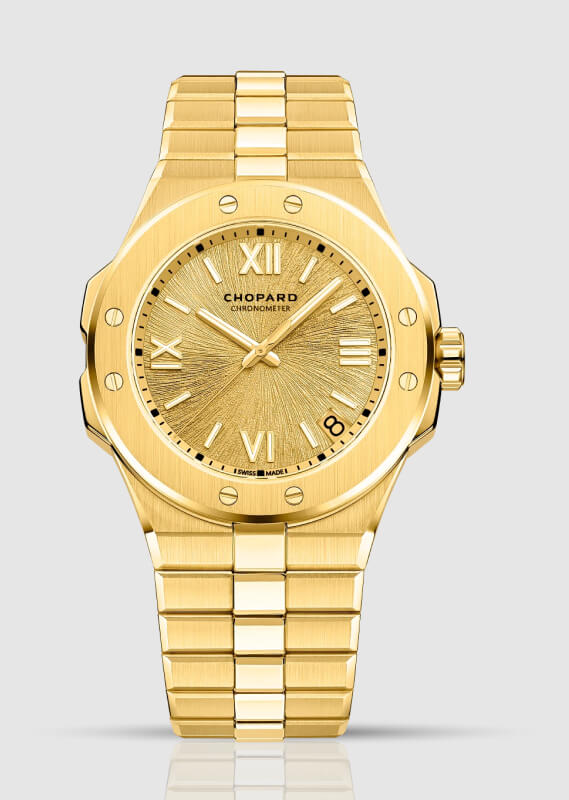
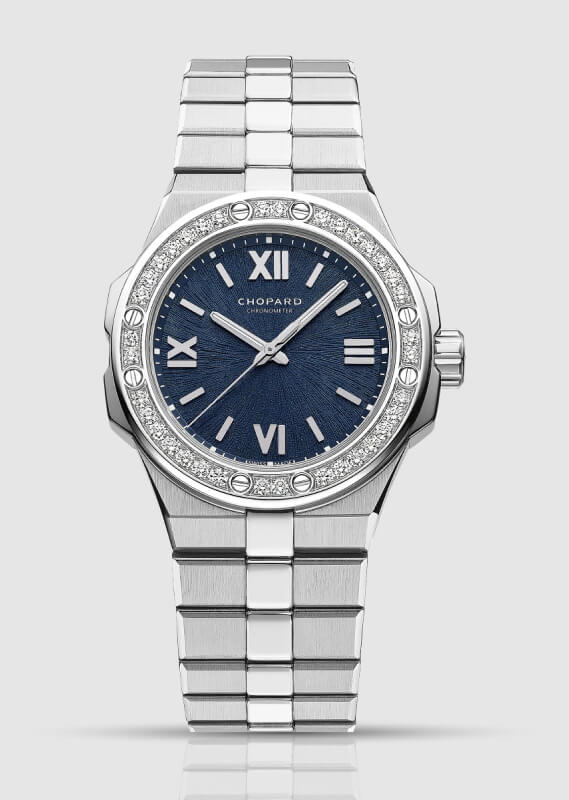
Resurrected from the legacy of Chopard’s former steel sports watch icon St Moritz, the Chopard Alpine Eagle watch soared to new heights of success with remarkable swiftness, and remains a steadfast favourite for many watch connoisseurs.

Why? Timekeeping excellence, instantly recognisable design, absolute robustness, and a quality of finishing that is hard to find elsewhere in the world of watchmaking. From simple three-hand models that place emphasis on the handsome stamped dials to technical tourbillon and chronograph models, it’s a collection for adventurers and aesthetes.

Its distinctive design draws inspiration from the Alpine landscape, with sunburst dials that echo an eagle’s sharp-signed iris and a sculpted case and bracelet that reflect the pure strength and geometry of the Alps’ mesmerising mountain peaks.

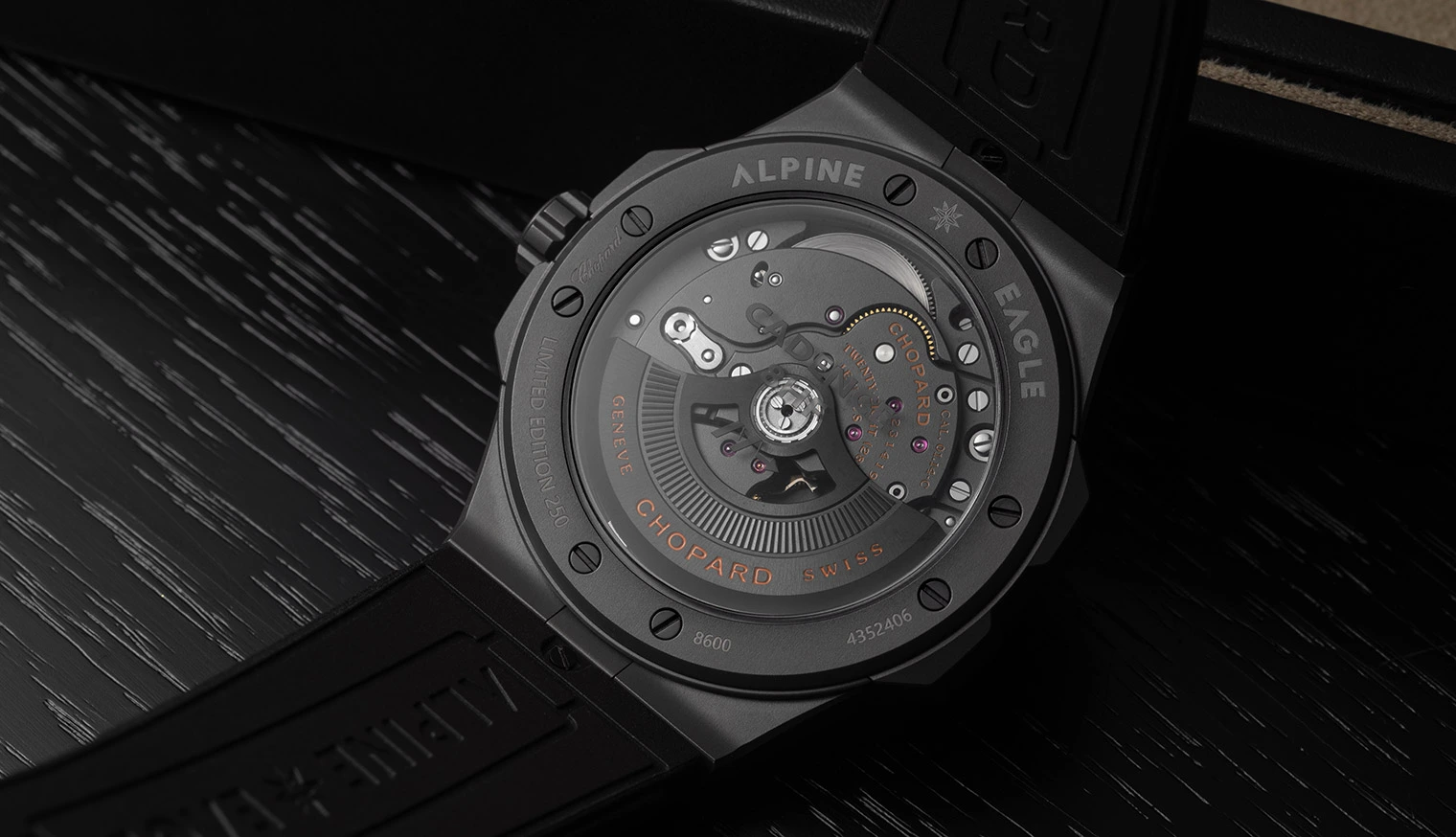
In high-frequency movements such as the Alpine Eagle Cadence 8HF, Chopard uses silicon for critical escapement components, selected for its lightness, anti-magnetic properties and low friction, improving precision while reducing long-term wear. In Calibre 03.05-C, used in the Alpine Eagle XL Chrono, a tungsten rotor takes advantage of the metal’s high density to deliver efficient, well-balanced winding and a stable power reserve.

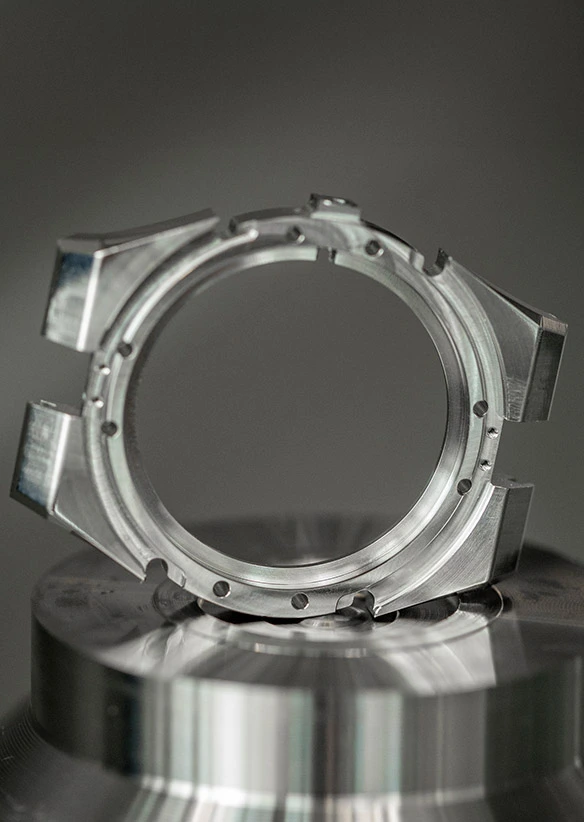
The Alpine Eagle case is defined by sharp geometry and tightly controlled surface finishes. Each component is machined to precise tolerances before undergoing a multi-stage finishing process in which flat planes, bevels and edges are refined to preserve the case’s architectural lines.

Mille Miglia

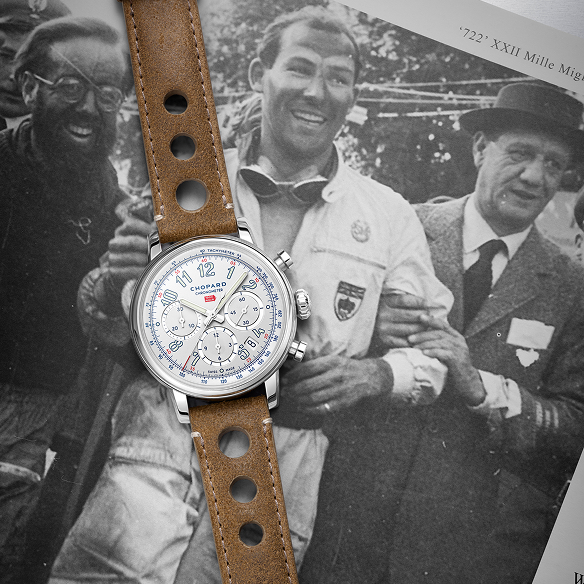
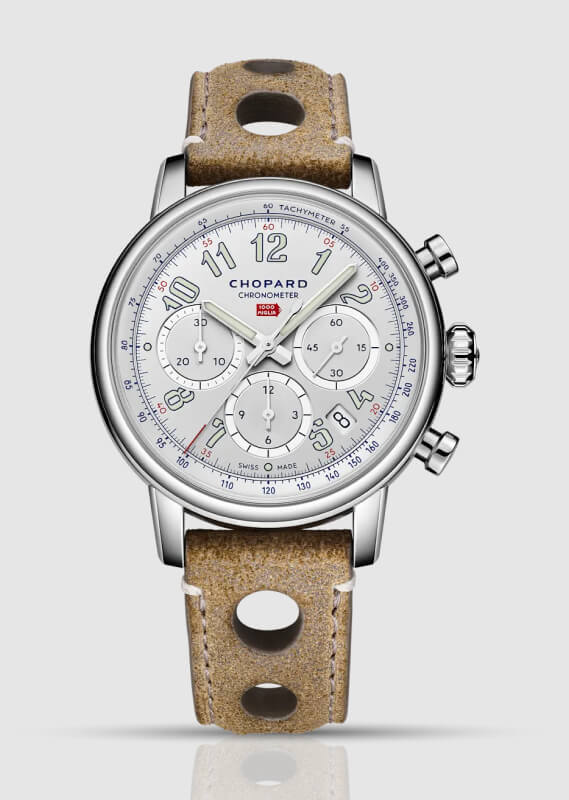
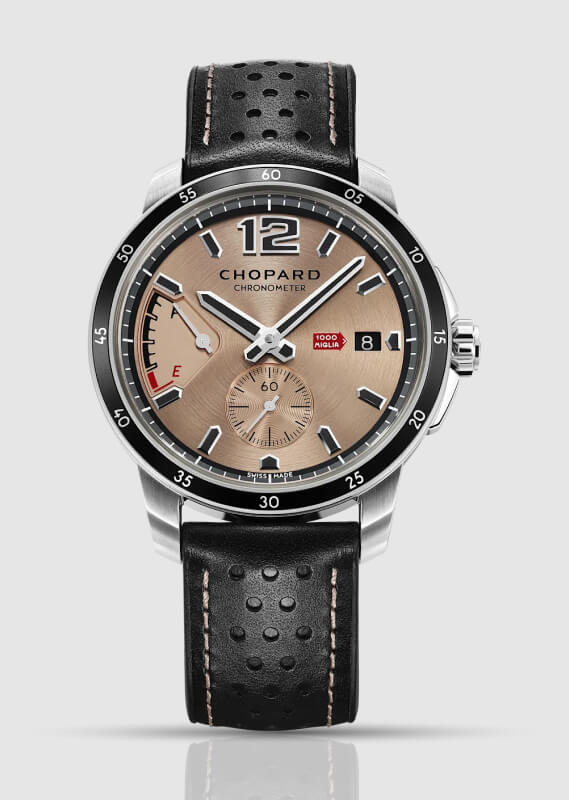
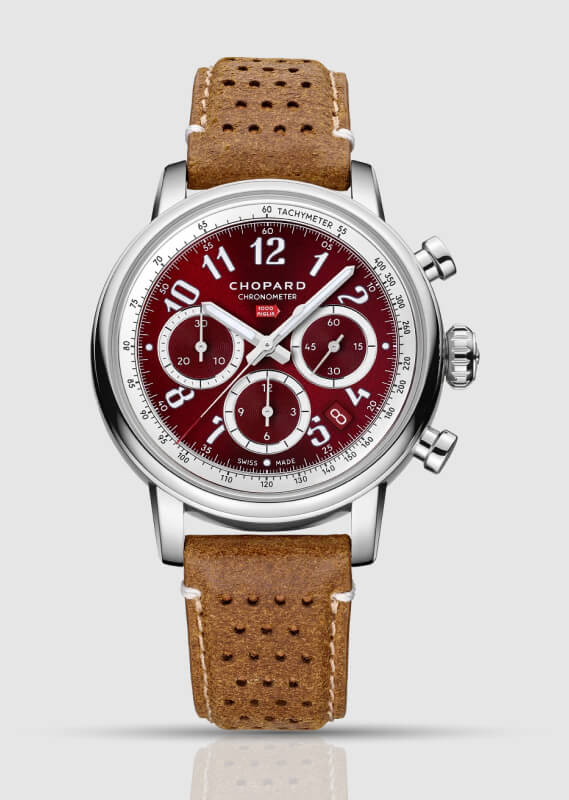
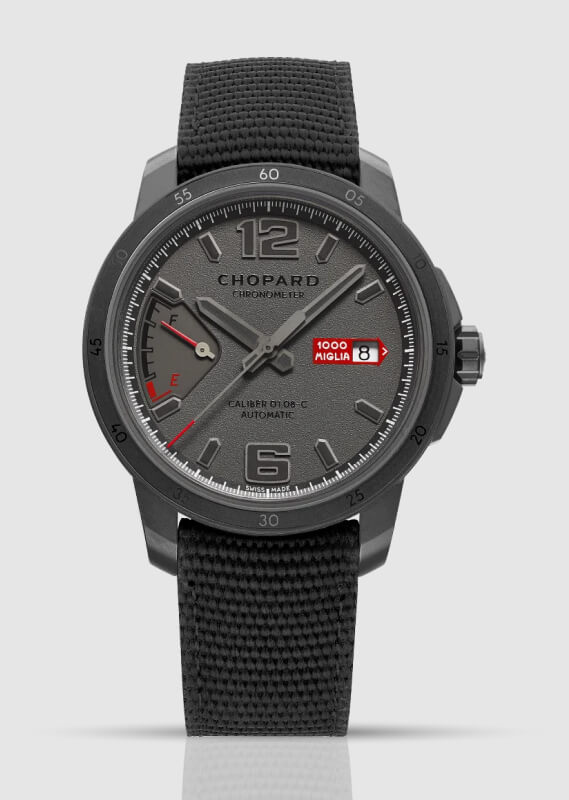
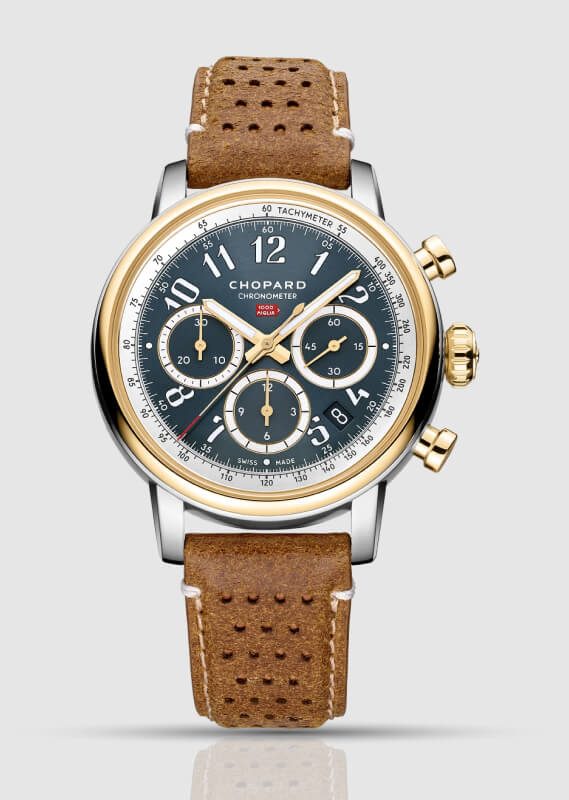
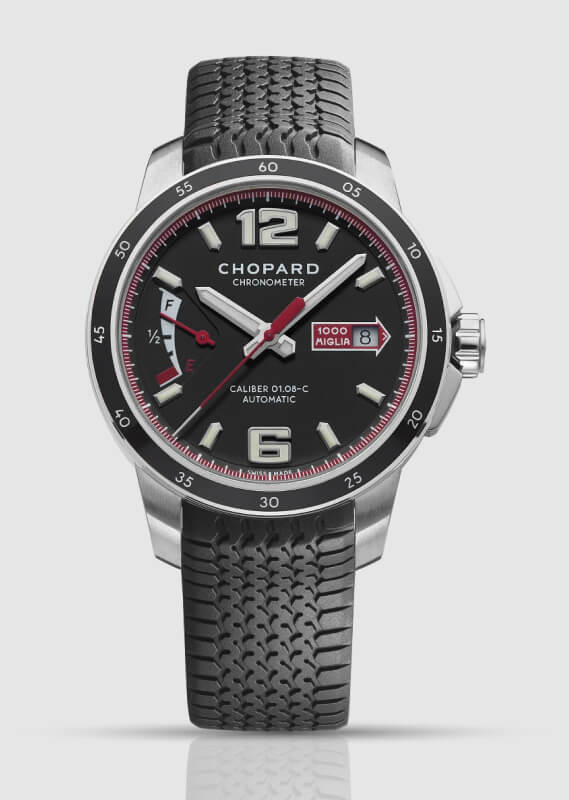
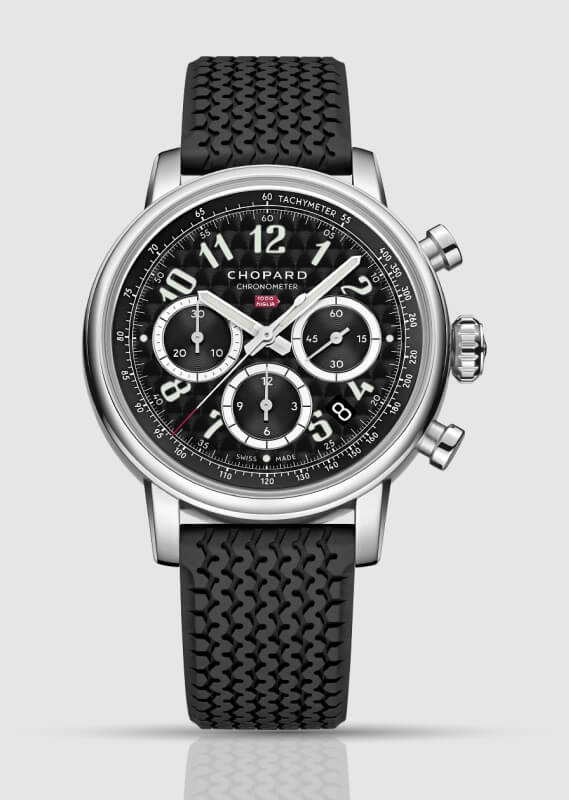
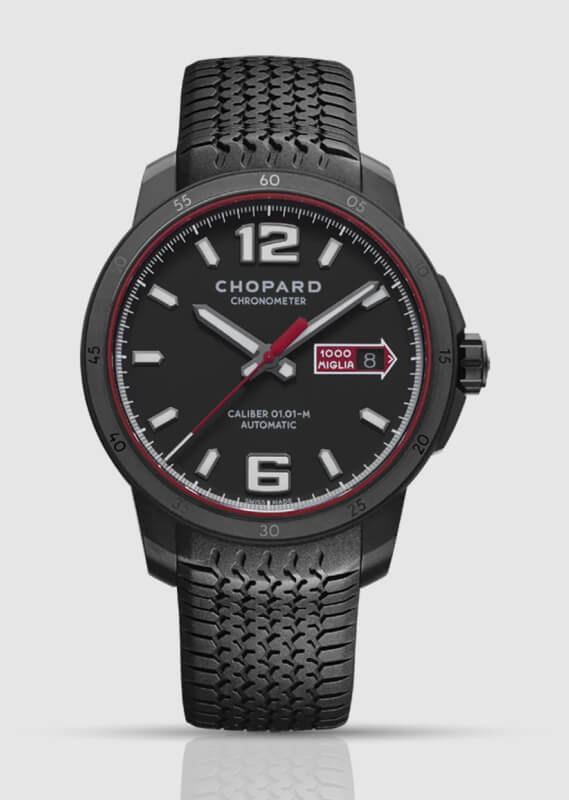
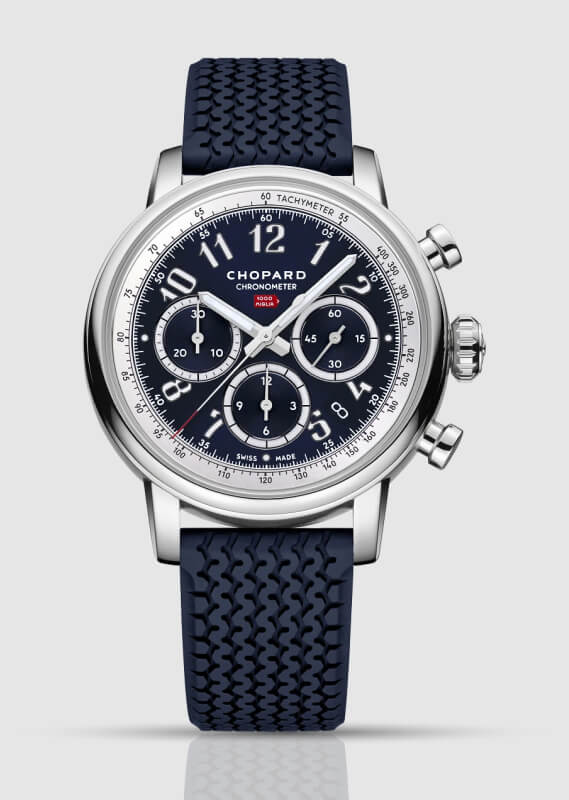
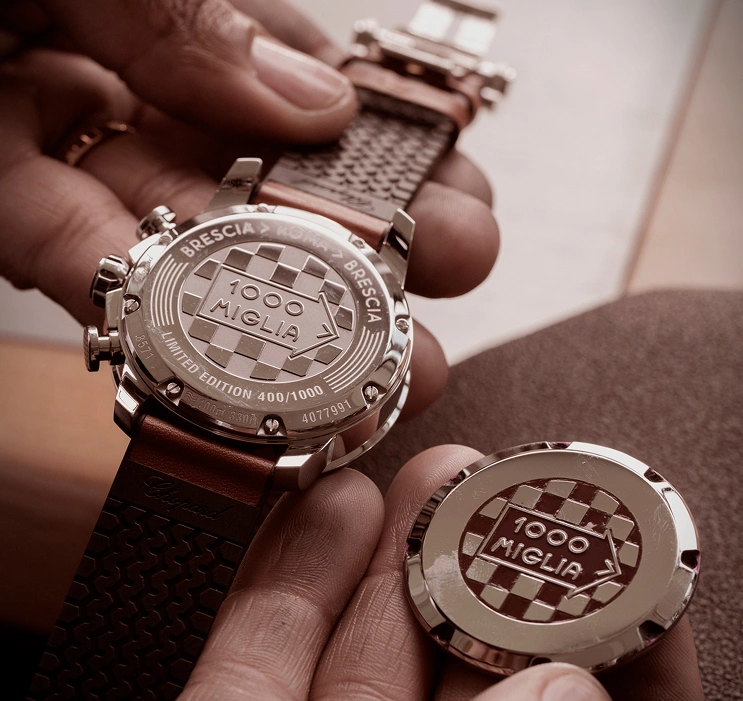
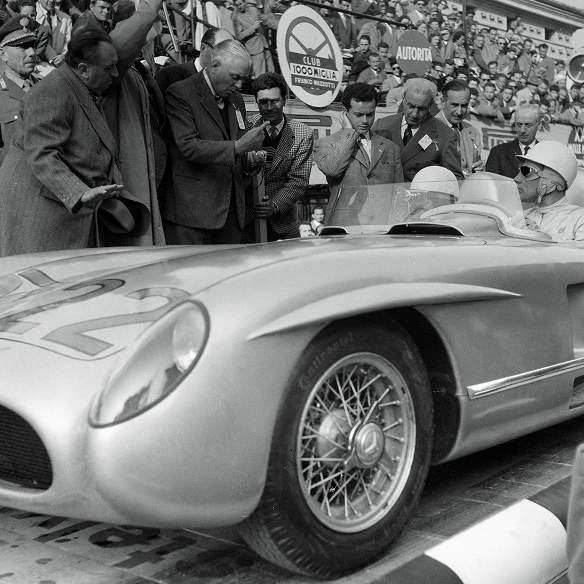
Born from Chopard’s enduring passion for motorsport, the Mille Miglia collection pays tribute to the legendary Italian race where precision, endurance, and style collide.
Channeling the golden age of Grand Touring, each watch captures the thrill of open-road competition, blending technical mastery with an unmistakably vintage spirit.

From its ergonomically shaped cases to the tactile feel of its race-inspired details, the line evokes a world where engineering excellence meets elegant adventure, and every second on the road counts.

Fast-paced, efficient, precise: the Mille Miglia line from Chopard encapsulates the world of classic car rallies. Old-school leather straps meet sleek, sporty chronographs: automotive engineering and mechanical watchmaking come together as one. Ever technical and always stylish, chronographs dominate this speed-oriented collection, in which timing is everything.
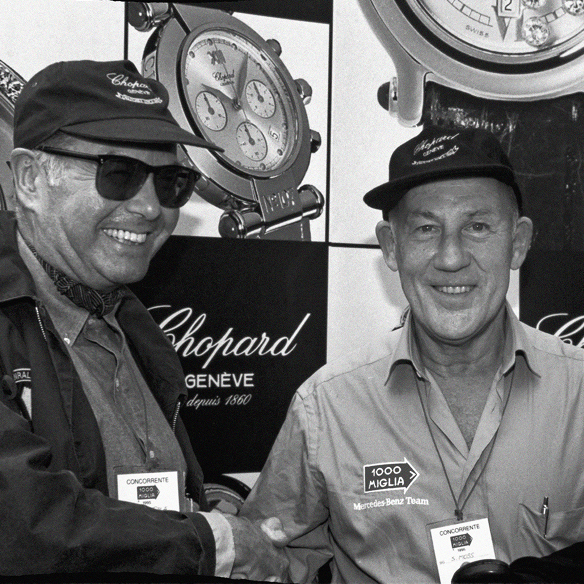
While legibility and accuracy lie at the forefront, Maison Chopard nevertheless offers up various enticing colour schemes, inspired by cars from the past, from deep ‘Rosso Amarena’ red to playful ‘Verde Chiaro’ green – expertly lacquered and satin-brushed to perfection for an impeccable, enduringly dynamic finish that reflects its long-standing racing heritage.

Ethical Materials at Chopard

When one thinks of Chopard’s materials, the words ‘ethically sourced’ instantly springs to mind. A spearhead in sustainability, Chopard aims for the utmost transparency when it comes to the sourcing of its materials. Recycled steel, ethical gold, diamonds and coloured gemstones are all meticulously checked for not only quality, but also the origin and the circumstances surrounding its procurement.

Materials at Chopard: Lucent Steel manufacturing process
Materials at Chopard: Lucent Steel for the Alpine Eagle manufacturing process
Chopard Ethical Gold: foundry workshop

Chopard has its very own steel known as Lucent Steel, which has become well-respected for its anti-allergenic and hardy qualities: the Maison’s steel is 50 percent more resistant to abrasion than conventional steel. Furthermore, the use of Lucent Steel enables the brand to markedly reduce its CO2 emissions related to steel, according to key figures from the ISSF (International Stainless Steel Forum).

In-house Gold Foundry

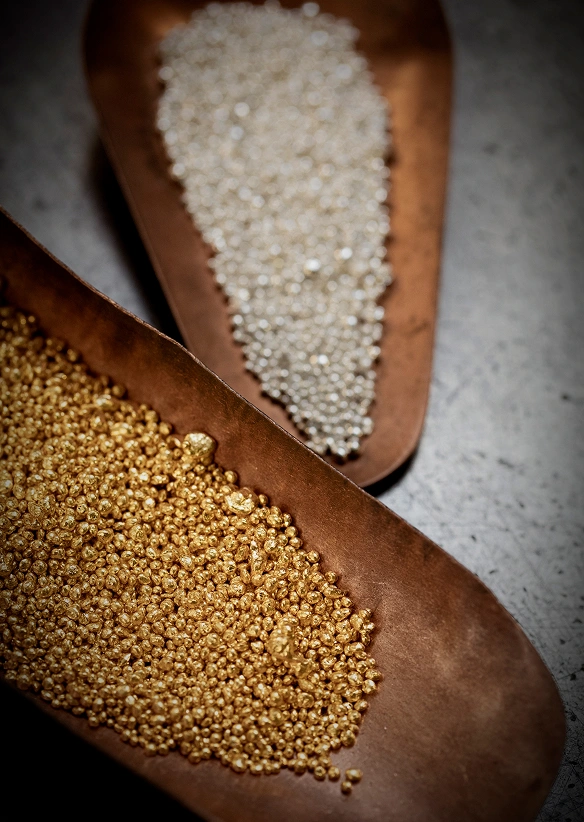
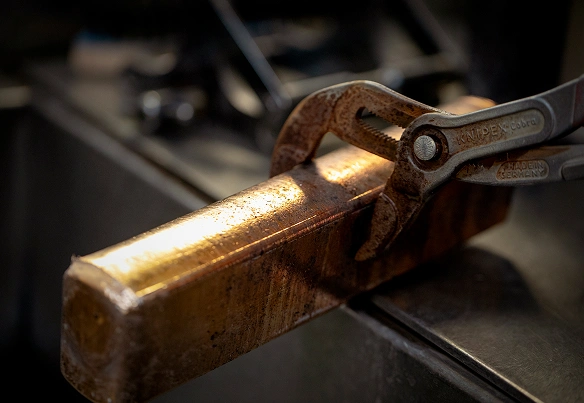
Gold remains the most important material at the luxury maison, leading to the brand pursuing a 100 percent ethical gold policy since 2018. This means that the gold has been verified as having met international best practice environmental and social standards. The gold used in Chopard’s foundry remains transparent and traceable by being produced in a responsible manner by responsible mines, working alongside RJC-Certified refineries.

Across the world, millions of men and women rely on artisanal and small-scale mining, working on their own, with their families, or in cooperatives, using simple but effective methods to find, extract, and process gold. By choosing responsibly sourced gold from these mines, Chopard not only ensures full traceability from mine to market, but also helps create lasting social, economic, and environmental benefits for the communities behind it.

Portrait of Paulo, gold foundry artisan at Chopard

Gold Foundry Artisan

Paulo

At Chopard, gold is the basis of everything

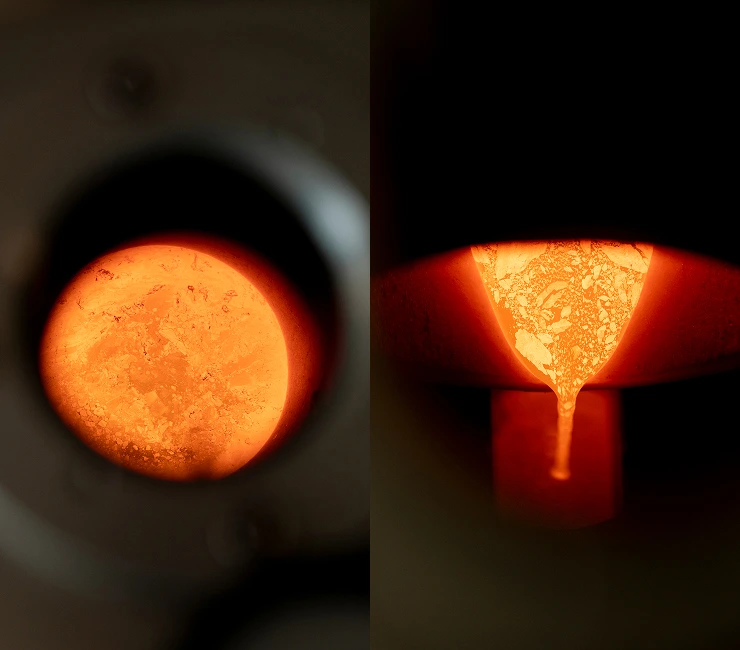
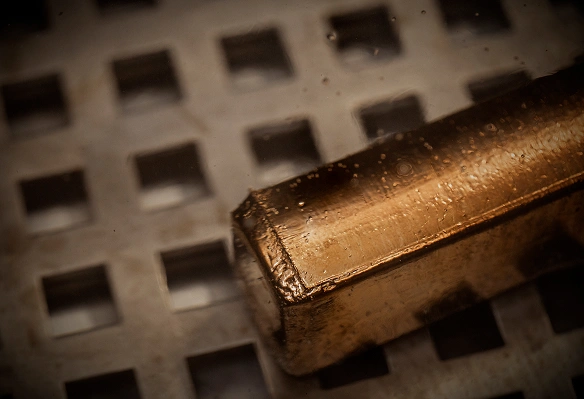
As early as 1978, the Swiss maison introduced its own gold foundry workshop, allowing production of gold alloys to take place in-house. Since 2018, Chopard uses 100% ethical gold for its watches and jewellery. Gold foundry artisan Paulo has been working for Chopard since 2001, where he deftly shapes the 18- or 22-carat gold ingots used to create captivating watch and jewellery pieces.

Within the sanctuary of his workshop, Paulo gathers the raw metals destined to become gold ingots. Carefully placing them into the crucible, he subjects the mixture to a blaze exceeding 1,000 degrees Celsius. Once molten, the gold is poured into moulds that will shape the bars, before being cooled down in water to crystallise its form. Finally, the ingots are rolled, imparting the perfect hardness to the alloy. It is a ritual Paulo performs time and again – each time with unwavering precision.

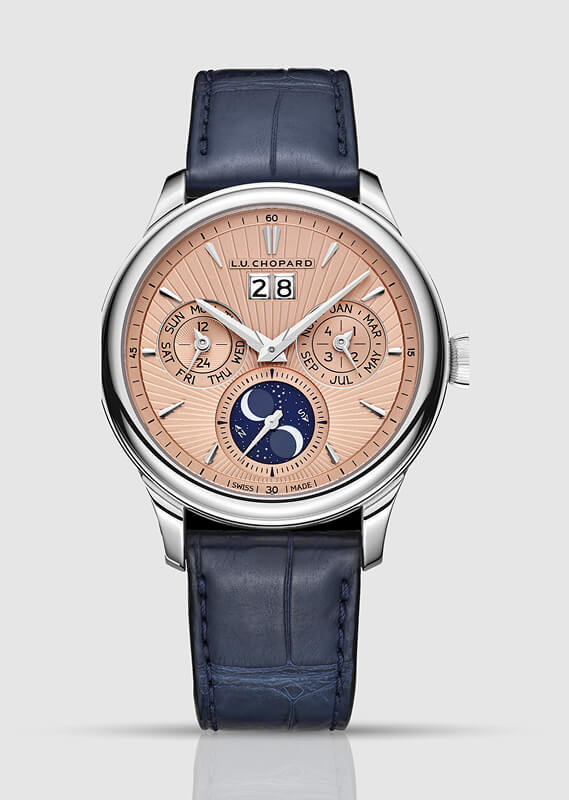
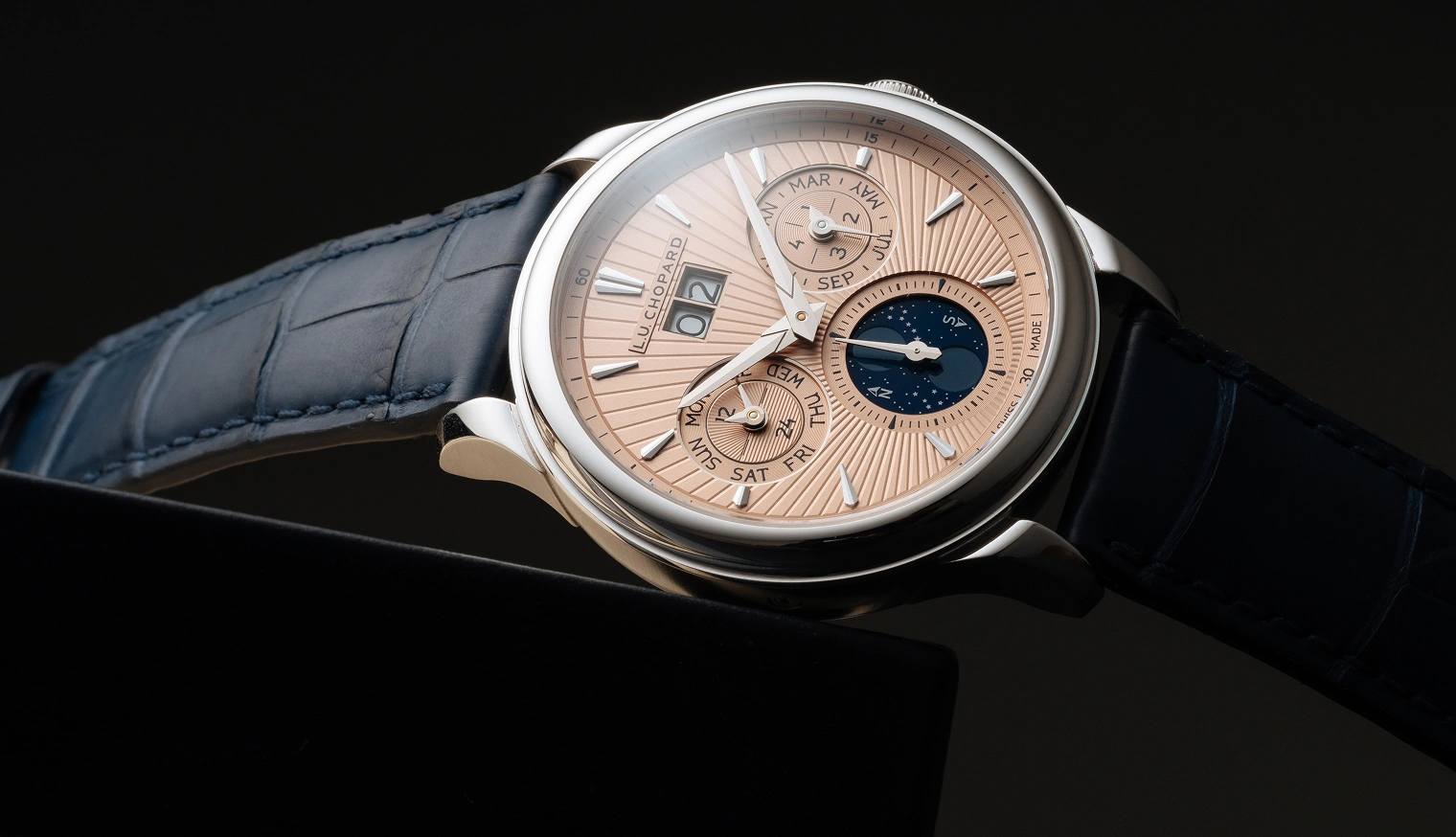
L.U.C Perpetual Calendar

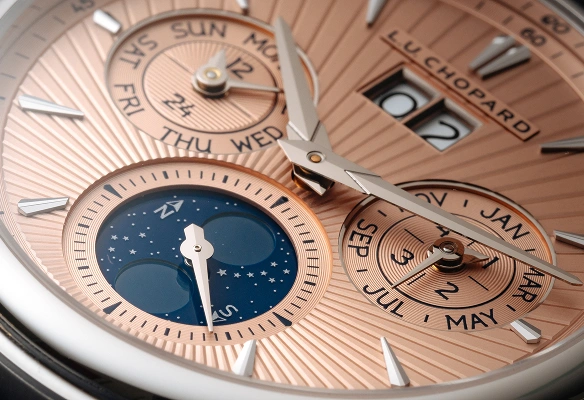
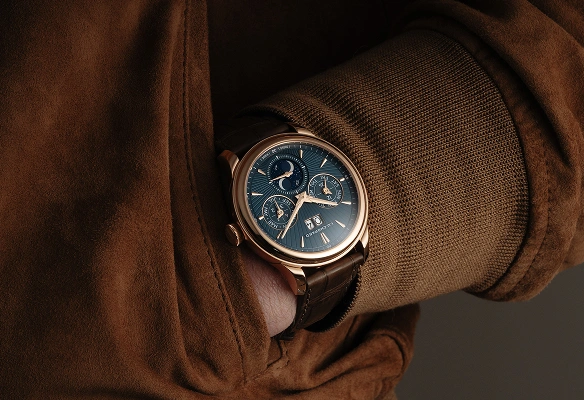
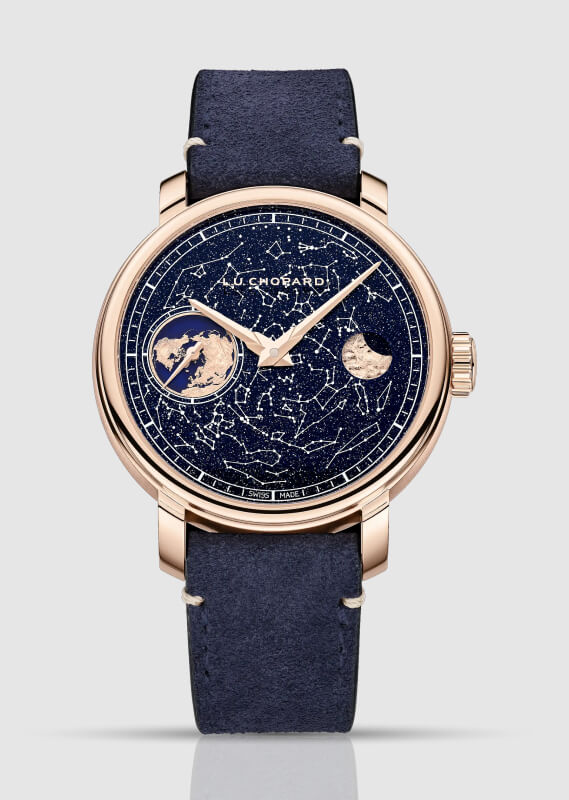
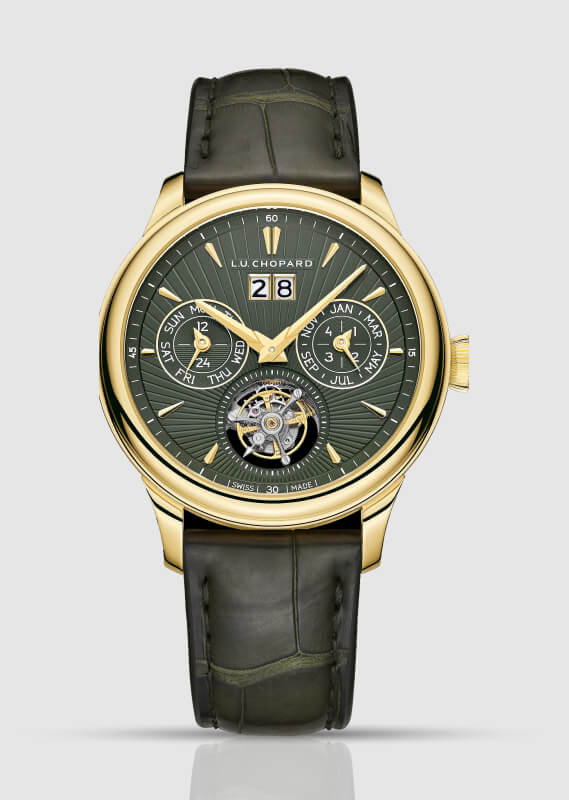
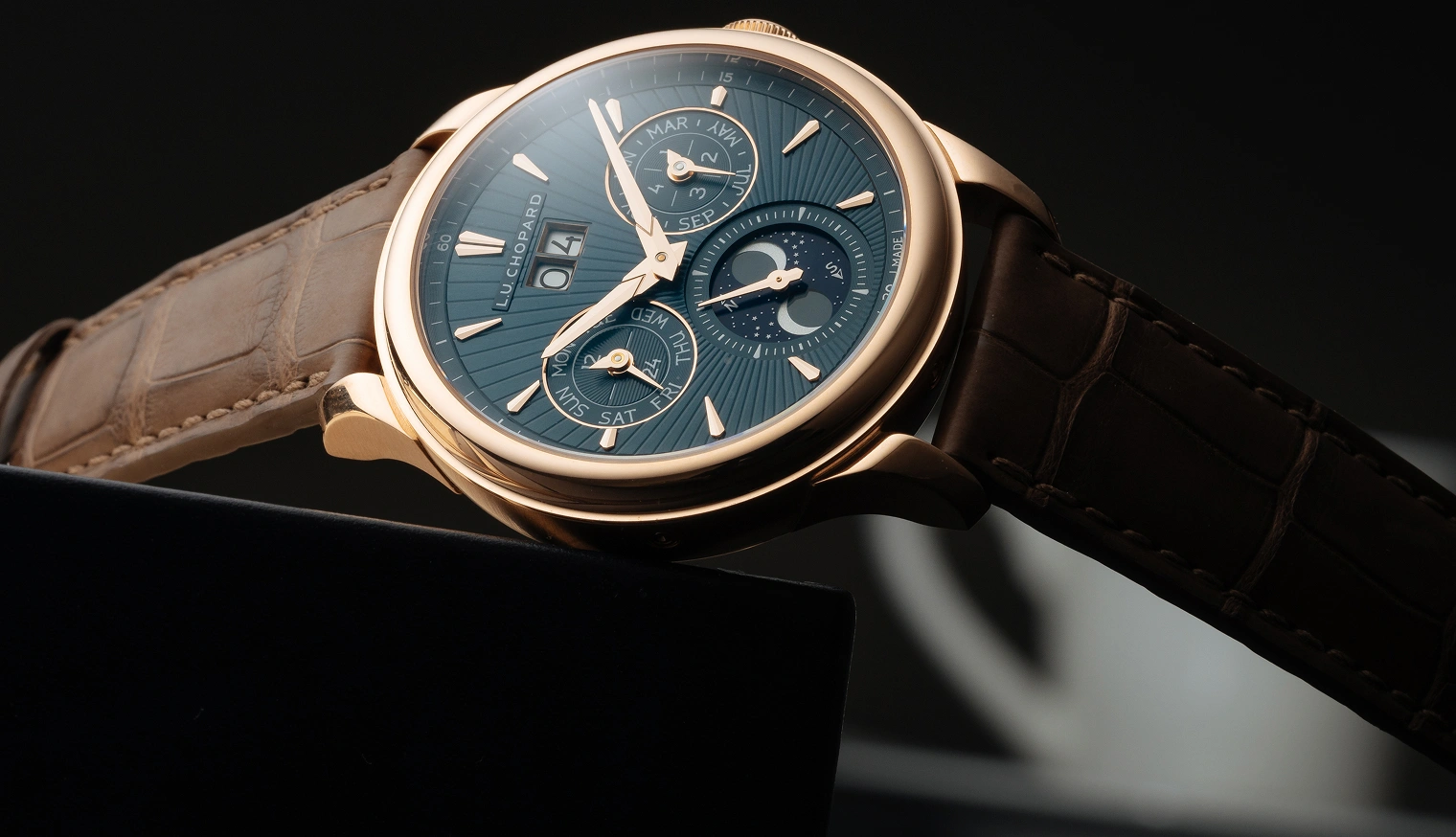
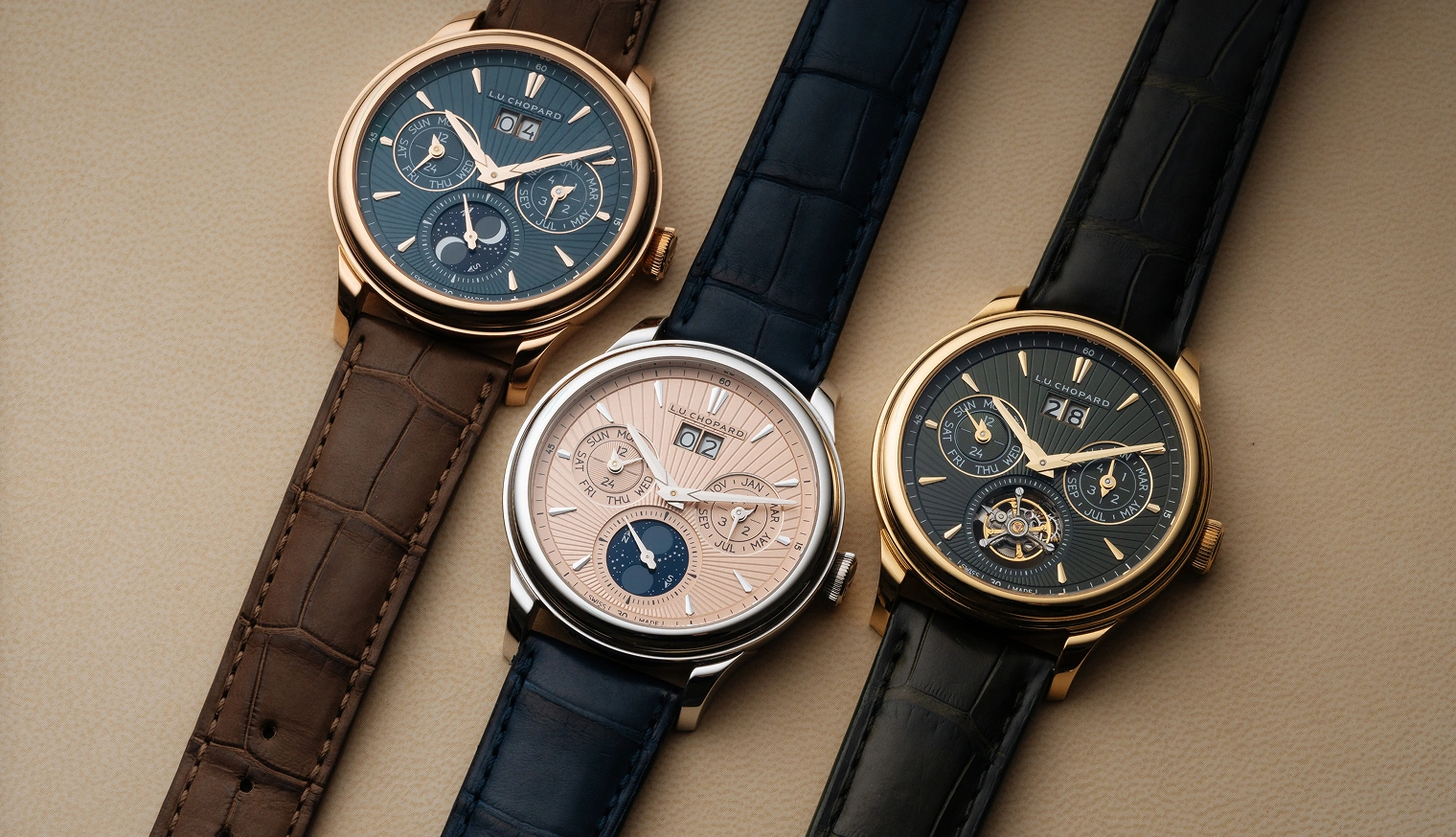
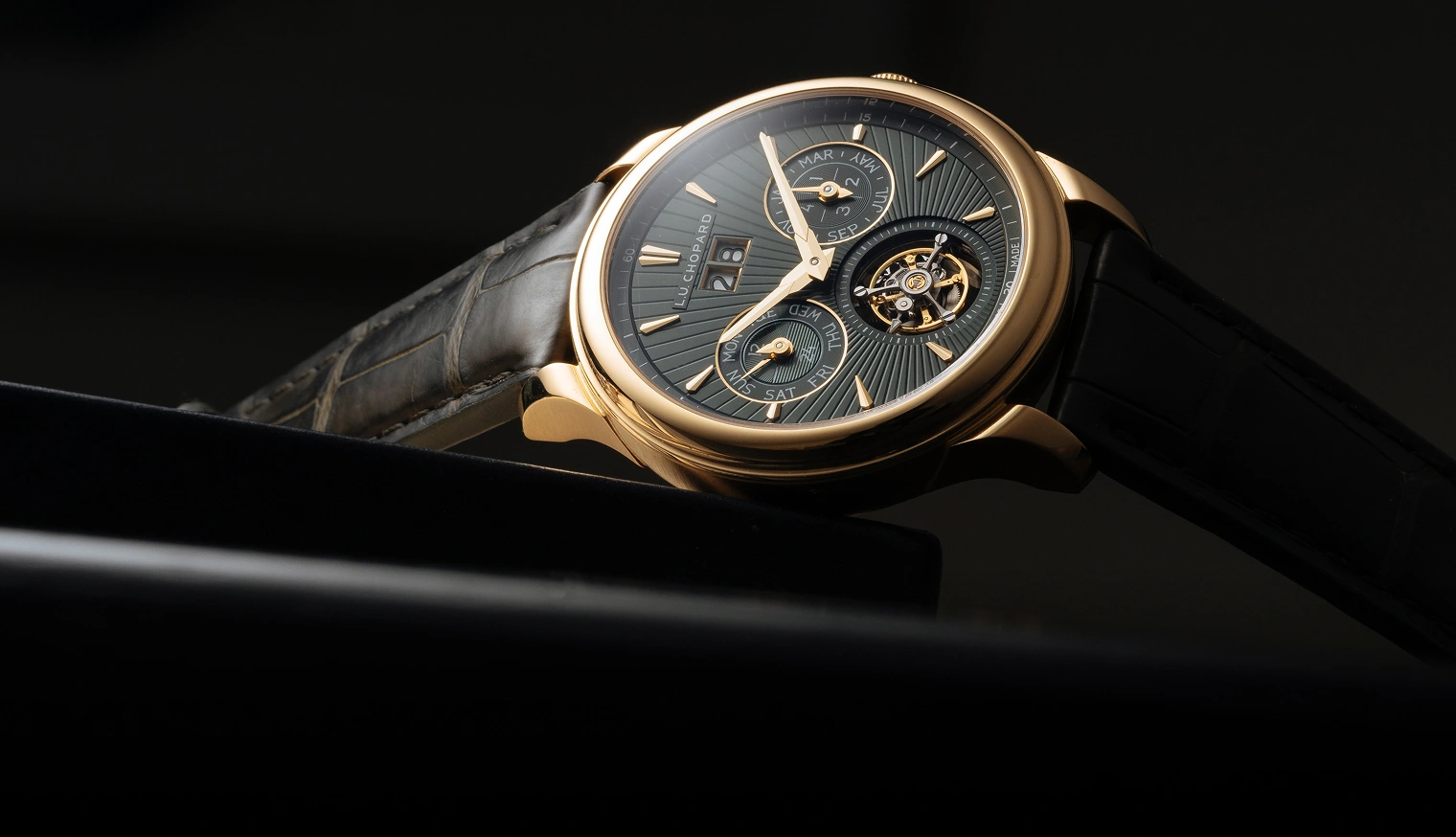
The L.U.C Lunar One captures the essence of Chopard’s aesthetics: elegant, technical, timeless. With the gold for these cases forged in-house, the case is available in both white and rose gold, matched to the tapered hour markers and hands. The watch’s cousin, the L.U.C Flying T Twin Perpetual, shines in a particularly captivating material: yellow gold. On each model, a radial hand-guilloché pattern adds to the distinctive look of these deeply complex models.

Master of Complications

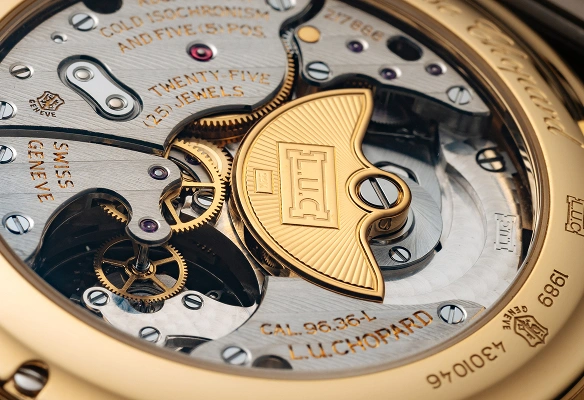
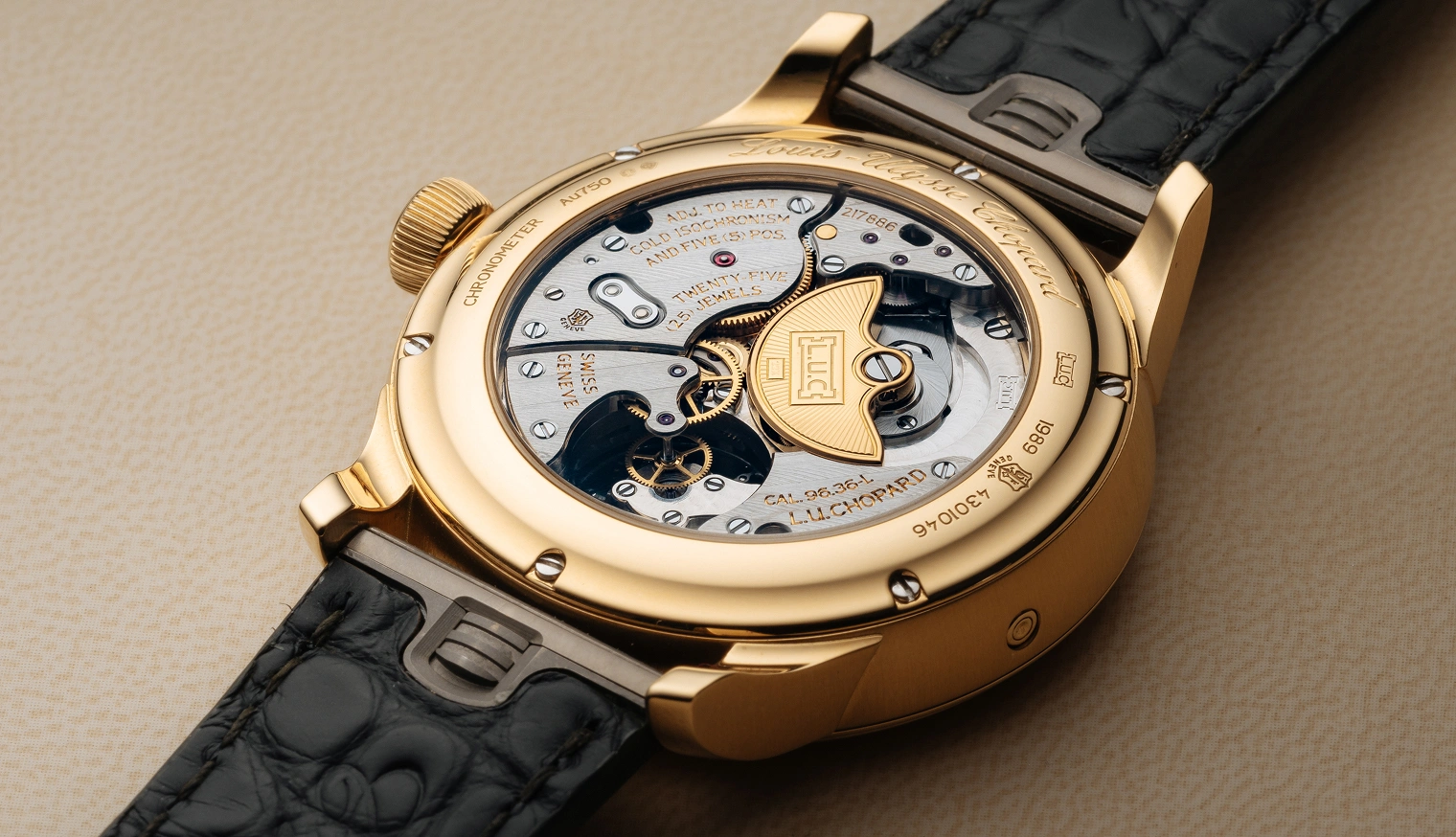
Chopard has been making its own in-house movements since 1996, when the fittingly named 1.96 calibre – now baptised the L.U.C 96.01-L – was first introduced. At the heart of its design was a desire to offer up a slim movement with a micro-rotor that would allow watches to showcase harmonious proportions. Today, it serves as the base for both purist as well as remarkably complex movements.

The L.U.C 96.01-L is a slim automatic movement measuring just 3.3mm in thickness. It has a remarkable 65 hours power reserve thanks to its two barrels, stacked in accordance with Chopard Twin technology. In addition, the movement with its swan-neck regulator has a balance spring with a Phillips terminal curve. Its production is much more complex than that of the more common flat balance spring.

Grand Complications Watchmaking Artisans

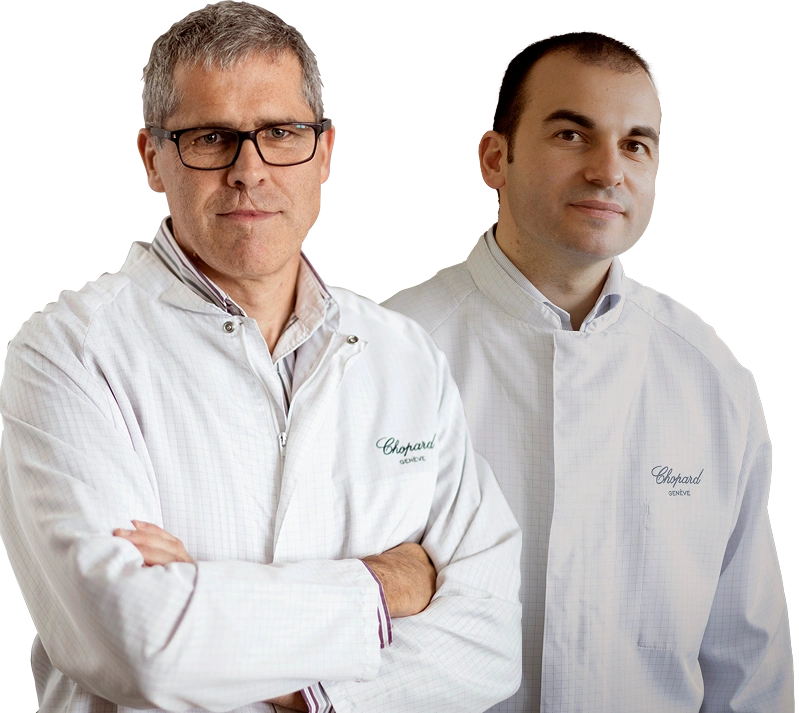
Christophe & Sandro

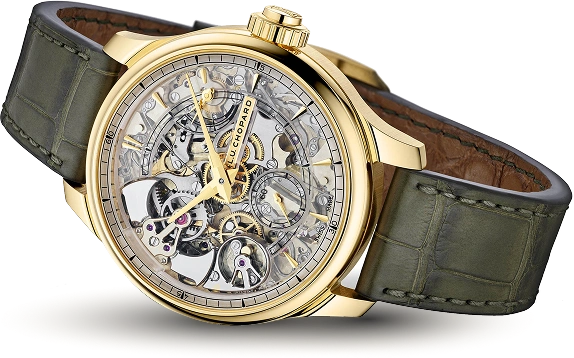
Among their masterpieces is the L.U.C Full Strike minute repeater, a watch with four patents and 533 components. A minute repeater relays the time through an independent chiming mechanism with two hammers, striking at different pitches to indicate the hours, quarter hours, and minutes. In most watches, the mechanism is activated by a slide or push-piece, but the Full Strike integrates the pusher into the crown and uses a second spring barrel to power the chimes. During the sequence, the crown disconnects from the movement, preventing accidental time-setting that could cause damage.

Chopard L.U.C Grand Strike Sapphire Glass and Gong

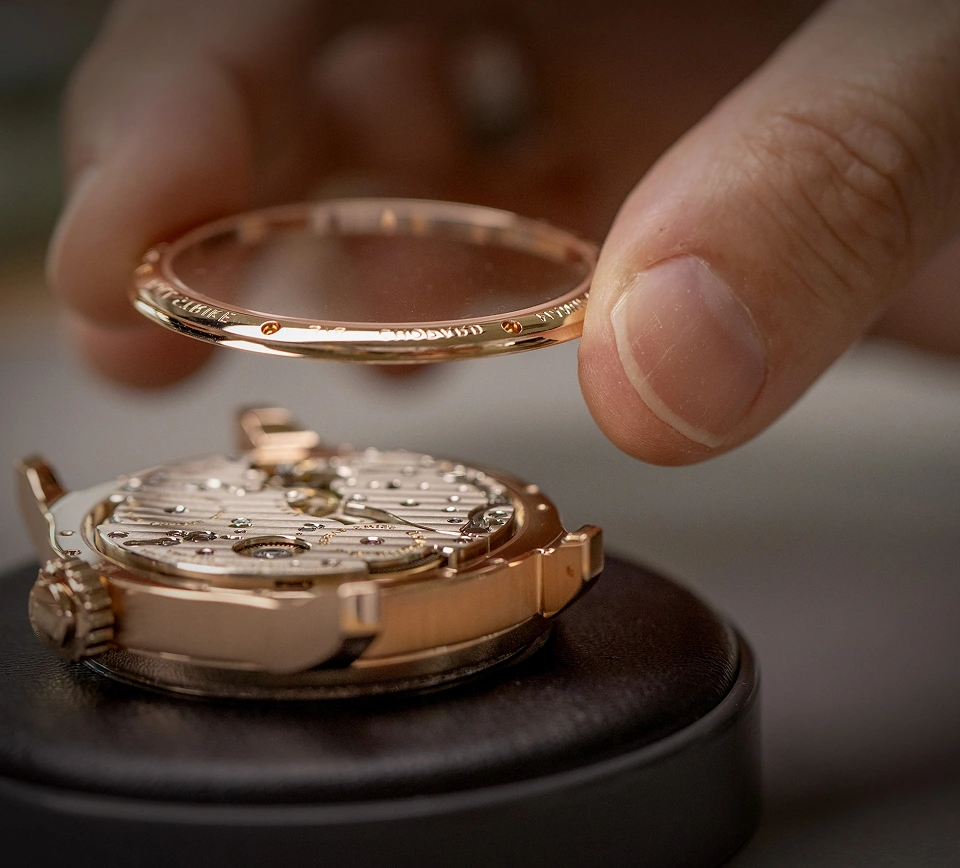
Chopard also introduced a world-first innovation in this model: sapphire crystal gongs machined from the same block as the watch’s crystal glass. This construction turns the entire case into a resonator, producing tones that are exceptionally pure, resonant, and crystal-clear compared to traditional metal gongs. Each strike carries the clarity of a fine crystal glass, transforming the Full Strike into a miniature concert hall on the wrist.

Experts at the Helm

Watchmakers Christophe and Sandro are behind some of Chopard’s most intricate creations. Christophe joined the maison in 1998, followed by Sandro in 2006. Both have refined their savoir-faire year after year.

Christophe joined Chopard in 1998 and has since become one of the maison’s key specialists in Grand Complications. His work centres on the assembly and adjustment of some of Chopard’s most complex movements, including minute repeaters, where precision, patience and acoustic sensitivity are paramount. With hundreds of components requiring manual fitting and regulation, each piece demands weeks of concentrated work. Over time, Christophe has refined a meticulous approach that balances traditional handcraft with the technical demands of modern haute horlogerie.

Sandro followed in 2006, entering the Grand Complications workshop after completing his apprenticeship within the manufacture. He specialises in tourbillon movements, a discipline requiring exceptional control over regulation and long-term performance. Working on calibres certified for both precision and finishing, Sandro’s role involves assembling, adjusting and testing mechanisms where tolerances are measured in microns. His work reflects a continuity of skills passed down through the atelier, reinforcing Chopard’s commitment to sustained, in-house expertise.

The Sound of Time

For more than two centuries, the minute repeater has been revered as one of the highest expressions of watchmaking, its intricate structure largely unchanged due to the sheer complexity of the mechanism. Far from ordinary, it unites hammers, gongs, a mainspring, gear wheels, and an escapement in a delicate choreography designed to relay the hours, quarter hours, and minutes through sound. While other manufactures have successfully sought ever-greater clarity and resonance, Chopard has gone even further, reimagining the very acoustics of the complication with its groundbreaking crystal gongs.

This complication chimes out the notes C sharp and F – and the signature clarity and tonality of the sound this produces is incomparable to that of a steel minute repeater mechanism. The sapphire crystal minute repeater is unique, with Chopard remaining the only Swiss watch manufacture to use the material as an acoustic generator and amplifier.

Artisan of Movement Decoration

Véronique

I am a patient person: you have to be very determined to learn a trade like this. You must be a perfectionist to do a truly excellent job.

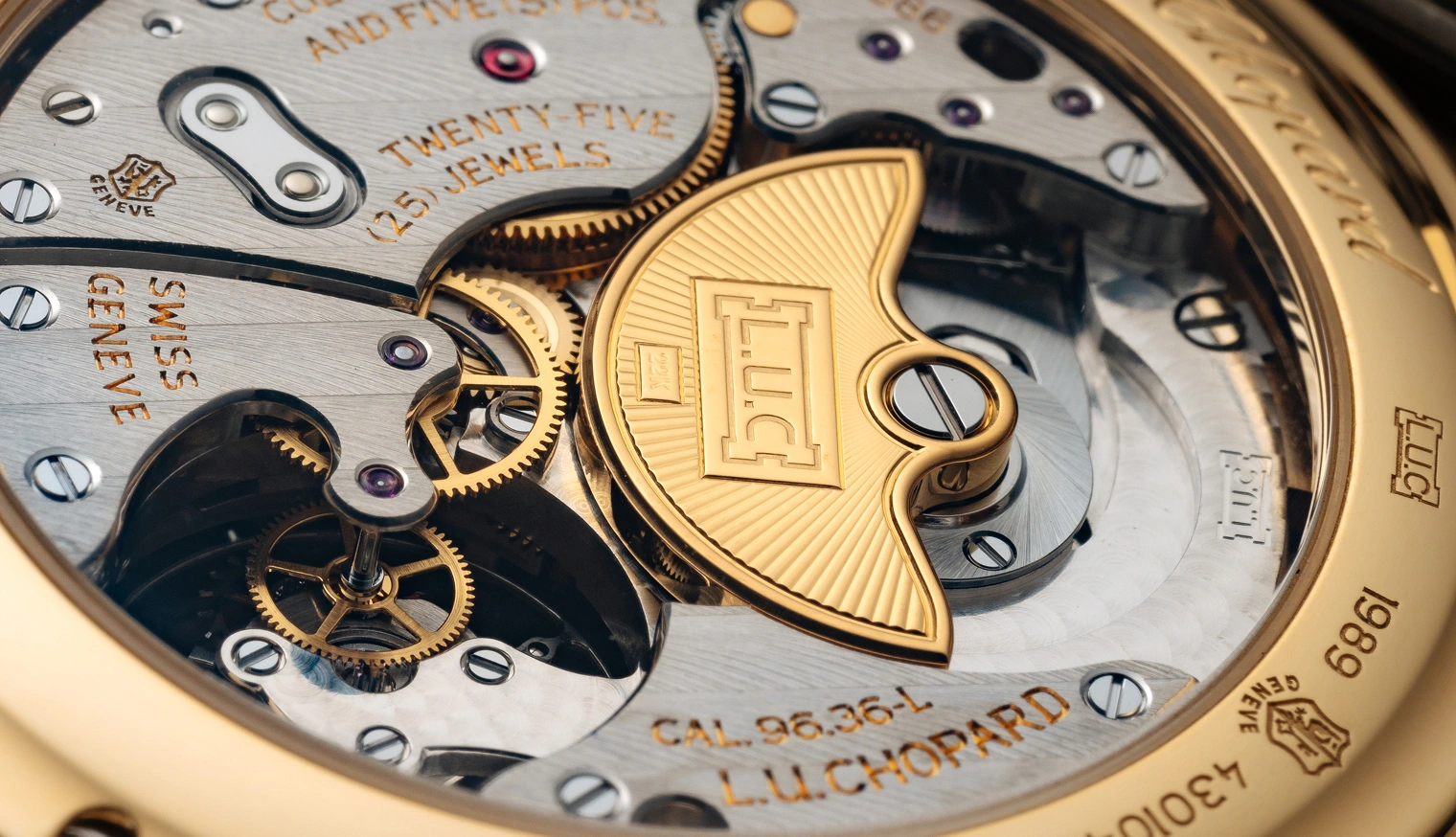
Véronique works as a chamfer, bringing every component to life and ensuring that each watch reaches the high standards of the Geneva Seal. Thus, she specialises in the art of decoration, from Côtes de Genève, bevelling, circular-graining and circular satin-brushing to sunburst patterning.

Hand-finished Excellence

Drawing on the tradition of circular graining, circular satin-brushing transforms each component into a subtle display of craftsmanship and light. The technique involves an artisan pressing 9-micron sandpaper against a rotating surface, leaving behind an exquisitely smooth finish that shimmers with quiet brilliance. A single piece can take several hours in order to meet the standards of the coveted Geneva Seal.

Artisans such as Véronique spend years learning how to get a feel for the perfectly finished component. If an artisan doesn’t stop at the exact right moment, a component can become deformed. It is not only the craft that artisans learn to understand, but the delicate components themselves.

The coveted Poinçon de Genève is awarded only to movements that meet the strictest standards, with every trace of machining removed to reveal a pristine surface. Each element of a L.U.C watch movement is carefully bevelled with micromotors, breathing life and radiance into the mechanism.

Côtes de Genève imparts a delicate sunburst effect to the visible bridges, with lines radiating from a single point. Reserved for aesthetic surfaces, this decoration never touches functional parts, preserving perfect precision while elevating the movement to an intricate work of art in its own right.

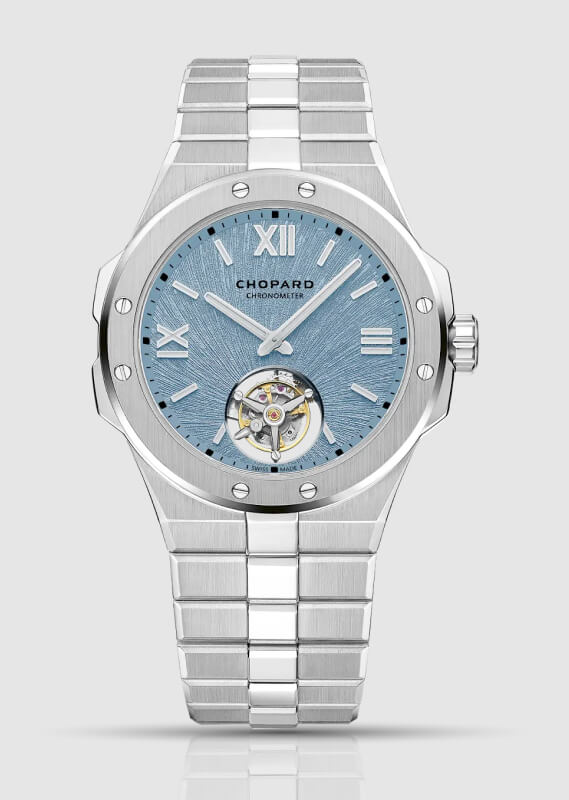
Alpine Eagle Flying Tourbillon

Alpine Eagle Flying Tourbillon

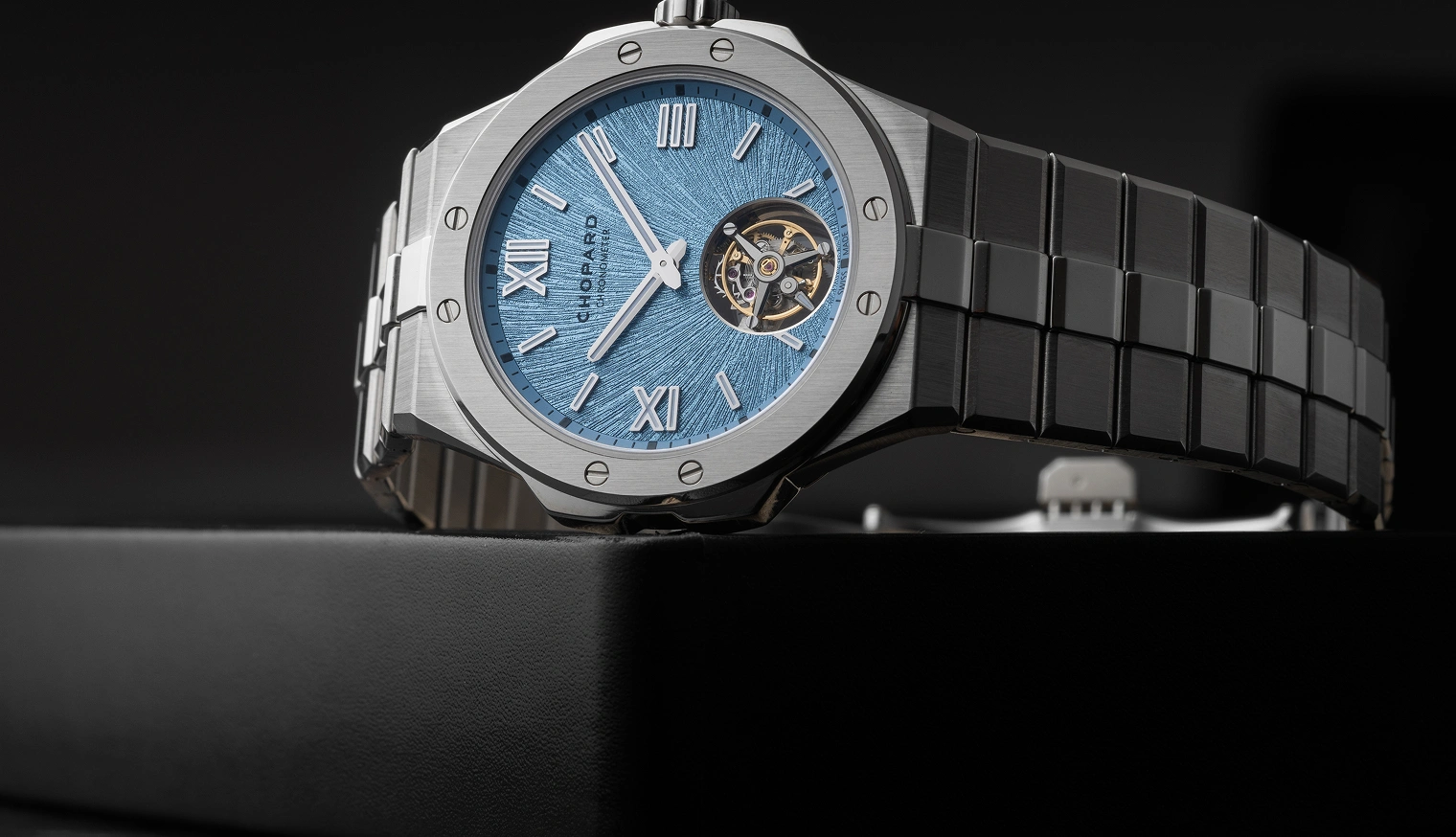
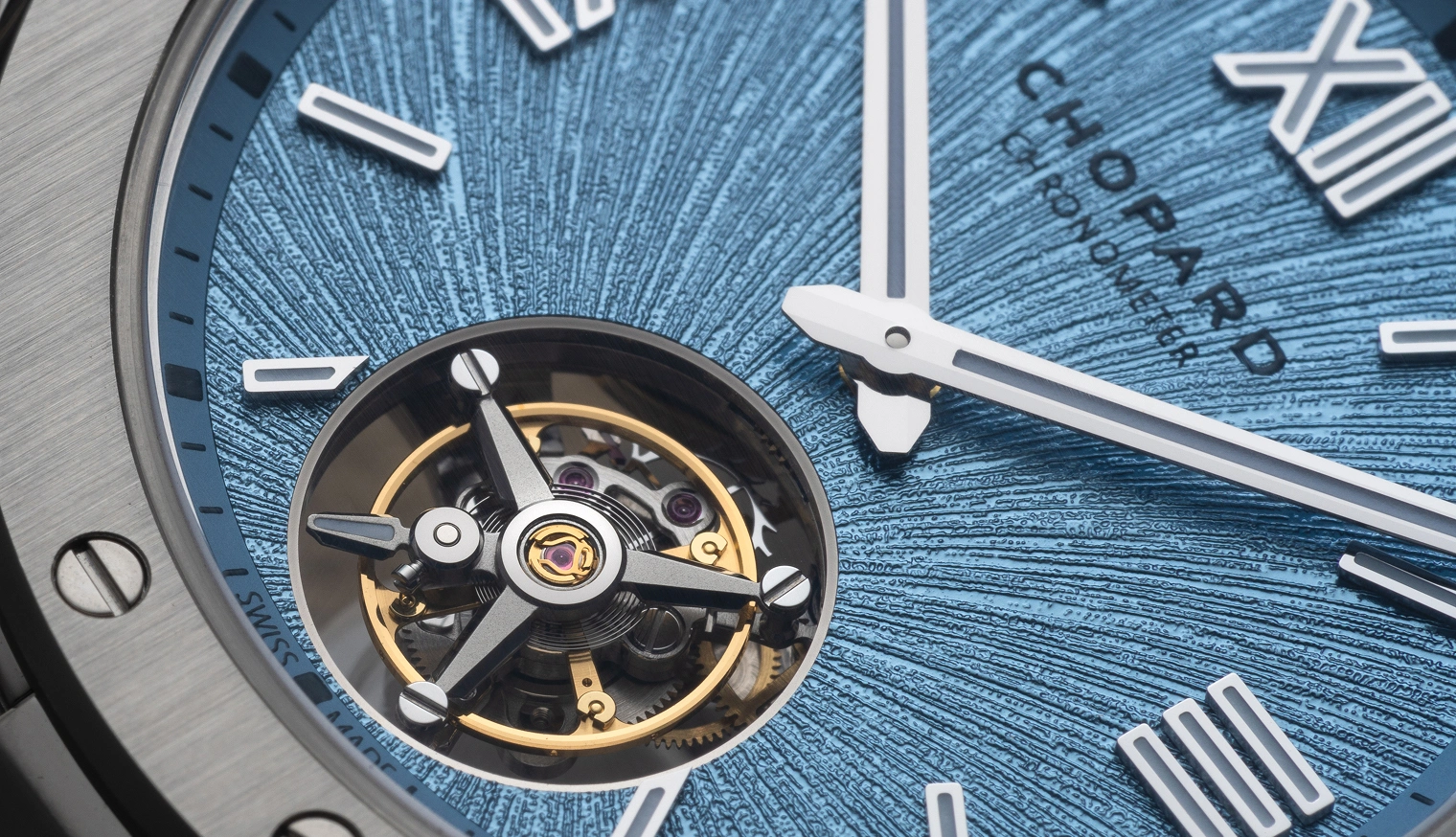
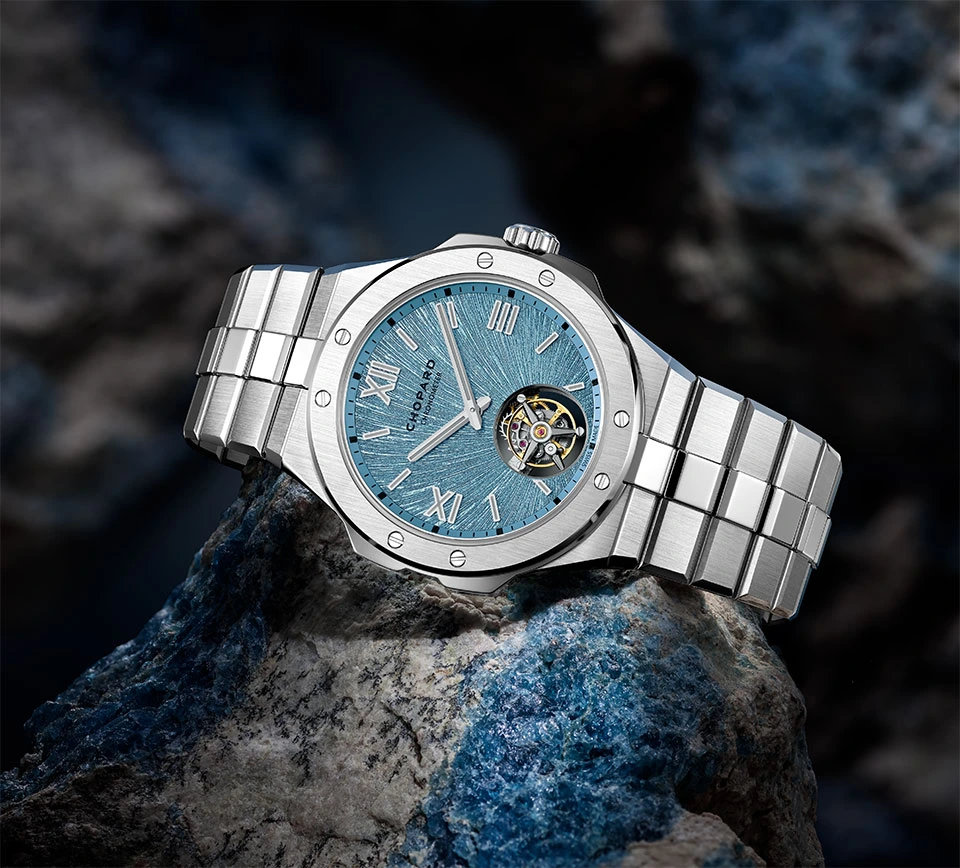
The Chopard Alpine Eagle Flying Tourbillon Ref. 298616-3003 brings true haute horlogerie into the collection’s sporty-chic language, pairing a 41 mm Lucent Steel case and integrated bracelet with a ‘Rhône Blue’ dial stamped with a radiating eagle-iris motif, opened at 6 o’clock by a flying tourbillon.

With an 8 mm profile, it stays remarkably slender for a modern tourbillon sports watch, while retaining a robust 100-metre water resistance and sapphire crystals front and back.

Balanced proportions, crisp finishes, and the visual “floating” effect of the cage make the complication feel purpose-built rather than ornamental.

Calibre L.U.C 96.24-L

Calibre L.U.C 96.24-L

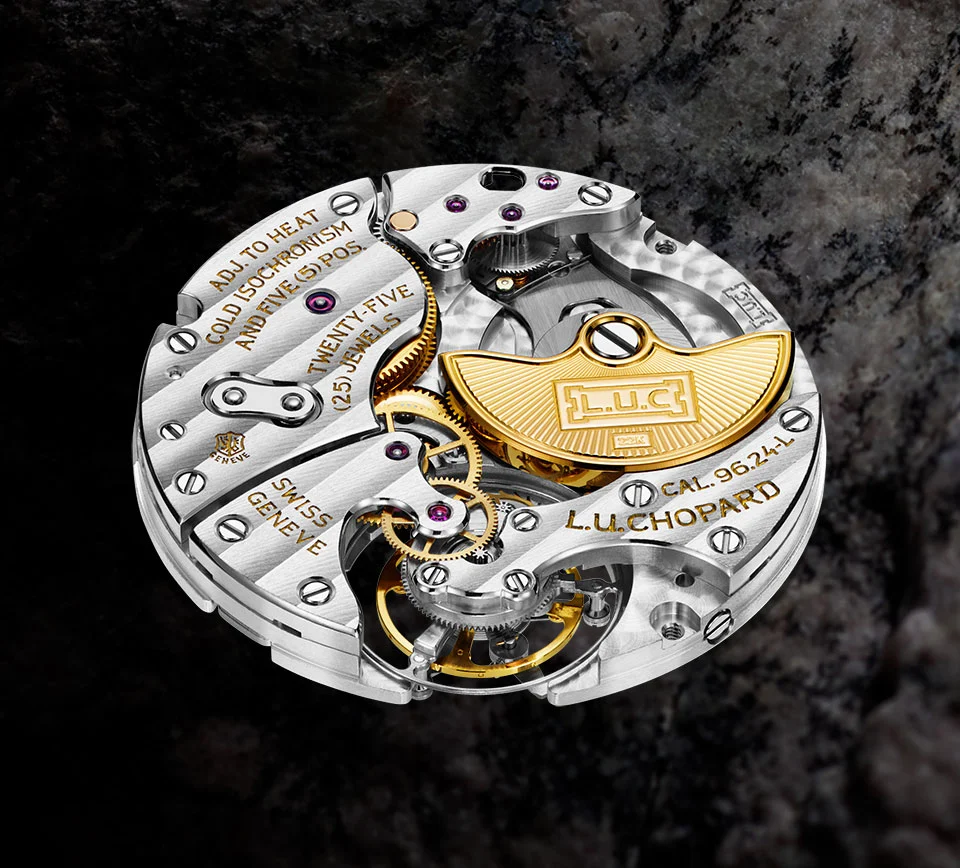
Inside beats calibre L.U.C 96.24-L, an ultra-thin automatic movement just 3.30 mm high, developed from the Manufacture’s L.U.C 96 lineage.

Powered by a micro-rotor and Chopard Twin architecture (two coaxial barrels), it delivers a 65-hour power reserve and pairs chronometer certification by COSC with the Poinçon de Genève—an exceptionally rare combination in a flying tourbillon.

Fleurisanne Engraving

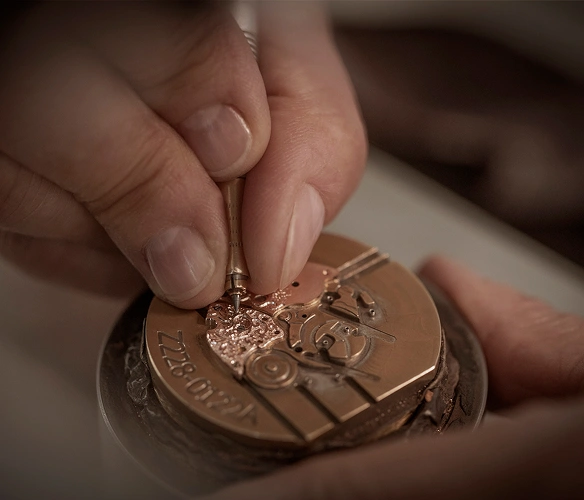
Fleurisanne engraving, a decorative art that flourished in the 19th century, gave Swiss watchmaking in Fleurier its distinctive aesthetic. Bridges and movement plates were adorned with scrolling volutes and floral motifs, each detail turning the mechanism into a work of art and feat of precision.

This tradition might have remained in obscurity had Karl-Friedrich Scheufele not encountered a gold watch in the L.U.CEUM, Chopard’s museum in Fleurier, its movement engraved in the old style. Inspired, he revived the technique for the Maison’s most exceptional pieces, reserving it exclusively for unique or highly limited editions. One such collection of a mere eight watches required a full year of engraving before the series could be completed.

Fleurisanne Engraving Artisan

Nathalie

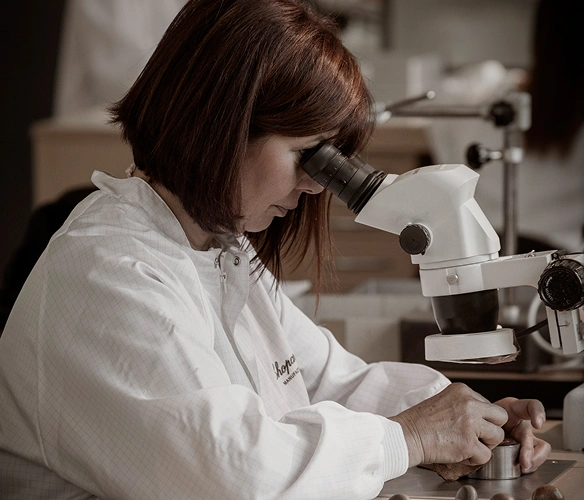
The responsibility for this revival rests with Nathalie, who joined Chopard in 2004 as a movement decoration artisan and has since become a master of Fleurisanne engraving.

Over the years, Nathalie has expanded her repertoire with the same quiet determination that defines her engraving work, embracing new techniques that demand both patience and an intuitive feel for materials. Her evolution reflects a commitment not only to preserving historic skills, but also to exploring the full expressive potential of decorative craftsmanship within haute horlogerie.

Mastering The Art

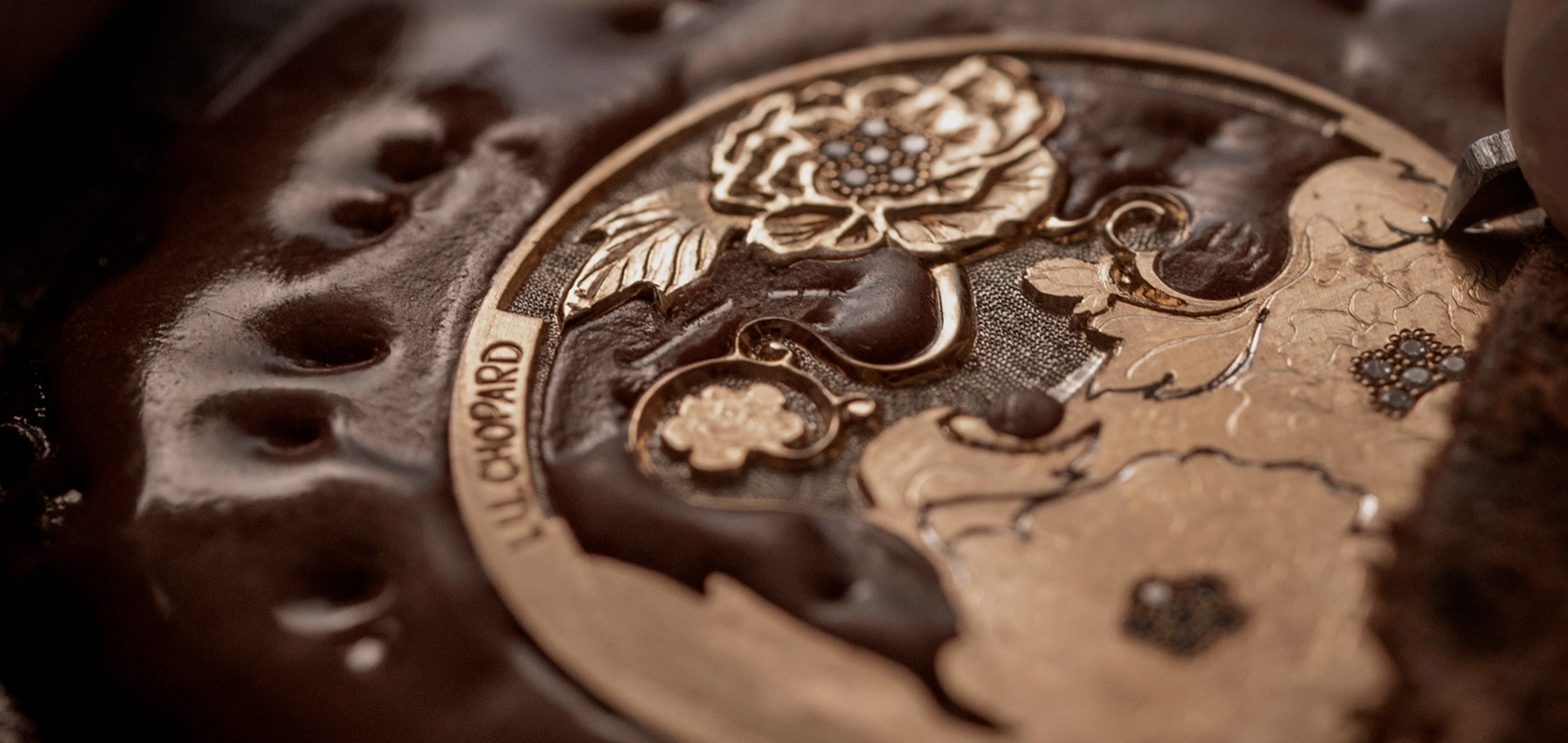
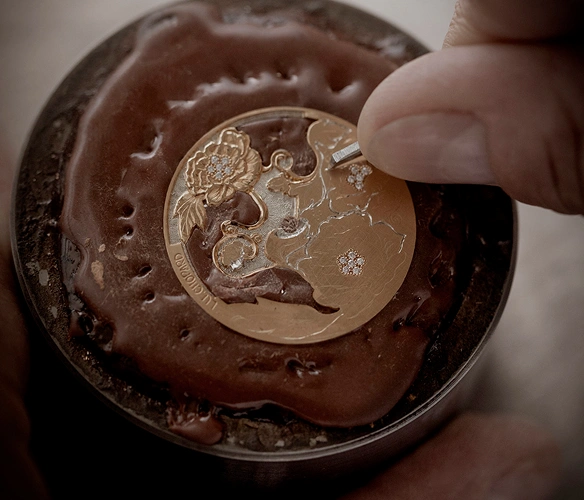
Her craft begins at the drawing stage: seated at her bench, she sketches each motif freehand in pencil directly onto the bridge. Using gravers she has fashioned and sharpened herself, she cuts away the surrounding material so that flowers and volutes rise in delicate bas-relief. The background is meticulously refined bit by bit with the same tools, before the motifs are polished – a perilous task given the softness of gold. The final result is a play of light that creates an unmistakable vitality.

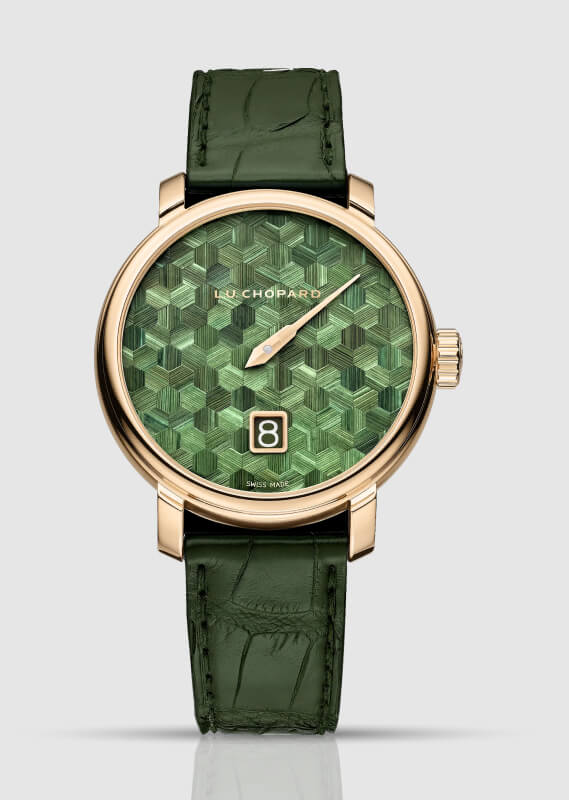
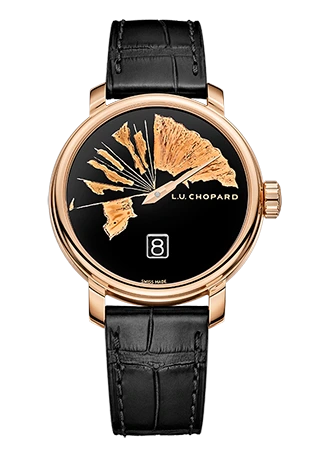
Decorating in this manner demands not only skill but also time. Some of Nathalie’s tools have served her for over 15 years – files, punches and gravers honed to ensure no trace mars the engraved grooves. Each mark she makes reflects patience and precision, the hallmarks of a craft where the traditional human touch is both visible and essential. Beyond engraving, Nathalie has also mastered on her own the delicate art of straw marquetry, applying this rare decorative technique to create intricate, light-catching patterns. Her expertise is showcased in the 2025 L.U.C collection, notably on a model with a striking green dial, where the marquetry transforms the surface into a luminous, geometric tableau, while subtly integrating a jumping hour function.

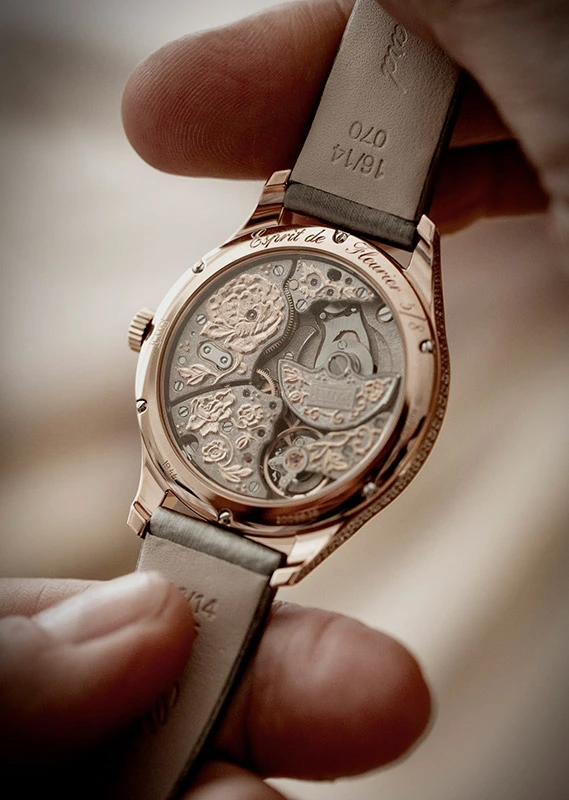
L.U.C XP Esprit de Fleurier

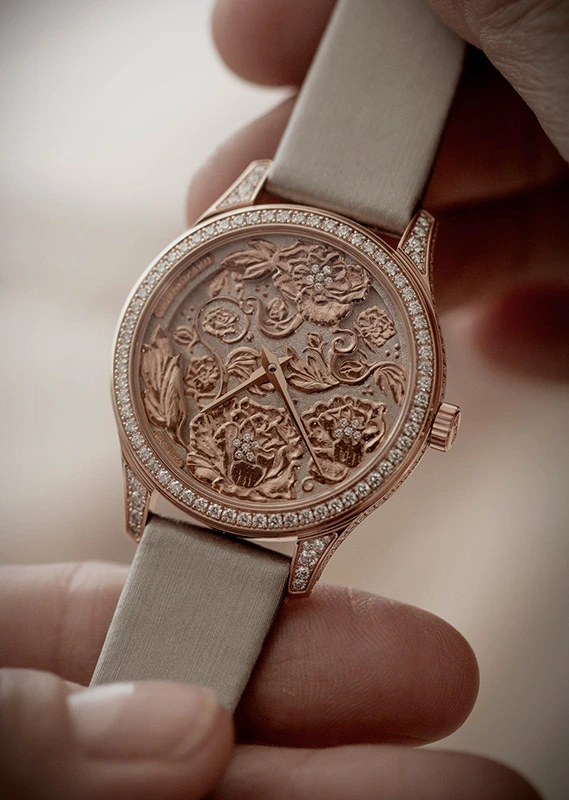
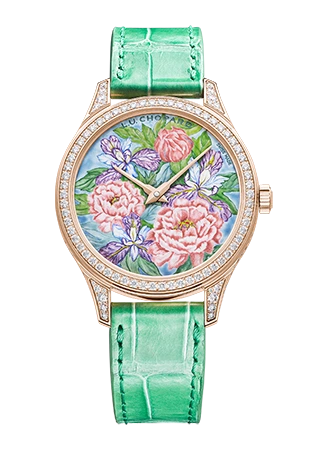
The Chopard L.U.C XP Esprit de Fleurier Peony, a stunning series of eight watches, represents Nathalie’s extraordinary artisanal talent. On these watches, the dial was carefully created by hand, showcasing a Fleurisanne engraving of gilded gold vines and peony flowers adorned with diamonds at their centres. Each of these stunning dials took over two months to create – no wonder there are so few. Thanks to a micro-rotor, these dainty watches, which are simultaneously works of art and emblems of both tradition and heritage, measure a mere 7.7 mm in height.

Master Enamel Artisan

Christophe

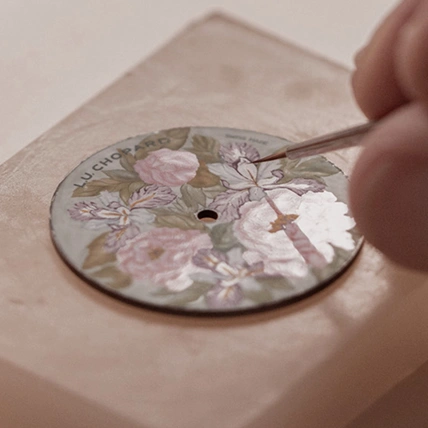
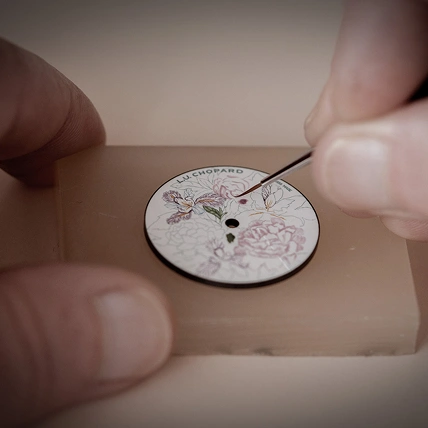
Over just a few centimetres and using only powder, a brush, and extreme heat, Master Enamel artisan Christophe strives to create a miniature piece of art designed to last an eternity using an age-old technique.

The Art of Enamel

Stamping, sunburst motif, enamel: Chopard is home to a number of crafts when it comes to creating dials. One, however, reigns supreme: Grand Feu enamel. For this particularly revered craft, the Maison turns to one single talented artisan: Christophe, who has now been with the Maison since 2019. His steady hand and instinct for colour allow him to create dials with a depth and radiance that simply cannot be replicated by any other technique.

But what is the story behind the creation of these mesmerising miniature artistic creations?

Crafting Colour

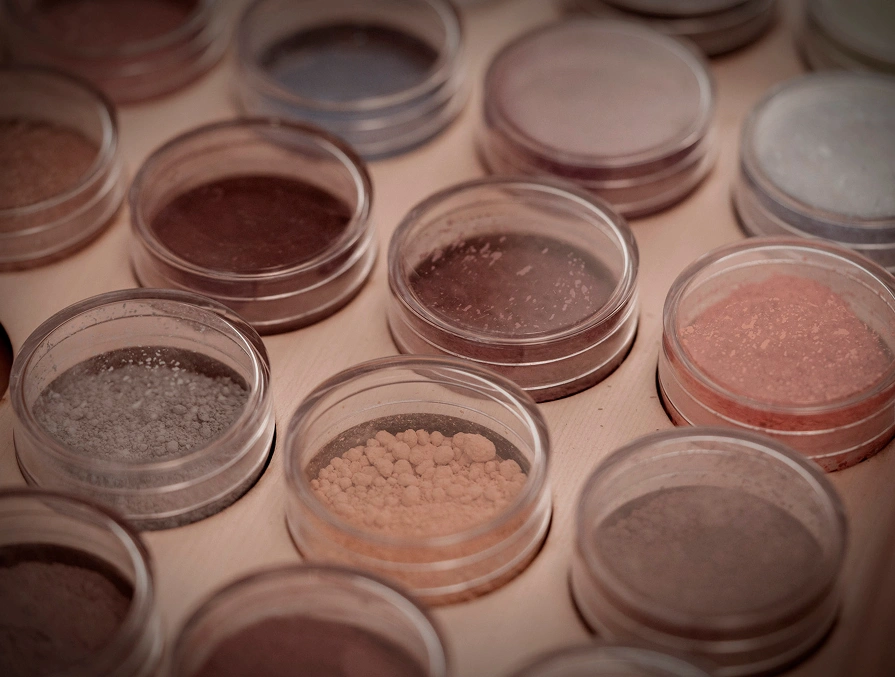
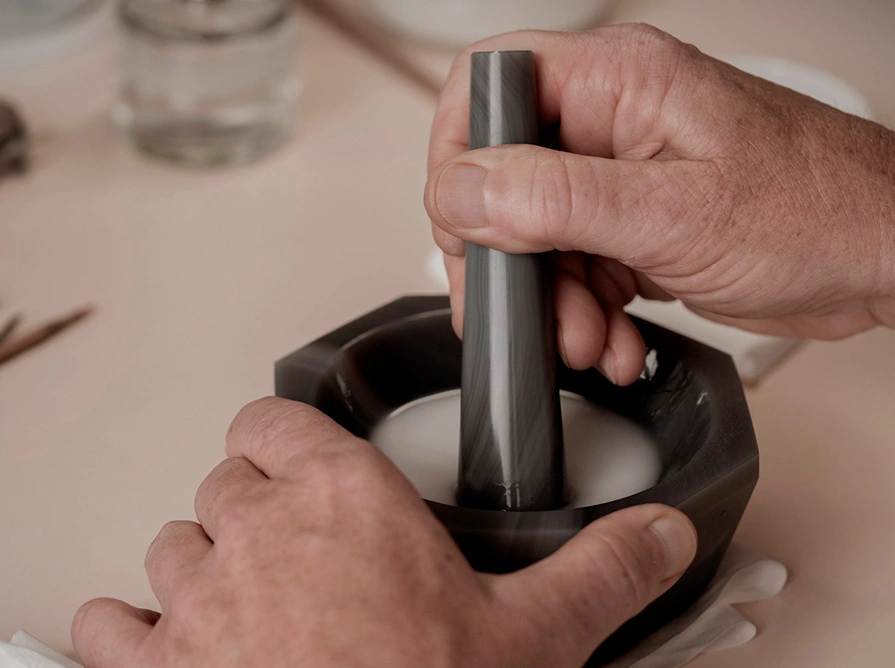
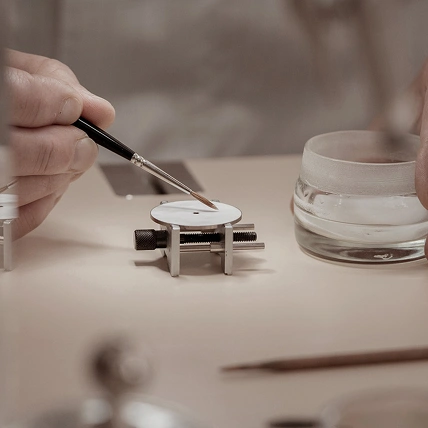
For Christophe, every enamel dial begins with sheets of coloured glass, tinted with metal oxides. Some are luminous and translucent, others richly opaque. Crushed into a fine powder and blended with pine oil, the glass is transformed into paint — the raw material of his craft.

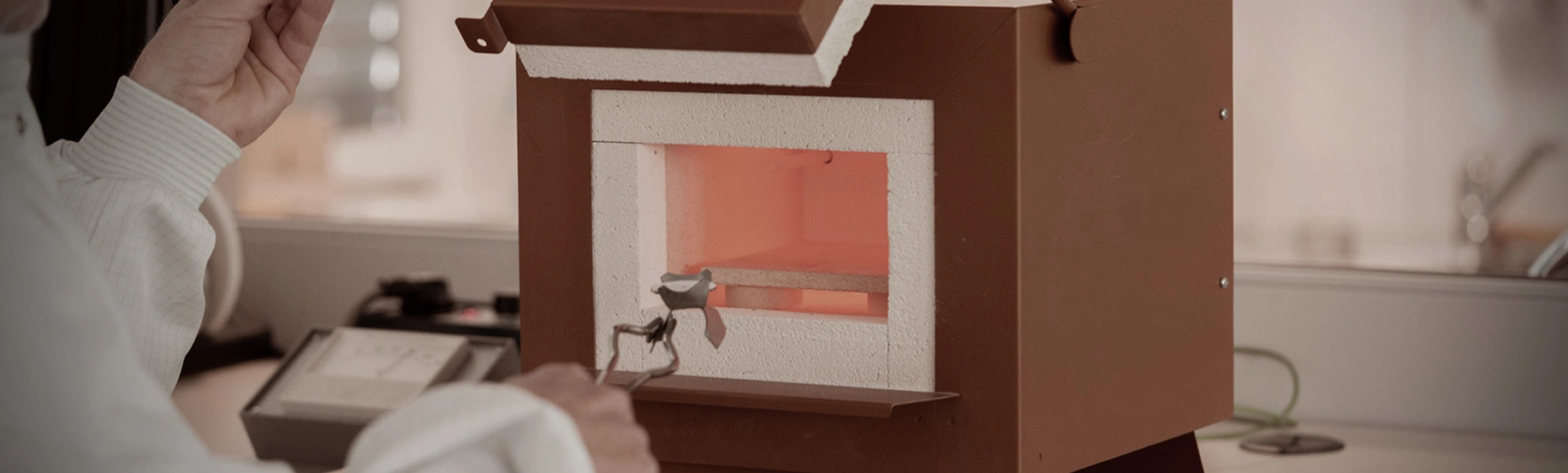
The process is meticulous. Each dial is coated, front and back, with successive layers of white enamel, each layer fired at high temperatures to achieve a flawless base. Christophe then applies colour with precision, knowing that no two shades melt at the same temperature. To avoid distortion, every hue is fired separately, before the final baking at 800°C fuses the enamel into a perfectly smooth surface.

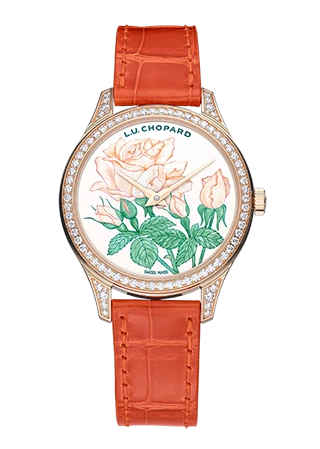
The result is more than decoration: it is art. Christophe’s dials are recognised for the graceful elegance of his painted faces and hands, and the lifelike vitality he gives to plants and natural motifs. To master this craft requires more than technical knowledge: it demands a draughtsman’s eye, an artist’s sensibility, and the patience to transform a watch dial into a miniature canvas.

The result of his handiwork: high watchmaking pieces to last a lifetime. Take a moment to admire the L.U.C XP Esprit de Fleurier models, appearing only as incredibly rare limited editions due to the intense labour, time, and expertise the making of each one of these miniature artworks, with their fine lines and depth of colour, requires.

Watch-Polishing Artisan

Rodeline

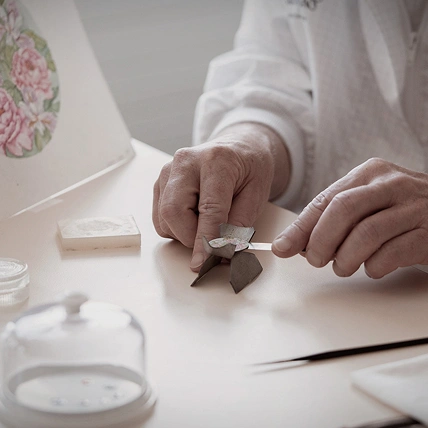
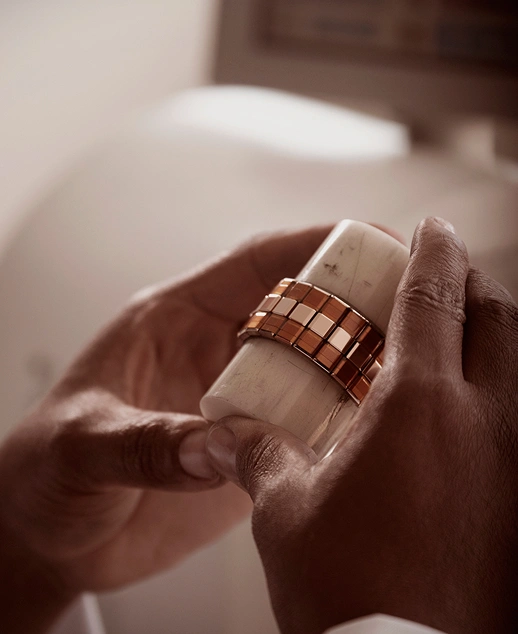
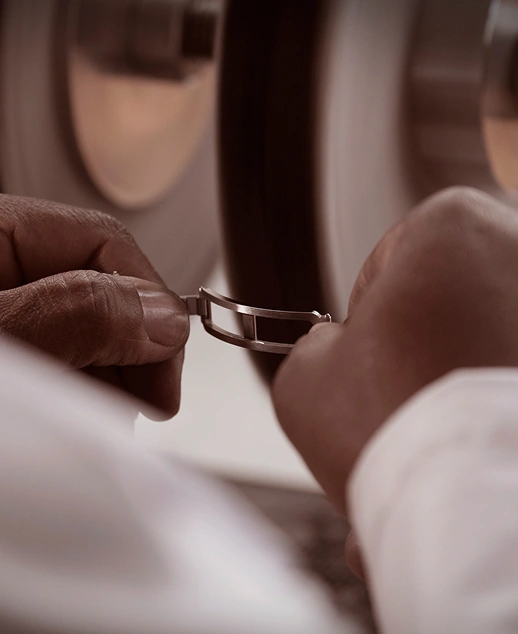
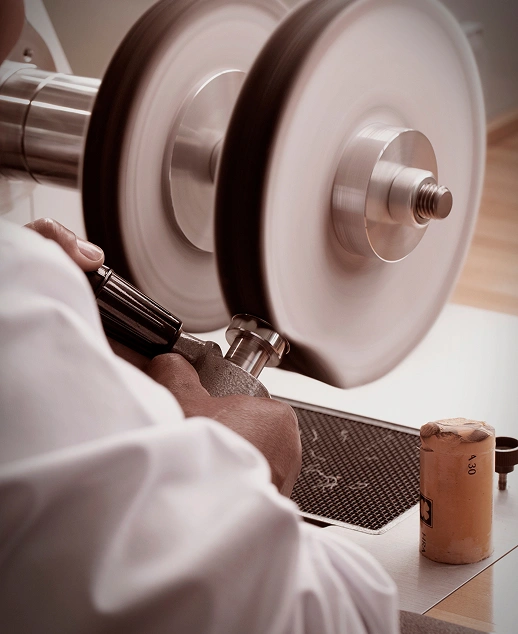
Rodeline first came to the Maison as an apprentice, learning the techniques and standards of meticulous craftsmanship from the Manufacture’s in-house trainers. After completing her years of training, Rodeline became a Watch-Polishing Artisan, responsible for giving each creation its finished appearance.

Impeccable Polishing

What better proof of Chopard polishers’ artisanal handiwork than the shining Mille Miglia watch’s robust case, or the handsome Alpine Eagle’s exquisitely finished tapered bracelets?

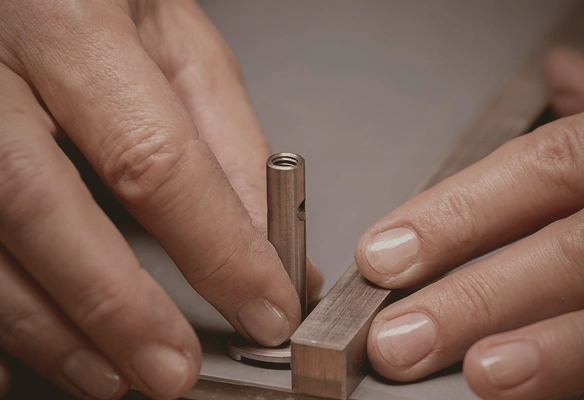
As with any craft, becoming a polishing artisan at Chopard is the result of years of training. Polishing artisans such as Rodeline use small lathes and pastes to meticulously reach every tiny corner of the watch and its various components and ensure that no dust, scratches, or rough surfaces are present on them, thus achieving the lustre that a luxury Swiss timepiece should exude.
The Chopard Tradition

From its origins in 1860 to its position today as one of the world’s most respected maisons, Chopard stands as a testament to craftsmanship, creativity, and emotion. Its artisans – masters of gold, movement, enamel, engraving, gem-setting, and finishing – preserve time-honoured techniques while continually pushing the boundaries of what high watchmaking and jewellery can be.
Whether through the pure acoustics of the L.U.C Full Strike, the poetic artistry of Grand Feu enamel, or the liberated brilliance of Dancing Diamonds, Chopard creates objects that transcend function to become living, beating works of art. Above all, the Maison remains guided by the human hands and emotions at its core – crafting not just watches and jewellery, but also expressions of great elegance, passion, and heritage.
Karl-Friedrich Scheufele

Co-President of Chopard

We wish to connect the heritage, traditions and savoir-faire of our history with a spirit of technical innovation and design to make the Chopard name even more meaningful and relevant for the next generation. However, we need to make sure that all traditional crafts are transmitted from the experienced artisans to the younger ones. It is our duty to keep all these unique skills alive from one generation to the next. My focus has never been on short-term but on the stability, independence, progress and authenticity needed to create a singular watchmaking voice for the next 25 years and beyond.

0
Would love your thoughts, please comment.x
()
x