Constellation Observatory compared: How Omega’s new gold dress watch positions against Rolex, Breguet and independent makers.

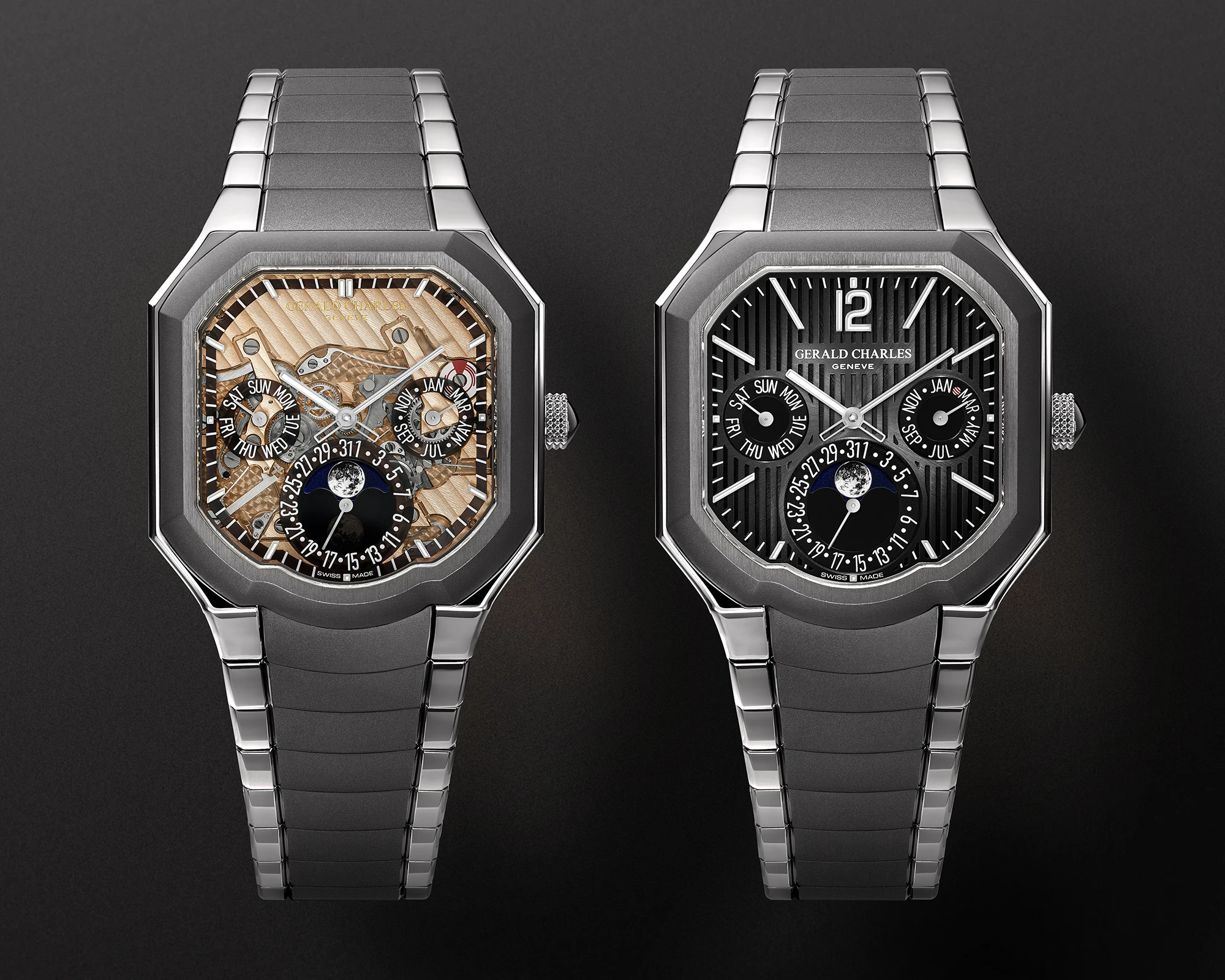
Presented at Watches and Wonders 2026 – the largest and most significant trade fair in the Swiss watch industry – independent Swiss watchmaker Gerald Charles expands its Masterlink collection with a fully in-house developed perpetual calendar: the Gerald Charles Masterlink Perpetual Calendar. Since the brand’s repositioning less than a decade ago, this timepiece represents its most complex creation to date, marking an important step in the evolution of its still relatively young portfolio of complicated watches. In this article, we take a closer look at the new release.
A defining feature of the new Gerald Charles Masterlink Perpetual Calendar is the curved and asymmetrical case shape of the Masterlink line, which has become a hallmark of Gerald Charles and was originally designed by Gérald Genta in 2005. In developing this distinctive case, Genta drew inspiration both from the curved façade and the octagonal dome of a 17th-century building in Rome designed by the Swiss-Italian architect Francesco Borromini.
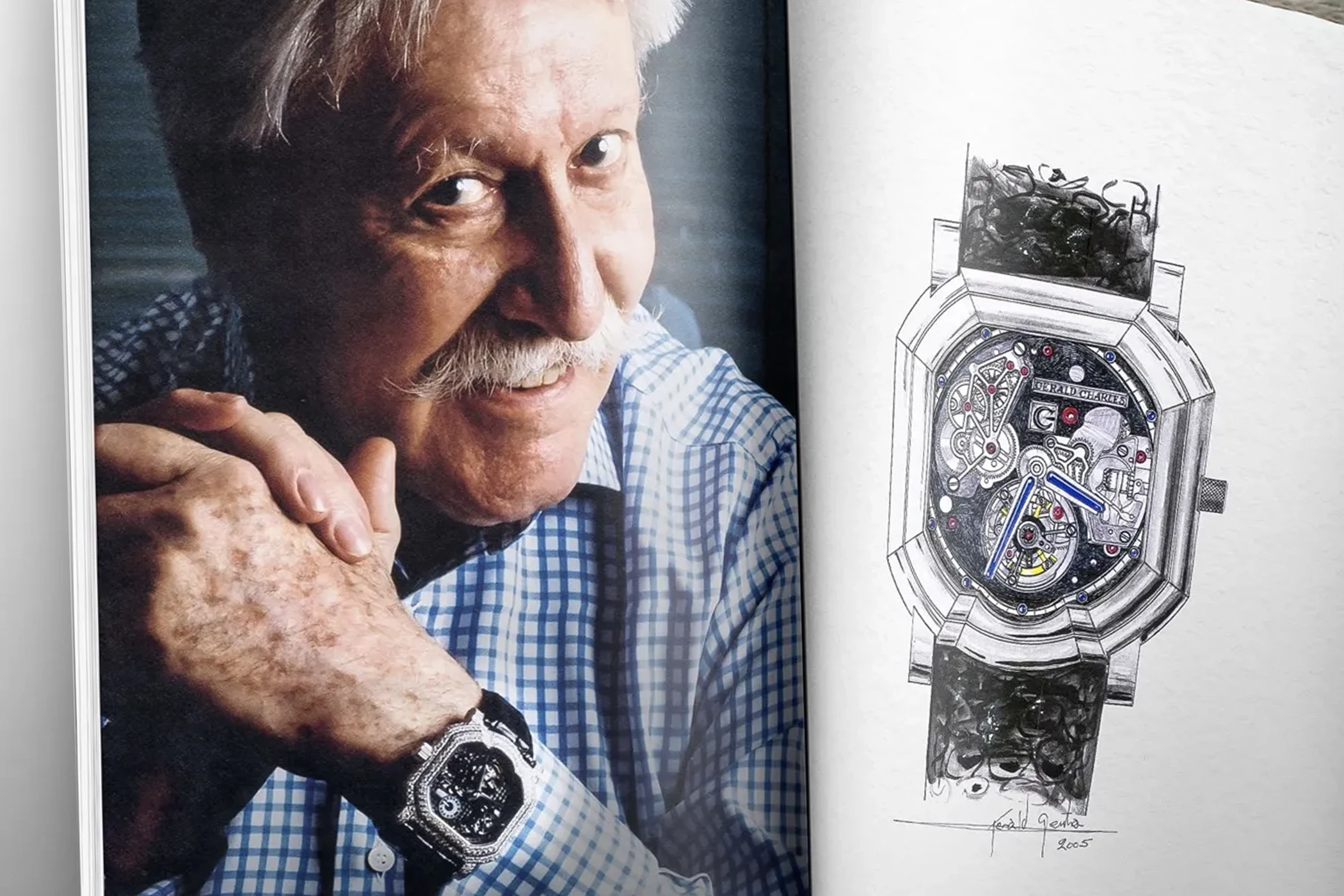
As one of the final designs created by Gérald Genta and strongly influenced by Roman Baroque architecture, the case of the new model is characterised in particular by an elongated octagonal form with uneven sides, a chamfered bezel that adds depth to the design, and a curved, “smiling” line at 6 o’clock, where Genta echoed the convex façade of the building.
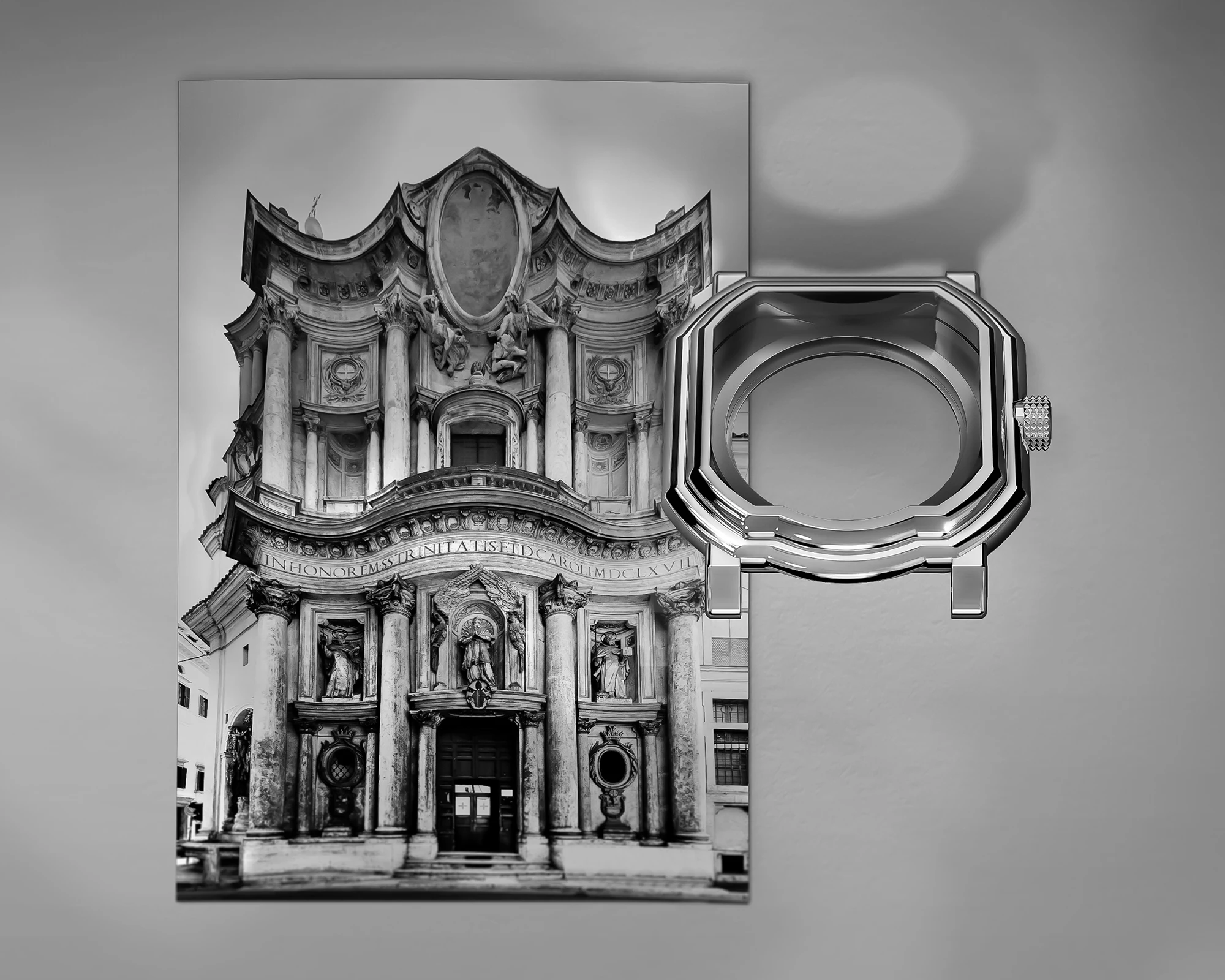
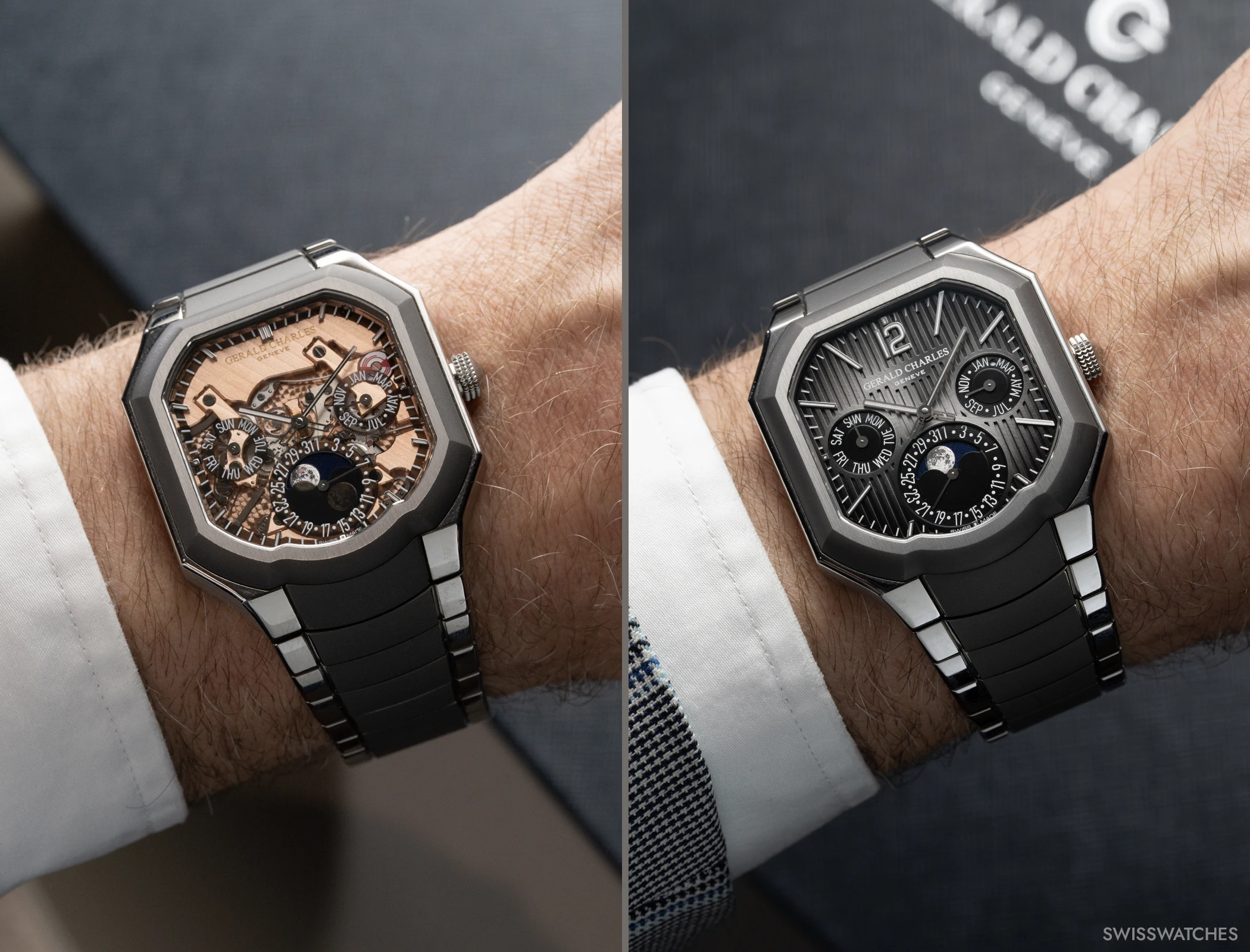
The result is a case that combines both angular and flowing elements, making it not only one of the few genuinely asymmetrical watch cases on the market, but also a defining signature of Gerald Charles, continuously explored through new materials and variations. In the case of this release, both the case and the bracelet are crafted from lightweight Grade 5 titanium, resulting in a total weight of just 97 grams with a case diameter of 40 mm and a thickness of 10 mm. In total, the case and bracelet comprise 184 components, of which 33 belong to the case and 151 to the bracelet.
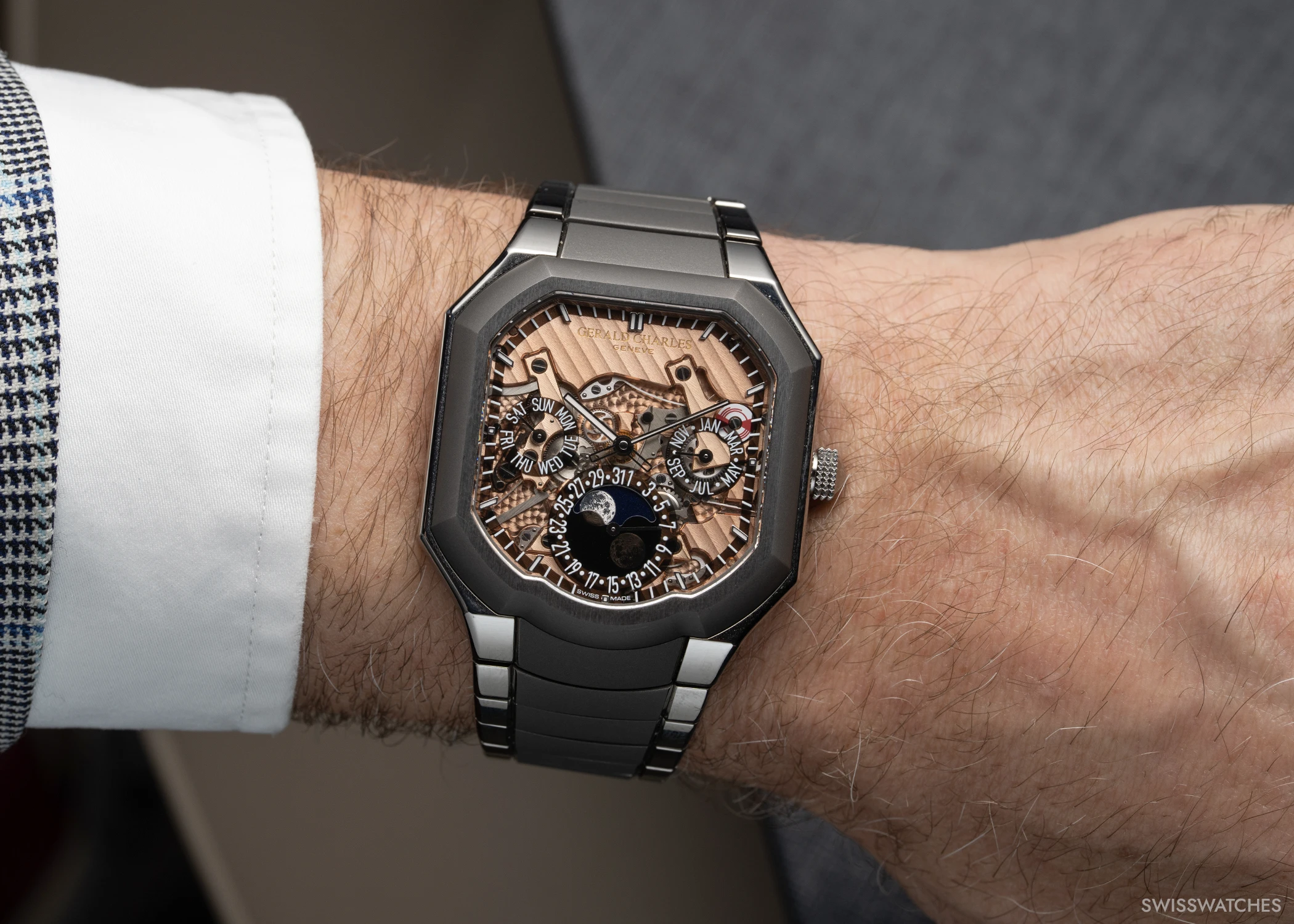
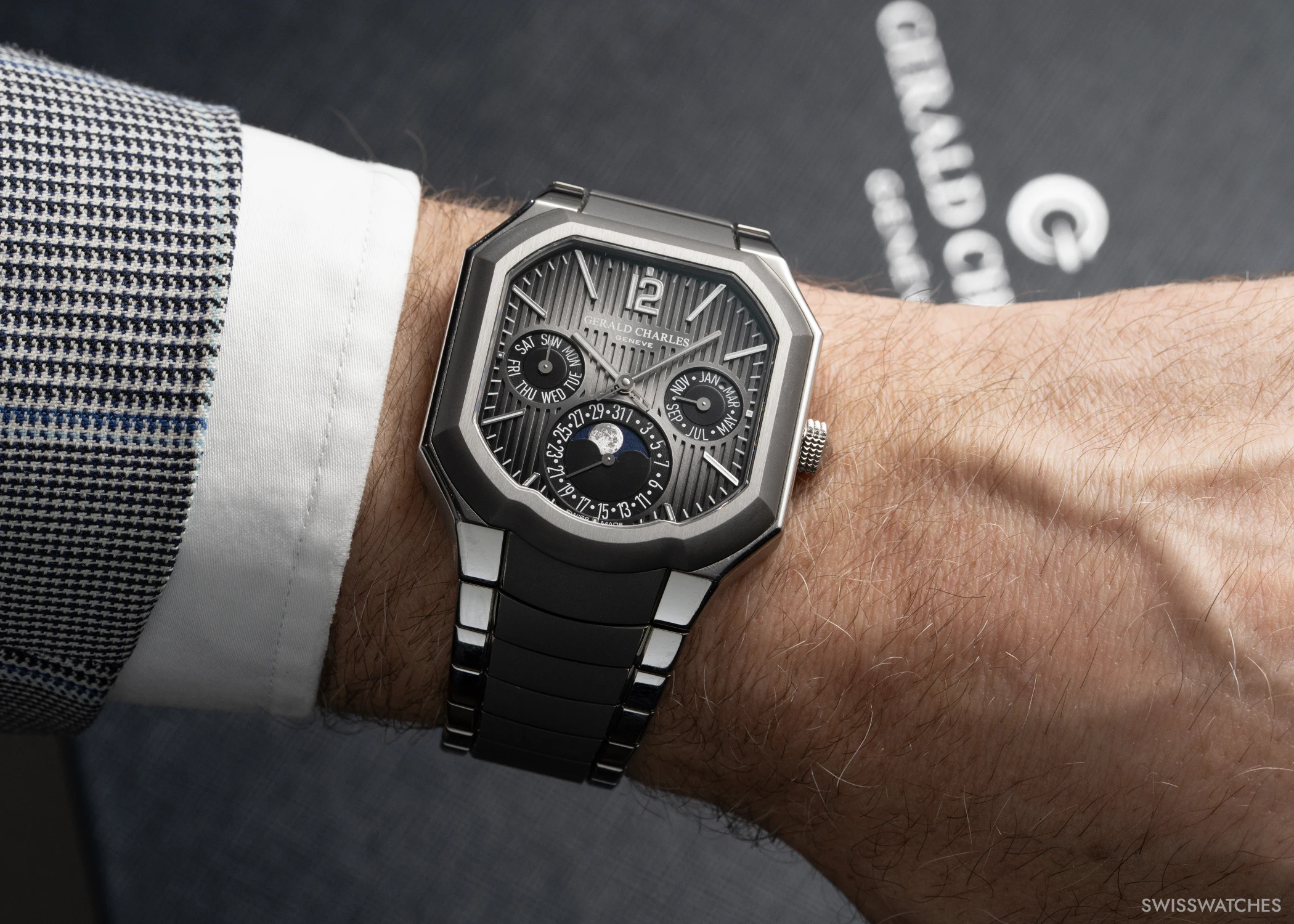
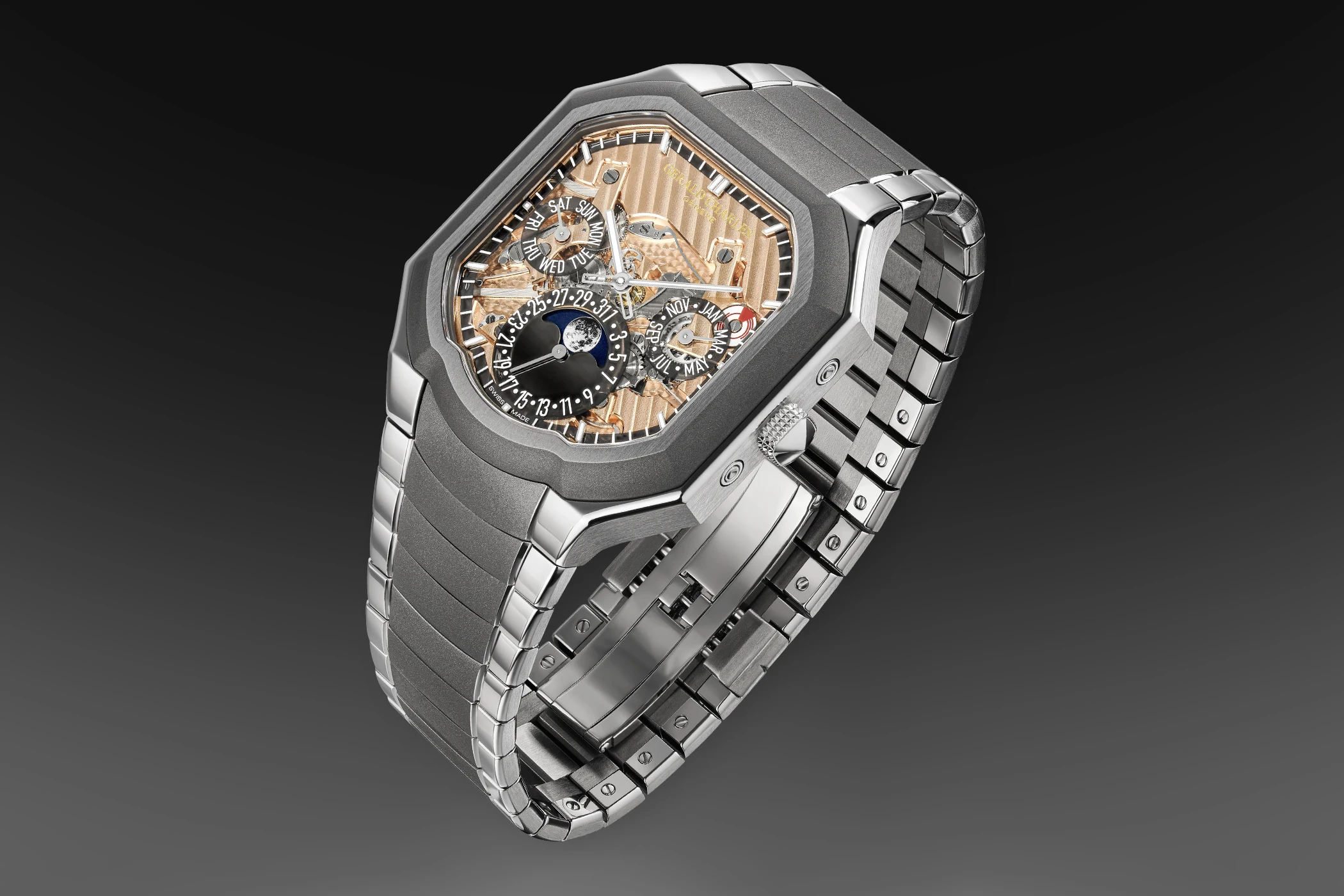
A distinctive visual character is achieved through the so-called “Darkblast” surface treatment – a variation of sandblasting – applied here to the bezel and the central bracelet links to create a dark tone with a subtly grained texture. These anthracite-grey elements are complemented by details that lend the case and bracelet a sense of fluid dynamism: beneath the bezel, polished surfaces and vertically brushed case flanks extend seamlessly into the lugs and continue across the 28 links of the bracelet, resulting in a cohesive overall aesthetic.
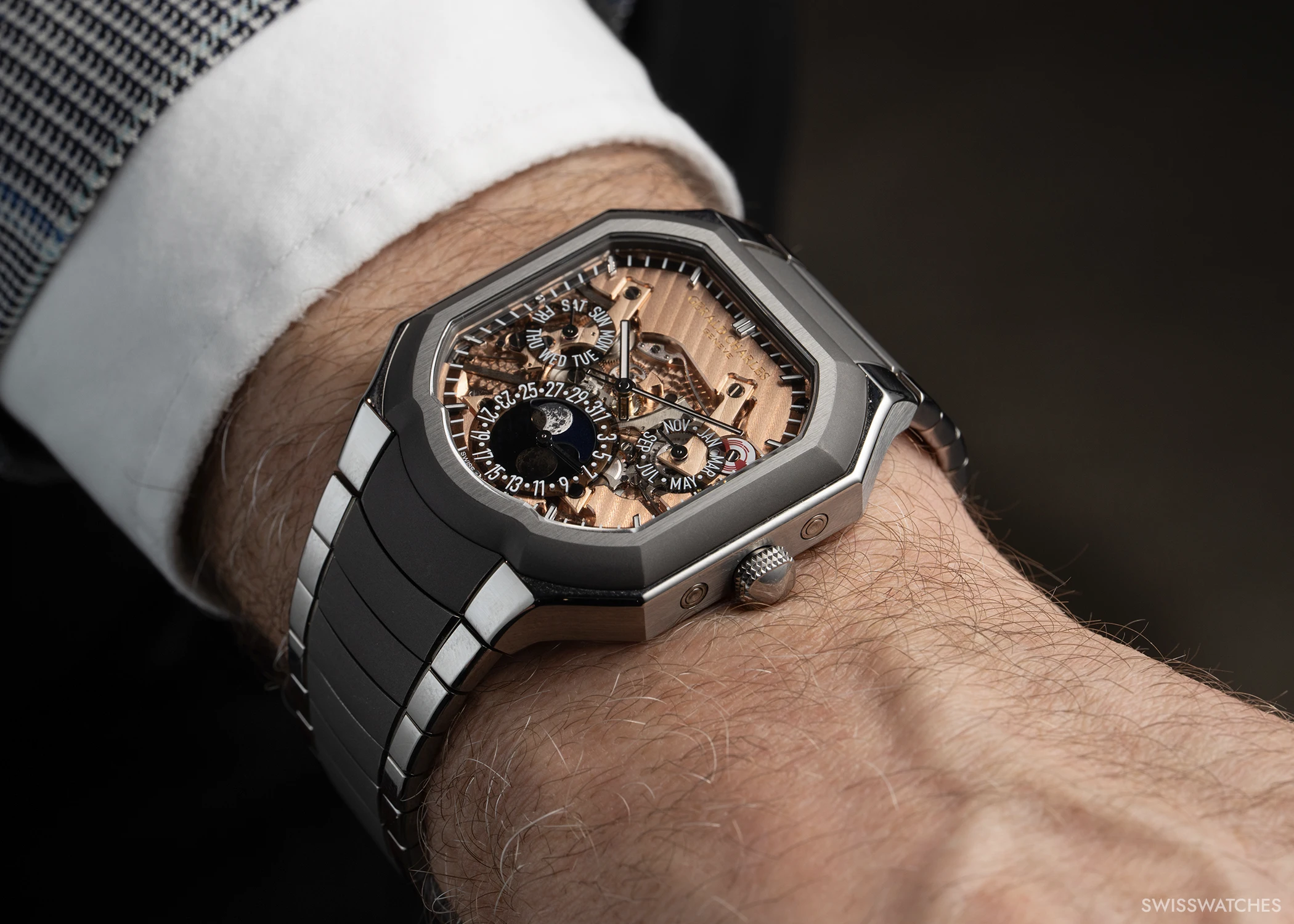
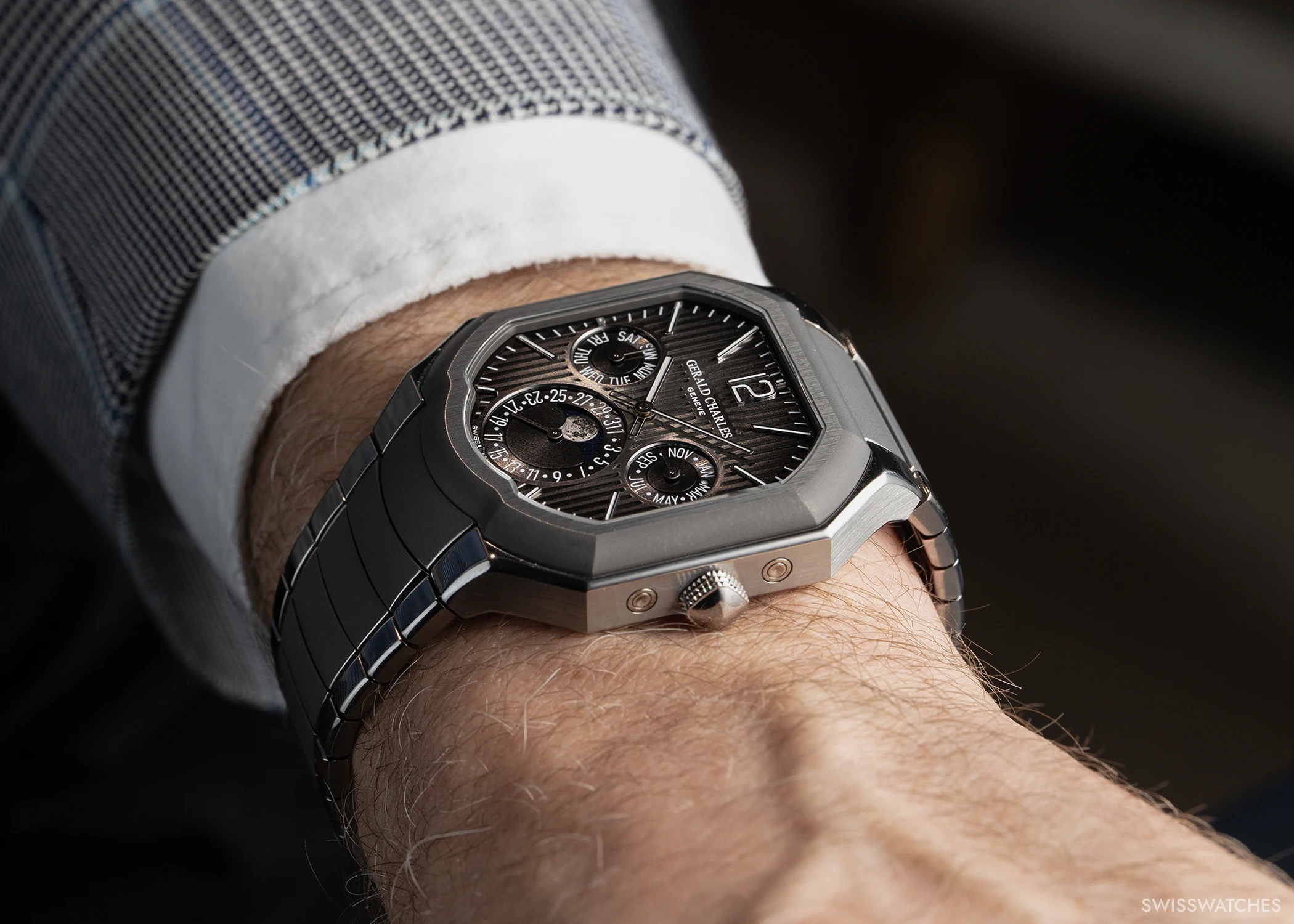
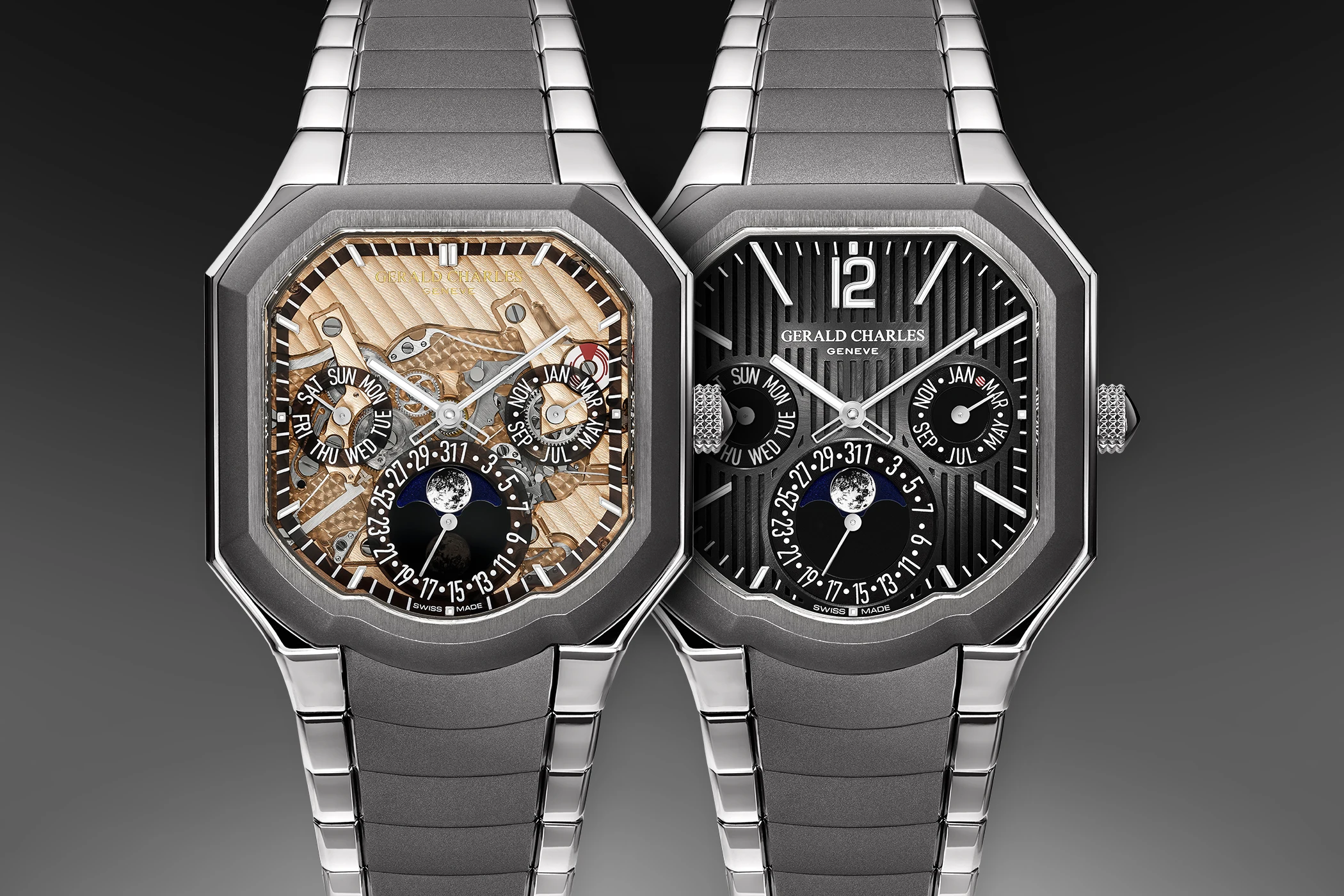
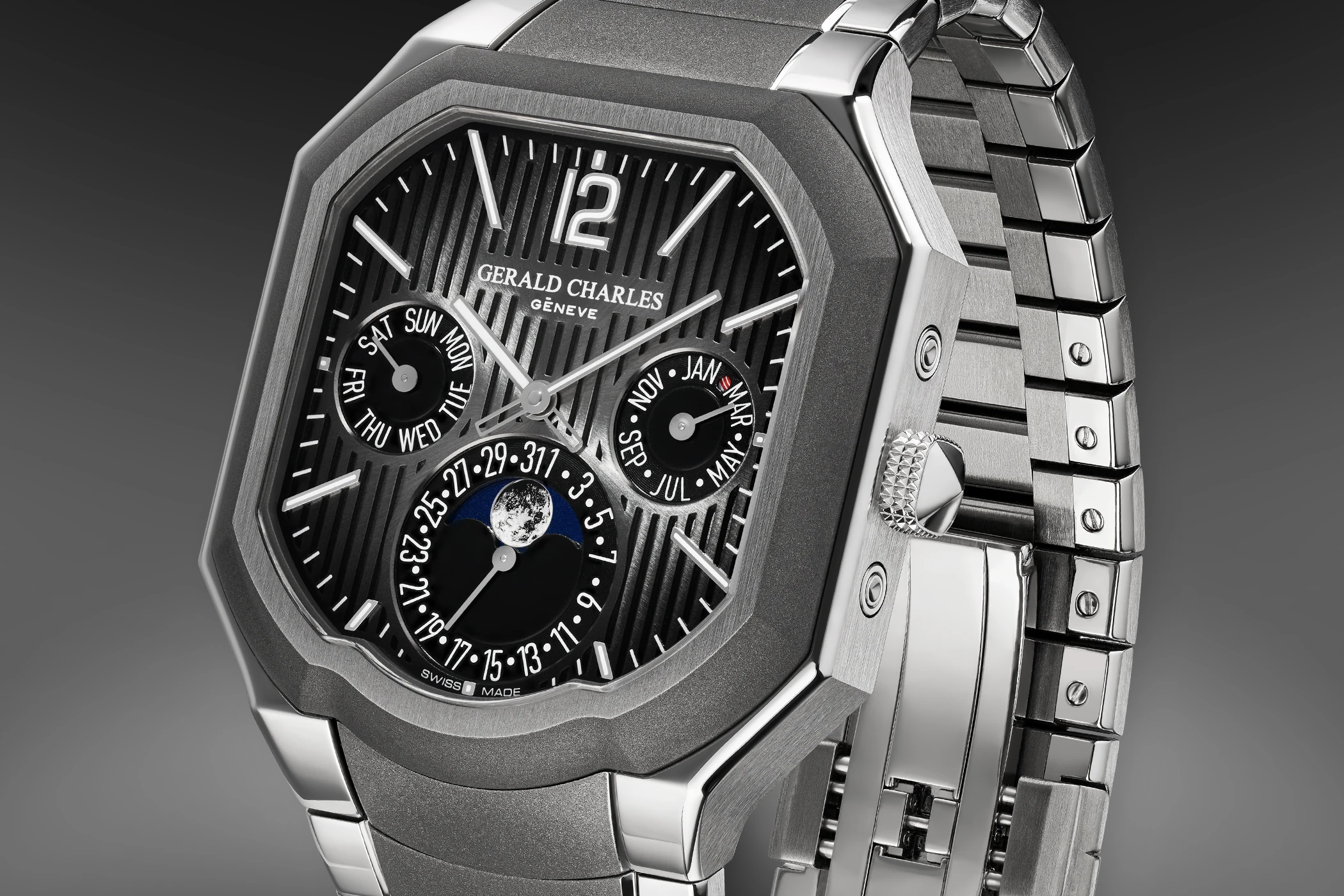
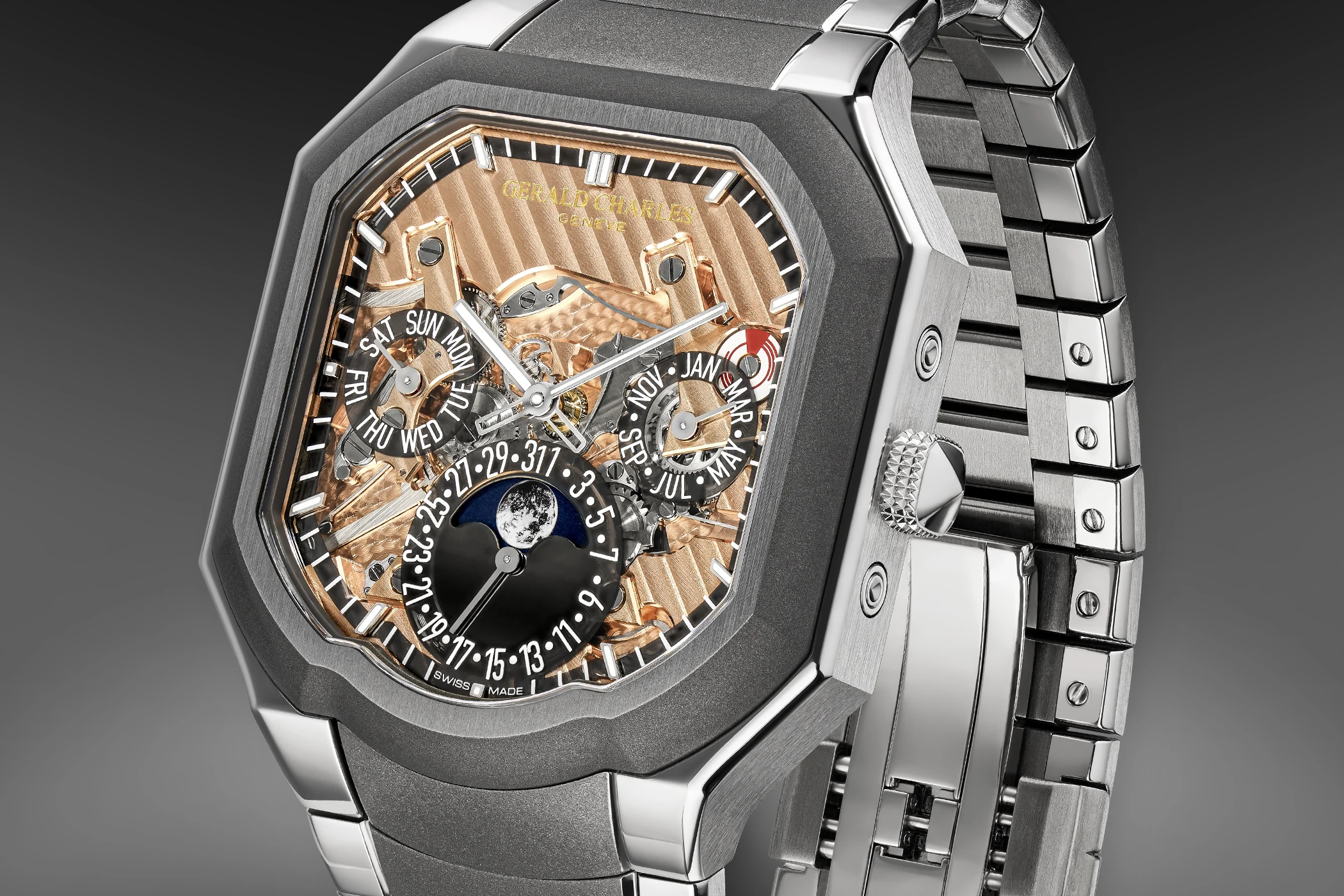
At launch, the most complex watch to date from Gerald Charles is presented in two versions, each featuring a distinct dial design. One variant is equipped with an anthracite-coloured, two-tier fumé dial that darkens from a lighter centre towards the periphery and is structured by a vertical, grille-like pattern with visible grooves. The second version is skeletonised and fitted with a sapphire dial, offering a clear view of the elaborately finished movement while also carrying the hour indices. Despite their visual differences, both versions are unified by rhodium-plated baton hands with white Super-LumiNova inserts, as well as by their display layout.
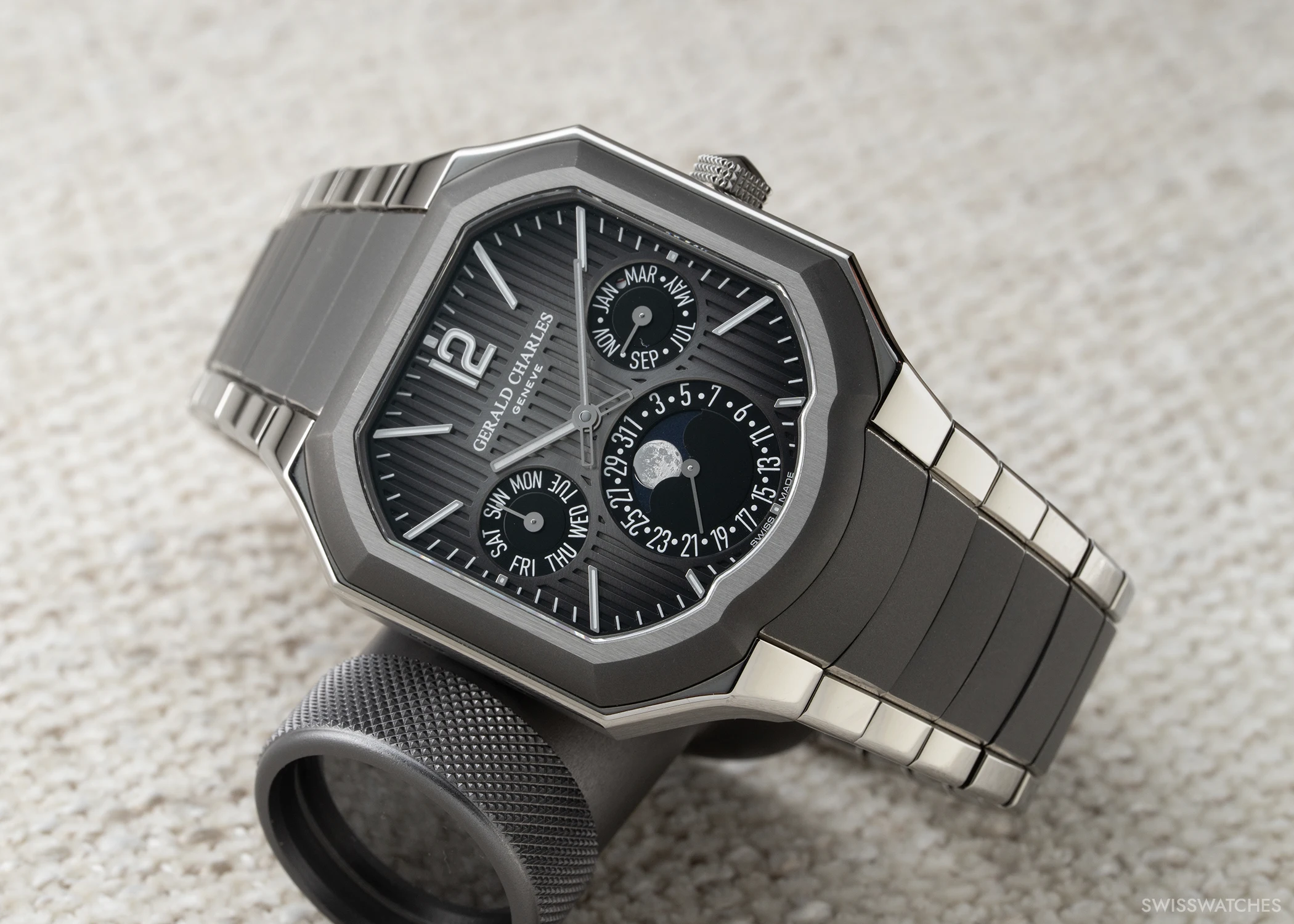
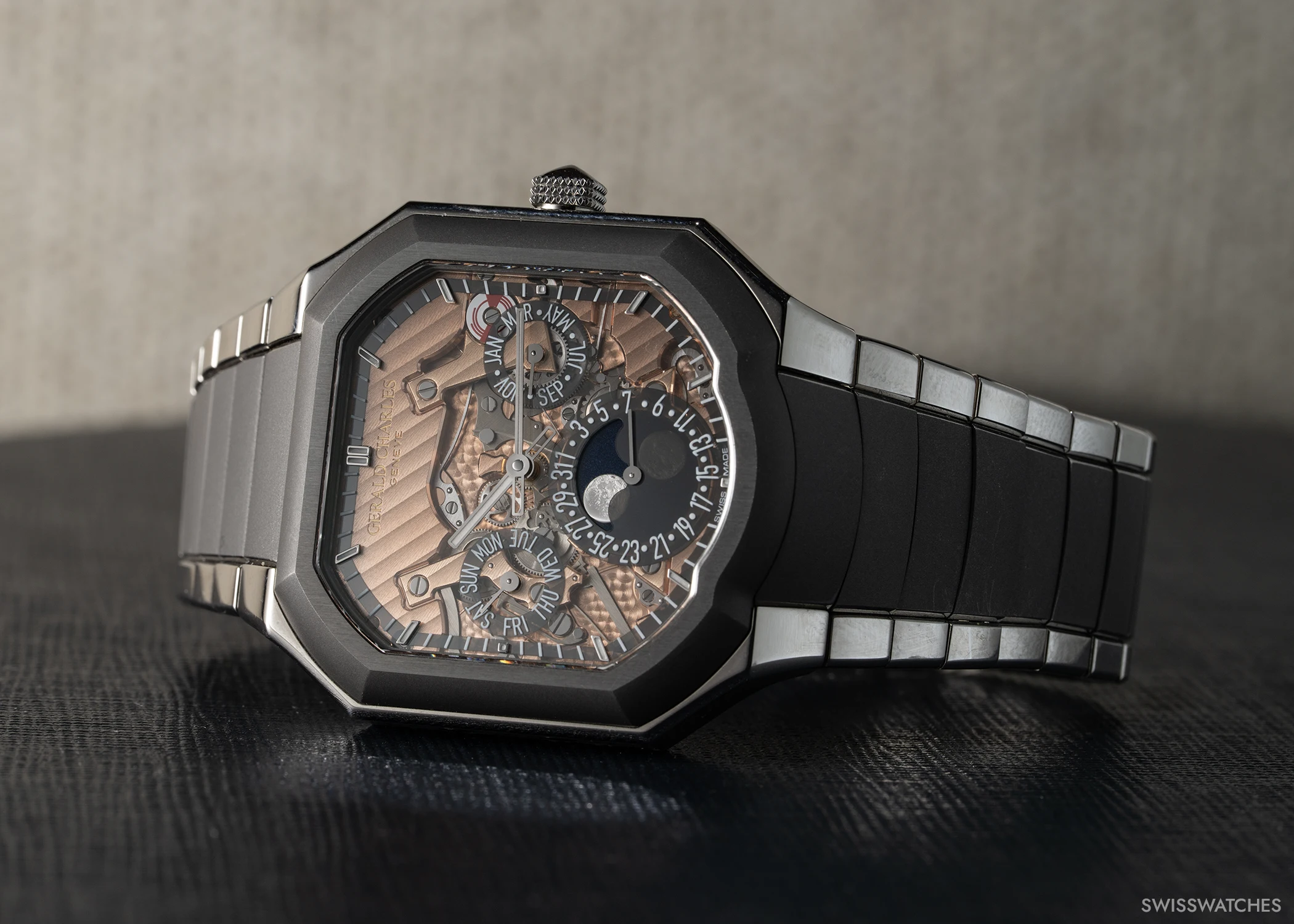
Both variants of the Gerald Charles Masterlink Perpetual Calendar feature a month display at 3 o’clock, a moon phase display combined with a date indication at 6 o’clock, and a day display at 9 o’clock, along with a leap year indicator integrated into the month display, presented as a red circular graphic. As a perpetual calendar, however, the watch does far more than simply display the month, moon phase with date, day of the week, and leap year. The movement’s mechanism automatically accounts for the varying lengths of the months and correctly incorporates 29 February every four years. Only in secular years, when leap years are omitted according to the rules of the Gregorian calendar, is a manual correction required: in the years 2100, 2200, and 2300, the date must be advanced by one day on 1 March. This correction can be carried out via the pushers located on the side of the case.
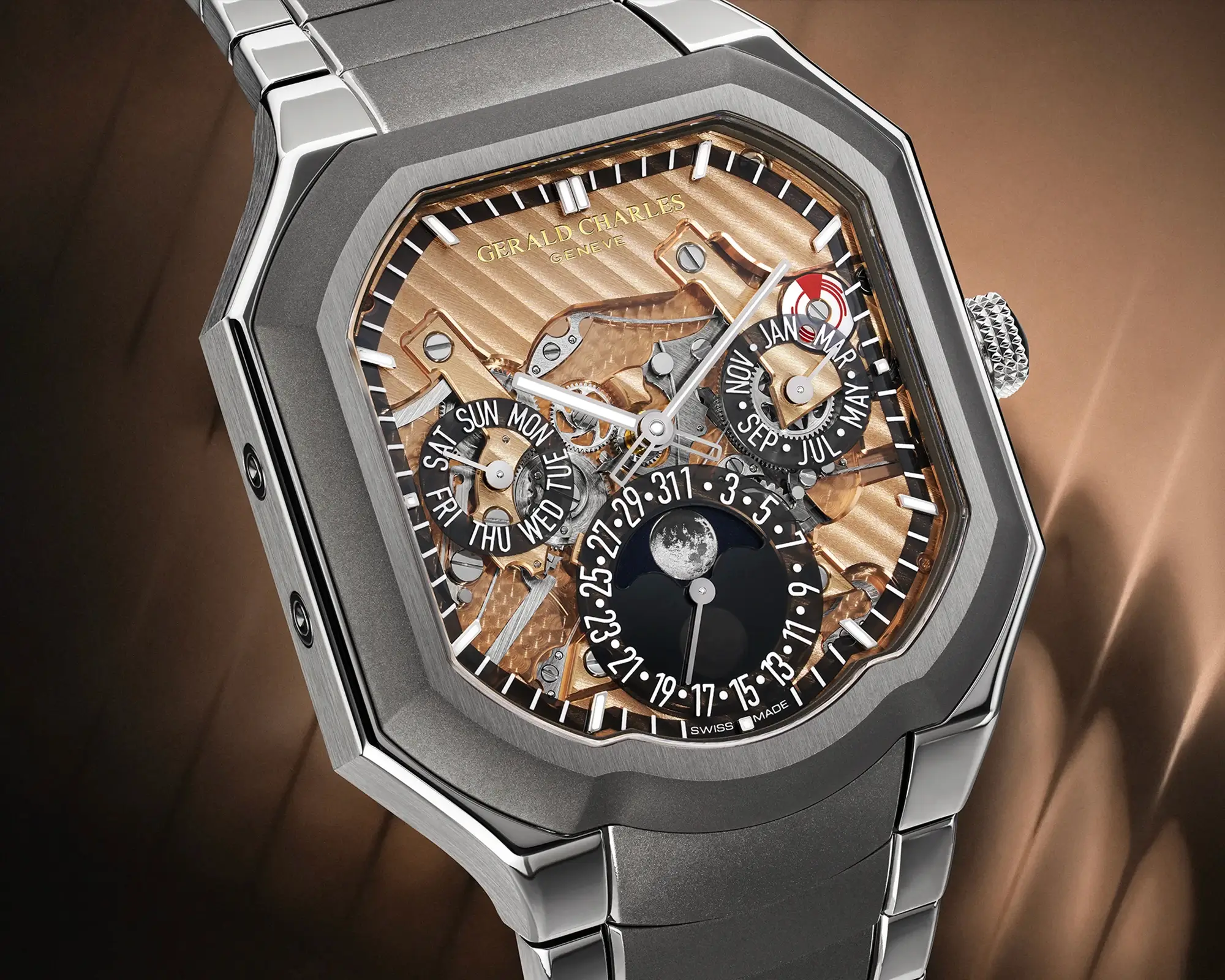
A closer look at the moon phase display reveals that the asymmetrical case shape also offers functional advantages: the recess at 6 o’clock creates additional space, allowing both the moon phase display and the externally positioned date indication to be executed on a larger scale. Moreover, instead of the conventional 59-tooth wheel, Gerald Charles employs a 135-tooth wheel for the moon phase display, enabling the indication to advance in smaller increments more than four times per day, thereby achieving greater precision. The recess also allows the dial displays to be concentrated on the lower half of the dial, freeing up space in the upper section for additional elements: in the version with the two-tier fumé dial, this area features a 12 o’clock marker and the Gerald Charles logo, while the skeletonised version offers an unobstructed view of the bridges of the Masterlink movement, which we will now examine in greater detail.
The calibre GCA11000, which powers the new model, represents nothing less than Gerald Charles’ entry into haute horlogerie, both in its construction and in the level of its finishing. In its just over 25-year history, Gerald Charles has primarily focused on chronographs, world timers and tourbillons – with the Masterlink Perpetual Calendar, the brand now presents its first major complication. This is noteworthy, as since its acquisition by the Ziviani family in 2020, the manufacture has primarily relied on movements from Vaucher. With this new perpetual calendar, the intellectual property lies entirely with Gerald Charles. Typically, watchmakers approach the development of in-house calibres gradually, rather than beginning directly with a major complication such as a perpetual calendar. In the case of Gerald Charles, however, the necessary expertise now appears to be firmly established within the company, and it will be interesting to see how its movement portfolio evolves in the coming years.
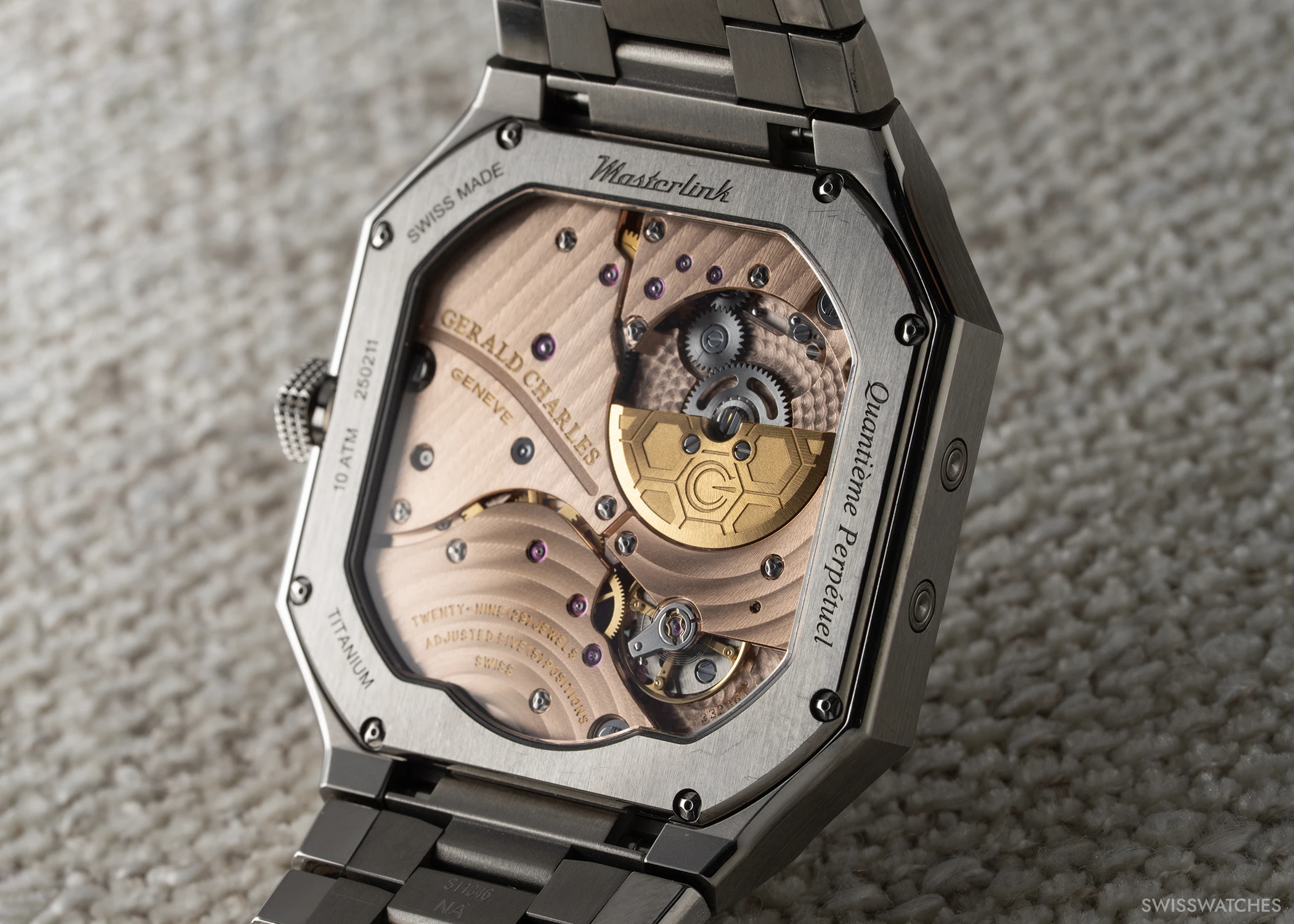
While many established brands use a round movement in shaped watches that is not fully adapted to the case, Gerald Charles has taken a different approach: the development process deliberately began with the movement, which was conceived directly within the asymmetrical case shape, ensuring that both elements – case and movement – form a cohesive whole. The calibre GCA11000 measures 4.63 mm in height and consists of 306 components. It features a bidirectional winding system via an off-centred 3N gold micro-rotor, delivering a power reserve of approximately 50 hours at a frequency of 3 Hz.
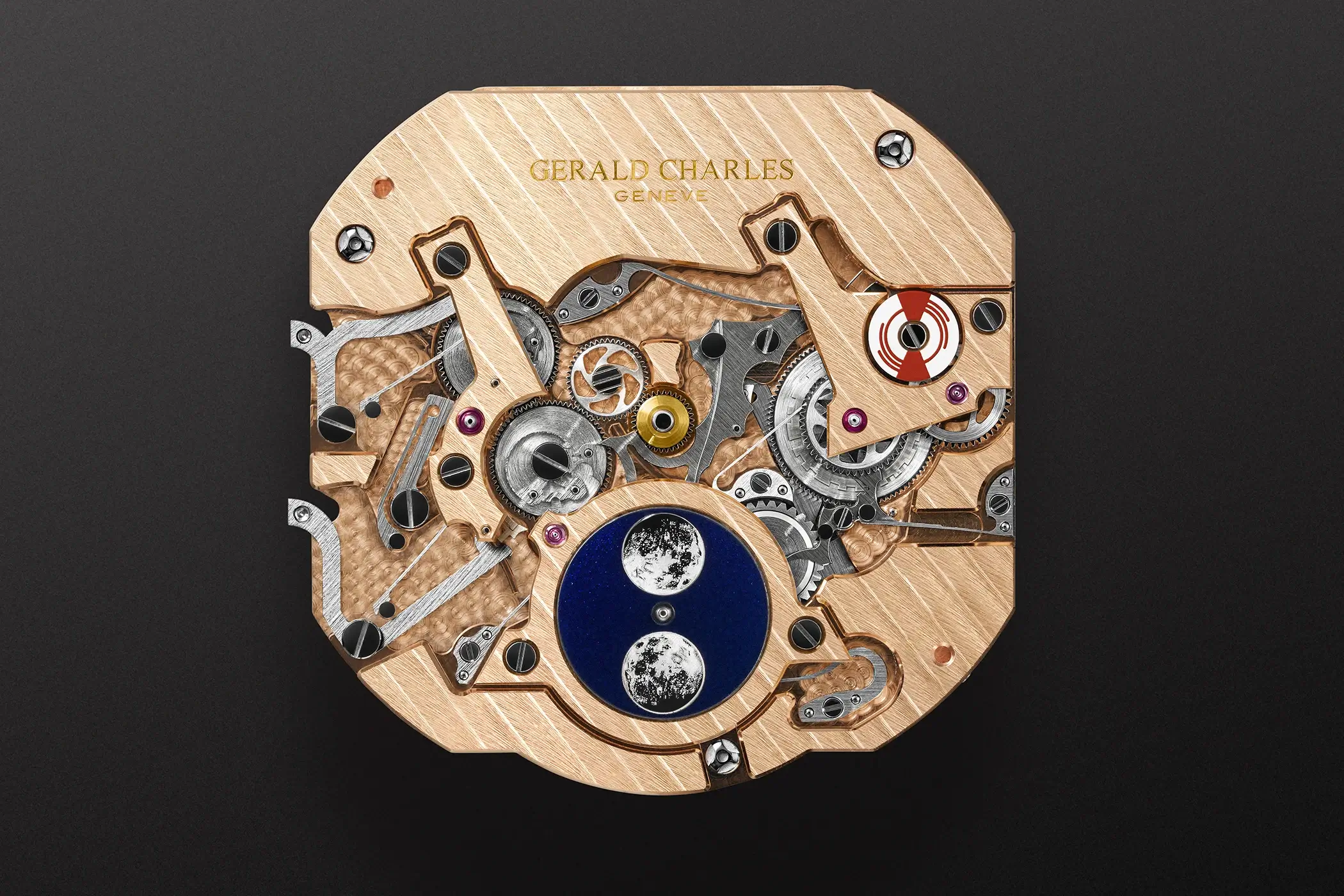
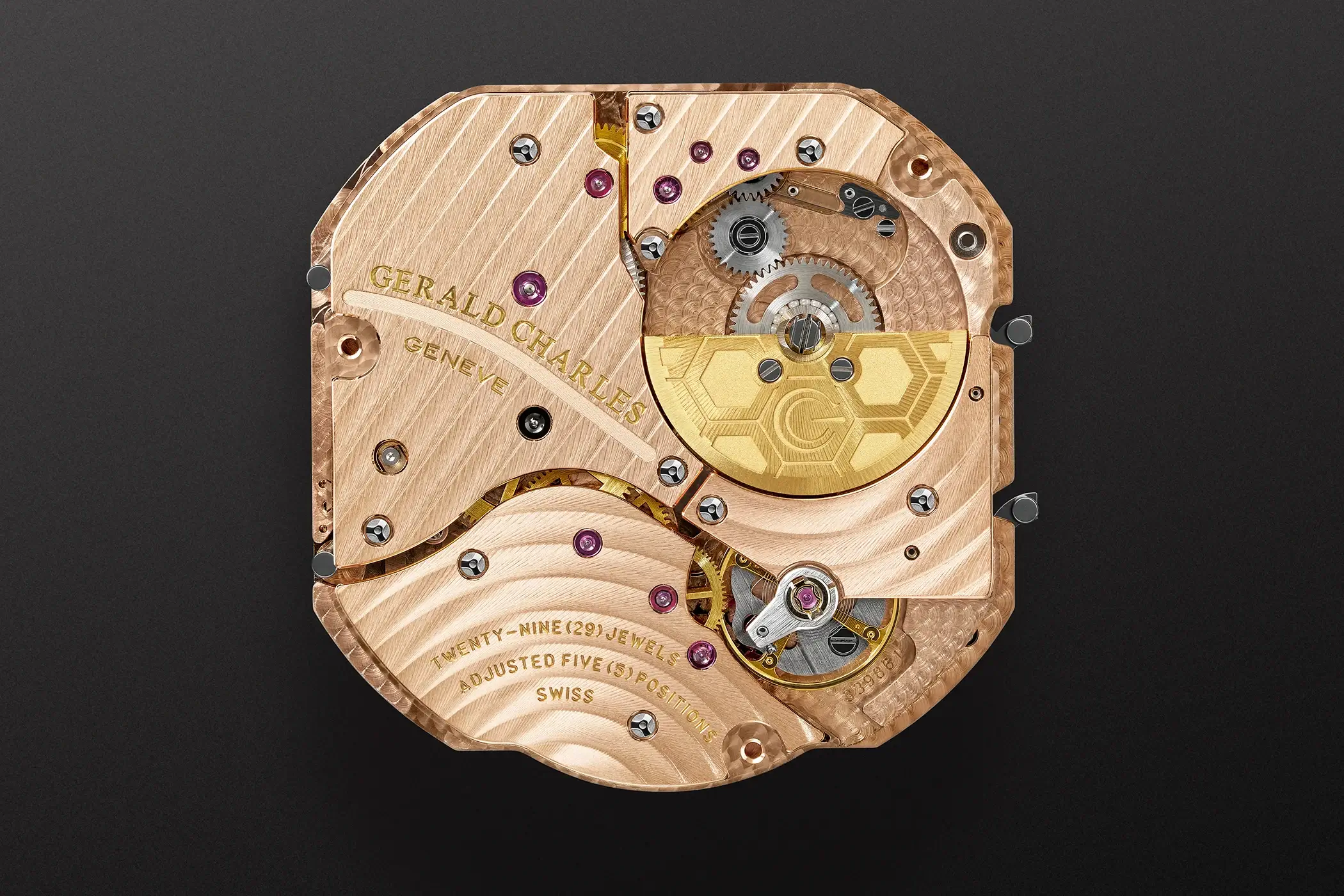
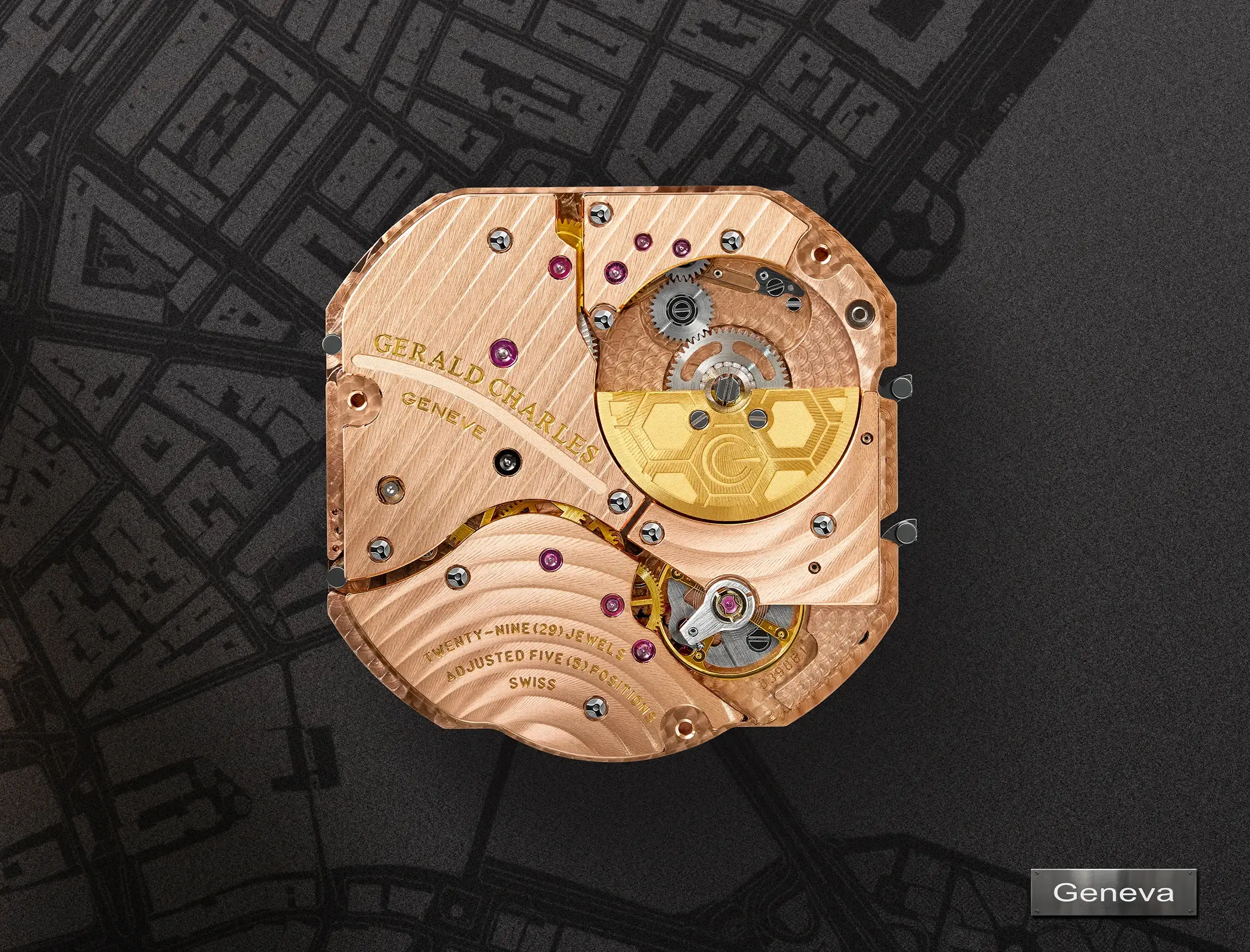
What sets the calibre GCA11000 apart, however, is not only its construction but also the degree of its finishing. On the front side – which serves as the dial for the second version of the new model – Côtes de Genève (Geneva stripes) are applied on the first level, perlage on the second, along with hand-bevelled bridges. The reverse side of the movement, visible through the sapphire caseback, also features multiple decorative elements inspired by the city of Geneva: straight Geneva stripes pay homage to the city’s street network, with one line representing Rue du Mont-Blanc, where Gerald Charles’ Geneva atelier is located, its position marked on the movement by a black jewel. Curved Geneva stripes, in turn, are a reference to Lake Geneva.
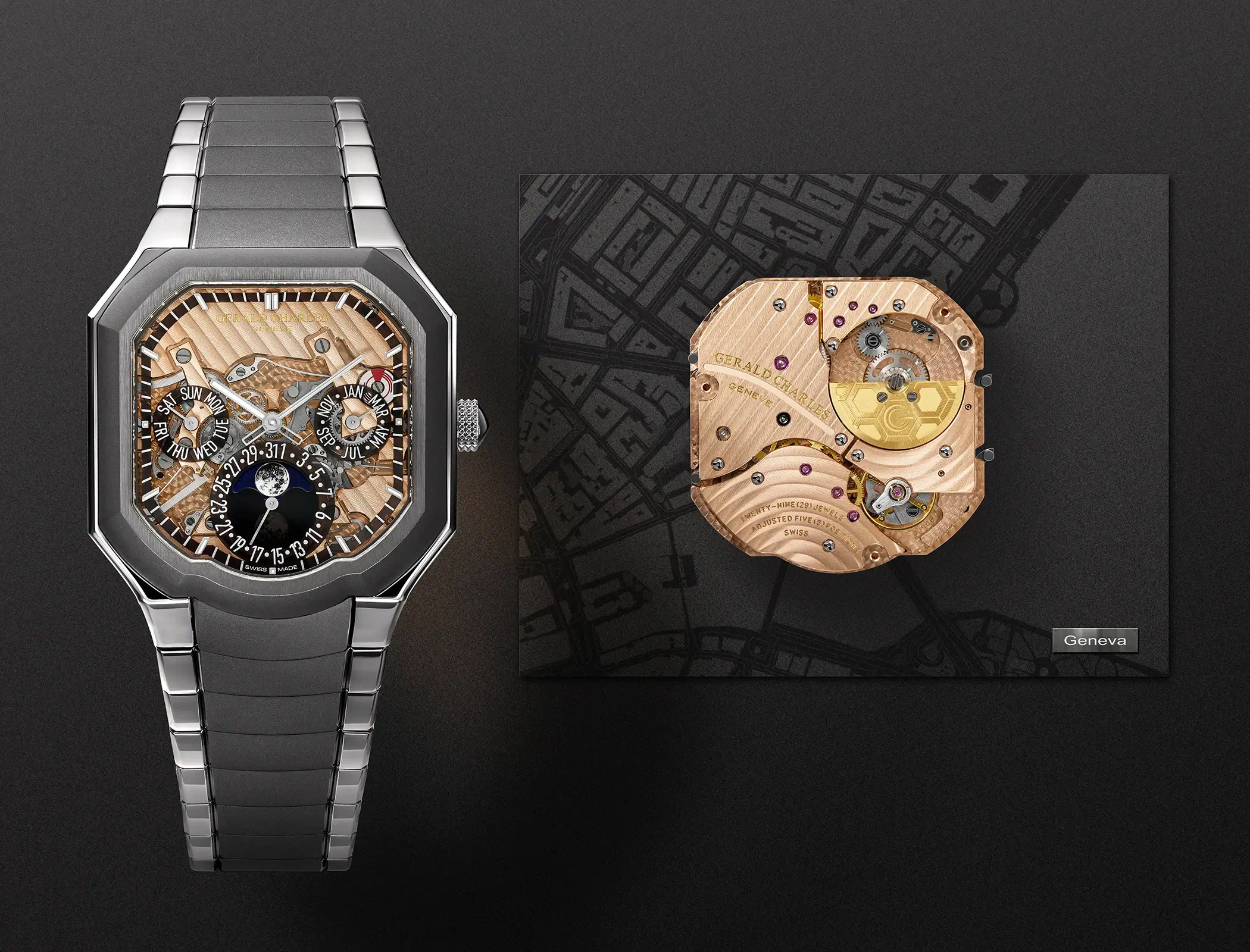
With the Masterlink Perpetual Calendar and the calibre GCA11000 – developed as an integrated unit with the case and described by Gerald Charles as a platform for future in-house developments – the brand continues to position itself within the segment of fine watchmaking. At the same time, the 100-metre water resistance preserves the sporting character of the Masterlink collection. The Masterlink Perpetual Calendar with a fumé dial is priced at 63,000 Swiss francs, while the skeletonised version is priced at 70,000 Swiss francs.
Gerald Charles CEO Federico Ziviani underscores this strategy as follows: “The Masterlink Perpetual Calendar demonstrates that we are now entering a very important phase for the Maison. Its development took three years and confirms our commitment to presenting a new high-end complication every 12 to 18 months. It has been a long journey to reach this point and clearly reflects how we continue to evolve as a Swiss watch manufacture: the perpetual calendar calibre is the most complex we have developed to date and presented our engineers with an exceptional technical challenge.”