The 15 most expensive Rolex watches ever sold at auction – from Paul Newman and "Bao Dai" to the Rainbow Daytona, with history and record prices.
Patek Philippe watches are never inexpensive – but how expensive can they actually become? In this list, we examine the 15 most expensive Patek Philippe wristwatches ever sold at auction and explore some of the most exceptional timepieces that have shaped Patek Philippe’s history. This article is part of our series “The Most Expensive Wristwatches of All Time”, in which we have previously explored wristwatches from brands such as Richard Mille, F.P.Journe and Rolex.
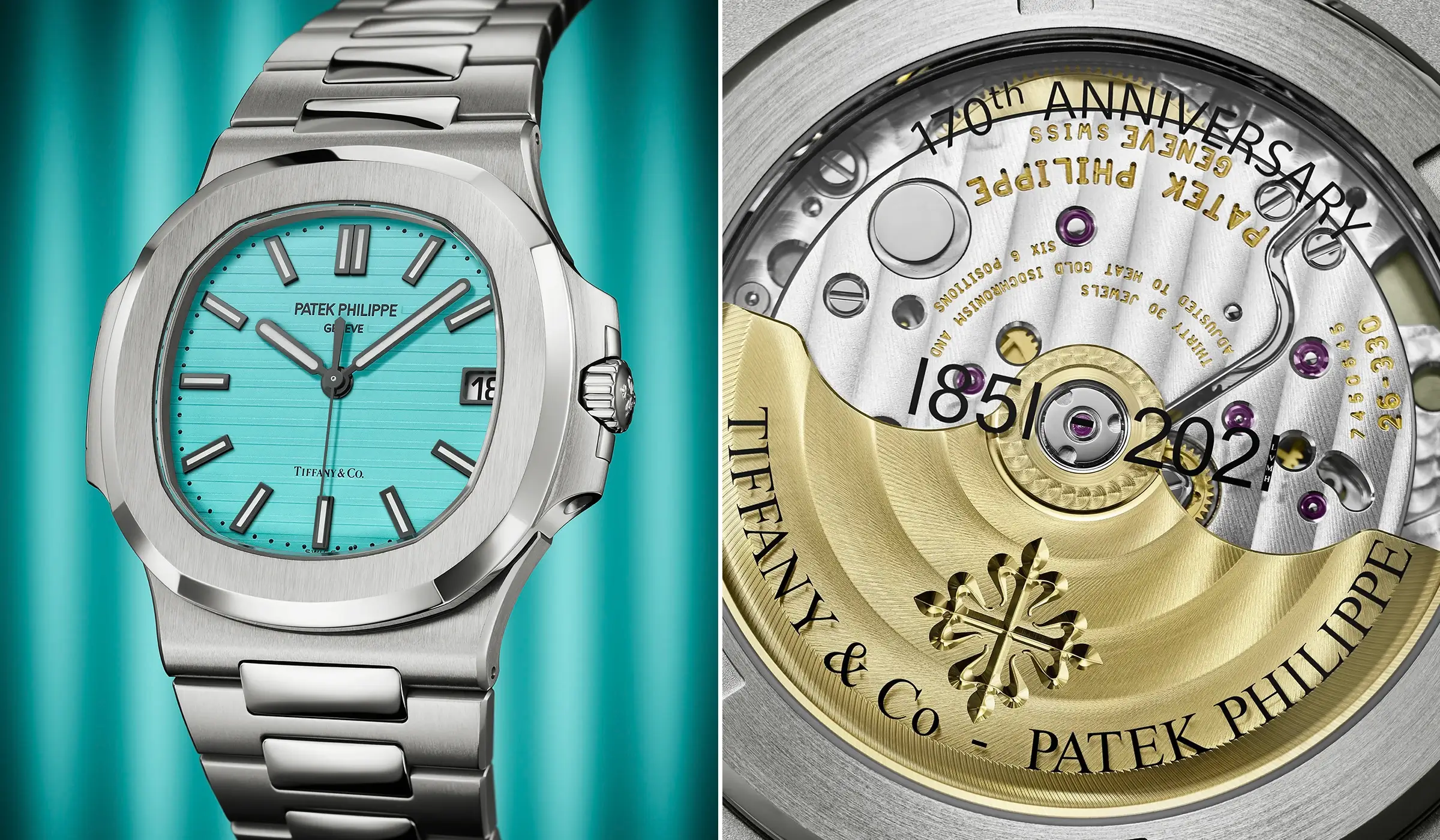
Number 15 among the most expensive Patek Philippe wristwatches ever sold at auction is the first Patek Philippe Nautilus Ref. 5711/1A-018 offered with a lacquered “Tiffany Blue” dial. The distinctive dial colour, known as “Tiffany Blue”, was originally selected in 1845 by company founder Charles Lewis Tiffany for the cover of the annually published Blue Book. Today, Tiffany Blue is protected as a colour trademark by Tiffany & Co. and registered with Pantone as the company’s proprietary special shade “1837 Blue” – named after the year the house was founded. Limited to 170 pieces, this Nautilus was released in 2021 to commemorate the 170-year partnership between Patek Philippe and Tiffany & Co., widely regarded as one of the longest-standing and most enduring collaborations in watchmaking. The relationship dates back to 1851, when Patek Philippe (founded in 1839) and Tiffany & Co. (founded in 1837) entered into an agreement that established Tiffany & Co. as Patek Philippe’s first official partner in the United States.
Credit © Phillips
When launched in 2006, the Nautilus Reference 5711 represented a contemporary evolution of Patek Philippe’s first luxury sports wristwatch, originally introduced in 1976 as Reference 3700. With the introduction of Ref. 5711, the Nautilus was brought into the modern era through targeted updates, including a sapphire crystal case back and an in-house automatic movement with central seconds. Of the total 170 examples of the Nautilus Ref. 5711/1A-018 produced, all were distributed exclusively through Tiffany boutiques in New York, Beverly Hills and San Francisco – with a single exception: the watch described here. This example was not only regarded as the first piece of the series to be sold, but was also available for immediate delivery to the successful bidder at the Phillips auction. The watch was exceptional not merely because it was the first Nautilus to feature a Tiffany-signed dial; it was also the final iteration of Reference 5711 fitted with the automatic Calibre 26-330 S C, production of which ceased in 2022. A reference to the collaboration appears on the dial in the form of a double signature: “Tiffany & Co.” at 6 o’clock and the Patek Philippe logo at 12 o’clock, both printed in black. A further reference is visible through the sapphire crystal case back, which bears the engraving: “170th Anniversary 1851–2021 Tiffany & Co. – Patek Philippe”.
The watch achieved a total price including buyer’s premium of €5,746,573 at Phillips’ “2021 New York Watch Auction”, making it number 15 among the most expensive Patek Philippe wristwatches ever sold at auction. The entire proceeds were donated to the conservation organisation The Nature Conservancy, which is dedicated to the preservation of land and waters worldwide and focuses on combating climate change.
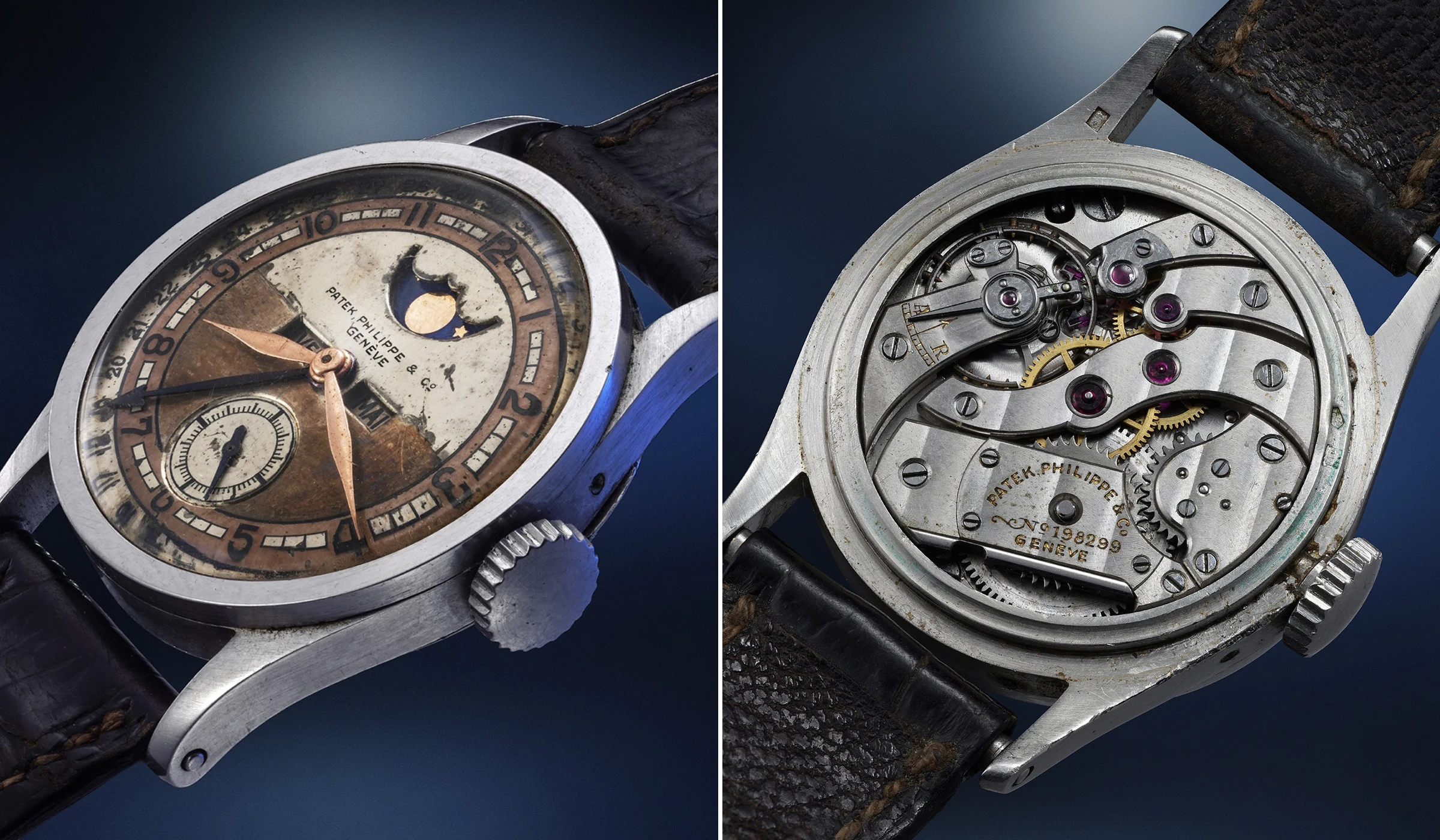
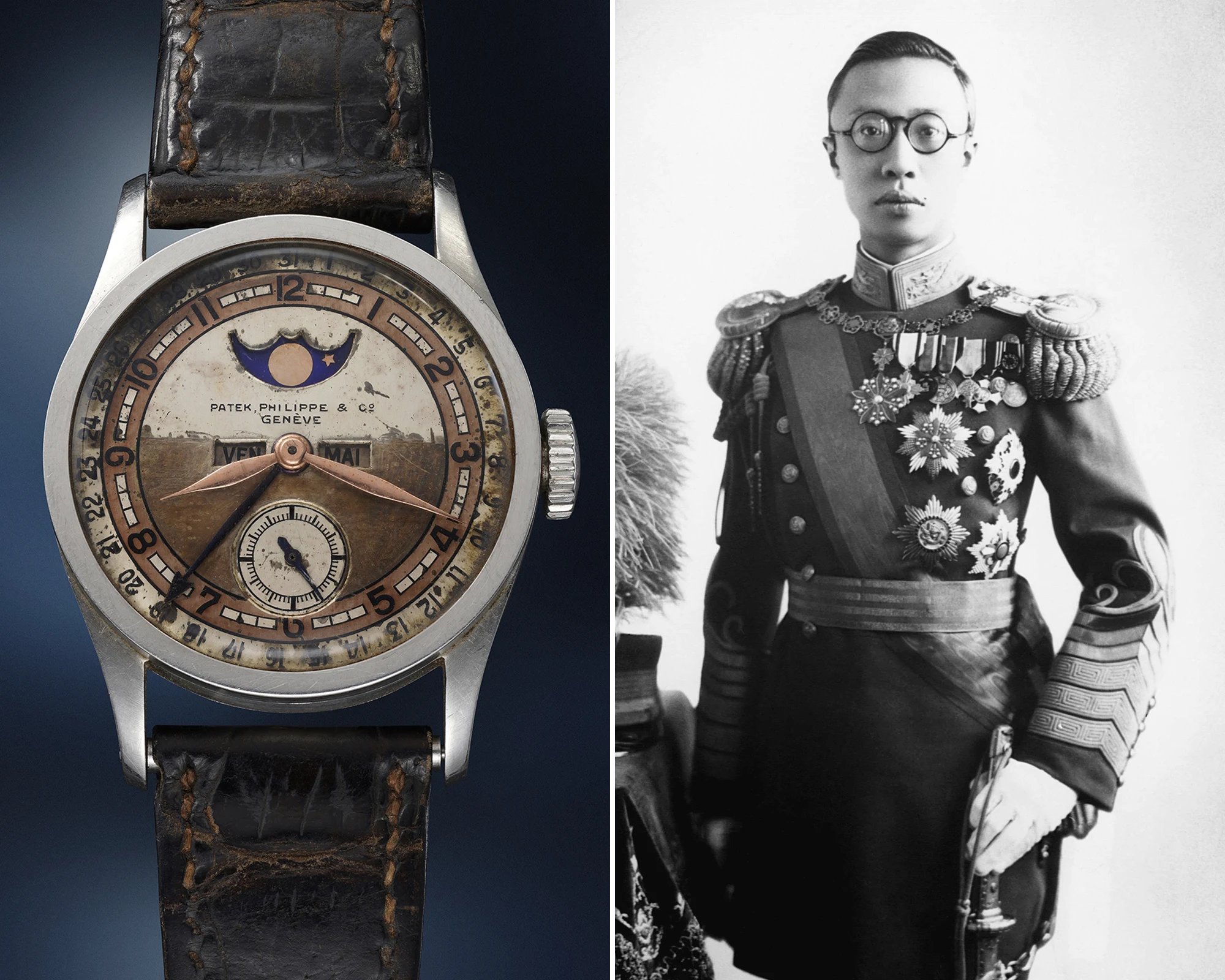
Ranked 14th among the most expensive Patek Philippe wristwatches ever sold at auction, this timepiece is distinguished not only by its remarkable history but also by its significant first owner. The Patek Philippe Reference 96 Quantième Lune Calatrava described here, housed in a 30 mm platinum case and powered by a hand-wound Victorin Piguet 11’’’ movement, was formerly owned by Aisin-Gioro Puyi, the last Emperor of China’s Qing Dynasty. It is one of only eight known examples of this specific configuration. Of the Ref. 96QL Calatrava with triple calendar, small seconds, moon phase, roulette dial, enamelled Arabic numerals and rose-gold feuille hands, only five known examples were produced in platinum cases and two further known examples in gold cases. In addition to the present Ref. 96QL, only two other examples with the enamel Arabic “roulette” dial configuration and a platinum case are known on the market. These are fitted with consecutively numbered Victorin Piguet 11’’’ ébauches. These Victorin Piguet movements were manufactured during the economic collapse of 1929 at the onset of the Great Depression and were therefore not cased initially. With the introduction of Reference 96 in 1932, they were further developed and ultimately installed into the platinum cases of Ref. 96. The present watch contains movement no. 198’299 and case no. 294’462. Another movement, no. 198’297 with an English calendar, is today preserved in the collection of the Patek Philippe Museum, while the third movement, no. 198’298 – this time with a French calendar – was sold to a private collector in 1996.
Credit © Phillips
Aisin-Gioro Puyi ascended the throne in 1908 at the age of only two and reigned from 1908 to 1912 as the twelfth and final emperor of the Qing Dynasty, the ruling house of the Chinese Empire. However, as the centuries-old imperial system began to collapse internally – accelerated by the Xinhai Revolution of 1911 – Puyi was compelled to abdicate formally in order to avoid civil war, and the Republic of China was proclaimed. In return, the then six-year-old Puyi was permitted to reside in the Forbidden City until 1924 and to retain certain financial privileges. After several largely unsuccessful attempts in the following years to regain power and influence, the dethroned monarch attempted to flee to Japan in 1945. He was apprehended by Soviet troops and interned in the prisoner-of-war camp at Khabarovsk. There, alongside officers, ministers and senior officials, he was held under comparatively moderate conditions. It was during this period that a loyal interpreter named Georgy Permyakov supported him, and to whom Puyi presented his Patek Philippe watch as a gift in 1950. Puyi remained in Soviet custody until August 1950, after which – following Mao Zedong’s victory in the Chinese Civil War – it was decided to extradite the last emperor to the People’s Republic of China, where he was imprisoned for a further nine years.
Credit © Phillips
Despite its considerable age, Aisin-Gioro Puyi’s watch remains untouched and fully preserved in its original condition – including its strap and buckle, both displaying consistent patina. Its authenticity is further confirmed by a Patek Philippe Extract from the Archives, stating that the watch was delivered with a silvered dial, rose-gold ring and enamelled hour markers. However, the platinum Ref. 96 QL with French calendar exhibits a peculiar half ivory-coloured, half brass-coloured discolouration, which – unlike the two other known examples with rose-gold roulette rings – is divided into two sections along the upper edge of the calendar apertures. An explanation for this unusual patina was uncovered by Phillips in a 1982 interview with Li Guoxiong, Puyi’s long-serving attendant. During the five years in the Soviet Union, Puyi reportedly asked Li one day to open the watch and, assuming that the dial was also made of platinum like the case, to remove its surface in order to examine the material layers beneath. After Li abraded the surface and discovered that the dial was in fact made of brass, Puyi instructed him to cease further work on the watch – resulting in the distinctive semi-circular patina visible today.
An accompanying Extract from the Archives issued by Patek Philippe confirms the watch’s year of manufacture as 1929 and its sale on 6 October 1937. According to research conducted by Phillips, the watch can be traced to a sale through Guillermin, a Parisian luxury retailer located on Place Vendôme. The watch achieved a total price including buyer’s premium of €5,787,129 at Phillips’ “The Imperial Patek Philippe Sale” auction in 2023, making it number 14 among the most expensive Patek Philippe wristwatches ever sold at auction.
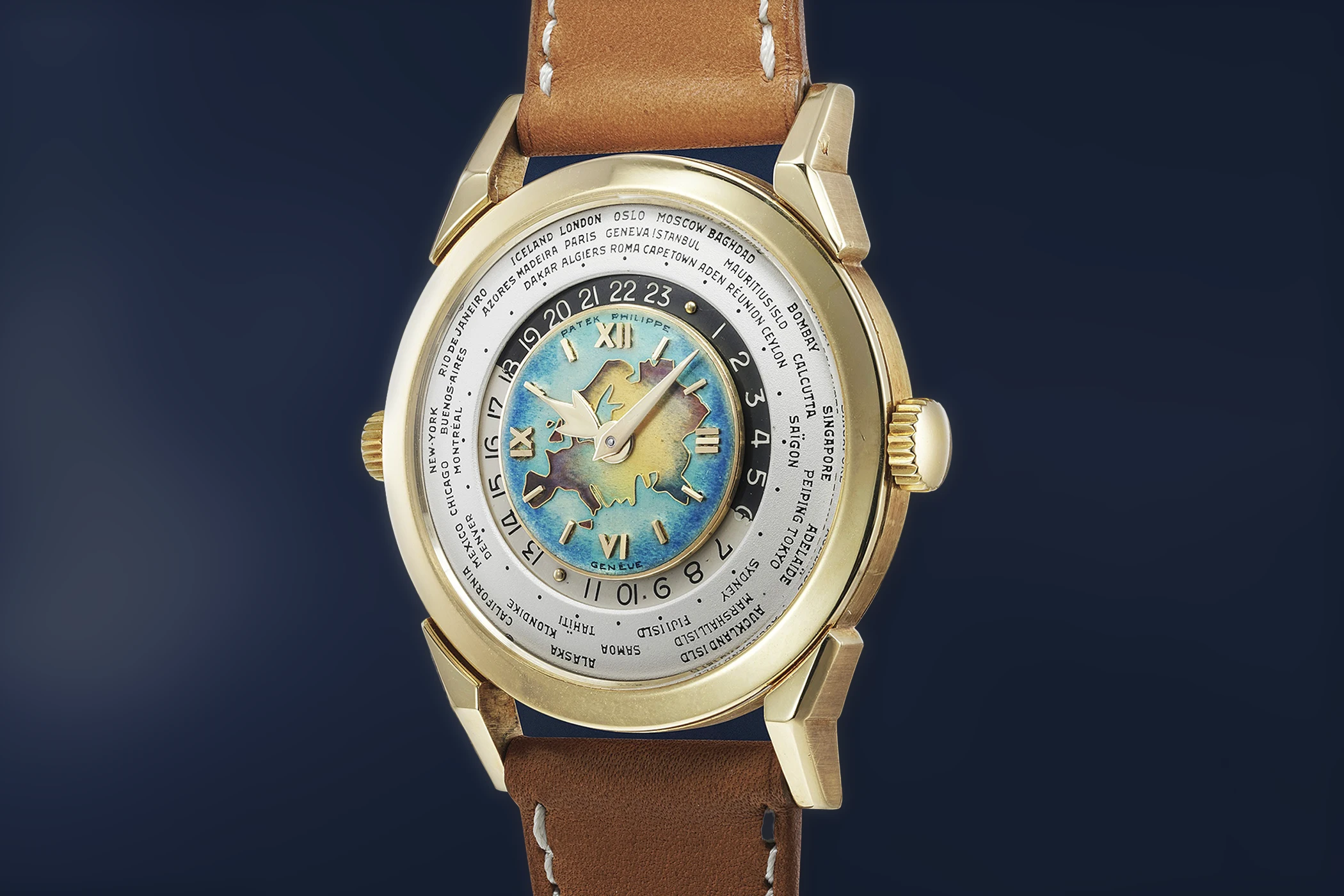
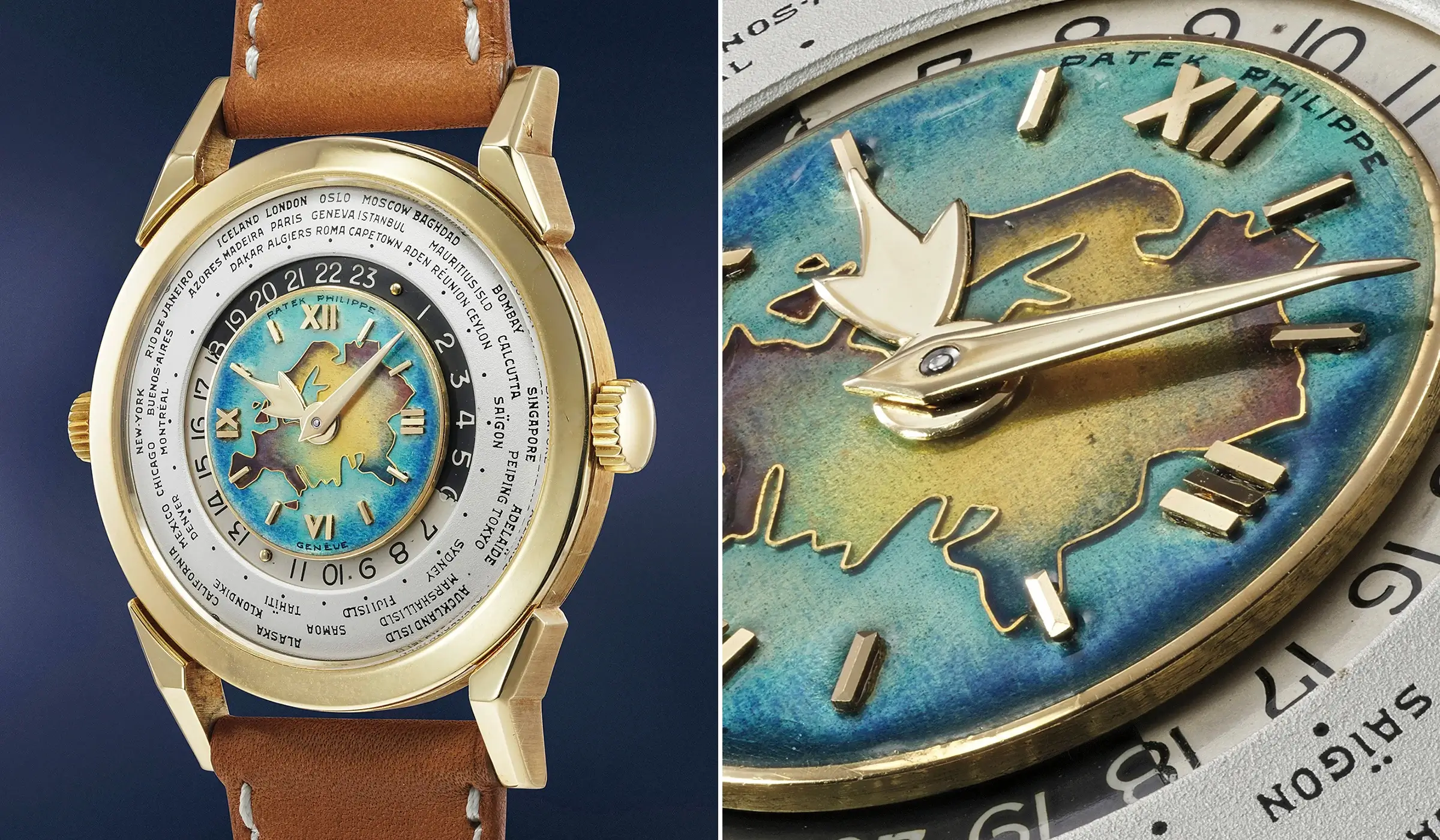
Ranked 13th among the most expensive Patek Philippe wristwatches ever sold at auction is the Ref. 2523 “Eurasia”, also known as “Silk Road”. This world time model, featuring two crowns and a rare cloisonné enamel dial, achieved at the time the highest price ever realised for a yellow gold wristwatch at auction. Recently rediscovered in 2021, the watch dates from 1953 and measures 36 mm in diameter. Its dial depicts the Eurasian continent. The world time complication consists of two rings: an adjustable city ring bearing the 24 time zones and a second 24-hour ring rotating anti-clockwise. This configuration allows the correct time for any city to be read off on the adjacent segment of the 24-hour ring.
Credit © Phillips
Of the Ref. 2523 examples known to survive today, only twelve models are fitted with a cloisonné enamel dial. Among these are, according to the auction house Phillips, six depicting North America (three in yellow gold, two in pink gold and one in white gold), three depicting South America (two in yellow gold and one in pink gold), and three depicting Eurasia (including the present example), all in yellow gold. The watch described here is the earliest Patek Philippe cloisonné Ref. 2523 ever produced. The watch achieved a total price including buyer’s premium of €6,434,975 at Phillips’ “Geneva Watch Auction: XIII” in 2021, making it number 13 among the most expensive Patek Philippe wristwatches ever sold at auction.
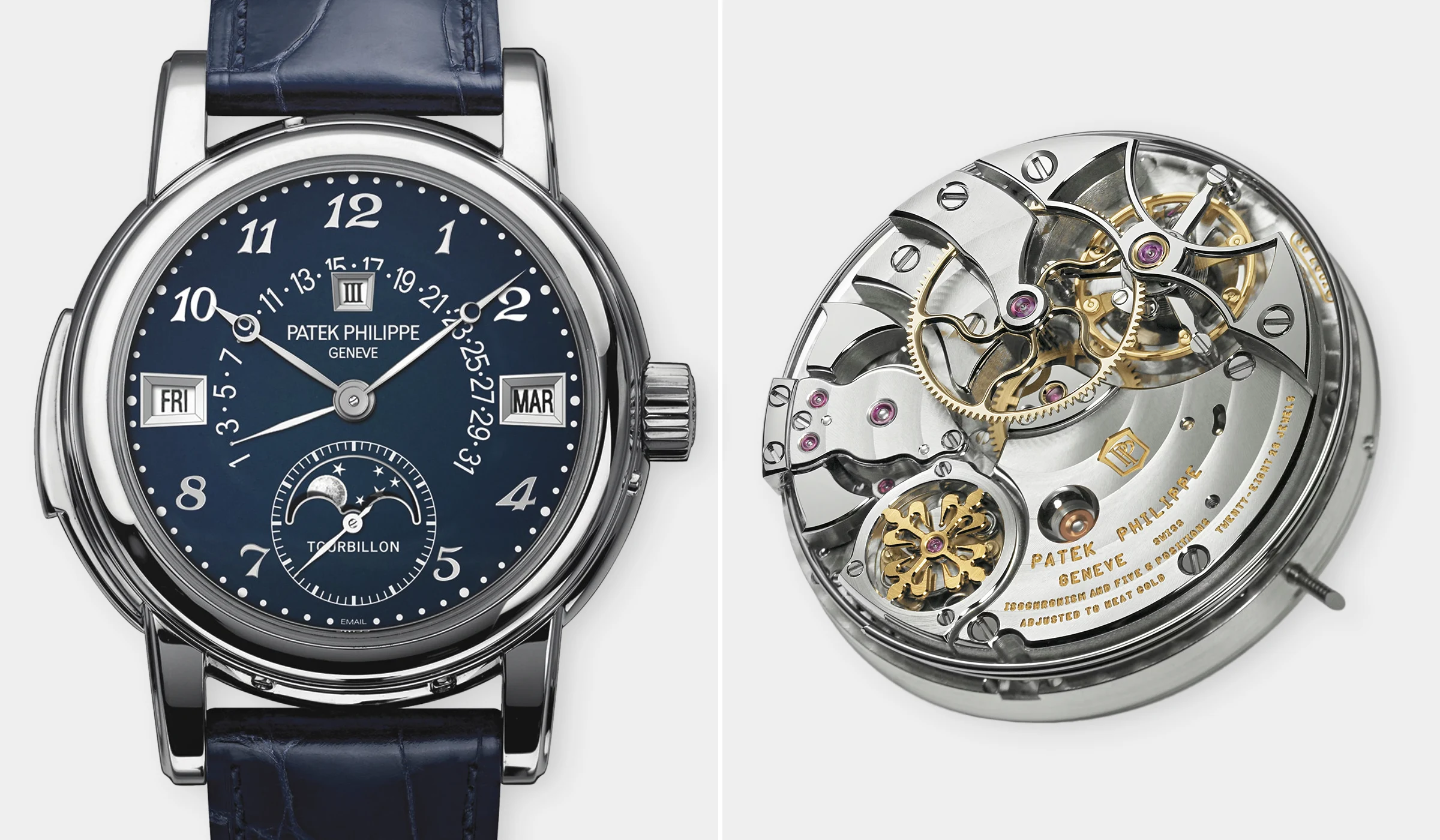
Ranked 12th among the most expensive Patek Philippe wristwatches of all time is the Tourbillon Minute Repeater Perpetual Calendar Ref. 5016A-010. This 36.8 mm wristwatch, combining a minute repeater, tourbillon, perpetual calendar with retrograde date and moon phase, is housed in a Calatrava-style steel case – a material rarely used by Patek Philippe. In fact, it is the only Patek Philippe watch of this reference to have been produced in steel. Notably, the watch is equipped with both an interchangeable solid case back and a sapphire crystal case back. The latter reveals the 506 components of the movement, all hand-finished in accordance with Patek Philippe’s traditional standards. The Ref. 5016A-010 was auctioned in 2015 at the Only Watch charity auction in Geneva, achieving a total price including buyer’s premium of €6,964,919, making it number 12 among the most expensive Patek Philippe wristwatches ever sold at auction.
Credit © Phillips
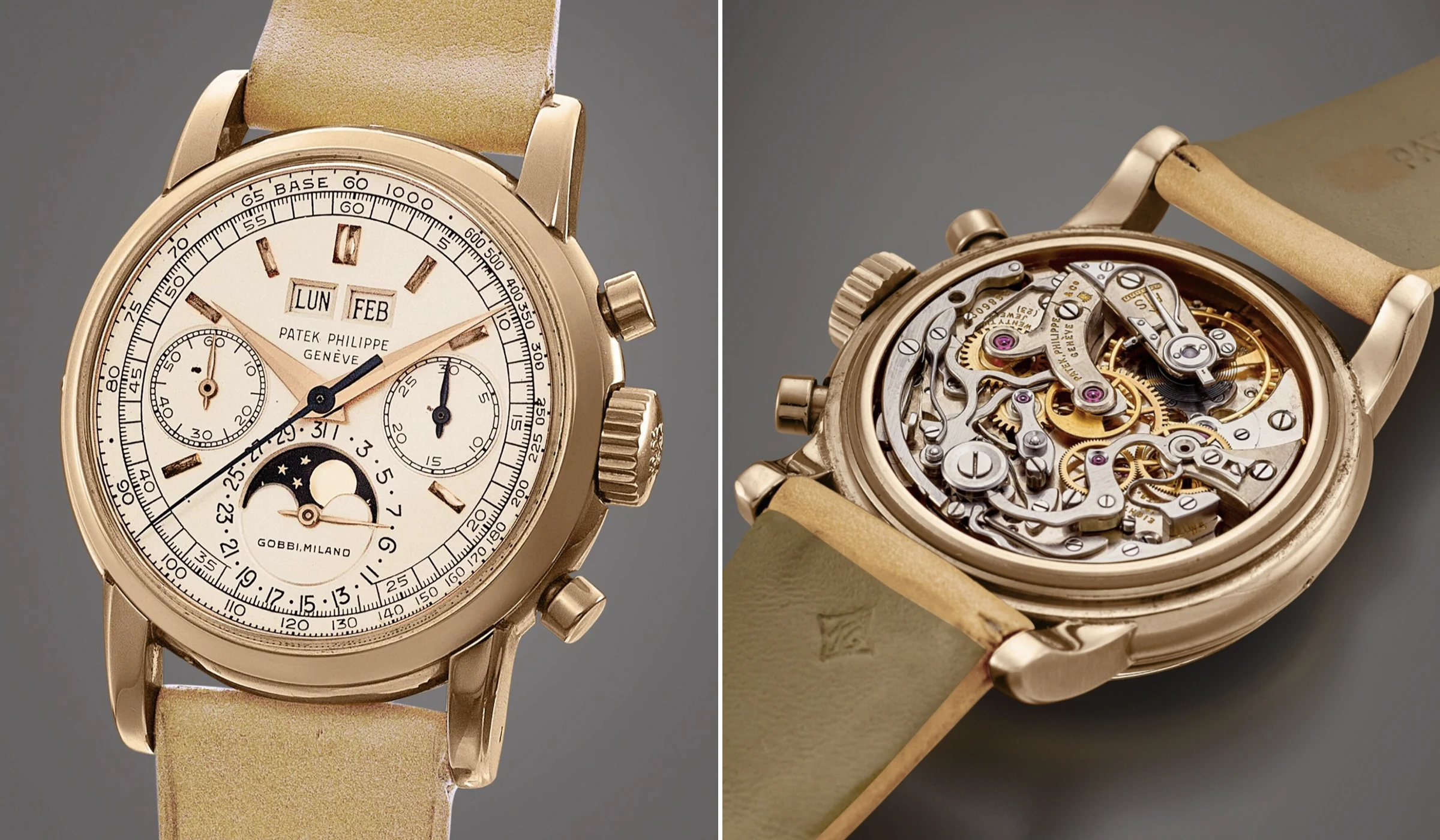
In May 2007, the Patek Philippe Reference 2499 second series described here – ranked 11th among the most expensive Patek Philippe wristwatches ever sold at auction – was offered publicly for the first time at Christie’s. With a hammer price of 2.7 million Swiss francs, it set a world record for Reference 2499 that would stand for many years, until it was surpassed in 2022 at Sotheby’s “The Nevadian Collector” auction. Produced between 1950 and 1985, Reference 2499 is widely regarded as one of the most important wristwatches ever manufactured by Patek Philippe. As the successor to Reference 1518 – the first serially produced perpetual calendar chronograph – and the predecessor to Reference 3970, introduced for Patek Philippe’s 150th anniversary, it occupies a significant position within the manufacture’s lineage of perpetual calendar chronographs. In total, only 349 examples of Reference 2499 were produced, equating to an average of approximately nine watches per year.
Credit © Sothebys
Of the second series of Reference 2499 in pink gold – to which the present watch belongs – nine examples are known today. Although all of these watches feature applied baton hour markers, the present example is distinguished by being the only one whose dial also bears the retailer’s signature of the Italian jeweller Gobbi Milano. Founded in 1842 by Raimondo Gobbi and now managed in its sixth generation, Gobbi Milano adds notable provenance to this already rare configuration. Over its 35-year production span, Reference 2499 can be divided into four principal series. The first series (1951–1960) is characterised by square chronograph pushers and a tachymeter scale. The second series (1955–1964) introduced round chronograph pushers. The third series (1960–1978) is defined by a more restrained dial layout, while the fourth series (1978–1985), designated 2499/100, is recognisable by its sapphire crystal replacing the acrylic crystals of the earlier series.
The watch achieved a total price including buyer’s premium of €7,173,383 at Sotheby’s “The Nevadian Collector” auction in 2022.
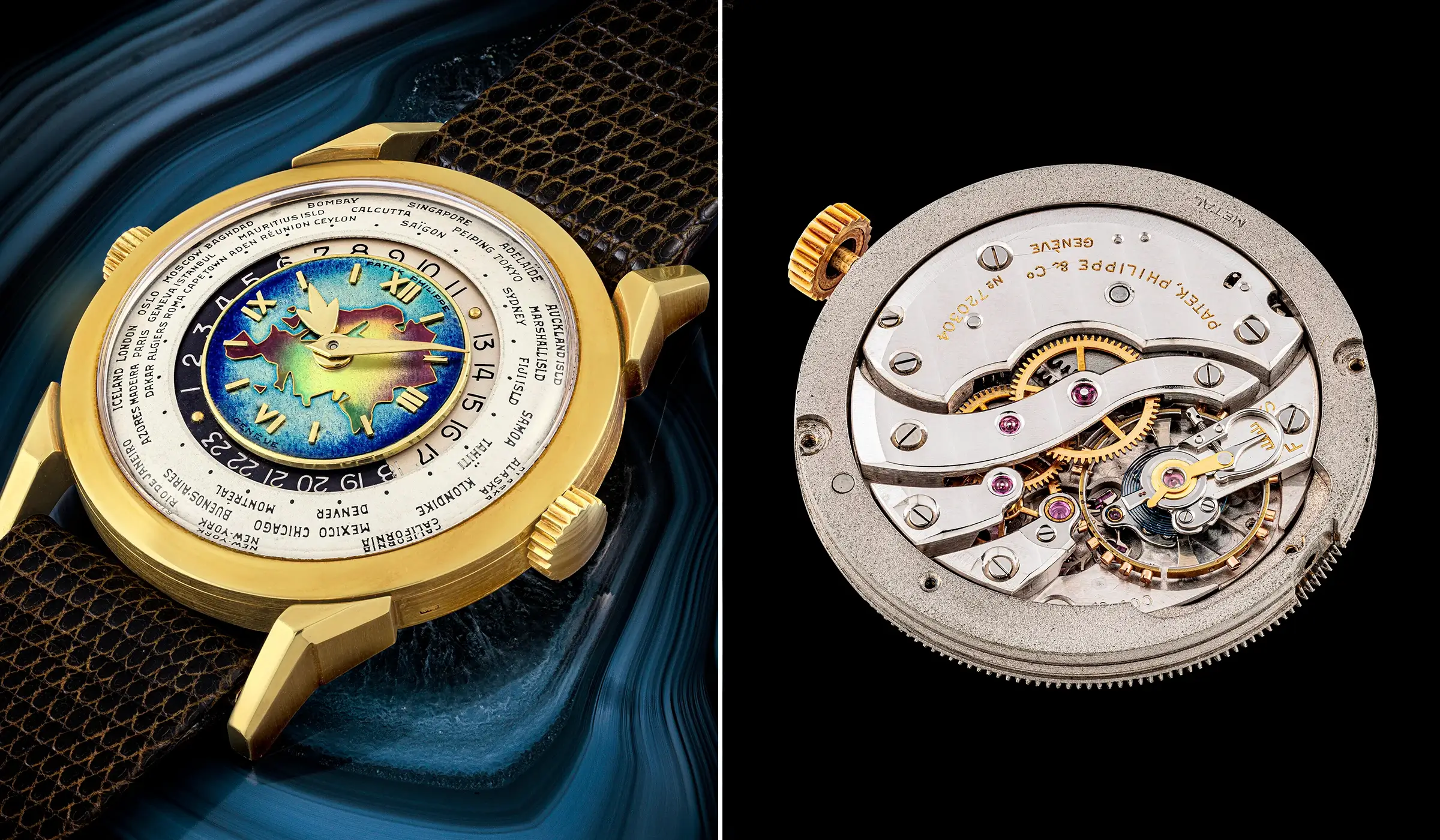
Approximately 12 of the reference 2523 watches produced were fitted with cloisonné enamel dials, and of these, only three examples – including the watch described here – are known to depict the European continent, a version referred to by collectors as “Eurasia”. Of the two other known Ref. 2523 watches with the “Eurasia” cloisonné dial, one is held in the collection of the Patek Philippe Museum in Geneva, while the other resides in a private collection. Historical cloisonné enamel dials such as that of the watch ranked 10th among the most expensive Patek Philippe wristwatches ever sold at auction are characterised by a softer and more nuanced colour palette than modern enamel work. This is attributable to the fact that materials such as lead, mercury or cyanides were still used in enamel production during the 1950s – substances that are no longer permitted today due to the associated health and environmental risks.
Credit © Christies
• Movement no. 720’301, case no. 306’193 – sold at Phillips Geneva in May 2021
• Movement no. 720’303, case no. 306’197 – Patek Philippe Museum
• Movement no. 720’304, case no. 306’201 – the present watch
The hand-crafted cloisonné enamel dial of the watch described here is attributed to the enameller Marguerite Koch, who worked almost exclusively for the dial manufacturer Stern Frères. For the 35.5 mm case bearing no. 306’201, produced between 1954 and 1955, Patek Philippe commissioned case maker Antoine Gerlach, whose hallmark – a “4” within a key – appears inside the case back. Into this case, Patek Philippe installed the Calibre 12-400 HU (Heures Universelles), manufactured in 1953 and bearing movement no. 720’304. The movement incorporates the world time mechanism developed by Louis Cottier.
The watch achieved a total price including buyer’s premium of €7,726,510 at Christie’s “Important Watches Featuring The Generations & Timeless Opulence Collections” auction in 2024.
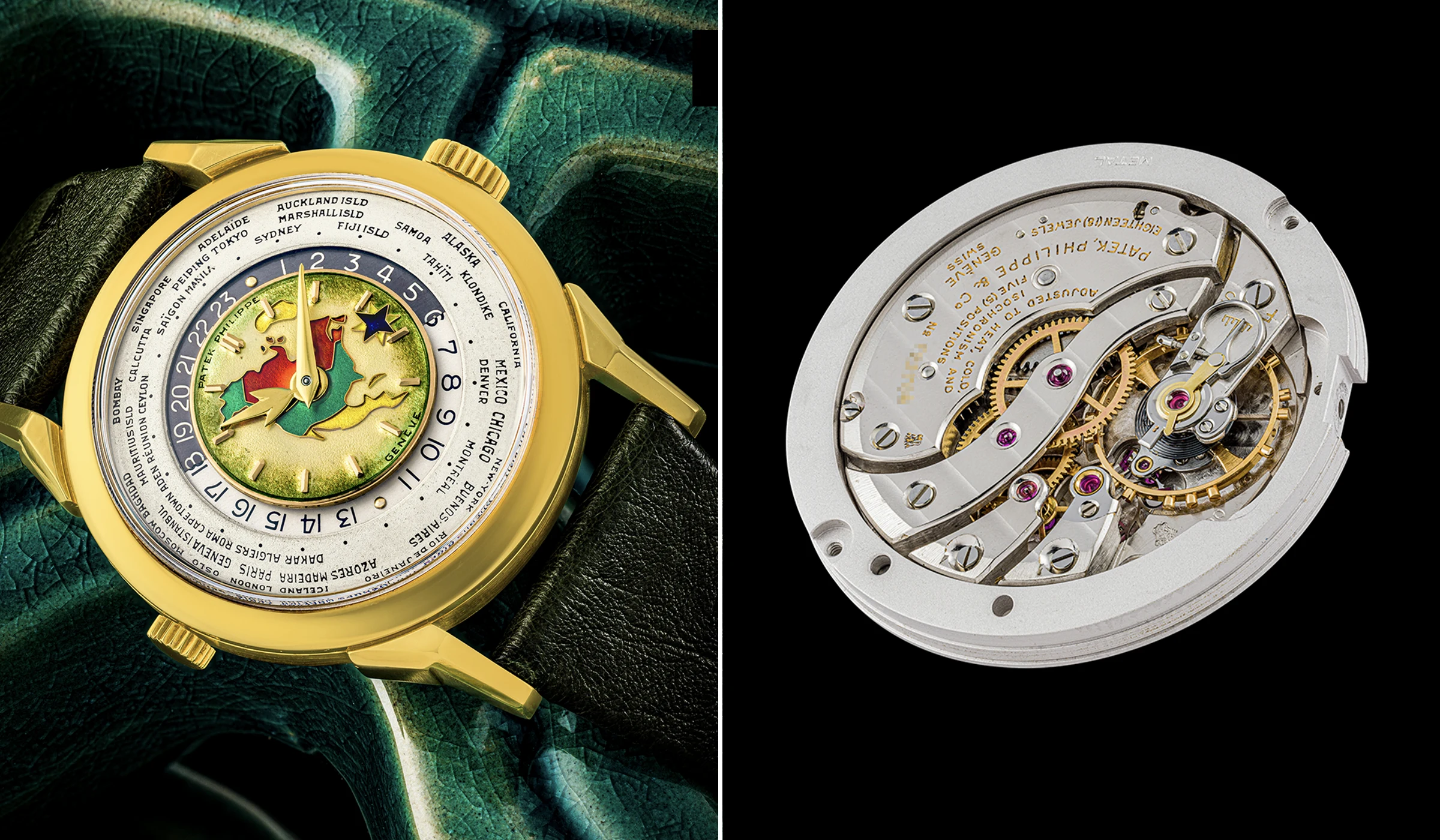
Ranked 9th among the most expensive Patek Philippe wristwatches ever sold at auction, this example stands out above all for its aesthetic enamel dial. The world time watch described here, featuring two crowns, is one of only four known yellow gold examples of Reference 2523 HU DE fitted with a cloisonné enamel dial depicting the North American continent – and one of only three examples confirmed to survive today. With its cloisonné enamel dial documented by an Extract from the Archives, it is also the earliest known surviving example of this configuration. The twin-crown Reference 2523 with cloisonné dial ranks among the rarest Patek Philippe wristwatches and can be considered on a par with the stainless steel Reference 1518 or the early series of Reference 2499. This distinction is reinforced by the fact that the twin-crown Reference 2523 was produced in extremely limited numbers: according to the auction house Christies approximately only around 26 examples were made in total – 18 in yellow gold, seven in pink gold and a single example in white gold.
Credit © Christies
• Movement no. 722’706, case no. 306’205 – the present example
• Movement no. 722’708, case no. 306’210 – private collection
• Movement no. 722’709, case no. 306’211 – private collection
According to Christie’s, the world time dial in general was produced around 1952 by the dial manufacturer Stern Frères and bears the names of 42 cities in French. The enamel map at the centre of the dial, executed in cloisonné technique, is specifically attributed to the enameller Marguerite Koch. In the cloisonné technique, also known as enamel partitioning, the artist affixes thin metal wires of rectangular cross-section – known as cloisons – onto a base plate and shapes them according to the contours of the intended motif. These raised partitions create individual cells, which are subsequently filled with enamel. The result is a motif characterised by vivid and clearly defined colours. Accordingly, the depiction of North America is distinctly structured: the Atlantic and Pacific Oceans frame the continent; Canada appears in a strong red; the Bahamas, Puerto Rico, Mexico and other Central American states are rendered in gold; while the United States is shown in turquoise. The surrounding oceans are stylised along the dial’s outer edge with a gradient of blue and green tones, and on the right-hand side an eight-pointed wind rose completes the composition.
The watch achieved a total price including buyer’s premium of €7,926,770 at Christie’s “The Masterpiece Auction II From The Triazza Collection” in 2023.
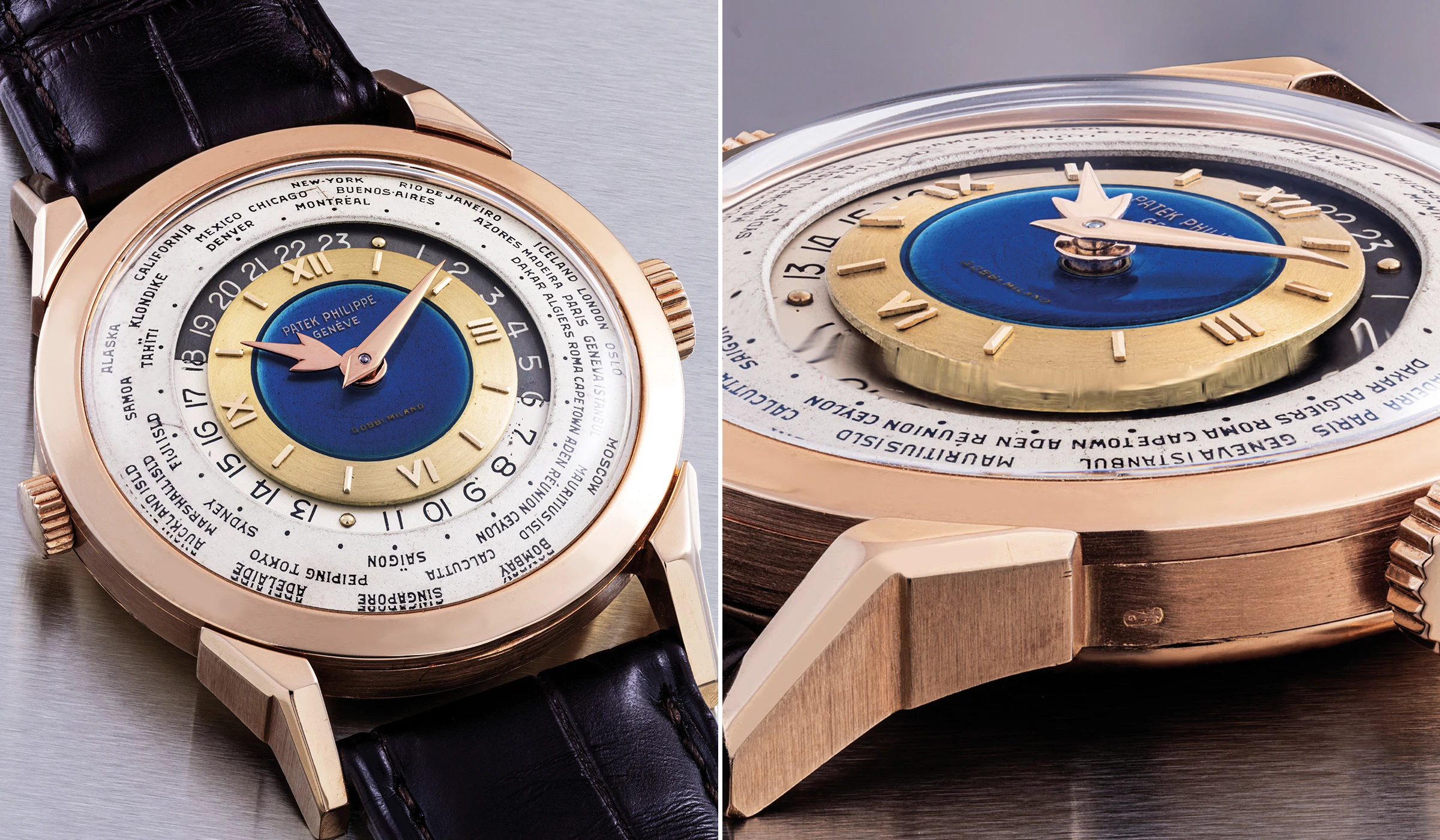
The particular significance of Reference 2523 HU (Heures Universelles), introduced in 1953 as the successor to Reference 1415 HU (1939–1954), lies above all in its world time system – the so-called Heures Universelles – devised and patented in the early 1930s by the watchmaker Louis Cottier (1884–1966). Recognising the potential of this concept, Patek Philippe commissioned Cottier to develop and manufacture a series of world time watches. According to Christie’s, Cottier supplied Patek Philippe with approximately 45 modified Calibre 12-400 movements between 1953 and 1965, which, through his construction, became the 12-400 HU version. According to the auction house Christies only 26 watches were produced in cases bearing the Reference 2523: 18 in yellow gold, seven in pink gold and a single example in white gold. Although Reference 2523 remained listed until the mid-1960s, the 25 yellow and pink gold cases were already ordered between 1953 and 1954, while the sole known white gold case was ordered in 1955. Deliveries were made in stages until 1957.
Credit © Christies
Ranked 8th among the most expensive Patek Philippe wristwatches ever sold at auction, the present watch is one of only seven examples of Reference 2523 produced in pink gold and occupies a special position within this group for several reasons. It was only the fifth pink gold Ref. 2523 ever to be offered at auction. Manufactured in 1953, the watch was sold in April 1957 to the distinguished Patek Philippe retailer Gobbi in Milan. It is therefore the only known Reference 2523 to bear both the Patek Philippe signature and that of the Milanese retailer Gobbi. The operation of the watch is as follows: the local time is first set via the crown at 3 o’clock, during which the 24-hour ring rotates anti-clockwise. Subsequently, the outer city ring is adjusted via the crown at 9 o’clock so that the current location is positioned at 12 o’clock. Once calibrated, the corresponding time in all world cities can be read directly. The two-tone 24-hour ring distinguishes between day and night by means of a silvered segment for daytime hours and a grey segment for night-time hours.
The watch achieved a total price including buyer’s premium of €8,320,632 at Christie’s “The Masterpiece Auction (23 Nov) / Important Watches including an Important Private Asian Collection Part One (27 Nov)” in 2019.
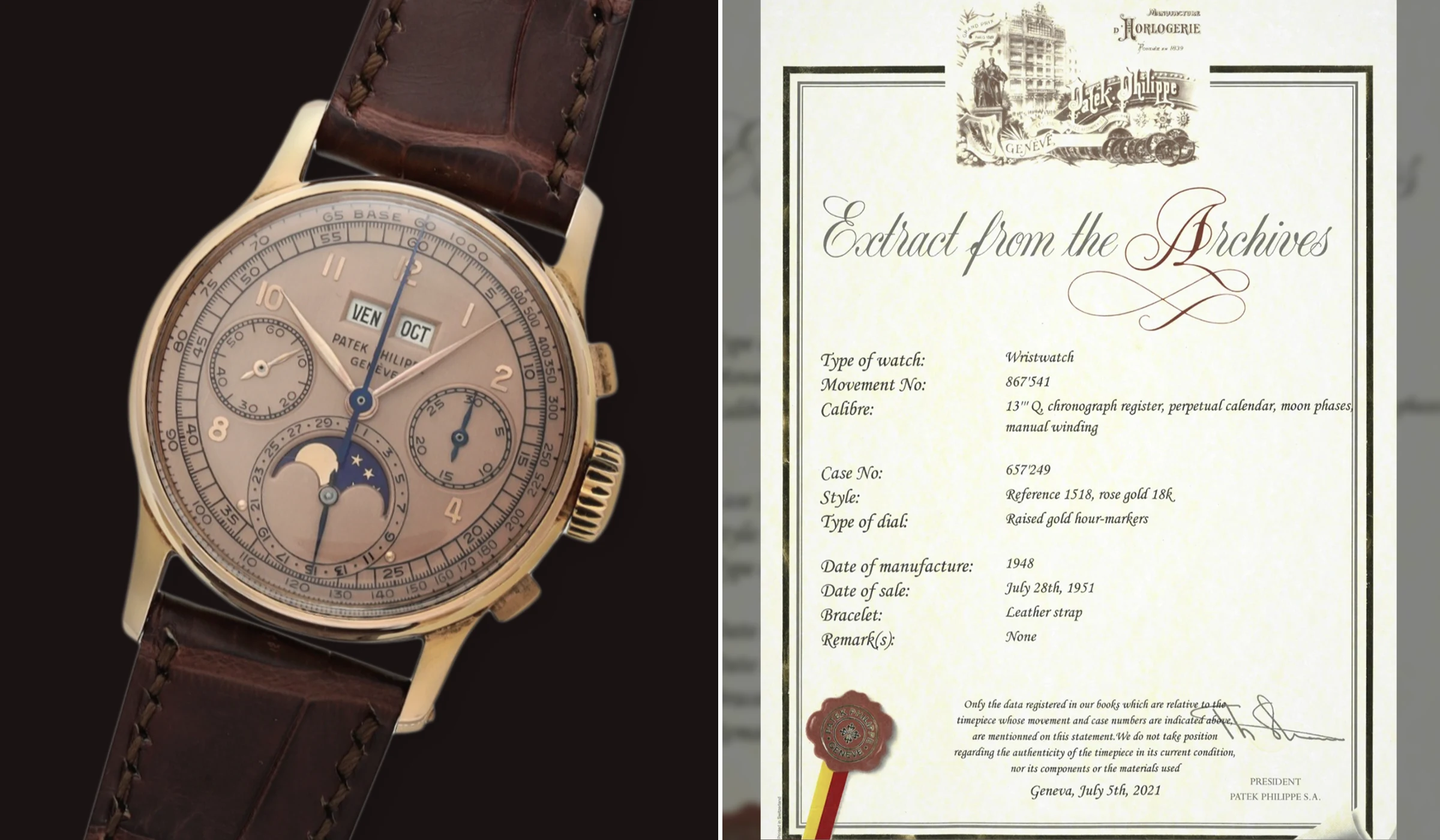
This 35 mm wristwatch in 18-carat pink gold is fitted with a French perpetual calendar and a chronograph, and is accompanied by a remarkable provenance. As connoisseurs of Patek Philippe will know, the manufacture began producing perpetual calendar chronographs in 1941 with Reference 1518. It was not only the first serially produced wristwatch of its kind, but the combination of these complications had never previously been offered by any other brand. Of the 281 examples produced, the majority were cased in yellow gold, making this pink gold version – one of only 58 pieces – a genuine rarity. Furthermore, most examples featured a silvered dial, whereas only 14 were fitted with a copper-toned, pink dial such as the present example.
Credit © Sothebys
The watch has descended directly within the family of the original owner and was acquired in 1951 by Prince Tewfik of Egypt. The Ref. 1518 remains in excellent condition, retaining the original brushed finish on the case, while the proportions of the case and lugs have remained virtually unchanged. The dial scales are still perfectly preserved in their original raised black enamel, and the crown is likewise original. Notably, this is believed to be the only double pink Ref. 1518 still accompanied by its original certificate.
The watch achieved a total price including buyer’s premium of €8,480,379 at Sotheby’s “Important Watches” auction in 2021.
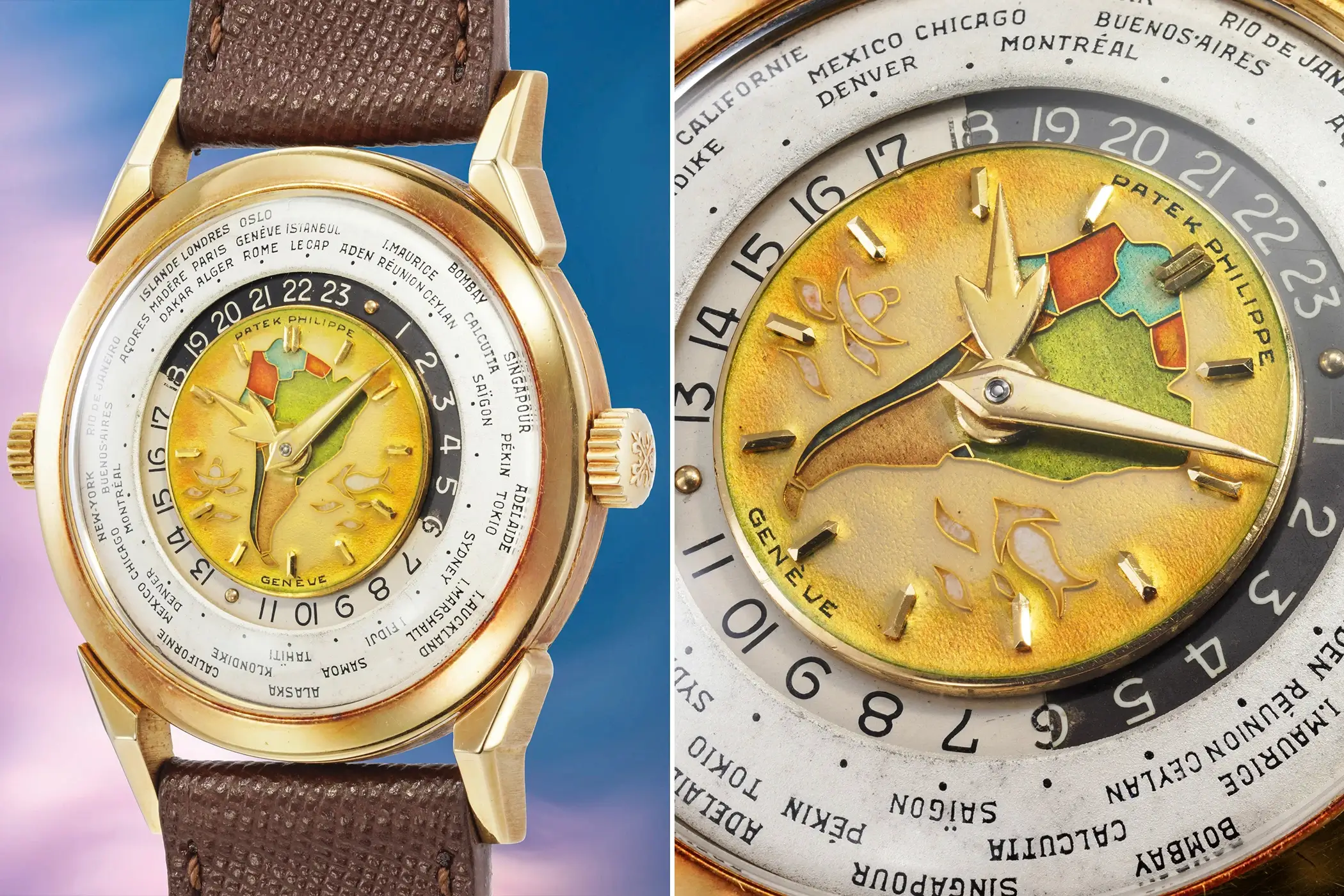
Place 6. among the most expensive Patek Philippe watches is occupied by a Ref. 2523 in yellow gold, bearing movement number 722’711 and featuring a polychrome cloisonné enamel map of South America on the dial. It ranks among the rarest known executions of the Ref. 2523. The documented dial variants of this world-time watch include, according to the auction house Phillips, guilloché decoration, blue enamel and three polychrome cloisonné enamel maps: North America, of which three examples in yellow gold, two in pink gold and one in white gold are known; Eurasia, of which three examples are known, all of them in yellow gold; and finally South America, regarded as the rarest of the three map variants, with only three examples thought to exist.
Credit © Phillips
Among the cloisonné enamel executions of the Ref. 2523, the South America version occupies a particularly special position, as only the example described here has so far appeared publicly at auction. A further example in yellow gold, bearing movement number 722’710 – immediately preceding the movement number of the present watch – is known from the 1997 book Patek Philippe Orologi Complicati da Polso. In addition, there are indications within the collecting community of a possible third example in pink gold.
Beyond its rarity, the South America map is also regarded, from a design perspective, as the most playful and complex of the three known map variants. While the Eurasia map has no decorative elements and the North America map features a wind rose, the shape of South America leaves larger open areas on the dial. Patek Philippe used these spaces for additional details: to the east of the continent, a fish, probably a whale, is depicted among waves, while to the west there is a boat.
At Phillips’ Geneva Watch Auction: XXIII in May 2026, the watch achieved a total price of EUR 8,692,664 including buyer’s premium, making it the sixth most expensive Patek Philippe wristwatch.
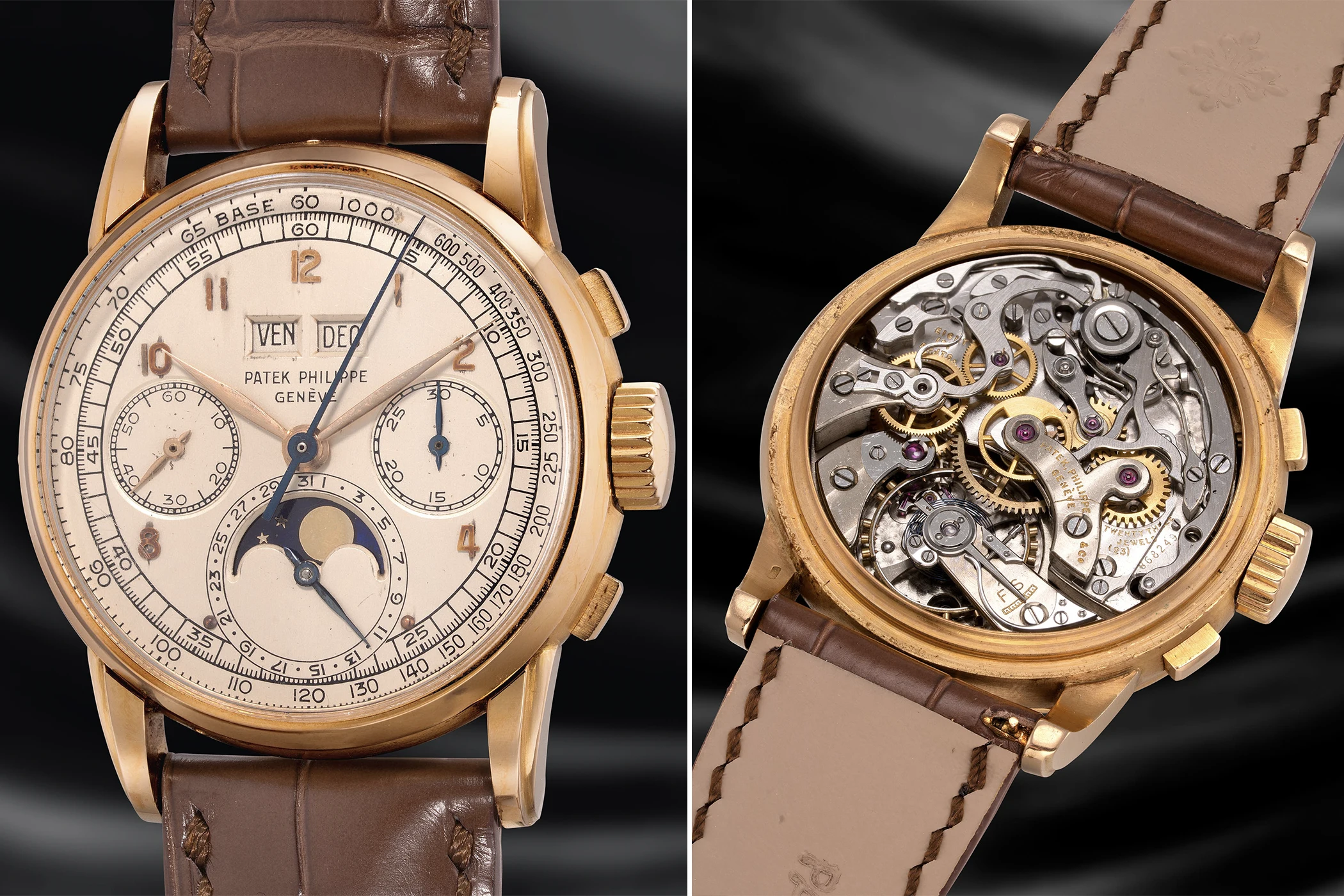
Unlike the second-series Ref. 2499, which occupies place 11. among the most expensive Patek Philippe wristwatches, the example described here is a first-series Ref. 2499. This series is most readily identifiable by its rectangular chronograph pushers, whereas later series feature round pushers. The first series is known in both yellow gold and pink gold, although only five examples in pink gold are documented on the market – including the watch described here.
According to Phillips, the first series is also particularly significant because two different case makers were involved in its production: Emile Vichet, bearing the key number 9 master mark, and Edouard Wenger, bearing the key number 1 master mark. The earliest examples, including the present watch, were made by Vichet and are distinguished by a slightly smaller diameter of 36.2 mm, a flat caseback and more pronounced, downward-curving claw-shaped lugs. After roughly two years, Patek Philippe switched to Wenger, which supplied almost all cases for the further production of the Ref. 2499 until 1985. Wenger cases generally measure around 37.5 mm, have less steeply downward-curving lugs and a bombé caseback.
Credit © Phillips
The example described here, with case number 665’025, is one of only four known first-series Ref. 2499 watches in pink gold with a Vichet case. Judging by its case number, it is likely the second pink-gold Vichet 2499 ever made. Beyond the rarity of its case, the watch is also of particular importance because of its dial. According to Phillips, extensive research has shown that two dial variants were produced for the first-series Ref. 2499: Dial A, stylistically closely related to the dials of the Ref. 1518, with applied gold Arabic numerals, a tachymeter scale in kilometres or miles and a “Chemin de Fer” (railway) date scale; and Dial B, likewise with applied gold Arabic numerals and a tachymeter scale, but without the “Chemin de Fer”.
The Ref. 2499 described here is fitted with a Type A dial. Its date display therefore features the early “Chemin de Fer” scale, which strongly recalls the early dials of the Ref. 1518. The watch was made in 1951. It had already appeared at auction in 2004 and 2008, before being offered again in 2014 as part of the sale marking Patek Philippe’s 175th anniversary, where it achieved CHF 2,629,000. At Phillips’ Hong Kong Watch Auction: XXII in May 2026, the watch achieved a total price of EUR 8,795,606 including buyer’s premium, making it the fifth most expensive Patek Philippe wristwatch.
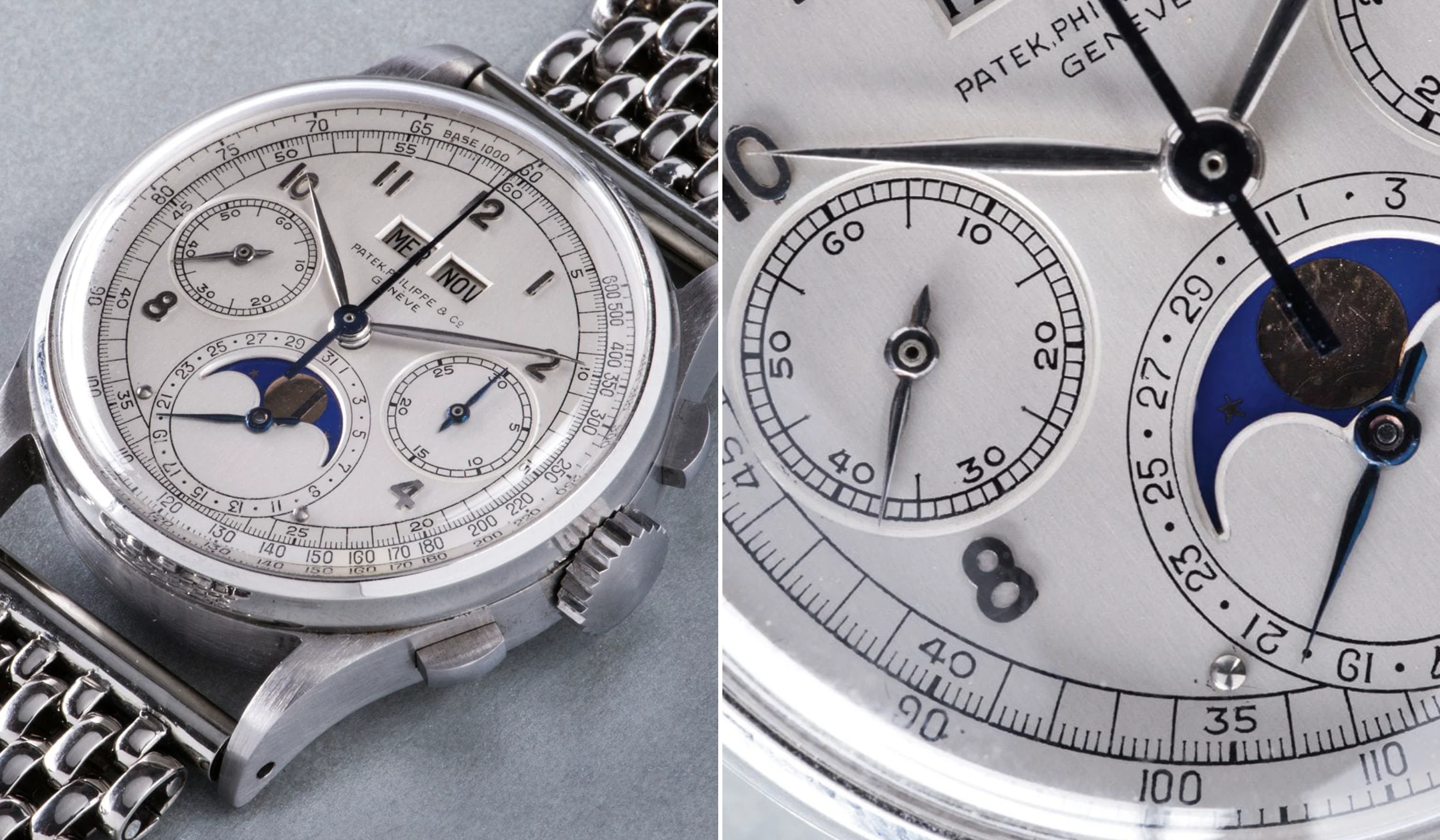
Ranked 3rd and 4th among the most expensive Patek Philippe wristwatches ever sold at auction is the Ref. 1518 in a 35 mm stainless steel case from 1944, bearing movement no. 863’193 – full details of the watch follow in the subsequent section under rank 3. Reference 1518 made history in 1941 as the first serially produced chronograph with perpetual calendar. The rarity of this particular example stems, naturally, from the use of stainless steel. Of the approximately 281 examples produced, the majority were housed in yellow gold cases. Around 20 per cent of Ref. 1518 watches were made in pink gold, while only four examples were produced in stainless steel.
Credit © Phillips
The watch achieved its first remarkable total price including buyer’s premium of €10,249,603 at Phillips’ “Geneva Watch Auction: FOUR” in 2016.
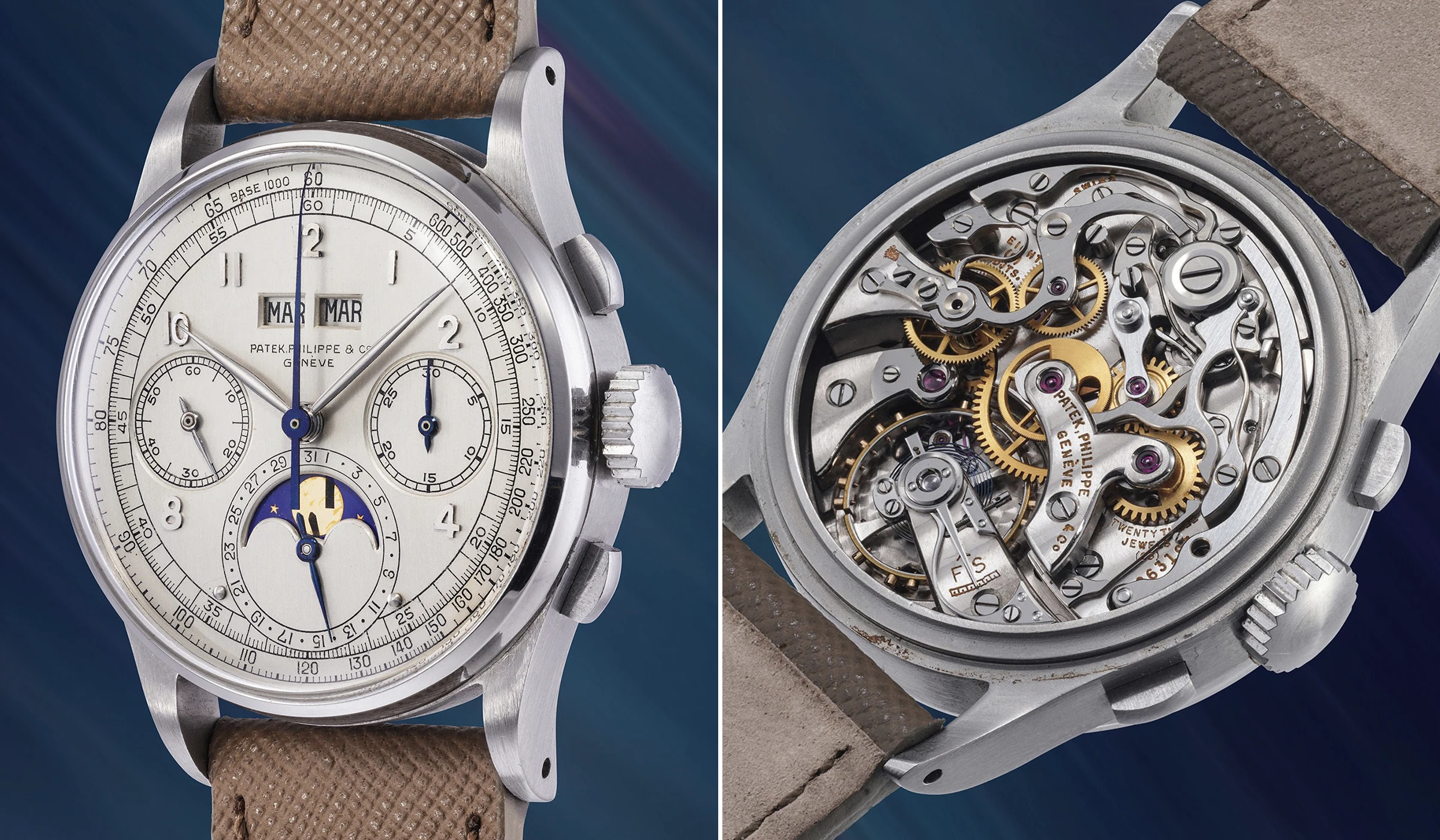
The exceptionally high sale price achieved by the stainless steel Reference 1518 – which occupies both 4th and 3rd place among the most expensive Patek Philippe wristwatches ever sold at auction – can be explained by its historical significance. At the time of its introduction in 1941, Reference 1518 was the first serially produced perpetual calendar chronograph and, together with its sister reference 2499, remained for much of the 20th century one of the only wristwatches to combine these two complications. In addition, the present stainless steel Reference 1518 is distinguished by its extremely limited production. According to Phillips, approximately 281 examples of Reference 1518 were manufactured in total, the vast majority in yellow gold and around 20 per cent in pink gold. Over the model’s 14-year production period, however, only four examples were made in stainless steel, all of which are publicly known today. Among these four, the watch described here is furthermore the very first stainless steel Reference 1518 ever produced.
Credit © Phillips
• 508473 (1), manufactured in 1943 – the present example
• 508474 (2), manufactured in 1943
• 508475 (3), manufactured in 1943
• 633556, manufactured in 1947
This is confirmed by the inner case back, which bears the serial number 508’473, as well as the numeral “1”, indicating that this was the first stainless steel example ever produced. The significance of the watch is further enhanced by the fact that, following these four known stainless steel Ref. 1518 models, Patek Philippe never again produced a calendar chronograph in stainless steel. The present watch was manufactured in 1943, two years after the introduction of Reference 1518, and was sold on 22 February 1944 to Joseph Lang in Budapest. The sale price at the time amounted to 2,265 Swiss francs – only 500 francs less than the gold version of the model. Notably, the second stainless steel example of Reference 1518 was delivered to Lang on the very same day. For whom these two watches were intended remains unknown to this day. Both reappeared in Hungary between the mid-1990s and early 2000s.
The Ref. 1518 bearing movement no. 863’193 was offered again at Phillips’ “Decade One (2015–2025)” auction, where it achieved a total price including buyer’s premium of €15,231,004, exceeding its 2016 result by more than €5 million.
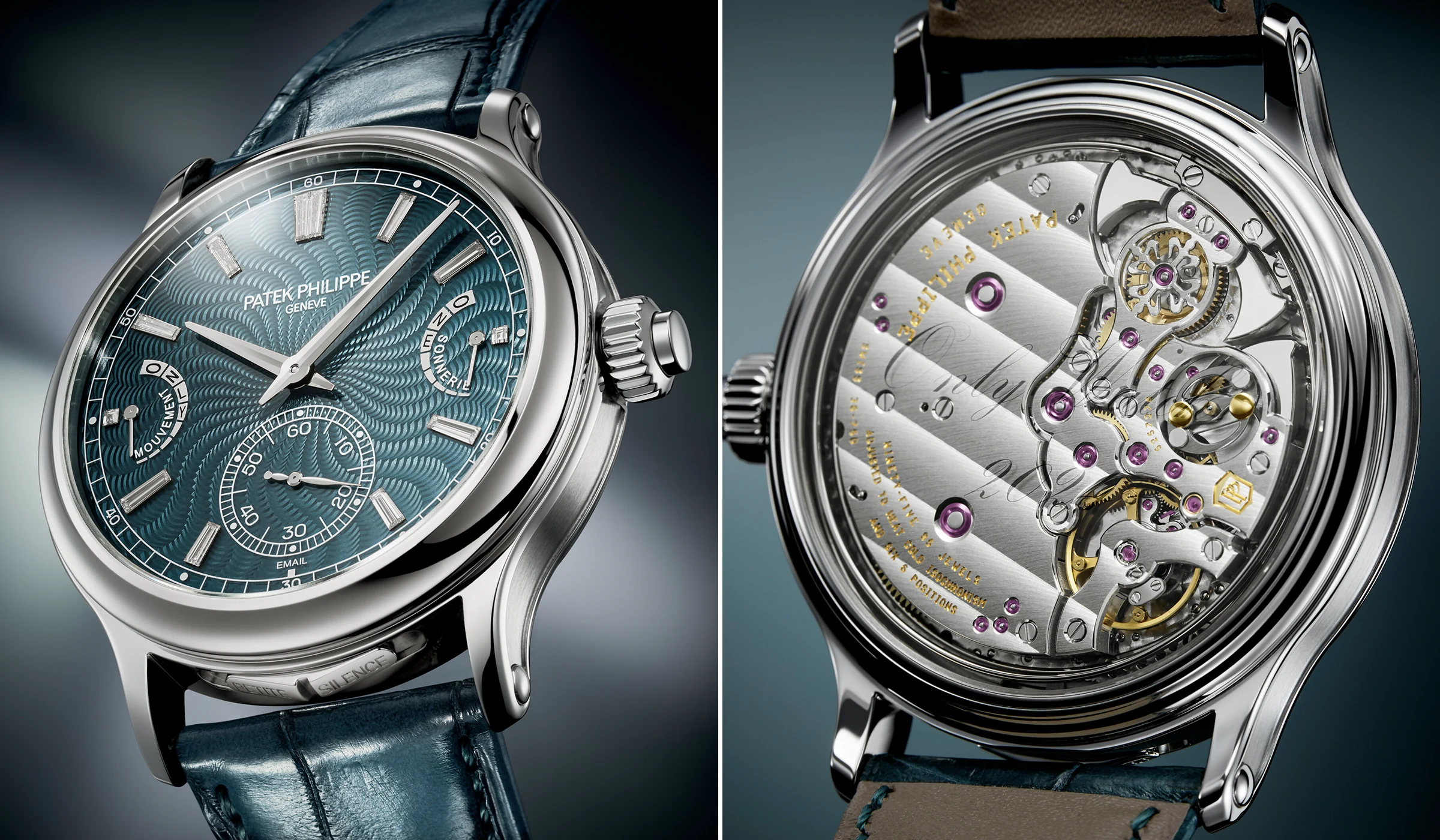
Ranked 2nd among the most expensive Patek Philippe wristwatches ever sold at auction is Reference 6301A-010. This is a unique piece donated by Patek Philippe specifically for the Only Watch 2024 charity auction, the proceeds of which support research into muscular dystrophies and genetic diseases. At its core is the hand-wound Calibre GS 36-750 PS IRM, combining a Grande Sonnerie, Petite Sonnerie, a minute repeater striking on three gongs, a jumping small seconds at 6 o’clock, and power reserve indications for both the movement (72 hours) and the striking mechanism (24 hours). The watch also introduced two patented innovations relating to the striking mechanism, as well as an additional patent concerning the system for the jumping small seconds.
Credit © Christies
A defining feature of the watch is its blue-green Grand Feu enamel dial with a hand-guilloché swirling motif, executed on a dial base crafted from 18-carat gold. The dial is realised in the so-called flinqué enamel technique, whereby the Grand Feu enamel allows the underlying hand-guilloché pattern to remain visible. It is complemented by twelve baguette-cut diamond hour markers with a total weight of 0.45 carats, faceted white gold Dauphine hands, and a transfer-printed “only / one” signature on the power reserve indications. The composition is housed in a stainless steel case measuring 44.8 mm in diameter and 12.03 mm in height, featuring a concave bezel and satin-finished flanks. The unique piece is completed by a metallised “Only Watch 2024” inscription on the sapphire crystal case back.
The watch achieved a total price including buyer’s premium of €16,078,630 at the Only Watch charity auction in 2024.
Ranked first among the most expensive Patek Philippe wristwatches of all time is the Grandmaster Chime Ref. 6300A-010. What distinguishes it so markedly? Firstly, it is the only Grandmaster Chime ever produced by Patek Philippe in stainless steel. Secondly, the Grandmaster Chime represents a true feat of watchmaking, incorporating 20 complications. These include five acoustic functions – two of which are patented world firsts – as well as an alarm that strikes the pre-programmed alarm time and a date repeater that, on demand, acoustically indicates the date.
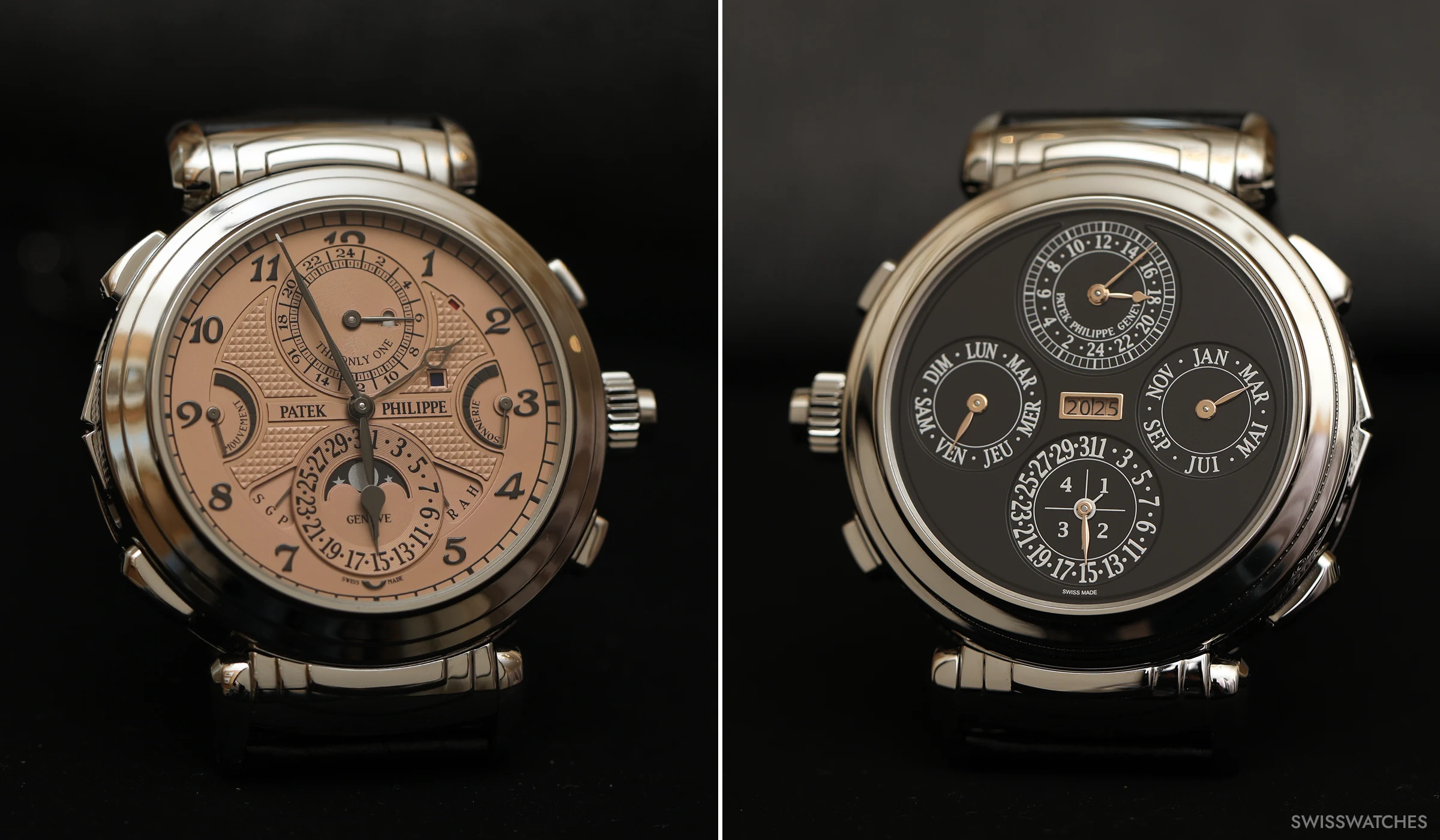
Further features comprise a striking mechanism isolator display, a second time zone with day/night indication, day, date (displayed on both dials), month, leap year cycle indicated by hand, a four-digit year display, 24-hour and minute sub-dials, and a crown position indicator. In addition, the watch switches between its two dials by means of a patented reversing mechanism.
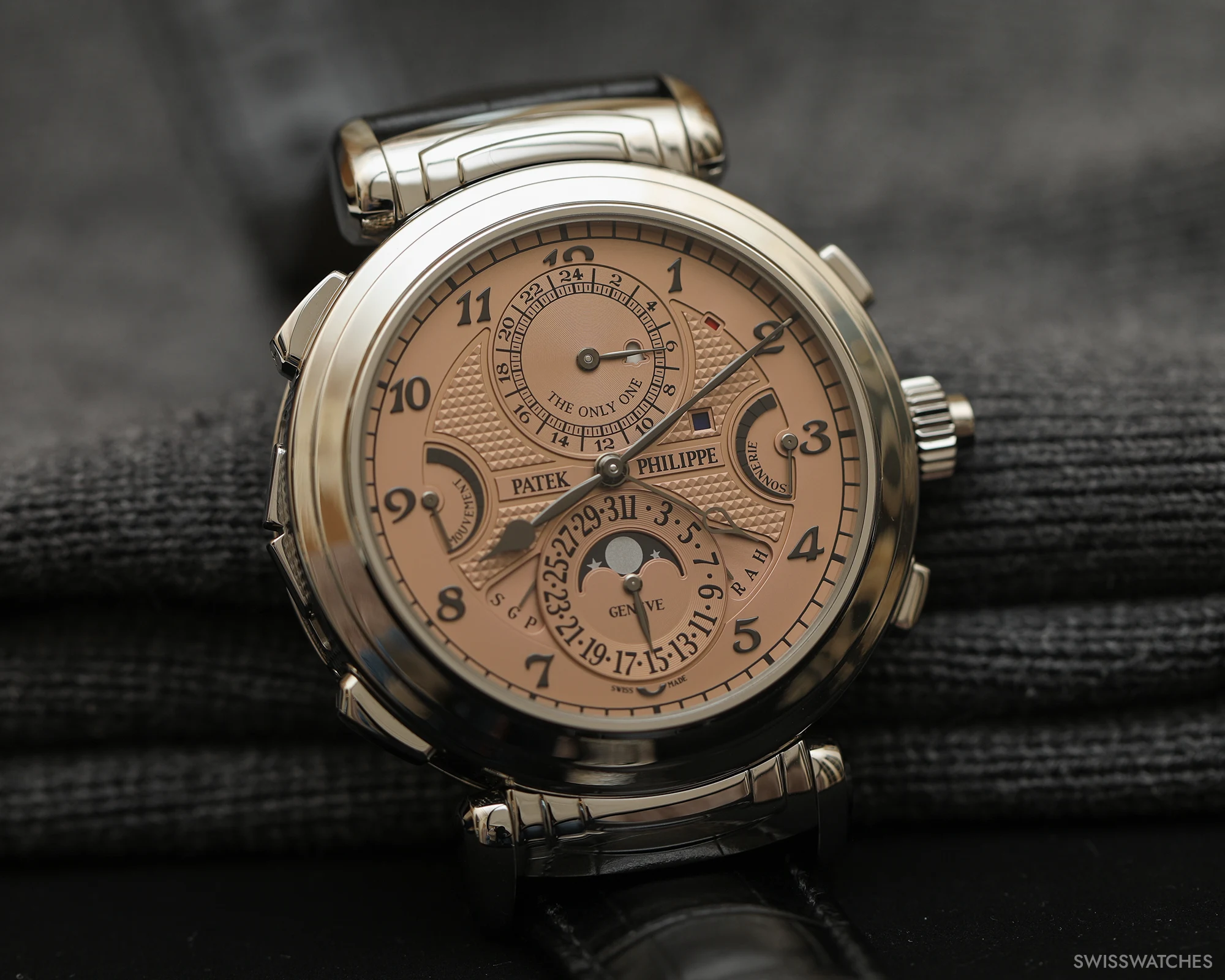
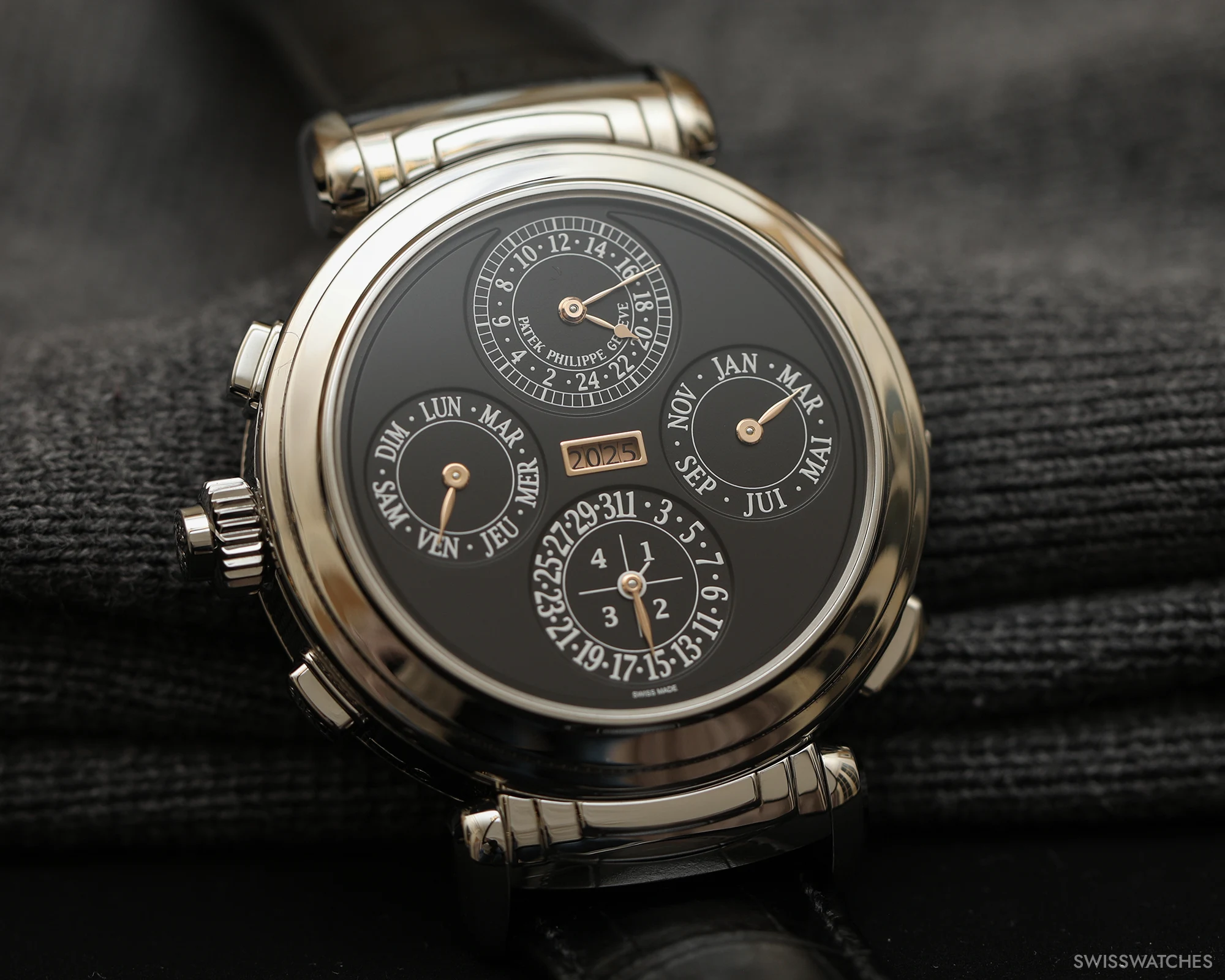
The watch achieved a total price including buyer’s premium of €28,200,943 at the Only Watch auction in 2019.
This article features the most expensive Patek Philippe wristwatches to date,
as of June 2026.
| Model | Price realised |
|---|---|
| 15. Nautilus Ref. 5711/1A-018, “Tiffany Blue” Dial | EUR 5,746,573 |
| 14. Calatrava Ref. 96 Quantième Lune, formerly owned by Aisin-Gioro Puyi, the last Emperor of China’s Qing Dynasty | EUR 5,787,129 |
| 13. “Heures Universelles” Ref. 2523, “Eurasia” (“Silk Road”) | EUR 6,434,975 |
| 12. Grand Complications Tourbillon Minute Repeater Perpetual Calendar Ref. 5016A-010 “Only Watch 2015” | EUR 6,964,919 |
| 11. Perpetual Calendar Chronograph Ref. 2499, Second Series, retailed by Gobbi Milano | EUR 7,173,383 |
| 10. “Heures Universelles” Ref. 2523J HU DE, Cloisonné Dial “Eurasia” | EUR 7,726,510 |
| 09. “Heures Universelles” Ref. 2523J HU DE, Cloisonné Dial “North America” | EUR 7,926,770 |
| 08. “Heures Universelles” Ref. 2523 HU, retailed by Gobbi Milano | EUR 8,320,632 |
| 07. Perpetual Calendar Chronograph Ref. 1518, Movement No. 867’541 | EUR 8,480,379 |
| 06. “Heures Universelles” Ref. 2523, Cloisonné Dial “South America” | EUR 8,692,664 |
| 05. First-Series Perpetual Calendar Chronograph Ref. 2499, Movement No. 868’249 “The Pink First Series” | EUR 8,795,606 |
| 04. Perpetual Calendar Chronograph Ref. 1518, Movement No. 863’193 (2016) | EUR 10,249,603 |
| 03. Perpetual Calendar Chronograph Ref. 1518, Movement No. 863’193 (2025) | EUR 15,231,004 |
| 02. Rare Handcrafts Grande and Petite Sonnerie, Minute Repeater, Ref. 6301A-010 “Only Watch 2024“ | EUR 16,078,630 |
| 01. Grandmaster Chime Ref. 6300A-010 “Only Watch 2019” | EUR 28,200,943 |
The auction data used for this article is sourced from everywatch.com.