Kari Voutilainen is considered one of the most respected watchmakers of our time. We spent a day with Kari Voutilainen and visited his various workshops.

Dress watches, with their seemingly simple design, are a hot trend. Sometimes less is more. However, this type of watch is by no means new, but rather part of the current craze for vintage-style timepieces.
When considering the high-end segment, dress watches are often described as ‘luxurious’ in conjunction with adjectives such as quiet, silent, discreet or refined.
We explored the exclusive world of minimalist luxury watches and selected the most beautiful dress watches for 2025. It turns out that they are all the perfect blend of classic and modern styles. You can find the corresponding definitions and the history of the dress watch here.
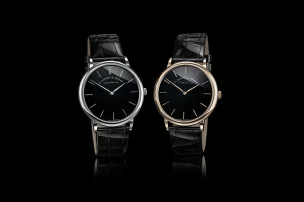
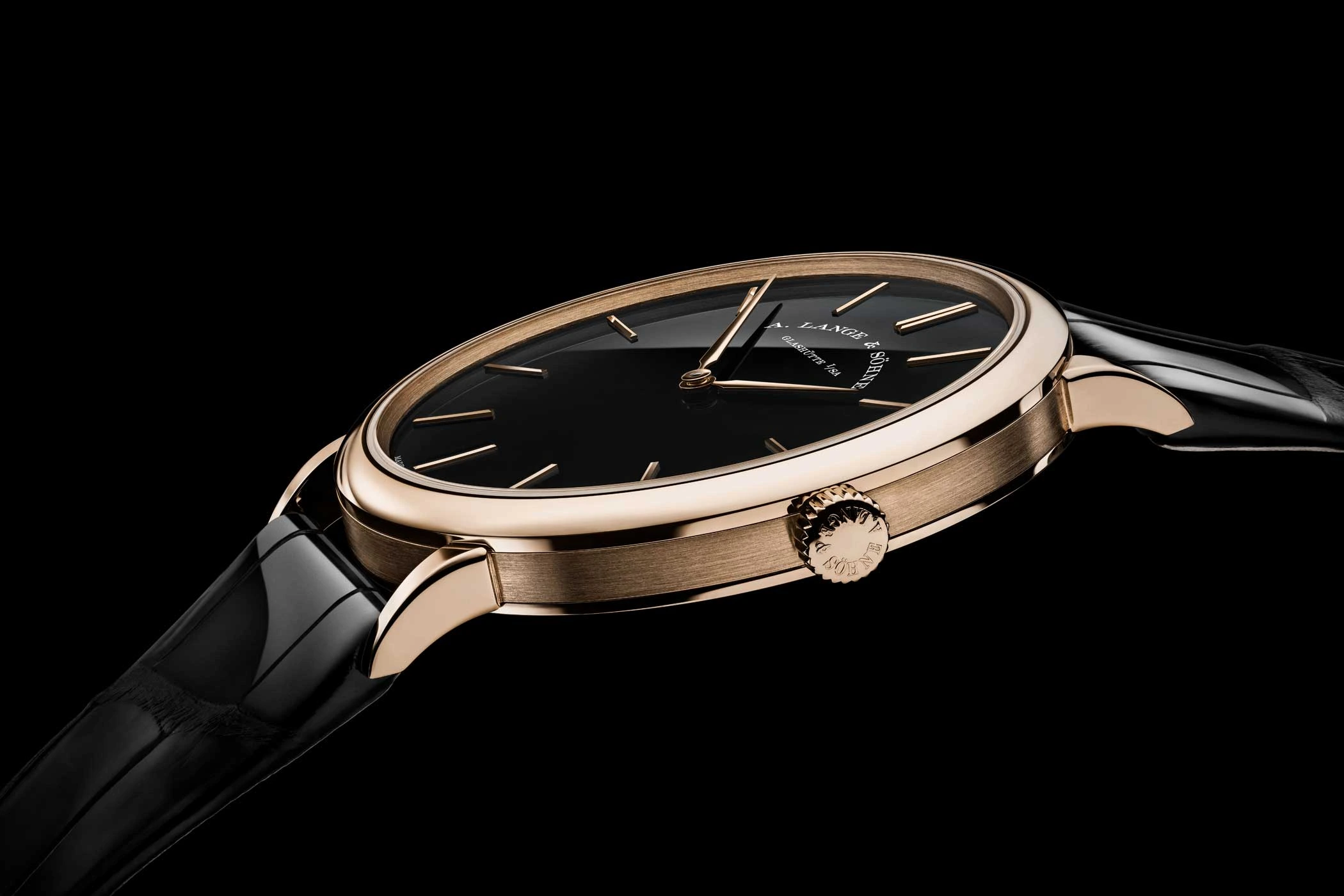
In 2011, the Glashütte-based manufacturer A. Lange & Söhne launched the Saxonia Thin, a range of two-hand watches within the Saxonia collection which embody minimalist functionality and aesthetics. Measuring 40 millimetres in diameter, the 2025 version is the flattest Lange timepiece to date. While this makes it one of the larger dress watches, its slim height of just 6.2 millimetres ensures it remains a true dress watch.
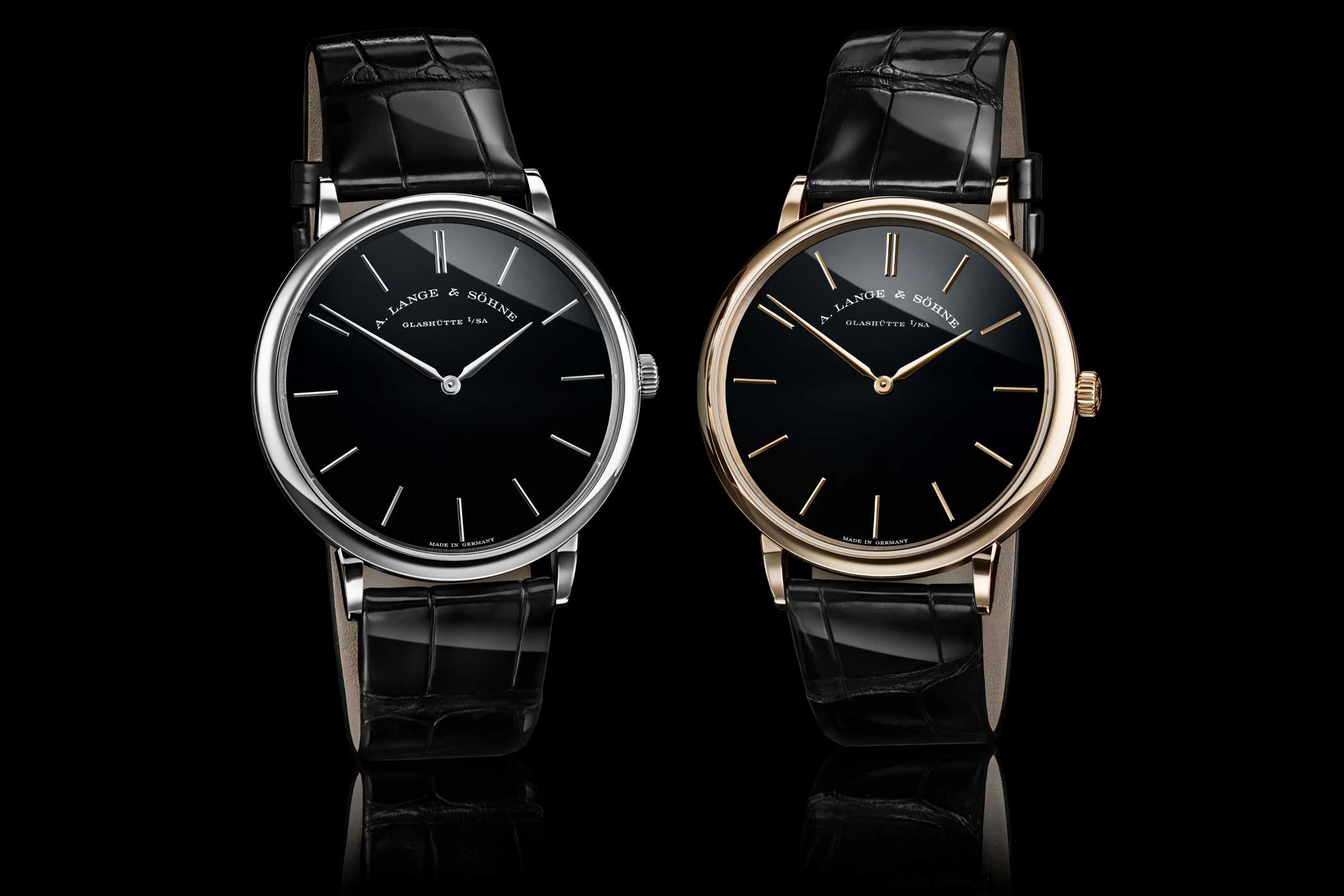
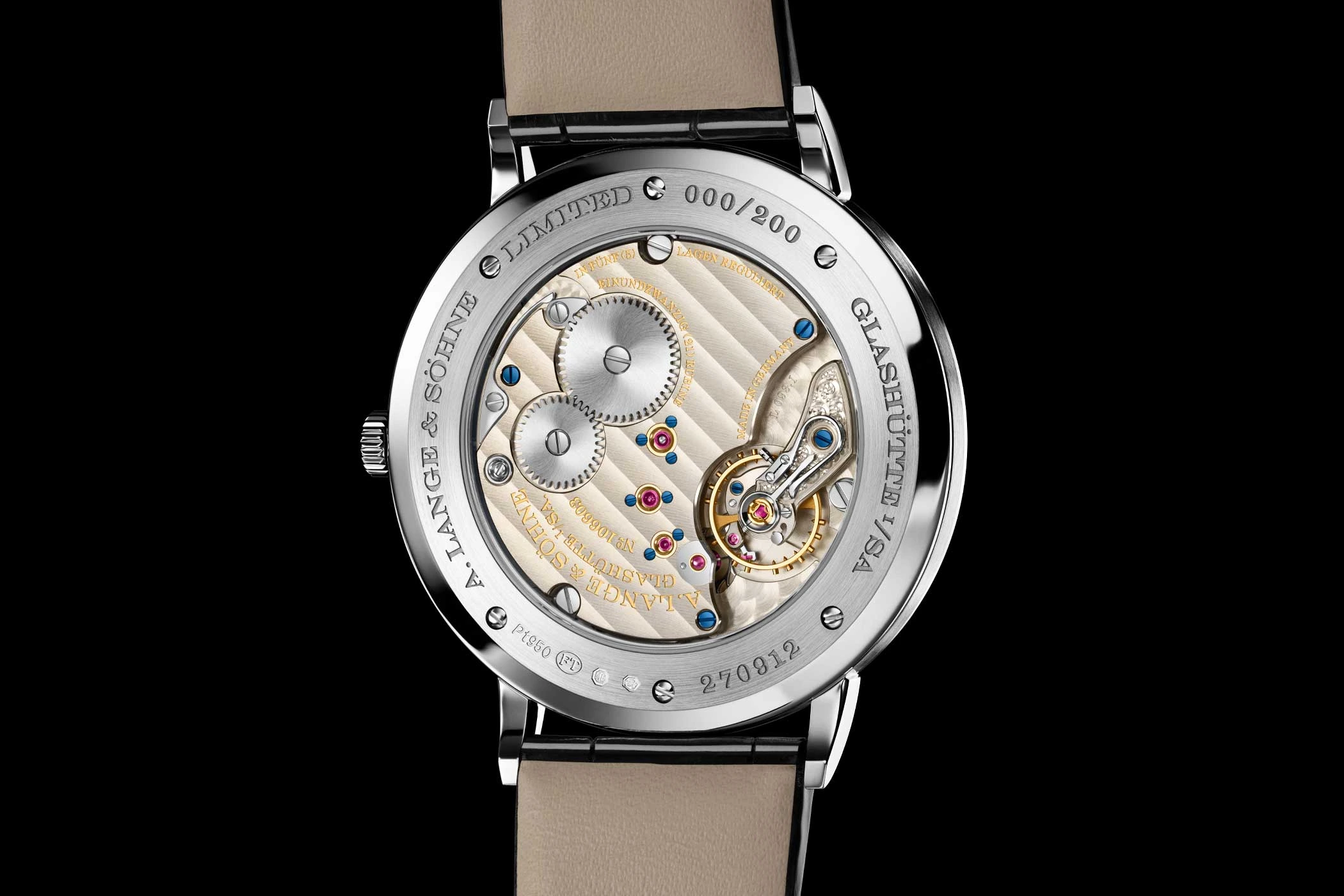
Limited to 200 pieces, the Saxonia Thin with an onyx dial owes its elegant appearance to its particularly flat L093.1 hand-wound movement, whose elaborate decorations are visible through the sapphire crystal caseback.
In contrast, the dial features a minimalist design, yet the high-quality, shiny jet-black onyx still makes a strong impression. This Saxonia Thin thus deviates from the classic dress watch. But that is the only difference.
With its slim case, water-resistant to three bar, crafted from 750 honey gold or 950 platinum, the well-proportioned curve of its slender lugs, its gold alpha hands and its refined baton appliqués, it would have adorned the wrists of suited gentlemen in the 1950s with understated elegance. The Saxonia Thin with an onyx dial is worn on a black alligator leather strap.
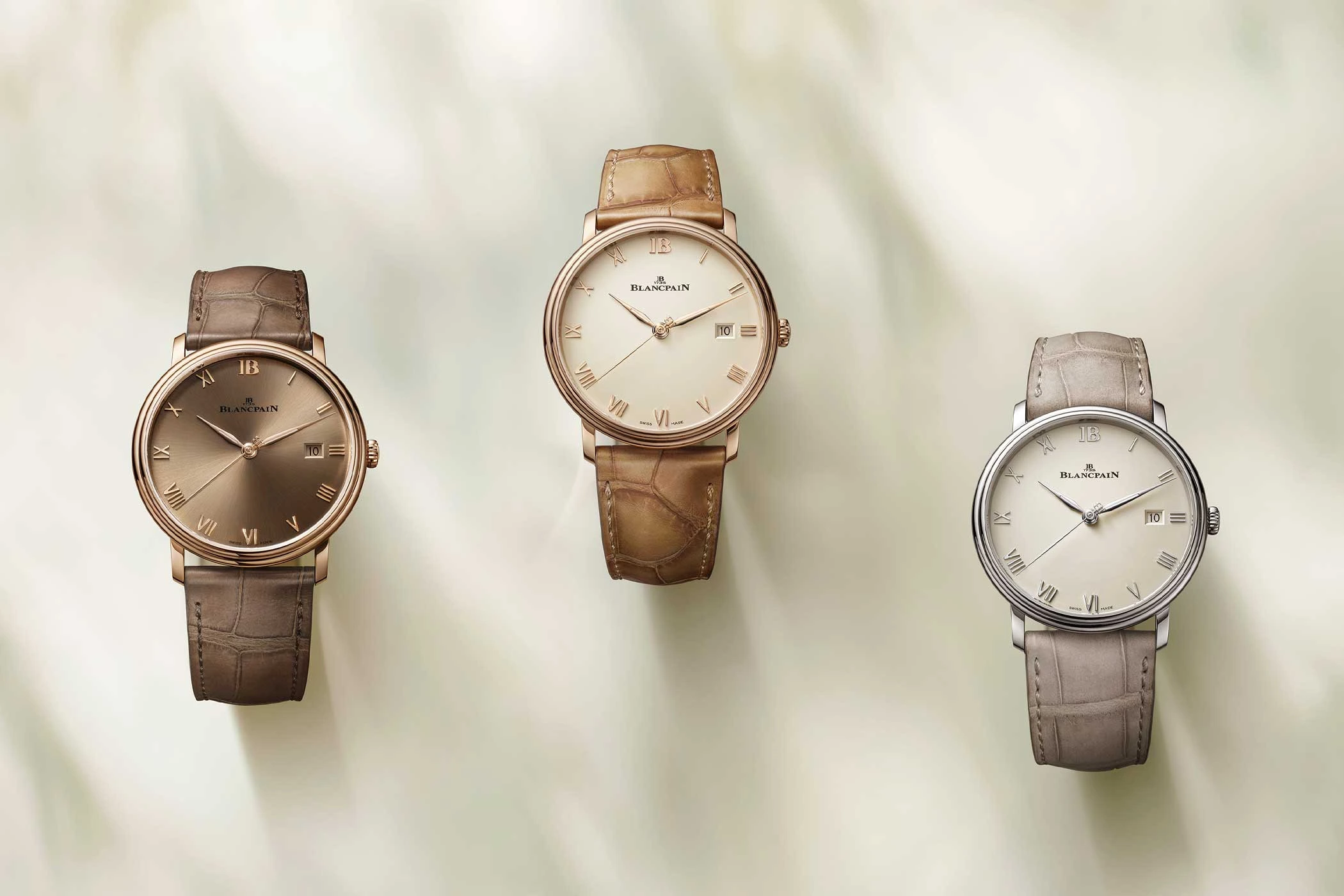
In 2025, Blancpain presented the Villeret Ultraplate alongside three further models from the Villeret collection, which is named after the manufacture’s place of origin. Characteristic of all the models are two dial variants with either a grained opaline or a golden-brown finish, Roman numerals in 18-carat gold, and slender hands coated with luminous material.
The trio’s slim case is water-resistant to three bar and is available either in rose gold or polished stainless steel. The differences lie in the size: the Quantième Phases de Lune measures a compact 33.2 millimetres – in fact an ideal dress watch size. Were it not for the rather ornate dial. By contrast, the Quantième Complet Phases de Lune and the Ultraplate, at 40 mm in diameter and 8.7 mm in height, are somewhat large for a classic dress watch.
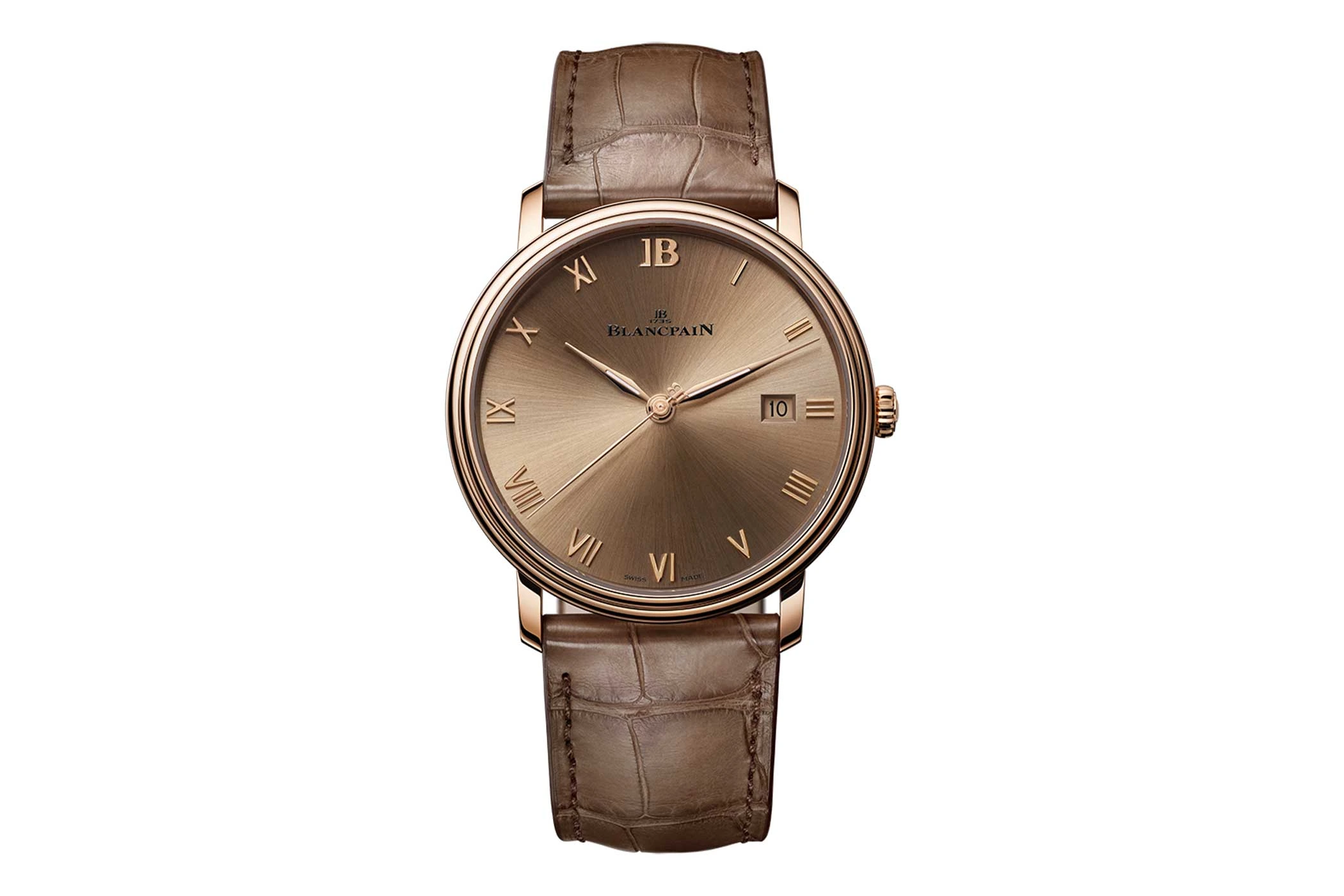
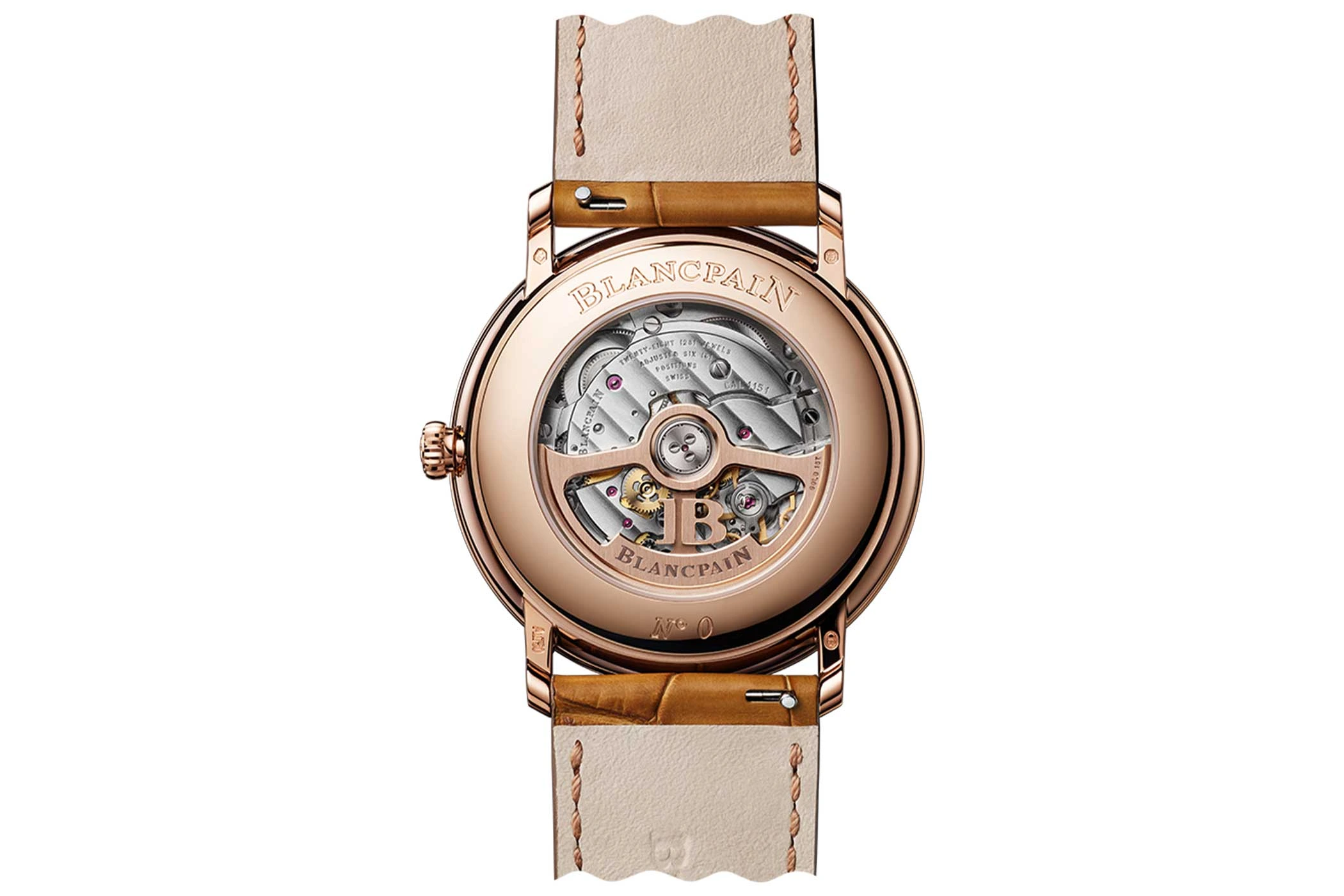
The latter makes up for this with the exceptionally pared-down design of its dial. While the opaline version in terms of colour, together with the leather strap, comes very close to the classic notion of a dress watch, the brown and honey-coloured counterpart, the Roman numerals and the date window deviate somewhat from this ideal and are more readily categorised as modern suit watches.
This model is a vivid example of how traditional motifs can be interpreted in a contemporary manner. The automatic calibre 1151 also meets current technical standards and offers the functions of hours, minutes, seconds and date, as well as an impressive power reserve of 100 hours.
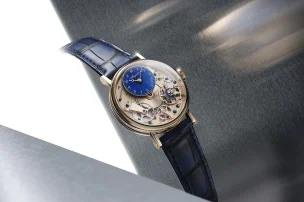
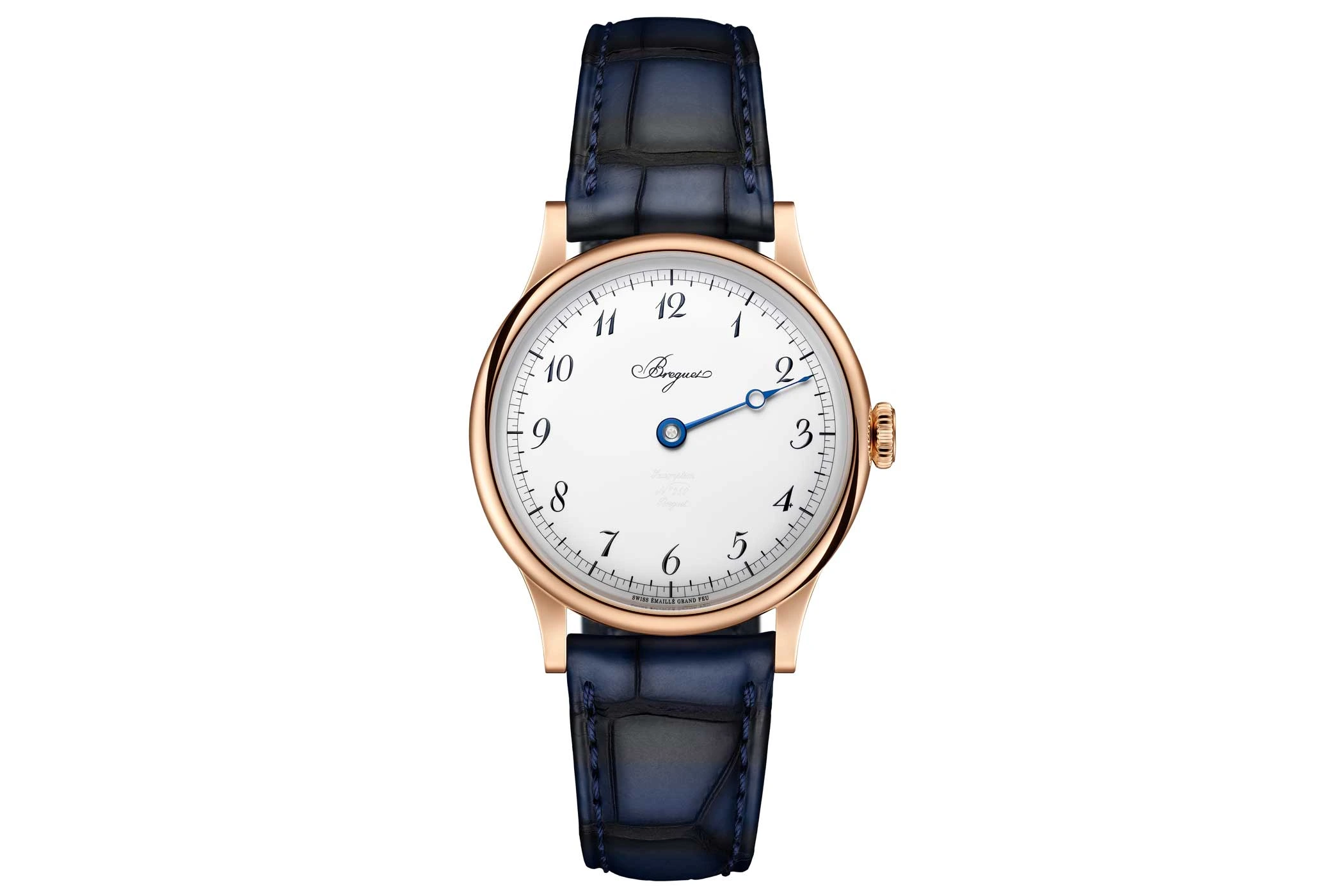
The Classique Souscription 2025 is directly inspired by Abraham-Louis Breguet, the outstanding watchmaker and founder of the brand. The subscription model represents not only a horological innovation, but above all an innovative business concept.
From 1796 onwards, he marketed this single-hand pocket watch in a remarkably astute manner. Customers were required to pay a quarter of the purchase price upon placing their order. In this way, wages, material costs and other operating expenses were covered even before the watch was finally delivered. By 1805, around 700 examples of the Souscription watch had been produced using this model.
It is a fitting source of inspiration for an anniversary edition in the style of a classic dress watch with a historical character. With its 40 × 10.8 millimetre case crafted from the manufacture’s own Breguet gold alloy, the Classique Souscription 2025 is technically at the upper end of what is traditionally considered a dress watch. Yet, thanks to all its historically inspired features, it can unquestionably be classified as one.
Characteristic of the manufacture are the Grand Feu enamel dial with Breguet numerals and the blued Breguet hand with its open tip. In addition, the barely visible signature and the inscription ‘Souscription’ can be seen only in the right light. A classic railway-track minute scale frames the dial, aiding legibility on this single-hand watch.
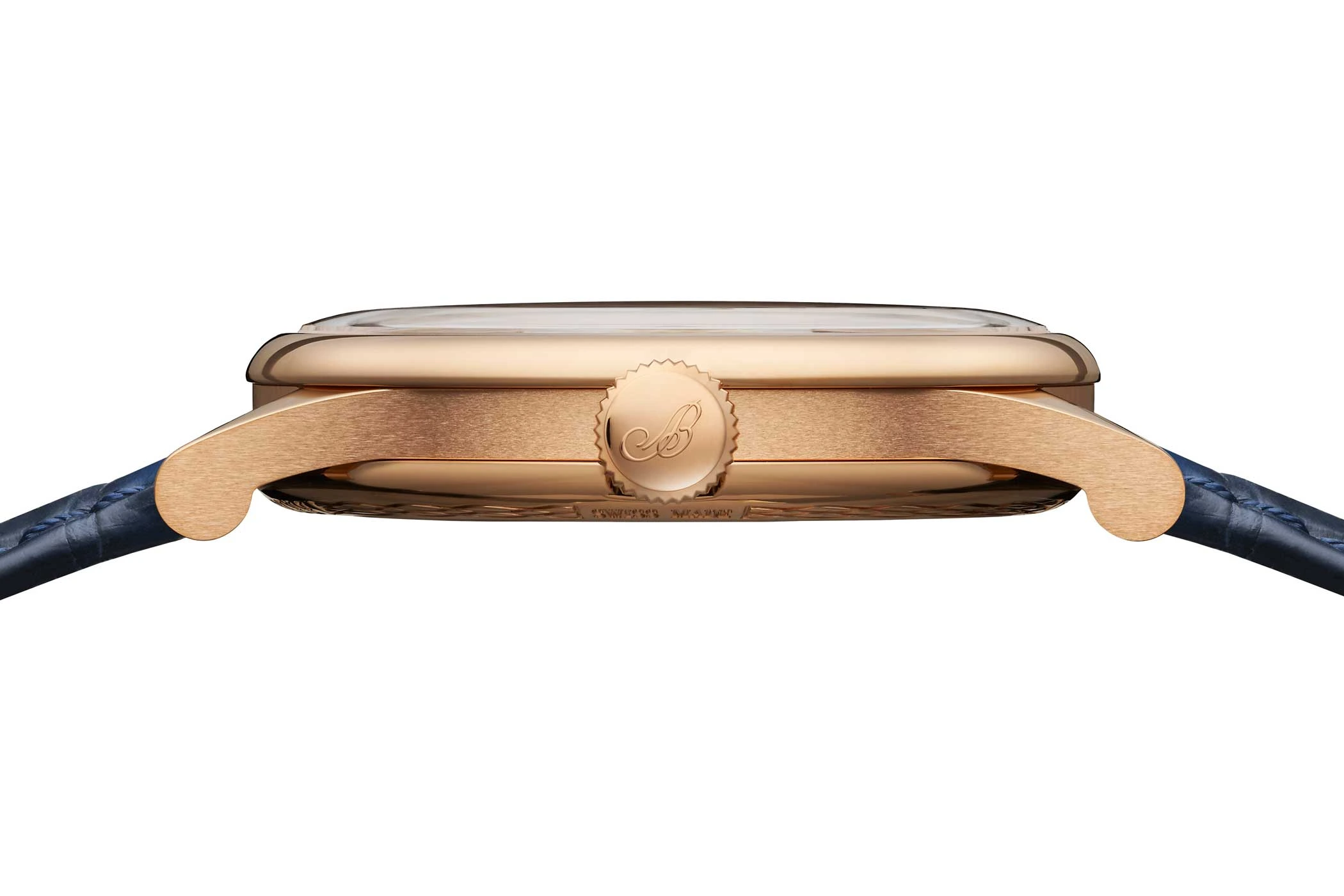
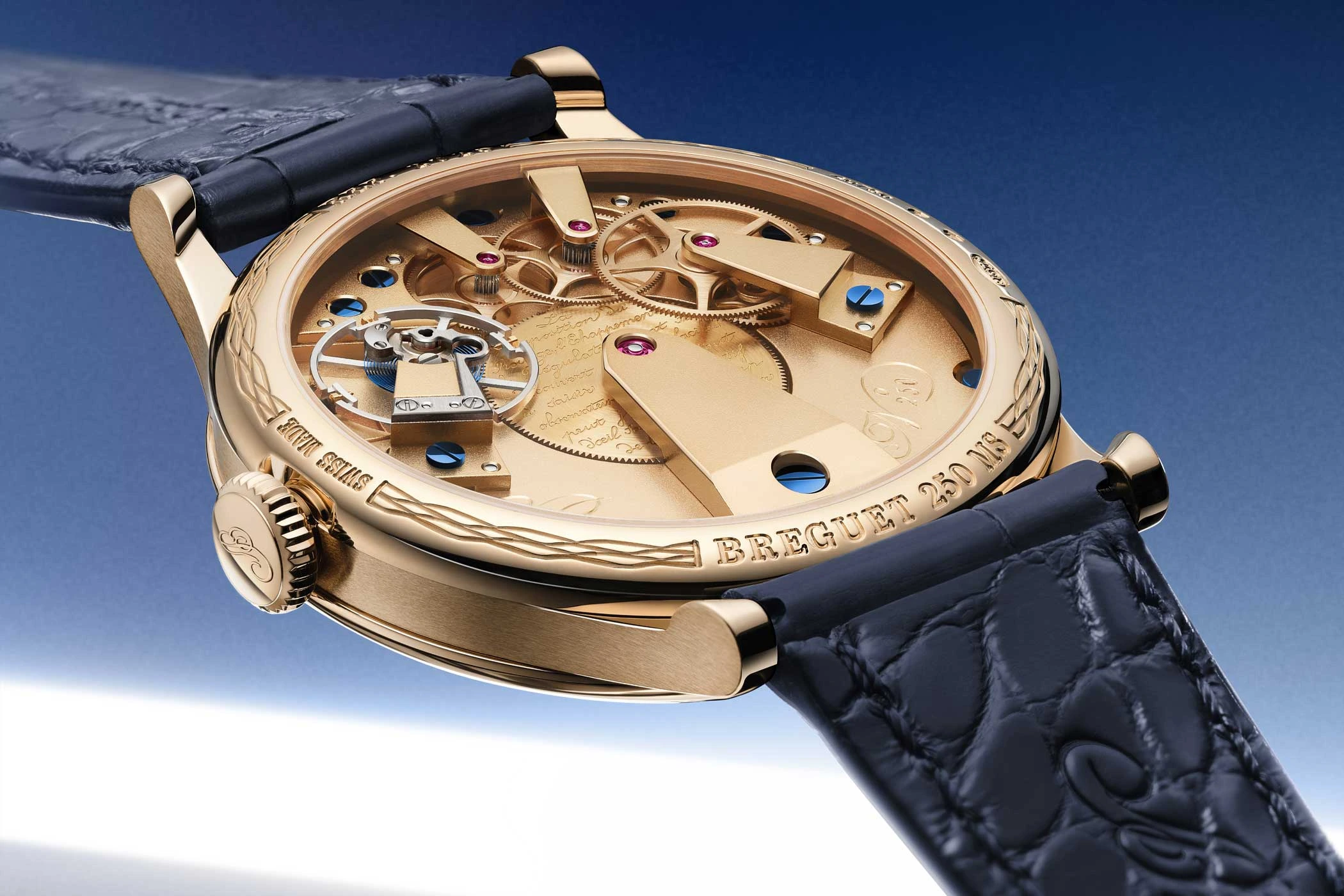
The sapphire crystal caseback enables the VS00 hand-wound calibre to be viewed. Consisting of 144 components, it offers a generous 90-hour power reserve.
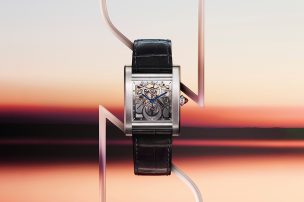
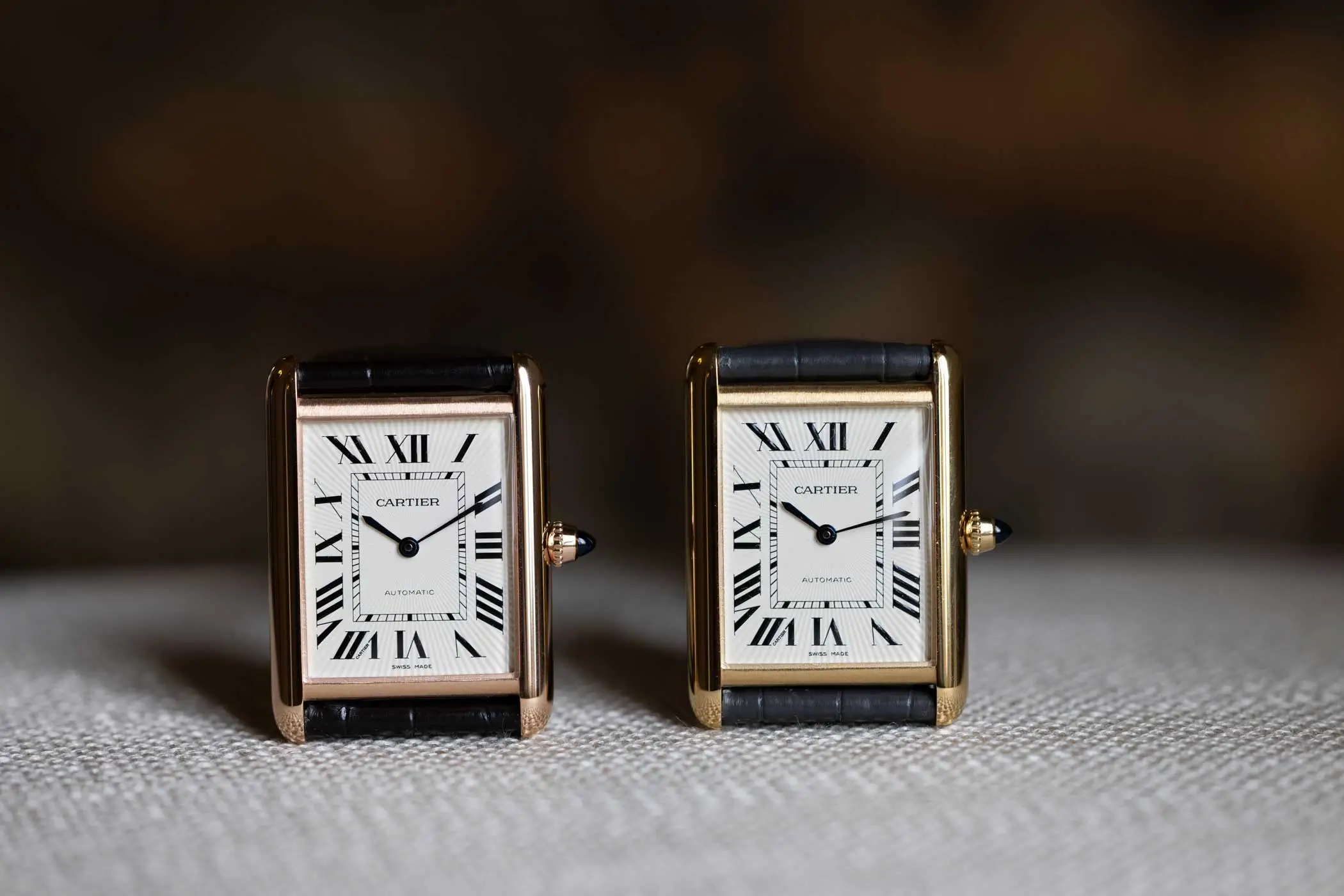
Although dress watches are typically round, elegance often takes precedence over shape. In this respect, the Tank Louis Cartier sits squarely within the realm of formal suit watches. Since last year, it has been available in two new variants of one of the brand’s most iconic watch lines. Both are equipped with the automatic in-house calibre 1899 MC – a first for the Tank Louis Cartier.
Both models are available in yellow or rose gold, reflecting the classic aesthetics of a dress watch. Thanks to the larger case dimensions of 38.1 × 27.75 millimetres with a height of 8.18 millimetres, these timepieces sit more prominently on the wrist than their hand-wound predecessors, yet they retain their elegance and suitability as a formal watch without compromise.
As is customary for Cartier, the larger variants feature a fluted crown set with a cabochon. The rounded brancards (French for ‘carriers’ or ‘frames’) are polished, while the case and bezel feature a matte satin finish. Both versions display the classic Tank characteristics: a flinqué dial, railway-track minute scale, Roman numerals, and blued sword-shaped hands.
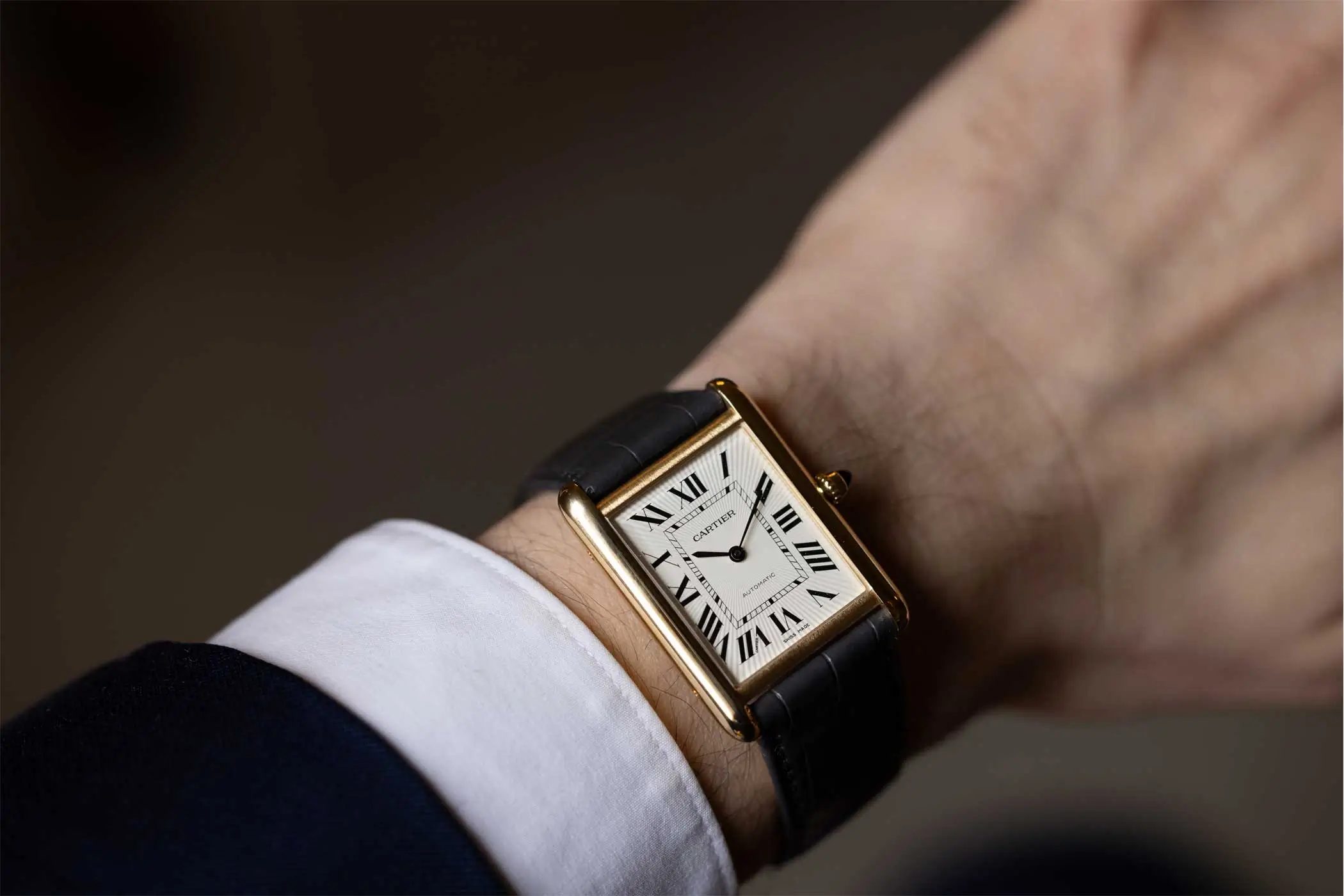
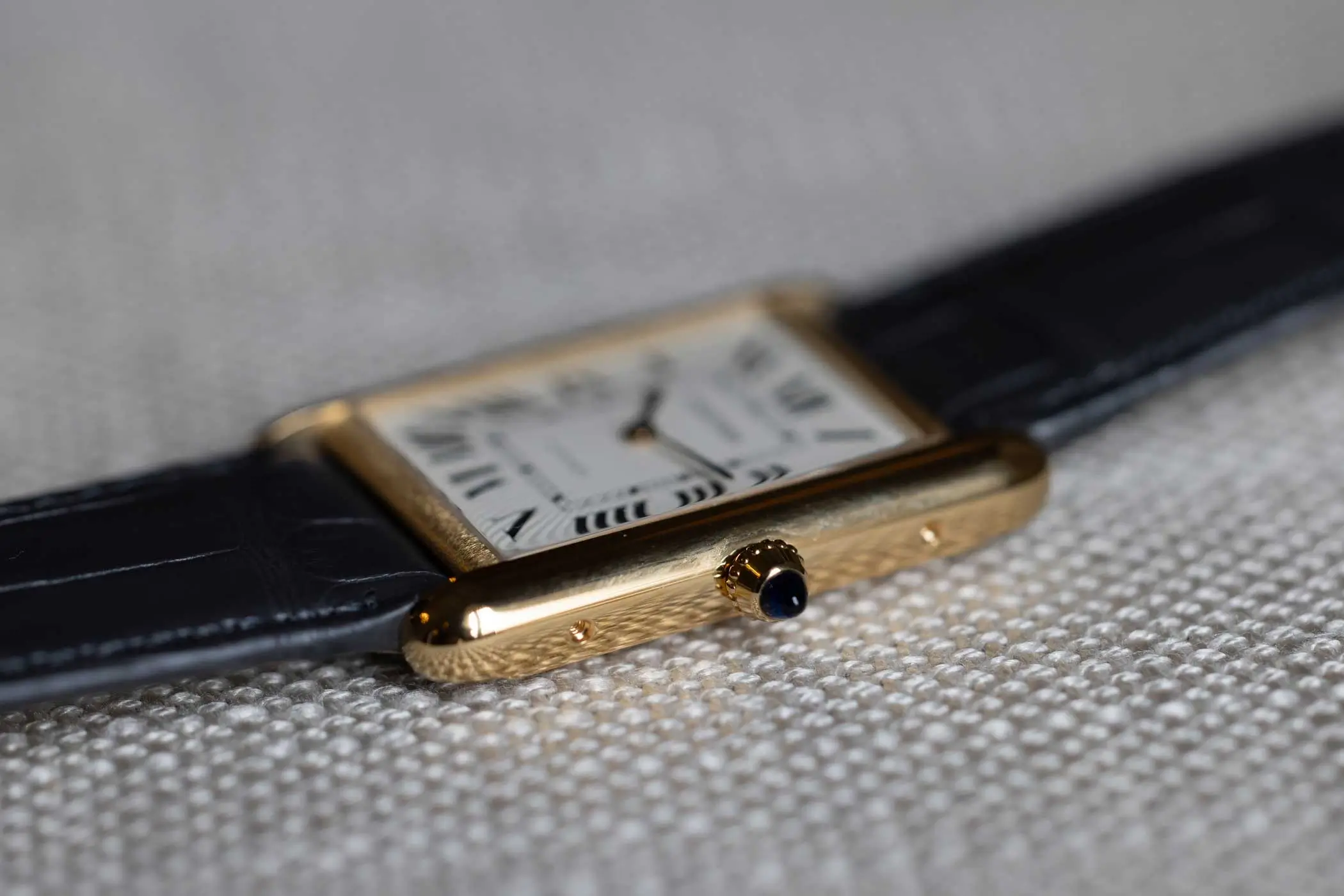
The larger Tank case, which is still suitable for dress watches, allows for the use of the 1899 MC automatic movement. Equipped with a power reserve of 38 hours, it was developed specifically for the classic proportions of the Tank Louis Cartier.
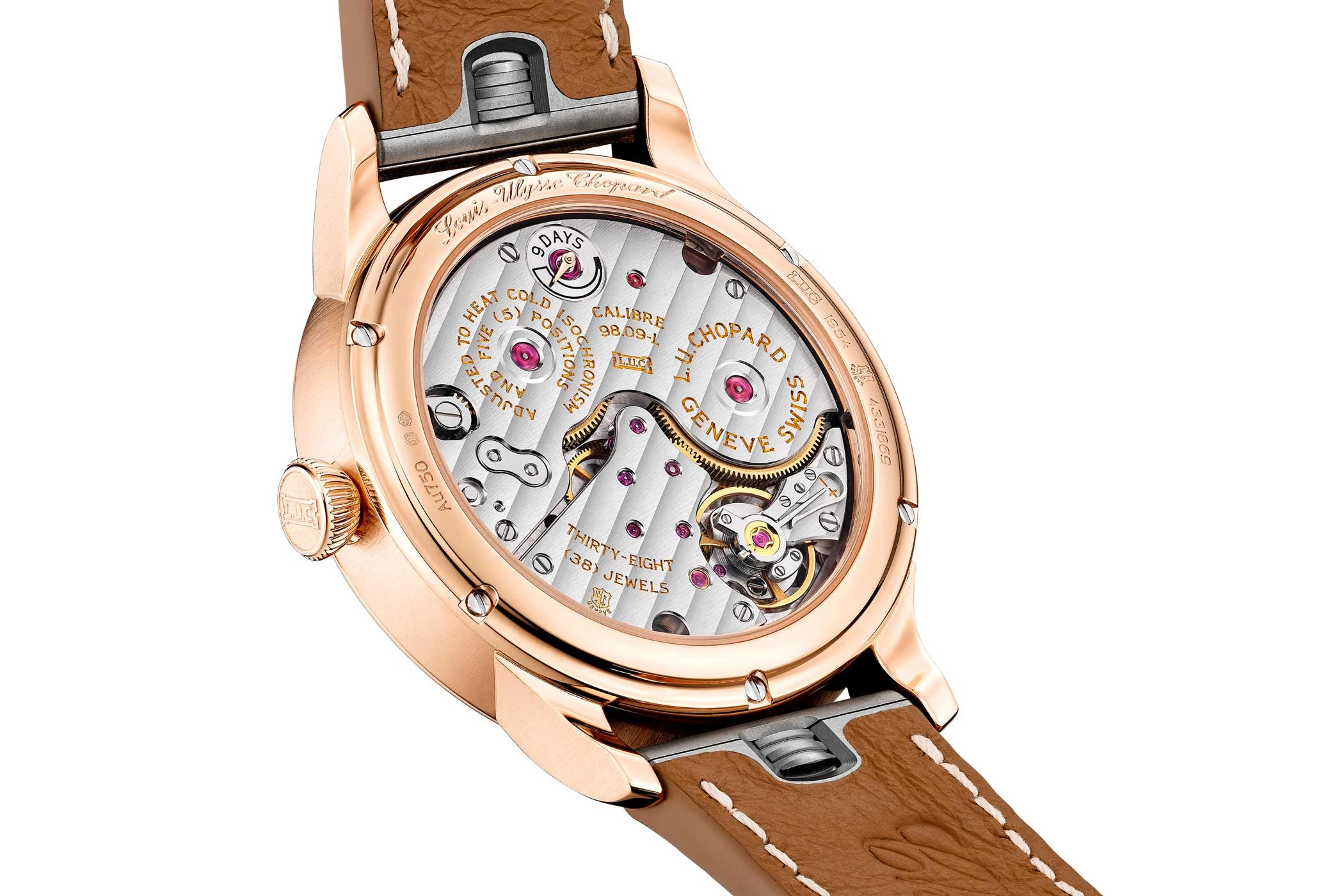
Last year, Chopard presented the L.U.C. Quattro in 18-carat ethical rose gold – 25 years after the debut of this model. Its story, however, began back in 1997, when Chopard introduced the L.U.C 1860, equipped with the L.U.C 96.01-L movement. As one of the first automatic calibres with two barrels, the watch offered a power reserve of 65 hours.
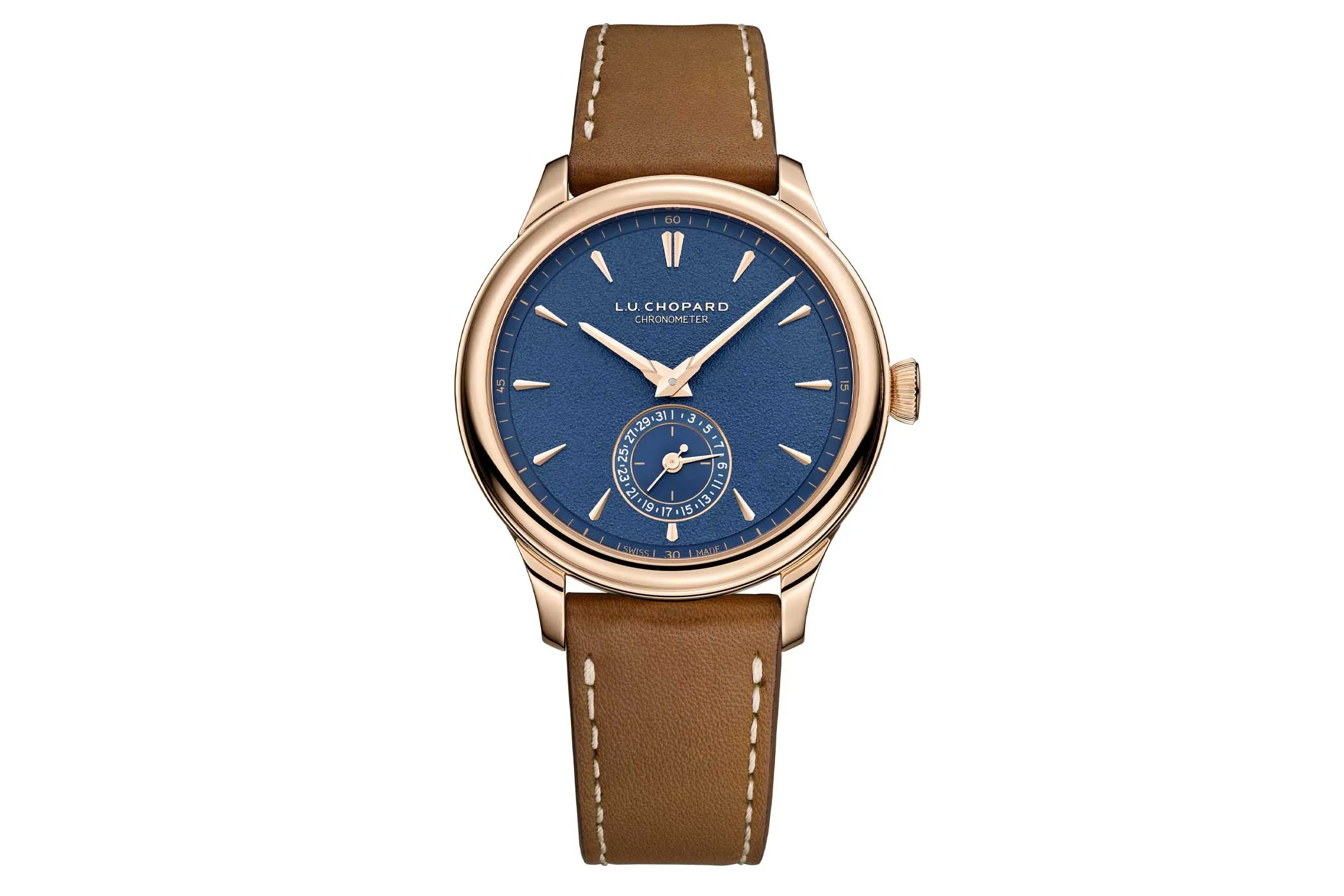
To increase autonomy without compromising the slim format, Chopard developed the calibre 98.01-L on this basis. It features the so-called Twin Technology: four barrels stacked on top of one another, providing an impressive nine-day power reserve.
The anniversary L.U.C. Quattro also employs Twin Technology, yet with a height of 10.4 millimetres and a diameter of 39 millimetres, it remains a member of the modern dress watch club. Rose gold, the narrow bezel and the pointed hour markers fulfil the criteria of a classic suit watch, as do the dauphine hands and the overall minimalist design.
In terms of its vivid, galvanically produced blue dial and the small seconds and date at 6 o’clock, this L.U.C. Quattro takes inspiration from the modern dress watch. Nevertheless, the dial appears extremely uncluttered. This is made possible by the in-house calibre L.U.C 98.09-L, which differs from its predecessor in that the power-reserve display has been cleverly relocated from the dial to a movement bridge. This bridge is visible, along with the hand-finished movement decoration, through the sapphire crystal caseback.
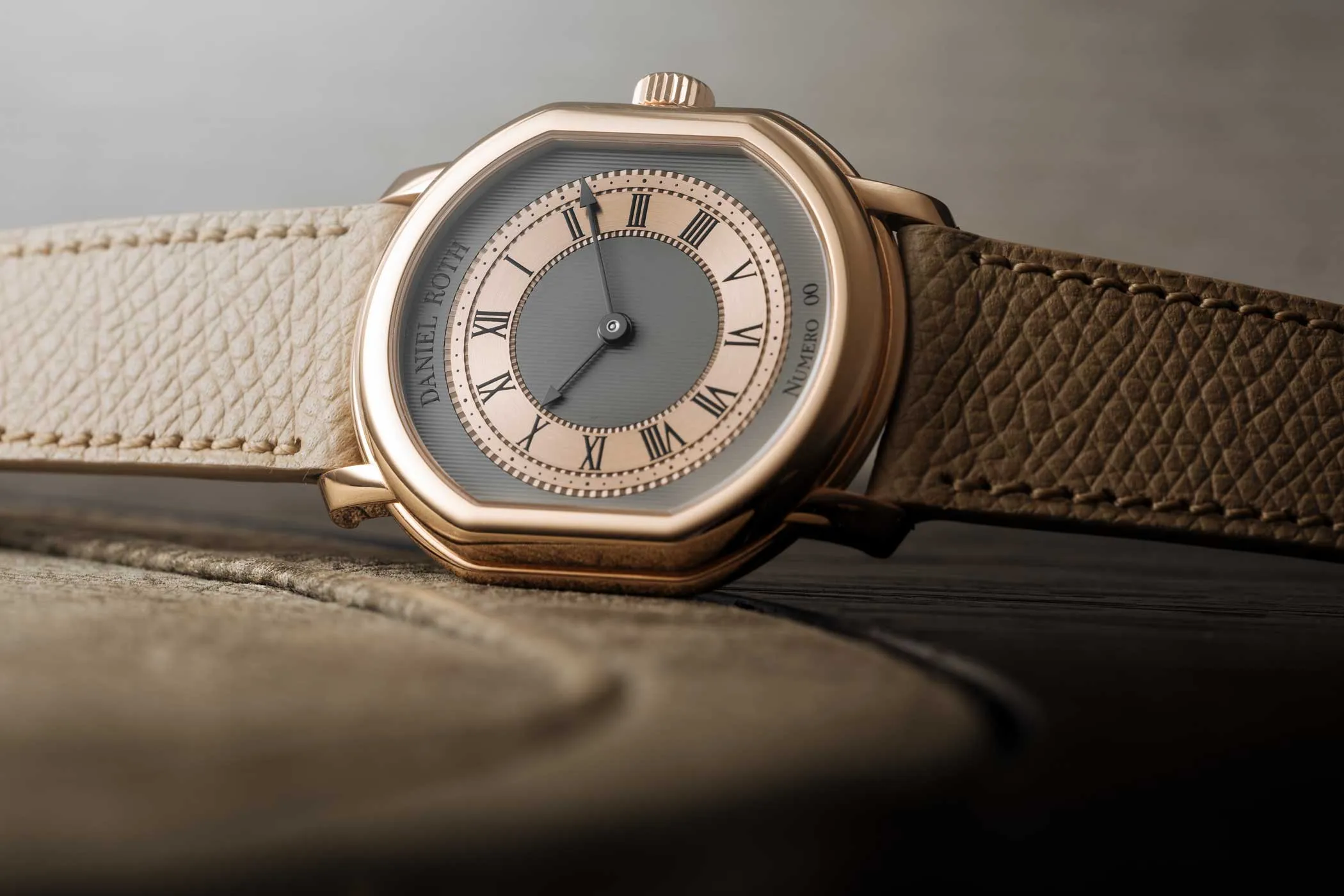
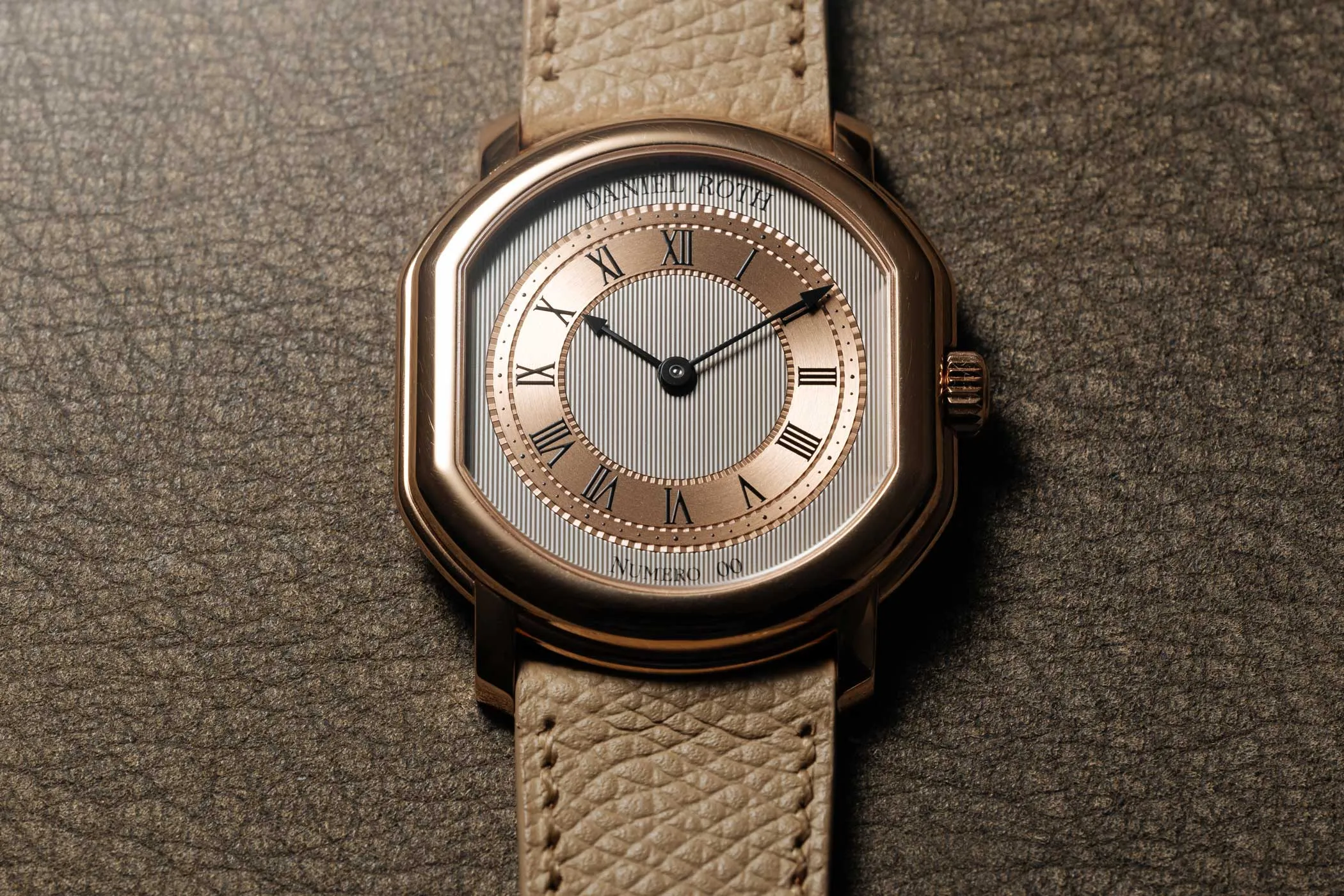
Daniel Roth’s Extra Plat Rose Gold, limited to 20 pieces, is a homage to the first Extra Plat from 1990. With it, the founder and namesake of the manufacture fulfilled his lifelong wish to create an ultra-thin dress watch.
The current Extra Plat Rose Gold features a 5N rose-gold case that retains the iconic double-ellipse profile with a central dial ring. This is complemented by newly softened lugs angled downward for greater comfort on the wrist.
However, it is not round, which gives the Extra Plat Rose Gold its status as a modern suit watch. Thanks to its lustrous gold finish, dimensions of 38.6 × 35.5 × 7.7 millimetres, and pared-back functionality limited to hours and minutes, it easily meets the requirements.
For the latter, two hands suffice. They are made of blackened steel and sweep across a highly elegant, two-tone dial. Its base of solid white gold carries a rose-gold ring for hours and minutes, decorated with hand-guilloché pinstripes. For a classic dress watch, this is slightly decorative, but for the modern counterpart, it is just right.
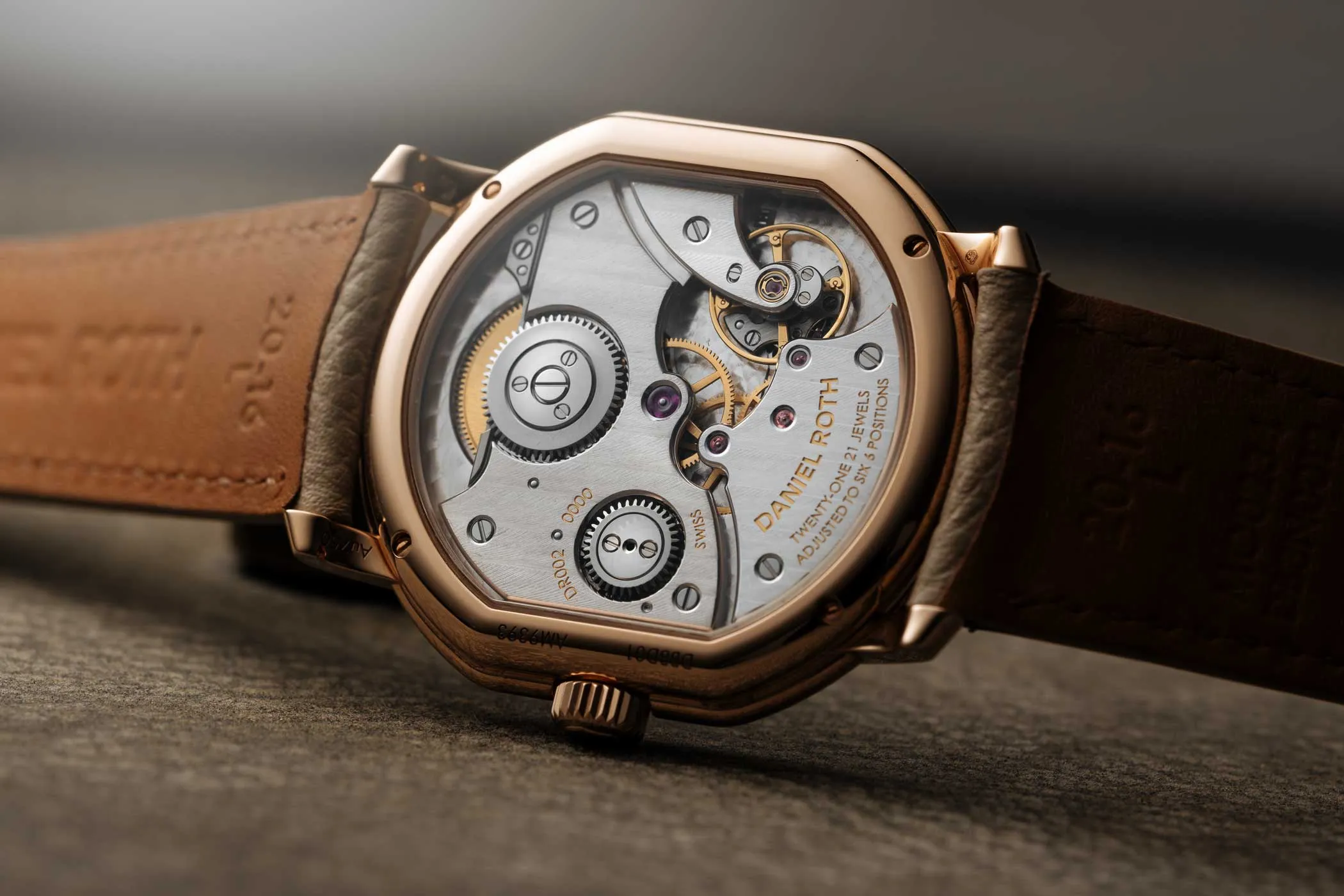
Inside, the hand-wound calibre DR002 follows traditional principles. It is equipped with a 65-hour power reserve and reveals its technical sophistication and aesthetic elegance through the sapphire crystal caseback. For example, the balance wheel is free-sprung with four arms, each equipped with a variable inertia weight for fine adjustment, ensuring exceptional and stable accuracy over long periods.
The Daniel Roth Extra Plat Rose Gold is worn on a calf-leather strap with a rose-gold pin buckle.
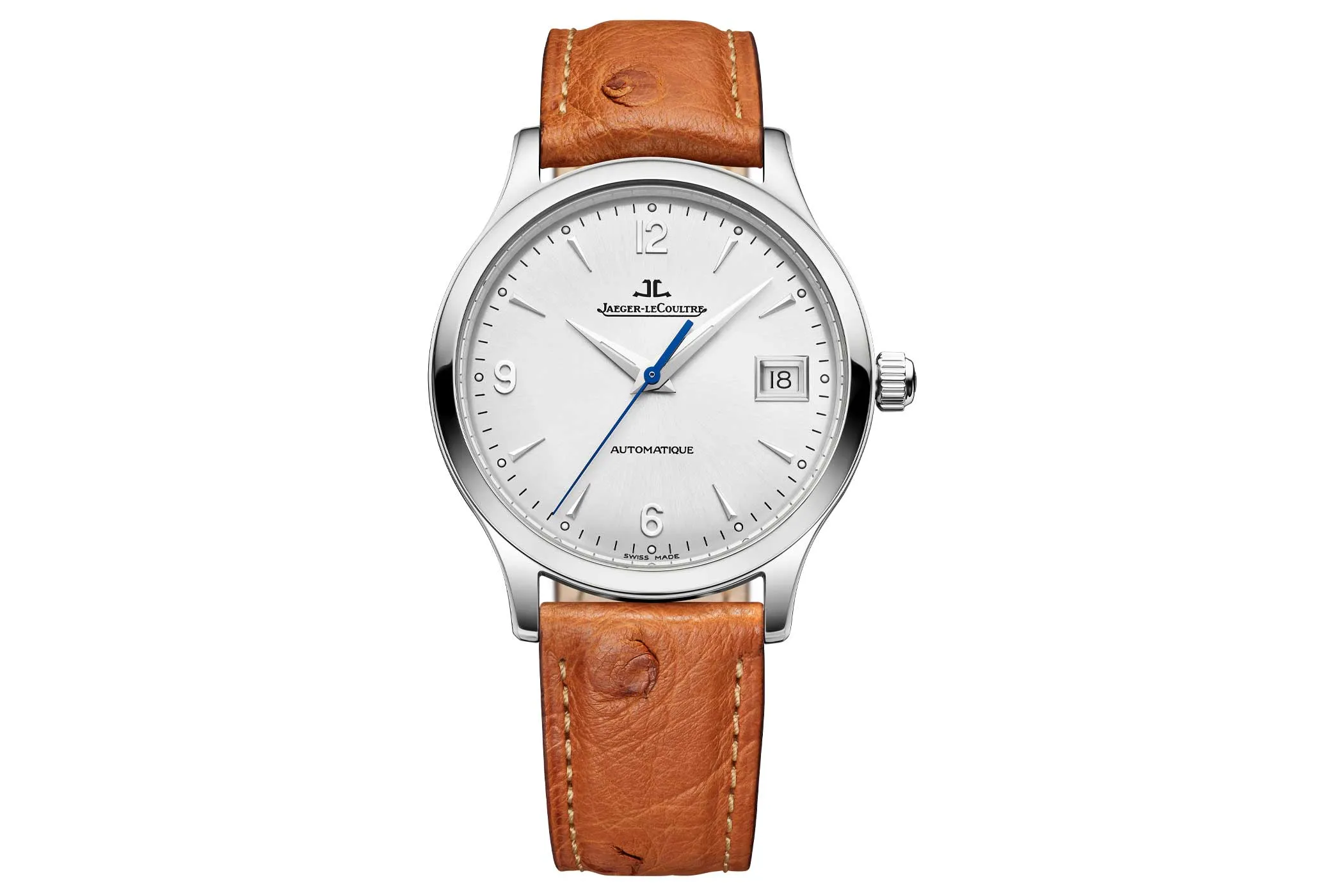
A cursory glance is enough to recognise the Master Control Classic from Jaeger-LeCoultre as a dress watch in the classic style of the 1950s – with minimal deviations. Even though its source of inspiration was only launched in 1995. While that model measured just 34 millimetres in diameter, its successor comes in at 36 millimetres (height 8.15 mm) – a perfect dress-watch size for wrists of almost any shape.
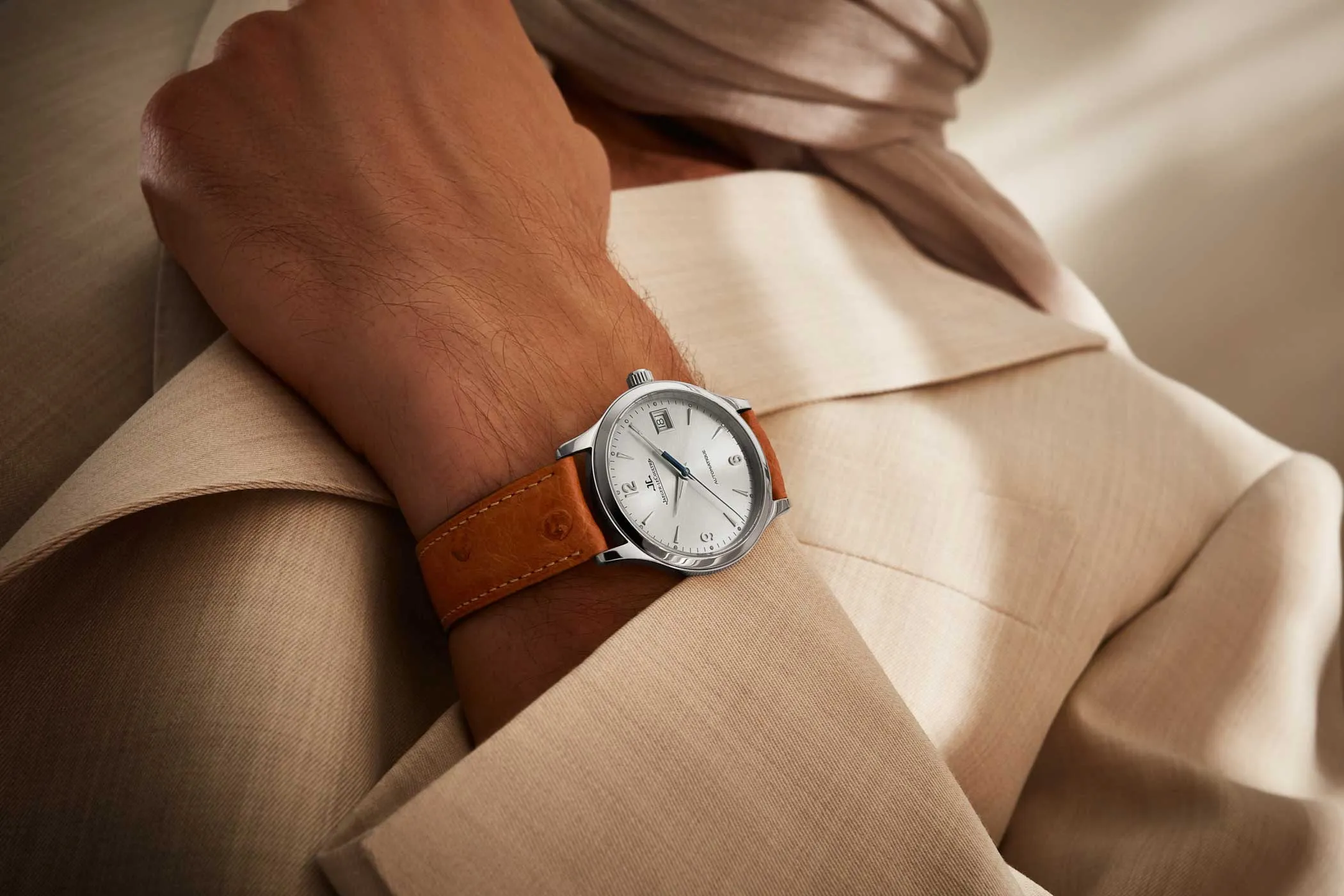
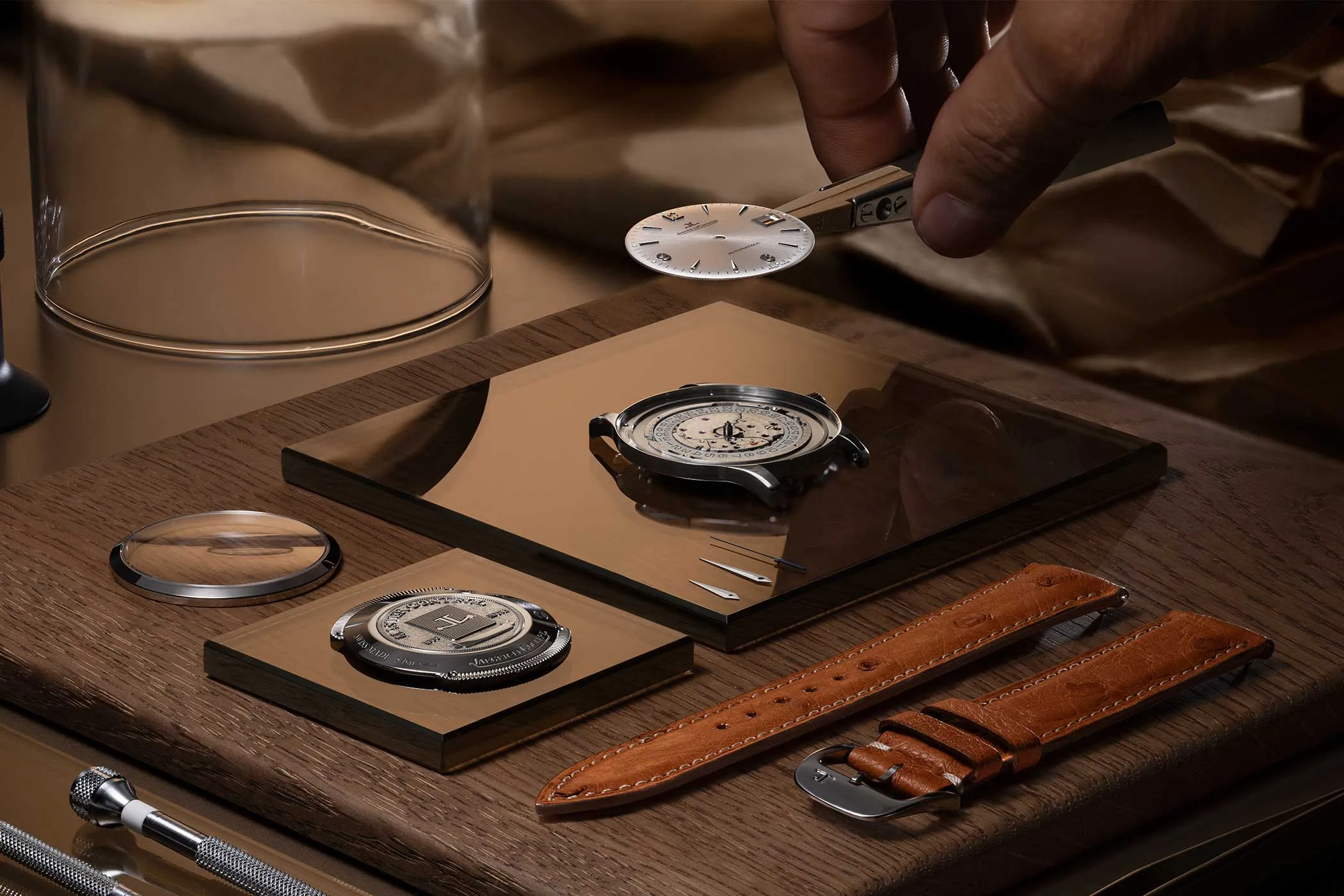
The polished stainless-steel case, water-resistant to five bar, exudes stylish simplicity but uses the caseback to highlight a special feature of the Master Control collection: certification for passing the in-house ‘1,000 Hours Control’ test. Since 1992, Jaeger-LeCoultre has been testing certified models as fully assembled watches according to strict precision standards.
Behind the caseback operates the automatic calibre 899. Architecturally based on calibre 889, it has been continuously refined over the years. It offers a 70-hour power reserve and the functions hours, minutes, seconds, and date.
Its precision is presented on the minimally designed, silvered, sunburst dial, which features applied indices and numerals, as well as classic Dauphine hands. The only deviation from the traditional dress-watch dial concept is the date display. However, with its hand-stitched brown ostrich-leather strap, the watch once again meets classic expectations.
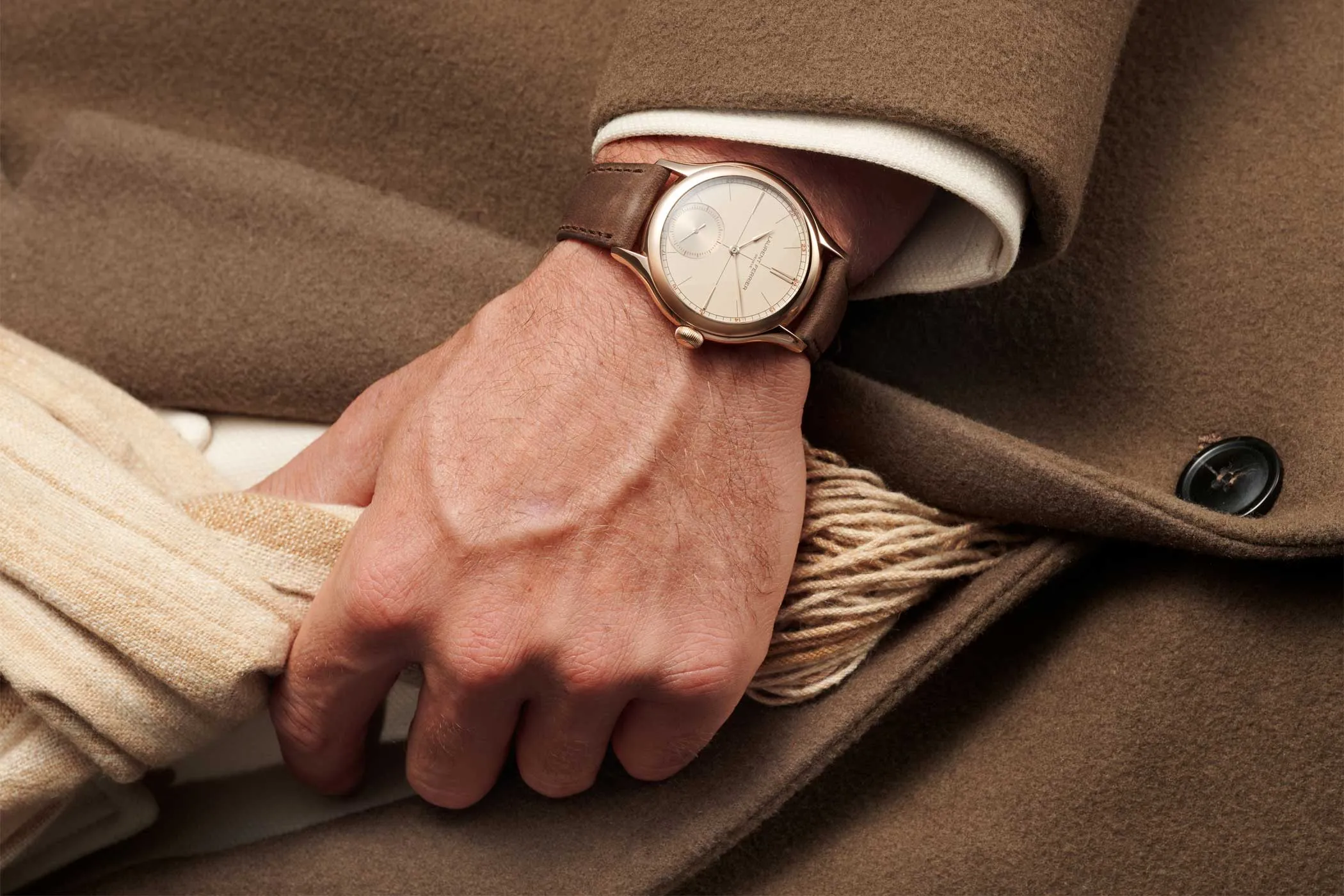
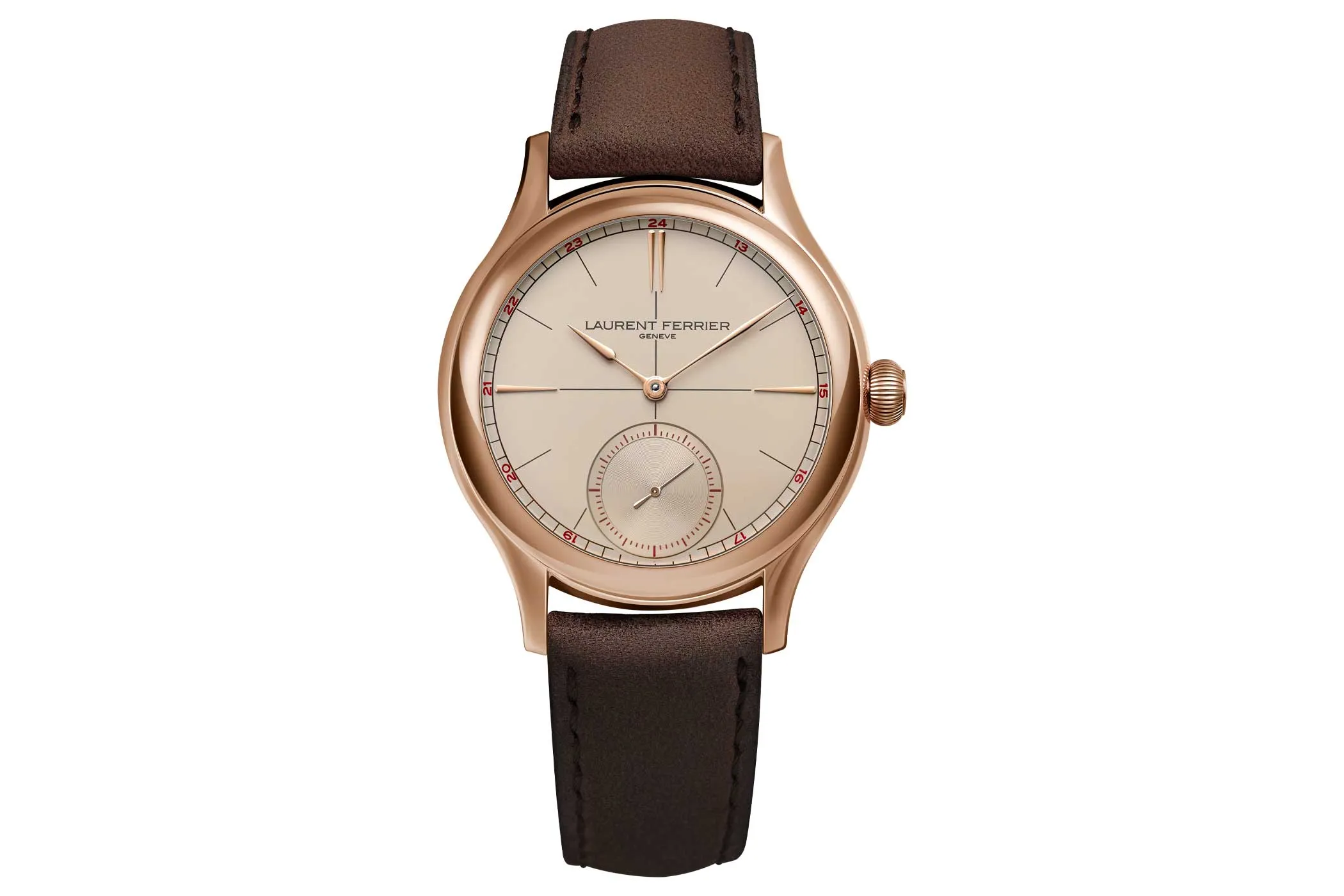
To celebrate its 15th anniversary, Laurent Ferrier presented this reinterpretation of the 2015 Classic Origin model last year. The design ethos of timeless balance remains unchanged.
The 40-millimetre case, made of polished, softly shaped rose gold and water-resistant up to three bar, has a height of 10.7 millimetres. In this respect, the Classic Origin Beige is a modern dress watch. It features a classically inspired opalescent beige dial.
It forms a harmonious backdrop for the fine brown railway-track minute scale, the applied rose-gold indices, the delicate markings of the small seconds, the gold spear-shaped hour, and minute hands and the baton seconds hand. Even the red minute numerals, thanks to their restraint, do not disturb the dial’s minimalist appearance.
Thanks to the hand-wound calibre LF116.01, the Classic Origin Beige remains entirely faithful to the dress-watch ideals of the 1950s. At the centre of the movement operates a screwed balance guided by a Breguet hairspring. This enhances precision, reduces positional errors, and ensures consistently accurate timekeeping.
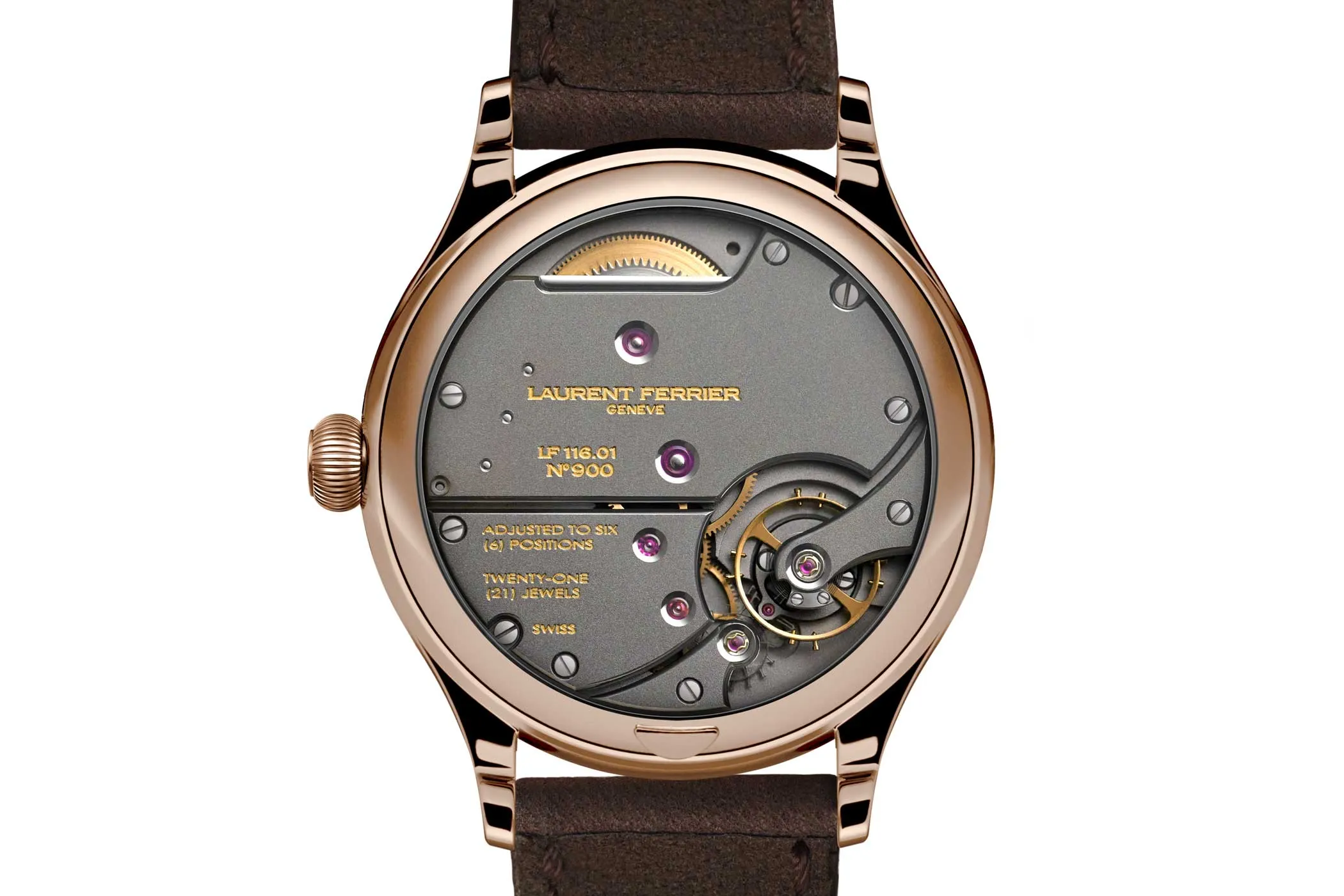
With its long click spring integrated in the barrel, the timepiece also complements its visual appeal with a tactile experience: winding the watch produces a distinctive clicking sound. When fully wound, it offers a power reserve of more than 80 hours.
The timeless design is completed by a mocha-coloured nubuck leather strap with a rose-gold pin buckle.
Parmigiani Fleurier is unquestionably among the masters of understated elegance. This is no coincidence: in order to design a contemporary dress watch, the company undertook an in-depth study of the history of masculine elegance.
Originally, richly decorated pocket watches were worn with formal suits. As CEO Guido Terreni explains, ‘Watches only moved to the wrist in the early 20th century. Formal attire was then paired with watches featuring white dials, precious-metal cases, and black leather straps. The arrival of the New Economy in the 1990s brought young entrepreneurs who relaxed strict workplace dress codes in favour of comfortable, casual clothing.’
Yet this did not mark the end of the dress watch. ‘For a while, watches like these were only for bankers and lawyers. But now, men in their thirties have rediscovered the appeal of good, carefully selected clothing and tailor-made suits. However, things are no longer as stiff and formal as they once were; it’s all about relaxed elegance. So our task was to create the right dress watches to go with this,’ says Terreni.
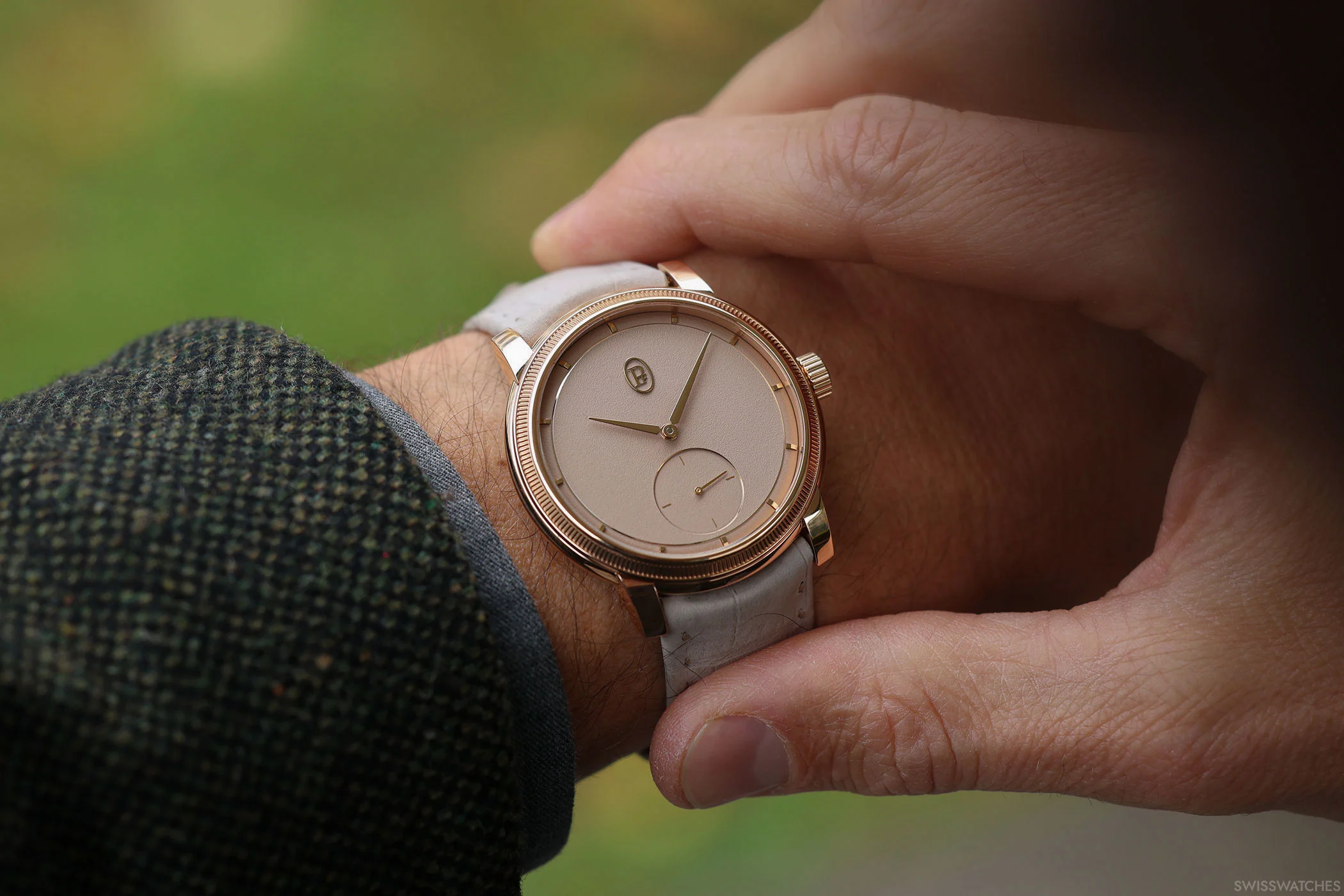
One example is the Parmigiani Fleurier Toric Petite Seconde Rose Gold Dune, released in 2025. With a case that is water-resistant to three bar, this watch is crafted from a precious metal, thus fulfilling the traditional expectations of a classic dress watch in a modern way. The same applies to the nubuck leather strap with alligator embossing.
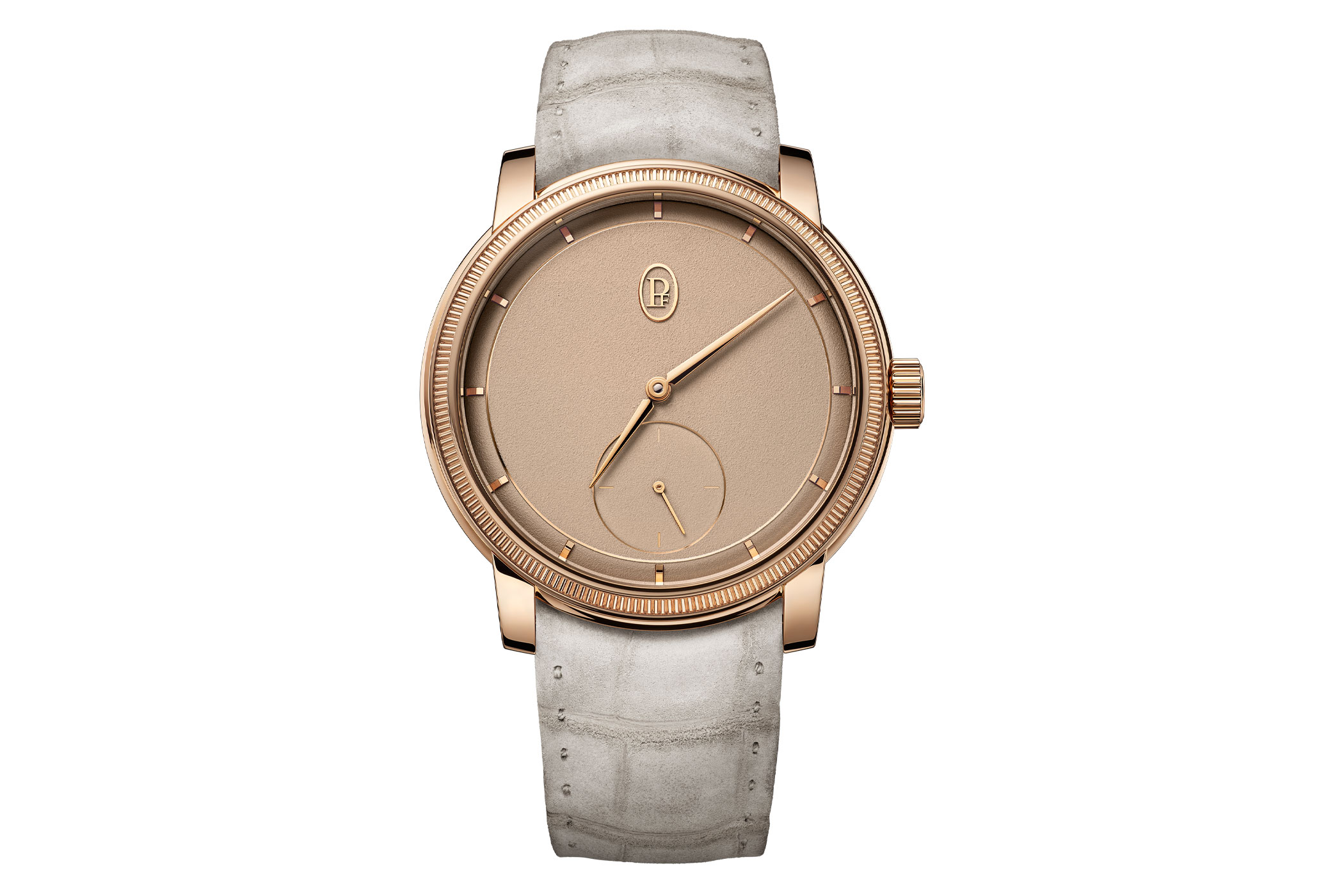
A diameter of 40.6 millimetres would likely have caused some surprise in the 1950s. Once a rarity, this compact and popular size is now considered suitable for many wrist sizes. With a slim height of just 8.8 millimetres, the Toric Petite Seconde Rose Gold Dune slips smoothly beneath any shirt cuff.
The hand-grained golden dial in the restrained Dune colourway is reduced to the absolute essentials, with short applied indices, simple rose-gold hands and a minimalist small-seconds display. In doing so, it fulfils its purpose as a dress watch that discreetly complements its wearer’s attire, standing firmly in the tradition of masculine elegance from earlier eras.
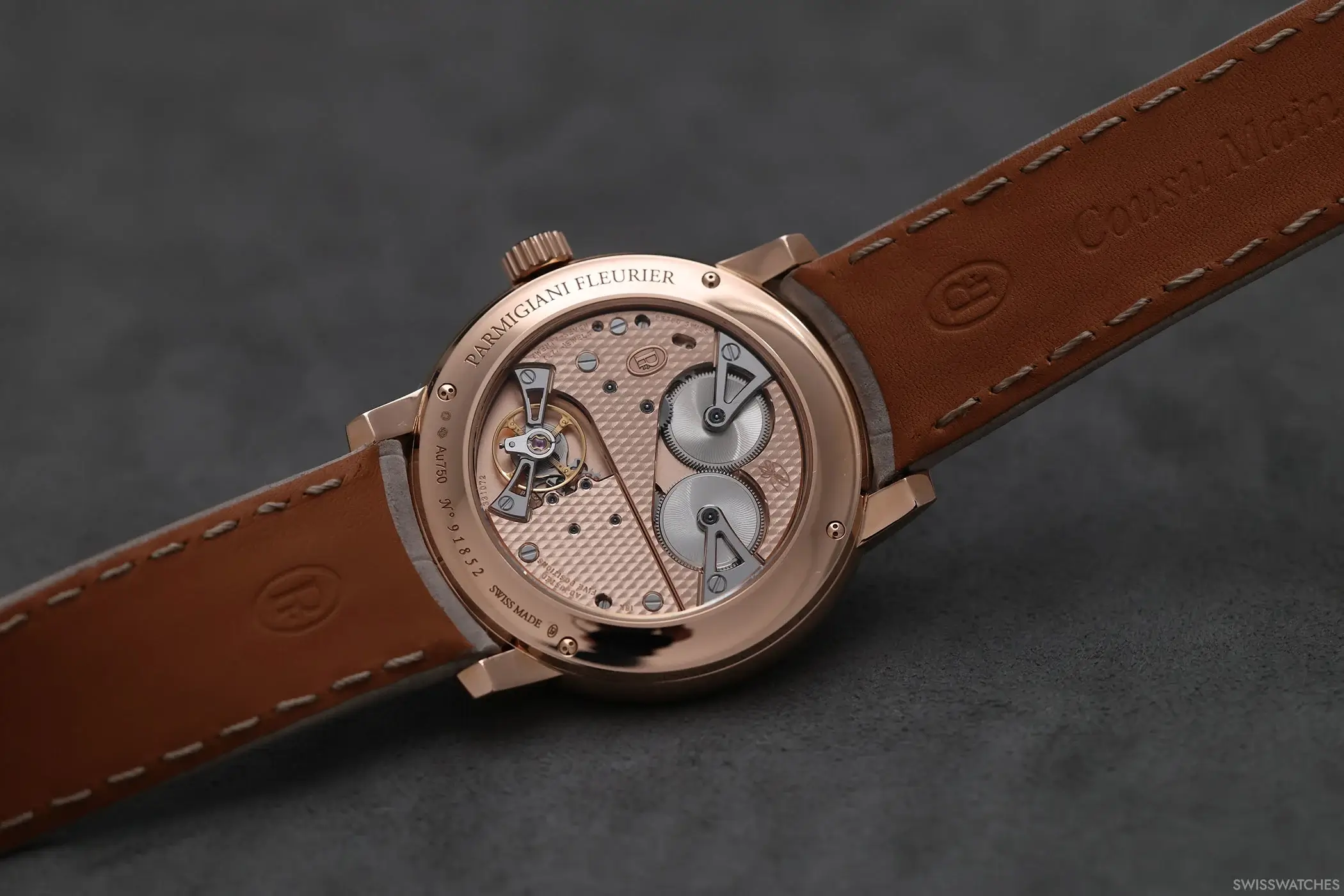
The functional heart is the calibre PF780, specially developed for the collection and elaborately finished. With a height of 3.15 millimetres, the hand-wound movement – composed of 157 parts and offering a 60-hour power reserve – justifiably earns the designation ultra-thin.
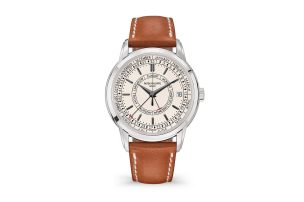
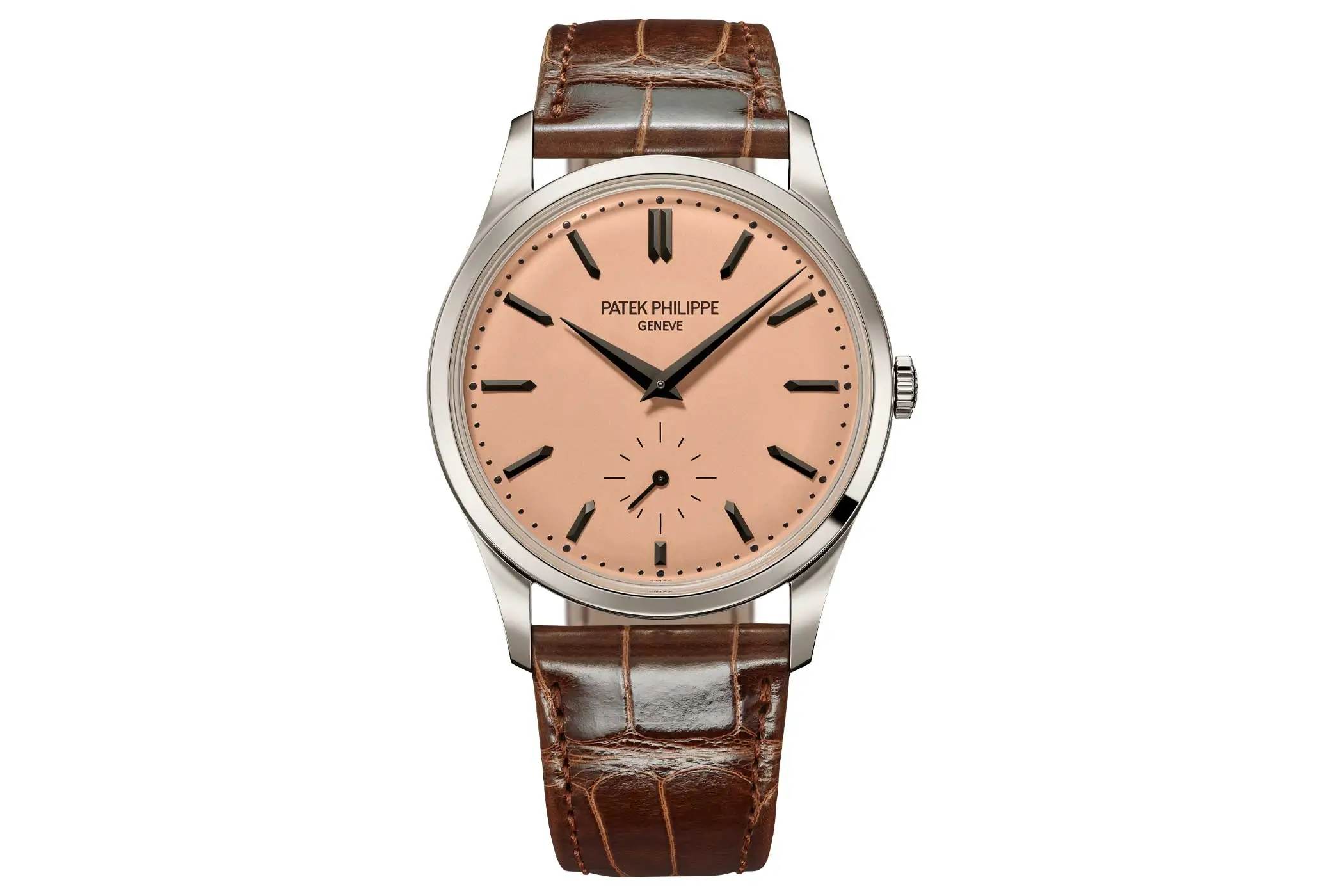
With the Patek Philippe Calatrava Reference 6196P-001, there is no room for doubt. Its inspiration, the first watch in this collection from 1932, is regarded as the epitome of a dress watch and an early representative of this watch category. Some even describe Reference 96, with its 31-millimetre case, as the archetype of the dress watch.
Nearly a century later, the Patek Philippe Reference 6196P-001 demonstrates its dress-watch credentials convincingly. With a diameter of 38 millimetres and a height of 9.33 millimetres, it is significantly larger than its 1932 predecessor, yet still sits at the upper end of the traditional dress-watch scale.
The platinum case, water-resistant to three bar, fulfils the classic requirements, as does the dial with its subtle rose-gold opaline hue. It displays the appropriate understatement to stylishly complement its wearer. The dial features anthracite-grey indices and faceted white-gold dauphine hands for hours and minutes, as well as a small, simple white-gold hand for the subsidiary seconds at 6 o’clock.
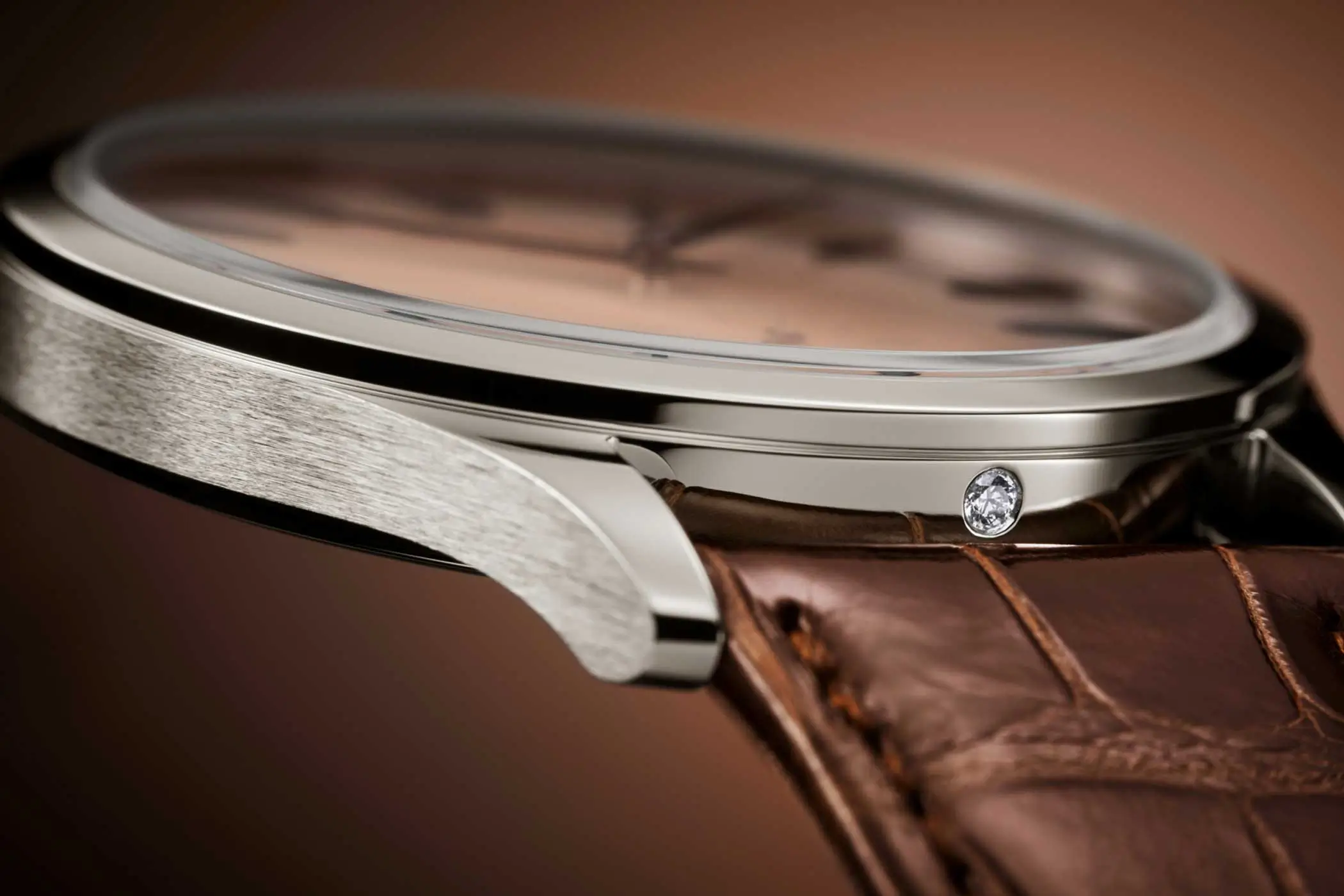
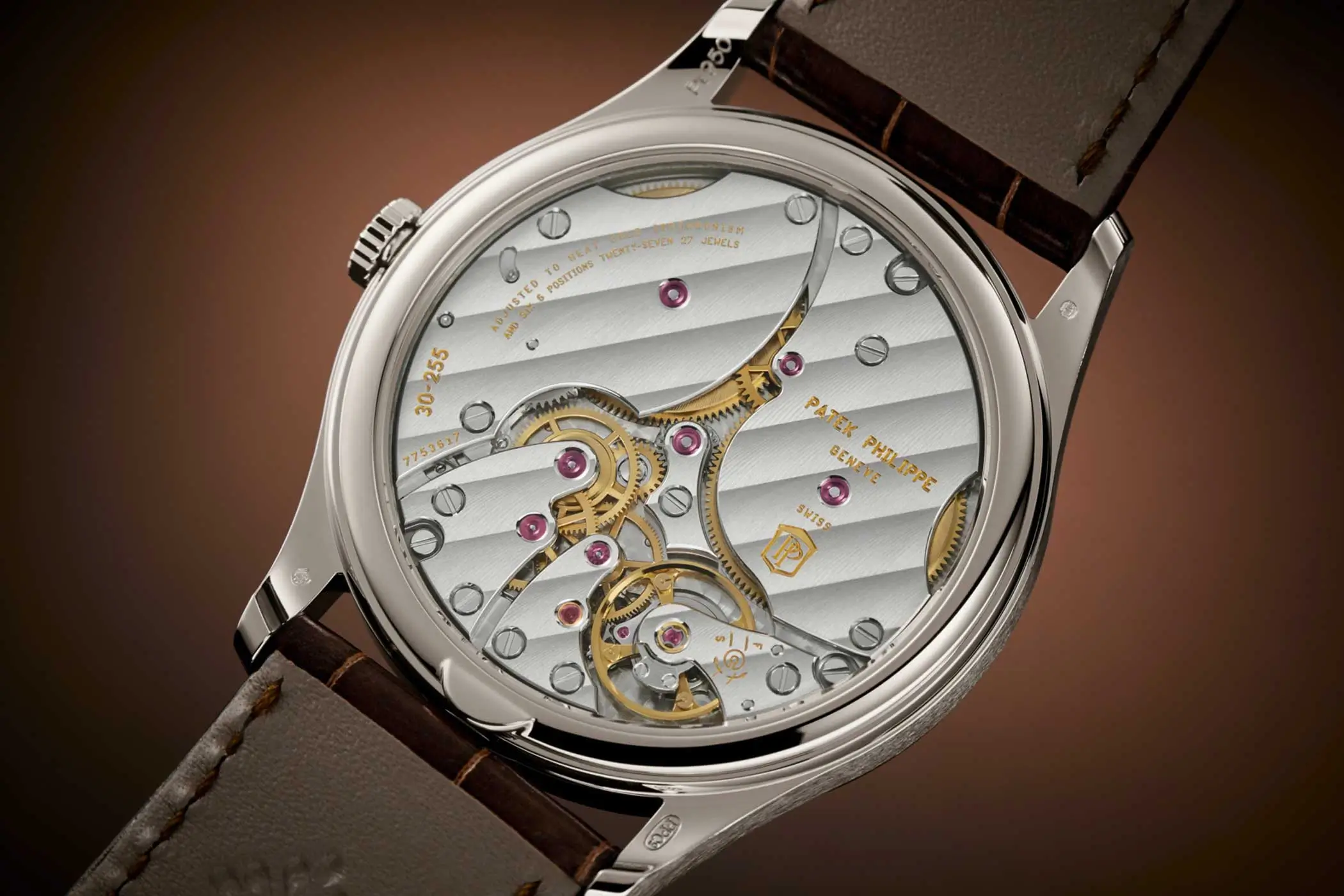
This classic three-hand watch is powered by the hand-wound calibre 30-255 PS with a 65-hour power reserve. The strap likewise adheres to dress-watch conventions: a glossy brown alligator leather strap secured by a platinum pin buckle.
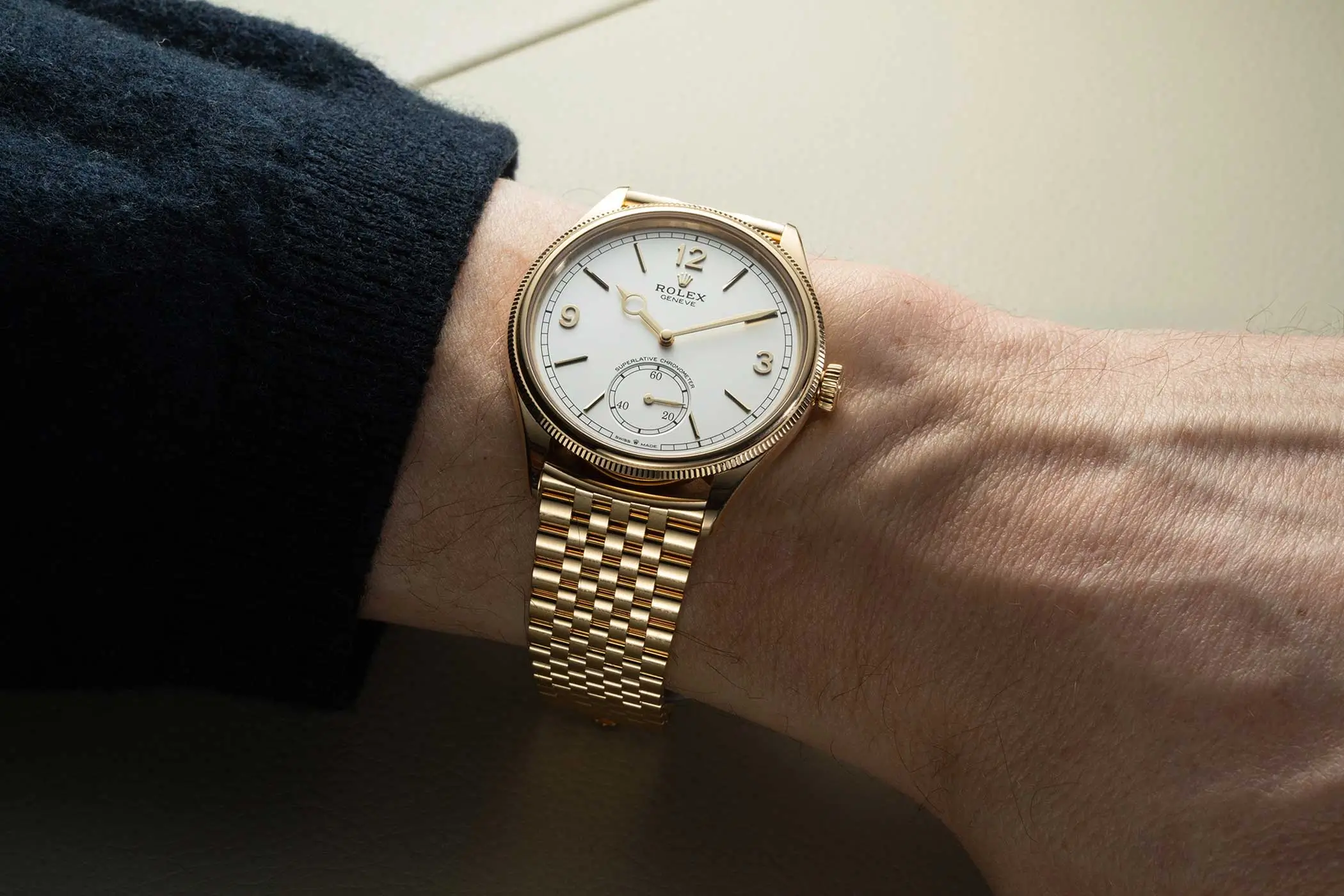
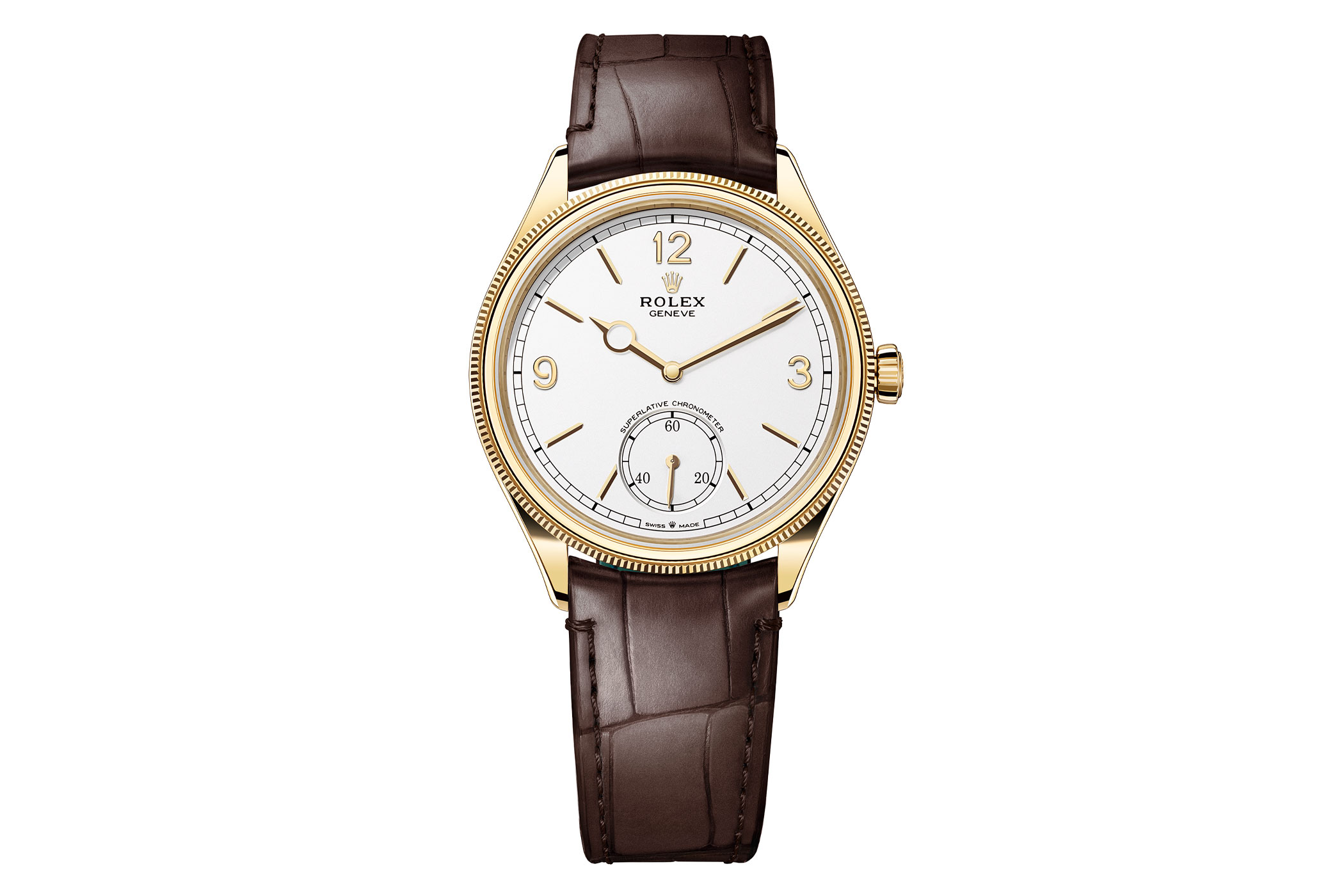
The 1908 presented by Rolex at last year’s Watches & Wonders belongs to the Perpetual collection introduced in 2023, which replaced the former Cellini line and represents the brand’s take on the classic dress watch. Strictly speaking, however, the features of the latest 1908 from 2025 are not entirely aligned with the traditional definition of a formal dress watch.
Let’s start with the material: 18-carat yellow gold – it doesn’t get much more classic than that! Unlike previous models, it is used not only for the case, but also for the elegant seven-row bracelet, which comes from the manufacturer’s own foundry.
With the Settimo – ‘the Seventh’ – metal bracelet, Rolex steps into the realm of the modern dress watch. The same applies to the bezel, which is divided into a finely fluted lower section and a domed upper section. With dimensions of 39 × 9.5 millimetres and a water resistance of five bar, the 1908 model is a classic design that embodies the elegant style of this new Rolex collection.
The same is true of the satin-finished dial in white and the functional displays of hours, minutes, and small seconds. The Arabic numerals 3, 9, and 12, together with the applied faceted indices, Breguet-style and sword-shaped hands, and the railway-track minute scale, all radiate historical elegance.
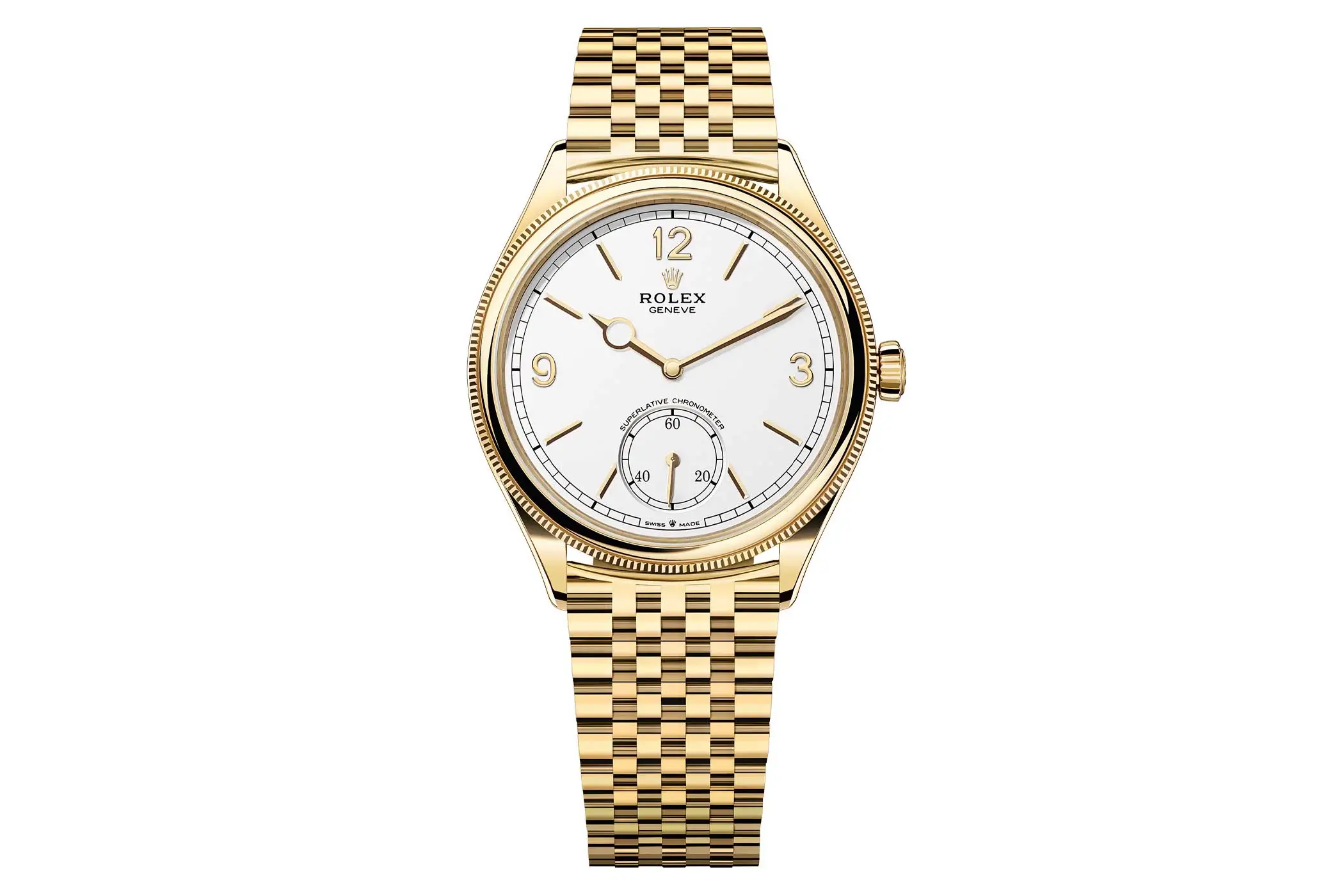
Precise reliability is ensured by the in-house automatic calibre 7140, a newly developed movement featuring the patented Chronergy escapement, patented Syloxi hairspring, and the Paraflex shock-absorption system. Certified as a Superlative Chronometer (COSC plus Rolex certification after casing), the movement offers a 66-hour power reserve.
The movement is carefully finished, fitted with an openworked bidirectional yellow-gold rotor, and visible through the sapphire crystal caseback.
Sandrine Donguy, Product & Innovation Director at Vacheron Constantin, leaves no room for doubt: ‘The Patrimony is a prime example of understated aesthetics. The models draw directly on the minimalist style of the 1950s – an era in which watchmaking was characterised by its discreet presence.’
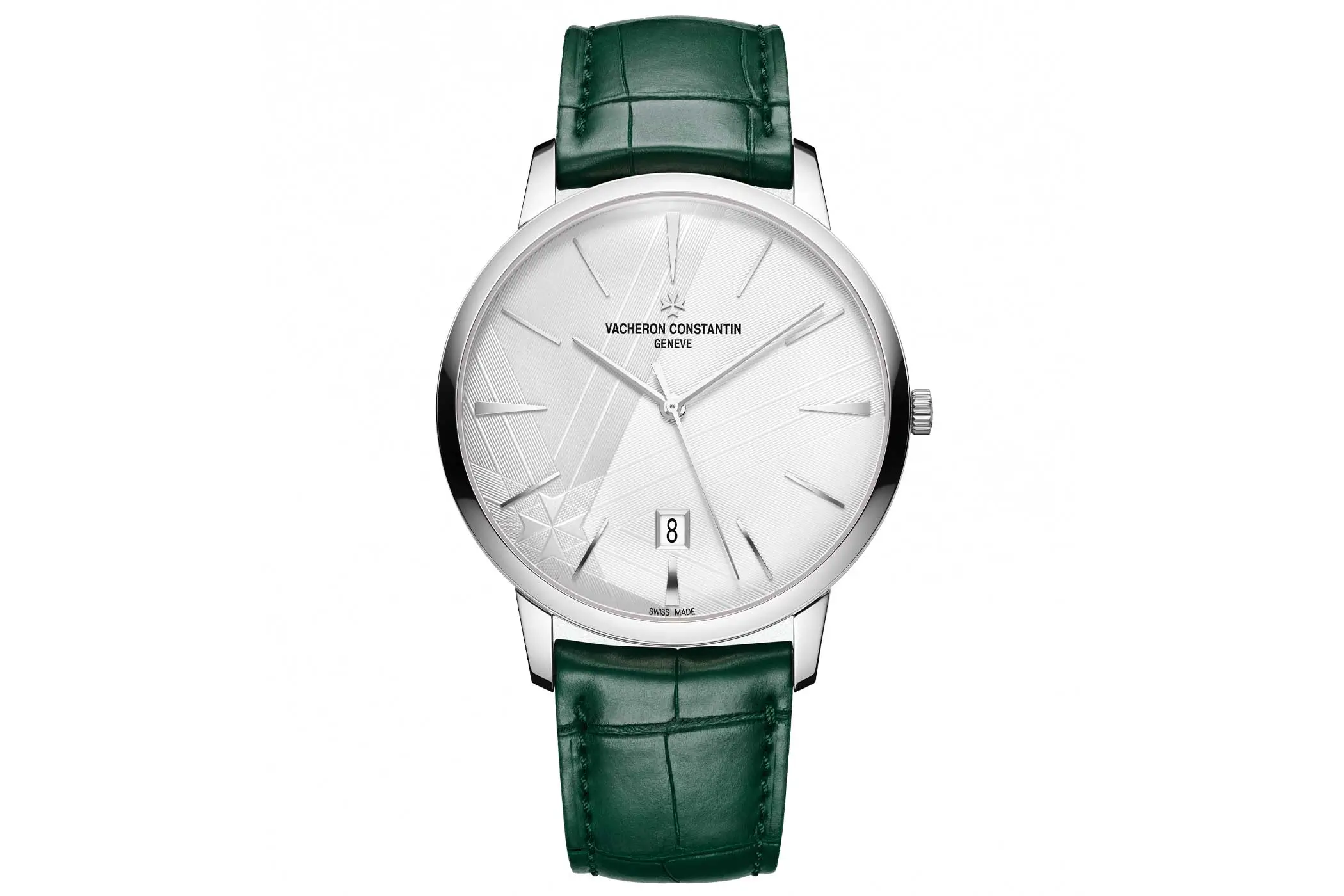
In this respect, the Vacheron Constantin Patrimony Automatic distinguished itself in particular last year. Released in the year of the manufacture’s 270th anniversary, it meets many of the requirements of a classic dress watch, while incorporating elements of a modern interpretation.
The case, water-resistant to three bar, measures 40 millimetres in diameter and 8.65 millimetres in height. It is available in either white or rose gold and is fitted with a slim, smooth bezel.
Against this backdrop, the gently domed, silver-toned anniversary dial skilfully combines a restrained design with a subtle Maltese cross motif, which has been Vacheron Constantin’s emblem since 1880. This in no way detracts from the pared-back aesthetic of the watch. The sense of reduction is reinforced by the applied indices and three simple white gold hands. A discreet date aperture is positioned at 6 o’clock.
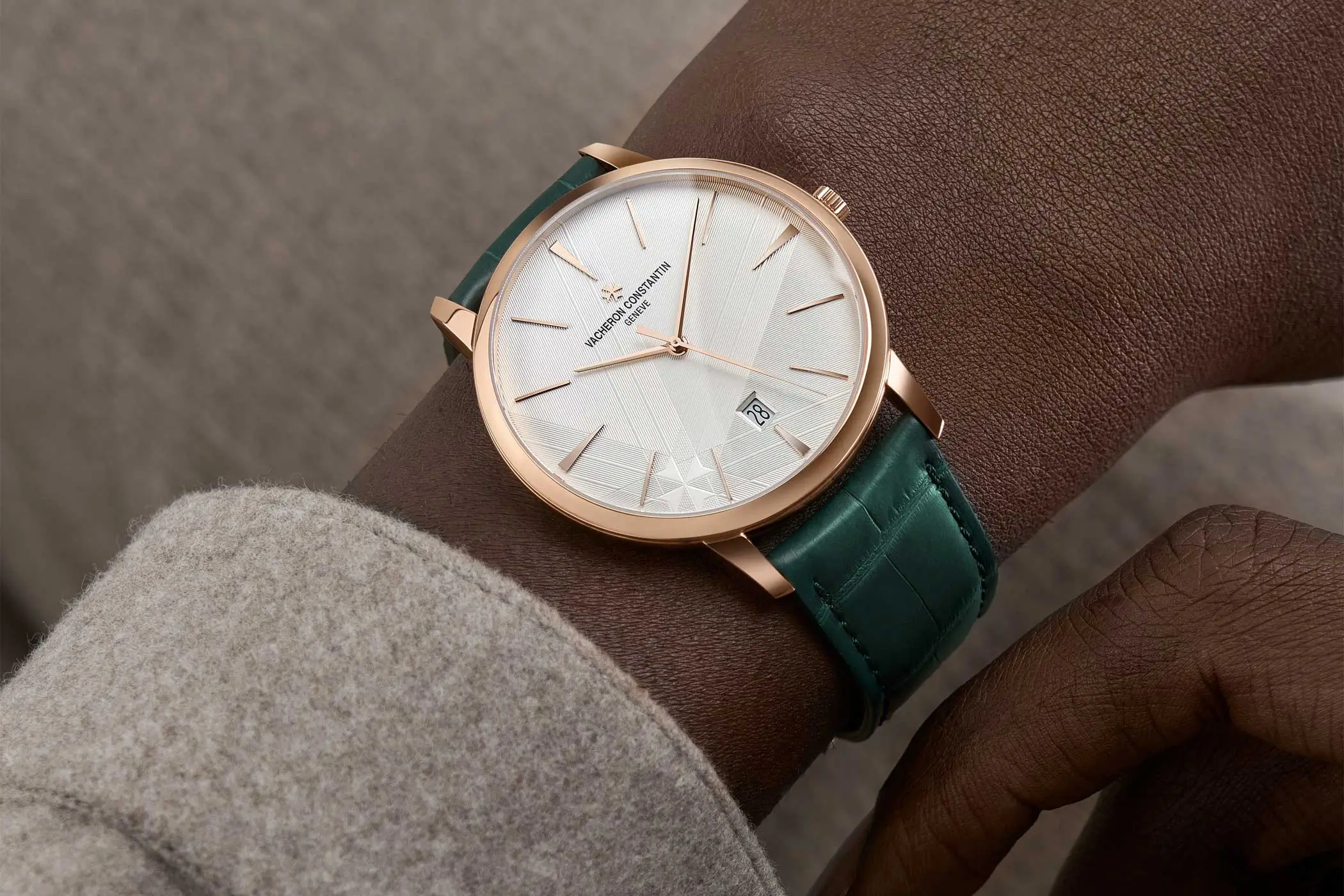
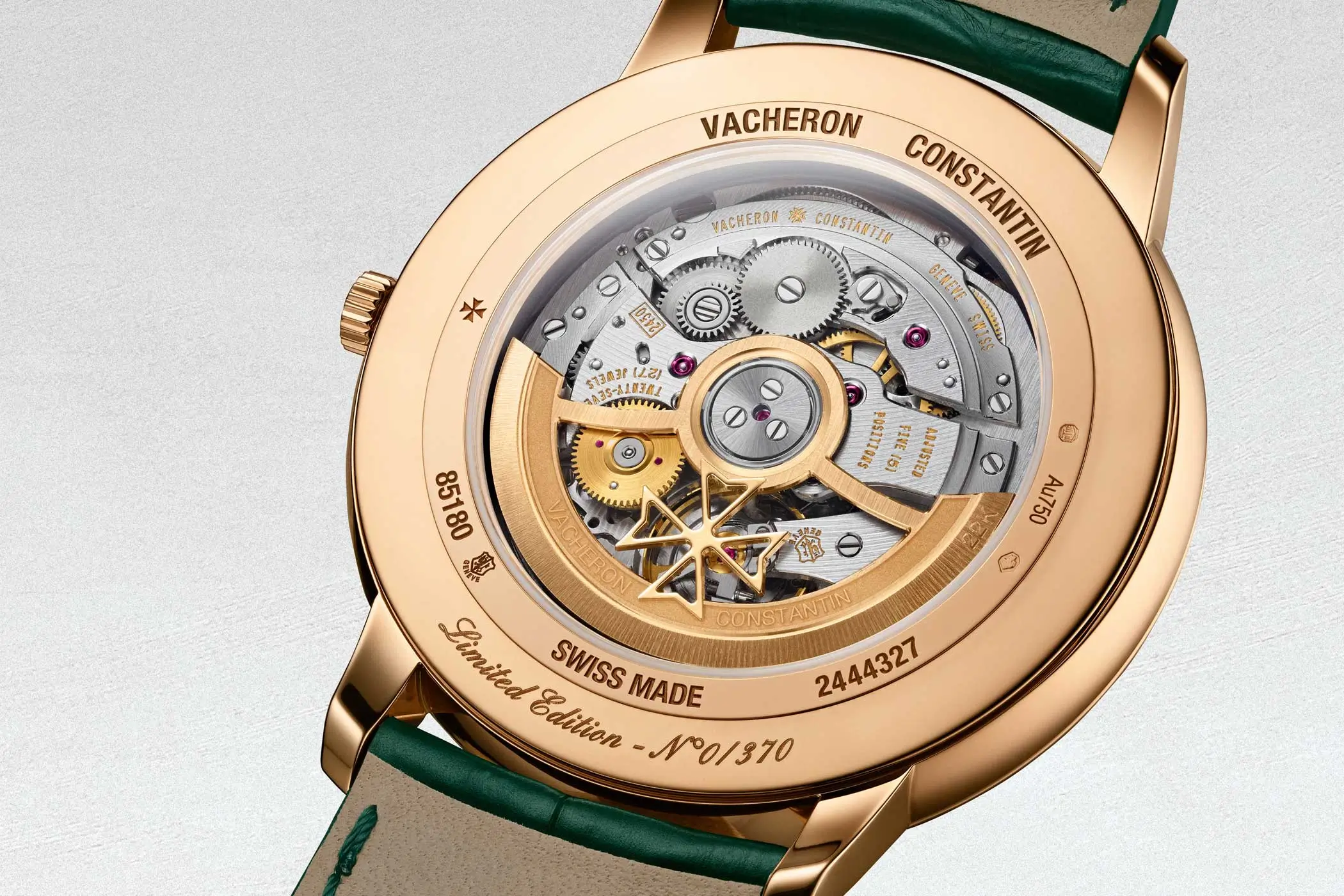
The mechanical precision is ensured by the in-house automatic calibre 2450 Q6/270, which offers a power reserve of 40 hours and displays the hours, minutes, central seconds and date. Through the sapphire crystal caseback, you can admire the bridges decorated with the ‘Côte unique’ finish, the anniversary emblem and the openworked 22-carat gold oscillating weight bearing a Maltese cross.
The Patrimony Automatic is worn on an elegant dark-green alligator leather strap secured by a gold pin buckle.