At first glance: colour, composition and presence
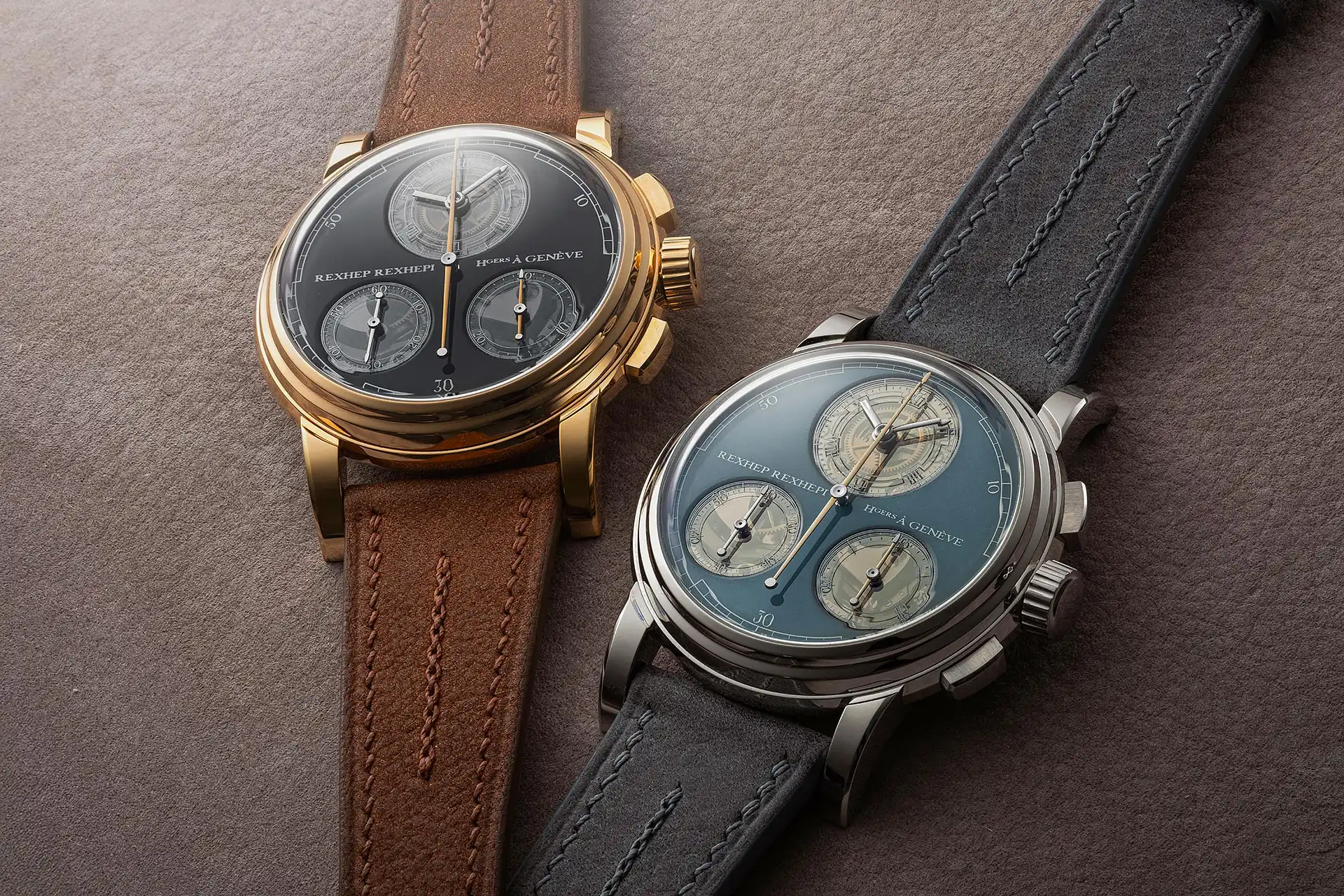
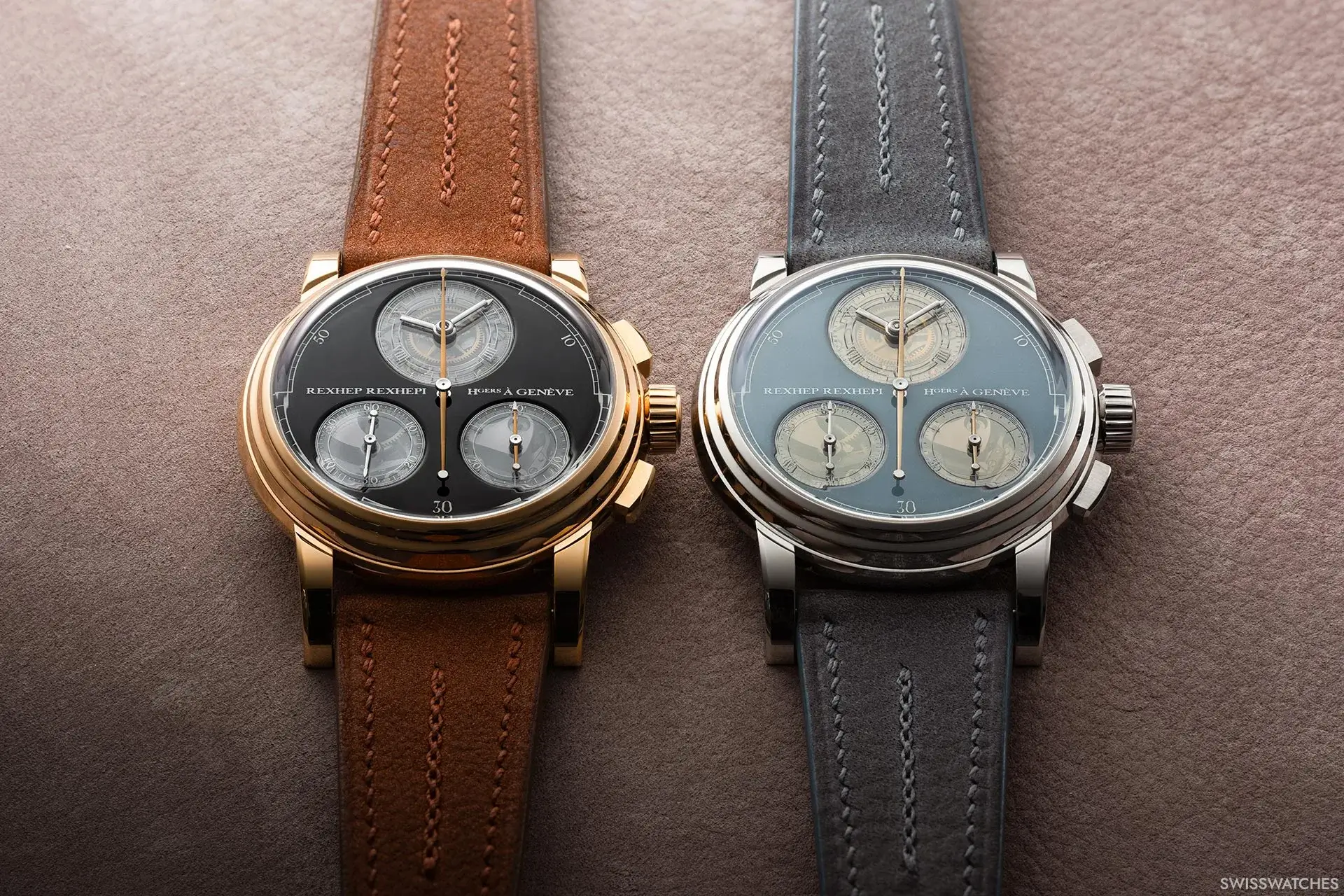
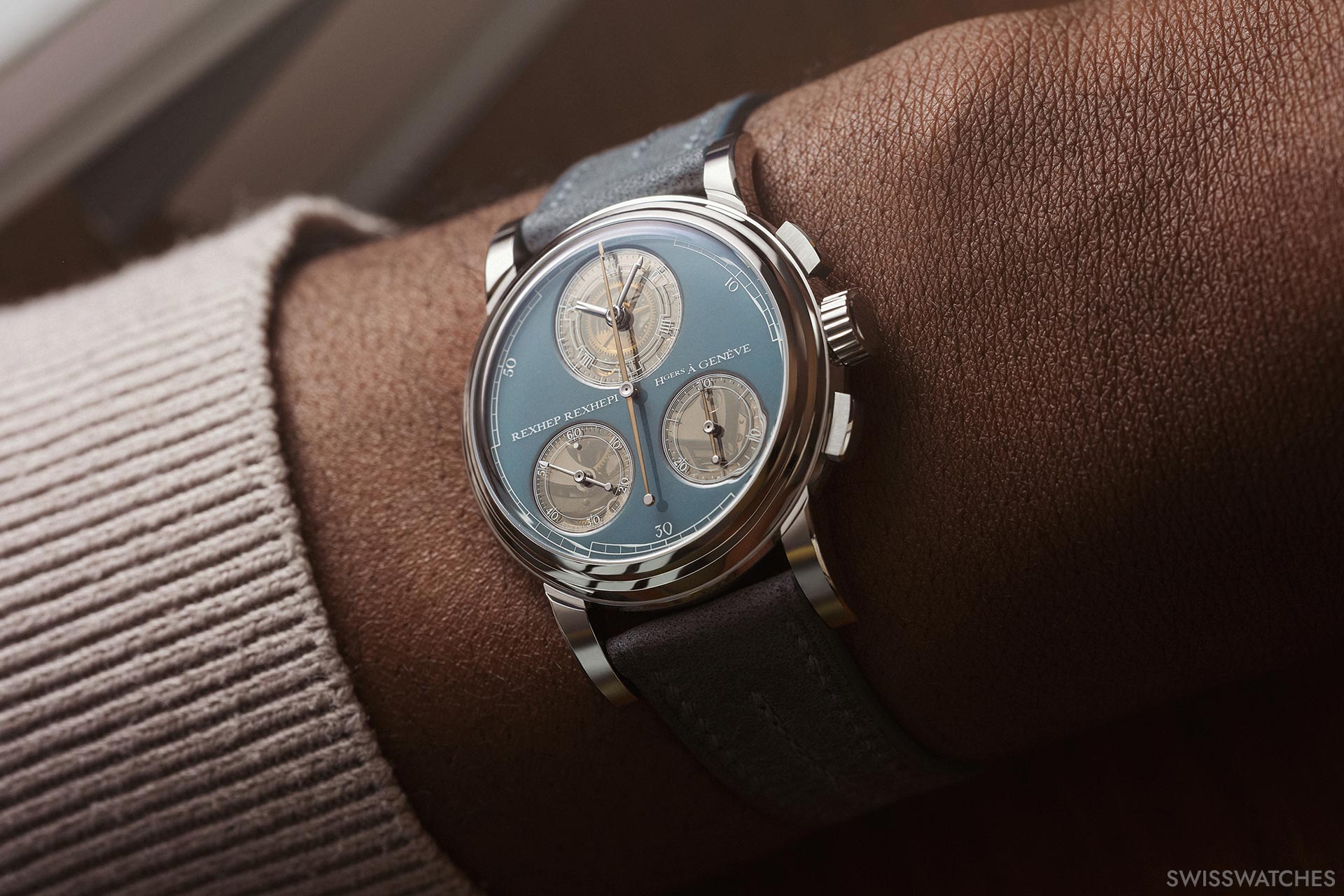
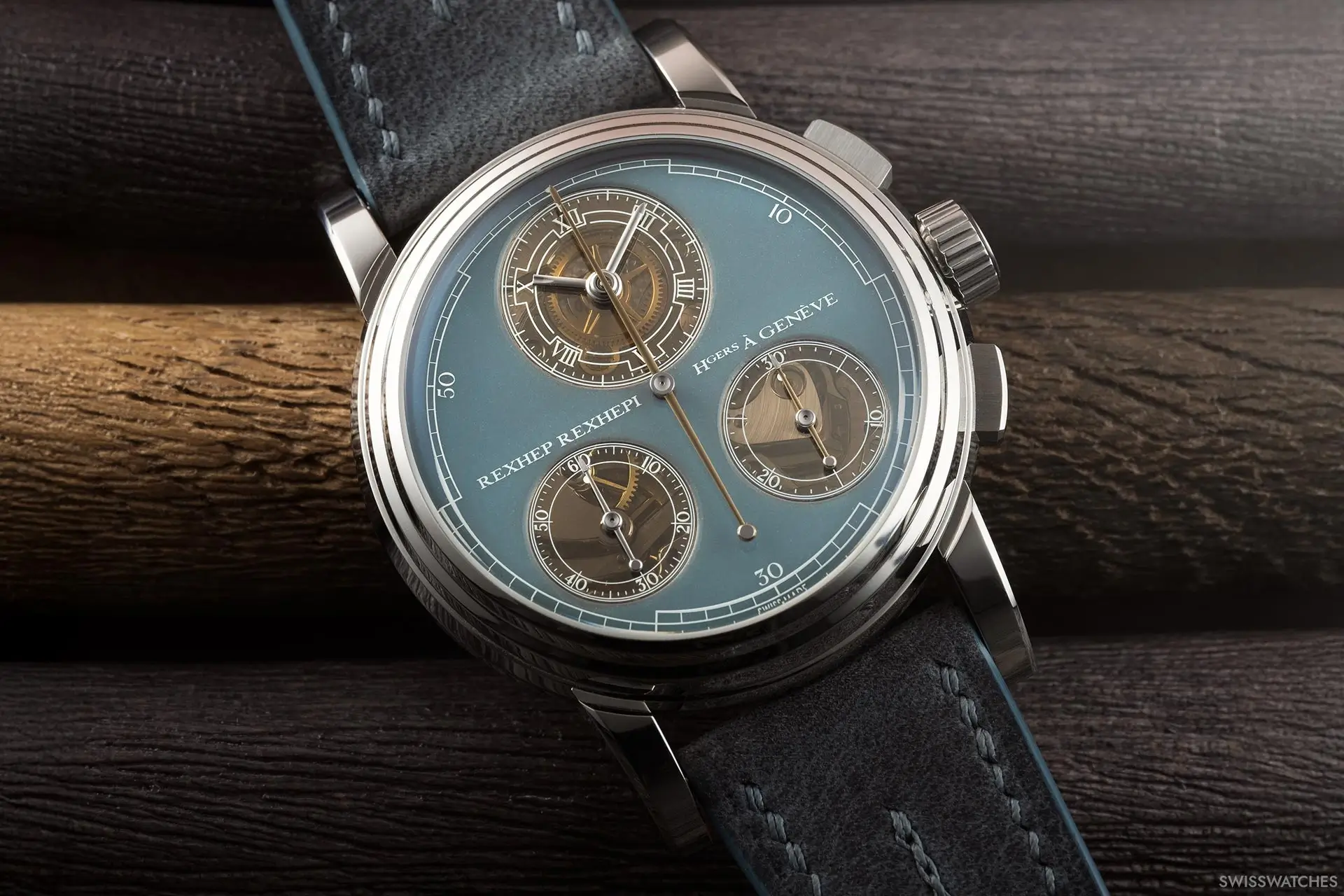
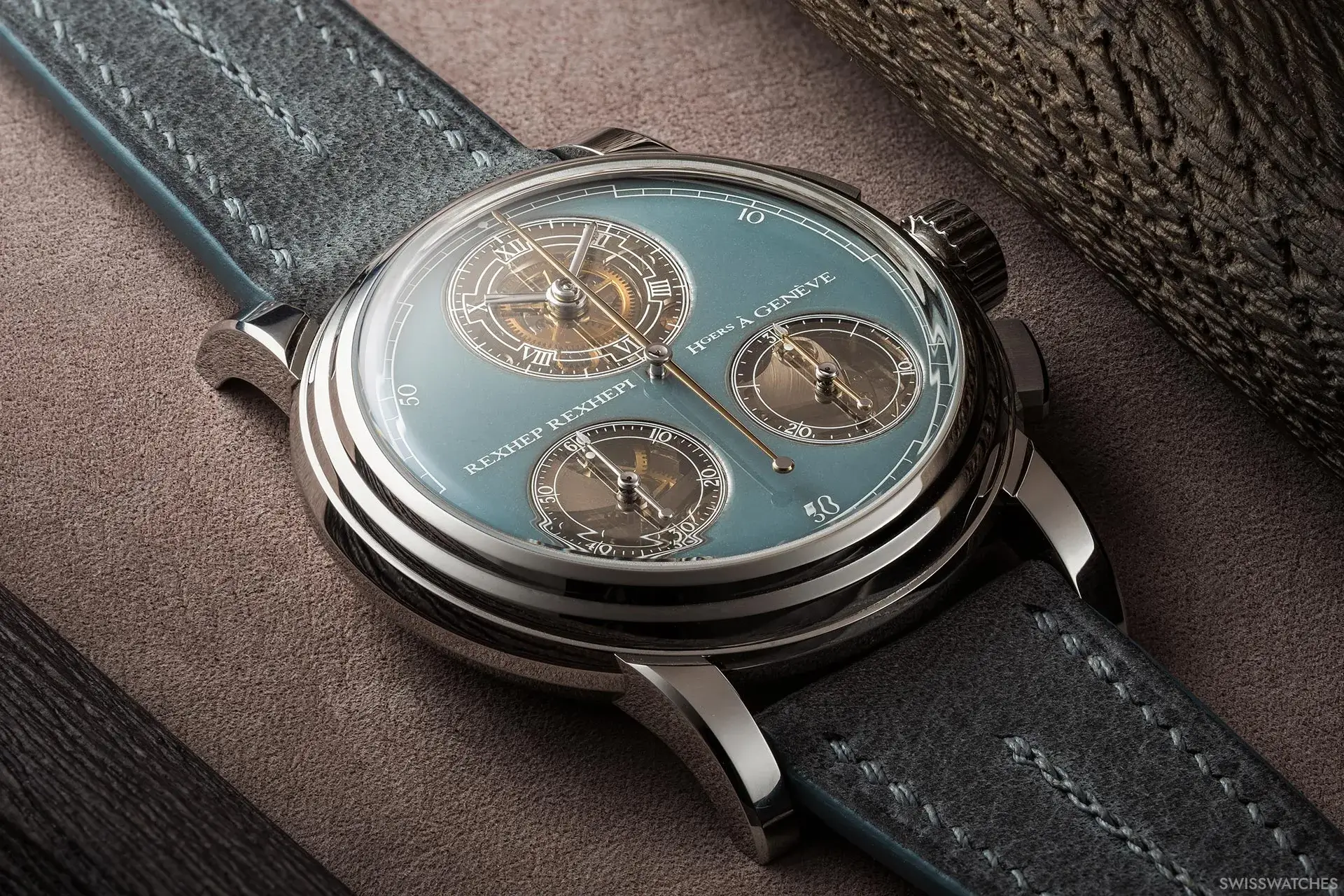
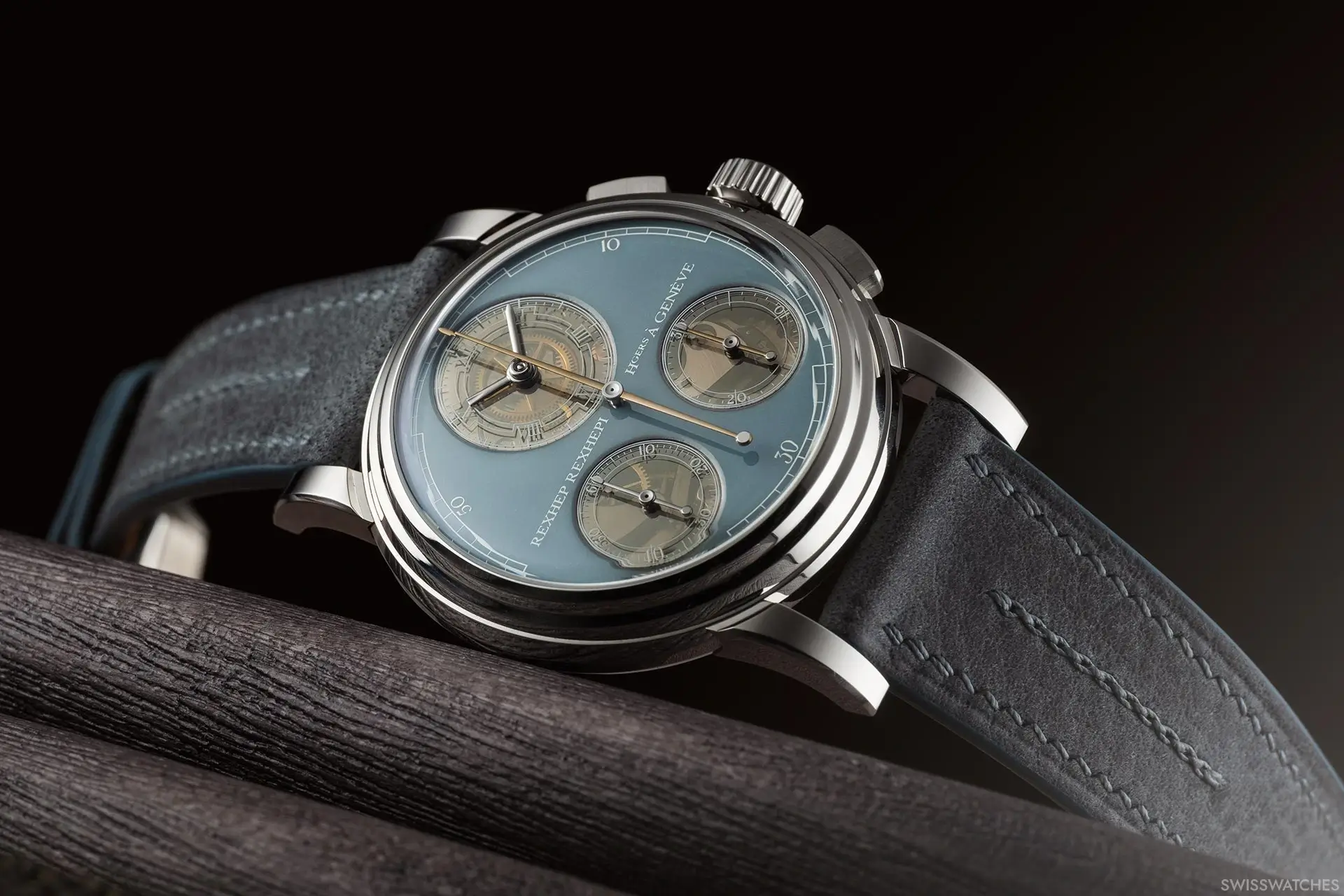
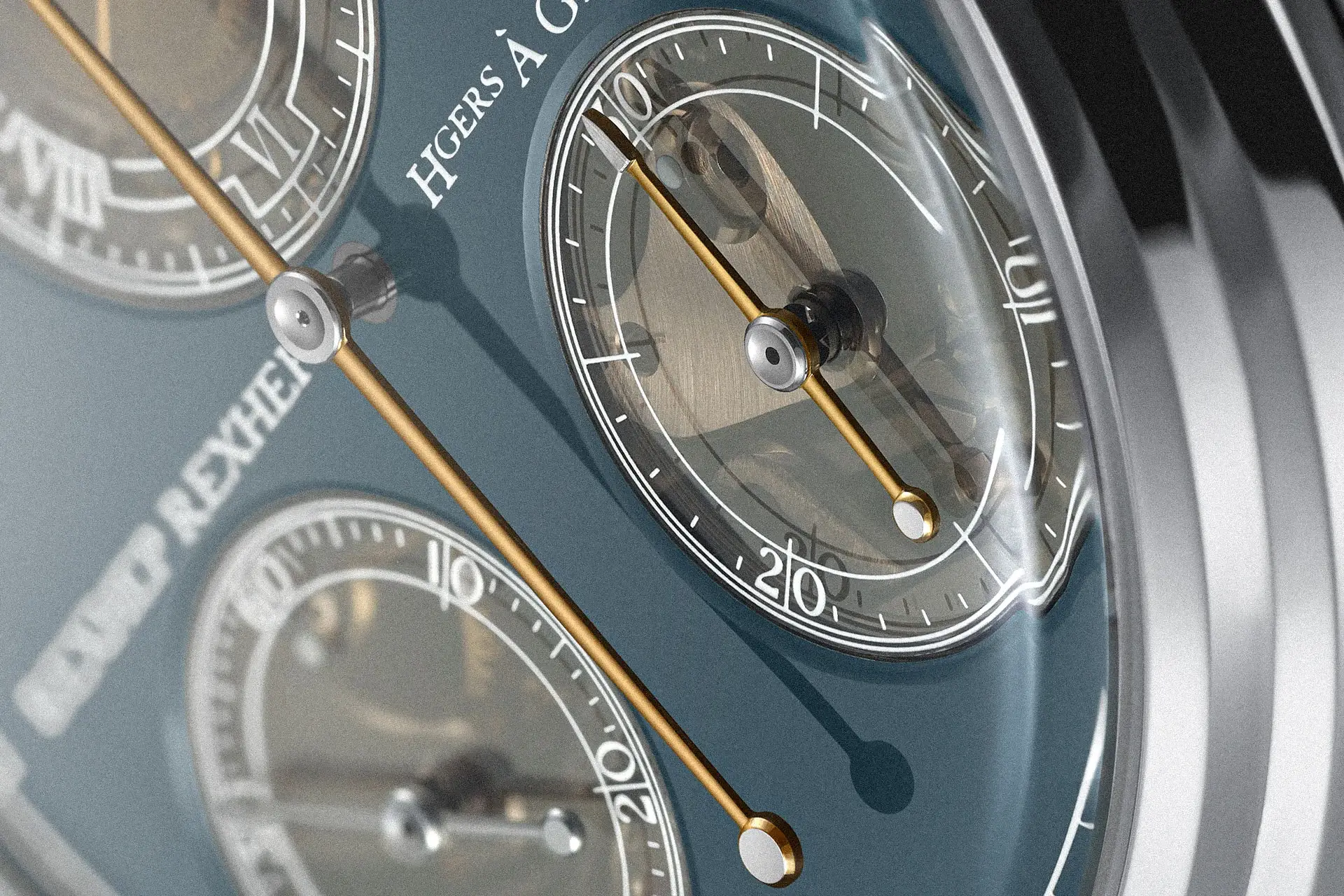
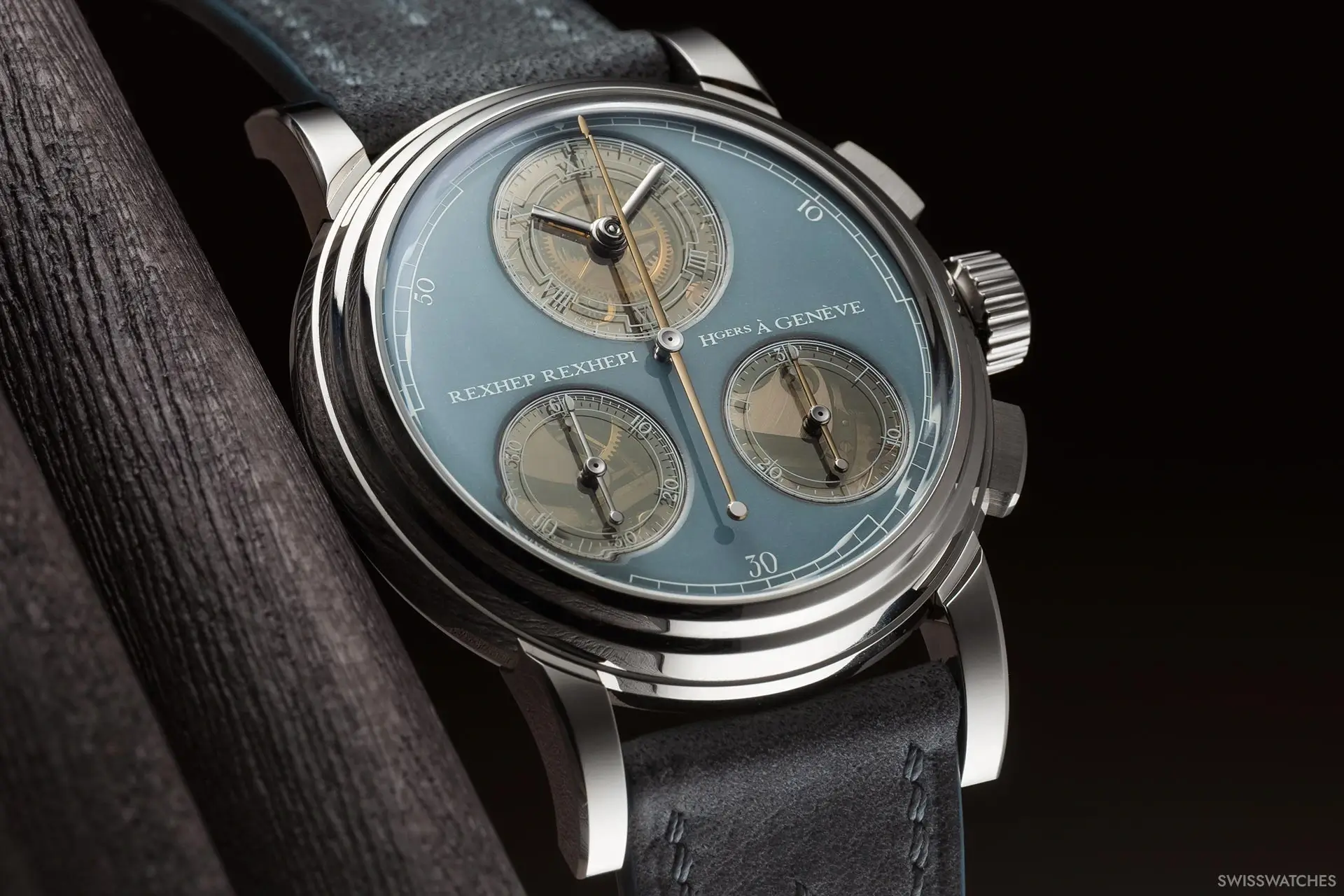
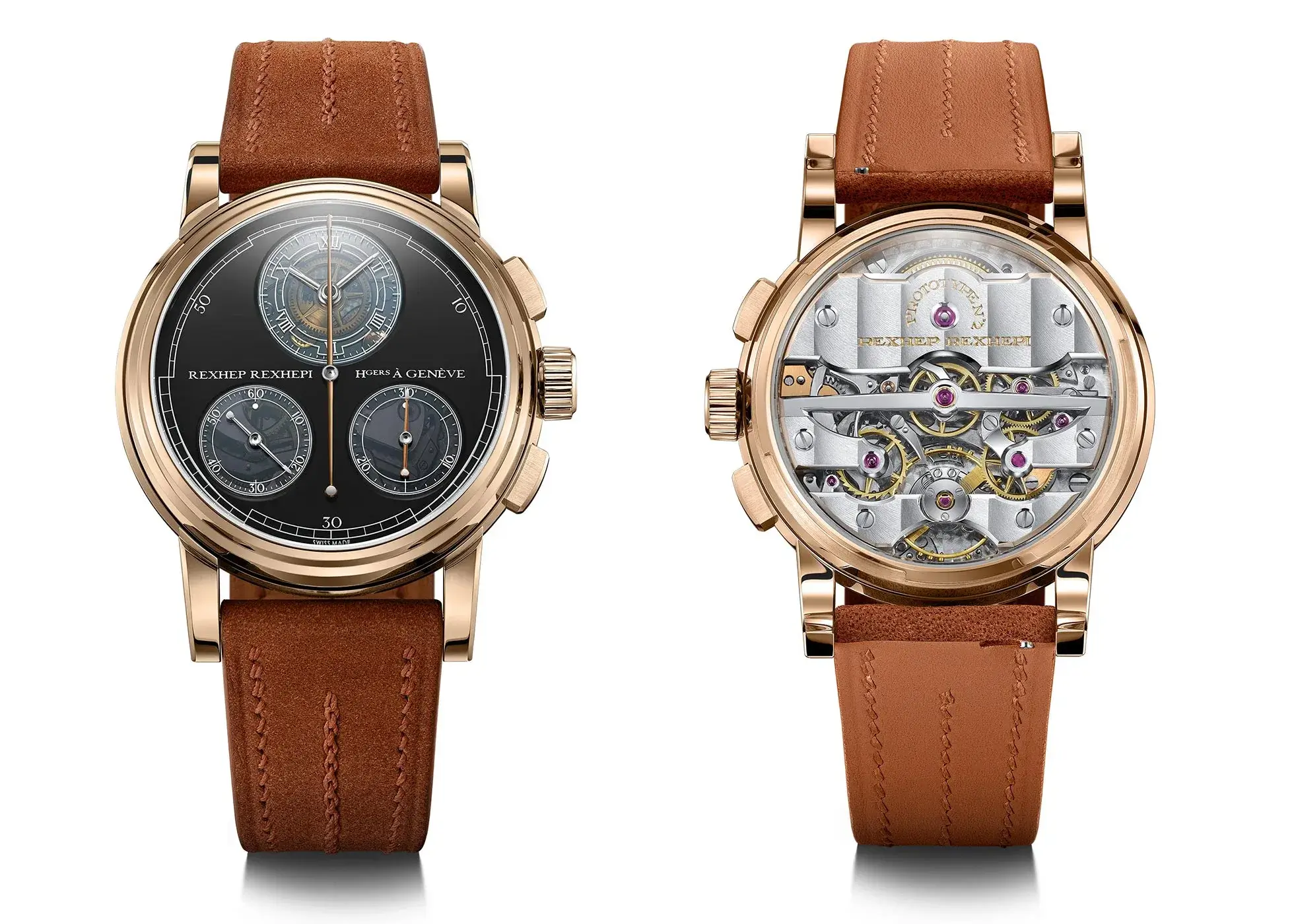
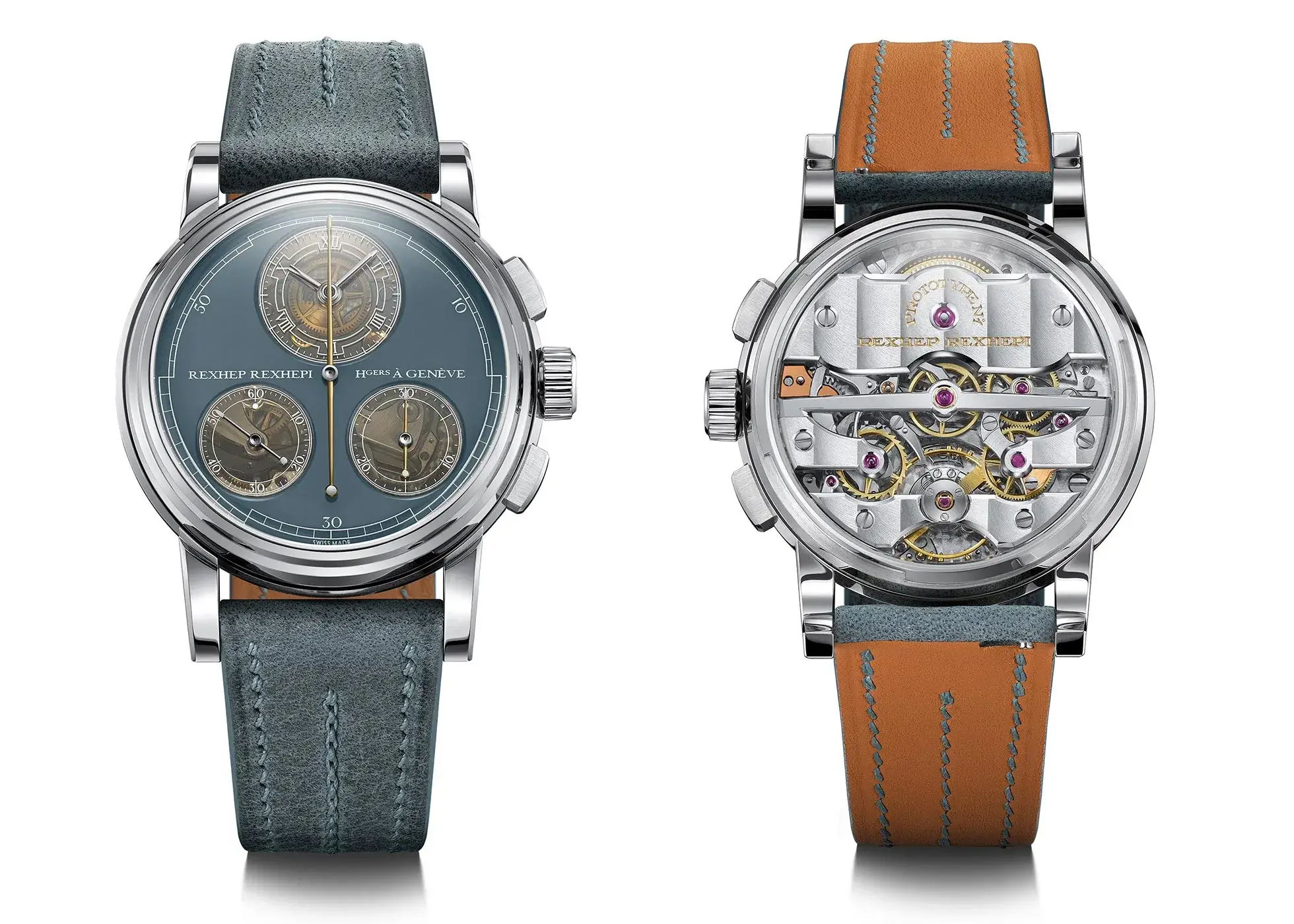
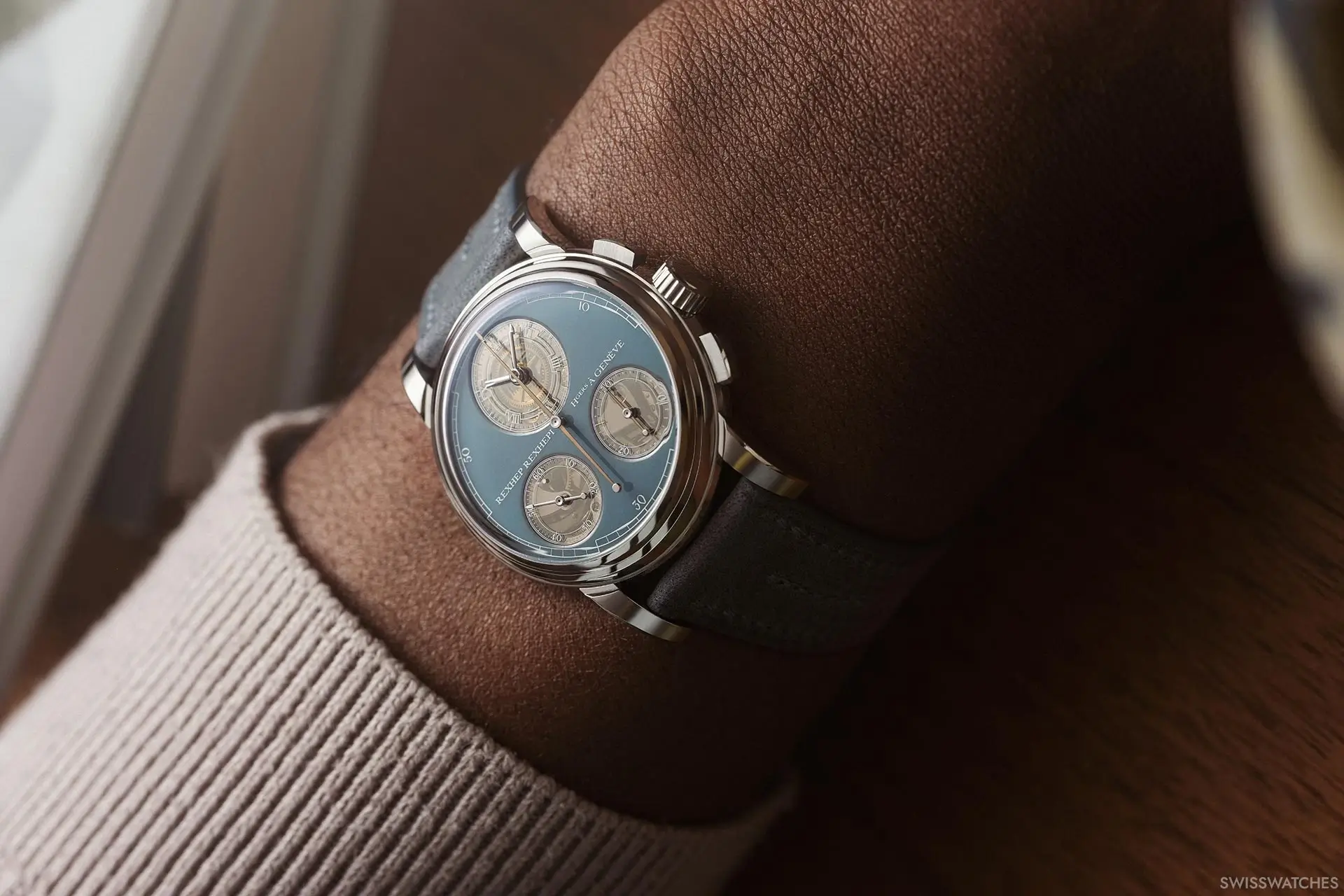
The first thing you notice is the dial. In platinum, the RRCHF is fitted with what Rexhep Rexhepi calls a storm-blue Grand Feu enamel dial, over which sit three grey-tinted sapphire counters that reveal part of the movement beneath. It is an unusual composition, combining traditional dial-making with a more technical visual language. The enamel retains all the depth and warmth one expects from a traditional dial surface, yet the sapphire apertures introduce transparency and technical tension. The chronograph indications, with their subtly copper-toned hue, bring in another layer still. Time itself is displayed almost discreetly, pushed slightly into the background as if to make clear that this is first and foremost a chronograph. The rose-gold version, by contrast, remains more classical with its black enamel dial — handsome, familiar, almost expected. The platinum version is the one that immediately announces itself.
Then, almost subconsciously, the proportions begin to make their point. The RRCHF measures 38.8 mm in diameter and just 9.7 mm in height, while the lug-to-lug length remains a very manageable 48.8 mm. On paper, those are attractive numbers. On the wrist, they are even better. The elongated lugs help the watch sit close and comfortably, while the stepped bezel gives the case more visual structure without making it feel heavier. That slender profile is all the more impressive given what sits inside: not only a flyback chronograph, but one with an instantaneous minute counter, combined with a comparatively thick enamel dial. There is technical density here, but it is expressed with unusual calm.
A watch built from the outside in
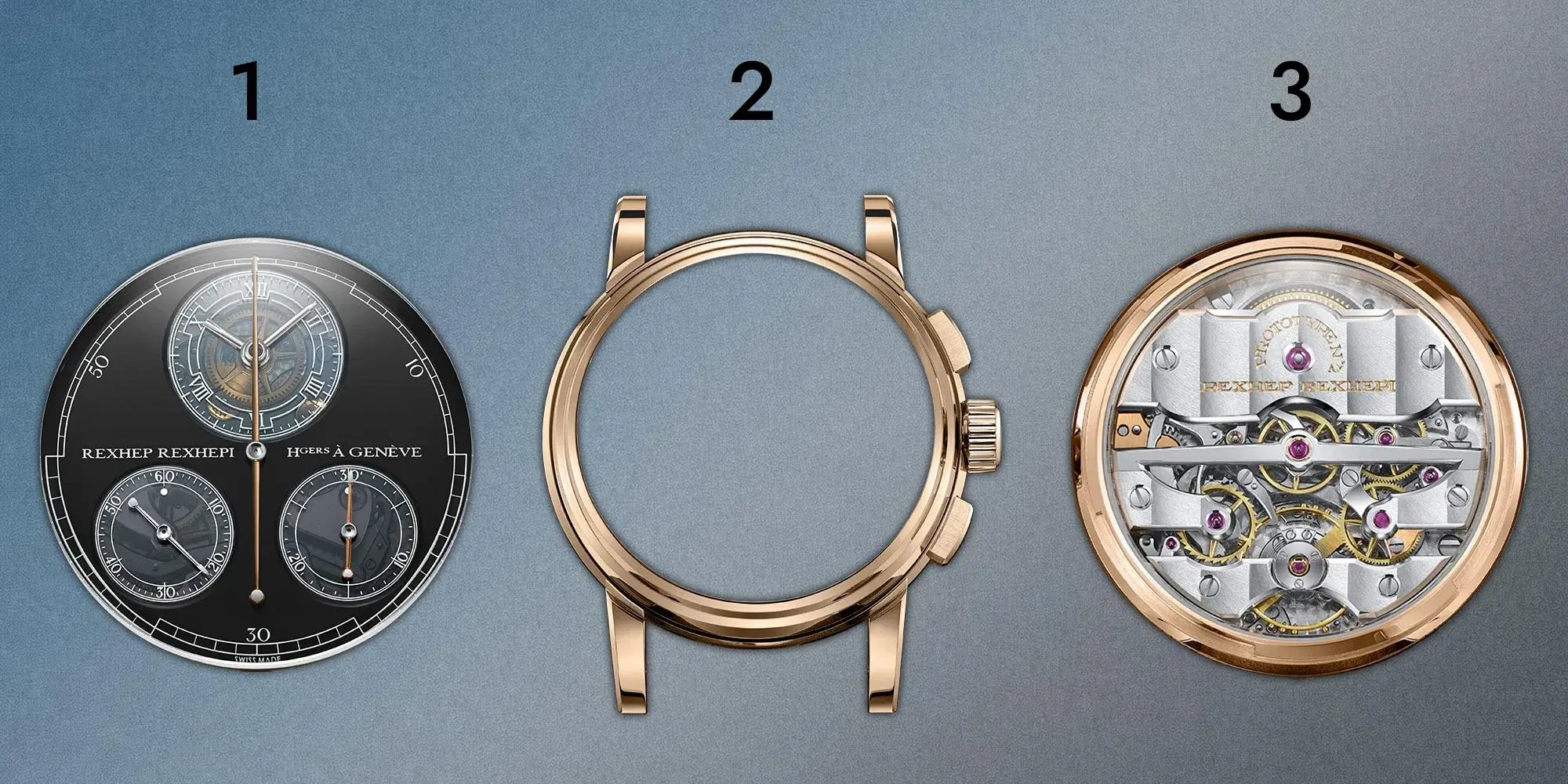
One of the more surprising revelations in our conversation concerned Rexhep’s design process. Rather than beginning with the movement and building outward, he starts with the dial, then designs the case, and only afterwards develops the calibre. For a traditional watchmaker, that sounds almost backwards. For Rexhep, the logic is straightforward. The first thing a person sees is the watch, not the movement. The first thing a person touches is the case, not the bridge layout. If the watch is to feel right as an object – in size, in crown position, in pusher placement, in the rhythm of its counters – then the movement must answer to those decisions, not the other way around. It is the harder path, but in the RRCHF it also appears to be the right one.
The movement side: structure before decoration
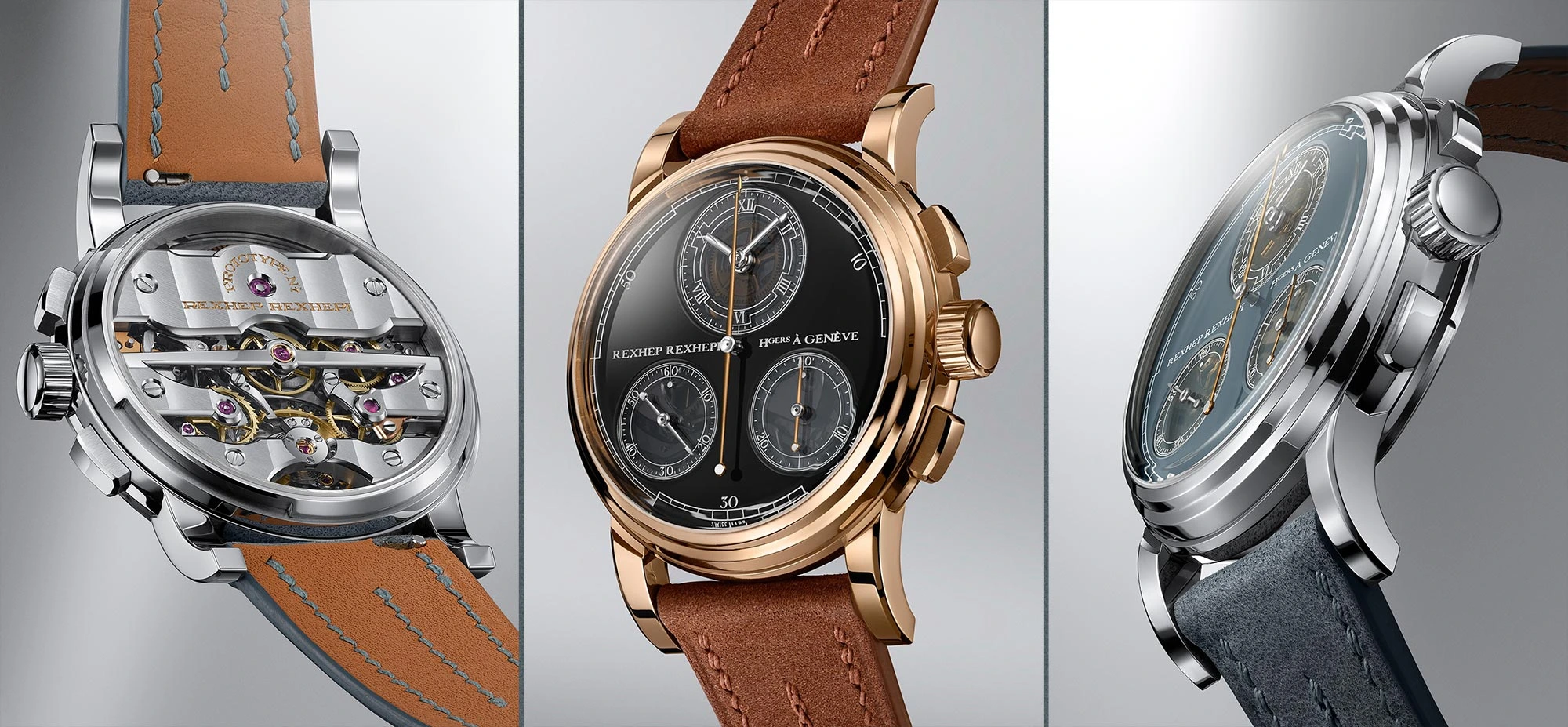
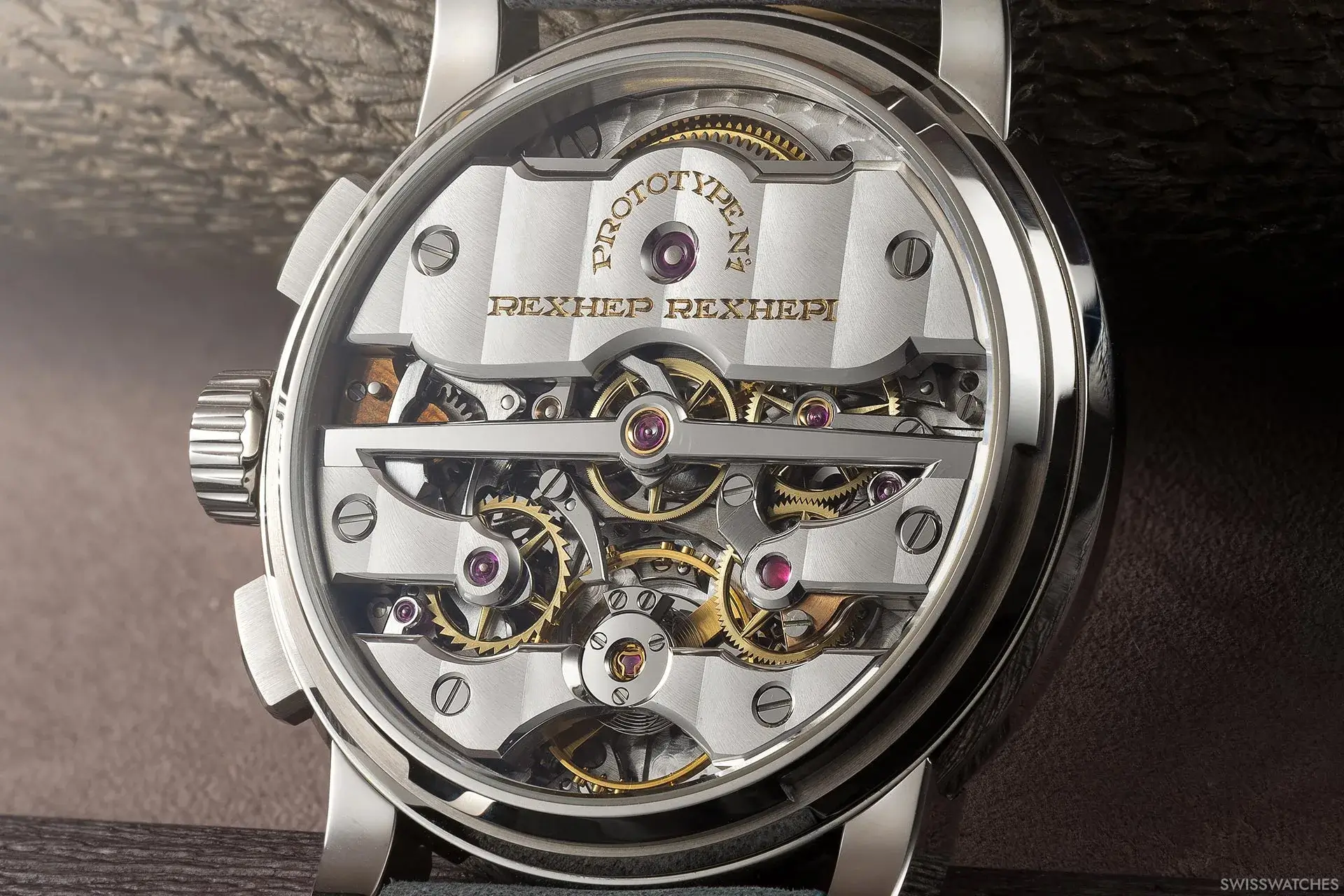
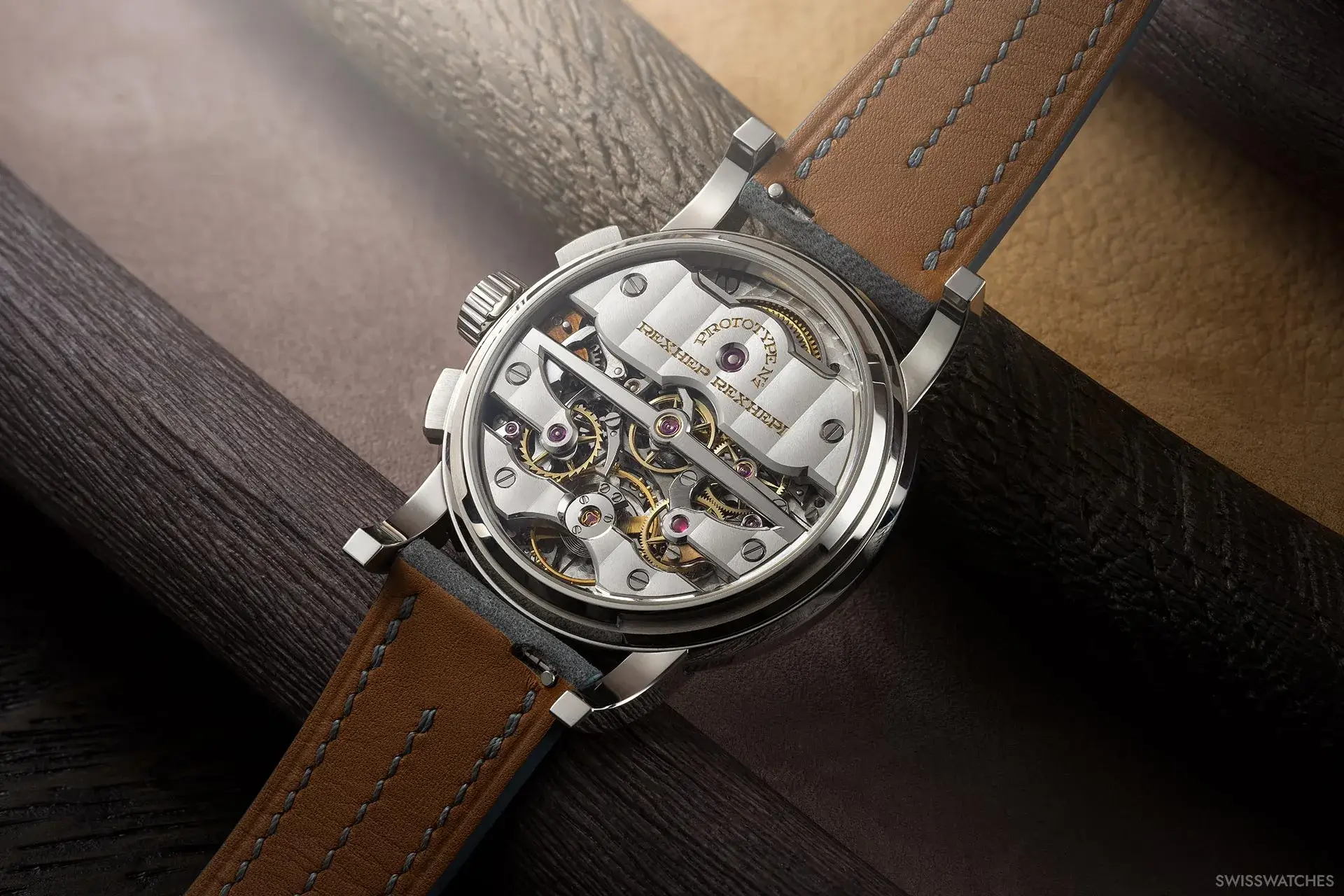
Turn the watch over and the reason for that calm becomes clearer. The movement is organised with striking assurance. A large steel bridge dominates the centre and emphasises exactly what Rexhep wants you to understand: that in this watch, the chronograph is not an afterthought, but the main actor. Around it, the geometry of the movement is deeply satisfying. The finishing is extensive and entirely hand-executed: Côtes de Genève, inward angles, black polishing, poli-bercé and circular graining are all present, while other details such as anglage, satin finishing, perlage, engraving and polished steel parts enrich the visual depth further. None of it feels like decoration added afterwards. Rather, it looks as though the watch had to be finished this way because the structure itself demanded it.
The mechanical idea behind the RRCHF
And structure is, in fact, the key to understanding the RRCHF. Mechanically, it is a column-wheel chronograph with a horizontal clutch. That much can be stated quickly. But what truly defines the watch lies elsewhere: as mentioned before, this is a movement developed exclusively for this one watch. Rexhep was very clear on that point. He did not want a calibre that could later be adapted for multiple references or repurposed as a flexible platform for future product development. In his words, the movement belongs to this watch alone. That makes the effort all the more remarkable given the limited number of watches Rexhep produces, while also making it uncommon in contemporary independent watchmaking.
That decision matters because it separates the RRCHF from much of what one sees not only in mainstream high watchmaking, but even among fine chronographs more broadly. Many chronograph movements begin with a base calibre to which the complication is added. This is often sensible from a manufacturing point of view, but it can also create compromises. Pushers, crown, counters and proportions can end up feeling as though they are working around the movement rather than with it.
Integrated from the beginning
Rexhep chose the opposite route. Here, the movement was developed around the watch as a whole. The motion works sit beneath the dial, while the chronograph mechanics are laid out on the reverse side. Every part of the available space was used to create something integrated, symmetrical and coherent. That, more than the simple fact that it is column-wheel controlled or uses a horizontal clutch, is what gives the RRCHF its character. It is an integrated chronograph not only in technical terms, but in philosophical ones.
Why the instantaneous minute counter matters
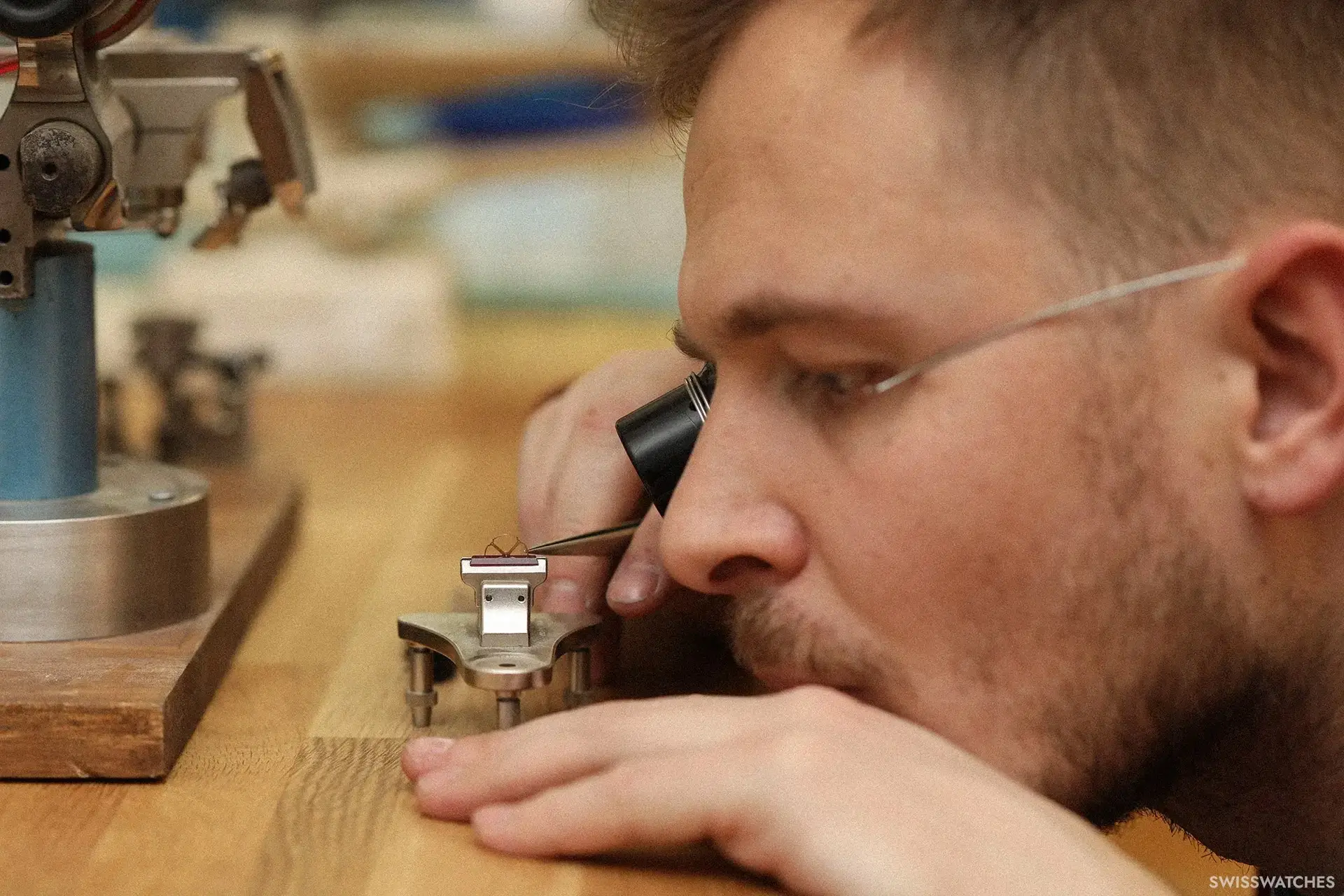
The same is true of the instantaneous minute counter. On paper, it may sound like a niche technical flourish. In practice, it says a great deal about the watch. Rather than creeping gradually forward, the minute counter jumps precisely, making elapsed time easier to read and giving the chronograph a sharper, cleaner rhythm. Rexhep describes it as more precise in use, but also more difficult to realise. The challenge lies in controlling how much energy is taken from the movement, how that energy is stored and released, and how the mechanism returns to its starting position without introducing unwanted friction or instability. It is precisely the sort of detail that most owners may never fully see, but which says a great deal about the seriousness of the project.
Why this chronograph had to happen now
When asked why this chronograph had to happen now, Rexhep’s answer was revealing. It was not simply that he wanted to make a chronograph. It was that he wanted to show that his atelier could now handle this level of complexity in its own language. The Chronomètre Contemporain established his name in one direction: one of restraint, classicism and chronometric integrity. The RRCHF had to show something else – that he could move further technically without losing that identity.
That also explains why he sees the watch less as a continuation of earlier chronograph work than as a new beginning. Yes, he had built chronographs before. But this time, everything starts from zero. The movement is fully new, fully his, and built under his own name with a new architecture and a new sense of balance. For a small independent atelier, that is a major statement.
Balanced and bold
And balance is exactly the right word. Rexhep describes the watch as both balanced and bold – two qualities that do not always sit comfortably together. In the RRCHF, however, they do. It is bold in the sense that it introduces a new display hierarchy, new hands, a more complex movement architecture and a more layered dial construction. Yet it remains balanced because nothing feels exaggerated. Even the hands, which are entirely new, were not designed for effect alone. Their stepped profiles bring them closer to the dial, improve legibility, and help reduce the visual thickness of the watch. Identity, in other words, arises through function.
Why this watch could only exist now
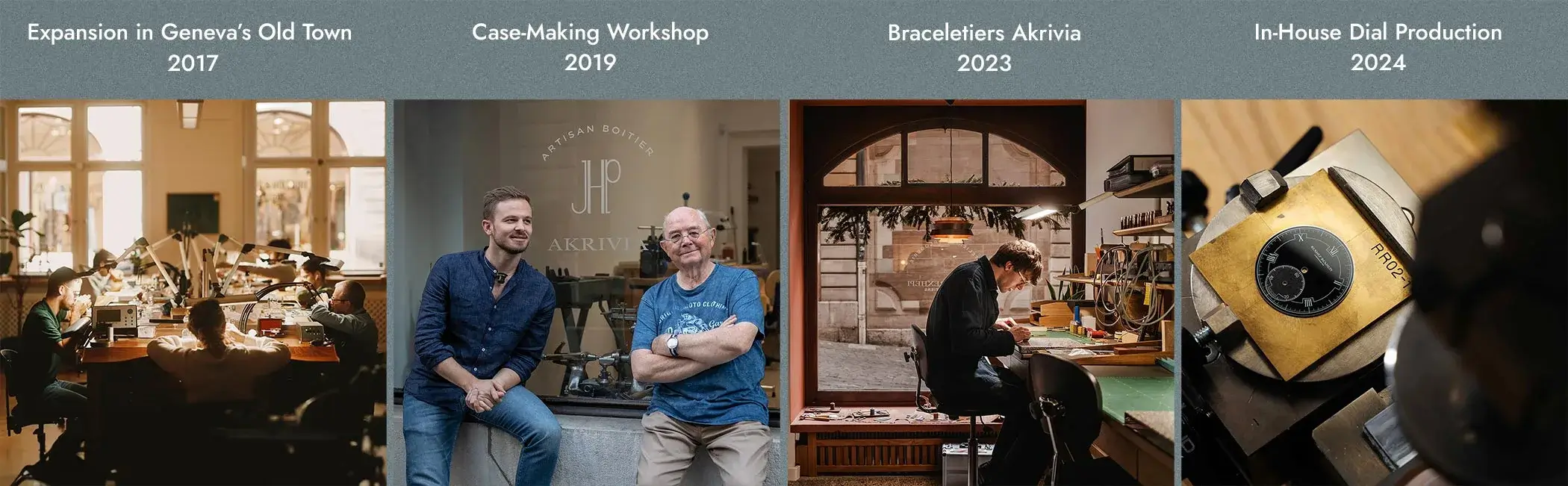
It is also a path that only recently became possible. Rexhep repeatedly emphasised that this watch could not have existed a few years ago. Not because the idea was missing, but because the conditions were. The increasing vertical integration of the atelier – from cases to enamel dials, from straps to movement components and even aspects of the escapement – has given him something he did not always have when working with external suppliers: control. More importantly, it has given him freedom. If a part does not meet the required standard, the solution no longer has to begin and end with frustration. It can begin in the workshop.
“For me, a watch is a performance”
This, perhaps, is what Rexhep means when he says: “For me, a watch is a performance.” Not performance in the theatrical sense, but in the sense that a watch must succeed on every level at once: aesthetically, technically and humanly. It must be beautiful, it must function, and it must carry within it the time, effort and emotion of the people who made it. If he had created this watch two years earlier or two years later, he says, it would not have been the same watch. It belongs to this moment in his life and in the life of his atelier.
Quiet luxury, without the cliché
There are many reasons why Rexhep Rexhepi has become one of the defining names in contemporary independent watchmaking, and why his watches are among the most sought-after in the world. But one of the clearest is that his work speaks directly to the current cultural moment without ever appearing calculated for it. We live in an age in which “quiet luxury” has become both cliché and aspiration. Rexhep’s watches, however, do not feel like branding exercises in restraint. They feel restrained because they are built with genuine discipline. Made in a way that still feels close in spirit to the great traditions of hand-made watchmaking, they combine classicism with enough individuality to avoid nostalgia. The RRCHF is no exception: it is built with a level of discipline that suggests long-term staying power.
Price and the market
Of course, that brings us to another question: who will actually be able to own one? Production remains extremely limited. Around 70 watches per year leave the atelier, while demand already far exceeds supply. At CHF 150,000 before taxes, the RRCHF is by any standard a very expensive watch. Yet here too Rexhep’s answer is strikingly direct. He knows he could price the watch much higher. The market tells him so constantly, and the secondary market even more loudly. But he wants to be able to look his clients in the eye. He wants to offer the best watch possible for the money. He wanted a price he could still regard as fair, even after factoring in the considerable cost of developing a movement that exists for this watch alone. That is not false modesty; it is a position.
The question of allocation
It is also one that creates another problem: allocation. If the making of the RRCHF was the technical challenge, deciding who gets one may well be the more delicate human challenge that follows. Rexhep speaks of wanting the “right client” – someone who values the work, thinks long-term and does not immediately turn the watch into a speculative asset while others have been waiting for years. Whether such ideals can fully survive the modern market is open to debate. But in his case, they still seem to matter.
A step, not an end
In the end, the RRCHF does not feel like a manifesto. Nor does it need to. It feels more like a condensation of everything Rexhep Rexhepi has been building towards: proportion, discipline, integration, handwork, independence and a refusal to make the easy decision simply because it would be commercially smarter. The new flyback chronograph is important not just because it is technically ambitious, nor because it is likely to be almost impossible to get. It is important because it shows, with unusual clarity, what Rexhep Rexhepi wants his watchmaking to be now.
That is why this was not the kind of invitation one postpones.
rexheprexhepi.com
Specifications
RRCHF Flyback Chronograph
Case diameter: 38.8 mm
Case height: 9.79 mm
Length from lug to lug: 48.8 mm
Lug width: 20 mm
Platinum model: In-house stormy blue Enamel Grand Feu with grey-tinted
sapphire counters.
Rose gold model: In-house black Enamel Grand Feu with grey-tinted
Platinum model: Light grey nubuck calf-skin leather with a Norwegian center stitch made in-house.
Rose gold model: Taupe nubuck calf-skin leather with a Norwegian center stitch made in-house.
RRCHF Flyback Chronograph with instantaneous minute counter.
Number of components: 320
Decoration: Hand-decorated Côtes de Genève, polished inward angles, black polishing, poli-bercé, circular graining.
Hours, minutes, running seconds hand. Central flyback chronograph seconds hand and instantaneous minute counter.
CHF 150,000 before VAT.
Limited production.