
Breitling and Aston Martin celebrate their new partnership with the launch of the Navitimer B01 Chronograph 43 Aston Martin Aramco Formula One Team.

Perpetual calendars are often considered one of the ‘royal’ complications of mechanical watchmaking, as they not only display the date, but also mechanically take the irregular rhythm of the calendar year, including different month lengths and leap years into account. In this article, we showcase the best perpetual calendar watches currently available and how different brands solve the same challenge in completely different ways: from newly interpreted, historically inspired perpetual calendar wristwatches by Patek Philippe to modern leaps in usability, such as Audemars Piguet’s crown-controlled ‘all-in-one’ concept, to ultra-thin record-breaking ideas from Bulgari and Piaget. These are contrasted by purist, particularly streamlined interpretations from Parmigiani, Vacheron Constantin, Breguet and A. Lange & Söhne. If you would like to delve deeper into the history and functionality of perpetual calendar watches, you can find our detailed guide here.
Patek Philippe is one of the defining names when it comes to perpetual calendars on the wrist. As early as 1925, the manufacturer presented a watch that is recognised as the first wristwatch with a perpetual calendar: it was based on a movement manufactured in 1898 for a ladies’ pendant watch. The display concept, whereby the date is shown via a central hand, with the day of the week and month in auxiliary displays and the moon phase, set a standard that Patek continued to build on in the following decades. Of particular historical importance, in 1937 Patek Philippe became the first manufacturer to offer a retrograde perpetual calendar in a wristwatch. This line of maximum calendar competence combined with wearability leads directly to today’s Grandes Complications Reference 6159G.
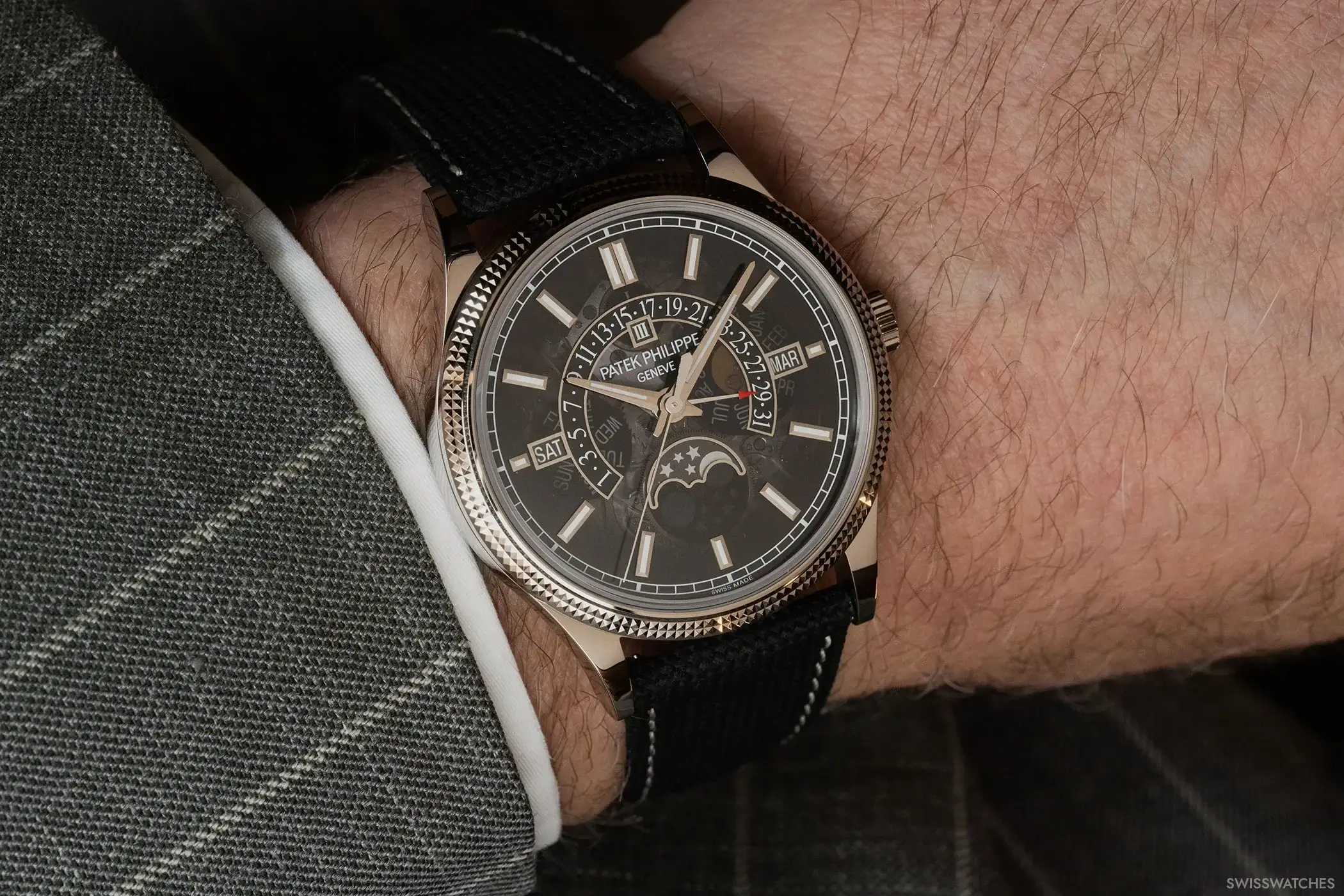
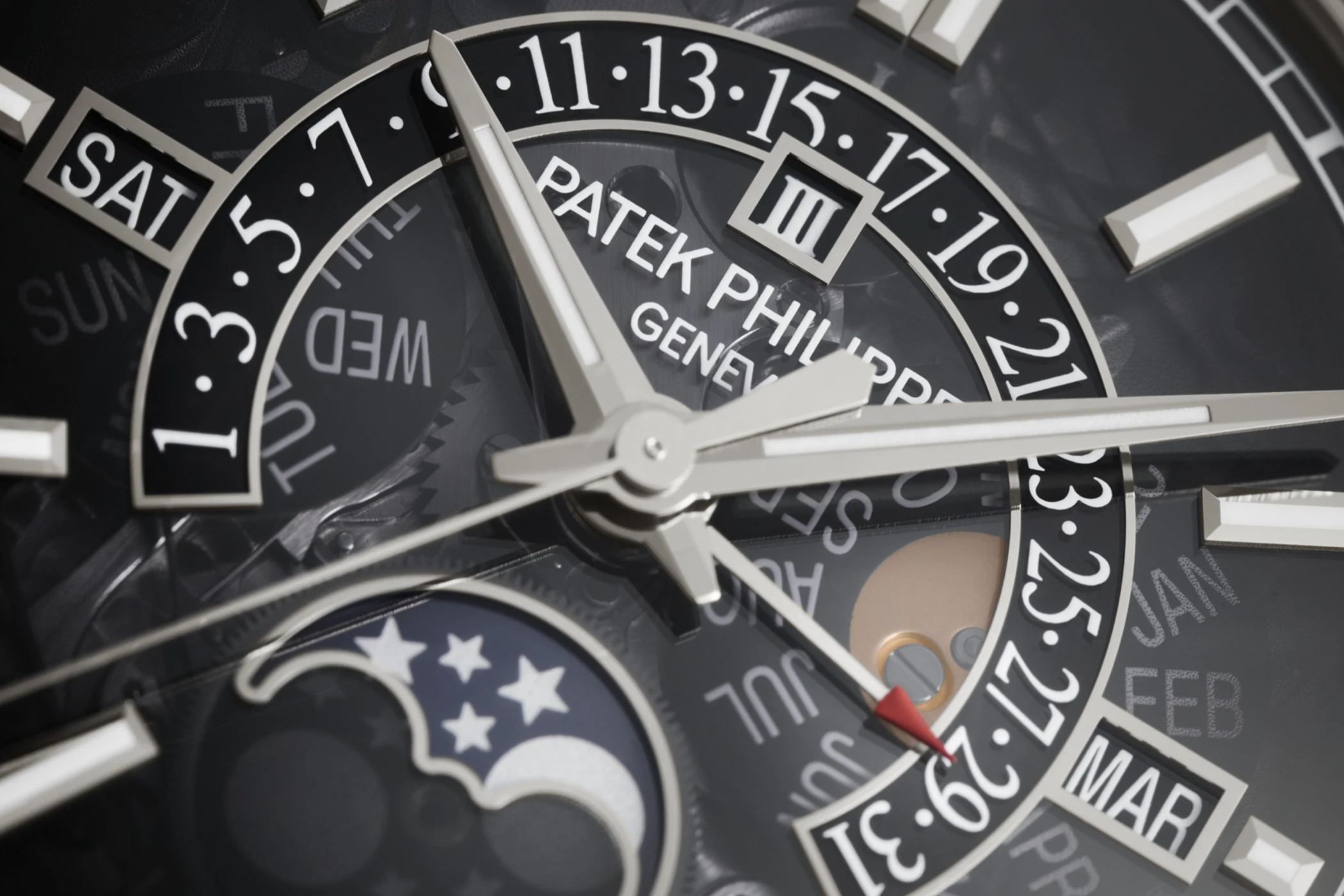
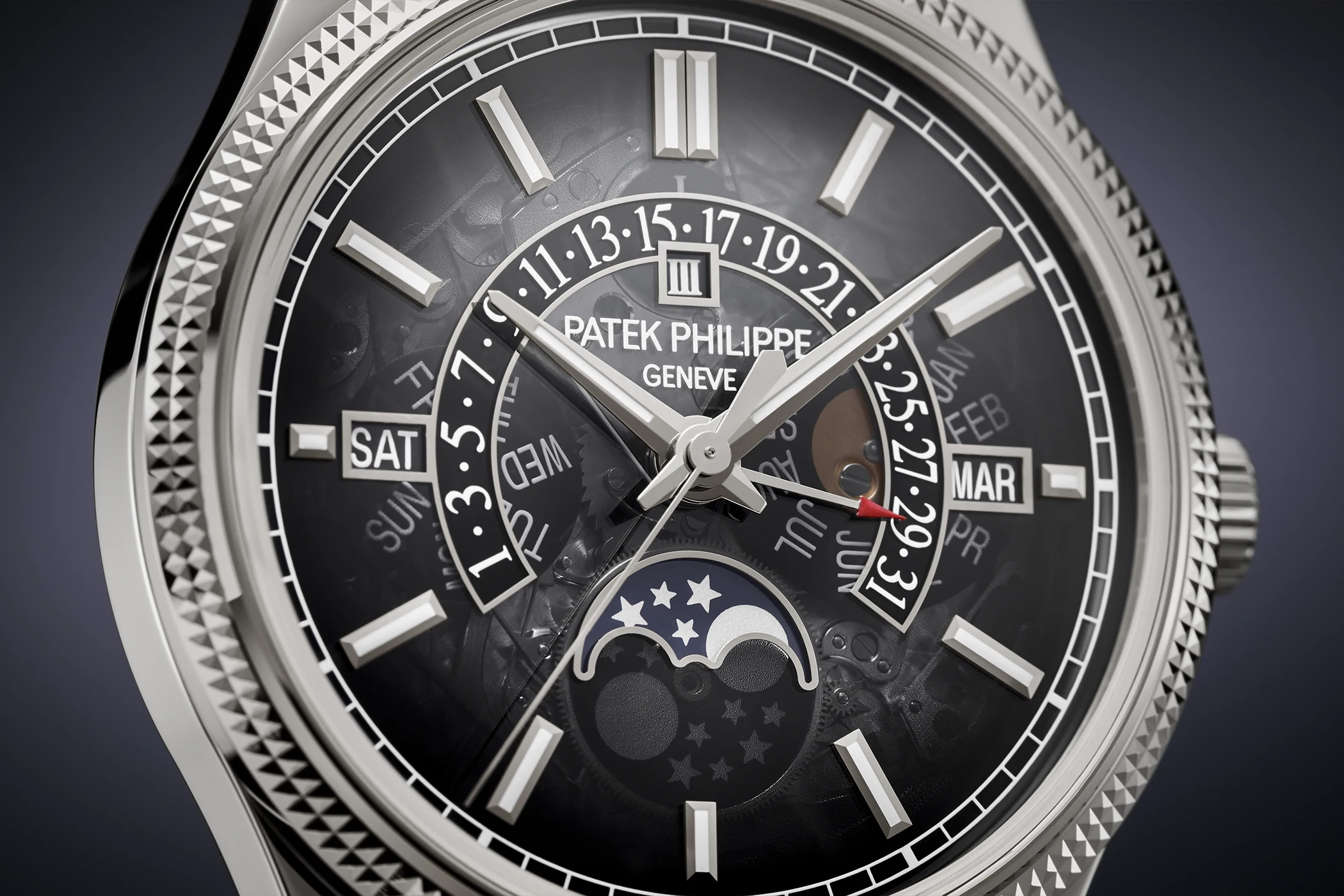
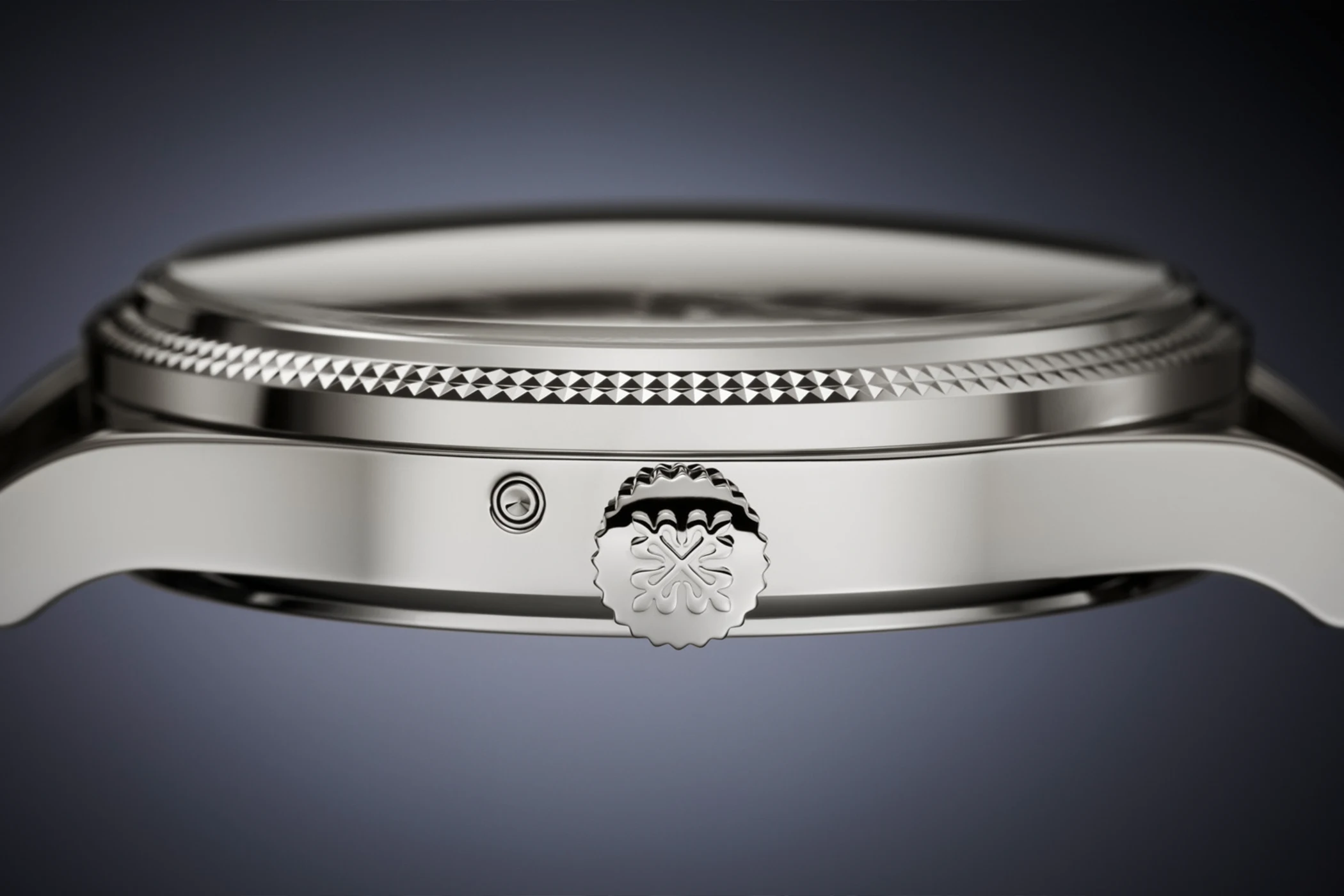
The Patek Philippe Grandes Complications 6159G reimagines the perpetual calendar and retrograde date functions in a contemporary visual style. The heart of the watch is the sapphire crystal dial: grey metallised, with a dark black gradient towards the edge, so that the mechanics underneath do not appear strikingly ‘open’, but are subtly visible as if through a smoked glass filter. Patek connoisseurs will already be familiar with this idea from a blue version of a reference presented in 2023, but here it appears cooler, more technical and significantly more graphic. This is complemented by the Calatrava-like silhouette with a diameter of 39.5 mm, which remains classic at first glance but immediately stands out thanks to the bezel with its guilloché Clous de Paris pattern.
Technically, the 6159G remains clearly Patek: it relies on the automatic calibre 26-330 S QR, known from the reference 5160. This is interesting for collectors because it complements Patek’s calendar in a different, contemporary direction. With 368 individual parts, 4 Hz (28,800 vph) and a power reserve of at least 35 to a maximum of 45 hours, the movement is ideally suited to the concept of this watch: highly complicated, but designed for everyday use. The white gold case measures 39.5 mm and is water-resistant to 3 bar. The price is clearly positioned at 115,880 euros.
The perpetual calendar has been part of Audemars Piguet’s DNA since its early days: calendar pocket watches were produced from the company’s founding in 1875, followed in 1921 by the first calendar wristwatch, which was sold to the renowned retailer Gübelin three years later. Although it took until 1948 for the first perpetual calendar to be created, development then gathered pace. In the early 1950s, three perpetual calendar wristwatches without a leap year indicator were initially created, based on a 48-month system, which was technically exciting but more difficult to understand in practice. In 1955, Audemars Piguet became the first manufacturer to incorporate a leap year indicator into a wristwatch with the Reference 5516. This feature had previously been found mainly in pocket watches.
Subsequently, another 5516 models were produced with a moon phase at 6 o’clock and a leap year indicator at 12 o’clock, including a now legendary piece with a double-signed Tiffany dial. With the flat automatic calibre 2120, the manufacturer also made a mark in terms of construction height, paving the way for the iconic Royal Oak era, which saw the launch of a Royal Oak with a perpetual calendar in 1983.
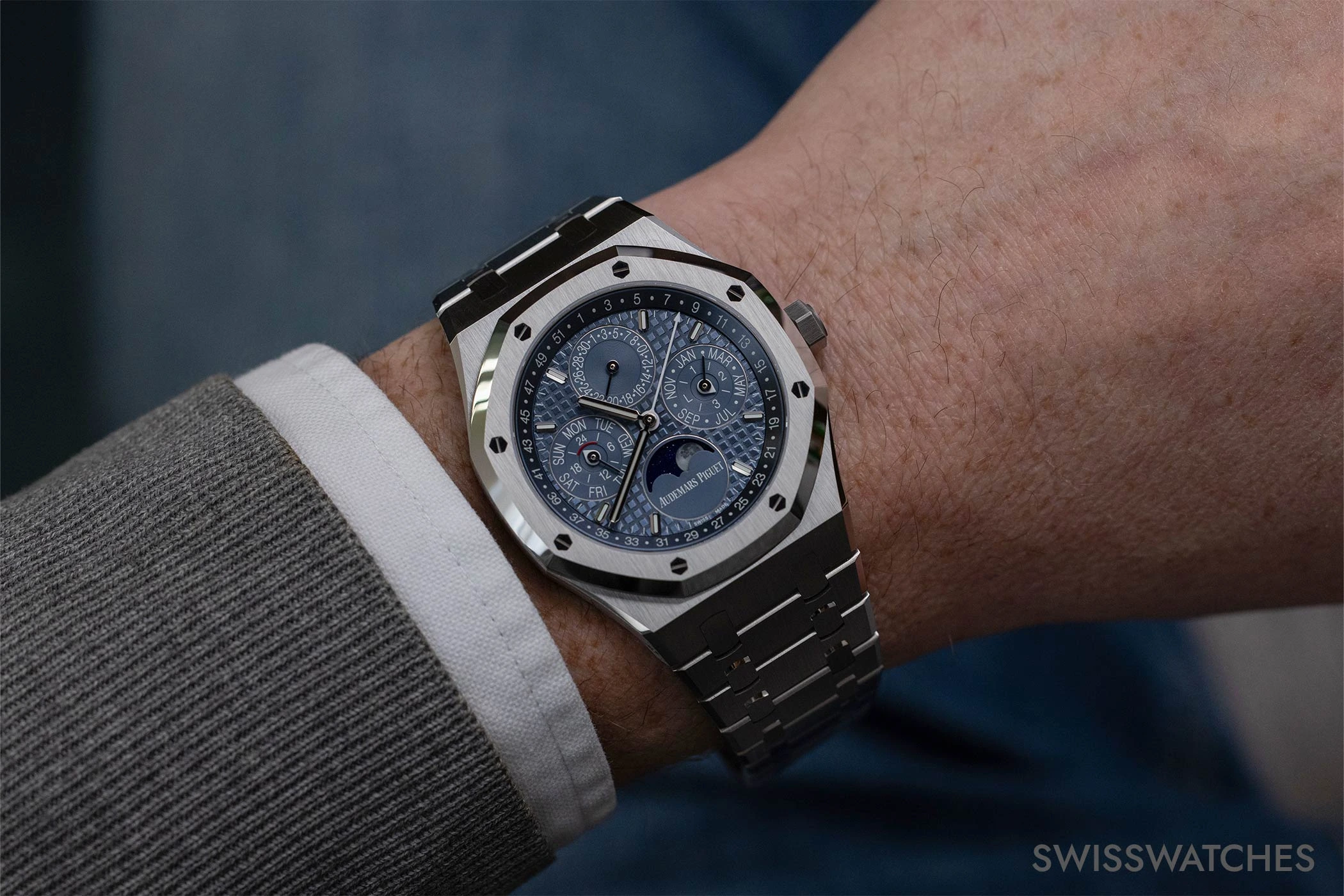
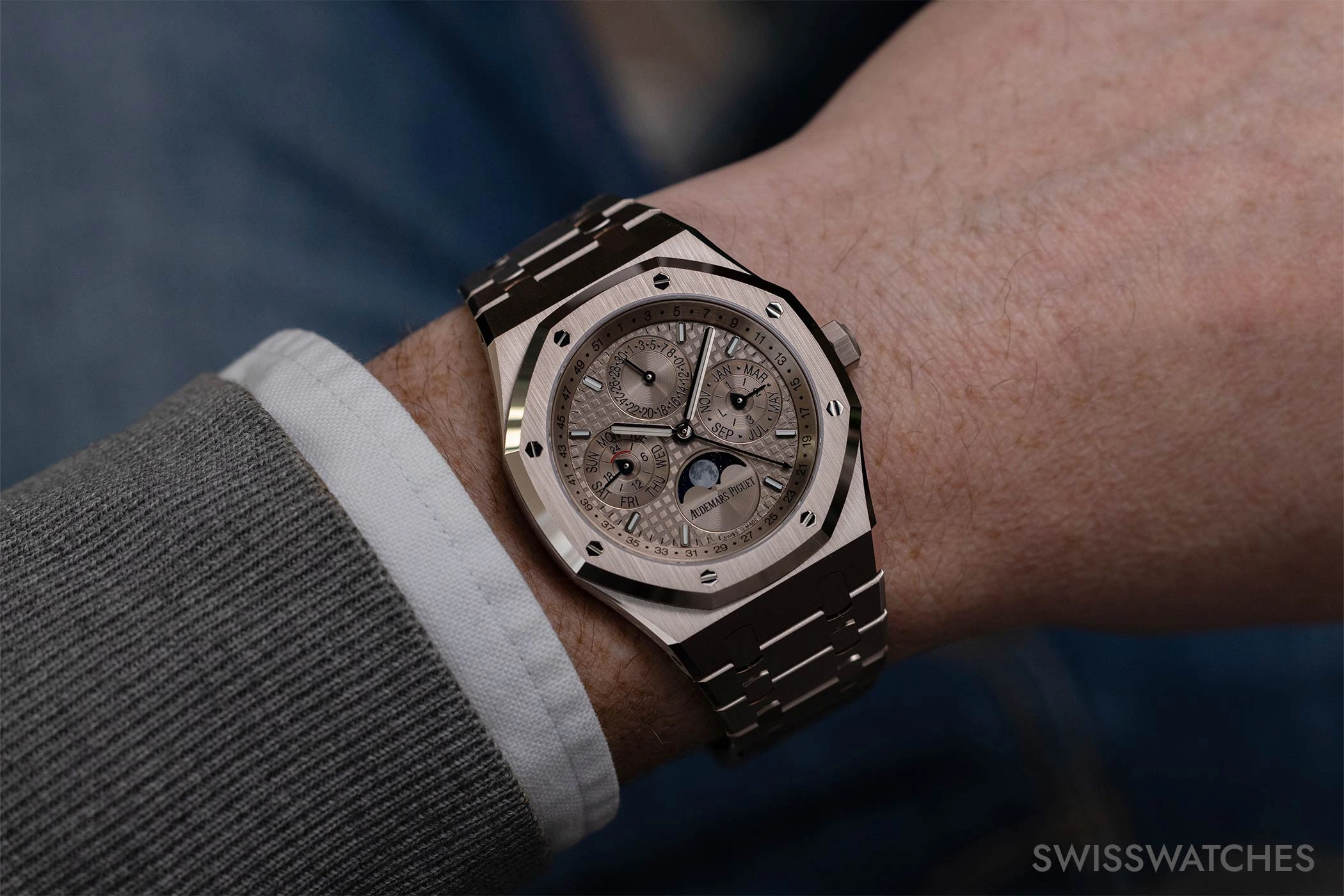
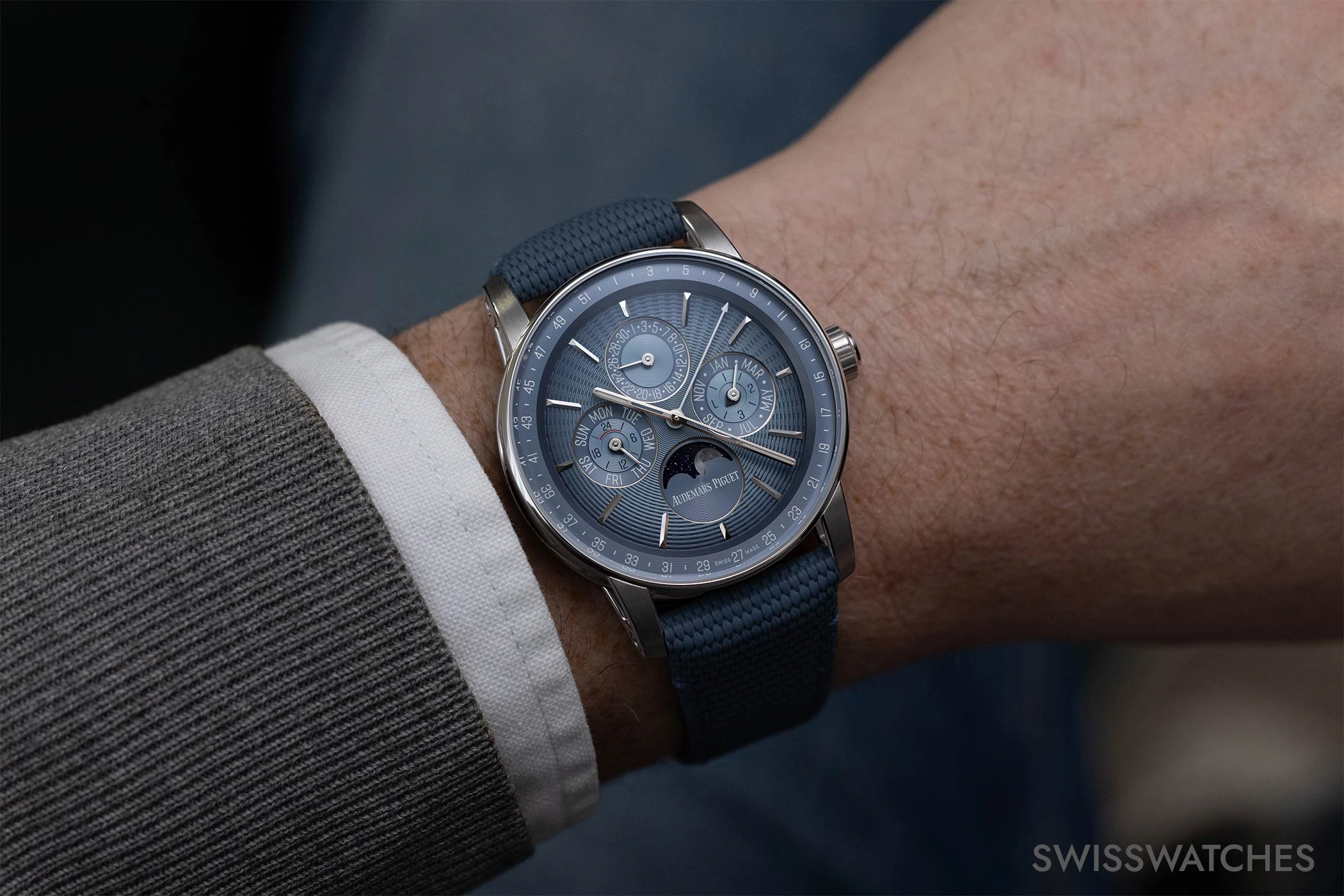
In 2025, on its 150th anniversary, Audemars Piguet is opening a new chapter with the calibre 7138, which is less complicated and much more user-friendly. The decisive advance is the all-in-one crown, which can be used to correct all calendar functions: day, date, month, leap year and moon phase without pushers, without tools, without the classic risk of damaging something when adjusting. The idea of consistently operating a perpetual calendar via the crown is reminiscent of IWC and the concept developed by Kurt Klaus in the 1980s. Technically, however, this is based on a complex system of levers and ‘wandering’ wheels that engage with the respective calendar mechanisms depending on the position of the crown. Several patents secure this solution. Despite this additional logic, the movement remains remarkably flat: 4.1 mm height, 422 components, 4 Hz frequency and at least 55 hours of power reserve.
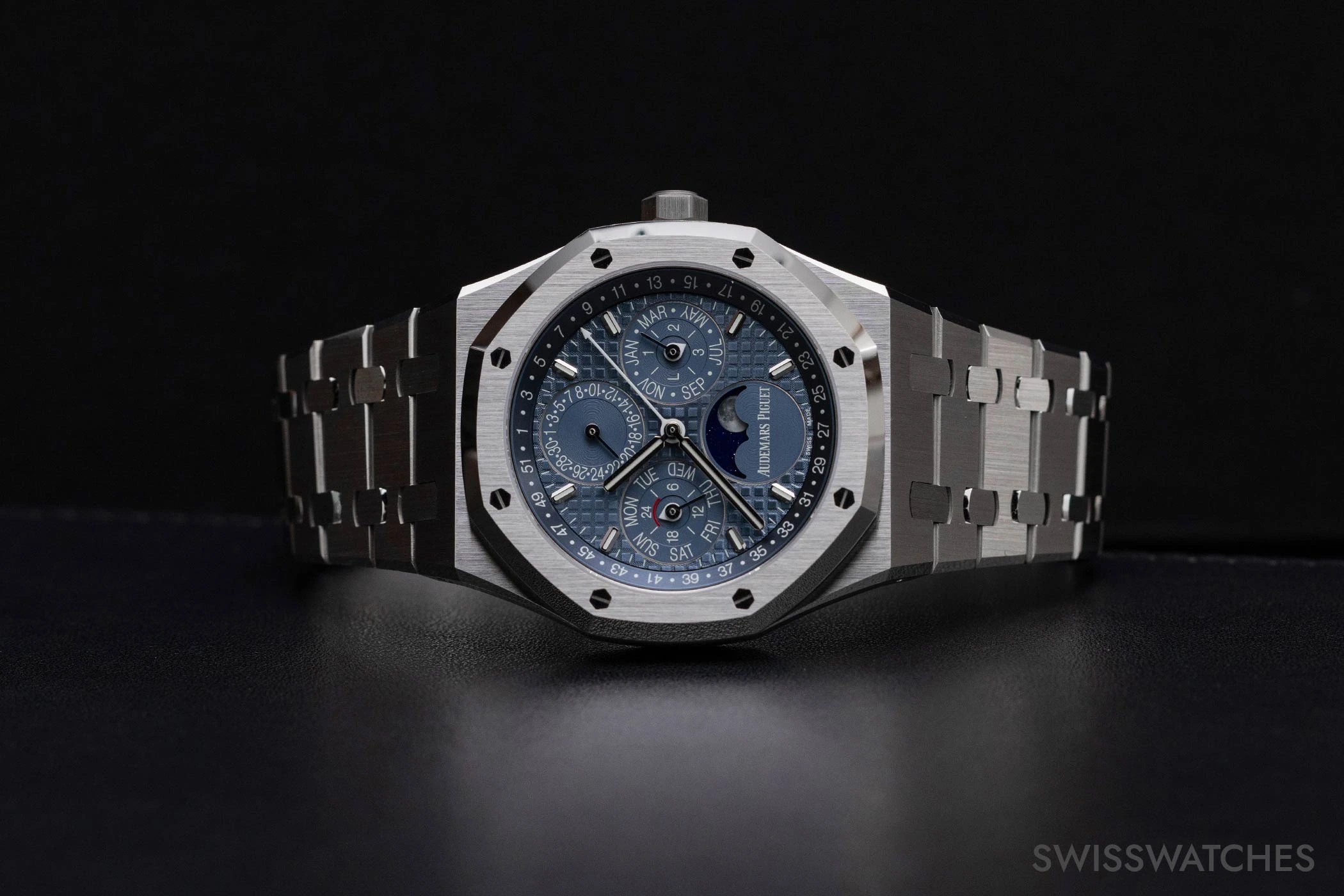
The calibre 7138 is making its debut in two design worlds: Royal Oak and Code 11.59 by Audemars Piguet, both in 41 mm. Two versions of the Royal Oak are available, one in stainless steel and the other in 18-carat sand gold, each with a matching strap and the familiar Grande Tapisserie dial.
The dial layout has also been noticeably refined: the display now follows a European date format with the day of the week at 9 o’clock, the date at 12 o’clock and the month at 3 o’clock; the week numbers remain on the inner bezel, with ‘week 1’ now starting at 12 o’clock and oriented towards the beginning of the week. The moon phase display is also staged with a moon image based on a NASA photograph and has been repositioned in this generation. The Code 11.59 brings the same technical core to a more elegant, round case design.
The Code 11.59 by Audemars Piguet Perpetual Calendar Automatic (41 mm) and the Royal Oak Perpetual Calendar Automatic (41 mm) are both priced at 108,000 euros, while the Royal Oak Perpetual Calendar Automatic (41 mm) in sand gold comes with a price tag of 164,300 euros.
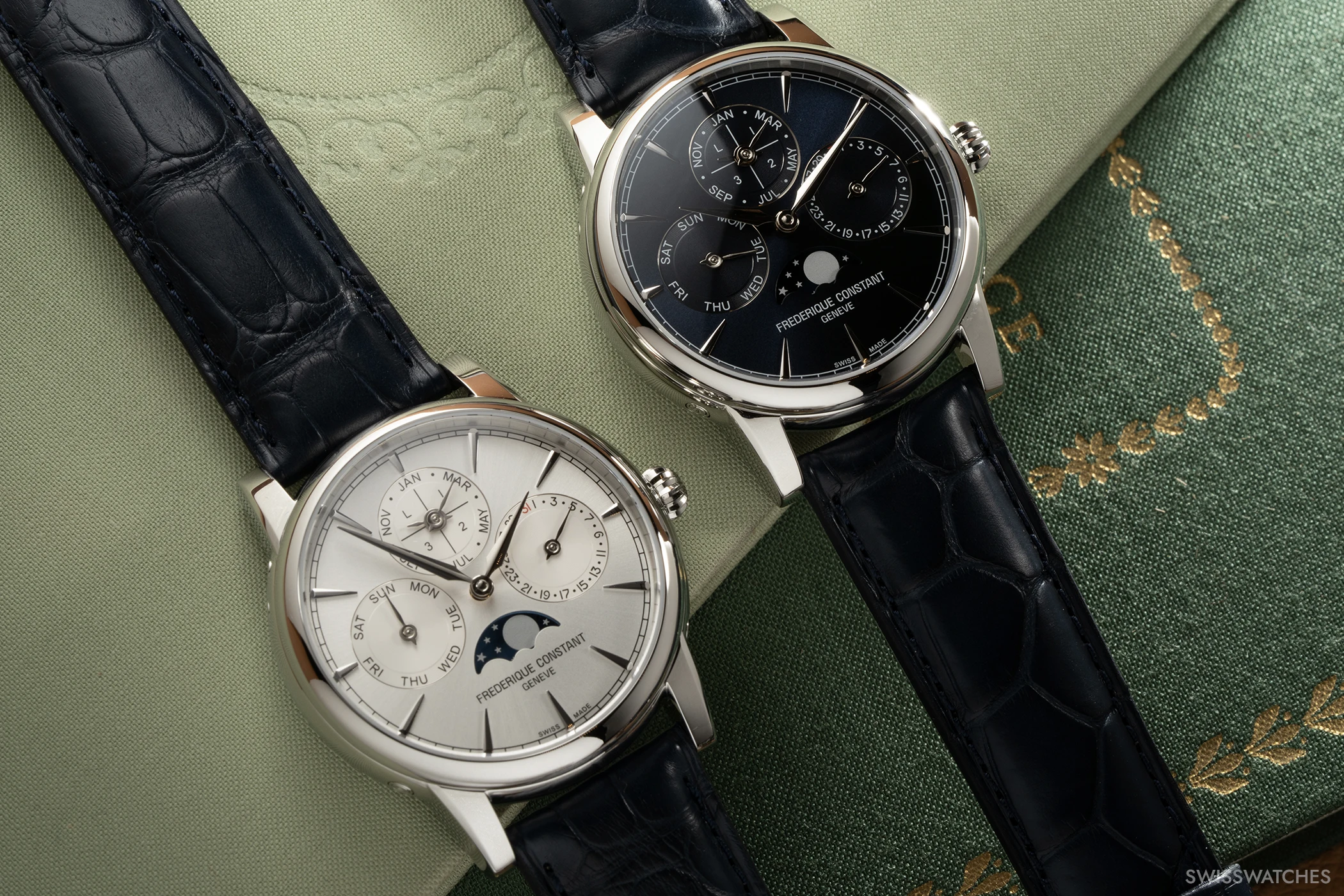
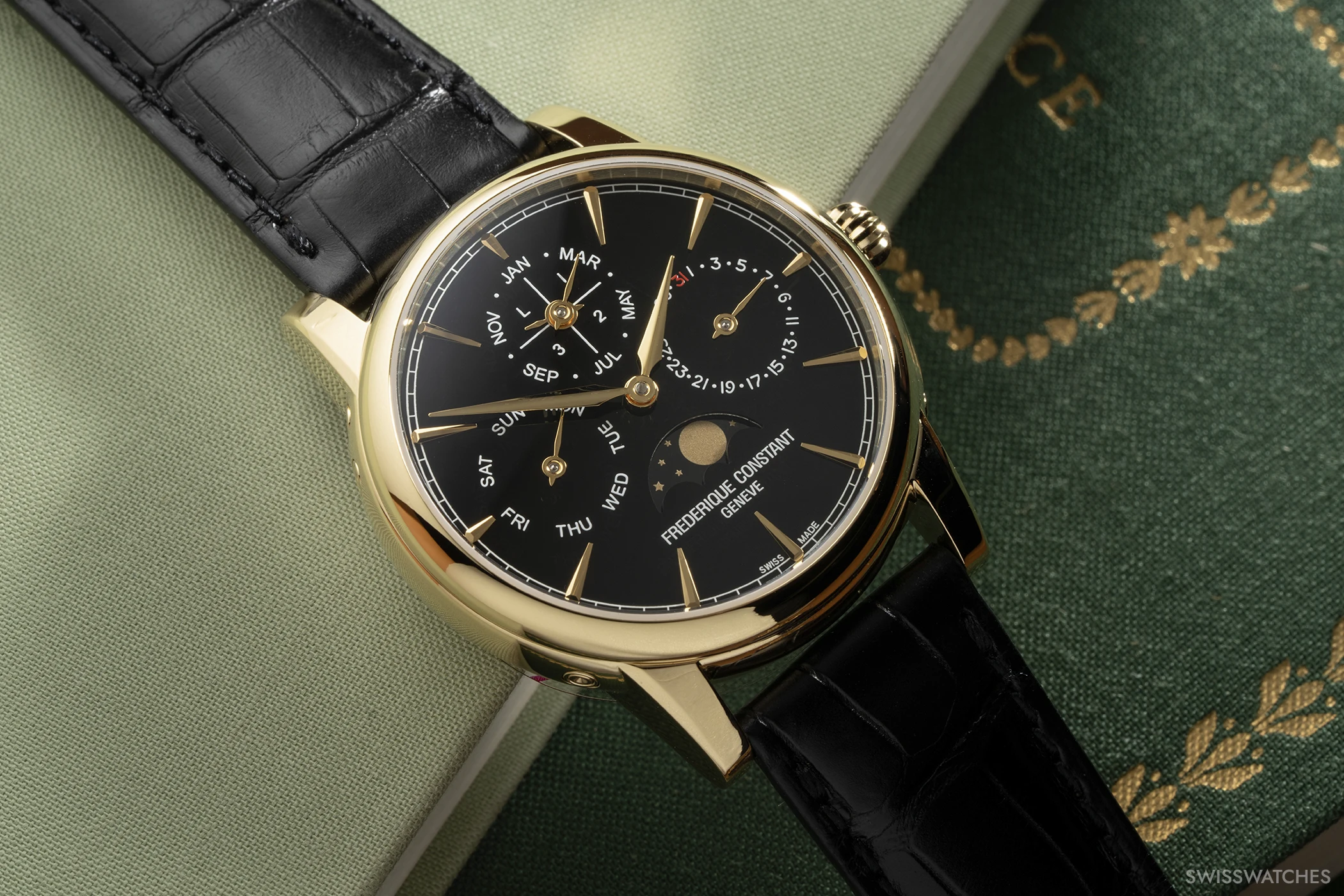
In the world of perpetual calendars, Frederique Constant takes a seemingly provocative approach in this segment by offering genuine manufacturing complications at a price typically associated with ‘simpler’ entry-level luxury watches. Founded in 1988, the brand has consistently positioned itself over the years as a provider of ‘affordable luxury’. The structural background is also important here. Since 2004, Frederique Constant has had the capacity for in-house calibres in Geneva. Since 2016, the company has been part of the Citizen Group, a combination that explains why the brand can combine manufacturing standards with price sensitivity. Frederique Constant has now introduced 34 of its own movements, with the perpetual calendar playing an important role.
The Classic Perpetual Calendar Manufacture has been around since 2016, but in 2025 it will once again take centre stage thanks to a technical evolution. Behind the external updates lies a new heart: the FC-776 manufacture calibre, the brand’s latest in-house movement, which takes the perpetual calendar to a new level. This generation was presented at Watches & Wonders 2025. It was followed by further variants: two stainless steel versions and a strictly limited yellow gold version. The case measures 40 millimetres, deliberately retaining its classic proportions. It is interesting to note how consistently Frederique Constant addresses the issue of usability: The calibre FC-776 is self-winding with a 72-hour power reserve and is designed so that the calendar will not lose its accuracy until the year 2100 without correction. The calendar functions are adjusted via discreet corrector pushers integrated into the case, while the time itself is set using the crown at 3 o’clock. And then there’s the feature that truly sets this watch apart: the price. The new stainless steel models start at 9,995 euros, while the yellow gold version is priced at 29,995 euros.
Founded in 1996 by Michel Parmigiani, Parmigiani Fleurier is a relatively young manufacturer with a clear focus on traditional watchmaking and fine finishing. Parmigiani’s history with perpetual calendars dates back to its founding: the brand’s first perpetual calendar was conceptually developed in 1996, but the first commercial version did not appear until 1998/99. At that time, it was the PF333 Toric Quantième Perpétuel Rétrograde – with a concept that was exceptionally easy to read for its time: the day of the week and month in windows, the date via a retrograde hand, plus a leap year indicator in the upper part of the dial, and a moon phase at 6 o’clock.
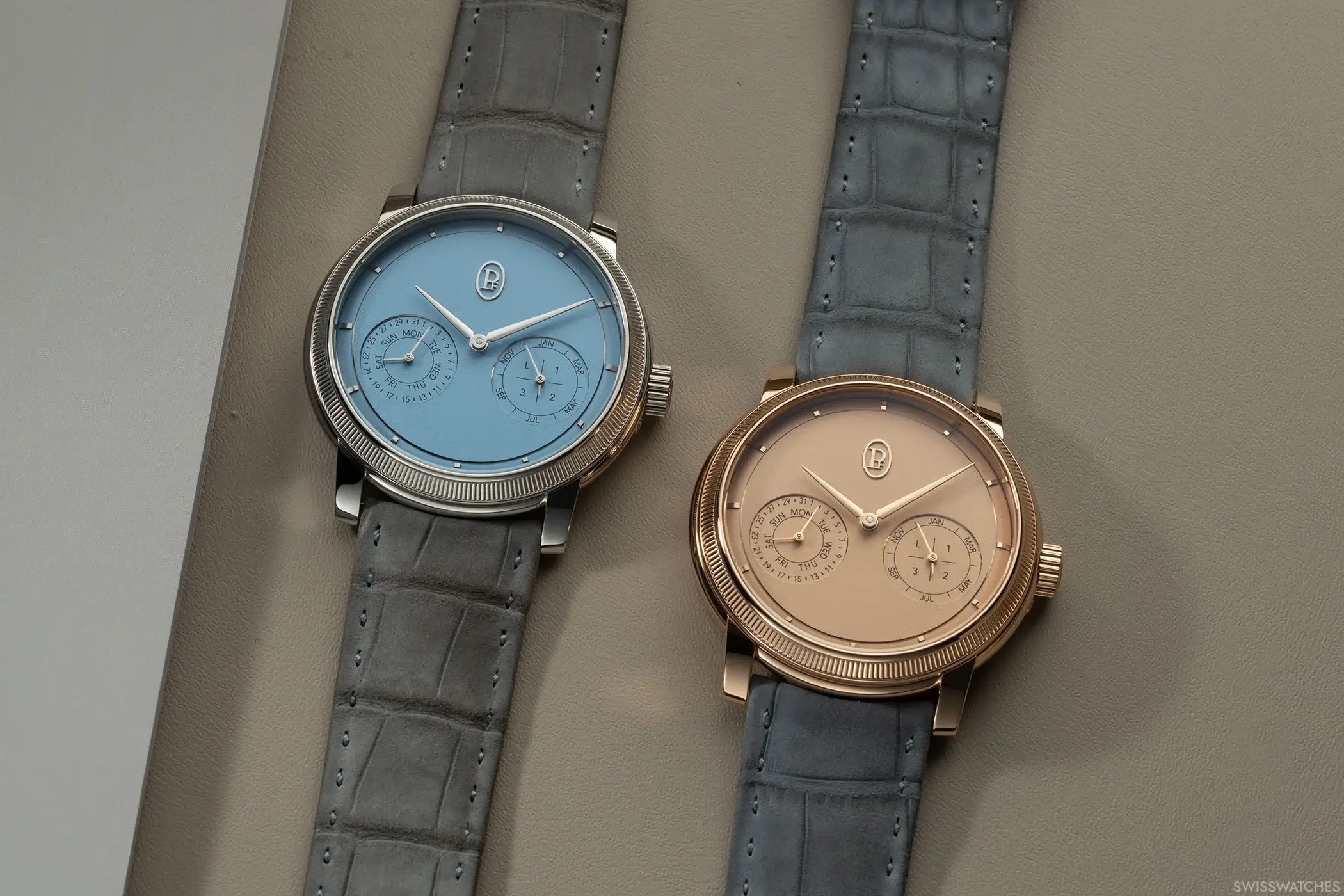
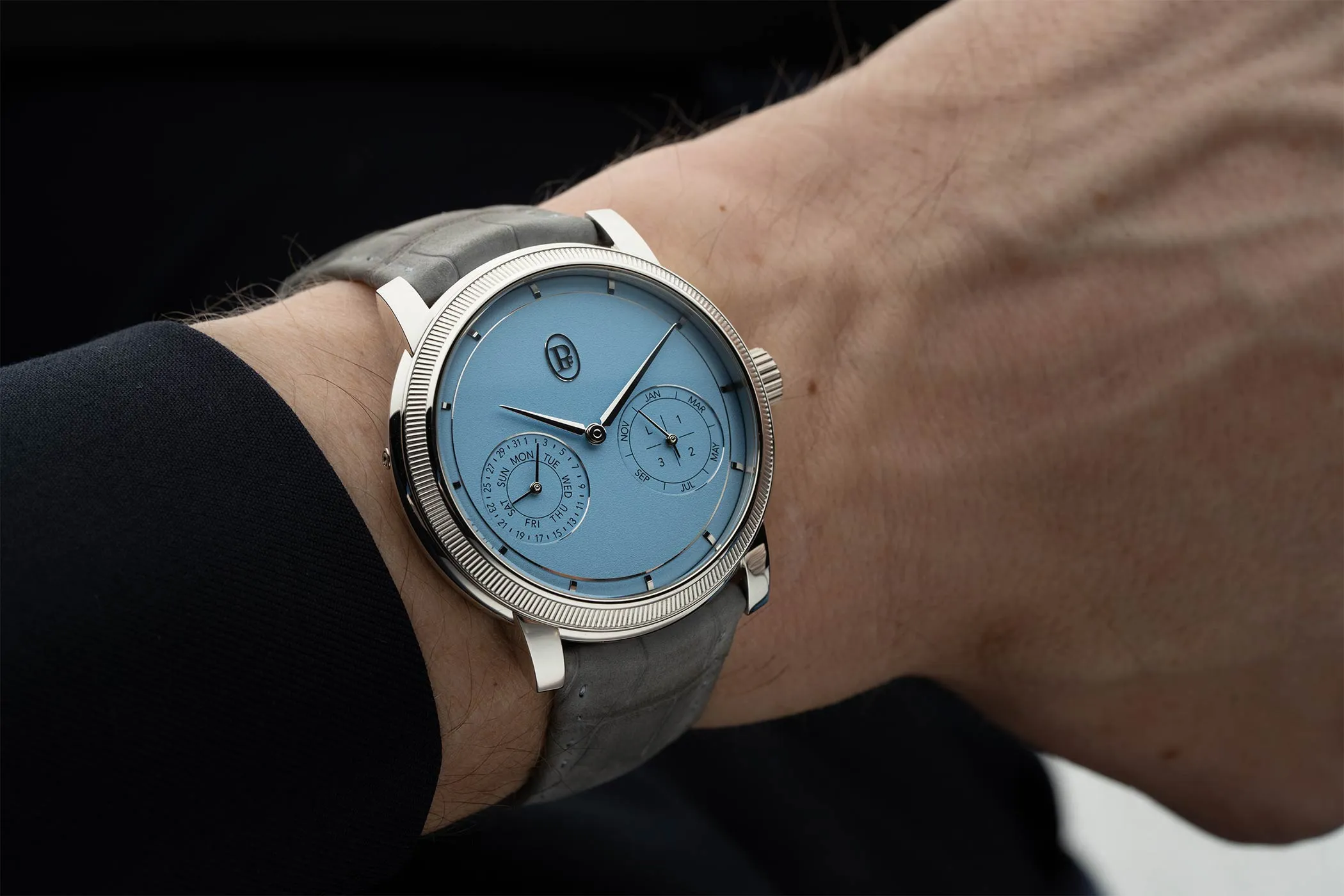
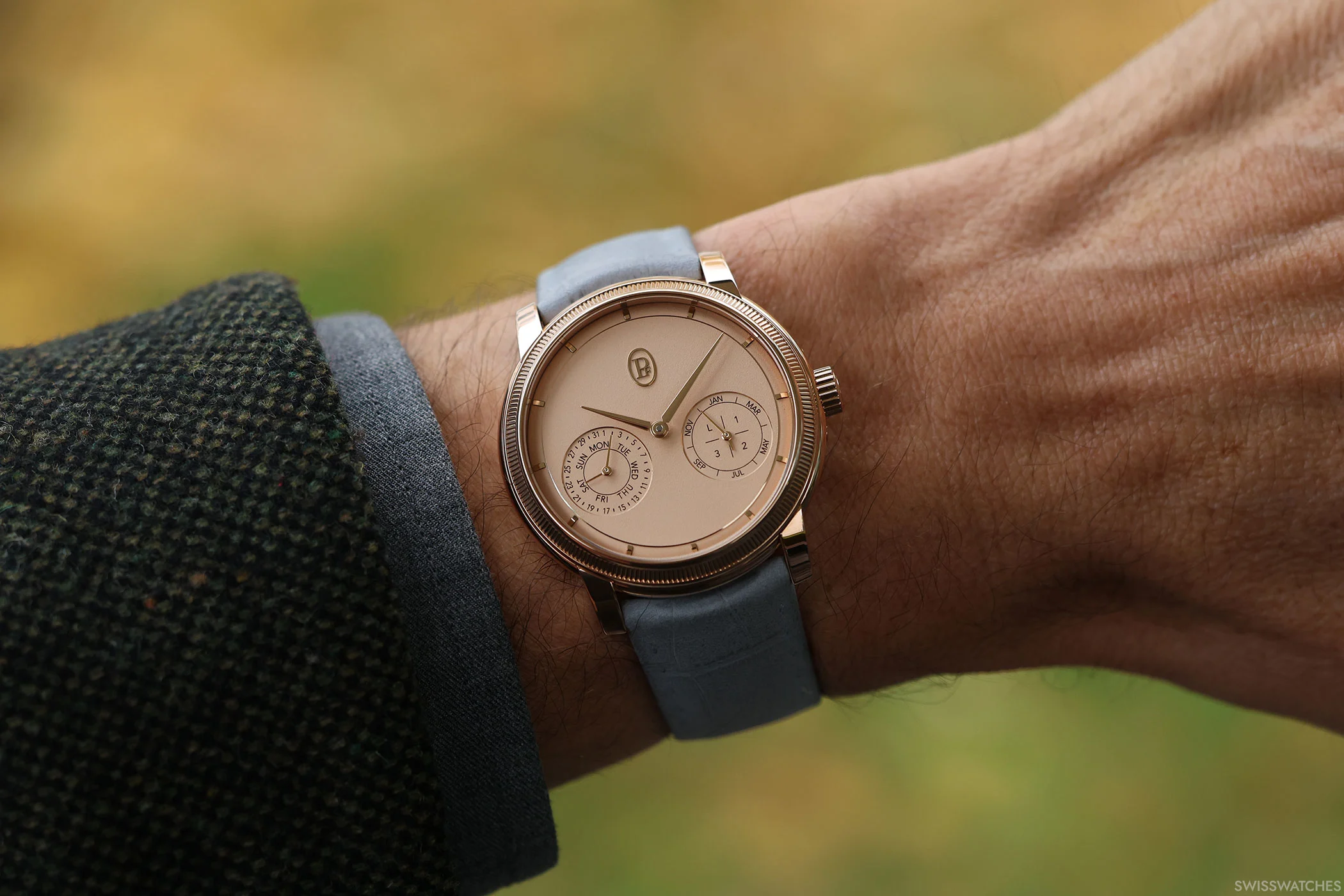
The new Toric Quantième Perpétuel (2025) takes a different approach to that of many classic perpetual calendars. Rather than displaying the complication visibly, Parmigiani renders it almost invisible through a purist layout that focuses on the central time display and maintains a sense of calm on the dial. All calendar information is bundled into two displays: day and date at 8 o’clock, month and leap year at 4 o’clock. This is complemented by the deliberate omission of additional displays such as the moon phase, which does not make the watch any less sophisticated, but consistently focuses on the essentials. This idea is realised in two strictly limited editions of 50 pieces each: 950 platinum with a ‘Morning Blue’ dial or 18K rose gold with a ‘Golden Hour’ dial. The case measures 40.6 mm, while the dials are made of white or rose gold and are hand-grained. Inside, the PF733 hand-wound manufacture calibre consists of 265 components, 29 jewels and has a 60-hour power reserve. The perpetual calendar is operated via discreetly placed correctors on the side of the case. The rose gold version is priced at 95,800 euros, while the platinum version costs 103,700 euros.
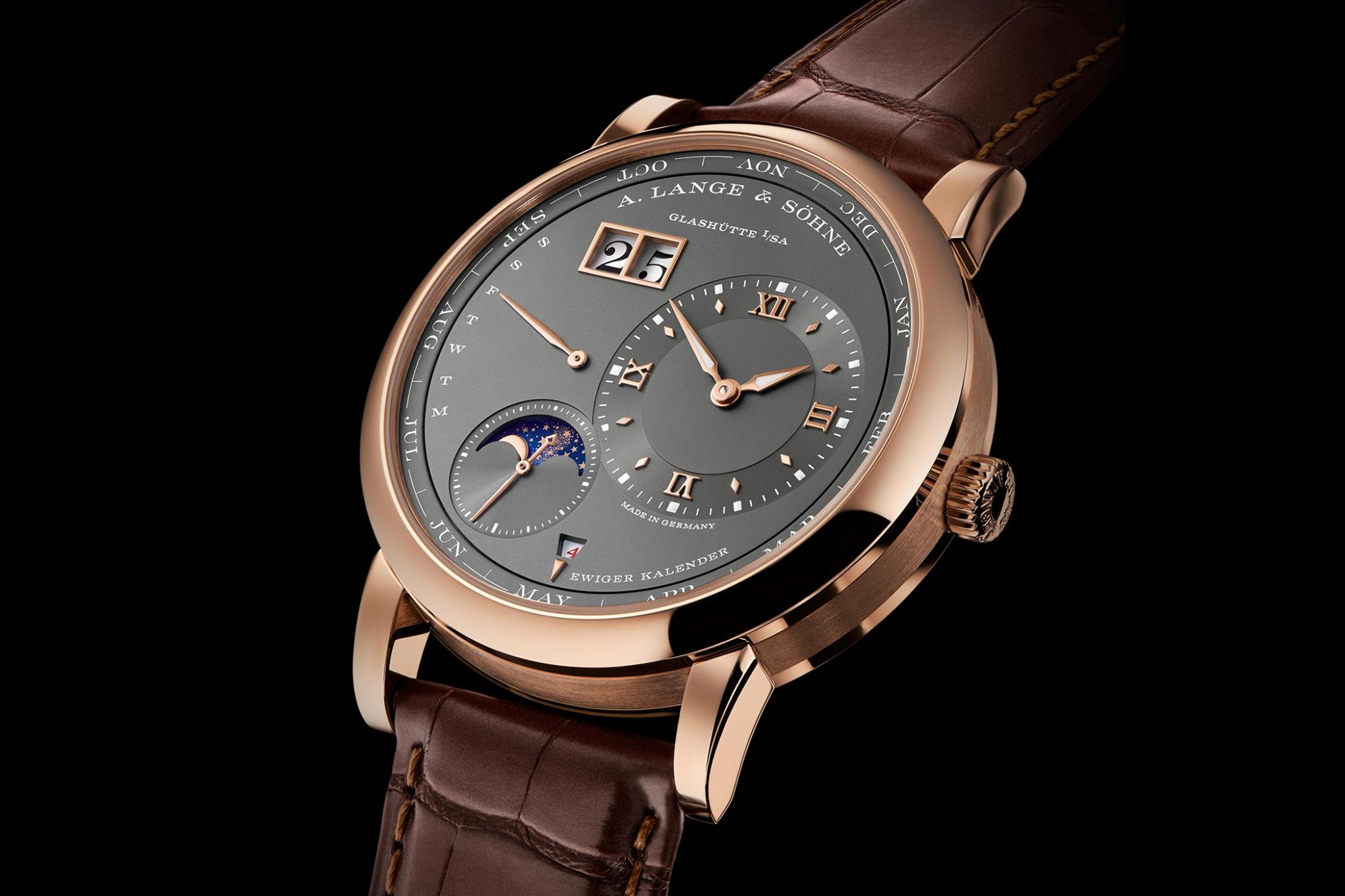
At A. Lange & Söhne, the perpetual calendar is not a ‘late addition’ to the portfolio, but has been an integral part of the complication culture since 2001. There are a total of 13 timepieces and 45 references. At the same time, the challenge with the Lange 1 was particularly great, as its dial has an iconic off-centre design and cannot be ‘simply’ overlaid with classic calendar layouts without destroying its identity. This is precisely where Lange came in: with the Lange 1 Tourbillon Perpetual Calendar, introduced in 2012, the manufactory broke new ground in adapting the calendar to the Lange 1 architecture.
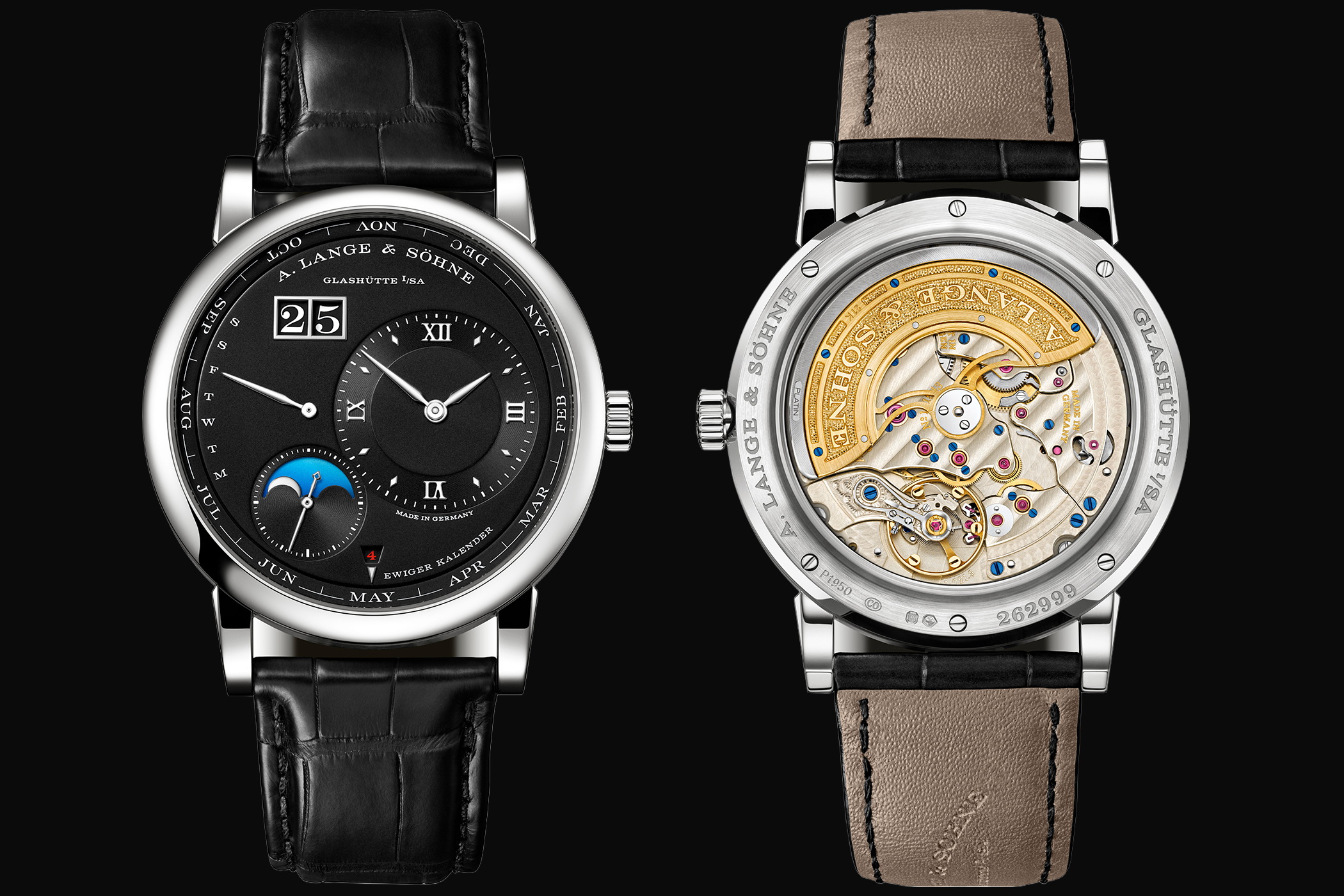
The case of the Lange 1 Perpetual Calendar from 2021 measures 41.9 mm and comes in two versions: rose gold with a grey dial made of solid silver and white gold with a rose gold dial. Despite the wealth of information, everything remains arranged in the typical Lange 1 style: the time is displayed off-centre on its own dial, accompanied by the small seconds and, diagonally opposite, the familiar large date. Lange does not use multiple windows for the perpetual calendar, but rather a month ring that runs around the outside of the dial. This is complemented by a retrograde weekday display and the leap year indicator at 6 o’clock. The display in the small seconds is particularly special: it shows the moon phase and day/night, with a golden sky disc rotating once every 24 hours – bright during the day, dark at night with stars. Inside, the L021.3 manufacture calibre with automatic winding and a 50-hour power reserve is at work.
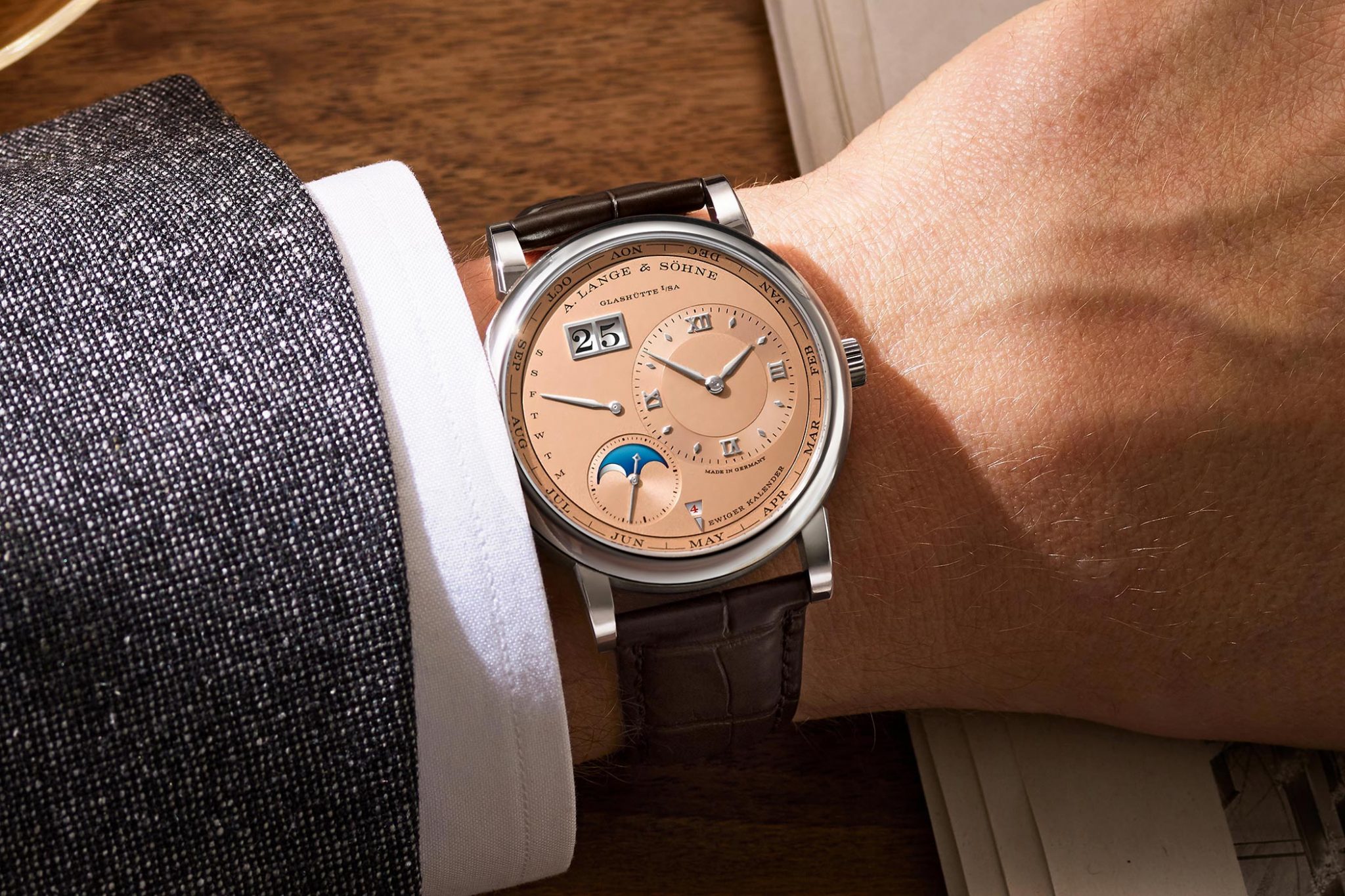
The 2023 Lange 1 Perpetual Calendar in platinum takes this concept and translates it into an even more elegant and understated design. It is the first Lange 1 Perpetual Calendar to be crafted from 950 platinum. The jet-black dial gives the watch a particularly harmonious appearance: the large date, leap year and, above all, the month ring blend very calmly into the overall picture. Technically, everything remains true to the tried-and-tested principle: the month ring displays the month, along with the large date, retrograde day of the week, leap year and moon phase with day/night display. The sapphire crystal caseback allows you to see the typical Lange craftsmanship with many hand-finished components.
The rose gold version was priced at 98,000 euros, while the white gold version was priced at 109,000 euros.
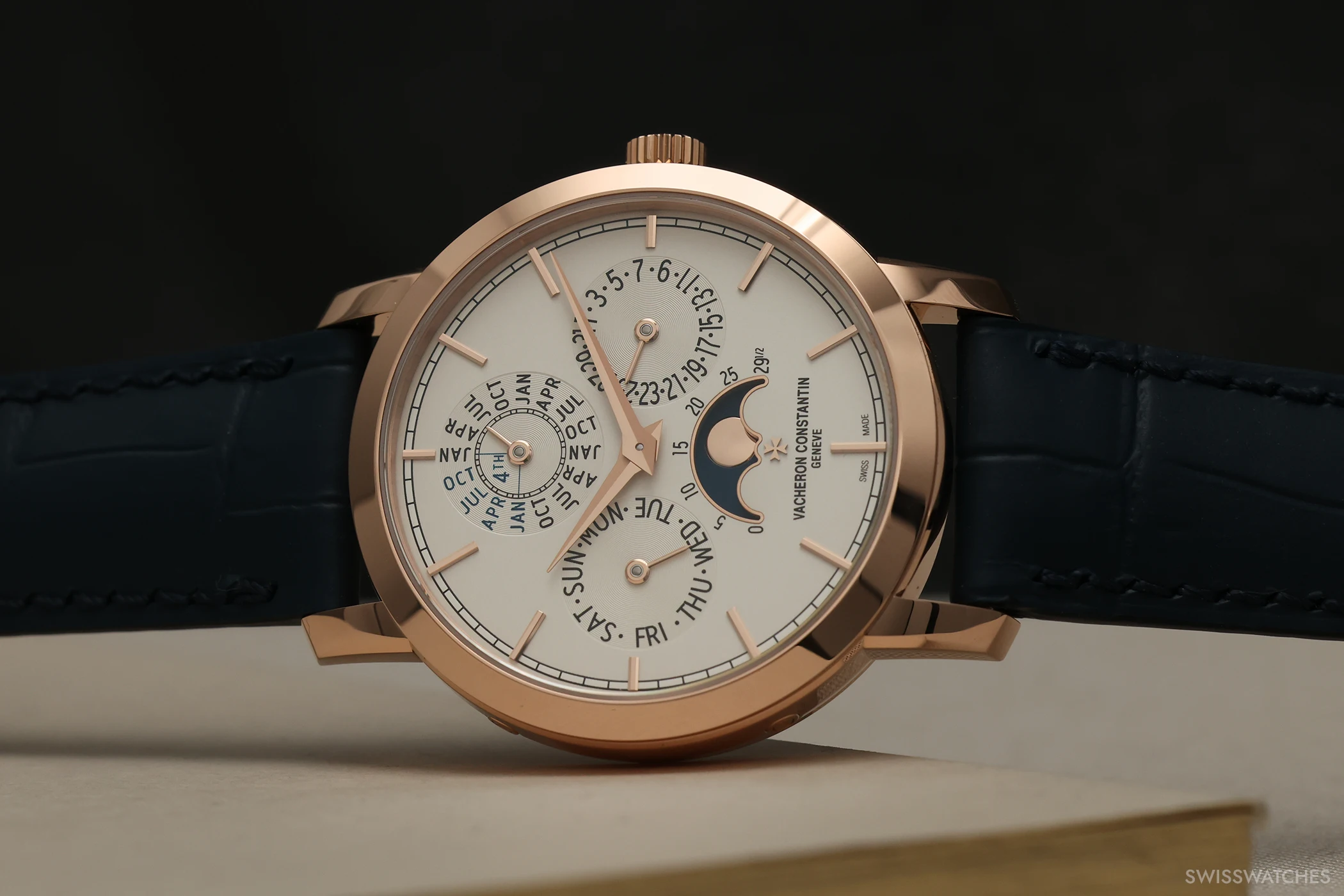
Despite its long-standing expertise in complications, Vacheron Constantin is something of a latecomer when it comes to wristwatches with perpetual calendars. It was not until 1983 that a corresponding watch model was released. However, the decisive technical basis for this had been in place much earlier, as long-standing movement partner LeCoultre had developed an extremely flat automatic calibre in 1967, which became known at Vacheron Constantin as the calibre 1120. With a height of only 2.45 millimetres and an efficient central rotor, this movement was predestined to bring a perpetual calendar into a truly flat wristwatch.
The historic Reference 43031 is the stylistic and technical starting point for today’s Traditionnelle innovation. At that time, Vacheron Constantin produced only around 3,500 watches per year. This makes it all the more remarkable that only around 120 examples of the Reference 43031 were produced each year. Unlike some of its competitors, Vacheron Constantin opted for a hand that rotates around the axis once every 48 months, combining the month and leap year cycle. The dial followed a clear four-point logic: the 48-month display at the top, with the date, day of the week and moon phase arranged in such a way that the information remains easy to read despite its complexity.
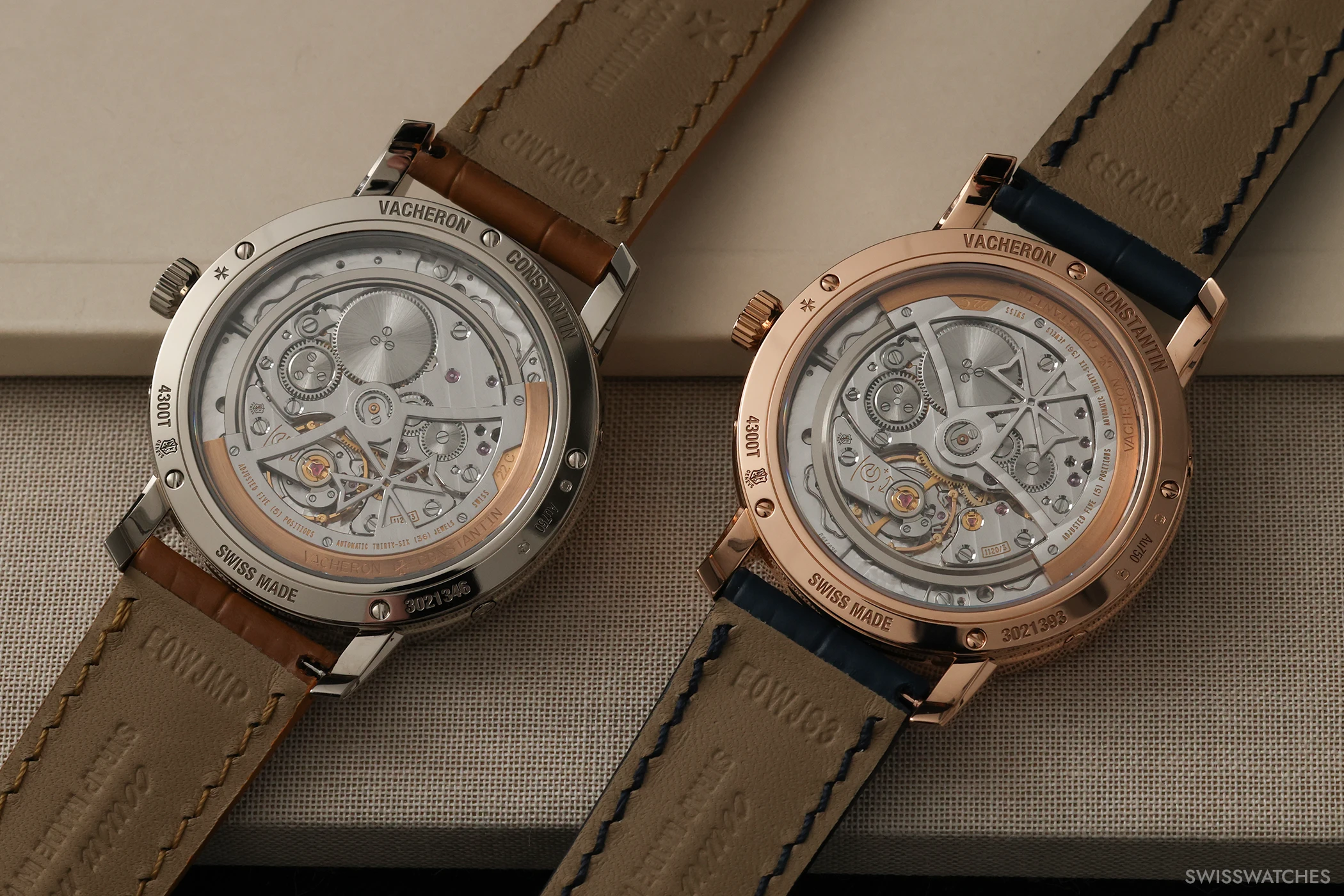
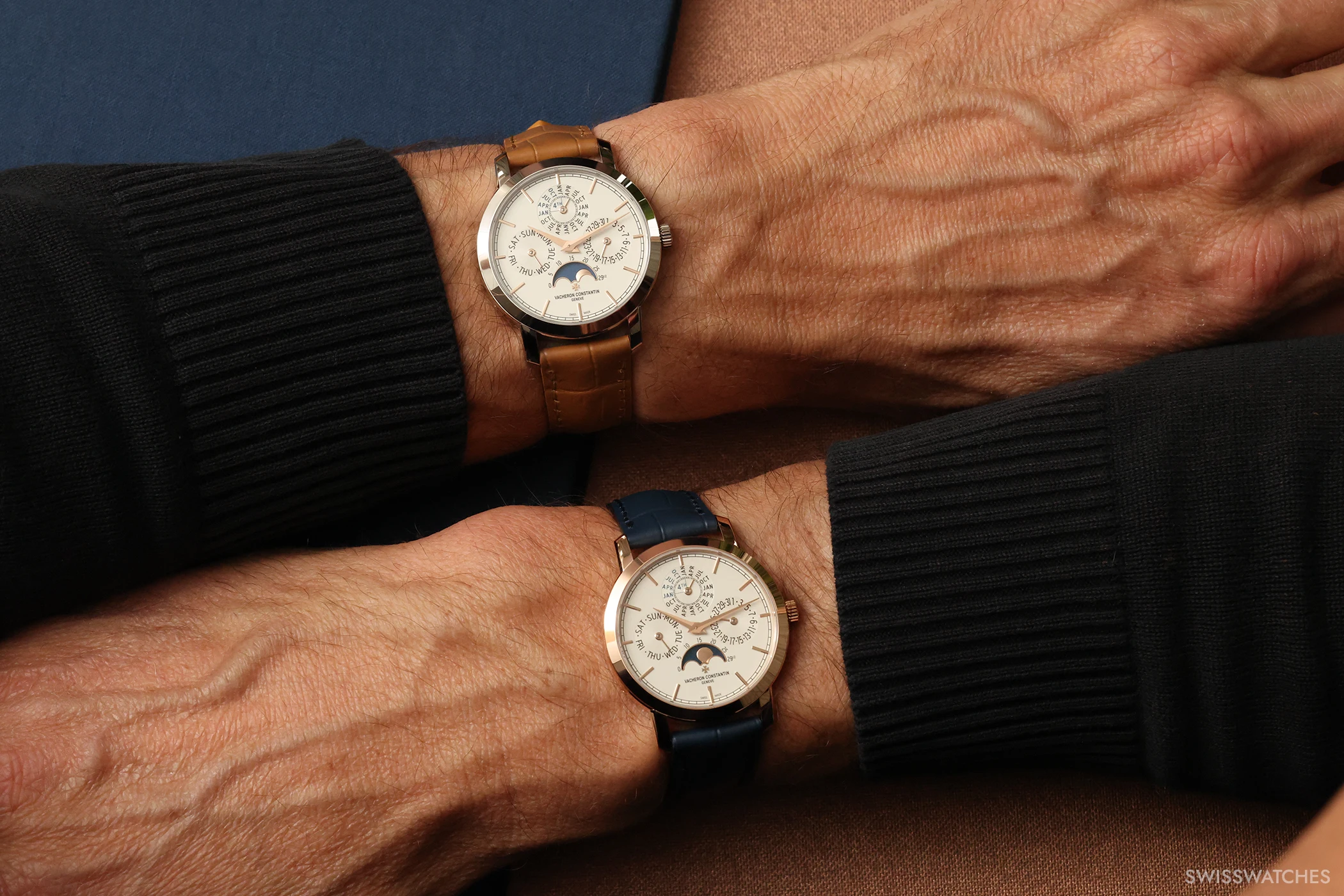
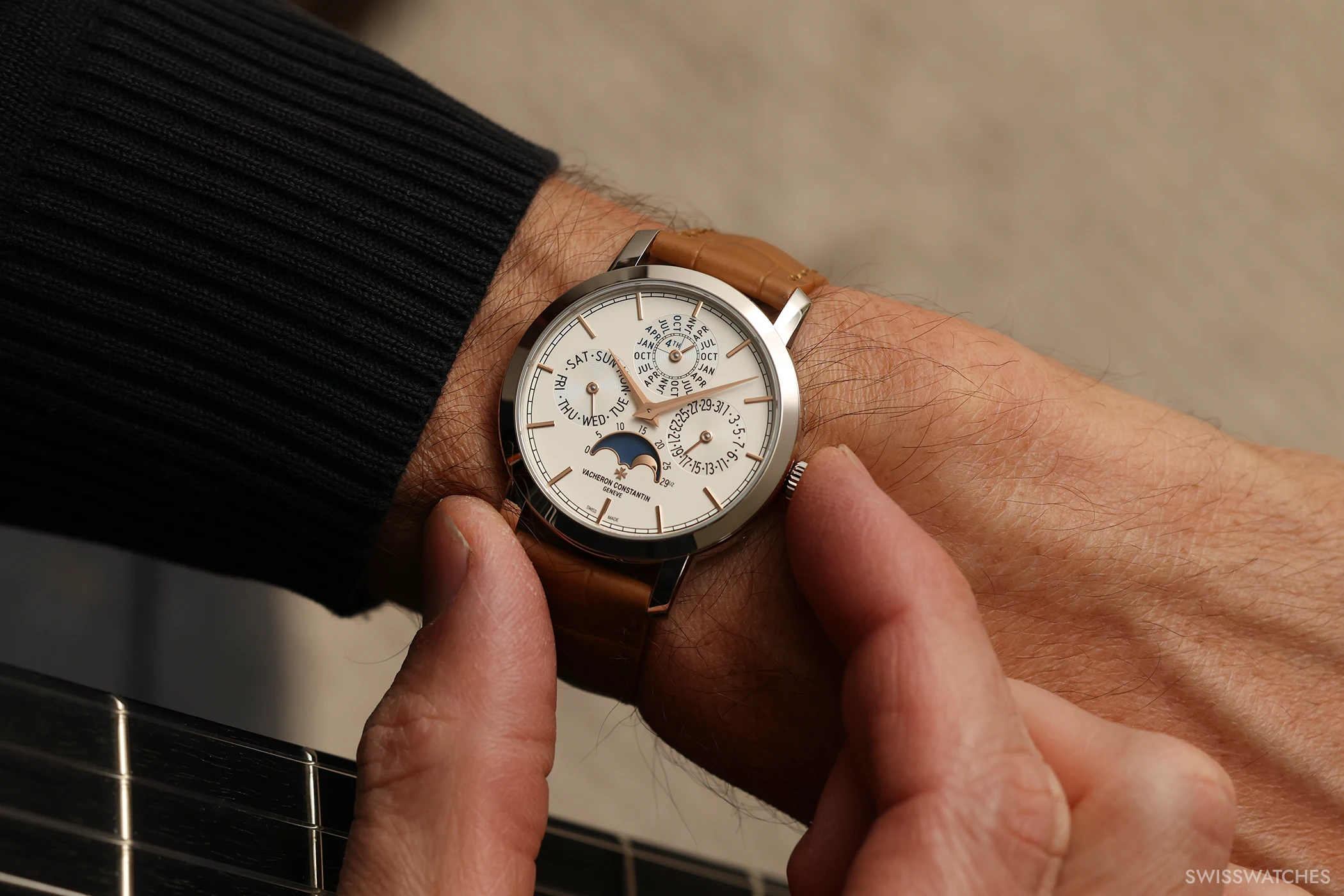
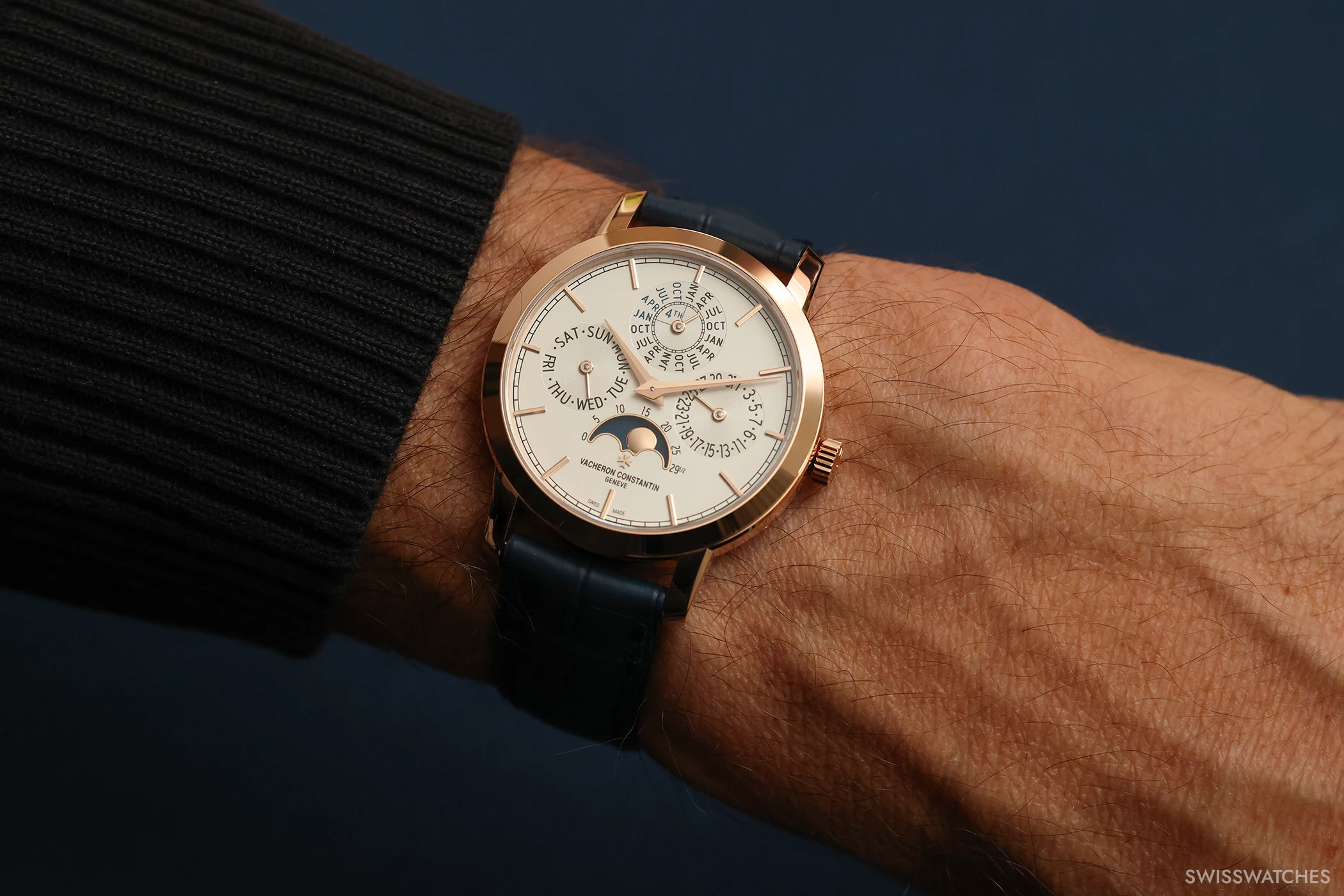
The Traditionnelle Perpetual Calendar Ultra-Thin takes up this very idea today and deliberately interprets it in a compact way: 36.5 mm in diameter and only 8.43 mm high, it is a real exception in the current perpetual calendar landscape. Vacheron Constantin offers the watch in three versions: 18-carat rose gold, 18-carat white gold and another white gold model with a diamond-set bezel. The dial remains true to the concept of clear organisation, featuring a serene opaline surface with integrated subdials that blend seamlessly into the design. The watch is powered by the automatic Manufacture calibre 1120 QP: 276 components, only 4.05 mm high, around 40 hours of power reserve and a frequency of 2.75 Hz.
The Traditionnelle Perpetual Calendar Extra-Thin is priced at 101,000 euros in rose gold or white gold; the white gold version with a diamond-set bezel is priced at 105,000 euros.
Jaeger-LeCoultre has been working on the perpetual calendar for a long time: the first pocket watches with this complication were developed at the end of the 19th century. And because it is extremely difficult to build such a complex mechanism into a small movement, the perpetual calendar remained rare even decades later. It is precisely this tension that has given rise to the typical JLC signature to this day: complicated watchmaking, but packaged in such a way that it remains wearable, clear and practical for everyday use. The Master Ultra Thin is the perfect stage for this, as a modern dress watch line that focuses not only on elegant aesthetics but also on the ultra-thin movement.
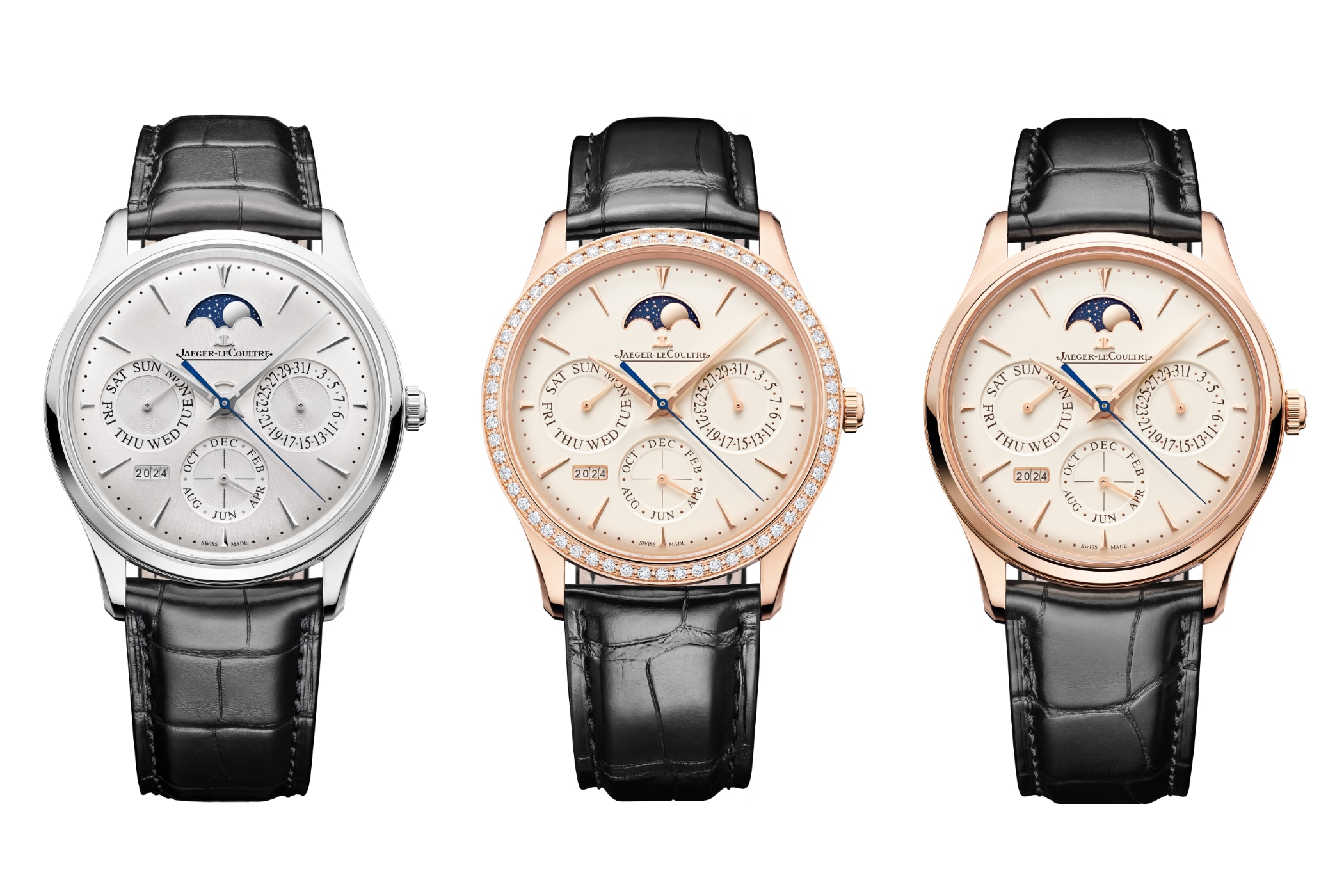
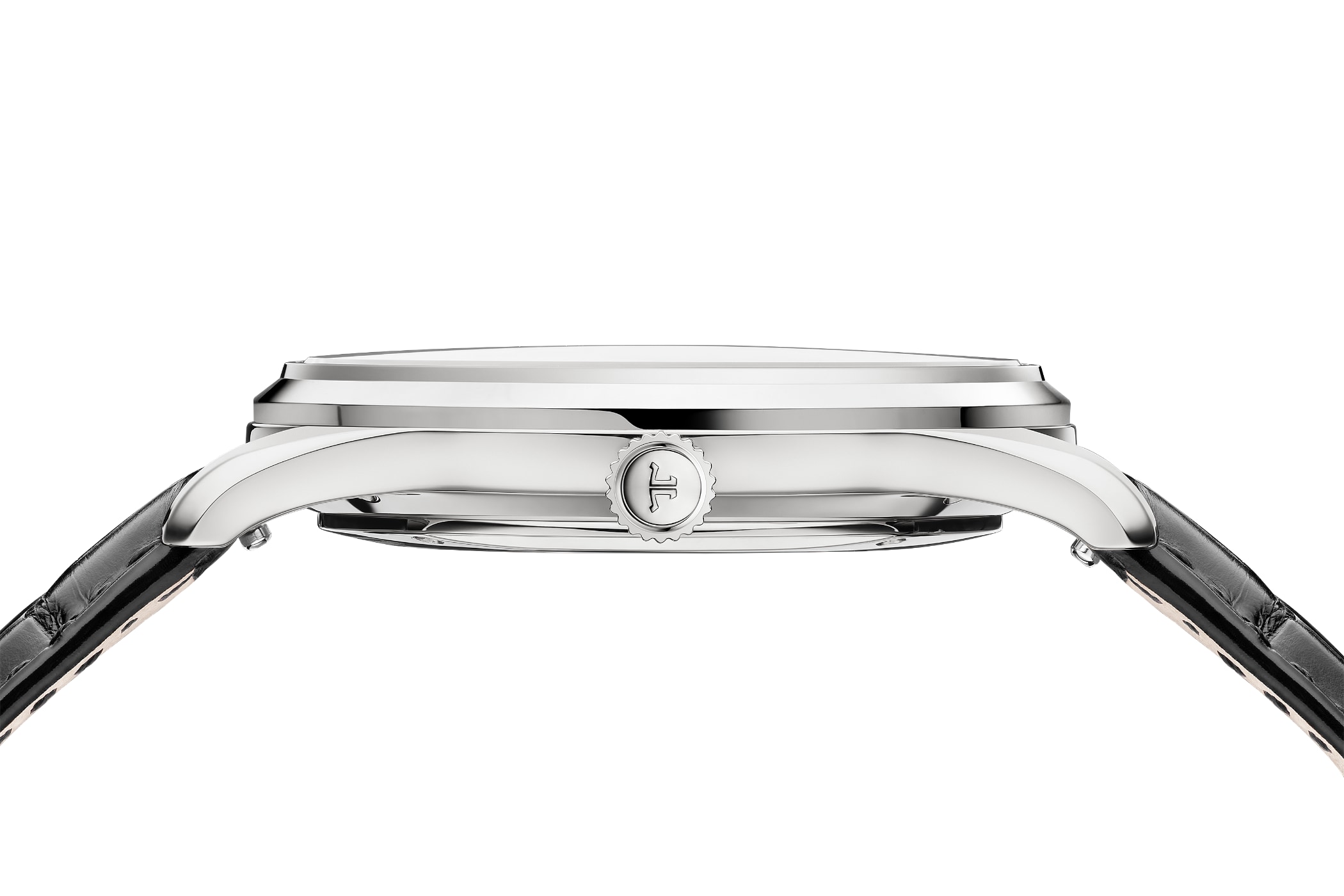
In 2024, Jaeger-LeCoultre further developed the Master Ultra Thin Perpetual Calendar in three new versions, with a subtly revised case and dial design and, above all, significantly more power reserve. Two models come in rose gold with an eggshell white dial: one plain, one with a diamond bezel. The third version features stainless steel with a silver sunburst dial. The dimensions remain classic: 39 mm in diameter and 9.2 mm in height. At the same time, the proportions have been refined, meaning the lugs appear slimmer and longer, which improves wearing comfort. The dial has also been upgraded: the subdials highlight the displays more strongly, the starry sky of the moon phase appears more detailed, and the applied hour indices have been lengthened.
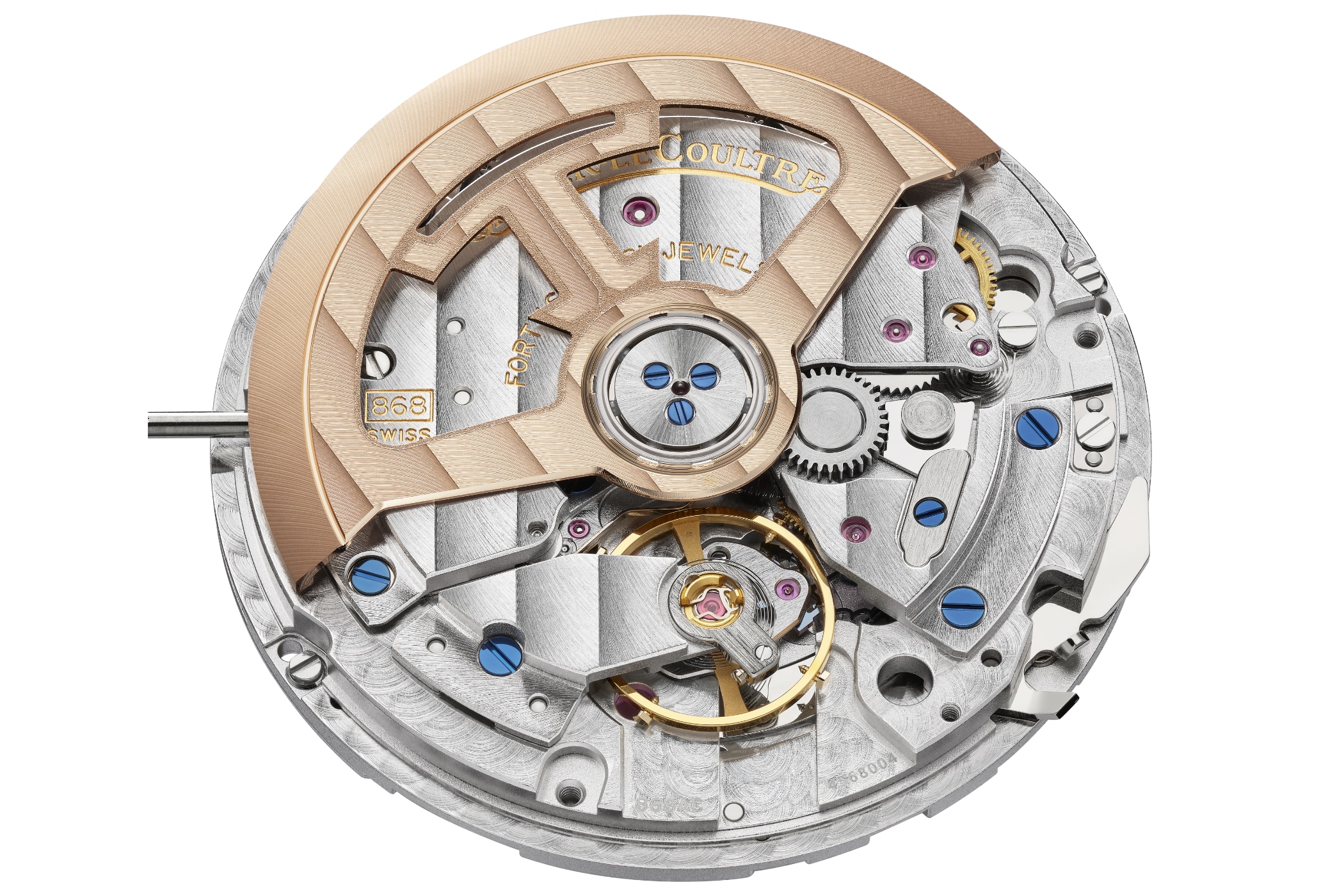
The new models are powered by the calibre 868, a further development of the calendar movement introduced in 2013, which is developed, manufactured, and assembled entirely in-house. The escapement and anchor have been optimised, resulting in less friction and reduced energy consumption and wear, yet the movement still achieves a power reserve of 70 hours. The calibre consists of 330 components; functionally, it covers the perpetual calendar including day, date, month, year, and moon phases, including the red safety zone that reminds the wearer not to adjust the time or calendar displays during a critical time window in order to avoid damaging the mechanism.
The Master Ultra Thin Perpetual Calendar is worn on an alligator leather strap. The line is priced at 30,600 euros (steel), 43,700 euros (rose gold without diamonds) and 51,500 euros (rose gold with diamond bezel).
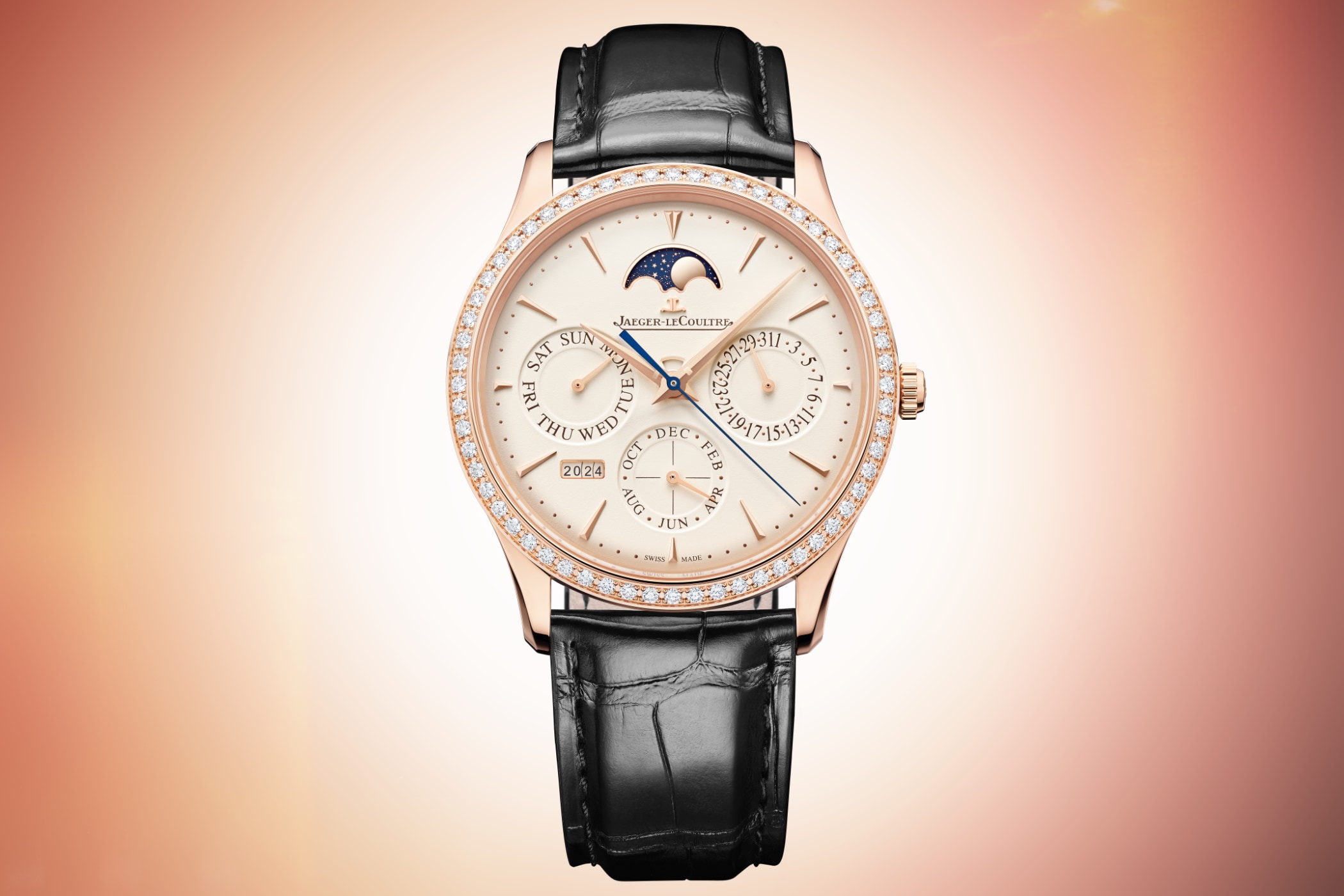
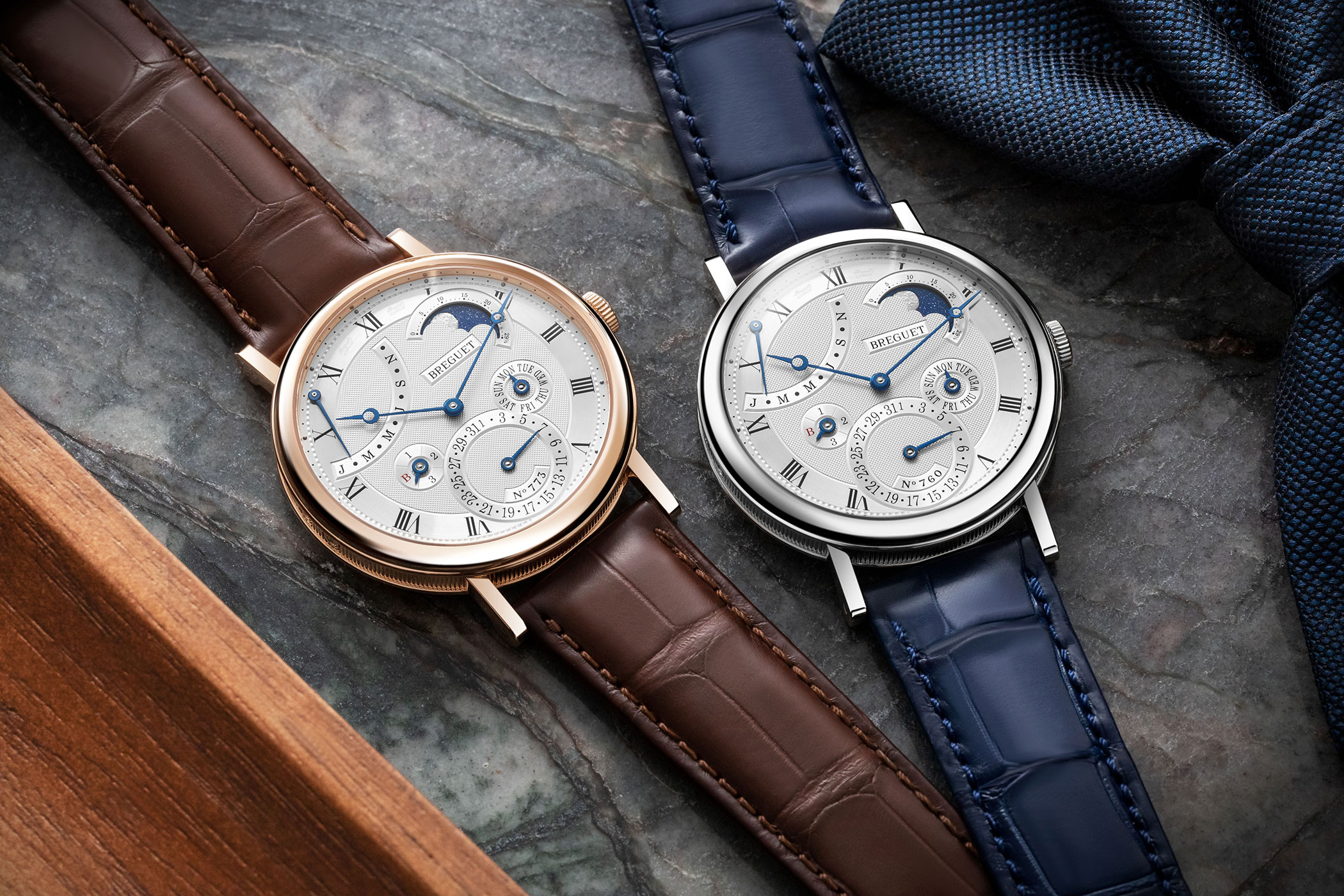
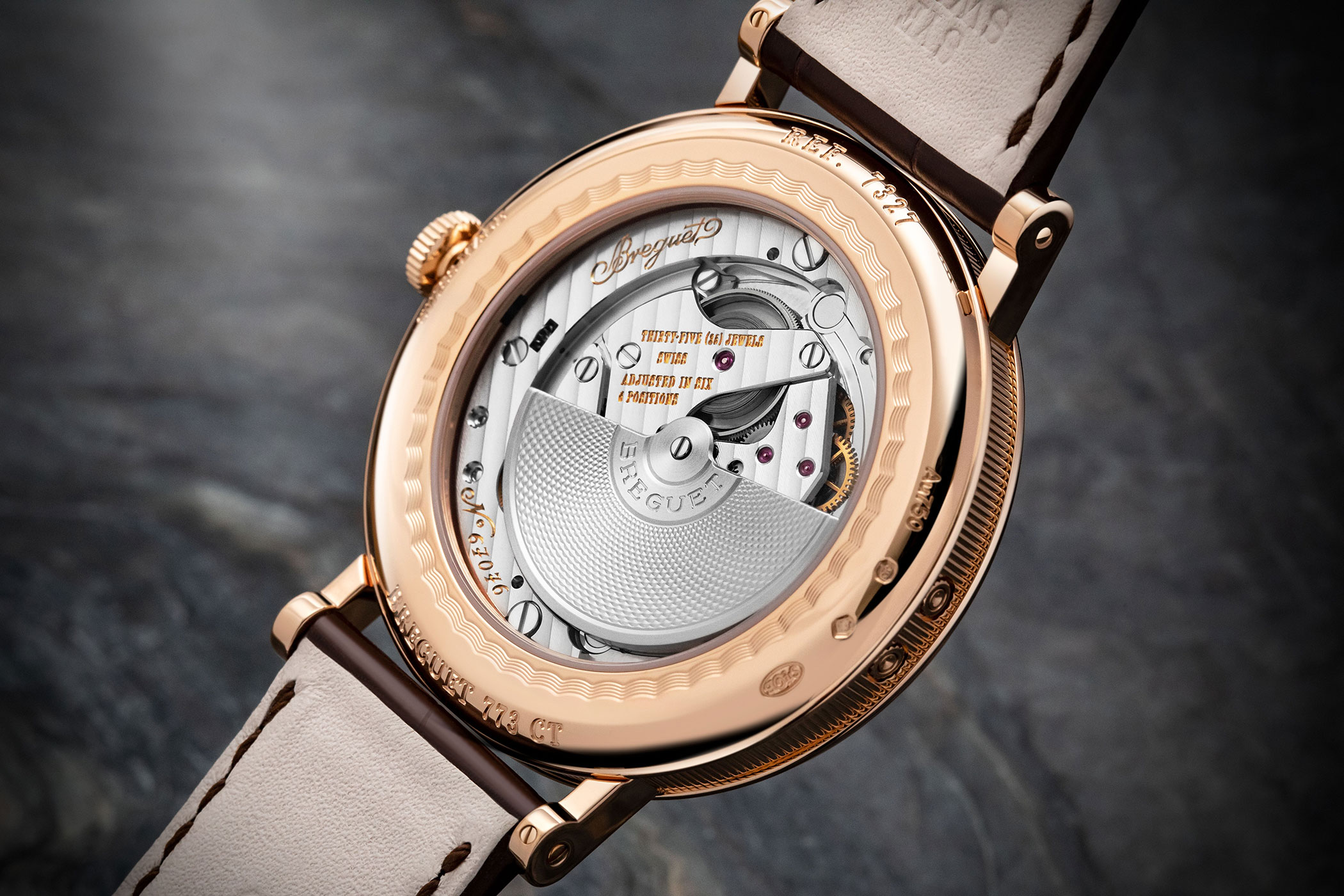
When it comes to calendar watches, Breguet is a name steeped in tradition and historically closely linked to the fundamental principles of watchmaking. Above all, it is associated with the ‘Perpétuelle’ timepieces invented by Abraham-Louis Breguet, watches with a movable oscillating weight. The Classique Quantième Perpétuel 7327 is also in this spirit: as the successor to the Classique Quantième Perpétuel 5327, which was launched in 2004, it is a reinterpretation of the classic Breguet perpetual calendar and is functional, elegant, and consistently designed for readability.
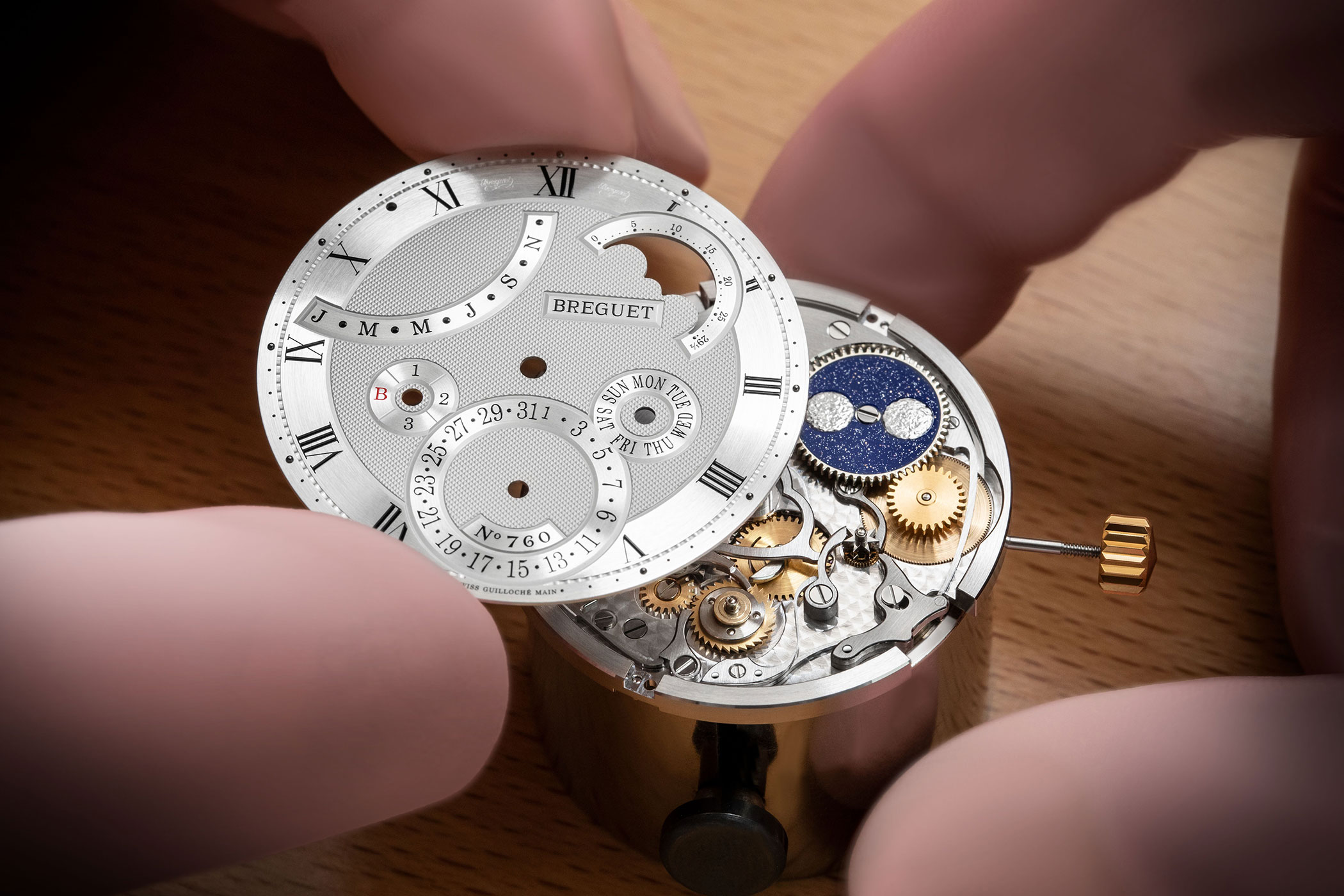
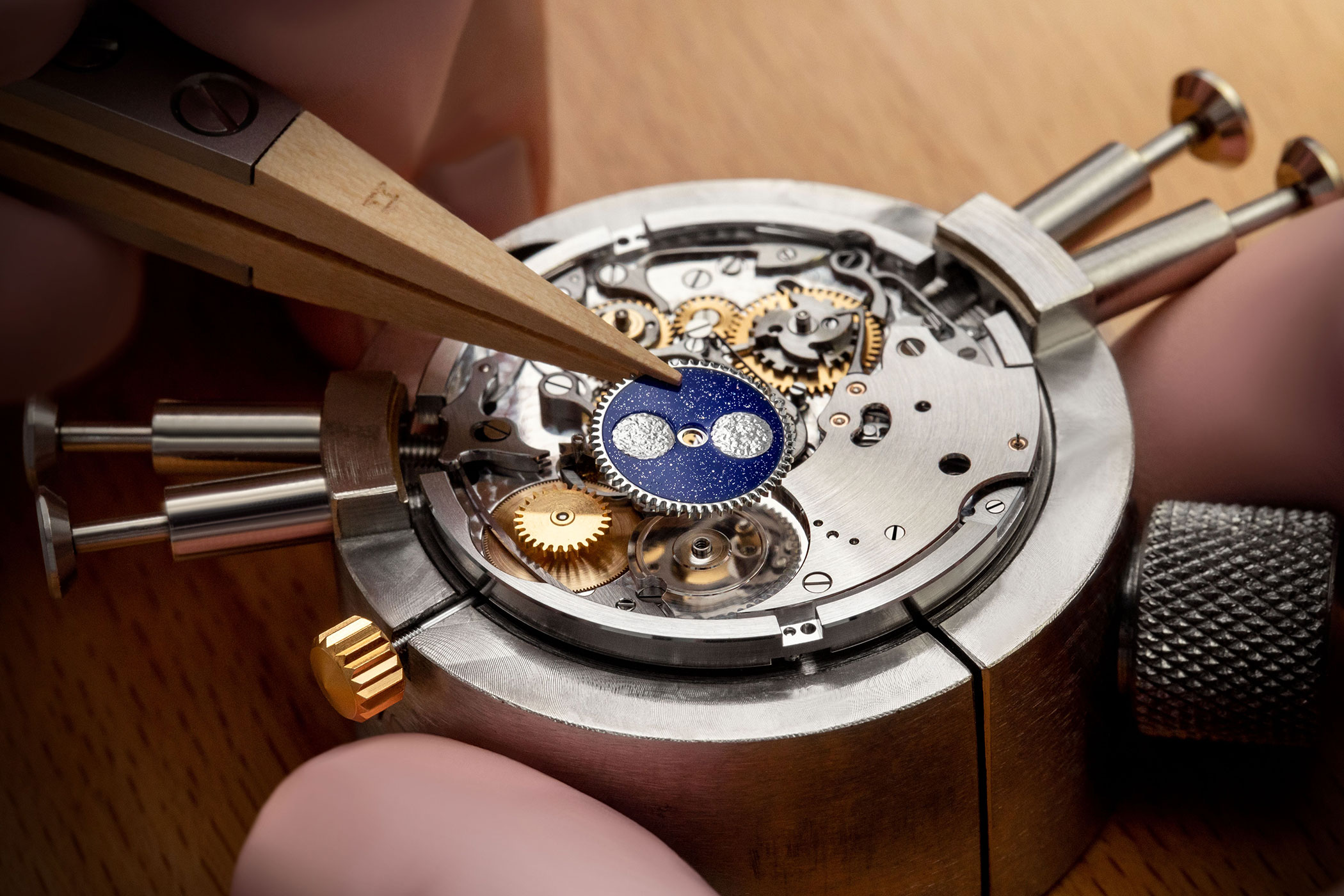
The 7327 is available in various versions, including variants in 18-carat white gold or 18-carat rose gold. The case features the brand’s signature details, such as fluted, grooved sides, lugs welded directly to the case and screw pins between the horns for a secure fit. With a diameter of 39 mm and a height of around 9.2 mm, the watch remains pleasantly elegant, while the sapphire crystal case back reveals the movement. For the dial, Breguet has stuck to one of its most famous signatures: a silvered gold dial with a hand-crafted horseshoe pattern, Roman numerals and the characteristic blued Breguet hands. The calendar displays are classic but very harmoniously arranged: the date and day of the week are located in the lower section in two circular displays, the month is shown retrograde via a hand, and at around 1 o’clock is the moon phase, with a hand-hammered moon against a shimmering blue lacquered sky. A subtle brand detail is the Breguet secret signature, introduced in 1795, which is discreetly visible in the 12 o’clock area depending on the incidence of light.
The watch is powered by the automatic calibre 502.3 P movement, which Breguet positions as one of the brand’s flattest with a calendar function. Consisting of 294 rhodium-plated components, it is only 4.5 mm high. The perpetual calendar has a mechanical ‘memory’ of four years or 1,461 days, so it automatically takes into account the different lengths of the months and leap years. The power reserve is 45 hours. The Breguet Classique Quantième Perpétuel 7327 is priced at 84,500 euros.
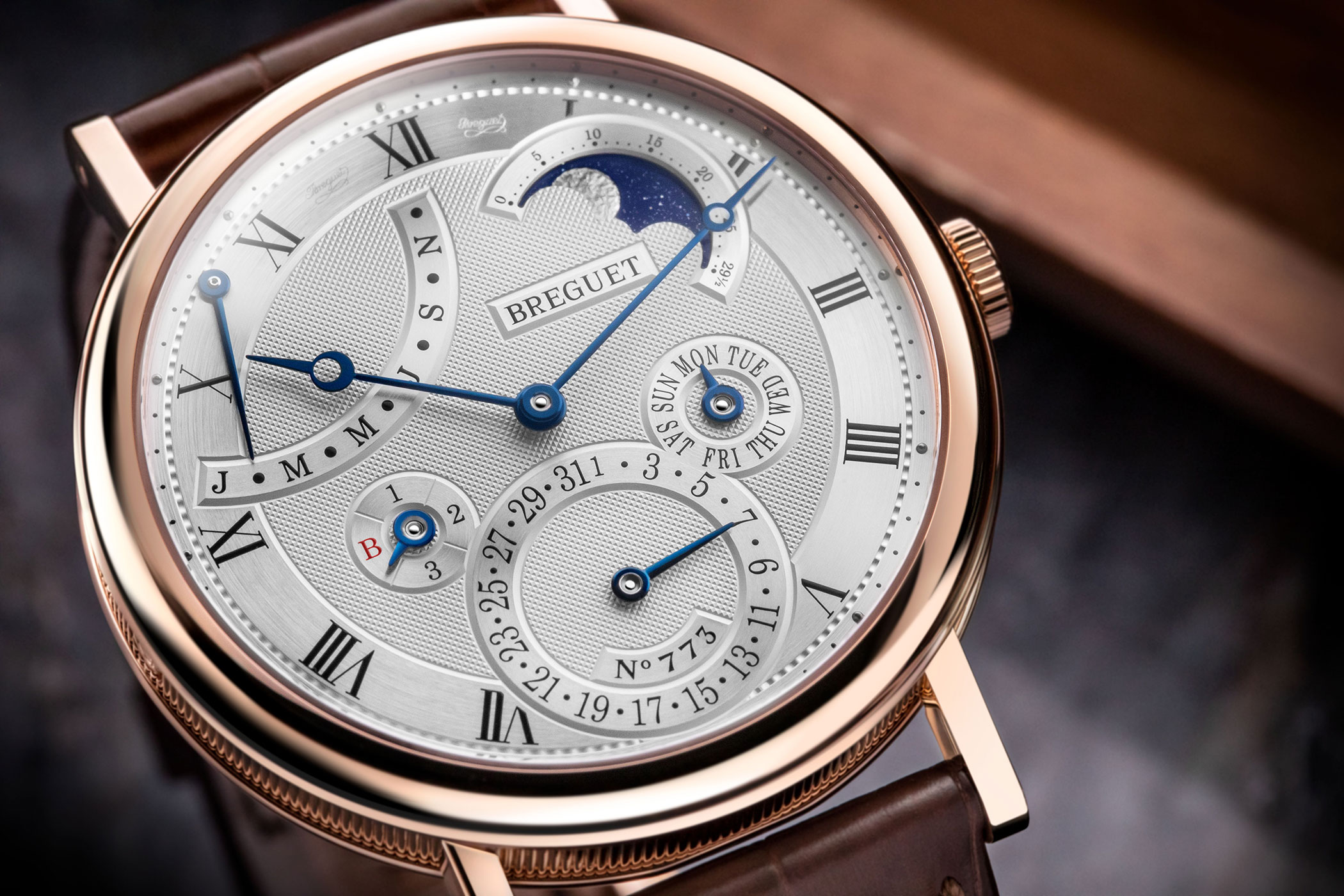
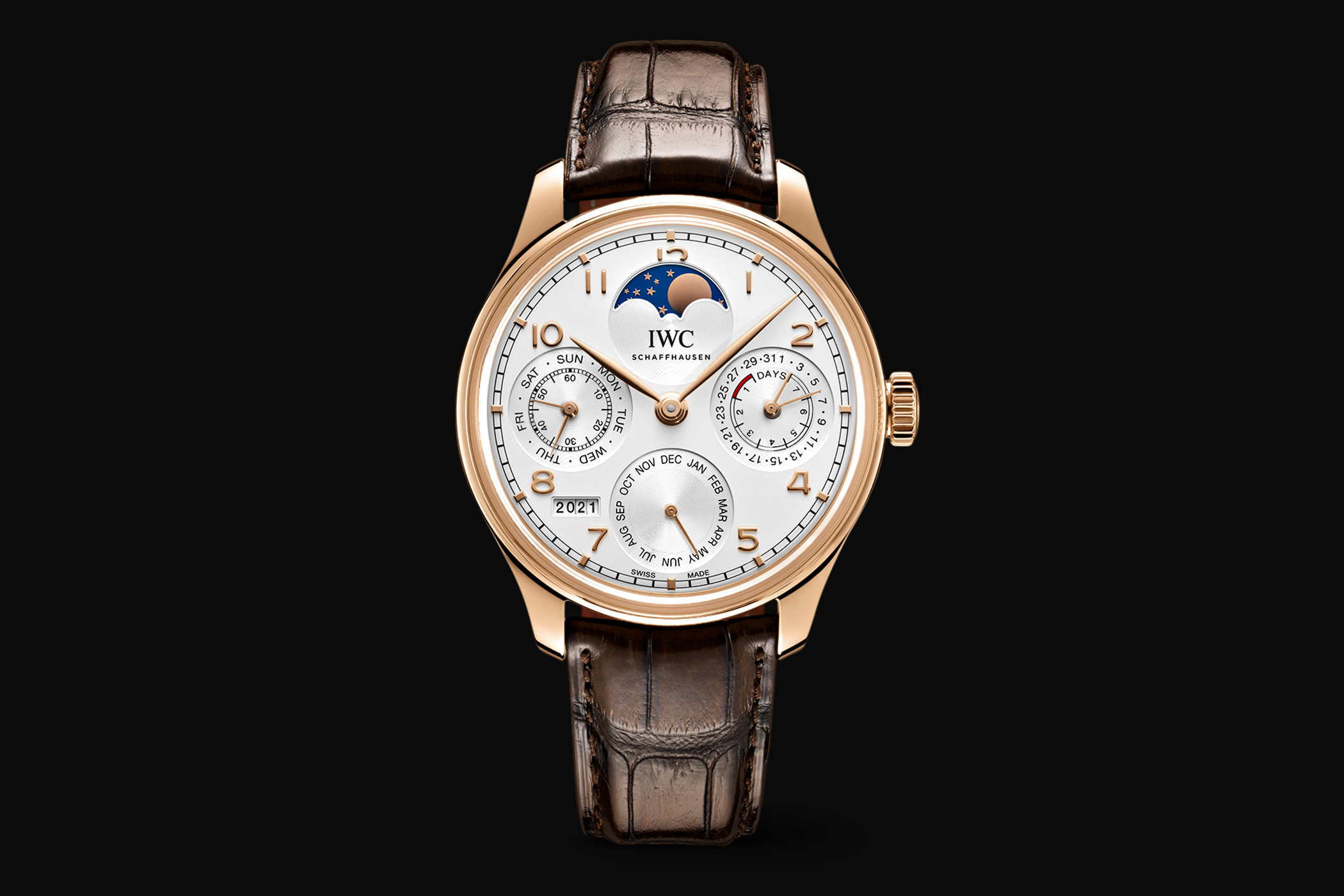
When it comes to perpetual calendars, IWC is primarily associated with an idea that redefined the concept in 1985: the calendar mechanism developed by Kurt Klaus for the Da Vinci Chronograph Perpetual Calendar. His solution was so special at the time because it perfectly synchronised all the displays: date, day of the week, month, moon phase and even the year. The operating logic was also crucial: the calendar functions could be advanced and adjusted together in daily increments using the crown, instead of having to correct each display separately. For the first time, there was also a four-digit year display, and the moon phase was so precisely designed that it only needed to be corrected by one day after 122 years.
In the IW503302 reference, this perpetual calendar comes in a classic Portugieser design and also features a striking moon phase display: IWC emphasises a high-precision moon phase display that only needs to be corrected by one day after 577.5 years. The watch is made of 18-carat red gold and is listed on the IWC website at a price of euros 52,000. Overall, this is exactly the typical Portugieser formula: a large, elegant appearance and, underneath, a perpetual calendar that is not intended to be ‘complicated to use’ but rather a well-thought-out system that you really use.
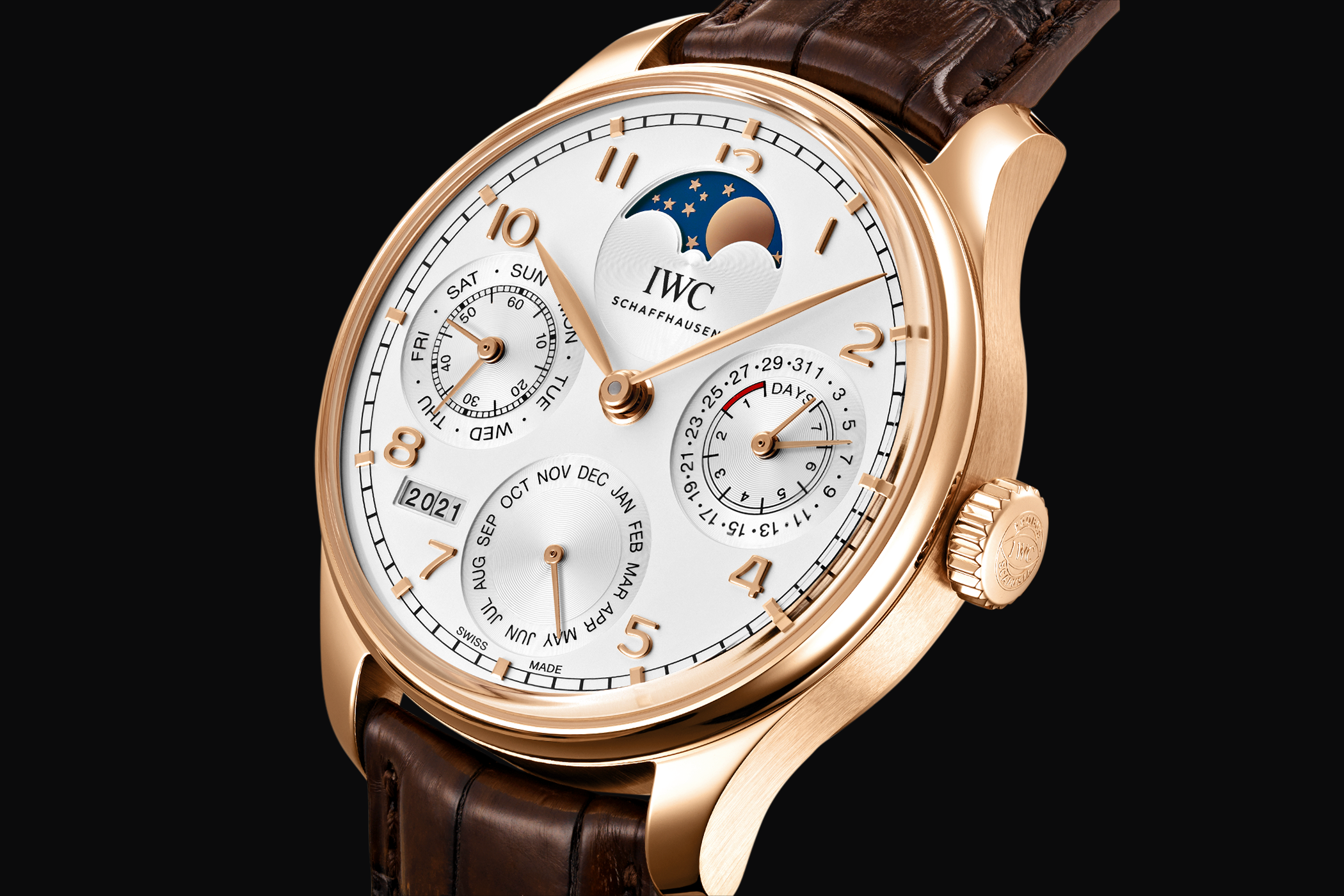
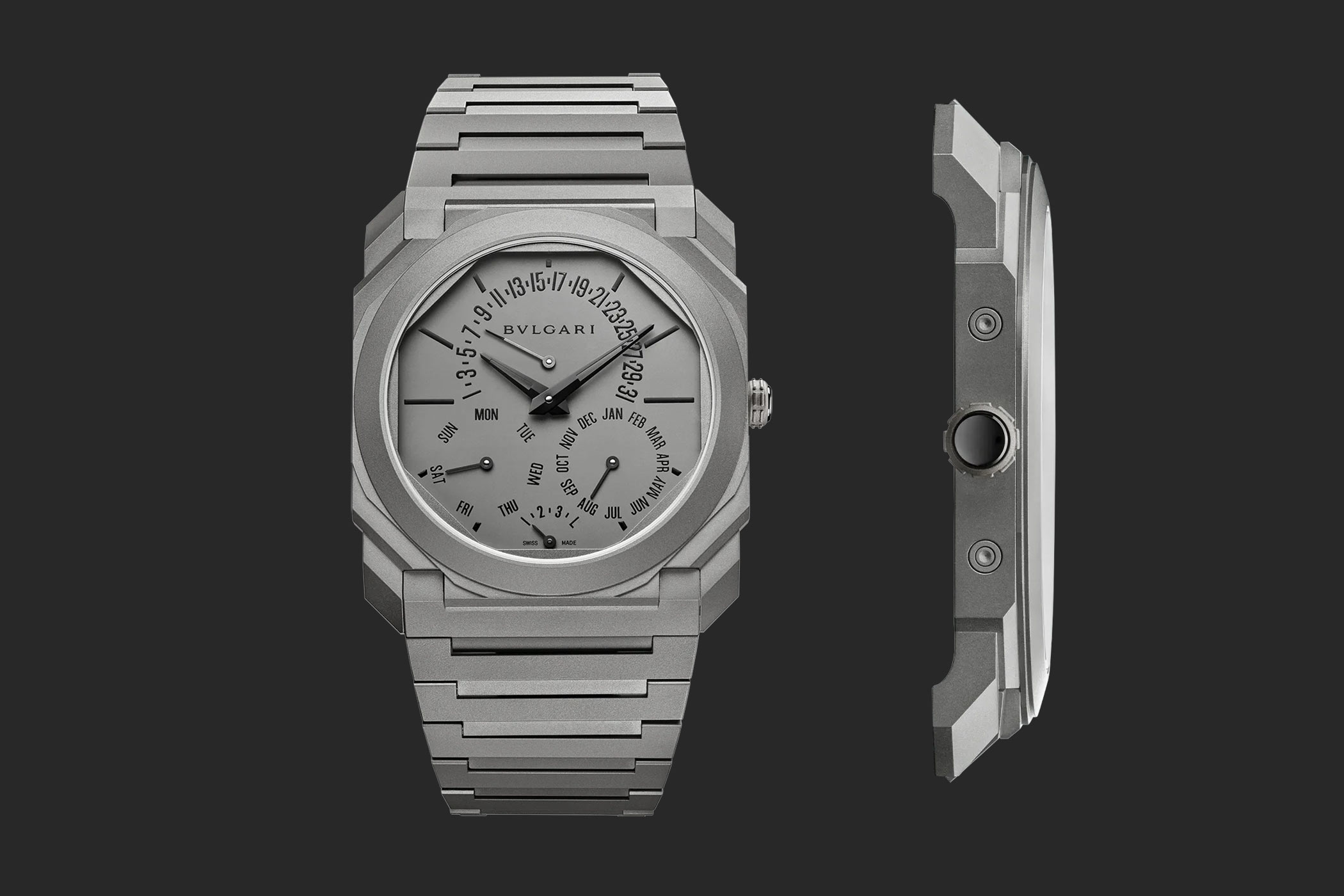
In recent years, Bulgari has established itself as a specialist in ultra-flat watchmaking like no other brand, and the Octo Finissimo plays an important role in this. The Octo Finissimo Perpetual Calendar model, presented at Watches & Wonders 2021, claims the seventh world record in terms of flat movements. As the thinnest watch with a perpetual calendar on the market, it combines a genuine high complication with the radical Finissimo idea of accommodating maximum technology in a minimum height. At its heart is the in-house BVL 305 micro-rotor automatic calibre, which is only 2.75 millimetres high and consists of 408 components.
The Octo Finissimo is clearly recognisable, with a 40 mm sandblasted titanium case with integrated titanium bracelet and folding clasp, measuring just 5.80 millimetres in height. The dial and bracelet are also made of sandblasted titanium, complemented by a transparent case back. In terms of content, everything is geared towards function and readability: in addition to hours and minutes, the watch has a retrograde date display as well as displays for the day of the week and month, and a retrograde leap year display. Bulgari describes the whole thing as ‘Estetica della Meccanica’, or mechanical aesthetics, in which technical boldness and clear, modern design work together.
Technically, Bulgari specifies a power reserve of 60 hours for the BVL 305 calibre. This makes the Octo Finissimo Perpetual Calendar not only a record-breaker on paper, but also a consistently well-designed concept: ultra-flat, highly complex and yet implemented as a complete everyday watch with a titanium bracelet, sapphire crystal case back and clear calendar logic. Bulgari lists the price as ‘price on request’.
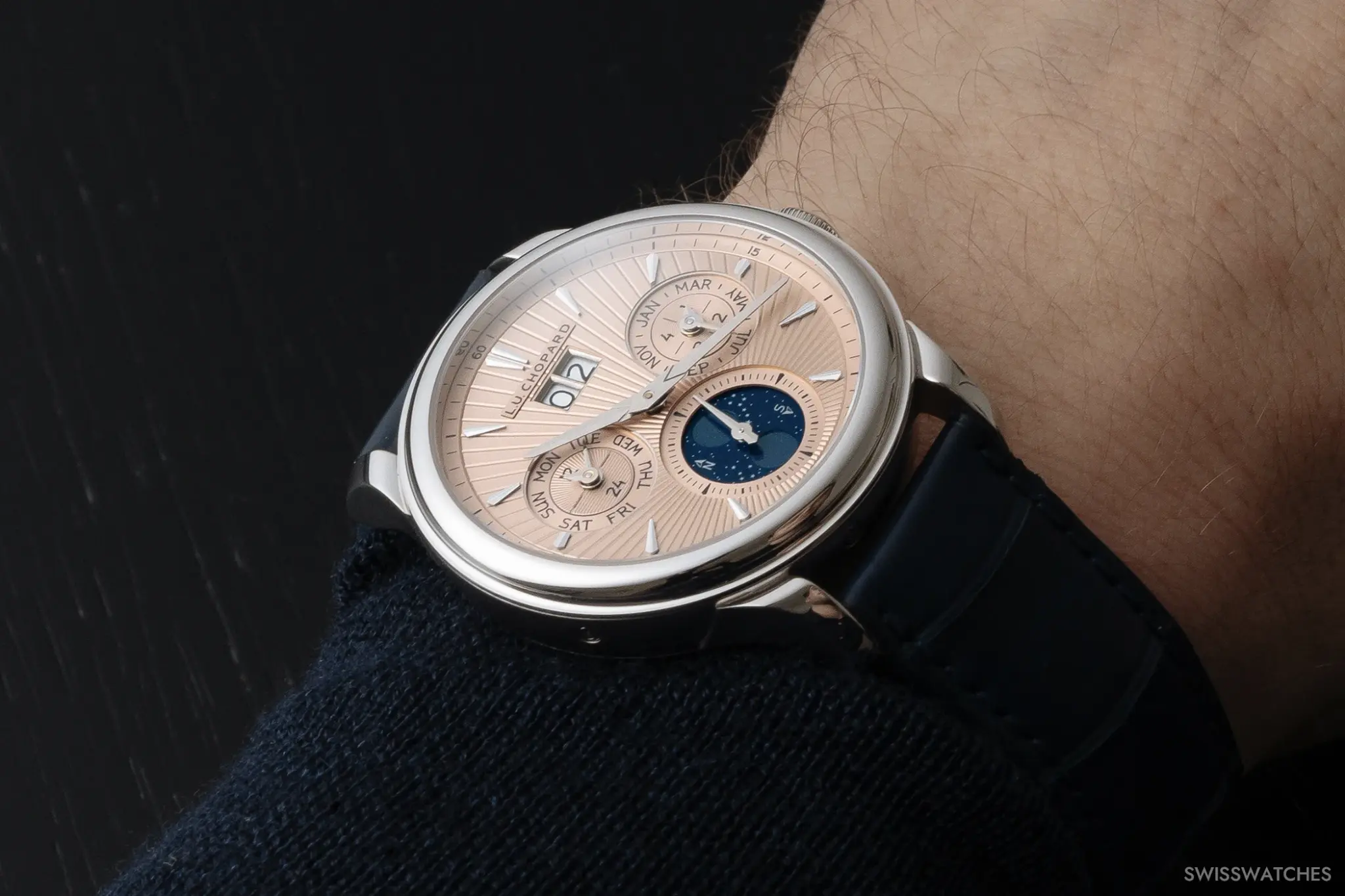
Chopard has established the perpetual calendar within the L.U.C line not as a ‘secondary complication’ but as a milestone. In 2005, the L.U.C Lunar One was the first calendar complication to come from the Chopard manufacture. According to Chopard, it remains the only timepiece in its category with a precise orbital moon phase display with a rotating window. To mark the 20th anniversary of the line, the concept is continuing with new variations. The aim is still to implement complex calendar displays with high precision in a clear and wearable way.
The current versions feature a redesigned, slimmer case shape that is more in line with the current L.U.C aesthetic. The case measures 40.5 mm in diameter and 11.6 mm in height and is available in ethical 18-carat white gold or rose gold. It also features carefully crafted details such as vertically satin-finished flanks and a rounded crown. A central stylistic feature remains the hand-guilloché dial: Chopard manufactures these dials using traditional guilloché machines in its own workshops. In the anniversary generation, the models are available with a deep blue or salmon-coloured dial, among other options; the layout of the displays is deliberately harmonious and easy to read, with the large date display in two windows and the moon phase as a design focal point at 6 o’clock.
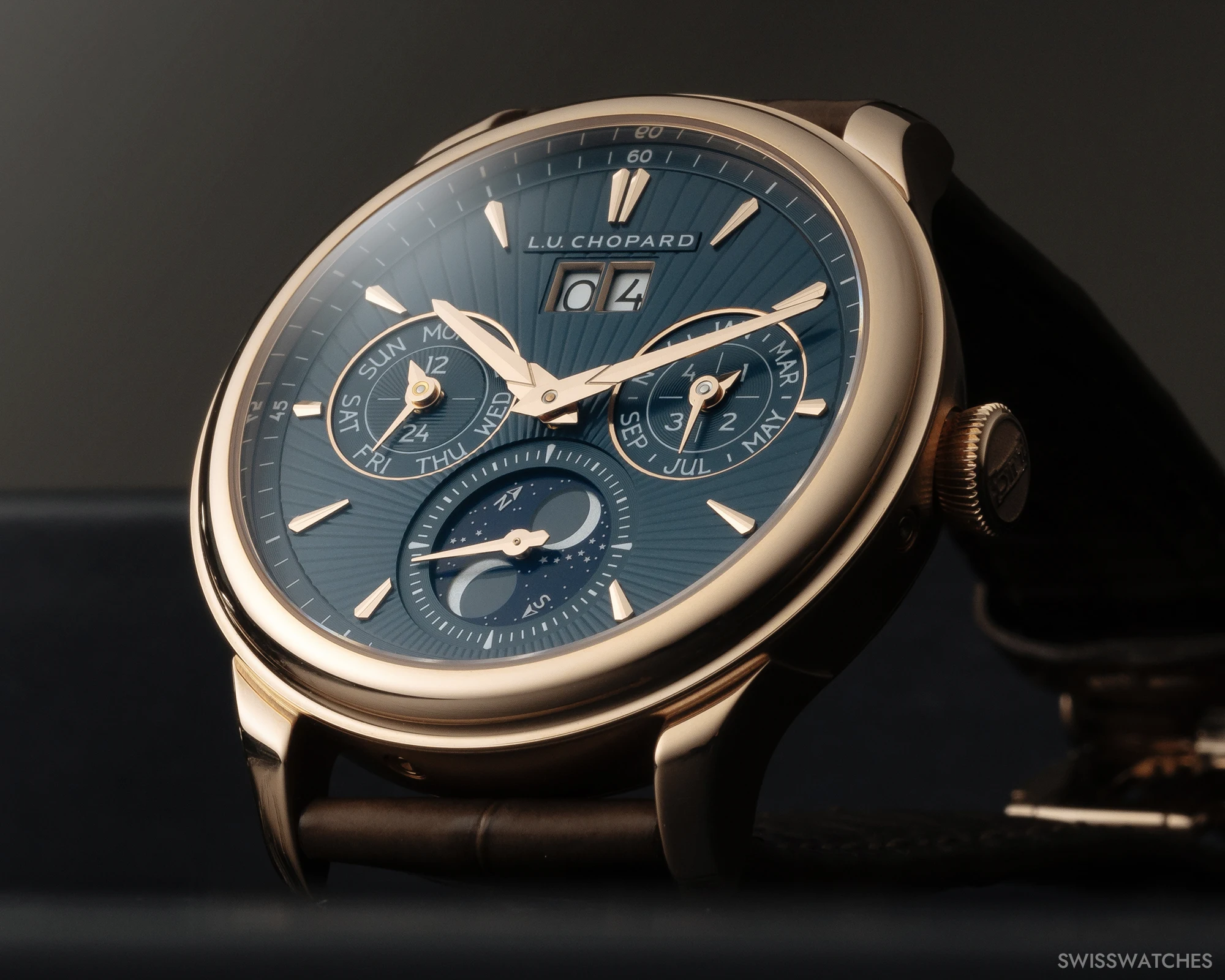
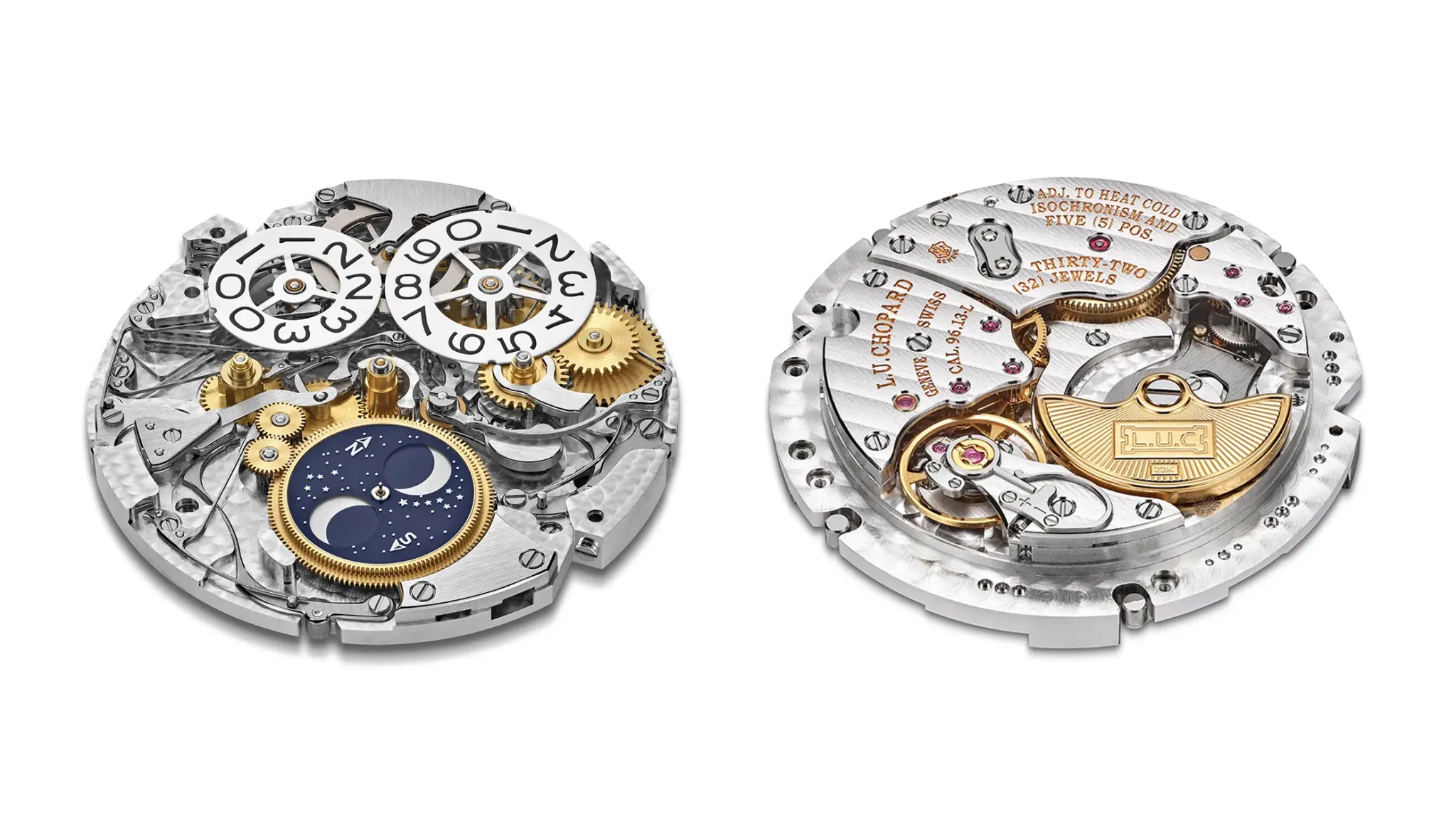
Technically, the Lunar One is powered by the L.U.C 96.13-L manufacture calibre, which includes a perpetual calendar and an additional 24-hour scale. The moon phase is not only decorative, but also astronomically very accurate: Chopard states that the display will only need to be corrected by one day after 122 years. This is made possible by the ultra-flat design with a solid gold micro-rotor integrated into the movement height; the movement consists of 355 components and, thanks to Chopard Twin technology with two superimposed mainspring barrels, offers a power reserve of approximately 65 hours. For the reference 161951-5001, Chopard quotes a price of 96,600 euros.
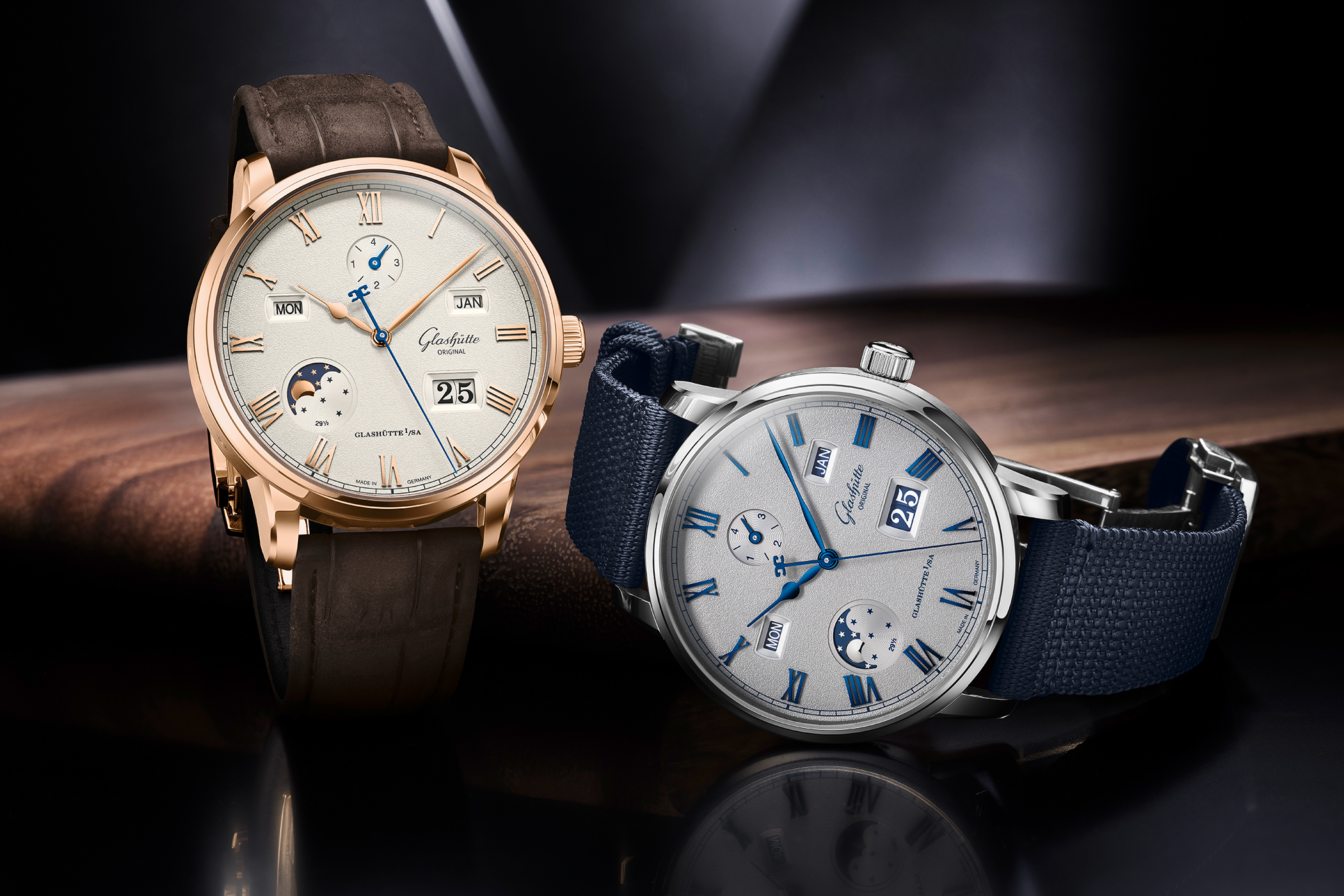
Glashütte Original focuses on the perpetual calendar as one of the most traditional and sought-after complications in watchmaking. The manufacturer launched its first version of a perpetual calendar around 25 years ago. Against this backdrop, it makes perfect sense to include the complication in the Senator Excellence line today: a classic, highly legible concept that correctly links the calendar to the secular year 2100 with the date, day of the week, month and leap year. At the same time, Glashütte Original emphasises a particularly high standard of quality in the Excellence family, which is even made visible – via a special ‘Q’ engraving and an accompanying test certificate.
The Senator Excellence Perpetual Calendar embodies this principle in a stainless steel case with a diameter of 42 mm. A narrow bezel opens up the dial visually, making the displays appear very generous. The dial is lacquered in silver and features a fine silver grain, complemented by laser-engraved, black galvanised indices and a railway minute track. The calendar information is displayed in an orderly fashion: the panorama date and weekday and month windows are discreetly emphasised by frames, while leap years can be read below 12 o’clock on a separate display with a small hand that runs across a scale from 1 to 4 and is clearly marked in leap years. The whole thing is complemented by a moon phase. The watch uses discreetly placed correctors on the side of the case for adjustment, keeping the silhouette clean without sacrificing usability. Glashütte Original offers several strap options: black Louisiana alligator leather, synthetic strap, or a stainless steel bracelet with a fine adjustment mechanism.
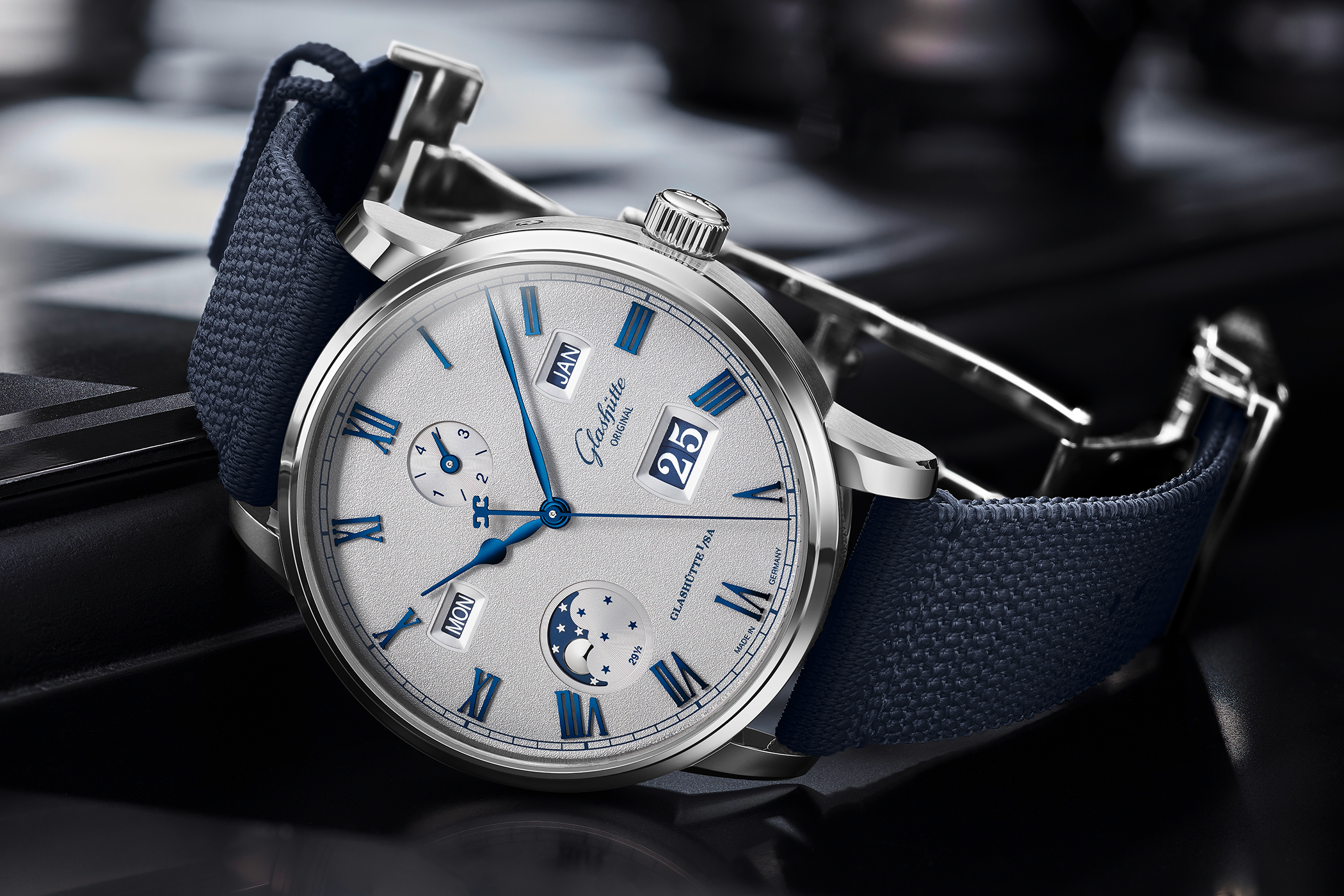
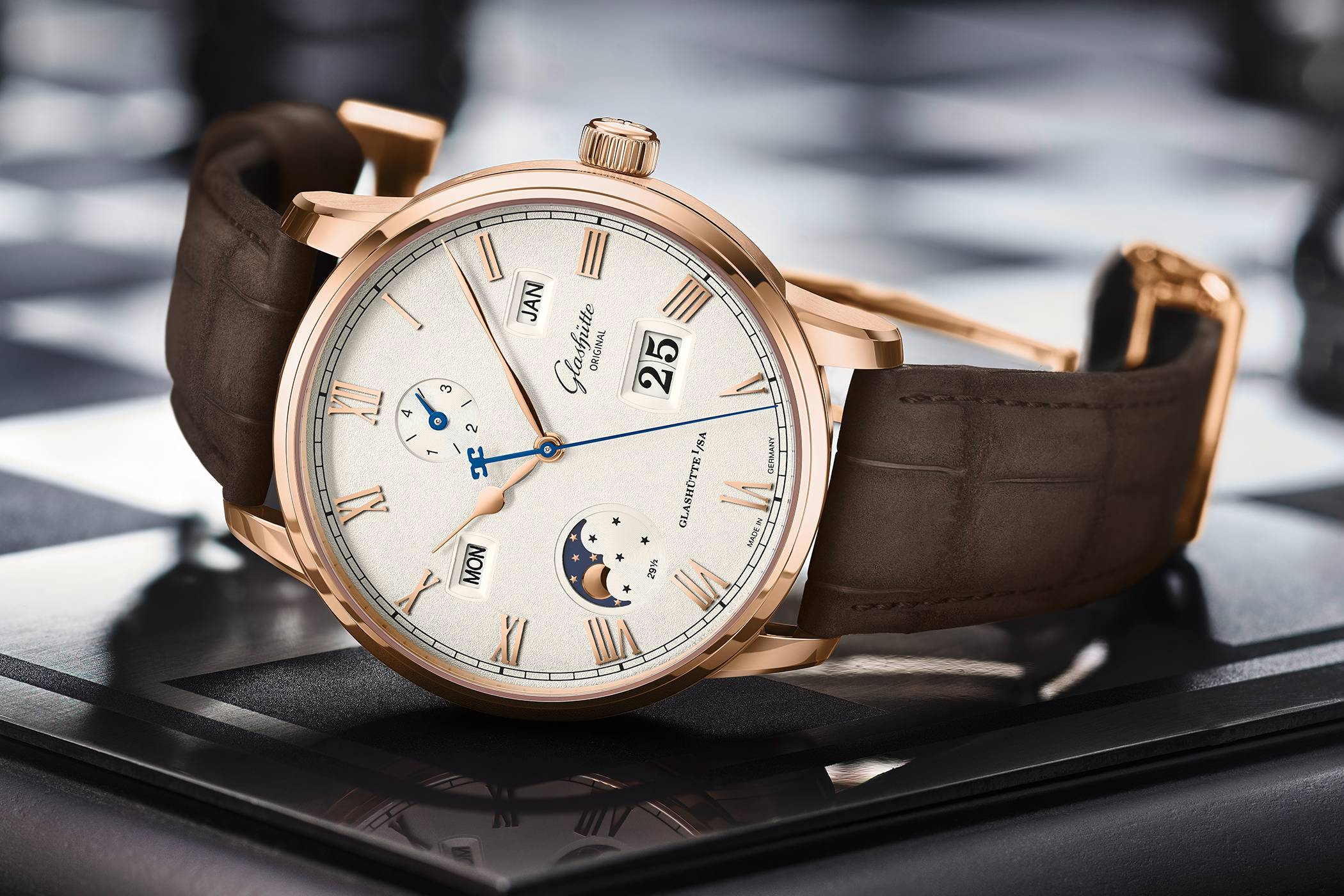
Inside, the automatic manufacture calibre 36-02 operates with a power reserve of 100 hours. Glashütte Original relies on an oscillating system with a silicon balance spring and regulates the movement via four regulating screws; the optimised barrel is designed for long, stable operation – a noticeable practical advantage, especially with a perpetual calendar. The sapphire crystal caseback also allows the movement to be admired. The Senator Excellence Perpetual Calendar in rose gold from Glashütte Original costs €37,900 and €24,000 in stainless steel.
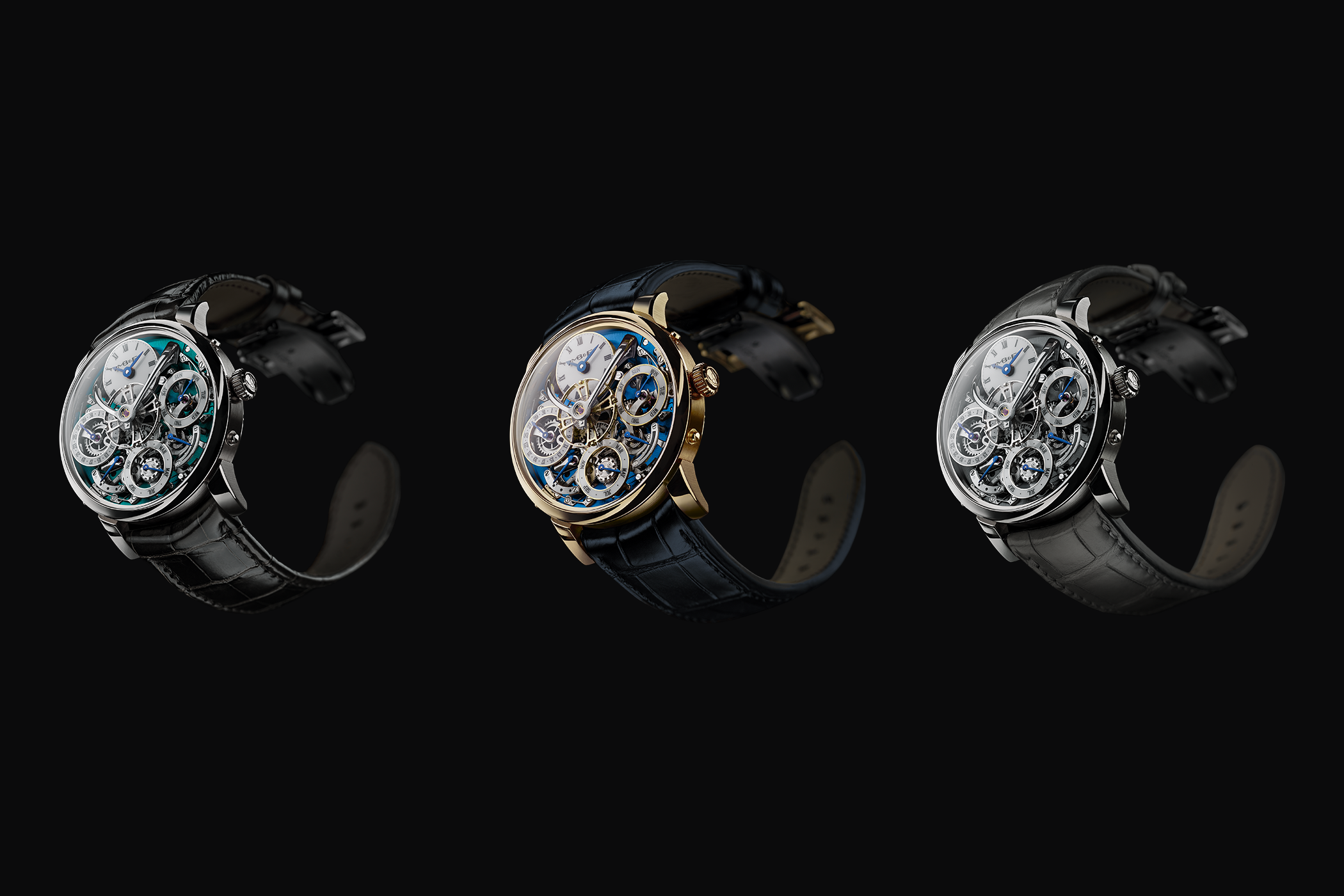
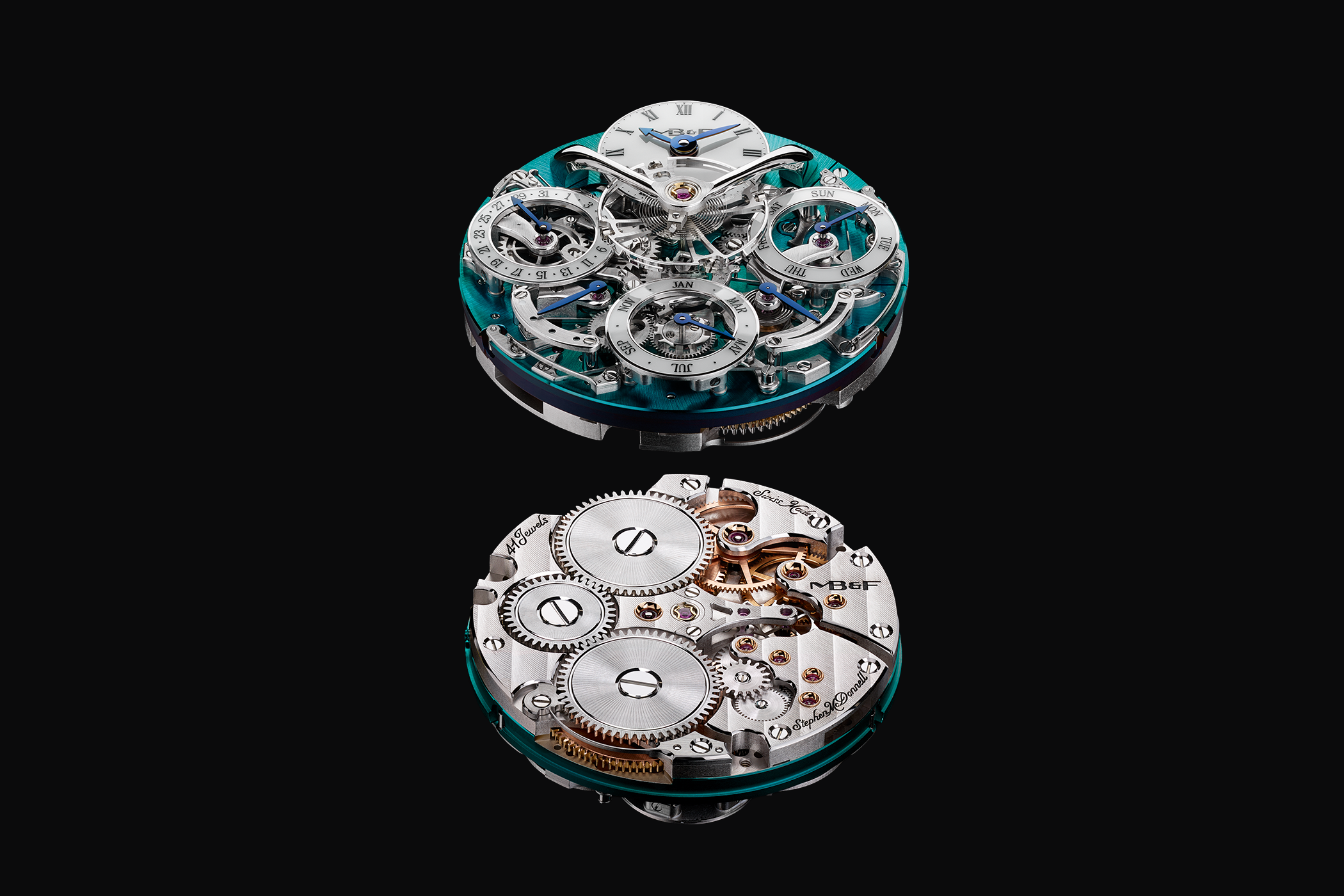
Although MB&F is a young, independent brand that was only founded in 2005, it deliberately takes a detour via new approaches, especially in classic ‘supreme disciplines’ such as the perpetual calendar. For the Legacy Machine Perpetual, Maximilian Büsser did not simply adapt an existing calendar module, but started from scratch together with independent watchmaker Stephen McDonnell. The result was unveiled in 2015: a perpetual calendar that is specifically designed to avoid the typical weaknesses of conventional systems (skipping, blocking, sensitive corrections).
The key innovation is the mechanical processor described by MB&F: instead of assuming 31 days as usual and skipping over ‘superfluous’ data in shorter months, the system works with a standard month of 28 days and automatically adds the extra days depending on the month. This is precisely how error-prone jumps are avoided. In addition, there is a built-in safety logic: the correction pushers are automatically deactivated while the date changes, and the year can also be set quickly without having to ‘feel your way’ through many months as is usually the case. Visually, it remains typical of the Legacy Machine: the large balance wheel ‘floating’ above the dial is a central design element.
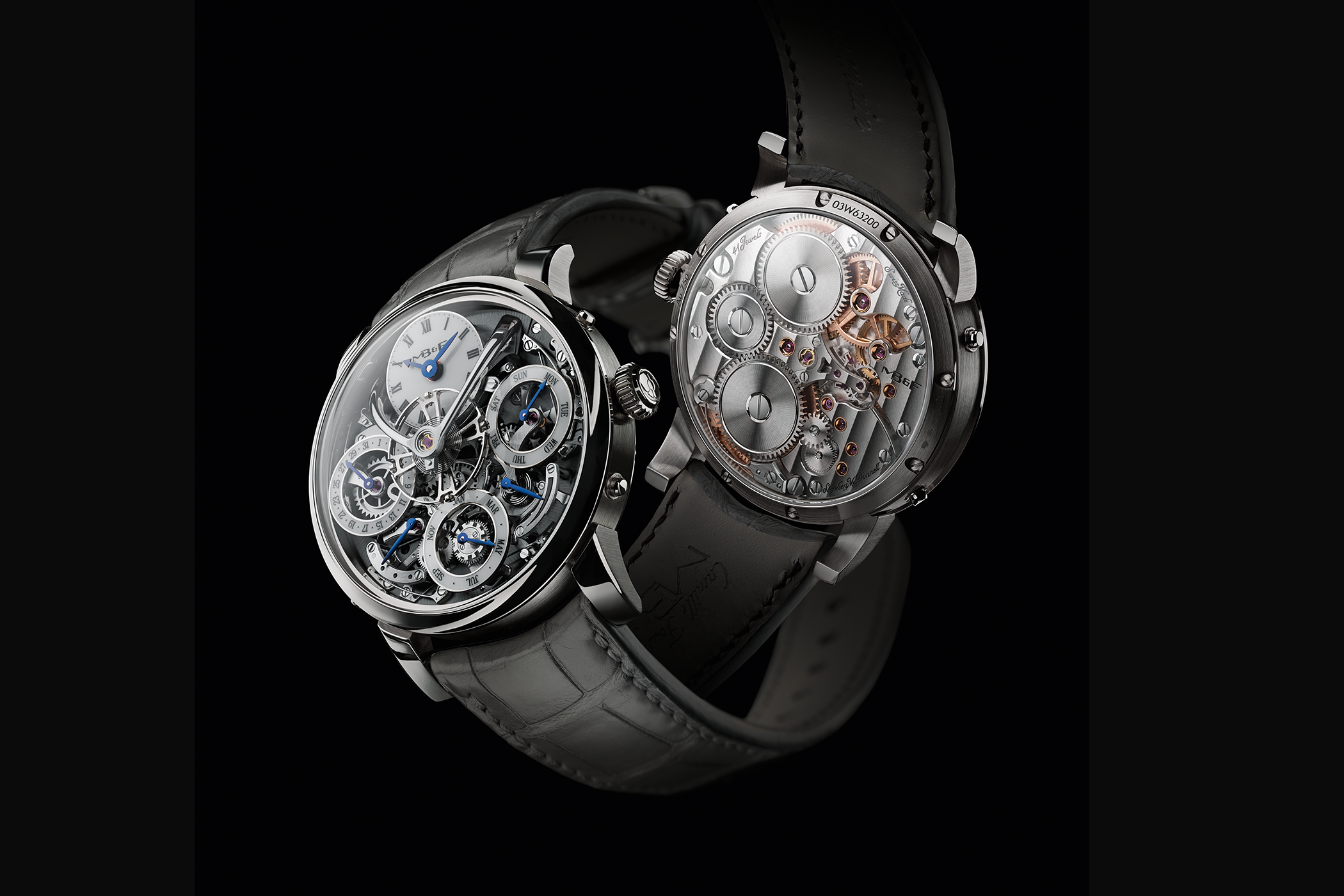
Technically, it features a fully integrated, newly developed calibre with 581 components, manual winding and two barrels. The power reserve is 72 hours. The case measures 44 mm and displays hours/minutes, day of the week, a retrograde date, month, a retrograde leap year and a power reserve indicator. The collection is presented in a variety of materials and editions. The early versions were followed by a limited-edition titanium version (50 pieces) and, later, a limited-edition version in 18-carat yellow gold with an intense blue dial (25 pieces), offered with hand-stitched crocodile leather straps. MB&F lists the price as ‘price on request’.
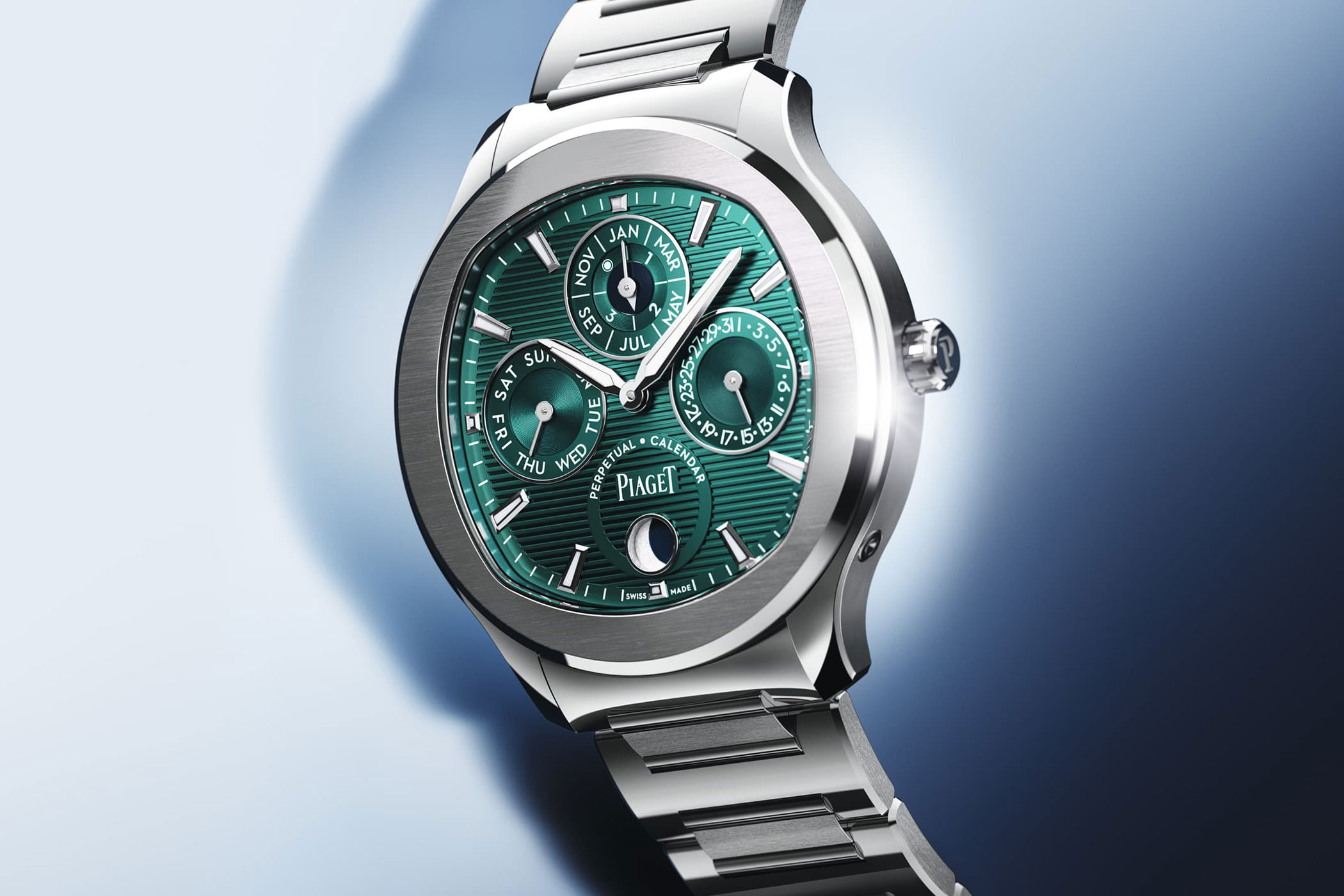
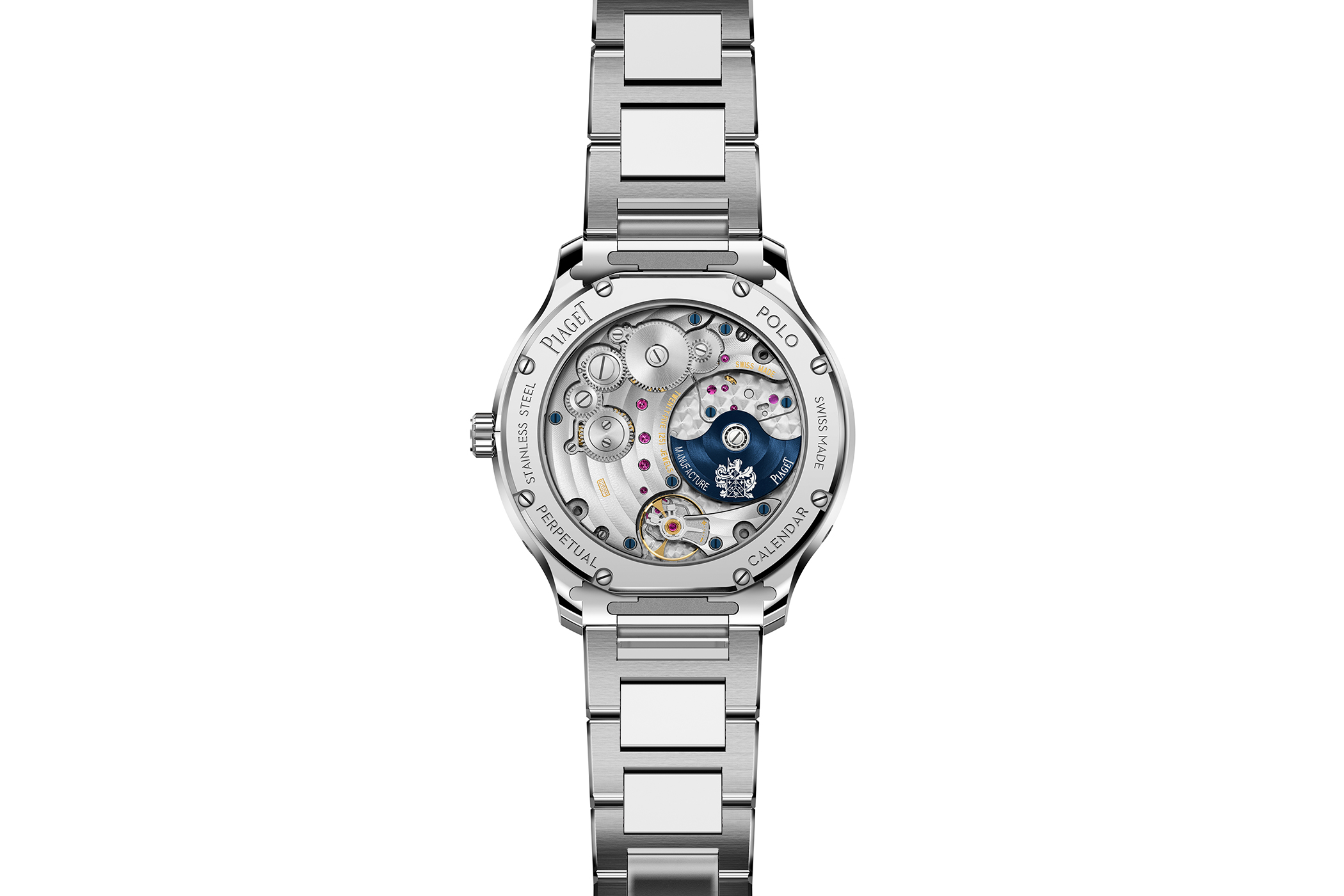
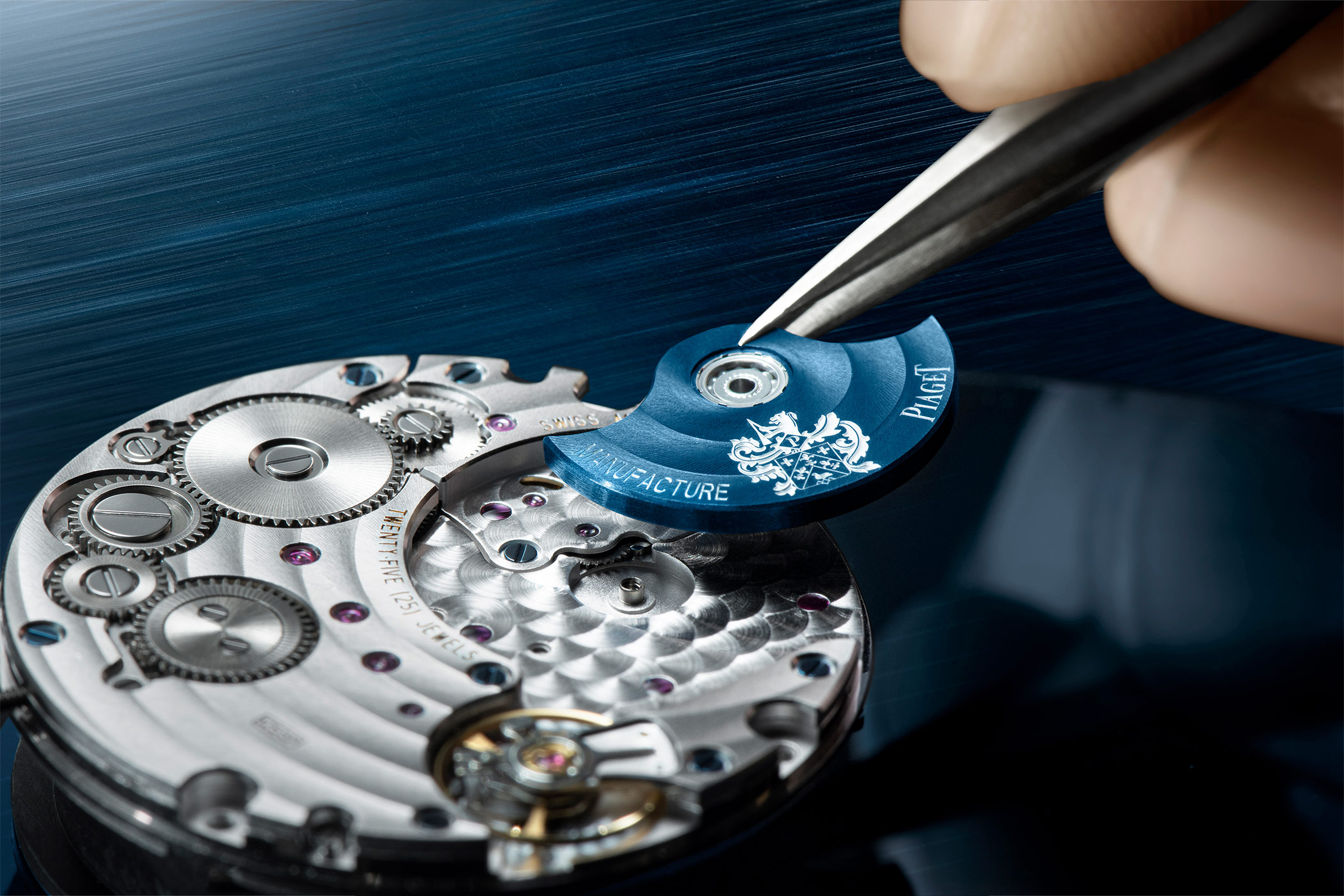
Piaget approaches the perpetual calendar from a perspective that suits the brand, with ultra-flatness and a very design-oriented implementation. This complication had not been featured in the Polo collection for a long time. It was not until 2023 that Piaget introduced the perpetual calendar to the Piaget Polo for the first time. This step was made possible by the brand’s own tradition of ultra-thin automatic calibres, reminiscent of Piaget’s ultra-thin 12P calibre from 1960, which was considered the world’s thinnest movement at the time, and its modern evolution, the 1200P, with a height of only 2.35 mm. Piaget has built today’s Polo interpretation of the perpetual calendar on this basis.
The Piaget Polo Perpetual Calendar Ultra-Thin remains visually consistent with the Polo DANN, with 42 mm stainless steel, but only 8.65 mm high, making it remarkably slim for a watch with a perpetual calendar. The dial is dark emerald green with a godron pattern. The calendar displays are arranged in three subdials: date at 3 o’clock, month at 12 o’clock, and day of the week at 9 o’clock; the moon phase is discreetly located at 6 o’clock. The hands and indices are coated with SuperLumiNova. The sporty-elegant design is also reflected in the features. The watch comes with both a steel bracelet and a green rubber strap that can easily be changed using Piaget’s SingleTouch interchangeable system.
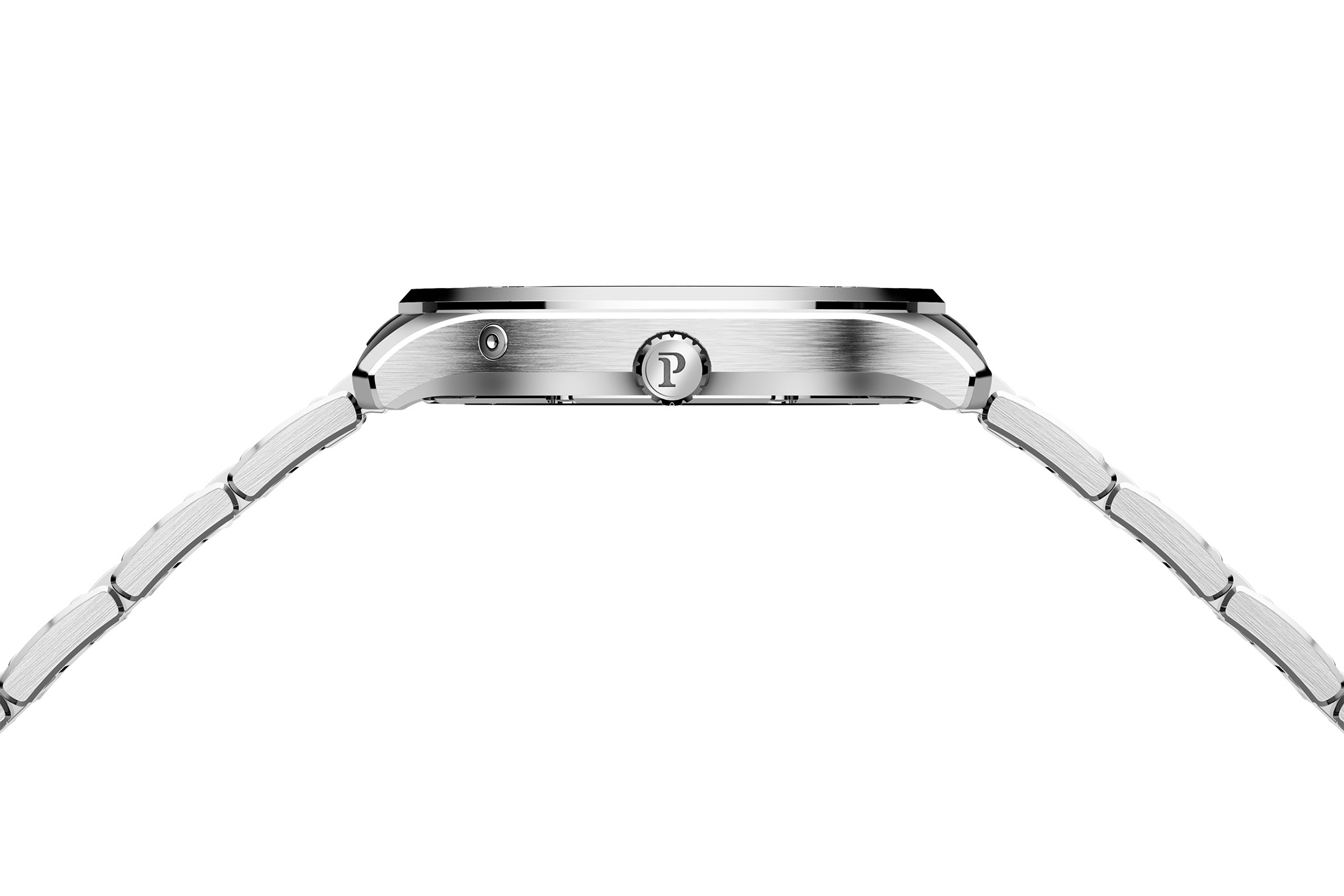
Inside, the new 1255P manufacture calibre, based on the ultra-thin 1200P, has been enhanced with a perpetual calendar and moon phase mechanism. The movement is ultra-thin at 4 mm and offers a 42-hour power reserve, which can be seen through the sapphire crystal caseback. The watch is priced at 62,000 euros.
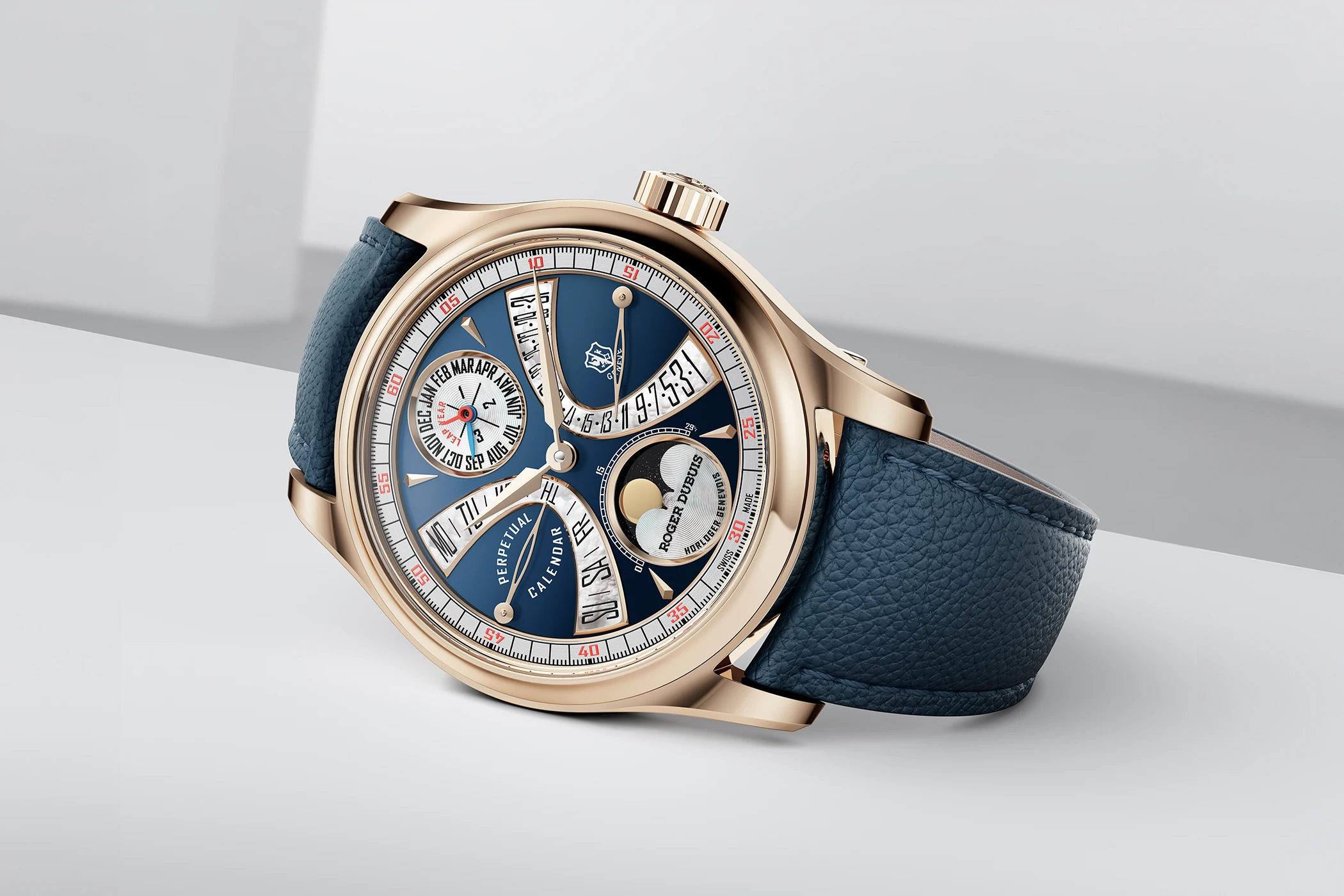
Roger Dubuis is celebrating its 30th anniversary with the Hommage La Placide Perpetual Calendar, drawing on a complication that has played a special role since the brand’s inception: the bi-retrograde calendar, in which two hands move in an arc and return to zero at the end of their cycle. The timepiece thus deliberately represents a return to the early collections that started it all in 1995, continuing the retrograde display in an even more consistent manner within a more classic framework. The name is also part of this narrative: ‘La Placide’ means ‘the calm one’.
This character is most evident in the dial, which is based on the early Roger Dubuis codes. The biretrograde calendar dominates the composition: the day of the week on the left, the date on the right, each in a semicircular shape and tapering towards the centre, creating a slightly ‘distorted’ retrograde look. Overall, the dial has a multi-level structure. On the outer edge is a rhodium-plated rehaut with a circular finish and red numerals. Below this is the main surface in a bold ‘Leman Blue’: it is lacquered and features applied hour indices and fine markings around the moon phase display. Additional mother-of-pearl subdials with circular brushing are added for the month and leap year. The moon phase, made of shimmering blue aventurine glass, is topped by two domed moons in yellow gold.
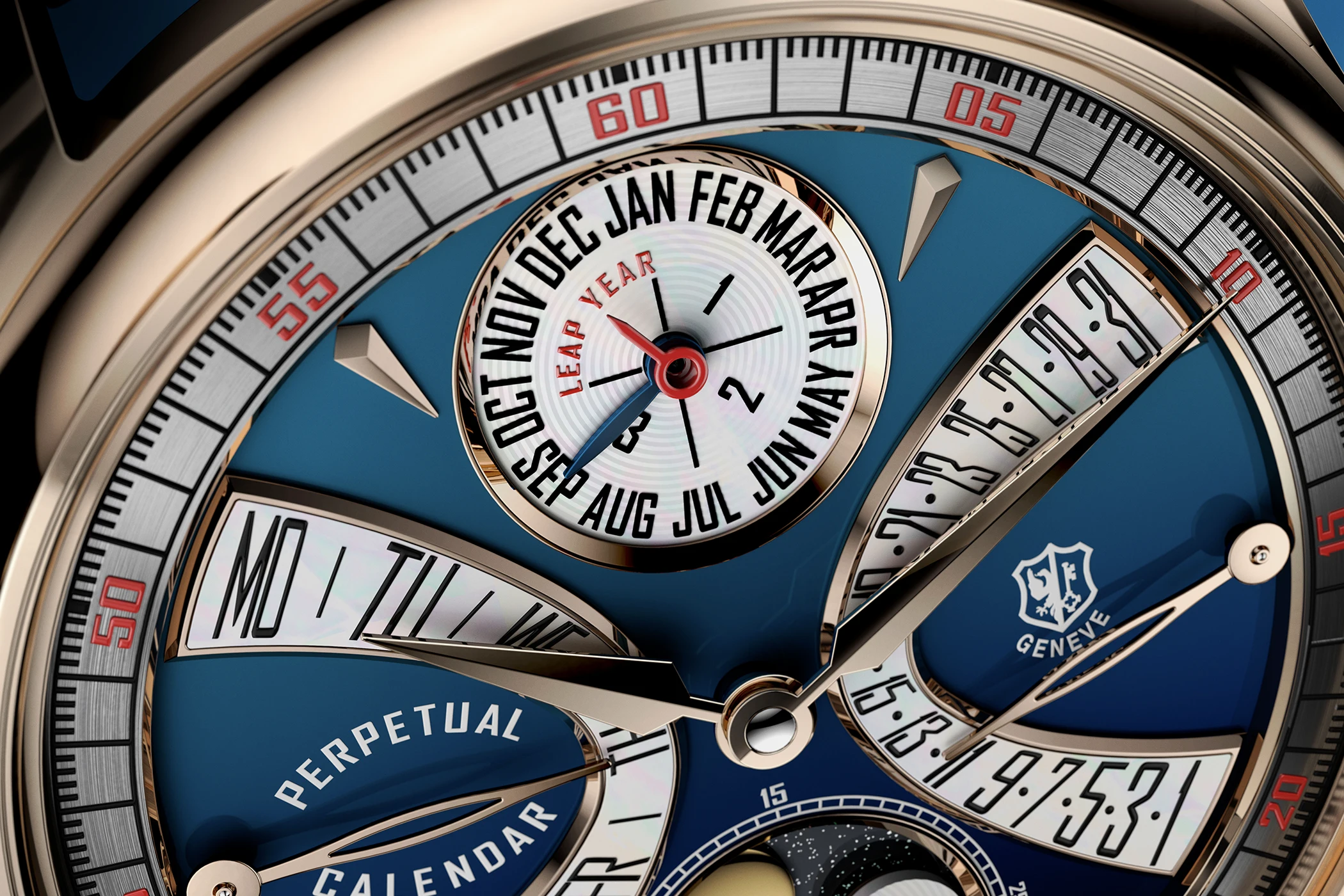
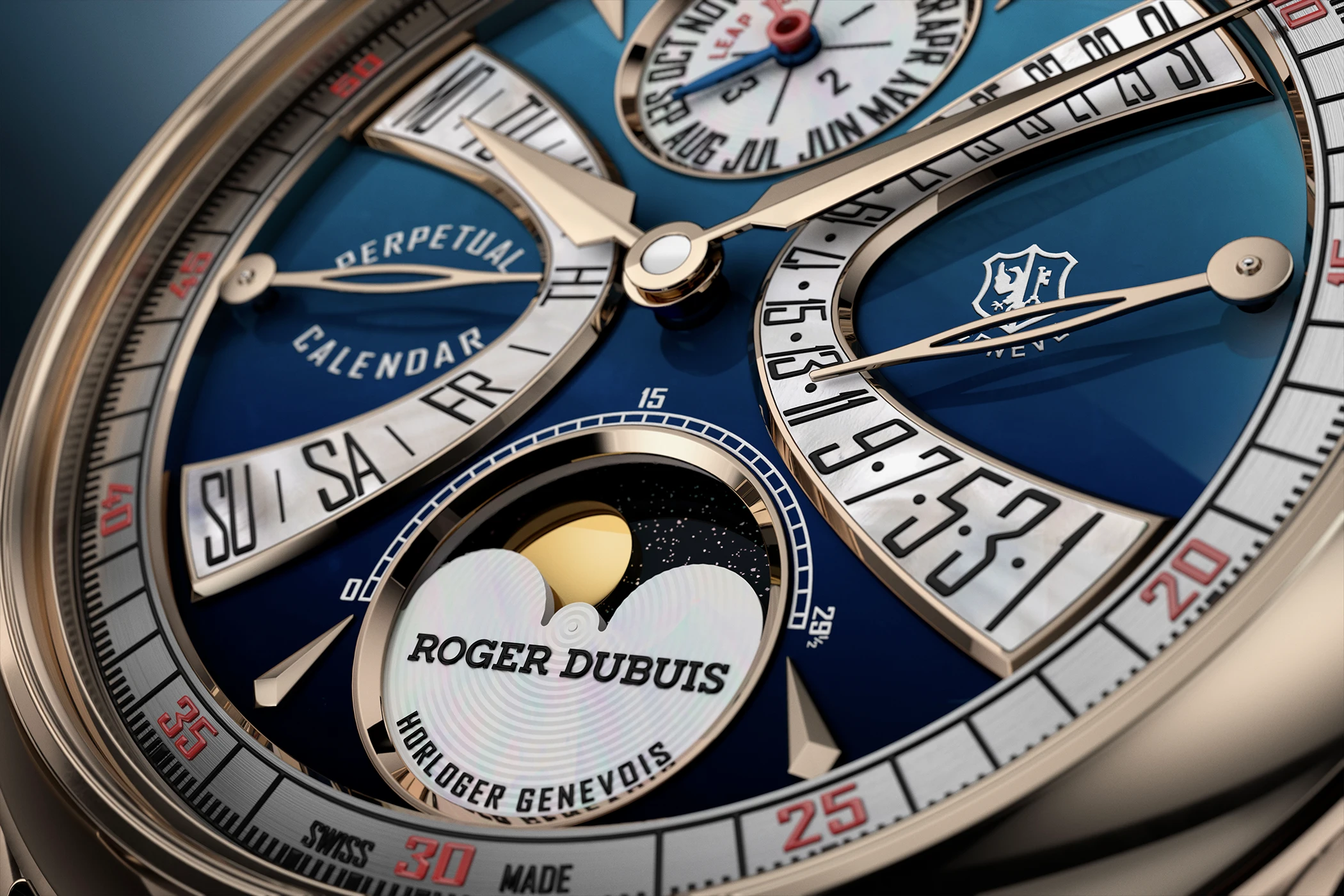
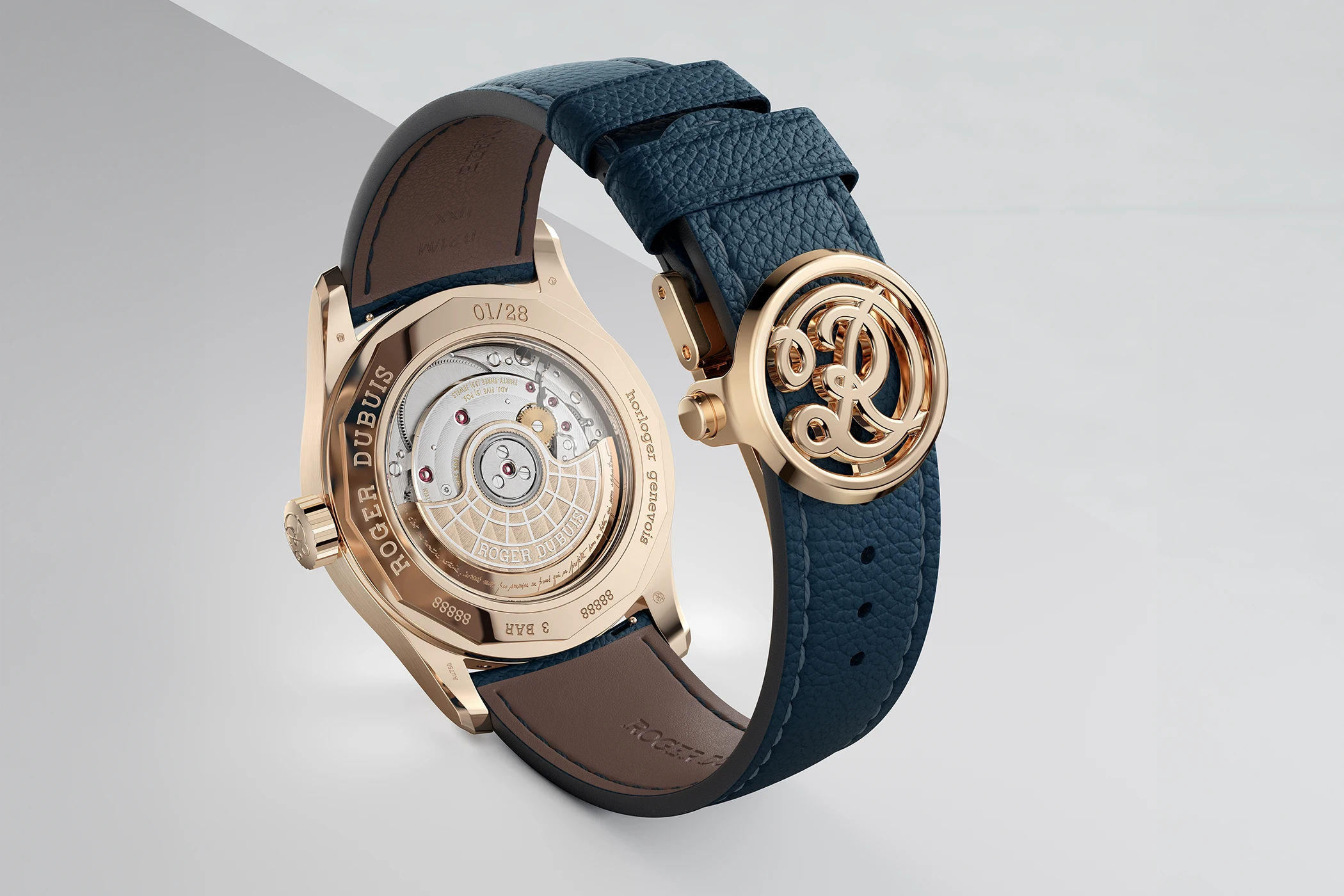
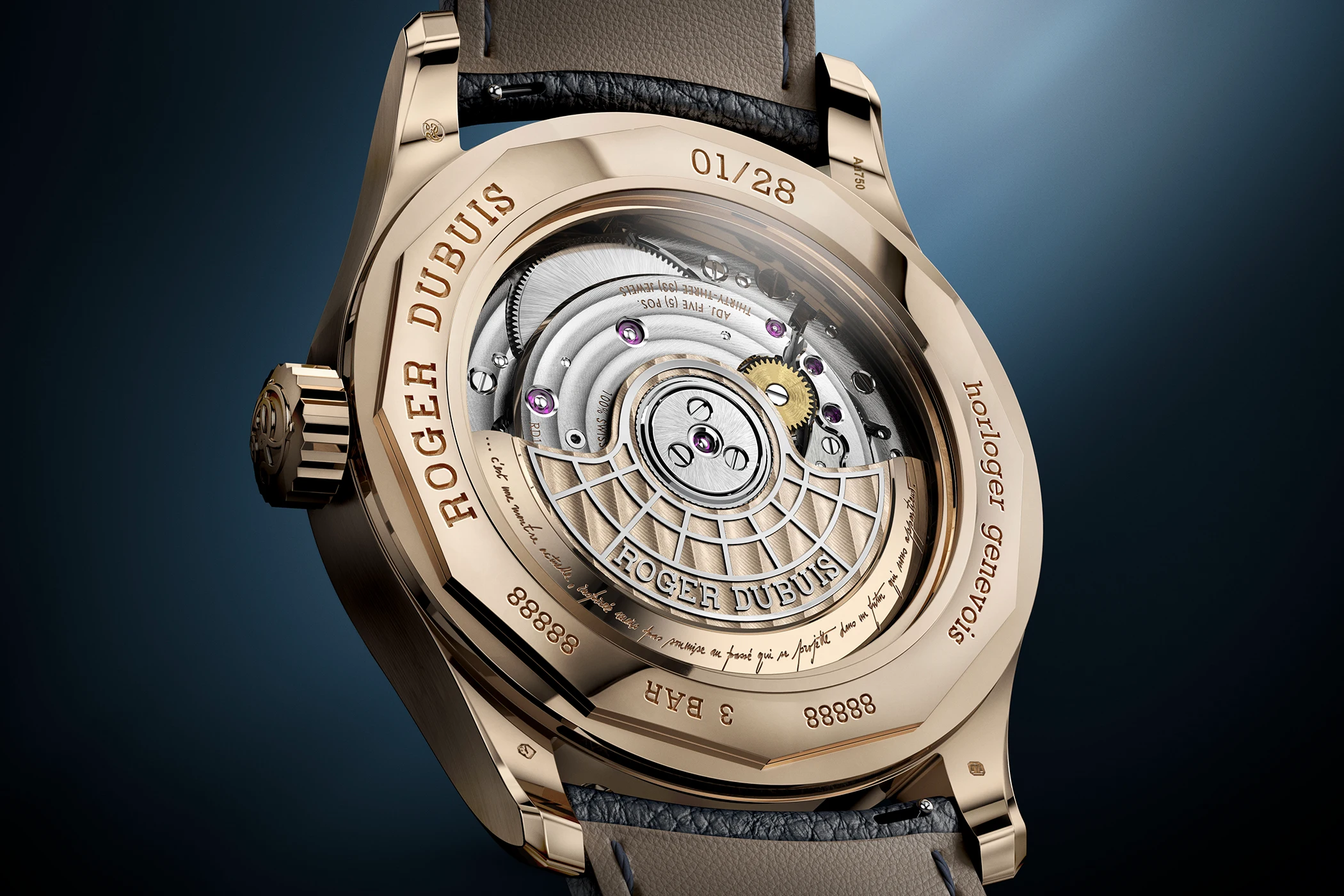
The 38 mm case is made of 18-carat rose gold. Its open back reveals the movement and bears the individual limited-edition number – the edition is limited to 28 pieces. Inside, the RD1472 calibre combines faithful reproductions and newly manufactured components from the historic RD14 and RD72 movements: The revised RD14 has been technically recalculated and equipped with a classic swan-neck regulator, while the RD72 module complements the perpetual calendar with a bi-retrograde display for day and date, as well as displays for month, leap year, and moon phase. The automatic movement has an 18-carat rose gold rotor, consists of 307 components and 33 jewels, and offers a 48-hour power reserve. It is refined using a total of 15 traditional finishing techniques and bears the Geneva Seal, which can also be found on the dial. The watch is worn on a blue, interchangeable leather strap with a pin buckle and historical emblem. The price in Germany is €140,500 and is limited to 20 units.