In memory of designer F. A. Porsche, Porsche Design has released a special edition of the Chronograph 1, limited to 90 pieces, and a 911 GT3.

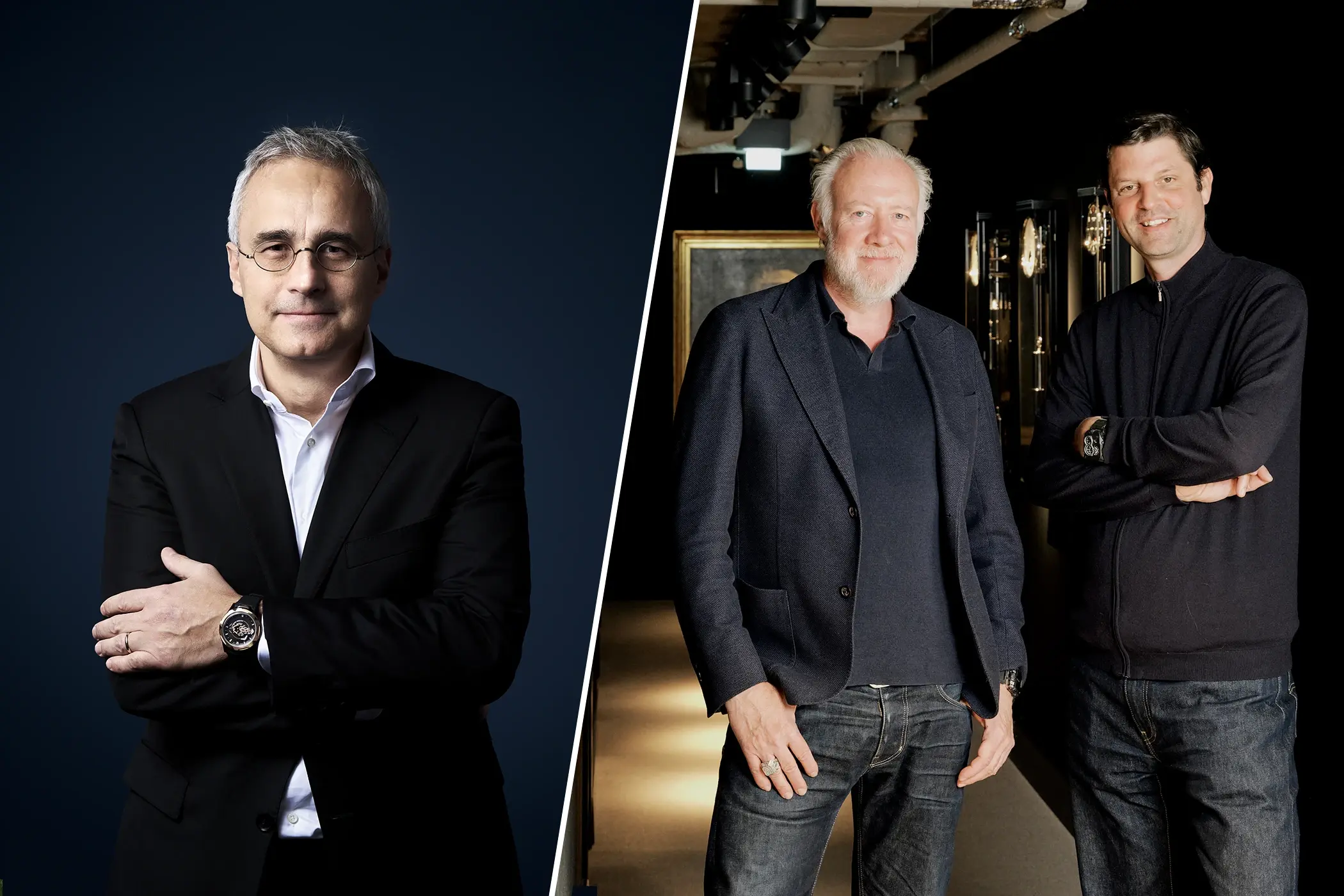
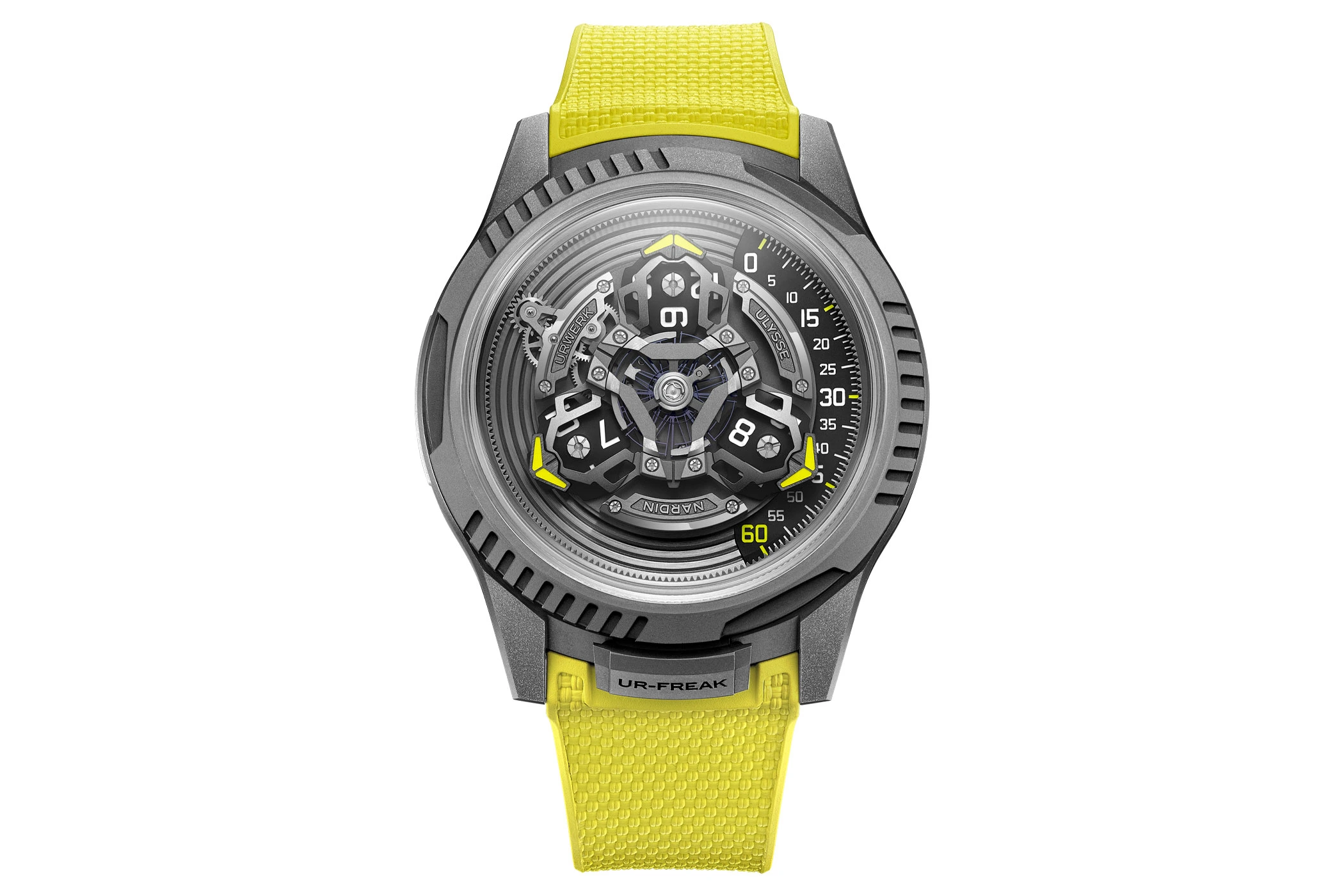
Ulysse Nardin and Urwerk are two pioneers of modern watchmaking who challenged traditional watchmaking over 20 years ago. One did so with the Freak, the other with the UR-101. Now they are jointly presenting the Ur-Freak, limited to 100 pieces. In an interview with Swisswatches Magazine, Jean-Christophe Sabatier from Ulysse Nardin and Martin Frei from Urwerk explain how the two brands were able to combine their concepts.
The Ur-Freak timepiece integrates the different concepts of time developed by Ulysse Nardin and Urwerk into a single watch. Despite their differences, they are united by a shared motivation to innovatively develop and reinterpret established approaches without disregarding proven principles or questioning their validity.
No dial, no hands, and no crown – Ulysses Nardin’s first Freak caused quite a stir in the global watch community in 2001. This extraordinary timepiece broke with watchmaking conventions and traditions – both visually and technically. And the UR-101, ‘which looks like a UFO and has no French name,’ even caused a shock in Martin Frei’s memory in 1997.
It’s obvious that a pairing like Ulysses Nardin’s disruptive Freak with the avant-garde watch architecture of Urwerk would never result in a conventional timepiece.
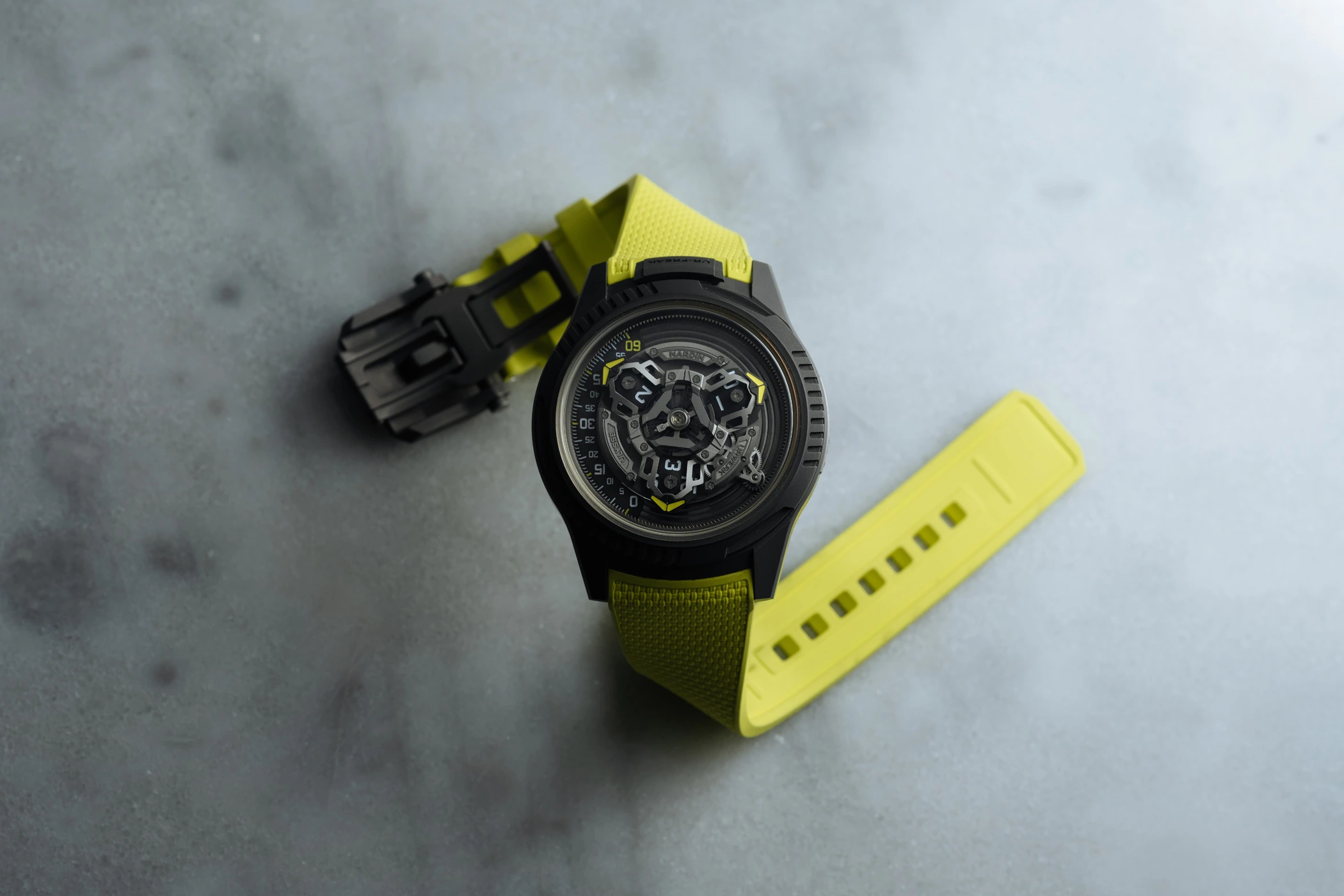
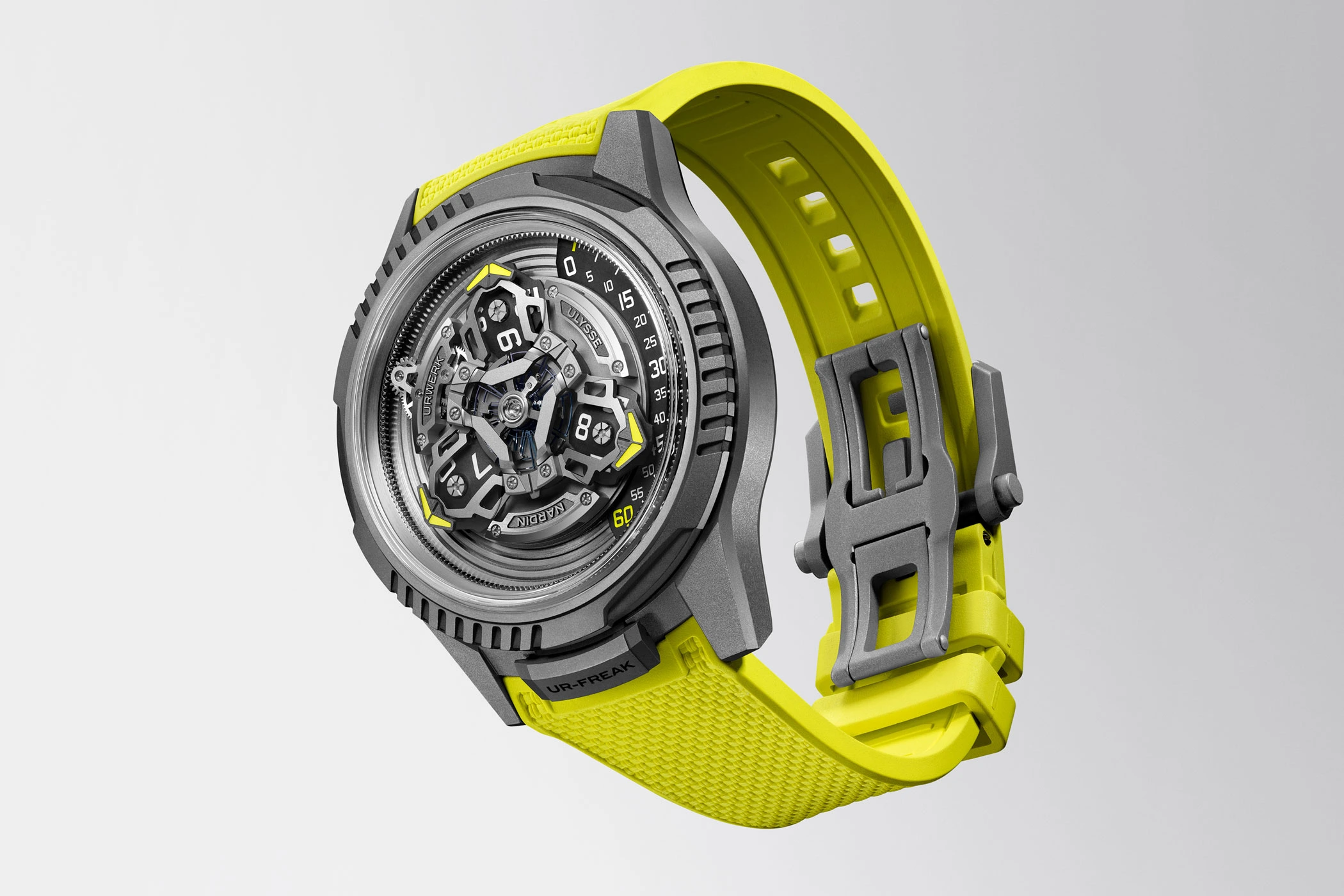
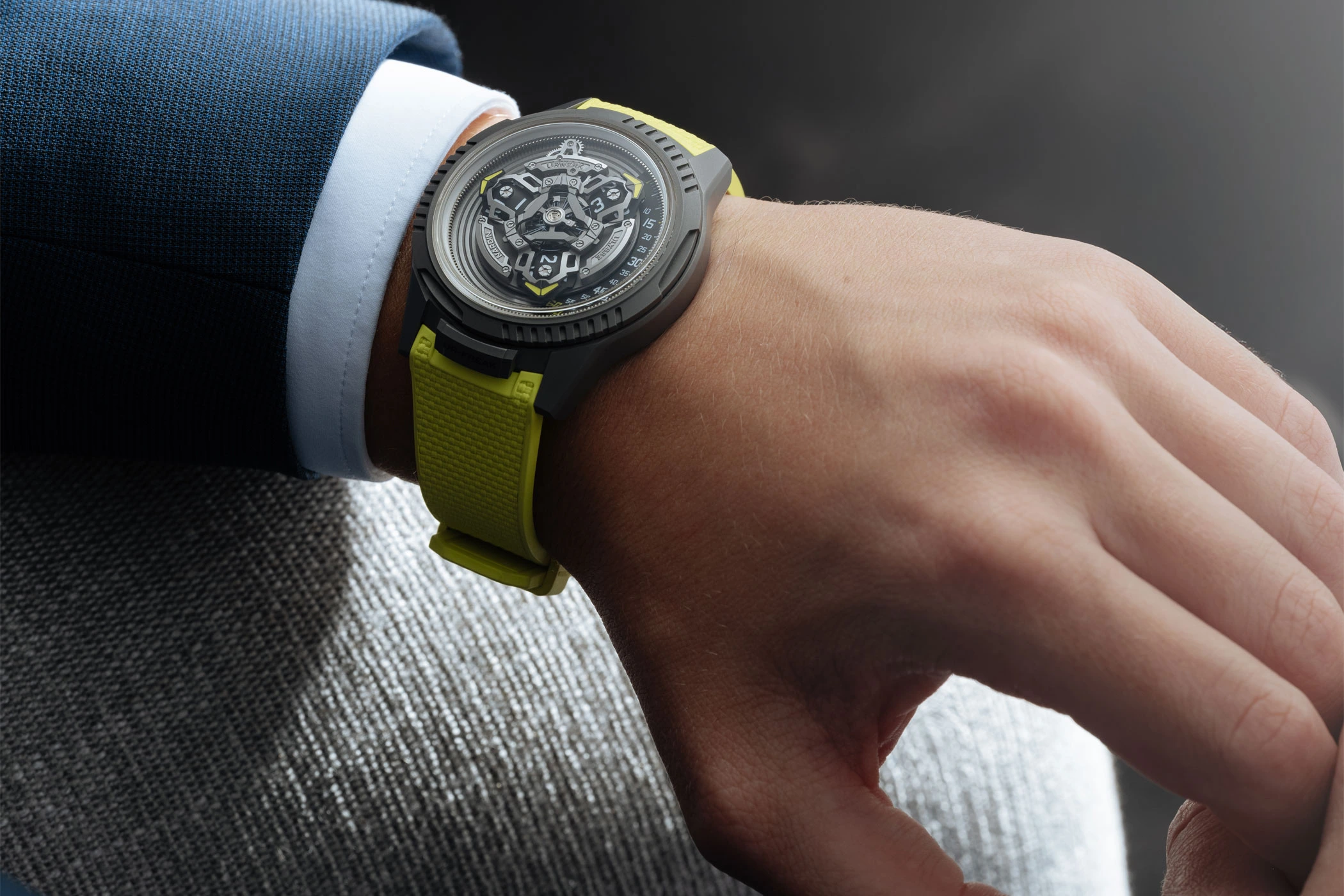
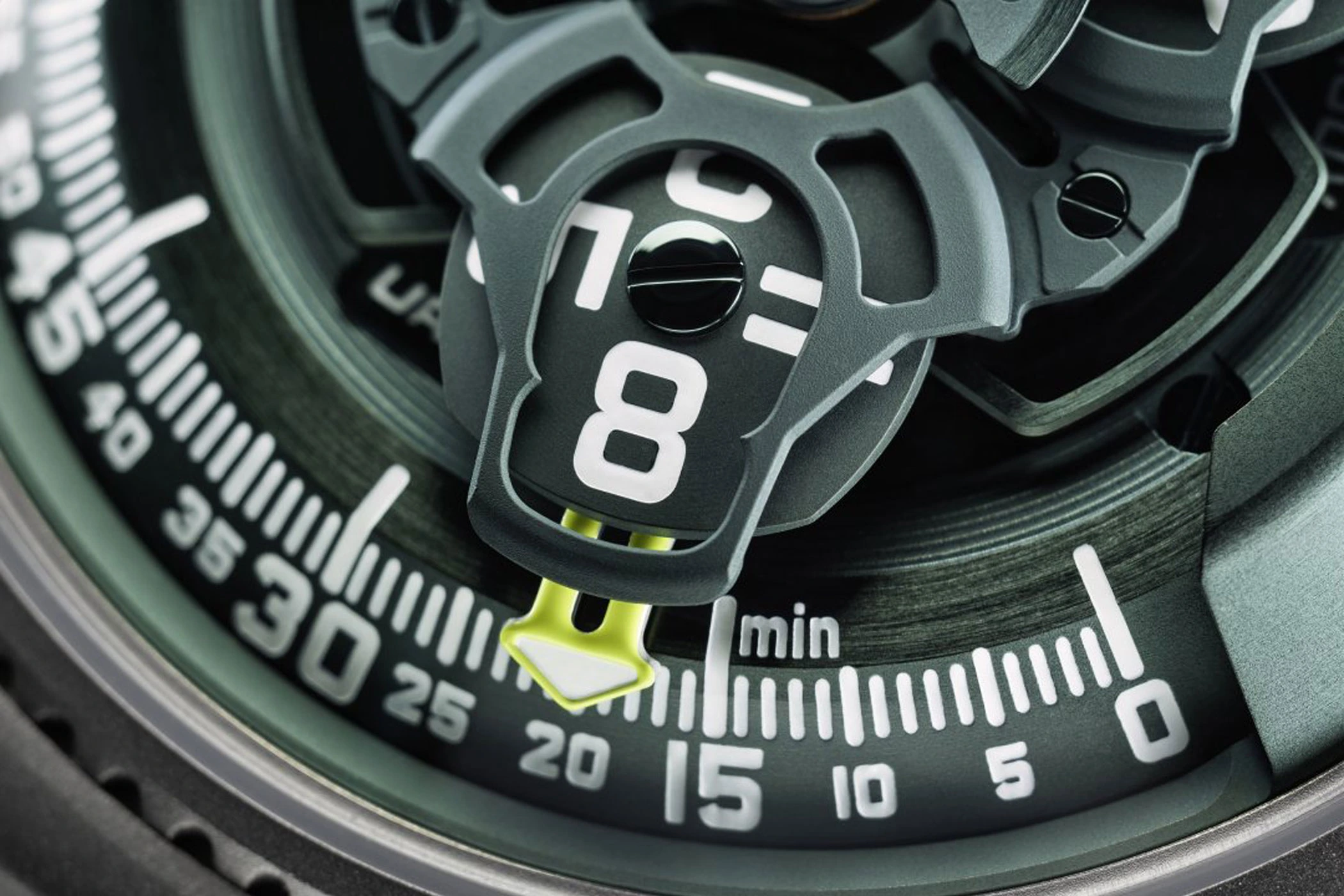
Thus, the crownless concept of the first Freak and Urwerk’s satellite display system come together in the Ur-Freak. Yet this is far from a simple fifty-fifty blend of the two brands. This becomes especially apparent in its inner workings.
The fusion is made possible by the new, integrated UN-241 manufacture calibre with a 90-hour power reserve, which is wound manually via the caseback. Adjustments are made via the rotating bezel. Further technical details on the Ur-Freak can be found here.
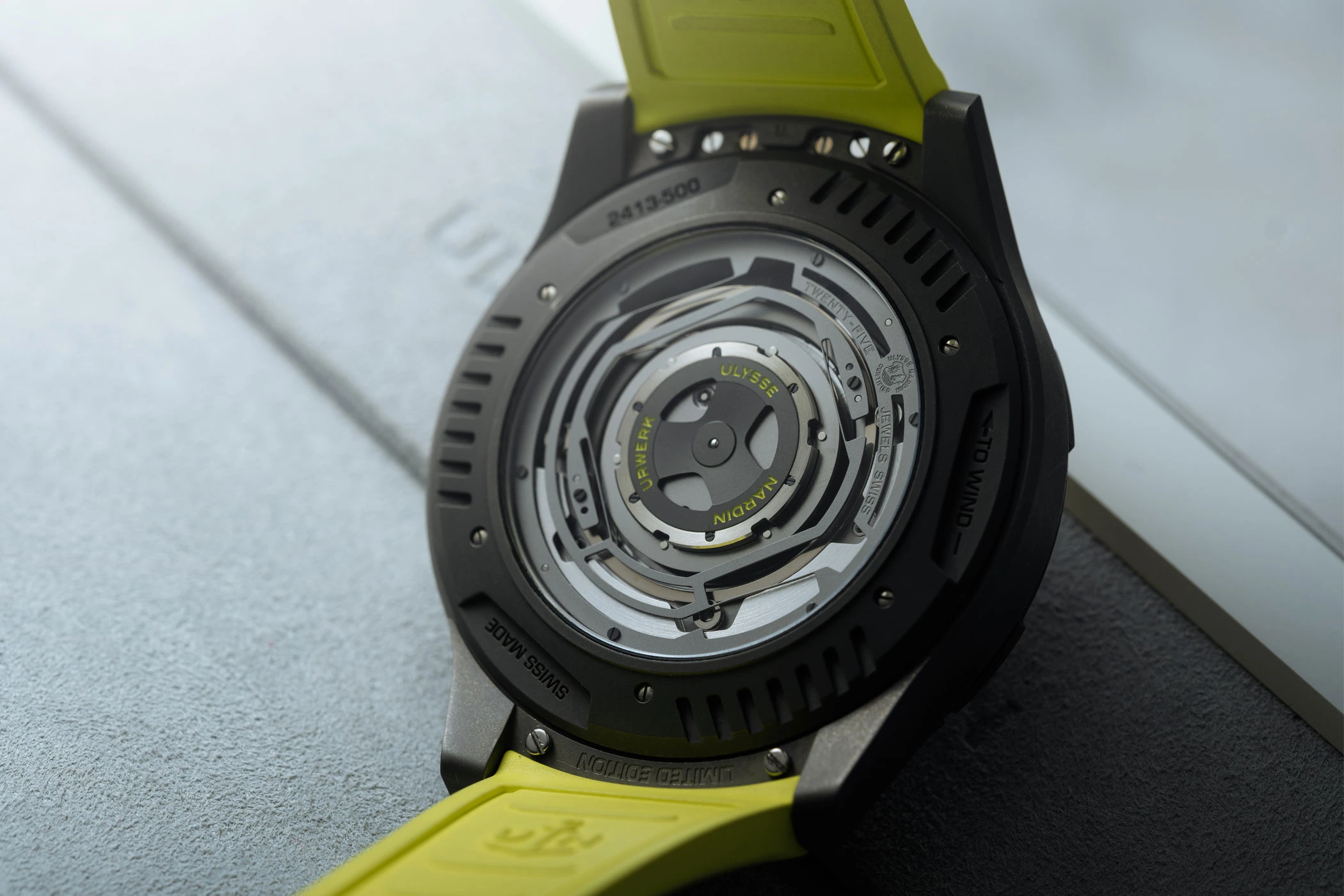
On the sidelines of the Geneva Watch Days 2025 in early September, we met with Martin Frei (Co-Founder Urwerk) and Jean-Christophe Sabatier (Chief Product Officer Ulysse Nardin) for an exclusive preview of the Ur-Freak and gained fascinating insights.
Jean-Christophe Sabatier: When Patrick Pruniaux (CEO Ulysse Nardin) approached me about wanting to collaborate with another brand, I told him it absolutely had to be an independent brand – especially if it was going to involve the Freak.
And somehow it made perfect sense that it was Urwerk. About 20 years ago, a kind of club of brands emerged, reinterpreting traditional watchmaking, taking risks, and genuinely challenging and changing the watch industry. Ulysse Nardin and Urwerk were part of that.
Martin Frei: Felix Baumgartner, Co-founder of Urwerk, then met with Patrick Pruniaux in Geneva. When he came back, he told me they had discussed the Freak and realised there were significant parallels with our world of watchmaking. The Freak was released in 2001, just a few years after we first realised our timekeeping idea with the UR-101.
We are two very different brands, but we share common values and visions. So we sat down again and considered whether a collaboration was possible. We concluded: Yes! And that’s how it all started.
Martin Frei: Above all, it’s about the idea of mechanical complications and the approach to them. The Freak concept is extremely creative and still feels fresh. There are so many cool features, like winding the watch via the caseback and setting the time through the bezel. It’s so different from other mechanical watches.
It’s very similar for us. We also think about functions differently than conventional watch brands. So, while Urwerk and Ulysse Nardin are very independent brands, they share a similar DNA in their uniquely creative approach to designing mechanical functionality.
Jean-Christophe Sabatier: Patrick and I loved the idea of working with Urwerk. It’s a brand with a lot of integrity that always follows its own path. I admire that greatly. And it reminds me of the Freak, which has always been a bit of a peculiar creature in the ring – and still is.
And, of course, as Martin says, there are similarities in their unconventional approach and the creation of technical concepts. The pursuit of modernity, innovation, and a distinctive design identity applies equally to Urwerk and Ulysse Nardin.
Martin Frei: I completely agree. And I learned so much while working with the Freak – for example, how a designer’s idea became reality thanks to Dr Ludwig Oechslin, this brilliant and effortlessly cool watchmaker.
At Urwerk, we have a very similar setup. I’m the designer and artist on one side, and Felix the watchmaker on the other. Essentially, we’re constantly playing a kind of idea ping-pong with each other, and that’s how we create our watches.
A similar creative ping-pong happened between Ulysse Nardin and Urwerk, resulting in a new reality – and ultimately a shared watch.
At the start of a collaboration like this, you never know where it will lead. You are always surprised. And that’s the best part.
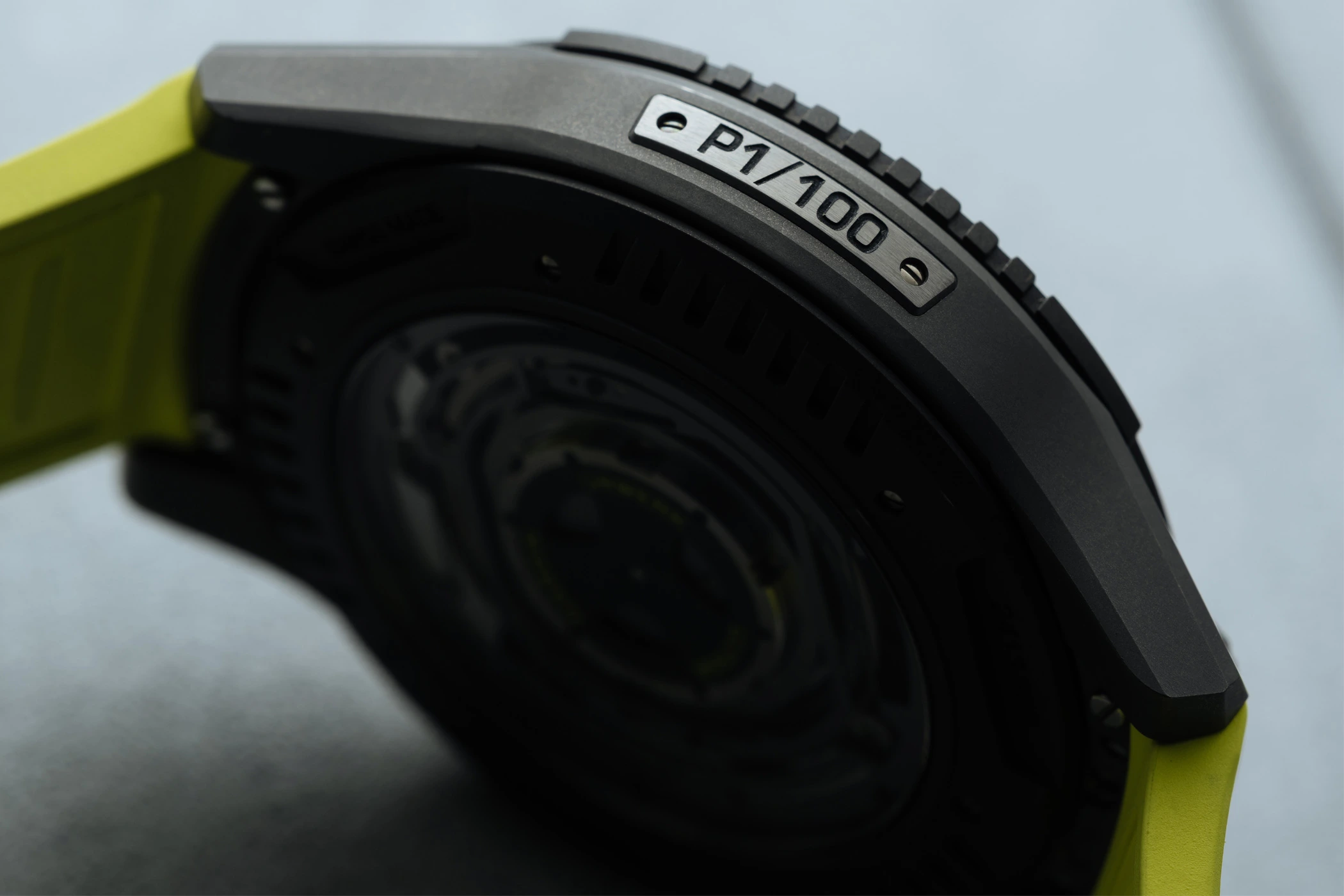
Martin Frei: Yes, compromises have to be made at various levels. This means that there are certain restrictions that do not exist when you design a watch on your own. In the case of the Freak, this mainly concerned its complex mechanics, which of course had to be retained.
So we asked ourselves how we could deal with this, how we could combine it with our ideas. We learned a great deal while searching for the answer. And in the end, our two concepts merged perfectly.
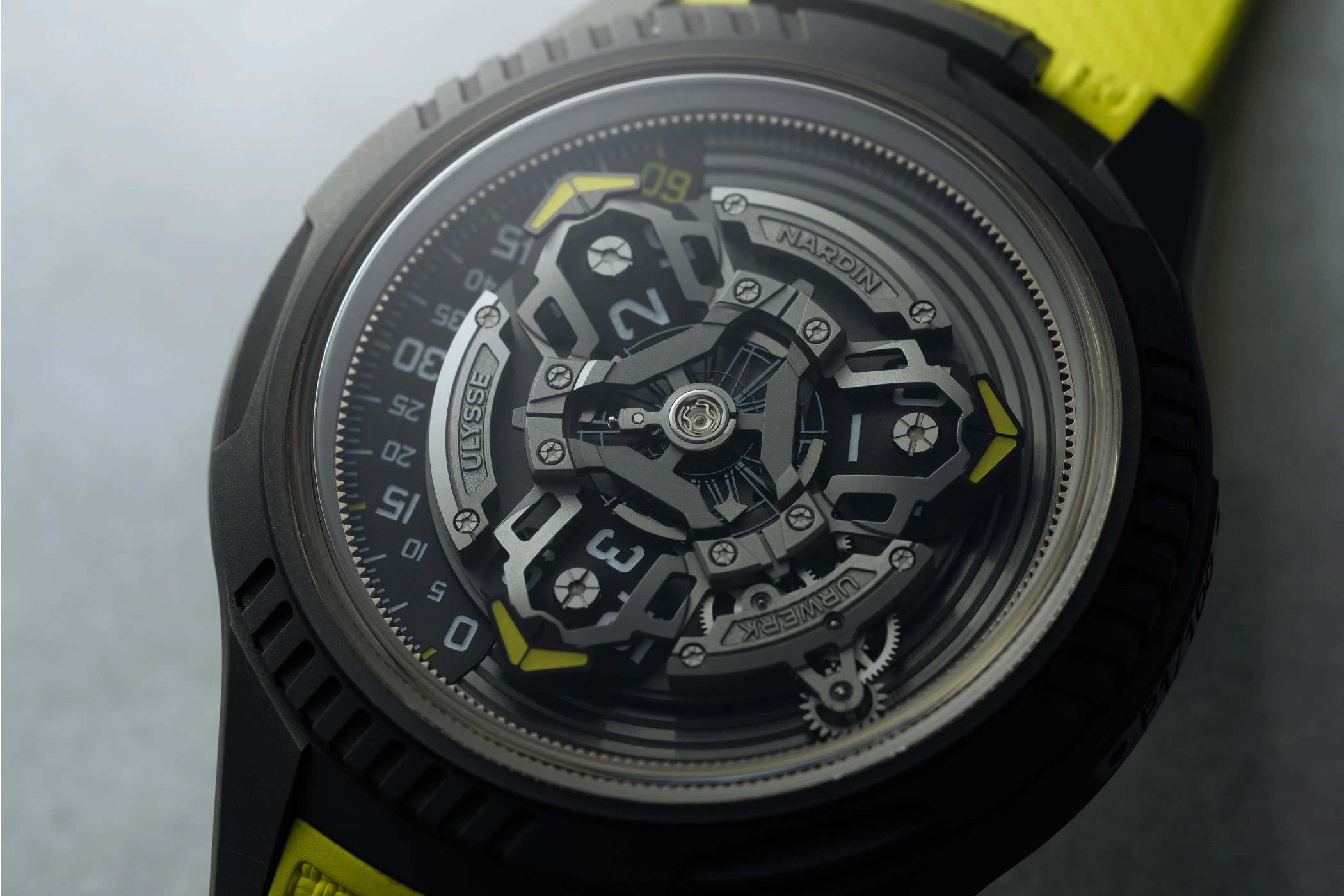
Jean-Christophe Sabatier: Three years. During this collaboration, the focus was primarily on technical aspects rather than colour codes or logos. Instead, we developed a completely new hand-wound calibre.
The UN-241 consists of 263 components, 157 of which were developed specifically for the Ur-Freak. This makes it a completely new three-dimensional movement architecture, allowing us to combine Urwerk’s satellite display and wandering hours principle with the Freak concept. I particularly enjoyed the challenge of redesigning the carousel architecture to accommodate a significantly larger oscillator in the centre and Urwerk’s satellites. This eliminates the concentric target effect, giving the watch a balanced yet powerful appearance.
Martin Frei: There is an asymmetrical element. It creates a counterbalance to the centred oscillator and makes the design even more exciting. After all, symmetry can also be boring.
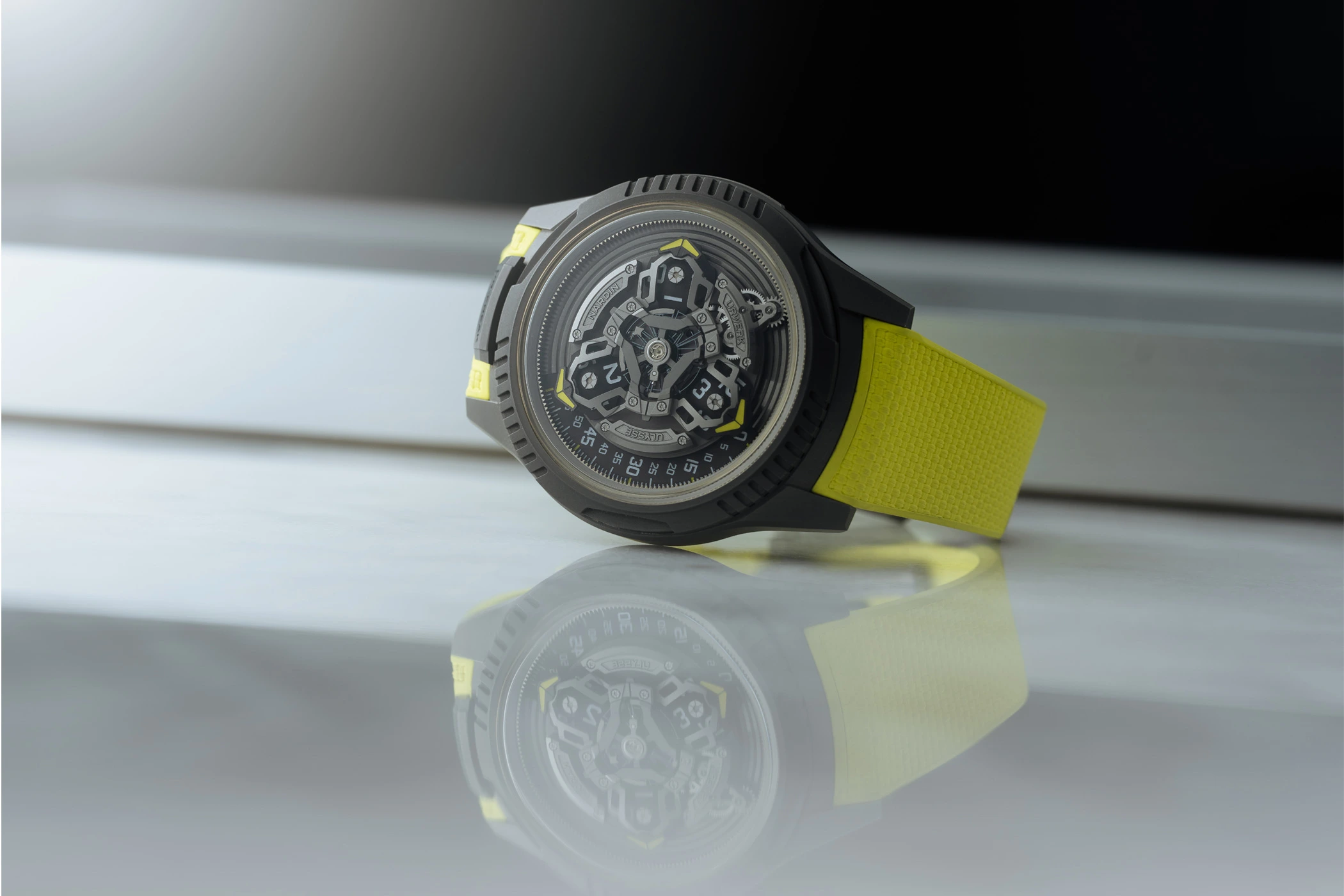
Martin Frei: That’s not an easy question to answer. I like to compare it to us humans. When you look at your own child, you ask yourself: how much of me and how much of the other parent is in them? But it’s the combination of both that has created something new. My answer to your question always depends on the moment, though.
Jean-Christophe Sabatier: Exactly. Sometimes you see the amount of work that went into the Ur-Freak, and sometimes you just see the fantastic result: the fusion of two extraordinary watch concepts into something completely new and surprising.
Jean-Christophe Sabatier: Among other things, this has to do with the fact that designs such as those of the Freak or Urwerk watches are becoming more and more commonplace – quite unlike 20 or 30 years ago.
They are still distinctive and eye-catching, which is now commonplace in the world of watchmaking. Urwerk and the Freak have made a significant contribution to this.
Martin Frei: We’ve all invested a great deal, and this has led to watches being perceived very differently today. This has nothing to do with turning away from the great tradition of watchmaking. For us, this individual independence is just one side of the coin.
On the other side are science, curiosity, and innovation. Both belong together; you need both forces: the insights of the past and the will to create something new. Sometimes they clash, but often they work together – and that’s when something truly new emerges. That’s how we maintain our creativity.
Jean-Christophe Sabatier: I think the best way to preserve traditions is to shake them up a little.
Martin Frei: Absolutely. Technology wants to evolve; it’s a kind of natural law, born from the creative power inherent in humans.