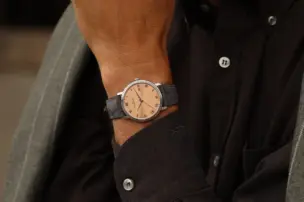
Jaeger-LeCoultre presents the Master Control Classic 36 mm, limited to 500 pieces, whose design is based on a historic Master Control model from 1995.

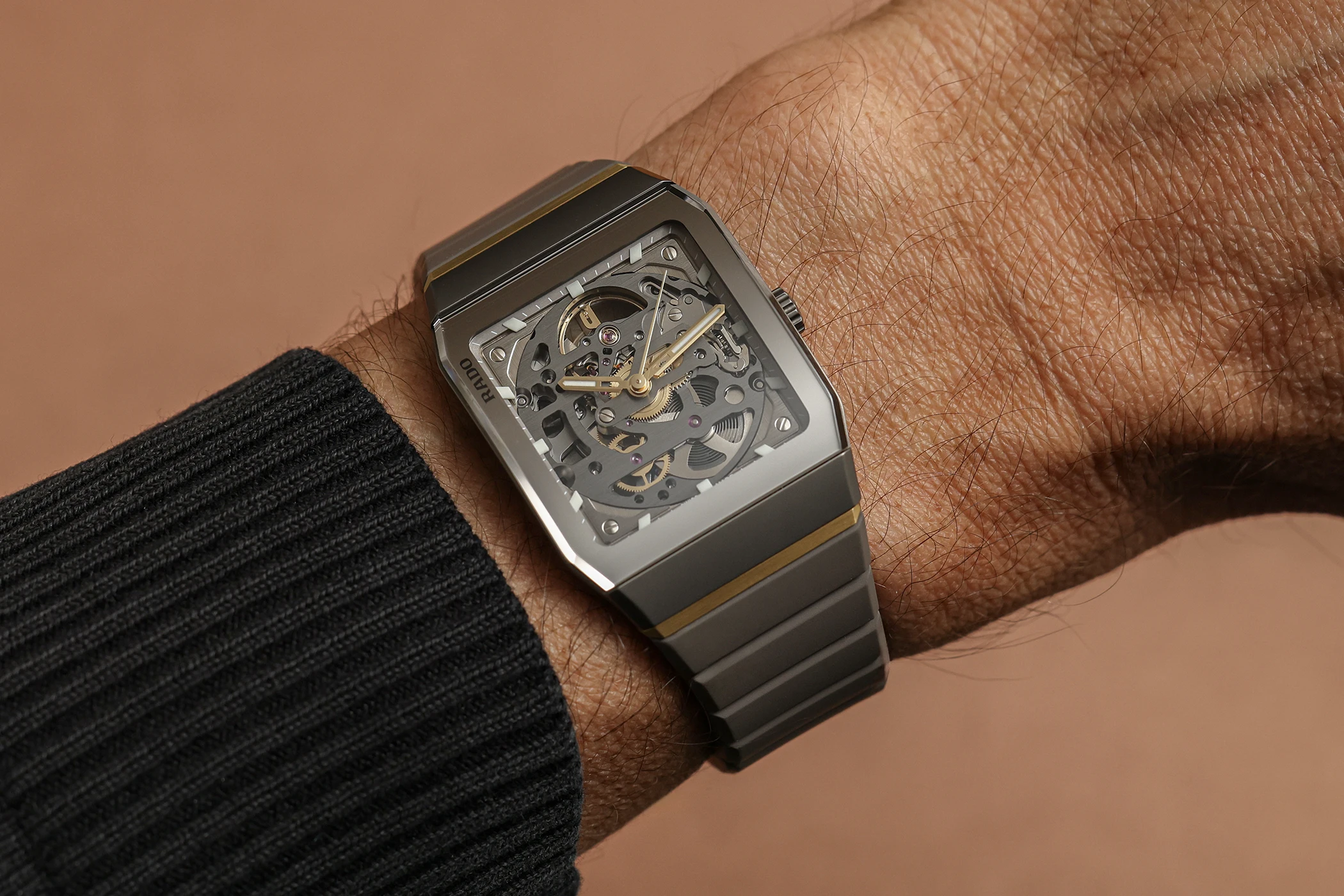
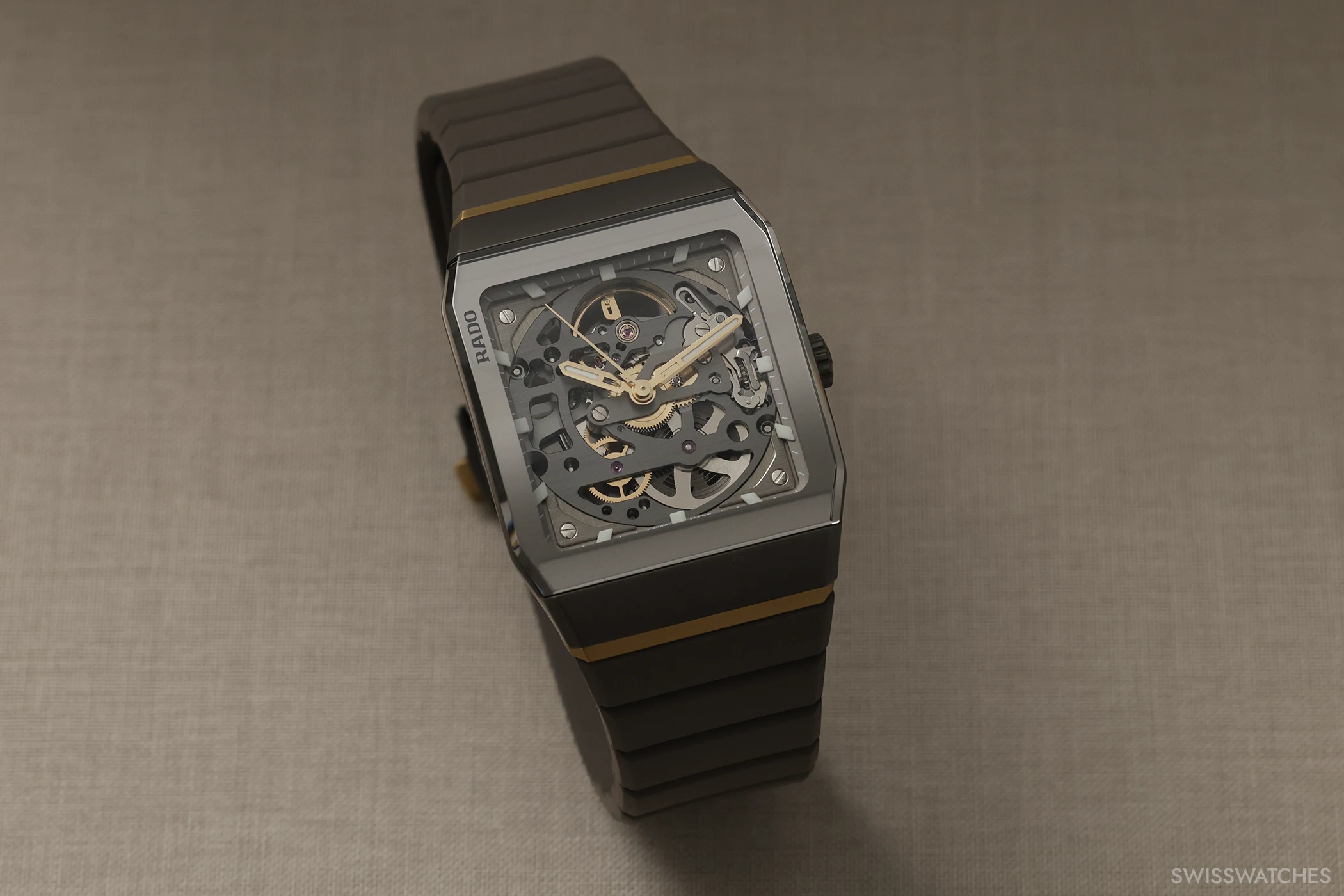
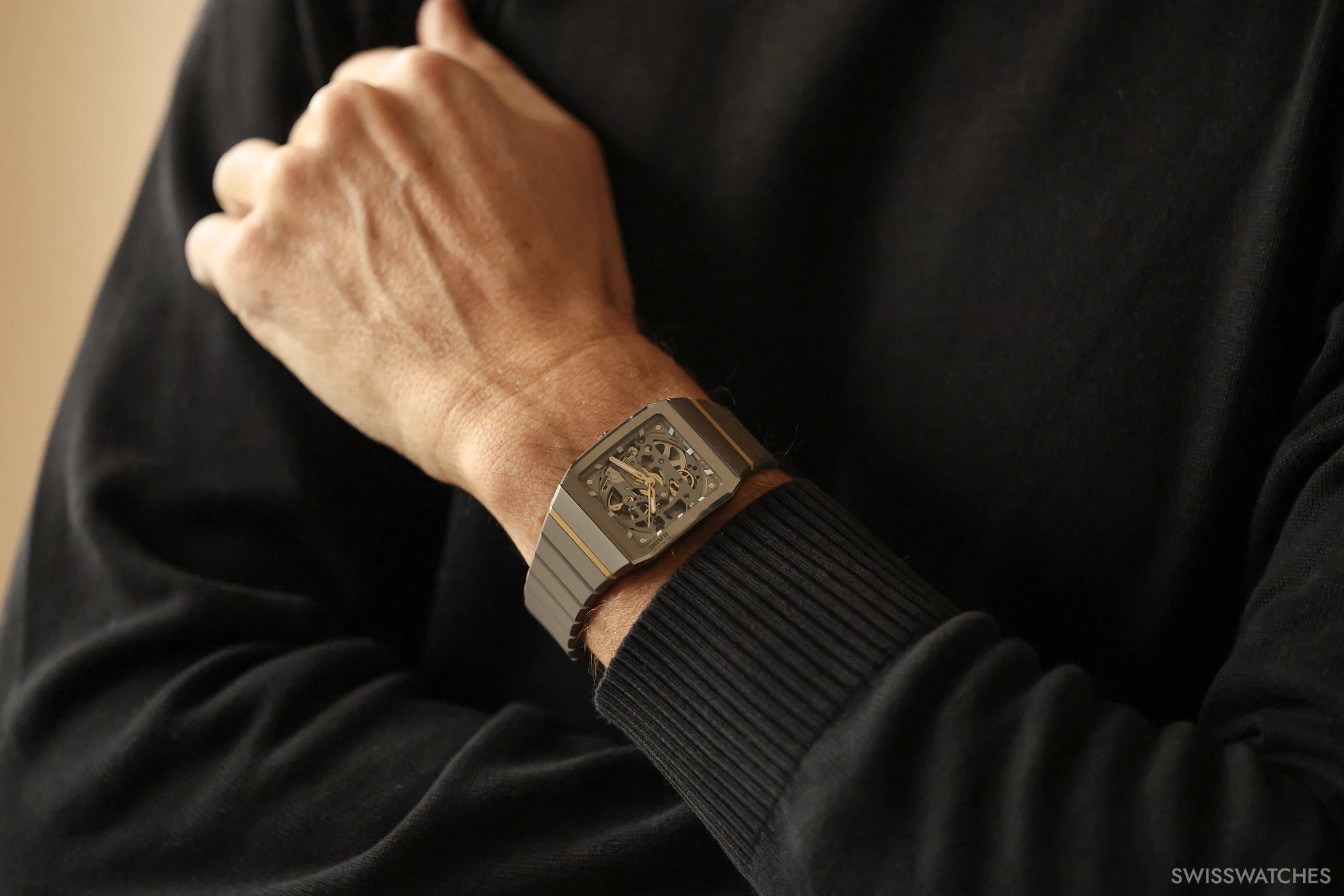
The Anatom has always reflected Rado’s core expertise, so it is only fitting that a skeletonised version has now been released as well. The Anatom Skeleton features a case made from matt plasma high-tech ceramic, a cylindrical sapphire crystal, and a rubber strap. In addition, it embraces the deliberate reduction of materiality.
Rado’s skeleton watches were first mentioned in 1954 in the catalogue for the Basel Sample Fair (MUBA), the predecessor of Baselworld. Yet it would take almost 70 years for this to become one of the brand’s specialities. In the meantime, the brand evolved into an expert in hard metals such as tungsten carbide, as well as sapphire crystal and ceramic. In keeping with this, Rado coined several slogans: Master of Materials, Art of Ceramic, and Art of Skeletonisation.
Rado has now applied this latter craftsmanship to the Anatom as well. The model first stepped onto the watchmaking stage in 1983 as a true avant-gardist, only to conquer it once again 40 years later.
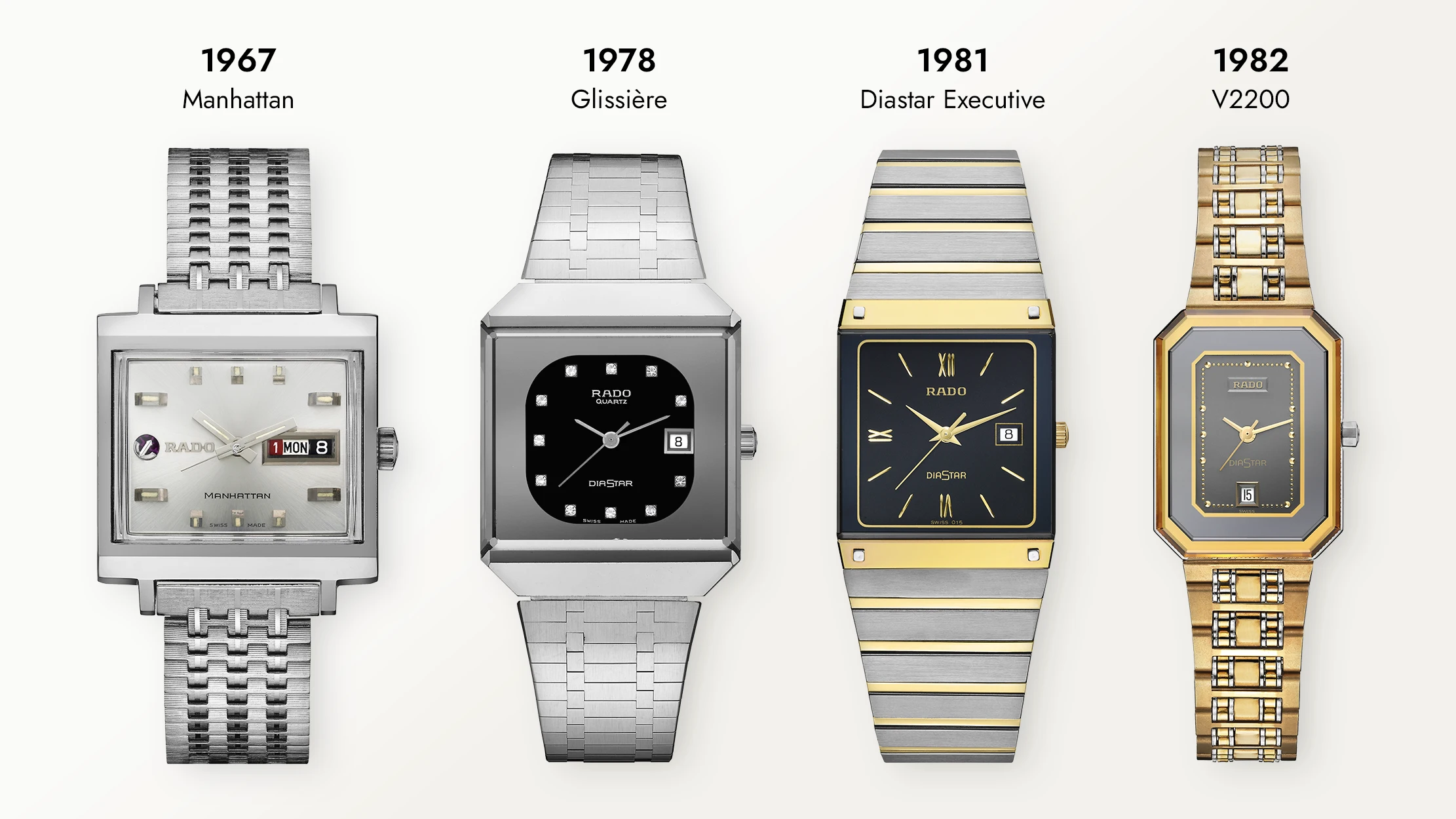
When the Anatom was launched in 1983, Rado had long since established itself as a pioneer of avant-garde, often rectangular designs, as demonstrated by a model from the 1930s. Many more timepieces of this type followed in the subsequent years.


One example is the Manhattan from the 1960s, which, thanks to a patented sealing system, was 100 per cent waterproof – a real innovation for a square watch at that time. In 1976, the Glissière line was launched, featuring a dovetail structure used to secure the sapphire crystal. Thanks to today’s highly advanced and extremely reliable adhesives, this ingenious mechanical device is no longer necessary.
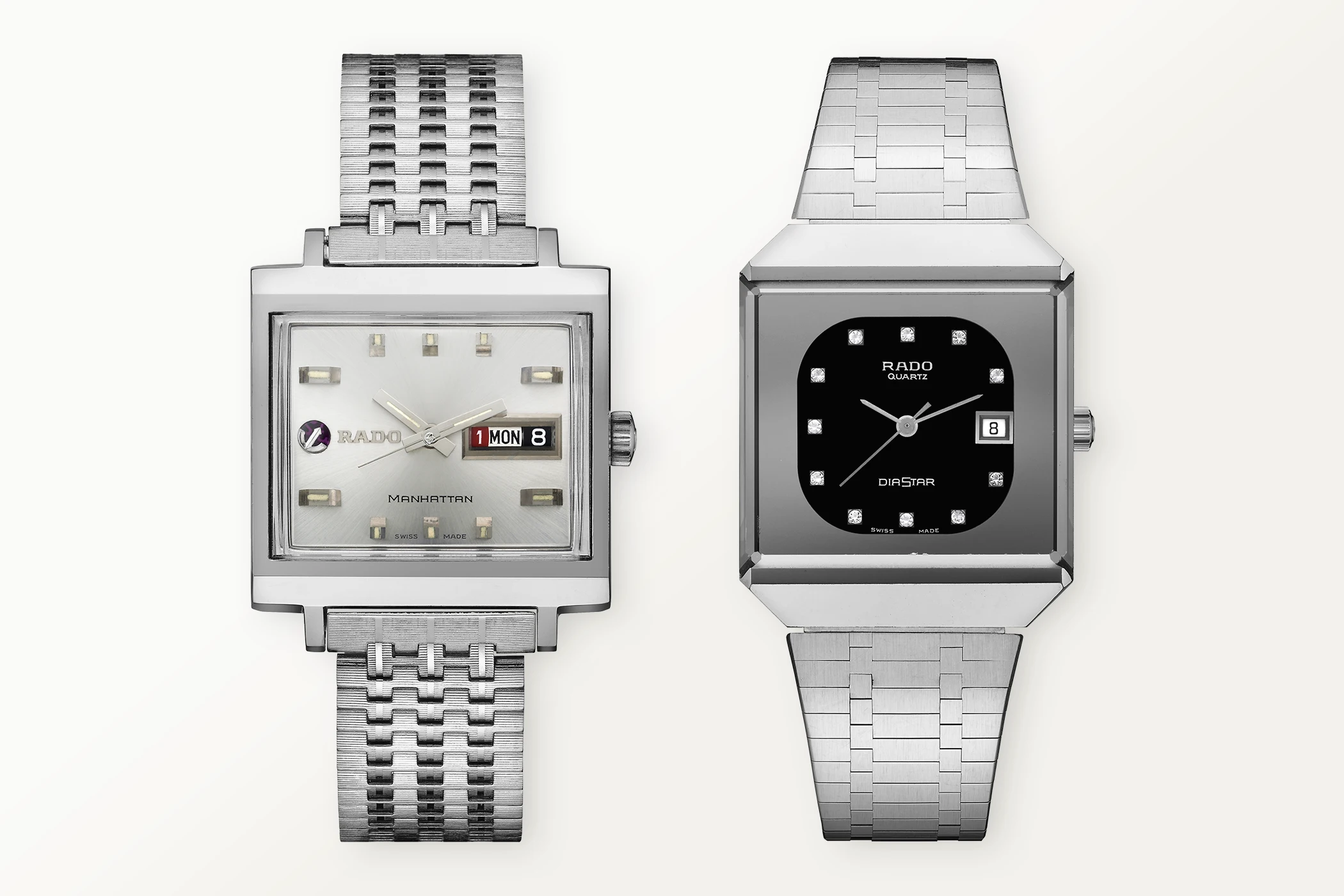
There are many more examples of Rado’s historical expertise in rectangular designs, affirming its title as the Master of Materials.
This passion for materials was also evident in 1983 in the development of the Anatom. The focus was on synthetic, scratch-resistant sapphire crystal, which at the time was typically reserved for premium models due to the demanding manufacturing process involved.
From the outset, Rado used it consistently for the Anatom. The convex curvature of the sapphire crystal – following the shape of the wrist seamlessly from one edge of the case to the other – posed a major challenge in the early 1980s, one that the Master of Materials mastered with confidence.
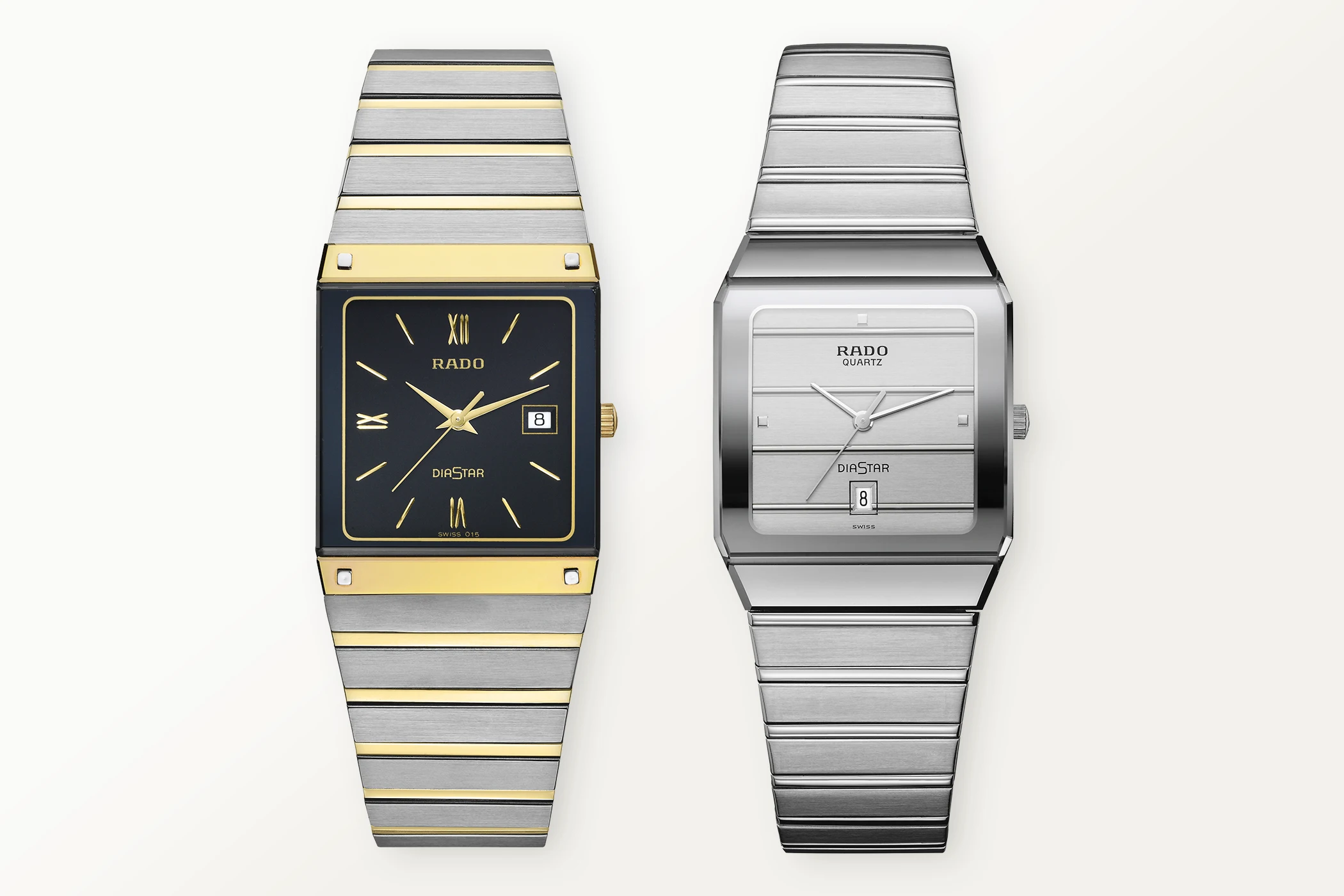
This was possible because Rado had already been conducting research into sapphire crystal since 1962. That was the year the DiaStar made its debut. Among its defining features were a tungsten-carbide bezel and a sapphire crystal.
Only through this expertise was the distinctive Anatom of 1983 able to come into being. The frameless sapphire crystal used in the model is produced in several steps and rounded on both the inside and outside.
The cylindrical sapphire crystal was accompanied by innovative shapes and variations in the strap and case lugs. This new design paradigm was to shape the public image of the brand for decades to come.

‘The innovative merging of the contours and design of a timepiece with finer, more “anatomical” aspects not only resulted in greater wearing comfort, but also in a flowing aesthetic. This created the ideal conditions for a product line that would endure for four decades and attract attention worldwide,’ said Adrian Bosshard, CEO of Rado, at the launch of the Anatom in 1983.
The first versions were equipped with a quartz movement, as was common in the early 1980s. In 1996/97, the first automatic model eventually appeared within the Anatom collection.
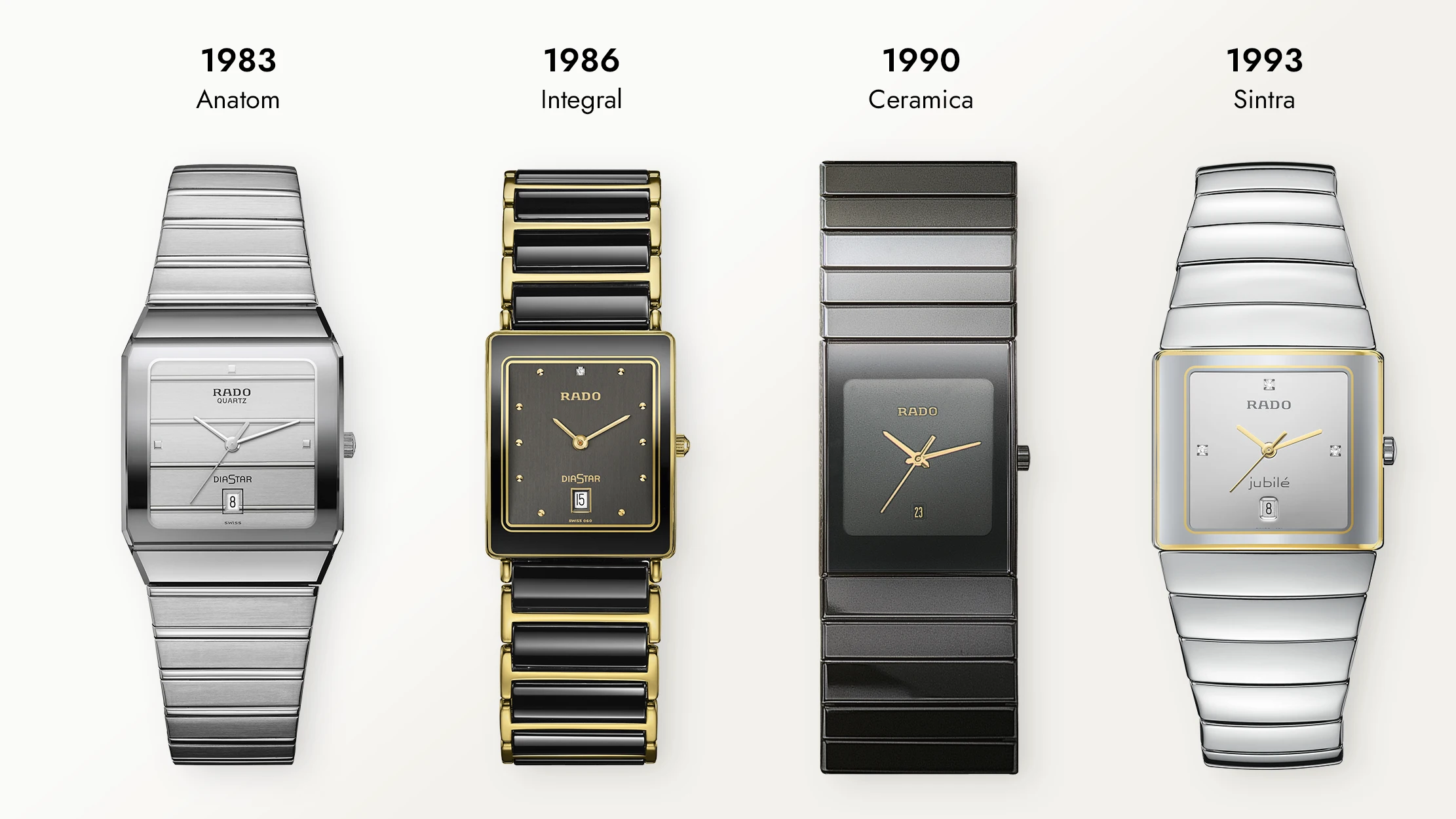
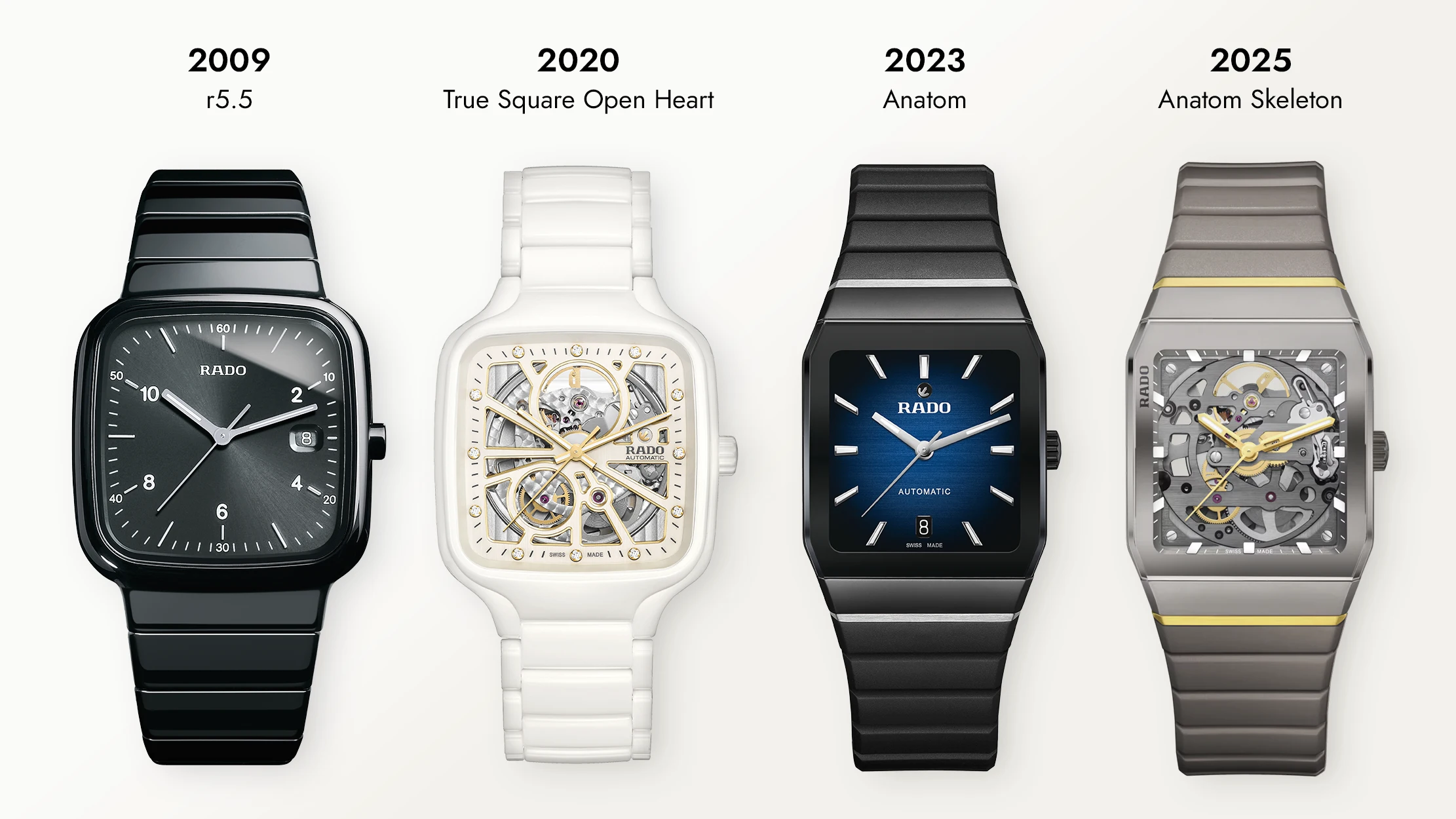
Anyone who takes a look at the Anatom from 2023, will first notice its cool design with a futuristic 1980s look. A look that is more in demand than ever. Yet the Anatom and its DNA are also a reflection of Rado’s history of materials, innovative strength, and modern design expertise, as my colleague Emilia Hoth vividly describes in her article ‘Rado’s Anatomy: What the Anatom Reveals about Rado’s Evolution‘.
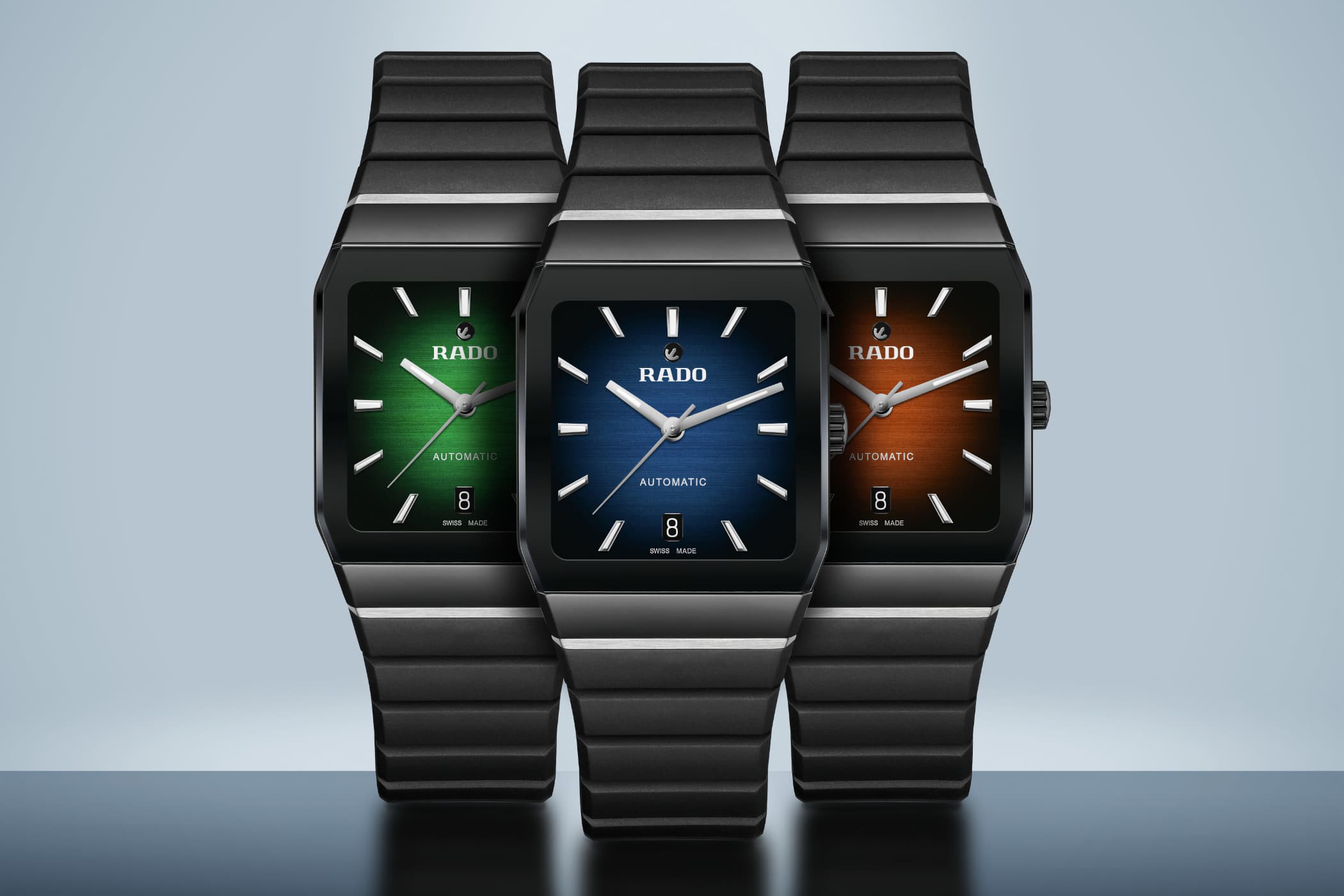
‘As always when Rado is involved, new technologies are at the forefront,’ emphasises Rado CEO Adrian Bosshard. The Anatom of 2023 lives up to its name even more than its predecessors. The tough, rather angular shapes of 1983 have given way to softer lines, which, together with the rounded sapphire crystal, reflect the term ‘anatomical’ even more clearly.
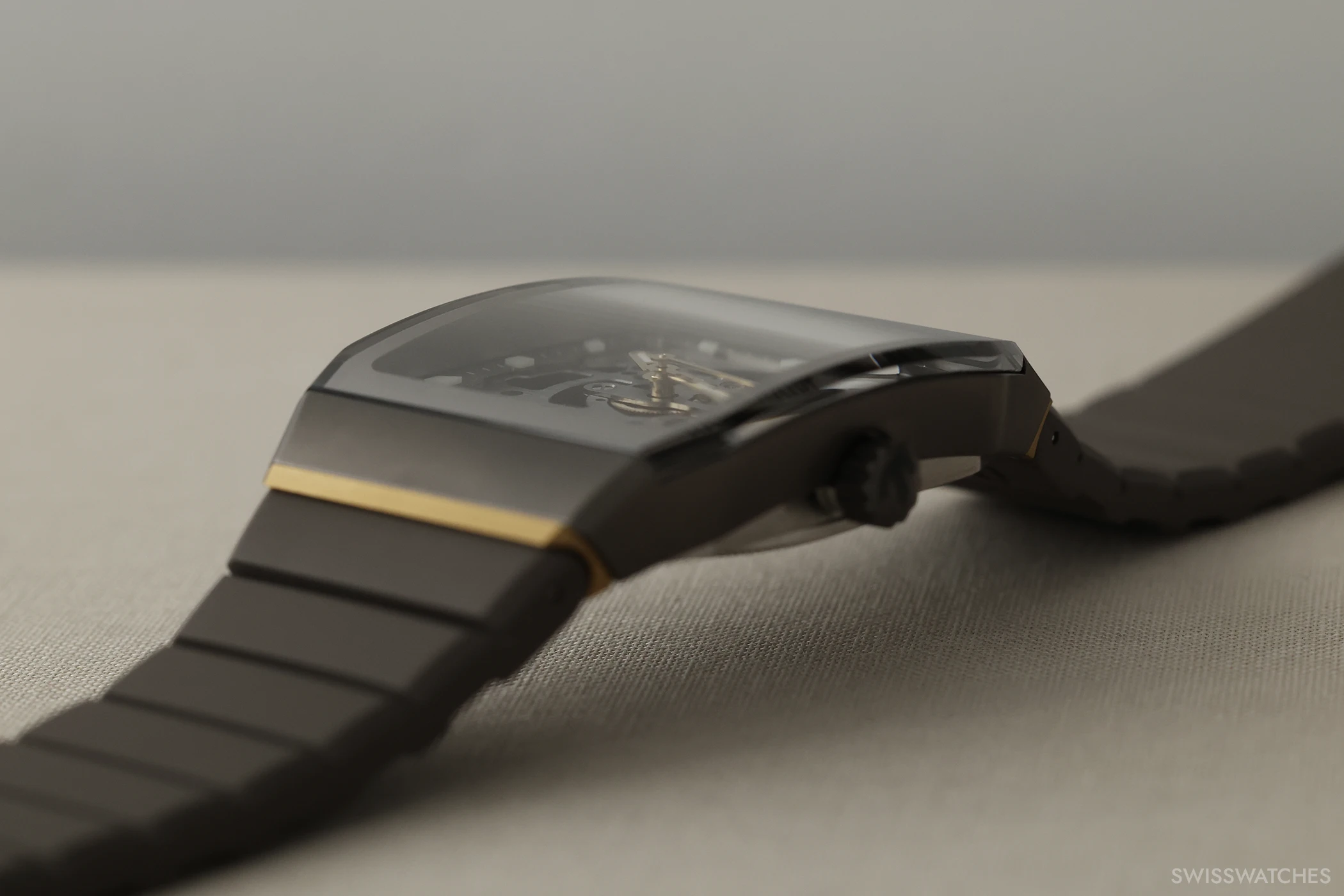
Now, with the new Anatom Skeleton, the Master of Materials is also demonstrating his artistry in omission. This is a fitting opportunity to take a look at some of Rado’s highlight models, in which the movement becomes the dial.
At Rado, the era of skeletonised and partially skeletonised timepieces began in 2010. By then, the watch industry had long been making use of computer-aided design. This allows the desired transparency to be taken into account from the outset when designing the movement, instead of removing material afterwards, as was the case in the past. The result is skeleton watches such as those from Rado, which are extremely popular thanks to their modern aesthetics.
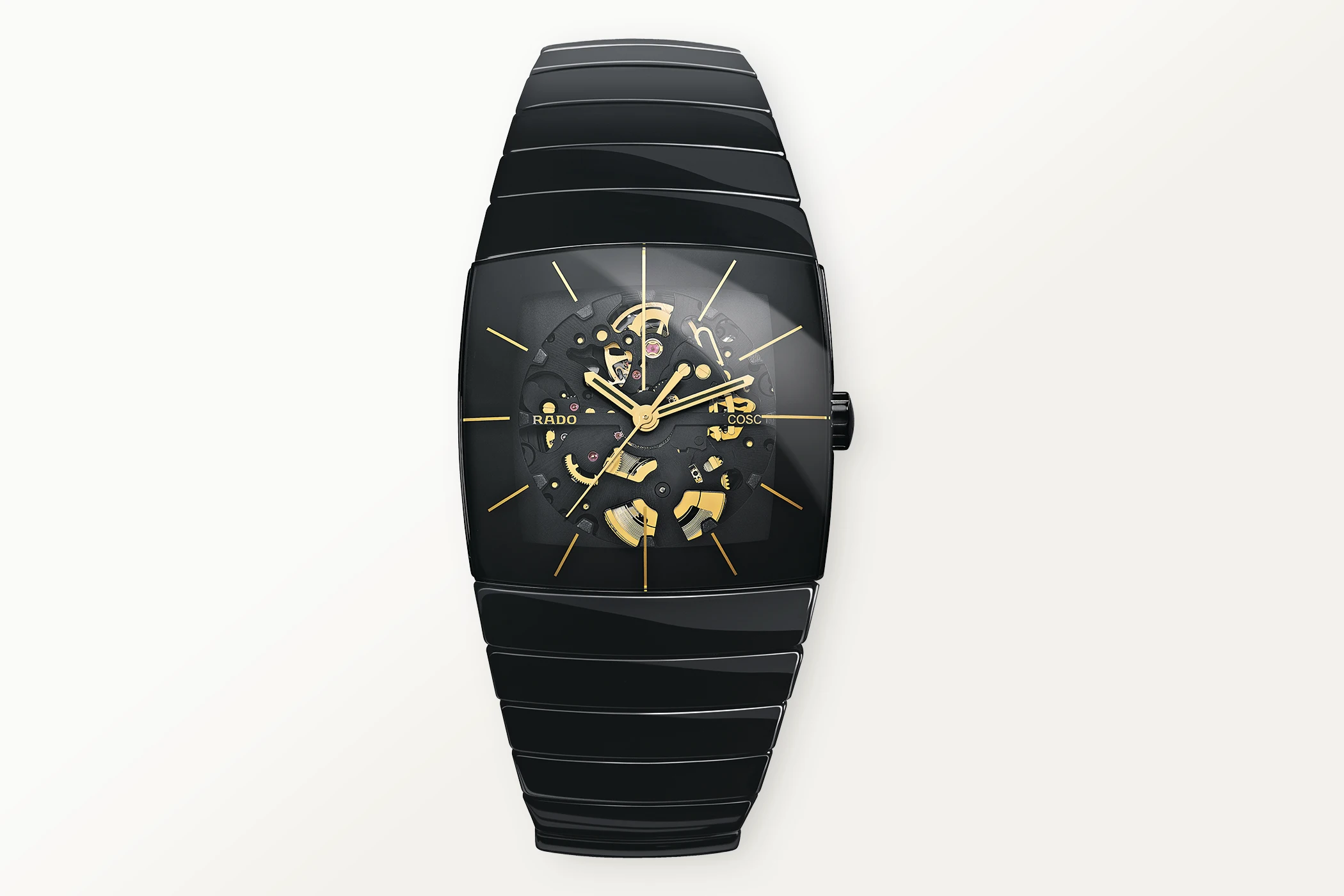
The Sintra Skeleton Automatic COSC, limited to 222 pieces, features a specially adapted, skeletonised COSC-certified movement and a convex case made from black high-tech ceramic. A circular aperture in the rectangular dial provides a clear view of the movement inside.
The True Open Heart Automatic houses the automatic calibre R734 with an 80-hour power reserve. It is protected by a monobloc case made from polished high-tech ceramic, available in finishes such as black, brown, or plasma. Geometric cut-outs in the dial reveal parts of the movement, including the wheel train, balance wheel, and movement plates.
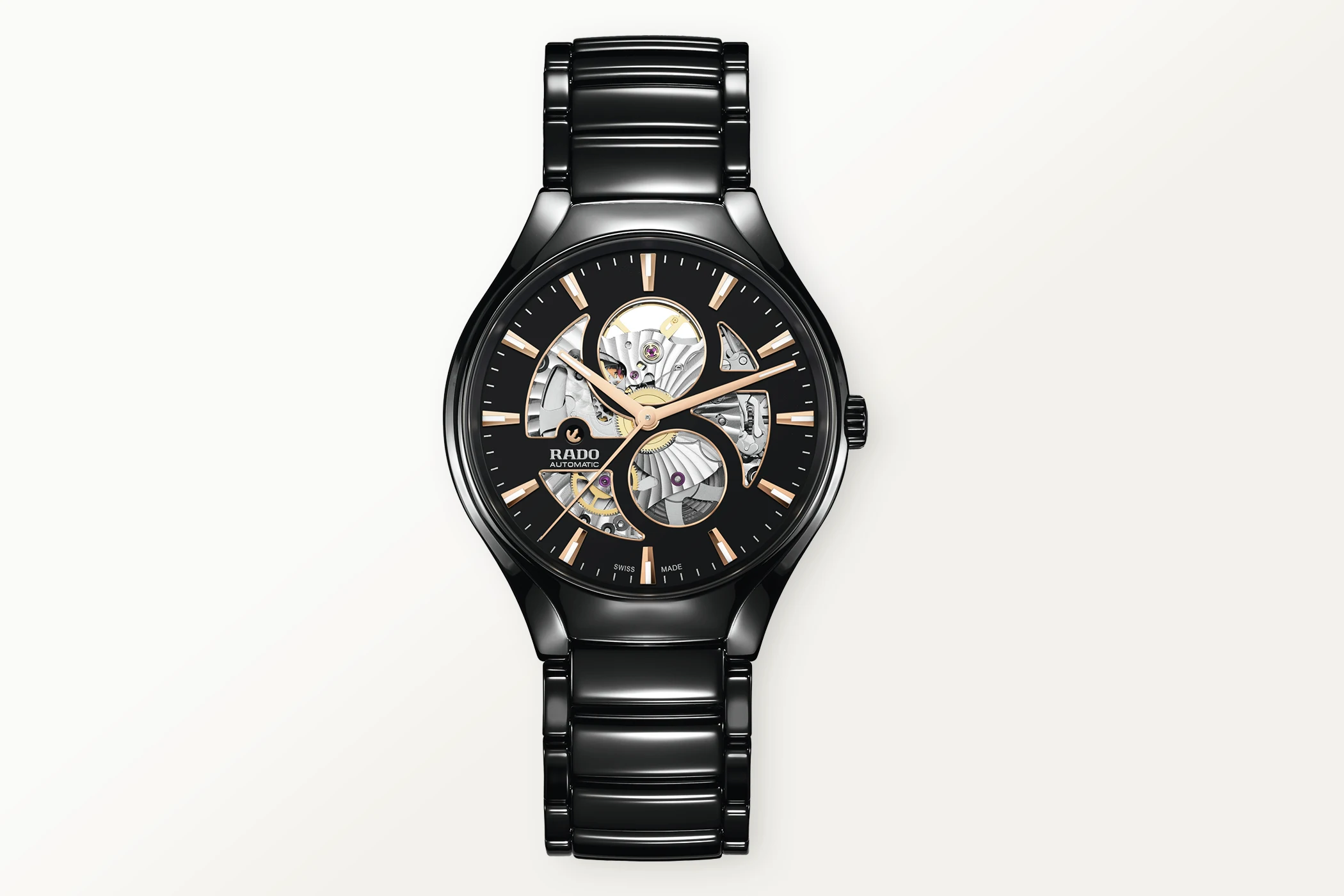
Shortly after the launch of the True Square collection, an Open Heart variant provided a first glimpse into the mechanical heart of the watch: the skeletonised automatic calibre R734. It was also Rado’s first square watch with a monobloc high-tech ceramic case.
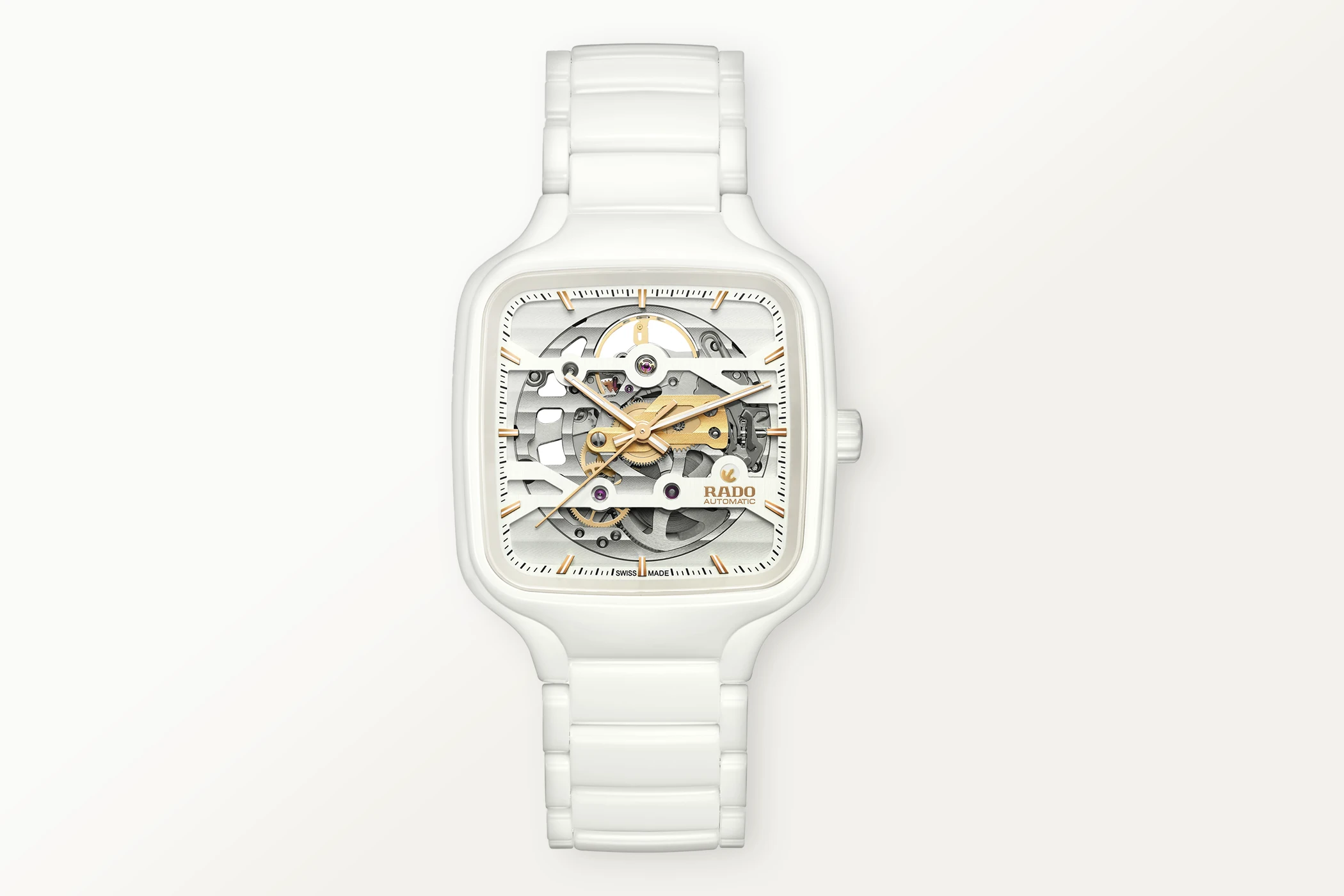
That year, Rado’s Captain Cook was fitted with scratch-resistant high-tech ceramic for the first time, both for the bracelet and the monobloc case. The dial beneath the box-shaped Chevé sapphire crystal and the caseback are made of black-coloured sapphire crystal, allowing the inner workings of the skeletonised R734 movement to be admired from every angle.
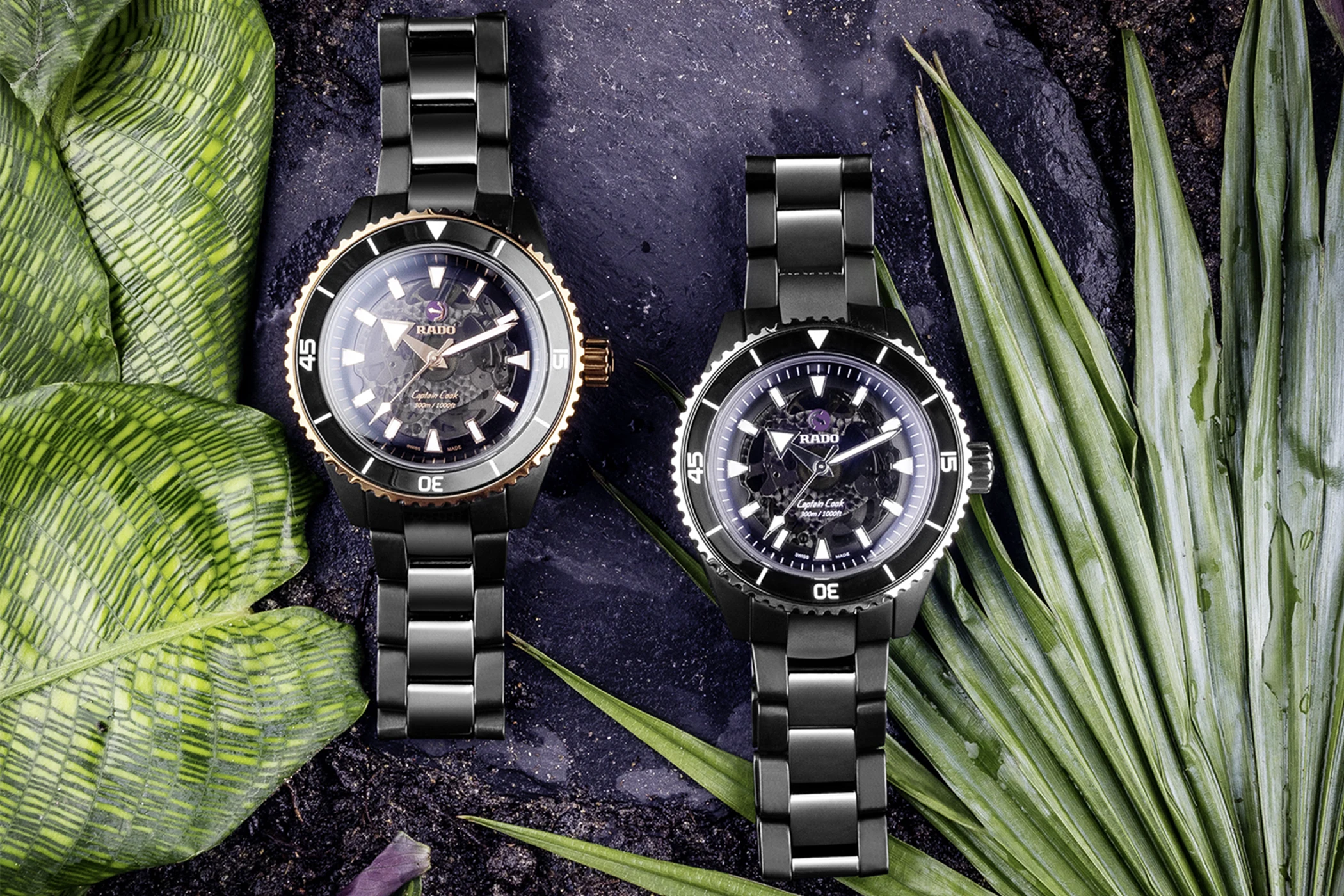
This limited edition model of the Captain Cook, with only 1,962 pieces produced, featured the debut of the automatic calibre R808 with a power reserve of 80 hours and an anti-magnetic Nivachron hairspring. The horizontally structured plate design of the movement can be admired through the lightly black-tinted sapphire crystal dial.
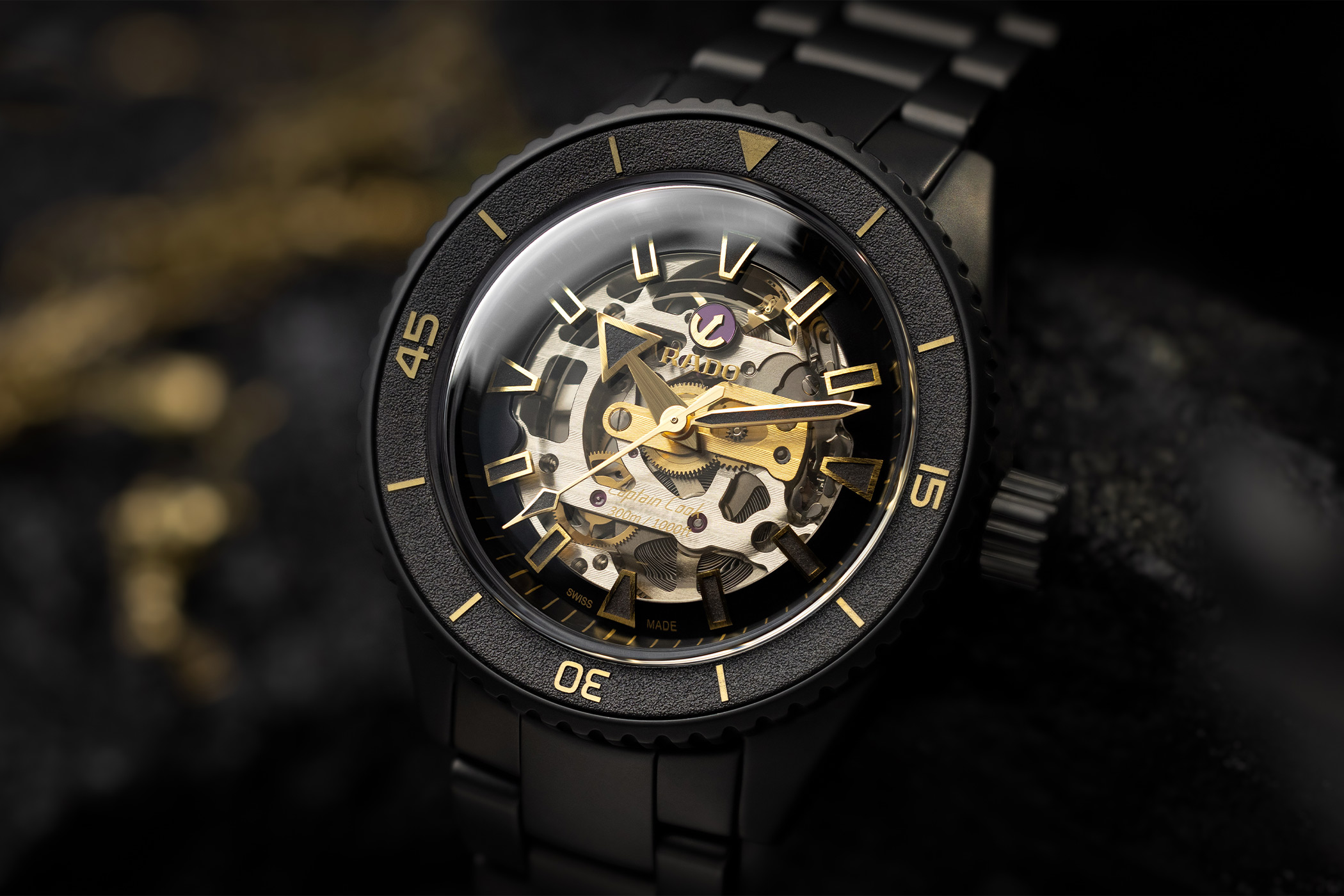
In 2023, Rado placed a particular emphasis on watches offering transparency and insight, with models such as the Captain Cook High-Tech Ceramic Skeleton, the DiaStar Original Skeleton, and the True Square Skeleton, shaping the concept of Art of Skeletonisation.
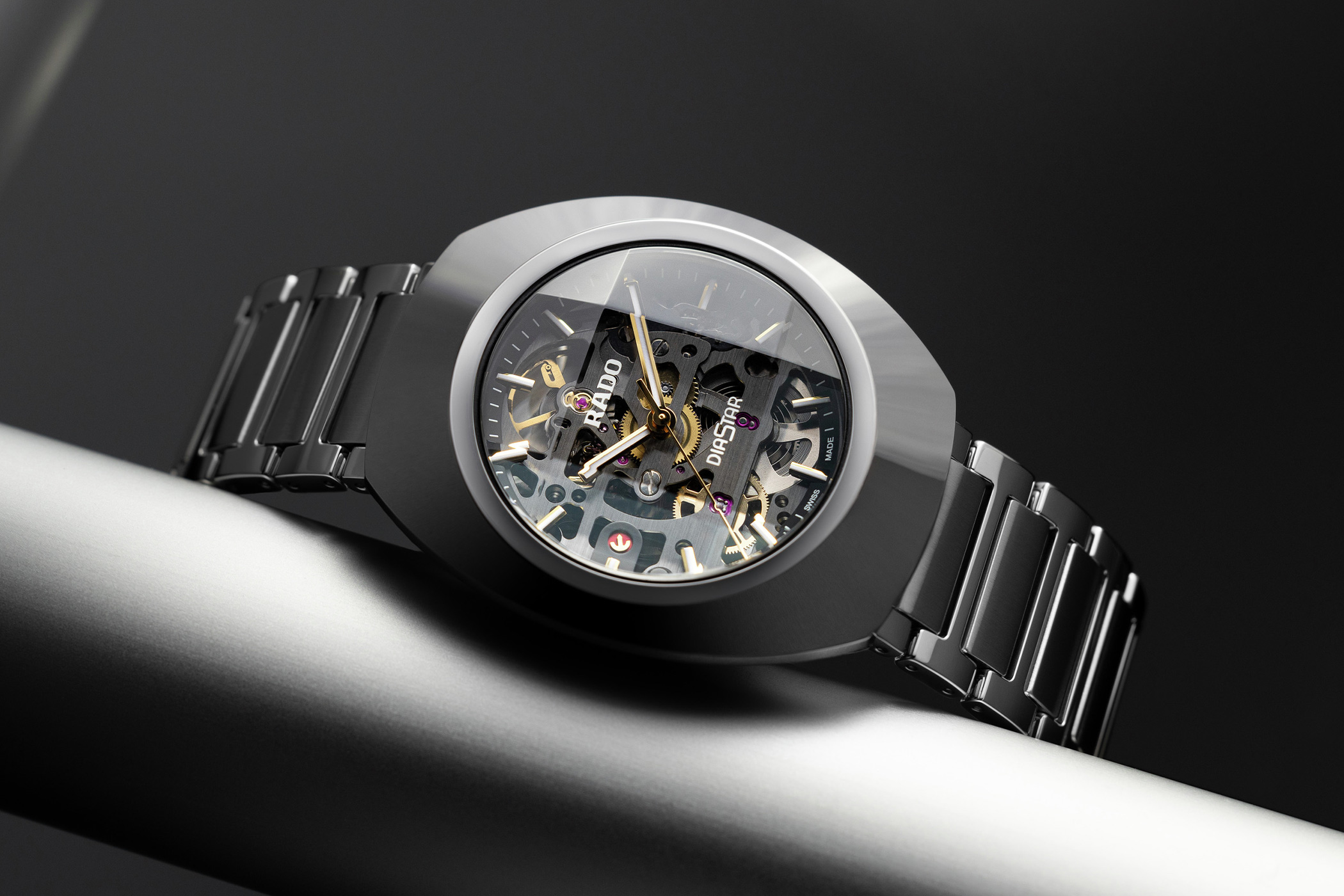
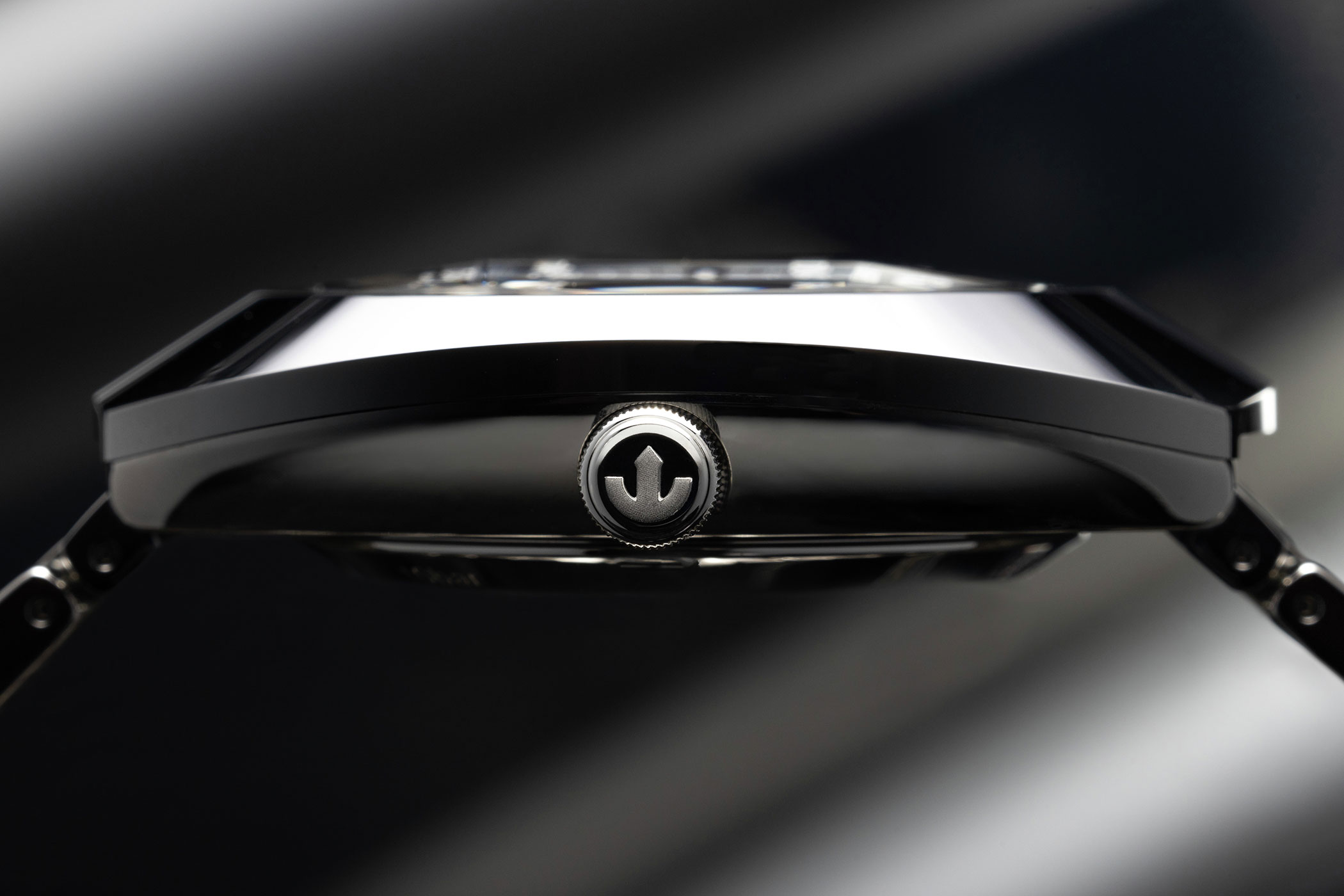
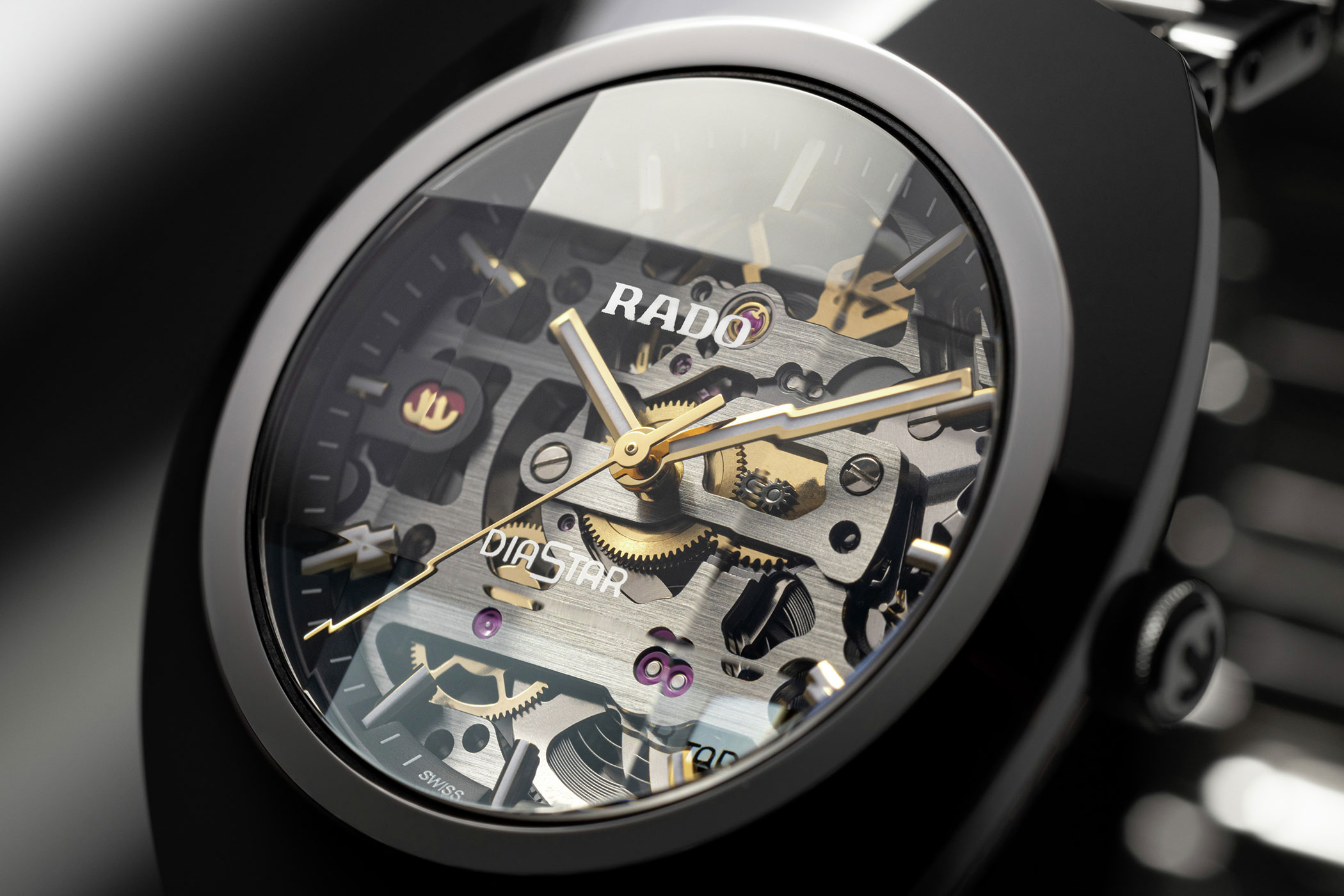
Highlights included the DiaStar Original Skeleton, inspired by the 1962 original. To celebrate the watch’s 60th anniversary, a change in materials was initially made in 2022. Instead of tungsten carbide, Rado chose Ceramos for the case and bezel. This hybrid alloy – approximately 90% high-tech ceramic and 10% metal – creates an exceptionally scratch-resistant composite. The 2023 version of the DiaStar was also skeletonised, revealing the automatic calibre R808 introduced in 2022.
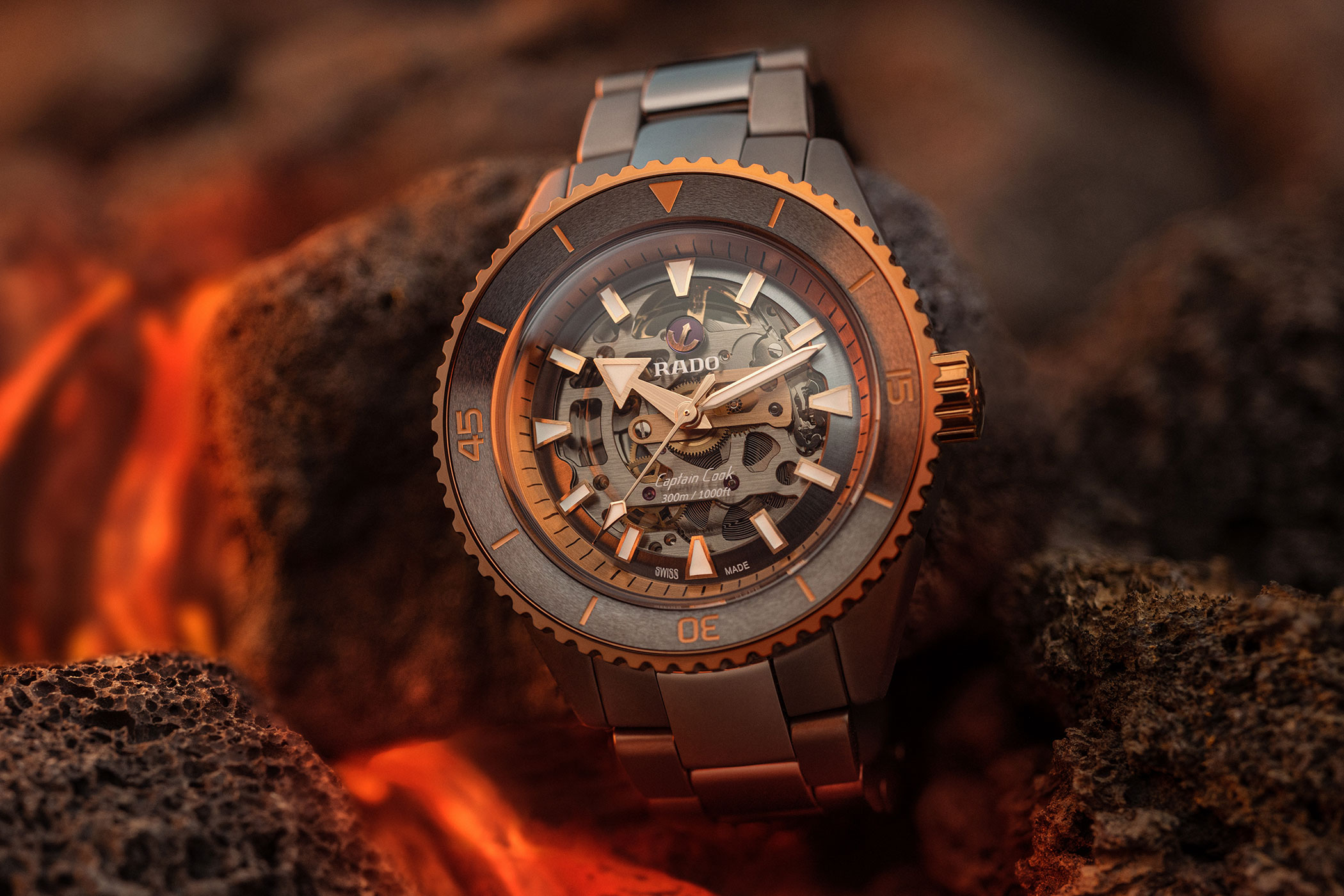
Another edition of the Captain Cook with a skeletonised dial was released in 2023. This collection was first launched in 1962 and was successfully reissued in 2017. The monobloc case of the Captain Cook High-Tech Ceramic Skeleton is made of plasma high-tech ceramic and houses the R808 movement. It is visible through the double anti-reflective sapphire crystal in box-shape style, the grey-tinted sapphire dial beneath, and the titanium caseback with sapphire crystal.
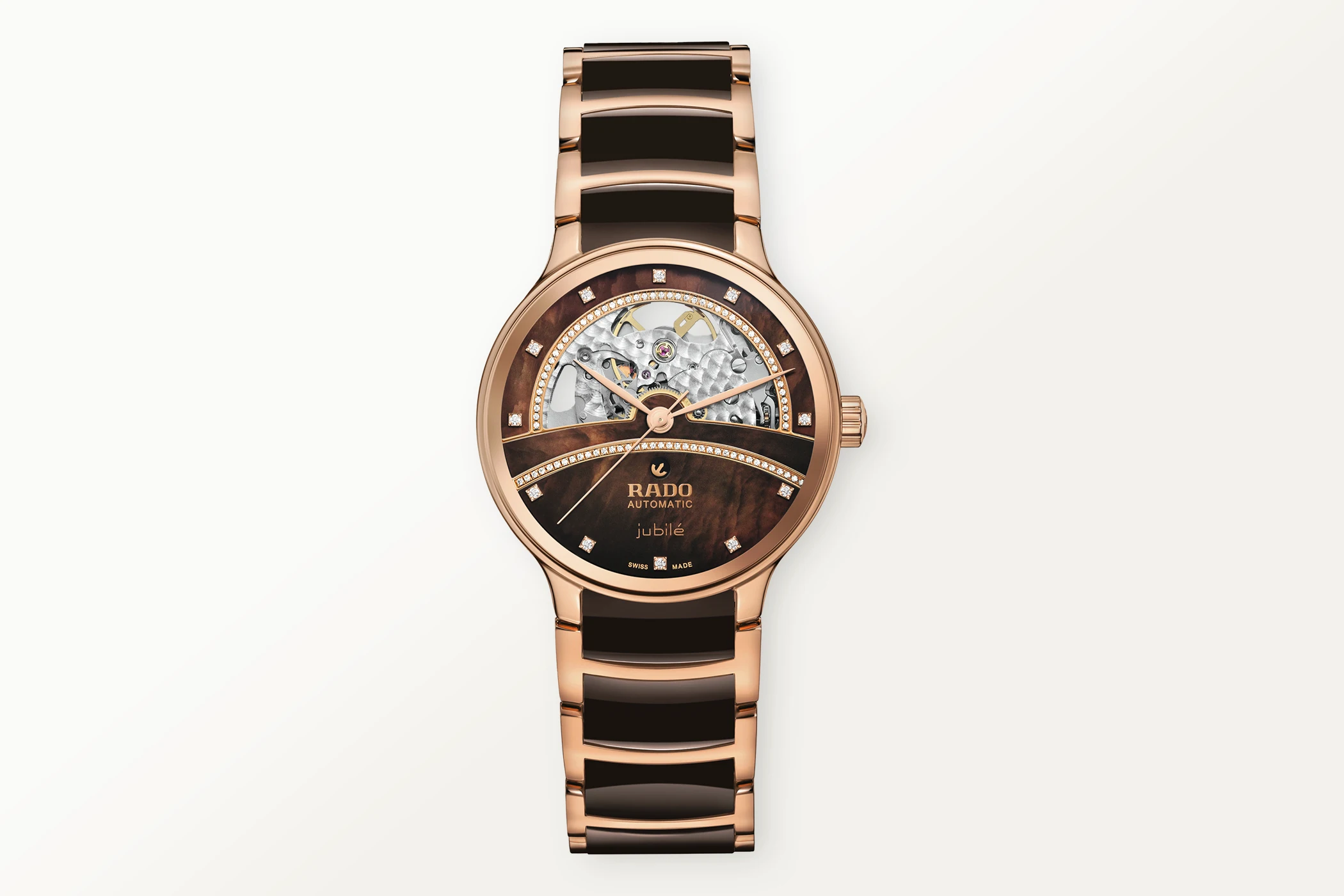
Introduced in 2010, Rado has continuously evolved the Centrix collection. After a partially skeletonised version in 2015, a further open-heart variant appeared in 2024. It provides the automatic calibre R734 with suitable visibility: through the sapphire-crystal caseback of the rose-gold-coloured PVD-coated stainless-steel case and via the generous aperture in the upper half of the mother-of-pearl dial.
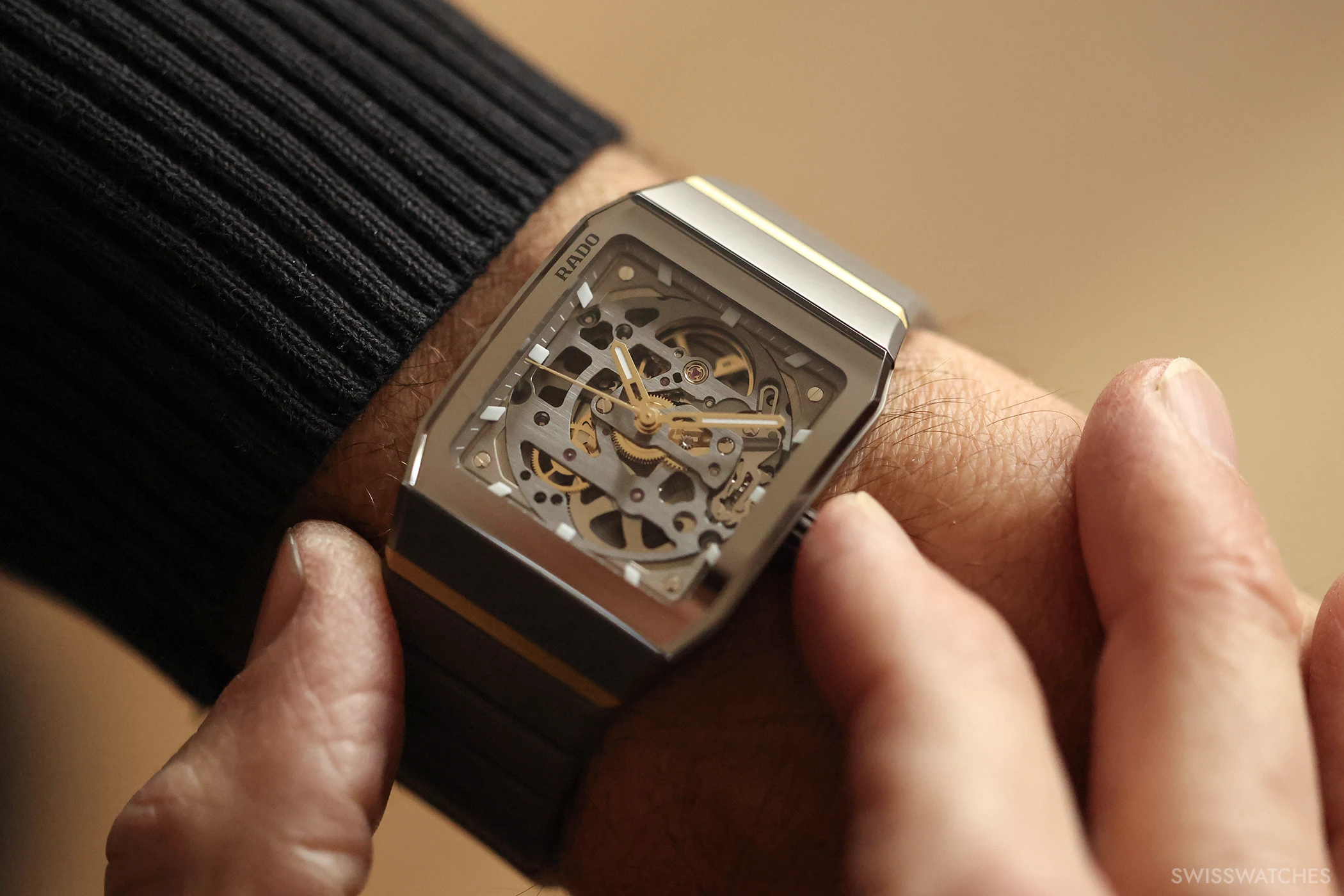
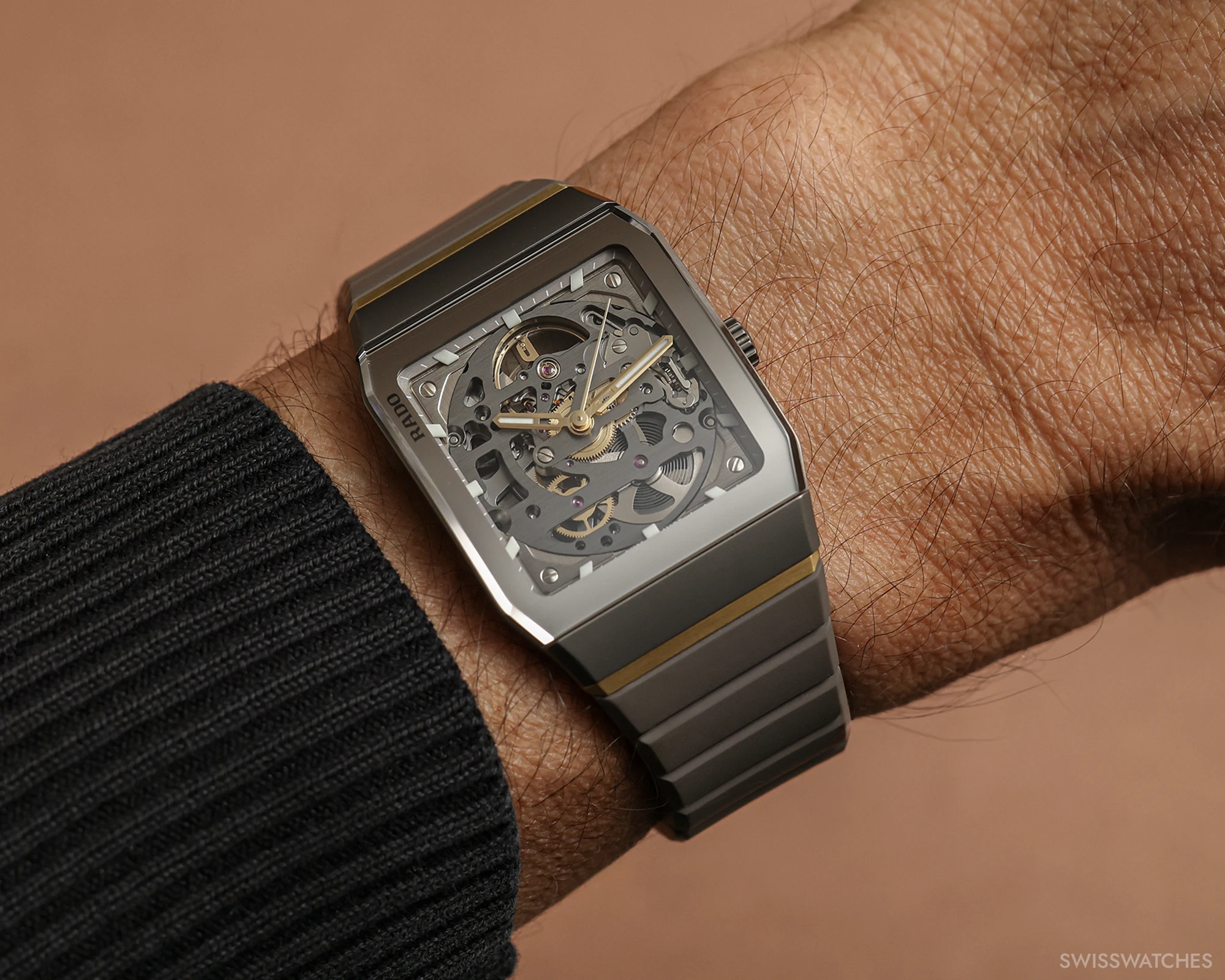
The Anatom, which celebrated a spectacular comeback in 2023, now further emphasises its inherently avant-garde design through the art of skeletonisation. Here, too, the automatic calibre R808, tested across five positions for accuracy, is used. The movement is fully anthracite-coloured and decorated with horizontal brushing.
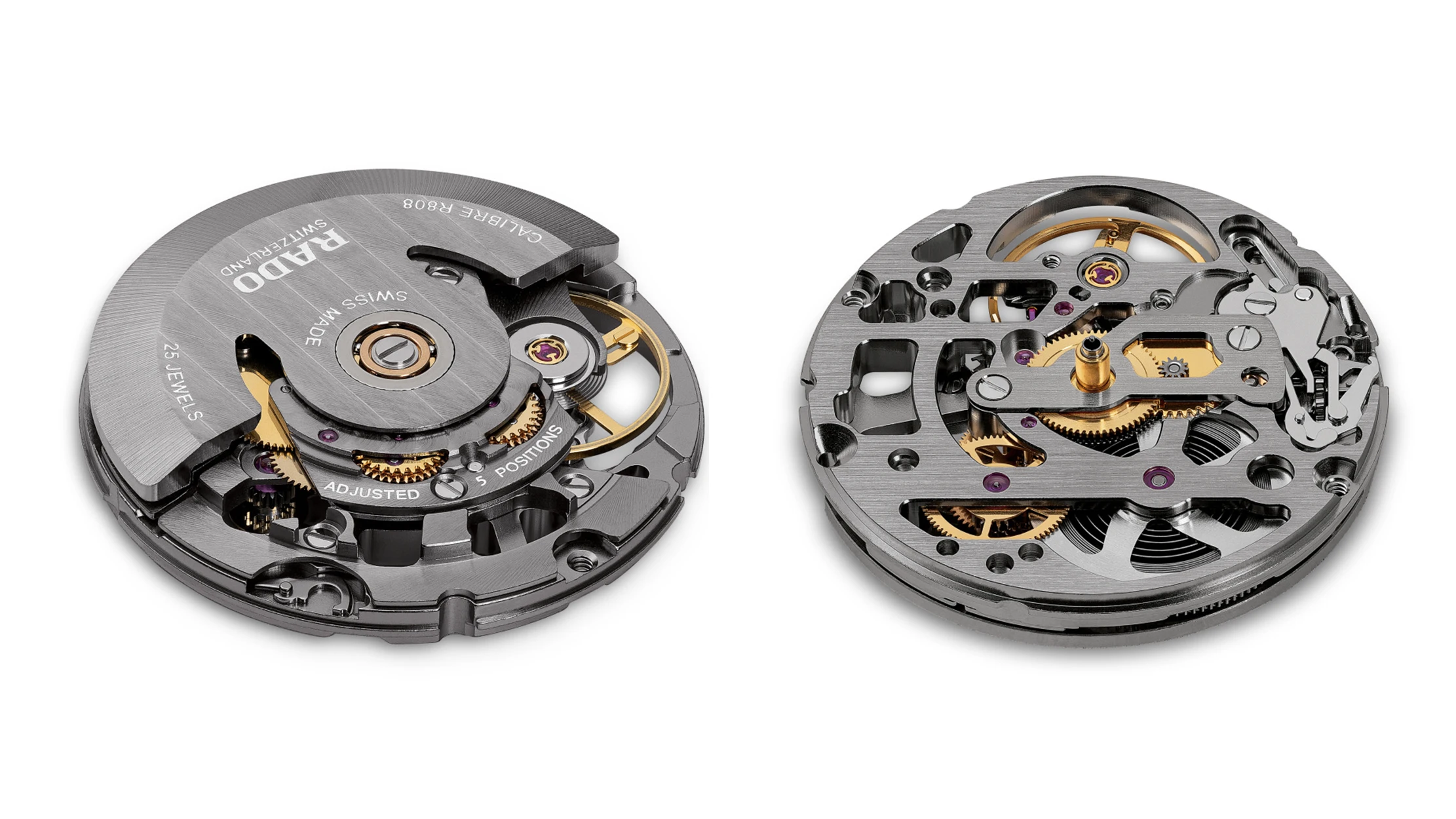
The mainplate, specially developed for this movement, and its intermediate-wheel bridge enable the construction of a watch that completely dispenses with a dial. The hour wheel is held in place by this bridge instead of by the dial, as is usually the case. The calibre offers hours, minutes, central seconds and an 80-hour power reserve.
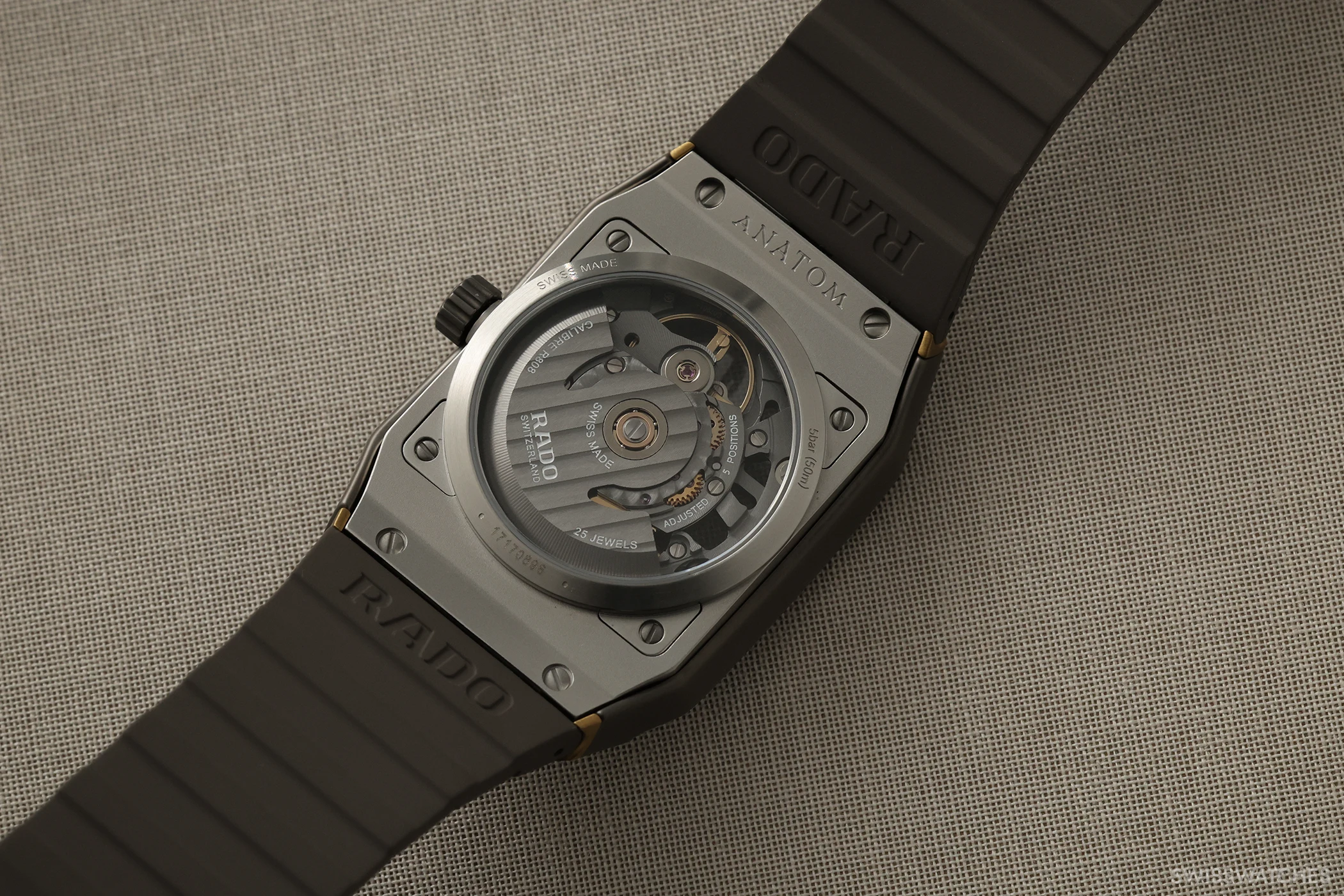
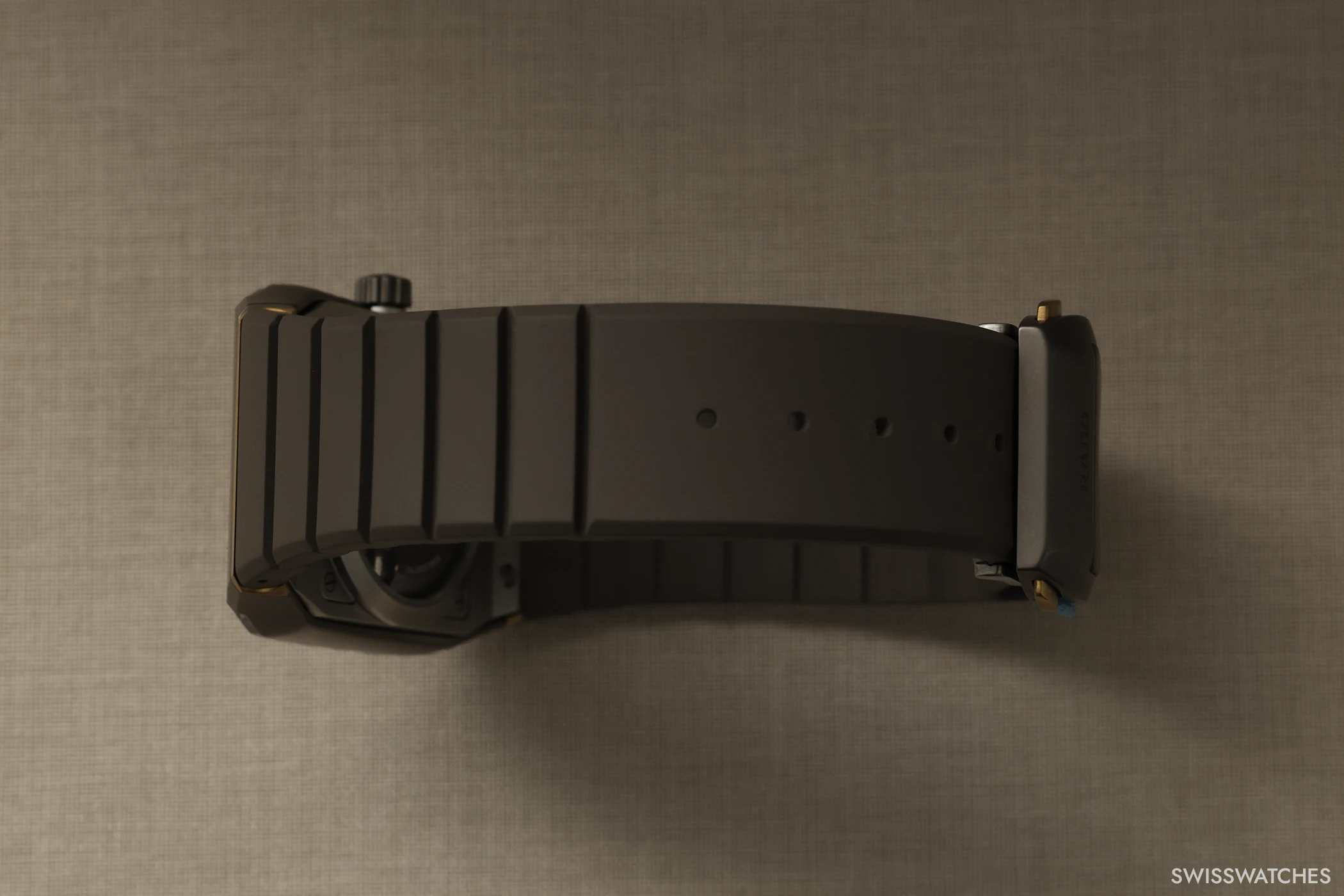
Protection is provided by the stainless steel case, which is water-resistant to five bar, with a bezel made of plasma high-tech ceramic measuring 32.5 x 46.3 x 11.5 millimetres. In addition to the view from above, the stainless steel caseback with sapphire crystal offers another open view of the Anatom Skeleton movement. A strip of yellow gold-coloured, PVD-coated stainless steel marks the transition to the grey rubber strap, matching the skeletonised minute and hour hands, the central second hand, and parts of the movement.
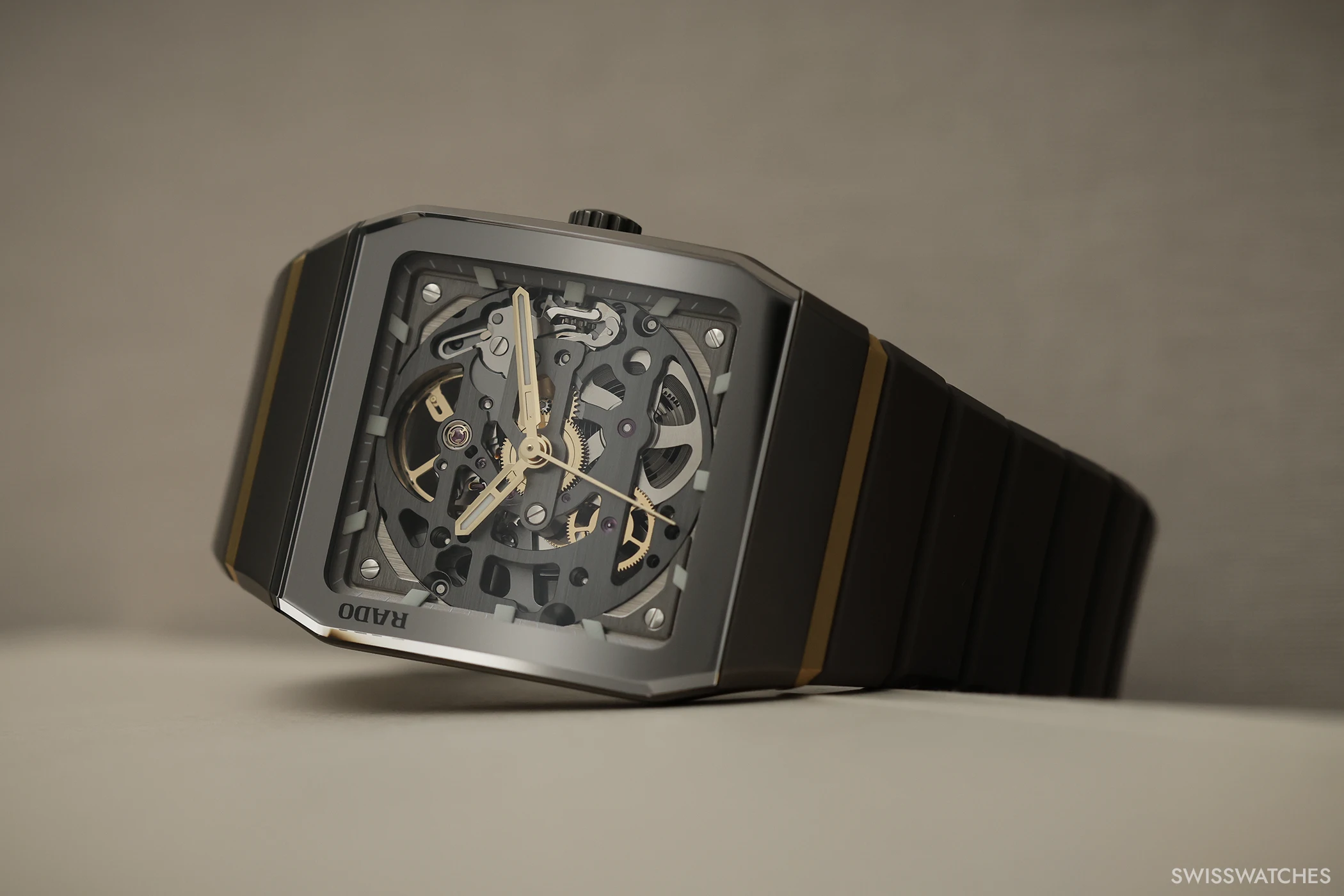
The strap continues the tapering lines of the case and sits comfortably on the wrist. The bevelled edge of the sapphire crystal and the ceramic case is echoed by the bevelled edge of the strap.
The Anatom Skeleton is available now and priced at 4,450 euros.
In the watch industry, especially the Swiss watch industry, discretion is highly valued. Information about production volumes or which suppliers manufacture components for which brands is usually kept behind closed doors.
Nevertheless, transparency is evident in the watches themselves. Today, elaborate skeletonisation can be found in many collections.
What appears to the observer as fascinating insights into the internal workings of the mechanical drive, seemingly light and airy and, in the best case, elaborately decorated, is in fact a craft of the highest quality. In addition to removing the dial, it is necessary to eliminate as much material as possible from the movement without compromising its stability and functionality.
By contrast, an ‘openworked’ watch offers only a limited view of the movement through an aperture in the dial, usually revealing the oscillating balance or the tourbillon.
The skeletonisation of a movement requires patience, craftsmanship and/or precise CNC machines, techniques such as electroerosion and, as always, a great deal of watchmaking expertise.
For the final result to be convincing, cut-outs on various levels must align perfectly so they are not obscured by remaining material. The components of a skeleton watch are usually connected by slender bridges. Often the caseback is also transparent, allowing the movement to be viewed right through the ‘skeleton’.
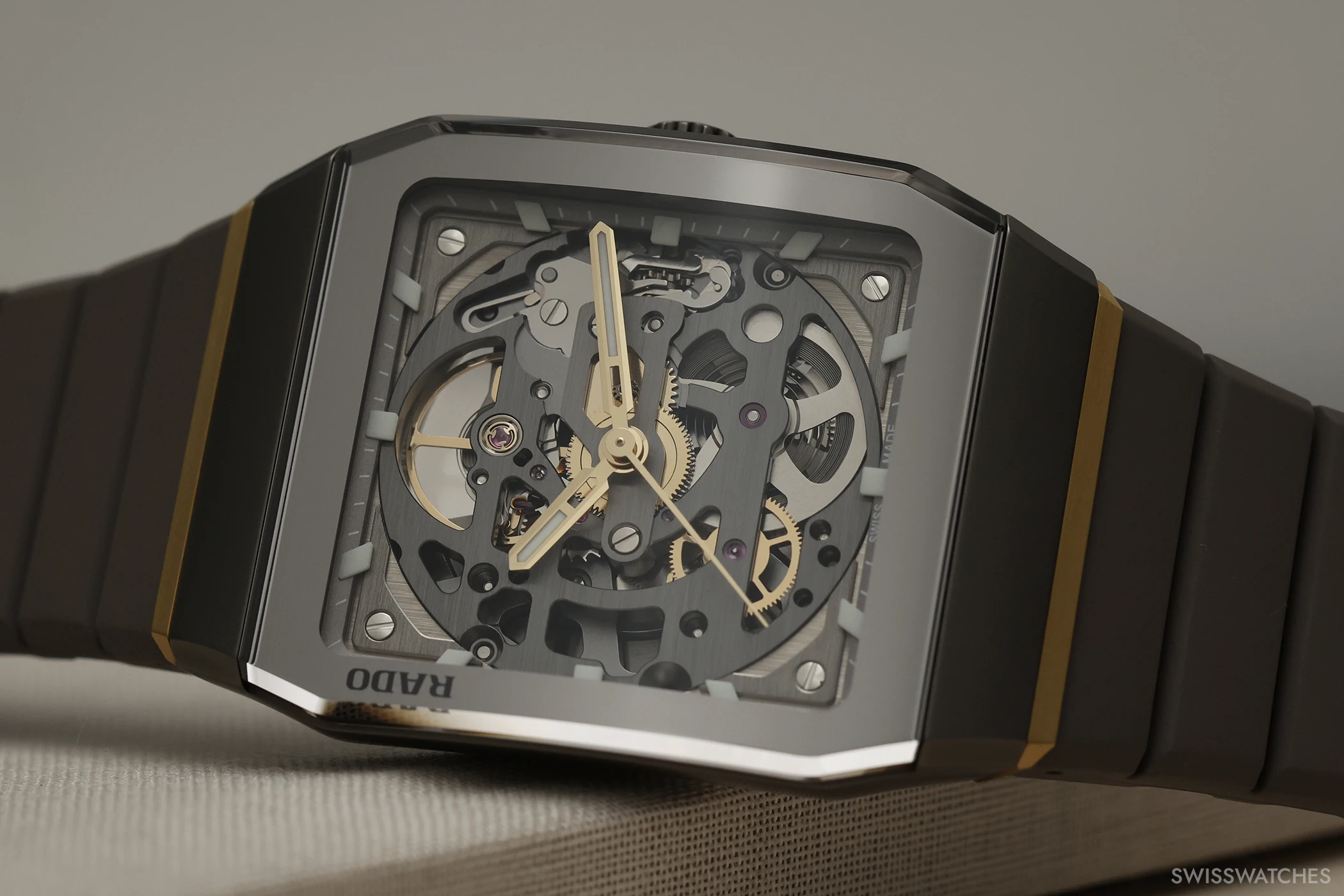
And because nothing can be hidden in such a watch, the art of skeletonisation also demands mastery of anglage – the bevelling of the many edges created by the removal of material. These edges are polished at a 45-degree angle to form the chamfer, which is unforgiving of any flaws. The meeting points of the chamfers, in particular, require absolutely precise and razor-sharp execution.
One of the pioneers of skeleton or open-view watches was André Charles Caron (1697–1775). He was the court watchmaker to King Louis XV and specialised in precise, decorative timepieces – pocket watches, of course, with dimensions far larger than the delicate components of a modern wristwatch.
Abraham-Louis Breguet, who established his own watchmaking workshop in Paris in 1775, also practised the art of omission or rather, the art of revealing the movement. In 1802, the Swiss-born watchmaking genius presented a timepiece with a rock-crystal case that laid bare and simultaneously protected its inner workings.
With the triumph of wristwatches in the early 20th century, interest in skeletonisation grew, though such pieces initially remained rare. When quartz watches threatened to replace mechanical timepieces from the 1970s onwards, some manufacturers turned to open views of the movement to distinguish themselves from battery-powered models and highlight their own mechanical expertise. Fortunately, that hasn’t changed to this day.