The Patek Philippe Salon in Geneva is the only watch boutique in the world where the entire current collection is available for viewing.

One of the smallest and thinnest perpetual calendar watches is available in new versions and, for the first time, without gemstone settings within the Traditionnelle line.
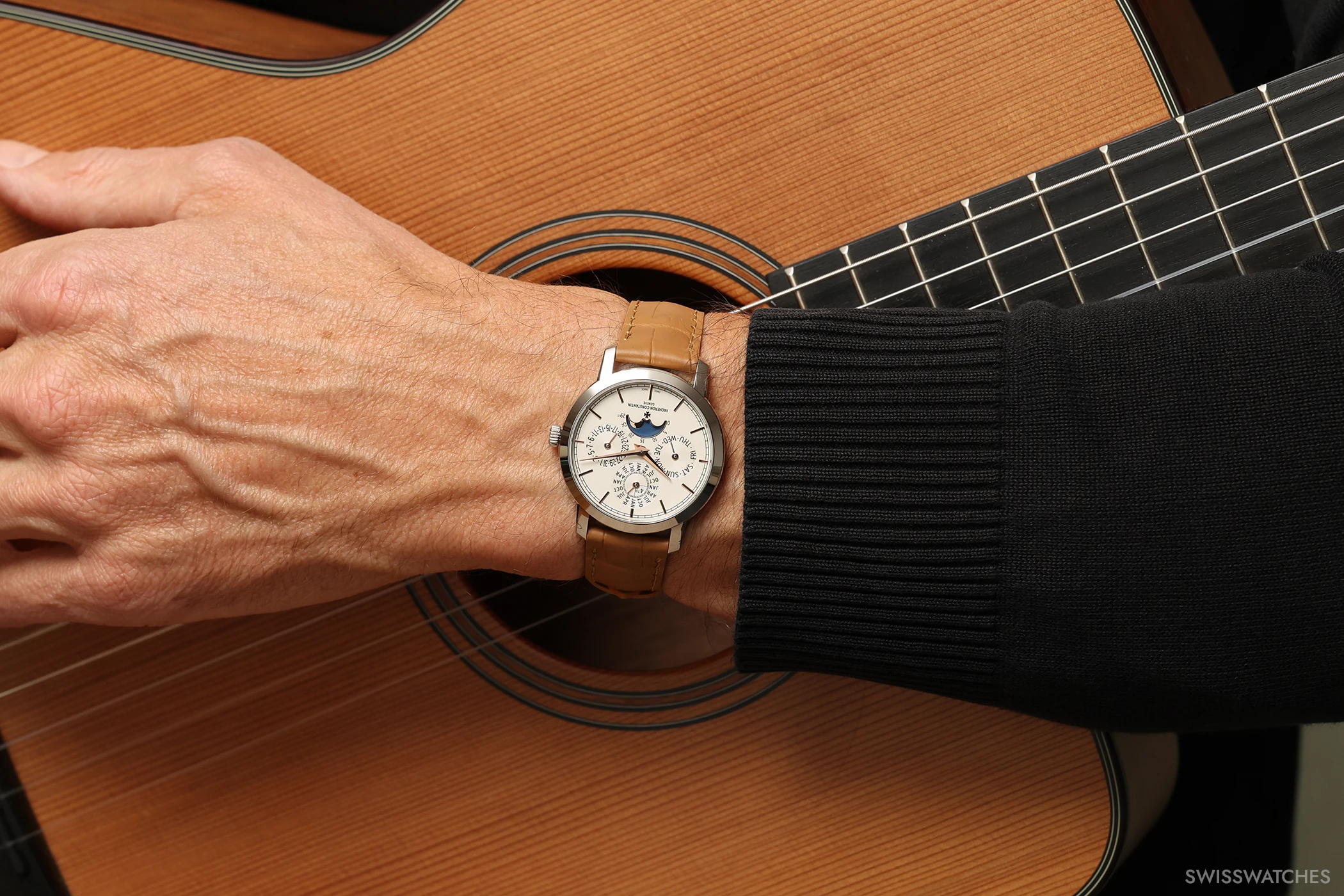
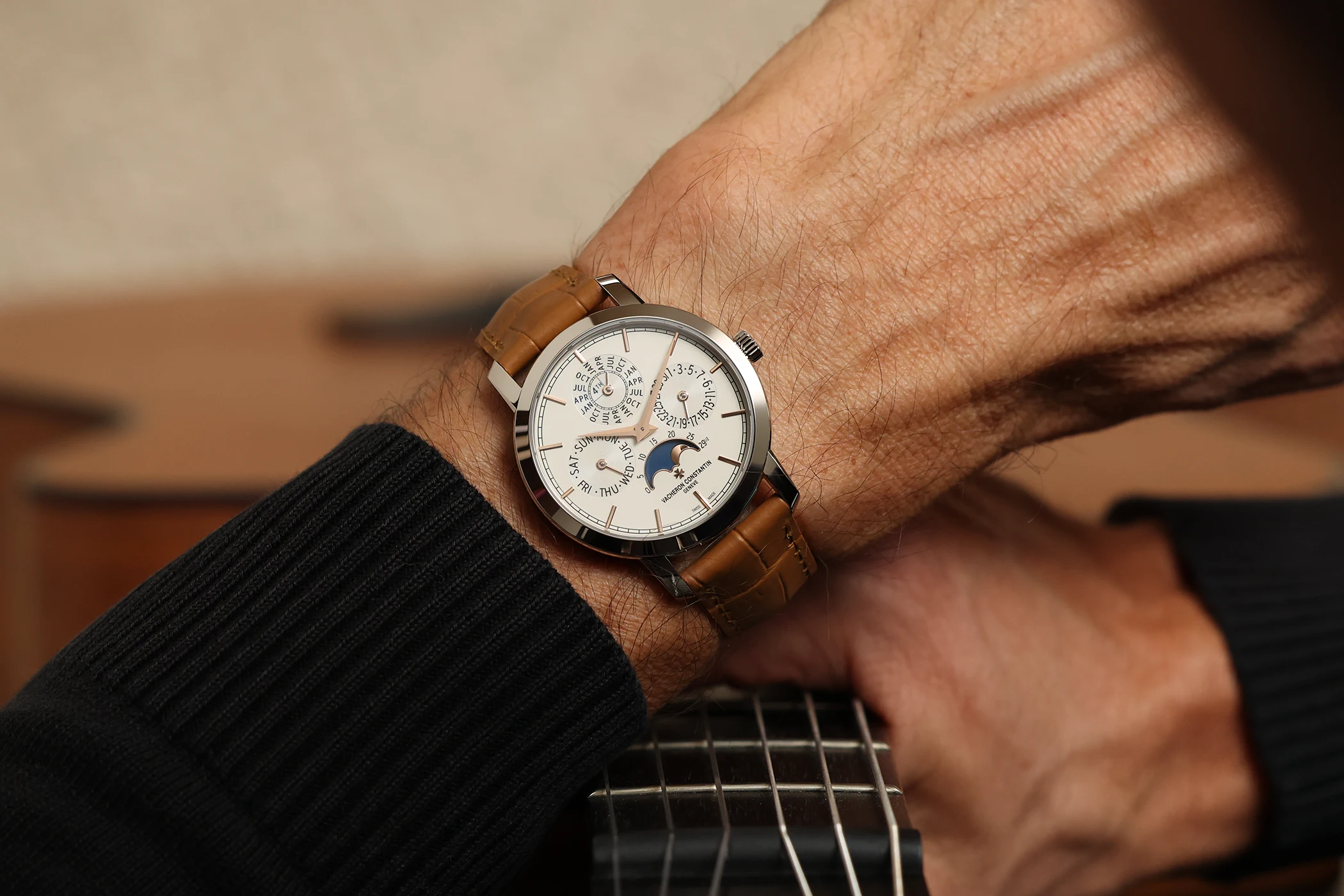
In an era in which classical complications are increasingly housed in cases exceeding 39 millimetres, Vacheron Constantin is taking a different approach with the new Vacheron Constantin Traditionnelle Perpetual Calendar Ultra-Thin. The Geneva manufacture’s perpetual calendar displays are accommodated within a case measuring 36.5 mm in diameter and 8.43 mm in height – dimensions that are notably compact within the context of perpetual calendar wristwatches offered by other brands.
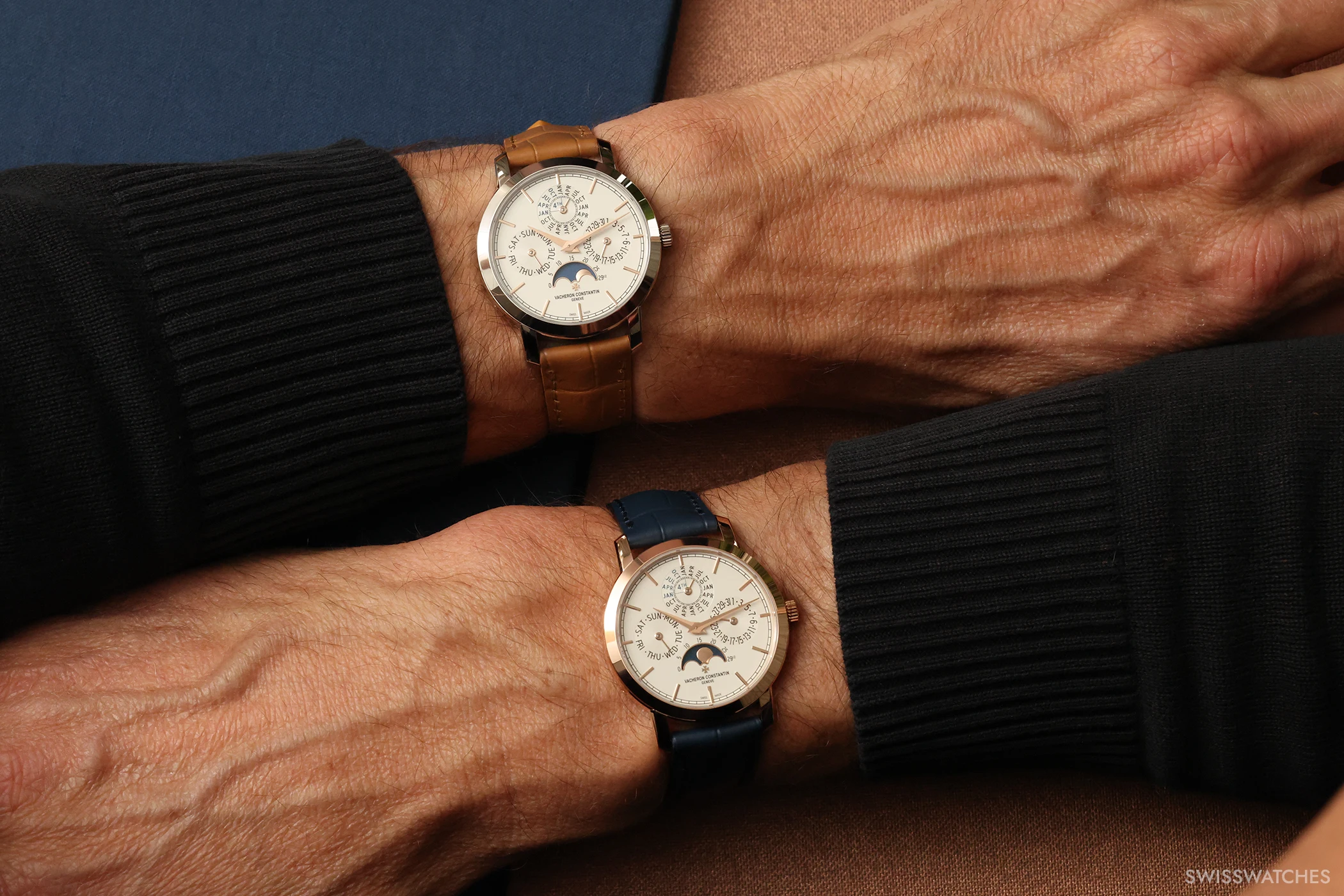
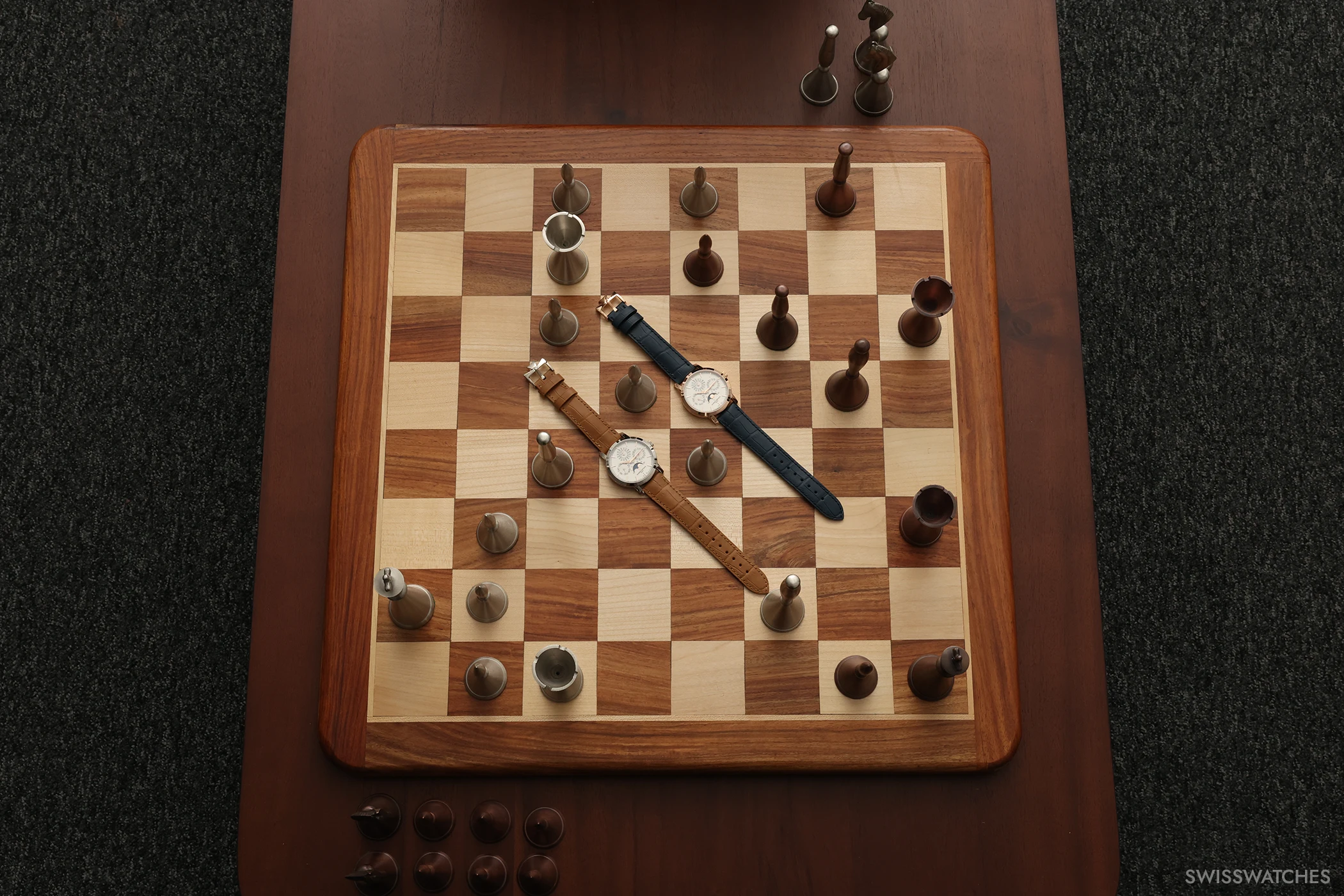
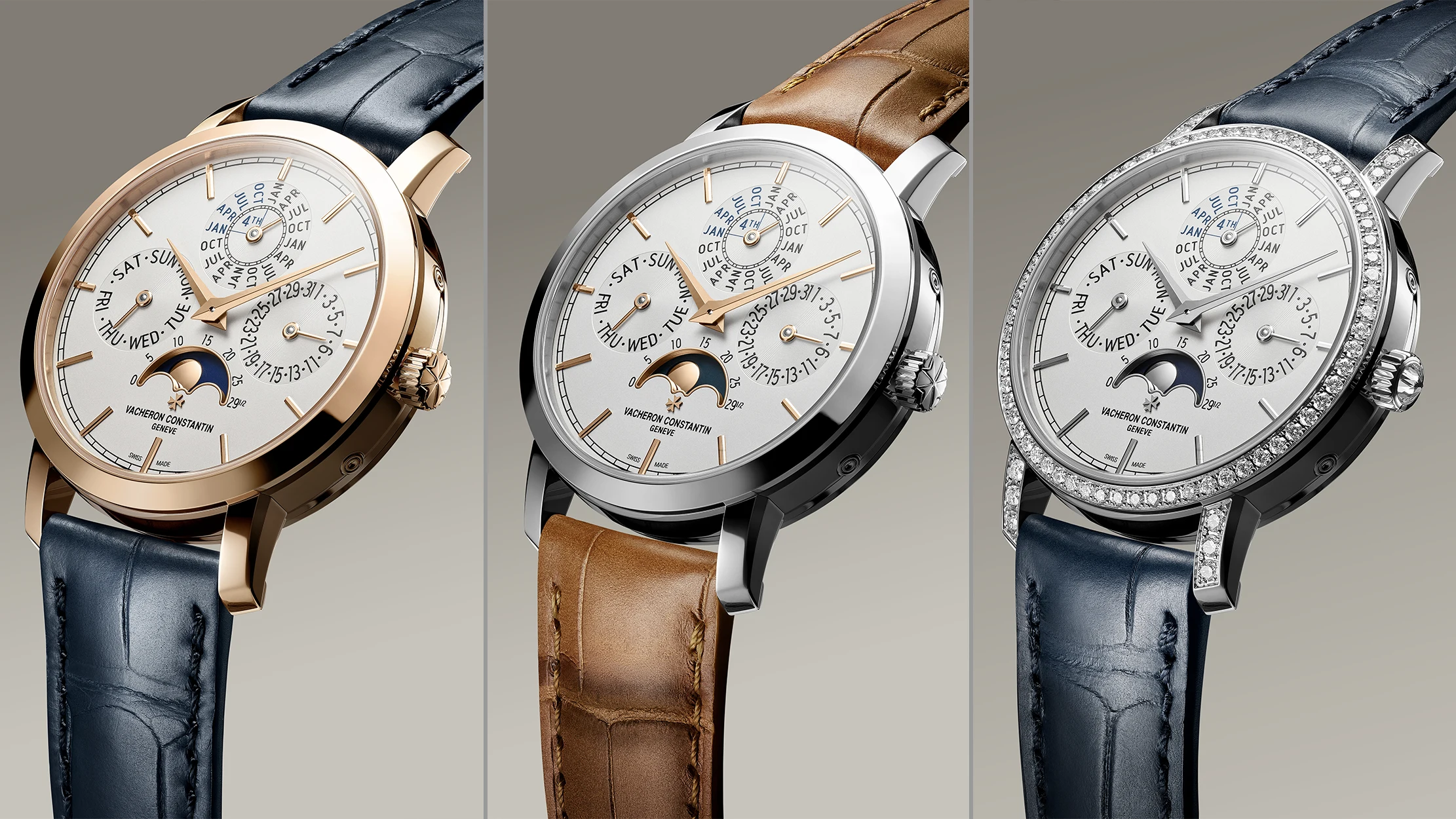
The Vacheron Constantin Perpetual Calendar Ultra-Thin is presented in three versions: 18-carat 5N pink gold, 18-carat white gold, and a second white-gold model featuring a diamond-set bezel. Following the 36.5 mm gem-set version launched in 2022, which featured a powder-toned mother-of-pearl dial, this marks the first time Vacheron Constantin has offered this case size for a perpetual calendar without any gem-setting.

In the following, we examine how the new Vacheron Constantin Traditionnelle Perpetual Calendar Ultra-Thin models fits into the Maison’s long-standing tradition of ultra-thin high complications, the role played by the historical reference 43031, and why its compact proportions stand out when compared with other perpetual calendars on the market.
Vacheron Constantin has long distinguished itself by combining demanding complications – such as the perpetual calendar, minute repeater or tourbillon – with an equally challenging discipline: ultra-thin construction. While this is not a complication in the classical sense of an additional function or display, ultra-thin watchmaking illustrates particularly clearly how construction, materials engineering and assembly converge in horology, ultimately becoming as technically demanding as any added complication.
A look into the archives highlights just how deeply rooted ultra-thin watchmaking is within Vacheron Constantin’s history. One of the earliest reference points dates back to 1829 – effectively to the beginnings of the Maison itself. In that year, Jacques-Barthélémi Vacheron wrote to François Constantin: “We considered it advisable to produce a few thin timepieces with verge escapements, taking particular care to ensure they would surpass those of our competitors.” By 1911, the manufacture was producing movements in 8, 9 and 10-ligne formats that stood just 2.82 mm high; by 1924, movement thickness had already been reduced further to 1.88 mm.
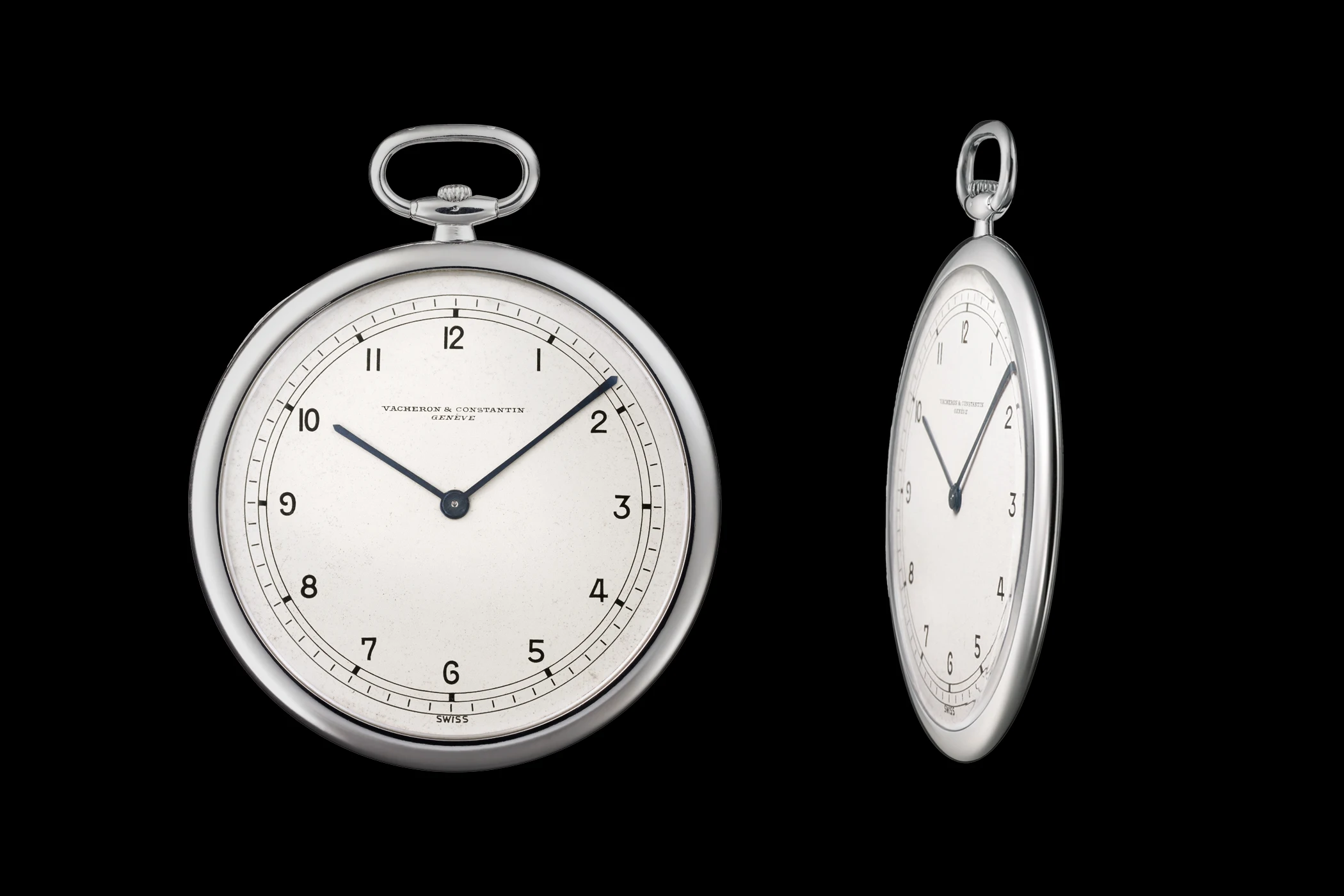
The same ambition can be observed in the decades that followed, in watches that took the established principle of ultra-thin construction and reinterpreted it in innovative ways. This led to timepieces whose design and technical solutions remain closely associated with the manufacture to this day. In the late 1920s, Vacheron Constantin produced the so-called montres à volets, or shutter watches, in which the dial was concealed behind small hinged panels that could be opened using a sliding mechanism. These Art Deco pocket watches were also notable for their slender construction. In 1931, the manufacture set a world record with a pocket-watch movement measuring only 0.94 mm in height, despite a diameter of 17’’’ 5/12 lignes – a mechanical miniature crafted from platinum that long remained the thinnest movement ever made.
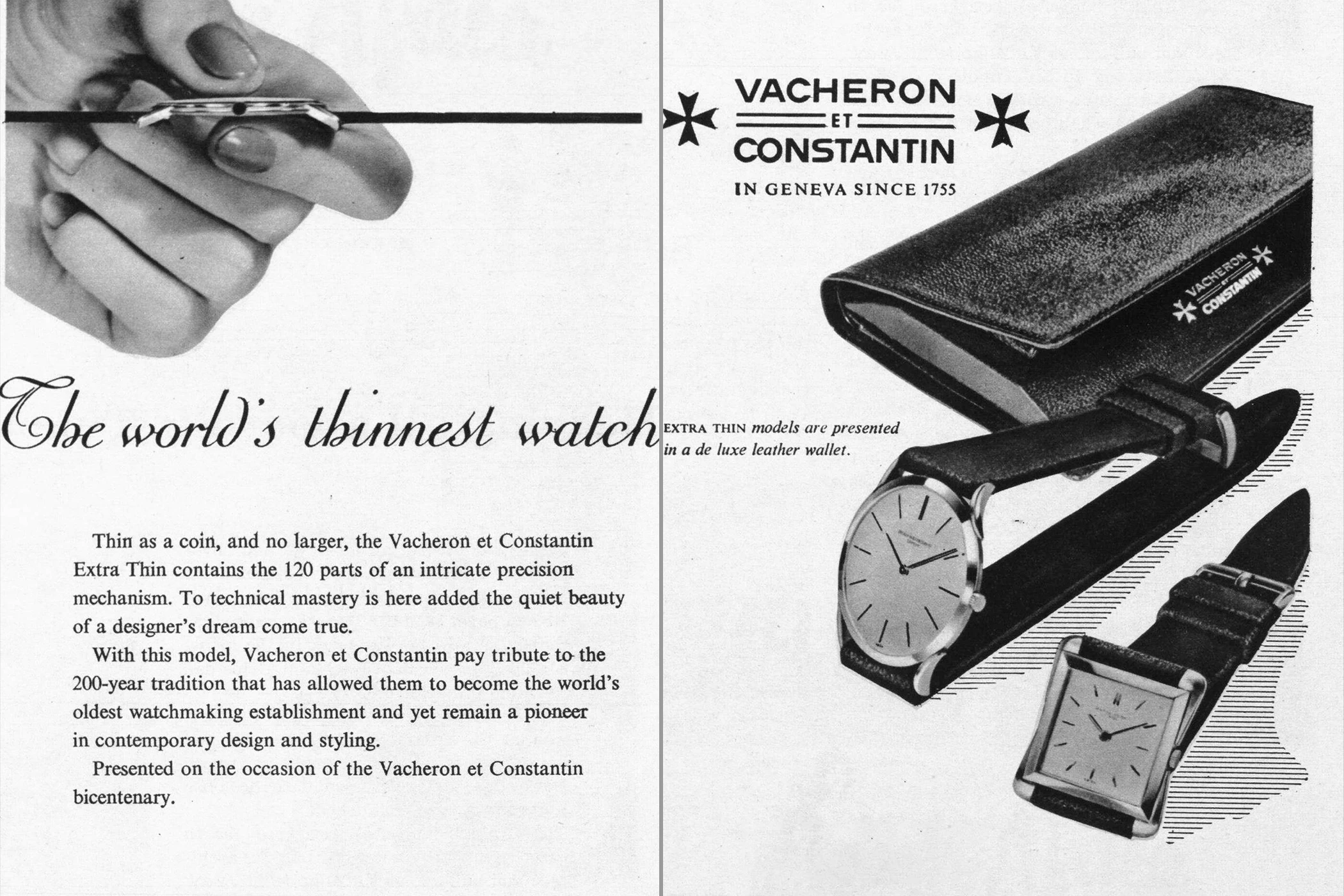
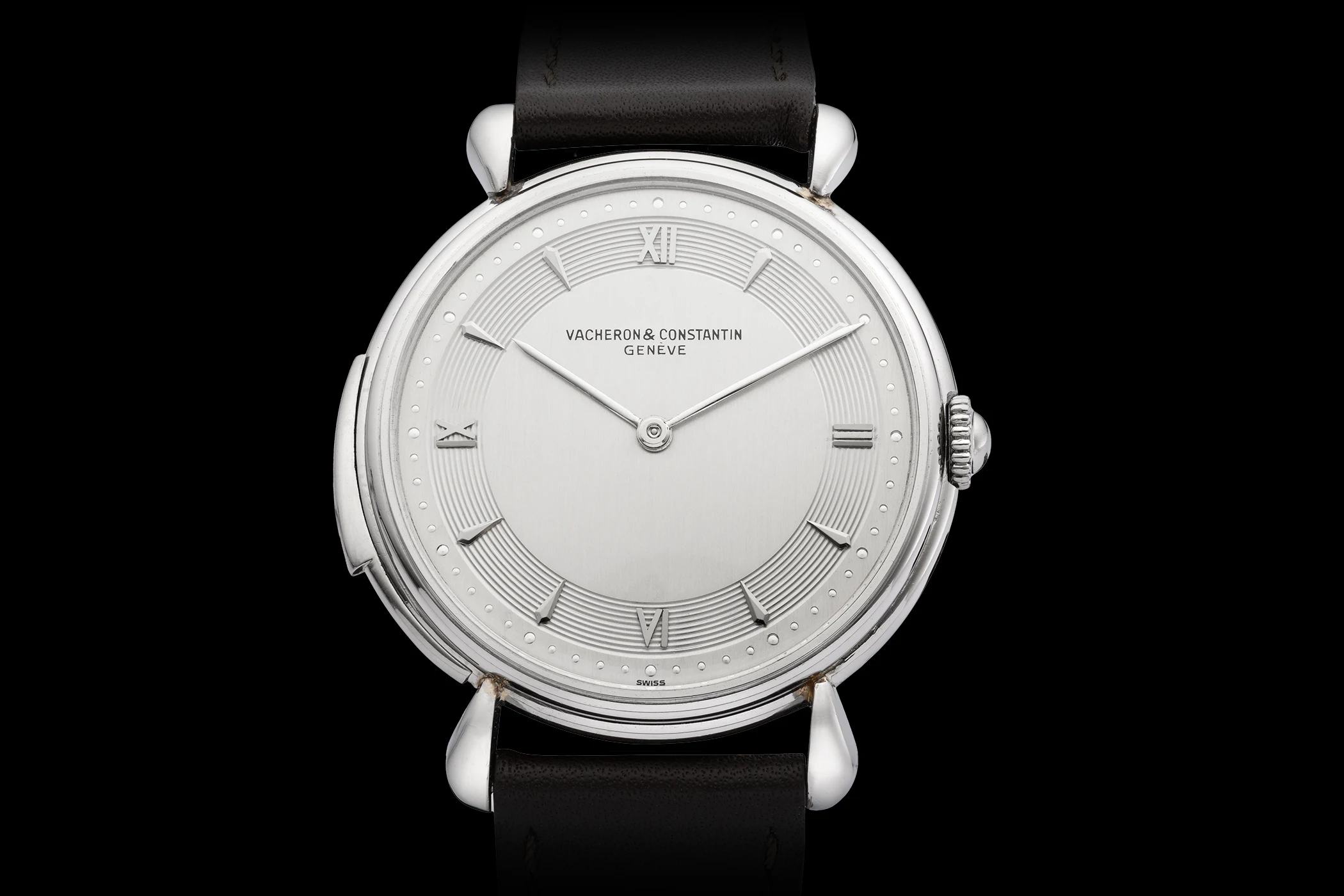
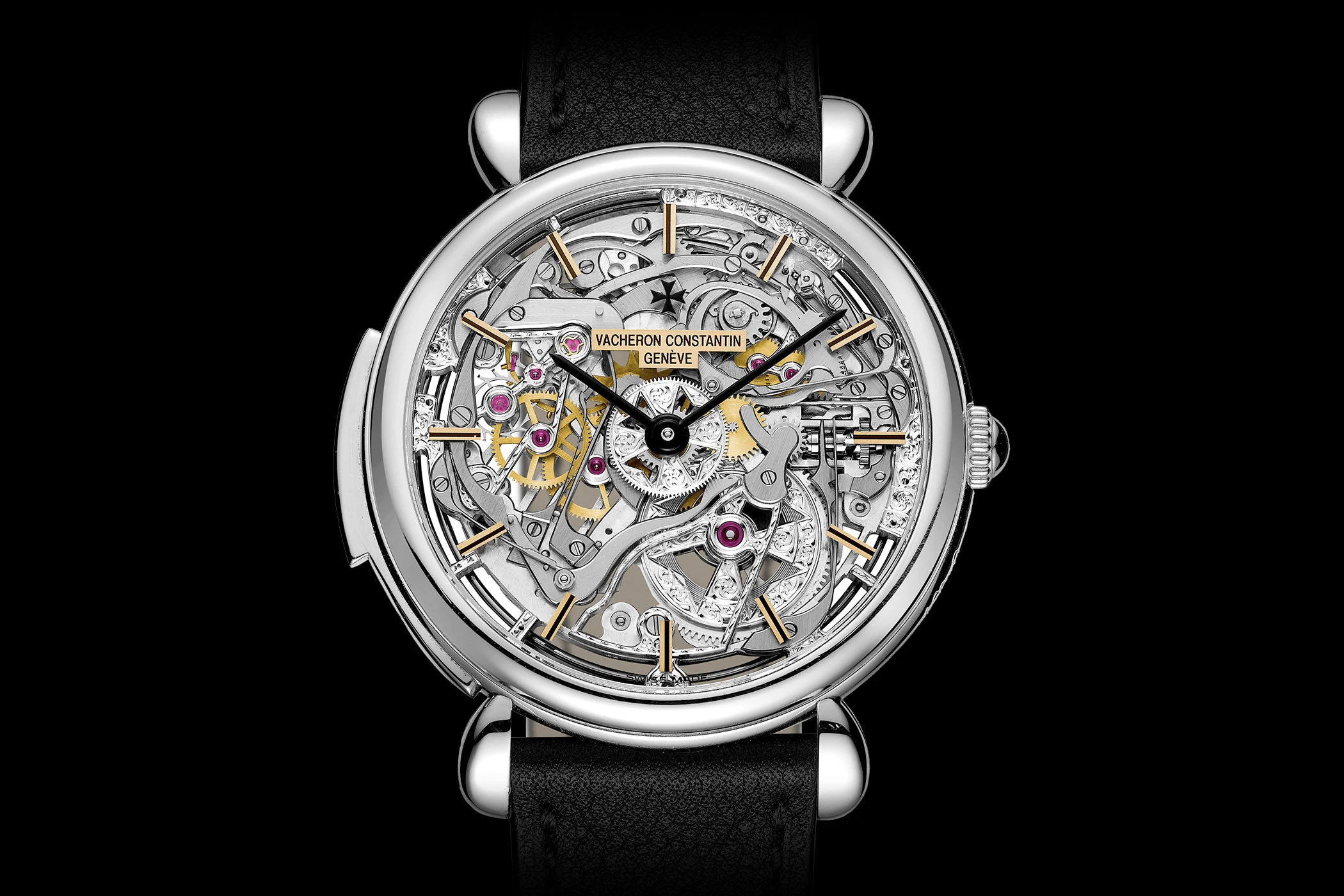
A further world record followed in 1943, when Vacheron Constantin introduced what was then the world’s thinnest minute repeater: reference 4261, whose movement measured just 3.2 mm in height, while the case itself remained exceptionally slim at 5.25 mm. The minute repeater is a complication with roots at the very beginning of the company’s history: Vacheron produced its first chiming timepiece with quarter-hour repetition as early as 1806. For its 200th anniversary in 1955, the Maison unveiled calibre 1003, which at only 1.64 mm in height earned the distinction of being the thinnest mechanical movement of its time. In 1994, the manufacture once again demonstrated its capabilities in ultra-thin minute repeaters: reference 30030, equipped with calibre 1755 measuring just 3.28 mm high, marked yet another record for the slimmest minute repeater of its era.
Against this historical backdrop, Vacheron Constantin is extending its tradition with a contemporary model: a perpetual calendar constructed in an unusually small format, both in height and diameter. The new Vacheron Constantin Perpetual Calendar Ultra-Thin, presented in three versions – one in 18-carat 5N pink gold, one in 18-carat white gold, and a further white-gold model featuring a diamond-set bezel, lugs and crown – measures just 36.5 mm in diameter and 8.43 mm in case height. Following the model introduced in 2022 (ref. 4305T/000G-B948), which paired a 36.5 mm gem-set case with a perpetual calendar and a shimmering blue mother-of-pearl dial, the newly released Vacheron Constantin Traditionnelle Perpetual Calendar Ultra-Thin versions mark the first time this compact perpetual calendar size is available without gem-setting – and therefore explicitly suited to men as well.
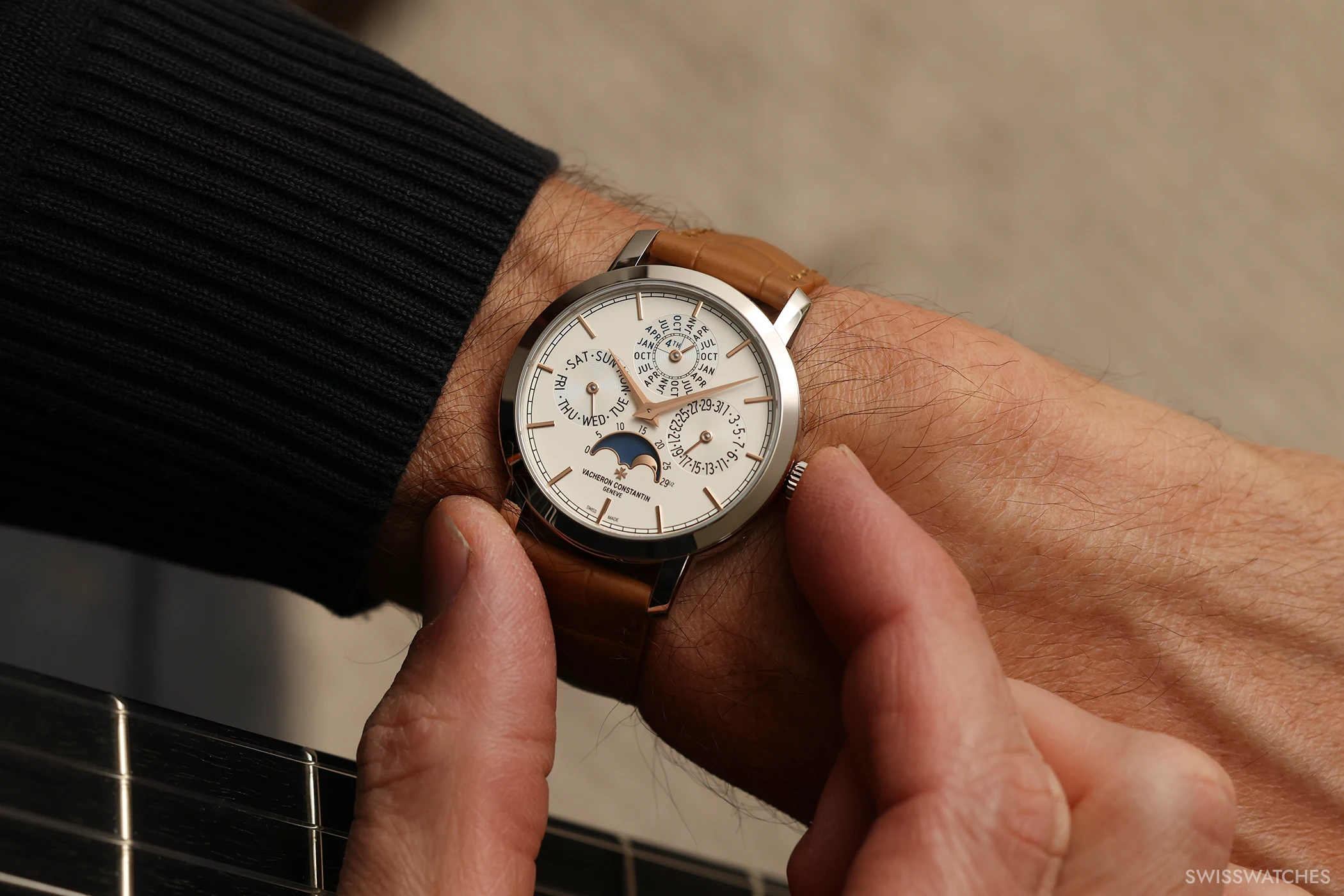
The direct source of inspiration for the new Vacheron Constantin Perpetual Calendar Ultra-Thin model is reference 43031, whose case diameter at the time was only 0.5 mm smaller. With reference 43031 as a design reference, the new watch traces its lineage back to the model launched in 1983, a period situated between the aftermath of the Quartz Crisis and the renewed confidence in mechanical watchmaking. Today regarded as one of Vacheron Constantin’s most significant “neo-vintage” watches, reference 43031 formed part of a broader initiative led by Vacheron Constantin, Audemars Piguet and Patek Philippe. Through ultra-thin, self-winding perpetual calendar wristwatches, these manufactures laid the groundwork for a return to sophisticated complications – and, in doing so, mounted a counteroffensive against the dominance of quartz.
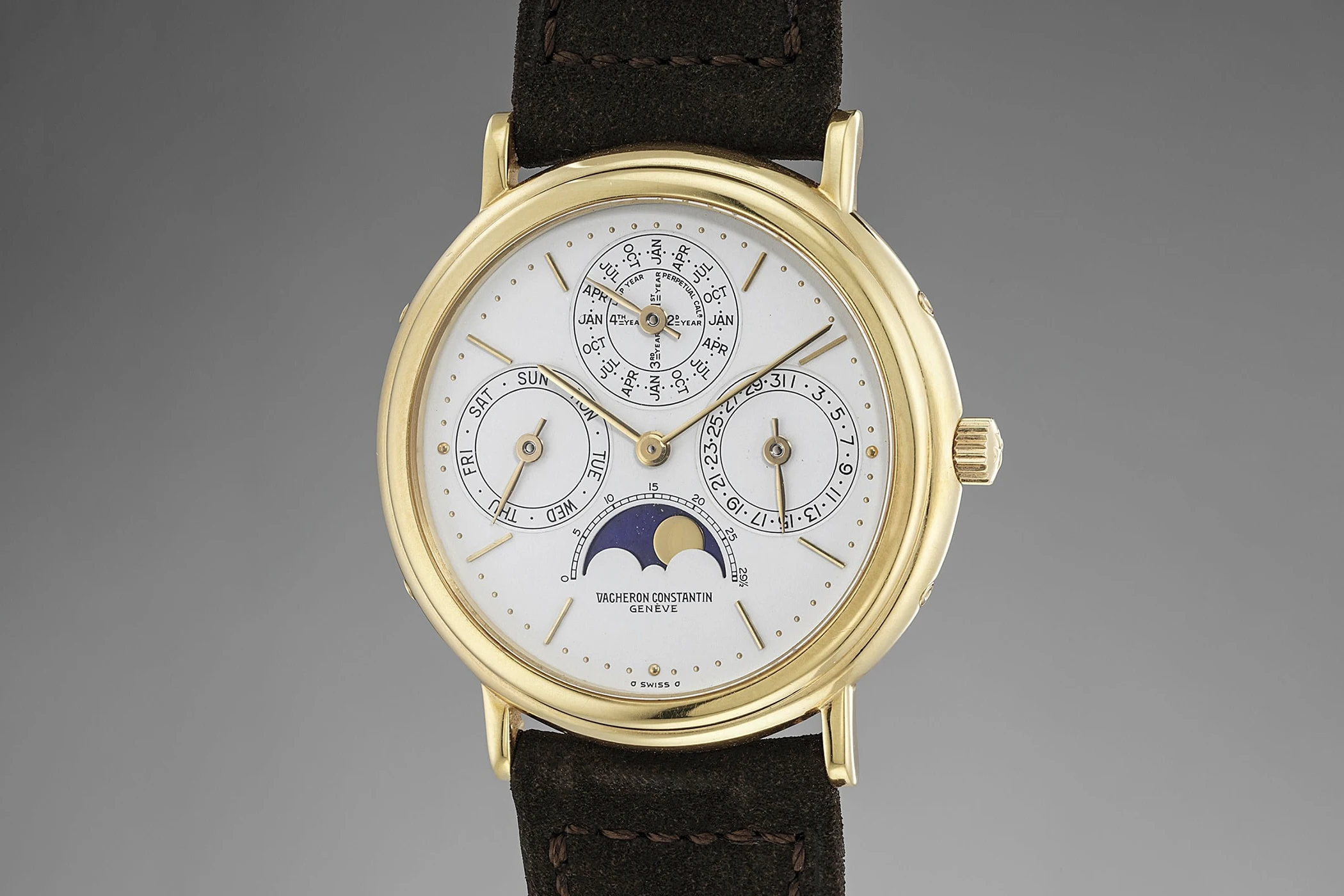
Credit © Phillips
Produced over more than two decades (1983–2006), reference 43031 not only featured a case diameter of 36 mm with a notably slim 8 mm height, but also a dial layout that succeeded in presenting the complex displays of the perpetual calendar in a clear and legible manner. This approach to dial organisation proved highly influential for the new model, which we now examine in more detail.
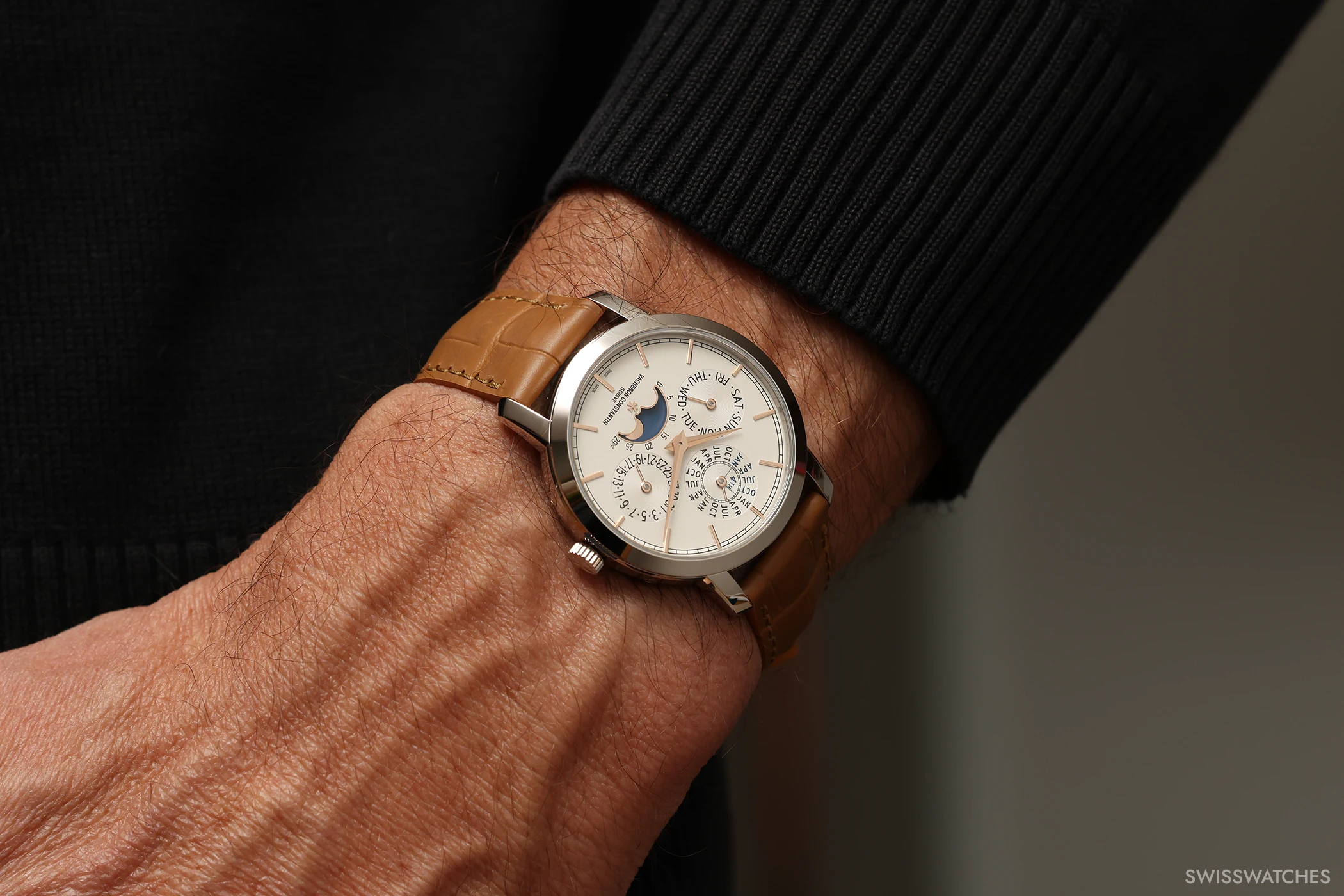
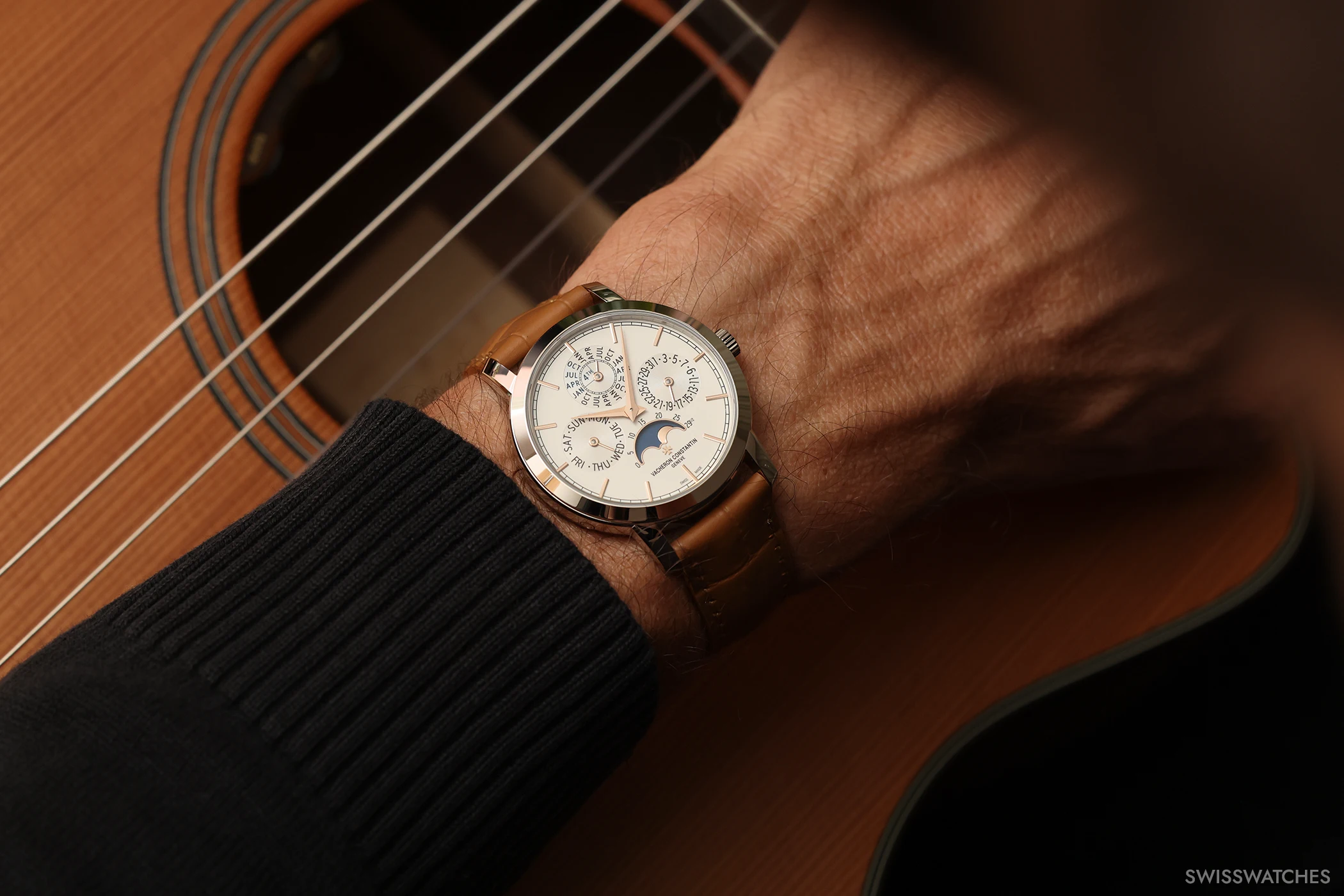
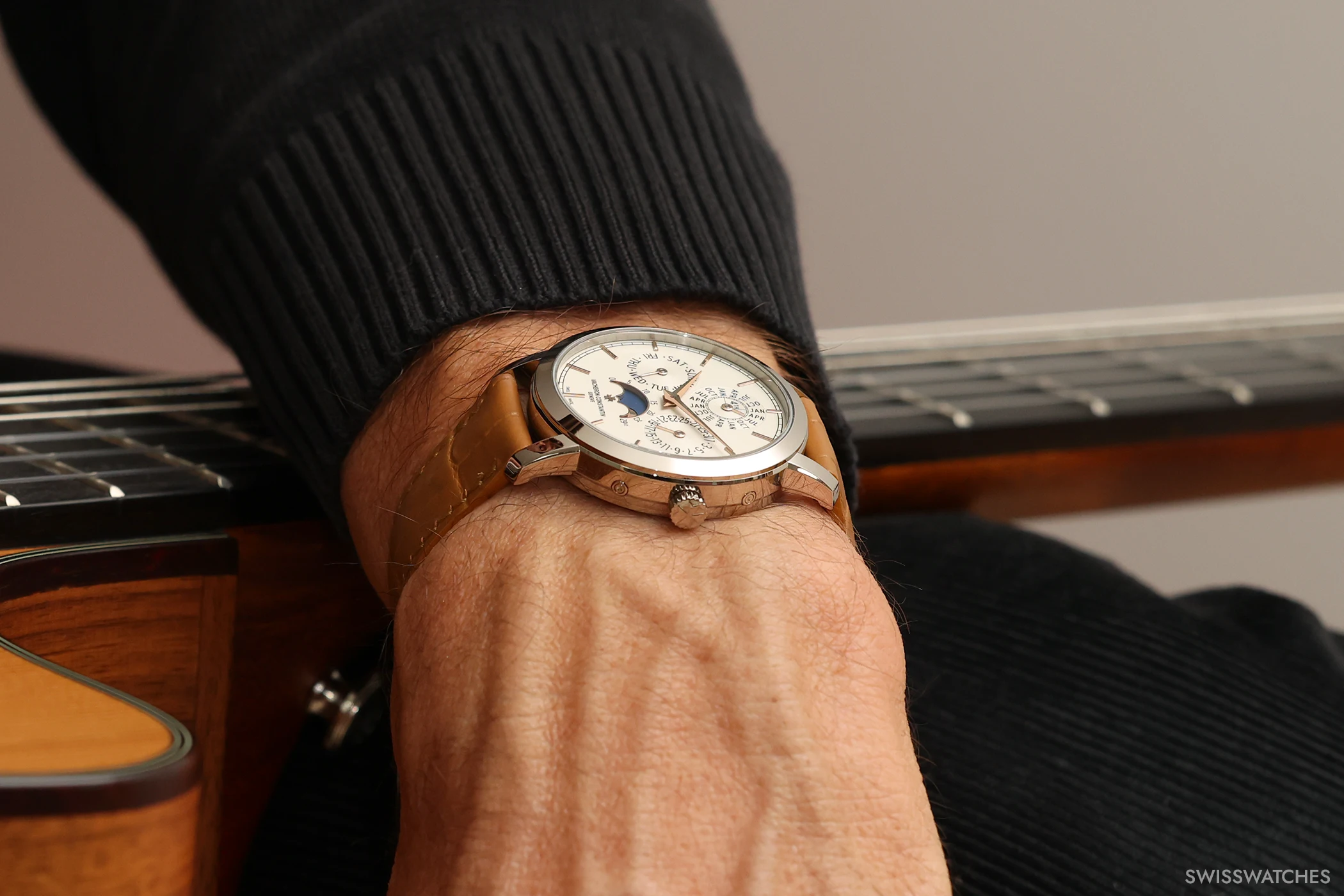
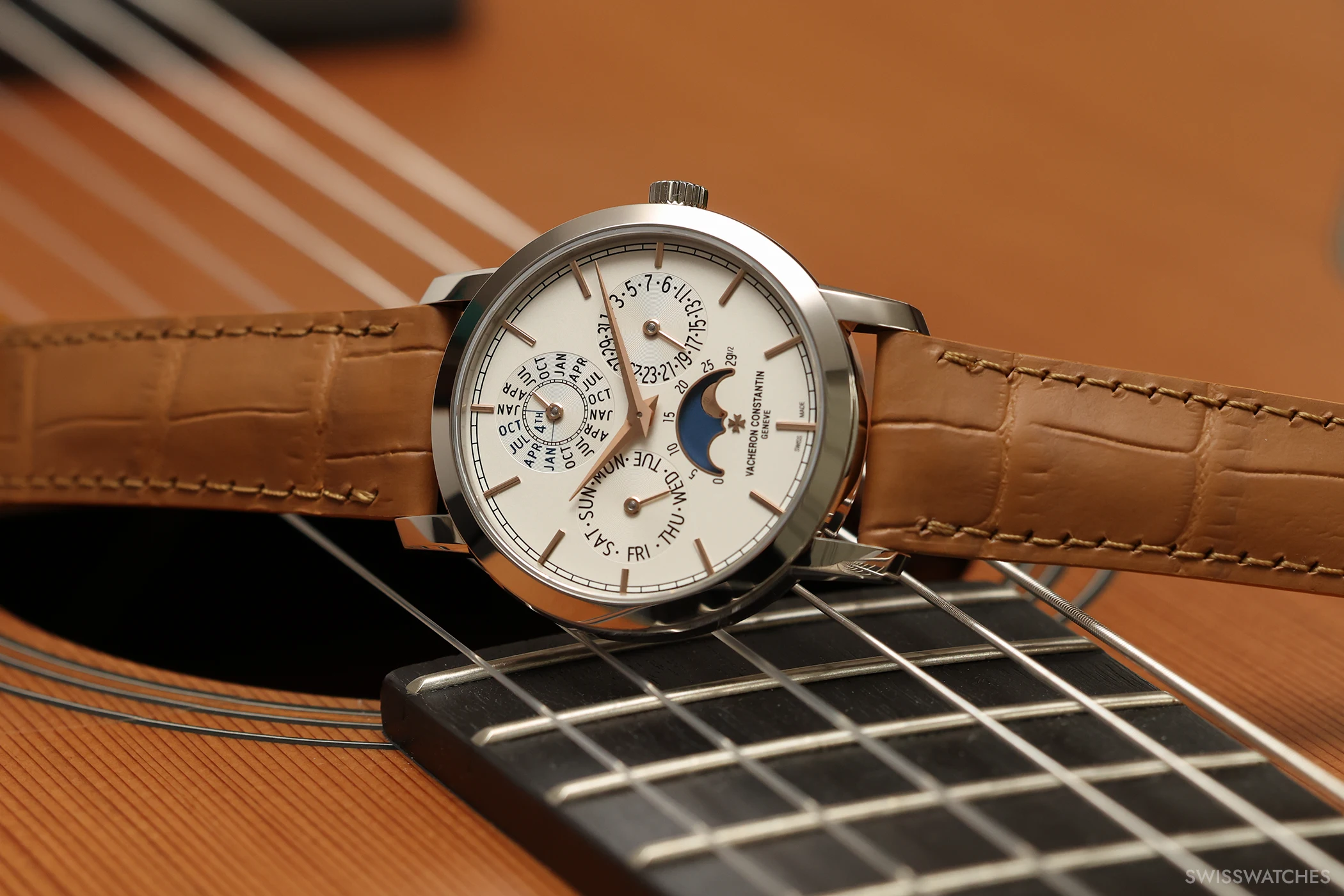
The new Vacheron Constantin Traditionnelle Perpetual Calendar Ultra-Thin is a contemporary evolution of the minimalist perpetual-calendar layout of reference 43031, which set a benchmark for presenting a large amount of information in a restrained and well-organised manner. As with the 43031, the appeal of the new models lies above all in the straightforward display of the perpetual calendar using a classical four-point arrangement. At 12 o’clock, a small 48-month indicator uses a hand to denote both the month and the four-year leap-year cycle; the date is shown at 3 o’clock on a subsidiary dial with a 1–31 scale; a corresponding subdial at 9 o’clock displays the day of the week; and at 6 o’clock, the aperture of the precise moon-phase display is combined with an indication of the moon’s age.
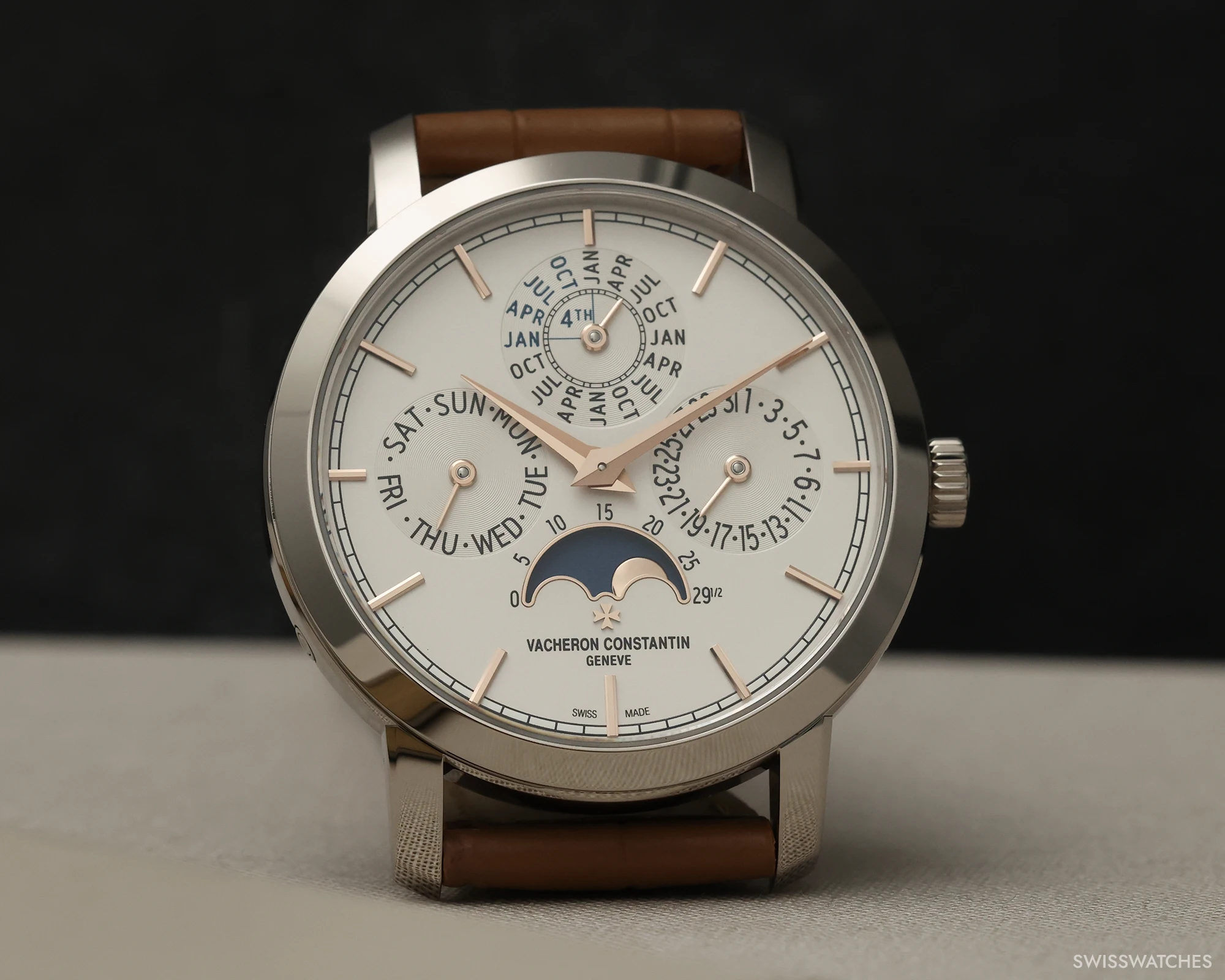
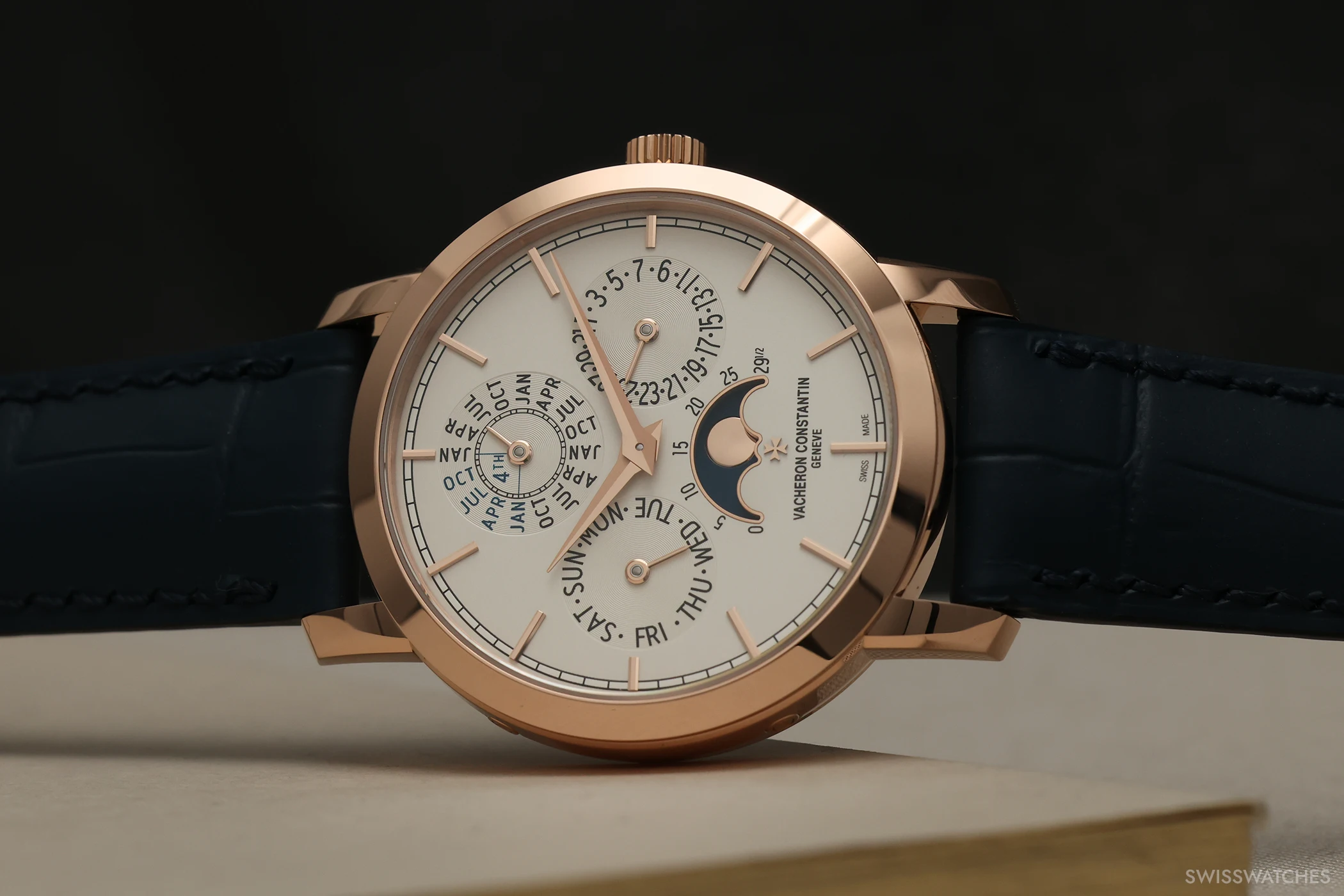
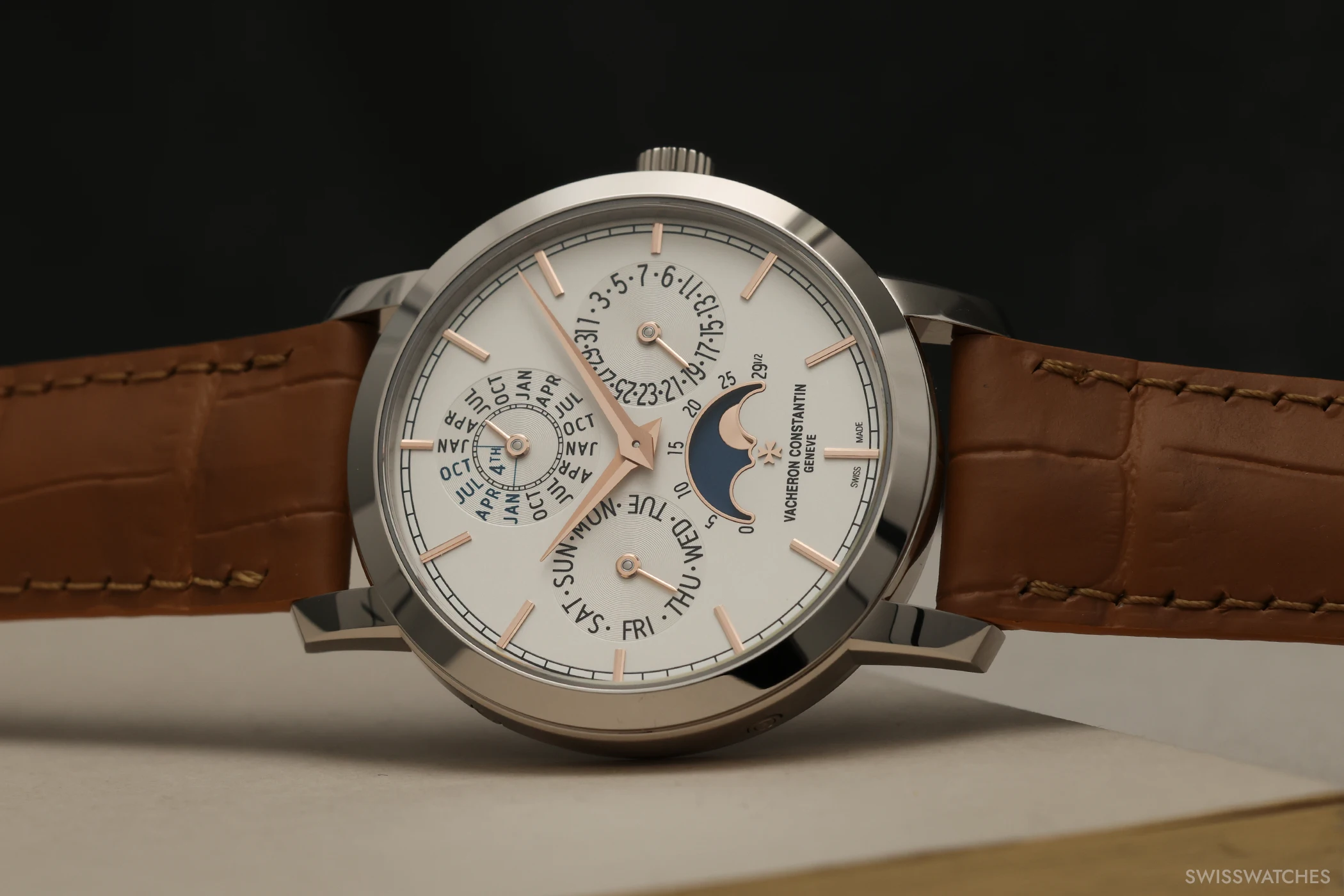
The dials of the new Vacheron Constantin Traditionnelle Perpetual Calendar Ultra-Thin models combine a railway-track minute scale at the perimeter with a clearly legible typeface for the calendar displays. Visible boundaries around the recessed subdials have been removed, integrating them into a unified silver-toned opaline surface that, while closely following the historical template, introduces a subtly renewed classical aesthetic.
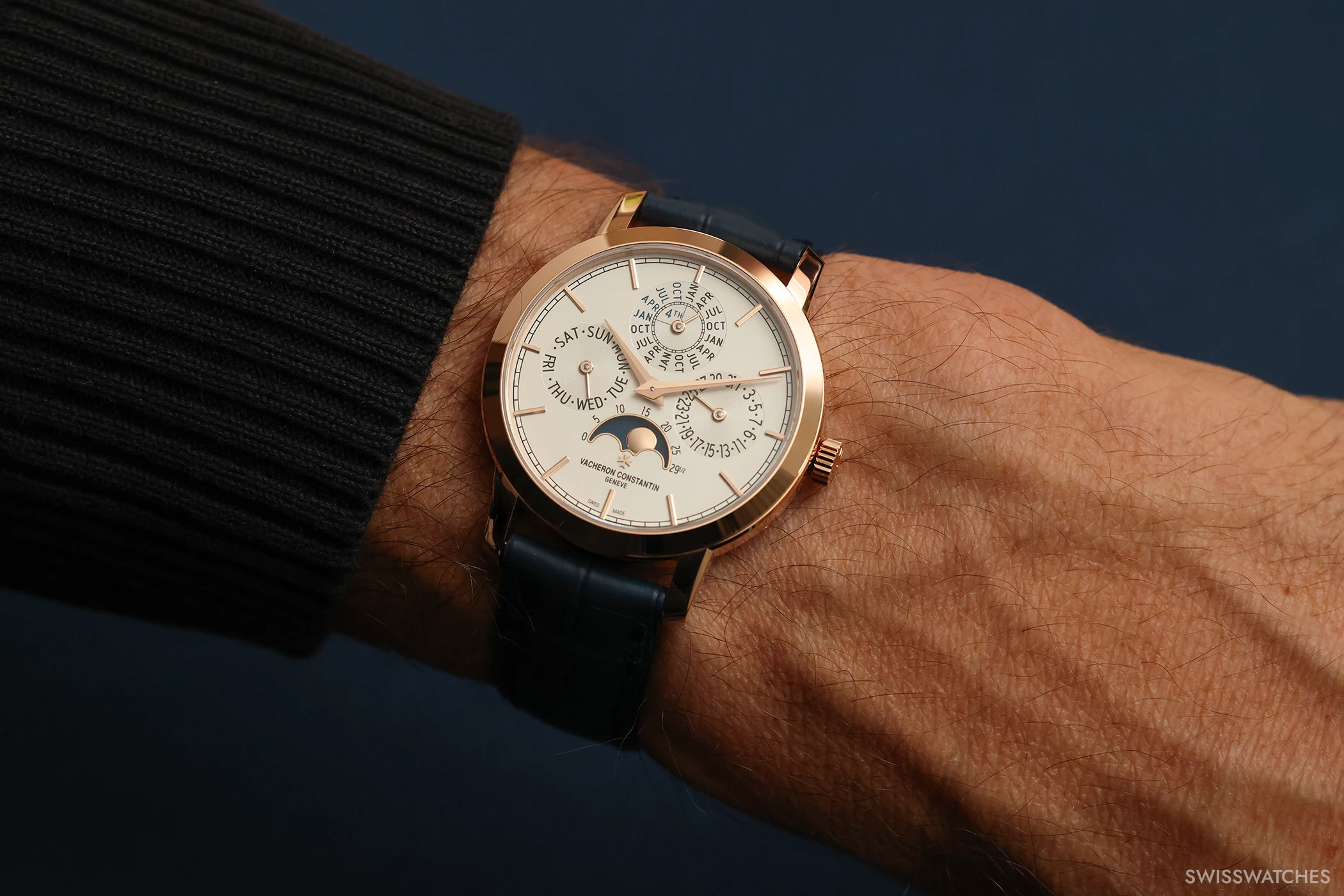
This aesthetic is reflected particularly in the colour variations of the new models and in the coherent ensemble of baton markers, Dauphine hands and case metals. The pink-gold Vacheron Constantin Traditionnelle Perpetual Calendar Ultra-Thin version adopts a fully harmonised approach: the material and hue of the 5N pink-gold case are carried through to the faceted Dauphine hands, the subdial hands and the applied baton indices. A contrasting element is introduced through the deep blue background of the moon-phase display, whose moon is likewise crafted in pink gold and which is paired with a matching dark-blue alligator strap stitched tone-on-tone.
The white-gold version of the new Vacheron Constantin Traditionnelle Perpetual Calendar Ultra-Thin takes on a bicolour expression, with all hands, baton markers and the moon of the moon-phase display rendered in pink gold, while the white-gold case provides a cooler counterpoint. The alligator strap appears in a new light-brown shade.
The diamond-set white-gold model also adopts a unified colour scheme: the case, hands, indices and moon of the moon-phase display are all executed in white gold, while the square-set diamonds on the bezel, lugs and crown echo the silvery opaline finish of the dial. The dark-blue moon-phase disc is complemented by a strap in the same tone. Shared across all three Vacheron Constantin Traditionnelle Perpetual Calendar Ultra-Thin models are the contour framing the moon-phase aperture—rendered either in pink gold or white gold depending on the version—and the colour highlighting of January, April, July and October within the 48-month display.
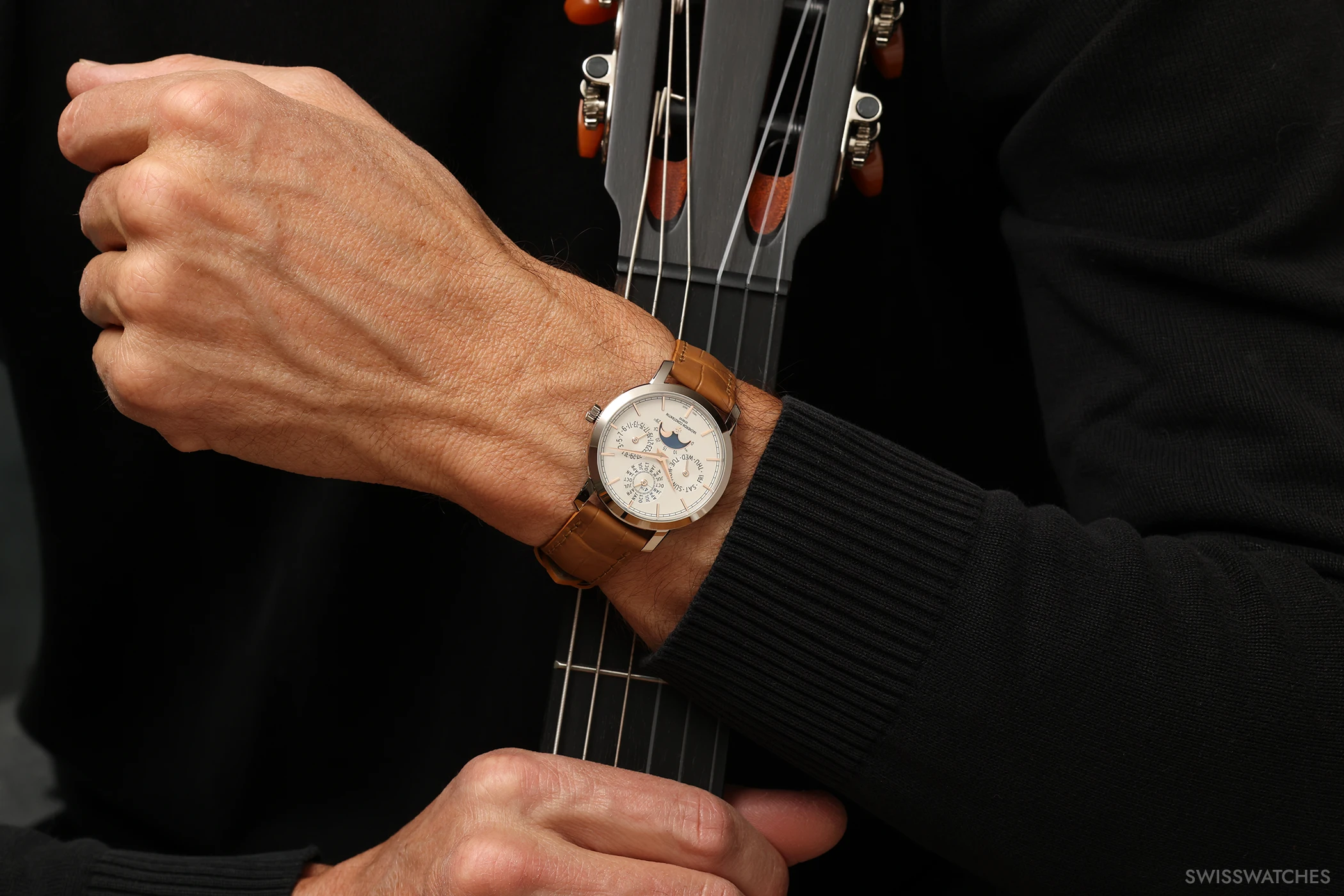
According to the manufacture, the construction of the case also draws directly on reference 43031 as its model: the new watches feature a stepped round case with a fluted caseback, straight lugs and a slim bezel, and offer water resistance to 30 metres. While the compact proportions of the new Traditionnelle Perpetual Calendar Ultra-Thin clearly echo a 19th-century ideal of slender watchmaking, as well as the fundamental design language established by ref. 43031, the result is anything but nostalgic.
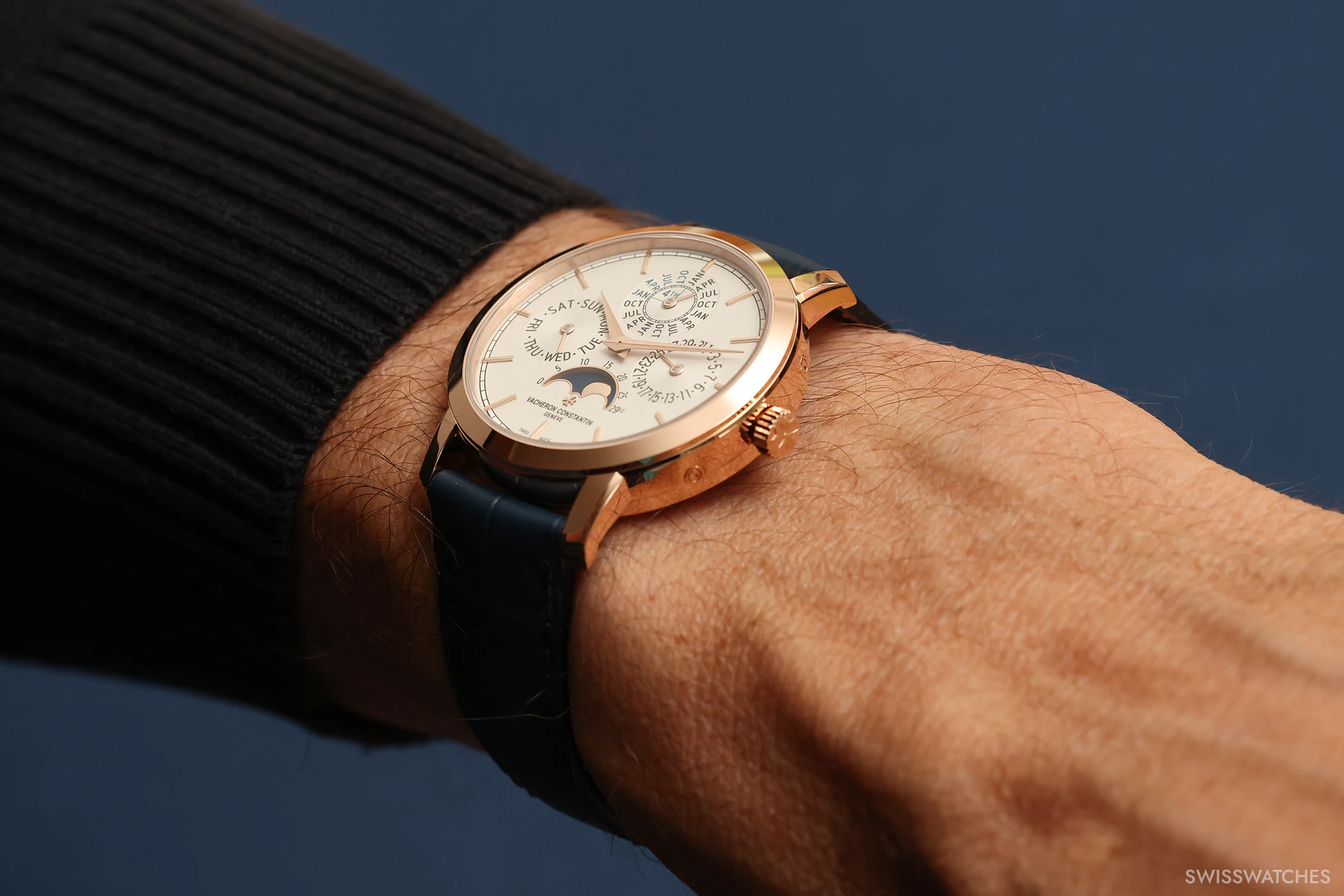
The new Traditionnelle Perpetual Calendar Ultra-Thin represents Vacheron Constantin’s response to what the brand describes as increasingly blurred boundaries between men’s and women’s watches, as well as to a broader shift away from large case diameters. “For us,” the manufacture notes, “the 36.5 mm of the Traditionnelle Perpetual Calendar Ultra-Thin marks a midpoint that combines presence with discretion.” With its 36.5 mm diameter, the new model stands out as a rarity among perpetual calendar wristwatches aimed at men, which typically fall within the 39–40 mm range offered by competing brands.
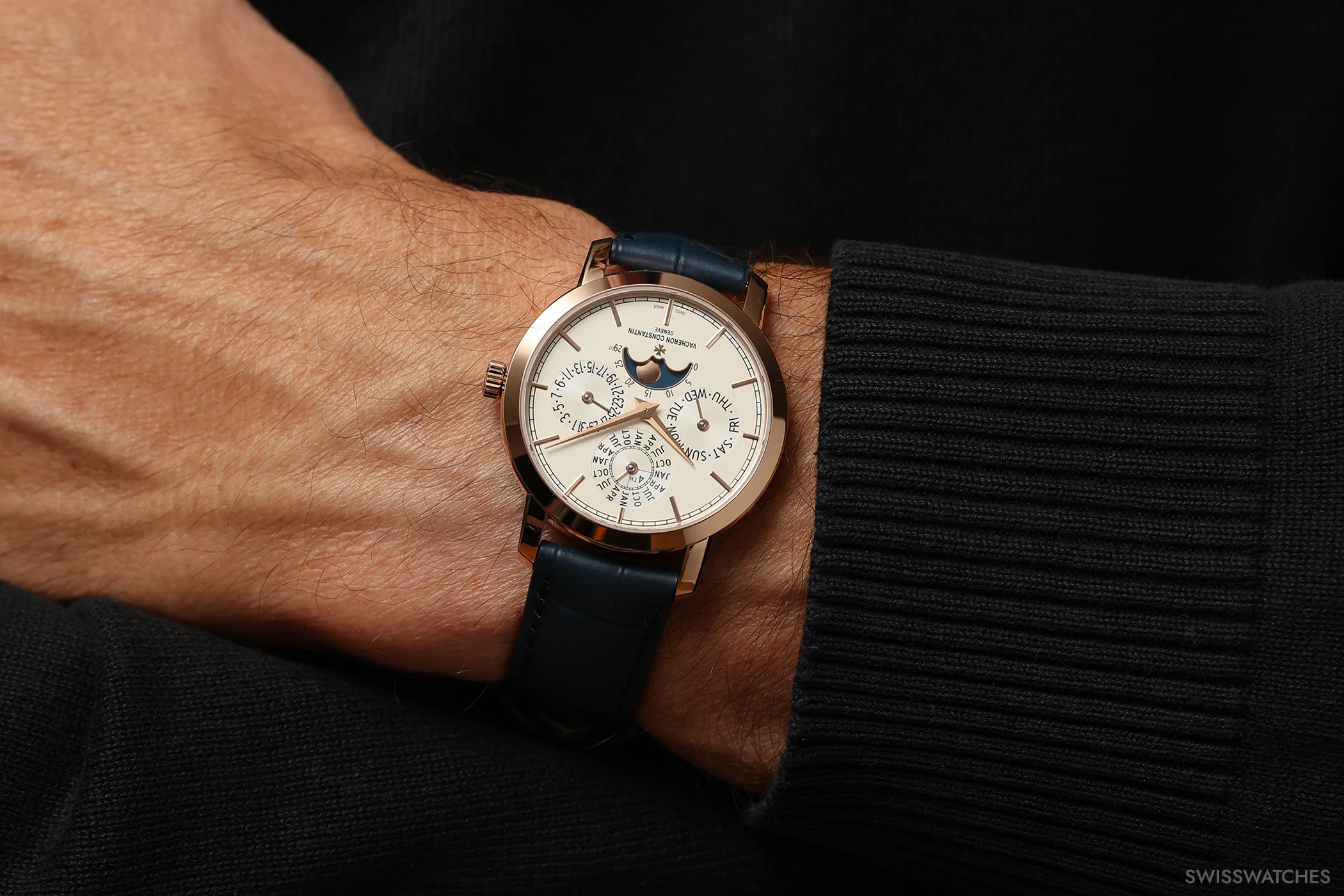
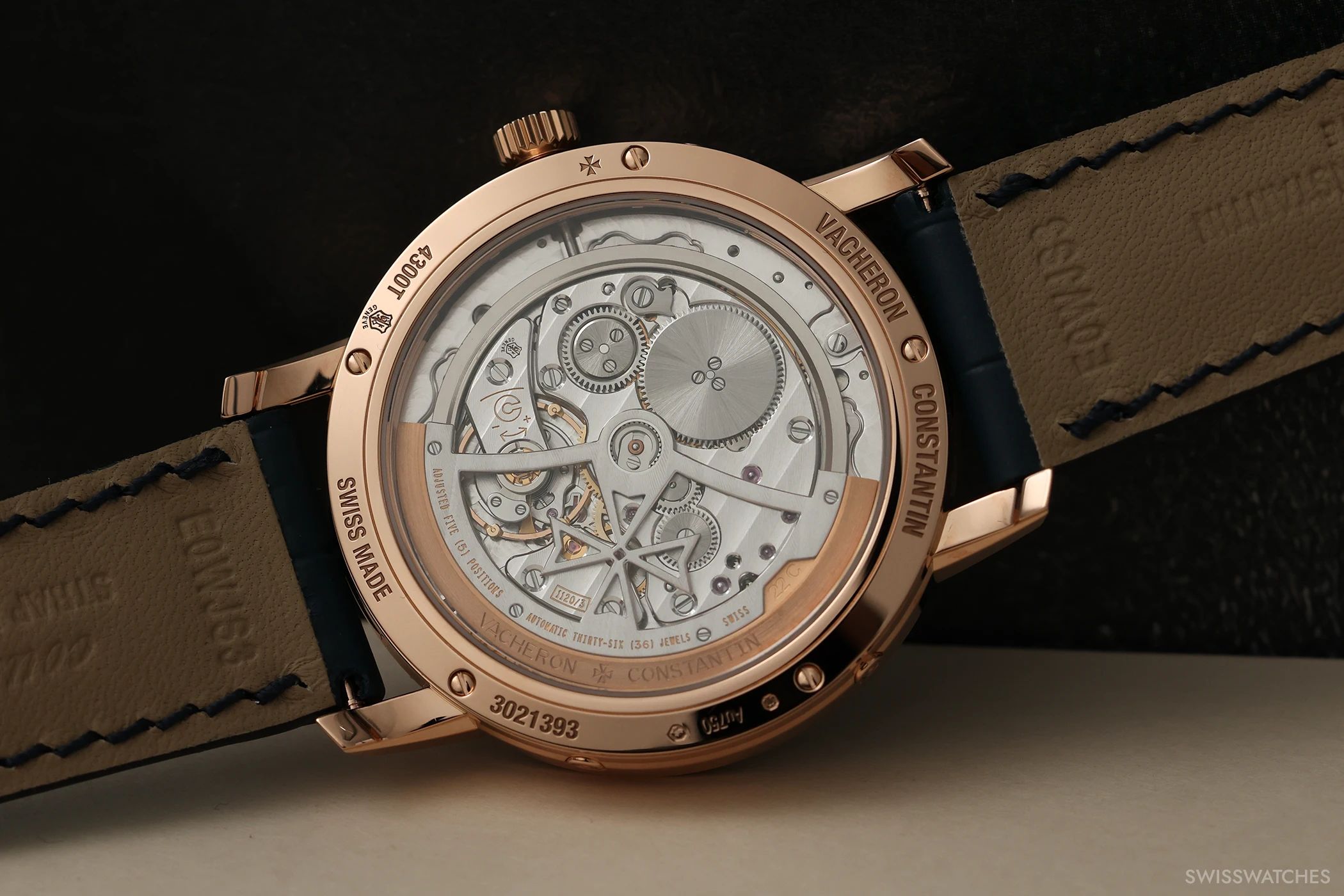
The perpetual calendar is deeply rooted in the Maison’s history. As early as 1884, Vacheron Constantin produced its first movement of this kind: an observatory watch with a perpetual calendar, now part of the brand’s private collection. Inside the new Traditionnelle Perpetual Calendar Ultra-Thin beats the automatic in-house calibre 1120 QP, visible through the sapphire-crystal caseback.
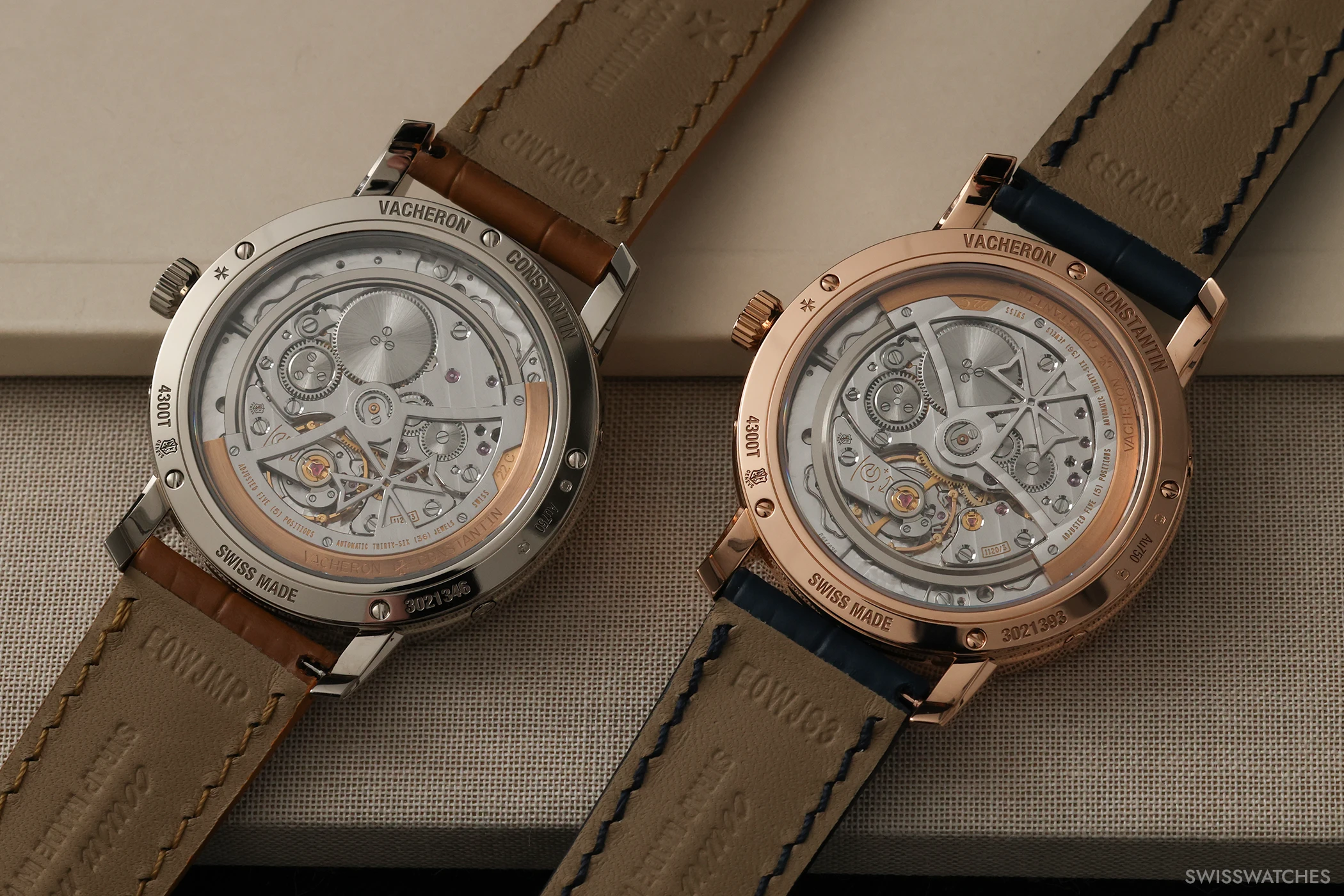
Comprising 276 components and measuring just 4.05 mm in height, the movement incorporates a perpetual calendar with day, date and 48-month display including leap-year indication, as well as a moon-phase and moon-age indication—alongside the hours and minutes. As a complex mechanism, the perpetual calendar autonomously accounts for the variations of the Gregorian calendar, including leap years and the differing lengths of the months, and will require its first manual correction only in the year 2100. Developed and manufactured by Vacheron Constantin, calibre 1120 QP offers a power reserve of around 40 hours and operates at a frequency of 2.75 Hz (19,800 vibrations per hour).
A direct comparison between the new Vacheron Constantin Traditionnelle Perpetual Calendar Ultra-Thin model and watches from other brands illustrates why the 36.5 mm diameter of the new Traditionnelle Perpetual Calendar Ultra-Thin is unusual today. Jaeger-LeCoultre’s Master Ultra Thin Perpetual Calendar (ref. Q1142510) has a diameter of 39 mm with a height of 9.2 mm. The Classic Perpetual Calendar by Frederique Constant (ref. FC-776ONB3H7) comes in a 40 mm case measuring 12 mm in height, while Blancpain’s Villeret Quantième Perpétuel Phases de Lune (ref. 6656 3642 55B) offers a perpetual calendar in a 40.30 mm case with a height of 10.70 mm.
A. Lange & Söhne’s Langematik Perpetual (ref. 310.032 E) is housed in a 38.50 mm case with a thickness of 10.20 mm, and Breguet’s Classique Quantième Perpétuel 5327 (ref. 5327BA/1E/9V6) features a diameter of 39 mm and a height of 9.1 mm. Chopard takes a larger approach with its L.U.C Lunar One (ref. 161951-5001), measuring 40.50 mm in diameter with a height of 11.60 mm.
Patek Philippe, meanwhile, offers the classic Perpetual Calendar 5327R-001 with a diameter of 39 mm and a height of 9.71 mm. In addition, the catalogue includes the predominantly female-oriented perpetual calendar models ref. 7340/1R-001 and ref. 7340/1R-010 from the Twenty~4 collection, both measuring 36 mm in diameter with a case height of 9.95 mm.
The prices of the new Vacheron Constantin Traditionnelle Perpetual Calendar Ultra-Thin models are as follows: both the pink-gold and the white-gold versions are priced at 101,000 euros, while the white-gold version with gem-set detailing is priced at 105,000 euros.