
Four new mechanical calibres, five unlimited models and one limited edition – Louis Vuitton presents numerous new products at LVMH Watch Week 2026.

Perpetual calendar watches are considered one of the ‘great complications’ of watchmaking. Hardly any other movement combines so much mechanical intelligence, craftsmanship and historical depth.
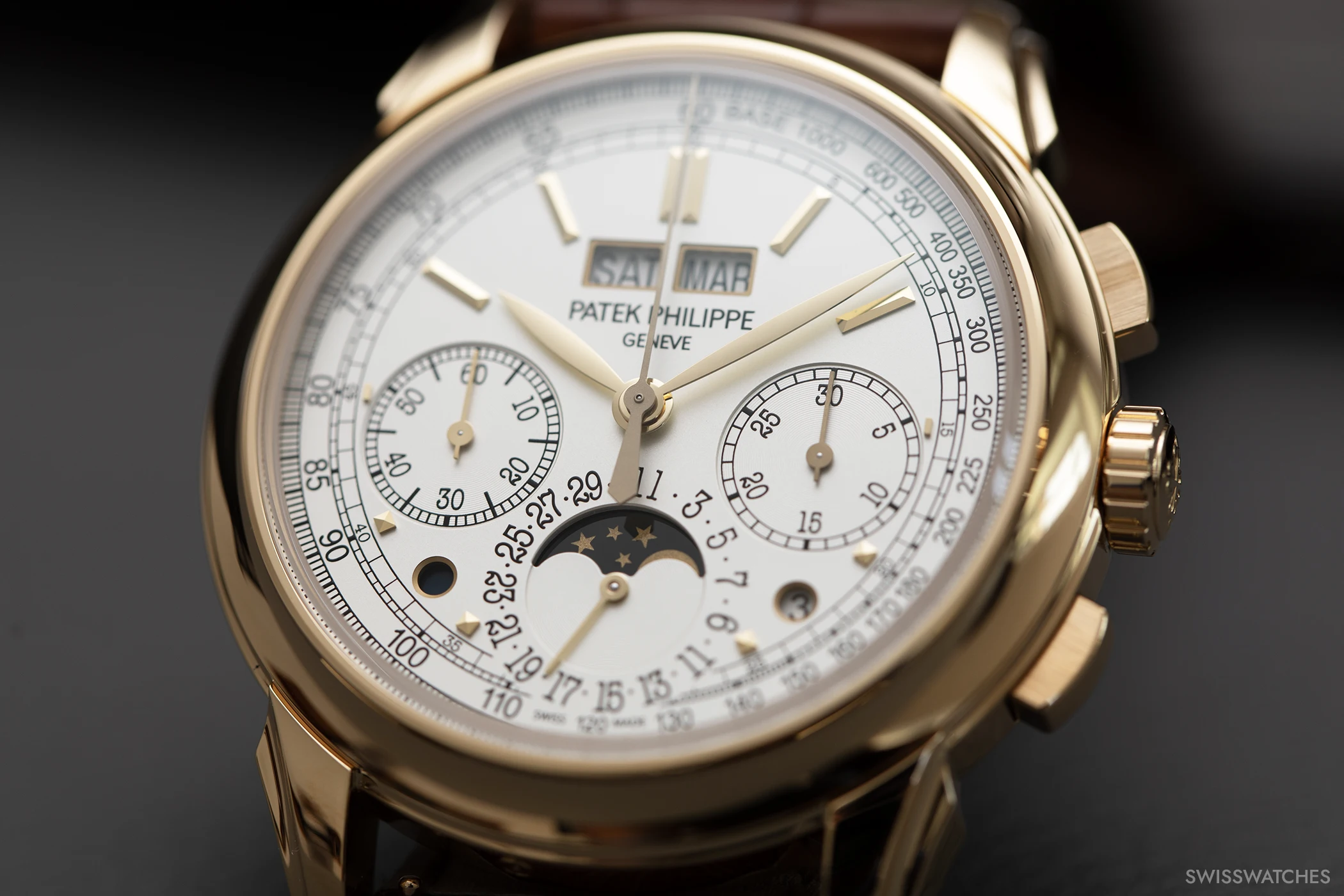
Among collectors and manufacturers, the term ‘perpetual calendar watch’ has become established. But what exactly does a perpetual calendar watch do? The calendar mechanism in such a watch is programmed to display the date, month, day of the week, and the moon phase automatically and correctly. It therefore also takes leap years into account.
By contrast, a simple date watch recognises only 31 days, meaning that in shorter months the wearer has to adjust the date manually. An annual calendar, on the other hand, does account for the varying lengths of the months, but falls short on displaying 28 February and must therefore be corrected once a year. The perpetual calendar goes one crucial step further by accounting not only for months with 30 or 31 days, but also for February having 28 days and 29 days in leap years. Our article on the best perpetual calendar wristwatches provides a good overview of the best perpetual calendars.
The origins of the perpetual calendar date back to the 18th century. The English watchmaker Thomas Mudge is regarded as the inventor of the complication, having built a pocket watch with a perpetual calendar around 1762. Its movement mechanically took the varying lengths of the months as well as 29 February in leap years into account. In doing so, he laid the foundation for everything that would later emerge in the realm of highly complex timepieces. For more than a century, the perpetual calendar remained a feature found exclusively in pocket watches.
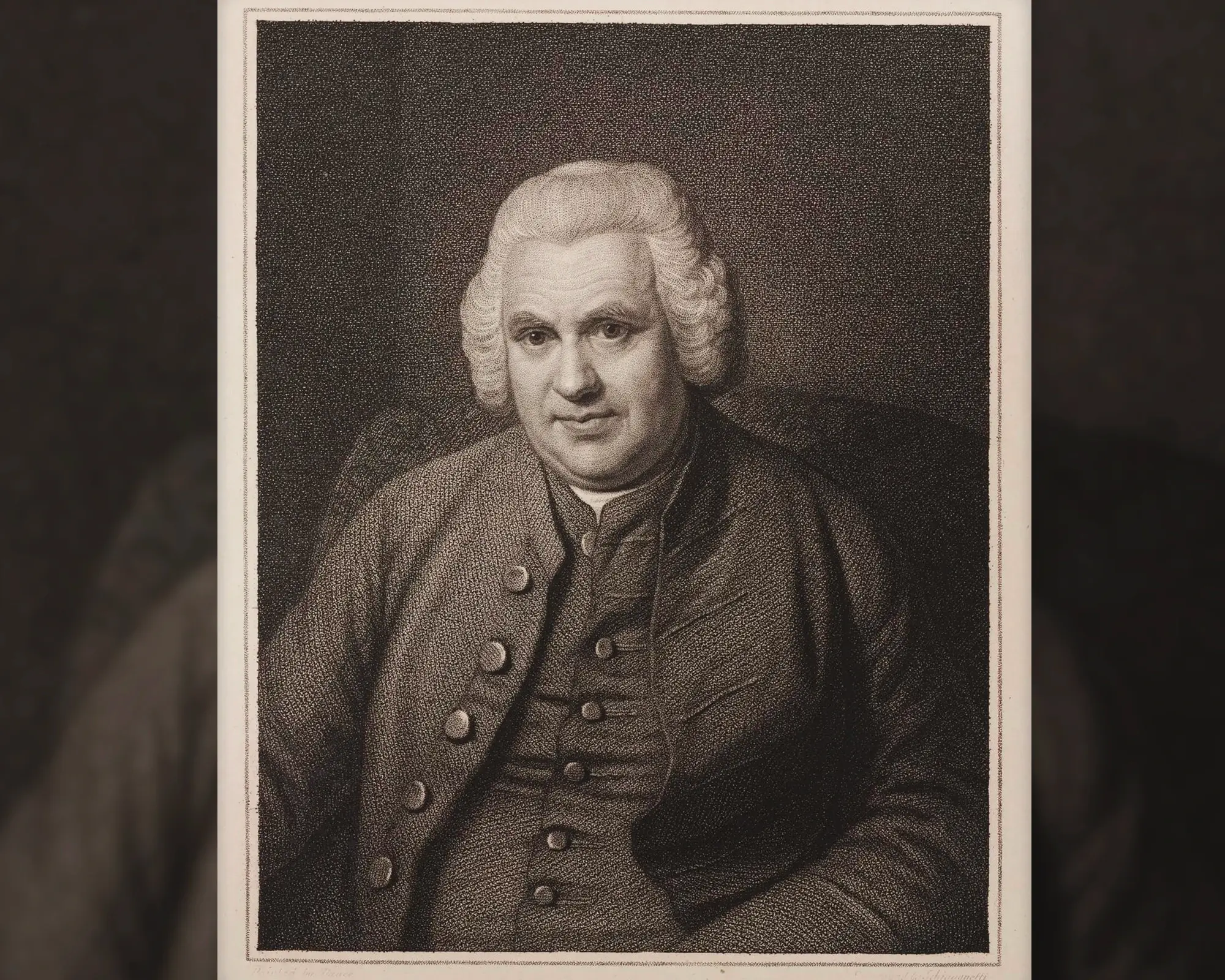
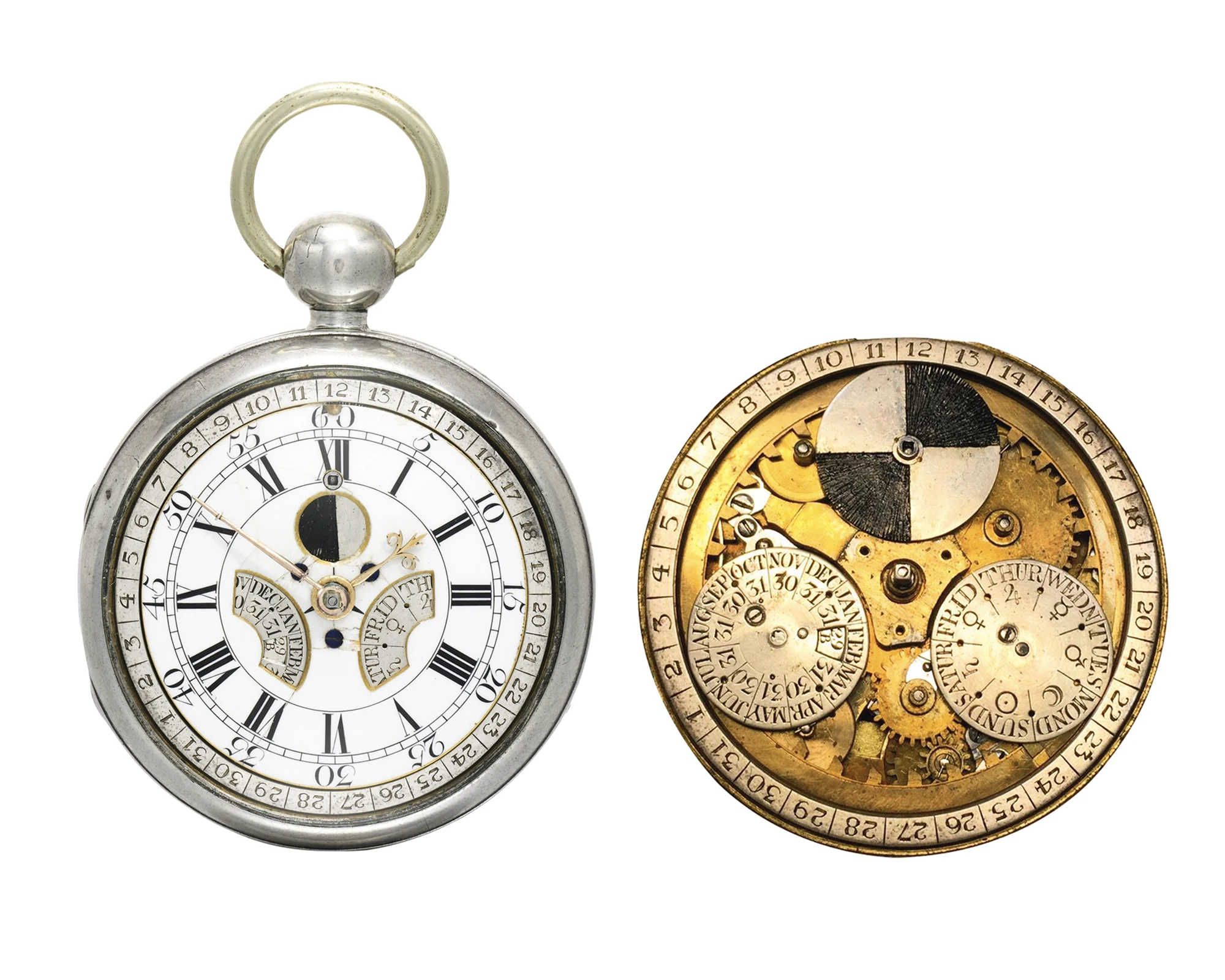
Credit © The Board of Trustees of the Science Museum CC BY-NC-SA 4.0 / Credit © Sotheby’s
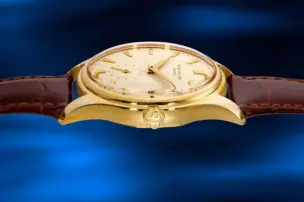
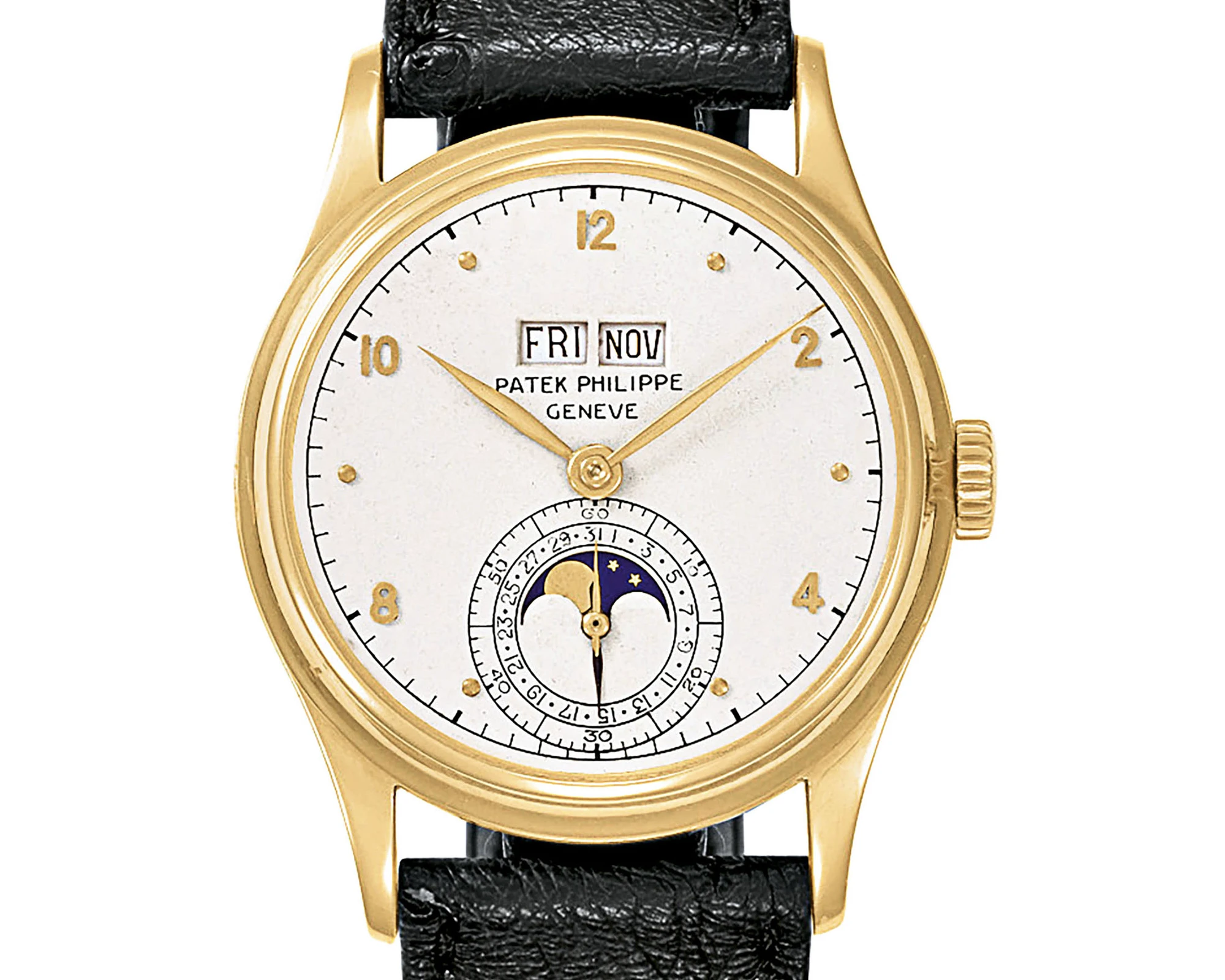
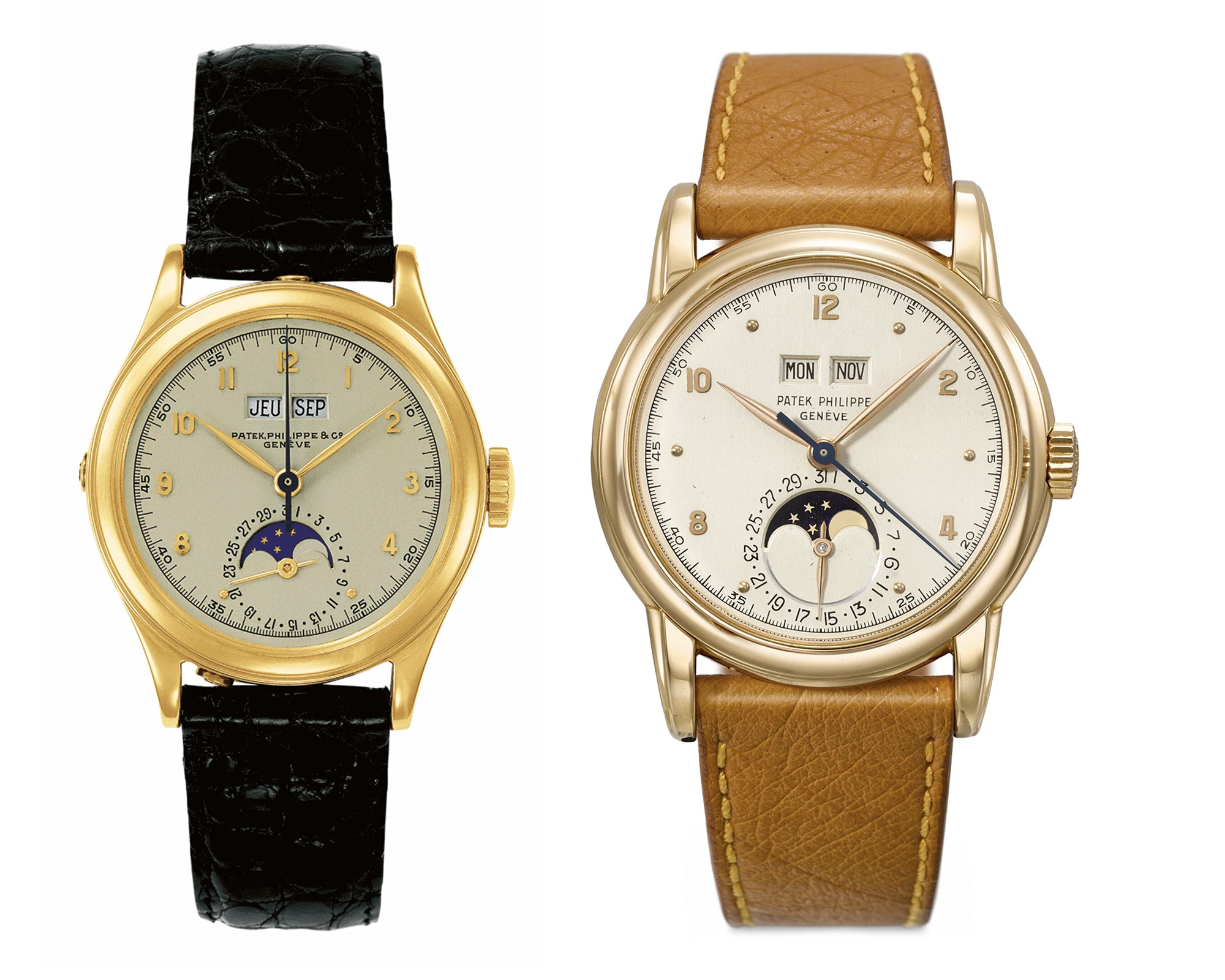
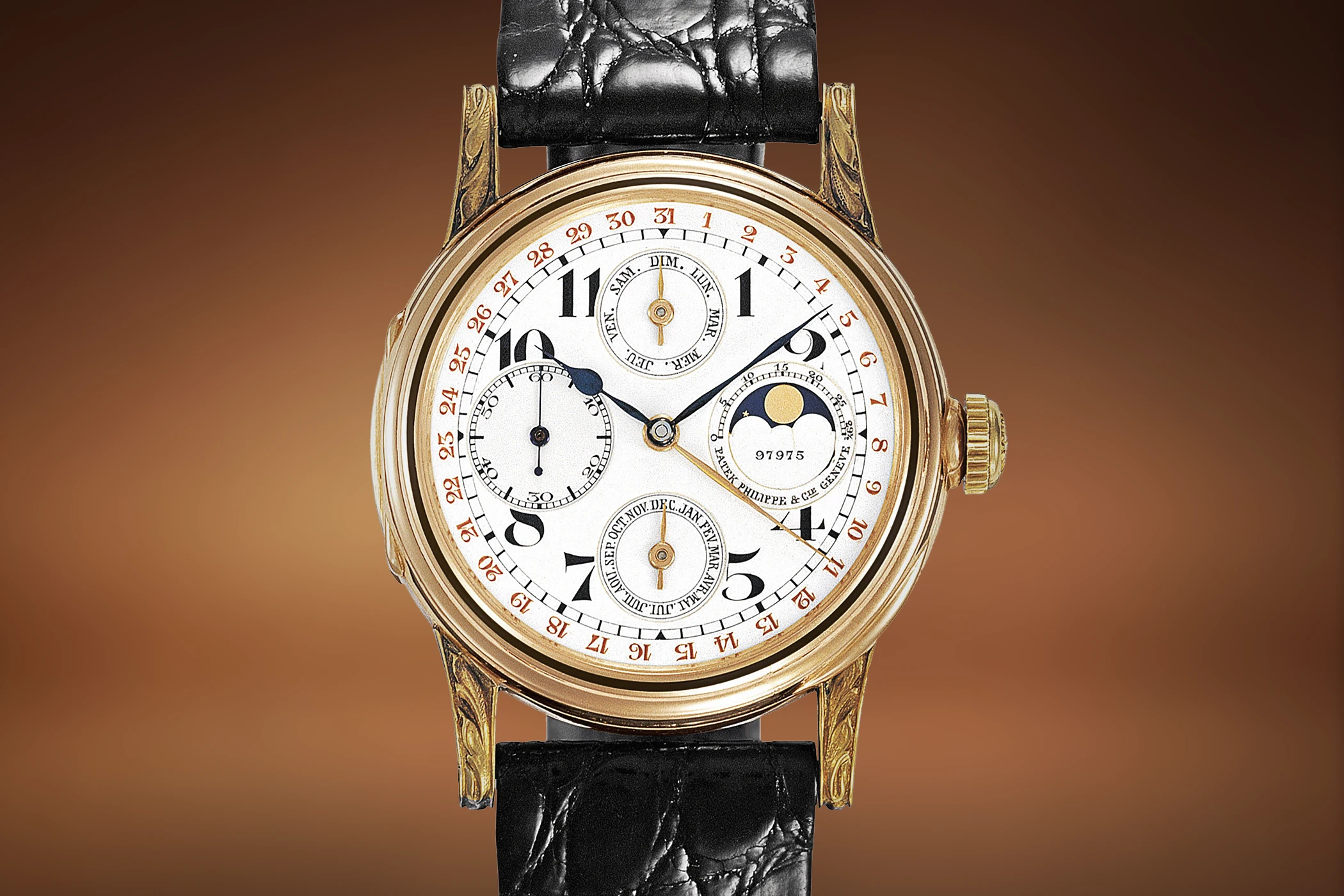
It was not until the 20th century that this complication gradually found its way onto the wrist. The Patek Philippe Reference 97975, produced in 1925, is widely regarded as the world’s first perpetual calendar wristwatch. Interestingly, the movement used was originally designed for a ladies’ pendant watch dating back to 1898, and was later adapted for use in a wristwatch.
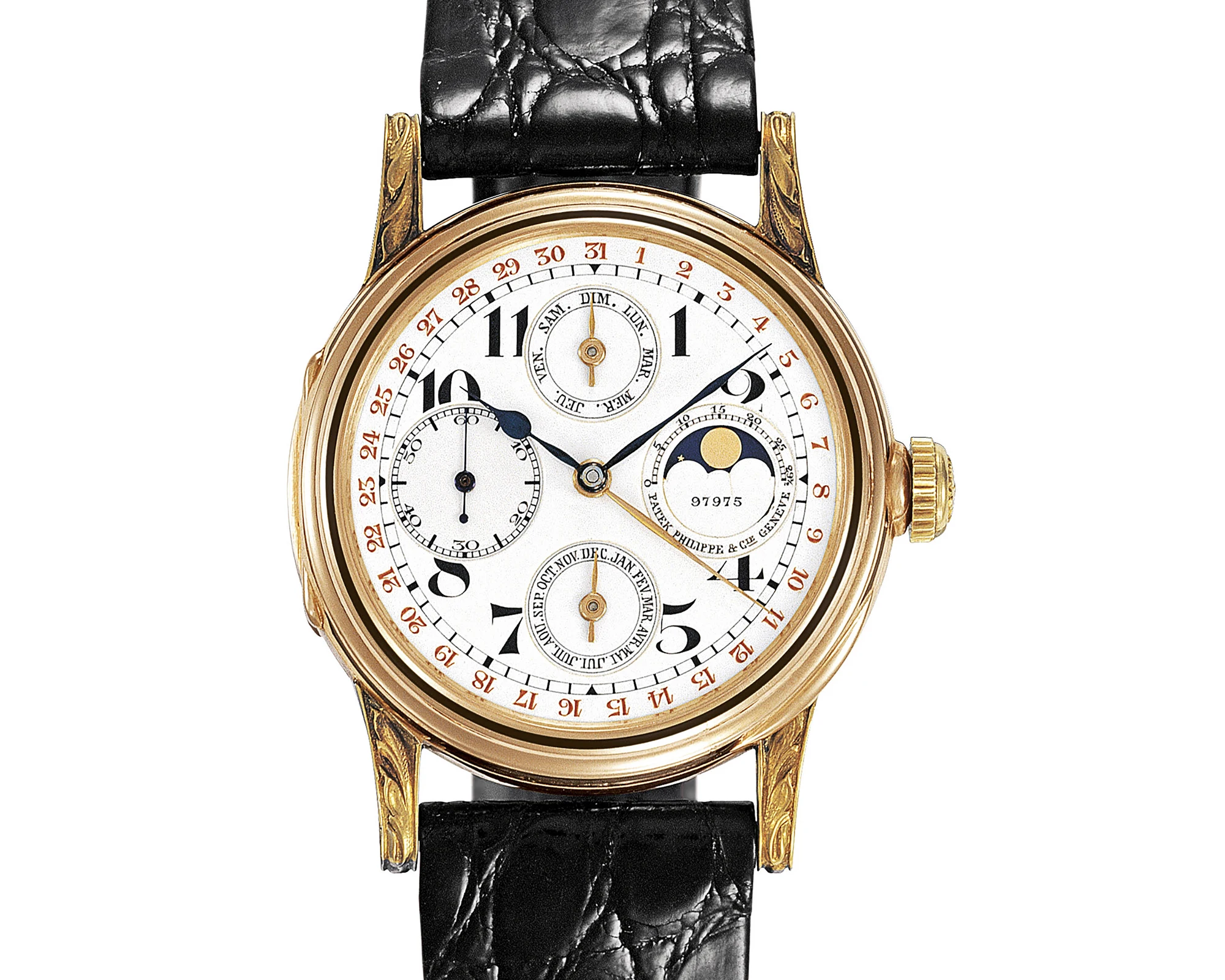
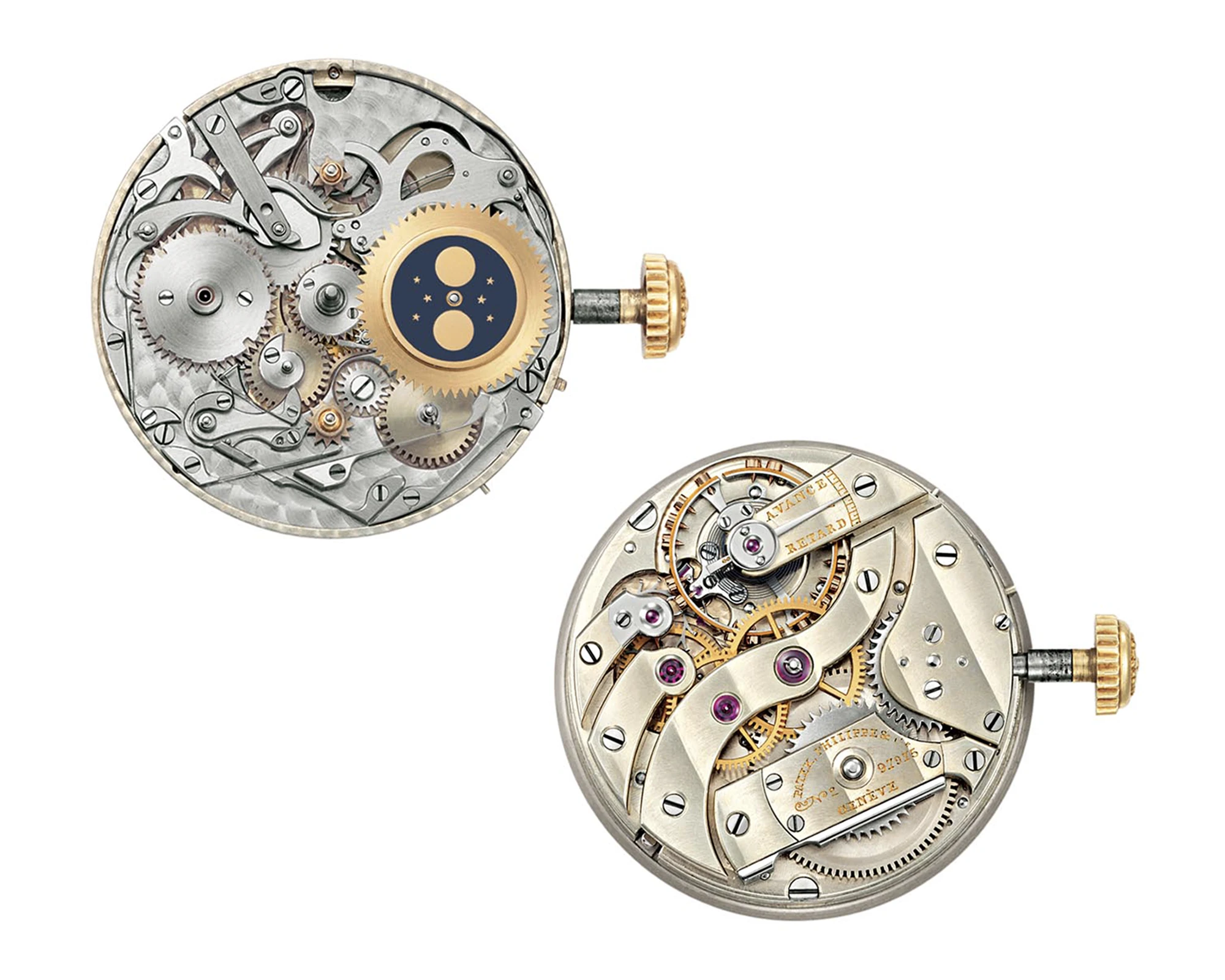
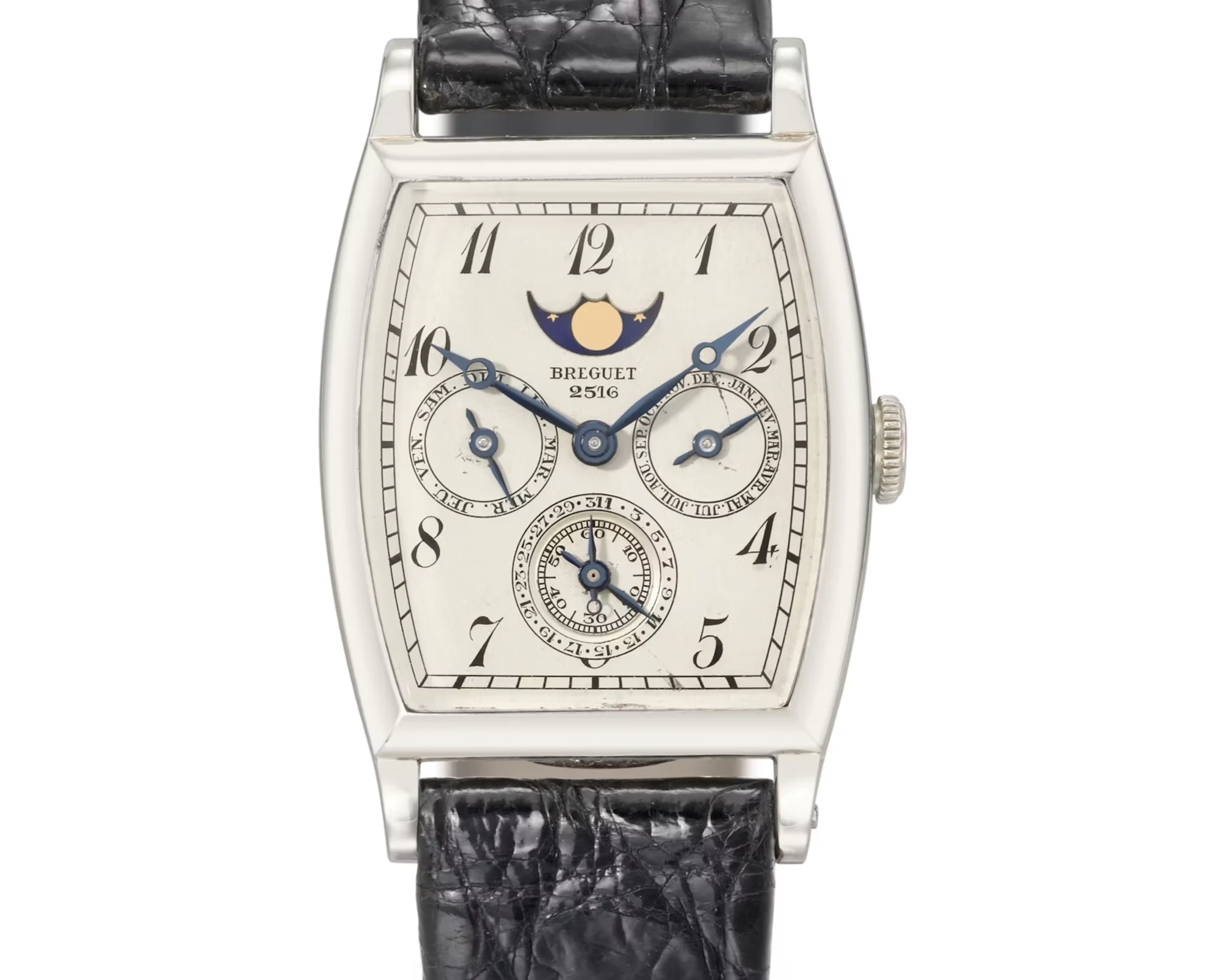
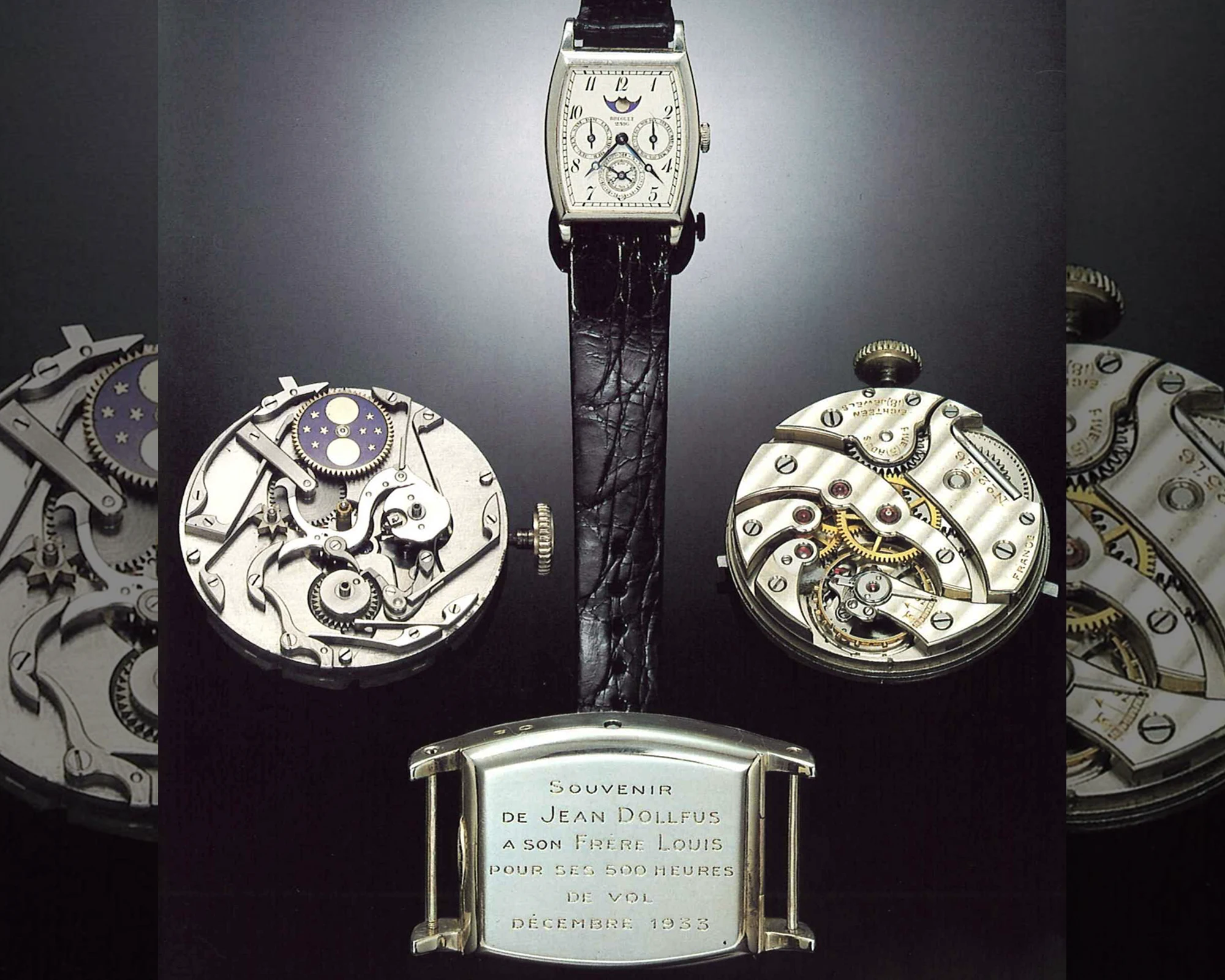
At the same time, there is another contender who is likely to have been the first to conceive a perpetual calendar wristwatch. It is widely assumed that Breguet, with what is now the famous reference 2516, developed the first perpetual calendar calibre designed specifically for a wristwatch. In other words, it was not an adaptation of a pocket watch movement, but was intended from the outset to be a perpetual calendar wristwatch movement.
Credit © Antiquorum
However, the transition from one-off pieces to series production followed shortly thereafter at Patek Philippe. In 1941, the manufacture introduced reference 1526, which is regarded as the first serially produced perpetual calendar wristwatch. Its dial layout, featuring two apertures for day and month along with a subsidiary dial for the date and moon phase, proved to be highly influential.
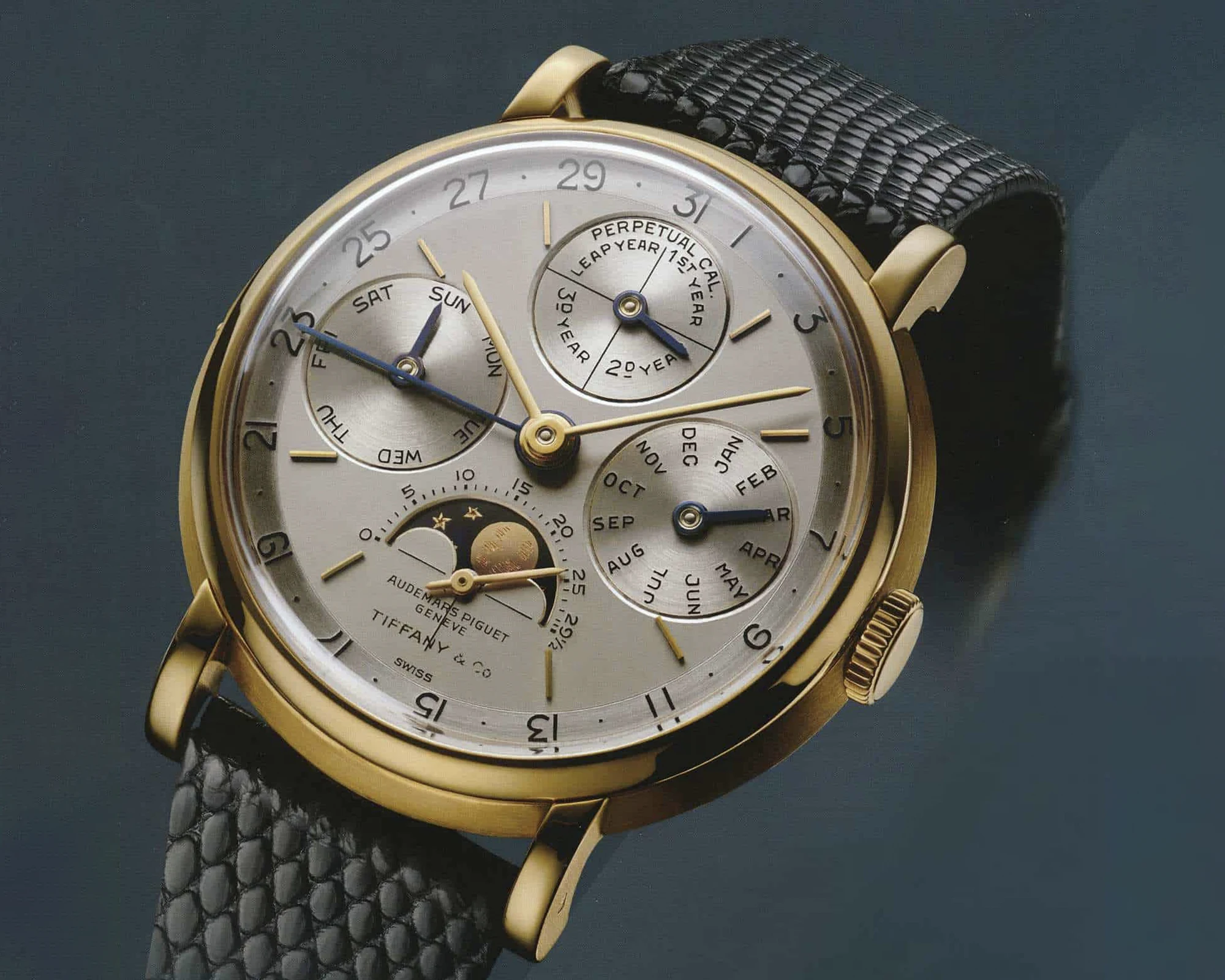
In later years, watchmakers such as Vacheron Constantin, Audemars Piguet, and Jaeger-LeCoultre went on to develop their own perpetual calendar watches, initially in very limited numbers. A particularly significant step was taken by Audemars Piguet in 1955. With reference 5516, the manufacture unveiled the first wristwatch not only to feature a perpetual calendar, but also to display the leap-year cycle visibly on the dial for the first time. This was a unique detail at the time, which significantly increased the functionality for the wearer.
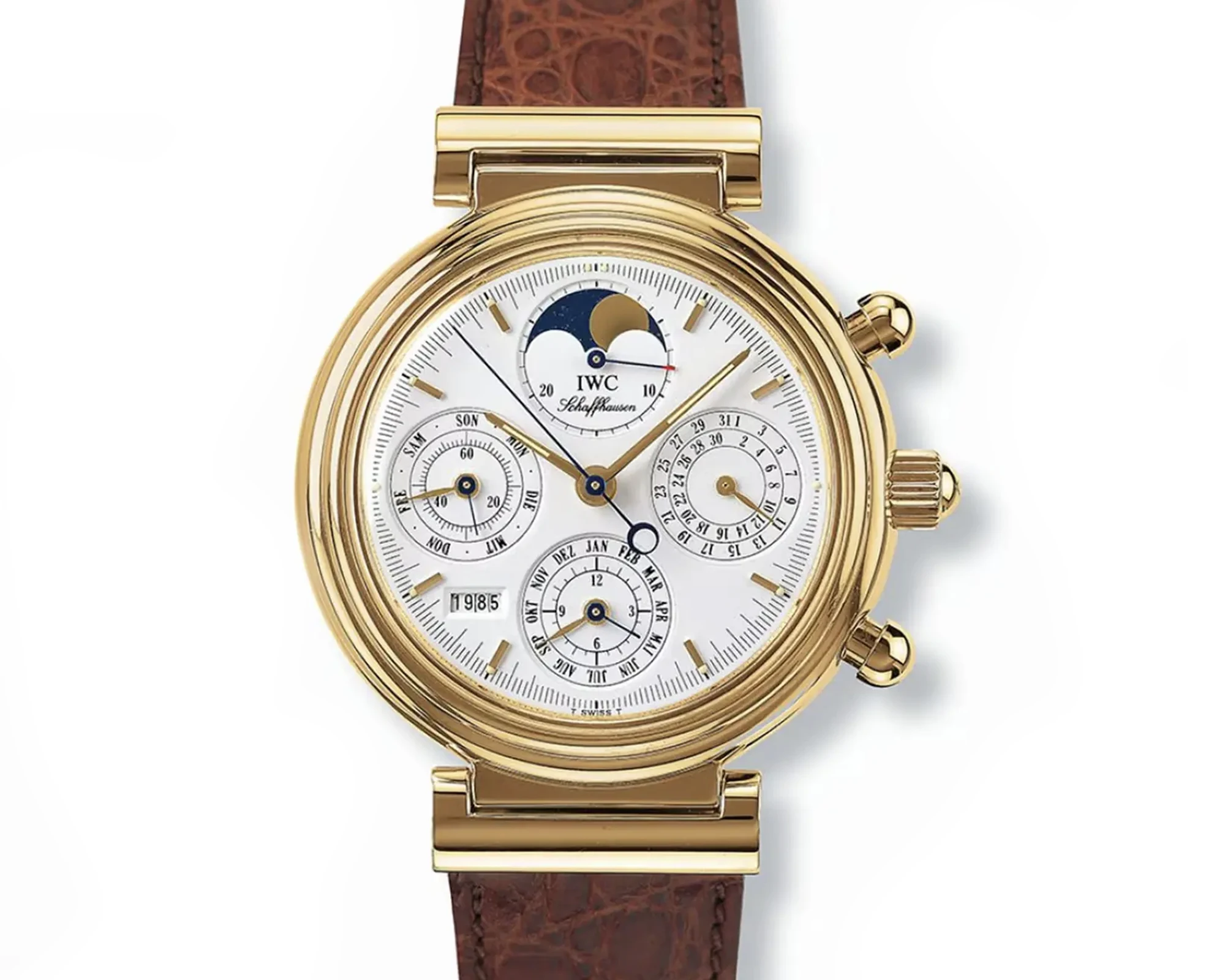
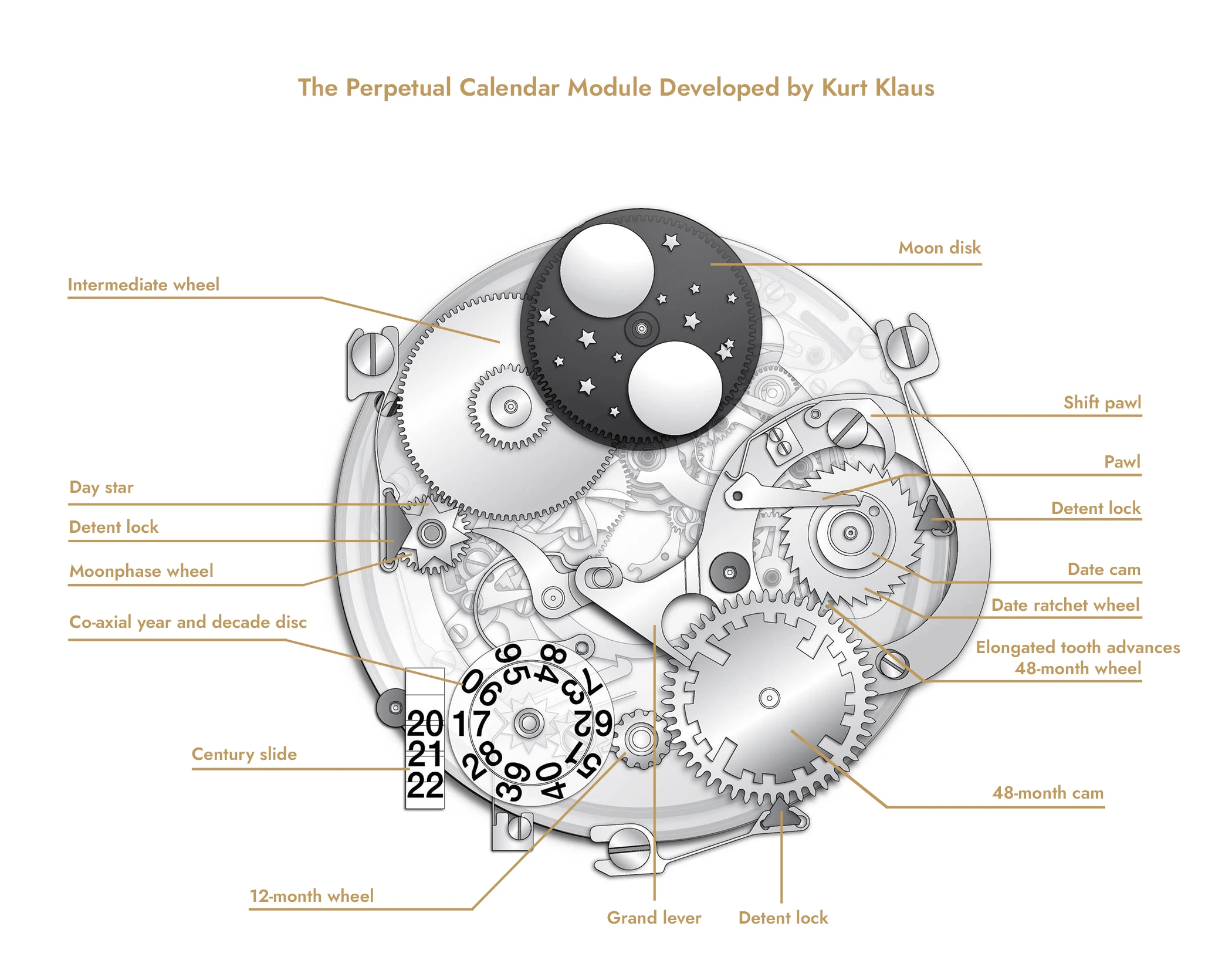
In the 1970s, the quartz crisis fundamentally called mechanical watchmaking into question, and the perpetual calendar, too, was at risk of disappearing. Its modern breakthrough is owed in large part to Kurt Klaus, then a watchmaker at IWC Schaffhausen. With the Da Vinci Perpetual Calendar reference 3750, introduced in 1985, Klaus developed a perpetual calendar in which all indications could be adjusted synchronously via the crown. This made the complication more robust in daily use, easier to operate and also more economical to produce.
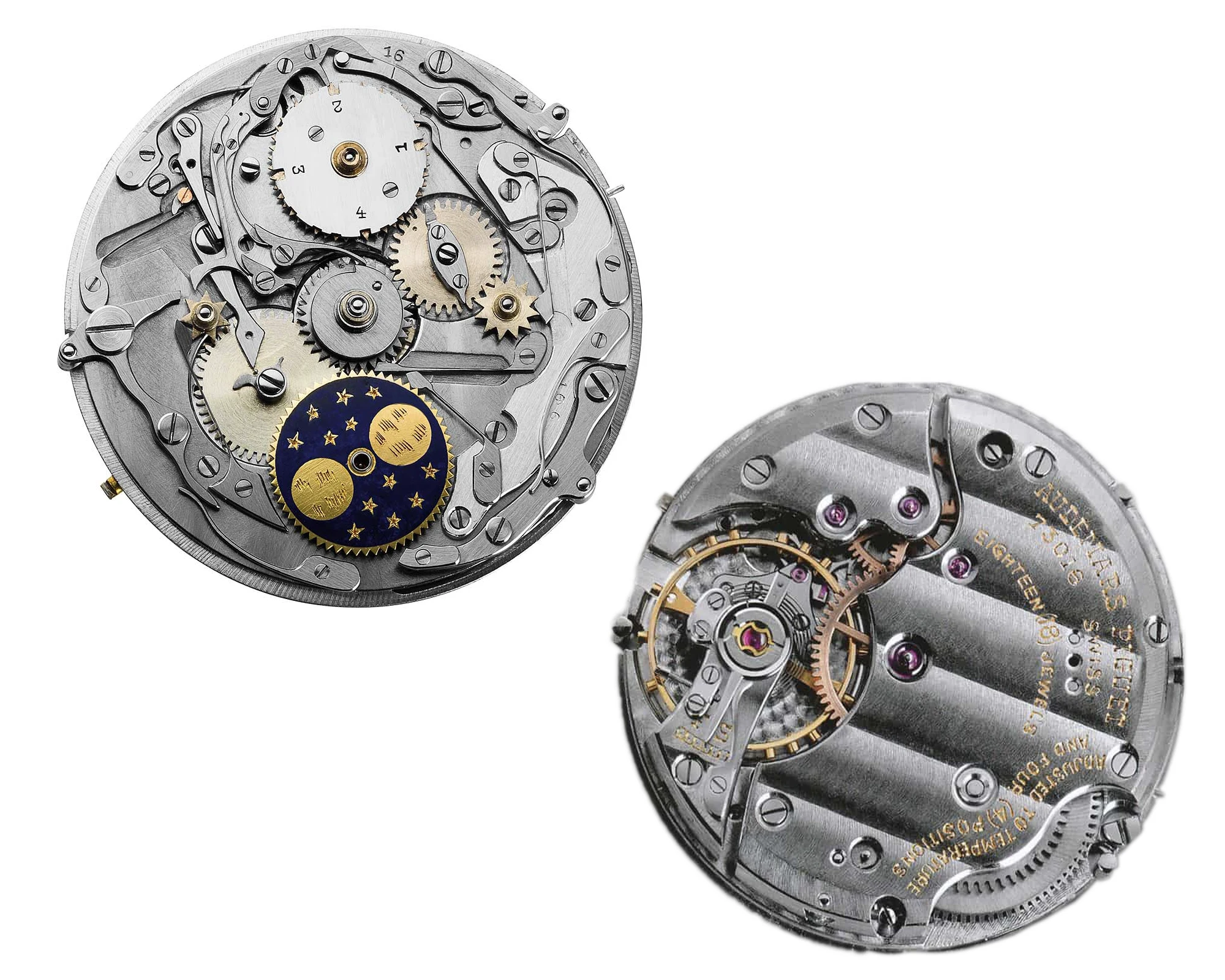
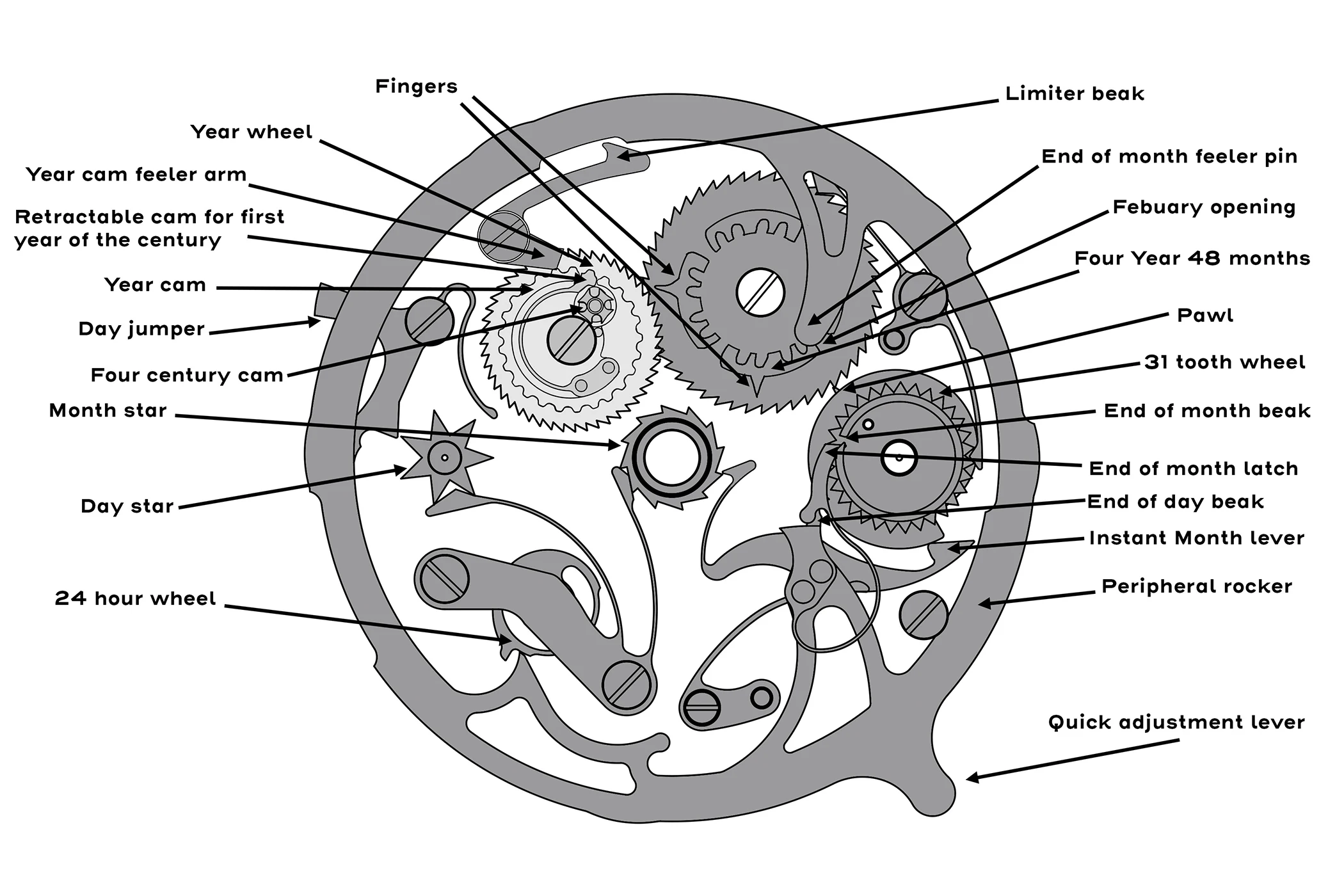
At first glance, a perpetual calendar watch shows little more than several apertures, hands, and subdials. Behind them, however, lies a highly complex interplay of gears, levers, springs, and cams. The heart of most modern perpetual calendars is the so-called 48-month cam. It is designed to represent a complete four-year cycle with 48 months (12 months × 4 years) and rotates precisely once around its own axis during that period. This cam features rises and recesses: each rise corresponds to a month in the four-year cycle, while the depth of the recess determines the length of the month. The deeper the recess, the earlier in the month the mechanism triggers the jump to the next month. In a leap year, when February has 29 days, there is a slightly deeper recess than for the three other Februaries. This tells the mechanism to insert an extra day in the fourth year. Whether the perpetual calendar is powered by an automatic or manual movement does not alter this fundamental principle. An automatic movement keeps the perpetual calendar running in daily use, while with a manual-winding calibre, the wearer actively winds the watch to maintain its function.
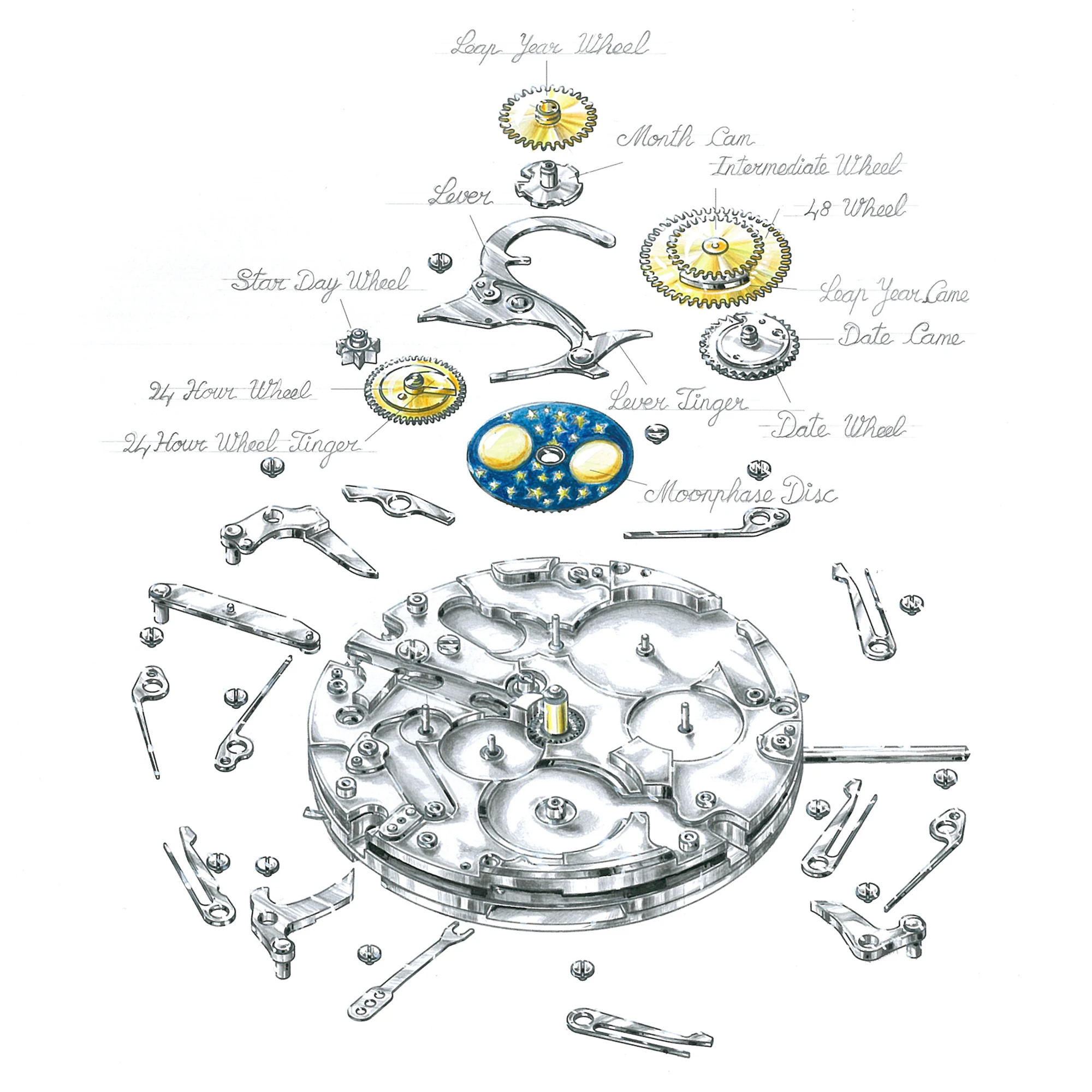
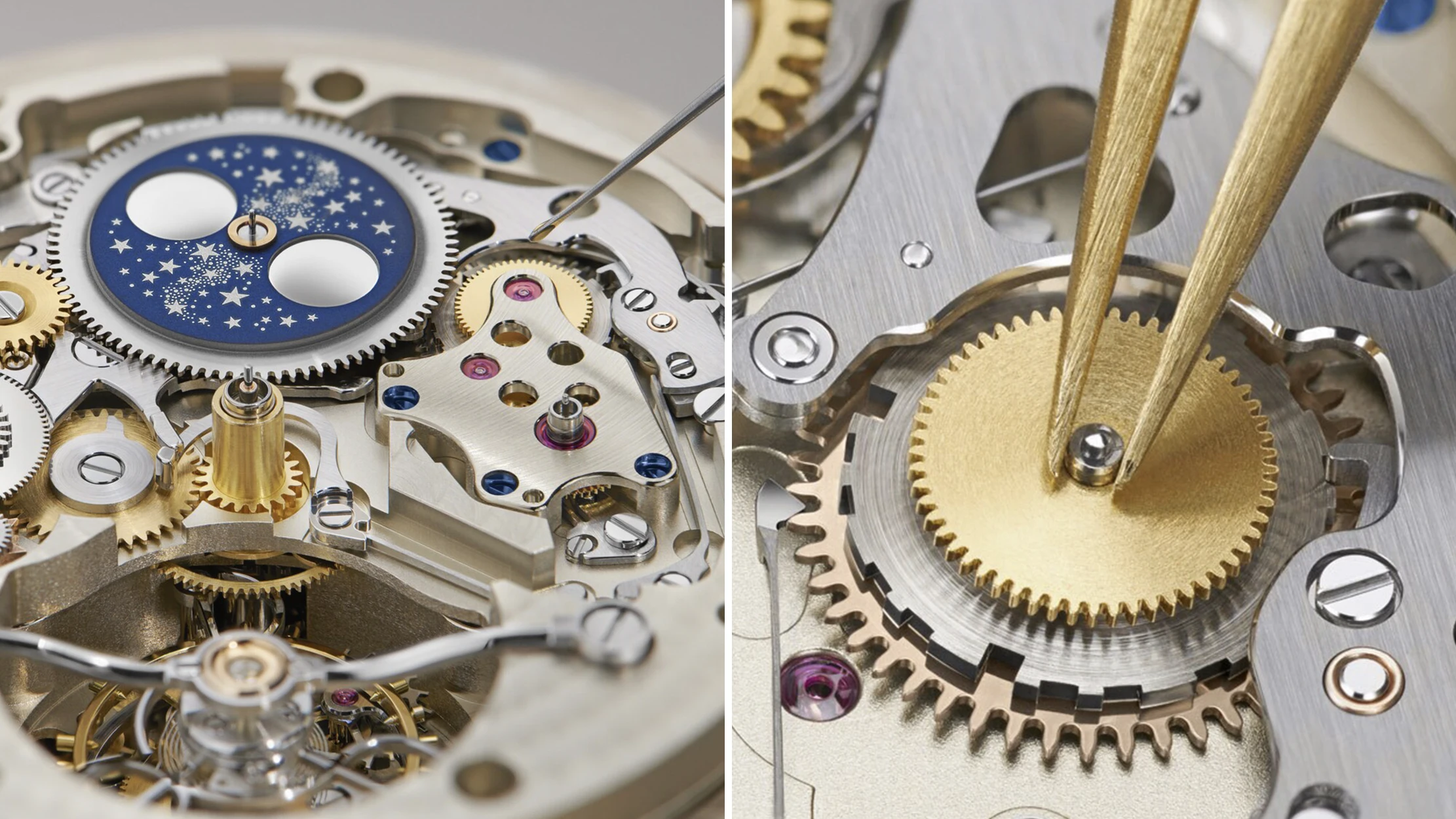
Here is a summary of the key wheel. The depth of the 48 recesses tells the mechanism the length of the current month:
A lever ‘reads’ this information and transmits it to the date wheel, allowing it to skip days at the end of the month if necessary (for example, jumping directly from 30 April to 1 May).
Operating a perpetual calendar requires care and attention. Key rules include: never adjust the date between 11:00 pm and 1:00 am. During this period, the calendar gears are engaged in their internal switching process, and interference can damage delicate components. Ideally, the display should be corrected at 6:00 am or 6:00 pm – when the date change is far from occurring. The date should only ever be set forwards, never backwards. Turning it backwards can cause mechanical damage, especially with this sensitive calendar mechanism.
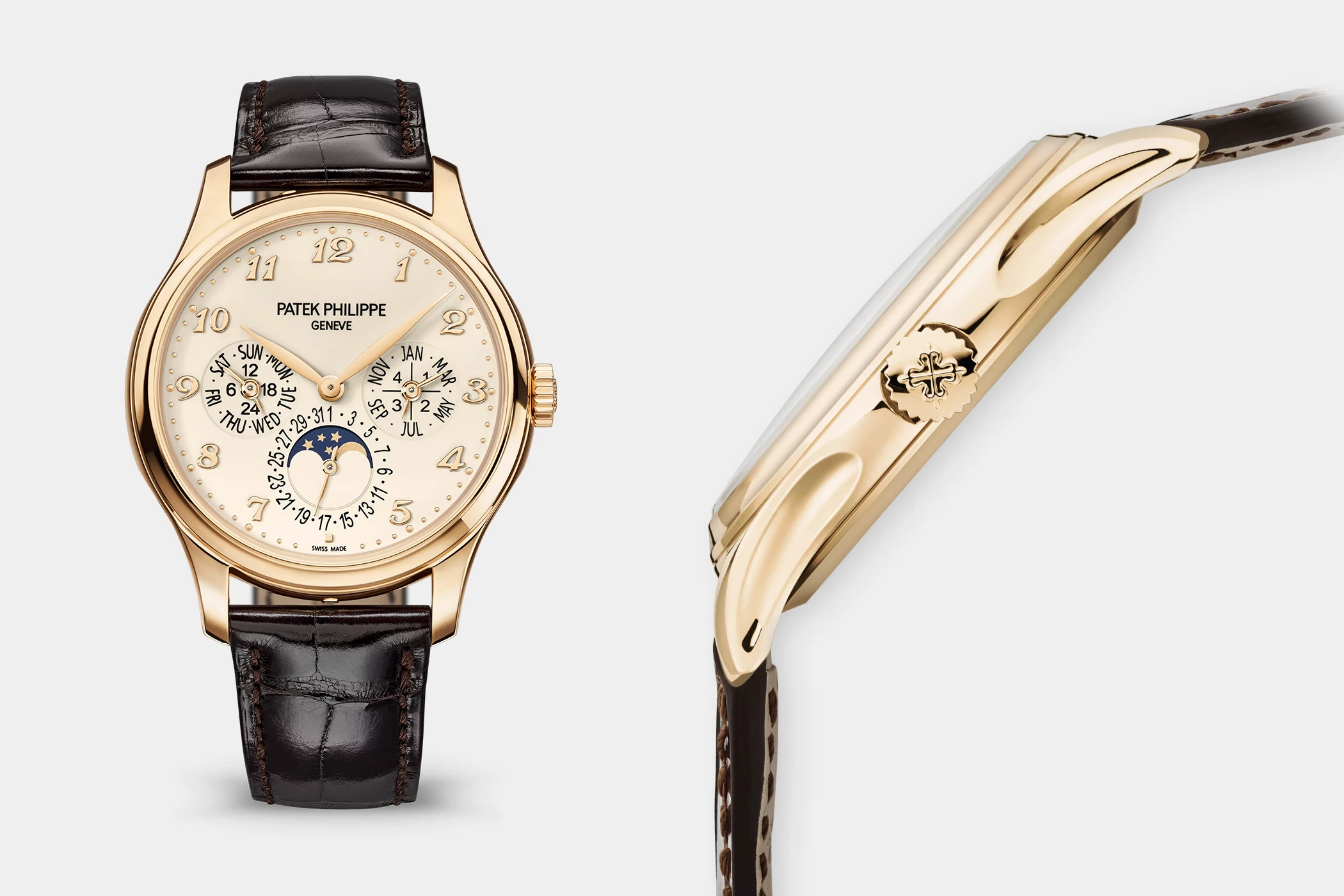
The traditional method of setting a perpetual calendar is via the recessed correction pushers located on the case. Many models, such as the Patek Philippe Perpetual Ref. 5327R-001, feature small pushers for setting the date, day of the week, month and moon phase. These are operated using a correction pin. First, set the date to the day before the current date. Then, turn the time past midnight and allow the mechanism to advance the date. This moves the entire calendar forward in sync until the time and calendar match the actual date.
IWC, among others, pursues the concept of synchronised adjustment with the system developed by Kurt Klaus, which can still be found in the IW503702 Portugieser Perpetual Calendar 44, Ref. IW503702. In this model, all of the calendar displays – the date, day of the week, month, year, and moon phase – are mechanically linked and can be controlled exclusively via the crown. The wearer does not need to operate individual pushers; they simply turn the calendar as if it were a mechanical programme. When the time is advanced, the entire calendar ‘jumps’ forward in the correct sequence. This approach makes setting the watch much easier in everyday use. However, if the date is accidentally advanced one day too far, the complete four-year cycle must be run through again.
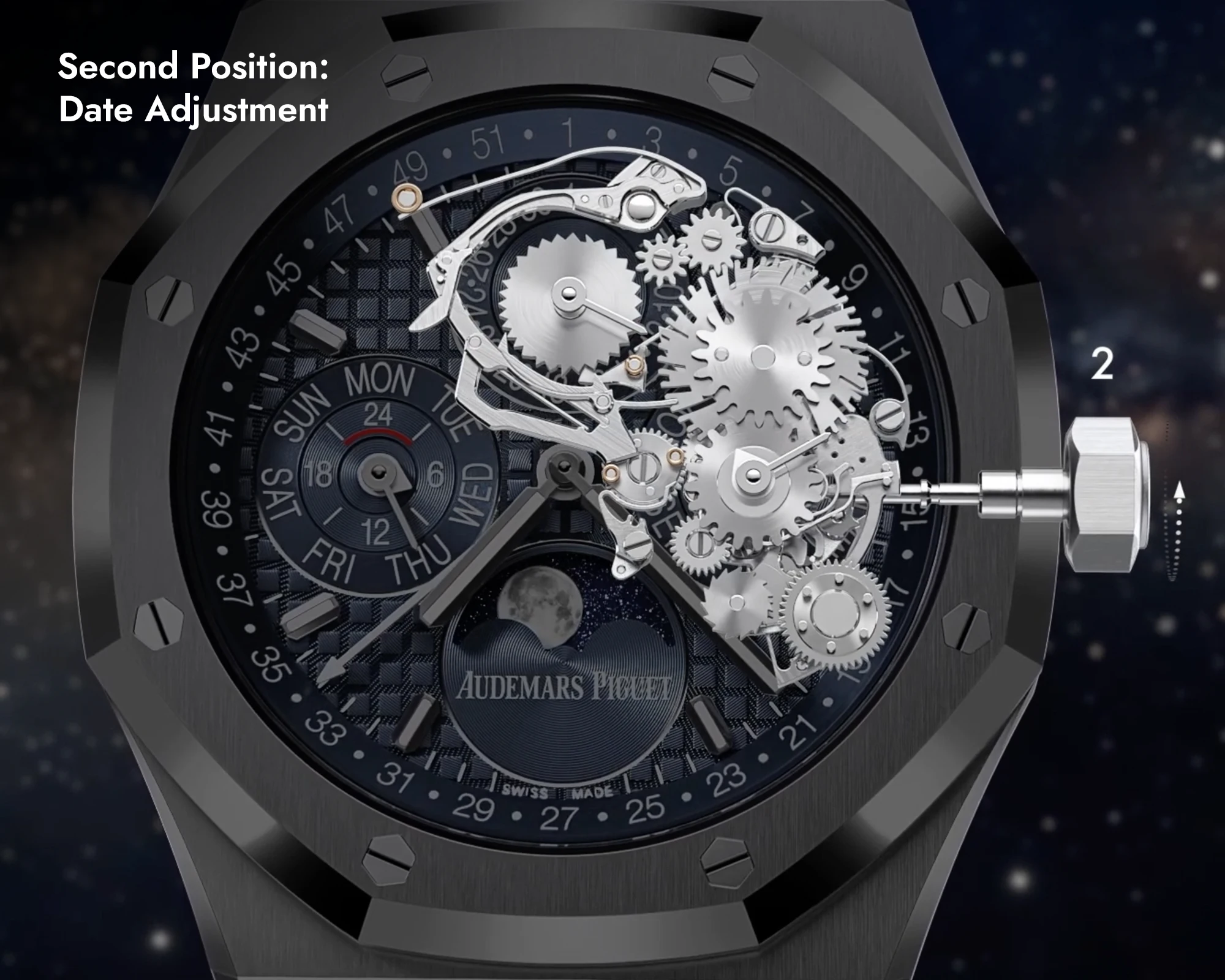
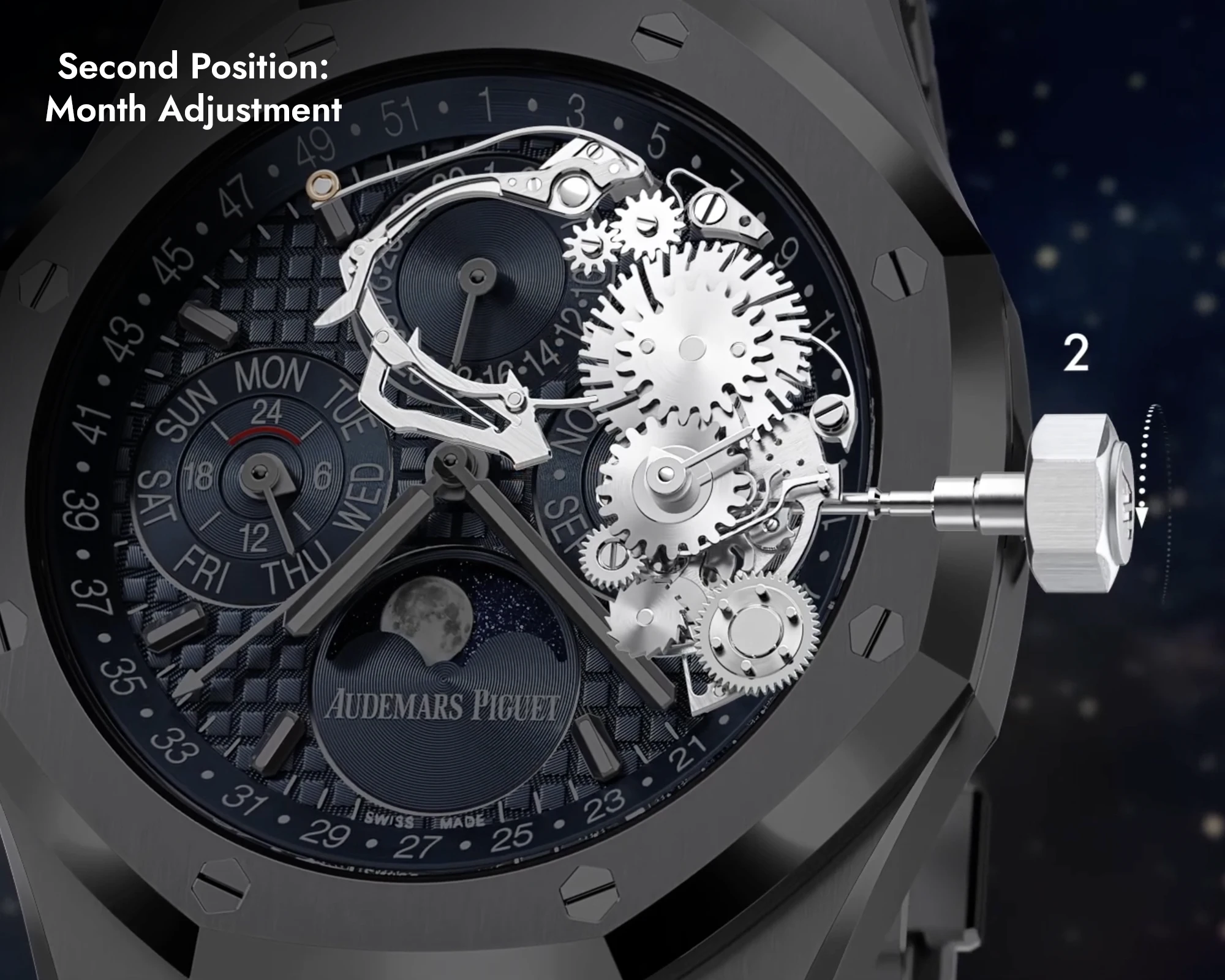
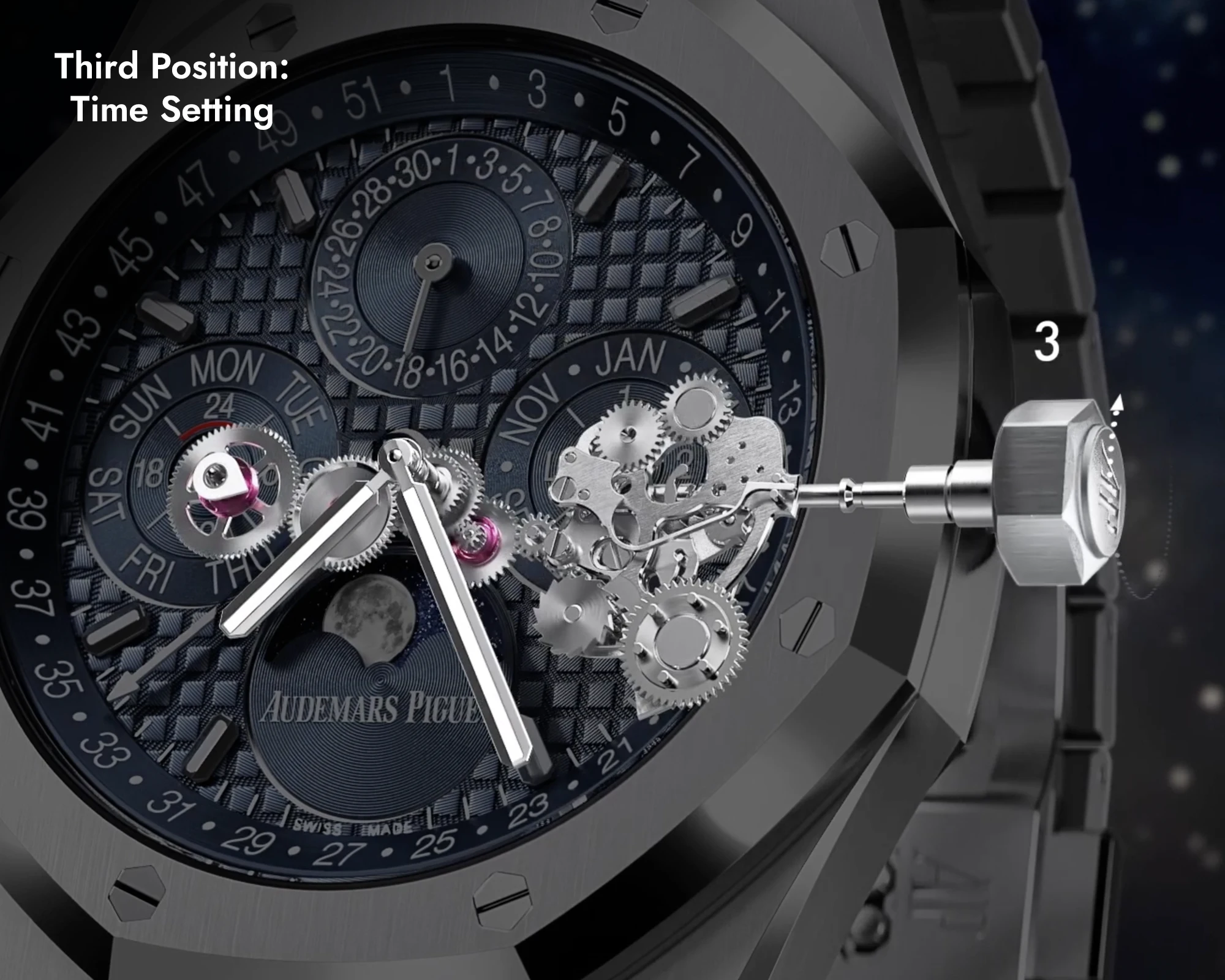
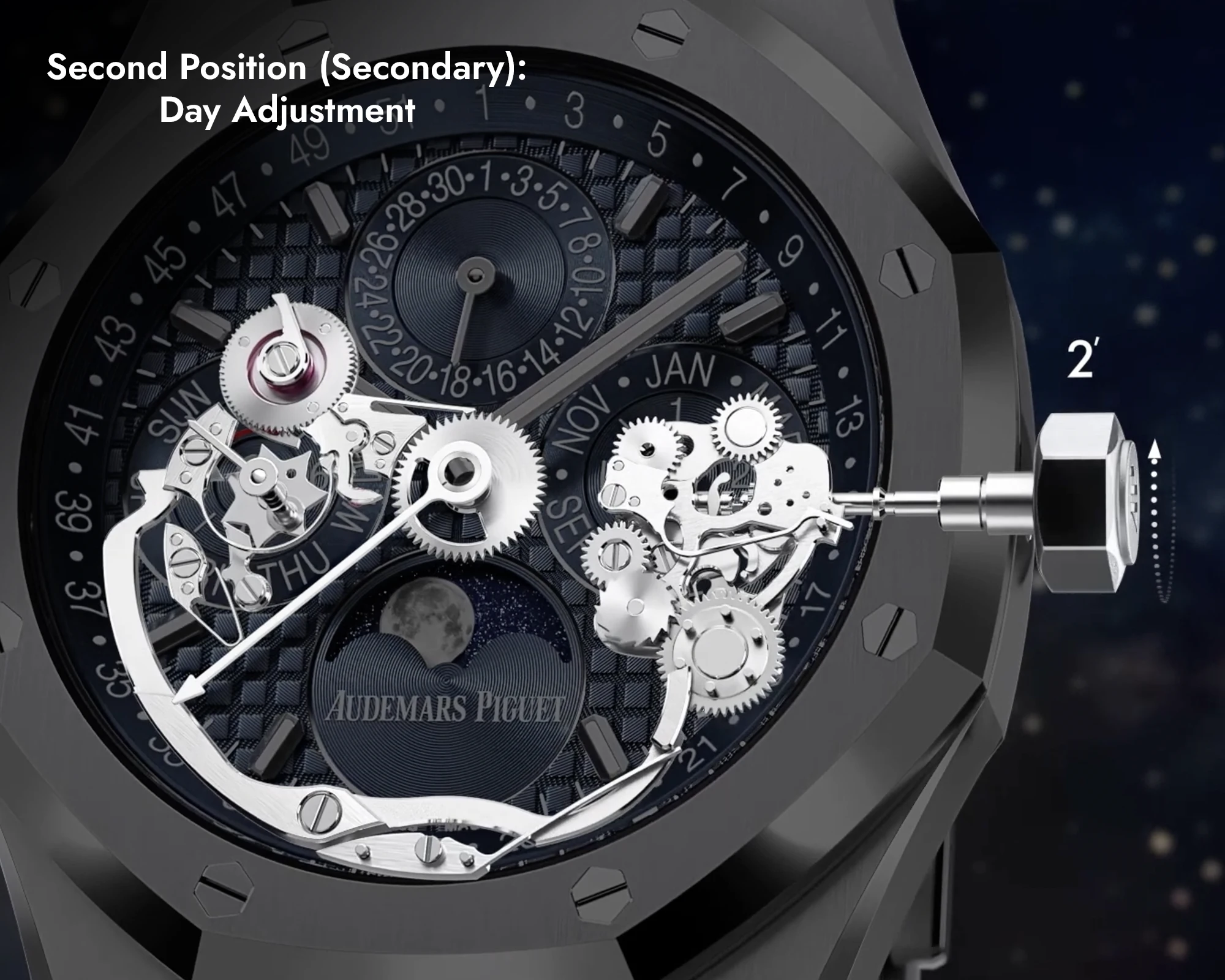
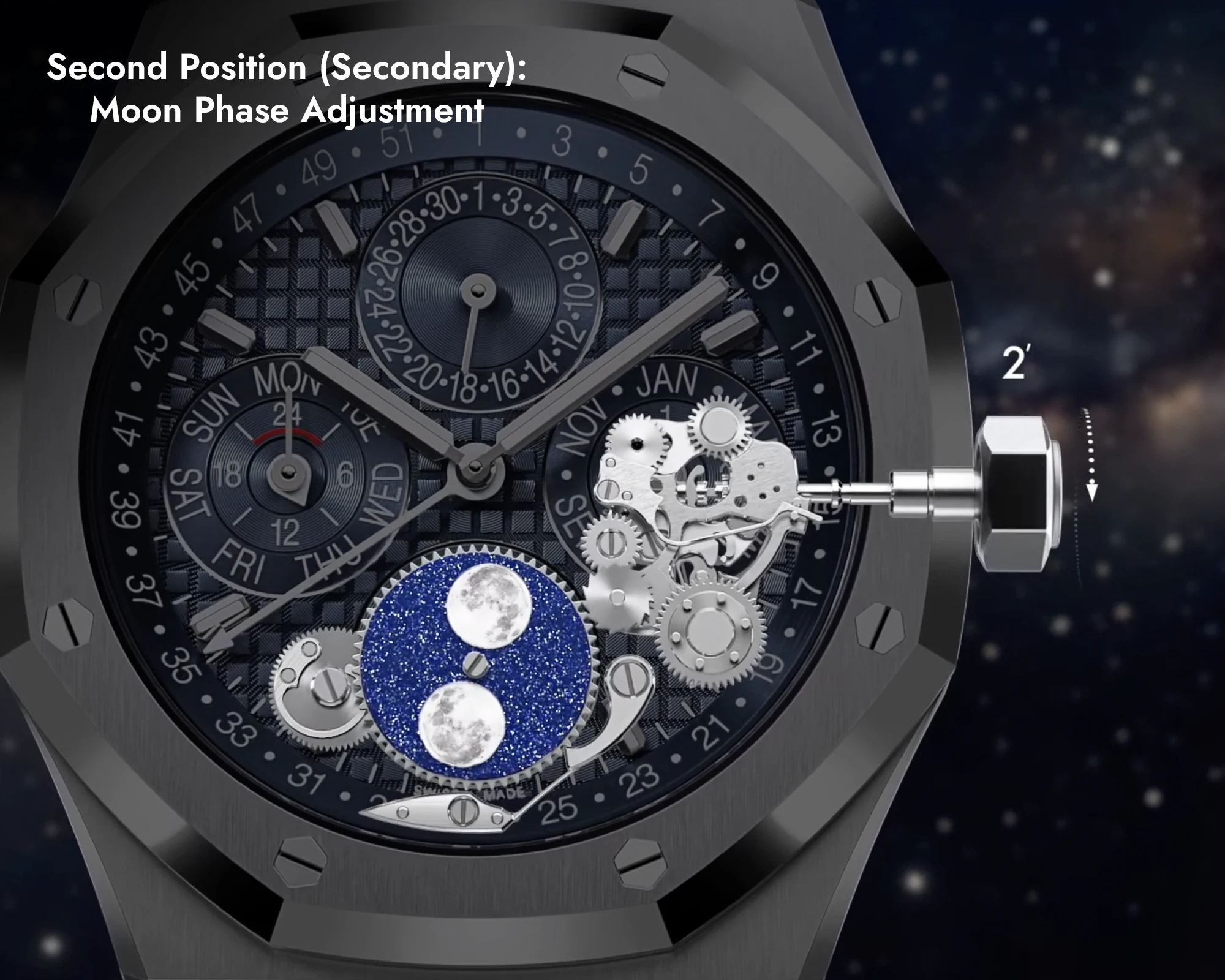
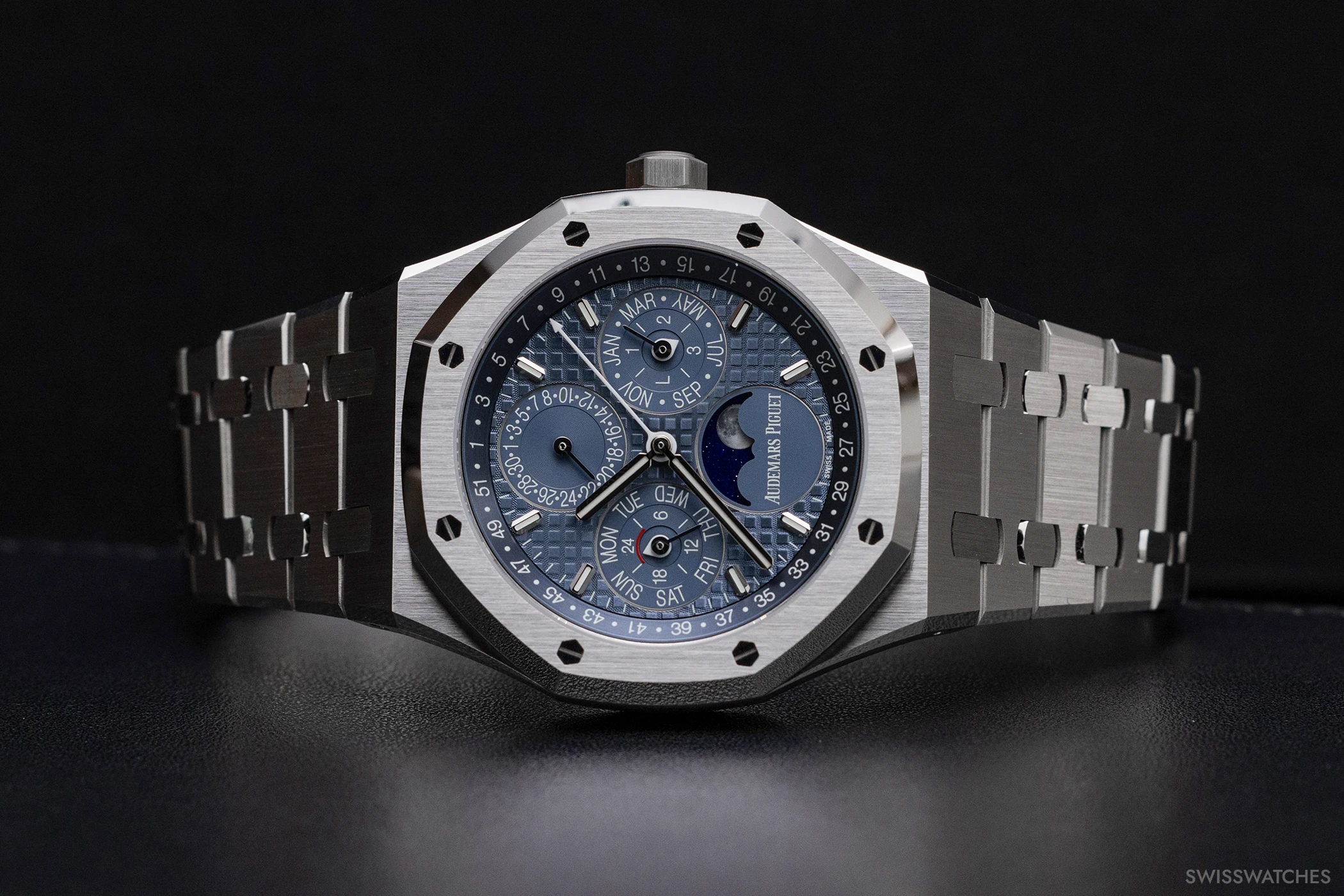
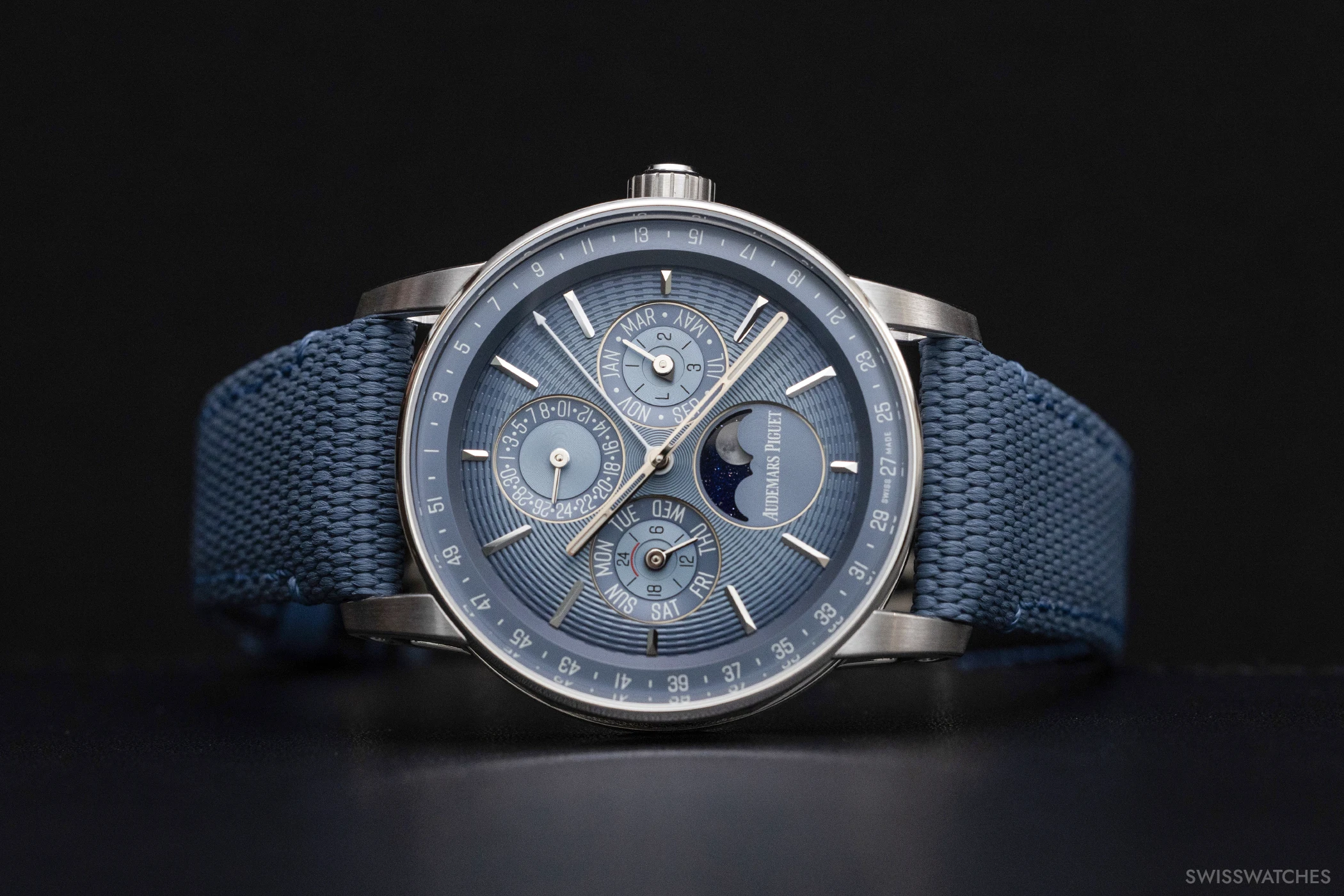
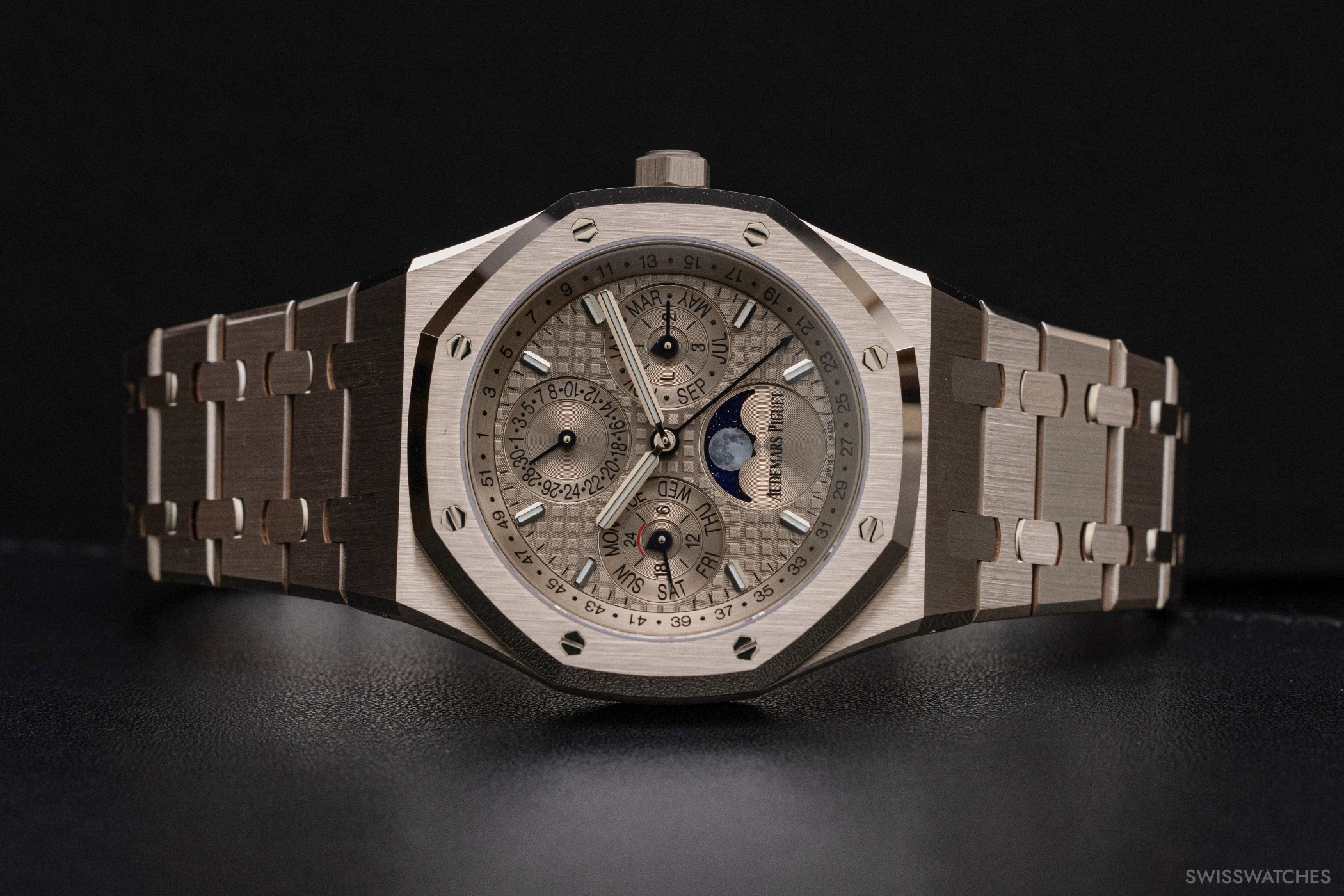
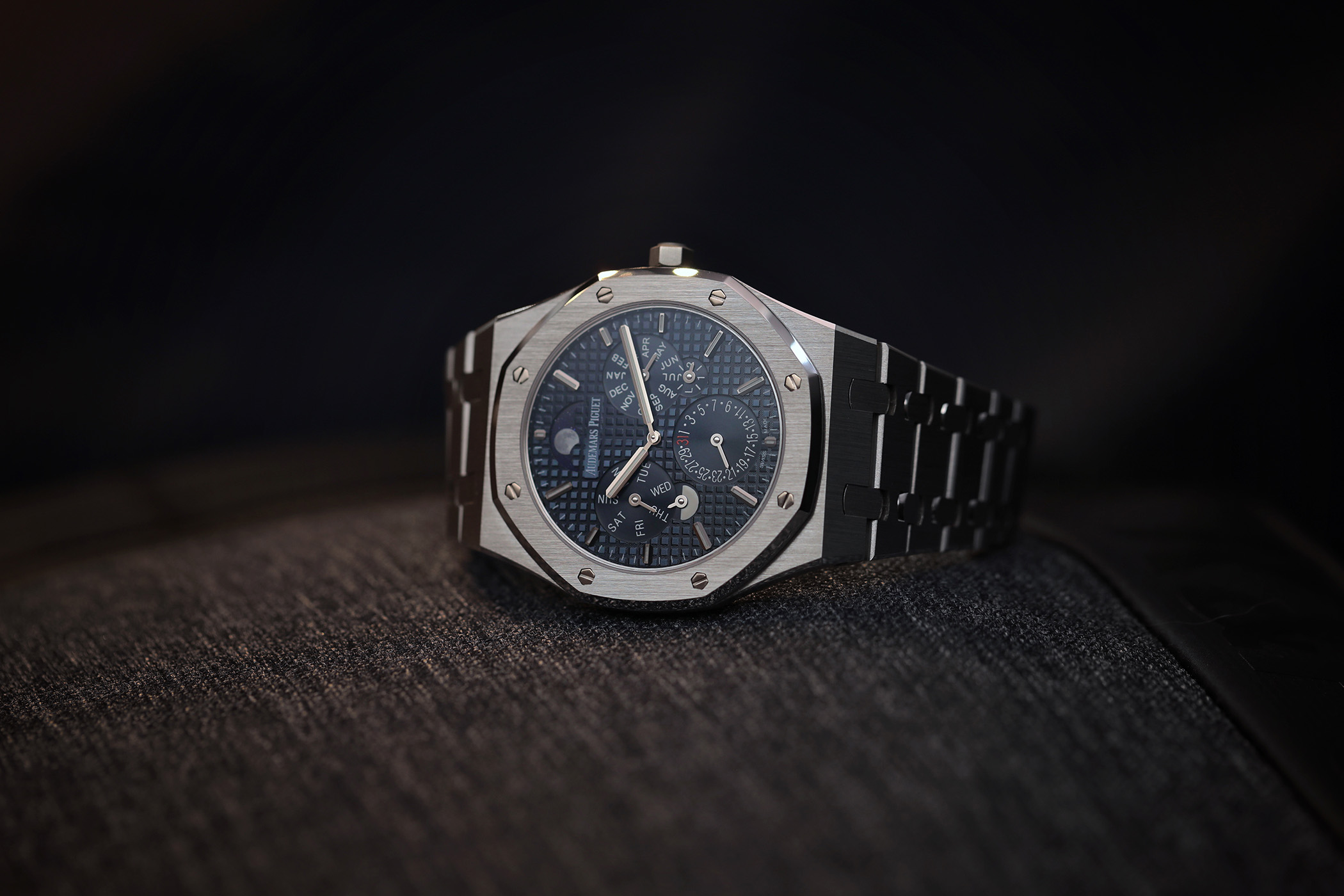
A similar yet more refined concept is pursued by Audemars Piguet with the calibre 7138, which was introduced in 2025. Unlike Kurt Klaus’s invention, the calendar displays can now be adjusted forwards and backwards via the crown. To celebrate its 150th anniversary, Audemars Piguet unveiled a new generation of self-winding perpetual calendar movements, which enhance ease of use by enabling corrections to be made to every function via a single ‘all-in-one’ crown.
The Calibre 7138 builds on the patented innovations of calibre 5133, which was introduced in 2018 with the Royal Oak Selfwinding Perpetual Calendar Ultra-Thin RD#2 and consolidated all perpetual calendar functions on a single movement level. The new movement debuted in 2025 in a 41 mm Code 11.59 by Audemars Piguet in 18-carat white gold, in two 41 mm Royal Oak models in stainless steel and 18-carat sand gold, and in three corresponding ‘Anniversary’ limited editions, each restricted to 150 pieces. Here too, the same rule applies: as long as the watch continues running, the date only needs to be manually corrected once – in the year 2100, when the Gregorian calendar exceptionally omits a leap year.
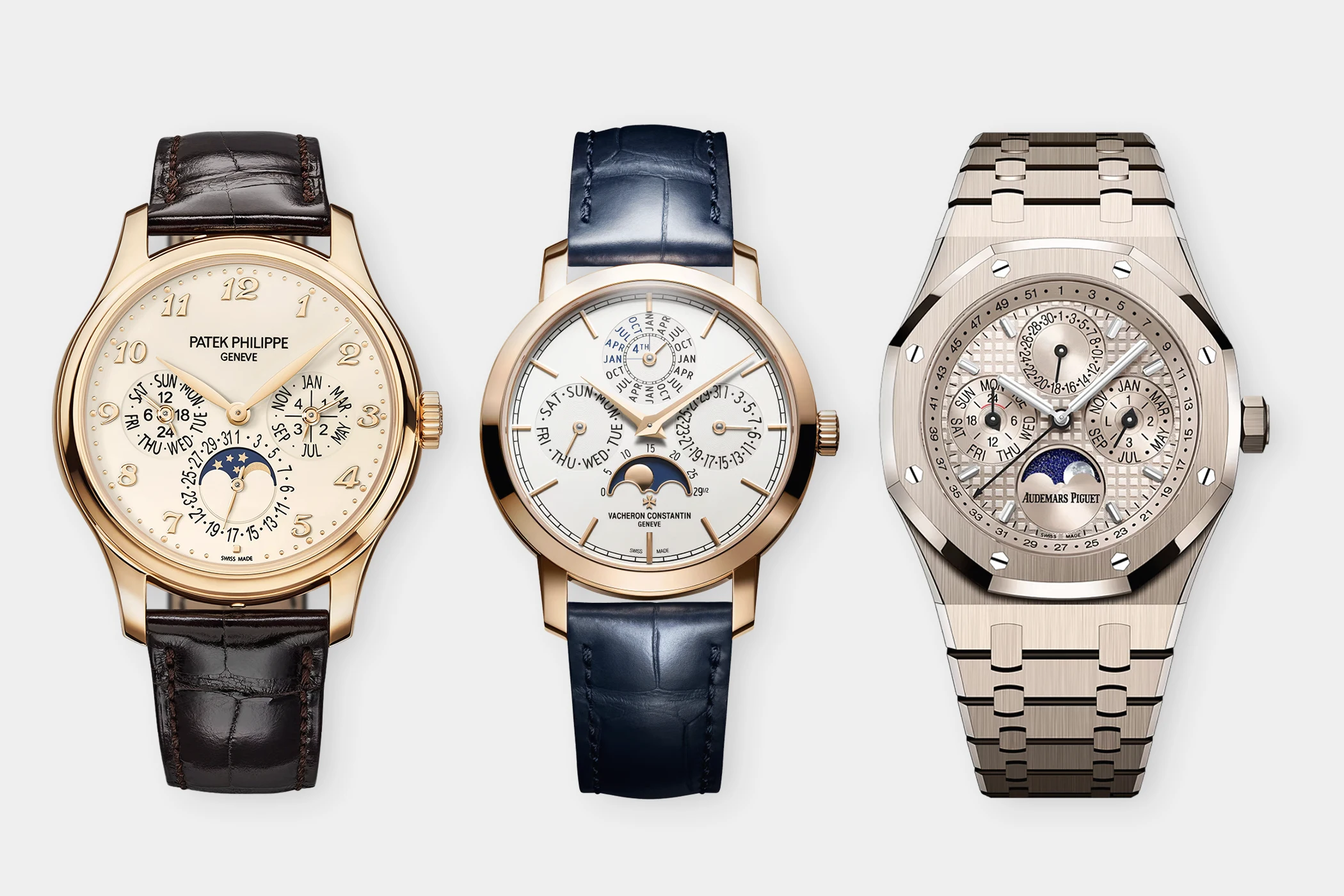
Because the design and manufacture of a perpetual calendar are extremely complex, only a few manufacturers have mastered this complication at the highest level. Among the best-known manufacturers are Patek Philippe, Vacheron Constantin, and Audemars Piguet, who have been building legendary calendar watches for decades.
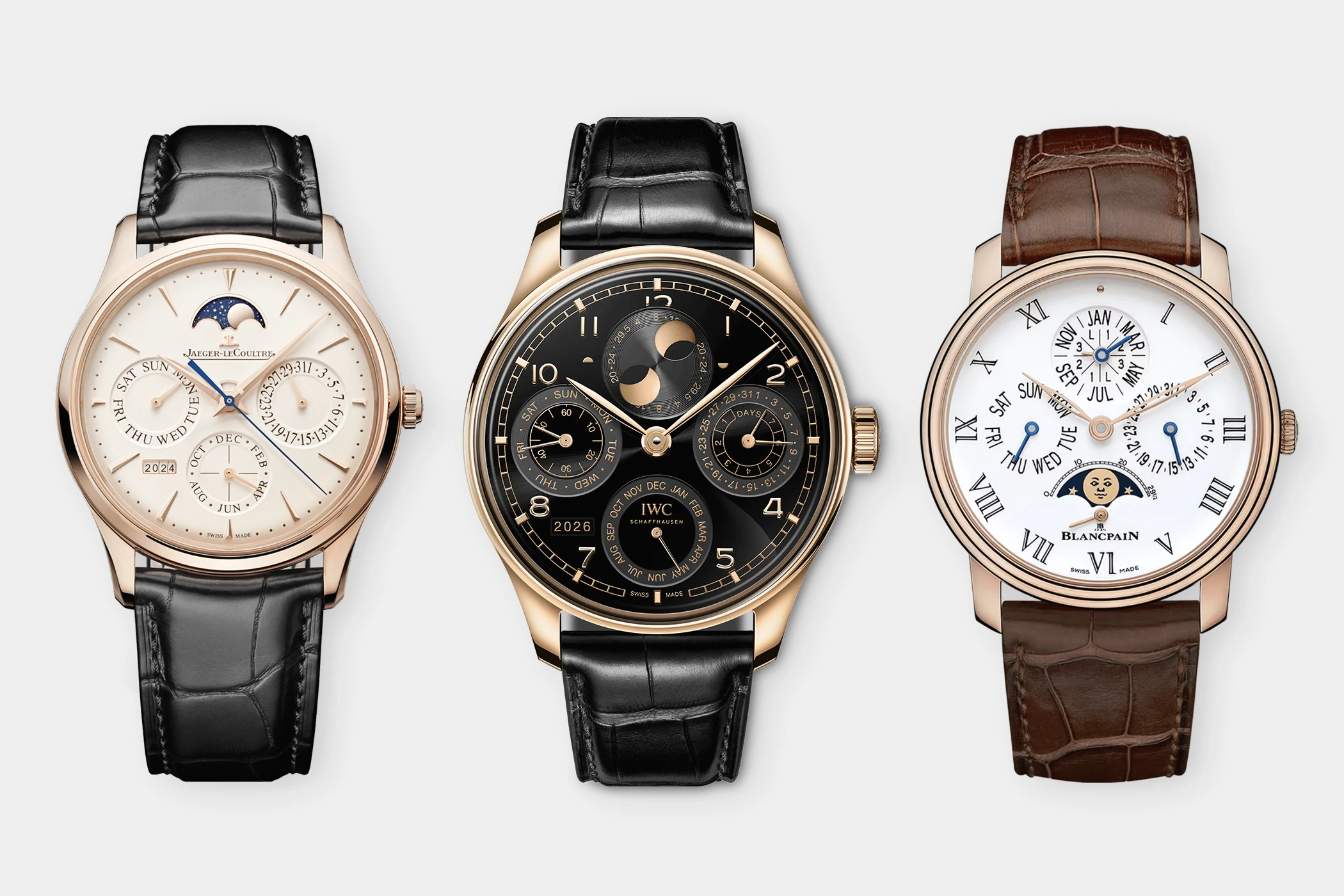
However, Jaeger-LeCoultre (e.g. the Master series), IWC Schaffhausen (especially the Portugieser and Da Vinci lines) and Blancpain (Villeret collection) are also famous for their perpetual calendars.
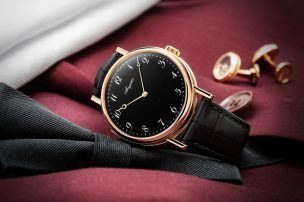
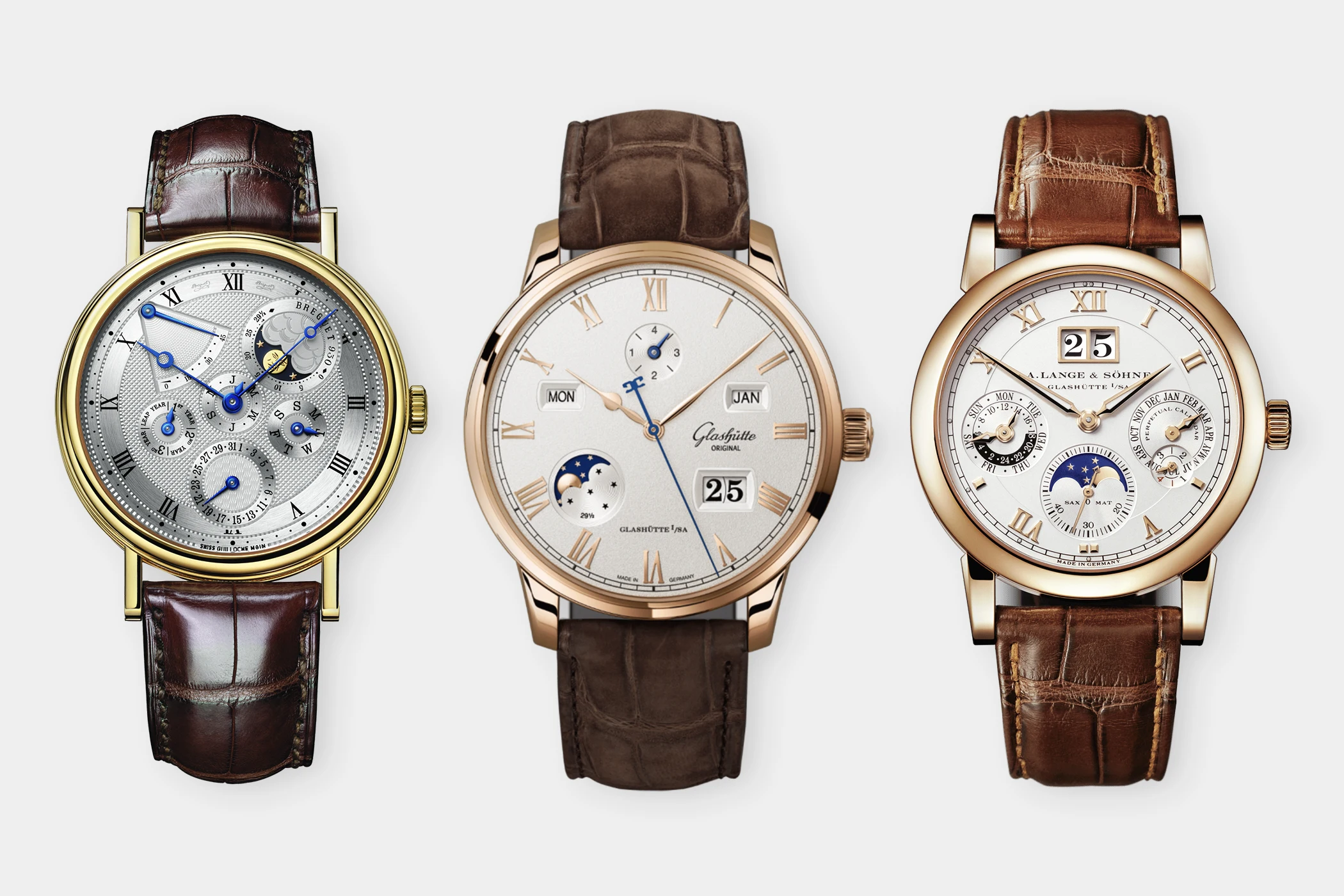
Also of note are Breguet (Classique Perpetual) and German brands such as Glashütte Original (Senator Perpetual Calendar) and A. Lange & Söhne (Lange 1 Perpetual Calendar, Langematik Perpetual, Zeitwerk Perpetual), which bring exquisite mechanical craftsmanship to the wrist.
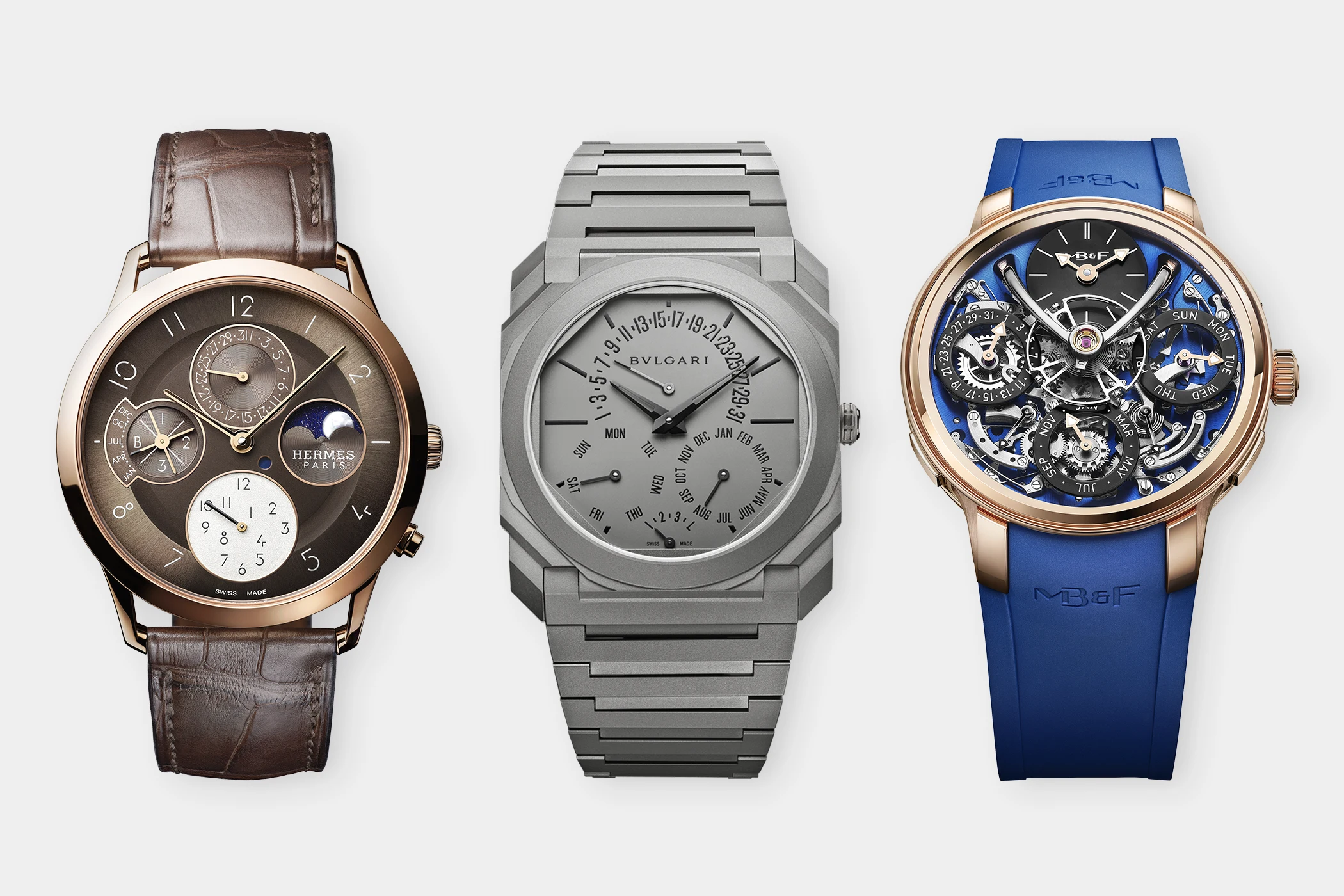
In recent years, newer manufacturers have also introduced perpetual calendars, including Hermès with the Slim d’Hermès Perpetual Calendar, Bulgari with the world’s slimmest perpetual calendar, the Octo Finissimo Perpetual Calendar, and independent watchmakers such as MB&F with the Legacy Machine Perpetual.
Not every perpetual calendar is truly ‘perpetual’. The traditional system follows the simple rule that every fourth year is a leap year. However, this rule fails in 2100, because years like 2100, 2200, or 2300 are not leap years according to the Gregorian calendar. Many perpetual calendars are built only to follow this simple four-year cycle and do not ‘know’ these exceptions. The solution is the secular perpetual calendar, which takes it one step further. It not only tracks the familiar four-year rhythm but also incorporates the century rule, which states that years divisible by 100 are generally not leap years. In addition, a secular perpetual calendar accounts for the 400-year rule, according to which a century year divisible by 400 remains a leap year, such as 2000 or 2400.

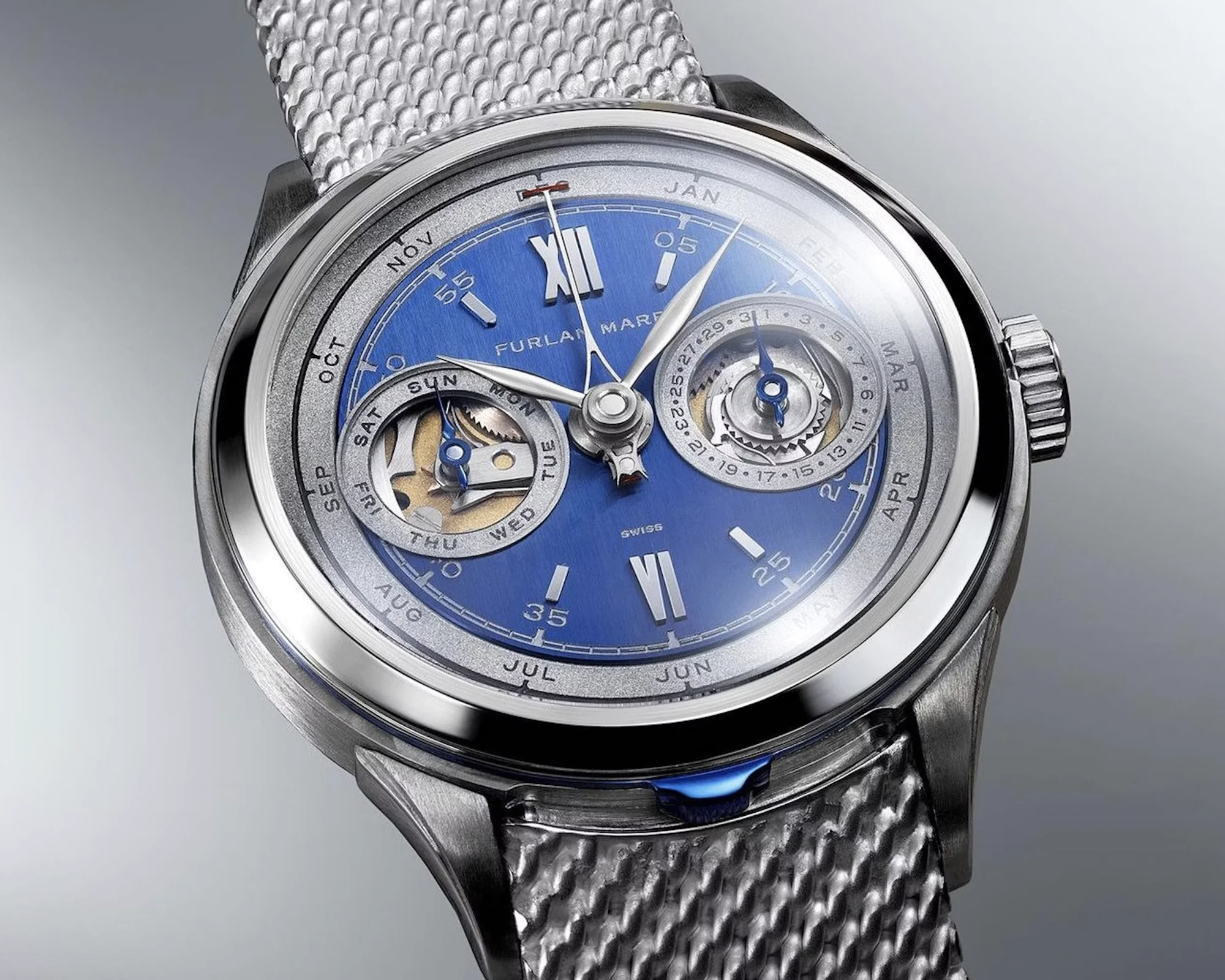
The secular perpetual calendar module by Furlan Marri.
Credit © Furlan Marri
These rules are important because it takes the Earth approximately 365.2 days to orbit the Sun, rather than exactly 365 days. This means that adding a leap year every four years is not sufficient in the long term. Without additional correction rules, the calendar would gradually become misaligned with the solar year over the centuries, causing the seasons to shift to different calendar months. Therefore, a watch with a secular perpetual calendar can correctly indicate whether a 29 February is necessary over several centuries.
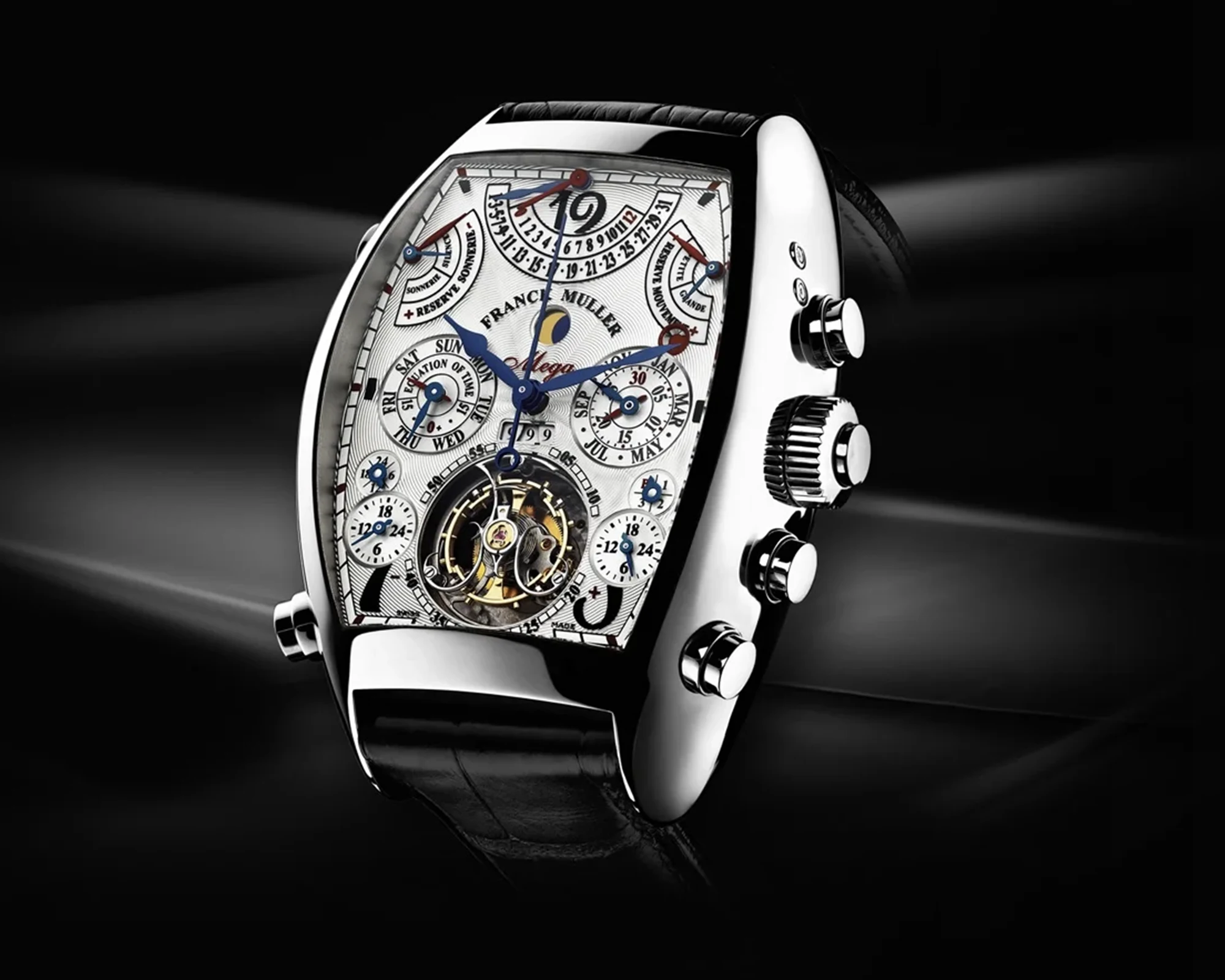
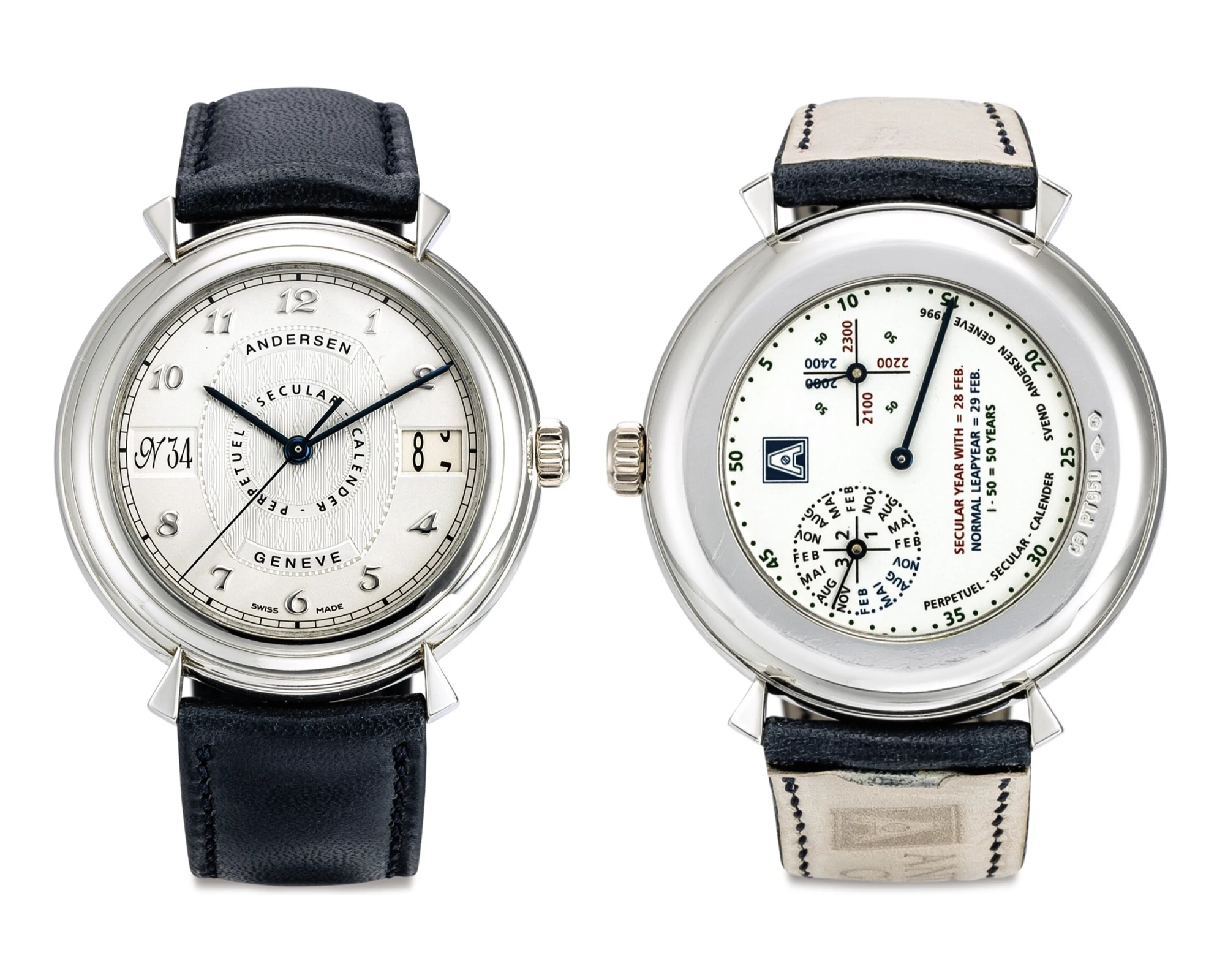
Secular perpetual calendars are extremely rare and technically very complex; only a few brands have ventured into this area of watchmaking so far. Pioneers include Franck Muller with the Aeternitas Mega series and Svend Andersen with the Andersen Genève Perpetual Secular Calendar. These calendars take the 400-year Gregorian cycle into account, including leap years.
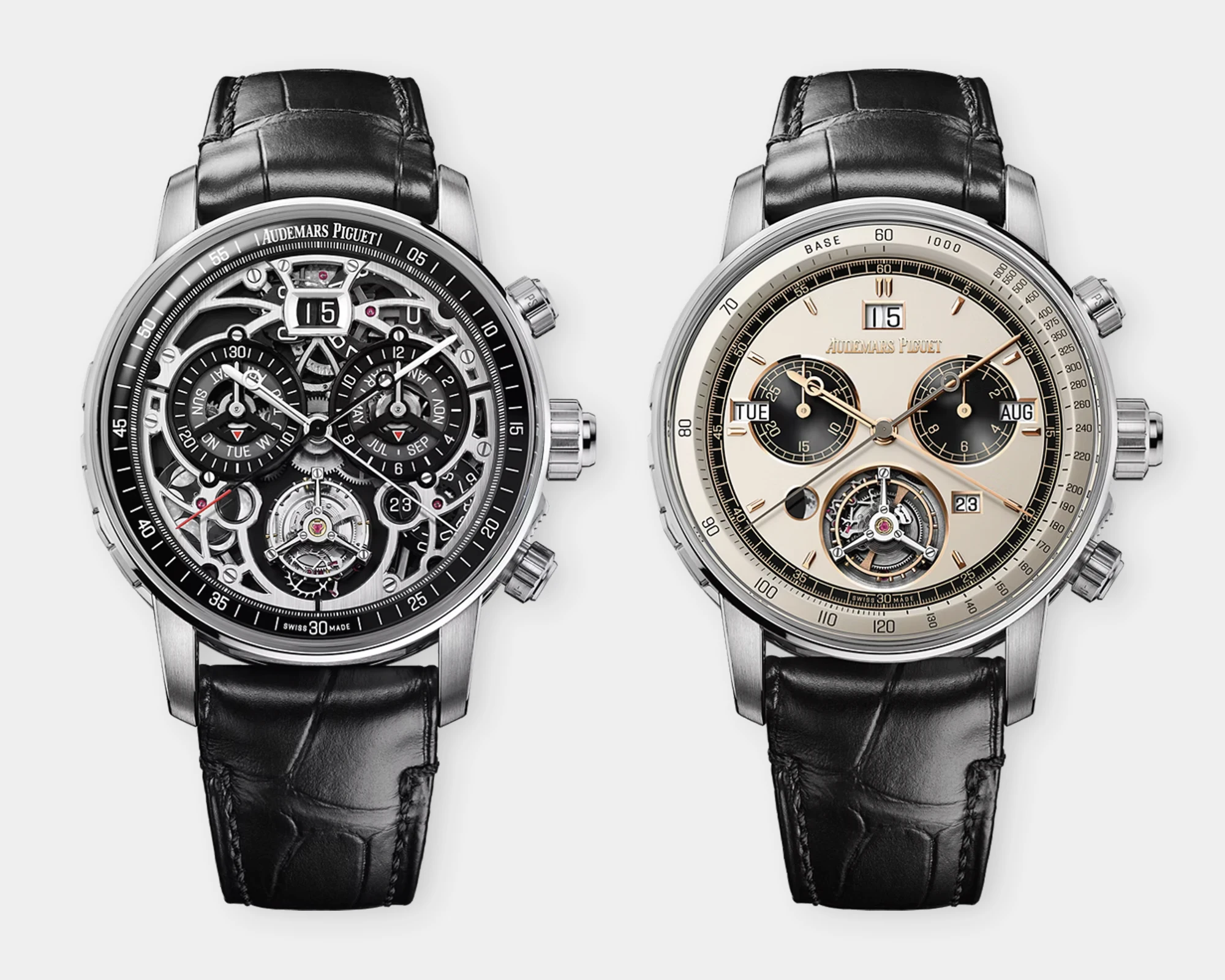
Even major manufactures have now embraced the concept: IWC, for example, offers a secular perpetual calendar in the Portugieser Eternal Calendar, while the highly complex Audemars Piguet Code 11.59 Ultra-Complication Universelle RD#4 employs a semi-Gregorian perpetual calendar that automatically accounts for the century years 2100, 2200, and 2300, requiring a correction only once every 400 years.

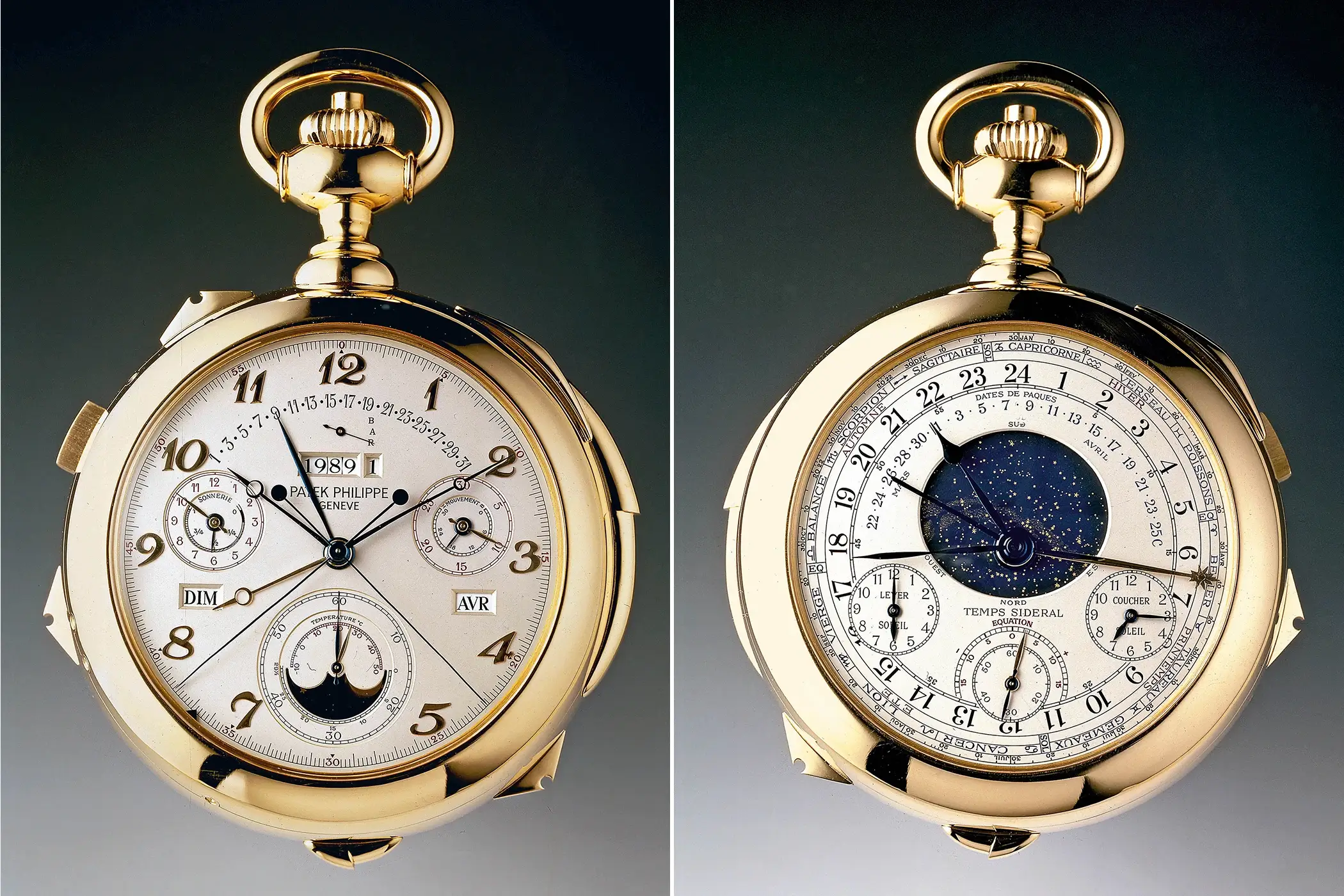
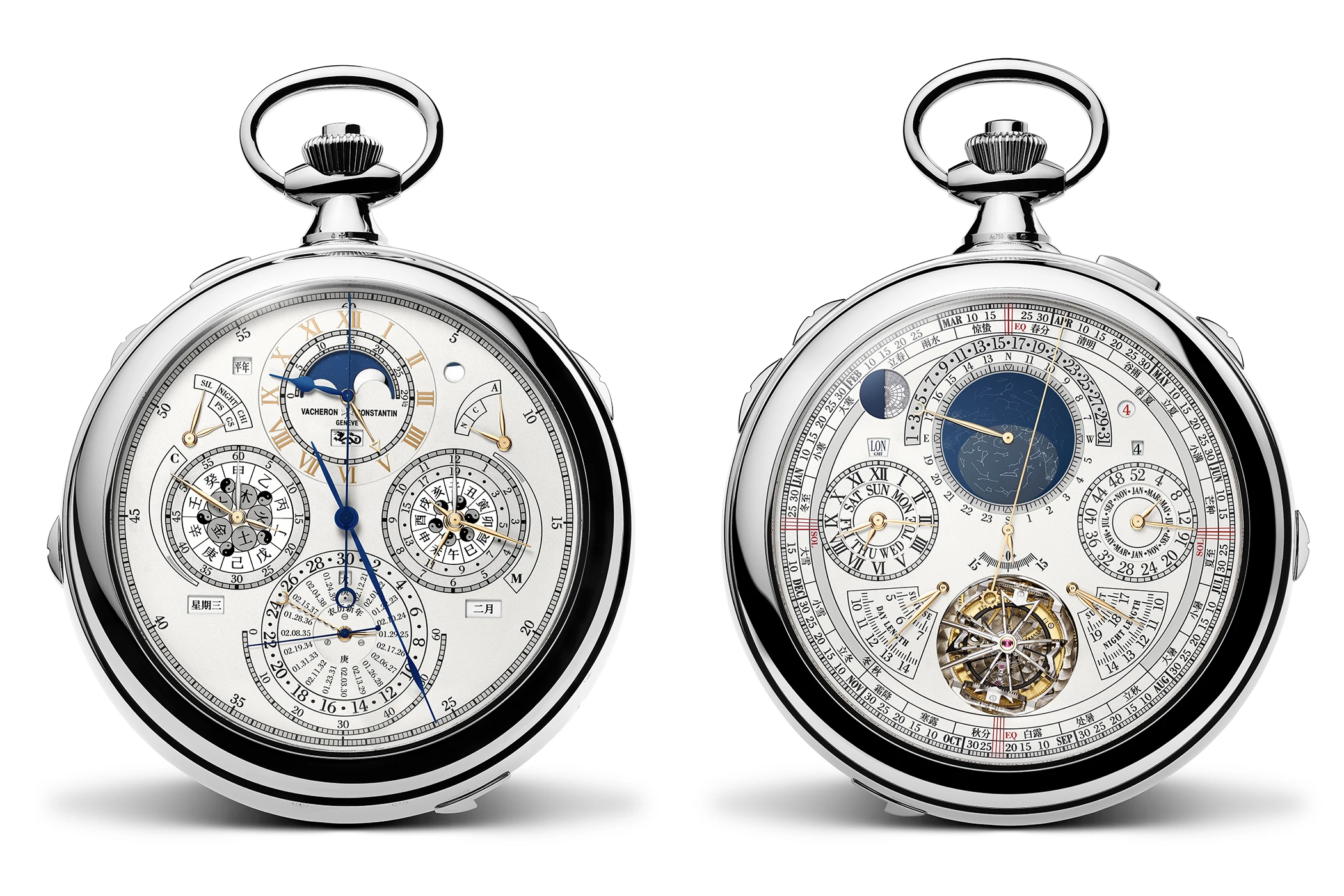
Among the most recent projects is the Furlan Marri Secular Perpetual Calendar, created for Only Watch, which implements the intricate secular mechanism in a slim wristwatch. On the pocket watch side, Patek Philippe’s Calibre 89 from 1989 and Vacheron Constantin’s Les Cabinotiers ‘The Berkley Grand Complication’, with their secularly programmed calendars, are considered famous examples.
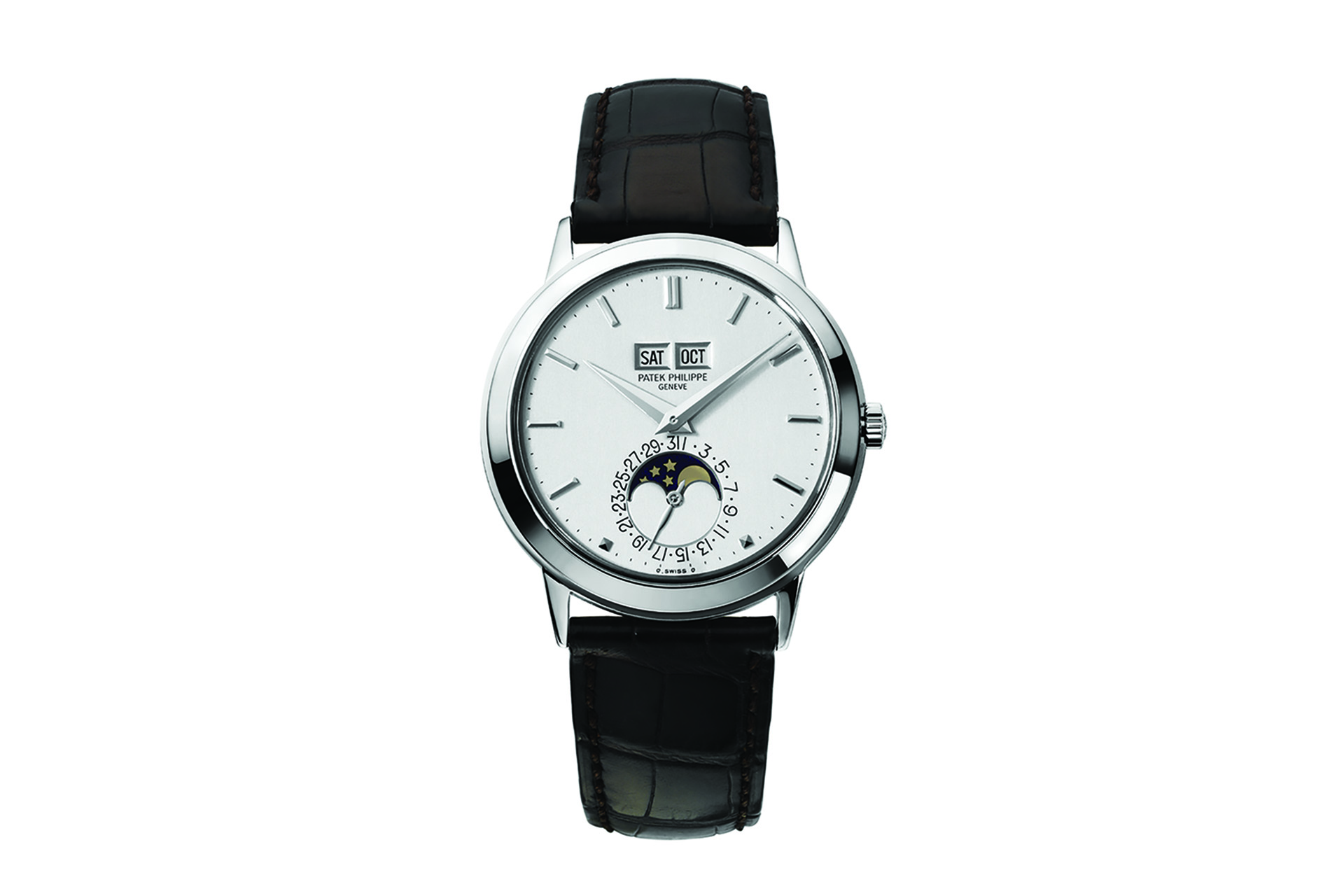
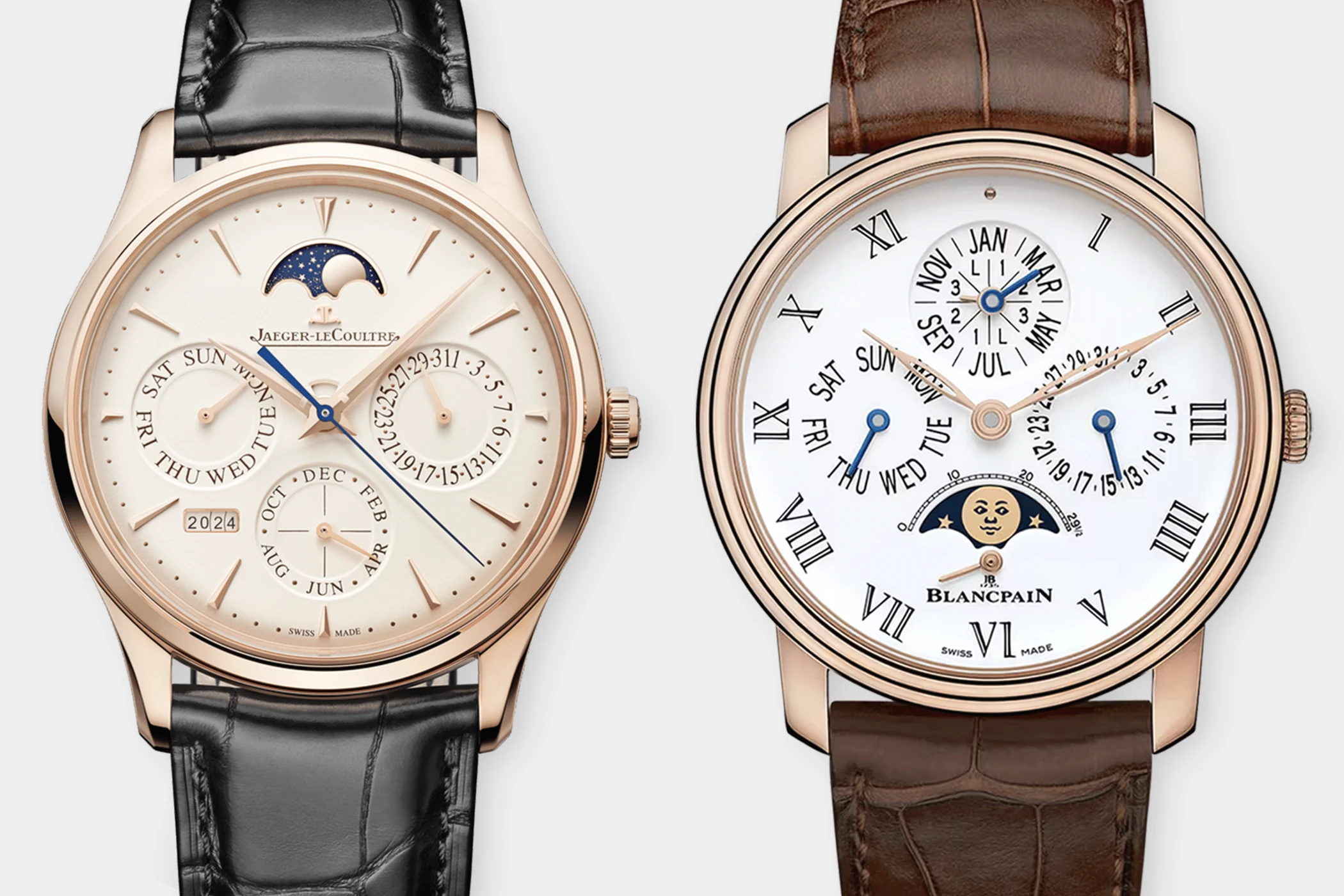
Just as fascinating as the mechanics are the different layouts that manufacturers use to showcase their perpetual calendars. The classic design features several subdials, as seen in Blancpain’s Villeret Quantième Perpétuel or Jaeger-LeCoultre’s Master Ultra Thin Perpetual Calendar Ref. Q1142510.
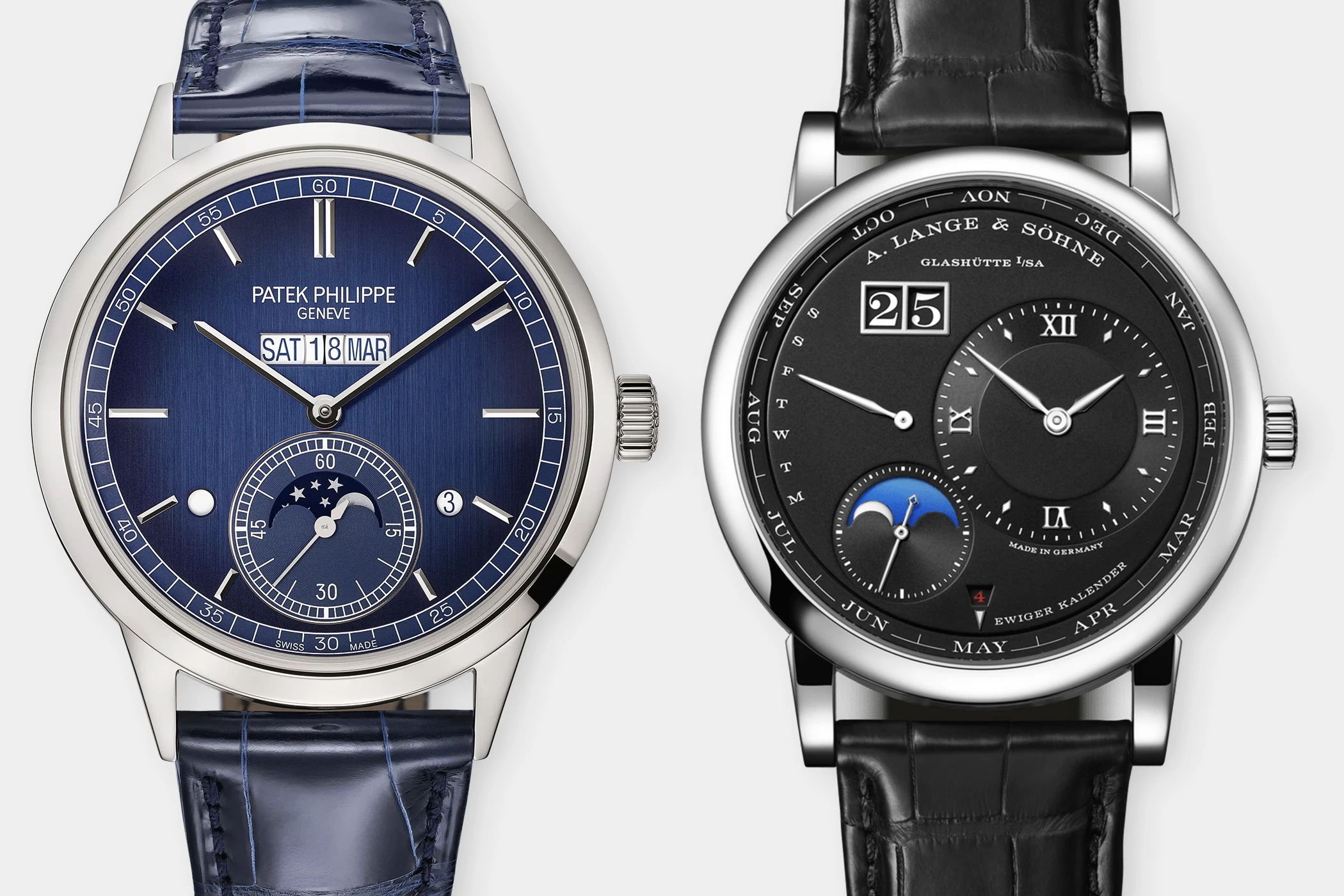
Other brands opt for an inline layout, where the date, day of the week, and month are arranged on a single line. This approach is particularly well known from Patek Philippe’s Grand Complications Perpetual Calendar Ref. 5236P-001. However, A. Lange & Söhne has taken a unique approach with the Lange 1 Perpetual Calendar, integrating the perpetual calendar into the decentralised dial with a large date display on the left, an offset hour and minute display, and a circumferential month ring on the outside.
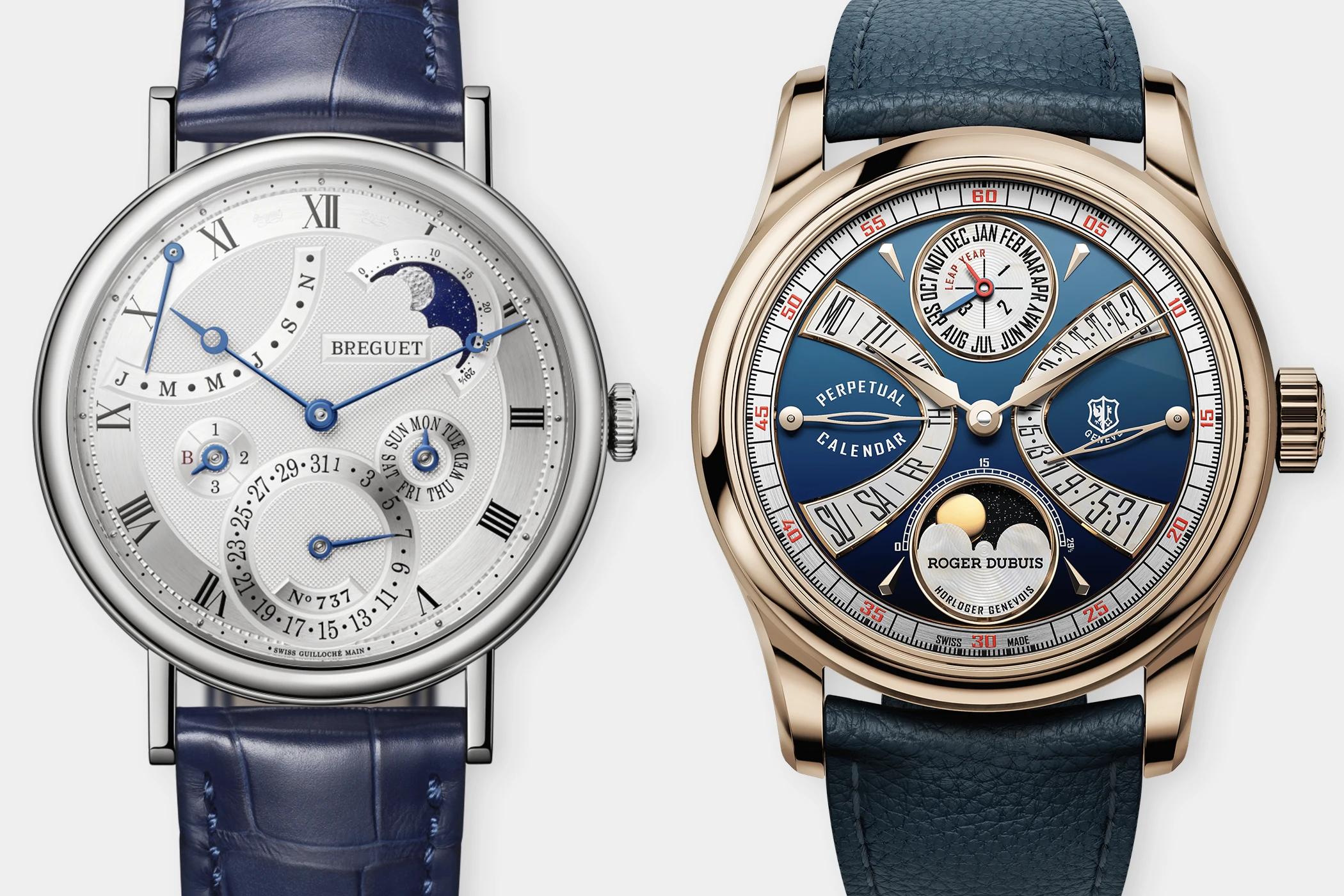
In addition, the retrograde perpetual calendar presents the complication in an exciting way, both technically and visually. In watchmaking, ‘retrograde’ describes a display in which the hands oscillate along a scale and then jump back to the starting point at the end, rather than running in a circle. The mechanics behind this are significantly more complex than those of a classic circular movement because the return movement must be precisely controlled and cleanly decoupled from the rest of the gear train. The result is an unusual and striking calendar display that deliberately sets itself apart from traditional layouts. One example is the Breguet Classique Quantième Perpétuel 7327, Ref. 7327BB/11/9VU, in which the months are displayed on a retrograde scale in the shape of a quarter circle. This adds a retrograde display element to the classic perpetual calendar. Roger Dubuis also offers a perpetual calendar with a retrograde display in its Hommage La Placide collection. Retrograde perpetual calendars tend to be produced by specialist manufacturers in limited series and collectors consider them an especially attractive variation of the complication.
| Type | Description | Characteristics |
|---|---|---|
| Traditional perpetual calendar | Display via sub-dials | Most traditional form, often including a moon phase |
| Retrograde calendar | Hand jumps back to the start at the end of the month | Visually dynamic and intricate |
| Inline display | Date, day, and month in a single line (apertures) | Highly legible, technically complex (e.g., Patek Philippe Ref. 5236P) |
| Secular perpetual calendar | Accounts for the 100/400-year rule of the Gregorian calendar | No manual correction required in 2100. Extremely rare (e.g., Franck Muller Aeternitas) |
1925: Patek Philippe became the first manufacturer of a wristwatch with a perpetual calendar.
1937: They were the first manufacturer of a wristwatch with a retrograde perpetual calendar.
1941: They introduced the legendary Reference 1526, the first wristwatch with a perpetual calendar to be produced in series.
Moreover, Patek Philippe was the first manufacturer to develop a perpetual calendar chronograph.
The watchmaker was the first to develop a wristwatch with a perpetual calendar and seconds hand in 1944 with the reference 1591, and the first to produce this complication in series in 1951 with the reference 2497.
Patek Philippe was also the first manufacturer to develop a self-winding perpetual calendar in 1962 with the legendary reference 3448; it would take a full 16 years before another Swiss watchmaker was able to emulate this achievement.
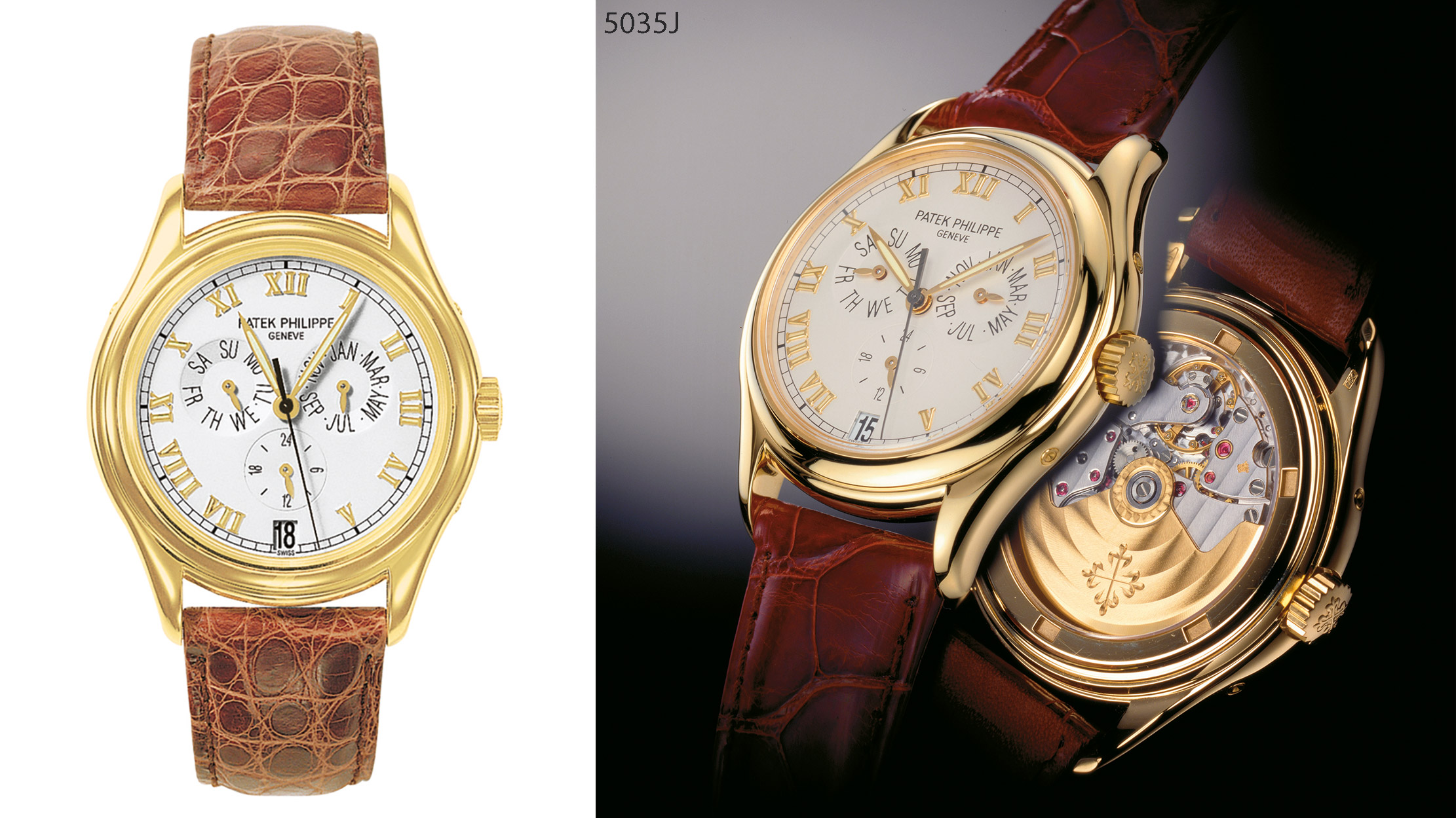
1996: First annual calendar (had more components than a perpetual calendar), became technically more complicated but more user-friendly.
But what is it about perpetual calendars that makes them so appealing, especially to collectors? The combination of intellect, emotion and rarity makes this complication unique. On a rational level, the perpetual calendar embodies mechanical intelligence in its purest form. At the same time, it has an almost philosophical dimension. It is extraordinary that a small machine on your wrist can be programmed to last far beyond your own lifetime and will still correctly display 29 February in a year you will never experience. Furthermore, only a select few manufacturers have truly mastered this complication to the highest degree, and perpetual calendars often represent the pinnacle of a collection. A watch like this is a testament to appreciation for craftsmanship, history, and longevity.