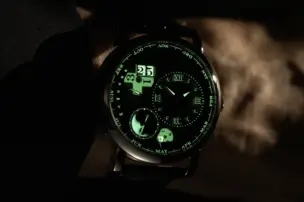
A. Lange & Söhne presents the Lange 1 Tourbillon Perpetual Calendar Lumen, featuring a tourbillon, perpetual calendar and luminescent dial.
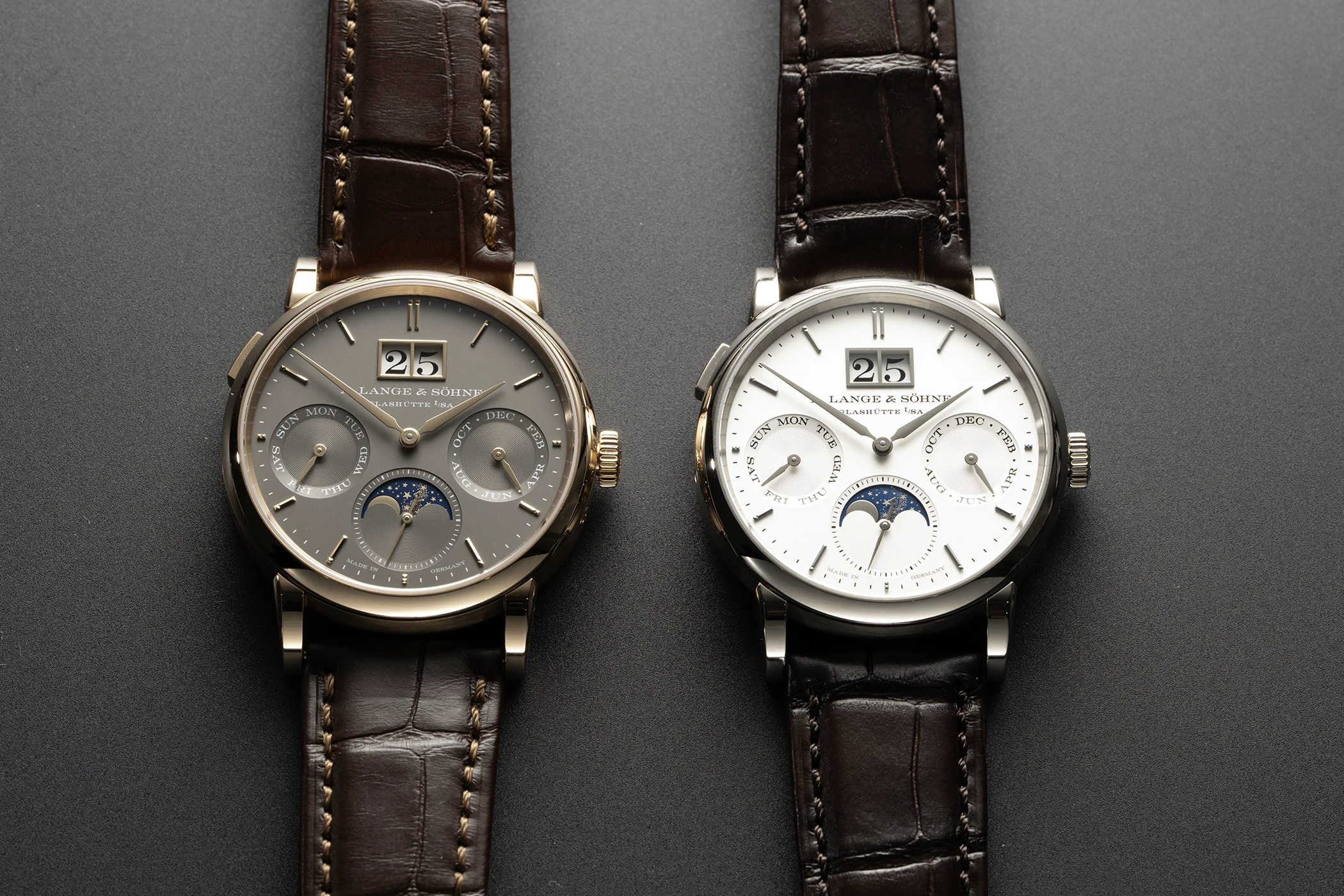
A smaller diameter, a more compact (and new) movement, a longer power reserve and more components within the movement whilst maintaining the same height. The new Saxonia Annual Calendar models are more than just a subtle update.
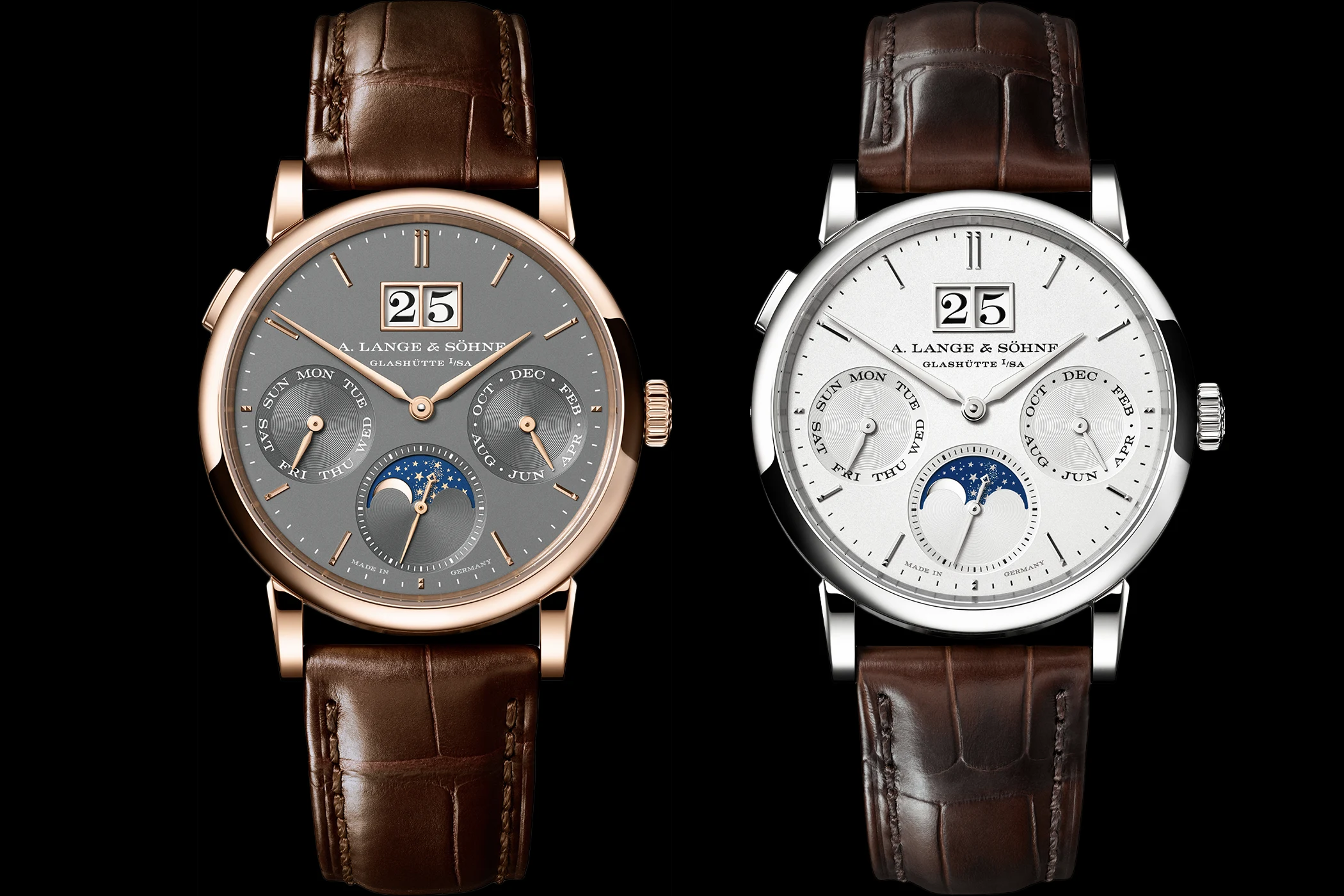
At first glance, one might assume that the new Saxonia Annual Calendar models from A. Lange & Söhne are merely a facelift of the line. Yet with the presentation of references 331.026 E (white gold) and 331.033 E (red gold), a new era in the design of complicated timepieces begins for the maison. With a diameter of 36 mm, the new Saxonia Annual Calendars feature a significantly smaller case, a more compact movement, a longer power reserve and more components within the movement whilst maintaining the same height. Only the Zero Reset, a distinctive feature of Lange, had to make way for the seconds stop.
At the heart of this innovation lies the newly designed in-house calibre L207.1. It replaces the legendary calibre L085.1 – better known as the SAX-O-MAT – whose basic architecture is almost three decades old. The new Saxonia Annual Calendar models are certainly worth a closer look. That is why we have examined these new releases in detail.
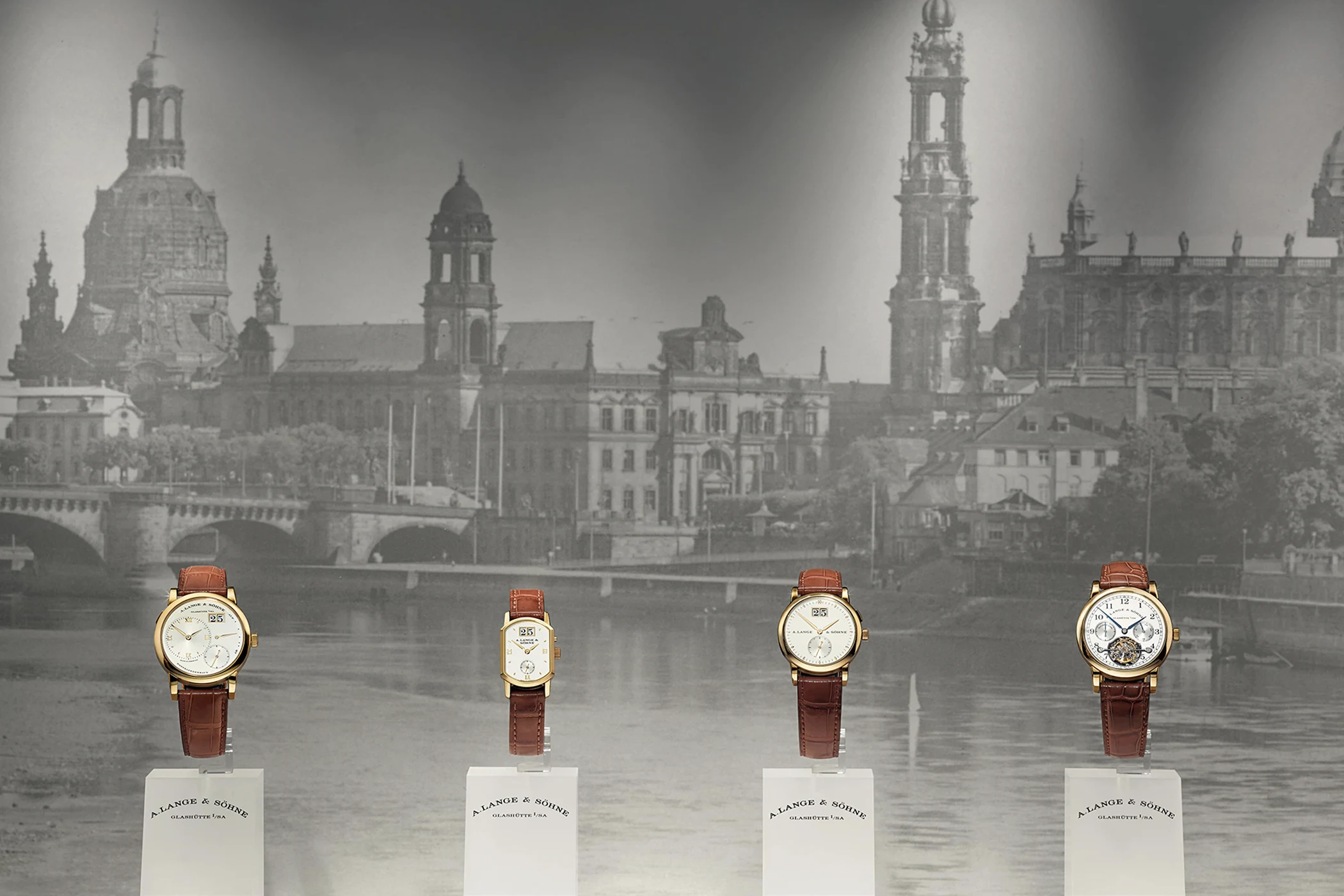
To understand the significance of the new Saxonia Annual Calendar models, a brief overview of the Saxonia model family within the context of the manufactory’s history is worth exploring. When Walter Lange and Günter Blümlein presented the first collection of the newly founded Lange Uhren GmbH (December 1990) at the Dresden Royal Palace on 24 October 1994, the Saxonia was one of the four newly introduced models, alongside the Lange 1, the ‘Pour le Mérite’ tourbillon and the rectangular Arkade.
The name “Saxonia” is a direct reference to the Free State of Saxony, where Ferdinand Adolph Lange laid the foundations for German fine watchmaking in 1845. From the outset, the Saxonia represented the purest interpretation of the Lange philosophy. Whilst the Lange 1 introduced a revolutionary aesthetic with its asymmetrical dial design and large date display, the Saxonia remained true to classical design principles: symmetry, clarity and an uncompromising focus on the mechanical substance.
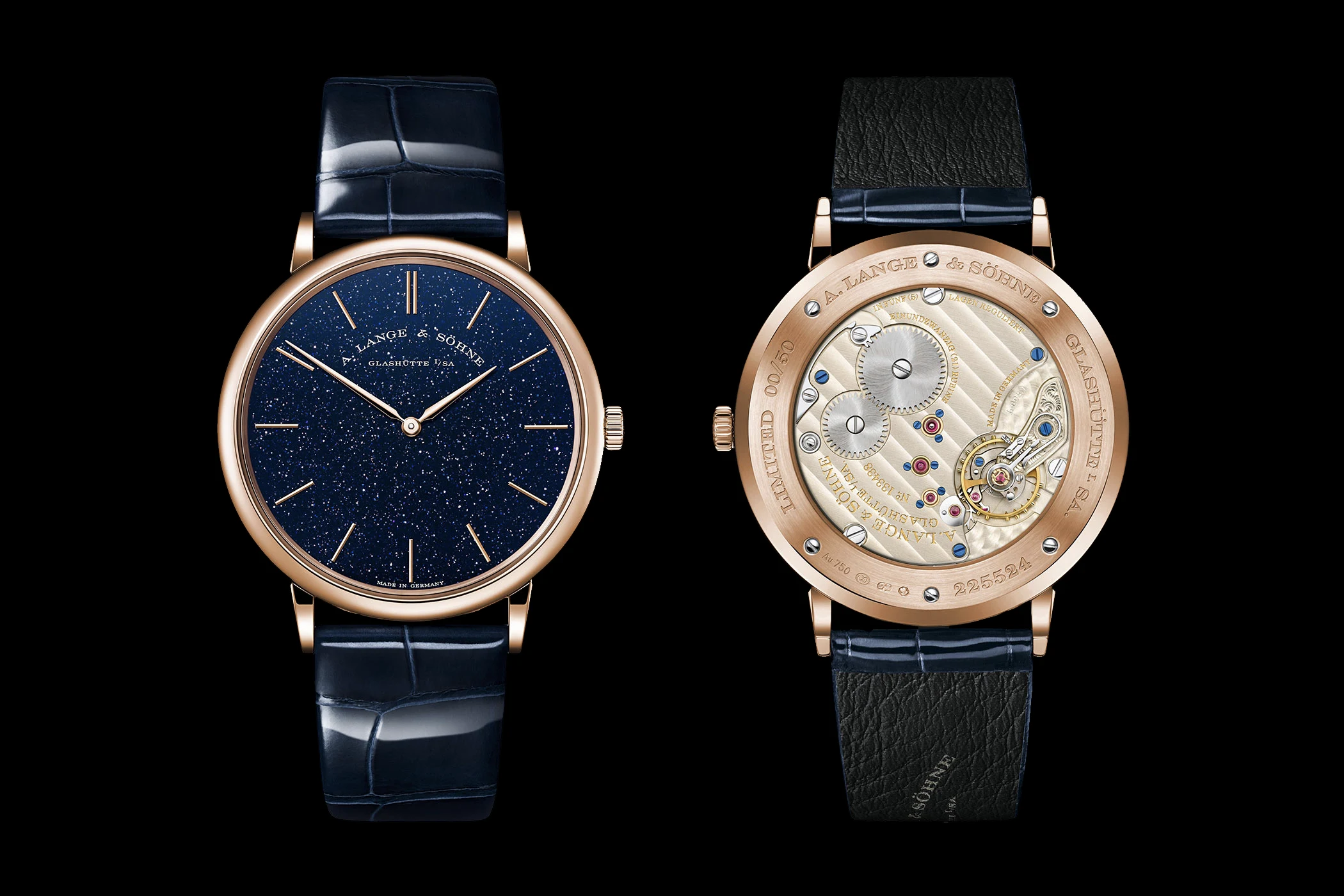
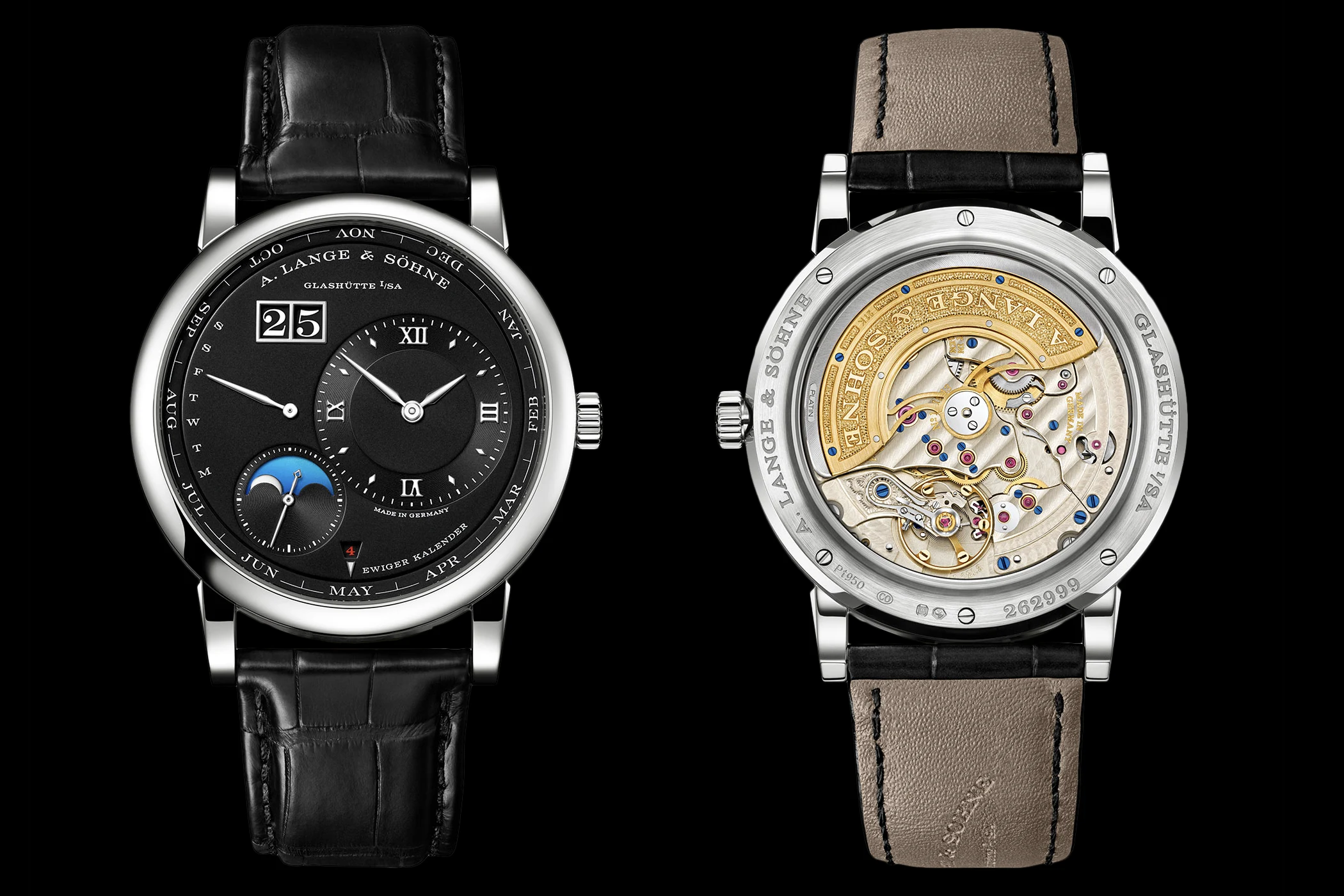
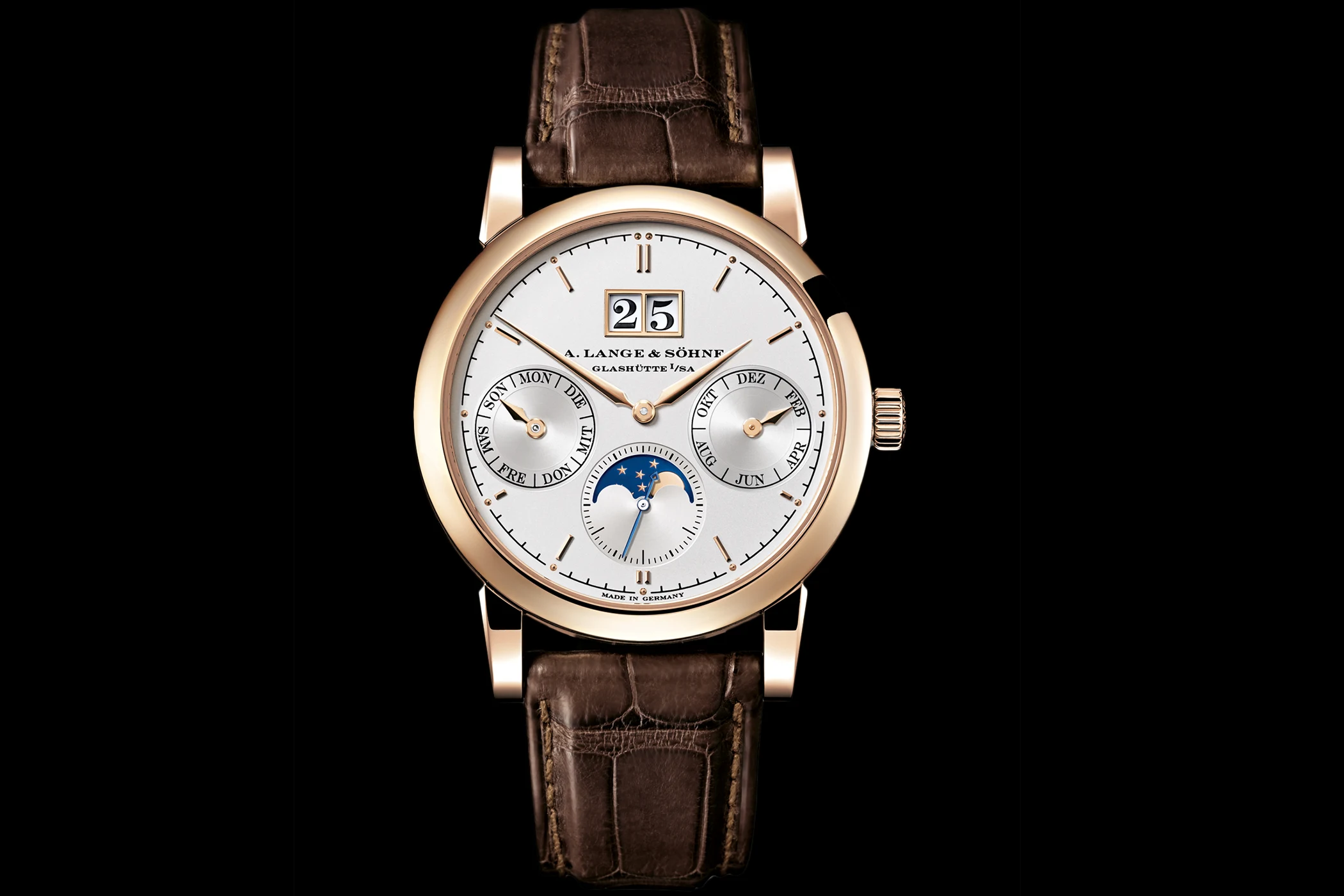
Originally conceived as a simple three-hand watch, the Saxonia family has been carefully expanded to include complications over the decades. The first Saxonia Annual Calendar appeared in 2010 and caused quite a stir at the time, as it bridged the gap between the simple models and the highly complicated perpetual calendars. The annual calendar (a complication first introduced by Patek Philippe in 1996) offers almost the same convenience as a perpetual calendar, but due to its programming, requires manual adjustment only once a year – at the transition from February to March.
The decision to now offer the annual calendar in a more compact case comes at the very best of times. Collectors are increasingly valuing ‘complication density’ – that is, the ratio of technical complexity to physical size. The new Saxonia meets this demand and even manages this feat despite the new movement incorporating more components (491 compared to 476) than its predecessor, all within a smaller space.
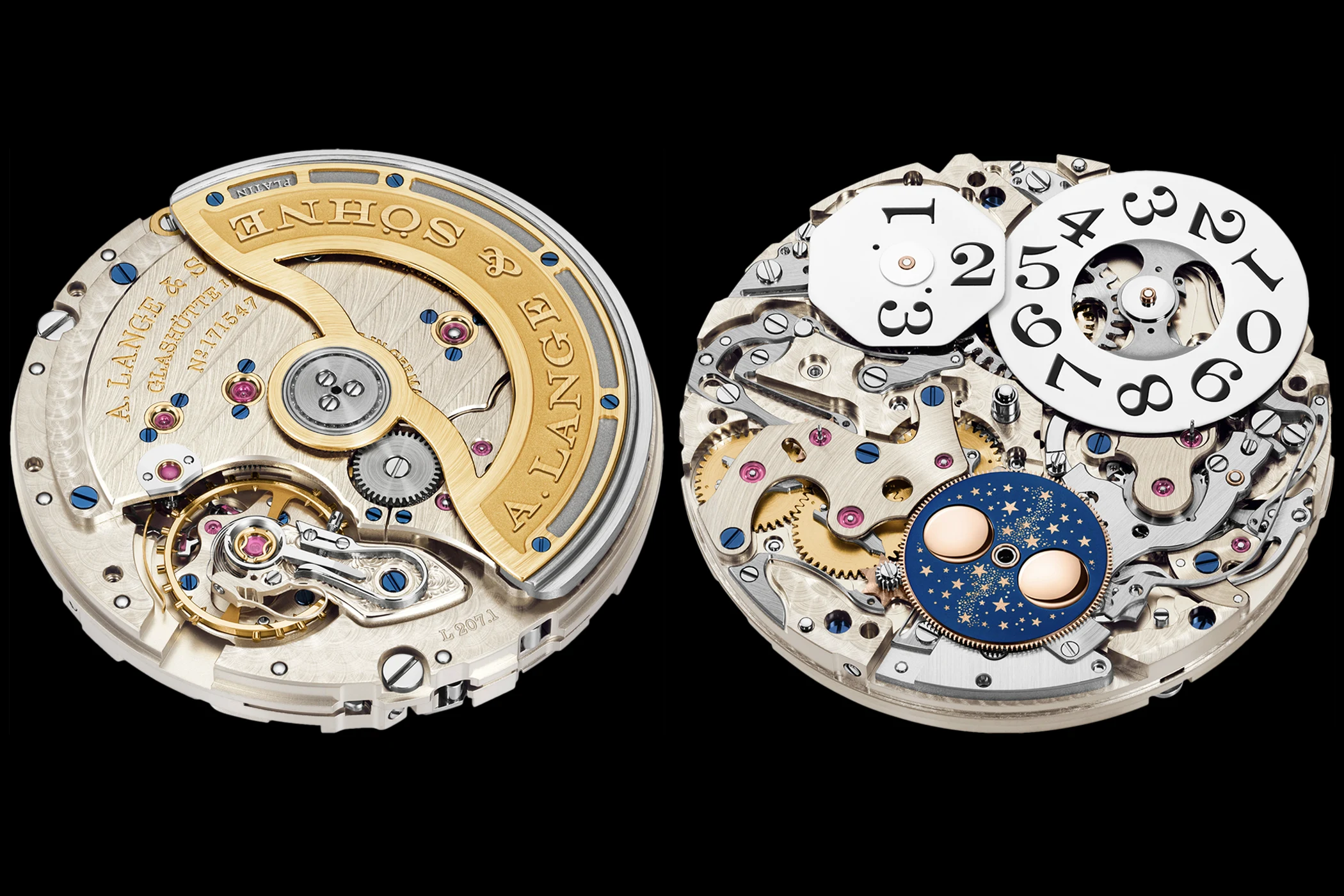
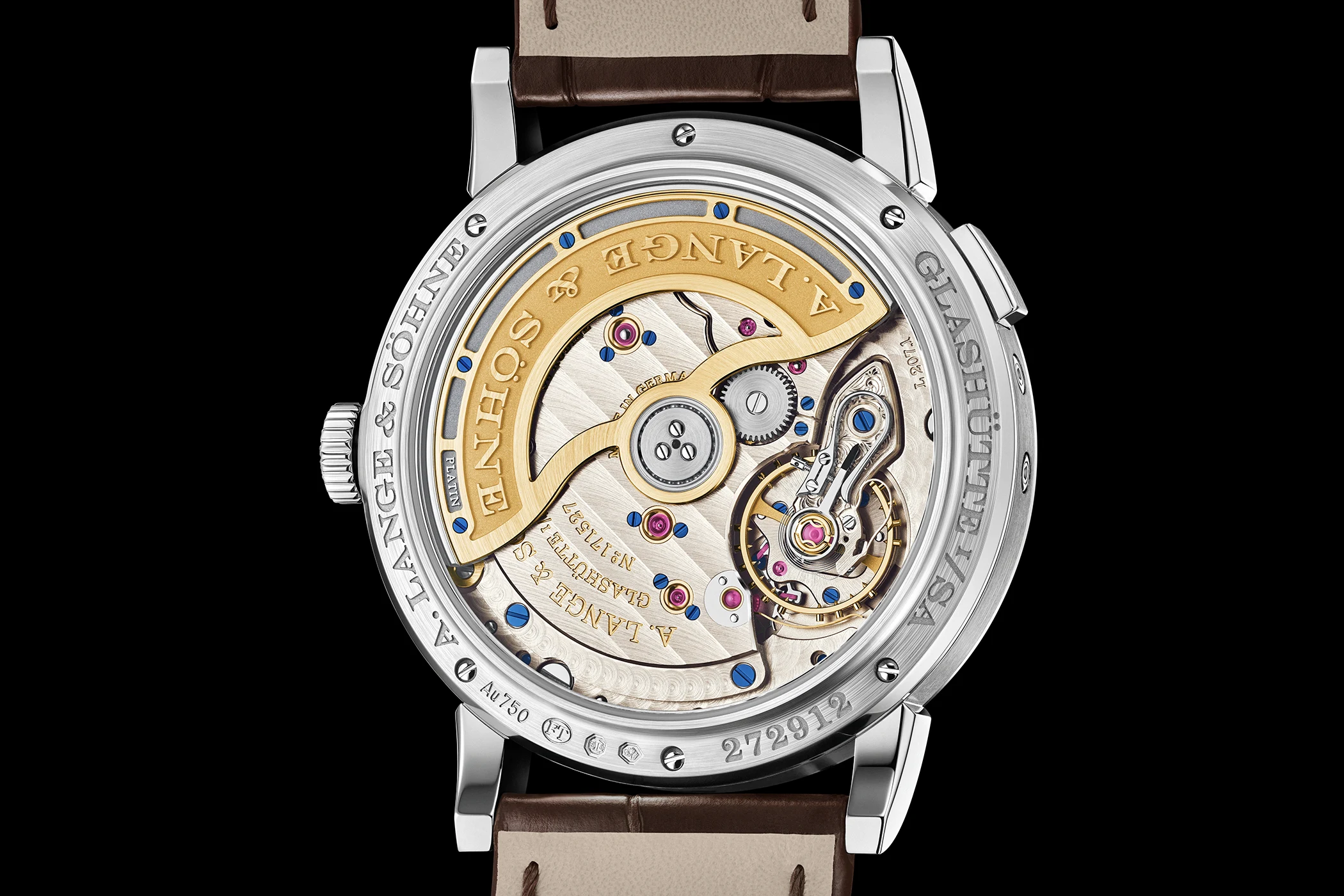
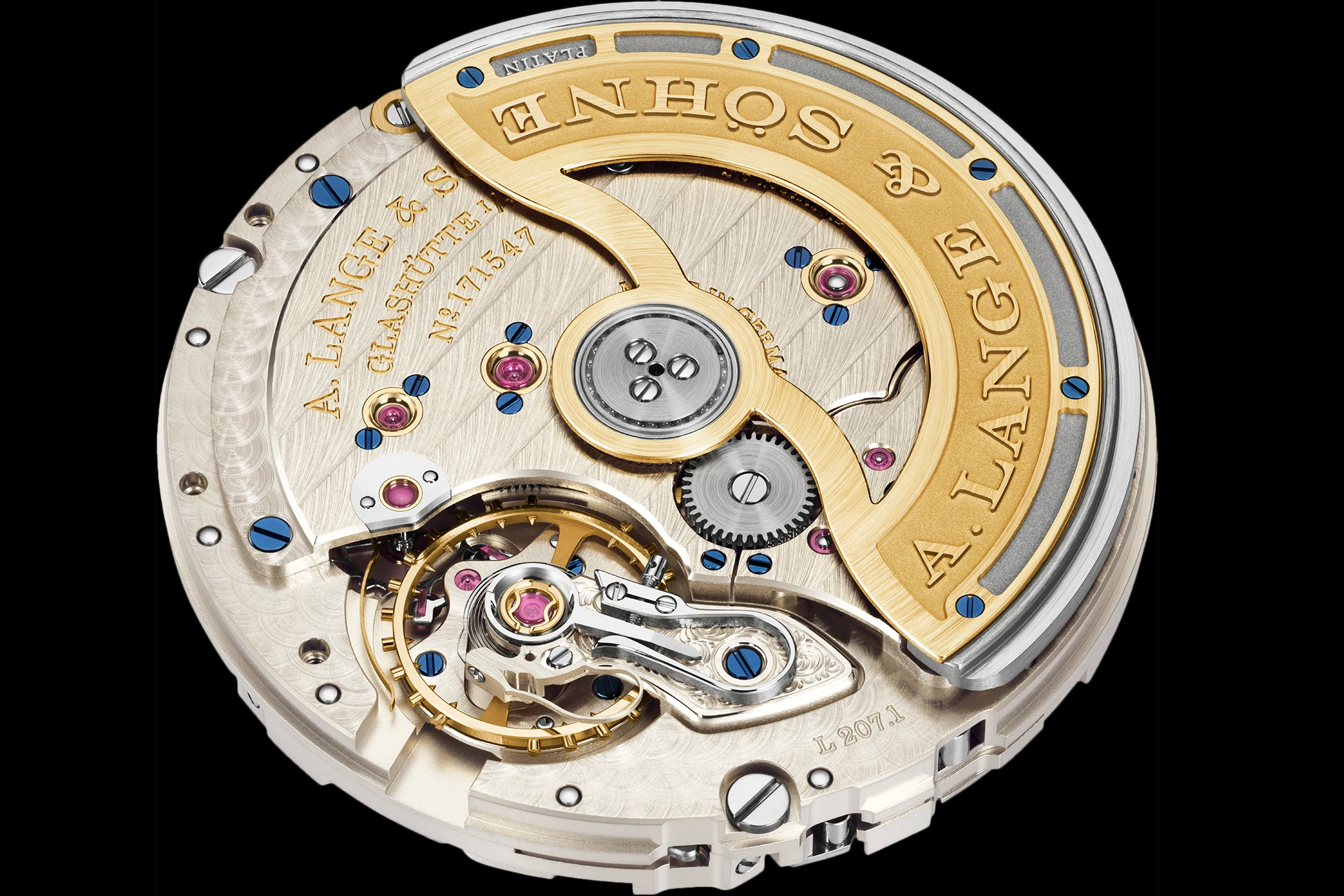
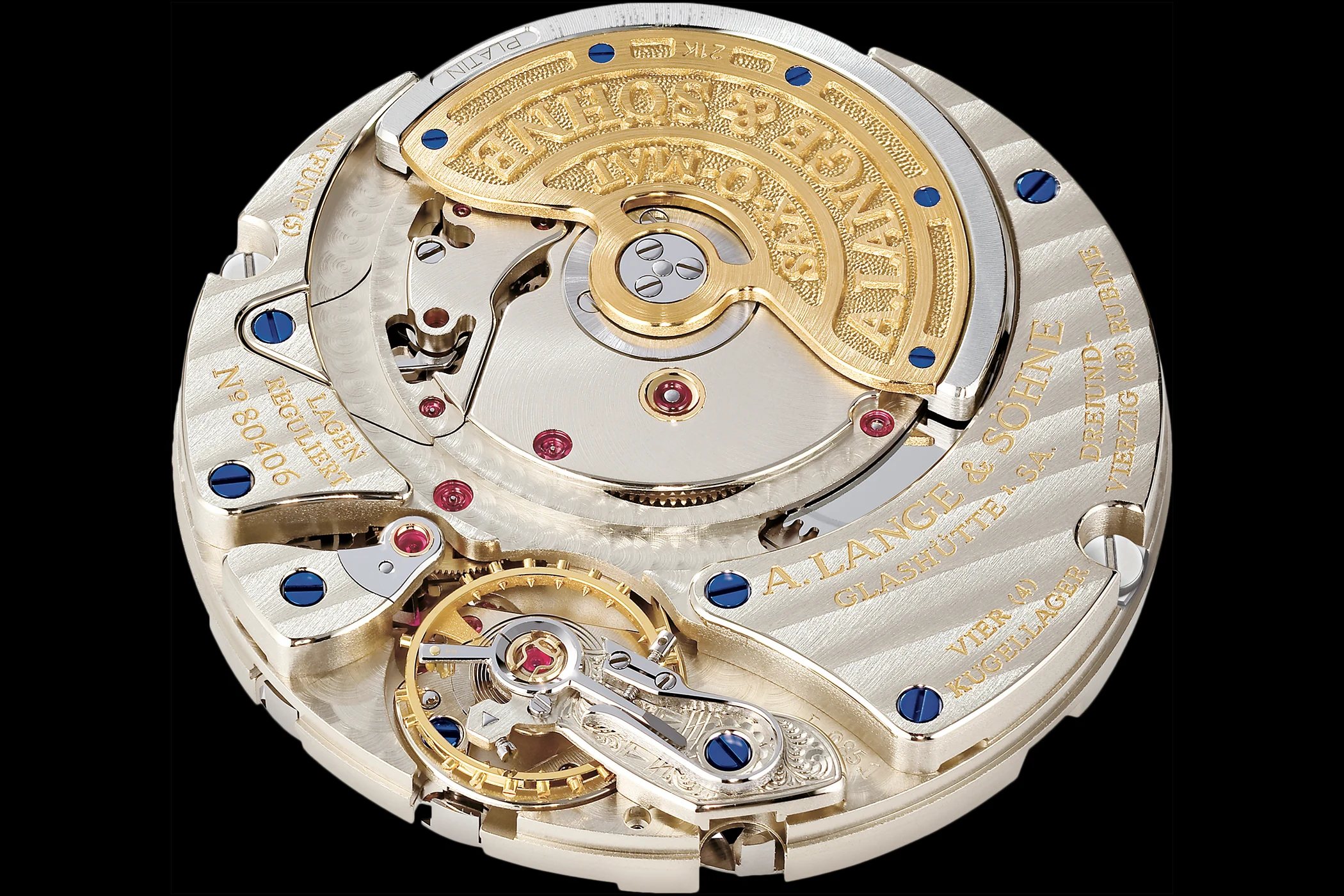
The new Calibre L207.1 movement was developed with the aim of maximising winding efficiency whilst simultaneously reducing the diameter and keeping the overall height of the system at 9.8 mm – unchanged from the predecessor model – despite the addition of the calendar mechanism. Unlike the previous L085.1, which used a three-quarter rotor (similar to a micro-rotor concept), the L207.1 features a single-sided winding central rotor with a striking oscillating weight made of 950 platinum.
The decision against the classic SAX-O-MAT design is a consequence of the case reduction. Whilst the three-quarter rotor of the old calibre occupied a large area of the movement but was integrated flat, the new central rotor allows for a more compact arrangement of the gear train within the space. Platinum is crucial as the material for the rotor: due to its high density, it generates sufficient moment of inertia even with minimal movement to wind the mainspring efficiently, which is particularly important with smaller case diameters.
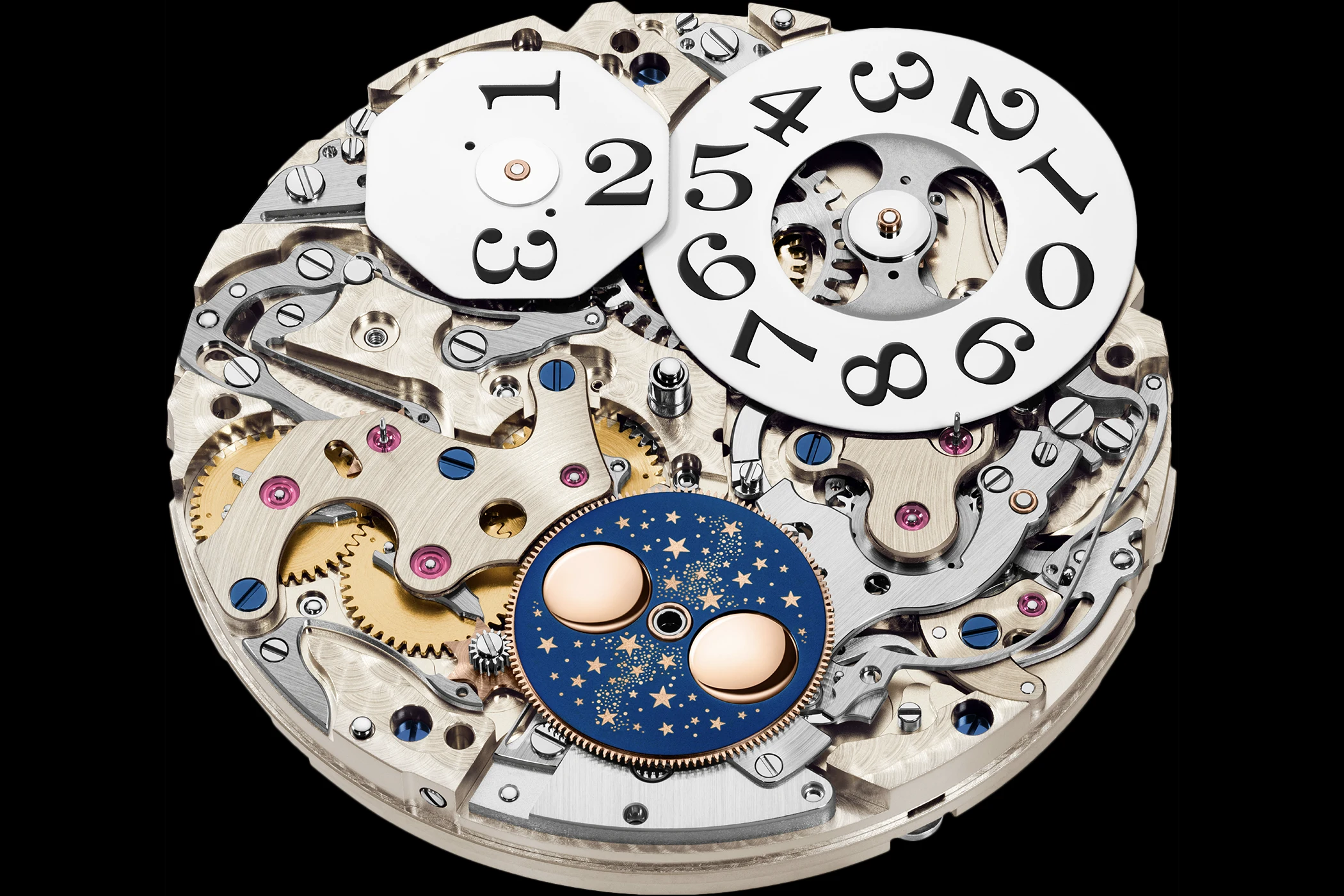
The calibre consists of 491 individual components. By way of comparison, a standard automatic movement with a date function often requires fewer than 200 parts. The additional components in the L207.1 are primarily attributable to the calendar module, which mechanically ‘calculates’ the different month lengths of 30 and 31 days.
Although the predecessor movement, the L085.1 (SAX-O-MAT), is technically outstanding, its power reserve of 46 hours was simply too short by today’s standards. The new L207.1 calibre addresses this with a power reserve of 60 hours. This increase is achieved through an optimised barrel and the use of a flatter but longer mainspring. The balance wheel frequency remains at the 21,600 vibrations per hour (3 Hertz) typical of Lange. This frequency offers an optimal compromise between timekeeping accuracy and mechanical wear, and also allows for the integration of the classic screw-down balance, which can be admired through the sapphire crystal case back.
The comparison: the new generation versus the reference 330.026
Our table shows consistent further development in almost all measurable parameters.
| Spezifikation | Saxonia Jahreskalender (Alt) | Saxonia Jahreskalender (2026) |
|---|---|---|
| Gehäusedurchmesser | 38,5 mm | 36,0 mm |
| Gehäusehöhe | 9,8 mm | 9,8 mm |
| Kaliber | L085.1 (SAX-O-MAT) | L207.1 |
| Anzahl der Bauteile | 476 | 491 |
| Anzahl der Rubine | 43 | 56 |
| Gangreserve | ca. 46 Stunden | 60 Stunden |
| Aufzugsart | Dreiviertelrotor | Zentralrotor (Platin) |
The most striking change, apart from the diameter, is the increase in jewels from 43 to 56. These additional functional jewels indicate a more complex bearing arrangement for the automatic winding mechanism and the calendar gear train, which further improves the movement’s durability and reduces friction.
An interesting aspect is the omission of the “zero-reset” mechanism in favour of a conventional seconds stop. Whilst the zero-reset is a hallmark of A. Lange & Söhne watches, it requires considerable height and complexity in the area of the seconds wheel. Inside, a small heart lever (heart cam disc) usually operates to make the seconds hand snap back. By dispensing with this, Lange was able to use the space gained to significantly reduce the size of the case whilst maintaining the same height.
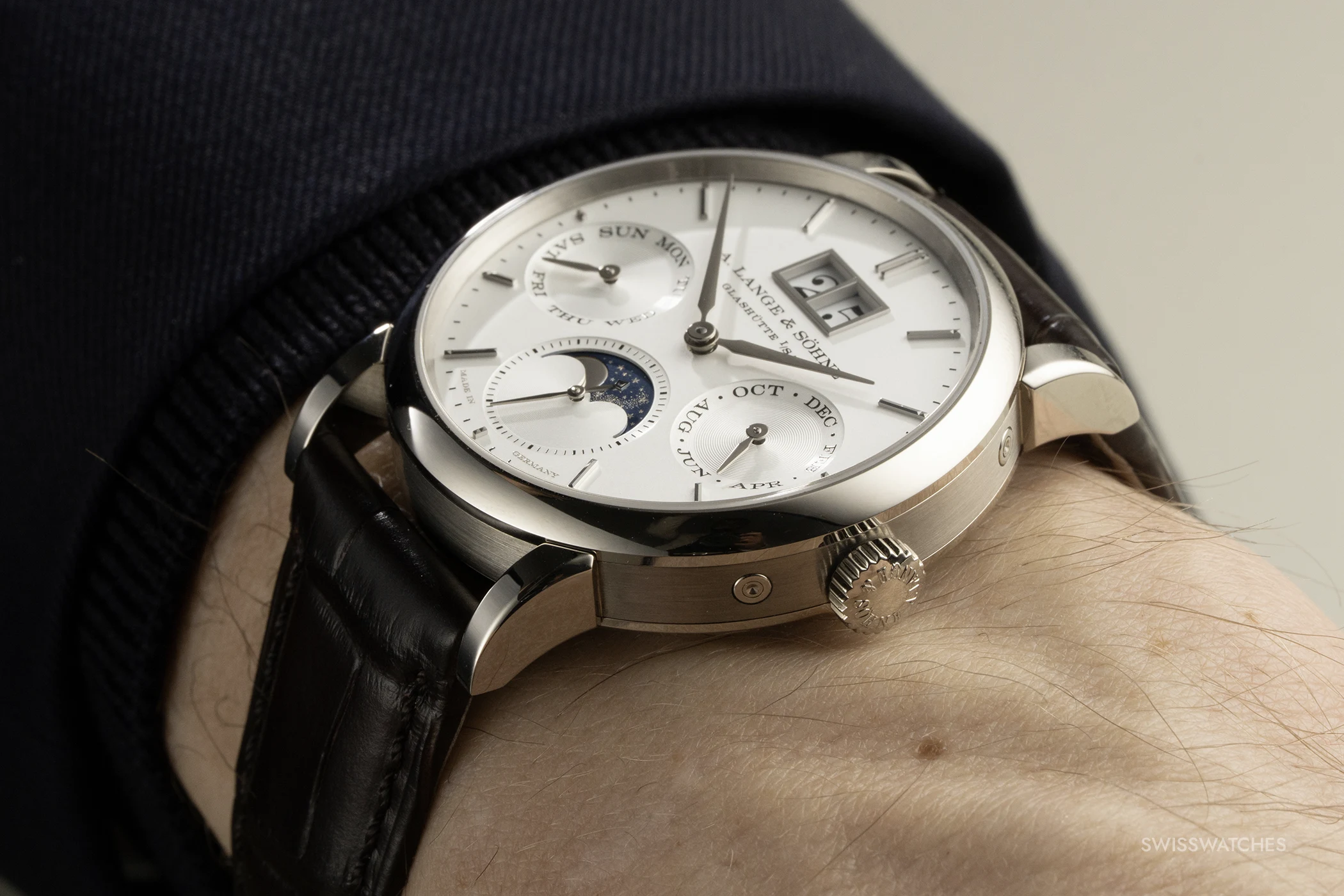
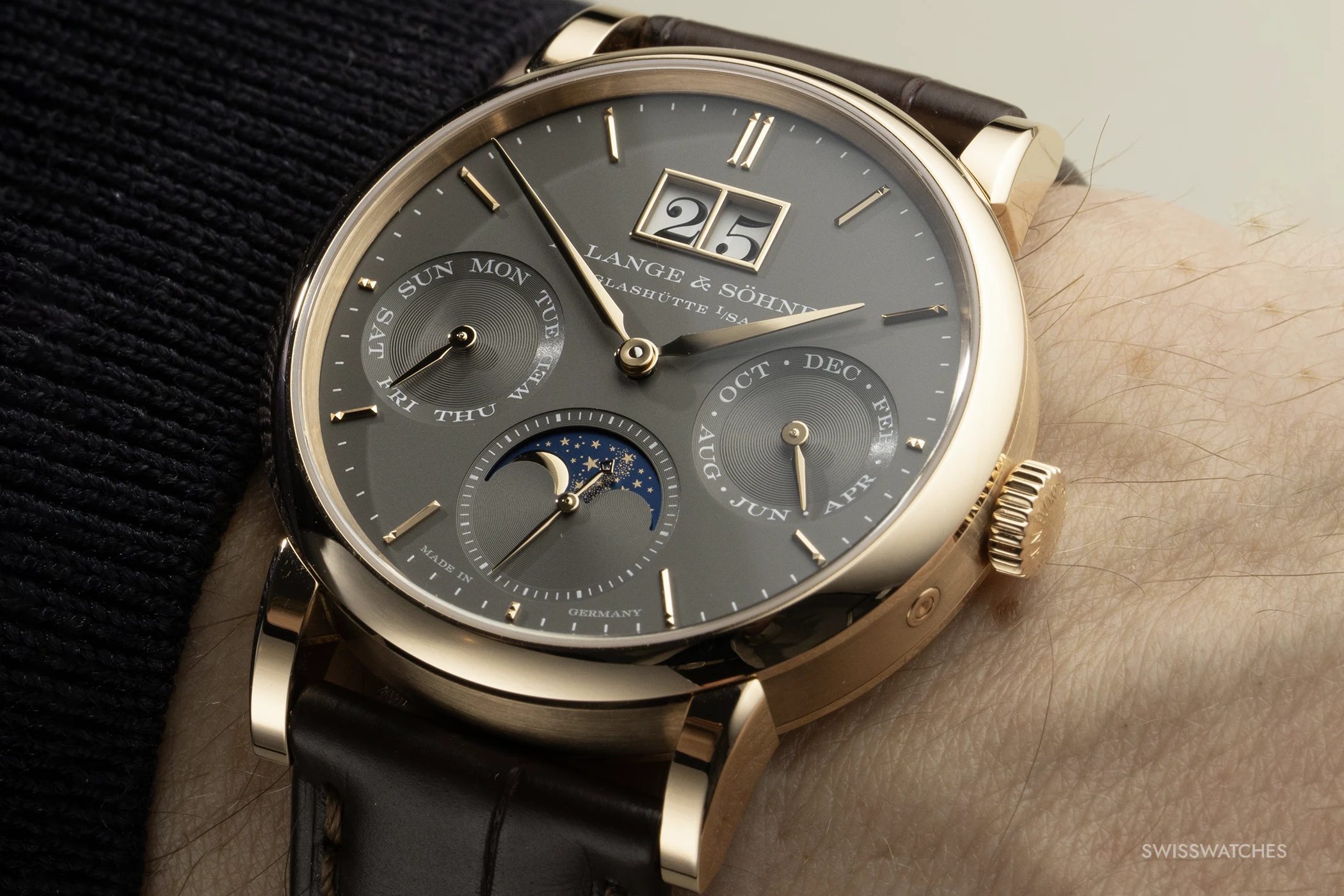
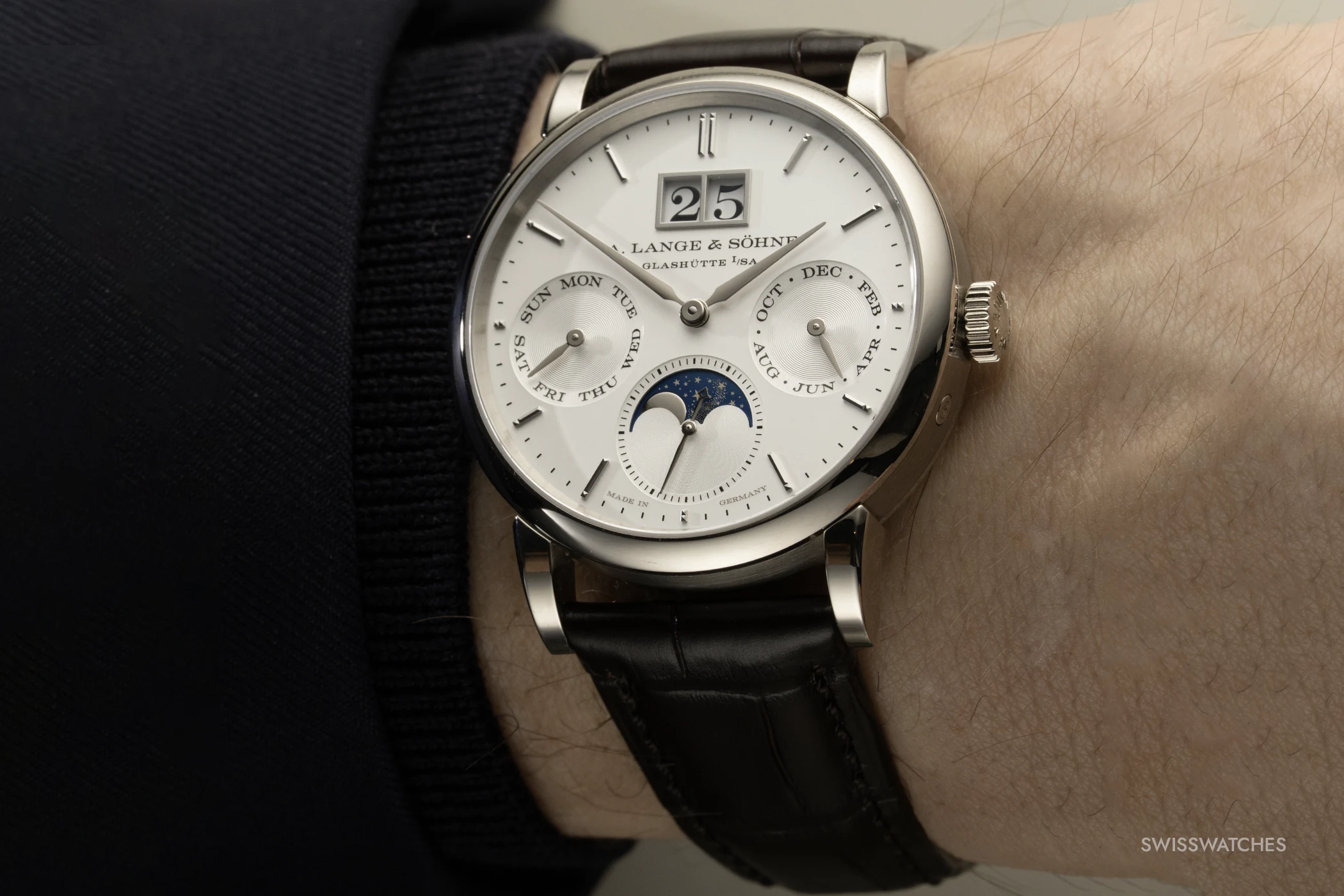
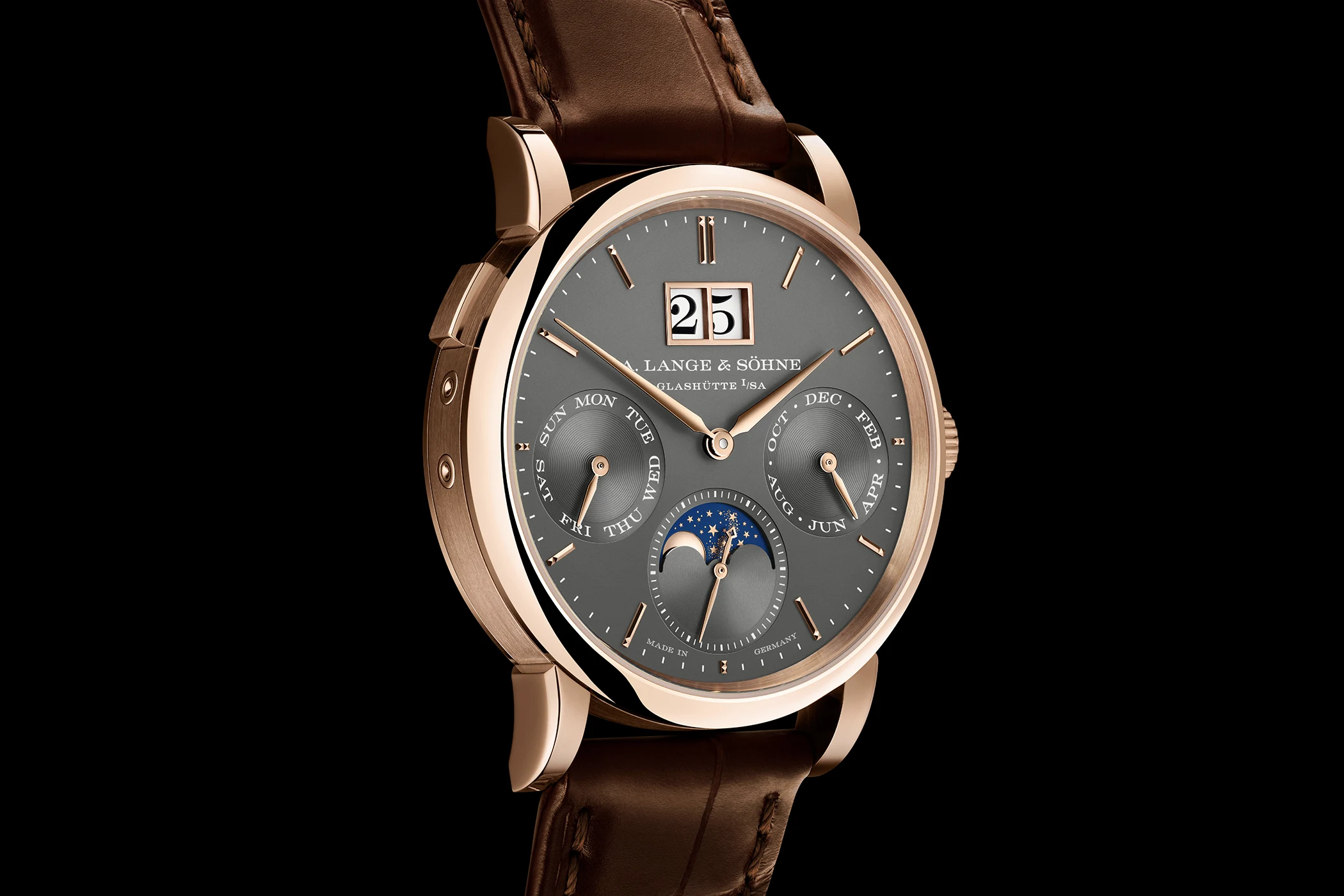
The solid silver dial is available in two versions: Argenté for the white gold model and Grey for the red gold version, and follows the principle of “optimal legibility” that was already so important to the company’s founder, Ferdinand Adolph Lange.
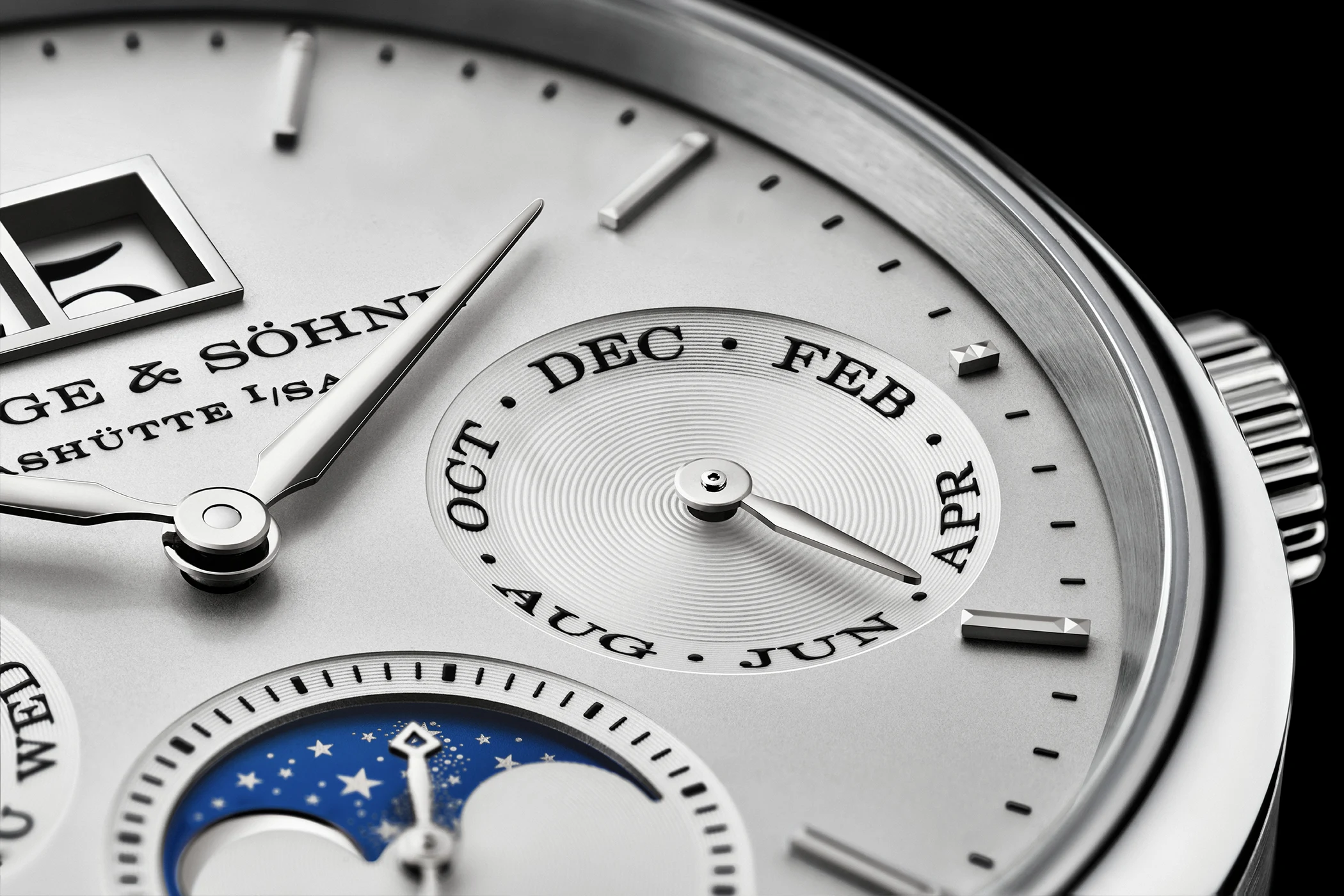
The baton hour markers represent a subtle innovation. Their outer section is now shaped like the tip of a pyramid. This geometric change is not merely decorative; it creates a beautiful interplay with the incoming light. Depending on the angle of the wrist, the facets of the hour markers reflect the light differently, which enhances the dial’s aesthetic appeal and improves legibility in diffused light. The lancet-shaped hour and minute hands, as well as the small hands of the calendar displays, are precisely colour-matched to the respective case material.
The subsidiary dials for the day of the week (9 o’clock), the month (3 o’clock) and the small seconds (6 o’clock) are slightly bevelled inwards. To achieve a three-dimensional depth effect, Lange employs varying degrees of azurage – a fine, circular graining. Whilst the outer rings of the subsidiary dials feature very fine azurage, the inner surfaces are finished with a more pronounced texture. This differentiation creates reflective surfaces that visually set the displays apart from the main dial. The small seconds at 6 o’clock is an exception: here, the inner segment also features the finer azure finish to provide a calm backdrop for the detailed moon phase display.
The moon disc, crafted from 750 gold, is finished with a special deep-blue coating featuring 428 stars. Technically, the moon phase is calculated with such precision that it comes extremely close to the actual lunar cycle of an average of 29 days, 12 hours, 44 minutes and 3 seconds. Only after 122.6 years of uninterrupted operation does the display deviate by a single day from reality.
A key feature of Lange’s calendar watches is their high level of ease of use, a tradition consistently upheld in the new Saxonia Annual Calendar. The watch features a main pusher at 10 o’clock. This allows all calendar displays – including the large date, the day of the week, the month and the moon phase – to be advanced by one day simultaneously.
Should the watch have stopped for a prolonged period, this mechanism is invaluable. In addition, there are four separate correctors recessed into the case, with which each display can be adjusted individually. This is particularly important for the moon phase, which must be set independently of the calendar cycle, or in the event that the watch is manually corrected on 1 March following a short February. The large date advances precisely to the first day of the following month at the end of the month, automatically recognising months with 30 or 31 days.
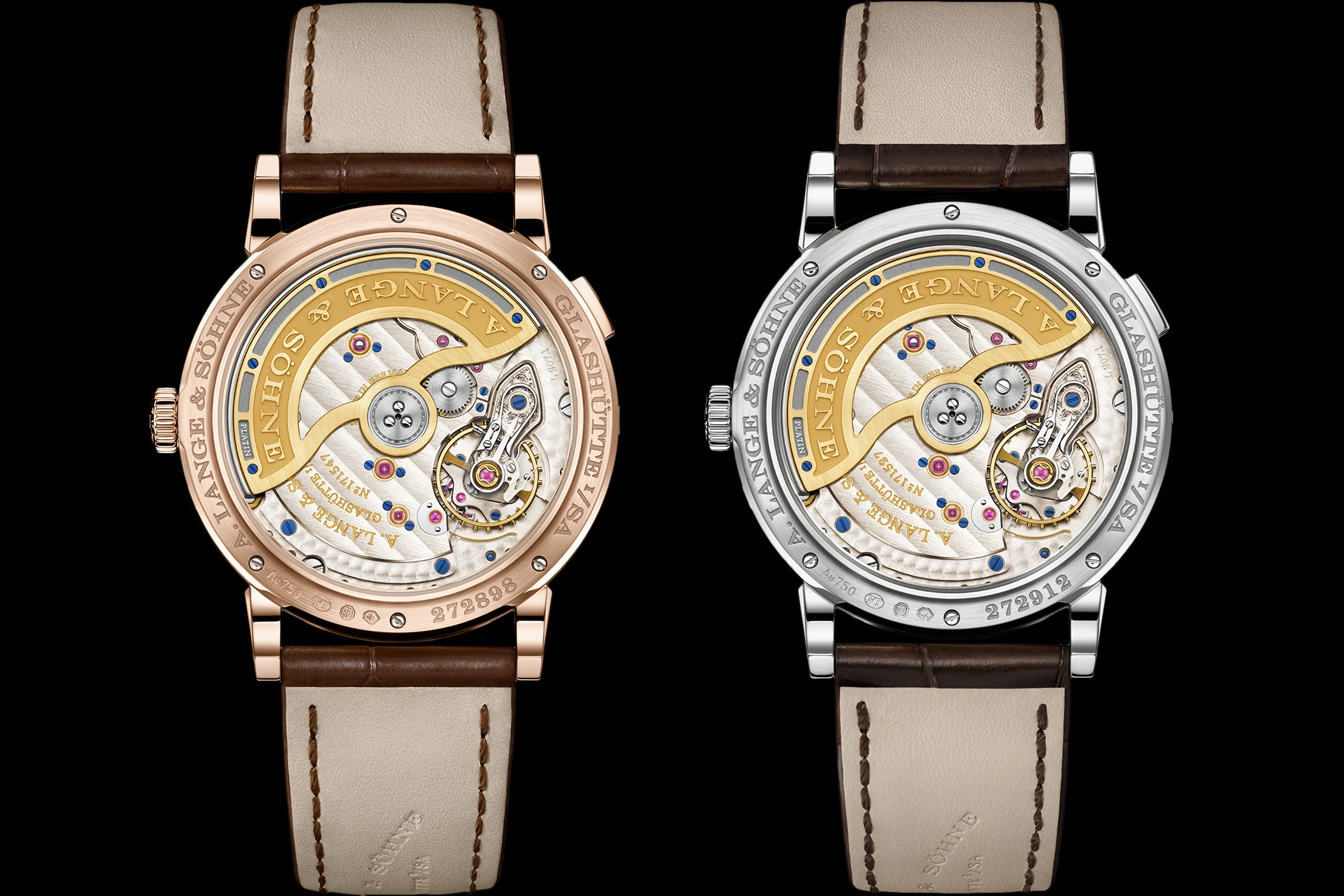
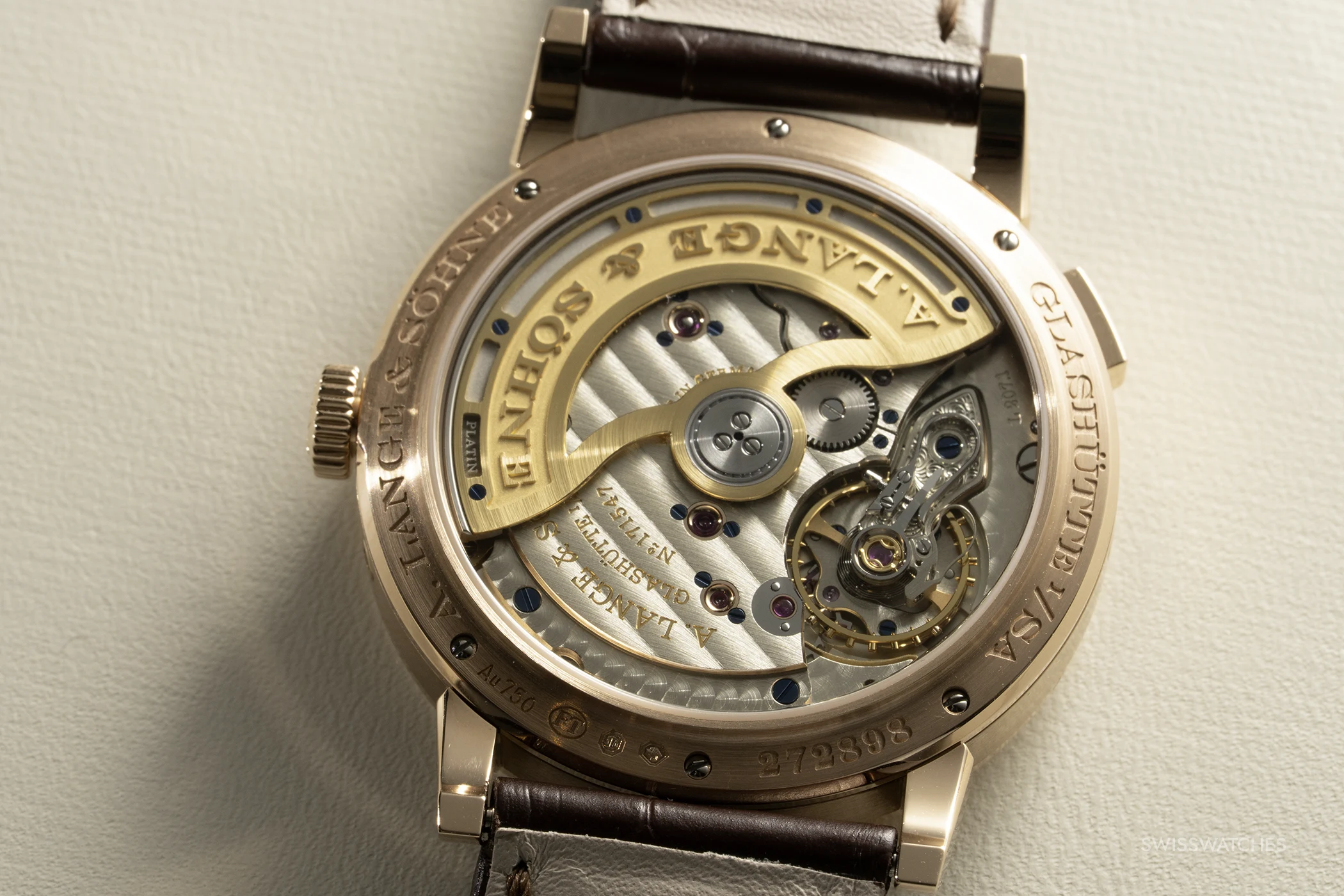
A view through the sapphire crystal case back reveals the “opulent beauty”, as the Manufacture itself puts it, which stands in stark contrast to the understated design of the dial. The L207.1 calibre follows the tradition of the double-assembled movement, in which each component is disassembled, cleaned and finally finished after the initial functional test.
The characteristic features of the Lange finishing include:
The hand-engraved balance cock: Each piece bears a unique floral pattern, engraved freehand by one of the manufactory’s engravers. This makes every movement one of a kind.
Glashütte stripe finish: The three-quarter plate, made of untreated nickel silver, is decorated with this distinctive finish, which develops a characteristic golden-yellow patina over the years.
Polished chamfers and blued screws: Every edge of the bridges is chamfered and polished by hand. The screws are thermally blued, giving them a deep, cornflower-blue lustre.
Screw-fixed gold chatons: Three of these traditional chatons can be found in the L207.1, each held in place by three blued screws.
A. Lange & Söhne uses the platinum rotor not only as an automatic winding mechanism to increase winding efficiency, but also as a canvas for beautiful handcrafted decorations. The heavy rotor is intricately skeletonised and bears the relief of the A. Lange & Söhne lettering.
A. Lange & Söhne nutzt den Platinrotor nicht nur als automatischen Aufzug zur Erhöhung der Aufzugseffizienz, sondern auch Bildfläche für schöne handwerkliche Verzierungen. Die schwere Schwungmasse ist aufwendig skelettiert und trägt das Relief des A. Lange & Söhne-Schriftzugs.
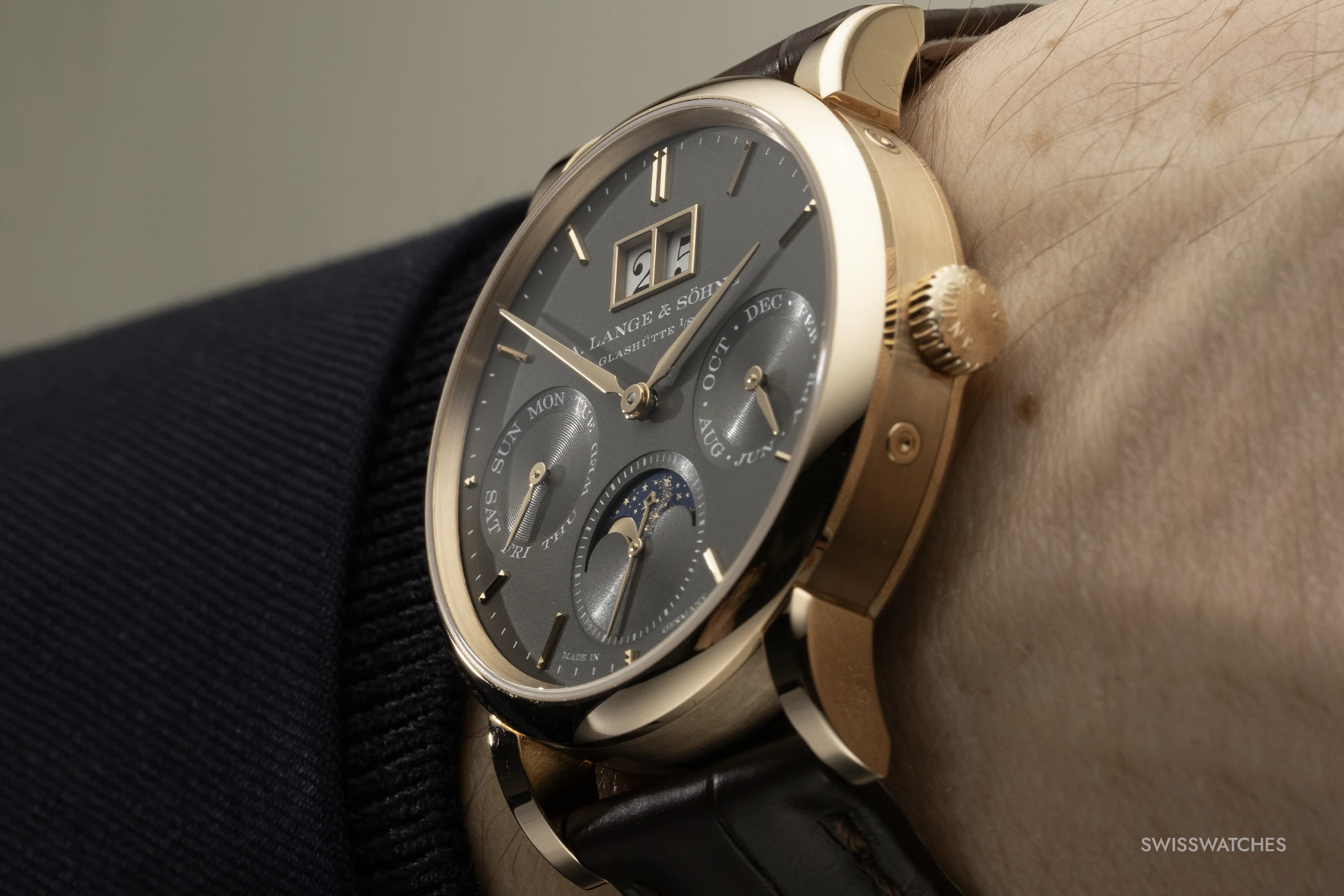
The decision to opt for a diameter of 36.0 millimetres can certainly be seen as a response to changing preferences in the high-end segment. Over the past two decades, large watches have dominated the market, with 40 millimetres and above often regarded as the standard for men’s watches. Recently, however, a return to classic proportions has been observed, often referred to as the “mid-size renaissance”.
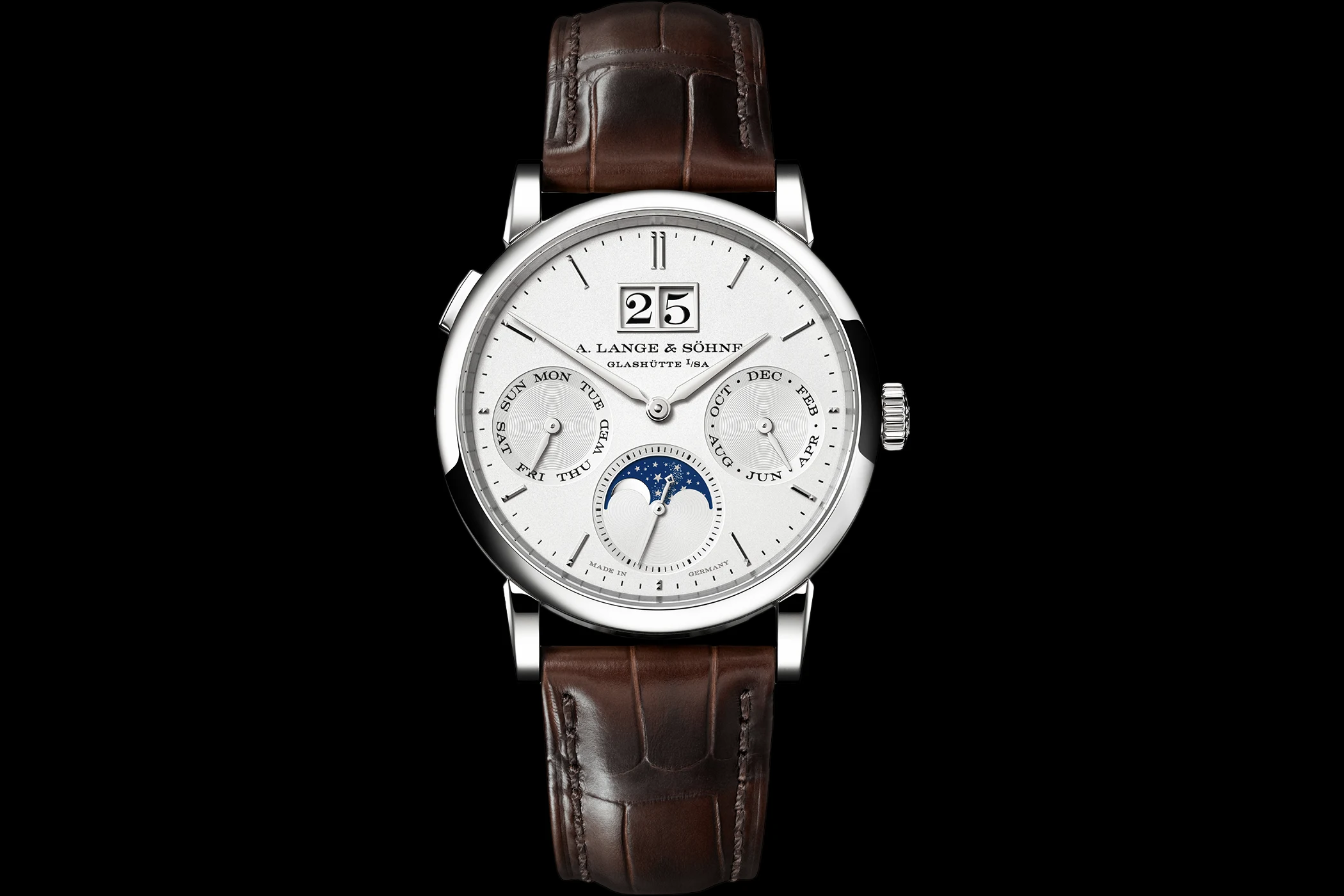
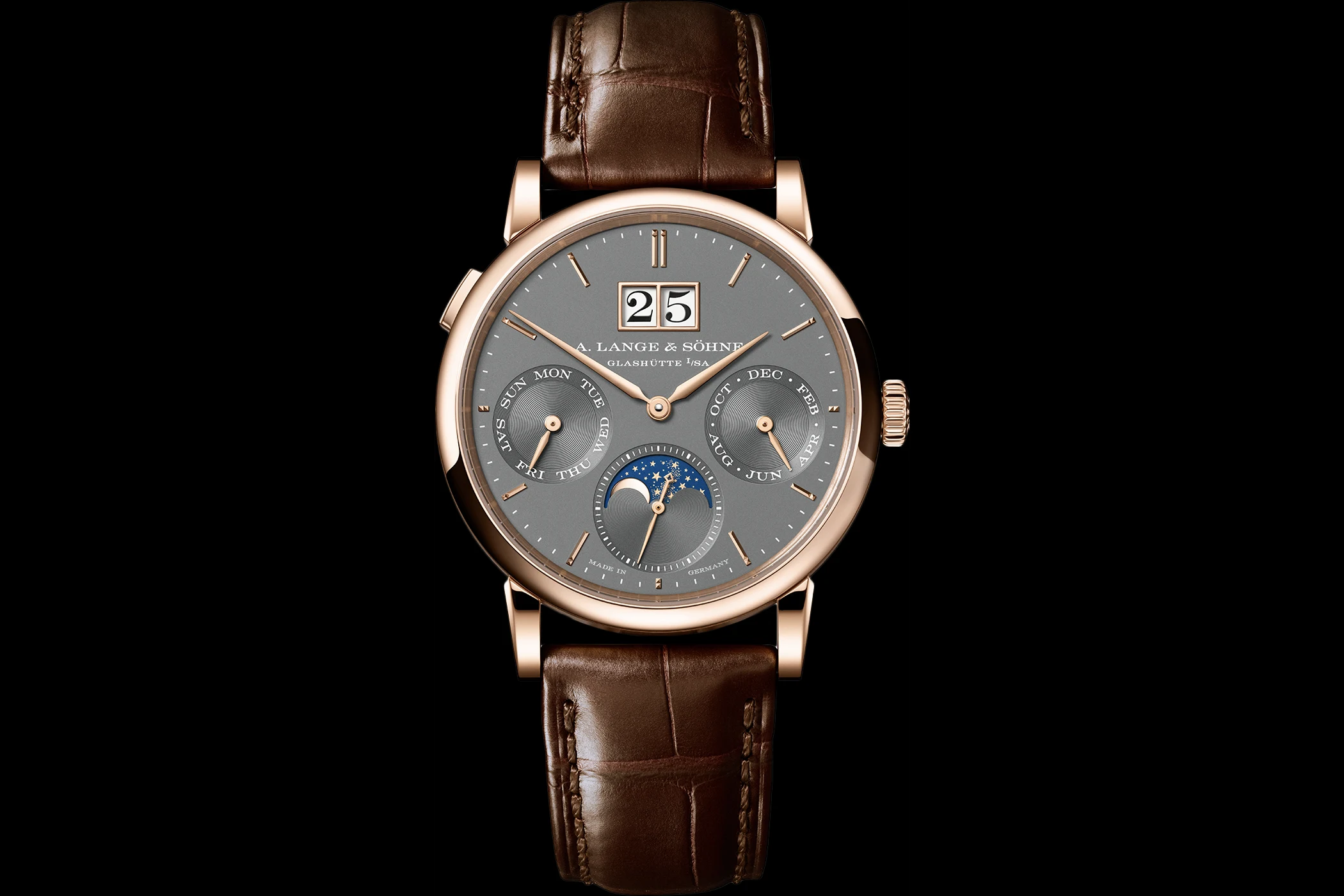
The new Saxonia nestles discreetly beneath the shirt cuff without losing any of its presence, a feature enhanced by a redesigned dial aesthetic and modified hour markers.
The omission of the zero-reset may be a slight disappointment for some, but on the whole, the vast majority of Saxonia Annual Calendar fans will overlook this due to the many improvements it has brought.
Both versions of the new Saxonia annual calendar will cost around 65,000 euros.