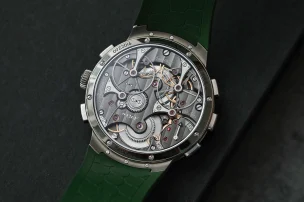
In 2026, Parmigiani Fleurier will unveil the Tonda PF Chronographe Mystérieux, the world’s first invisible chronograph.

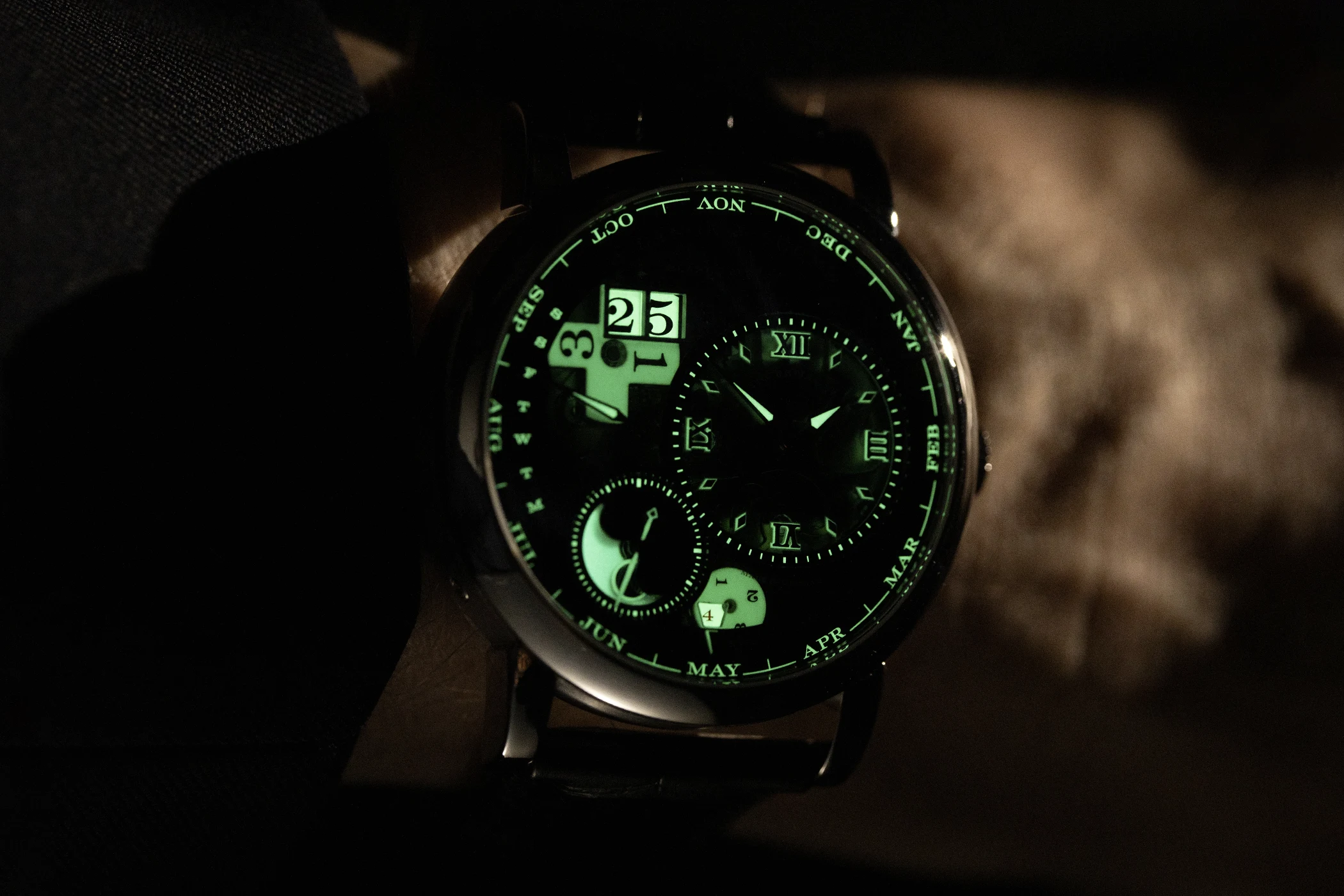
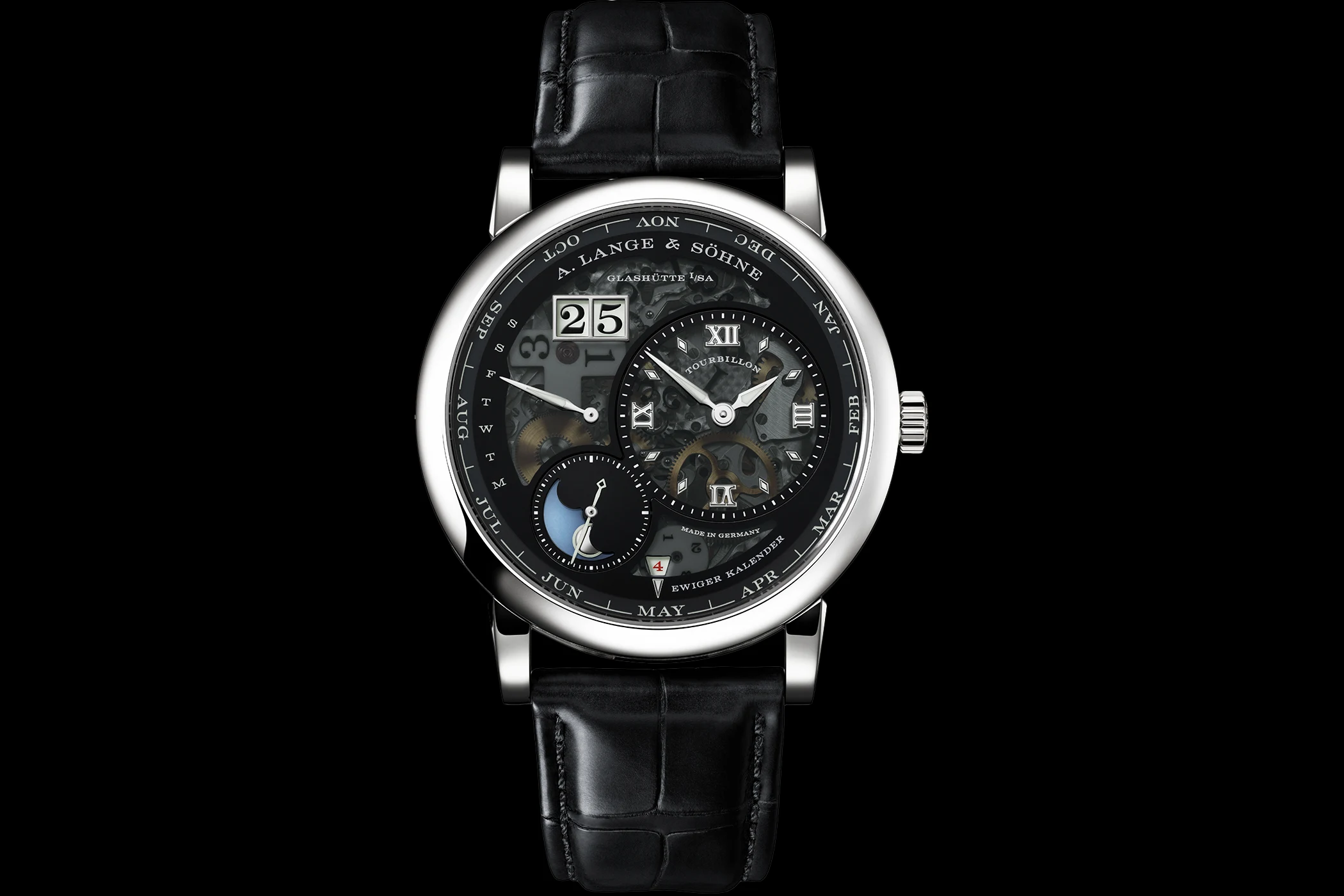
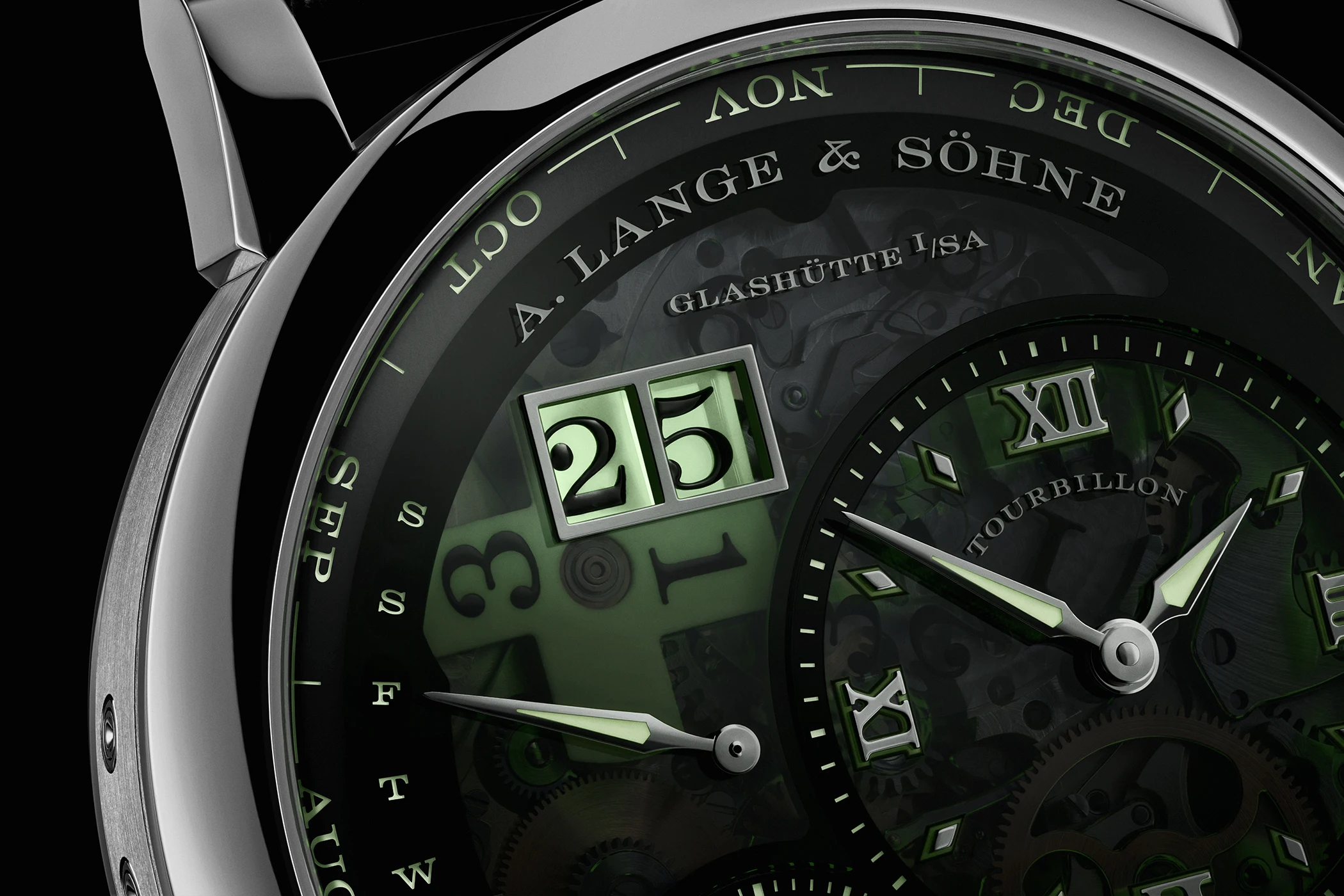
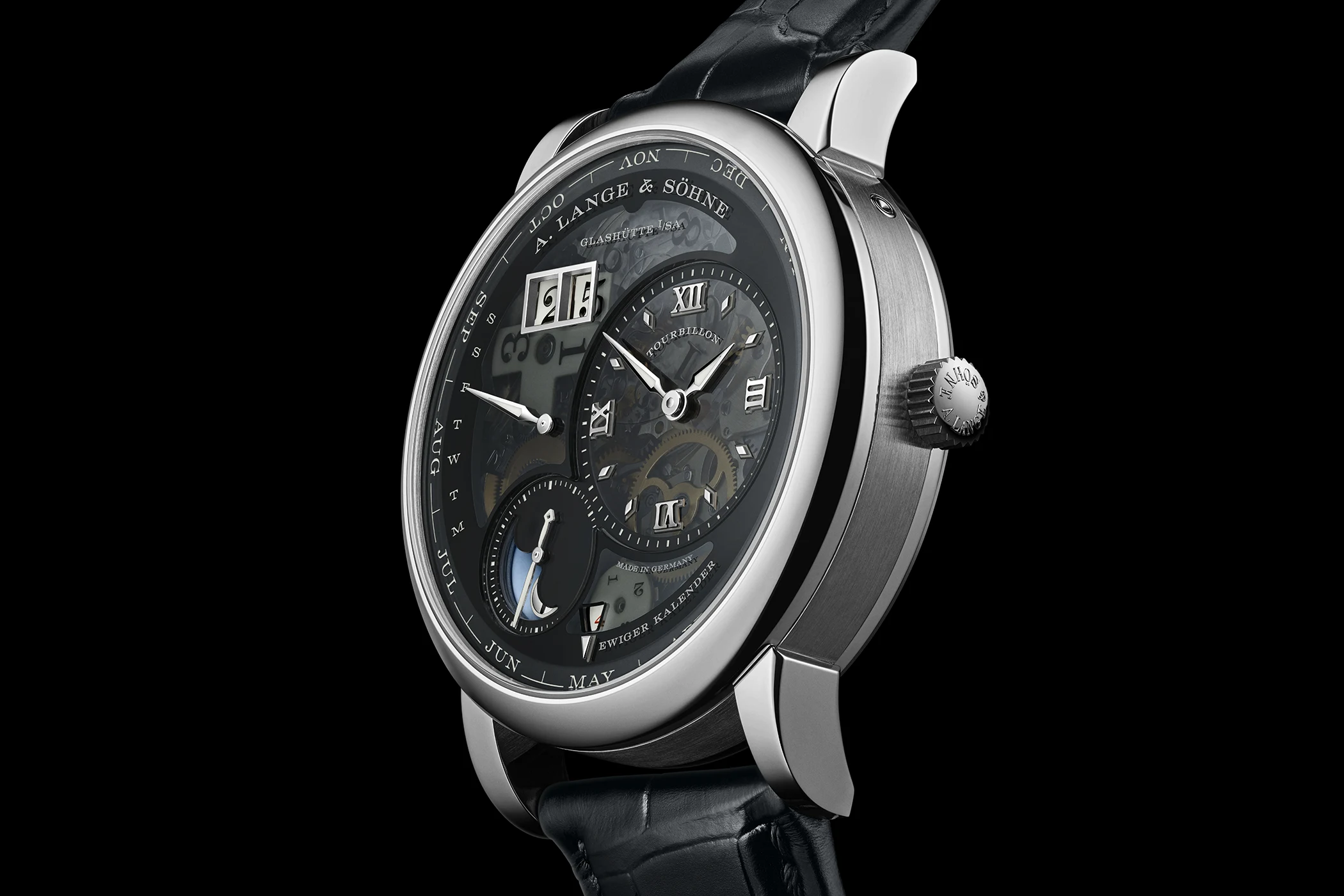
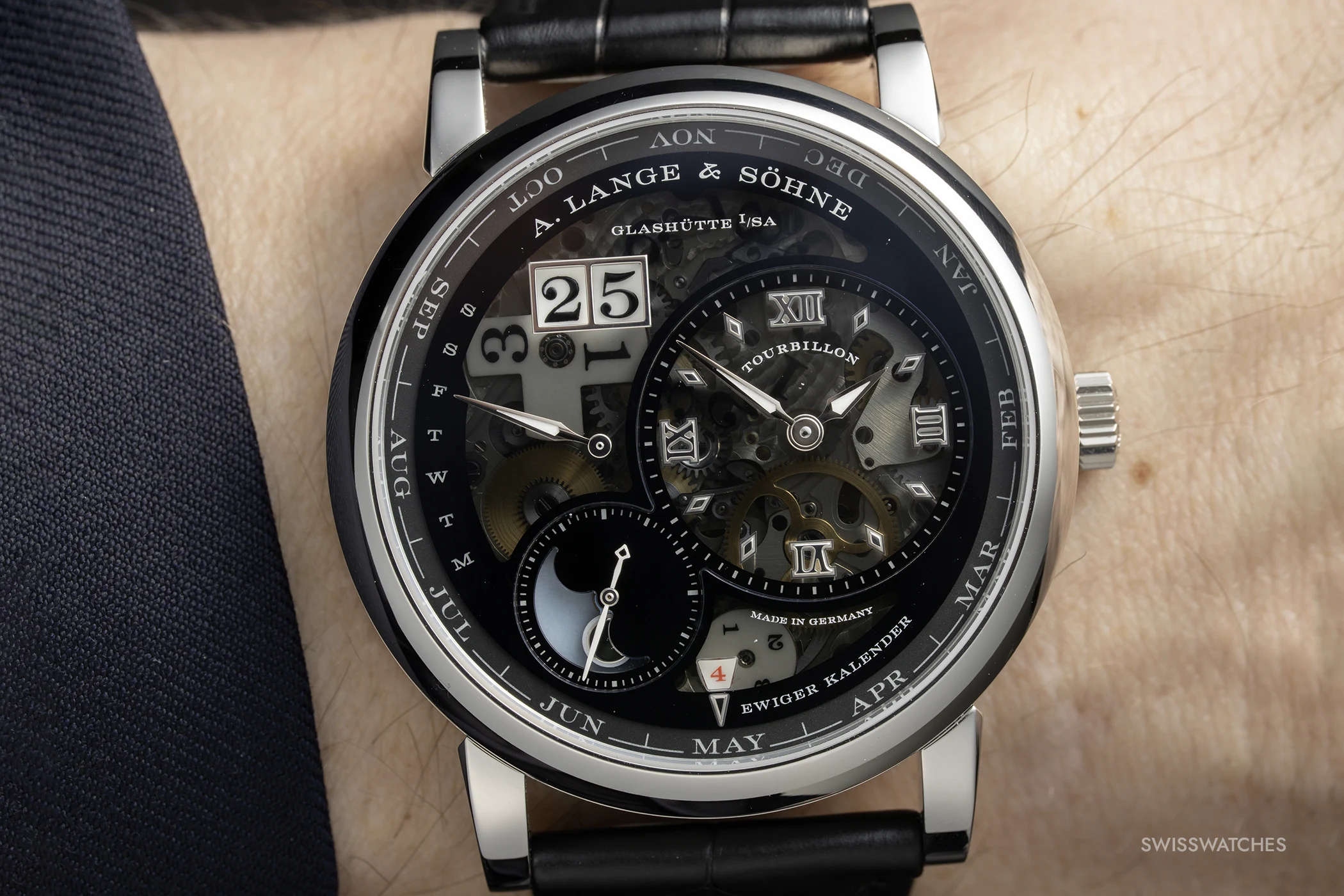
With the Lange 1 Tourbillon Perpetual Calendar “Lumen”, the Glashütte-based manufacturer A. Lange & Söhne presents the most elaborate model to date in its luminescent watch collection. Number seven in the “Lumen” family combines two major complications: a tourbillon with a seconds stop and a perpetual calendar with a peripheral month ring. The fact that all the displays on the Lange 1’s distinctive, off-centre dial remain clearly legible even in the dark makes this timepiece, limited to 50 pieces, something truly special.
The ‘Lumen’ story began in 2010, when Lange unveiled the Zeitwerk ‘Luminous’, venturing into uncharted design territory. The idea behind it has remained the same to this day; it sounds simple, but requires considerable engineering effort: the dial is made of sapphire crystal with a special coating that strongly filters visible light whilst allowing ultraviolet radiation to pass through. This allows the luminous pigments beneath the displays to charge up with energy in daylight and release it again at night. The process, patented since 2013, allows for an unlimited number of charging cycles.
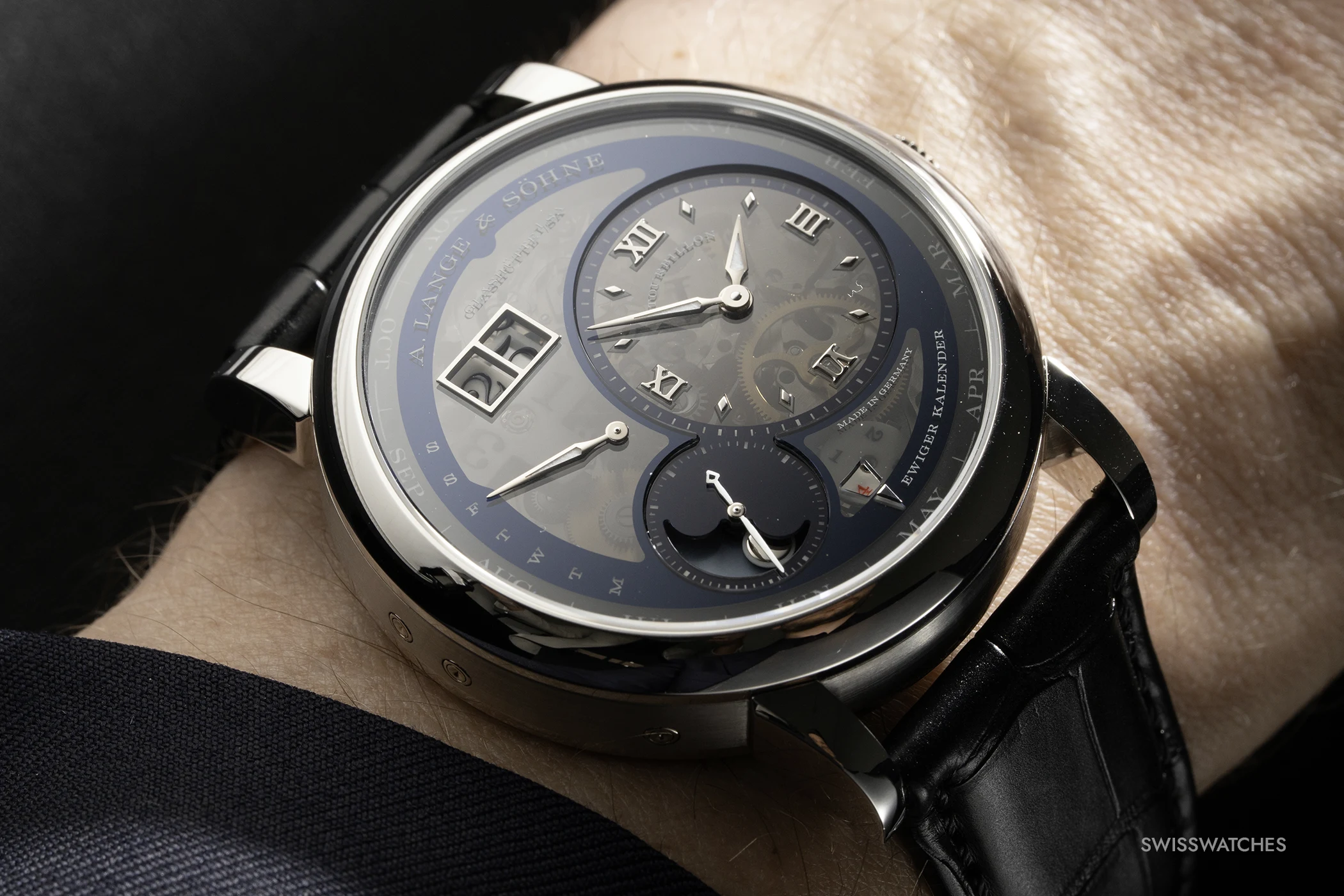
In the new model, Lange takes this concept further than in any of its predecessors. Every single display element glows: the large date, the retrograde day of the week, the month ring and the leap year indicator. The designers have experimented with different luminous surfaces: large elements such as the date and the leap year indicator glow with the same intensity, whilst the hands, hour markers and the moon silhouette shimmer much more delicately. In the dark, this creates a surprisingly nuanced effect that bears little resemblance to the stark glow of ordinary watches.
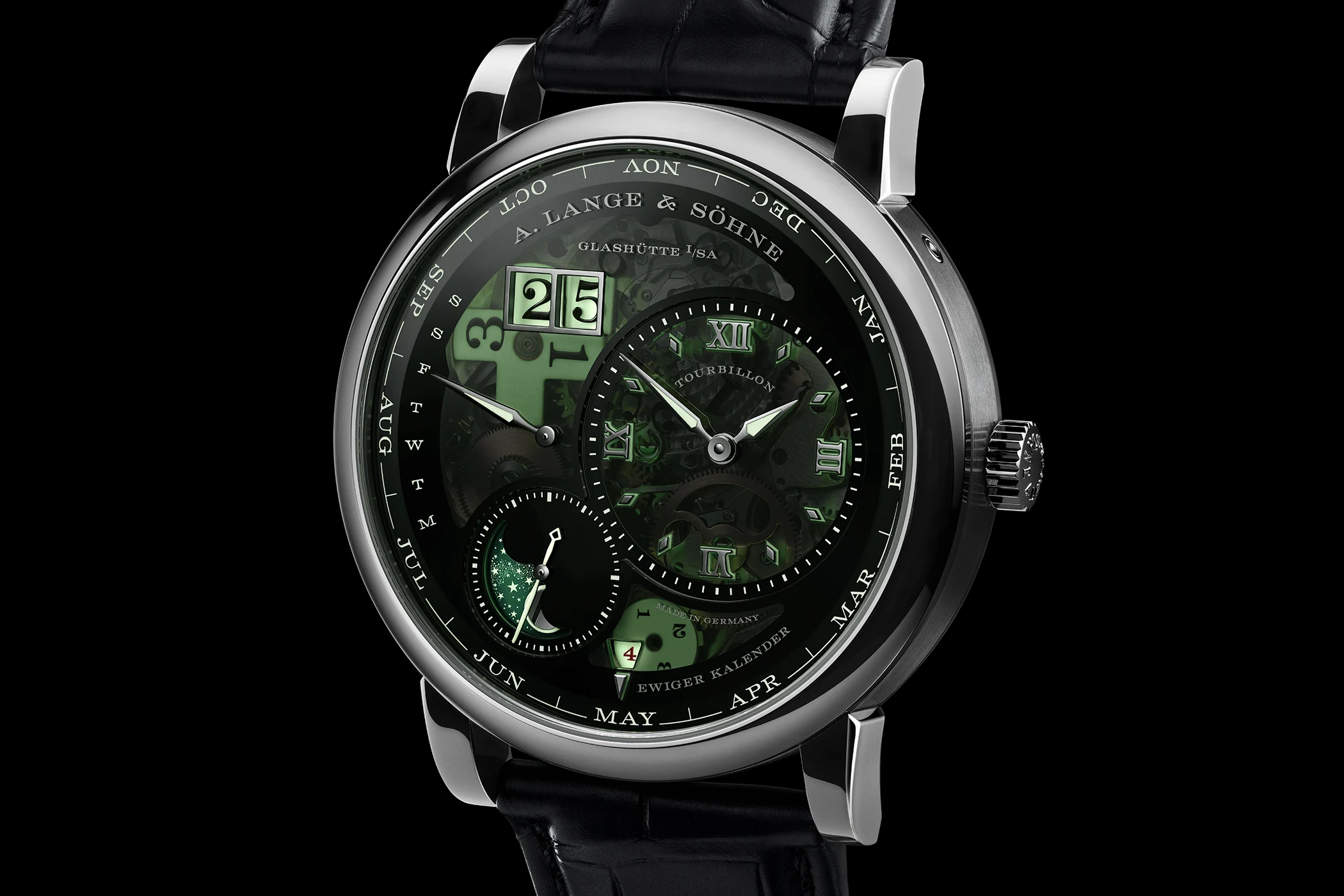
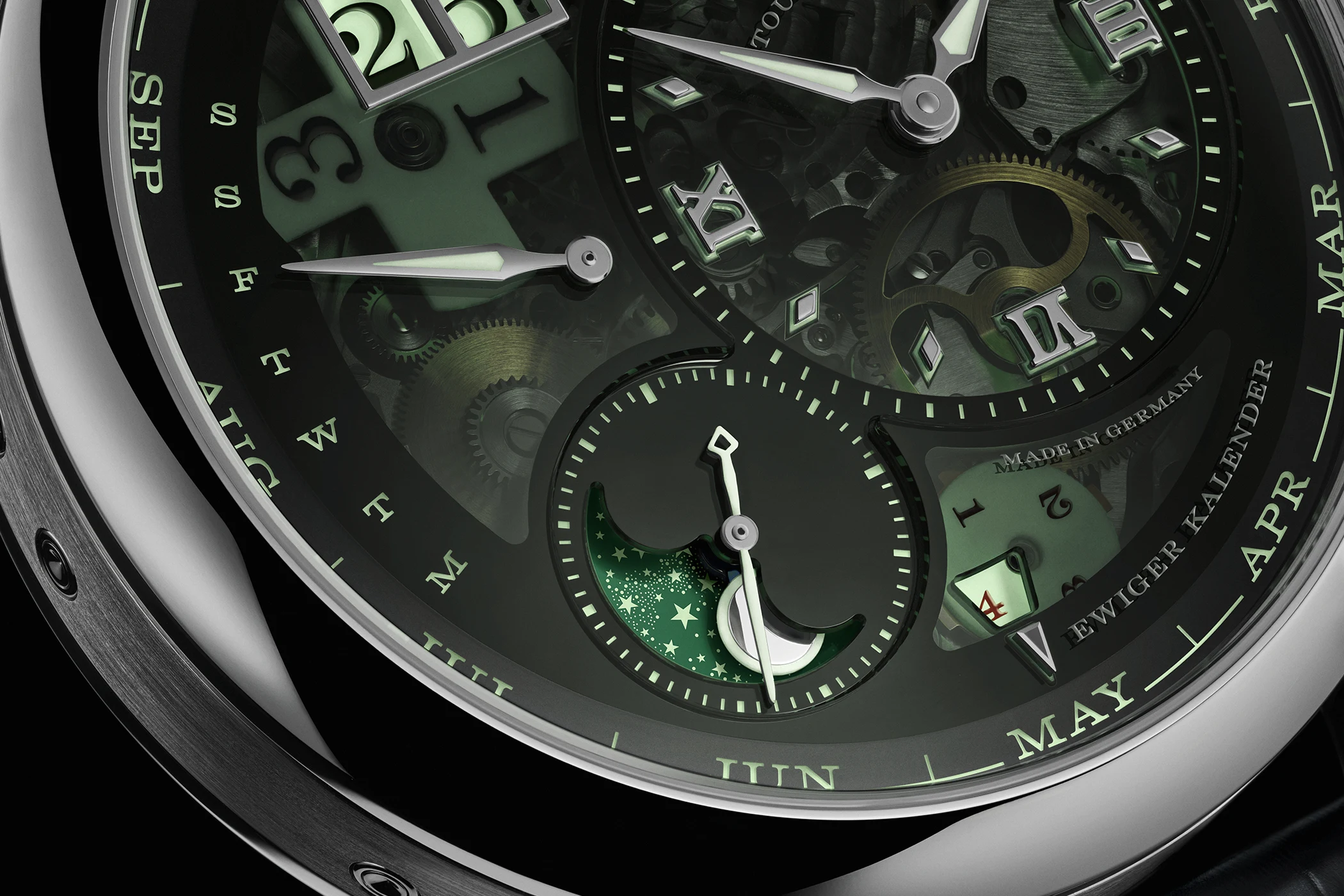
The moon phase display is particularly impressive in its design. The use of luminescent material to outline the moon is a first. Furthermore, the manufacturer combines the moon phase with a day/night indicator: a celestial disc completes a full rotation in 24 hours. By day, the observer sees a bright, starless background; by night, luminescent stars appear. The moon moves across it, depicting the current phase. And this with a rate of deviation that only amounts to a full day after 122.6 years.
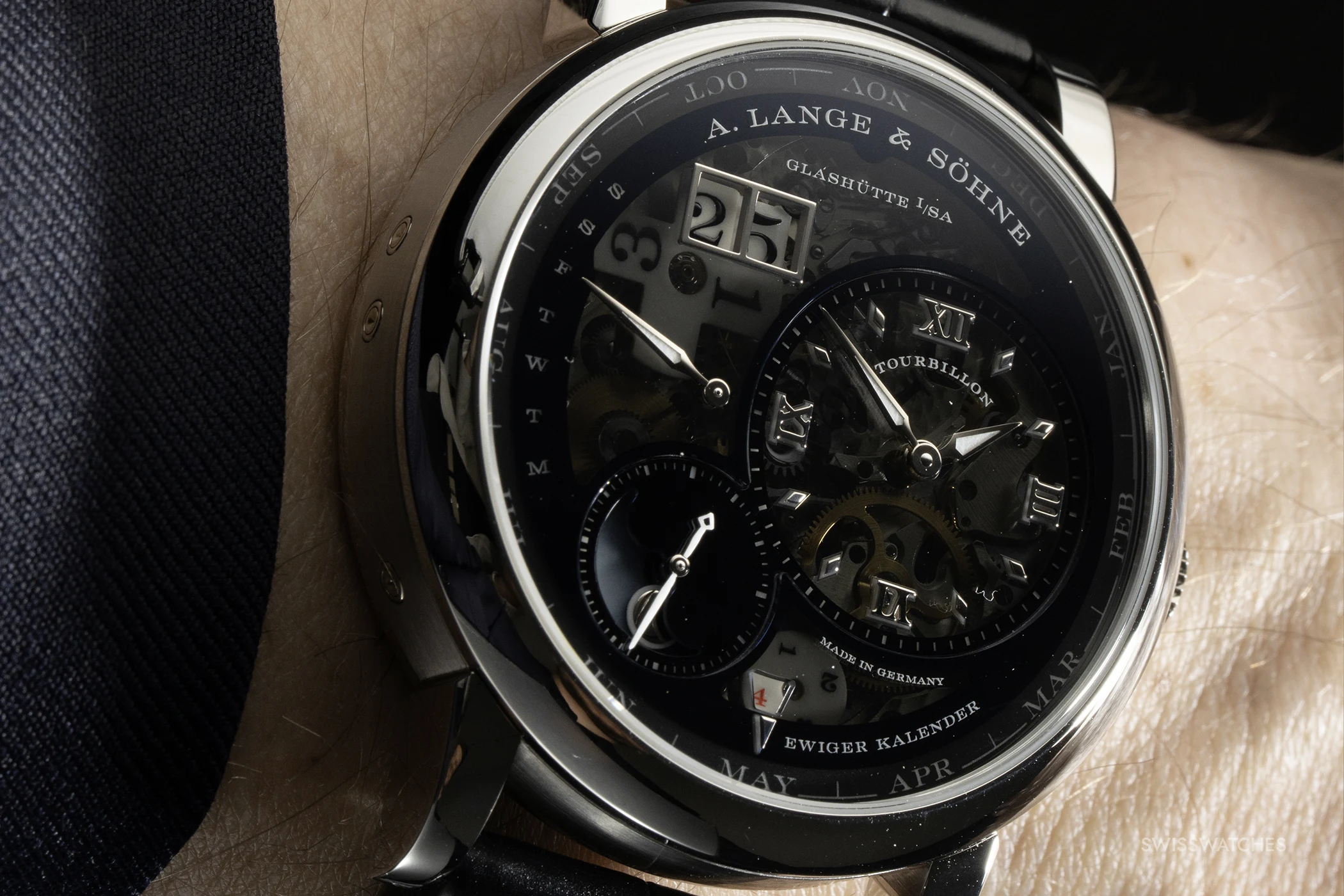
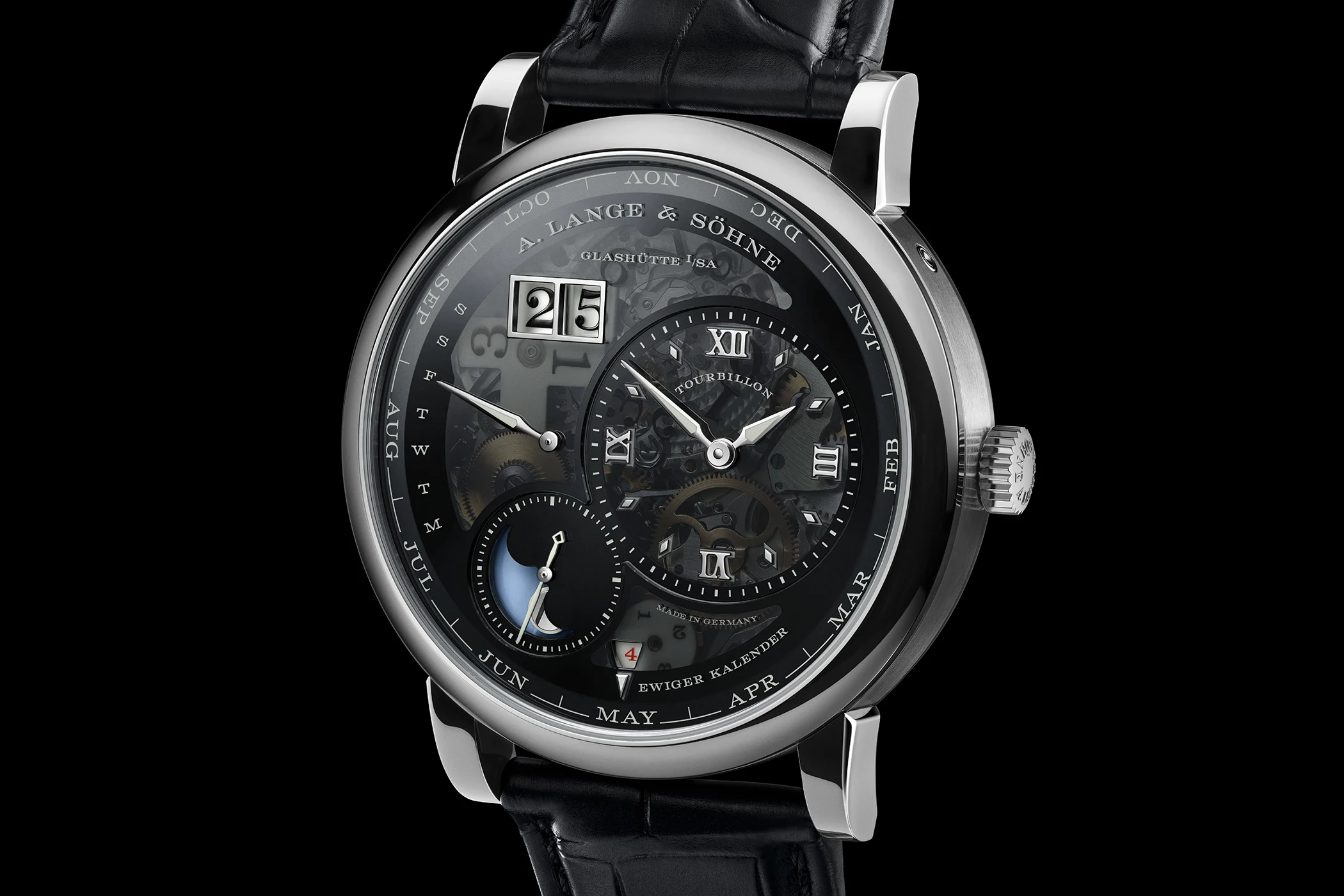
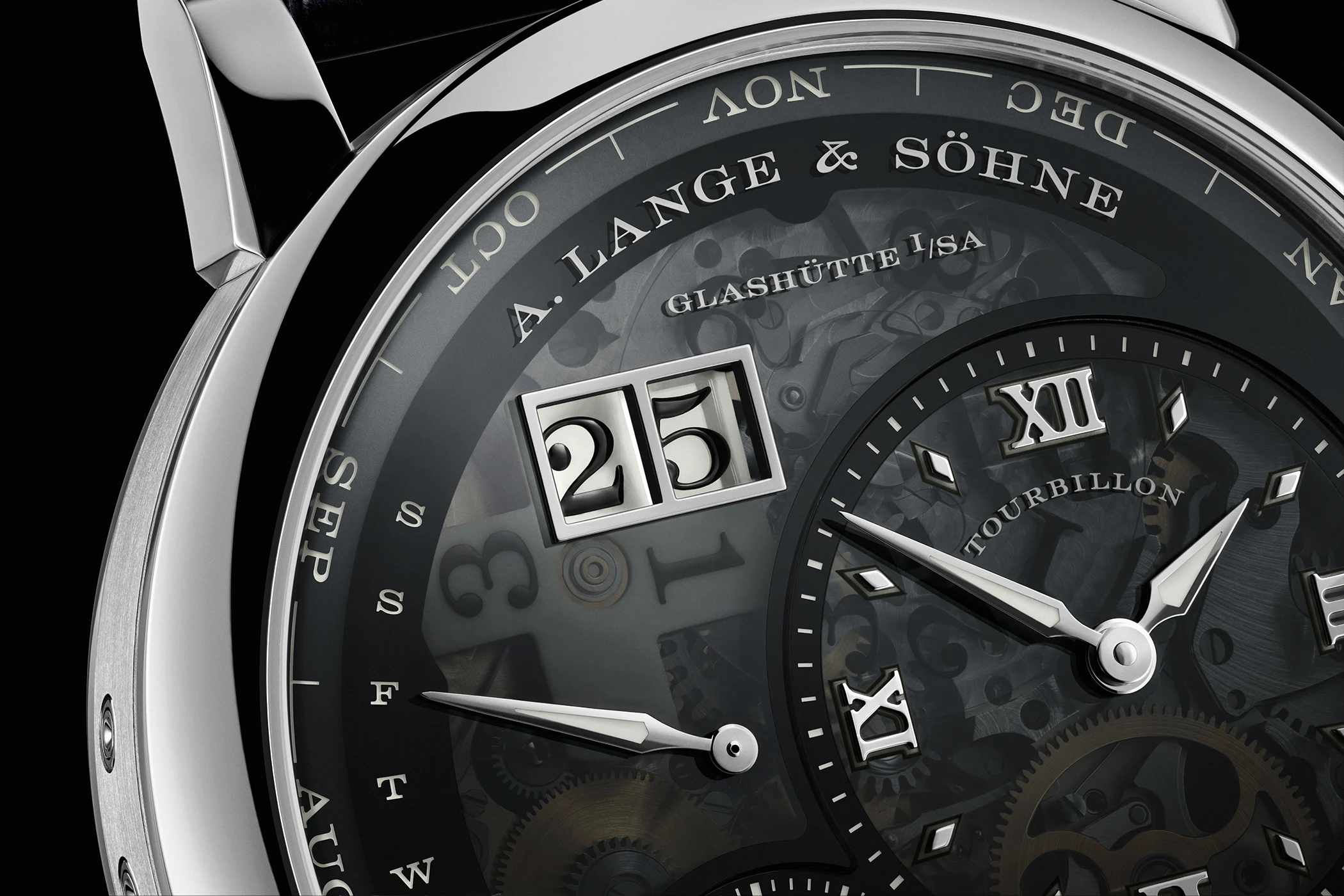
In terms of design, Lange has consistently focused on the contrast between light and dark in this model. The polished platinum case contrasts with the dark dial and the black alligator leather strap, which is hand-stitched. Rhodium-plated gold hands and white hour markers stand out clearly against the background, enhancing legibility.
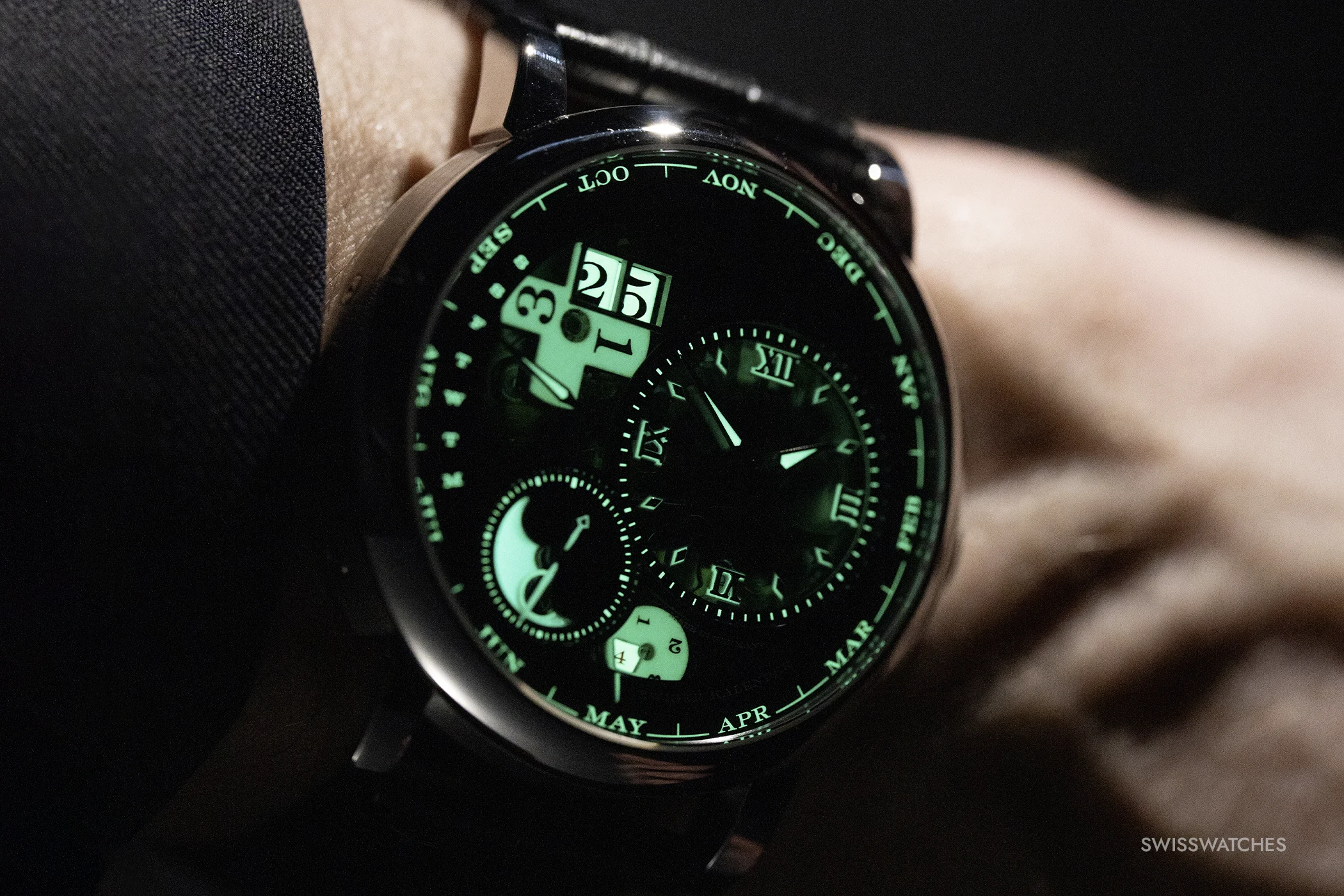
The translucent dial serves more than just aesthetic purposes. It is this partial transparency that allows the luminous pigments, situated beneath the hour markers, to be charged. At the same time, the semi-transparent sapphire crystal offers a view of the mechanisms beneath: one can see grained plates, sun-brushed bridges, satin-finished levers and circular-grained gears. Every edge is bevelled and polished by hand. The movement thus becomes a stage: in daylight, a visible mechanism; in darkness, a backdrop for the green glow.
From the front, only a small engraving at the 12 o’clock position hints at what lies hidden on the back. It is only through the sapphire crystal case back that one can see the minute tourbillon, whose cage rotates once around its own axis every 60 seconds, thereby counteracting the effects of gravity on the balance wheel. What has long been standard in conventional wristwatches – the stop-seconds function for precise time setting – is usually absent in tourbillon watches. Lange solved this problem in 2008 and patented the mechanism.
When the crown is pulled out, a lever system presses a V-shaped steel spring against the rotating balance wheel. The spring’s unique geometry ensures that the balance wheel is reliably locked in place, regardless of whether initial contact is made with the rim or one of the three cage pillars. Crucially, the energy stored in the balance spring is retained, so that the balance wheel immediately resumes oscillating on its own when the crown is pushed back in.
On the reverse side, the tourbillon and intermediate wheel bridges are also worth a closer look. Both are crafted from stainless steel and skeletonised, with their surfaces black-polished. In this process, a component is passed over a tin disc with precisely controlled pressure until it appears mirror-like from some angles and black from others. The edges are bevelled and polished by hand by the watchmakers. The inner angles present a particular challenge. Both bridges also feature hand-engraved stars and a shooting star, alluding to the luminous stars on the front. At the heart of the tourbillon cage sits a diamond capstone in a screw-mounted gold chatons, as Lange has long used in its historic pocket watches of the highest quality.
The automatic in-house calibre L225.1 is a completely new design. Its 685 components, 74 jewels and six gold chatons make it one of the most complex movements in the Lange portfolio. An eccentric balance wheel with an in-house balance spring serves as the rate regulator, operating at a frequency of 21,600 vibrations per hour. Winding is provided by a central rotor in white gold, whose outer oscillating weight in platinum delivers the necessary torque. The full power reserve is 50 hours.
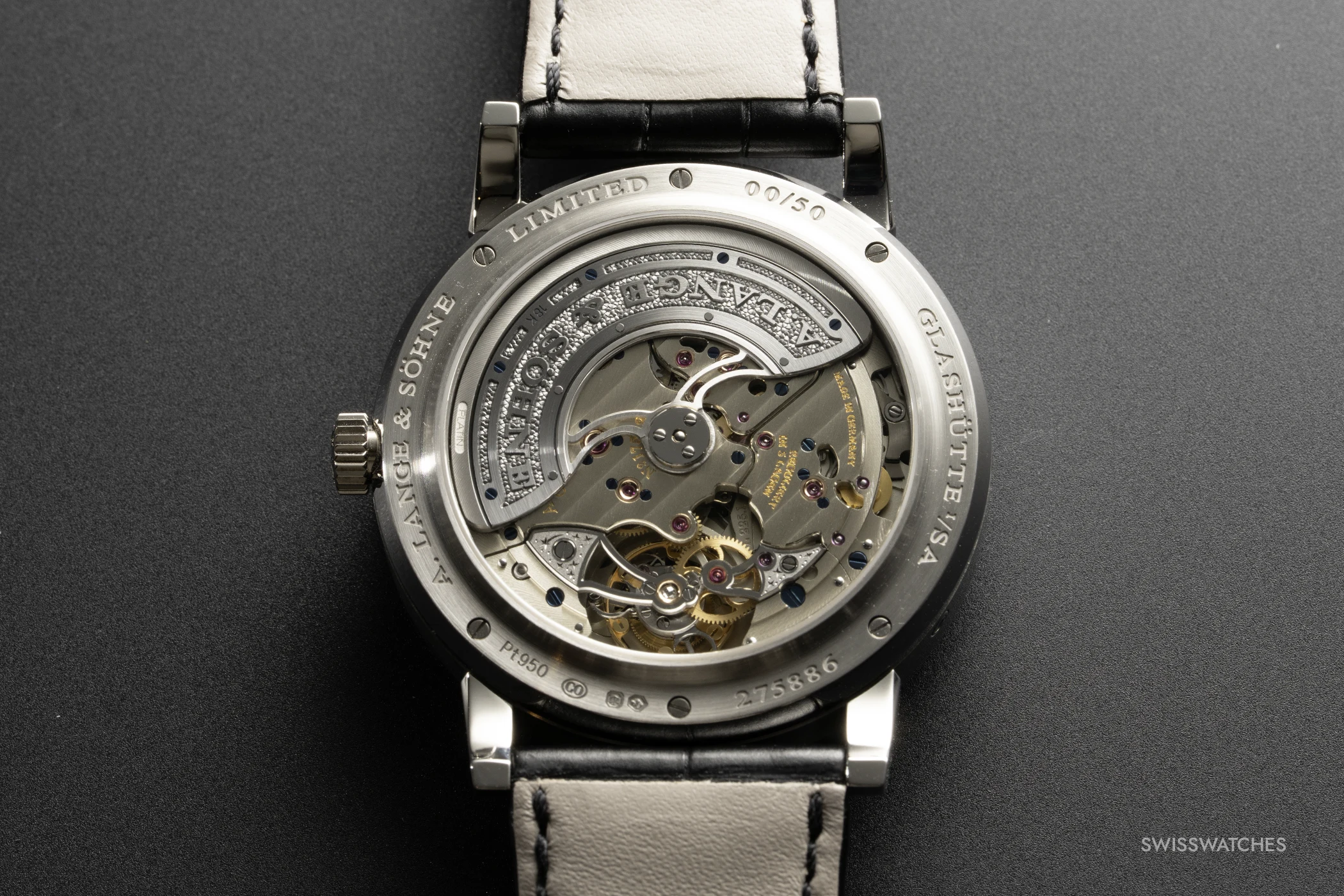
With a diameter of 34.1 millimetres and a height of 8.3 millimetres, the movement allows for a case 41.9 millimetres wide and 13 millimetres thick. Compared to its predecessor, the L082.1 calibre, this is not an evolution but a completely new development. The reason: the semi-transparent dial places special demands on the movement’s layout, as components and surfaces are at least partially visible and must be decorated accordingly.
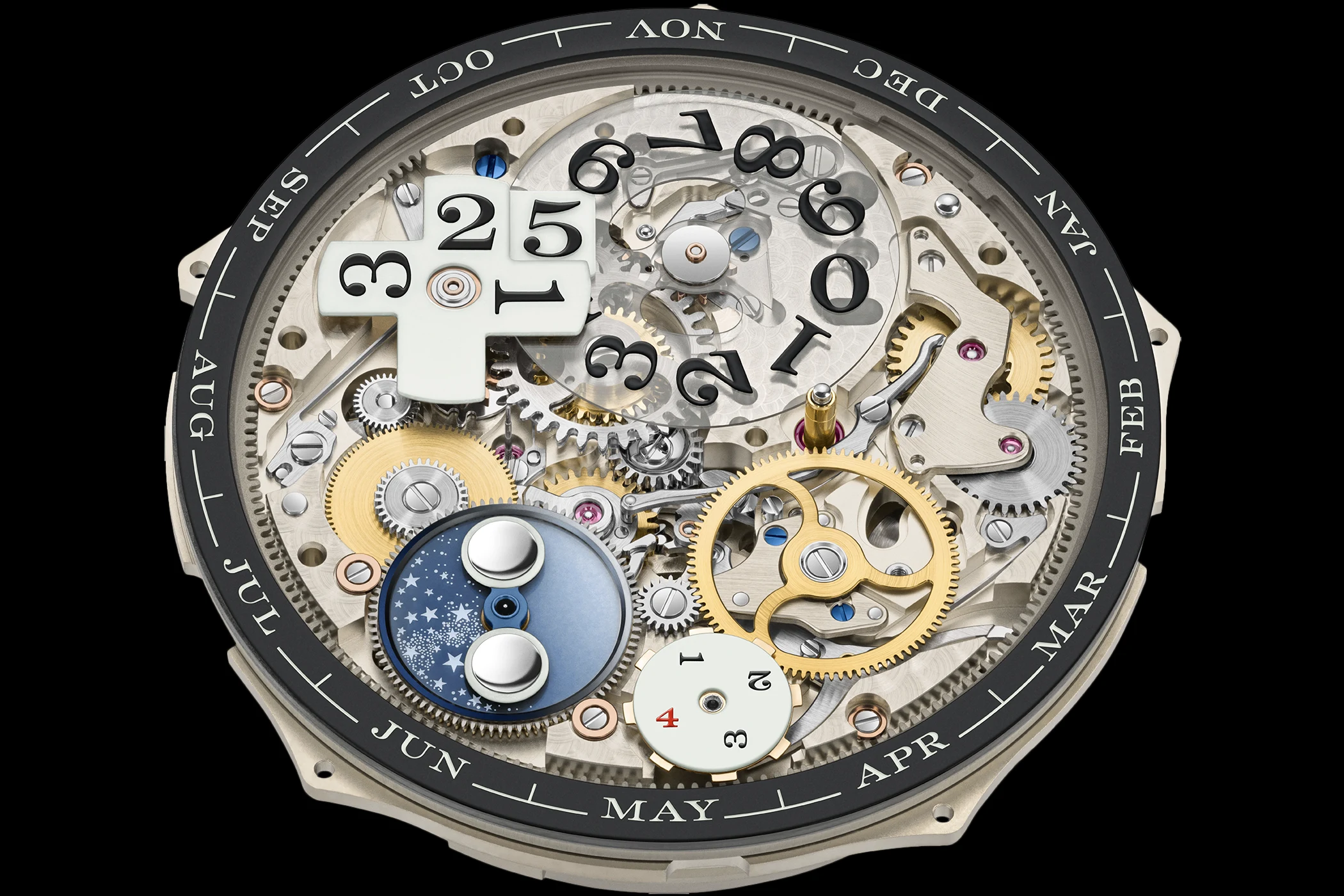
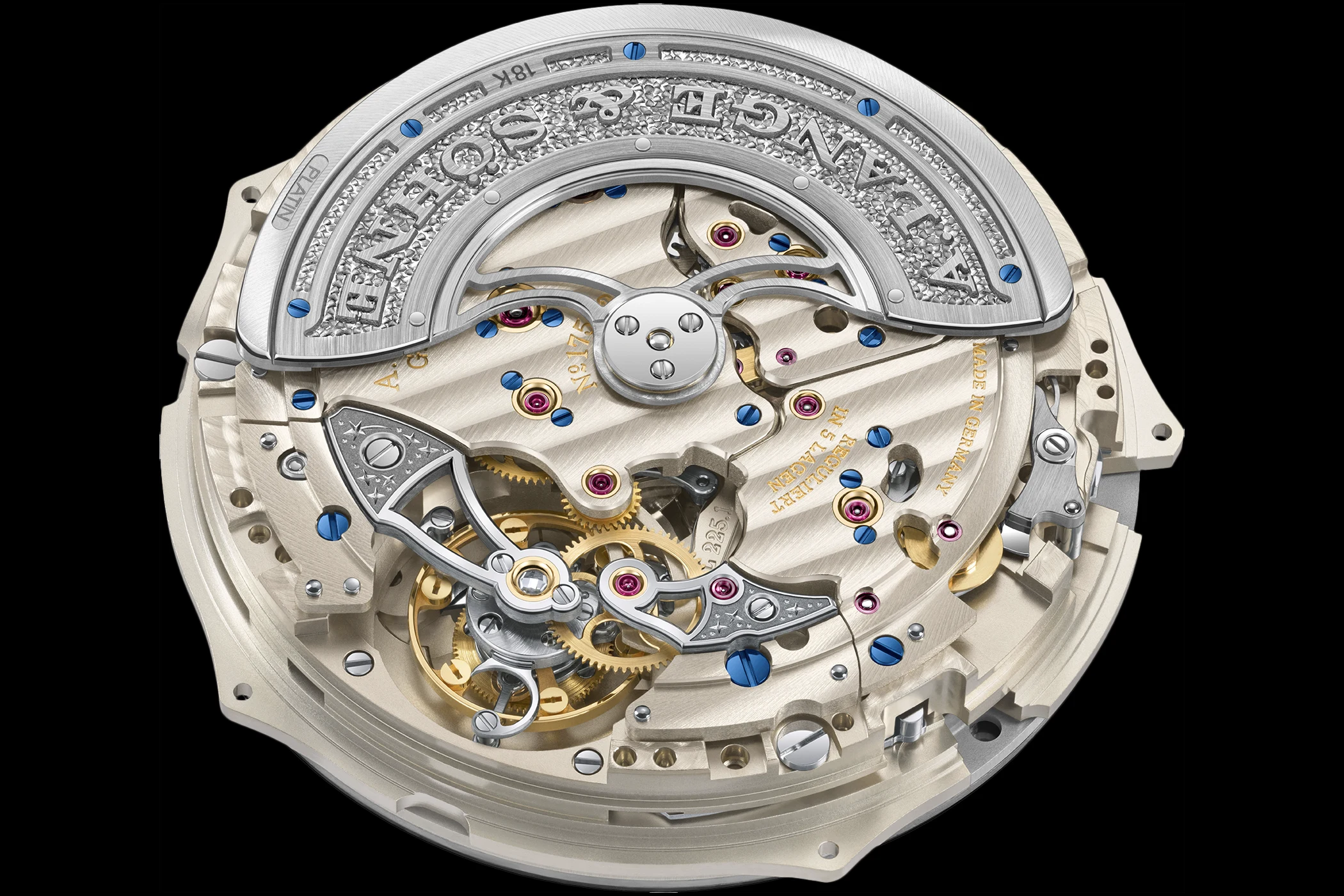
Since 2012, the unique selling point of the perpetual calendar in the Lange 1 has been the peripheral month ring, a solution that dispenses with the usual 48-month programme wheel with its stepped notches. Instead, a large ring with internal teeth rotates around the dial once a year. On its inner surface runs a wave-shaped contour, which is scanned by a spring-loaded lever. The depth of each wave determines when the month changes: the deeper the notch, the earlier the date jumps to the first, and the shorter the month in question. For February, a second arm of the same lever scans a cam disc located beneath the leap year indicator, informing the movement whether February has 28 or 29 days.
This design was the only way to incorporate the perpetual calendar into the asymmetrical layout of the Lange 1 without compromising the non-overlapping arrangement of the displays. The challenge: the month ring must jump 30 degrees at each change of month, a considerably greater distance than the 7.5 degrees covered by a conventional programme wheel. The switching energy is therefore accumulated throughout the day in two separate mainsprings. One drives the daily changes of the date, day of the week and moon phase, whilst the other drives the monthly advancement of the ring and the four-year disc.
The operating principle is identical in both: a lever moves along a worm wheel for 24 hours until it slips off at the highest point, thereby suddenly releasing the stored energy. Because the force is continuously drawn from the gear train, the amplitude of the balance wheel remains constant. All calendar displays advance in a single step and are therefore unambiguous. They can be adjusted individually or together using pushers on the side of the case. As long as the watch is running, the mechanism operates autonomously until 1 March 2100, when, according to the rules of the Gregorian calendar, a leap year is omitted for the first time, and the owner must manually add a day.
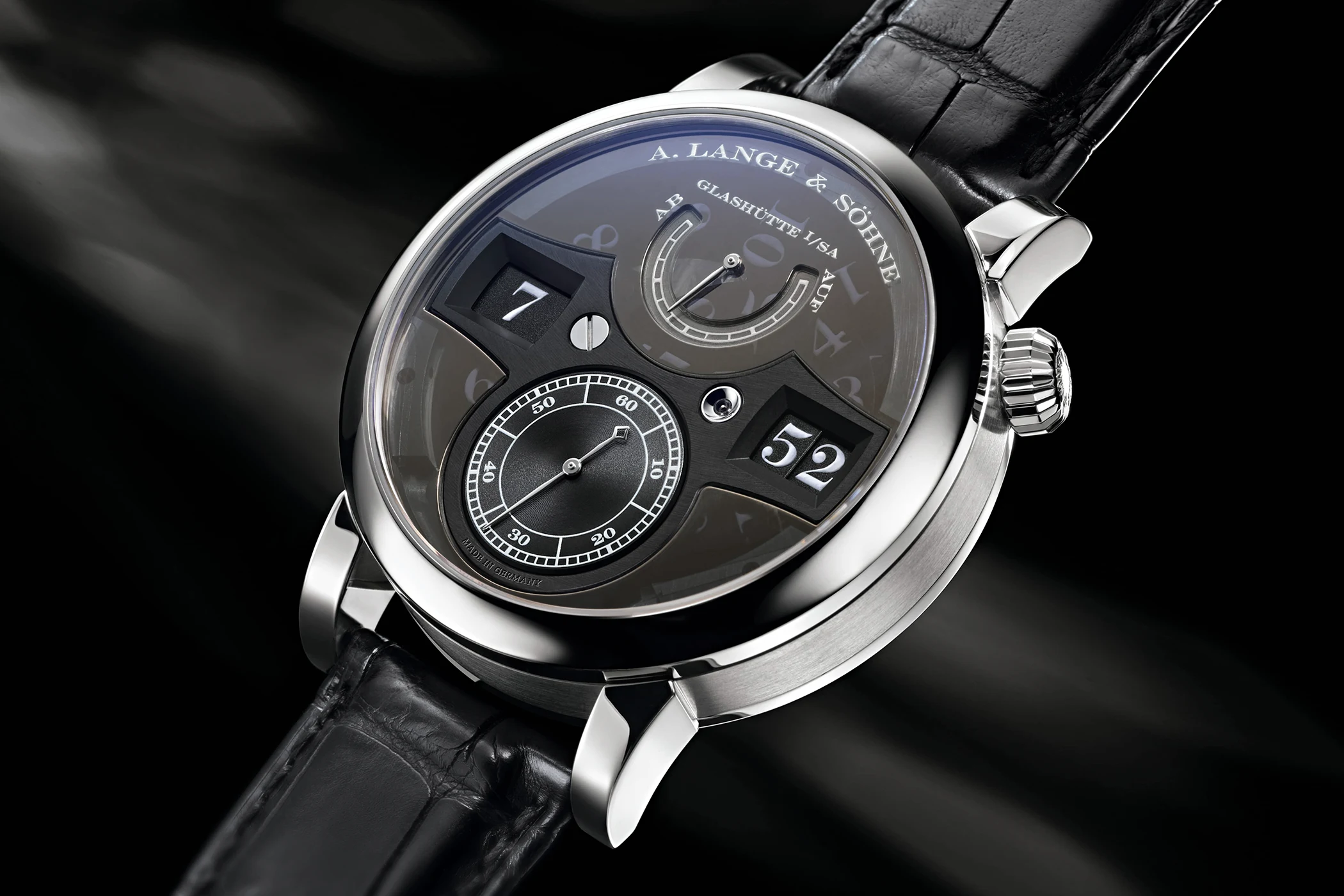
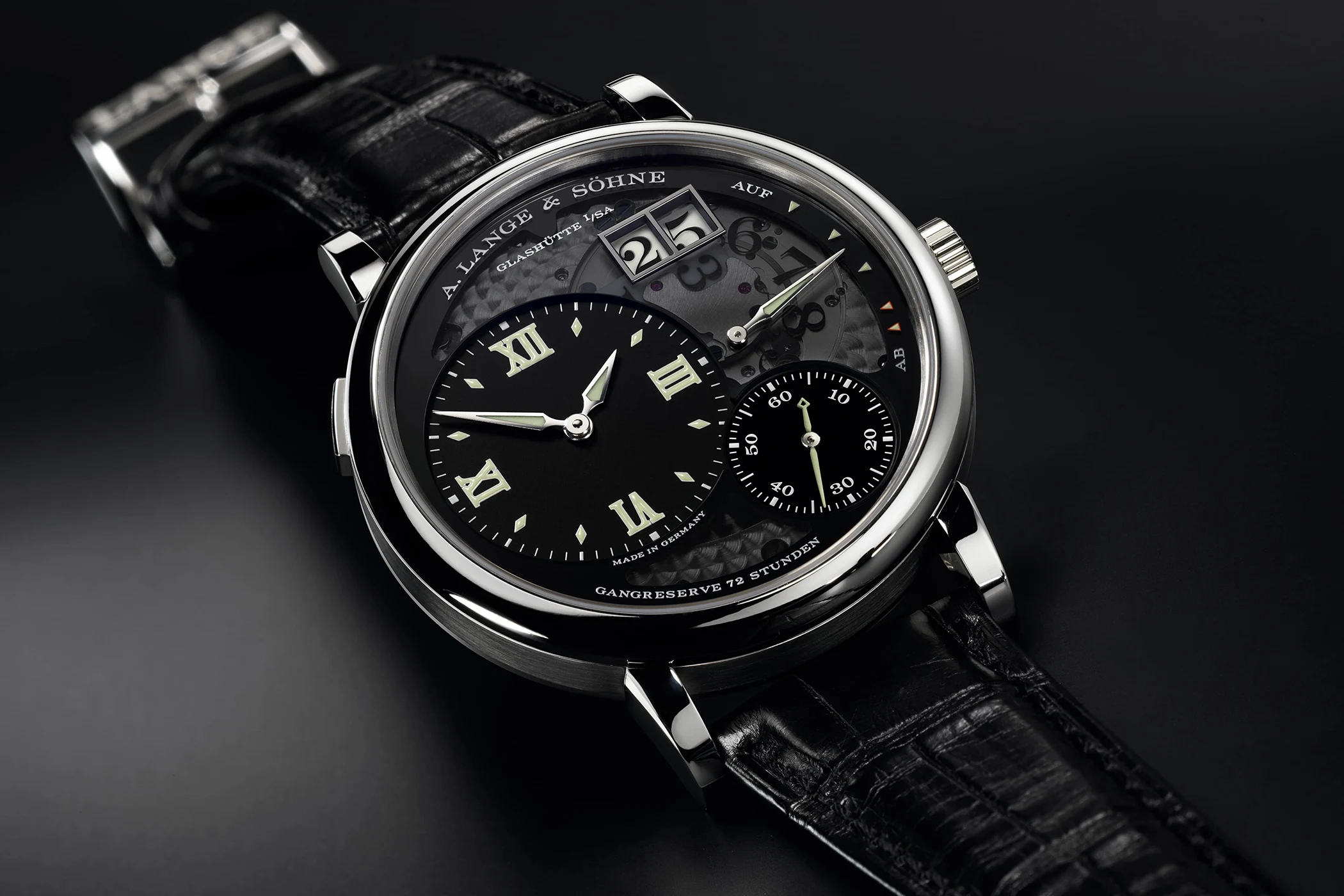
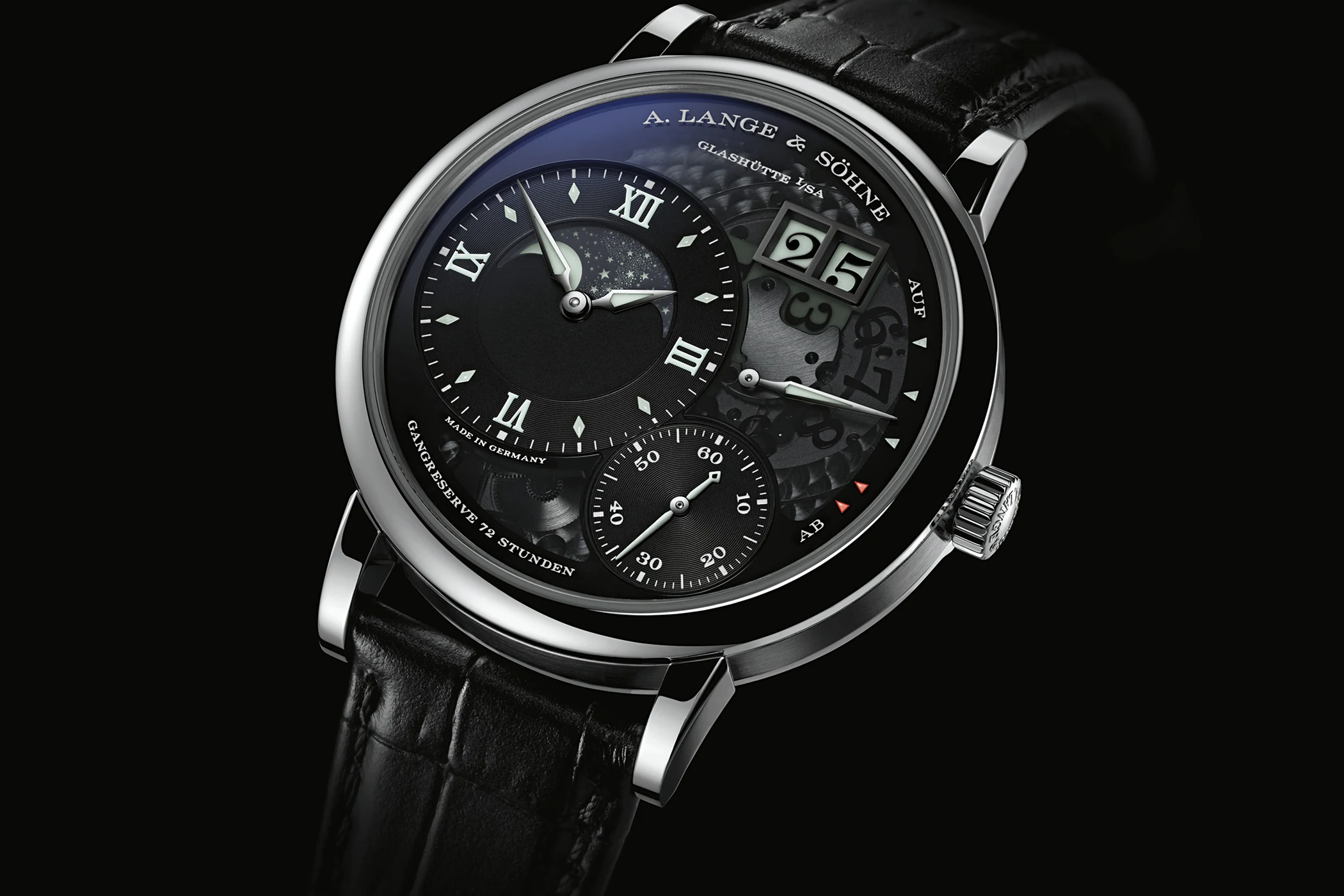
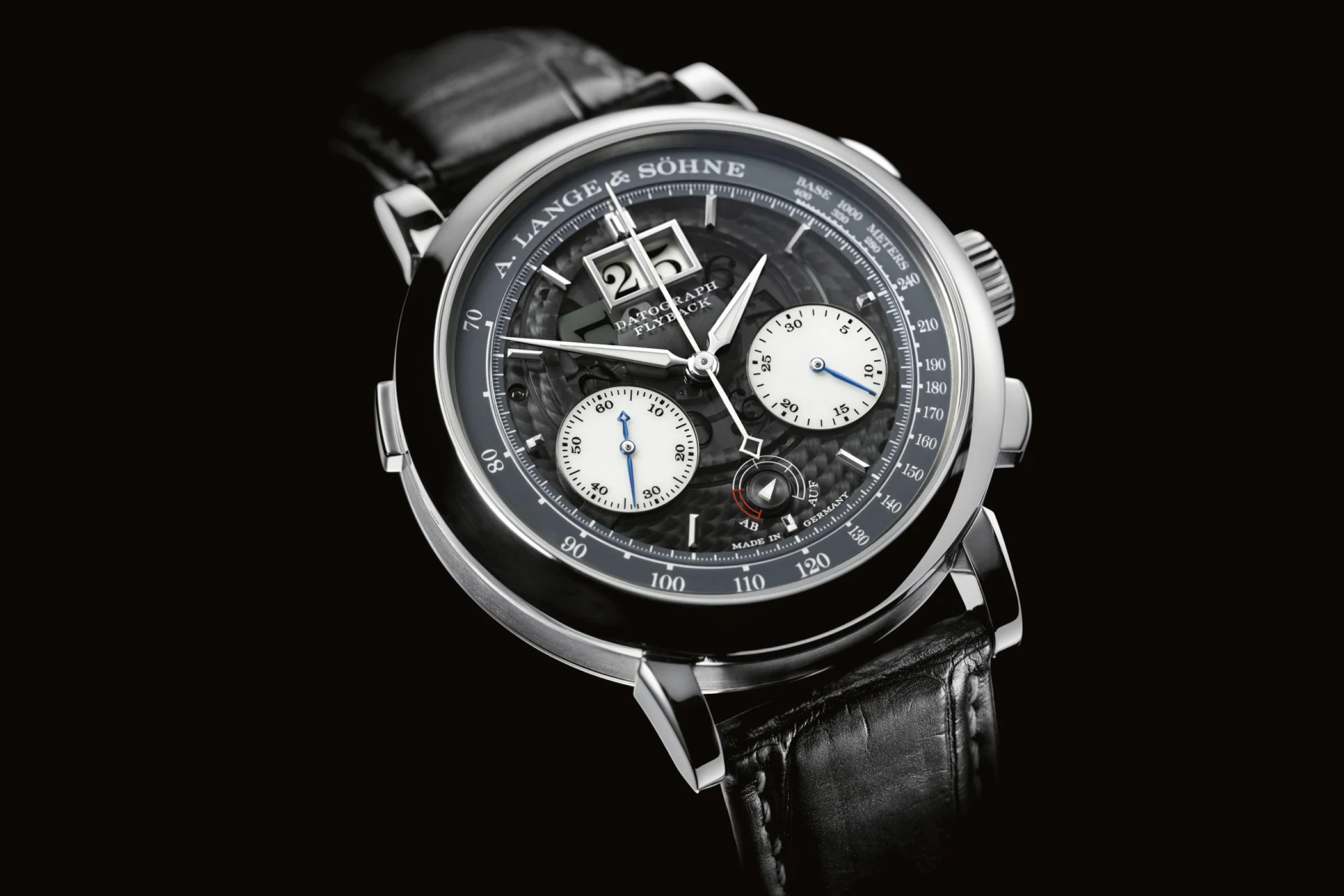
With the Lange 1 Tourbillon Perpetual Calendar “Lumen”, Glashütte’s most famous watch manufacturer presents the seventh model in its luminescent series. It all began in 2010 with the Zeitwerk “Luminous”, which was a real gamble at the time but proved to be a resounding success. This was followed by the Grande Lange 1 “Lumen” (2013), the Grande Lange 1 Moon Phase “Lumen” (2016), the Datograph Up/Down “Lumen” (2018), the Zeitwerk Honeygold “Lumen” (2021) and the Datograph Perpetual Tourbillon Honeygold “Lumen” (2024).
The trend in production numbers is interesting: the first Luminous was produced in a run of 100, whilst the three subsequent models were each produced in runs of 200. Since the Datograph Perpetual Tourbillon of 2024, production has been limited to just 50 watches. The message is clear: Lange is increasingly positioning the Luminous collection as a showcase for the brand’s most complex movements.
Like the Lange 1 and the Zeitwerk, the “Lumen” line demonstrates the Manufacture’s ability to harmoniously blend classic design with a distinctive, characterful approach. This is now further perfected with the new Lange 1 Tourbillon Perpetual Calendar “Lumen”.
The new Lange 1 Tourbillon Perpetual Calendar Lumen will cost approximately 550,000 euros.