Jaeger-LeCoultre Reverso Métiers Rares 2026: enamel, gem-setting and the Hokusai series in focus – technical and artistic details explained.

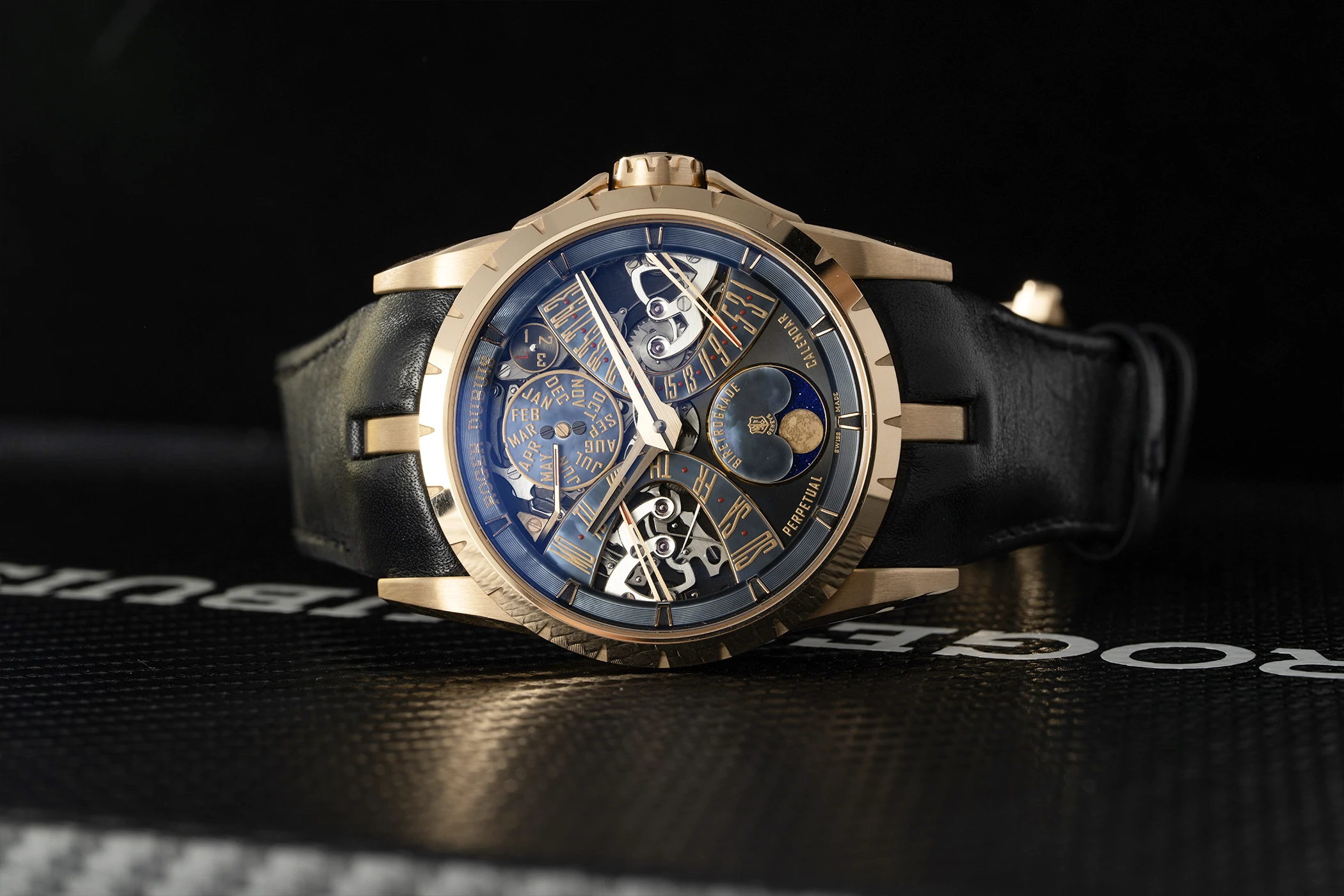
With the Excalibur Biretrograde Perpetual Calendar, Roger Dubuis reinterprets the perpetual calendar in a remarkably distinctive way. Astronomy, mechanical precision and expressive design interlock so seamlessly here that the watch feels less like a mere collection of individual complications and more like a cohesive statement of horological artistry.
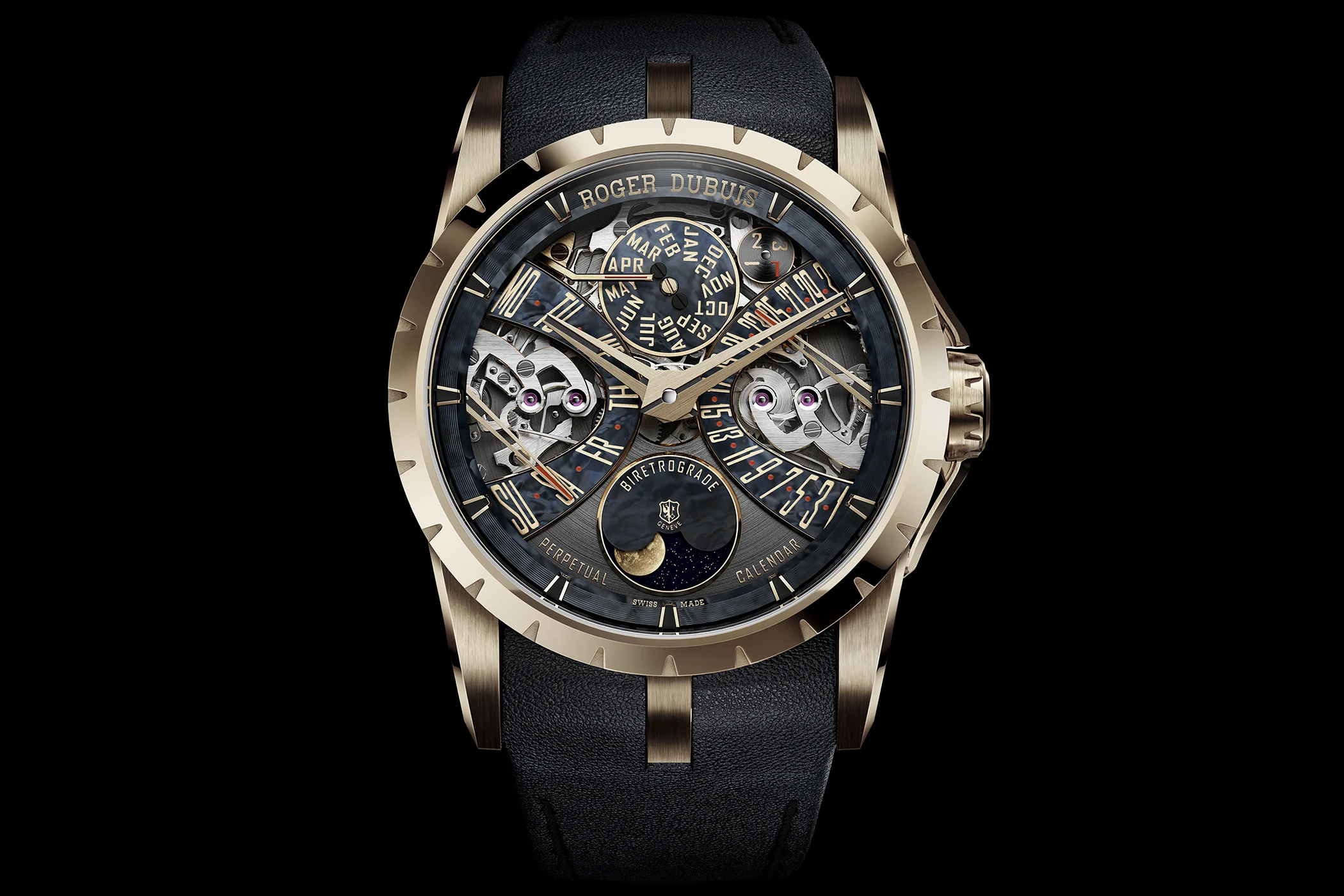
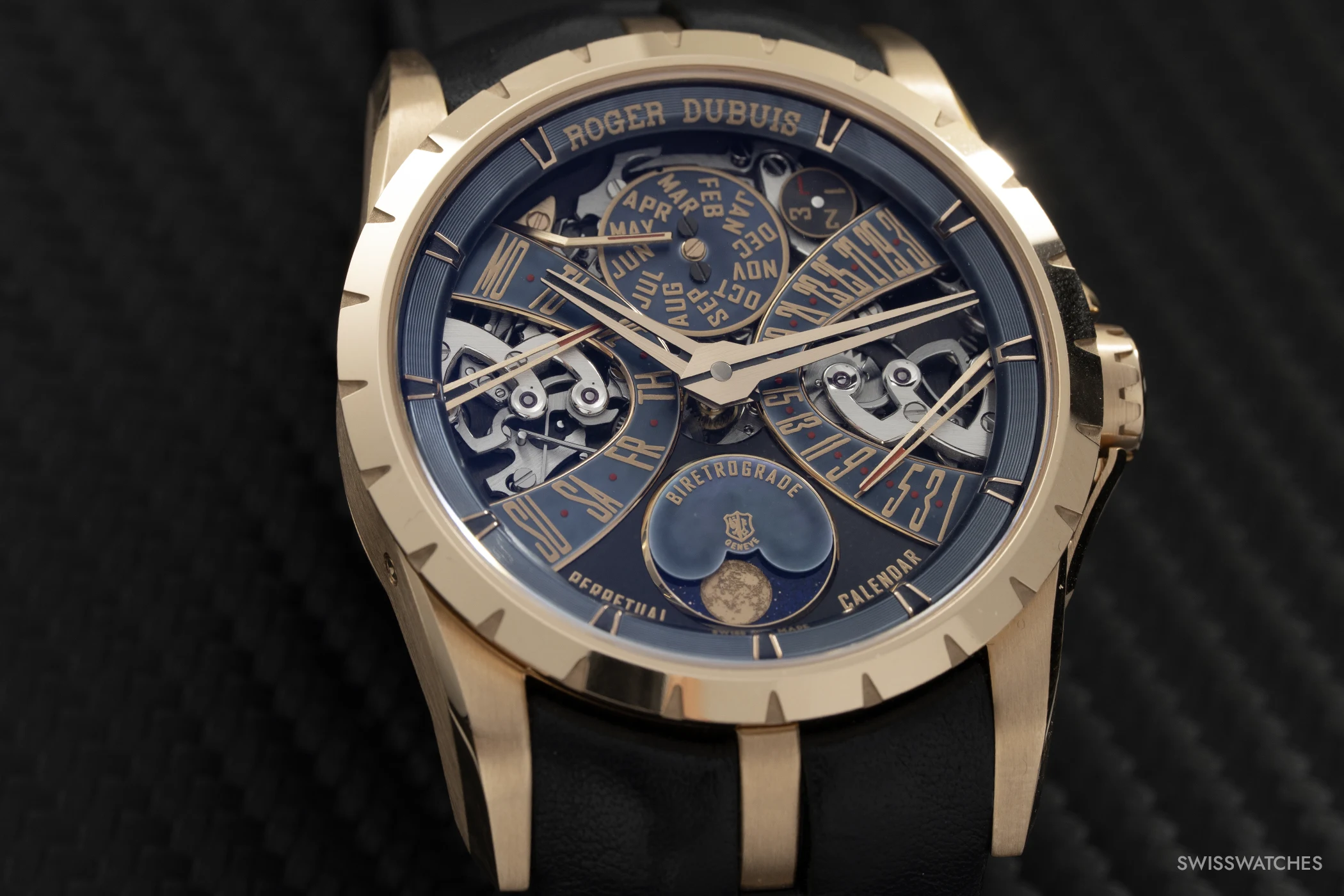
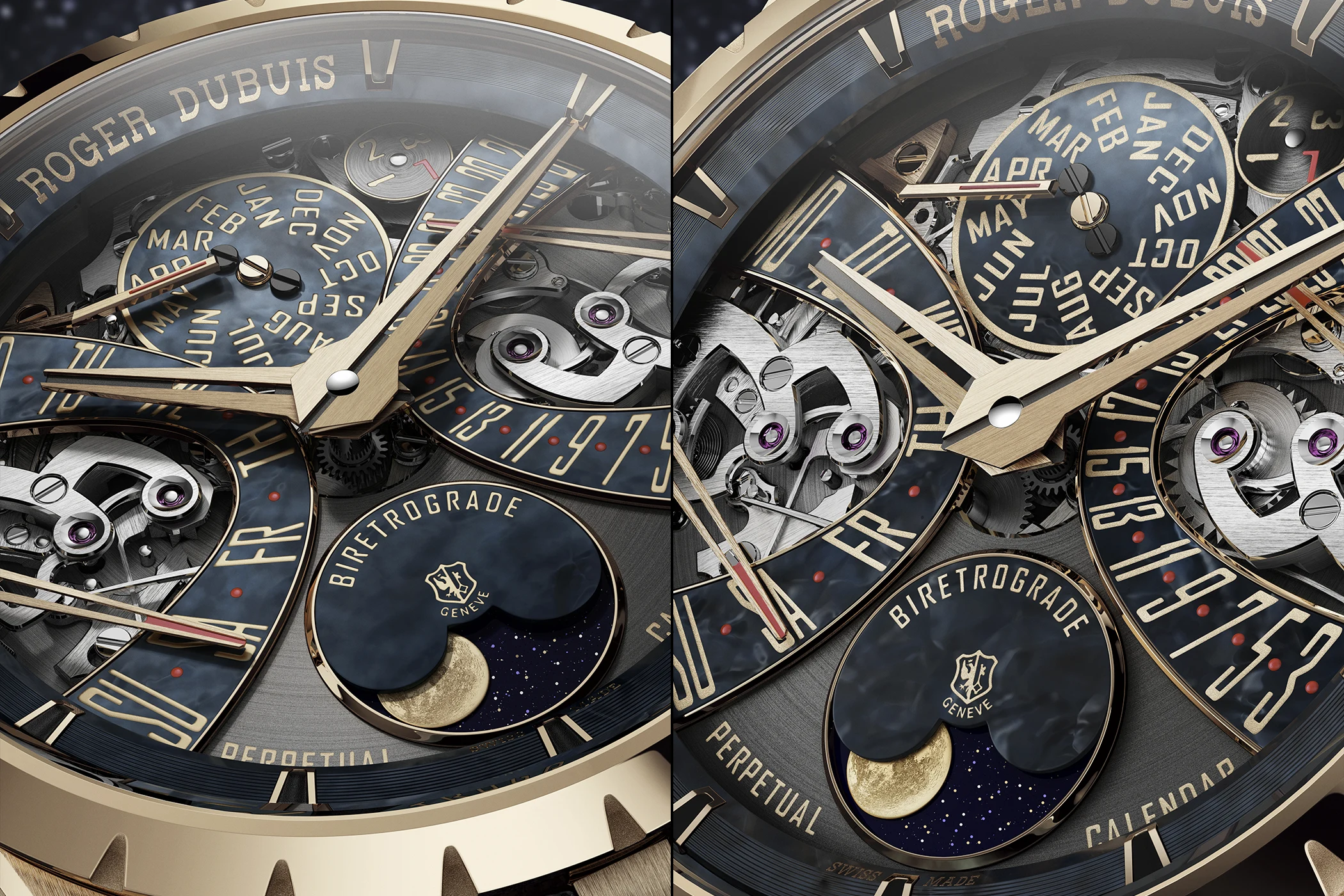
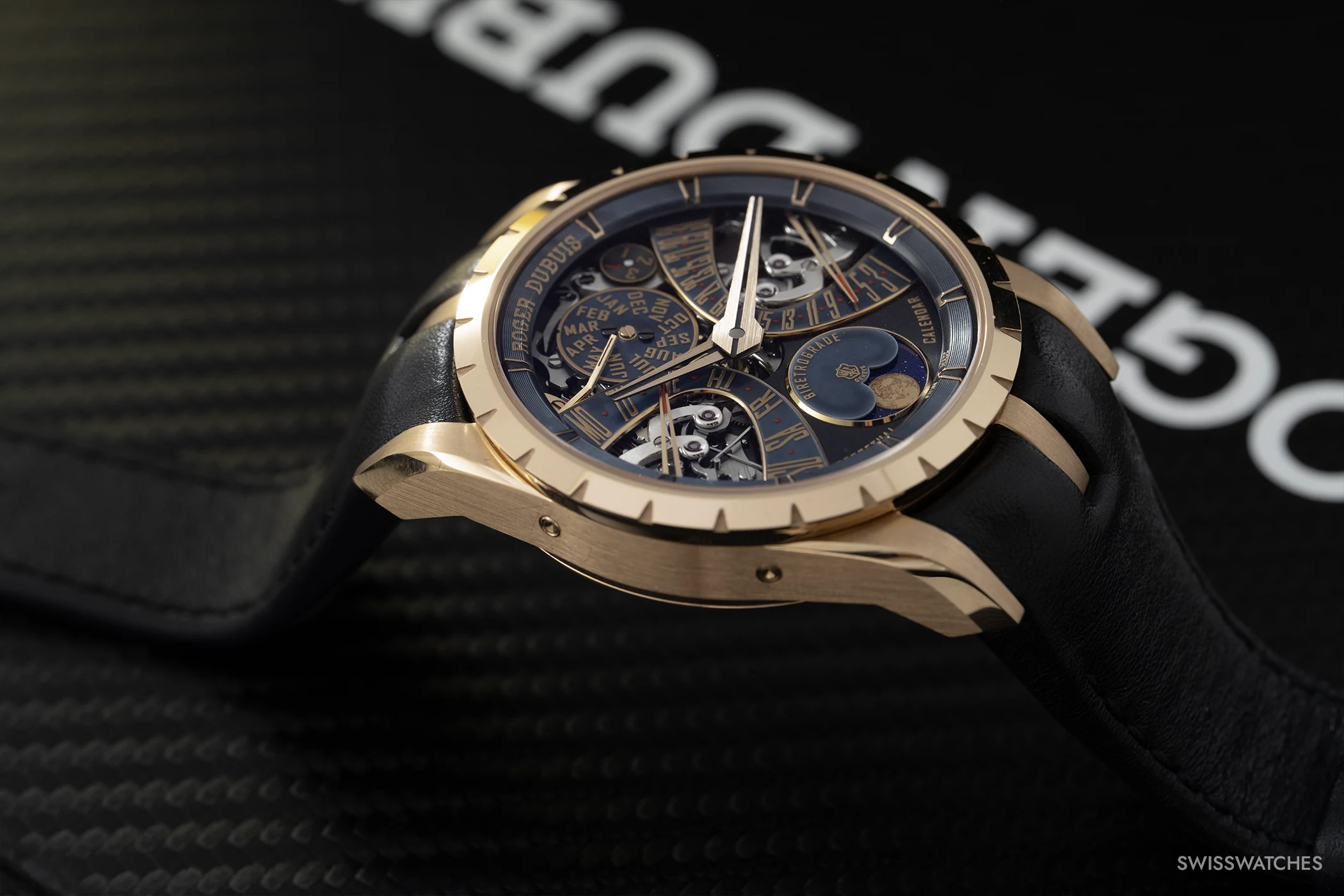
At the heart of this Excalibur lies the Perpetual Calendar – a complication that is regarded in Haute Horlogerie not only as technically demanding, but as a prime example of true horological artistry. Roger Dubuis thus revisits a theme that holds particular historical and technical significance within the Maison. Yet the innovation is not limited to the mere revival of a great classical discipline. It combines the Perpetual Calendar with the bi-retrograde day and date display, which has long been one of the design and mechanical hallmarks of the Roger Dubuis maison. Both displays follow elliptical paths and, upon completing a full cycle, instantly return to their starting point – a solution that makes both precision and movement equally visible.
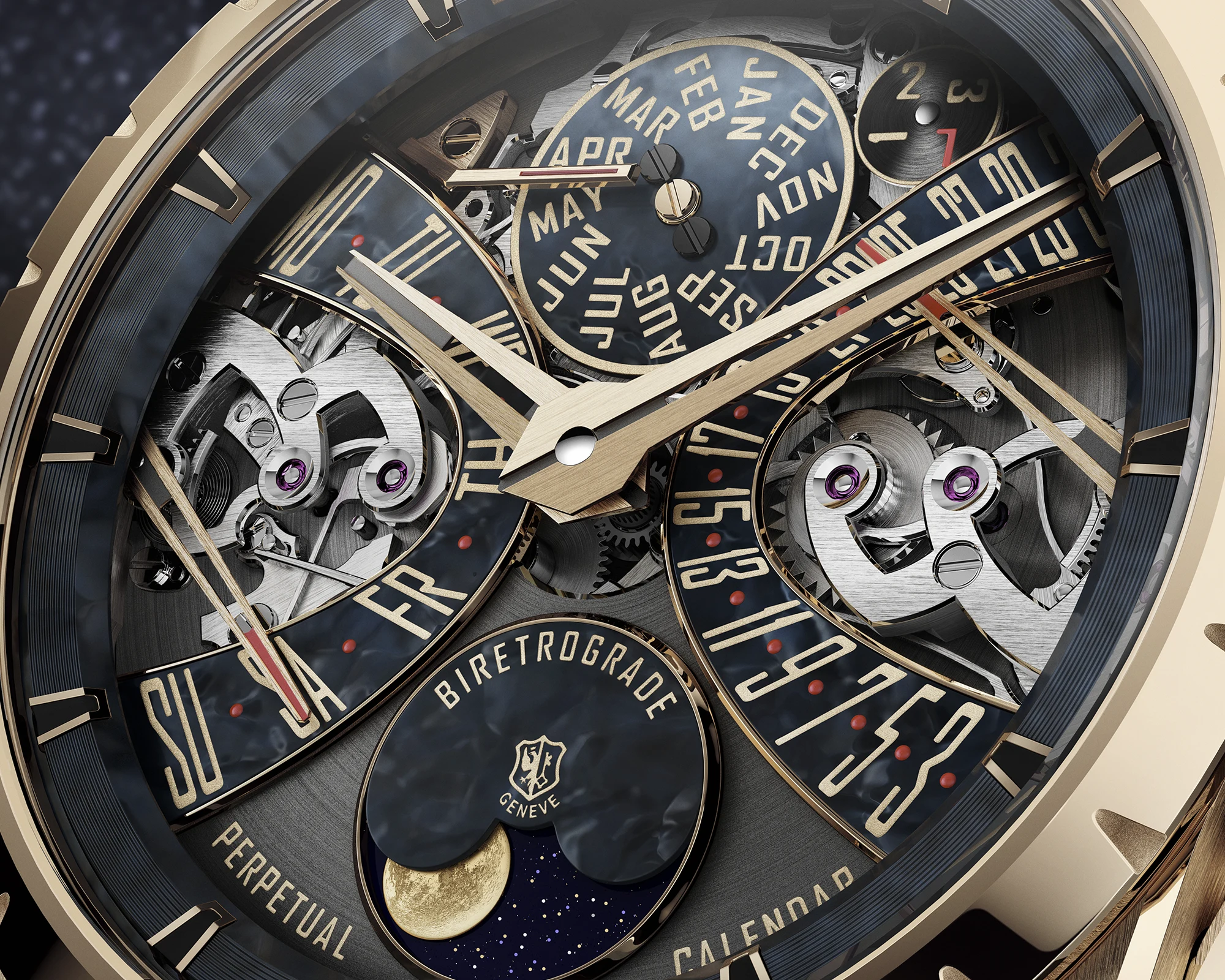
It is here, in particular, that the watch comes into its own: it presents the calendar mechanism not as a static structure, but as a dynamically structured display. The bi-retrograde display lends the day and date display a technically sophisticated rhythm, which at the same time creates a clear visual identity. The bi-retrograde display was jointly patented by Roger Dubuis and Jean-Marc Wiederrecht in 1989 and appeared from 1996 onwards in the early models by Roger Dubuis, particularly in the first bi-retrograde calendar watches of the Sympathie and Hommage lines. The Excalibur Biretrograde Perpetual Calendar thus features not only a complication, but a piece of the brand’s history on its dial.
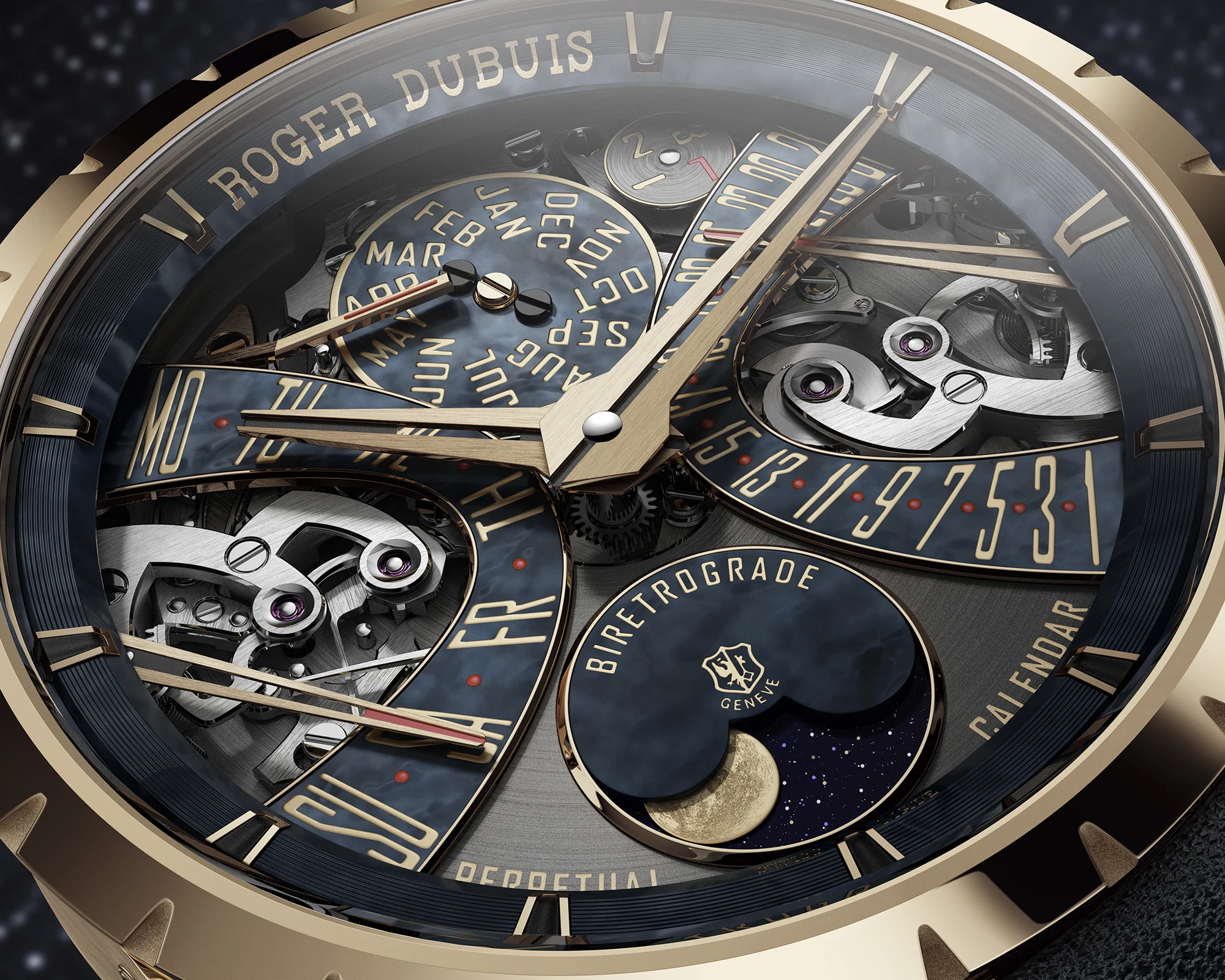
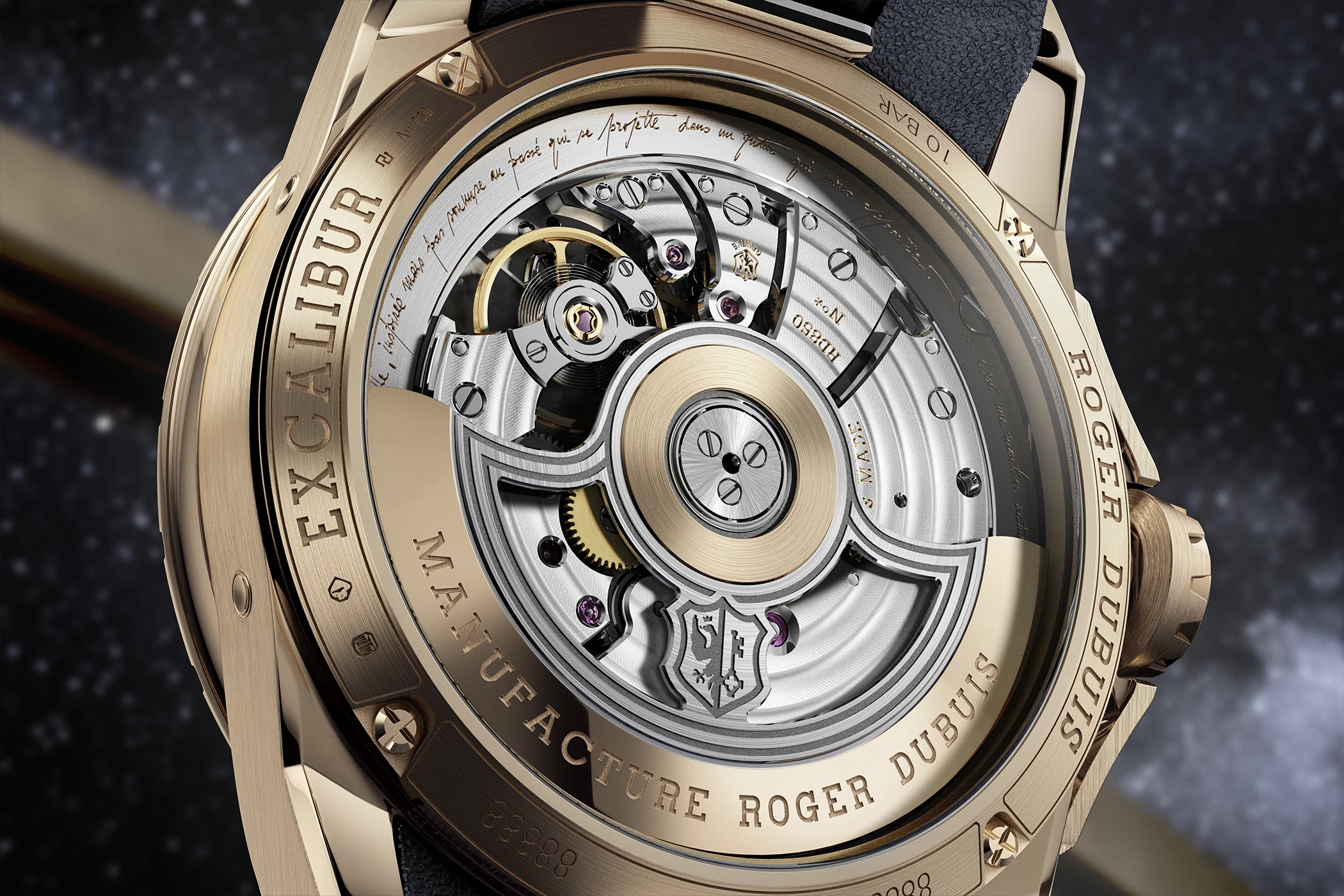
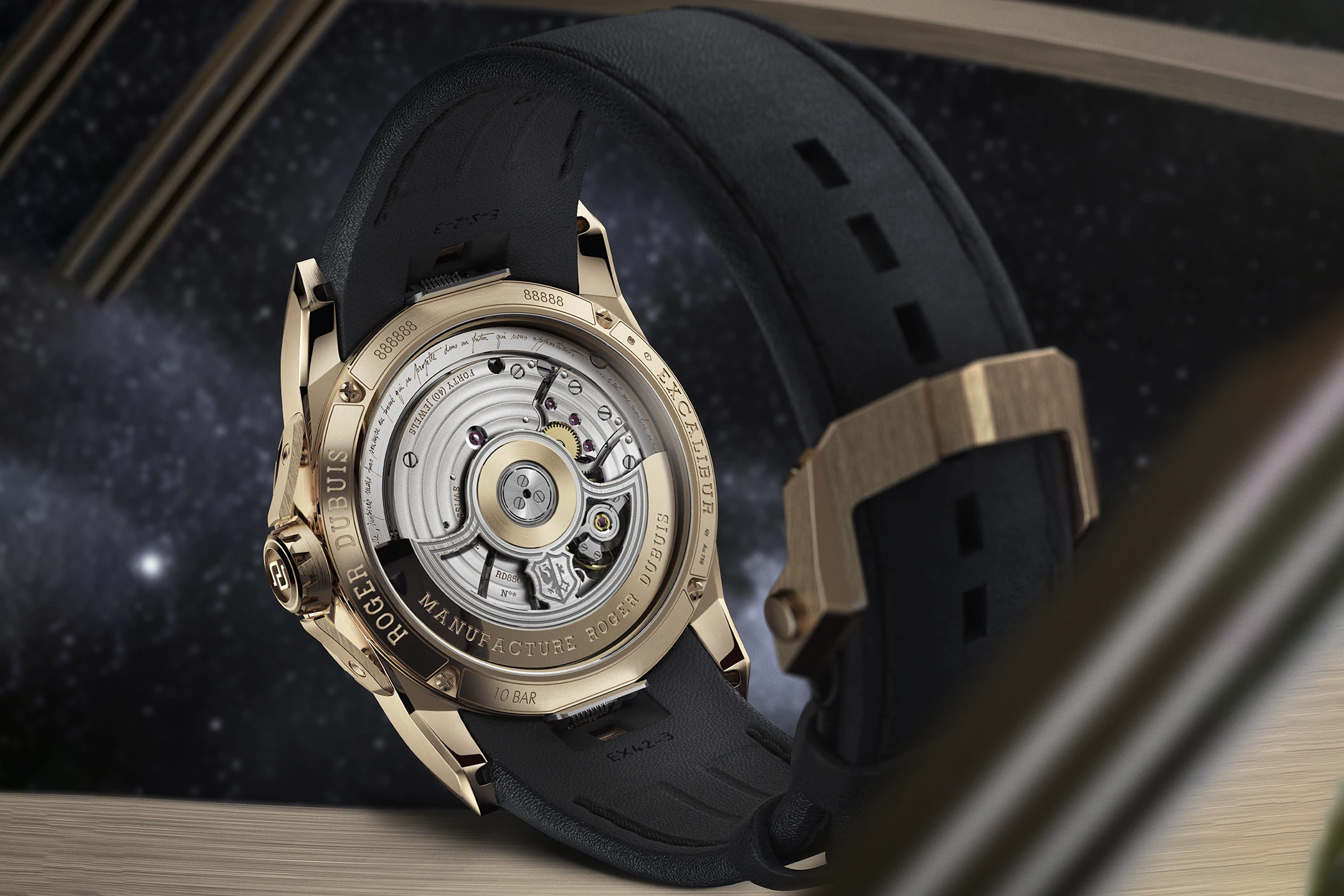
At its heart beats the new RD850 calibre, an automatic movement that Roger Dubuis has designed as an advanced generation of its bi-retrograde movement with perpetual calendar. 435 components, 60-hour power reserve, developed and manufactured entirely at the Geneva manufacture. This is not merely a matter of pooling expertise, but also an expression of a watchmaking philosophy that views design, execution and finishing as an integrated discipline.
The upgrade to the Perpetual Calendar is particularly impressive. Among the key innovations is a month corrector, which allows the month display to be adjusted manually in a single step. Whilst this may seem unspectacular, it is in fact of considerable importance. Complex calendar complications always improve in quality when their operation does not compromise the sophistication of the mechanism. The RD850 brings these two aspects together: it preserves the technical authority of the Perpetual Calendar whilst improving its usability, without placing unnecessary strain on the mechanism.
Added to this is the fundamental reliability of the complication. The perpetual calendar takes into account varying month lengths as well as leap years and, when correctly adjusted, guarantees a perfectly accurate date display until the year 2100.
The astronomical moon phase at 6 o’clock lends the calibre an additional dimension. Its mechanism depicts the synodic lunar cycle of 29 days, 12 hours and 45 minutes – that is, the interval from new moon to new moon, which also corresponds to the actual movement of the moon. Thus, the moon phase appears here not merely as a visually harmonious extension of the dial, but as a precise astronomical display.
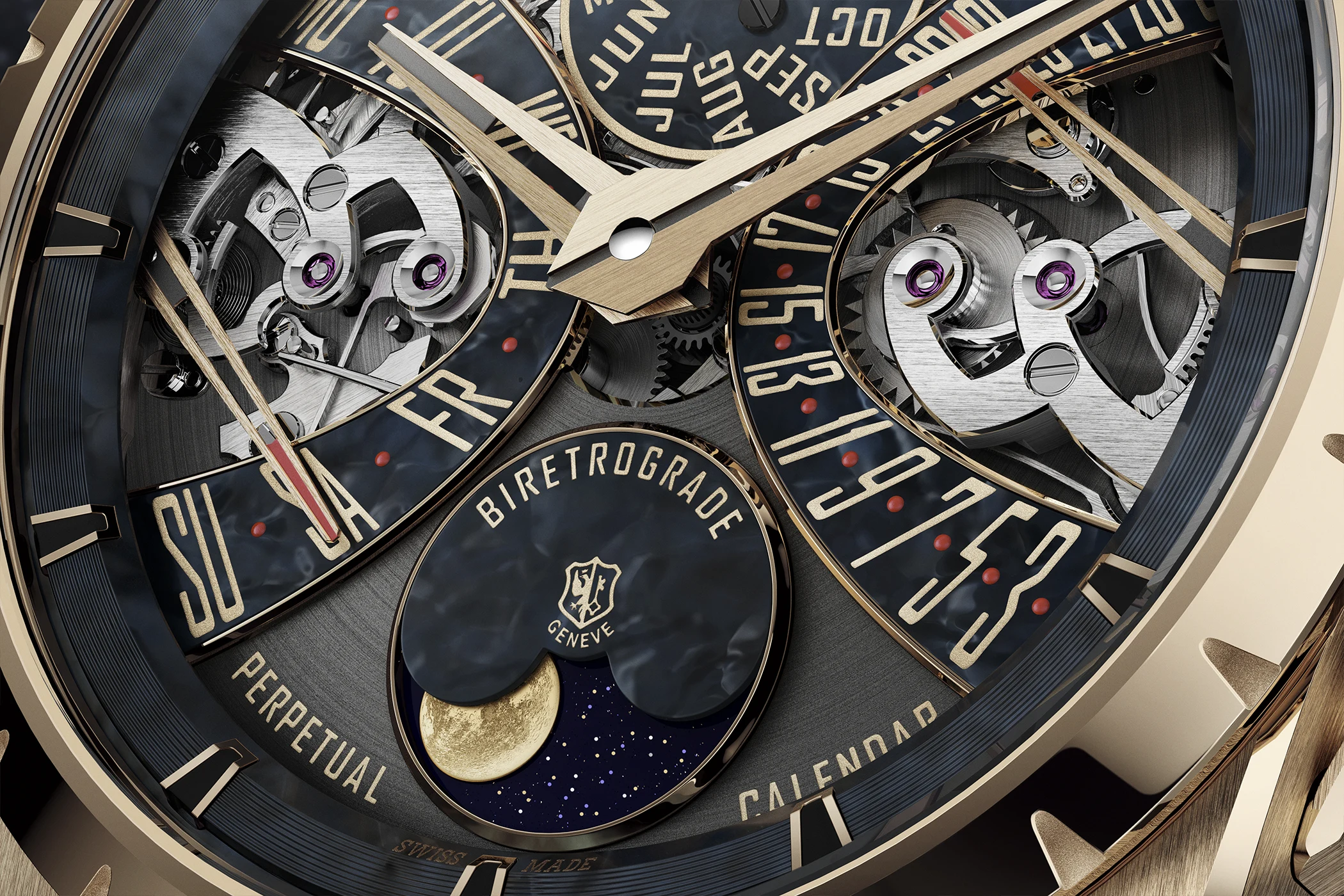
The result is remarkable. Whilst conventional moon phase displays typically round the cycle to approximately 29.5 days and therefore require a correction of one day after two to three years, the display on this Excalibur remains accurate for around 122 years before any adjustment is needed. Combined with the perpetual calendar, this creates a timepiece that precisely links the calendar system with the astronomical cycle.
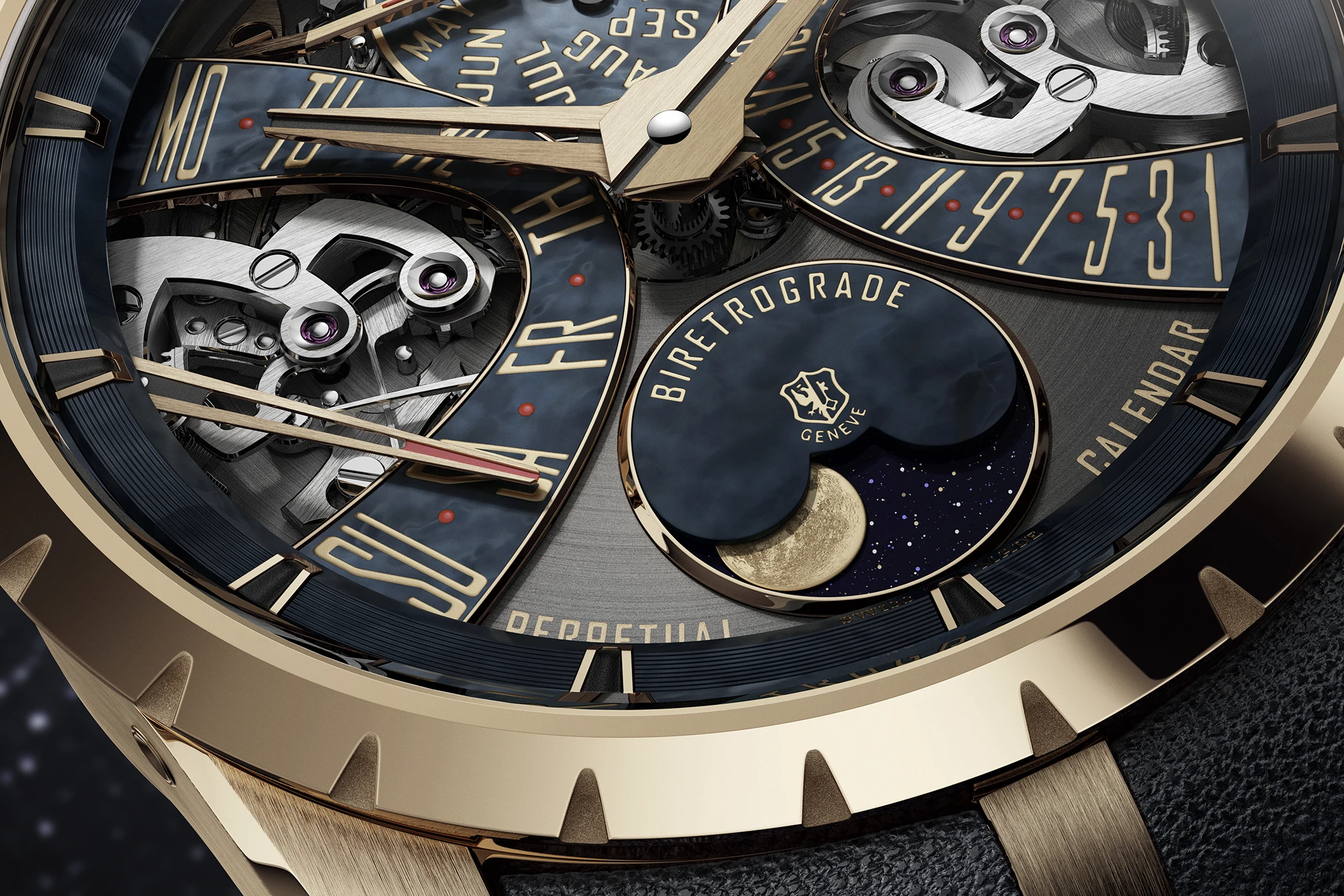
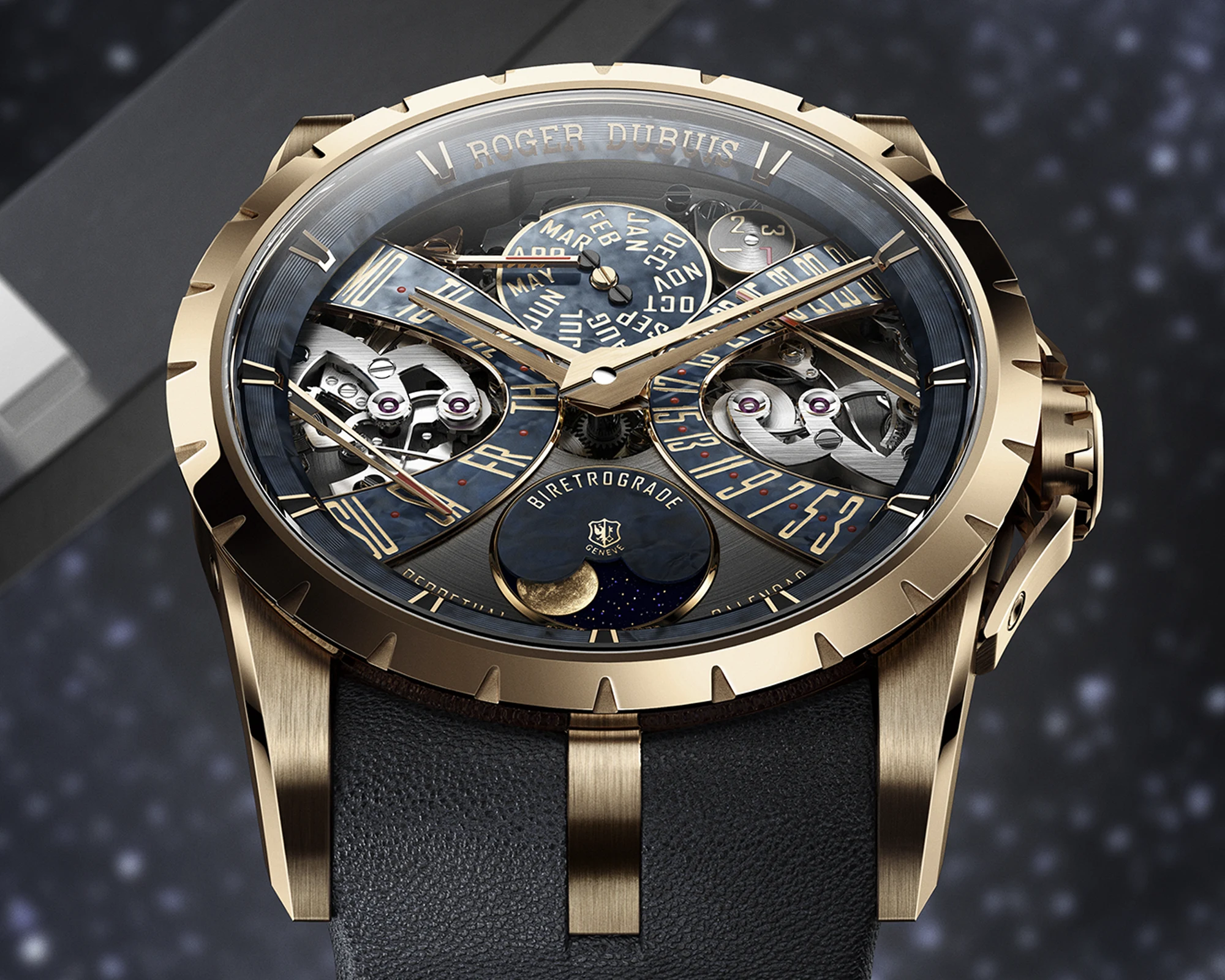
In terms of design, the watch is defined by a skeletonised dial that is arranged across nine levels, creating an impressive sense of depth. The construction does not simply reveal the movement, but organises the displays, surfaces and mechanics into a clearly structured spatial composition. In the new Astral Blue colour, this composition takes on a cool, commanding presence that clearly underscores its technical complexity.
The choice of materials is particularly noteworthy. Mother-of-pearl features in several functional areas, including the ecliptic indicators, the month disc and the moon phase counter. The central moon phase disc is crafted from aventurine and features a three-dimensional, domed moon in 18-carat rose gold, whose laser-engraved details add further texture. Added to this are grey coatings, circular brushing, sunburst finishing and the open view of the skeletonised calibre itself. The effect arises not from the sheer multitude of details, but from their finely balanced interplay – nuanced in their materiality, clear in their harmony.
The 40-millimetre case in 18-carat rose gold lends the watch the calm and presence required by such a complex dial. It encapsulates the technical openness of the dial in a clear, high-quality form and deliberately adds a warm accent to the cool colour palette of astral blue. The astral blue calfskin strap precisely echoes this shade and consistently continues the watch’s design theme.
The fact that the RD850 calibre bears the Poinçon de Genève is integral to the Excalibur Biretrograde Perpetual Calendar’s horological identity. The Geneva Seal stands not only for provenance, but also for the highest standards of construction, craftsmanship and performance. Particularly in the case of a movement that presents itself so openly, this distinction carries special significance, because its promise of quality is not confined to the hidden parts, but can be directly observed in the visible quality of the finish.
The level of refinement demonstrates just how seriously Roger Dubuis takes this commitment. The 19 finishing techniques are a clear expression of the very highest level of craftsmanship. Particular attention should be paid to the inner angles, the execution of which remains one of the most demanding tasks in classical haute horlogerie to this day. This meticulousness is particularly evident on the W-shaped bridges of the retrograde displays at 3 and 9 o’clock, where the inner-angle finishing appears in fourteen different variations. It is precisely here that the movement acquires the sharpness and depth that transform technical complexity into true horological art.