Georges Kern discusses the rebirth of Universal Genève, its new collection, pricing, distribution and the brand’s future.

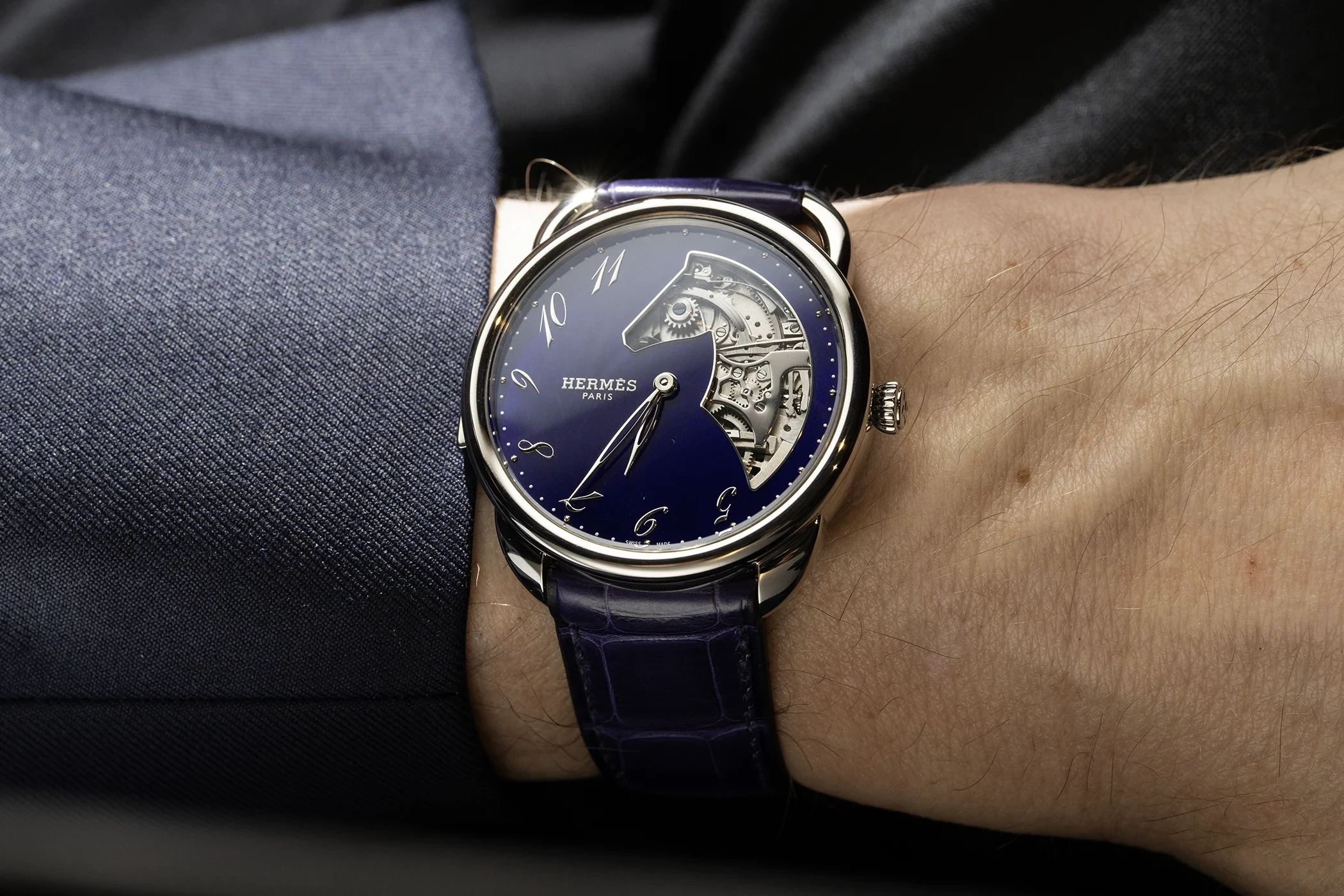
Any watch can tell the time, but some can also chime it. This is precisely what a minute repeater does: it audibly announces the current time on demand. What used to be particularly practical in the dark is now one of the most complex complications in mechanical watchmaking. In the new Hermès Arceau Samarcande Minute Repeater, Hermès combines this technology with a motif deeply rooted in the Maison’s history: the horse.
The watch belongs to the Arceau collection, designed by Henri d’Origny in 1978. Its signature design remains clearly recognisable to this day. The case is round, the lugs are asymmetrical and are intended to evoke stirrups. As a result, the Arceau does not appear classically austere, but slightly offset, almost as if it were in motion. For Hermès, this particular shape is very important because it subtly translates the house’s equestrian heritage into a wristwatch.
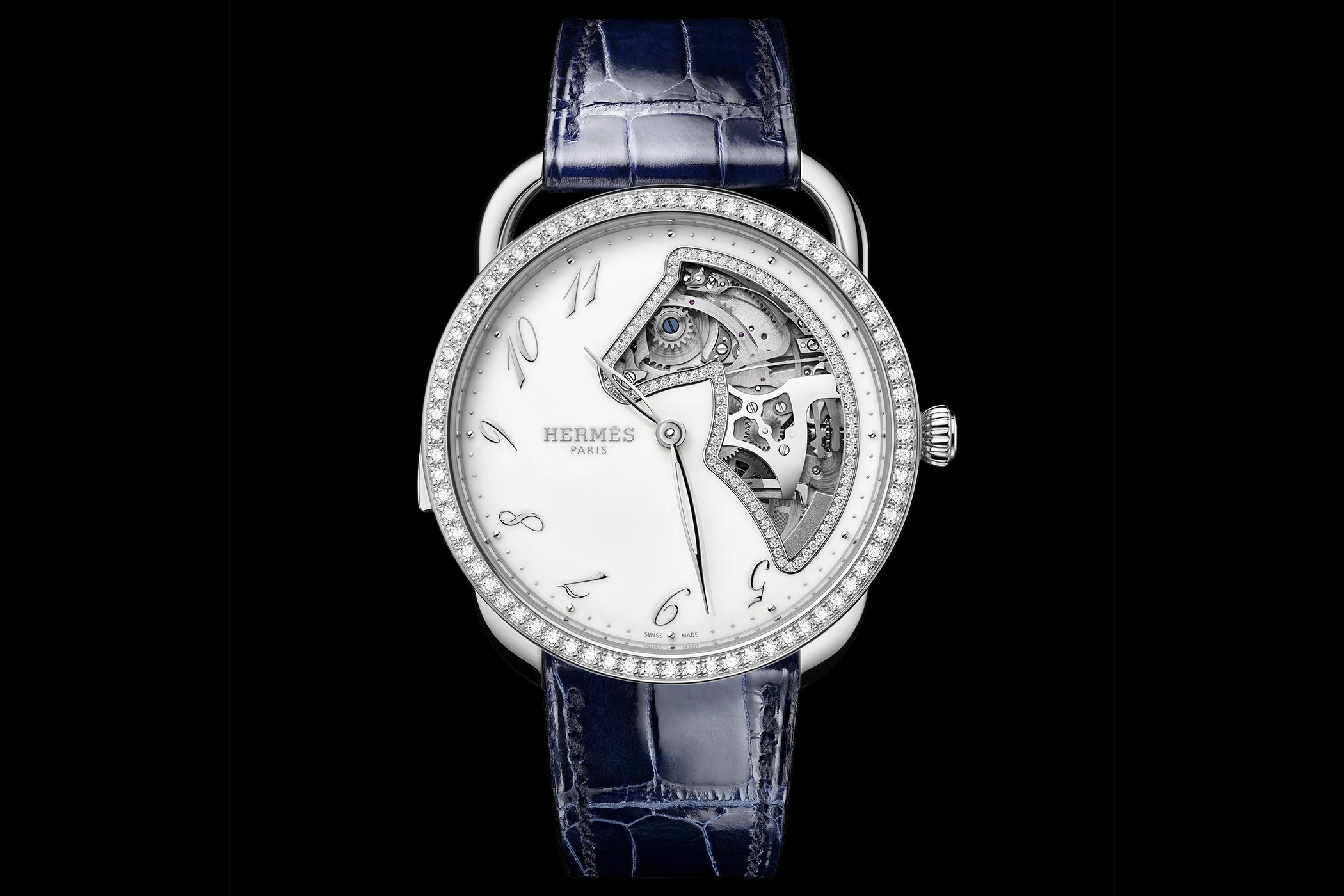
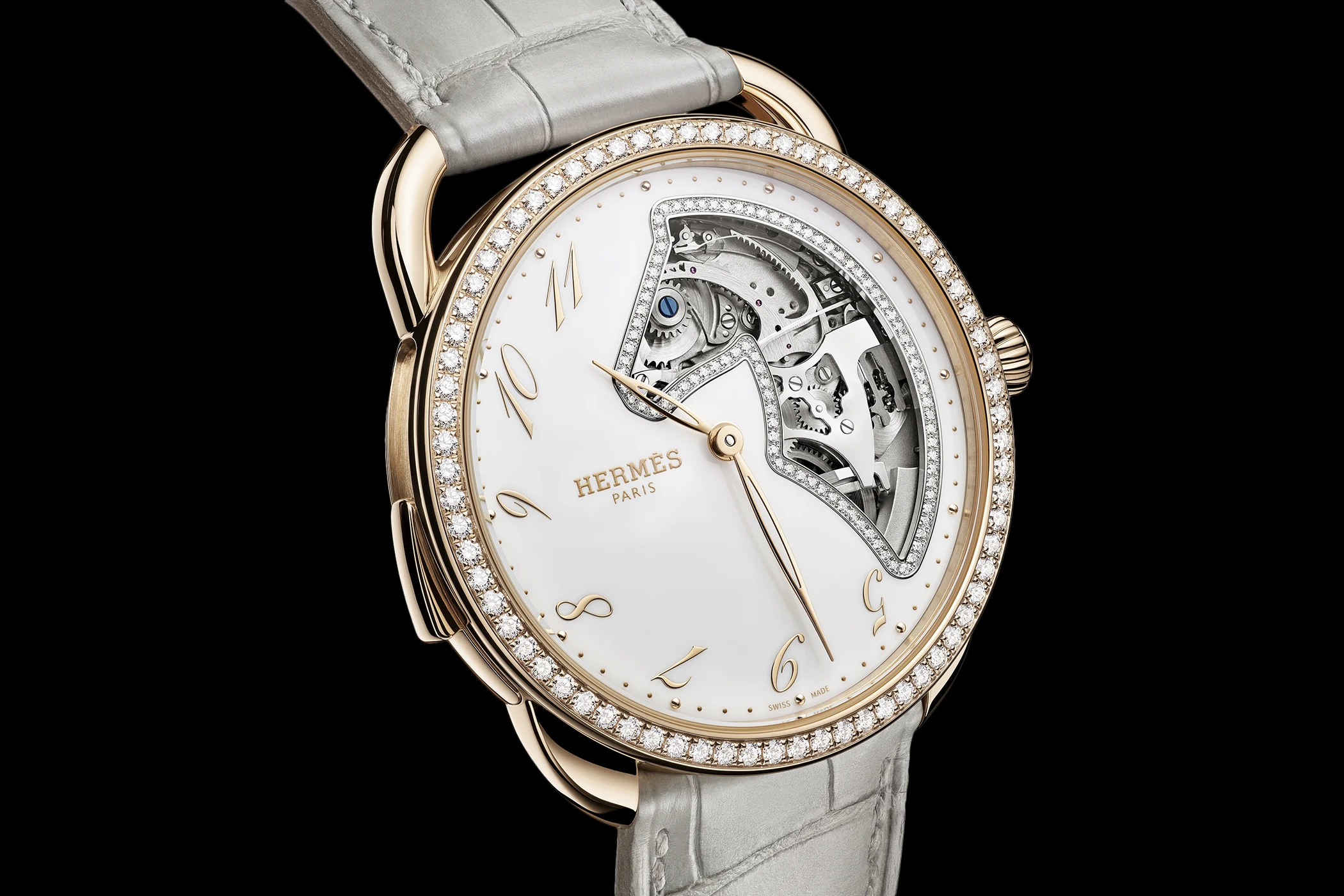
This connection is even more evident in the new Arceau Samarcande. The dial is made of blue or white crystal and is produced in collaboration with the historic Cristallerie Saint-Louis, which is now part of Hermès. A horse’s head is incorporated into this crystal surface, and through the cut-out in the head, the skeletonised movement is visible.

This is precisely what makes the Arceau Samarcande so intriguing: Hermès combines a familiar motif from its own history with a complication that ranks among the most demanding in watchmaking. The watch remains recognisably part of the Arceau collection, yet adds a distinctly more technical dimension to the range. The visible movement, crystal dial and striking mechanism together form the core of this model, which expands the range.
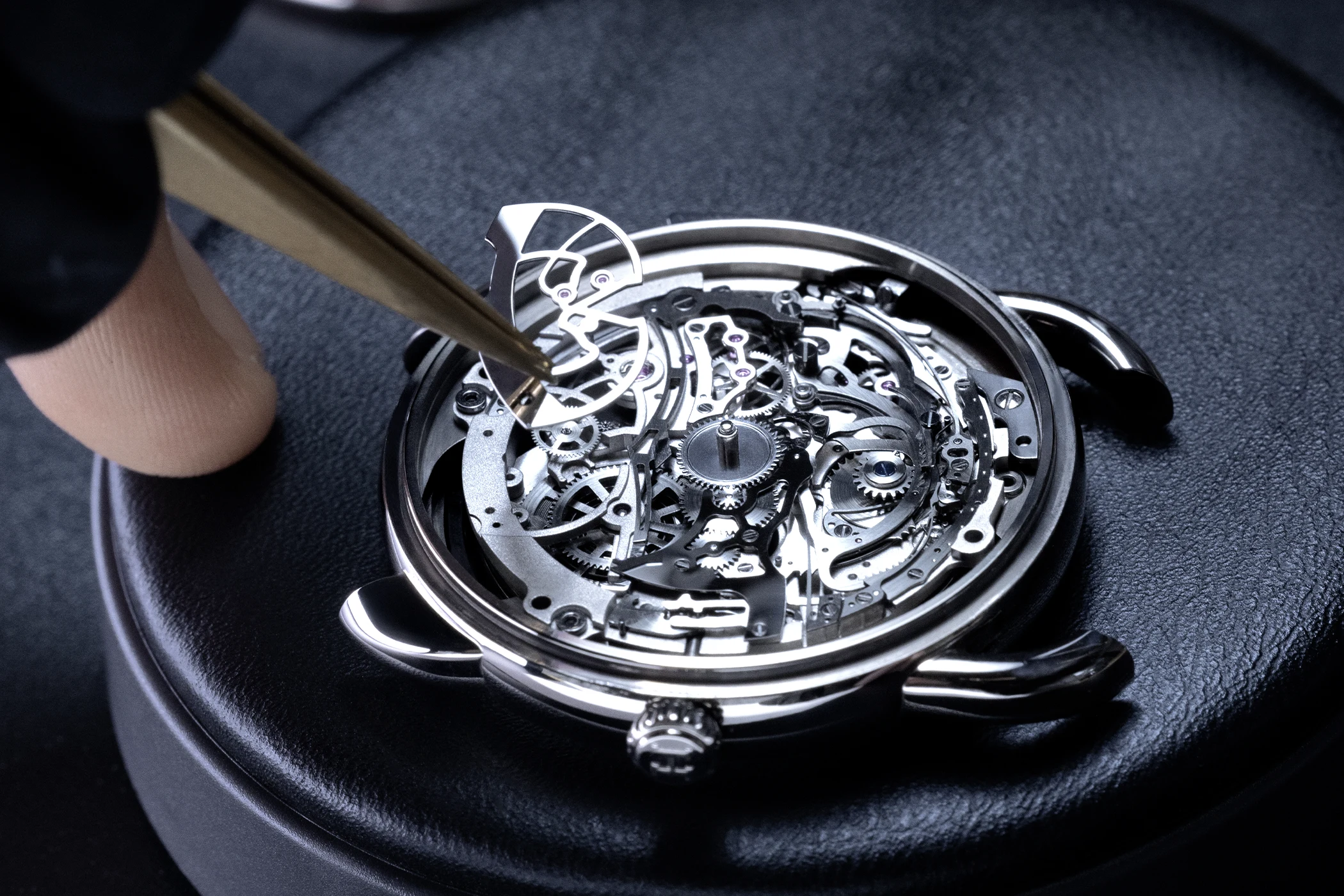
Inside, the new in-house automatic calibre H1927 is at work. It is wound by a micro-rotor and comprises a total of 339 individual components. The movement features 40 jewels, a power reserve of 48 hours and beats at a frequency of 21,600 vibrations per hour. With a diameter of 28 millimetres and a height of 4.95 millimetres, it is compact enough to fit into the Arceau’s 38-millimetre case. This is particularly remarkable and very challenging to achieve in a minute repeater, as the components for the striking mechanism must also be accommodated alongside the actual movement.
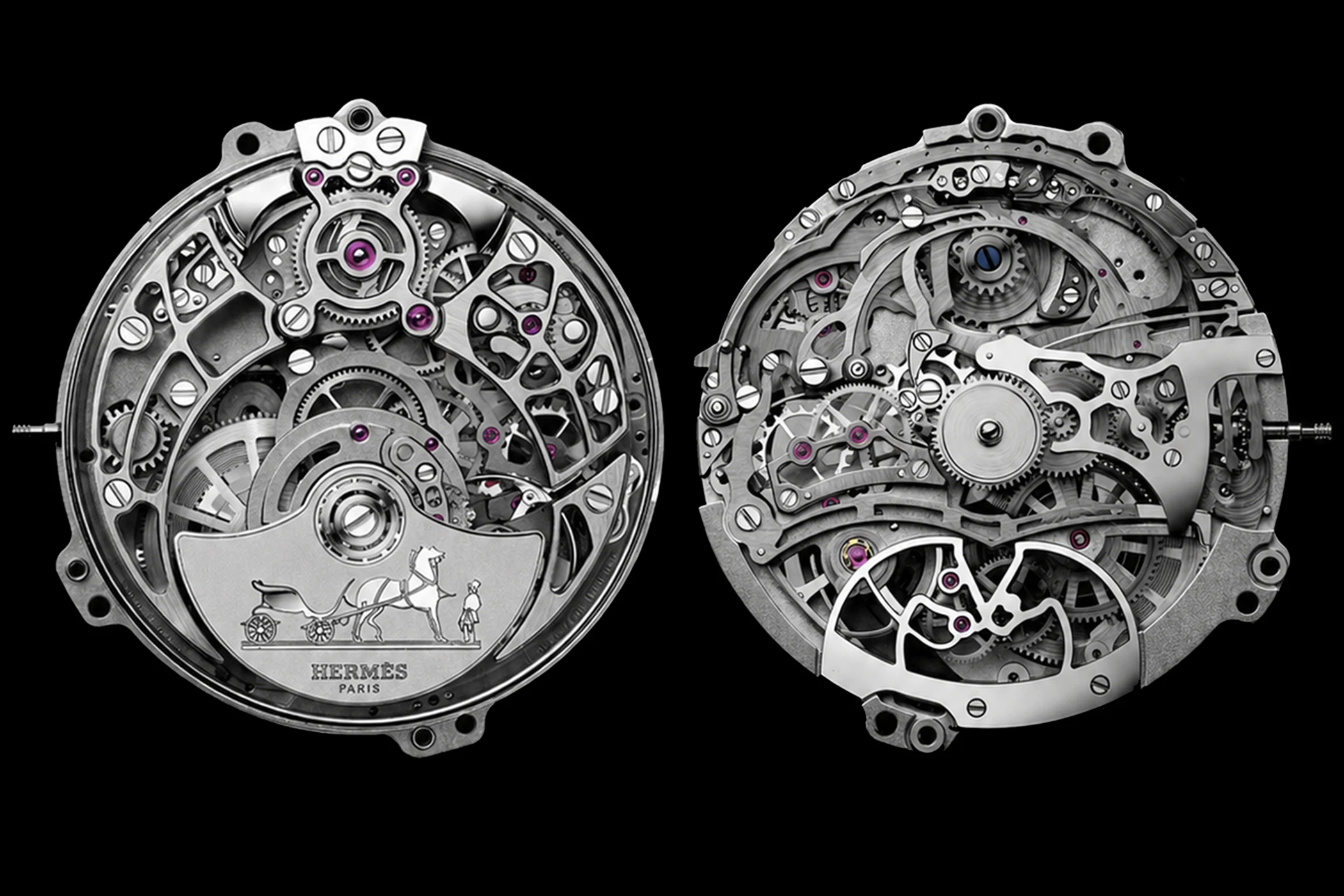
A minute repeater is simpler to explain than its construction might suggest. When activated, the watch strikes the time using small hammers and a gong. First the hours are struck, then the quarter-hours, and finally the minutes since the last quarter-hour. So even if you’re not looking at the dial, you can hear the time. The real difficulty, however, lies in the mechanics behind it: the movement must detect the current time and translate it into a precise sequence of strikes, including pauses.
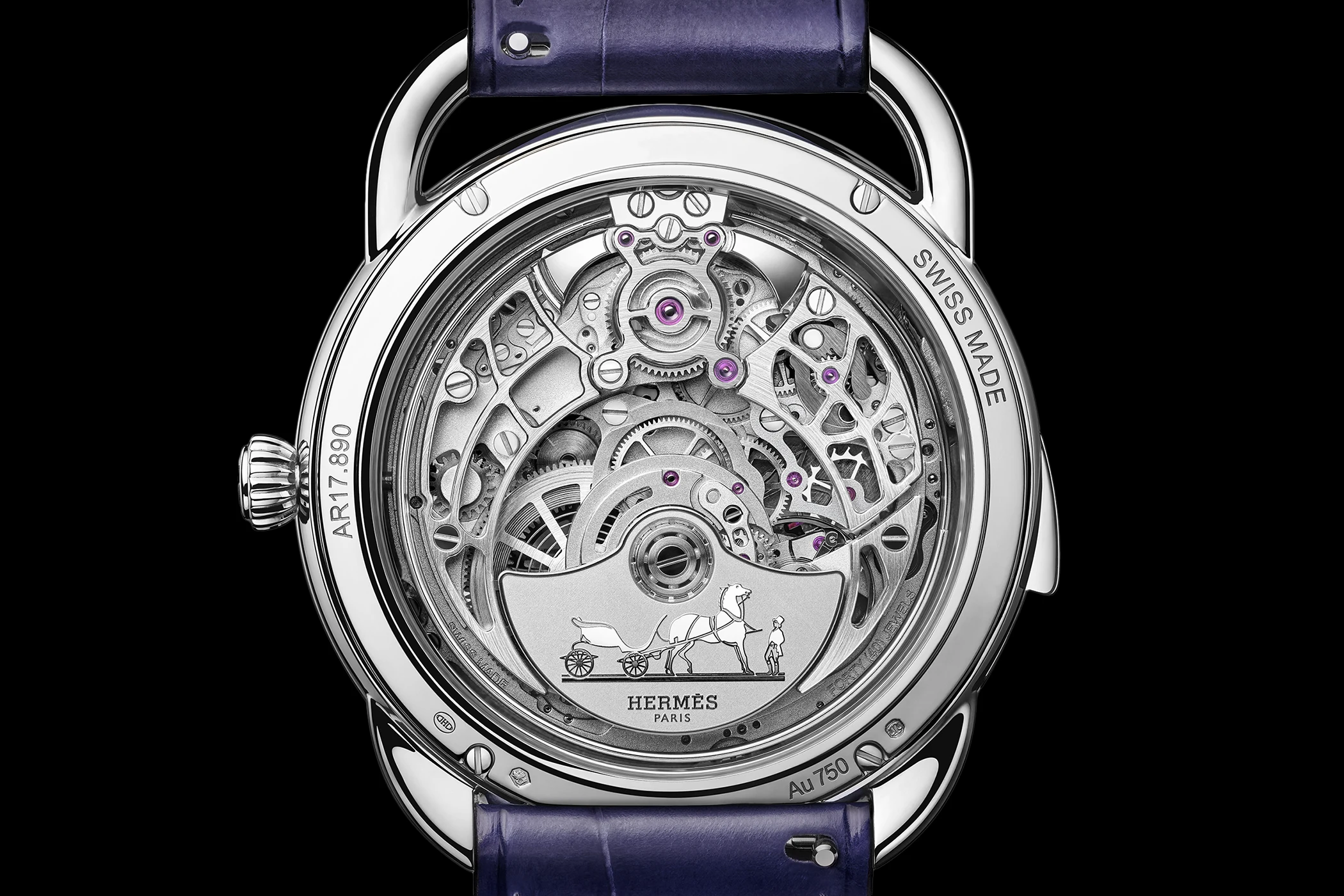
In the Arceau Samarcande, this mechanism is not entirely concealed. Through the sapphire crystal case back, the movement, the minute repeater hammers and the micro-rotor are visible. The rotor features the Duc attelé motif typical of Hermès, a historic motif of the Maison depicting a horse-drawn carriage. Thus, the equestrian theme appears not only on the front but also on the back of the watch.

The case measures 38 millimetres and, depending on the model, is crafted from white gold, white gold set with gemstones, or rose gold set with gemstones. The crown is positioned at 3 o’clock and features an ‘H’ engraving. The watch is water-resistant to 3 bar, which, for a watch of this type, is primarily intended to provide protection in everyday use.
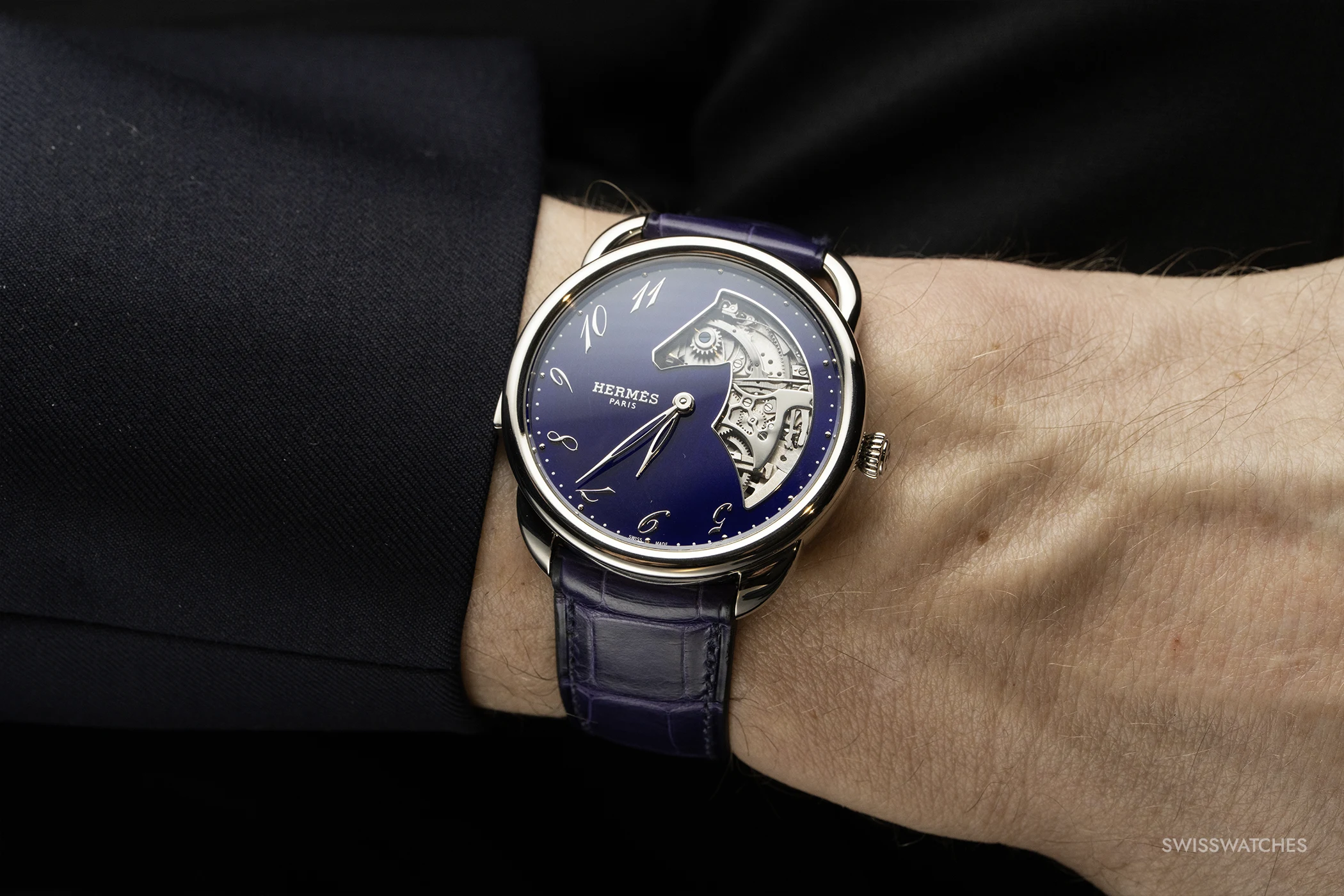
The dials also vary between the different versions. Hermès offers a blue or white crystal dial from Saint-Louis. Depending on the version, the horse’s head is crafted from sapphire crystal or rhodium-plated sapphire crystal with diamond bezels. These are complemented by rhodium-plated or rose gold-plated Arabic numerals, polished domed hour markers and leaf-shaped hands. The overall effect is more understated than a fully open dial, as the mechanics are only visible in selected areas.
The straps reflect the mastery of materials one would expect from a manufacturer such as Hermès. The range includes smooth alligator leather in Encre, matt alligator leather in Graphite, Barénia calfskin in black, Swift calfskin in Bleu Navy, as well as other alligator and calfskin variants in colours such as Bleu Saphir, Dune Yellow or Gris Perle. The folding clasp is, of course, crafted from white gold or rose gold to match the case.
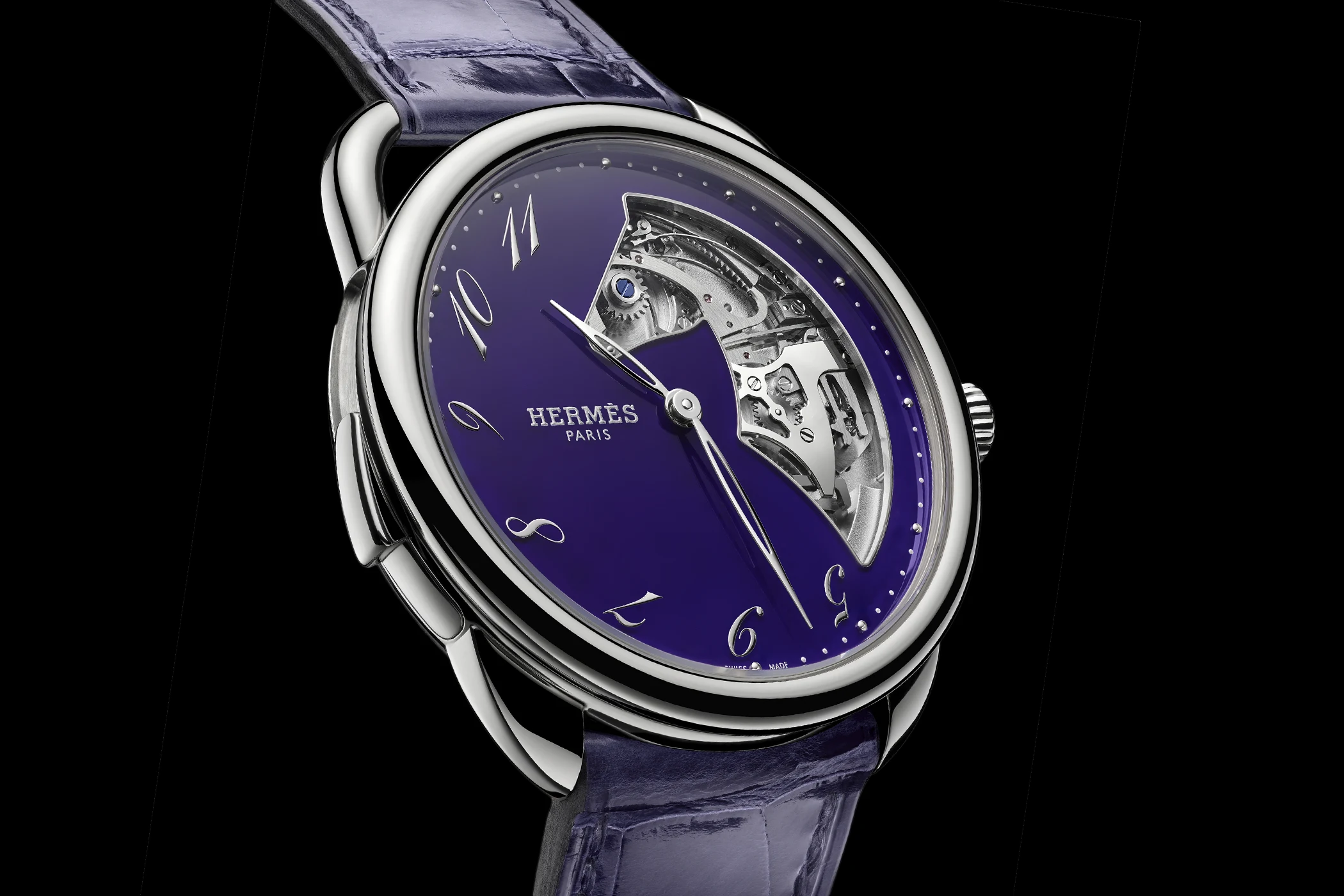
The Arceau Samarcande Minute Repeater is not a watch for someone simply looking for a classic dress watch with a complication; its design is far too distinctive for that. It will appeal to certain collectors seeking a minute repeater with a distinct Hermès signature: not only because of the movement, but also due to the combination of the case shape, the horse motif, the crystal dial and the visible mechanics.
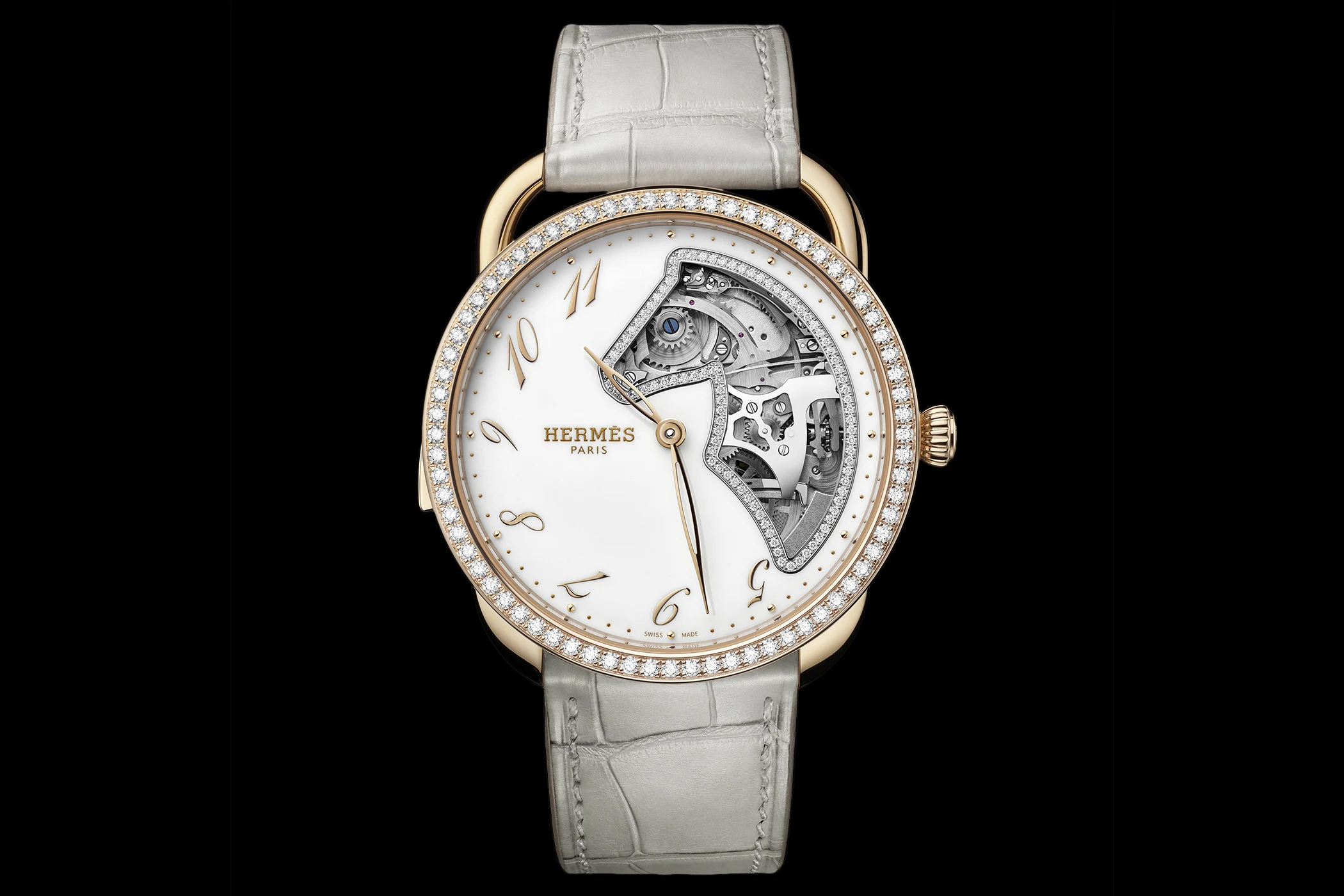
It is precisely this connection that suits Hermès. The brand approaches complex watchmaking not merely through technical specifications, but through form, material and heritage. In the Arceau Samarcande, the minute repeater is therefore not viewed in isolation. It becomes part of a watch that hails from the Arceau line, places the horse at the centre and reveals the mechanics without overloading the design.
Hermès
Arceau Samarcande
W408546WW00
750 white gold, 750 white gold set with gemstones or
750 rose gold 5N set with gemstones
Diameter: 38 mm
3 bar (~30 m)
Blue or white crystal dial by Saint-Louis,
horse’s head made of sapphire crystal
Smooth alligator leather in Encre or Bleu Saphir,
Matte alligator leather in Graphite, Dune Yellow and Gris Perle,
Barénia calfskin in Black,
Swift calfskin in Bleu Navy and
Athéna calfskin in Gris Perle
Hermès Manufacture H1927
Swiss-made
Automatic movement with micro-rotor
48 hours
21 600 A/h (3 Hz)
Hour, minute, minute repeater
From EUR 280,000.00