The new IWC Pilot’s Venturer Vertical Drive: A futuristic space watch for the new space age. A closer look at its design, technology and vision.
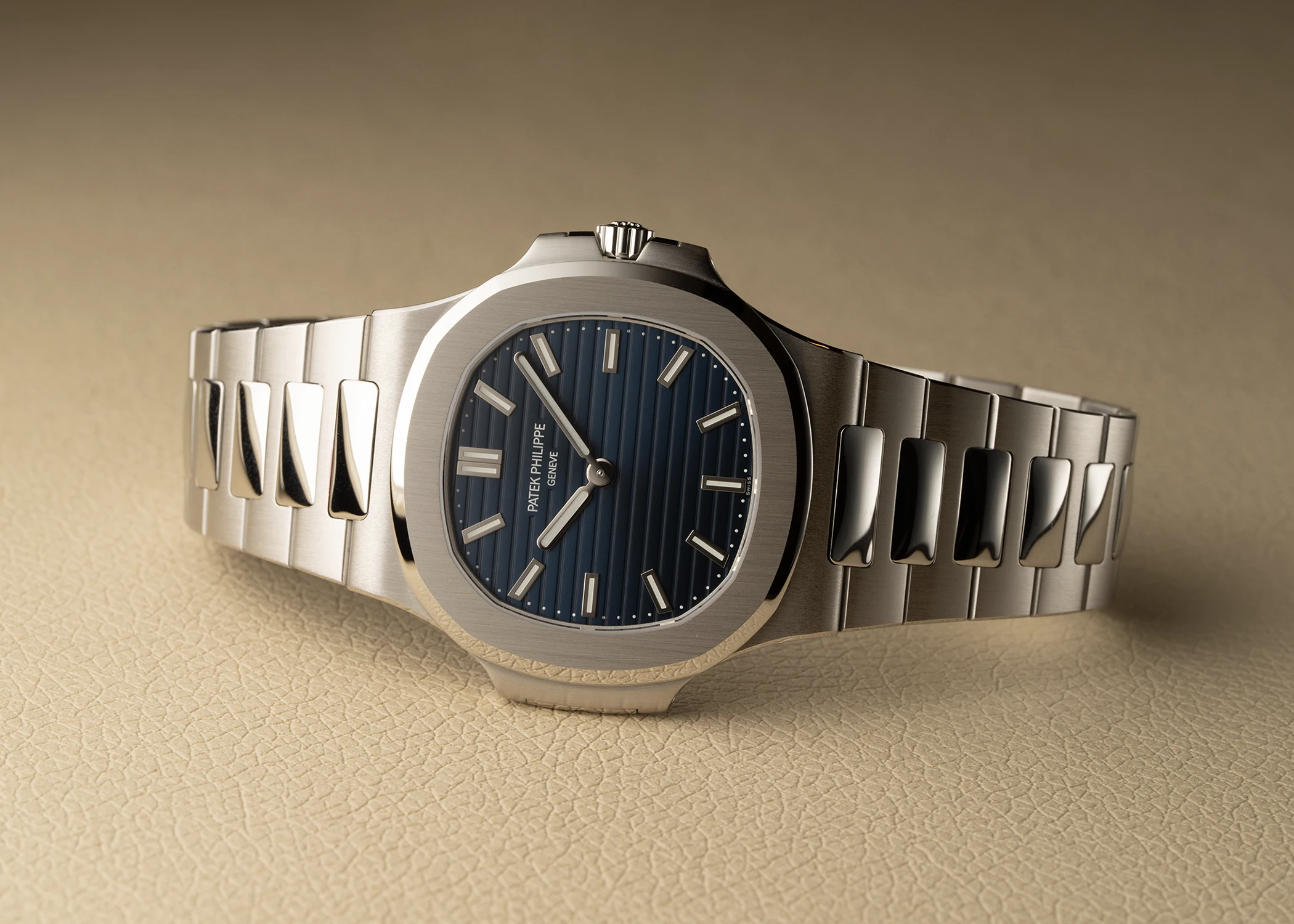
This year’s Patek Philippe releases presented at Watches & Wonders 2026 are notably shaped by a significant anniversary: the 50th birthday of the Patek Philippe Nautilus. Below is an overview of the key additions to the Nautilus collection at a glance.
The foundation for the Patek Philippe Nautilus was laid by the Royal Oak, designed by watch designer Gérald Genta for Audemars Piguet and introduced in 1972. It presented an entirely new concept: for the first time in watchmaking history, a timepiece combined robust functionality with the horological prestige of the Vallée de Joux, establishing the idea of a luxury sports watch in steel with a fully integrated bracelet.
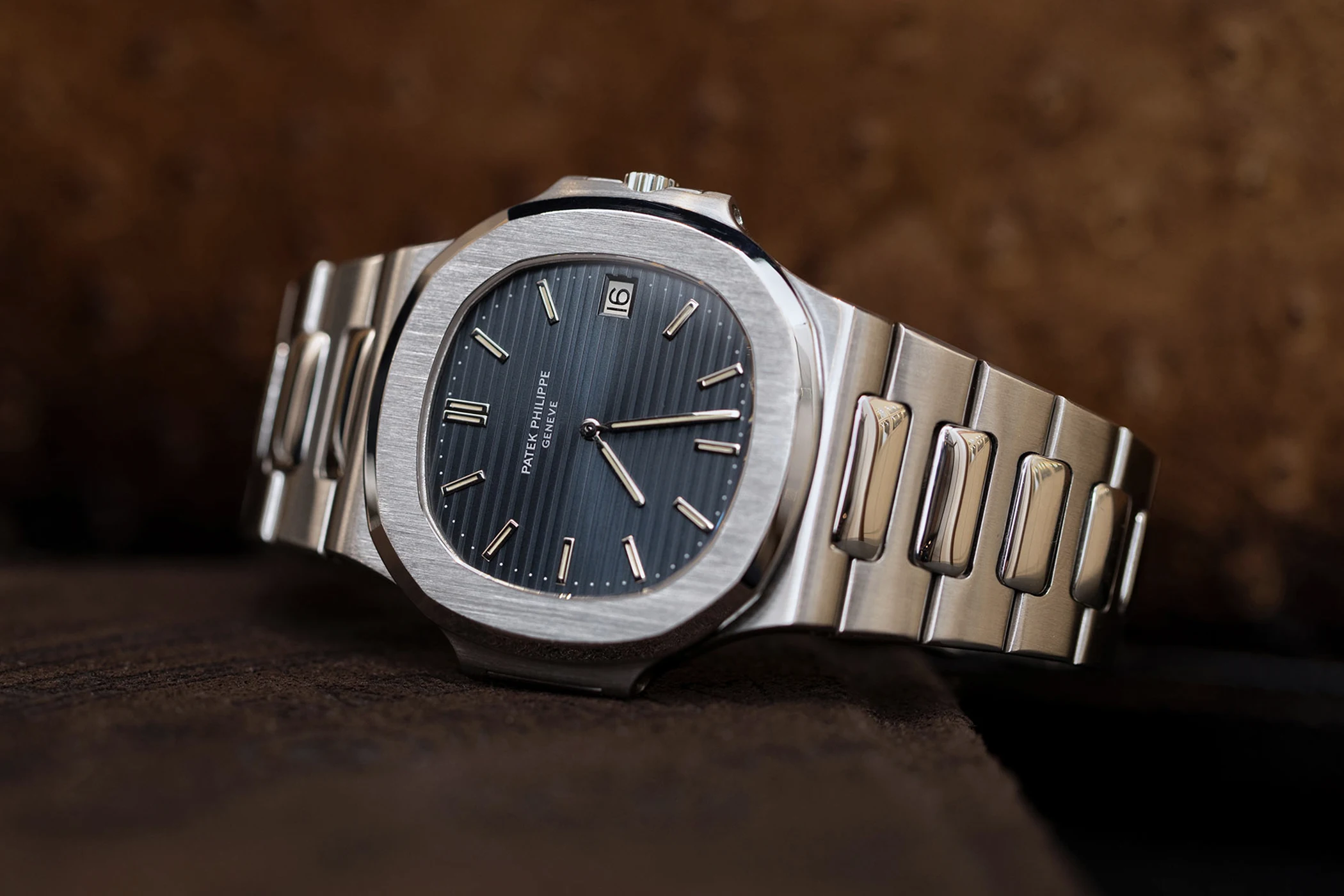
Much like the Royal Oak, the Patek Philippe Nautilus also introduced distinctive features at its launch. Foremost among these was an unusually high water resistance of 120 metres, achieved through a top-down case construction. The caseback and central container are made from a single piece of steel, and aside from the crown gasket, only one additional seal beneath the rounded octagonal bezel was required to ensure water resistance to 120 metres. In addition, the first reference 3700/1A, with its 42 mm steel case, was exceptionally large by the standards of the time and remained in the collection until 1990.
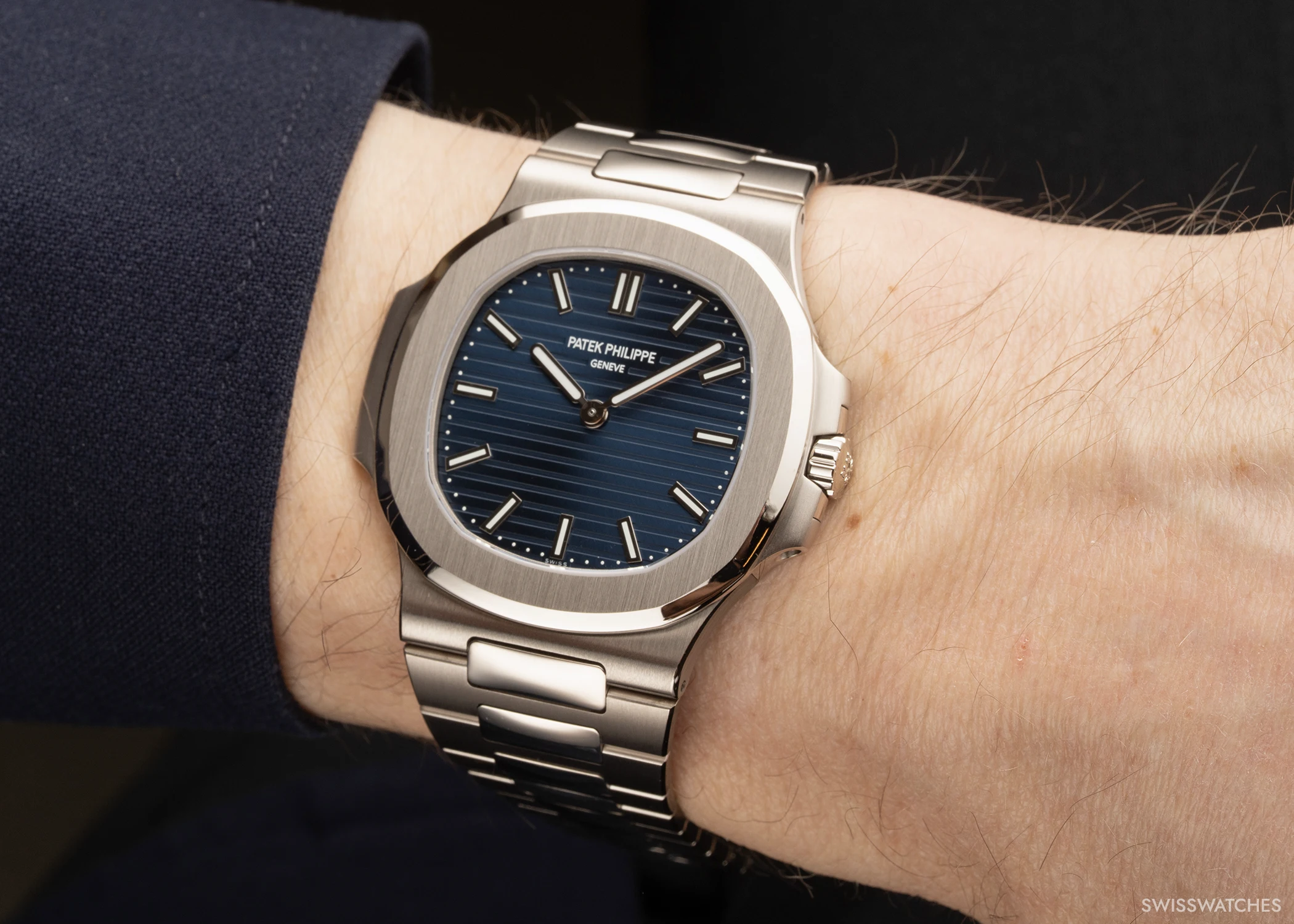
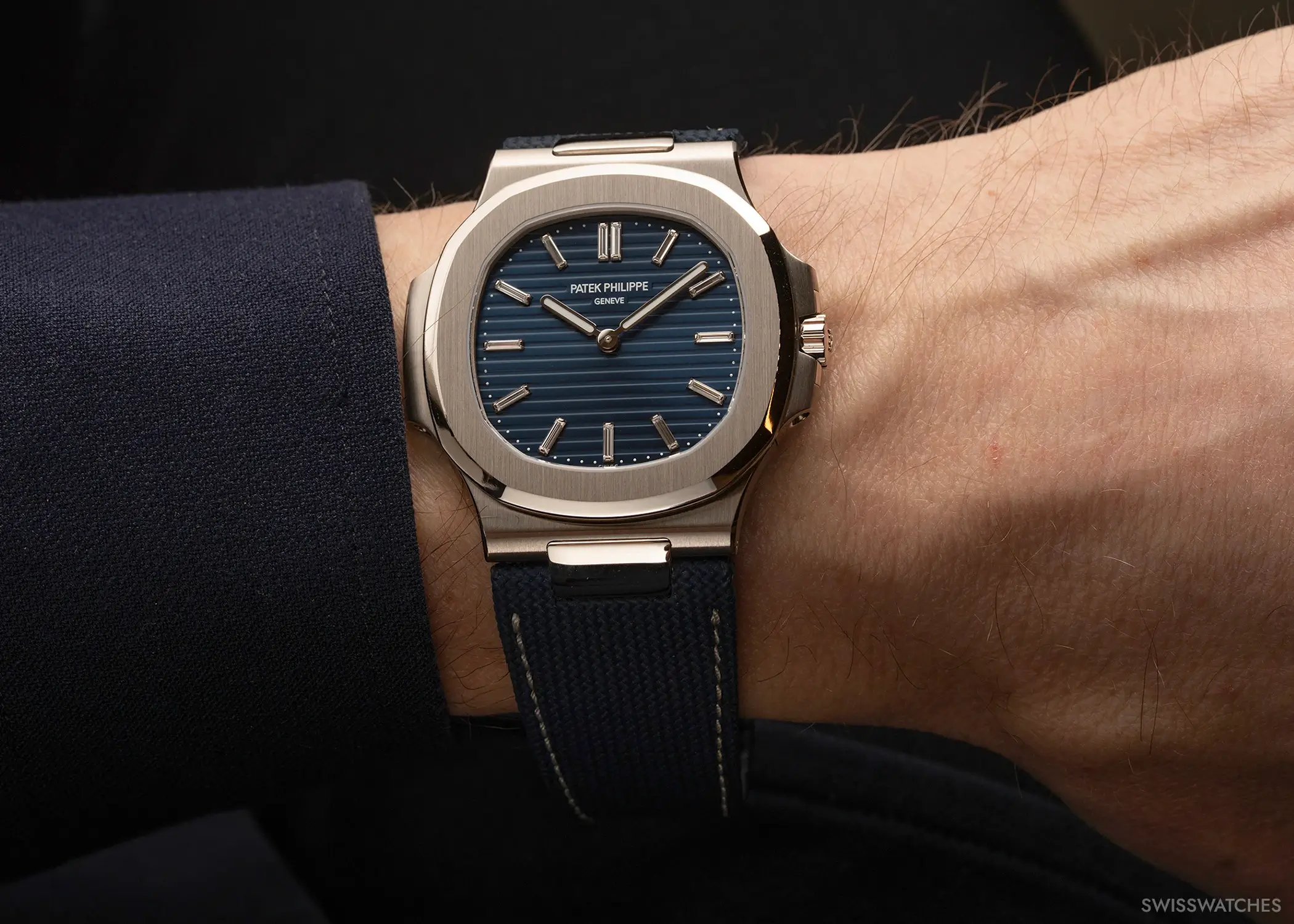
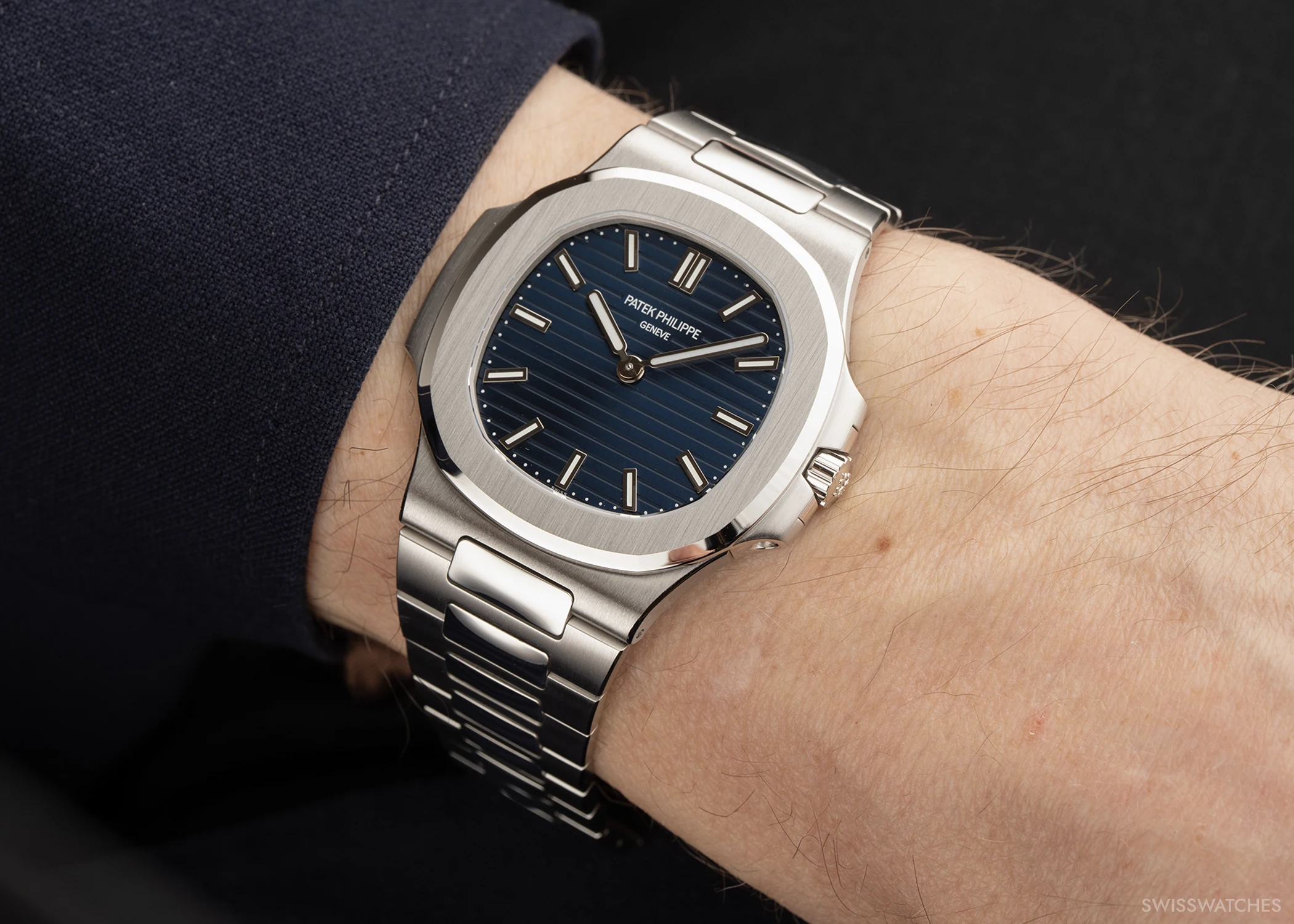
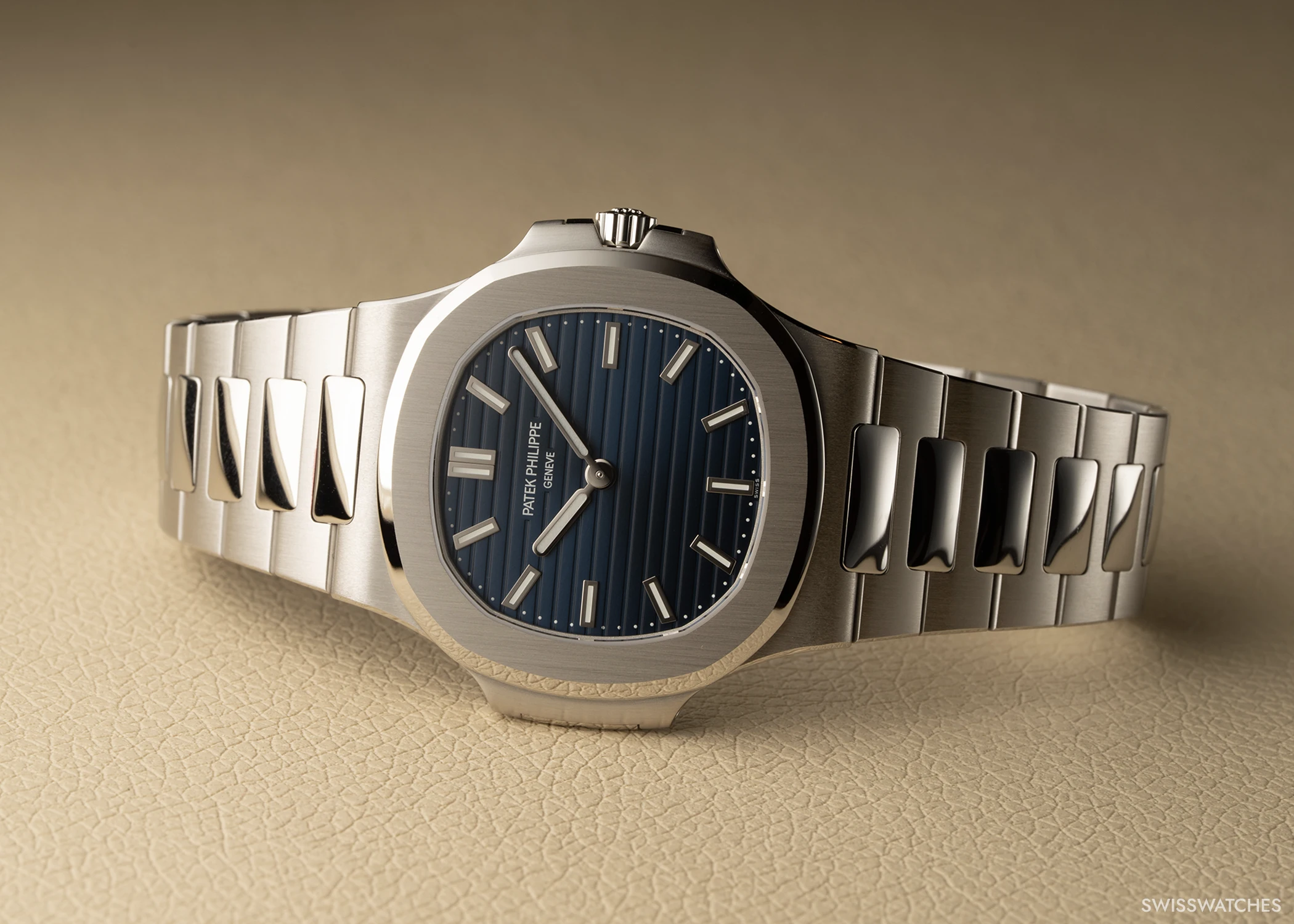
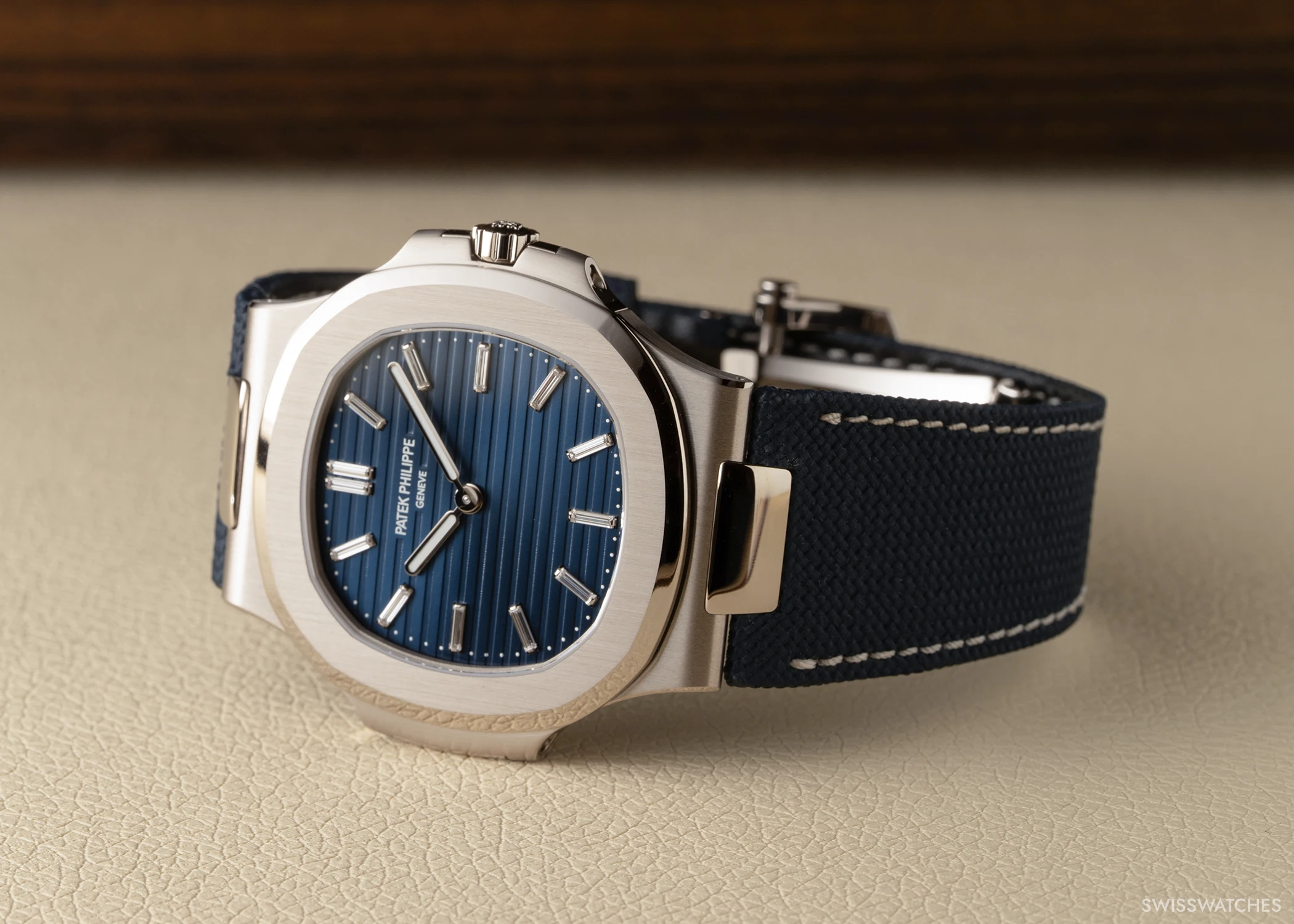
On the occasion of the 50th anniversary of the Nautilus, Patek Philippe celebrates the model in three limited special editions that highlight the defining characteristics of the original Reference 3700/1A. All three are united by a reduction to the essential display of hours and minutes. Each features a blue sunburst dial with horizontal relief embossing, applied baton indices, and baton hands in white gold with a white luminescent coating. In the Ref. 5610/1P-001 and Ref. 5810/1G-001, the applied baton indices are crafted from white gold, while the Ref. 5810G-001 is fitted with baguette-cut diamond indices (0.39 ct).
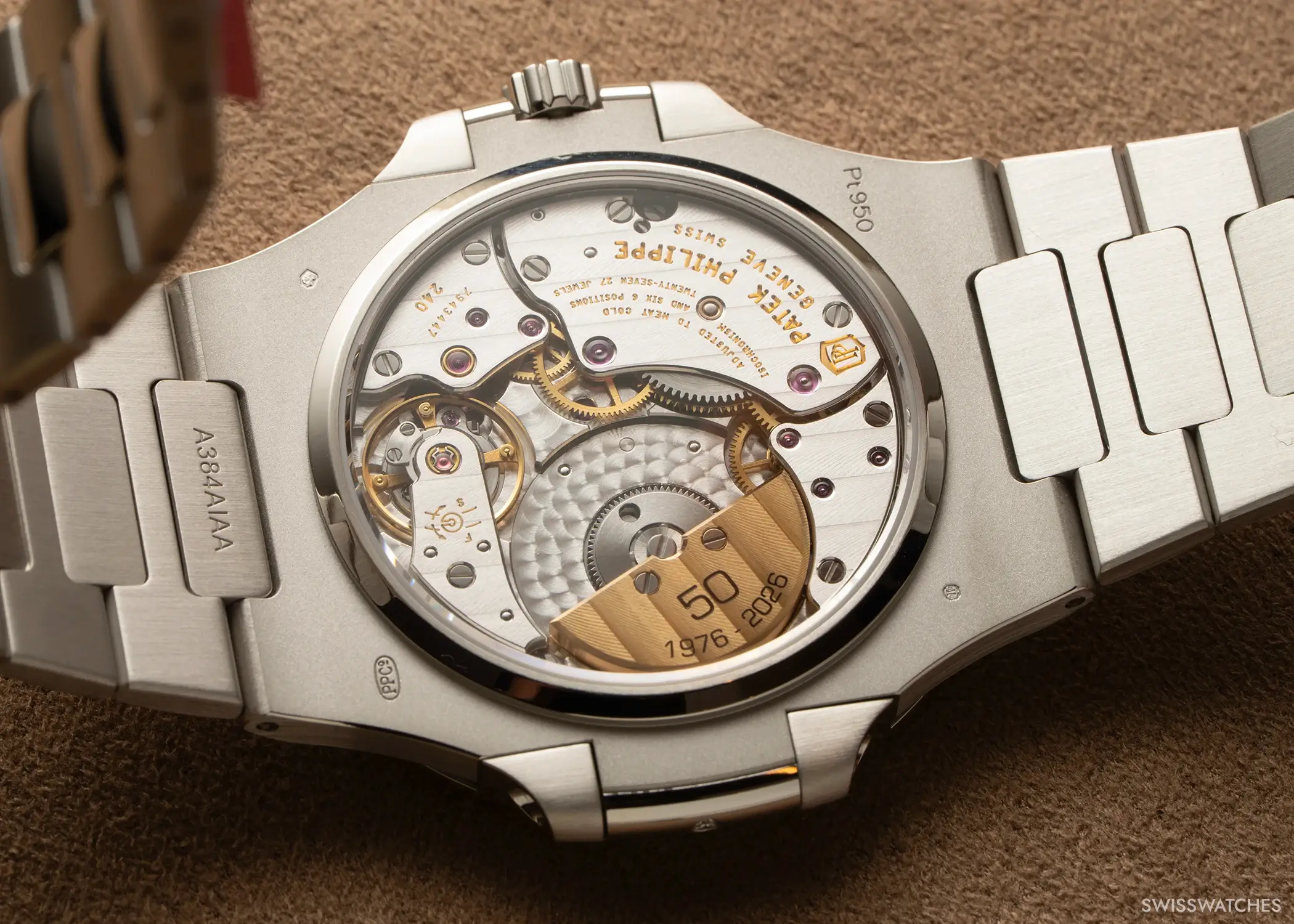
All three anniversary versions of the Patek Philippe Nautilus are powered by the well-established ultra-thin calibre 240, which dates back to 1977 and has been driving the brand’s high-end automatic watches for over 60 years. Like many movements from the 1970s, the Cal. 240 operates at a relatively measured frequency of 21,600 vibrations per hour (3 Hz), contributing to a power reserve of minimum 48 hours, while requiring careful regulation to maintain precision. This is ensured by Patek Philippe’s Gyromax balance, which features four internal weights for fine adjustment.
In order to keep the movement as slim as possible—comprising 152 individual components—the calibre 240 uses a 22-carat gold micro-rotor for automatic winding, which, in these special editions, is engraved with the inscription “50 1976–2026” in reference to the anniversary. In keeping with its ultra-thin construction, the calibre 240 also dispenses with a seconds hand. With a height of just 2.53 mm and a diameter of 27.5 mm, the movement continues to serve as a platform for numerous complications within Patek Philippe’s range of slim watches.
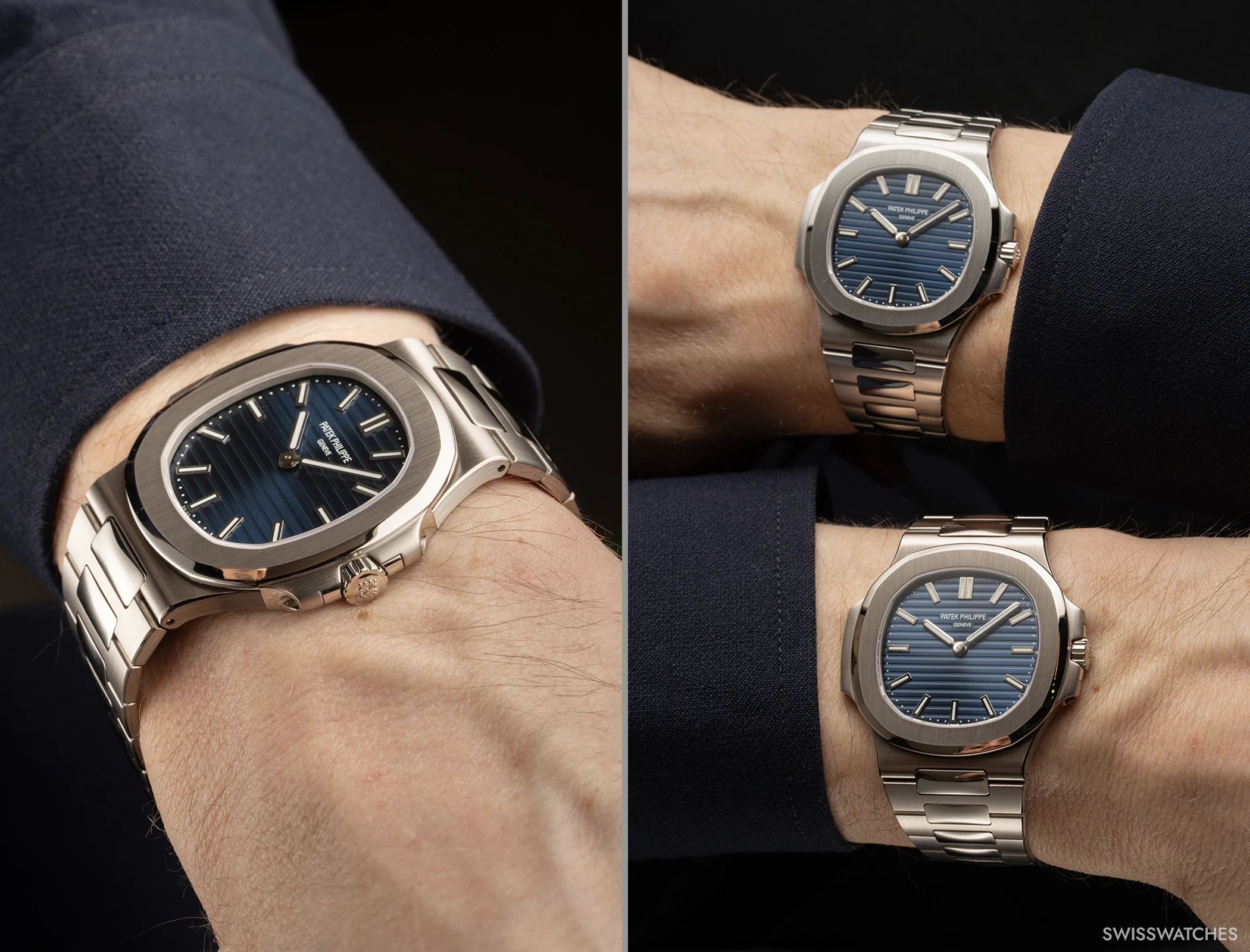
All three ultra-thin two-hand models share a case height of 6.9 mm, but are presented in two case variants: Firstly, the reference 5810/1G-001, limited to 2,000 pieces, and the reference 5810G-001, limited to 1,000 pieces, both feature a white gold case with a diameter of 41 mm. Secondly, the reference 5610/1P-001, limited to 2,000 pieces, is housed in an elegant platinum case measuring 38 mm in diameter.
The reference 5810/1G-001 is fitted with a matching white gold bracelet and folding clasp, while the reference 5810G-001 is worn on a navy-blue composite strap with a textile pattern and a white gold Nautilus folding clasp. Prices are set at €86,908 for the ref. 5810/1G-001, €69,527 for the ref. 5810G-001, and €104,290 for the reference 5610/1P-001.
As part of the 50th anniversary celebrations of the Nautilus, one particular novelty stands out as perhaps the most unexpected: with the reference 958G-001, Patek Philippe presents its first-ever Nautilus desk clock. It is issued in a limited edition of just 100 pieces and is priced at €237,549.
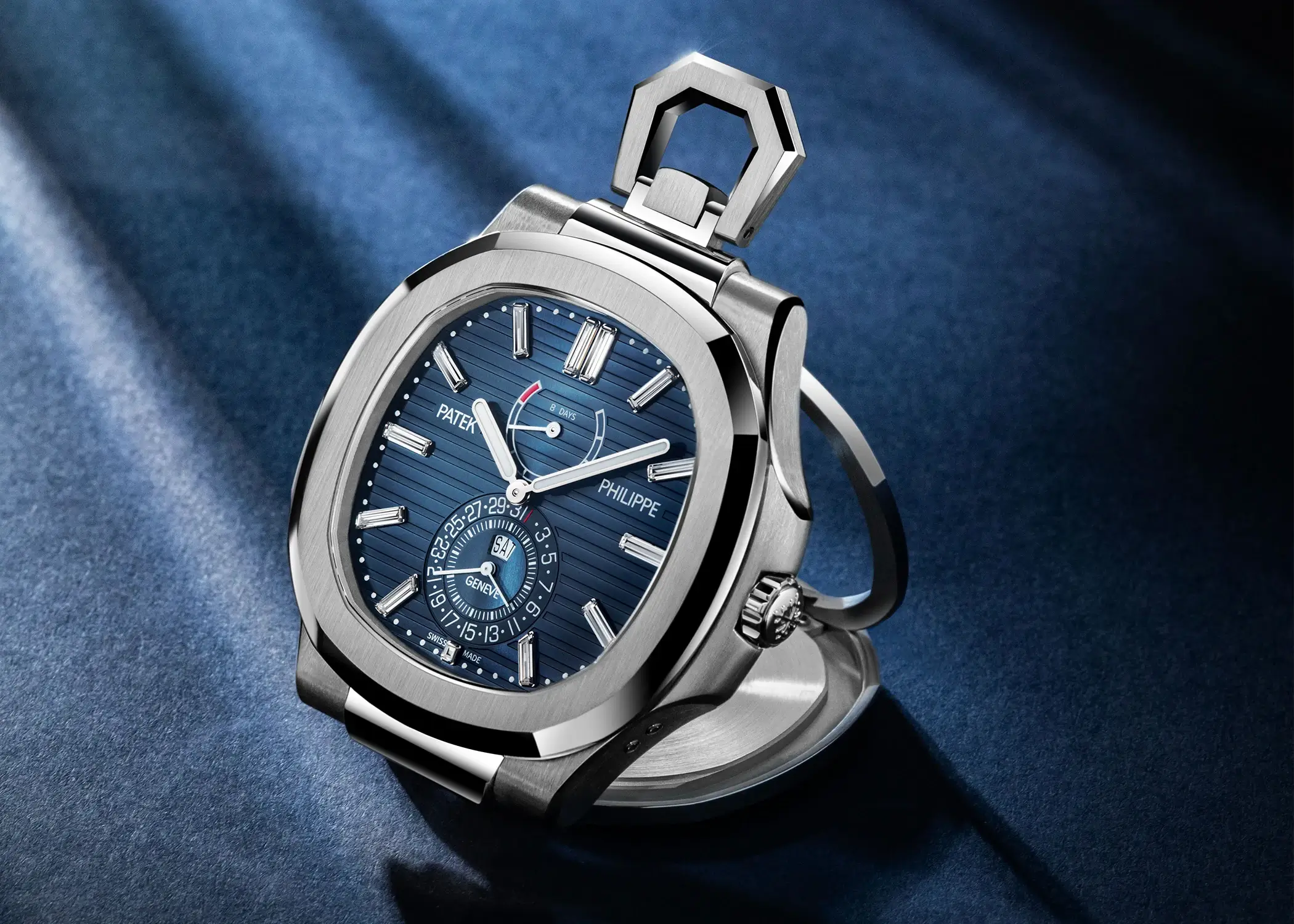
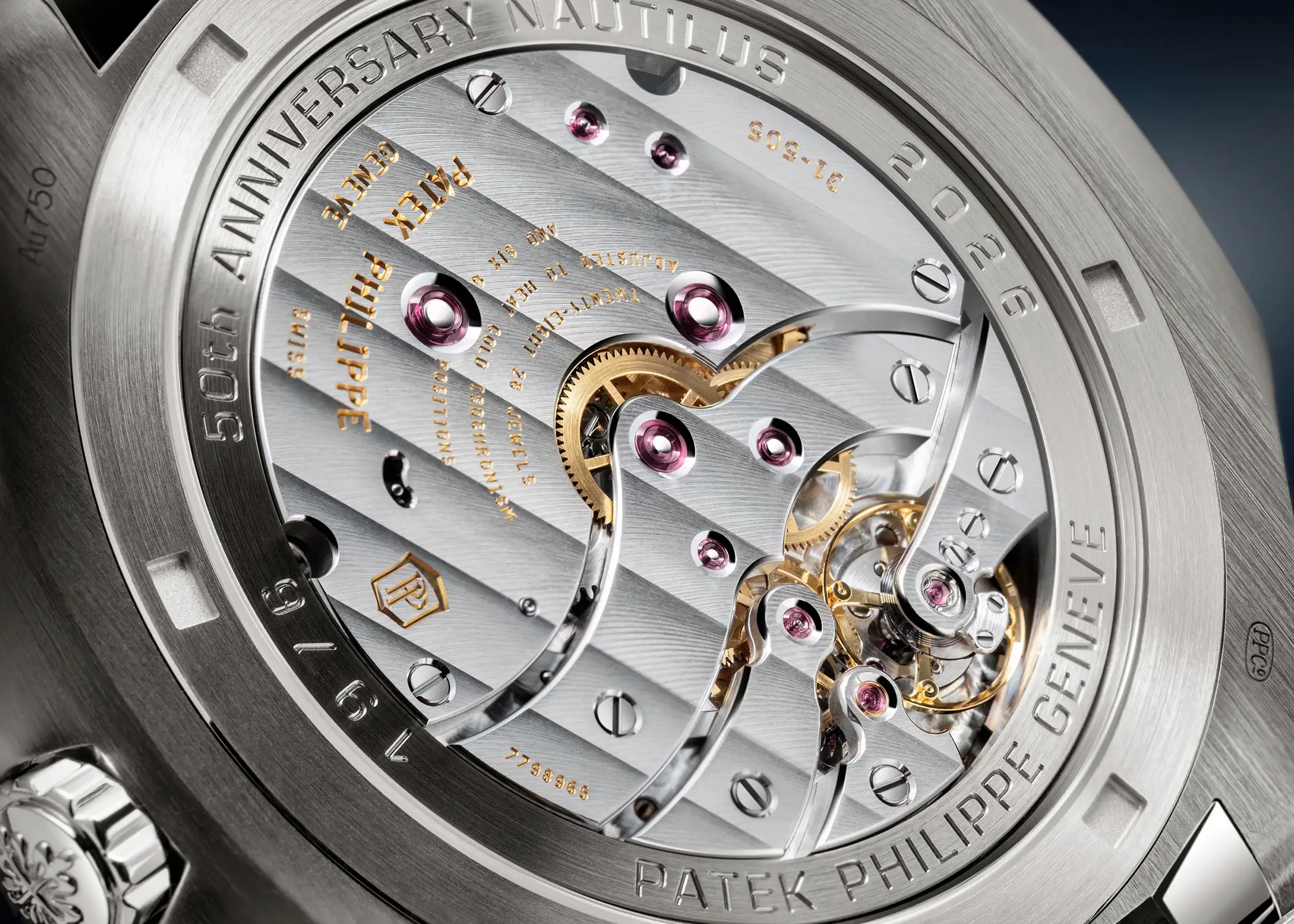
Its case preserves the characteristic design language of the Nautilus, defined by the porthole-inspired construction reminiscent of steamship windows and the rounded octagonal bezel. The two-part white gold case measures 50.65 mm in diameter and 13.5 mm in height, and features a sapphire crystal caseback protected by a blue hinged cover adorned with a hand-engraved Calatrava cross. Opening the hinged cover reveals the inscription “50th Anniversary Nautilus 1976–2026 Patek Philippe” on the caseback. Interestingly, in reference to historical pocket watches, the case also features a suspension bow at 12 o’clock, although it is not accompanied by a chain.
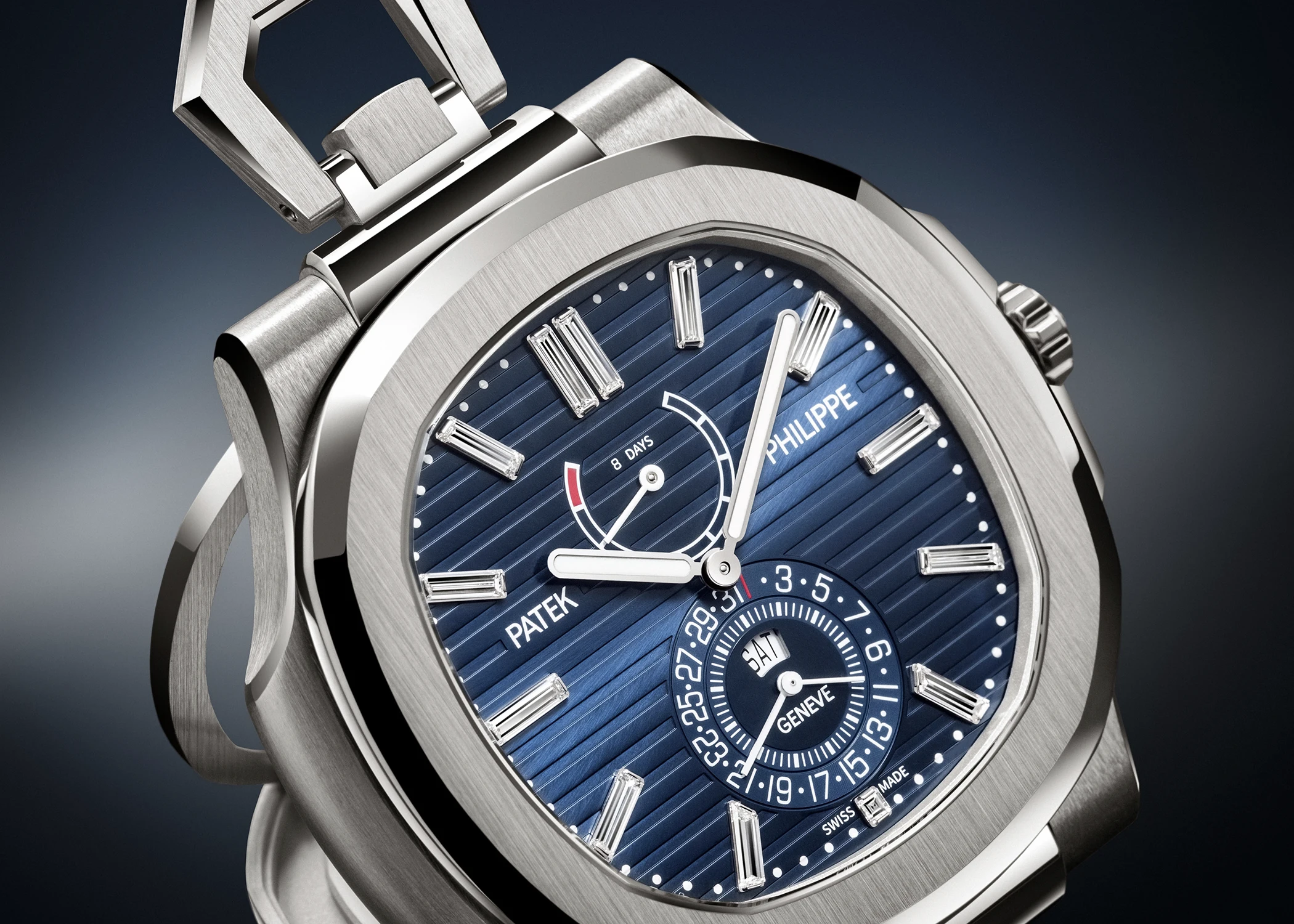
The watch is powered by the elaborately decorated, hand-wound calibre 31-505 8J PS IRM CI J, which operates at a frequency of 28,800 vibrations per hour (4 Hz) and achieves an impressive power reserve of eight days (minimum 192 hours) thanks to its twin barrels. In addition to the hour and minute hands, the movement features an instantaneous date displayed by a hand at 6 o’clock, an instantaneous day indication shown via an aperture also positioned at 6 o’clock, an eight-day power reserve indicator located beneath the 12 o’clock marker, and a small seconds display, which can be read via a subsidiary hand integrated within the date indication.
These displays are set within a blue sunburst dial with horizontal embossing, featuring applied white-gold indices set with baguette-cut diamonds (0.96 ct). As with the other models in the collection, the baton hands are crafted from white gold and coated with white luminescent material.