Vacheron Constantin presents the Overseas Extra-Thin in platinum, featuring its new Calibre 2550 and an 80-hour power reserve.

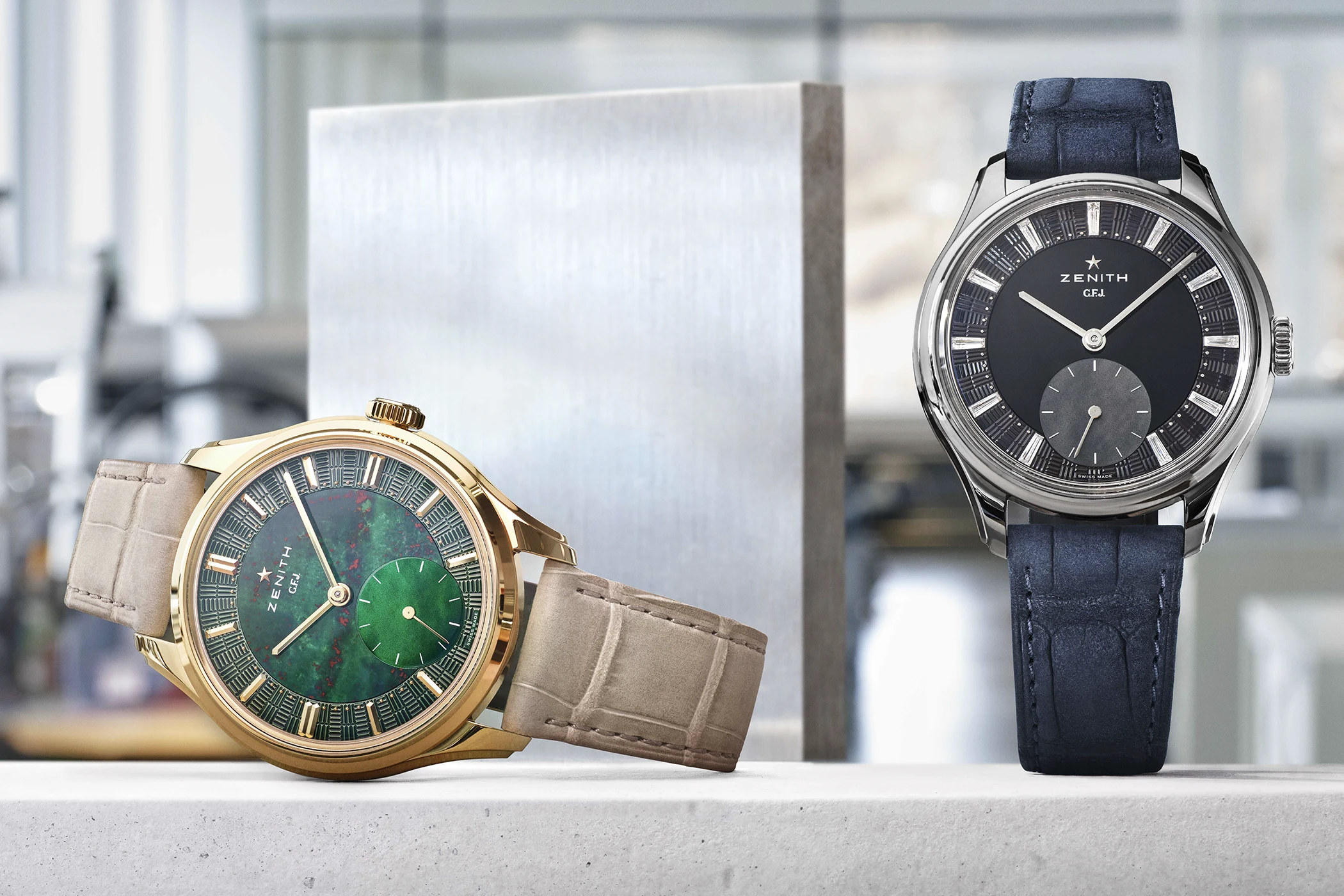
With these two new G.F.J. models, Zenith takes an idea a step further – an idea that, from the outset, was defined less by the watch itself than by its movement. Even in tantalum with an onyx dial and yellow gold with a bloodstone dial, the Calibre 135 remains the starting point of the actual creation. This is precisely what demonstrates how differently the same design can appear without losing its original character. These new models are therefore interesting not only as new variations, but as two very different interpretations of the same horological foundation.
Some movements age gracefully, quietly fading from our everyday lives. They are preserved as points of reference – in collections, auction houses or in the stories of those who enjoy studying old chronometers. Zenith’s historic Calibre 135 never quite followed this path. It was far too prominent and highly regarded for that during a phase of watchmaking when timekeeping accuracy held a different significance: tested in observatories, recorded in results lists and determined by the question of which manufacturer could build the most accurate movement.
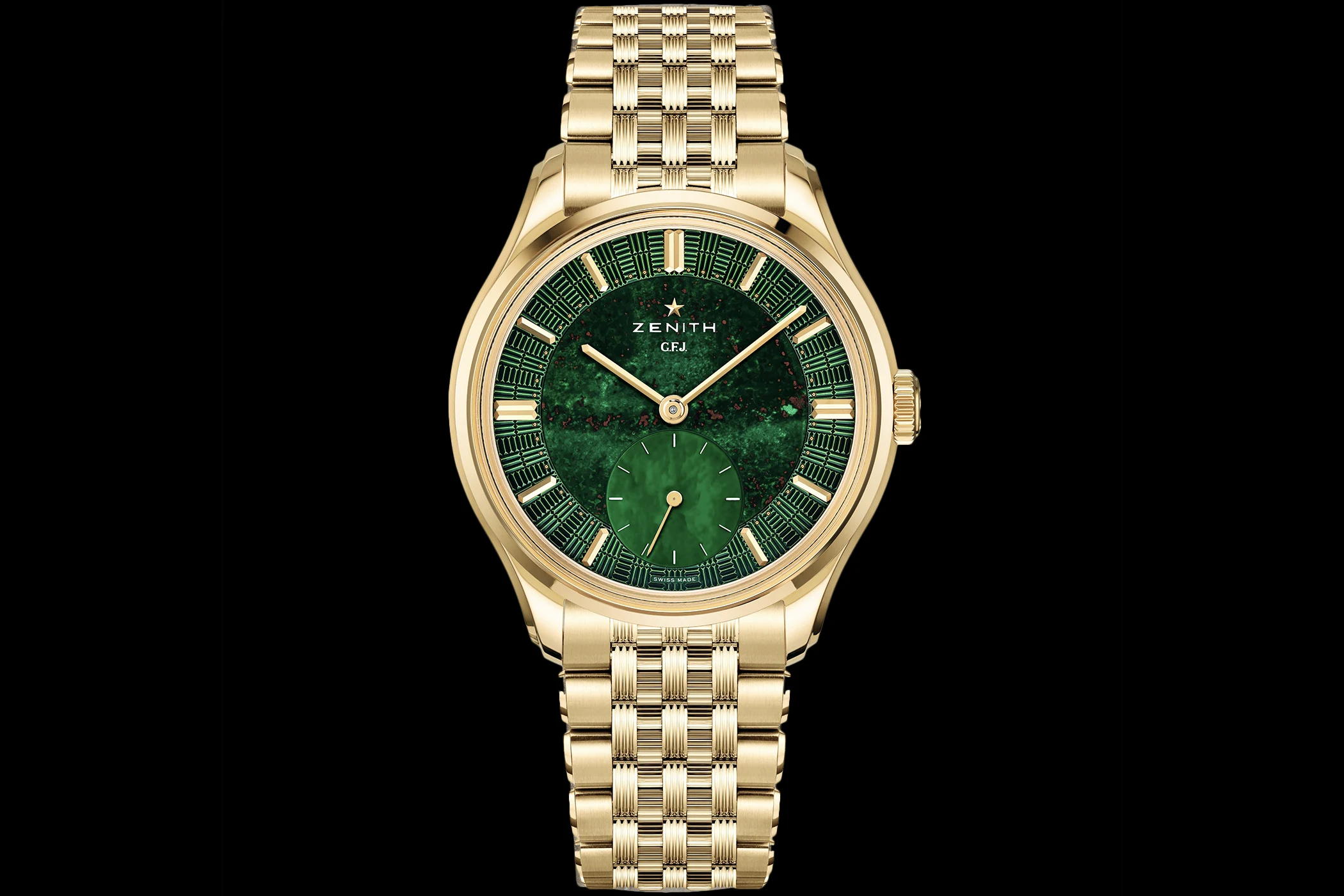
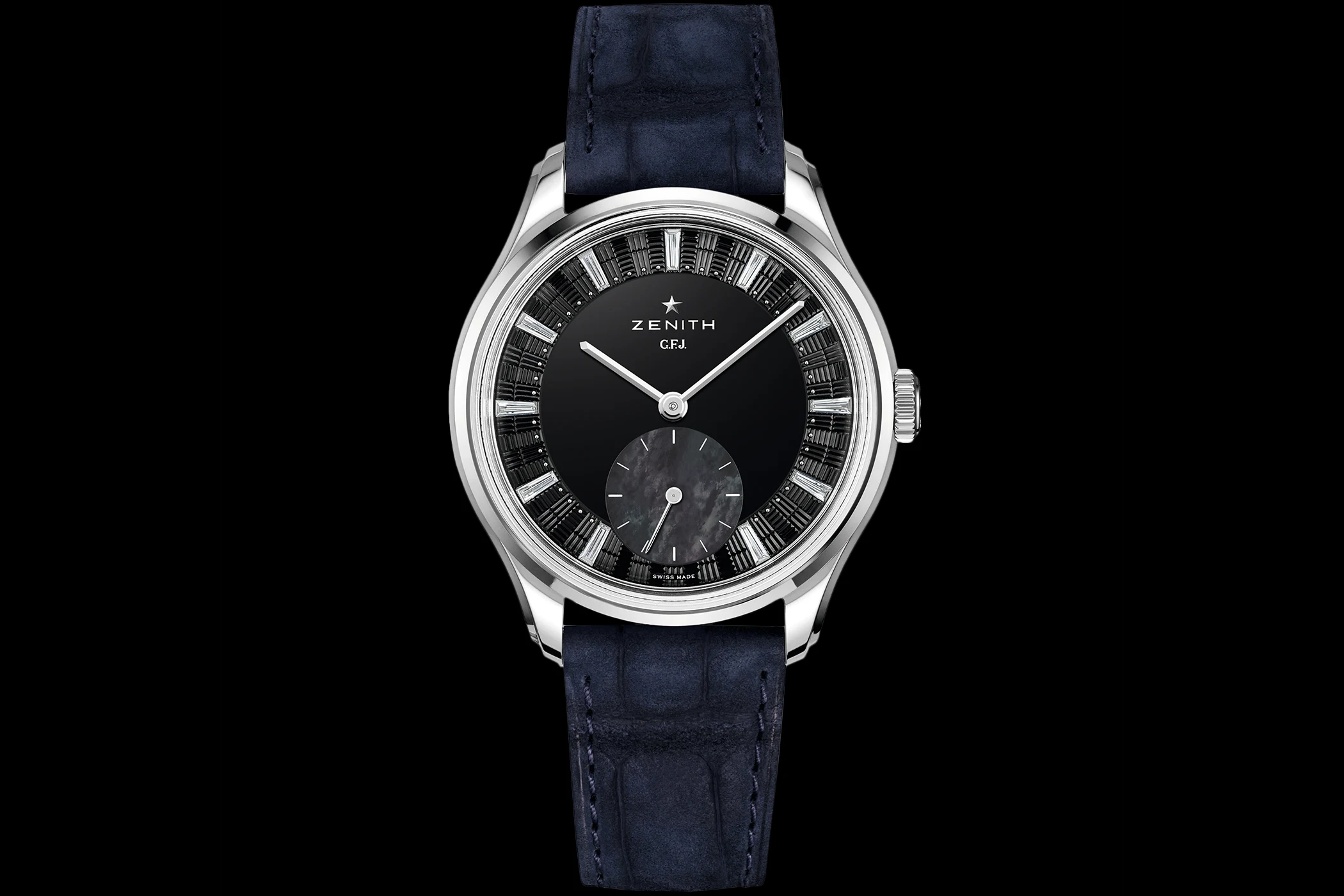
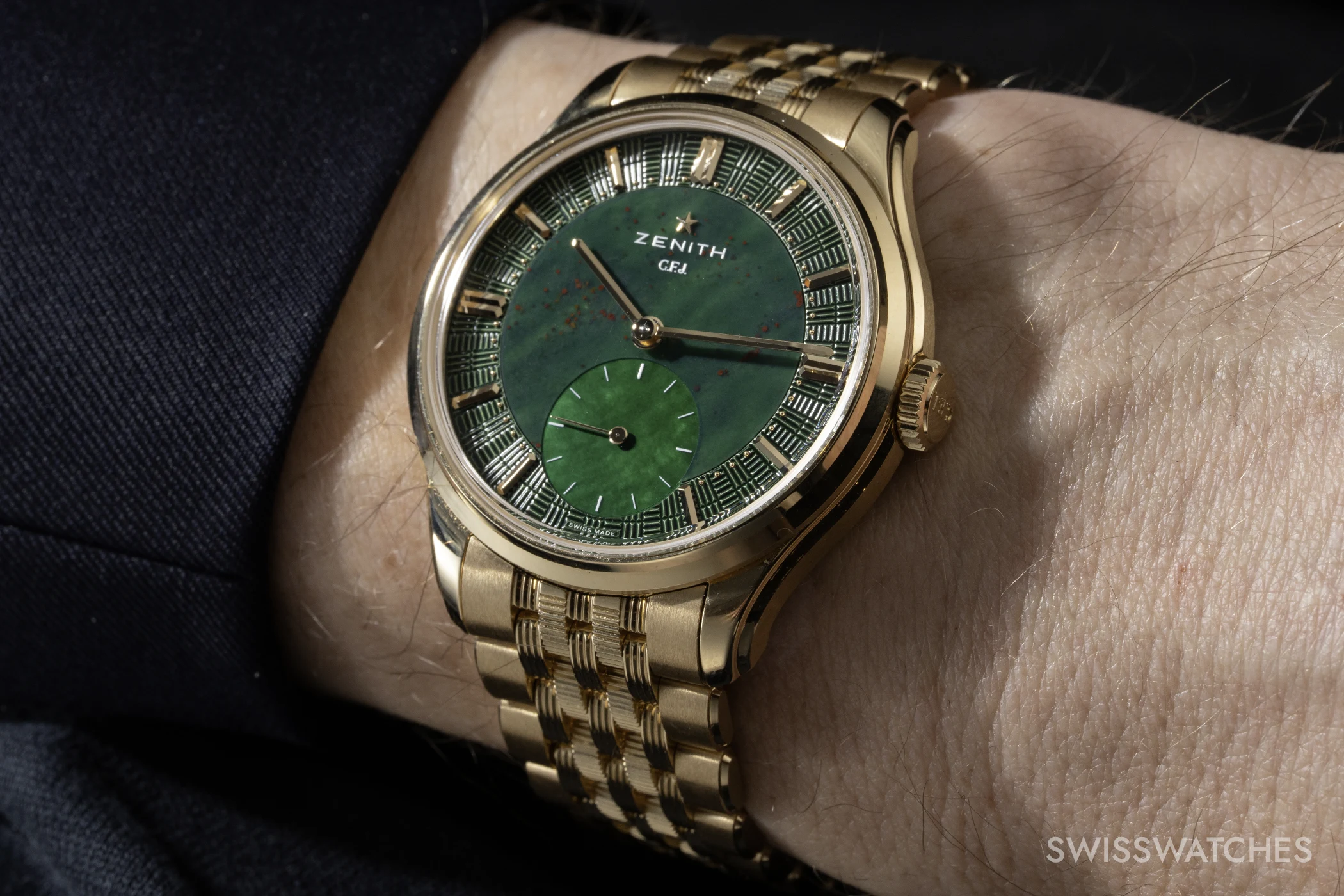
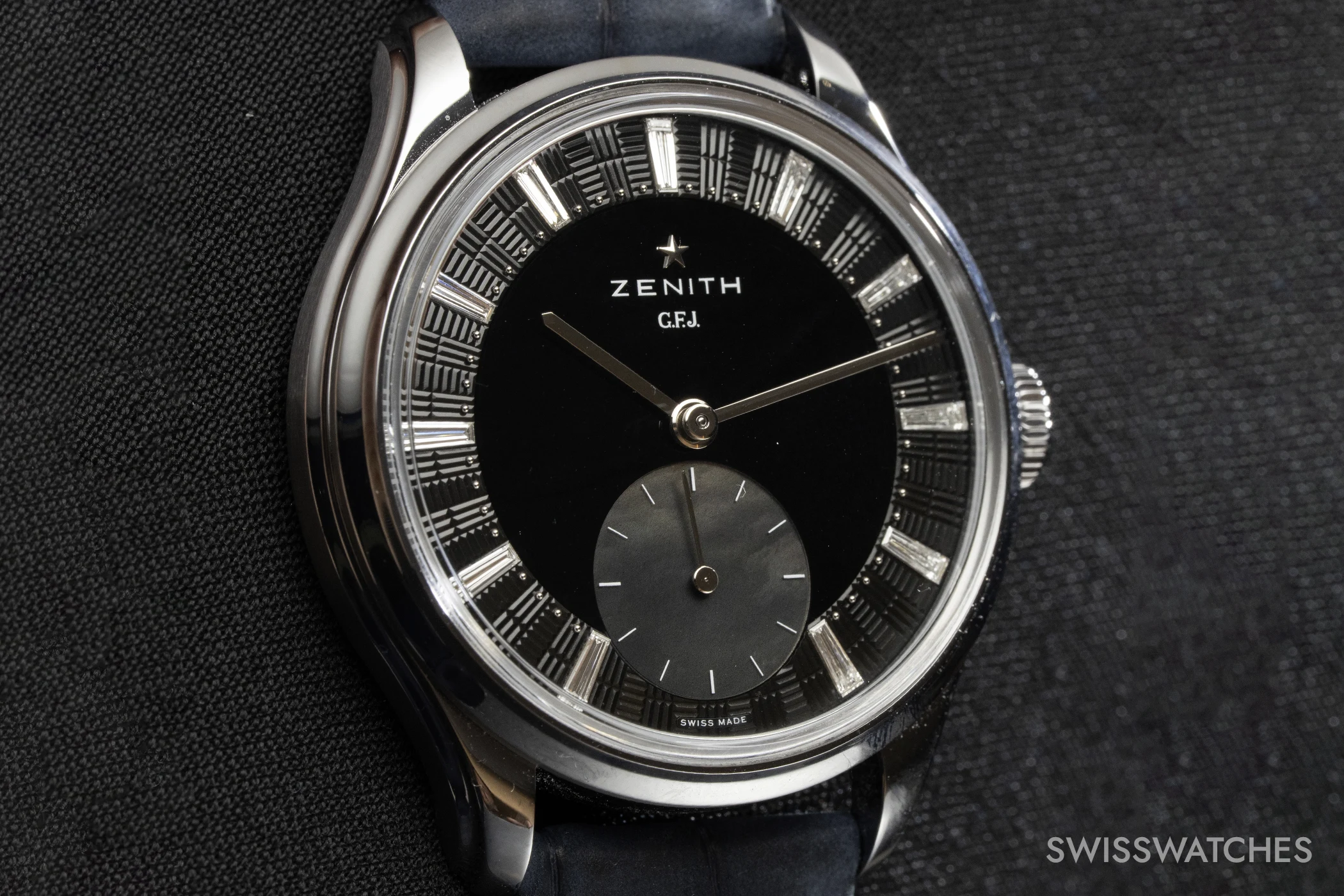
When Zenith unveiled its new G.F.J. collection, it was therefore not simply a matter of a neatly packaged reissue of the Calibre 135. In fact, from the very beginning, the focus was solely on the movement. The watch itself served merely as a framework for it. Now two further versions have been added, both based on the same foundation but taking completely different directions: a tantalum G.F.J. in a limited edition of 20 pieces and a version limited to 161 pieces in yellow gold with a bloodstone dial.
What is interesting here is not so much the fact that Zenith is launching two new versions. What is interesting is how different the same watch can appear without losing its character.
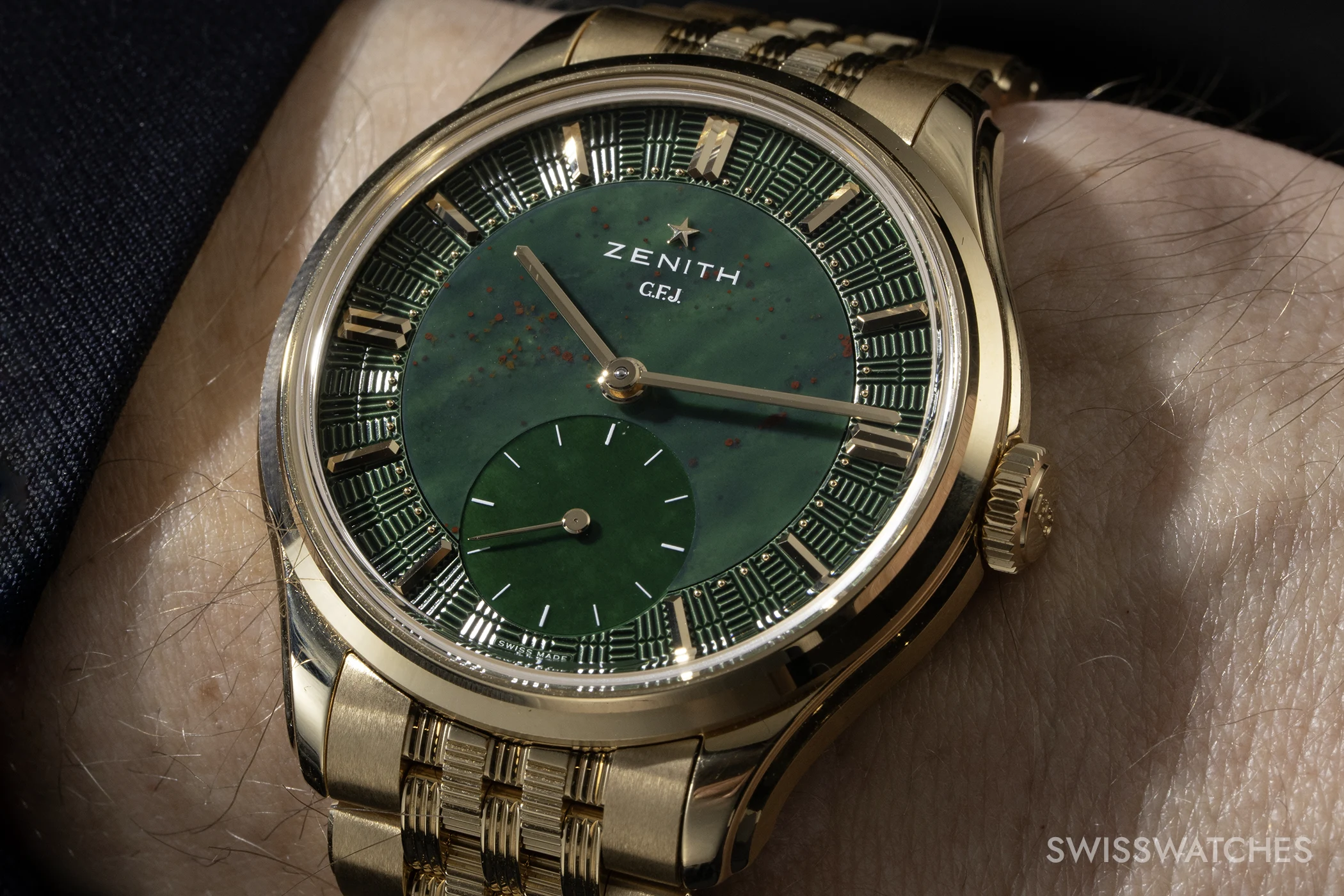
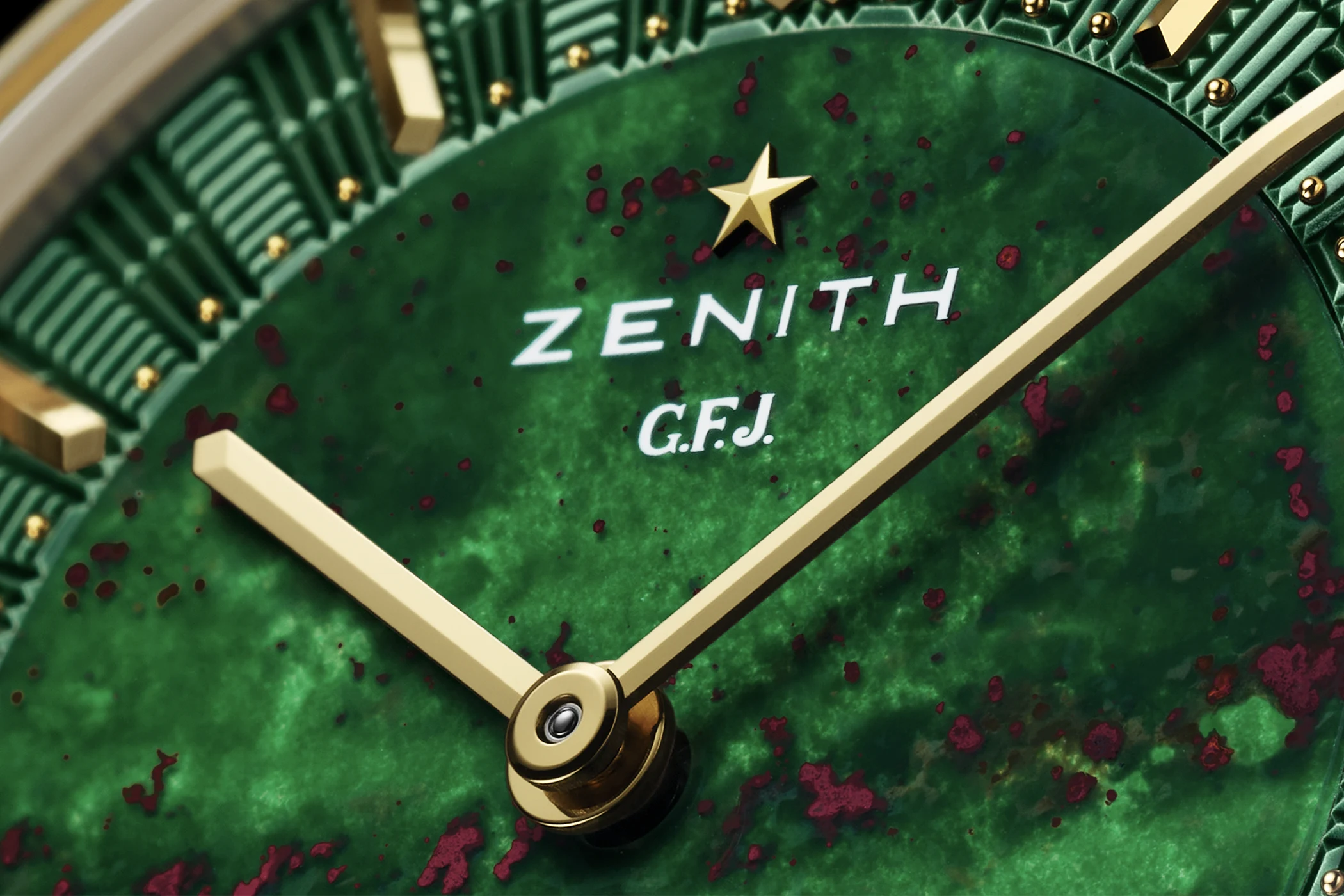
The yellow gold version has an air of openness, almost a sense of natural ease. The focal point is the dial made of bloodstone, a green jasper with red inclusions – beneath which sits the small seconds sub-dial in mother-of-pearl, providing a visually lighter accent. The guilloché outer ring with a brick pattern, reminiscent of the bricks of the historic manufacture in Le Locle, holds the composition together, whilst yellow gold hour markers and hands complete the picture. The effect is neither frivolous nor austere, but rather that of a design concept thought through from A to Z.
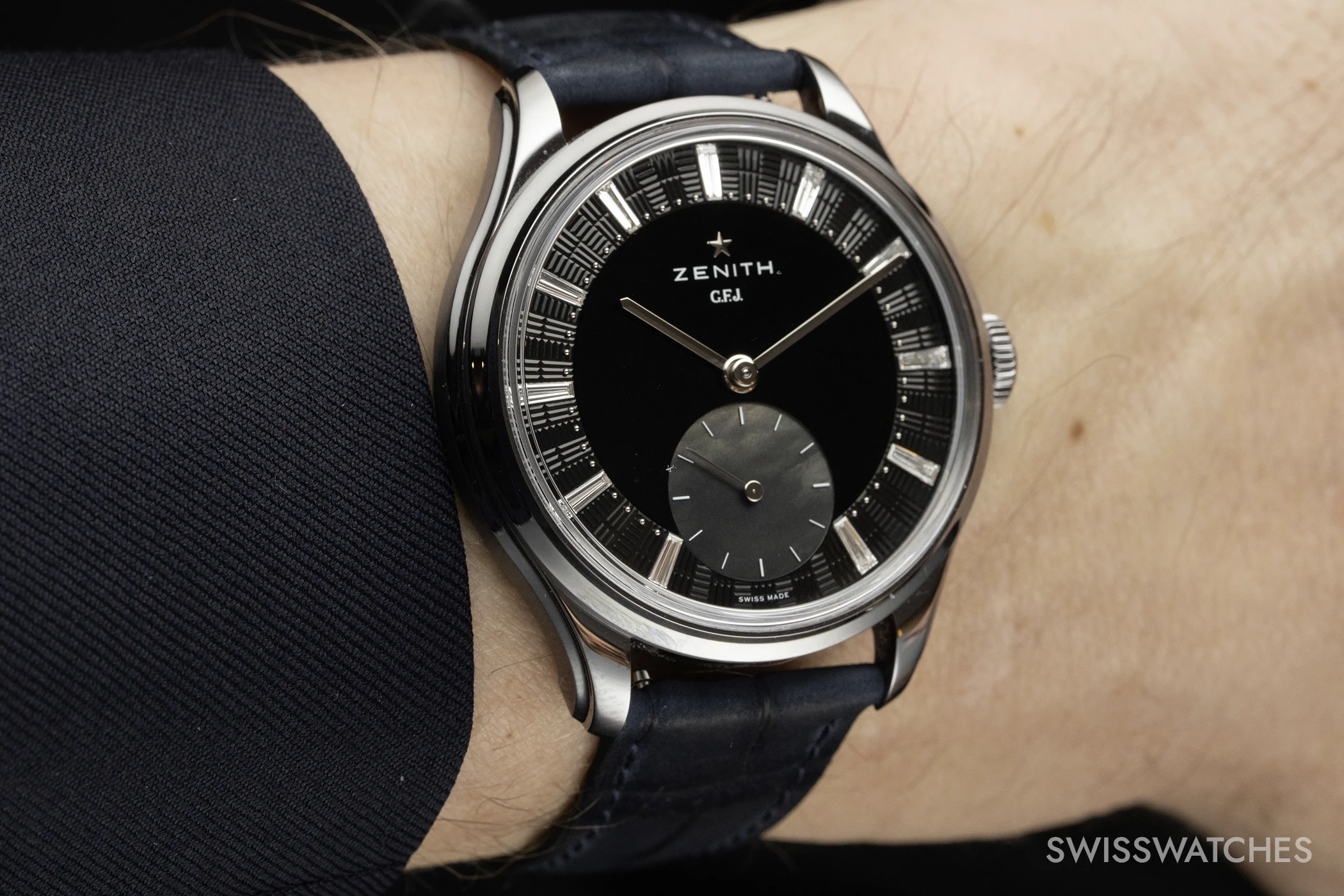
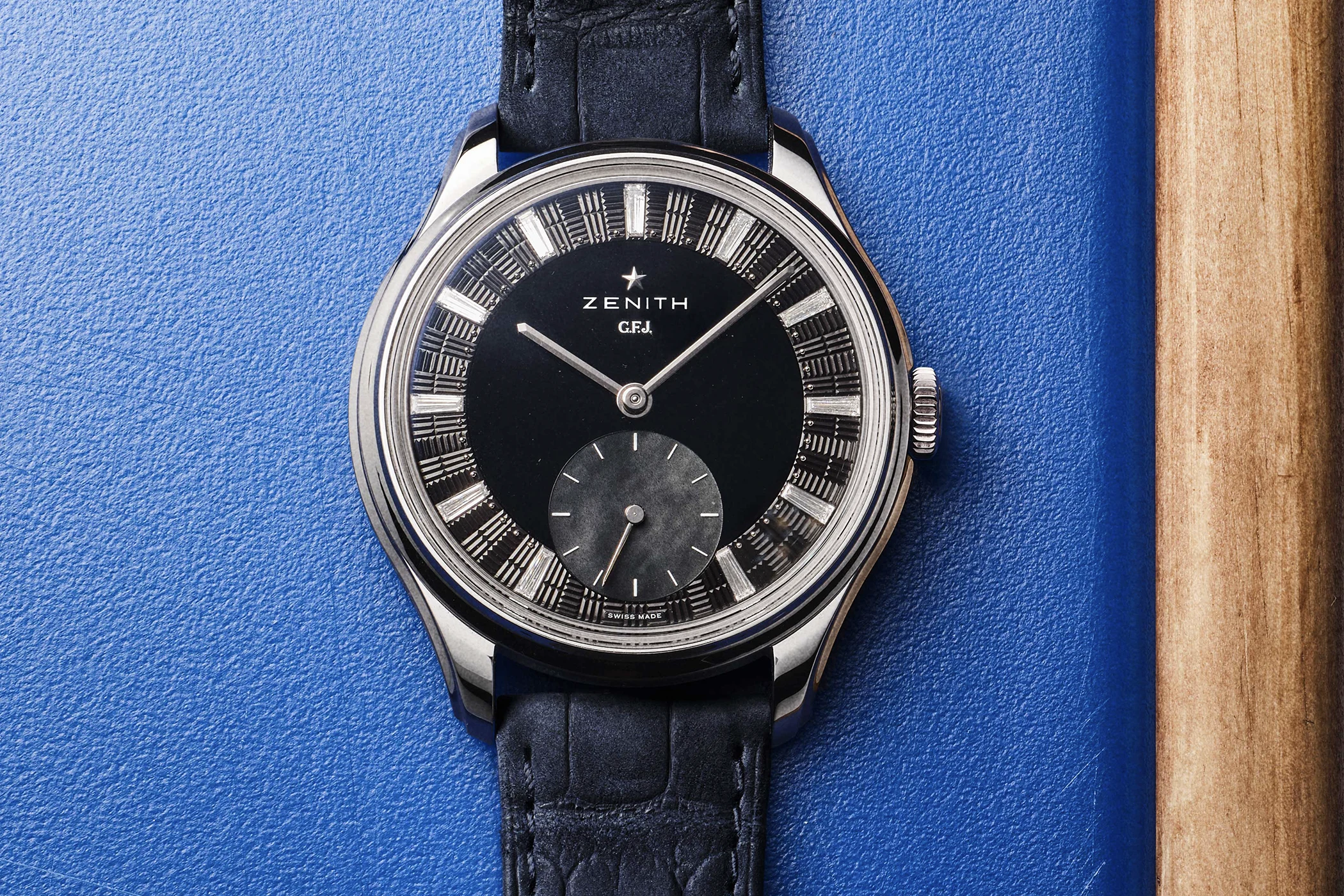
The tantalum version creates a cooler aesthetic. Tantalum is not a material that intrudes provocatively into the foreground, but one that instantly transforms a watch. The material’s density, hardness and that blue-grey metallic hue lend the case a distinctive and unique presence. In terms of form, everything remains identical to the predecessor model: 39.15 millimetres in diameter and 10.5 millimetres in height, meaning the same basic shape as the familiar G.F.J model. Yet this version of the watch suddenly appears more compact and austere. Whilst yellow gold brings light and warmth, tantalum appears understated and lends the case shape definition.
The dial complements this perfectly. Black onyx in the centre, grey mother-of-pearl for the small seconds, ‘brick’ guilloché on the outer edge, and baguette-cut diamond hour-markers. On paper, this description sounds far more ostentatious than the watch actually appears when you look at it at the end of the day. The diamonds appear more like carefully placed accents of light on the dial than as elements that push the watch towards being a piece of jewellery.
However, both models owe their appeal above all to what lies beneath the dial. The Calibre 135 was originally developed for chronometry competitions and, in its competition version, the 135-O, won 235 awards, including five consecutive first places at the Neuchâtel Observatory between 1950 and 1954. These figures appear in almost every text about the movement, and for good reason: they explain why Zenith does not treat this calibre as just another historical name. It is one of the few movements whose reputation was not built up only later.
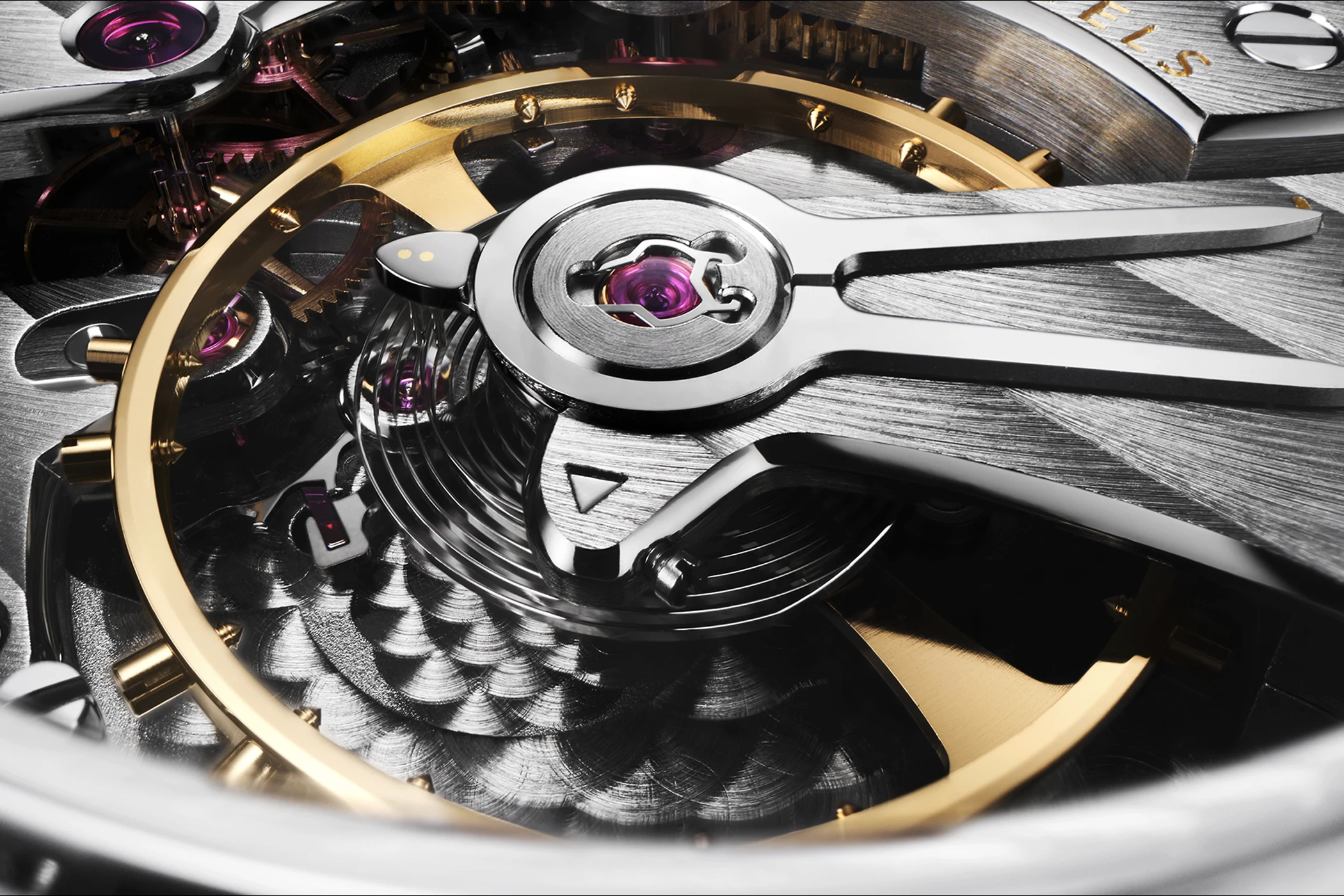
For today’s G.F.J., the movement has been revised, but not completely redesigned. The basic architecture of the calibre remains unchanged: 13-line diameter, 2.5 Hz, the large balance wheel and the characteristic 135 layout. At the same time, the technical modifications one would expect in a modern interpretation of such a calibre have been made: 72-hour power reserve, optimised gear train, Breguet balance spring, adjustment screws, seconds stop and a rate of plus/minus two seconds per day, COSC-certified. The key point here is that the revised version does not give the impression of having forced modern features onto a historic movement. Rather, it seems as though an attempt has been made to gently bring the old concept into the present without redesigning it from scratch.
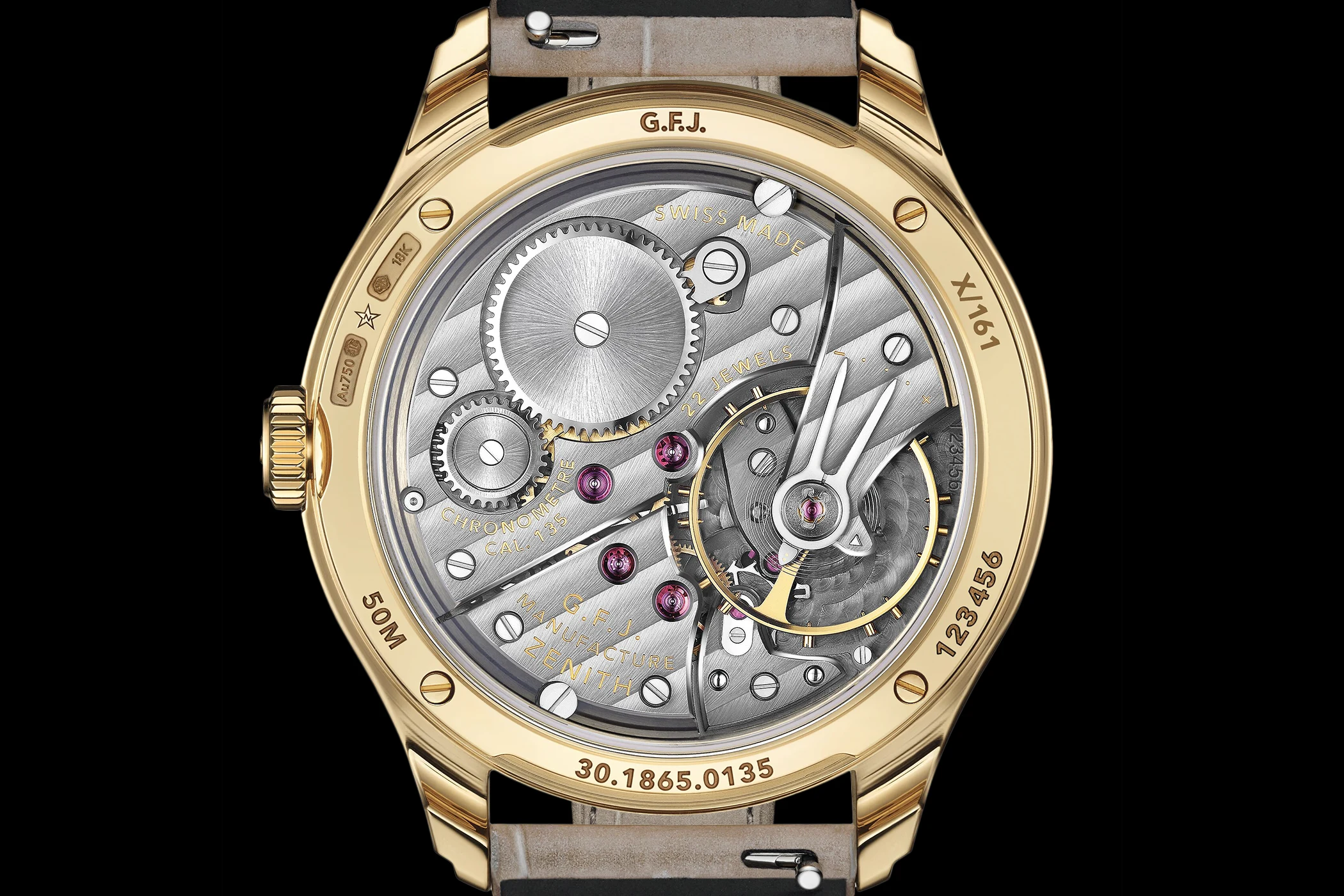
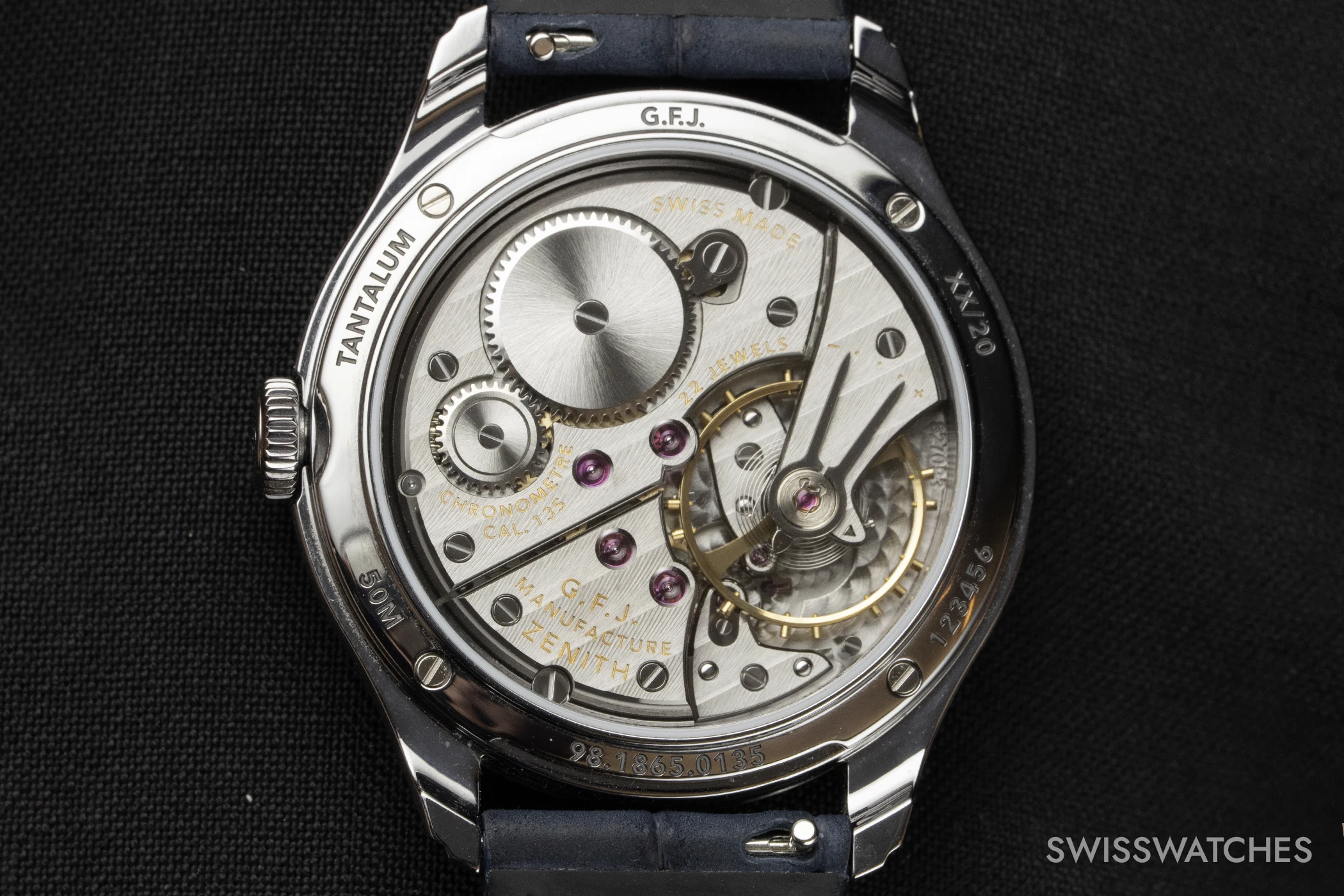
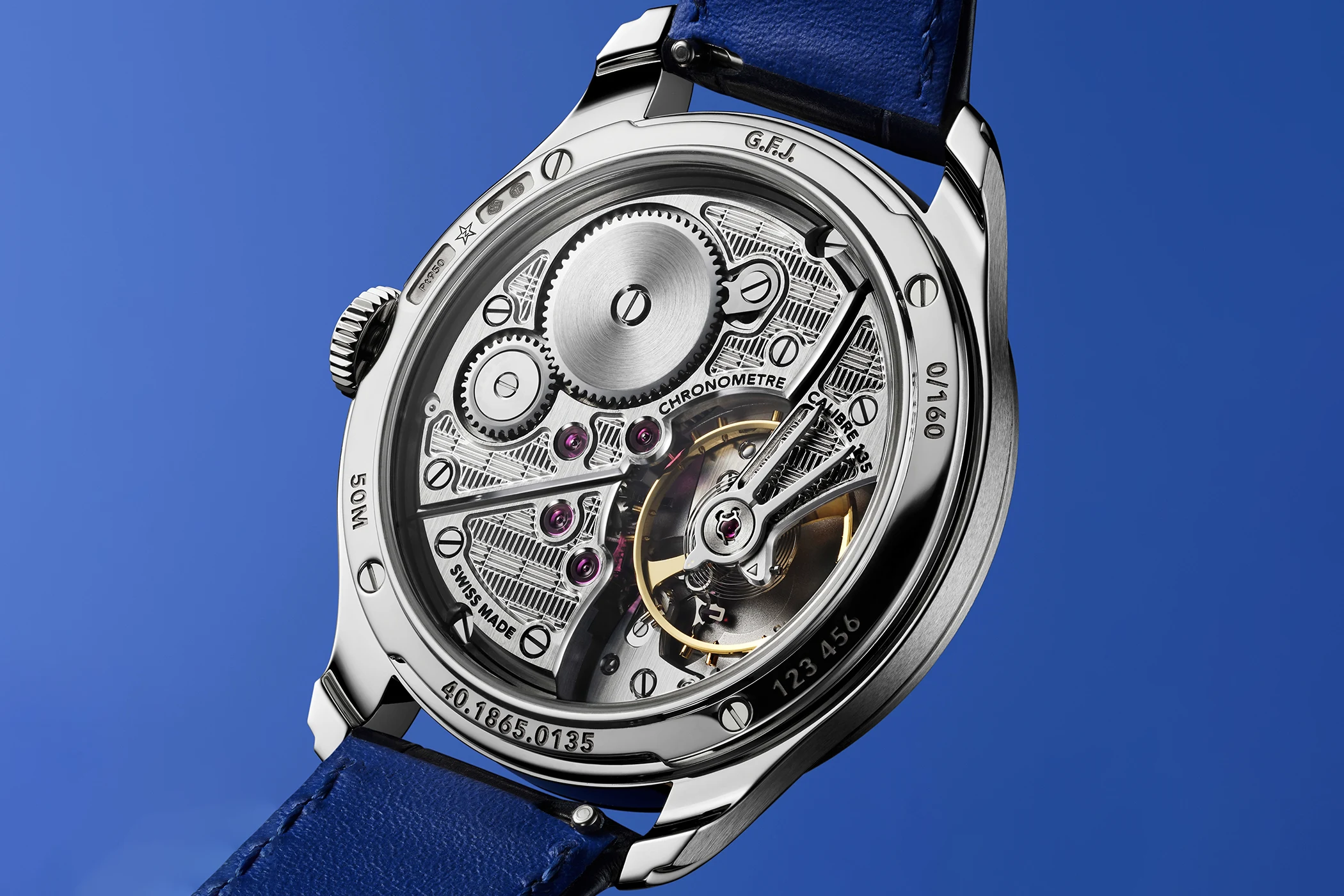
Through the sapphire crystal caseback of both versions, one can see exactly what this is all about. The Calibre 135 is not a movement that can be defined by mere specifications: its size, symmetry and the almost serene confidence of its construction account for much of its visual appeal. With the yellow gold Bloodstone version, Zenith employs more classical decorative codes with yellow gold-coloured engravings; in the tantalum version, the dark ruthenium coating echoes the colour of the case more strongly. Either way: in both cases, the movement remains the very reason for building these watches in the first place.
Perhaps this is also where the new G.F.J. models clearly stand out from more conventional new releases. Not because they are particularly spectacular, but because Zenith is using these models to gauge just how much appeal and reach its Calibre 135 actually has. The yellow gold Bloodstone version showcases the softer, more classic aesthetic that the G.F.J. can adopt. The tantalum version tests whether the same construction also works in a cooler, highly technical-looking design language. Both work, precisely because the aesthetics of both watches do not attempt to overshadow the main idea behind the creations or the movement.