
Watches & Wonders 2026: Vacheron Constantin Overseas Automatic Extra-Thin With a New Movement
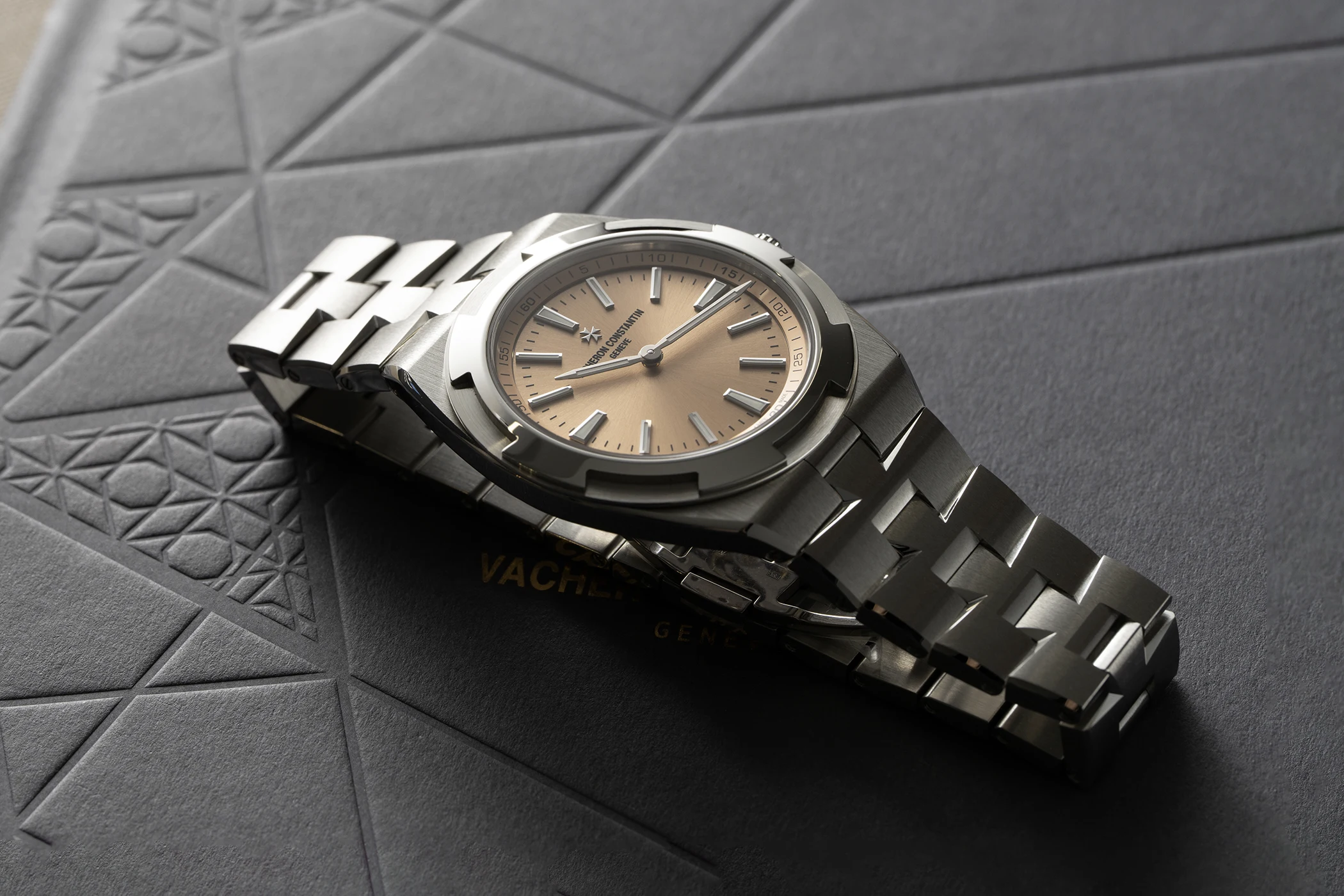
Vacheron has developed a new ultra-thin automatic movement. The Calibre 2550 makes its debut in the Overseas Automatic Extra-Thin, limited to 255 pieces and crafted from a new platinum alloy – thereby marking the retirement of a legendary calibre after almost 60 years of service.
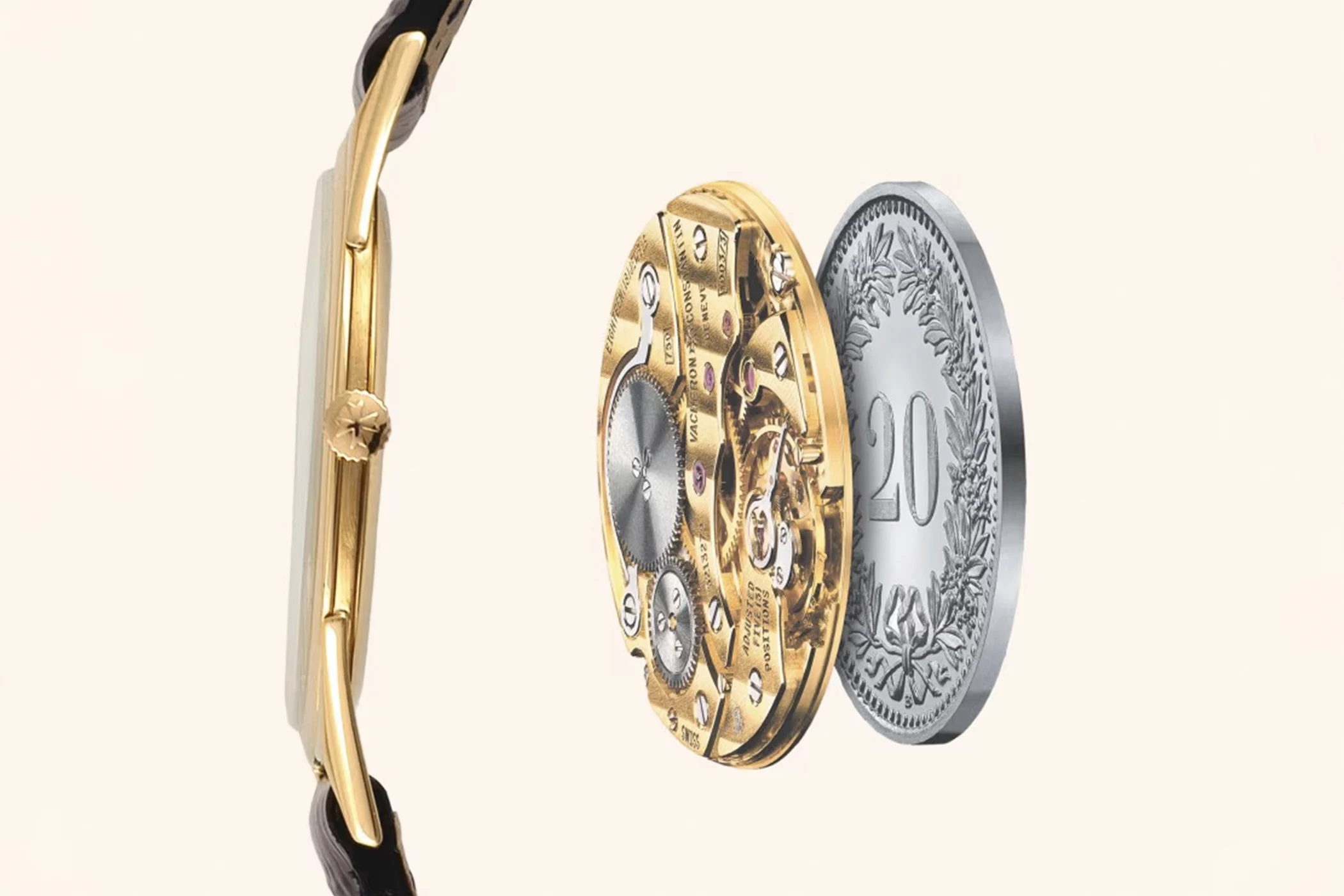
Although ultra-thin movements do not constitute a complication in the traditional sense, as they do not offer any additional functions, they require a similar level of effort in terms of design and manufacture. The development of the new Calibre 2550 at Vacheron Constantin took seven years. At just 2.4 millimetres thick, it is one of the flattest automatic movements in the world. Yet it offers a substantial power reserve of 80 hours. This is made possible by winding via a space-saving micro-rotor, an innovative flying double barrel and a gear train that is also partially suspended.
Vacheron Constantin has a long history of working with ultra-thin movements. In 1931, for instance, the manufacture produced a pocket watch with a movement just 0.94 mm thick. The Geneva-based company also produced the thinnest wristwatch movement in 1955: the hand-wound Calibre 1003 was 1.64 mm thick.
Overseas Automatic Extra-Flat
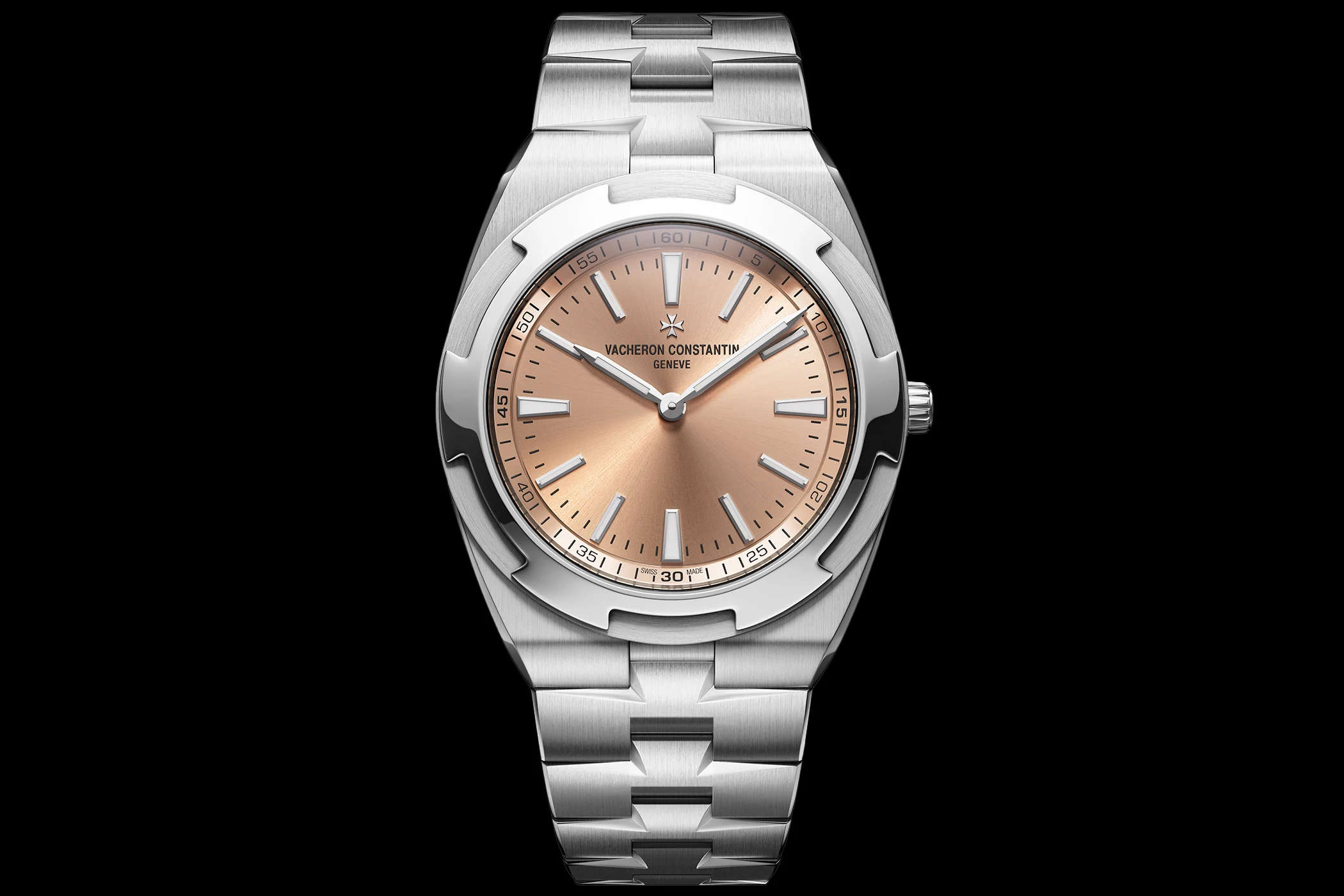
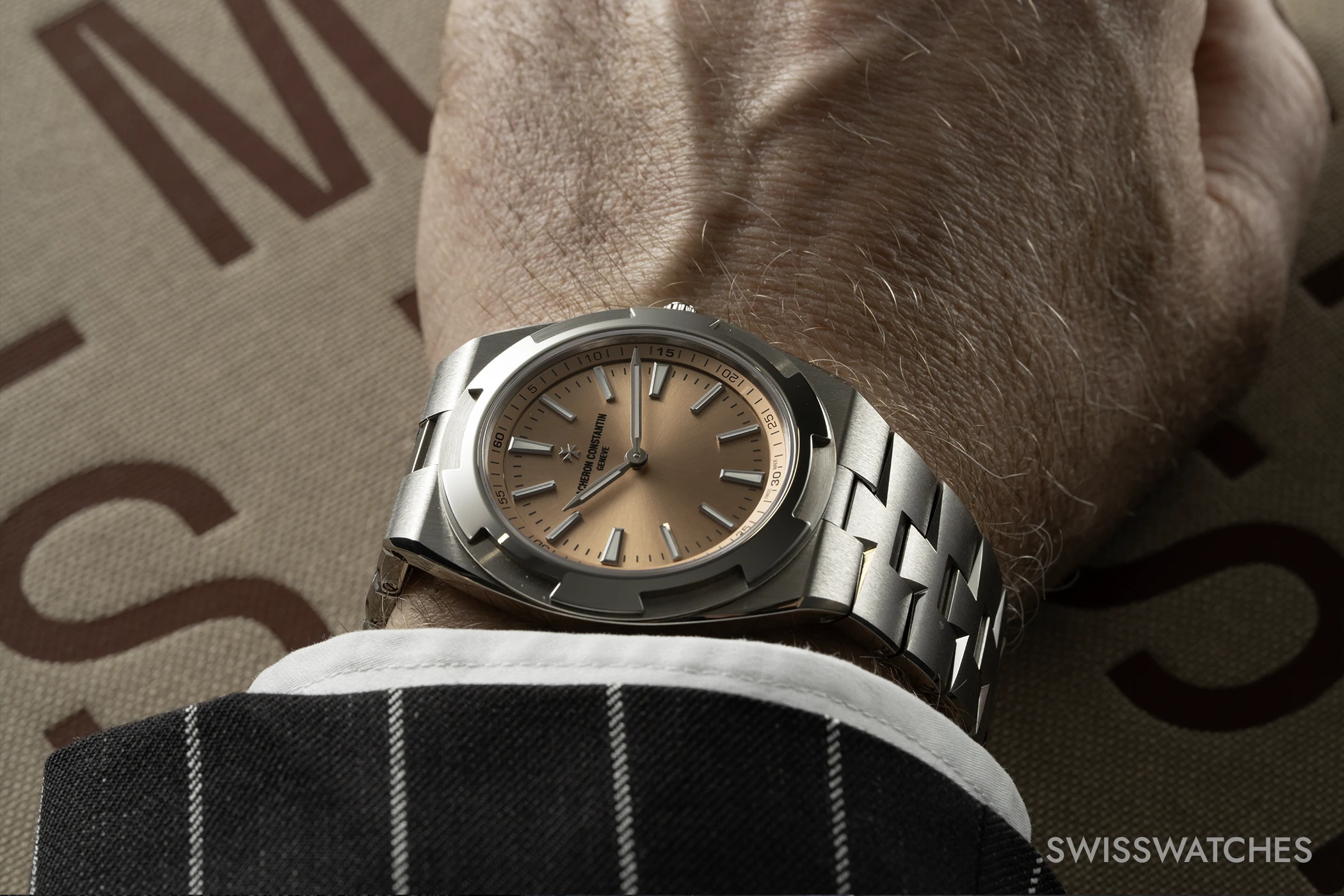
The newly developed movement allows for a total case thickness of just 7.35 millimetres. This makes it the thinnest Overseas ever produced. With a diameter of 39.5 millimetres, the model falls within the mid-range for a watch with an integrated metal bracelet. For the first time, Vacheron Constantin has used a platinum case for the Overseas. The rare 950 platinum alloy consists of 95% platinum and 5% copper and gallium. These additions create a material that is 2.7 times harder than standard 950 platinum alloys. This ensures fewer scratches on the otherwise quite soft precious metal.
As is typical of the Overseas collection, the bezel and strap incorporate design elements of the Maltese cross. This symbol has been the logo of the manufacture, founded in 1755, since 1880. A quick-change system allows the three straps supplied to be swapped without the need for tools. As always, the Overseas comes with three straps: the platinum bracelet, a beige rubber strap and a dark beige alligator strap.
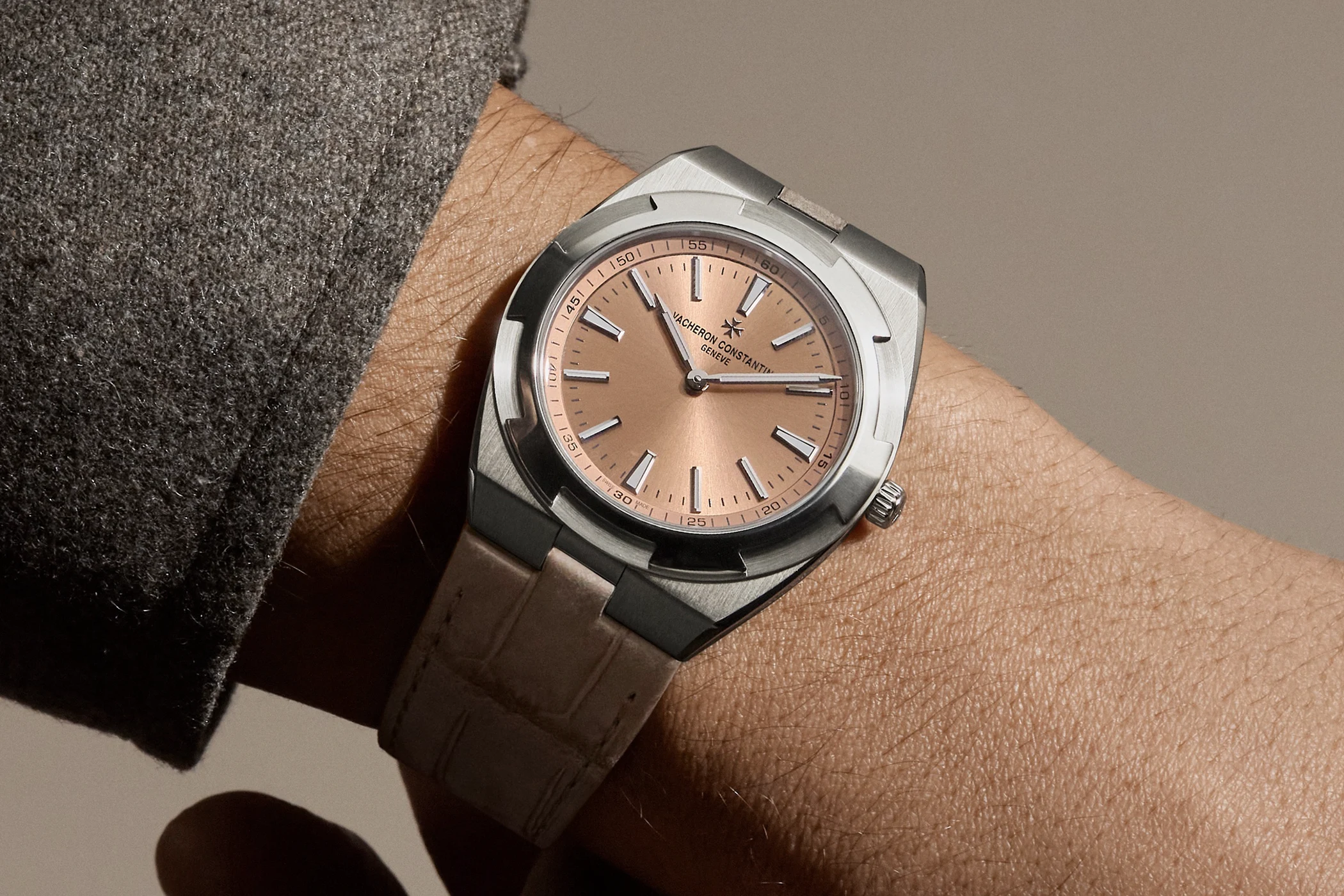
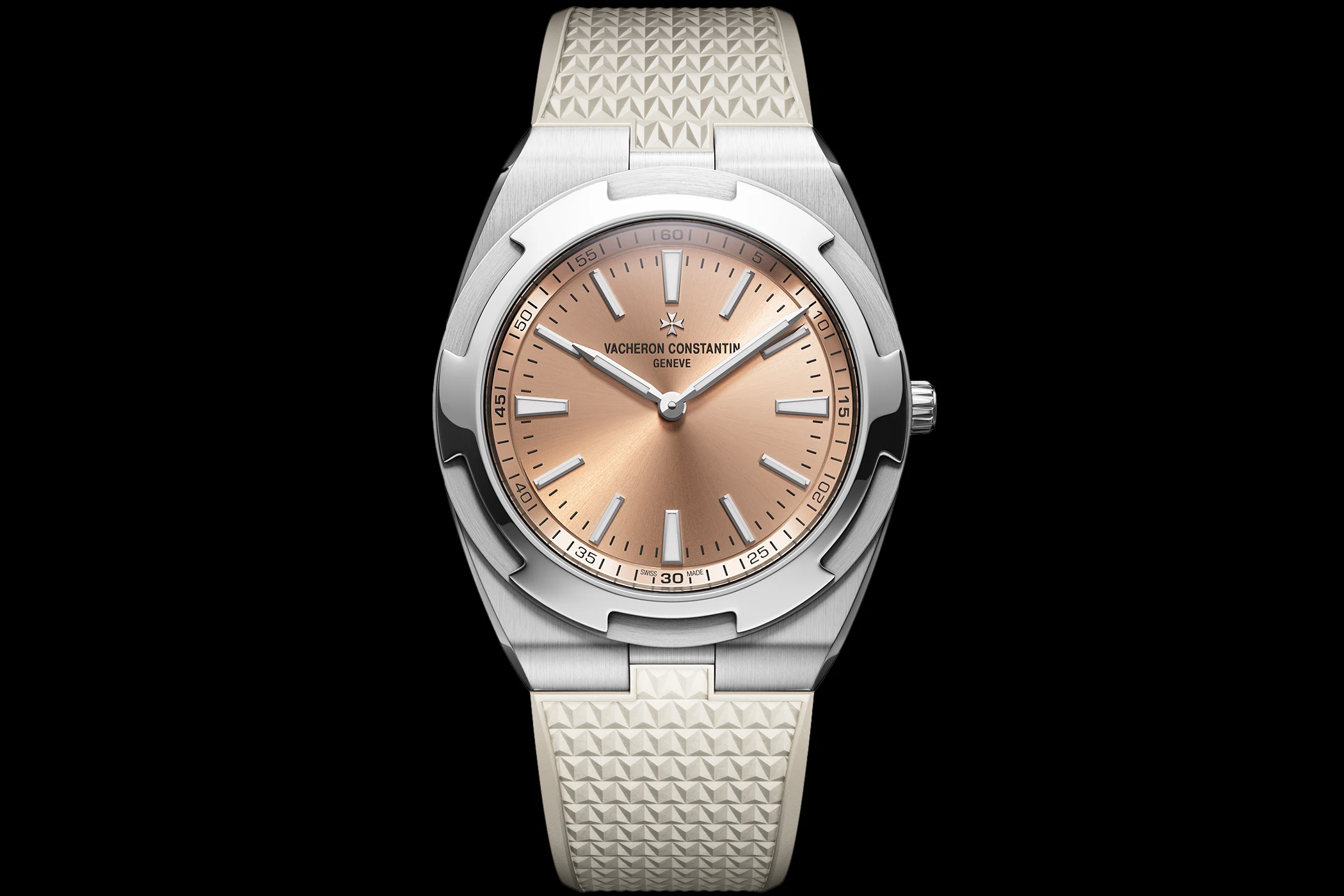
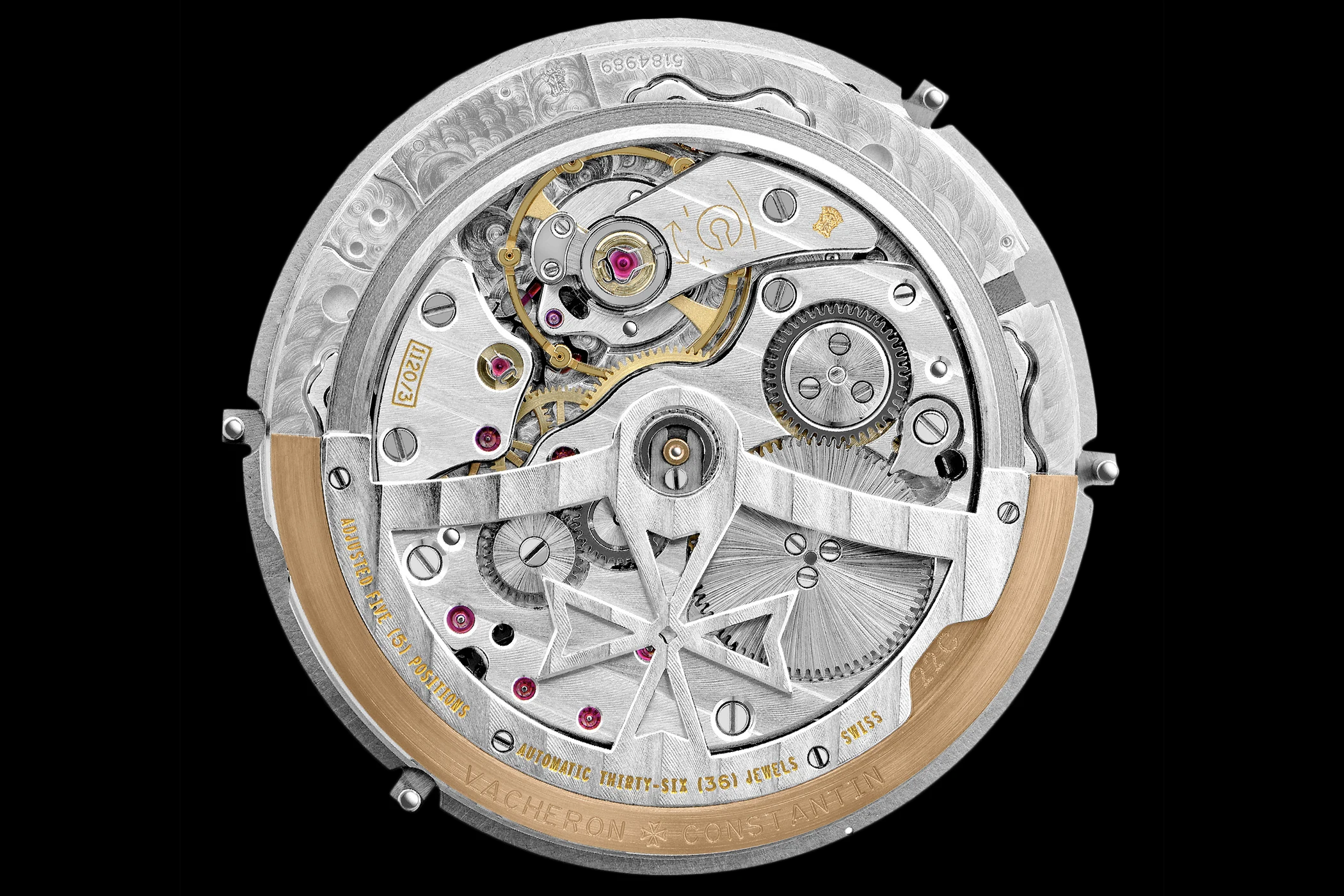
The Geneva-based brand combines the platinum case with a salmon-coloured sunburst dial. As far back as the 1940s, this dial colour was typical of Vacheron Constantin’s platinum models. The case is water-resistant to 50 metres and, thanks to the sapphire crystal caseback, offers a view of the new Calibre 2550 with micro-rotor.
Calibre 2550
The newly developed movement replaces the Calibre 1120, which Jaeger-LeCoultre developed in 1967 for Vacheron Constantin and others. At 2.4 millimetres, the new calibre is 0.05 millimetres thinner. Furthermore, the balance wheel oscillates at 21,600 vibrations per hour, which is at least slightly faster than the 19,800 vph of the old movement, a factor that should improve timekeeping accuracy. Above all, Vacheron Constantin has managed to double the power reserve to 80 hours.
The Calibre 2550 is therefore significantly more powerful despite its reduced height. Although the manufacturer was able to gain some space by increasing the diameter by 2.6 millimetres to 30.6 millimetres, the ambitious power reserve targets could not be achieved in the slim movement without innovations and mechanical ingenuity.
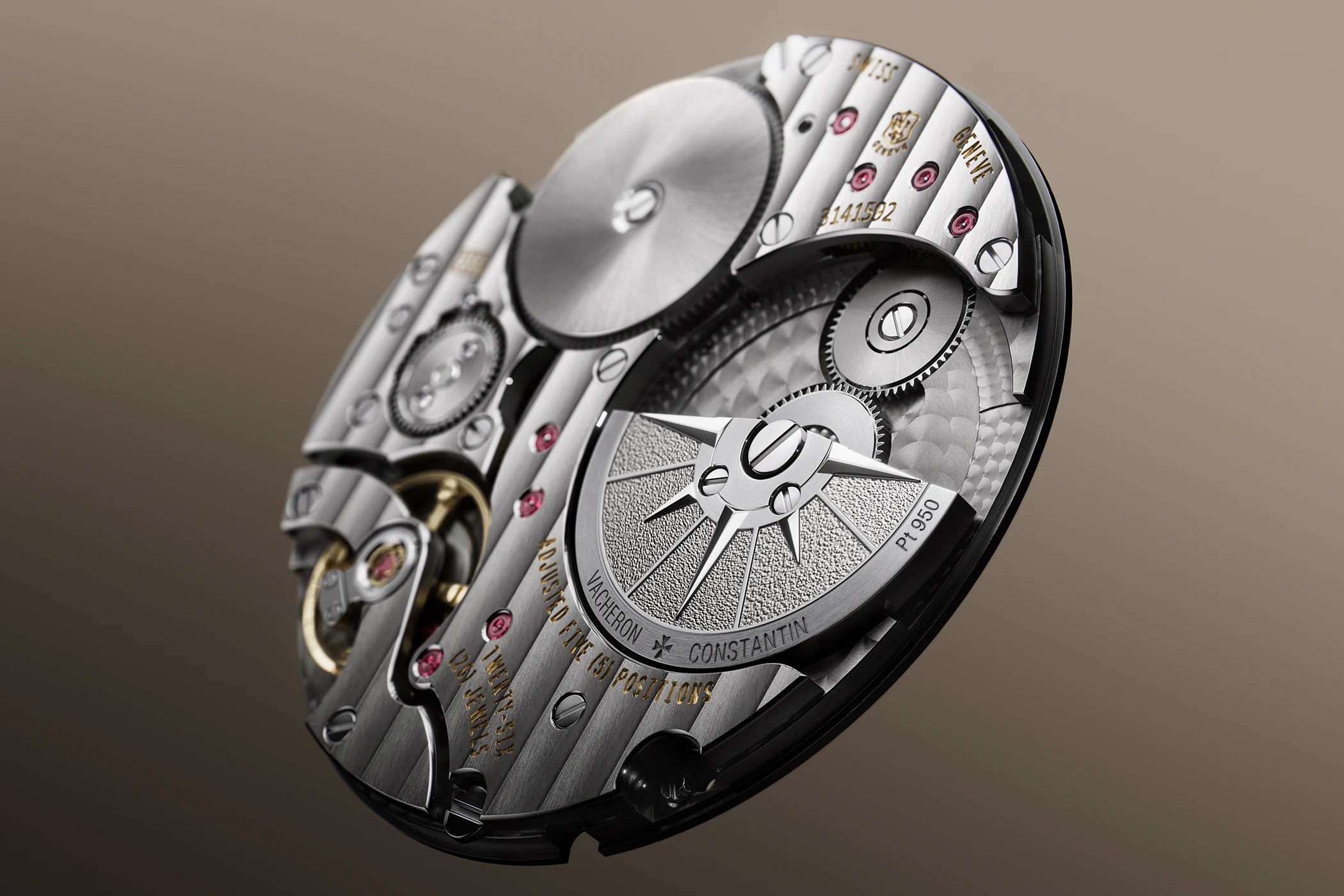
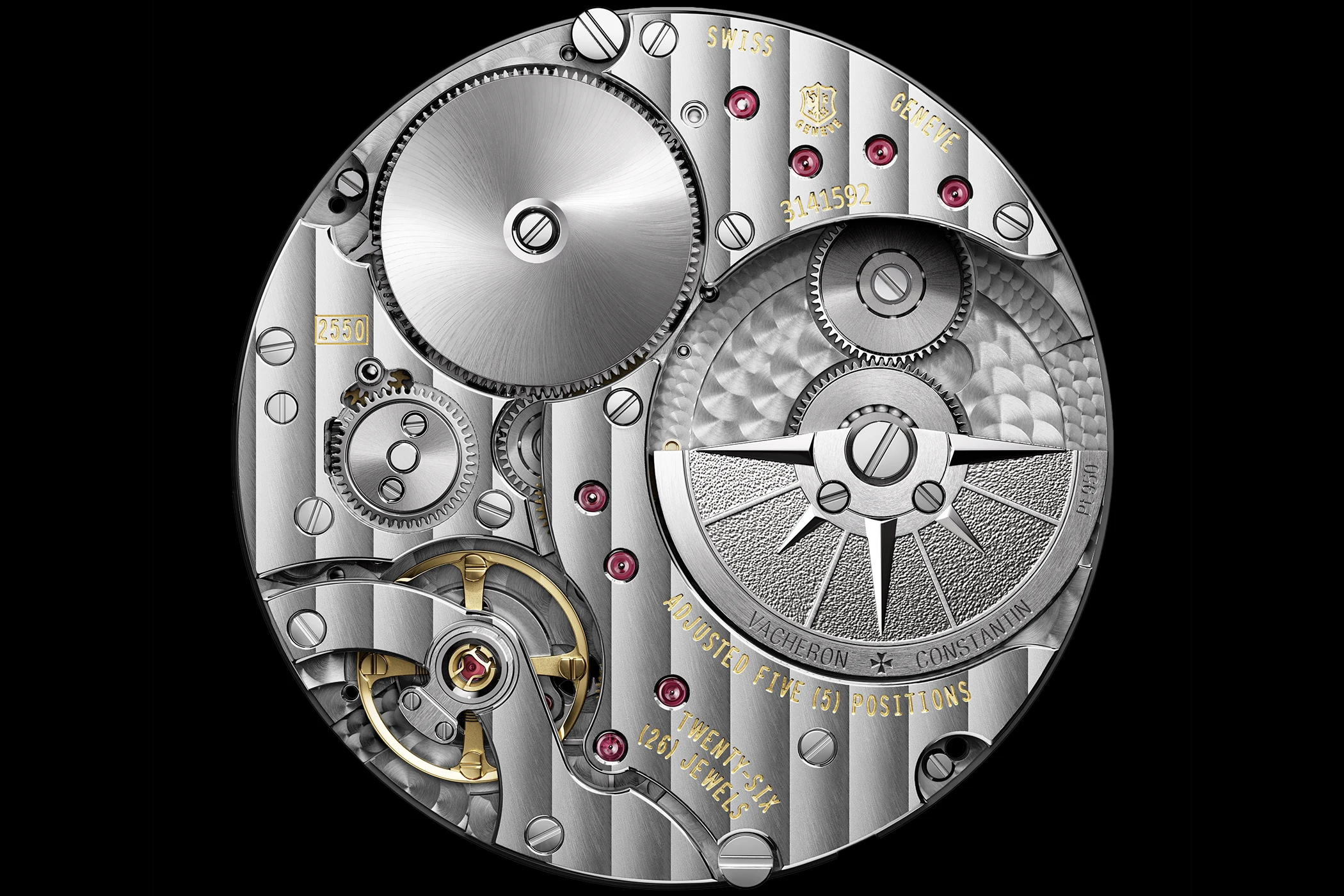
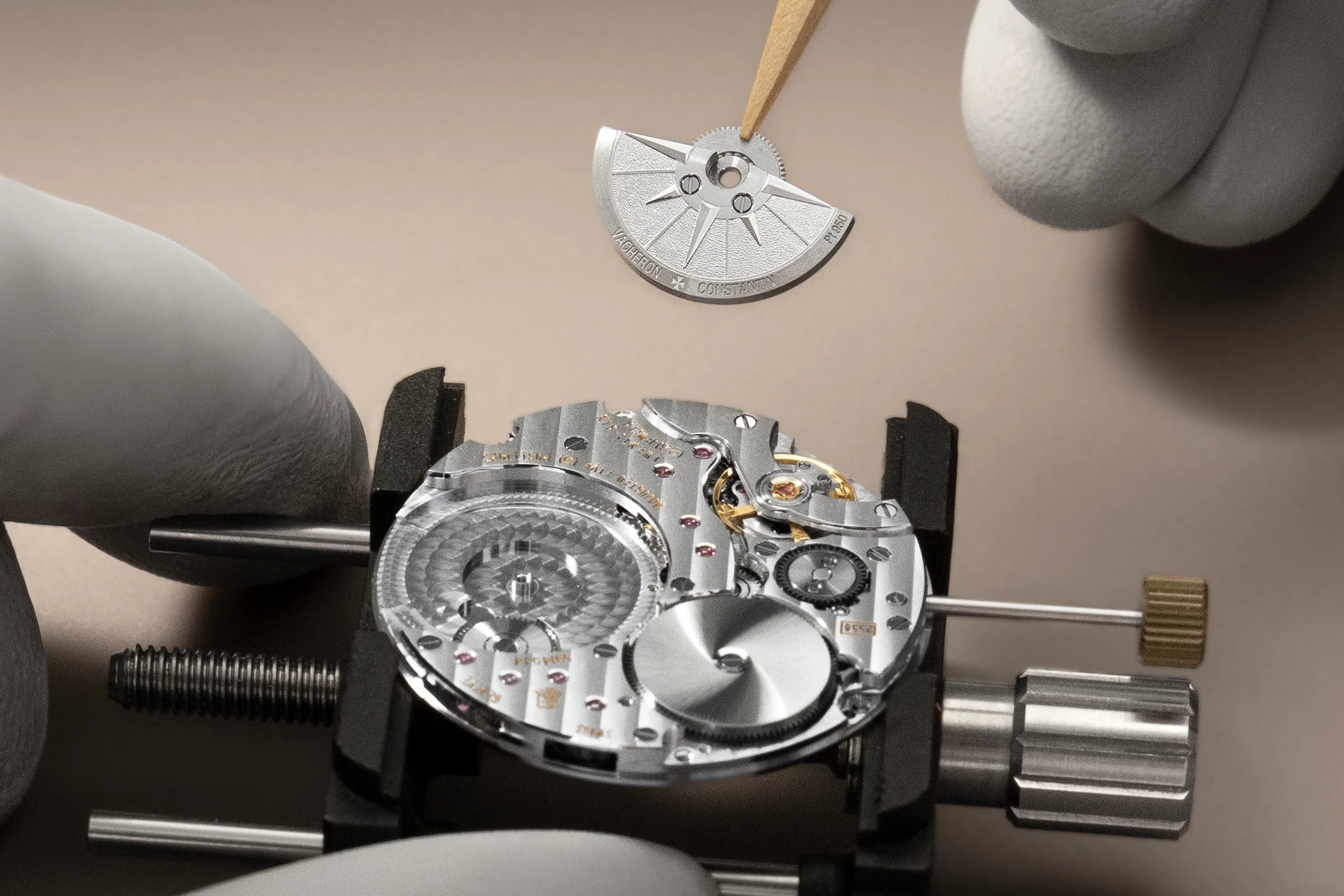
To keep the overall height low, two of the five wheels in the gear train are mounted in a cantilevered configuration, i.e. supported on one side only. Ball bearings ensure that the lever forces which might otherwise arise with this type of mounting are eliminated. The micro-rotor also helps to save space: with its 15.5-millimetre platinum rotor, it nevertheless generates sufficient torque to quickly wind the mainspring from both sides.

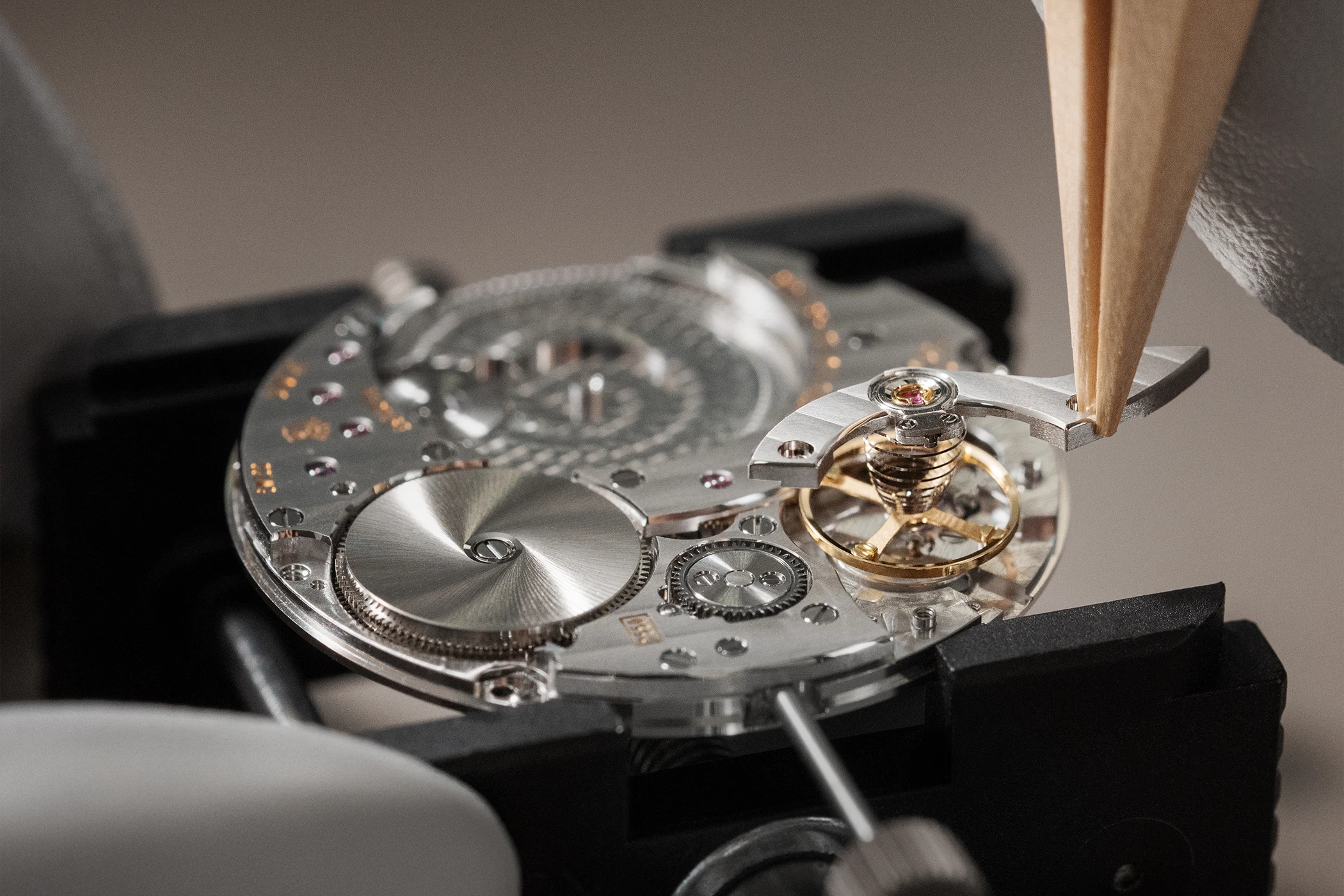
The floating double barrel represents a genuine innovation: two barrels arranged one above the other rotate on a shared axis mounted in the barrel bridge. The serial arrangement of the stacked barrels with opposite orientations has made it possible to omit one of the barrel covers, which contributes significantly to the slim design of the movement. As the winding torque is transmitted directly to the upper barrel, whilst the lower barrel transfers the energy to the gear train, the escape wheel has also been dispensed with.
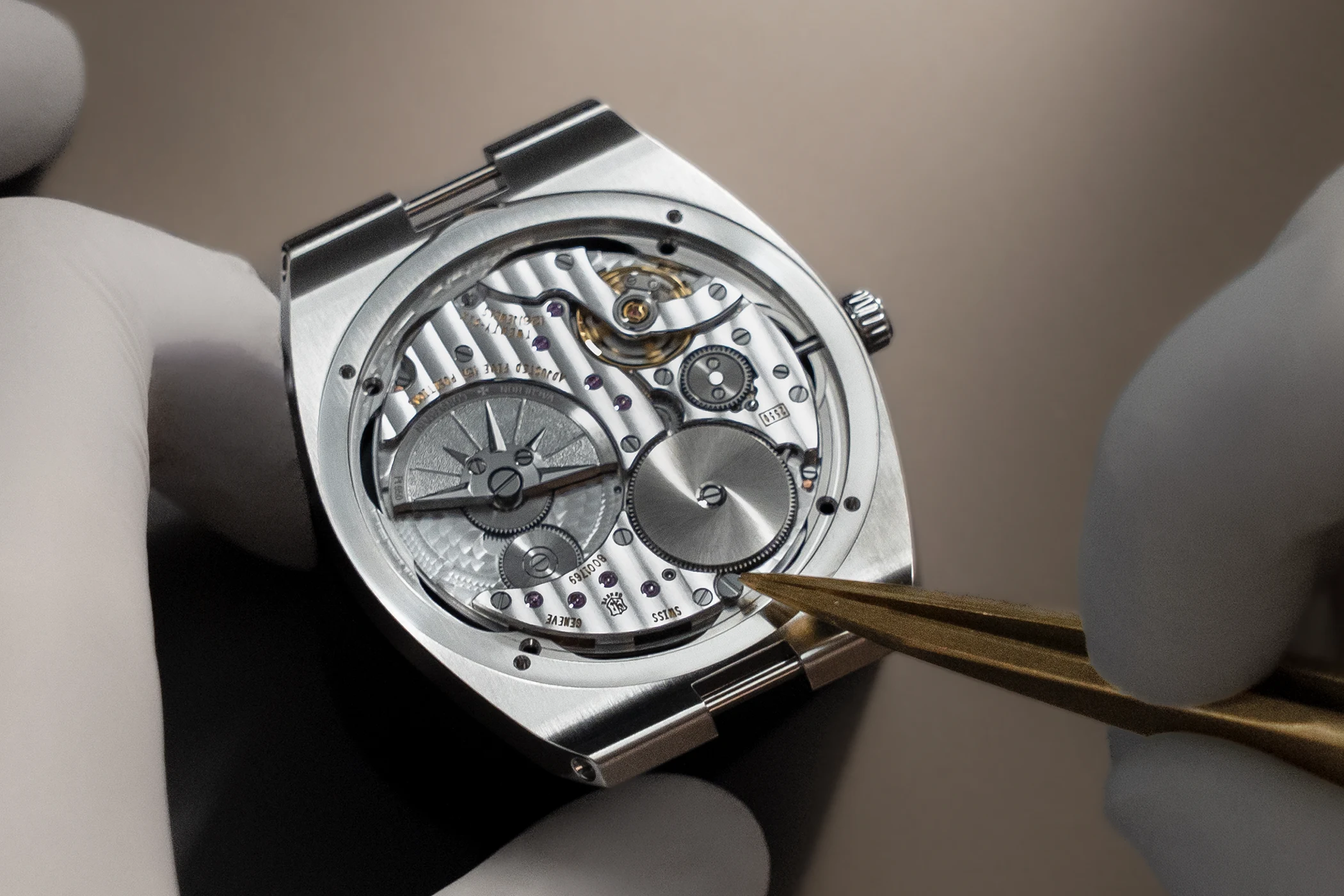
Although the two barrels are positioned one above the other, they operate in series and are linked via their barrel shafts. This configuration ensures a consistent torque and, consequently, consistent timekeeping accuracy.
The free-swinging balance wheel without a balance cock also plays a part in this. It can be finely adjusted via eccentric weights on the balance cock. The movement bears the Geneva Seal, which firstly guarantees that manufacture, assembly and regulation take place in the canton of Geneva. Secondly, it stipulates specific requirements regarding water resistance, power reserve and accuracy. And thirdly, the seal imposes high standards on construction and decoration.
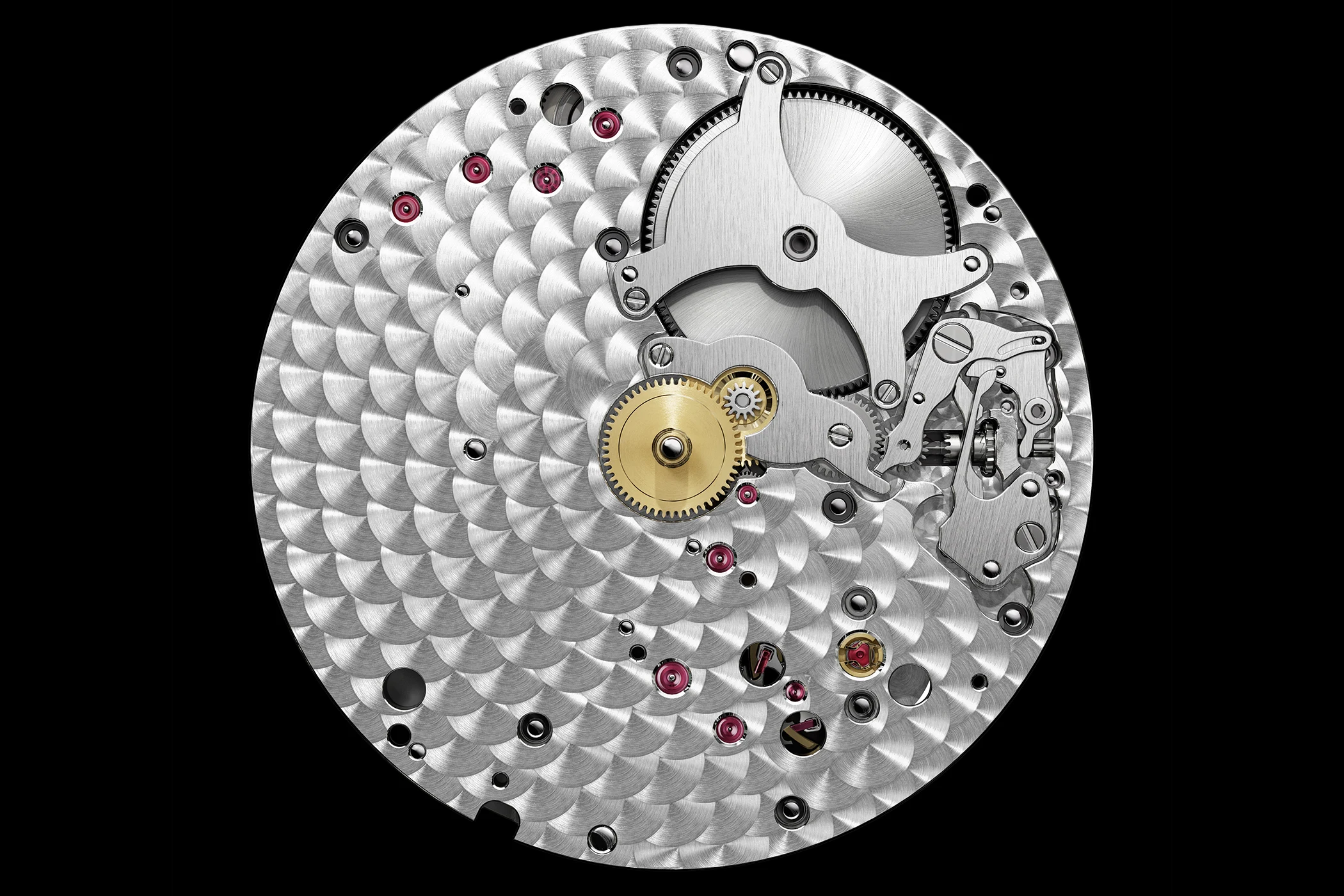
Accordingly, Vacheron Constantin decorates the mainplate with circular graining, applies Côtes de Genève to the bridges, bevels and polishes the edges, and adorns the wheels with a sunburst finish, whilst the barrel is given a twisted sunburst finish. The micro-rotor features an engraved compass rose, symbolising the spirit of exploration embodied by the Overseas collection.
Farewell to the legendary Calibre 1120
The new Calibre 2550 is therefore significantly more powerful, and owners of the Overseas Automatic Extra-Flat will appreciate the doubled power reserve. Yet there is also a touch of wistfulness, for with Vacheron Constantin, the last of the great watchmakers is now bidding farewell to the legendary Calibre 1120.
The movement was developed by Jaeger-LeCoultre in 1967 under the internal designation 920 for Vacheron Constantin, Patek Philippe and Audemars Piguet. For decades, it was the thinnest calibre with a central rotor and made history by powering both the first Royal Oak in 1972 and the first Nautilus, which was launched in 1976. And as a third significant model, it was used in the equally famous Vacheron Constantin 222 from 1977. The model, designed by Jörg Hysek with an integrated bracelet, is regarded as the precursor to the Overseas, launched in 1996. Incidentally, all three watches at the time featured a date display but no seconds hand. At Vacheron Constantin, the movement was known as the 1120, at Patek as the 28-255 C, and at Audemars Piguet as the 2120 and 2121.
The calibre had a diameter of 28 millimetres, was 2.45 millimetres thick without a date display and 3.05 millimetres thick with a date display. With an unusual frequency of 19,800 vibrations per hour, it achieved a power reserve of 40 hours. What made the movement technically unique was the central rotor, which was supported by ruby rollers mounted on the mainplate to protect the rotor shaft.
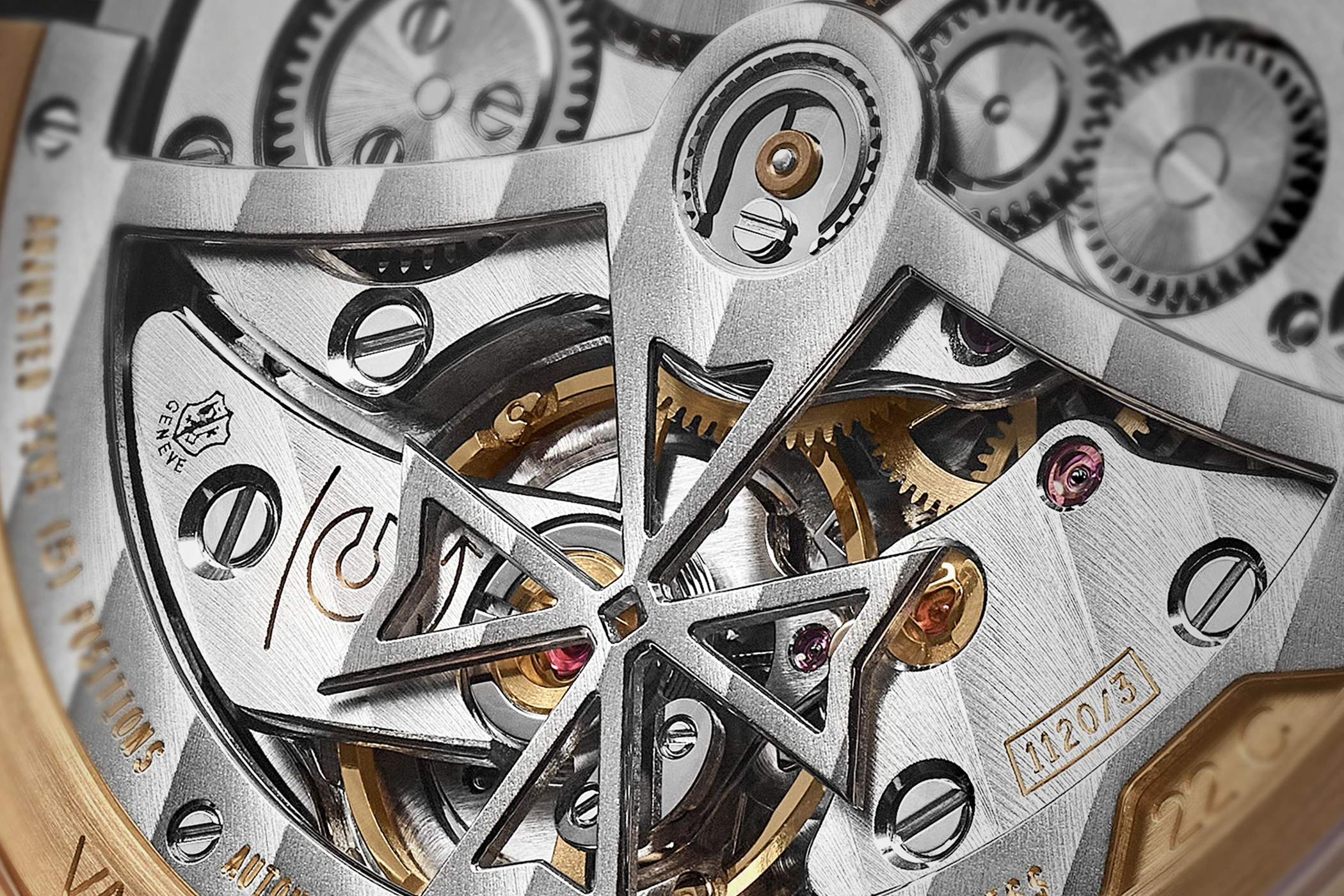
Patek Philippe replaced the calibre in the Nautilus as early as 1980, Audemars Piguet unveiled the new in-house calibre 7121 as its successor in 2022, and now Vacheron Constantin is also retiring the slim movement after almost 60 years of service.
Fazit
With the new Calibre 2550, Vacheron Constantin demonstrates that even extremely flat movements can be high-performance. The effort put into its development has paid off: the innovative design, featuring a flying double barrel, ensures a long power reserve and makes this even flatter movement a superior successor to the legendary Calibre 1120.
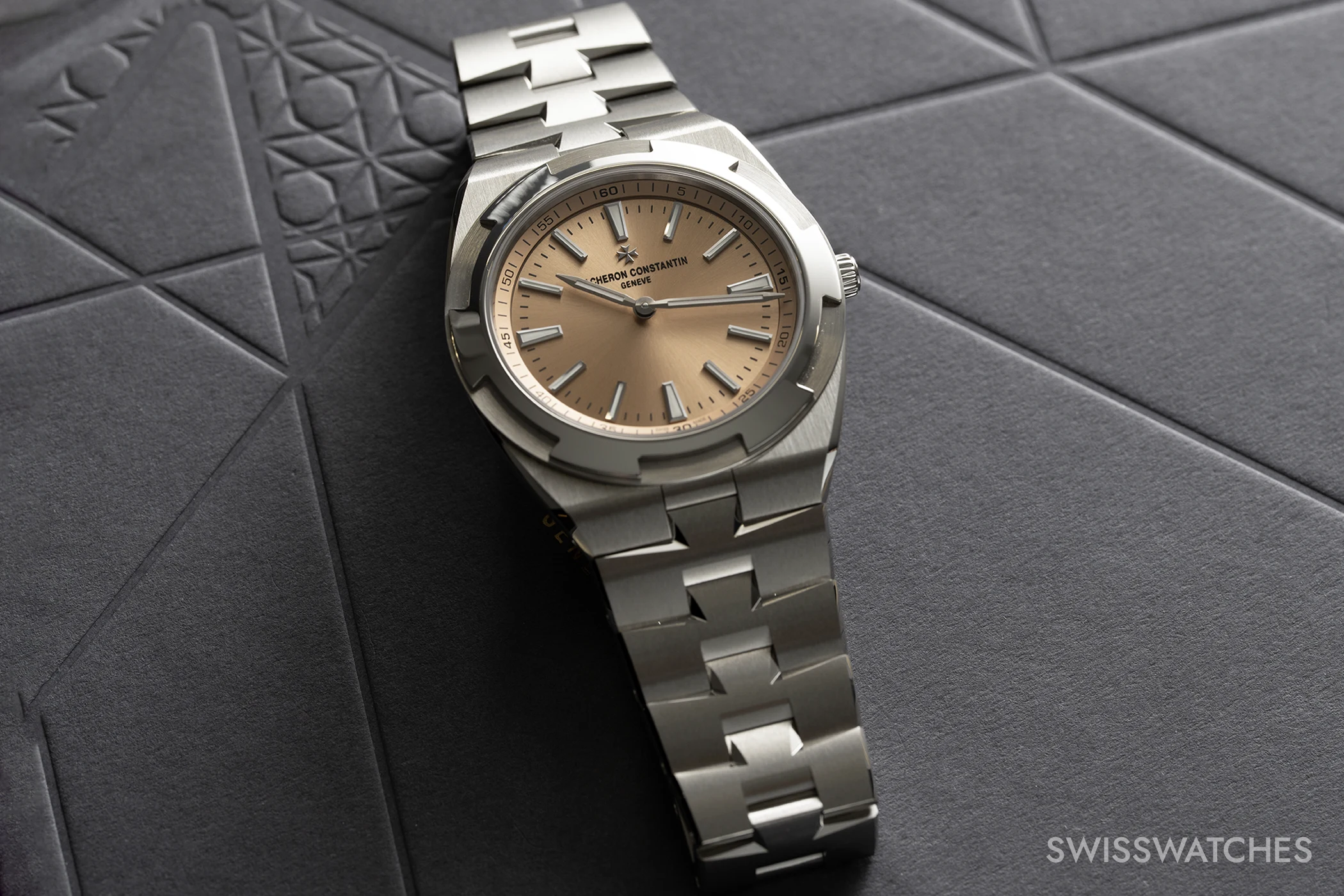
The Overseas Automatic Extra-Flat in platinum provides a beautiful setting for this launch: limited to 255 pieces, it features a salmon-coloured dial reminiscent of the platinum models of the 1940s, a hard platinum alloy, and a case height that is slimmer than any previous Overseas model.
Login
Please login to comment
0 Comments
Most Voted