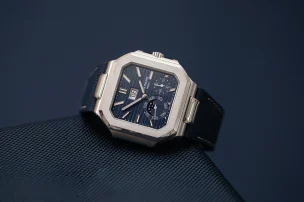
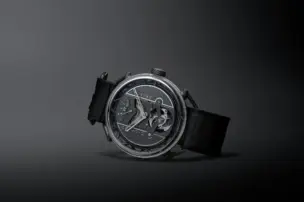
IWC presents its new Perpetual Calendar, Ceralume and striking new Engineer models, straight from Schaffhausen.

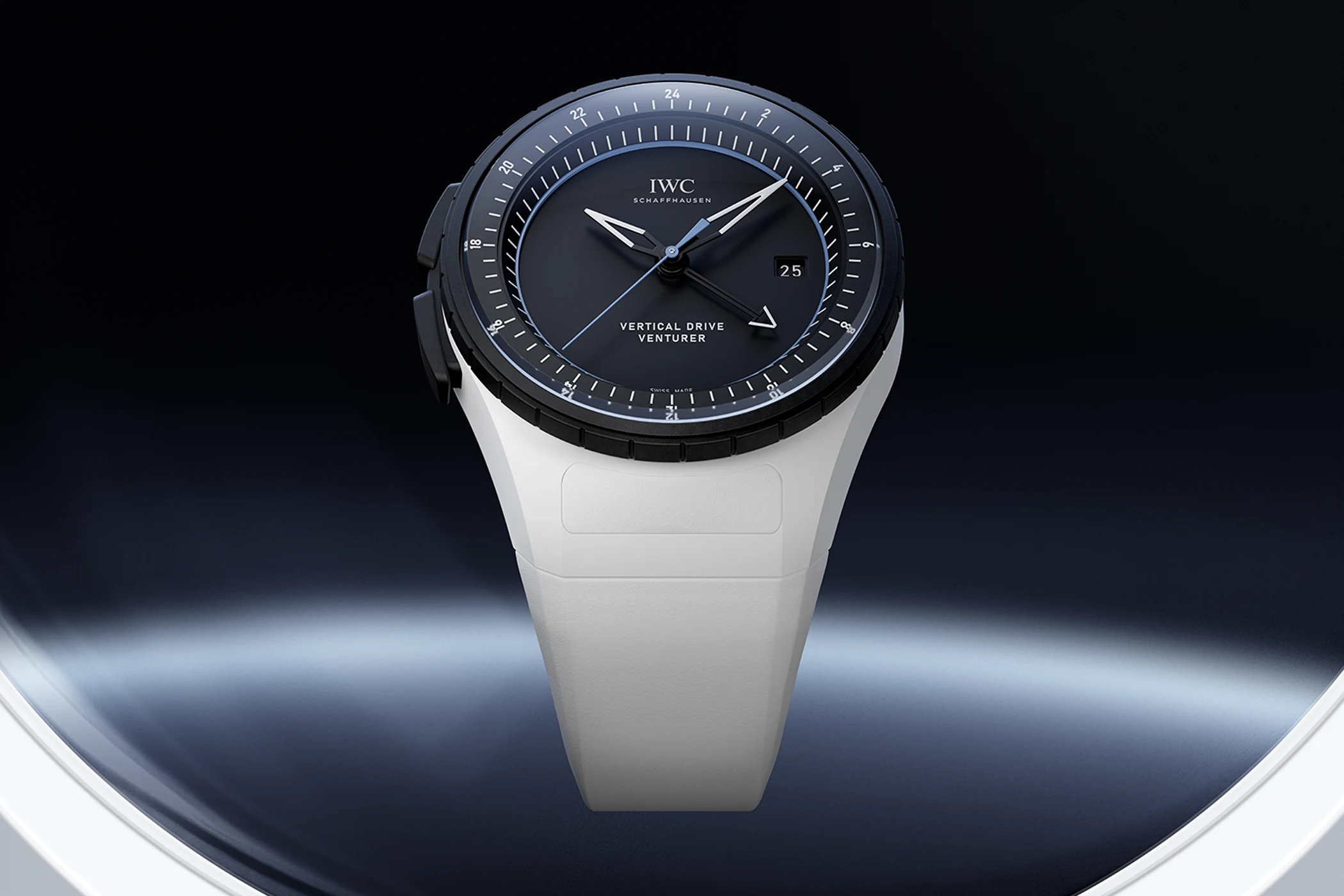
The new IWC Pilot’s Venturer is a watch that was designed from the outset to meet the demands of modern space travel and for the coming space age.
Any watch can tell the time. But which timepiece truly speaks to you – and thus touches you in ways that go far beyond your wrist – is a far more complex matter. It comes down to what the watch evokes in you. How it makes you feel. Whether it suits your personality. Or even: what it inspires you to be.
As Chris Grainger-Herr, CEO of IWC, gives a preview of the new Pilot’s Venturer Vertical Drive to a select audience, he stands in the control room of the space start-up Vast in Long Beach, California. In front of him are dozens of workstations with monitors; behind him, huge screens on which nothing less than the next stage of space exploration is to be monitored and controlled. The guest feels as though they are on a film set, somewhere between the spirit of optimism from ‘To The Moon’ and the adventures familiar from films such as ‘Gravity’.
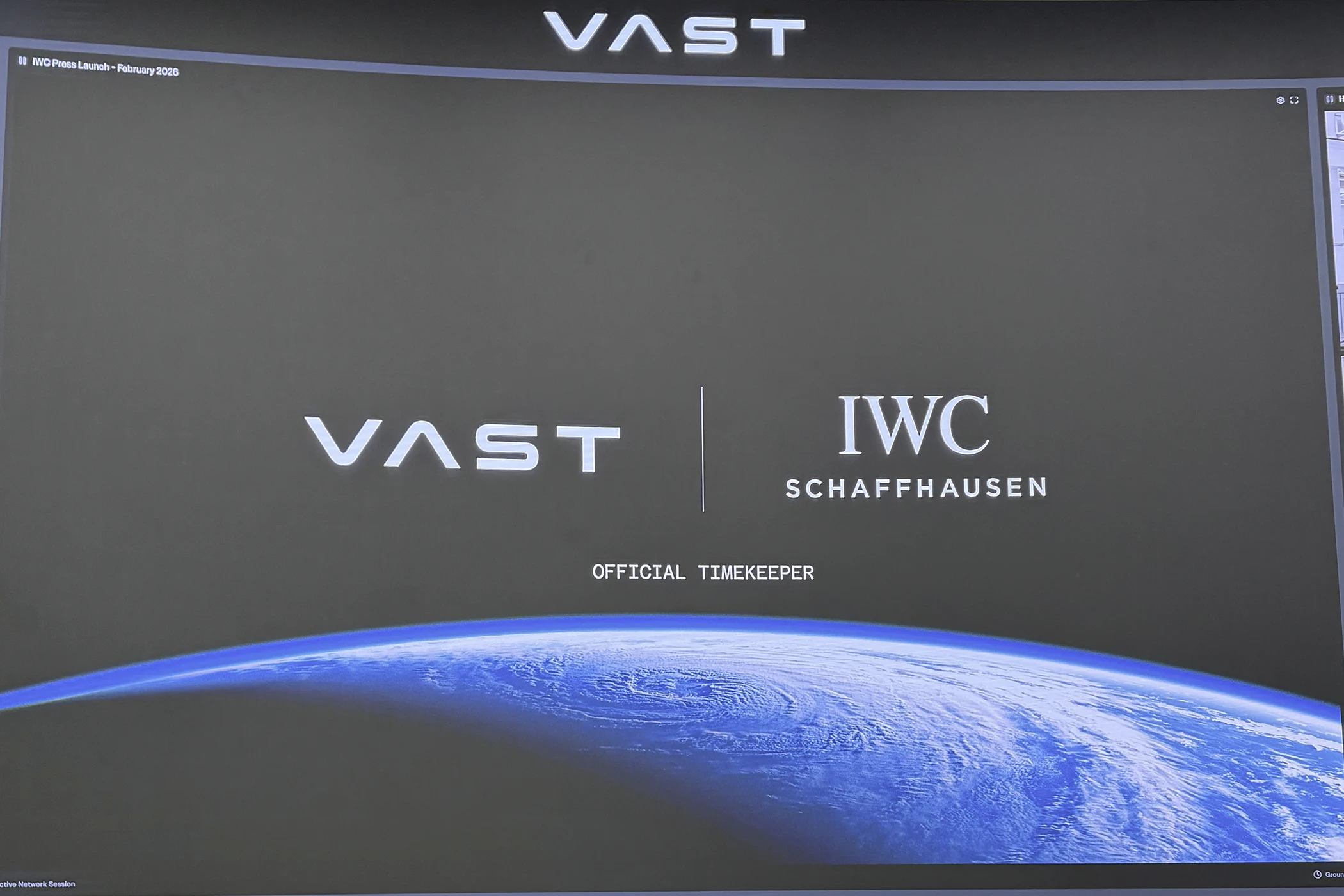
But this is reality, and so too is the Pilot’s Venturer, which Grainger-Herr presents with confidence: “This is the first watch ever that is not a variant of a timepiece originally designed for other purposes, but a watch conceived from the outset to meet the demands of modern space travel and for the coming space age.” It is a watch for astronauts, and thus also for all those who feel a longing for distant lands at the sight of a starry sky – or who are at least enthusiastic about life and research far above us.
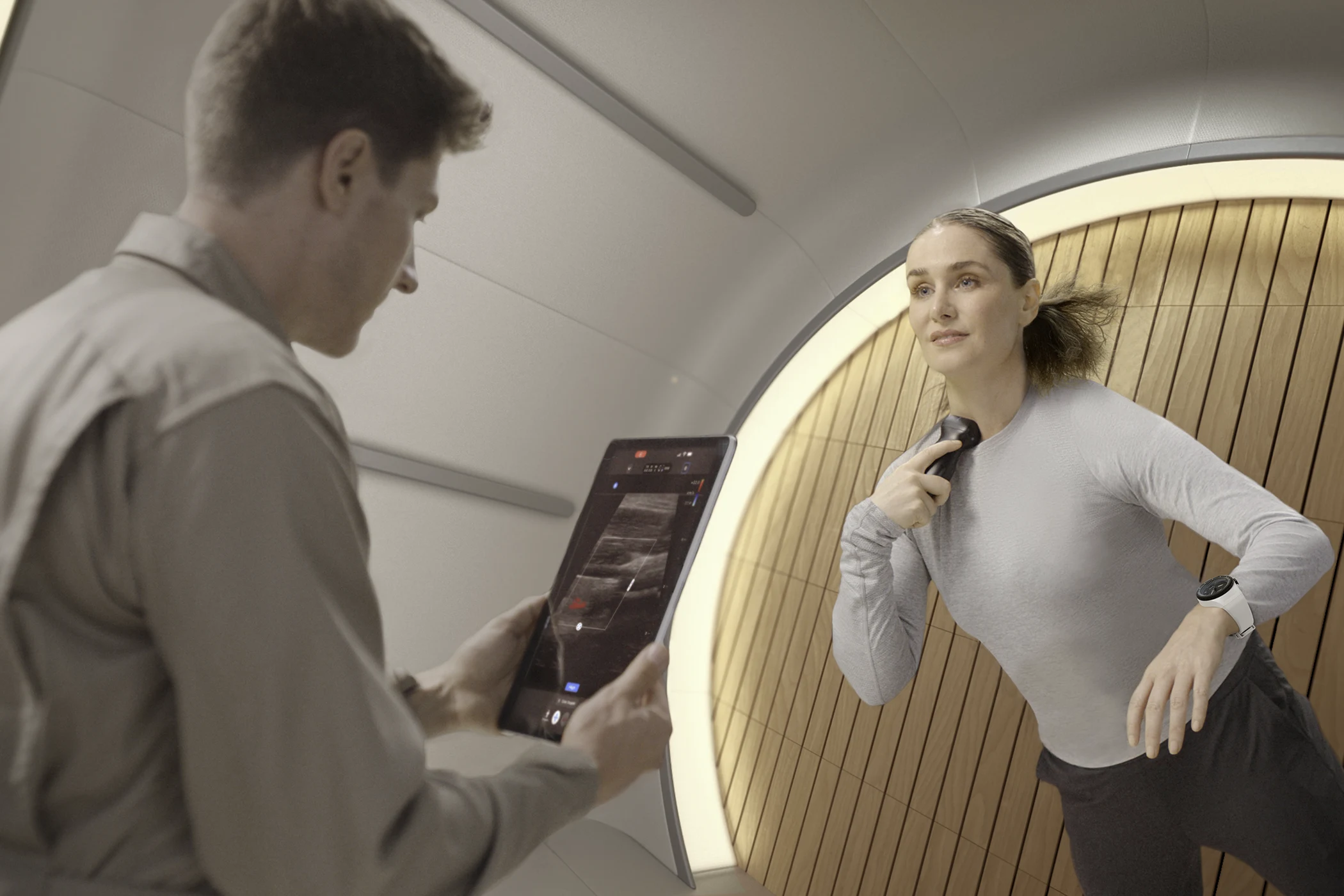
IWC is by no means a complete newcomer to the world of space exploration. The Polaris Dawn mission, for example, was already equipped with pilot’s chronographs made of white ceramic. But the collaboration with Vast, and the resulting Venturer, is something quite special. Founded around five years ago by blockchain billionaire Jed McCaleb, the company aims to be right at the forefront of the race for private-sector space exploration. It is competing with companies such as Blue Origin, founded by Amazon’s Jeff Bezos, and Voyager Space, which is collaborating with Airbus.
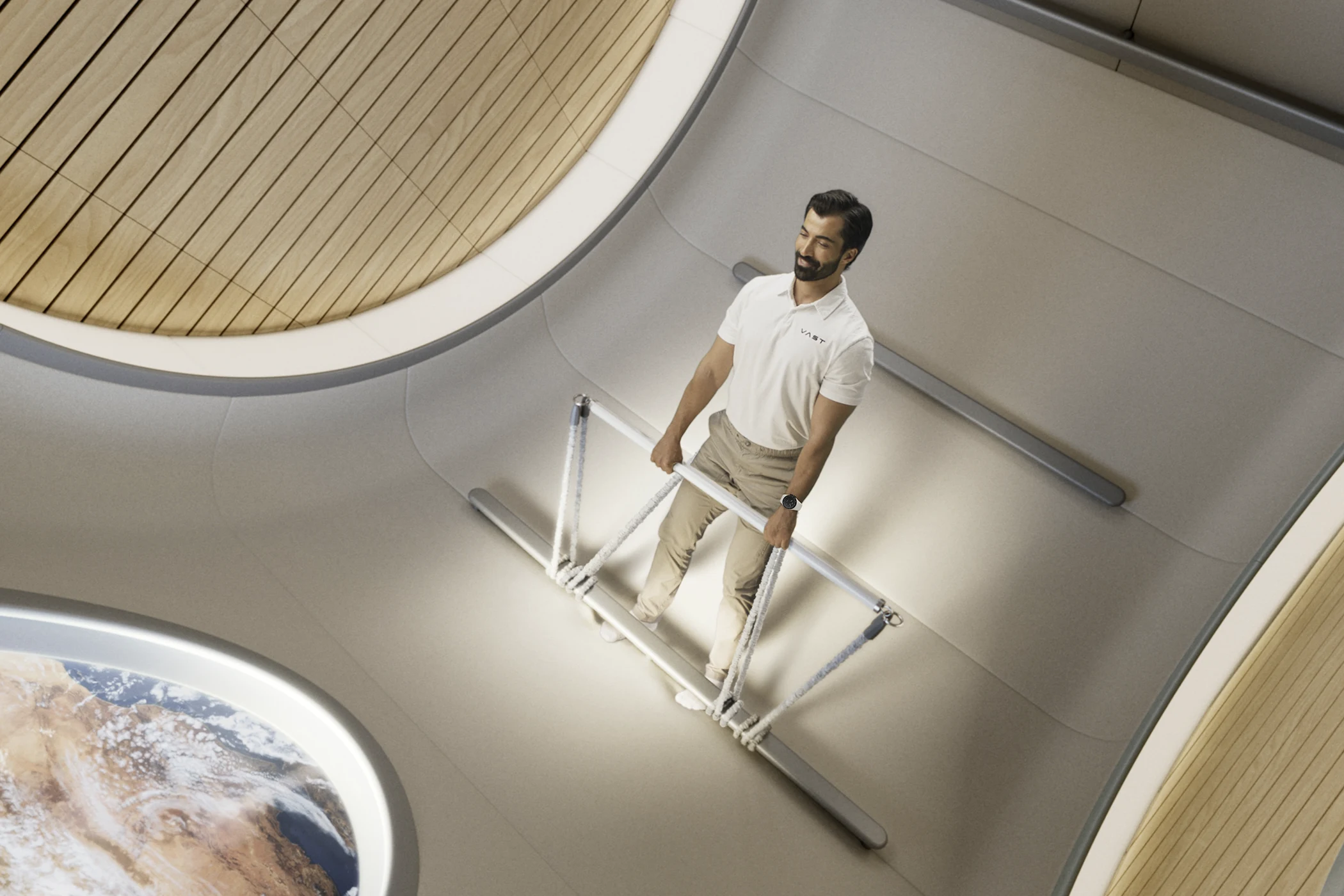
The background: Until now, NASA has operated the International Space Station (ISS) in partnership with Europe, Russia, Japan and Canada. The 450-tonne research laboratory, situated some 400 kilometres above Earth, has now reached the end of its operational life and is set to be brought down in a controlled manner in 2030. Instead of financing another joint project of this kind with other countries, NASA intends to rely more heavily on the services of private providers in future and commercialise space travel. Vast – the name refers to the infinite vastness and possibilities of space – aims to become an attractive partner for governments, companies and wealthy space tourists with the space habitats it will have developed by then. “Haven-1”, a ten-metre module for four passengers, is set to demonstrate feasibility next year, to be followed by “Haven-2”, a larger space station comprising several dockable modules. The exact prices for ten days in the capsule are confidential, but are said to run into tens of millions of euros. After all, McCaleb is prepared to invest up to a billion dollars of his own fortune in the start-up, which now employs more than 1,000 people. To this end, he aims to raise hundreds of millions from other investors. Since last year, IWC has been the official timekeeper and strategic partner for this mission.

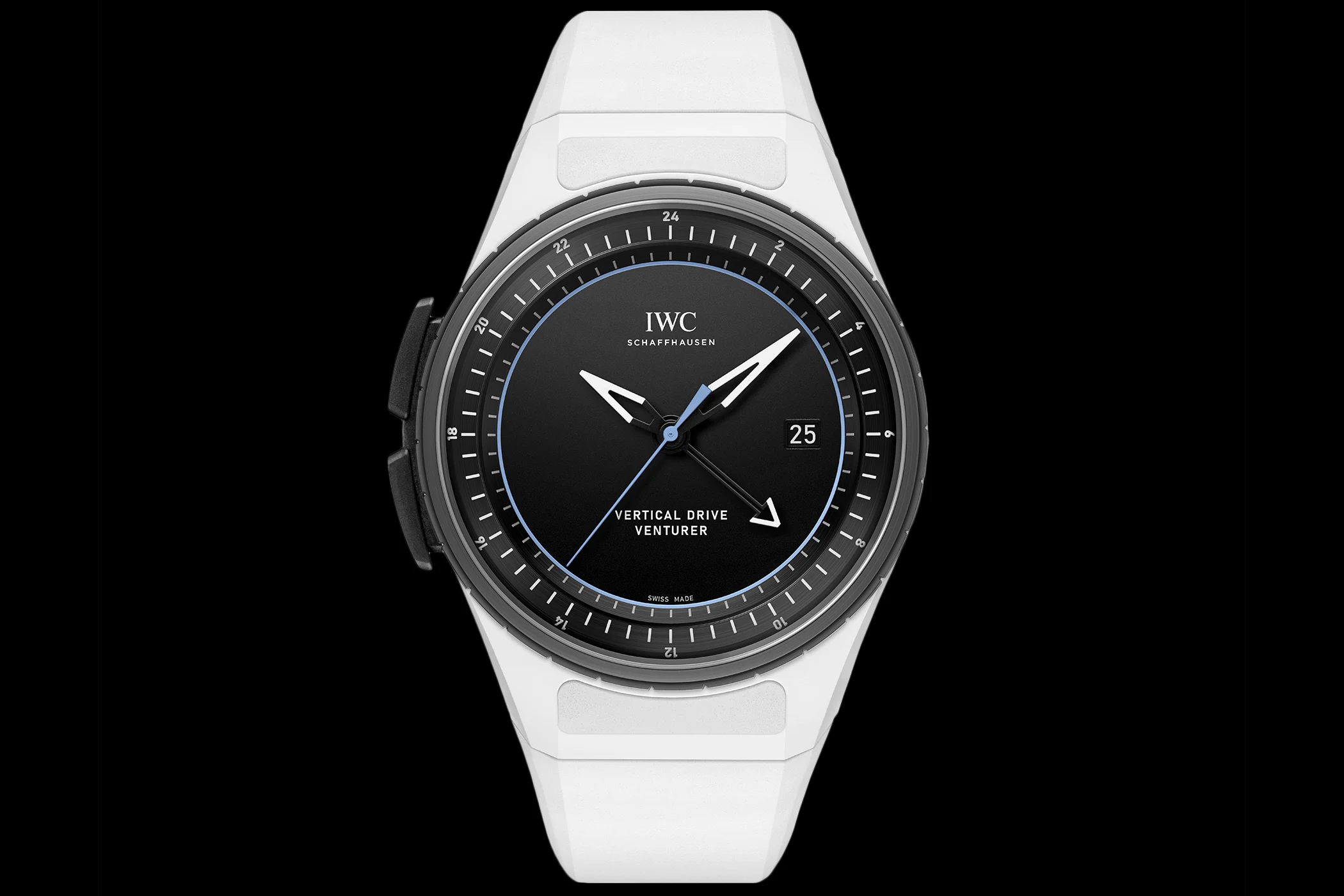
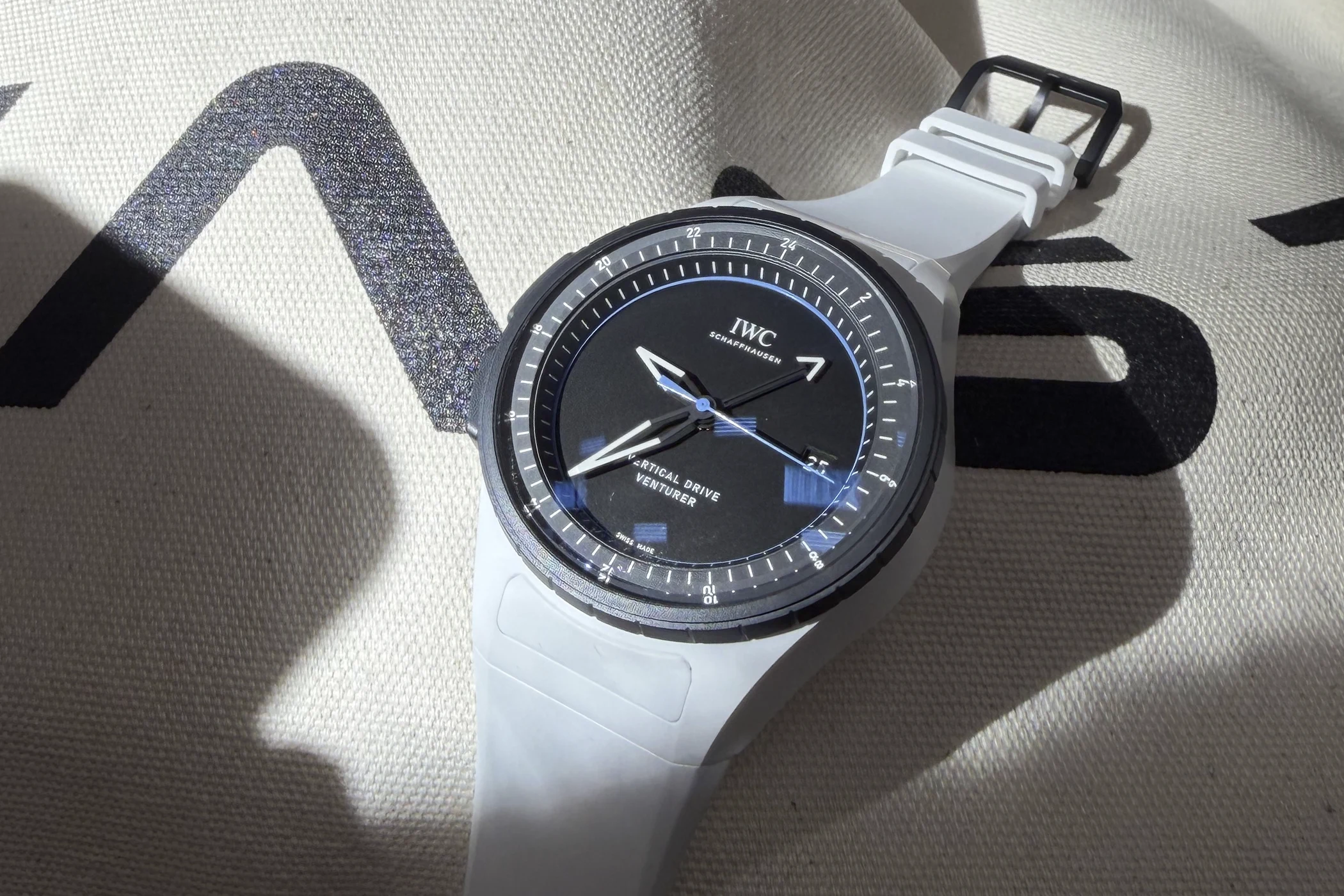
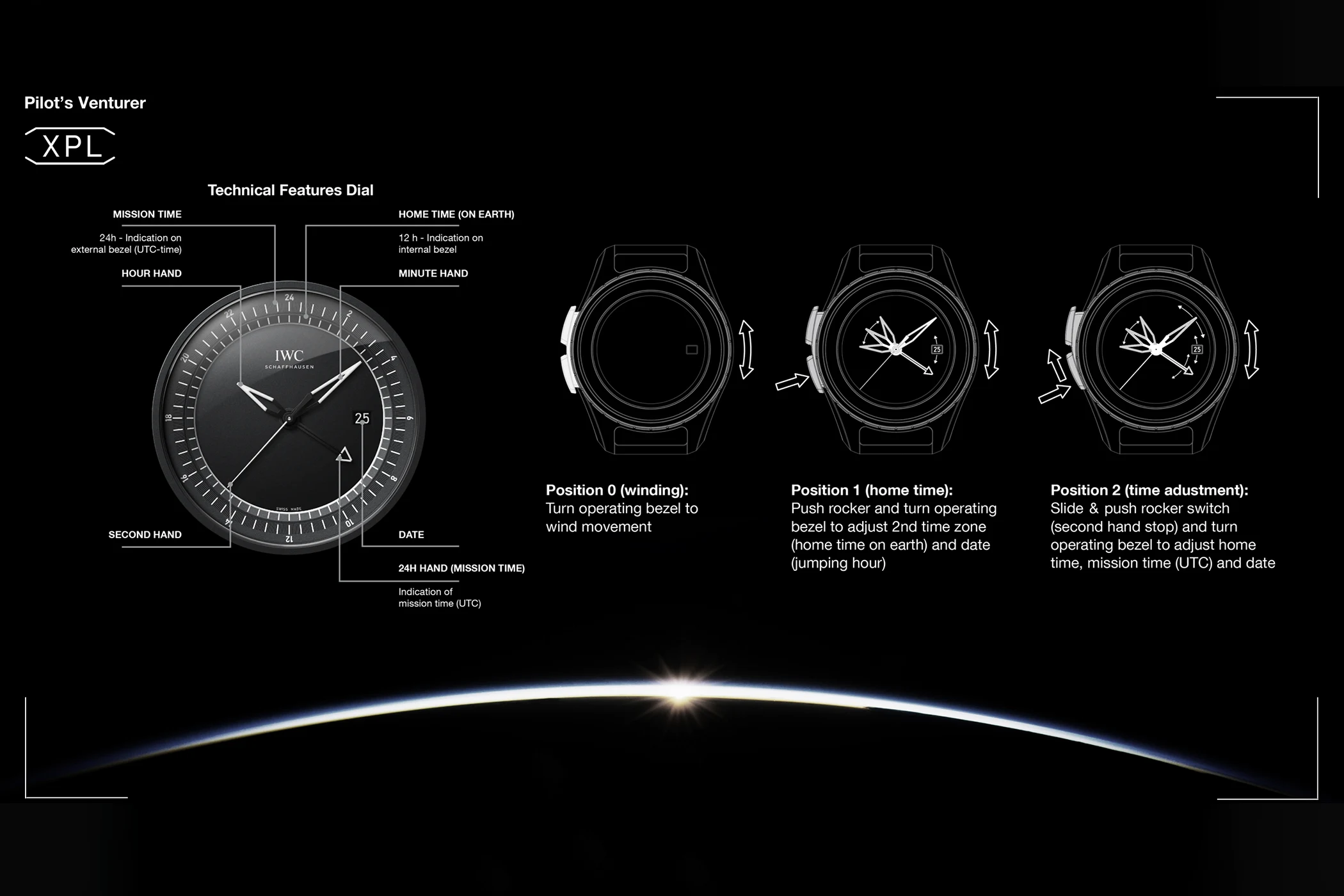
The first commercial result of this partnership for IWC is the Pilot’s Venturer Vertical Drive, or ‘Venturer’ for short, which translates as ‘adventurer’. Although it forms part of the ‘Pilot’s Watches’ collection, it breaks new ground both visually and technically. The 44-millimetre model, crafted from white ceramic and IWC’s proprietary material Ceratanium, dispenses with the classic crown and is instead set via a pusher on the left side of the case and the bezel, using a vertical clutch. The Venturer is powered by the new automatic Calibre 32722, featuring a 120-hour power reserve and an integrated GMT module. The slide is designed to enable astronauts to set the watch whilst wearing gloves, even during spacewalks outside the research station. If necessary, they can wind the movement via the bezel – which is why IWC refers to a “hybrid” winding system for the automatic watch – or adjust the various time zones.
Christian Knoop, IWC’s Chief Design Officer, is proud – and with good reason – of what is surely Schaffhausen’s most extraordinary new release of the year. As the designer, he was able to move largely free from the brand’s historical design codes with this model; instead, the aim was to create the perfect watch for space in collaboration with the astronauts at Vast. In his design, he tastefully played with the stark contrast between white ceramic and a matt black dial, complemented by bright blue accents. The crown has been omitted so that, in zero gravity, the watch cannot get caught on anything. The GMT function was chosen so that the astronauts would not lose track of time or their sense of home amidst 16 sunrises and sunsets within a 24-hour period. The white ceramic is, meanwhile, particularly robust and resilient, even in the face of significant temperature fluctuations. The watch was tested by scientists at Vast for reliability under pressure changes and intense vibrations. Care was also taken to ensure that the watch’s materials harmonise with those chosen for the interior of the space station. The sapphire crystal curves over the dial like a dome.

There is no doubt that the minimalist IWC watch designed for space differs fundamentally from the Omega Speedmaster ‘Moonwatch’, the chronograph certified by NASA in 1965 for use in uncharted territories. Ever since a Speedmaster played a vital role in timing a 14-second ignition during the safe return of Apollo 13 in 1970, its stopwatch function has been regarded as the quintessential tool of the astronaut’s trade. But just as the interior design of the Vast Haven-2 is intended to usher in a new era of life beyond Earth, the Venturer breaks with the image of a watch for astronauts established by its competitor.
At IWC, those in charge are well aware that this news will spark controversy. Franziska Gsell, who heads the company’s marketing department, says: “For me, the new Venturer and the Vast collaboration really highlight who we are as a brand and a company, because we have the courage to launch such an innovation. The watch is very futuristic and features a completely new design language, through which our chief designer Christian Knoop expresses the cosmos and all the emotions it evokes in a watch. That’s exciting, because ultimately, you either love this design or you don’t. Innovations like this spark debate, and another classic pilot’s watch would certainly be the safer option. But the provocative element expressed in our partnership with Vast simply suits us well.”

The watch world, with its many traditions and customs, is often wary of the unfamiliar – all the more so in the case of a brand like IWC, which has carved out a place for itself at the forefront of the industry over almost 160 years. When people think of IWC, the first models that spring to mind are the Portugieser and the Ingenieur, the Big Pilot and the Portofino – all classics of the horological world. Yet without a spirit of daring, no one can achieve such success. At the same time, it is essential to assess the commercial potential of a timepiece.
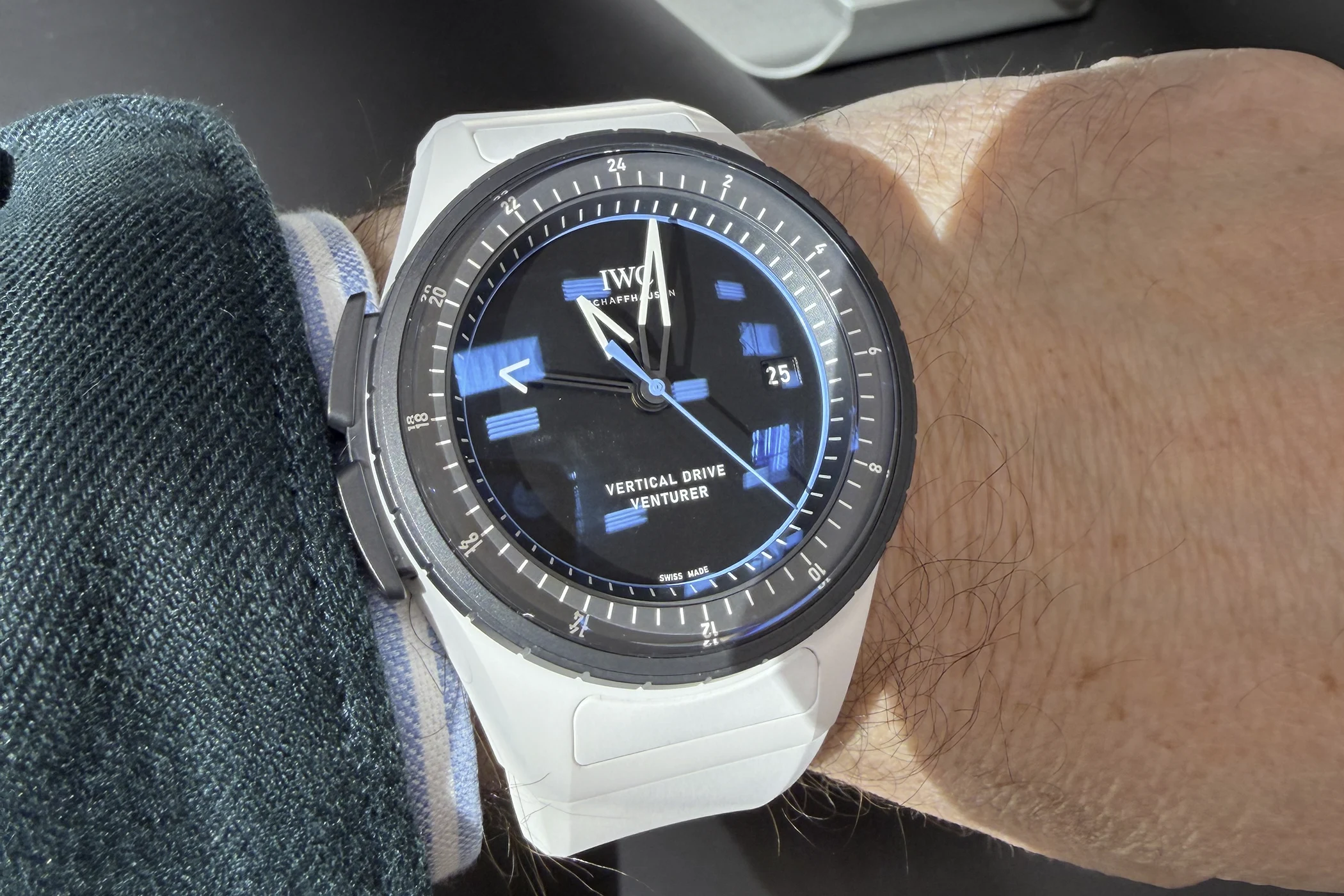
So just how much of a buzz is there around the Venturer? The photos shown here allow everyone to form their own initial opinion. I would also like to add this personal observation from the presentation in Long Beach: before visiting Vast, the IWC team had already showcased the year’s other new releases, and the Big Pilot’s models featuring the new Pro-Set calibre for perpetual calendars had emerged from that preview as true horological showstoppers. But then came Long Beach and the visit to a company that seems to be working its way through the realisation of the impossible, and Chris Grainger-Herr with this watch, which not only tells a special story but also inspires dreams.
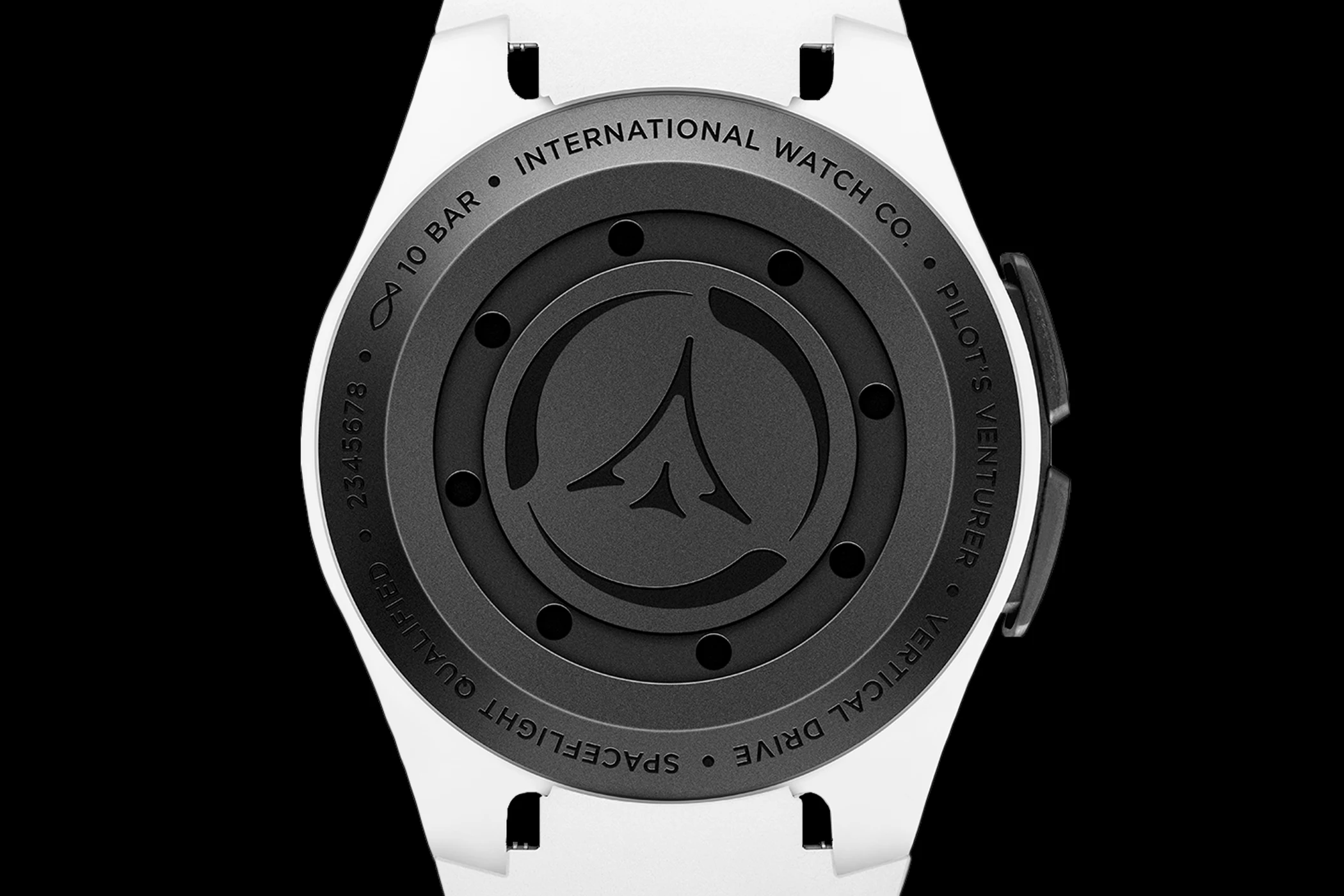
Despite its GMT function, it is certainly not a watch for everyday wear. It is more of a second or third IWC. Due to the absence of a crown and the seamless transition from case to strap, it feels smaller on the wrist than its actual dimensions would suggest, yet it is anything but a small watch. At xxxxx euros, it is also not an entry-level model into the Schaffhausen brand’s world. The white ceramic stands out. The Venturer is a ‘talking piece’, a design object on the wrist, pure in its design, opulent in its symbolism. Built for space travel, equally at home on any of our seven continents, worn with a T-shirt and jeans rather than a space suit.
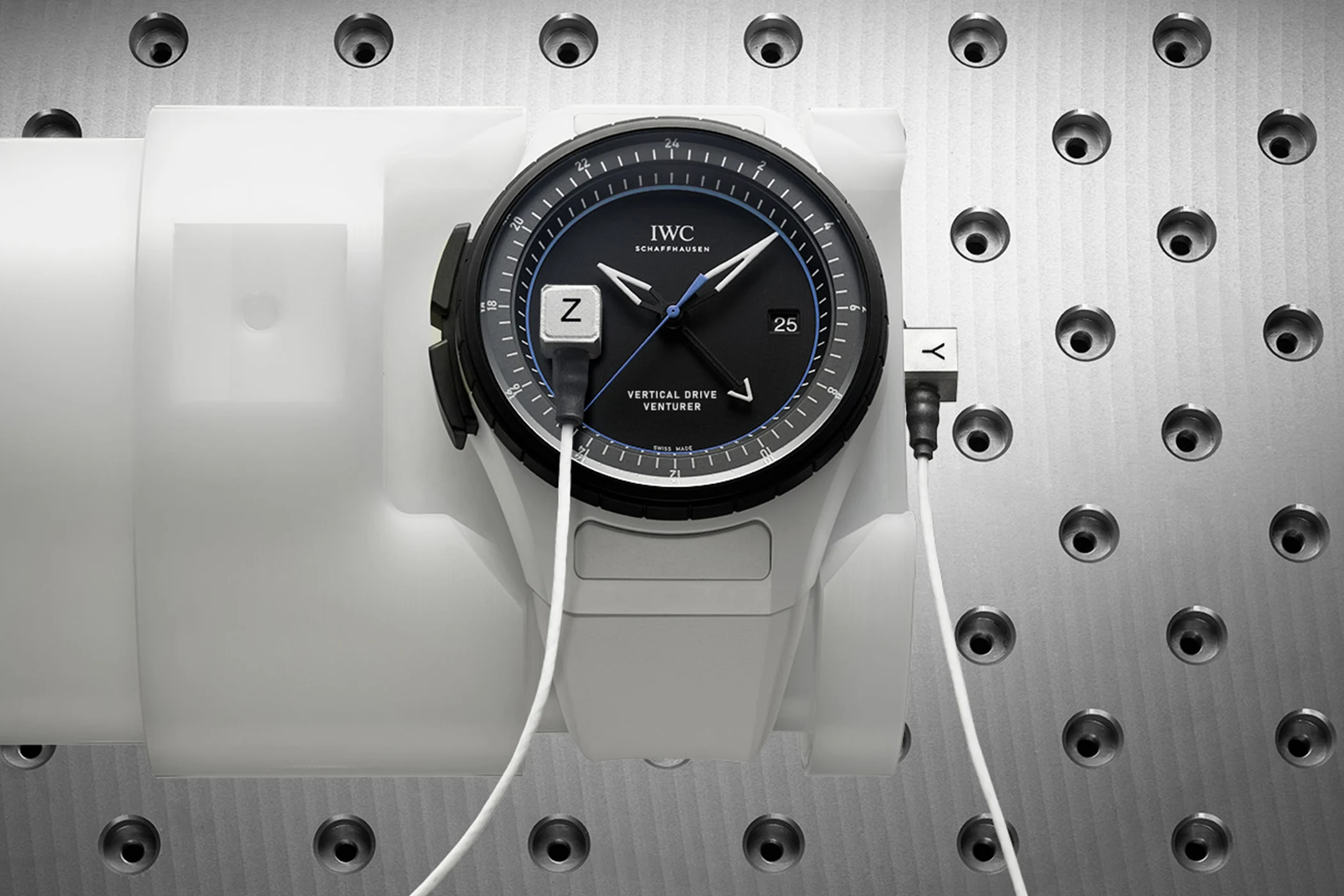
In my view, it is one of the most remarkable new releases of the year, and what’s more, it will only be produced in limited numbers. According to reports, IWC officially offers limited-edition models with significantly higher production runs. The Venturer is therefore a timepiece that, despite its immense appeal, will remain a rare sight – just as even the brightest stars cannot always be seen from Earth, and certainly not everywhere. It is a bold watch. The astronauts at Vast will receive a version with an extra-long orange strap, which they can then wear over their space suits. For us armchair adventurers down here on Earth, however, the white version will be more than enough.