One man you should know if your heart also beats for Patek Philippe timepieces is Karl Heinz Peters, who manages the boutique in Hamburg.

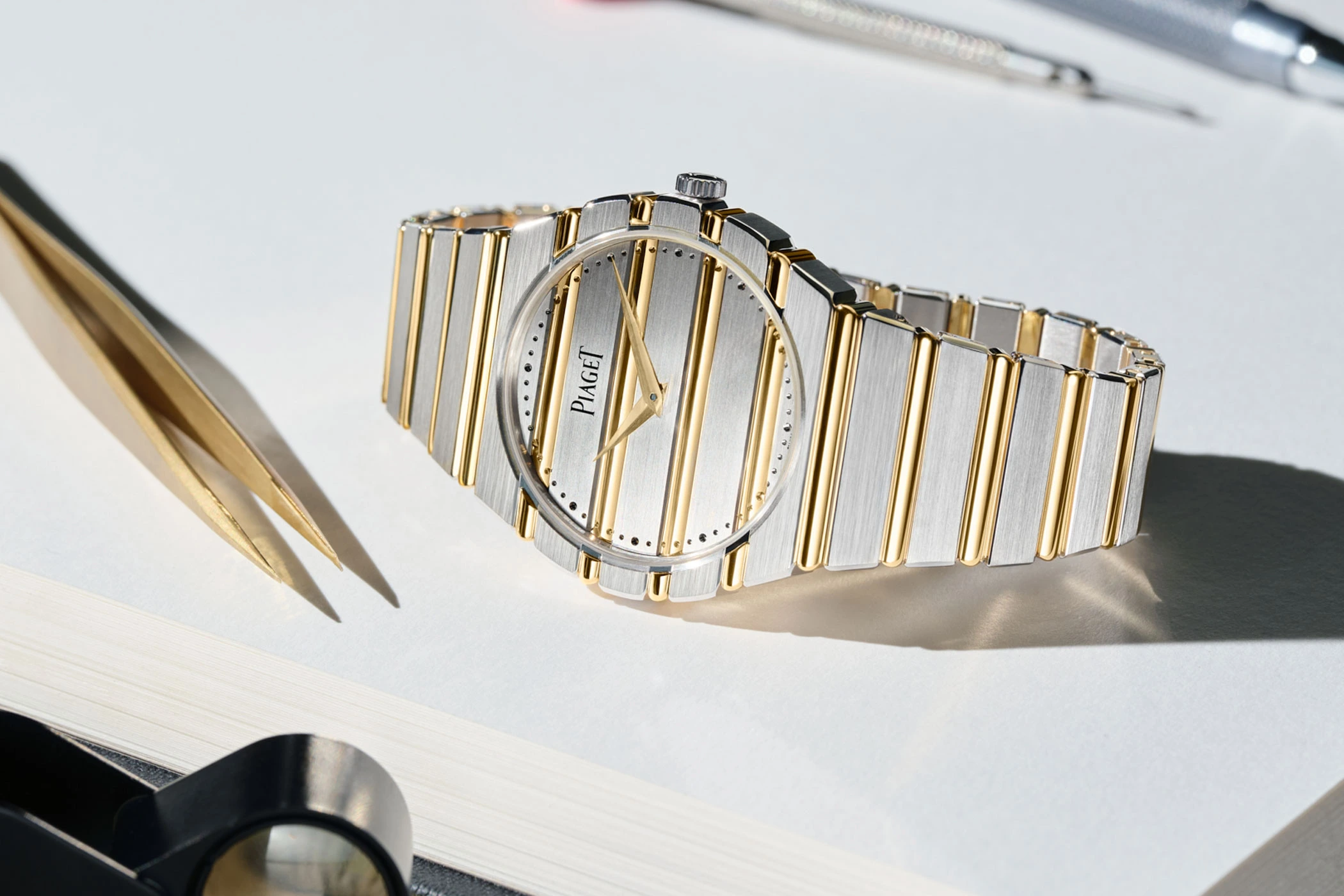
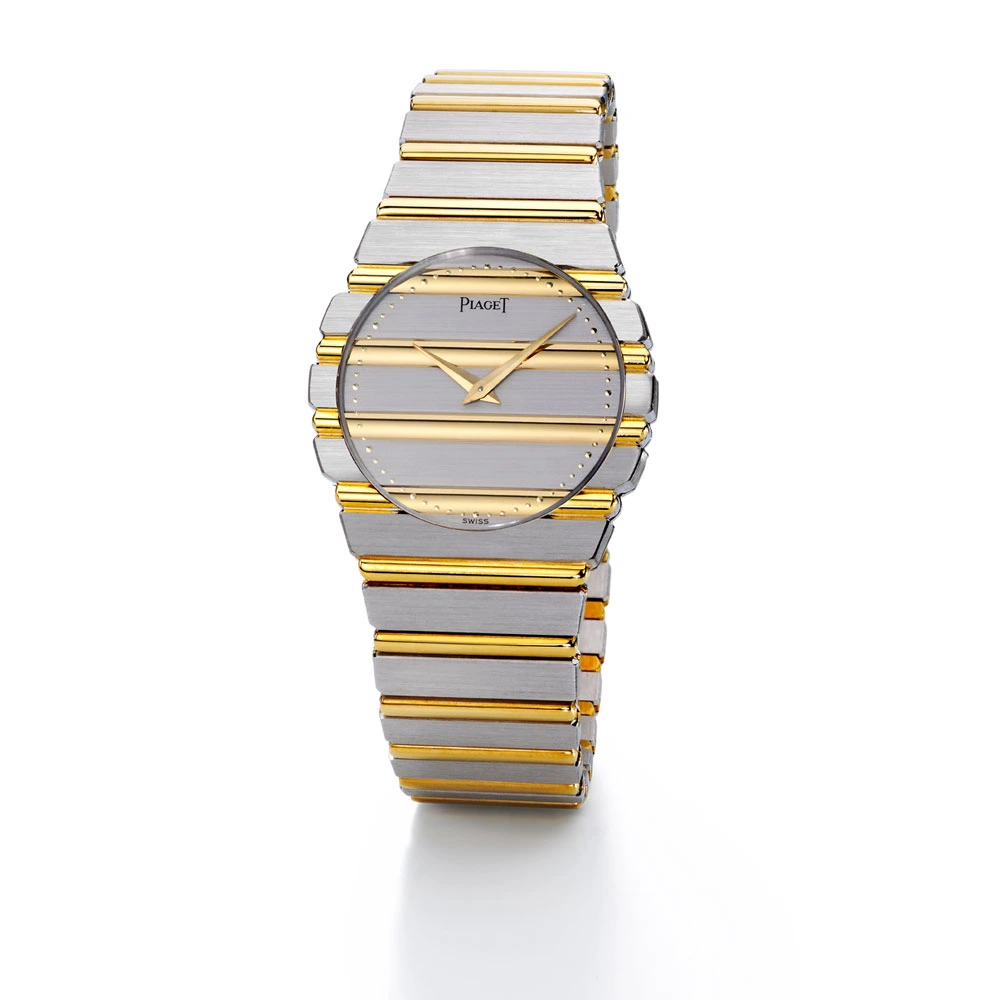
After showcasing yellow and white gold in their purest forms, Piaget now presents the iconic Polo 79 as a striking two-tone version combining both alloys. In doing so, the Richemont-owned brand embraces its 1950s philosophy that’time should only be measured in gold’
In other collections, the Piaget manufacture had long since softened this gold standard in line with the prevailing spirit of the times, and in 2002 – comparatively late when measured against other brands – launched its first stainless-steel models with the Upstream.
Since then, the steel alloy has found its way into further collections of the brand. Exceptions include the Limelight Gala, Altiplano and the Polo 79, the latter of which is named after the year of its launch. In this way, Piaget responded to a trend of the time, albeit differently to most other watch manufacturers.
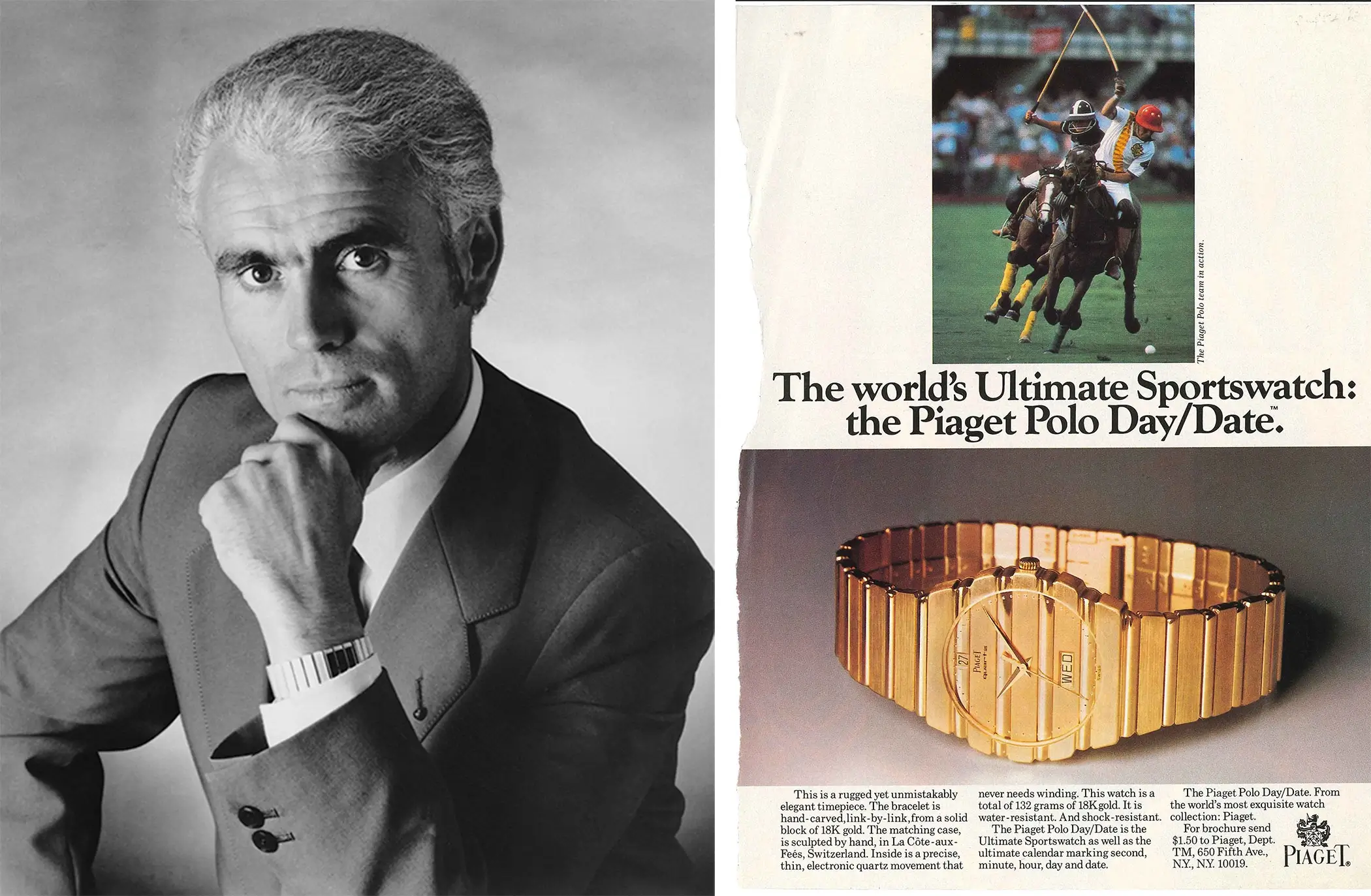
‘We simply had to respond to this particular demand from our customers, who usually only purchase jewellery watches,’ said Yves Piaget in 1979, when the Polo 79 was launched. As a member of the founding family, he played a decisive role in shaping the company during the latter half of the 20th century.
‘But now our customers want more than that; they want a sporting orientation too. This has become part of modern life. They want to demonstrate their sense of elegance, even when playing sports. They want to wear a high-quality watch while doing so. So we developed this sporty line, which is water-resistant and shockproof,’ explained Yves Piaget, describing the latest trend: a sporting aesthetic expressed in gold rather than stainless steel.
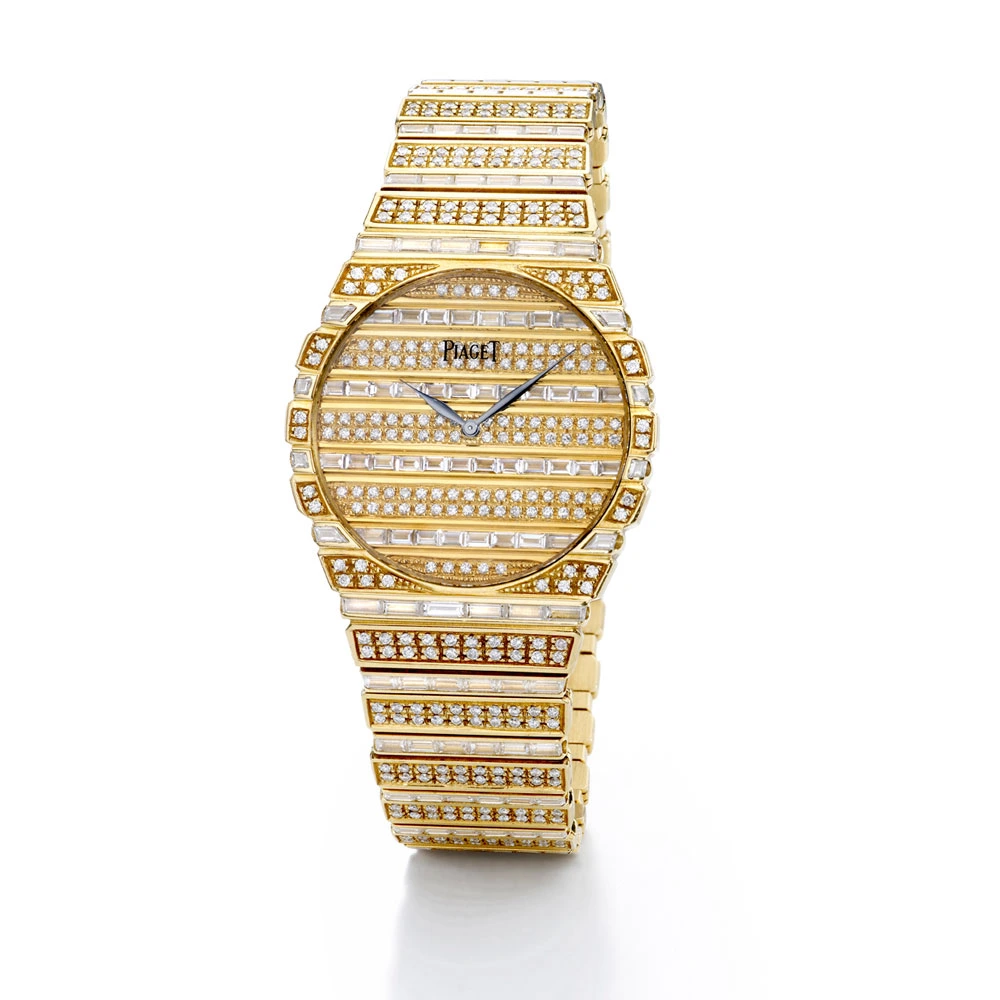
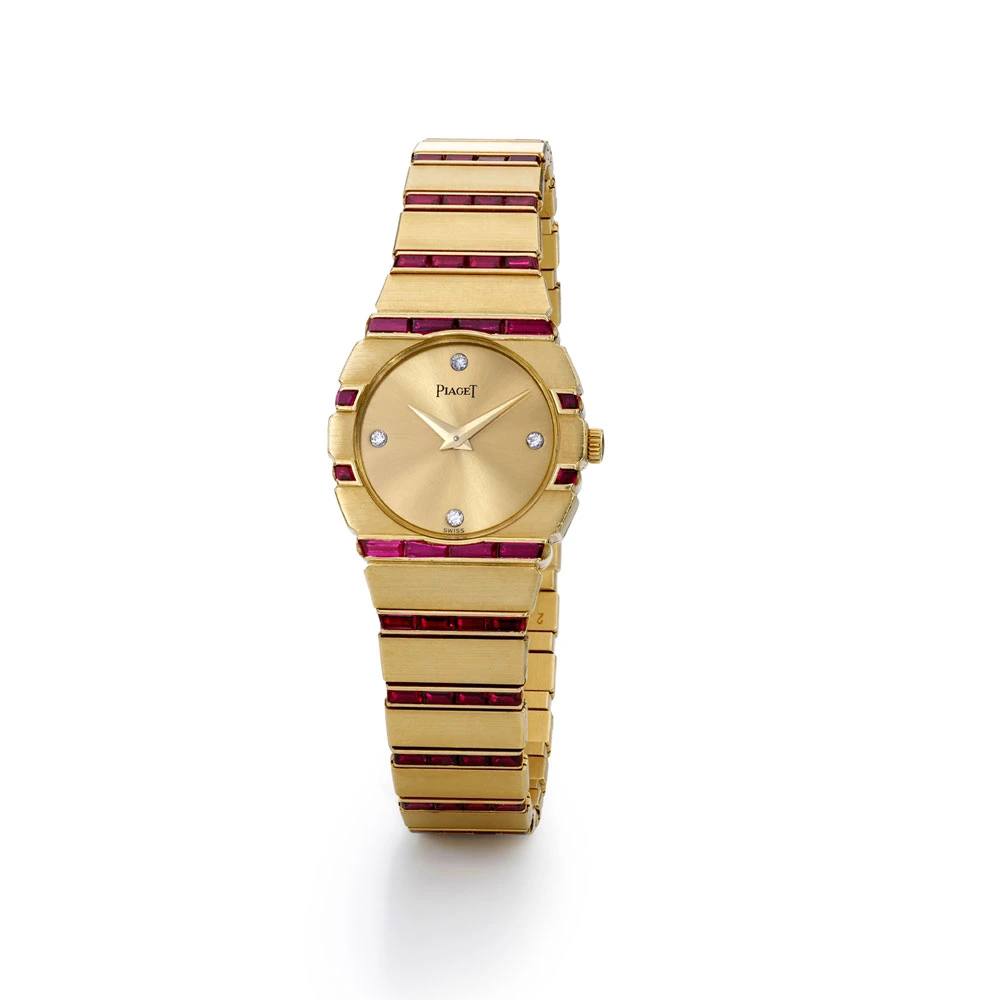
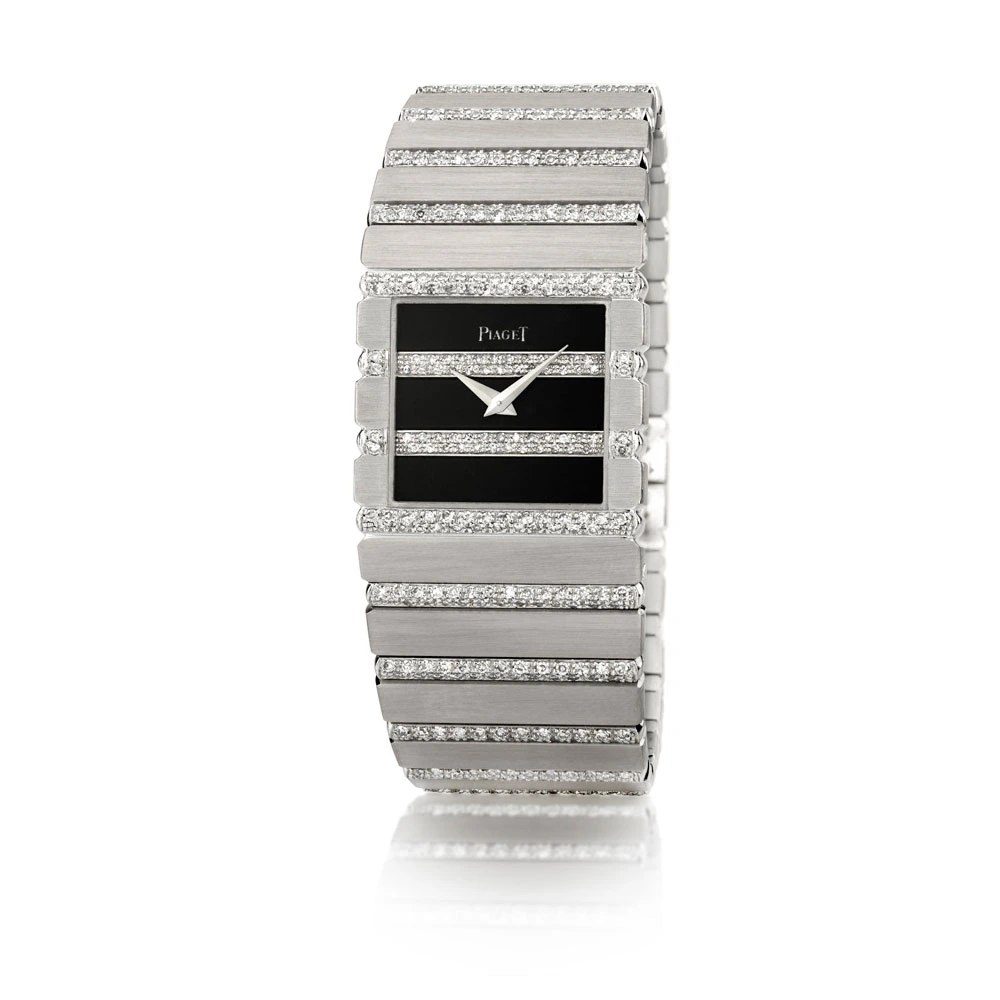
This may also be related to the clientele associated with the elite sport of polo, which included Yves Piaget himself. He cultivated excellent relationships with artists, actors, and celebrities, including Andy Warhol, Ursula Andress, and Elizabeth Taylor. In these circles of the rich and famous, precious metals were highly prized, despite all the athleticism involved. Quite evidently, this appeal extended beyond those circles as well. By the early 1980s, the Polo accounted for a third of Piaget’s watch sales. By then, versions set with diamonds, coloured gemstones and mother-of-pearl had also been introduced, along with different sizes and variants featuring square cases. Gold, however, was always a constant.
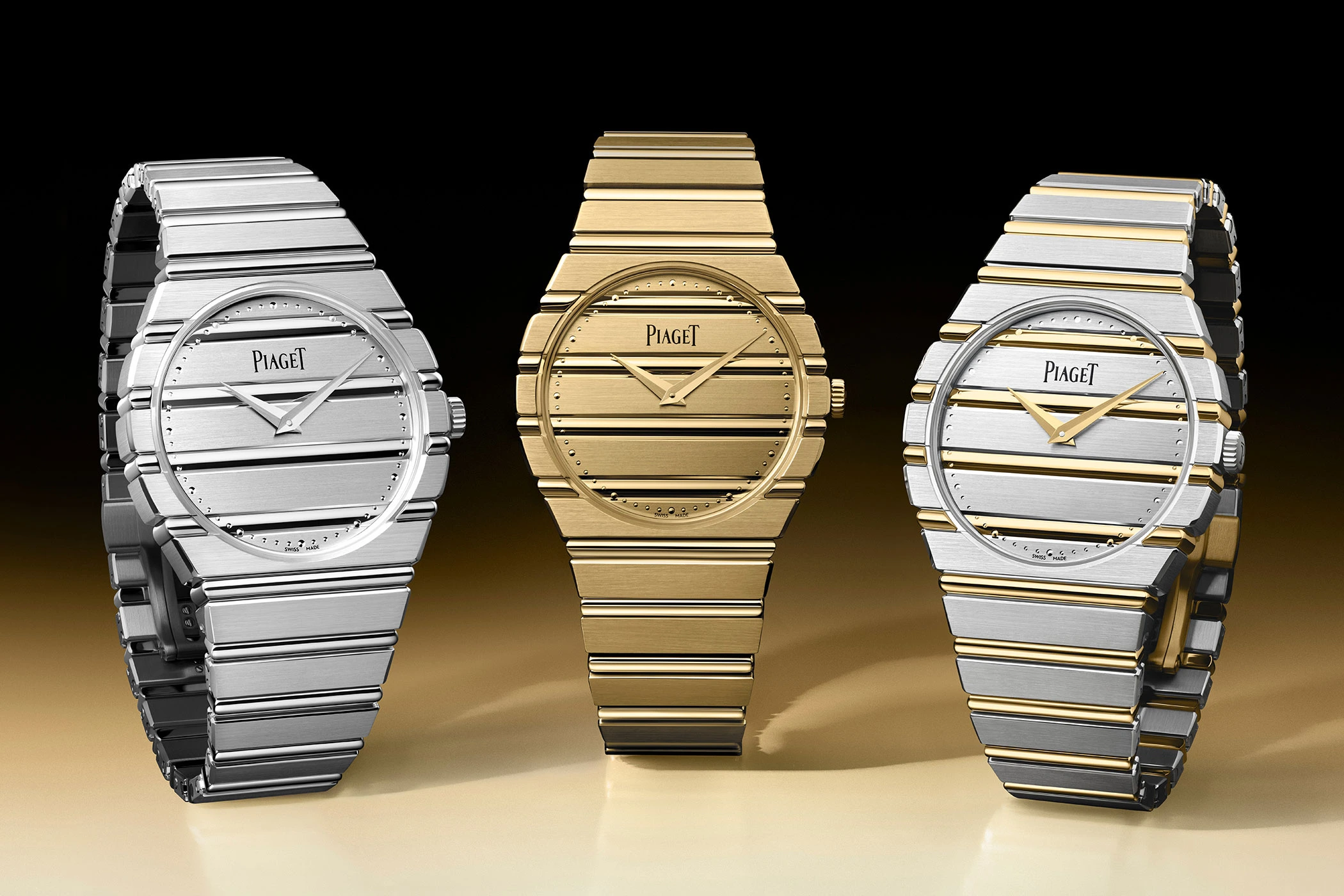
Piaget also opted for this precious metal for the reissue of the Polo 79 in 2024 – 45 years after its debut and 150 years after the brand was founded: initially in yellow gold, then a year later in white gold. Next up is the Piaget Polo 79 Two-Tone, inspired by an early two-tone version of the original.
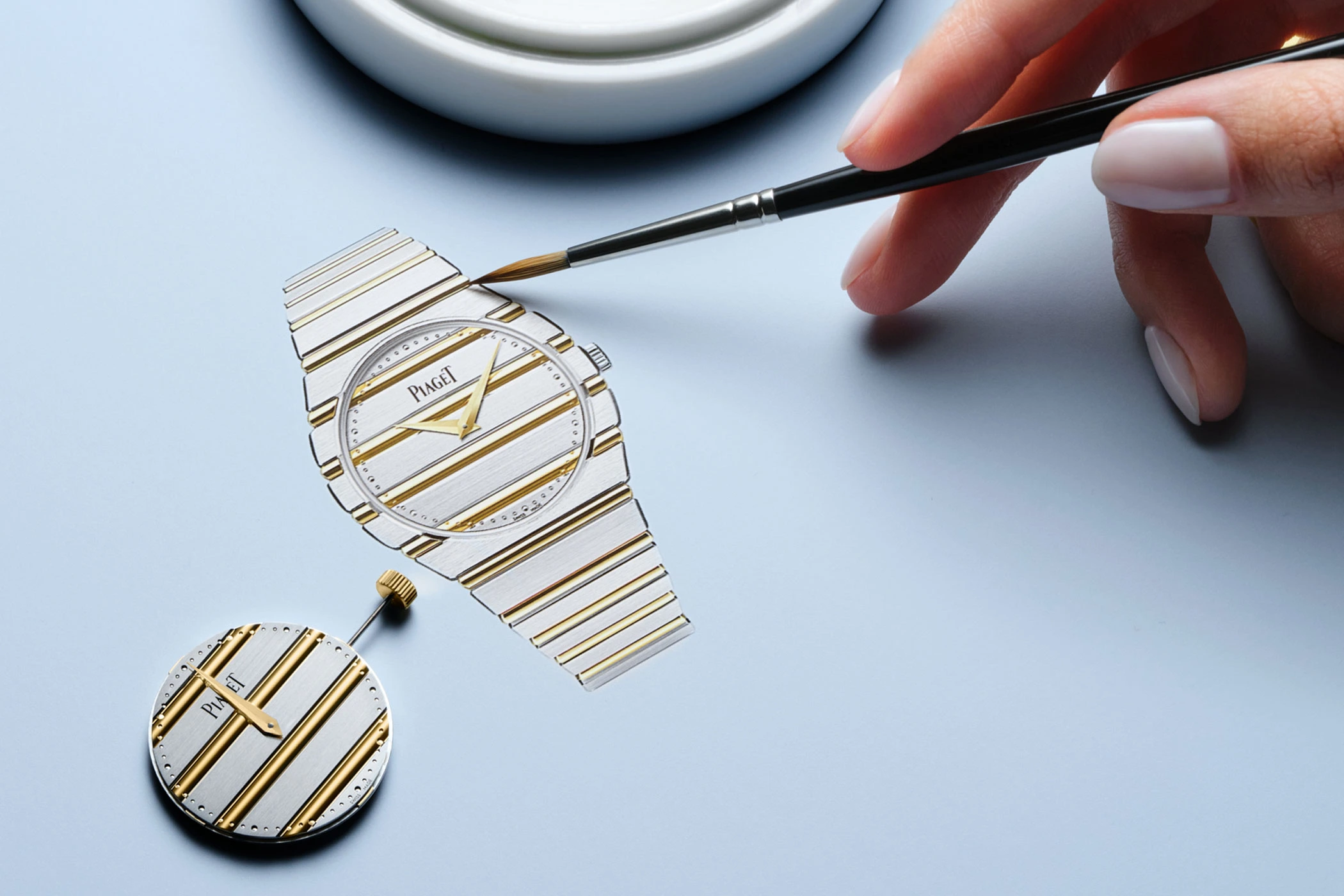
As with the original, the latest Piaget Polo 79 makes no material compromises when it comes to the dial, adorning itself with brushed white gold featuring gadroons – decorative fluting – in polished yellow gold.
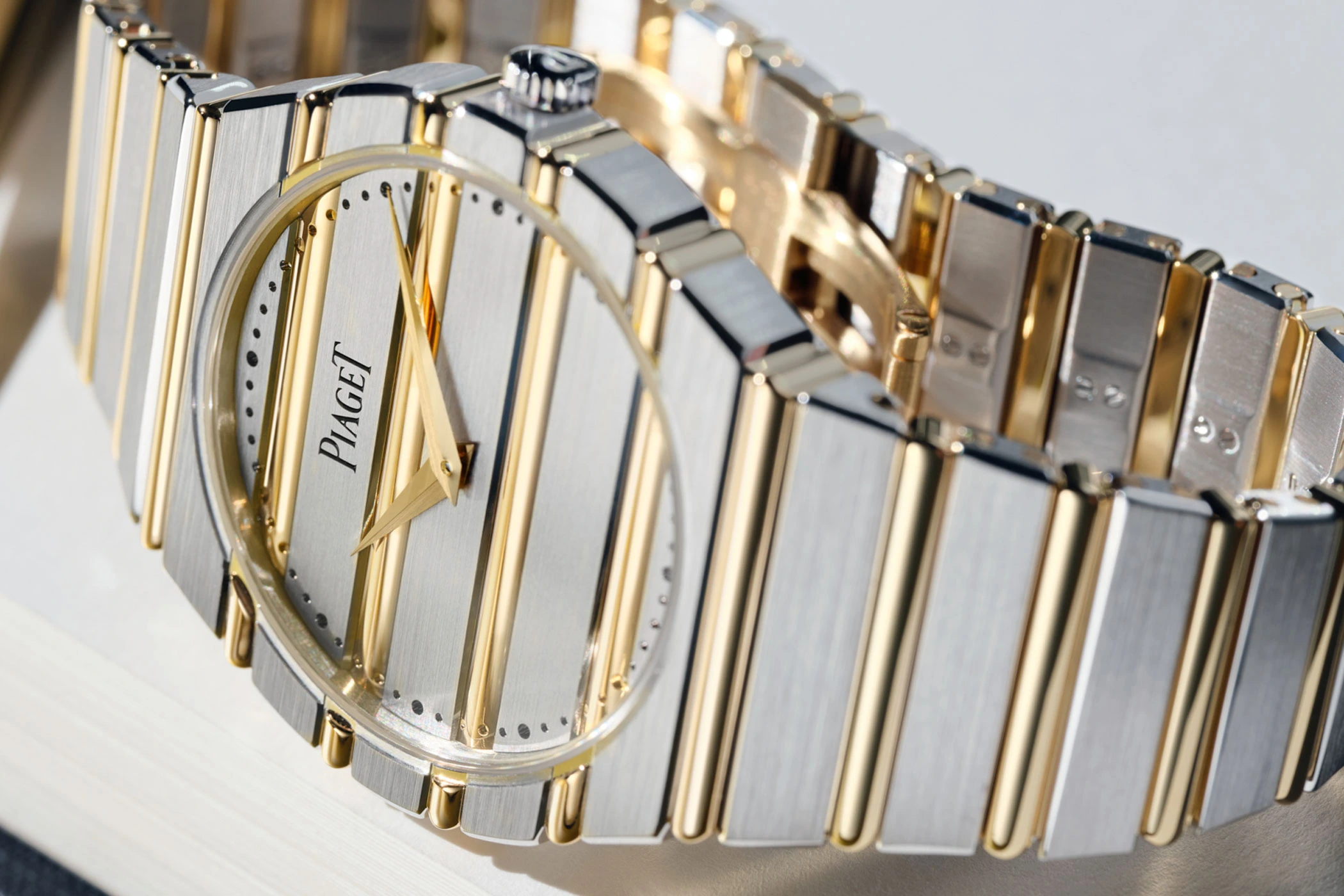
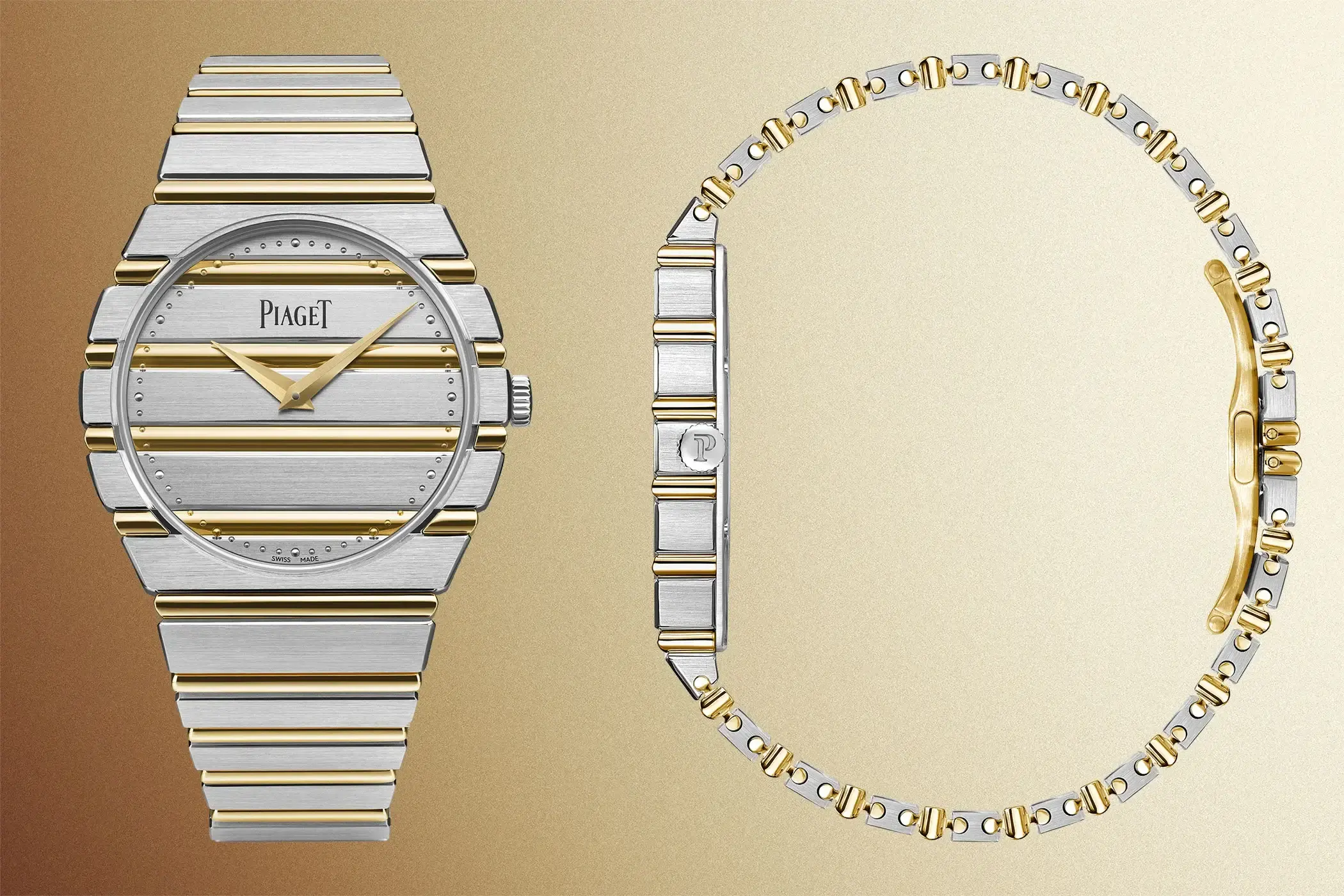
The Piaget Polo 79 Two-Tone offers a remarkable all-over two-tone design. The 38-millimetre case, integrated bracelet and dial merge into a single unit of white and yellow gold. The yellow gold grooves appear to flow seamlessly from the case, which is water-resistant to five bar, into the dial.
In addition, the triple folding clasp ensures that the bracelet looks like a continuous metal band. Piaget’s new gold watch weighs in at an impressive 200 grams.
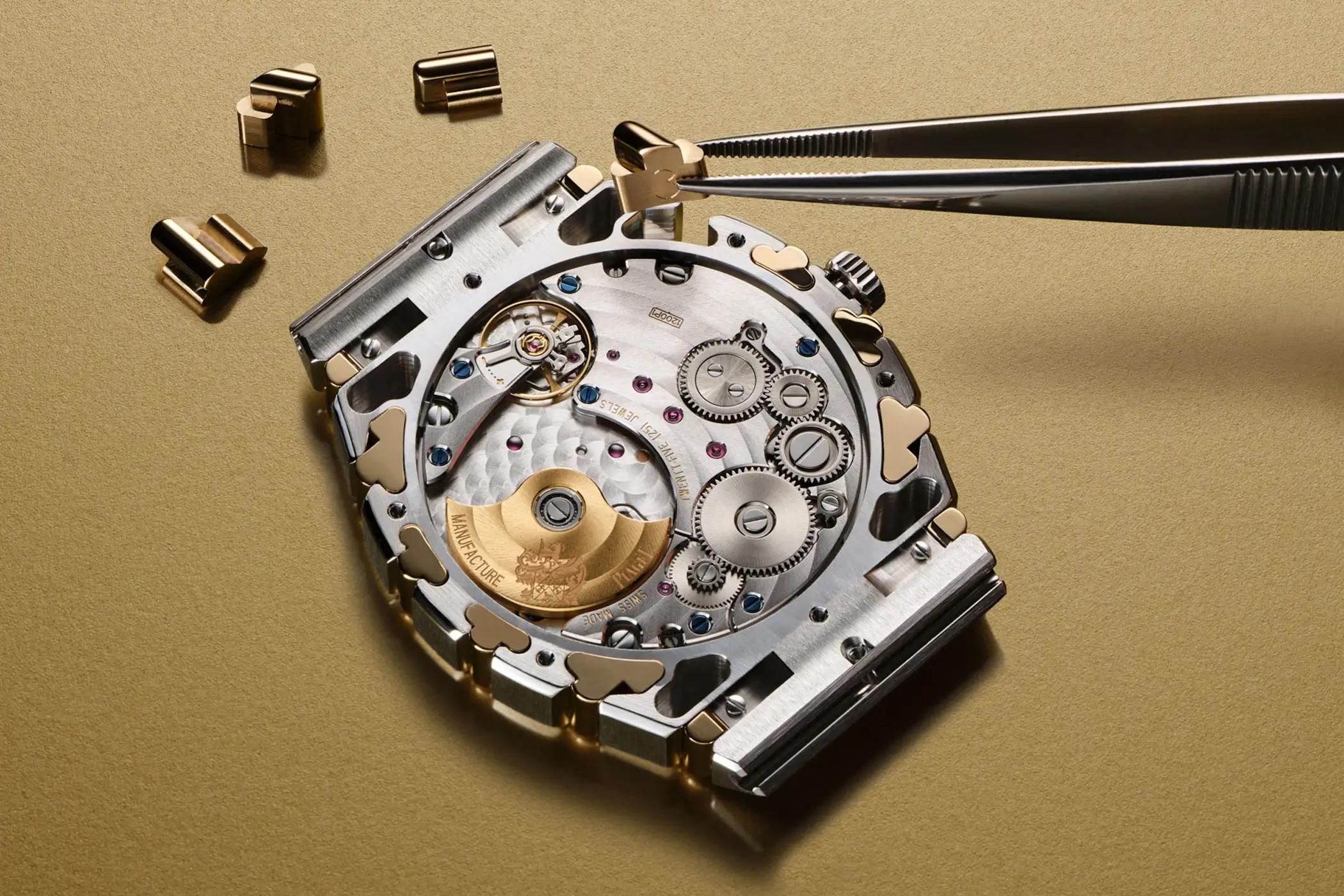
Although less imposing, the inner workings of the Piaget Polo 79 Two-Tone are technically sophisticated and truly remarkable. The 1200P1 calibre with micro-rotor has a diameter of 29.9 millimetres and a height of just 2.35 millimetres. This makes it one of Piaget’s thinnest automatic movements. It oscillates at a moderate 3 hertz (21,600 vibrations per hour) and offers a 44-hour power reserve.
The sapphire crystal caseback allows Piaget to showcase the movement, revealing the intricate finishes such as Geneva stripes, circular graining, bevelling, sunburst finishing on the gears, and blued screws. In terms of functionality, the 1200P1 is limited to hours and minutes. The price is 94,500 euros.