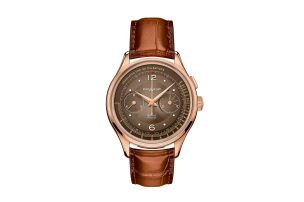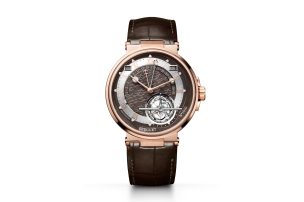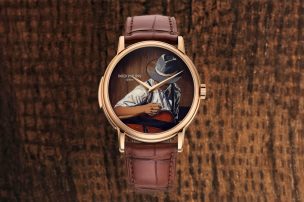


Ulysse Nardin and Urwerk, two pioneers of modern watchmaking who challenged traditional watchmaking, jointly present the limited Ur-Freak.
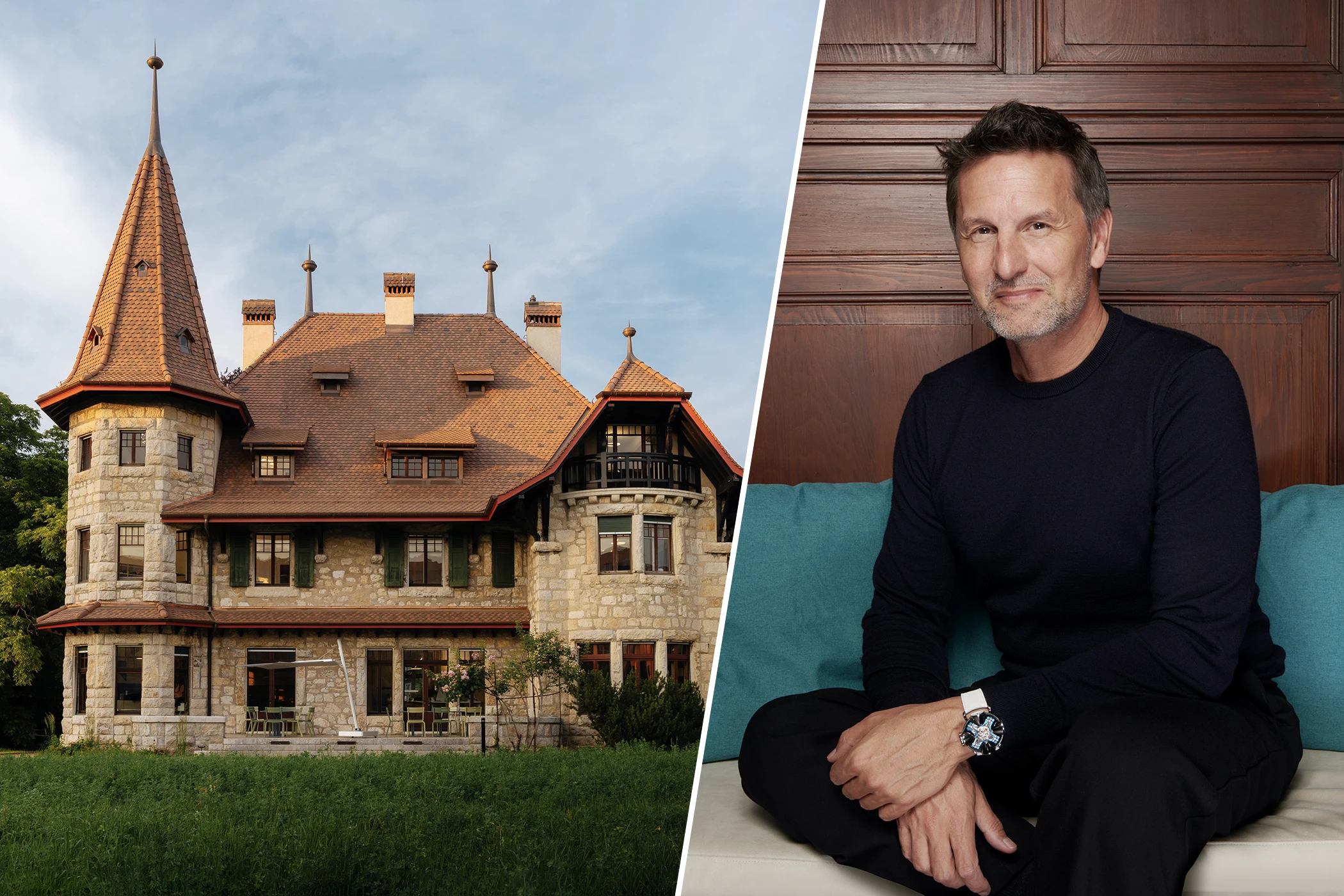
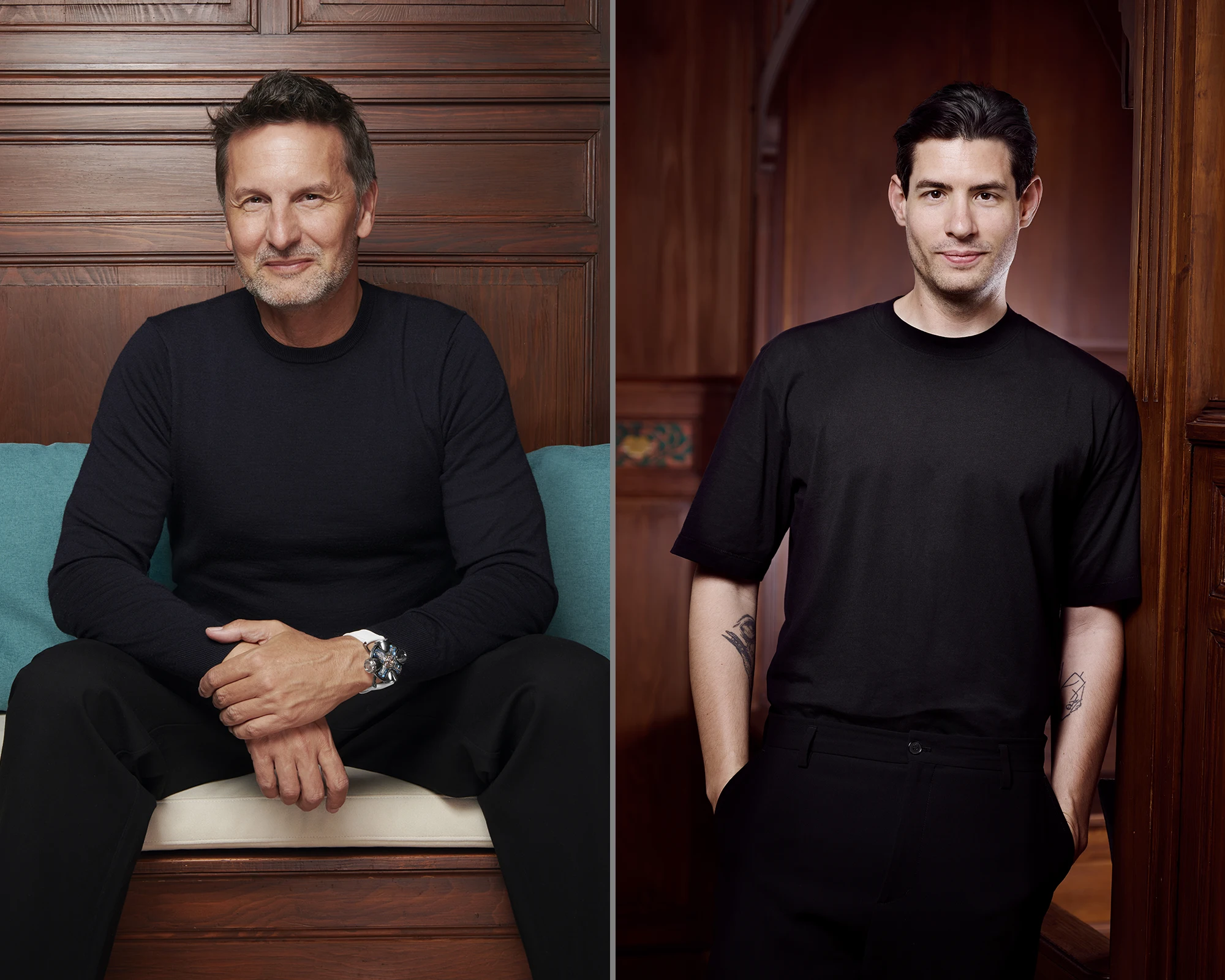
Max Büsser founded MB&F 20 years ago. It has since become one of the world's most successful niche brands. To mark the anniversary, we spoke to the founder and his future creative director Max Maertens about their galactically wild journey.
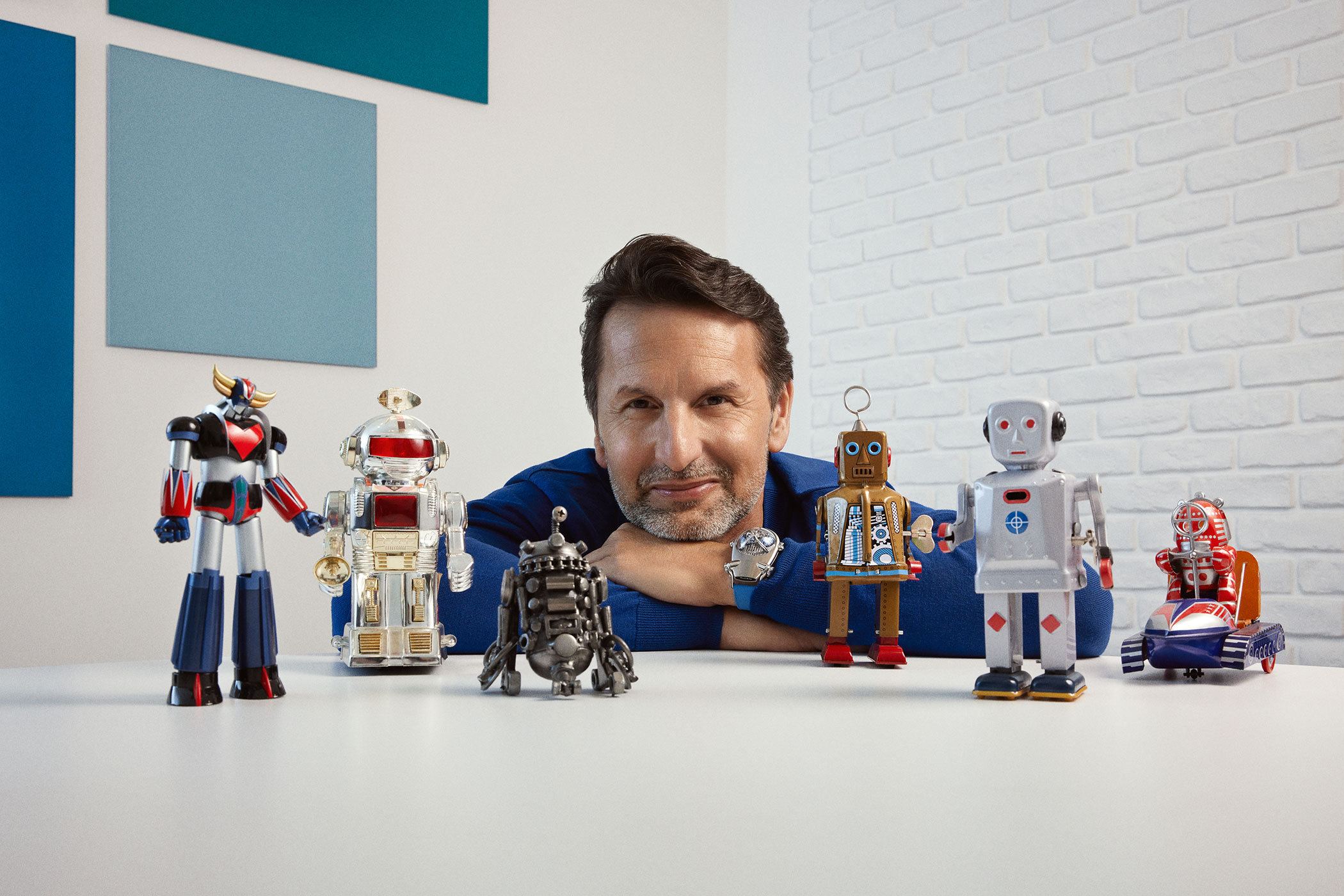
Children climb up into the treetops without worrying about their own safety. They ask endless questions, because as the German version of a Sesame Street song so rightly puts it: ‘Who? How? What? Why? Wherefore? Why? If you don’t ask, you’ll never know!’ Moreover, they are full of imagination, for to be a child is to constantly reach for the stars, rather than dwell on probabilities, obligations, or limitations. Maximilian Büsser has turned this childlike light-heartedness into the guiding motto of his watch brand MB&F: ‘A creative adult is a child who survived.’ At first glance, it sounds charming – and it’s certainly unusual in a watch industry that often likes to present itself as consciously mature and serious. For Büsser, however, it’s a question of fundamental attitude. He founded MB&F twenty years ago. Back then, he had little more than a drawing of his idea for a first watch and – even by the most optimistic calculation – perhaps half the money needed to produce it. When told that such a venture was quite a courageous move, he replies, ‘No, it was either completely mad or just a bit stupid.’ One could also say: he acted like a child. Impulsive, because his heart told him to, reason was temporarily absent, and no sceptic could slow him down.
Today, MB&F is one of the most successful niche brands in the world and a defining name among the so-called ‘Independents’. Speak with collectors of Büsser’s Horological Machines and you’ll often hear them gush with enthusiasm. Visiting the MB&F workshops, they say, feels like Charlie’s visit to the Chocolate Factory. Büsser is an entrepreneur, yes – but more than that, he’s a true believer. And his timepieces, inspired by spaceships, bulldogs, and racing cars, are nothing less than modern art for the wrist.
When Maximilian Büsser talks about the early days of MB&F, it becomes clear just how radically the watch world has changed over the years. In 2005 there was no Instagram, no global community of connected collectors, and no online watch magazines like Swisswatches Magazine. There was certainly no reliable base of customers competing for allocations from small, independent watchmakers. Haute horlogerie was dominated by the industry giants. It was precisely in this world that Maximilian Büsser operated as a networker among free spirits.
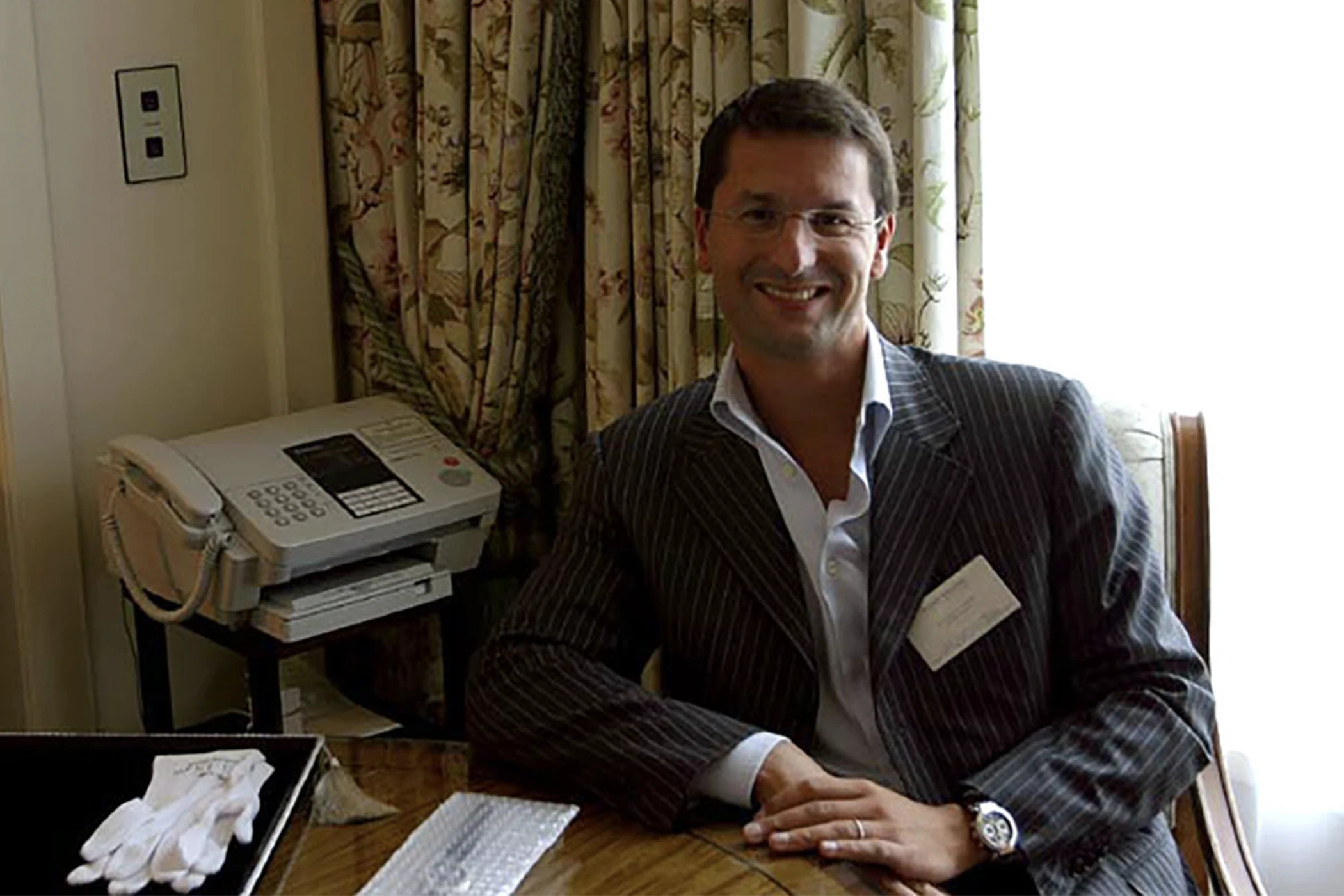
Büsser himself isn’t a watchmaker, but he’s a gifted visionary and facilitator. MB&F stands for Maximilian Büsser & Friends – the essence of his experience in the industry, and a name that says it all. Every watch is the result of a collaboration between the founder and at least one talented friend.


Before becoming an entrepreneur, the Swiss-born Büsser worked first for Jaeger-LeCoultre and later for Harry Winston, the famed New York jeweller. There, while still in his early thirties, he was already responsible for the watch division – multiplying its revenue and, more importantly, creating the Opus series. Each year, he invited an outstanding independent watchmaker to develop a complex, small-series concept watch for Harry Winston. The first was a certain François-Paul Journe, who is now a star in the world of Independents himself.
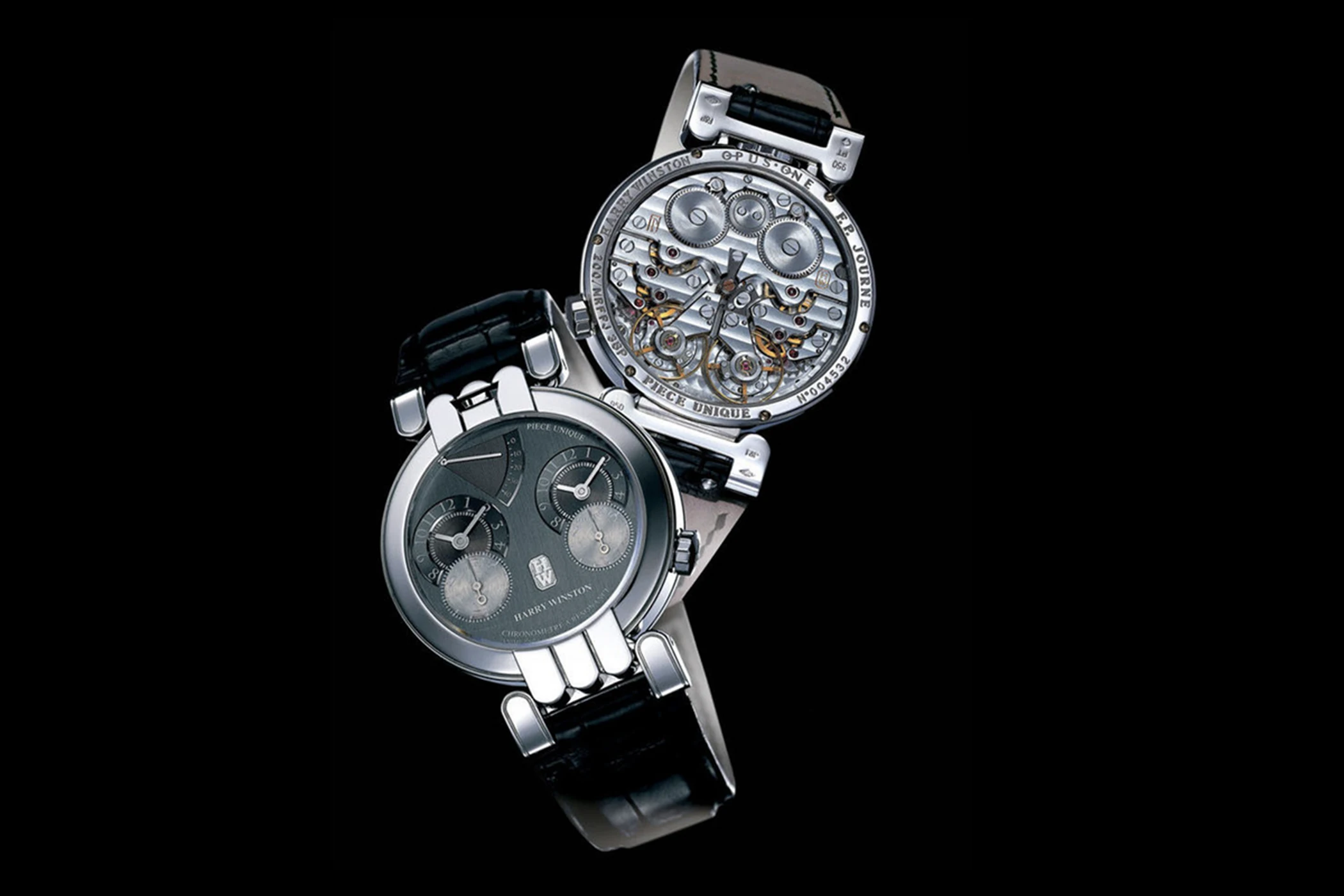
Through the Opus programme, Büsser created a platform for the previously overlooked world of independent watchmaking. At the same time, he realised that his own future lay in independence, with a brand that would never claim to be all-knowing or all-powerful but would celebrate the importance of friends and collaborators instead. He recognised the power of cooperation long before ‘collabs’ became the ultimate marketing tool.
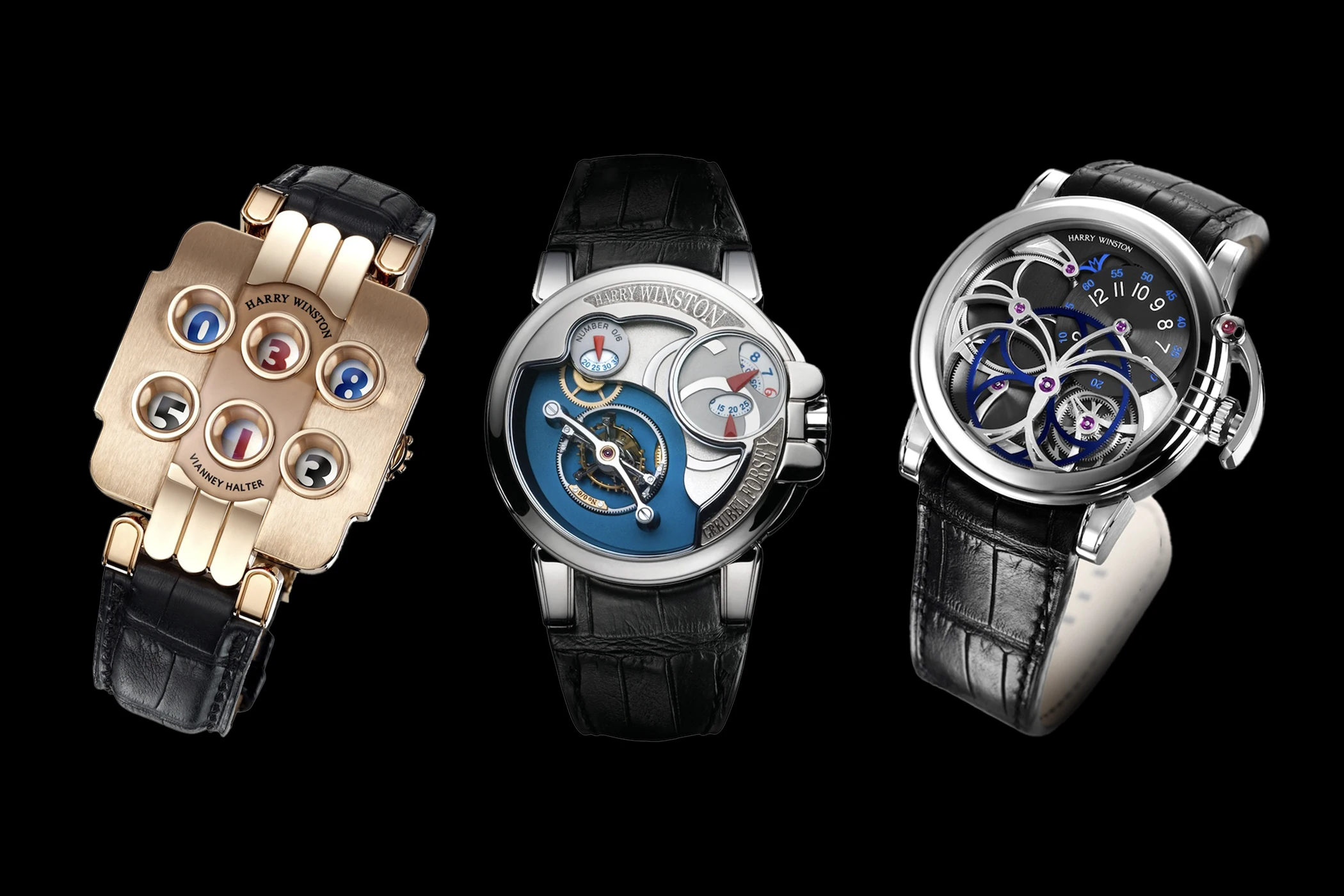
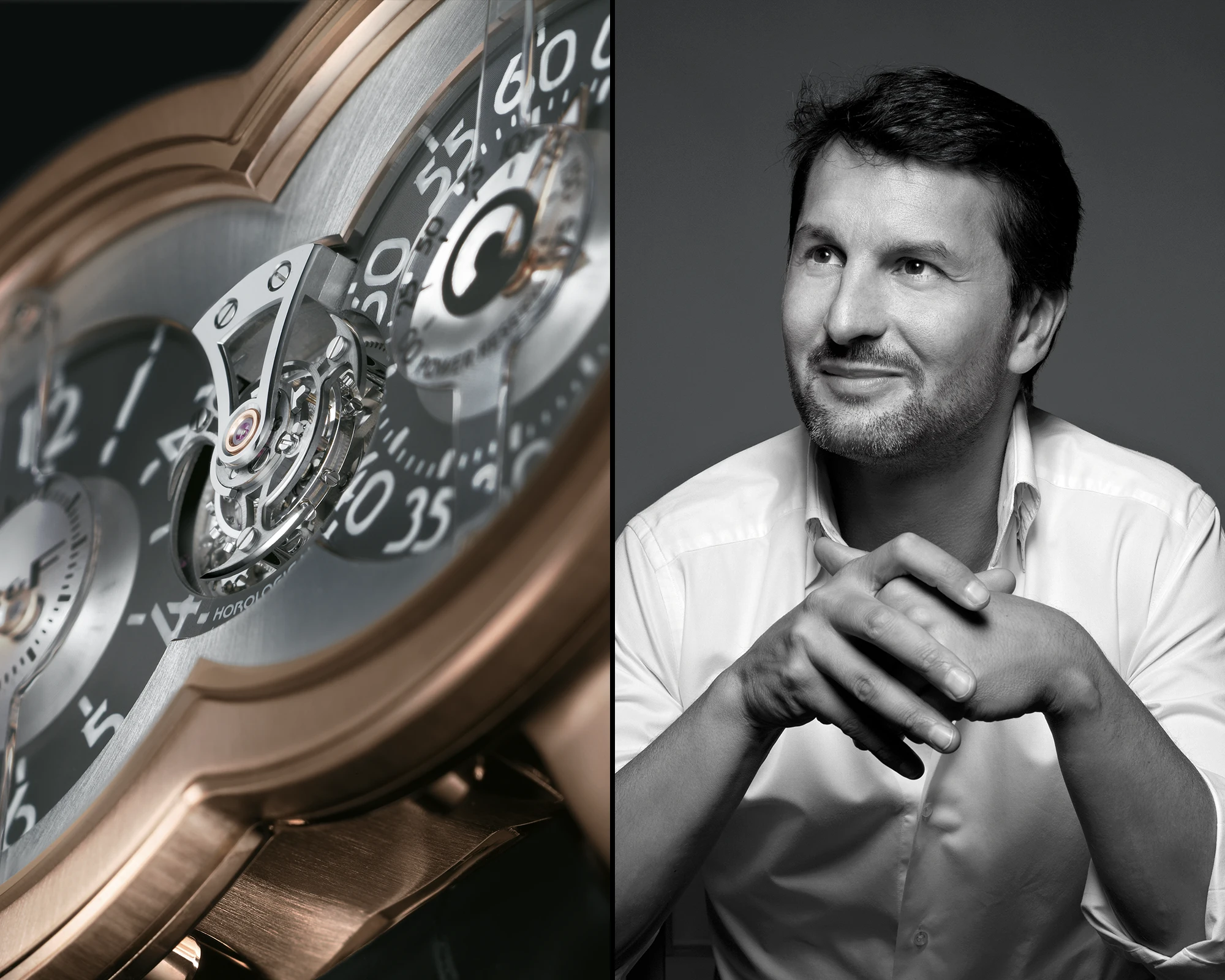
He admits, ‘I’ve always had a vivid imagination, but even in my wildest dreams I couldn’t have imagined what it has become today.’ At the time, he had only a rough concept in mind for what would become his debut piece, the HM1. He recalls, ‘Most founders have a five- or ten-year plan. Mine was maybe one year at best.’ Meanwhile, Harry Winston was pushing for a contract extension, including a non-compete clause, which would have required Büsser to refrain from working in the industry and competing with his former employer until further notice in the event of his resignation. Worse still, he would not have been allowed to use any contacts from his work on the Opus models. This increased the pressure to make a decision, and so he resigned in May 2005 to start his own business in July.
When Büsser speaks about that time and about like-minded founders such as François-Paul Journe, the Urwerk duo Martin Frei and Felix Baumgartner, or Greubel Forsey and De Bethune – it’s always with enthusiasm for their shared desire to disrupt the status quo. He calls MB&F and these peers the horological ‘Rat Pack’ of the late 1990s and early 2000s. Their willingness to invent, to create, and to think differently remains defining to this day. They never expected it to be easy. In fact, they knew it would be extremely difficult to make their businesses financially viable, ‘That was simply the price we had to pay to make the watches we believed in, and to work only with people we liked.’ Back then, Büsser flew economy class around the world just to find a few like-minded enthusiasts who believed in him and his designs – and who would buy his watches. Today, the watch world is a completely different place. ‘Independents’ are now courted by collectors, business models have shifted, and Büsser can’t help but show a touch of bemusement at recent developments in independent watchmaking when he says, ‘If you’d told us back then that the next generation of independents would be celebrated for presenting 38-millimetre vintage-style models, we wouldn’t have believed it. We’re still Rock’n’Roll, but a lot of what’s happening today is more R’n’B.’
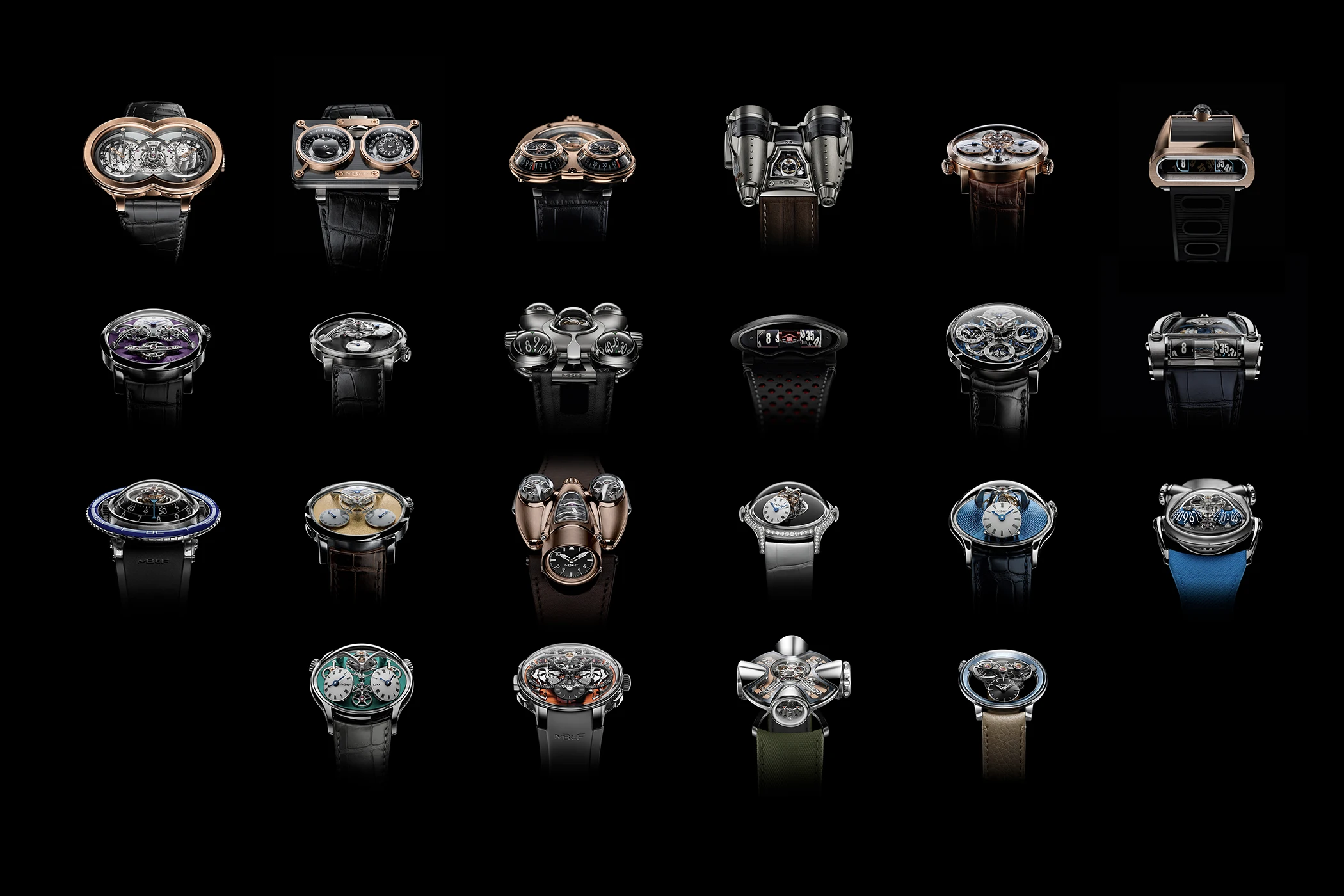
Over the course of its twenty-year history, MB&F has produced around 4,000 watches in total. Today, the Geneva-based independent ‘rockers’ craft around 400 pieces each year. This may not seem like much, but what makes the company even more extraordinary is that it has developed twentytwo different calibres by now for those 4,000 watches. Whereas other manufacturers justify the immense development costs of a new movement by using it across as many models and in as large quantities as possible, Büsser takes a very different approach. For his twelve Horological Machines to date, he has asked friendly watchmakers to create the appropriate – and invariably mind-bogglingly complex – calibre to fit each unique concept. The fact that many of these are produced in extremely limited numbers – sometimes only a few dozen – involving correspondingly high levels of effort and risk, is part of the brand’s distinctive appeal. At MB&F, ideas are not met with a ‘yes, but…’, but with a resounding ‘yes, that’s exactly how it should be!’ This approach even meant that, for years, it was only towards the end of the financial year that anyone could tell whether the company would actually finish in the black.
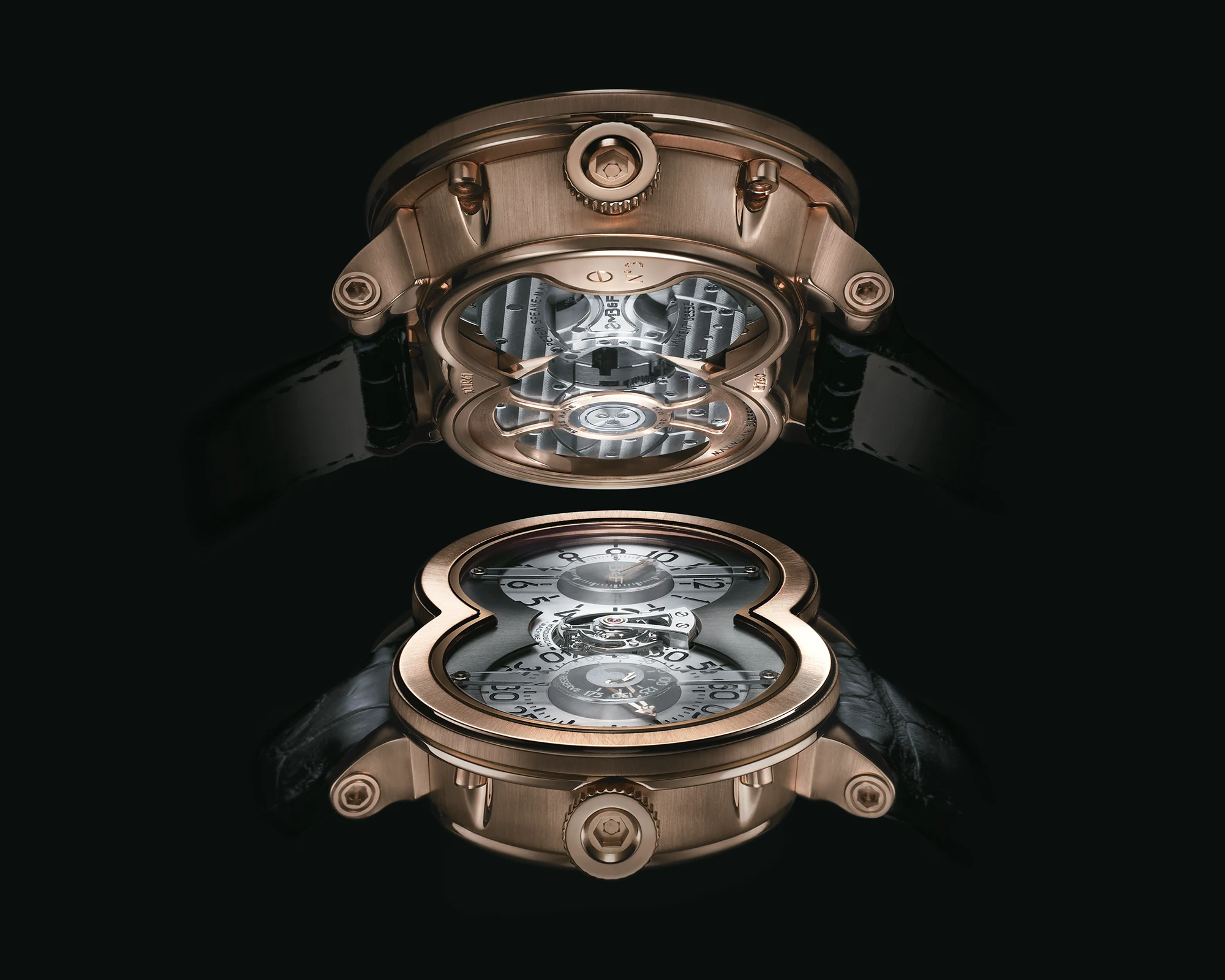
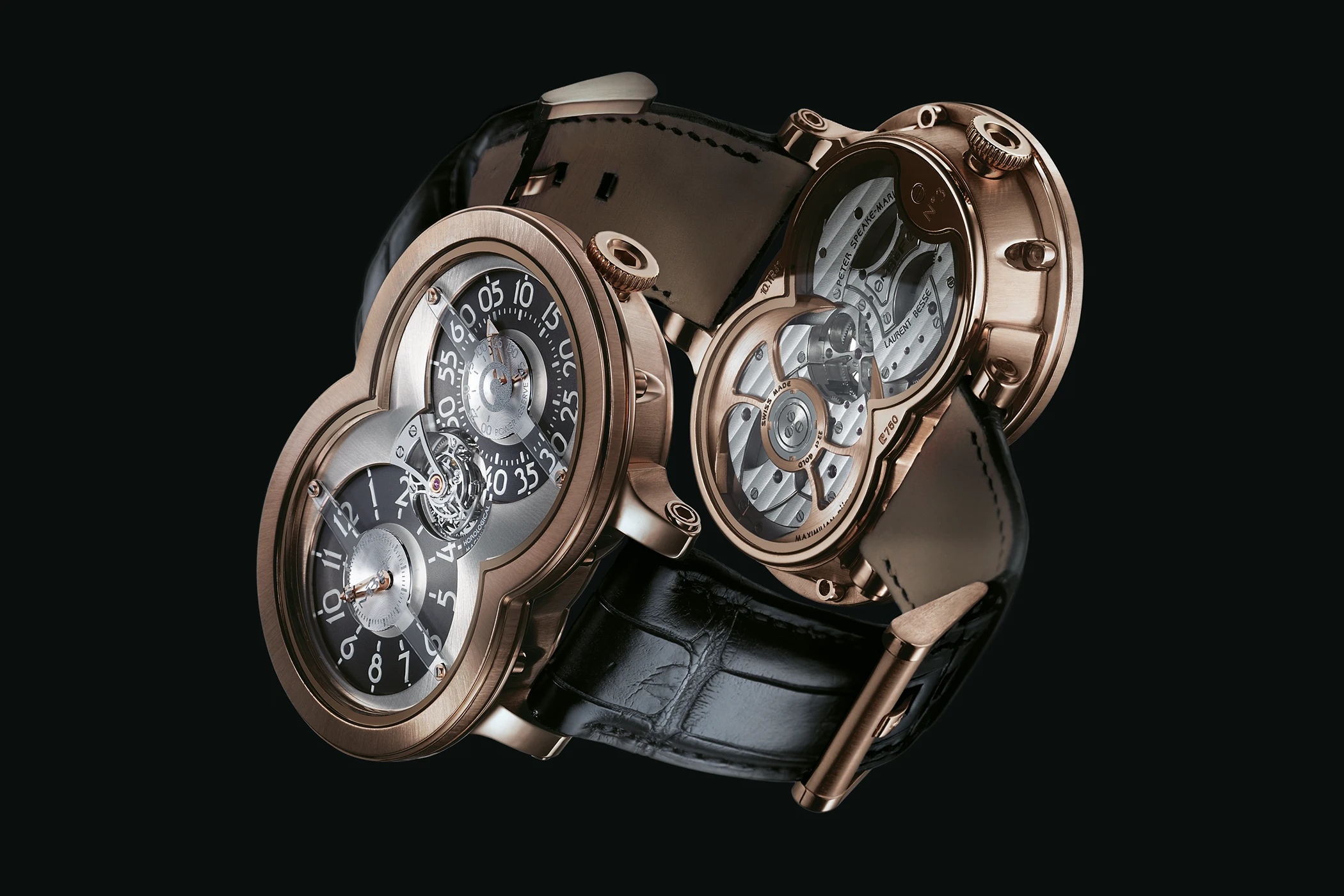
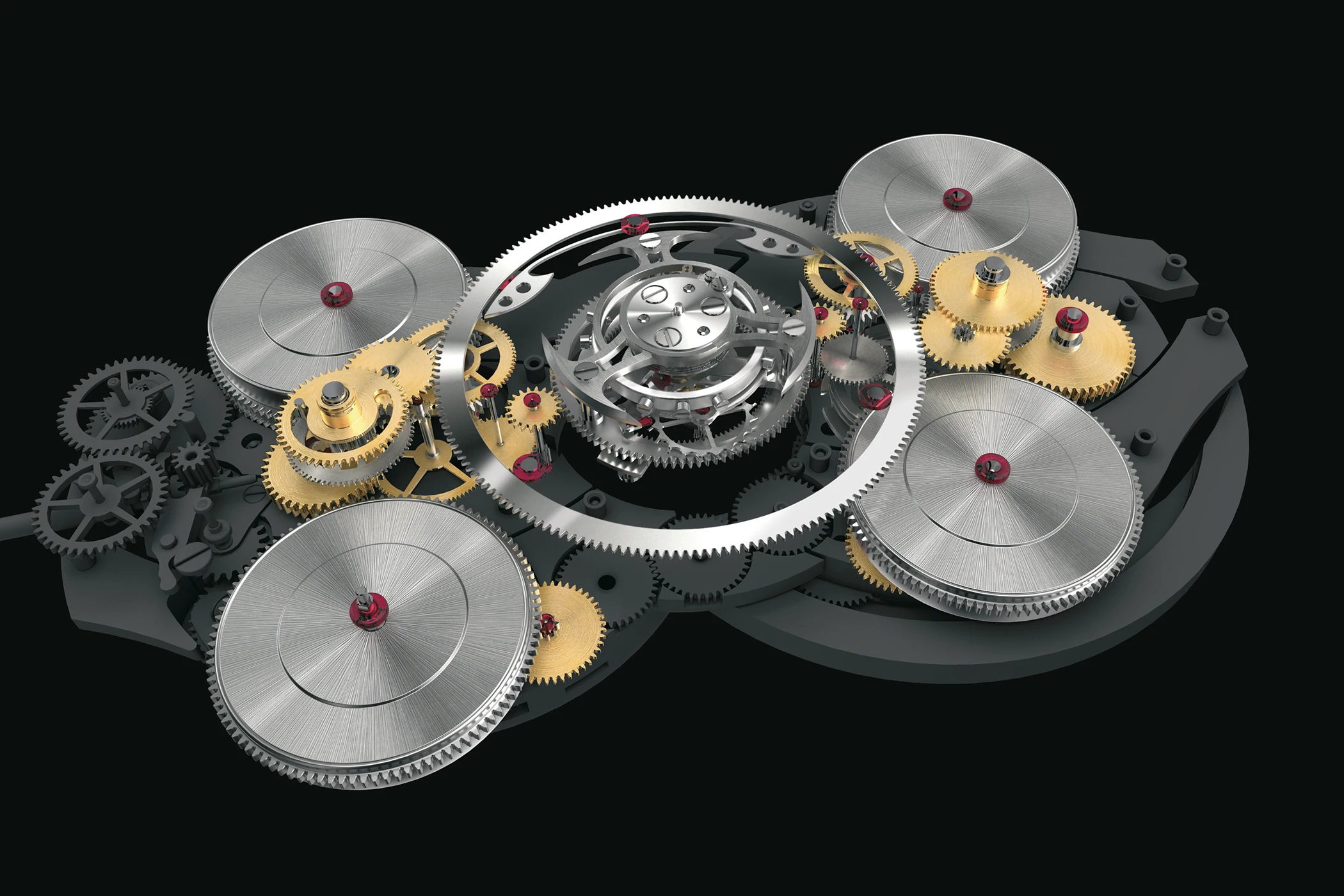
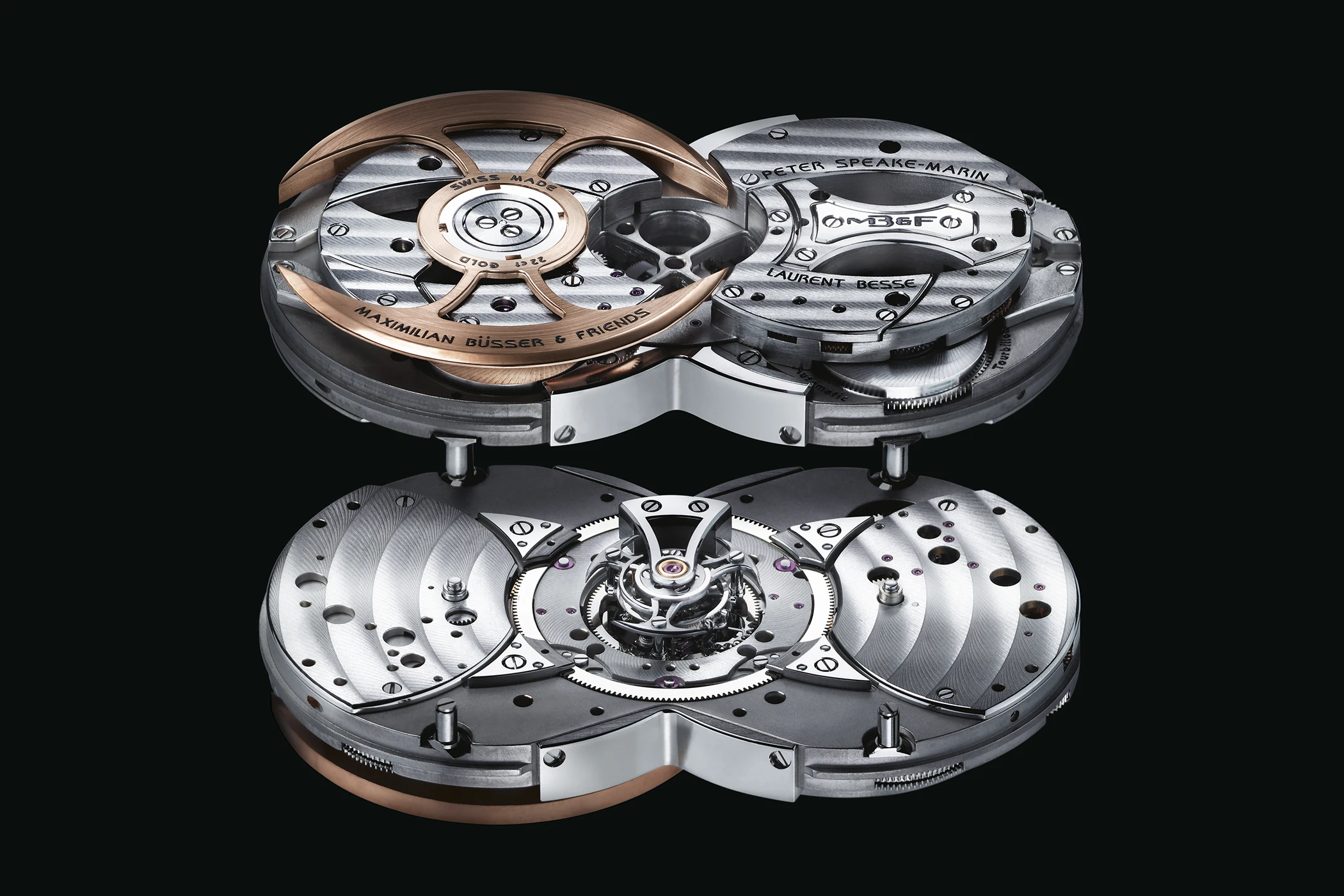
The HM1 was the brand’s first watch, effectively a proof of concept, and when it was unveiled in 2007 it caused quite a sensation. Arranged around a central tourbillon were two dials, one on each side: the left featuring a retrograde hour display, the right a retrograde minute display and a power-reserve indicator boasting a full seven days of autonomy. It was the first watch with four connected barrels, and the first wristwatch to channel energy from two different sources simultaneously into its regulating system. For this model, Büsser called on his friends and supporters: movement engineer Laurent Besse, watchmaker Peter Speake, and designer Eric Giroud. The latter remains a key creative force at MB&F to this day as he designed all the watches for MB&F until today.
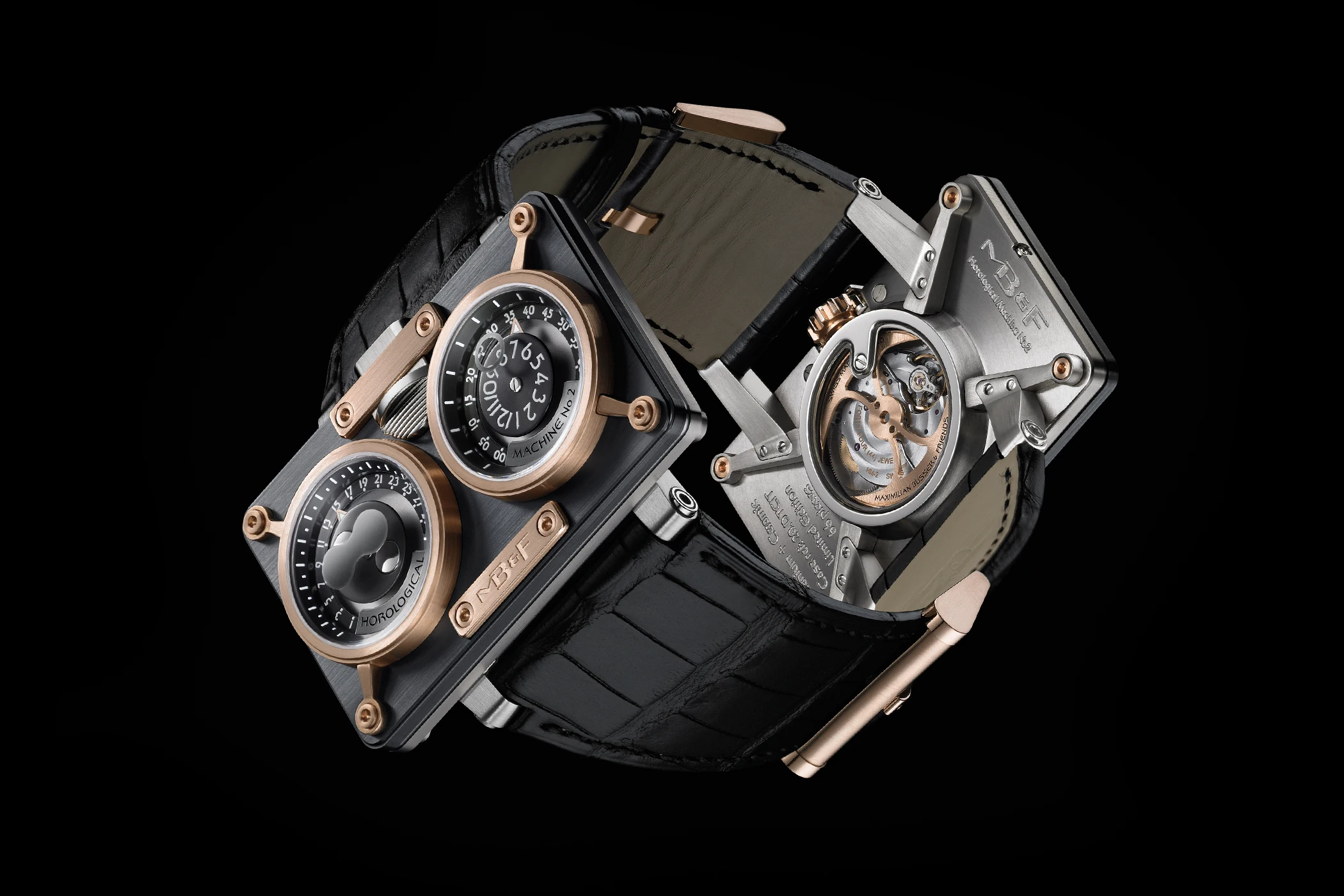
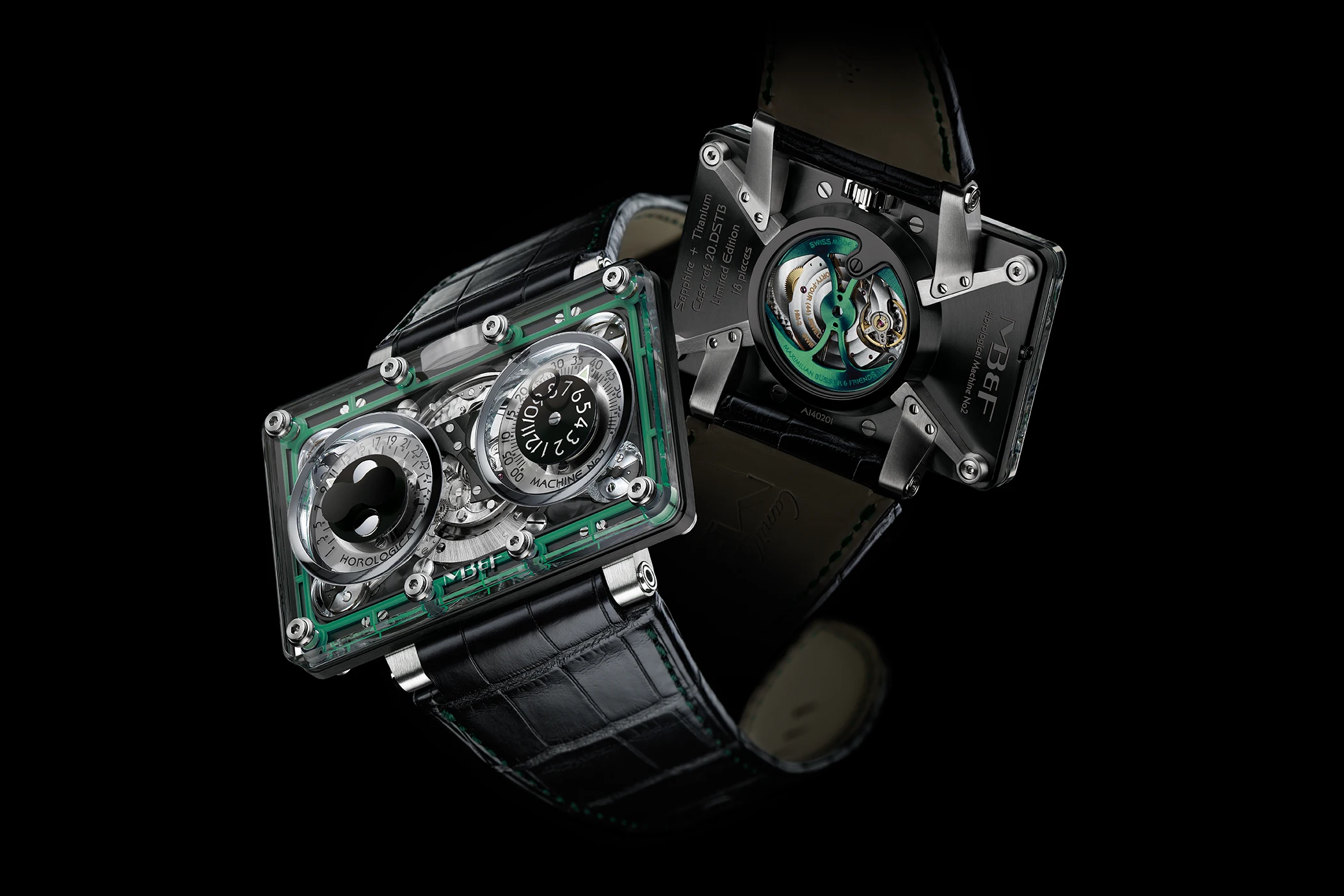
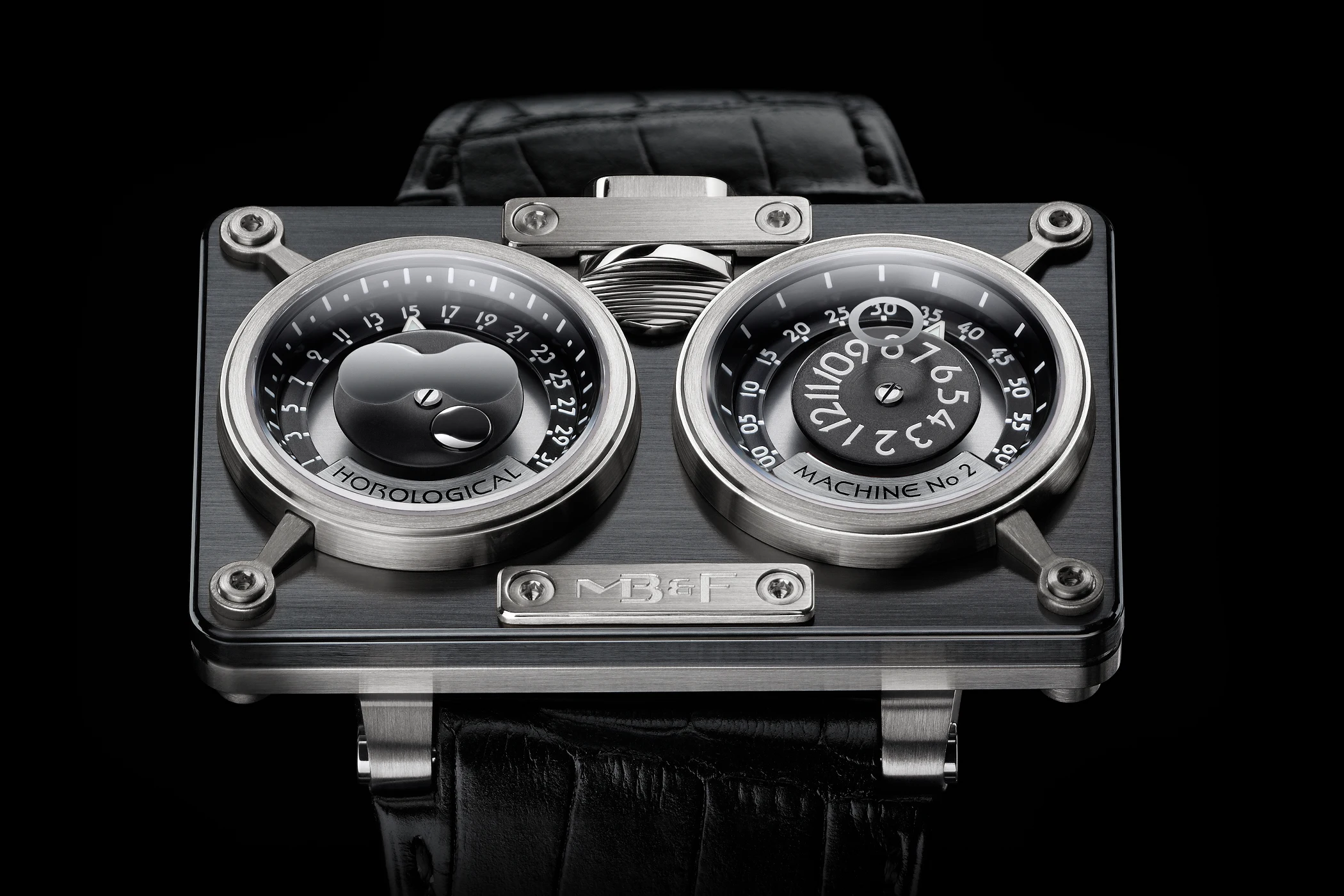
Just a year later the second Horological Machine, the HM2, was released and also stood out thanks to its unique case design. This time collaborating with Jean-Marc Wiederrecht, Maximilien Di Blasi, and Patrick Lété, Büsser opted for a design reminiscent of a DJ’s mixing console, with the case composed of over one hundred individual components. The left dial displays a retrograde date and moon phase for both the northern and southern hemispheres, while the right dial features a concentric retrograde minutes display with jumping hours. Six variants of the HM2 were produced in total, including one with a sapphire case.
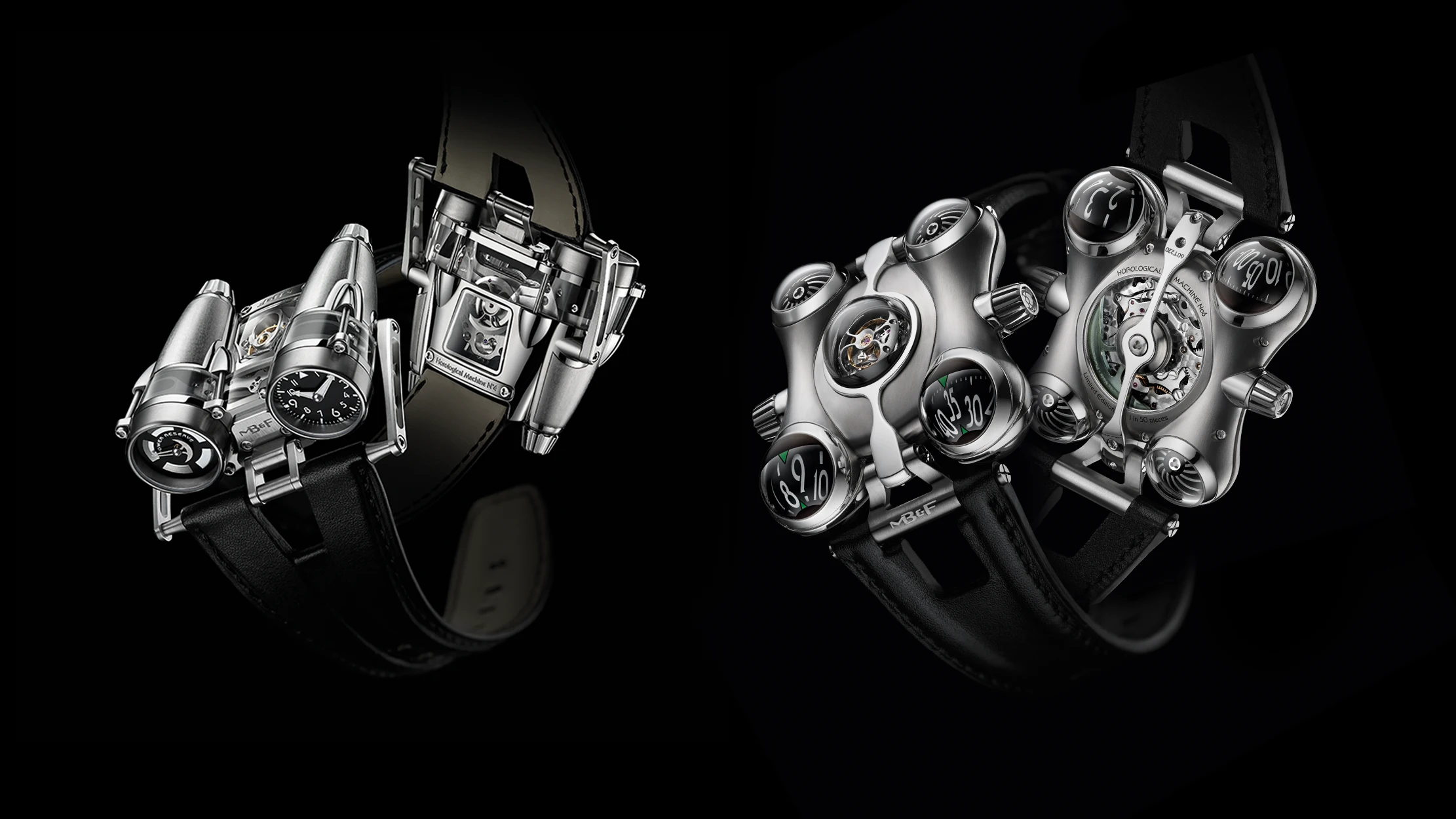
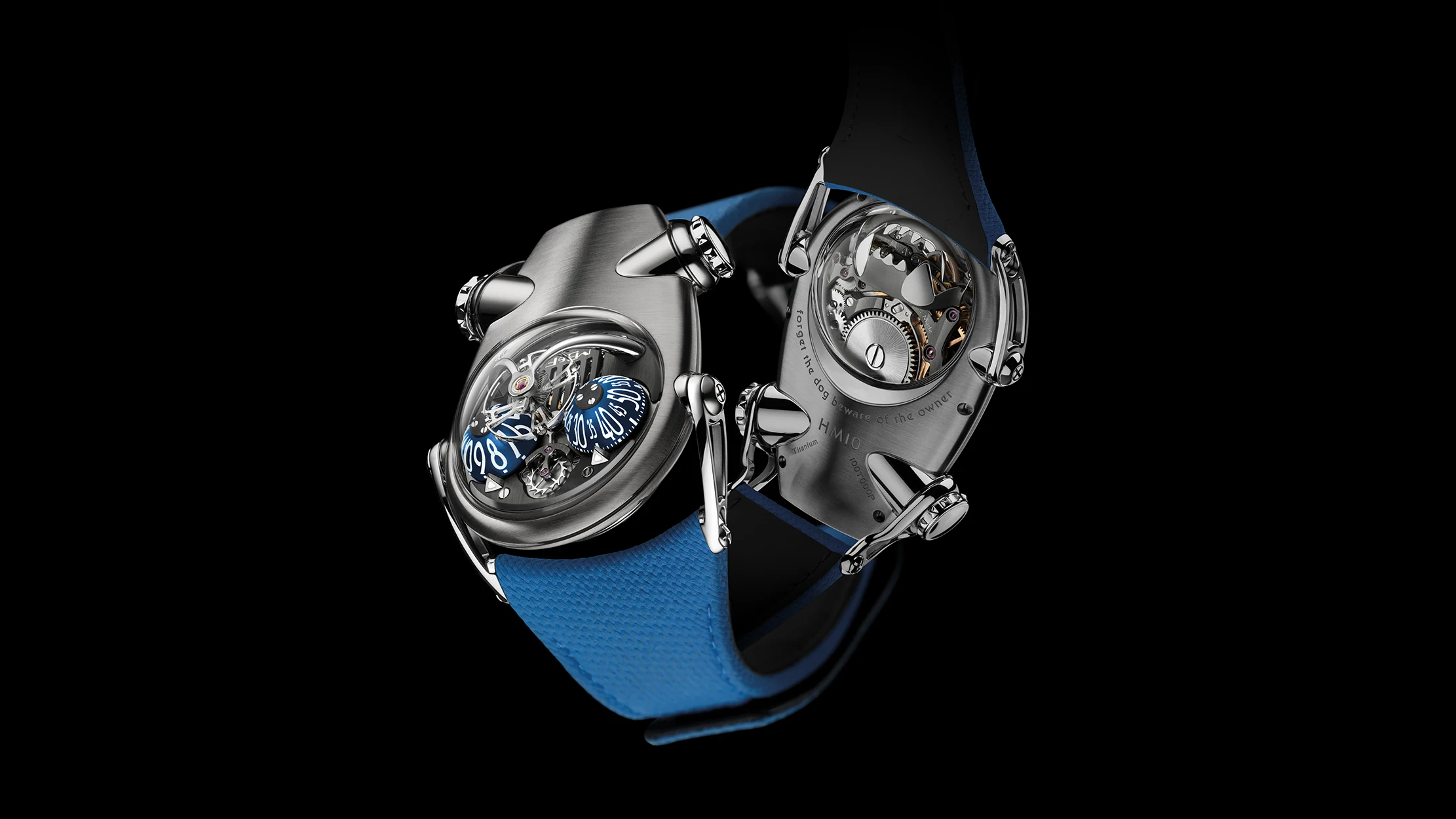
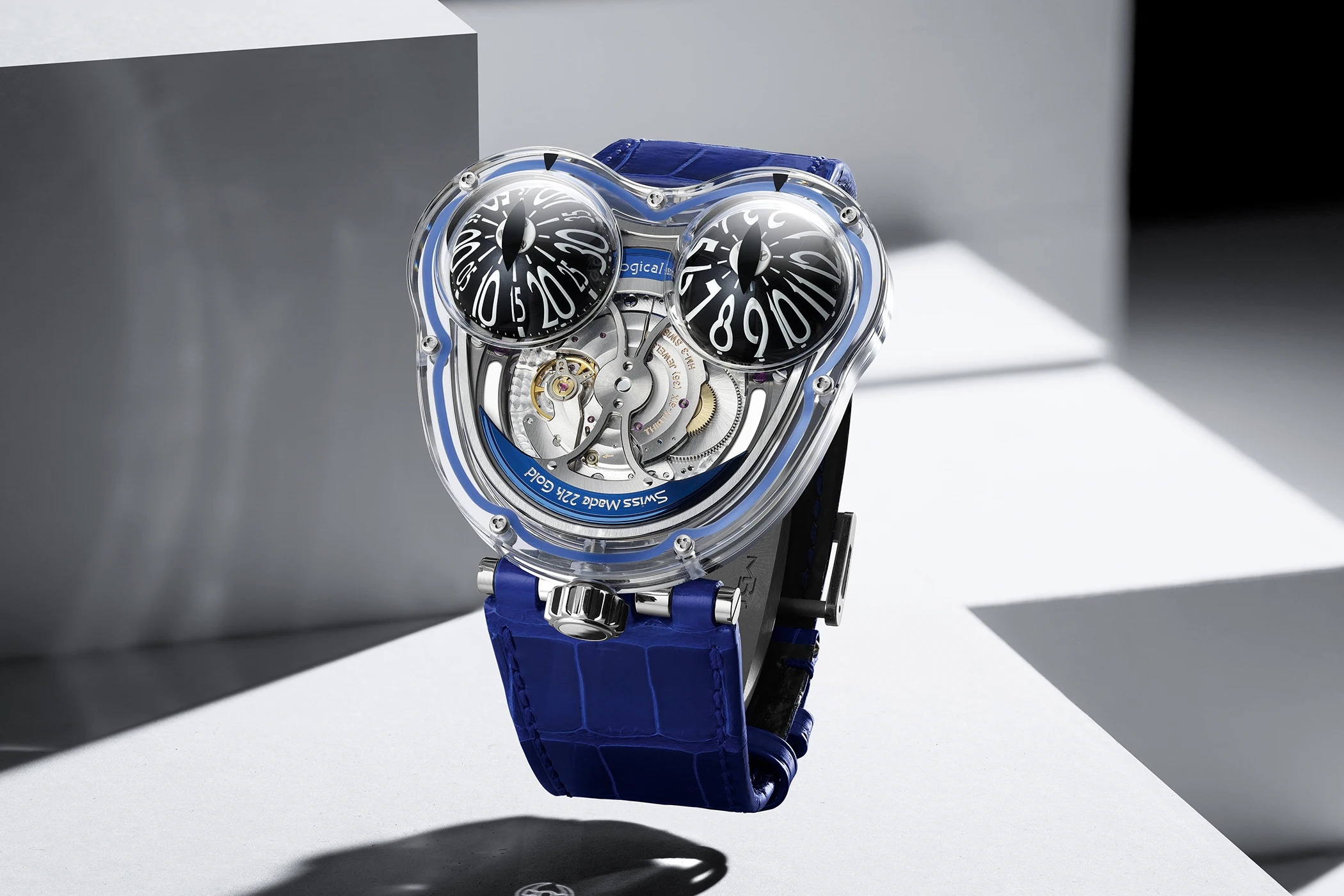
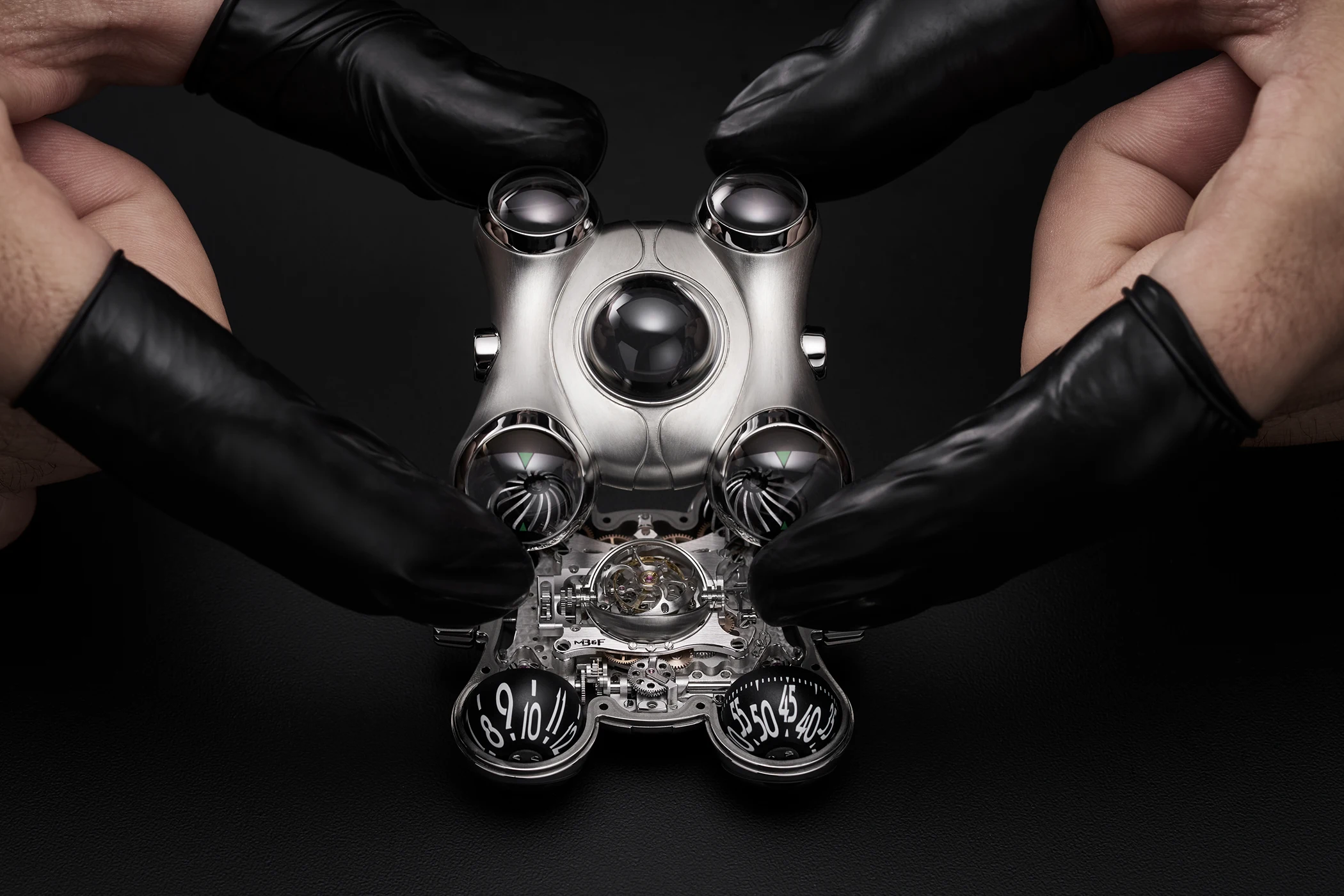
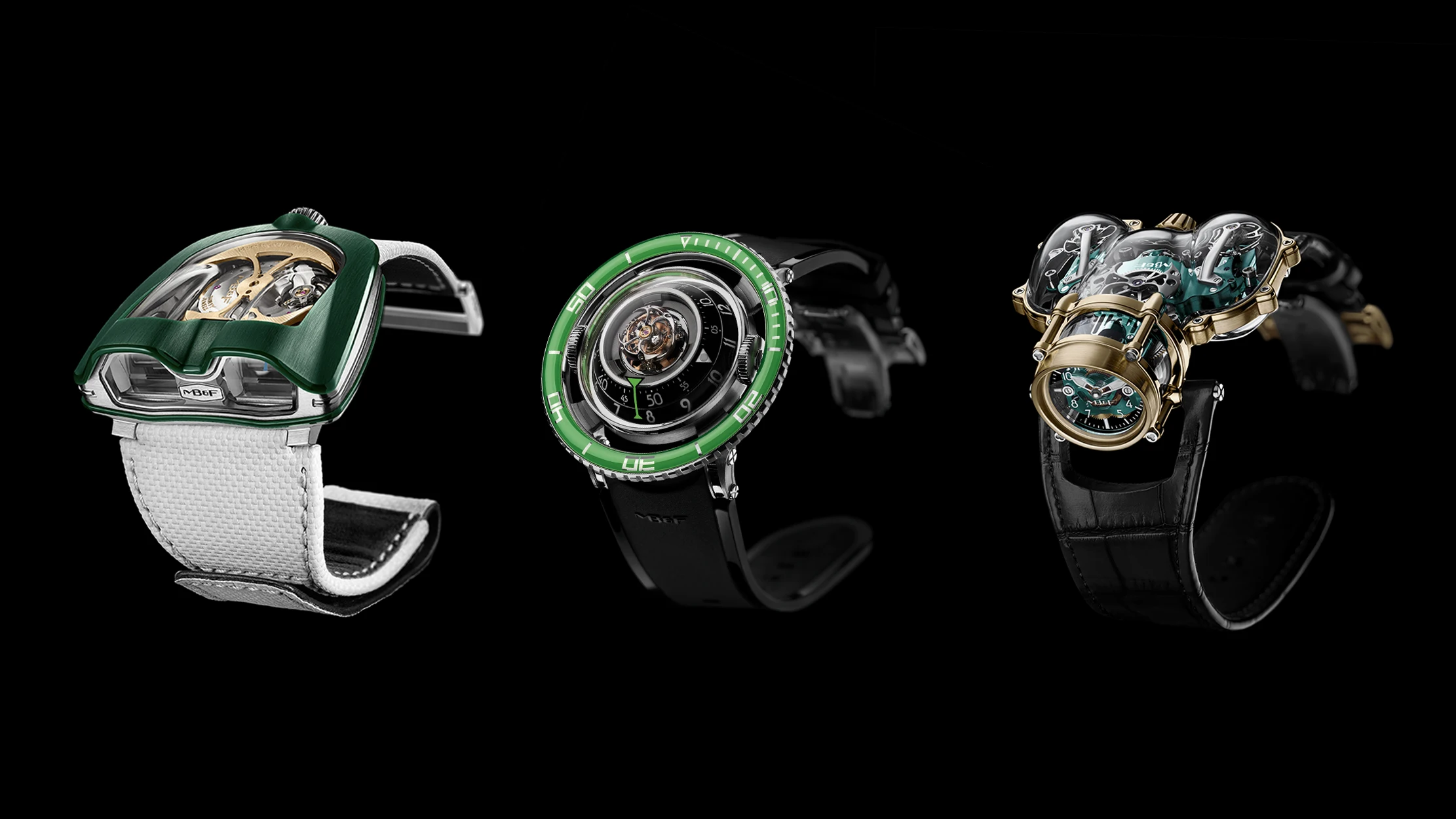
Other models followed, no less complex technically but sometimes even more playful in design: the HM4, for example, a pilot’s watch inspired by Max Büsser’s childhood passion for model aircraft, recalling the shape of a Thunderbolt fighter jet; or the HM6, with its biomorphic forms – half spaceship, half insect – equipped with a flying tourbillon and inspired by Japanese anime series. The HM10, meanwhile, carries the nickname ‘Bulldog’, its power-reserve display taking the form of a set of jaws that open and close, while the dog’s ‘eyes’ display the hours and minutes. As a child, Büsser says, he was a rather introverted nerd and dreamer, often retreating into his own imaginative world – a world that continues to serve as his wellspring of inspiration for MB&F today.
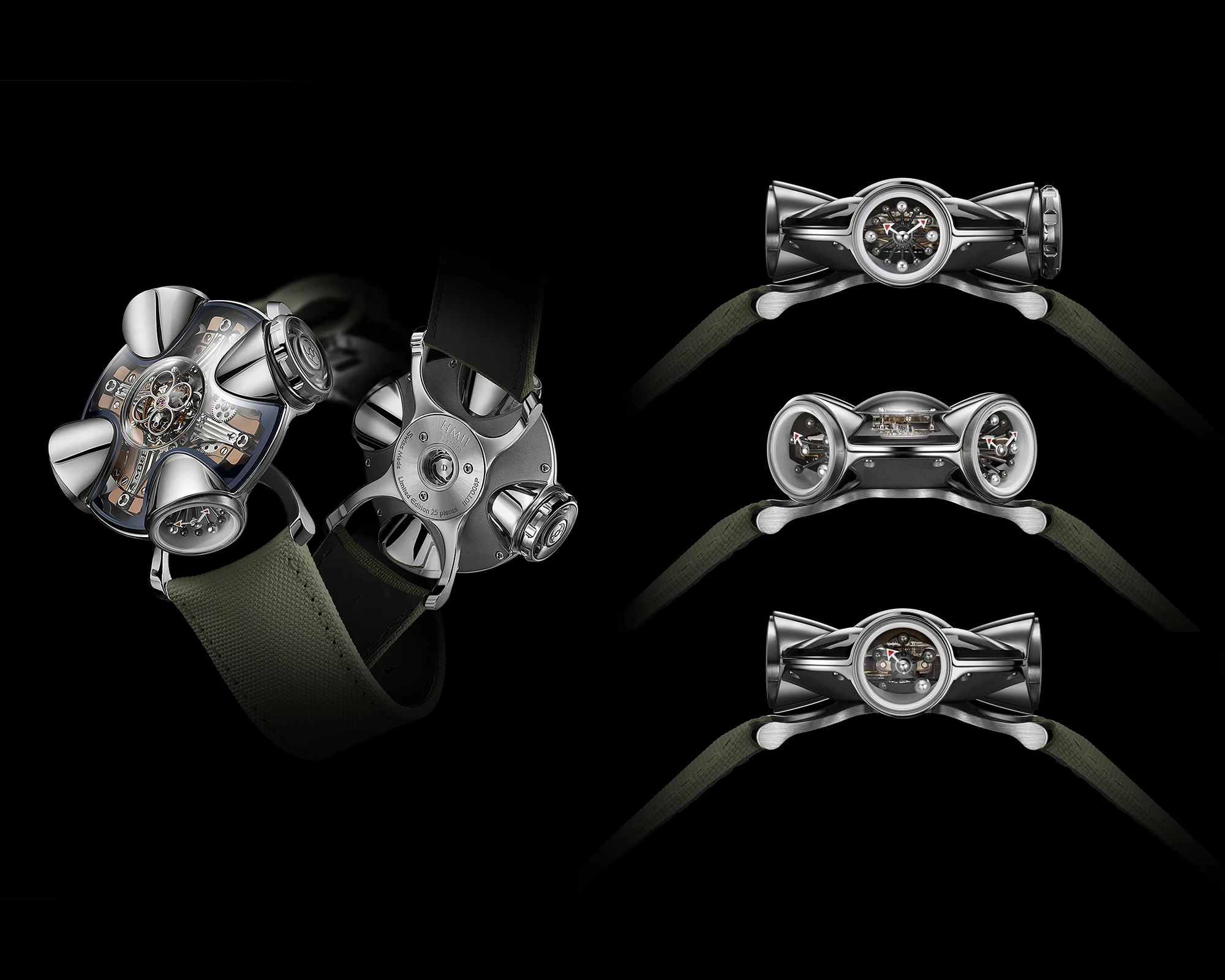
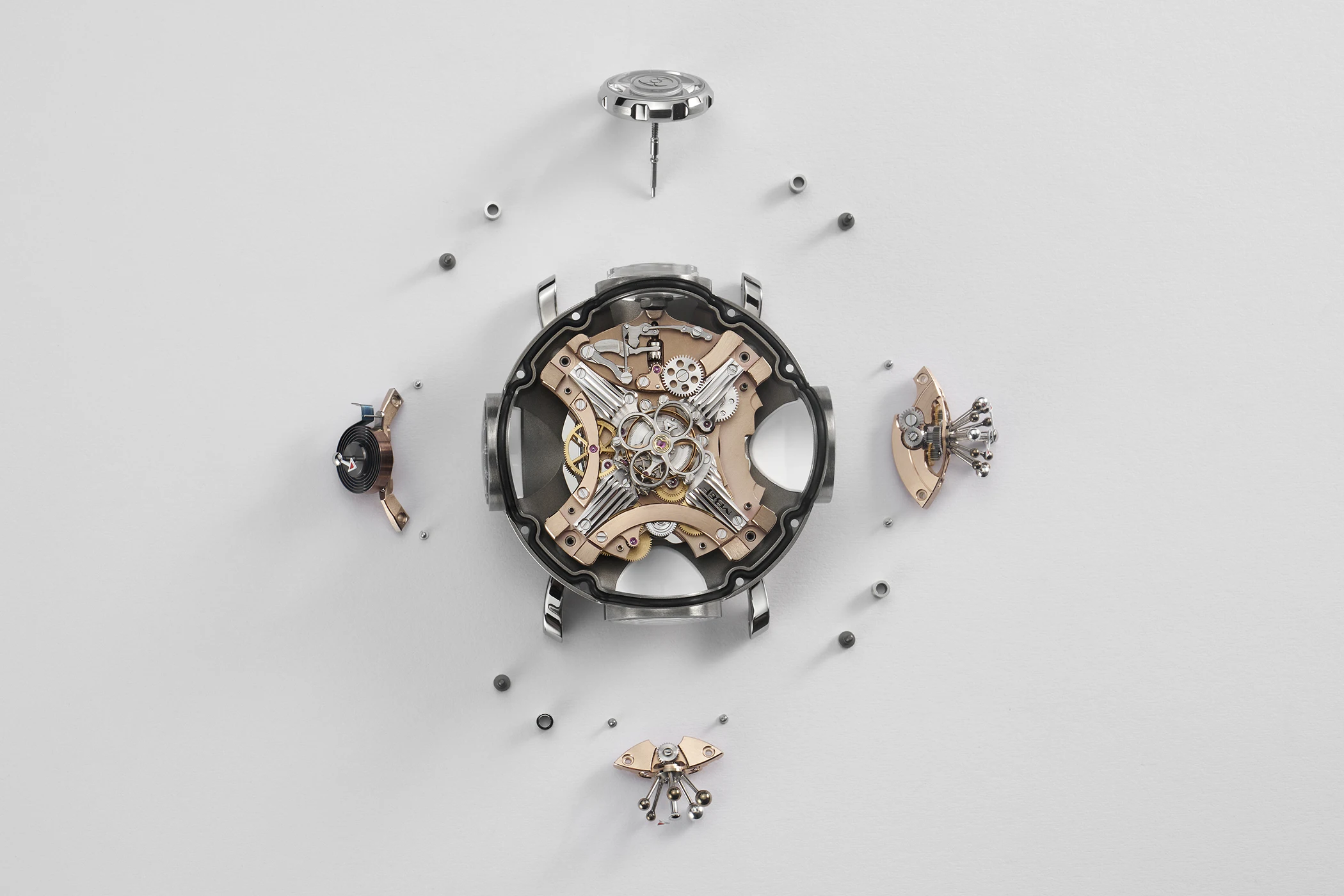
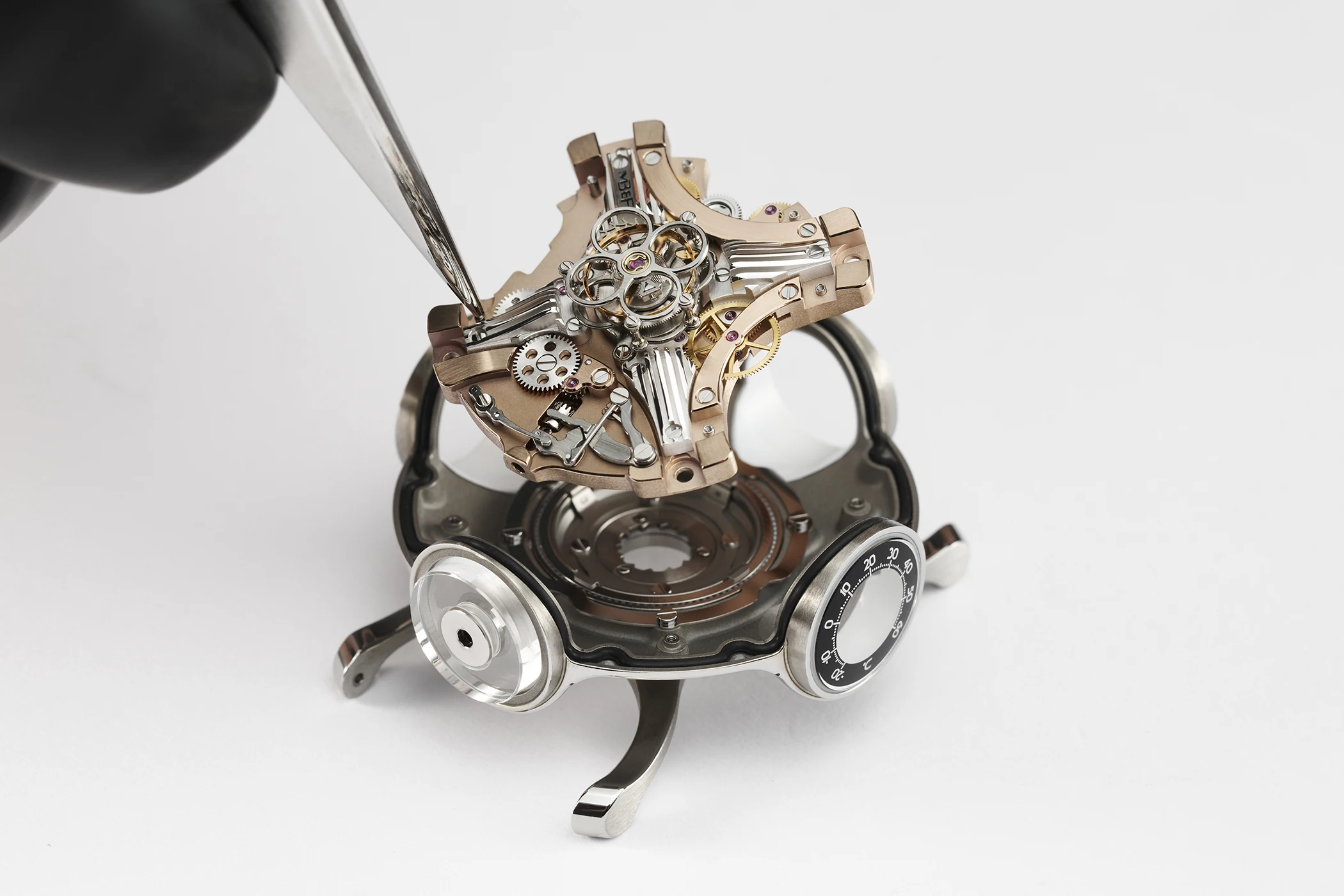
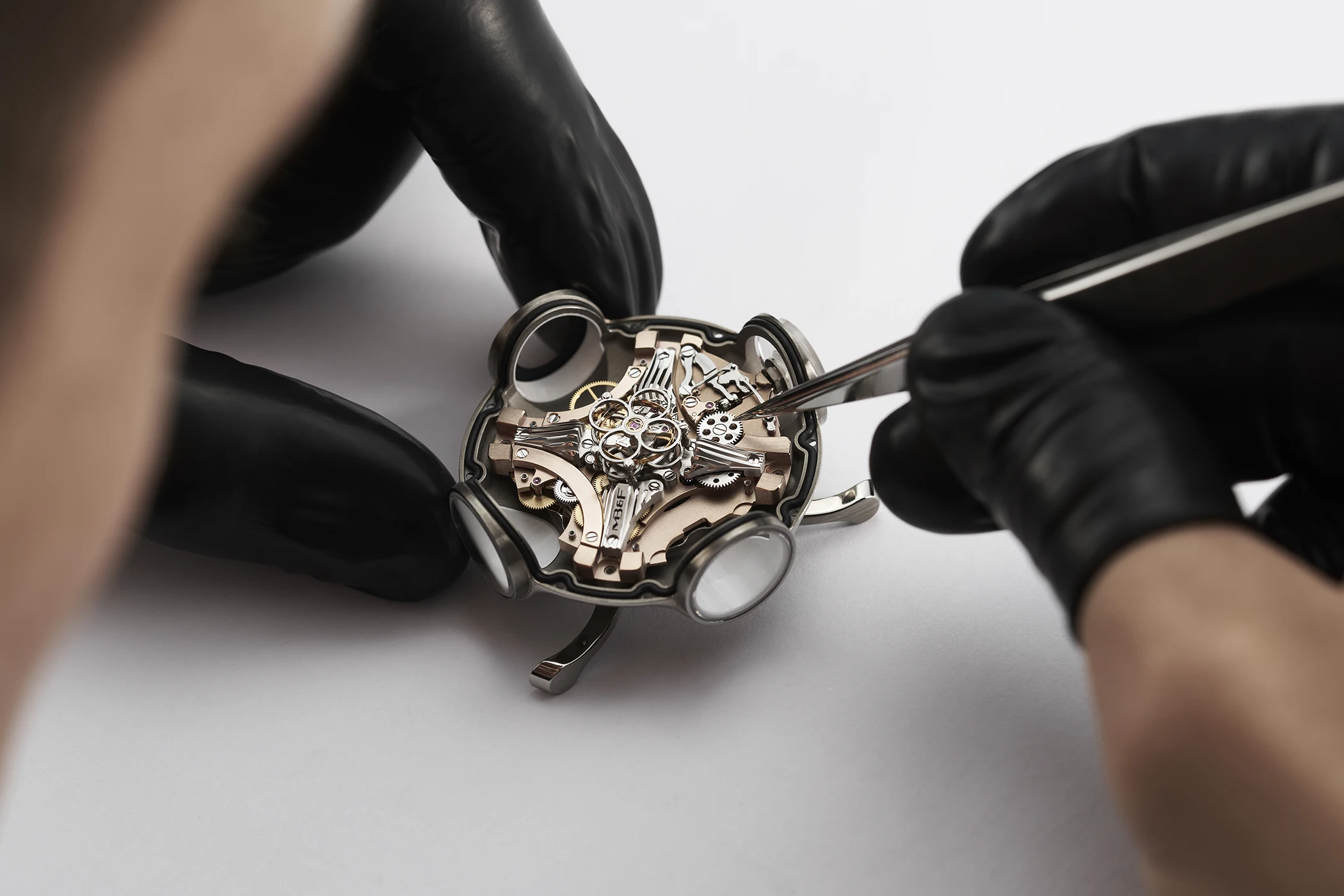
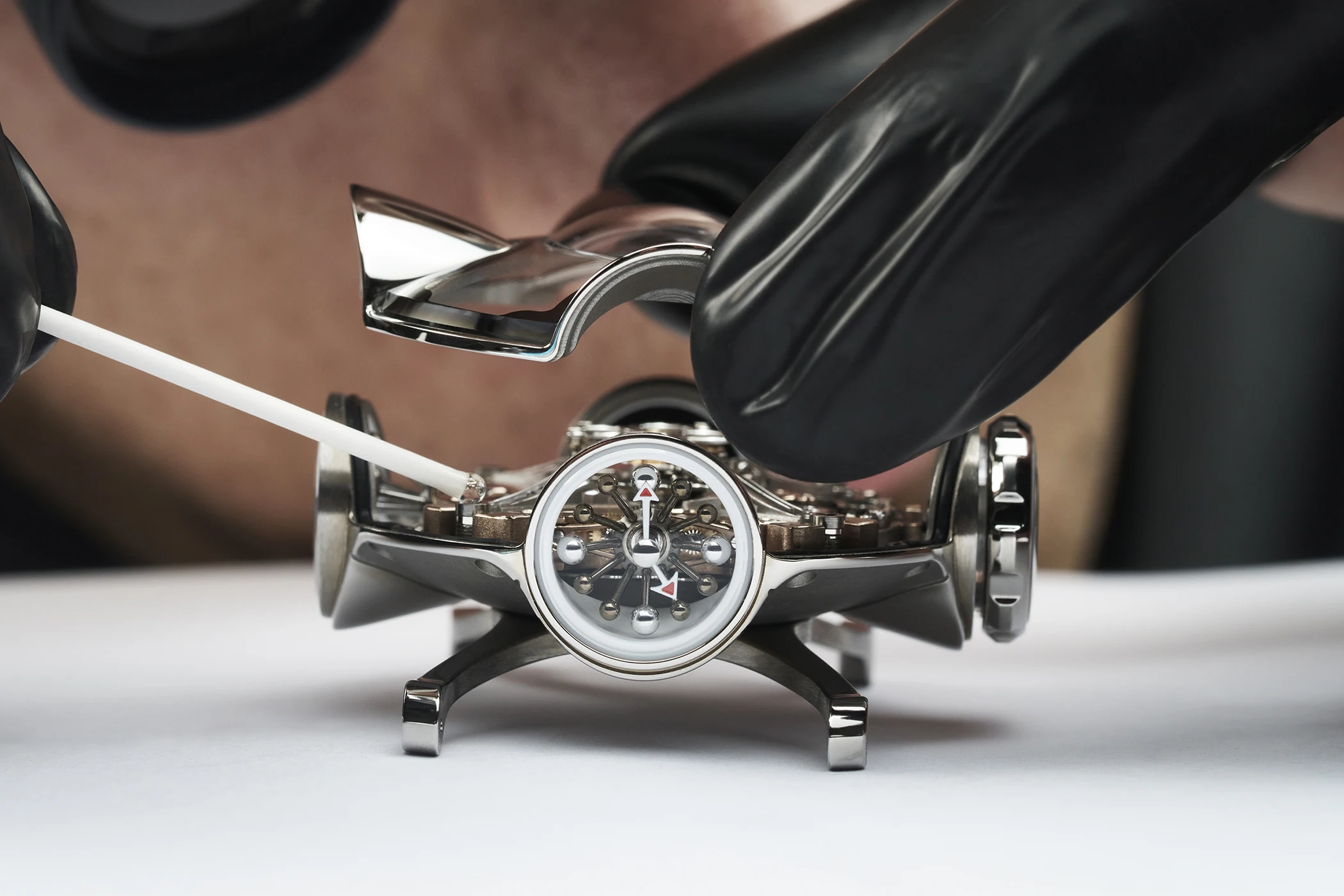
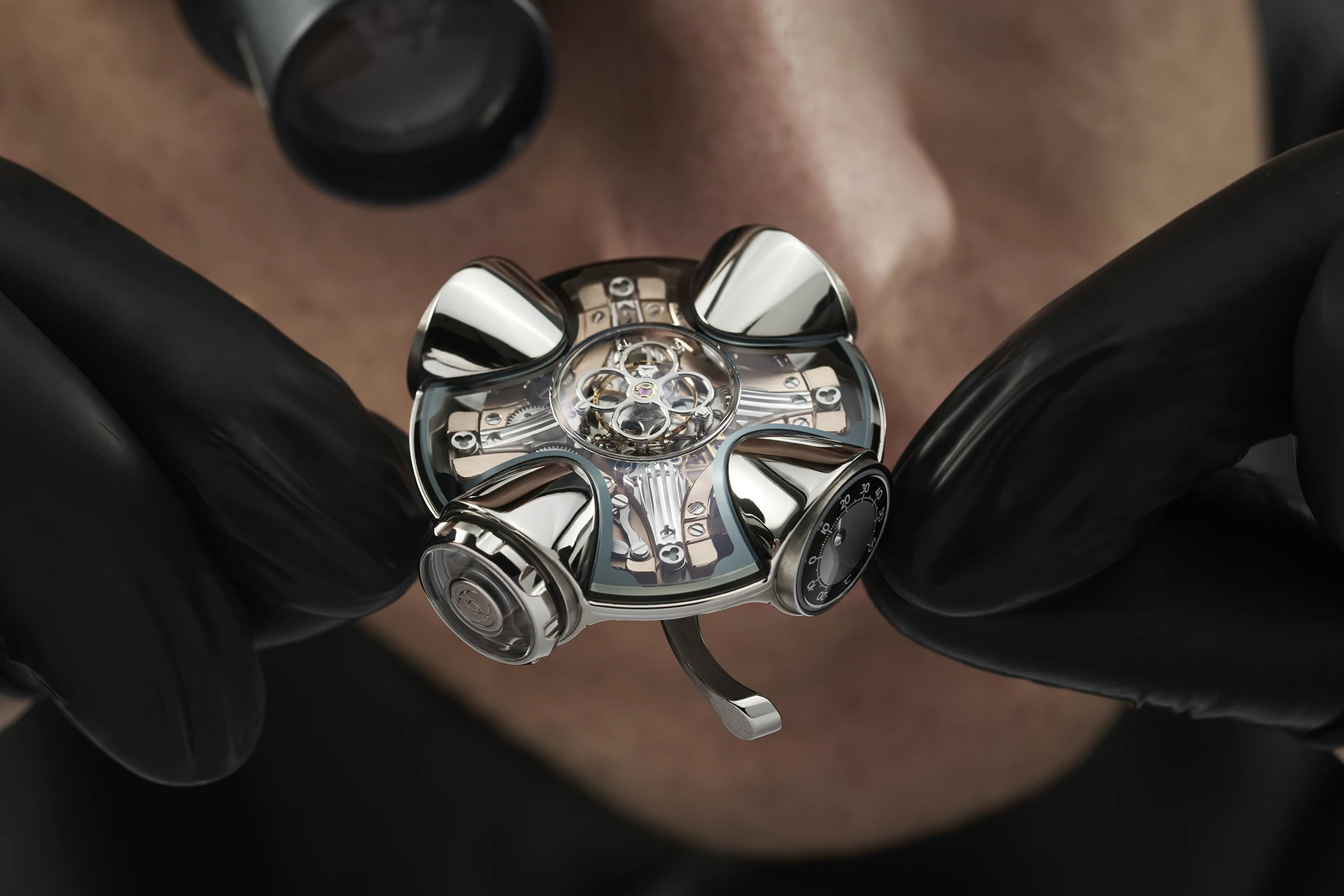
The most recent addition to the Horological Machine line is the HM11 ‘Architect‘, whose design evokes the domestic architecture of the 1960s. It resembles a small bungalow, with four tiny ‘rooms’ each housing a different display – among them, besides the time, a thermometer.
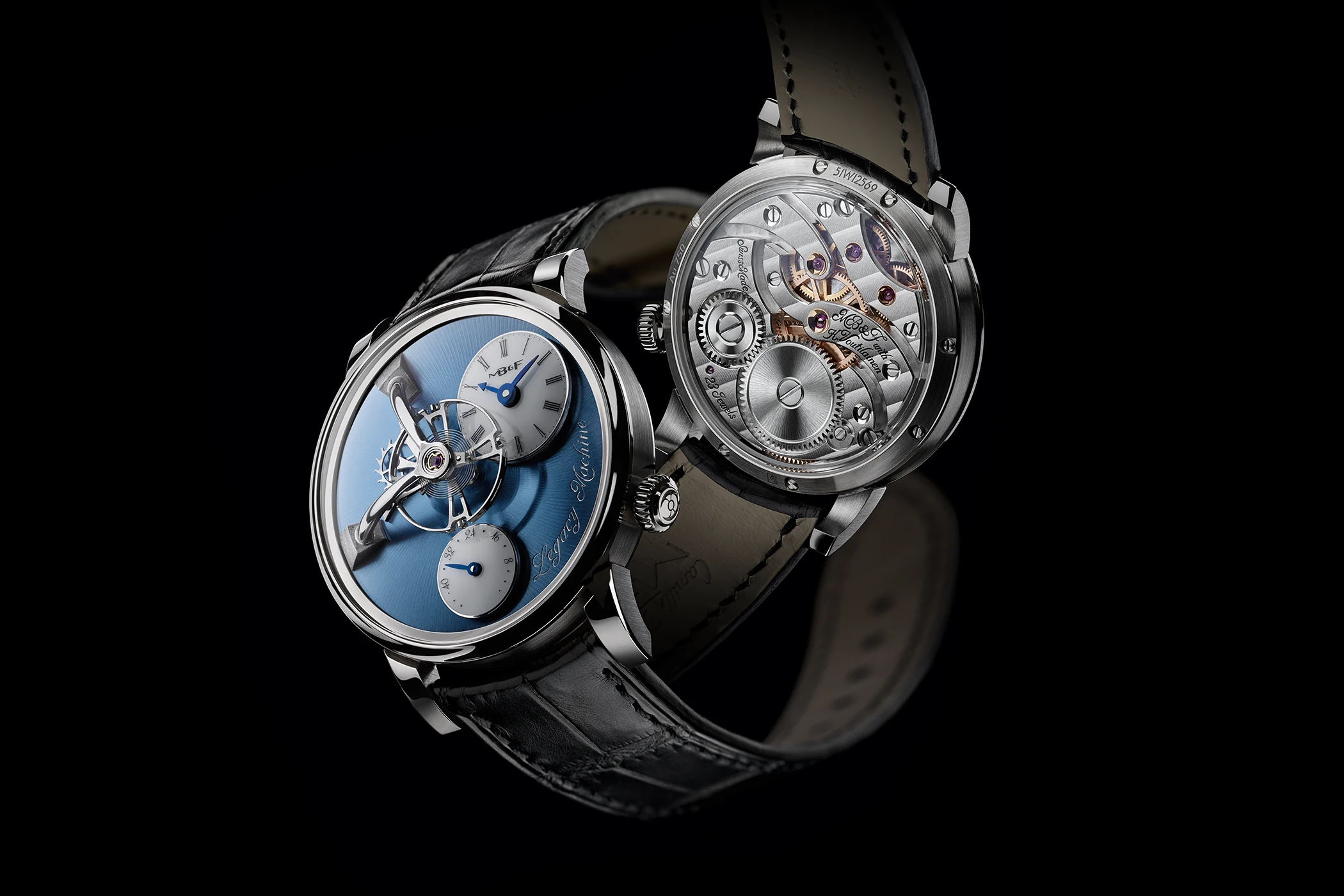
All Horological Machines share expressive forms that would drive any traditional watchmaker accustomed to classic round cases to distraction. If the Horological Machines are the heart of MB&F, then the Legacy Machines are the brand’s soul. They make the brand more accessible to a wider range of collectors since they are produced in larger quantities and, crucially, their design is more traditional. After all, they’re round. The concept behind the second pillar of the brand is straightforward: to blend the classic features of haute horlogerie with MB&F’s distinctive three-dimensional approach to watchmaking.
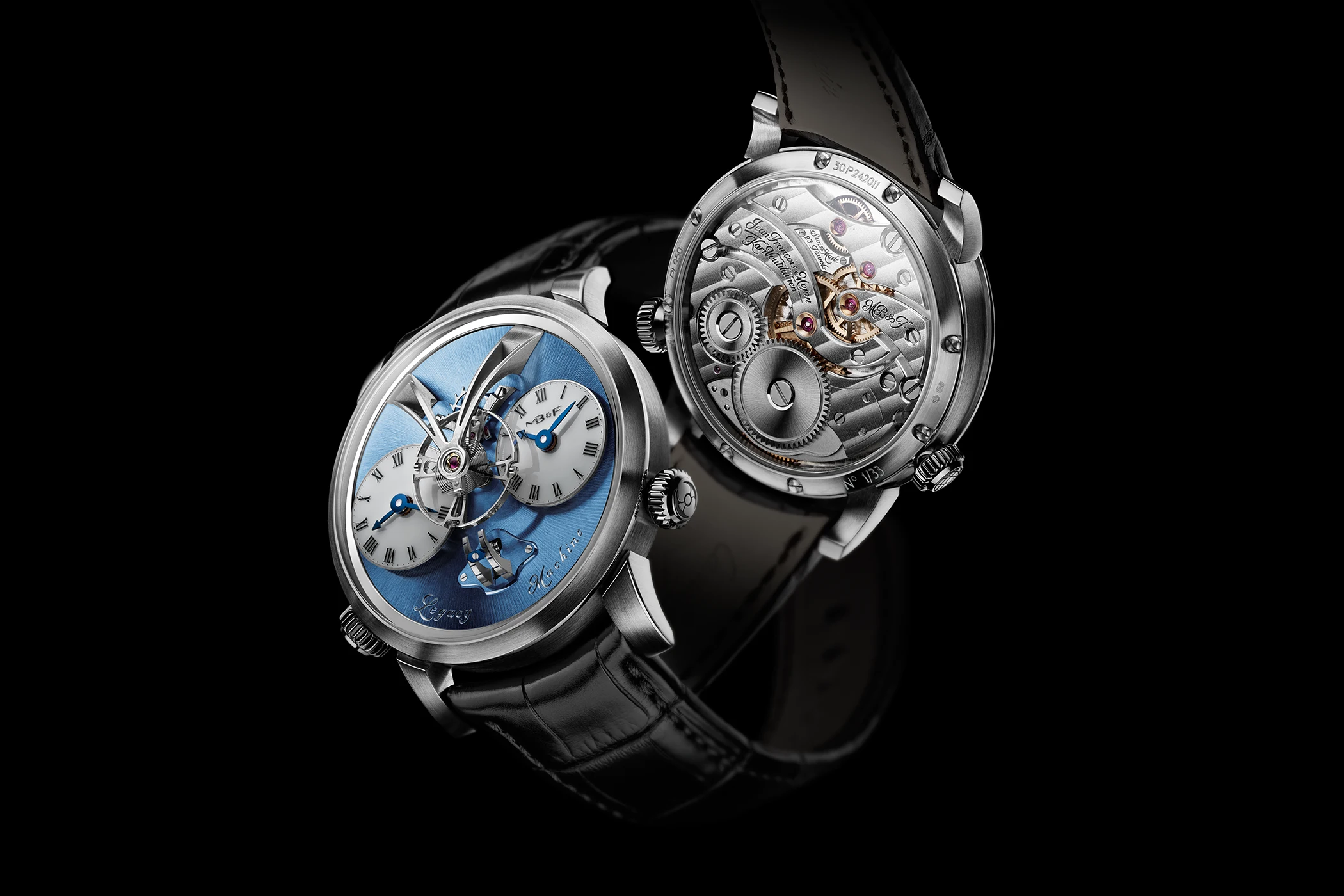
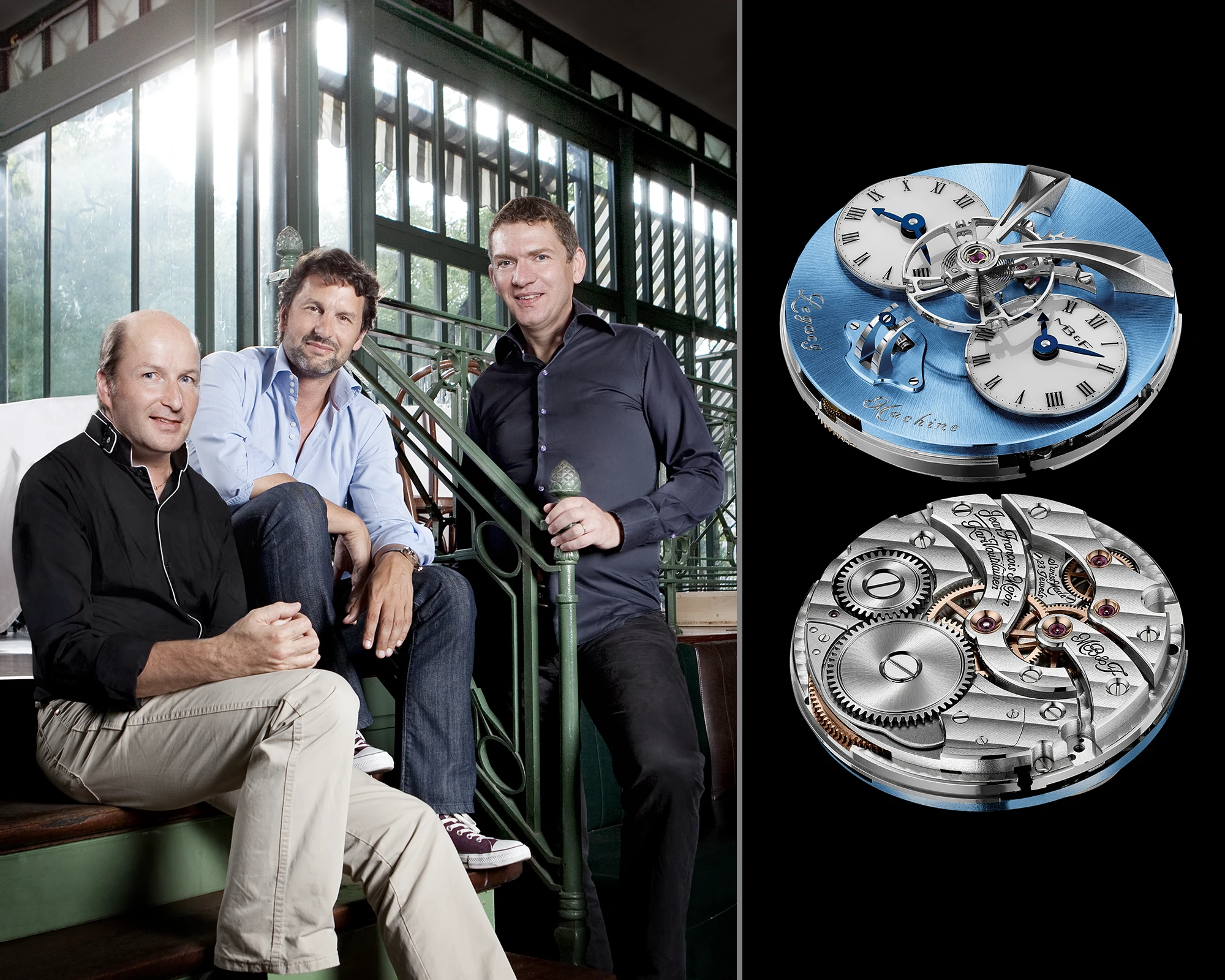
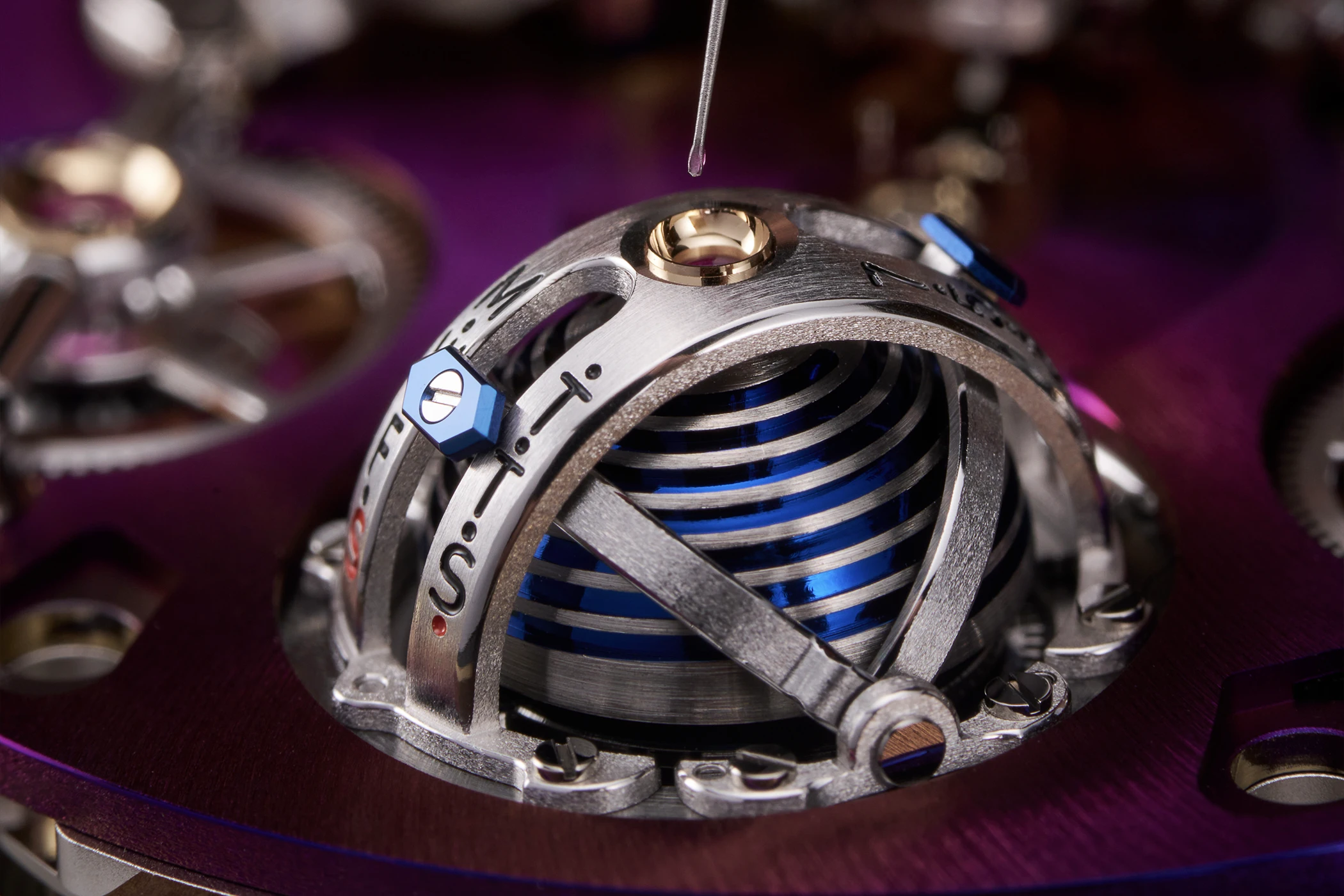
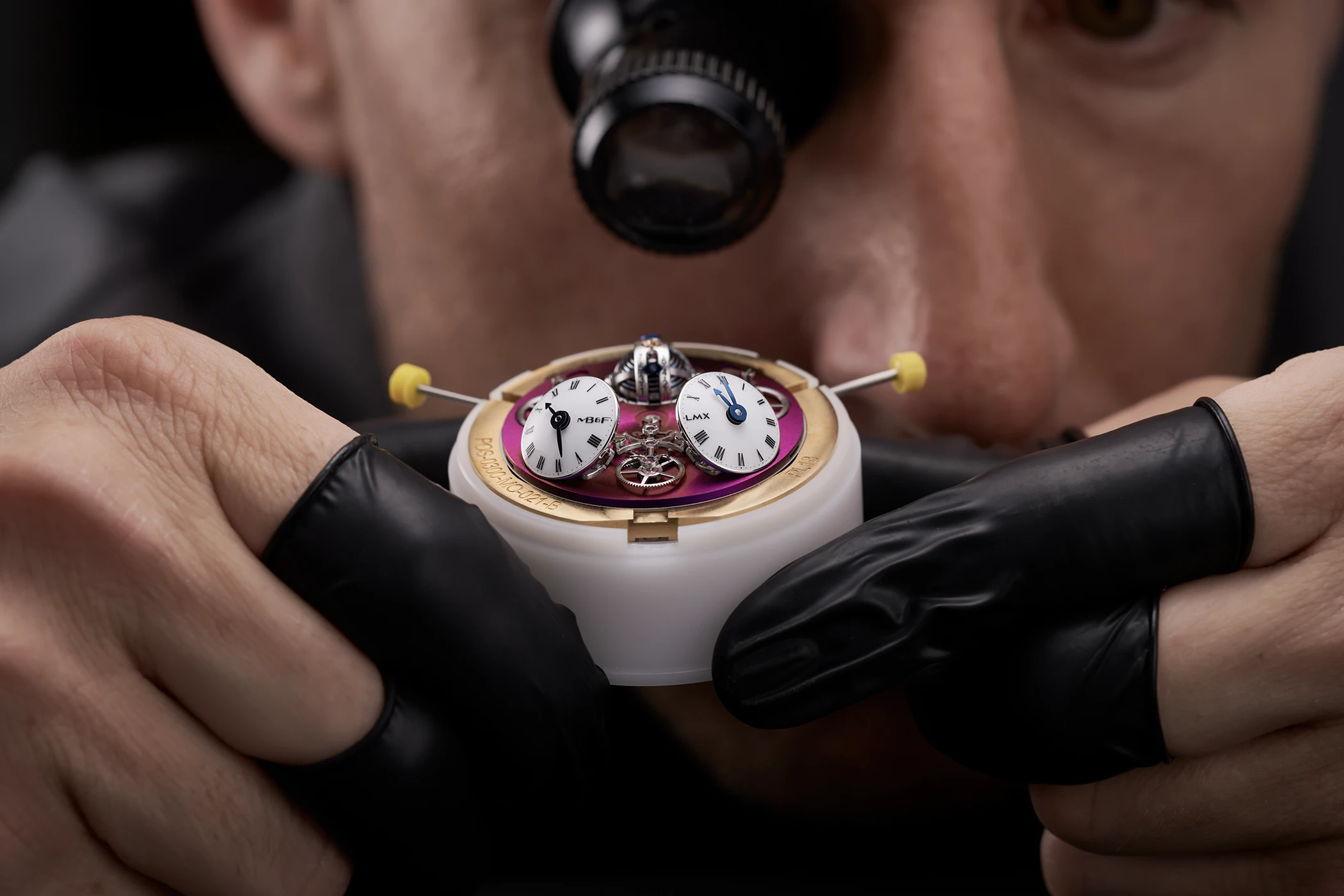
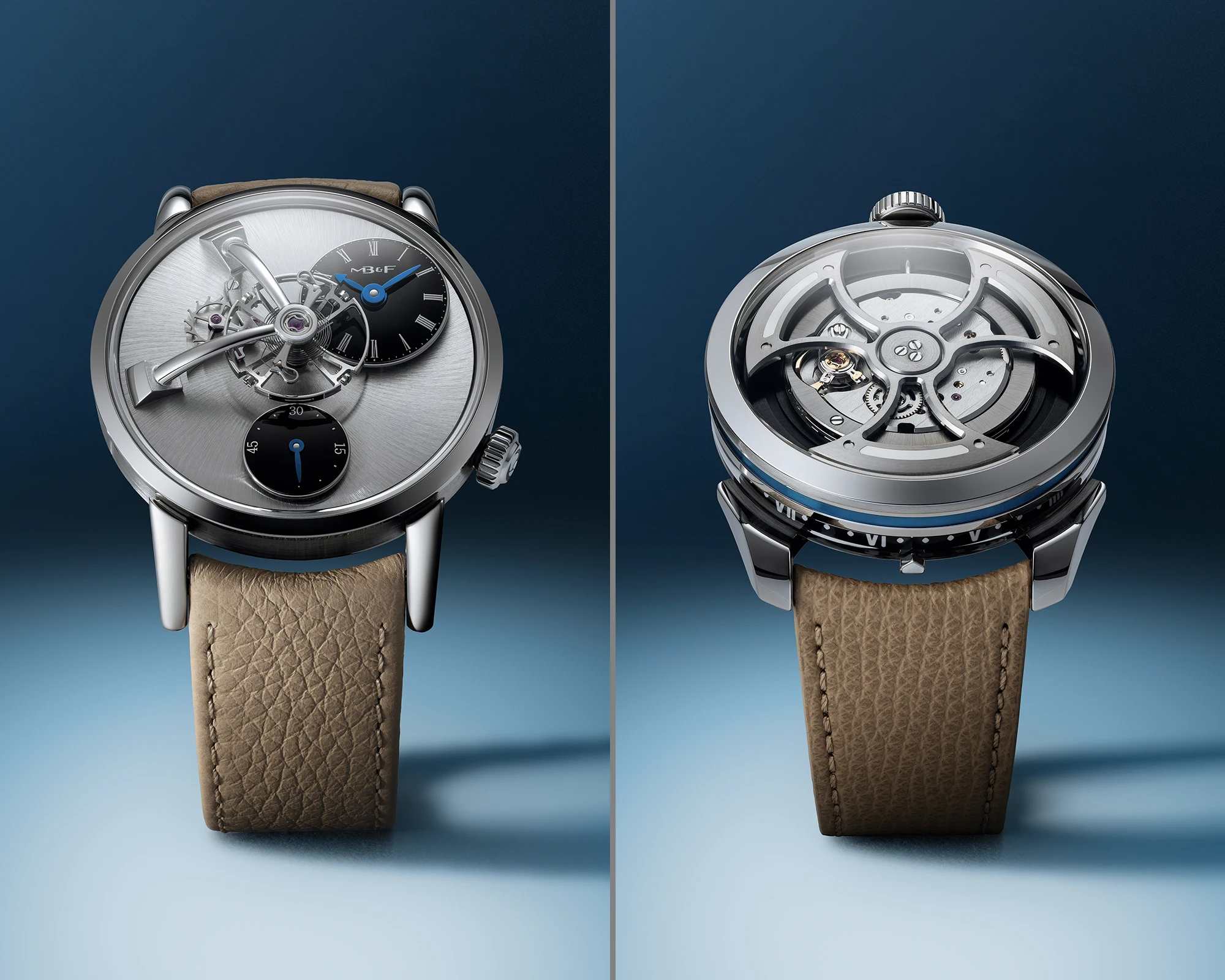
The movement for the first Legacy Machine, the LM1, was developed by Kari Voutilainen and François Mojon, and presented in 2011. It features two sub-dials for displaying two independent time zones, above which floats a large central balance wheel – now the signature hallmark of the entire Legacy Machine collection.
For MB&F’s business success and public profile, the LM models have since become crucial. The LM101, for example, is considered the most sought-after piece within the collection. It simply displays the time and the power reserve – nothing more. With a 40-millimetre case, it is also one of the most compact models in the range. It holds special significance for MB&F, as it was the first watch to be developed entirely in-house by the now fully-fledged team, rather than through external collaborations – a notable departure from Büsser’s usual approach. Today, it marks the entry point into the imaginative universe of Max Büsser and his friends.
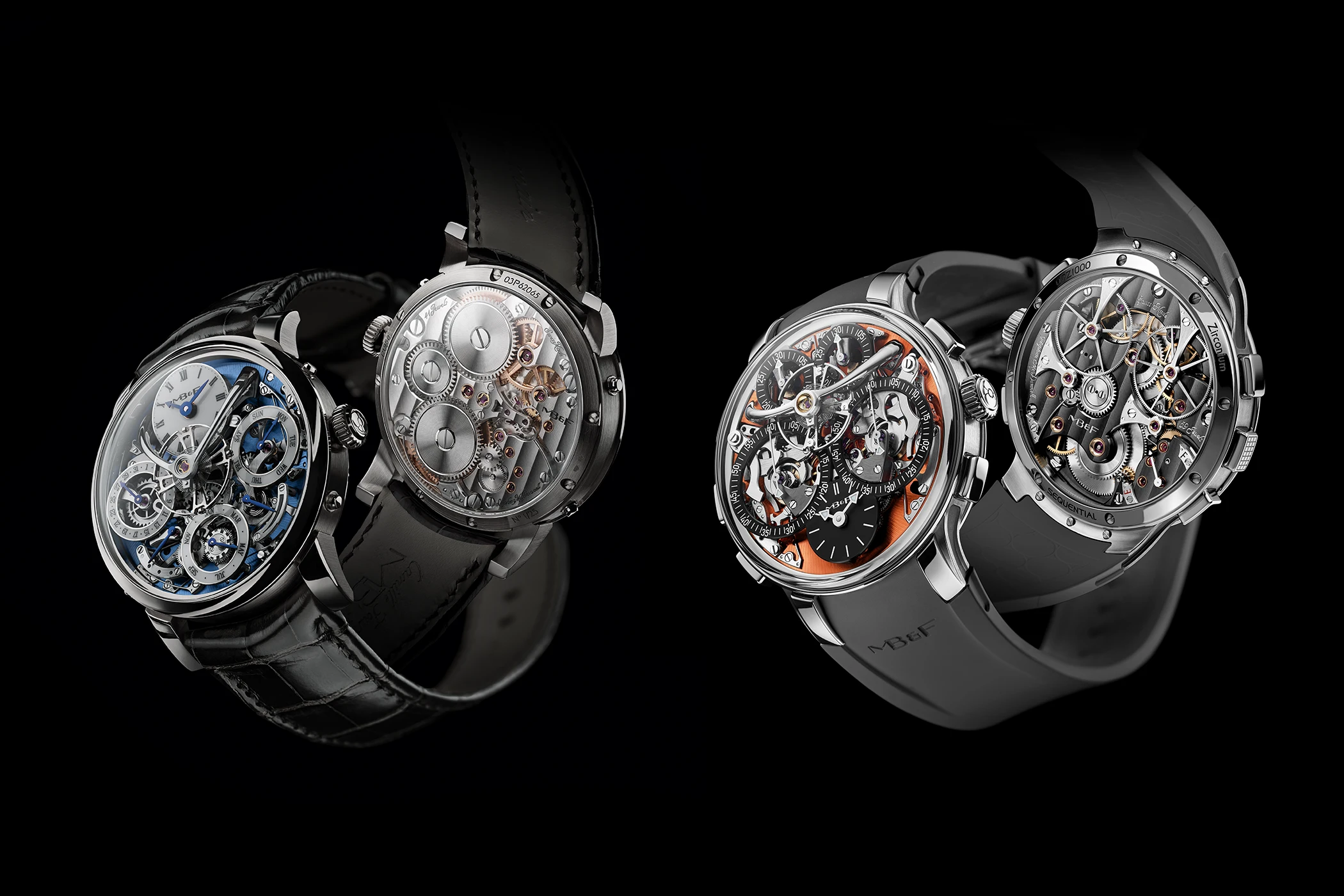
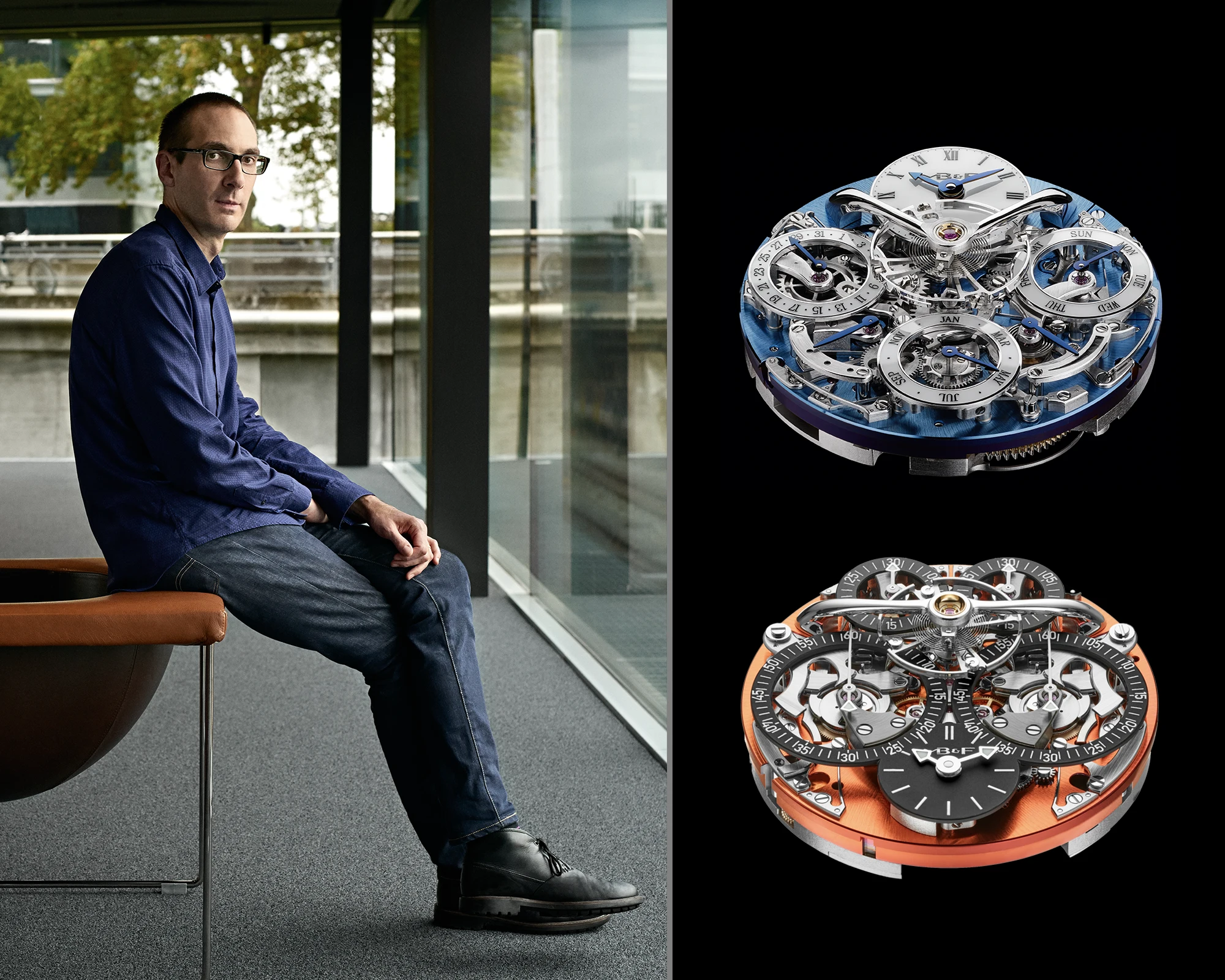
Two other models, meanwhile, inspire particularly fierce desire among collectors: the Legacy Machine Perpetual and the Legacy Machine Sequential Evo. Both house extraordinary, award-winning movements designed by watchmaker Stephen McDonnell. His perpetual calendar was engineered so that the mechanism cannot be damaged by incorrect adjustments, a true rarity. His chronograph, meanwhile, can justly be considered one of the most innovative in the world: it effectively combines two chronographs within a single case. Each can operate independently, or together via a ‘Twinverter’ mechanism, allowing the measurement of split and lap times.
In a remarkably short time, MB&F has produced an impressive diversity of horological concepts and expertise. Accordingly, expectations for the coming decades are high. Even though the company carries his initials in its name, and the founder is not yet 60, Maximilian Büsser is already giving serious thought to the future of his life’s work. With a twinkle in his eye, he observes that clingy founders often become a problem for many companies. For a long time, he admits, he couldn’t even afford the luxury of thinking about succession – the day-to-day challenges were simply too great. Now, however, MB&F finds itself in a position of strength. From this vantage point, Büsser has no intention of slowing down, resting on his laurels, or becoming complacent. Instead, he wants to become even more creative, more surprising, and more attentive to his clients. On top of that, he has two young daughters for whom he wants to be present as a father. The next step, therefore, is nurturing new talent. As Büsser explains, ‘Science shows that the most disruptive, creative output tends to occur in your late twenties to early thirties. After that, it doesn’t immediately decline, and experience can compensate for much – but eventually, even that isn’t enough. Many highly creative people become extremely unhappy and embittered as they age. The only way to avoid that is to participate in the success of the next generation, as a tutor or mentor.’
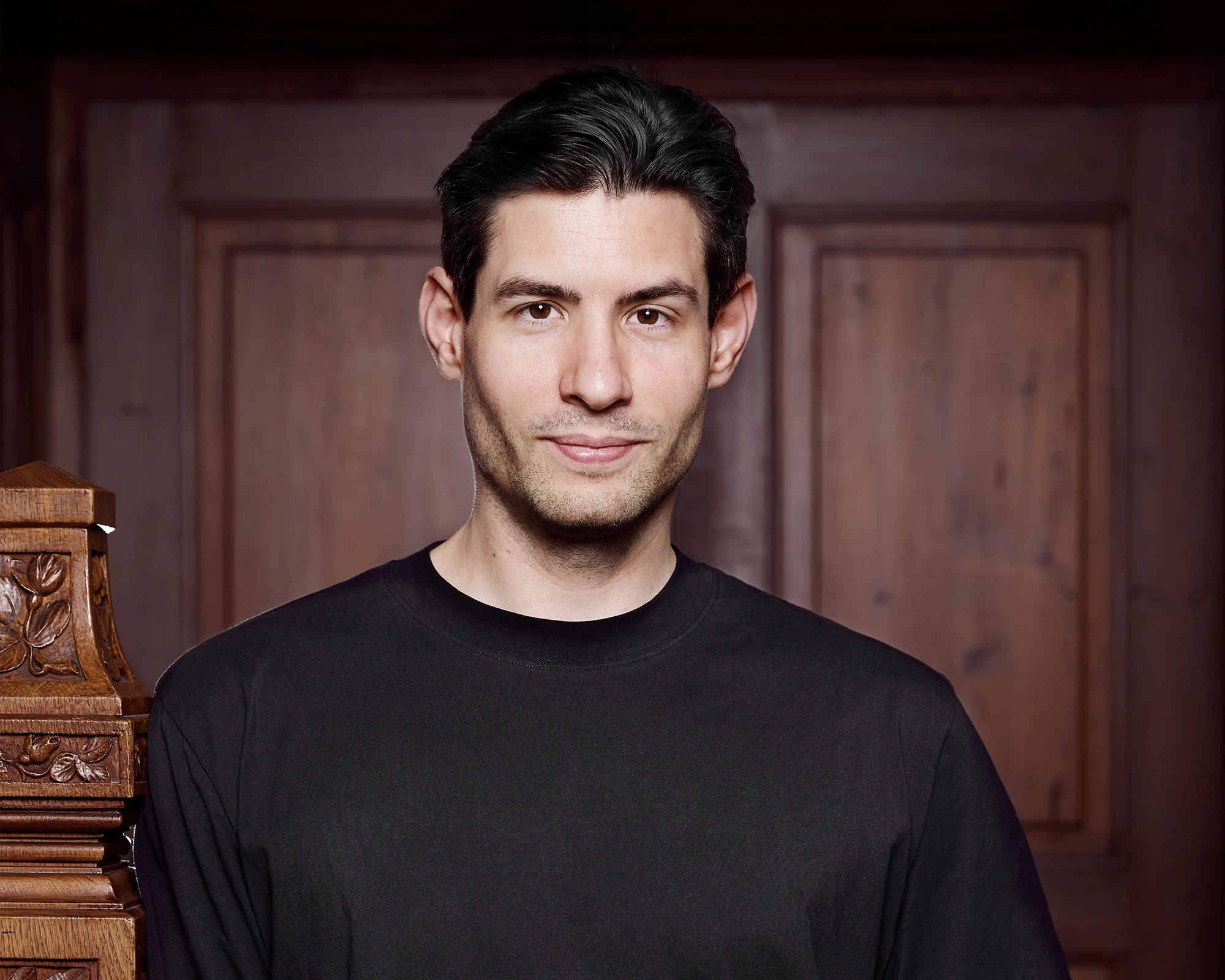
As Creative Director, he made Maximilian Maertens his crown prince. Büsser praises him: ‘Max is incredibly talented without developing an oversized ego.’ Max No. 2 began at MB&F eight years ago as an intern. Afterwards, the German industrial designer established his own studio in Berlin, but maintained close contact with Büsser. Maertens recalls, ‘I bombarded him with countless ideas for projects.’ And Büsser kept commissioning him with more and more work. Among other things, Maertens designed table clocks for him; the T-Rex and Orb models bear his signature, and next year the first Horological Machine based on his ideas is set to be launched. Of course, Maertens could have signed on as a designer for a large corporate brand, but he is certain: ‘There, I would have known exactly what the next 25 to 30 years would have looked like.’ The MB&F approach, however, promises a much more exciting life and one that is uniquely exhilarating even outside the world of watches.
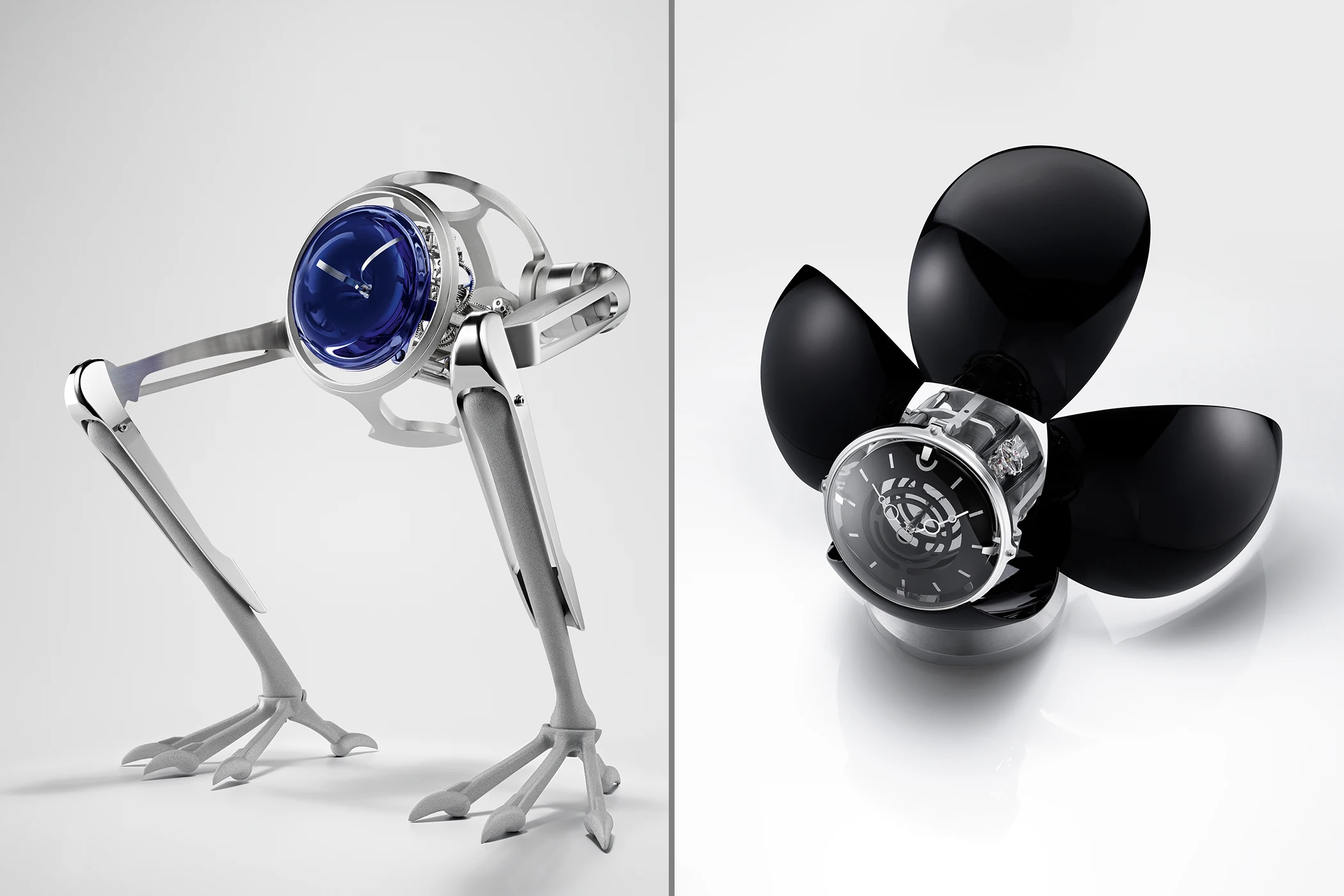
As Büsser’s successor, Maertens aims both to preserve the company’s values and to continue the MB&F story. And no, he says, he is not afraid to expand the universe shaped by his mentor, even if both share a passion for elements of motorsport and aviation. He admits, ‘The projects here are also a form of self-therapy for me. What occupied me as a child, as a teenager, and as a tween– all of that becomes visible in the watches.’ As a designer, he loves the almost infinite possibilities offered by working on the Horological Machines. He explains, ‘Even a chair allows for design, but in the end, you should be able to sit on it – otherwise it becomes a piece of art. Our watches, however, are already artworks by their very nature. And because the scale is so small, I can completely let myself go. I see myself here more as an artist than as a designer.’
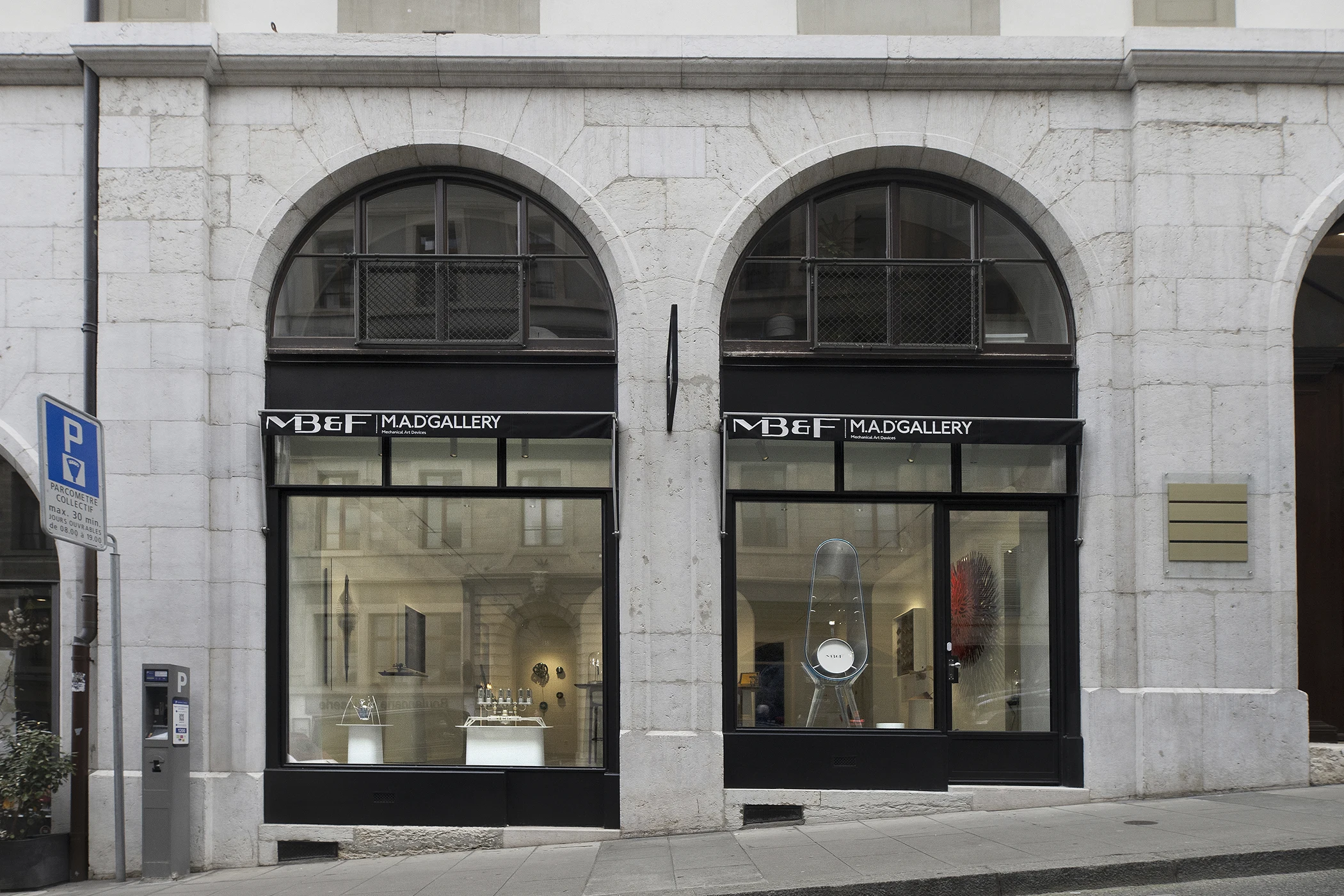
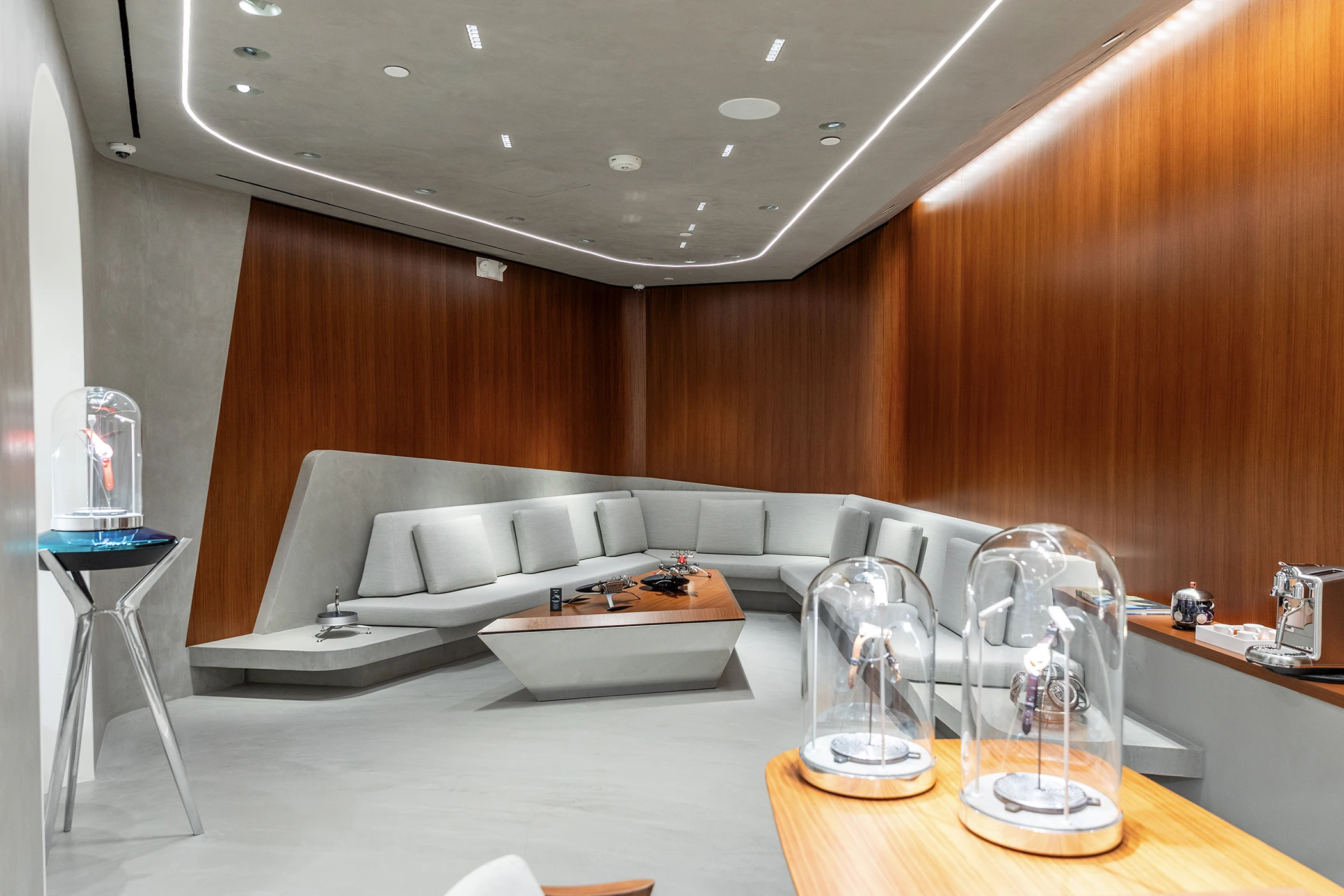
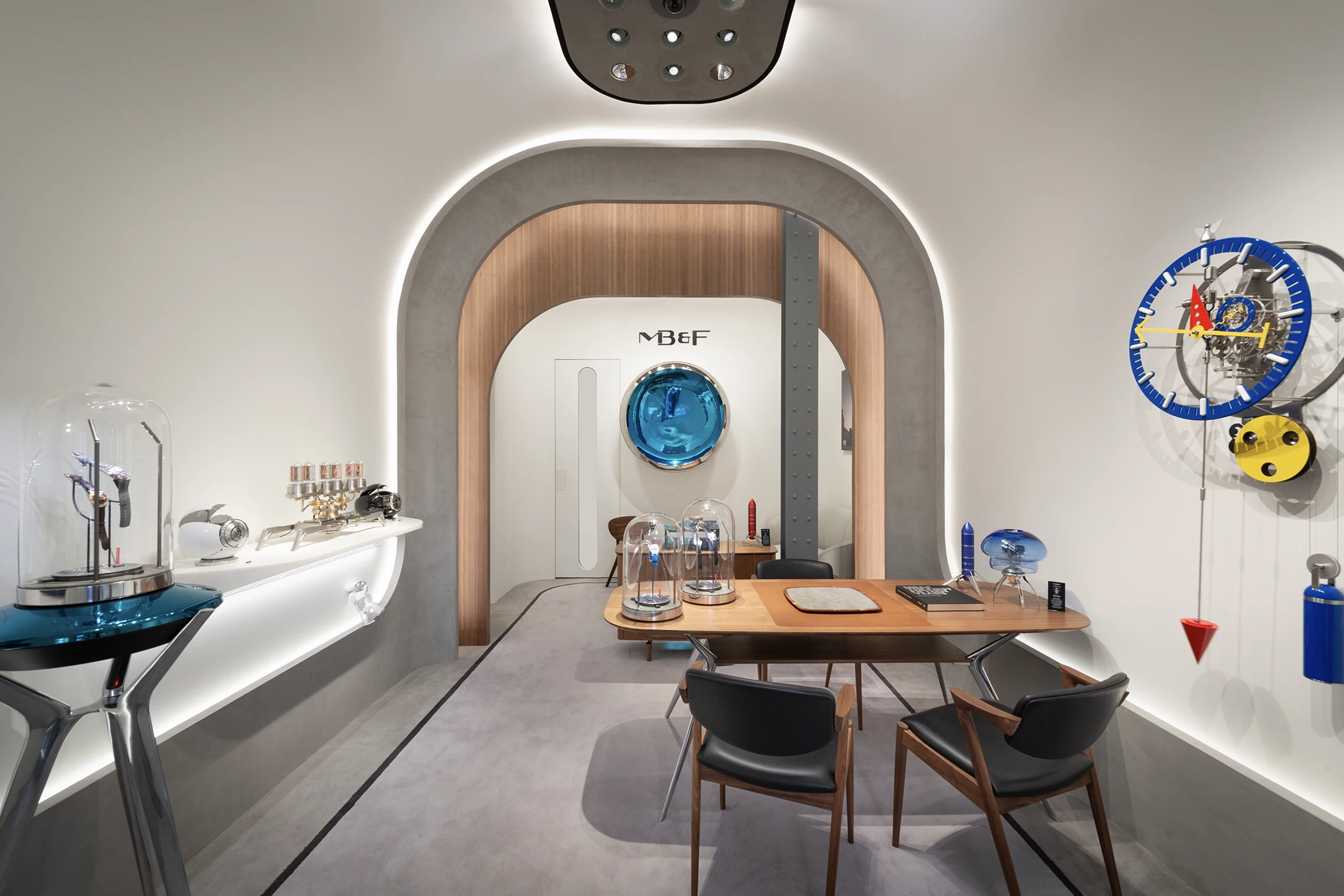
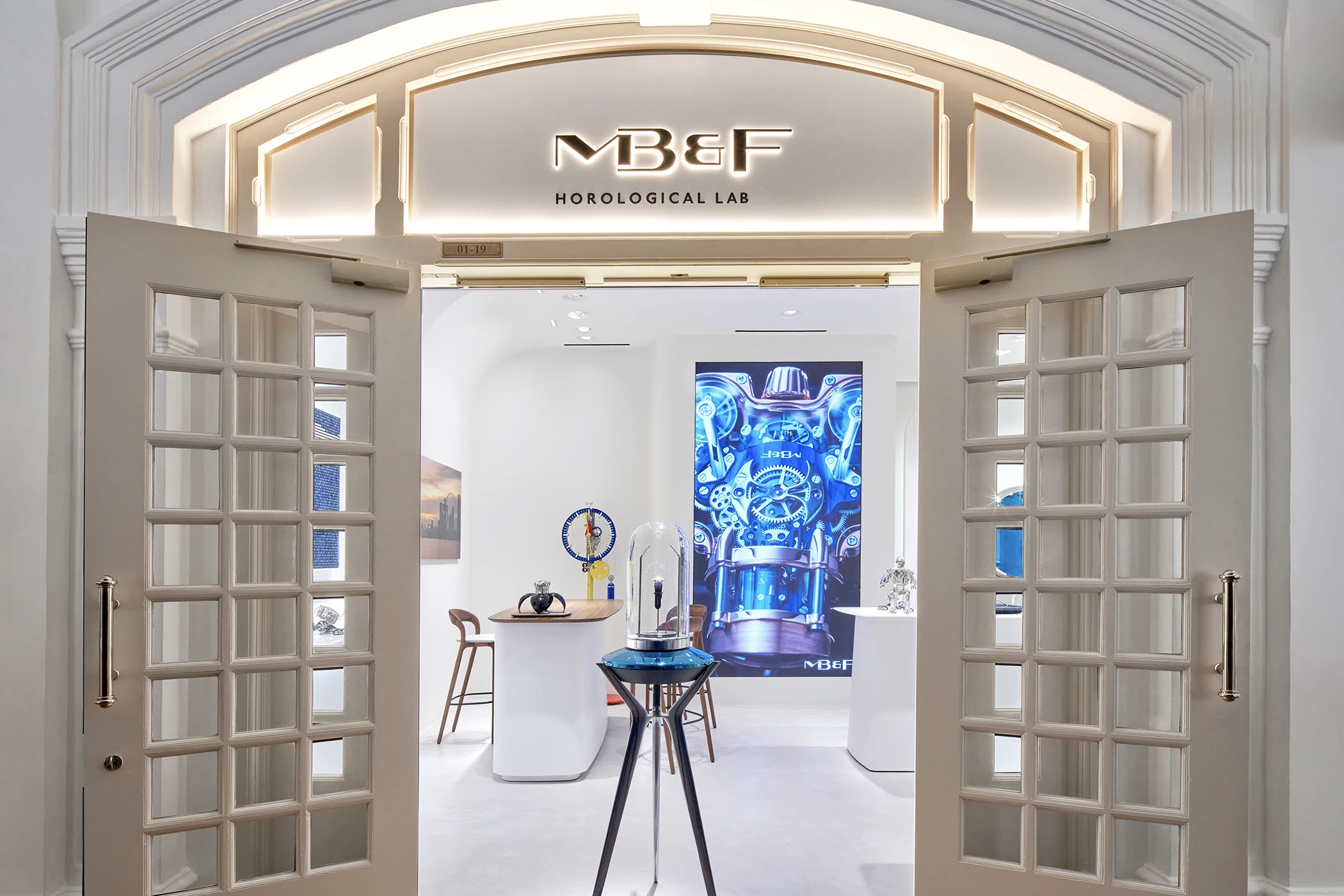
Products this exceptional demand equally exceptional distribution channels. That’s why MB&F operates M.A.D. Galleries in Geneva and Dubai. These are spaces where MB&F timepieces and a range of mechanical kinetic artworks created by friendly artists are sold. Alongside these galleries, there is the concept of the MB&F Lab: a boutique offering a smaller selection of artworks than the galleries. MB&F Labs can currently be found in Paris, Singapore, Taipei, Beverly Hills, and Silicon Valley.
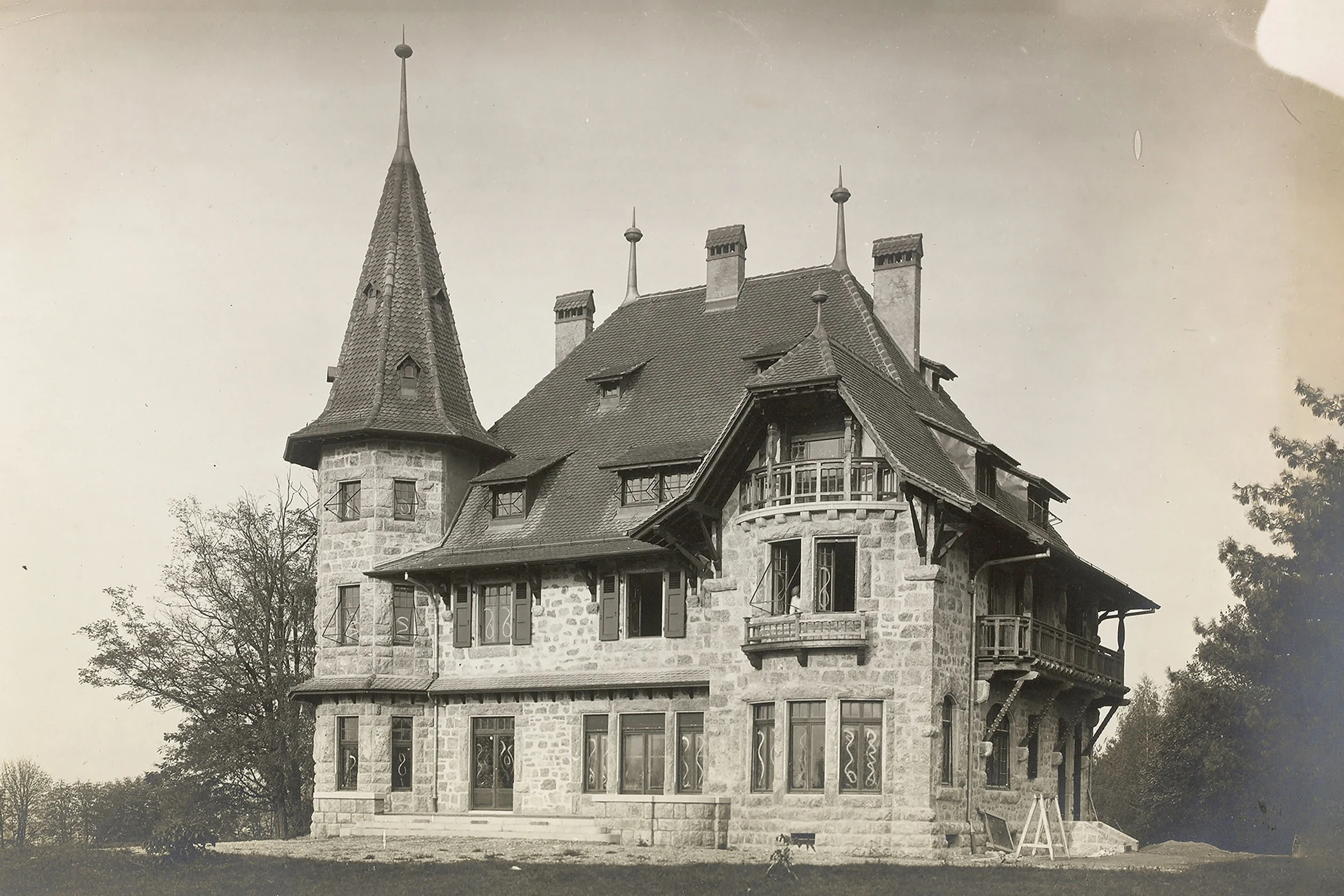
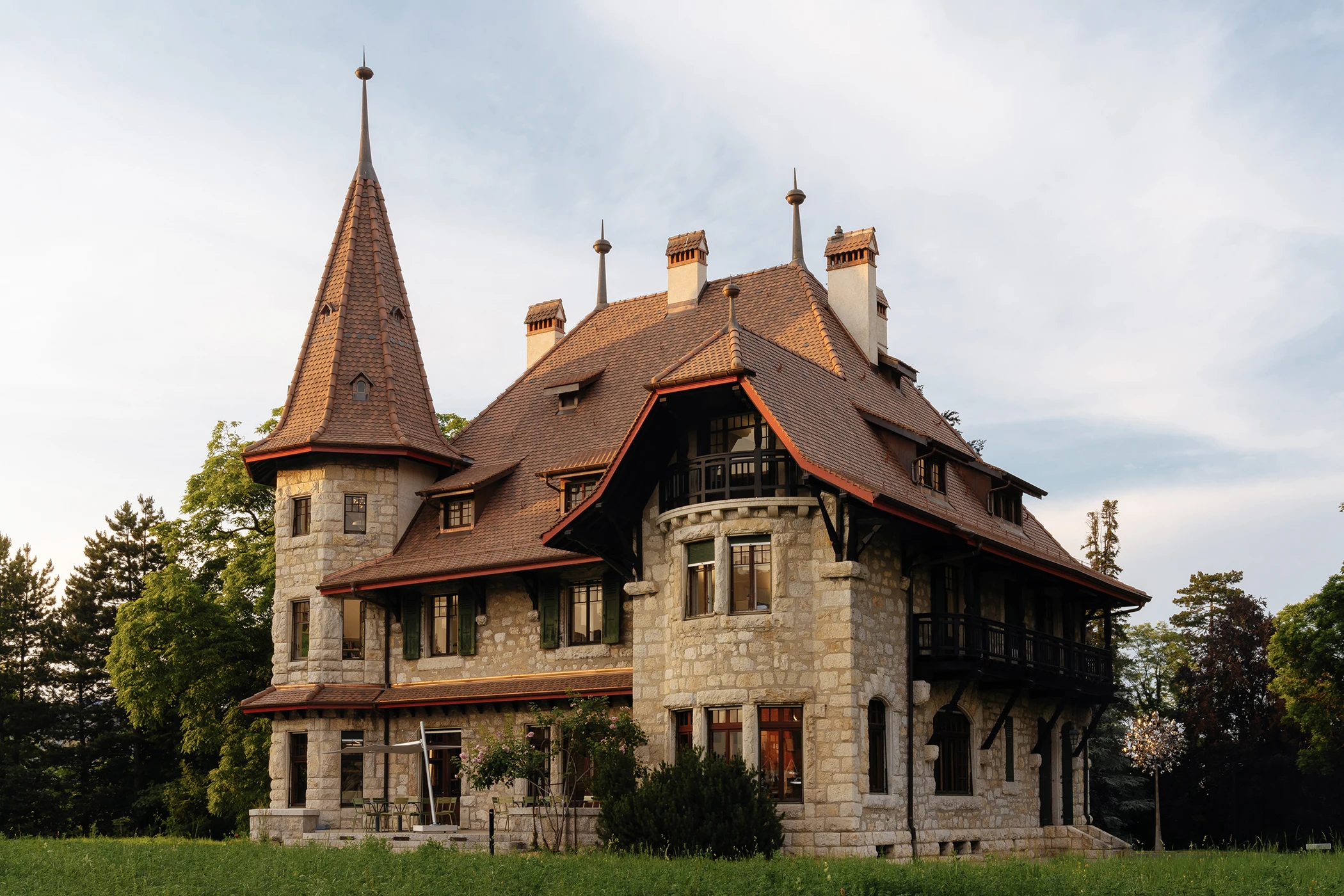
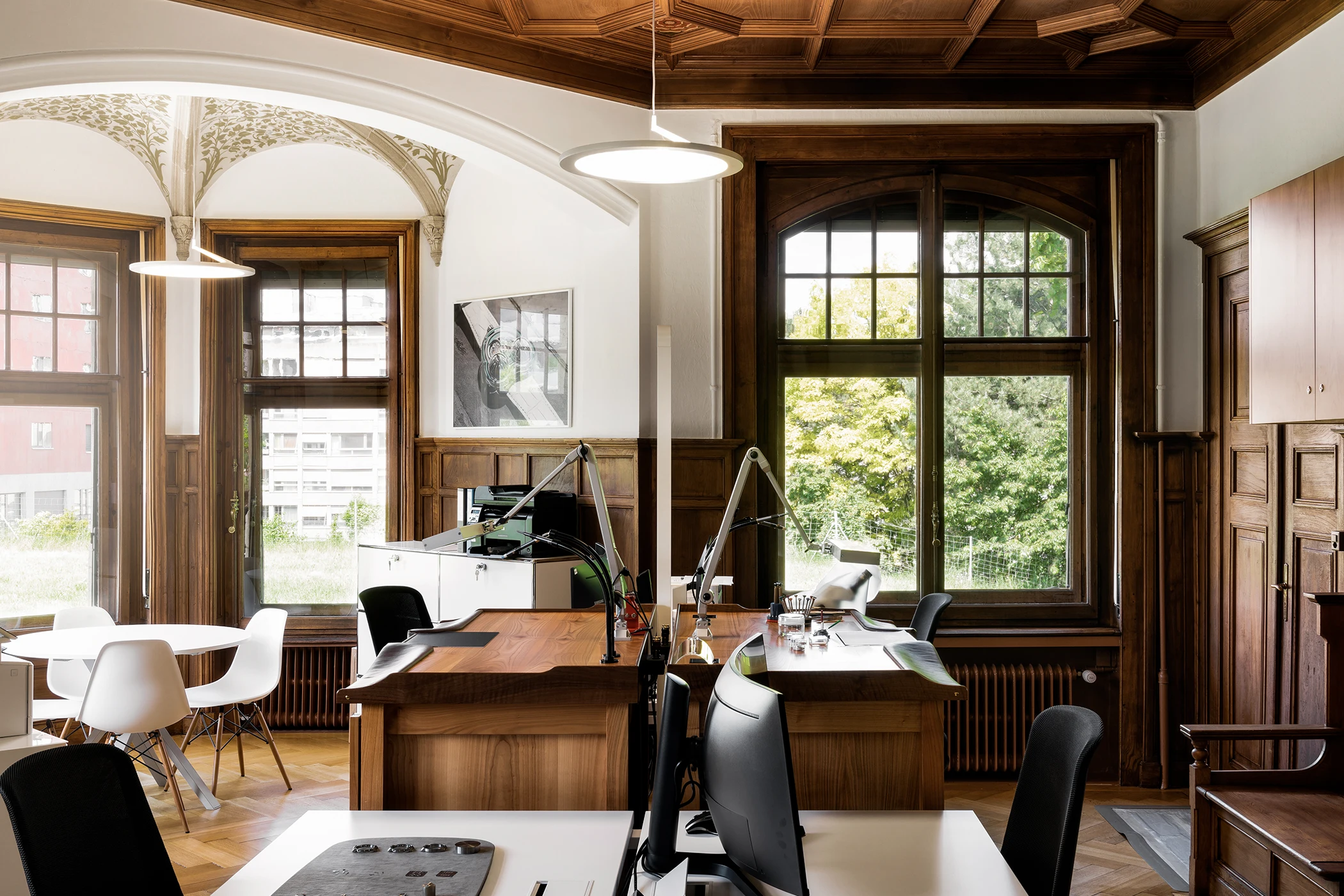
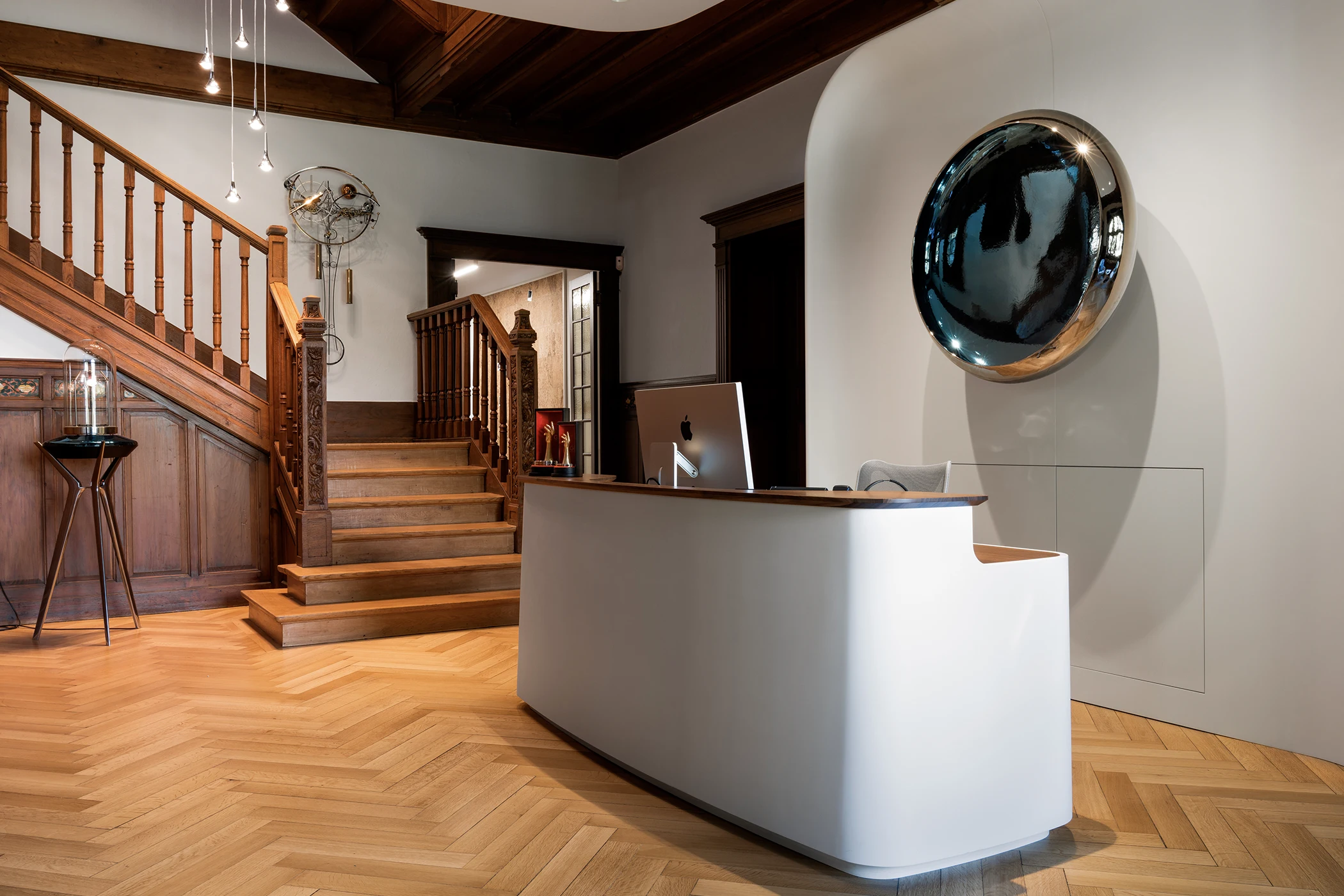
However, the brand’s flagship is located in Carouge, a municipality bordering Geneva: for the past two years, the M.A.D. House, a renovated villa, has been home to MB&F’s creative centre and the watchmakers’ workshops. According to legend, Max Büsser was looking for new premises for his growing company and visited a terribly functional and therefore boring office space in a simple, functional office building. From the windows of these offices, he saw what is now the MB&F headquarters on a green field and told the estate agent that the dilapidated villa over there was much more in line with what he had in mind for his employees and his company. Coincidentally, the owner of the office building also owned this property.
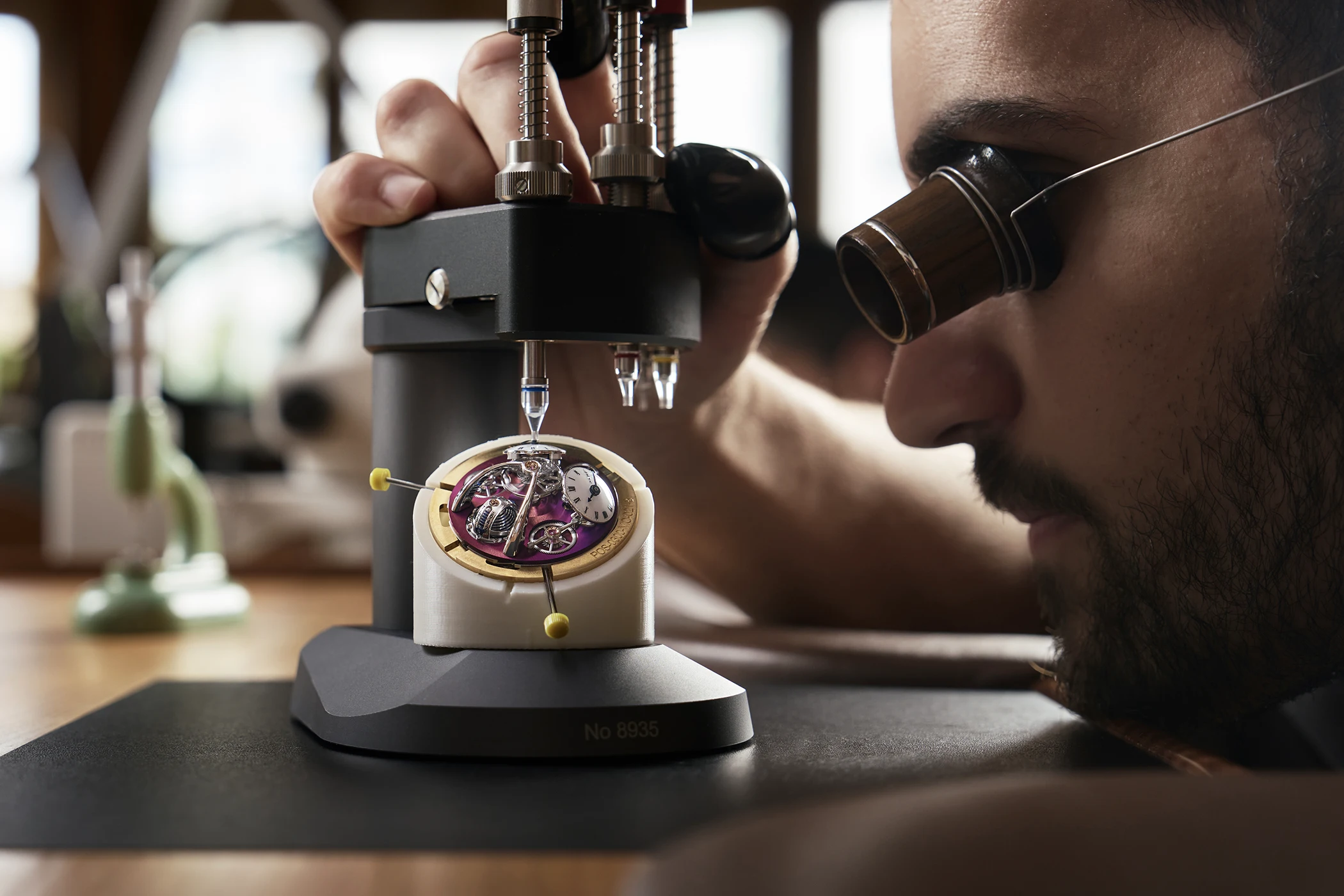
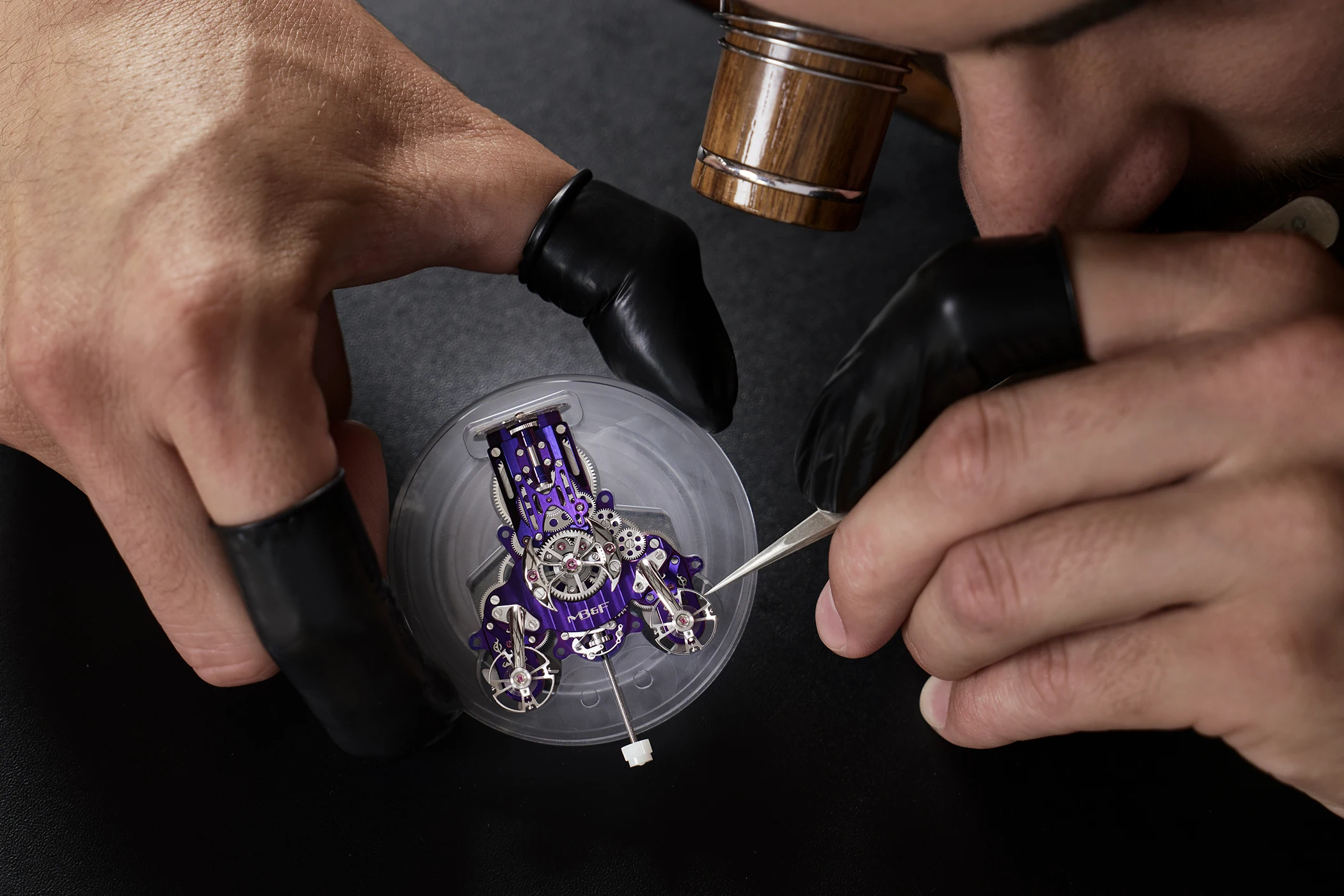
After an extensive renovation, the building is now presented as the ‘M.A.D. House’, and the name hints at what awaits inside: while the villa’s exterior may appear classical, the interior is delightfully unconventional. Half a whimsical dreamworld, half a hub connecting MB&F’s now 70-strong team, it combines high-tech interiors with timber-frame aesthetics, shelves brimming with sculptures and installations with the watchmakers’ workbenches. The latter are on the ground floor, while marketing, R&D, sales, and Maximilian Büsser himself occupy offices above. Everything that defines the brand comes together here. It is a sanctuary of creativity and quality. However, despite all the quirky M.A.D. ideas and the pursuit of childlike ingenuity, the Büsser team should not be imagined as a kind of grown-up kindergarten suffering from Peter Pan syndrome. After all, an independent watch brand is not an advertising agency, where ping-pong tables and recreational spaces are essential for free thinking – not even at MB&F.
Instead, Maximilian Büsser has an exceptional eye for people, and above all for those who can and want to make a valuable contribution to the MB&F cosmos. He tells of a customer who was surprised to discover that ‘founders are rarely missionaries. And if they are, sooner or later they are replaced by hard-nosed mercenaries. Or at least they surround themselves with them. But you guys here are all missionaries – I’ve never seen that anywhere else.’ Büsser confirms, ‘Ultimately, my employees are not driven by money, titles, or because it looks good on their CV. They are here because they want to be part of the shared adventure.’

It comes as little surprise that a company full of missionaries has a unique approach to its customers. MB&F organises them into ‘The Tribe’, which any owner of an MB&F watch can join, whether the watch is new or purchased on the secondary market. There are now around 1,500 members worldwide, all kept informed of developments and news from the M.A.D. House. They enjoy preferential access to the brand’s products and are invited to events ranging from the Dubai Watch Week to Watches & Wonders. They share their stories on the MB&F podcast Tales from the Tribe, and once a year, some members are treated to an exclusive trip – past journeys have taken the Tribe to the Maldives and the Turks & Caicos.
The brand’s 20th-anniversary celebrations were equally distinctive. Among other things, a special edition of ten LM101watches, each valued at 75,000 euros, was raffled among all owners – with one ticket per watch owned. Those who didn’t win still received a gift: every Tribe member was given a high-quality Caran d’Ache pencil sharpener, enhanced by MB&F and Maximilian Maertens with metallic dinosaur feet, turning a utilitarian object into a playful work of art, which is quintessentially MB&F.
And this is just the beginning. Maximilian Büsser’s vision is to create a true M.A.D. Galaxy that connects everyone. He wants to expand the MB&F community and promote the idea that this galaxy encompasses not only watches, kinetic objects and automata, but also a mindset – an appreciation of outstanding handcrafted objects in any form.

Independent watchmaking has been experiencing a boom since the Covid years. At the same time, this segment is still a niche segment within the already niche world of fine watchmaking. In addition, the production of sophisticated watches at MB&F level is extremely costly, which is reflected in the sales prices, meaning that many admirers of the brand can only dream of owning one of these watches.
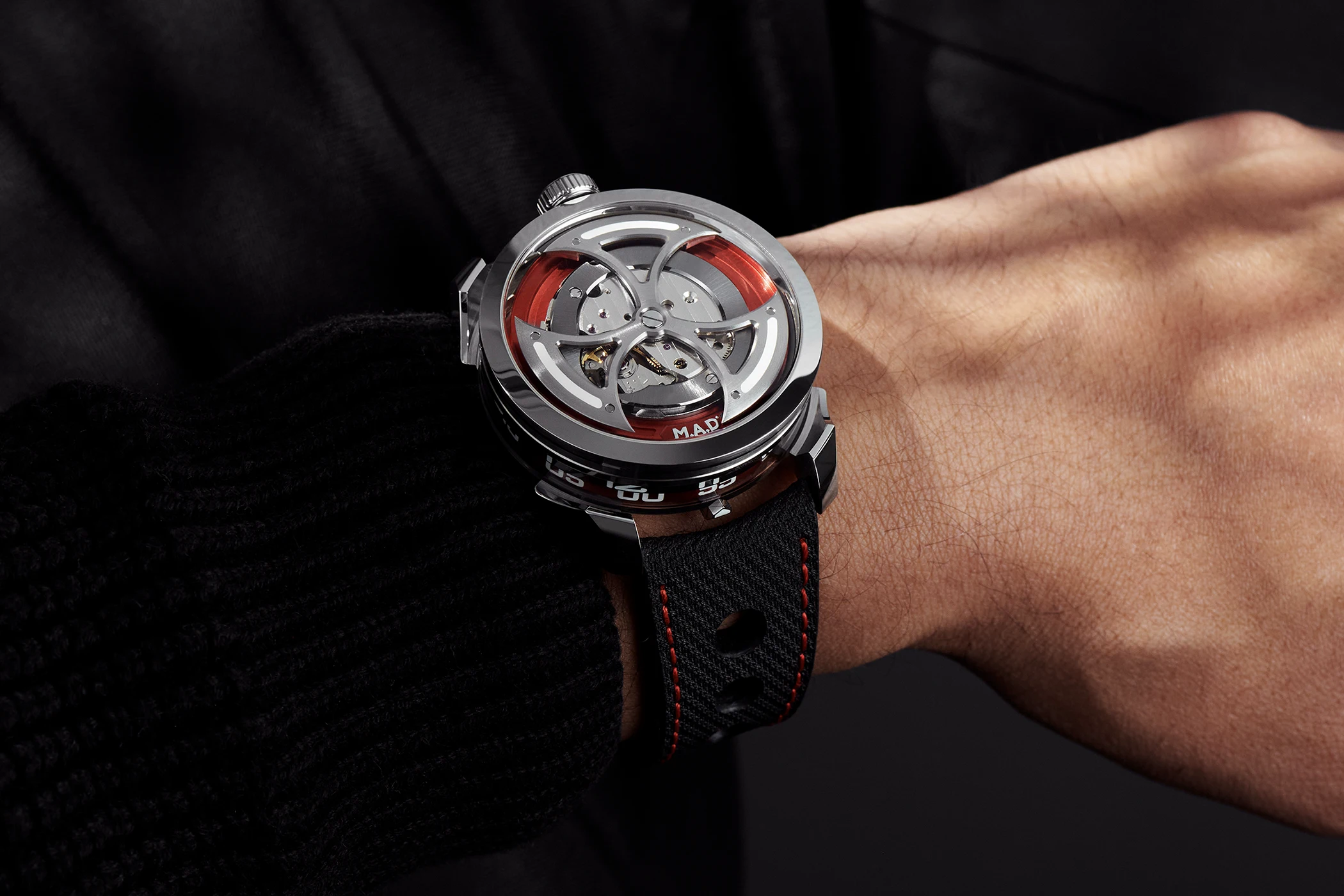
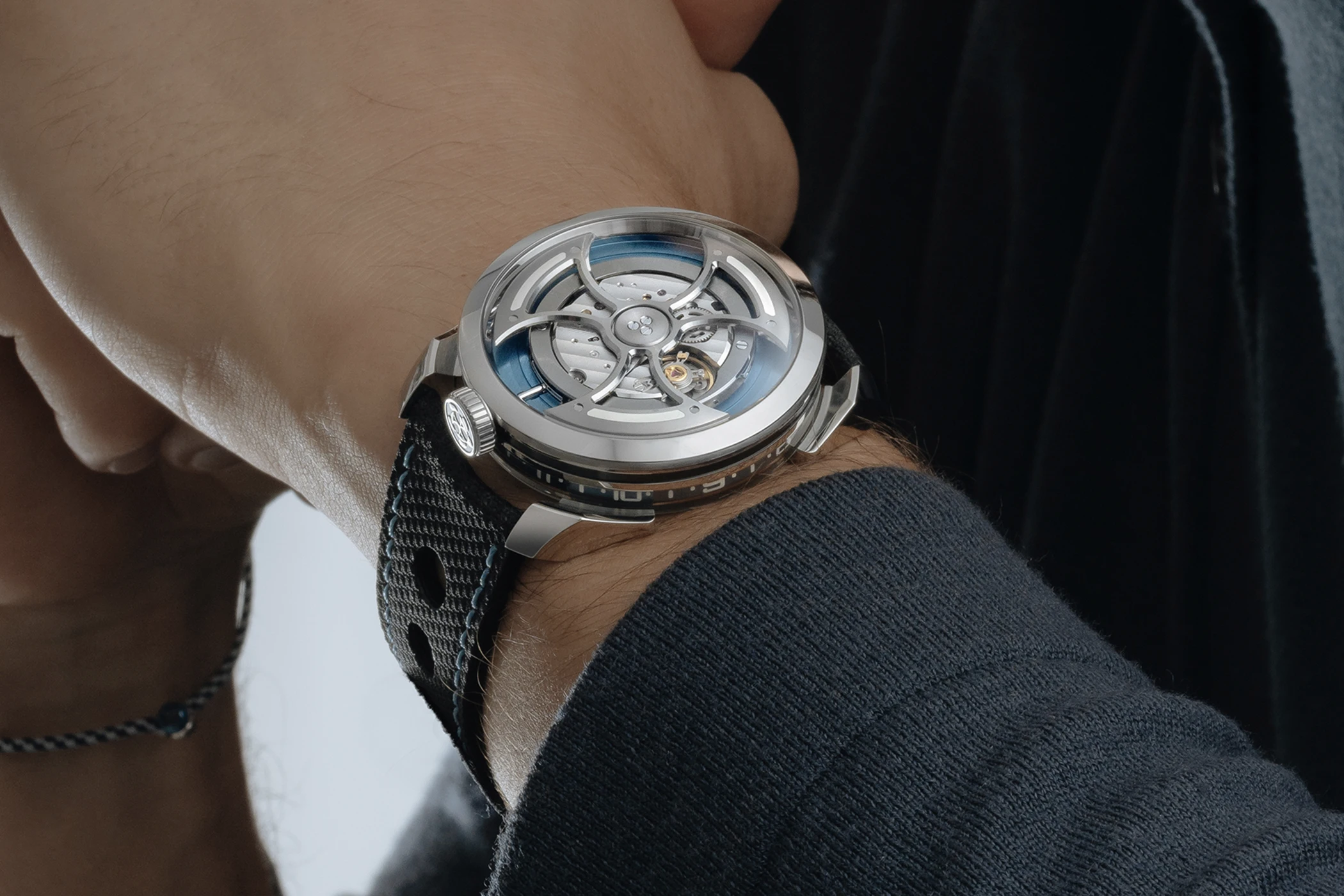
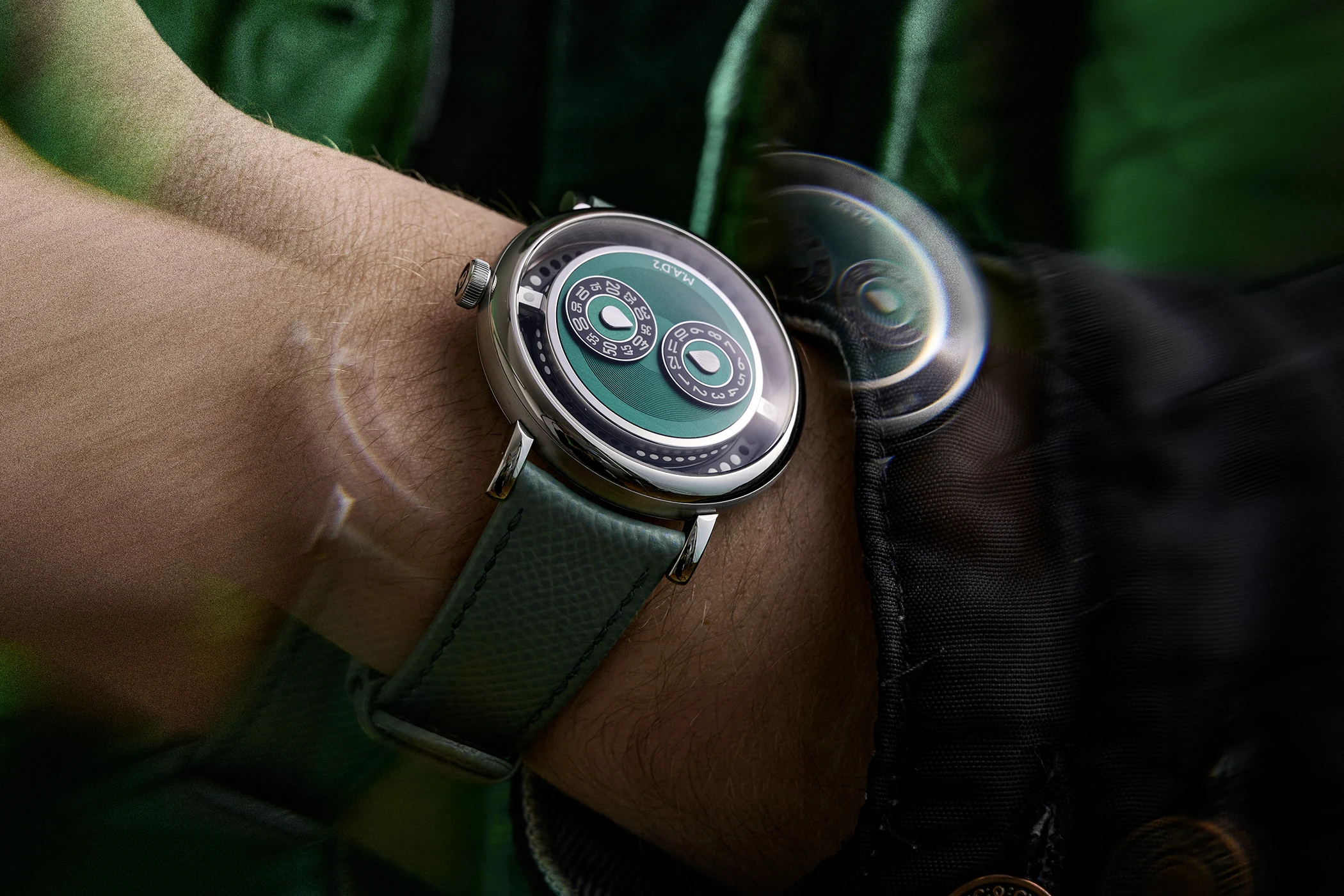
To expand the world of MB&F, make it accessible to an entirely new customer base, and to establish a second pillar with meaningful production numbers, revenue, and profit, the M.A.D. Editions were launched in 2021. These watches require less intensive production, but they retain the unmistakable MB&F DNA. Designed for friends, family, and fans, they strengthen the brand and increase its visibility. Edition 1, with its fidget-spinner aesthetic and lateral time display, is based on a modified Miyota calibre.
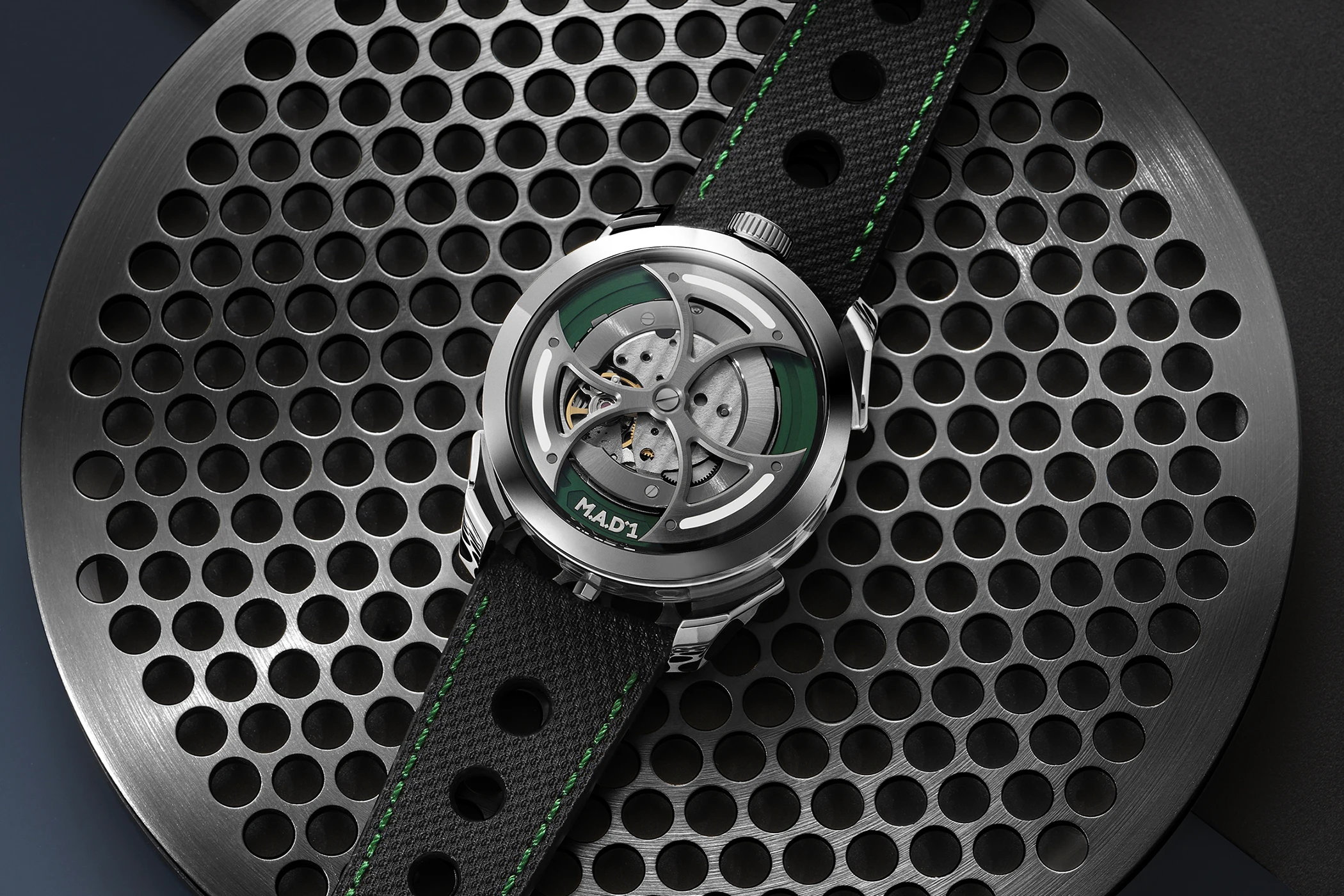
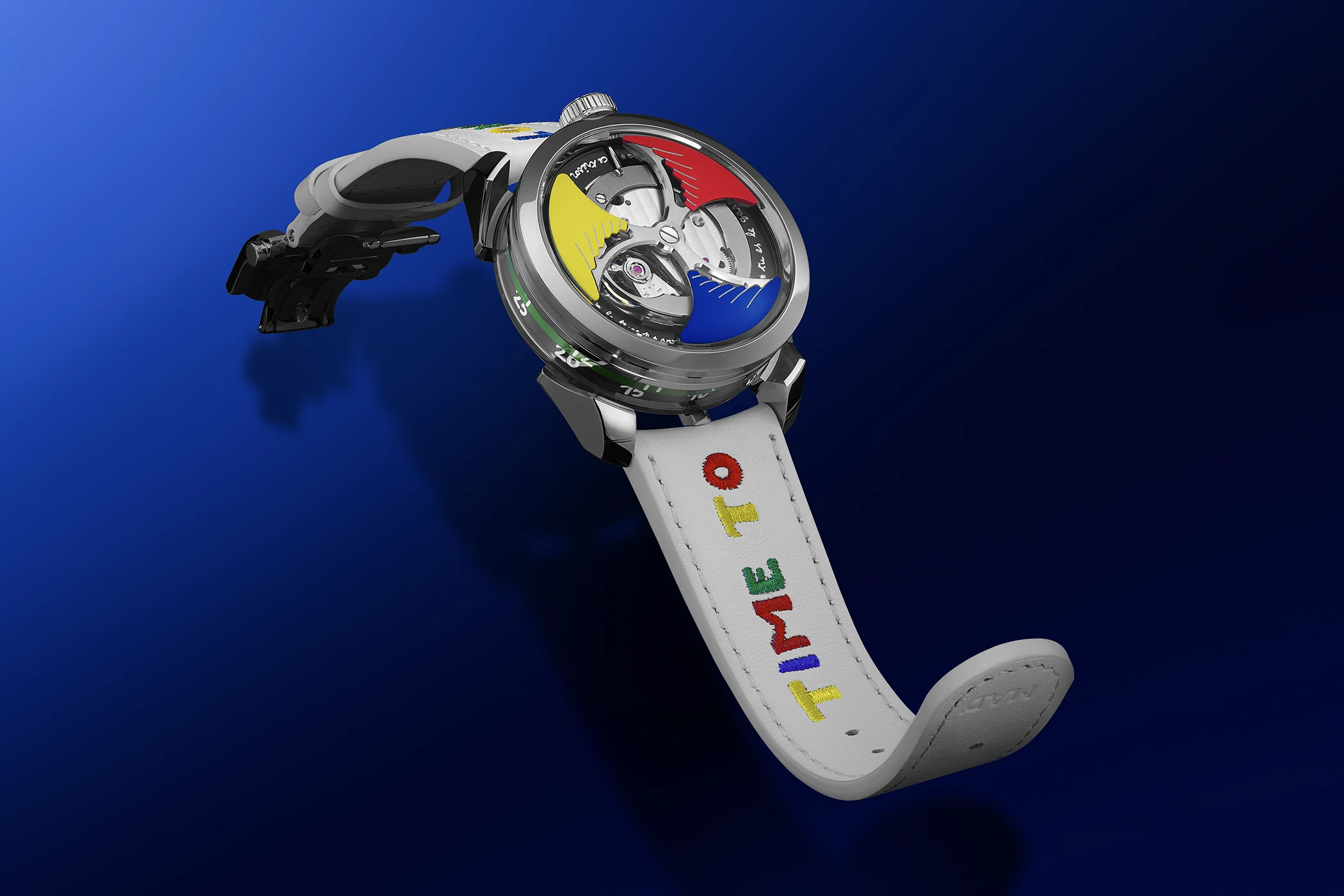
With the Edition 1S, MB&F shifted the calibre from the Miyota to a La Joux-Perret G101. Edition 2, featuring a jumping hour, is also built on the La Joux-Perret G101 calibre. Depending on the model, prices currently start at around 2,900 Swiss francs plus VAT.
These models are sold like highly sought-after trainers and street art: via raffle. Customers express their interest in the watch online, and the available editions are sold to applicants. Demand for these watches always exceeds production, which naturally fuels their desirability – and coolness factor. After all, simply buying something is easy, but how wonderful is it to win?
No compromises. Anyone familiar with the world of independent watchmaking will hear these words repeatedly: no compromises. Stay strong, believe in yourself, dilute nothing. Perhaps the greatest achievement of MB&F as a Gesamtkunstwerk is that the creations of Büsser and his friends are astonishingly diverse, yet instantly recognisable as part of the MB&F galaxy. The second greatest achievement is financial: not only has the brand benefited from the growing interest in independent watchmaking, but it has also built a second brand with the M.A.D. Editions, generating enough revenue and profit to fund other ambitious ideas with less predictable outcomes. On top of that, Chanel has acquired a stake in the company, but reportedly does not interfere and simply lets the ‘missionaries’ from M.A.D. House continue their work. And why not?
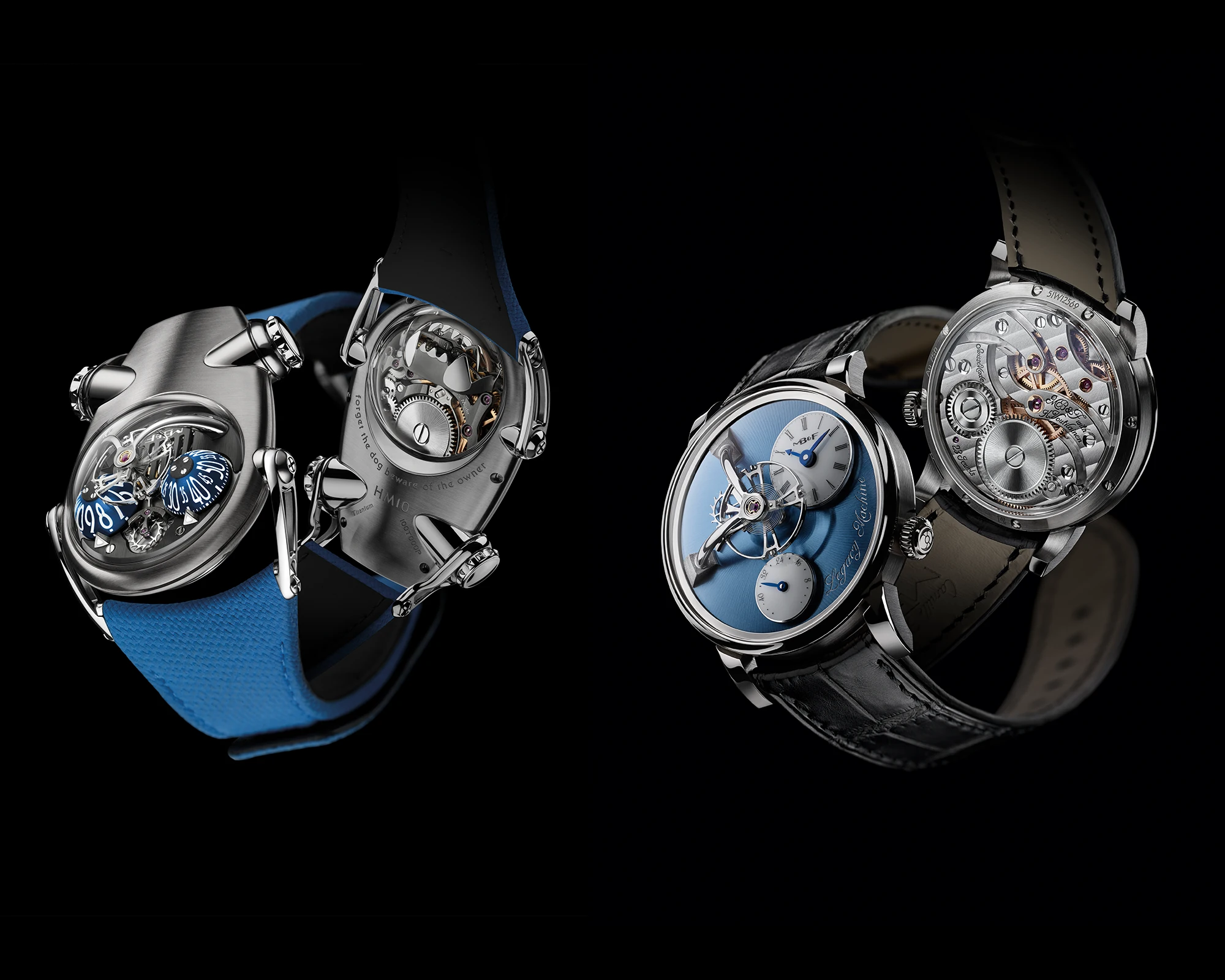
After speaking with Maximilian Büsser and Maximilian Maertens, and after multiple visits to both M.A.D. Galleries and the M.A.D. House, the impression remains that MB&F is a true solitaire among independent watch brands. Everything you hear, see and feel seems as ambitious as it is playful and as casual as it is ambitious. Somehow, MB&F has created its own, better world of watches. It’s a world where it’s cool to be friendly. A world where naturalness and enthusiasm are valued more highly than status and prestige. Naturally, the Horological Machines and Legacy Machines stand out. Not everyone will understand them, but anyone with a sense of horology respects them.
There is nothing childish about these wristwatches, but if a child were to ask why anyone would dedicate themselves to watchmaking, the story of Max Büsser and his friends is a compelling answer.