Watches & Wonders 2026: Hublot launches two limited-edition Big Bang Reloaded watches for Usain Bolt and Kylian Mbappé.

Rolex has placed its new releases for Watches and Wonders 2026 around a theme that could scarcely be more significant: 100 years of the Oyster. Consequently, this year is not about a single disruptive sensation, but rather a collection of models that reinterpret the brand’s historical foundations from various perspectives. Sometimes this is achieved through the materials used or the colour scheme of specific details, sometimes through technical revisions as well as design references to its own heritage. One idea underpins it all: for Rolex, the Oyster is not merely a case concept, but the origin, identity and, to this day, the heart of the house. This is further enhanced by the fact that in 2026, Rolex is also tightening its ‘Superlative Chronometer’ certification and expanding it to include criteria such as magnetic resistance, reliability and durability.
What is striking is the breadth with which Rolex interprets the anniversary. The Oyster Perpetual takes centre stage in the anniversary celebrations, the Datejust 41 delves deep into the brand’s heritage with a green lacquered ombré dial, the Yacht-Master II returns with a technical and ergonomic overhaul, the Day-Date 40 introduces Jubilee Gold, a new in-house alloy, and the Cosmograph Daytona appears for the first time in a Rolesium version with a white enamel dial and a new anthracite-coloured Cerachrom bezel. It is, therefore, a year of targeted refinement – and one in which Rolex is infusing its most famous models with an unusually high level of innovation.
This year’s narrative is most clearly evident within the Oyster Perpetual collection. In 2026, Rolex is explicitly making it the symbol of the Oyster’s 100th anniversary and using the line to reinterpret various facets of its own history. This is not just about a new colour or a single dial, but a whole range of unusual designs.
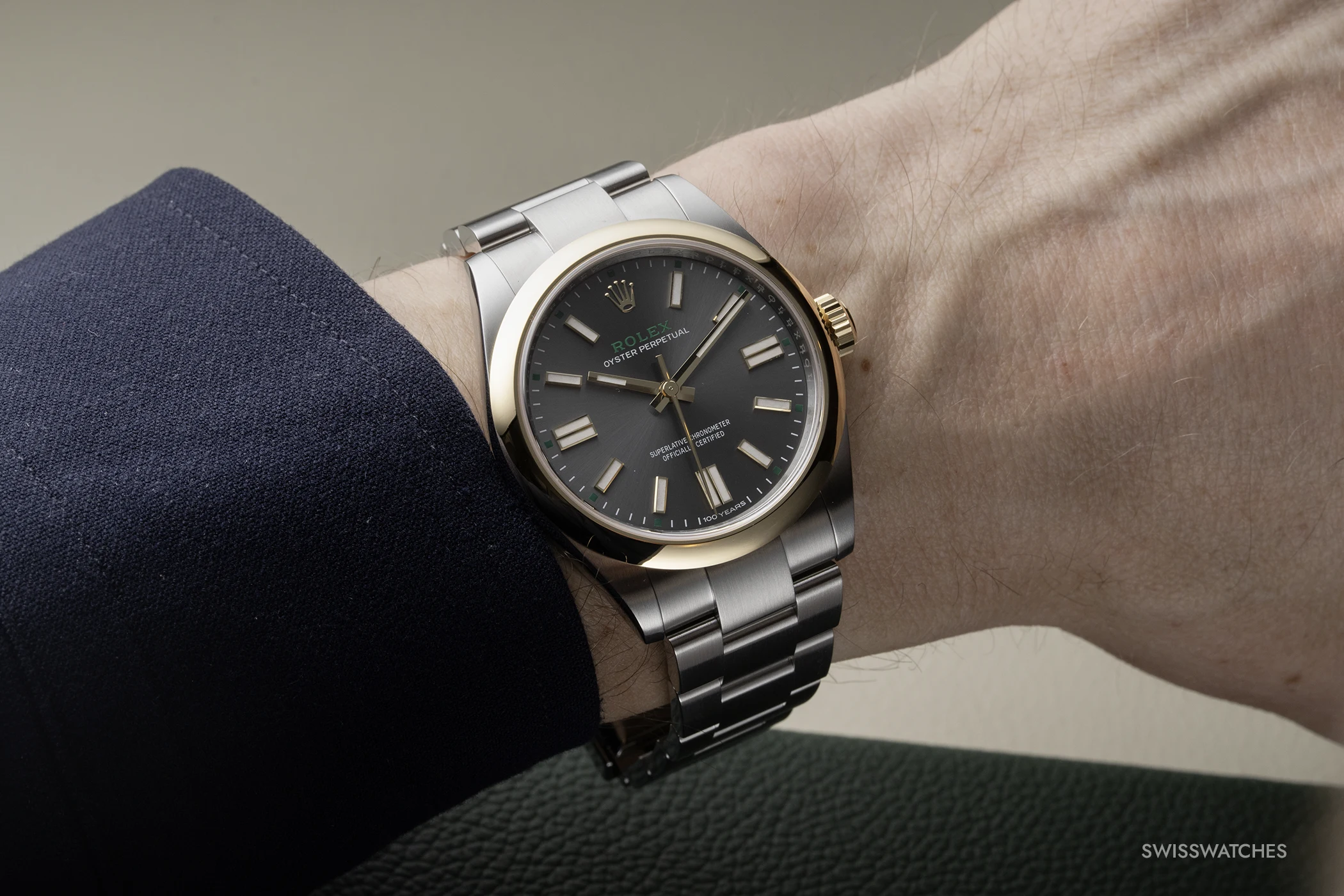
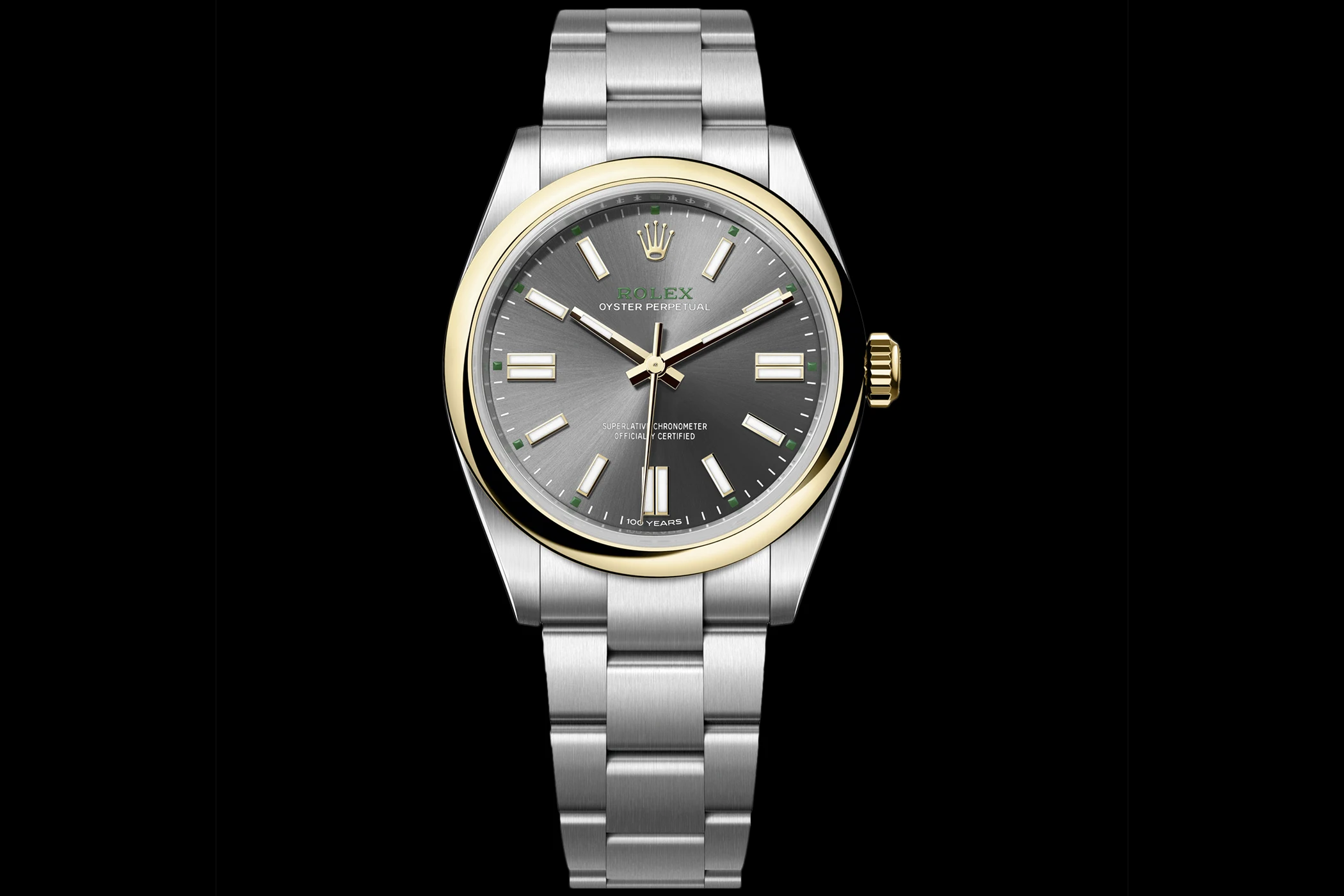
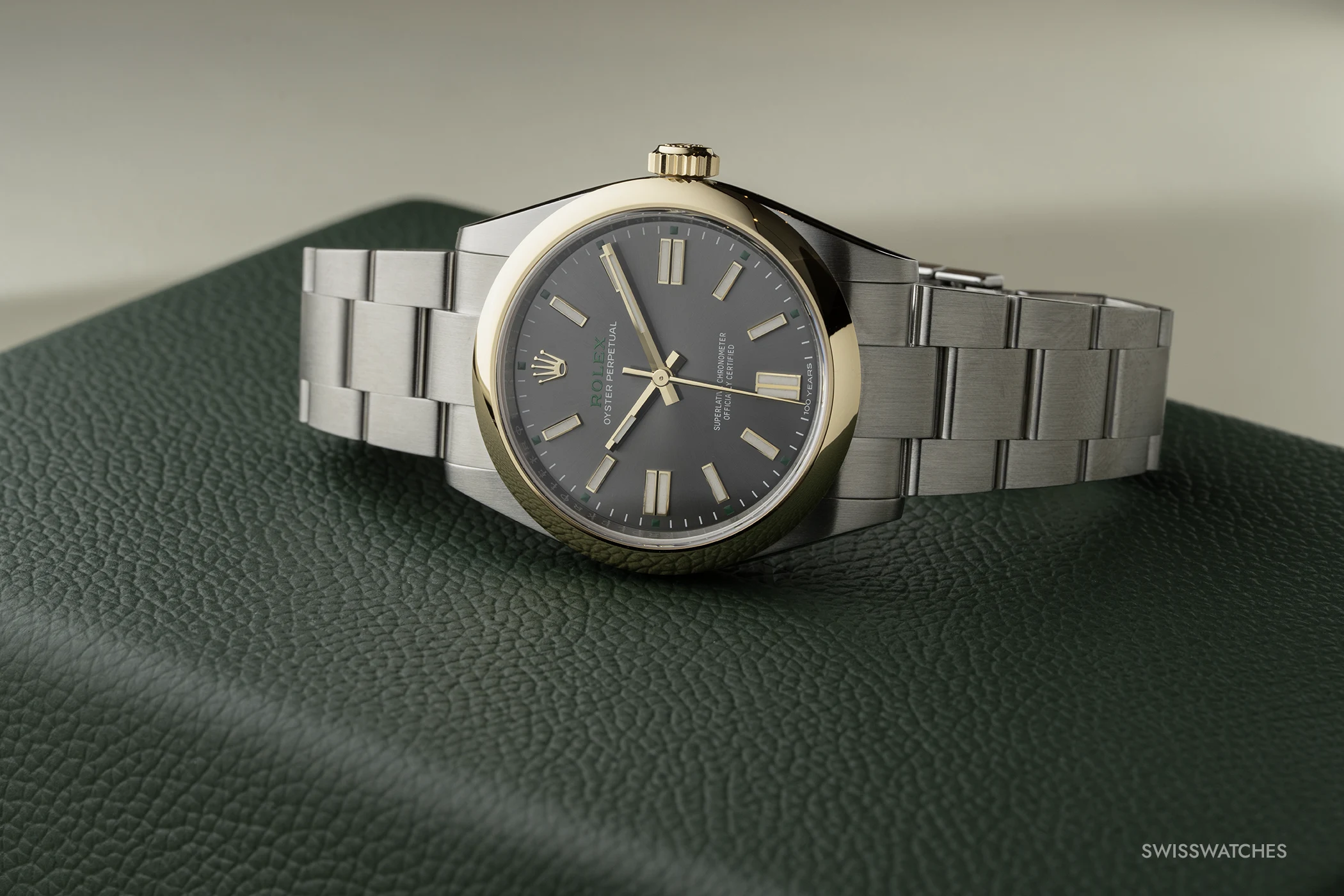
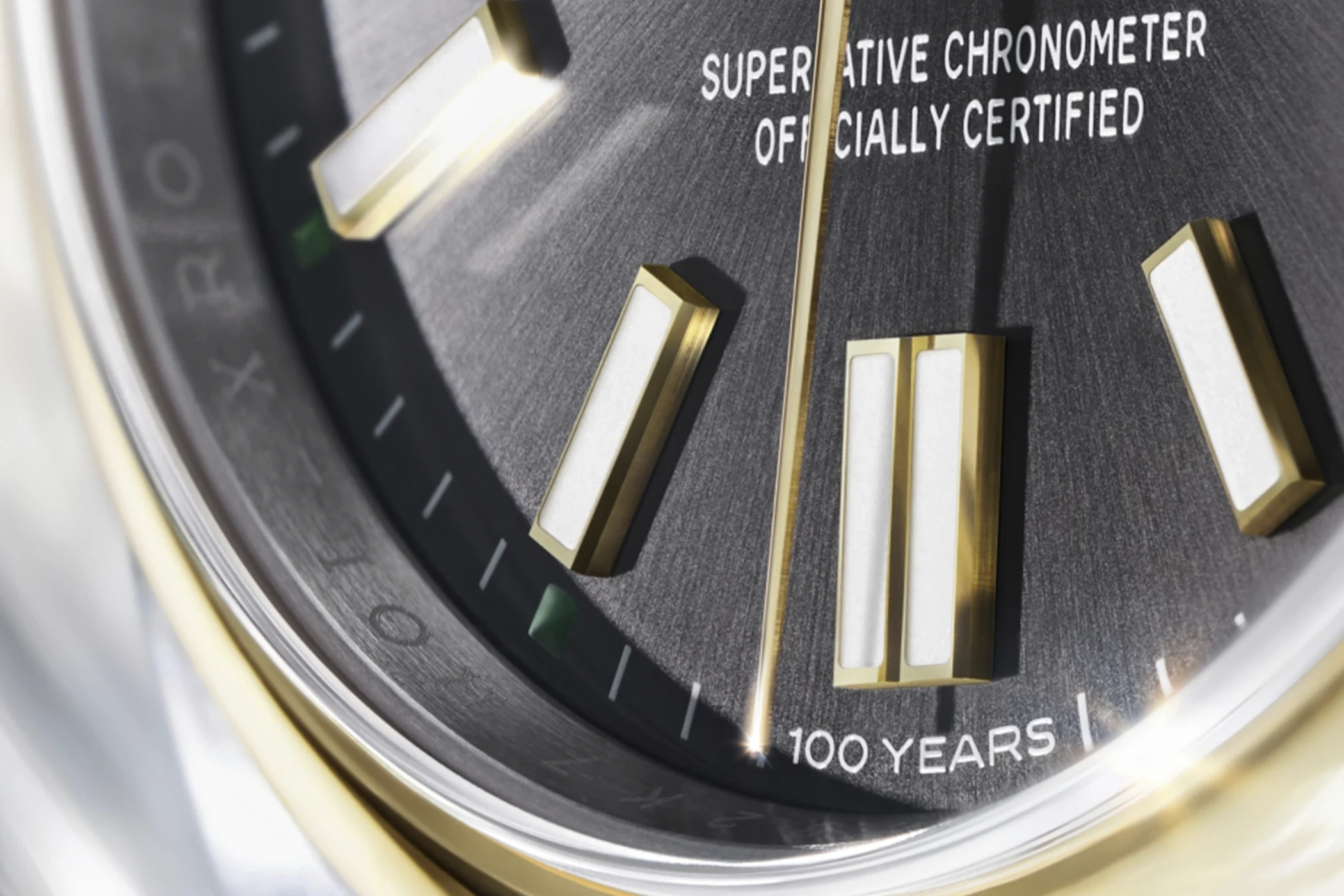
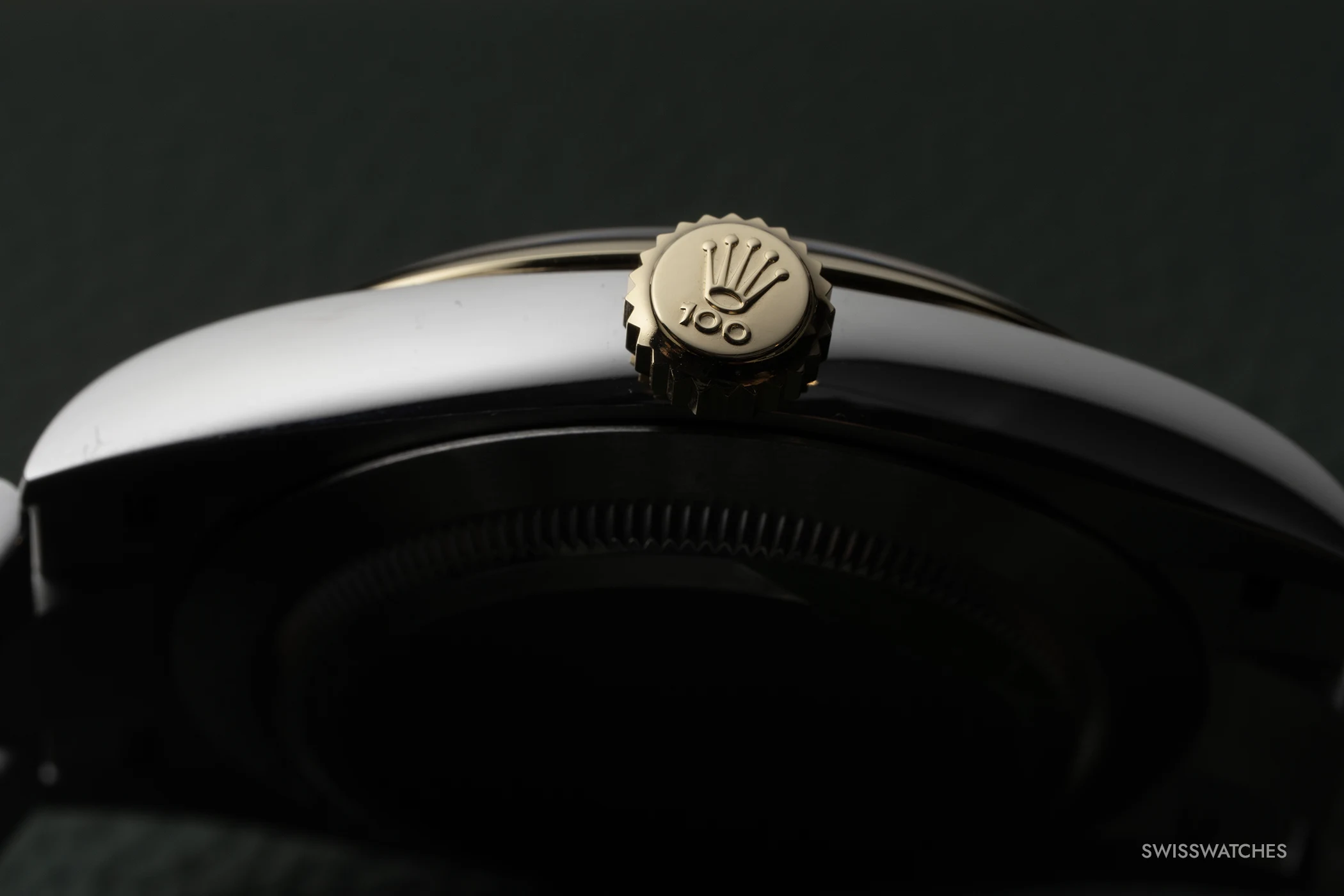
Perhaps the most significant model in this collection is the new Oyster Perpetual 41 in yellow Rolesor. That in itself is quite extraordinary, as the combination of Oystersteel and yellow gold has not previously featured in this form within the current Oyster Perpetual range. Here, Rolex combines a bezel and winding crown in yellow gold with a case that is otherwise entirely made of steel. That’s right – even the centre links of the bracelet on this model are made entirely of Oystersteel. The slate-grey dial also makes a direct reference to the anniversary: The crown bears the embossed number ‘100’, at six o’clock ‘Swiss Made’ has been replaced by ‘100 years’, and the green Rolex lettering as well as the green squares of the minute track play on the brand’s classic colour codes. It is a watch that translates historical grandeur with astonishing restraint into a design language appropriate to today’s standards.
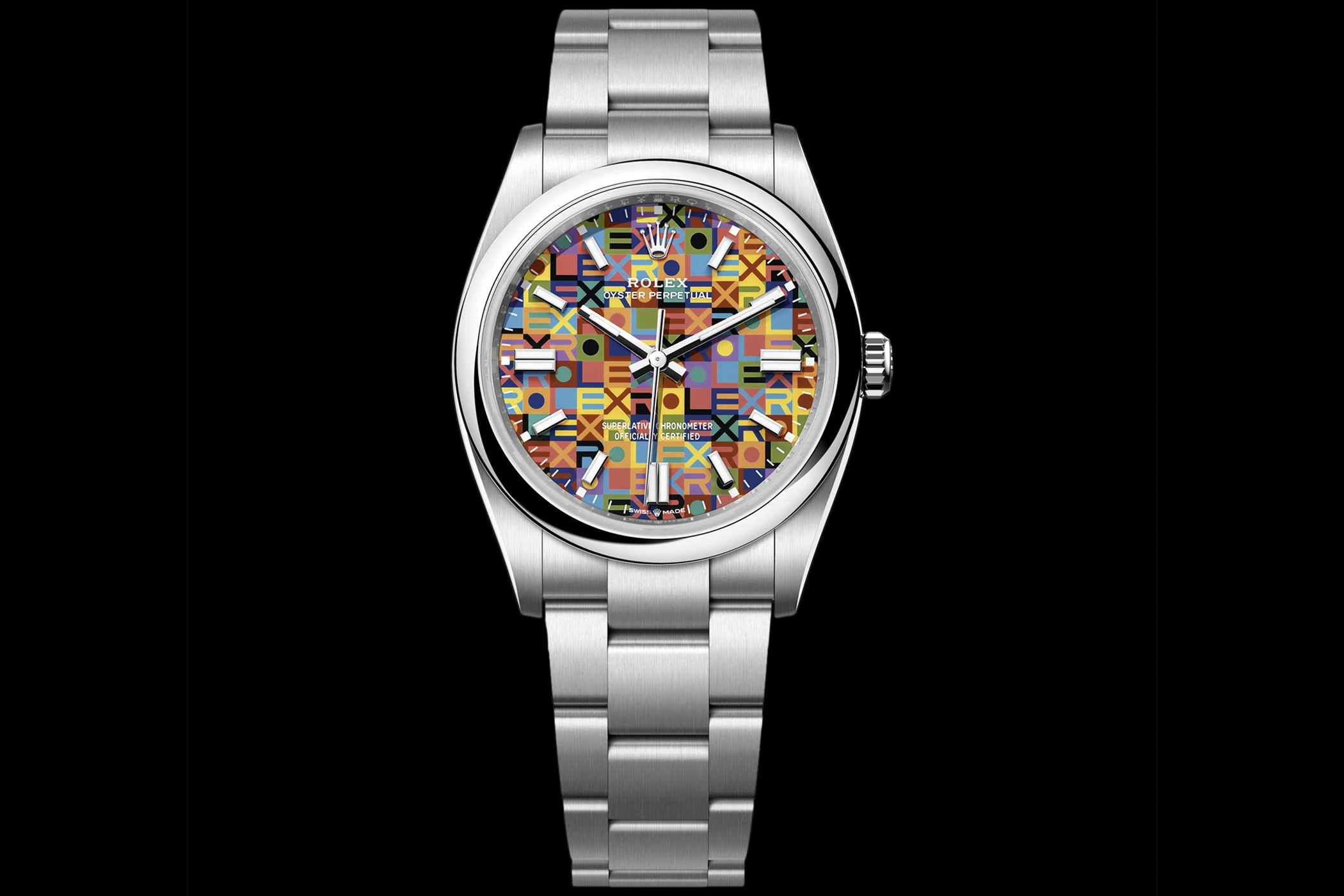
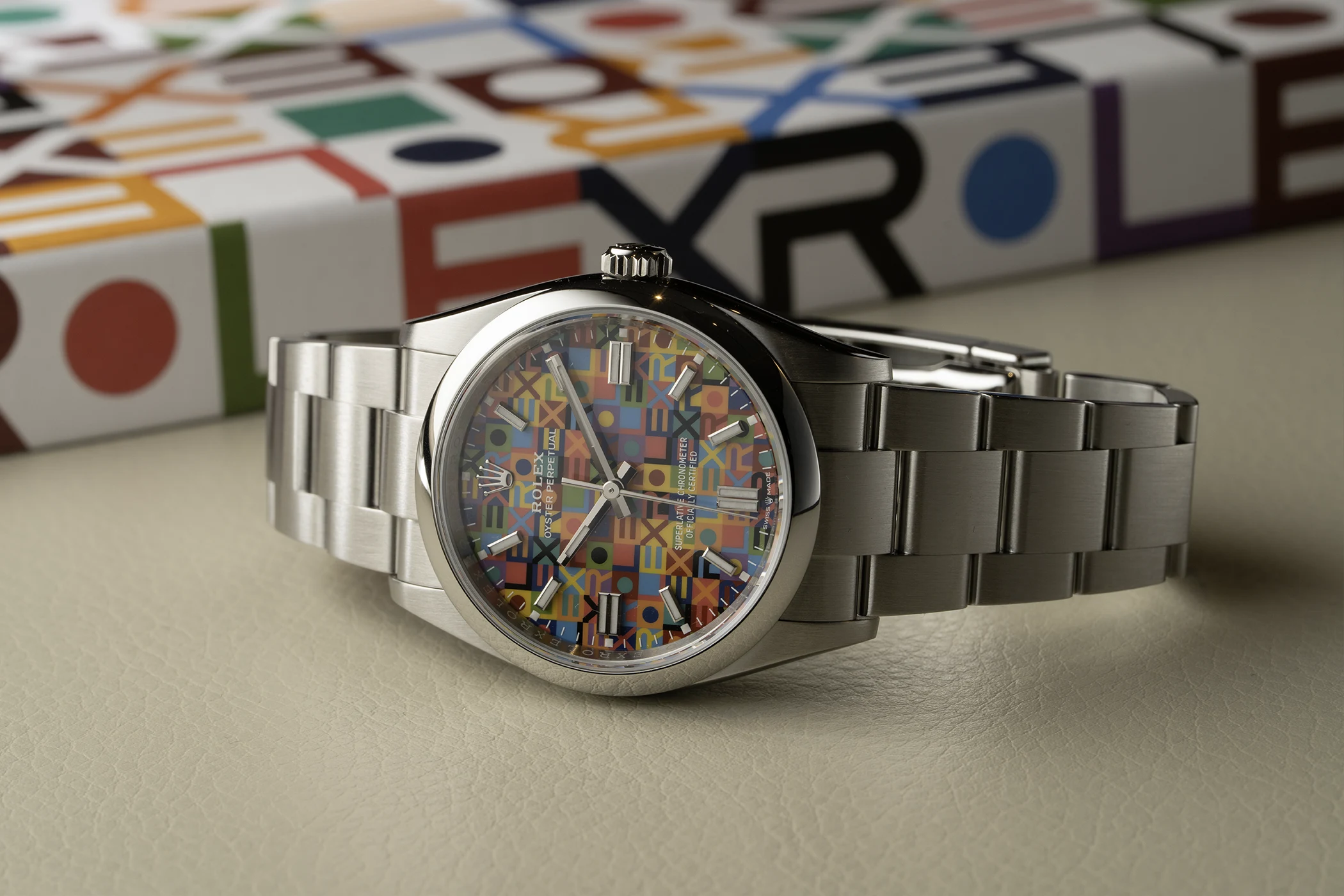
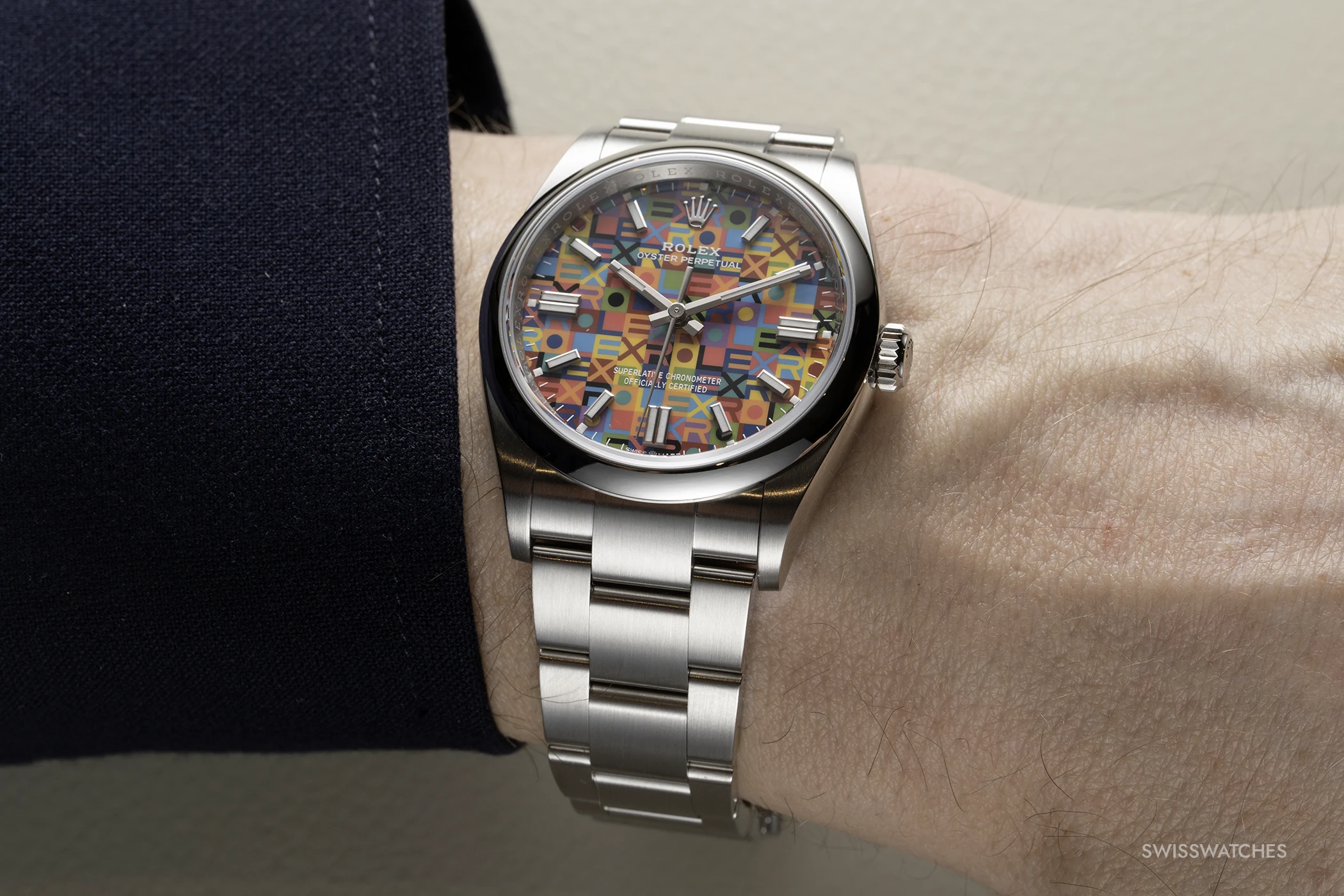
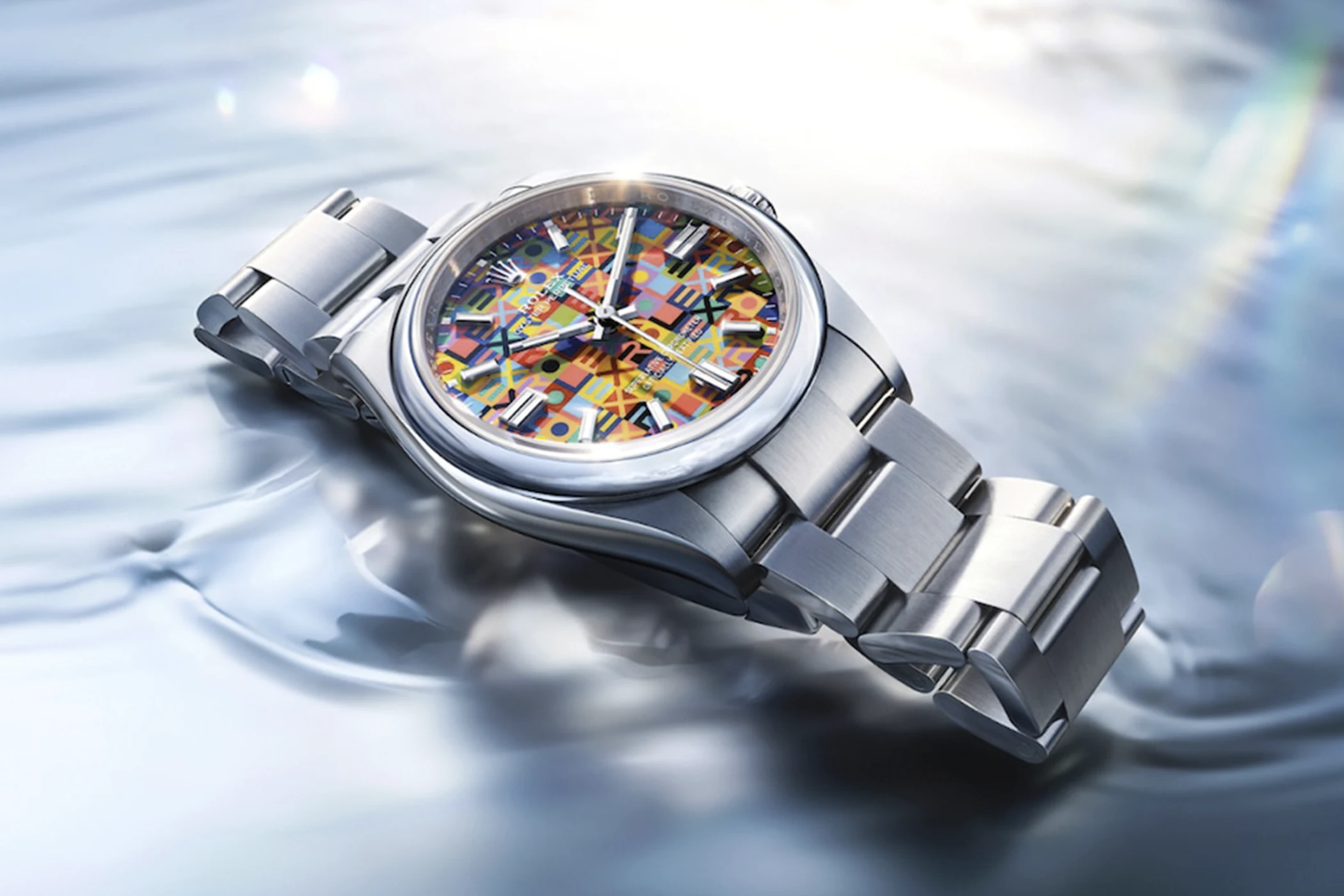
The Oyster Perpetual 36, on the other hand, has a decidedly more playful look. Its new, multi-coloured lacquered Jubilee motif is a reinterpretation of a historic Rolex dial design from the late 1970s. The letters of the name ‘Rolex’ are composed of ten different shades, which must be applied one after the other using pad printing. At first glance, this sounds like a decorative exercise, but it is technically quite complex because colours, shapes and transitions must be positioned with precision. Precisely for this reason, this dial is more than just a colourful gimmick: it quite clearly underscores how Rolex, with this year’s new releases, also wishes to highlight its own dial artistry and craftsmanship.
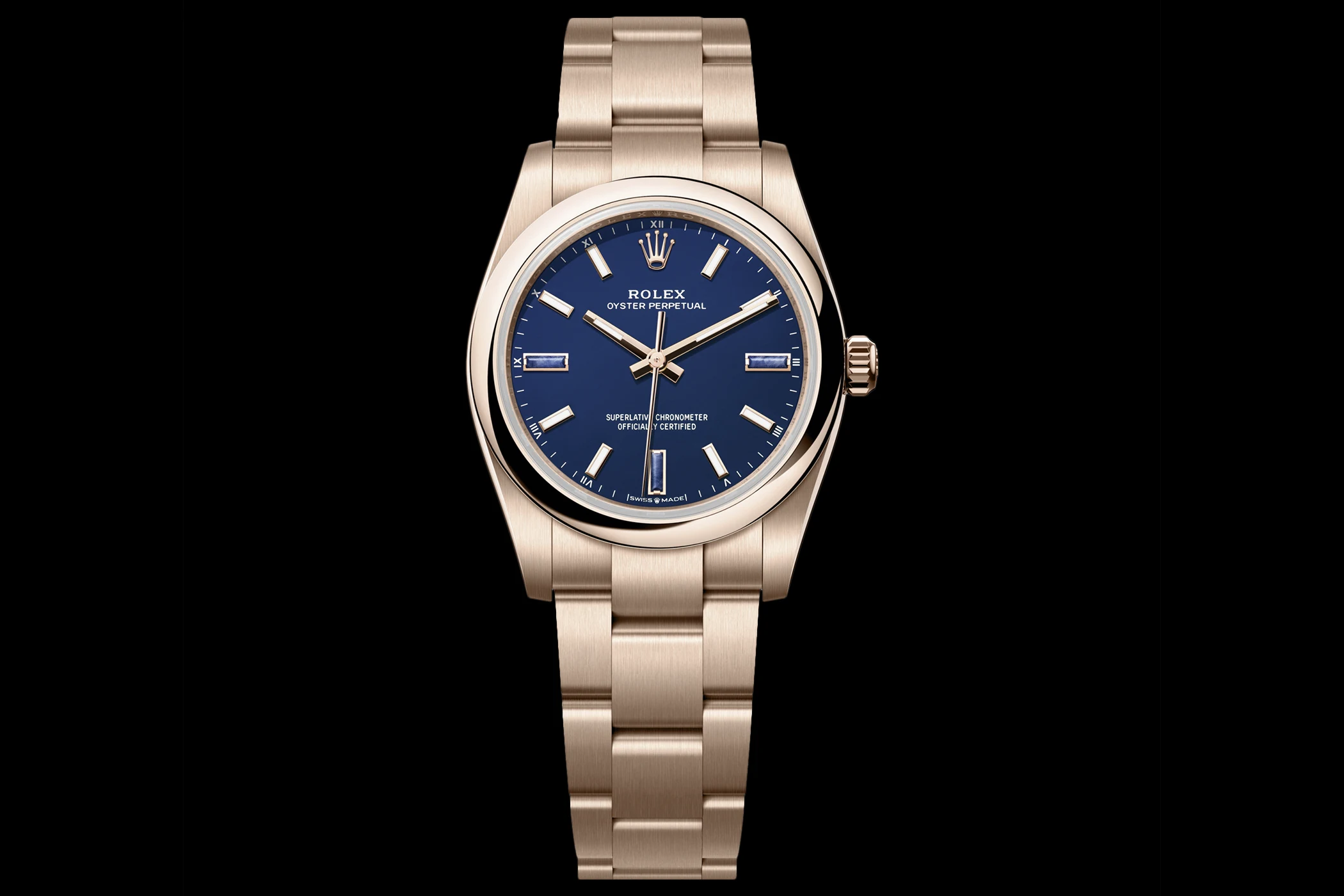
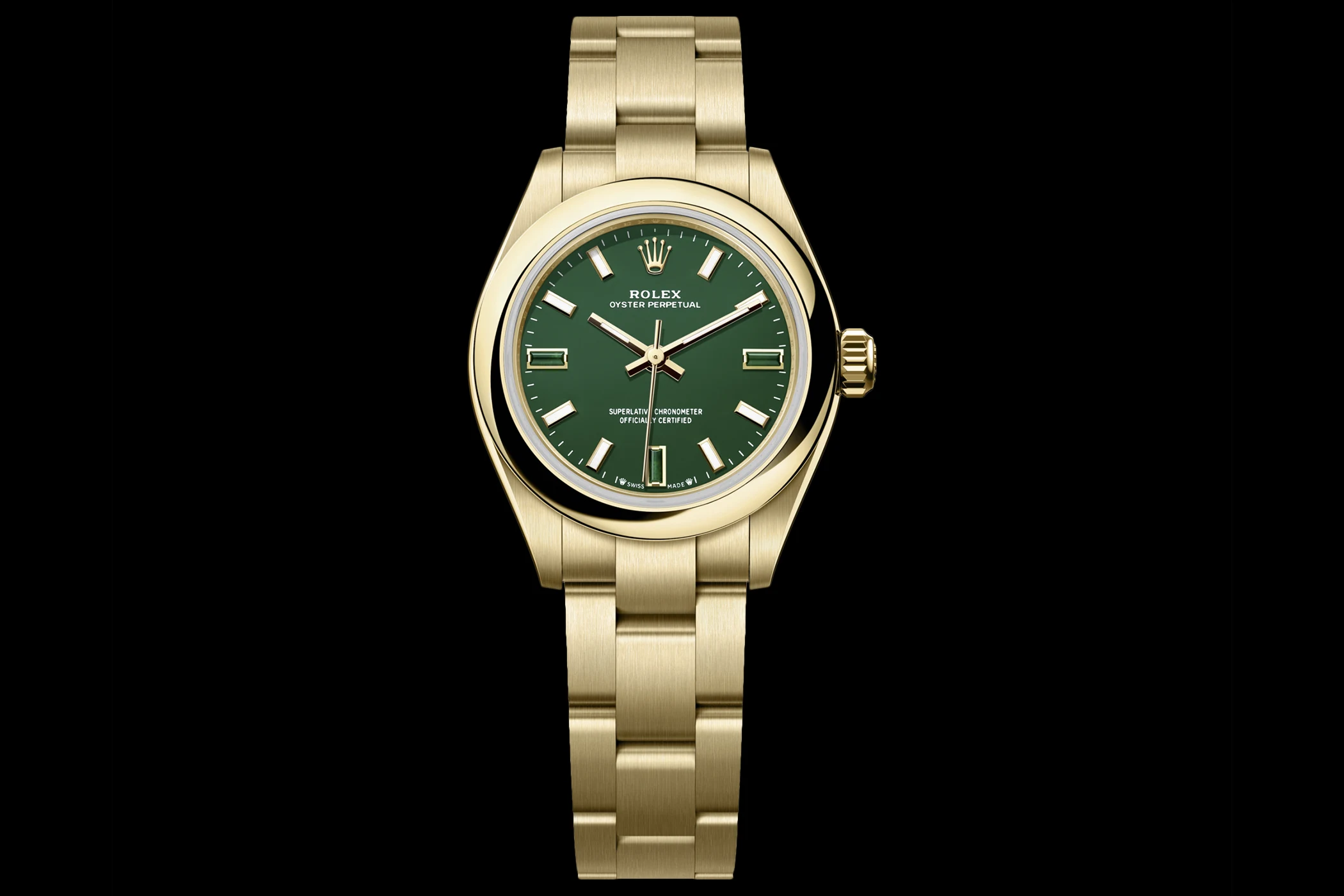
Equally interesting are the Oyster Perpetual 28 and Oyster Perpetual 34 in precious metal. Rolex is launching the 28 mm model in yellow gold with a Green Stone dial and the 34 mm model in 18-carat Everose gold with a Blue Stone dial. New features include not only the colour schemes but also the hour markers at three, six and nine o’clock: these are made from natural stones – heliotrope on the smaller model and dumortierite on the larger one. Added to this is a satin-finished case and bracelet, a feature previously uncommon on solid gold models within the current Oyster Perpetual range.
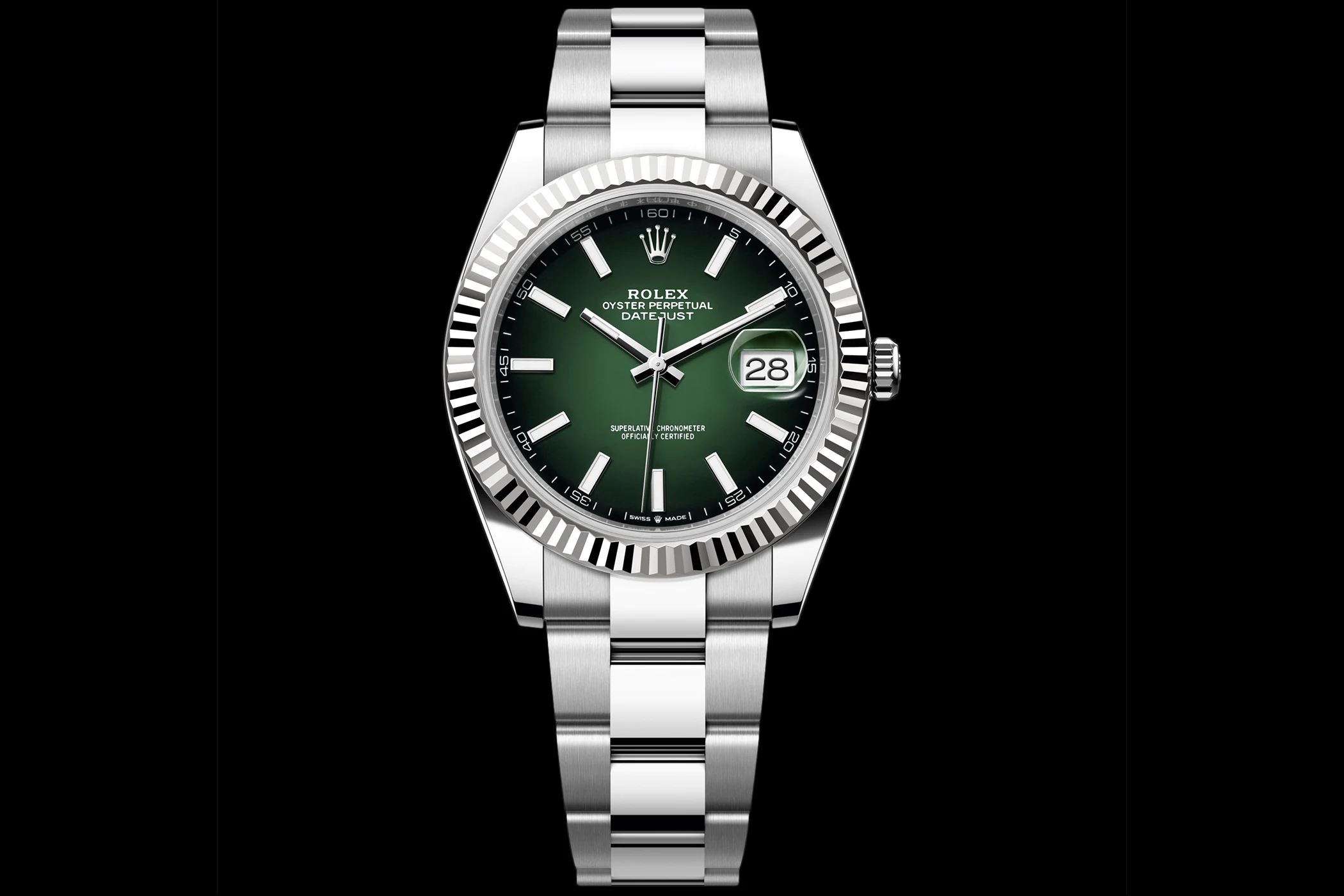
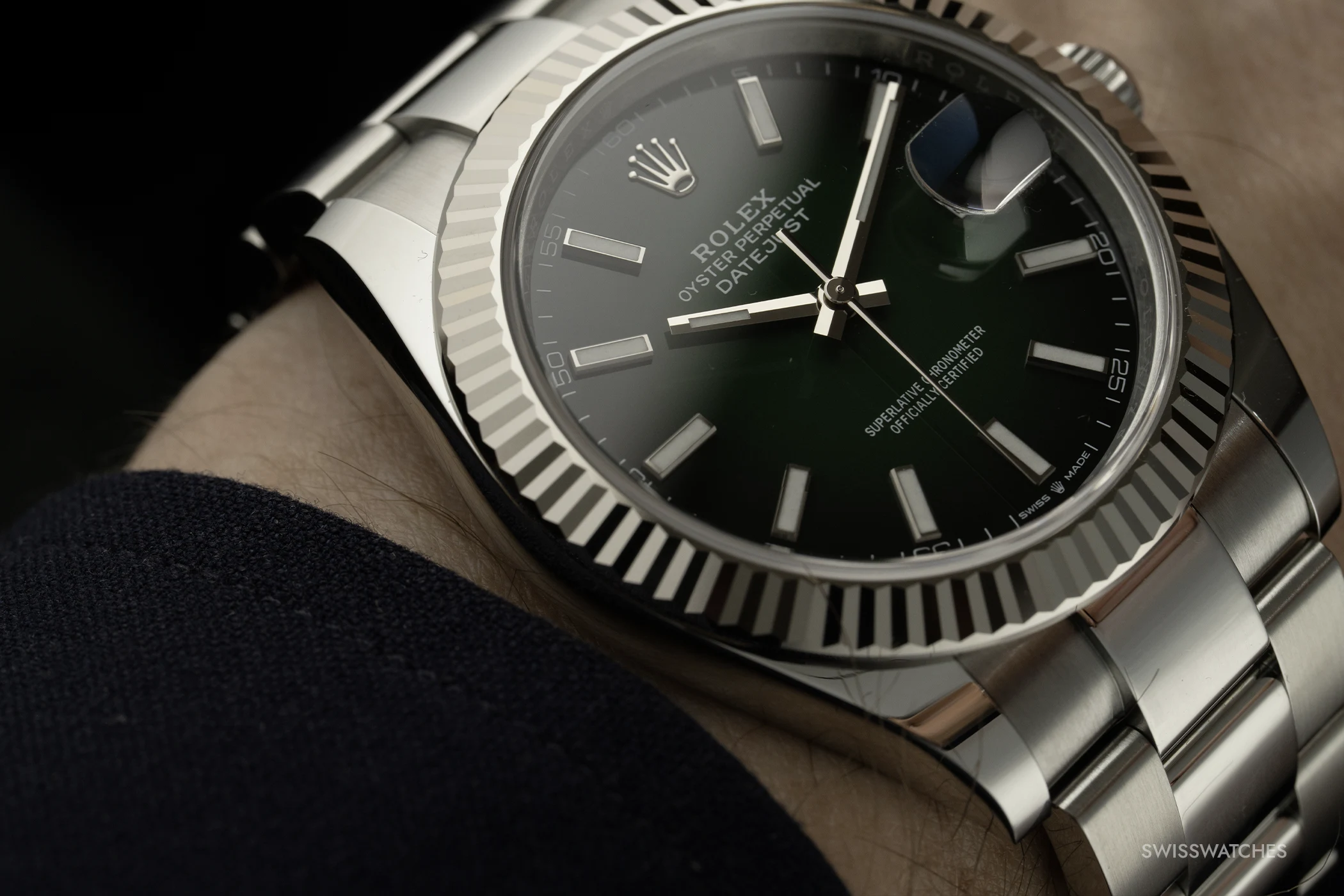
When discussing colour in relation to Rolex, sooner or later the conversation turns to green. That is precisely why the new Datejust 41 with its green lacquered ombré dial feels so natural. The watch is presented in white Rolesor – a combination of Oystersteel and a white gold bezel – thus blending a very familiar design language with a model that is entirely new to the design code of this dial. Particularly interesting: the ombré dial is created entirely through a lacquering process. According to Rolex, this is a first since the return of ombré dials in 2019. First, green lacquer is applied, then the dark gradient is created by spraying black lacquer in concentric circles.
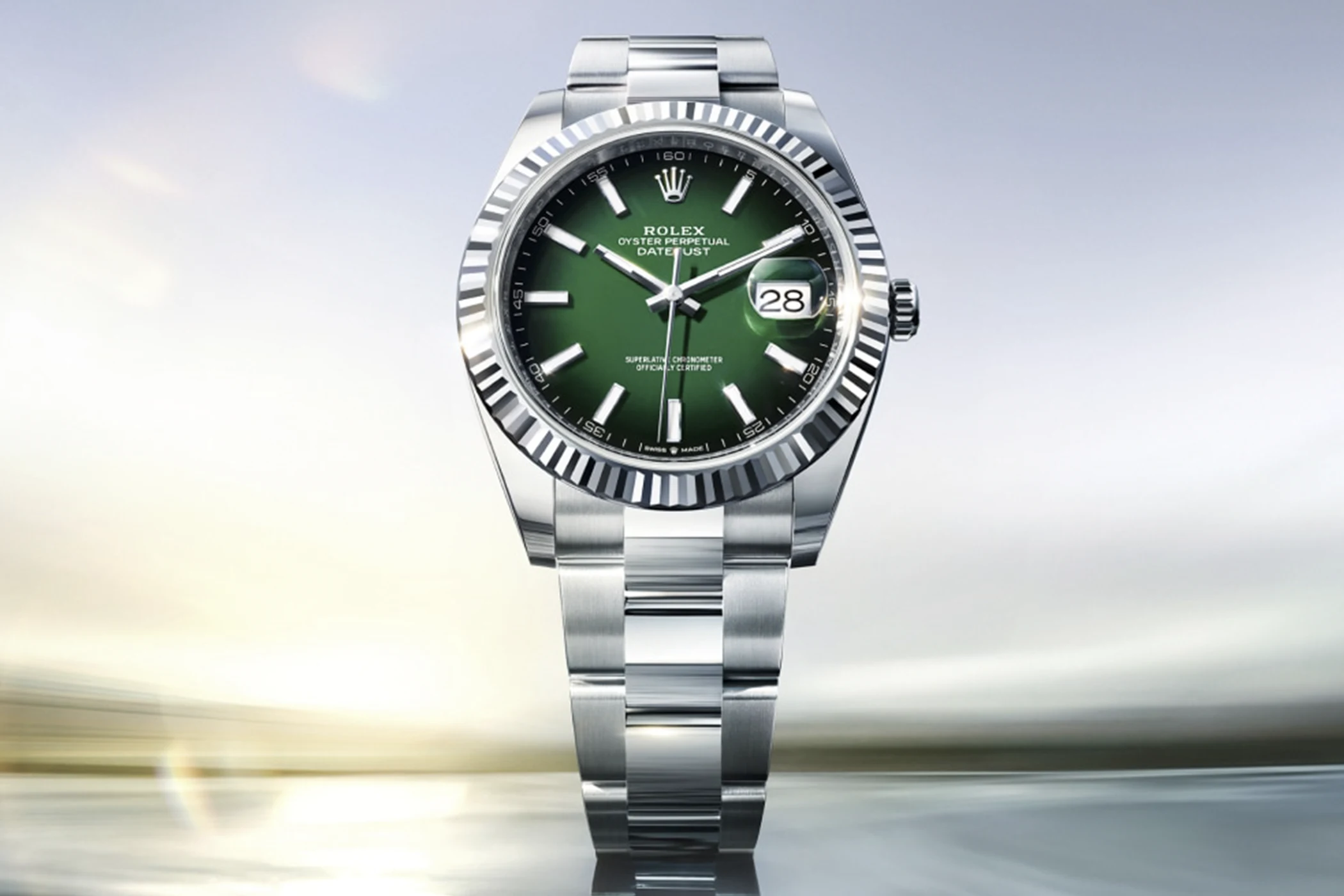
This suits the Datejust so well because this watch has always relied less on radical design changes and more on carefully controlled nuances. The fluted bezel, the Oyster bracelet, the date window with Cyclops lens – all of these remain unchanged. What is new, however, is the way the dial creates depth and visually emphasises the date display even more through the darker border. Rolex has described the Datejust as the archetype of the classic wristwatch since 1945; 2026 demonstrates once again just how much scope there still is, even within such a classic design.
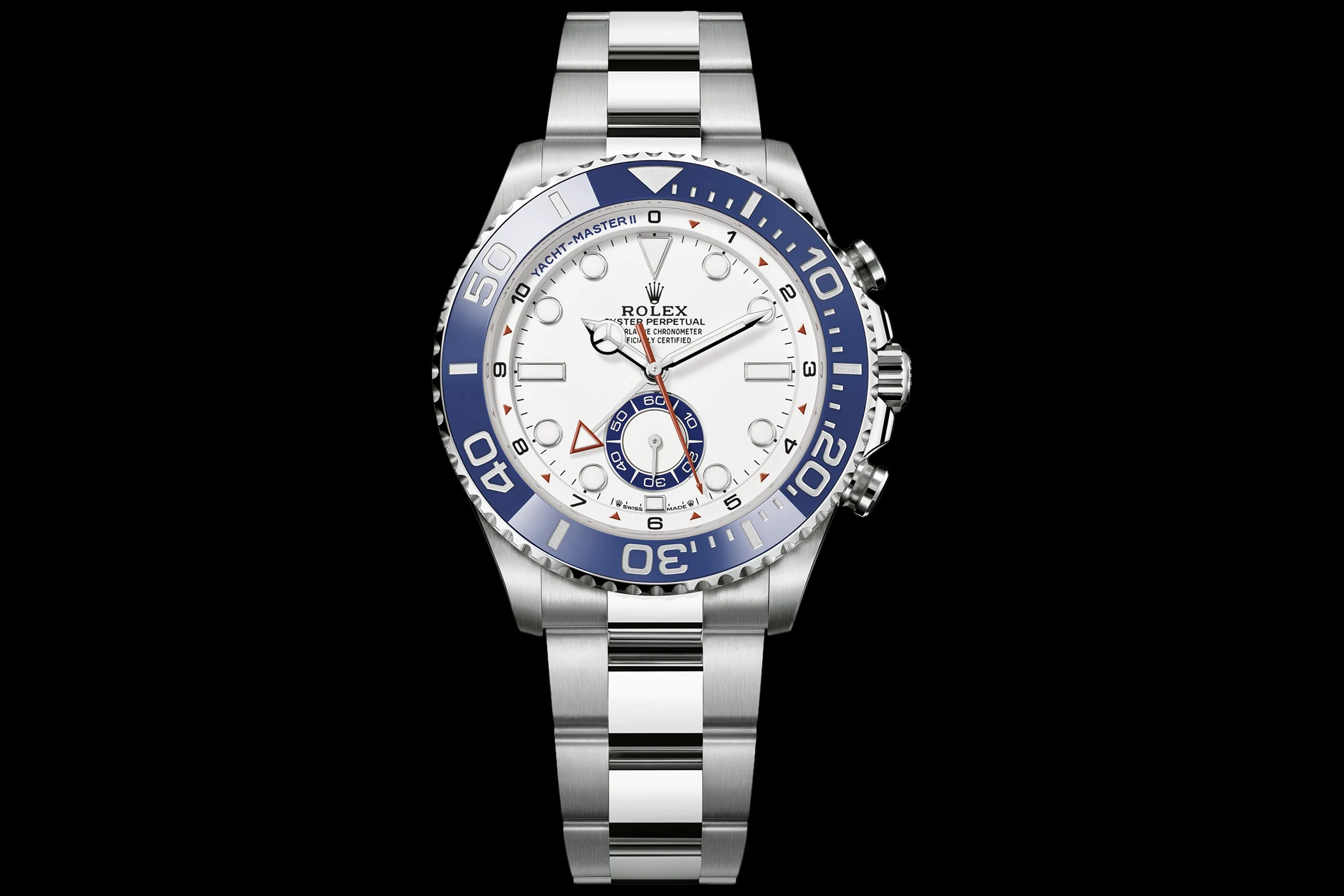
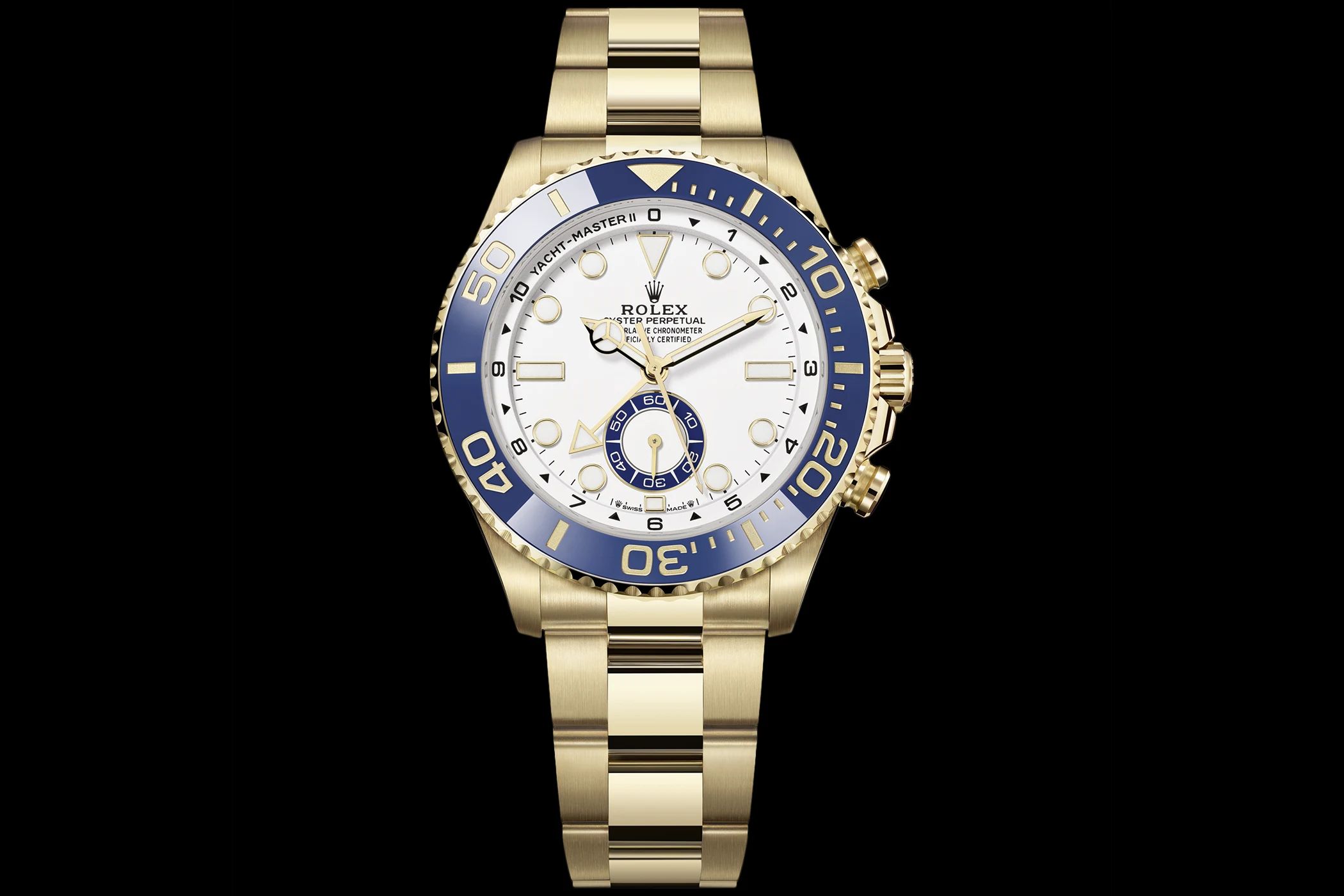
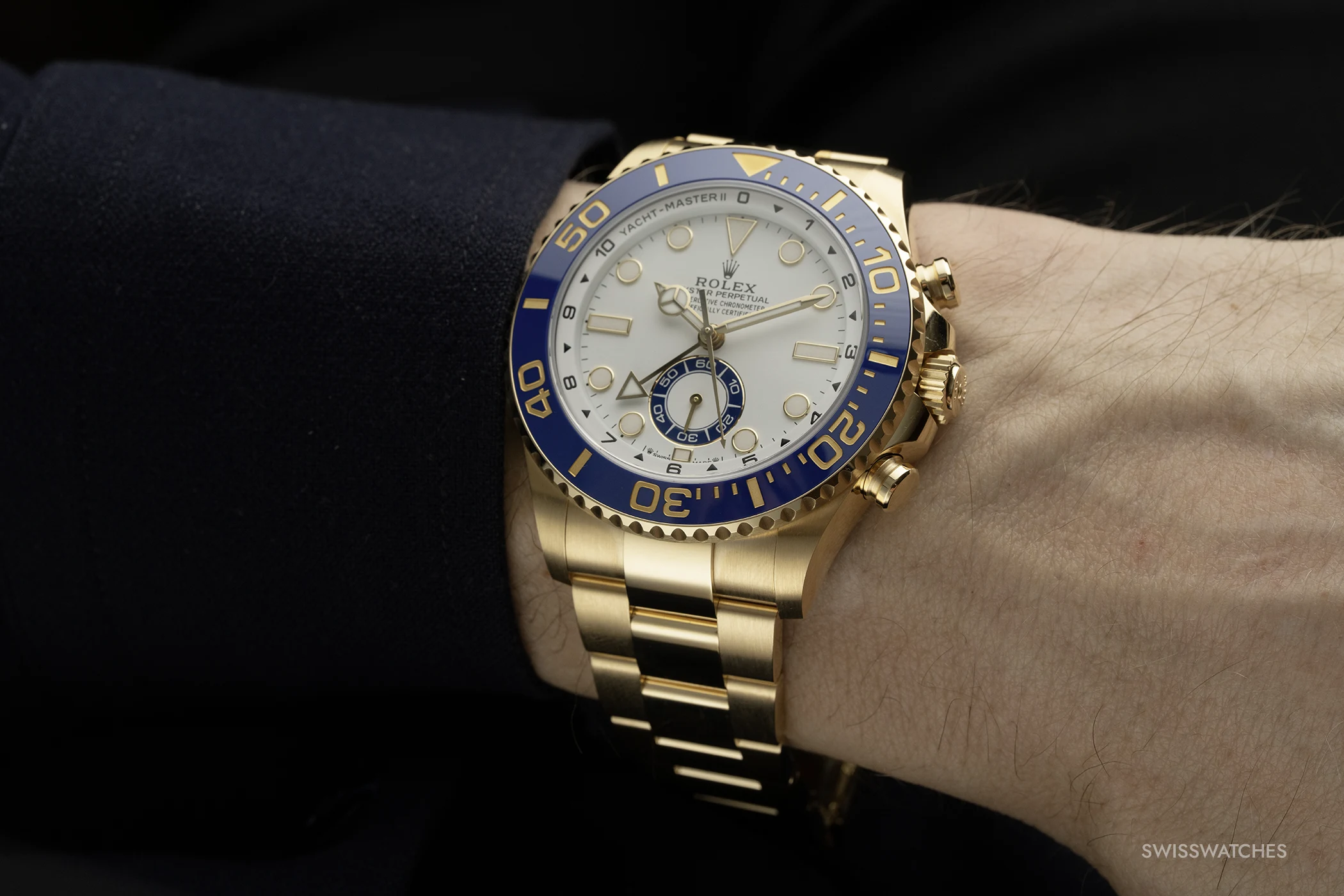
From a technical perspective, the return of the Yacht-Master II is undoubtedly the biggest technical news of the year. Rolex isn’t simply bringing back the regatta chronograph; it has visibly redesigned it to be more minimalist, easier to use and more legible. This applies above all to the countdown function, which has been completely restructured. The scale now sits on a bezel, adjustment is carried out exclusively via the side pushers, and the previous model’s Ring Command system has been dispensed with. This makes the watch significantly more intuitive – a decisive step for a model that was previously as fascinating as it was complex. At first glance, the new Yacht-Master II already appears far more logical and easier to understand than its predecessor.
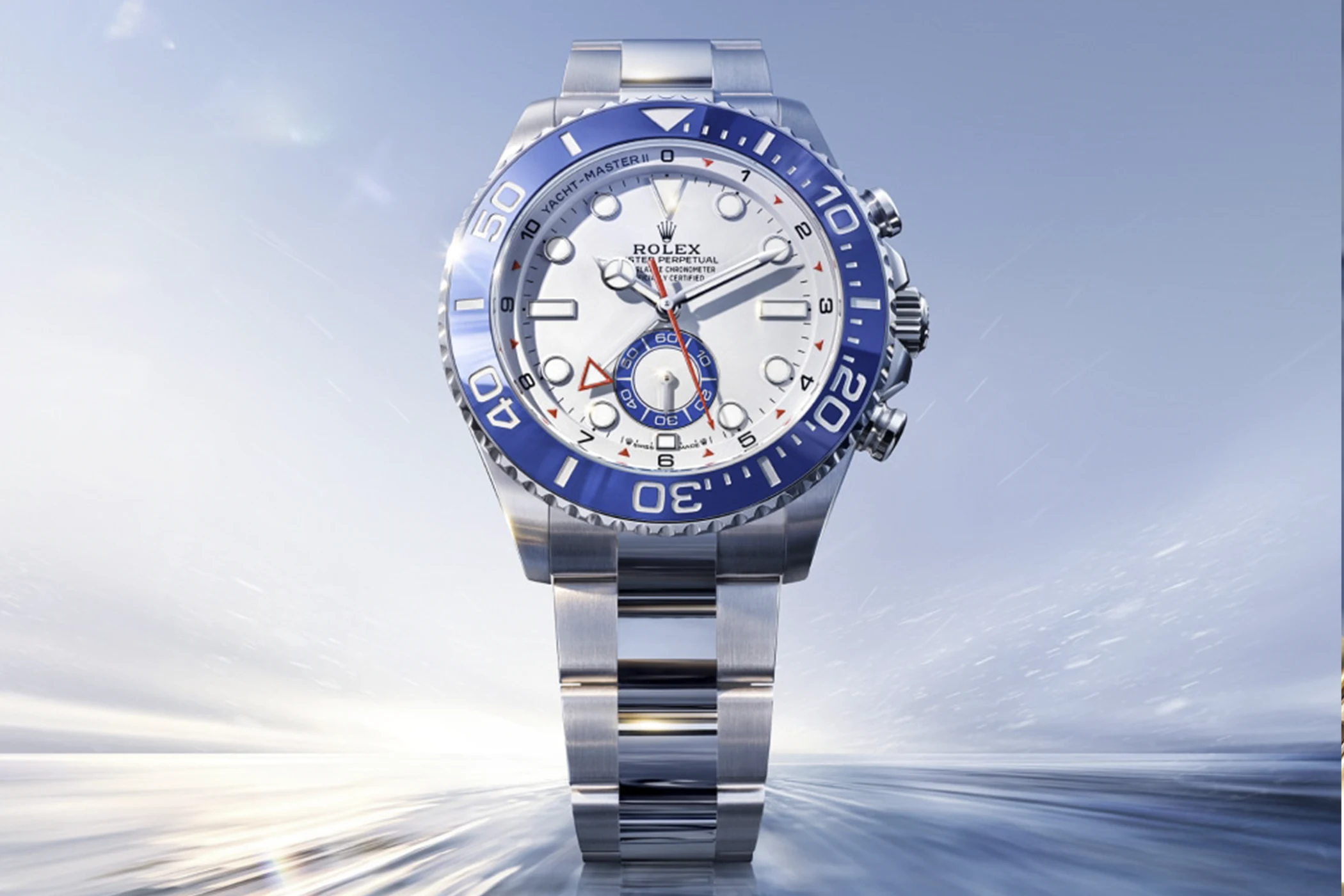
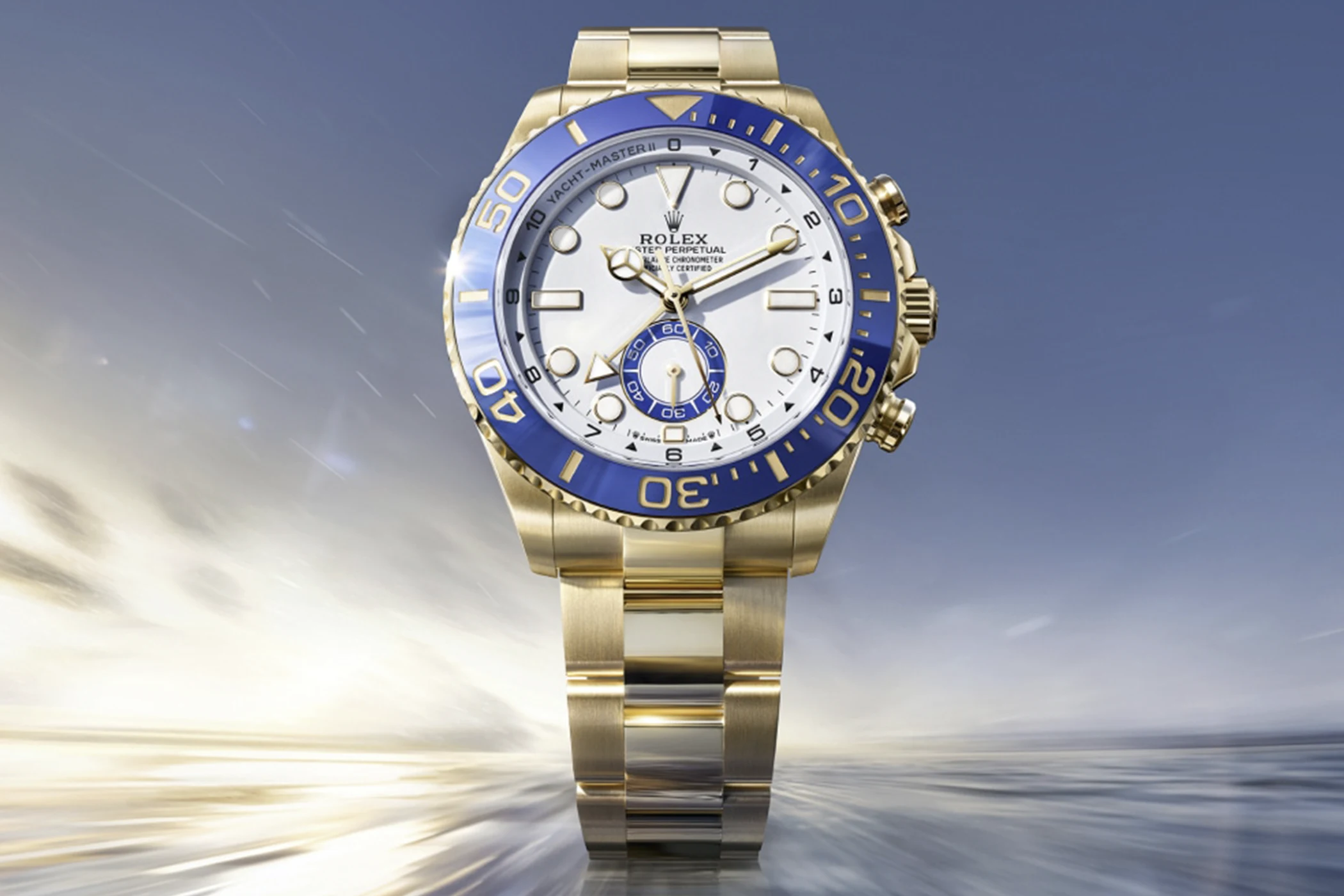
Rolex has also made significant design improvements. The matt white lacquered dial reduces glare, large Professional hour markers improve legibility, and the blue ceramic Cerachrom bezel adds a distinct nautical touch. A particularly exciting feature is that the countdown minute and seconds hands rotate anti-clockwise – a first for Rolex. This is no gimmick, but a genuine functional improvement, as it makes the elapsed time much easier to read. At the same time, in its initial position, the bezel helps to track the last 30 seconds of the final countdown minute more precisely. It is clear from the new Yacht-Master II that Rolex has not merely carried out routine model updates, but has sought to improve a genuine instrument and its functionality.
Inside, the watch is powered by the new Calibre 4162, a further development of the previous Calibre 4161. Rolex describes it as a completely redesigned timing system, complemented by significant innovations such as the Chronergy escapement. The design of the movement is also intended to give the watch a more sophisticated look, for example with Côtes de Genève and an openworked rotor. The new Yacht-Master II is available in Oystersteel or 18-carat yellow gold, each with a 44-millimetre case diameter. It thus remains large, but in its new generation appears more refined and controlled.
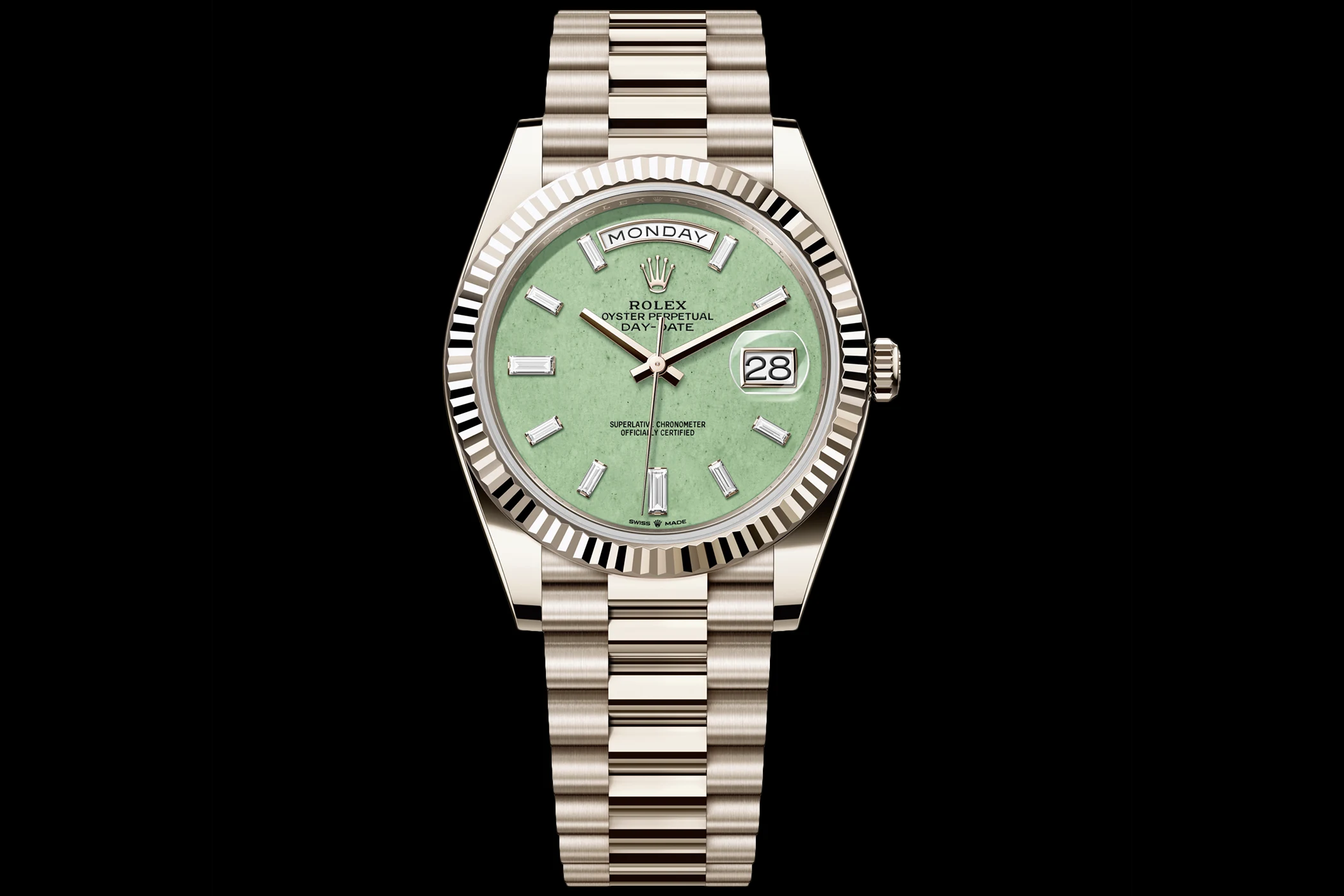
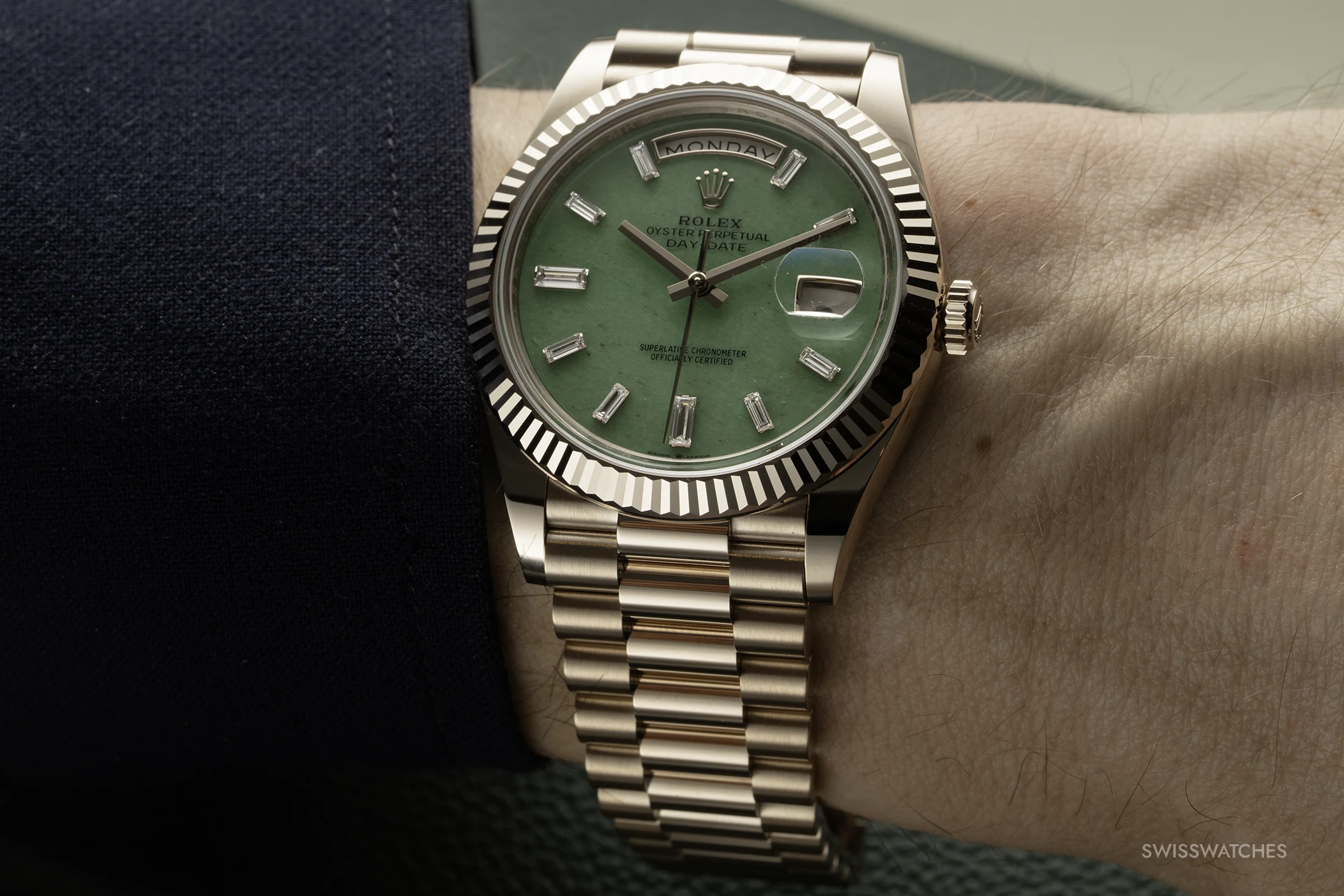
Anyone looking for the standout piece from Rolex in 2026 will find it in the Day-Date 40. With this model, the brand is introducing a new alloy developed and manufactured entirely in-house: 18-carat Jubilee Gold. Rolex describes the hue as shifting between delicate yellow, warm grey and soft pink. At first glance, this sounds almost more poetic than one would expect from the brand, but it hits the nail on the head remarkably well: Jubilee Gold is not meant to be flashy, but to shine through subtle reflections. This makes a great deal of sense, particularly with the Day-Date, perhaps the most symbolically charged Rolex of all.
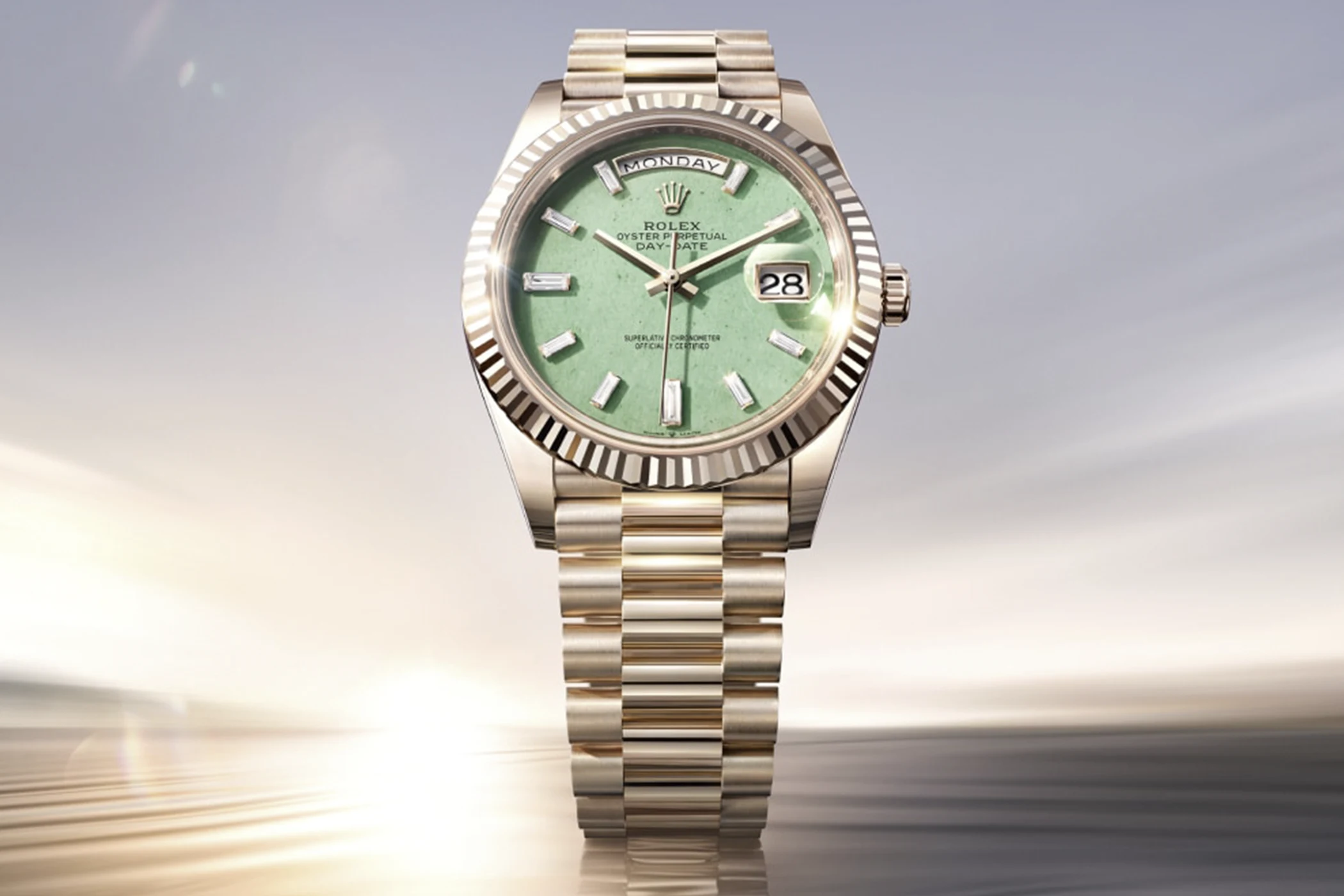
To complement this, Rolex pairs the new material with a light green aventurine dial made from natural stone and an hour ring set with ten baguette-cut diamonds. Added to this are the fluted bezel and the infamous President bracelet with a concealed Crownclasp. Technically, the watch remains on familiar ground: inside, the Calibre 3255 is at work, featuring a day and date display as well as a power reserve of around 70 hours.
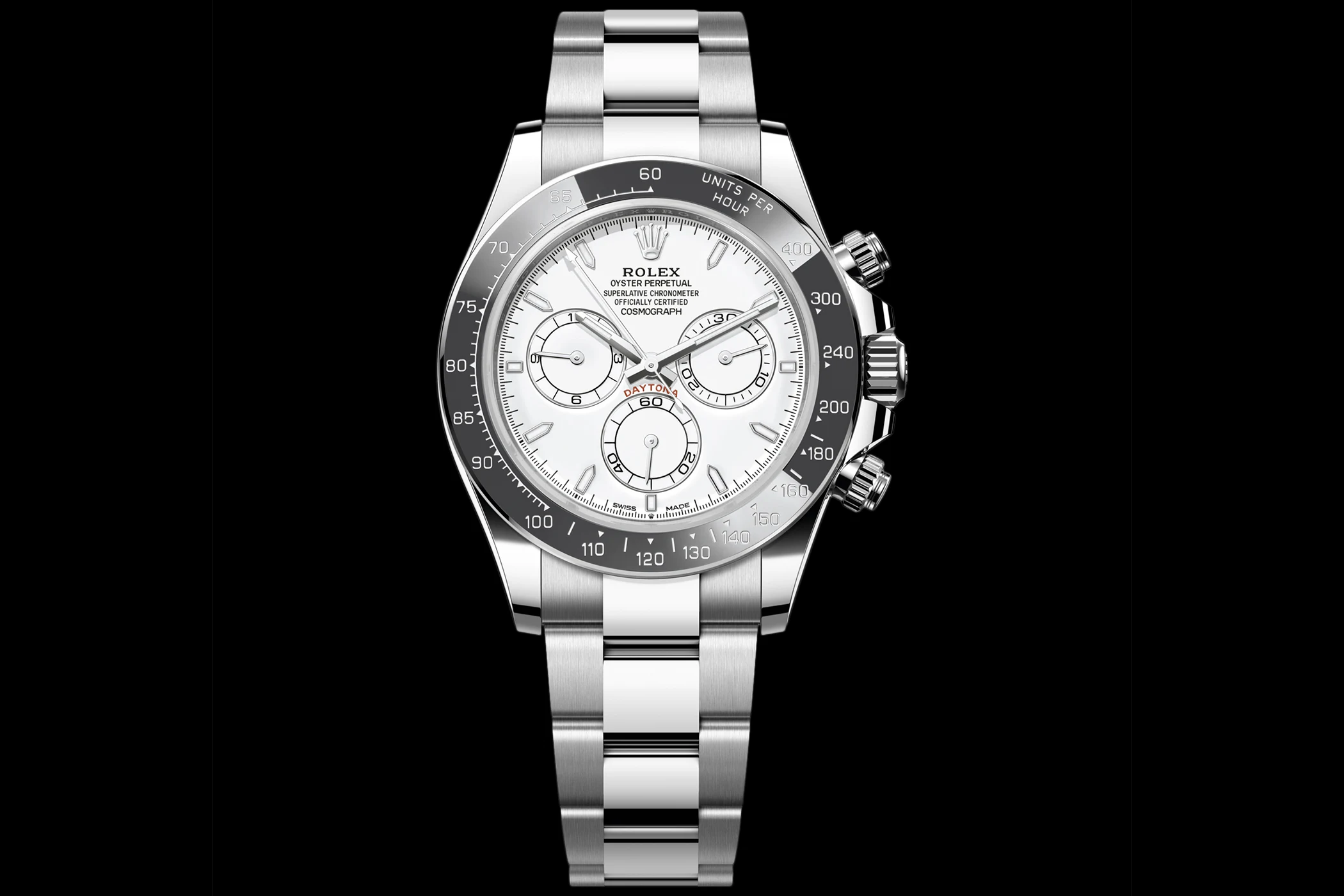
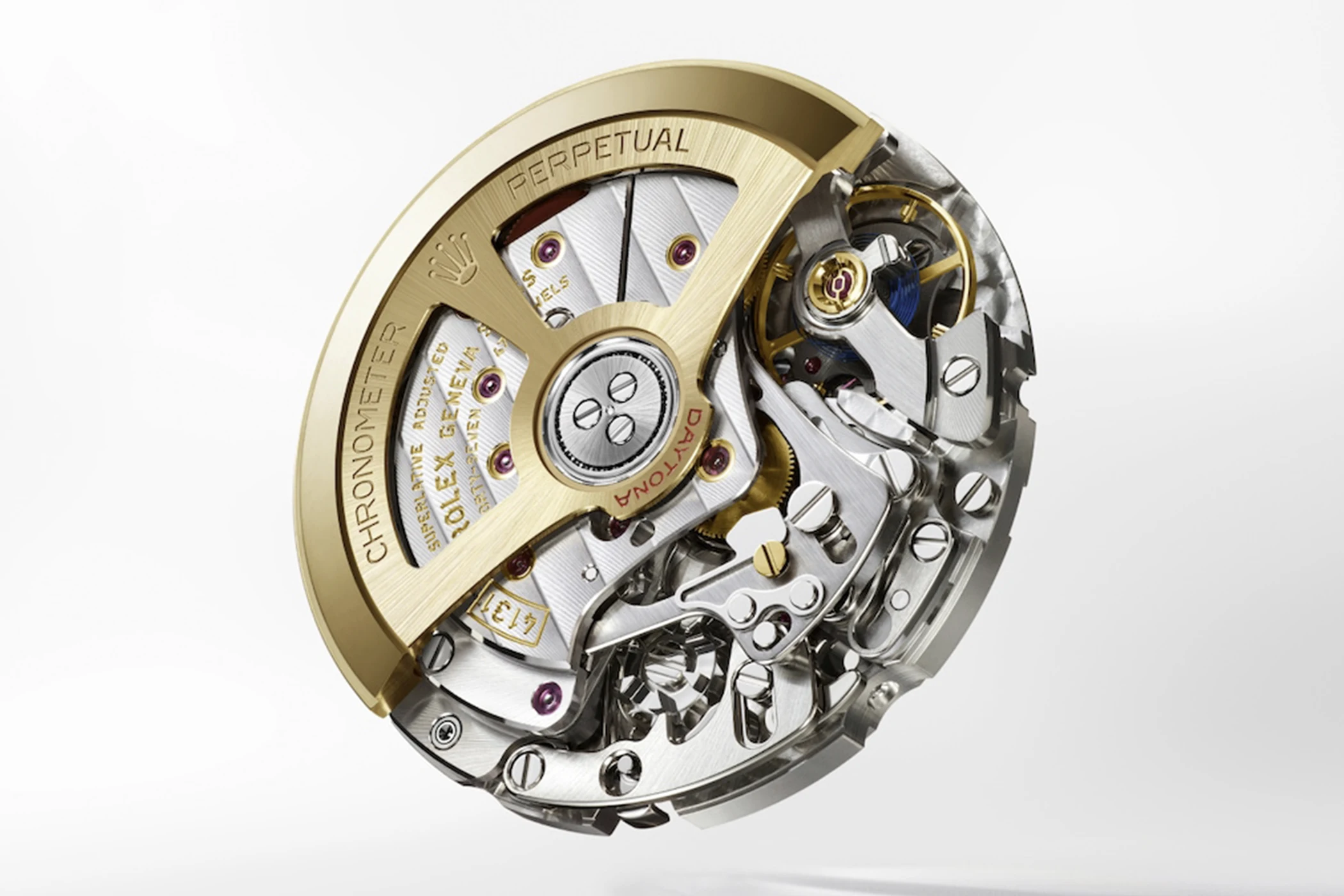
Almost overshadowed by the Day-Date, but at least as exciting in its own right, is the new Cosmograph Daytona. For the first time, Rolex is presenting its chronograph in Rolesium, a proprietary material composition combining Oystersteel stainless steel and platinum. Added to this are a white enamelled dial, an anthracite-coloured Cerachrom bezel and – particularly appealing to many collectors – a transparent case back offering a view of the movement and an openworked oscillating weight in solid yellow gold.
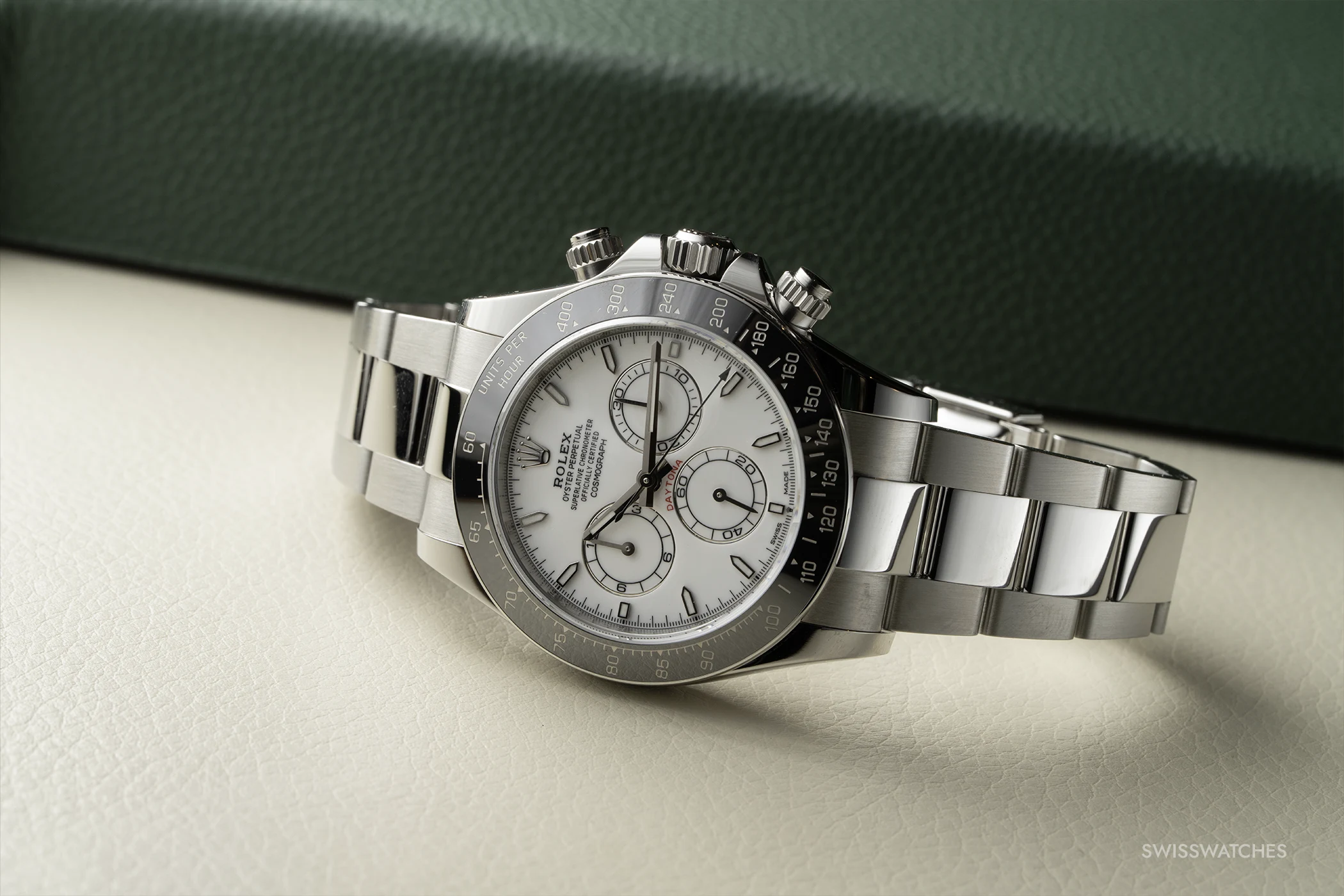
It is certainly interesting that Rolex refers to “Grand Feu enamel”, given that Grand Feu enamel is traditionally applied to a metal substrate rather than a ceramic base, as is the case with the new Daytona—a shift that simplifies the process considerably. In horology, Grand Feu (literally “great fire”) traditionally refers to the fusing of glass powder onto a metal base at temperatures exceeding 800 °C. This is an exceptionally difficult process with a high rejection rate (40–50%), as metal and glass contract at different rates during cooling, which can cause the dial to crack. Rolex has industrialised this process by applying the enamel to a ceramic base instead of metal. Ceramic hardly distorts under heat, making the procedure significantly simpler and more reliable. Technically speaking, according to the definitions of materials science, glass applied to ceramic is considered a glaze rather than classic enamel. “Grand Feu enamel” is not a protected term; nevertheless, in haute horlogerie, it is associated with a very specific technical process.
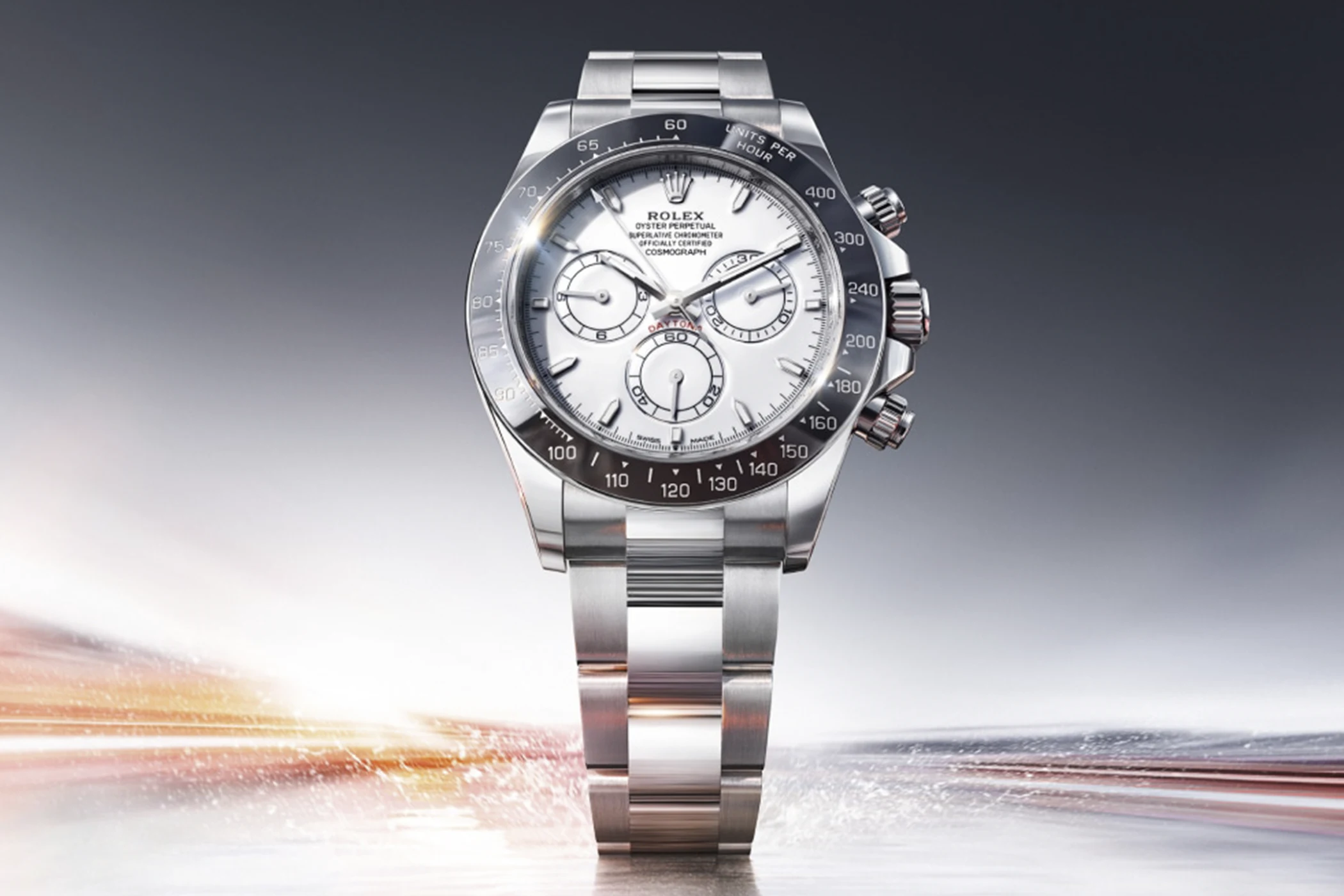
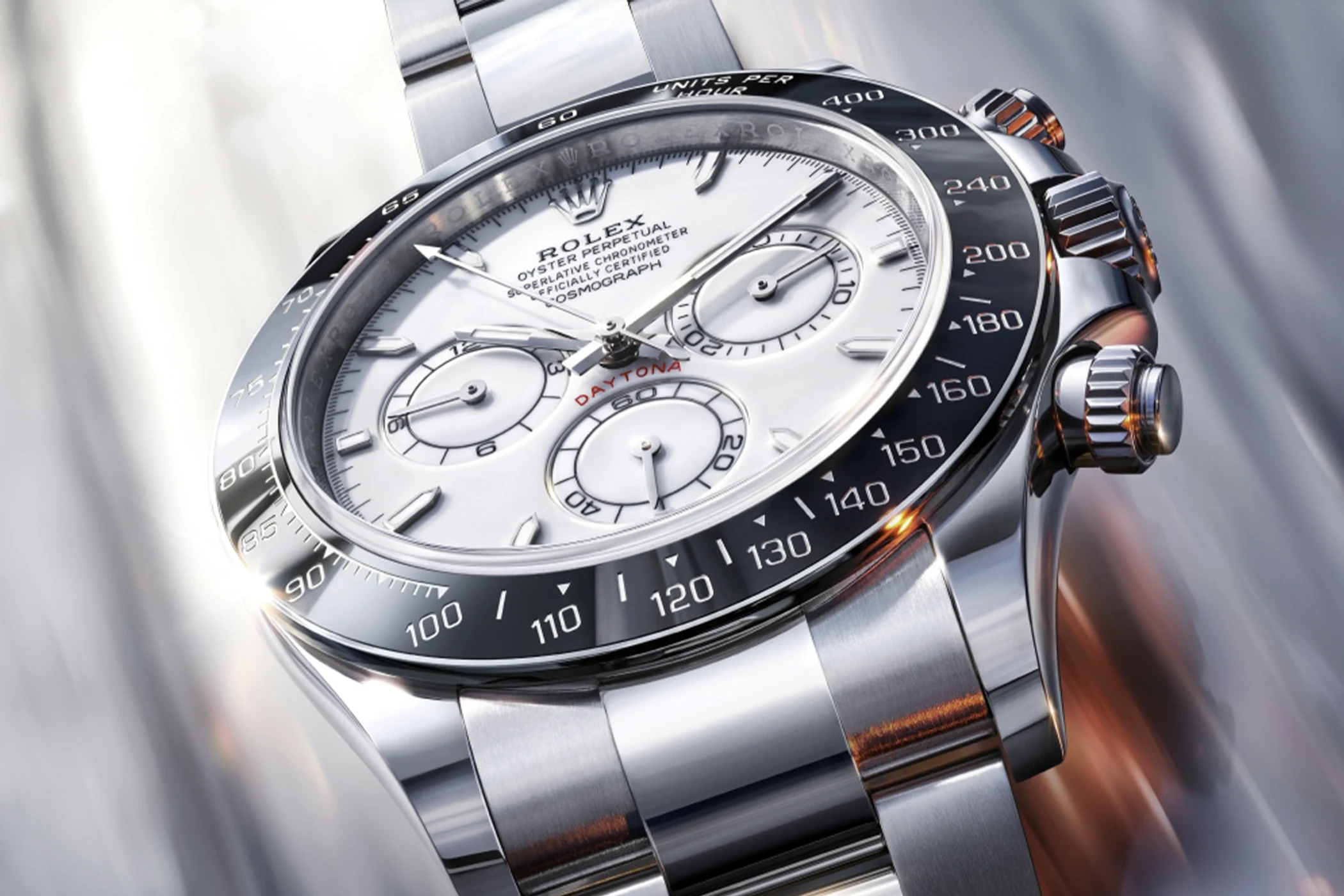
However, this watch is highly unusual for Rolex in several respects and deliberately plays on familiar Daytona codes without succumbing to nostalgia. The bezel is particularly striking. Rolex has developed a special ceramic enriched with tungsten carbide for this purpose, whose metallic effect is markedly different from that of the familiar black Cerachrom bezels. The tachymeter scale has been redesigned and, with its horizontally arranged numerals, draws directly on the design of the first Daytona model from 1963. It is precisely this combination of retro design and new materials technology that makes this model so appealing.
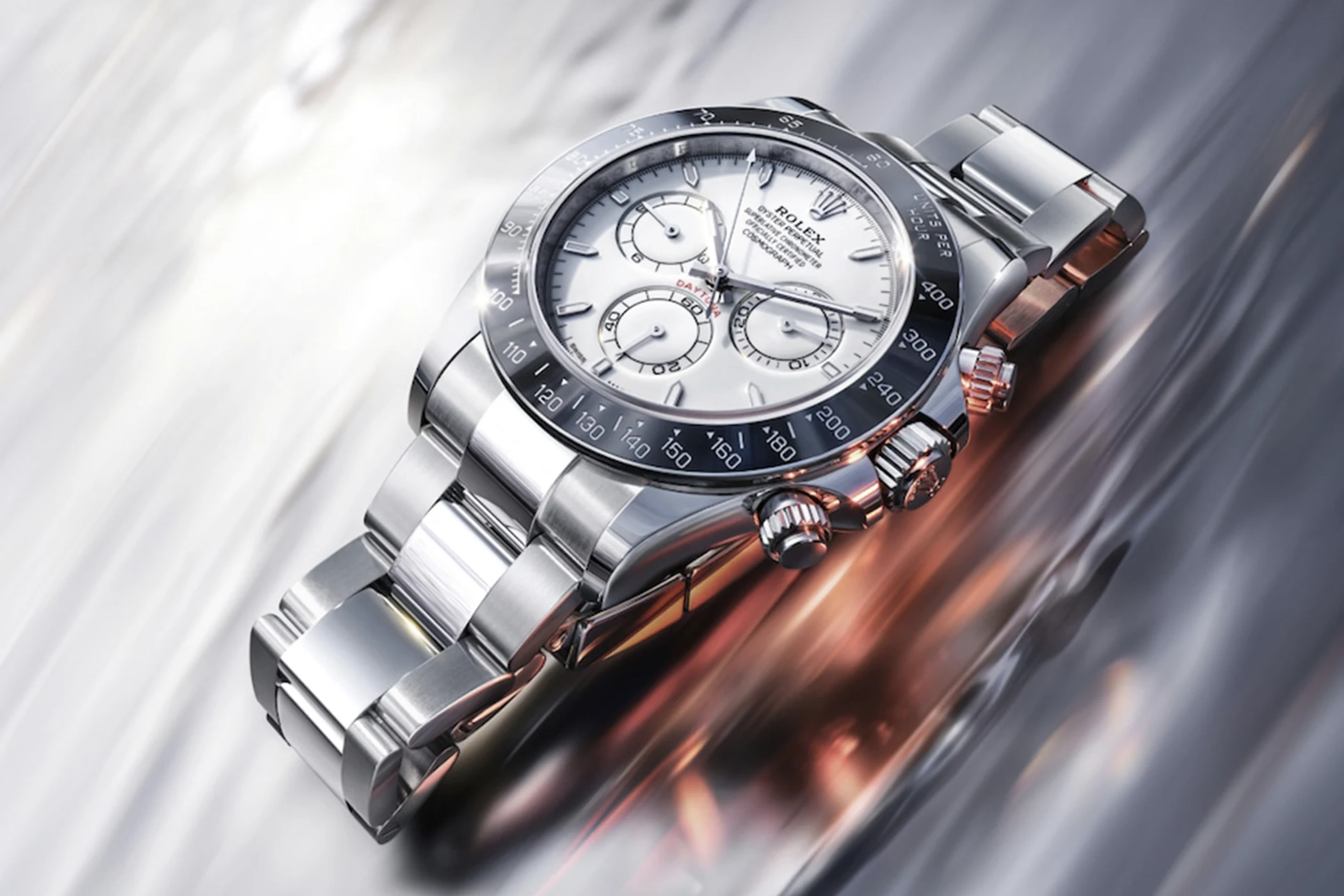
What makes the new Rolex models for 2026 so interesting is ultimately not just each individual model, but the underlying logic that ties them together. Rolex is using the 100th anniversary of the Oyster to re-evaluate several core areas of the brand: the Oyster Perpetual as the origin story, the Datejust as a classic continuum, the Yacht-Master II as a technical functional watch, the Day-Date as a platform for new alloys, and the Daytona as a testing ground for material and design combinations. At the same time, the enhanced Superlative Chronometer certification runs like a common thread through the entire collection. So 2026 is not merely about new dials or new precious metal variants, but about a sharpened self-definition of the brand.
That is precisely why this year’s collection makes a stronger impression than might appear at first glance. Rolex has not launched a single sensation that outshines everything else in 2026. Instead, the brand demonstrates how consistently it can continue to develop its own concept: through new materials, new finishes, new colour schemes, new user interfaces and a more clearly defined statement of technical quality. For Rolex, this is perhaps the most fitting way to celebrate 100 years of the Oyster: not with an excessive amount of nostalgia, but with a controlled evolution of its own creations.