

It’s been another extraordinary year for the watch world. That’s why the Swisswatches team sat down once more to compile a list of our top watches from 2025.

There are watch manufactures that measure time, and there is Van Cleef & Arpels: a brand that romanticises it. For Rainer Bernard, the Research & Development Director who has worked at the Maison for 14 years, time is not simply something to be tracked, but a story to be told.
“When we make a timepiece, we always begin with the narrative,” Rainer Bernard tells me in Geneva, where I am joining a select few journalists to discover exactly what Van Cleef & Arpels’ dreams are made of. “The engineers come much later.” In the world of this opulent Swiss watch and jeweller producer, watchmaking is not only born from mechanics, but from imagination.
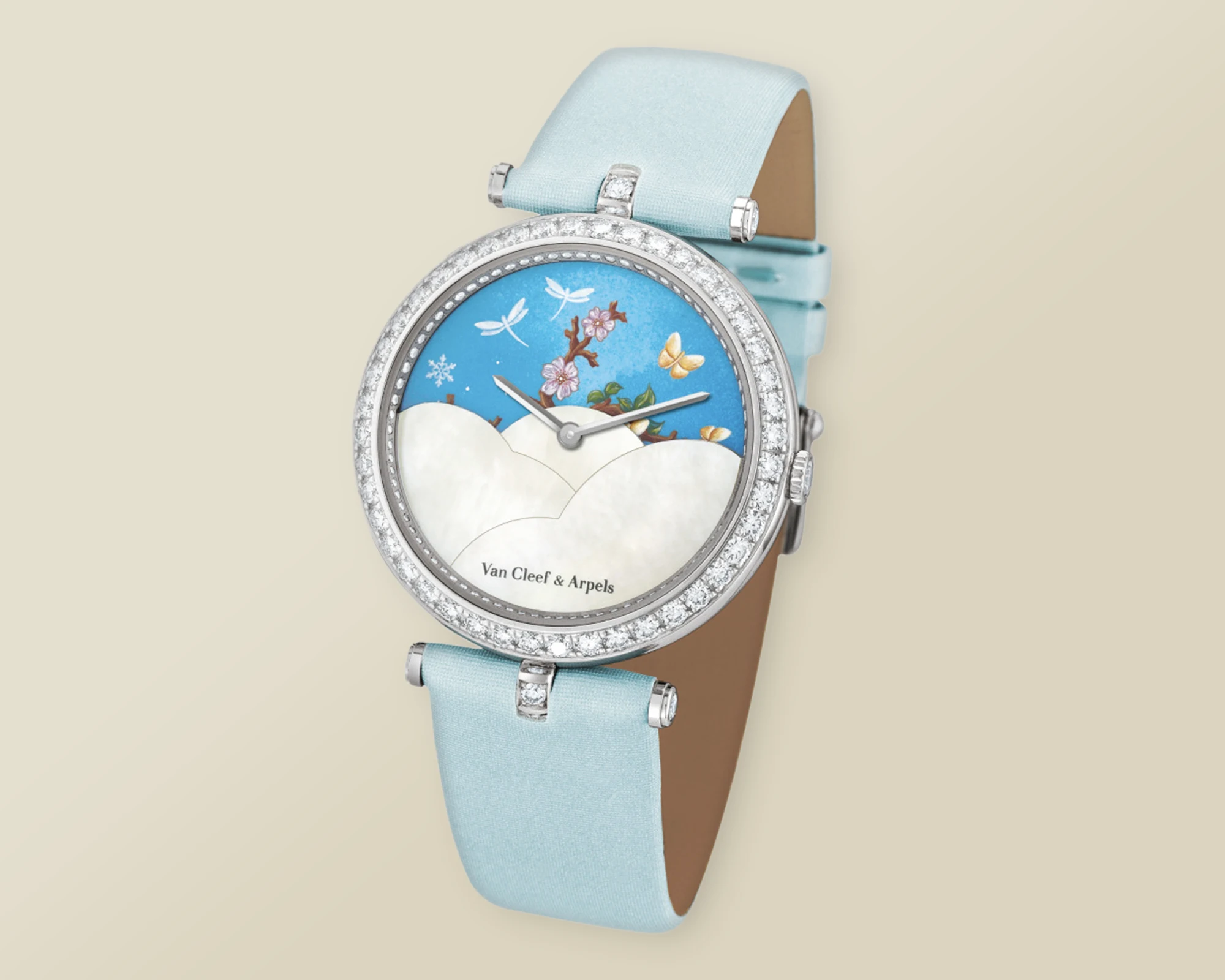
This philosophy reaches back to 1906, when in the very year of its foundation, the maison created its first timepiece. A century later, the anniversary watch would crystallise this identity in the form of a watch called the Lady Arpels Centenaire, featuring a rotating enamel dial. Depicting changing seasons with floral, butterfly, dragonfly and snowflake motifs, the watch rotated over a cycle of 365 days, slowly shifting daily to mirror the passing seasons. This poetic notion of savouring as opposed to simply showing time marked the start of what the maison now calls ‘The Poetry of Time’.
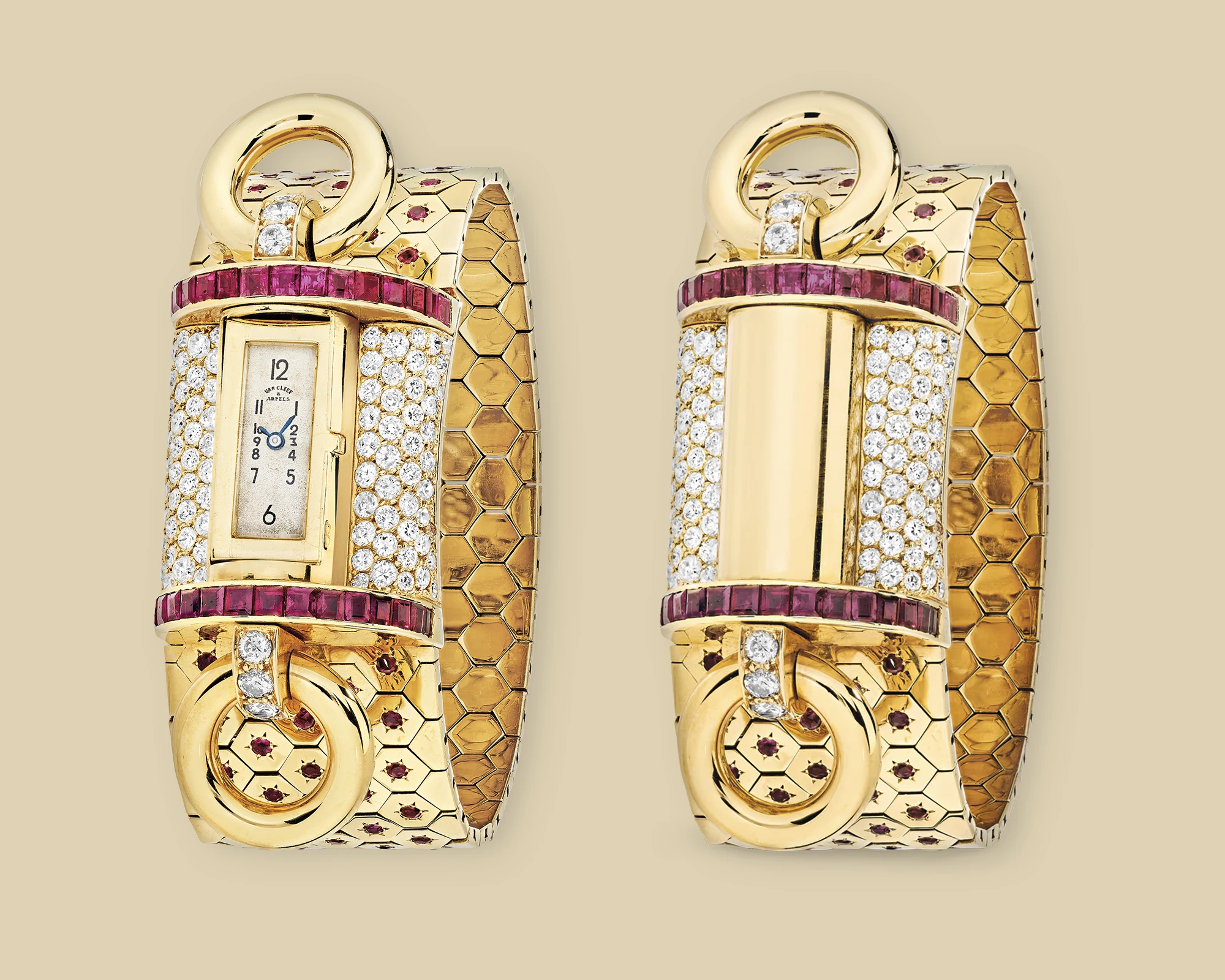
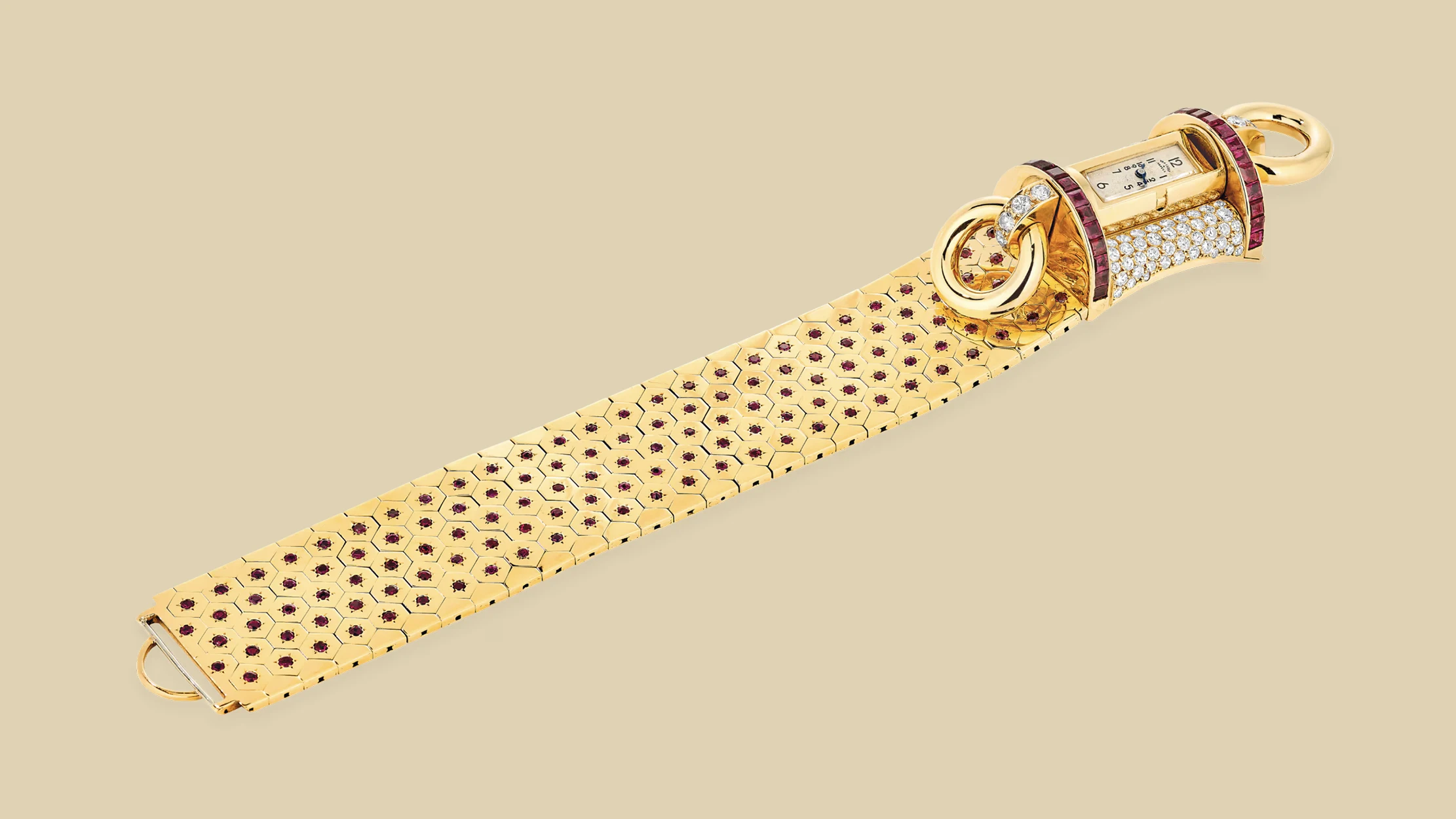
Evidently Van Cleef & Arpels has been treating watches not only as instruments of precision, but as jewellery, artistry, and expressions of emotion, for some time. The maison’s first so-called secret watches, first appearing in the 1920s, were worn as a high-jewellery necklace; timepieces transformed into elaborate bejewelled pendants or brooches, inviting the wearer to choose how time accompanies them. It was the start of a watch and jewellery revolution.
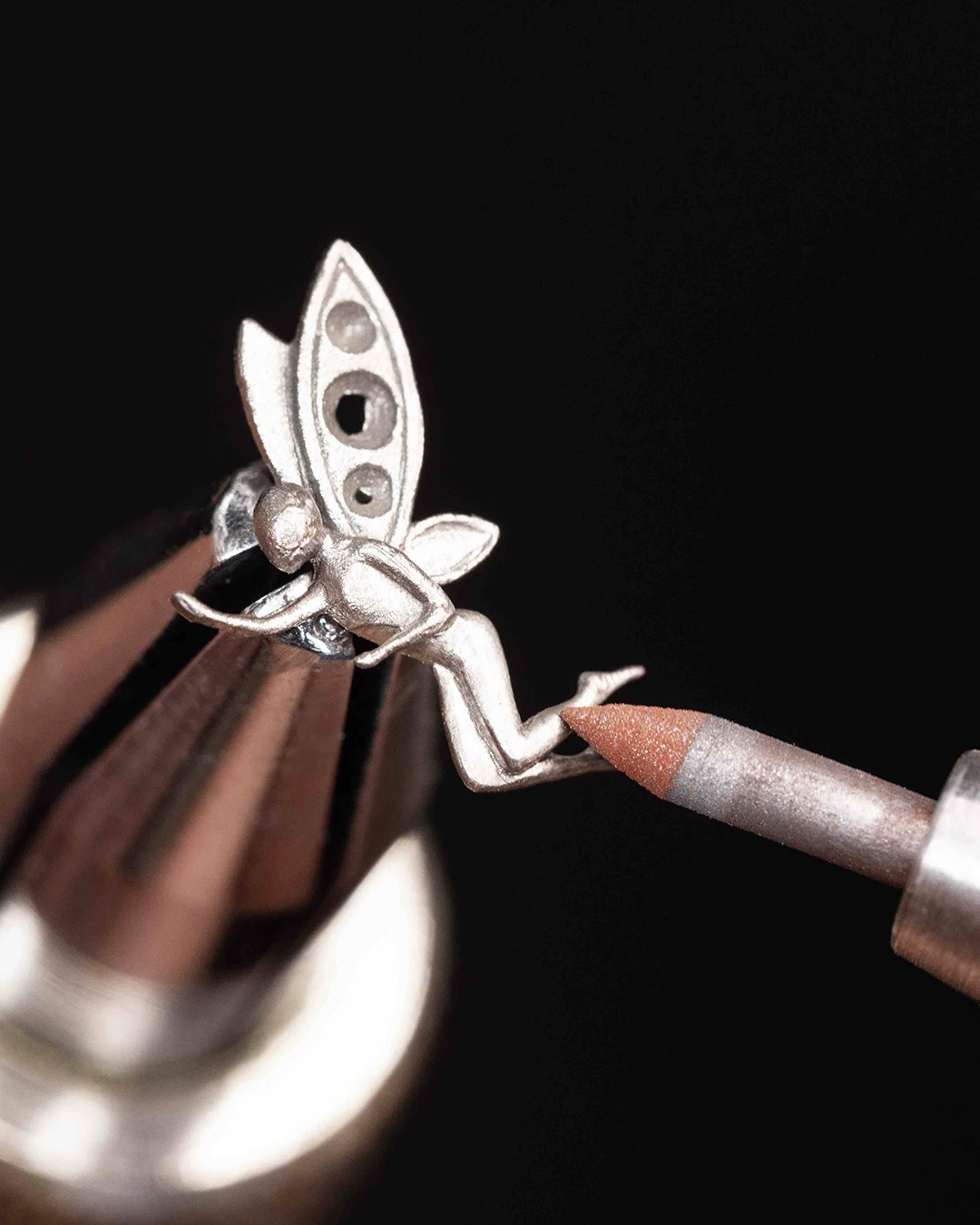
Over the years, certain motifs have become signatures of the Van Cleef & Arpels world: ballerinas, fairies, flora and fauna, depictions astrology – and, of course, love. According to Bernard, these variously interwoven motifs leave much space for imagination and creativity. “Anyone at the Maison can come forward with an idea,” says Bernard. A keen gardener might suggest grasses that appear to be swaying in the wind; a bird-watcher might observe how a mother bird brings food to her babies in the nest. Anything can be replicated; nothing is impossible. Indeed, in order to create a watch that actually appeared to be swaying in the wind, Van Cleef & Arpels conceived a special mechanism in the movement to create a life-like effect. Such endeavours are common practice for the Maison, yet hard to imagine at many other manufactures.
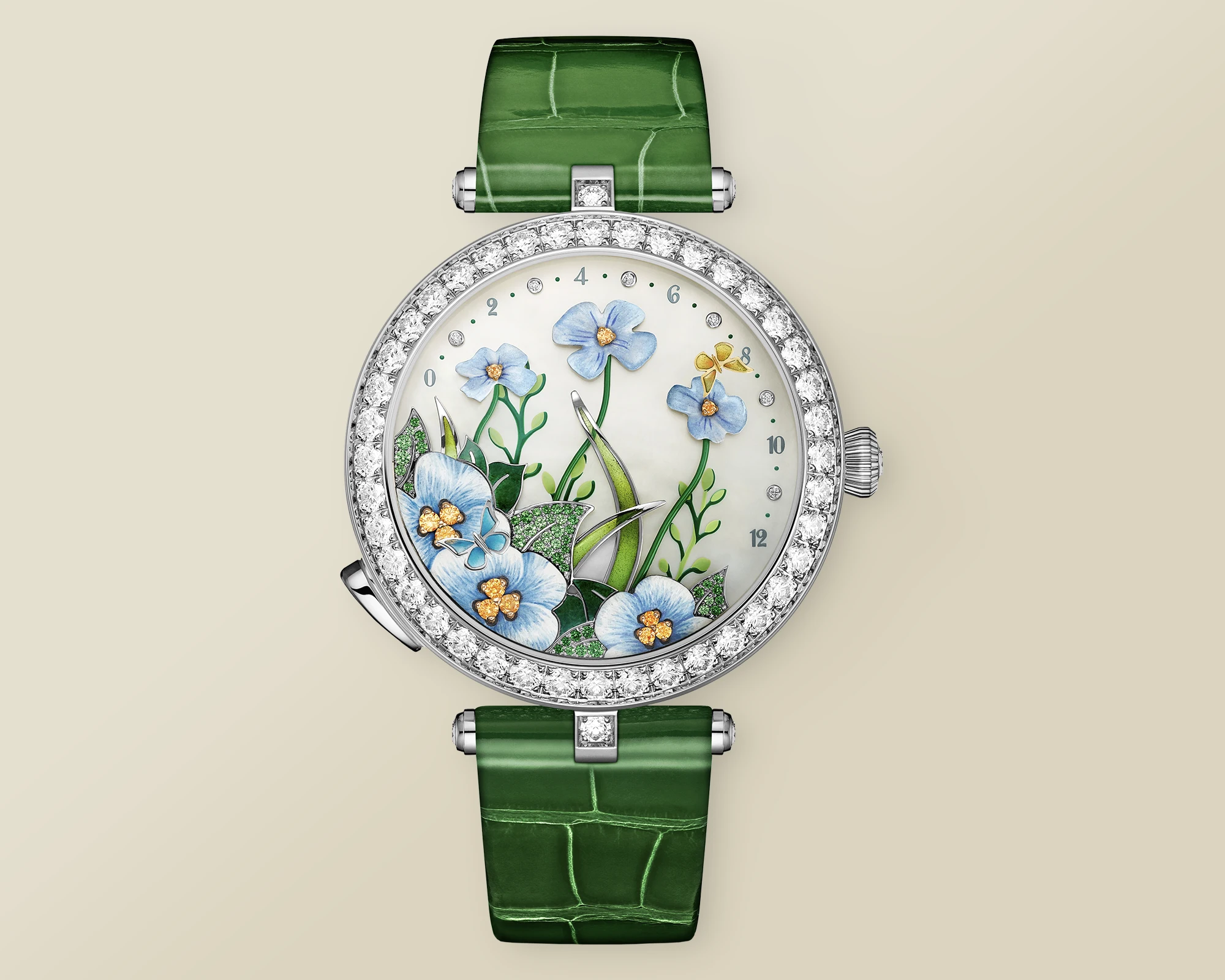
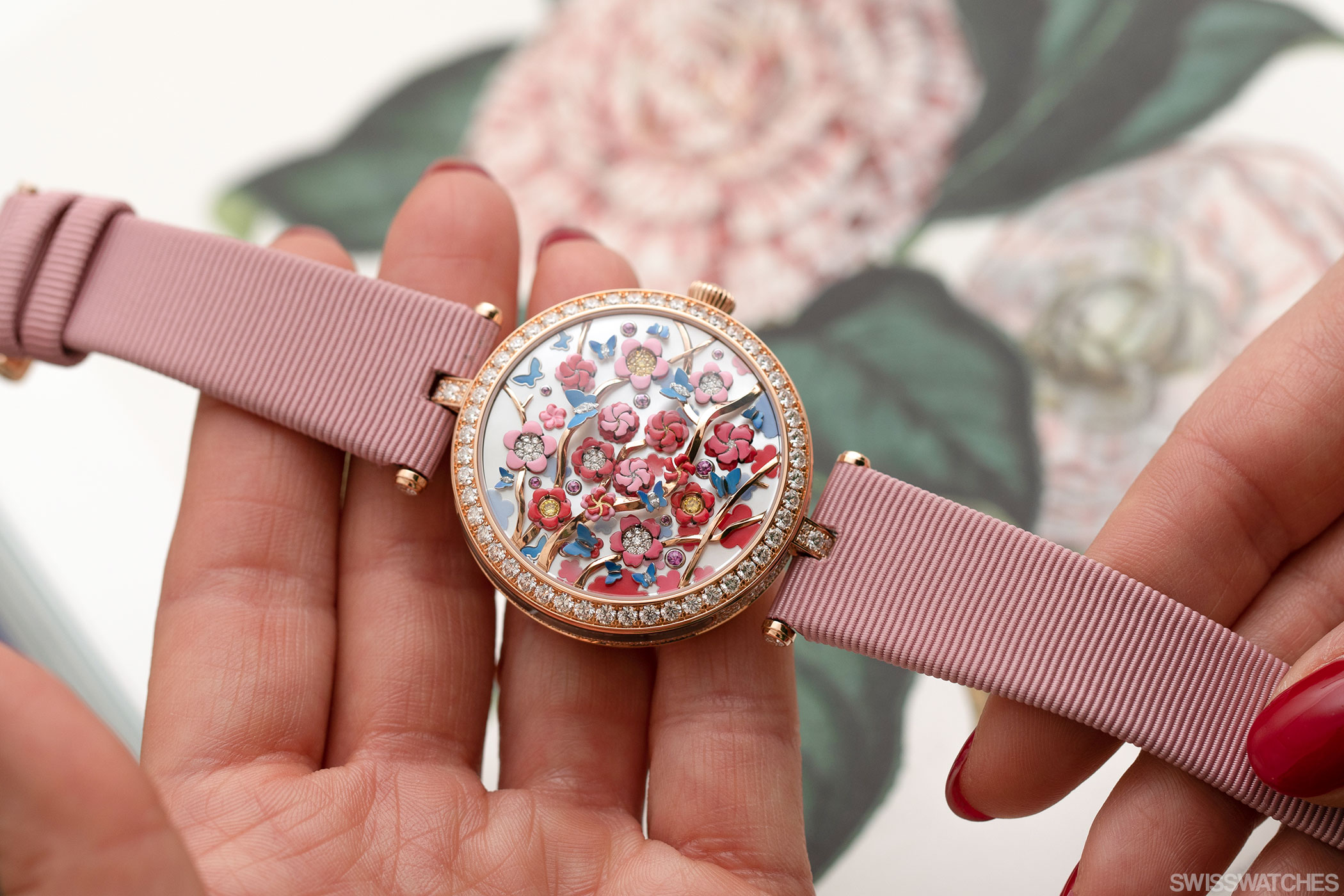
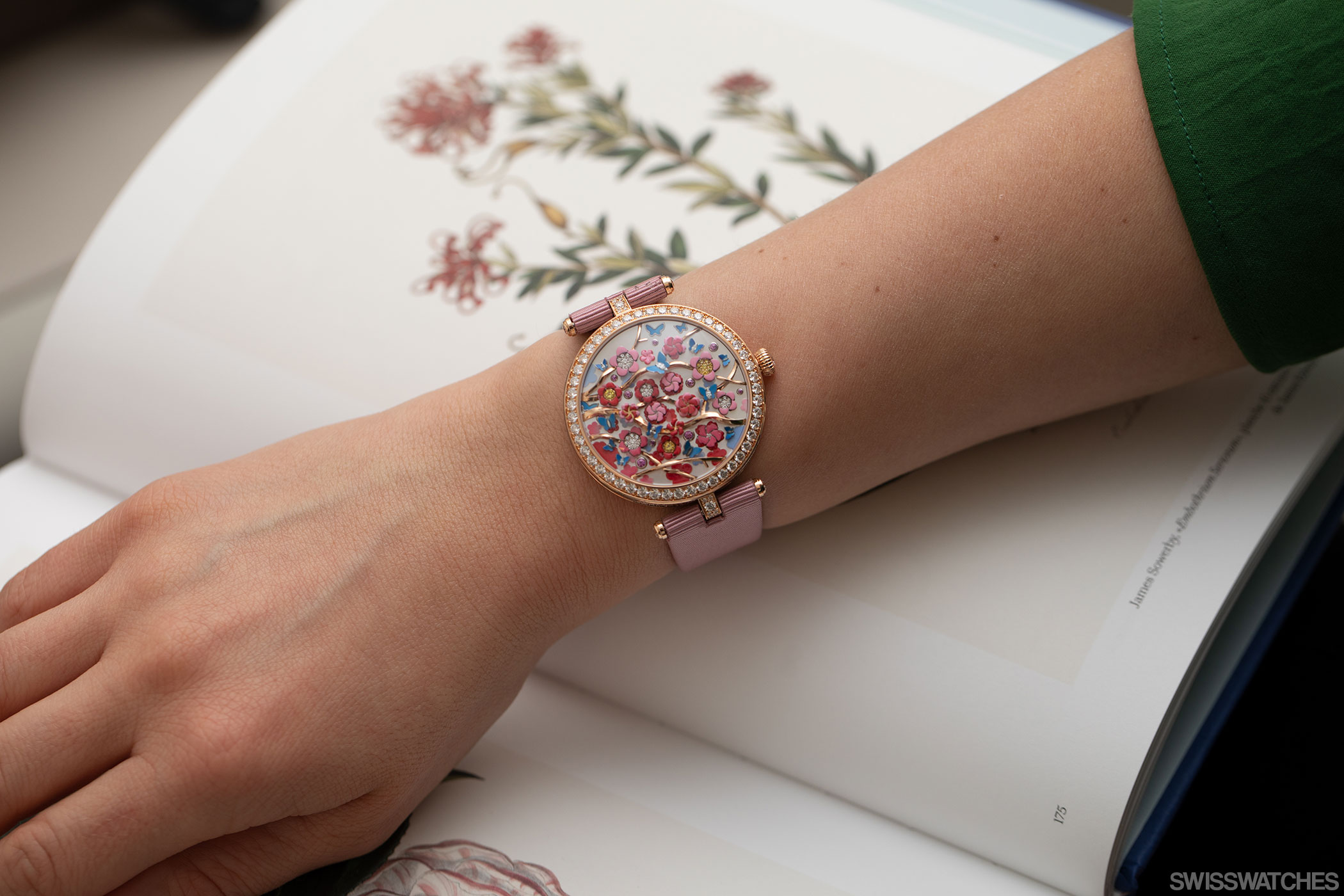
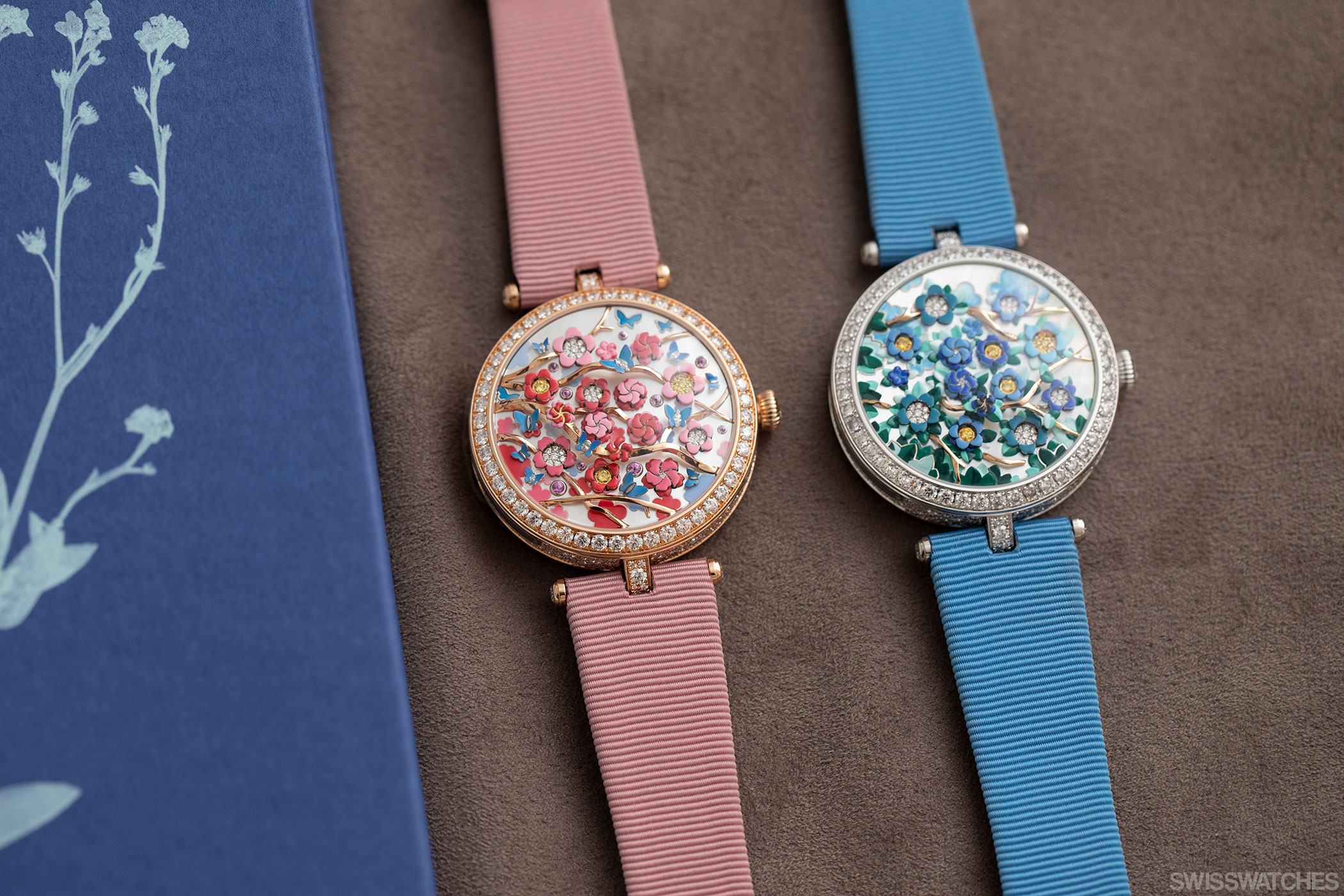
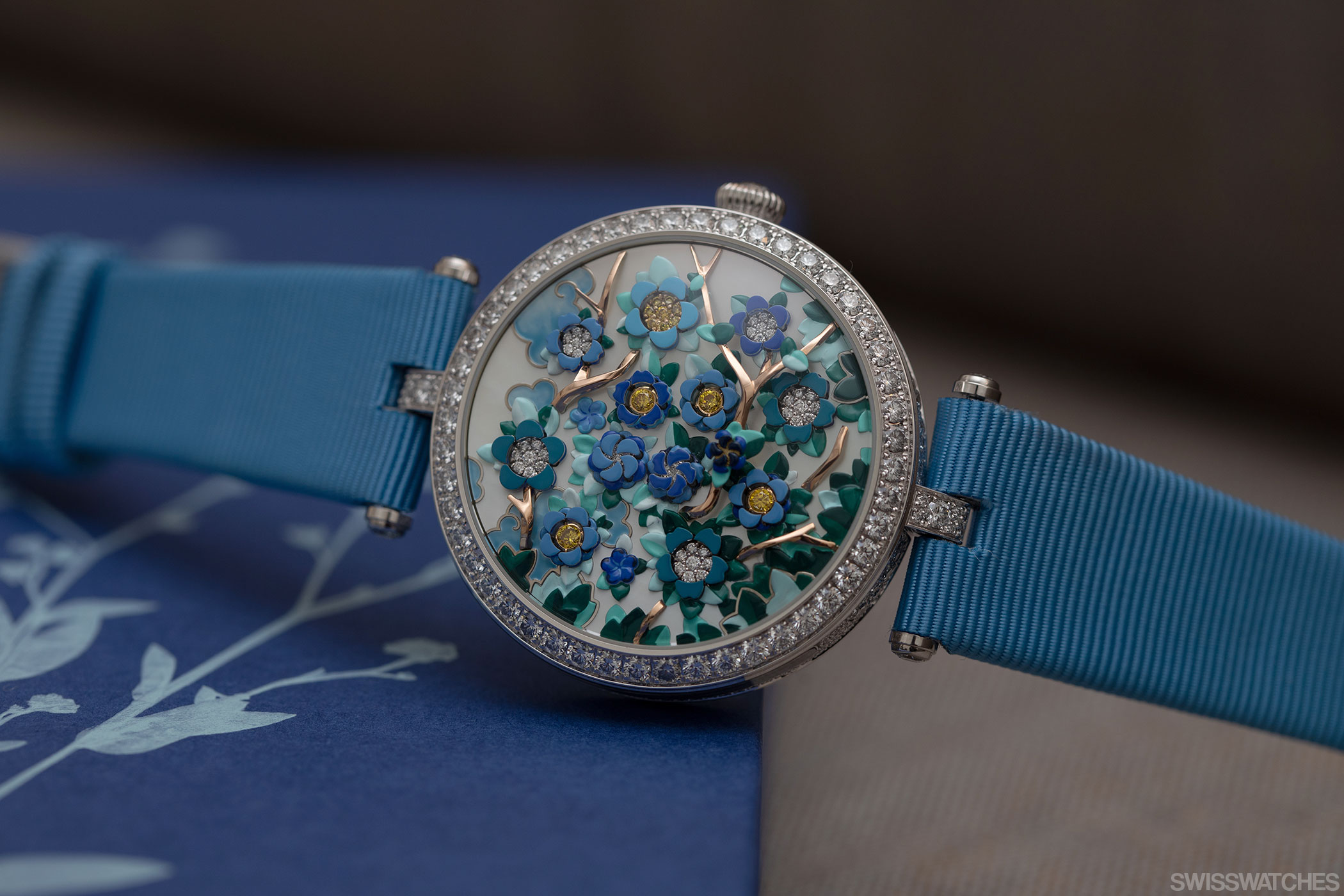
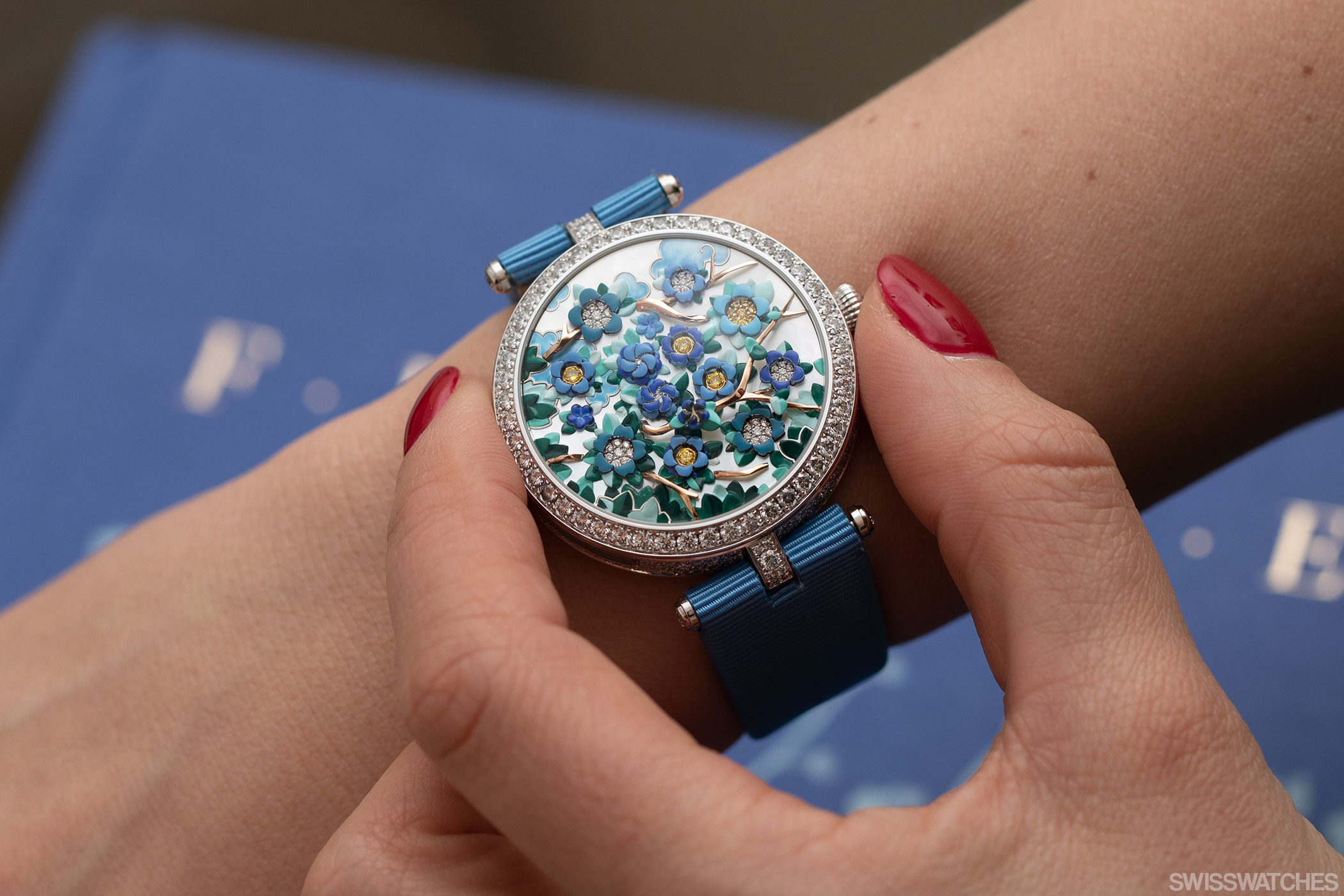
Another such example that I’ve looked at in detail before is the Lady Arpels Heures Florales; a watch that quite literally tells the time with flowers. The front of the watch features a cluster of miniature butterflies, diamonds, and rose gold branches that arch across the dial. Yet, as the name suggests, it is the flowers that play a central role in this highly technical piece, as the flower petals open and close to display the time. Creating this unique model was no easy feat, with the time from conception to creation taking Van Cleef & Arpels a full five years.
In order for the Lady Arpels Heures Florales to perform, 166 components are set into motion. Yet the dial alone actually has a total of 226 elements on it, arguably making it the most complex part of the entire watch. The mechanical movement inside the watch is fitted with a special module, which opens the 12 flowers to display the hours. Every single petal of each of the 12 flowers connects to the module. Each of the flowers has an opening process with three different sequences. For every hour that passes, the open flowers close to make way for a new combination. Over each 1.5 days, the sequence of the bouquets that succeed one another from hour to hour will be different. In other words, the wearer doesn’t know which flower is going to pop up next; it remains a surprise. Only at midnight and midday do all flowers simultaneously bloom.
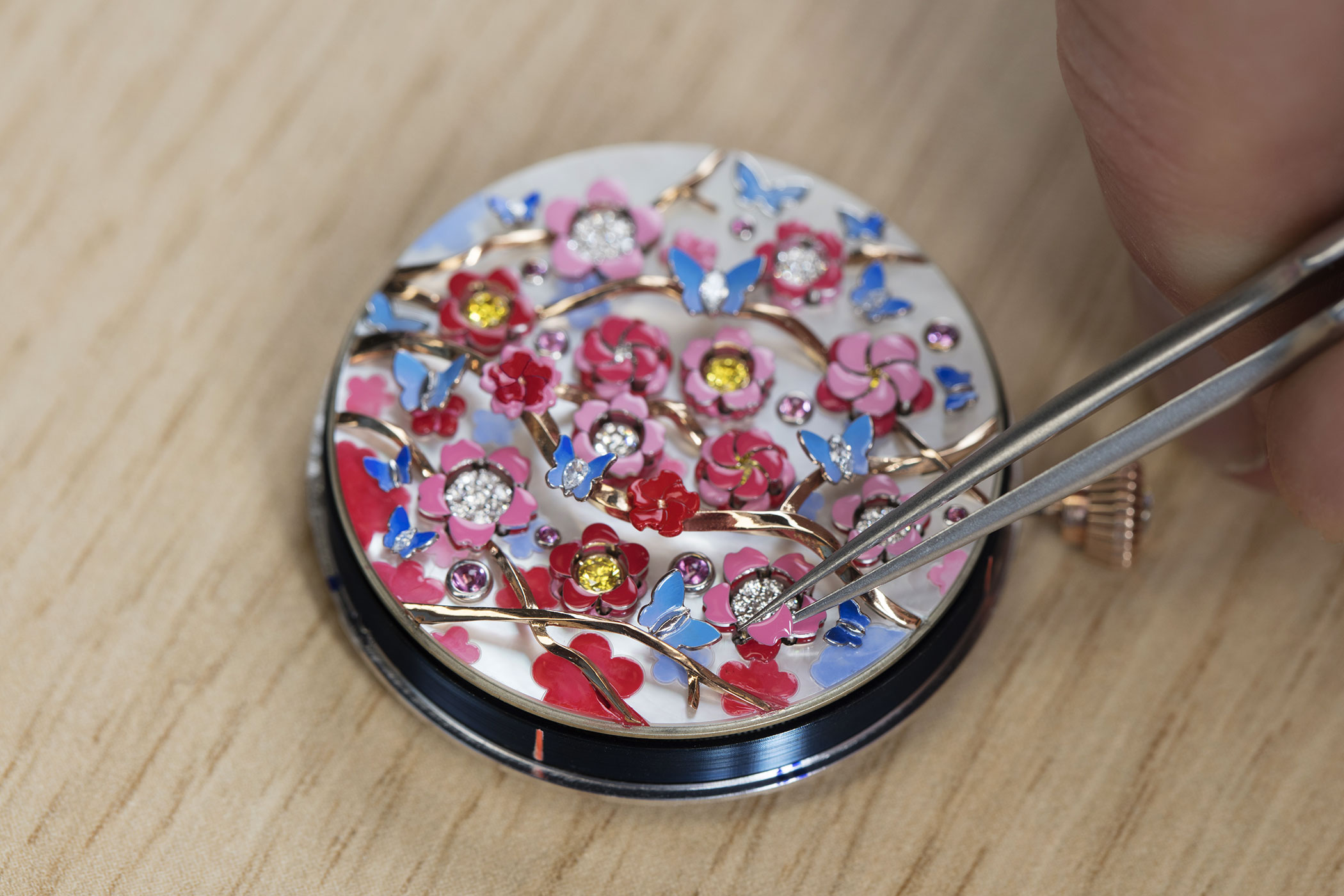
What really strikes me during the visit to Van Cleef & Arpels’ watchmaking workshops in Meyrin is not only the ingenuity, creativity or savoir-faire. Rather, it is the surprising level of academia poured into these stories behind each watch.
An array of books perch on a table in the watchmaking department. Flicking through the pages of one beautifully presented book entitled Florae, I am amazed to discover that, as well as being produced by Van Cleef & Arpels, it delves into the history of botany, from the world’s oldest herbarium, to medieval depictions of various plants, to the gardens of Chinese emperors. The scholarship inside this book alone is astounding. Working alongside experts, Van Cleef & Arpels’ book Florae contains rich material from the likes of National Library in France, the British Library and the Vatican library.
Credit © nytimes.com
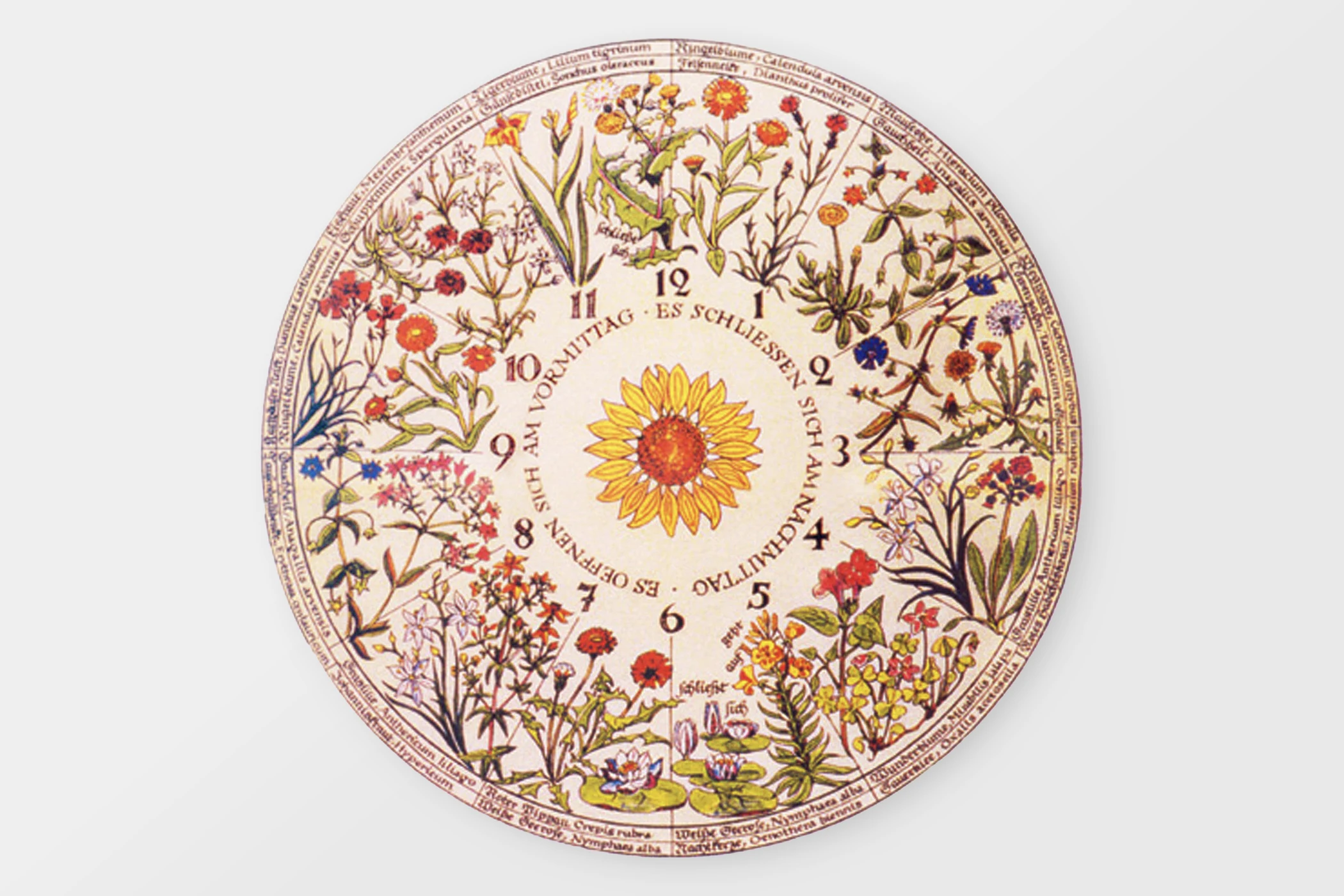
Incidentally, the Lady Arpels Heures Florales draws on a rich source of inspiration cited in the book: the ‘flower clock’, conceived in 1751 by the Swedish botanist Carl Linnaeus (Carl von Linné). Linnaeus proposed that certain flowers consistently open and close at specific times of day, thereby creating a natural indicator of the passing hours. His influence was such that Johann Wolfgang von Goethe declared there was “no greater man on earth” than Linnaeus, while contemporaries hailed him as the “Pliny of the North,” aligning him with the renowned Roman naturalist. Perhaps most evocatively, the Swedish author August Strindberg described Linnaeus as ‘a poet who happened to become a naturalist’; a characterisation that captures the lyrical and imaginative quality of his scientific vision. By drawing on this lineage of scientific curiosity, poetic imagination, and natural observation, Van Cleef & Arpels demonstrates the impressively academic lengths to which the Maison goes in order to source narratives that resonate and align with its brand ethos.
The ingenuity behind the current timepiece portfolio at Van Cleef & Arpels is steered by the charismatic Rainer Bernard. The Research & Development Director is not only interested in watchmaking, but is also an opera lover and passionate chef. Perhaps contrary to stereotypes, this particular engineer hates following recipes, preferring a relaxed, creative approach, often hanging homemade spaghetti across a line in his kitchen while dreaming up new ways of cooking various sauces. “In interviews, I ask potential Van Cleef & Arpels R&D employees if they like to cook, or if they have a hobby,” he says. By doing so, he hopes to identify the engineers who are not only technically gifted, but also capable of understanding the imaginative and expressive soul that makes Van Cleef & Arpels what it is today.
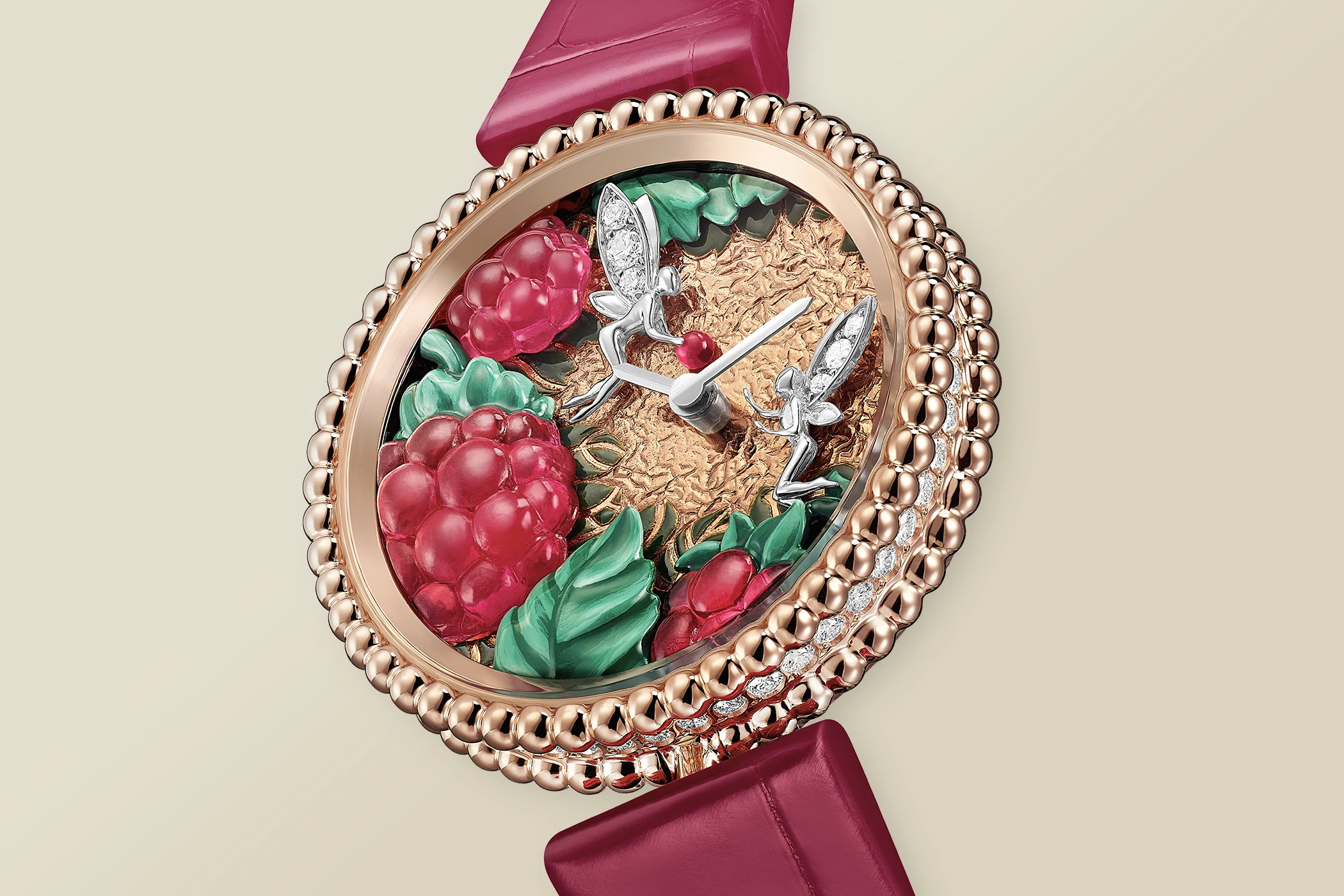
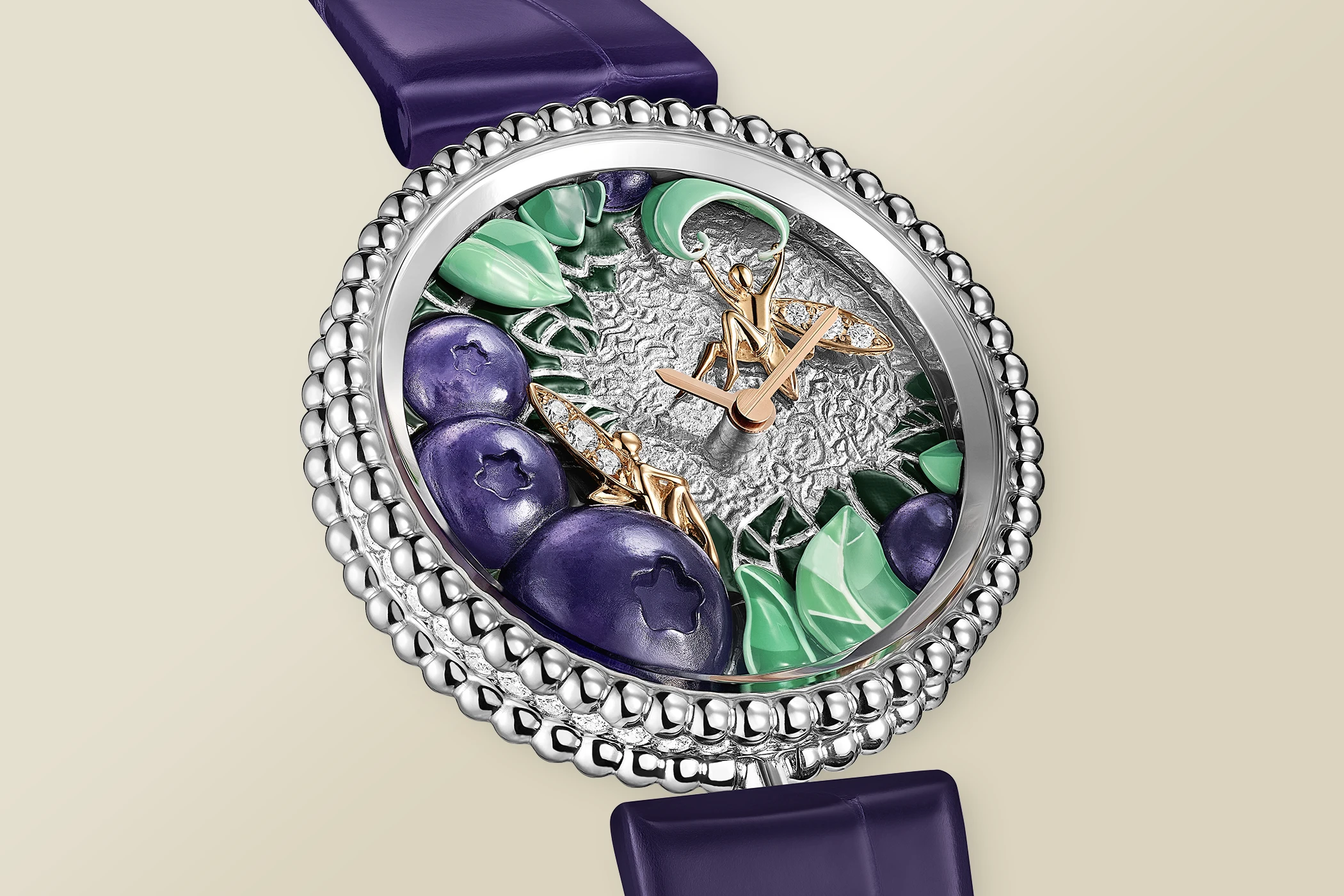
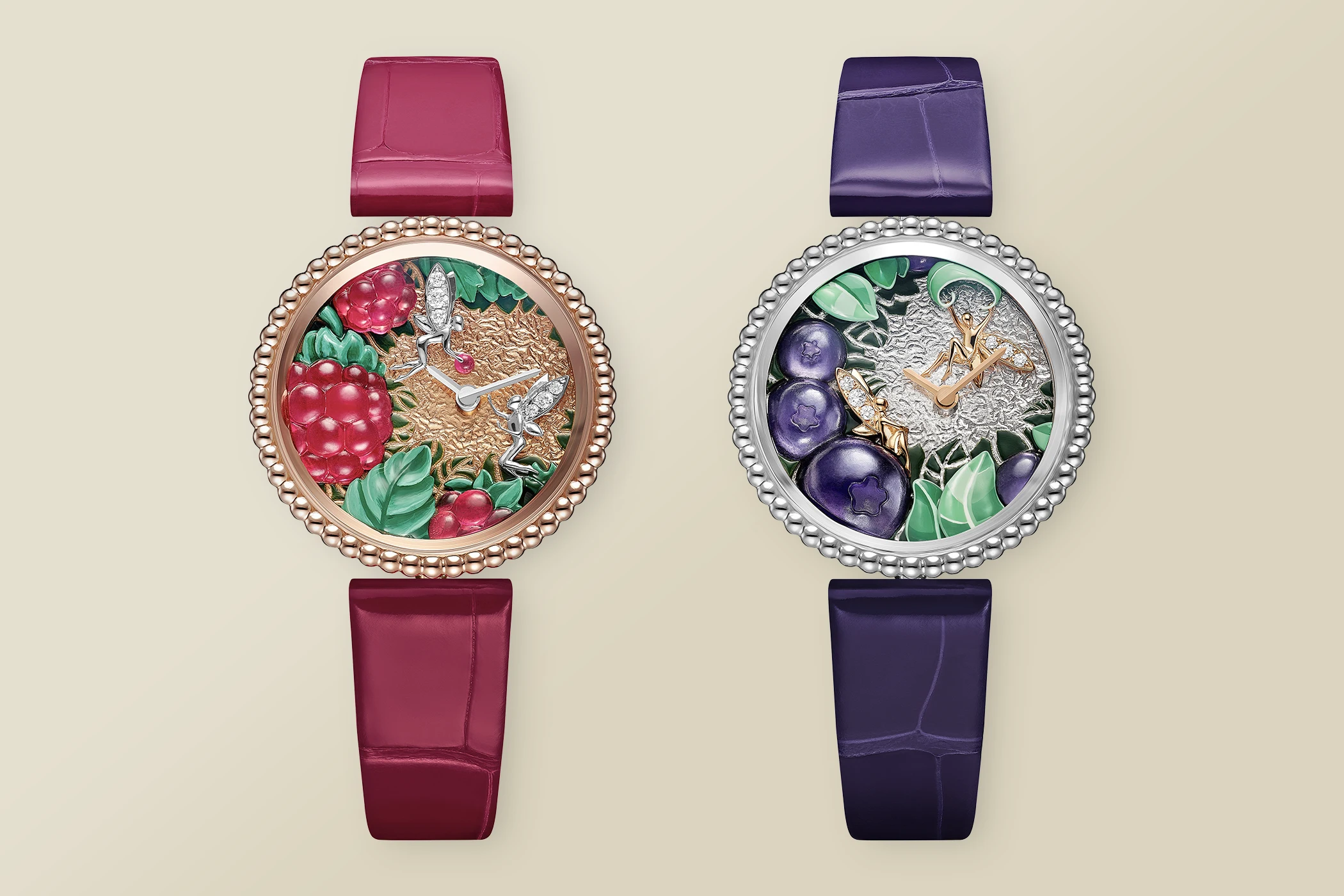
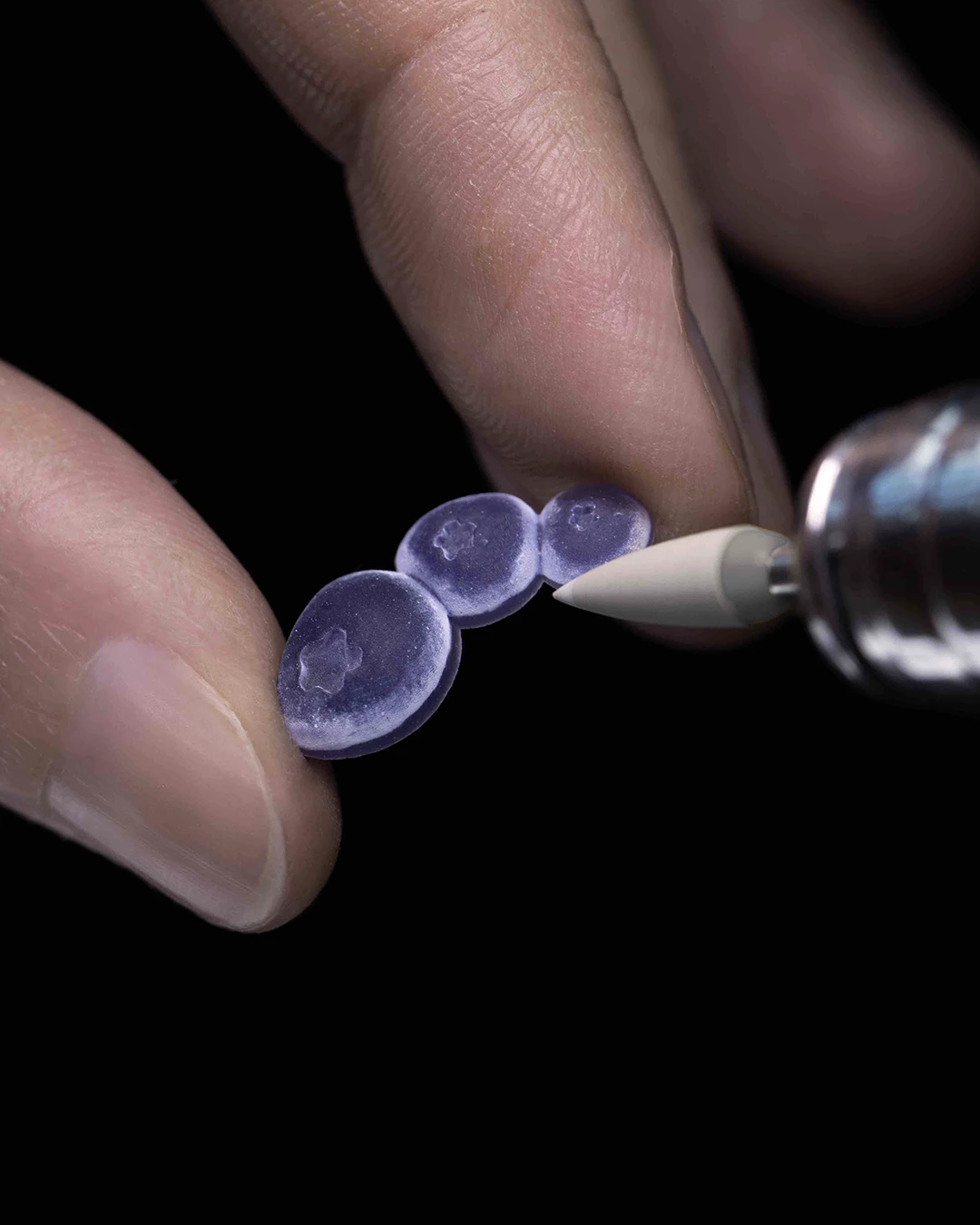
Fruits of their labour: Van Cleef & Arpels’ highly creative and life-like Perlée Extraordinaire Fruits Enchantés watches
Bernard also fosters a culture at Van Cleef & Arpels in which the term ‘failure’ has no place in its corporate vocabulary. Inside the ateliers, creativity is nurtured, not constrained. The engineers at the Maison pursue passions beyond watchmaking – building their own bicycles, crafting their own skis –, consequently keeping their creativity agile. “Finding the right people to work in development is like choosing the right travel partner; it has to be the perfect fit, and you have to love them,” Bernard reflects.
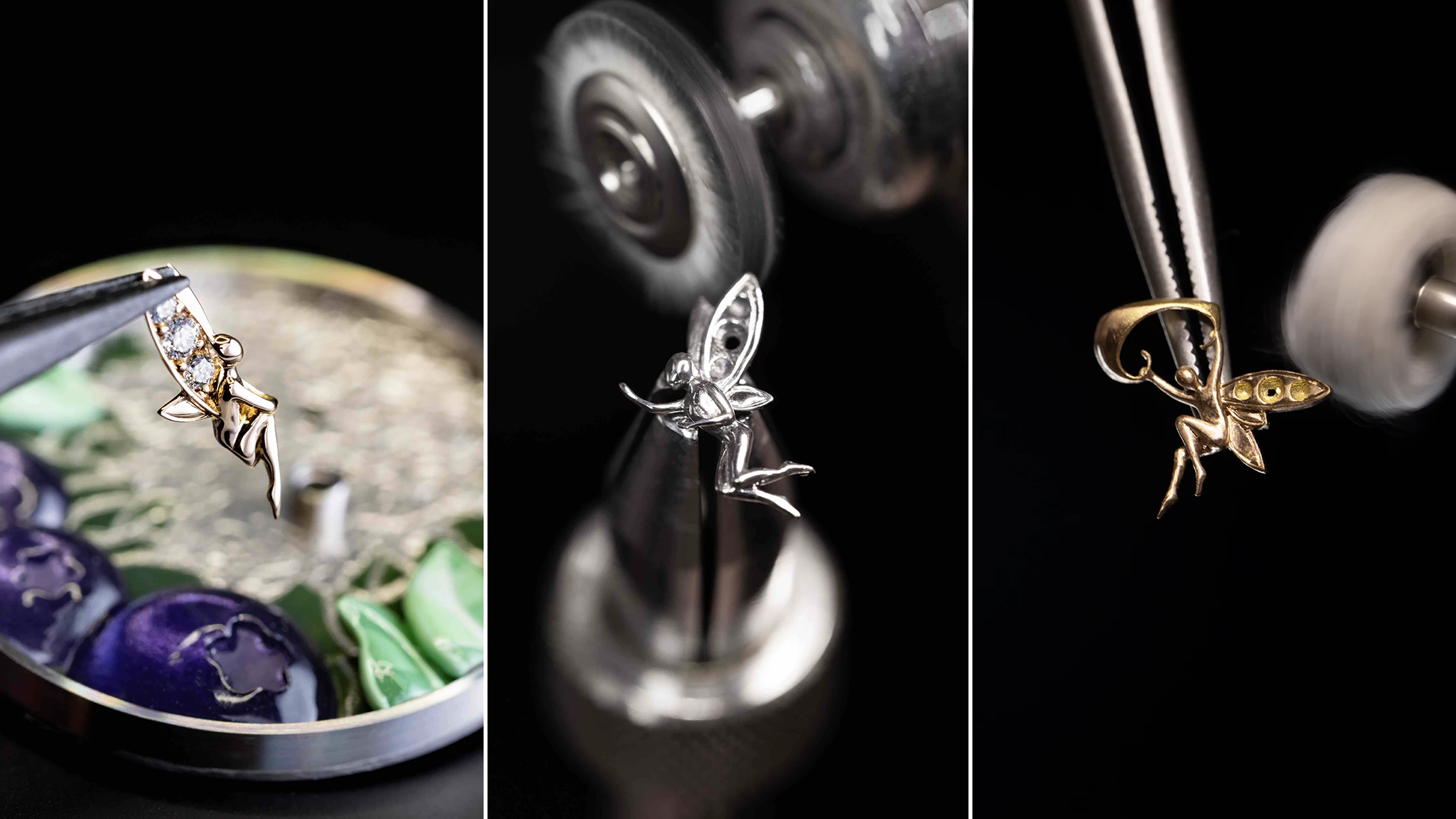
Making mistakes is actively embraced in Research and Development: “We learn from errors; they’re not a bad thing,” supplies Bernard. This freedom to experiment allows Van Cleef & Arpels’ engineers and designers to ignore the limits of traditional watchmaking. “We have space to do what others cannot,” he adds. “We don’t have to follow classical codes.” It’s a valid point. Many other brands are home to such well-known historic icons, following such strict blueprints – from the use of certain bezels, to indices, to hands – that there isn’t always much leeway to play around with new ideas.
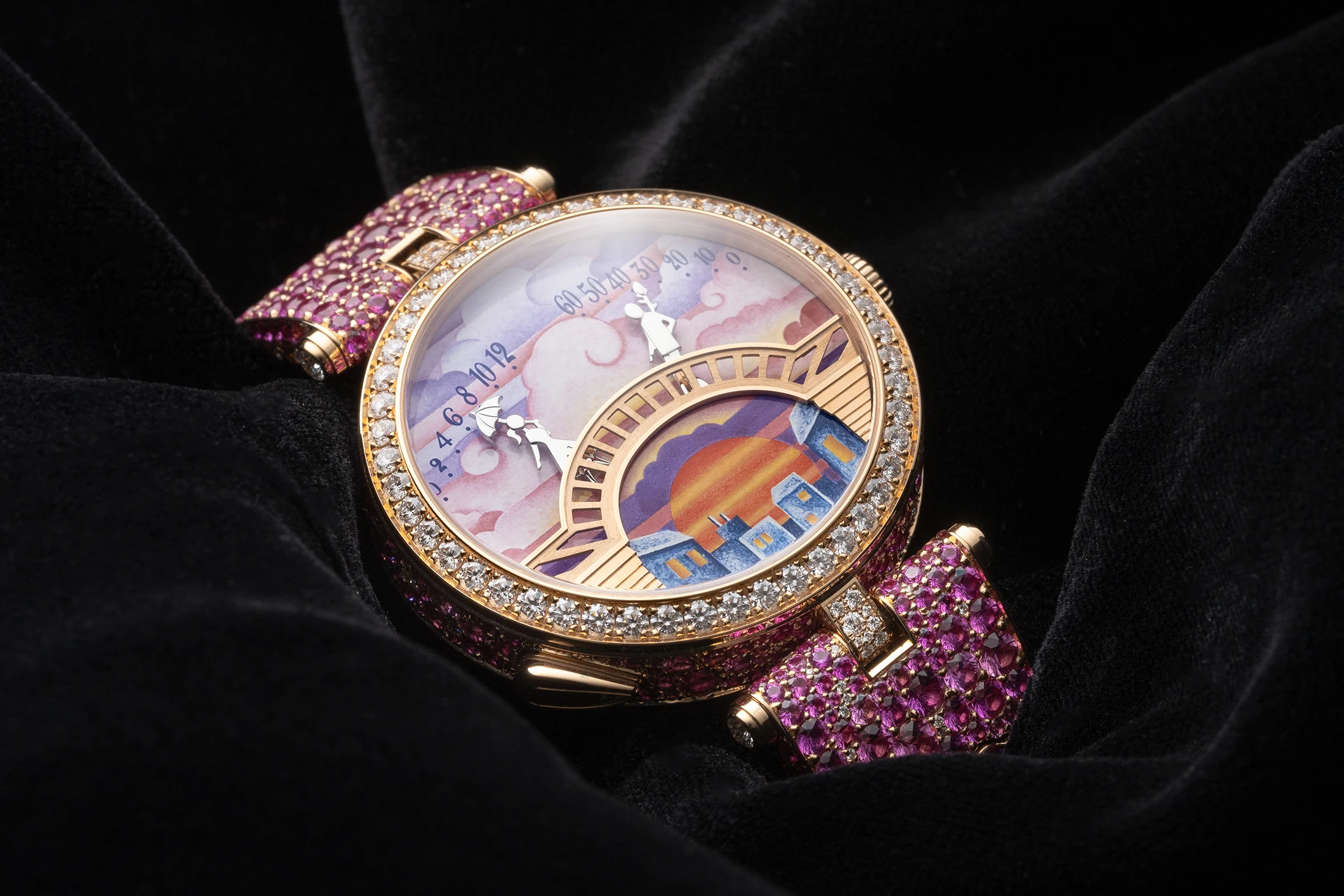
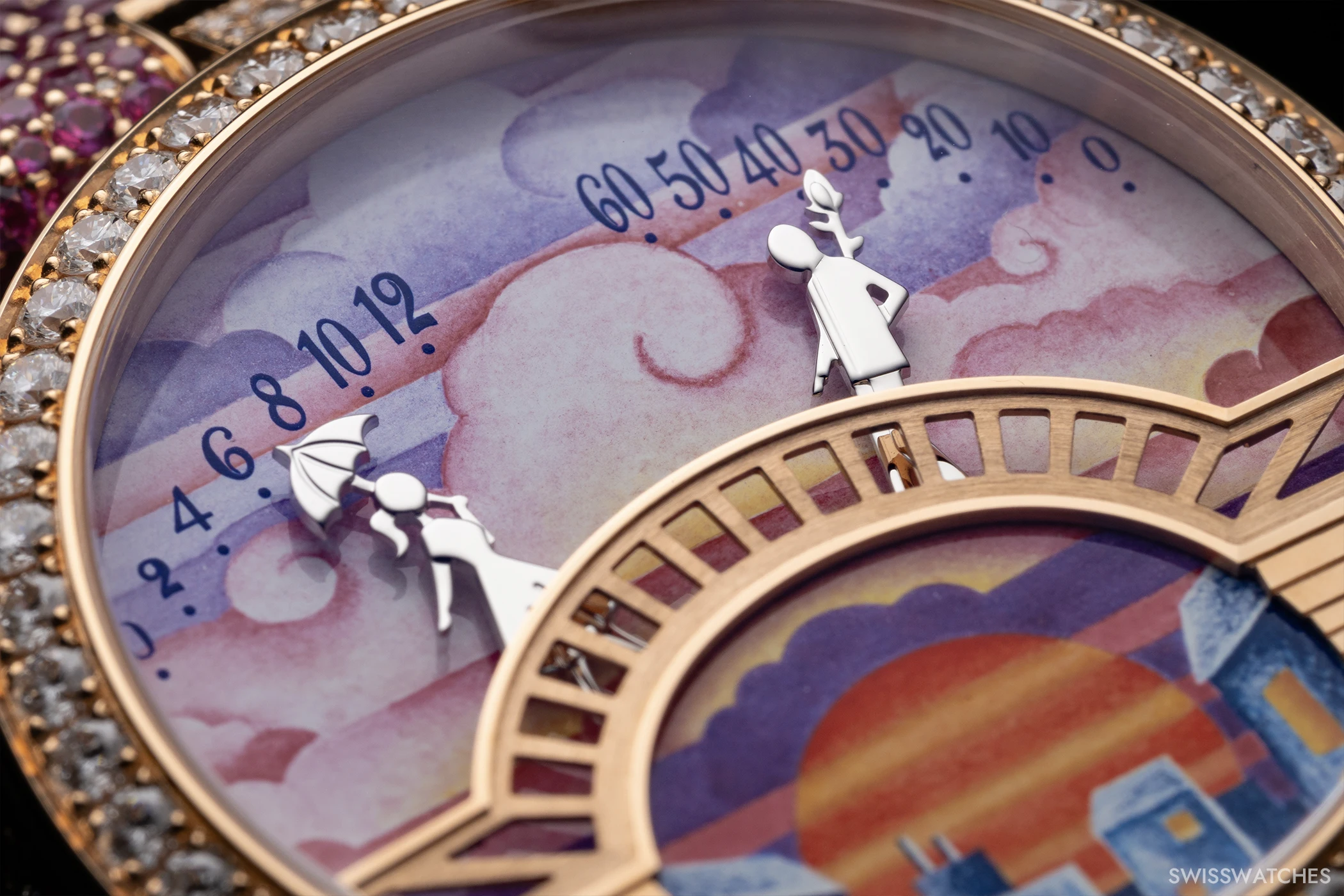
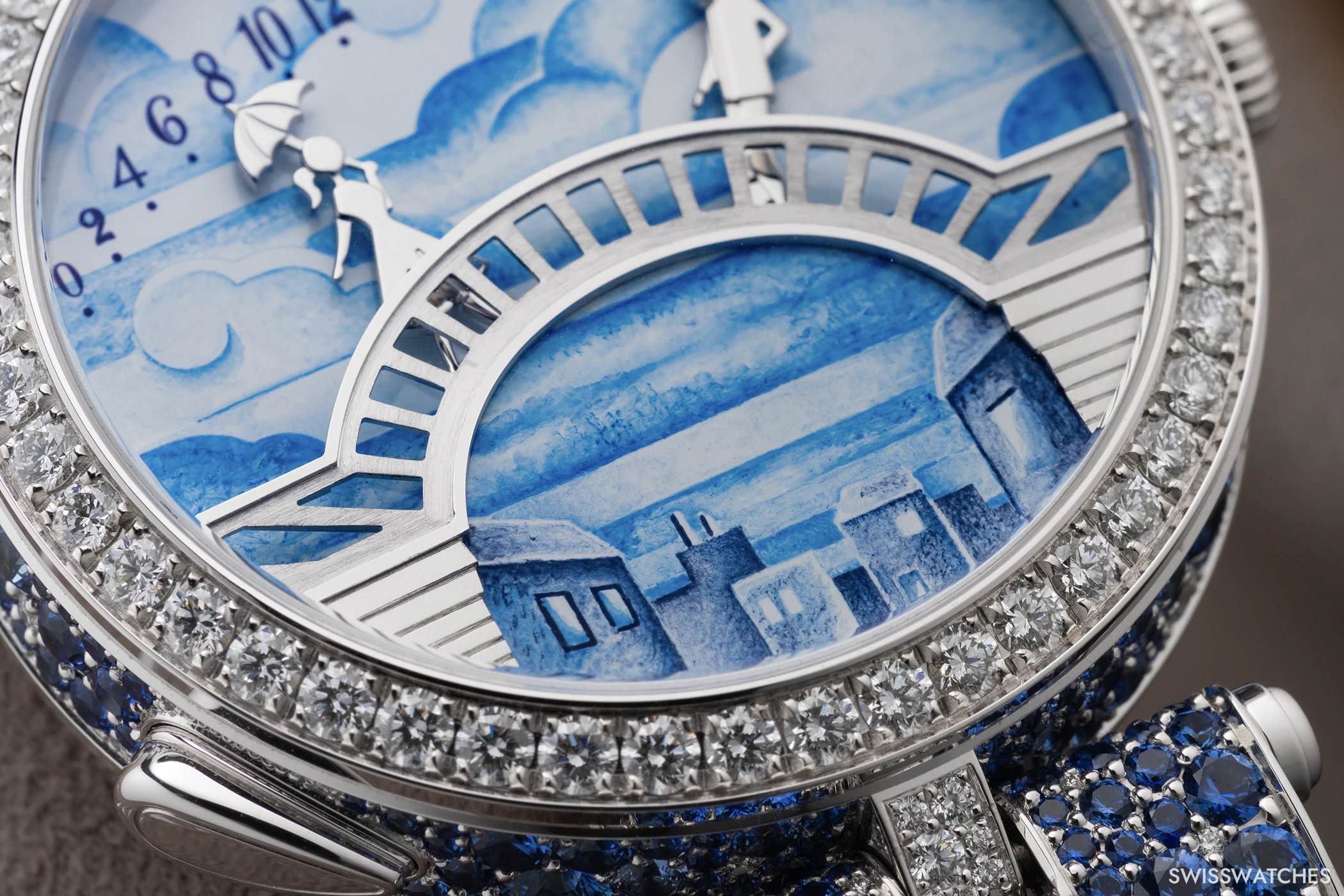
It would be a crime not to mention one of Van Cleef & Arpels’ most beloved creations, the Pont des Amoureux series. Introduced in 2010, reimagined in 2019, and returning in 2025, it depicts two lovers meeting on a miniature Parisian bridge at midday and midnight. A female figure indicates the hours; the male makes his way along the retrograde minutes, ascending and descending the arc until they meet for a kiss.
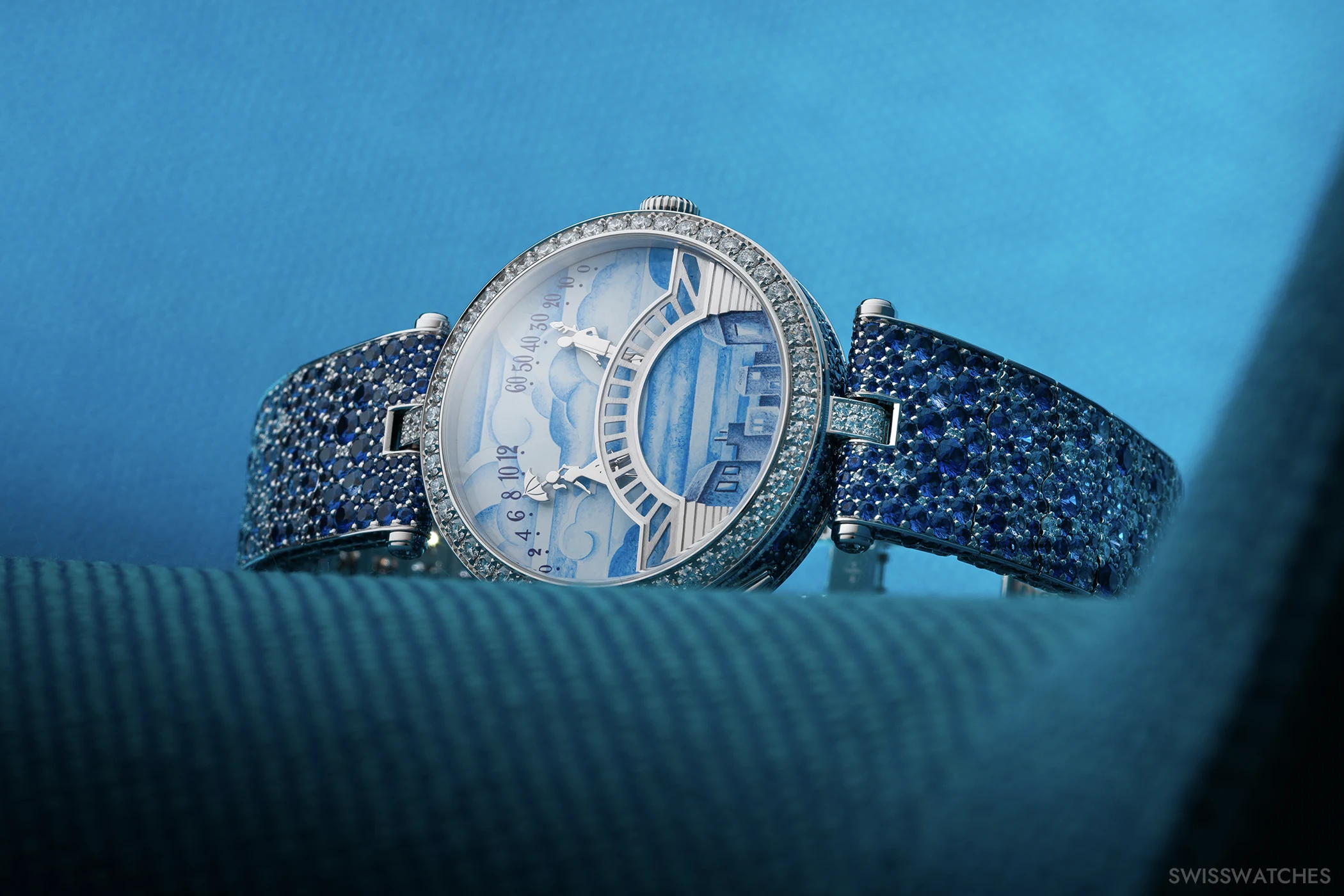
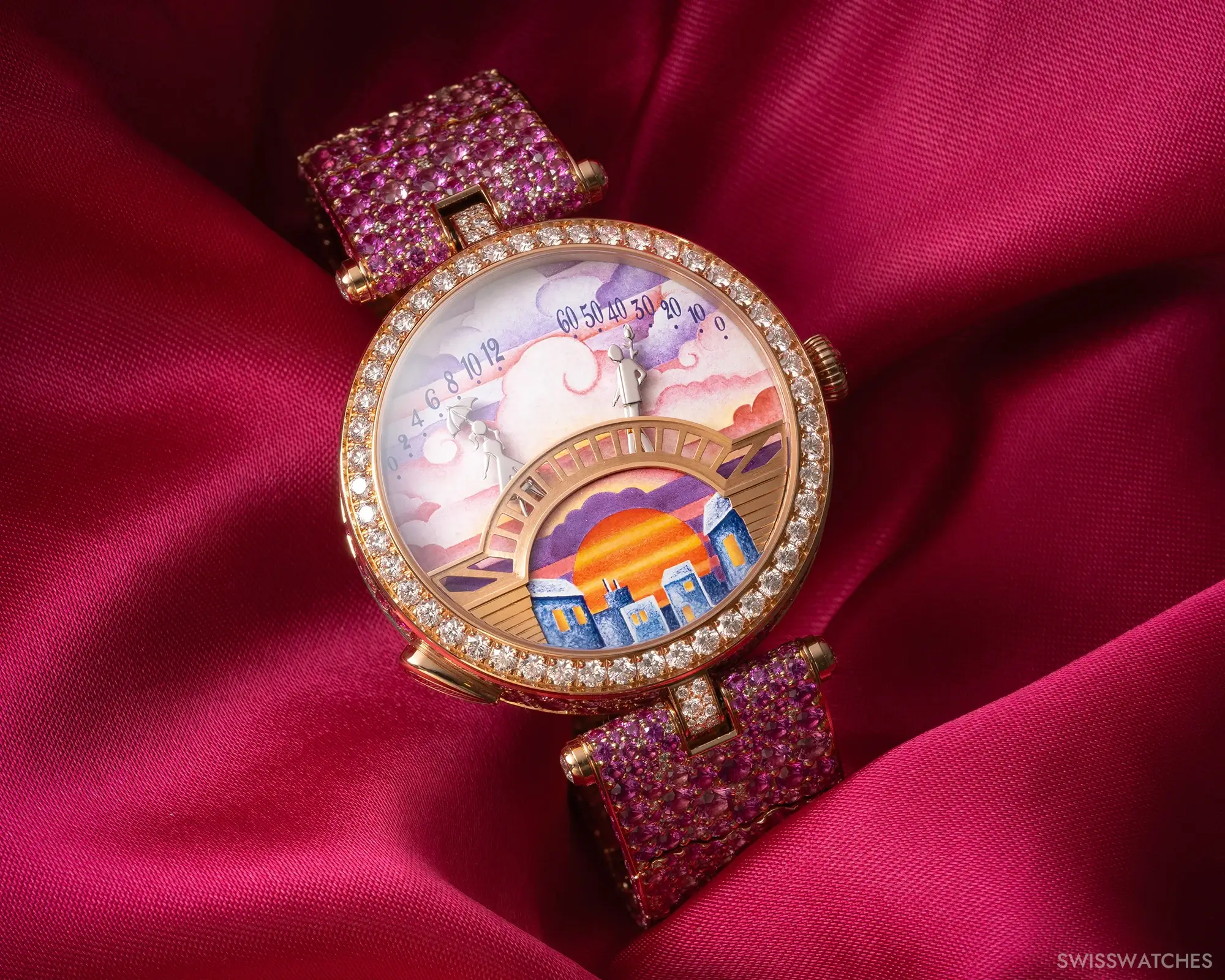
As is the status quo for a new timepiece at Van Cleef & Arpels, the concept began not with technical ambition, but with an idea. In this case, the Maison decided they wanted to depict a guinguette; originating in the 19th century, these days the term connotes a French place to socialise, drink and dance outside. First came the story, then the drawings; the engineering, exciting as it is, comes only once the narrative has come to life.
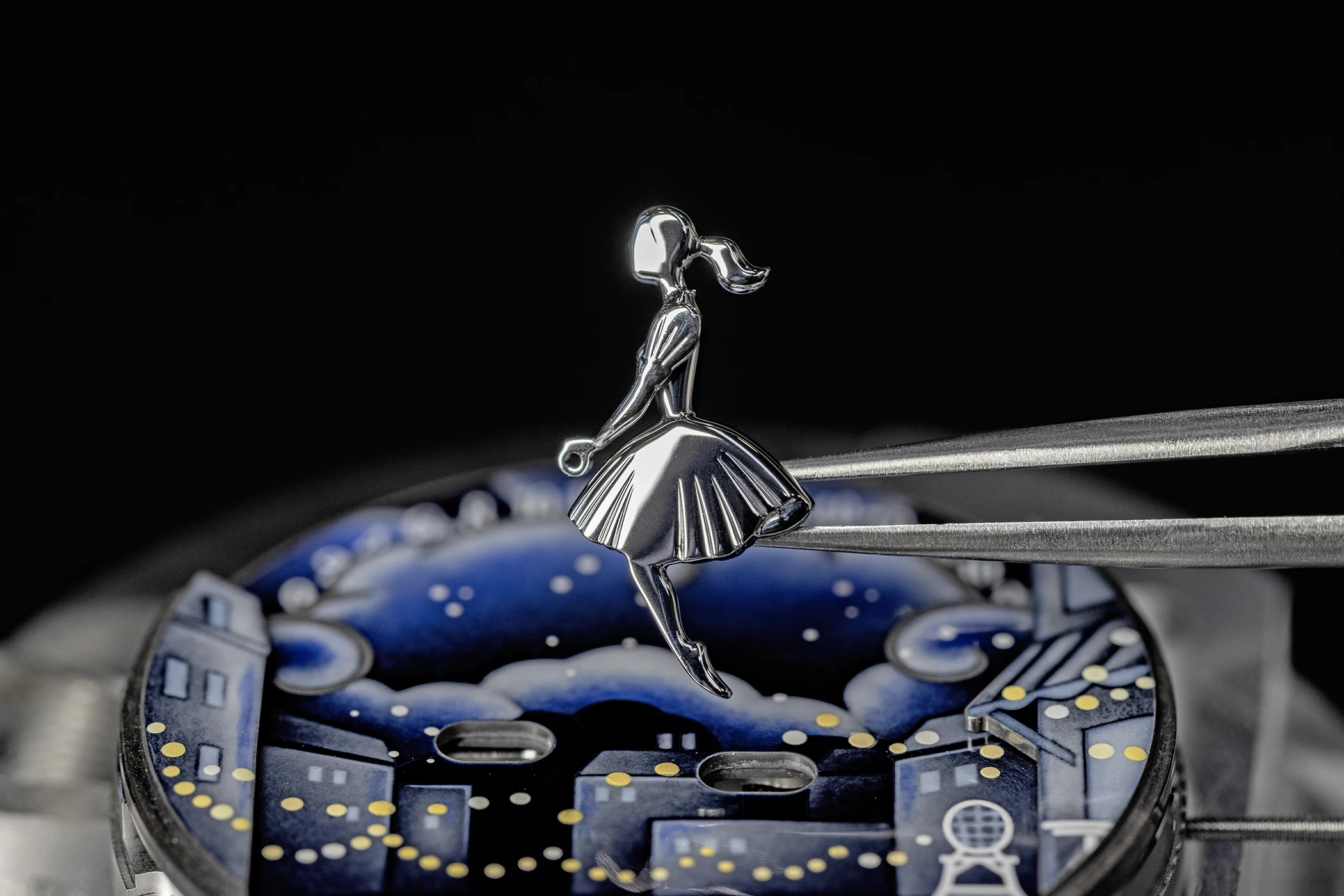
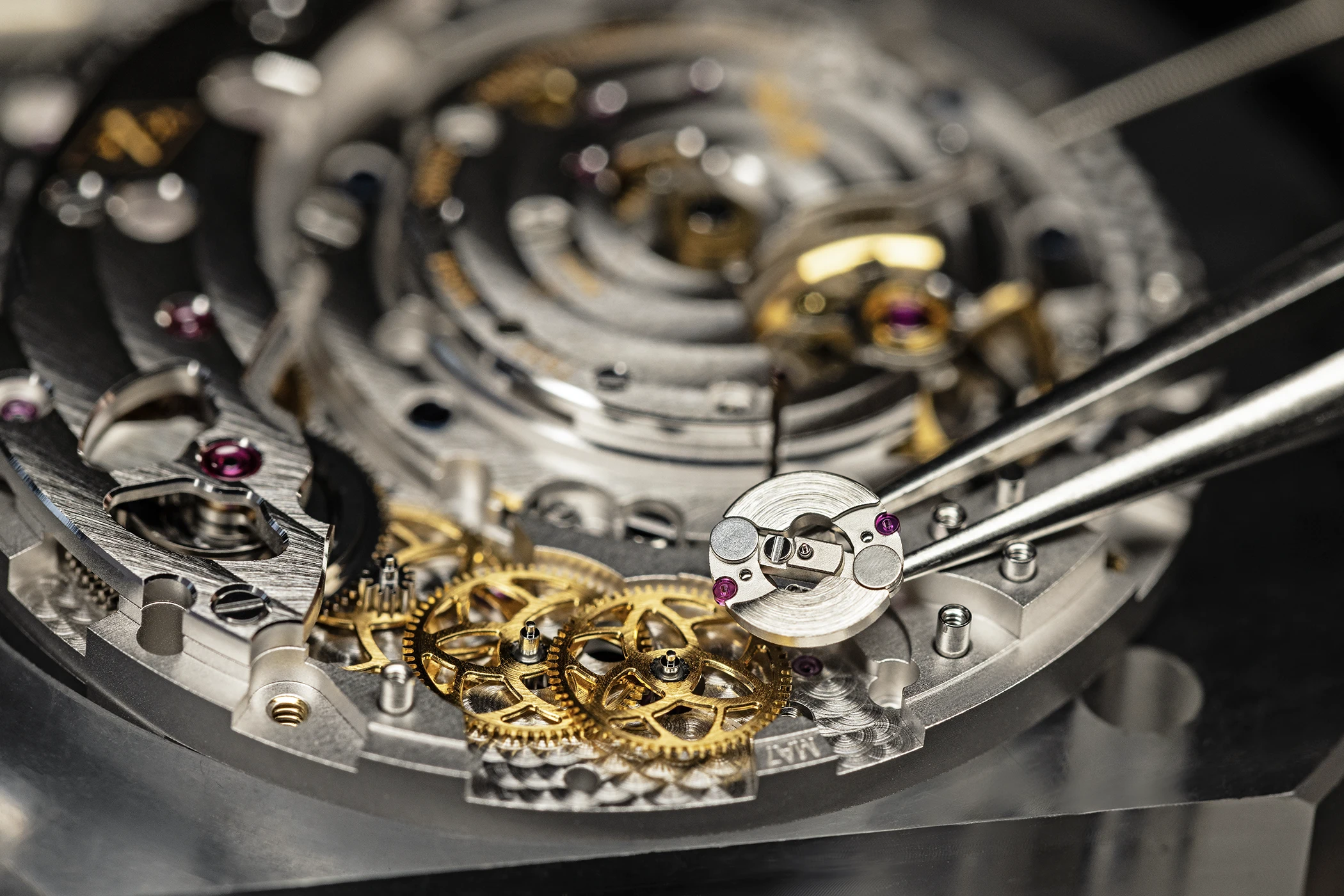
As explained in detail upon the latest models’ release, one particularly exciting model is the Lady Arpels Bal Amoureux Automate, which showcases not only exciting mechanisms, but stunning use of enamel. Featuring two figures who link hands and lean in to kiss via three animations (the waist, arm, and hand), the movement took no fewer than four years to research and develop. This is partly due to Van Cleef & Arpels’ engineers’ focus on improving fluidity without affecting the precision. Notably, Van Cleef & Arpels now does all assembly, prototyping, testing, and qualification for its timepieces in-house.
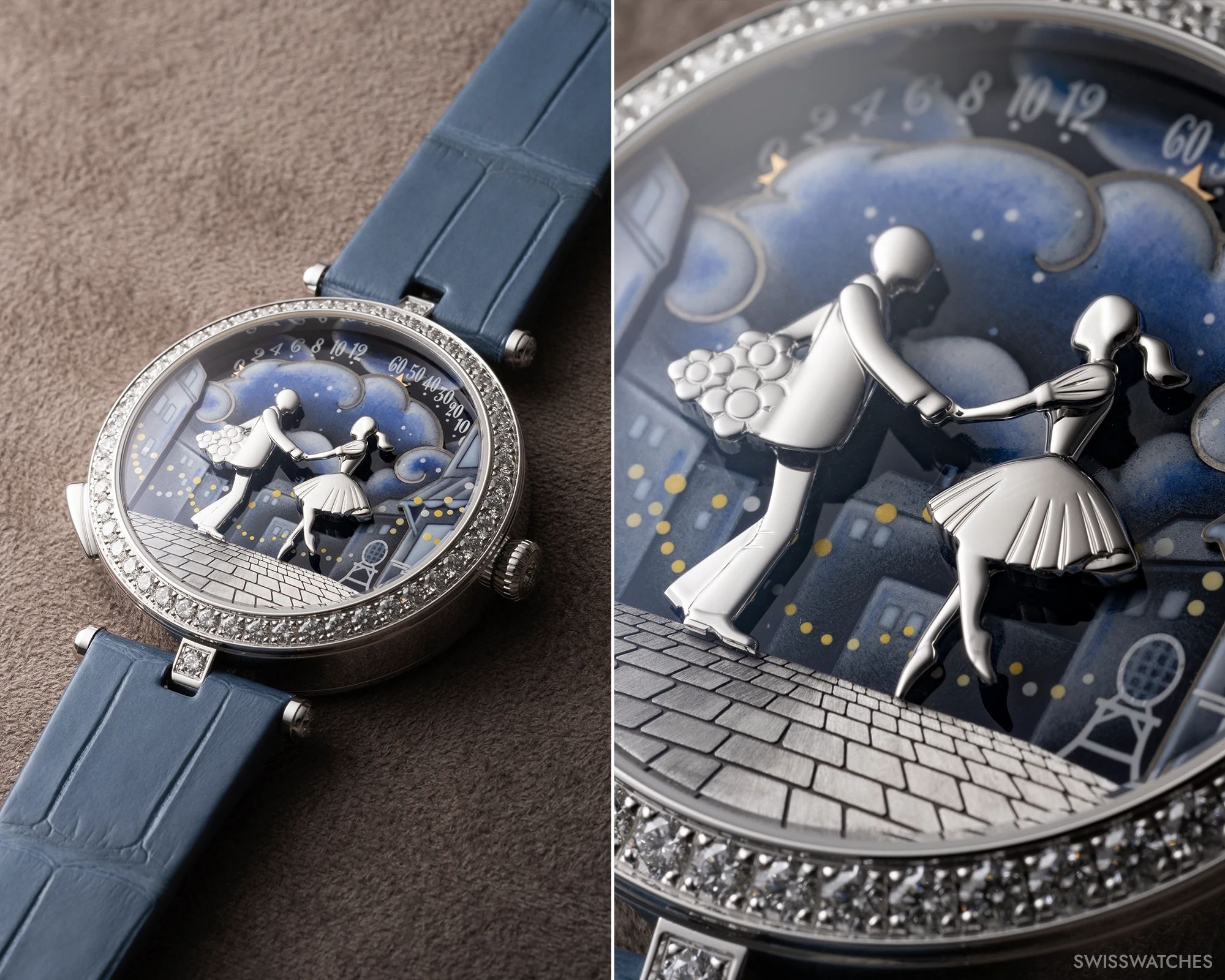
In addition, the manufacture had to work to synchronise the retrograde stars that indicate the time with the movement of the lovers. Despite its complexity, Van Cleef & Arpels managed to achieve this with only four additional components.
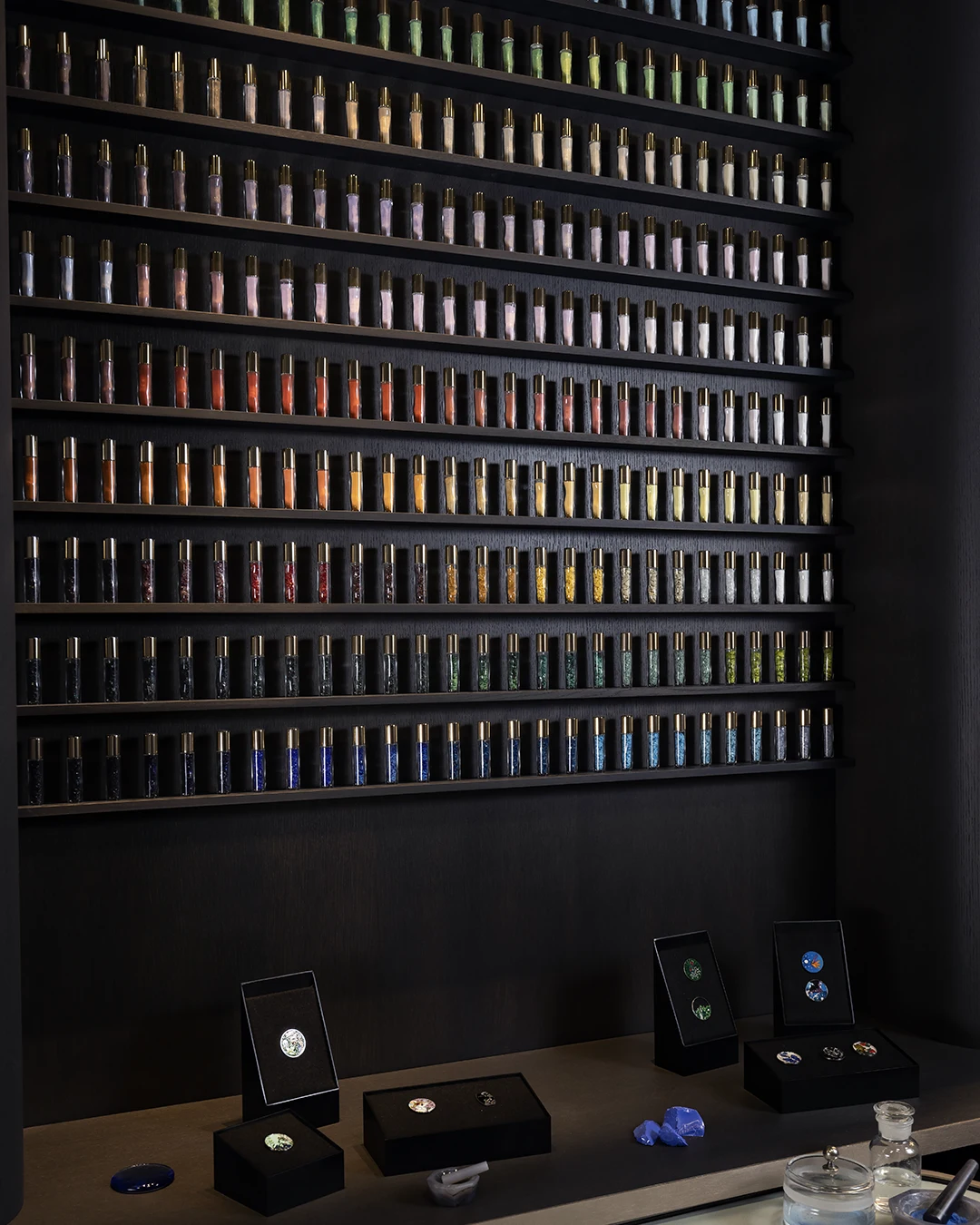
The Lady Arpels Bal Amoureux Automate is also a prime example of the expertise the Maison boasts in the realm of enamel painting. We paid a visit to the Métiers d’Art enamel atelier, beginning in the so-called ‘enamel cellar’; not actually a cellar at all, but rather a dark, sultry room where jars of powdered silica (essentially sand) await transformation. Intricate examples of enamel painting are showcased on the shelves, from delicate butterfly wings to elegantly swirling koi. Van Cleef & Arpels’ enamellers are trained in every technique, although, as one enameller informs me, each tends to specialise in a particular area.
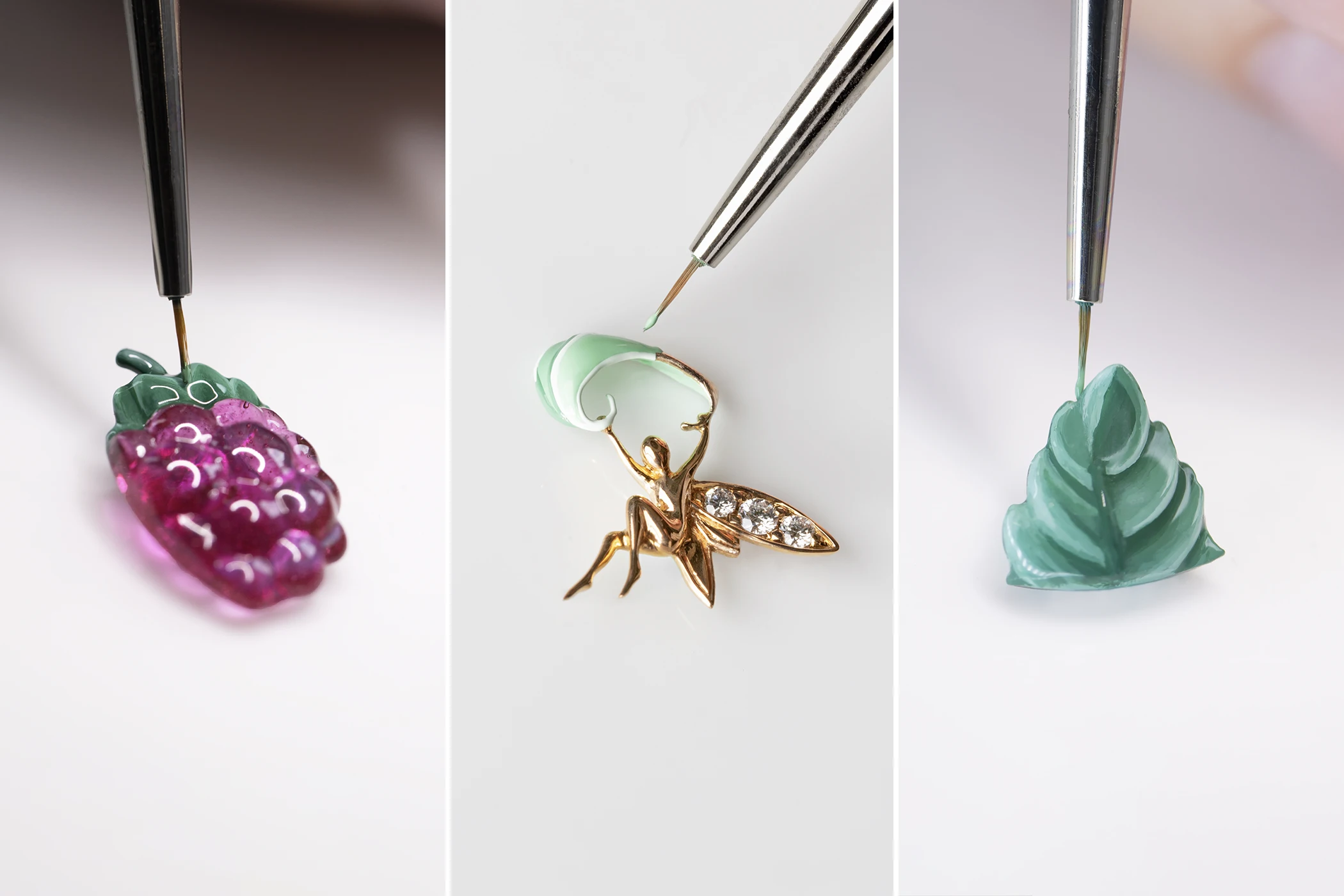
First things first: before enamel can be used, it must be purified. Mixed with water, impurities surface within seconds, clouding the liquid. These particles would create black specks or cause cracking when fired, and must therefore be removed during 30 minutes to two hours of repeated hand-grinding, depending on the desired fineness and colour gradation. Only once the enamel is perfectly smooth can it be used.
Enamel work is a study of colour, chemistry, and intuition. Different pigments must be blended, and each has its own individual firing temperature. A firing may last only three to four minutes, but the stakes are immense: one degree too high, a few seconds too long, and the colour shifts or burns.
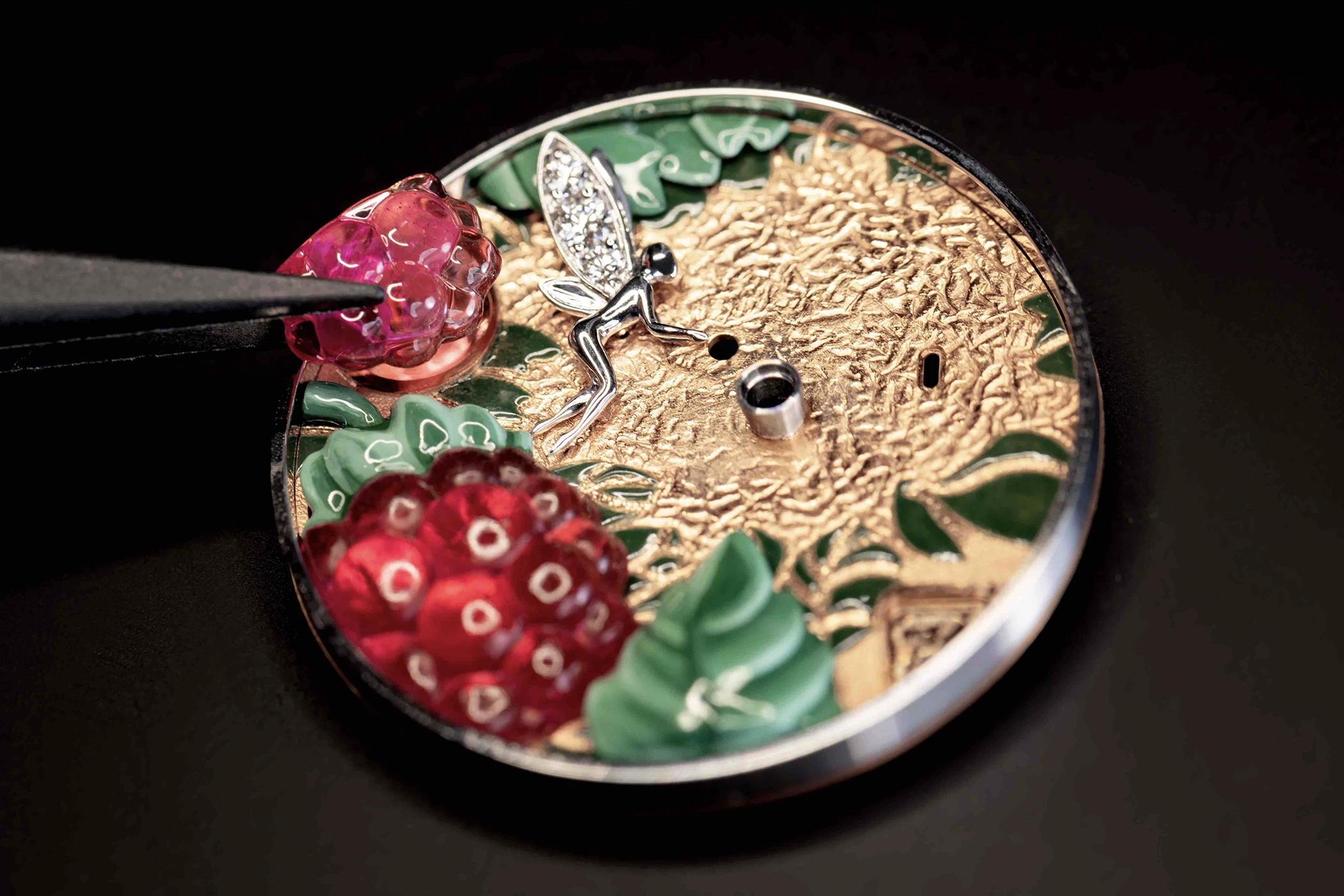
An entire shelf in the enamel cellar is devoted to blues, with shades ranging from midnight to near-white. Yet the powders are misleading: a blue enamel may emerge ruby red once fired, the metallic oxides awakening in the kiln. The transformation is alchemical and unpredictable to those not well-versed in the craft. “Ultimately, the fire decides what comes out – not us,” Rainer smiles.
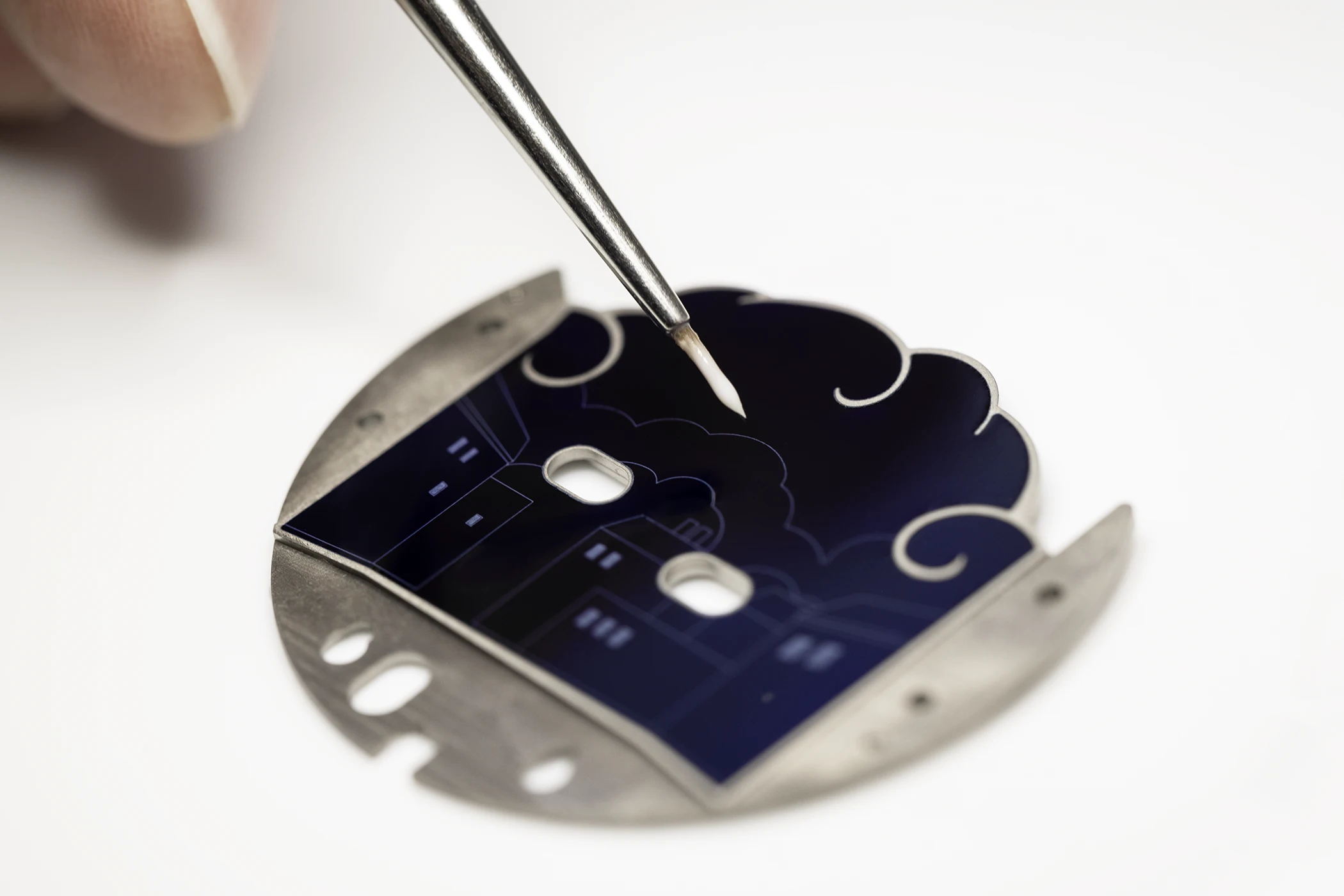
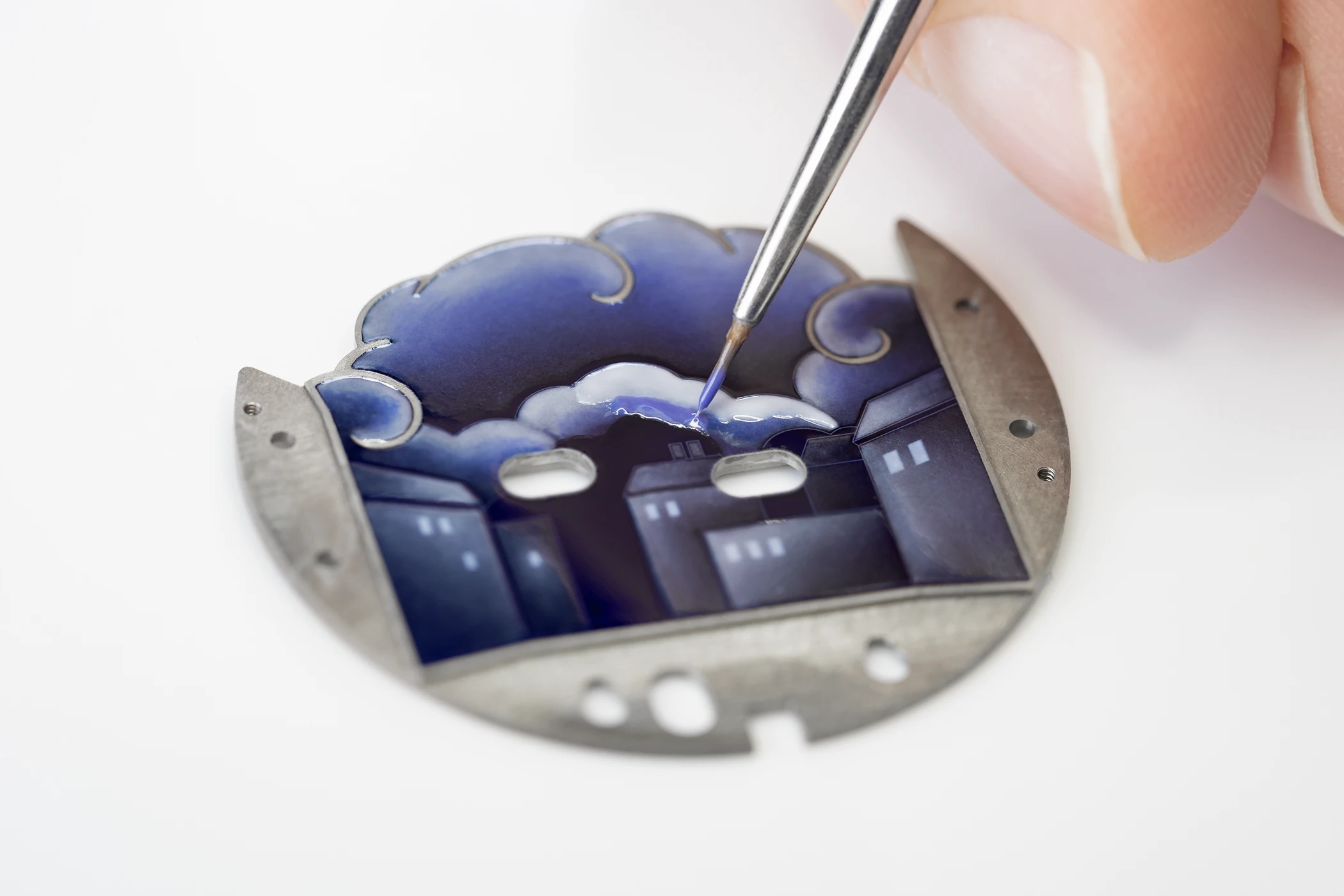
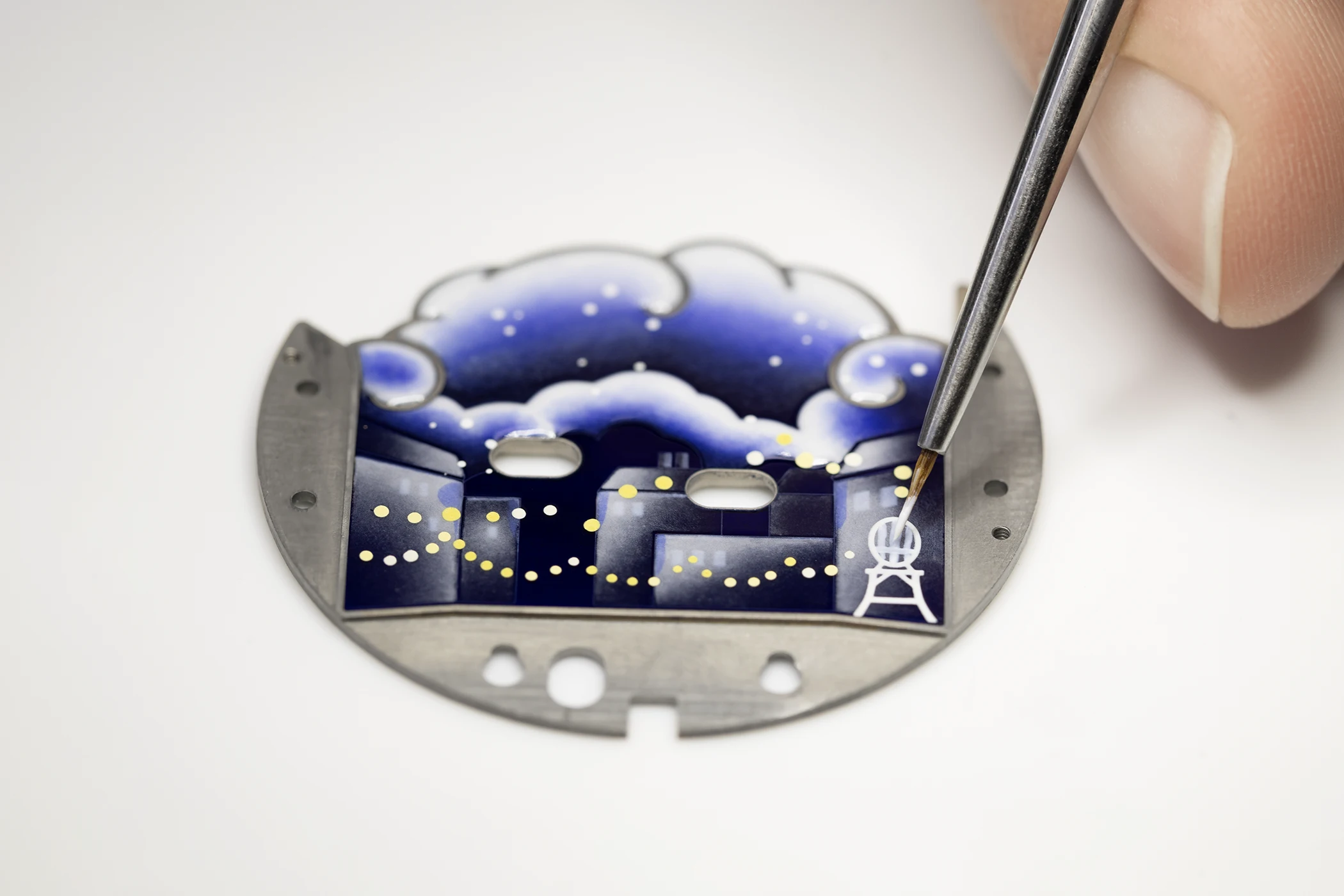
The enamellers hold the final desired image in their minds, building a dial through subtle transitions of colour – sometimes a gradient of white at the edges fading into blue, other times the reverse. A thin oil is used to soften certain tones, aiding the ethereal, mist-like effect seen on some dials, such as the Lady Arpels Bal Amoureux Automate. Each dial is then duly signed by the individual craftsperson, having required up to 45 hours of work. Even when the model is the same, the result is never identical; each dial is a one-of-a-kind work of art.
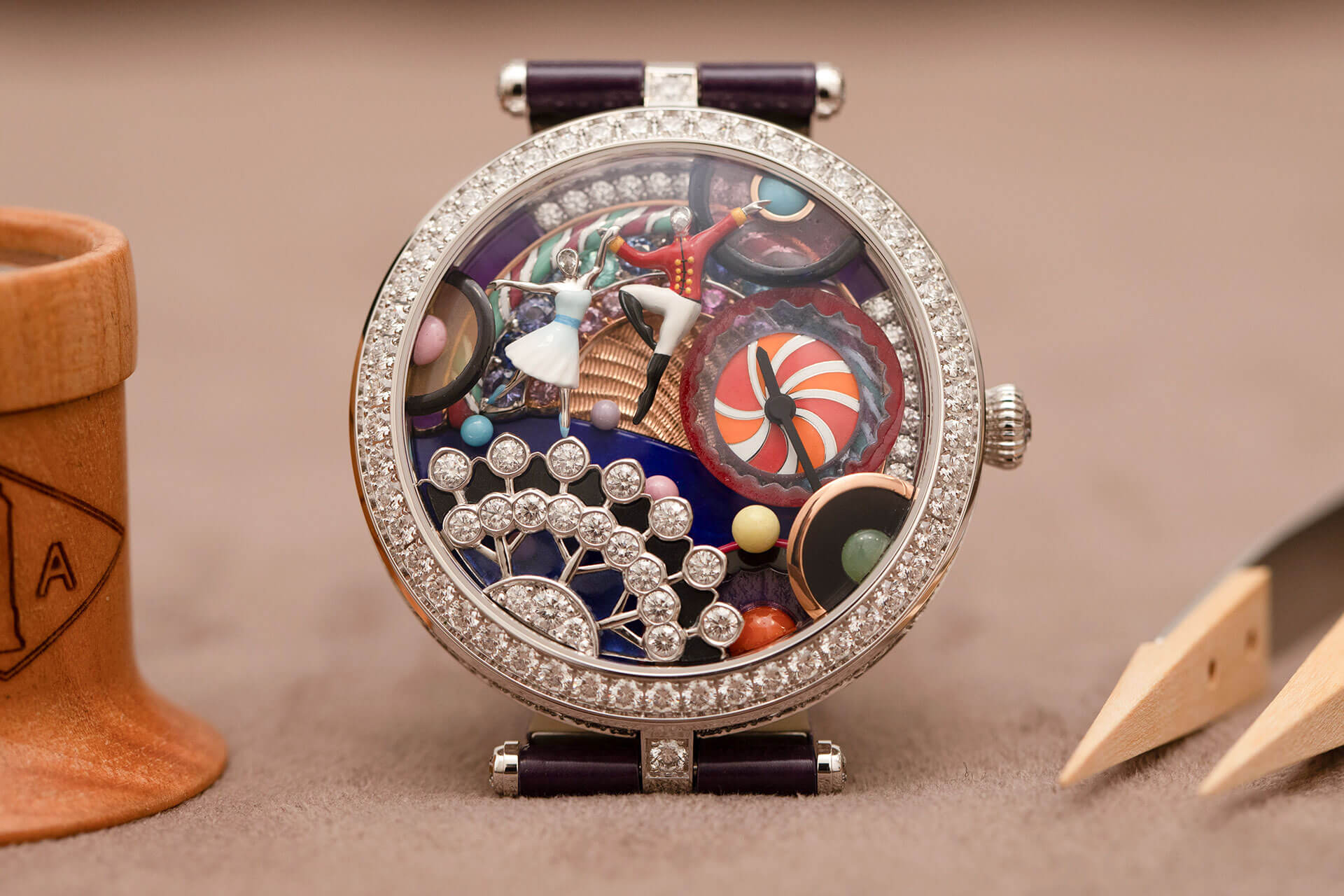
Techniques such as grisaille create moonlit monochrome scenes; plique-à-jour, on the other hand, is used to create translucent wings that glow when light passes through. Warm and cool colours can often not be fired together (they absorb energy differently), meaning dial creation becomes a choreography of heat and timing.
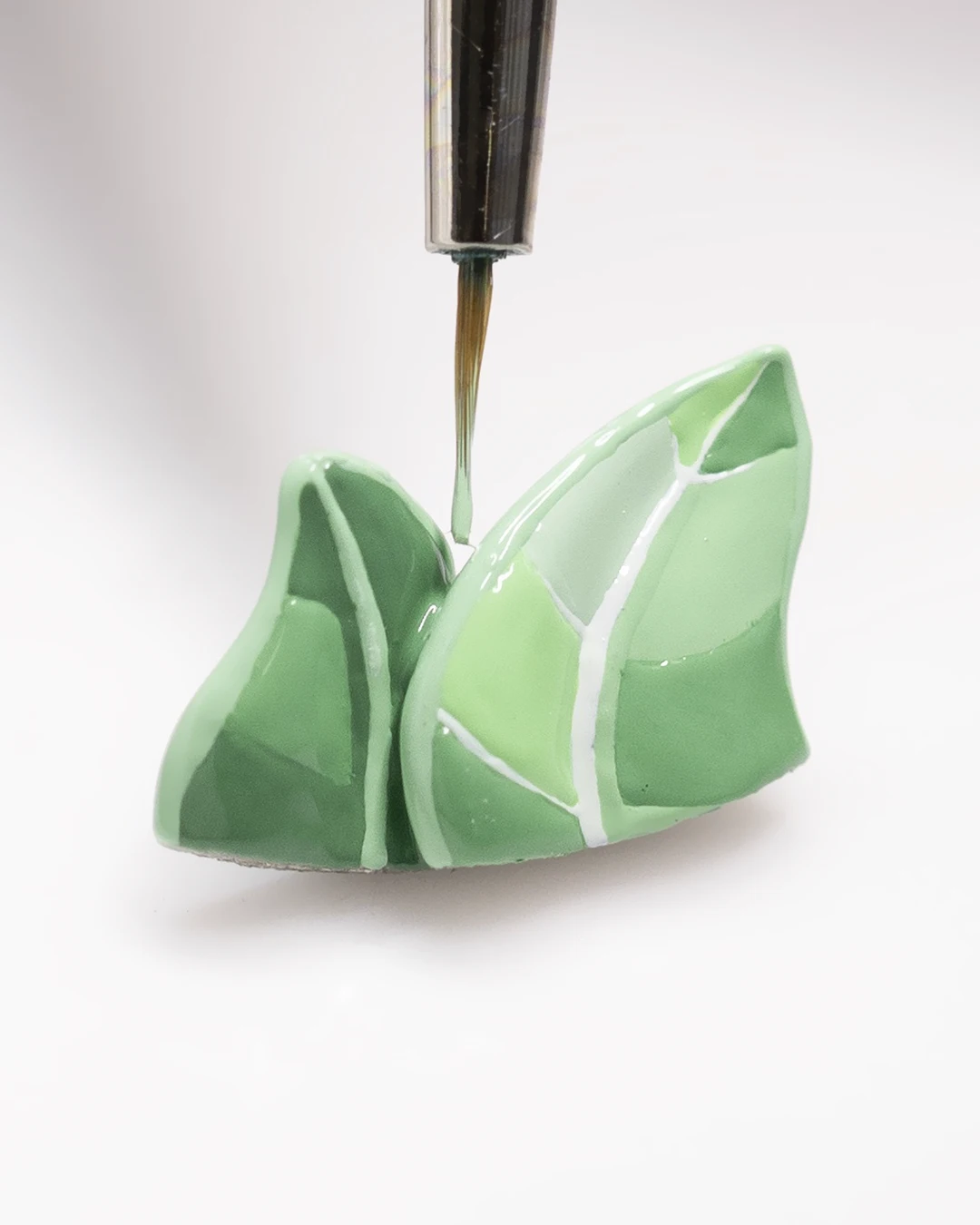
Ever the inventors, Van Cleef & Arpels also spent two years perfecting a malleable enamel. The breakthrough debuted on a leaf-motif watch, where dewdrop diamonds were set into plique-à-jour enamel – a now-patented technique born from countless failed prototypes. The ever-creative Bernard is fond of likening this type of enamel to visiting a spa: rigid and crack-prone at first, it softens and emerges luminous and beautiful after cycles of heat and cooling.
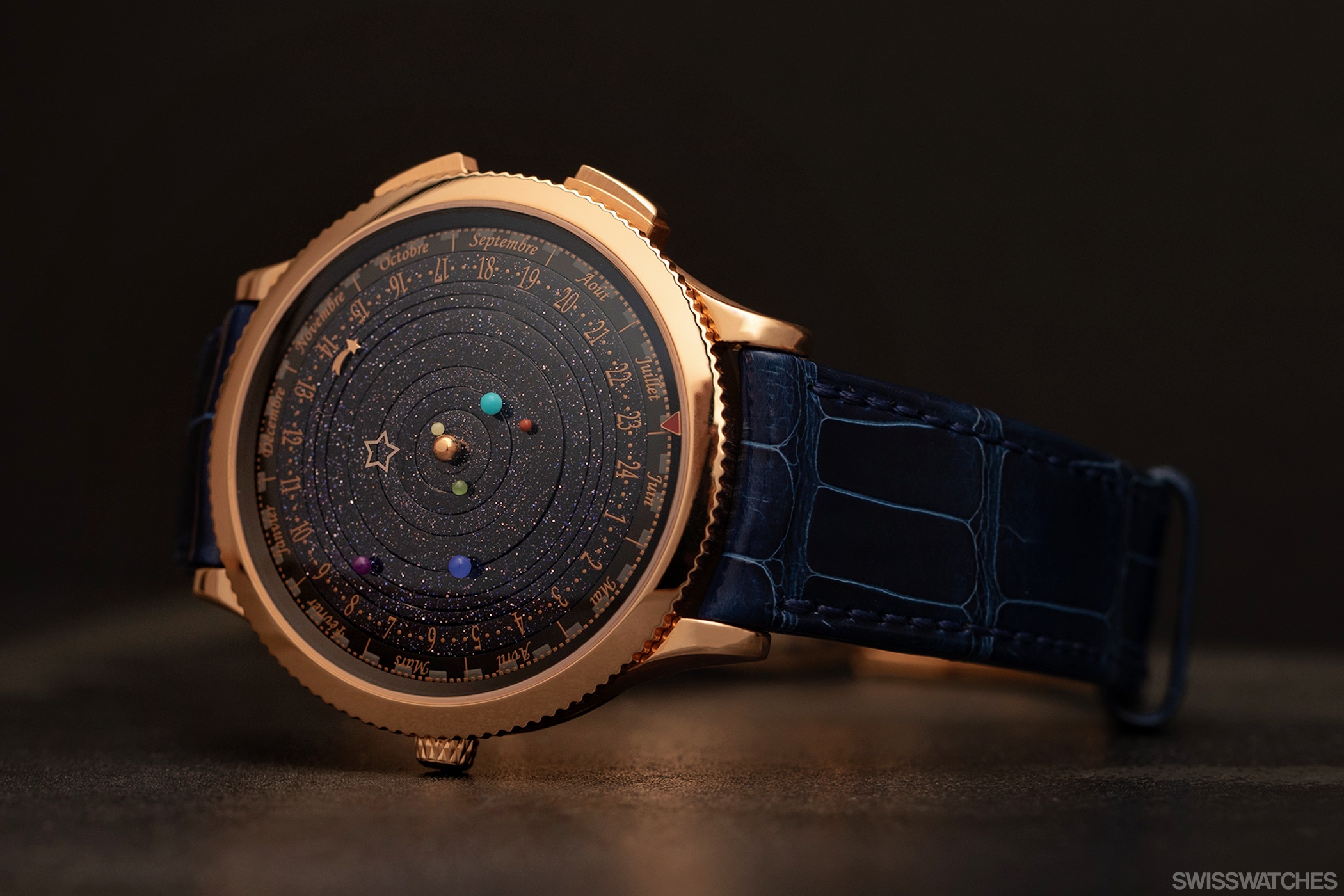
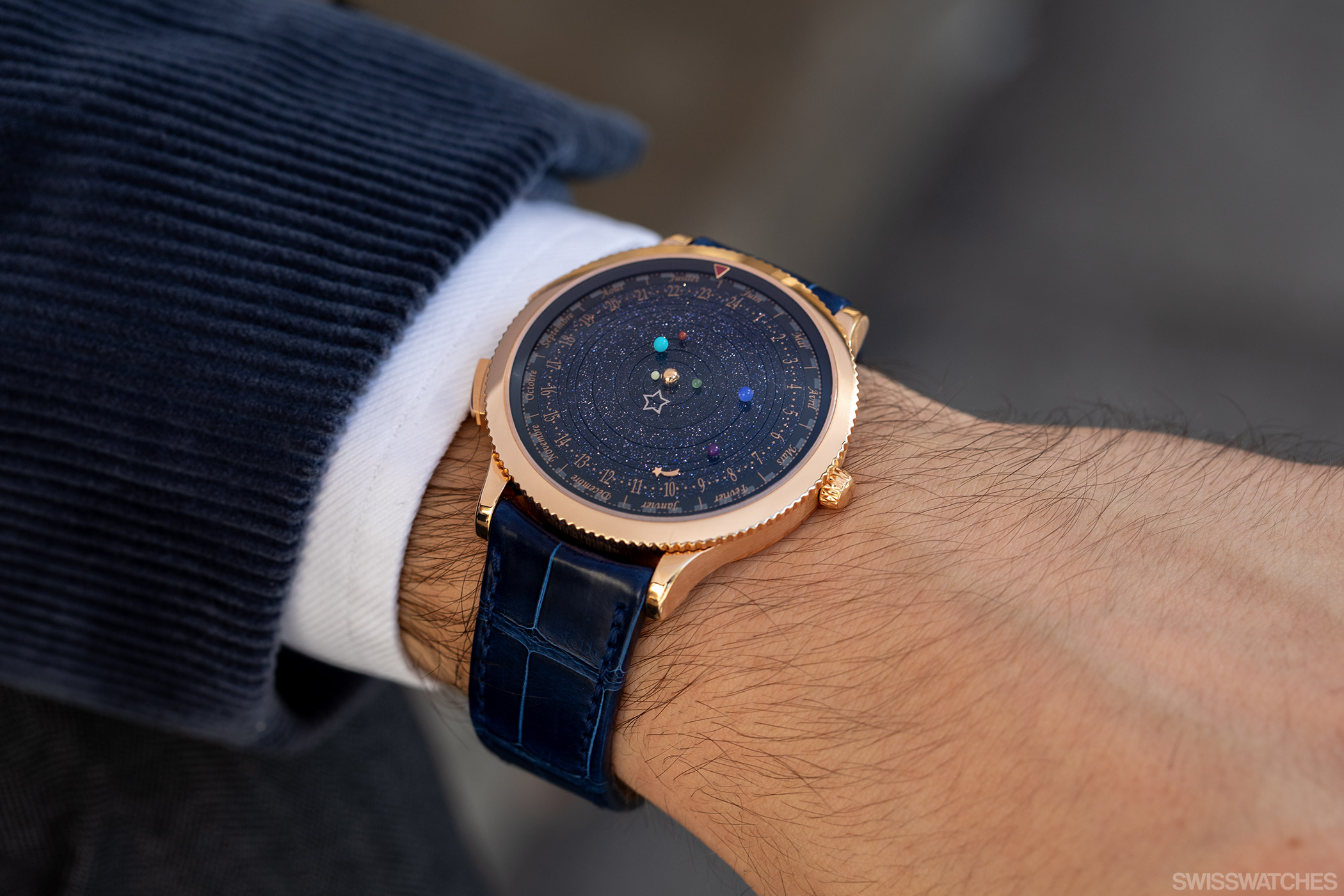
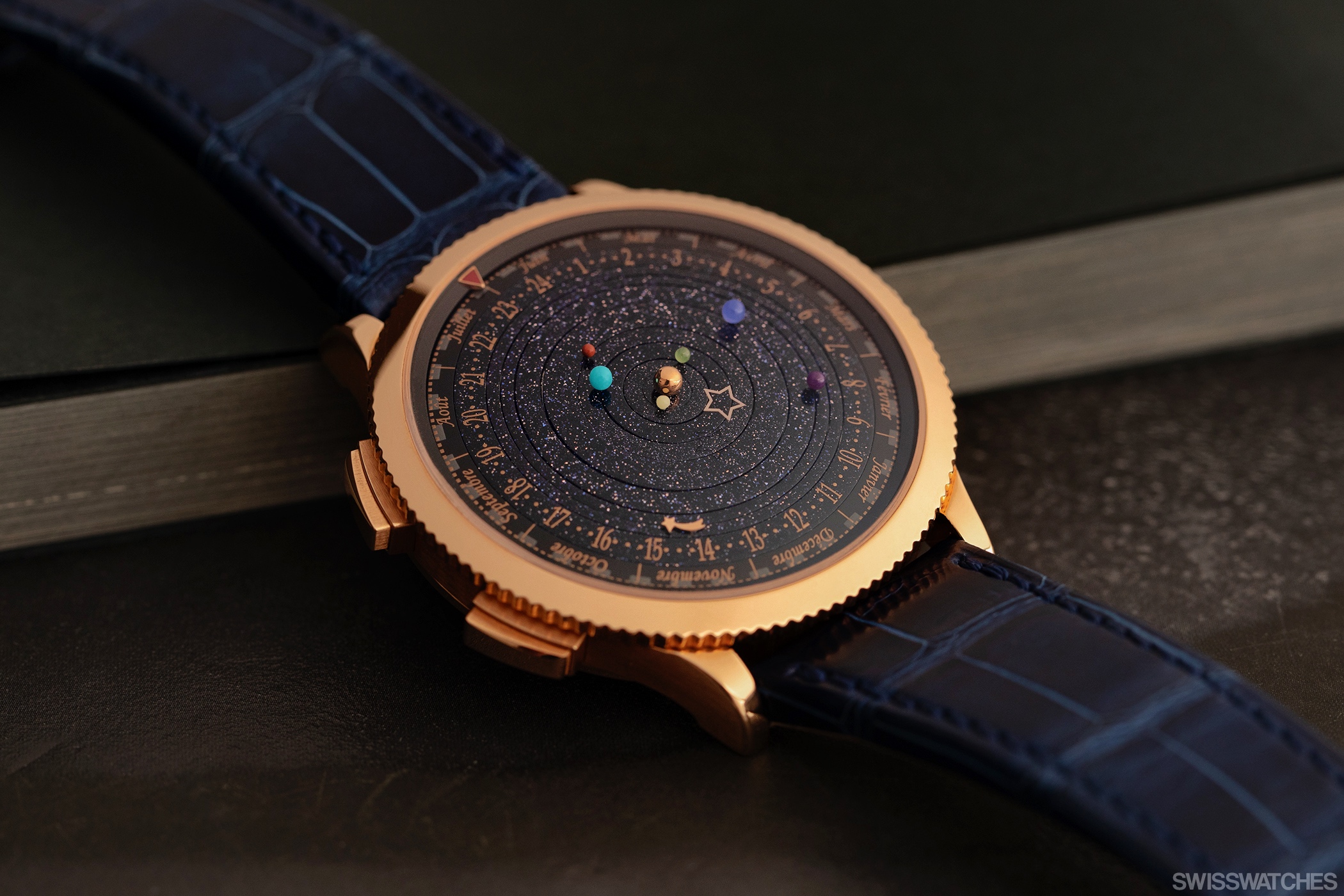
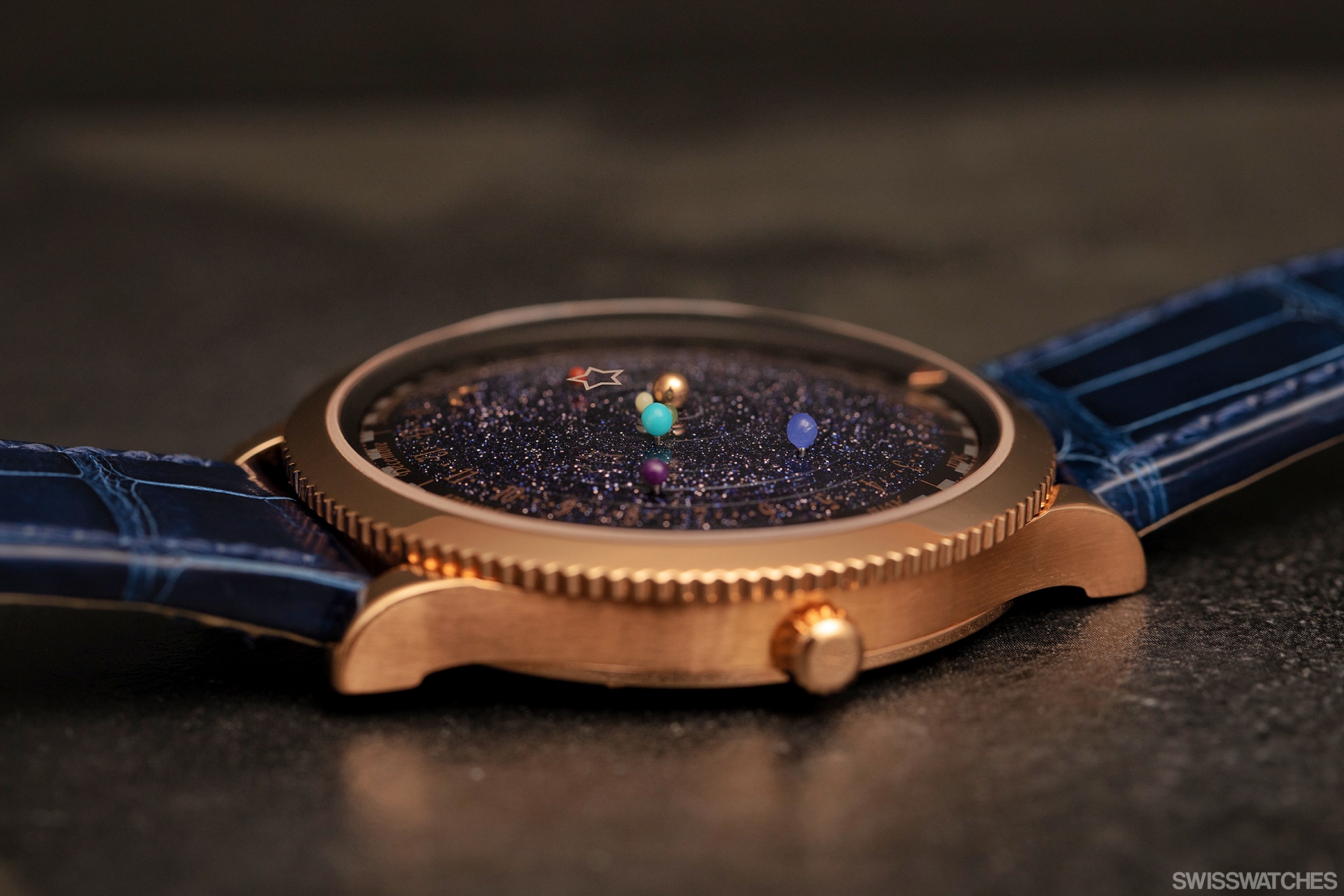
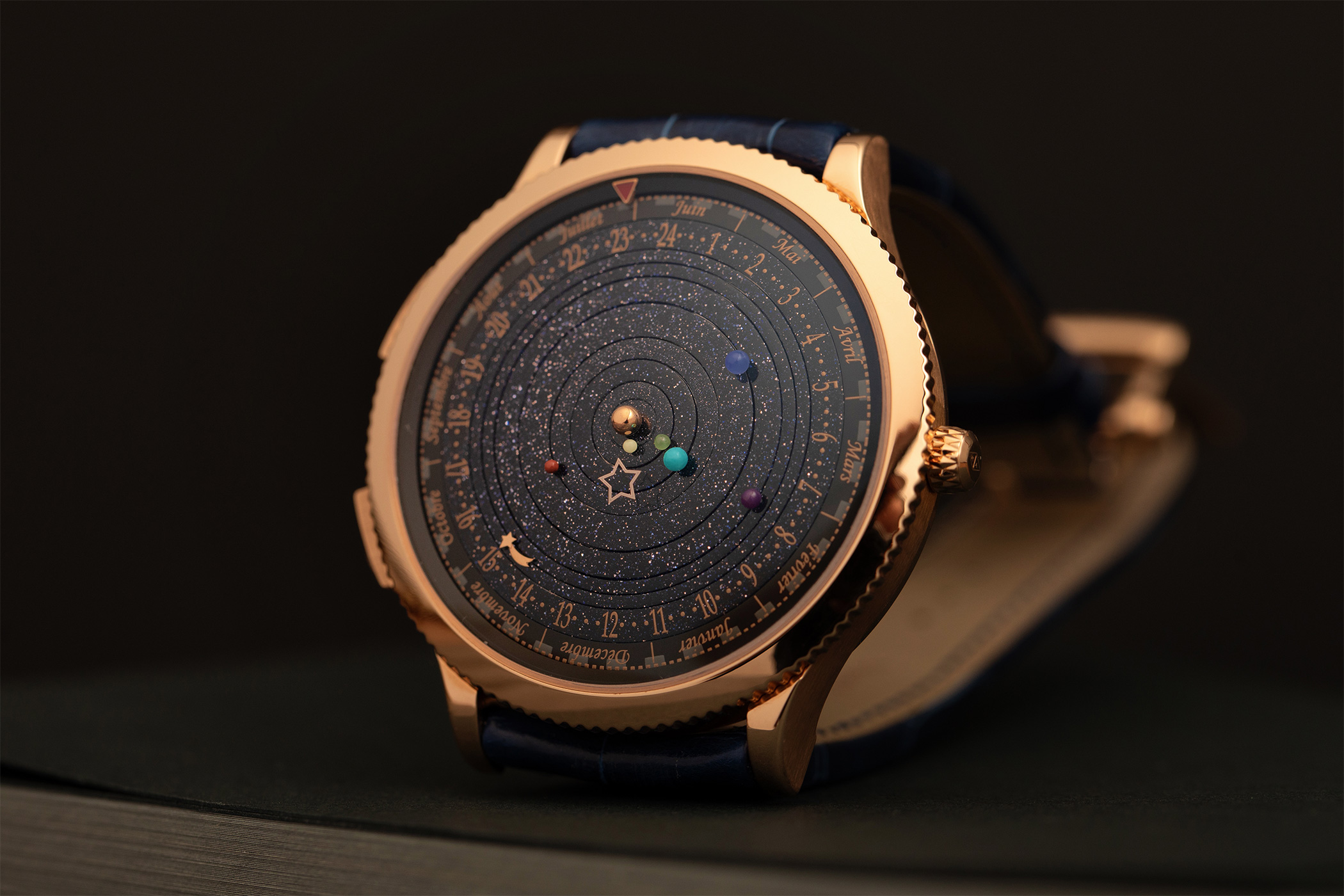
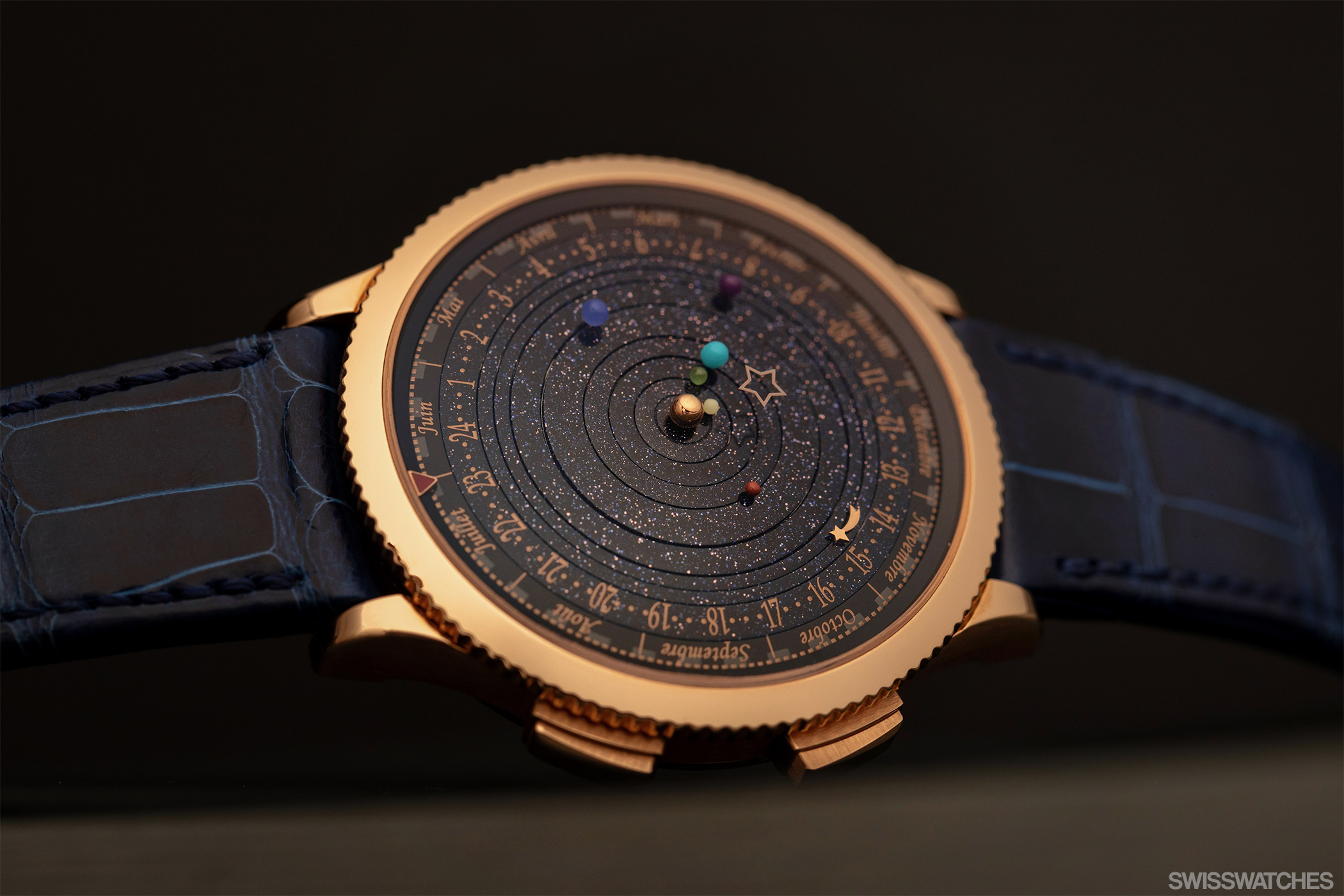
One of the most ground-breaking watches to emerge from the manufacture is the Midnight Planetarium, first appearing in 2014. Launched as part of the maison’s Poetic Complications, this is yet another watch that doesn’t settle for telling the time: rather, it recreates the solar system, condensing it to a mere 44 mm diameter. Six planets (Mercury through Saturn) orbit a solid gold sun in real time, each set in hand-crafted gemstone and following its genuine cosmic rhythm: Mercury completes a lap in 88 days, while Saturn takes a full 29 years. Aventurine rings form the night-sky backdrop, independent movements drive each orbit, and a rose-gold shooting star glides around the outer ring every 24 hours to subtly relay the time. Even the rotating bezel refuses to be purely practical; it lets the wearer mark a ‘lucky date’ so that once a year, Earth sits beneath a tiny engraved star on the sapphire crystal; a poetic alignment reserved for anniversaries, new beginnings, or whatever moment one might choose to honour.
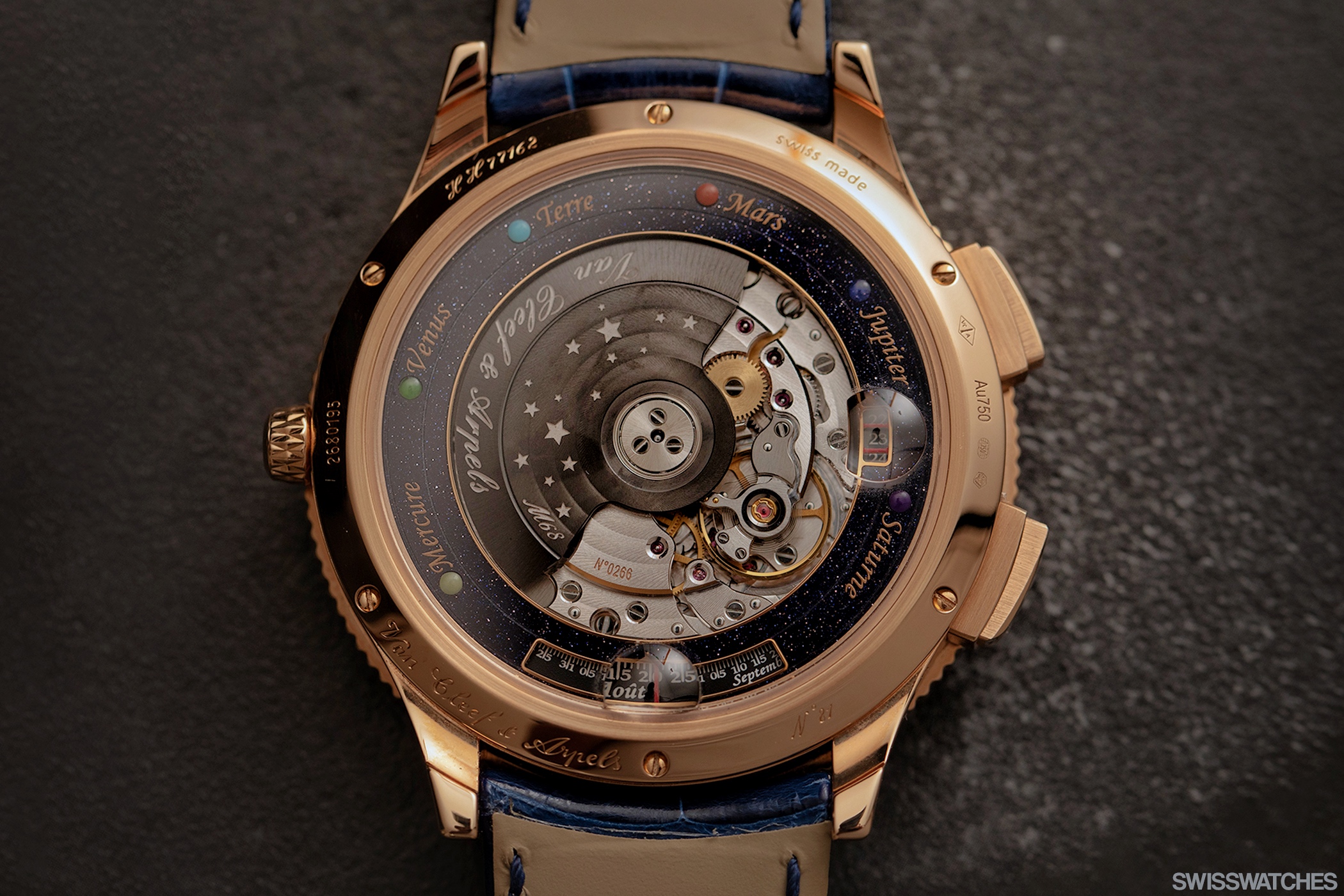
Turning the watch over, the astrological storytelling continues. Two magnified windows reveal calendar data, set via a discreet pusher on the case, allowing you to view the position of the planets not only today, but on any date – past or future.
One final piece worth a mention is the Van Cleef & Arpels Pierre Arpels Heure d’Ici & Heure d’Ailleurs, which takes the old-world charm of the jump hour and turns it into something quietly poetic for the modern traveller. Born from a mechanism first patented in 1883 by Josef Pallweber and once adored in the Art Deco era, the jump hour display skips the traditional hands and instead reveals the hour through apertures that ‘jump’ at the turn of the minute. Van Cleef & Arpels pushes the concept further: this 42 mm white-gold piece doesn’t display just one time zone, but two, as its name suggests: Time here and time elsewhere.
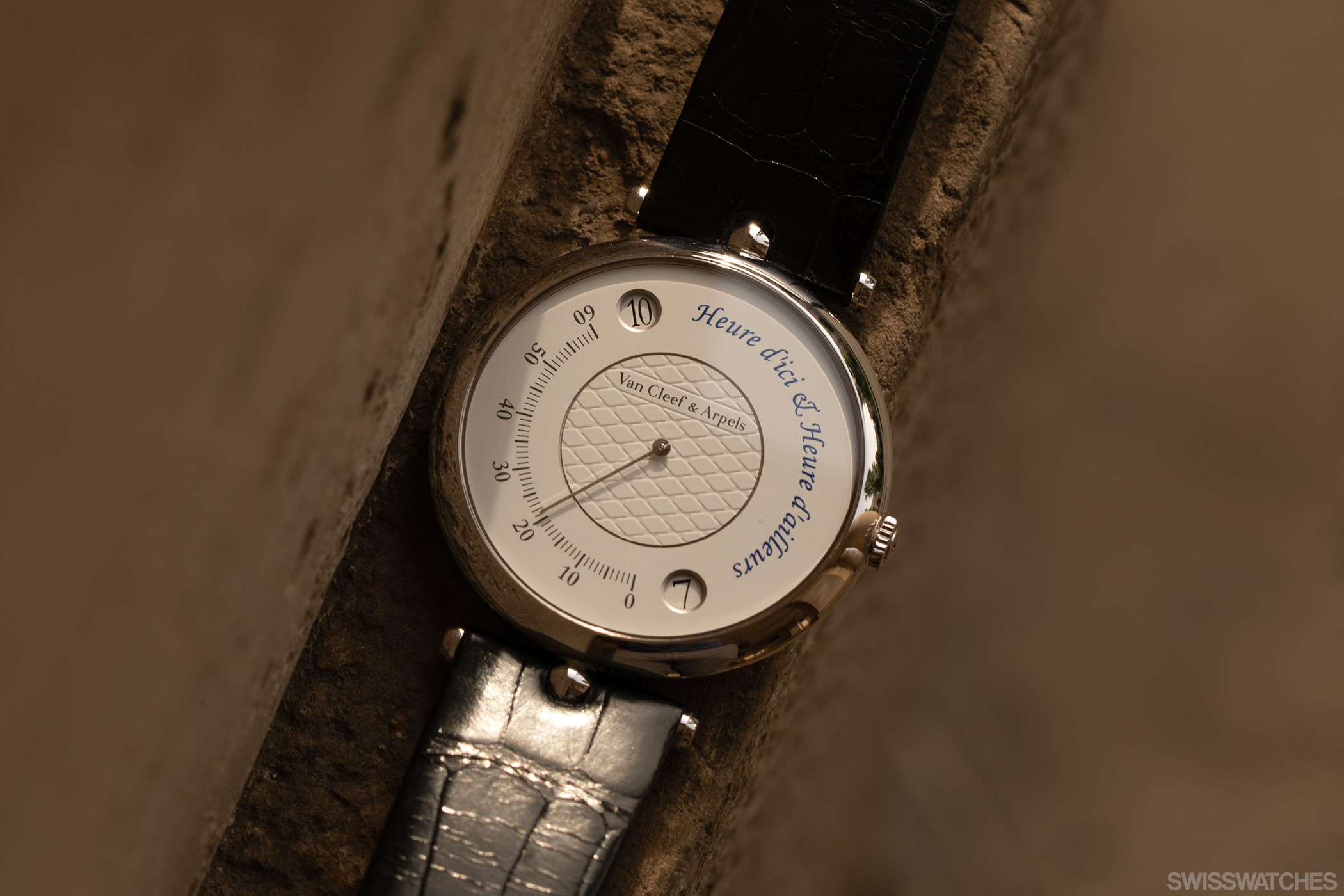
The watch features a double jumping hour display paired with a retrograde minute hand. Both hours jump in perfect sync as the minute hand snaps back to zero, powered by a micro-rotor movement slim enough to keep the case at just 7.97 mm.
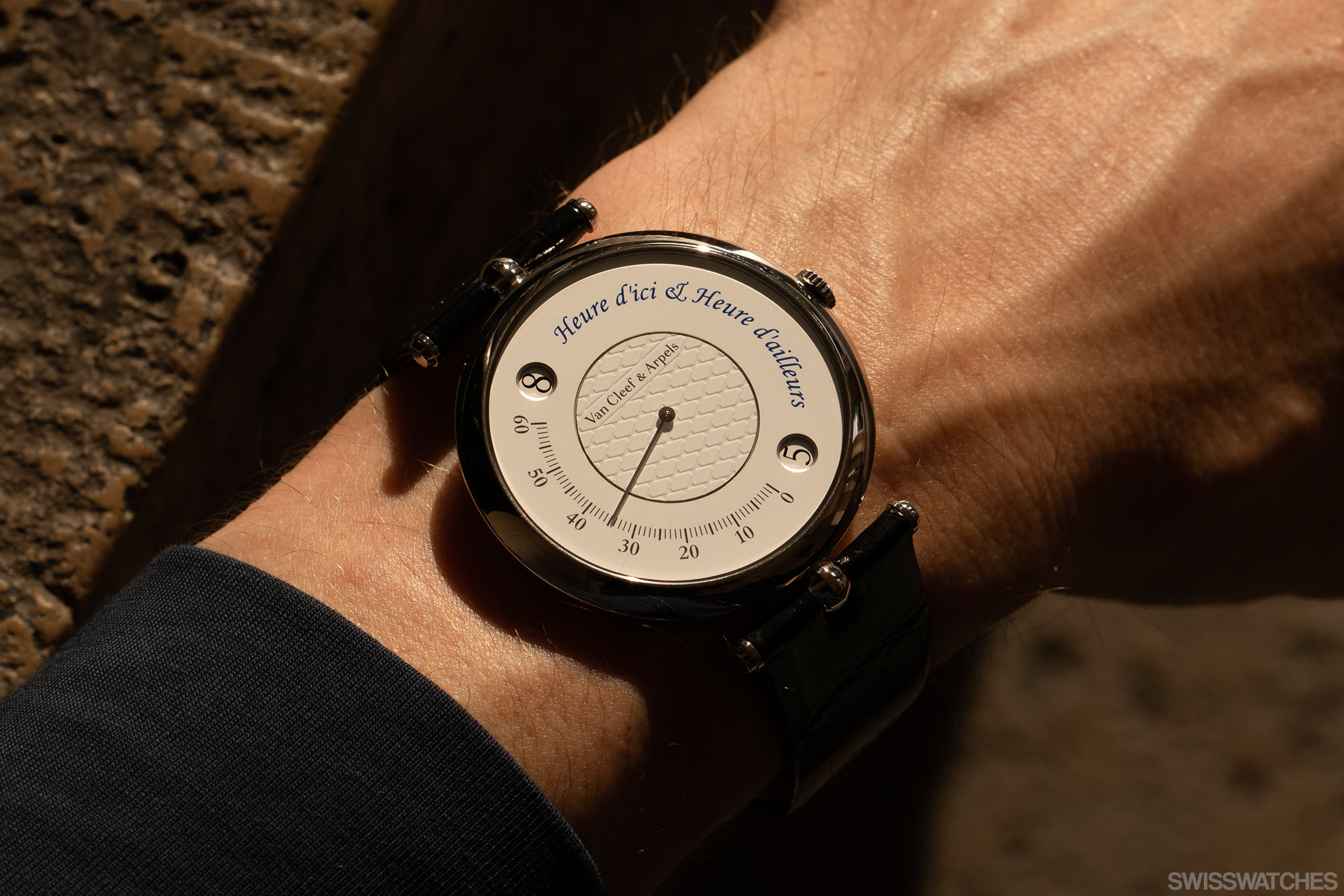
Of course, it wouldn’t be Van Cleef & Arpels without a touch of storytelling and beauty layered into the mechanics. The satin-finished T-bar lugs – a nostalgic nod to the original 1949 Pierre Arpels watch – pair with a black alligator strap and a crown set with a diamond.
What strikes you the moment you step inside Van Cleef & Arpels’ watchmaking workshops in Geneva is that the maison’s greatest innovation isn’t merely technical: it’s cultural.
This is a place where engineers leaf through botany books, enamellers dream like painters, and research is guided as much by curiosity as by expertise. It takes courage for a house of such stature to let creativity lead, and even more to grant its R&D teams the freedom to fail, rethink, and begin again. As Bernard puts it, “It is very important to try and try again – otherwise, you may lose opportunities. At Van Cleef & Arpels, we always find ways to tell an enchanting story.”