With the introduction of the Master Control Chronometre at this year’s Watches & Wonders, Jaeger-LeCoultre opens a new chapter in one of its most important and historically grounded collections.

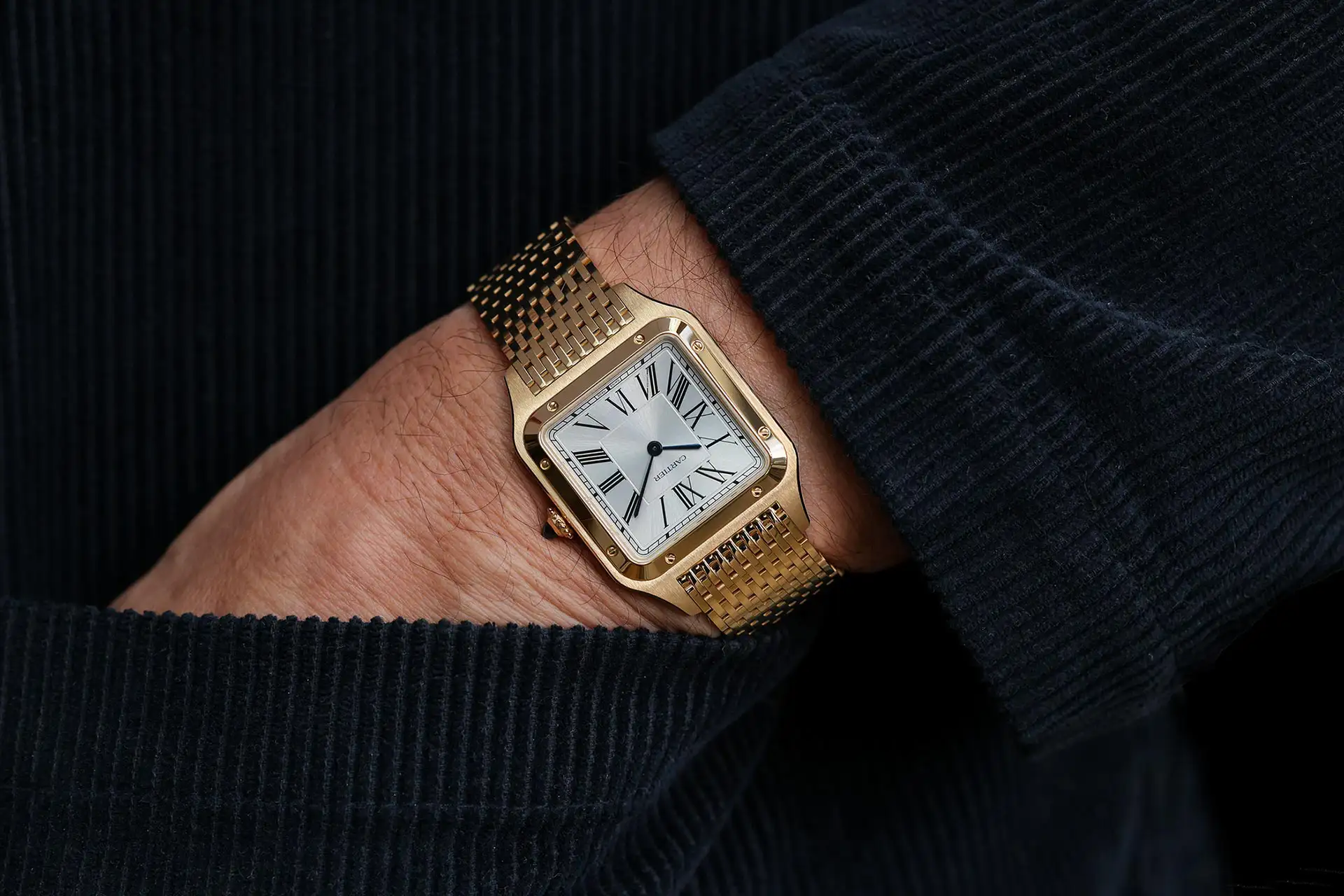
This year we’ve seen the resurrection of the Roadster and a handsome new array of Privé watches – but for many, the Cartier Santos-Dumont, with its all-new bracelet, may well be their favourite new piece over at the Cartier booth.

Of course, if any watch deserves an excellent bracelet, it’s the Cartier Santos-Dumont. Given the Santos is regarded as the world’s first ever pilot’s wristwatch, the straps and bracelets are a particularly meaningful part of its design. In 1904, Louis Cartier famously designed the watch for his friend, Brazilian aviation pioneer and dandy Alberto Santos Dumont, who wanted a watch that allowed him to navigate his airship (both hands were required) without needing to reach for his pocket watch.
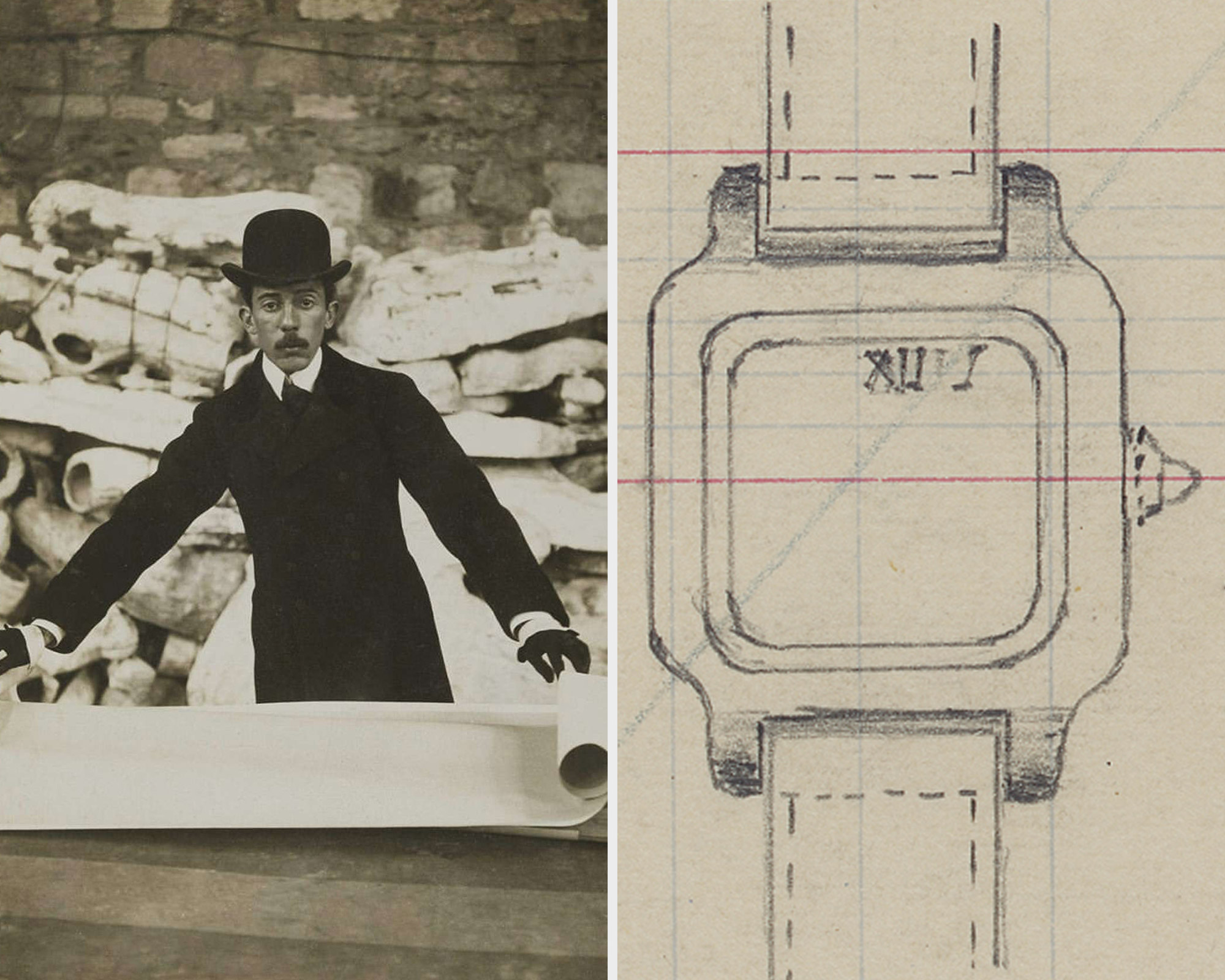
Of course, wristwatches already existed, principally as jewellery watches. Most famously, Abraham-Louis Breguet created a wristwatch for the Queen of Naples in 1810, while Patek Philippe made one for the Hungarian Countess Koscowicz in 1868. Wristwatches for men, however, failed to take off, despite various examples: Girard-Perregaux produced a large series of wristwatches for Prussian naval officers commissioned by Wilhelm I in 1880, and in 1892, Audemars Piguet launched the first wristwatch with a minute repeater.
The fact that the Santos was made by Louis Cartier – a Promethean figure in the world of watch design history to this day – as well as that this watch was being made for an aviator and dandy, for whom both style and pragmatism were equally paramount, is no doubt what made the Santos so great. Worn on Europe’s first public powered flight two years later, the watch became part of both horological and aviation history. By 1911, wristwatches began to appear on the market – and Louis Cartier accordingly launched a commercial version of the watch. Three years later, with the start of the war, men’s wristwatches would at last become commonplace.
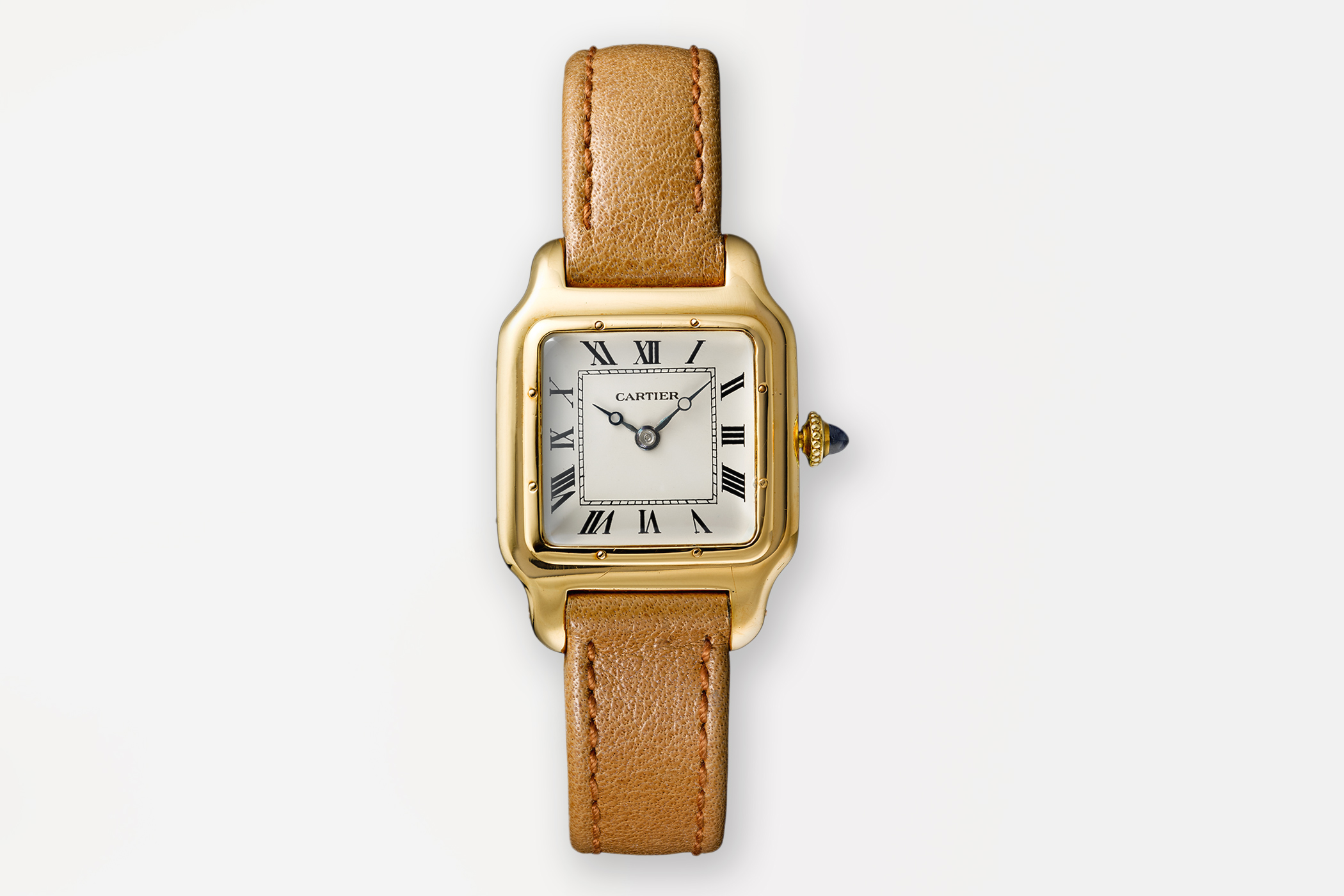
The commercial version was a square-shaped watch with a yellow-gold case, featuring a sapphire cabochon on the right side, and lugs for secure attachment of the leather strap. This is a significant detail: the lugs for the strap were no longer separate items but part of the case. Thus, the strap was not just a feature but part of the whole, making it the first commercial men’s watch designed expressly to be worn on the wrist. In this sense, it was the ‘first modern watch’, argues Franco Cologni in his book Cartier Tank Watch. In 1911, the timepiece was available with either a black or brown leather strap.
Angular in shape, the first commercial Santos-Dumont had a 35 mm x 25 mm square case. The corners of the case were rounded, and their extension seamlessly segued into the lugs. Thus, the case and the strap attachment were of one piece. The case was available in yellow gold or platinum, which Cartier had been among the first to use in its creations since 1860, including its famous Tonneau watch of 1906. The use of platinum was yet another sign of Cartier’s modernity.
The eight visible rivets, later screws, on the bezel have also become an unmistakable hallmark feature, and were highly unusual at the time. Together with the shape of the case, they evoke a bird’s eye view of the Eiffel Tower’s imposing structure in an abstract form, as would be seen from above. Moreover, the dial also pays homage to the French capital, with the blackened, slender Roman numerals that were to become characteristic of the Maison modelled upon the then-new cityscape of Paris, which had transformed in the 19th century. Powering the early watches was a movement by Louis Cartier’s friend and collaborator, Edmond Jaeger (later of Jaeger-LeCoultre), along with the latter’s patented gold folding clasp for the strap.
Over the years, numerous variations of the watch would appear. There was the decisive relaunch of the Santos in 1978, offering a contemporary and often bicolour option, marking the introduction of steel at the Maison; the 1980-infused Santos Carrée, with its assertive presence, followed by the softer Santos Galbée; the self-explanatory Santos Ronde with a rounded dial; and the Santos 100, introduced a century after the Santos’ conception, updated and housing an automatic in-house movement. Meanwhile, the Santos Demoiselle, with its petite 20 × 28 mm dimensions, took the Santos back to the world of jewellery watches. In 2016, Cartier caused a stir by removing all Santos models from its portfolio. It soon became clear why: two years later, the Maison introduced a revised collection. The bracelet remained a key element of its design, with Cartier integrating a QuickSwitch system (making it easy to switch between the leather straps and steel bracelet) and SmartLinks (enabling the bracelet length to be adjusted).
But where does the Santos-Dumont sit amidst this broad, historical catalogue of Santos watches? It’s the purist’s option. With the earlier watch’s 38 × 27.5 mm case and leather strap, the Santos-Dumont remained faithful to the original model created for the aviation pioneer. In 2019, Cartier introduced several updated versions featuring a larger crown, including an automatic three-hand chronograph, a skeletonised model, and even a quartz variant. As noted by the late George Cramer, the slimmer typography of the indices recalled a 1916 design. That same year, Santos Chronograph editions were released in a range of materials, including versions with yellow- and rose-gold bezels.
If the Santos-Dumont has long been the purist’s Santos, then this year, Cartier leans fully into that identity. The 2026 novelties emphasise the original codes with renewed clarity: Roman numerals, exposed screws, the circular-grained crown set with a cabochon, and the disciplined geometry of the case.
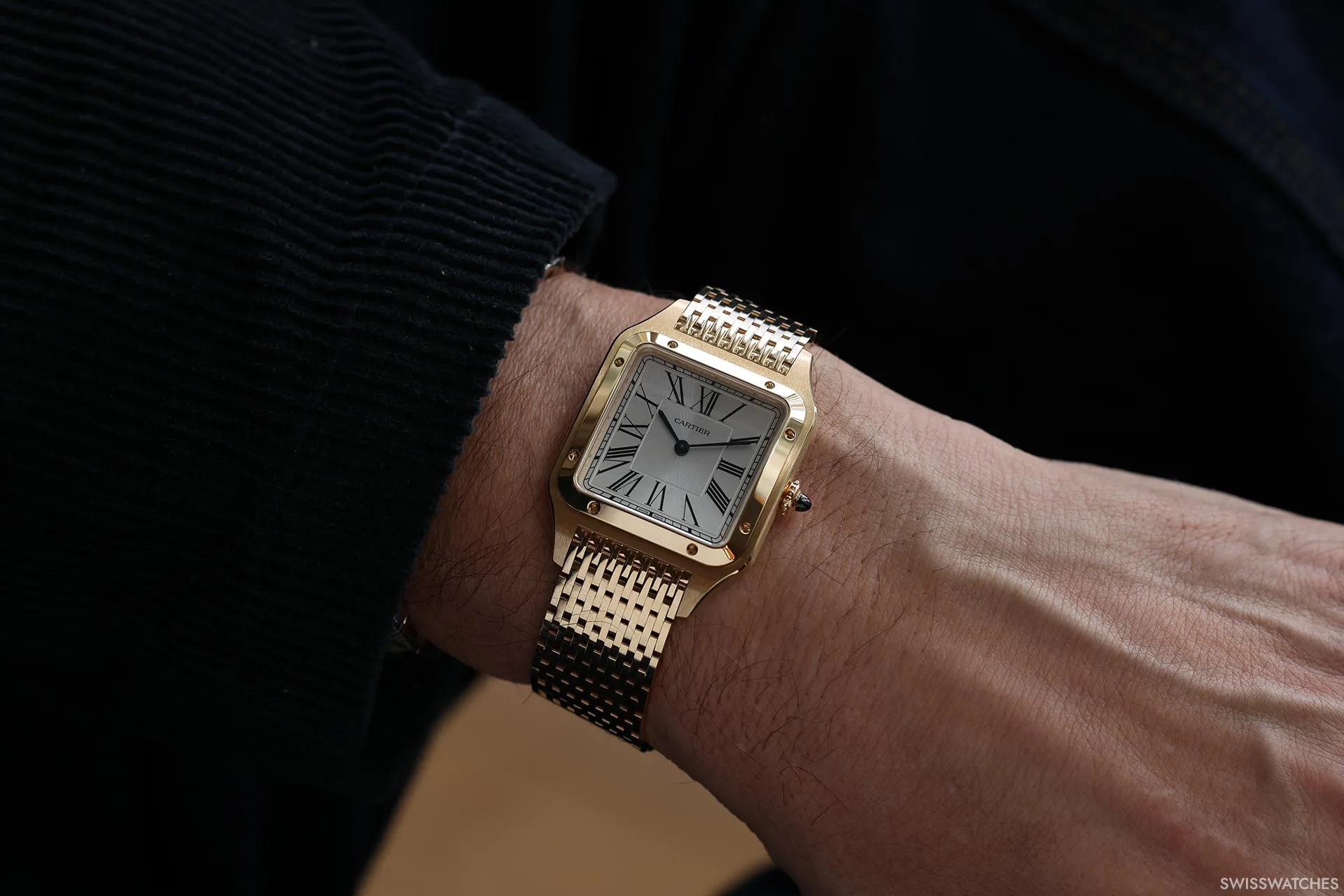
At the same time, there is a subtle but important shift. The introduction of a metal bracelet, which is remarkably fluid, delicate, and jewellery-like, repositions the Santos-Dumont ever so slightly. It remains faithful to its origins, yet feels newly aligned with Cartier’s broader design language found elsewhere in its portfolio, where the boundary between watchmaking and high jewellery is deliberately softened.
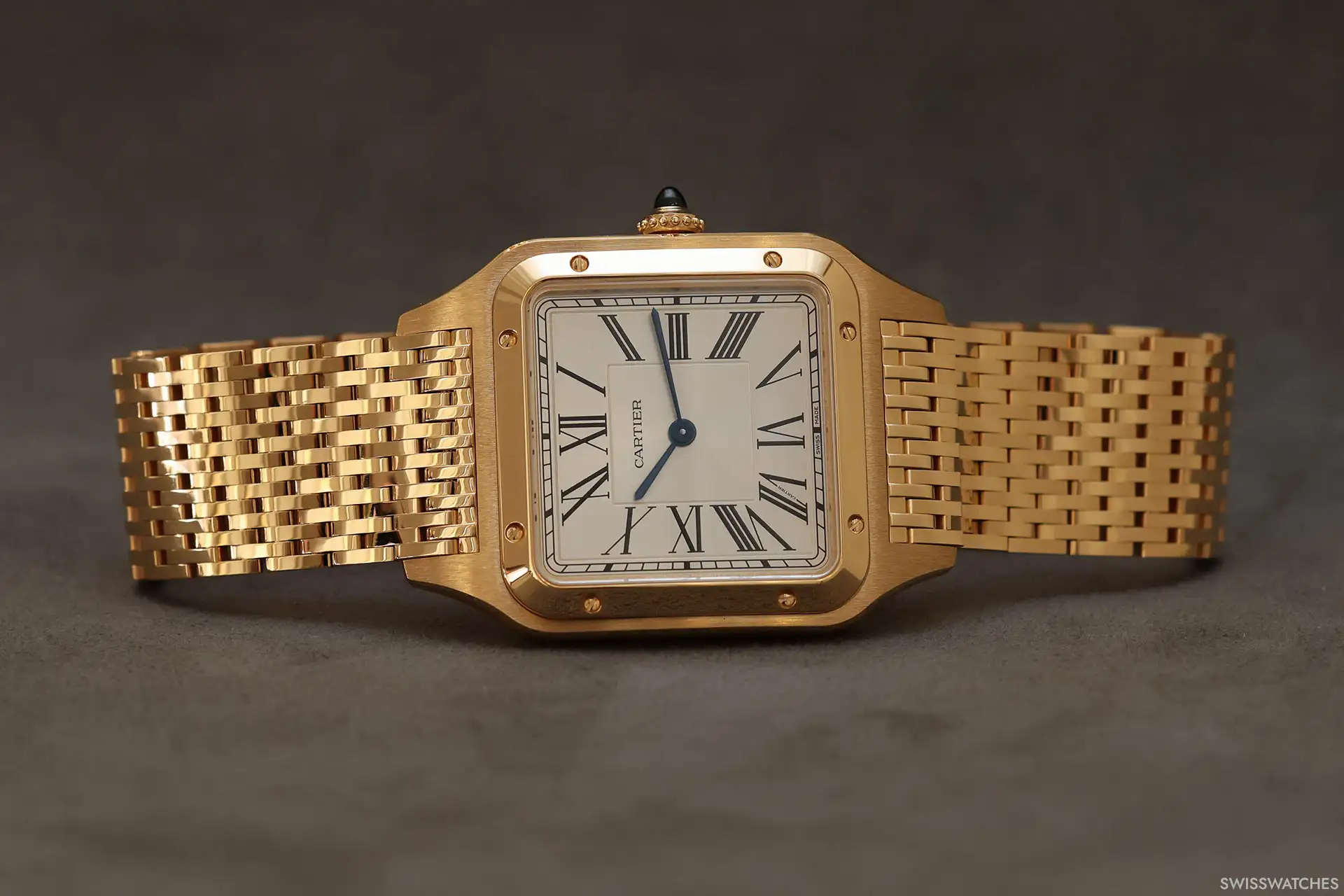
Across the collection, Cartier maintains the Santos-Dumont’s characteristic LM proportions at 43 × 31 mm, with a remarkably slim profile of just 7.3 mm. The case remains elongated and refined, its softly rounded angles and visible screws preserving the visual codes that have defined the model for over a century.
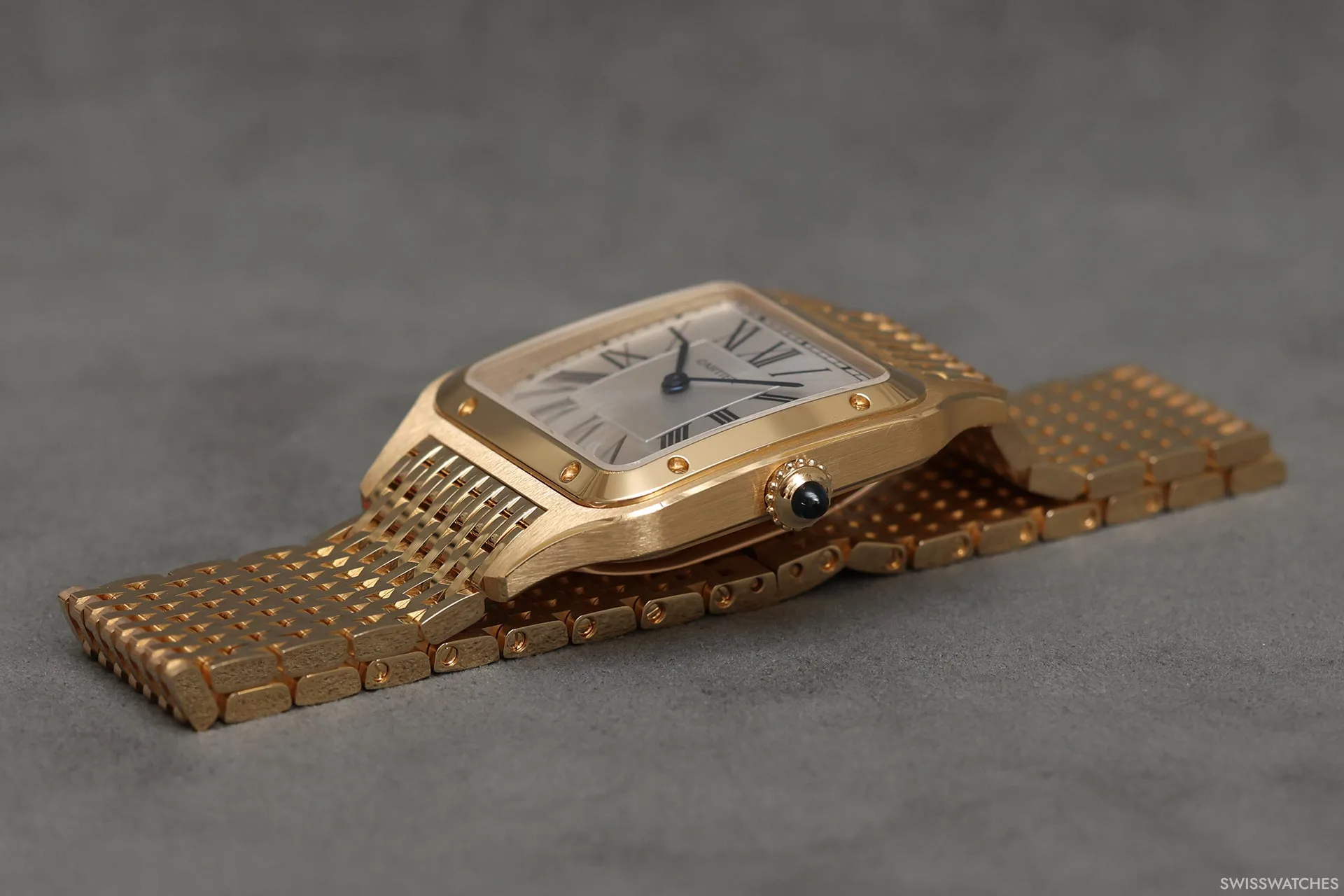
The range spans multiple executions, including full precious metal editions: 950 platinum, 750 yellow gold, and bicolour combinations of yellow gold and steel. Each retains the beaded crown, set with a ruby (in platinum) or sapphire or synthetic blue spinel, depending on the model. Despite these variations, the case design remains disciplined, framing the dial and bracelet, while allowing material and genuinely beautiful new texture to take precedence.
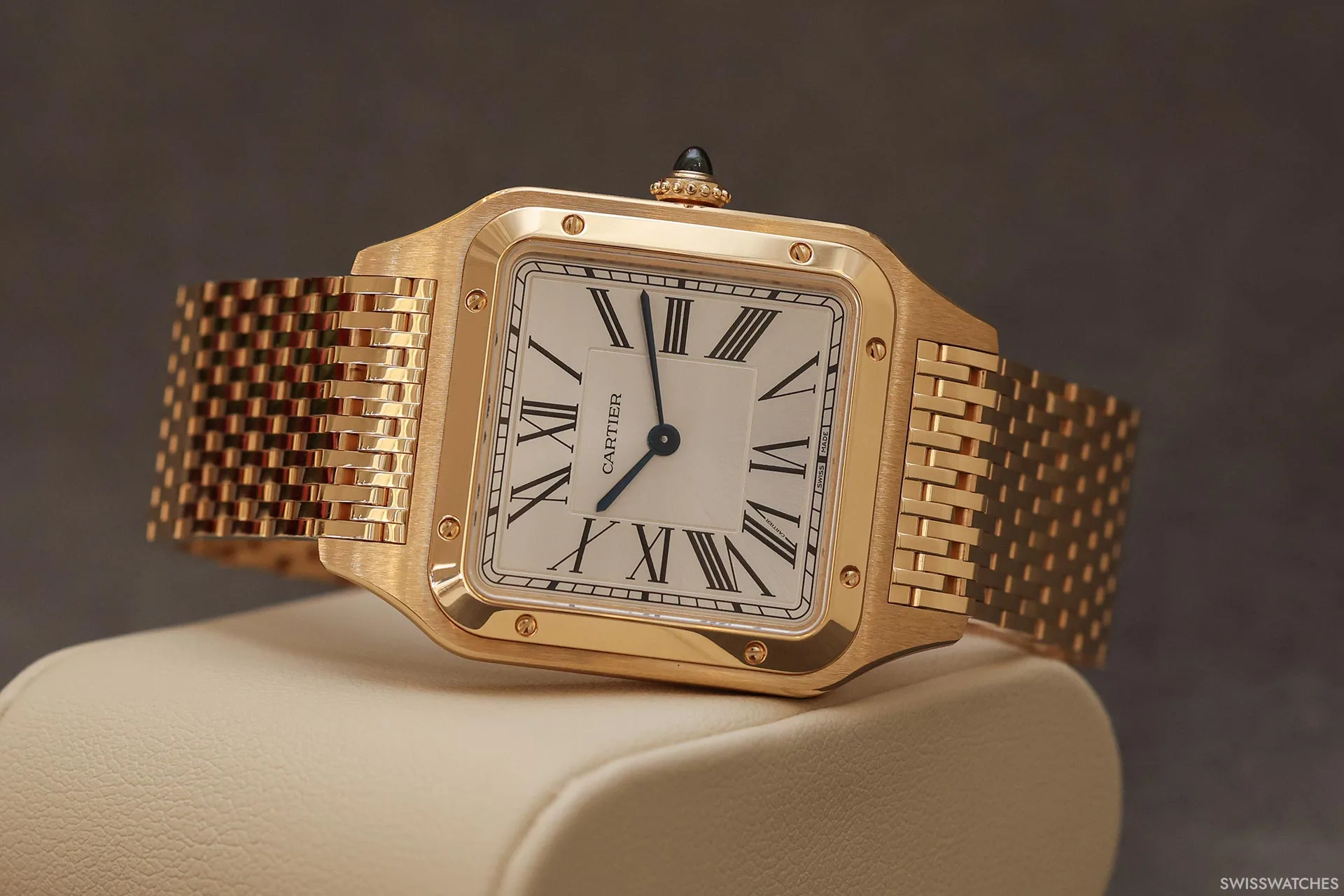
Materiality is where this year’s Santos-Dumont truly distinguishes itself. At the heart of the new collection is the gilded obsidian dial – a technically demanding and visually arresting choice. Cut to a height of just 0.3 mm, the volcanic stone from Mexico reveals subtle iridescence caused by microscopic air bubbles, ensuring that each dial is entirely unique. Its fragility makes it comparable to glass, requiring exceptional care in both cutting and polishing.
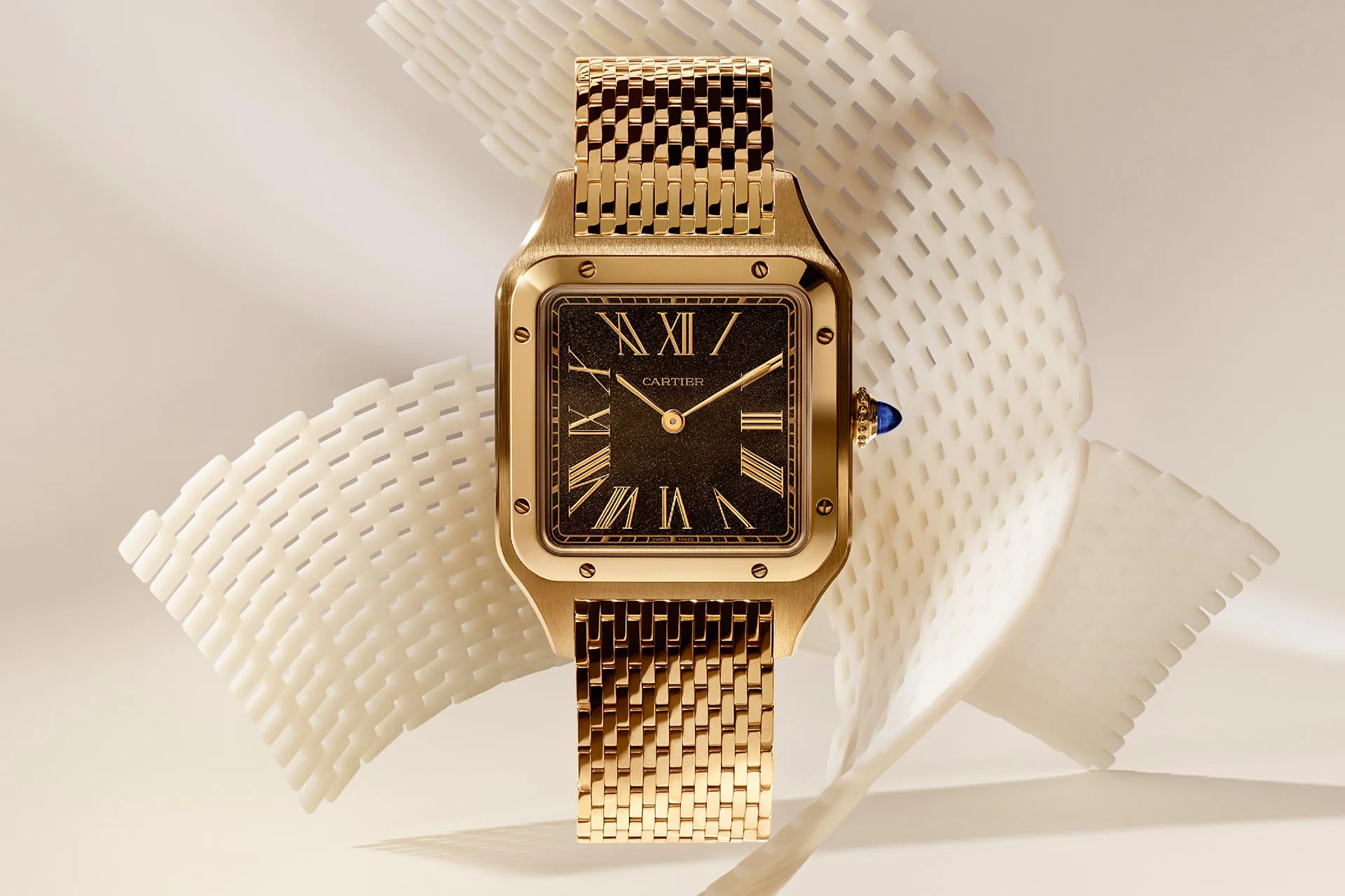
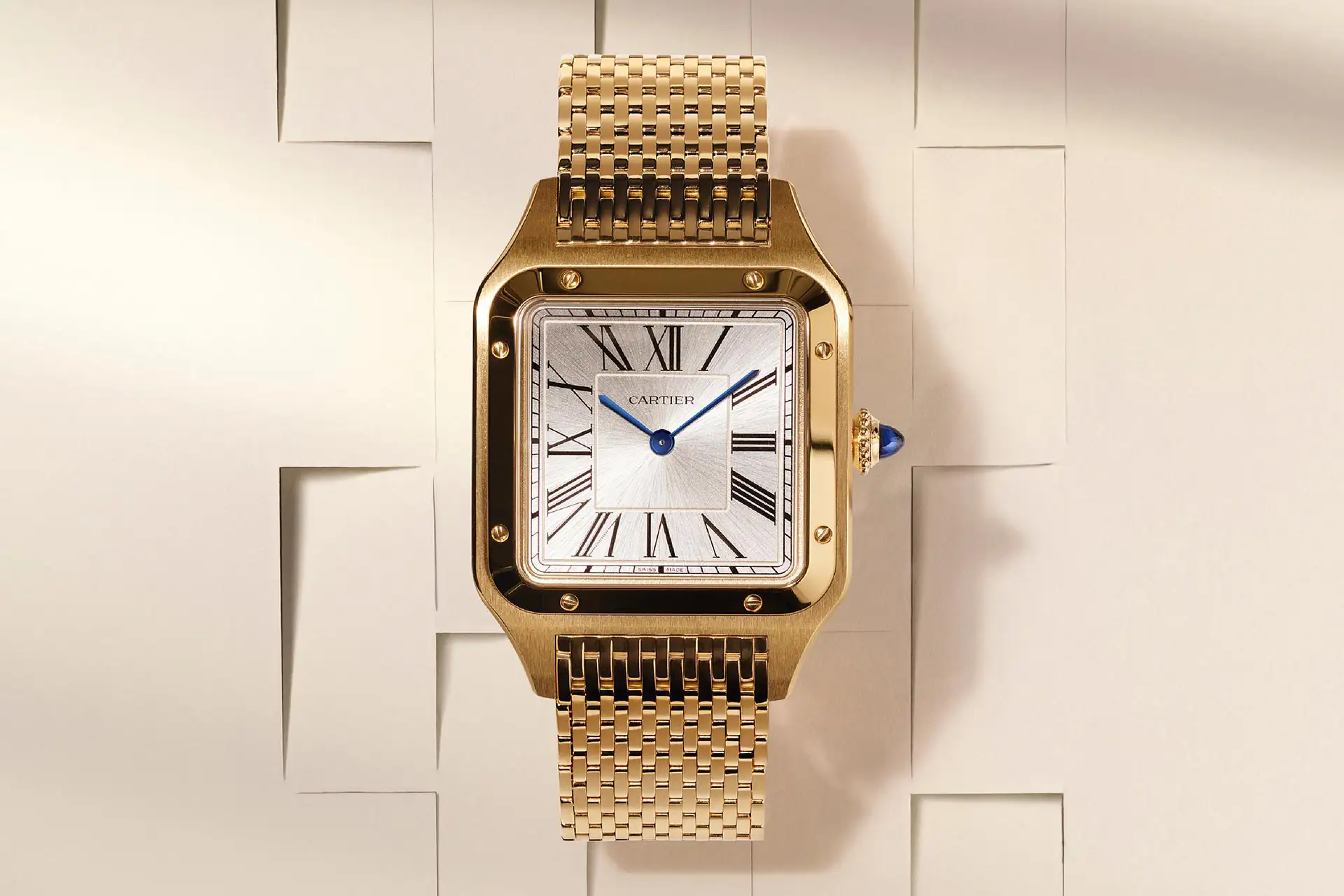
Alongside this standout piece, Cartier offers more classical alternatives: silvered dials with a sunray finish in both platinum and yellow gold models. The platinum version pairs this with blued-steel sword-shaped hands, while one yellow-gold variant introduces steel hands with a golden hue, subtly shifting the watch’s visual warmth.

All models are powered by Cartier’s 430 MC, a manufacture hand-wound mechanical movement. Its slim construction allows the Santos-Dumont to retain its elegant proportions, sitting close to the wrist in a manner that feels both discreet and considered. The choice of manual winding is particularly apt here, underlining the Santos-Dumont’s identity as a refined and historic model.
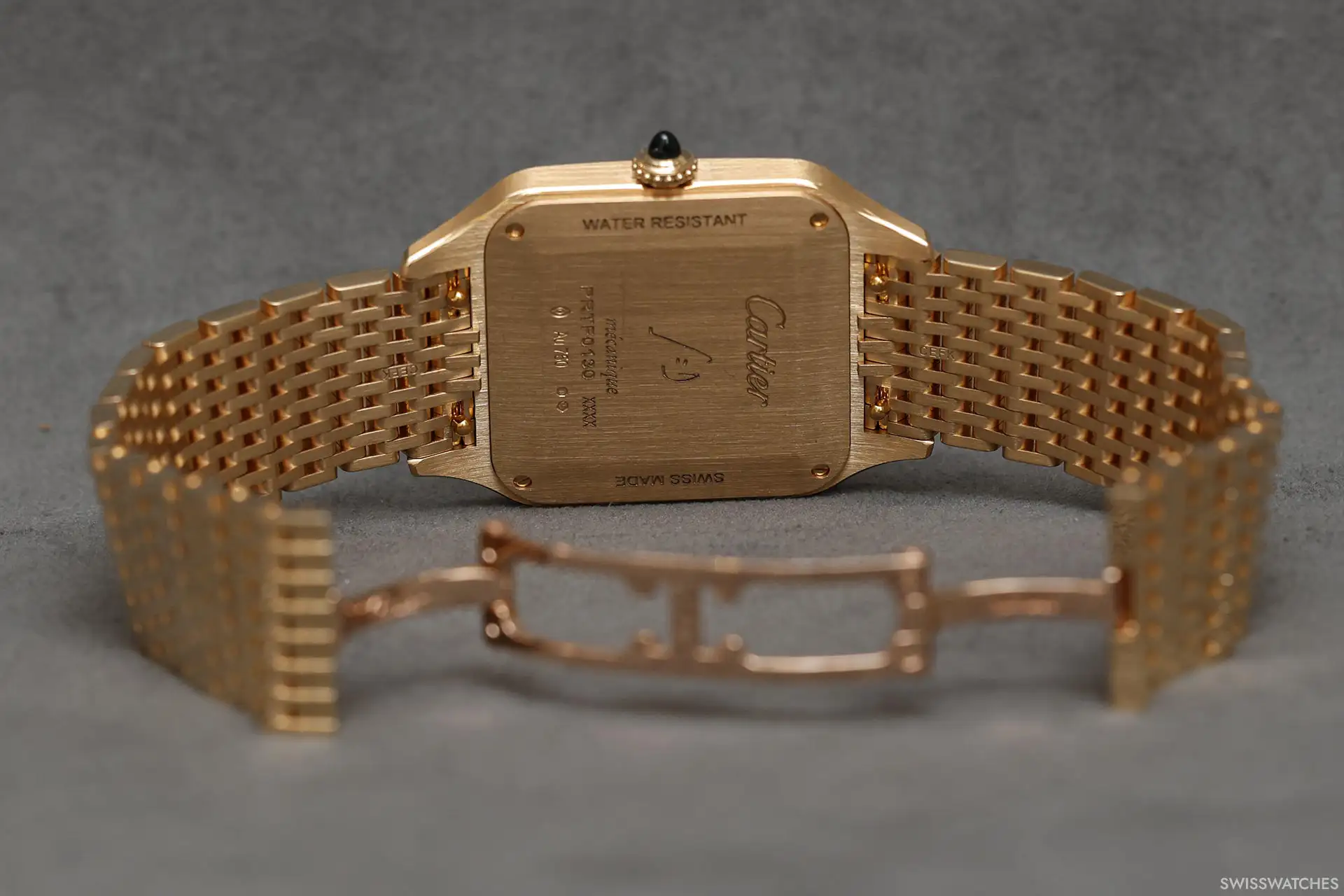
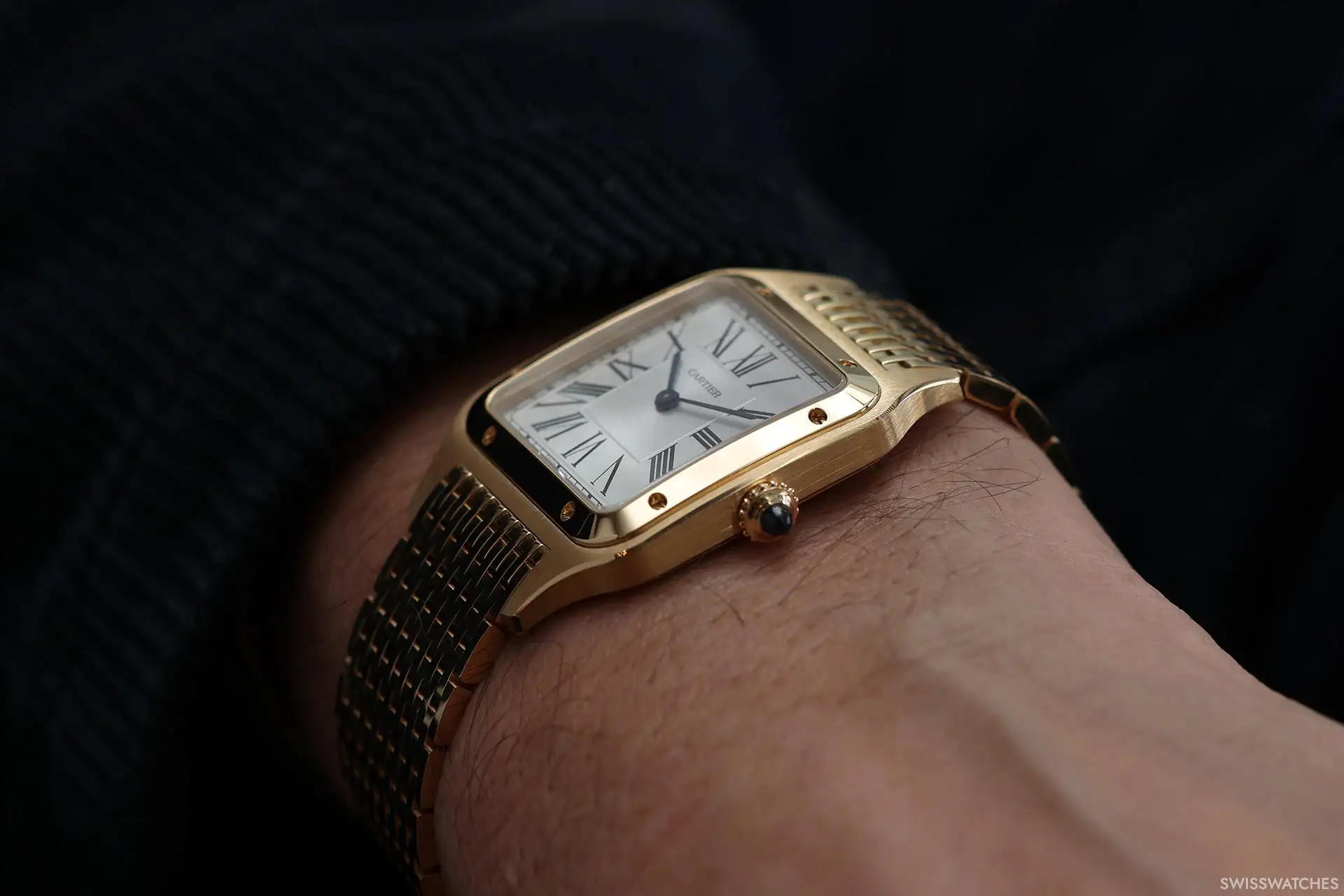
Saving the best for last, the defining development this year is, however, undoubtedly the bracelet. For the first time in the modern Santos-Dumont line, Cartier introduces a fully integrated metal bracelet in precious materials. Drawing inspiration from the Maison’s bespoke bracelets of the 1920s, the execution is impressively intricate: 15 rows composed of 394 individual links, each just 1.15 mm thick. The result is a beautifully silky bracelet that drapes across the wrist with a softness closer to fabric than metal. In terms of feel, it rivals only the Cartier Privé Normal models from 2023, with their alluringly sleek links and lustrous shine. Truly the pinnacle of luxury bracelet making.
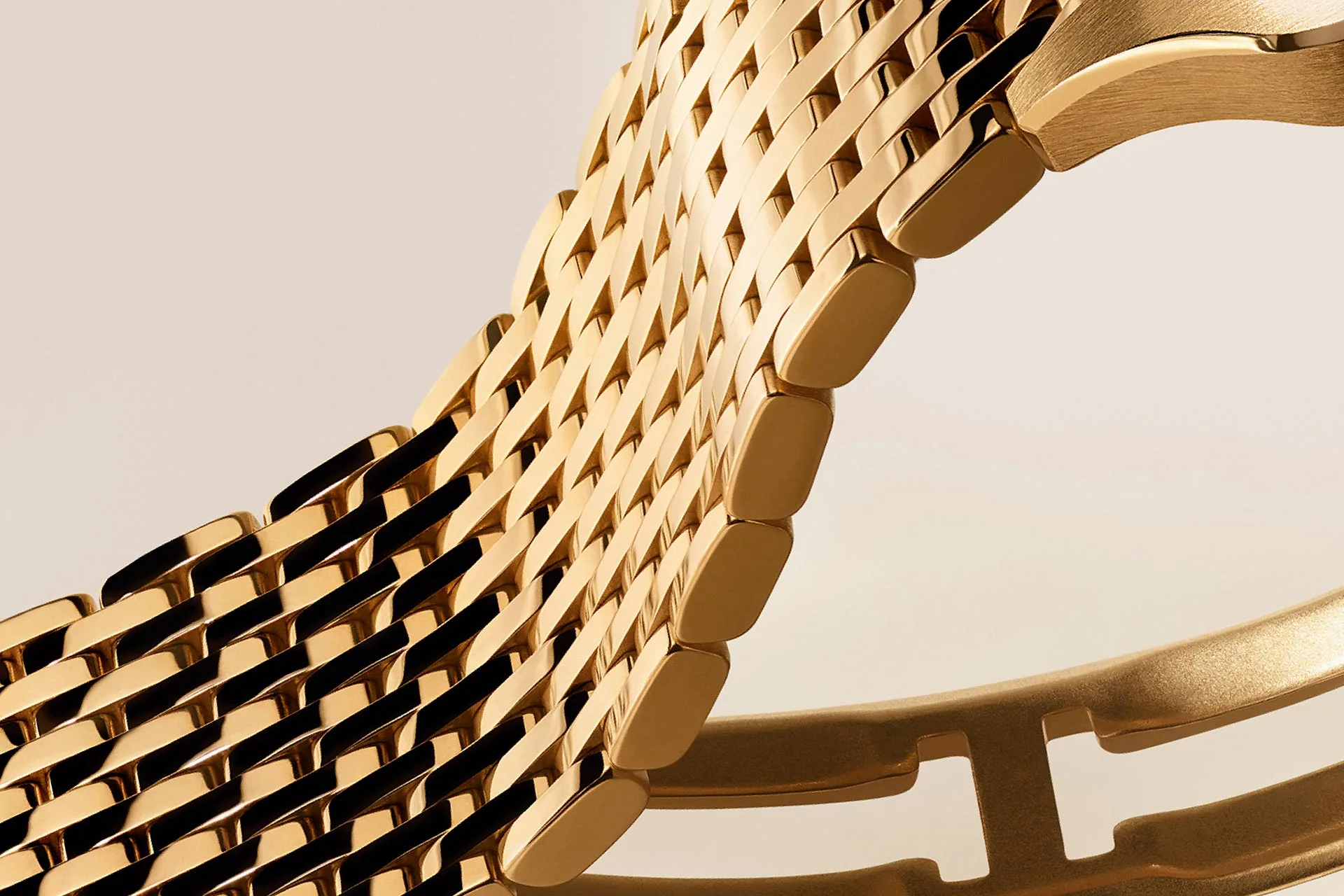
Available in 950 platinum and 750 yellow gold, these sumptuous bracelet models transform the wearing experience entirely. They feel less like an alternative to the strap and more like a natural evolution of the watch itself.
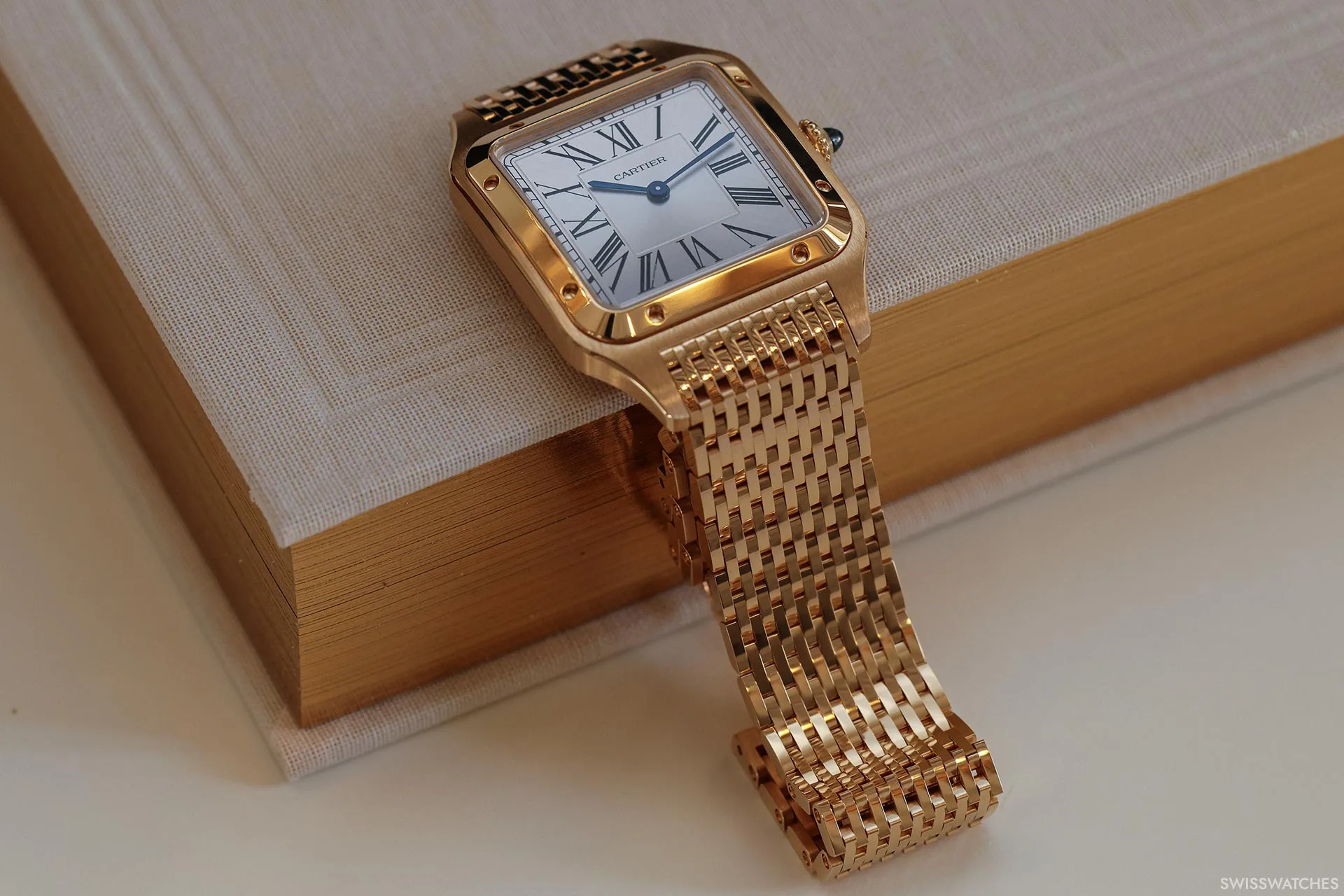
Alongside these, Cartier continues to offer strap versions, preserving the Santos-Dumont’s traditional character. These come fitted with semi-matte alligator leather straps in navy blue or anthracite, paired with either a yellow gold or steel pin buckle.
The new Santos-Dumont range spans a broad spectrum of materials (and prices), reflecting its dual identity as both design and watchmaking icon. At the upper end sits the platinum bracelet model (ref. WGSA0124), priced at €60,500, featuring a silvered sunray dial, matching platinum bracelet, and is crowned with a ruby cabochon.
The yellow gold bracelet models include the obsidian dial variant (ref. WGSA0123) at €51,000 – arguably the most visually striking piece in the collection – and a silvered dial version with sunray effect (ref. WGSA0122) at €48,100.
More classical strap-based options offer a comparatively accessible entry point: a yellow gold model on navy alligator leather (ref. WGSA0139) at €13,900, and a bi-metal gold-and-steel version (ref. W2SA0046) at €7,800. Both editions showcase a silvered dial with sunray effect alongside blued-steel sword-shaped hands.
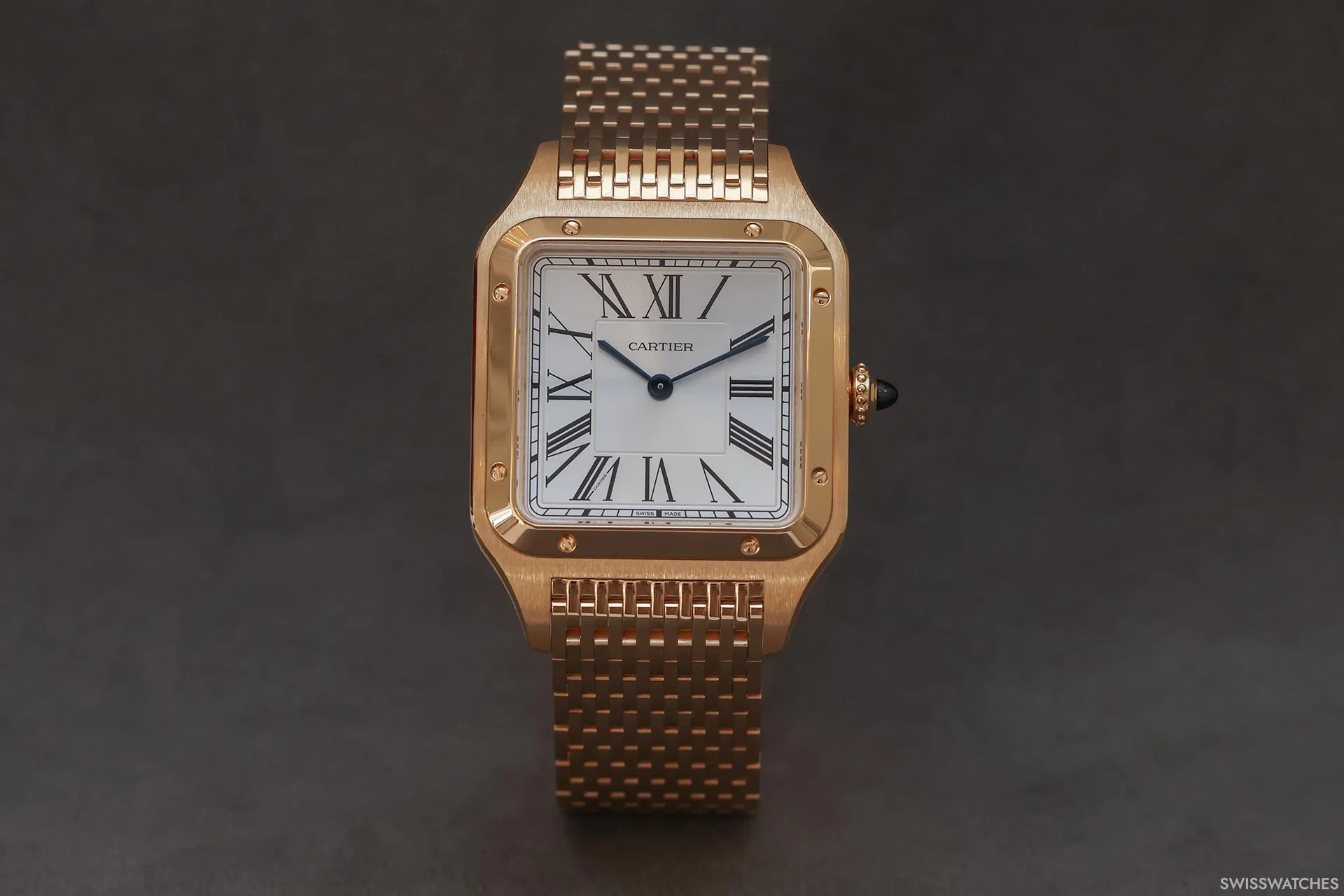
Across all references, sapphire crystal and a water resistance of 3 bar (approximately 30 metres) ensure everyday practicality, reminding us that the Santos-Dumont watch’s roots lie as strongly in practicality as the pursuit of beauty.