Norqain Freedom Chrono Enjoy Life „Sprinkles“ brings colourful sprinkles, luminous details and summer character to the Freedom Chrono.

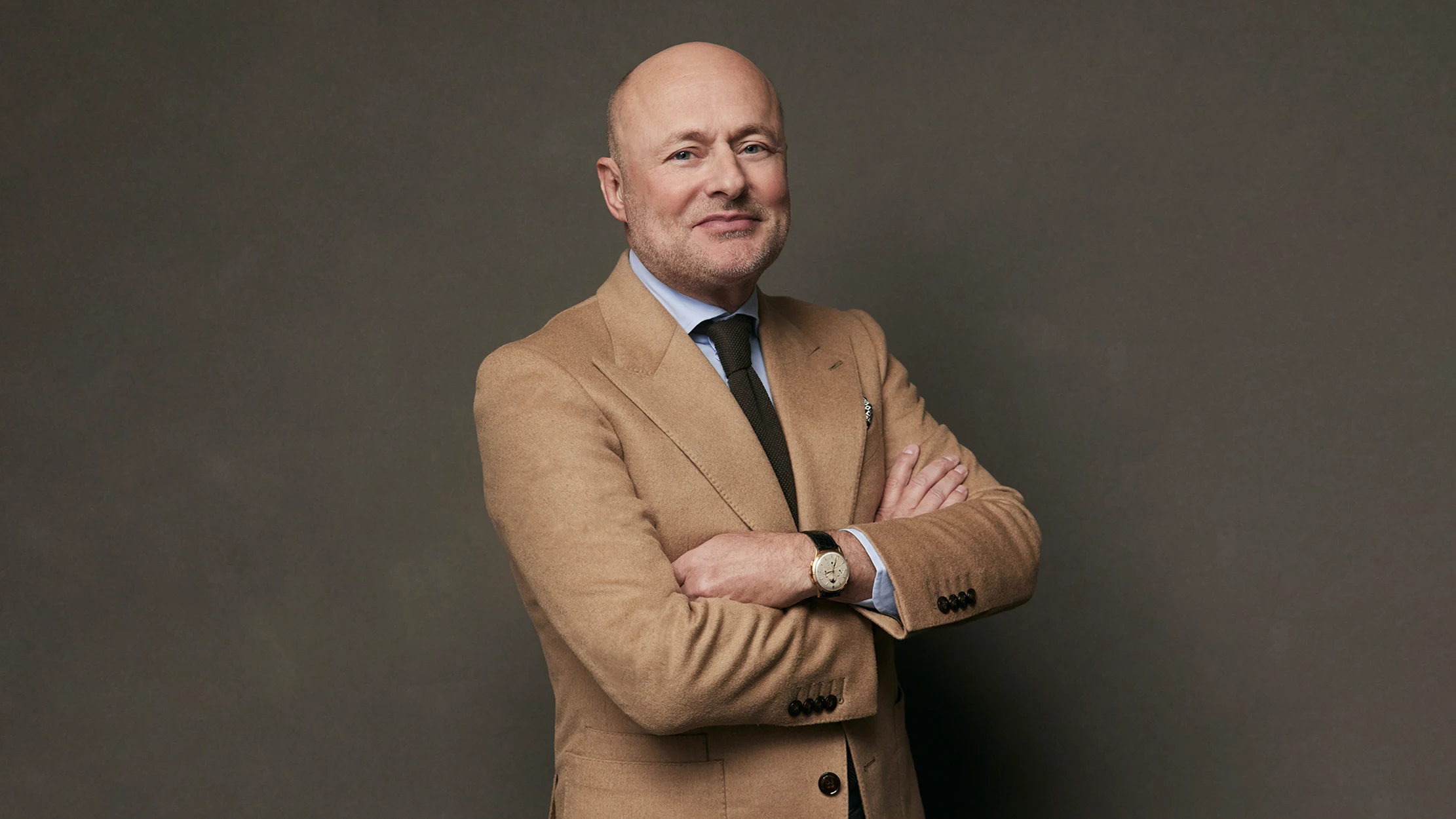
Geneva is the city of watchmaking, and Rue du Rhône is its street of watch boutiques and experiences. Bucherer is there, with the Patek Philippe Salon next door and Richard Mille directly opposite, followed by Cartier and Gübelin, Jaeger-LeCoultre and Piaget. In future, this is precisely where Universal Genève’s first boutique will be located: at number 15. Where else? Georges Kern, who leads Breitling, Gallet and Universal Genève under the umbrella of his “House of Brands”, is known for thinking big. It should therefore come as little surprise that Kern has ambitious plans for the marque behind models such as the Polerouter, Compax and Cabriolet. Founded in 1894 and long regarded by vintage collectors as a jewel, Universal Genève had, until recently, become an icon of a bygone era.
That is set to change. For the interview, Swisswatches Magazine meets Georges Kern, the brand activator in excellent spirits, at precisely this address: number 15 on Rue du Rhône, which, during Watches and Wonders, has been turned from a building site into a pop-up showroom. Once the watch enthusiasts from around the world have left again, renovation work will begin here.
Georges Kern has only just presented his first Universal Genève watch collection to the public: dozens of different references, for men as well as women. Just days later, half of the targeted annual production has already sold out. The first major step has been taken.
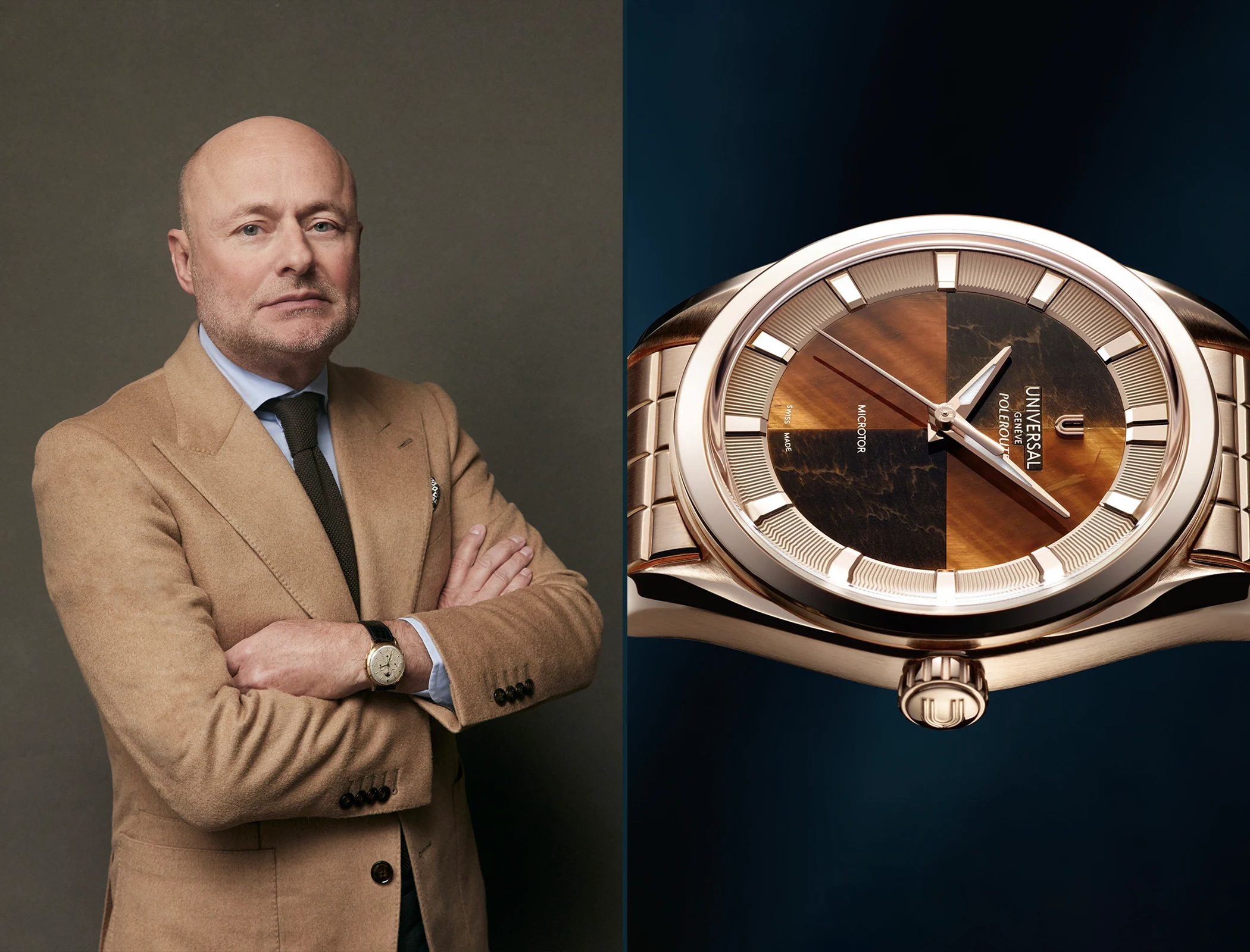
Before Georges Kern explains his concept for “UG”, he picks up a rose-gold Polerouter with a tiger’s eye dial and leads his visitor out onto the street, into the sunlight. Kern is, after all, not only a gifted salesman, but also a product man. And he knows that the effect of a watch design and dial inside a boutique is one thing; out here, in daylight and amid everyday life in Geneva, the Universal Genève relaunch appears even more powerful.
In essence: there is a sense of relief. Firstly, because everything has finally been unveiled. And secondly, because the reactions have been overwhelming. I have been part of this industry for several years now, but I have never experienced anything comparable. The level of interest is enormous – both among end clients and our retail partners.
That is correct. We are initially planning around 2,000 watches, roughly half of which have already been allocated online and secured with deposits. That is an exceptionally positive signal. Evidently, what we have been working on over the past two years is now also resonating strongly internationally.
A new beginning naturally often comes with critical voices, particularly regarding pricing. But this discussion usually becomes more nuanced once one considers the background: the production of a micro-rotor alone costs us between 2,000 and 3,000 Swiss francs. That makes clear just how demanding it is. How, then, could one offer an entire watch for 6,000 Swiss francs?
Yes, of course that desire exists – and I also read comments such as, “For the price of a new Universal, I can buy at least two vintage models.” However, that comparison only makes sense to a limited extent. On the one hand, prices in the vintage market have also been rising significantly for years; on the other, the products differ fundamentally in technological terms.
Today’s watchmaking is based on an entirely different technical foundation. As a result, the price level of the new models is inevitably higher. In addition, I made it clear from the outset that our price segment would sit well above Breitling’s – the aim was never to compete in the same category. Two brands in the same segment would make no sense for us.
And not least, the decision in favour of a micro-rotor, or three-quarter rotor, was also a consistent one. Had we decided against it, the criticism would probably have been considerable. That is why I also emphasised early on that there would be a micro-rotor.
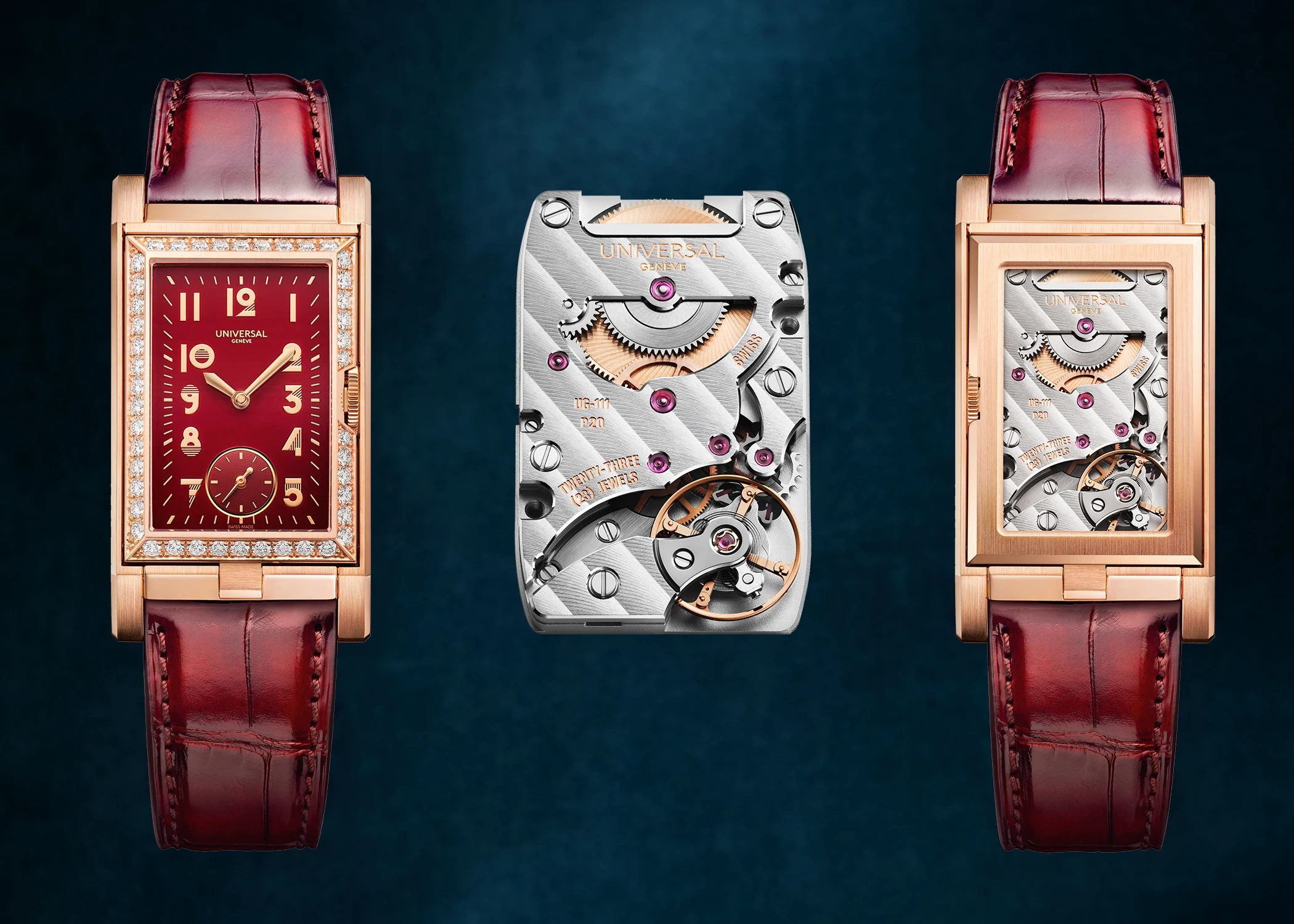
Yes, the size of the oscillating weight is necessary in order to achieve a contemporary power reserve of 72 hours – and to do so with a movement height of under 4 millimetres. We examined and calculated various approaches in detail, ultimately reaching the conclusion that there was simply no other way. For this combination of performance, proportion and elegance, the three-quarter rotor is the only solution.
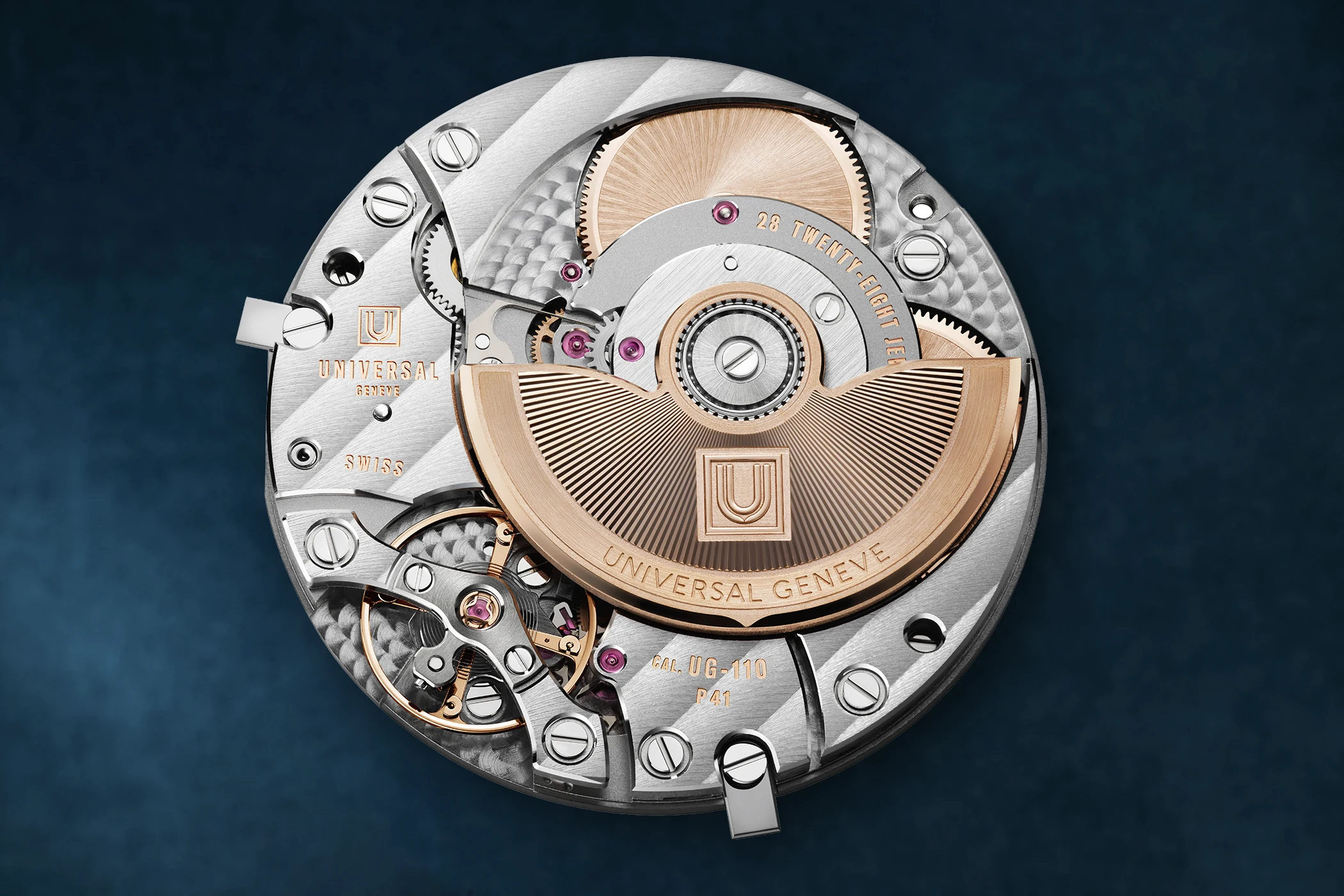
With Gregory Bruttin, Universal Genève has brought on board the industry’s most accomplished specialist in micro-rotors. Under his direction, both the automatic calibre and the chronograph calibre were developed by the Maison itself. These are proprietary calibres, conceived exclusively for Universal Genève.
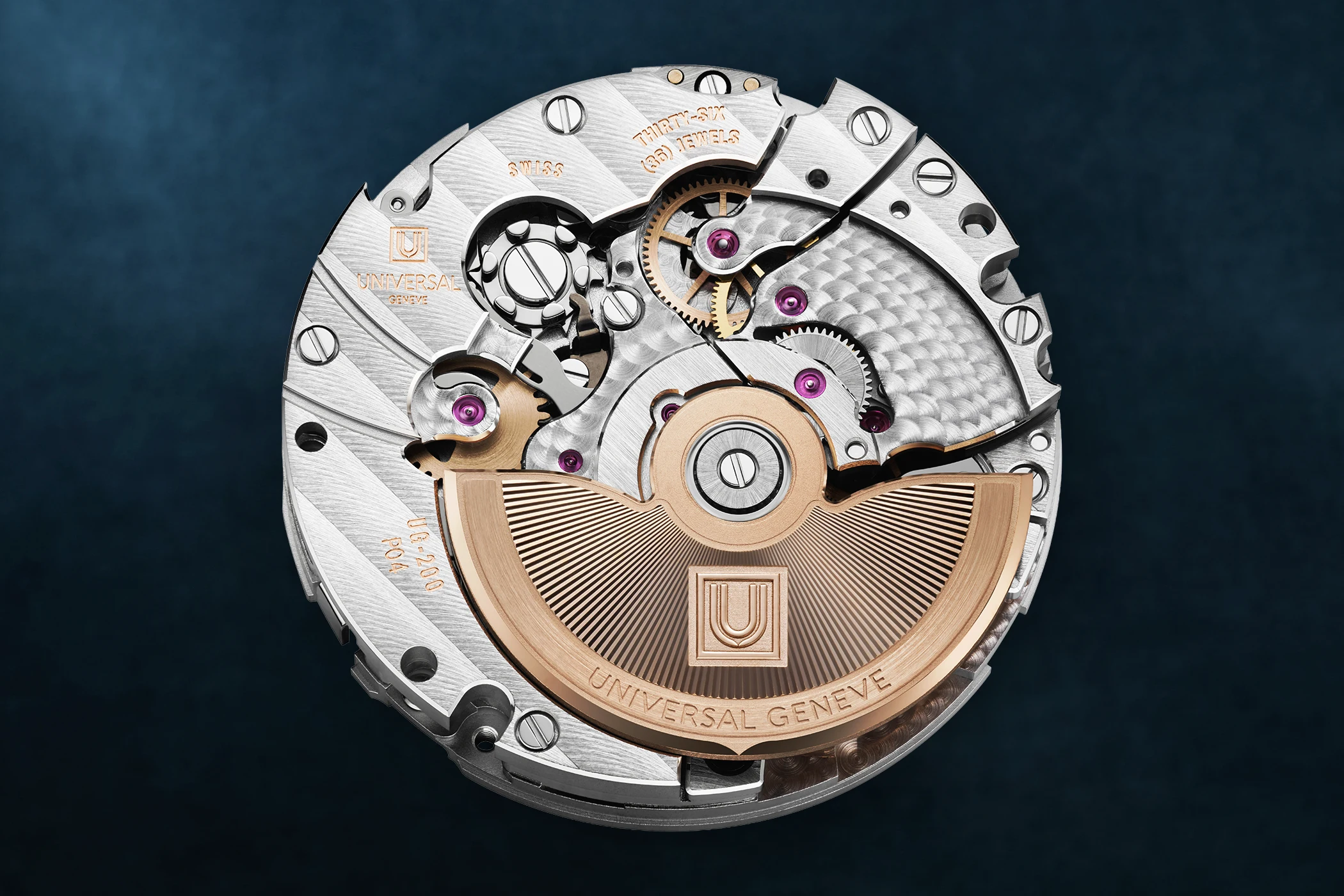
At Universal Genève, the micro-rotor and the chronograph are two of the brand’s iconic complications, so it was an obvious step to bring these two areas of savoir-faire together in a single movement. Historically, however, Universal never had a chronograph with a micro-rotor. With the new UG-200, we have achieved precisely that.
In doing so, we are deliberately drawing on a proven technological platform from Breitling, with the aim of ensuring maximum reliability. On this basis, the movement was systematically adapted to the specific requirements and design DNA of Universal Genève. Around 90 per cent of the components were developed specifically for this calibre, underlining its high degree of independence and technical differentiation.
Production is carried out in collaboration with selected Swiss specialists. The UG-110 for the Polerouter is manufactured by LTM, Le Temps Manufacture, while the UG-200 for the Compax and the Disco Volante is produced by Breitling Chronométrie. This was a deliberate decision, allowing us to realise the movements with the highest levels of reliability, precision and finishing quality – without compromising our own standards in terms of technology, design and execution. In principle, this now makes us the only brand to offer both an automatic movement and a chronograph movement with a three-quarter rotor.
In my view, anything else would have been a gigantic mistake. We did not want to launch exclusively with the Polerouter or the Compax, but deliberately set out to create the broadest possible spectrum, so as not to find ourselves immediately boxed in again. Because if you arrive with just one line, you will also be identified solely with that one line.
That makes it all the more important to present a versatile range, with clearly relevant products – which will, of course, be supplemented in the future, because we are only at the beginning here and have a great deal planned.
We developed the opening portfolio together with our “Advisory Board”, consisting of around 25 collectors. Interestingly, they are all collectors who also own brands such as Rolex or Patek Philippe. From the outset, my clear instruction to this committee was: “Please do not tell me what we should do, but rather what we must under no circumstances do, and which mistakes we absolutely have to avoid.”
They said: “Georges, if you make a watch with a diameter of more than 39.5 millimetres, we will walk out of the room.” So we have already avoided that, with the exception of the “Disco Volante” – but that size is historically determined, and, to be honest, it was precisely those “Advisors” who slipped that one in. (laughs)
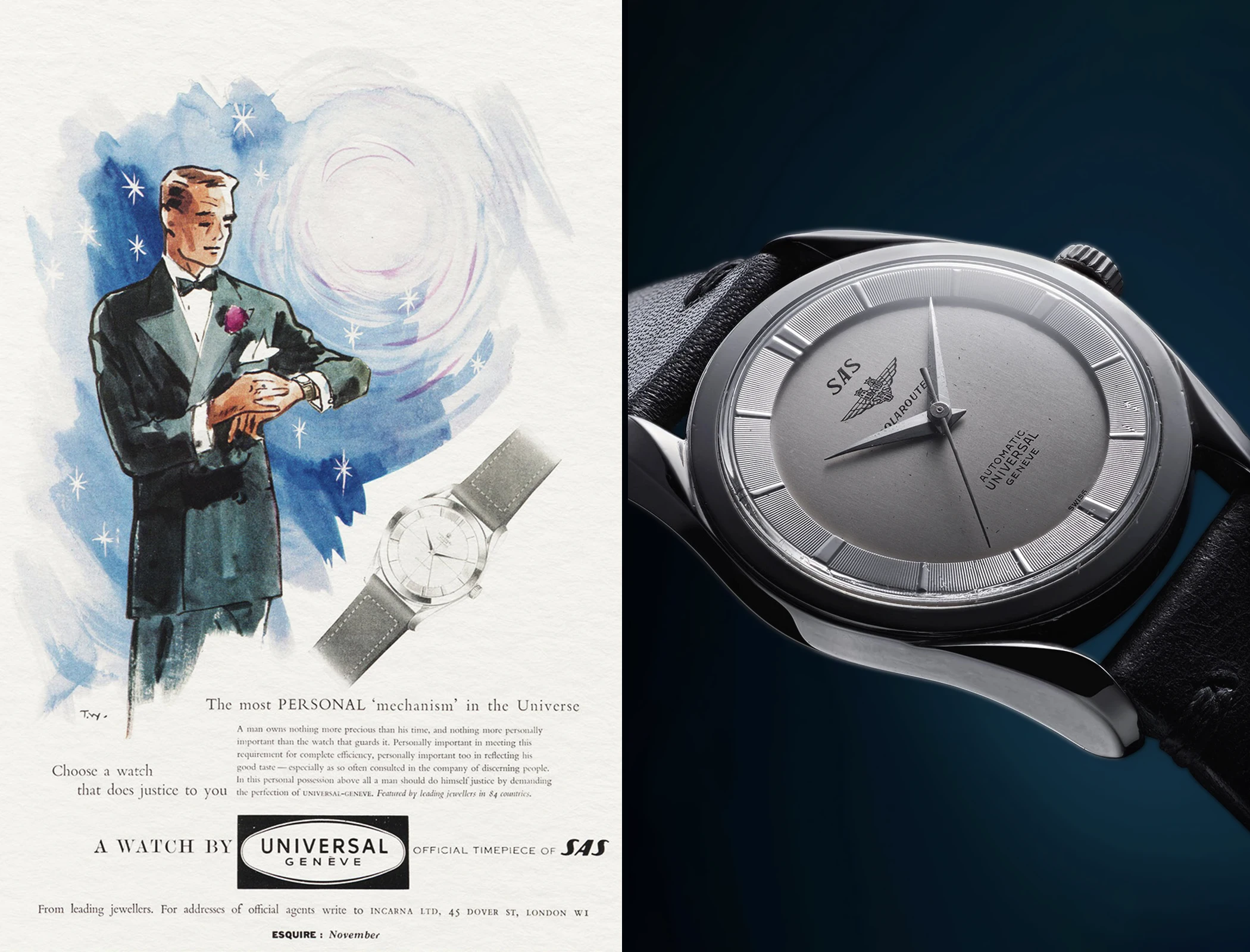
This slogan from the 1950s was an absolute trigger point for me. In French, it sounds very elegant; in English it becomes the “Tailor of Watchmaking”, and in German the “Schneider der Uhrmacherei” – which immediately feels less charming. That is why we are keeping it in French. (laughs)
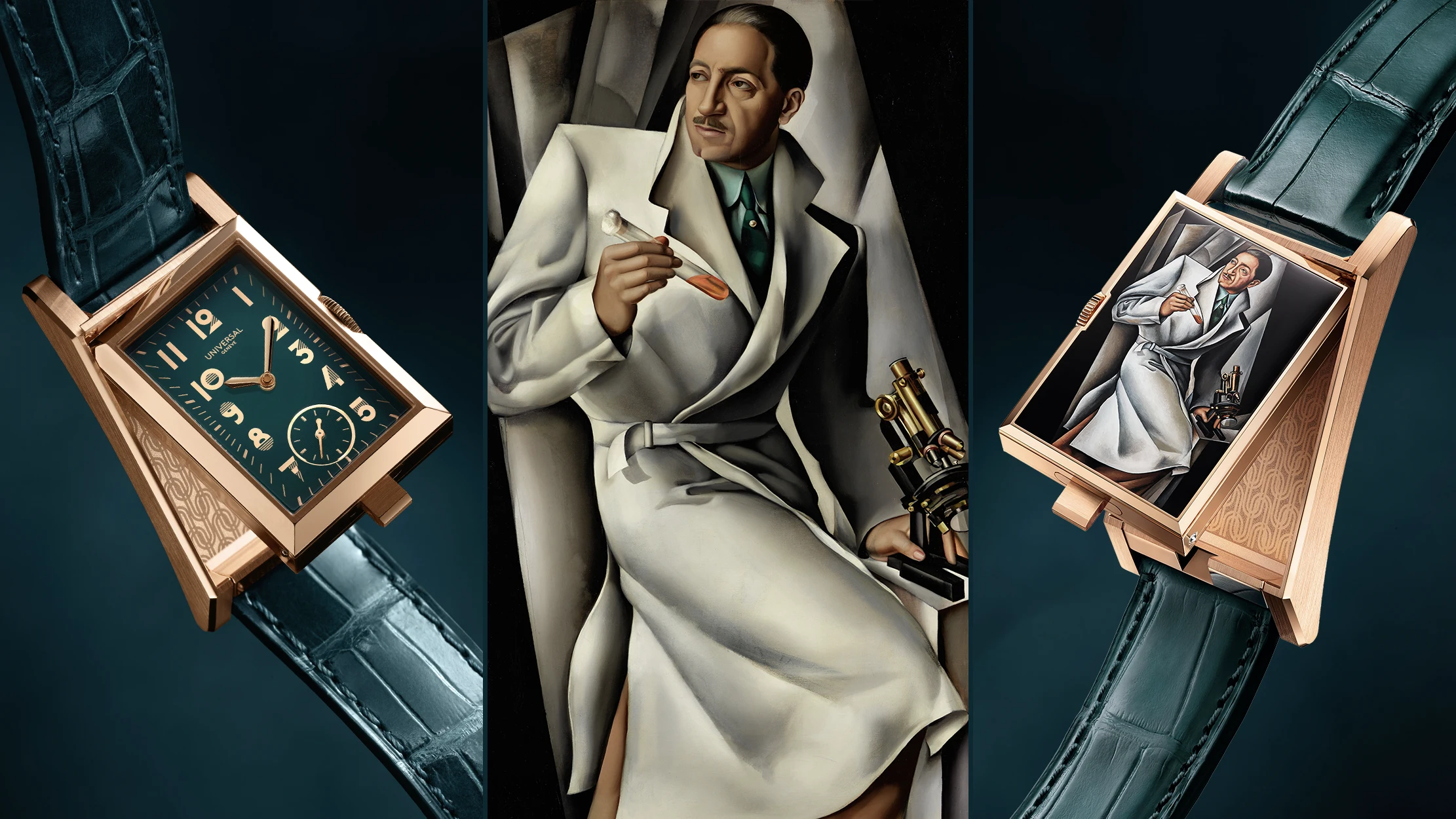
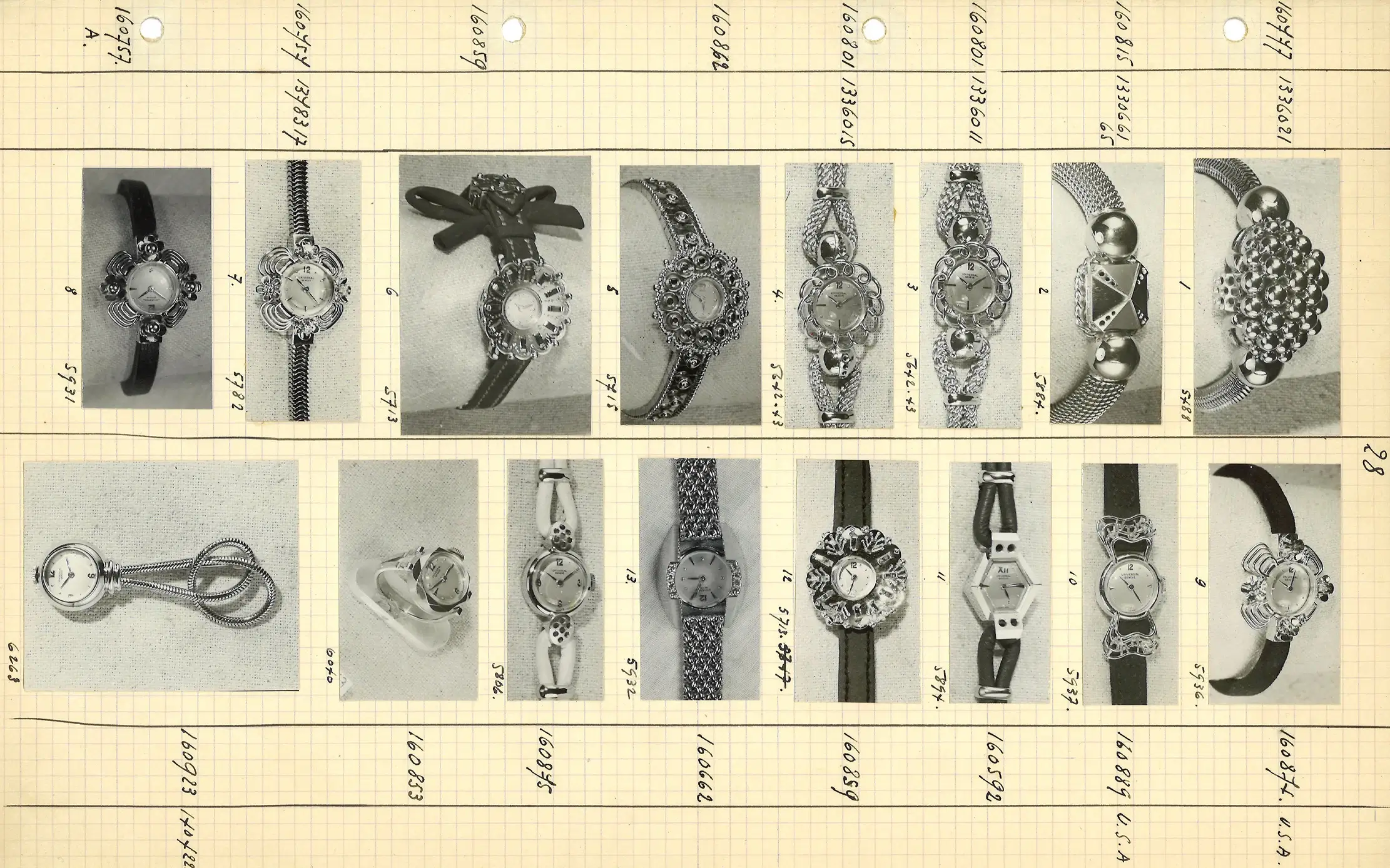
The approach allows us to translate everything from prêt-à-porter and capsules through to couture into watch form: from the regular collection to strictly limited individual pieces. This makes the brand easy to understand: 50 per cent men, 50 per cent women, plus this simple segmentation – it really could not be more straightforward. That simplicity is very important, regardless of the beauty of the products.
I have said several times already: it is probably the best thing I have done in my entire career. The mistakes I have made over the past 30 years have not found their way into it.
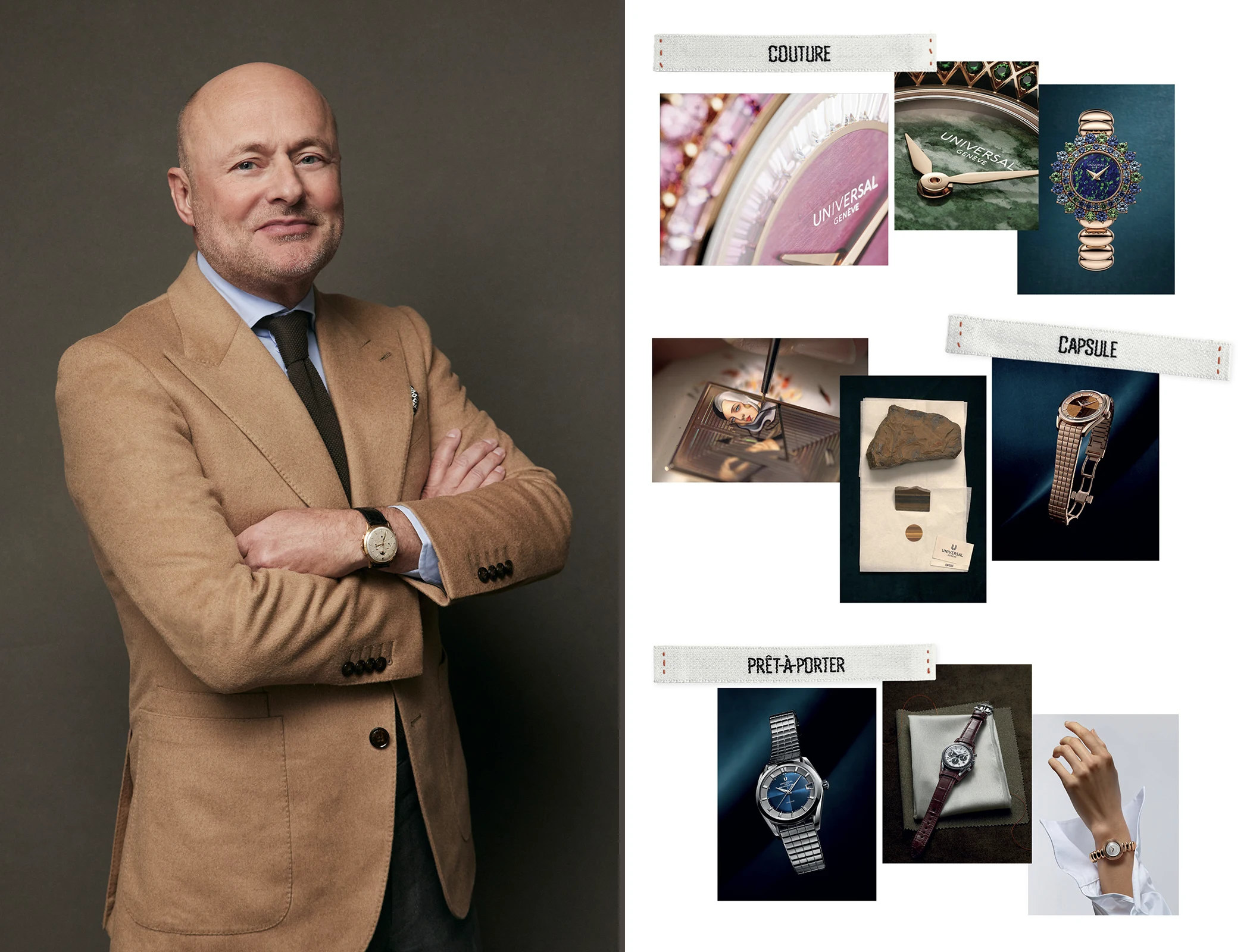
The slogan, the couture structure – and, connected to that, our design philosophy, which we describe as “Functional Beauty”. Our aim is to bring technology and design into harmonious balance, with aesthetics taking the leading role.
Over the years, I have seen many things in our industry that I question critically, such as the whole hype around “form follows function”. People simply want a beautiful product with a cool story. That is precisely where we come in.
For our approach within the high-end segment, I like to use an analogy from the automotive industry: on one side, you have Rolls-Royce or Bentley. They are very classic, beautiful and technically excellent, but also rather conservative in their appearance. On the other side are the yellow Lamborghinis and similar luxury bodies – everything that is very extroverted and loud.
What is missing in the watch industry is the middle ground between these two extremes. That is exactly where Universal comes in: tasteful, bold – and we want to make things that others cannot make, because they are trapped in their own brand prisons, where anything beyond the familiar immediately looks bizarre.
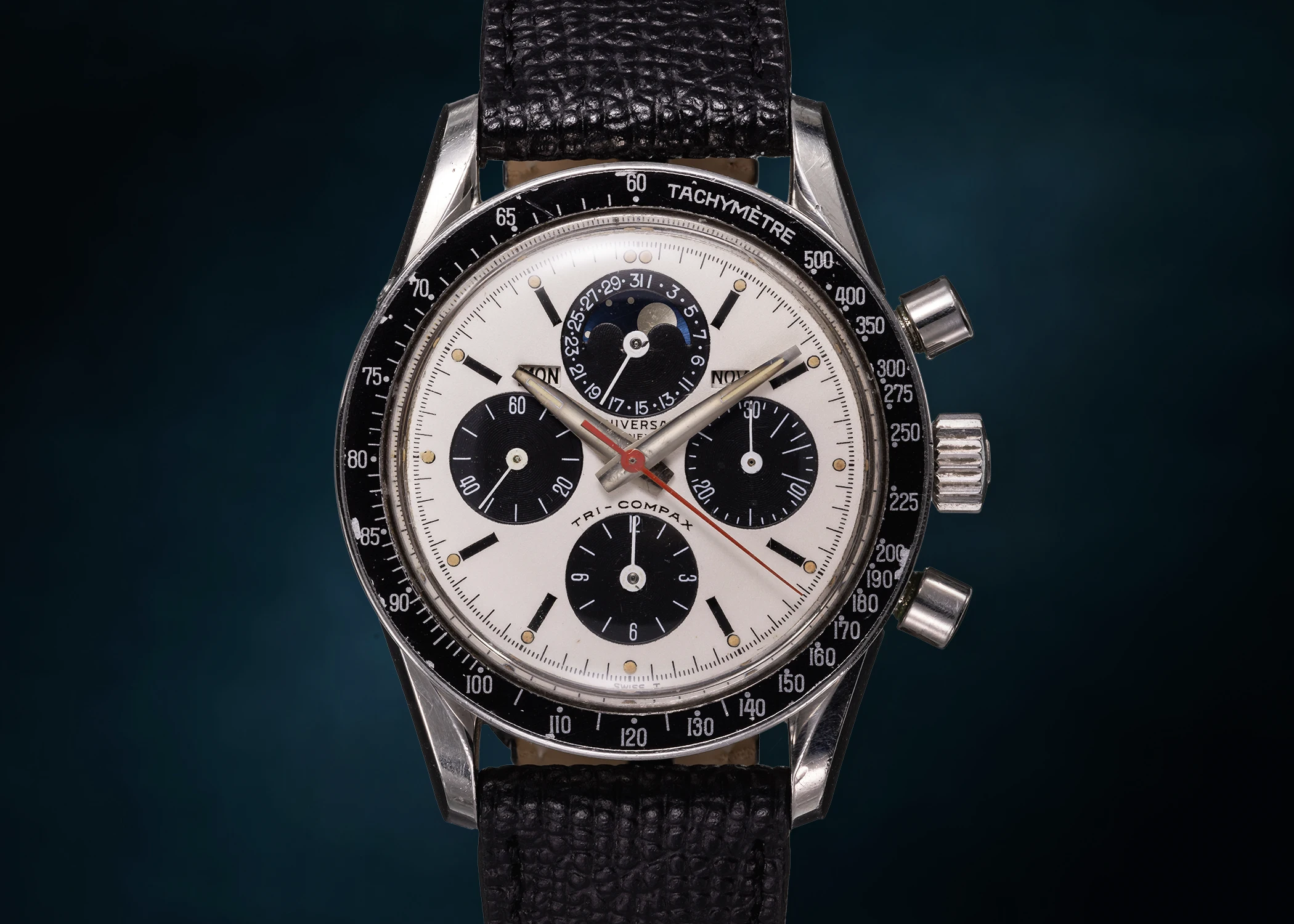
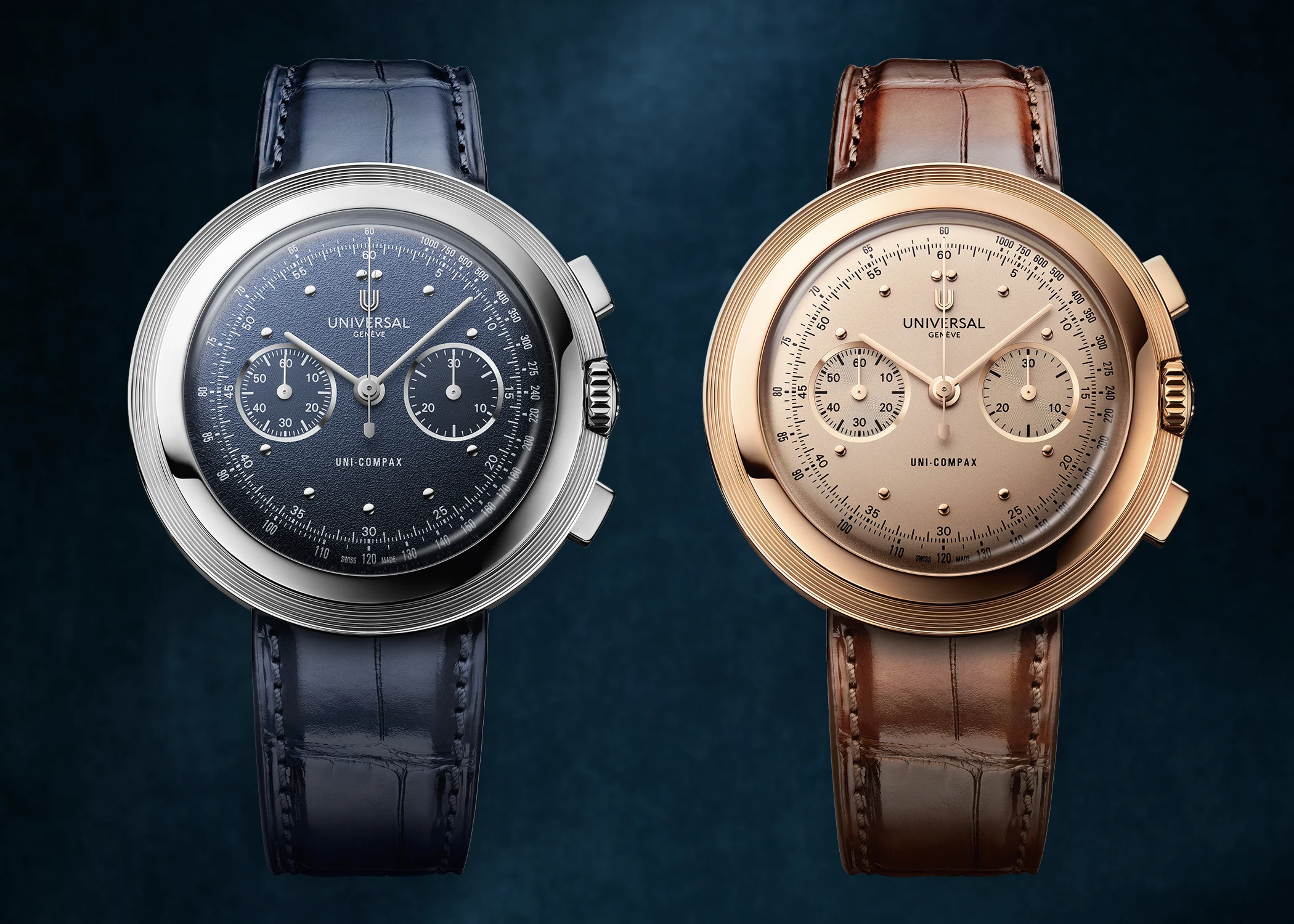
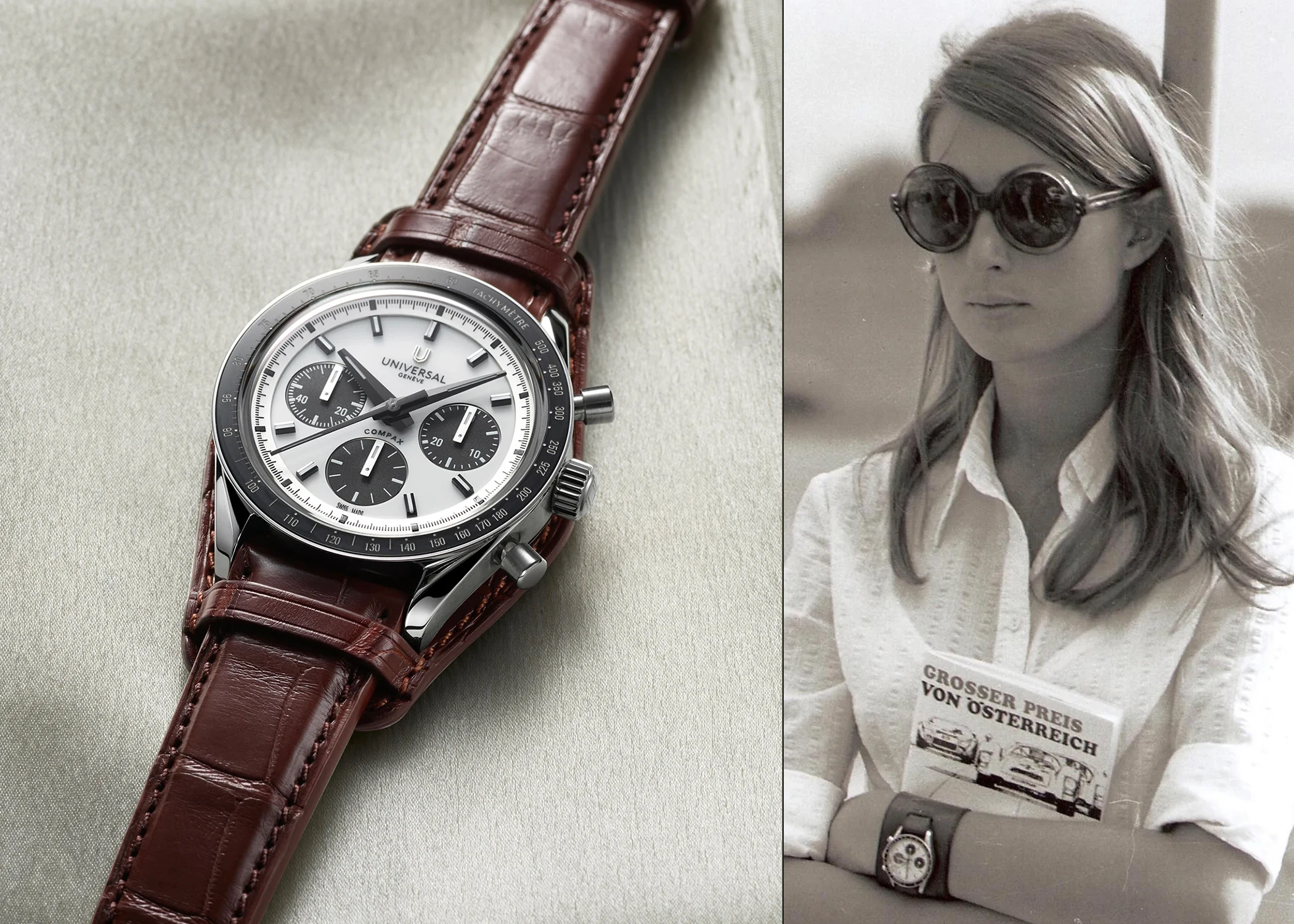
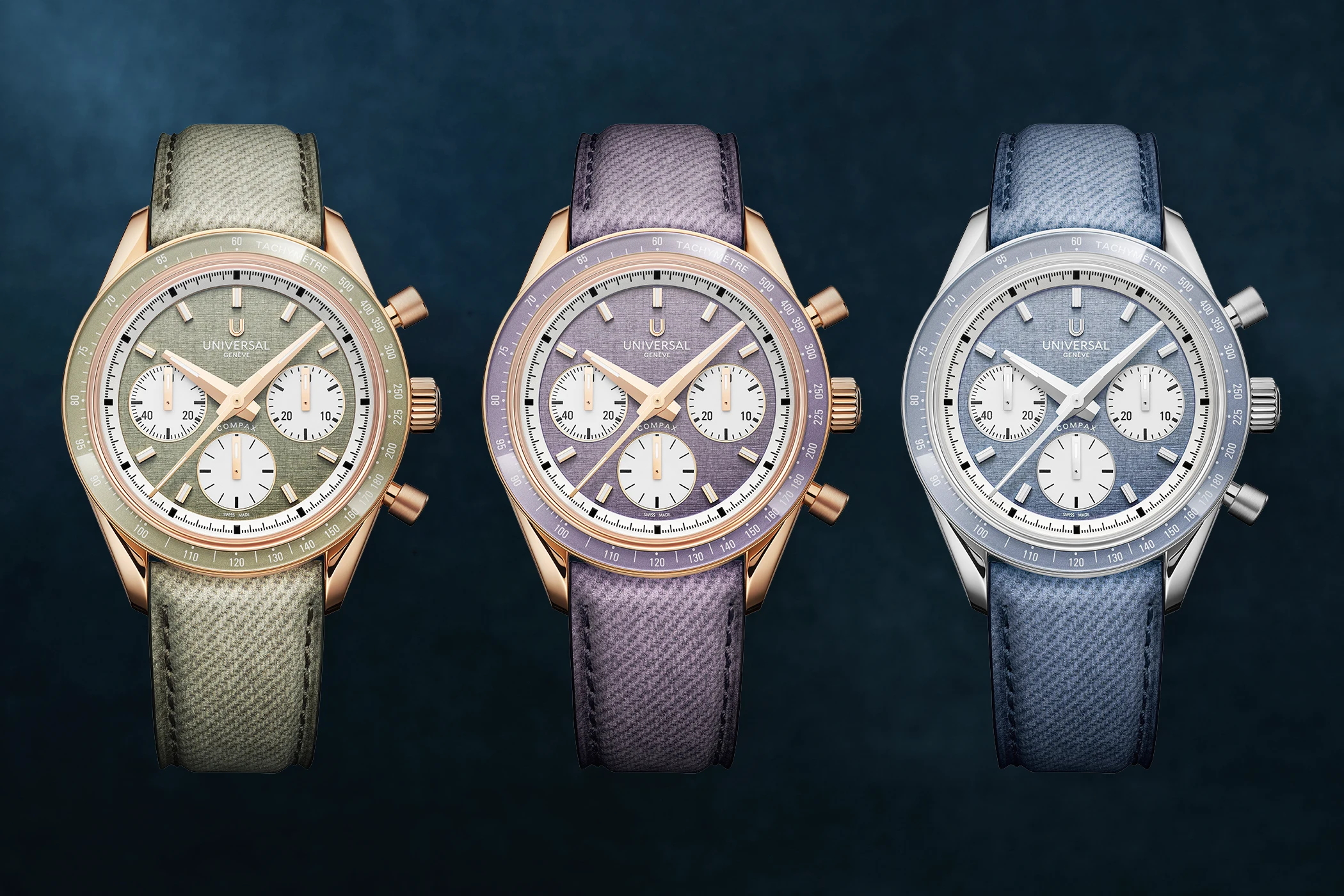
Well, we have the classic Compax, and we have combined it, as a strong seller, with the equally classic Bund strap associated with the famous Nina Rindt. But then we also have our “Capsule Collection”. Here, the Compax models feature dials with green, violet or blue linen textures. Our competitors could never do that in this form.
We, however, are taking the liberty from day one to launch products like these and to set our own standards in the process. As “Le Couturier de la Montre”, we will introduce new colours every year in limited editions – the colours of the respective season. Then you either have them, or you do not, and the following season there will be new ones.
We bring innovation with purpose and set ourselves apart through our aesthetics.
Yes, but ultimately, for us, it is primarily about the message embedded in the offer. Some models we will produce only five times, and in the couture segment we are even talking about unique pieces that may cost one or two million euros. But the foundation is formed by the Capsule collections and the prêt-à-porter range. We do not want to become a niche product. We may be starting with 2,000 pieces, but it will not stay that way; that figure will rise exponentially. To compare ourselves once again with a car manufacturer, at present we are a Porsche Targa: certainly exclusive and beautiful, but still commercially viable within this price segment.
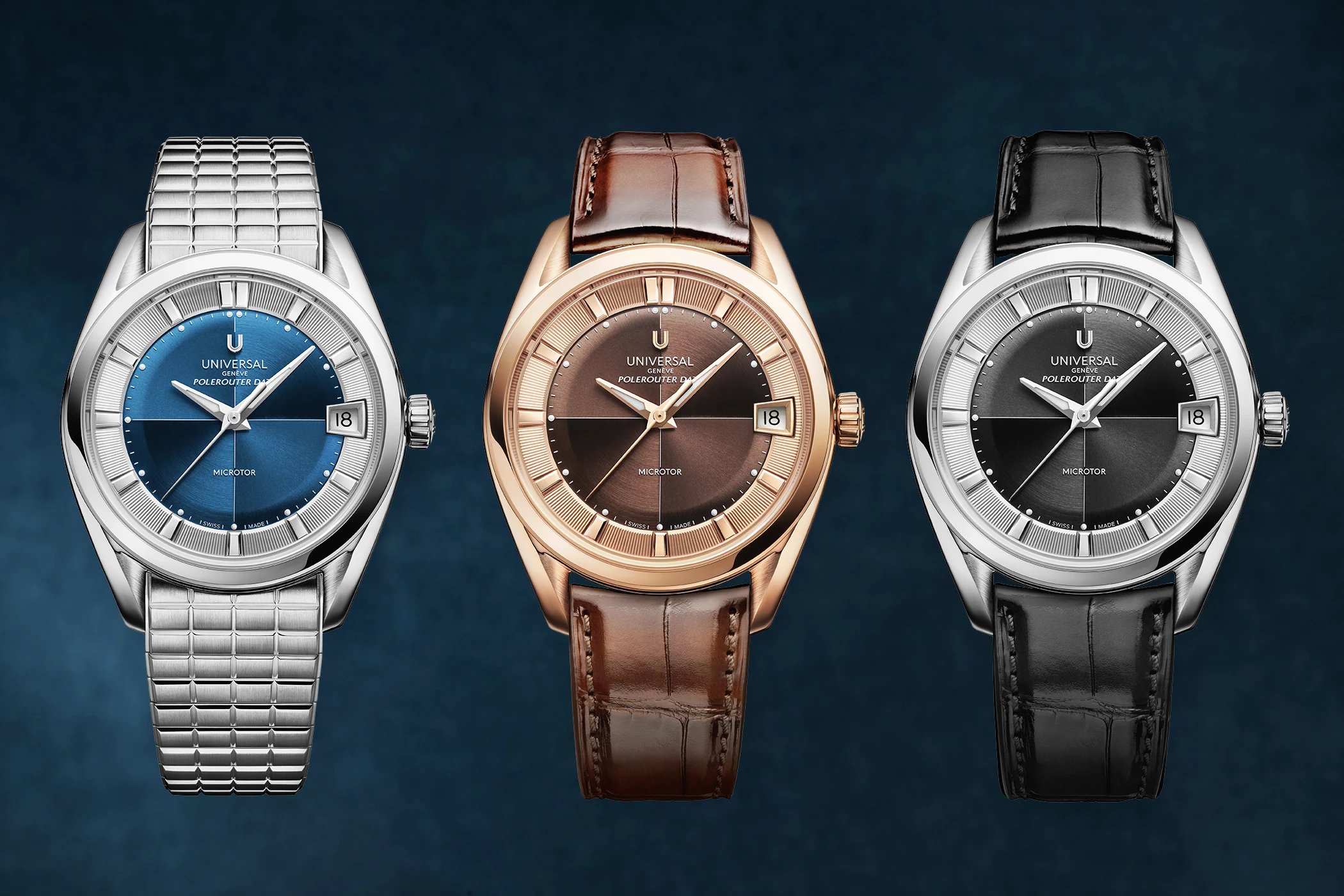
In all of this, we are not aiming our model families at the clientele of individual competitors. Of course, when looking at an angular Cabriolet, one can imagine which customers this watch might also appeal to. The Polerouter, meanwhile, is a difficult watch – in fact, probably the most difficult thing one can make. In developing it, we asked ourselves how Gérald Genta would design this watch today.
We have hours, minutes and seconds – that is all. Many others have that too, which makes it a highly complex segment. But throughout all of this, we do not have an “opponent” in mind. Instead, we would rather cover the entire spectrum, including a strong women’s segment.
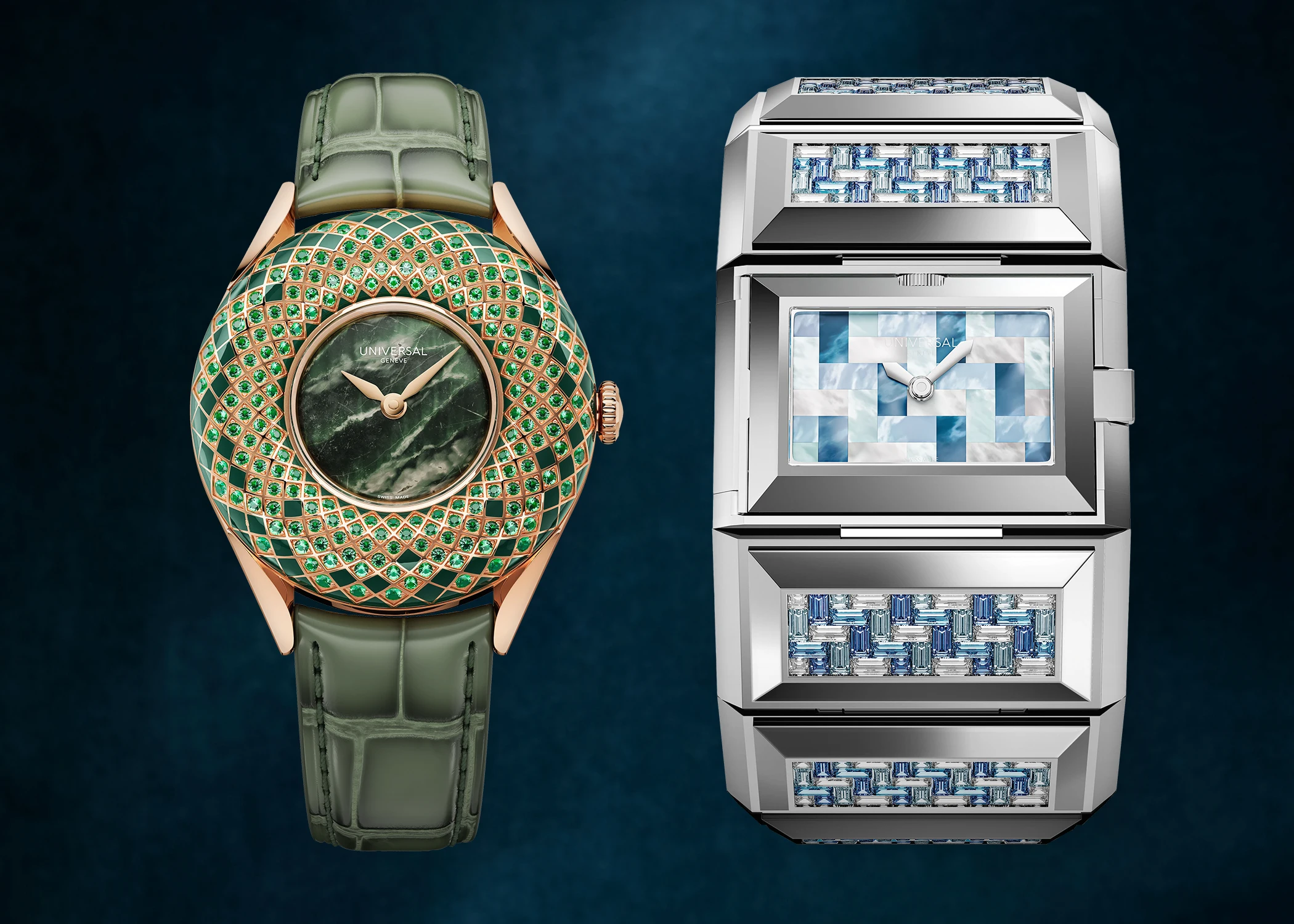
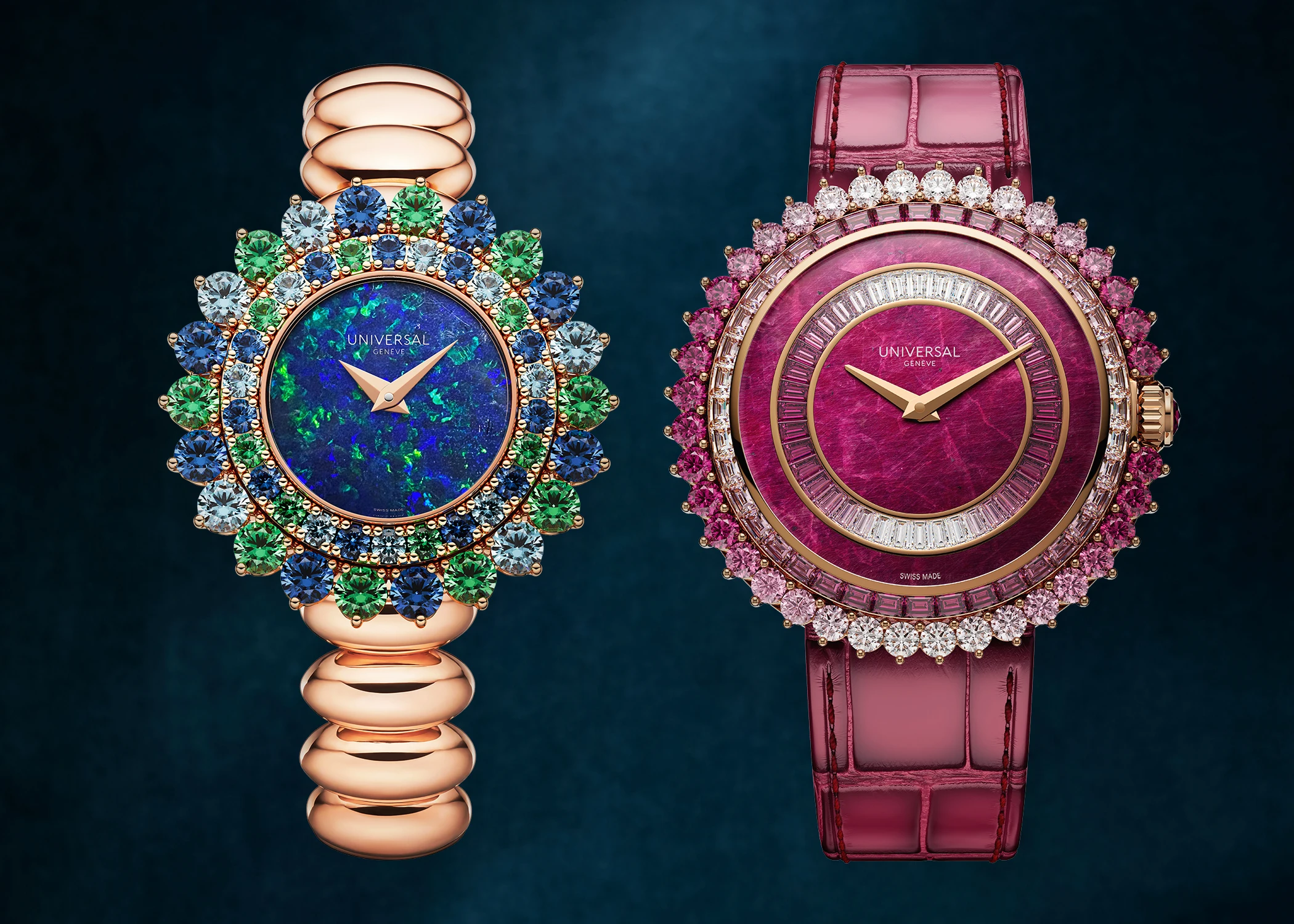
For me, and for us, this is simply not about fashion as a fashion phenomenon, but about the couturier as a comprehensive authority on design. That, after all, is what lies behind the craft phenomenon of haute couture. Of course, Chanel is fashion, but it is also craftsmanship, and the house is an icon in its own right.
There are so many timeless classics in fashion: think of Hermès bags or Chanel jackets. For me, fashion is not inherently synonymous with being “fashionable”, in the sense of rapid transience. When I think of fashion, I think of the quality of design, of permanence, and of designers such as Yves Saint Laurent, Karl Lagerfeld or Azzedine Alaïa.
Our first major boutique will open in September 2026 here on Rue du Rhône, in the very premises where we are currently sitting. We will begin the renovation work immediately after Watches and Wonders.
In total, we will have monobrand stores in key metropolitan markets such as Dubai and New York, which we will operate either ourselves or with partners. I also see India as a very exciting market. I was recently in South America, too, where I probably had not been for ten years. The level of wealth there is impressive, and at the same time one senses a great openness to, and demand for, products such as ours.
We will also be present in Germany, but very selectively – probably with just one strong partner in one city. Our priorities are the United States and England, France, the Middle East and Japan.
With Breitling, we are, of course, very strongly represented in Germany. Nevertheless, in this market there is sometimes a somewhat more reserved perception of this particular watchmaking culture compared with other markets such as France or Italy, which are very receptive to this luxury segment. In Italy, too, people are fighting over our watches; there are enormous collectors there.
My best partner from Italy was here with his clients yesterday, and they immediately ordered four or five watches – without any discussion. That is exactly what makes the difference in this segment: with a watch for 6,000 euros, people still negotiate over discounts, but here there is no economising – the clientele simply has the means.
For me, the technical innovation lies in our base movements. At the same time, it is not our ambition to enter the segment of highly complex complications. We ask ourselves, with confidence, an essential question: what do people really want to buy? They buy an image, a story, a status symbol – and they buy beauty.
The steel Polerouter is such an unbelievably beautiful watch, and every one of my retail partners confirms this when they say: “Our customers already have pretty much everything that exists, and in various executions. Now the time has come for something new, and the Polerouter will be it. We could immediately call 100 or 200 people on the spot.”
But above everything we have done over the past few years was also the question: how can we distinguish ourselves from the competition, how can we bring real added value? And without resorting to any Cabinotiers-style craft narratives that already exist anyway.
That depends on what the team can deliver and how many movements we can produce, because we want to offer top quality. But Audemars Piguet, Vacheron Constantin and Richard Mille are not niche brands. And if Audemars Piguet can make 50,000 watches a year, then I see no reason why we should not be able to do the same.