Hermès Arceau Samarcande: a minute repeater, crystal dial and horse motif combine haute horlogerie with the Maison’s historic heritage.

By its very nature, a minute repeater is not suited to flat cases. It requires hammers, gongs, levers, a rack, its own power source, a regulator and sufficient space to ensure the sound is not muffled within the case. Added to this is a problem that is less obvious: the watch must not merely strike; it must play out a precisely tuned sequence of hours, quarters and minutes in clearly distinguishable tones. A flat minute repeater is therefore not a conventional case of simple downscaling or miniaturisation. It involves a constant balancing act between pitch, sound, stability, usability and legibility.
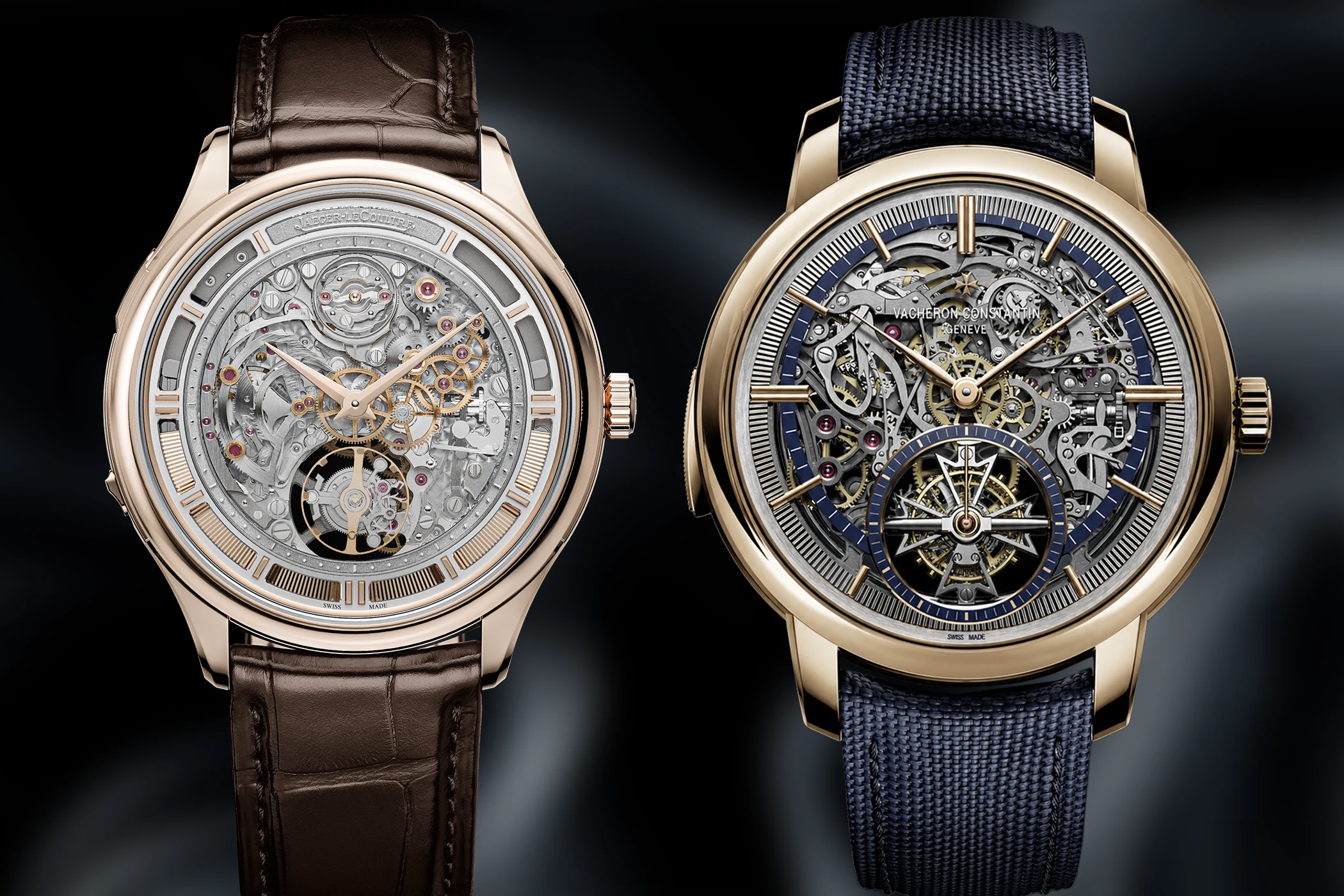
This process is particularly evident in two recent new releases: the Jaeger-LeCoultre Master Hybris Mechanica Ultra Thin Minute Repeater and the Vacheron Constantin Les Cabinotiers Minute Repeater Tourbillon Skeleton, as each combines the minute repeater and tourbillon complications. Both deliberately showcase their movements whilst striving for the greatest possible wearability; yet they appear as though they originated from entirely different design studios.
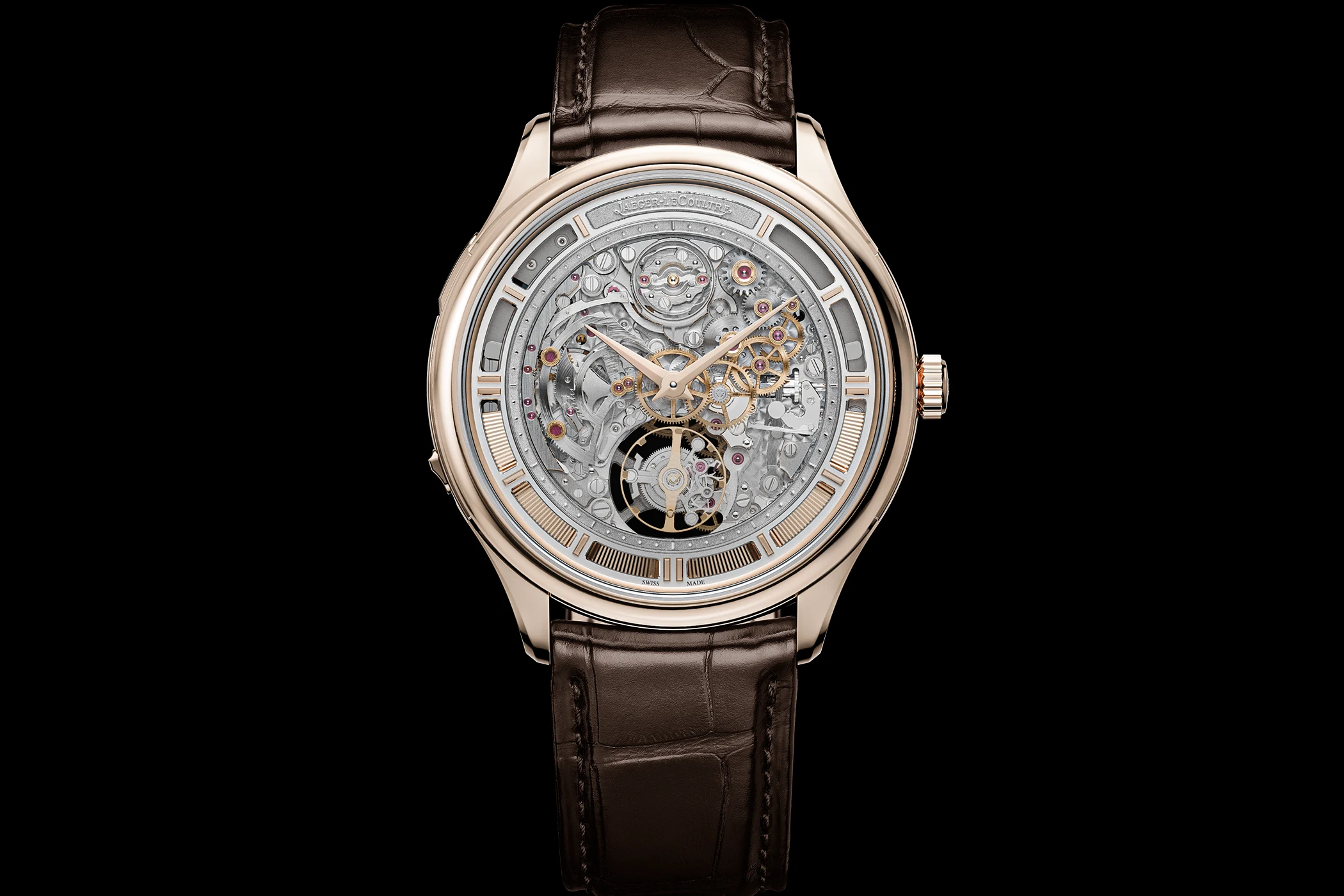
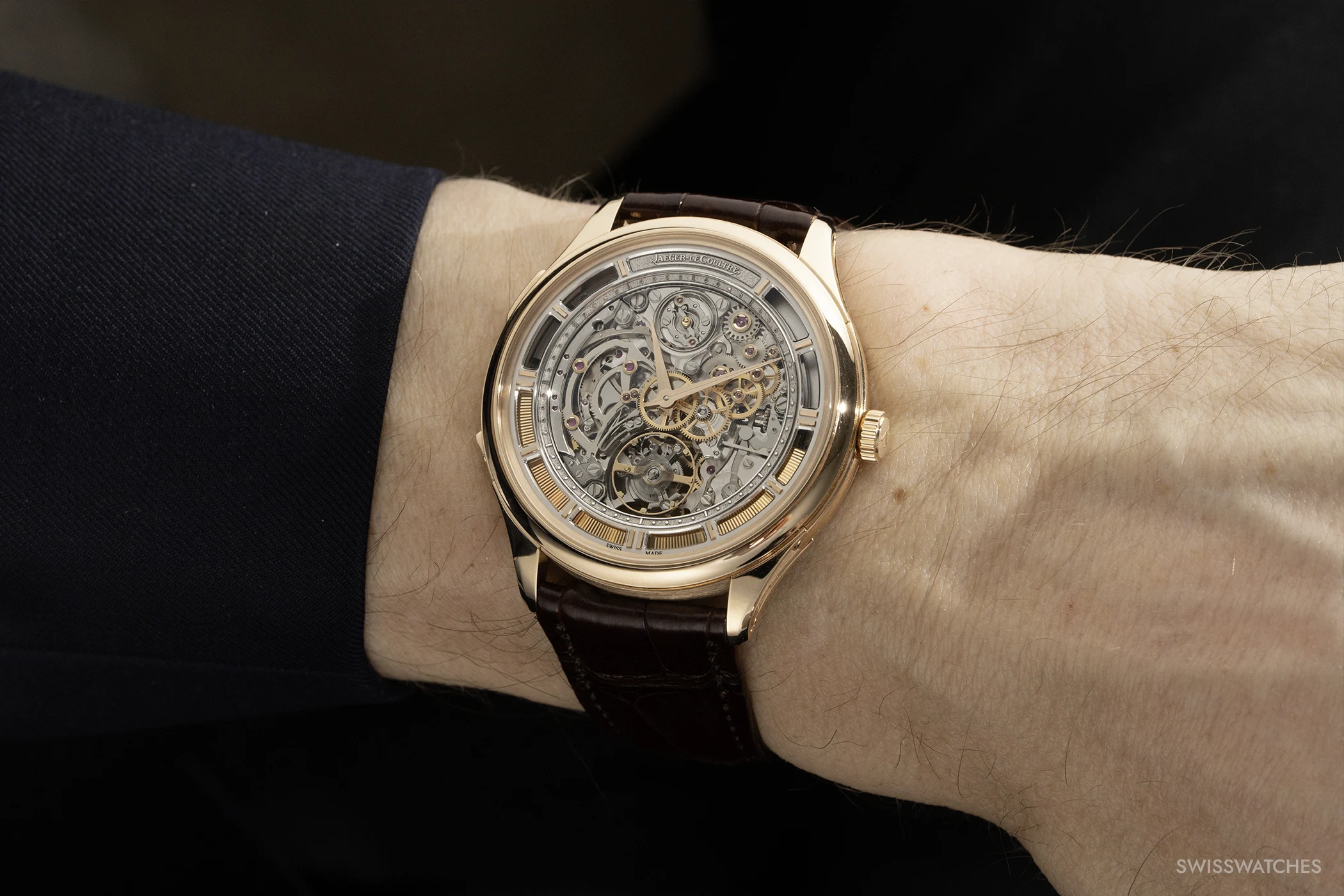
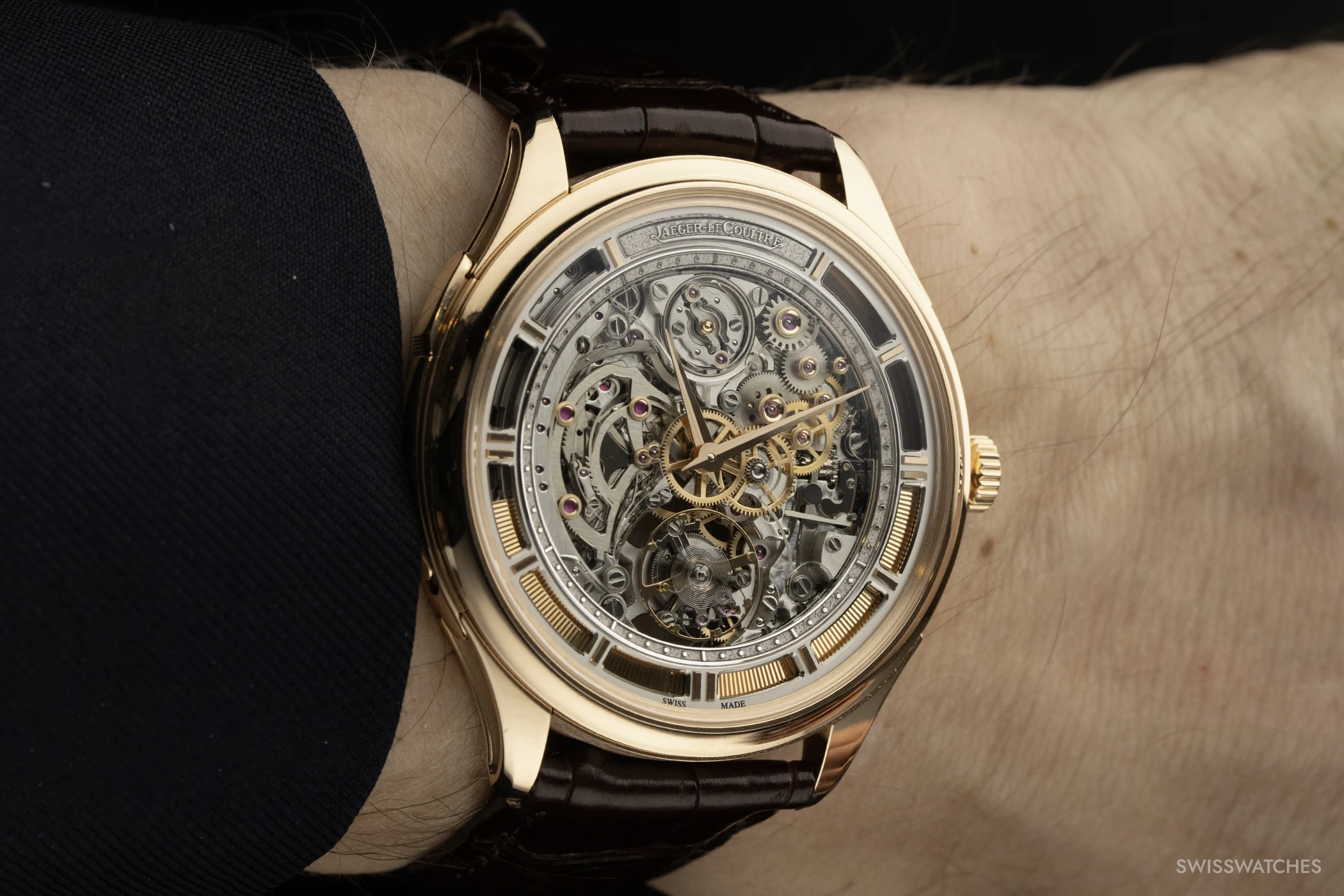
The Master Hybris Mechanica Ultra Thin Minute Repeater is centred on the concept of maximum reduction: how flat can a highly complicated watch become whilst ensuring that every complication still functions fully and fulfils its purpose? The result is a 41.4-millimetre case in 18-carat rose gold, just 8.25 millimetres thick. Inside beats the automatic Calibre 362, comprising 537 individual movement components and measuring 4.7 millimetres in height. Like its predecessor, it is thus considered one of the flattest wristwatches in the world to combine a minute repeater with a tourbillon. What is impressive is not only the case height of 8.25 millimetres, but also the fact that Jaeger-LeCoultre has managed to achieve this combination with automatic winding. For a watch featuring a minute repeater, flying tourbillon and automatic movement, this means a great deal of technology packed into the most confined of spaces.
The key point is not that many components have been made smaller, but that Jaeger-LeCoultre arranges the individual parts in such a way that fewer of them overlap. The minute repeater is not positioned as an additional layer on top of a basic calibre, but is directly integrated into the construction. The automatic winding mechanism does not use a central rotor that circles above the movement and takes up height, but rather a peripheral rotor. It moves along the edge of the calibre, winds the mainspring and keeps the mechanism fully visible without adding to the overall height.
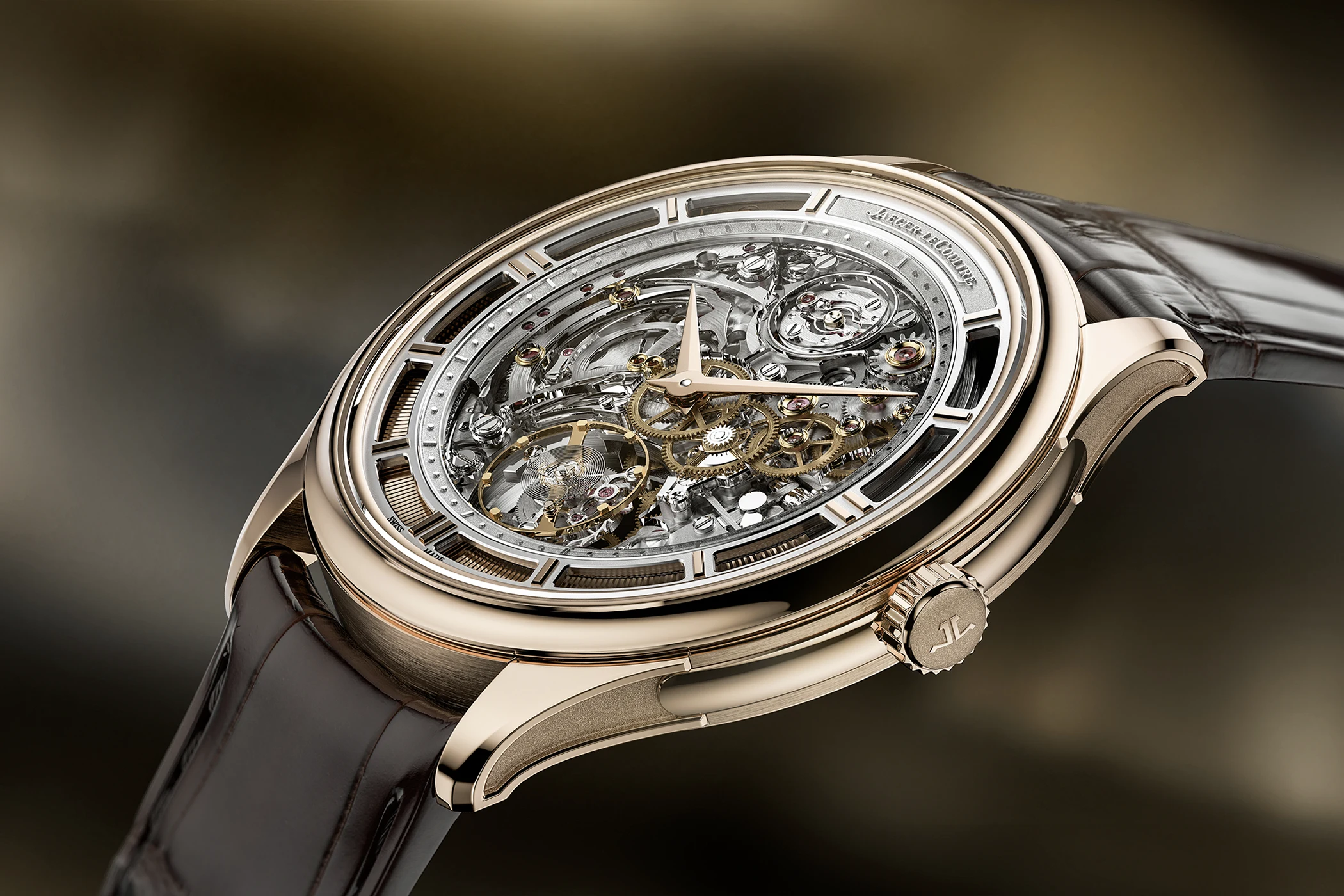
The tourbillon also follows this logic: it features a flying design and thus does not require an upper bridge. The cage comprises 59 components and weighs just 0.248 grams. This not only saves on height but also alters the way the tourbillon appears within the movement: less as a separate showpiece, more as a recessed, moving zone within a highly compacted mechanism.
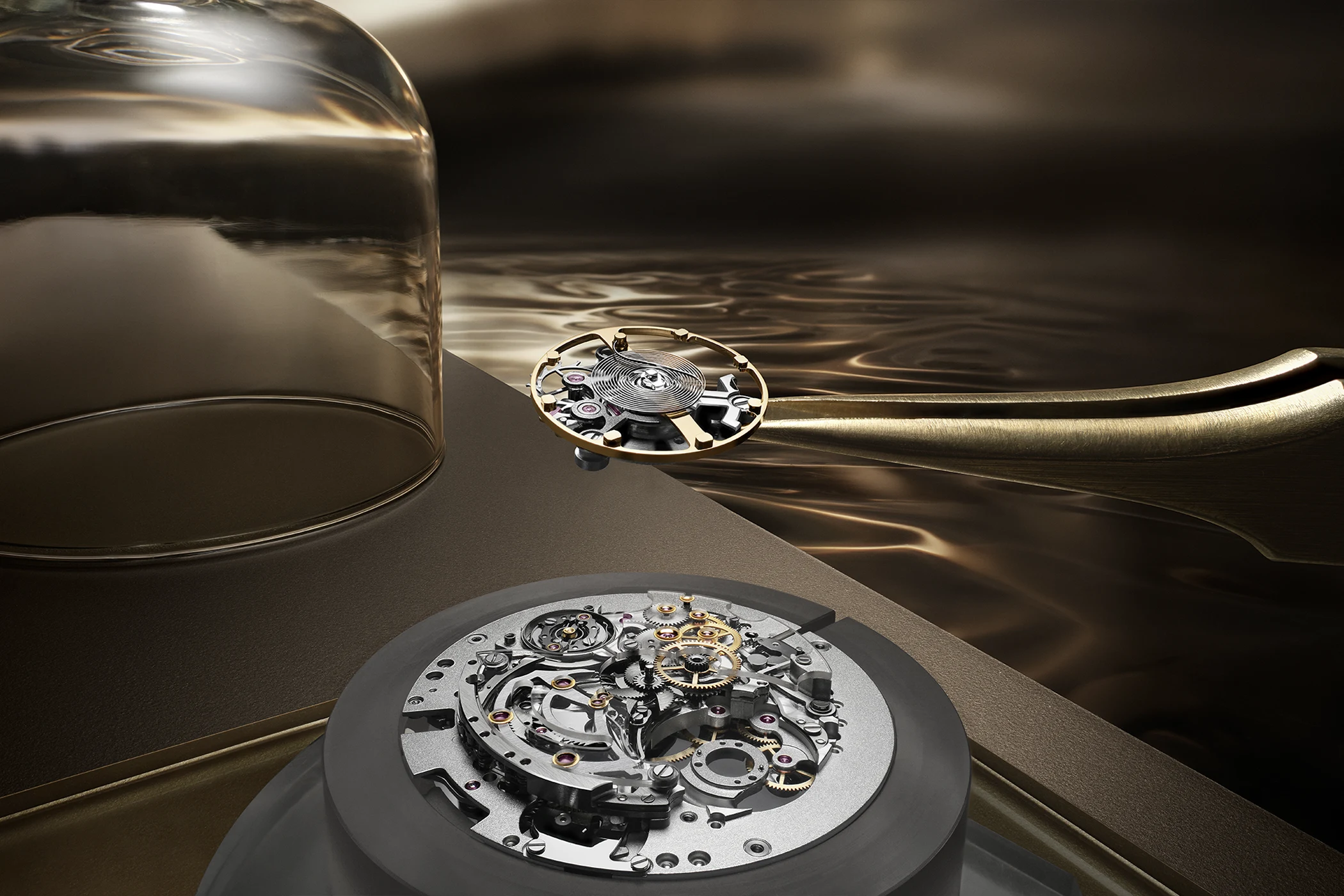
The three transparent sapphire bridges are more than just an aesthetic showcase of the watchmakers’ craftsmanship. They perform load-bearing functions that, in a conventional design, would be reserved for metal bridges. Because rubies cannot be set directly into sapphire, they are mounted in 18-carat rose gold chatons. Such details demonstrate how thoroughly the watch’s construction has been thought through: transparency and an aesthetically pleasing appearance for the wearer are not achieved in this watch simply by exposing the movement. Rather, it requires a great deal of engineering ingenuity and creative thinking. That is why Jaeger-LeCoultre does not simply remove material, but replaces load-bearing structures with transparent components without compromising their original function.
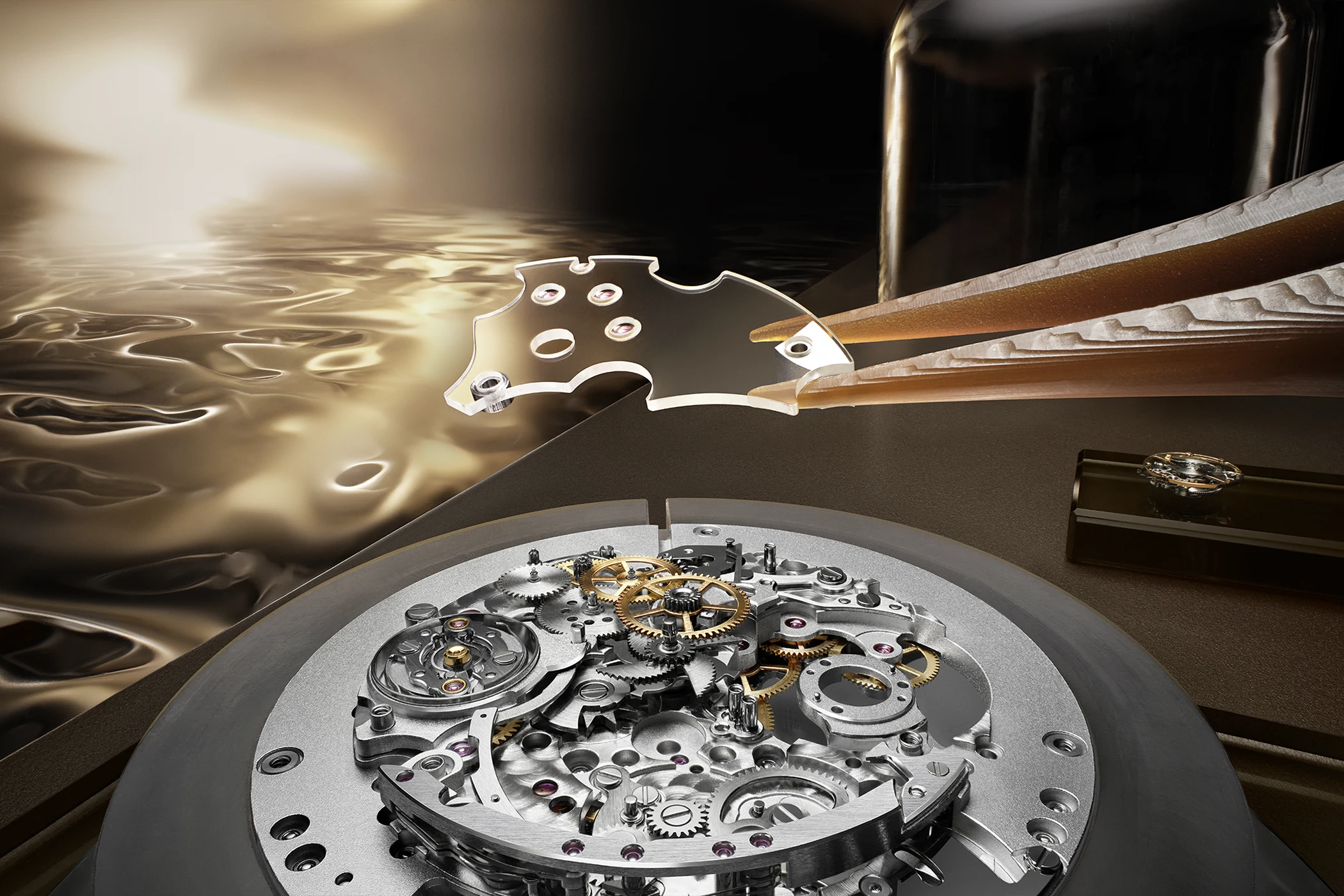
The minute repeater of Calibre 362 was not simply retrofitted to an existing calibre, but has been an integral part of its design from the outset. Around a third of the calibre’s volume is taken up by the repeater mechanism; the hammers, rakes and gongs have been arranged in such a way that they do not add an extra layer to the movement’s height. This is precisely where the true complexity of the Master Hybris Mechanica Ultra Thin Minute Repeater lies. Within a movement height of 4.7 millimetres, the repeater must store energy, count the strikes, control the pauses and strike the gongs with precision. To achieve this, Jaeger-LeCoultre employs single-piece gongs with a square profile and trebuchet hammers. The gongs are designed to stabilise the sound, and the hammers strike them via a hinged mechanism. The minute repeater alone consists of 187 individual components. The fact that the watch is nevertheless only 8.25 millimetres high is not solely due to radical miniaturisation, but to a design in which every level had to be avoided, shifted or restructured.
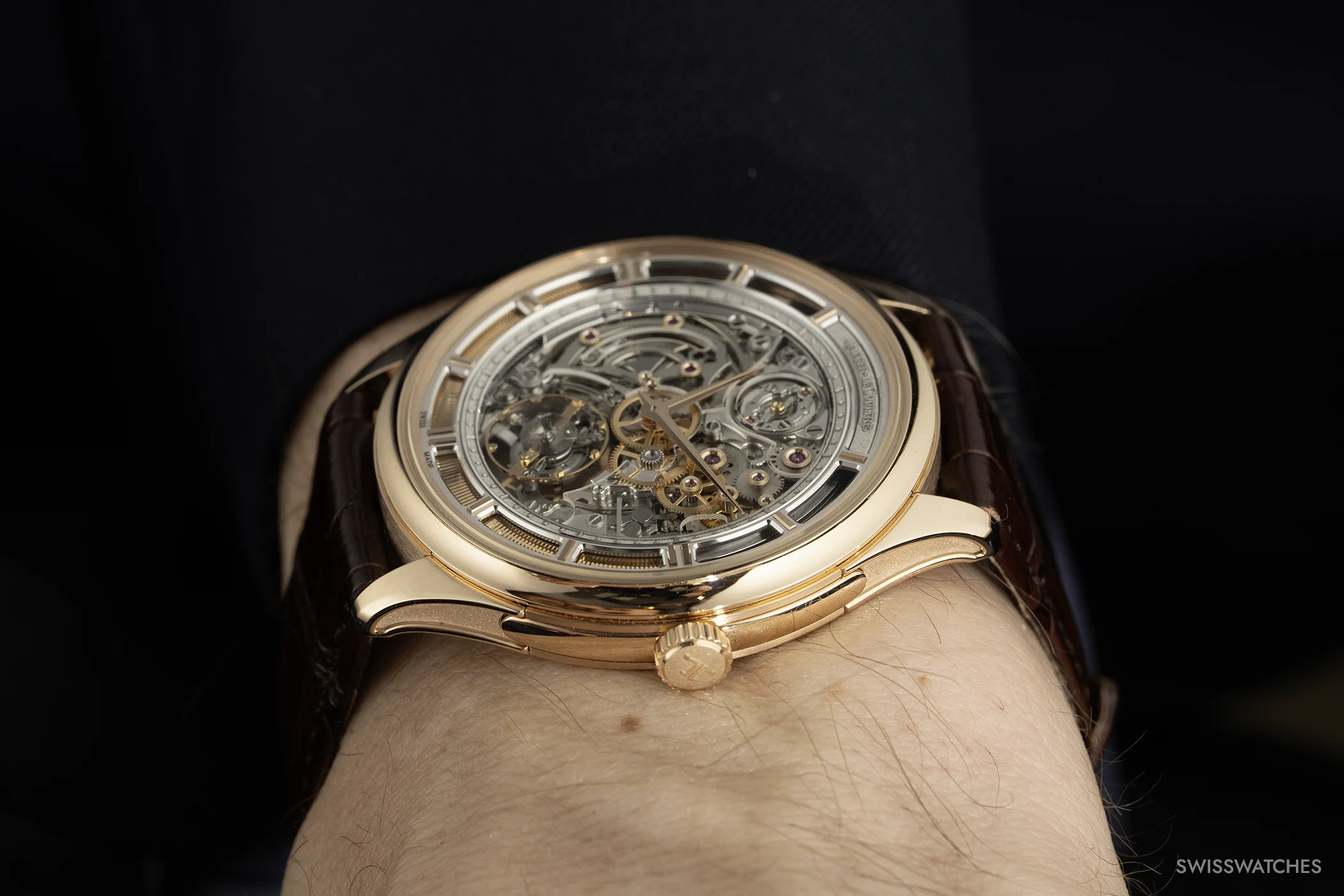
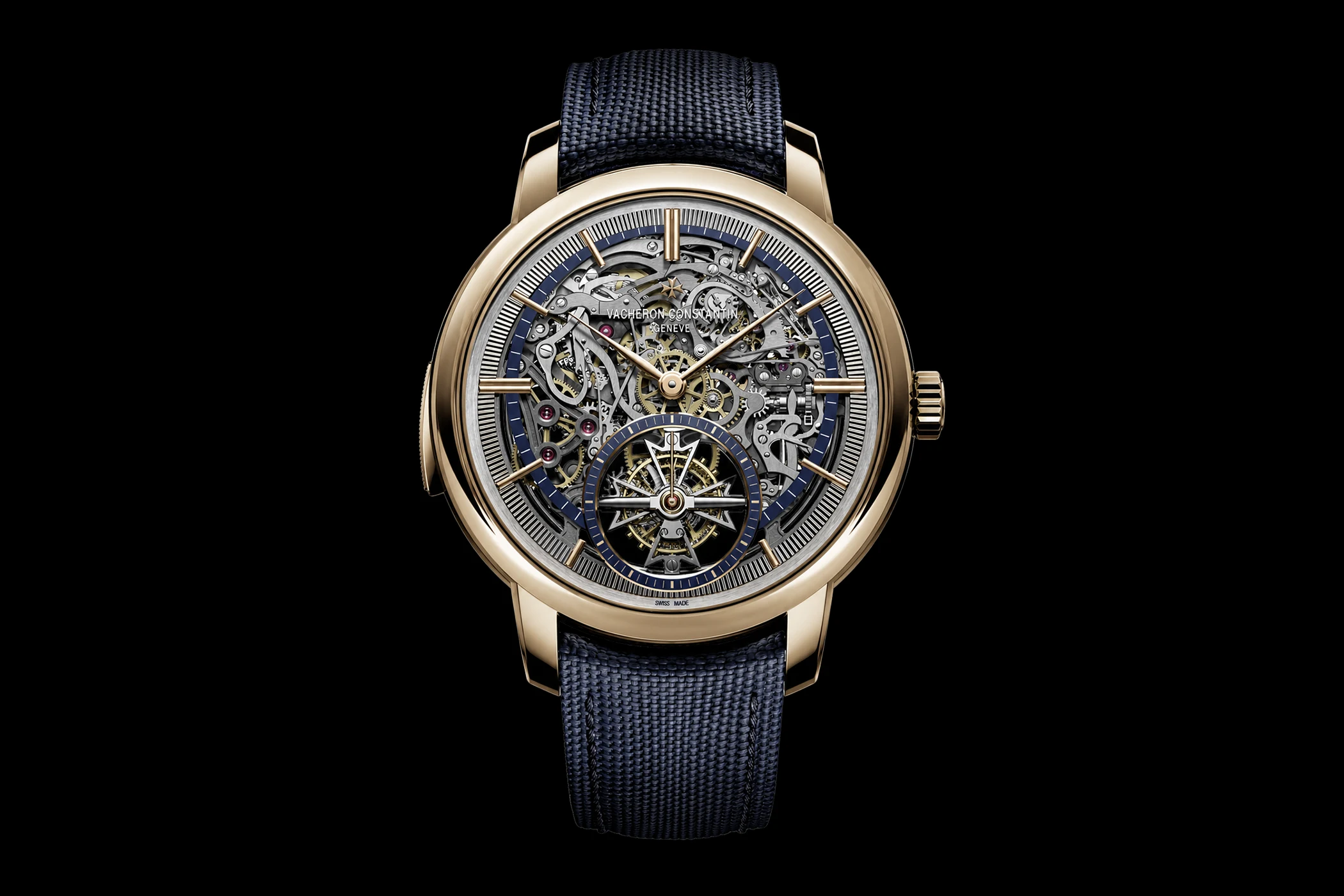
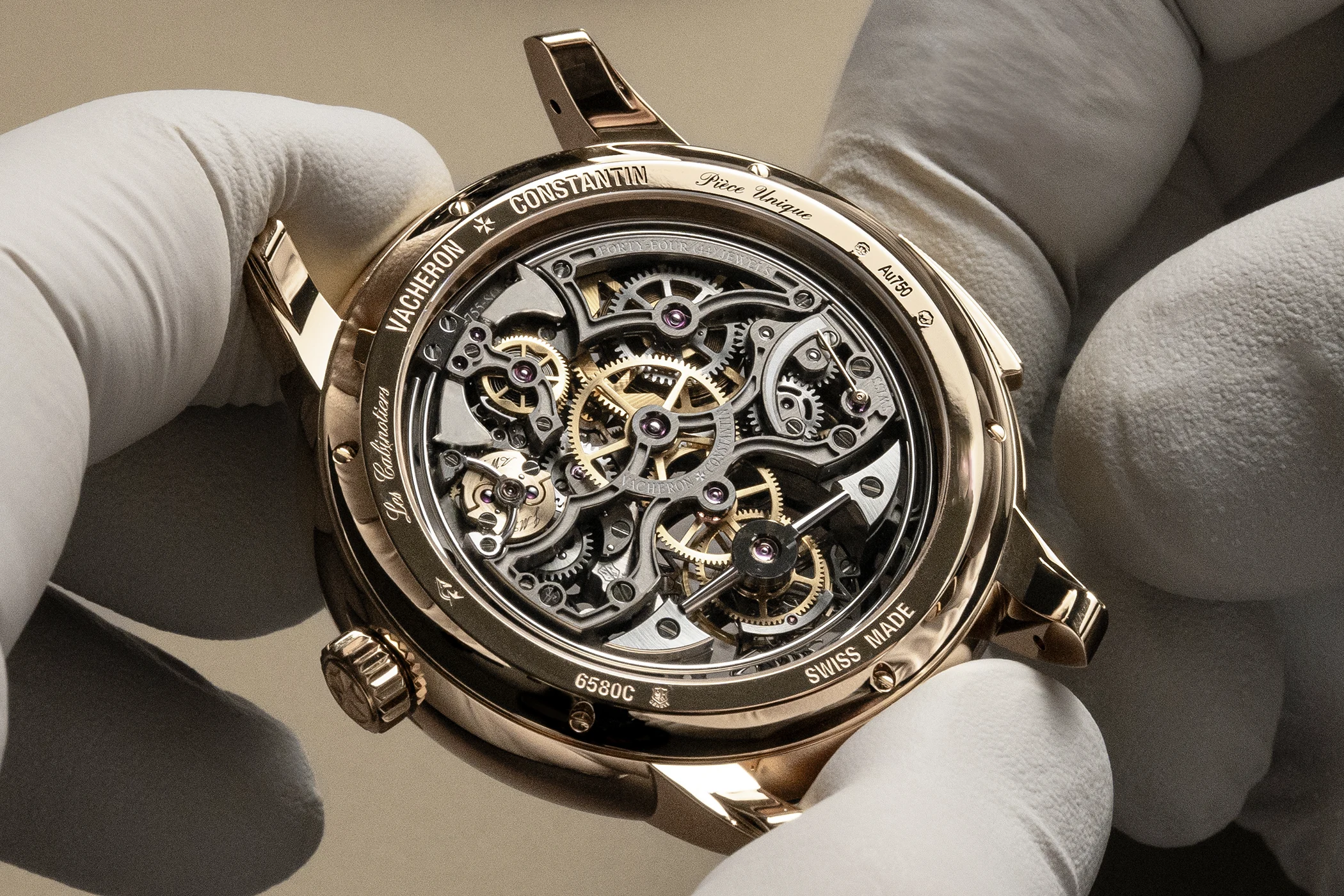
Vacheron Constantin takes a different approach to the problem. The Les Cabinotiers Minute Repeater Tourbillon Skeleton, reference 6580C/000R-343C, is a one-off piece. Its 18-carat 4N rose gold case measures 45 millimetres in diameter and 12 millimetres in height. The hand-wound calibre 2755 TMR SQ has a diameter of 33.90 millimetres, is 6.30 millimetres high, comprises 473 components and offers a power reserve of approximately 58 hours.
It is therefore larger and taller than the Master Hybris Mechanica Ultra Thin Minute Repeater. But its purpose is also different. This watch is not about maximising vertical compactness, but about controlled openness. The Calibre 2755 was designed from the outset as a base for grand complications. For the skeletonised version, it was therefore not simply opened up for decorative purposes, but structurally reworked. Vacheron Constantin reduced the movement plate to 40 per cent of its original volume; modelling and adapting this structure alone took around a year. This is particularly delicate in the case of a minute repeater: the movement must not only support wheels and bridges, but also absorb the forces and vibrations of the striking mechanism. Too much material loss weakens the construction; too little opening renders the skeletonisation arbitrary. The art of the matter lies precisely in deciding what may disappear and what must remain.
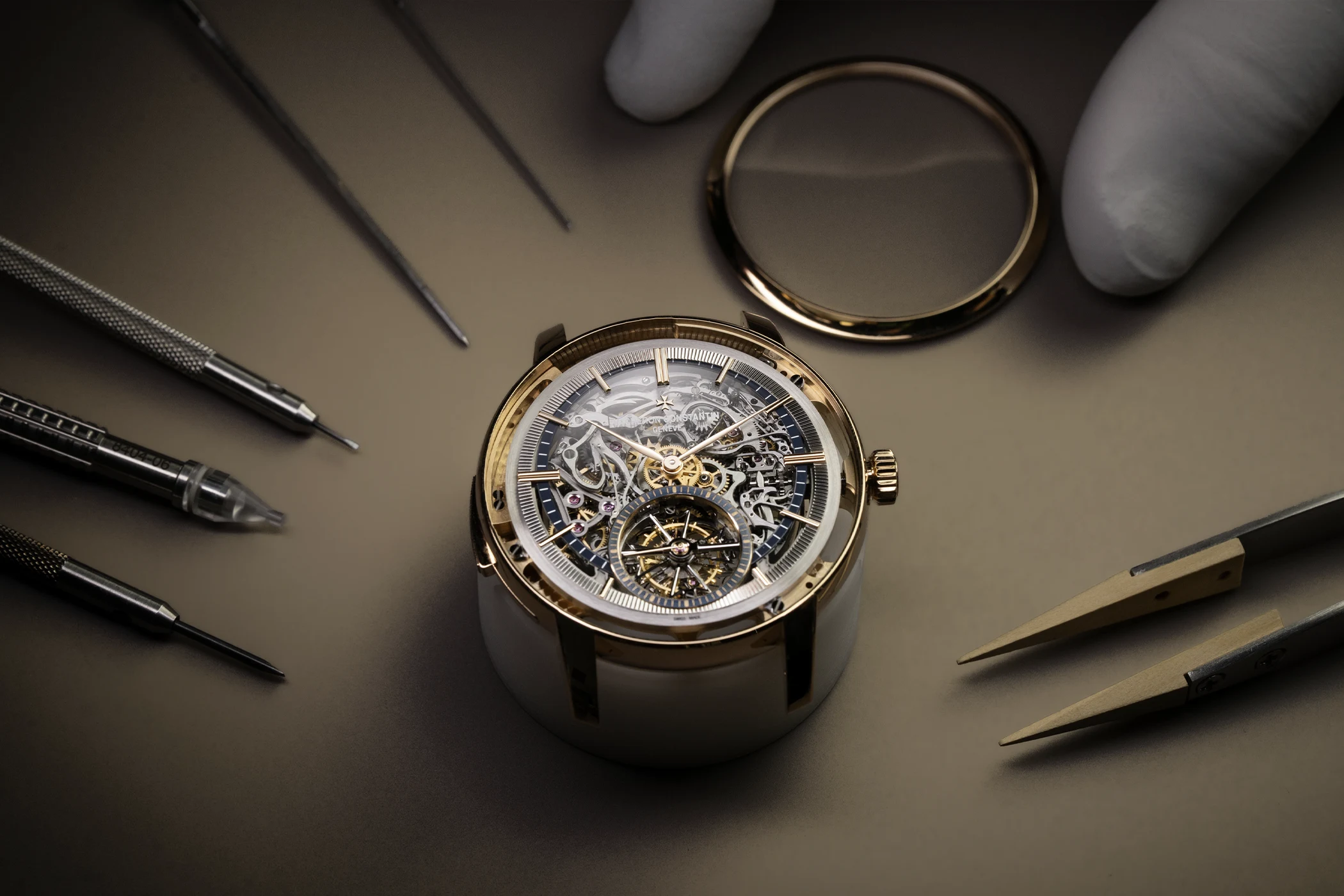
At Vacheron Constantin, the metal structure remains visible and defines the design. Bridges, edges, recesses and surfaces form a three-dimensional framework through which one can view the calibre. The Maltese cross appears as a design motif on the hour wheel and the barrel of the repeater. In this case, such motifs also serve an organising function, as they make certain visual planes of the movement recognisable and distinguishable from one another.
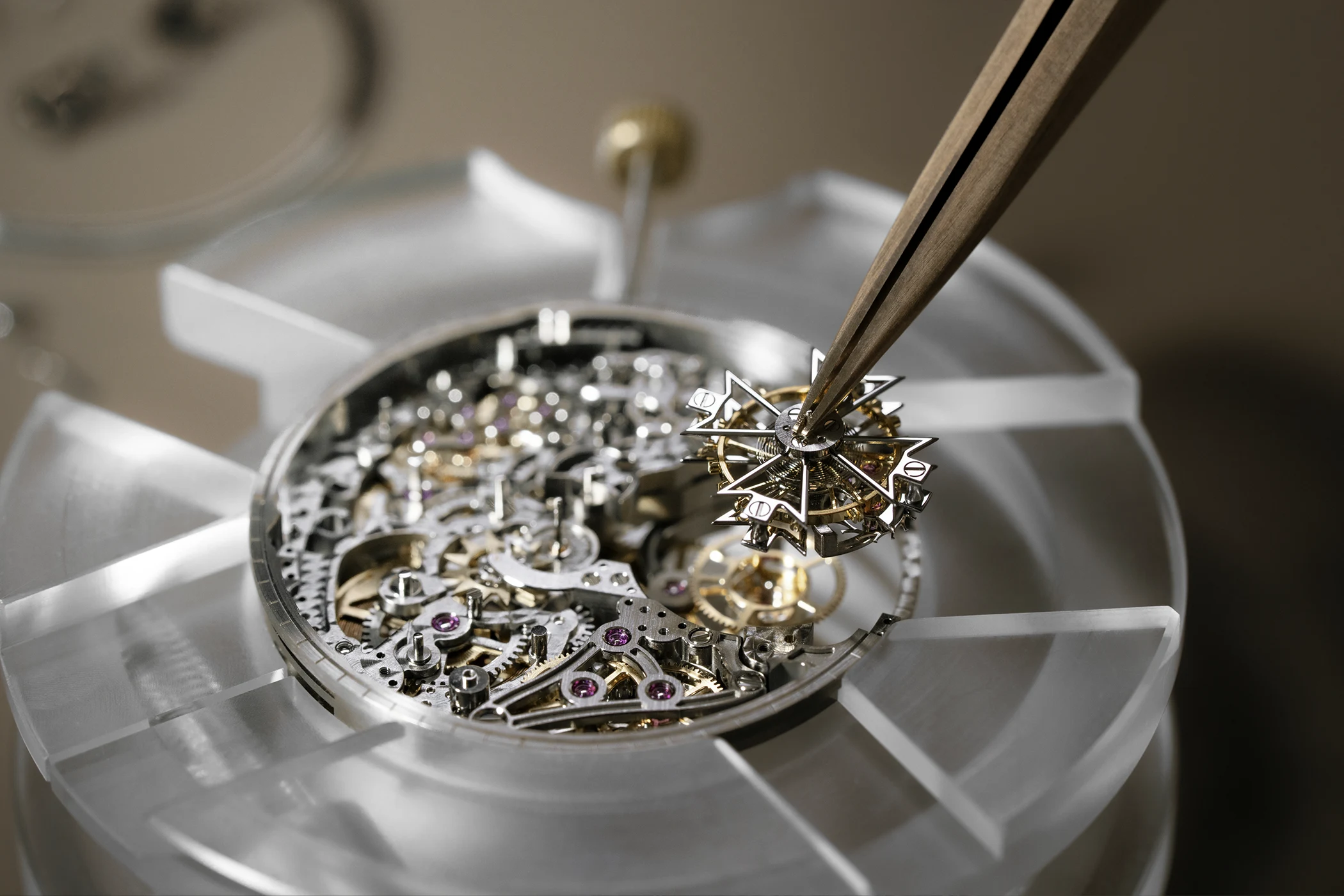
In the Calibre 2755 TMR SQ, the key lies in controlling the striking mechanism. The minute repeater of the Les Cabinotiers Minute Repeater Tourbillon Skeleton strikes the hours, quarters and minutes on demand; however, this sequence must be slowed down and maintained at a steady pace. To achieve this, Vacheron Constantin employs a centripetal centrifugal regulator. It replaces the classic anchor system, in which speed is regulated by repeated stopping and releasing – a principle that can generate more friction and audible background noise. Two weight blocks act as a brake on the regulator’s axis of rotation, absorbing the energy released by the striking mechanism’s mainspring. As a result, the repeater does not run at the speed of a freely unwinding spring, but at a controlled rhythm. Whilst a skeletonised movement reveals a great deal of its mechanics, what matters most for the repeater is that the striking sequence proceeds evenly and in a controlled manner.
For both timepieces, the sound remains the true test of their mettle. A minute repeater is not simply a matter of two hammers striking gongs. It must regulate the energy from a mainspring, count the sequence of strikes, avoid or deliberately control pauses, regulate the speed, and carry the sound through the movement and case. Particularly tricky are time indications where quarter-hours are not struck. In such cases, an unnatural pause can arise between the hours and minutes because the mechanism has to skip the missing interval.
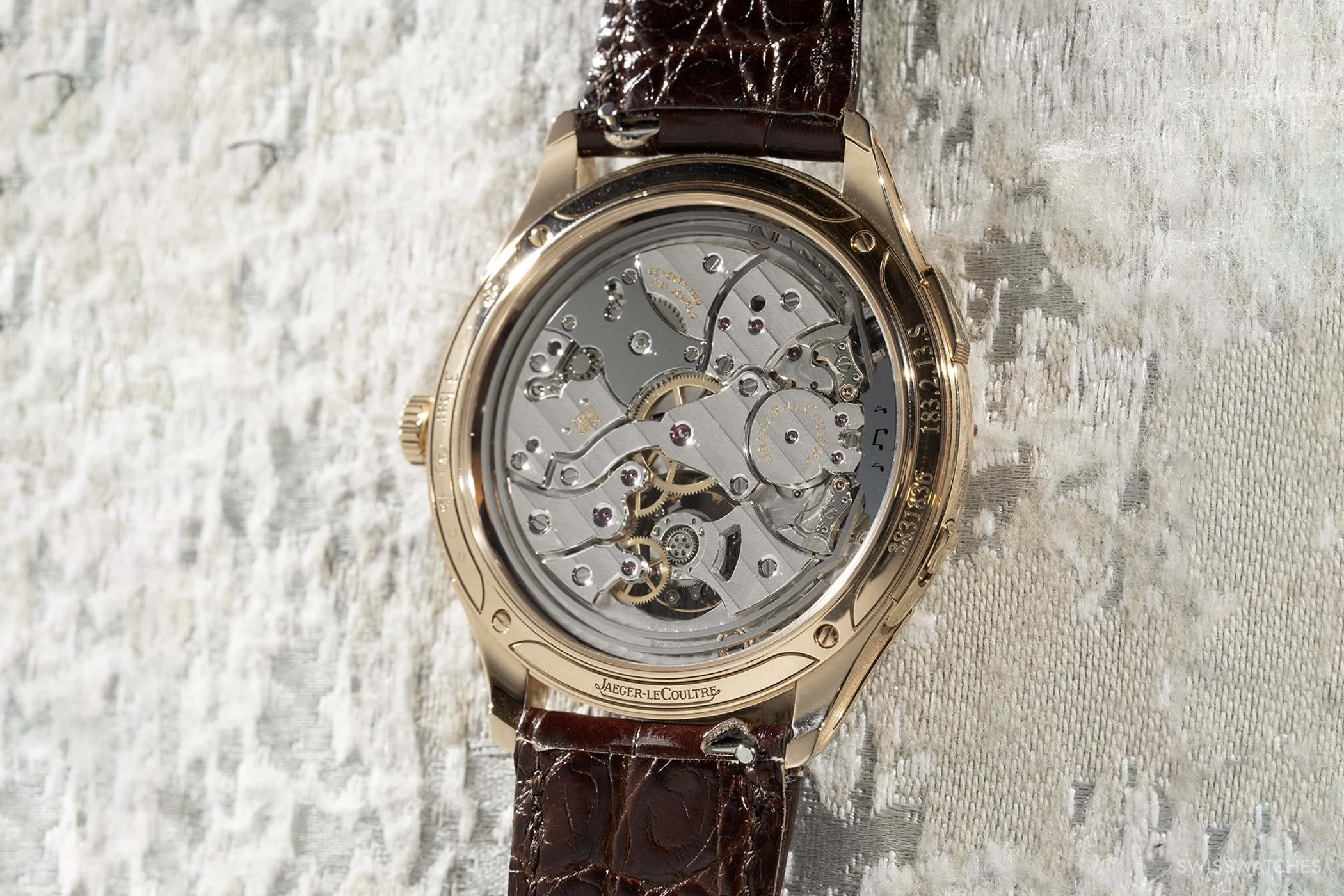
Jaeger-LeCoultre addresses this issue with Silent-Timelapse-Reduction. It shortens the silent interval between the hour and minute strikes when no quarter-hour strike is required. This may sound like a minor detail, but it affects the clarity of the entire sequence. A repeater that leaves long gaps sounds mechanically jerky. Added to this are single-piece gongs with a square profile and so-called trebuchet hammers. These hammers are designed with a jointed mechanism and are intended to strike the gongs at a higher speed and with a more precise impulse. The minute repeater of the Calibre 362 alone consists of 187 individual components.
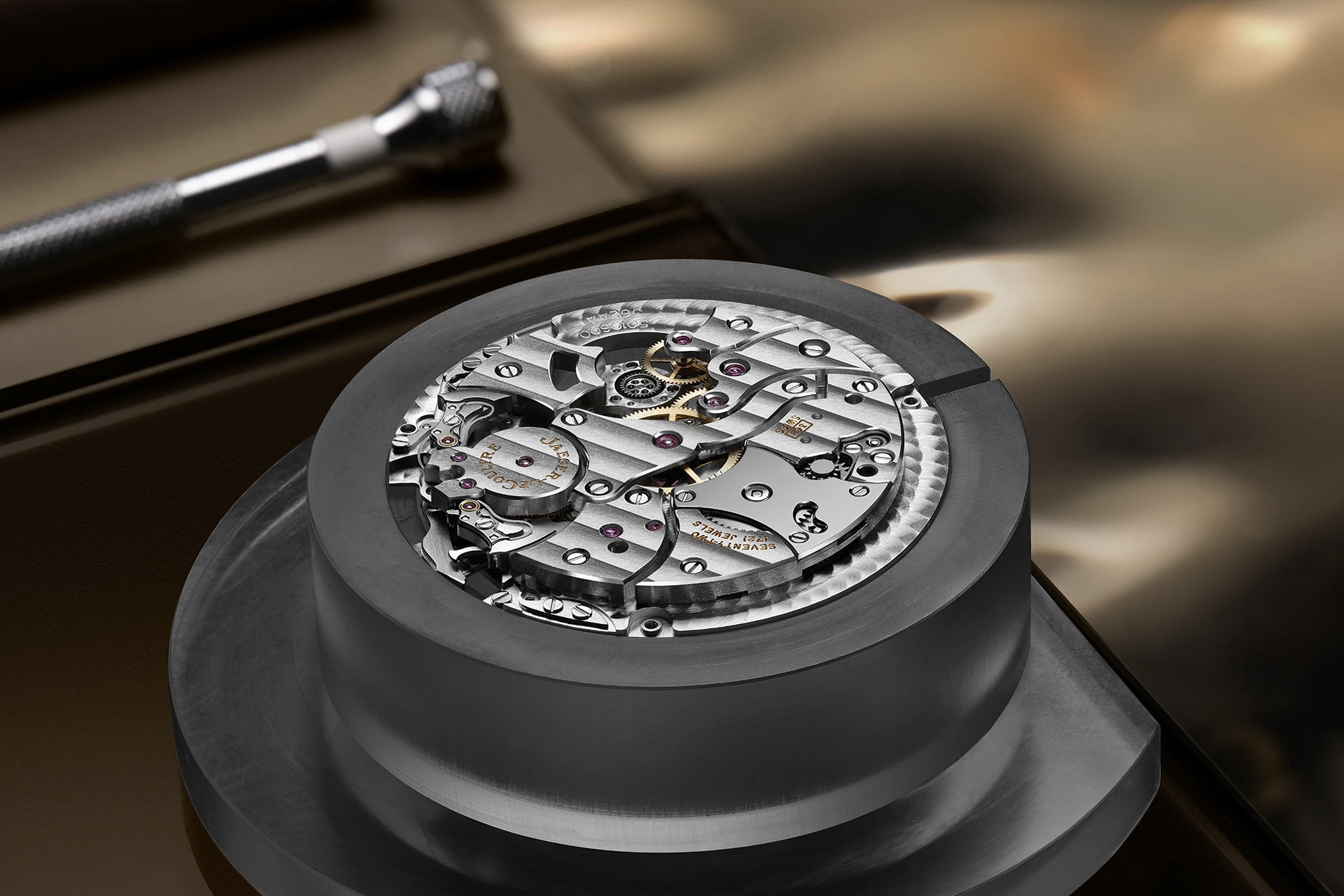
At Vacheron Constantin, on the other hand, the focus is more on controlling the rhythm of the striking mechanism. The Calibre 2755 TMR SQ uses a centripetal centrifugal regulator. Its role is to maintain a consistent speed in the striking mechanism. Without such a brake, the spring would release its energy too quickly and the sequence of chimes would sound far too rushed. The regulator works with weights that act on the axis of rotation and slow down the movement. This is less spectacular to look at than a pair of hammers, but it is crucial to the character of the repeater: for it is not just the individual strike that counts, but the interval between the strikes.
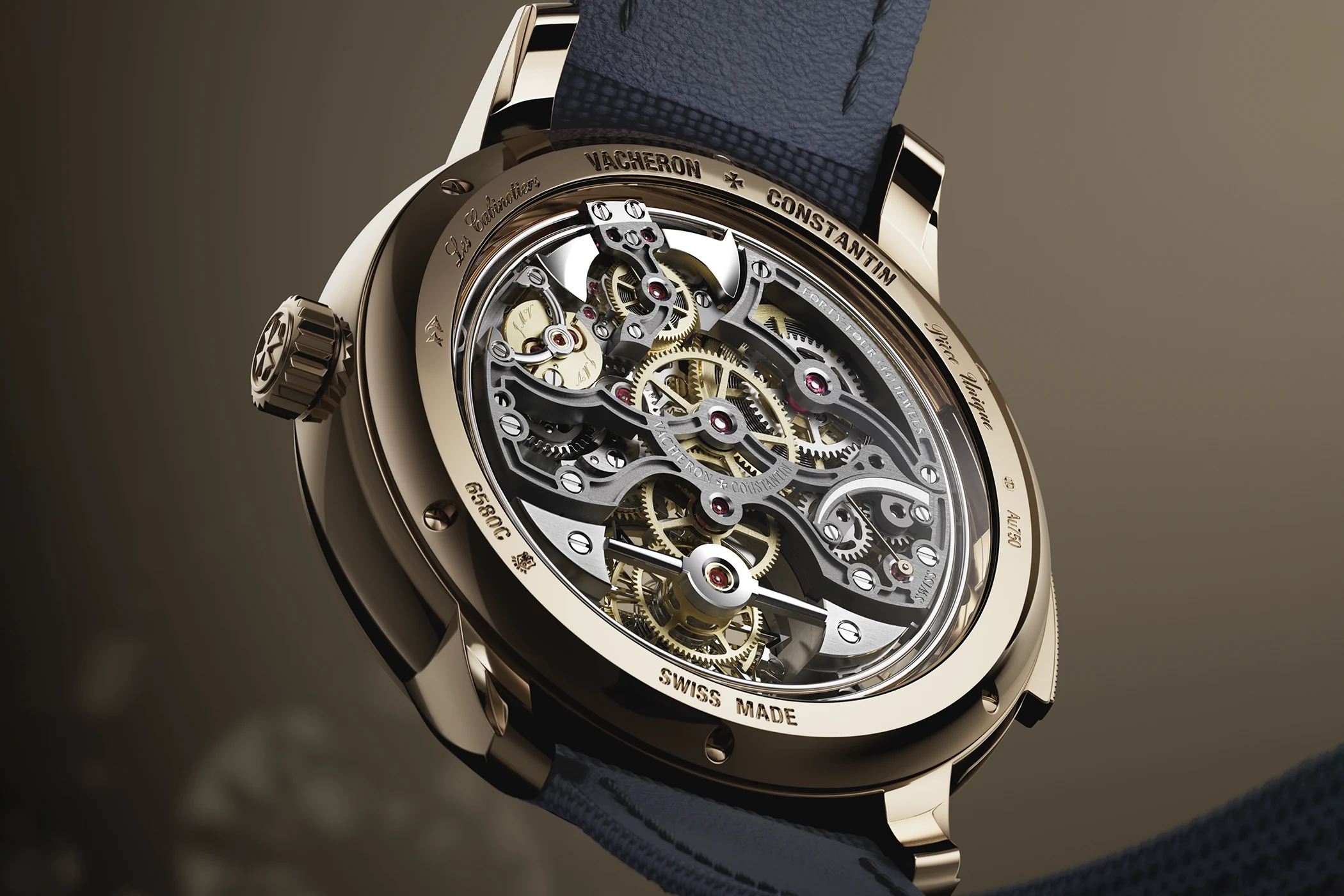
The case plays a dual role in this mechanism. It must protect and support the movement, but must not muffle or absorb the sound. Jaeger-LeCoultre uses a 60-part case for the Master Hybris Mechanica and replaces the classic side-mounted repeater slide with a patented system: A retractable pusher at 10 o’clock activates the repeater, whilst a second pusher at 8 o’clock secures or unlocks it. This does not automatically save on height, but it does alter the integration of the controls. The slide, which on many repeaters sits on the side of the case like a technical foreign body, disappears here in favour of a flatter solution.
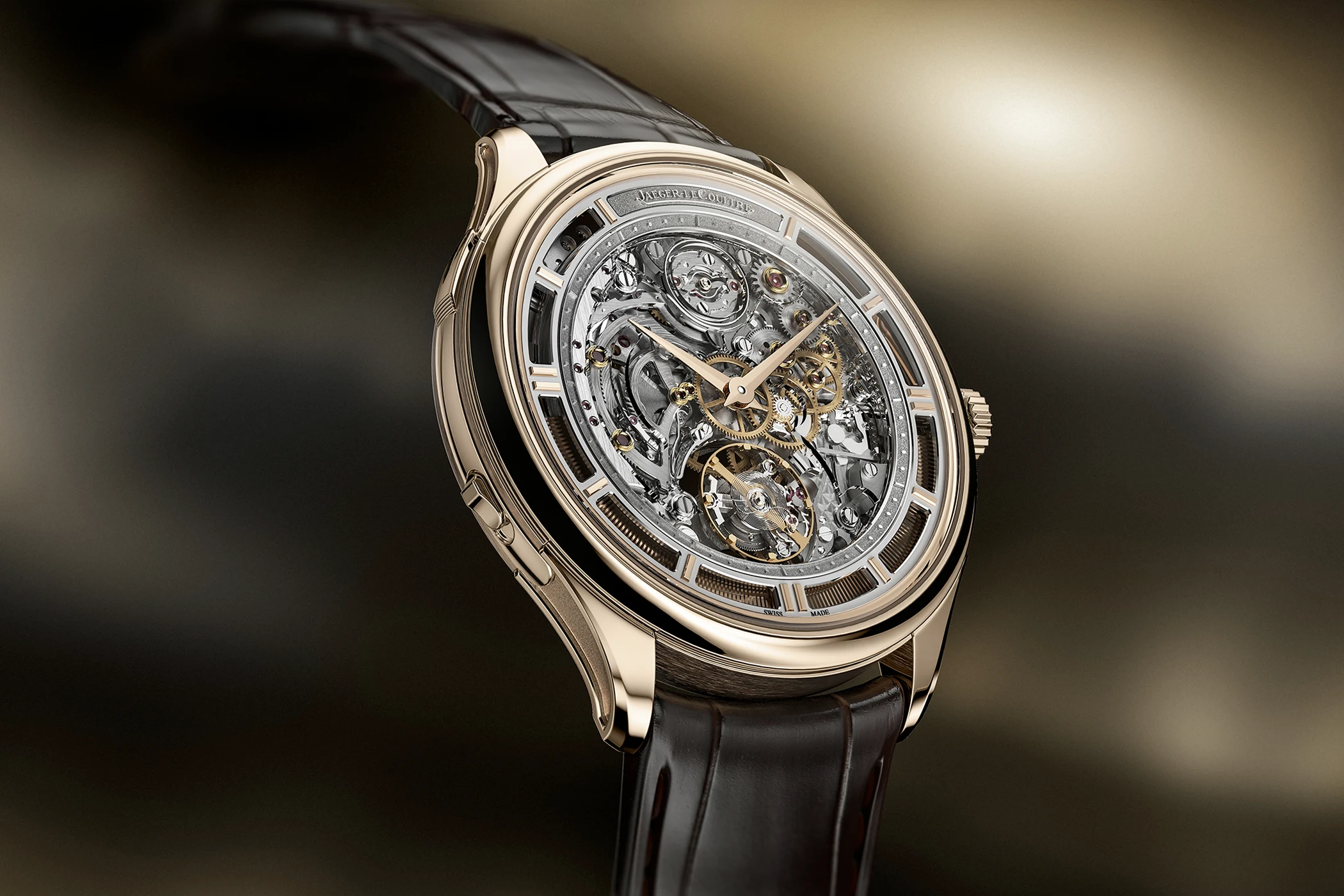
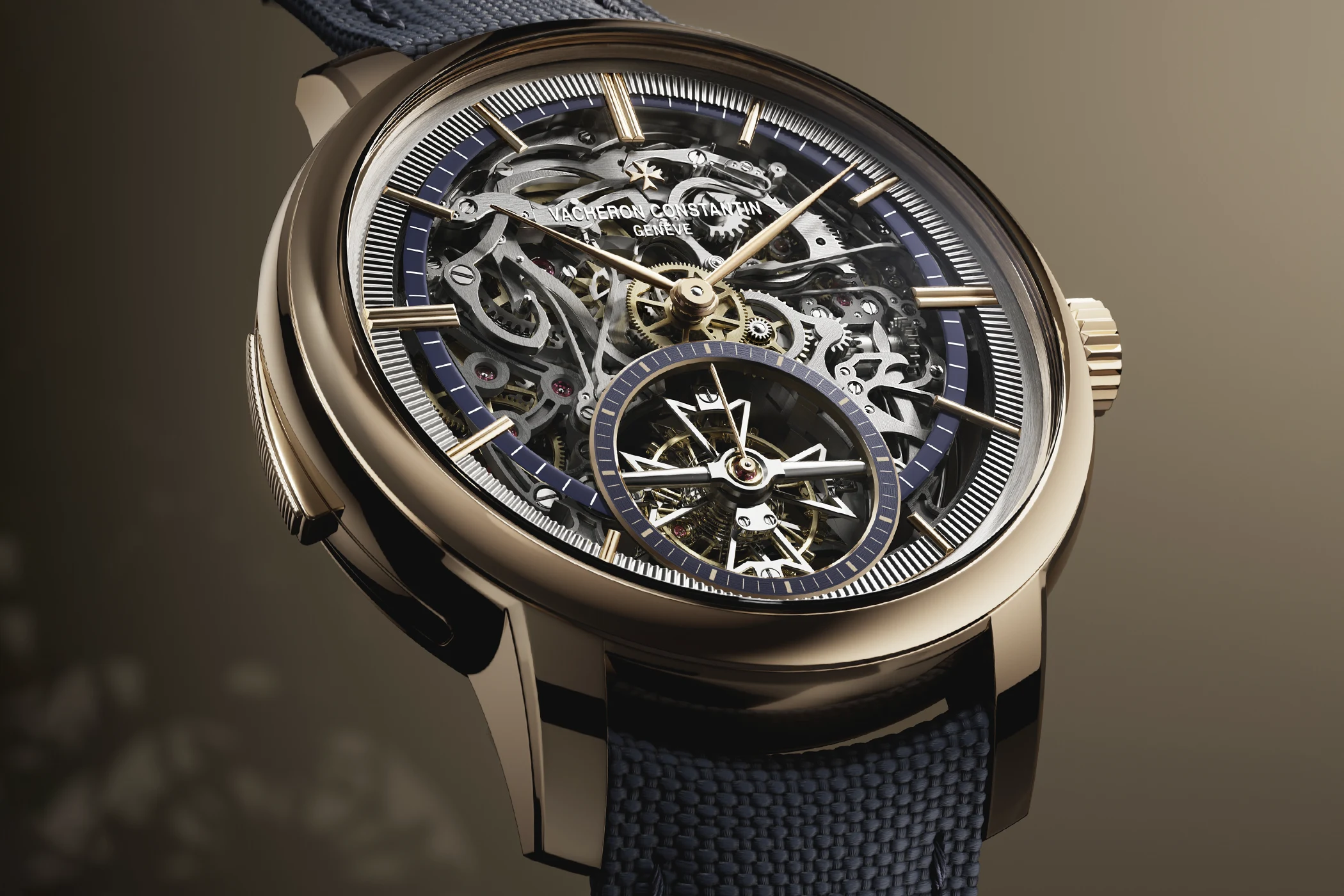
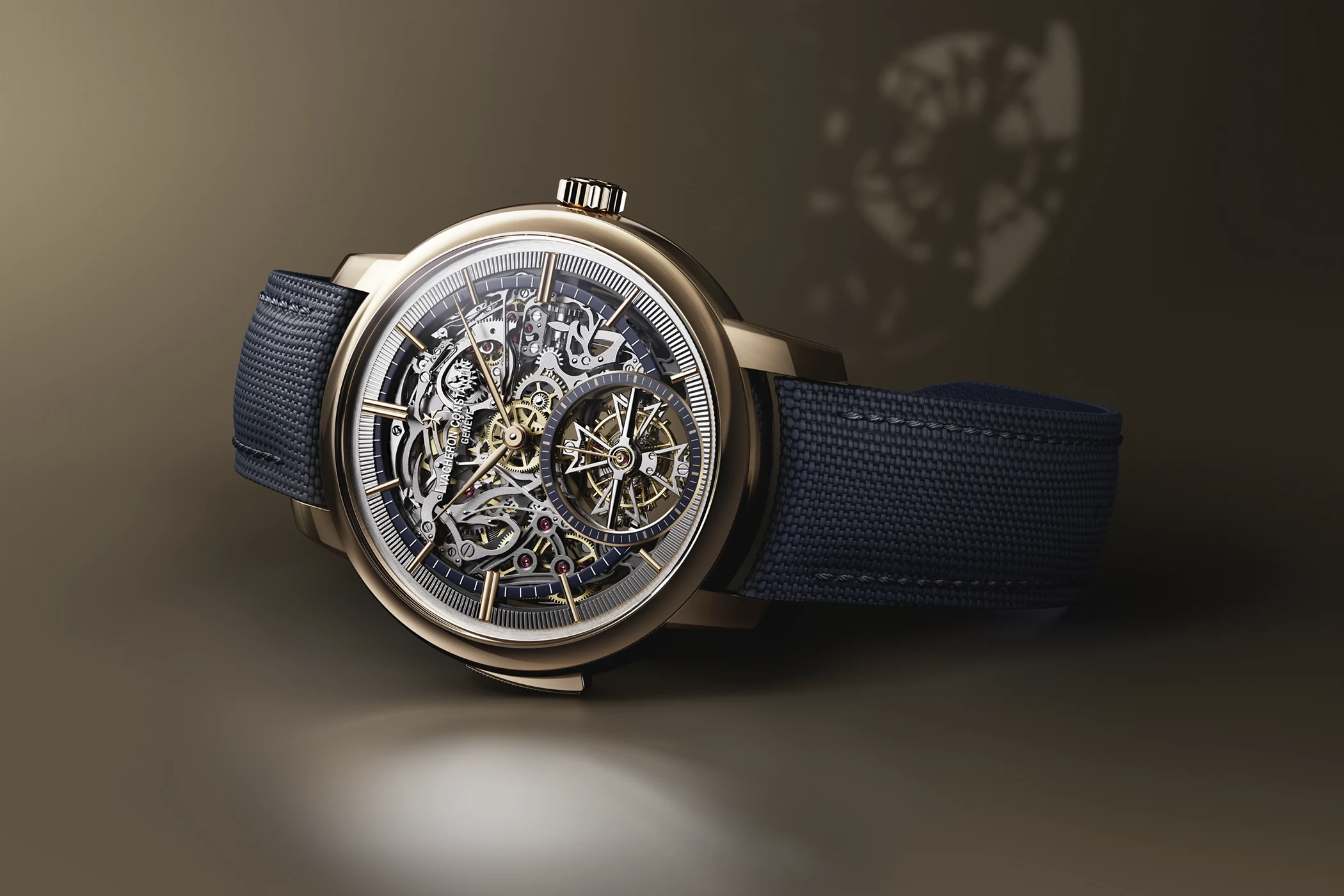
Vacheron Constantin’s Les Cabinotiers Minute Repeater Tourbillon Skeleton retains the larger case size and utilises the resulting space primarily to create depth. The bezel and case back are slightly concave in shape, making the watch appear less bulky. A sapphire dial with a blue minute track sits in front of the openwork movement. Two rings of silver-plated 18-carat gold sit at the edge: a wider, circular satin-finished ring providing a subtle frame for the display, and a finer, fluted ring that more precisely delineates the display area. Their primary function is to provide visual definition. Particularly with watches of this complexity, legibility can quickly suffer when finishes, cut-outs and mechanical depth compete for the human eye’s attention. The two silver-plated rings capture the gaze at the edge and help to separate the display area from the open movement. The remaining details also aid orientation. The blue sets the minute track and scales apart from the metallic mechanics, whilst rose gold marks the hands and baton indices. This creates a frame that keeps the open calibre legible without obscuring it.
At Jaeger-LeCoultre, visibility is achieved primarily through minimalism. The sapphire bridges support the movement without visually dominating the design. The peripheral rotor handles the automatic winding but does not obscure the back of the calibre, which is visible through the sapphire crystal case back. The dial, too, takes a back seat, remaining only as an open ring. The overall finishing concept also enhances legibility: 14 decorative techniques, 48 internal angles and 60 hand-bevelled components in the Hybris Mechanica are far more than mere visual embellishment. In such an open design, edges, surfaces and transitions become points of reference; they help to view the movement not as a collection of individual parts, but as an ordered mechanical system.
At Vacheron Constantin, visibility is the result of working with metal. Skeletonisation does not merely expose the mechanics; every new opening also creates new edges, chamfers and internal angles, which must be meticulously finished to ensure, amongst other things, optimal legibility. For this reason, the finishing on the Les Cabinotiers Minute Repeater Tourbillon Skeleton is not a decorative afterthought, but a prerequisite for ensuring that the open movement appears precise and controlled. A total of nine finishing techniques are employed, taking around four times as long as for conventional calibres.
At the end of the day, the minute repeater remains the feature of both watches that is least easily concealed. One can open up a movement, make the bridges transparent, move the rotors to the edge and even make the case appear flatter. But as soon as the striking mechanism is triggered, it is not just the technical sequence that counts, but of course the sound as well: Energy must be released, counted, slowed down and translated into a clean sequence of strikes. This is precisely where the artistry of these two watches lies. The Master Hybris Mechanica Ultra Thin Minute Repeater examines every component for its necessity, whereas Vacheron Constantin, with the Les Cabinotiers Minute Repeater Tourbillon Skeleton, examines how much substance an open movement must retain. Both watches are interesting not only because of the number of complications they feature, but because they reveal just how much order is required within the movement to ensure that a minute repeater ultimately appears effortless and functions reliably.
jaeger-lecoultre.com | vacheron-constantin.com