At Watches & Wonders 2026, Frederique Constant is presenting three Classic Manufacture Worldtimer models featuring the new in-house calibre FC-719 and a smaller 40 mm case.
TAG Heuer has developed a novel chronograph: instead of a column wheel or cam-actuated system, flexible, bistable components are responsible for starting, stopping, and resetting the mechanism. The objective was to create a watch that is particularly durable, reliable, and precise.
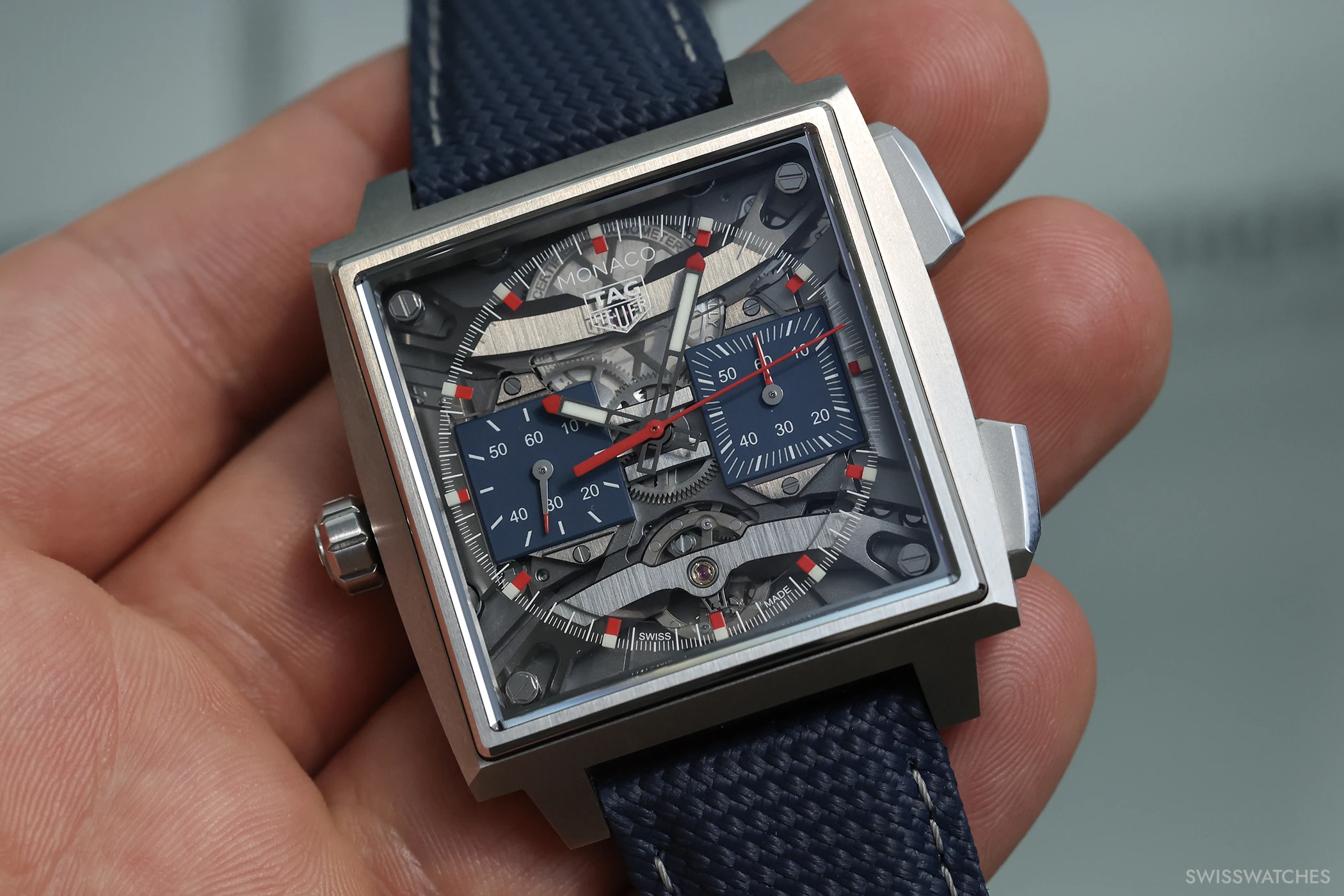
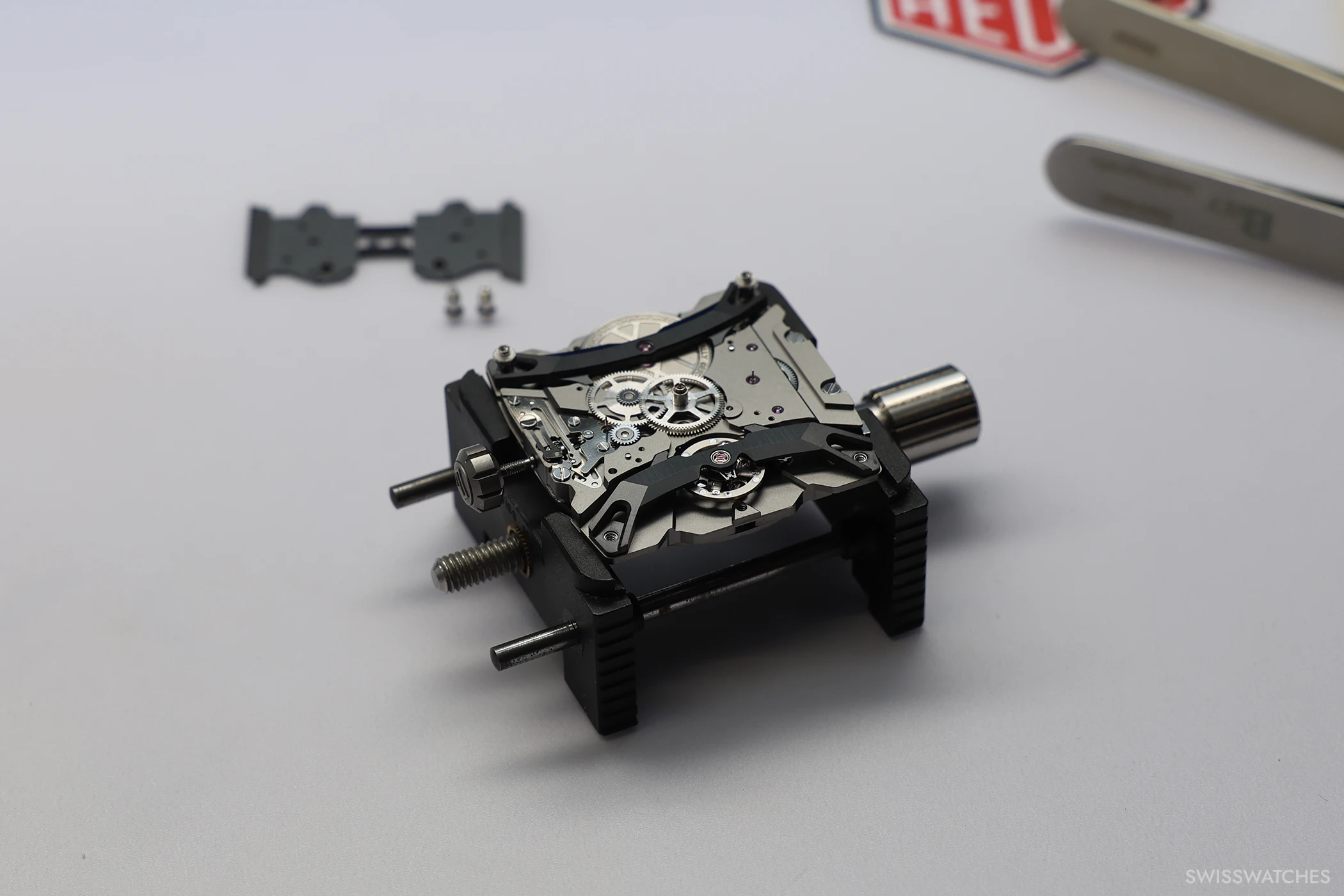
In 1969, the Heuer Monaco made history as the world’s first commercially available automatic chronograph. Fifty-seven years later, TAG Heuer is now redefining the chronograph mechanism with the TAG Heuer Monaco Evergraph. The development focused on significantly improving the chronograph: it was designed to be more durable, more reliable, and more precise, while also simplifying its operation. The manufacture achieved this through complex, monobloc components incorporating bistable springs, which replace the numerous levers and springs found in traditional cam-operated systems.
Why do modern chronographs often require so much force to operate the pushers? This even applies to models with a column wheel, which by design should offer a smoother action. Anyone who has handled a vintage pocket watch with a stopwatch function will know: it can be done with remarkable ease.
The reason why contemporary chronographs tend to feel so stiff (aside from the presence of gaskets required for water resistance) lies in how they are made. In the past, watchmakers would adjust each chronograph individually—bending springs, polishing functional surfaces, and fine-tuning levers in detail. This level of manual adjustment is difficult to reconcile with modern production methods; it would require far more watchmakers than are available today and would make chronographs prohibitively expensive.
Today, components can be manufactured with great precision, and the geometry of the switching mechanisms can be optimised. However, the sheer number of levers inevitably results in cumulative sliding friction. At the same time, the system must be designed for long-term functional reliability. Since springs lose tension when repeatedly deformed, they are typically dimensioned to be stronger from the outset. In order to ensure that a chronograph continues to function reliably even after five years, higher operating forces are therefore accepted.
This is precisely where TAG Heuer’s approach comes in. Firstly, the number of components has been drastically reduced: the start-stop control and the reset function of the new TAG Heuer Monaco Evergraph each consist of a single component that integrates the springs. Secondly, the manufacture makes use of the properties of bistable springs. Much like a business card bent between thumb and forefinger, these springs have two stable states: when the outwardly curved section is pressed in, it snaps through and curves in the opposite direction. Beyond a certain input force, the spring actively assists the transition. In contrast, in conventional chronograph mechanisms, the force applied to the pushers always works against the springs.
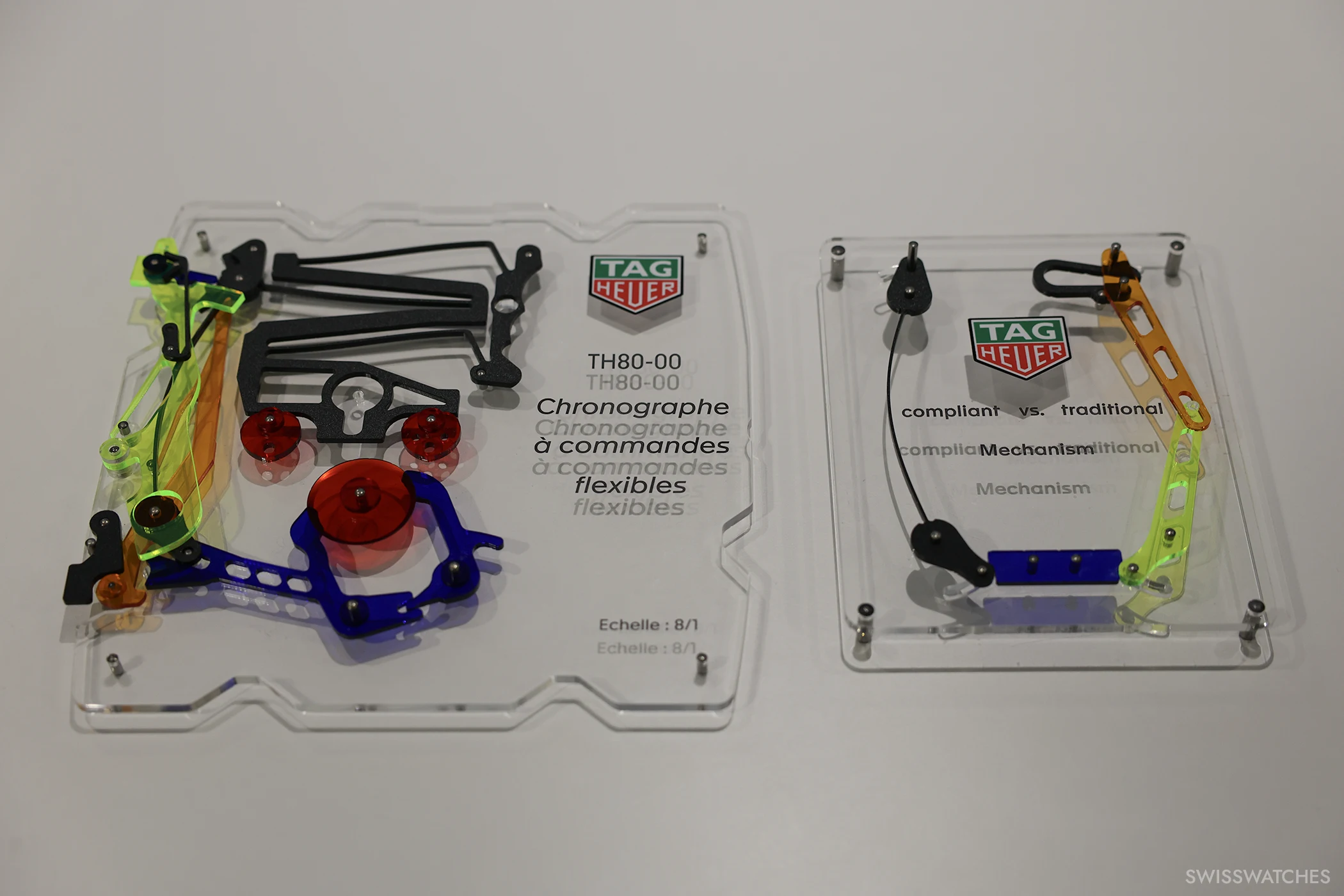
The significantly reduced number of components, combined with the integration of the springs, results in lower friction. The bistable springs reduce the force that needs to be overcome and, beyond a certain pressure point, actively assist the switching process.This is clearly noticeable when operating the pushers of the new TAG Heuer Monaco Evergraph, as we were able to observe during the presentation in La Chaux-de-Fonds.
The new system of the TAG Heuer Monaco Evergraph offers further advantages: it requires no adjustment, cannot fall out of calibration, and therefore ensures long-term functional reliability. In addition, the largely eliminated friction—thanks to the integration of multiple functions into a single component—results in significantly reduced wear, contributing to overall longevity.
The system was developed by TAG Heuer’s engineers within the TAG Heuer LAB. Research, design, and testing spanned five years. Numerous simulations and trials were required to determine the optimal geometry. Three generations of prototypes underwent 300 separate tests. Even after 10,000 activations of the chronograph, testing revealed no change in performance: instead of the typically pronounced pressure point that must be overcome with considerable force, the operating force remained consistently low.
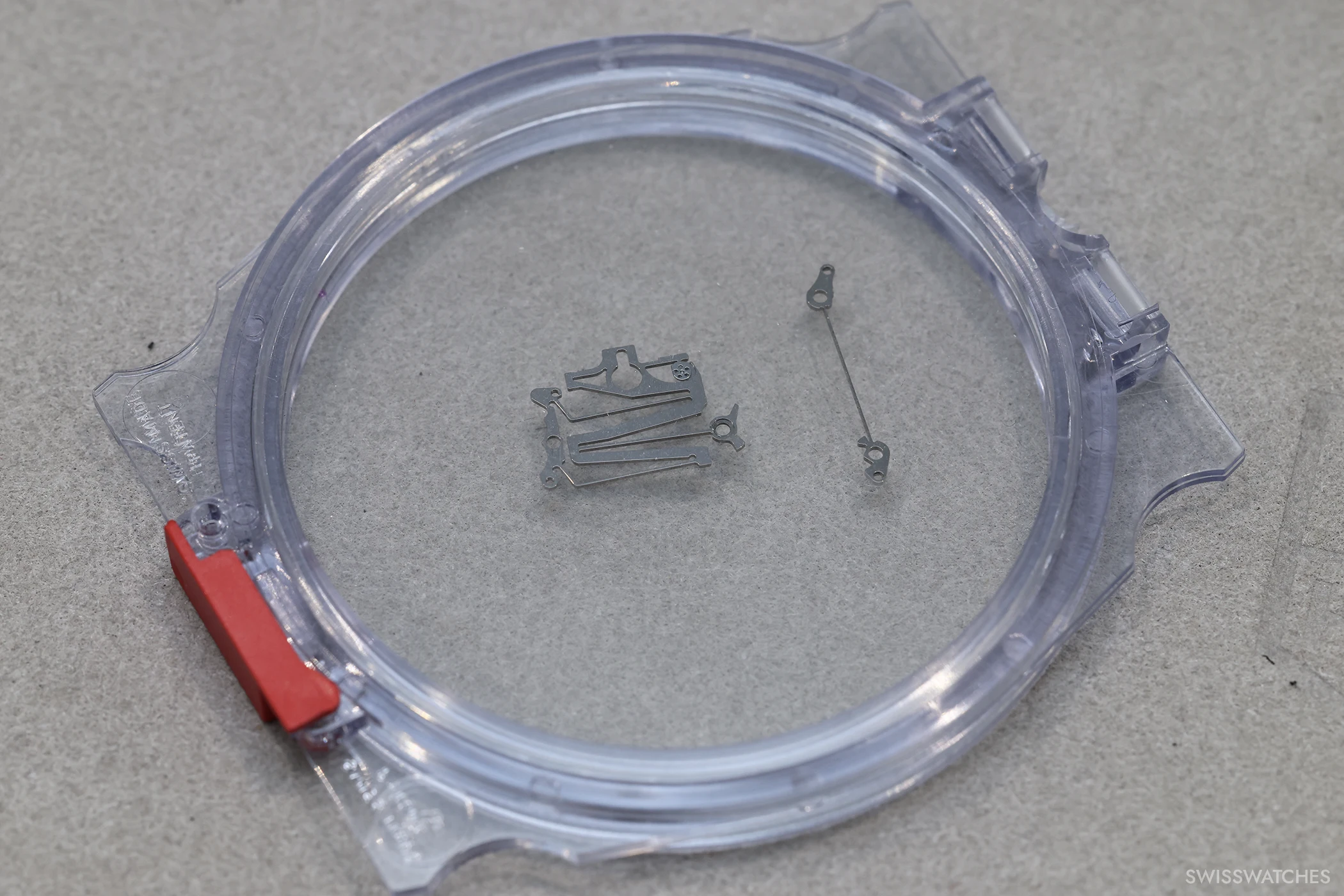
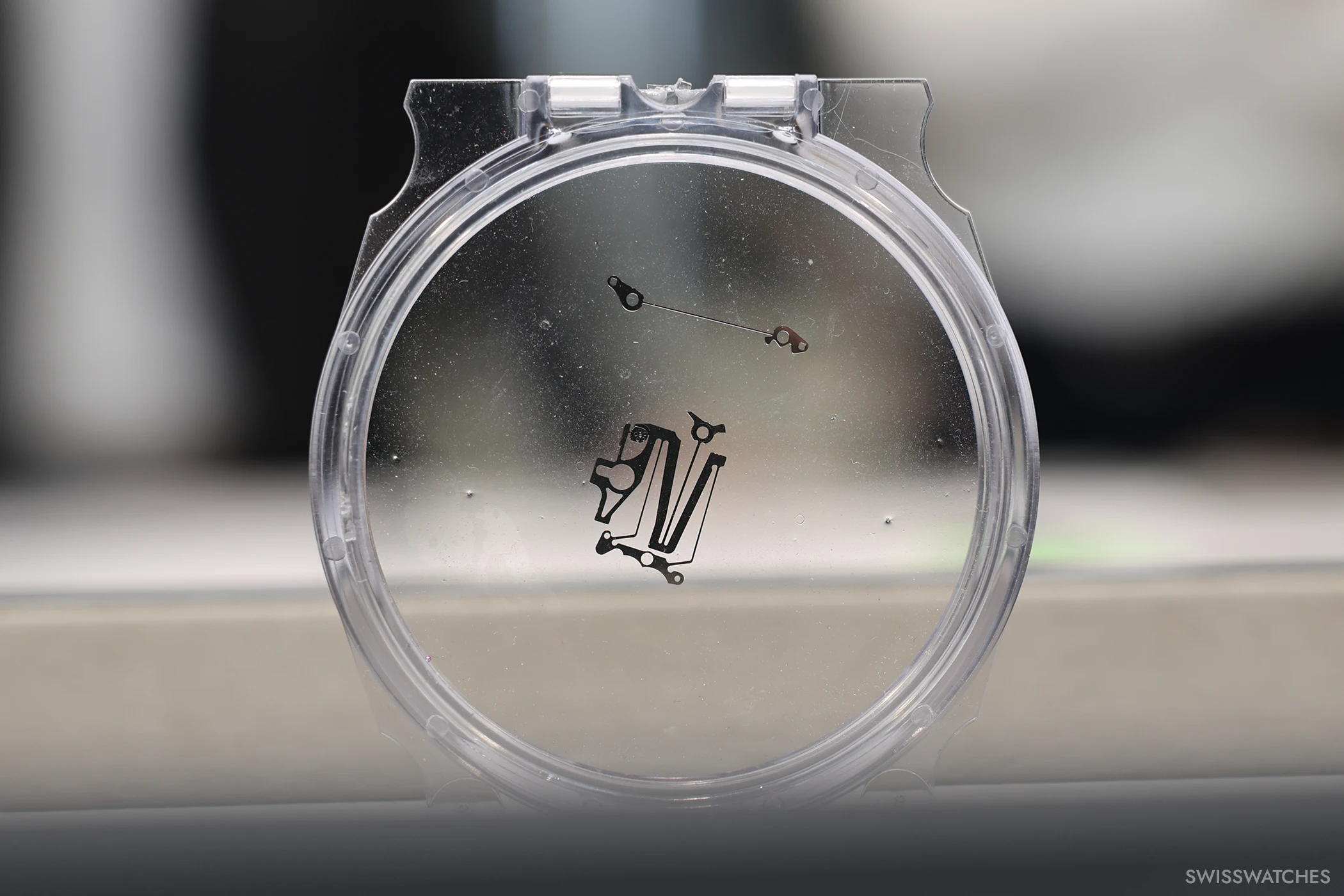
The components can only be manufactured using the LIGA process. In this method, parts are gradually formed galvanically from a nickel-phosphorus alloy within a mould created by lithography and etching. The process enables extremely tight manufacturing tolerances and smooth surface finishes. The material is also resistant to magnetic fields and highly durable, resulting in minimal wear.
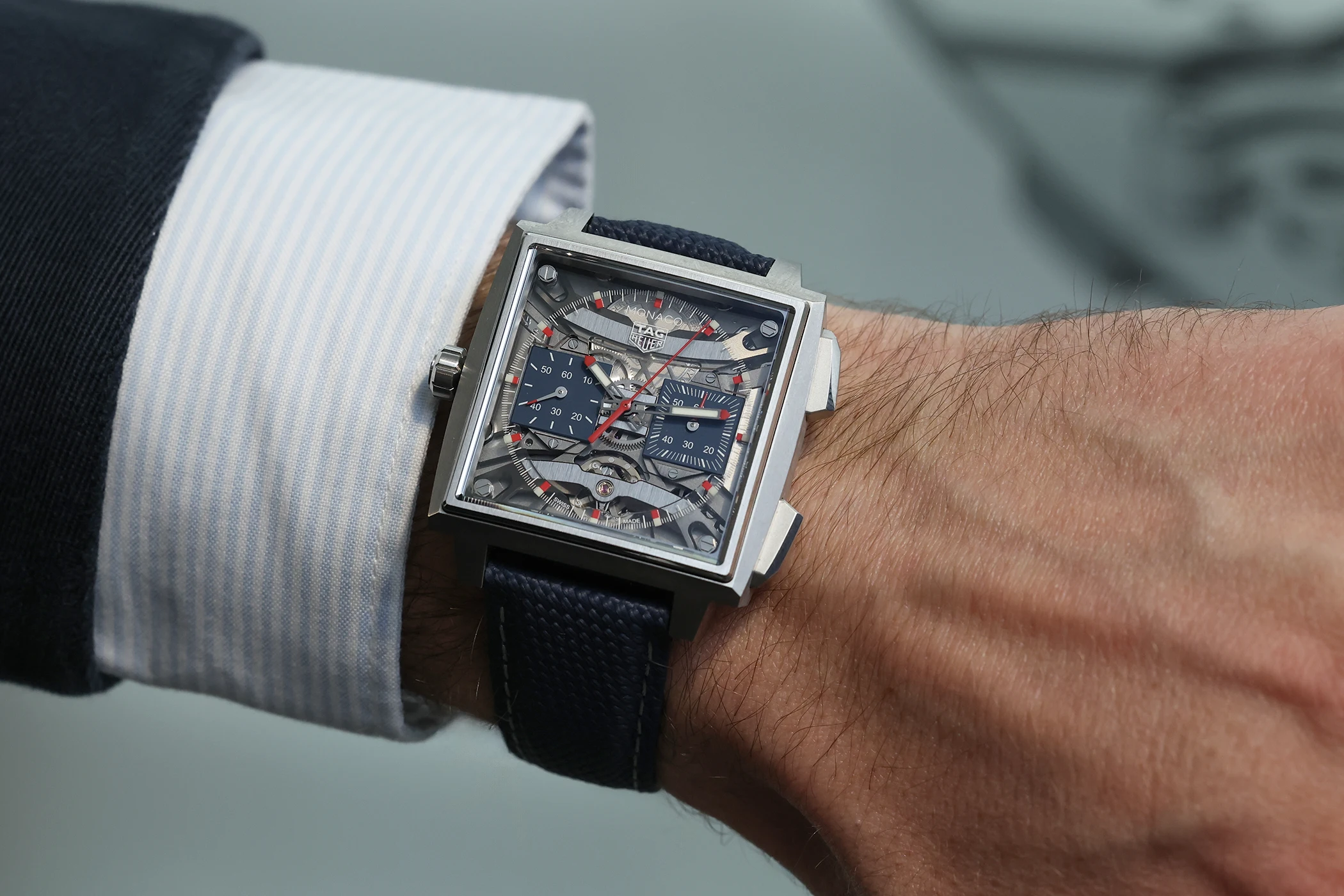
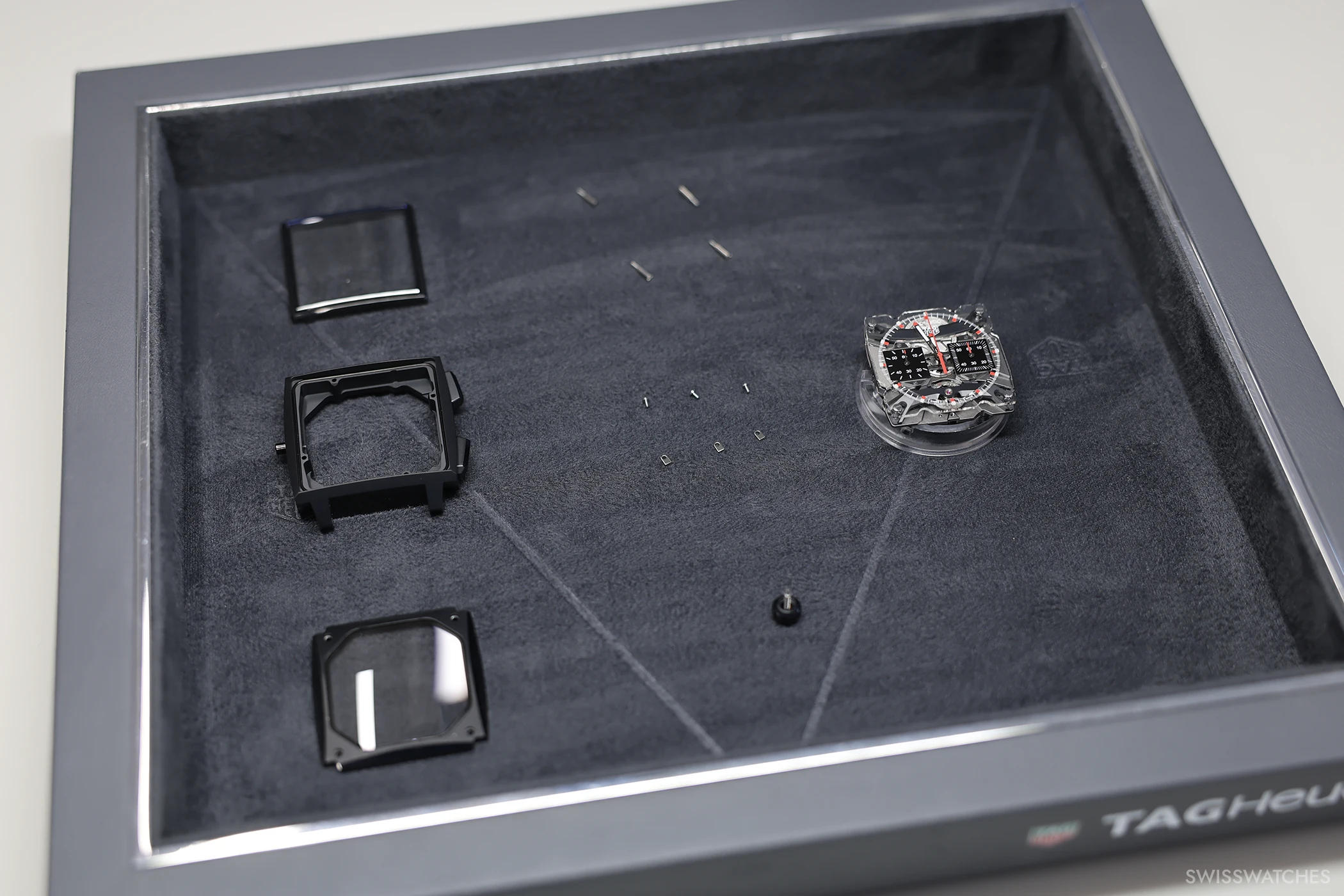
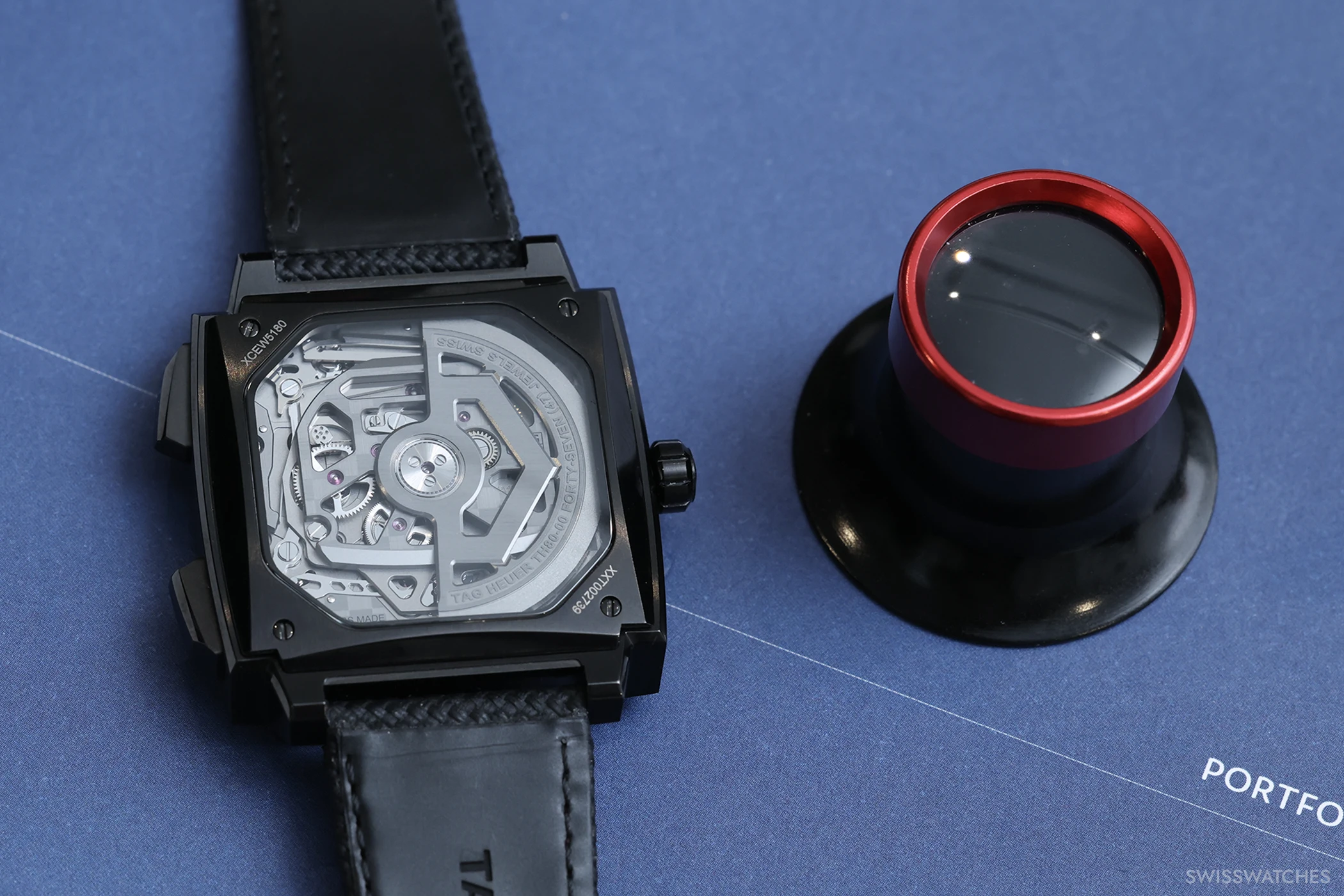
While the distinctive chronograph mechanism with flexible components was developed by TAG Heuer, the new square-shaped movement of the TAG Heuer Monaco Evergraph was created in collaboration with movement specialist Vaucher Manufacture Fleurier. The calibre TH80-00 is designed to offer considerable visual appeal: the balance and barrel have been relocated to the dial side and are visible beneath two symmetrical, curved bridges. The novel chronograph mechanism can be observed on the reverse. Beneath the winding rotor and a bridge decorated with a chequered-flag motif, the complex reset component with its integrated springs is in motion.
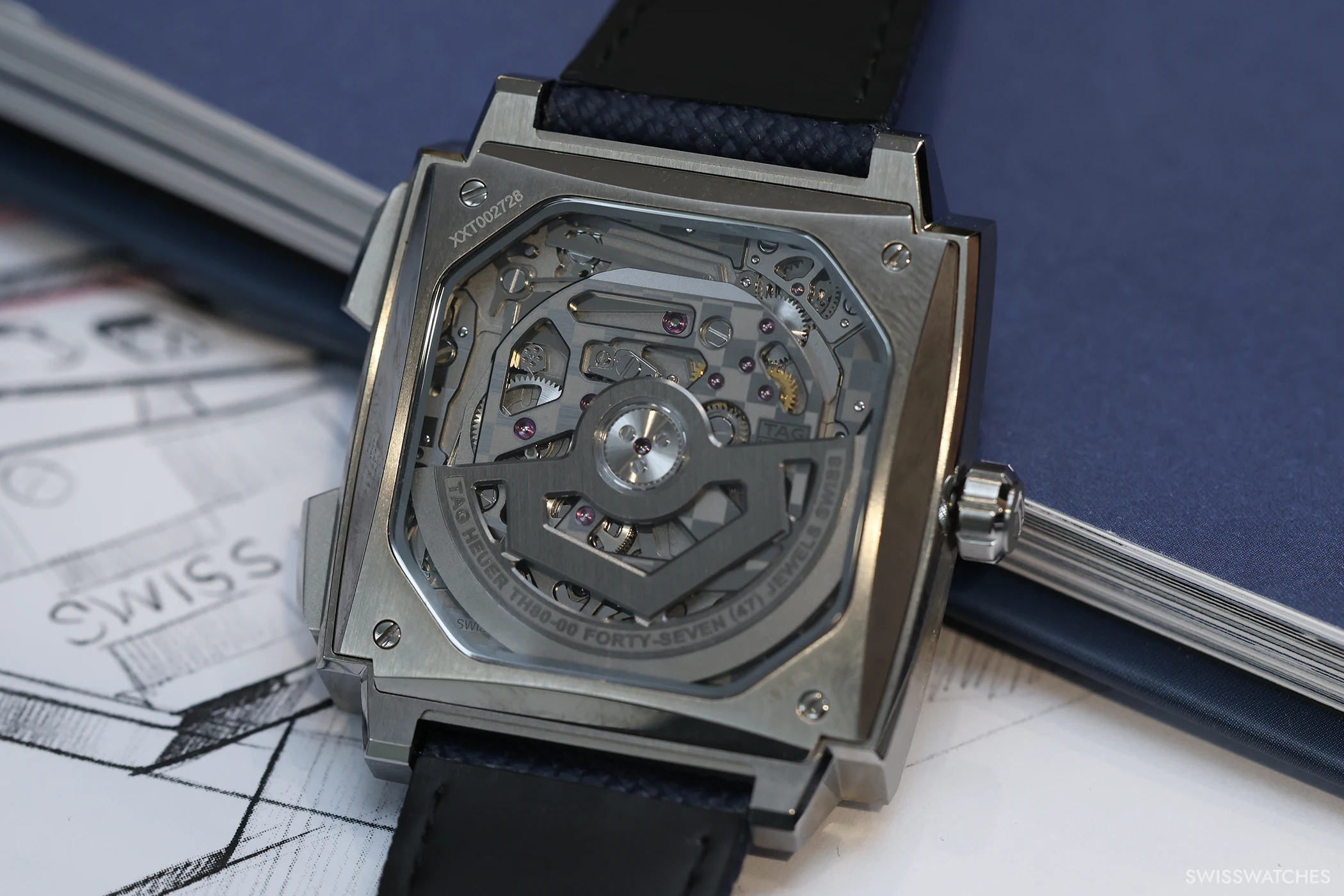
Beyond this, the calibre of the TAG Heuer Monaco Evergraph adheres to the same guiding principles: durability, reliability, and precision. The power reserve has been extended to 70 hours, while a winding rotor mounted on ceramic ball bearings reduces wear. COSC certification attests to its rate accuracy, and the frequency of 5 Hz enhances precision while enabling chronograph measurements accurate to one-tenth of a second. The vertical clutch ensures that the chronograph seconds hand starts instantly and without any jump. The square movement measures 31.4 millimetres in width and 6.85 millimetres in height, and consists of 322 components.
Shock resistance, magnetic field resilience, and precision are ensured by the TH carbon hairspring. This balance spring, made from carbon nanotubes, was developed by TAG Heuer and made its debut in its final form in 2025 with the Monaco Flyback Chronograph TH-Carbonspring and the Carrera Chronograph Tourbillon Extreme Sport TH-Carbonspring. Why does TAG Heuer not simply use silicon hairsprings with comparable properties? Such springs—and, in particular, their manufacturing processes—are still protected by patents held by the Swatch Group, Rolex, and Patek Philippe.
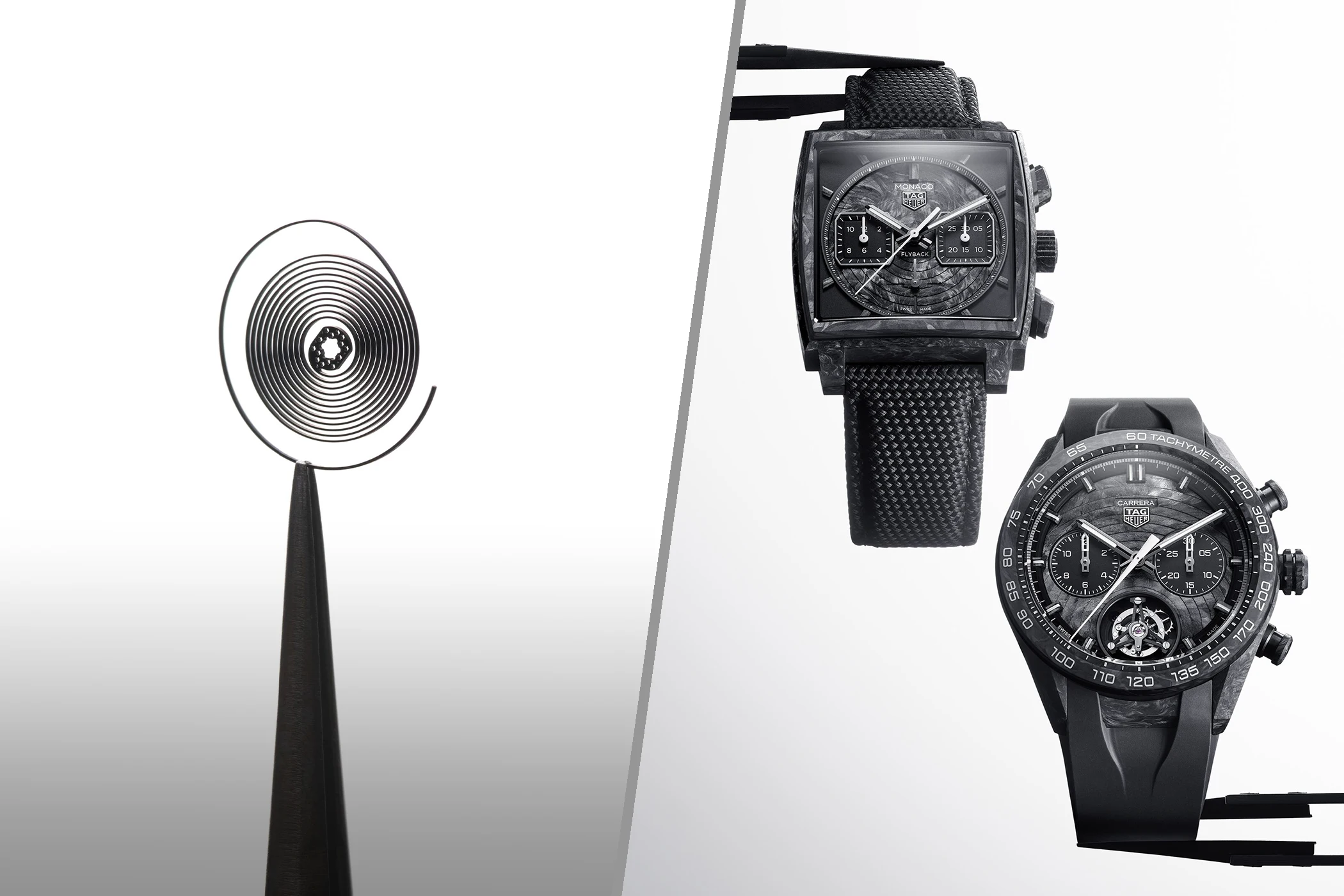
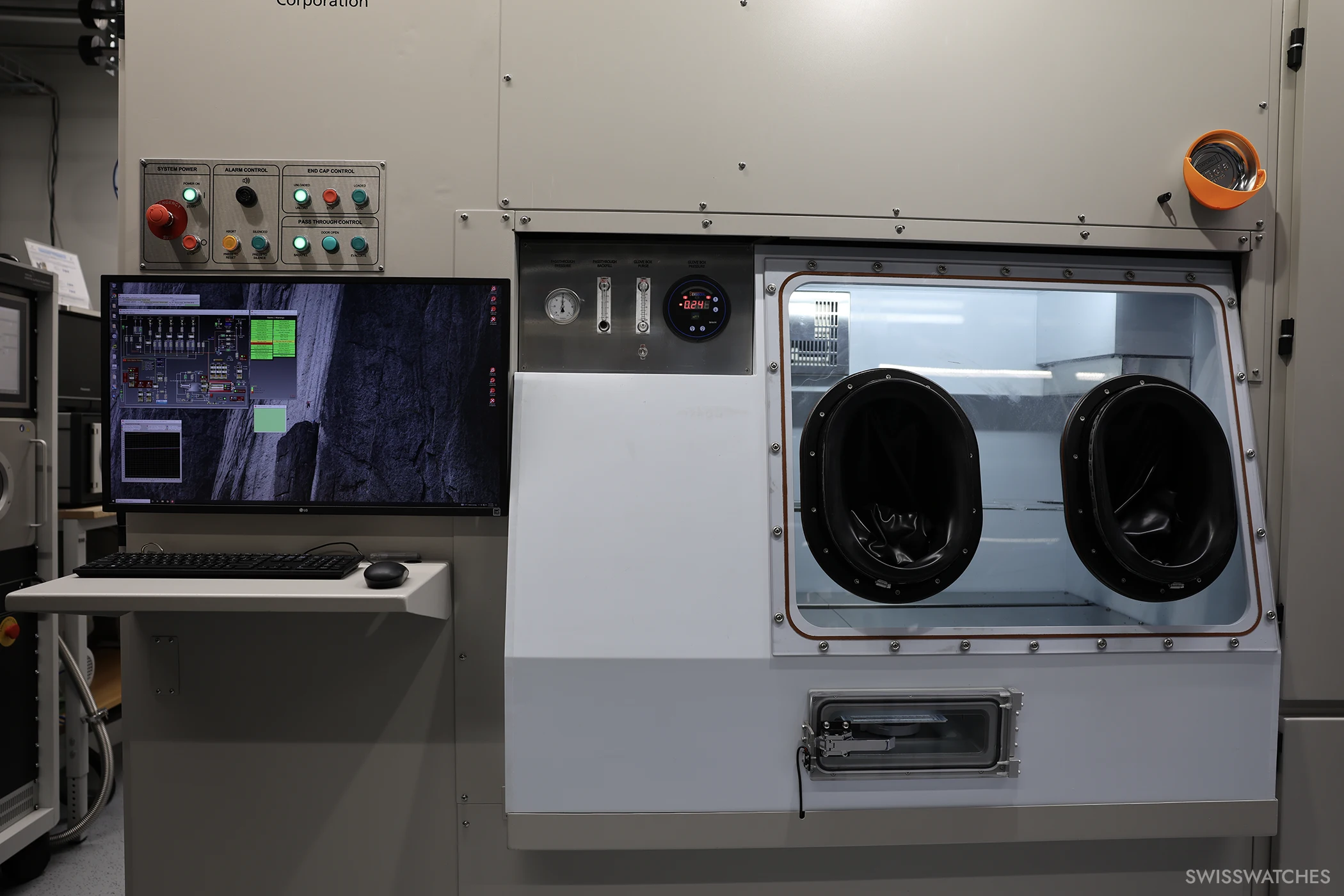
After several years of research, TAG Heuer succeeded in producing balance springs from carbon nanotubes that offer similarly advantageous properties: they are non-magnetic, around half the weight of conventional metal springs, highly flexible, and therefore less susceptible to positional errors and shocks. TAG Heuer has not only developed the carbon hairspring and secured the associated patents, but also manufactures these components in-house using a chemical vapour deposition (CVD) process.
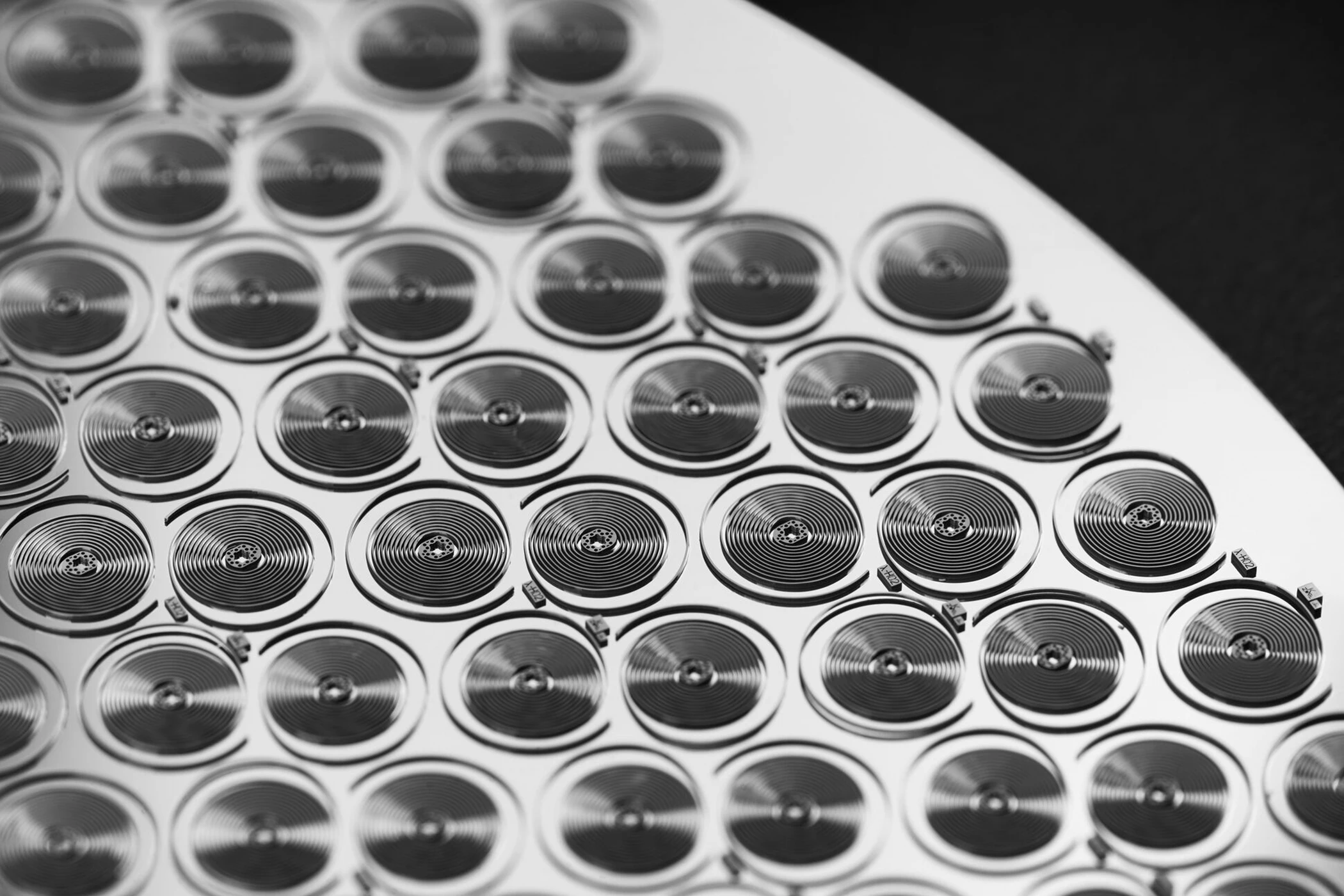
To produce it, a silicon wafer is coated with metal in the shape of the hairspring, after which a carbon-containing gas is introduced. At high temperatures, cylindrical graphite structures—known as carbon nanotubes—form on the metal. These measure just ten nanometres in diameter, making them around 5,000 times thinner than a human hair. The spaces within this “forest” of nanotubes are then filled with amorphous carbon. Like conventional metal hairsprings, the carbon hairsprings are classified into different strength categories and paired with a balance wheel of corresponding inertia. The two components are then joined by press-fitting and bonding.
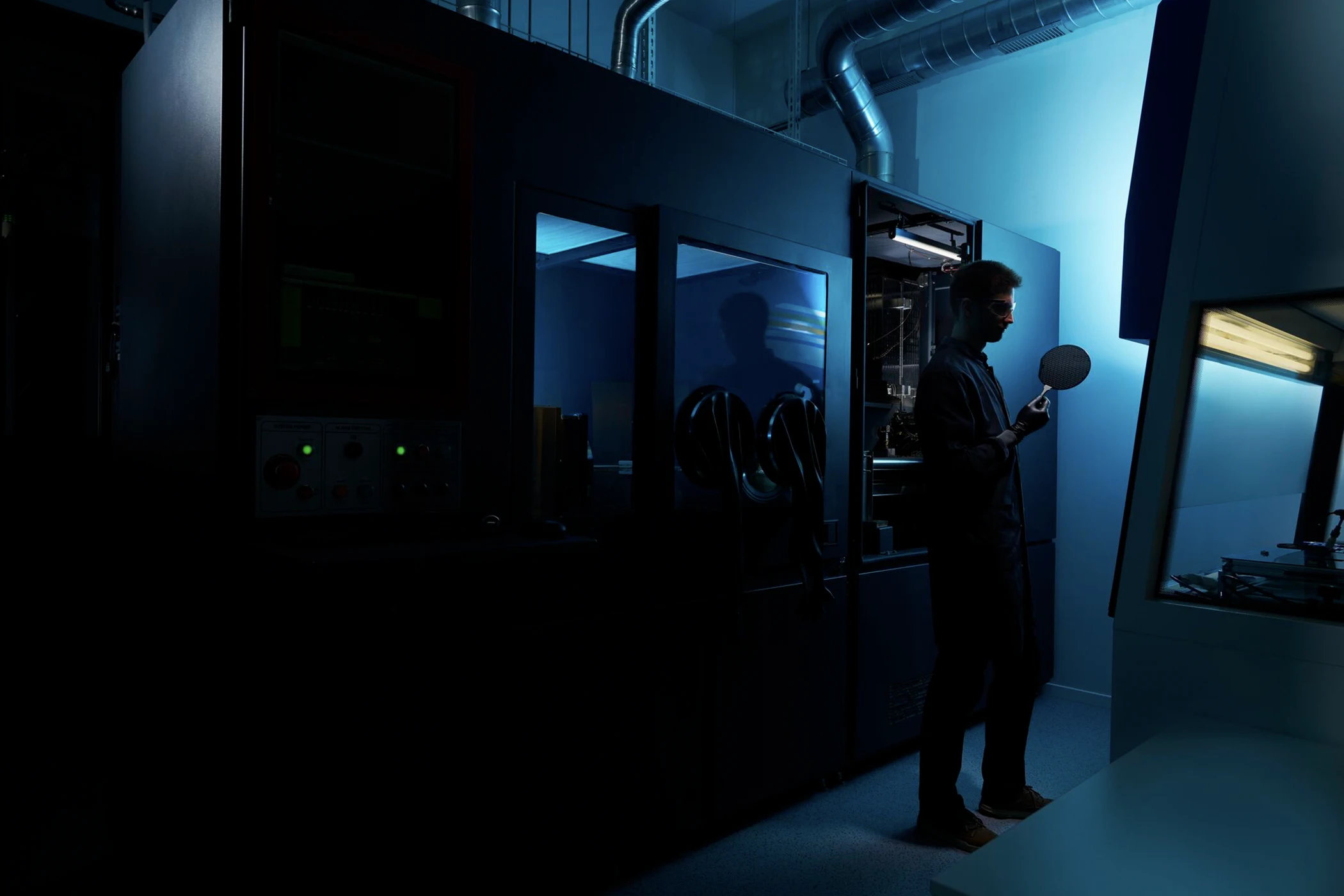
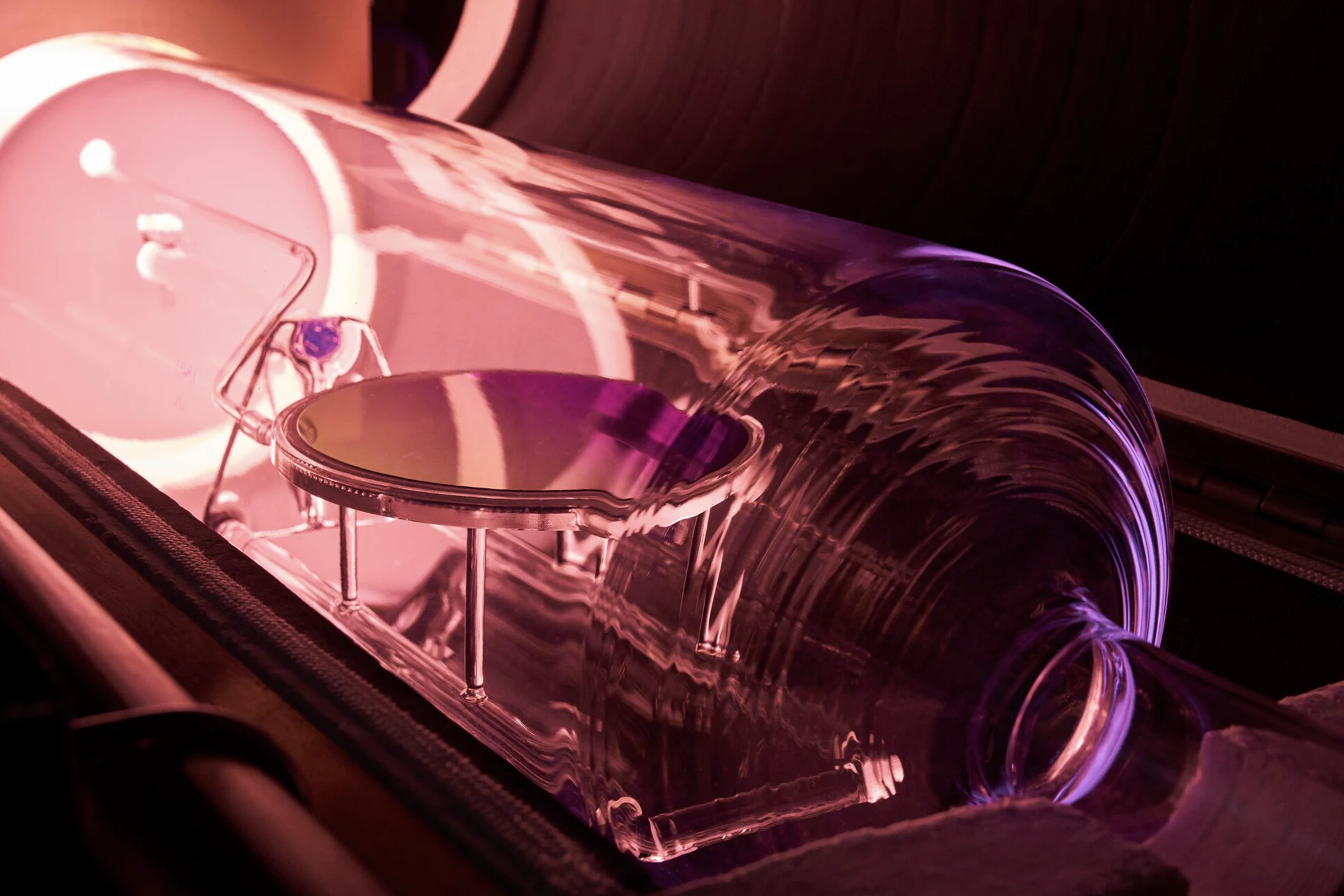
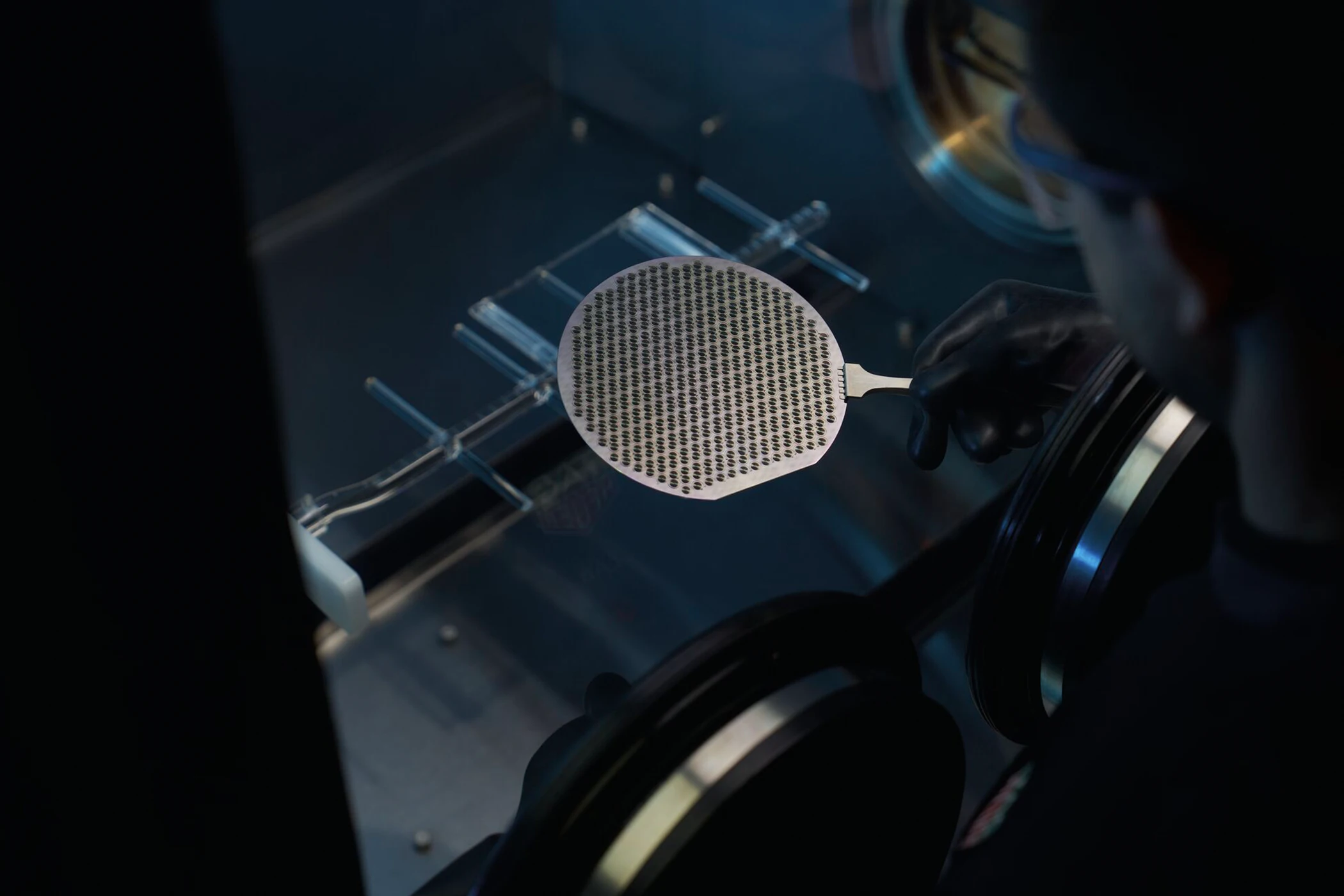
With its use in the TAG Heuer Monaco Evergraph, TAG Heuer is extending the application of the TH carbon hairspring to larger production volumes and non-limited models. However, the likewise new Monaco Chronograph with the updated calibre TH20-11 does not feature the carbon hairspring. It therefore appears that the brand does not intend to implement its proprietary hairspring across all models in the near future.
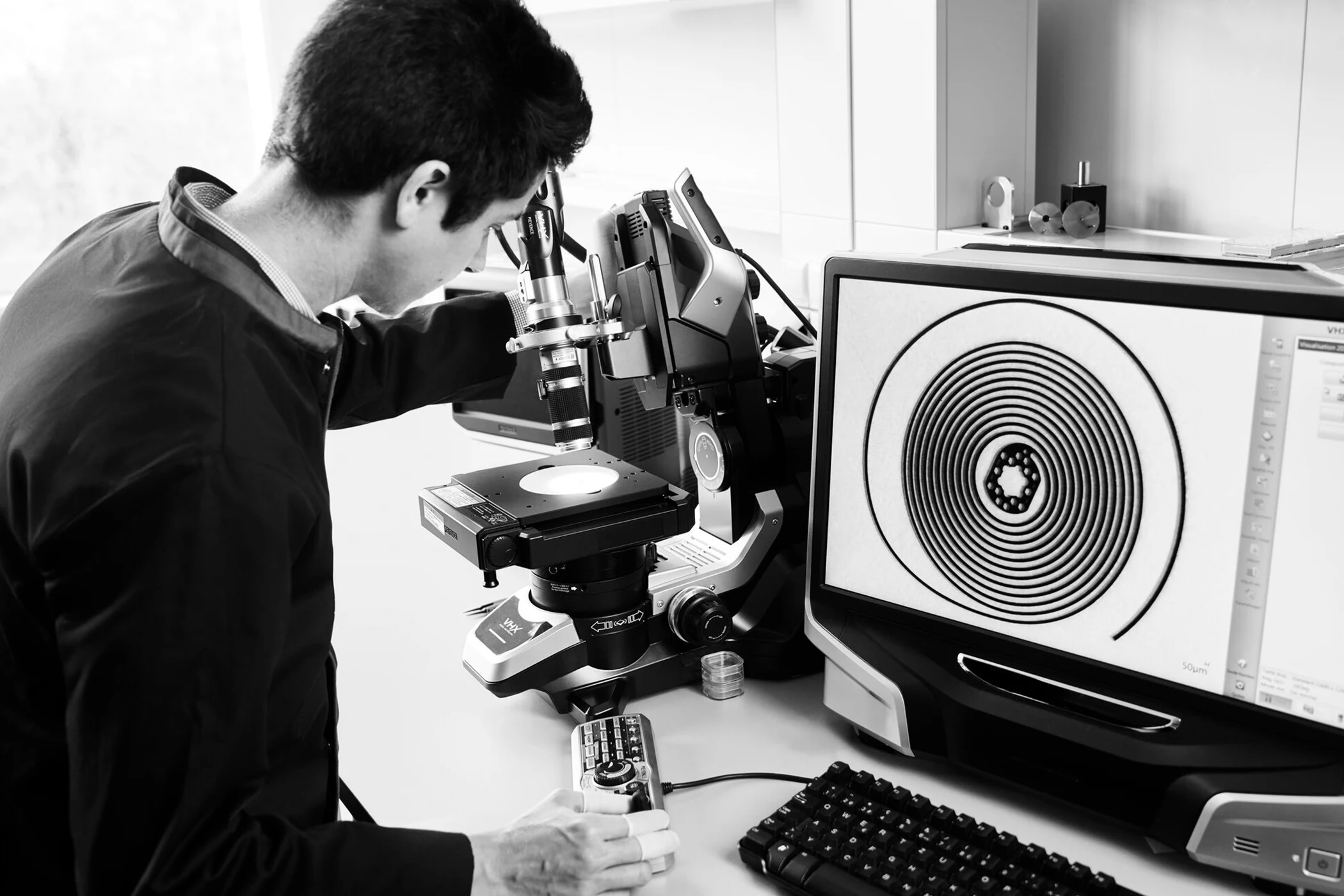
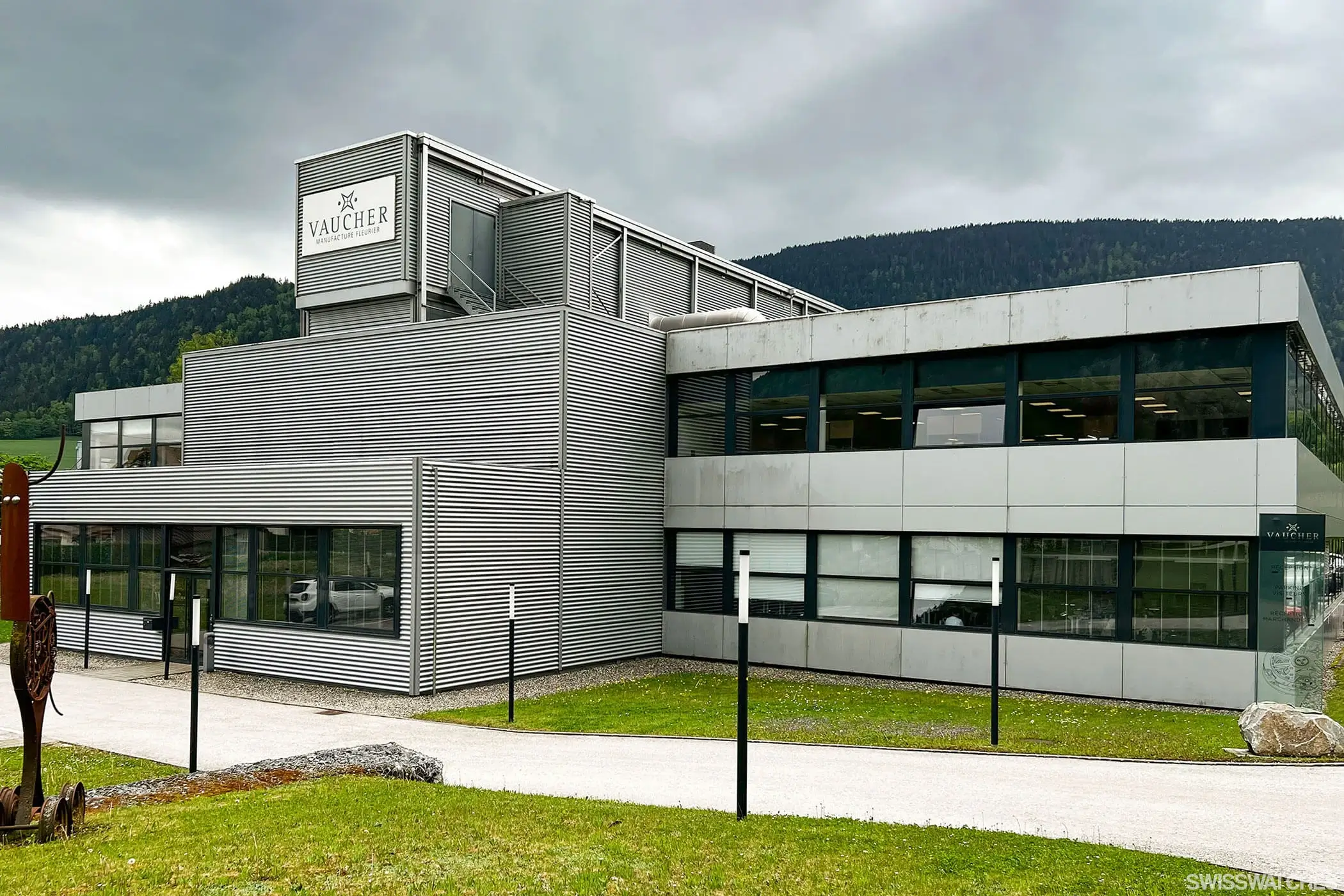
Overall, the level of vertical integration is also noteworthy. TAG Heuer manufactures its cases in Cornol, where the brand acquired case specialist Cortech. Dials are produced by ArteCad in Tramelan, a company likewise owned by LVMH. Although ArteCad also supplies external brands, around 60 per cent of its production is allocated to TAG Heuer. Most movement components are manufactured at TAG Heuer’s facility in Chevenez, where the TH20 calibre is also assembled. The TH80 calibre of the new Monaco Evergraph, however, is assembled by Vaucher.
Encouragingly, TAG Heuer communicates this collaboration transparently in its press release, rather than presenting the movement as an in-house manufacture calibre. Movement specialist Vaucher also produces for Parmigiani, Richard Mille, Audemars Piguet, and others, and was already involved in the development of the Monaco Split-Seconds Chronograph in 2024.
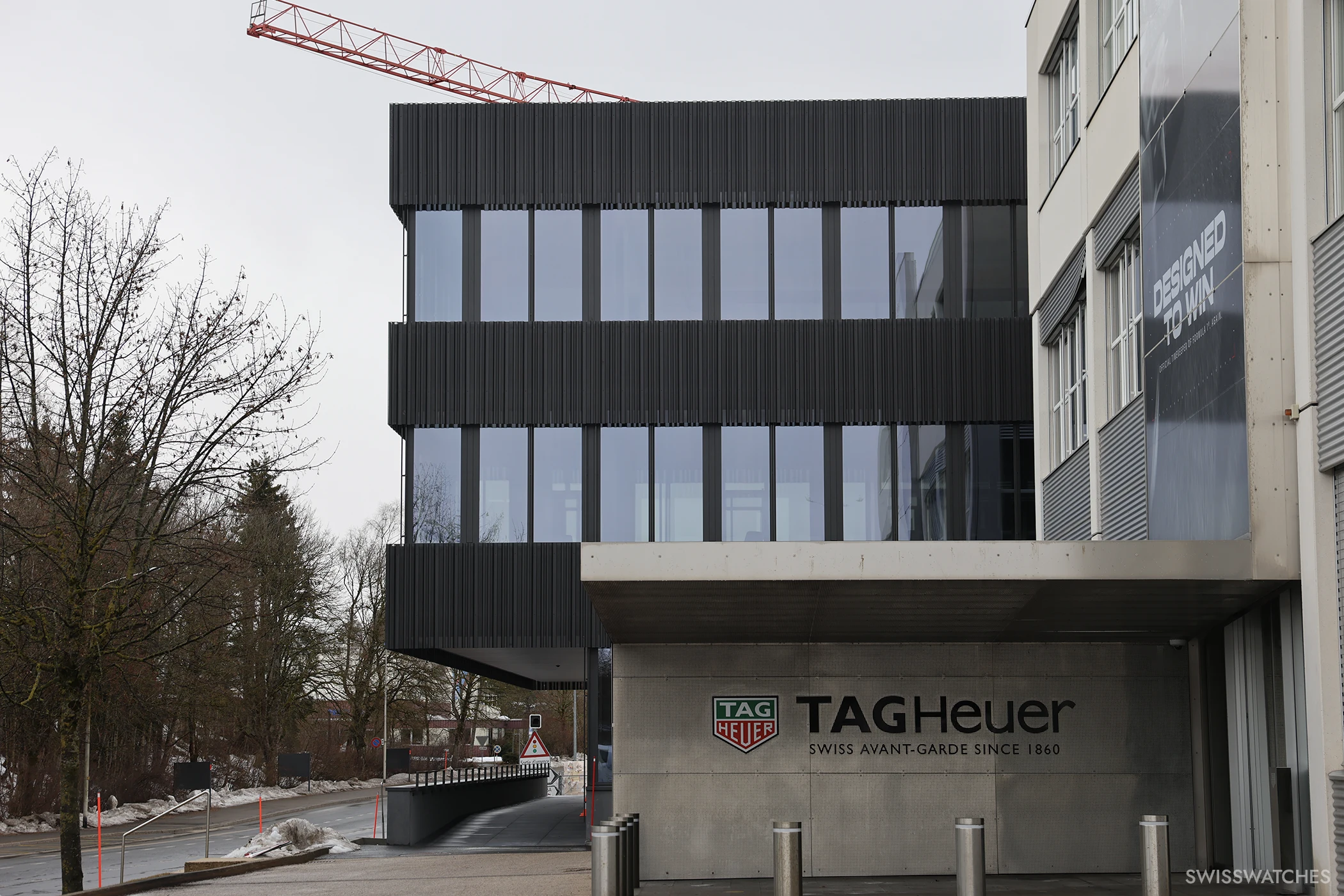
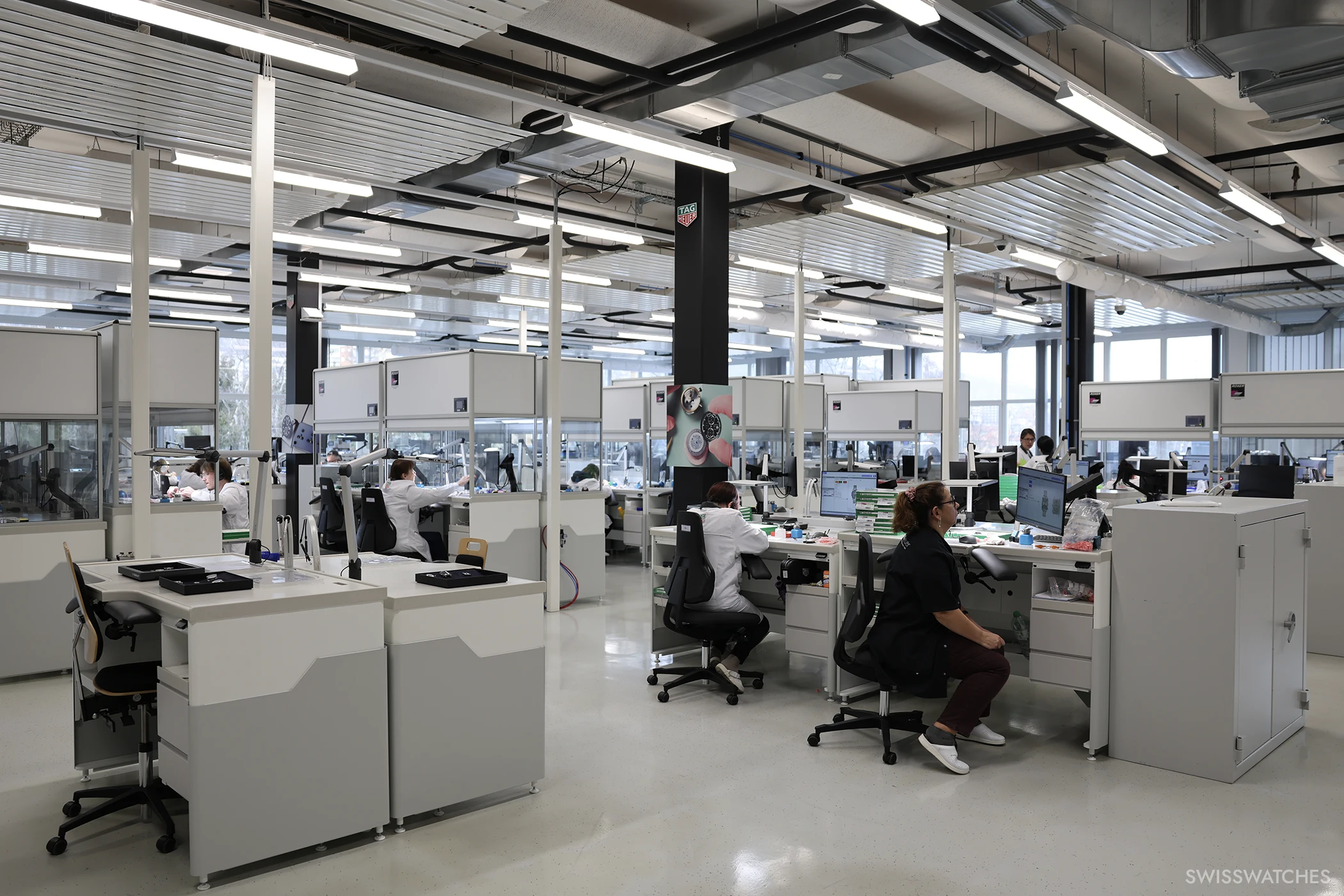
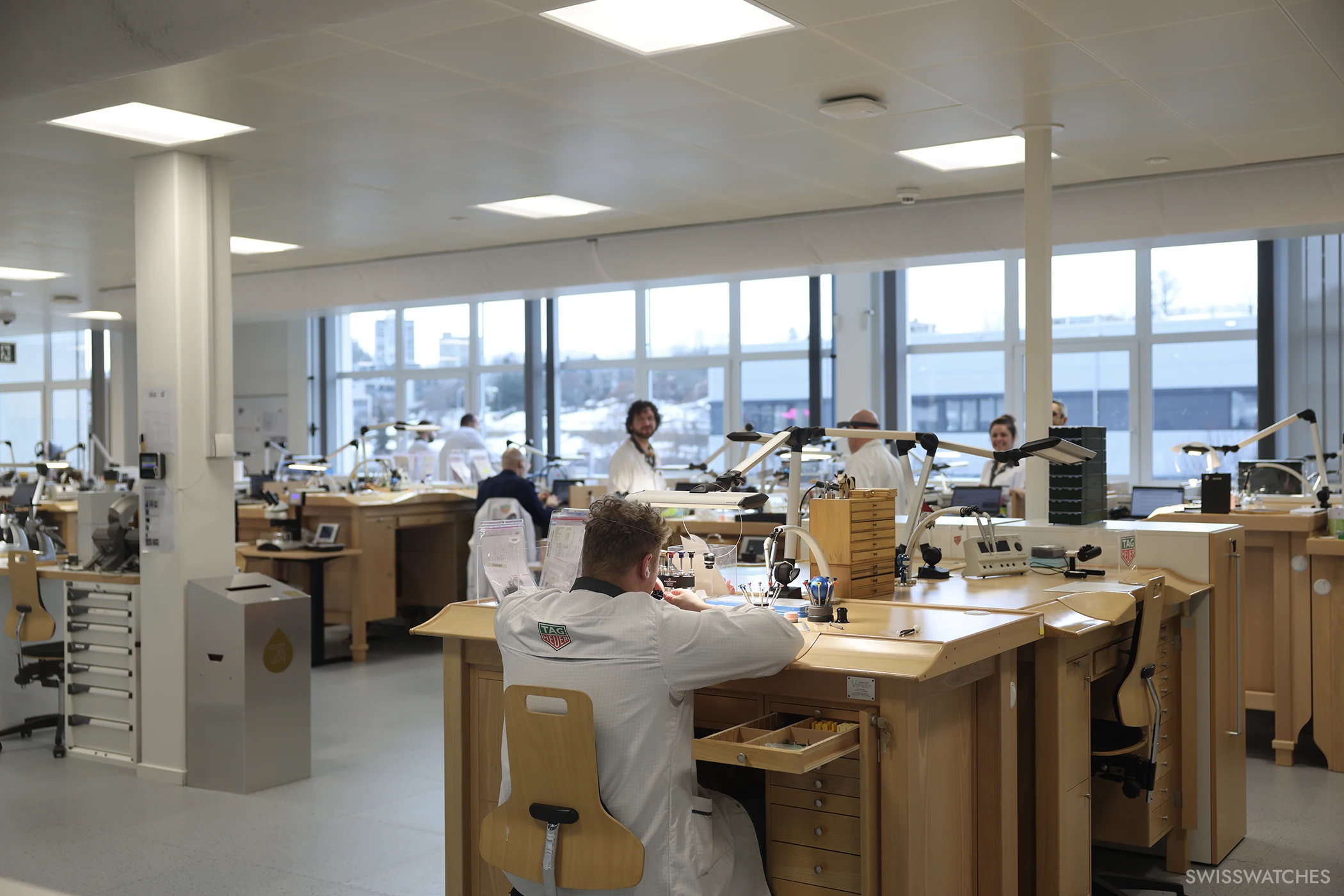
Developing novel hairsprings and chronograph mechanisms requires extensive testing. For this purpose, TAG Heuer operates a dedicated test laboratory department in La Chaux-de-Fonds. Here, both prototypes and serially produced watches are subjected to rigorous trials—earning the facility its internal nickname, the “torture chamber”.
The brand tested the new bistable chronograph components of the TAG Heuer Monaco Evergraph on a Centagora Flexilab device through thousands of actuations to assess their long-term durability. The apparatus is capable of operating the pushers at one-second intervals with a defined force, cycling through start, stop, and reset functions. In a single day, with 86,400 actuations, the system simulates an 80-year chronograph lifespan, assuming the stopwatch function is used once per day.
Vibrations and impacts are also tested here using a range of specialised equipment, as is the behaviour of a watch when dropped onto surfaces such as wood or other materials. There is even a device designed to drop a metal ball onto the crystal from various heights. The notorious hammer impact test—subjecting watches to forces of up to 2,500 G—must also be endured by every prototype. These tests are deliberately designed so that not every watch emerges unscathed; however, each must meet defined criteria or remain fully functional.
The wear tests are equally impressive. In these, a watch is placed loosely inside a container filled with various materials and shaken continuously by a machine over several days. The containers are filled with ceramic pellets, sand, small pebbles, or everyday items typically found in a backpack or handbag—such as tissues, coins, or keys. This simulates years of abrasion, ensuring that the pushers and crown remain operable even after prolonged use.
Testing in climate chambers with elevated temperature and humidity ensures that the watches continue to function reliably even in tropical conditions. Other components are likewise exposed to potentially harmful influences: dials and straps are subjected to prolonged exposure to intense UV light to assess the effects of extreme sunlight on colour stability. Straps are also treated with sunscreen and liquid insect repellent to determine whether their colours are affected.
Various everyday scenarios relevant to the automatic winding system can be tested using an artificial arm. It can, for example, simulate wrist movements during walking, allowing engineers to assess whether certain motion patterns are sufficient to wind the watch. This is particularly important for new movements such as the TH80 in the Monaco Evergraph.
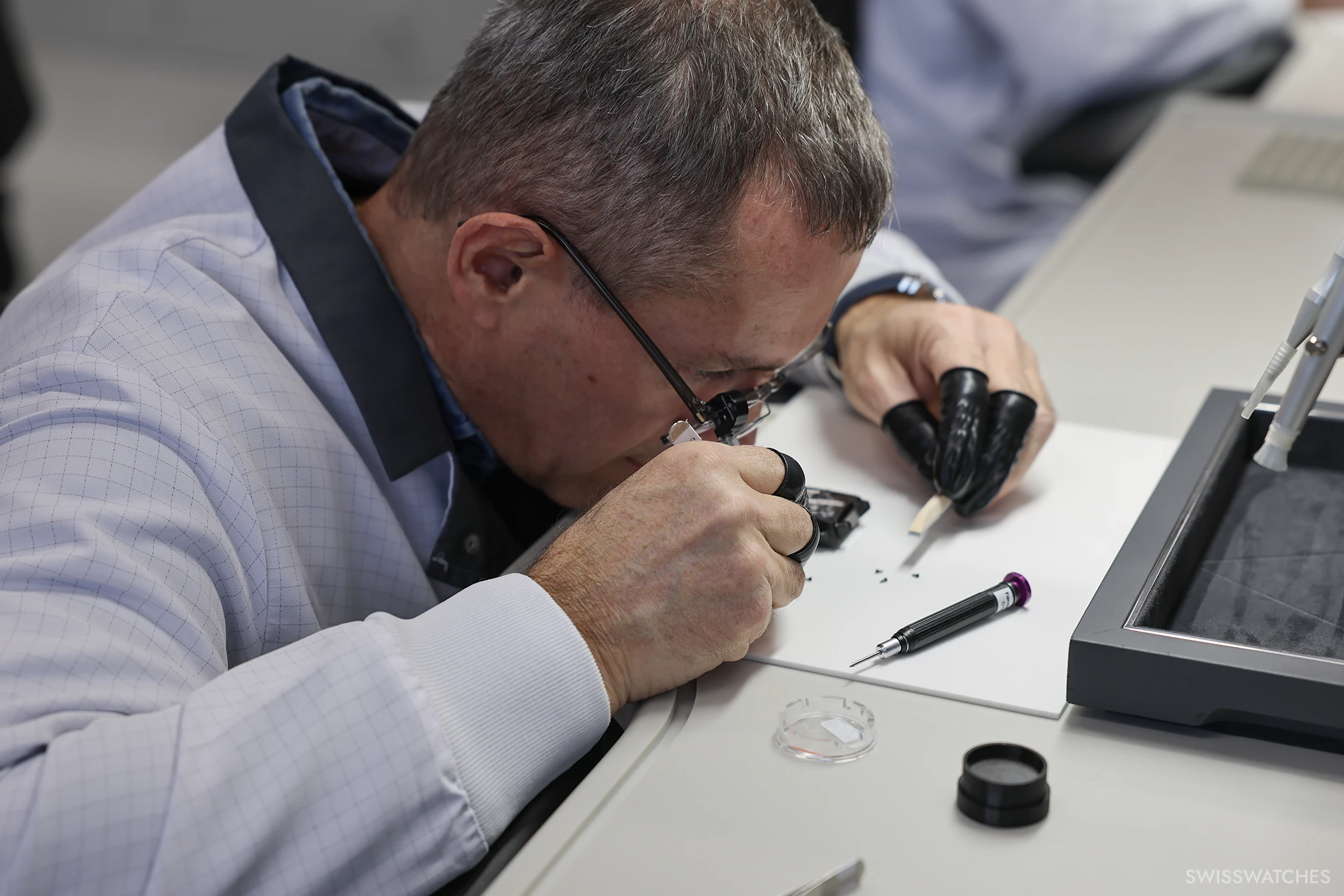
The same applies to a room dedicated specifically to movements. In addition to rate accuracy and winding performance, the team analyses how different lubricants and quantities of oil behave at various points within the movement. High-speed cameras are also employed for this purpose.
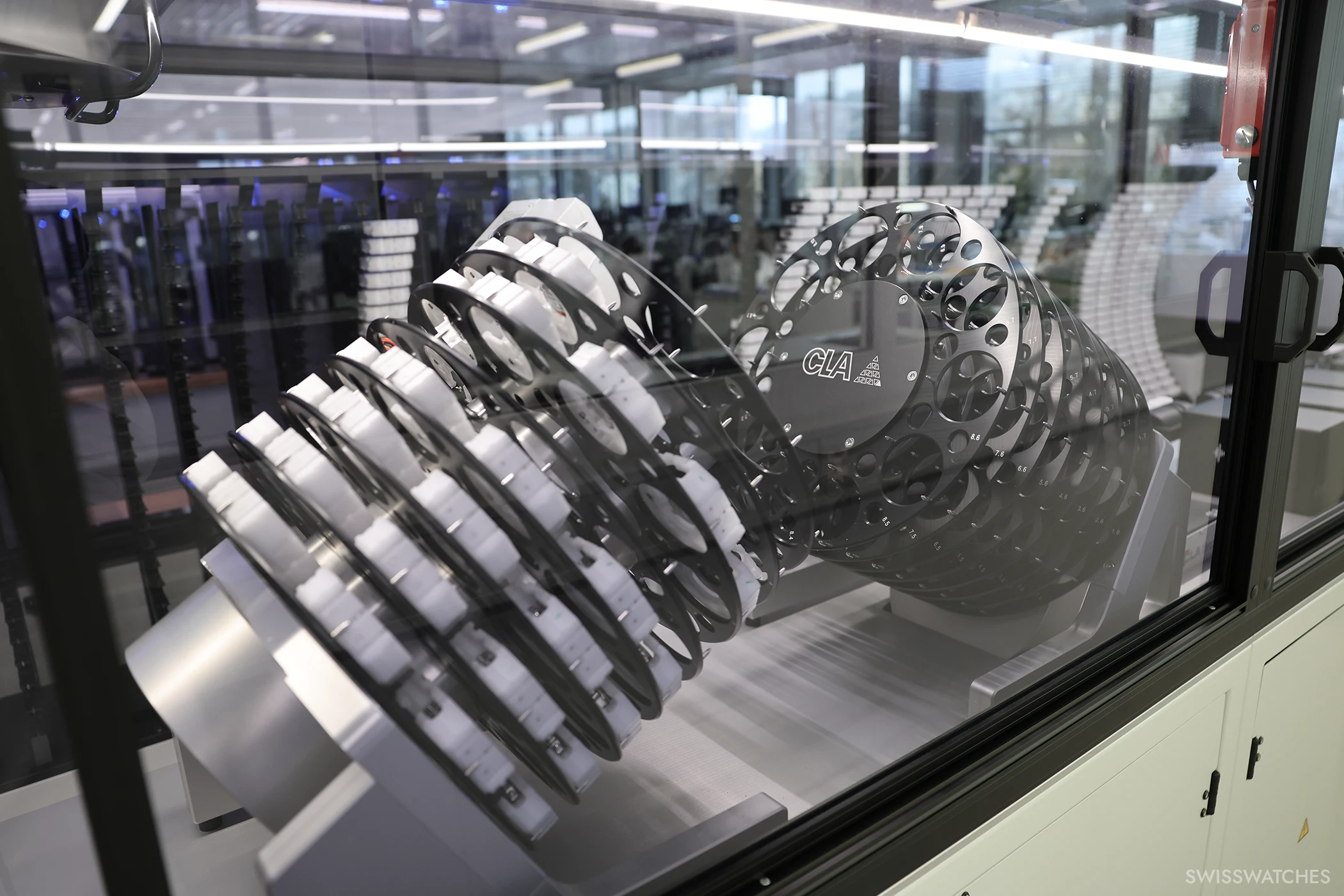
To ensure comprehensive final testing of large production volumes, TAG Heuer uses a fully automated robotic cell developed by CLA (Clinical Laboratory Automation). Here, the watches—without straps—undergo a sequence of tests within an enclosed chamber. A robotic arm transports the watch heads from one station to the next: first, winding performance is tested, followed by rate accuracy in all six positions, and finally the correct functioning of the pushers is verified. Using QR and barcode labels on the caseback, the results can be precisely assigned to each individual watch.
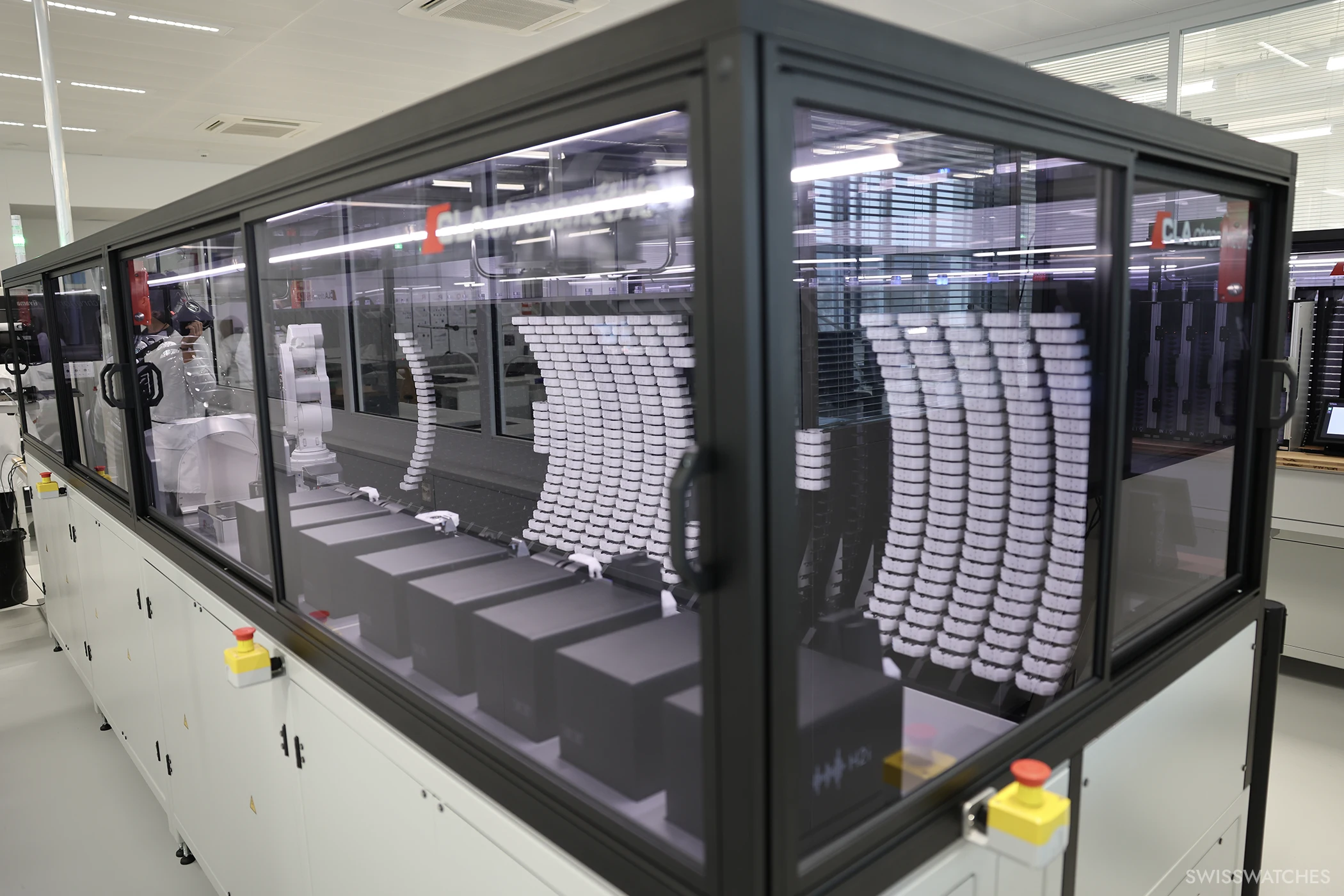
The robotic cell is loaded on one side with watch heads placed in plastic holders; after eight days, the fully tested watches are ready for removal. Everything in between is handled fully automatically and monitored by camera systems.
The influence of magnetic fields is also assessed in the test laboratory. According to ISO standard 764, anti-magnetic watches must withstand 4,800 amperes per metre (60 gauss). The new Monaco Evergraph, along with other models equipped with the carbon hairspring, is tested to ten times that level: 48,000 A/m (600 gauss). According to TAG Heuer, this does not necessarily represent the upper limit of its resistance, but is considered more than sufficient for everyday use.
Another point worth noting: every watch leaving the manufacture is tested in the same way as a diver’s watch, at 25 per cent above its stated water-resistance rating. For the new Monaco Evergraph, rated to 50 metres, this corresponds to a test depth of 62.5 metres.
The test laboratory is exceptionally well equipped, even by industry standards, which is why TAG Heuer also carries out testing for other LVMH brands such as Zenith, Bulgari, and Hublot in certain cases.
The design process of the TAG Heuer Monaco Evergraph was guided by three objectives. First, the Monaco—an icon with over 50 years of history—was to remain true to its origins. Second, the aim was to create a coherent, integrated design that interprets the original in a contemporary manner. Third, as with the movement, the focus was placed on functionality and tangible improvements for the wearer. A demanding brief for the designers, but one that is clearly reflected in the final watch.
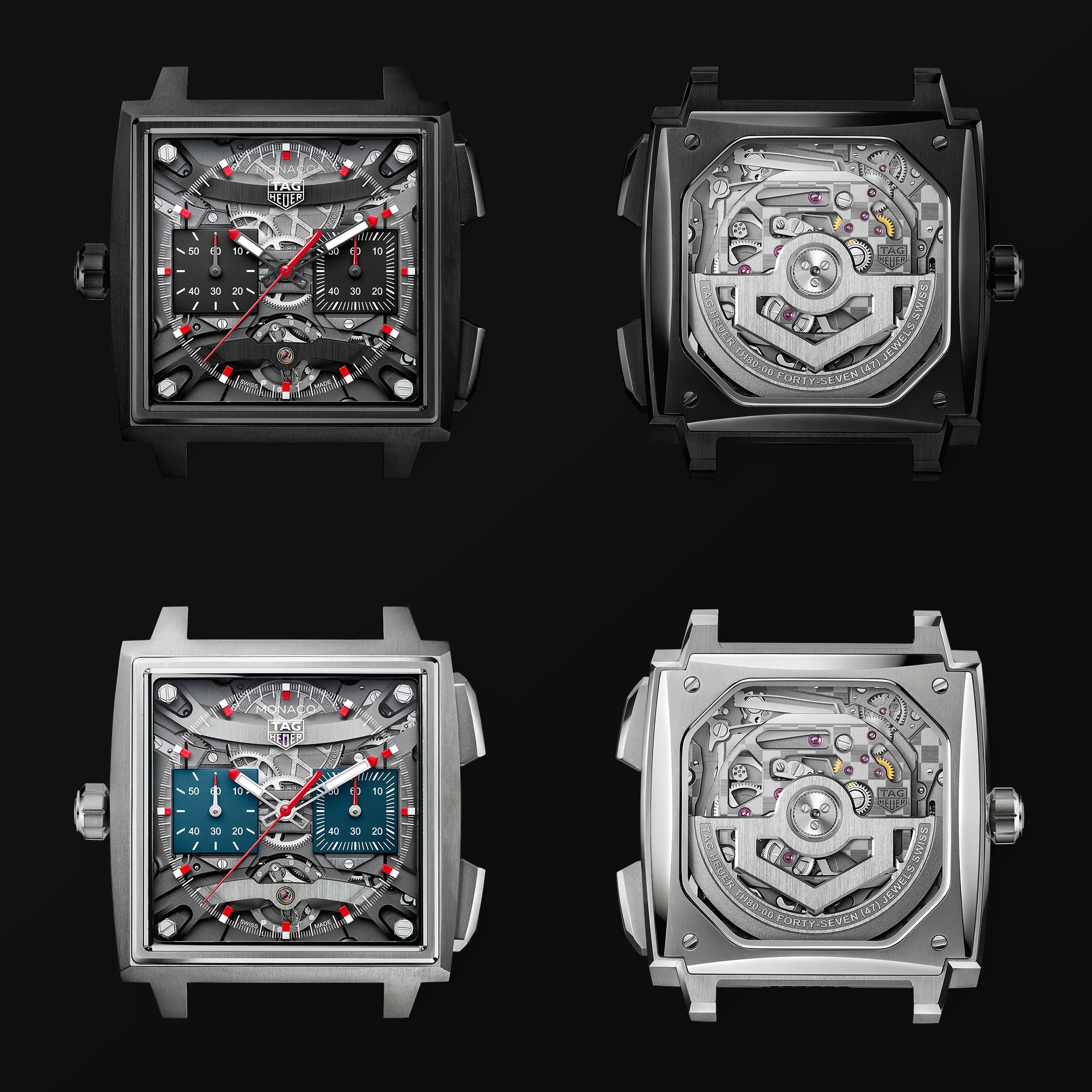
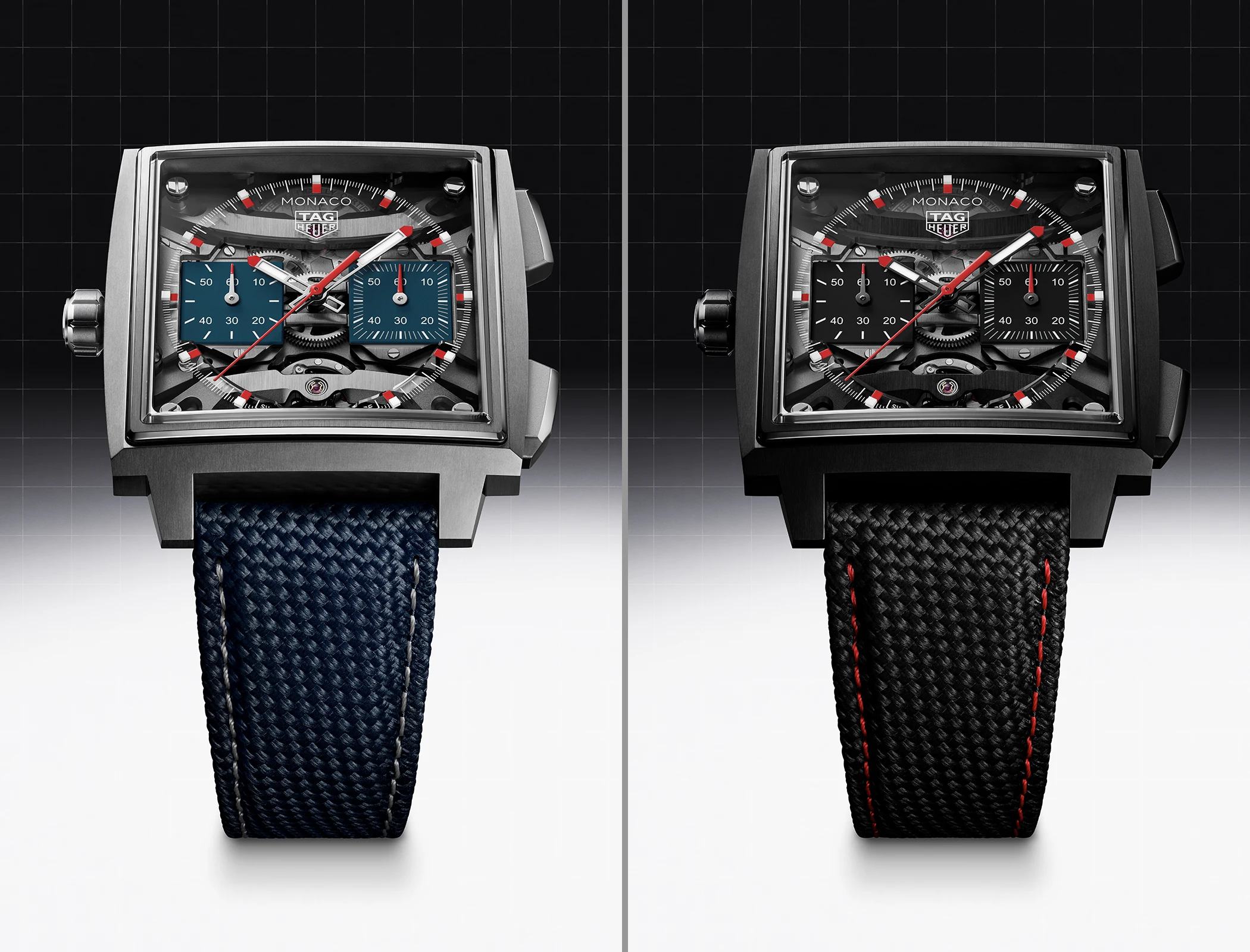
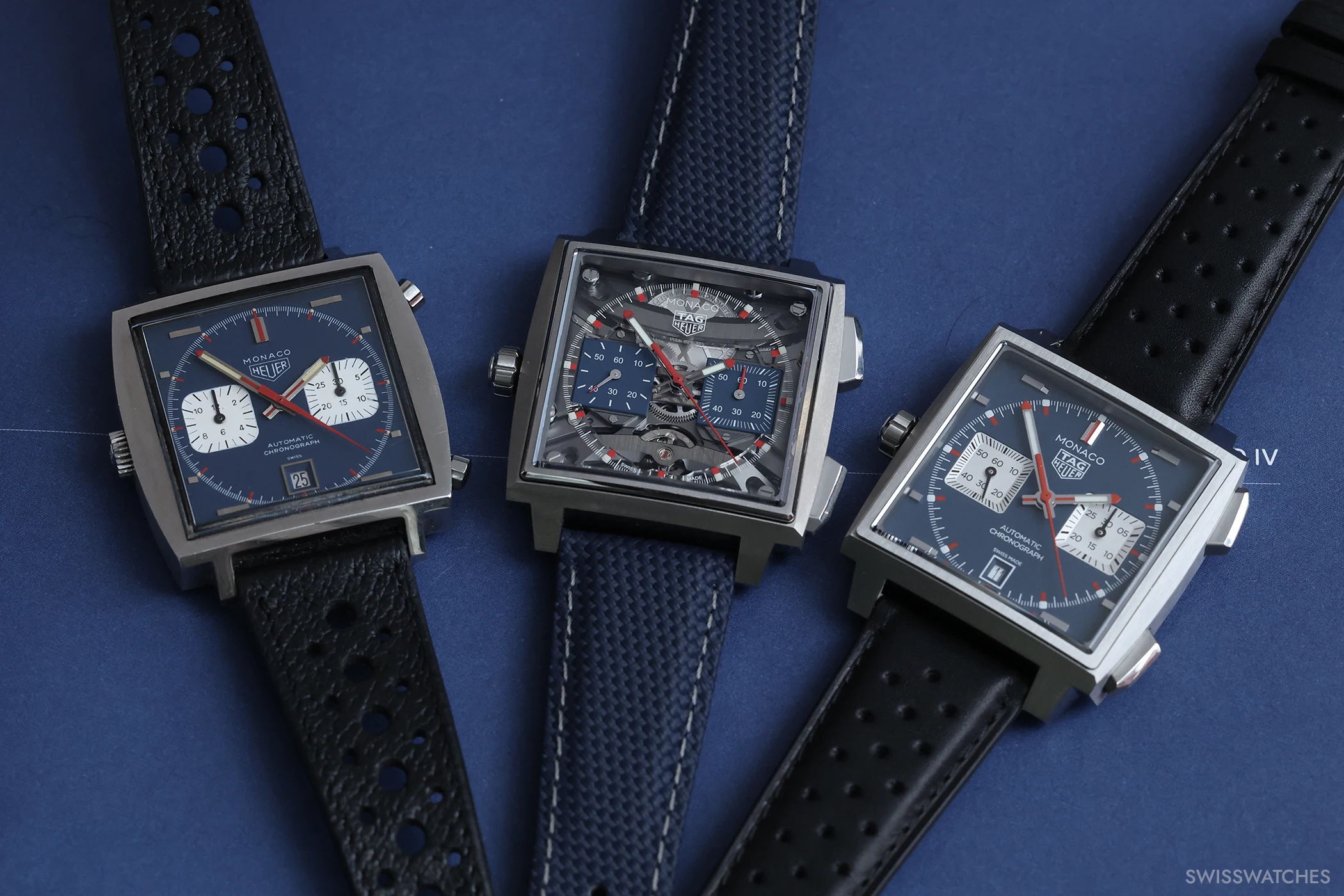
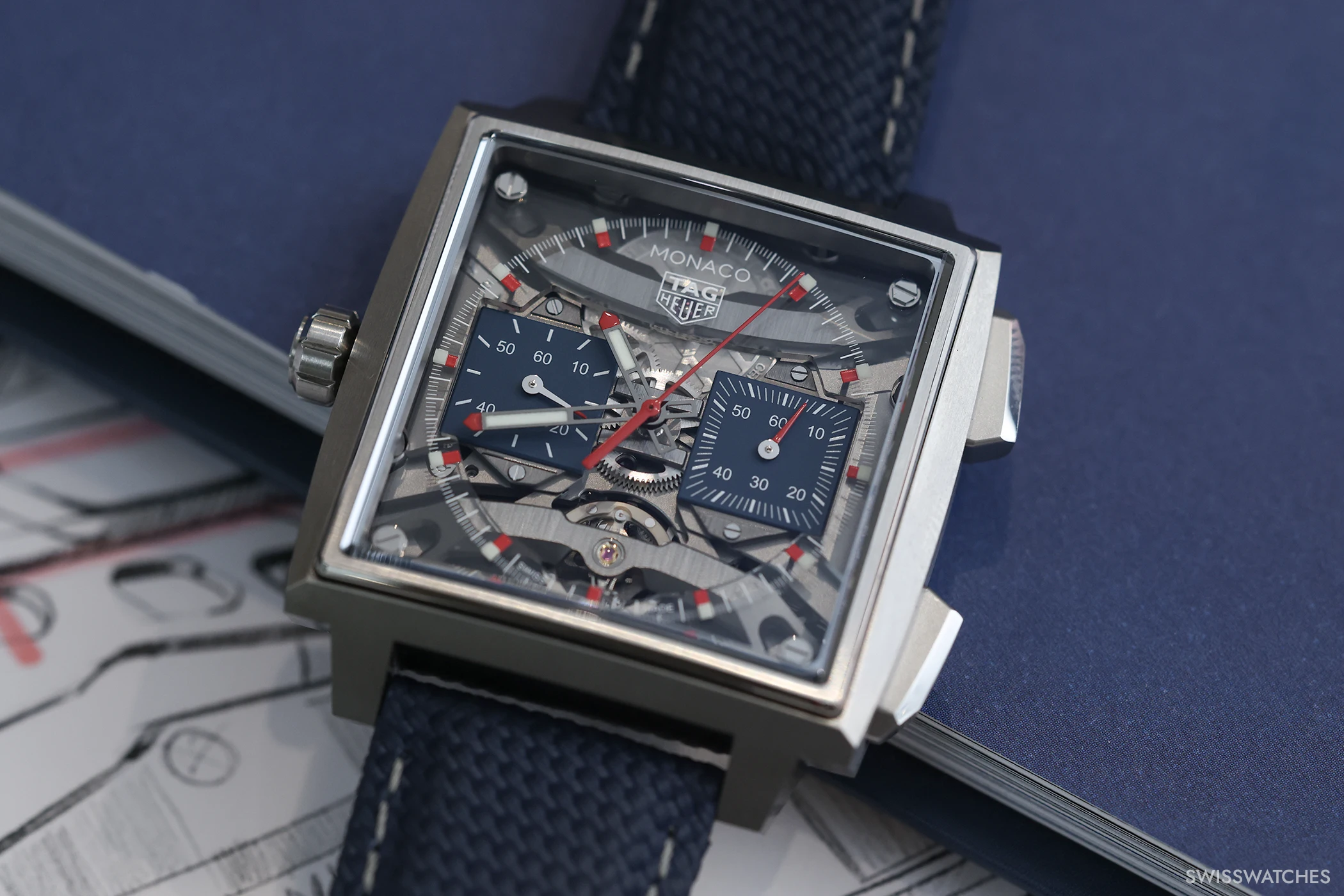
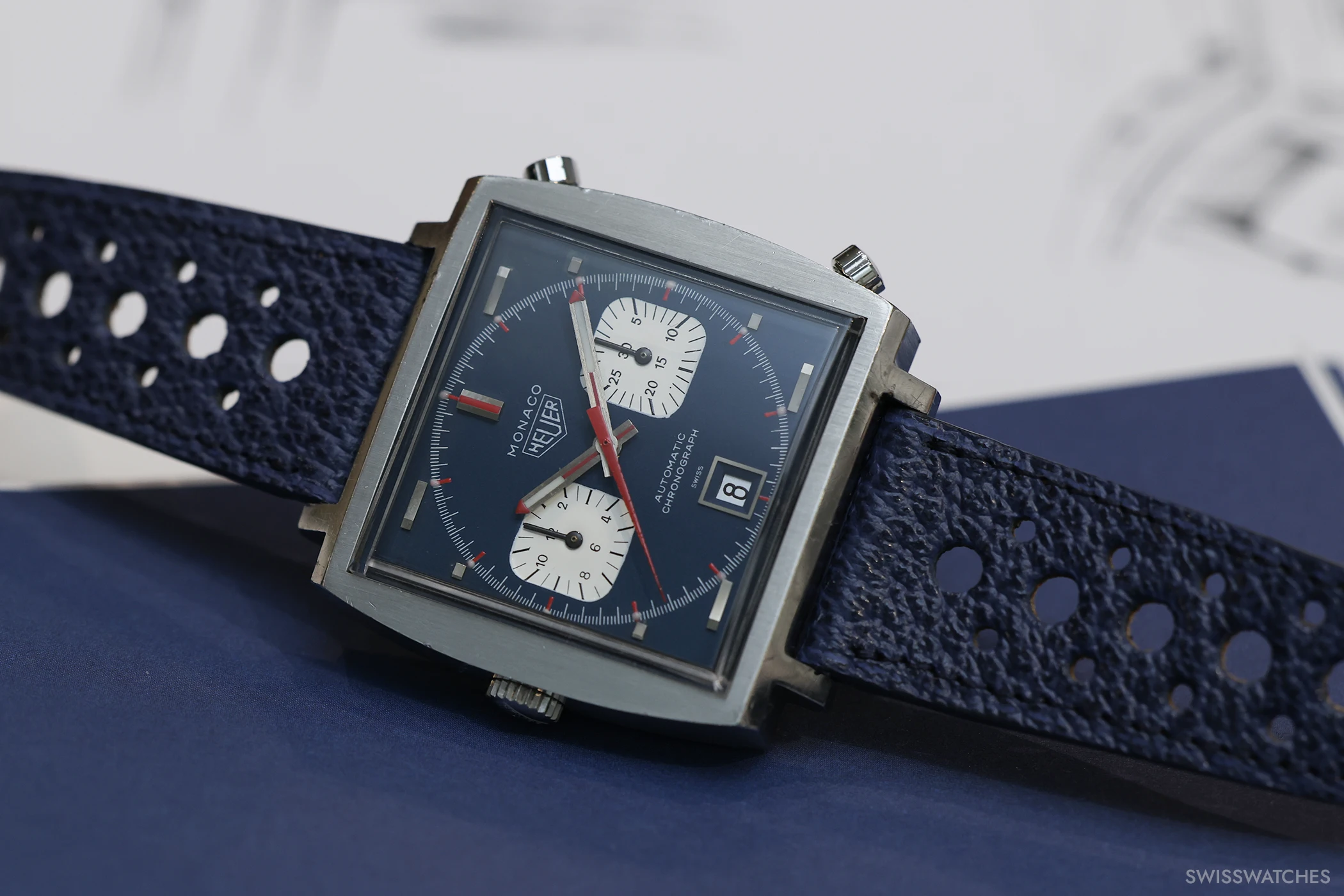
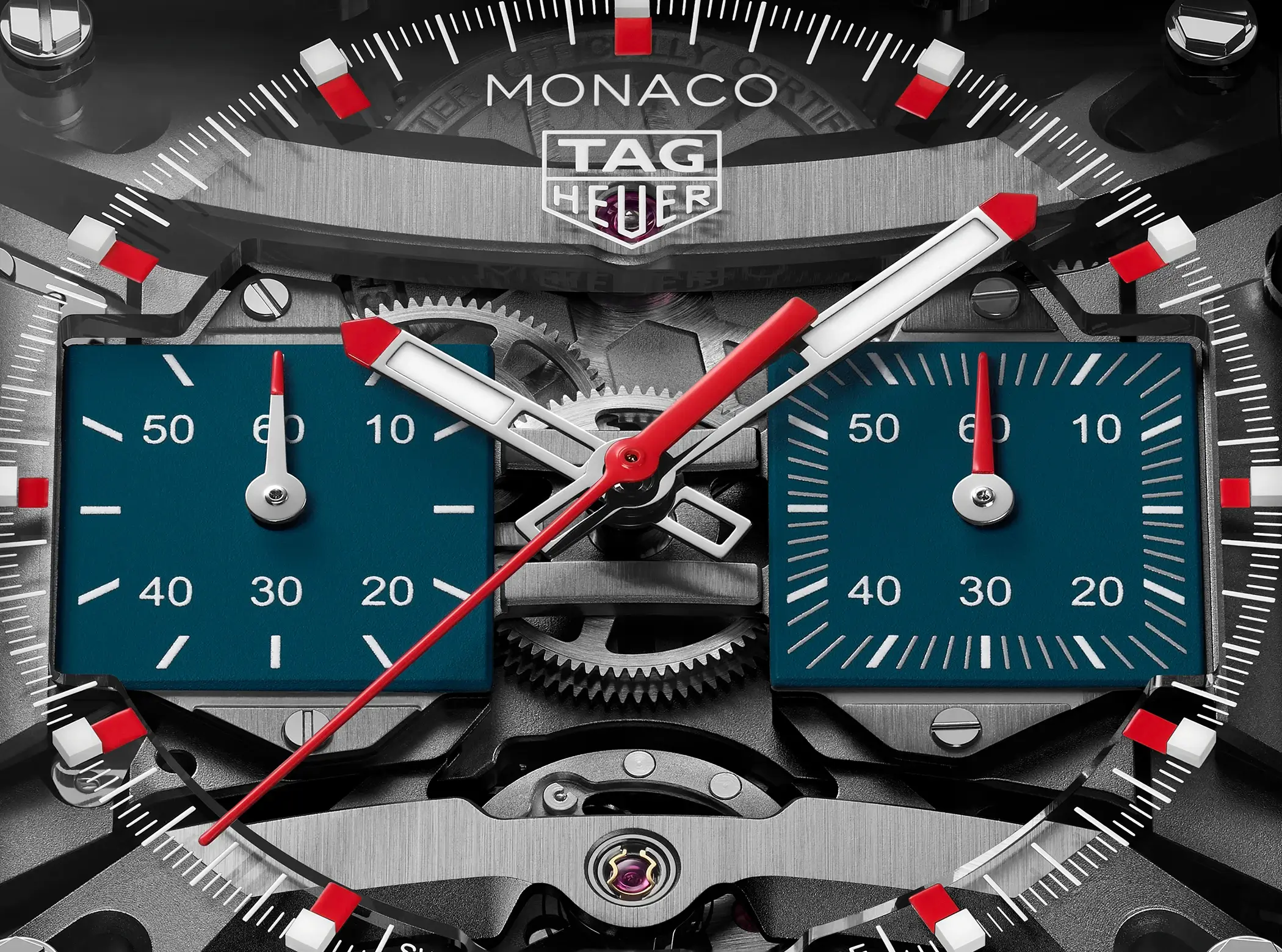
The TAG Heuer Monaco Evergraph’s design is visibly inspired by the original Monaco of 1969, with similar proportions, shapes, and lines. As before, TAG Heuer positions the crown on the left, which also facilitates easier operation of the pushers. The fundamental design of the hands, scales, indices, and even the characteristic colour scheme of blue, red, and white elements has been retained. At 40 millimetres, the case size also remains close to the original 39 millimetres.
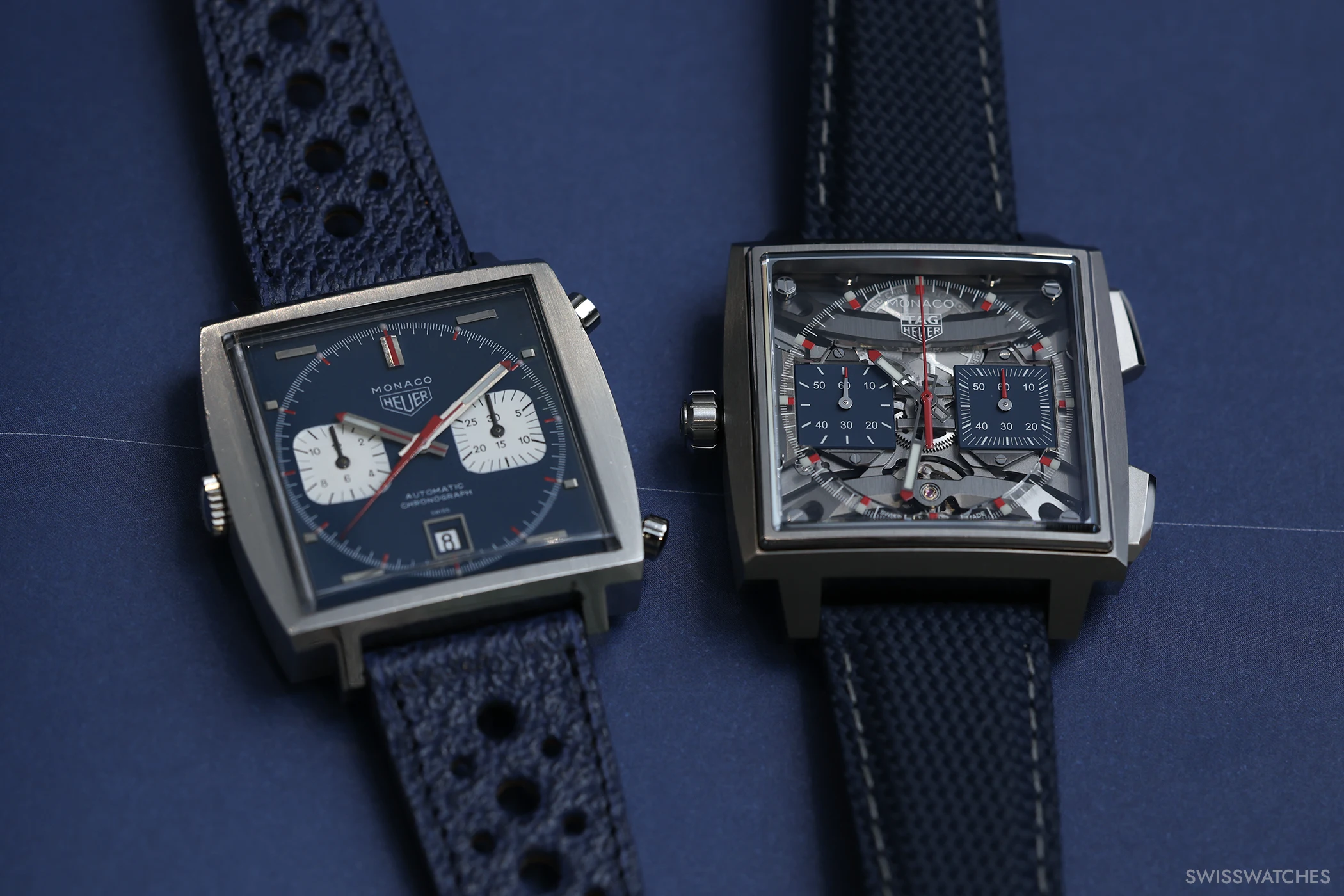
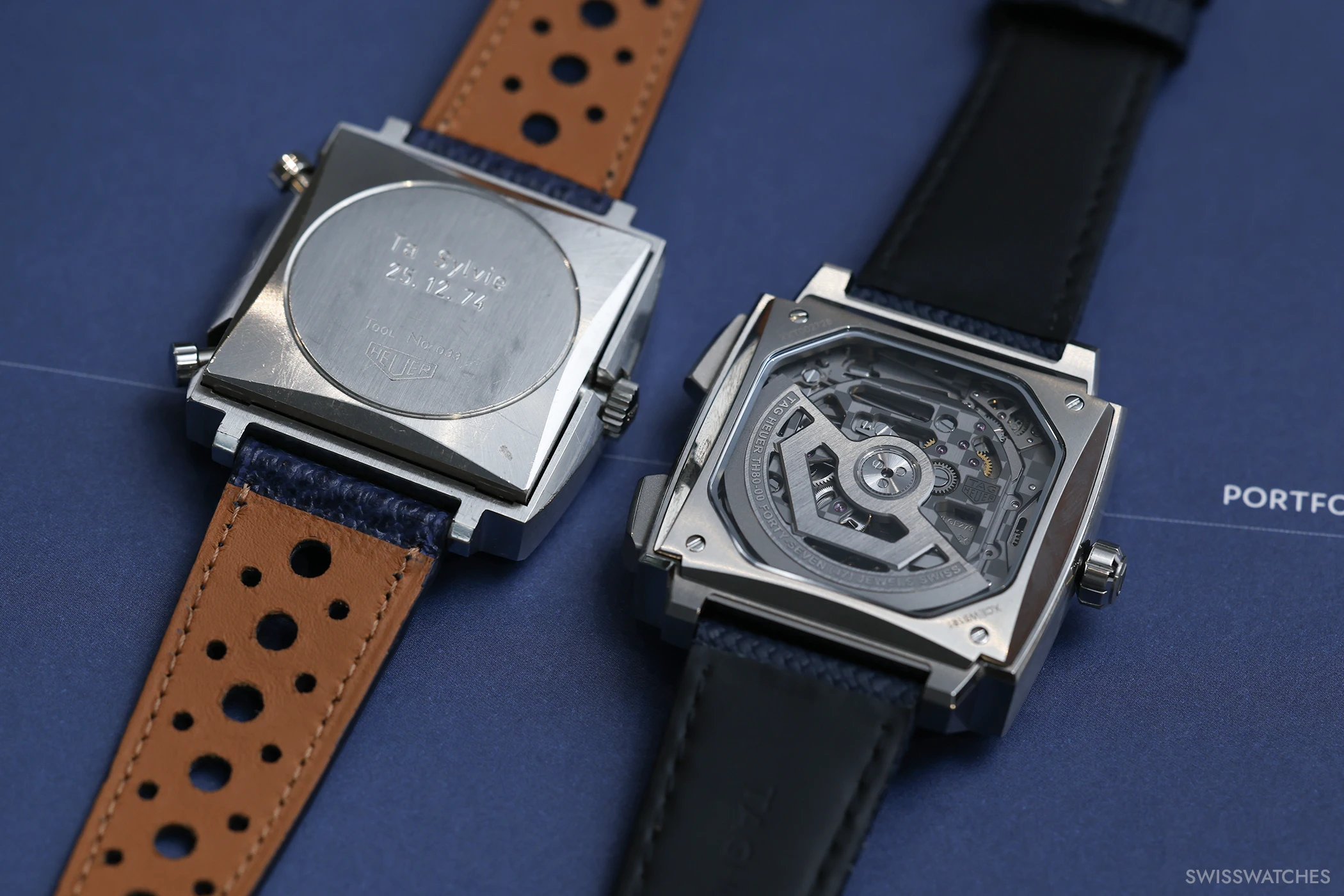
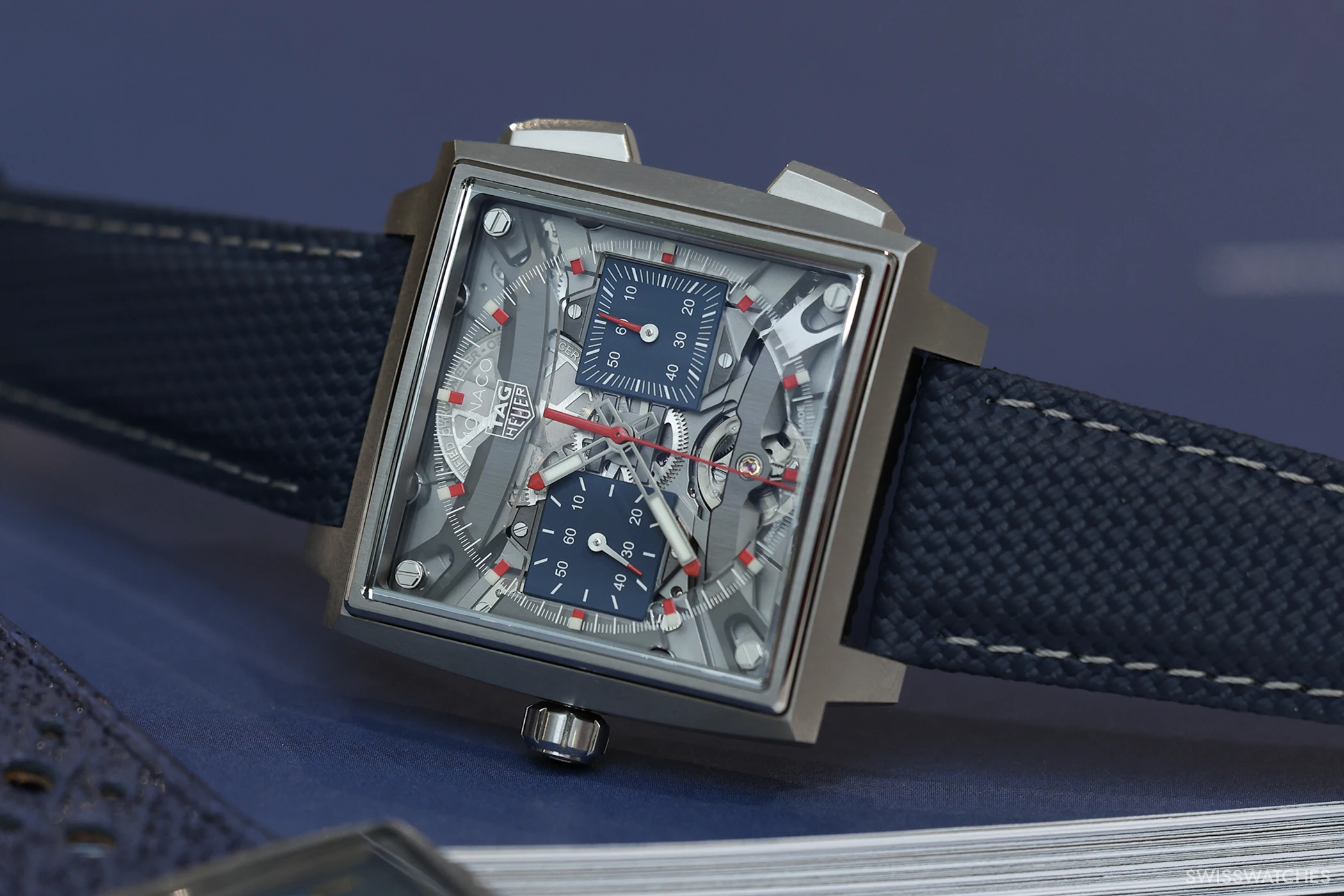
The contemporary interpretation lies in the fact that the designers developed the movement and case in parallel to achieve a cohesive overall aesthetic. The two visible, symmetrical bridges—curving towards the centre for the balance and barrel—share the same radius as the outwardly curved flanks of the case.
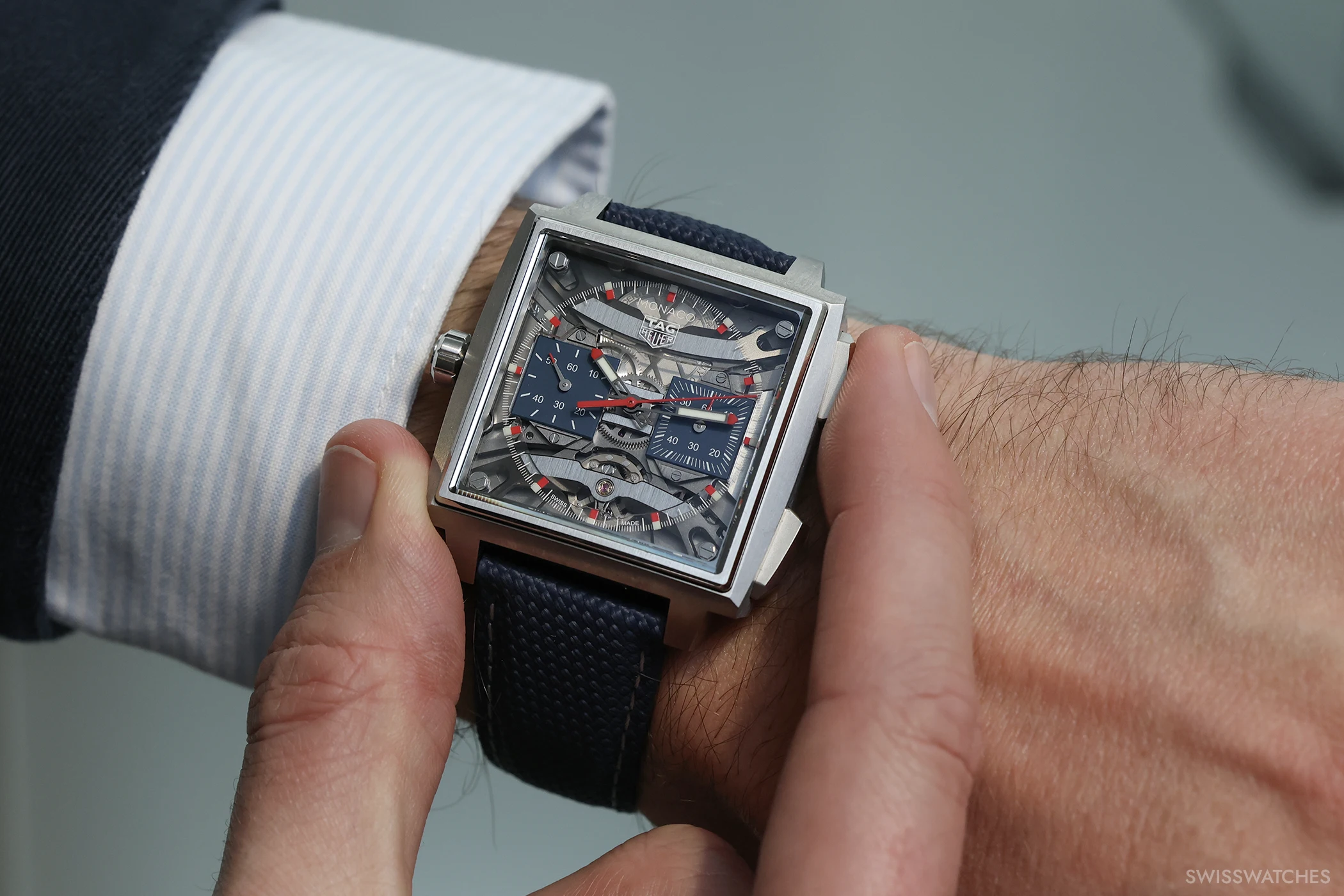
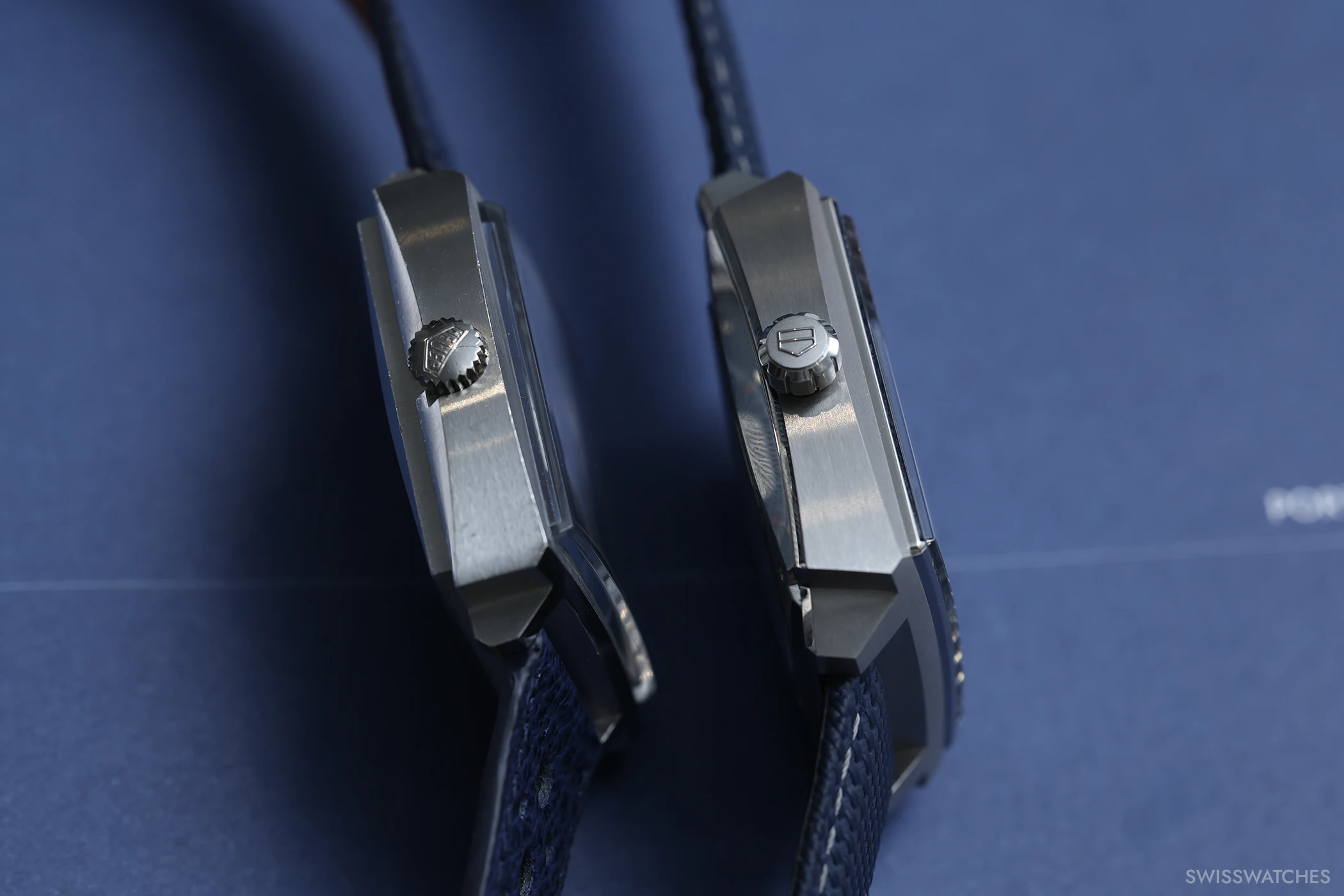
Viewed from the side, the case flank of the TAG Heuer Monaco Evergraph reveals a chamfer that tapers along the same radius. This not only enhances wearing comfort but also lends the watch a more contemporary appearance. The use of titanium further contributes to this modern aesthetic while keeping the weight low: at just 87 grams, the TAG Heuer Monaco Evergraph sits lightly on the wrist.
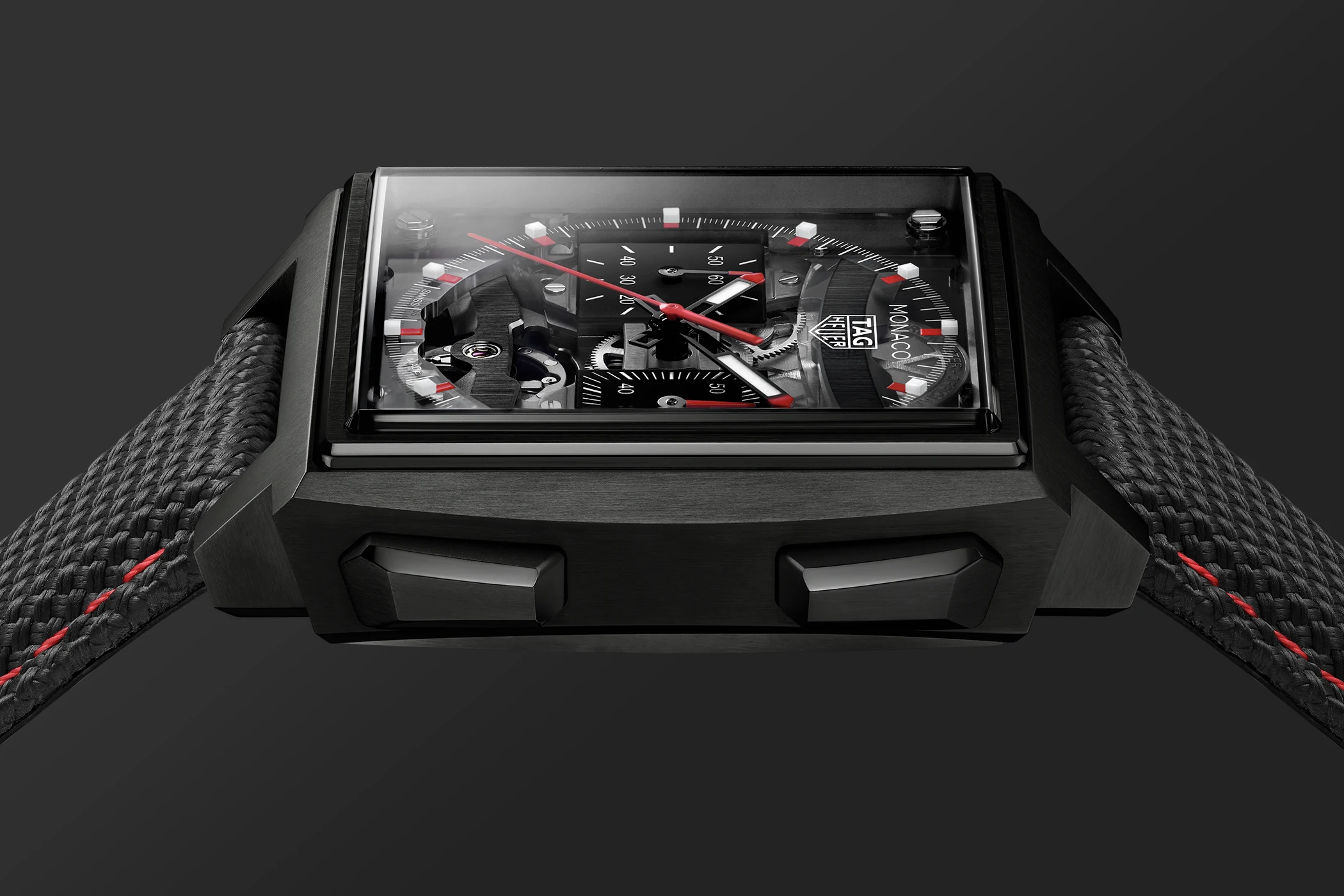
The pushers also follow these radii and are therefore wedge-shaped. As with the case, chamfered edges ensure the absence of sharp transitions. In contrast to the piston-style pushers of the original model, the new controls offer a larger contact surface, making operation easier. This revised case design is also set to influence future Monaco models, including the Monaco Chronograph with calibre TH20-11, likewise introduced at Watches and Wonders 2026.
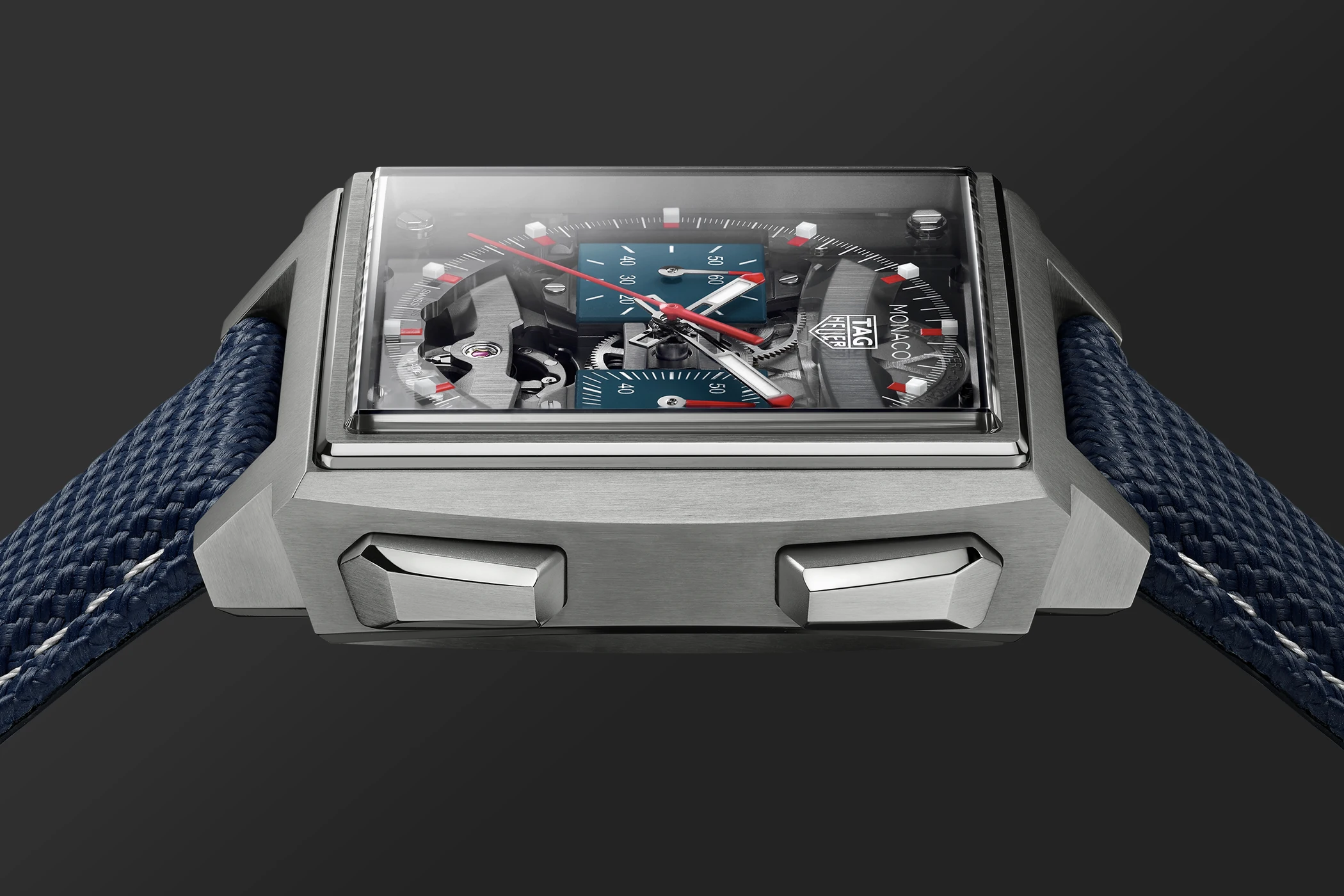
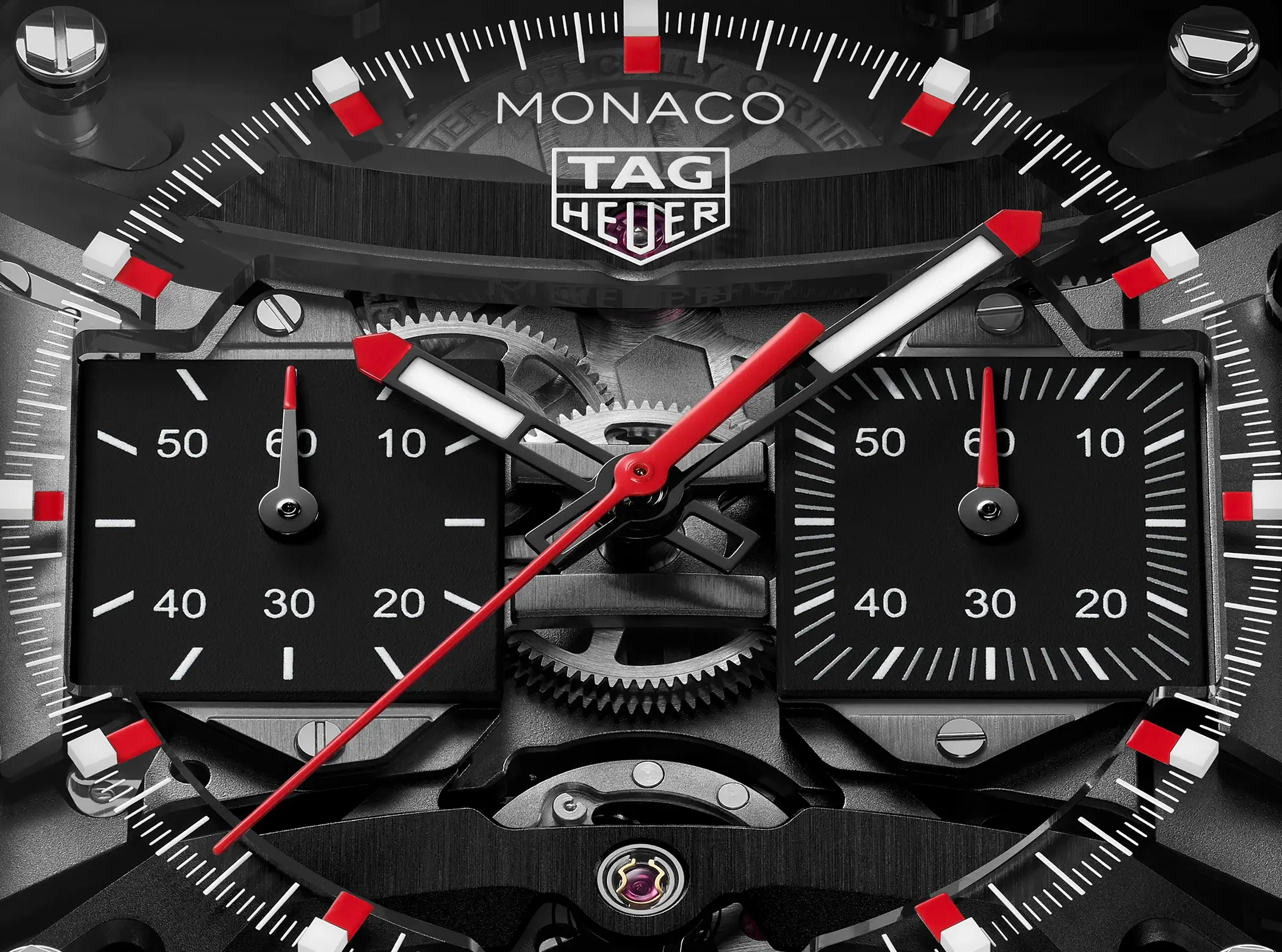
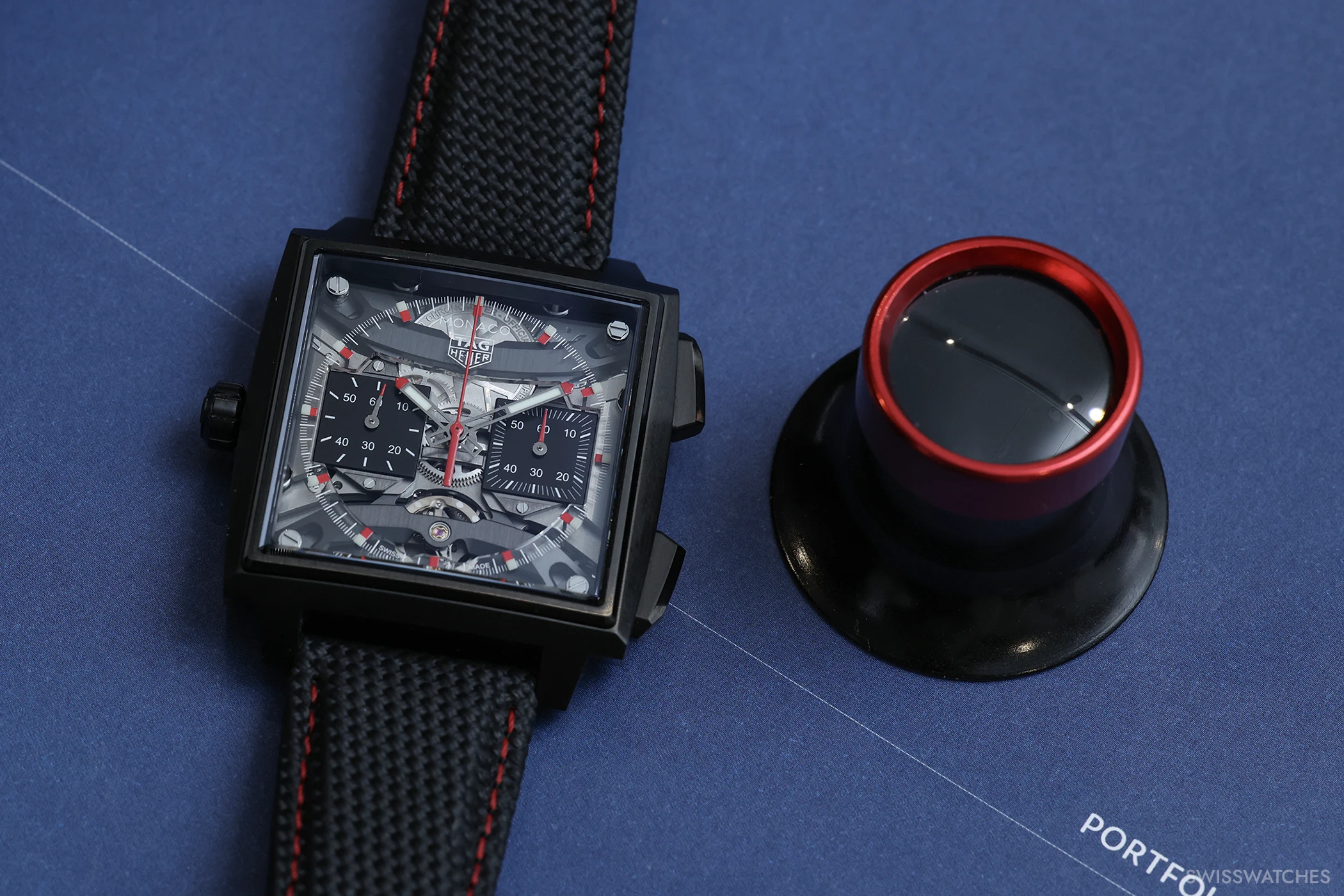
The reduction of the dial to the sub-dials and time scale allows a clear view of the movement in the Evergraph. With the barrel and balance—equipped with a carbon hairspring—relocated to the front, the watch underscores its technical and innovative character.
On the reverse, the square sapphire window reveals as much of the square movement as possible. The chequered-flag decoration references the Monaco’s deeply rooted connection to motorsport.
This brings us to the history of the Monaco and of TAG Heuer itself. No other watch brand is as closely associated with short-time measurement as the company founded in 1860 by Edouard Heuer. From an early stage, the founder drove watchmaking innovation forward: in 1869, he patented the keyless winding system via the crown, and in 1887, he invented the oscillating pinion, which replaced the previously used horizontal coupling in chronographs and significantly simplified their construction. This system remains in widespread use today, for example in the Valjoux 7750, where it continues to operate in millions of movements.
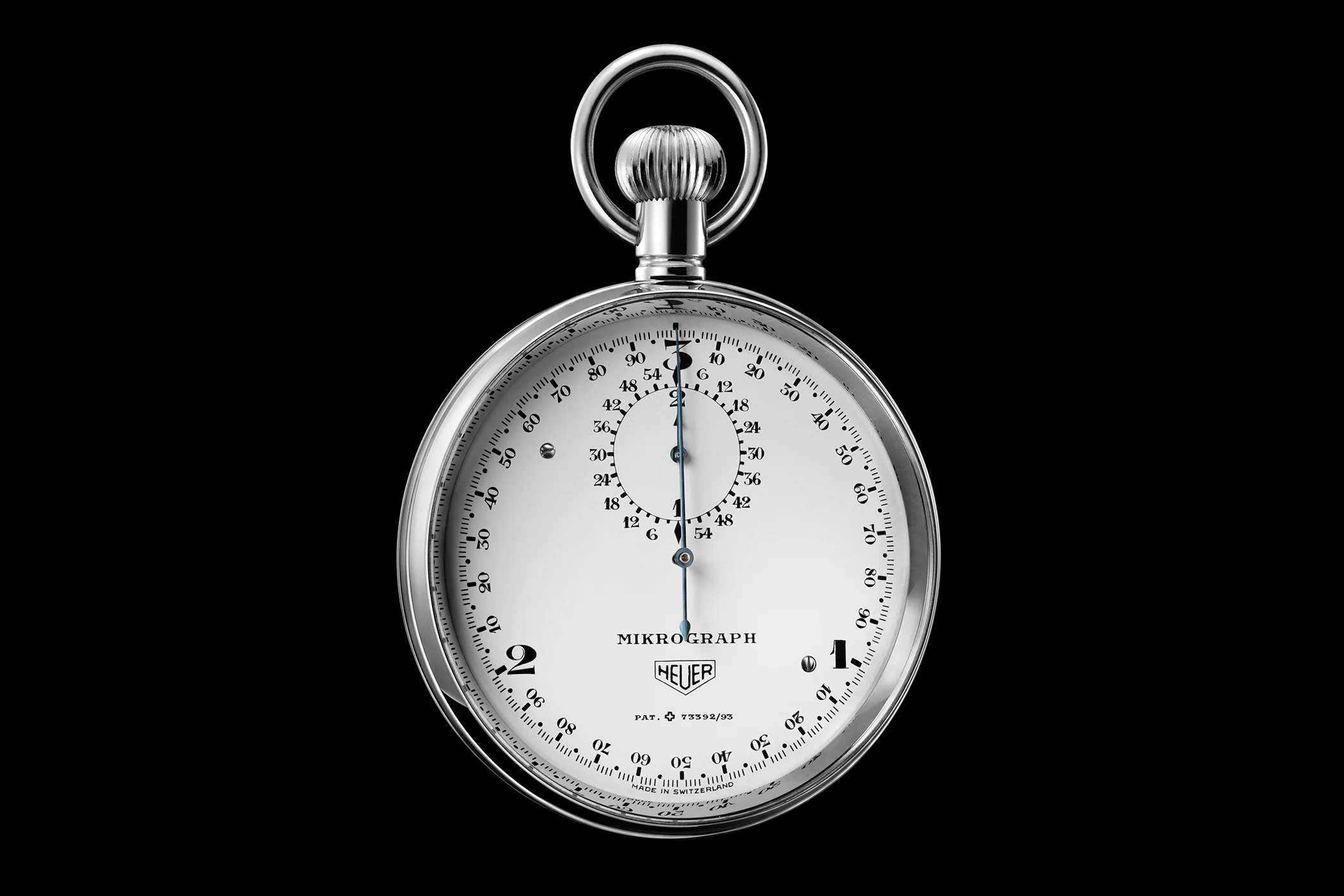
The brand’s connection to motorsport began in 1911, when Heuer developed the first dashboard chronograph for automobiles. Five years later, the Mikrograph marked a major milestone: capable of measuring time to one-hundredth of a second, it became a standard at sporting events. The company’s focus on timekeeping was so pronounced that between 1958 and 1978, Heuer produced exclusively stopwatches and wrist chronographs—during this period, not a single three-hand watch left the manufacture.
That Heuer’s instruments were trusted beyond the racetrack was demonstrated in 1962 by John Glenn: during his three orbits of the Earth as part of the Mercury programme, he wore a Heuer stopwatch on his wrist. It was the first Swiss watch in space. Four years later, the Microtimer further advanced precision, measuring time to one-thousandth of a second.
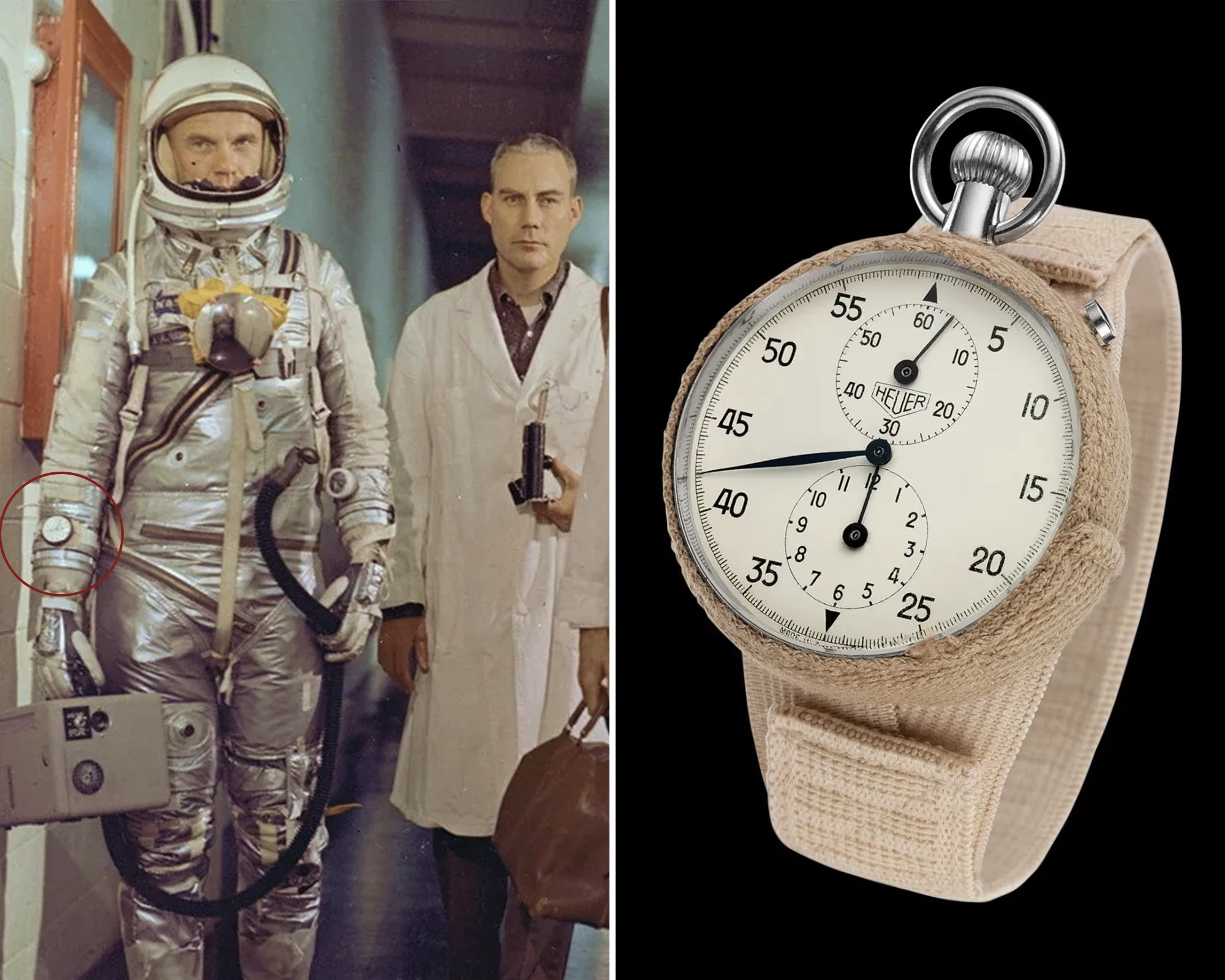
Credit © NASA
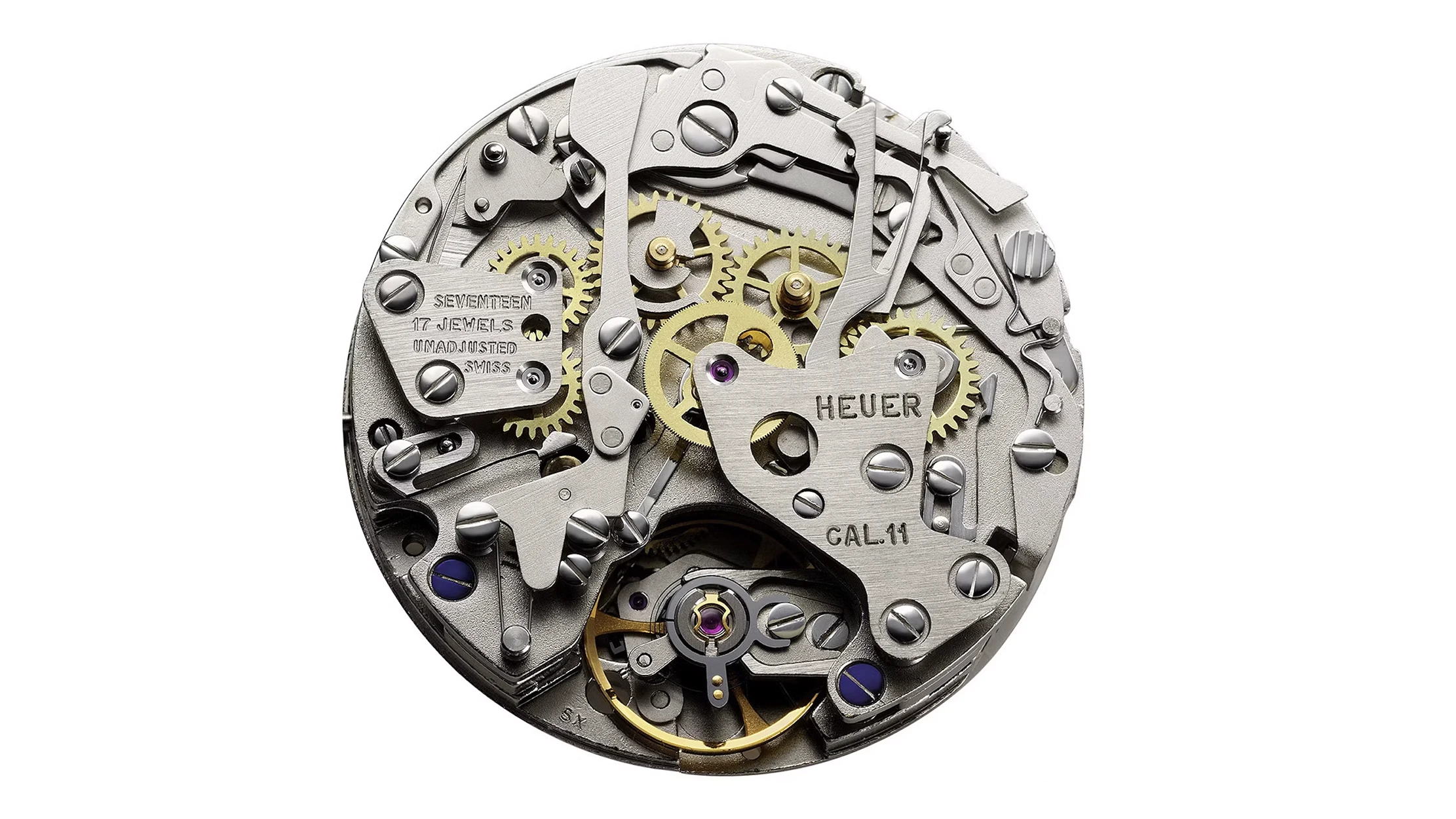
In 1969, the Monaco and calibre 11 marked a sensation: the first chronograph with automatic winding to be commercially available worldwide. To briefly summarise the much-debated race to produce the first automatic chronograph: although Zenith presented its El Primero movement earlier that year, the watches did not reach the market until later. Seiko, meanwhile, introduced its automatic chronograph ahead of Heuer, but only in Japan. As a result, the calibre 11—developed jointly by Heuer, Breitling, and Dubois Dépraz, and launched in the Navitimer, Carrera, Autavia, and indeed the Monaco—became the first automatic chronograph available worldwide.
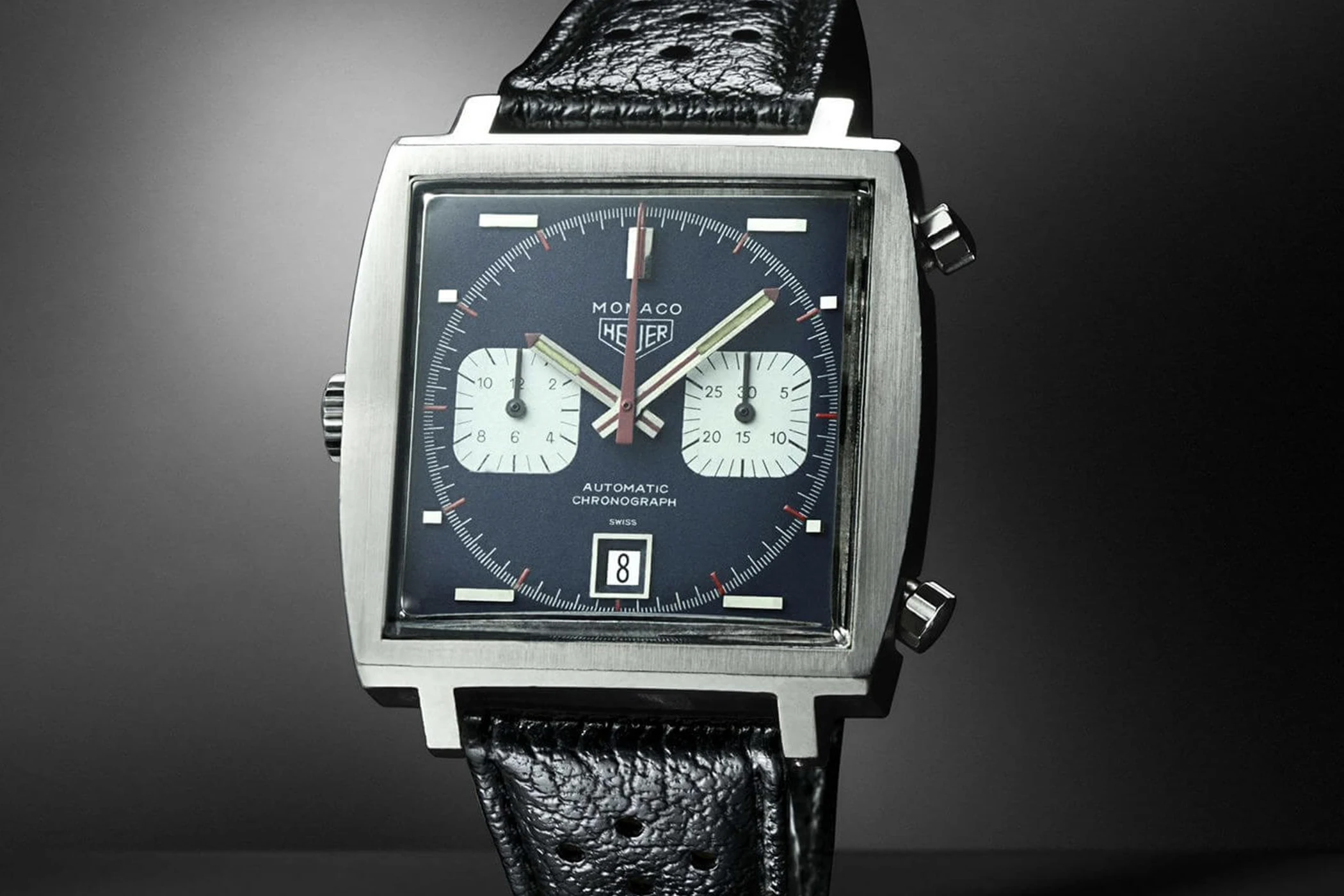
Among these models, the square Monaco stood out as the most distinctive, with a design far ahead of its time. It achieved global fame in 1971 on the wrist of Steve McQueen in the film Le Mans. Commercial success, however, was slow to follow, and Heuer discontinued the model in 1974. Nevertheless, worn by figures such as Stanley Kubrick, Sammy Davis Jr., and Oscar Peterson, its modern design attained cult status—prompting TAG Heuer to reintroduce the Monaco in 1997.

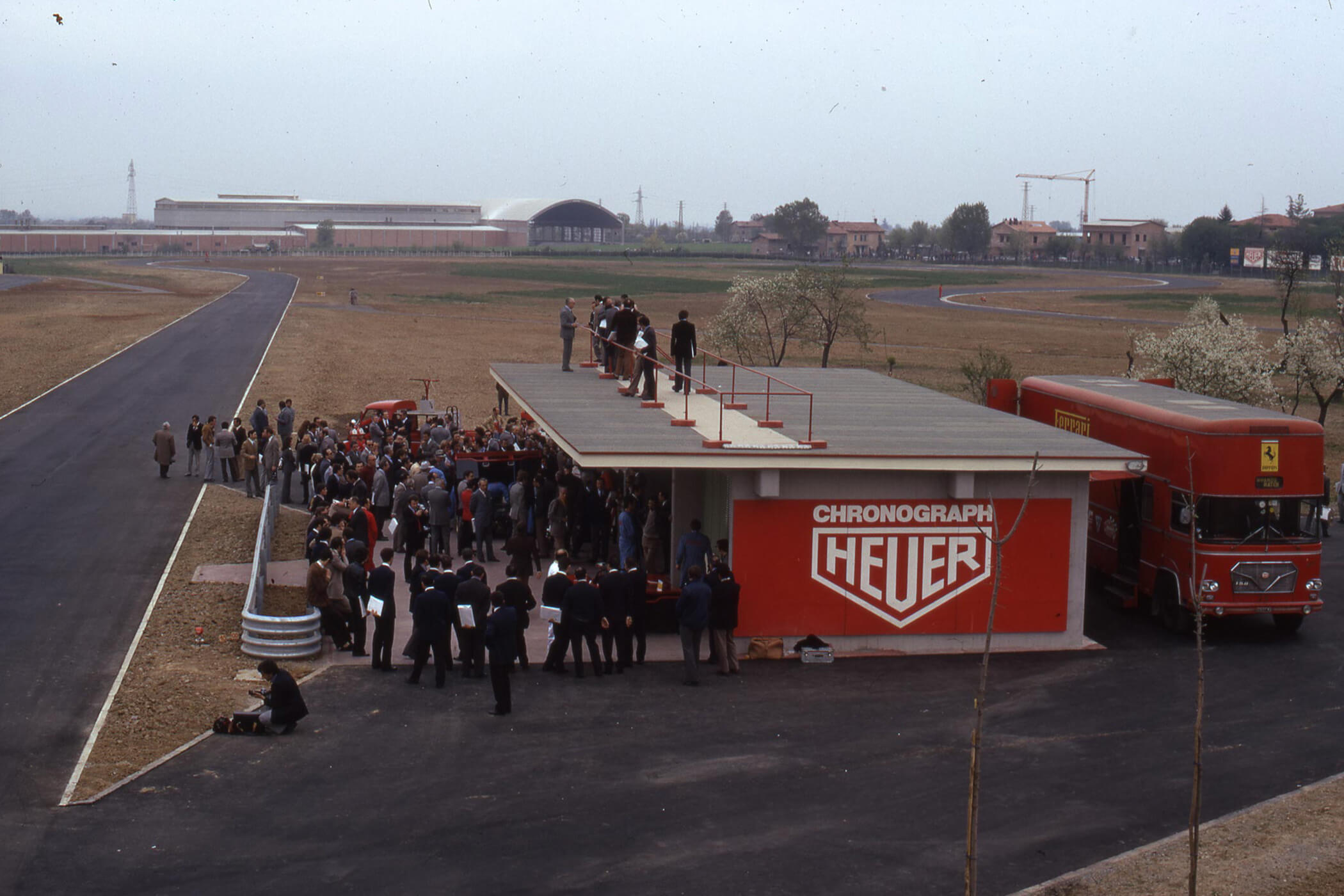
In parallel with the Monaco, a partnership with the Ferrari racing team began in 1971: Heuer was responsible for timekeeping and sponsorship, and often ensured that the drivers wore Heuer watches. The brand continued to advance timekeeping technology through the use of photocells and electronic systems, culminating in TAG Heuer being appointed official timekeeper of Formula 1 in 1992. For the Indy 500 series, the brand further improved precision in 2004 to one ten-thousandth of a second.
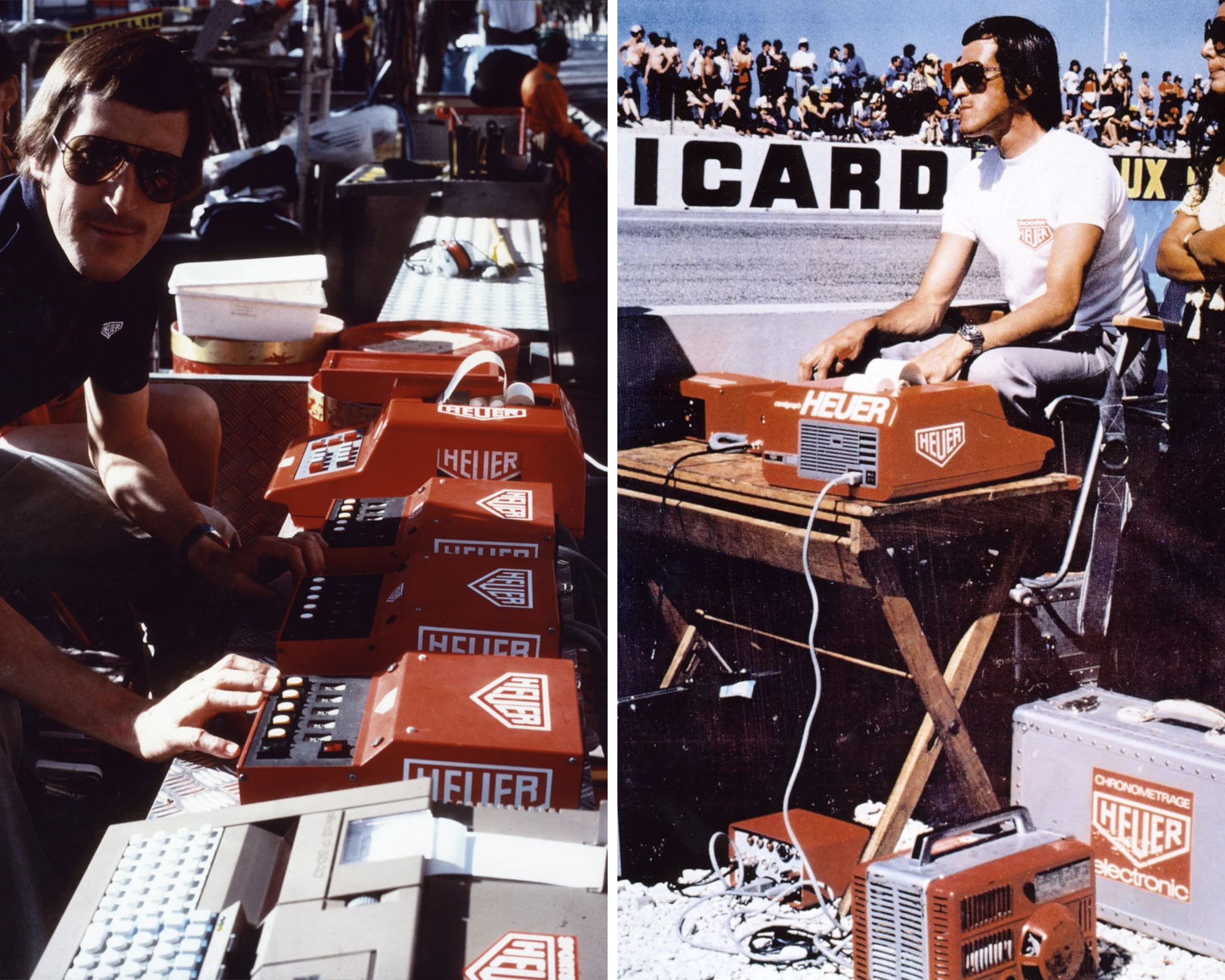
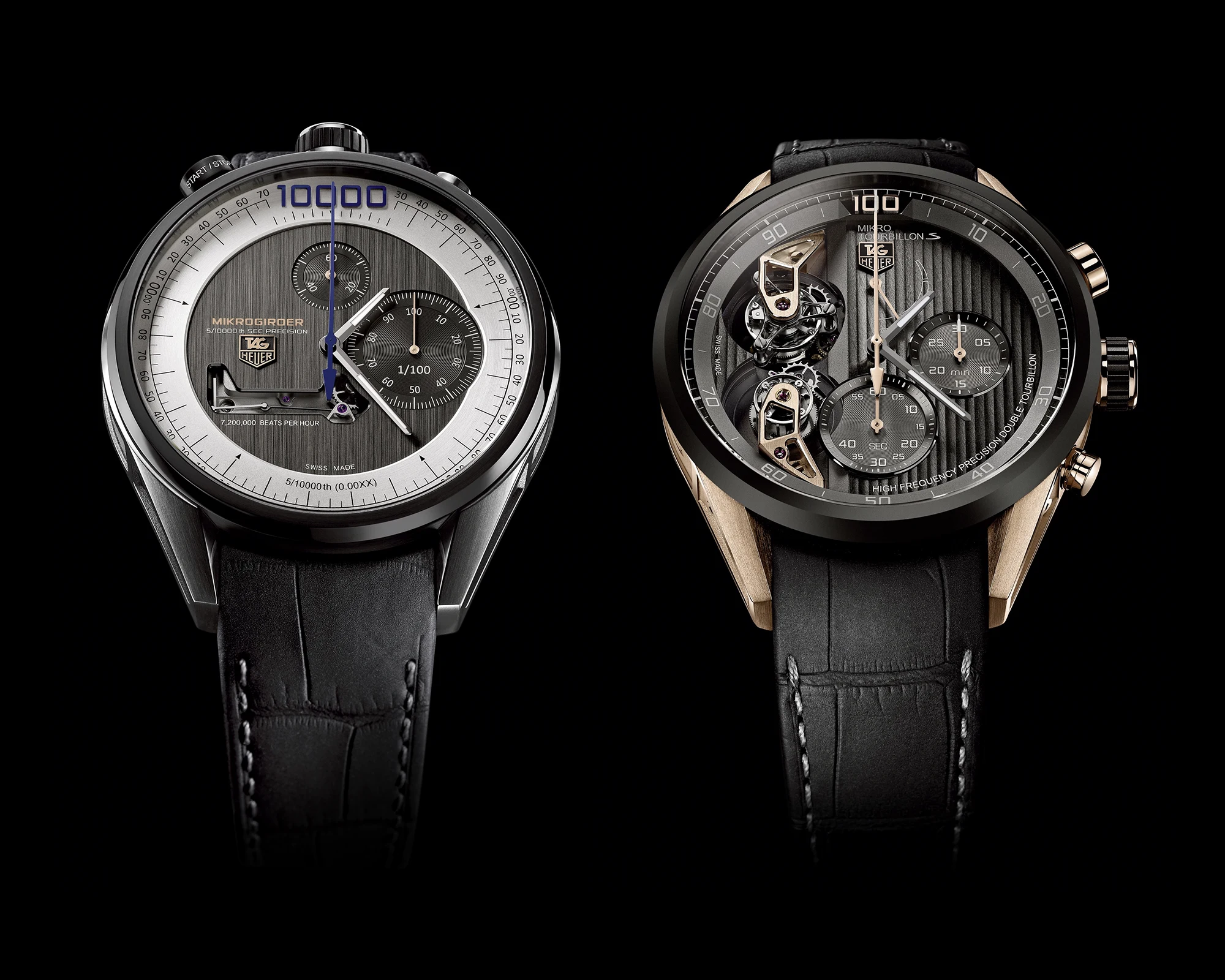
TAG Heuer was equally unwilling to rest on its achievements in the field of mechanical chronographs. From 2011 onwards, a series of watches was introduced that progressively pushed the limits of mechanical time measurement: the Carrera Mikrograph was capable of measuring to one-hundredth of a second, using a second, high-frequency balance. In the same year, the Mikrotimer Flying 1000 achieved precision to one-thousandth of a second, while the Mikrogirder doubled this level of precision once again. Its chronograph hand advanced in increments of 0.0005 seconds, corresponding to the rather unusual resolution of one two-thousandth of a second.
The innovative Monaco Evergraph represents a new high point in TAG Heuer’s long history of technical innovation in chronographs. Its revolutionary concept—based on bistable springs integrated into individual, highly complex components—enhances the chronograph by making it easier to operate and more durable. In doing so, the new system addresses a genuine technical limitation, which makes it particularly relevant. It is also worth noting that the Evergraph is not a limited edition and, at a price of €25,000, does not follow the highly exclusive route of the Monaco Split-Seconds Chronograph of 2024, which was priced at €135,000.
The wearer also benefits from a range of meaningful technical features, including a tenth-of-a-second chronograph, a 70-hour power reserve, COSC-certified chronometer accuracy, and a high level of resistance to magnetic fields thanks to TAG Heuer’s new carbon hairspring. Long-term durability has likewise been improved, reflected in a five-year warranty and a recommended service interval extended to ten years. The new design is equally convincing. It remains faithful to the Monaco’s roots while introducing a sense of contemporary refinement through the holistic integration of movement and case, as well as the newly introduced curved design elements.
The Monaco Evergraph is available in two versions: one in natural titanium with a blue colour scheme reminiscent of the reference 1133B made famous by Steve McQueen, and another in black DLC-coated titanium with black sub-dials and red accents. Both are fitted with a rubber strap featuring a textile-like finish and are priced at €25,000 each.