The Patek Philippe Annual Calendar is celebrating its 30th anniversary this year. We take a look back at its history and have compiled a list of the most important models.

One never forgets their first visit to a manufacture. After all, it is not every day that you are able to observe, at close quarters, how a much-loved product comes into being. How often do we hold a timepiece in our hands, admire its contours, the dial and the mechanics, and can only begin to imagine the working processes that lie behind it?
When my journey took me to the ‘cradle of Swiss watchmaking’ near the French border, I had already read a great deal about how watches are made and, of course, had handled numerous timepieces myself. Yet it is one thing to know the theory and quite another to witness the practice – especially as every watch manufacture approaches the creation of its timepieces differently. While some manufacturers rely on tried-and-tested manufacturing processes, others are open to new technologies. I recently had the opportunity to find out where Breitling fits into this spectrum between tradition and modernity in La-Chaux-de-Fonds.
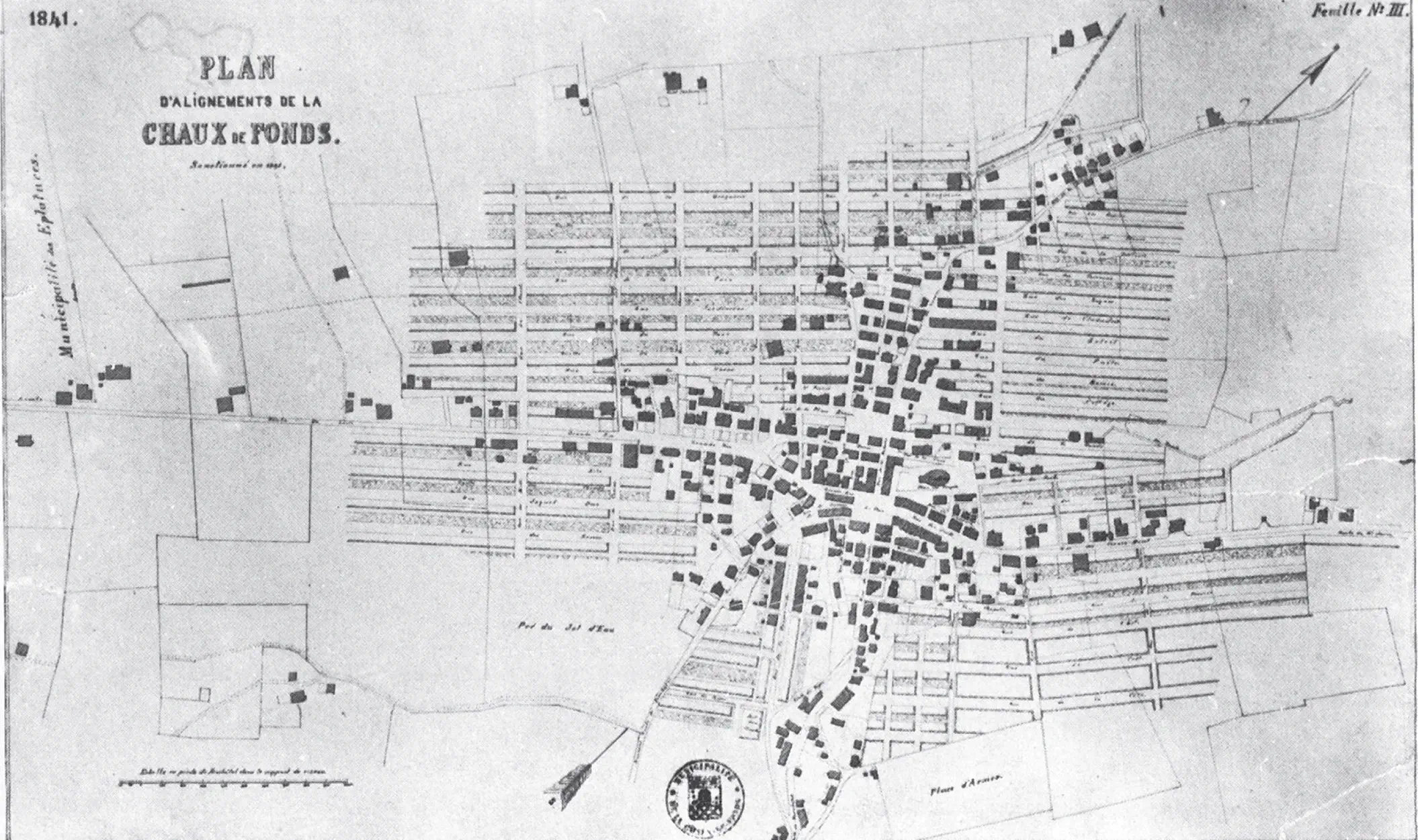
At an altitude of around one thousand metres in the Jura Mountains, the Breitling manufacture finds itself in distinguished company alongside Cartier, TAG Heuer, Zenith, Jaquet Droz, and many others. It is no coincidence that the town, located in the canton of Neuchâtel, proudly describes itself as the ‘cradle of Swiss watchmaking’ and has been recognised as a UNESCO World Heritage Site. With its chequerboard layout designed specifically to support watch production logistics and provide optimal lighting conditions, La Chaux-de-Fonds has been the beating heart of Swiss watchmaking since the early 18th century, home to numerous watch manufactures and component suppliers alike.
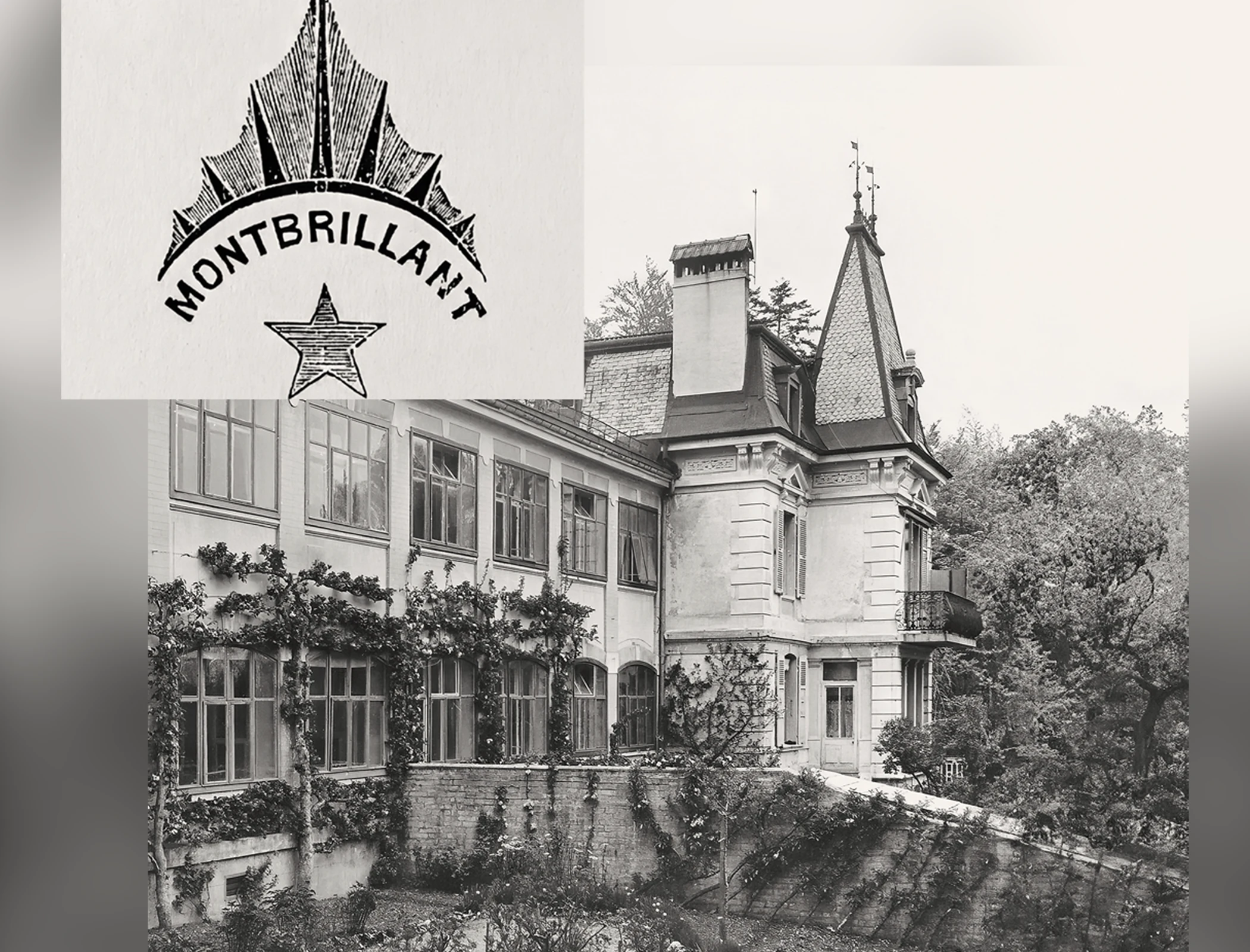
Breitling also has close ties to this location. Eight years after Leon Breitling founded his own workshop in St. Imier at the age of 24, he relocated the business to his hometown of La Chaux-de-Fonds in 1892. There, the small workshop’s production capacity grew into that of a fully-fledged factory. More than 130 years later, Breitling timepieces are still being created here, surrounded by lush green pastures and pine forests.
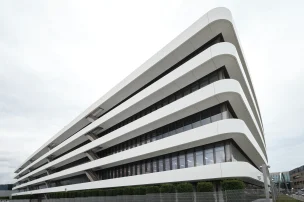
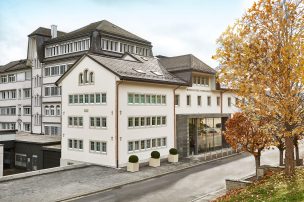
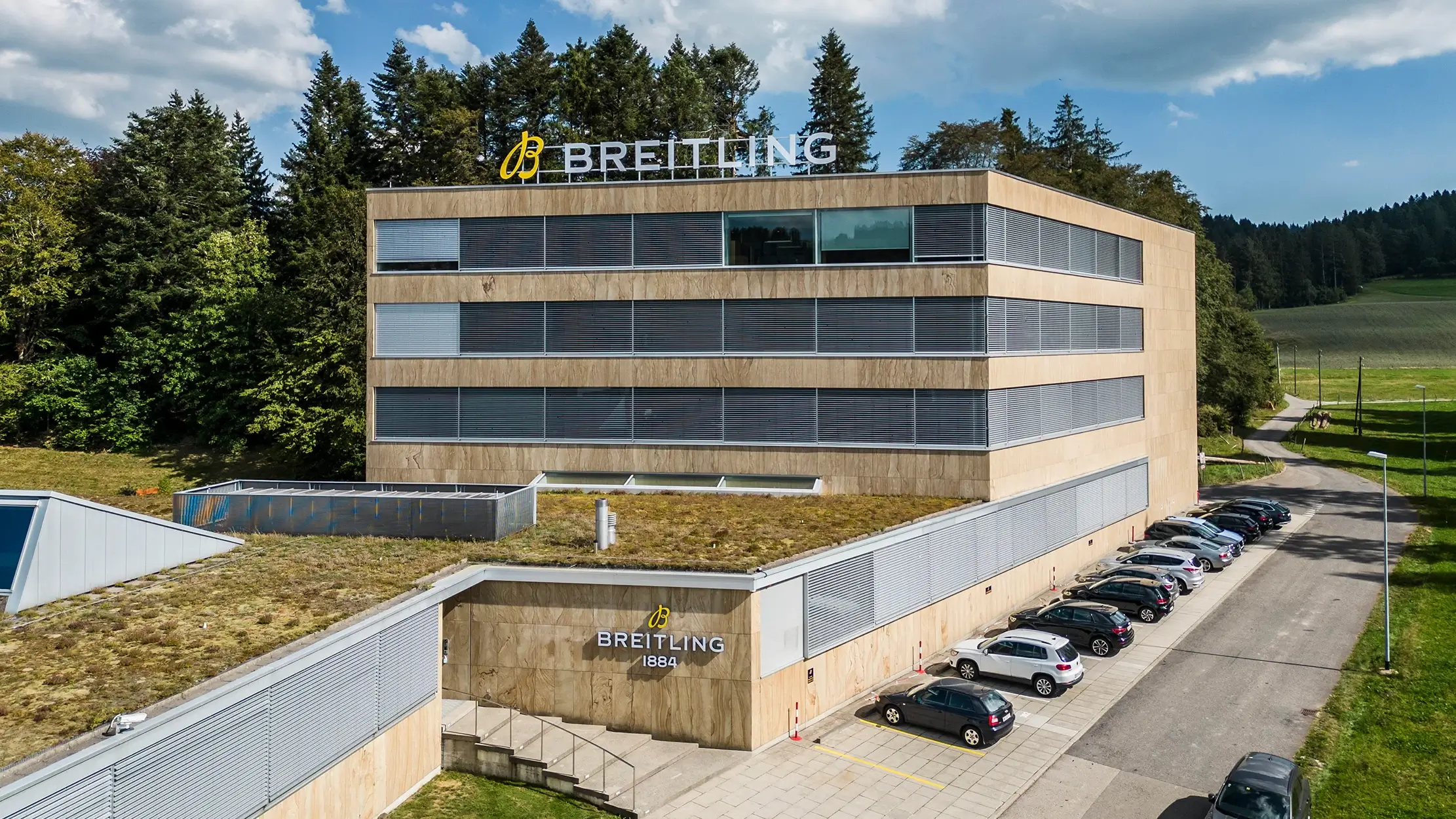
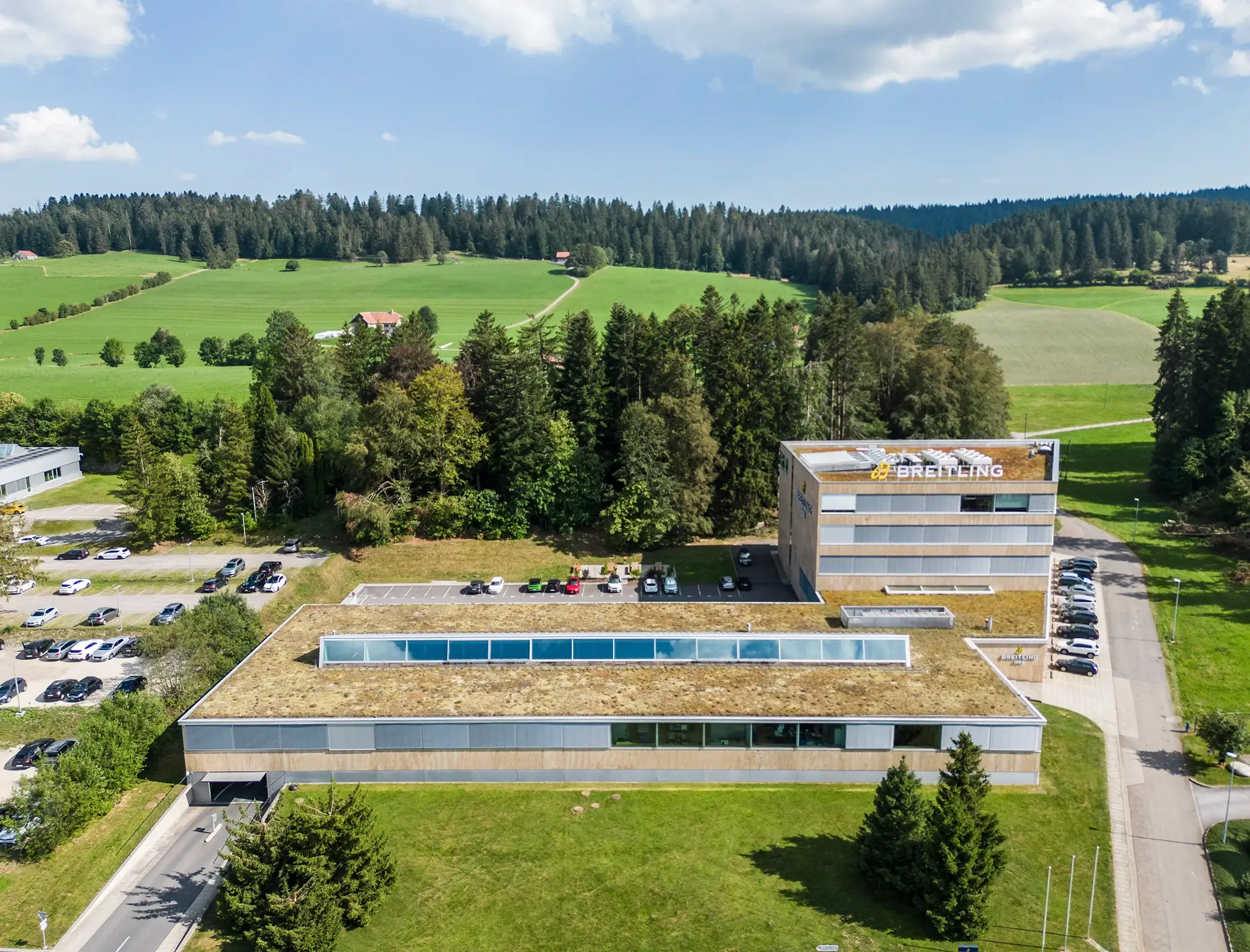
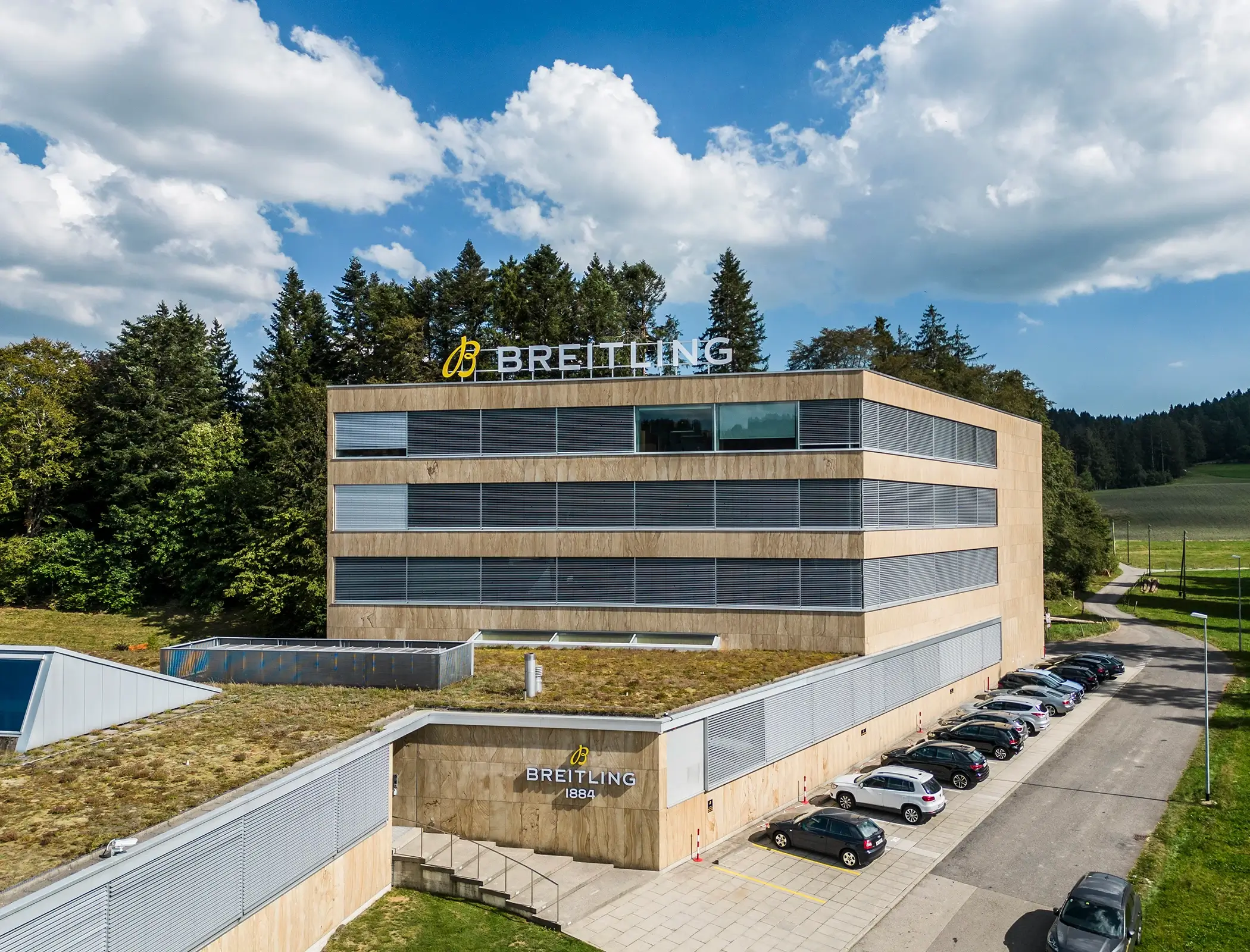
Since 2001, Breitling Chronométrie SA has been housed in a cube-shaped building. Despite its modern architecture, the building’s light, marbled sandstone façade radiates a calming naturalness that harmonizes beautifully with the surrounding landscape.
Inside the building, our small group is welcomed by Fabrice in a light-filled main hall clad in oak wood. With evident pride, he tells us that both his grandfather and his father had also worked in the watchmaking industry. He himself has been with the brand for more than two decades.; it’s very much a family affair. As Head of Experience, he will be guiding us behind the scenes at Breitling for the day.
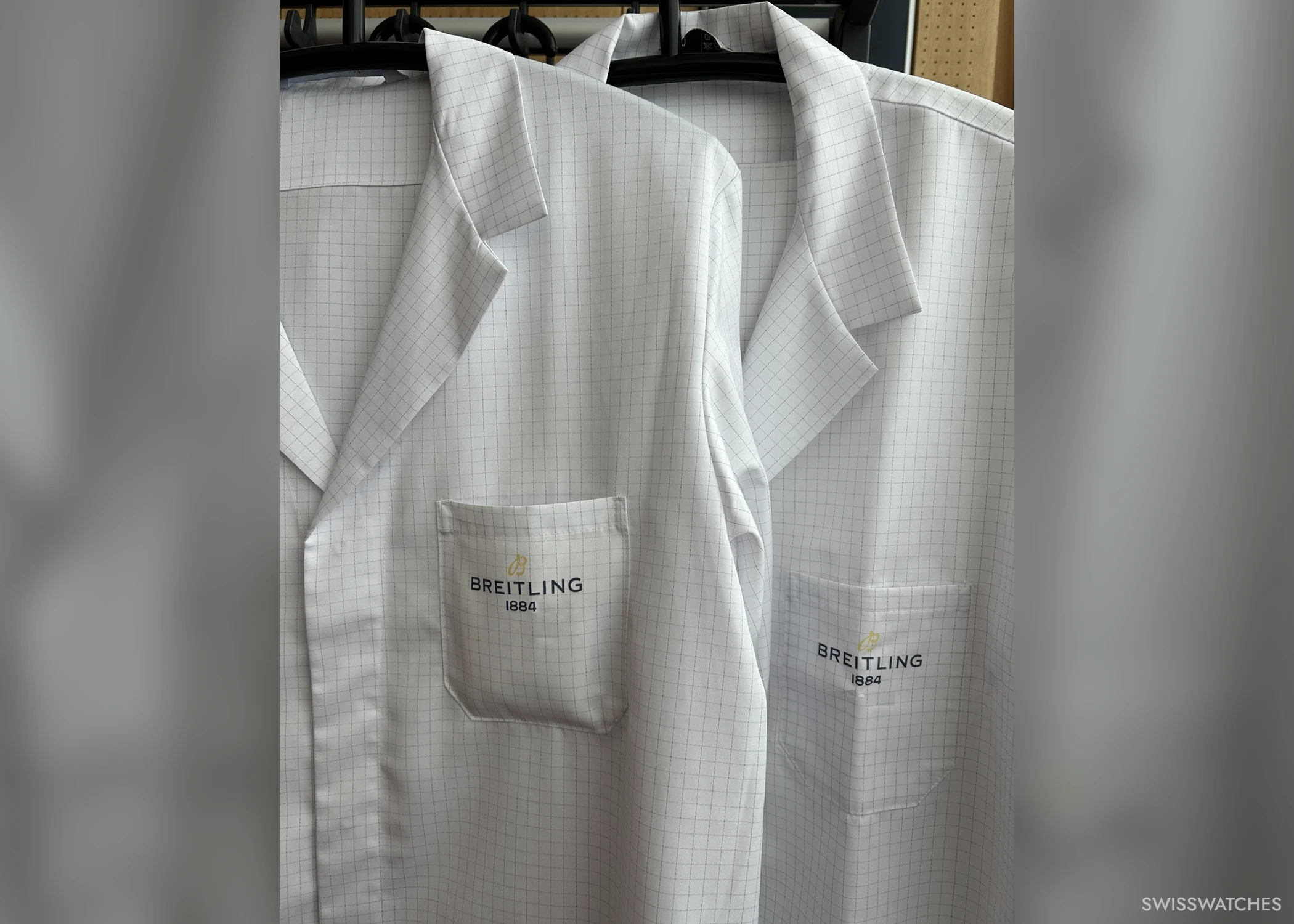
But before we begin our tour of the three floors of the manufacture, we first slip into the checked, anti-static coat bearing the yellow Breitling emblem and cover our shoes with protective overshoes. We are about to enter the dust-free work areas with laminar air flow.
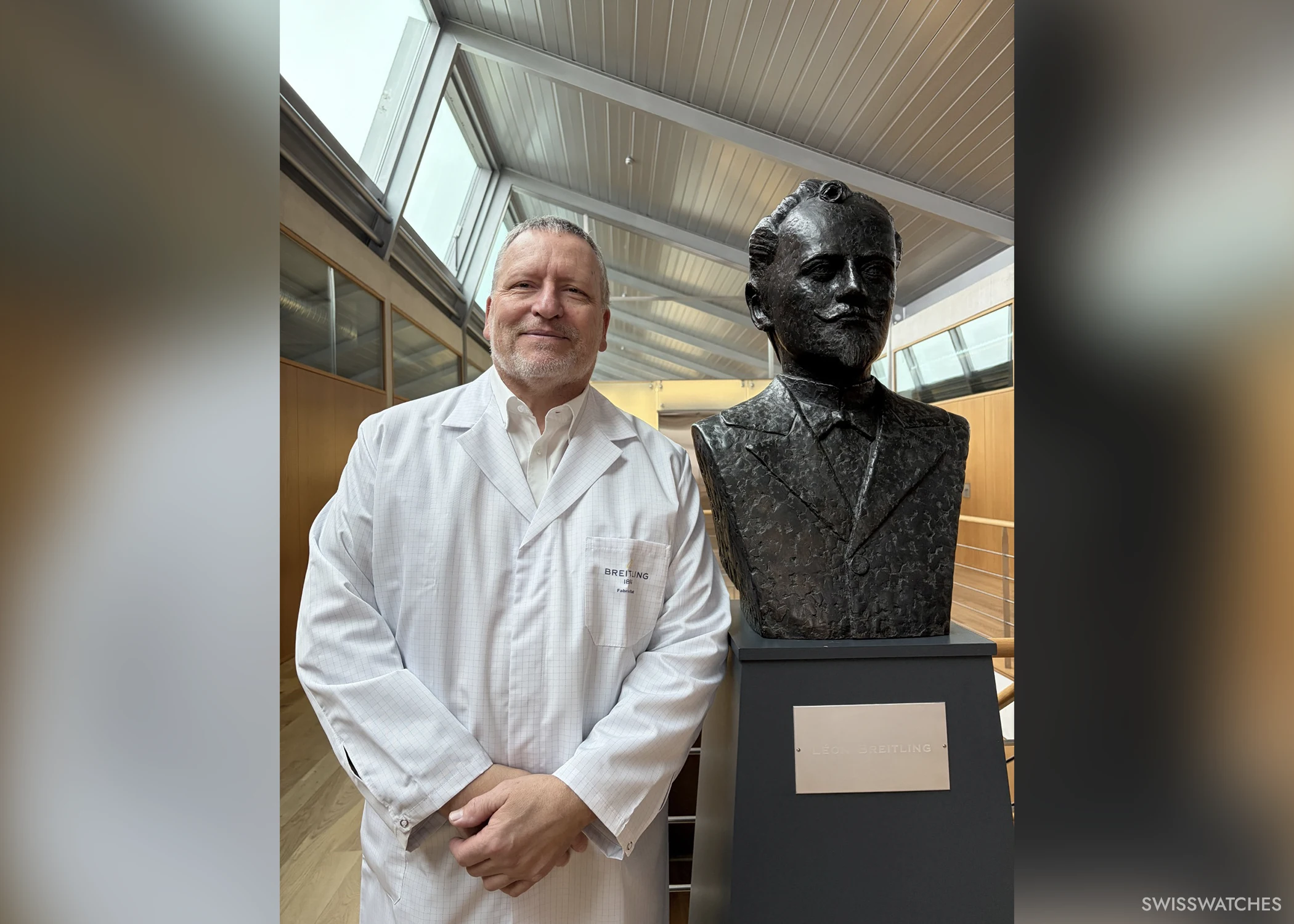
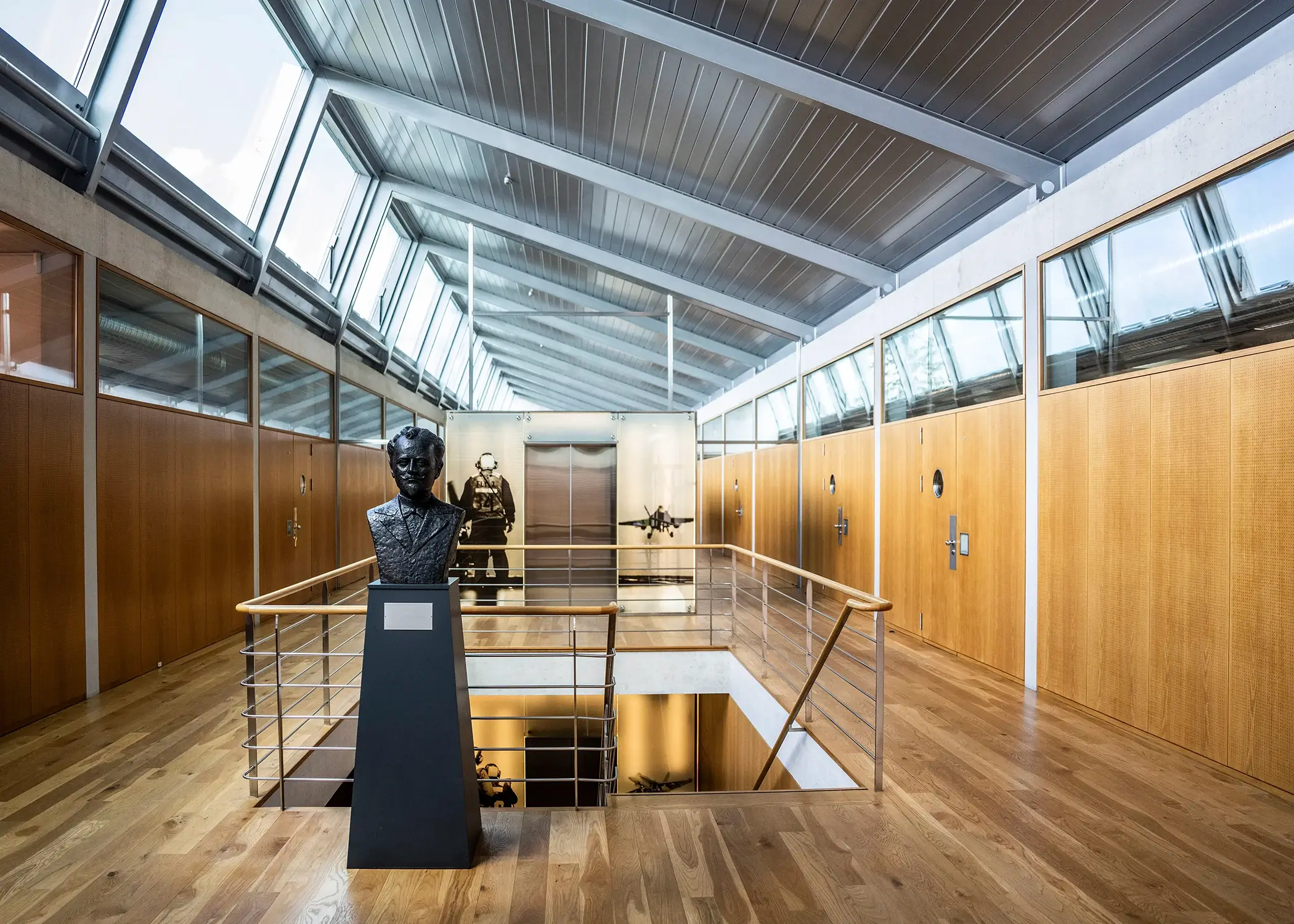
On the way to our first stop on one of the three floors, it is immediately noticeable how much care has gone into creating an atmosphere that is almost meditative. The pale oak walls exude a gentle warmth, while numerous artworks, including the brightly coloured busts of the company’s founder, on each floor reflect Breitling’s history.
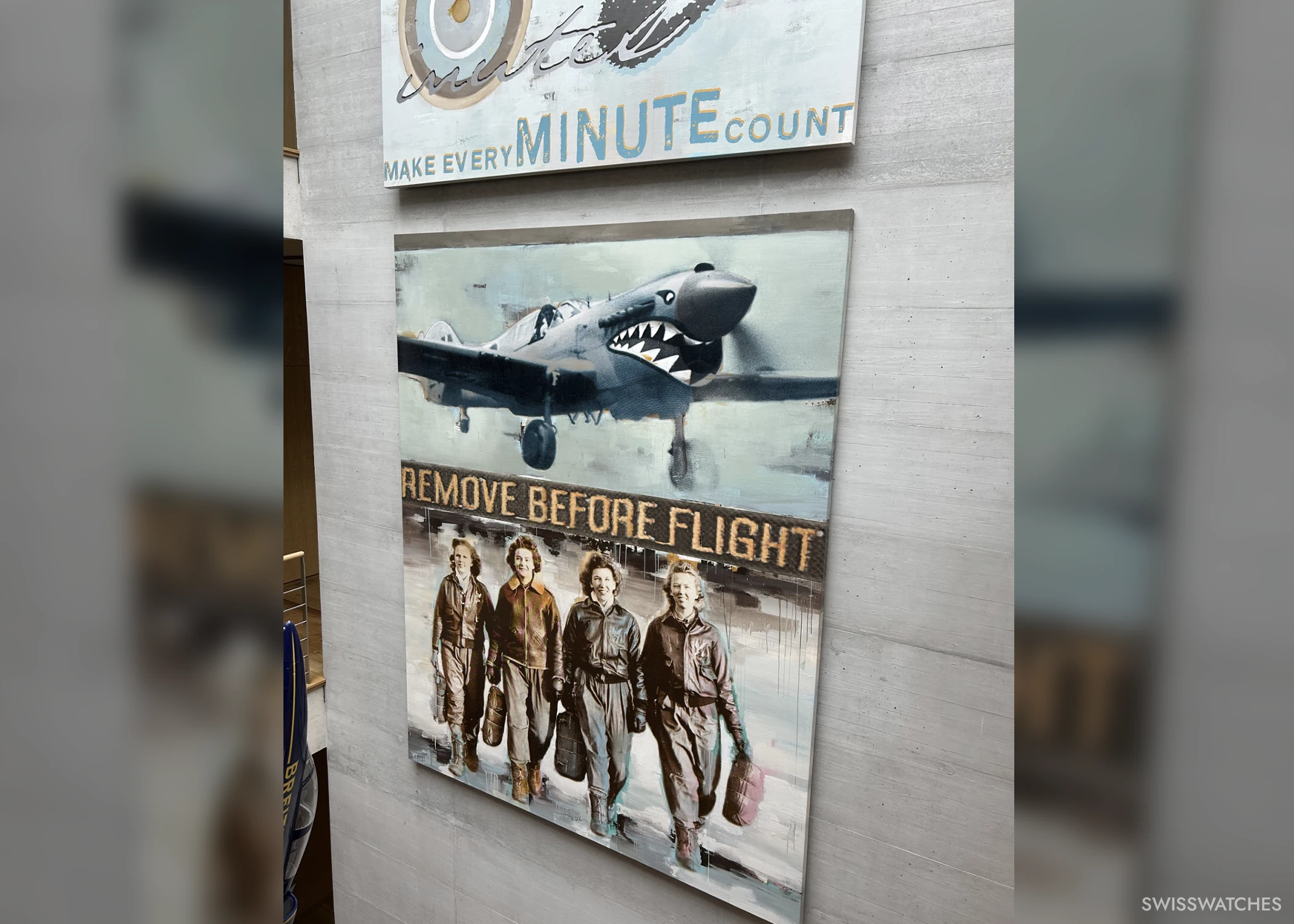
Two life-sized pilot figures wearing Breitling yellow helmets greet us in front of the stairwell, their gaze fixed on a large-scale canvas by the artist Jörg Döring depicting aviation. They symbolise Breitling’s connection to the skies since the late 1930s, through the production of cockpit and wrist chronographs such as the Navitimer. But how exactly are Breitling’s chronographs manufactured?
The manufacture is divided into two departments, one for manufacturing the in-house movements and one for assembling and casing-up. We first enter the machining workshop. While peaceful silence prevails in the corridors and stairwell, the first room greets us with the diligent whirring and buzzing of machines.
Since the introduction of its first in-house calibre, the B01, in 2009, Breitling has been producing its own movements. The portfolio now includes numerous calibres – all certified by the Contrôle Officiel Suisse des Chronomètres – including a growing number of in-house movements. The automatic chronograph calibre B01 is used in many models, such as the Navitimer Chronograph and the Chronomat B01 42 Giannis Antetokounmpo edition. Breitling’s movement portfolio has become highly diverse: it includes, among others, chronographs with a 24-hour function (B02), rattrapante (B03), as well as the perpetual calendar (B19). The latter celebrated its debut in 2024 when it was released across the brand’s three main collections to mark the 140th anniversary of Breitling – followed by the launch of the first three-hand calibre, the B31, after four years of development. This calibre is assembled in collaboration with AMT, a specialist in exclusive, custom high-end mechanical movements, located just a short distance from Breitling Chronométrie.

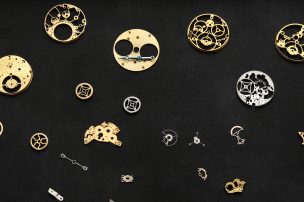
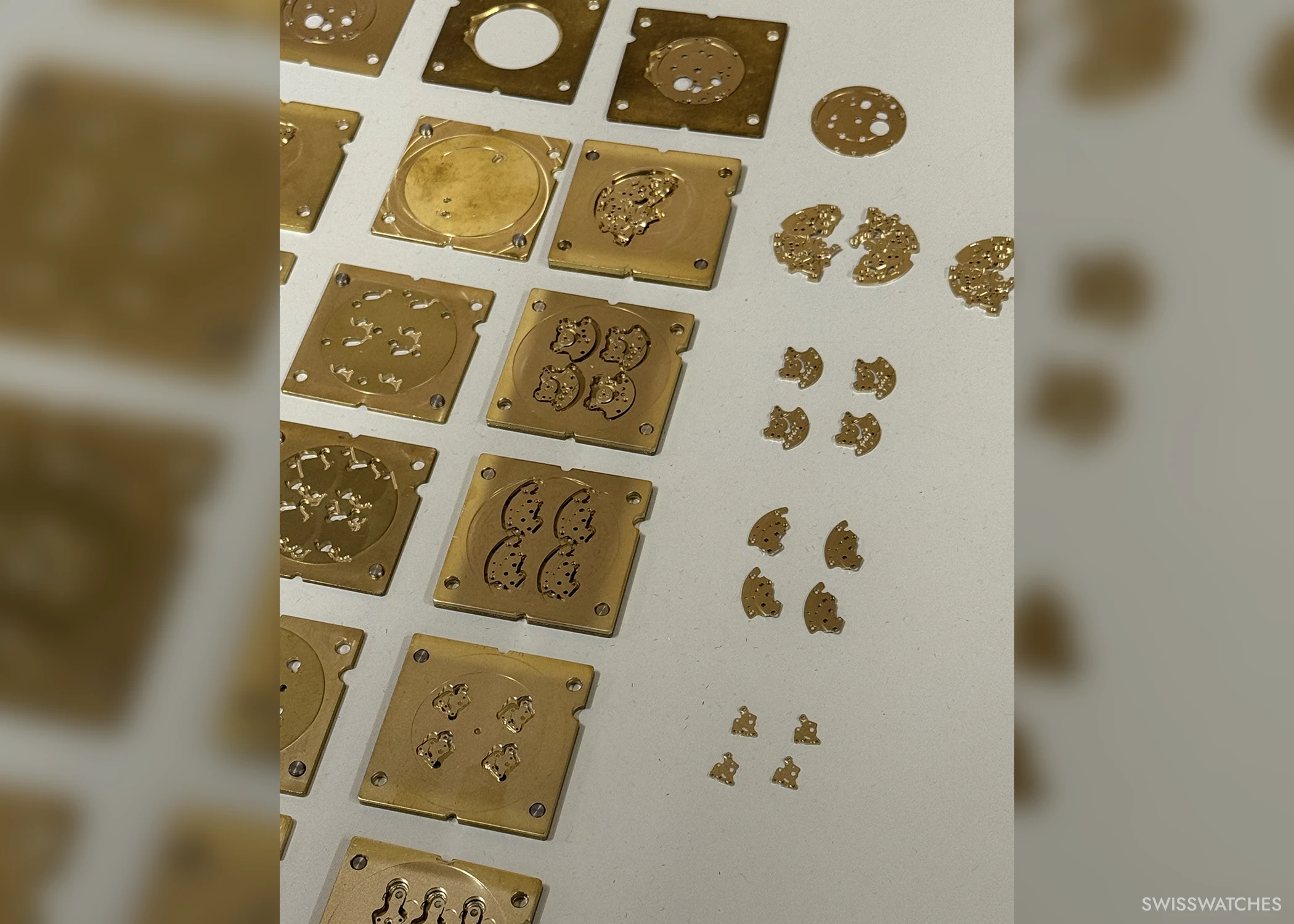
Day and night, machines work on bridges and cocks to produce the very foundation of every movement: the mainplate. It is made of brass, which is characterised by its anti-magnetic properties and ease of machining. The production of a mainplate is highly complex, involving more than 200 individual steps, during which semi-automated machines must operate with precision down to a thousandth of a millimetre. Setting up a single machine alone takes many hours. The machines are arranged in several rows, with each row dedicated to the manufacture of a single component. After each step has been completed, a laser inspects the tools before they are transported to the next machine for the following operation via a narrow conveyor belt.
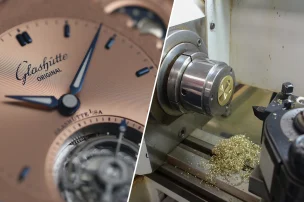
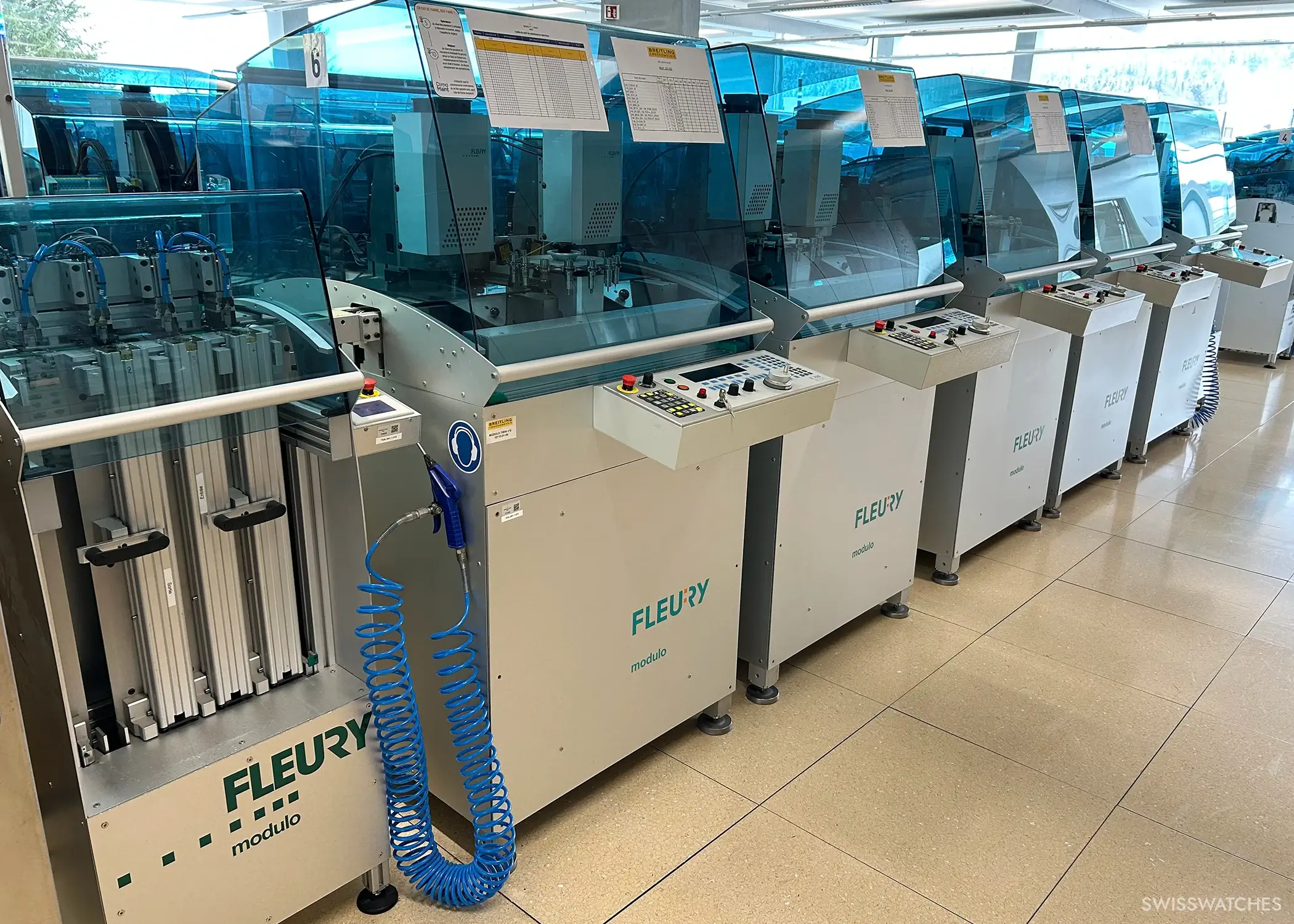
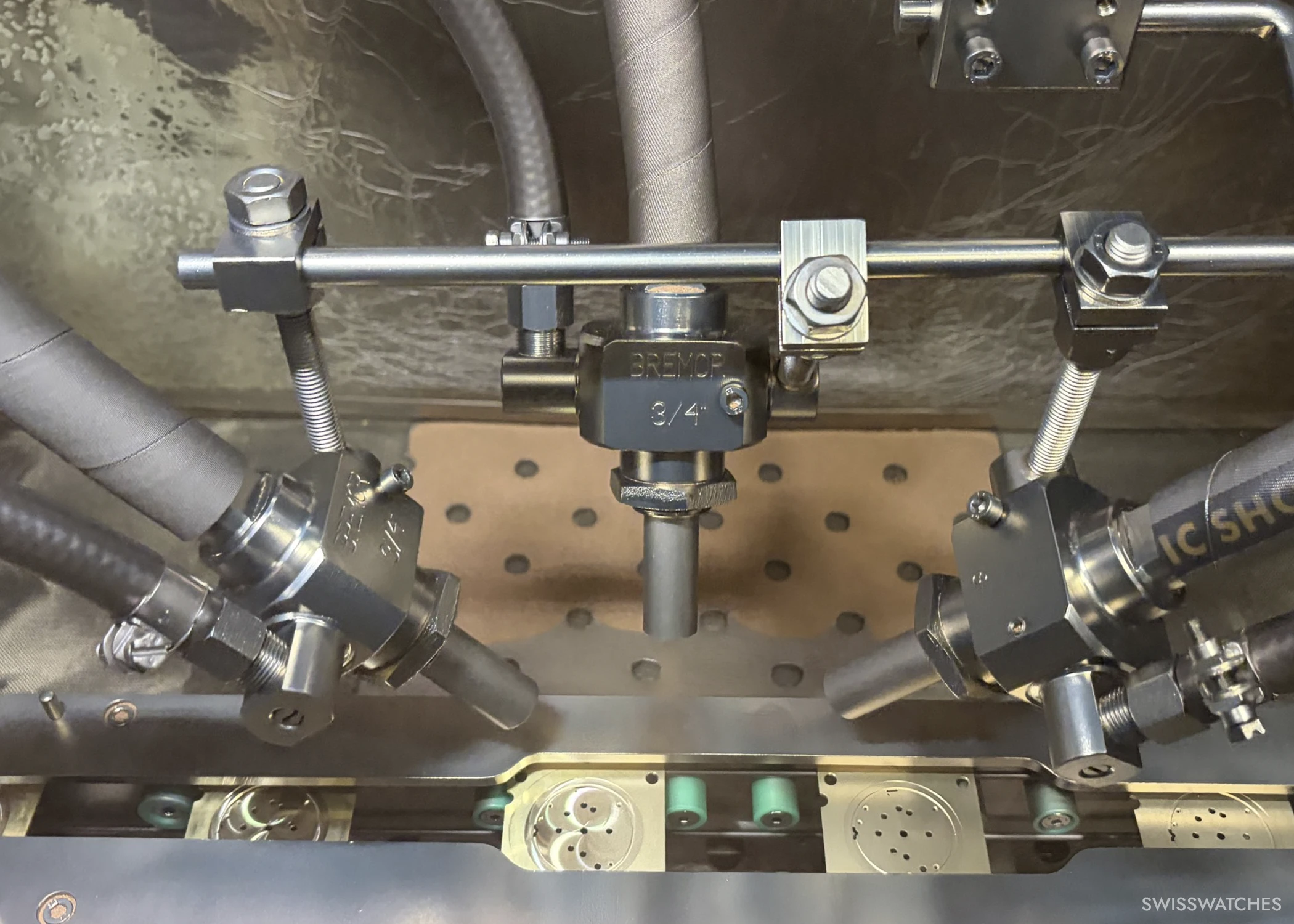
Right from the outset, one thing becomes apparent through the blue viewing glass of the machines: every stage of the process is clearly visible. Breitling was one of the first to adopt an alternative to the conventional use of oil for cooling and lubricating blanks, even as certain pieces are drilled at speeds approaching 16,000 revolutions per minute.
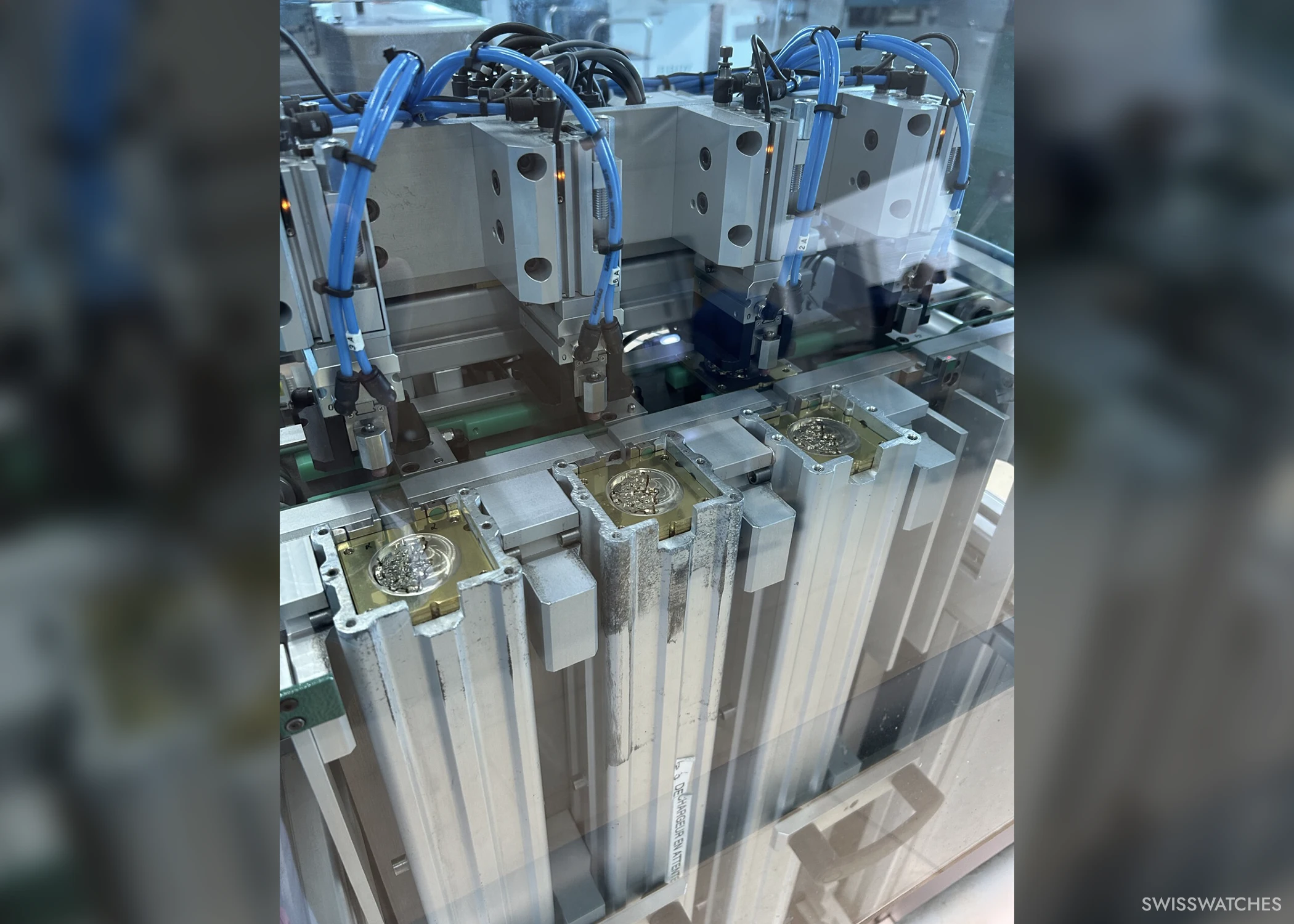
Together with Fleury, the Swiss manufacturer of transfer machines for watch production, Breitling developed this dry machining method and has used it from the very outset for the manufacture of its in-house movements.
At Breitling, quality control is carried out step by step rather than only at the very end of the process. Different methods are used to inspect the mainplates. During manual inspection, the movement is optically magnified and digitally compared with the technical drawing displayed on a large computer screen. This allows, for example, verification that all dimensions – such as the size of the drilled holes – are within specification.
A faster and automated method for comparison is provided by ScanFlash. Here, the mainplate is scanned and inspected within two minutes.
The plates undergo a multi-stage cleaning process. First, they are sandblasted to remove any unevenness or excess particles.
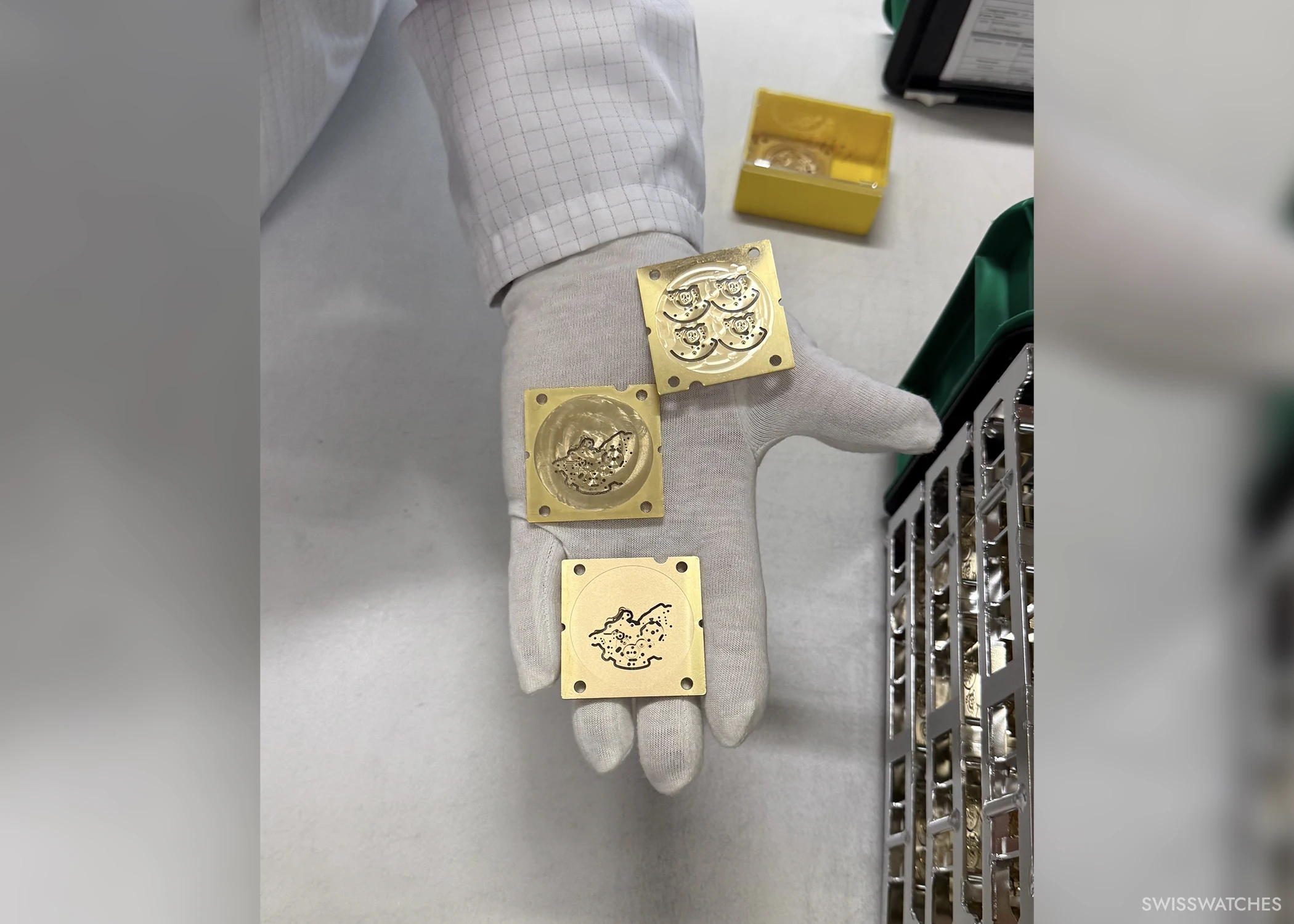
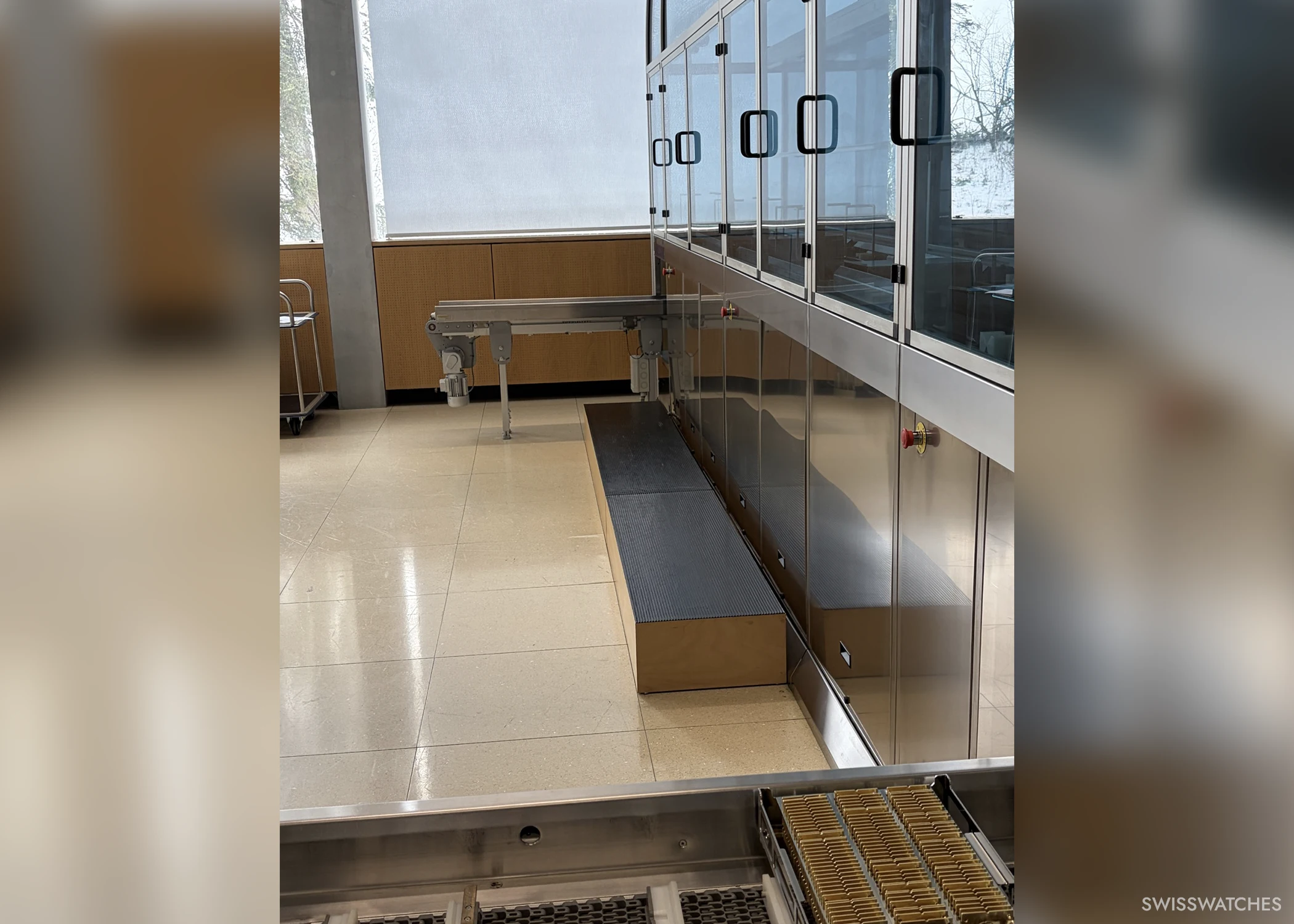
In a next step, the components are cleaned in an ultrasonic bath before undergoing a demineralized water rinse. Thanks to the oil-free production, this process requires only warm water at 38°C and soap and is entirely free of chemical agents. Sharp edges are also smoothed out with high-pressure water deburring at 300 bar.
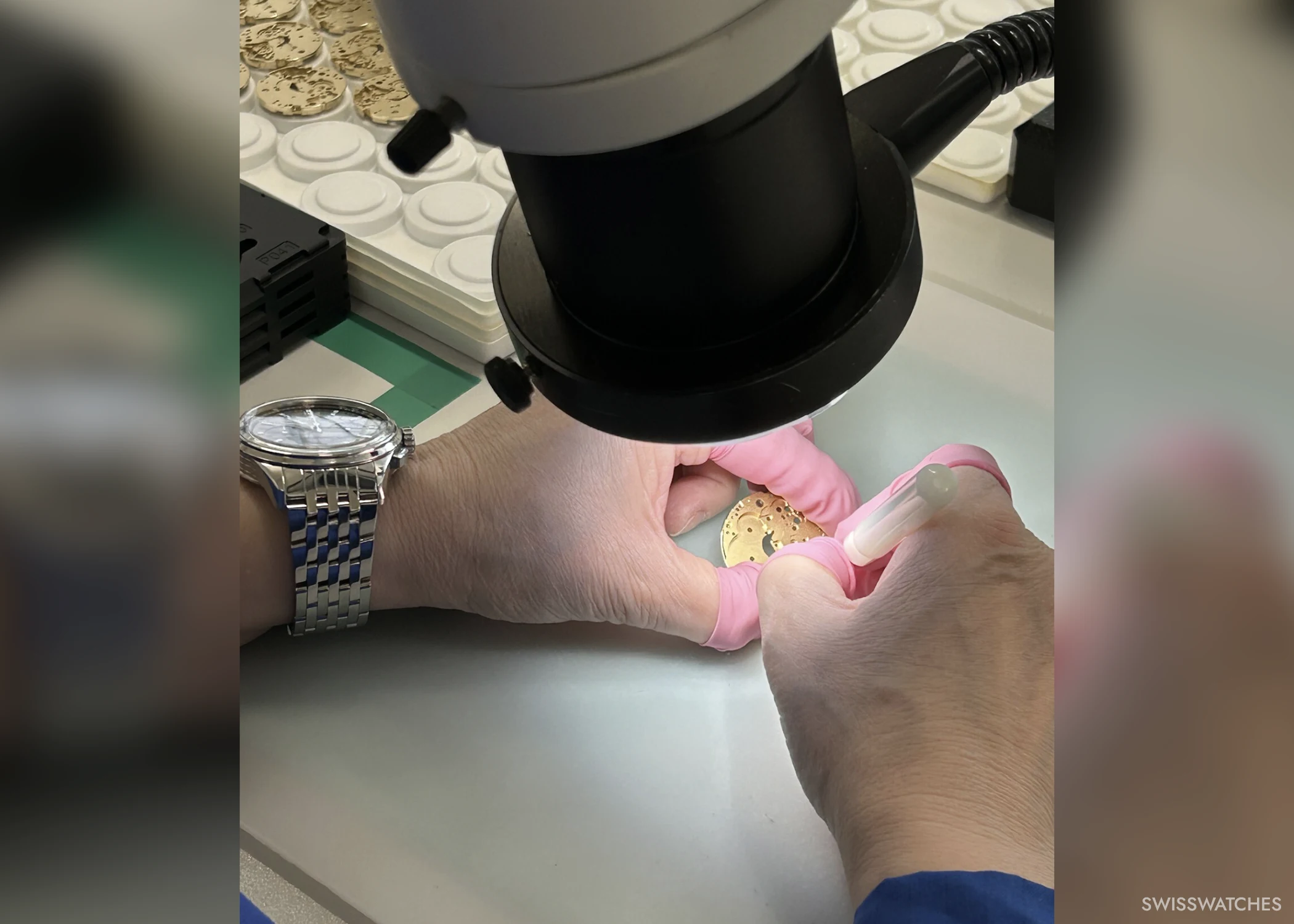
Any excess material remaining after production does not escape the watchful eyes of the workers during the subsequent quality control. All plates are inspected and reworked by hand. With surgical precision, three to four female watchmakers spend eight hours a day using scalpel-like tools and a trained eye under the microscope to remove any remaining imperfections. When asked why this task appears to be carried out exclusively by women, Fabrice explains that women have been proven to demonstrate better dexterity, ability, and endurance in this kind of work than men.
The large windows offer the opportunity to let one’s gaze wander during breaks to the evergreen idyll of the surrounding pastures. Every now and then, it is even possible to watch the cows grazing. The contrast between the sterile, white studio spaces and the hum of the machines feels almost surreal when set against the view of nature outside.
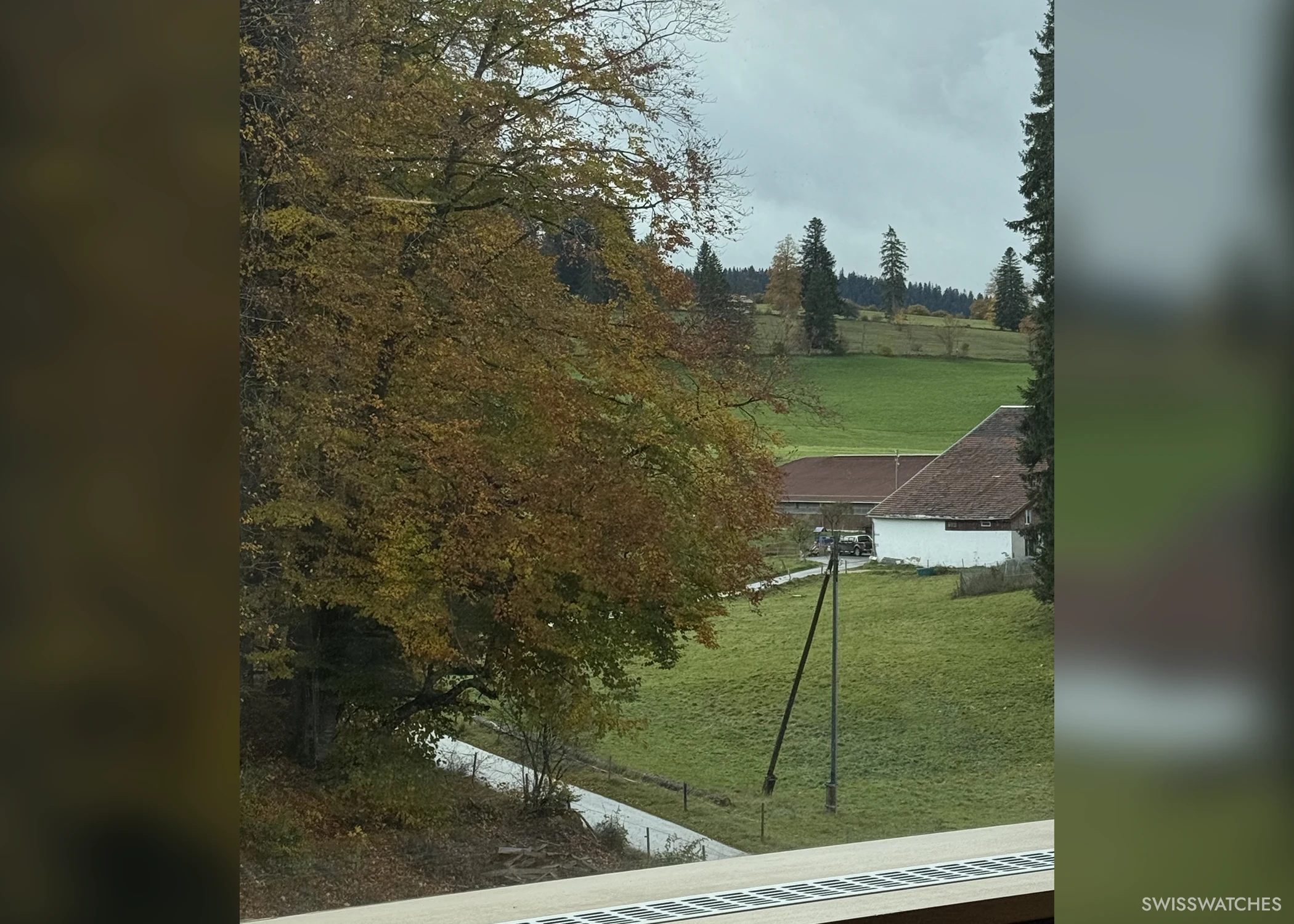
As high-tech as Breitling’s production process may appear, it would be mistaken to think that the company is no longer rooted in tradition. The day begins for the manufacture’s 320 employees – some of whom commute from France – at 6 a.m. This follows the tradition of local farmers, who in winter used to produce watches, starting and ending their workday early.
At the heart of Breitling’s traditional mindset lies Établissage. This is a decentralised Swiss system for watch assembly that Breitling has employed since its founding. Not all components of a watch are produced in-house; instead, they are sourced from specialised suppliers. In the manufacture, these parts are assembled into a complete timepiece.
One might compare it to cooking at home: we rarely obtain all ingredients from our own garden, but instead from the supermarket or a specialty store. Just as a delicious dish is created in the kitchen from these ingredients, timepieces are crafted in the Breitling manufacture. This does not mean less effort, but rather a different kind of effort than if every single component were produced in-house.
The success of a dish depends on the quality of its ingredients. Similarly, in watchmaking, the choice of suppliers determines the quality of the timepiece. The higher the quality of the components, the higher the quality of the product.
Breitling sources the majority of its tools and components from local suppliers. For example, the hard-steel milling cutters used to work the mainplates come from Le Locle, while for models without in-house calibres, the brand occasionally relies on Sellita movements.
The same principle extends to dials, hands, and other parts. Since 2022, Breitling has also applied it to the sourcing of traceable lab-grown diamonds and artisanal, small-scale gold. The brand works with a select few suppliers of lab-grown diamonds from India – the global leader in diamond production and processing – ensuring the highest quality while advancing its sustainability and traceability objectives. Its gold comes from artisanal and small-scale mining operations in South America and meets the stringent social and environmental standards of the Swiss Better Gold Association.
We now find ourselves on the second floor. Here, watch components delivered for the next three months are thoroughly checked before they can be transferred to the pre-assembly department. Every movement component – for example, the 346 parts of a B01 calibre – is inspected by automated machines with micro-precision.
Using an enlarged model, Fabrice demonstrates the surface structure of a jewel bearing. The top of the tiny synthetic ruby is shaped like a donut to hold a small amount of lubricating oil, while the underside is flat. A few minutes later, we not only watch as the incoming rubies are correctly oriented by a machine, but also have the chance to try it ourselves. Equipped with magnifying glasses and tweezers, it is surprisingly tricky to tell which side is the correct one.
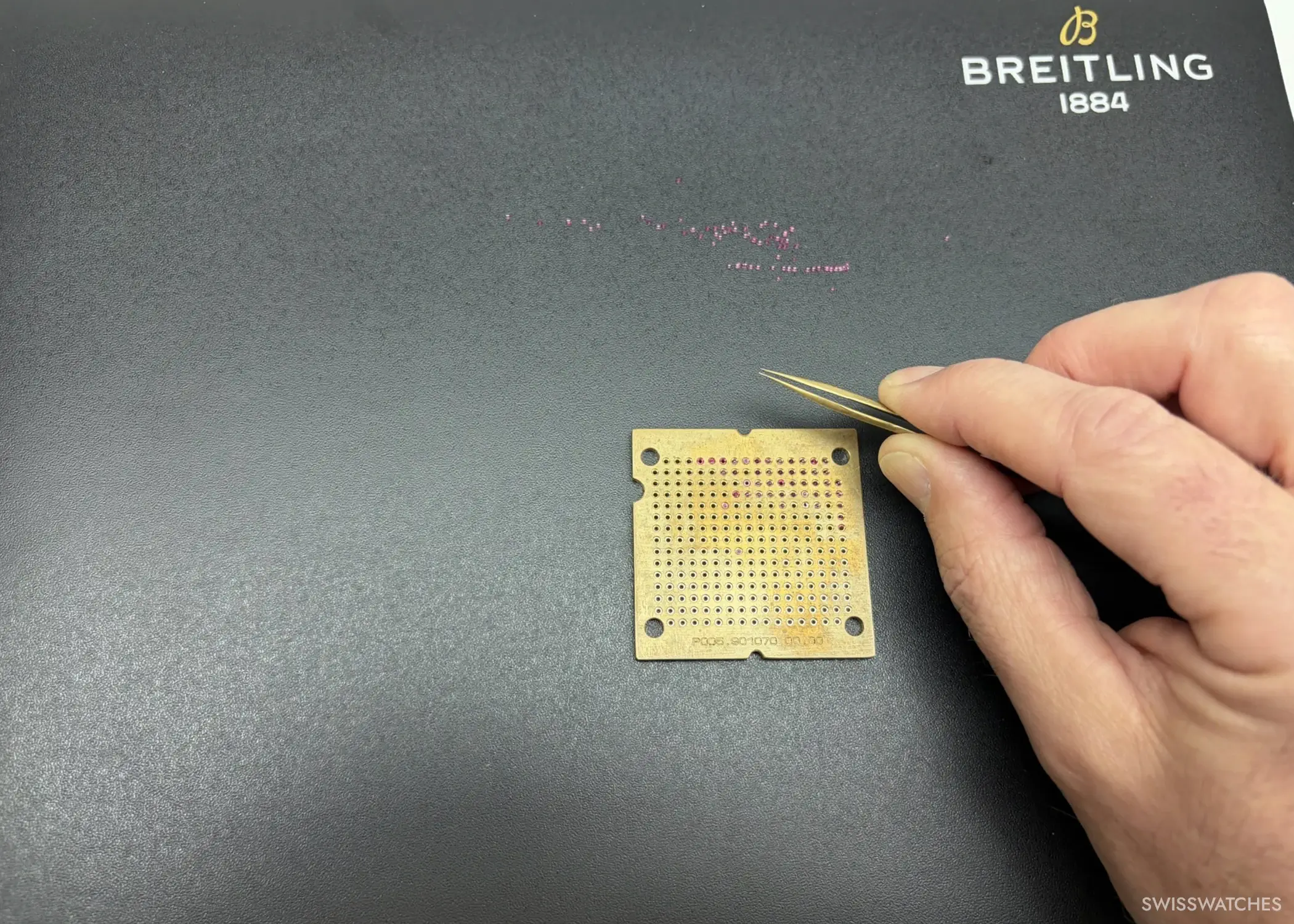
Although an automated pick and place machine handles the bulk of the turning of the synthetic rubies and pins, any corrections or adjustments are always carried out manually.
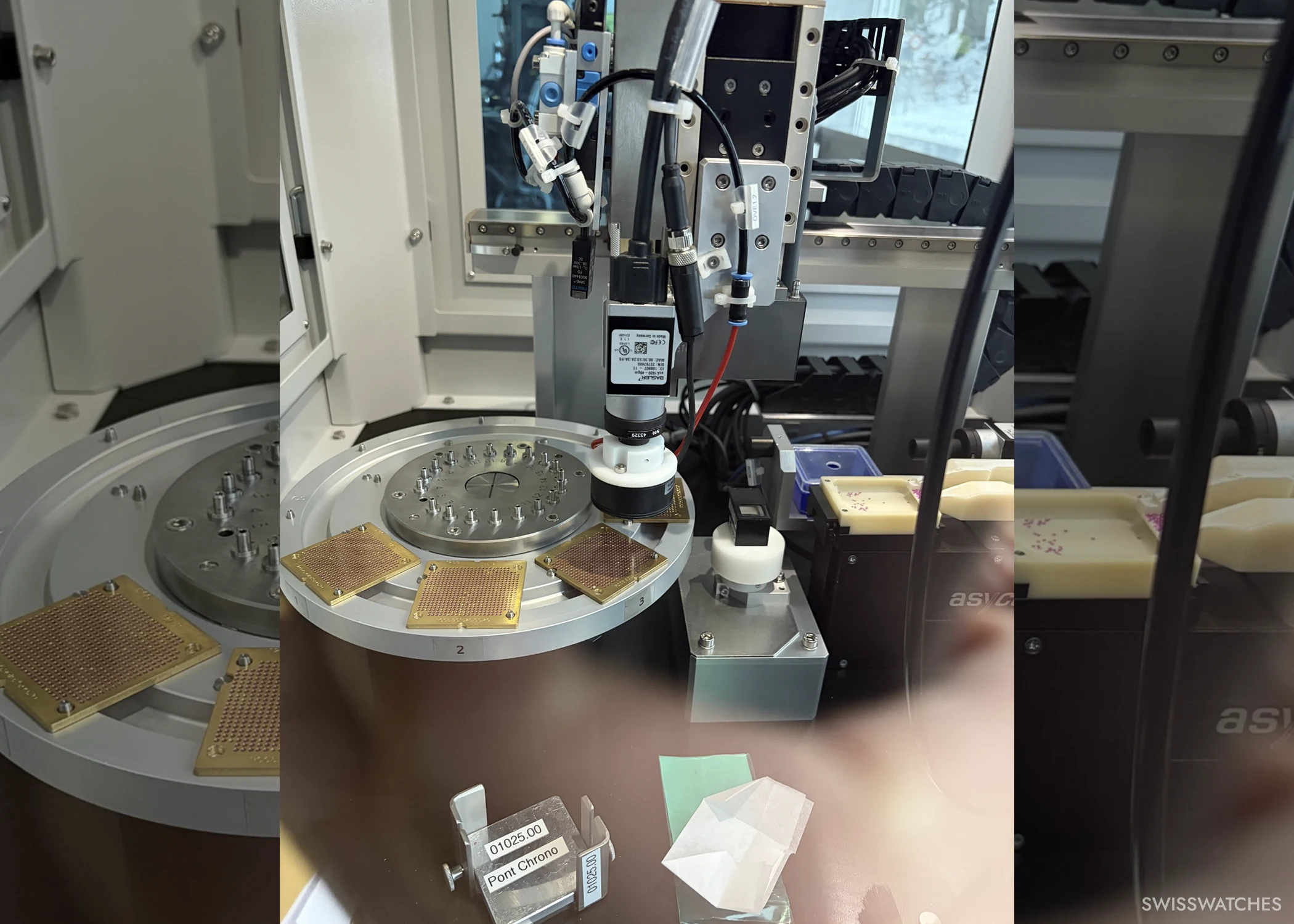
In the next step, the rubies and pins are pressed into their correct positions on the plate. This pressing process allows the rubies to be removed and readjusted if necessary, while ensuring they remain perfectly in place. A robotic arm takes a ruby from the previously inspected ruby set and places it into its designated position. After another inspection by humans, the prepared movement components proceed to assembly.
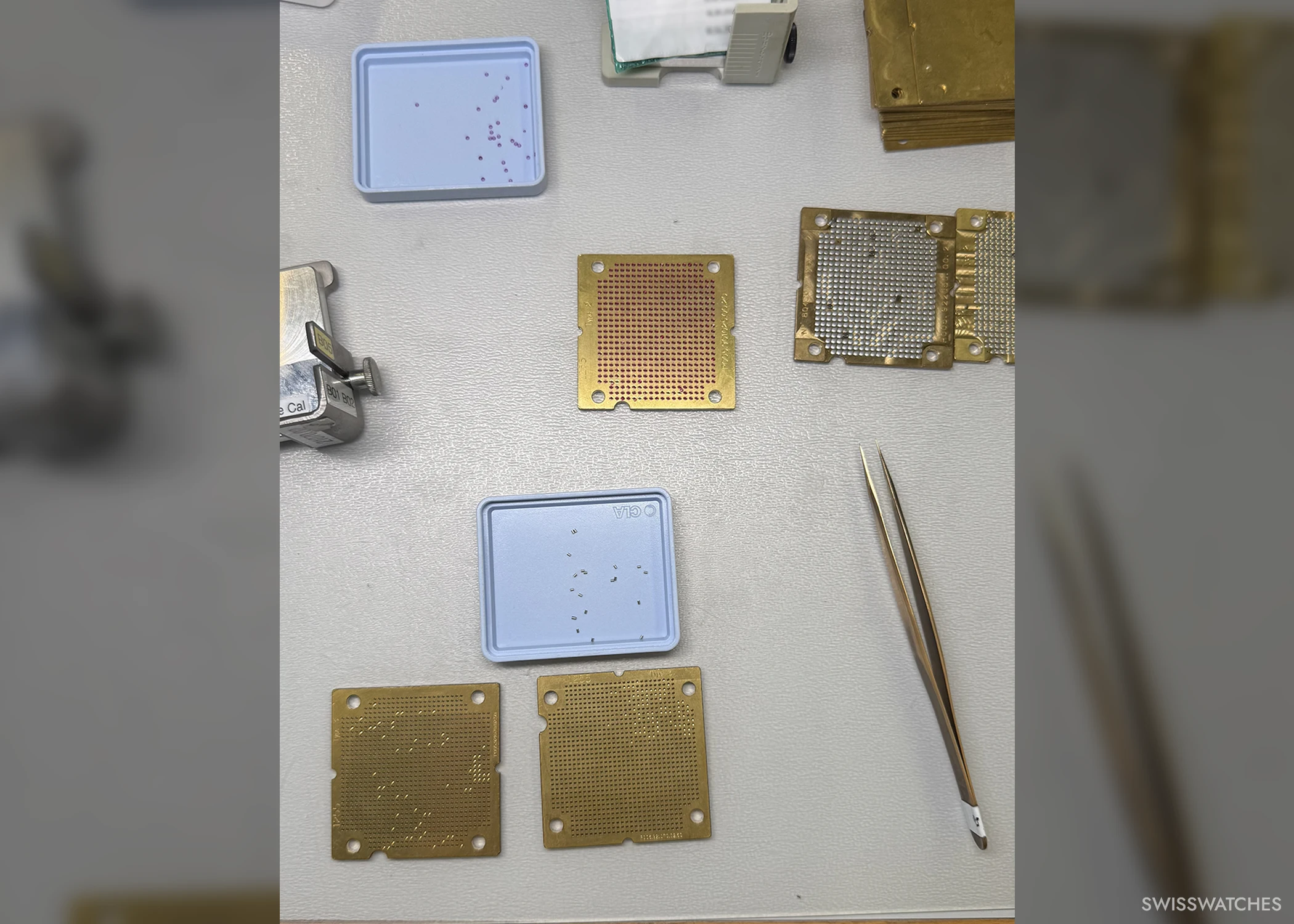
At 42 workstations, of which 8 are automated, the movement is ultimately assembled. A narrow conveyor belt runs beneath the workstations, carrying the movement from one station to the next. During this process, the movement is equipped with a temporary setting crown, which is replaced by the correct crown during final assembly. In addition, the different movement variants are colour-coded and equipped with a microchip to ensure correct allocation during assembly.
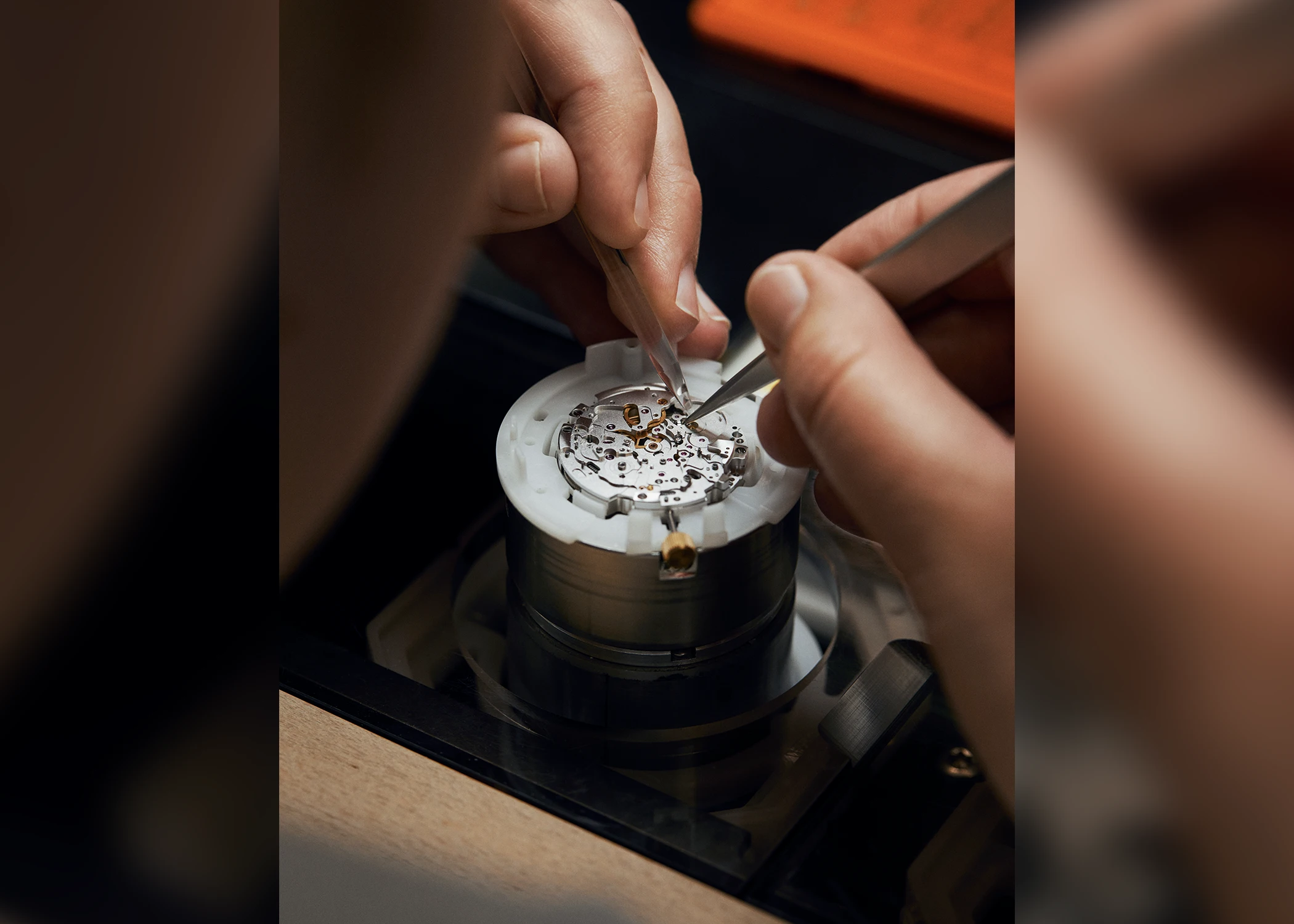
Before the movement leaves a station, it is automatically checked, and any needed possible adjustments errors are performed by a qualified operator. corrected by another person. Time is used effectively here: to keep assembly running smoothly, the movement is automatically passed on for engraving of the serial number in hidden/parallel time. during the lunch break. In total, the production of a movement takes five months.
Once the manufacture movements are fully assembled, a machine tests the function and precision of the caliber in various positions – from the dial side facing up to facing downward. In fact, the movement is tested in several positions, but thanks to final adjustment by a high qualified watchmaker with two to three years of specialized experience in chronometry. Since 1999, Breitling has maintained the commitment to have all its mechanical and quartz movements COSC-certified. In fact, Breitling is one of the few brands to integrate this across its entire production. To be officially recognized as a chronometer by the Swiss Official Chronometer Testing Institute, the movement must withstand 15 days of tests in five positions at different temperatures and demonstrate on a mechanical movement an accuracy of – 4/+6 seconds per day. If the movement does not pass these tests, it is reworked in the manufacture and resubmitted until it receives certification.
The beating heart of the timepiece is ready – so what comes next? We head down to the ground floor of the manufacture, where the final assembly takes place.
The production of the dials, hands, and cases also requires several months – usually three to six. Upon their arrival at the manufacture, the delivered dials are again inspected under a UV lamp to check their luminescence, and then set on the movement.
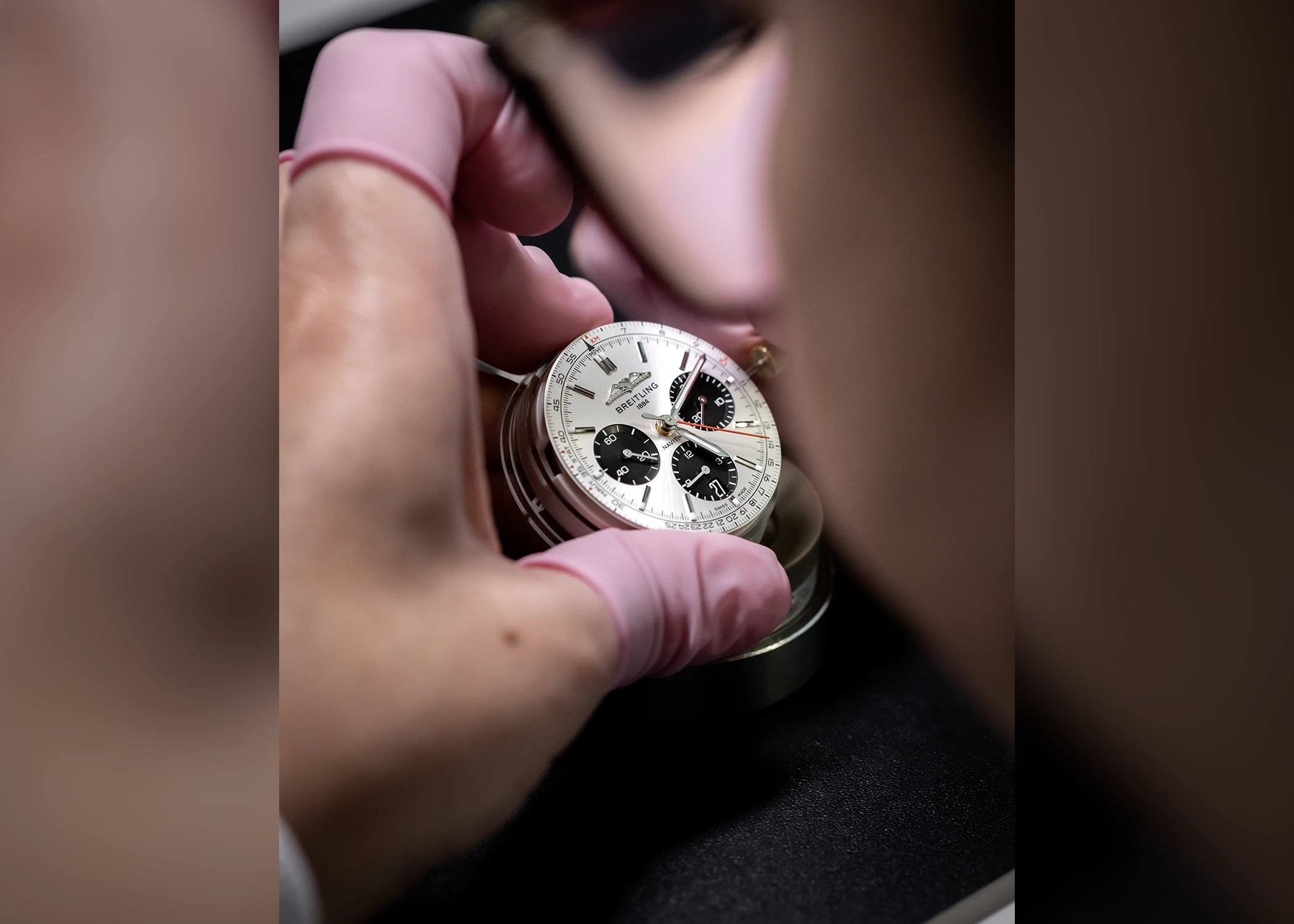
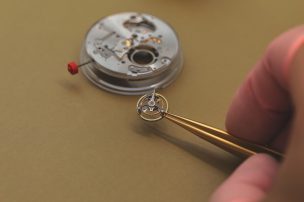
The hands are then set in place with the help of tweezers: first the hour hand, then the minute hand, and finally the second hand. Comes the weeding time, when dials, hands and movement are assembled they will be After the dial and the movement have been inserted into the case. The working crown is removed and replaced with the final proper one crown. The installation of the oscillating weight rotor and the torque disc and the caseback completes the head of the watch assembly.
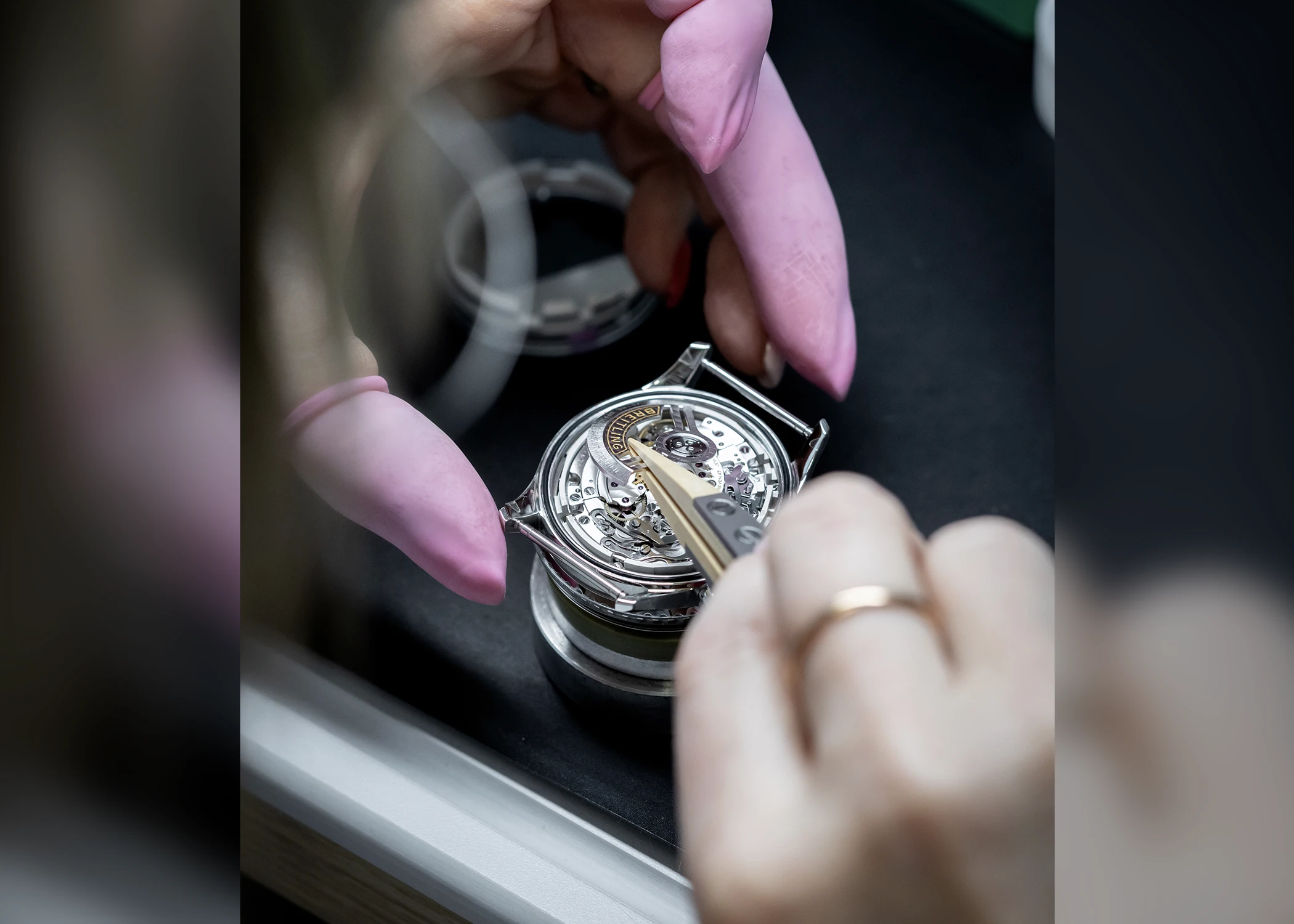
All of this takes place in a grey area environment to prevent any particles from contaminating the mechanics of the timepieces.
Finally, each watch receives a unique identification number, laser-engraved on its caseback. In a final quality-control stage, these are checked once more, and the power reserve is verified. Et voilà: after eight months of production, the timepiece can at last be paired with its bracelet in Grenchen and look forward to a new home on the wrist.
As Fabrice shows us a few upcoming editions, he emphasises the importance of regular servicing to ensure the watch continues to run smoothly over the long term. The customer service and maintenance centre is not located in La Chaux-de-Fonds, but in Grenchen. Servicing typically takes two to three weeks, after which the watch’s warranty is extended by a further two years.
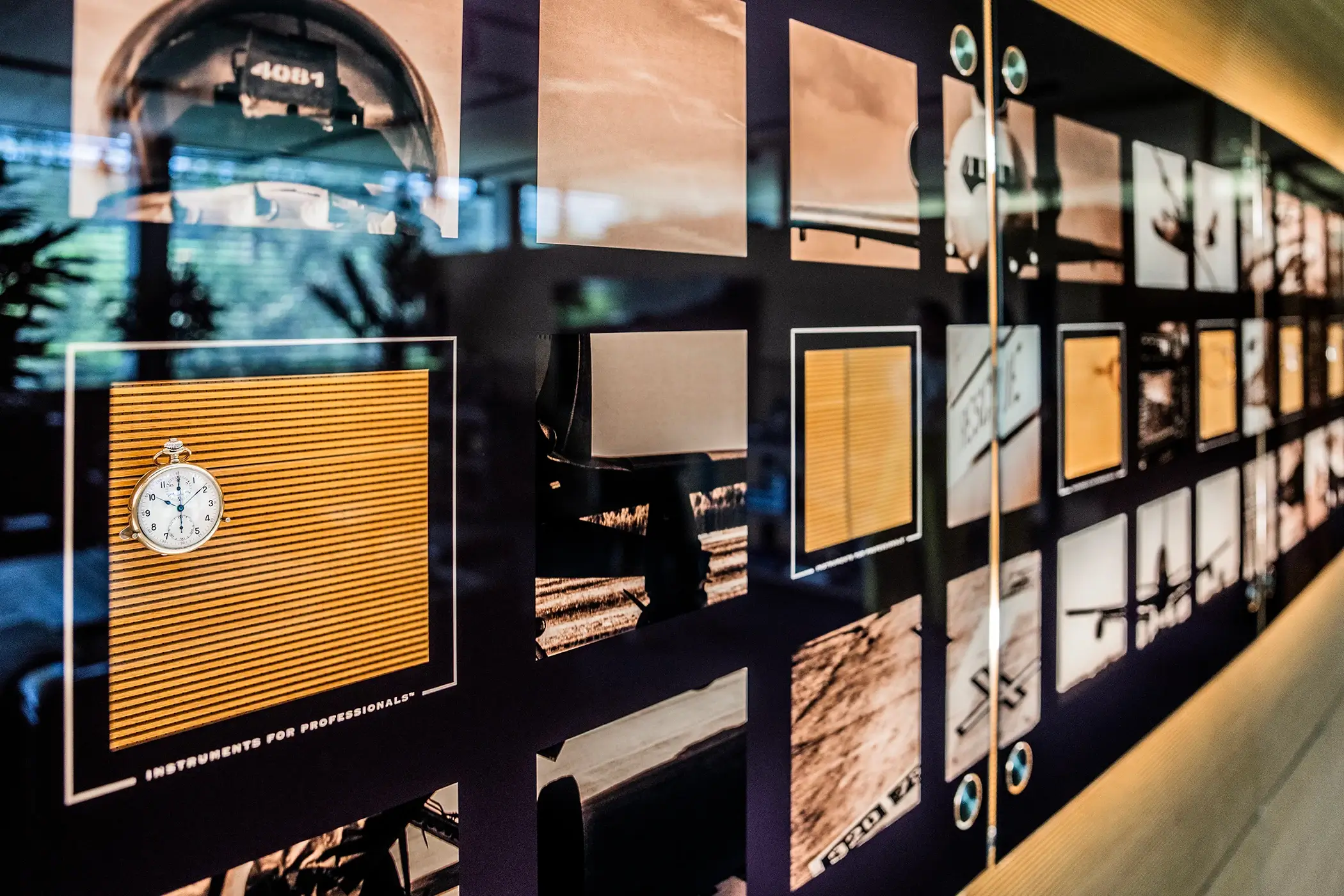
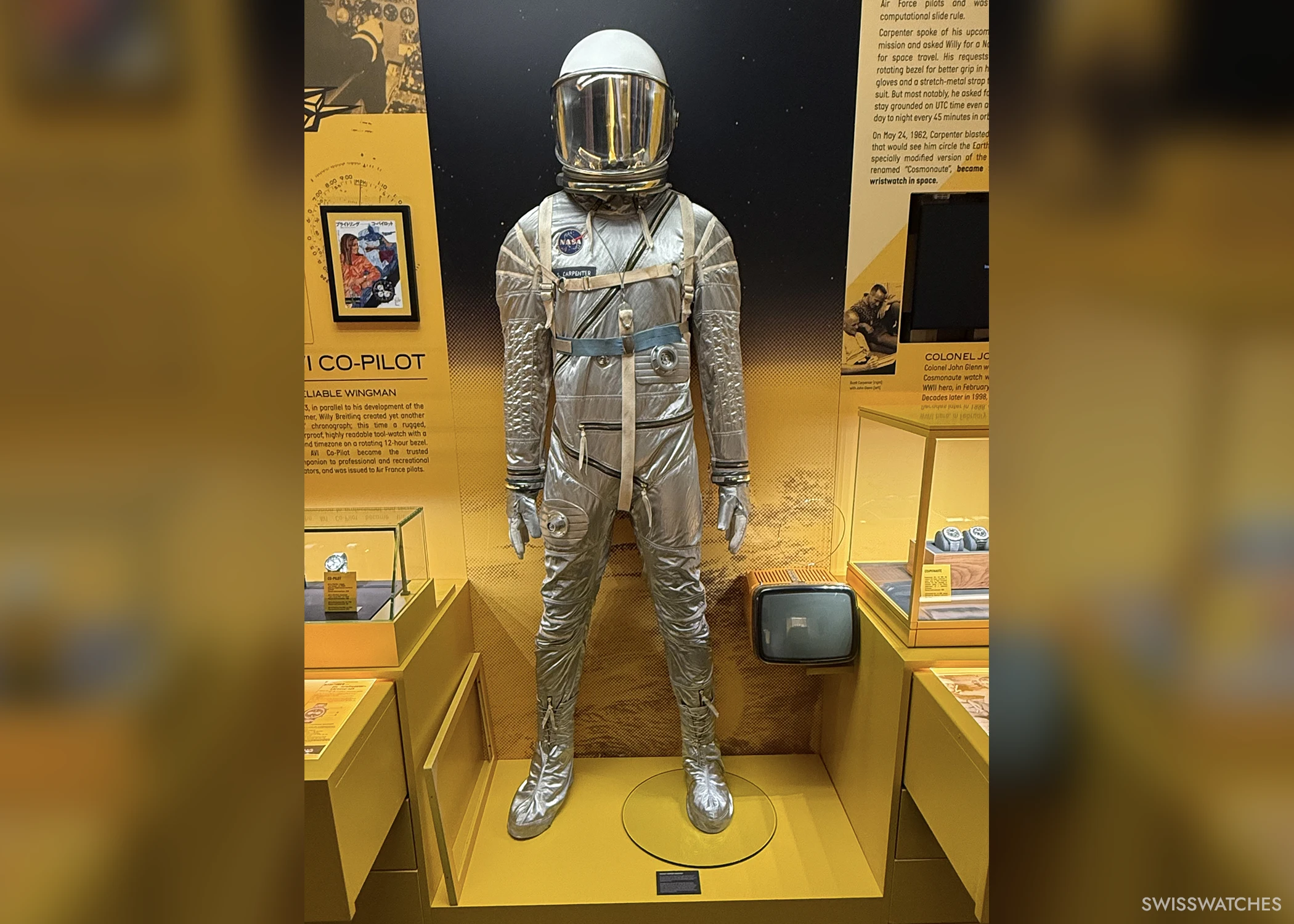
To conclude our tour, Fabrice leads us into the showroom. Before entering the showroom itself, Heritage panels featuring historic models such as the Navitimer and the Cosmonaute highlight key milestones in Breitling’s history. This is a condensed version of the pop-up museum that opened in Zurich’s old town from August 2024 to May 2025 to celebrate Breitling’s 140th anniversary.
With cozy brown leather sofas, a view of the greenery, and even a motorcycle, the showroom presents itself as the comfortable living room of a daring adventurer. In the light-filled space, the timepieces of the current collection as well as the classics can be admired to their fullest. In several large display cases, the models gleam in a variety of colours and finishes, leaving visitors spoiled for choice as to which one to try on first.
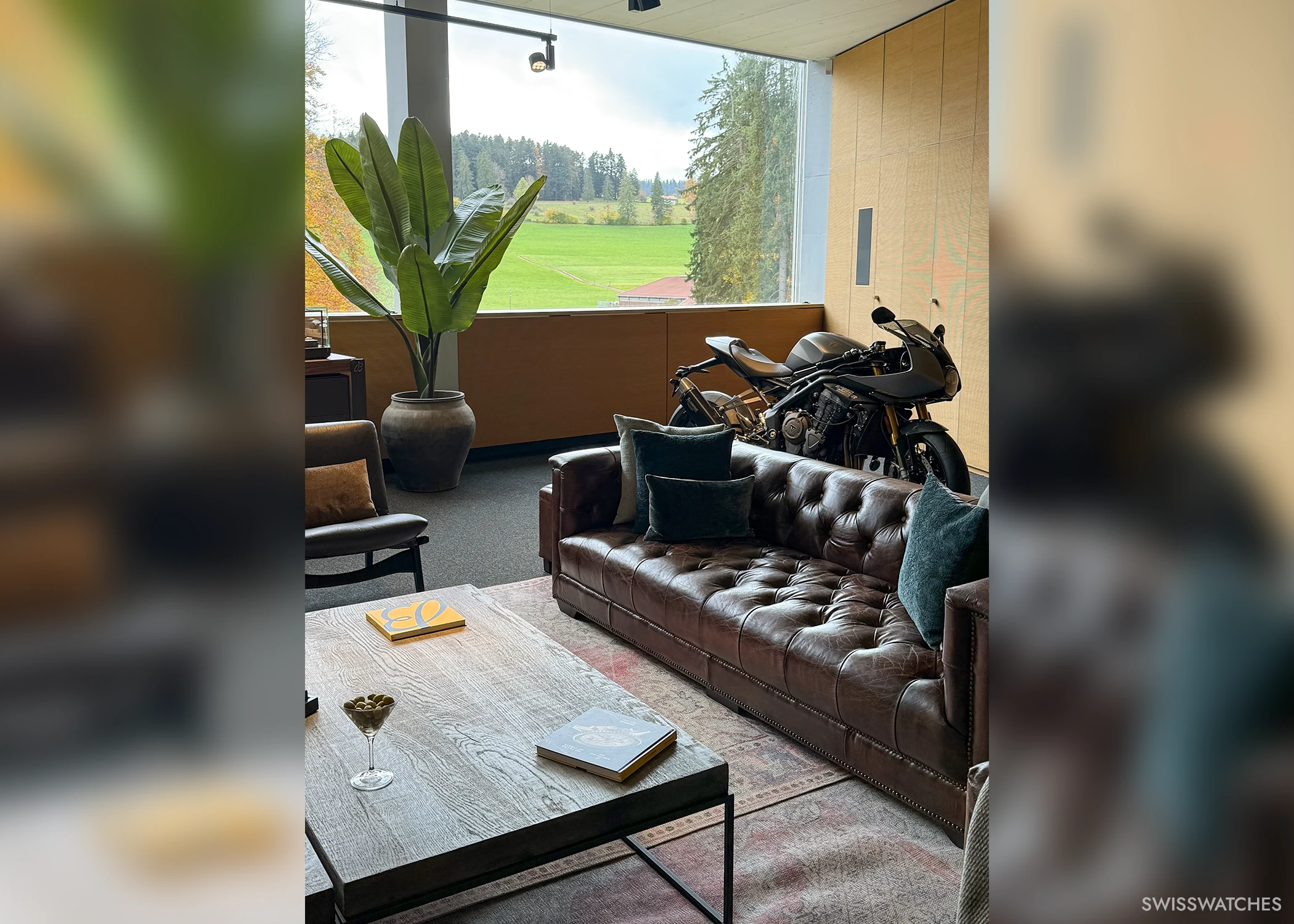
In any case, one looks at the dial with new eyes. You hear the hum of the machines and think of the magnifying glasses, the tweezers, the work performed with microscopic precision. Appreciation for the timepiece on your wrist takes on a different dimension when you realise just how much technology and human precision lie behind it.
The Breitling Manufacture may not be a traditional manufacture in the sense that every single screw is still assembled by hand. Yet the company demonstrates how watchmaking, viewed through the lens of the time-honoured Établissage tradition, can be translated into the 21st century. At Breitling Chronométrie SA, tradition and cutting-edge technology are not mutually exclusive; rather, they are intelligently combined. Even if certain aspects differ from other manufactures, the production still involves significant cost and time, built upon a tightly woven sequence of preparation, assembly, and meticulous quality control. Of course, opinions may vary on highly technologized production and testing processes in watchmaking. Breitling, however, shows just how fascinating and multifaceted the subject of automation in the watch industry can be. It is a visit that leaves a lasting impression.