


For the tenth Privé series, Cartier has introduced a trio of stunning platinum novelties with burgundy details, which you can read all about here.

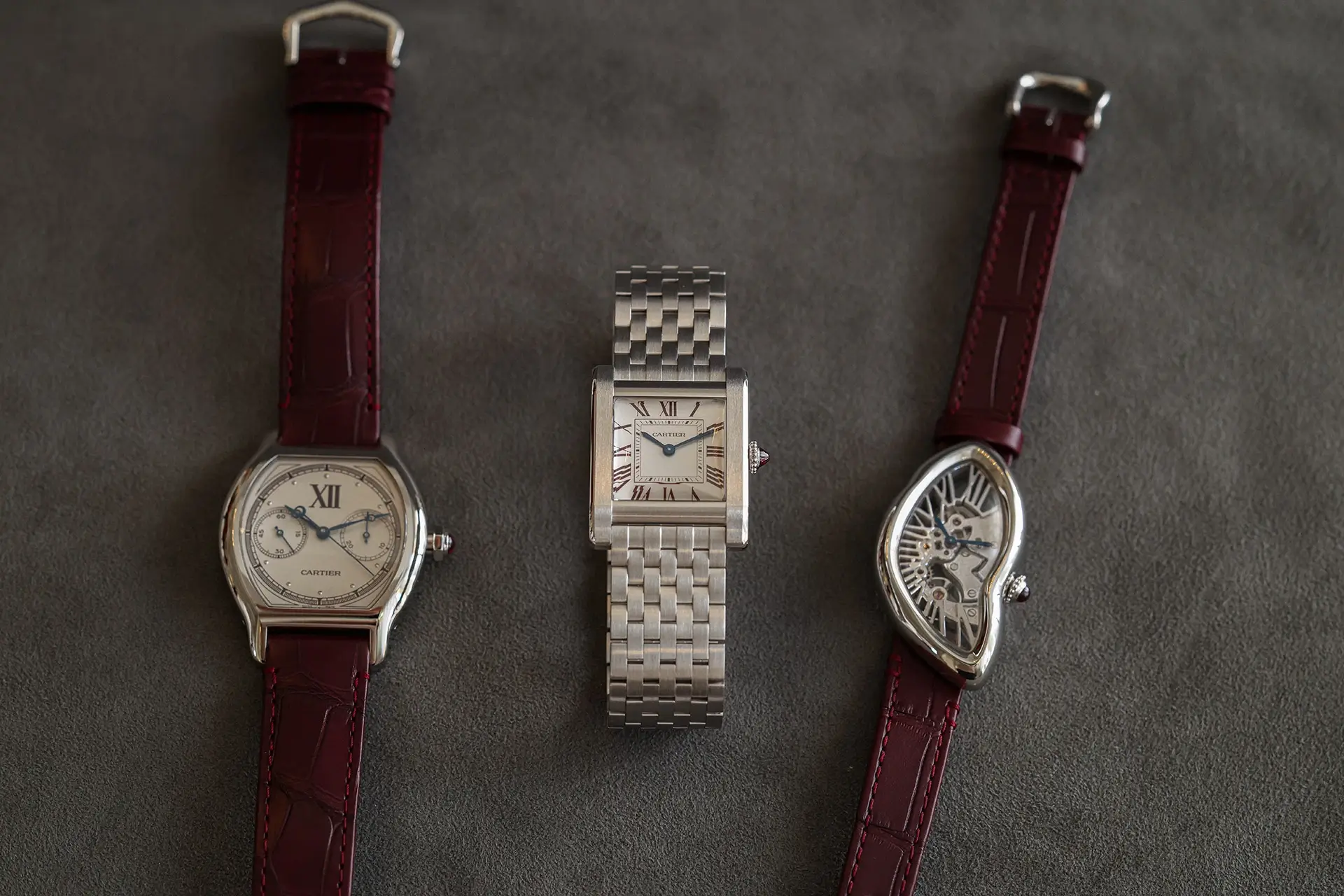
There are anniversaries, and then there are Cartier anniversaries. Anticipated with bated breath by collectors around the world, the Cartier Privé is now celebrating its tenth series in 2026 – and the novelties certainly do not disappoint. Marking the occasion, Cartier presents not only three yellow-gold Privé ‘La Collection’ pieces, but also a trio of new timepieces in rare platinum cases, unified by one of the year’s most compelling colour signatures: burgundy. The Privé models unveiled for this series are the Tortue Chronographe Monopoussoir, the Tank Normale, and the Crash Squelette.

First things first, let’s take a closer look at what the Privé collection stands for. As mentioned, the Privé line serves as a means for Cartier’s designers to immerse themselves in the brand’s historic icons, reinterpreting its hallmark timepieces with modern mechanical movements and luxurious materials.
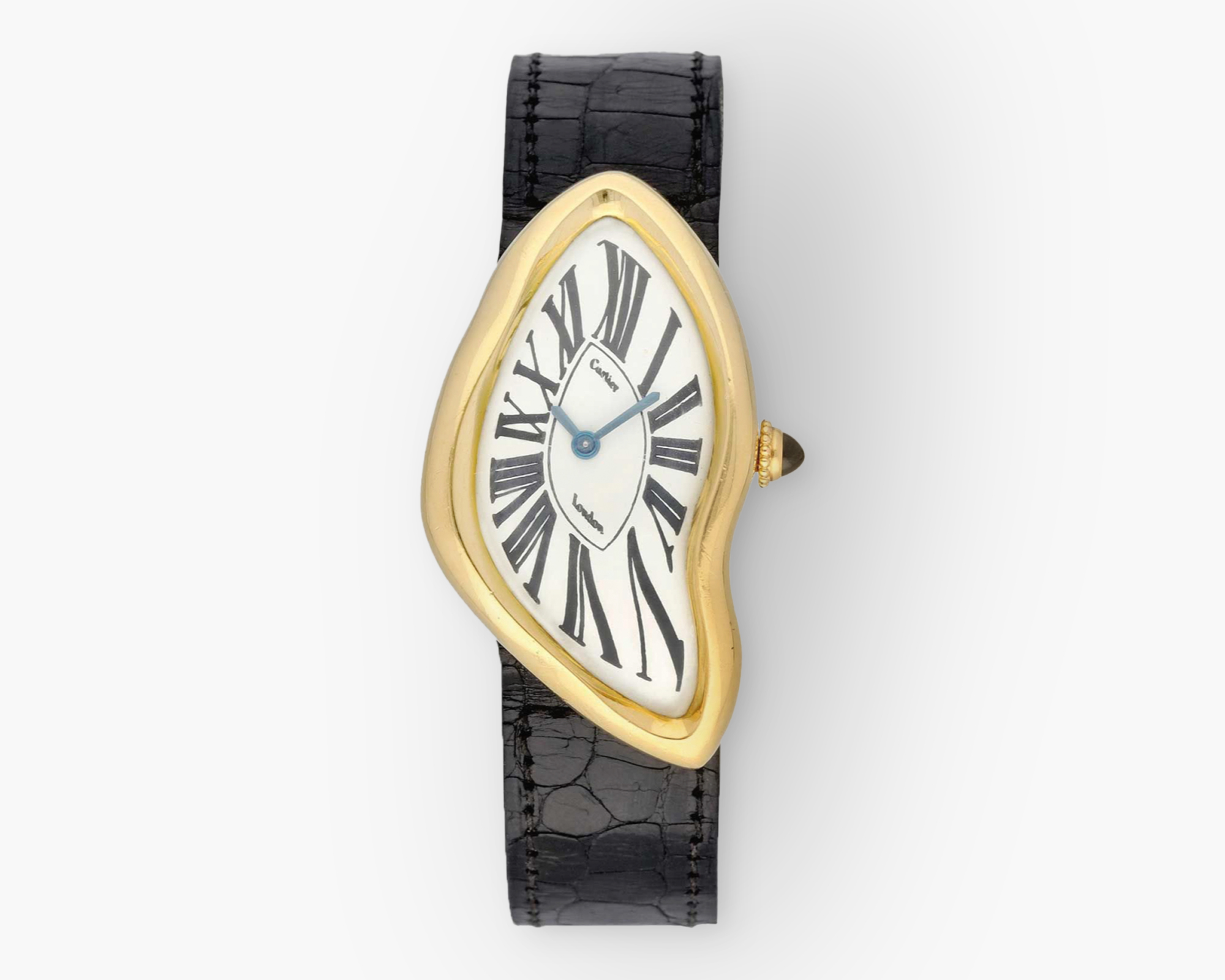
The Maison’s archives, befitting its reputation as le joaillier de la forme (‘watchmaker of shapes’), are virtually unrivalled. During the 20th century, Louis Cartier, grandson of the founder, used his position as head of the Paris branch to drive the Art Deco aesthetic forward, integrating it into Cartier’s creations. The Baignoire, the Tank, the Tonneau – these distinctive forms helped shape the language of modern watch design, paving the way for further icons such as the Crash, conceived by Cartier London’s Jean-Jacques Cartier and Rupert Emmerson in response to the shifting styles of the Swinging Sixties.

With its long and varied creative history, Maison Cartier understands better than most that the pendulum of time never stops swinging. Yet despite ever-changing tastes, trends, and demands, the Privé collection allows le joaillier de la forme to honour its heritage, offering collectors handsome, evocative odes to enduring historic designs that integrate all the virtues of a modern wristwatch.
Marking its tenth series, the Cartier Privé collection’s latest platinum novelties bring together three of its most emblematic designs: the Tank Normale, the Tortue Chronographe Monopoussoir, and the Crash Squelette.
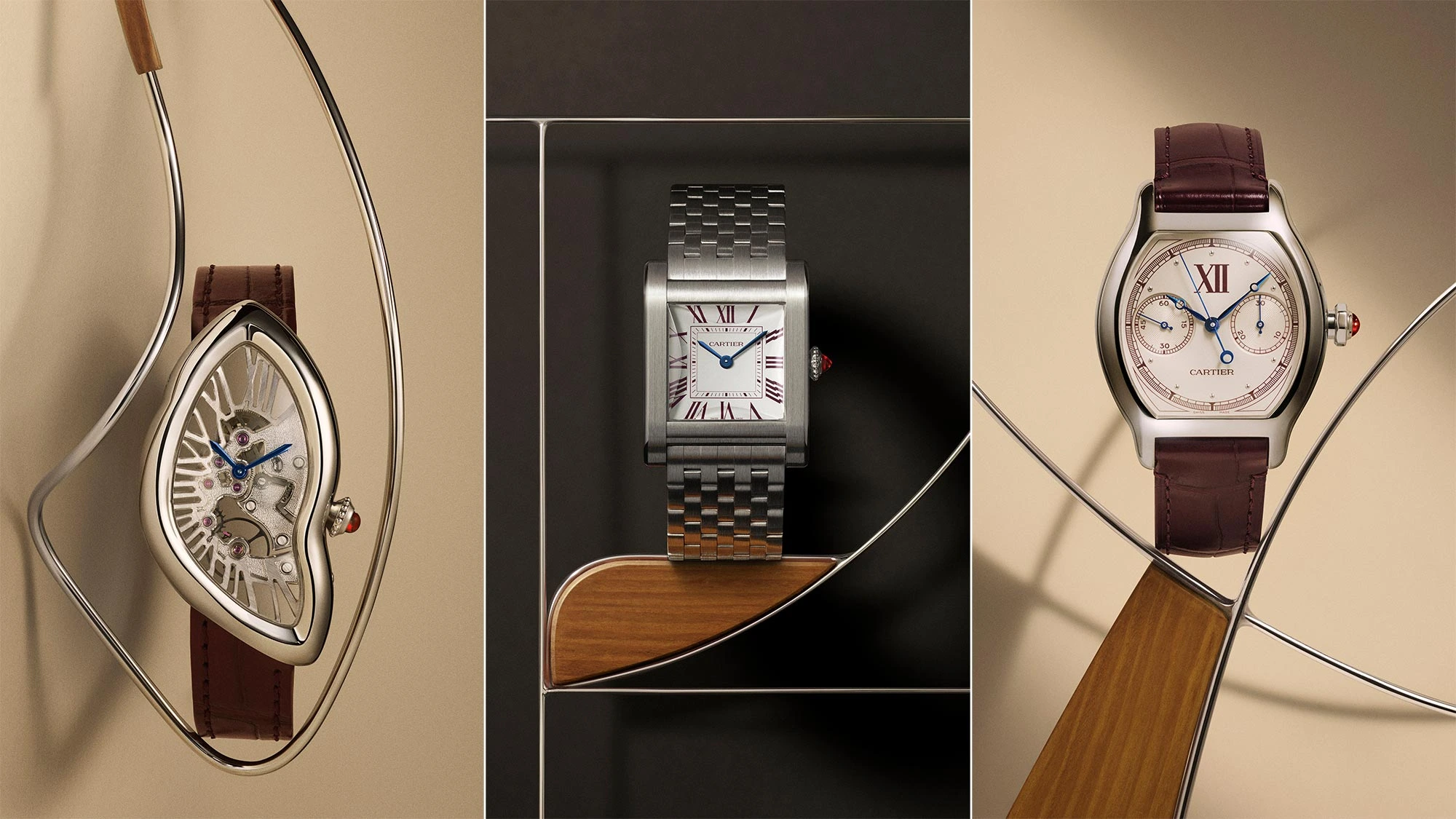
While these three timepieces could not be more different in terms of shape and design, they do share a unifying thread: platinum. Long favoured by Cartier for its most elite pieces, platinum is often highly regarded in the collector community for not only its durability, but also its positioning as the pinnacle of luxury and signifier of prestige. Cooler than white-gold, rarer, and infinitely more discreet in its luxury, it’s the ultimate ‘if you know, you know’ choice of materials – the perfect fit for your archetypal Cartier collector. After all, the beauty of a Cartier watch design tends to lie in its understated appearance.
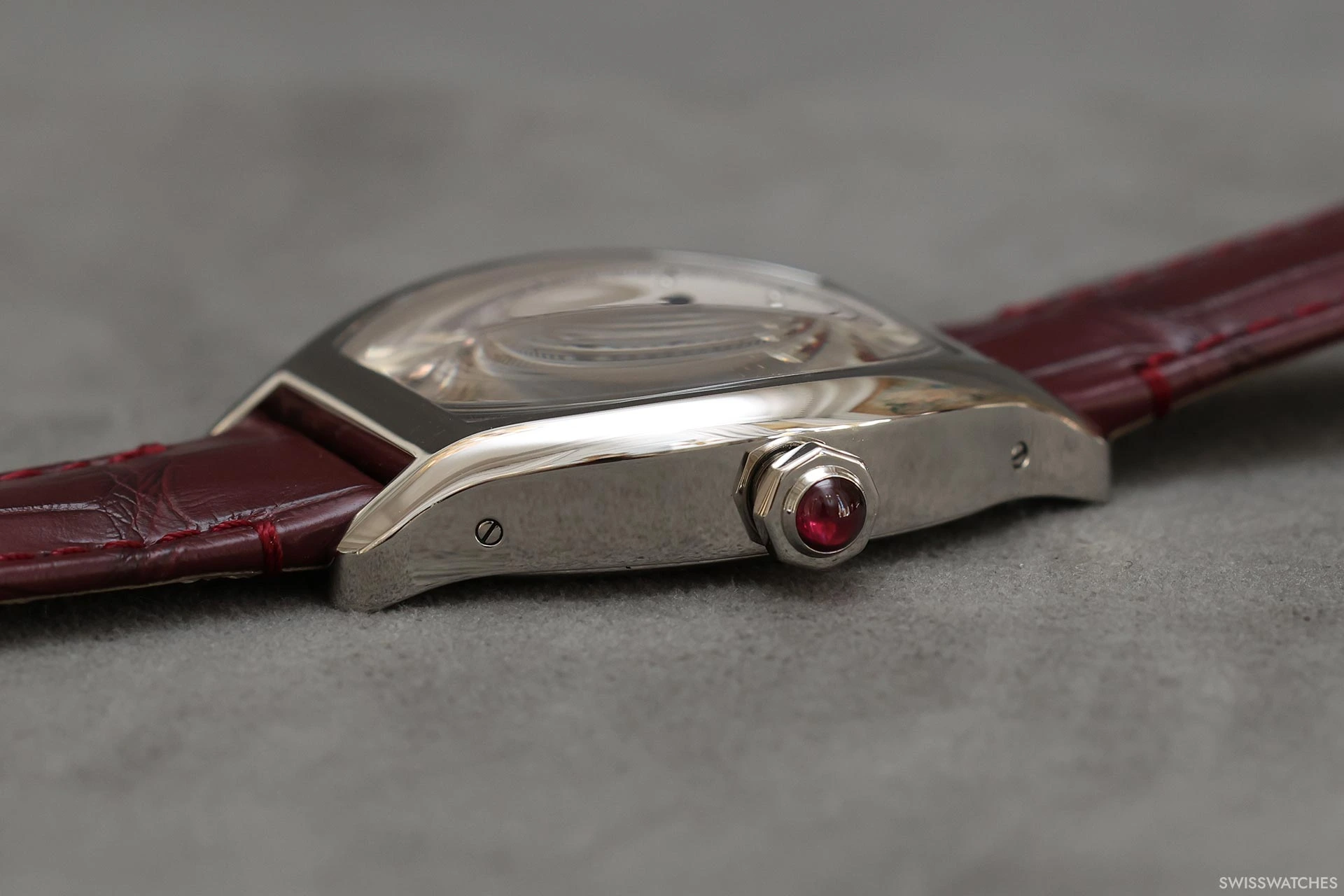
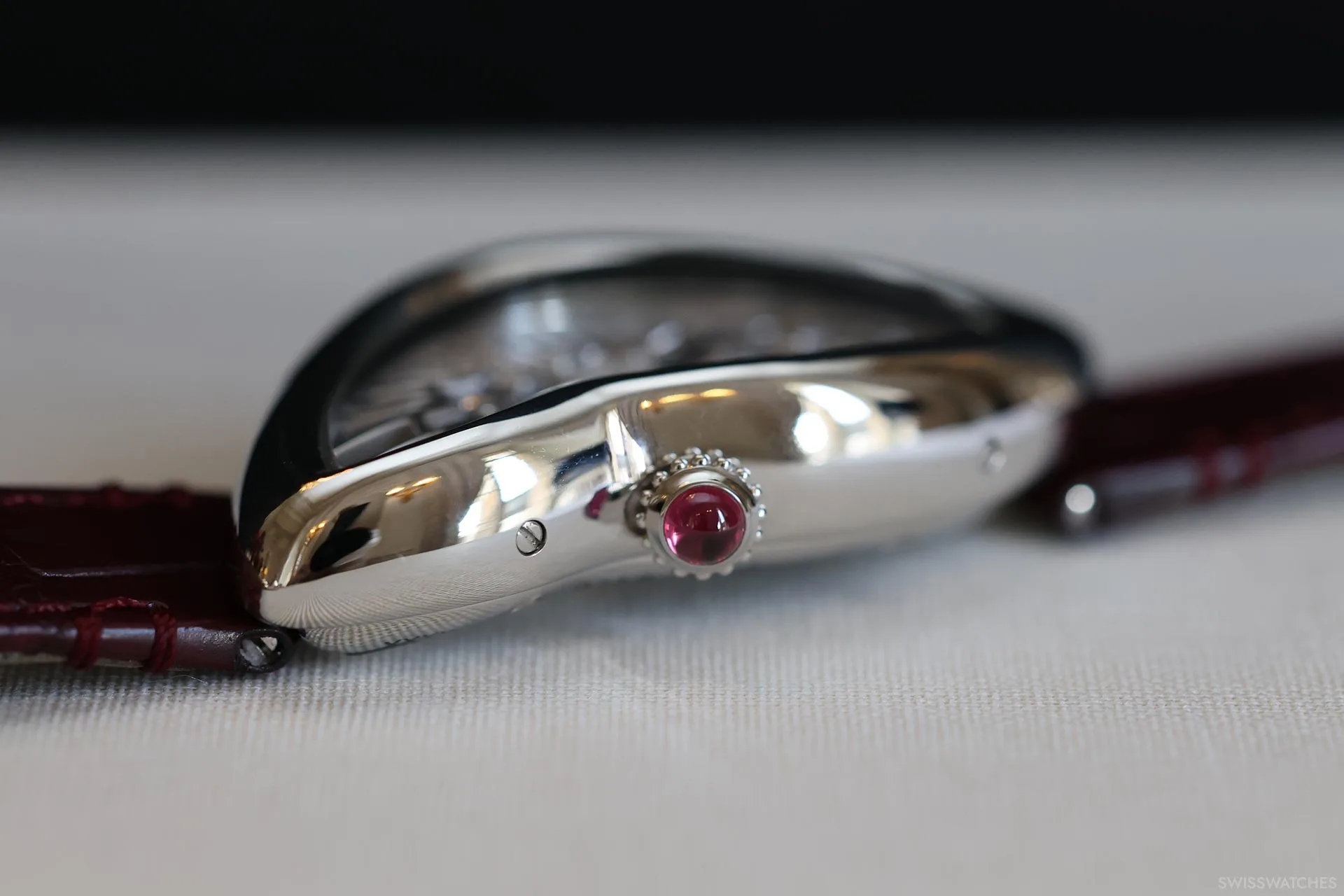
How does the untrained eye know if a Cartier watch is platinum or white gold? Cartier connoisseurs alone will know that the answer lies in the ruby cabochon in the crown, replacing the typical blue cabochon used for all of its other watches. Alongside burgundy printed dials, the new 2026 Privé timepieces are accompanied by leather straps in a matching deep red wine tone.
Burgundy is having something of a moment right now – and let’s remember that Cartier is also a luxury fashion Maison that moves between fashion, jewellery and watchmaking. Since Autumn last year, Vogue and various other luxury publications have been extolling the virtues of this hue, with burgundy – or ‘wine-cellar red’, as Vogue editor Julia Storm put it, ‘making a name for itself on the runways’. By bringing burgundy into the picture, Cartier once again cements its cross-disciplinary identity as a multifaceted luxury Maison.
Cartier is already known for its deep crimson core colour palette: its red boxes with gold garland embellishments are one of the most recognisable jewellery boxes in the world. Indeed, red has been regarded as the brand’s official colour since the 1930s. Prior to that, Cartier’s products were also frequently presented in various other coloured boxes such as green and black.
More specifically, Cartier has several historical references to burgundy. In the late 1970s, the Maison introduced its Les Must de Cartier line, offering clients more affordable interpretations of its luxury products. This soon expanded to include leather goods, including a number of ‘Bordeaux’ bags and satchels. Continuing into the 1980s, the burgundy hue spilled over into numerous watch models, not least appearing on the automatic Cartier Carrée Ref. 2960 (which, back then, earned a red cabochon despite its steel material), the automatic Cartier Santos Octagonal reference 2965, or the Must de Cartier Vendome that appeared in the ‘90s. Alas – or not, depending on your thoughts – the ‘Must de Cartier’ line was phased out by the early 2000s, having only since made a return in the form of the Tank Must watches introduced at Watches & Wonders back in 2021.
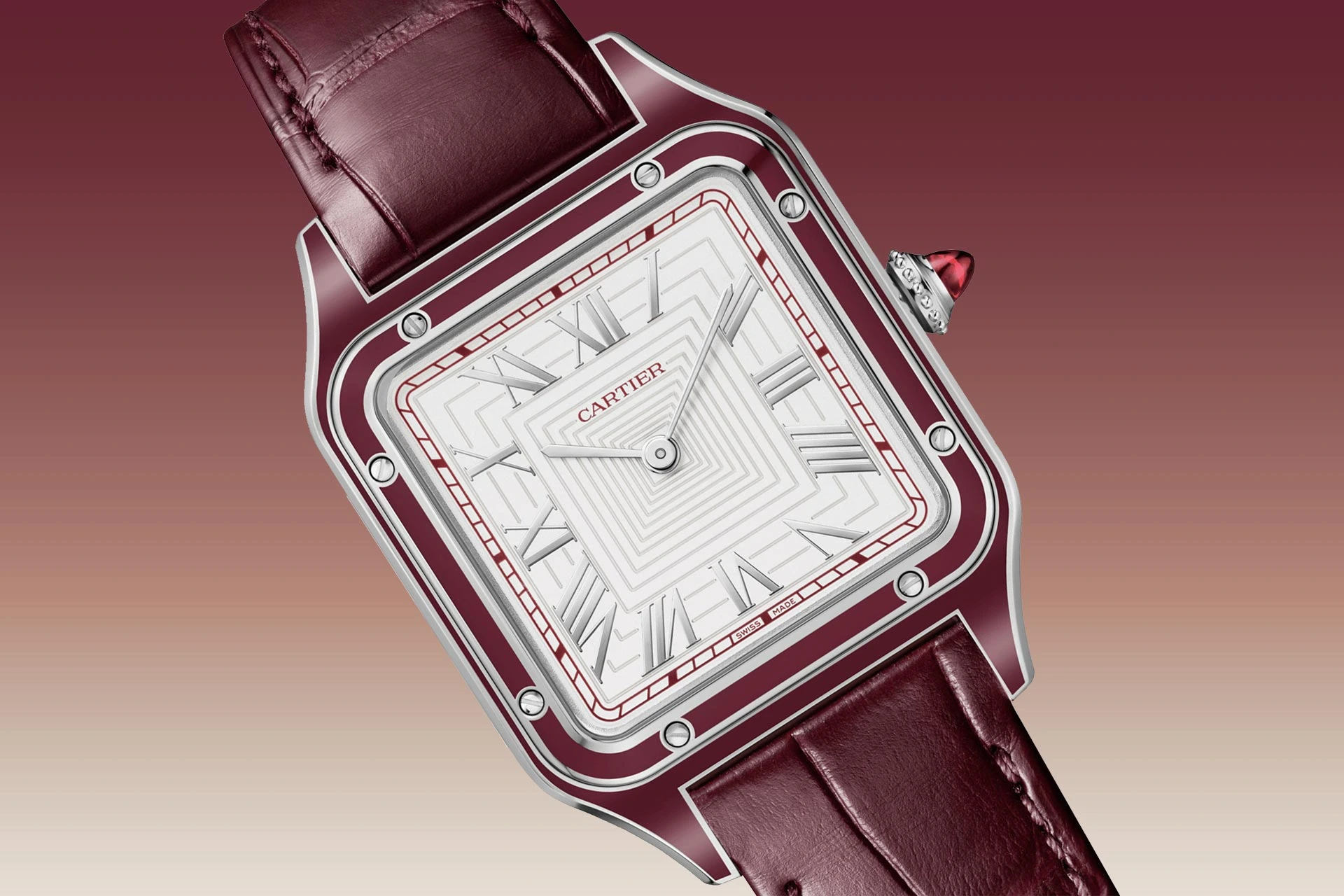
Cartier’s first use of platinum with burgundy, however, took place far more recently, specifically in 2022. The limited edition Santos-Dumont ‘Lacquered Case’ (Ref. WGSA0053) exuded a strongly Art Deco feel, featuring a platinum case with a polished, ruby-coloured lacquered bezel and matching ruby cabochon crown. Presented on a matching burgundy strap, the timepiece was limited to a mere 150 pieces.
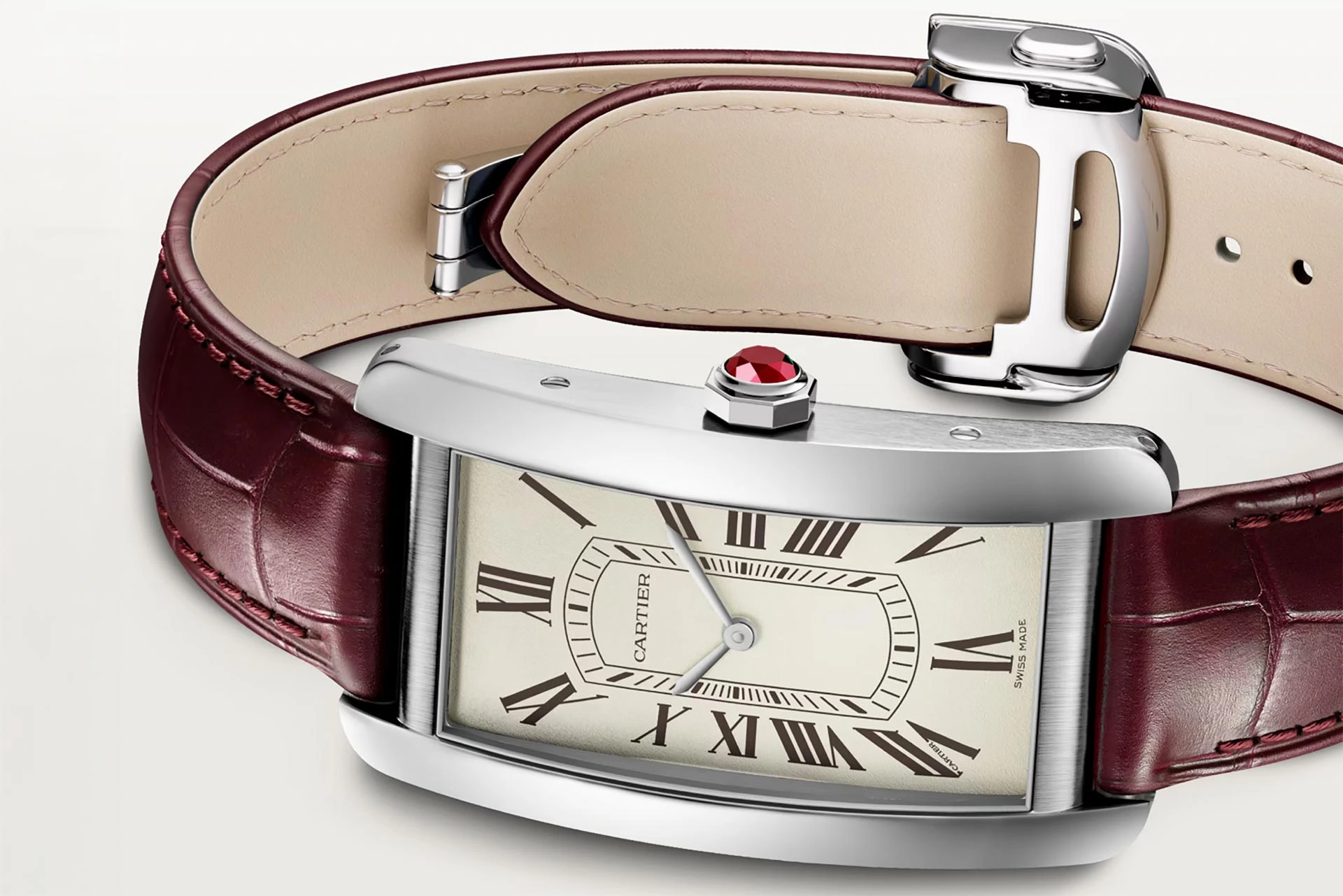
Cartier’s love of burgundy in combination with platinum continued: in 2023, the Cartier Tank Américaine Large Model (Ref. WGTA0296) was introduced, featuring an egg-shell dial platinum case, and a faceted ruby crown setting. The watch was not a limited edition, and remains a part of Cartier’s portfolio today.
Two years ago, Cartier introduced the brain-teasing Santos-Dumont Rewind, with a burgundy dial colour christened ‘carnelian’ by the Maison. Specifically designed with collectors in mind, the playful piece was limited to 200 pieces.
The decision to opt for burgundy for the tenth series of the Cartier Privé collection in 2026 is a nice shift that stays close to the Maison’s emblematic colour, while embracing current trends. Also described by high fashion guru Vogue as ‘louder than a neutral but quieter than a statement colour’ and ‘warmer than purple and more sophisticated than red’, burgundy is ultimately the perfect hue for a clientele that tends to opt for the refined luxury aesthetic, and is still distinctively ‘Cartier’.
Before we dig into the design, the first thing to note about the Tortue in general is the remarkable popularity with which this historic case shape – tortue meaning ‘tortoise’ – took off. Conceived by the demigod of Cartier heritage and design, Louis Cartier, in 1912, this watch was only his third creation. Countless brands have since adopted the shape (now universally known as a ‘tonneau’ case), all the way from Omega’s Petrograd model in 1915 and Audemars Piguet’s Carnegie watches to Patek Philippe’s enduringly beloved Ref. 5040 perpetual calendars. Today, tonneau-shaped watches are perhaps most closely associated with brands such as Richard Mille and Franck Muller, for whom the form has become a defining element of their aesthetic identity.
But returning to the Cartier Tortue: this watch, while introduced as a time-only piece in 1912, soon became a vessel by which Cartier could unleash its early horological creativity. By 1928, the brand had introduced both a minute repeater and a single-button chronograph into the Tortue, in collaboration with Edmond Jaeger (yes, of Jaeger-LeCoultre). The latter model’s name: the Tortue Monopoussoir (the latter French term meaning one push). It was one of the first ever chronograph watches to emerge from the Maison.
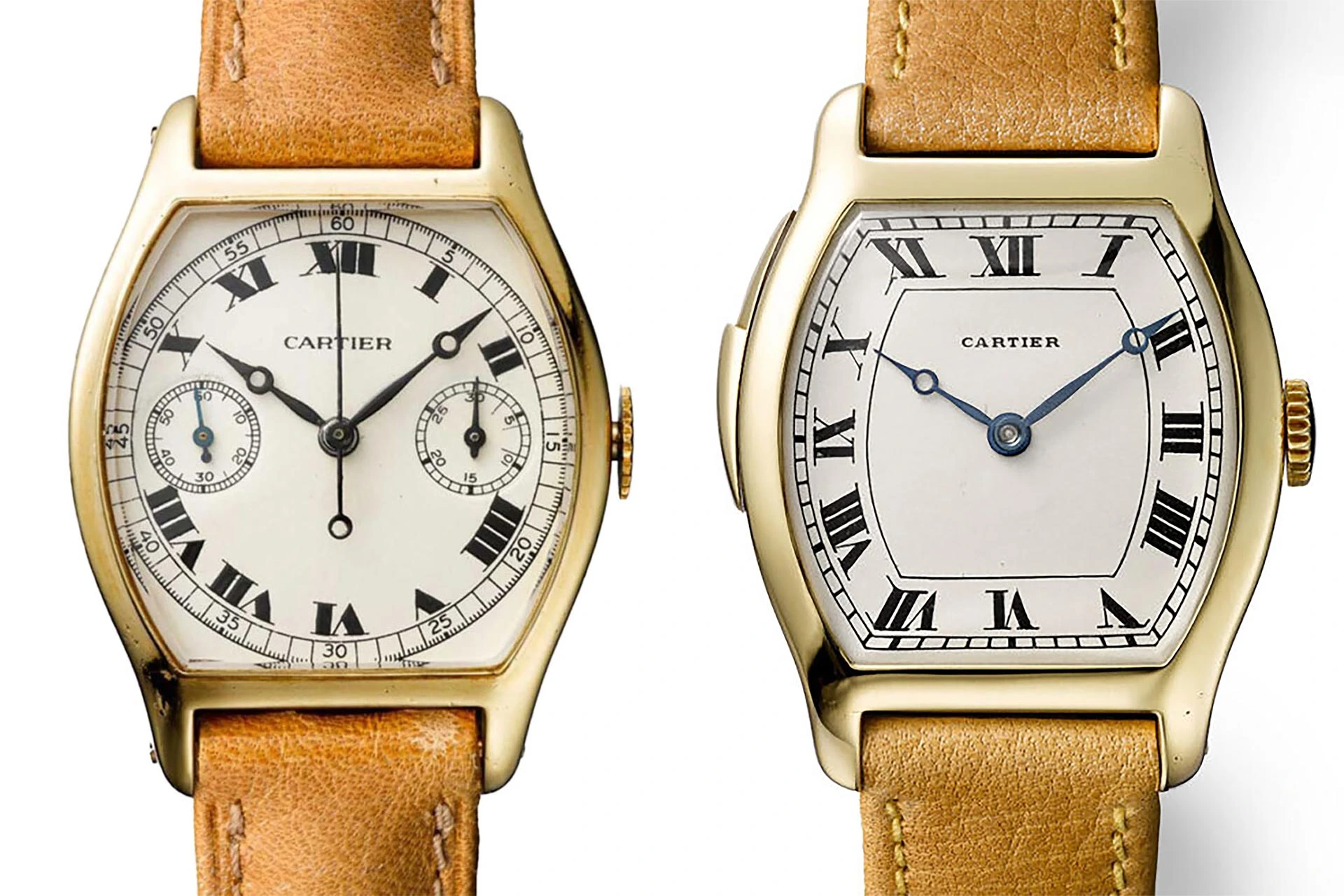
At 25mm by 35mm, the dainty watch featured a traditional column-wheel chronograph movement with a horizontal clutch. True to its monopusher design, all functions – start, stop, and reset – were controlled via a single pusher seamlessly integrated into the crown. Visually, it was characterised by a slender bezel and a matte dial, accented with bold Roman numerals, a chemin de fer minute track, and refined blued Breguet hands.
Unfortunately, very few of the original watches survive – fewer than 15 in total. Fortunately, Cartier decided to resurrect the model for its Collection Privée Cartier Paris or CPCP (aka the predecessor to the Privé collection) when it pivoted back towards high-end mechanical watches in the late nineties. The CPCP was an opportunity for Cartier to emphasise its impressive watchmaking heritage after years of quartz watches being in favour. During its transition back to mechanical watches, which stretched well into the 2000s – Cartier only founded its watch manufacture at the turn of the millennium – the Maison turned to external watchmakers to support their return to traditional horology.
This included the support of Renaud & Papi, who worked on tourbillon and minute repeater revivals, as well as the Techniques Horlogères Appliquées, under the guidance of independent master watchmakers François-Paul Journe – as in, the revered F.P Journe himself –, Vianney Halter, and Denis Flageollet. With the support of the latter facility, several variations appeared from 1999 as part of the Collection Privée Cartier Paris. These watches featured a larger case, at 34mm × 43mm, as well as an open caseback. Powering the models was the Techniques Horlogères Appliquées’ calibre 045MC. This calibre employs a rarely encountered coupling system – the oscillating pinion – rather than the horizontal clutch typically found in many vintage hand-wound chronographs. It is also, of course, configured as a monopusher, with all functions controlled via a single pusher integrated into the crown, as opposed to the more conventional placement at 2 o’clock.
There’s a reason that many readers of this article already know the Privé Tortue Chronographe Monopoussoir, and it’s not generally thanks to these albeit wonderful historical pieces. Rather, it is thanks to a special piece released only two years ago. At Watches & Wonders 2024, Cartier introduced the Tortue Chronographe Monopoussoir into its Privé collection, with a new design code specifically paying homage to the 1920s design, while embracing the refined details of the CPCP version introduced in the 1990s.
Appearing in yellow-gold or platinum with very similar dimensions to its late-90s predecessor, emblematic blued hands and snailed counters rounded off the well proportioned, clean opaline dial. This time, the watch was powered by the calibre 1928 MC.

The ‘MC’ designation, of course, signals that the movement is produced in-house by Cartier. Eschewing the oscillating pinion system used to engage the predecessor’s chronograph function, the 2024 version embraced traditional watchmaking with its column-wheel layout and manual winding. As everyone expects of Cartier in this day and age, the decorative beveled bridges and elegant Côtes de Genève on the movement were finished to the highest standard.
Rounding off the 2024 platinum edition of the Privé Tortue Chronographe Monopoussoir, it is worth pointing out, was a handsome burgundy strap and ruby cabochon in the crown. It went down a storm with collectors. Might it have paved the way for the future?
This brings us to the present day. The 2026 Privé Tortue Chronographe Monopoussoir is arguably the most technical of the three new platinum Privé releases, yet, thanks to its inherent classicism, it never feels overtly so.
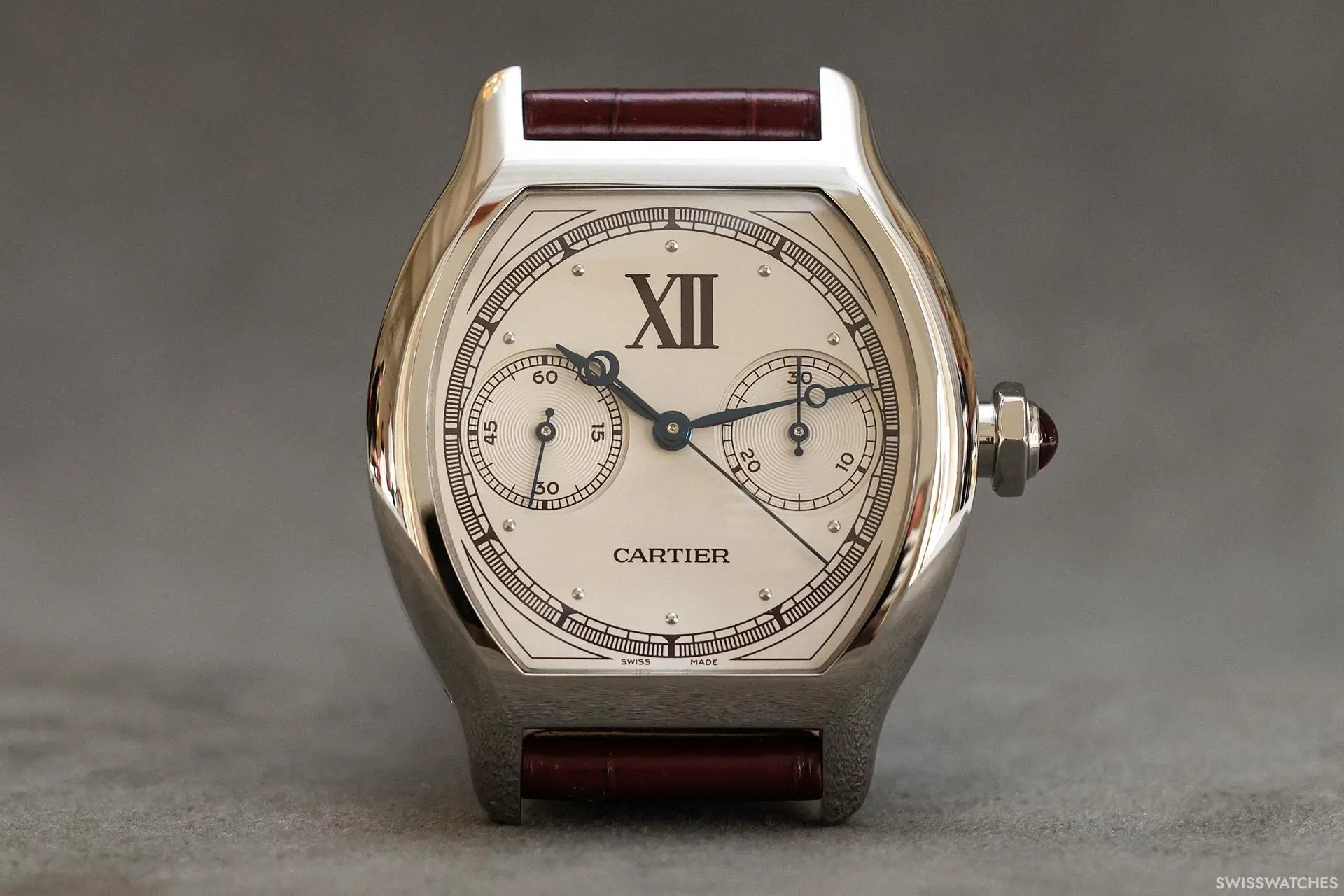
A reinterpretation of the 1998 Collection Privée Cartier Paris model, the watch is paired with a semi-matte burgundy alligator strap that, in certain light, verges on brown, finished with tonal stitching and a platinum ardillon buckle. Measuring 43.7 × 34.8 mm, it remains close to the proportions of its late-1990s predecessor, while drawing on a number of its defining design cues.
Most notable are the dial indices: as in the 1998 model, traditional numerals are set aside in favour of beaded hour markers. Here, however, Cartier introduces a lighter touch – where the earlier dial was fully decorated, the 2026 edition limits decoration to the snailed subdial counters, enhancing legibility without sacrificing depth.
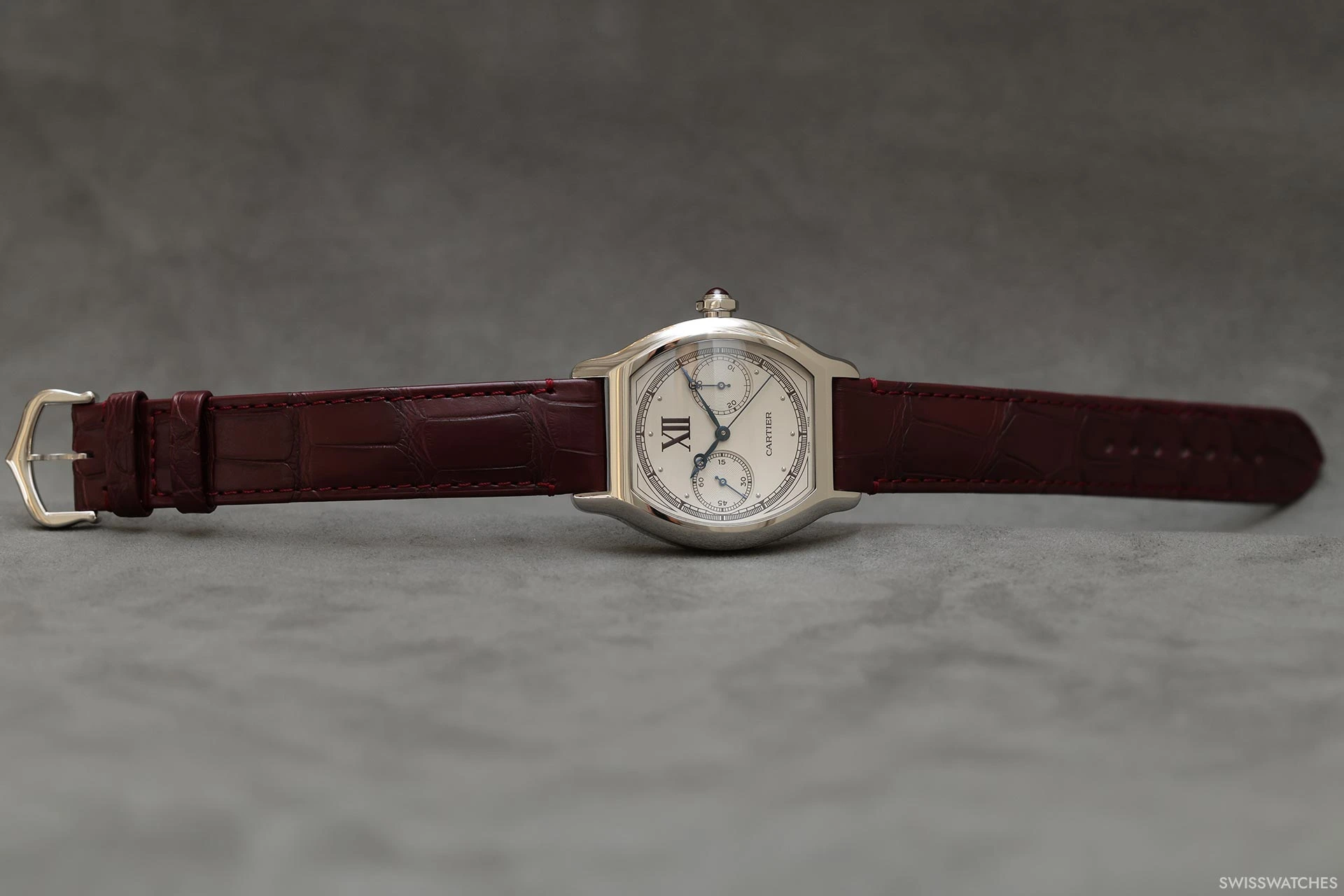
The elongated triangular accents in the corners of the silvered opaline dial are retained, alongside a burgundy chemin de fer minute track and rhodium-finished applied markers. Blued pomme hands complete the display, while the faceted platinum crown is set with a ruby cabochon.

Subtle refinements extend to the signature: where the original bore “Cartier Paris”, the new model is pared back to a simple “Cartier”. Water resistance is rated to 30 metres, and the watch is powered by the manual-winding calibre 1928 MC, beating at 4 Hz with a 44-hour power reserve, with its traditional architecture reinforcing the piece’s distinctly classical character.
The irony of the watch’s name, of course, is that the Cartier Privé Tortue Chronographe Monopoussoir, despite being a ‘Tortue’, is born to measure speed with the utmost precision. This remains the case with the latest edition, which once again employs the robust manufacture 1928 MC movement – the single-button chronograph, where start, stop and reset are distilled into one integrated push-piece within the crown. By the way: at just 4.30 mm thick, it is also Cartier’s thinnest chronograph, a detail that feels entirely in keeping with the Maison’s philosophy: technique, always, in service of elegance.
The price of the burgundy Privé Tortue Chronographe Monopoussoir 2026 edition is 56,100 euros. This marks a modest increase on the price commanded by its 2024 platinum predecessor. In practical terms, the difference is therefore unlikely to deter the collectors at whom these pieces are aimed. Rather, it reflects a broader dynamic within the upper tier of watchmaking, where incremental price increases tend to signal positioning rather than cost alone. While rising platinum prices (particularly last year’s sharp rally) and inflation provide part of the backdrop, the adjustment also underscores Cartier’s continued push to embrace the Privé line as an exclusive, collector-focused offering, alongside its recently articulated aims of keeping prices comparatively affordable.
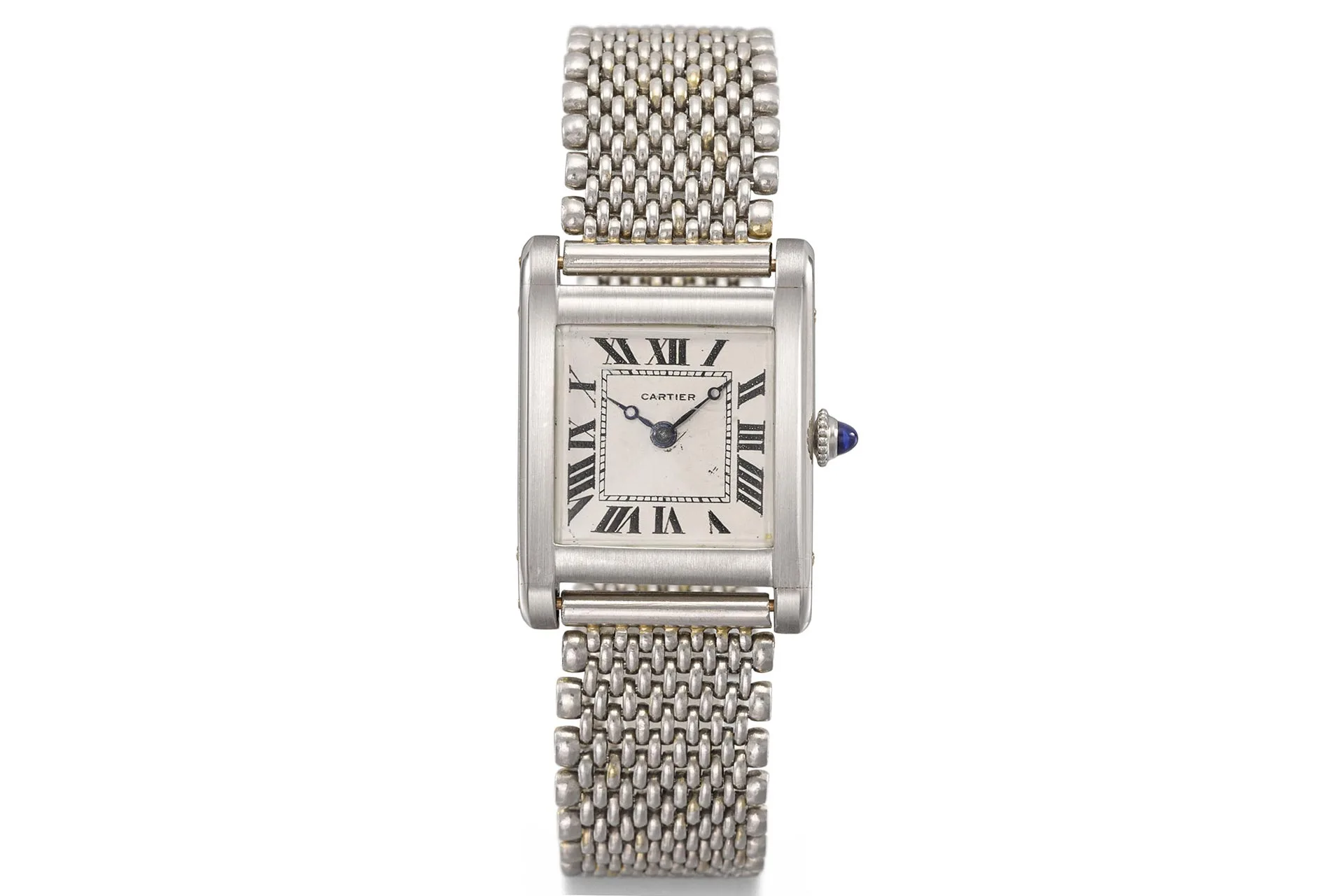
With that, we can move on to studying the new manual-winding Privé Tank Normale in greater detail. If the Tortue is about refinement, the Tank Normale is about origin. It is worth remembering that this watch, now the pinnacle of refined design, was once radical. First conceived in 1917 and delivered in 1919, the Tank Normale was most recently revisited within the Privé collection back in 2023, when Cartier returned to the original proportions and distinctive bevelled sapphire crystal of the earliest models.
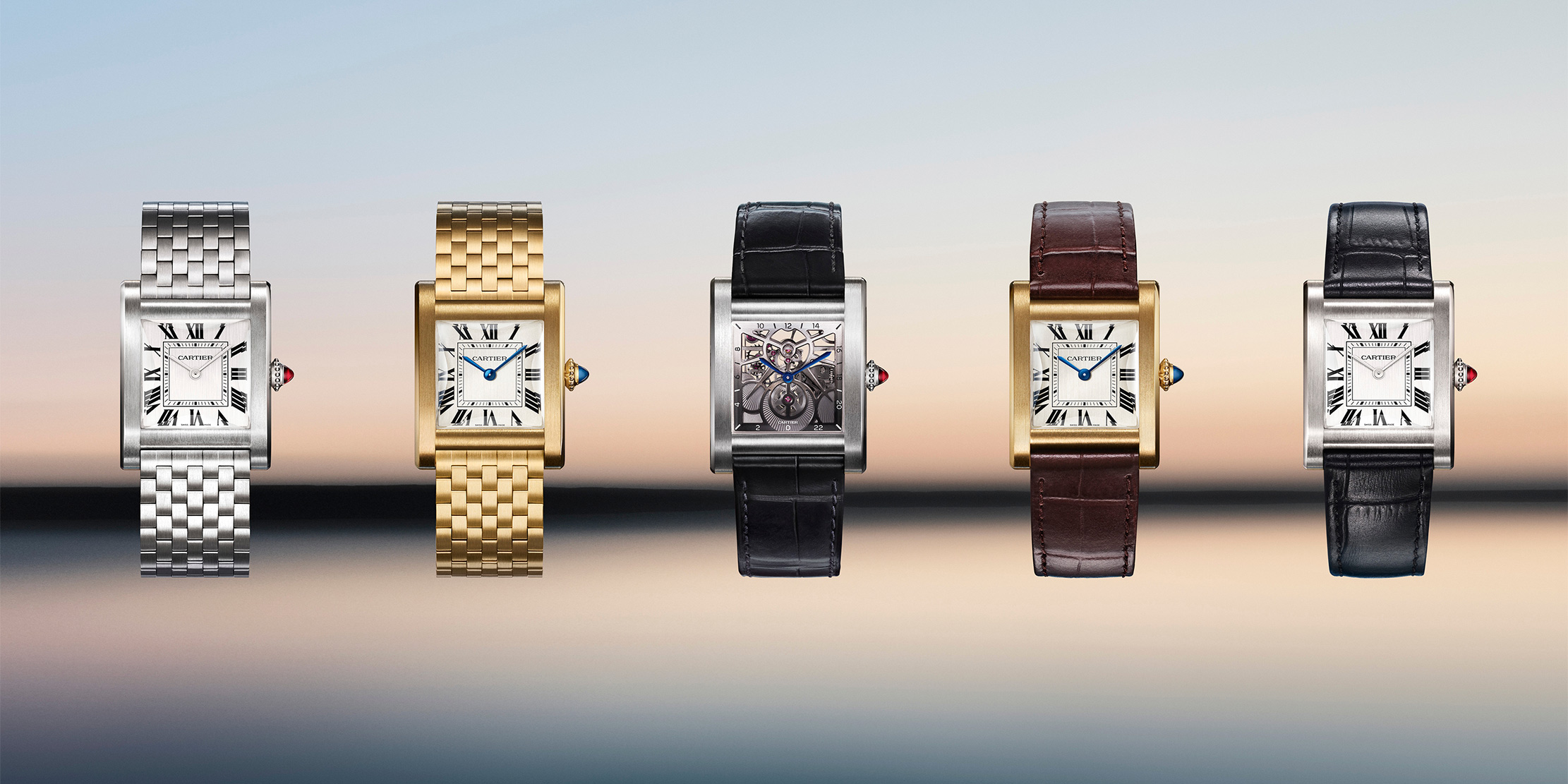
As the inaugural Tank from the Maison, its design code is foundational. Its rectangular form was inspired by the aerial view of the Renault FT-17 tank, with the vertical brancards echoing the vehicle’s tracks and creating a clean, integrated silhouette. At a time when most watches remained round and rooted in pocket watch tradition, the Tank Normale marked a decisive shift towards modernity, aligning closely with the emerging Art Deco aesthetic. Defined by its balanced proportions, Roman numerals, chemin de fer minute track, and blued steel hands, it established a visual language that would come to define Cartier watchmaking.
Introduced in the early 1920s, the Tank Louis refined this original design with softer, rounded lines, lending the watch a more fluid and elegant profile. From this point on, the Tank would go on to influence countless rectangular dress watches, securing its place as one of the most important designs in modern horology. Over the decades, it has been worn by a remarkable range of cultural figures, from Elizabeth Taylor, who both collected and gifted multiple examples, to Andy Warhol, who famously remarked, “I don’t wear a Tank watch to tell the time. In fact, I never even wind it. I wear a Tank because it is the watch to wear.”
This new edition of the Privé Tank Normale takes its inspiration from a 1934 model – so, naturally, it was time to do a little digging.
By the 1930s, Cartier’s Paris workshops were producing the Tank in small quantities, typically in precious metals and often on a made-to-order basis, with each piece finished by hand. Platinum examples from this period were especially rare, frequently created on special commission, and those that still retain their original period bracelets are particularly prized by collectors. Indeed, various bracelets appeared, with one 1930s model at Sotheby’s recently selling for 112,000 dollars thanks in part to its platinum case and brick-link bracelet, while another 1930s Tank Normale, also in platinum, sold for 99,000 dollars due to its coveted grain de riz bracelet and pink-gold clasp. Such surviving pieces are held in the highest regard, not only for their rarity but for how vividly they reflect the spirit of Cartier’s interwar design.
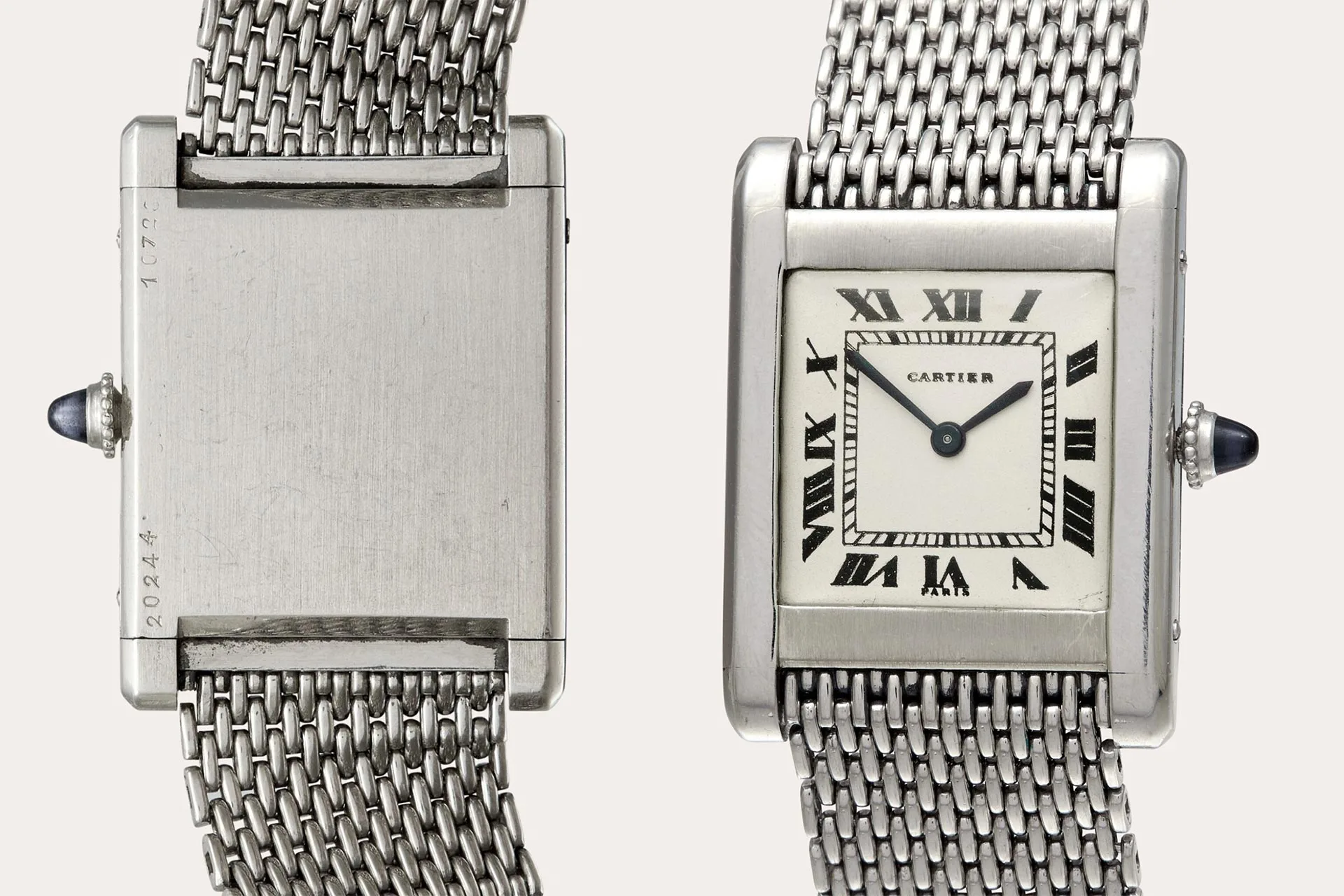
For the Cartier Tank, at least in the years running up to the war, the 1930s really represented a time of experimentation. The Tank Étanché, for example, was an early water-resistant model, delivered at the behest of the Pasha of Marrakech in 1931. The following year, Cartier released the Tank Basculante (later renamed the Asymétrique), its direct competitor to Jaeger-LeCoultre’s Reverso and one of the few Tanks to appear in steel at that time. More enduringly popular, throughout the late 1920s and into the 1930s, the Maison also continued to produce the Tank à Guichets (jump hour watches) that are increasingly popular amongst collectors to this day and the Tank Cintrée, particularly popular during the period due to its elegant curves. The Tank Asymétrique followed in 1936, offering drivers a slanted dial for ease of reading the time.
By contrast, the Tank Normale remained, as it still does, the purist’s choice, with its strictly square dial housed in a rectangular case. Platinum examples from the period were incredibly rare, even then. Their strict geometry and purist design remains an important reason for collectors’ interest in the models today.
Returning to the present, the 2026 Privé Tank Normale indeed revisits a 1934 design, which contributes to this being the most quintessentially ‘Cartier’ expression of the three new platinum releases. Where the Tortue leans into mechanical intrigue, the Tank Normale is pure design: distilled, architectural, and self-assured.
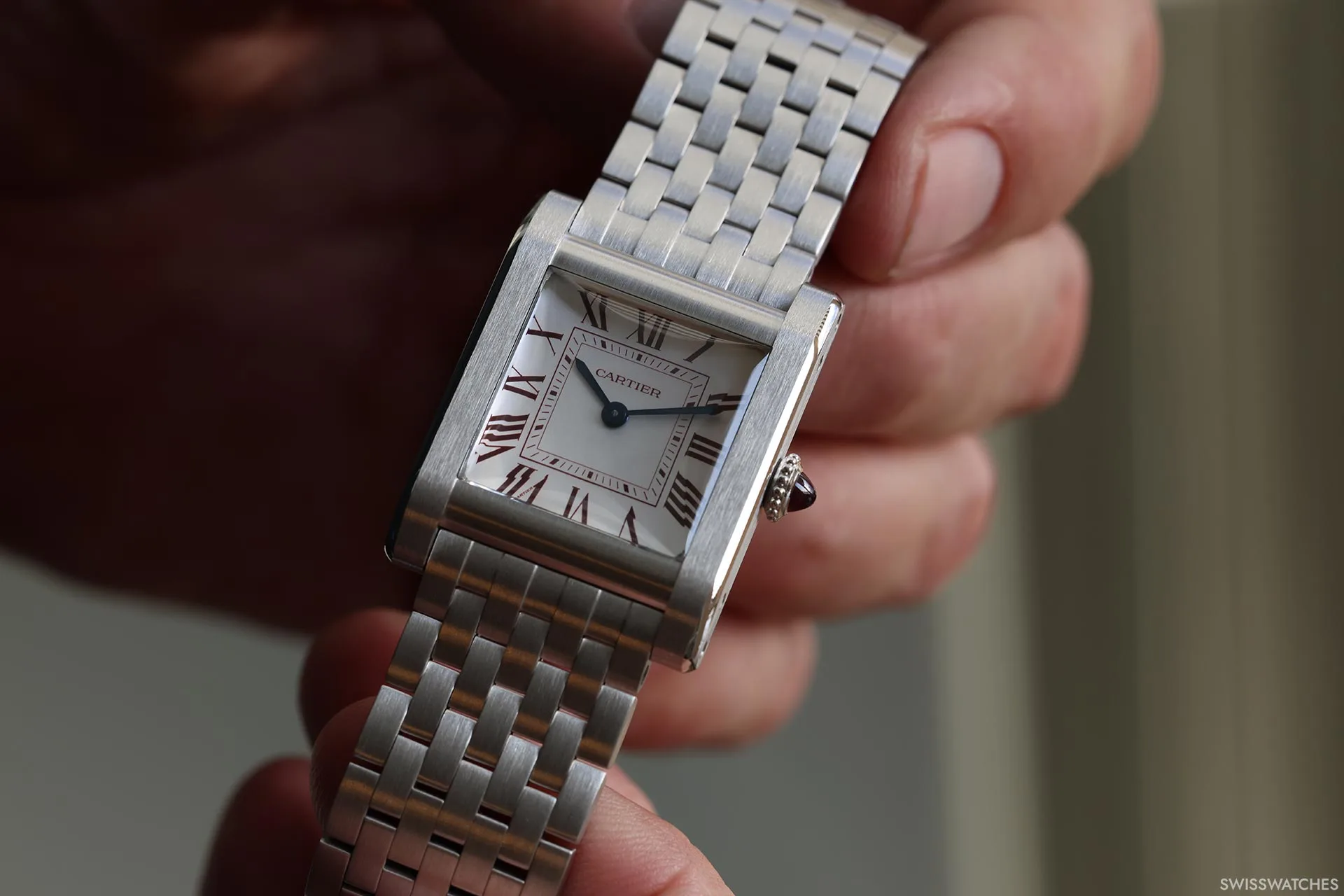
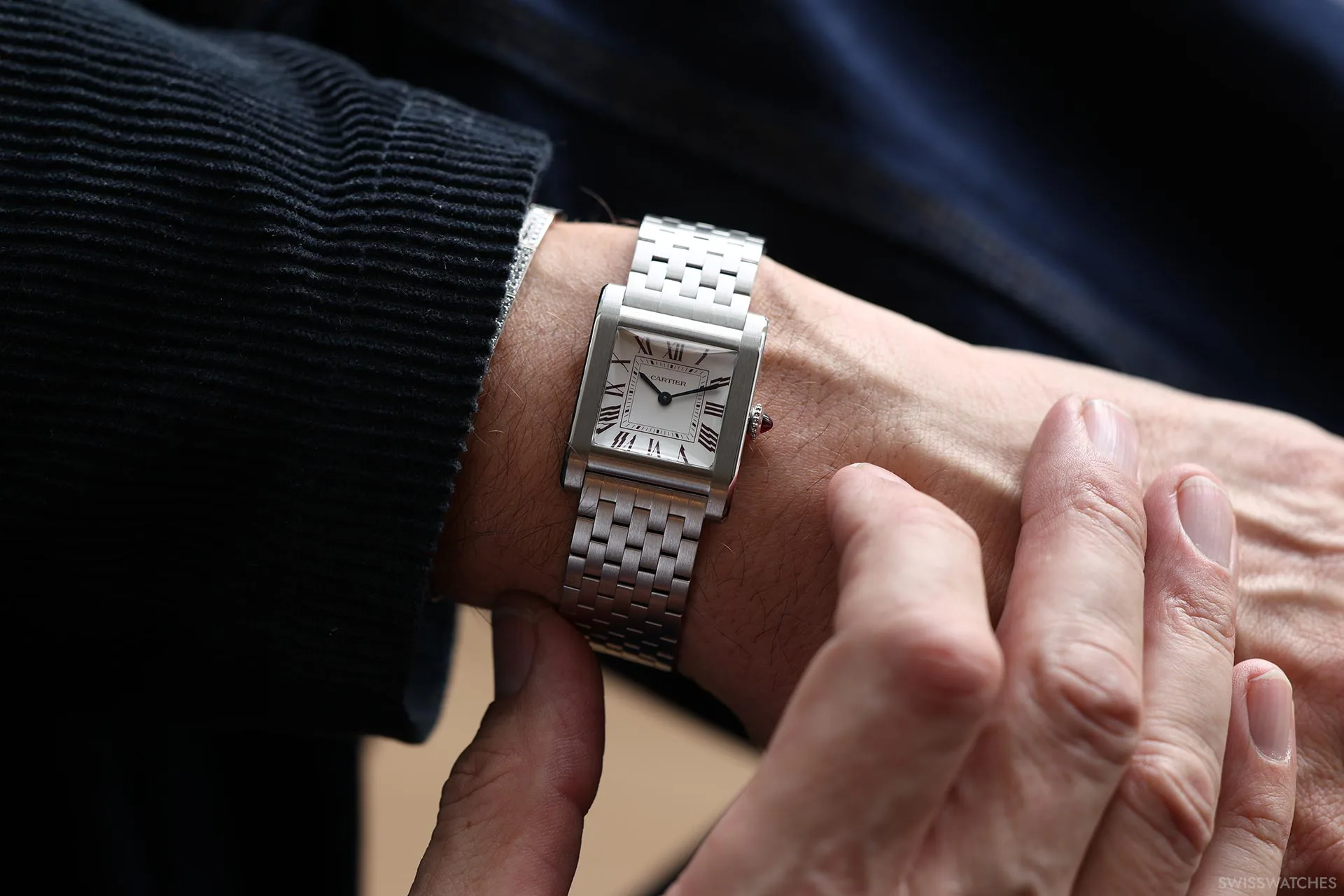
This latest iteration is defined by its seven-row platinum bracelet, paired with a matching folding clasp. Rendered in a brushed finish, the bracelet takes on an almost industrial quality, offset by the polished edges of the brancards and case. What ultimately elevates the piece, however, is the burgundy detailing on the dial: a restrained intervention that lends warmth to its overall aesthetic without disturbing the clarity of the original design. The silvered opaline dial is punctuated by burgundy indices and complemented by blued steel sword hands, while a beaded platinum crown set with a ruby cabochon signals the use of the precious metal.
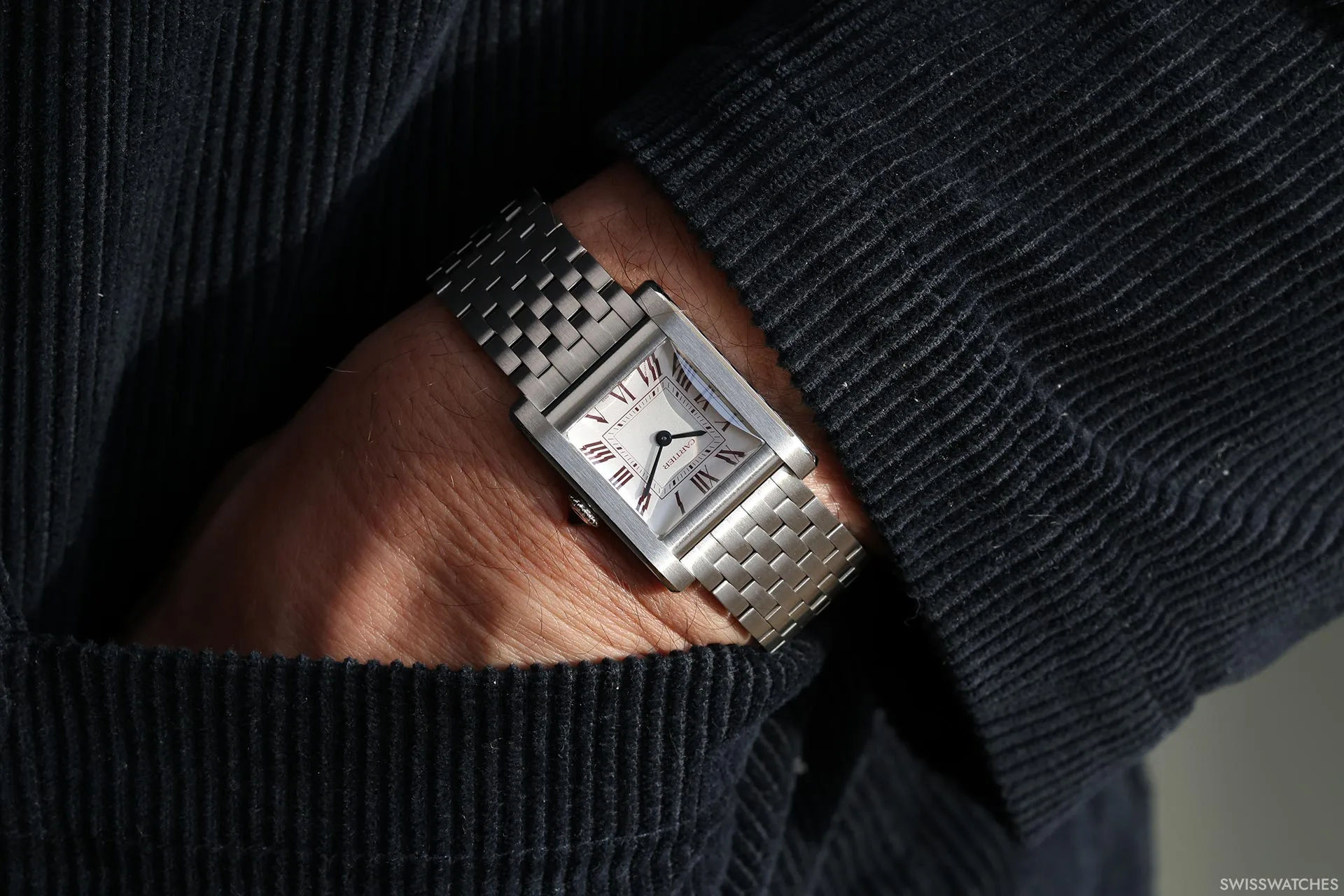
Powering the watch is the manually wound calibre 070, delivering a 38-hour power reserve at a frequency of 3.5 Hz; an appropriately discreet movement for a watch that has never sought to impress through overt complexity.
For those familiar with Cartier’s recent output, the configuration is no doubt recognisable. What appears to be the same case and seven-link bracelet were introduced as part of the Privé collection at Watches & Wonders 2023, and the proportions remain unchanged at 32.6 × 25.7 mm. If anything, this continuity reinforces the idea that the Tank Normale is, of course, not a watch to be reinvented, but refined in increments.
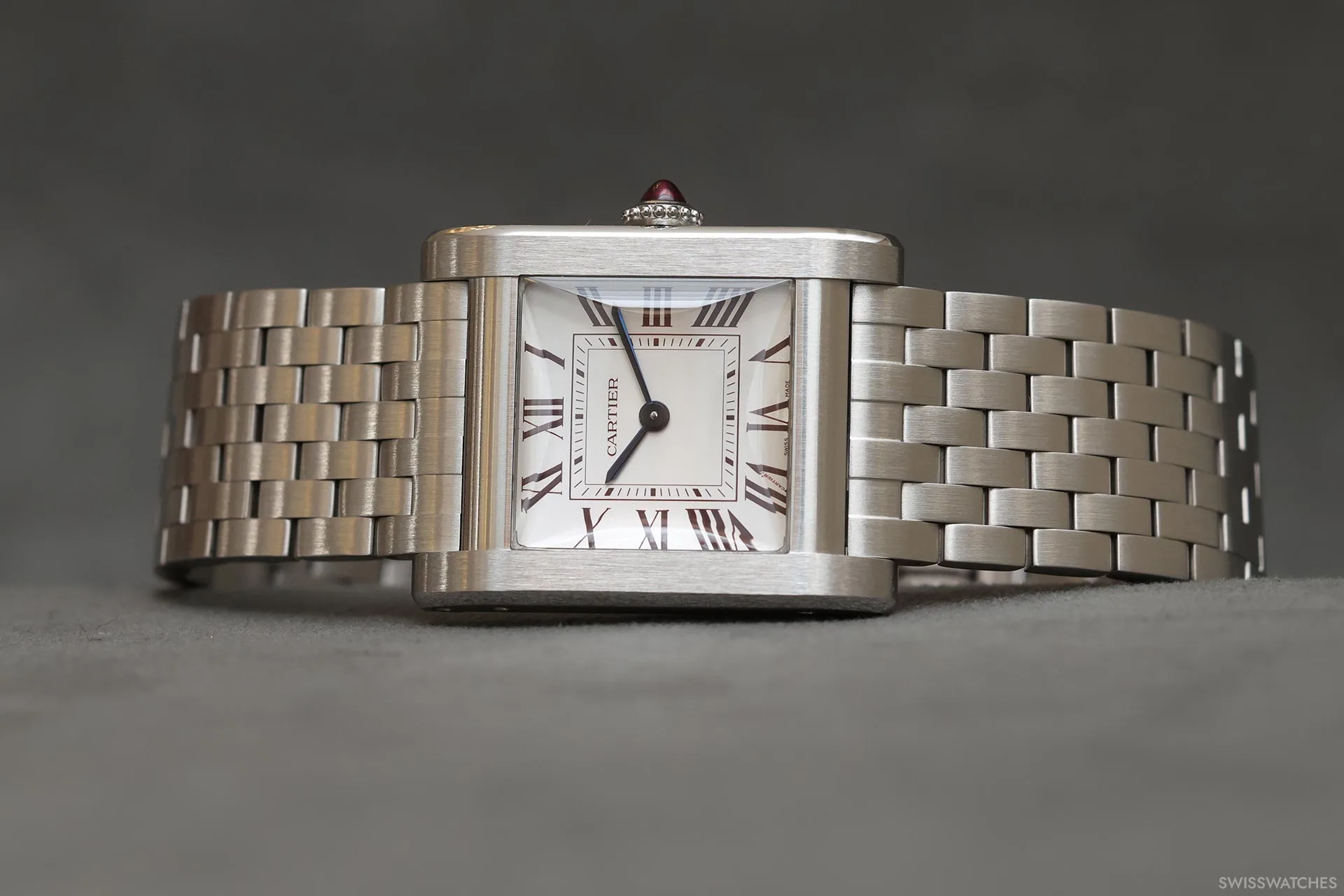
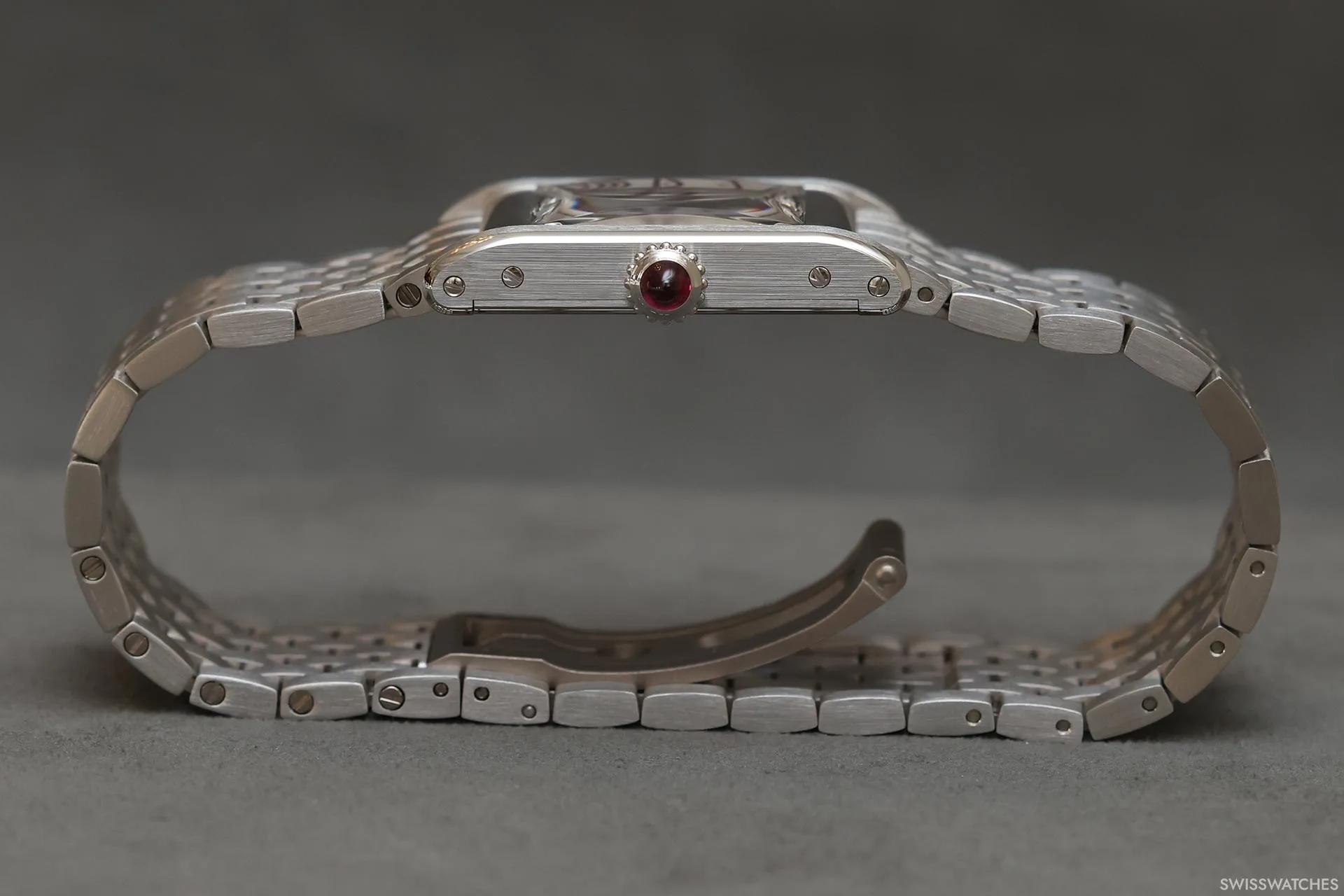
At 58,000 euros, the 2026 edition sees only a marginal increase on its 2023 predecessor: less a question of cost, and more a reflection of the Privé line’s steady calibration at the upper end of Cartier’s offering.
And then, of course, there is the Crash Squelette. Created in 1967 at Cartier London’s Bond Street boutique, in the midst of a city defined by counterculture and psychedelia, the original (unskeletonised) Crash has always existed slightly outside the rules. Its asymmetry disrupted the conventions of watch design at a time when precision was expected to appear orderly, with Cartier choosing distortion over linearity.

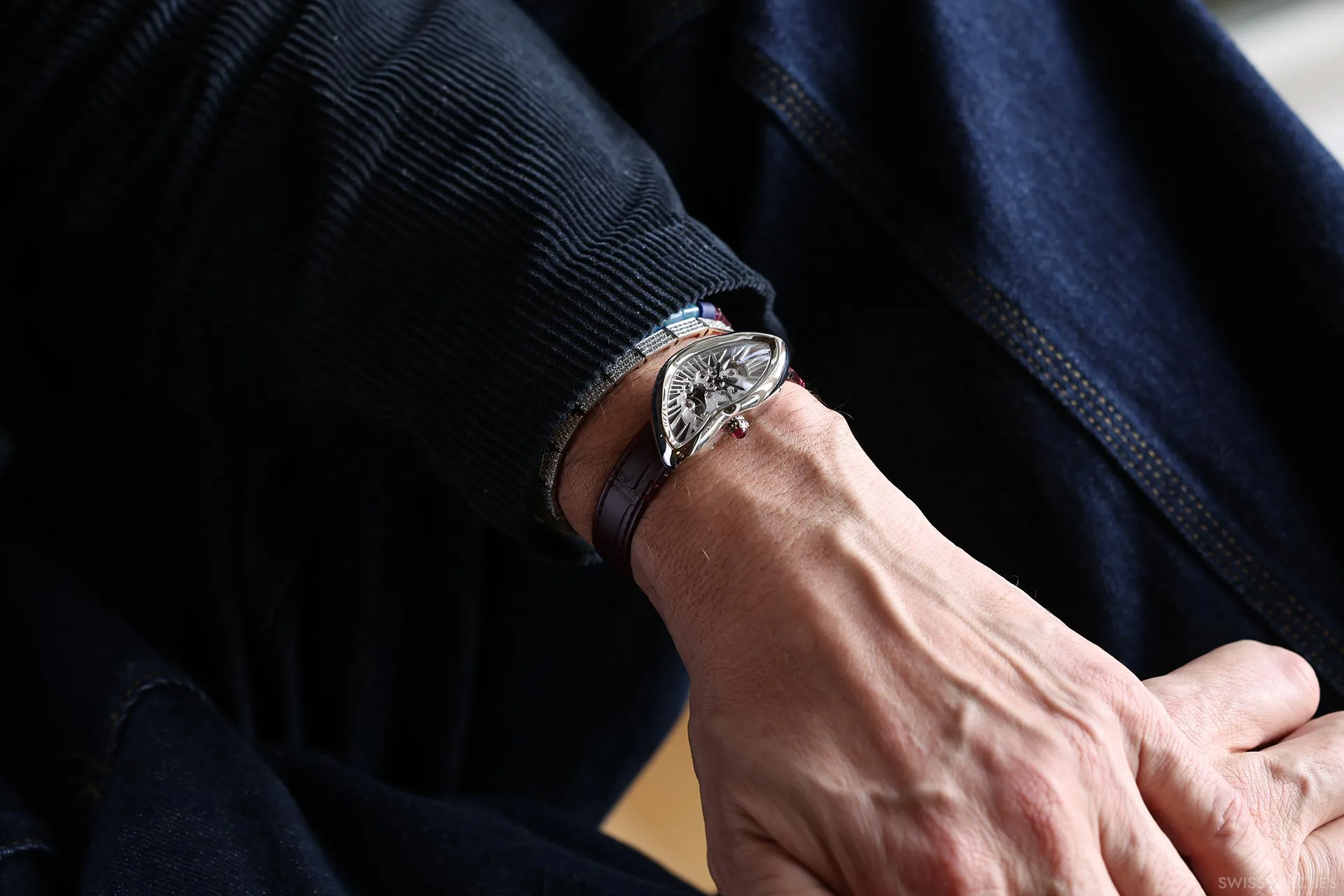
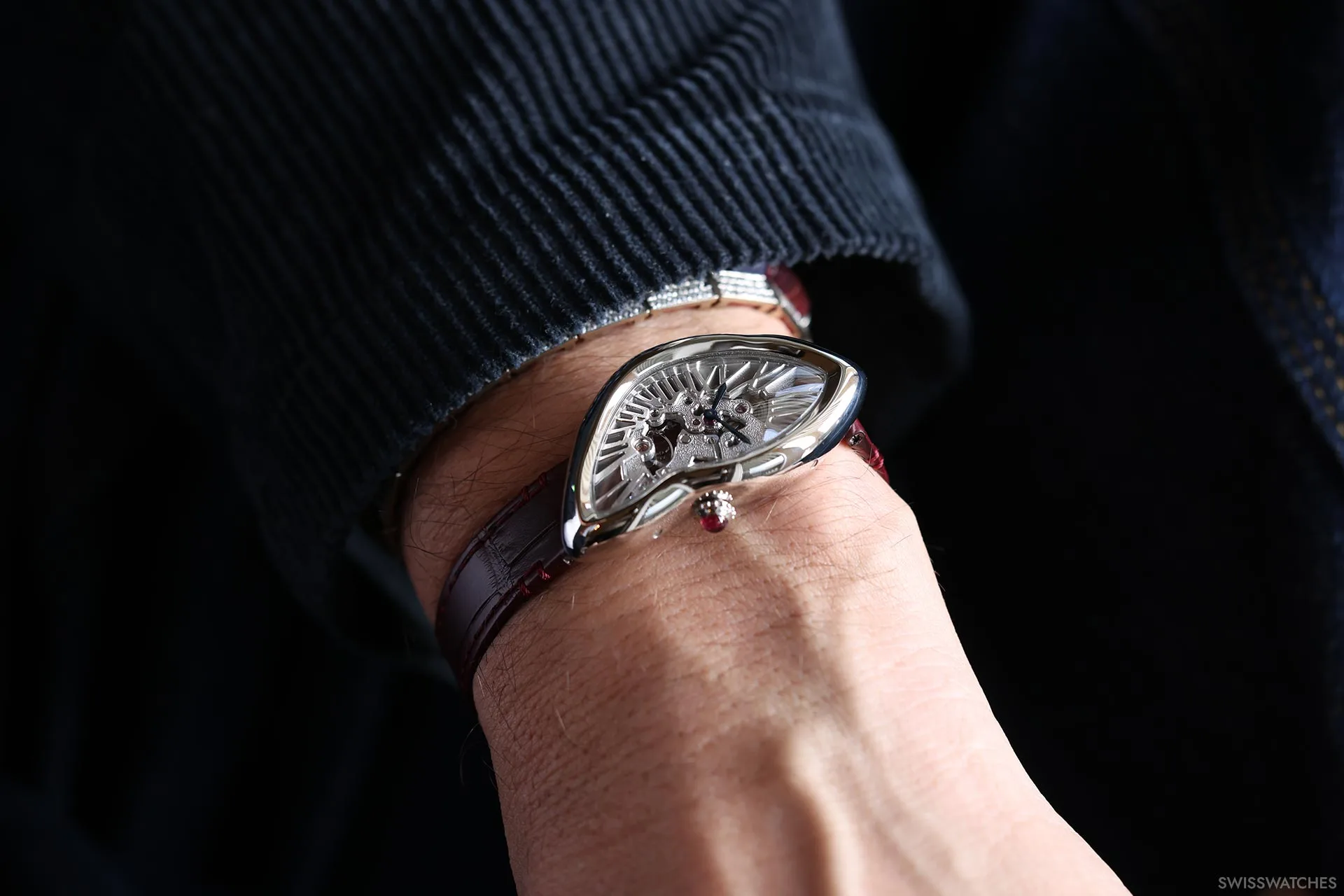
More than half a century on, the Crash remains a cornerstone of collectible watchmaking. Its enduring appeal lies in the convergence of rarity, design audacity, and cultural resonance; a product of 1960s London that continues to speak to contemporary collectors. Platinum entered the Crash line relatively recently, in 2018, lending the design a cooler, more restrained expression. Earlier, in 2015, Cartier had already explored a more radical direction with the Skeleton Crash, opening the dial to reveal the calibre 9618 MC. That same year also saw the creation of a platinum, diamond-set, skeletonised asymmetrical Crash – an exceptionally rare piece that later achieved HKD 1.76 million at Christie’s Hong Kong in May 2022. Its relevance today is further reinforced by high-profile visibility: LeBron James, for instance, has been seen wearing a 2016 limited-edition pink gold Crash Skeleton, a model that has appreciated from around $55,000 at retail price to as much as $250,000 on the secondary market.
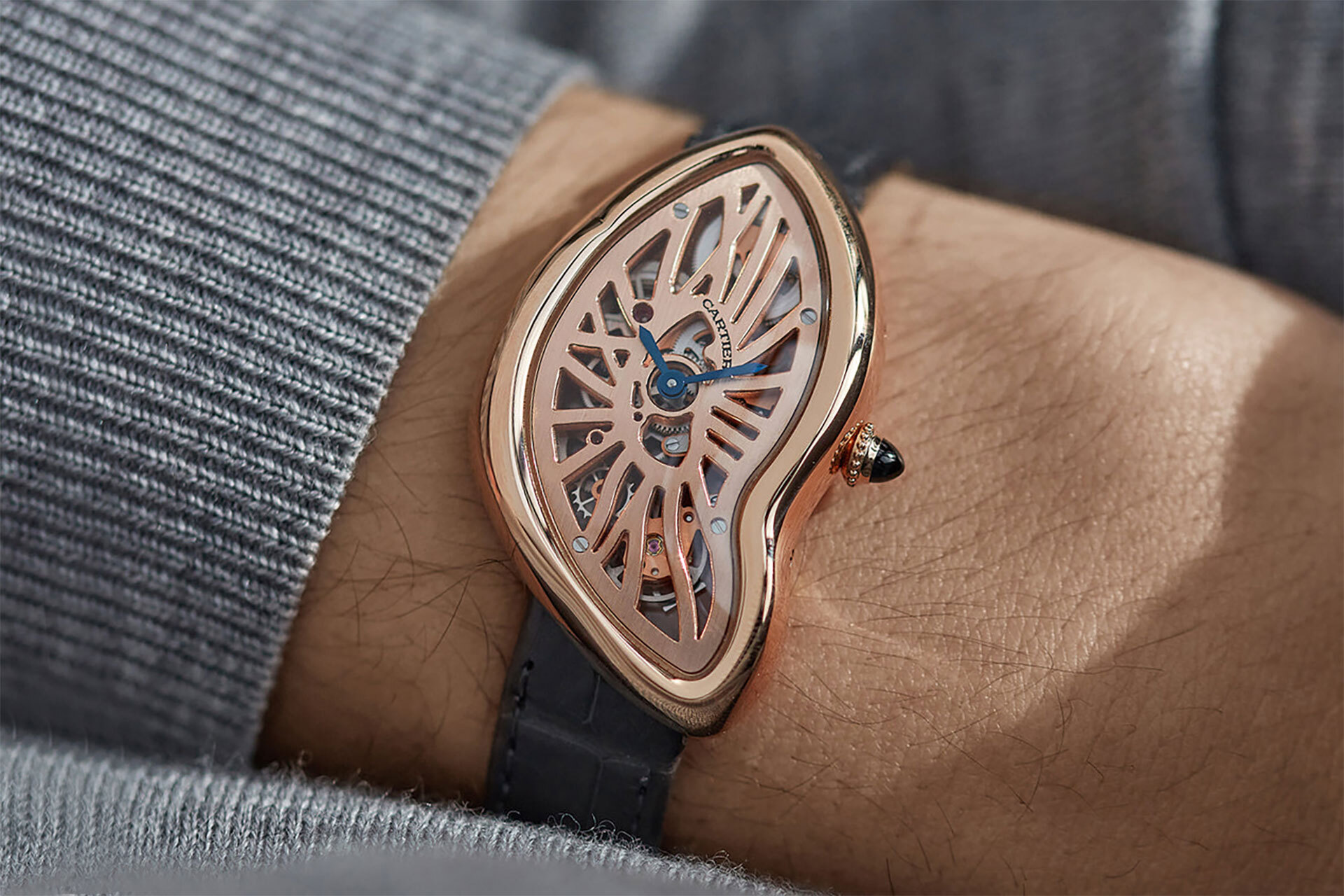
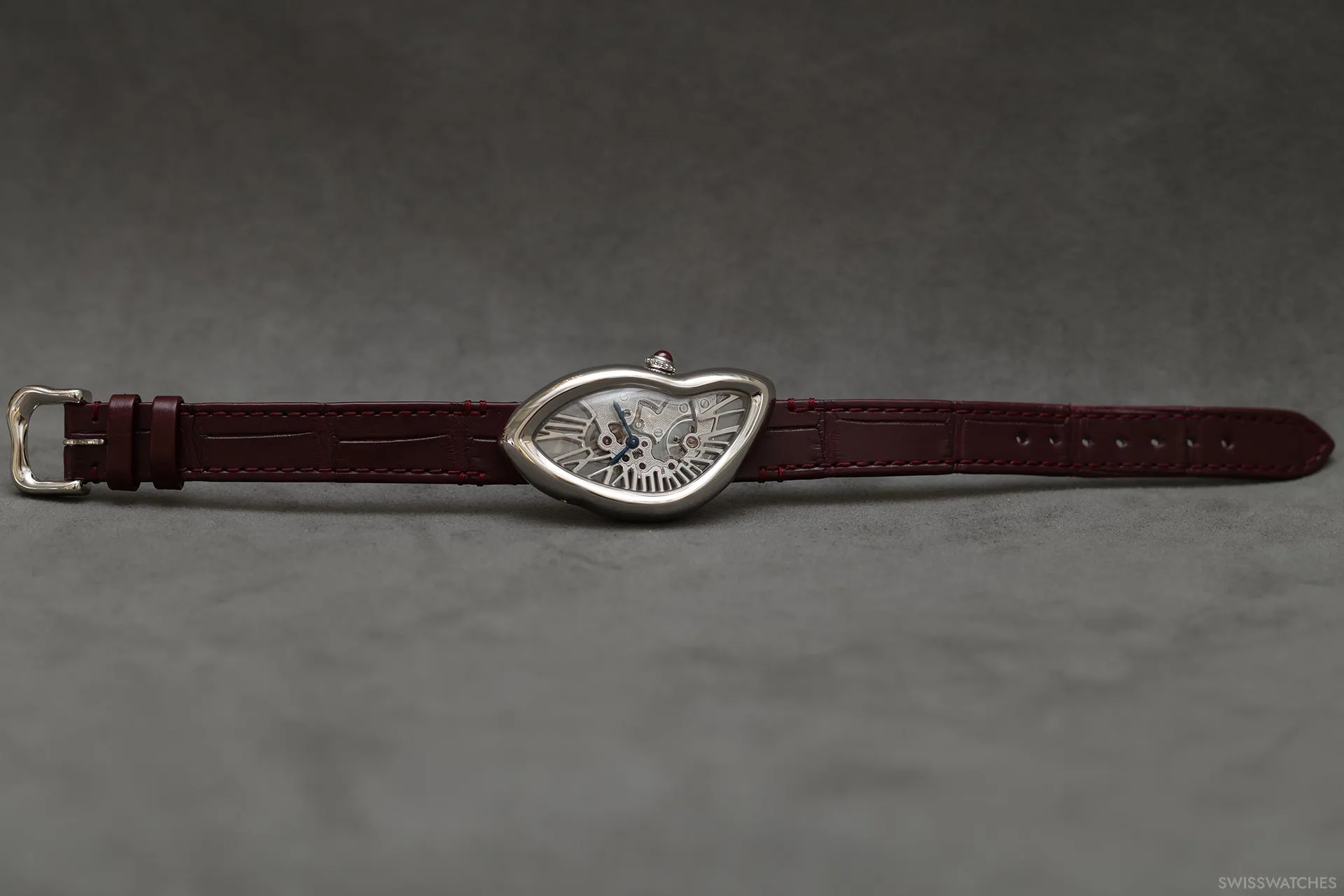
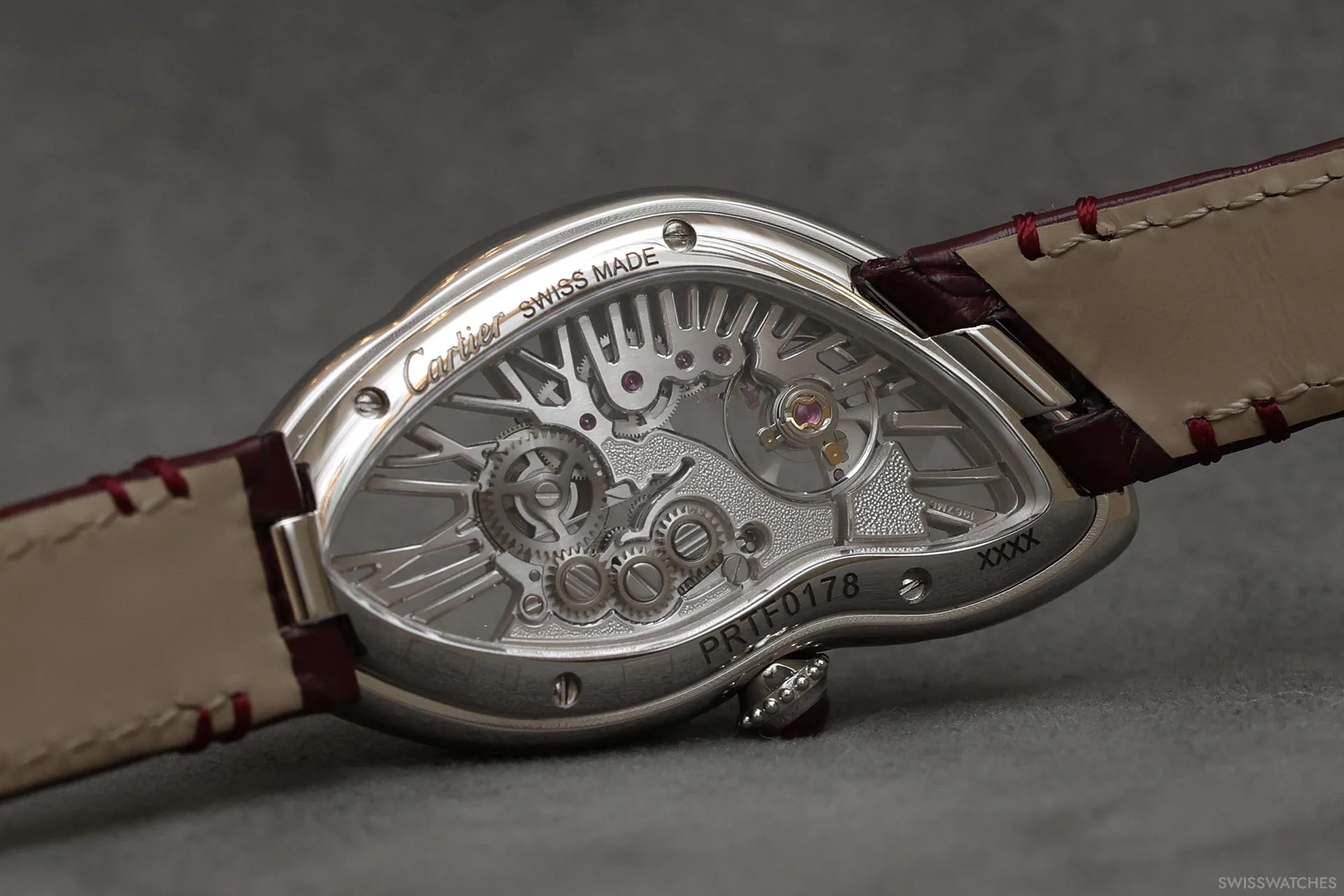
The Crash Squelette pushes this lineage further still. Its newly developed manufacture movement has been engineered to inhabit the warped geometry of the case, with all 142 components compressed into its irregular silhouette. The bridges, shaped as Roman numerals, appear almost drawn toward the crown, as though the watch itself has been melted.
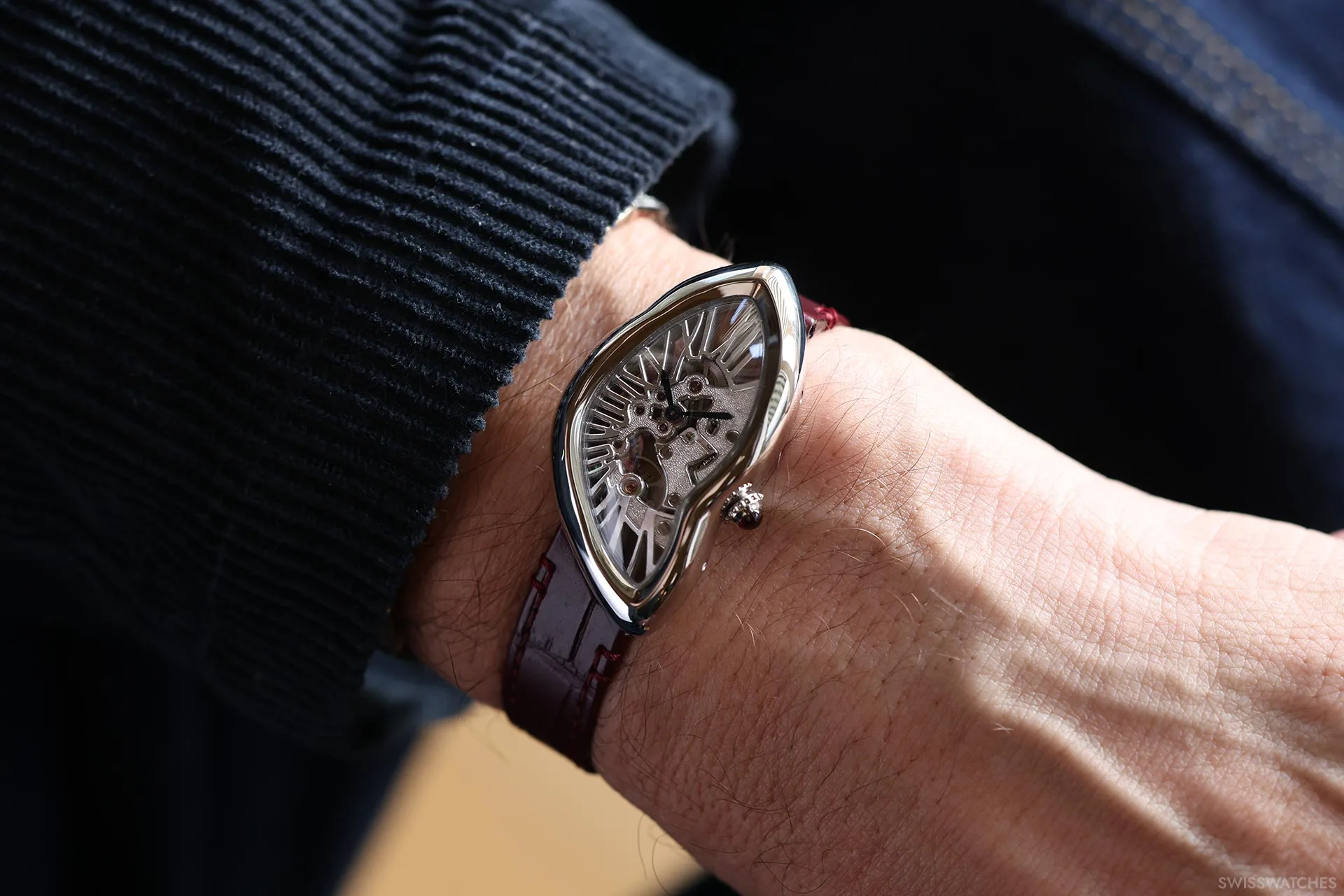
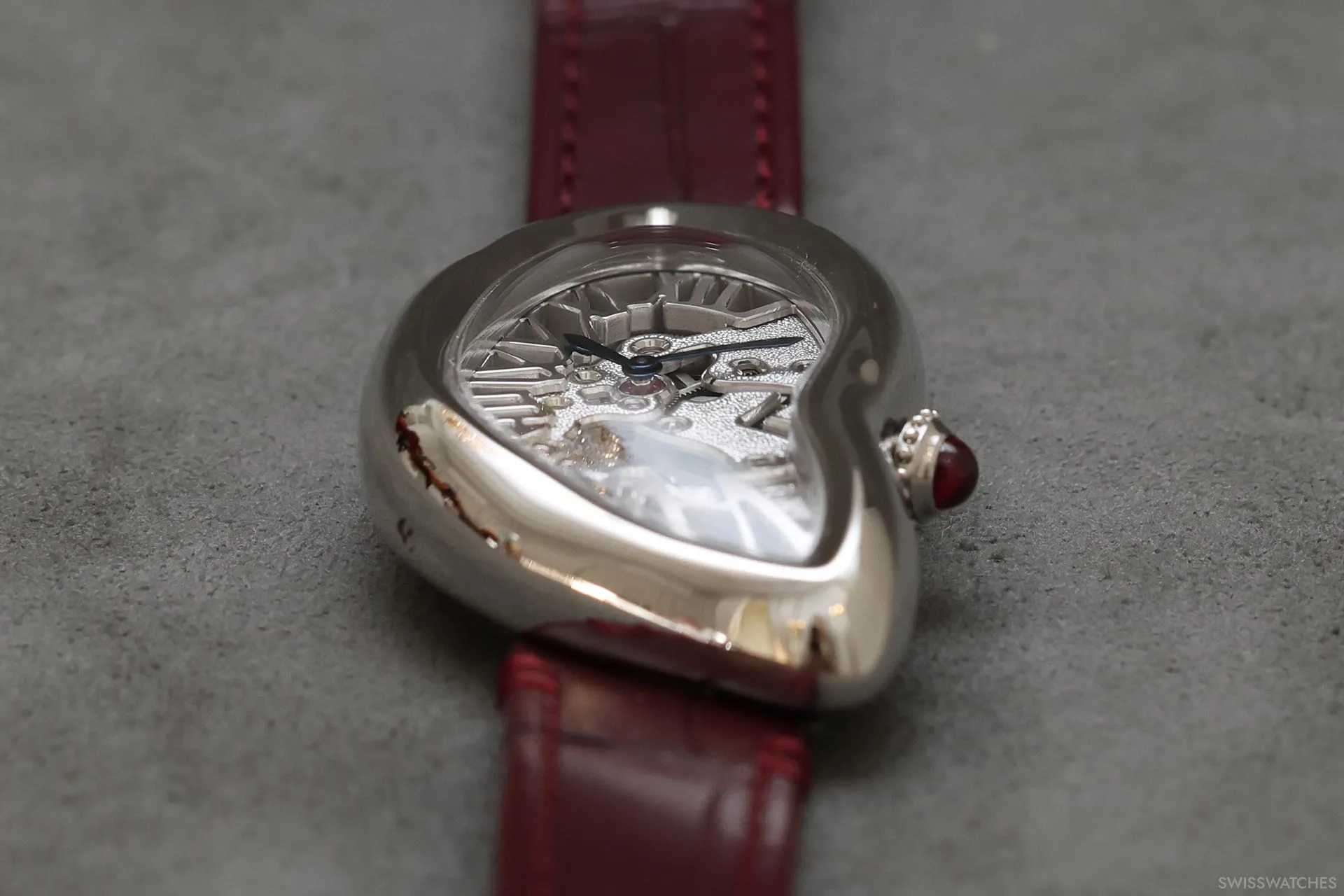
Every element is executed with extraordinary detail: the bridges are hammered by hand, requiring hours of meticulous work for each piece, and the entire skeleton construction, which is one of Cartier’s signatures, is patented.
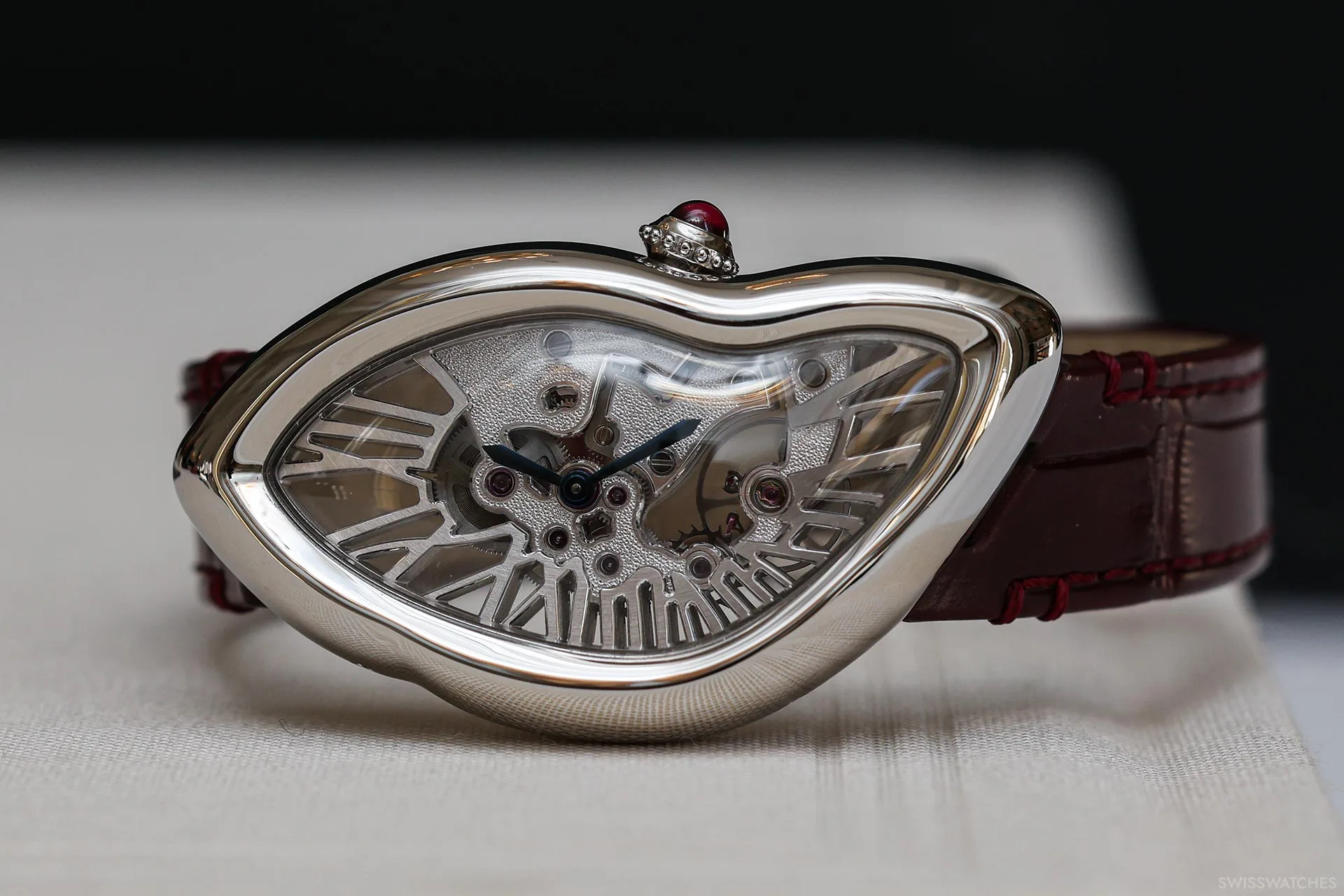
In this 2026 execution, the watch is presented in a 950 platinum case measuring 45.35 × 25.2 mm with a height of 10.94 mm, paired with a semi-matte burgundy alligator strap and a matching platinum ardillon buckle. The beaded crown, set with a ruby cabochon, subtly signals the use of platinum, while blued steel sword-shaped hands animate the open-worked dial. A mineral glass front protects the skeleton dial, while the sapphire crystal caseback reveals the manual-winding calibre 1967 MC within. Limited to just 150 numbered examples and priced at €90,000, it remains, as ever, both elusive and exclusive.
As the Maison’s Style and Heritage Director, Pierre Rainero, succinctly puts it, Cartier’s philosophy is one of technique in service of aesthetics. Nowhere is that more evident than here. Taken together, the 2026 Cartier Privé platinum novelties build upon an established design language, carefully refined by Cartier through material, proportion, and detail rather than overt change. In this context, platinum and burgundy are not simply aesthetic choices, but part of a broader calibration: one that positions the Privé line firmly within Cartier’s most rarefied offerings, with beauty expressing the high regard in which Cartier holds its circle of ever-dedicated, inevitably well-versed collectors.