At Watches & Wonders 2026, Piaget will present watches featuring gemstone dials: the Altiplano Ultimate Concept Tourbillon, the Polo, the Polo 79 and the Andy Warhol.

The 70s and 80s are calling! In the world of fashion, these decades are currently enjoying a striking revival – from bohemian dresses and corduroy suits to flared trousers and bold shoulder pads. This renewed appreciation for past eras has not passed Piaget by. On the contrary, within the Maison these periods are not regarded as fleeting trends, but rather celebrated as an integral part of its design DNA.
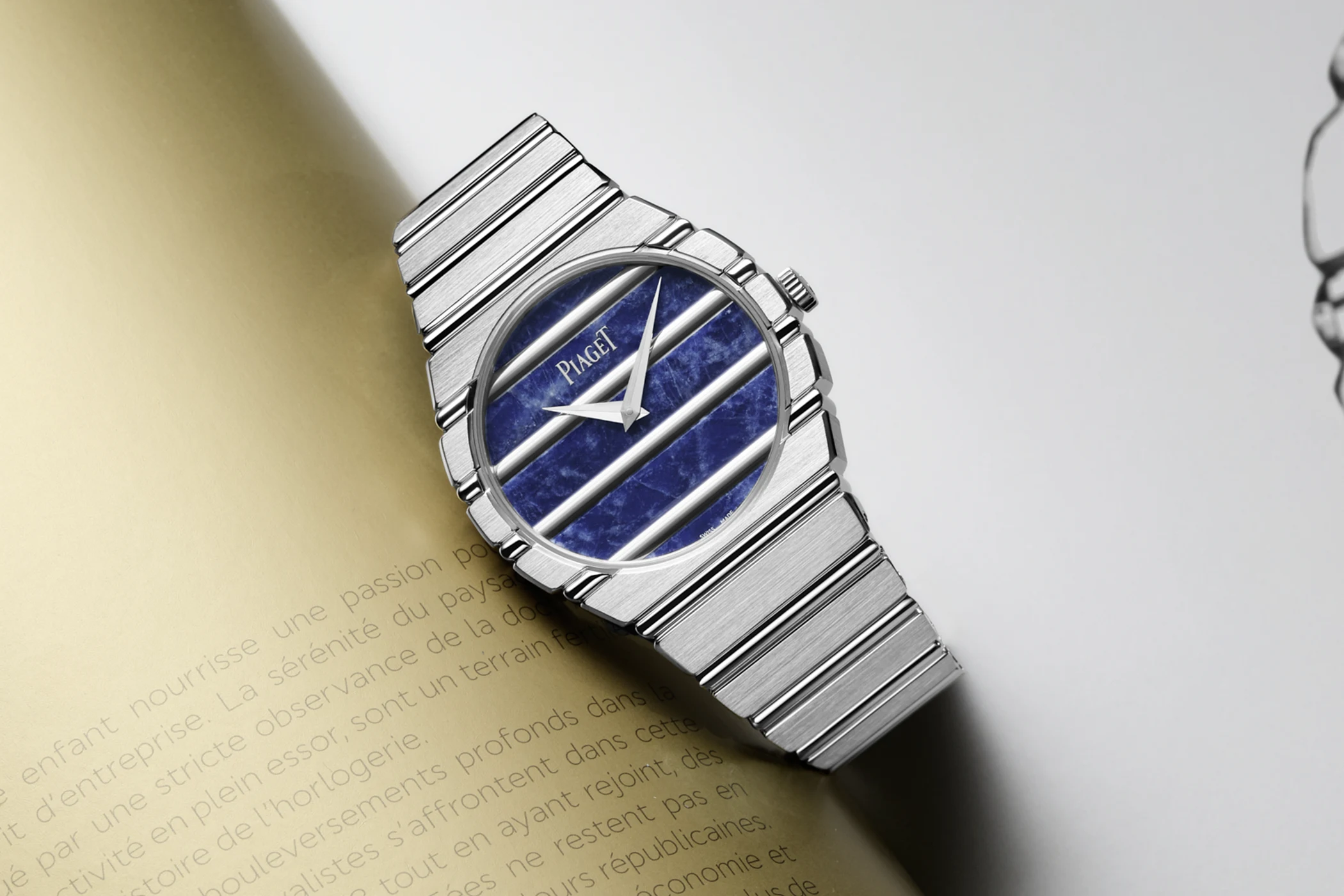
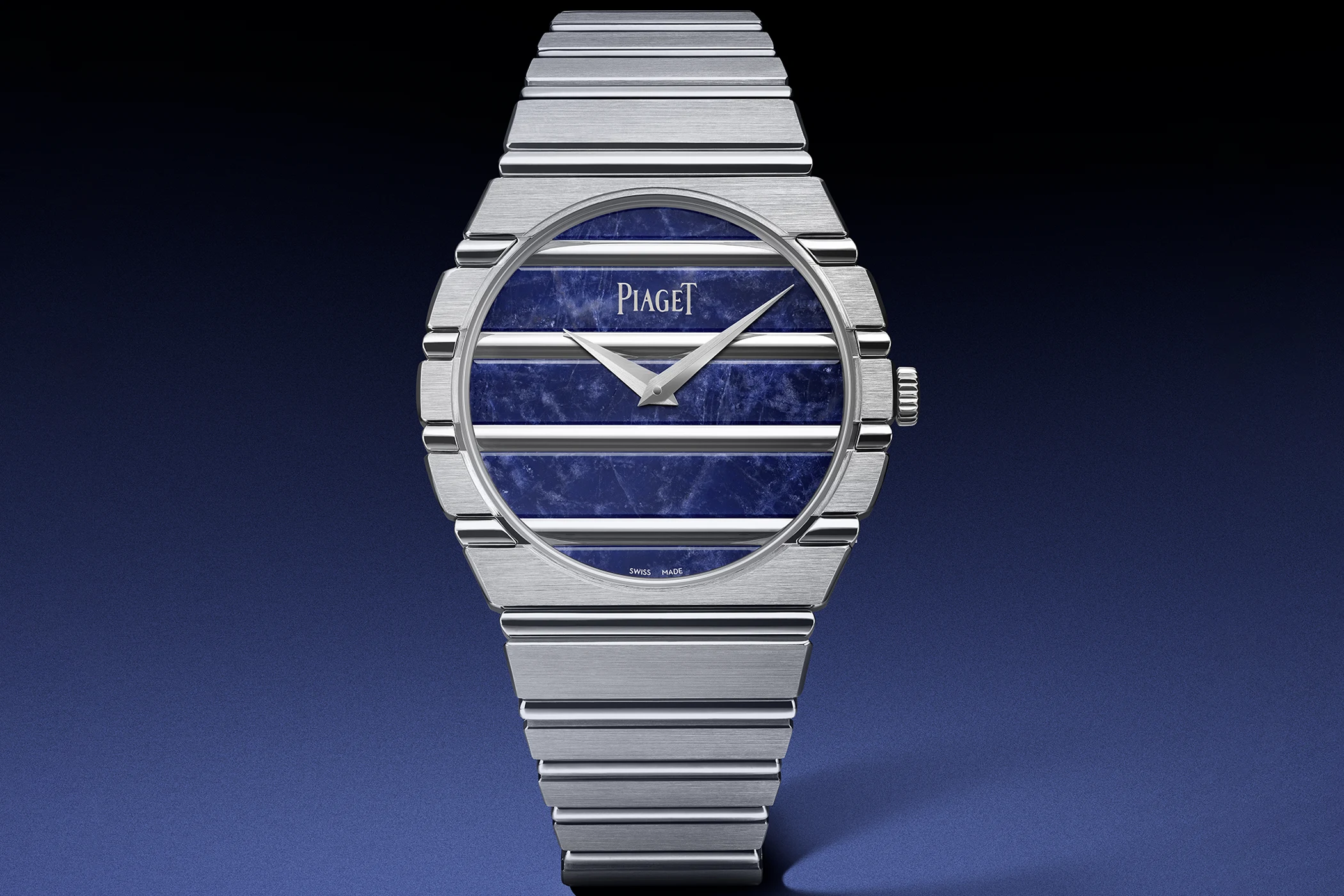
To mark its 150th anniversary in 2024, Piaget returned to the original design of its classic with the launch of the Polo 79. While that model radiated in warm yellow gold, the latest variation now presents itself in an elegant combination of a white gold case and a dark blue sodalite dial.
Before turning to the new iteration, it is worth taking a brief look at the history of the Polo 79. The model’s iconic status is well deserved. At a time when sports watches with integrated stainless steel bracelets were particularly popular, Piaget succeeded in creating an exceptional bridge between sportiness and elegance. Under the direction of Yves Piaget, the Polo emerged as a sports watch crafted from solid yellow gold – a bold move at the time. Its defining feature was the decorative relief structure known as gadroons, which lent the 136-gram timepiece a simultaneously relaxed and refined presence on the wrist.
The watch captivated not only the jet set but also a wider audience. A spectacular marketing campaign in the 1980s further cemented its status: Yves Piaget had his polo team ride down New York’s famous Fifth Avenue. It was a striking statement that brought the watch considerable attention. Over the decades, the model continued to evolve, ultimately leading to the modern Polo as we know it today. The return to the historical design followed in 2024. But what makes this design so distinctive?
At Piaget, the boundaries between Haute Horlogerie and Haute Joaillerie are often fluid. Precious materials, intricate decorations, and sophisticated movements come together to create exceptional pieces.
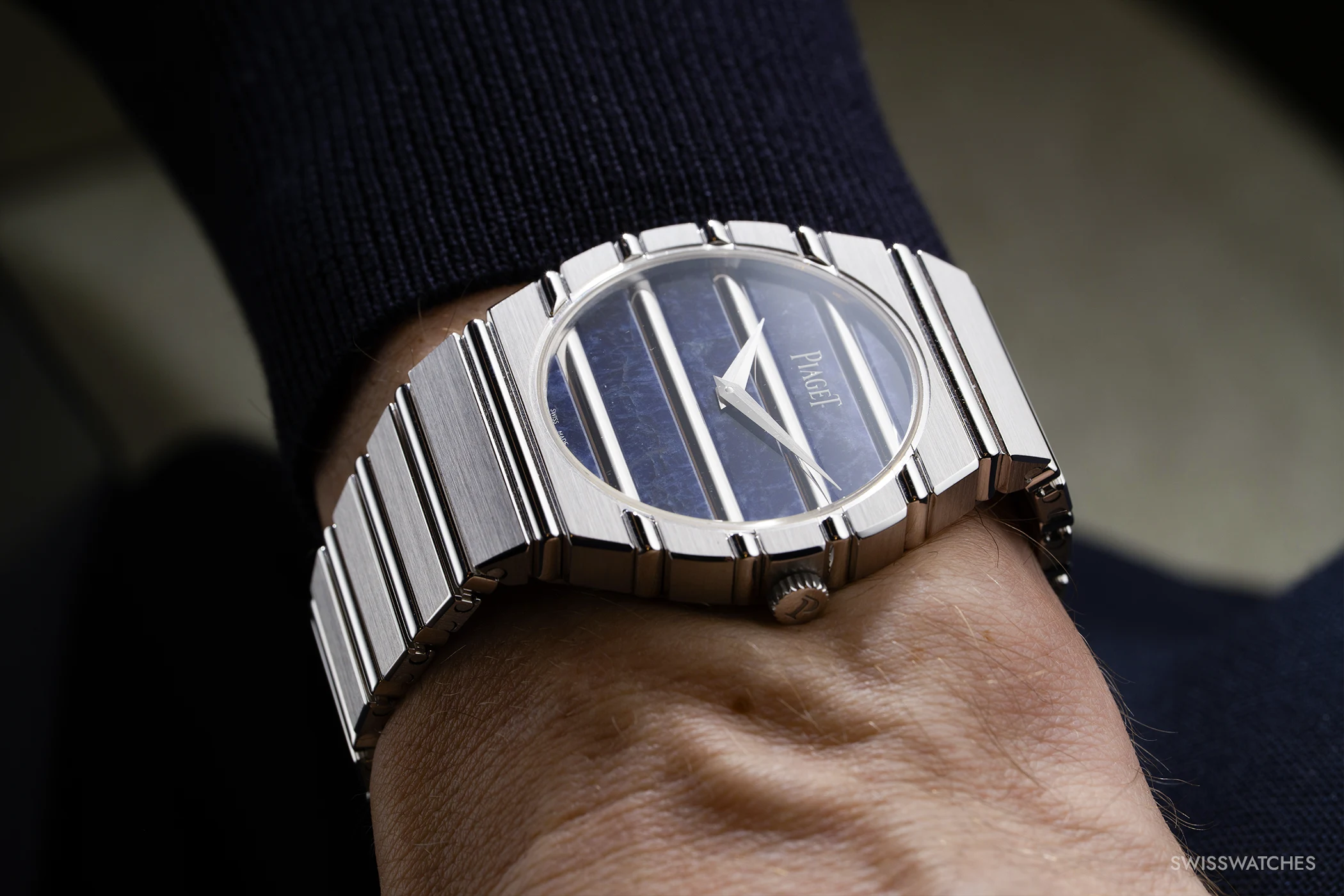
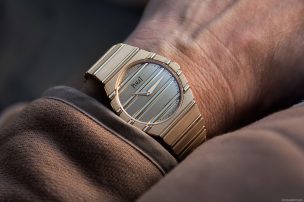
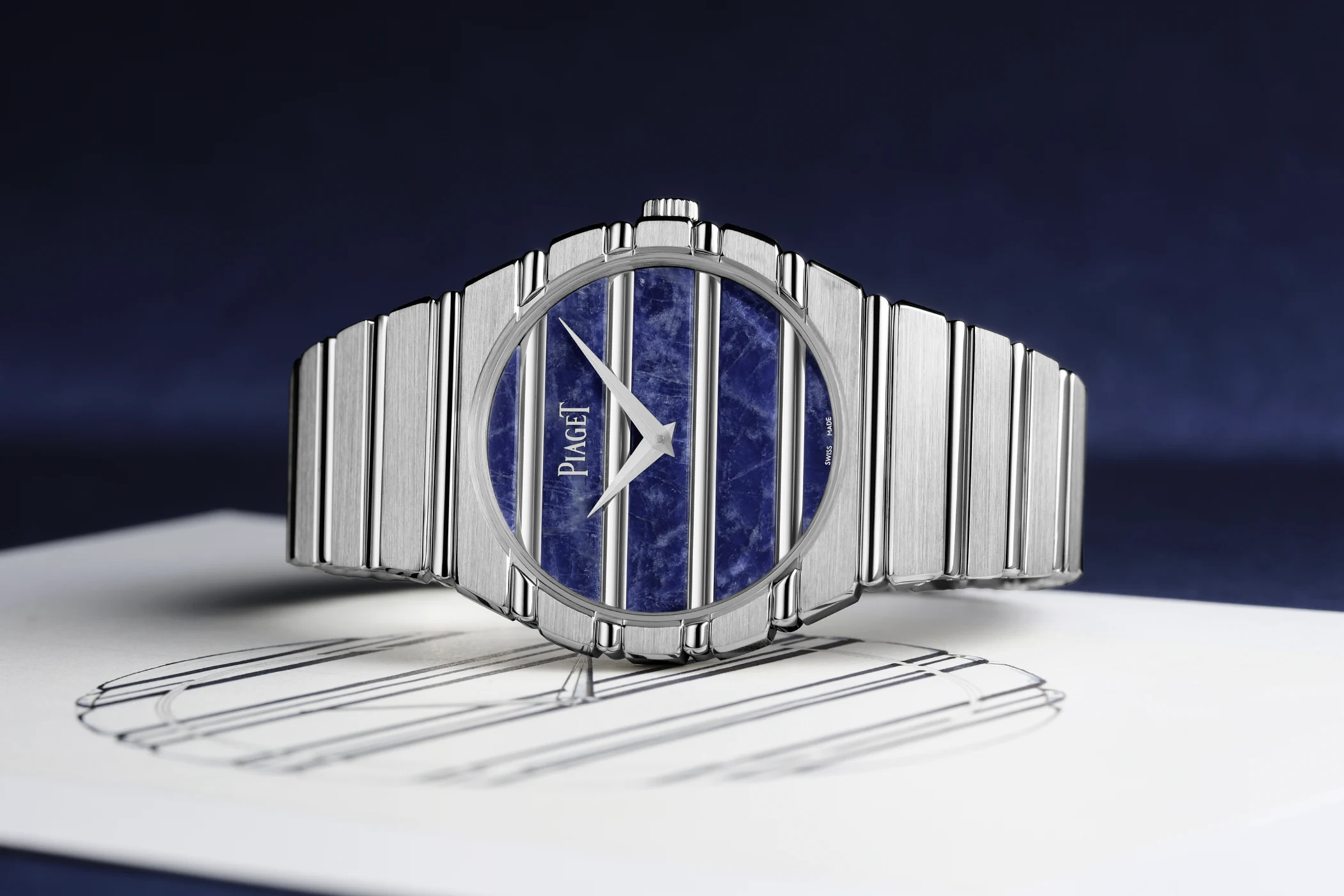
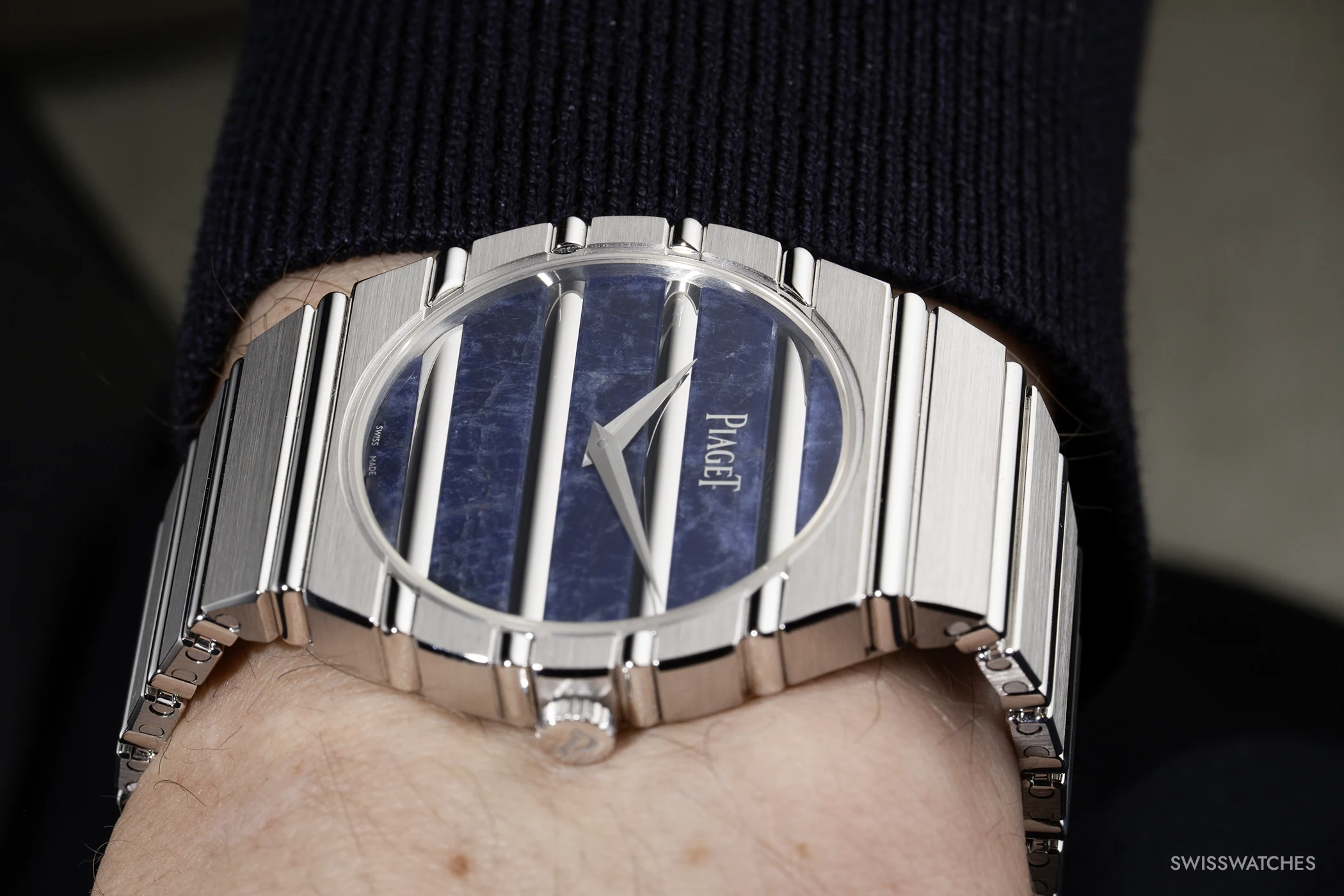
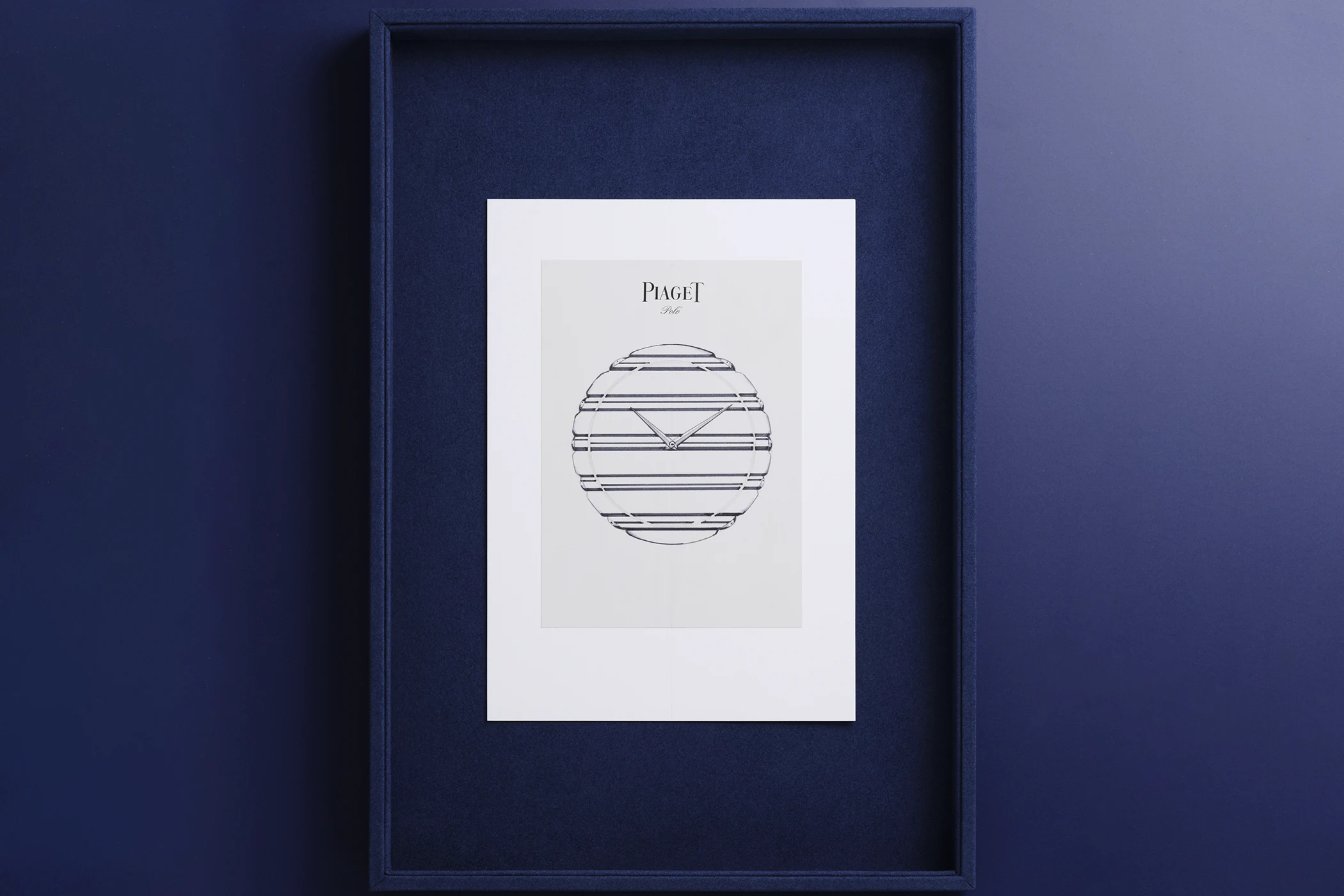
A key feature of the Polo 79 is its ‘monobloc’ design. The seamless transition between case and integrated bracelet is achieved through the gadroon pattern. It is a decorative technique that creates a relief-like structure. As a result, the case and dial appear to have been sculpted directly from the bracelet links themselves. The effect is a harmonious interplay between slender, highly polished, rounded links, and larger, satin-finished block elements.
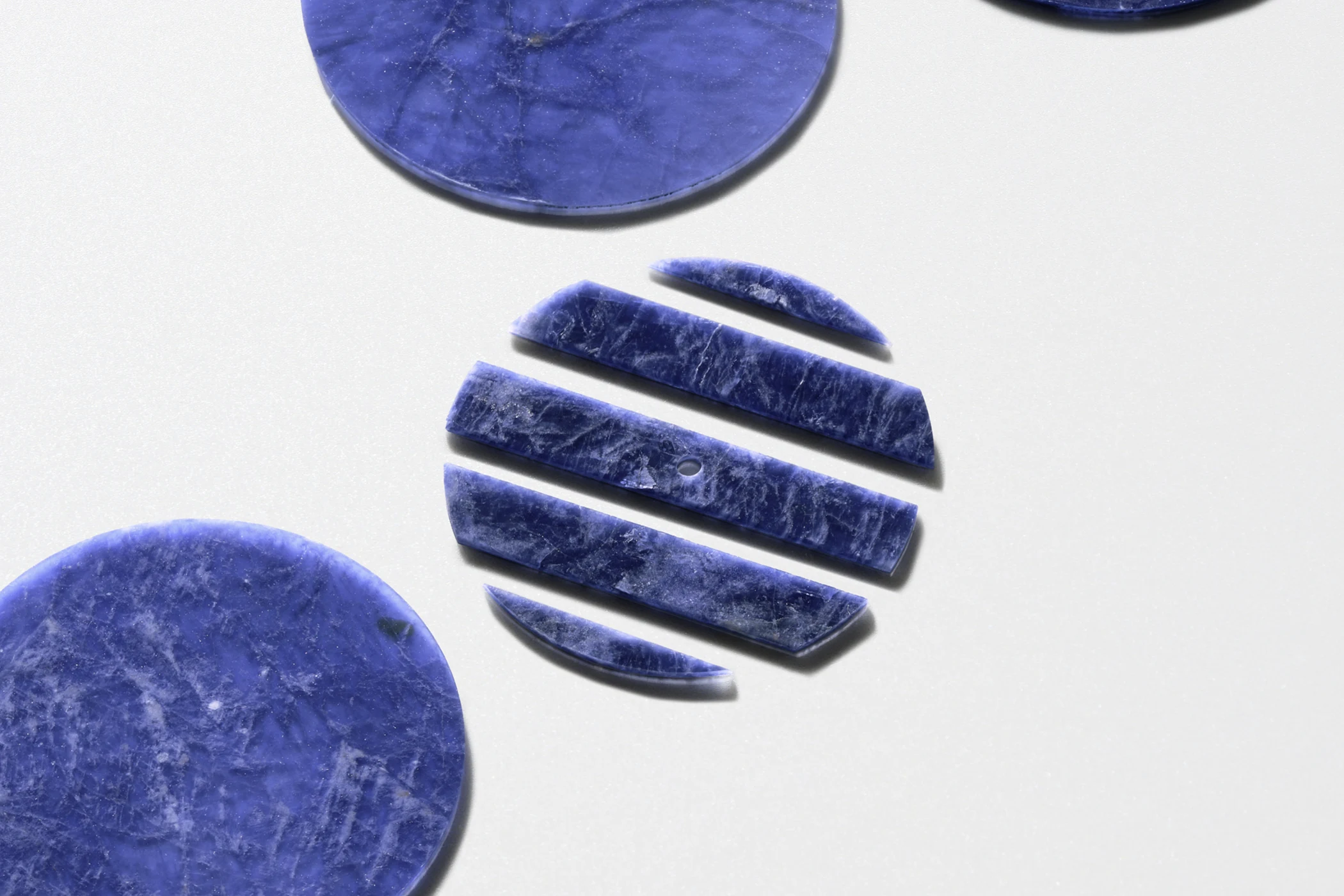
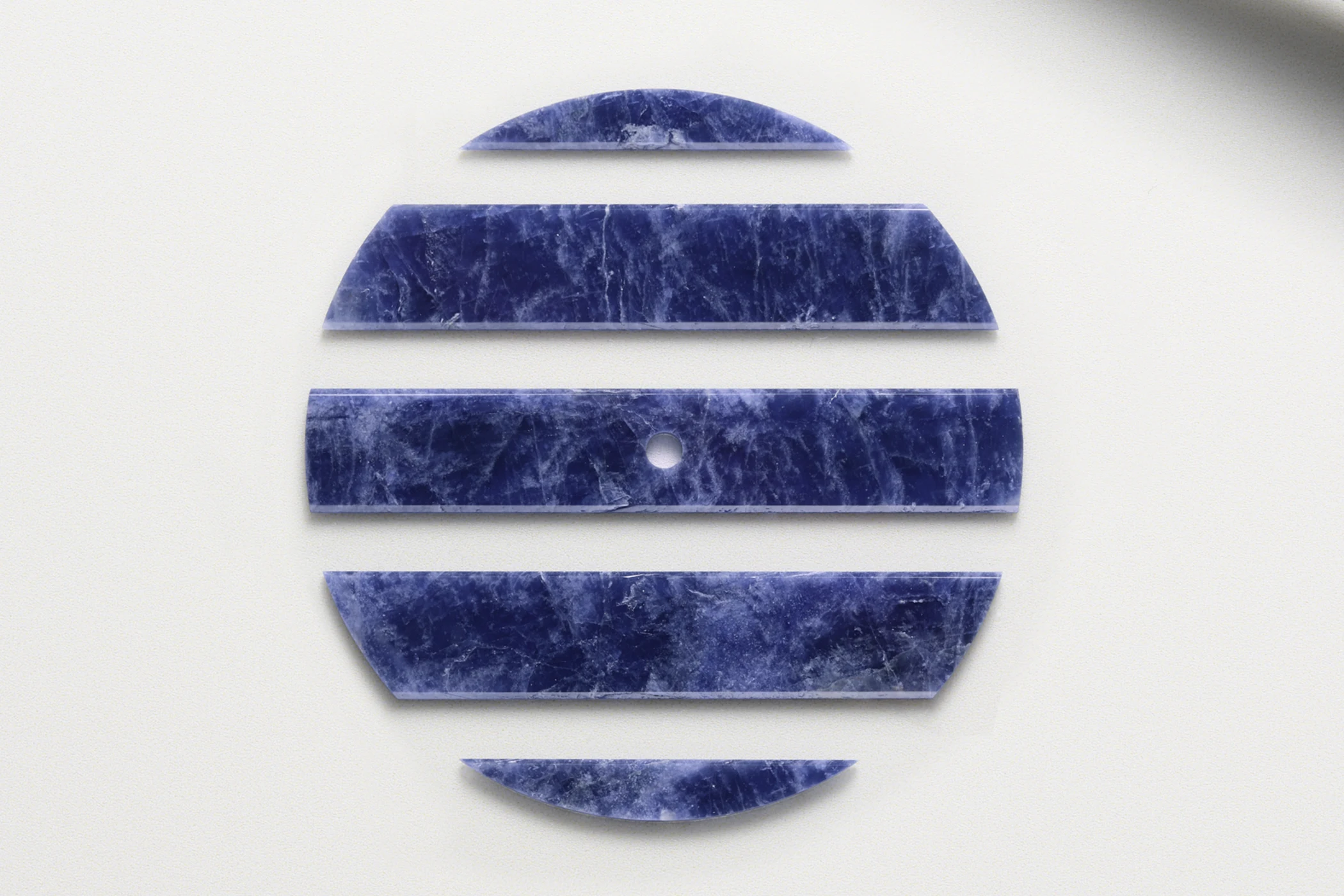
Alongside such decorative techniques, ornamental stone dials have been a Piaget signature since the 1960s. As early as 1963, the Maison began using gemstones such as lapis lazuli, onyx, tiger’s eye, and ruby to create striking contrasts with the case. Working these materials requires exceptional precision: a stone cutter must shape each gemstone with exact accuracy – a demanding task.
Alongside such decorative techniques, ornamental stone dials have been a Piaget signature since the 1960s. As early as 1963, the Maison began using gemstones such as lapis lazuli, onyx, tiger’s eye, and ruby to create striking contrasts with the case. Working these materials requires exceptional precision: a stone cutter must shape each gemstone with exact accuracy – a demanding task.
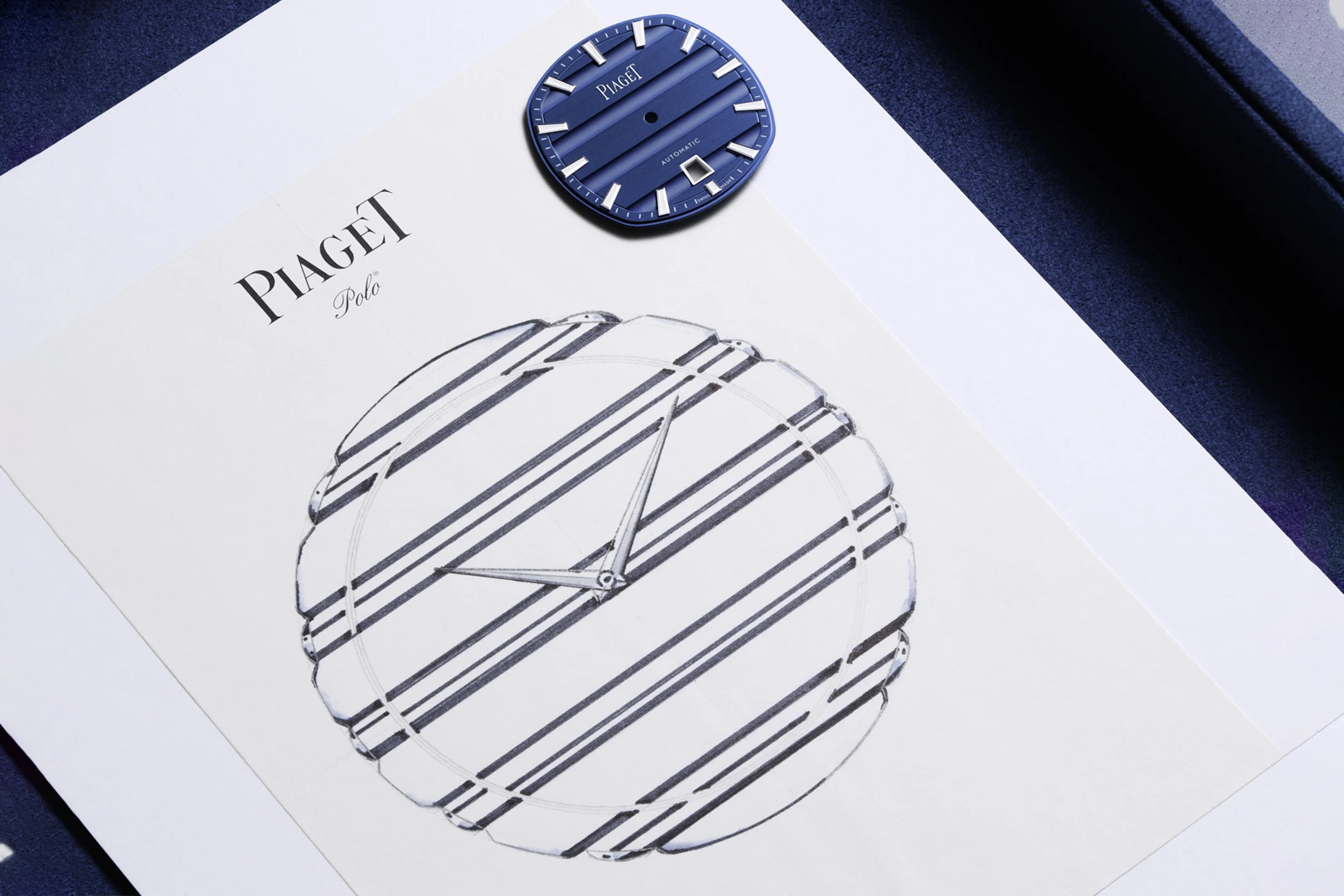
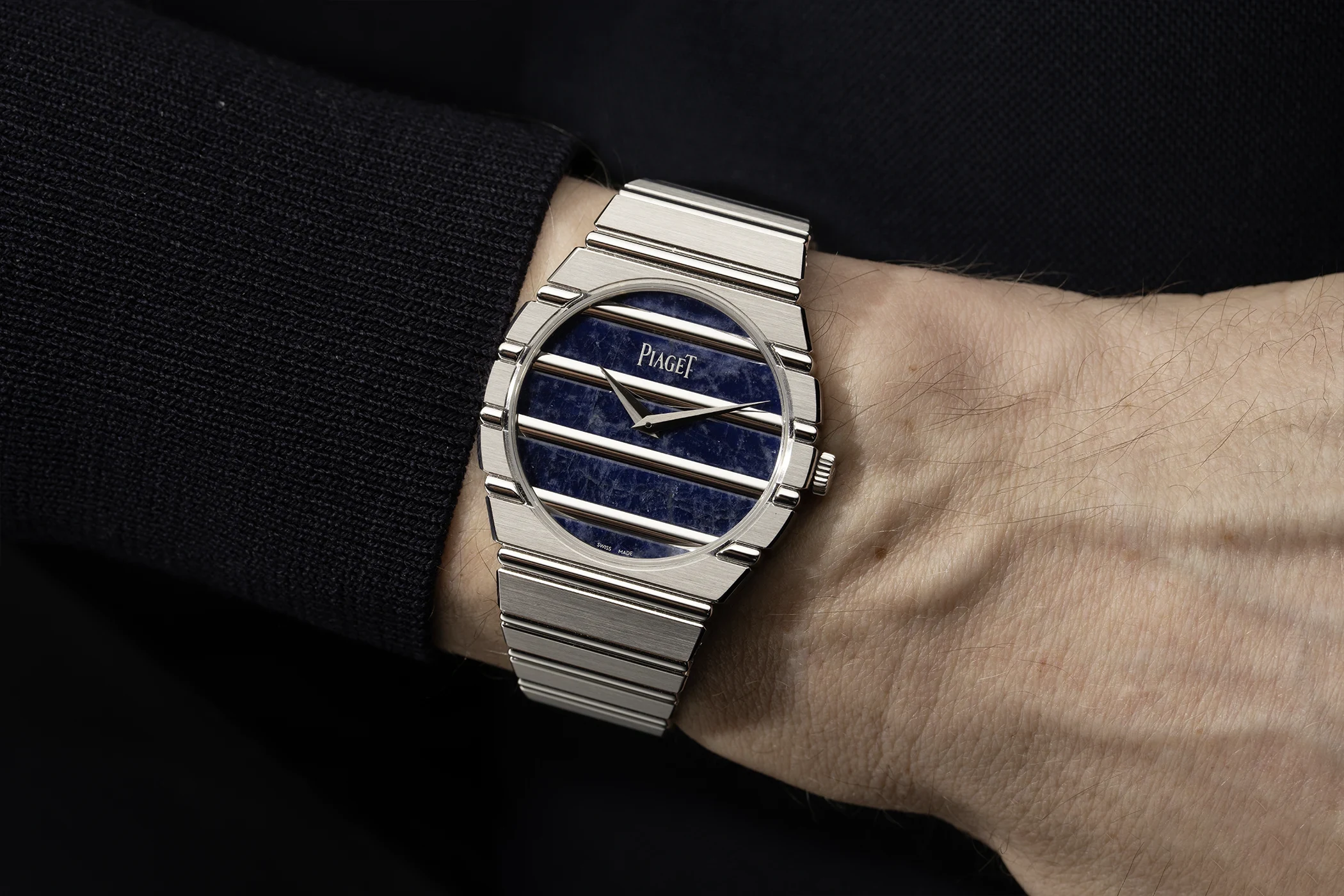
In this new version, the interplay of polished and satin-finished gadroons once again defines the aesthetic of the Polo 79. The case and integrated bracelet are crafted from 18-carat white gold, through which the characteristic linear pattern runs.
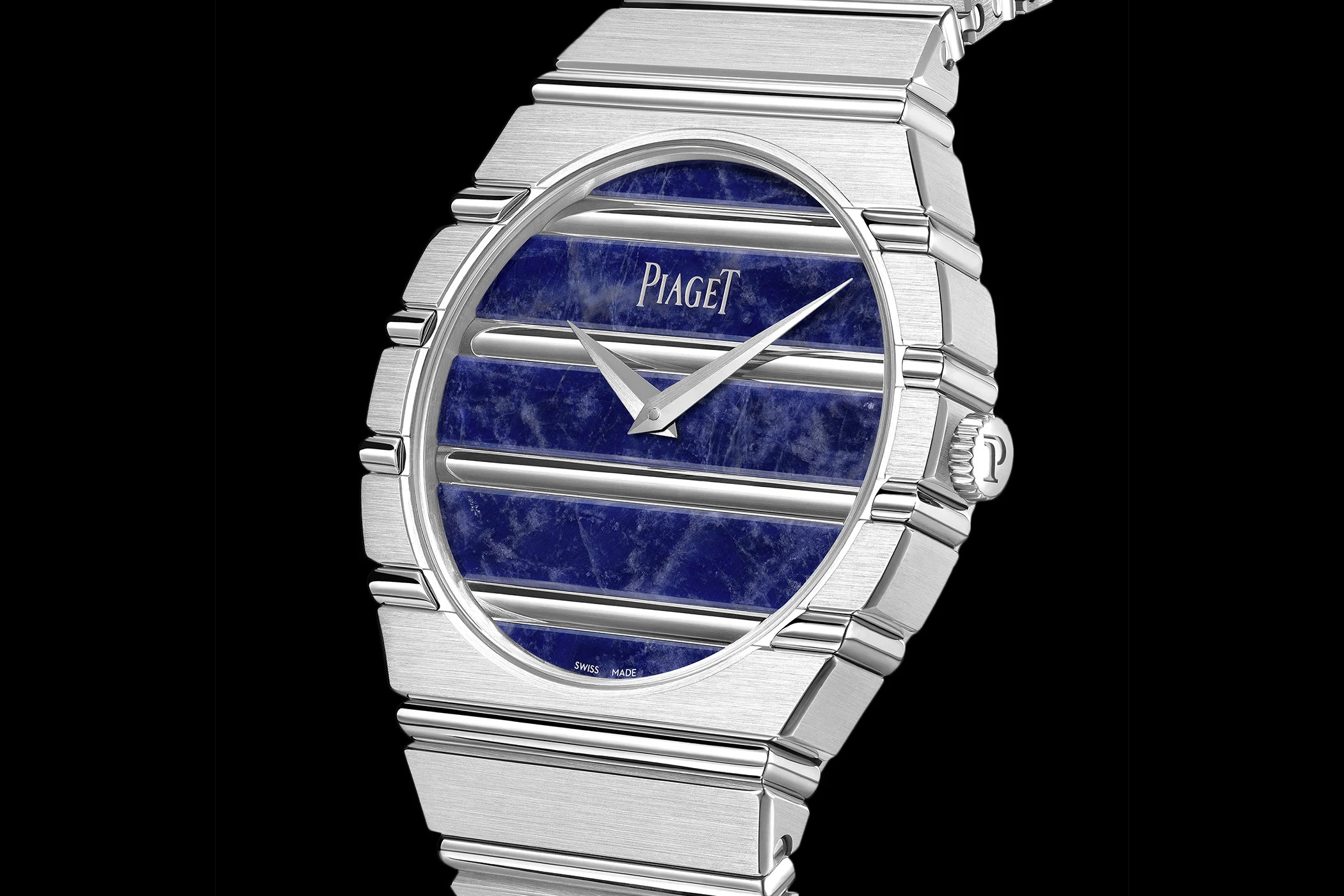
The visual centrepiece, however, is the dark blue sodalite dial with its distinctive marbling. Parallel, semi-circular white gold elements continue across the dial, echoing the design language of the case and bracelet. The result is a balanced overall composition with a notable sense of depth, further enhanced by the contrast between precious metal and mineral.
The design is completed by simple white gold hour and minute hands, which glide calmly across the structured dial, reinforcing its understated yet expressive character.
At the heart of the Polo 79 beats the in-house calibre 1200P. While historical models were still equipped with quartz movements, the current version features an ultra-thin mechanical automatic movement. This calibre has previously been used in the Altiplano and exemplifies Piaget’s expertise in ultra-thin watchmaking.
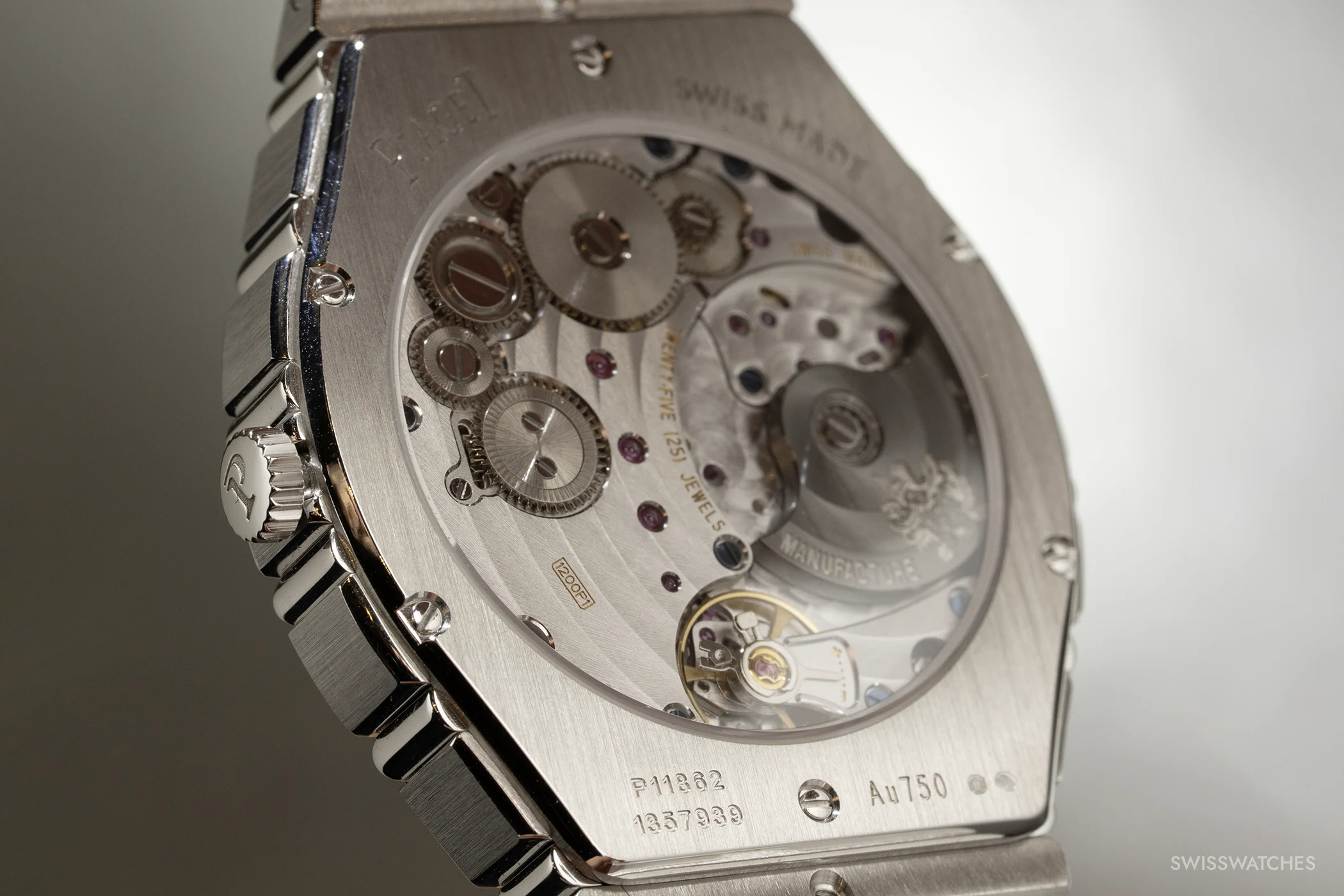
The movement oscillates at 21,600 vibrations per hour and offers a power reserve of approximately 44 hours. Despite its slender height of just 2.35 mm, it is richly decorated, featuring Geneva stripes, circular graining, anglage, sunburst finishing on the wheels and blued screws – all hallmarks of fine watchmaking.
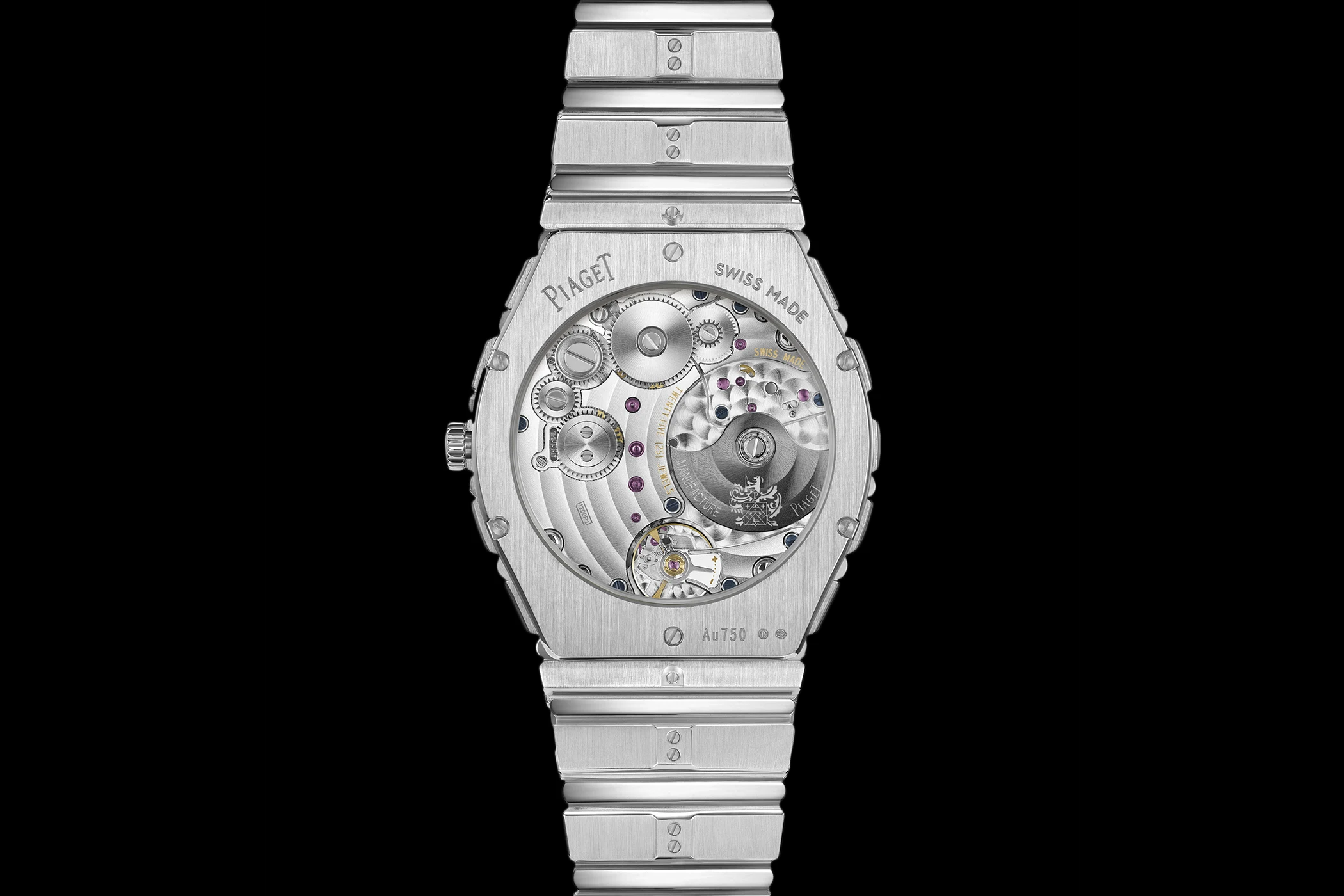
The 38 mm case protects the movement with water resistance up to 50 metres. The price of the Polo 79 with a sodalite dial is 102,000 euros.