House of Brands drives forward the relaunch of Universal Genève and Gallet, and Breitling appoints a new CEO. Insights into strategy and positioning.

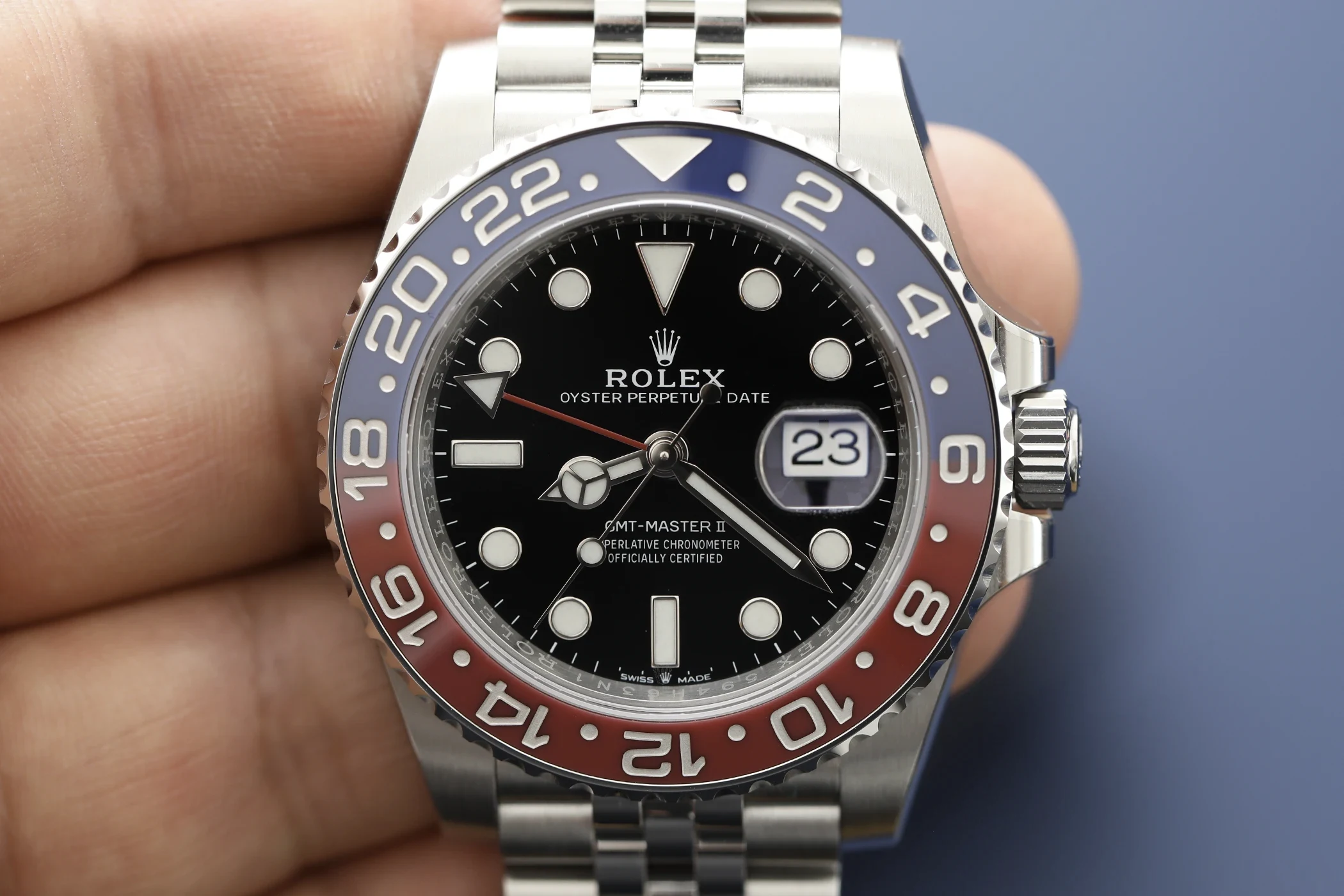
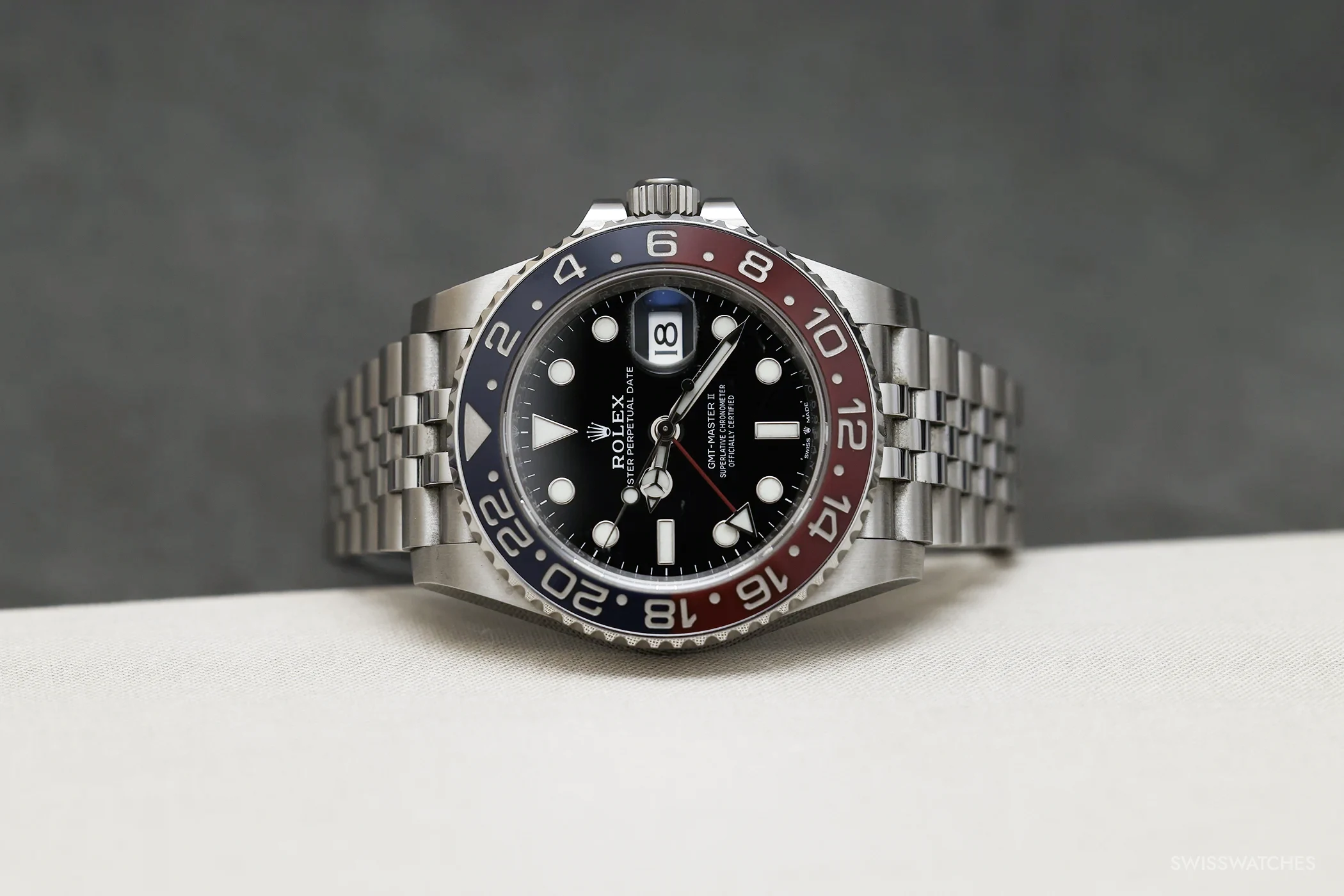
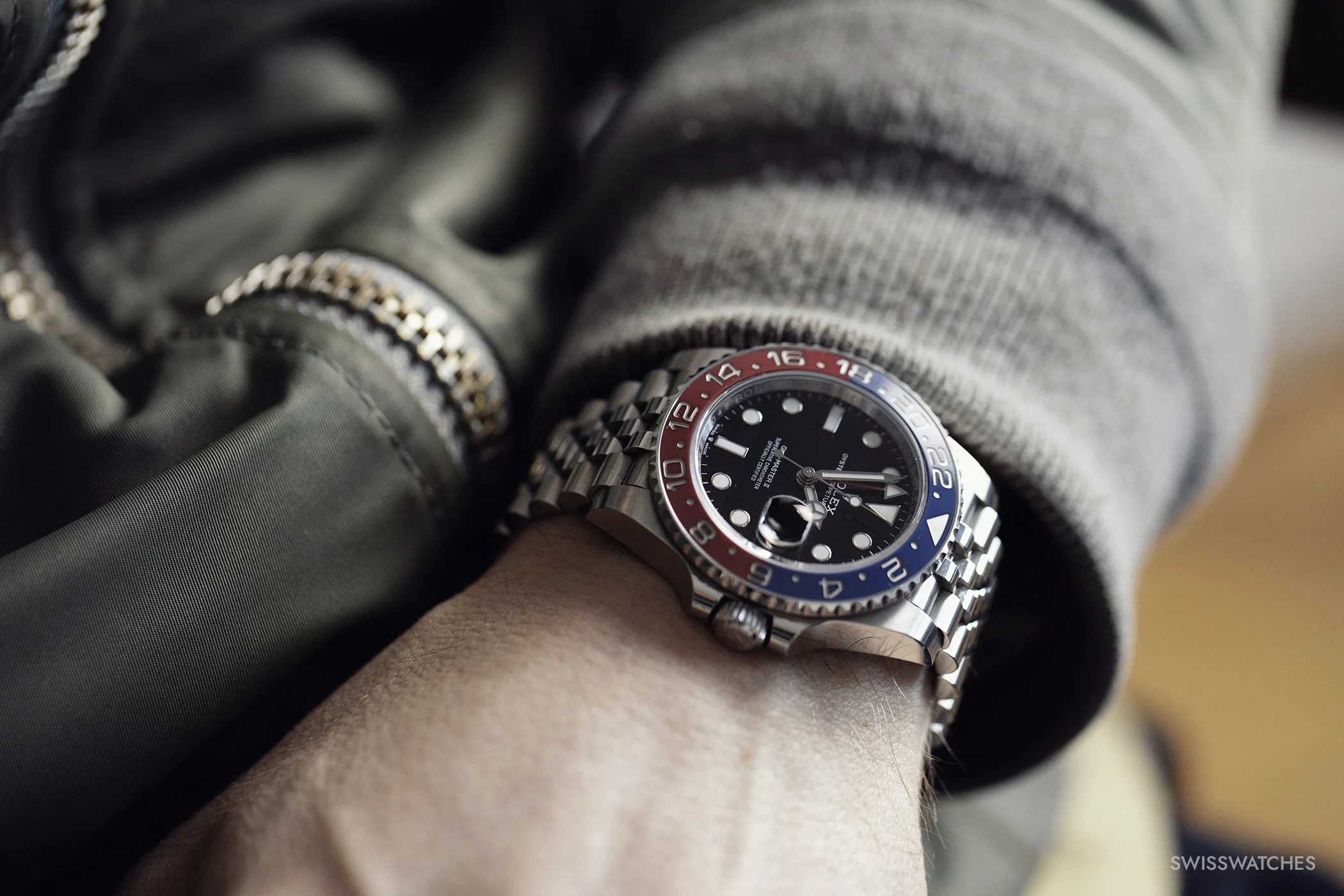
Hardly any other Rolex model has acquired a nickname as naturally as the GMT-Master with its blue and red Cerachrom bezel insert. ‘Pepsi’ has long since become a sort of shorthand for the entire history of this watch, although the name was, of course, never official.

Credit © Ali Alqarni
This is primarily because the colour combination is far more than just an aesthetic detail. It is closely linked to the origins of the GMT-Master and to a time when travelling across time zones suddenly took on a new practical significance in the daily lives of a small but growing professional group. The development of the GMT-Master at that time was a response to precisely this problem. Rolex itself dates the model’s launch to 1955 and describes the original GMT-Master as a navigation aid for people who travel the world for work.
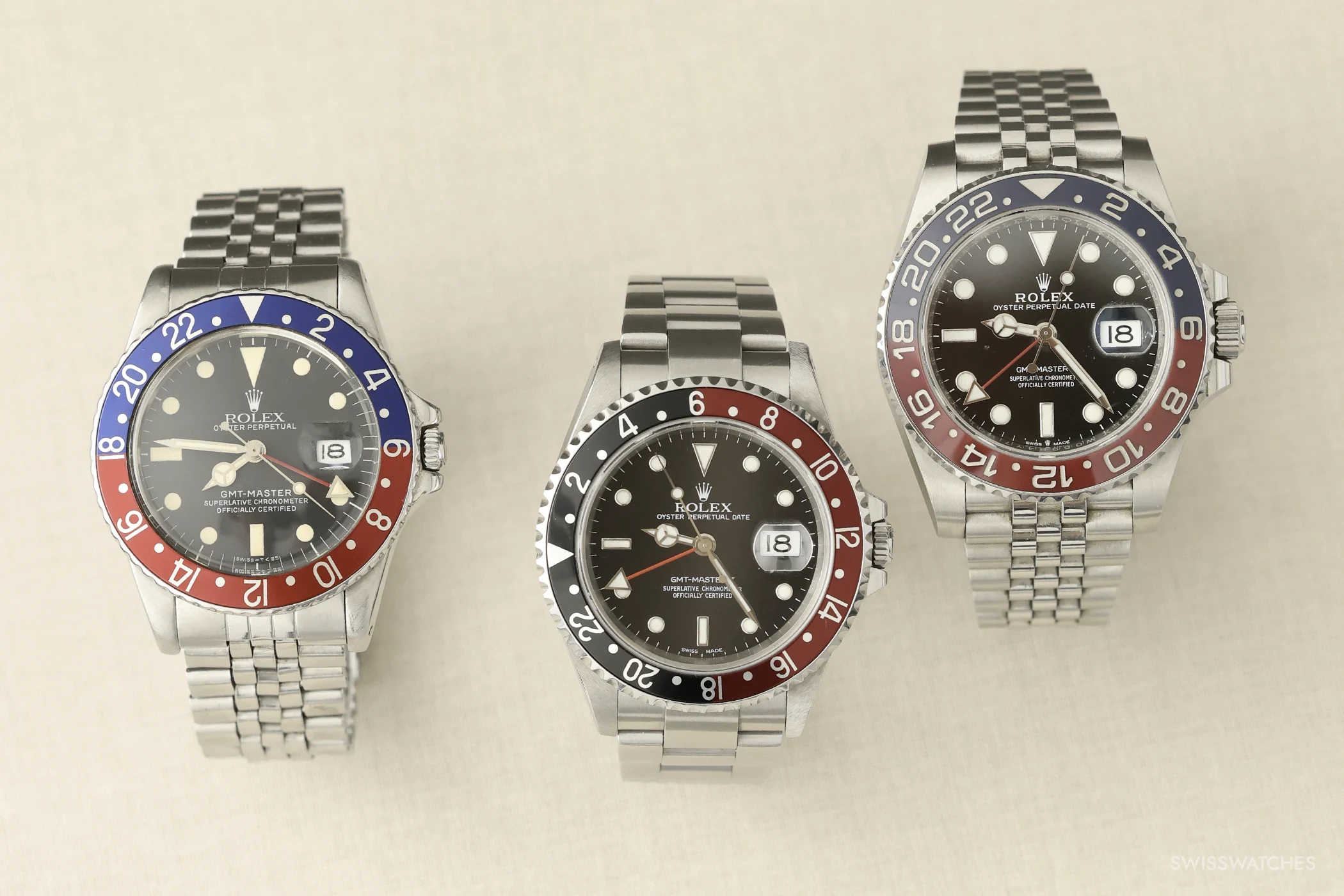
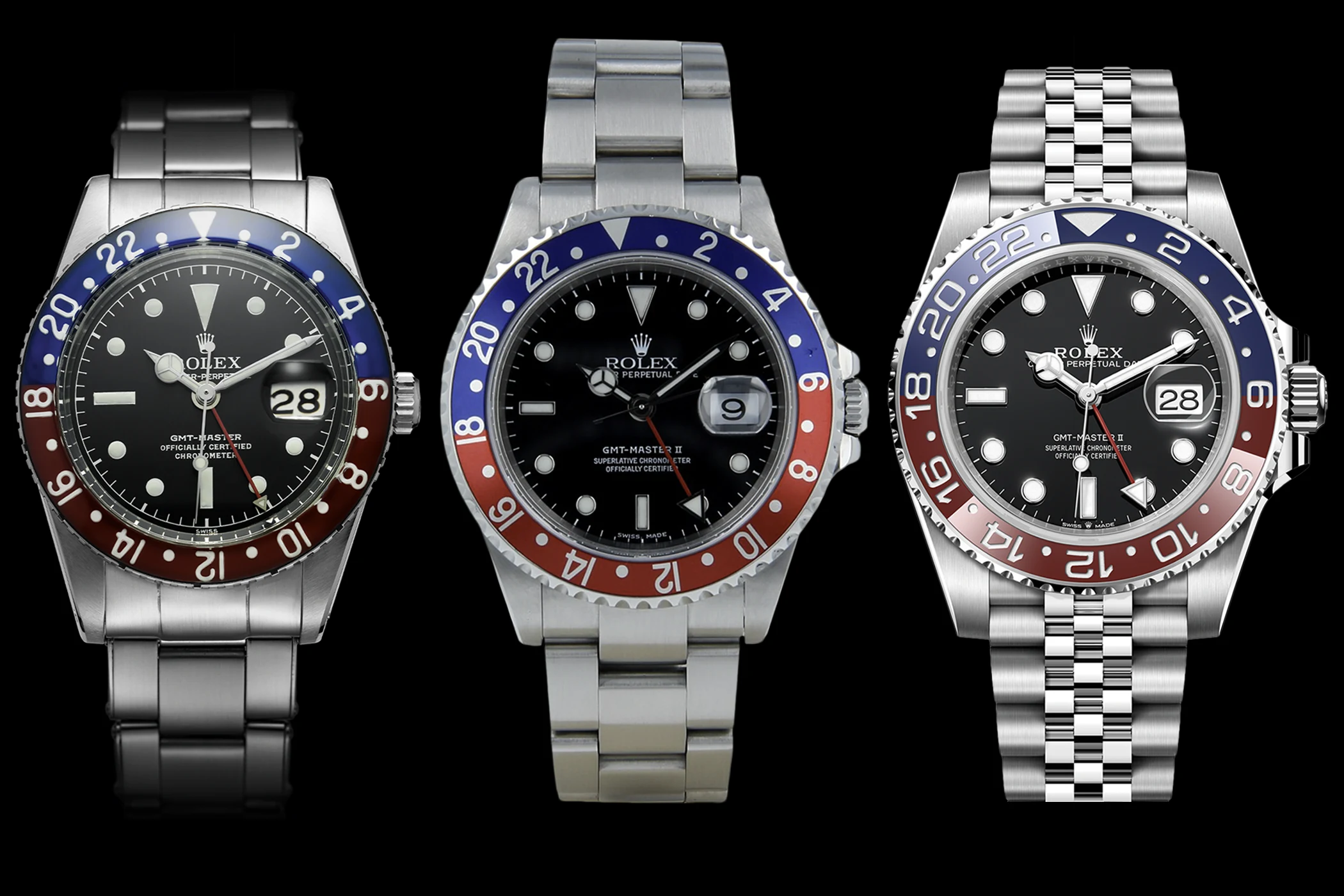
It is therefore no coincidence that the blue-and-red version, of all things, went on to become the most recognisable face of the entire range. It provides a particularly good illustration of the model’s evolution – from the early GMT-Master of the 1950s, through the classic aluminium models, to today’s versions with Cerachrom bezel inserts.
The basic concept behind the model is simple. In addition to the standard hour, minute and second hands, there is an extra 24-hour hand which, in conjunction with the bezel, can display a second time zone. As a result, from the outset the GMT-Master was designed with a greater focus on purely practical utility than many other Rolex sports models. It was less of a diver’s or expedition watch and more, above all, a practical timepiece for travelling between different time zones.
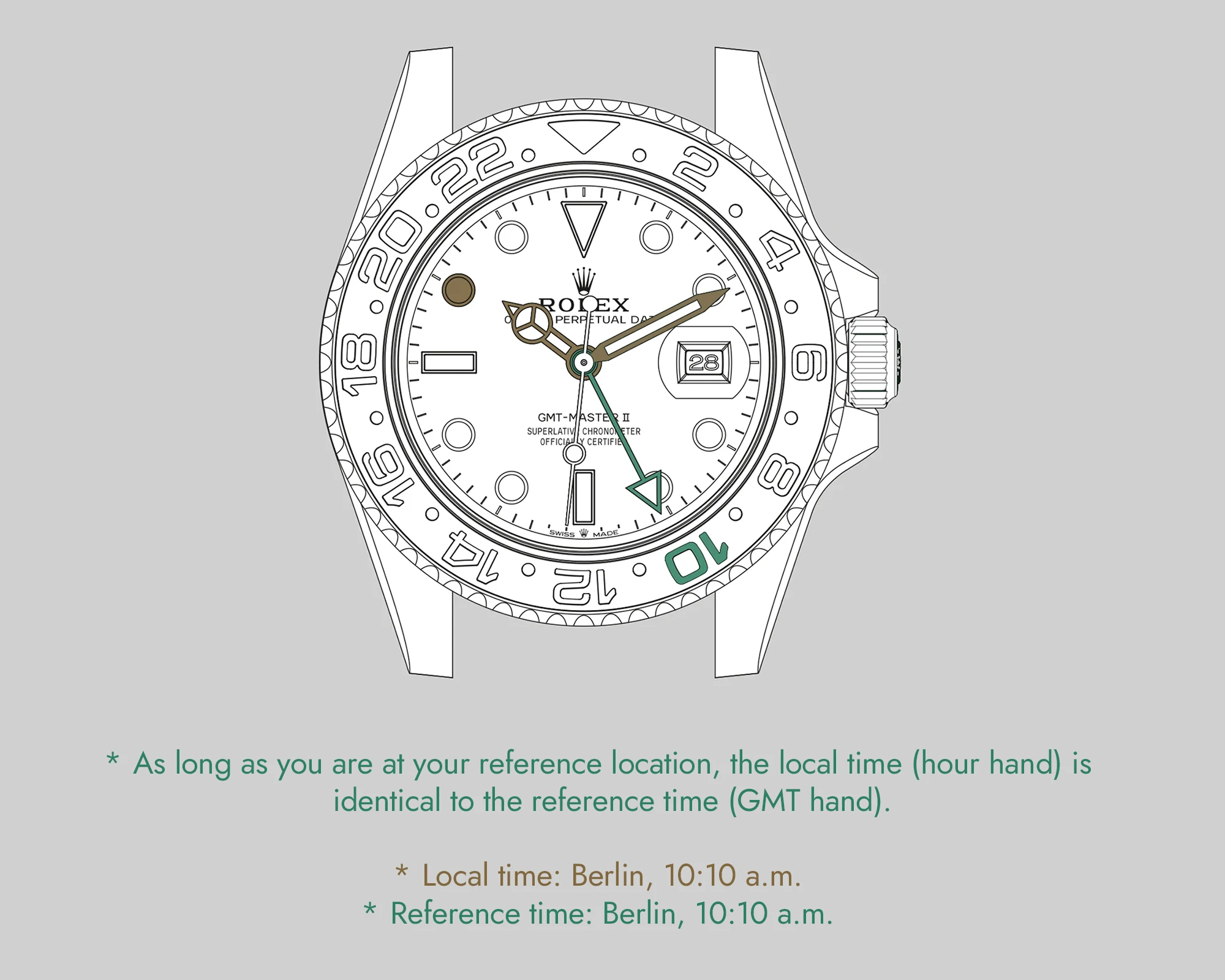
Precisely because this concept was so compelling from the outset, people often overlook the extent to which the model has been further refined over time. The difference between the GMT-Master and the GMT-Master II is more significant than it might appear at first glance: it is only with the GMT-Master II that the hour hand can be adjusted independently. This is not a minor technical detail, but significantly alters how the watch’s settings are used in everyday life. When travelling, the local time can be adjusted without losing the reference time. This additional function transforms a watch with an extra time zone display into a truly impressive and practical timepiece for travel. Rolex continues to describe this functionality in very straightforward terms: the additional 24-hour hand indicates a reference time, whilst the local time can be adjusted in one-hour increments via the crown without affecting the minute and second hands.
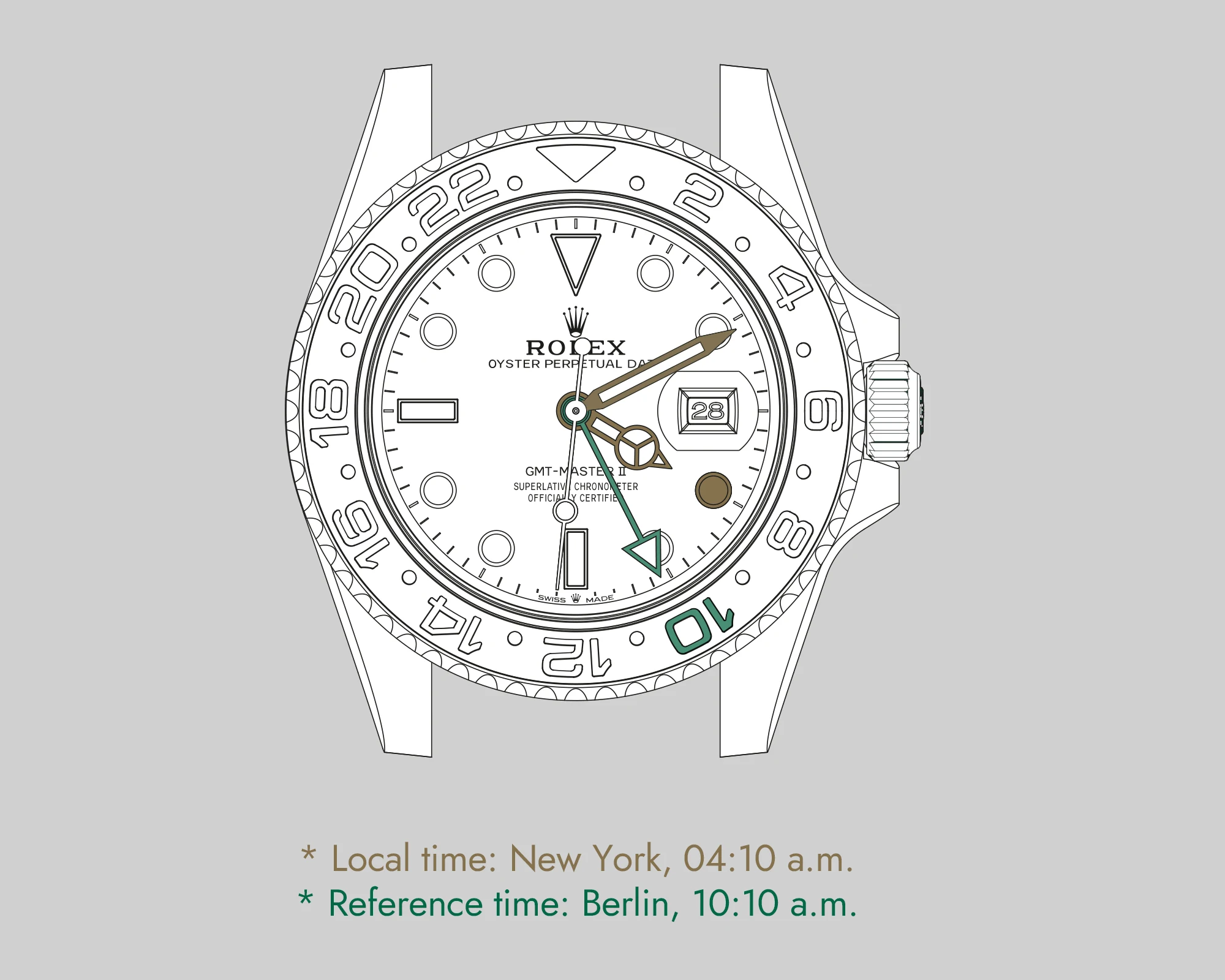
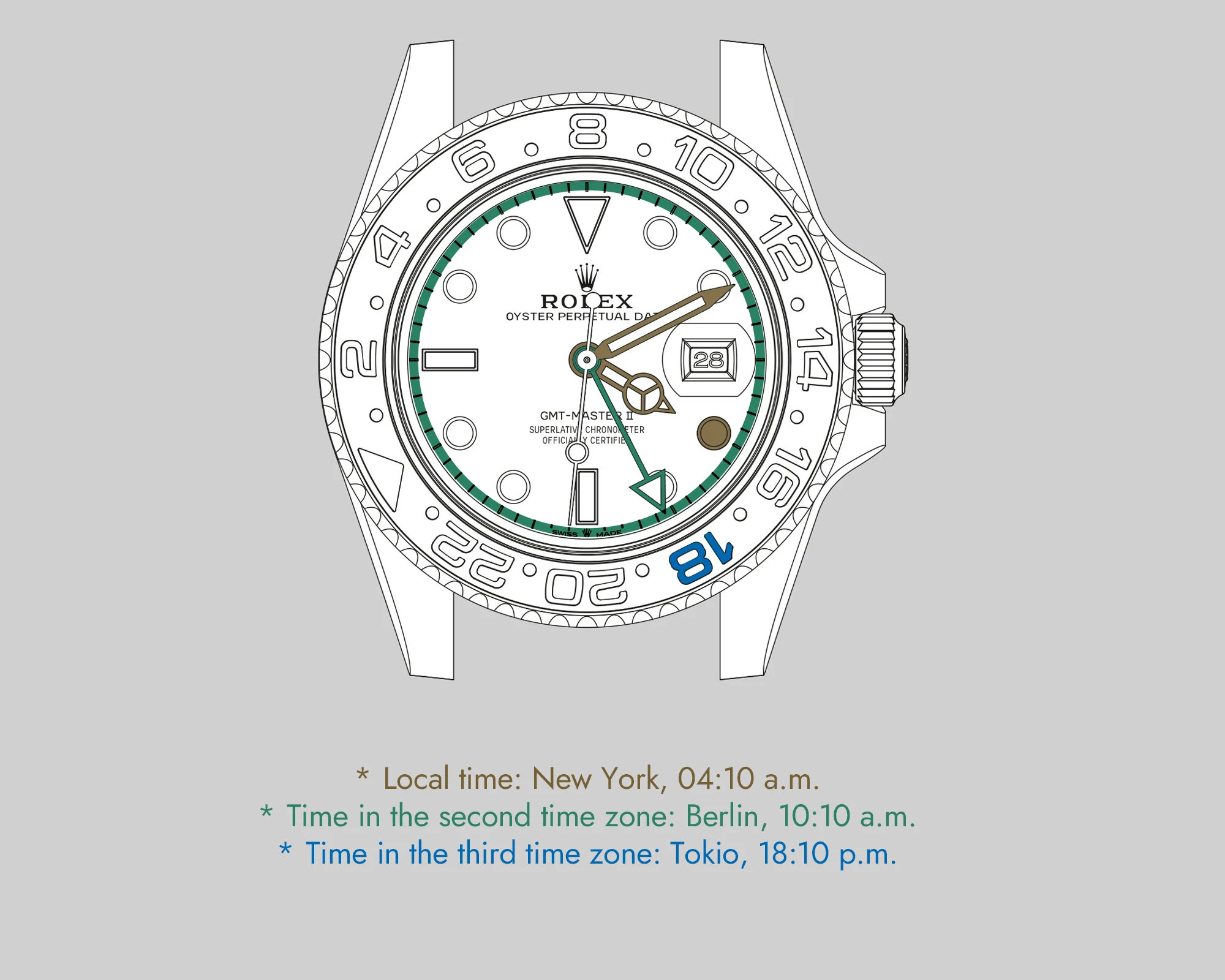
Then there is the bezel itself. In the neutral position, it displays the reference time alongside the 24-hour hand; when rotated, it also allows a second time zone to be read. This is another reason why the GMT-Master II never looks outdated, despite its long history: the principle and mechanism behind it remain immediately intuitive to this day.
The nickname is, at first glance, self-explanatory. The bezel is blue and red, and the connection is obvious. What’s more interesting, however, is why these colours have become so inextricably linked with the model.
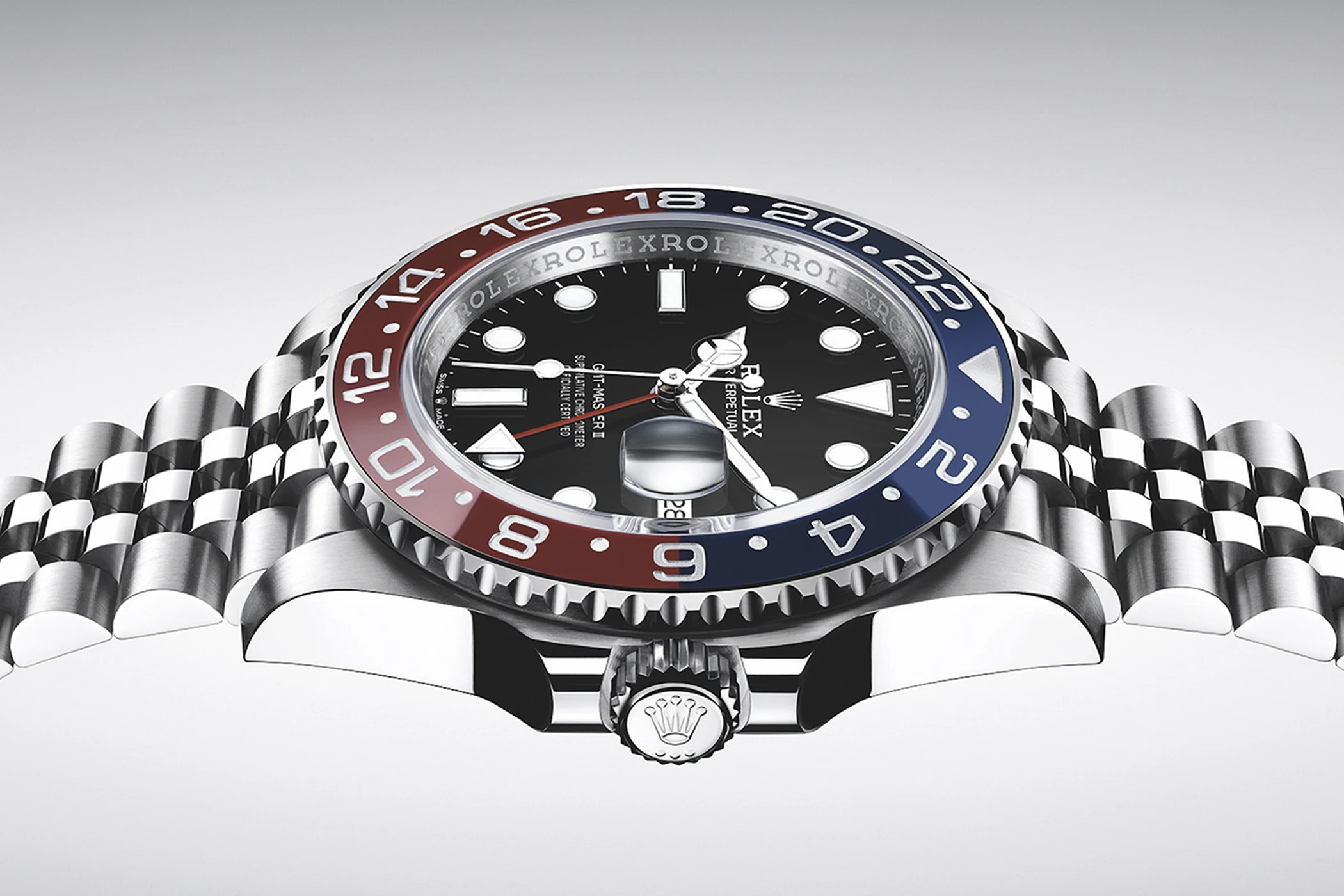
This is because the two-tone design was originally intended to serve a practical purpose. It made it easier to distinguish between day and night hours on the 24-hour scale. Whilst this seems obvious today, it was a clever design innovation: not only did it make the watch easier to read, but it also gave it a look that immediately stuck in people’s minds. Rolex still describes the logic behind the current two-tone Cerachrom bezel in exactly the same way: the red half represents the daytime hours, the blue half the night-time hours.
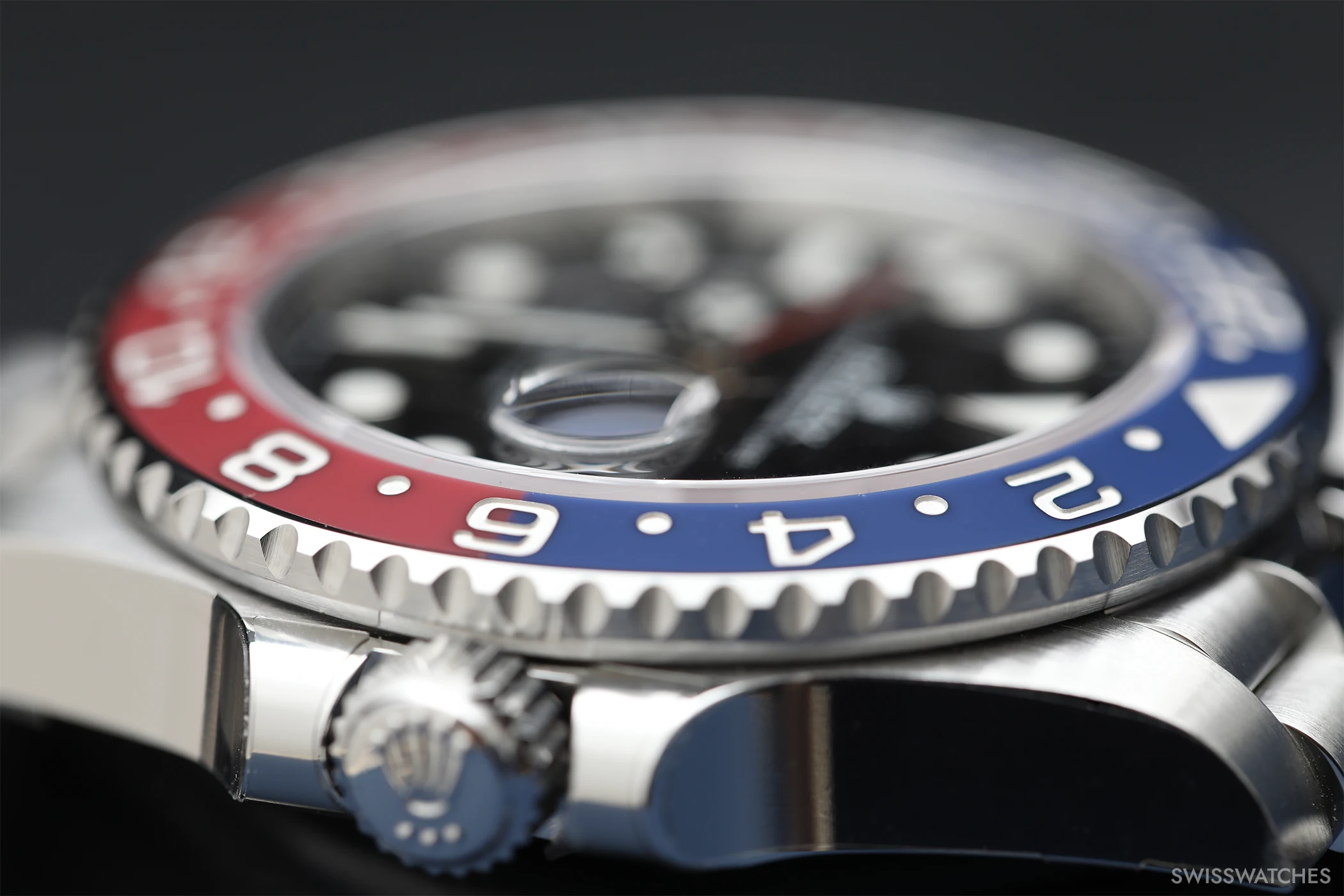
Many later GMT variants have become popular, some more striking, others more understated. The Pepsi, however, remains the most obvious colour combination within the range, because it does not look like an afterthought, but rather like a visually contemporary reissue of the GMT-Master originally launched in 1955, featuring the same colours on the bezel.
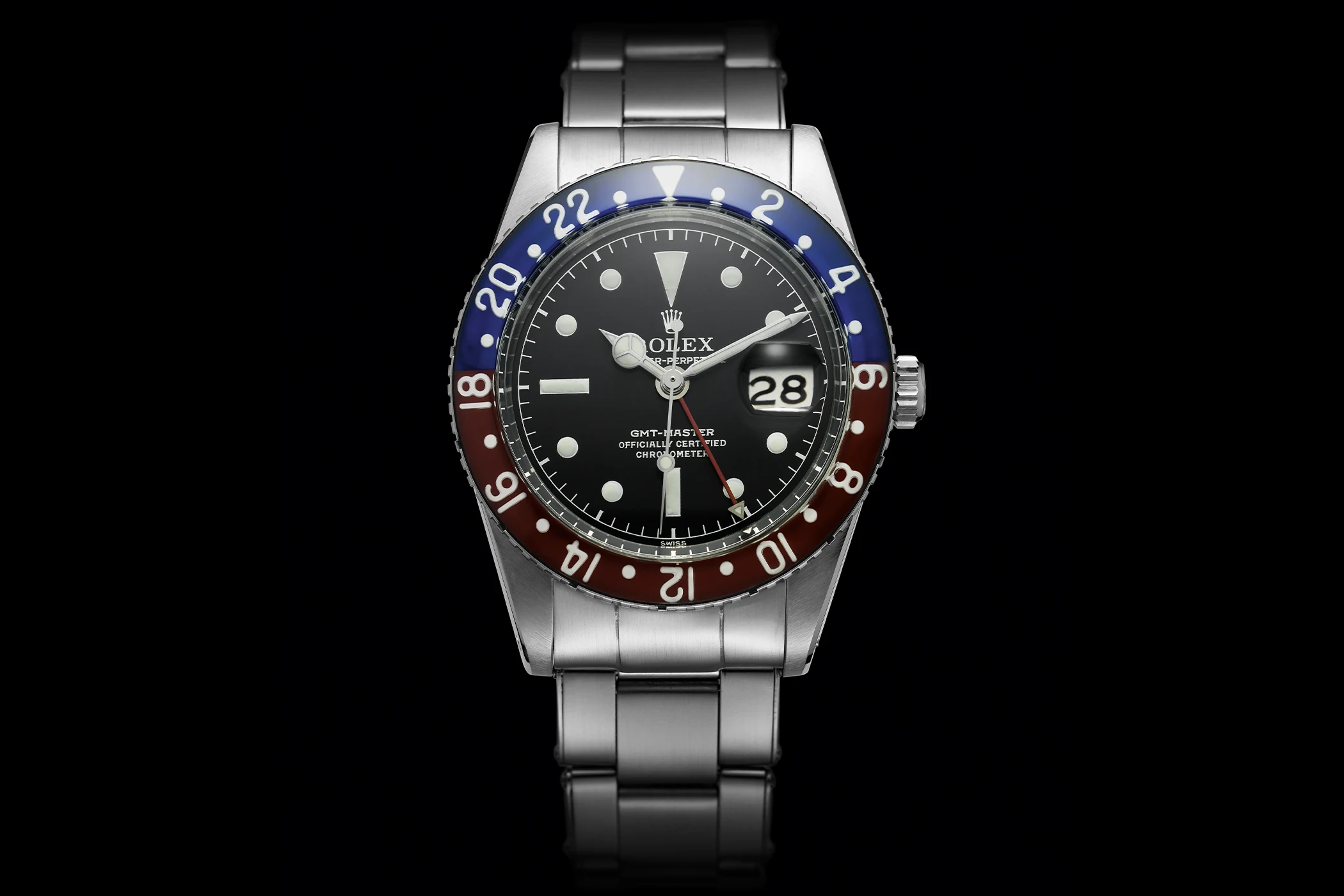
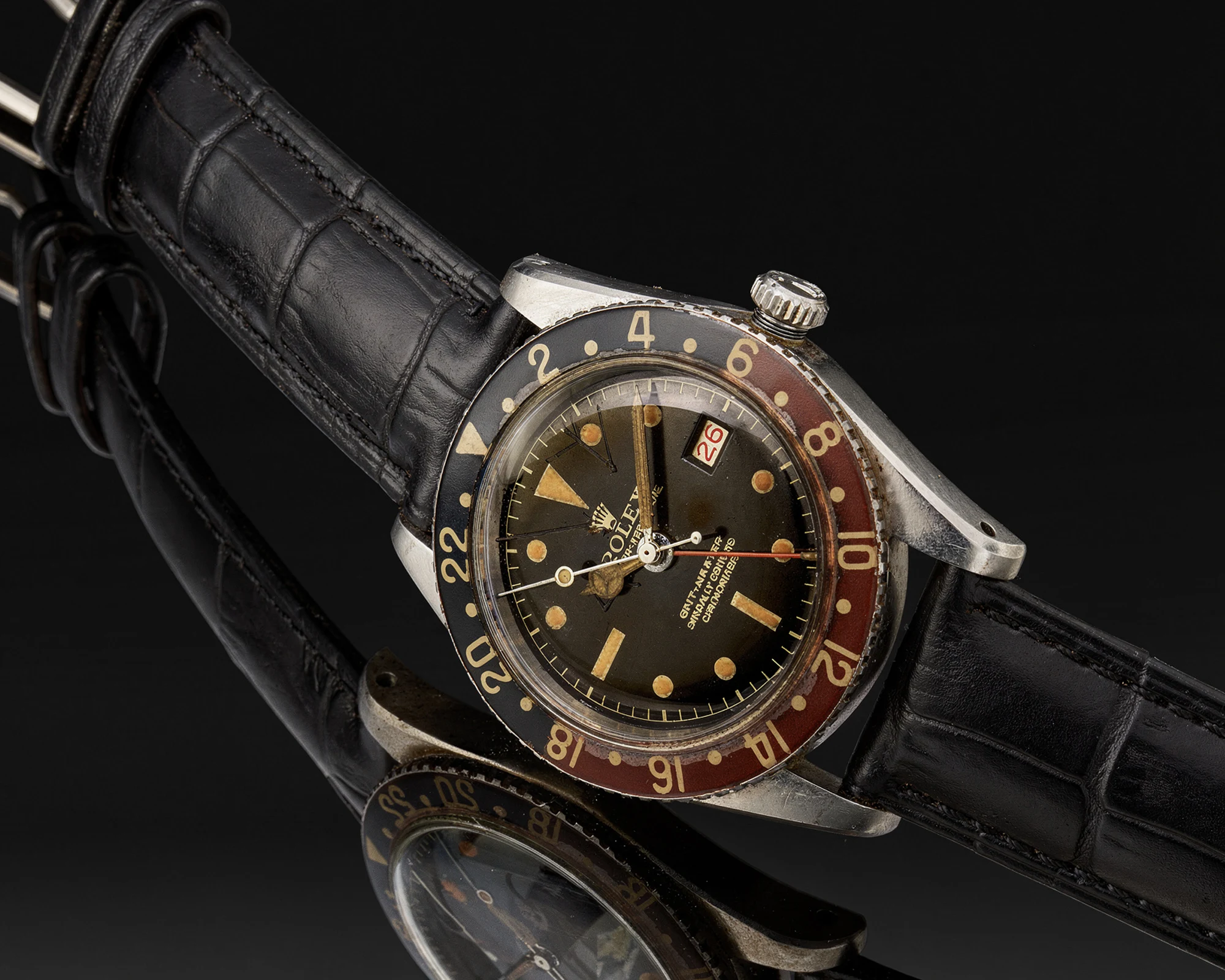
The history of the Rolex GMT-Master begins with the Ref. 6542. With this model, Rolex introduced the GMT-Master in 1955, at a time when intercontinental flights were far from commonplace but were rapidly gaining in importance. The connection with the airline ‘Pan Am’ has often been recounted and is indeed part of the model’s history, even if it need not be overemphasised: the GMT-Master arose from a genuine need for reliable time-zone tracking across different time zones. Rolex itself notes that the GMT-Master became the official wristwatch of Pan American World Airways and that in 1959 a Pan Am pilot wore a GMT-Master as a navigational aid on the first non-stop flight from New York to Moscow.
Many of the features we now associate with the Pepsi are already incorporated here in the Ref. 6542: the additional 24-hour hand, the distinctive bezel, and the dual-time function. In addition, early models feature a Bakelite bezel, which contributes significantly to the charm of the first GMT-Master reference, partly because it proved to be particularly delicate and is therefore very rare to find in its original condition. This is, however, due to the material properties of the Bakelite plastic used: Bakelite is the first fully synthetic plastic ever produced and is also thermosetting, which in turn means that it is hard, brittle and cannot be reshaped once cured. Its brittleness and low elasticity are decisive factors in the fragility and rarity of bezels in good condition.
From today’s perspective, the 6542 is interesting not so much because it was already perfect in every way. What makes it interesting is that it already demonstrates just how coherent and plausible the concept of the GMT-Master was right from the start.
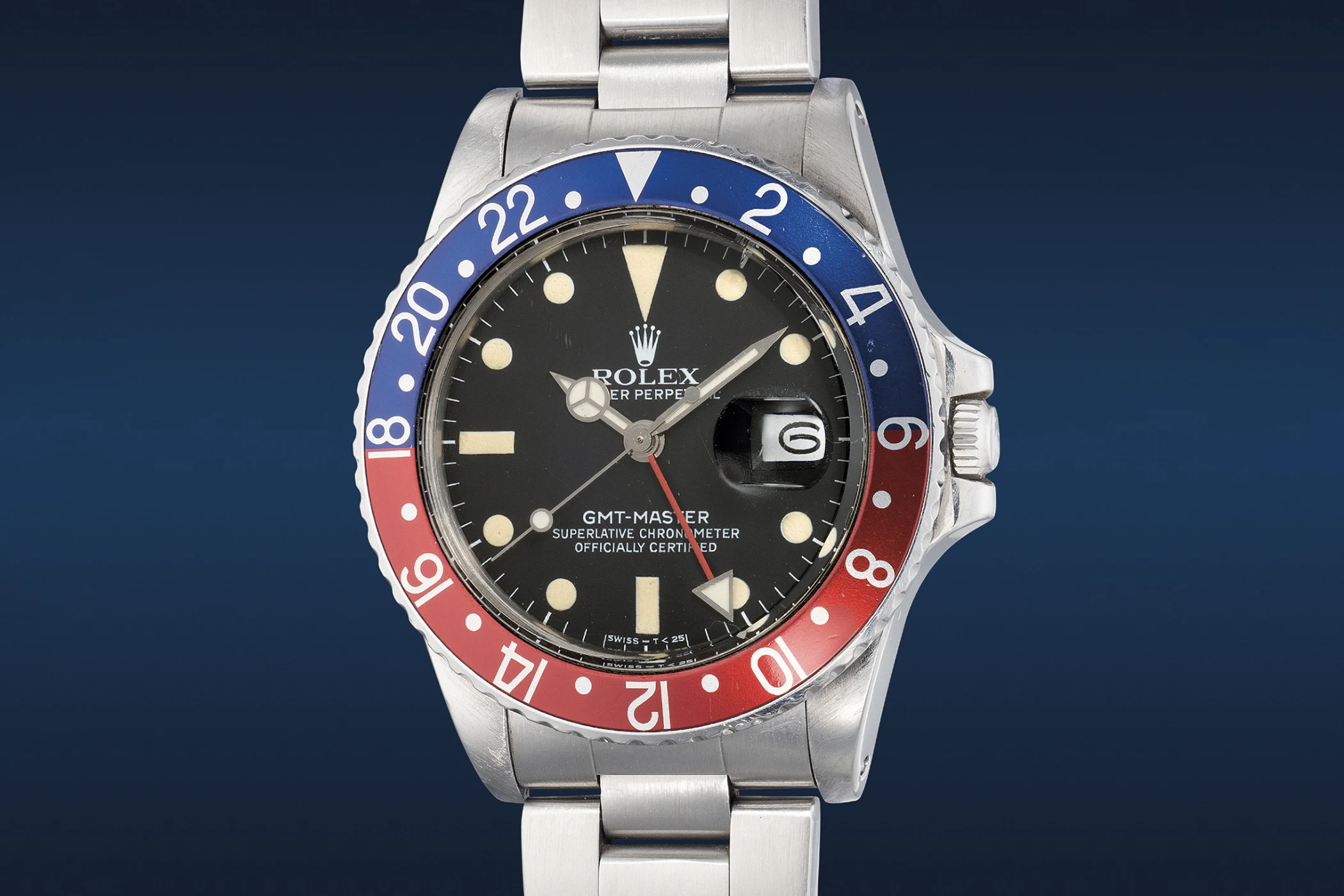
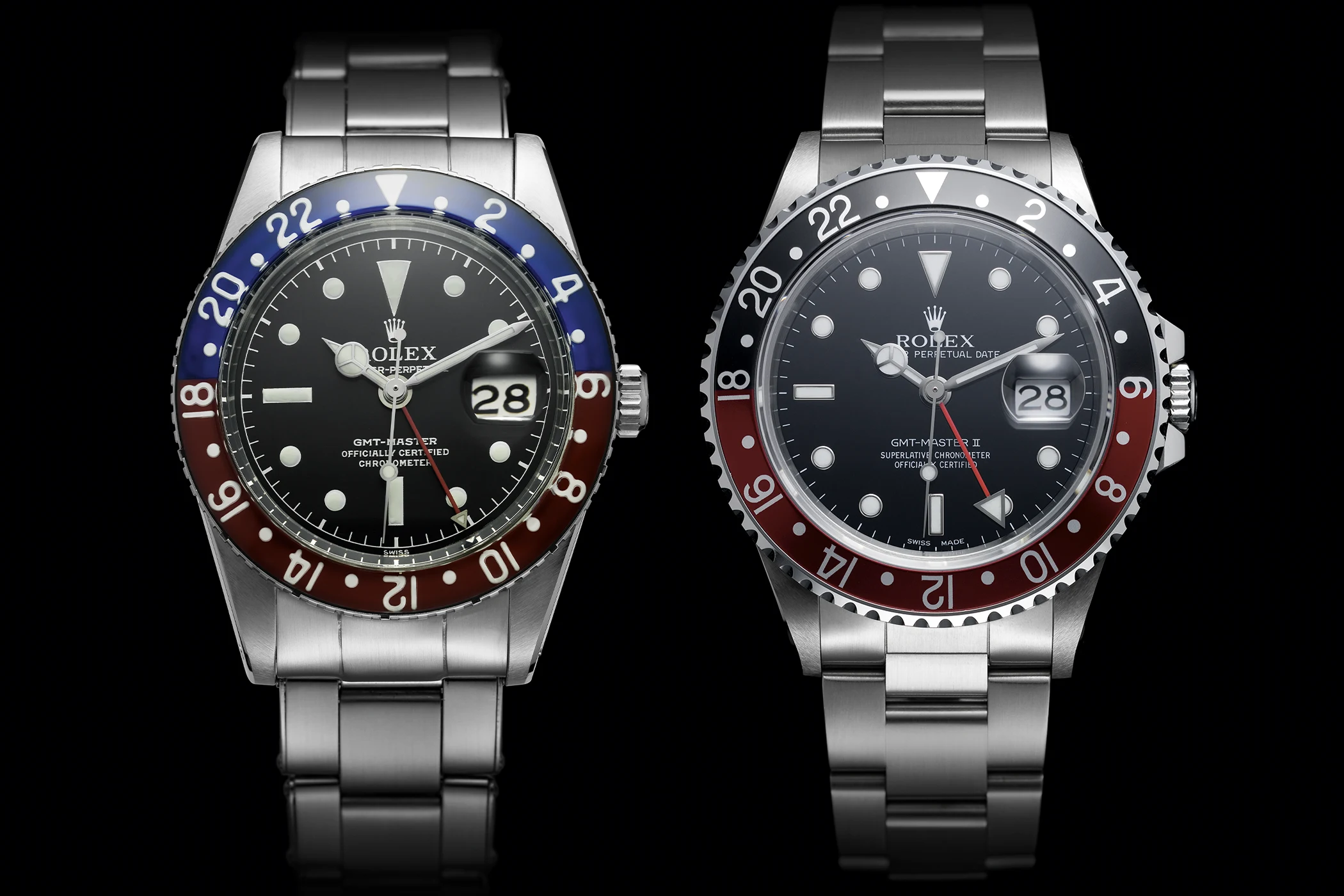
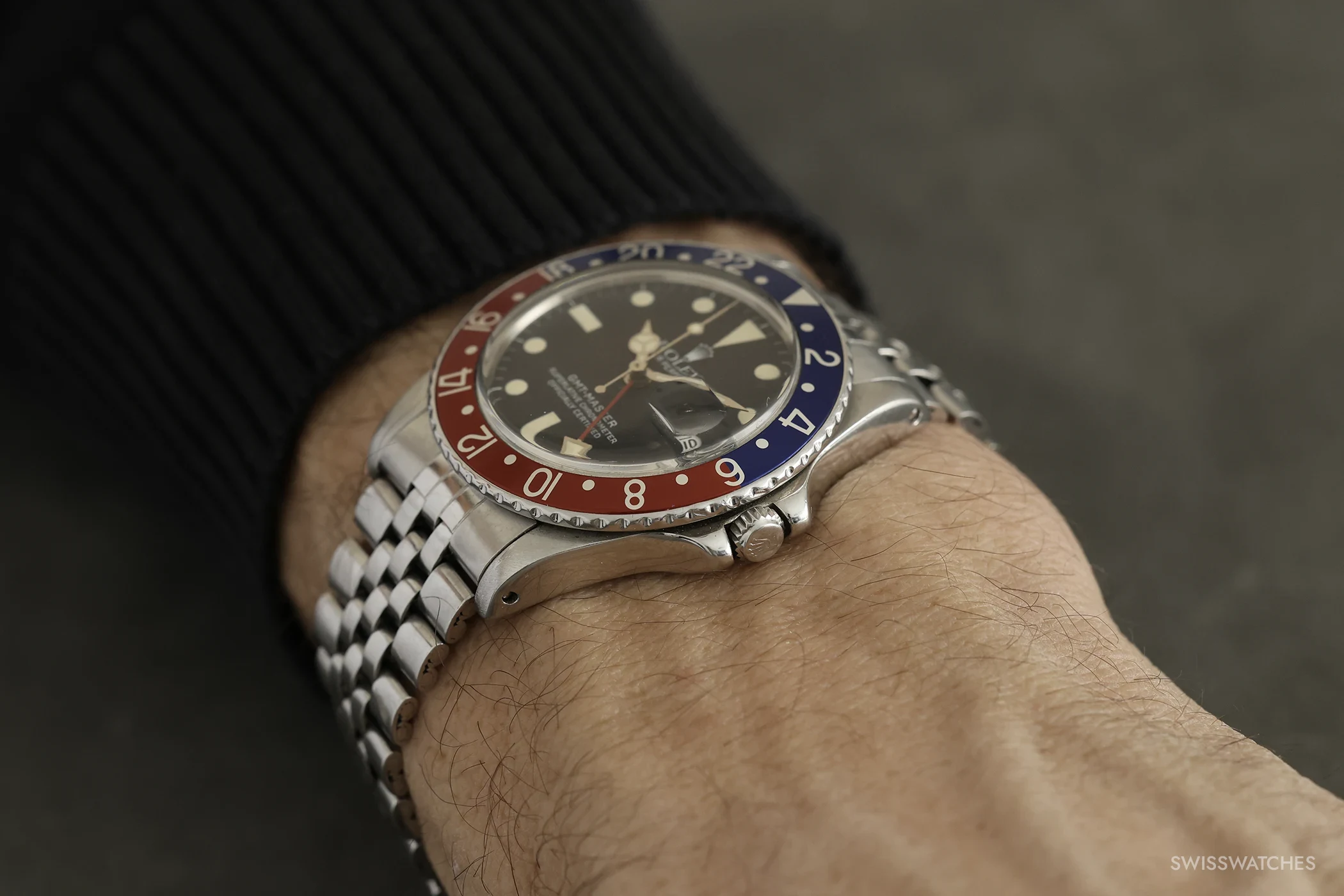
With the reference 1675, the GMT-Master took on the form that would define the model for decades. Rolex launched it in 1959 as the successor to the 6542, and it remained in production until 1980. Compared to the 6542, the most significant visible difference is the case with crown guards. Added to this is the bidirectional 24-hour bezel with an aluminium insert, replacing the earlier, more fragile Bakelite solution of the 6542. The dial of the 1675 also features the inscription ‘Superlative Chronometer Officially Certified’.
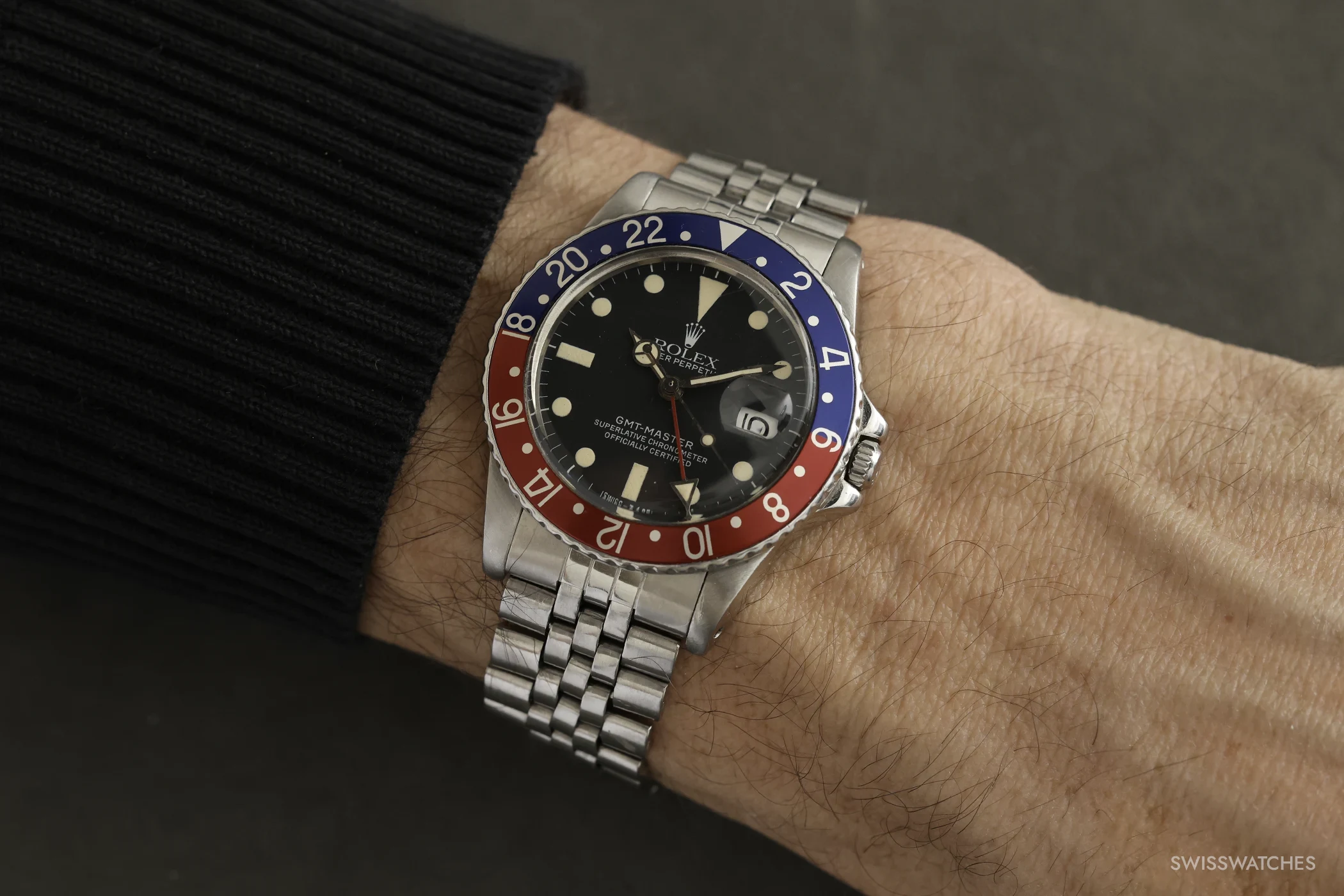
Over its long production run, the 1675 is not entirely uniform. From around 1966, the dials changed from a glossy to a matt finish; these matt versions characterised the majority of later production and even carried over into the first versions of the later reference 16750. In 1965, Rolex also switched to the calibre 1575, which increased the power reserve to approximately 48 hours and, from around 1971, also featured a seconds stop. This is precisely why the 1675 is not simply ‘the old Pepsi’ to collectors, but a reference with many sub-variants that allow the development of the GMT-Master to be traced in detail.
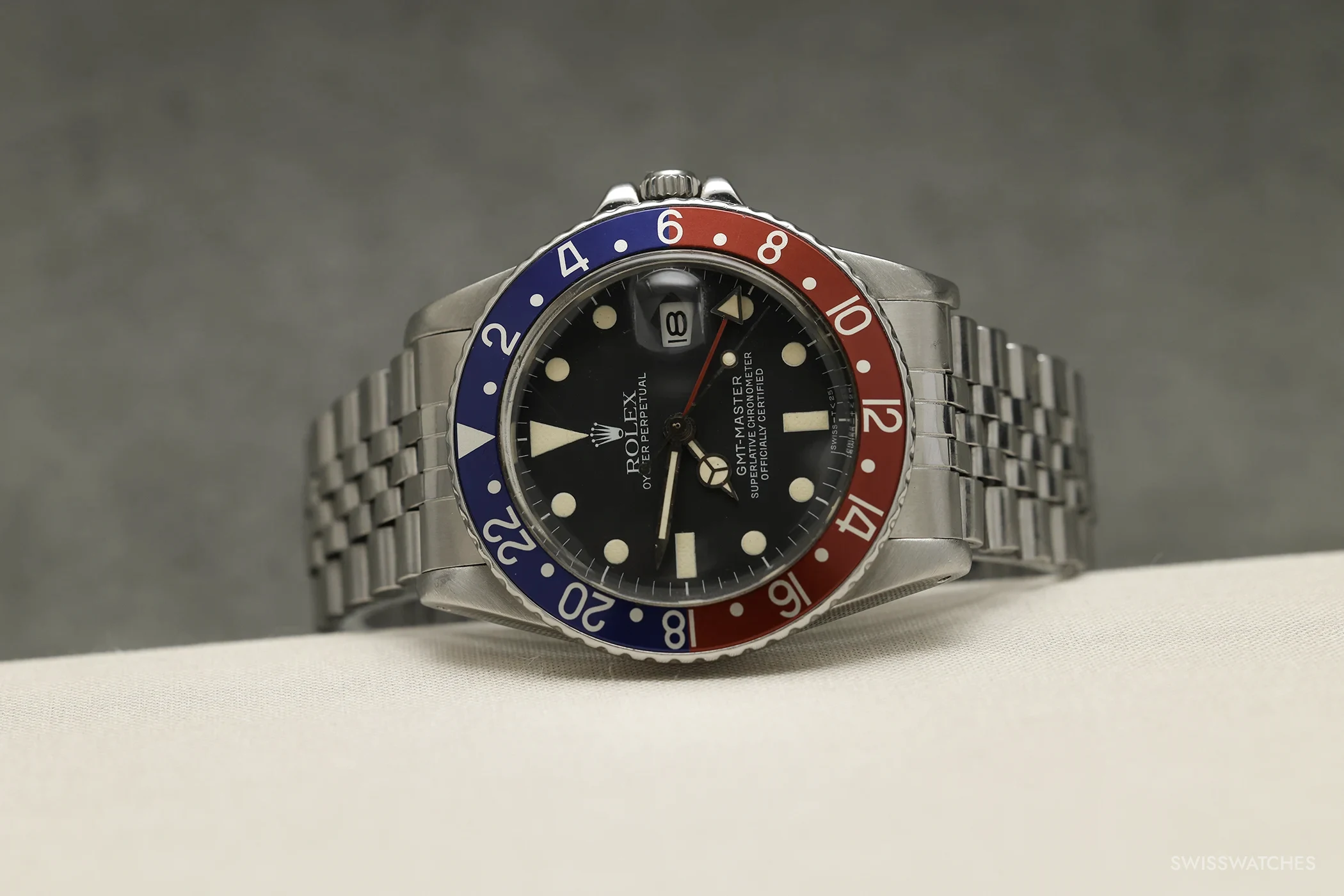
The fact that the 1675 is often regarded today as the archetypal ‘Pepsi’ is therefore not solely down to its long production run. Rather, it is also because the model’s classic form is so clearly embodied in it: a 40-millimetre steel case, Plexiglass, an aluminium bezel, slimmer proportions and the unmistakably older GMT-Master design, in which the local time and GMT display are not mechanically separated. It is precisely this that makes it so appealing, despite its technical limitations from today’s perspective.
The GMT-Master reference 16750, produced from 1980 to 1988, is not a technical stopgap but the most significant technical evolution of the classic GMT-Master prior to the final transition to the GMT-Master II. It is equipped with the Calibre 3075, which not only enables quick date adjustment but also features a higher frequency of 28,800 vibrations per hour instead of 19,600 in later 16750 models; furthermore, water resistance increases for the first time from 50 to 100 metres. The fact that it nevertheless occupies a transitional position within the model’s history is evident, among other things, in the dial: early examples still feature matt dials, like some versions of the Ref. 1675, whilst later ones have glossy lacquer dials with white gold rims.
Credit © Phillips
The 16700 is the very last GMT-Master ever made. It was produced from 1988 to 1999 – a period when the GMT-Master II, with its independently adjustable hour hand, had long been available. Nevertheless, Rolex continued to produce the classic GMT-Master. The 16700 is powered by the Calibre 3175, which is still a movement without an independently jumping hour hand. It thus remains functionally true to the model’s original concept: whilst it displays a second time zone, it is not as convenient to adjust whilst travelling as a GMT-Master II. Towards the end of the production period, Rolex also switched the luminous material from tritium to Super-LumiNova.
Credit © Phillips
This is precisely where Rolex’s reference numbers 16750 and 16700 differ. The 16750 takes the classic GMT-Master a step further in technical terms; the 16700 remains true to the original concept right to the end.
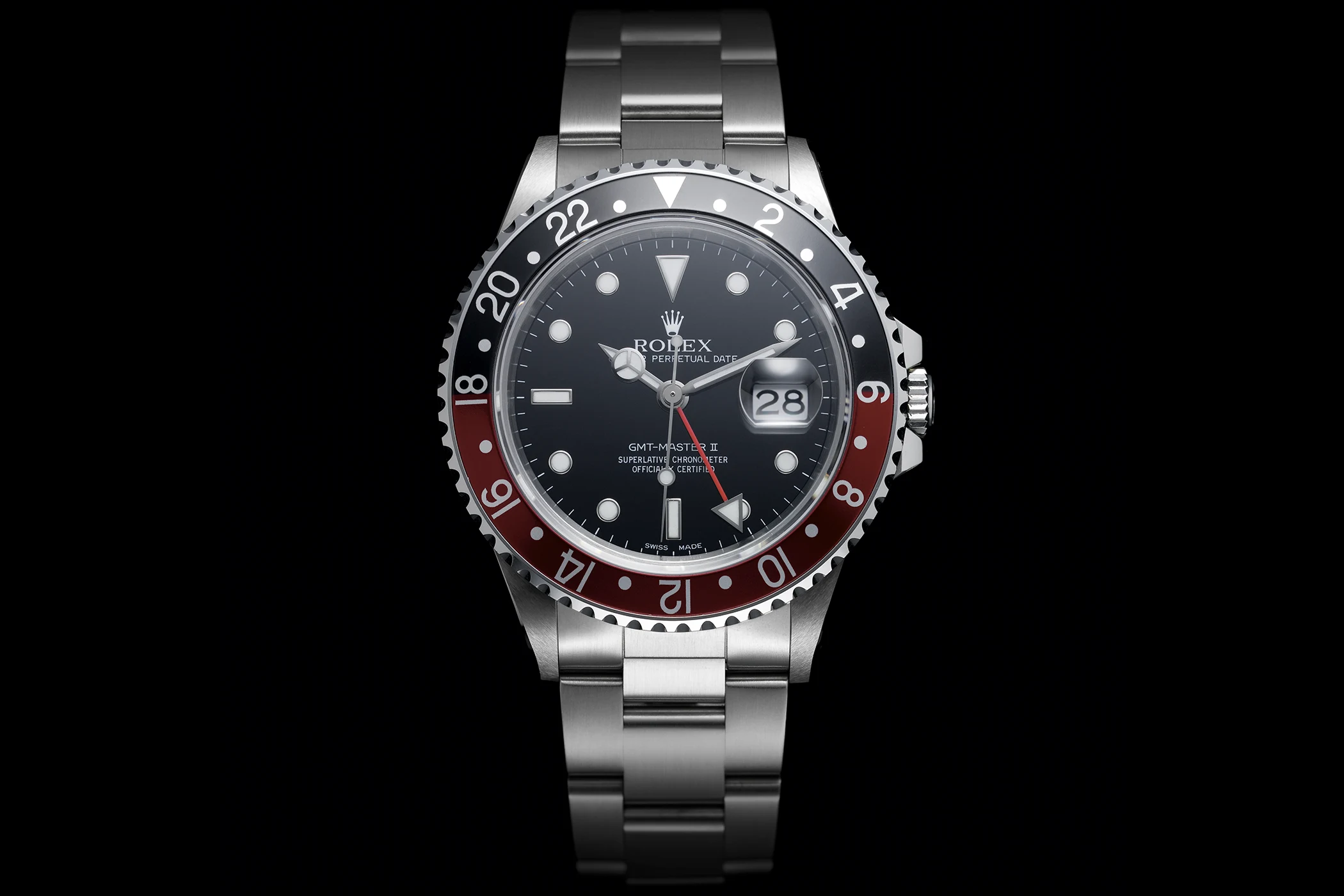
Models such as the 16750 and the later 16700 clearly show that Rolex did not abruptly replace the classic GMT-Master, but instead continued to develop it and kept it in its range alongside the GMT-Master II for many years. Rather, Rolex continued to develop the original model and, from 1982, supplemented it with a second line featuring a modified functional logic. The basis of this new model is the Calibre 3085, introduced in 1982, which for the first time allowed the hour hand to be adjusted independently of the minute and 24-hour hands. The GMT-Master II is based on this technical innovation. To this day, Rolex describes how it works quite succinctly and clearly: the local time is displayed via the traditional hands; the hour hand can be adjusted independently, whilst the additional 24-hour hand maintains the reference time.
This brings about a noticeable change in how the watch is operated. Whilst the classic GMT-Master was already capable of displaying two time zones, the GMT-Master II allows the reference time and local time to be managed independently of one another for the first time. The 24-hour hand maintains the reference time, whilst the local time can be adjusted in one-hour increments using the hour hand; the date is linked to this local time and advances automatically when midnight is passed. This is a crucial practical difference, particularly when travelling: after changing time zones, it is no longer necessary to reset the entire display, but only the local hour.
From this perspective, the previous models can also be understood more clearly. The 16750 brings the classic GMT-Master to a technically very mature stage. The 16700 continues the original concept of the GMT-Master right up until 1999, even though the GMT-Master II had long since been established. The GMT-Master II, on the other hand, is based on a different functional logic. It is precisely this juxtaposition that makes it clear that Rolex is not reinventing the model, but is significantly refining it in terms of its practical use.
With the reference 16710, the Pepsi reaches a point where the classic GMT-Master proportions and the functional logic of the GMT-Master II combine particularly convincingly. The watch was produced from 1989 onwards and thus belongs entirely to the second model generation; as a Pepsi, it is also the last reference with an aluminium bezel. This explains its position within the series quite well.
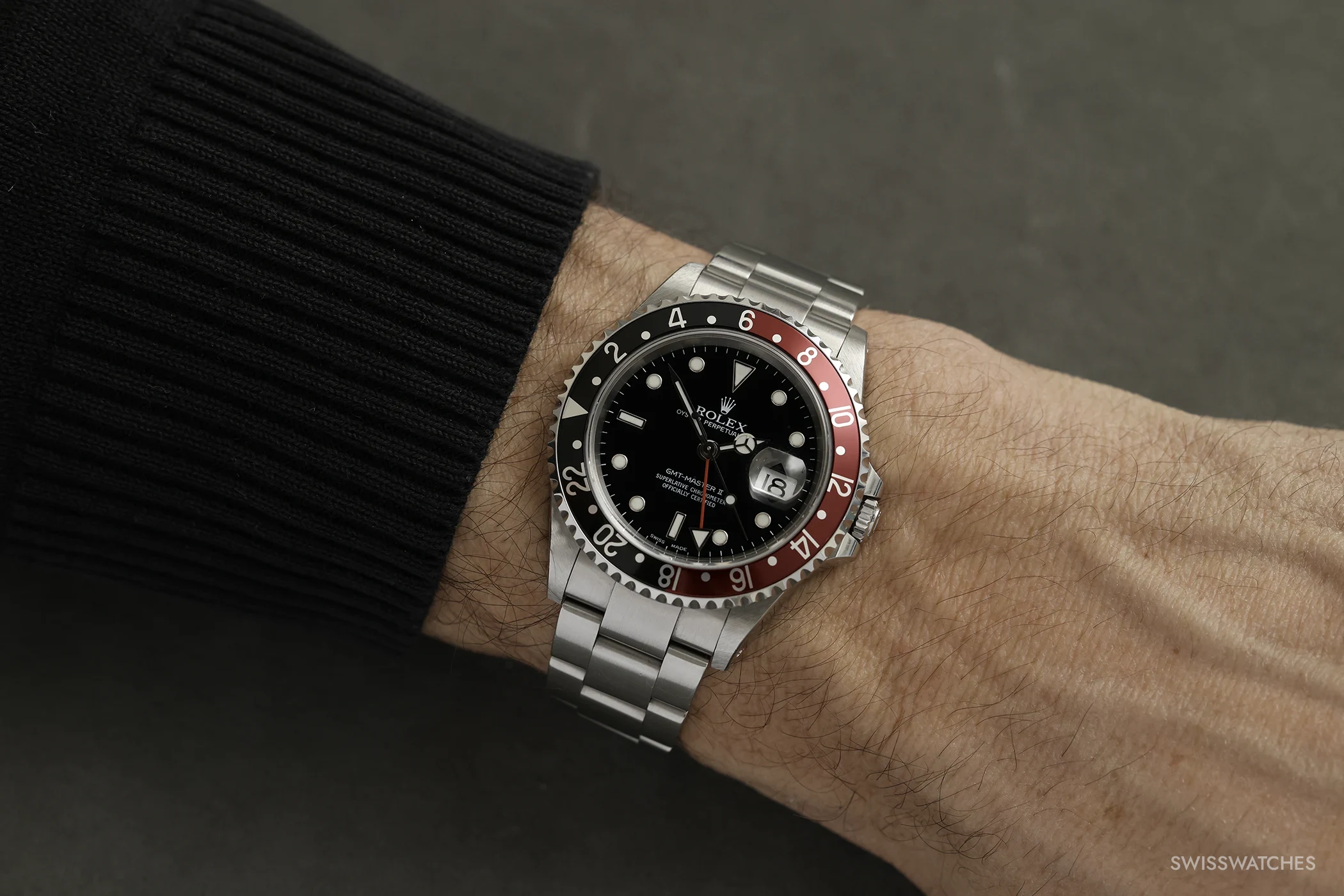
Technically, it clearly aligns with the GMT-Master II. It is usually powered by the Calibre 3185, though very late models already feature the Calibre 3186. Visually, however, it remains much closer to the older GMT-Master than the later ceramic models: an aluminium insert, a sleeker appearance, a less imposing case, and an overall understated look on the wrist. It is precisely this combination that makes the 16710 so appealing to many collectors. It offers the more practical operation of the GMT-Master II without straying too far from the design of the earlier ‘Pepsi’ models.
Furthermore, the 16710 itself underwent changes during its long production run. Specialist sources point to variations in luminous material over the years and to very late versions featuring the Calibre 3186, which are now being examined more closely. The reference is therefore not simply the last aluminium ‘Pepsi’, but already a model with its own in-house development.
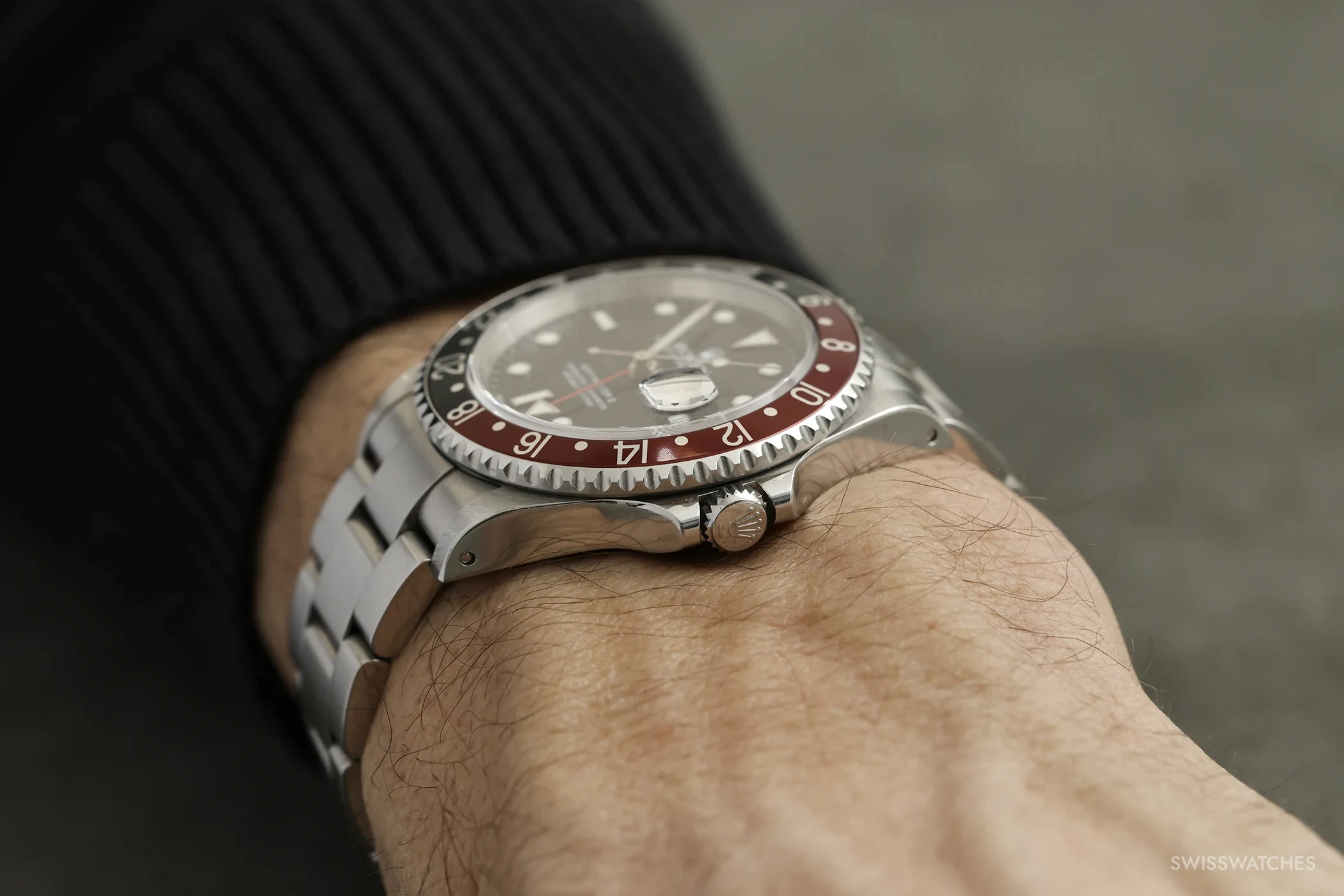
With the newer GMT-Master II references, the Pepsi has changed primarily in terms of materials and appearance. This is particularly evident on the bezel. With the specially developed Cerachrom bezel insert, Rolex has replaced an element in the Pepsi that for decades was not only a defining design feature but also heavily dependent on ageing and material sensitivity. The two-tone bezel remains as a design concept, but is now crafted from a material that Rolex describes as extremely hard, practically scratch-resistant, UV-resistant and chemically inert; the recessed numerals and graduations are now coated with a thin layer of precious metal using PVD. The Pepsi models produced between 1982 and 2007, on the other hand, featured bezel inserts made of anodised aluminium, which acquired their blue-red colouring during the anodising/electroplating process.
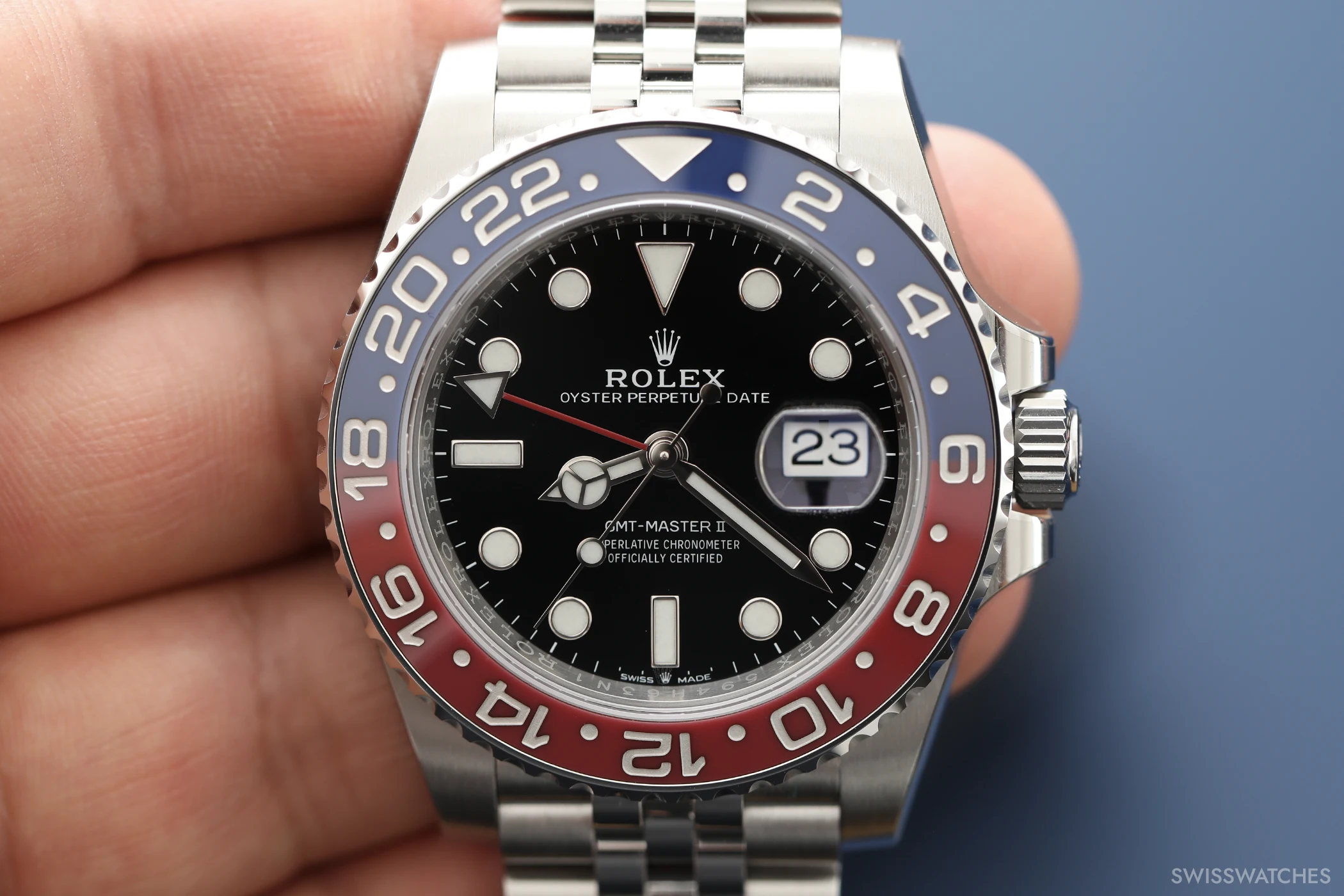
For the Pepsi in particular, this is more than just a technical step. In earlier models, the blue-and-red bezel was always characterised by its changeability: aluminium ages, fades and shows signs of wear. With Cerachrom, the colour combination is retained, but now appears significantly more stable and durable. This illustrates the transition to the modern GMT-Master II particularly clearly.
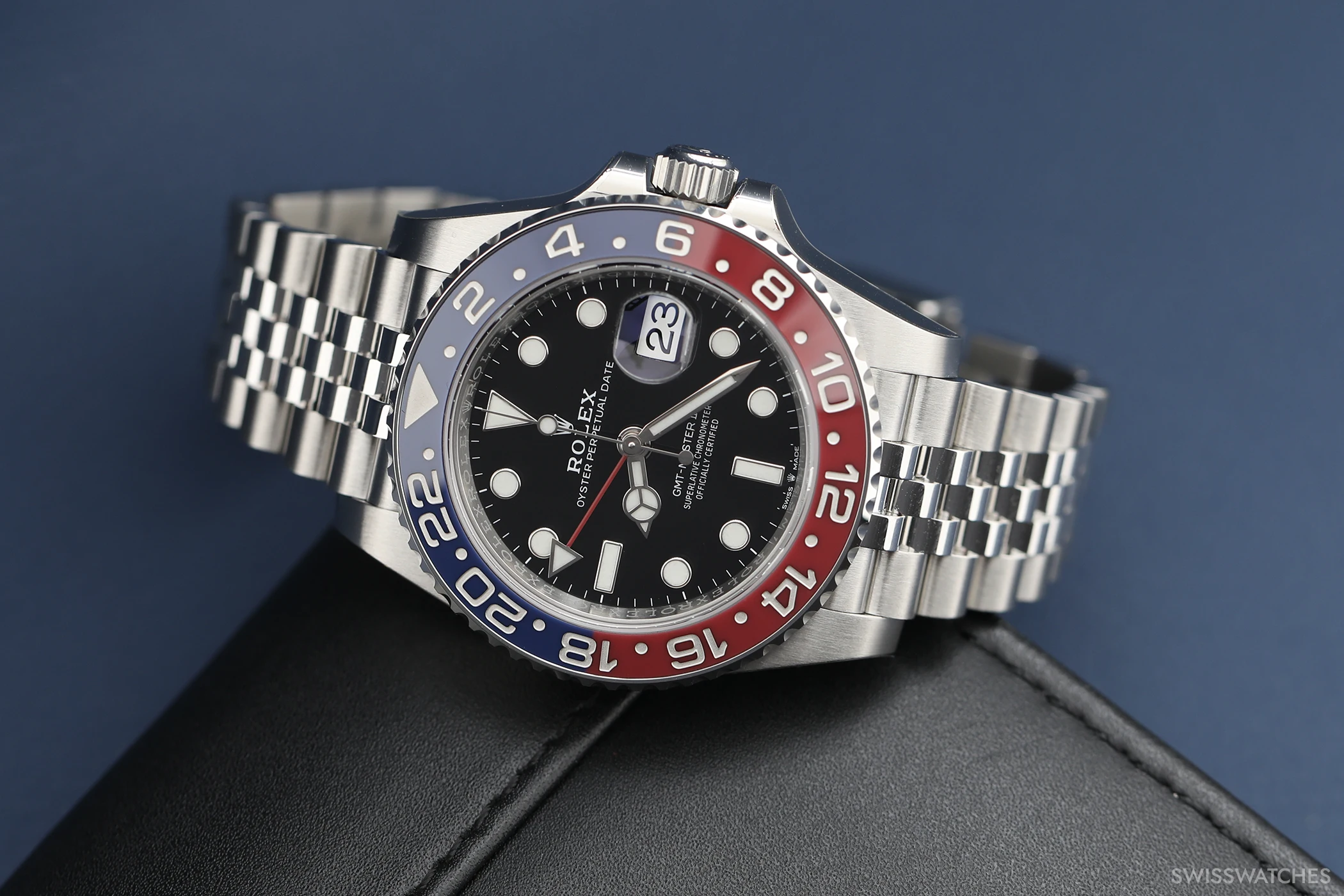
The order in which Rolex is reintroducing this new version of the Pepsi is also revealing. The red-and-blue Cerachrom bezel first appeared in 2014, albeit initially on a model in 18-carat white gold. This is also noteworthy because the 16710, the last five-digit GMT-Master II reference with a Pepsi bezel, was discontinued as early as 2007, and there were no Pepsi models in the regular range between 2007 and 2018. Ironically, the collection’s most characteristic colour scheme was therefore unavailable in its original material version for over 11 years. It was not until 2018 that the Pepsi returned in Oystersteel with the reference 126710BLRO.
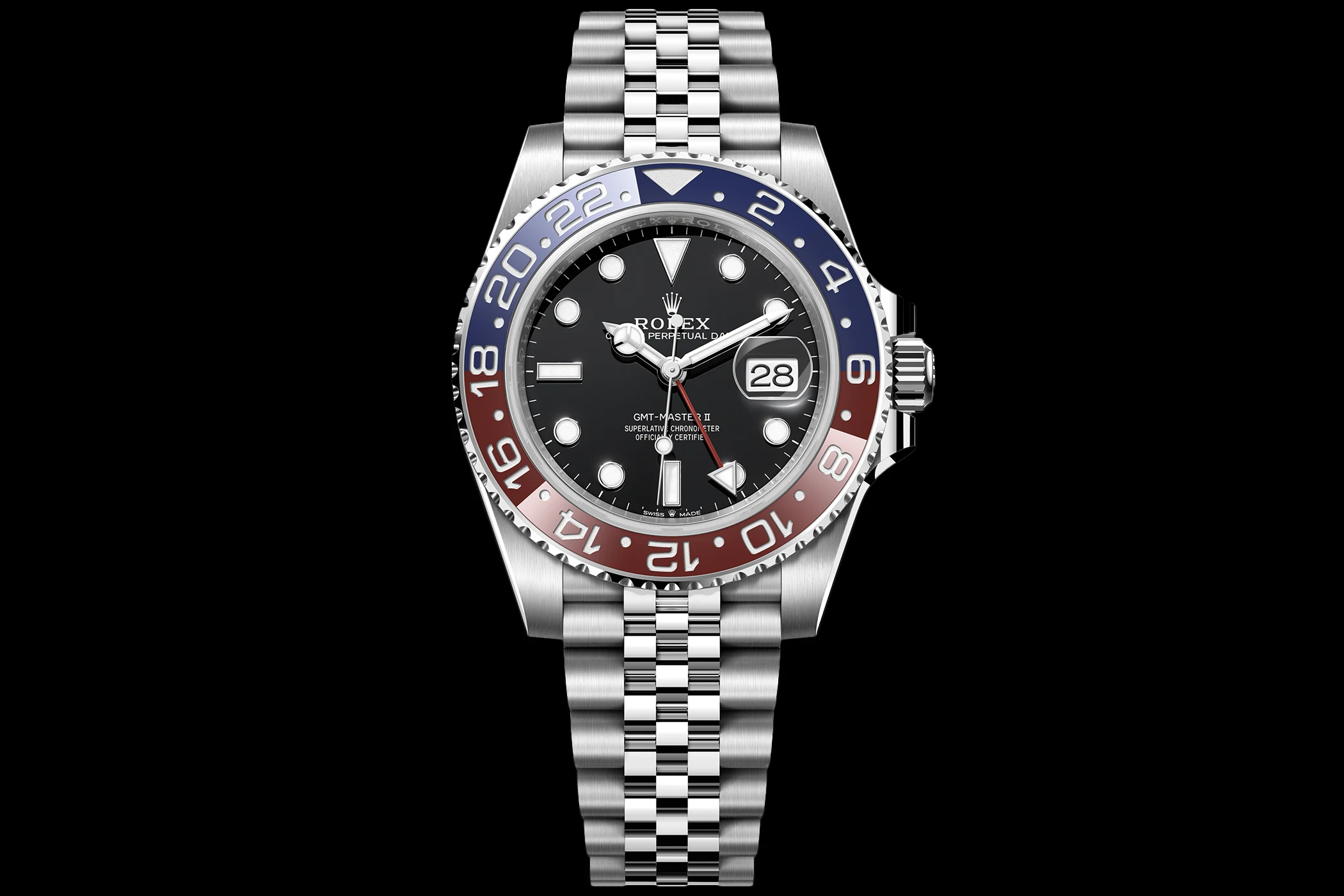
When people talk about the Pepsi today, they are almost certainly referring to the 126710BLRO. It is the current version in Oystersteel and has a particularly strong influence on how the model is perceived today. Rolex currently offers it with a 40-millimetre diameter, a black dial, a blue and red Cerachrom bezel, Calibre 3285 and water resistance to 100 metres.
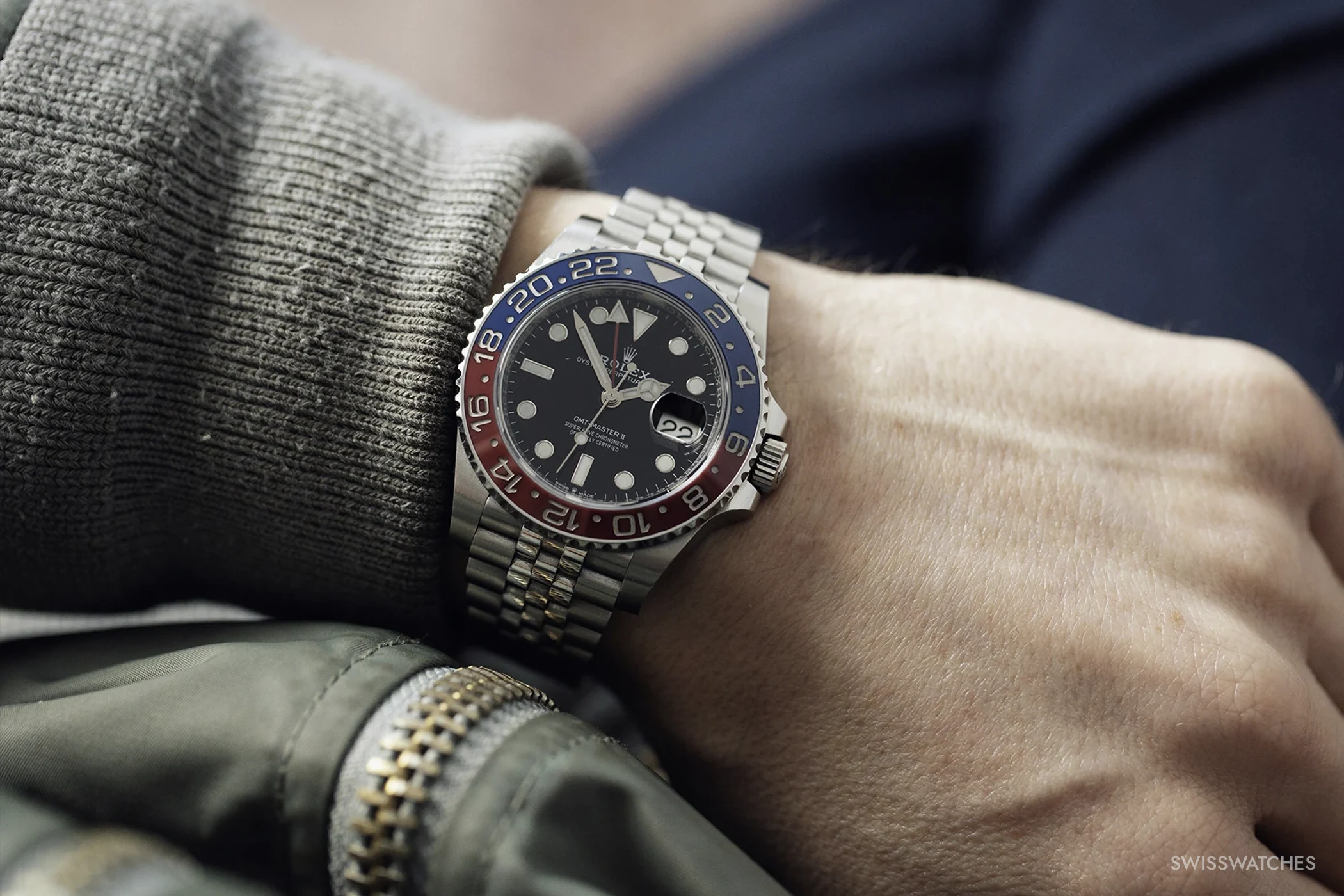
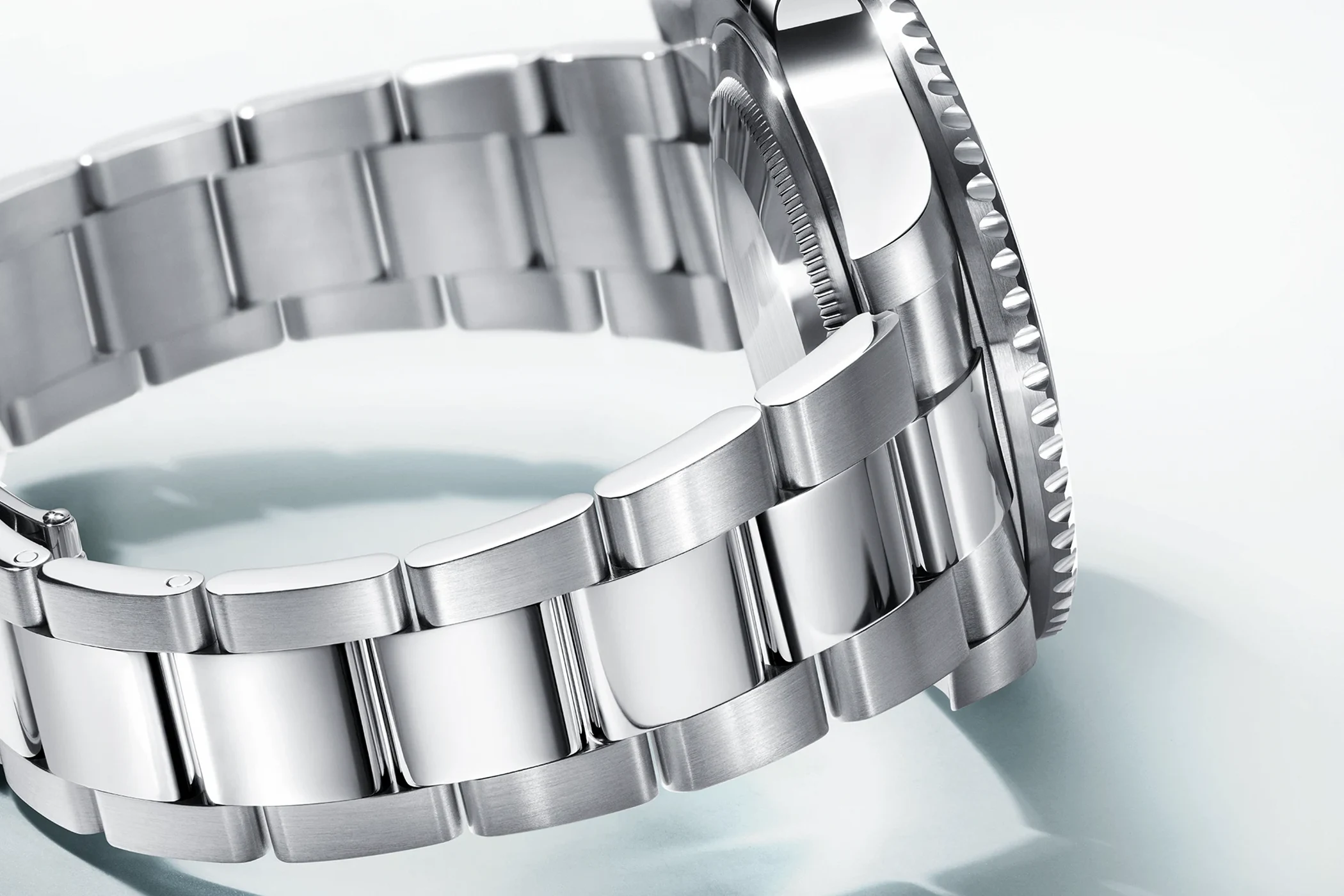
In the version currently produced by Rolex, the 126710BLRO is available with the Jubilee bracelet, amongst other options. It also features the Oysterlock safety clasp and the Easylink extension, which adds approximately five millimetres or the equivalent of a full Jubilee bracelet link. These may seem like straightforward product details at first glance, but they have a greater impact on the watch’s overall appearance than one might expect. The Jubilee bracelet takes away some of the bulkiness that many GMT-Master II models exude on the Oyster bracelet, giving it a more fluid, slightly sportier appearance. This is precisely where part of its current appeal lies. The 126710BLRO combines the technical modernity of the GMT-Master II with a design that clearly references the model’s older history, without succumbing to nostalgia
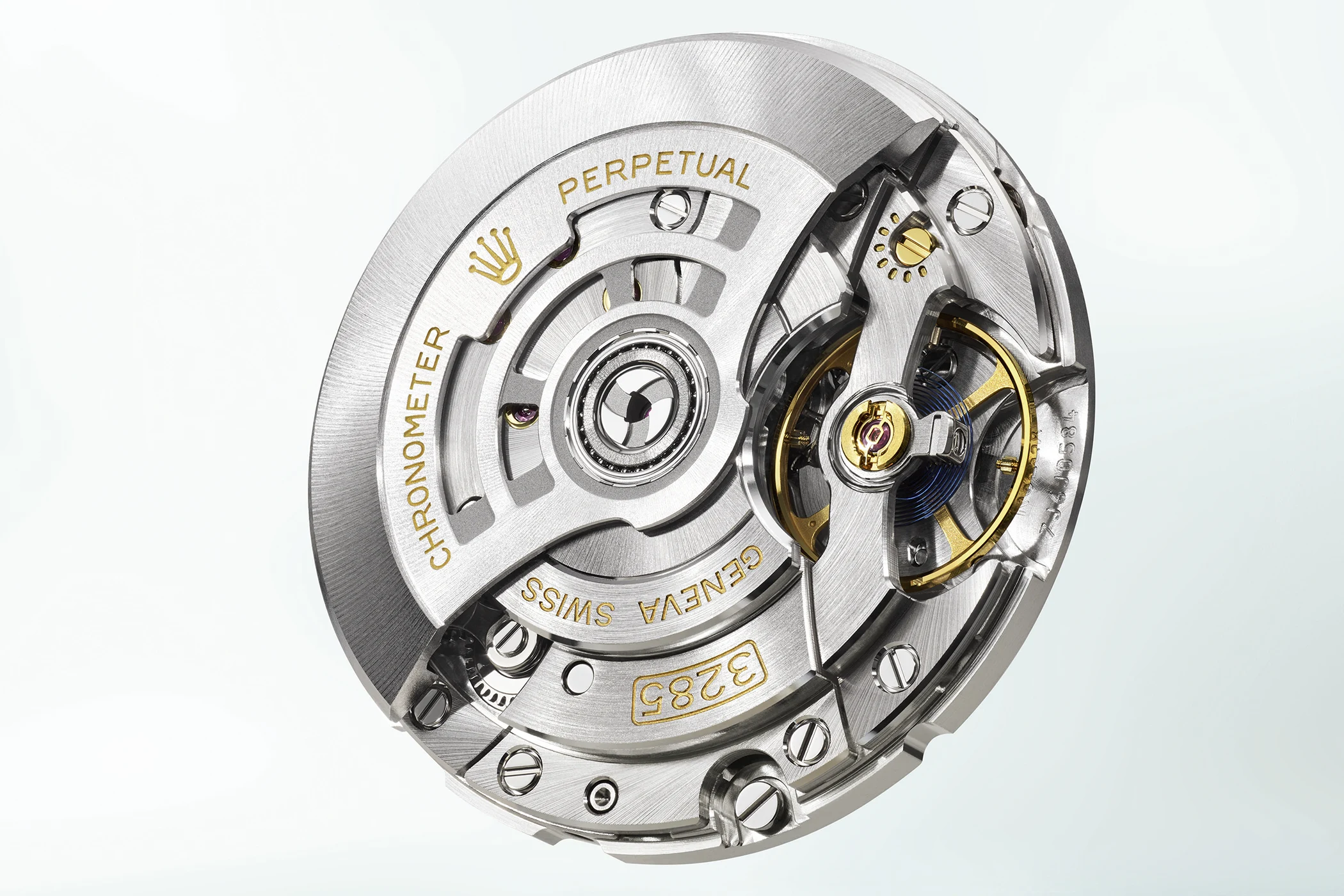
Inside the current Pepsi is the calibre 3285. Rolex describes it as a self-winding movement developed and manufactured entirely in-house, featuring a Chronergy escapement, a blue Parachrom hairspring, Paraflex shock absorbers and a power reserve of around 70 hours. Added to this are the functions that really matter in everyday use of a GMT-Master II: the independently adjustable hour hand, the 24-hour display for the reference time, the instantaneous date change and the stop-seconds mechanism. Rolex specifies the precision as –2/+2 seconds per day after casing – in line with the ‘Superlative Chronometer’ standard. It is therefore fitting that Rolex describes the GMT-Master II not only as a watch for two time zones, but also classifies it within its own framework of precision, robustness and suitability for everyday use.
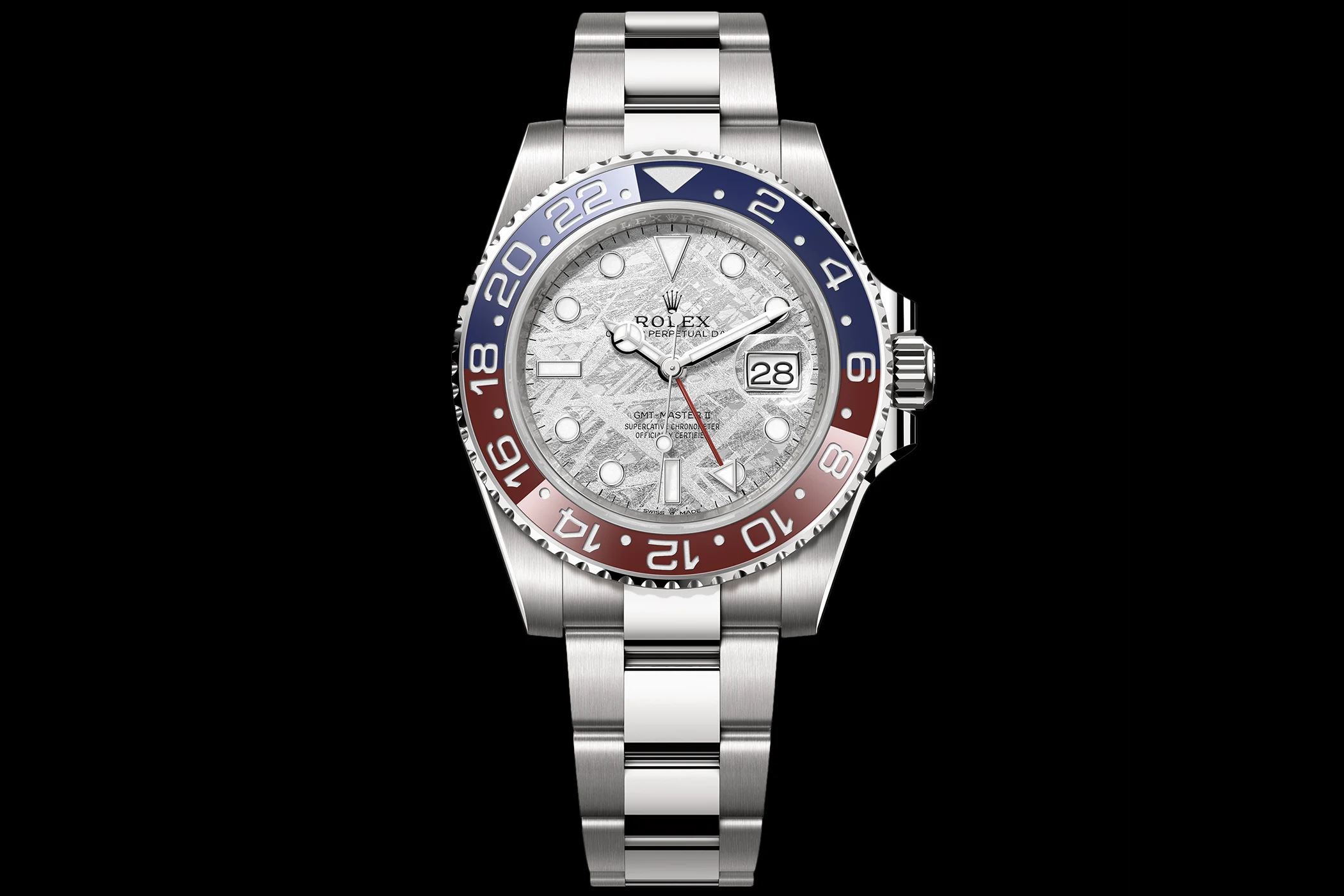
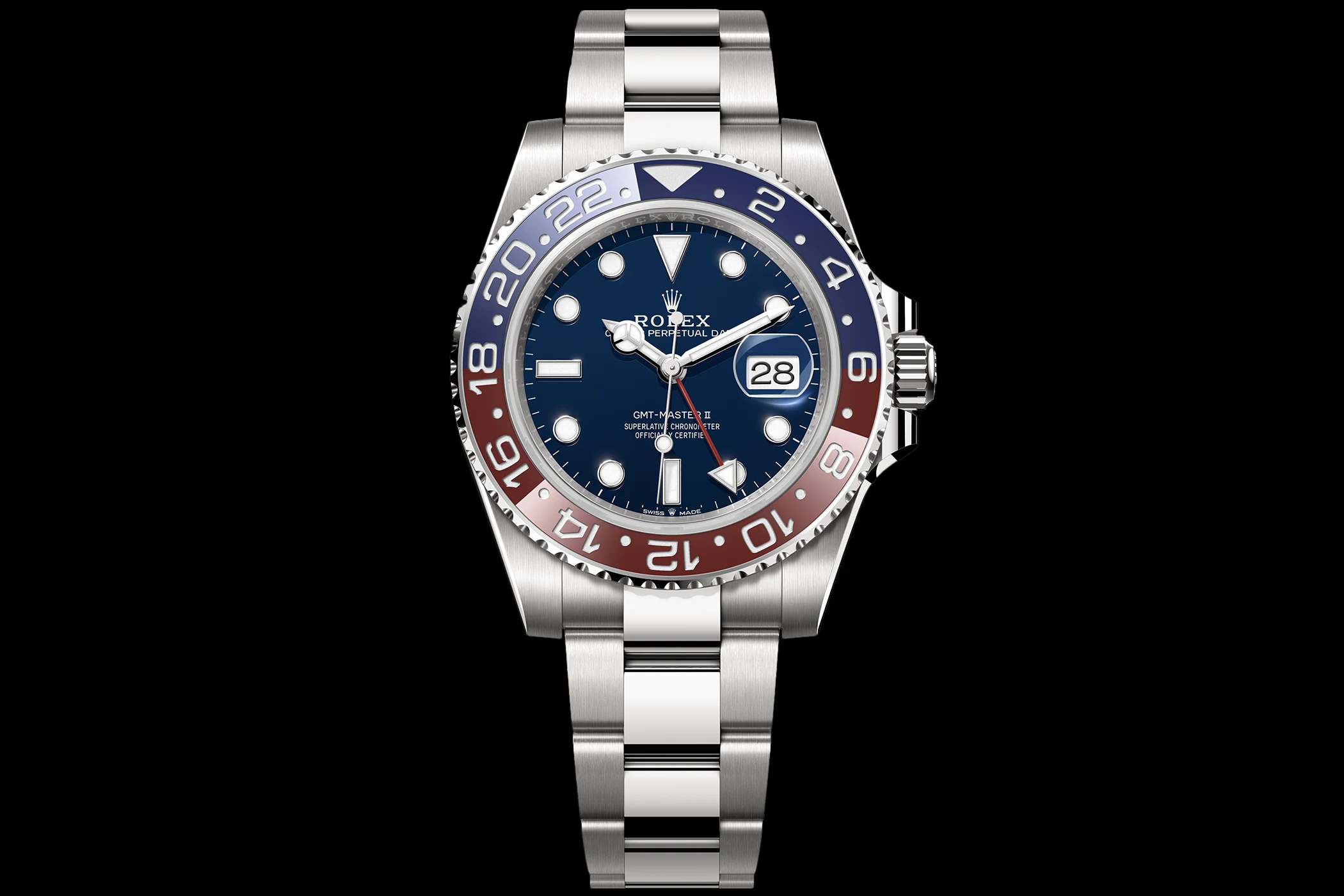
The Pepsi is now available not only in steel but also in white gold. In terms of construction, it is essentially the same watch; the main difference from the steel version lies primarily in the material. Things get more interesting when it comes to the dial. Rolex offers the white gold variant, Ref. 126719BLRO, with a midnight blue dial or a meteorite dial. The blue dial gives the watch a more cohesive look, and the very similar shade of blue on the bezel and dial creates a sense of calm and unity in the watch’s visual appearance. The meteorite dial, also available for the white gold version, does exactly the opposite: it introduces movement, texture and a surface that never looks quite the same. It is crafted from genuine meteorite stone and, due to the natural texture of its pattern, is always unique – much like mother-of-pearl dials. This is precisely where the white gold Pepsi really begins to distinguish itself from the steel version – not in the watch’s basic form, but in its effect and the variety offered by the choice of dials.
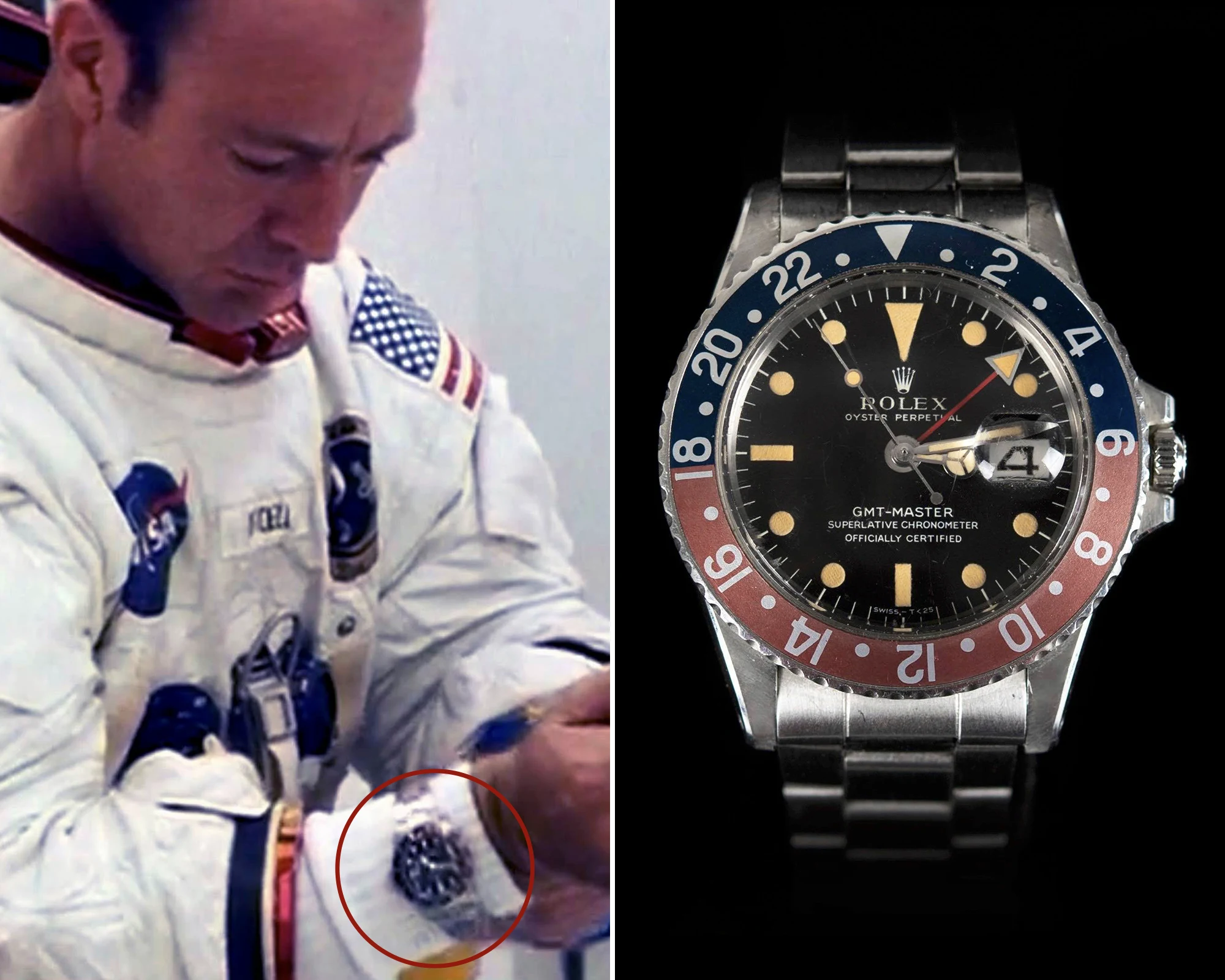
Among publicly documented auction results for Rolex GMT-Master models with genuine blue-red bezels, Edgar Mitchell’s Apollo 14-worn Ref. 1675 clearly leads the way at USD 2,163,199. This is followed, some way behind, by a Ref. 6542 sold by Sotheby’s in 2023 for CHF 177,800. However, both results demonstrate above all how strongly provenance can influence pricing for historic Pepsi models.
Credit © NASA / Credit © RR Auction
Credit © Sotheby´s
Anyone considering buying a Rolex Pepsi should first clarify exactly what they are looking for: something historic with an authentic vintage feel, or perhaps a version that can be worn every day without too much thought or fuss, or a model that combines both, at least to some extent. Almost everything else depends on this decision.
Credit © Phillips
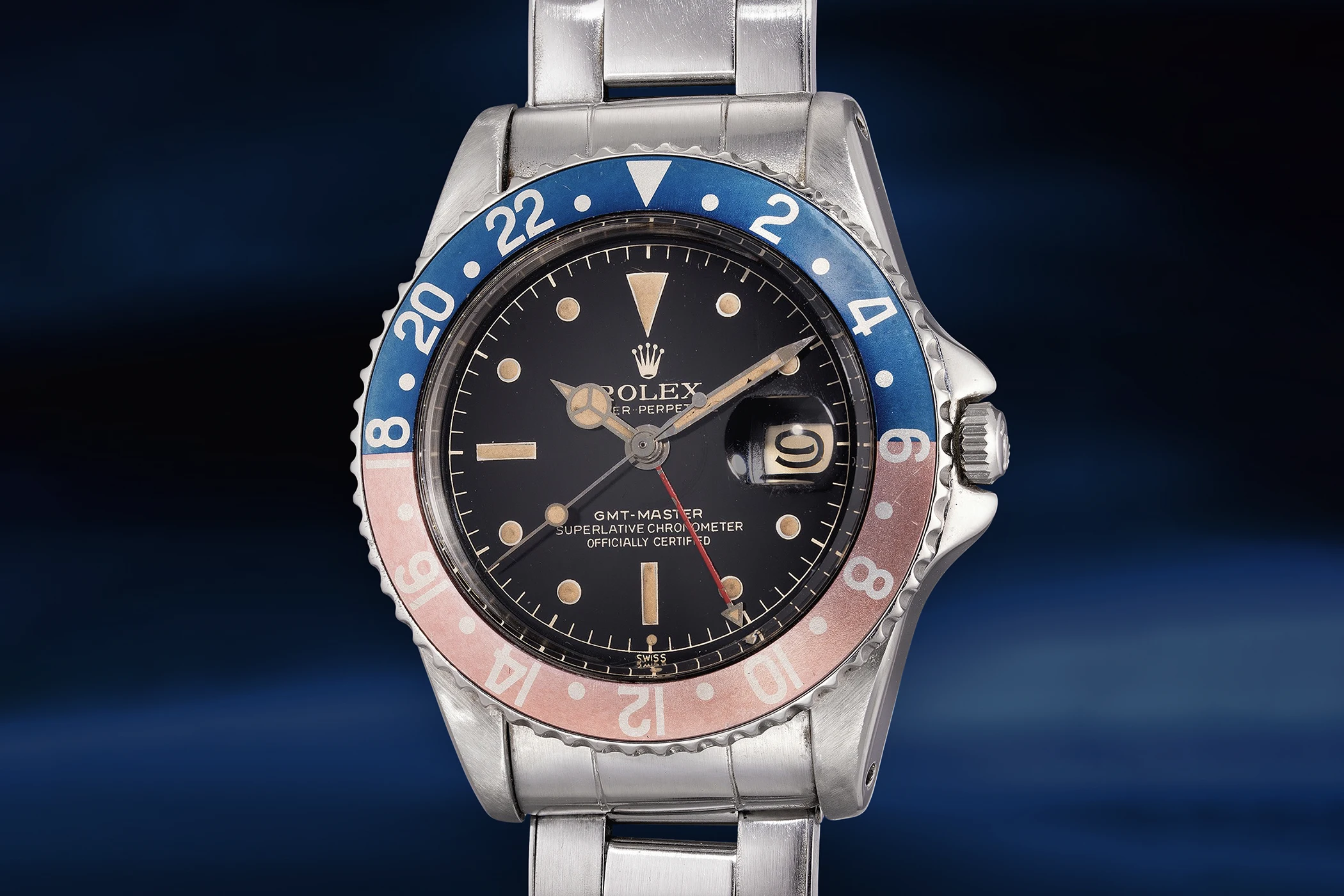
When it comes to vintage models, authenticity is the key factor. This applies not only to the dial, hands and bezel insert, but always to the watch as a whole. With the Pepsi in particular, there is a strong temptation to assess individual elements in isolation: for example, a beautifully aged bezel or a dial in particularly good condition. In practice, however, it is always the interplay of these factors that counts. Auction houses such as Sotheby’s and Phillips, for example, repeatedly highlight the interplay of case condition, dial, bezel insert, patina and provenance when dealing with sought-after examples of the 1675 reference.
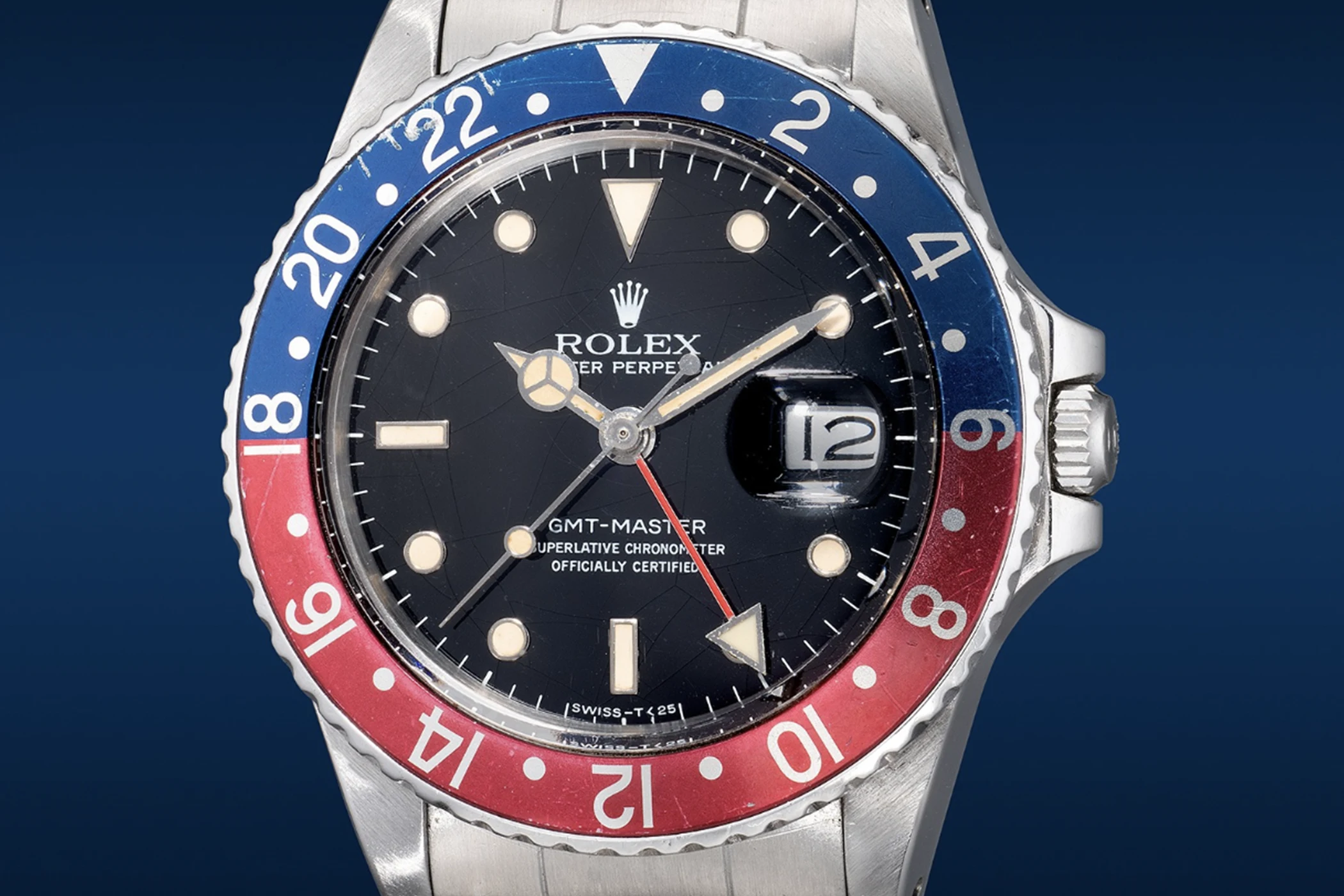
Credit © Phillips
What’s more, ageing or patina is never viewed as a flaw in the case of a Pepsi. Faded bezels, slight colour shifts or a convincing patina can significantly enhance a watch’s appeal – provided they look plausible and are consistent with the overall condition of the watch’s other components. Ultimately, this always has a significant impact on the price and can be observed time and again in well-documented auction lots.
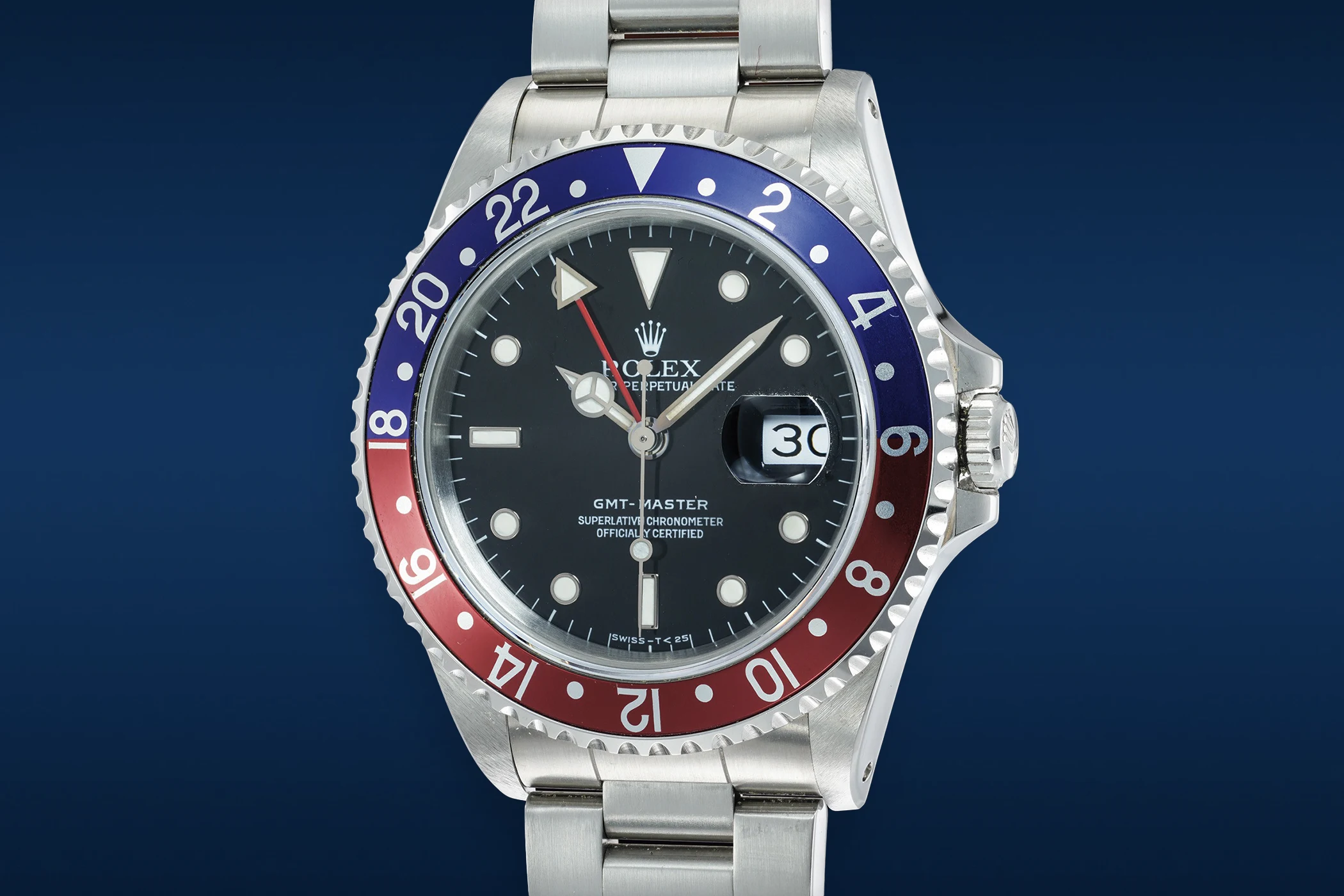
Credit © Phillips
With modern models, the criteria are shifting. Here, the focus is less on historical authenticity and more on completeness, condition, and the specific version one actually prefers. With the 126710BLRO, for example, it certainly matters whether one prefers the Jubilee bracelet or the Oyster version; Rolex officially offers both variants. With the white gold reference 126719BLRO, there is also the question of the dial: midnight blue or meteorite. Technically, the two versions differ only in the calibre, depending on the year of manufacture; in terms of their functional performance, they are identical.
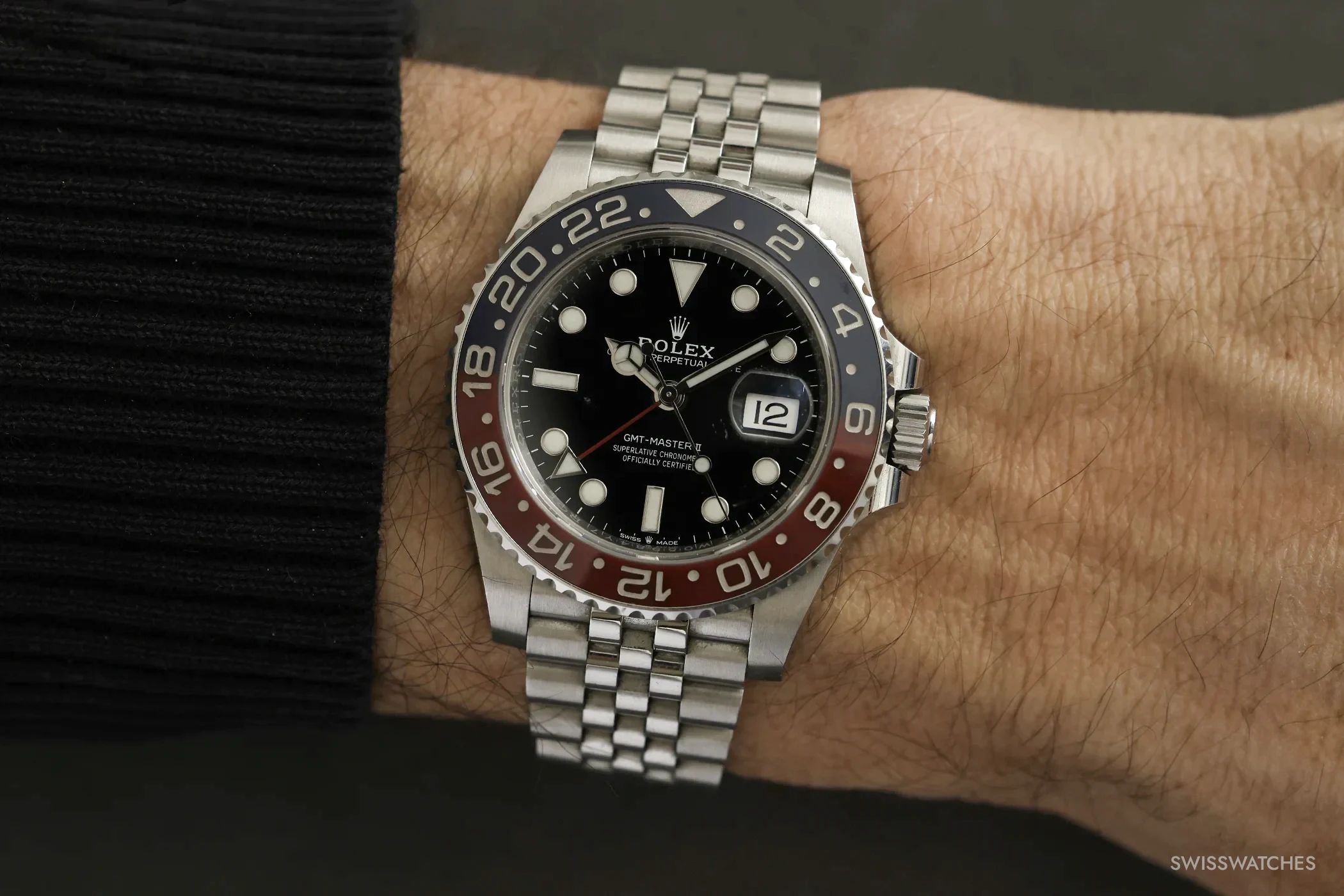
Those seeking the strongest historical connection will tend to gravitate towards the early models: the 6542, as the starting point for the GMT-Master, and the 1675, the model that defined the look of the Pepsi for decades. On the other hand, those looking for a watch that still clearly resembles the early GMT-Master but is significantly easier to wear in everyday life will usually opt for the 16710, the last Pepsi with an aluminium bezel and a fully developed GMT-Master II functional logic. And those who want the Pepsi in its current form will opt for the 126710BLRO in Oystersteel; the 126719BLRO follows the same basic concept in 18-carat white gold
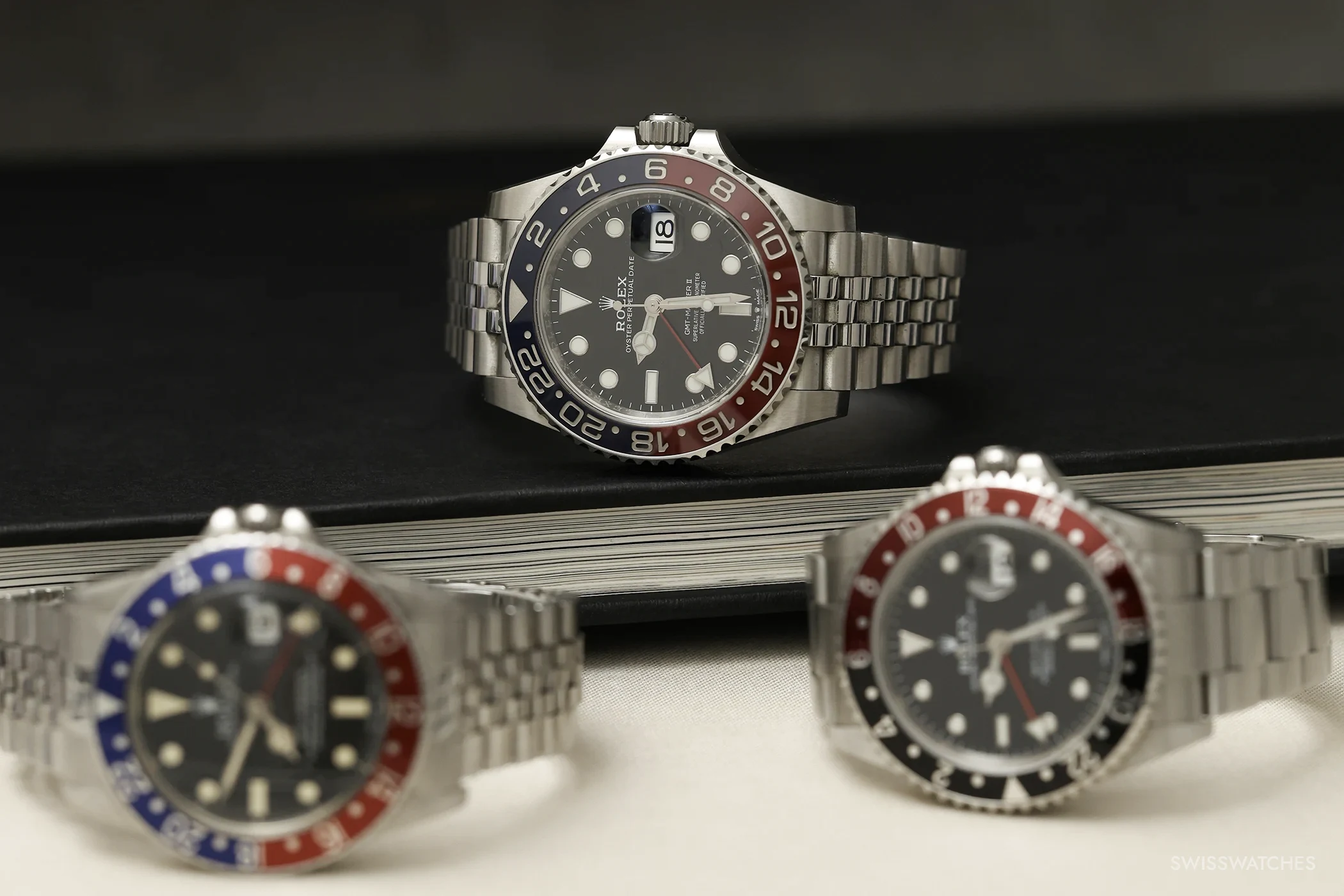
The Rolex Pepsi probably tells the story of the GMT-Master collection more coherently than any other version of the model. It illustrates how a travel watch from the 1950s evolved over decades into a line whose fundamental principle has remained unchanged to this day: not merely to display a second time zone, but to make it legible at a glance and practical for everyday use. Rolex itself explicitly draws this connection from the GMT-Master introduced in 1955 to the GMT-Master II with its independently adjustable hour hand and two-tone bezel.
This is precisely why the Pepsi holds a special place within the collection. Other colour variants have expanded and redefined the GMT-Master II. The blue-and-red bezel, on the other hand, remains most closely linked to the model’s origins — not least because, in 2014, Rolex explicitly drew on the iconic colour combination of the original watch with the modern Cerachrom or ceramic version.
Perhaps this is precisely what explains the enduring popularity of the nickname. ‘Pepsi’ is no longer merely a casual collector’s term for two colours on a bezel, derived from the colour scheme of an American soft drink manufacturer’s logo, but rather the most concise way of summarising the culture and colour scheme surrounding the original Rolex GMT-Master colour combination.