From Patek Philippe to Cartier: these dress watches are shaping the 2026 trend towards classic elegance, vintage styling and understated sophistication.
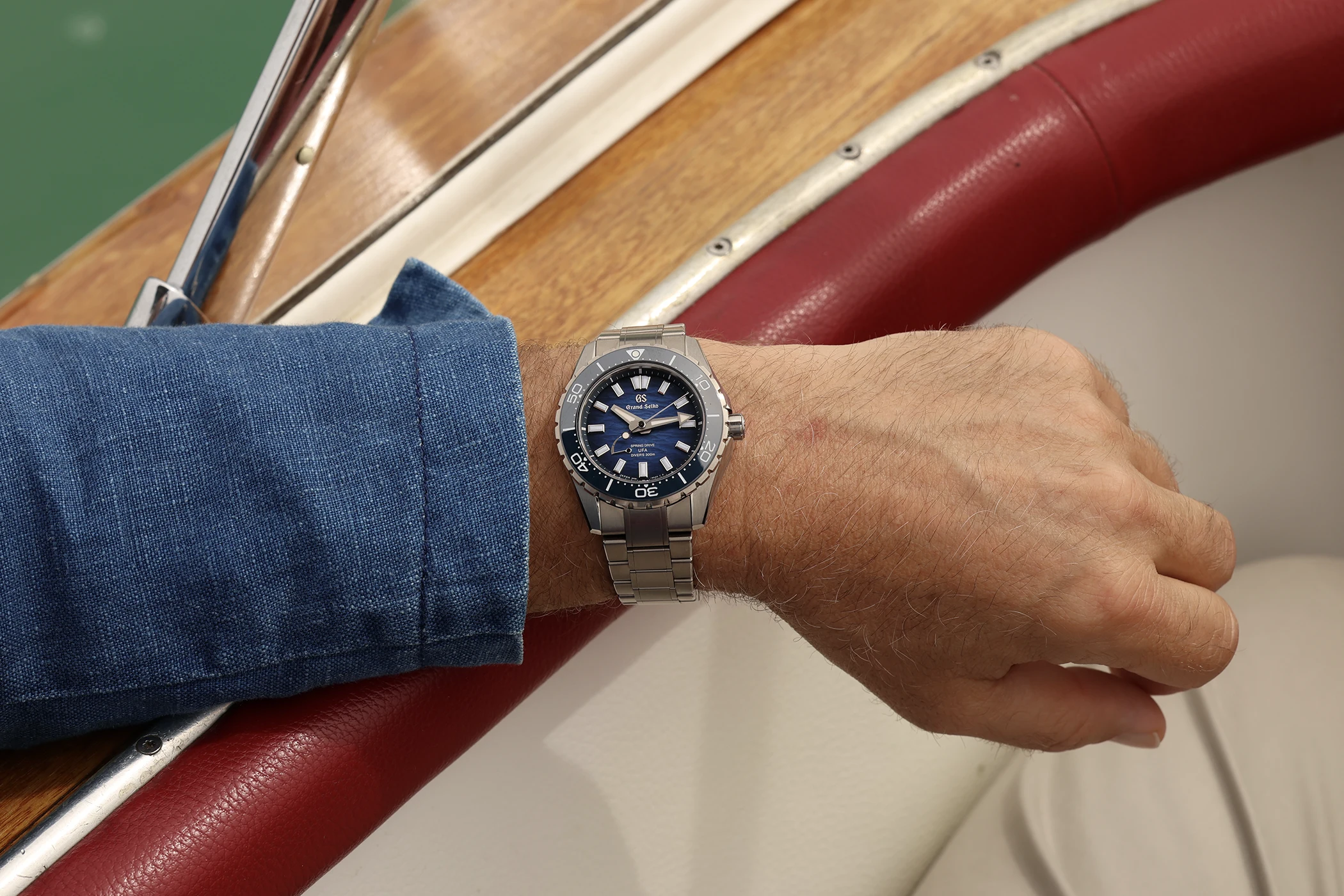
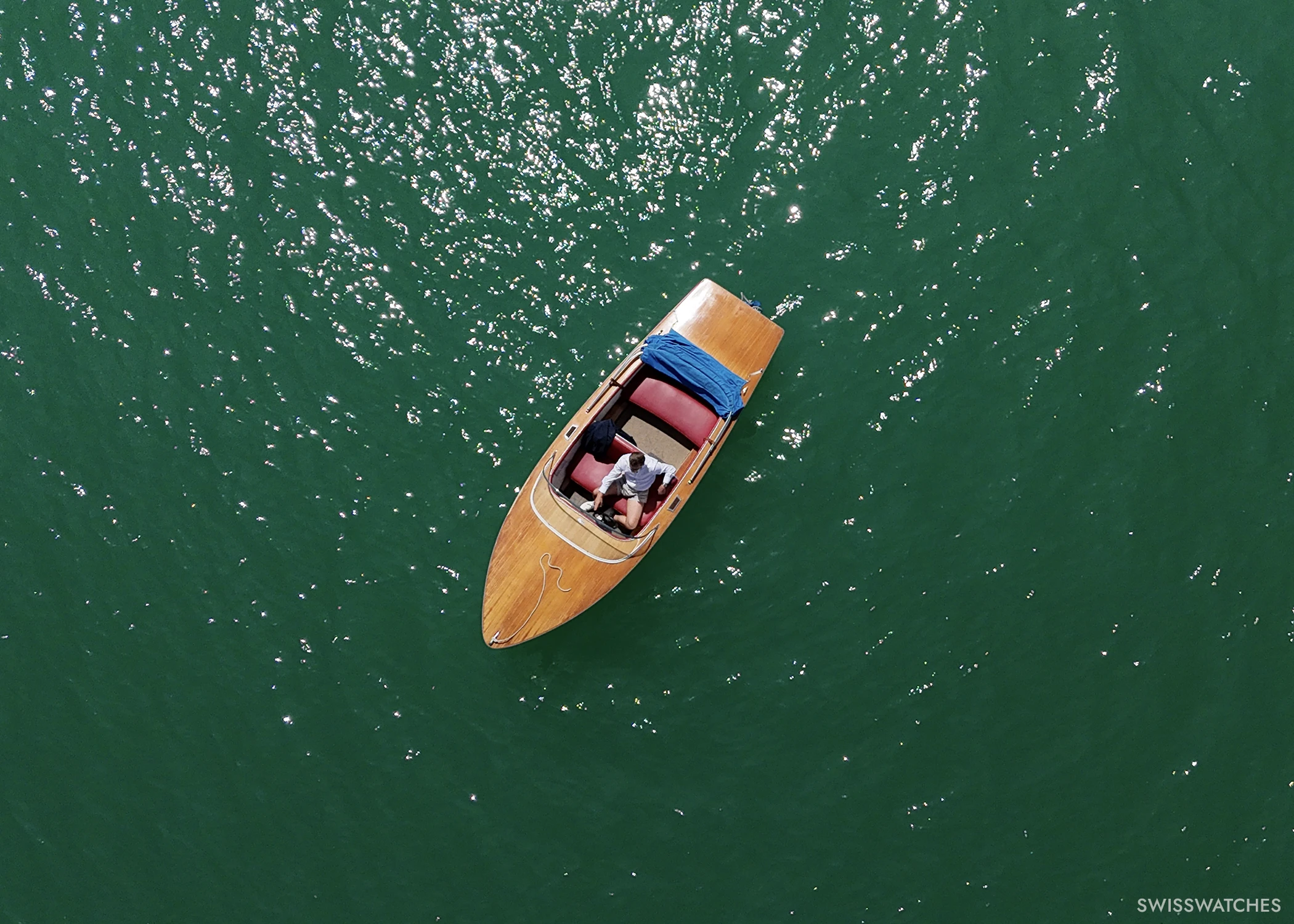
How much of a diver’s watch does one really need between the jetty and the bar? A day at Lake Tegernsee with Grand Seiko’s smallest and, at the same time, most precise diver’s watch.
Summer is finally here. And with it comes the crucial question for anyone drawn to the water – to cool off and relax: which mechanical wristwatch is actually best for this?
It is no coincidence that, at this time of year in particular, many men find themselves facing a minor dilemma (quite apart from simply having too many watches to choose from). It’s the age-old, two-part question: on the one hand, how much of a diving watch do you actually need? And on the other, what sort of diving watch would be appropriate between the jetty and a sundowner at the bar? There’s one thing all yacht owners – or, as in my case, electric boat driver – agree on: nobody actually dives with it these days, apart from a quick dive off the bathing platform at the stern. The point is: if you wanted to, you could.
Which brings us to the truly crucial question: that of style. My theory is that, up to now, diving watches have been particularly successful when they have managed to achieve two things at once – being instantly recognisable whilst remaining closely intertwined with a brand and its legacy, and at the same time performing just as confidently under the social pressures of a beach bar as they do deep underwater.
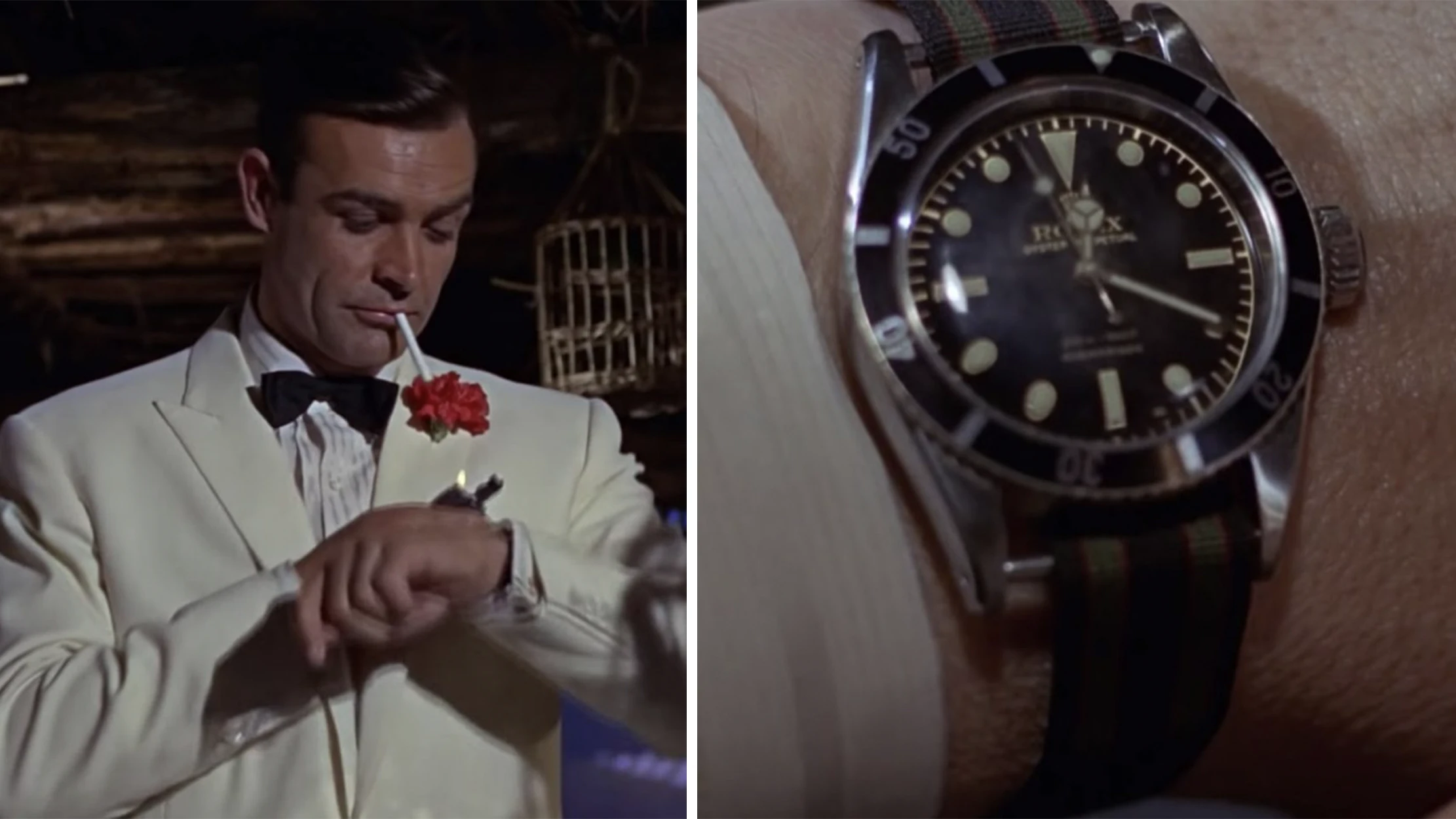
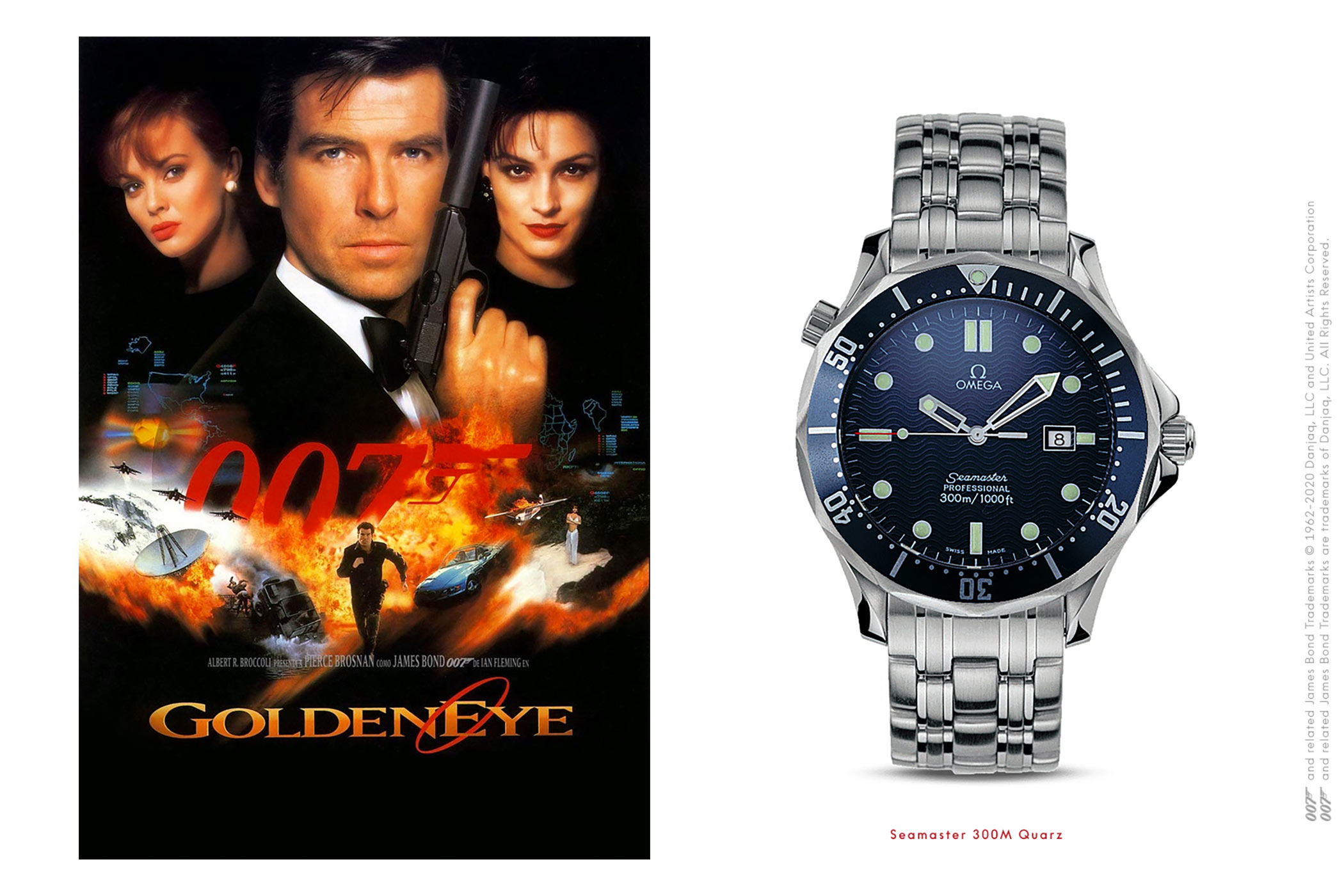
For a long time, the whole subject could be summed up by two watches, both of which are associated with a single character: the film agent James Bond. Until now, the ‘James Bond moment’ has been the preserve of the Omega Seamaster and the Rolex Submariner. Of course, both are famous timepieces – but the fact that they can now be worn with a tuxedo at the casino is due in no small part to 007: Rolex, first represented by Sean Connery (in Dr No, 1962, wearing a Submariner on his wrist), and Omega, represented by Pierce Brosnan since GoldenEye (1995).
It is interesting to look back at the original novel. When Ian Fleming’s first Bond novel, Casino Royale, went to press in April 1953, such an all-purpose career would still have been unthinkable – and indeed, Fleming does not mention any watch brand for Bond in that book. A stylish and well-disguised secret agent, then as now, simply changed his watch model to suit the occasion.
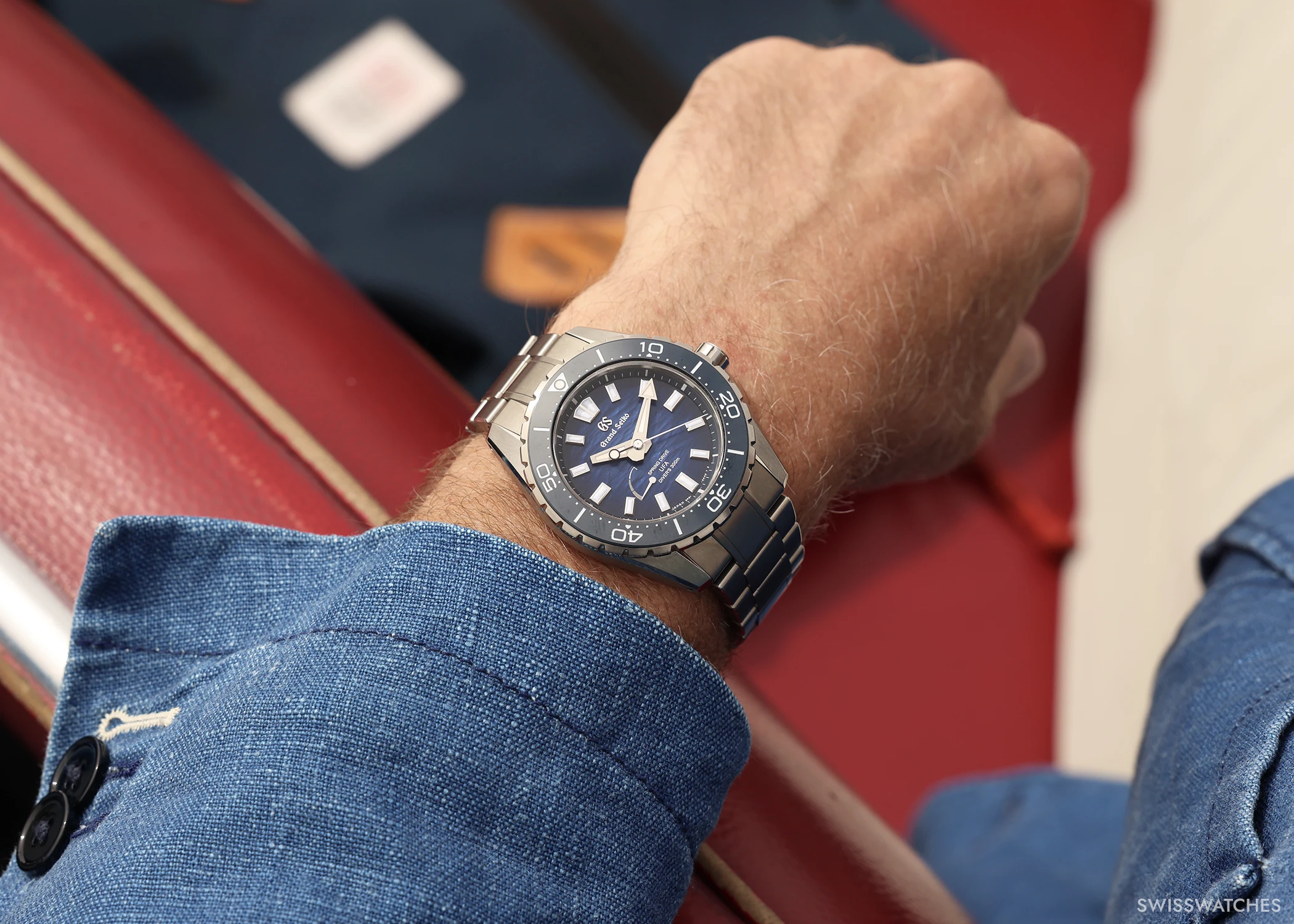
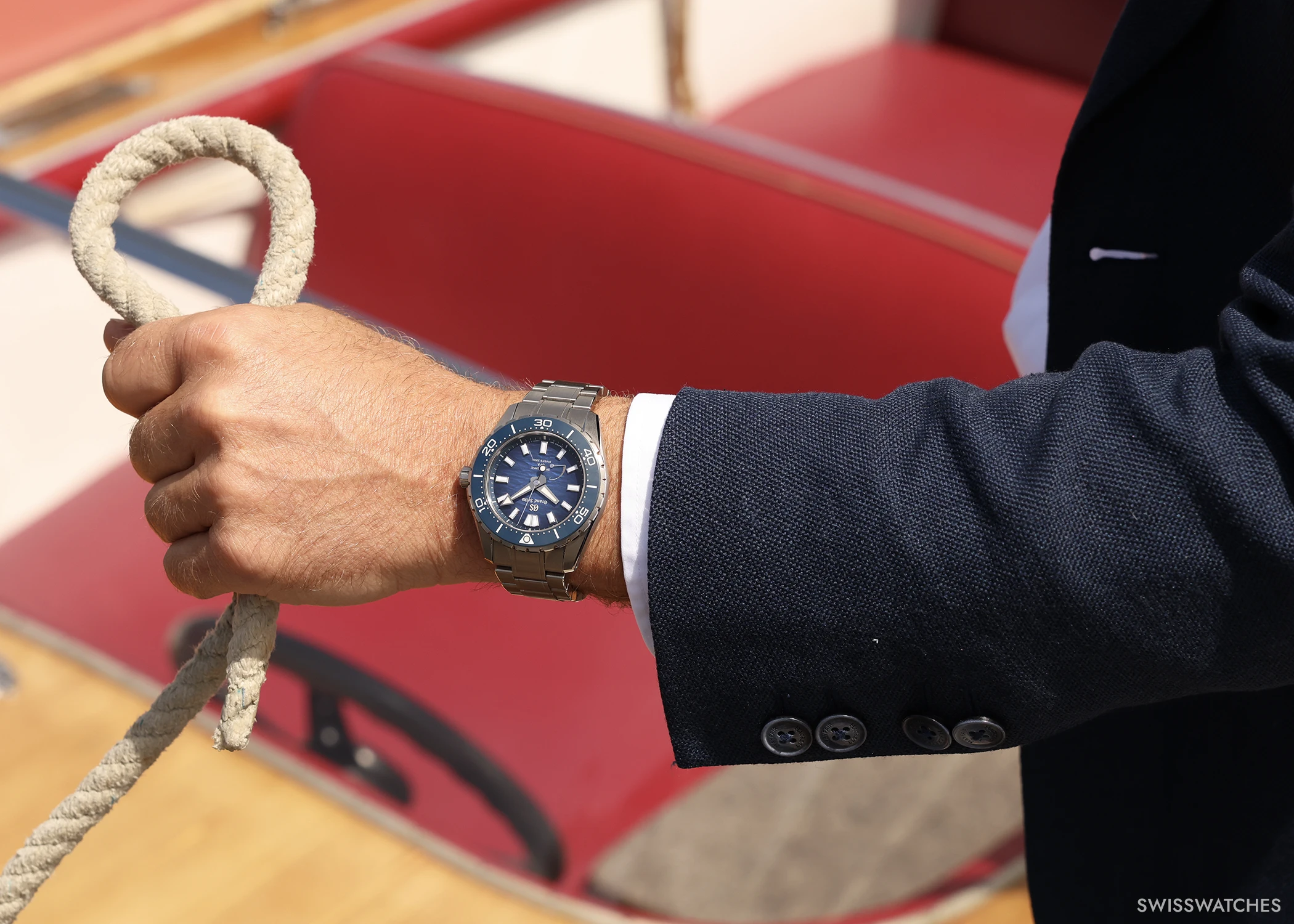
But this is about a third watch worthy of the big screen, one that covers a surprisingly wide range of uses: what goes well with a diving suit, a tracksuit, a dinner suit and a deckchair? Swisswatches had a whole day at Lake Tegernsee to take a closer look at a new contender in this line-up – the Grand Seiko Spring Drive U.F.A. Ushio 300 Diver.


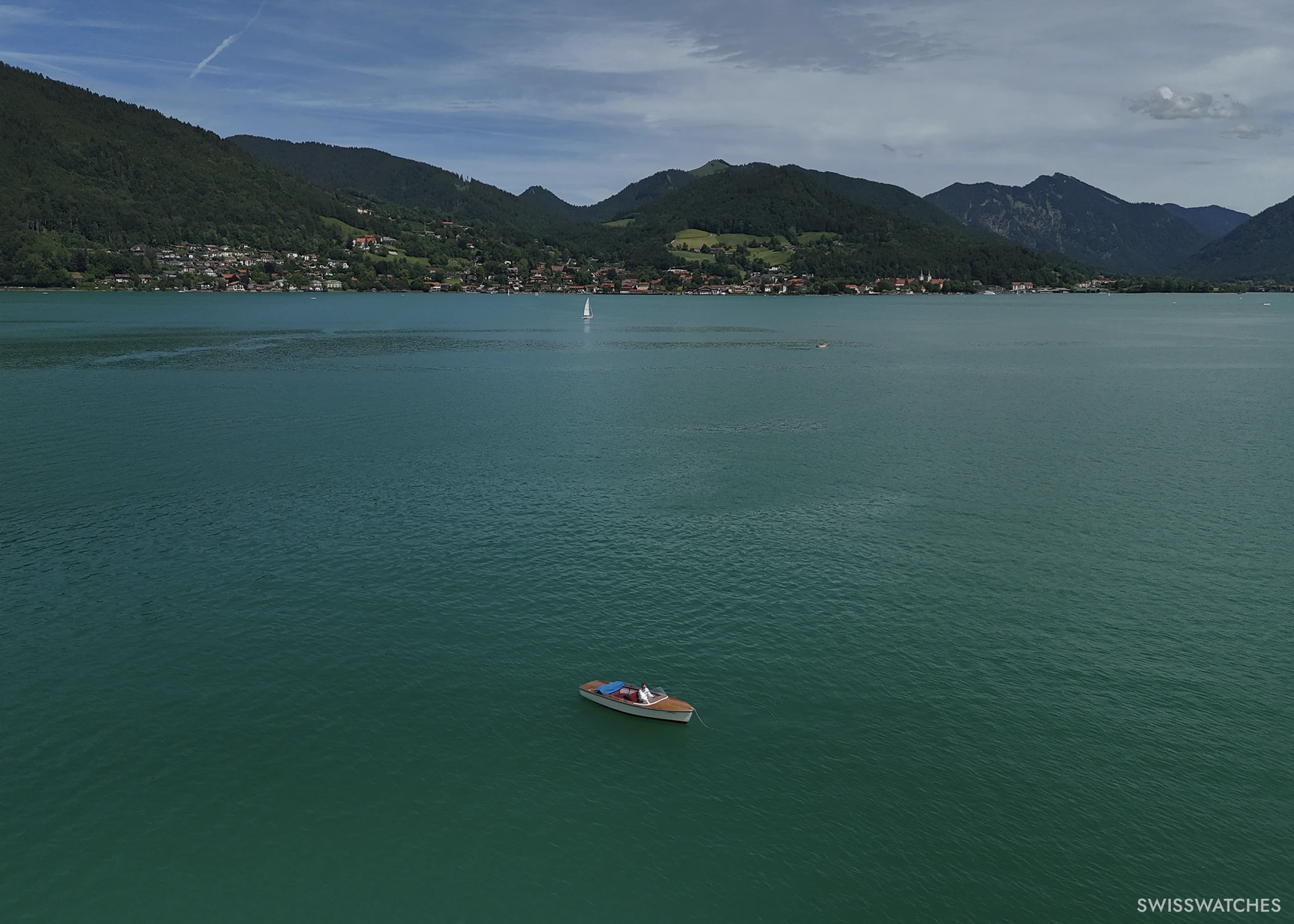
For those unfamiliar with Lake Tegernsee, a good hour’s drive south of Munich: this elongated mountain lake lies at an altitude of 726 metres in the Bavarian Pre-Alps, around 50 kilometres from the state capital. Formed during the Ice Age, its slender, fjord-like shape betrays its glacial origins. With a maximum depth of just under 73 metres and numerous cool Alpine tributaries, the water is constantly renewed. The result is water quality that ranks among the best in Bavaria, which is immediately apparent from the sparkle of the water – it is even of drinking-water quality.
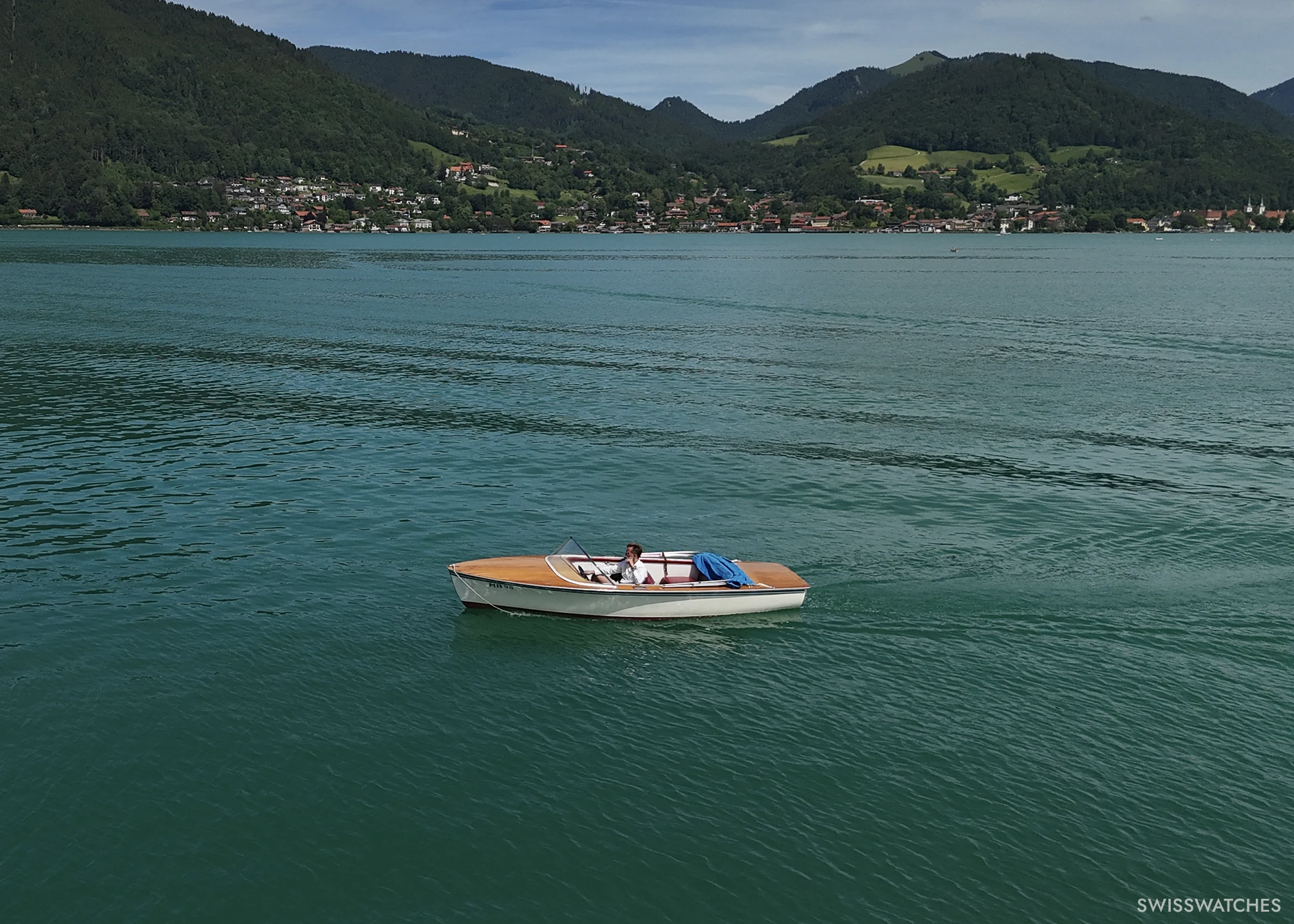
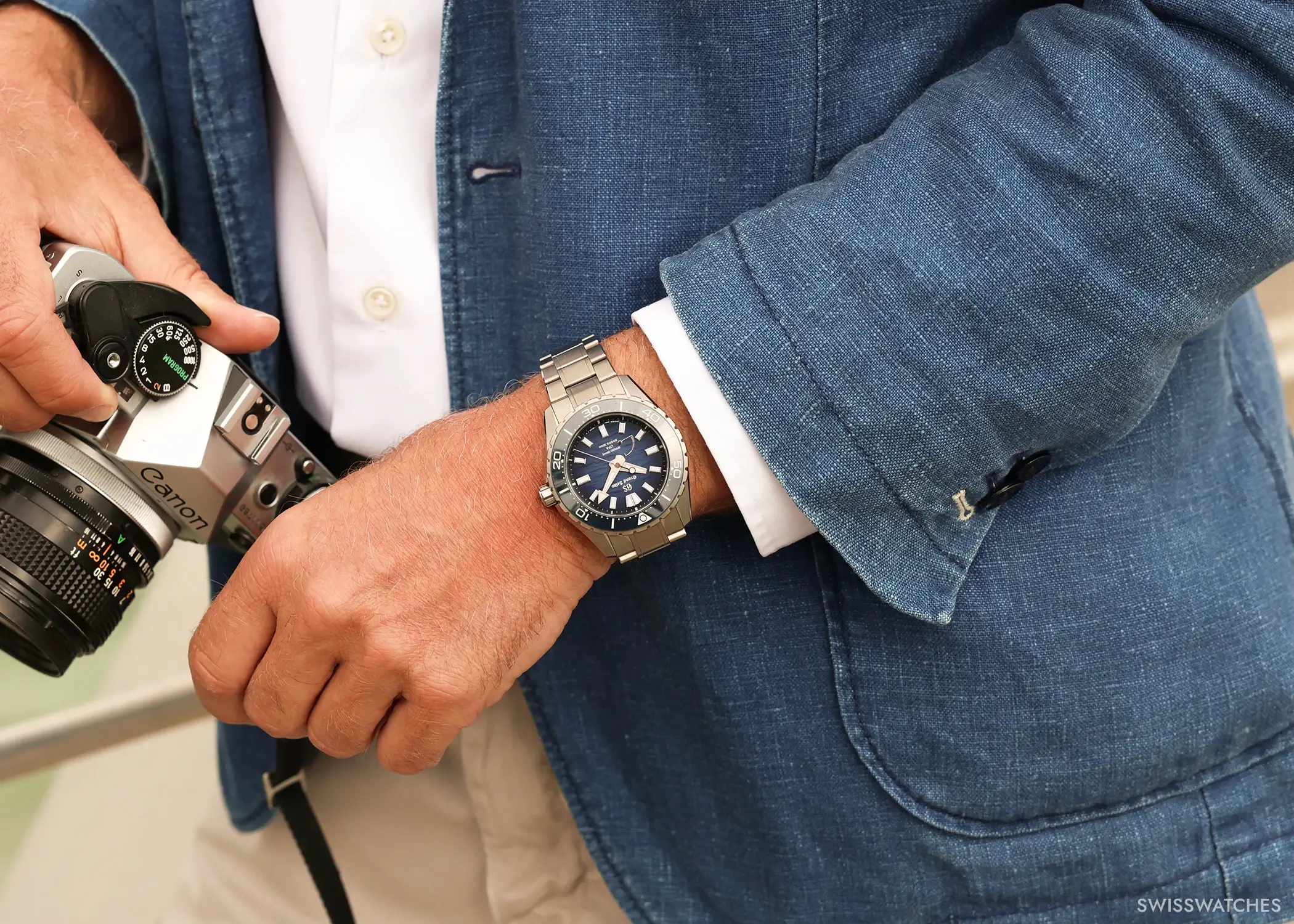
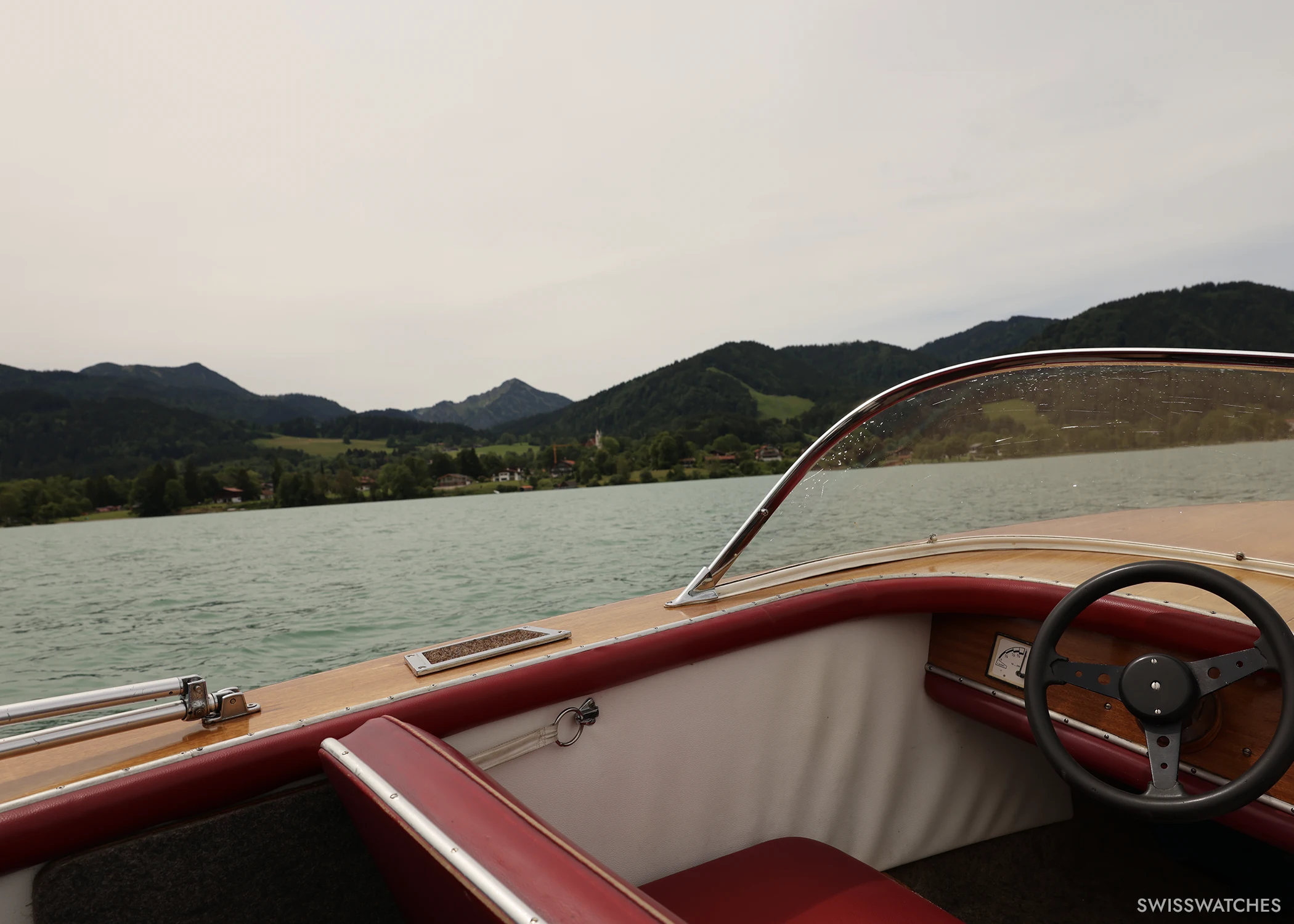
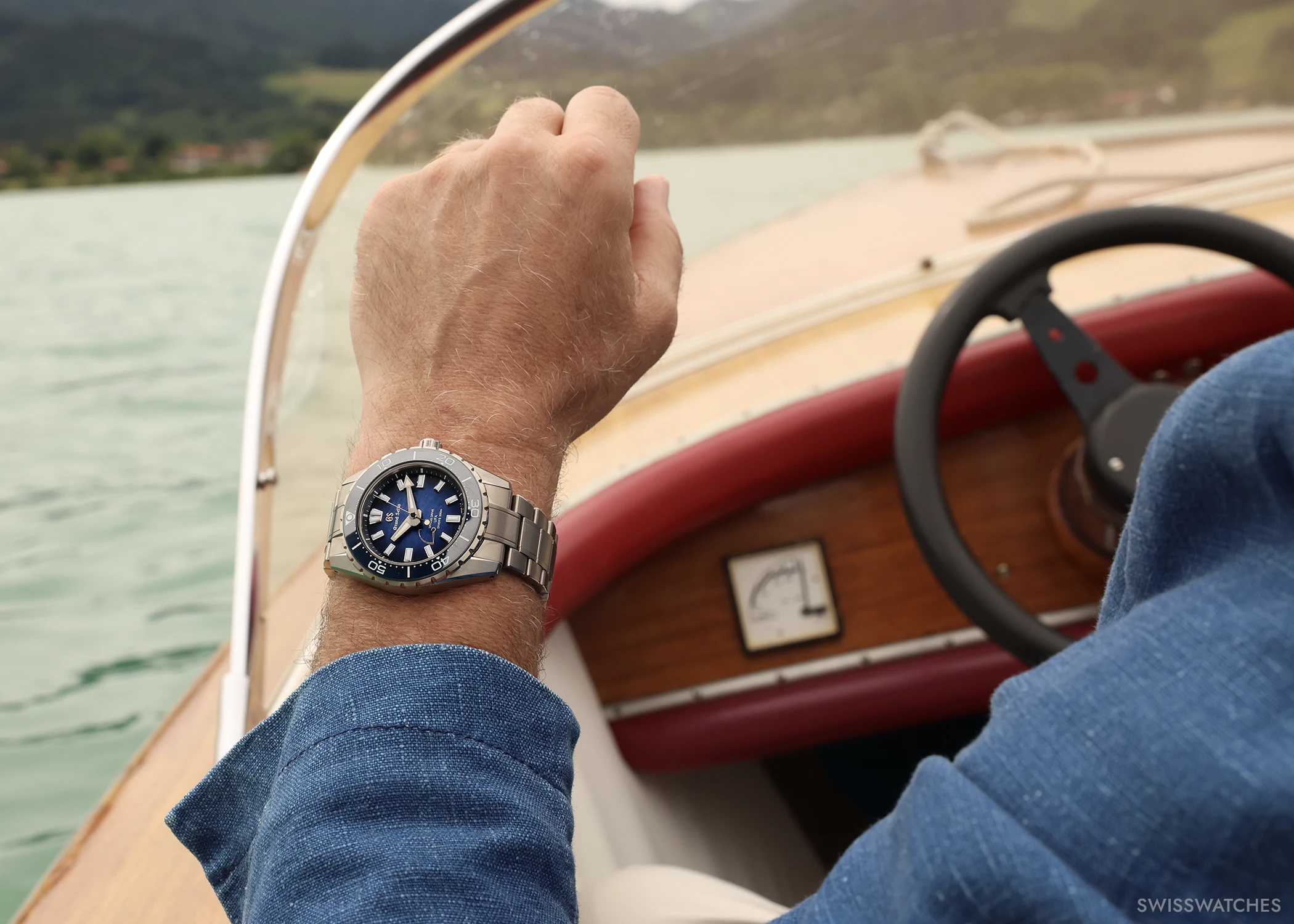
Even in the height of summer, the water temperature rarely rises above 20 degrees: it’s wonderfully refreshing to jump into the shimmering greenish-blue water. The lake provides the perfect backdrop for our boat trip. Incidentally, yachts with combustion engines are banned from the lake; anyone sailing here does so quietly and electrically – which makes it an even more fitting backdrop for this quiet hero from Grand Seiko. On the wrist, the first impression is this: this is a sensationally understated watch. We had already introduced the watch in detail during Watches and Wonders 2026.
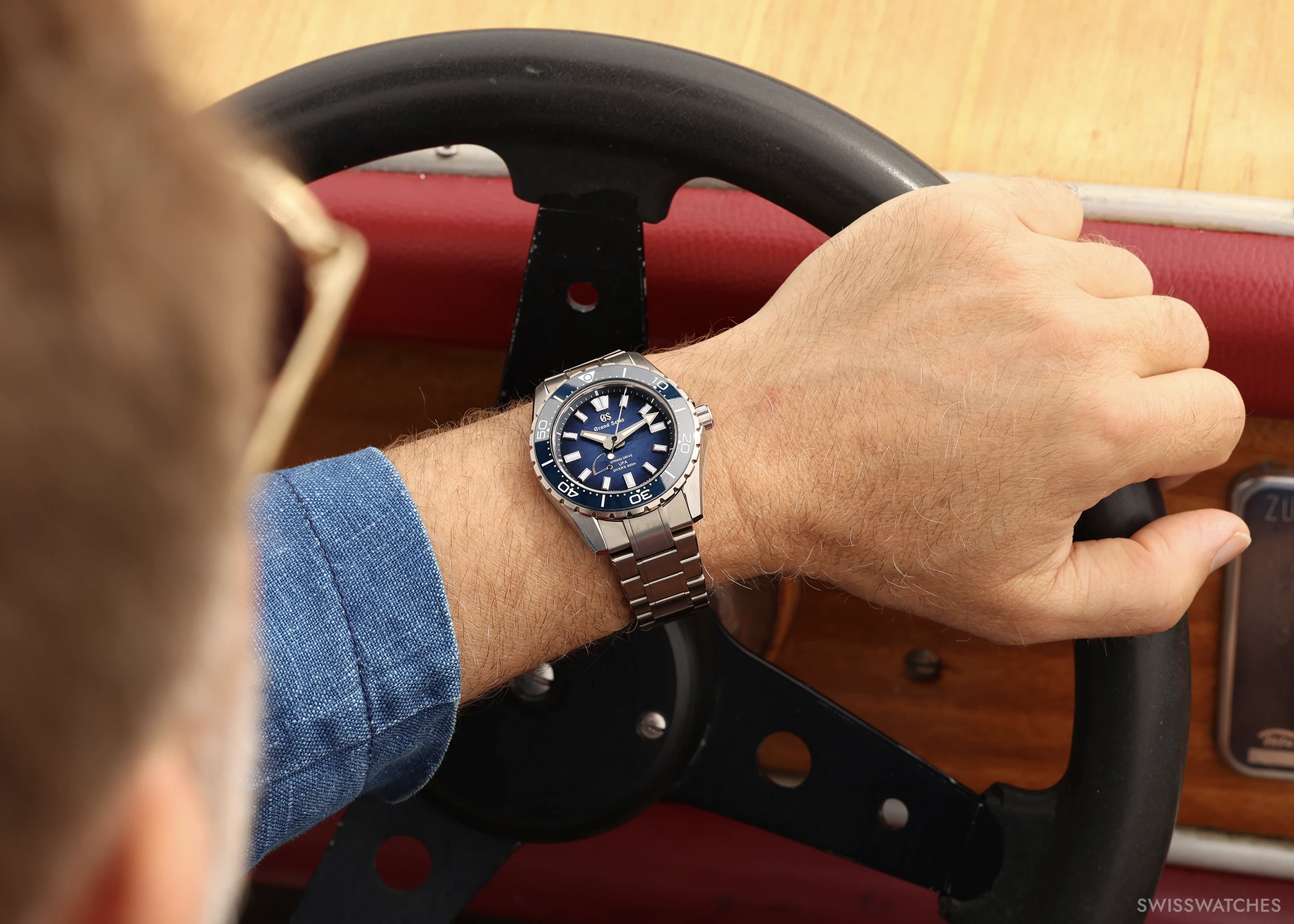
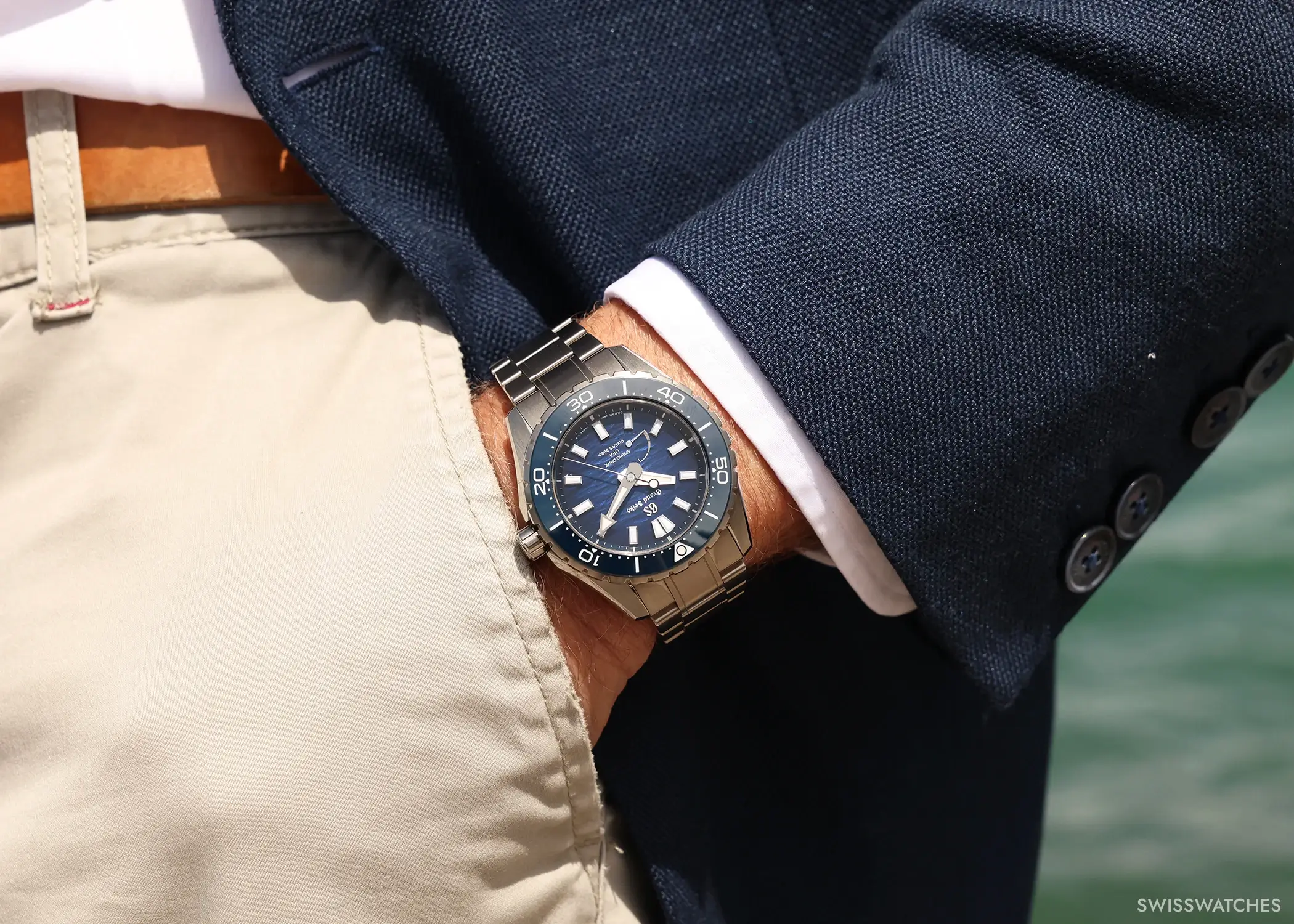
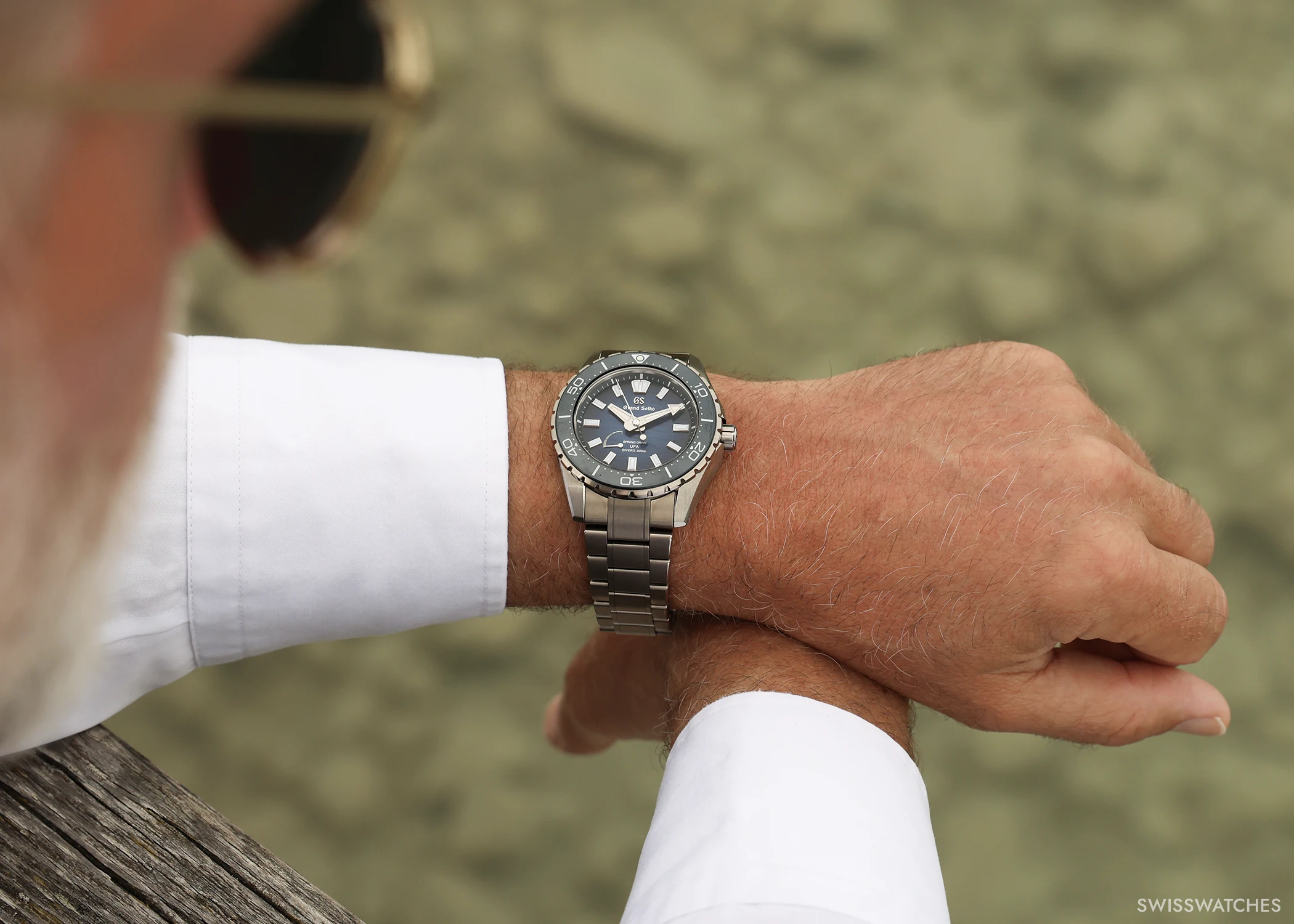
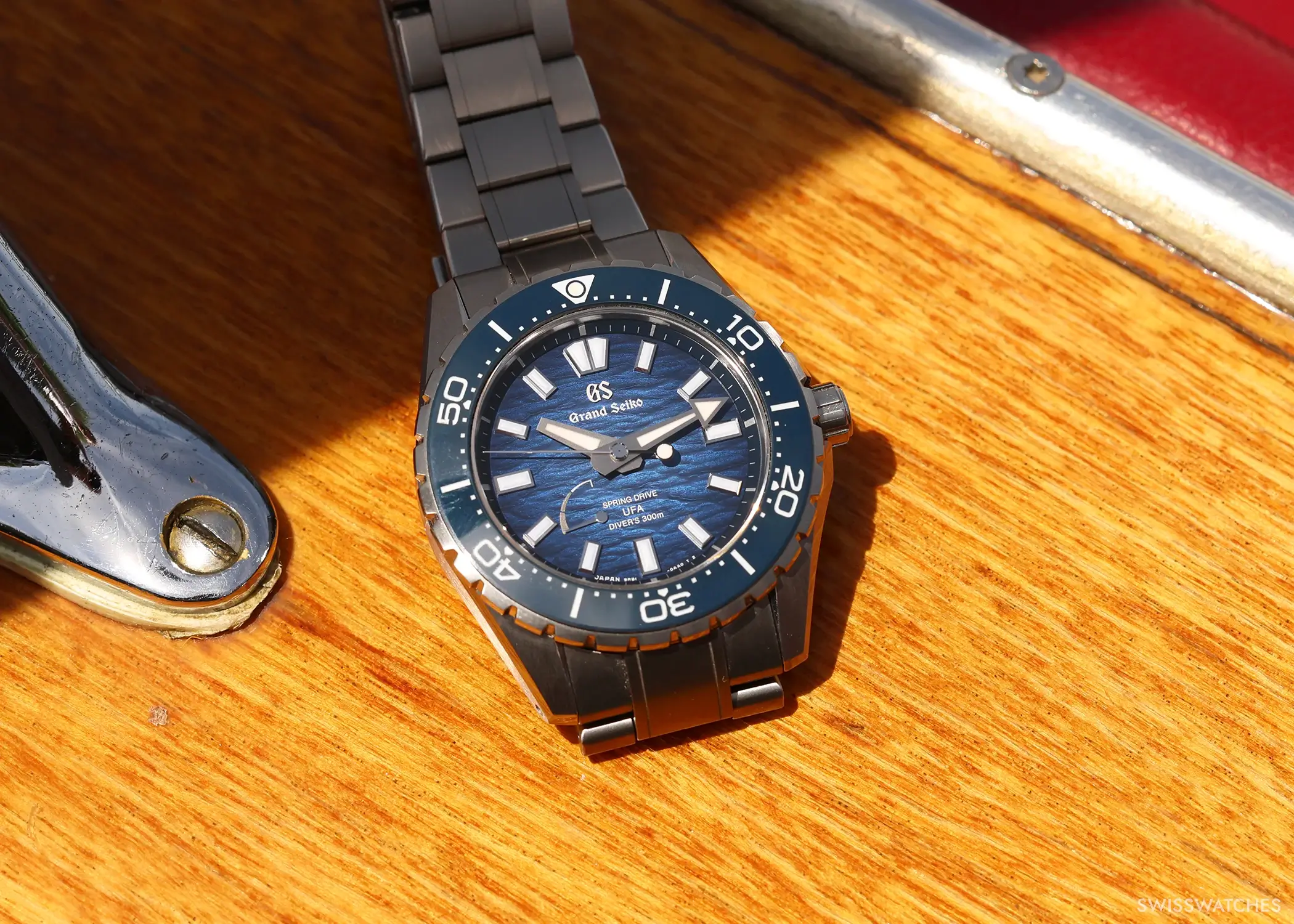
The first thing that catches the eye on the blue version we’ve brought along (reference SLGB023) is the dial. And with it, the watch’s most charming twist: what does ‘Ushio’ mean? The term means ‘tides’ in Japanese and refers to the waters surrounding the Japanese archipelago – which have always been a source of inspiration for Japanese art and culture. As a design motif, the dial pattern known as ‘Ushio’ has been an integral part of Grand Seiko’s diving watches since 2022.
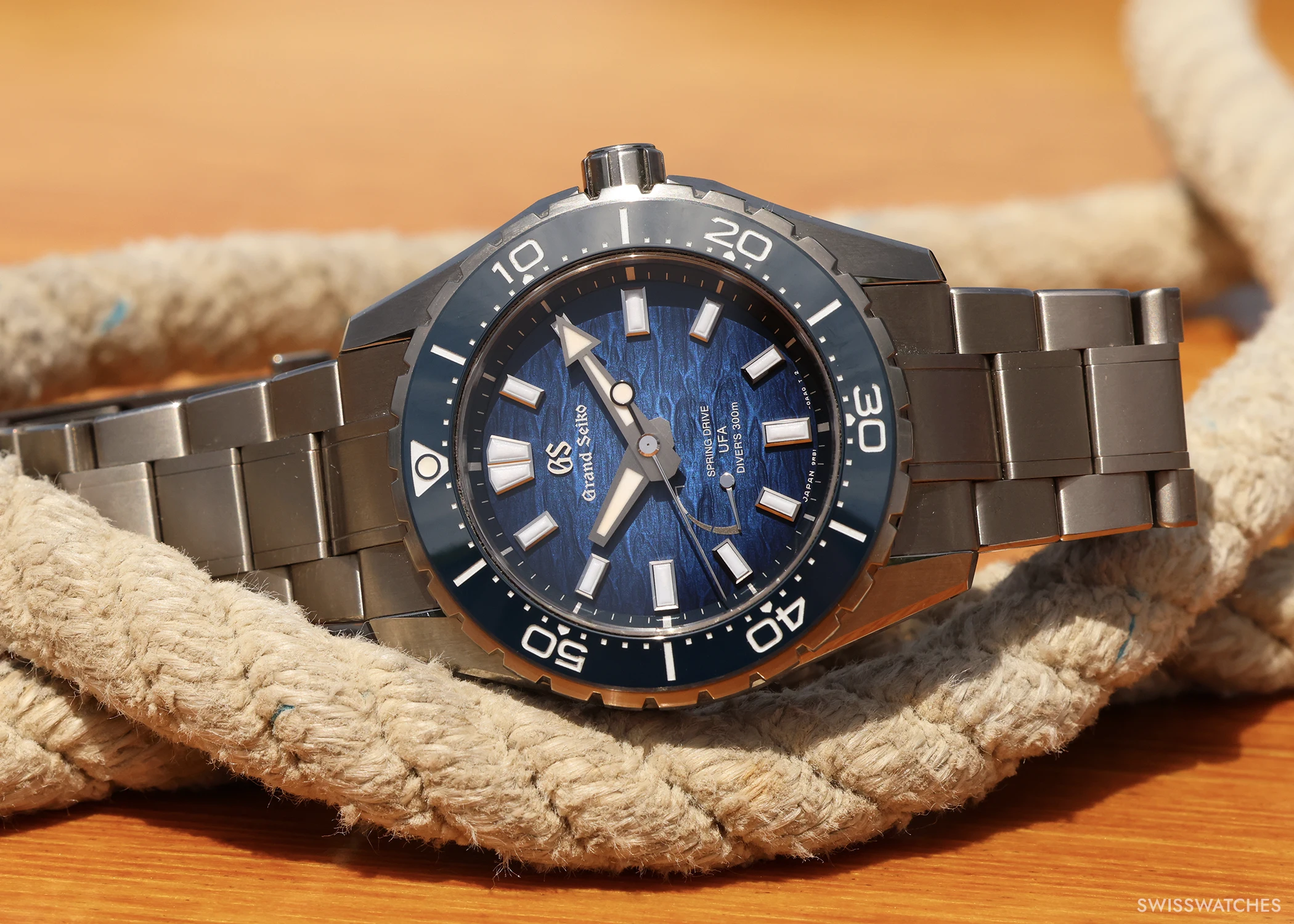
There are no tides on a lake, but the dial looks astonishingly realistic: the wave relief incorporated into the dial’s base, combined with a colour gradient, refracts the incoming light differently depending on the angle. For me, blue works perfectly as a universal colour code for almost any occasion, from swimming shorts to seersucker. And looking at the watch really does bring to mind the movement of water – one of many details that highlight just how much this watch is tailored to the wearer. Excellent legibility is ensured by the facetted, diamond-cut Evolution 9-style hour markers, whose rectangular shape provides ample space for the Lumibrite luminescent material.
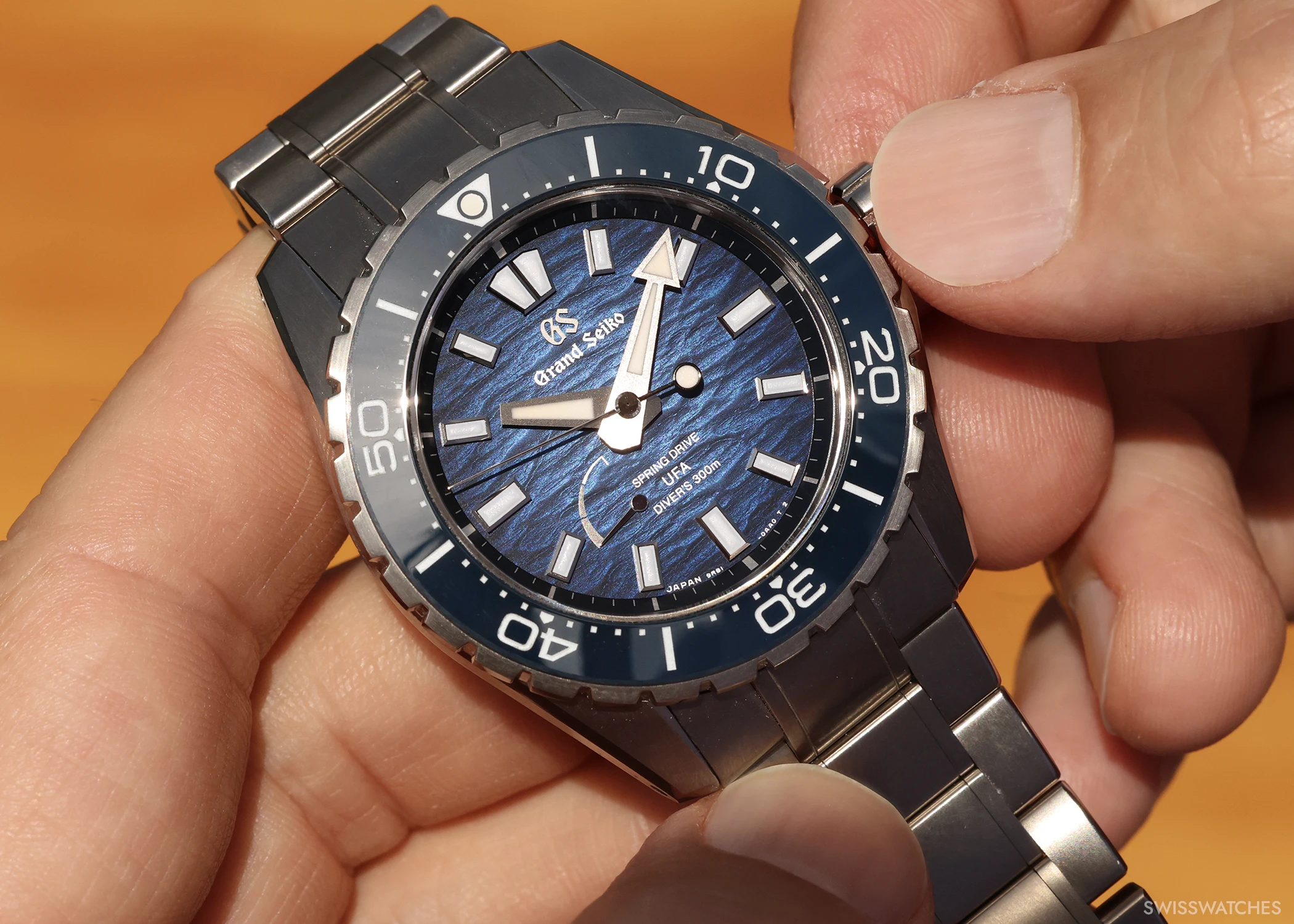
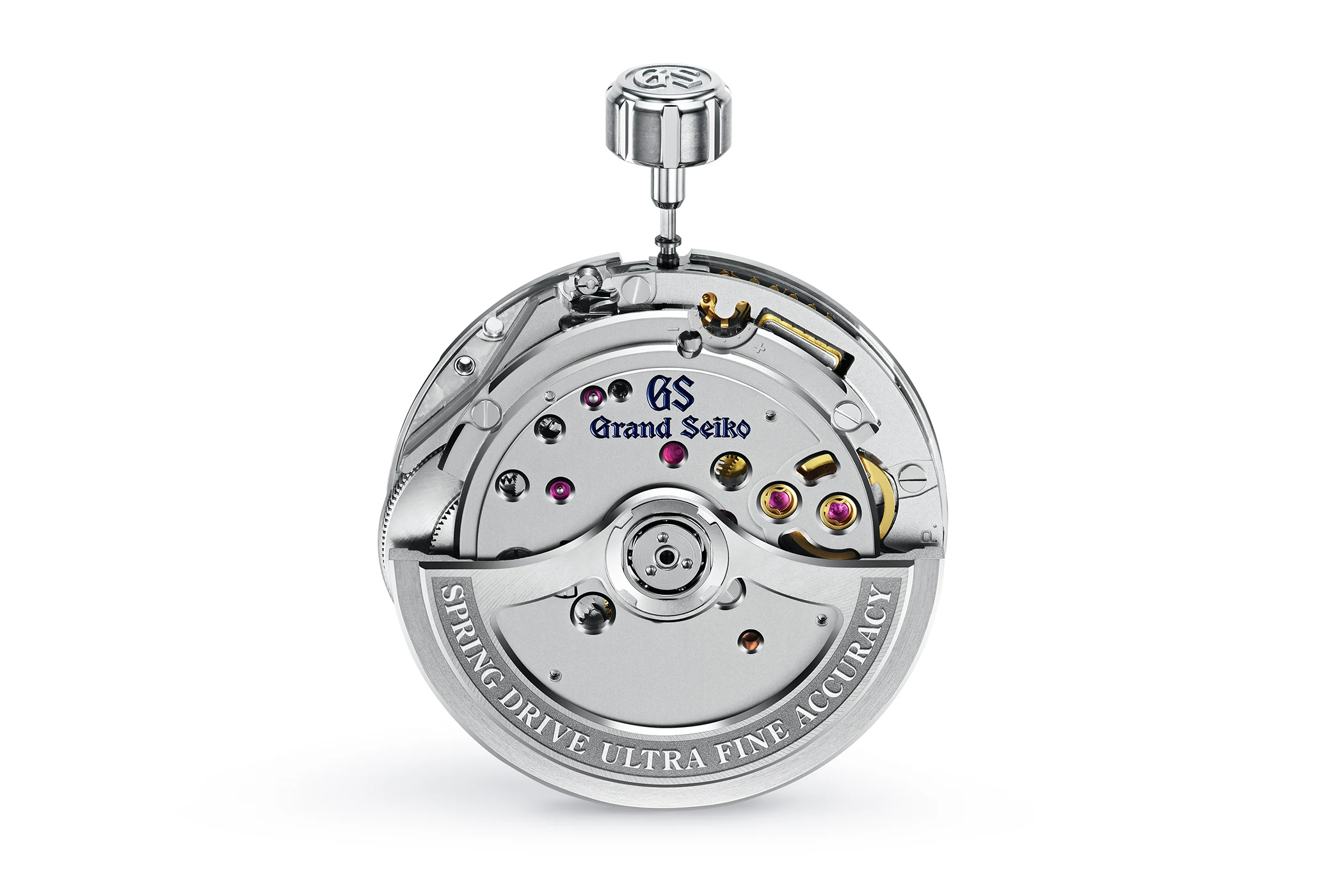
The true centrepiece bears the three letters U.F.A., which stands for ‘Ultra Fine Accuracy’. At Watches and Wonders 2025, Grand Seiko unveiled the Calibre 9RB2, the first U.F.A. movement – with an annual rate deviation of just ±20 seconds, it is the most precise wristwatch movement powered by a mainspring. It is precisely this technology that is now, for the first time, incorporated into a diver’s watch in the new Calibre 9RB1. This equates to around ±3 seconds per month! To put this into perspective: a very good mechanical watch meeting chronometer standards is permitted a deviation of ±2 seconds per day, which is roughly one minute per month. In this respect, the Grand Seiko Diver outshines every mechanical competitor.
The case and bracelet are made of high-intensity titanium, which is around 30 per cent lighter than stainless steel. However, it is not just the weight that matters: Grand Seiko’s titanium feels and looks more like light, shiny stainless steel and has little in common with the matt, greyish appearance of conventional titanium models, which is not to everyone’s taste.
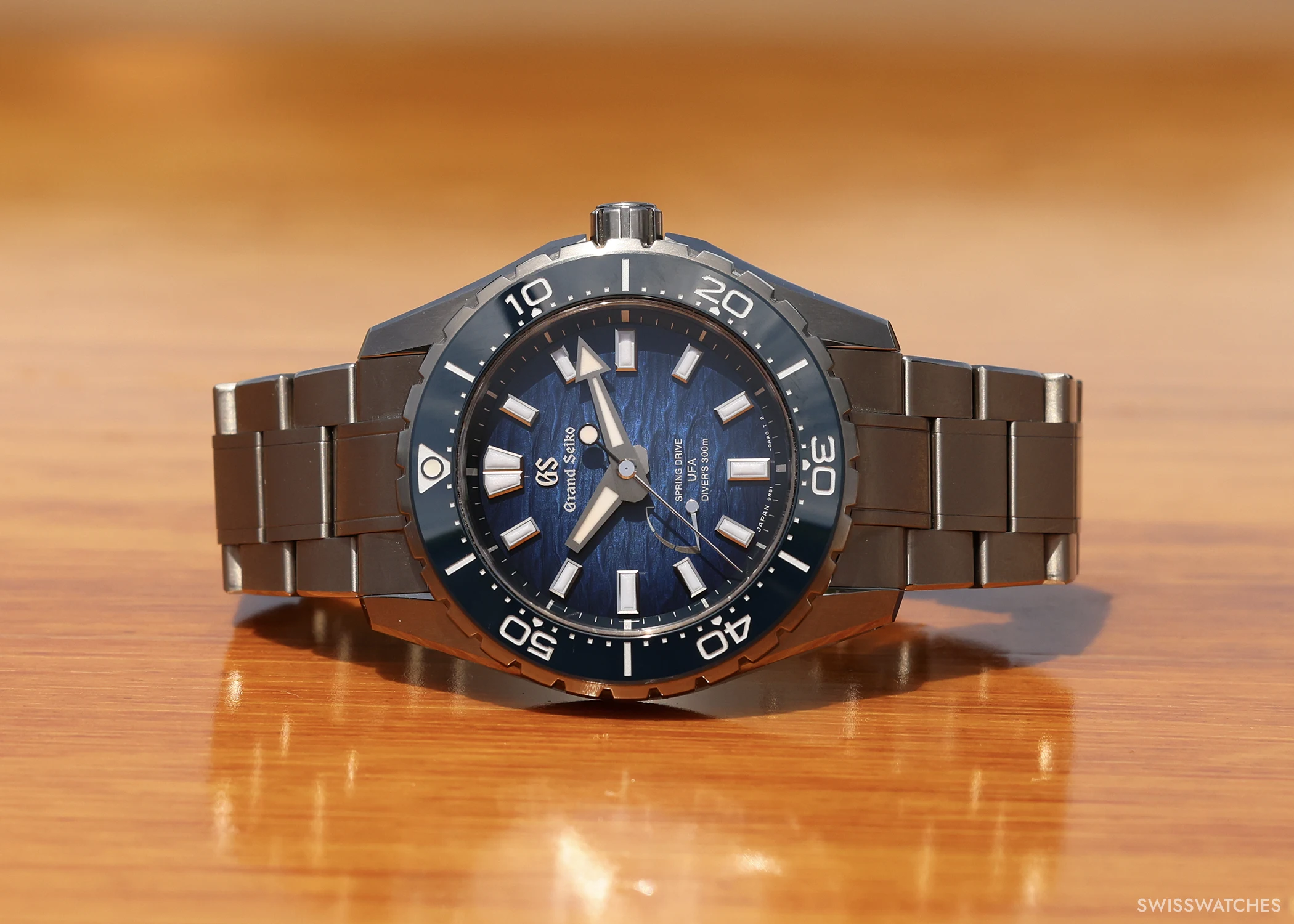
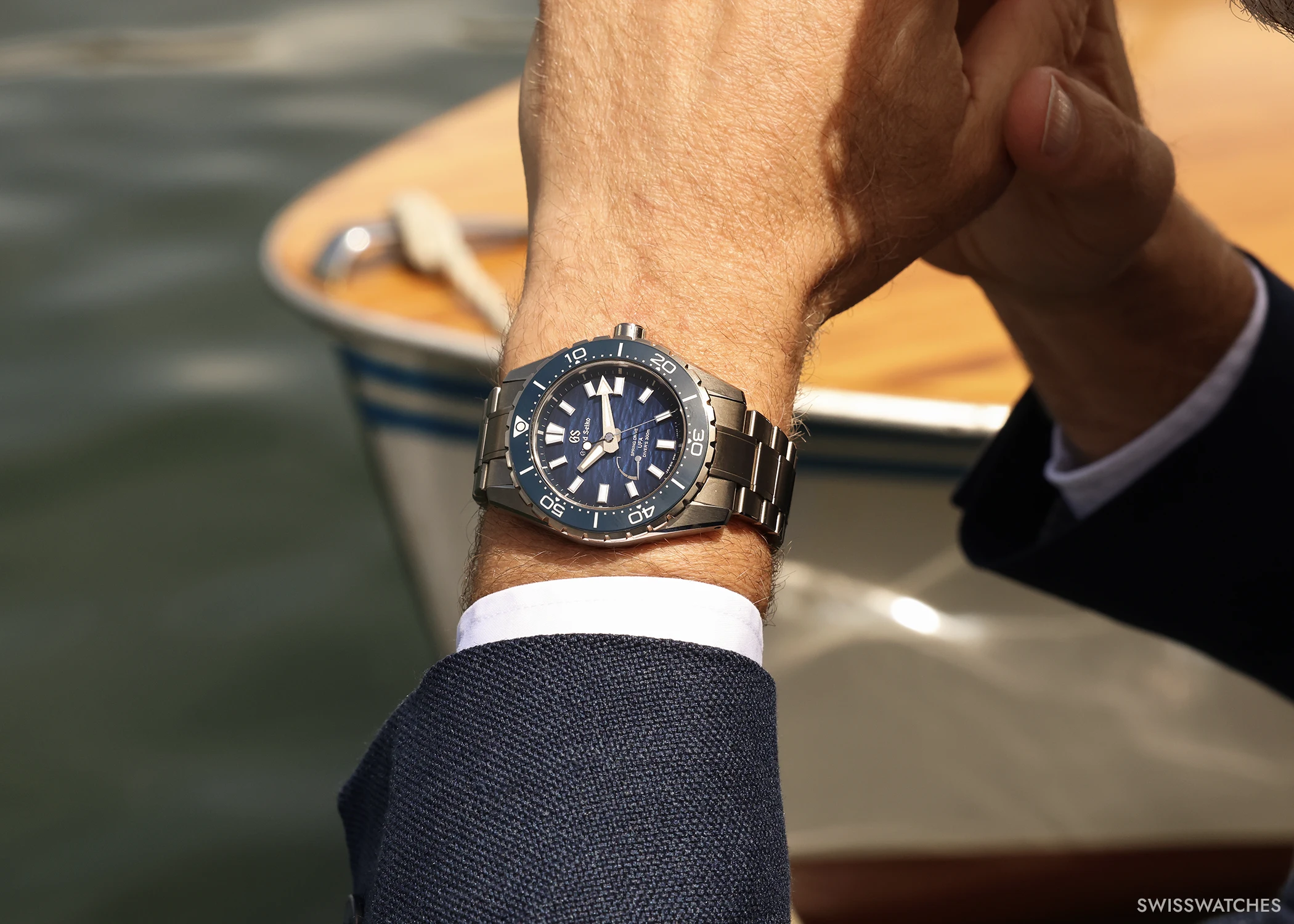
As the name suggests, the Ushio 300 Diver is water-resistant to 300 metres. What’s remarkable is that it achieves this in the smallest case Grand Seiko has ever built for a diver’s watch – 40.8 millimetres in diameter. This figure alone would be worth an article in its own right. After all, it means the watch is suitable for almost any wrist for which classic diver’s watches are simply too bulky. The 120-click bezel, featuring a scratch- and corrosion-resistant ceramic insert, can be adjusted with precision.
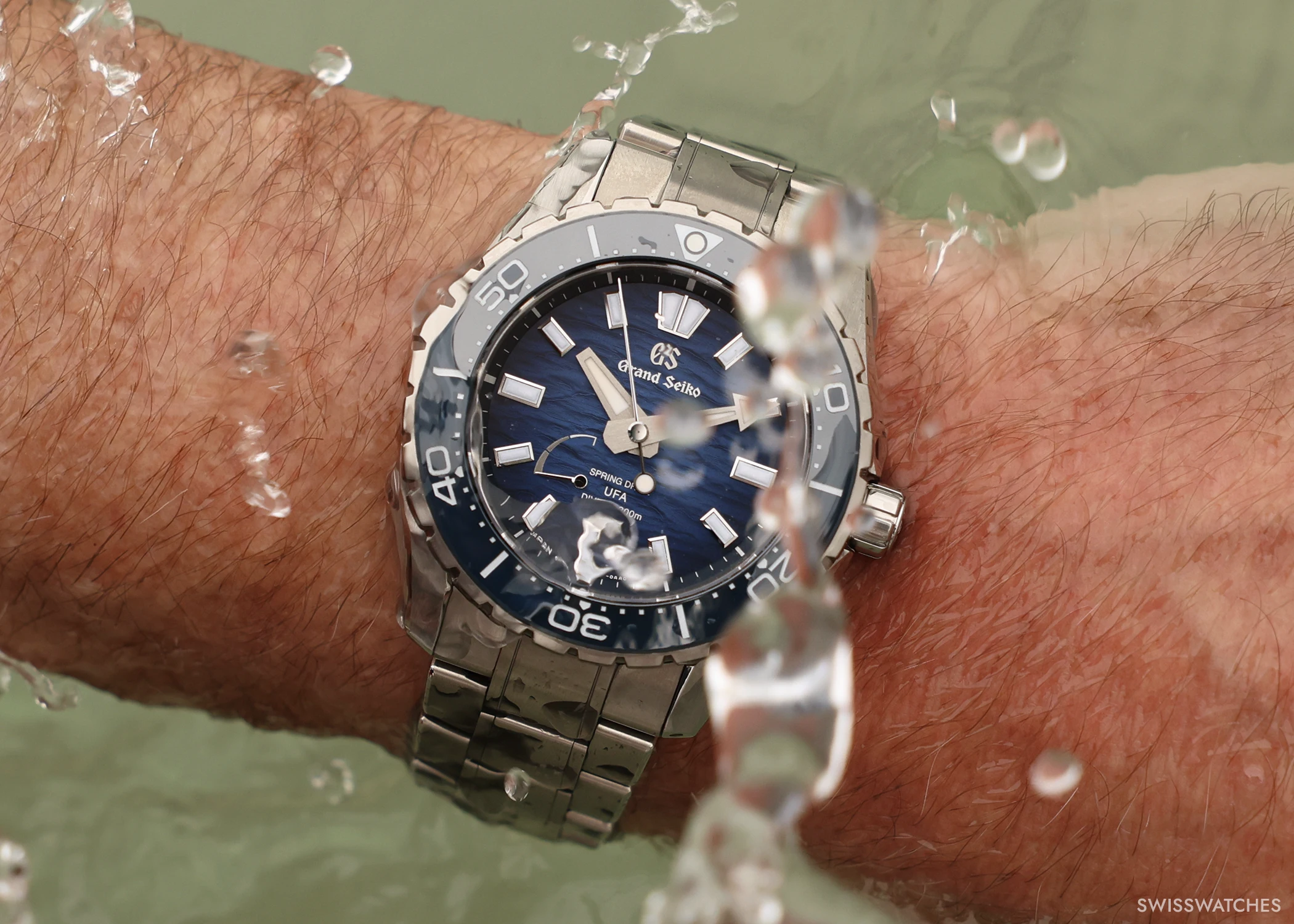
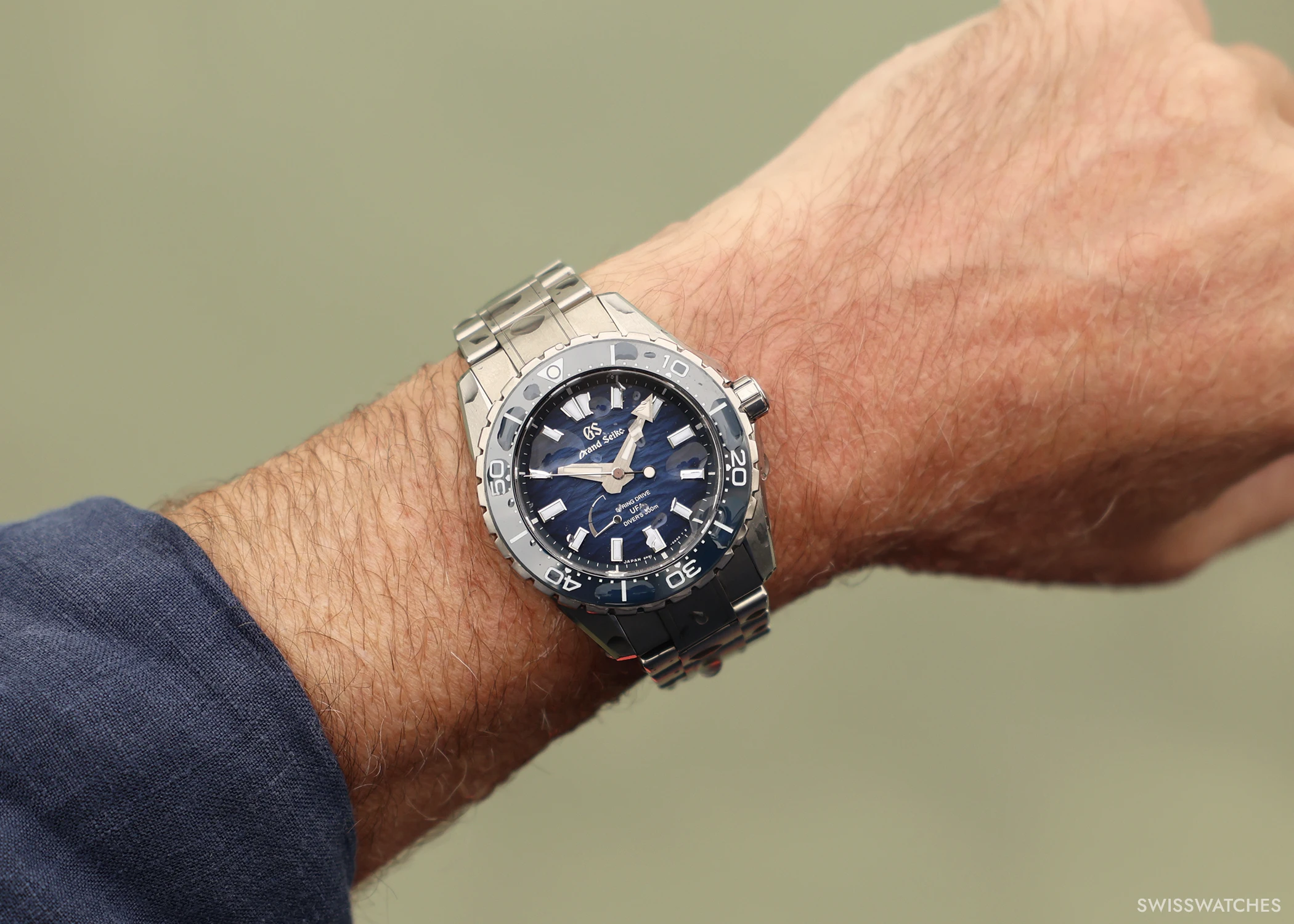
Both models, the SLGB023 (blue) and the SLGB025 (green), cost €12,500 each and compete directly with some of the most iconic diving watches in the industry. A Rolex Submariner No Date (Ref. 124060, 41 mm, stainless steel) has a list price of €9,750 (as of 2026). An Omega Seamaster Diver 300M (42 mm), in the titanium version of the 007 Edition, costs around €10,000, depending on the strap.
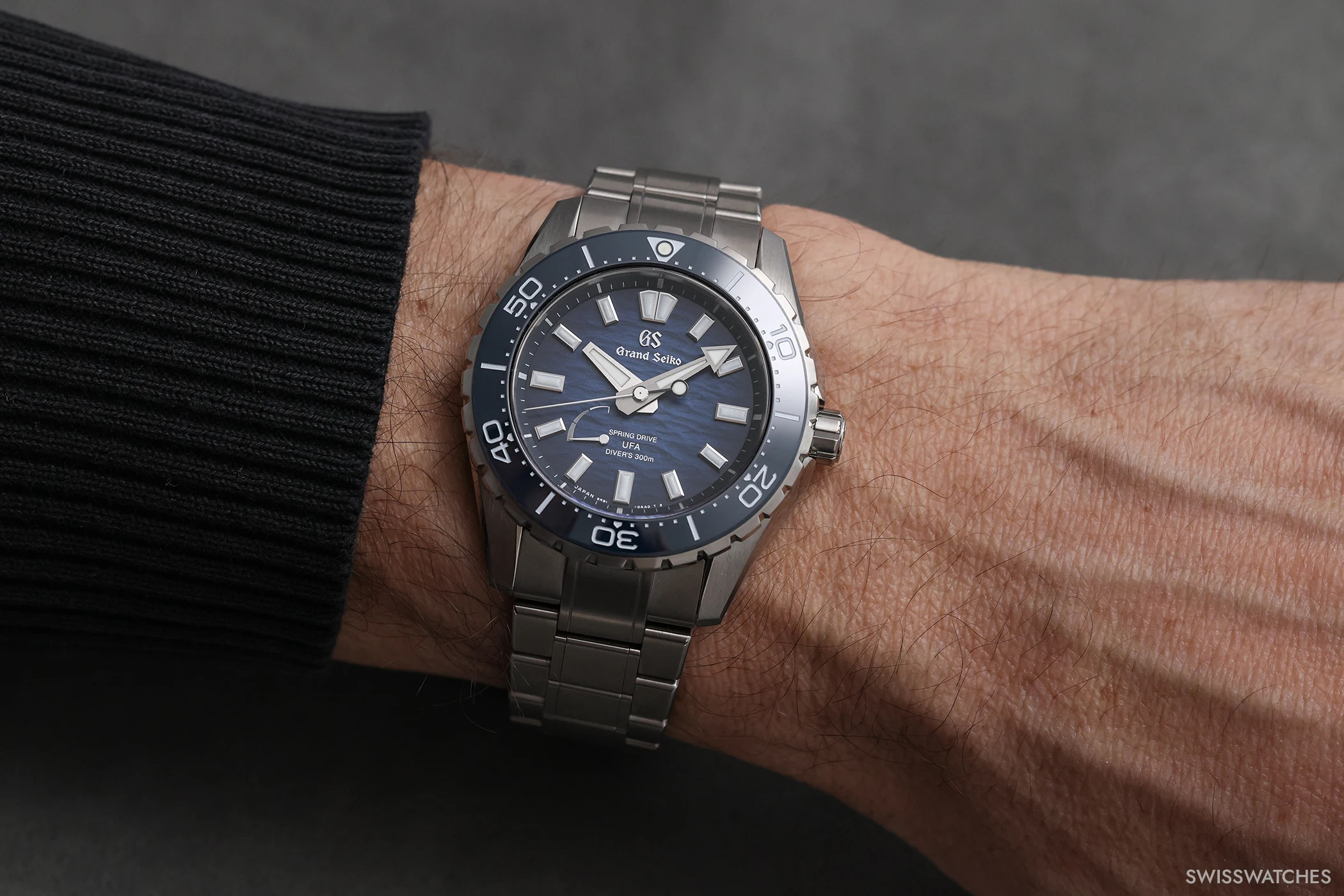
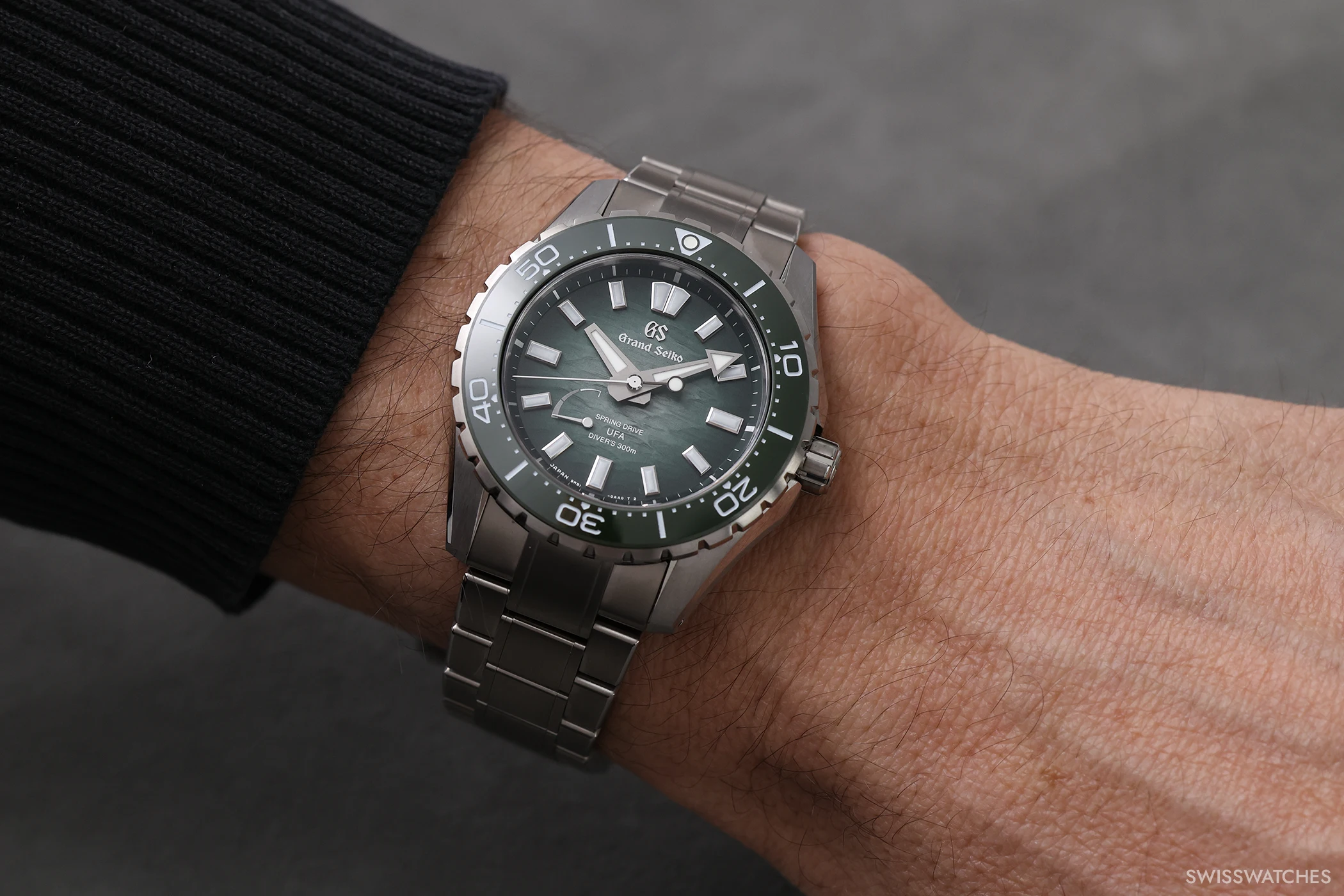
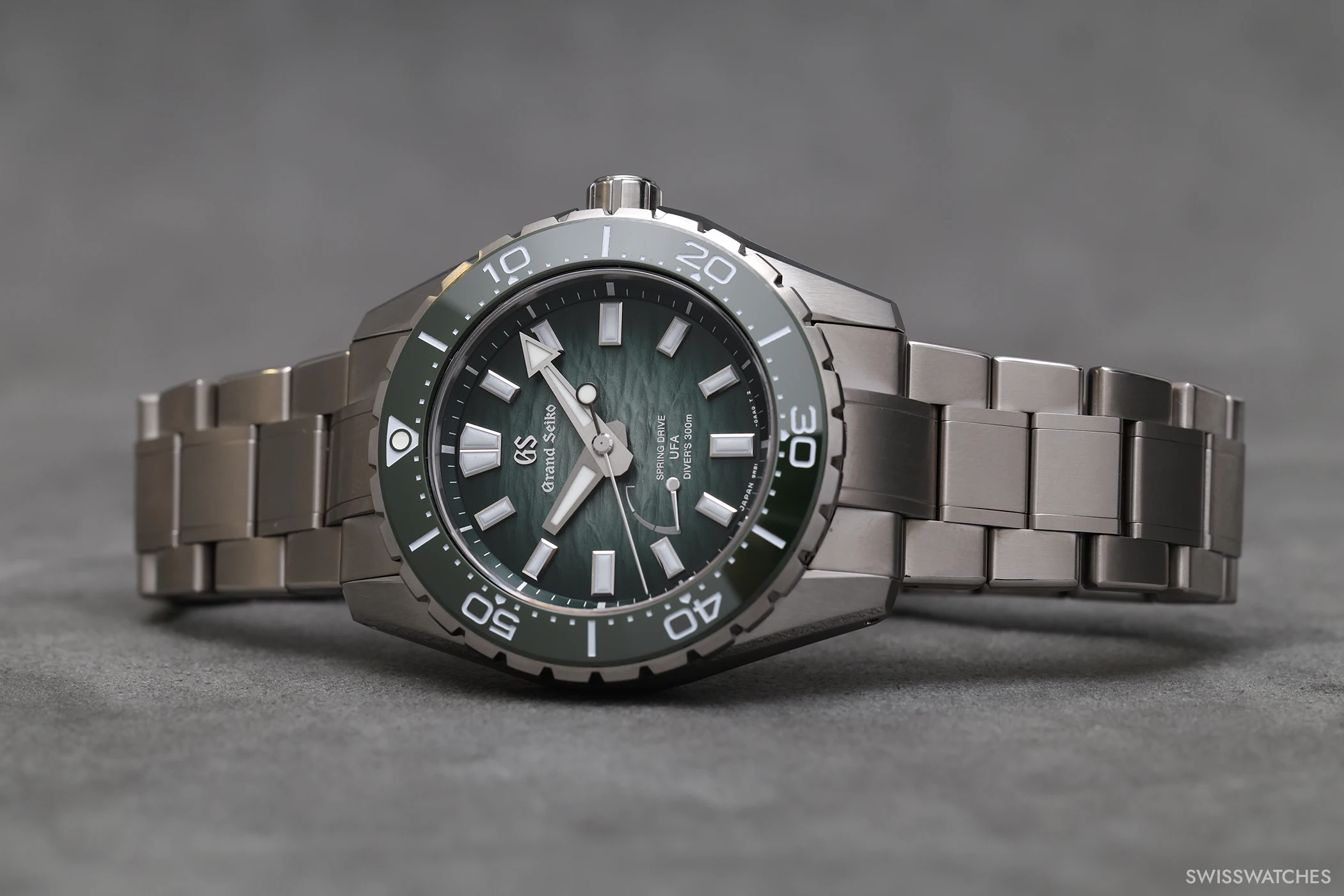
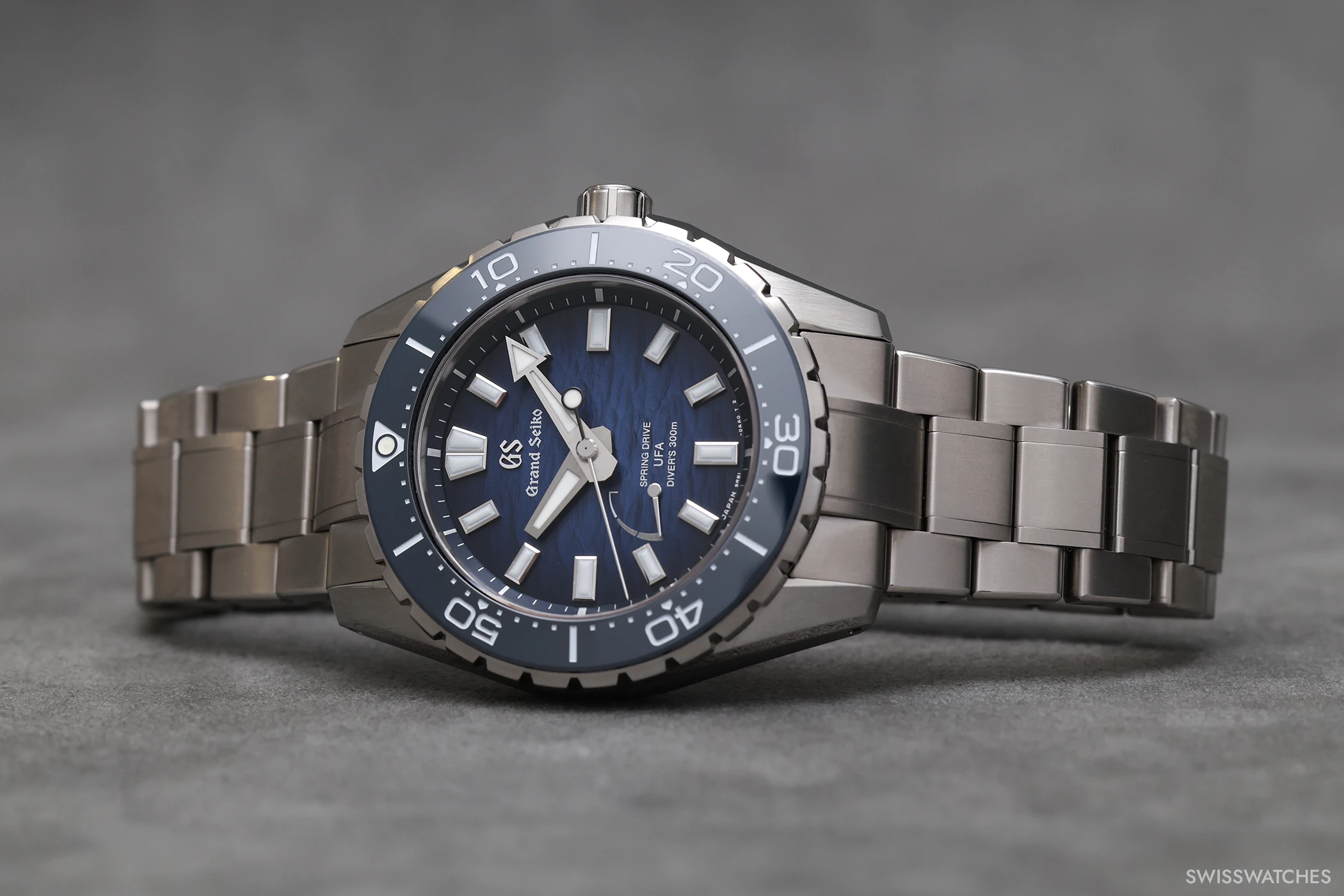
On paper, then, the Grand Seiko is more expensive than some Swiss icons. But that calculation doesn’t quite tell the whole story: firstly, with its U.F.A. movement, the Grand Seiko is in a league of its own when it comes to precision; secondly, it impresses as a complete package: here, you’re not simply paying for the myth, but for the substance and the certainty that you definitely don’t belong among the usual suspects at the beach bar. Some customers might even be glad not to be recognised as a typical ‘brand’ customer.
The key factor for anyone who wants to wear this watch under their jacket at the office is, and always will be, its case thickness. This has been reduced once again compared to its predecessor – by a good millimetre. Here, too, it’s right up there with the best: at 12.9 millimetres, the Grand Seiko U.F.A. Diver is just a touch thicker than a Rolex Submariner No Date, which measures around 12.2 mm; the Omega Seamaster Diver 300M is slightly thicker at around 13 to 13.5 millimetres, depending on the model.
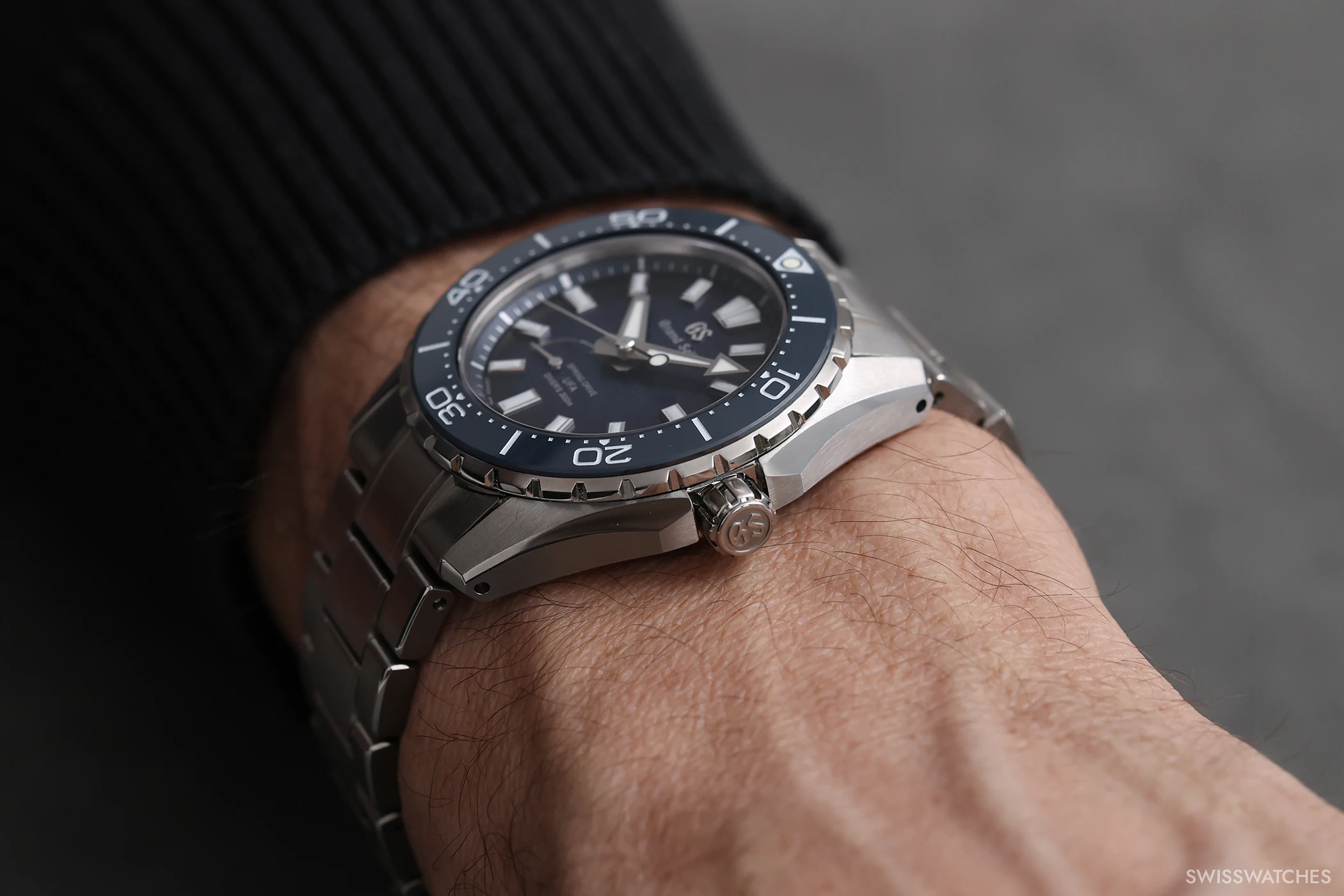
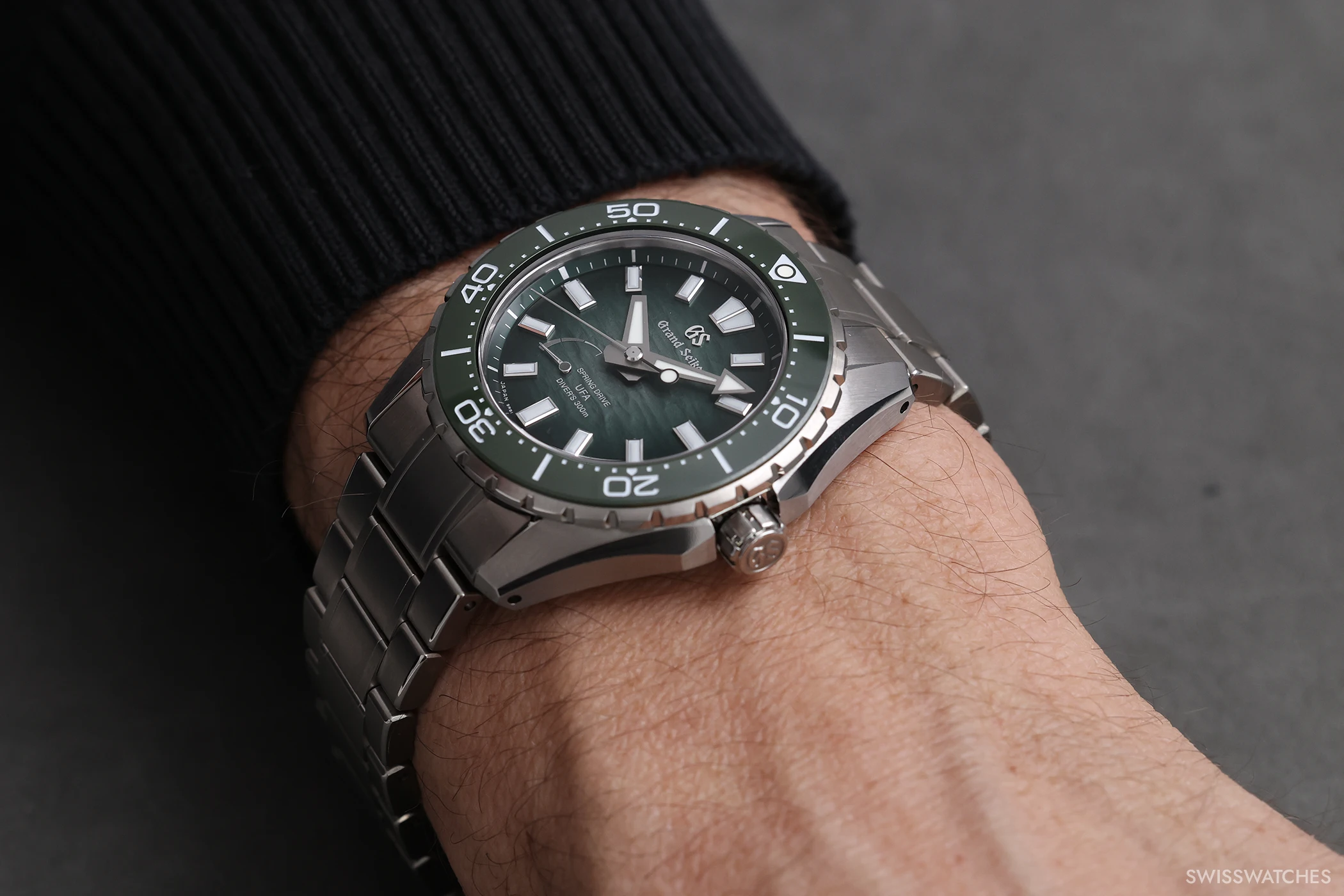
For me, the feel on the wrist is more important than any specification on the data sheet anyway: what really impresses here is the watch’s weight. The high-gloss titanium, the compact diameter and the low mass ensure that the watch feels light, but not too light – not as feather-light as some titanium models, but also nowhere near as heavy as a classic stainless-steel diving watch.
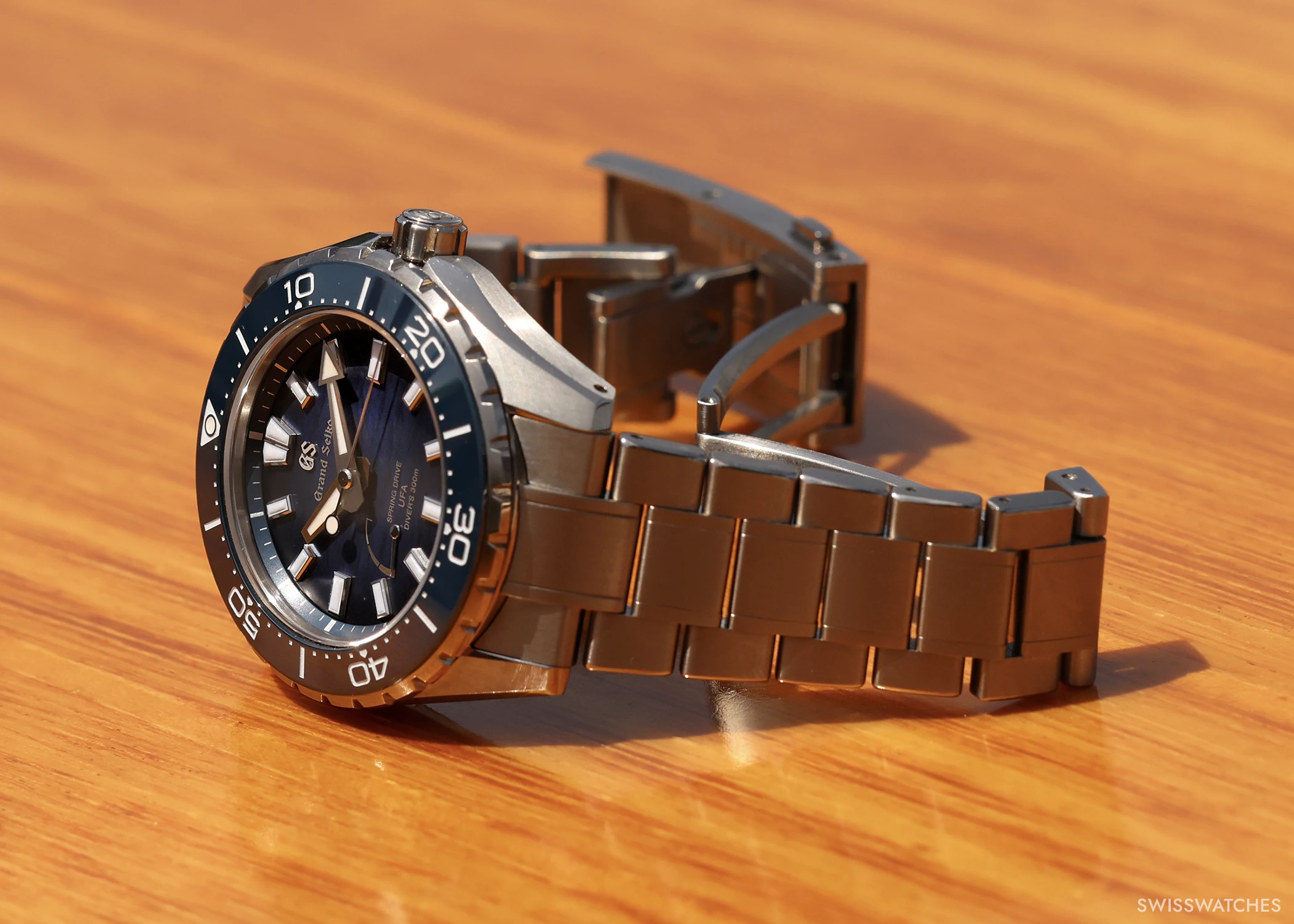
The strap is also impressive. The newly developed, lockable safety folding clasp features a three-stage fine-adjustment mechanism allowing for up to 6 millimetres of adjustment, as well as a diving extension of a further 18 millimetres, meaning the strap can be adjusted by a total of 24 millimetres – from the bare wrist in summer and winter alike to over a wetsuit. The GS emblem on the clasp acts as a locking mechanism, preventing it from opening accidentally.
Does this watch need a date? That’s something you could debate for hours – perhaps over a sundowner. The technician will say: a date has no place on the dial of a diver’s watch, because it usually obscures an hour marker. In the case of the Grand Seiko, the situation is further complicated by the fact that the dial already features the power reserve indicator typical of Spring Drive. And that makes perfect sense for a genuine diver’s watch: a quick glance before jumping into the water reveals whether the movement still has enough power.
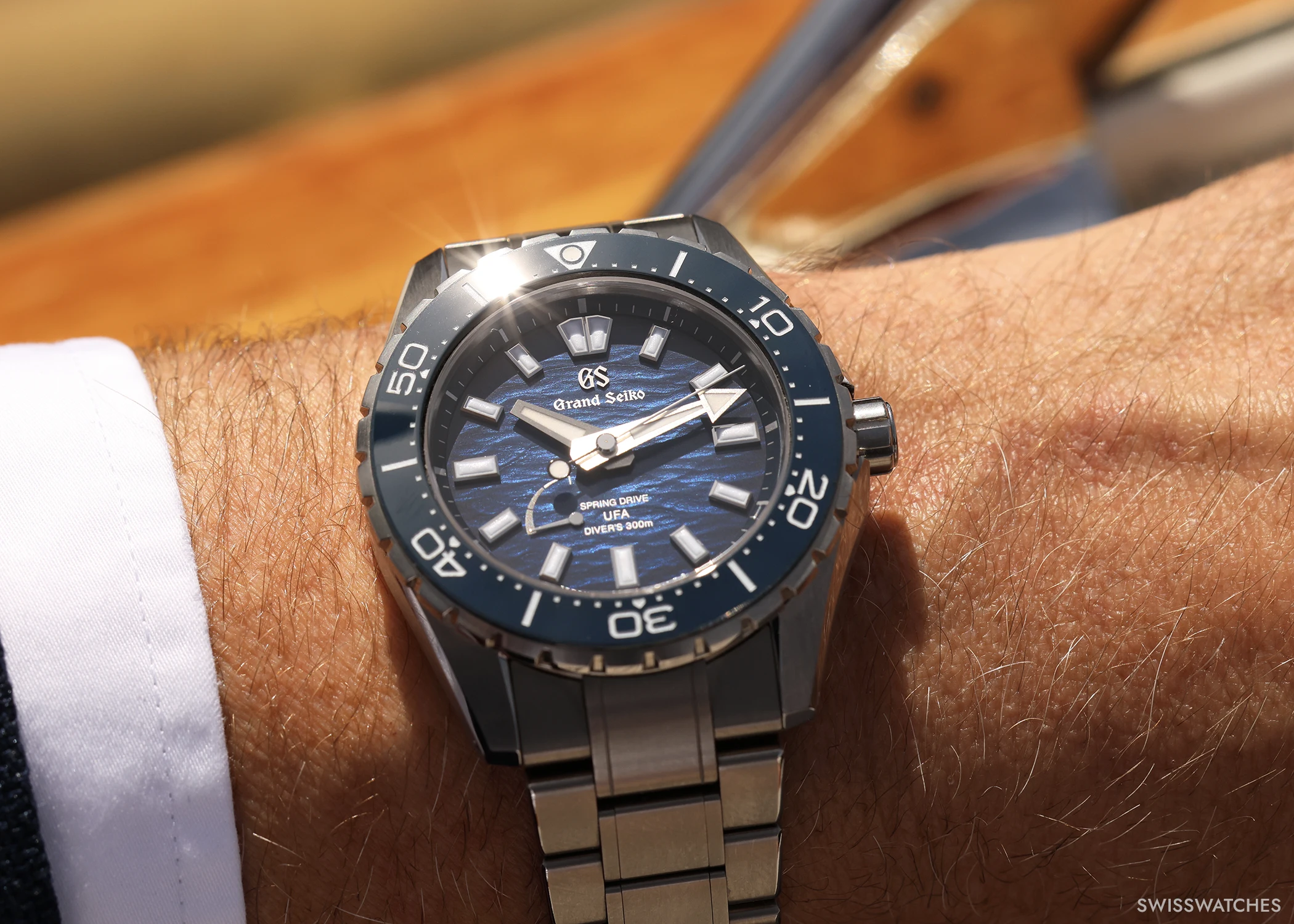
Speaking of which: with a 72-hour power reserve, the Ushio Diver outperforms most of its three-day competitors. Even though its predecessor could run for five days, this is not a step backwards, but a deliberate choice: The high-precision U.F.A. movement consumes more energy; the fact that Grand Seiko still manages a full 72 hours is down to an enlarged mainspring barrel. And three days is sufficient even for major Swiss manufacturers, whose watches are not quite as precise. In practice, it’s more than enough anyway: you can take the watch off over the weekend and still have the correct office time on your wrist on Monday morning.
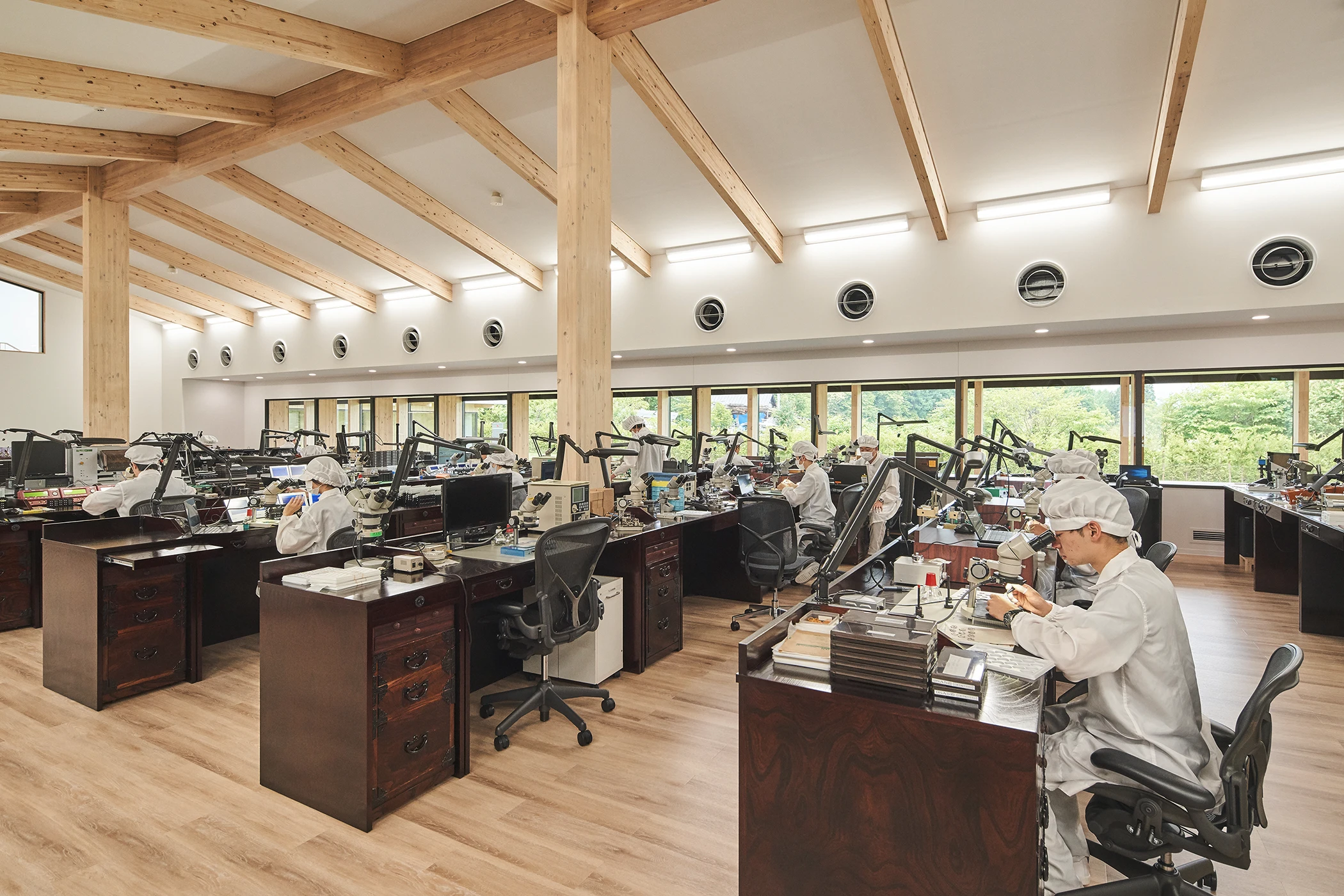
Craftsmanship and precision are at the heart of Grand Seiko. The 9RB1 calibre is hand-assembled at the Shinshu Watch Studio – a manufactory in Shiojiri, in the Japanese prefecture of Nagano, located within a Seiko Epson factory. This is one of the very few truly fully integrated ‘manufactures’ in the world: all Grand Seiko Spring-Drive watches are produced in-house here – from movement development, through dials, hands and hour markers, to cases and final assembly. Even the very first Grand Seiko, from 1960, was produced here. This level of vertical integration sets Grand Seiko apart from many of its competitors: Even specialised components such as the temperature- and magnetically stable Spron balance springs or escapement components manufactured using MEMS technology are produced in-house. The mechanical high-beat movements of the 9S family, on the other hand, come from the brand’s second studio, the Shizukuishi Watch Studio in Iwate Prefecture. The two studios are united by their commitment to thinking through every detail, down to the very smallest.


Spring Drive is, in fact, a quintessentially Japanese concept. It took around three decades from the initial idea conceived by a young engineer (Yoshikazu Akahane) to the point where it was ready for mass production; the automatic Spring Drive (Calibre 9R65) was launched in 2004. The principle: a standard mainspring provides the energy, but it is regulated not by a mechanical escapement, but by a quartz oscillator and an electromagnetic brake that engages 256 times per second. The result is that famous, silently gliding seconds hand – a continuous flow that reminds me of the gliding movements of a boat across the water.
For collectors looking for a watch with a rich history: the history of the Grand Seiko Diver is, of course, shaped by Seiko – even though Grand Seiko has been operating as an independent brand, separate from its parent company, since 2017 and assembles all its watches in its own workshops. The Seiko 62MAS (Ref. 6217) was launched in 1965: Seiko’s first diver’s watch was water-resistant to 150 metres. This was followed as early as 1967 by the Seiko 6215-7000: the first genuine professional Japanese diver’s watch was water-resistant to 300 metres – and was launched seven years after the founding of Grand Seiko (1960) as the flagship range of the Seiko brand. In 1968, the Seiko 6159-7001 – the famous Hi-Beat diver’s watch with 36,000 vibrations per hour – was launched; it also made a significant stylistic impact.
The first dedicated Grand Seiko diver’s watches were then launched in 2017. At the heart of the range were the Spring Drive Diver SBGA229 (stainless steel, Calibre 9R65, approx. 44 mm; the titanium version bore the reference number SBGA231), the Hi-Beat Diver SBGH255 and the quartz Diver SBGX335 (Calibre 9F). For the first time, this offered a modern diver’s watch collection featuring three different movement technologies. To mark the 60th anniversary, the SLGA001 – the first professional GS diver’s watch featuring the new-generation Spring Drive (Calibre 9RA5) – was launched in 2020, boasting a slimmer movement, higher torque and a five-day power reserve. In 2022, the SLGA015 introduced the first ‘Ushio’ dial and a more luxurious look, moving away from a purely tool-watch aesthetic. In 2024, the range was expanded with further Evolution 9 diver models in titanium, featuring a GMT function, as well as new colours and limited editions.
This Grand Seiko Diver isn’t the usual show-off model you’d see at a beach bar, but a watch that lets you make a subtle statement. You buy it for yourself and prefer to impress others through your own personality. A lovely side effect: it doesn’t provoke envy, but rather a nod of appreciation amongst connoisseurs – and, almost ten years after Grand Seiko’s launch in Europe, it still charmingly sparks interested questions during dinner at the lakeside restaurant afterwards. The ideal small-talk tool, then, for anyone who not only enjoys wearing watches, but also enjoys talking about them.

It sounds obvious, but it has become a rarity in an age when many watches are designed first and foremost to look good on Instagram: the Grand Seiko Ushio Diver focuses one hundred per cent on the wearer. Its precision outshines all others – full stop. And even the dial is designed with the wearer in mind: every glance evokes the rocking of a boat and the waves of a lake, whilst the seconds hand glides silently over the waves, just like an electric boat. The Japanese would say: it’s an ikigai moment. Everyone else should look up the term.
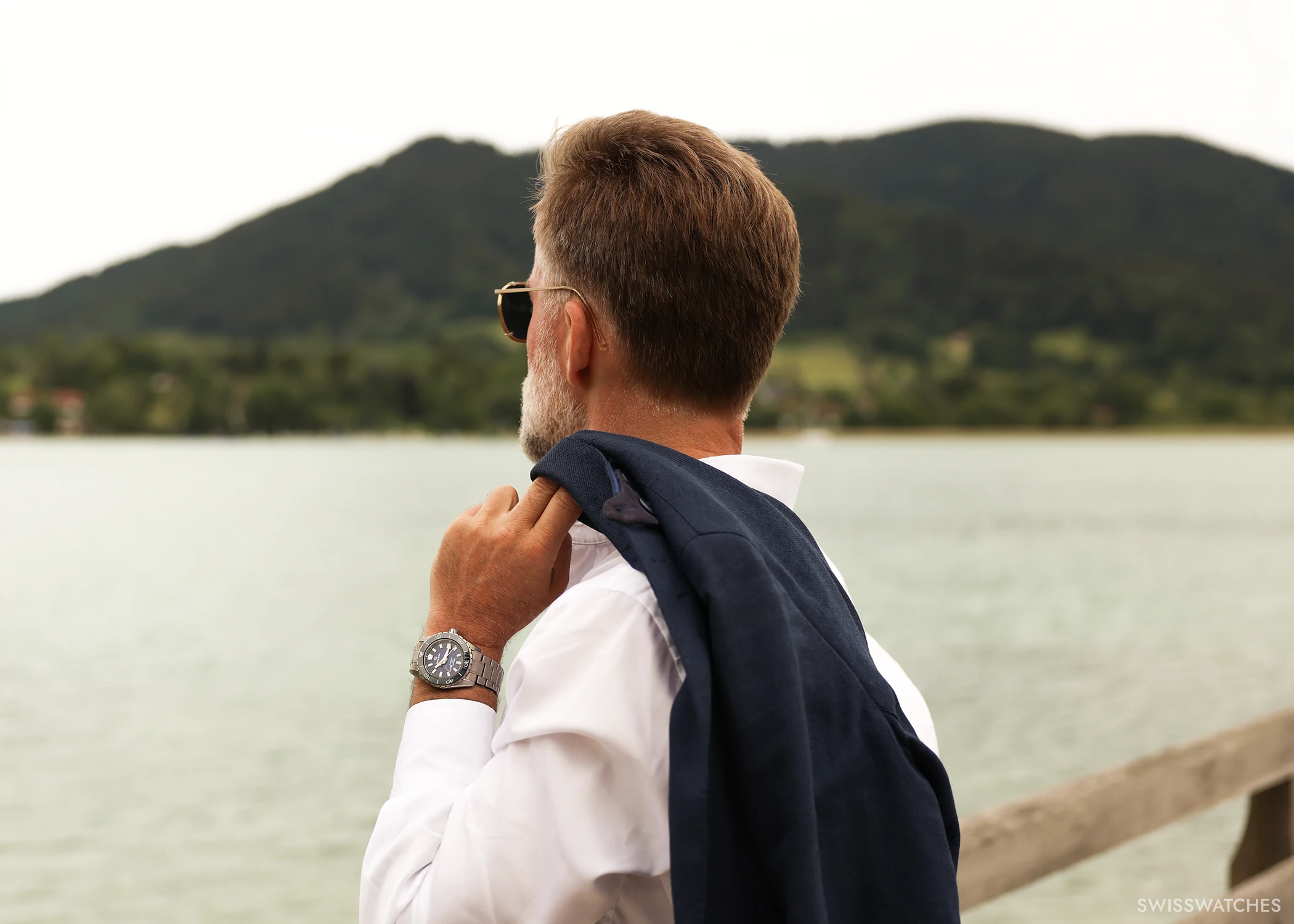
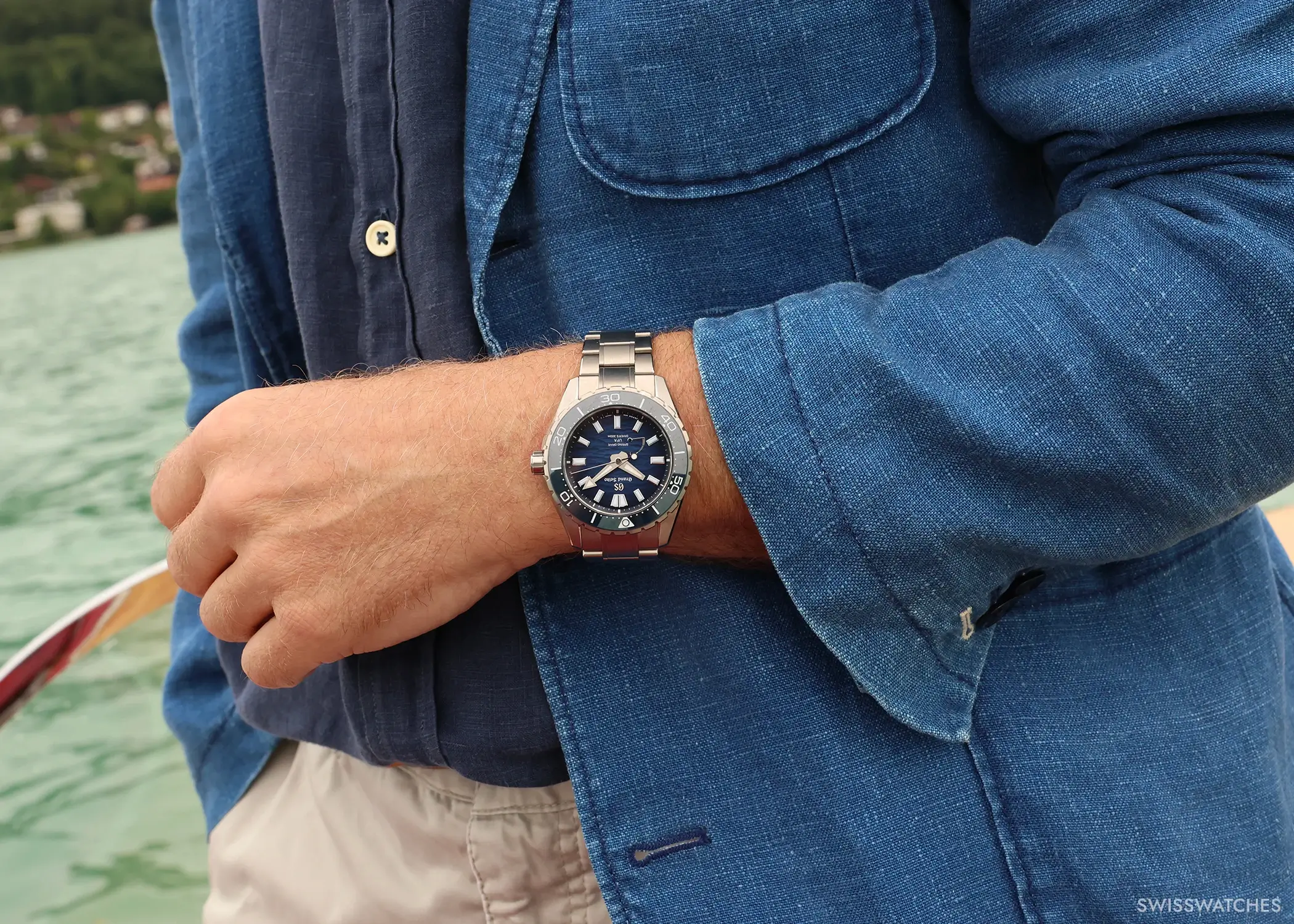
What remains is a comfortable feel on the wrist. I have rather small wrists and don’t feel this model draws undue attention, even when getting on and off at the jetty – exactly what some people are looking for when boarding their yacht.
Ultimately, I have not the slightest doubt: the Japanese not only know their craft, they are setting the technical direction for the evolution of the modern diving watch in the 21st century – it is becoming more precise and lighter, and should be suitable for wearing with everything from a wetsuit to a smart dinner suit. Thanks to the smallest diameter among its competitors and its reduced thickness, this Seiko is even a viable alternative to a business watch for everyday wear. It isn’t quite the watch for secret agents just yet, although James Bond has worn a Seiko before: in the late 1970s and up until the mid-1980s, Roger Moore wore various models from the Japanese parent company, though these were quartz watches. How times change: in keeping with the 1983 spy film classic, perhaps one should never say never in life.
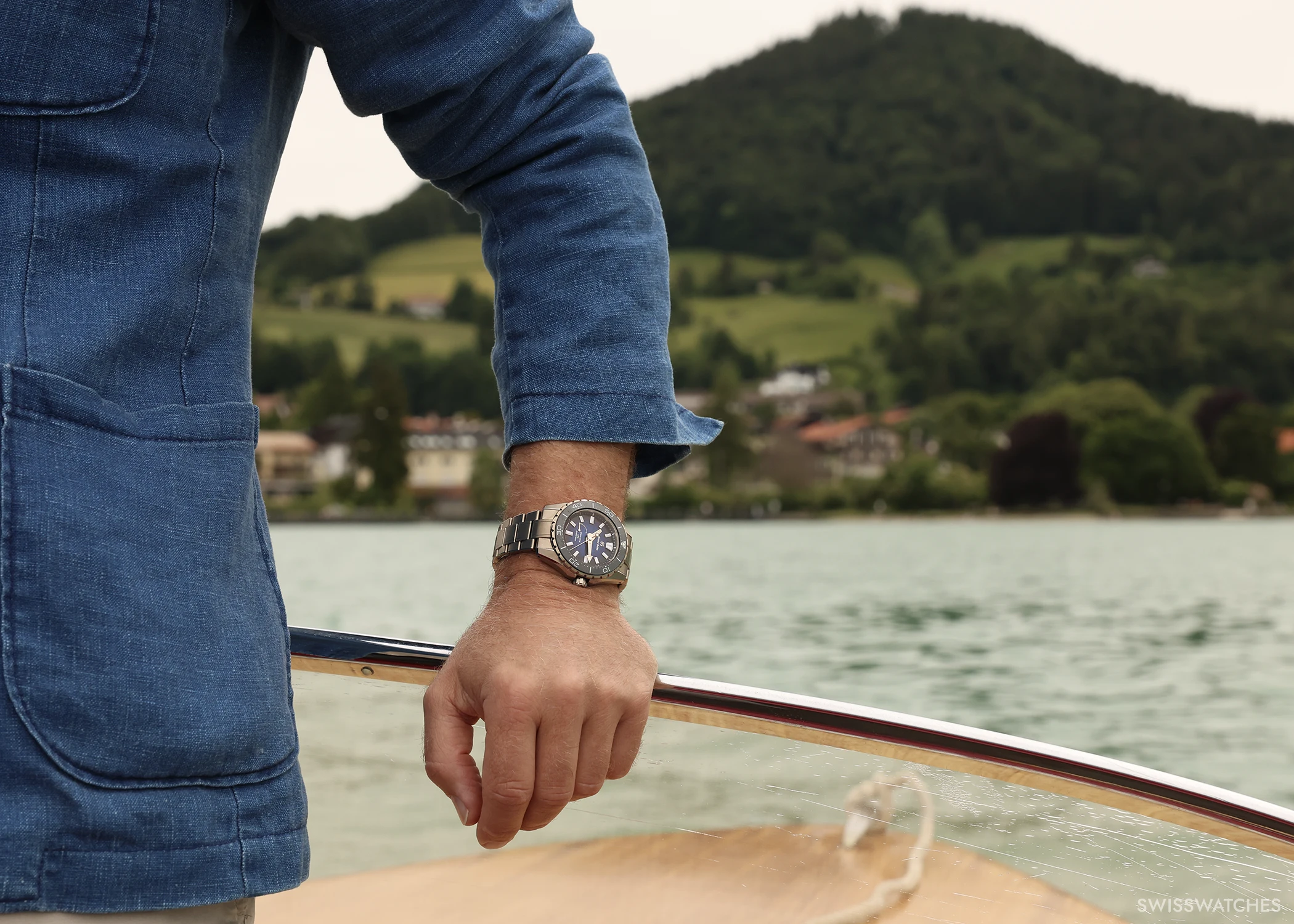
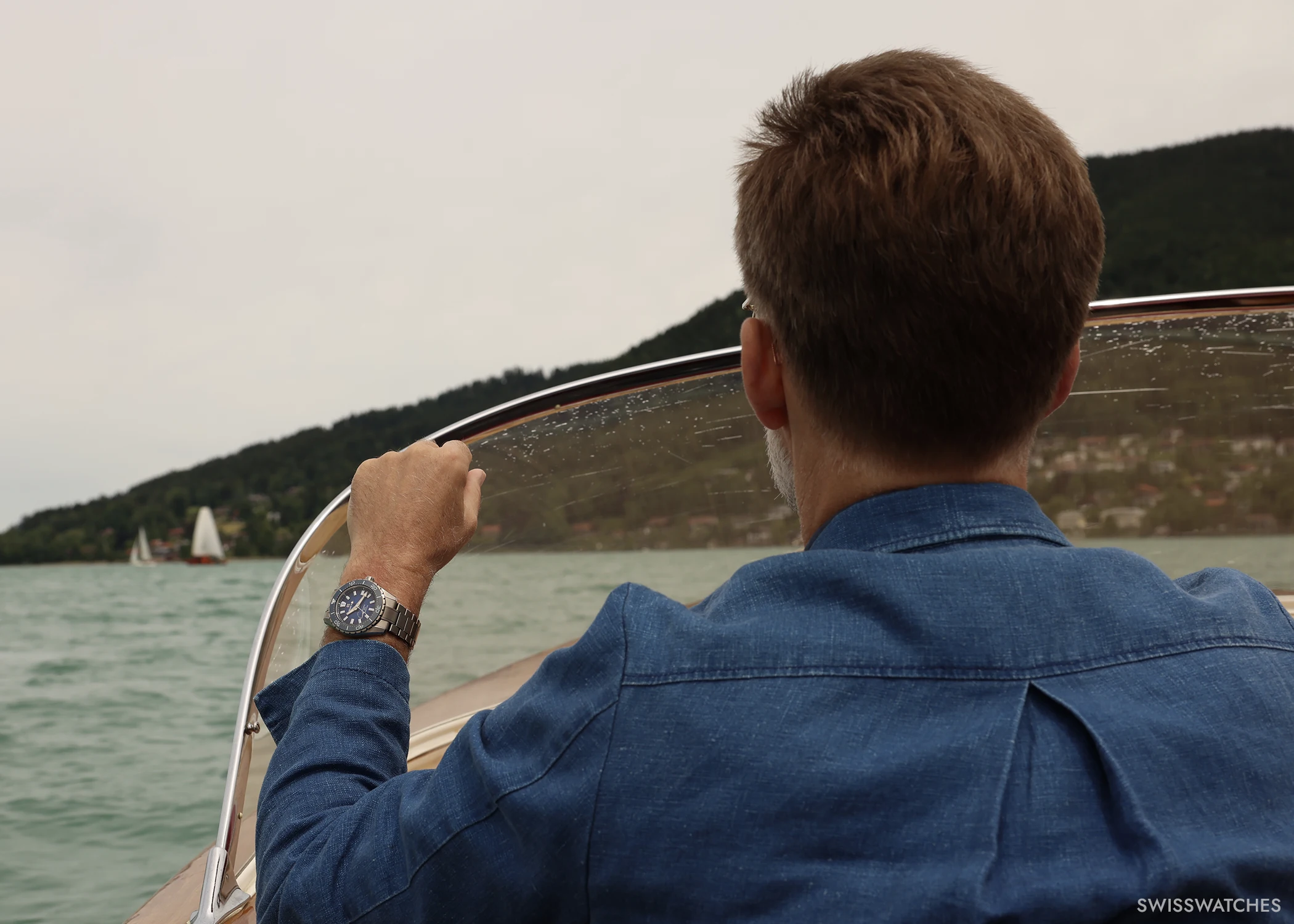
The bottom line is this: for some, the new Grand Seiko Spring Drive U.F.A. Ushio 300 Diver is the perfect watch for any sporting activity in and around the water. For others, it is the one watch to last a lifetime. That is not meant to sound disparaging. It is a mark of distinction. After all, it is this very assessment that once helped well-known Swiss competitors become household names. In either case, it would be an exceptionally wise decision.
Availability & Price: The Spring Drive U.F.A. Ushio 300 Diver (SLGB023 in blue, SLGB025 in green) has been available since June 2026 at Grand Seiko boutiques and from selected specialist retailers; the recommended retail price is €12,500 each.