The best classic car rally watches, from mechanical chronographs for the Mille Miglia to toolwatches built for the Dakar Classic.

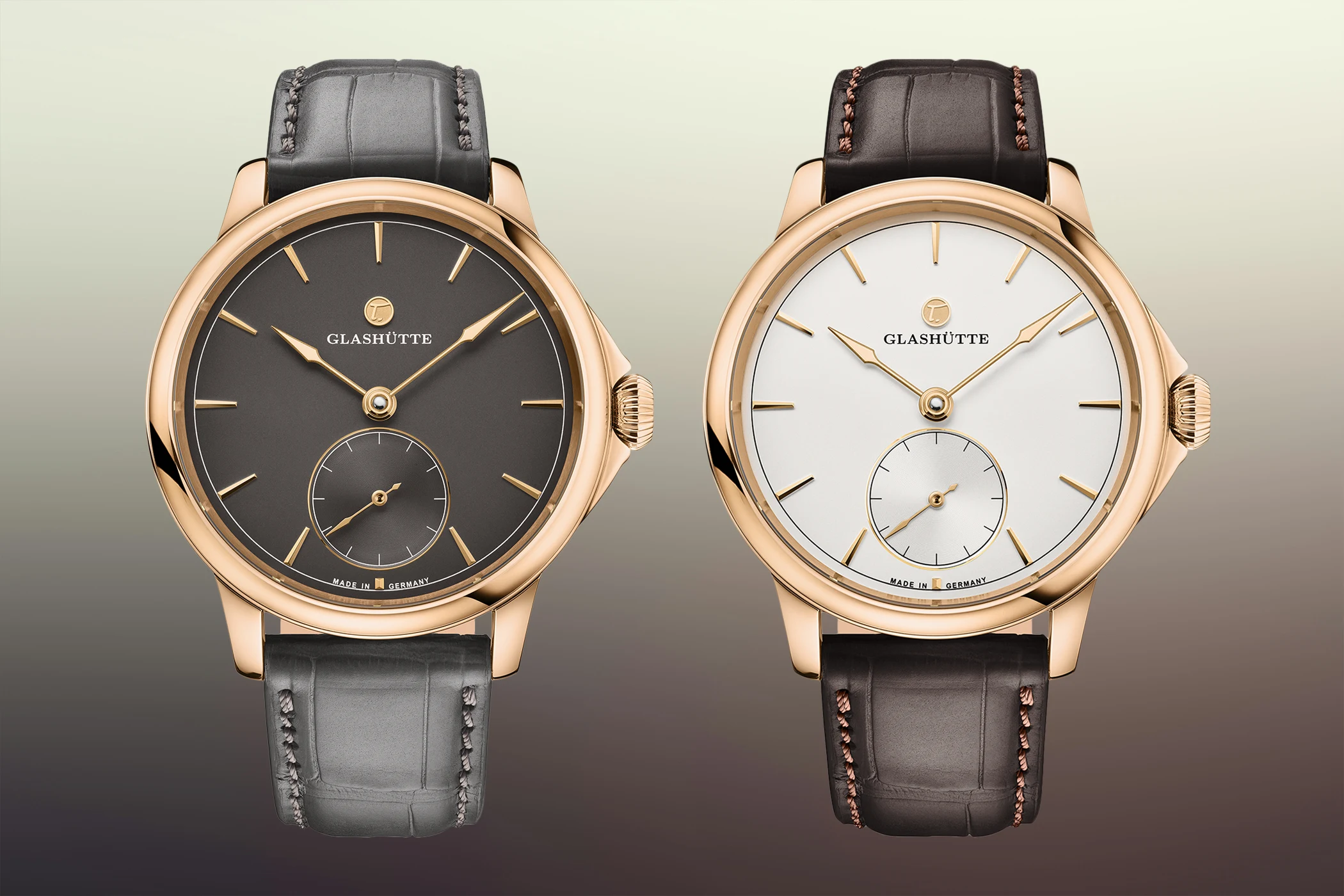
To mark its 99th anniversary, Tutima Glashütte is introducing the new Manufacture Calibre 626 with two special Patria editions, each limited to nine pieces. The key change lies not in the watches’ external appearance, but in the movement’s construction: instead of the traditional three-quarter plate, Tutima has opted for a newly designed half-plate, thereby revealing more of the gear train.
At first glance, the new Patria Special Edition from Tutima Glashütte remains true to what one would expect from a classic Glashütte three-hand watch: an 18-carat rose gold case, a understated dial, a small seconds hand, and manual winding. The watch features no additional displays or particularly striking design elements. Its true distinction lies on the back.
There, beneath a sapphire crystal caseback, lies the new in-house calibre Tutima 626. It is a movement that deliberately offers a greater view than has long been customary in the Glashütte tradition. For this calibre, Tutima has dispensed with the classic three-quarter plate, replacing it with a newly designed half-plate featuring a broad horizontal striped finish, which allows the gear train to be shown off to better effect. A traditionally rather closed architecture is thus transformed into a more open design, without the watch losing any of its understated charm.
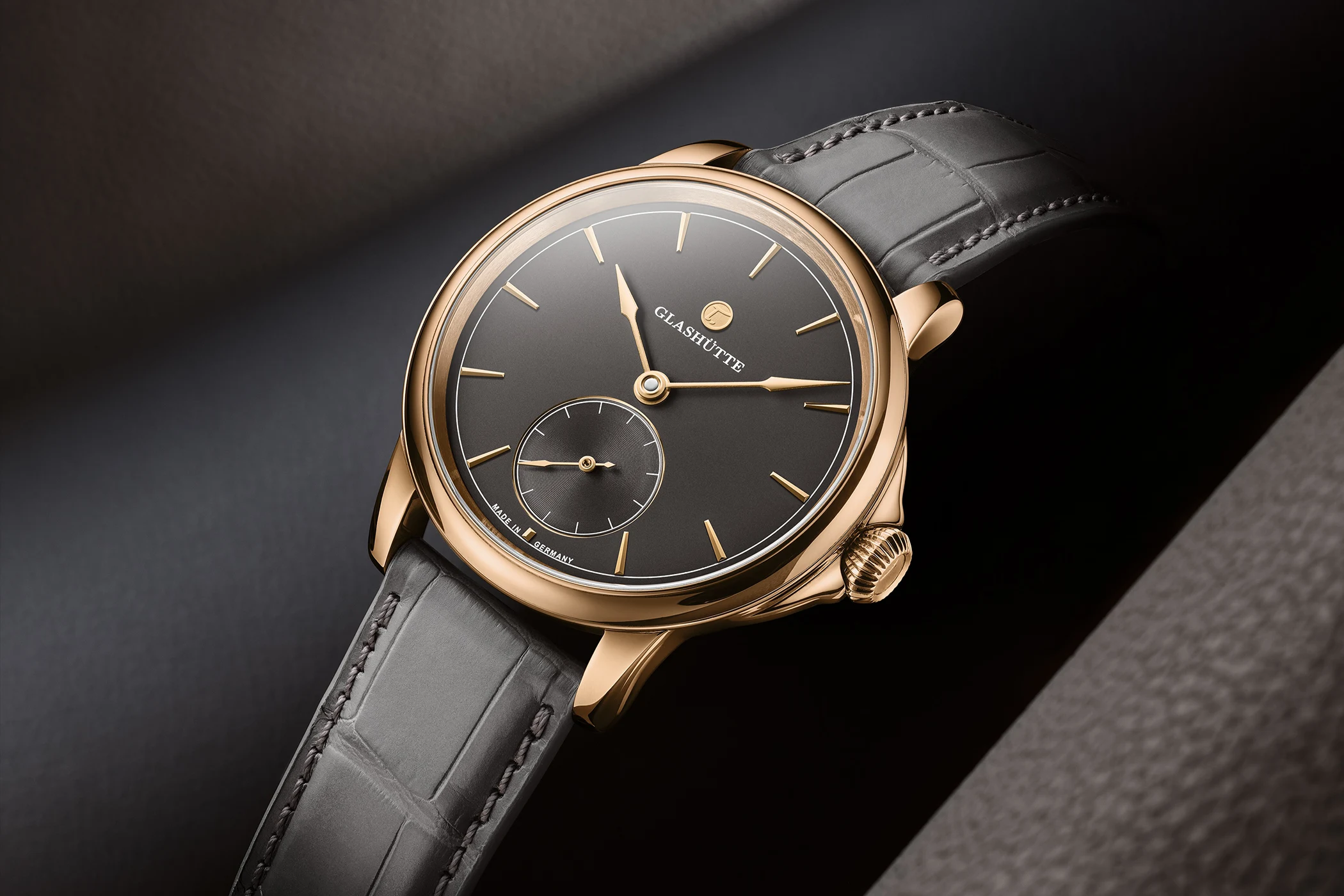
The Patria is not a watch that defines its character through numerous displays or a complex dial layout. Even the two special editions typically display the hours, minutes and small seconds. That is all that is needed on the front to clearly identify the watch: its design is firmly rooted in the traditional framework of the classic hand-wound watch from Glashütte.
Both cases are crafted from 18-carat rose gold, measuring 43 millimetres in diameter and 11.2 millimetres in height. A domed, anti-reflective sapphire crystal sits above the dial; on the back, a sapphire crystal caseback offers a view of the new Calibre 626. This is particularly important with these watches, as the back serves not only to view the movement but also becomes a central feature of the special editions.
The hands are also made of 18-carat gold, are hand-polished and diamond-cut on the bevel. At first glance, such details sound like classic fine watchmaking vocabulary, but they have a practical effect: the edges catch the light without the dial beginning to look restless. In a watch reduced to three displays, it is precisely such subtleties that determine whether the design appears flat or precise.
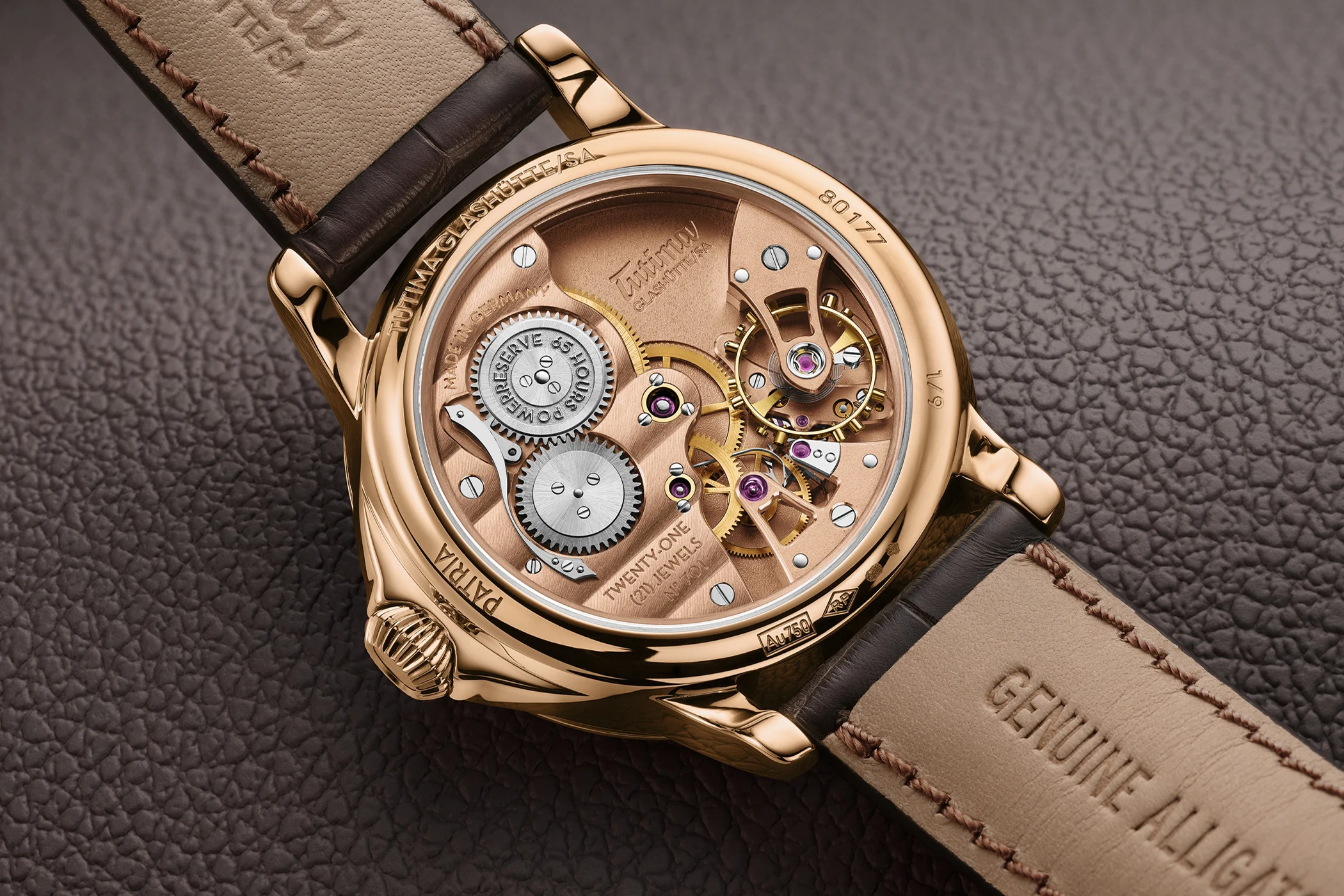
The new Tutima 626 in-house calibre is a hand-wound movement offering approximately 65 hours of power reserve when the mainspring is fully wound. It consists of 170 components, features 21 jewels – two of which are set in screw-mounted gold chatons – and operates at a frequency of 21,600 vibrations per hour, or 3 Hertz.
More important than the raw figures is the modified movement architecture. The three-quarter plate is one of the defining structural and design elements of Glashütte watchmaking. It provides stability, organises the movement visually and, at the same time, conceals large parts of the gear train. It is precisely this that gives rise to some of the controlled restraint associated with classic Glashütte movements.
With the Calibre 626, Tutima has opted for a different interpretation. The half-plate continues to hold the movement together and give it structure, but allows more of the mechanical depth to be seen. The minute wheel, small balance wheel and seconds wheel feature fine finishes that can only be fully appreciated thanks to the more open construction: polished recesses and bevelled, finished spokes. The bridges for the balance, seconds and escape wheels are also skeletonised. As a result, the eye is not drawn to the decorated surfaces. One can better see how the gear train is constructed, how the individual components relate to one another, and the depth of the construction.
The broad horizontal strip-grinding on the half-plate reinforces this effect. It not only draws the eye across a large enclosed surface, but also directs it into a movement architecture that appears more open than the traditional arrangement.
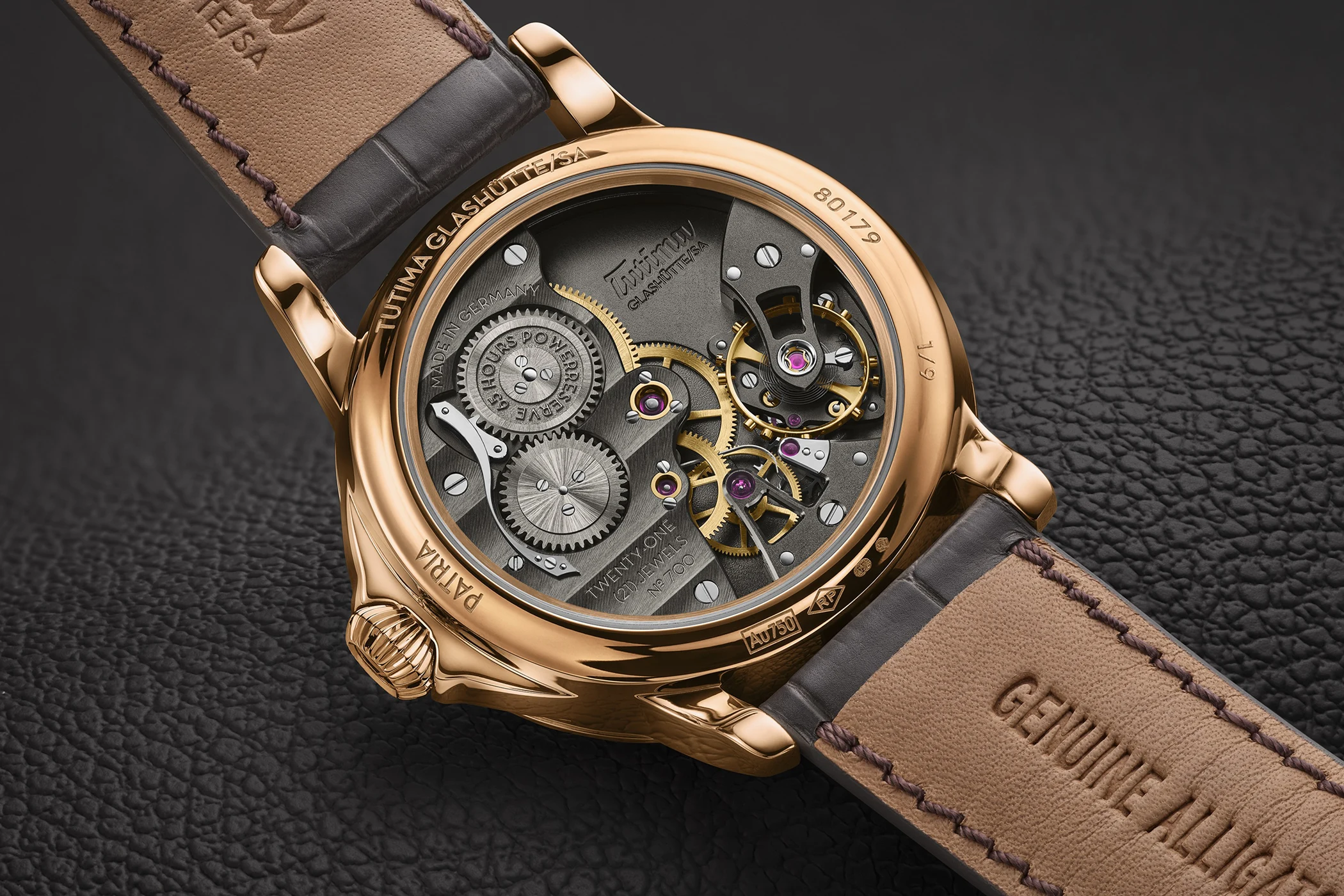
From a technical perspective, too, the Calibre 626 remains firmly rooted in the tradition of fine watchmaking. The movement features a non-regulator balance system with a hand-curved Breguet balance spring. In a non-regulator design, regulation is not achieved via a regulator that alters the effective length of the balance spring. Instead, it is carried out via the balance wheel. The screw balance of the Calibre 626 features a weight screw and four regulating screws.
These details are not only relevant to specialists. They pertain to the part of the movement where timekeeping is finely adjusted. Whilst the gear train and barrel transmit energy, the balance system determines the rate at which it is released.
The rest of the design also adheres to the principle of making the movement comprehensible not only technically but also visually. The escape wheel and crown wheel are decorated with a sunburst finish, and the movement surfaces are electroplated in gold or dark grey, depending on the version.
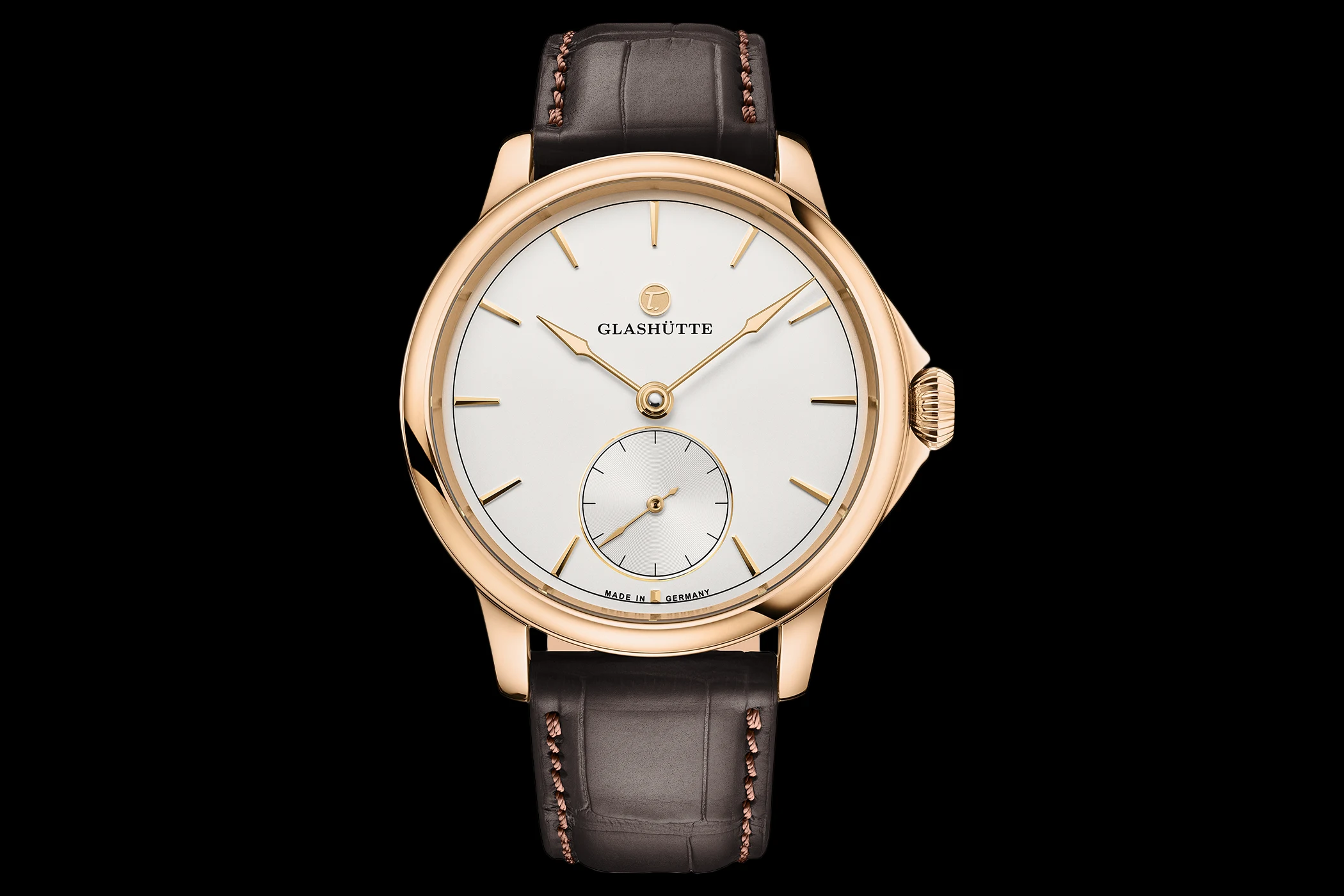
Tutima is releasing the special edition in two versions. Both feature the same 18-carat rose gold case and the same calibre, but differ significantly in their appearance.
The classic version combines the rose gold case with a finely silver-plated dial and a brown alligator leather strap. It is closer to the traditional concept of an elegant three-hand watch: a light-coloured dial, a warm case colour and clear displays.
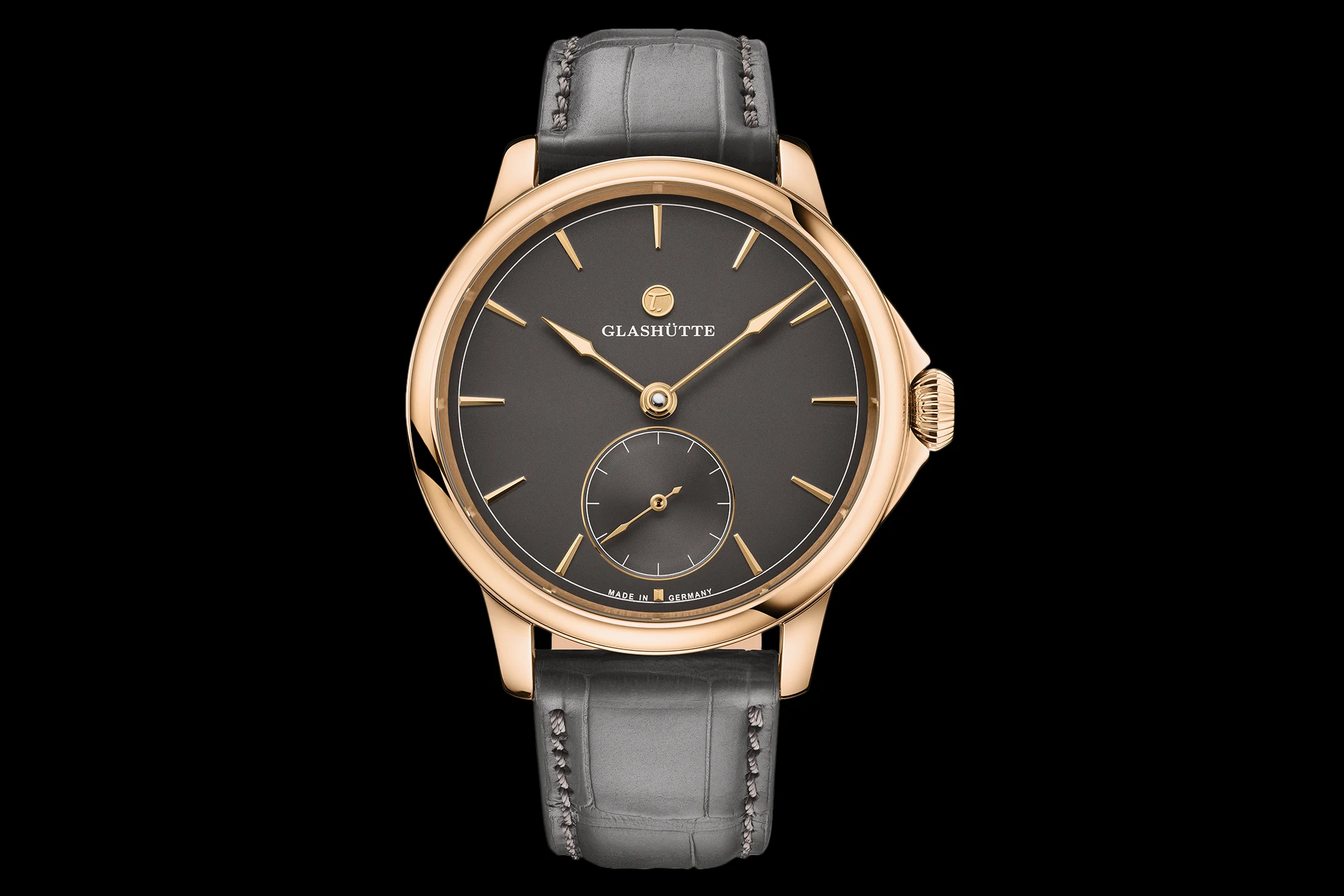
The second version features an anthracite-coloured dial and an anthracite-coloured alligator leather strap. This gives it a more modern and understated look. The dark dial takes some of the classic warmth away from the rose gold, shifting the Patria towards a more understated, modern aesthetic.
It is interesting to note that both variants demonstrate the same technical concept in different ways. The light-coloured version emphasises the Patria’s classic origins. The anthracite-coloured version places the open movement architecture more firmly in a contemporary context.
The two Patria special editions are being released to mark Tutima Glashütte’s 99th anniversary and are each limited to nine pieces. The price is €24,800.
Tutima Glashütte/SA
Patria
6600-21 (silver dial) & 6600-23 (anthracite dial)
18 ct Roségold
Diameter: 43 mm
Thickness: 11.2 mm
5 bar (50 m)
Fine silver-plated and anthracite
18-carat rose gold hands, hand-polished with diamond-cut bevels
Alligator leather strap in brown or charcoal grey with an 18-carat rose gold buckle
Calibre Tutima 626
Manual winding
65 hours
21.600 A/h (3 Hz)
Hour, minute, small seconds
EUR 24,800
Limited to 9 units per model