We talked to watch collector Xiaomo Xiong about his extraordinary Jaeger-LeCoultre Reverso collection.
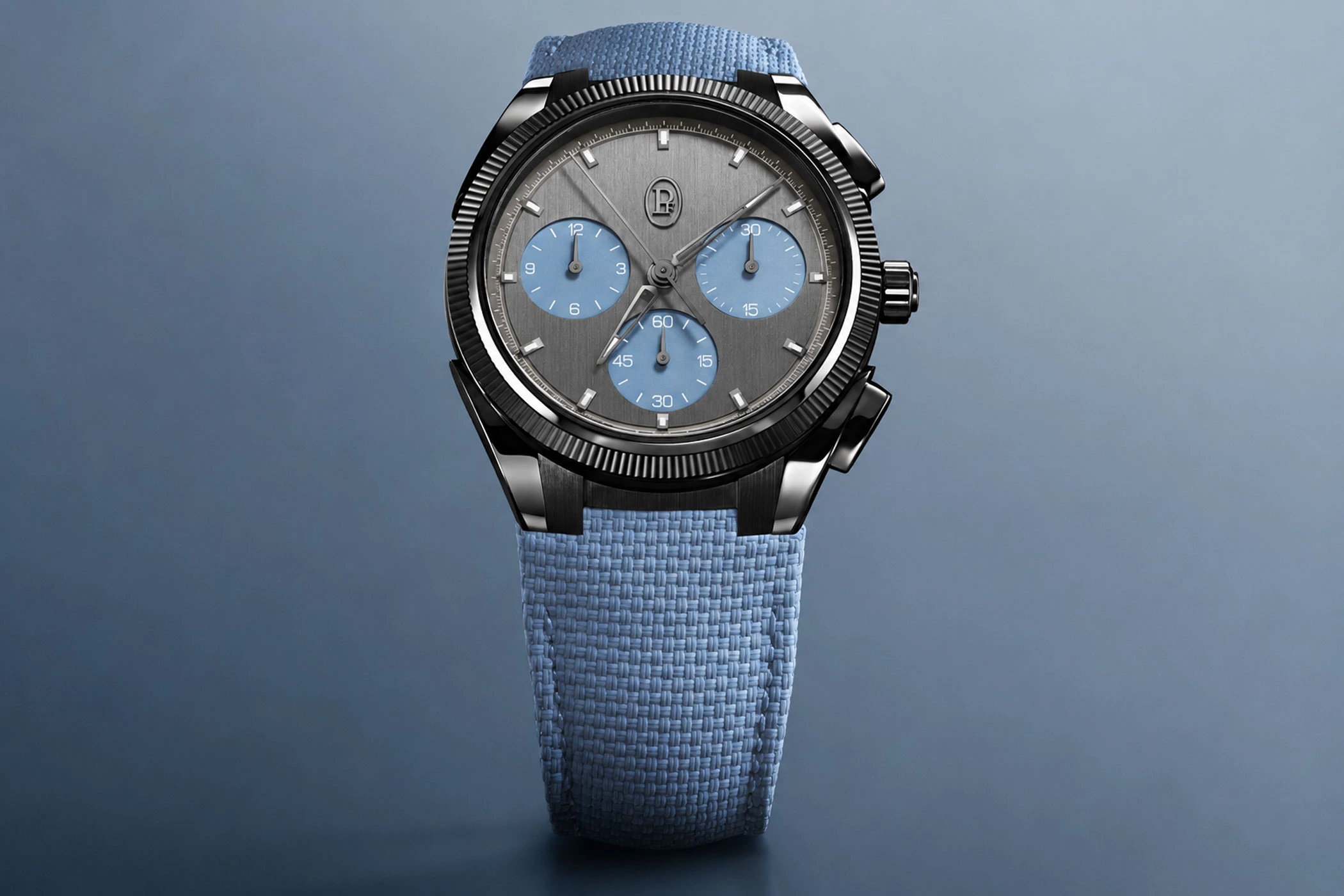
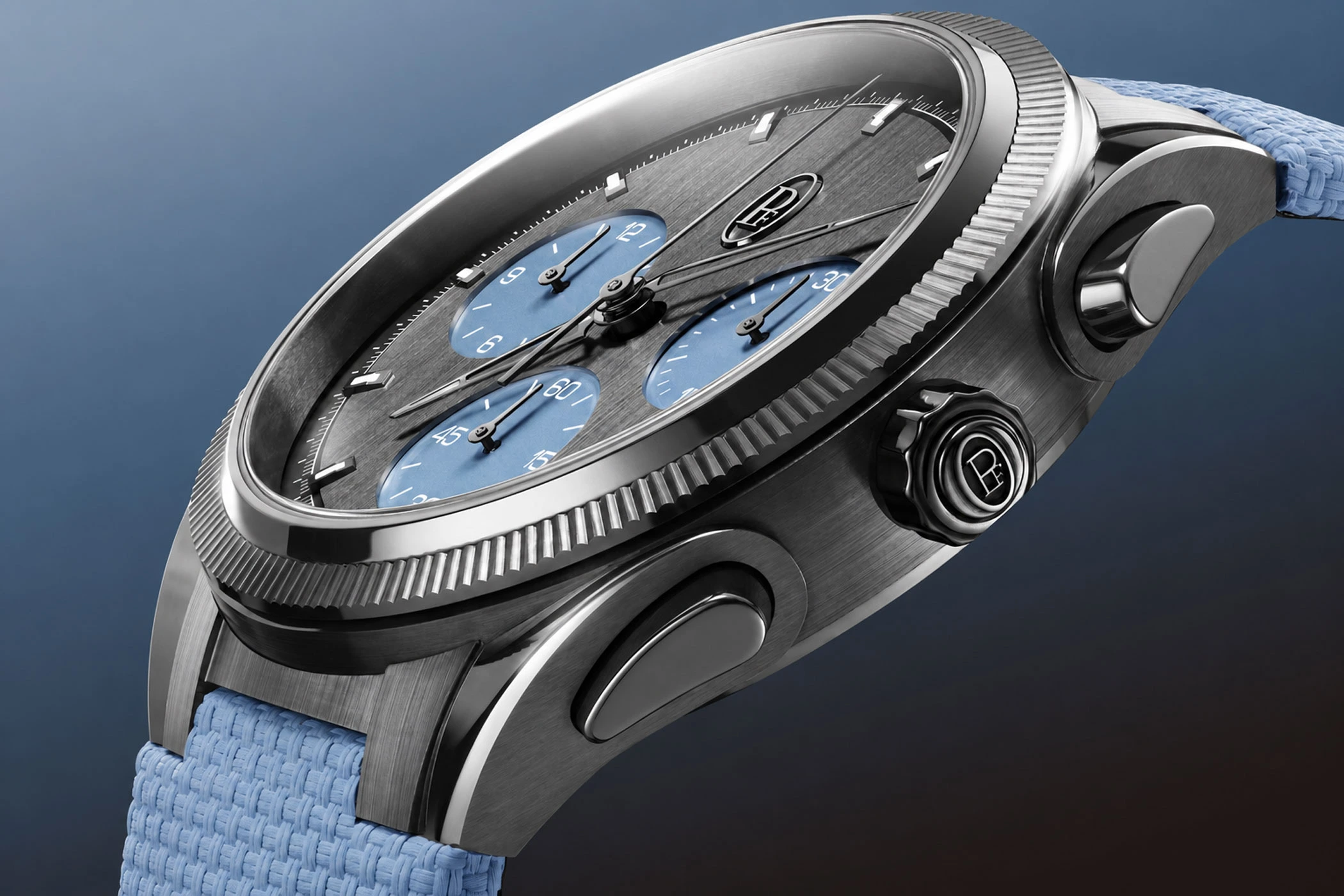
Following last year’s Milano Blue and London Grey editions, Parmigiani Fleurier now introduces the Tonda PF Sport Chronograph Ultra-Cermet in a striking Mineral Blue colourway. Retained are the consistent use of the proprietary Ultra-Cermet material and the high-frequency manufacture movement.
Cermet is neither a new material nor an invention of the Swiss manufacture. However, Parmigiani Fleurier employs it more extensively than almost any other watchmaker and has further developed it into its own proprietary composite material, Ultra-Cermet.
The composite material Cermet dates back to the first half of the twentieth century. The earliest versions, based on titanium carbide (TiC) with a metallic binder, were developed in Germany in 1929 and were initially intended primarily for cutting tools. During the Second World War, German researchers also developed oxide-based Cermets as heat-resistant materials for jet engines. After the war, research was significantly advanced by the US Air Force, which also coined the term “Cermet” – a portmanteau of the English words ceramic and metal – in the late 1940s.
Cermet consists of a high-performance ceramic bonded by a metallic matrix, typically made from nickel, cobalt or titanium. This gives the material the hardness and scratch resistance of ceramic while combining it with the toughness and impact resistance of metal. Despite these advantages, Cermet remains a rarity in watchmaking due to the complexity of machining it. Rado is regarded as the pioneer, having introduced the Sintra in 1993 as the first serially produced wristwatch made from Cermet. Hublot later experimented with the material as well, launching the Big Bang Bullet Bang in 2009.
Parmigiani Fleurier has taken the material a step further with Ultra-Cermet and uses it extensively for virtually all visible external case components on the corresponding models.
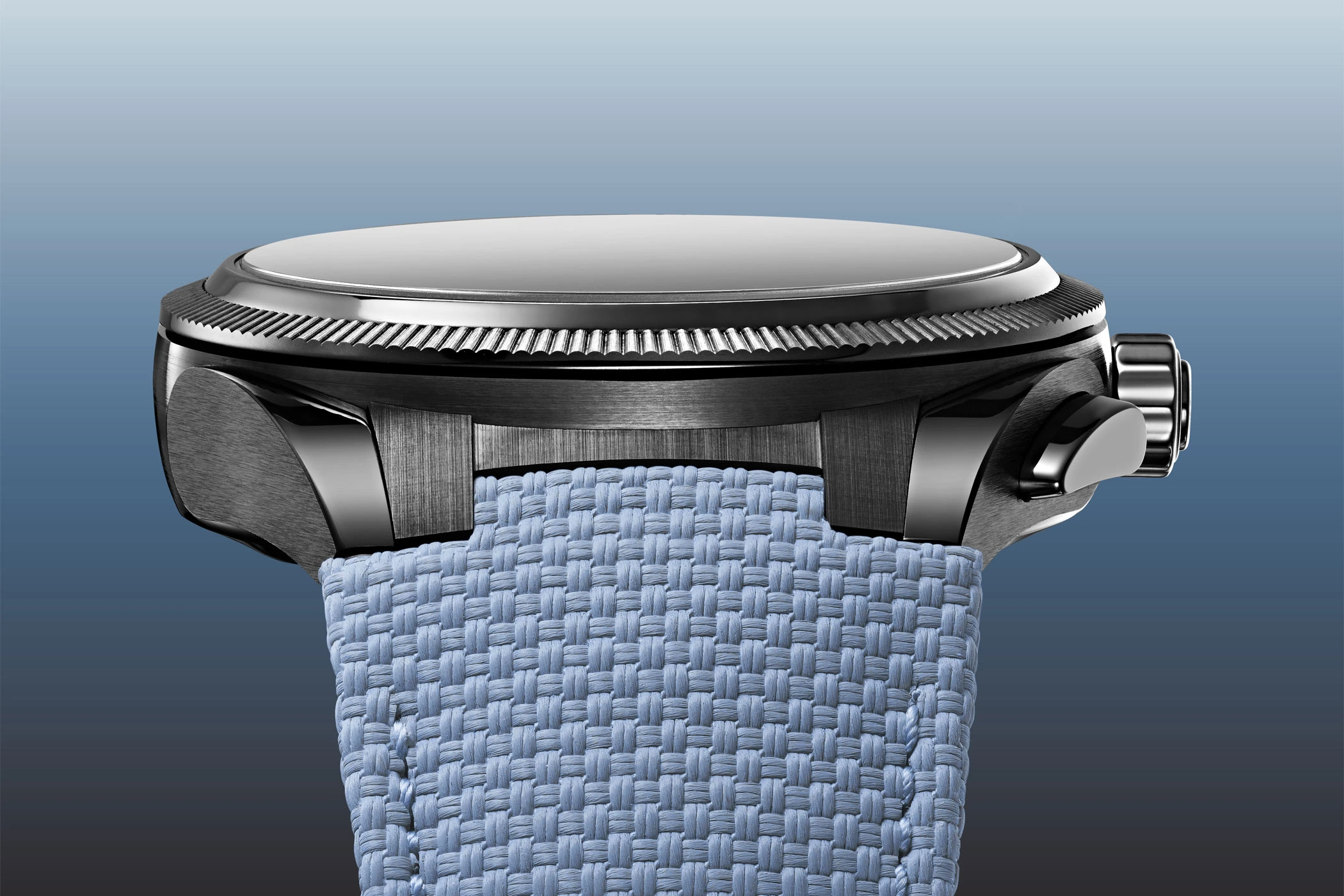
Parmigiani Fleurier has not disclosed the exact composition of Ultra-Cermet. It has revealed, however, that its development took three years and that the material consists of a composite of a titanium metal matrix and ceramic titanium carbide. The focus was not solely on technical performance, including exceptional hardness, scratch resistance and outstanding resistance to corrosion and heat. Equally important were low weight for enhanced wearing comfort, a cool tactile feel and a subtle metallic sheen.
Parmigiani Fleurier does not use Ultra-Cermet merely as a coating, but for the entire case architecture. This makes the precise machining of sharp edges, drilled apertures and contrasting surface finishes considerably more demanding than with steel or titanium. Owing to the material’s properties, diamond-tipped tools are also required during production.
On the Tonda PF Sport Chronograph Ultra-Cermet Mineral Blue, not only the 42.5 mm case, but also the knurled bezel, crown and chronograph pushers are crafted from the composite material. Depending on the angle of the light, the surface shifts between anthracite, deep black and subtle blue reflections that perfectly complement the new Mineral Blue dial.

The vertically satin-finished grey-black dial with Blackor gold-nickel galvanic treatment contrasts subtly with the Mineral Blue sub-dials. Hand-applied indices and the hour and minute hands, crafted from 18-carat gold and also finished with a Blackor coating, are filled with luminescent material to ensure excellent legibility in all lighting conditions. The Mineral Blue rubber strap with its Ultra-Cermet pin buckle echoes the dial’s colour scheme and completes the watch’s distinctive two-tone appearance.
Powering the watch, as in last year’s Tonda PF Sport Chronograph Ultra-Cermet, is the high-frequency PF070 manufacture chronograph calibre. Certified by COSC, the self-winding movement operates at a frequency of 5 Hz, offers a 65-hour power reserve and comprises 288 components.
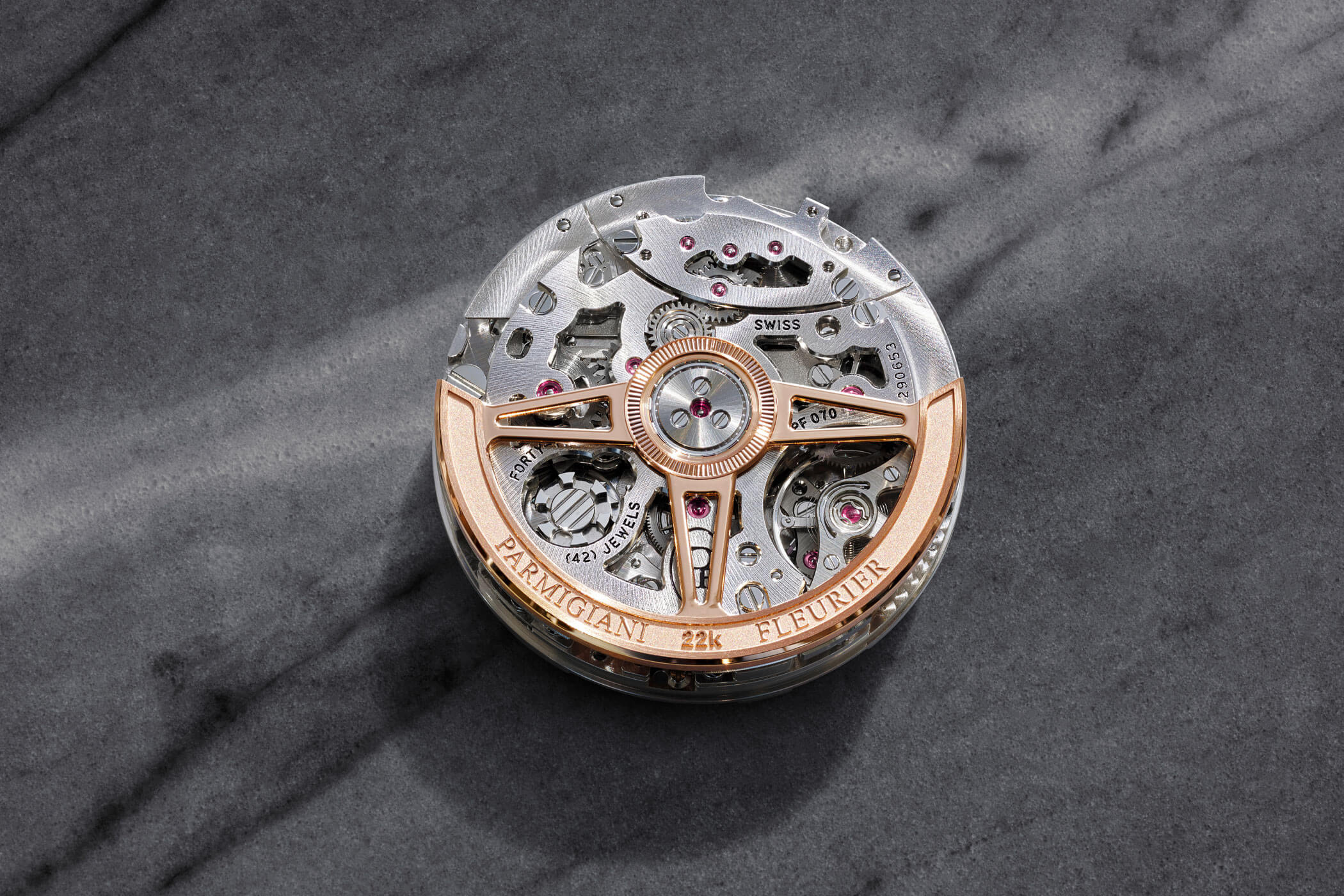
Visible through the sapphire crystal case back are the movement’s refined decorative finishes, including skeletonised bridges with satin-brushed surfaces and hand-bevelled edges, as well as the skeletonised, polished and satin-finished 22-carat rose gold oscillating weight. The new Tonda PF Sport Chronograph Ultra-Cermet in mineral blue cost 45,600 euros.
Parmigiani Fleurier
Tonda PF Sport Chronograph Ultra-Cermet Mineral Blue
PM020199
Ultra-Cermet
42.5 x 13.3 mm
10 bar
Blackor and Mineral Blue, 18-karat gold indices with Blackor coating and luminous material
Rubber strap in Mineral Blue, pin buckle in Ultra-Cermet
PF070: COSC-certified automatic in-house movement with integrated chronograph
Automatic
65 hours
36,000 A/H (5 Hz)
Hours, minutes, seconds, chronograph
45,600 euros