A day at Lake Tegernsee with Grand Seiko’s smallest and, at the same time, most precise diver’s watch: the Spring Drive U.F.A. Ushio 300 Diver
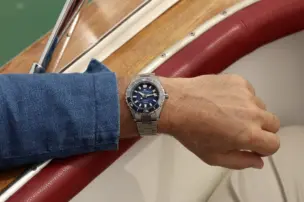

With its “Boutique Travel Guide”, Swisswatches takes the community on a journey. In this series, we not only showcase the boutiques that are well worth a visit, but also delve into the neighbourhoods where they are based. What does the city have to offer? Where can you find the best drink, a particularly good restaurant, or perhaps a hidden gem? A travel guide for watch enthusiasts who want to know what else there is to experience whilst visiting a boutique.
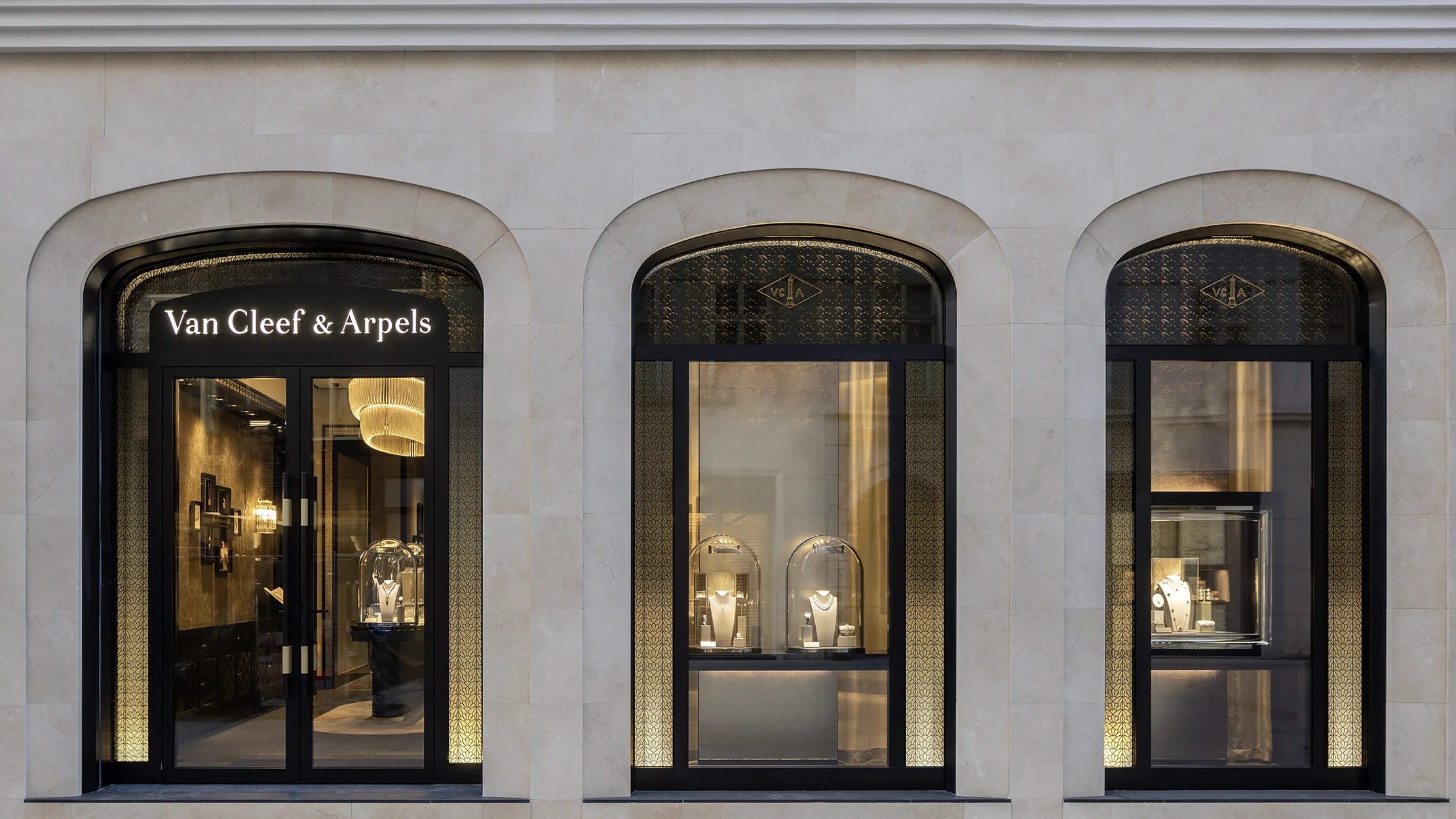
Van Cleef & Arpels always transports you to a sort of fairy-tale forest. Whether through its watches and jewellery, at its stand at Watches and Wonders, or – as on this June day – upon entering the Maison’s first Austrian boutique at Kohlmarkt 3 in Vienna. There is a special reason why we are drawn to Vienna right now: Since 10 June, the MAK – Museum of Applied Arts has been hosting the exhibition ‘GLANZSTÜCKE. Van Cleef & Arpels High Jewellery × Masterpieces from the MAK Collection’, a dialogue between the 120-year history of the Parisian house and one of the world’s most significant collections of applied art. We’ve dedicated a separate, second article to the opening of this exhibition, which you can find here. Here, however, just a stone’s throw from the Stubenring, where the museum is located, we begin where the spirits of both houses first met: in the Van Cleef & Arpels boutique in Vienna.
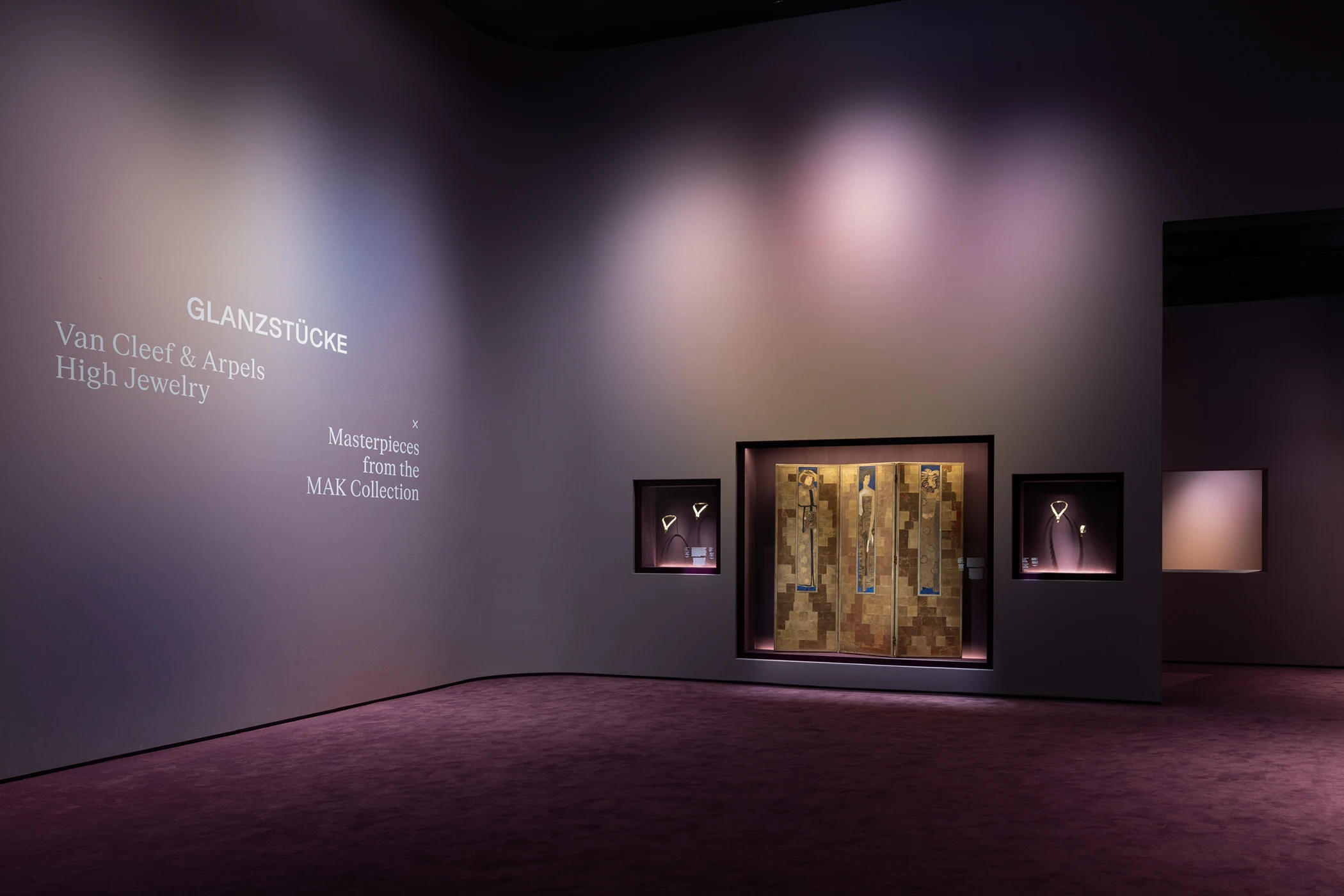
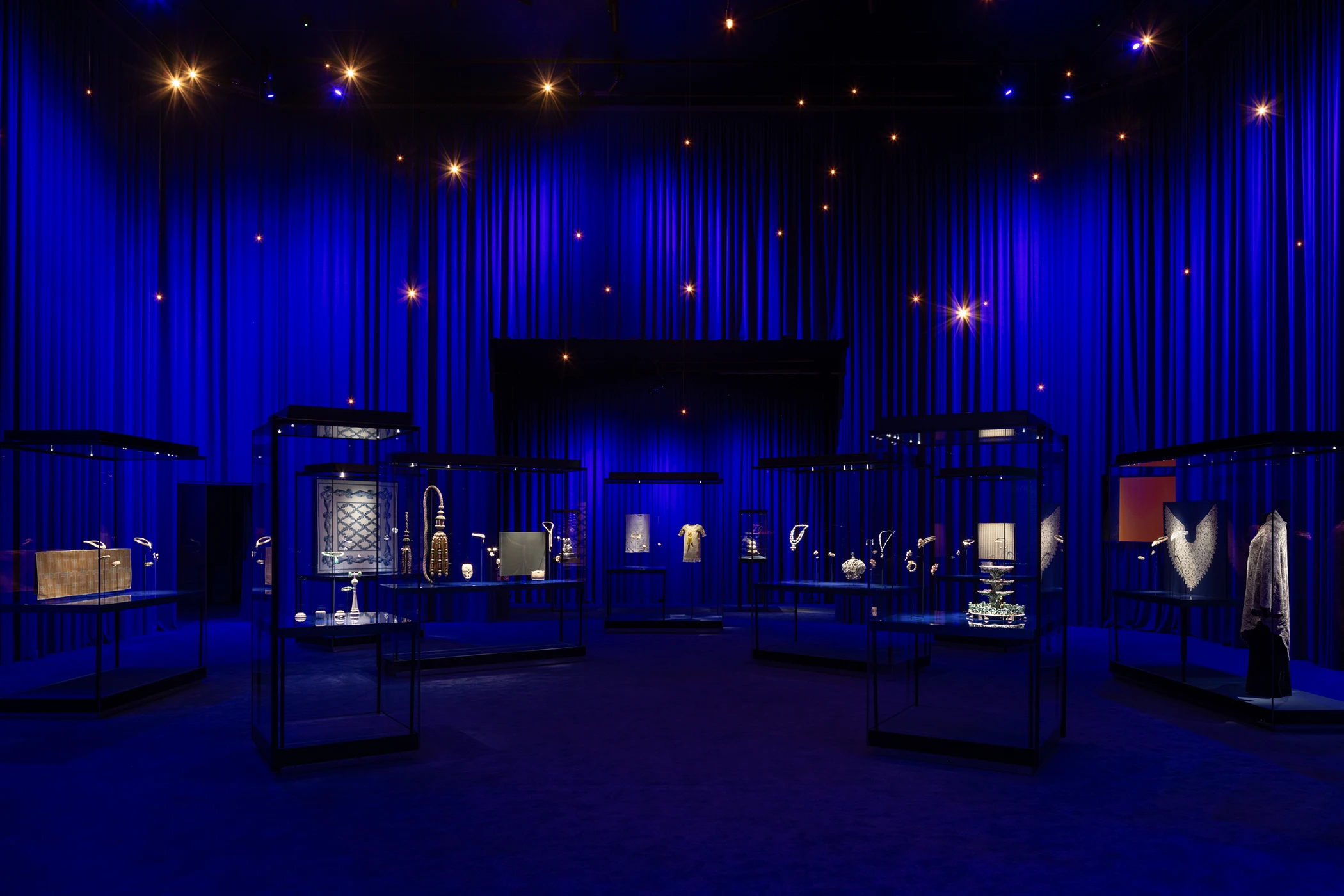
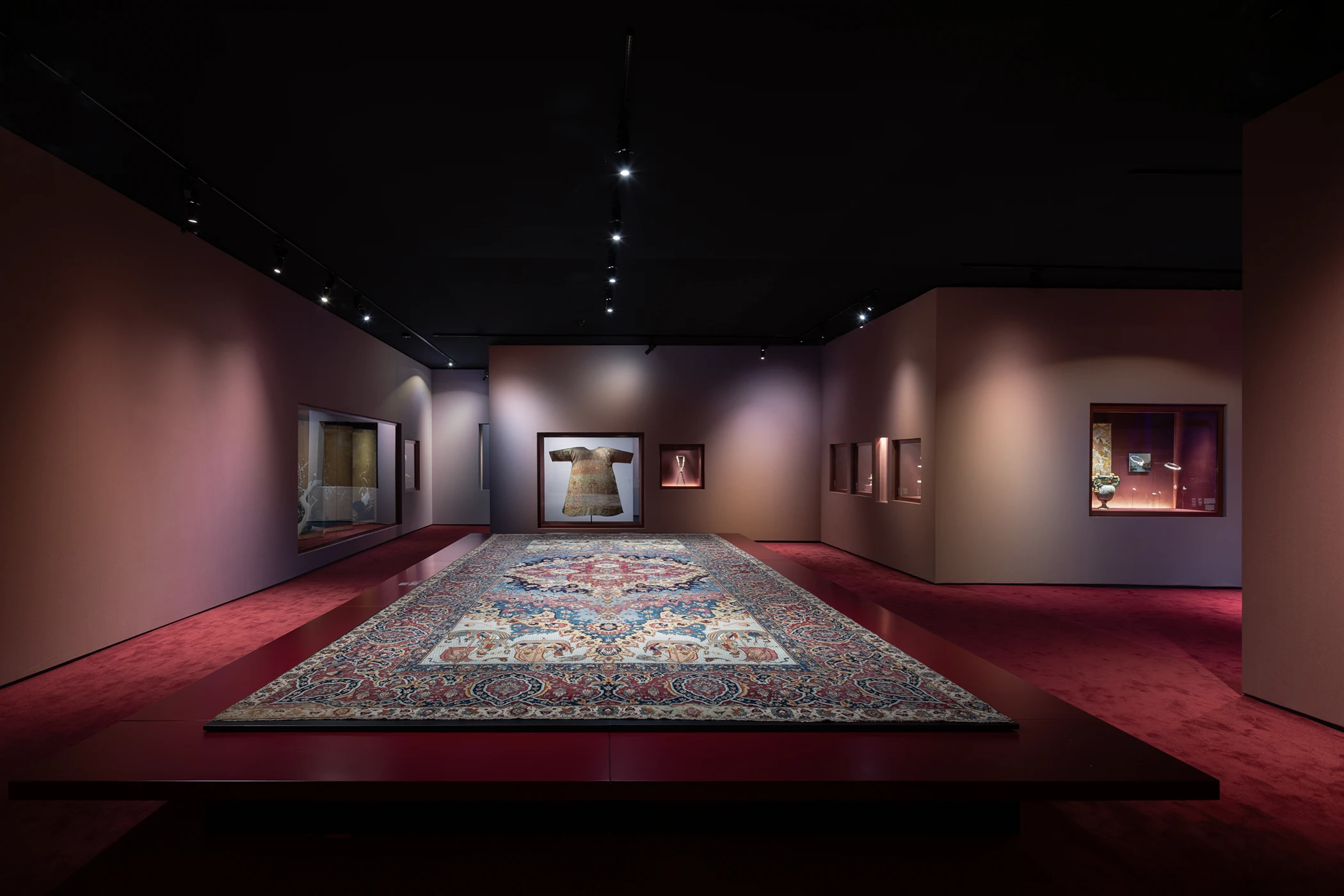
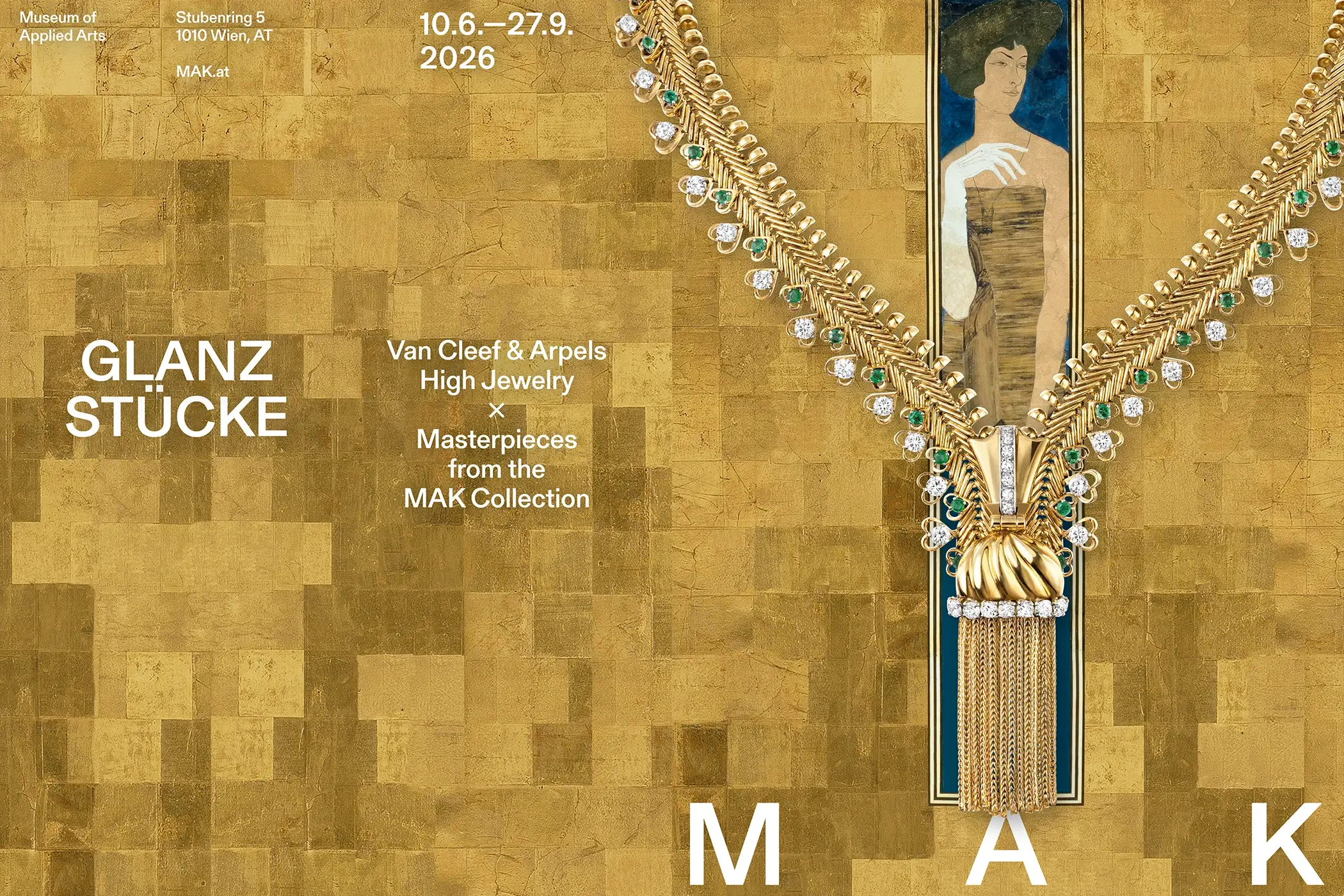
What is astonishing is that the common thread running through the exhibition also runs through these rooms. As early as 1900, the Wiener Werkstätte had developed a radically minimalist, geometric design language and is thus regarded as a pioneer of Art Deco – the aesthetic to which Van Cleef & Arpels owes its unmistakable graphic style. Whilst the MAK places the ‘Zip’ jewellery collection alongside a screen by Koloman Moser, or juxtaposes the patented ‘Mystery’ diamond setting with designs from the Hoffmann School, the boutique builds a similar thematic bridge on a smaller scale. Architecture, applied arts, haute joaillerie and wristwatches all speak the same language here – and, as we shall see, this is particularly true of the Maison’s unusual timepieces.
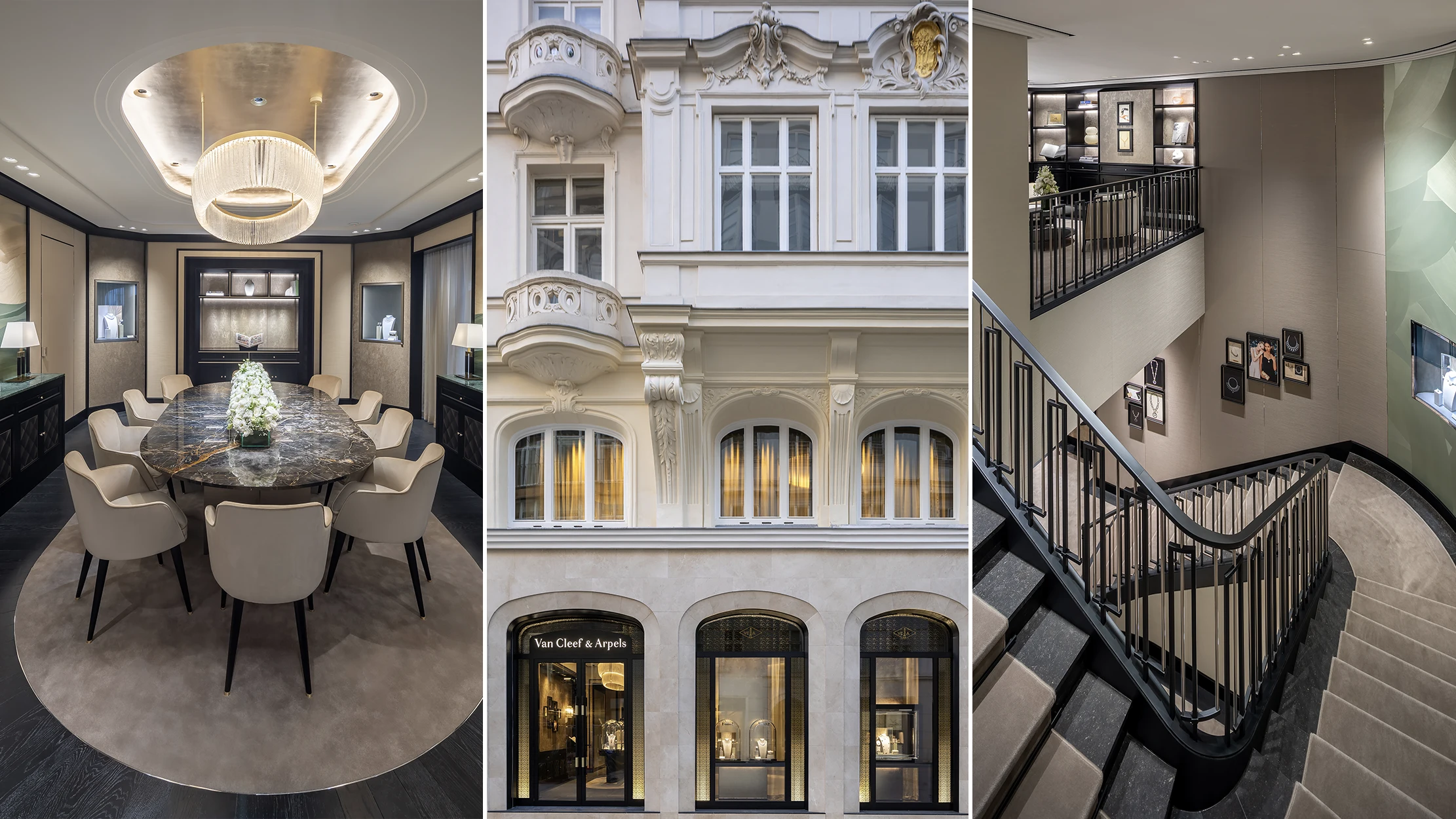
Nowhere is it more evident that Van Cleef & Arpels is a perfect fit for Vienna than on the Kohlmarkt, just a few steps from the Hofburg and the State Opera. The Maison has been based at this address for around two years, housed in a late 19th-century building.
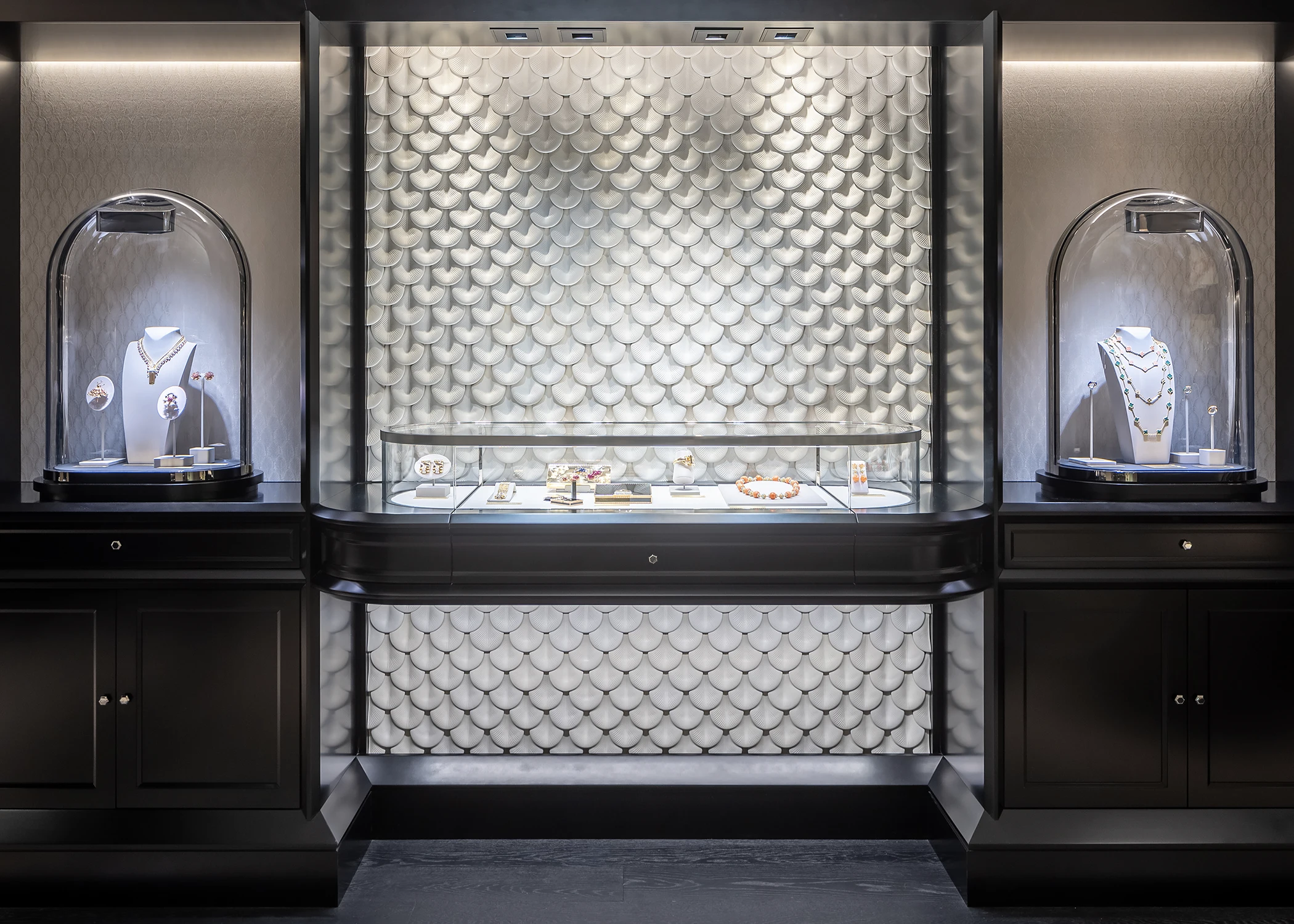
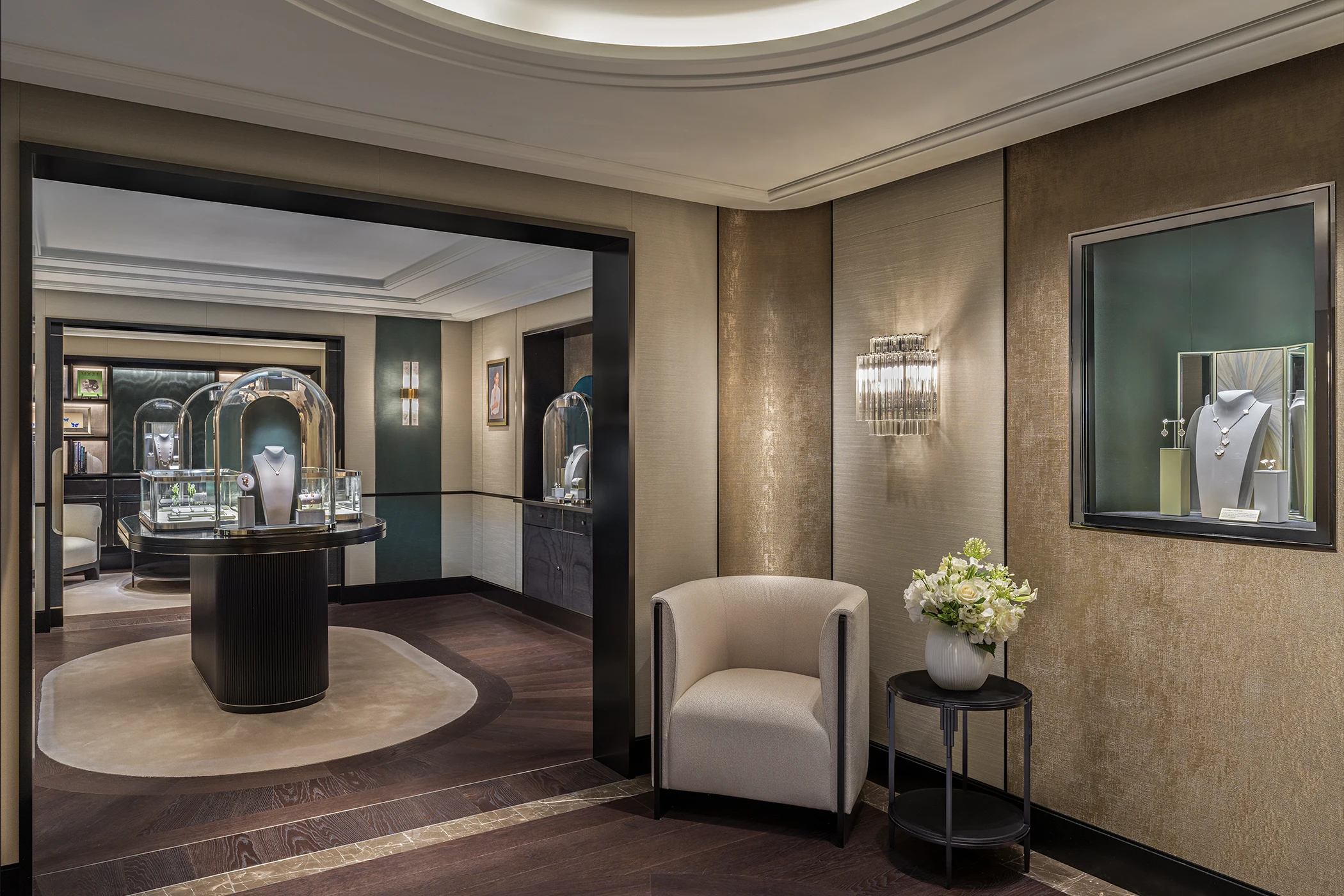
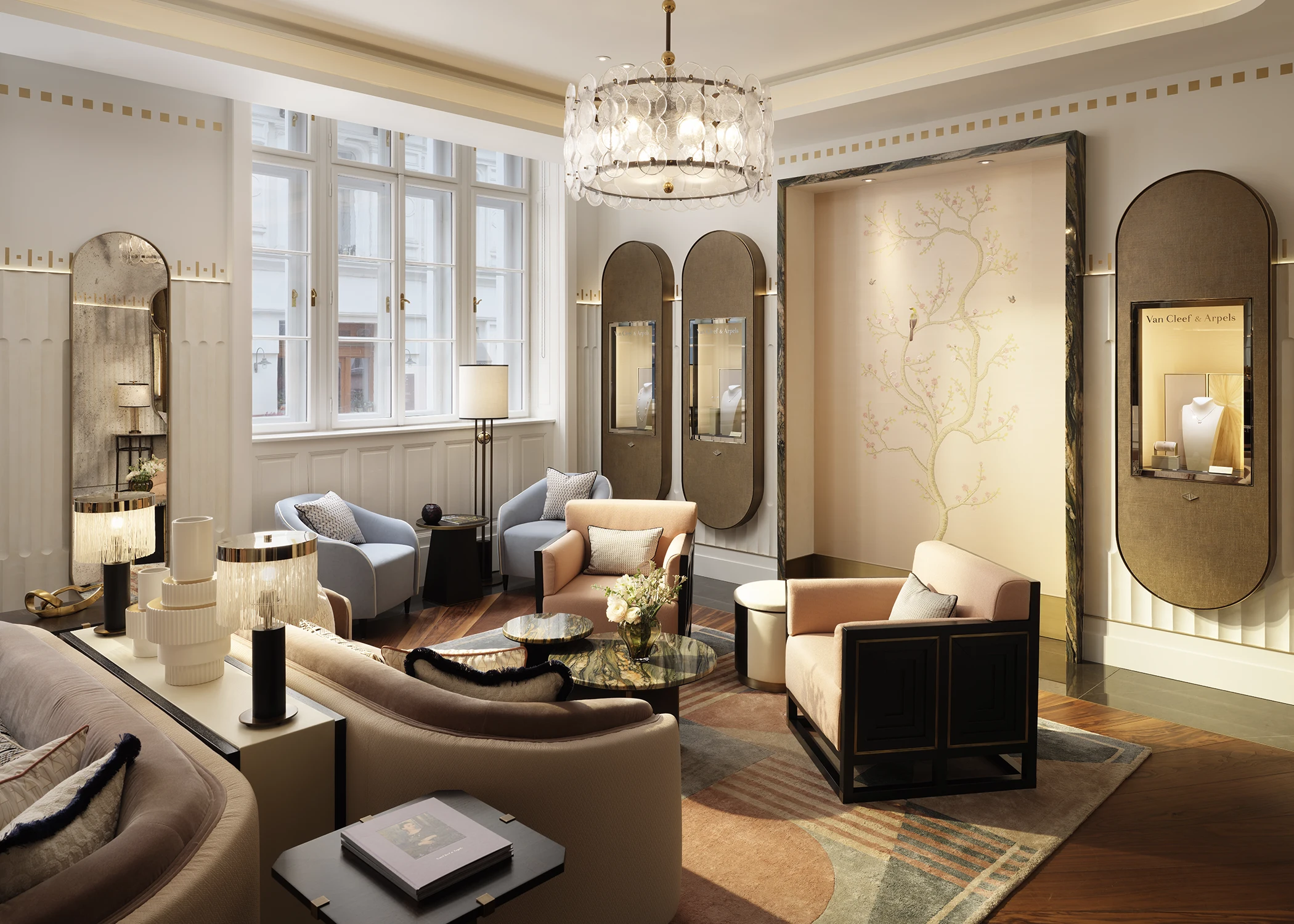
Even the façade reveals the brand’s signature style: black-lacquered panels adorned with a floral pattern reminiscent of the laurel motifs of the Vienna Secession. Inside, visitors are greeted by that blend of extravagant forms, delicate patterns and understated ambience that defines the Maison’s Art Deco style. The brand’s original boutique concept dates back to the early 2000s and was devised by Anouska Hempel – at that time still featuring a green colour scheme – and has been refined over the years, most recently in collaboration with the French interior designer Patrick Jouin, who introduced the characteristic subdued display cases to the boutique network. Hempel’s furniture remains; what has changed is the colour scheme, which has evolved into today’s rich, silky, shimmering gold tones. And yes, the gold leaf on the walls is genuine.
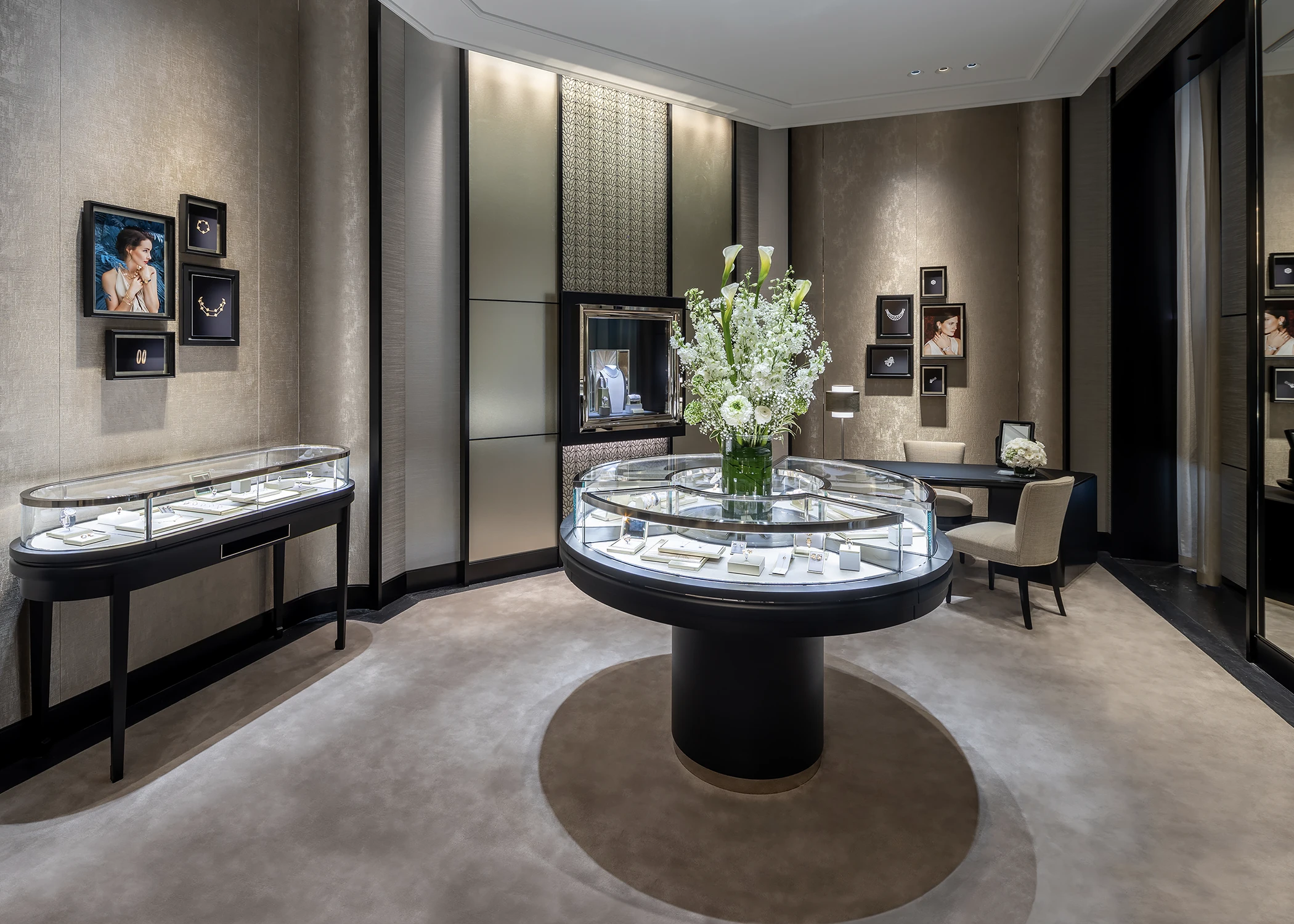
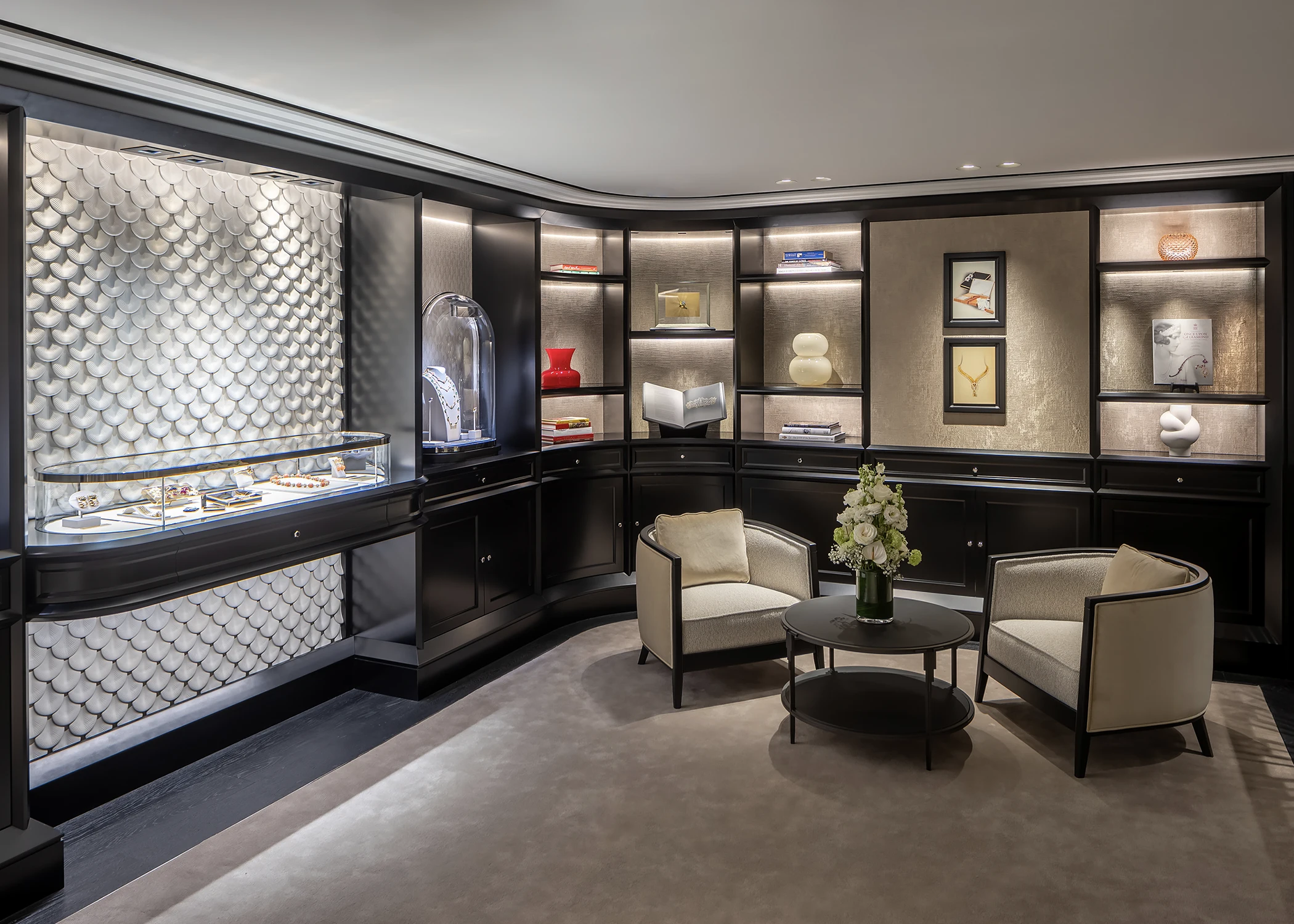
A detail found exclusively in the Viennese boutique: the recurring mesh pattern on the metal wall panels was developed specifically for this space – inspired by a motif from a 1929 ‘Minutière’, which, not coincidentally, is reminiscent of the Mandarin Oriental’s fan and thus foreshadowed the collaboration with the hotel two years ago. Towering above it all is a magnificent, bespoke chandelier by Maison Veronese; Murano glass display cabinets reflect the graphic clarity of Art Deco lines. Decorative panels by the French artist Martin Berger, inspired by the landscapes of Austria, run through the rooms, complemented by the characteristic black-and-gold colour gradient, gold leaf and – as a modern touch – Spanish marble. Spanning around 400 square metres over two floors, the whole space is laid out like an English townhouse: the lounge to one side, behind it a series of changing exhibition spaces and a library that is constantly being reimagined.
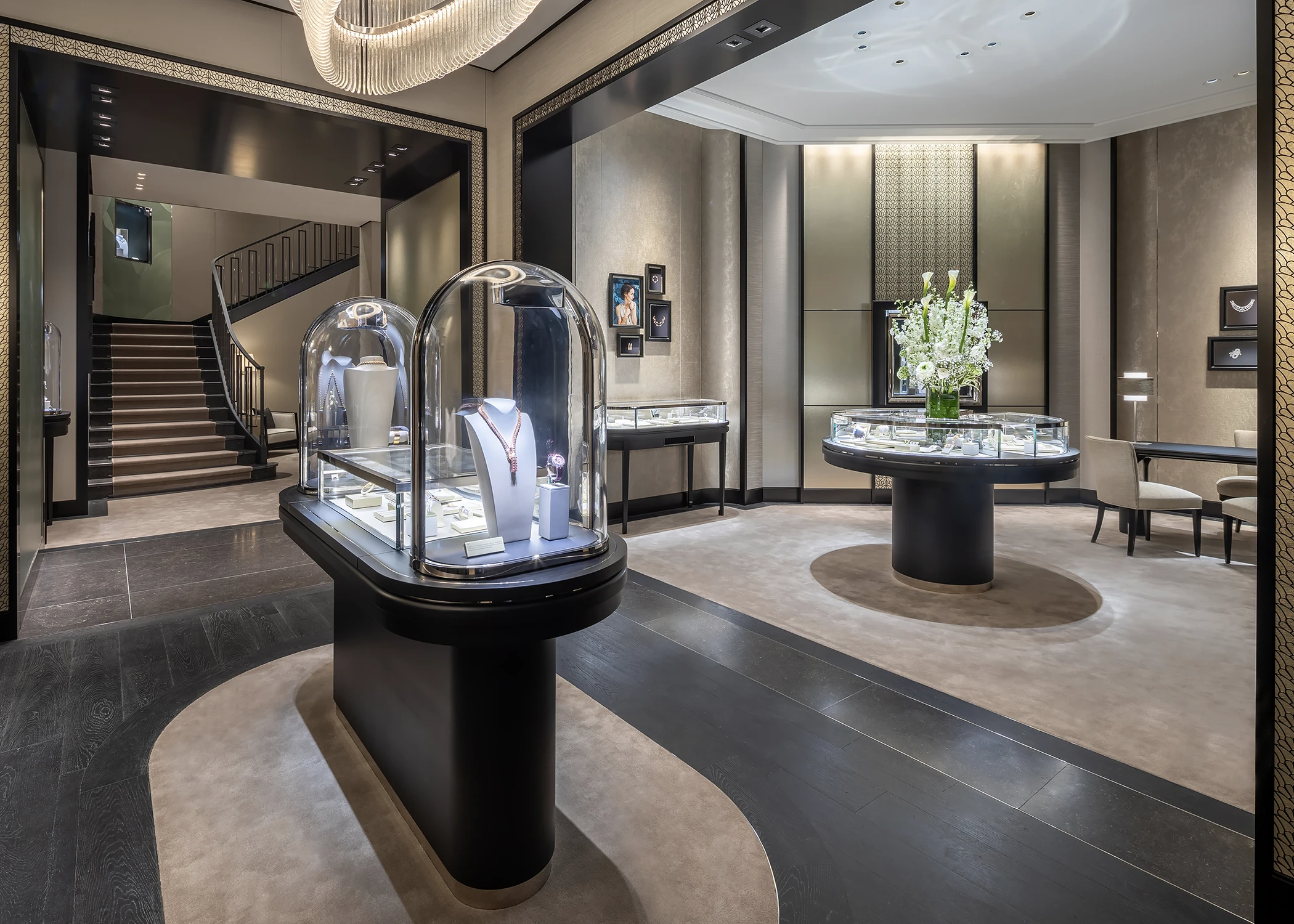
The centrepiece is somewhat hidden away. A small rotunda – perhaps the most beautiful part of the boutique and, in concept, similar to the Hamburg showroom – can be used to host temporary exhibitions, whether of jewellery or watches. Adjacent to it is a separable lounge with natural light; natural light is essential when viewing gemstones and watch dials.
On the opposite side is the convertible dining room, behind whose mirrored wall a small kitchen is concealed; on its walls, two panels created using a stylised one-stroke technique capture the Großglockner landscape – a local touch that combines the Maison’s French colour scheme with Austrian flair.
As renowned as the Maison is for its jewellery – “the watches are ticking away everywhere”, as the tour guide quips with a wink – it’s also worth taking a look at its watch collection here in Vienna. At Watches and Wonders 2026, under the theme ‘Poetry of the Heavens’, Van Cleef & Arpels expanded its masculine Midnight collection with two new pieces that seem tailor-made for this space where art meets the cosmos.
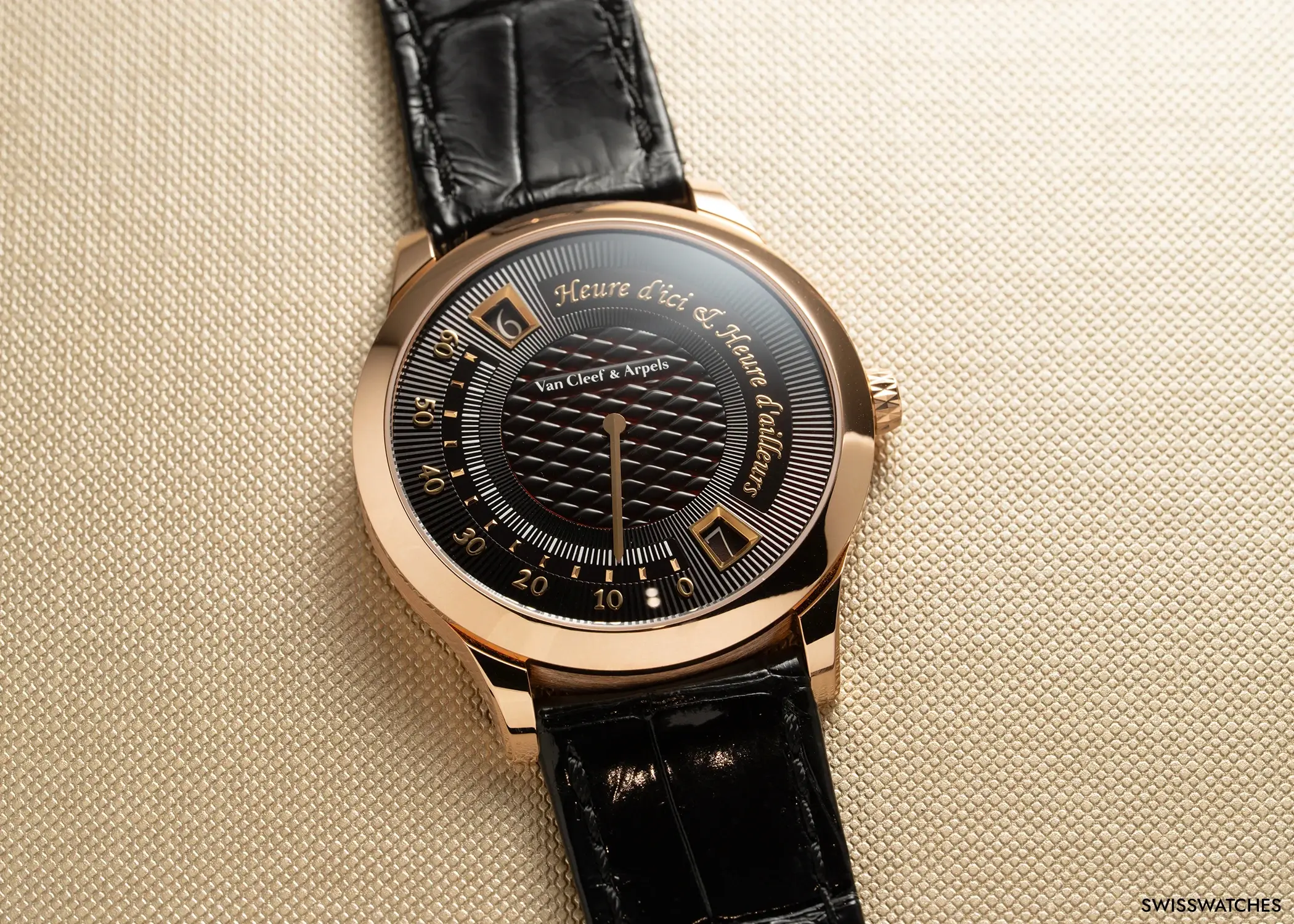
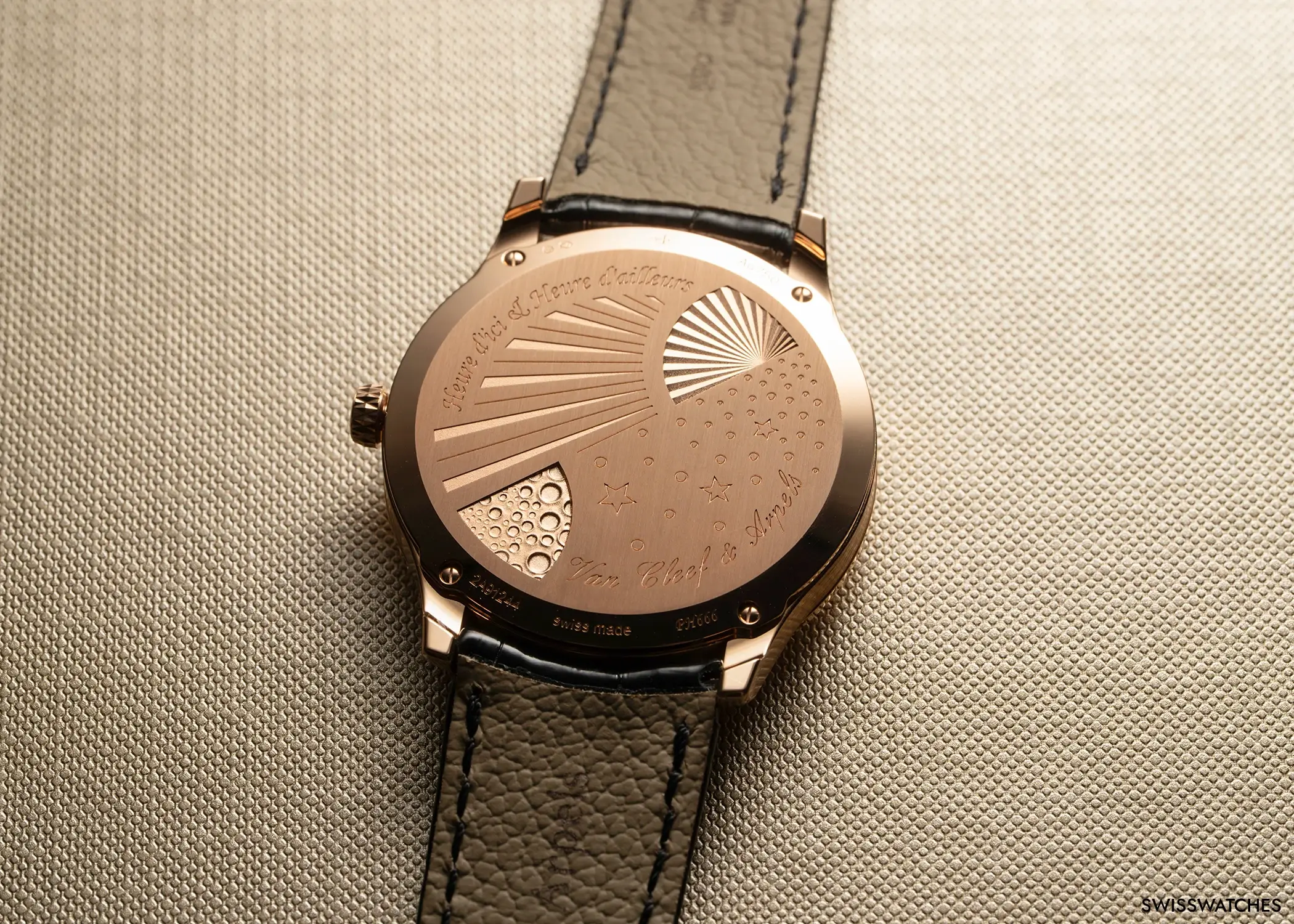
The Midnight Heure d’Ici & Heure d’Ailleurs, which we have already introduced in detail, reinterprets the dual-time zone watch first introduced in 2014. The 38-millimetre rose gold case houses a richly shimmering brown enamel dial – a shade entirely new to the Maison, crafted by a Geneva-based workshop. The interplay between the jumping hour and retrograde minute is poetic: Heure d’Ici at the top, Heure d’Ailleurs at the bottom – two time zones that jump in unison, inviting the wearer to embark on a mental journey whilst reading the time. On the solid case back, a guilloché sun bearing the model name, flanked by a moon and a starry sky, evokes the Maison’s ‘Poetry of Time’ philosophy.
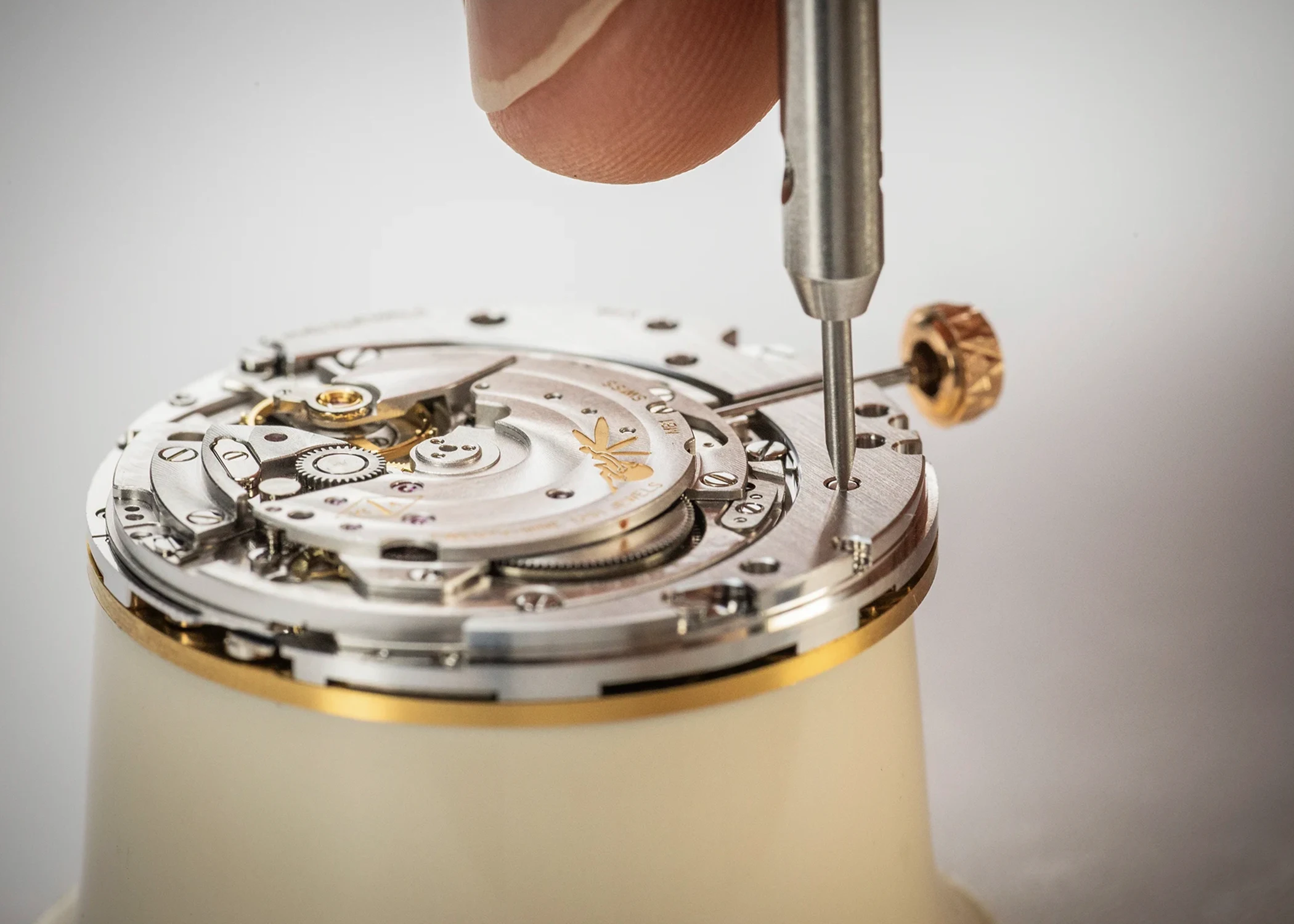
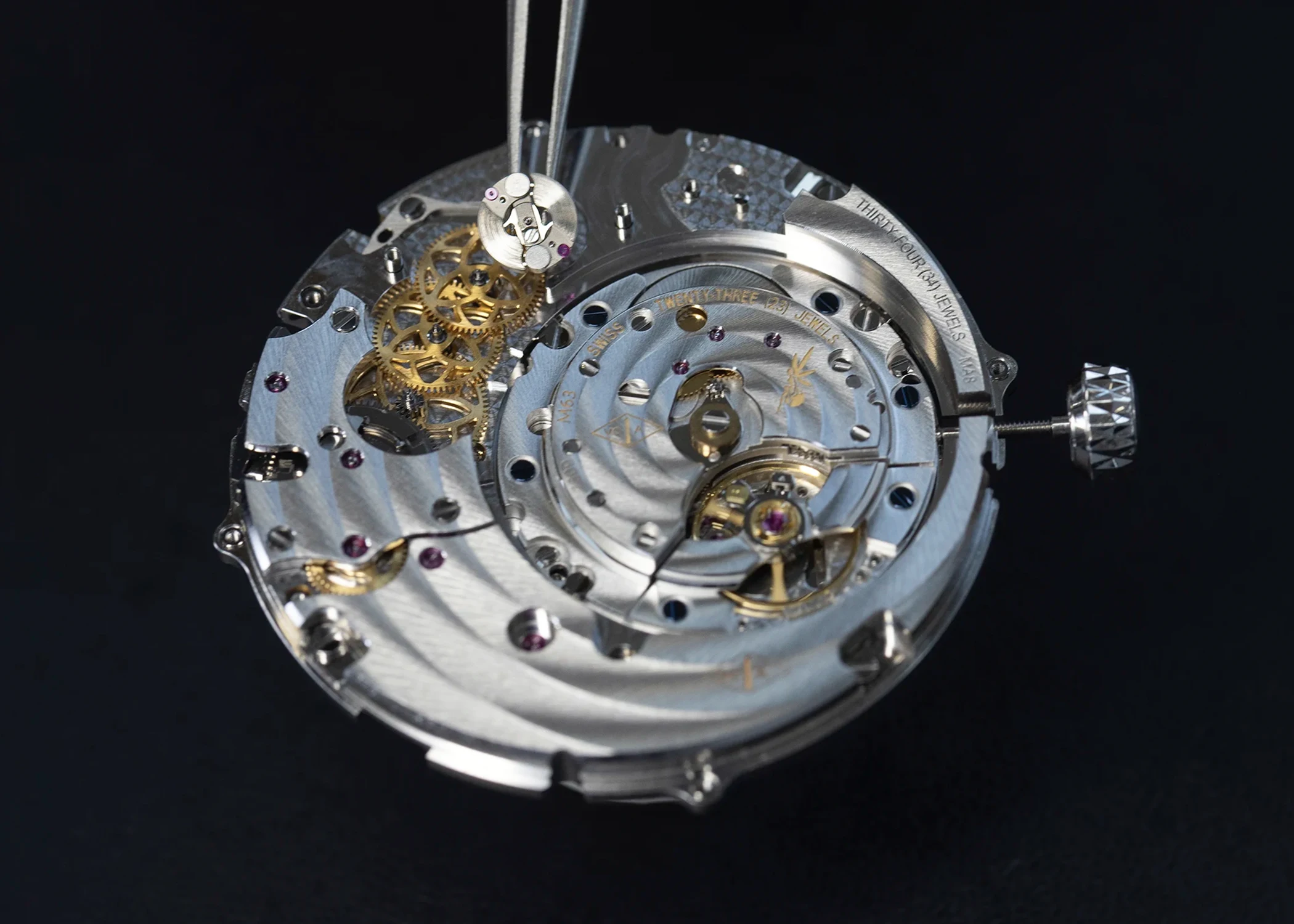
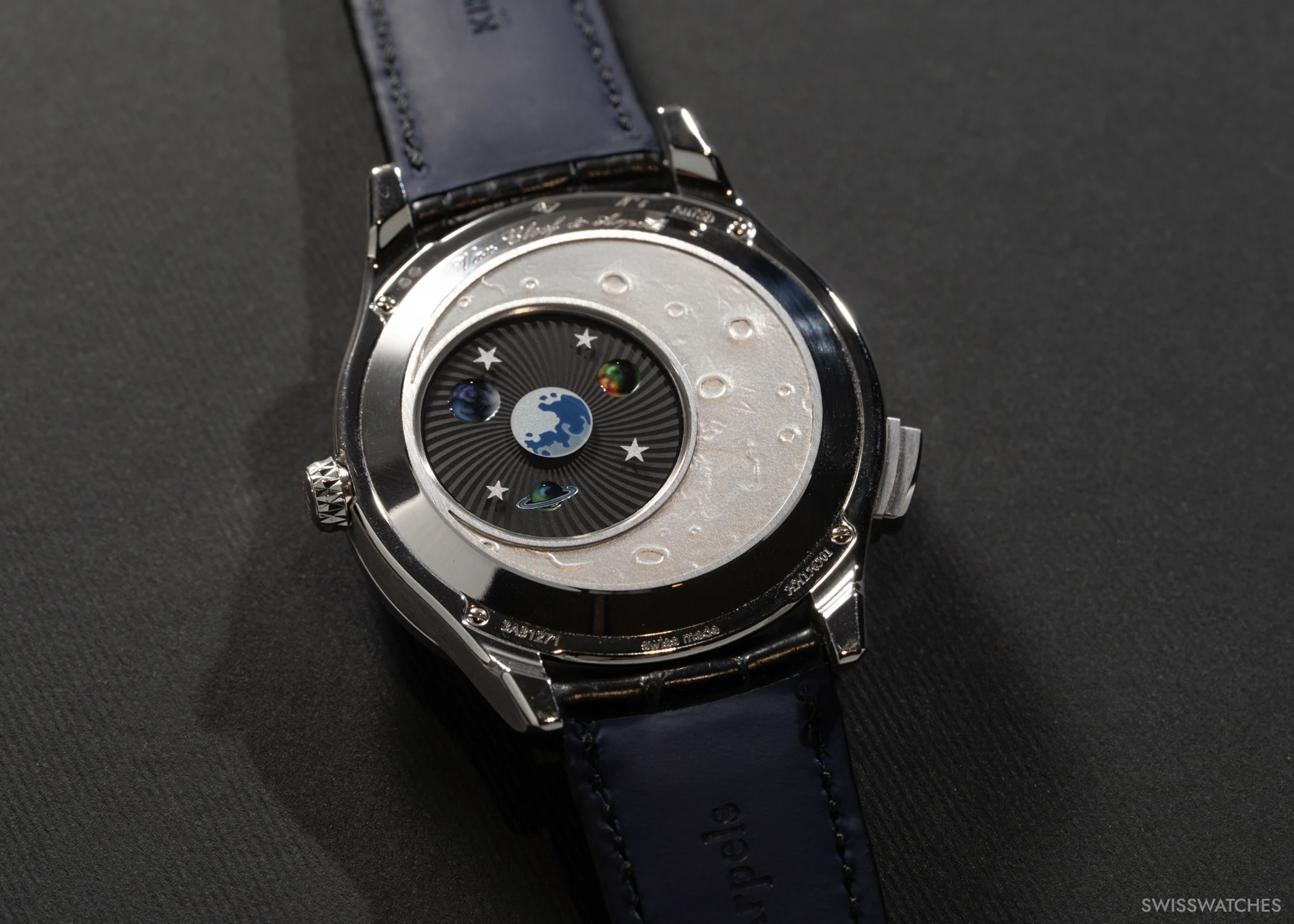
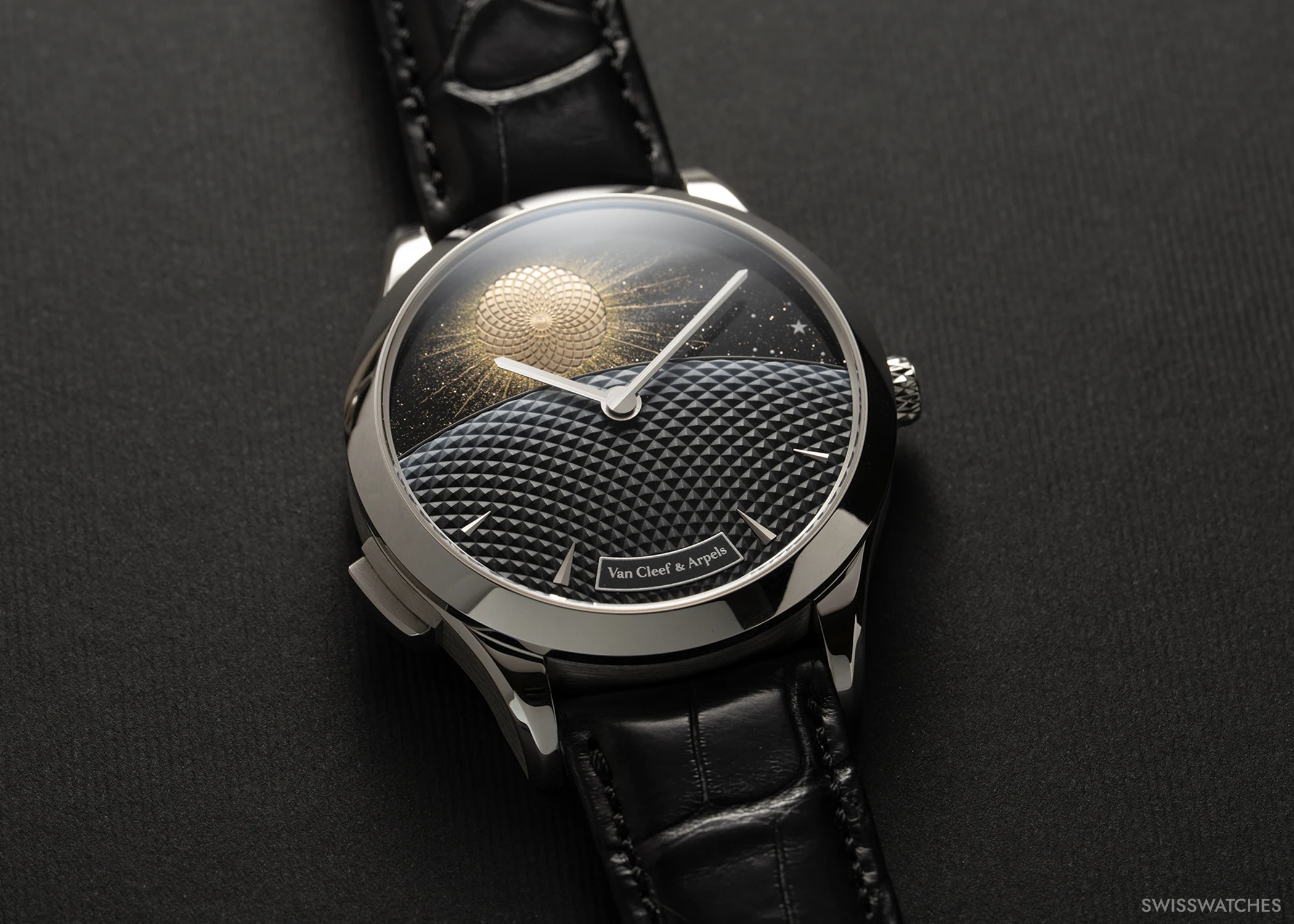
The Midnight Jour Nuit Phase de Lune draws an even more direct link to the exhibition at the MAK. The 42-millimetre white gold case houses an automatic movement developed in-house over a period of four years, featuring two superimposed complications: a day-night indicator and a moon phase – a function that dates back to 1929 at Van Cleef & Arpels, the very year whose ‘Minutière’ motif features in the mesh décor of the Vienna boutique. At the touch of a button, the dial rotates in an ‘on-demand’ animation lasting around ten seconds, revealing the current moon phase even when the Earth’s satellite is just below the horizon; the case back traces the topography of the moon. At the MAK, you’ll find matching necklaces from 1969 featuring a stylised lunar surface and a ruby set precisely at the spot where the Americans landed.
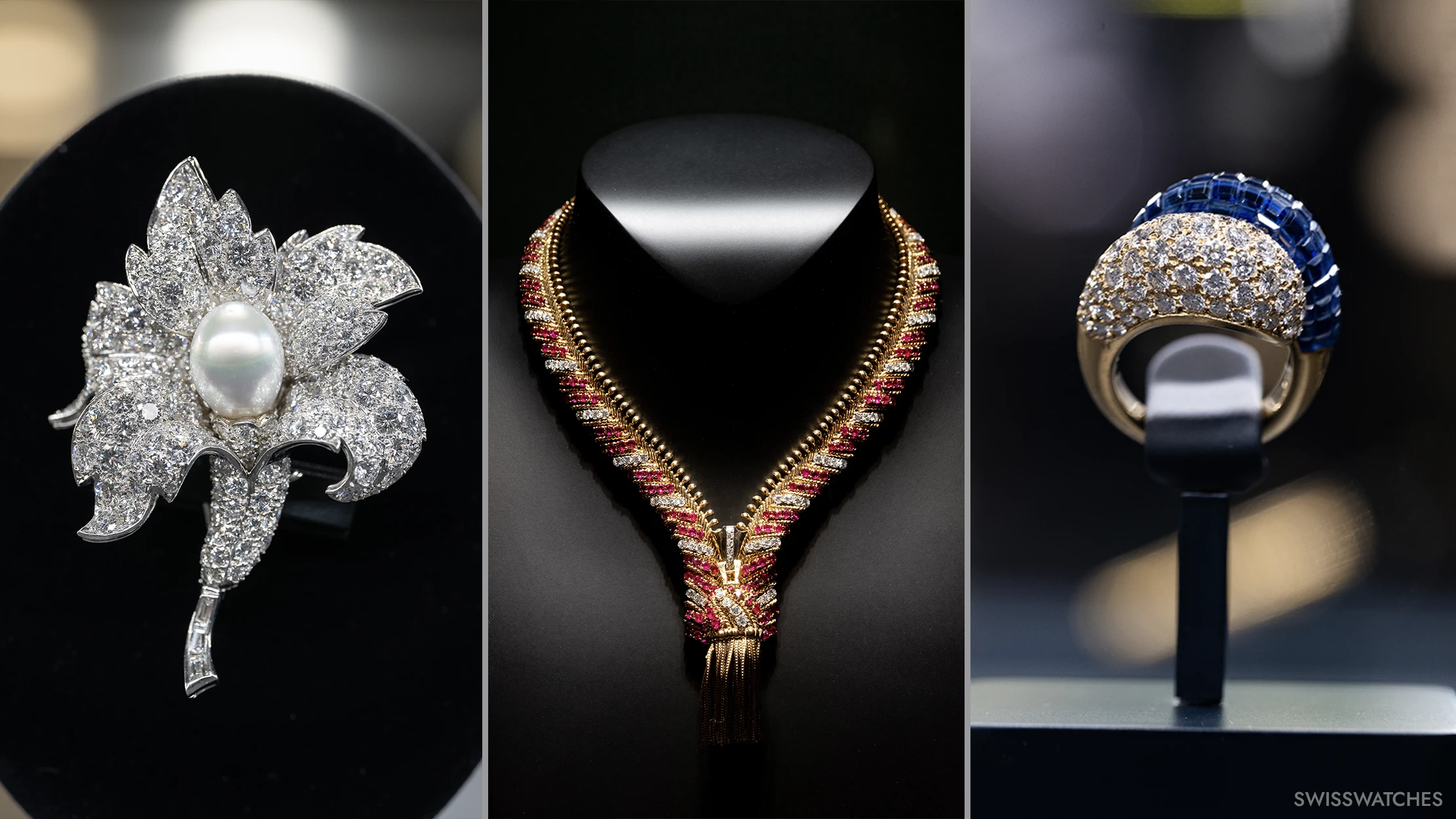
And anyone who, as a watch collector, may not be familiar with the history of the house should at least bear a few things in mind: in 1926, Renée Puissant, the daughter of the founding couple, was appointed artistic director and shaped the style that continues to characterise the house to this day. It was during this period that the brand’s iconic jewellery pieces emerged: the Mystery Setting technique, the Minaudière (patented in 1933), the versatile Zip necklace and the Alhambra motif, which is so popular today.
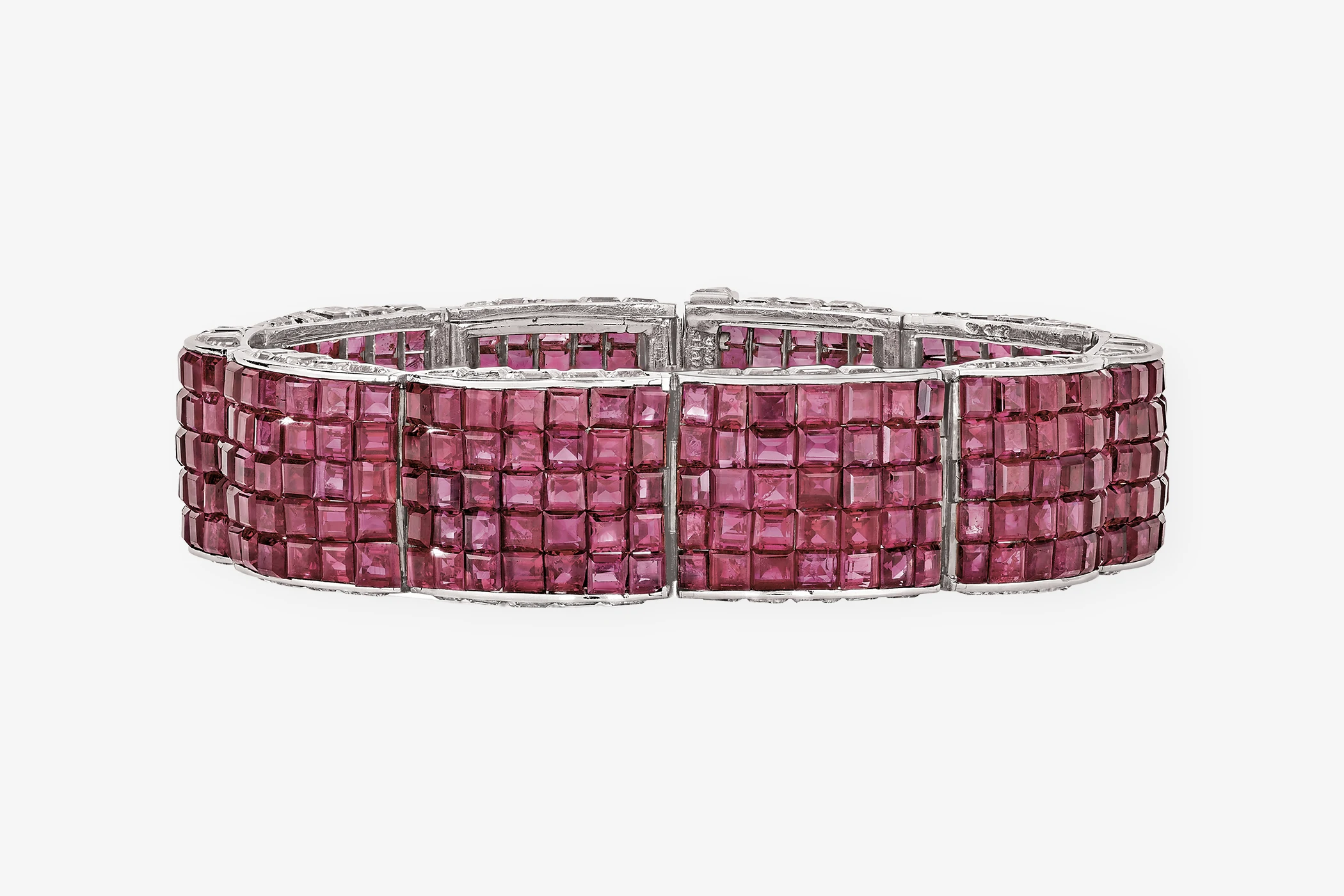
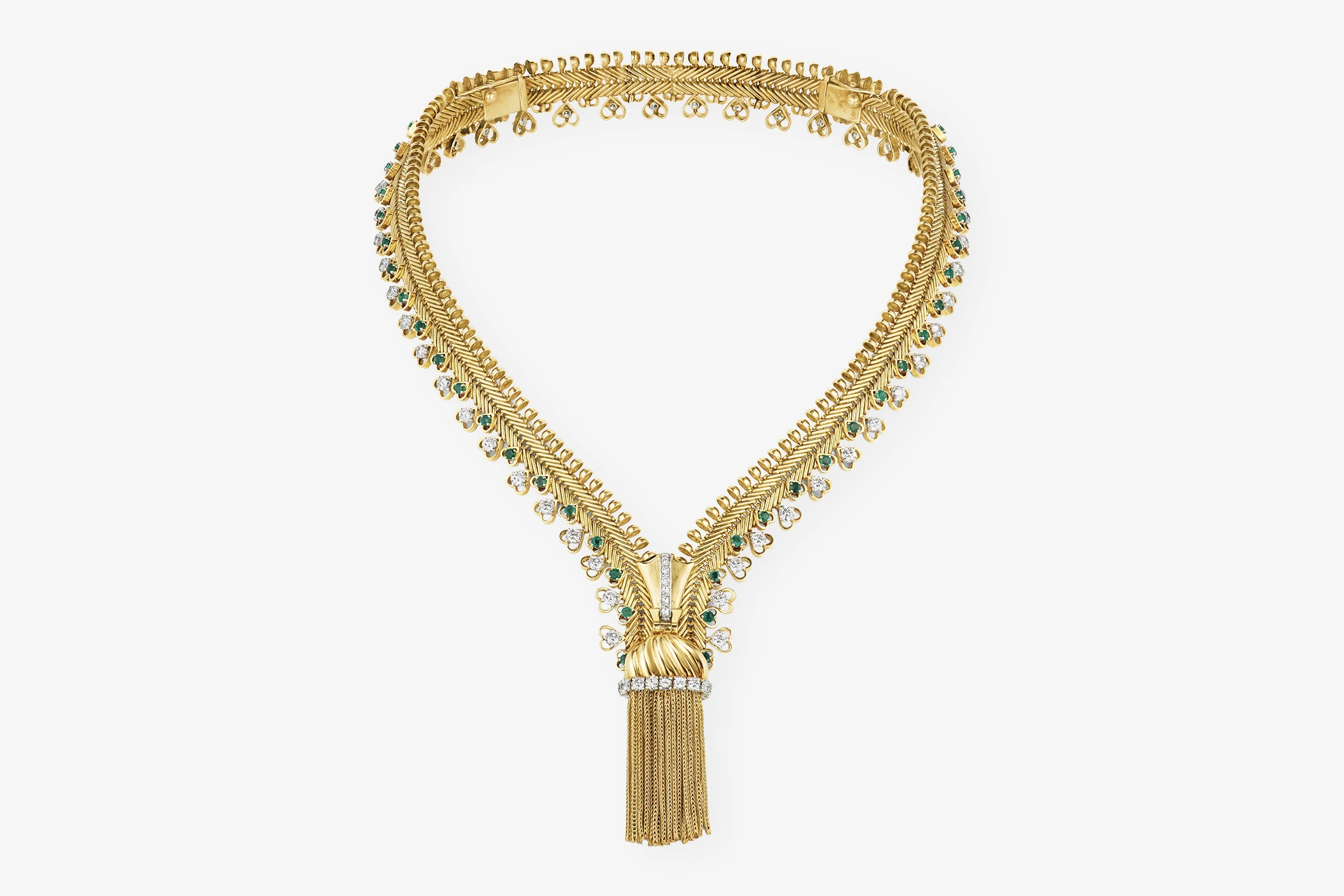
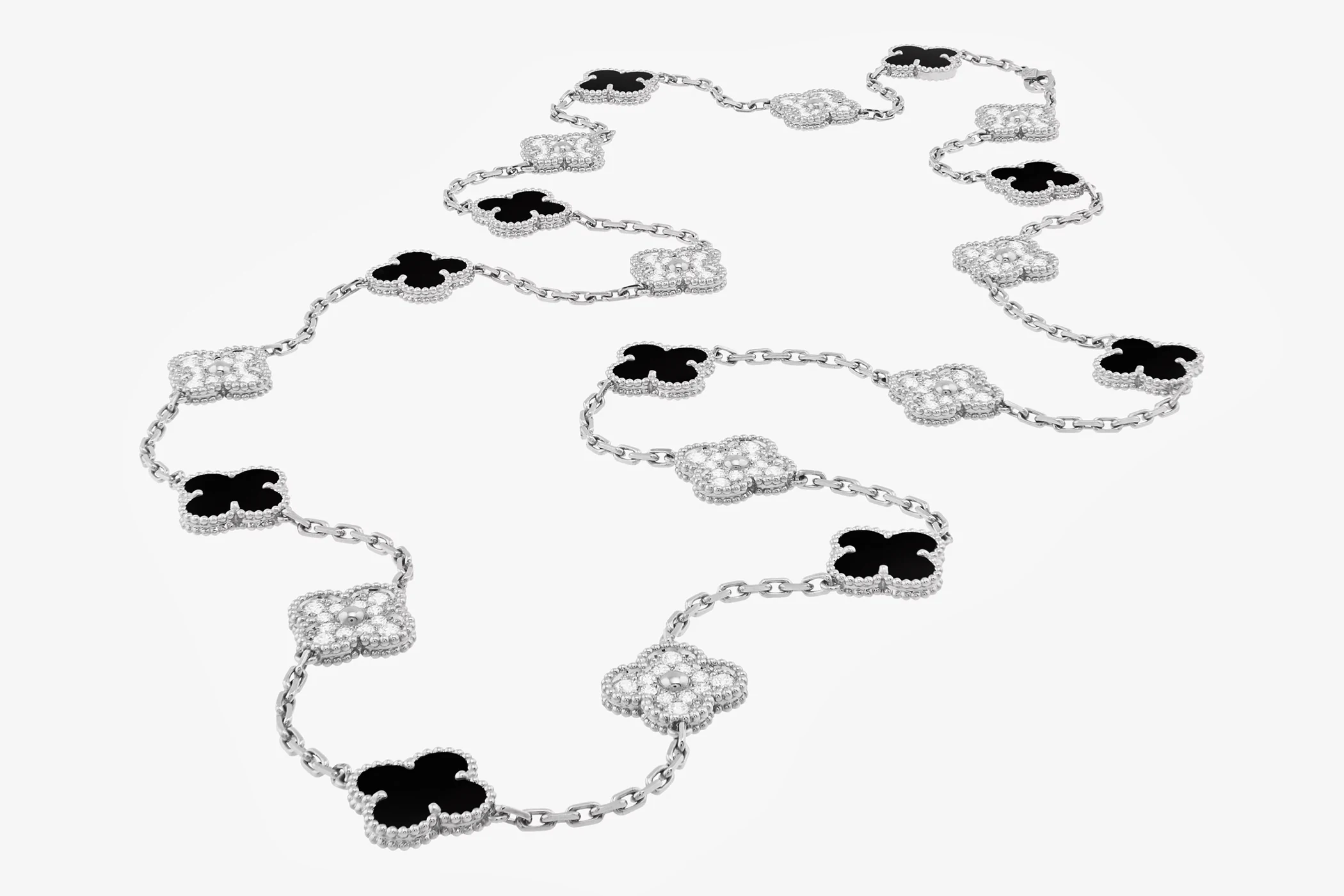
What is particularly interesting for connoisseurs of fine gemstones is that behind it all lies an uncompromising commitment to the quality of the material. The Maison favours Type IIa gemstones, which contain no trace of nitrogen in their crystal structure and are therefore of exceptional purity – always cut to the highest standard in terms of proportions, faceting and polish.
It comes as no surprise that Van Cleef is also expanding in Germany: it all began in Munich, followed by Frankfurt am Main and – last year – Hamburg, where the Maison was given the opportunity, for the first time in Europe, to design the entire façade of the Neuer Wall. Vienna adds a touch of opera and ballet to this network: as the main sponsor of the Vienna State Ballet – under its new director Alessandra Ferri, a friend of the house – and through the international dance festival Dance Reflections by Van Cleef & Arpels, the house cultivates the cultural roots that are so well suited to these classical, refined markets.
Van Cleef & Arpels Boutique Wien – Kohlmarkt
Address:
Kohlmarkt 3, 1010 Vienna, Austria
Opening hours:
Monday to Friday, 10.00 am – 6.30 pm
Saturday 10.00 – 18.00
Although walk-in visitors are welcome, we recommend booking an appointment in advance – ideally allowing one to two hours.
Local tips for the perfect day out in Vienna
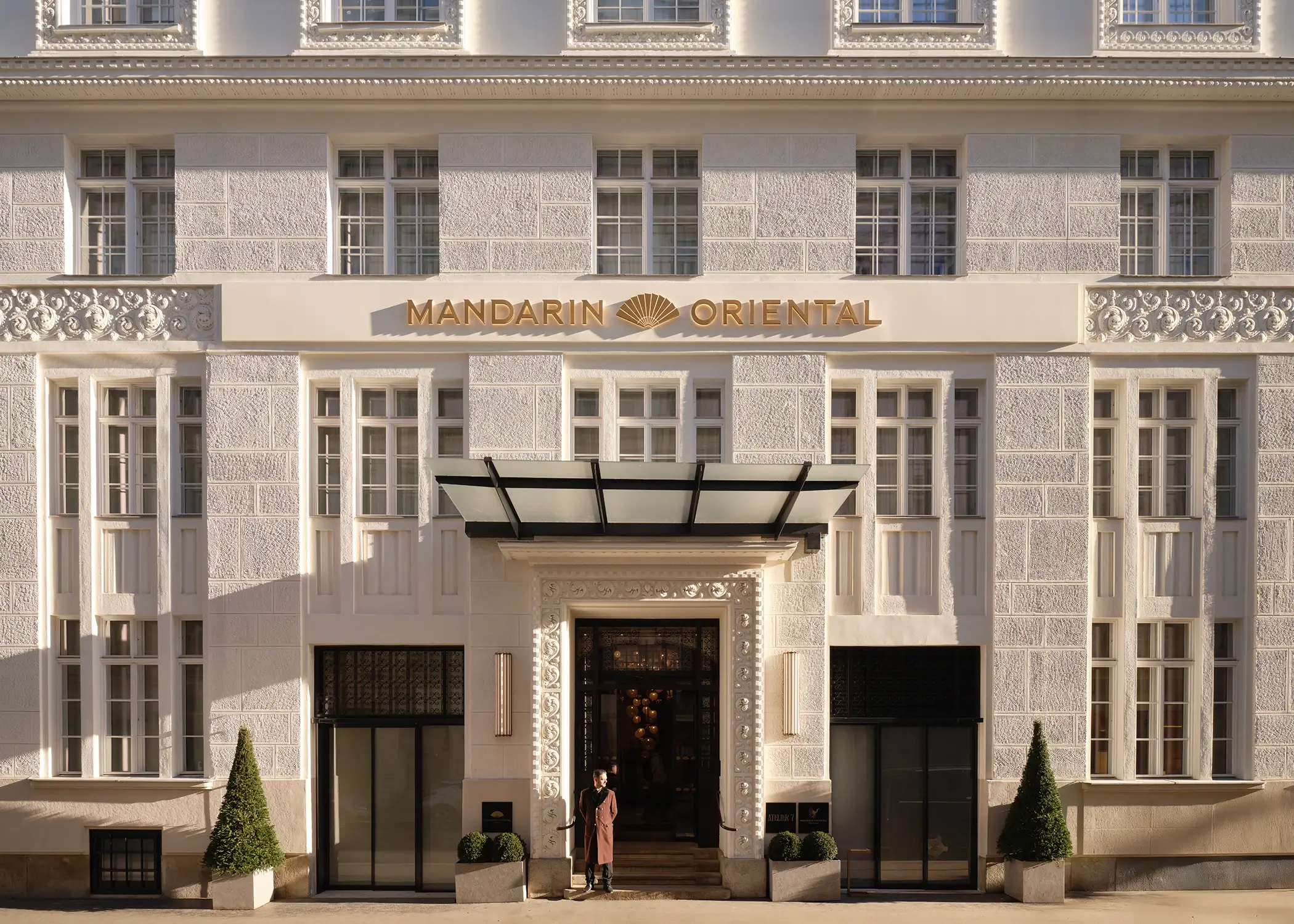
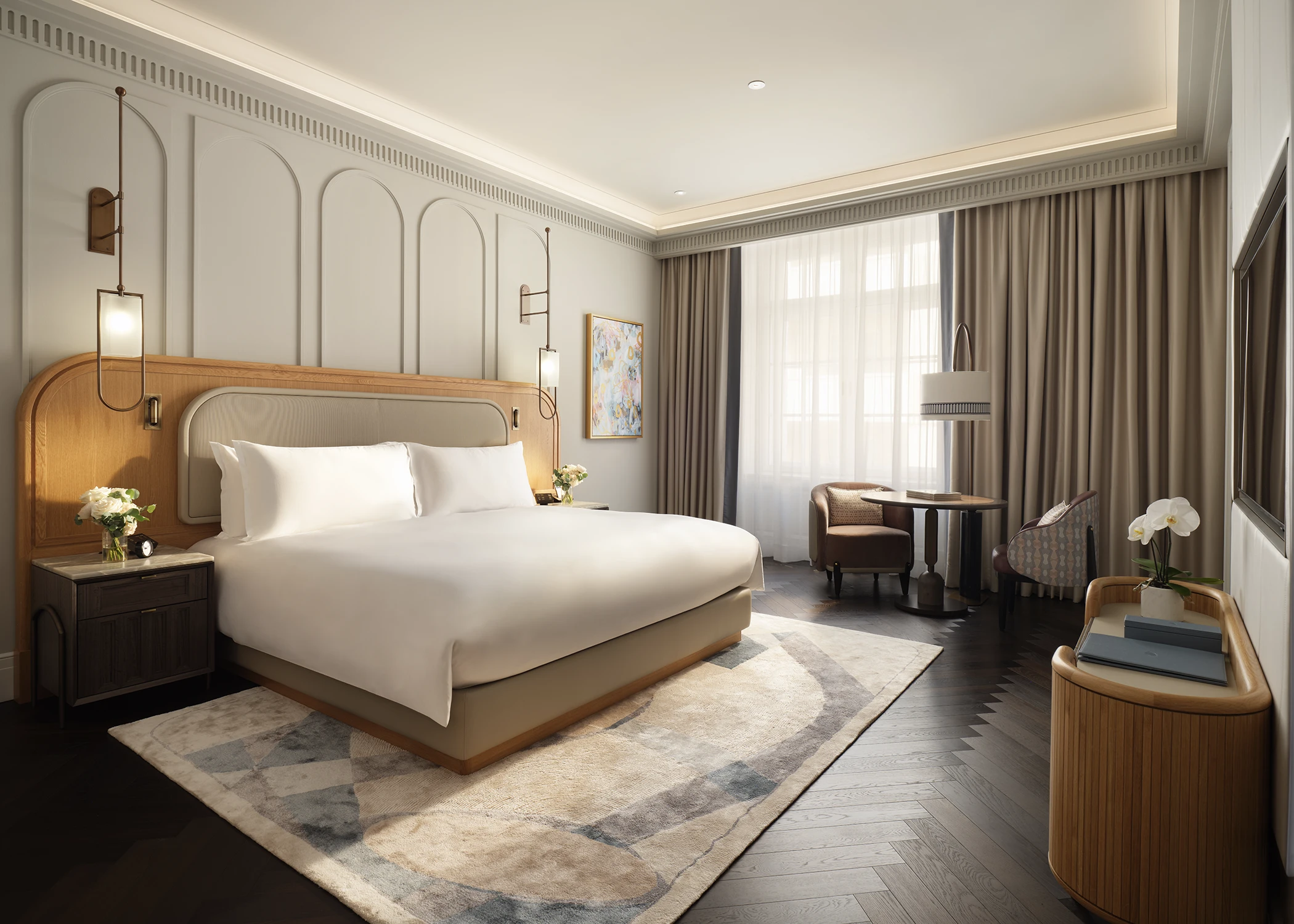
As we hinted at earlier, this is the go-to hotel for Van Cleef & Arpels fans planning a weekend in Vienna: the Mandarin Oriental in the First District, which opened in 2025. The connection runs deeper than simply being good neighbours – it was part of the plan from the very beginning. Even the boutique’s mesh décor, with its fan motif, pays homage to the jewellery house. Today, the two collaborate closely: Van Cleef & Arpels supports the hotel’s residences and lobby, displaying pieces from its own collection in a permanent showcase there and organising a small joint programme throughout the year. Anyone wishing to round off their stay in true Viennese style should combine it with an evening of ballet at the State Opera – several of the celebrated soloists, like the boutique director herself, have moved from Munich to the Danube, and fans travel there specifically for some performances.
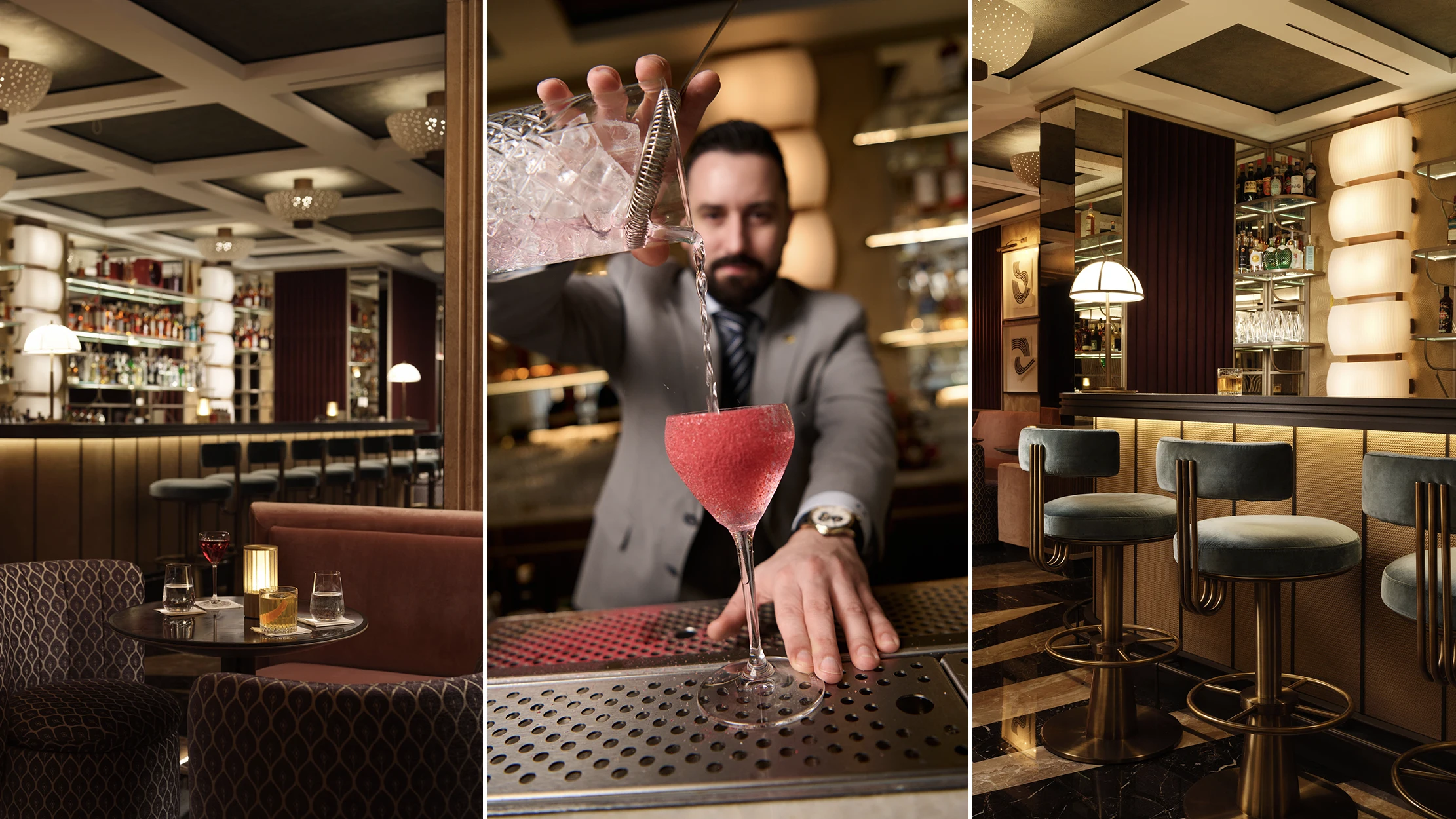
The Mandarin Oriental’s hotel bar is an experience in its own right – and an insider’s tip that perfectly suits Vienna’s artistic spirit. For the current cocktail menu, the head barman drew inspiration from a visit to the Belvedere and translated paintings into flavour, texture and composition – a selection of drinks that bring visual art to the glass. The interior combines Art Nouveau with Japonism, thereby echoing the cultural exchange of the turn of the century that also fuelled Viennese Modernism – one is also reminded of Koloman Moser’s screen, which reflects Japanese influences, on display at the MAK exhibition.
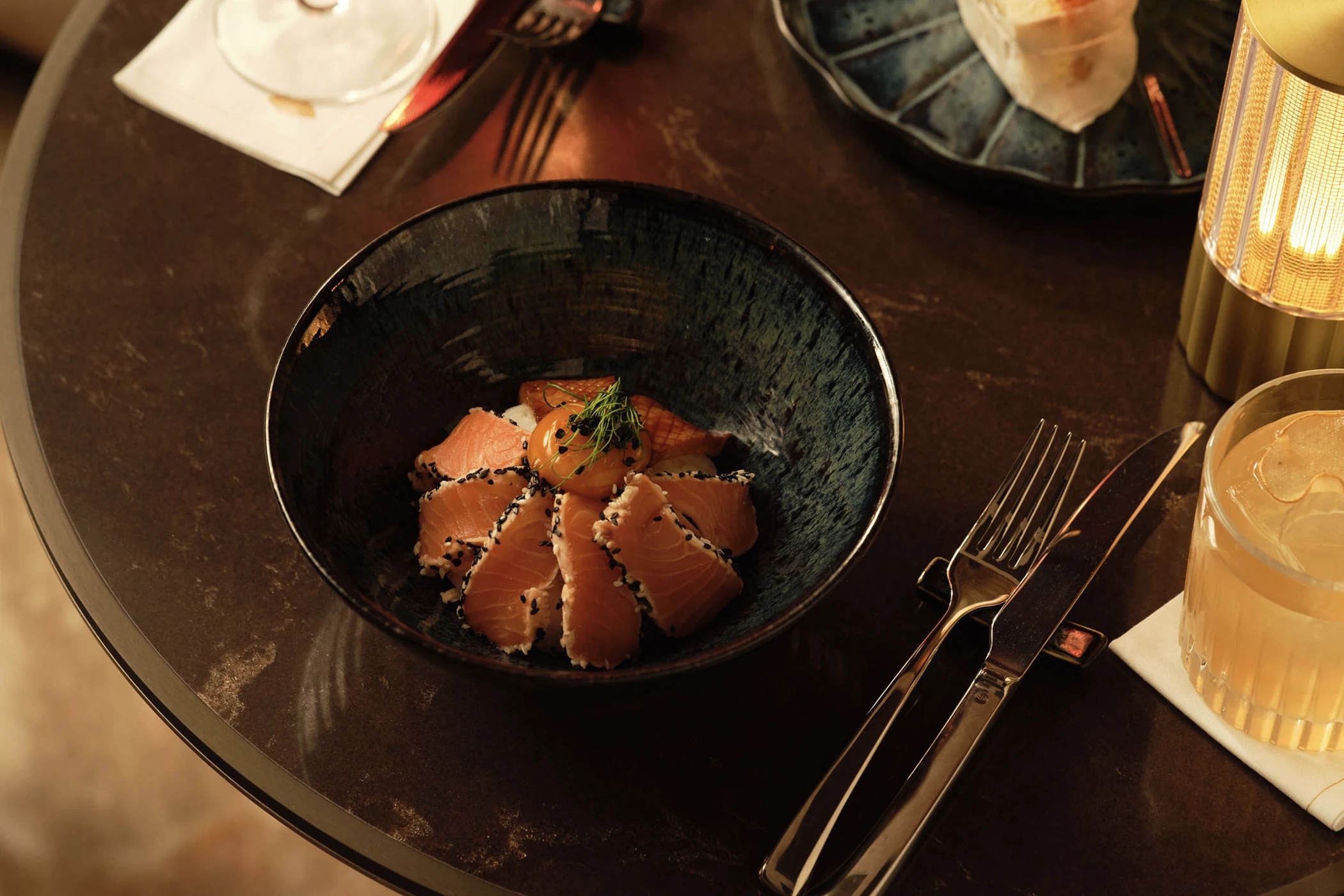
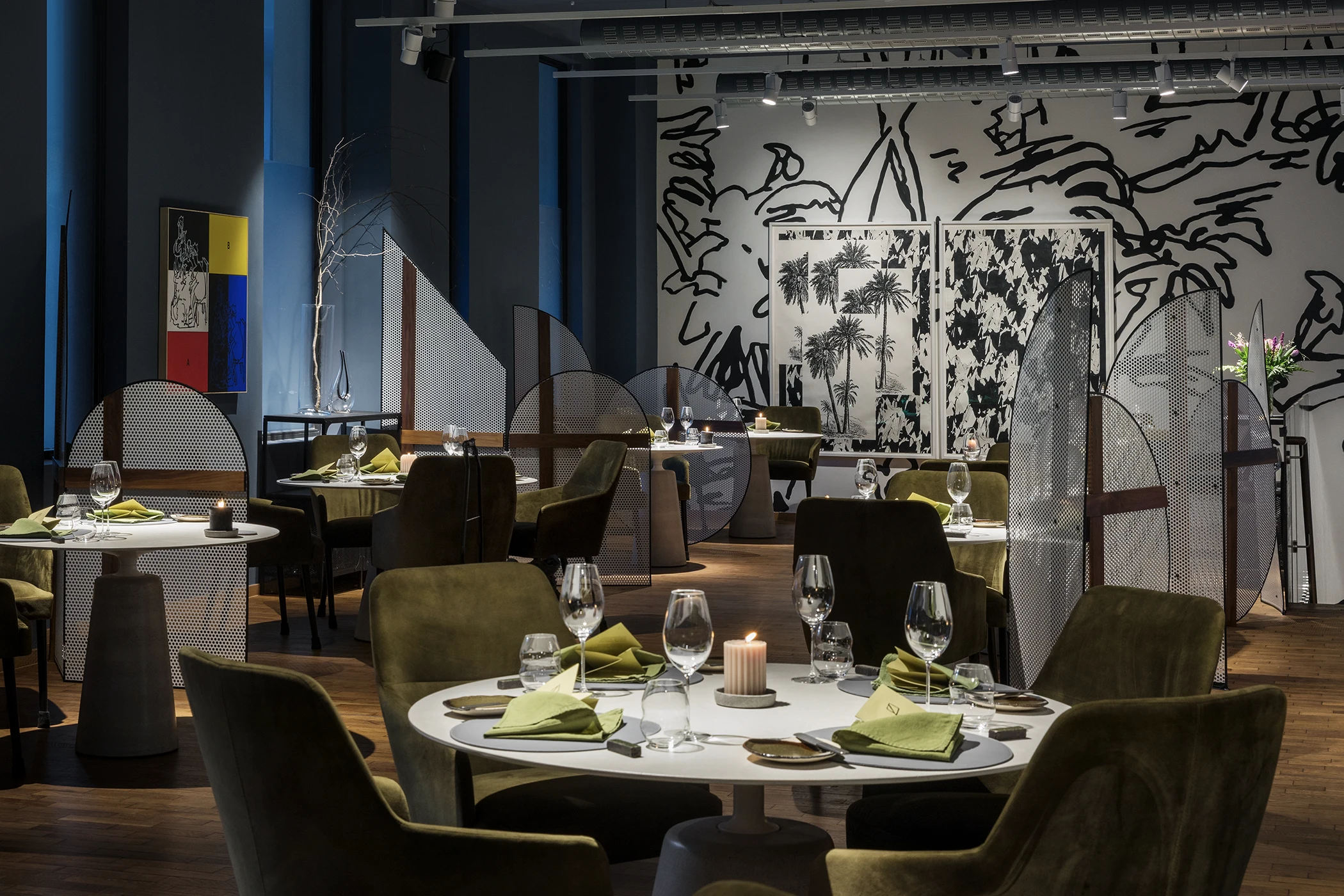
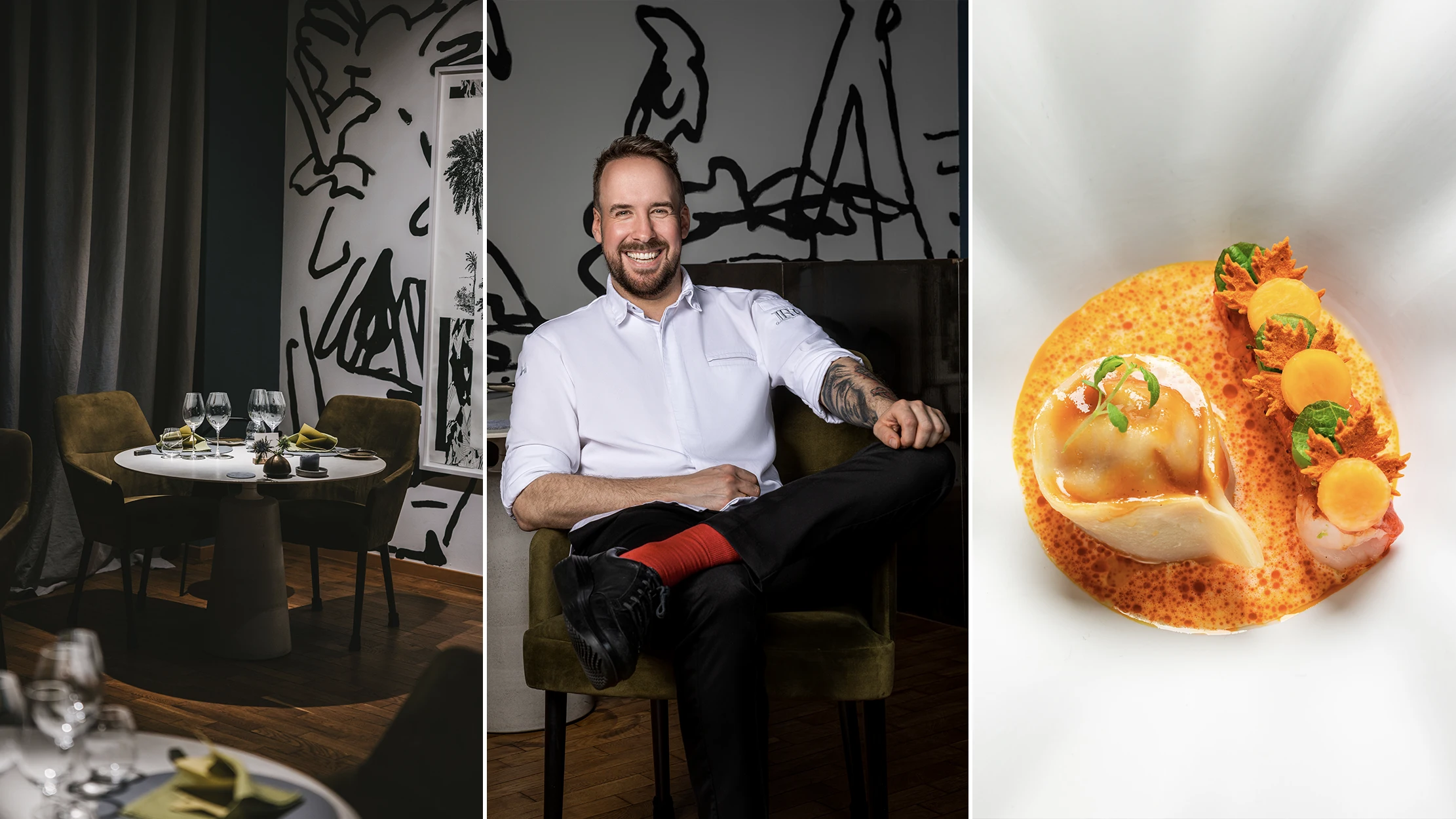
For dinner, we recommend Herzig, run by Sören Herzig. Born in Cuxhaven and long based in Hamburg, he blends European haute cuisine, Mediterranean flavours and Asian techniques to create an imaginative, sumptuous cuisine – refined, colourful and cheerful, and of the very highest standard: he has since been awarded a Michelin star. As with Maison, art plays a central role here too: Viennese artists who are friends of the owner have designed the walls, and a constant dialogue unfolds between the dishes and the artwork. Herzig is situated just outside the city centre in the 15th district and is open Wednesday to Saturday evenings. Booking is recommended.
The grand finale is, of course, the MAK’s GLANZSTÜCKE. Van Cleef & Arpels High Jewellery × Masterpieces from the MAK Collection, on display until 27 September 2026 in the exhibition hall at Stubenring 5. Around 500 exhibits across six chapters – ranging from ‘Wanderlust’ to ‘Architecture’, ‘Rhythm’ and ‘Curtain Up!’ to ‘Metamorphosis’ and ‘Nature & Cosmos’ – create a surprising dialogue between jewellery art and objects from the collection, guided by a scenography designed as a labyrinth by Atelier Tsuyoshi Tane.
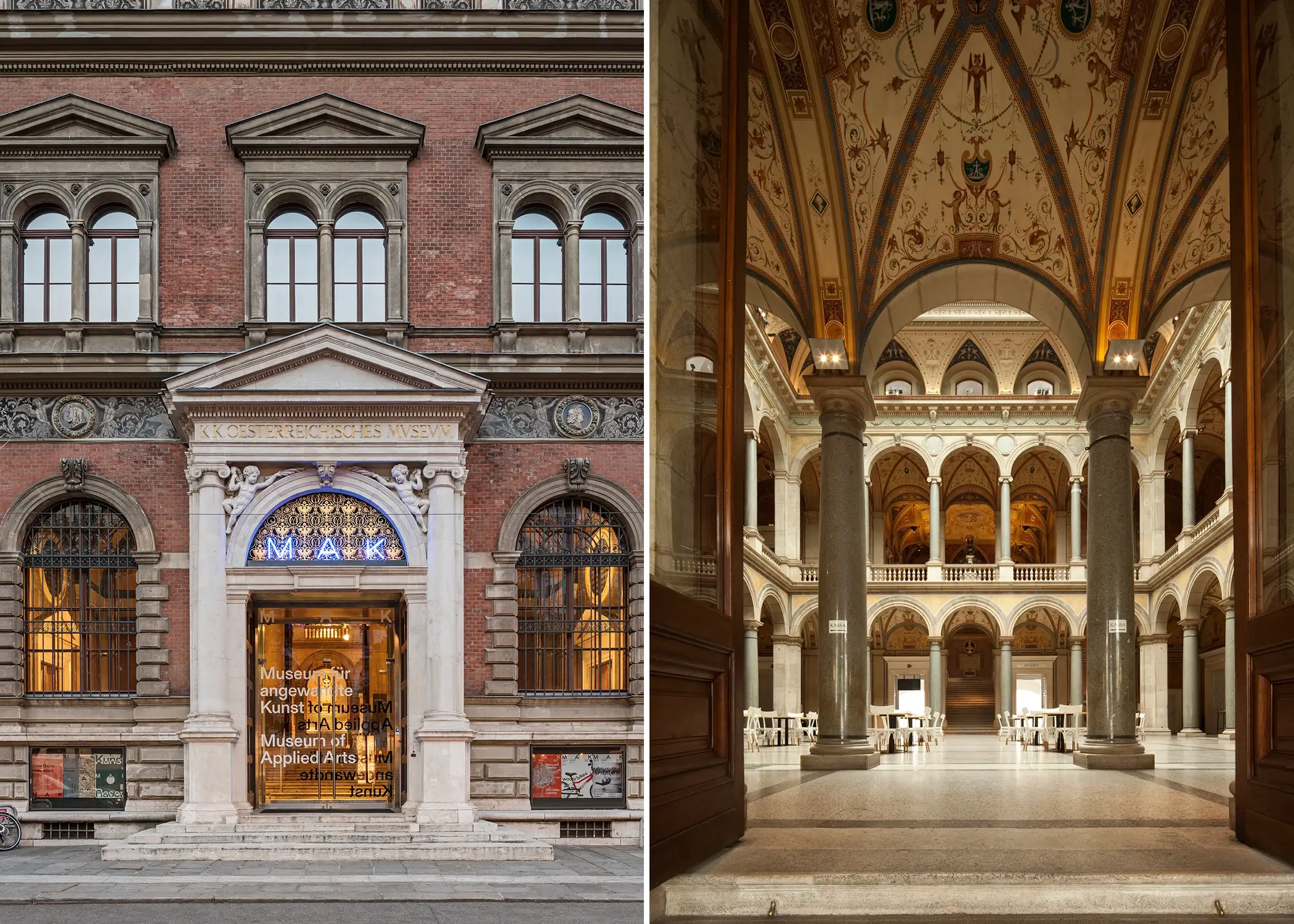
But the MAK is well worth a visit even without the exhibition. Founded in 1863, it is the second-oldest museum of applied arts in the world and covers everything from design, architecture and fashion to contemporary art. It houses the Wiener Werkstätte archive, containing thousands of designs and fabric samples, and boasts a world-famous collection of carpets, including rare hand-knotted pieces formerly owned by the Austrian imperial family. A museum that productively bridges the past, present and future, making it the ideal complement to a visit to the Van Cleef & Arpels boutique.