Discover how Haelixa ProofDNA safeguards luxury watches against sophisticated counterfeits using forensic DNA markers directly on the material.

Behind Hublot’s bold overall design lies an extraordinary level of technological know-how. We have explored the key milestones of the brand's in-house movement expertise.
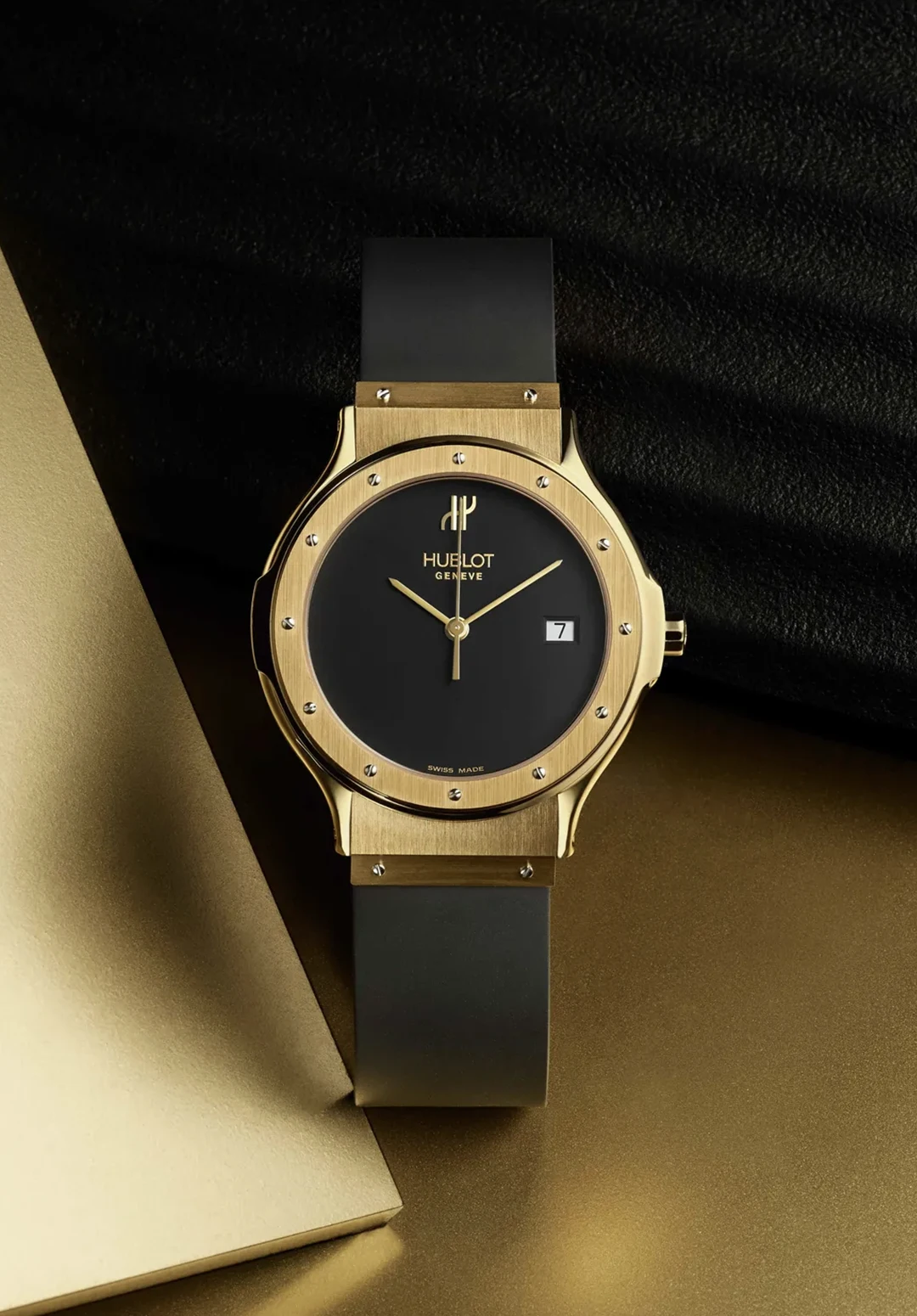
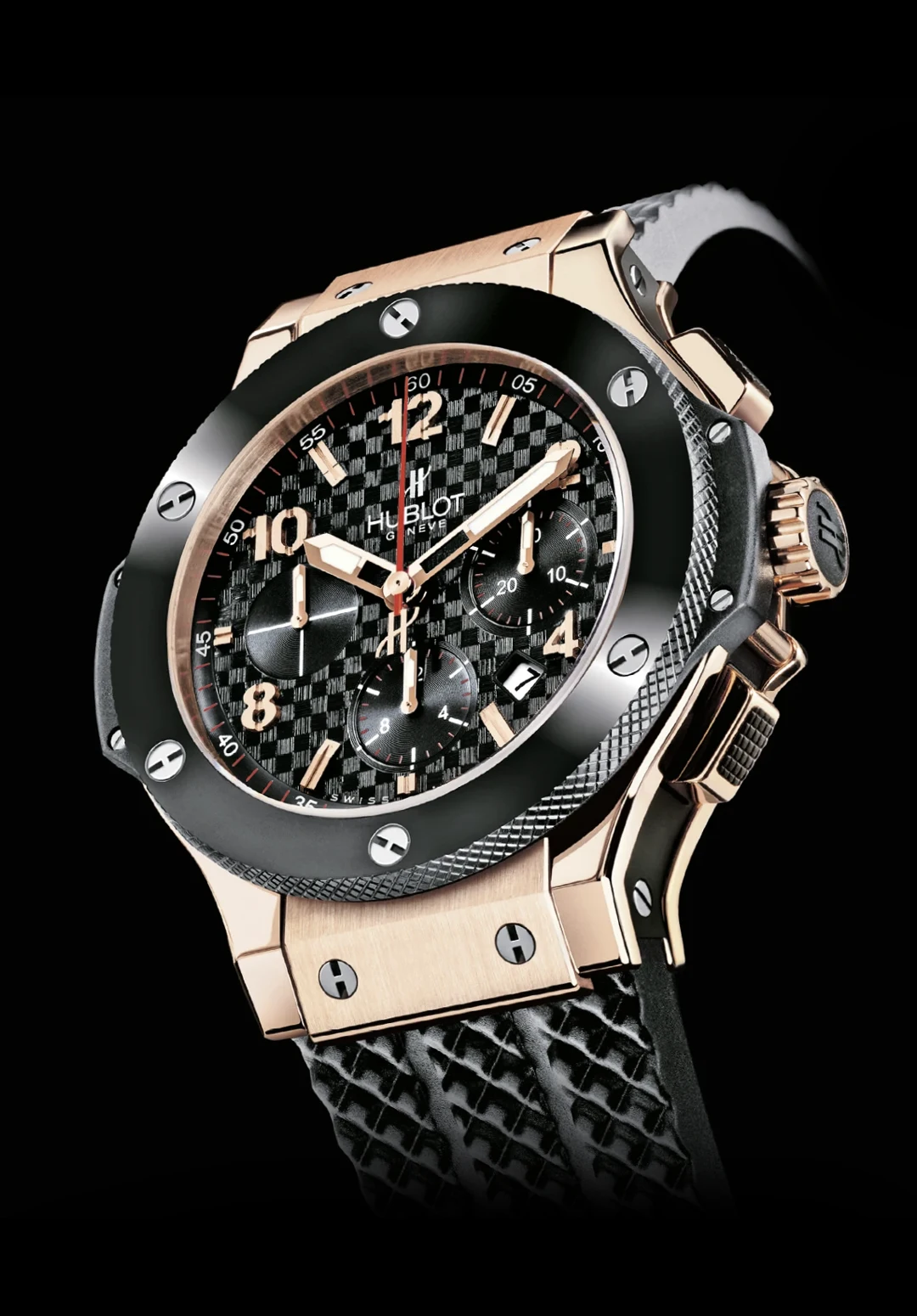
In 2004, Hublot was a brand that hadn’t experienced much change over the years. Its founder and previous owner Carlo Crocco had had his own distinct ideas about luxury, with the result being the world’s first watch to mix precious metal with rubber. Twenty-four years after its founding in 1980, Hublot hadn’t really changed; the once-innovative concept had become dusted over with time.
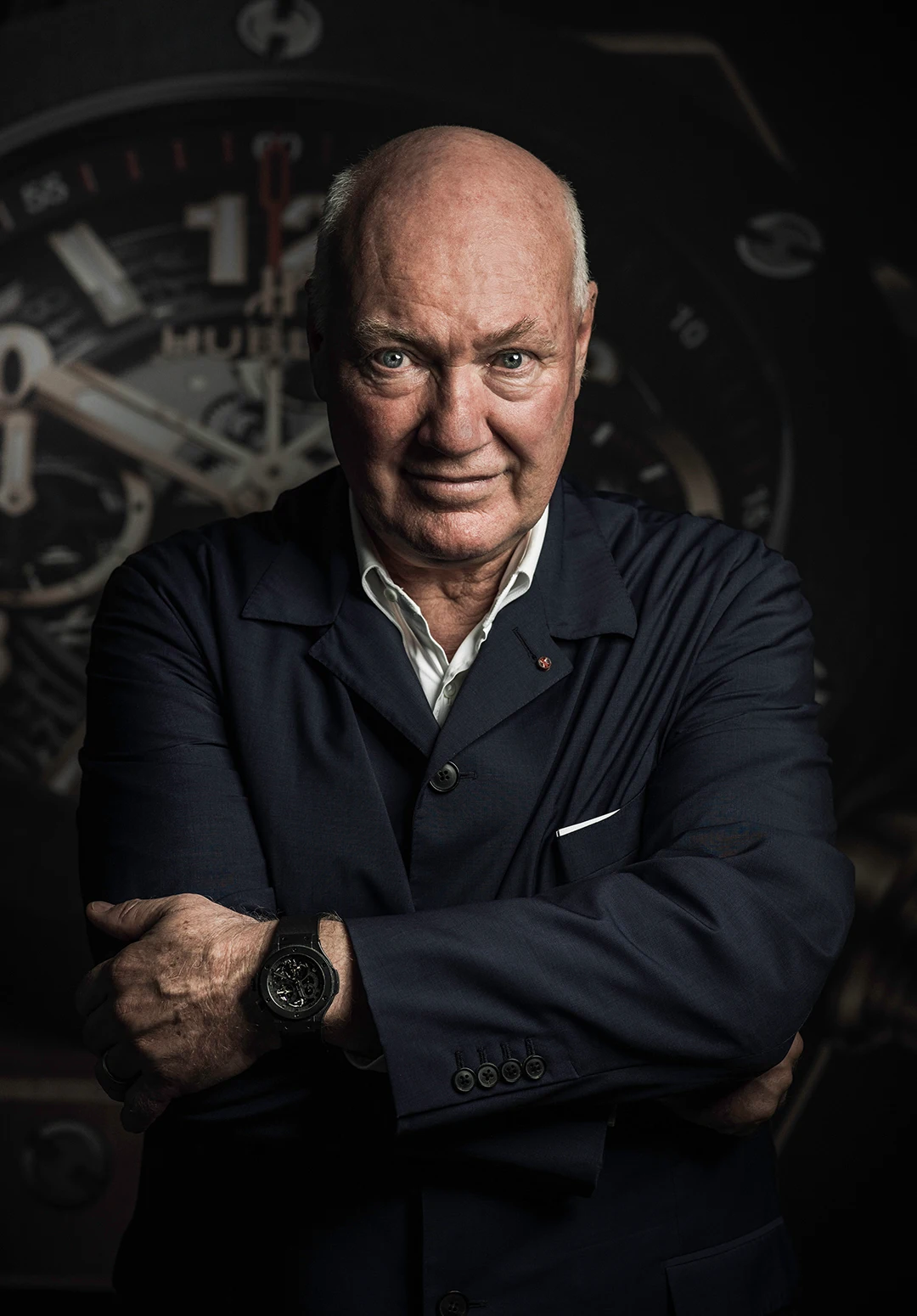
Crocco understood this and hired one of the greatest marketing minds horology has ever seen to shake off the dust: Jean-Claude Biver. And Biver knew just what to do. Phase one was to find a quintessential new design, which he achieved with the Big Bang and its derivatives. Phase two was to bring technical credibility to the brand, attainable in two steps: instead of using supplied movements as the brand had done to that point, the new goal was a manufacture movement, which necessitated a new purpose-built factory loaded with the appropriate machinery.
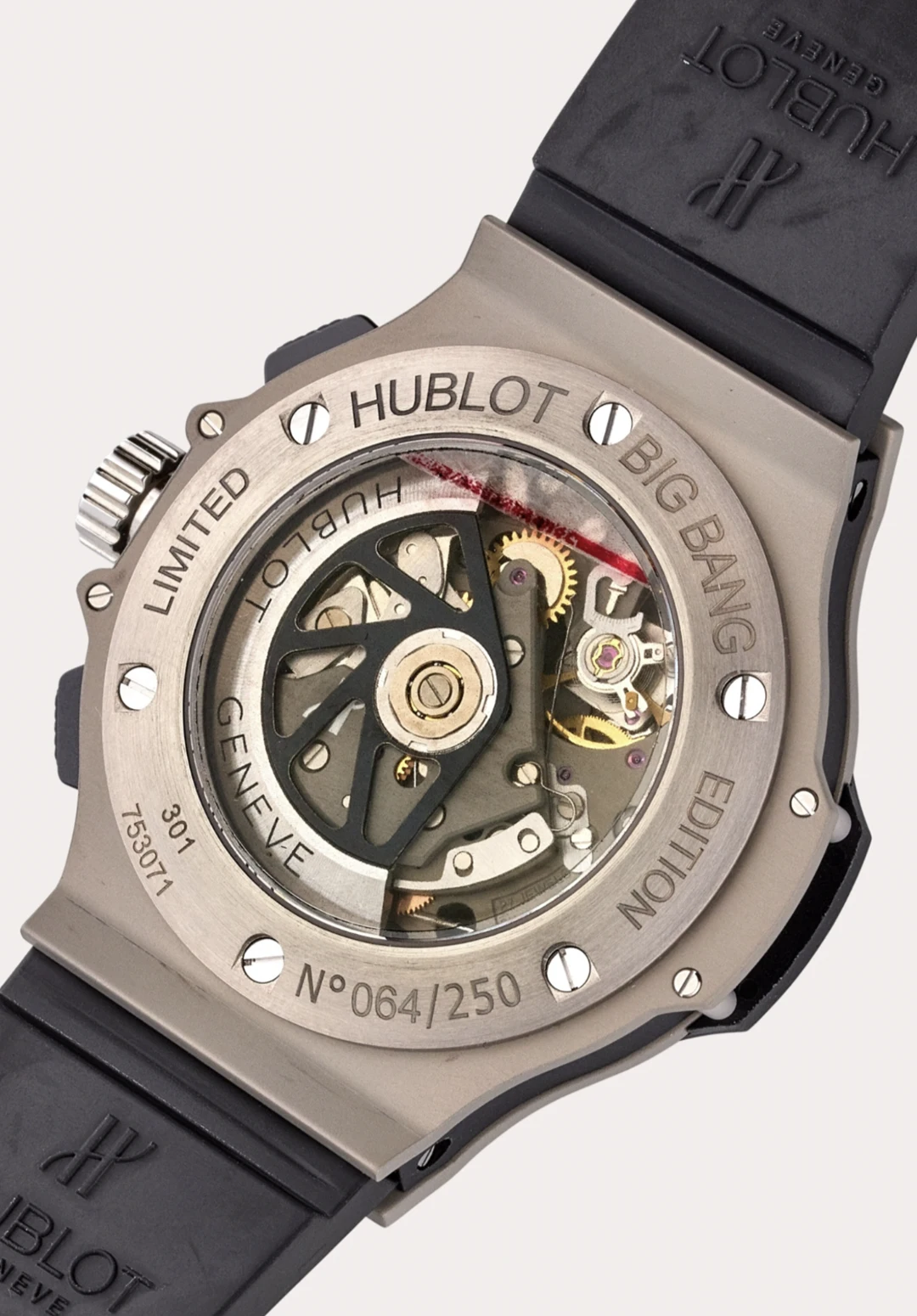
The first movement Hublot introduced was originally described to me by Biver as having the iconic ETA Valjoux 7750 chronograph as its template and was manufactured by La Joux-Perret (in which parent company LVMH in 2025 acquired a stake). “It’s not as easy to manufacture an ébauche as people think,” Biver said at the time. “It might seem simple, like following a formula, but that is literally impossible.”
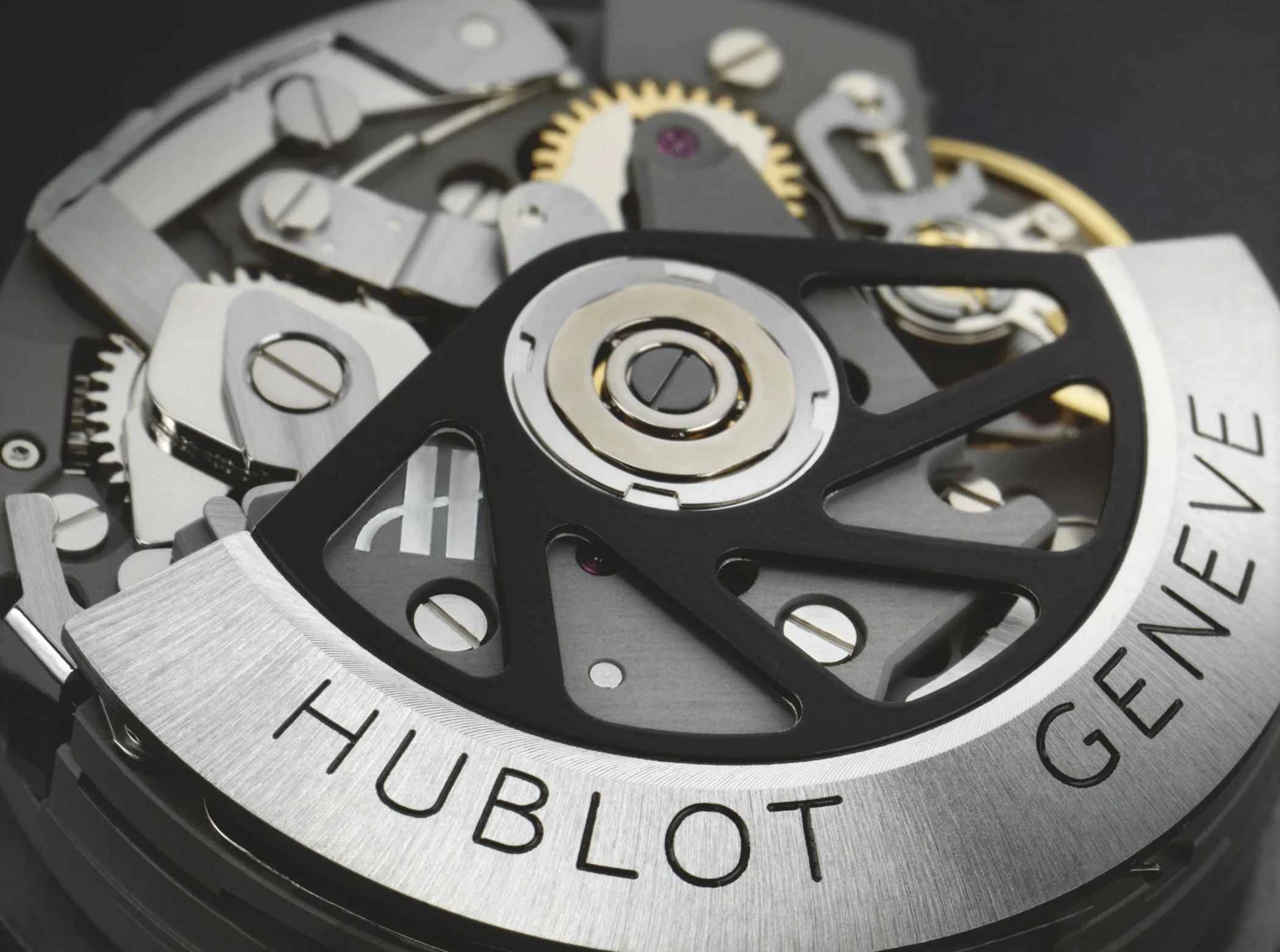
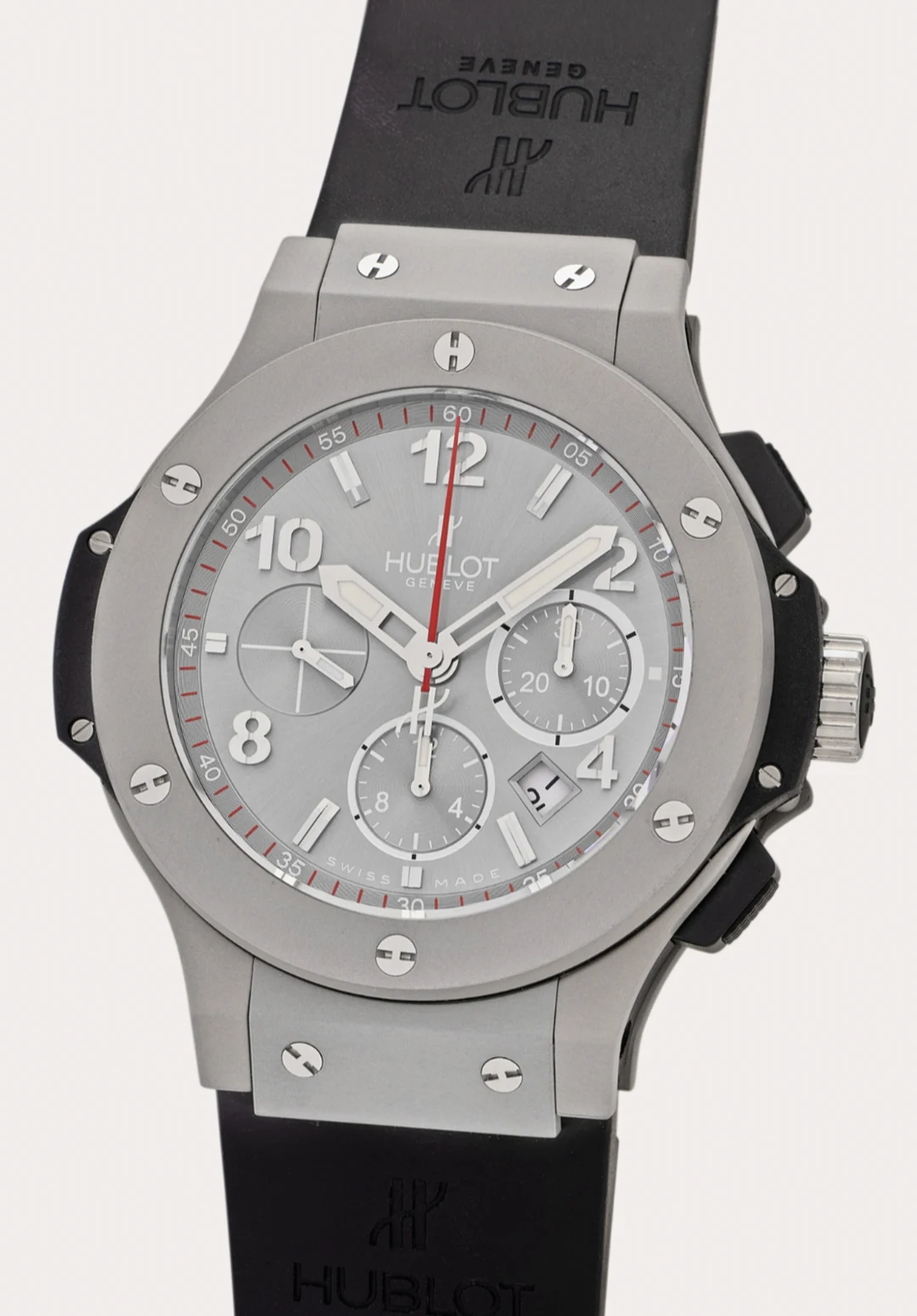
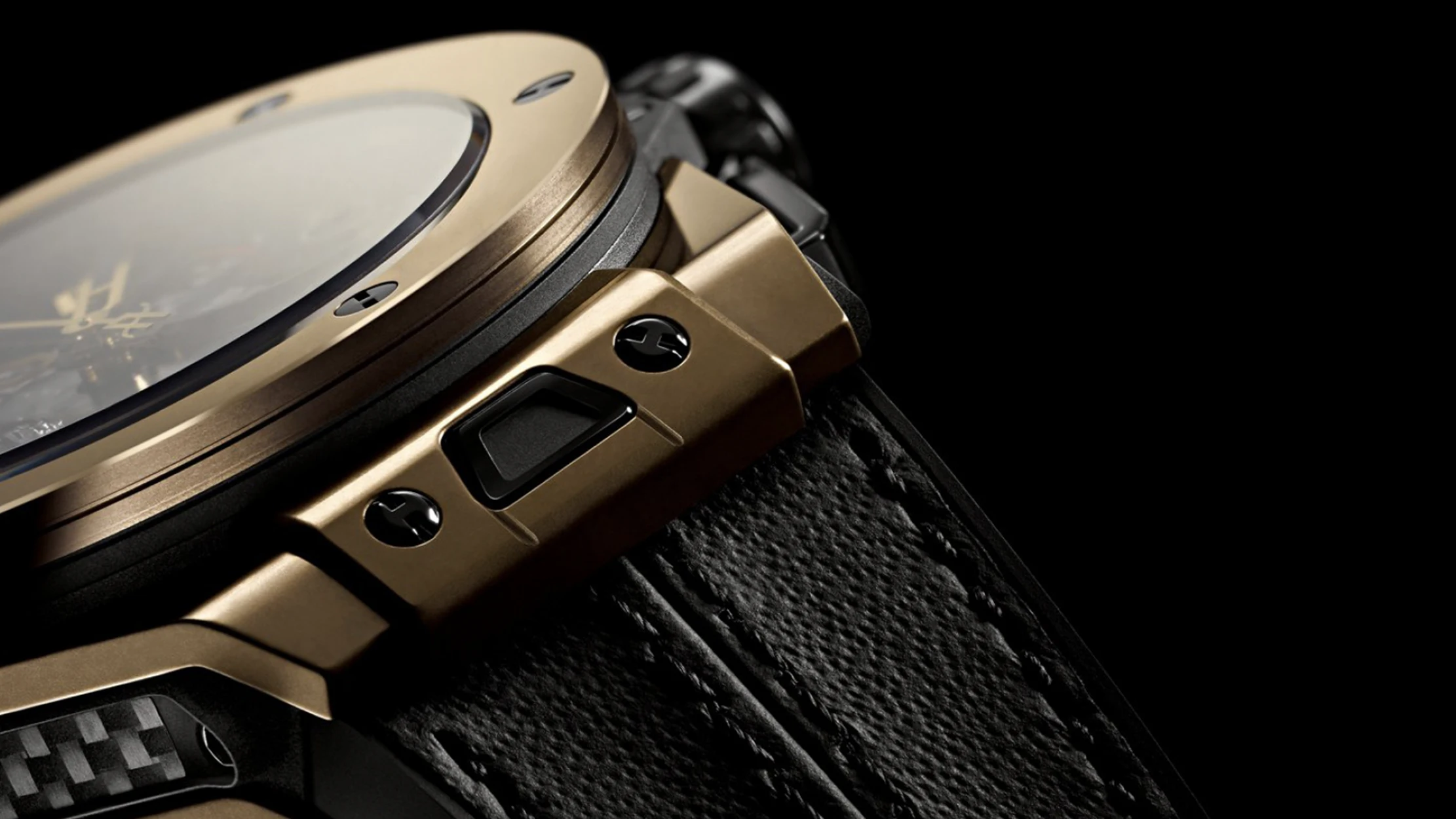
In 2007, this clone movement appeared with plates, bridges, and balance cock made in Ag5, an ultra-light alloy comprising magnesium, manganese, and aluminum to decrease weight, increase shock absorption, and add strength. This movement became a big part of the cult-worthy Mag Bang, released in 2007 and housed in an inventive magnesium case.
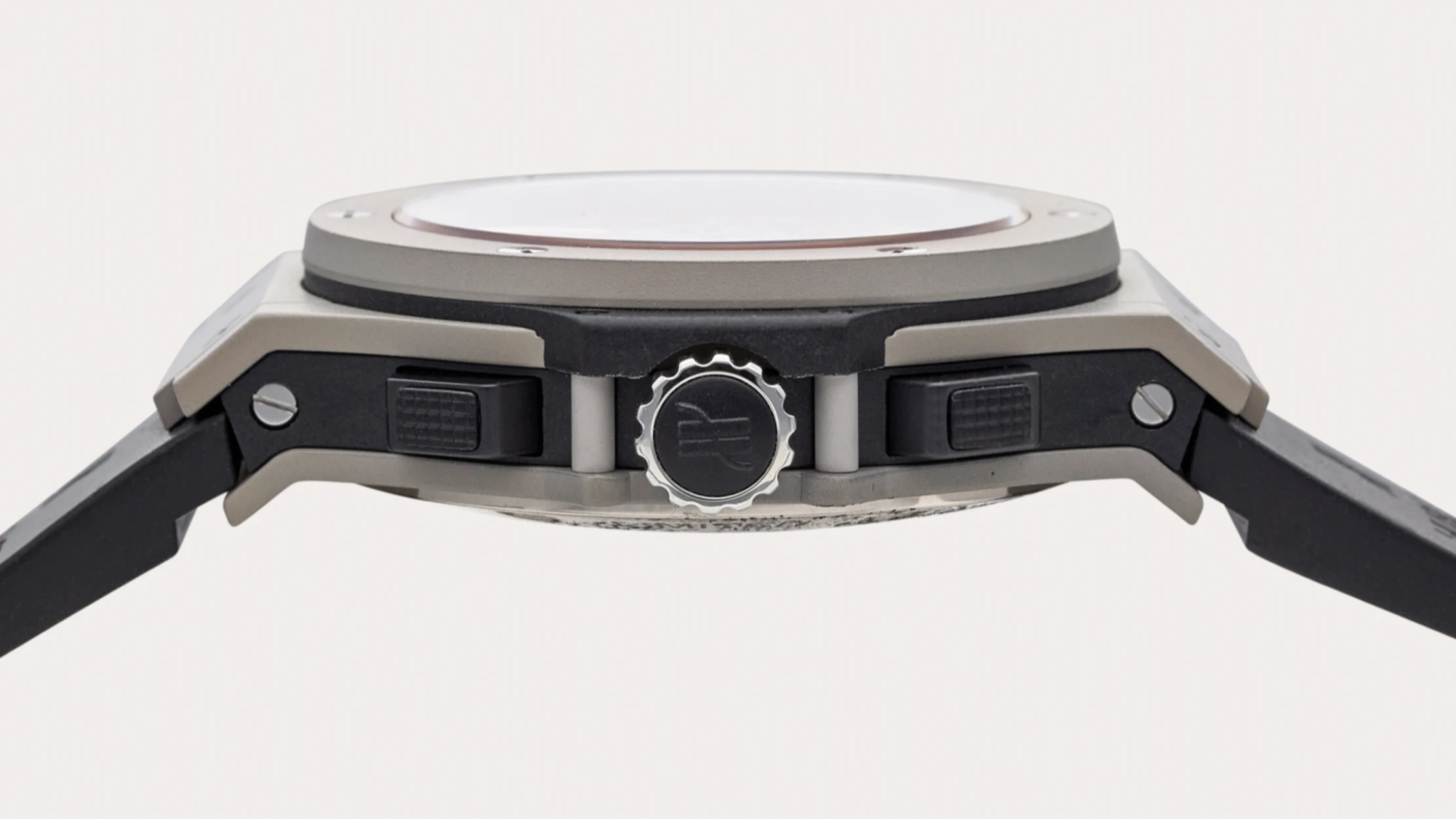
Credit © Sothebys
Biver smoothly added these elements into Hublot’s catchy marketing surrounding the “the art of fusion,” which was created to explain the brand’s philosophy and make reference to the original idea of combining materials that didn’t traditionally go together in the world of haute horlogerie. Blending new materials with conventional watchmaking was an Hublot calling card right from the start, and it remains one to this day.
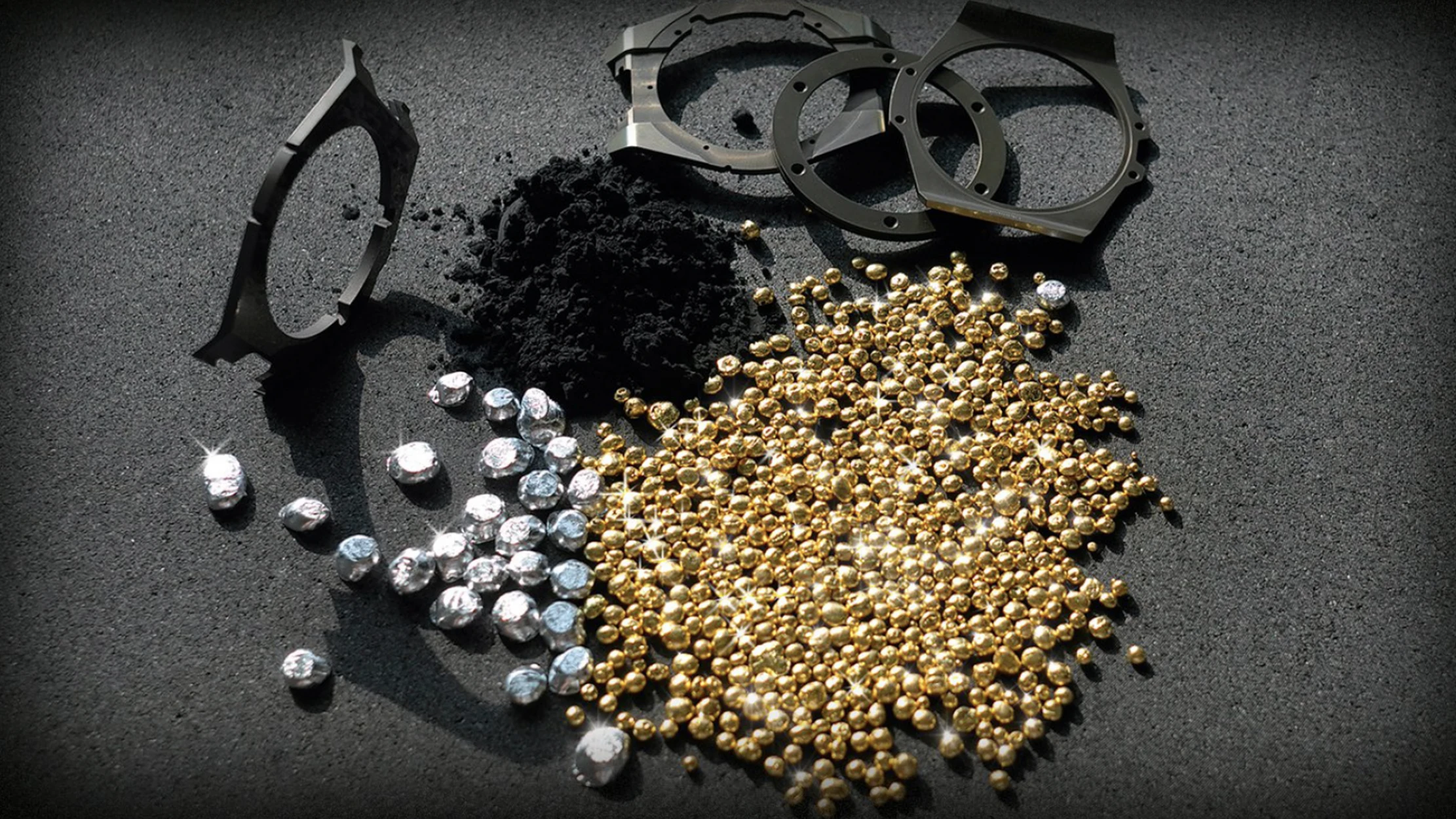
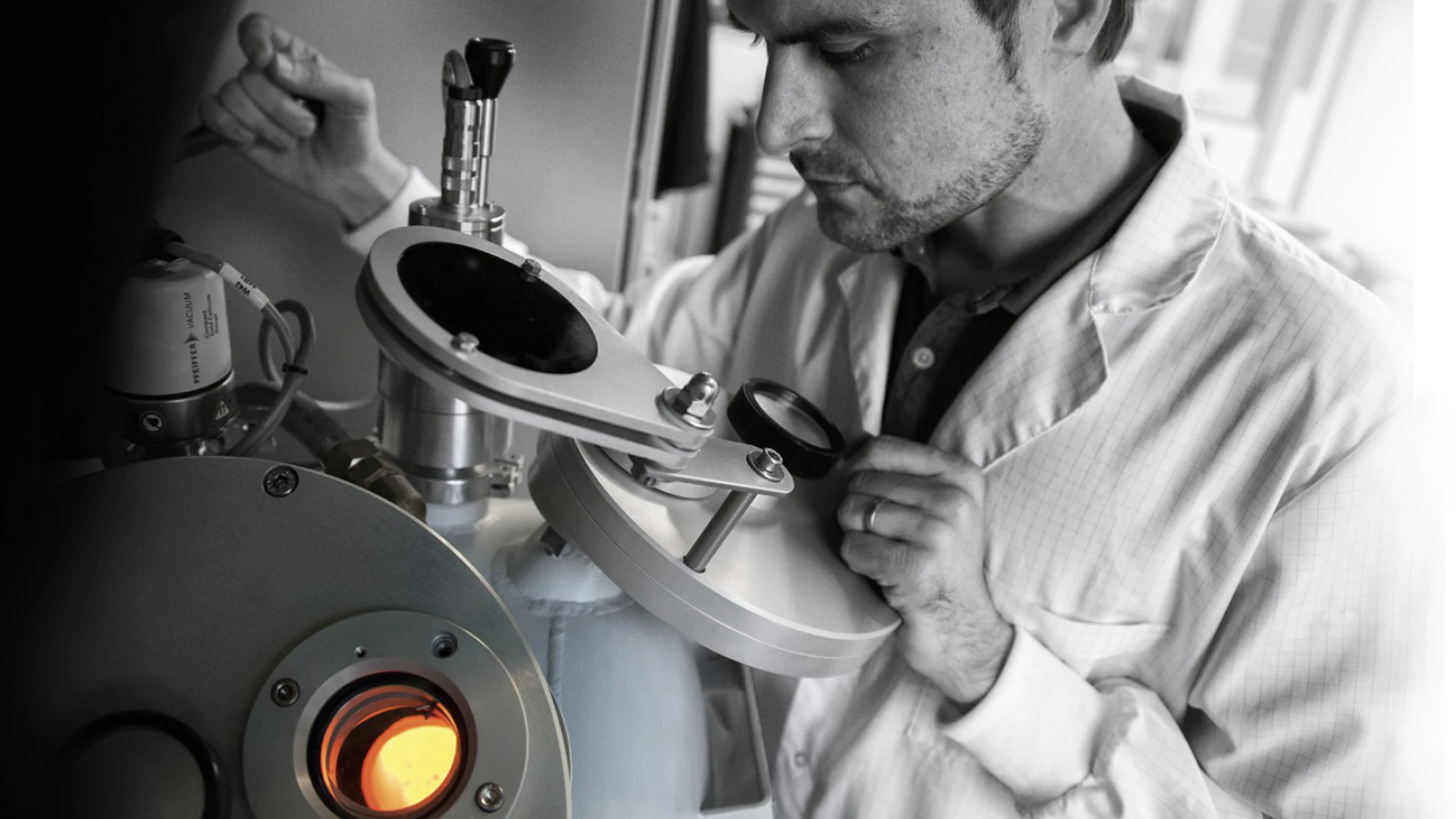
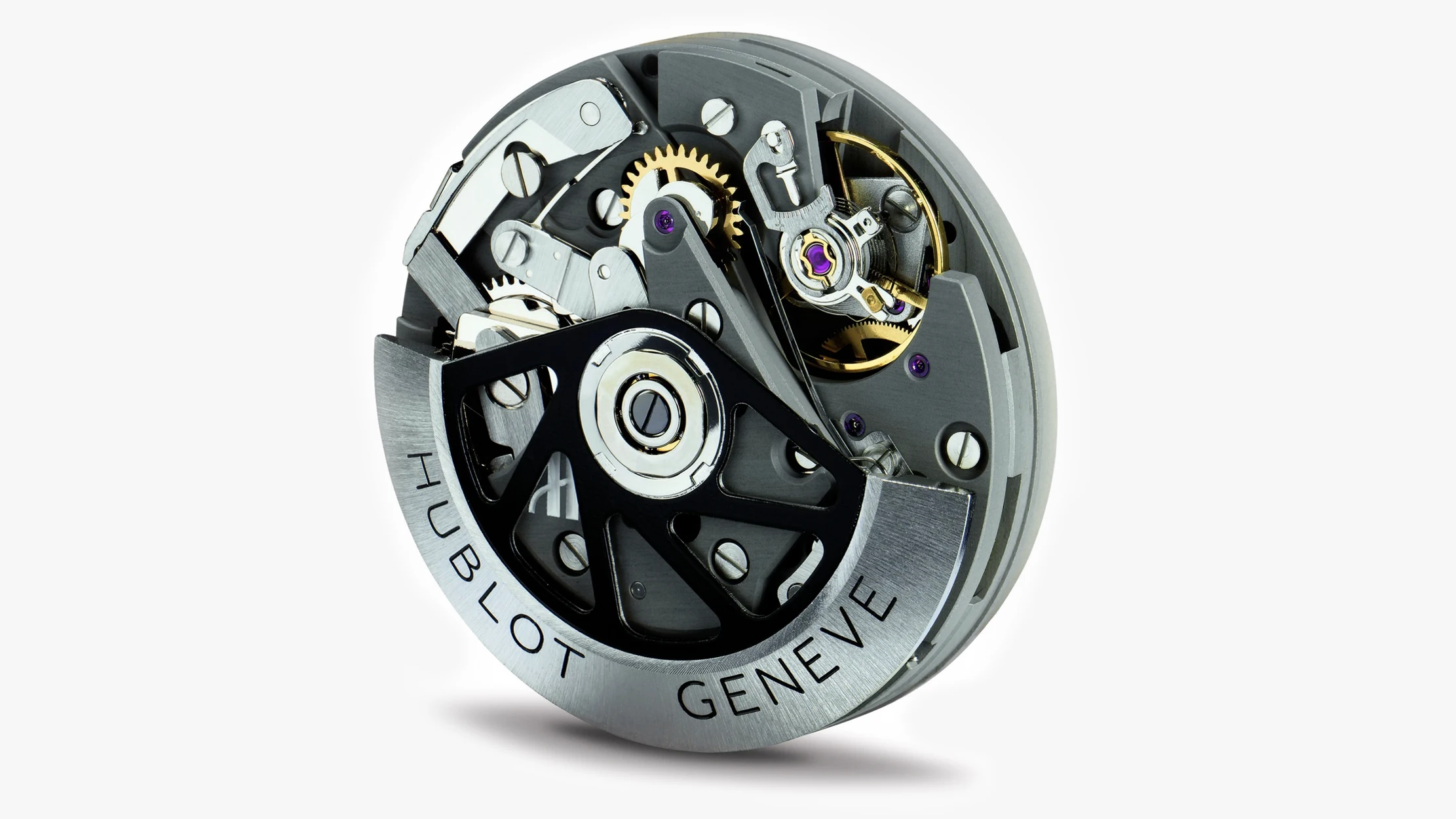
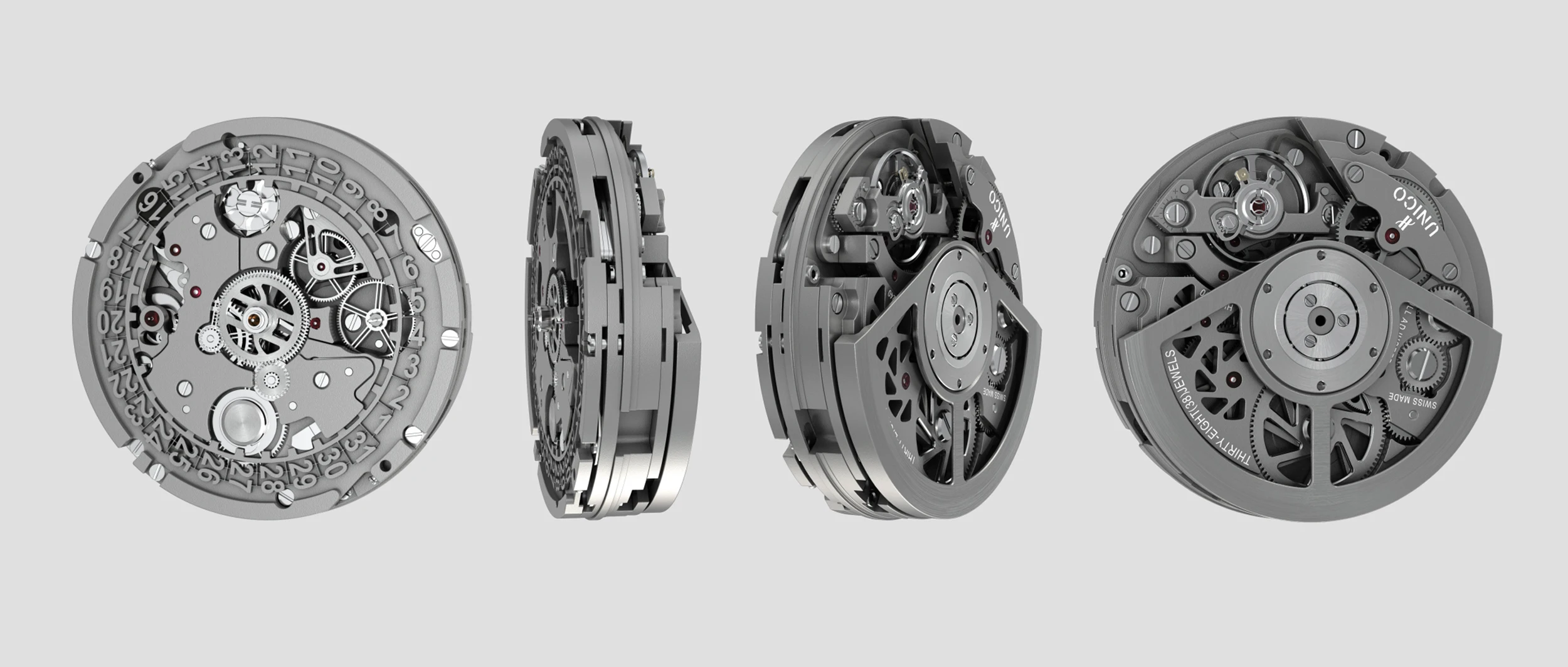
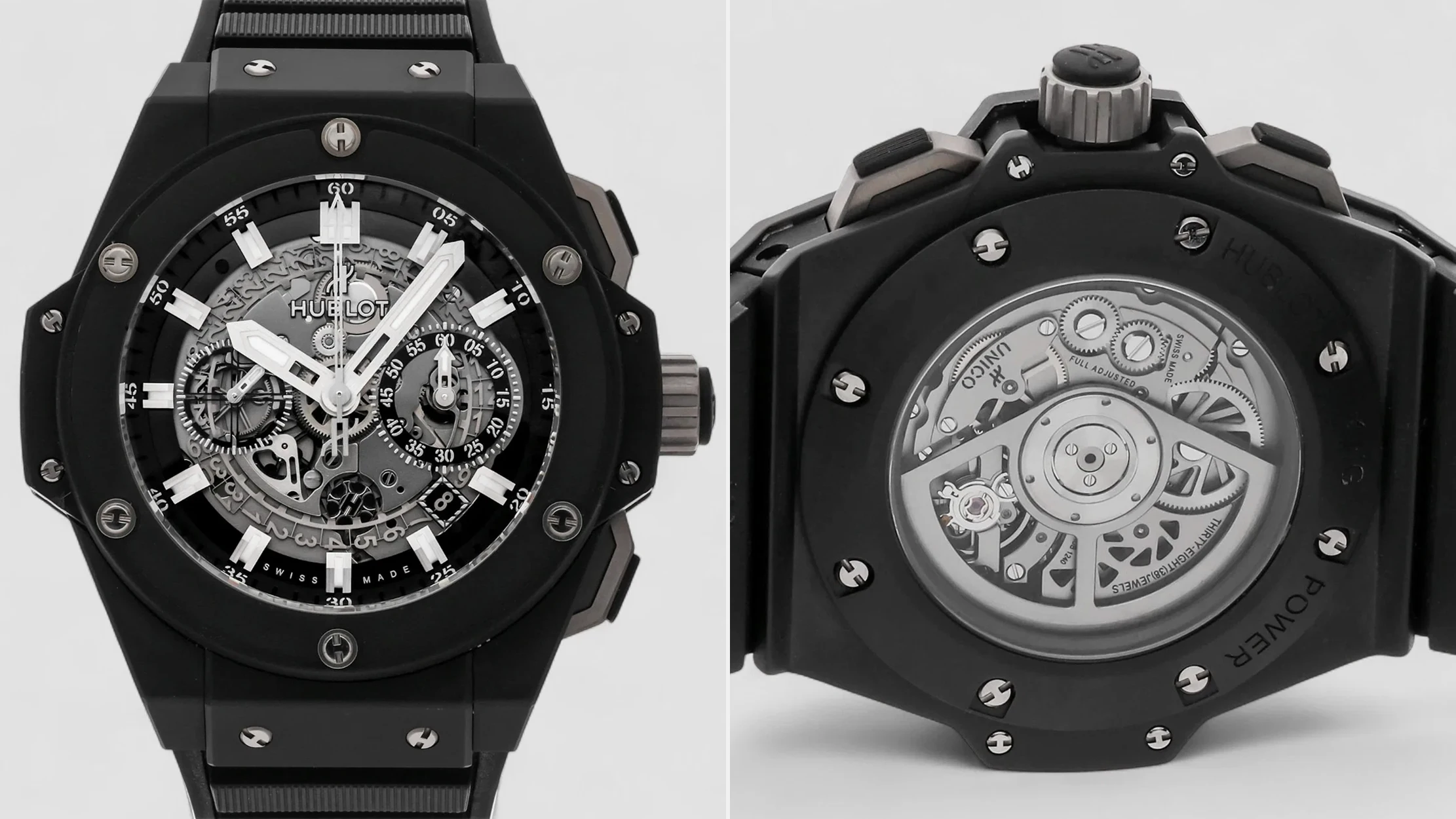
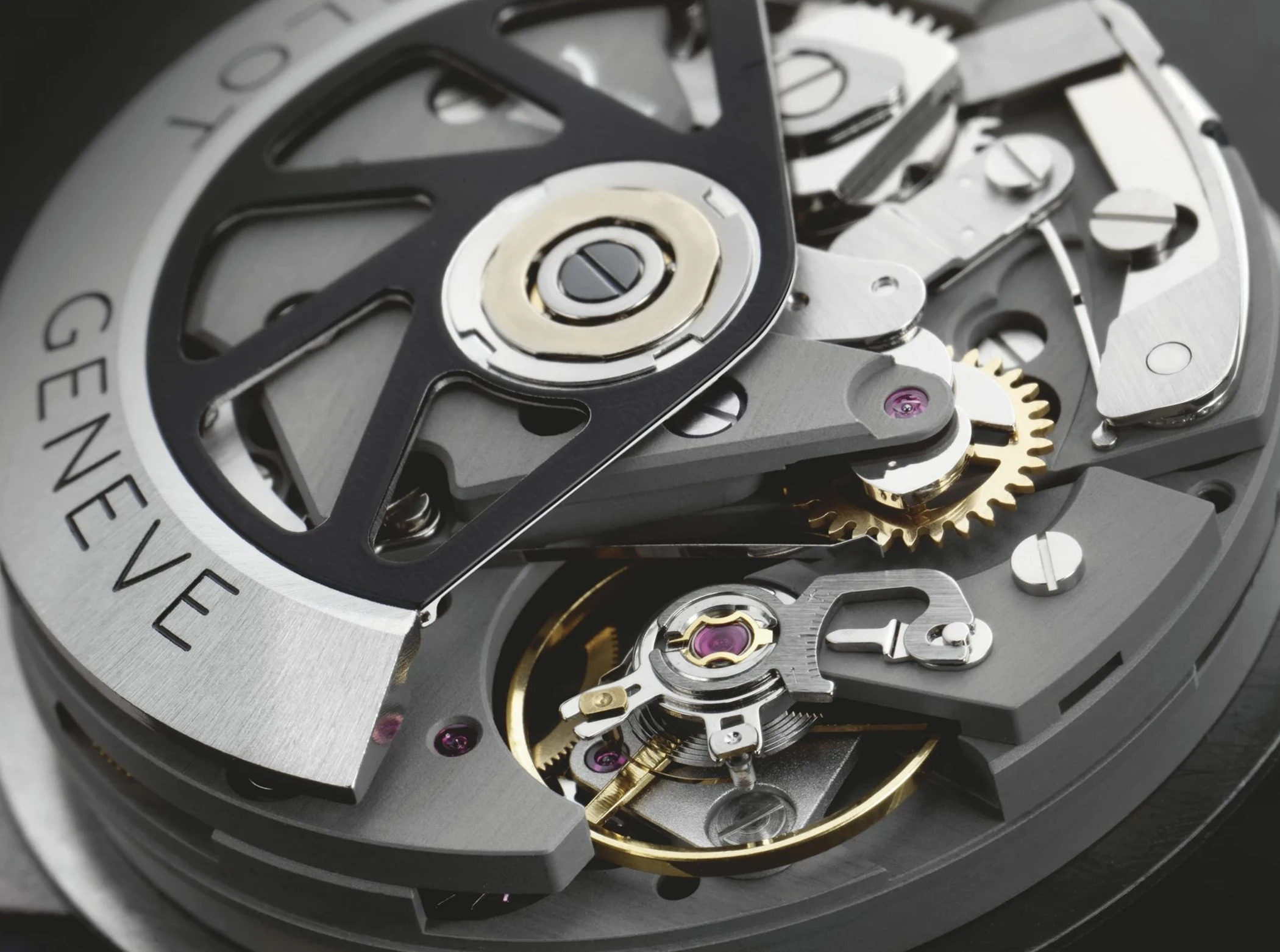
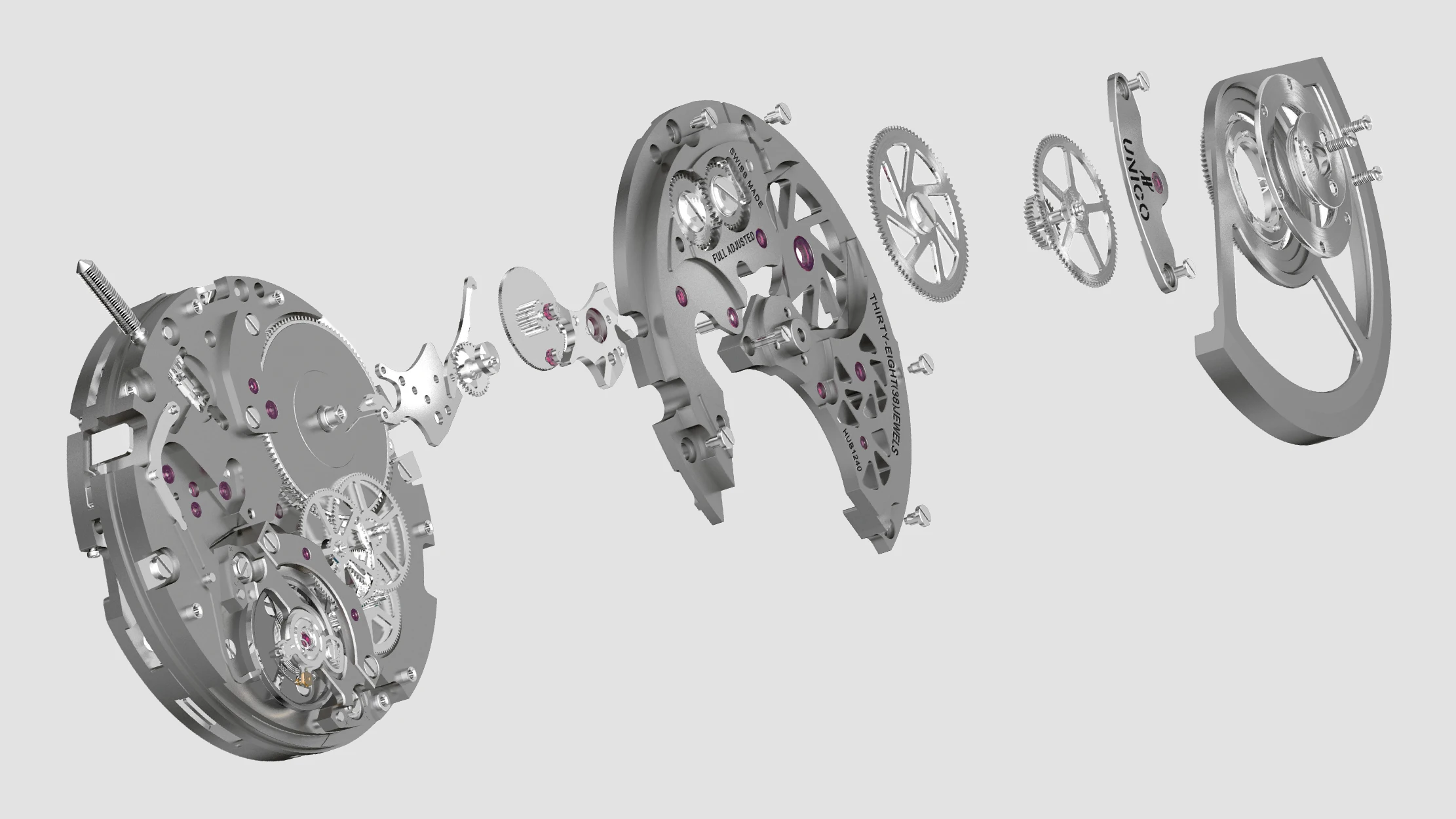
Caliber HUB1240, a column-wheel chronograph, was conceived to share its base plate and other technical components with future movements in the Unico family; it was cleverly developed to improve efficiency. These modern movements beating at a frequency of 28,800 vph/4 Hz and containing 28 jewels have sturdy base plates 30 mm in diameter; height is 7.9 mm. One interesting fact is that the balance, secured by a bridge, is completely exchangeable, making service a snap.
Credit © Geneva Watch Company
The size of these base plates ensured they could be used in the Big Bang, which was (and is) a big watch. According to Biver and his technical team at that time, all the flat parts were already being made in-house. The gear train, turned components, and of course the balance and escapement were still sourced at the beginning – the latter in silicon with a customized H built right in. Almost 100 percent of these components are now made at Hublot’s factory in Nyon.
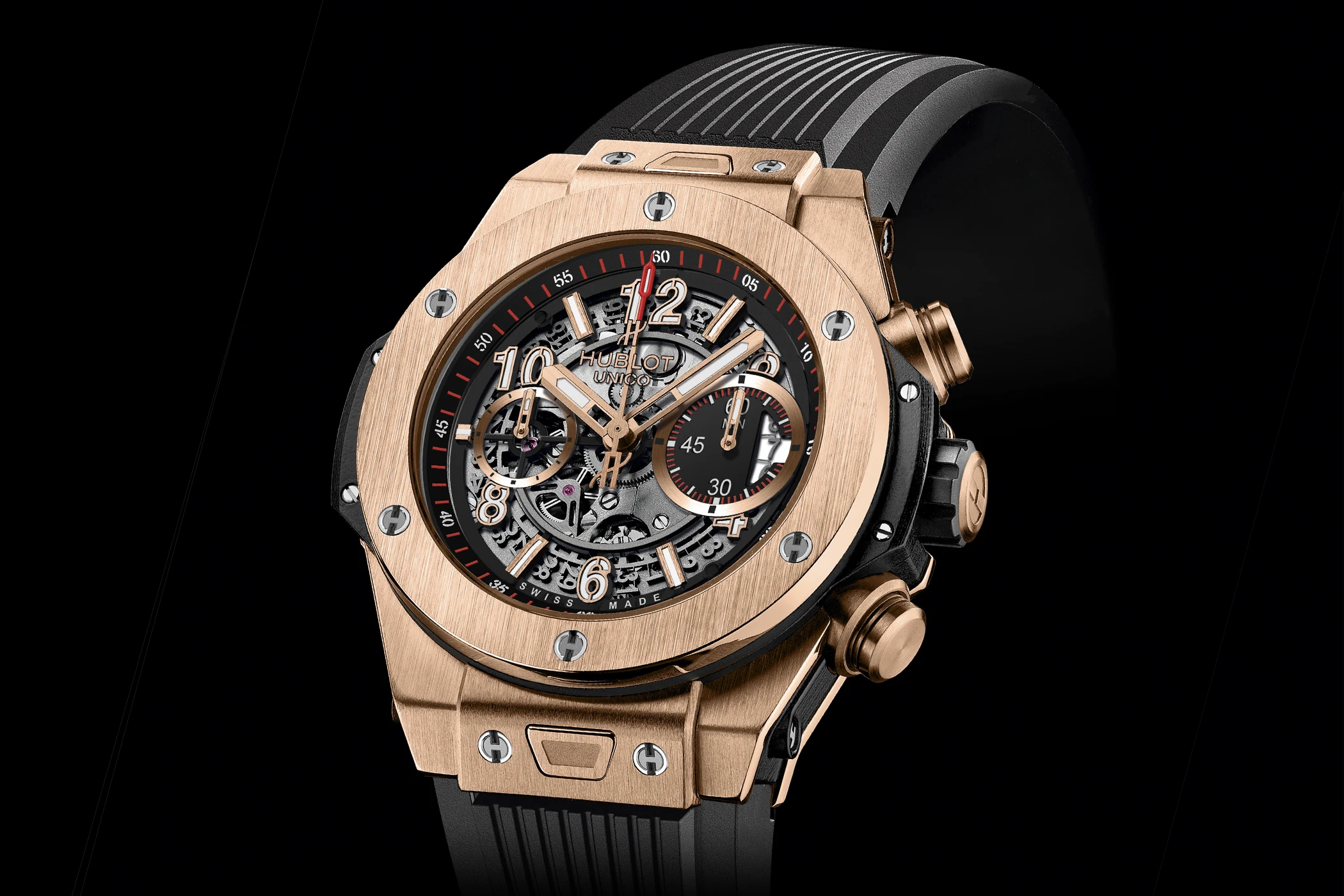
One thing that always struck me about the Unico was how architectural it looked, even encased. This was part of its visual identity, helping customers understand that behind the bold looks Hublot created – which were often pooh-poohed by the watch world’s cognoscenti – there was a heck of a lot of real watchmaking to discover. Each element of these watches reinforced the finesse of the other.
The Unico appearing in 2010 was no coincidence. Mathias Buttet was co-founder of complicated movement maker BNB Concept, which existed from 2004 through 2010. His partners in BNB until 2007 were Michel Navas and Enrico Barbasini (now the two co-founders and heads of Louis Vuitton La Fabrique du Temps). The name BNB came from the three initials of the watchmaker partners (Buttet, Navas, Barbasini), and the factory was located in Nyon, also the home of Hublot. Buttet bought out his two partners in 2007 with the help of a private equity firm.
BNB Concept made unique and complicated movements for Hublot and other brands. But it also trained talented young watchmakers in progressive thinking (such as Rexhep Rexhepi, who went on to found his very successful independent brand Akrivia). At its zenith, BNB Concept employed 180 people.
However, BNB Concept collapsed in 2010. It was taken over by and integrated into Hublot, where Buttet is now the very innovative director of research and development.
Hublot’s first in-house caliber, the Unico HUB1240, arrived in 2010 – the precise year that Buttet began working for the brand in-house after Hublot absorbed the remains of BNB Concept, including 30 craftspeople. The express goal of this was to develop in-house, haute horlogerie movements, which Hublot was previously buying from BNB Concept.
Credit © Geneva Watch Company
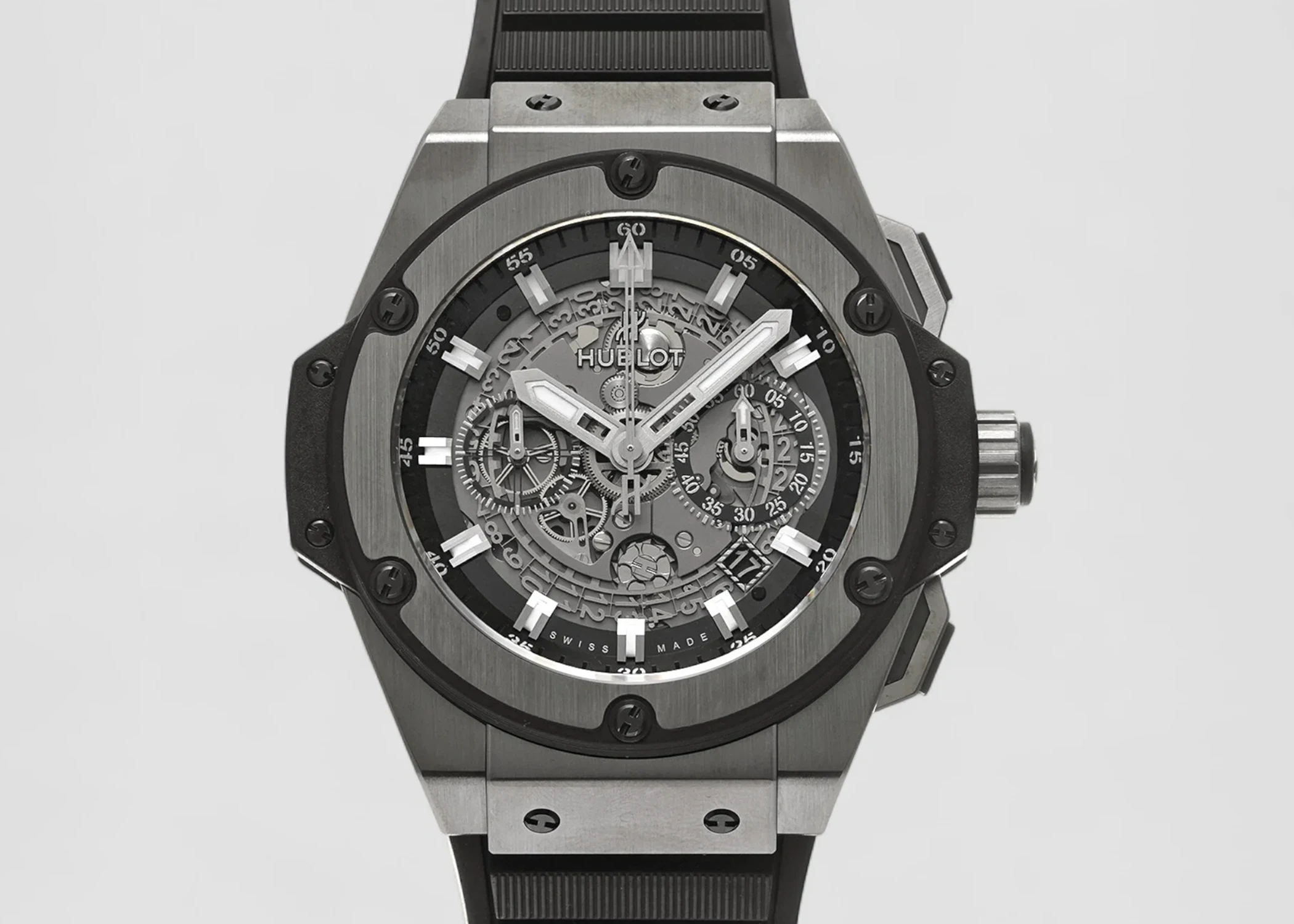
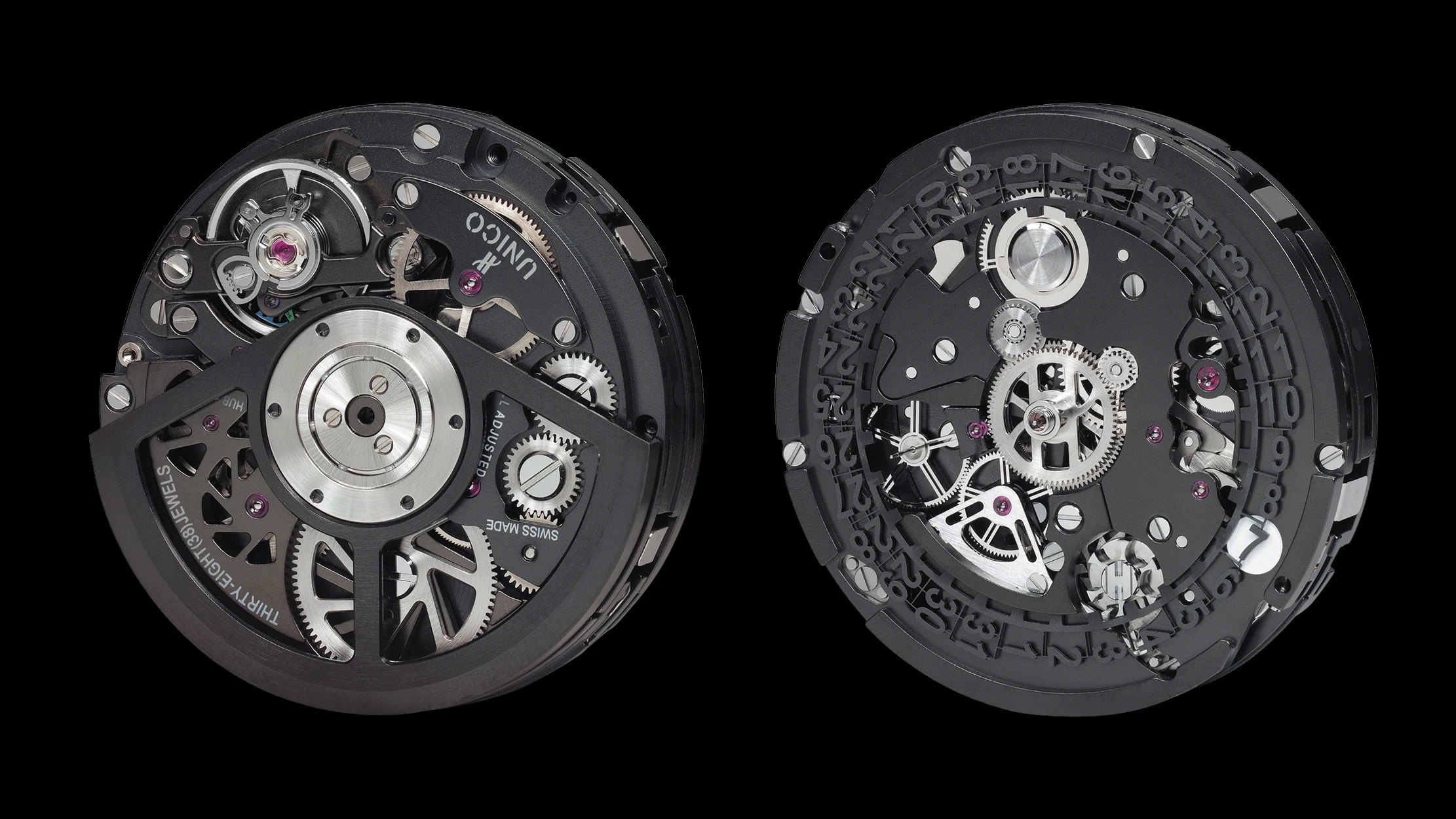
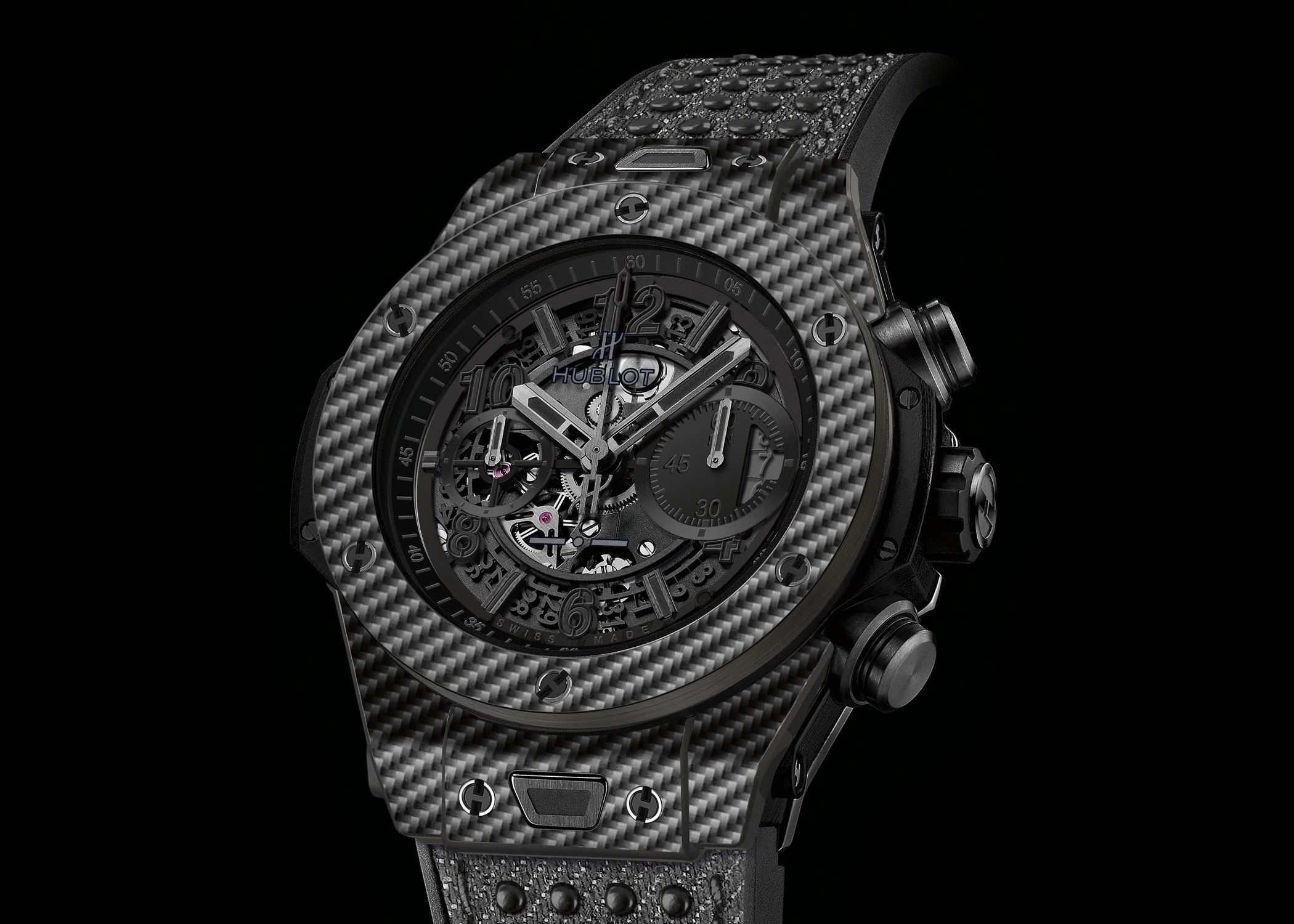
So Hublot replaced its supplied chronograph movements with the Unico HUB1240, a 72-hour power reserve movement optimally constructed for large production thanks to its simplified movement design. A flyback chronograph, all its chronograph components are placed on the front so that they can be seen at work, including two classic clutches connecting the chronograph subgroup with the base movement. The flyback function, which allows the chronograph to be restarted without having to stop it first, is an absolute cherry on top. And it also boasted a touch of modernity with the reliable, lubrication-free silicon escape wheel and pallet fork.
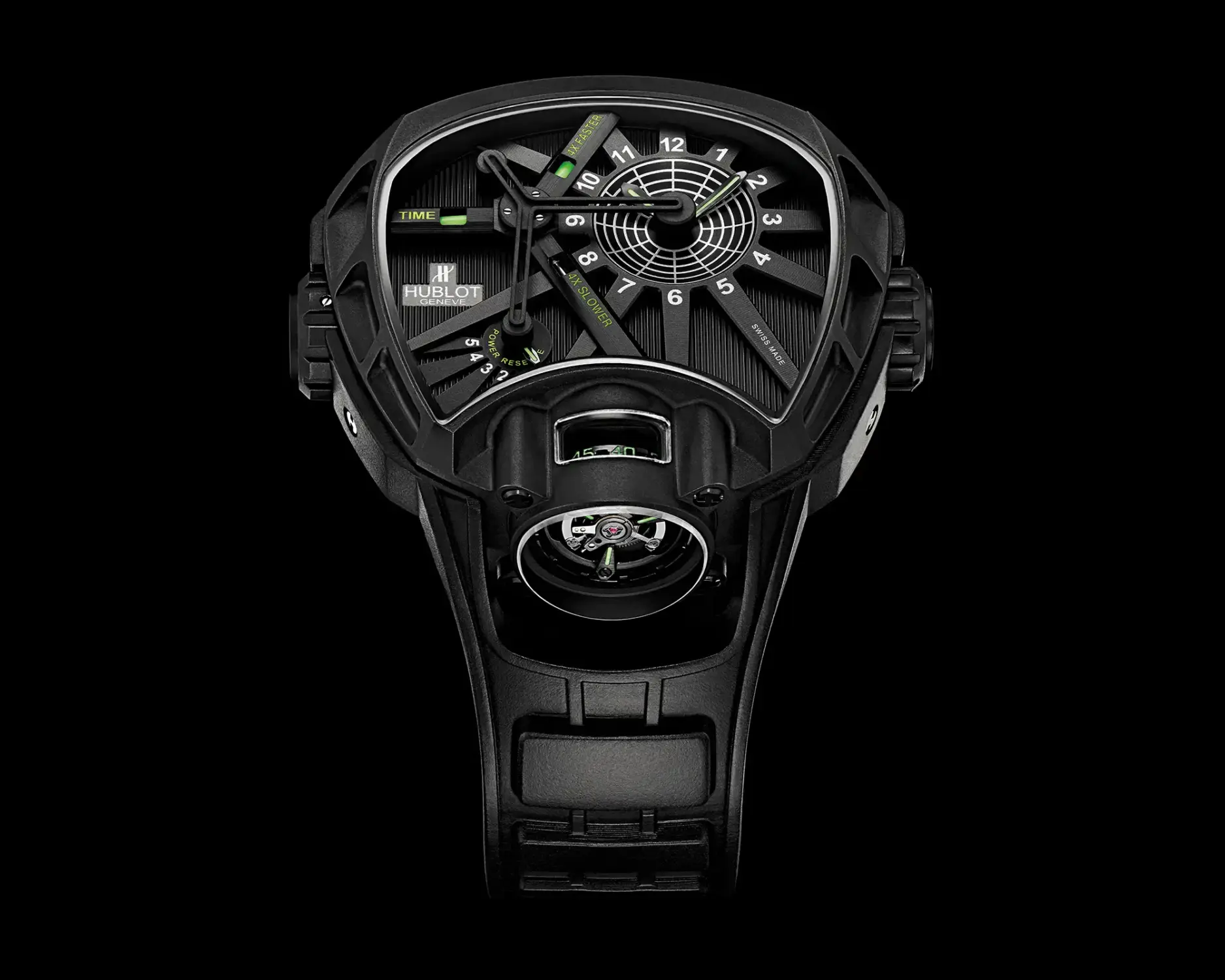
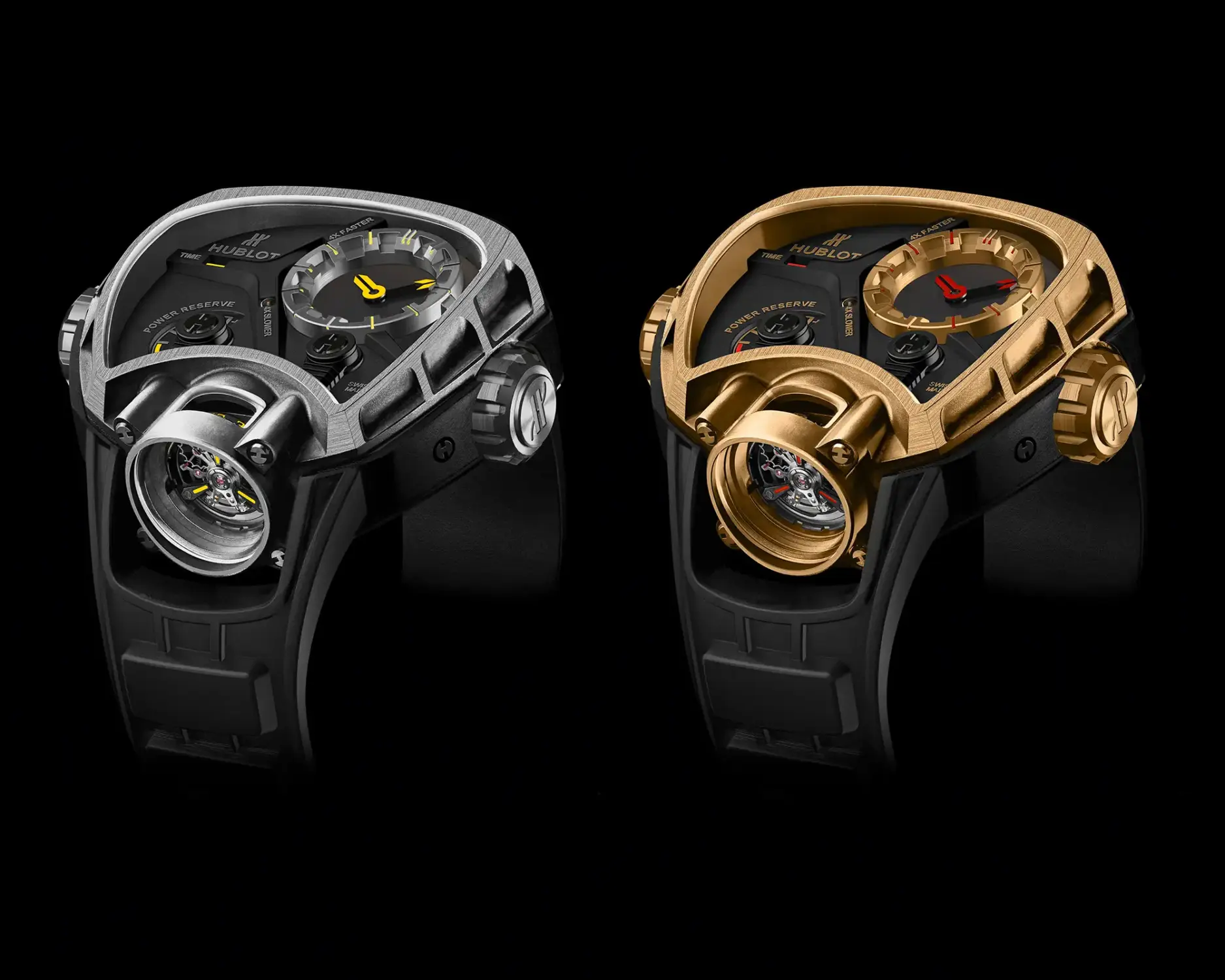
By 2011 Hublot had also introduced a timepiece called the Key of Time (MP-02) featuring a distinctive shape and powered by a tourbillon-based movement capable of producing varying display speeds called Caliber HUB9002. It boasted 96 hours (four days) of power reserve in one spring barrel and was quite obviously based on the Key of Time timepiece previously seen at BNB Concept – though in my opinion, Hublot’s visual redesign was a positive development. The idea behind this watch was to make time “go more slowly” when one is having fun and to “speed up time” that just needs to be passed – the owner has the choice, but unfortunately only visually.
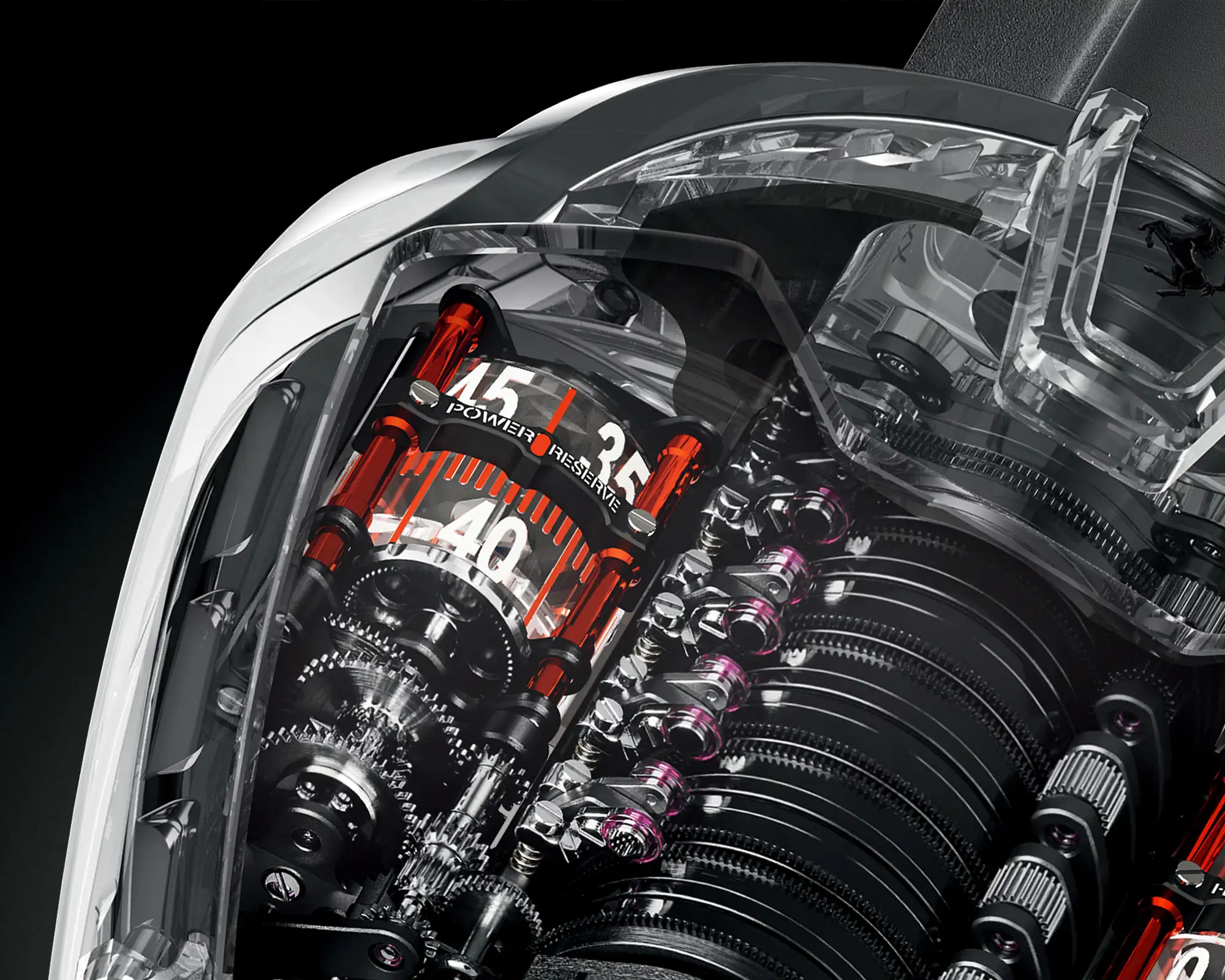
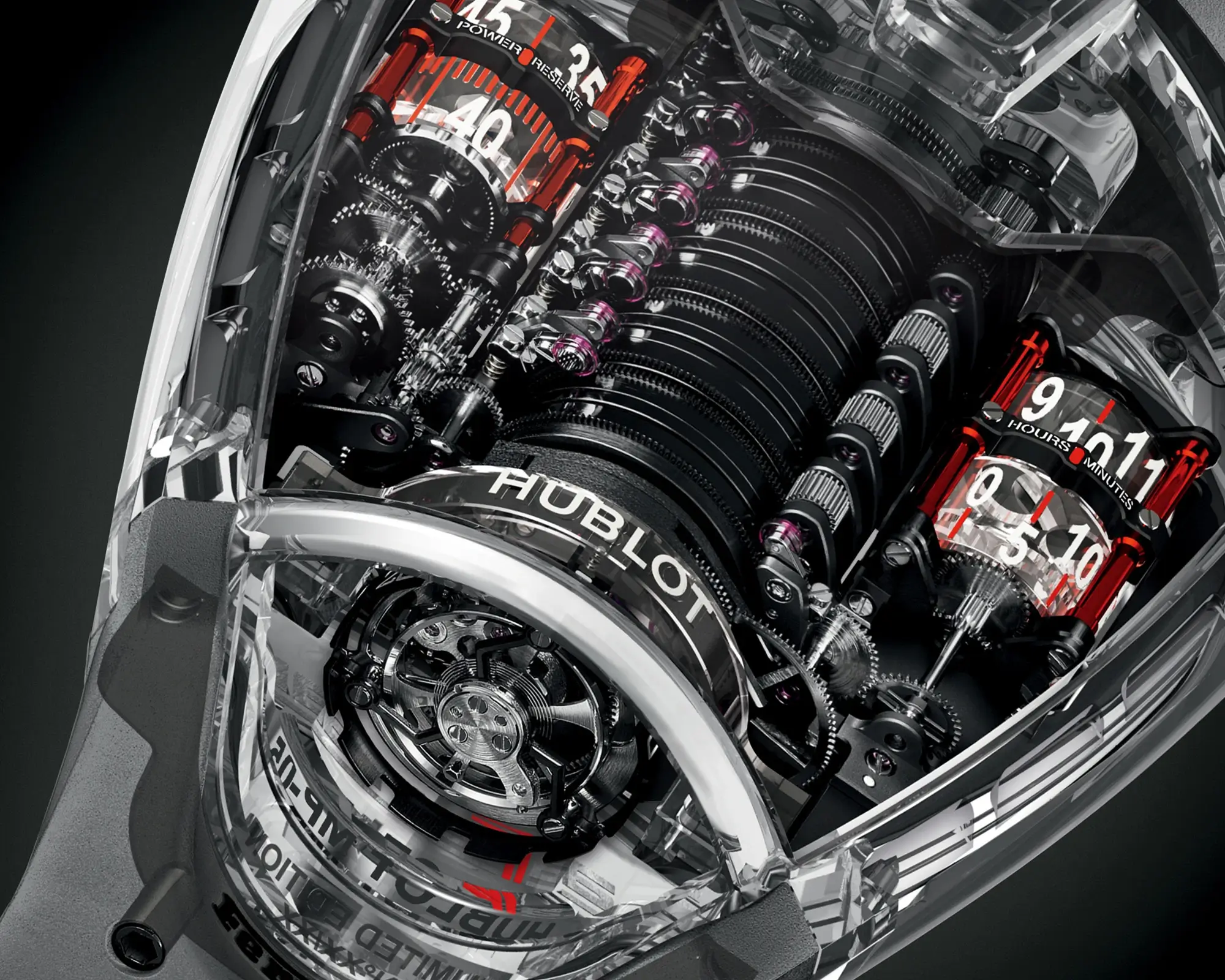
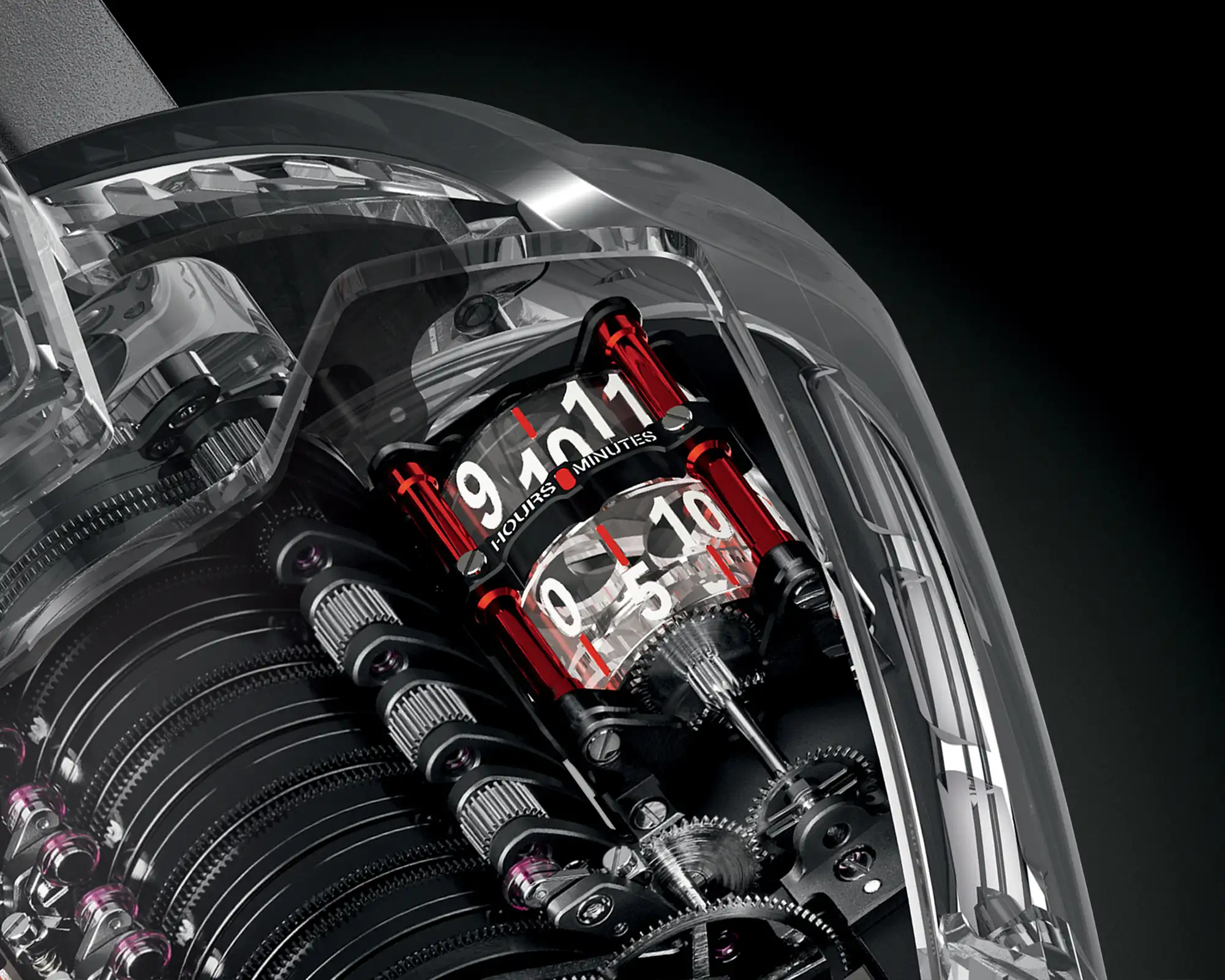
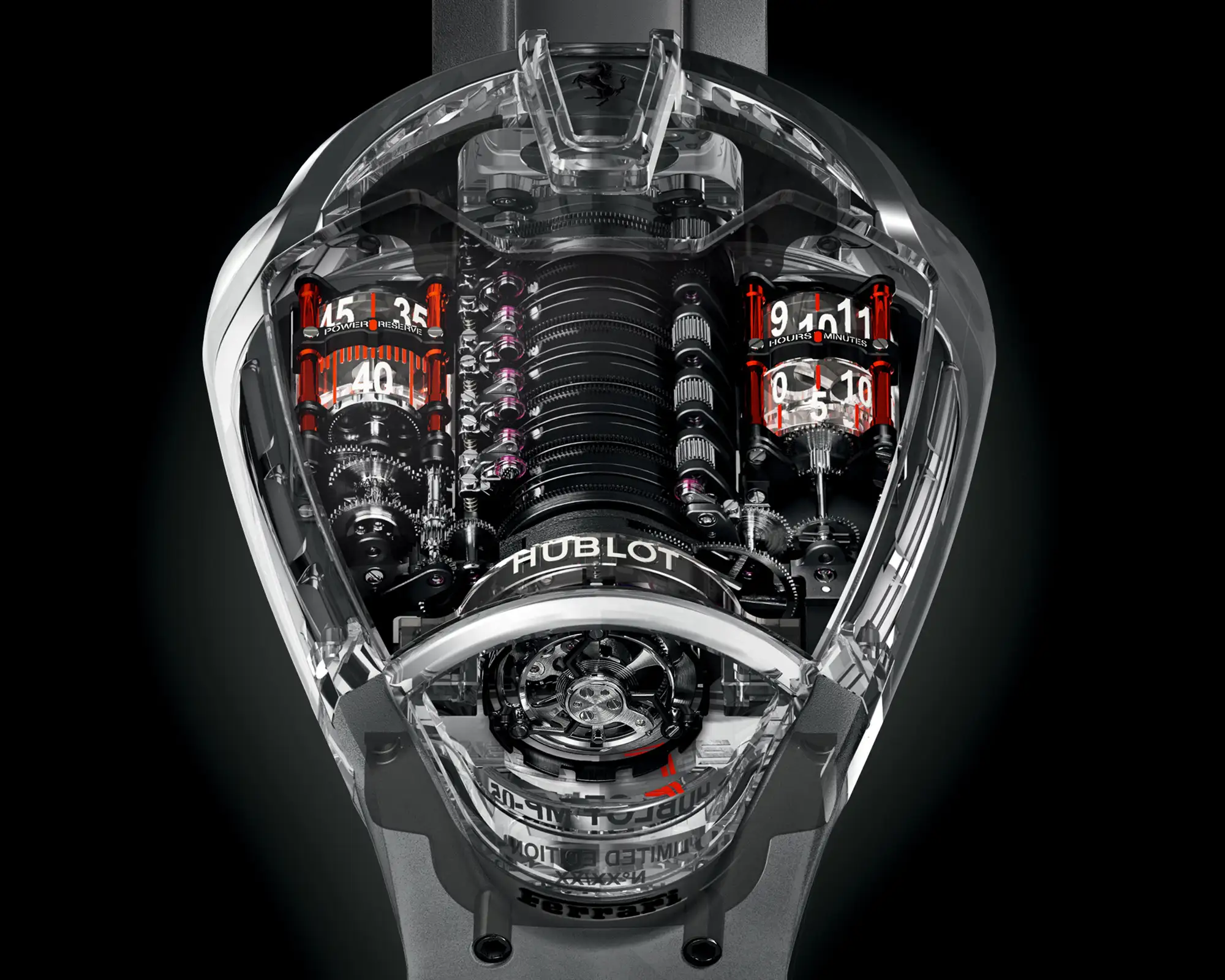
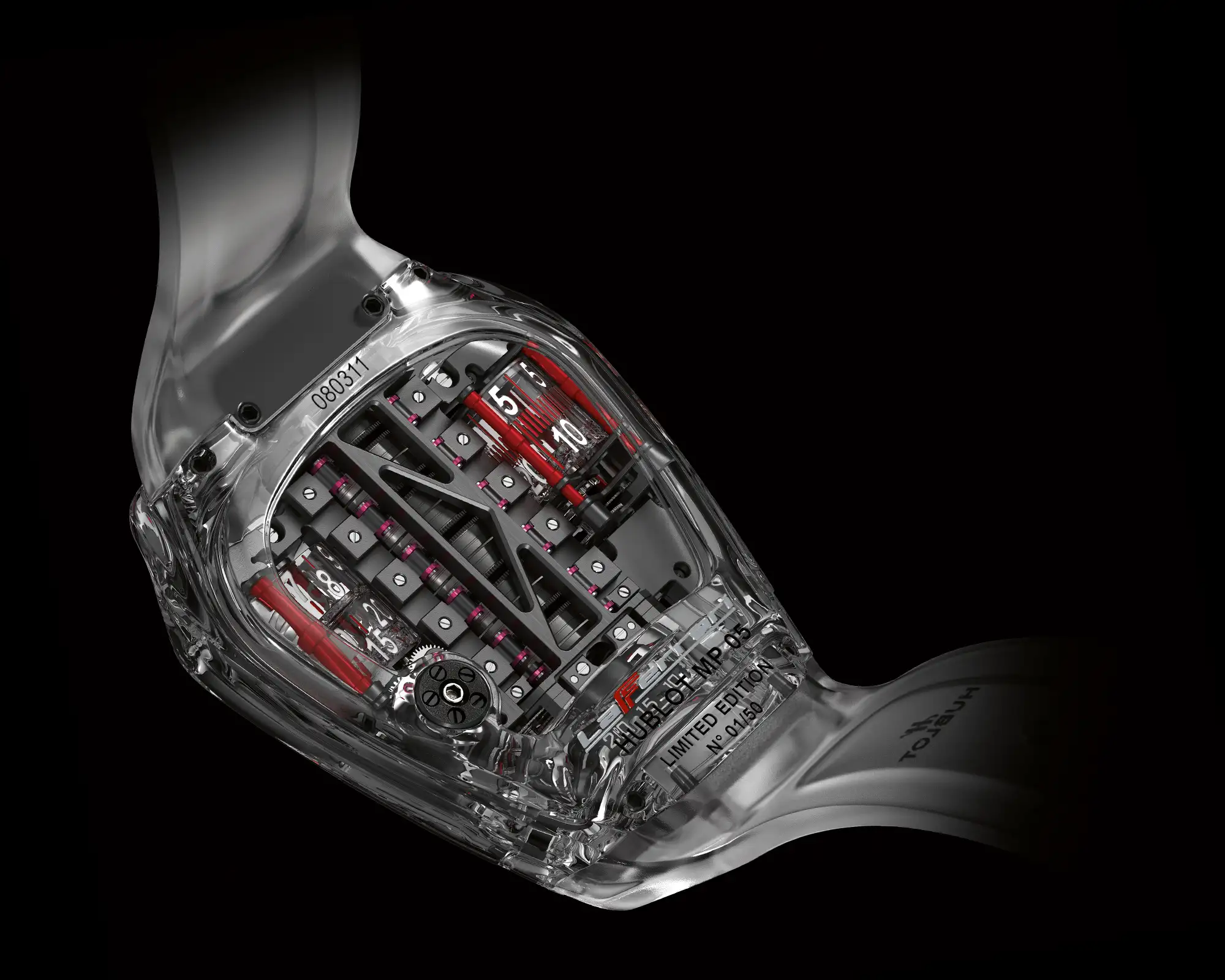
In 2011, Hublot became a marketing partner of Ferrari, a position it held until 2020. And in 2013 it introduced the MP-05 LaFerrari. This watch was inspired by the supercar Ferrari introduced in the same year. LaFerrari was the most extreme car Ferrari had to offer, and so this watch became the most extreme that Hublot made.
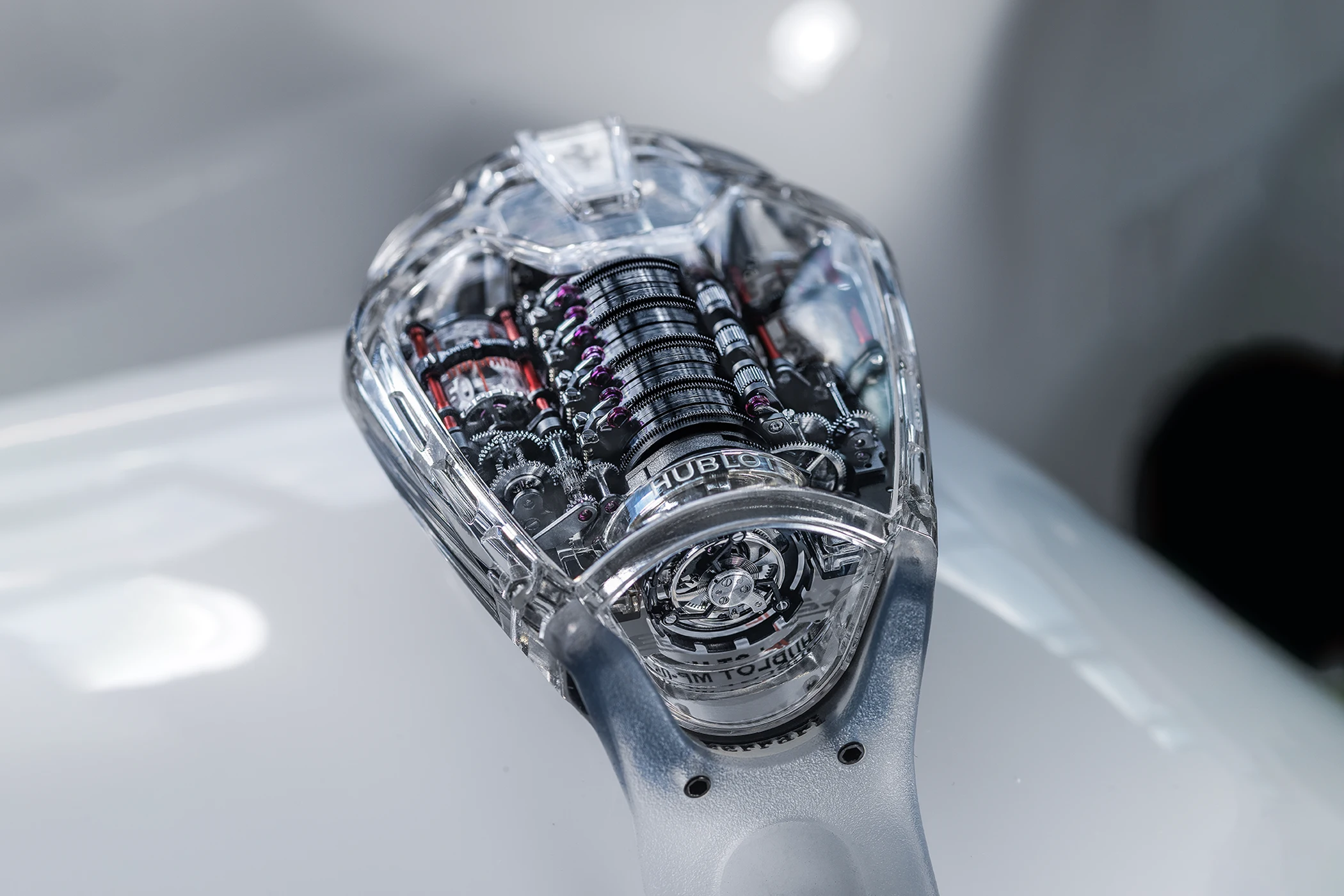
The MP-05 LaFerrari was a watch unlike any other. With a sleek and unusual design due to a curved sapphire crystal, it looks like the engine bay of a sportscar. But, in fact, the sapphire crystal reveals a view of the 11 spring barrels that provide this manually wound watch with a power reserve of an incredible 50 days. The hours and minutes as well as the power reserve are shown on display rolls, while the hand-wound movement also features a suspended vertical tourbillon with a 14.5 mm cage.
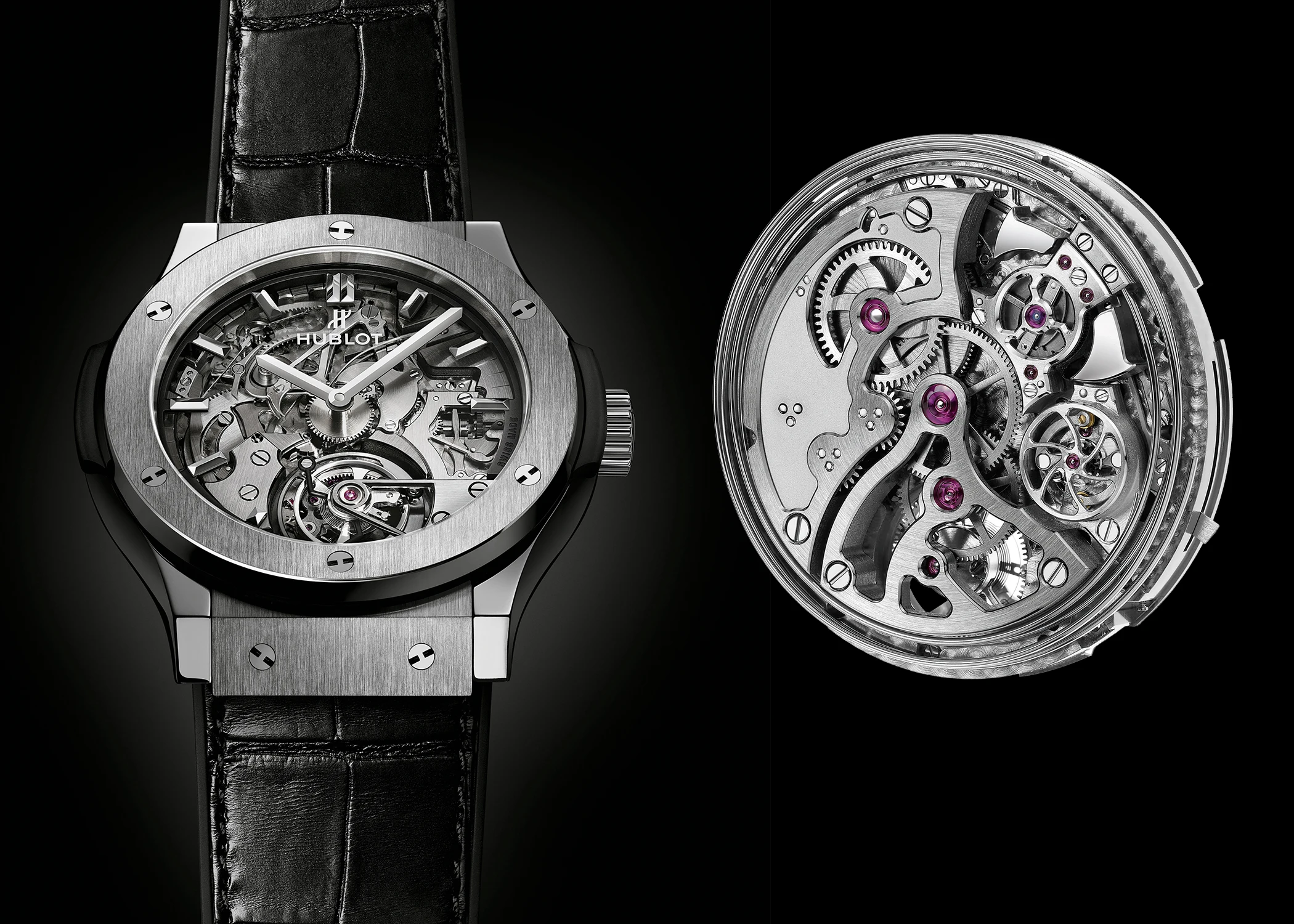
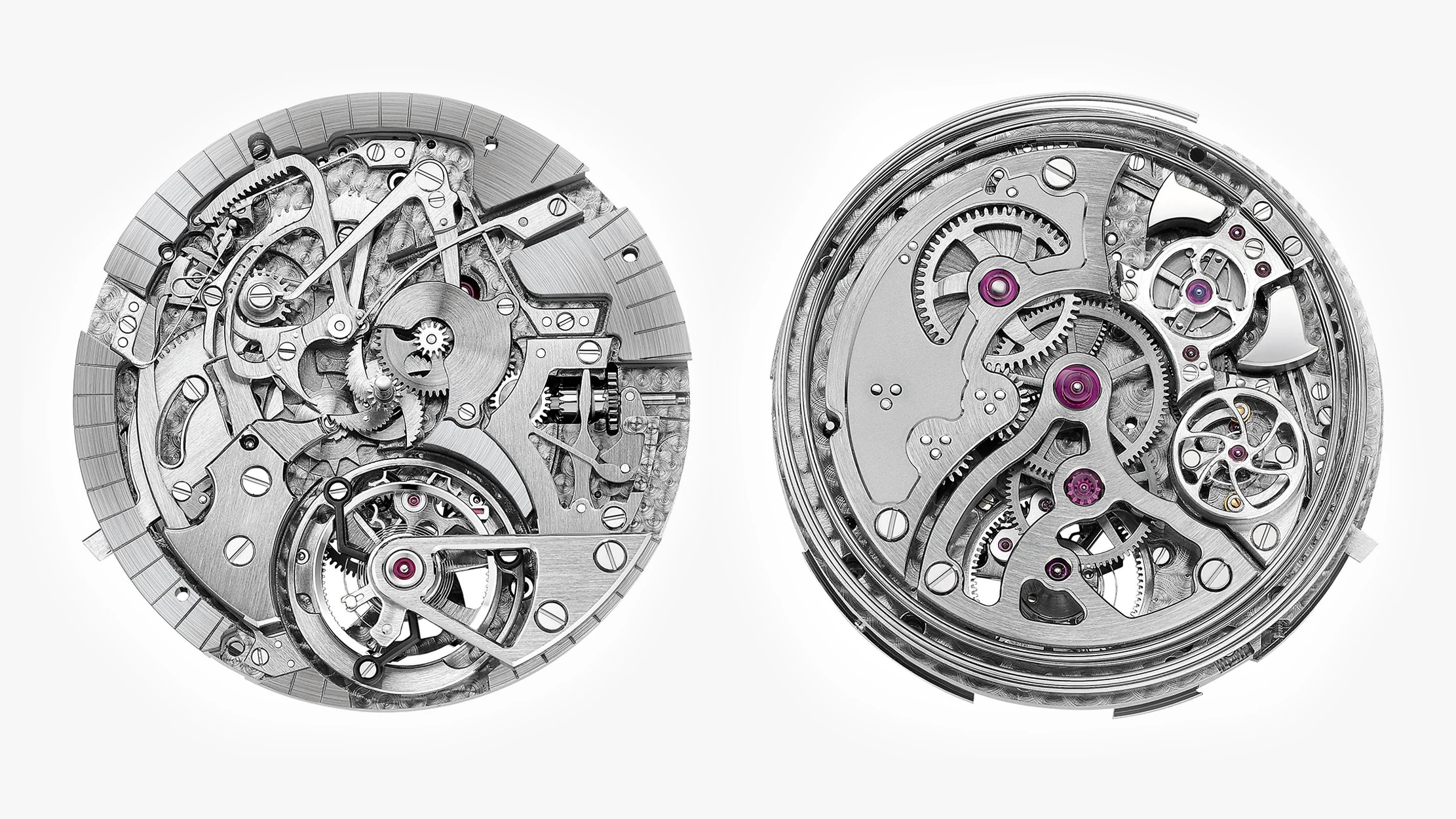
The minute repeater represents the highest art of watchmaking, and Hublot wasted no time working on its Classic Fusion Cathedral Tourbillon Minute Repeater in 2014, powered by manufacture Caliber HUB8001. This watch even won that year’s Striking Watch prize at the Grand Prix d’Horlogerie de Genève for the exceptional clarity and volume of its striking capability, which I remember judging as one of the jurors that year.
“I would like to point out that the Hublot repeater…was the only repeater in this category submitted in a titanium case,” I wrote in a different publication just after the GPHG took place in 2014. “The rest were in gold, and [one] even had diamonds on the case…enthusiasts know that stainless steel and titanium are the case materials that transport sound the best, and I can report that in this direct comparison, that was absolutely, unequivocally true. The Hublot chime was crystal clear and very loud…the clarity and volume of the chime was overwhelming. I am hardly surprised that this clear chime convinced many jury members to vote for it.”
Hublot uses double cathedral gongs that are about 1.5 times longer than the normal variety in this watch, which is also a feat because they could hit each other and disturb the sound if not assembled properly. One watchmaker assembles this movement from A to Z to ensure complete quality control. The movement also contains a traditional hand-wound tourbillon and a five-day power reserve.
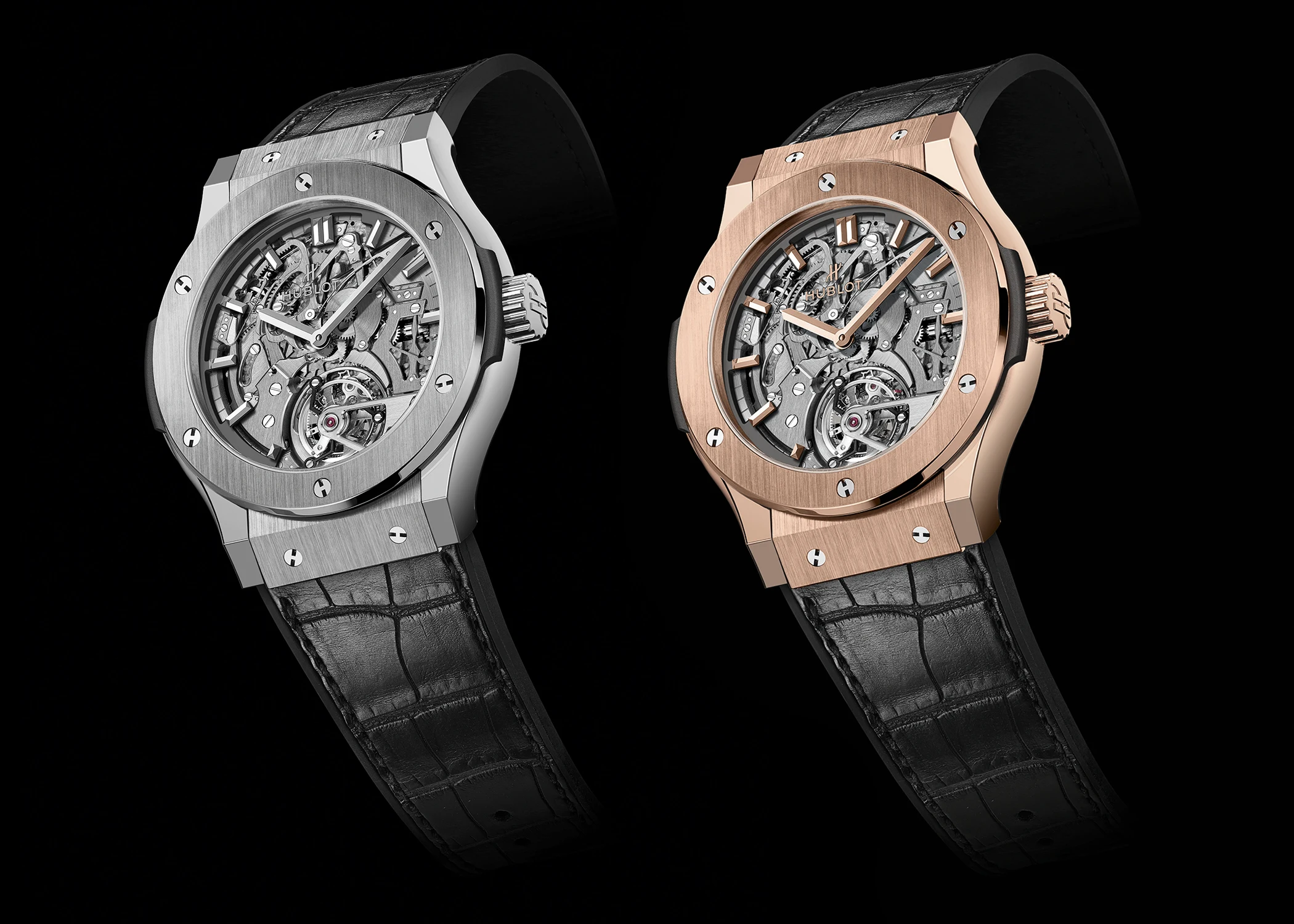
But not only its sound was exceptional – so were the monochrome visuals offering a very Hublot take on tradition. I particularly liked the minute repeater trigger cleverly integrated into the left bezel lug, providing a smooth, harmonious appearance. It was housed in the modernly designed Classic Fusion 45 mm and came in titanium or King Gold. And the watch was water-resistant to 30 meters, a fact that usually works against loud, clear, melodious sound.
This was the second such masterpiece at Hublot, but the first to run on a manufacture movement. It was the result of 24 months of research and development in Buttet’s department.
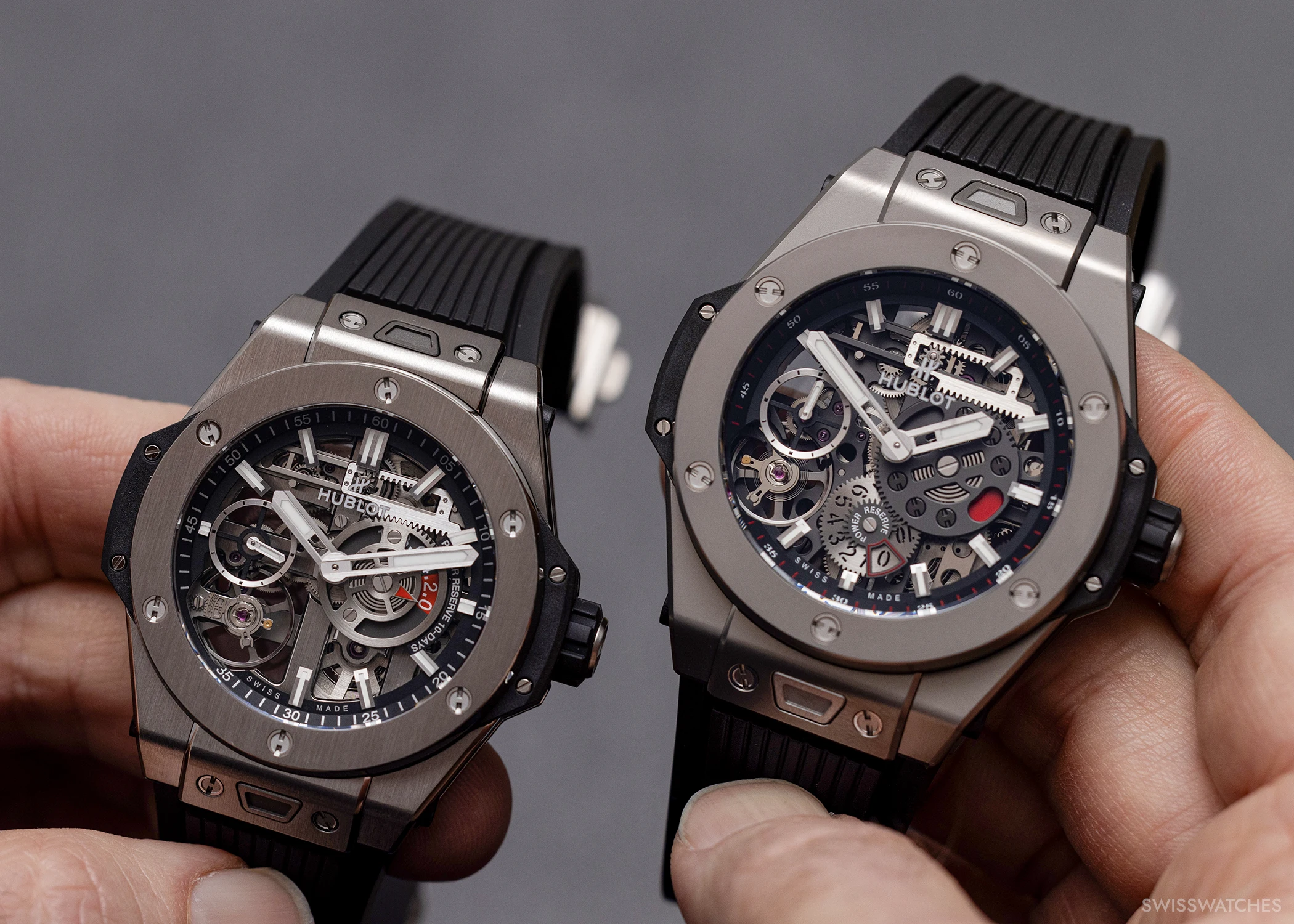
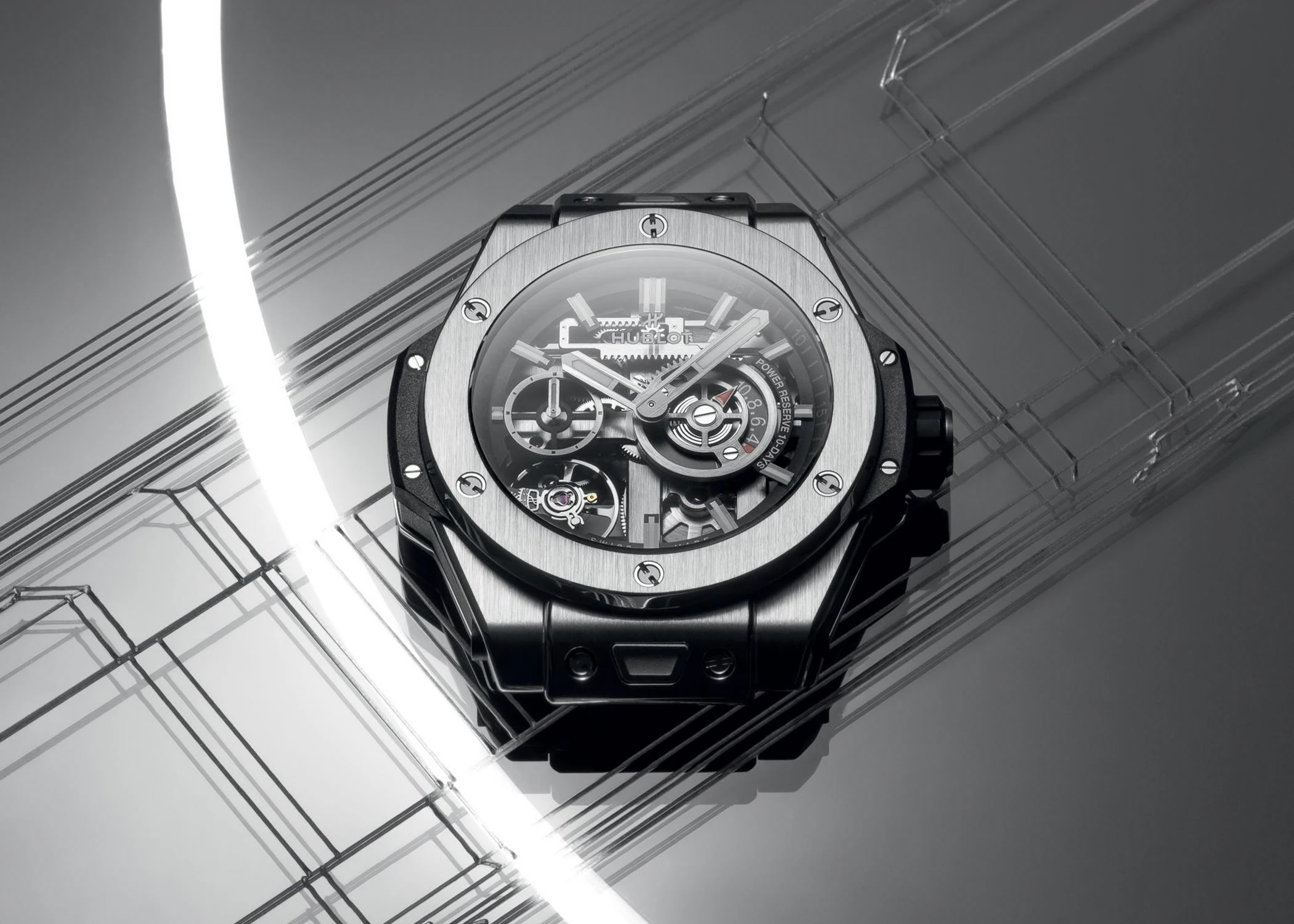
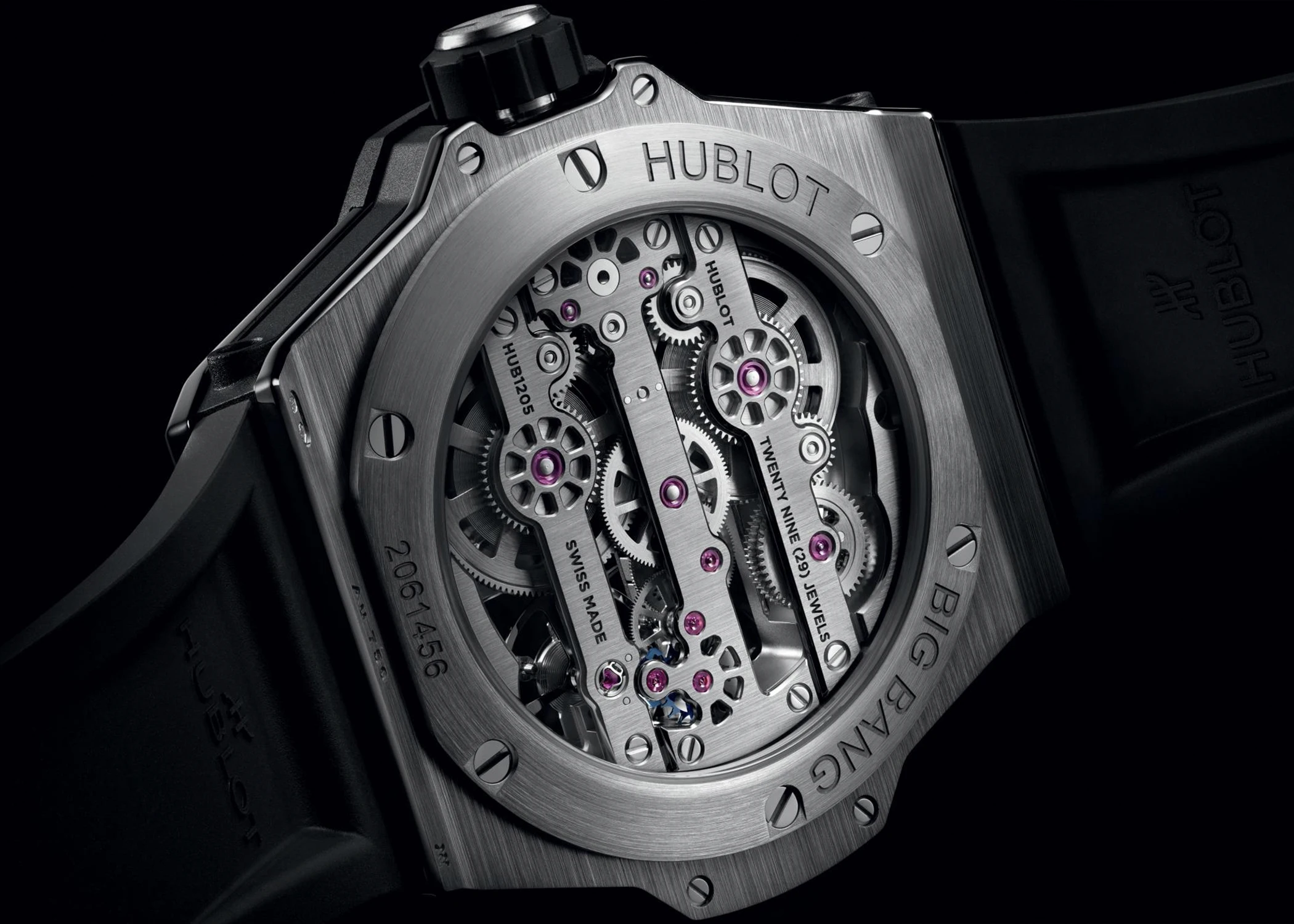
The Big Bang Meca-10 arrived in 2016 relatively quietly as a limited-edition part of the 10-year celebration of Hublot’s All-Black line. It was reintroduced in 2025 with a completely reengineered caliber to fit in a more compact 42 mm case (as opposed to the previous 45 mm) in line with the smaller sizes people prefer today. In both versions, the balance wheel is on the front of the movement (as opposed to its conventional position on the back) so it can be seen front and center by its owner – much like the Unico’s column wheel.
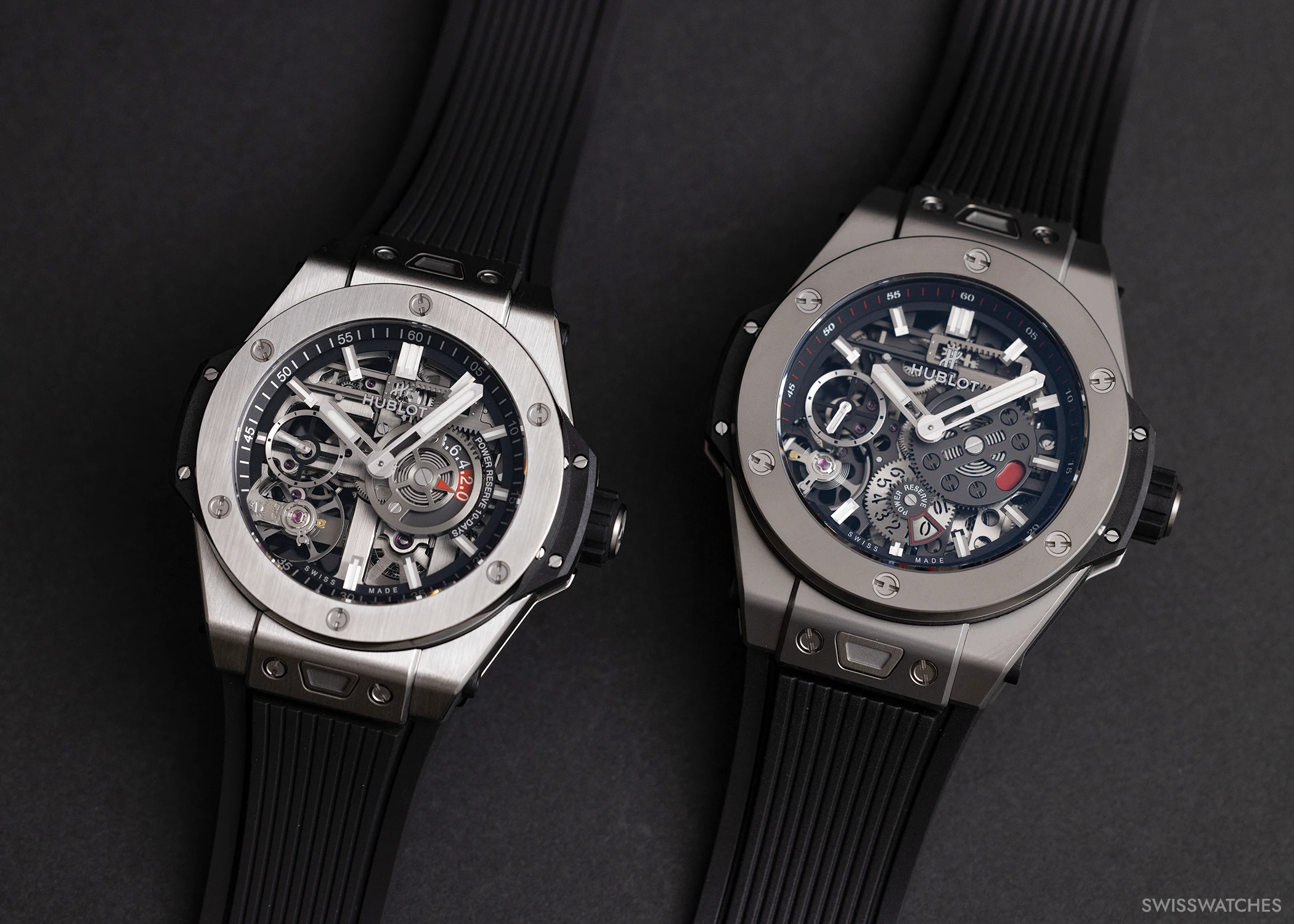
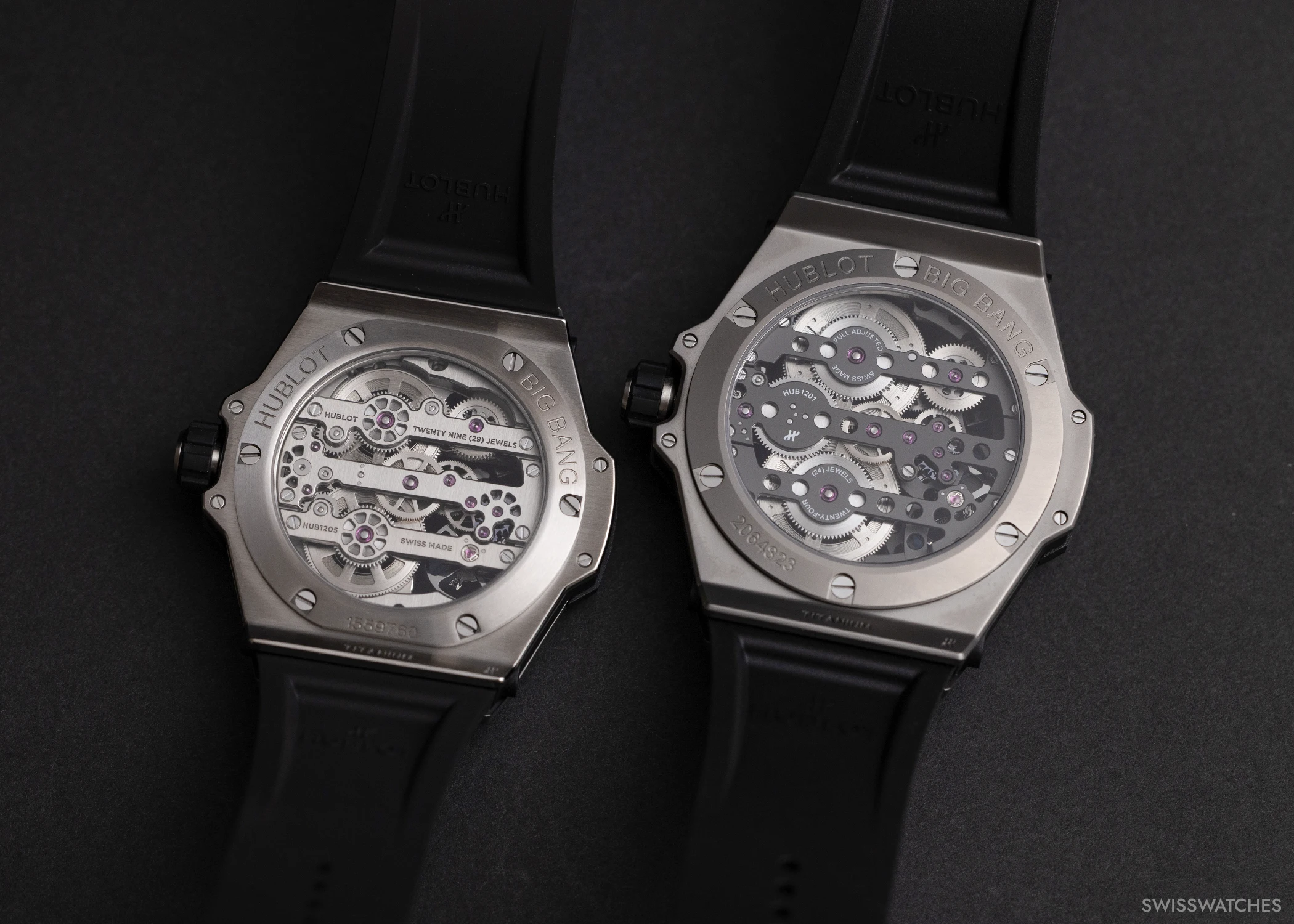
The Meca-10 was inspired by Meccano-style construction systems and atypically lays the movement bare, leaving space for the owner to discover details and the dynamic choreography between the components. The original 2016 movement already offered a unique form comprising a round base plate to which large, linear bridges are attached to project a sense of its structural integrity. On the new version, these bridges are finished with hand-beveling, which ups the inherent value and the beauty of the piece. Conceived as a skeleton from the get-go, the manual-wind movement is refined yet robust, offering 10 days’ worth of power reserve thanks to two spring barrels working in parallel.
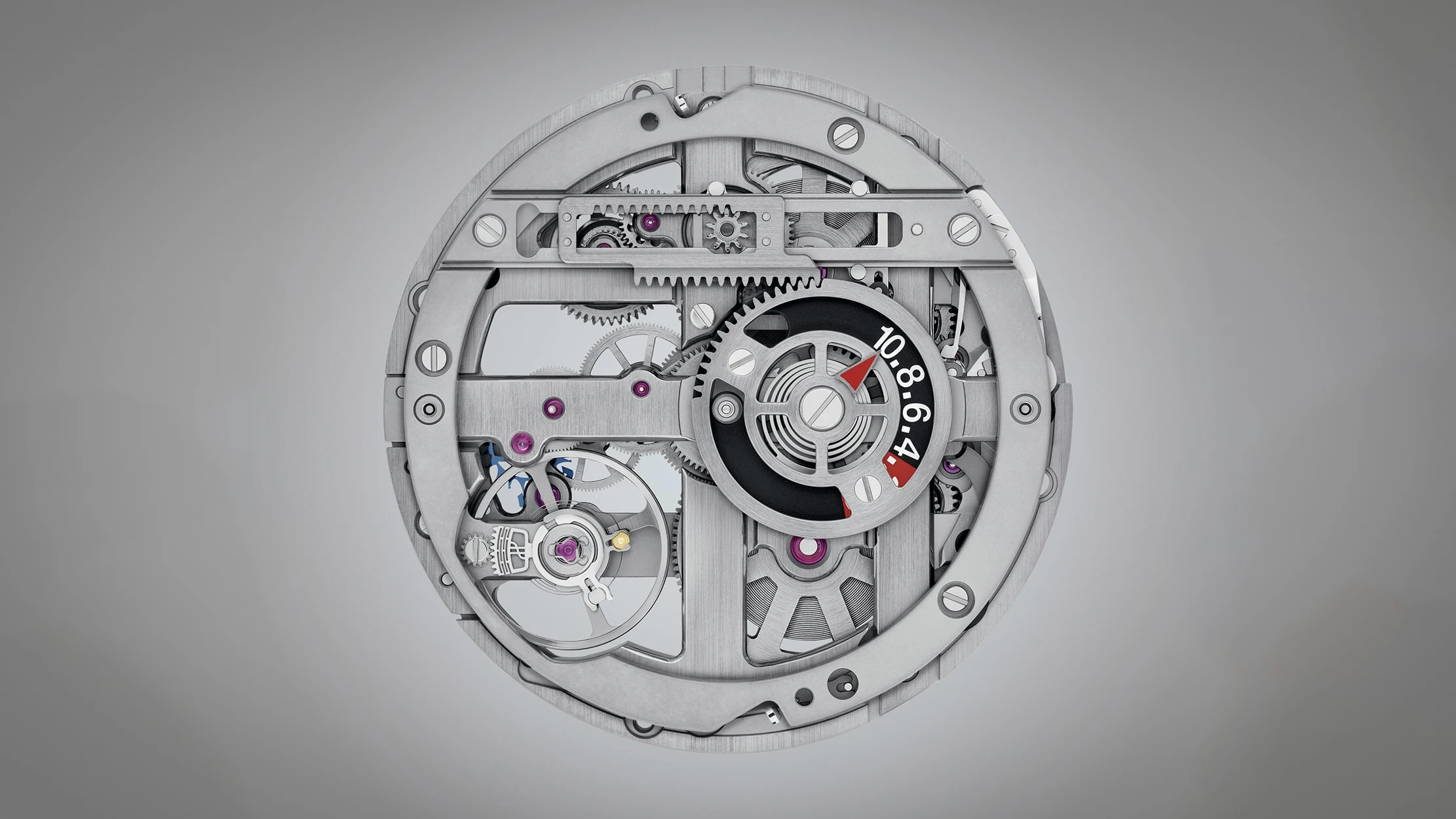
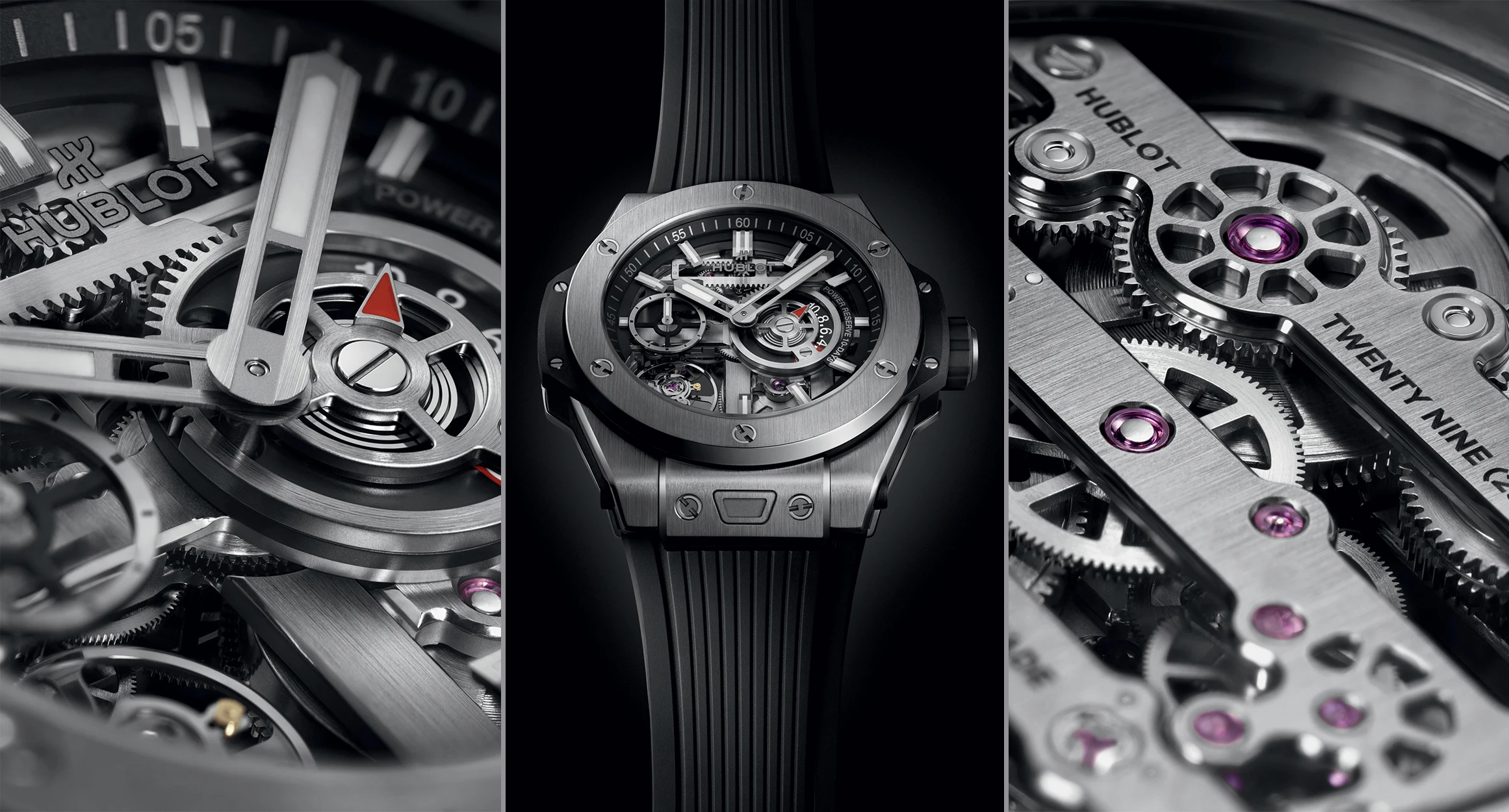
Precision is guaranteed by a silicon escape wheel and hacking seconds, but it is the power reserve display that deserves special mention as it digitally displays the number of days of remaining in this winding period and is driven by a rack-and-pinion system rarely seen in mechanical watches. A closer look reveals a mechanism composed of two superimposed disks rotating in opposite directions and connected by a spiral spring. It nonetheless remains intuitive to read.
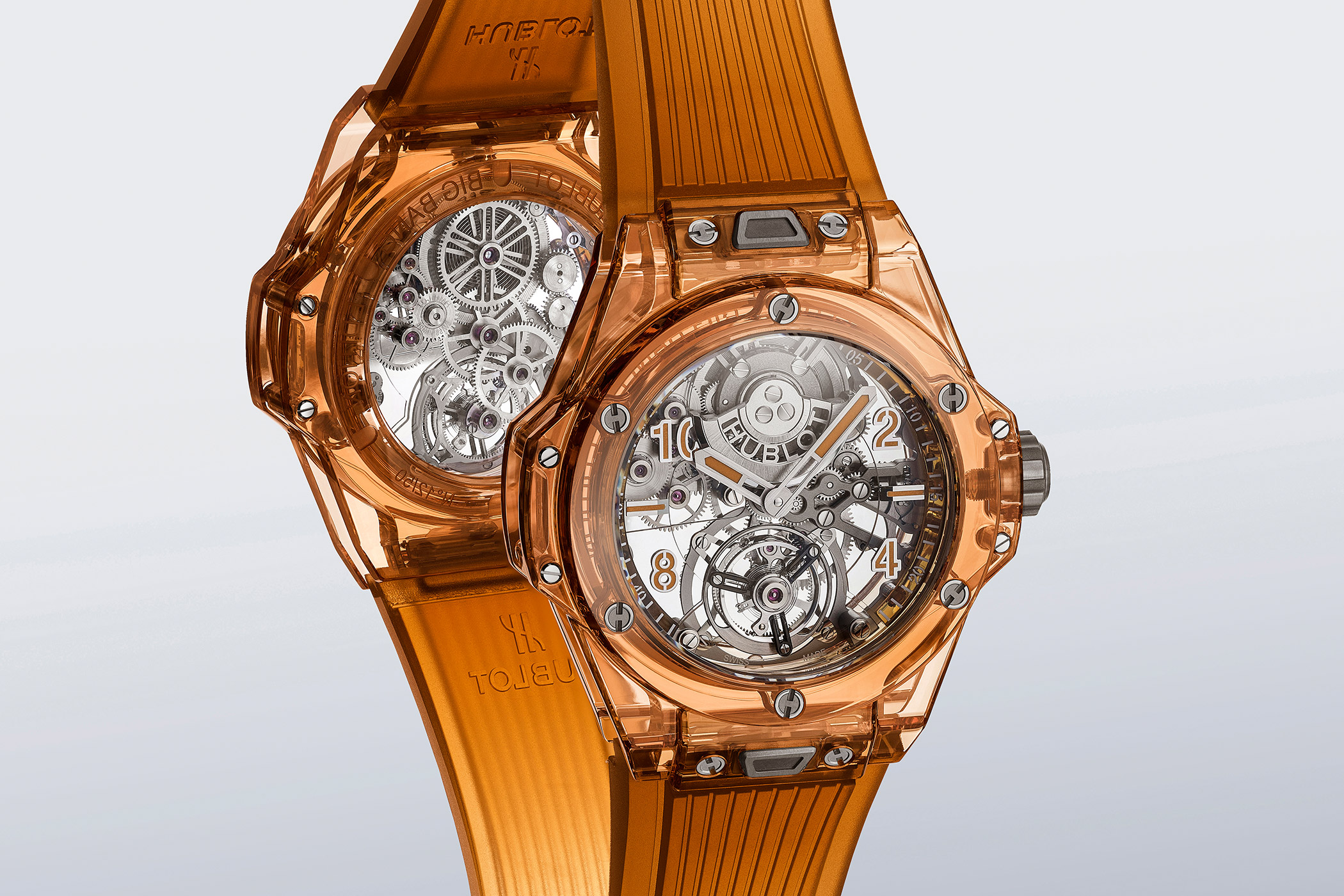
At LVMH Watch Week 2021, Hublot introduced the exceptional Big Bang Tourbillon Automatic Orange Sapphire. This limited-edition watch not only showcased Hublot’s world-first, orange-tinted sapphire case, but also a brand-new movement: Caliber HUB6035, whose micro rotor was placed on the dial side and also contained three sapphire crystal bridges. With its three-day power reserve, this rare automatic tourbillon movement was a master class in transparency.
Just a couple of months later, Hublot showcased two more variations of this movement in high-tech watches at Watches and Wonders 2021: the 30-piece limited-edition Big Bang Integral Tourbillon Full Sapphire and the Big Bang Integrated Automatic Tourbillon Full Carbon Texalium. The former was a 30-piece limited-edition watch with case and integrated bracelet in full sapphire crystal; its case was developed to house the HUB6035 – and the process included specific targets like eliminating visible screws, reworking case geometry to accommodate the bracelet, and redesigned bridges and plates to make them seem like they are floating or suspended. The latter came with a super cool base plate echoing the interlaced pattern of the case’s special type of carbon fiber.
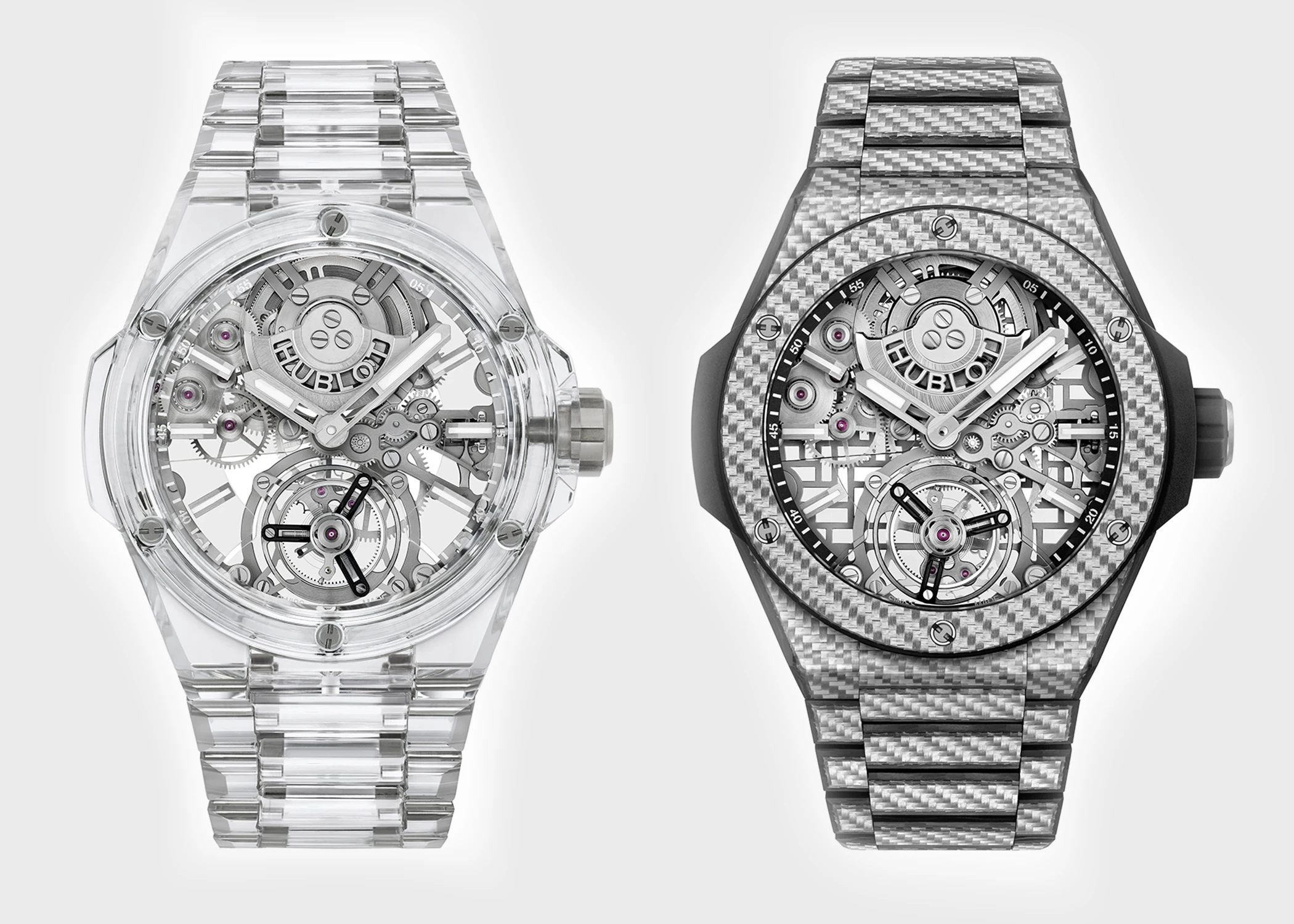
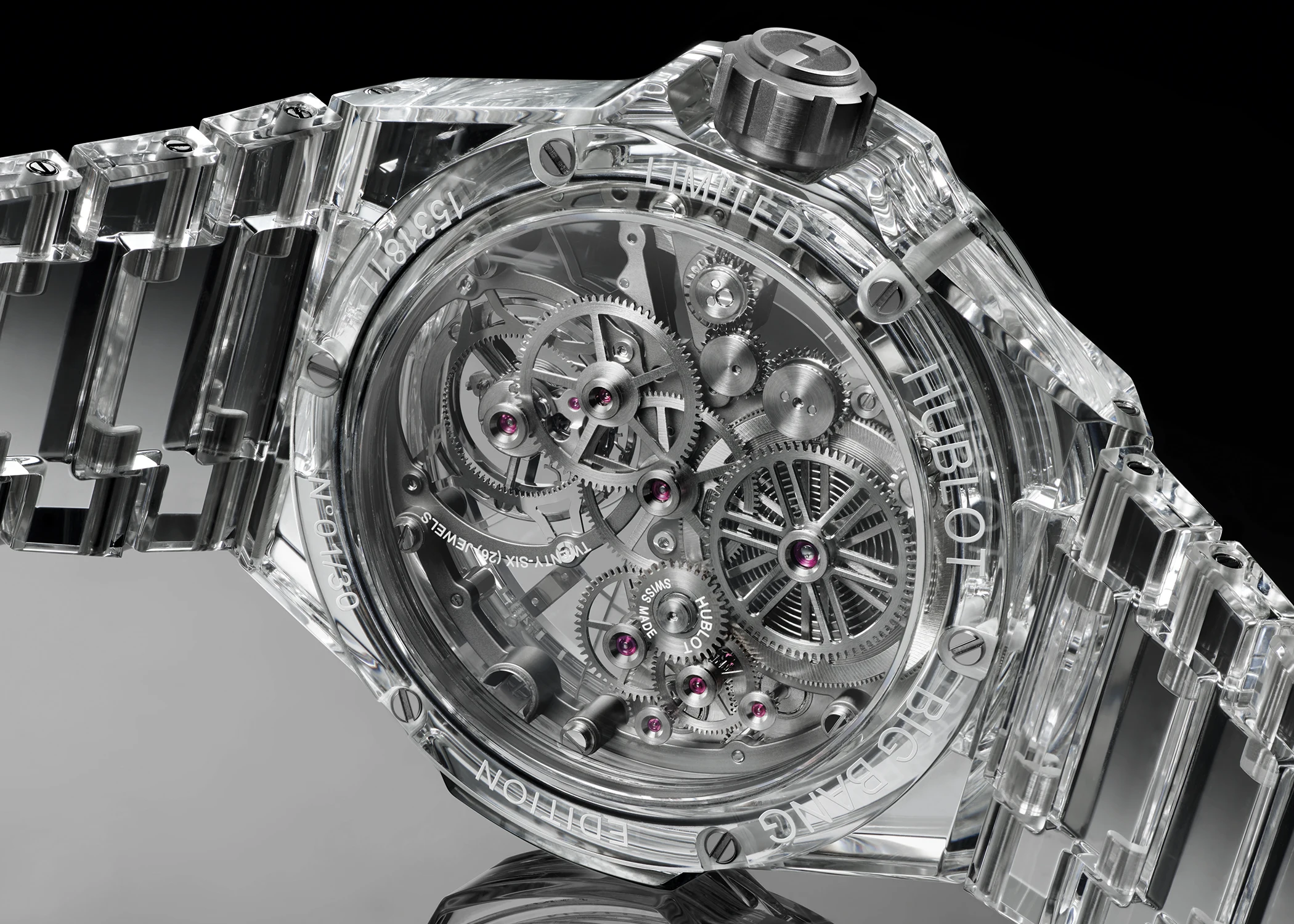
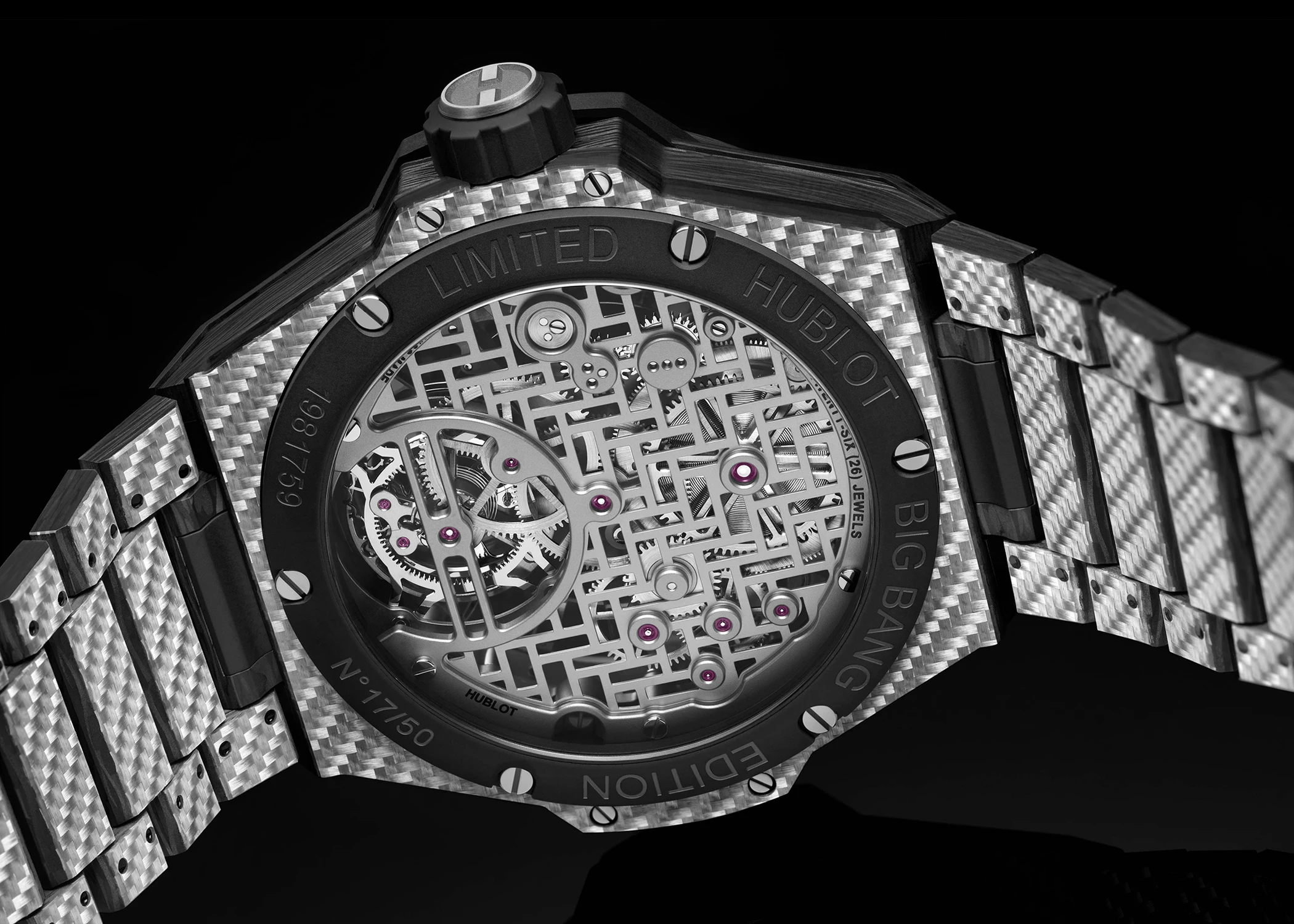
Hublot was the first to industrialize sapphire crystal for serial production (which it does in-house). These watches demonstrate the brand’s continuing mastery in fusing its fantastic pallet of ever-growing manufacture movements with unique in-house-made case materials.
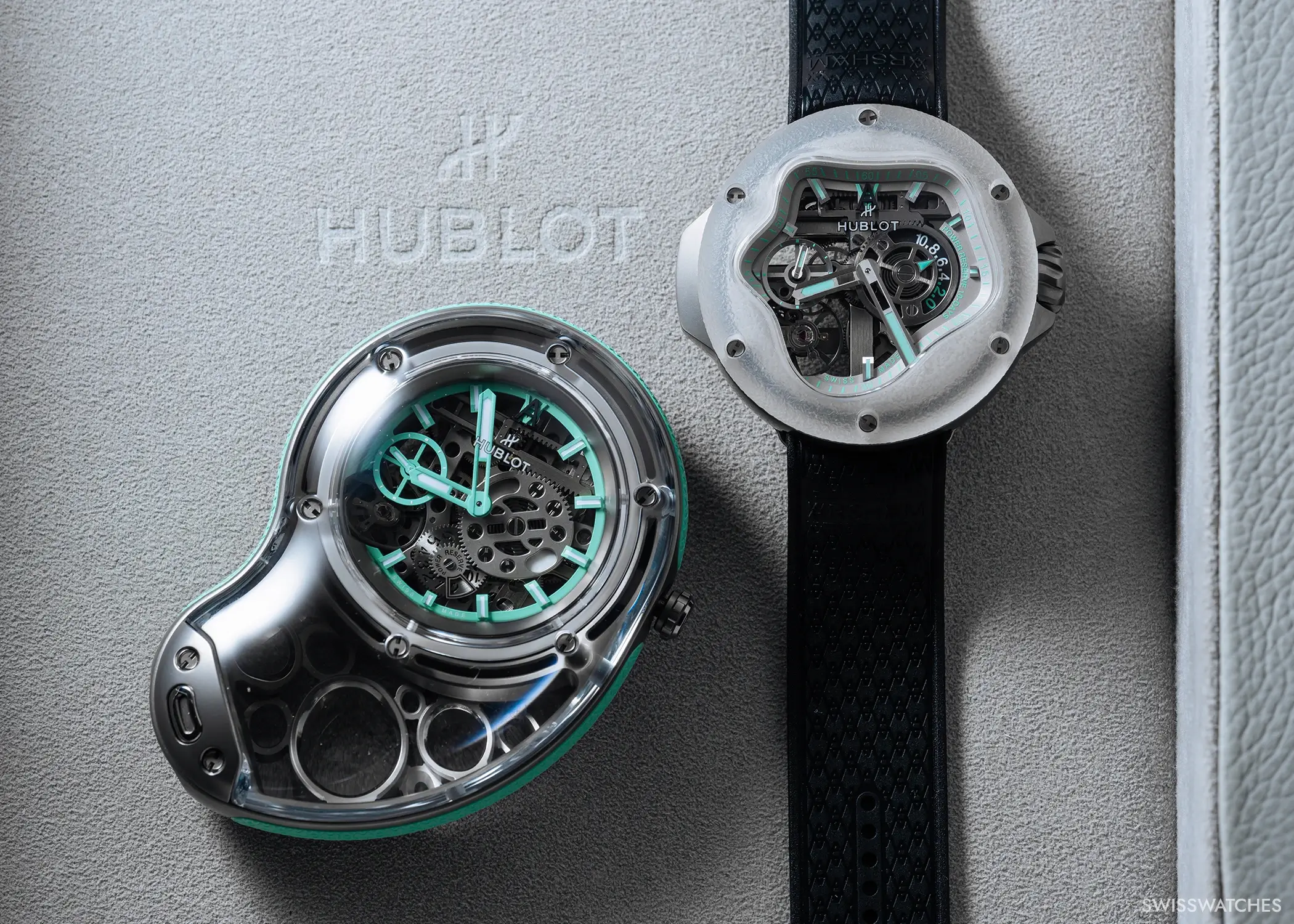
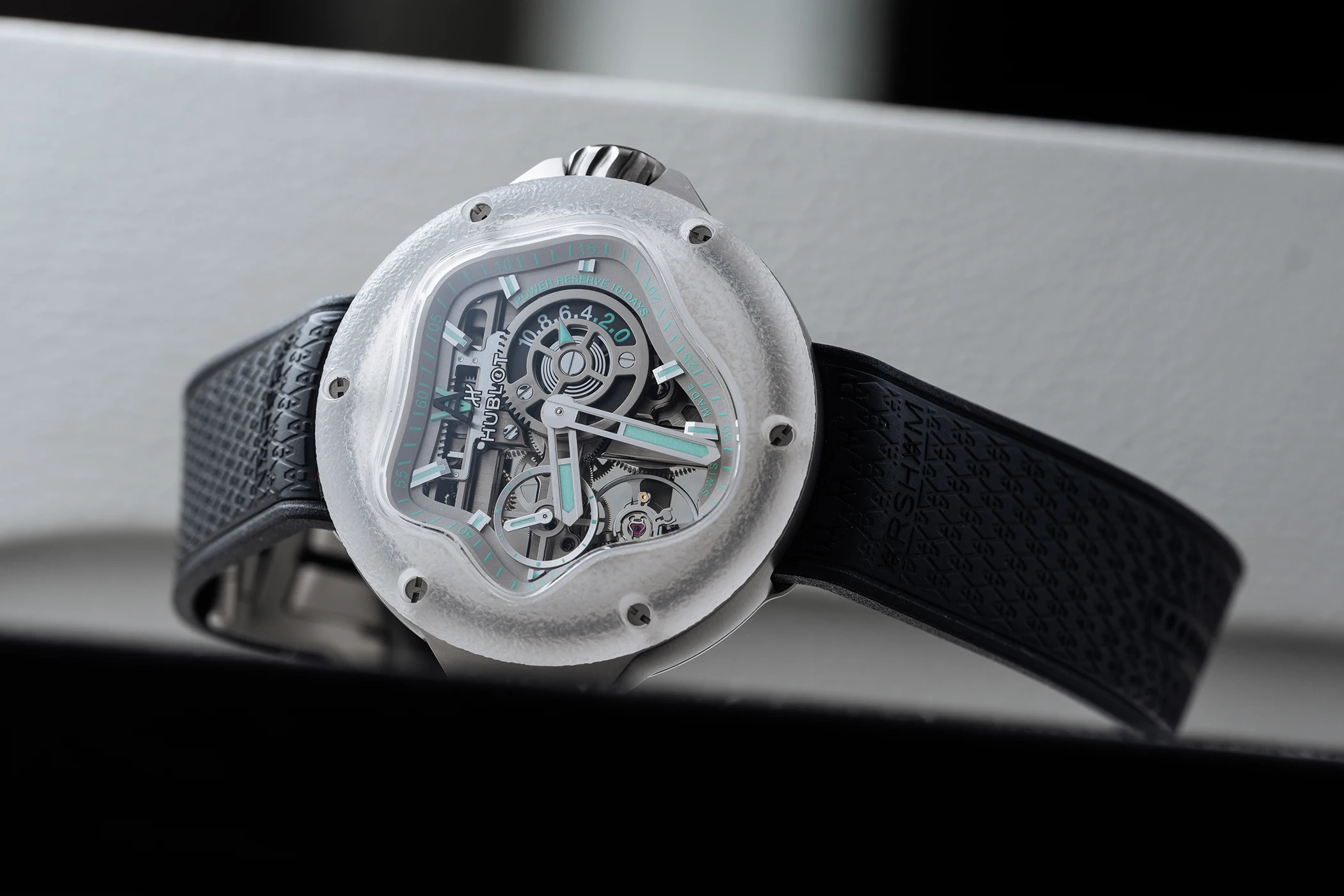
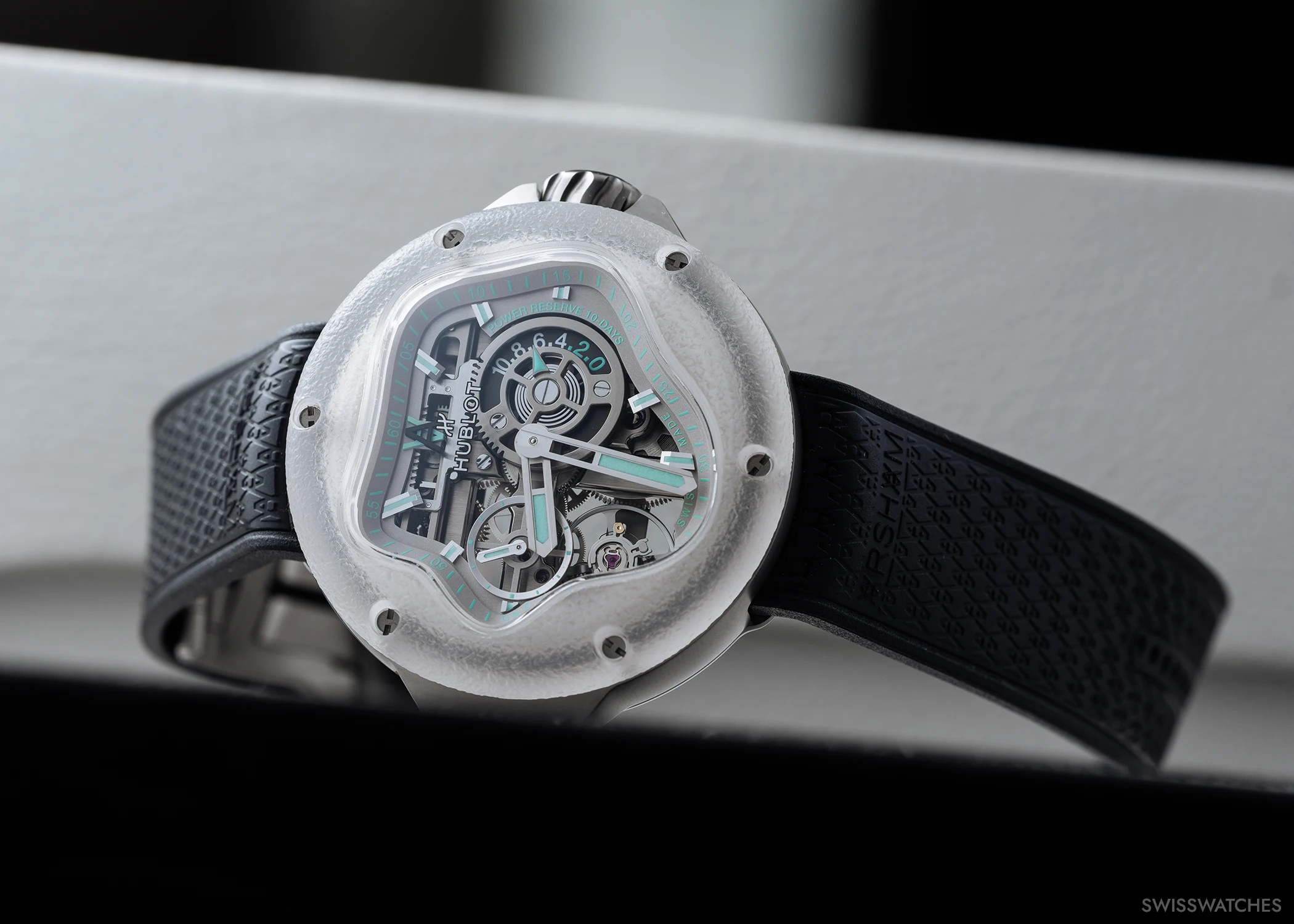
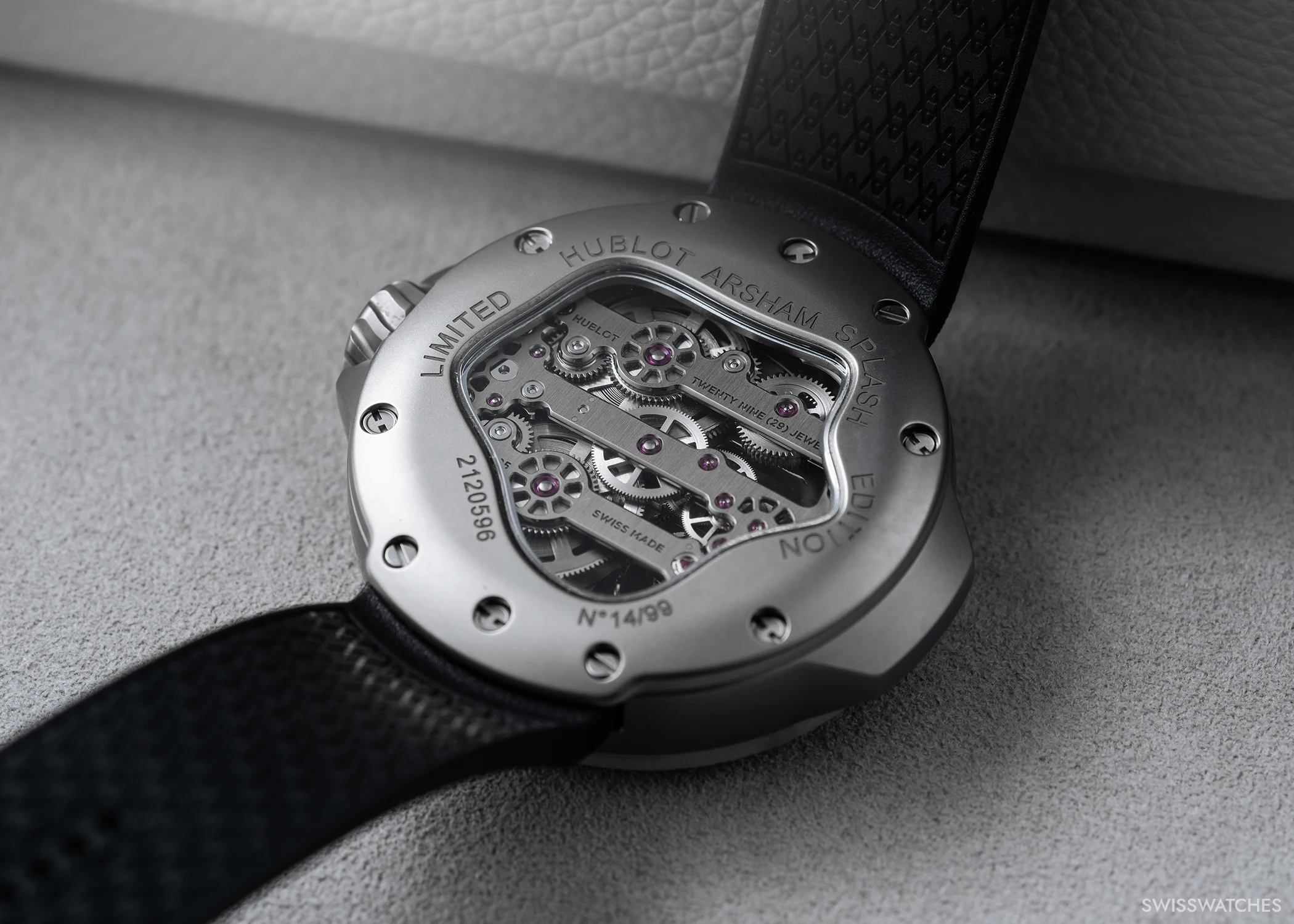
The previously mentioned Key of Time and MP-05 LaFerrari are not the only pieces in the ongoing series of MP watches. So far Hublot has made 17 in-house Masterpieces, ending (so far) with 2025’s MP-17 Meca-10 Arsham Splash Titanium Sapphire, which delicately fuses the brand’s penchant for using sapphire crystal, manufacture movements, and designers from the brand’s vast array of cooperations – in this case with New York-based contemporary artist Daniel Arsham. Arsham, who designed both the MP-17 and MP-16 Arsham Droplet, has based his work with Hublot on transforming how water behaves into exquisite case shapes, fitting neatly into his “fictional archaeology” approach.
While each Masterpiece is exquisite in its own right, my personal favorite thus far has been the 2024 MP-15 Takashi Murakami, which is powered by Hublot’s first central flying tourbillon in serial production. Powered by Caliber HUB9015, this watch boasts 150 hours of power reserve on twin spring barrels that can be wound manually or using an electric tool. In order to fully do justice to the Japanese artist’s vision, Hublot’s technicians transformed the tourbillon-powered movement into a little stylized face surrounded by 12 colorful petals of Murakami’s famous flower crafted in sapphire crystal. The flower also rotates using the kinetic energy of the wrist. This all-new creation takes its place in the Olympus of Hublot’s pantheon in my opinion.
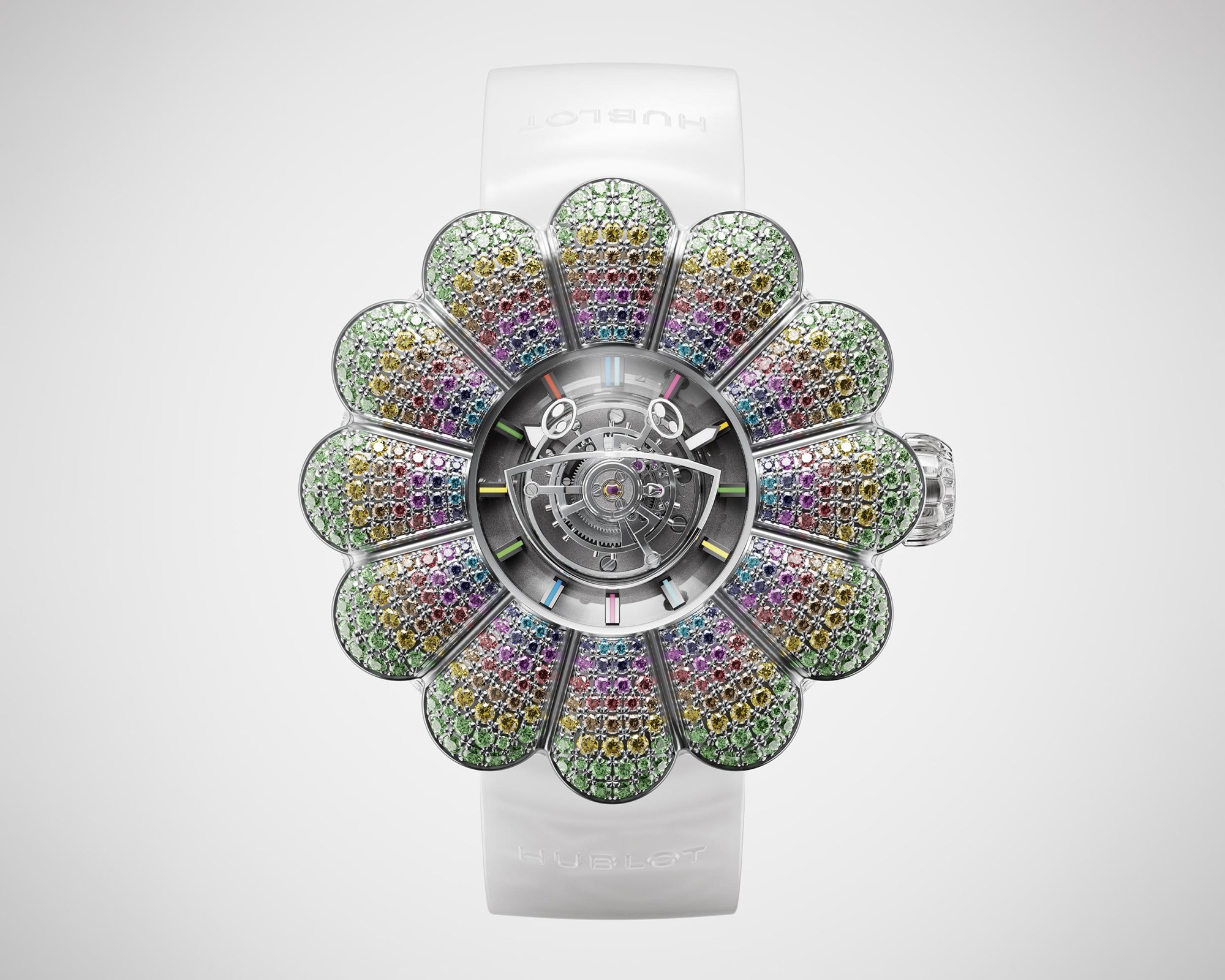
Sources indicate that up to around 70 percent of Hublot’s movement production today is autonomous. And much of its extraordinary art of fusion in cases – which employ materials such as the brand’s proprietary sapphire crystal, ceramic, and King Gold – is also autonomous. It’s worth knowing that there is an extraordinary amount of technological know-how underneath all the flash and marketing that Hublot continues to brandish.
In other words, if you like your high-tech haute horology with an uncommon side dish of glitz and glamour, Hublot might well be just the brand for you.