
Piaget stellt mit der Andy Warhol Camouflage die neuste Edition dieser Sonderserie vor, limitiert auf 86 Stück.
Quiet Swiss valleys, centuries-old traditions and highly complicated watches carefully preserved in safes: this is the image that has long been associated with haute horlogerie. From the very beginning, Richard Mille did not quite fit this mould. Founded in 2001, the brand brought mechanical watches equipped with exceptionally delicate tourbillons to the wrists of elite athletes – environments in which impacts, vibrations and extreme G-forces are part of everyday life. It was a provocation and a contradiction in terms, yet one that Richard Mille managed to overcome through ingenious innovations.
The partnerships Richard Mille forged over the years played a decisive role in this endeavour. Rather than simply employing famous personalities as brand ambassadors, the watchmaker frequently incorporated their experiences, requirements and ideas directly into the development of new timepieces. The result was an extraordinary network of athletes, artists and companies that continues to shape the brand today. We take a closer look at its most important partnerships and the watches that emerged from them – and, in doing so, explore a fundamental part of Richard Mille’s success story.
Brazilian racing driver Felipe Massa holds the key to understanding Richard Mille’s entire approach to partnerships. In 2004, the then up-and-coming Formula 1 driver became the brand’s first long-term sporting partner.
The former Formula 1 driver told us the unusual story of how his partnership with Richard Mille began at the unveiling of the RM 43-01 Tourbillon Split-Seconds Chronograph Ferrari in Paris in 2025. It dates back to 2004, when Massa and his manager Nicolas Todt were looking for a watch sponsor. While flicking through a magazine, his manager spotted a Richard Mille advertisement, complete with a telephone number. He promptly picked up the phone, initially spoke to a member of the brand’s staff and, much to his surprise, was put straight through to Richard Mille himself. The company’s founder was immediately interested: he wanted to establish a presence in Formula 1 and saw Massa as the ideal partner.
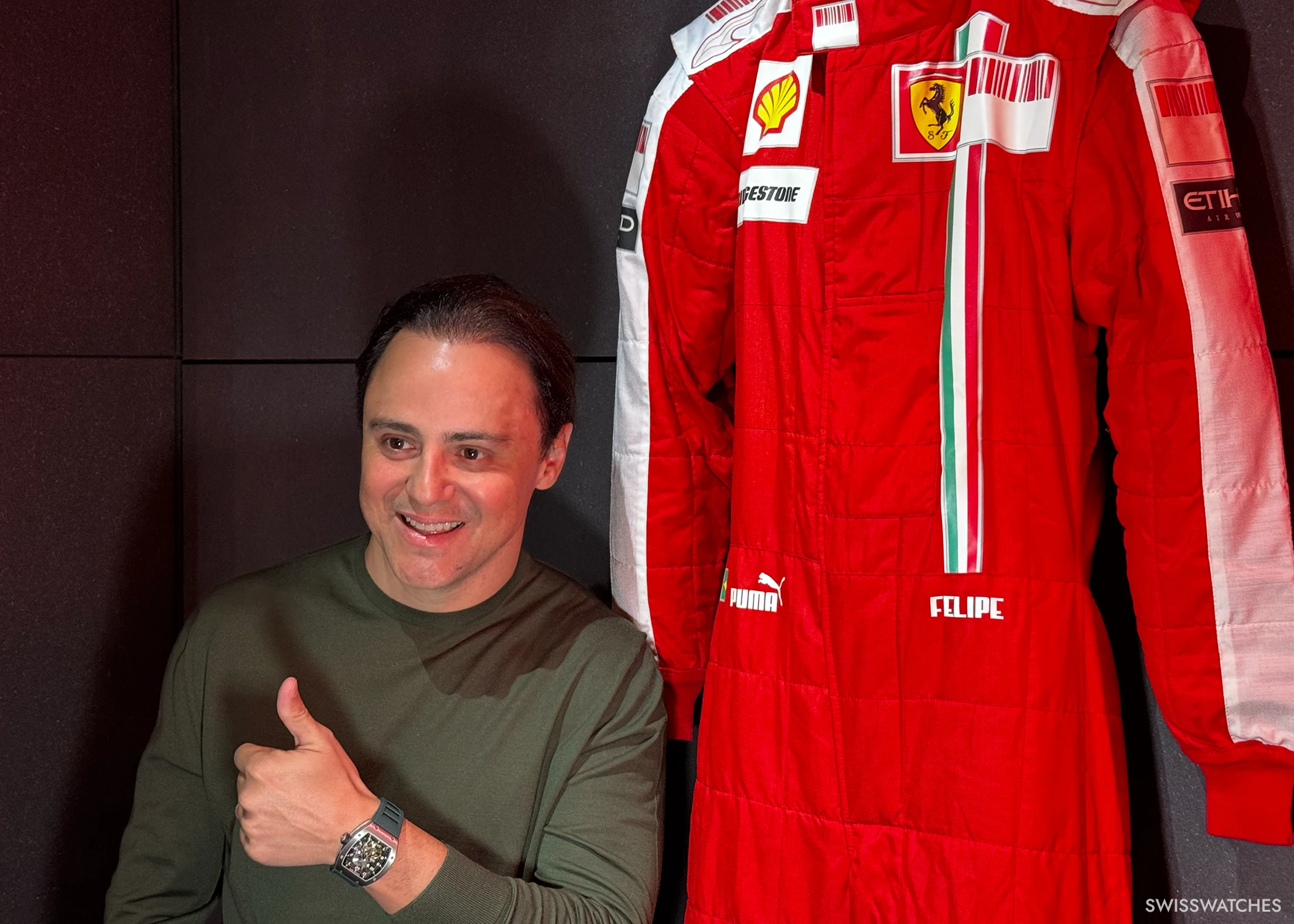
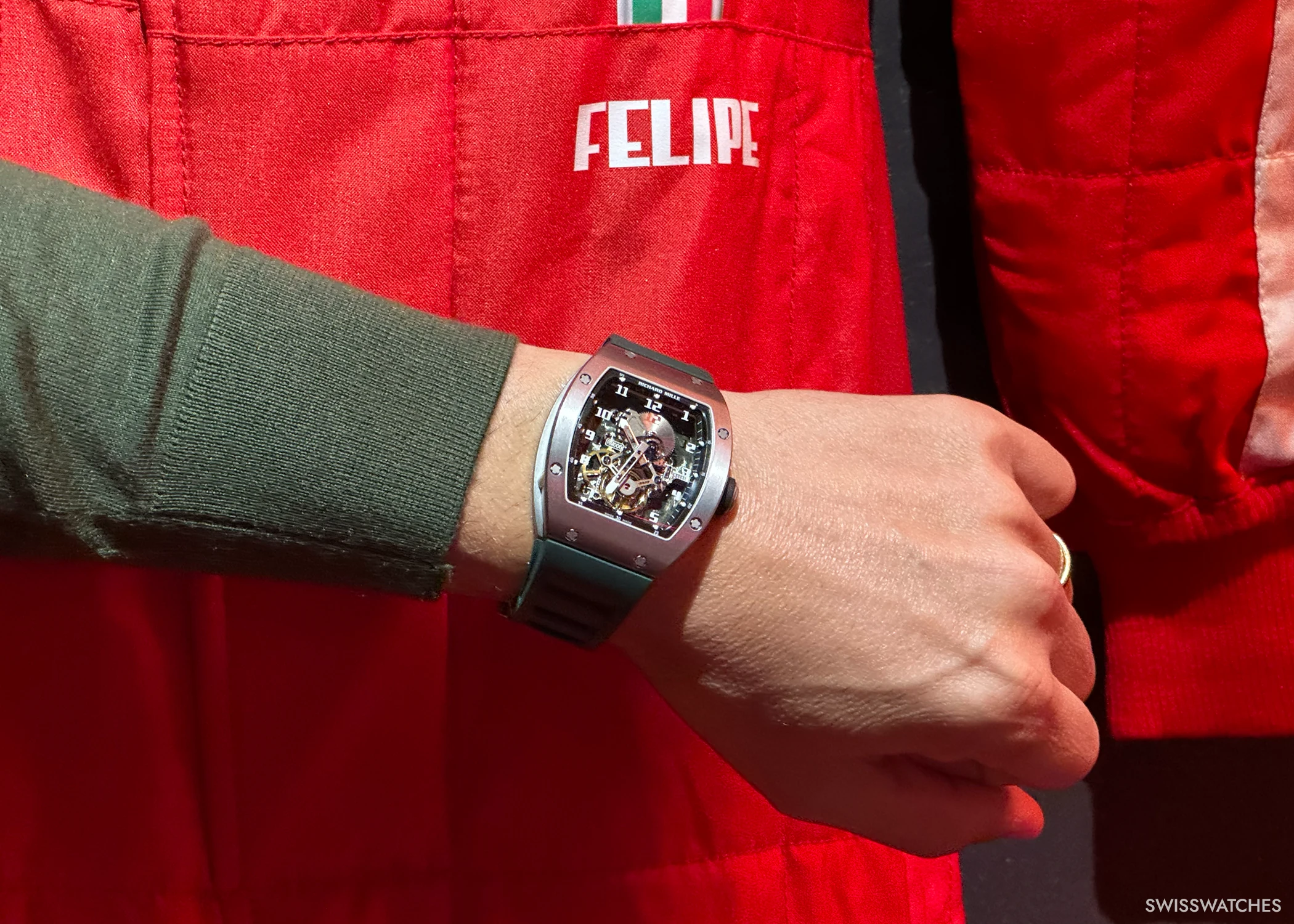
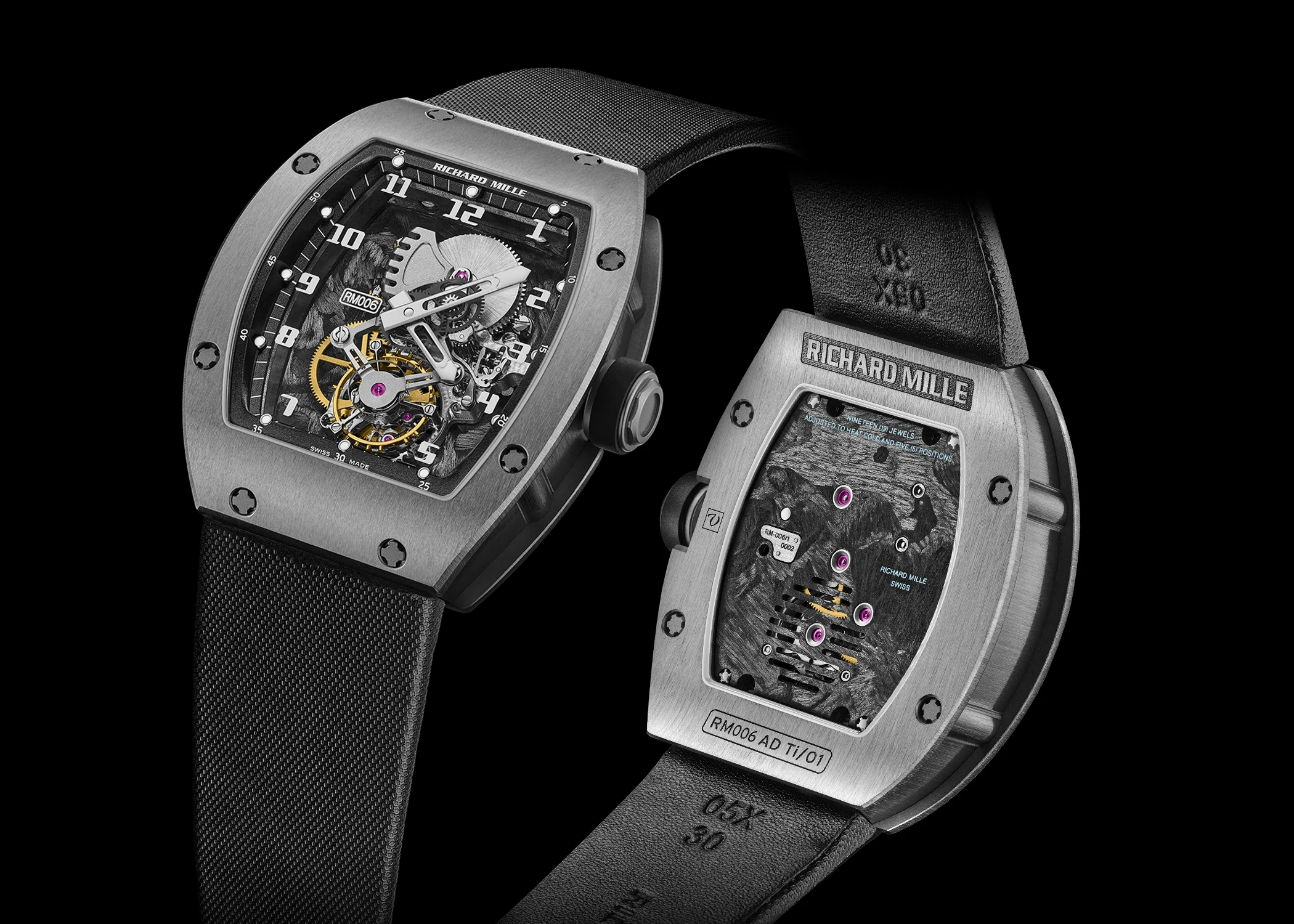
There was, however, one catch. At the time, the brand was investing heavily in its development, leaving no budget for a conventional sponsorship fee. Instead, Richard Mille offered the racing driver an exceptionally lightweight tourbillon watch – the RM 006 Tourbillon – which the Brazilian would also wear during races. Massa accepted the offer.
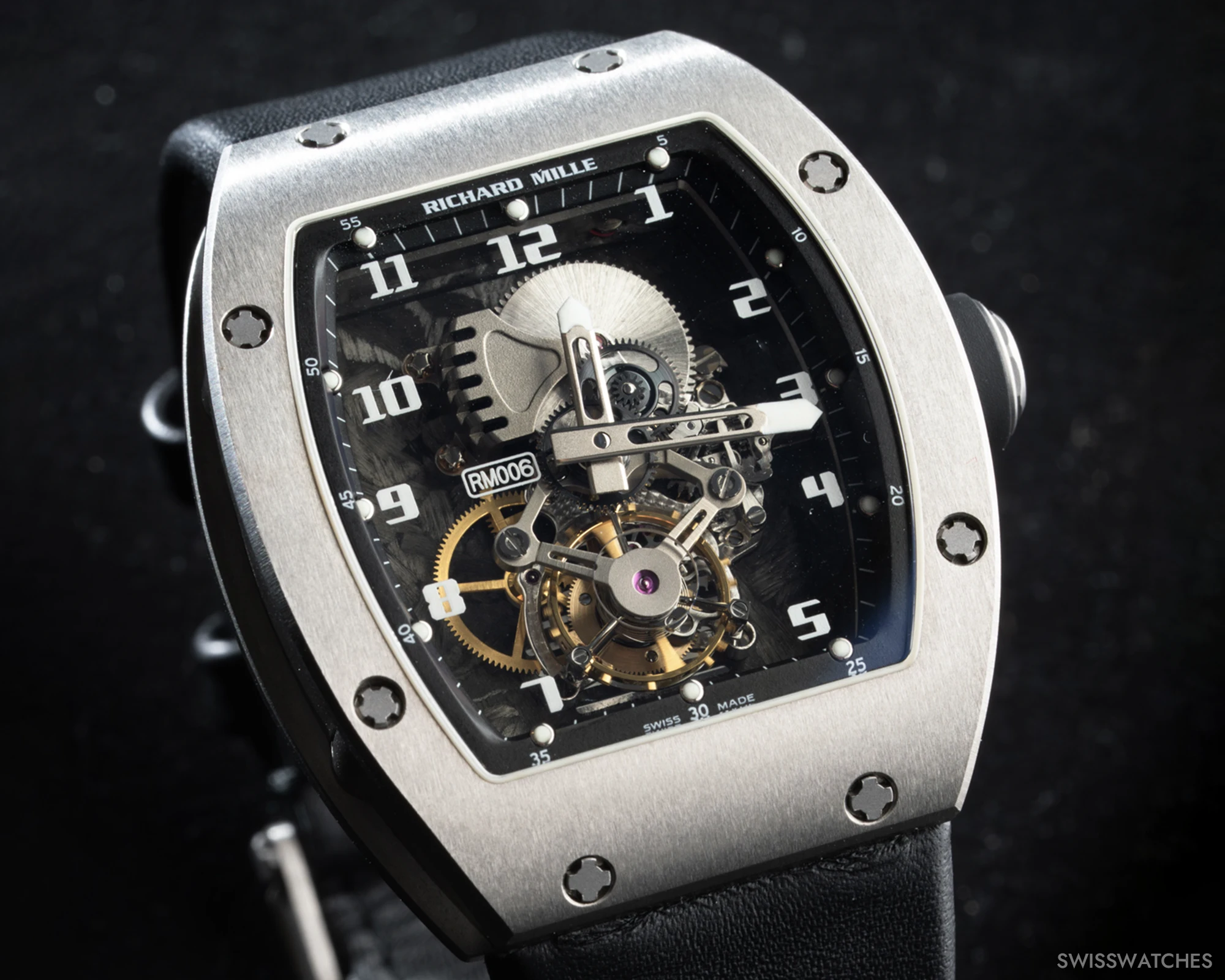
What began with a telephone call and a watch developed into one of Richard Mille’s most influential partnerships, while simultaneously establishing the philosophy behind the brand’s sporting sponsorships. Rather than merely serving as an advertising platform, the watch was to be worn under real competitive conditions, withstanding the vibrations, acceleration and impacts of Formula 1 racing. Massa made clear just how seriously he took this partnership at the launch of the RM 43-01: since the beginning of their collaboration, he had not competed in a single race without a Richard Mille on his wrist.
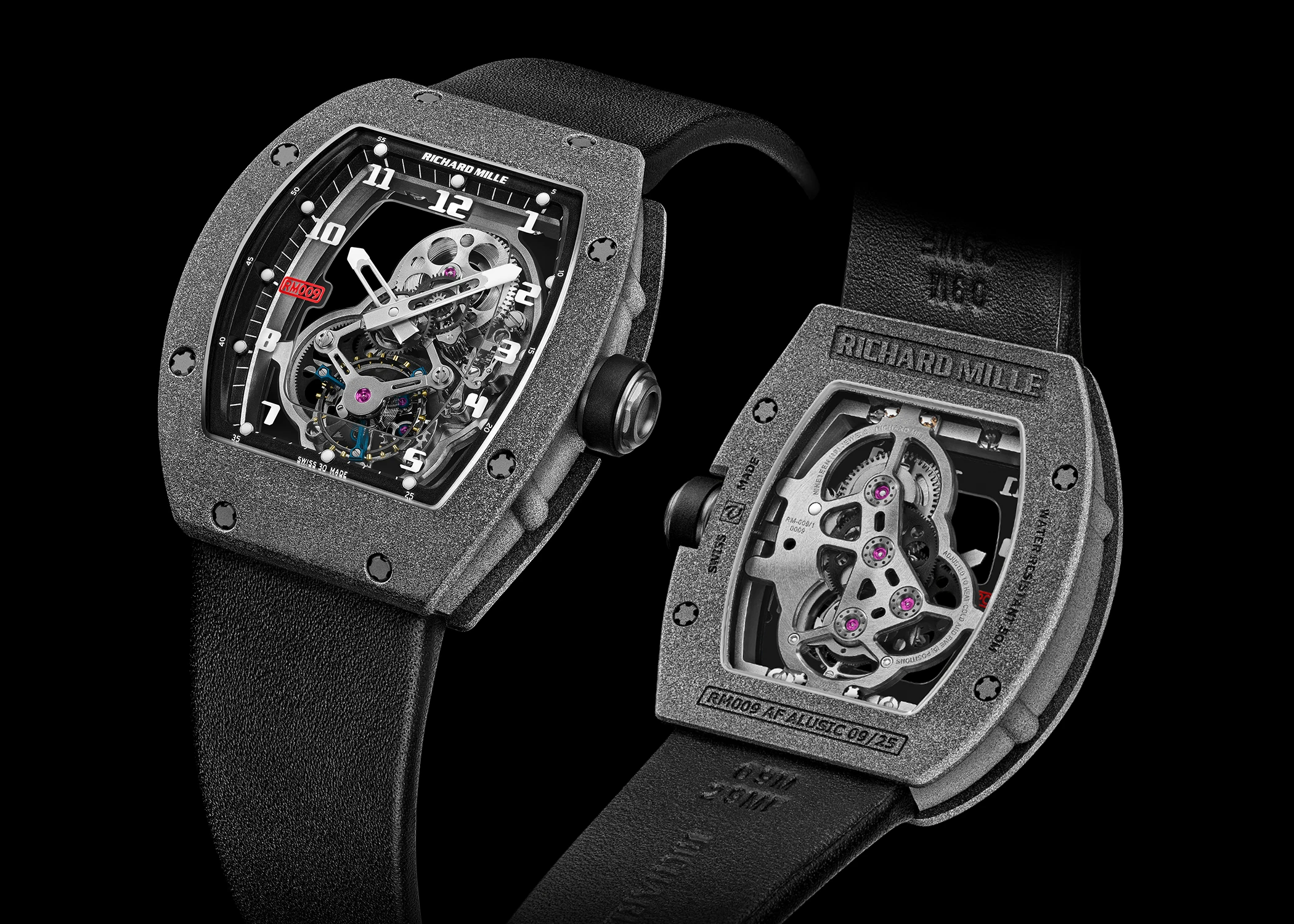
The RM 006 Felipe Massa was considered the first tourbillon watch to be worn during a Formula 1 race and weighed just 43 grams thanks to a movement baseplate made from carbon nanofibres. The RM 006 was followed in 2005 by the RM 009 Felipe Massa, for which Richard Mille experimented with a case material previously reserved for satellites: ALUSIC, a composite of aluminium, silicon and carbon. The result of this previously unused case material was a watch weighing just 29 grams without its strap – a world record at the time.
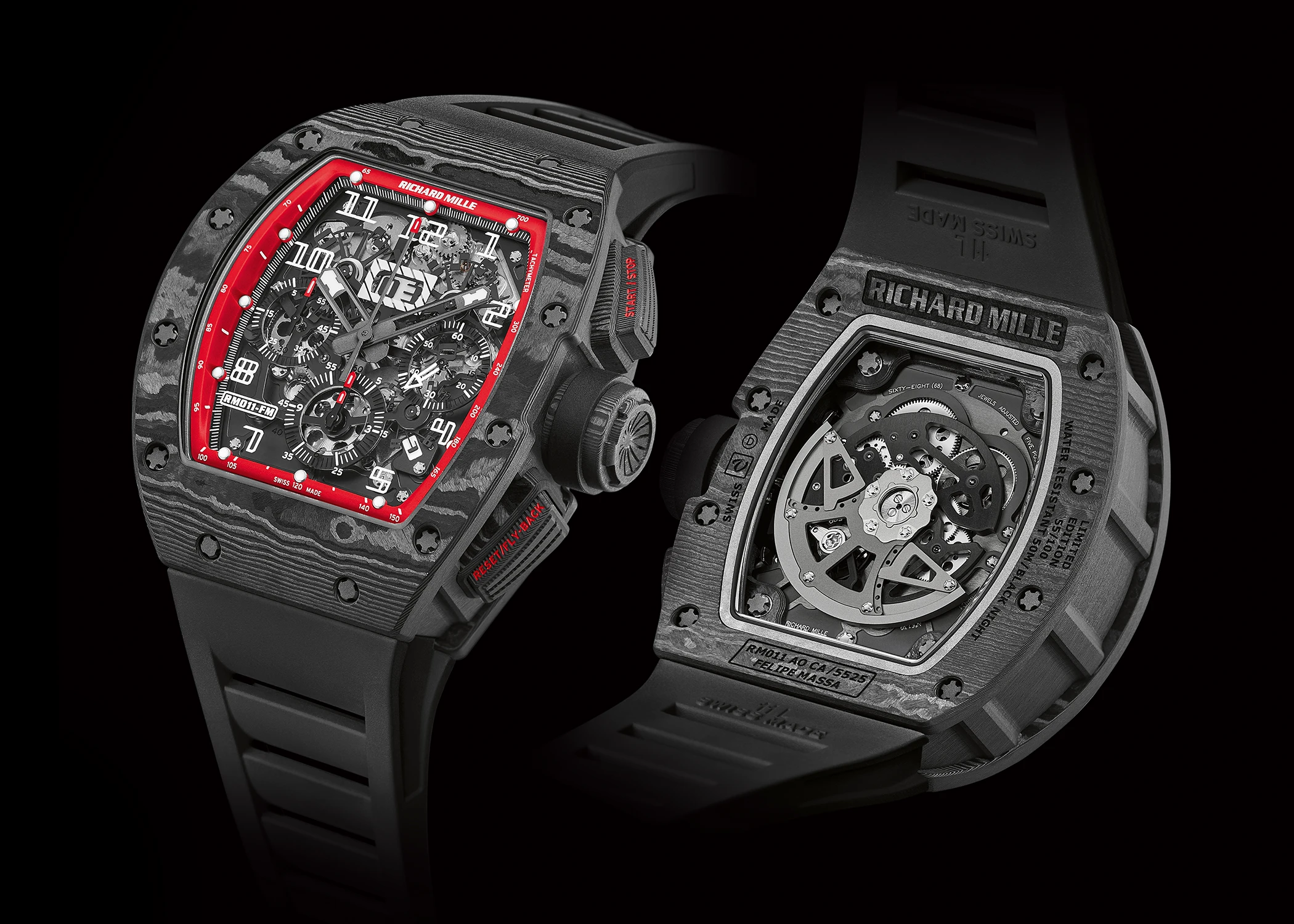
Two particularly important watches for Richard Mille would follow in subsequent years. First, in 2007, came the RM 011 Automatic Flyback Chronograph Felipe Massa, which became one of the defining models of the brand’s early history. It translated the technical vocabulary of motorsport – lightweight construction, aerodynamics, racing-car materials and aesthetics – into a Richard Mille model designed for wider production, and would subsequently be developed in numerous variations.
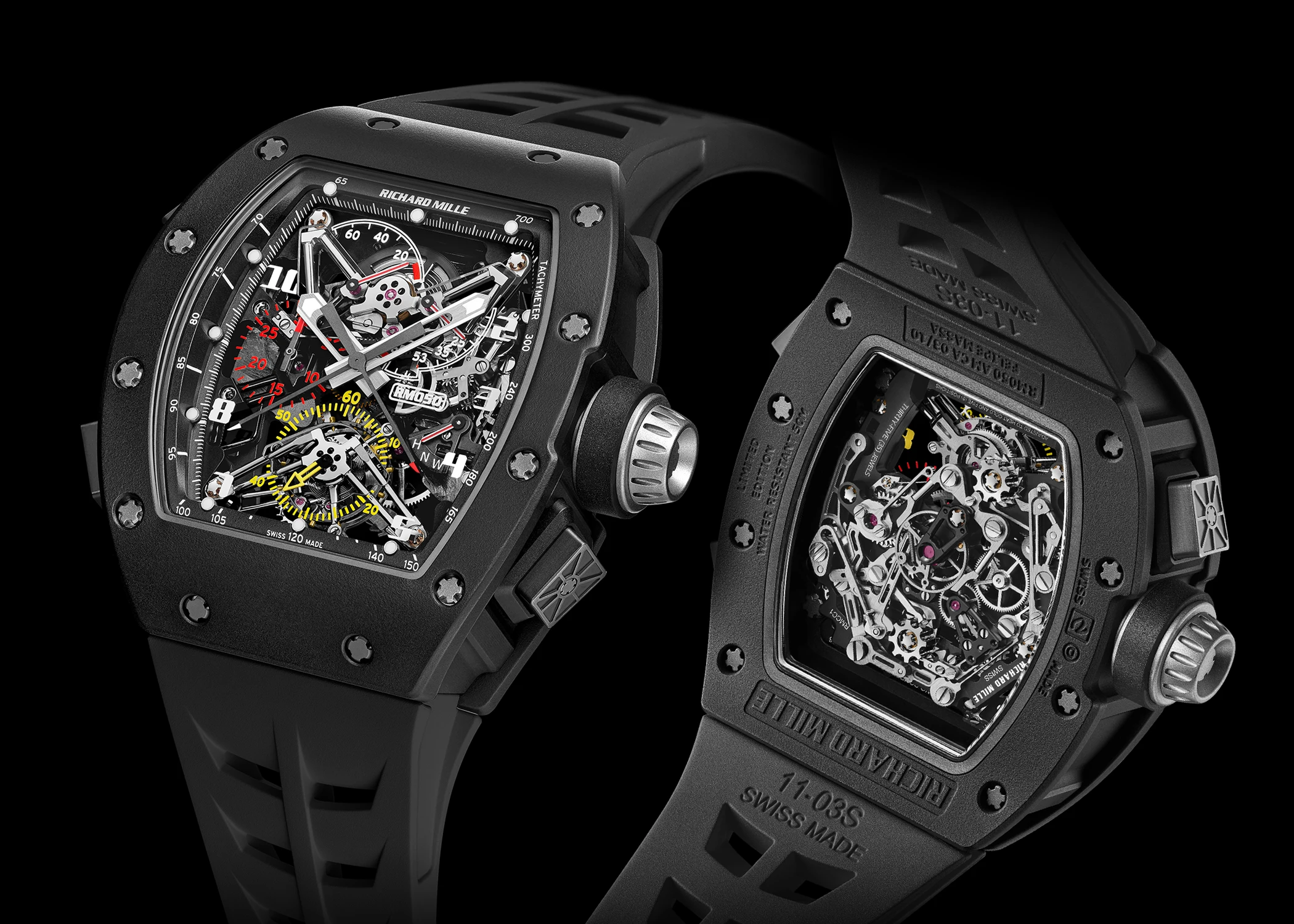
The second arrived in 2012: the RM 050 Tourbillon Chronograph Felipe Massa, equipped with the RMCC1 calibre, conceived as a further development of the RM 008. The movement was particularly notable for its extensive use of titanium, enabling an exceptionally low weight. Despite incorporating approximately 400 newly developed components, the calibre weighs just 9.5 grams. At the same time, the energy consumption of the split-seconds mechanism was reduced by 50 percent.
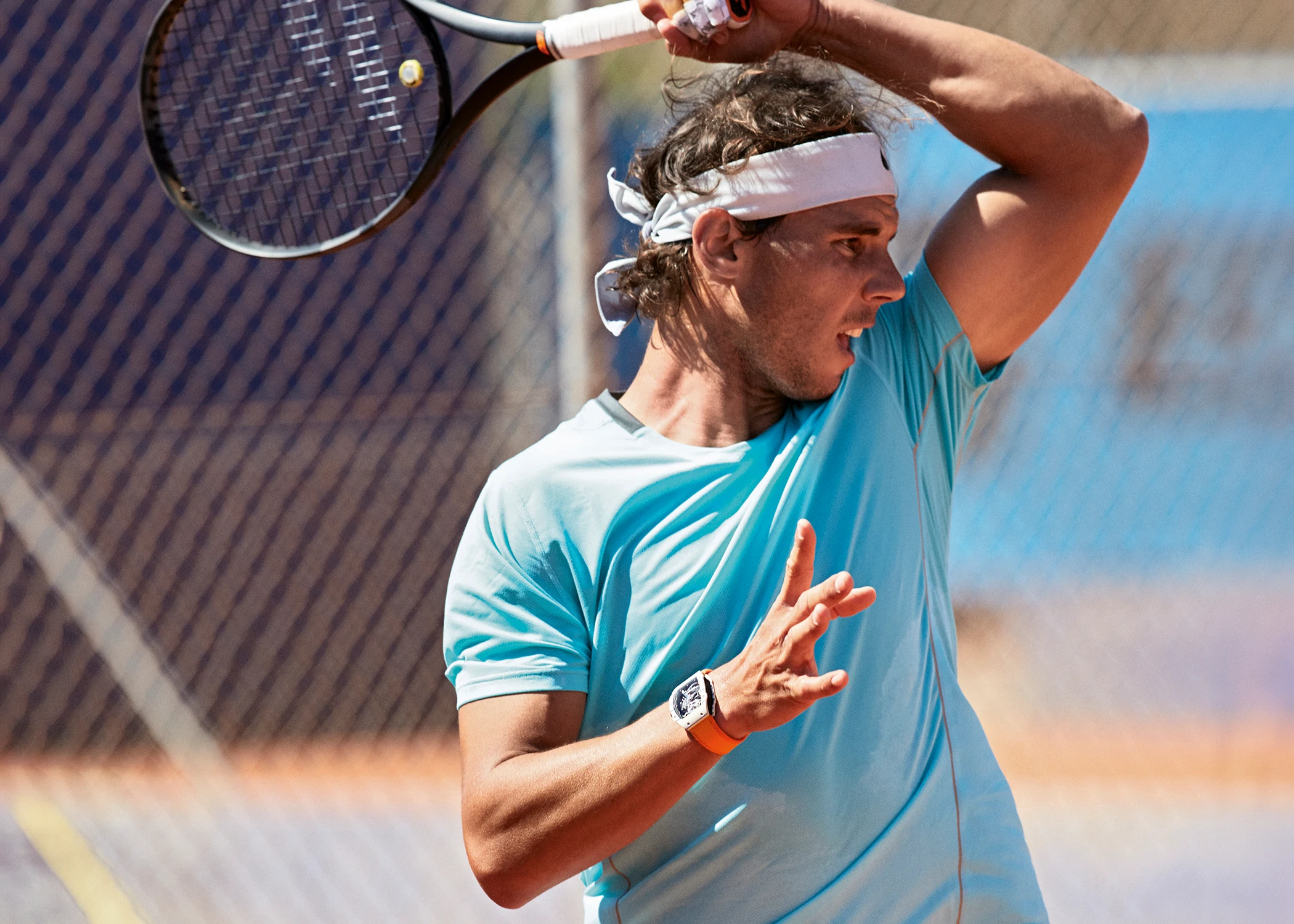
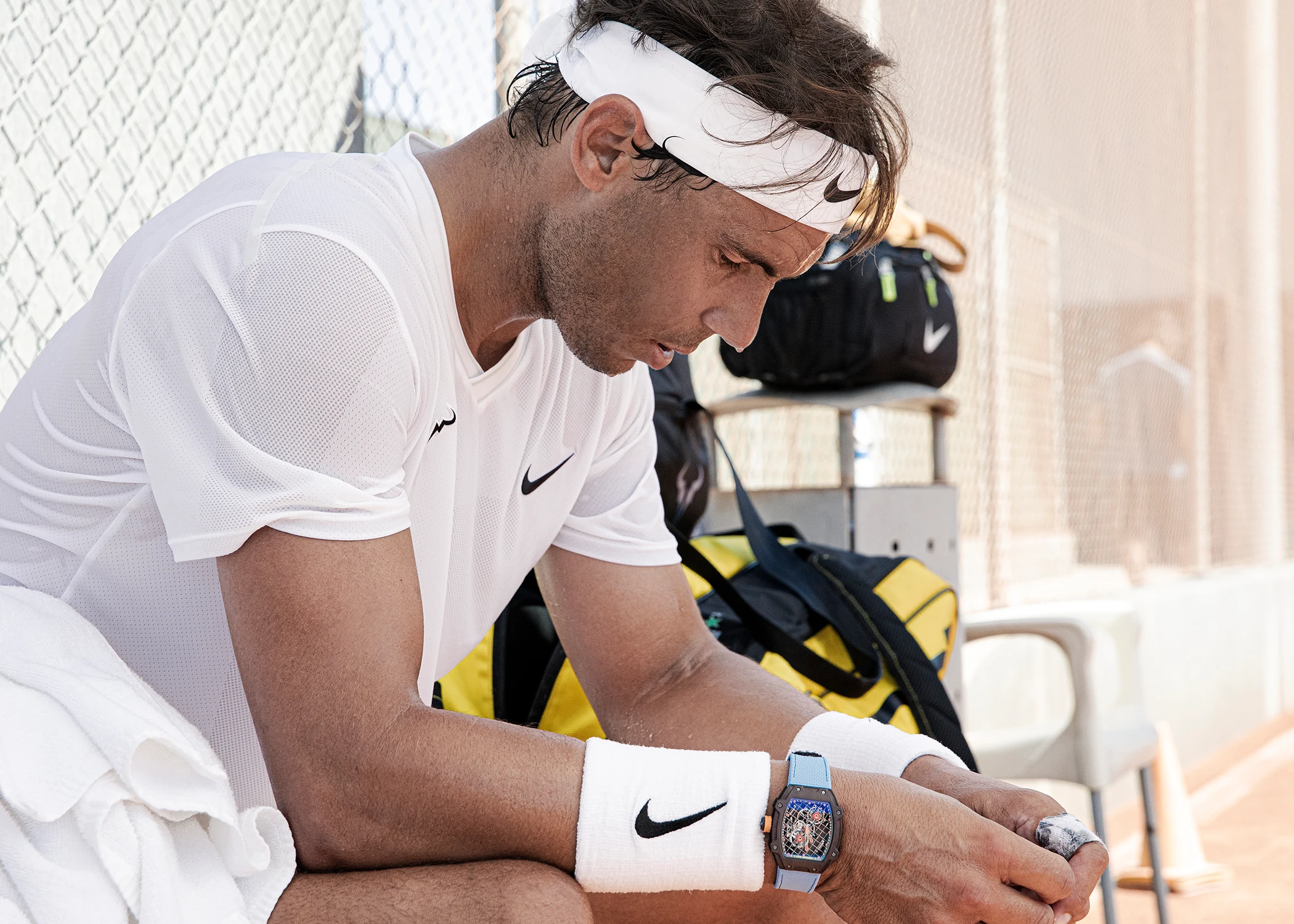
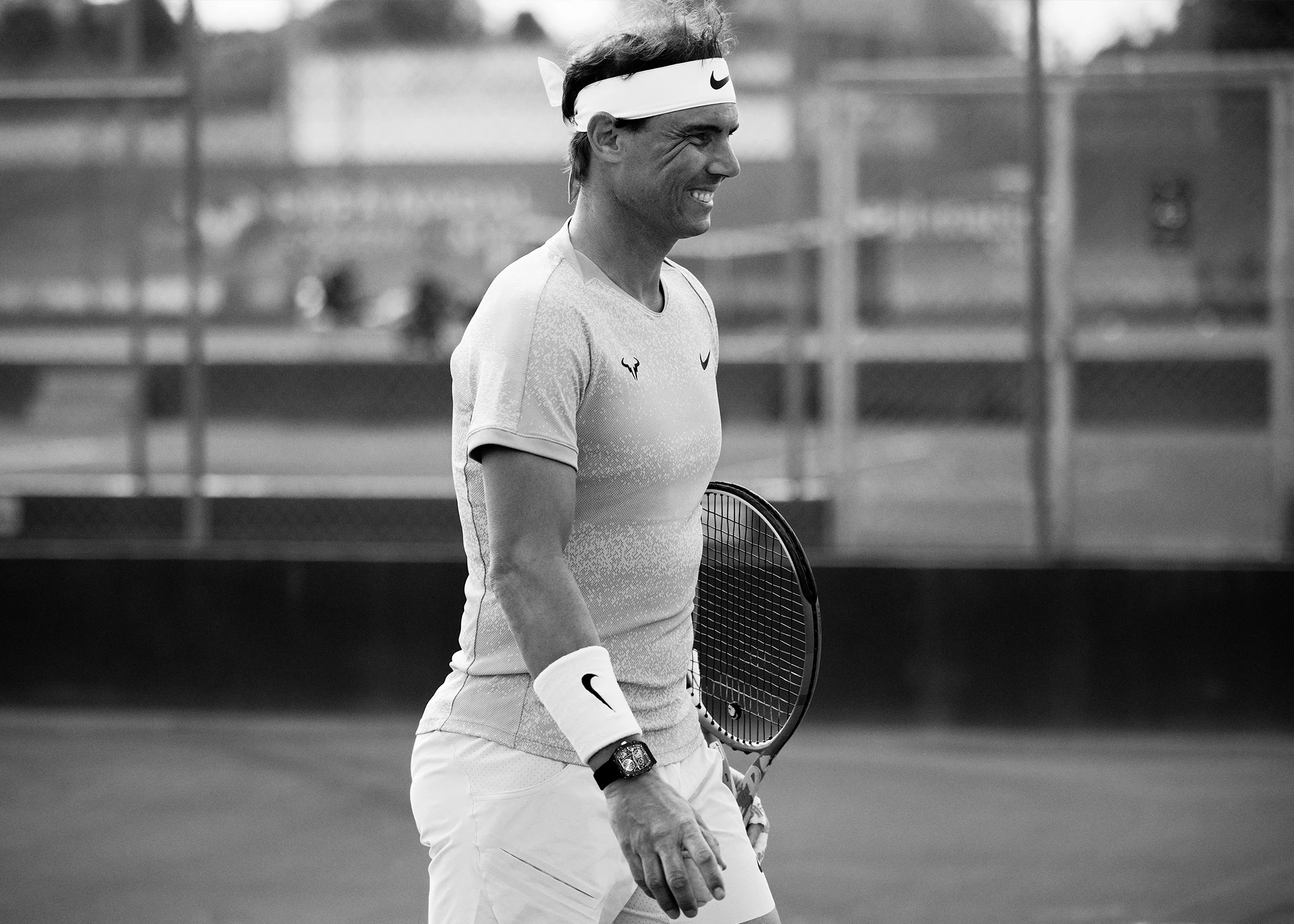
Looking back, few partnerships illustrate Richard Mille’s technical evolution as clearly as its collaboration with Rafael Nadal. Since the partnership began in 2010, the resulting timepieces have become lighter, more resilient and more technically sophisticated with each successive generation. What makes this relationship particularly remarkable is that Nadal wore the watches not only off the tennis court but also during matches, including some of the greatest triumphs of his career. Over the years, the RM 27 collection has therefore become not only a symbol of this partnership but also an important indicator of the brand’s progress in movement manufacturing and materials development.
To understand the influence of the first Rafael Nadal watch, the RM 027, on the collection as a whole, we must return to 2010, when Richard Mille travelled to Mallorca to visit the then world number one and present plans for his first watch. Nadal had already been approached by his agent in 2008 with the suggestion that he play wearing a Richard Mille watch. However, he firmly rejected the idea, fearing that a watch would interfere with his game.
Yet rather than showing the already sceptical Nadal the actual plans, Richard Mille presented him with the RM 018 ‘Hommage à Boucheron’ – a watch with a heavy white-gold case inspired by a Boucheron Reflet model from 1947 – as the timepiece he would henceforth wear on court. Nadal responded: ‘I’m glad you came, but I can’t!’ Only then did Richard Mille reveal the real plans: those for the RM 027, which would lay the foundations for everything the RM 27 series would go on to achieve in terms of lightness, shock resistance and innovative materials.
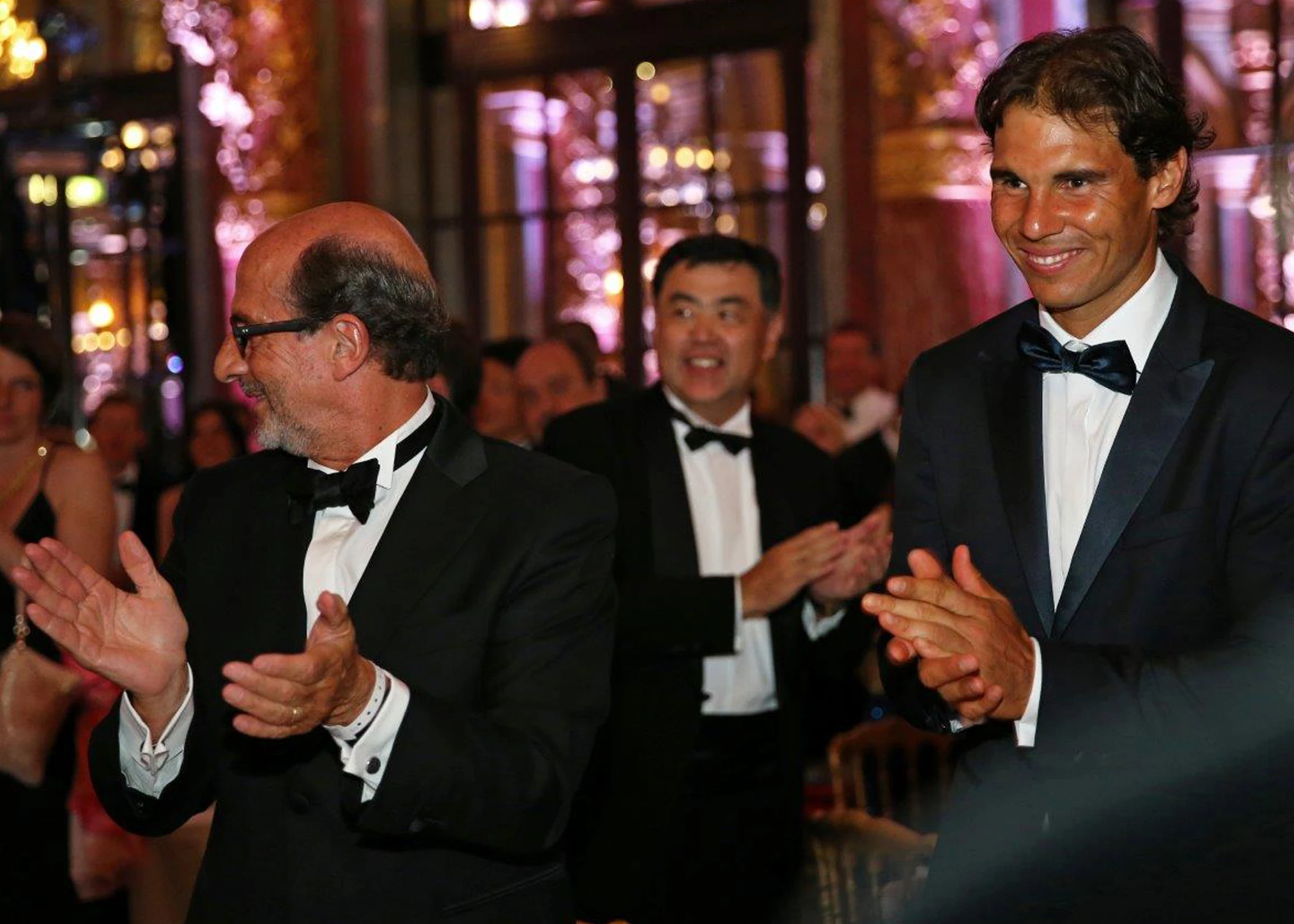
Even after seeing the plans for the exceptionally lightweight RM 027, however, Nadal did not immediately agree to wear it, as his concerns that it might hinder his performance still prevailed. It was only when he strapped the first prototype to his wrist that his doubts finally began to disappear. Nevertheless, some time would pass – and the prototype would endure considerable punishment – before the RM 027 could be unveiled to the world. Nadal wore the prototype during matches, exposing it to extreme movements and impacts, until sweat and even water had penetrated the watch.
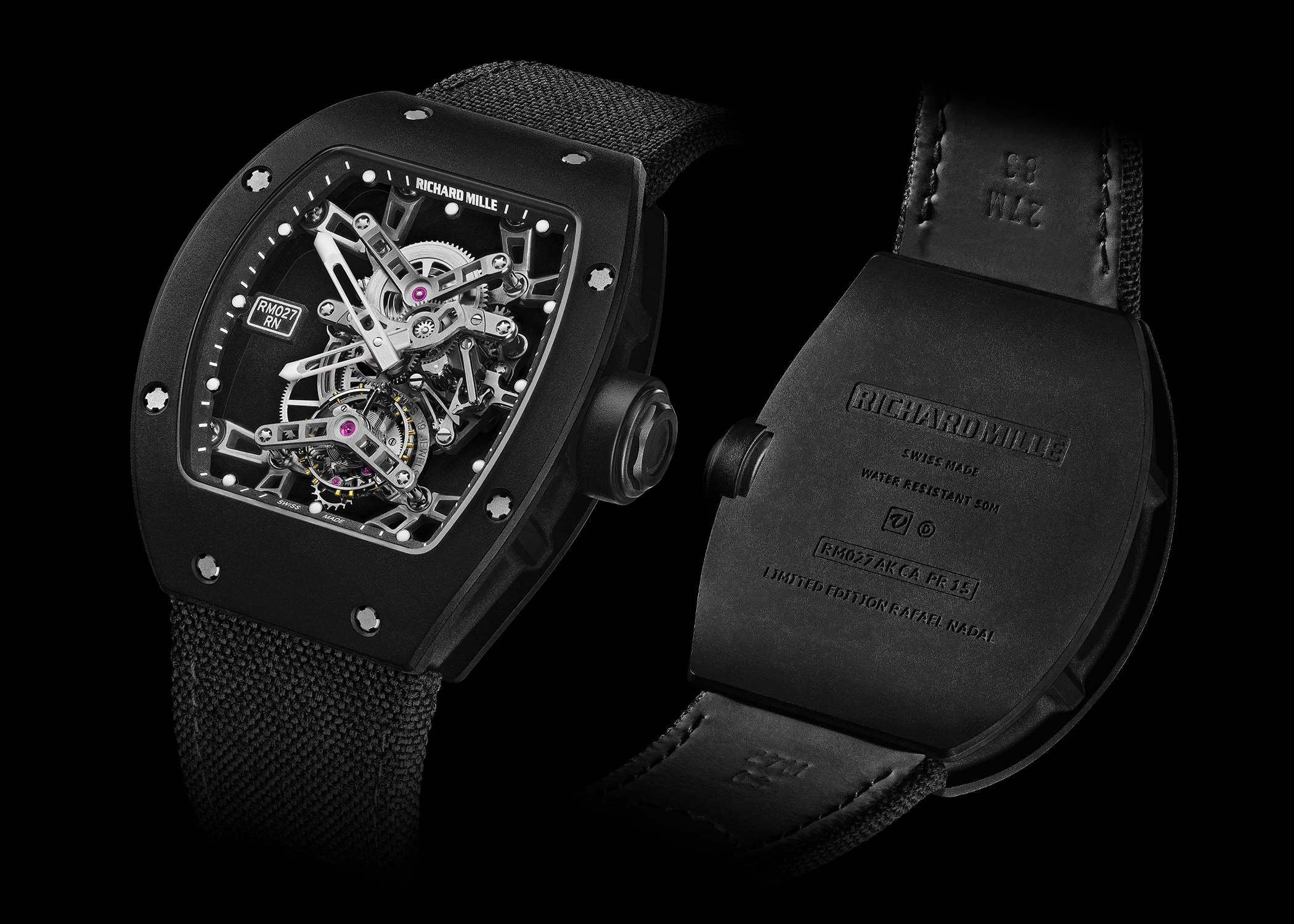
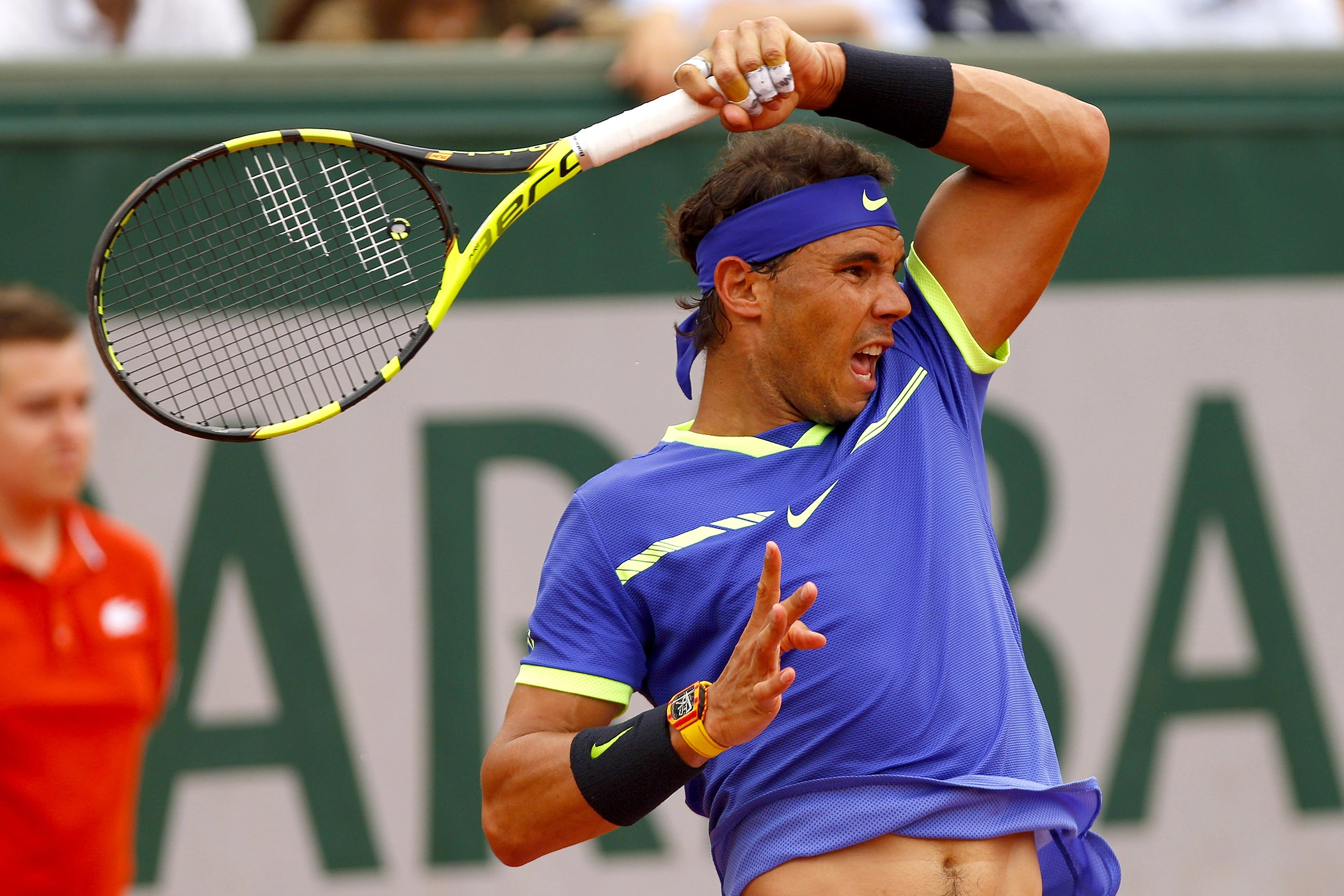
Following several improvements and modifications, the moment finally arrived at the 2010 French Open. Nadal wore a watch weighing less than 20 grams, tailored specifically to his playing style: thus, the RM 027 was born. Despite his initial reservations, Nadal continued to perform exceptionally well with the watch on his wrist. That same year, he won three Grand Slam tournaments, including his first US Open title, and went on to make history with his seventh French Open victory in 2012.
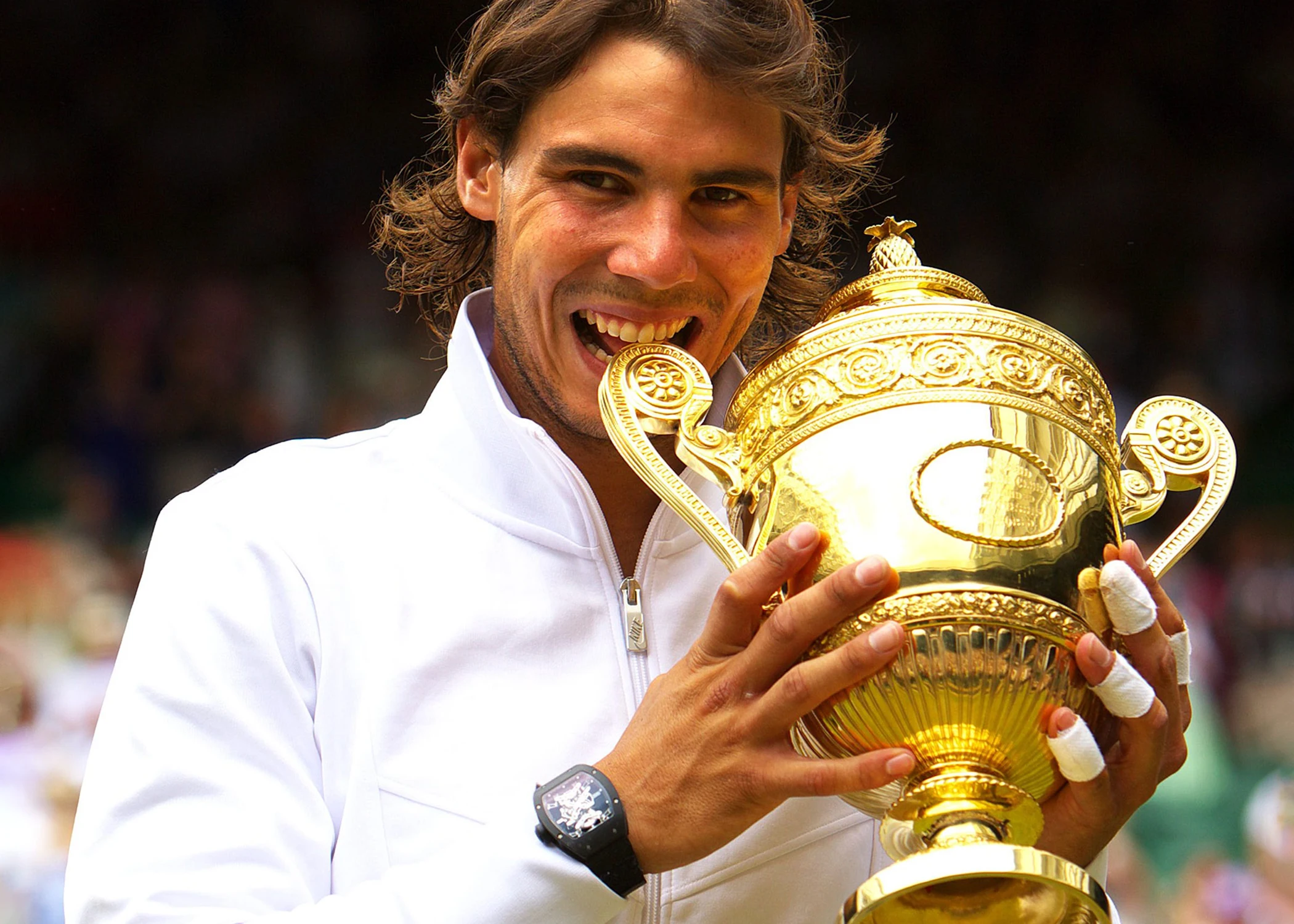
Among the most important innovations of Nadal’s first watch, the RM 027, was a baseplate made from LITAL, a high-strength, exceptionally lightweight titanium-lithium alloy also used in aerospace engineering and motorsport. The movement, weighing just 3.83 grams, also featured a free-sprung balance for improved shock resistance and a fast-rotating barrel that completed one revolution every six hours rather than the usual 7.5 hours.
The result of these innovations was a timepiece weighing less than 20 grams including its strap. This made the RM 027 considerably lighter than all previous Richard Mille watches – including the RM 006 from 2004 (42 g without its strap) and the RM 009 from 2005 (29 g without its strap) – and the lightest watch in the world at the time.

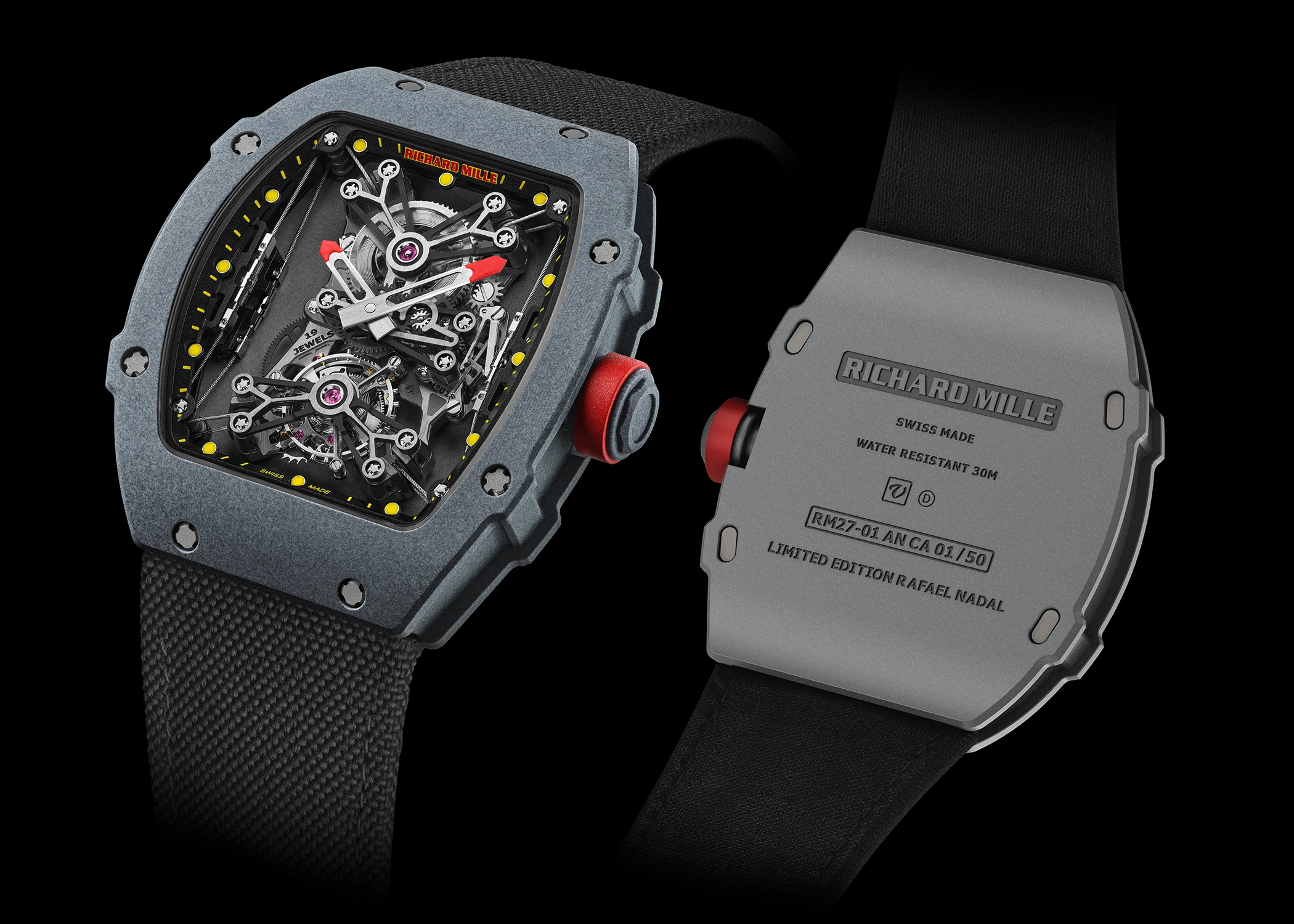
In 2013, Richard Mille achieved not only a new record for lightness but also introduced an unprecedented movement construction, with every element designed to withstand the extreme shocks generated by Nadal’s tennis game. Weighing just 19 grams in total, including the strap – the heaviest component of the watch – the RM 27-01 was not merely lightweight. It also introduced an approach that was as technically sophisticated as it was visually impressive: the movement’s baseplate was suspended by braided steel cables secured via four pulleys positioned at the corners of the case. This floating construction, which strategically distributed impact energy, enabled the calibre to withstand extreme accelerations exceeding 5,000 g.
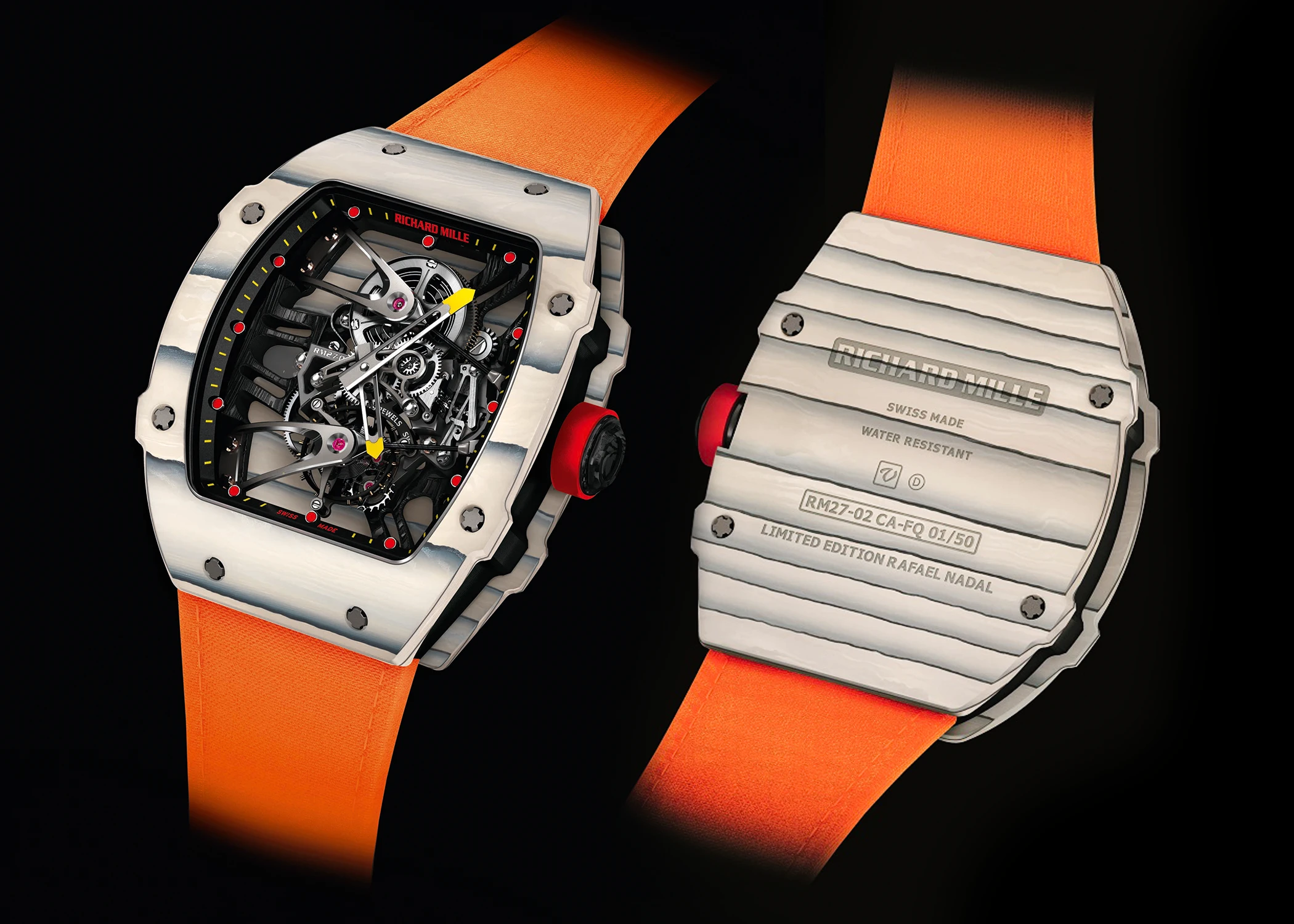
The RM 27-02, introduced in 2015, also occupies a special place within the Rafael Nadal collection, having introduced two innovations that would have a lasting influence on the construction and aesthetics of subsequent Richard Mille watches. The first was the so-called ‘unibody’ construction, in which the skeletonised movement baseplate and case middle were integrated for the first time into a single load-bearing carbon structure. The inspiration came from the monocoque chassis of a Formula 1 car, whose construction ensures high rigidity and shock resistance. The second innovation concerned the case material. Working with North Thin Ply Technology (NTPT), Richard Mille developed a combination of Carbon TPT and Quartz TPT, giving the watch its distinctive black-and-white appearance. This involved layering more than 600 ultra-thin sheets of quartz and carbon fibres, each offset by 45 degrees, before processing them under heat to create a highly resistant composite material.
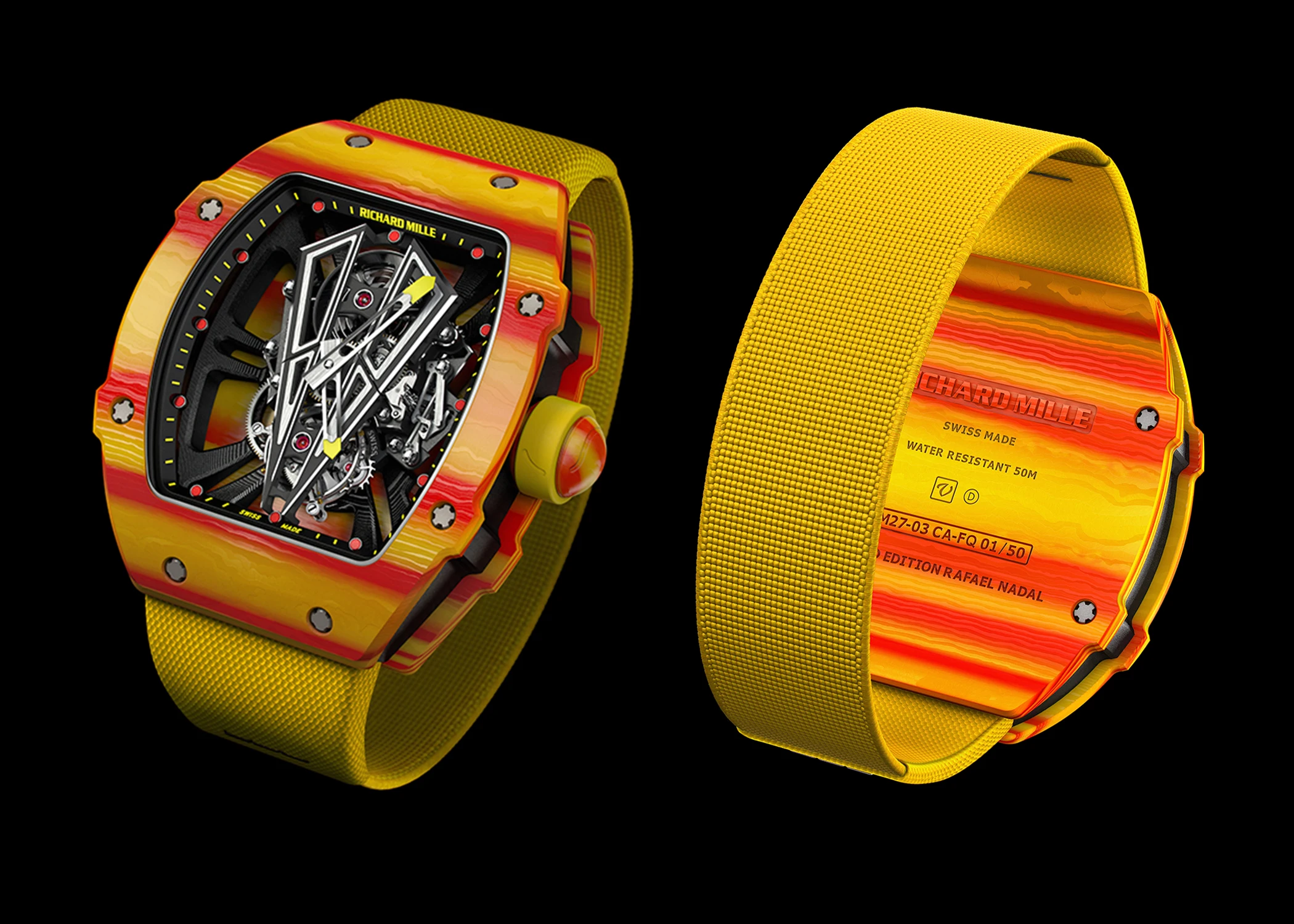
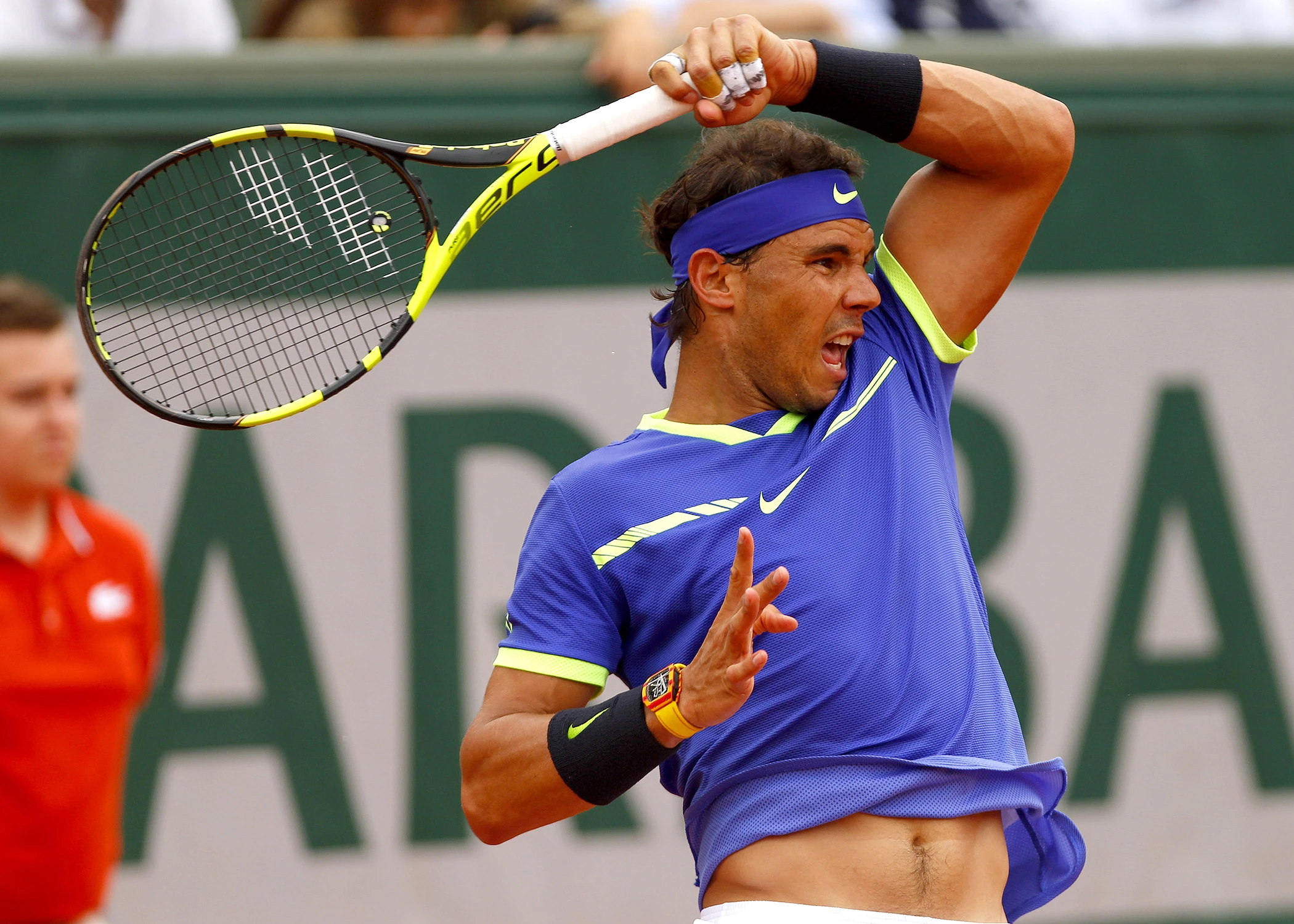
At the 2017 French Open, Rafael Nadal wore one of the collection’s most striking watches: the RM 27-03. Its red-and-yellow Quartz TPT case, developed in collaboration with North Thin Ply Technology (NTPT), reflected the colours of the Spanish flag and was composed of ultra-thin layers of silica impregnated with coloured resin. The movement also paid tribute to Nadal’s heritage: the bridges surrounding the barrel and tourbillon formed the stylised head of a bull. From a technical perspective, the RM 27-03 established a new benchmark within the collection, withstanding shocks of up to 10,000 g.
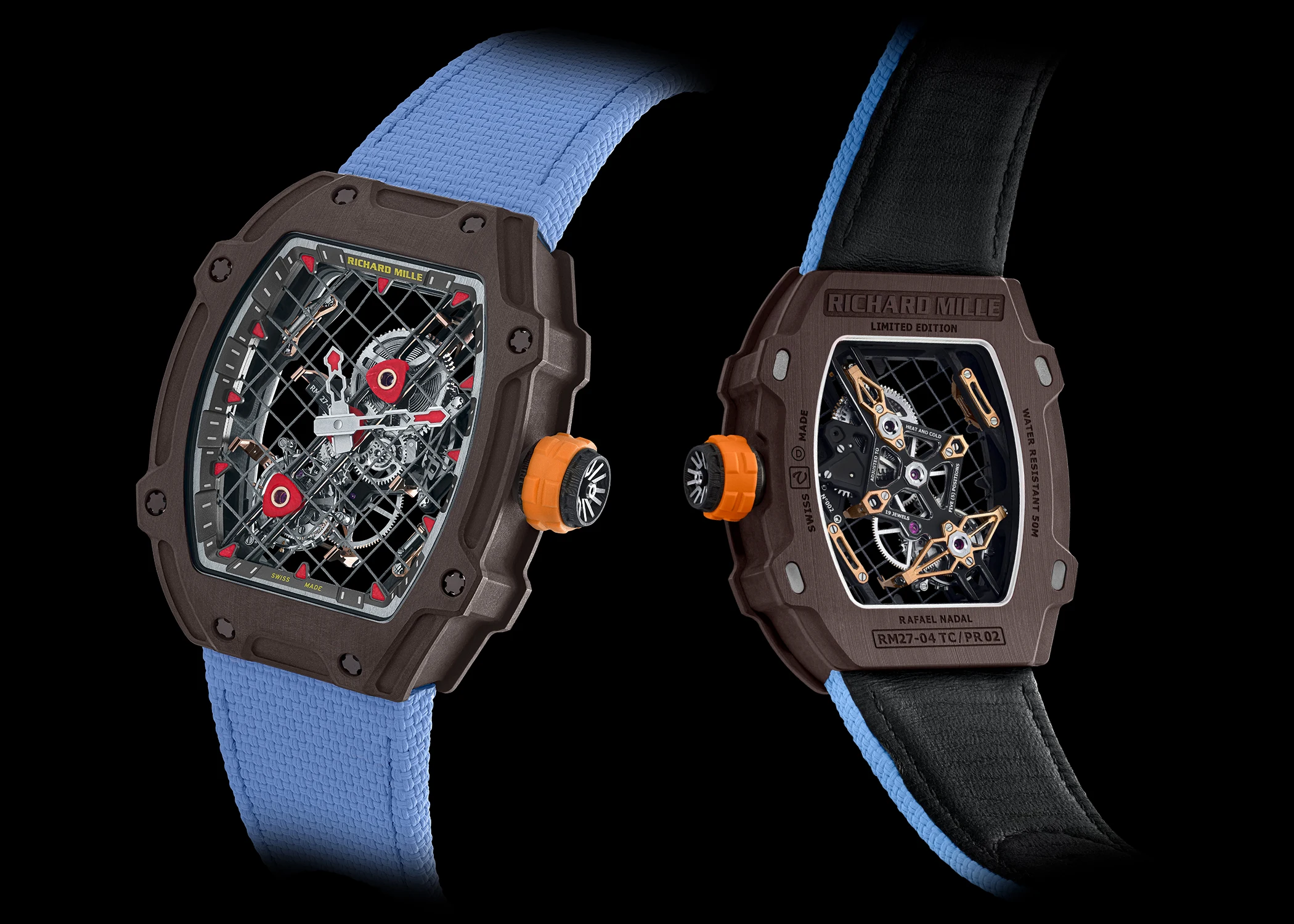
With the RM 27-04, unveiled in 2020, Richard Mille incorporated the stringing of a tennis racket into the construction of a watch for the first time. A single steel cable, just 0.27 mm thick, formed a mesh within which the diagonally positioned movement, weighing only 3.4 grams, was suspended by five titanium hooks. This construction protected the calibre against extreme shocks exceeding 12,000 g, setting another record within the collection. A further innovation was the case made from carbon-fibre-reinforced TitaCarb, developed in collaboration with Biwi SA. Despite its exceptional resilience, the material enabled the watch to achieve a total weight of just 30 grams including the strap. For the first time in the Nadal collection, a sapphire crystal caseback also offered a view of the extraordinary movement architecture and its intricate mesh construction.
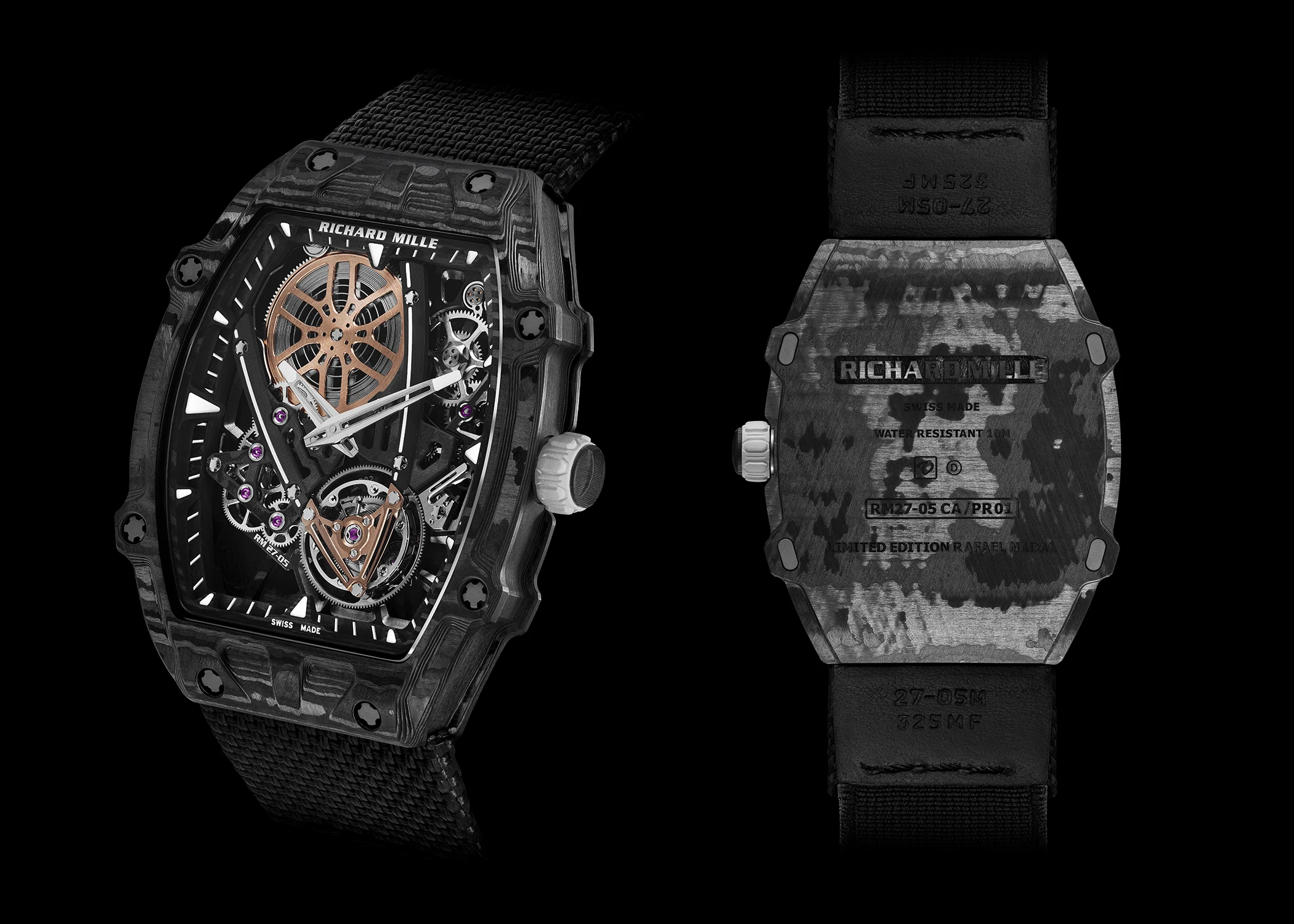
With the RM 27-05, introduced in 2024, Richard Mille reached the pinnacle of its pursuit of lightness within the Nadal collection. Central to this achievement was the new Carbon TPT B.4 case material, whose fibres were 15 per cent stiffer and whose resin was 30 percent more resistant than previous versions. This allowed the case walls and bezel to be made even thinner. Another innovation lay in the movement construction, which rested on an X-shaped structure and itself contributed to the stability of the case. For the calibre, the engineers also drew on knowledge gained during the development of the ultra-thin RM UP-01. The result was the lightest watch in the entire series, weighing just 11.50 grams without its strap, and also the thinnest, with a case height of 7.20 mm. With shock resistance of up to 14,000 g, it established yet another record.
While Massa established the principle that a brand ambassador could simultaneously serve as a development partner and real-world test driver, and the Nadal collection continued the large-scale development of technical solutions and innovative case materials, Richard Mille subsequently applied the same philosophy of real-world testing to other sports with entirely different physical and mechanical demands. The underlying idea always remained the same: rather than simply providing visibility, each sporting partner presented a specific technical challenge through their discipline – whether the need for minimal weight, resistance to extreme shocks or acceleration, particular ergonomic requirements or a specialised function – that the watch was designed to overcome.
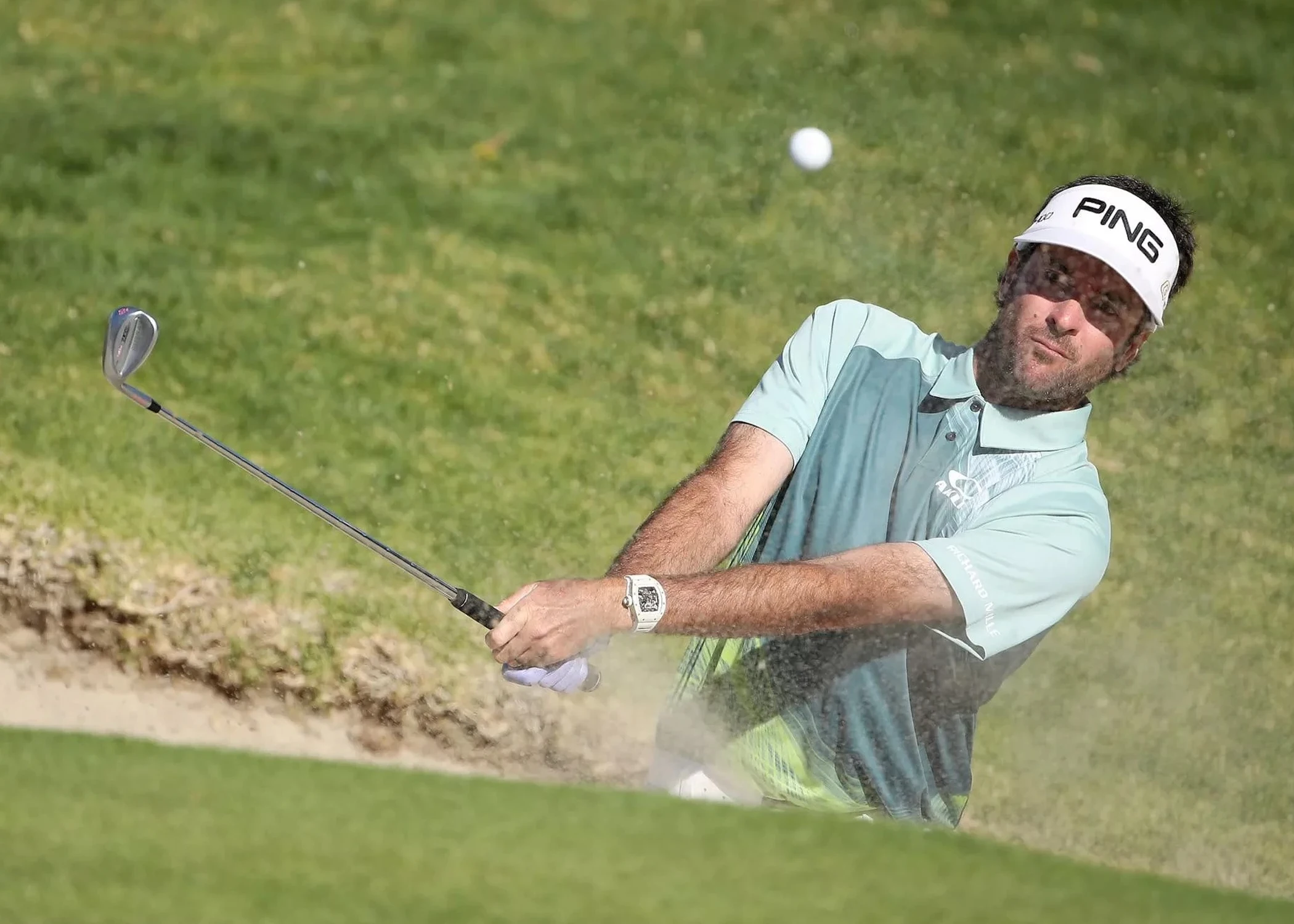
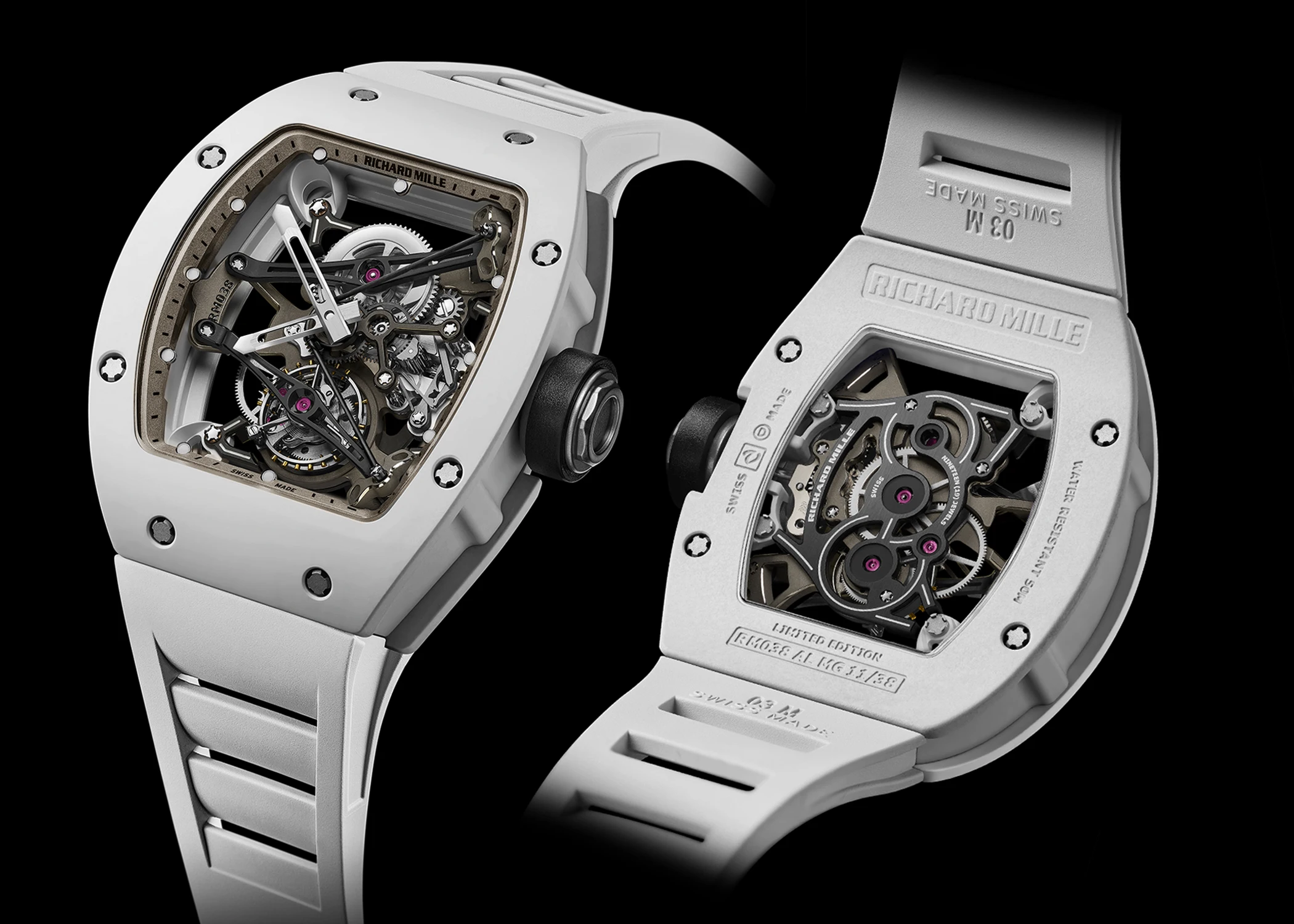
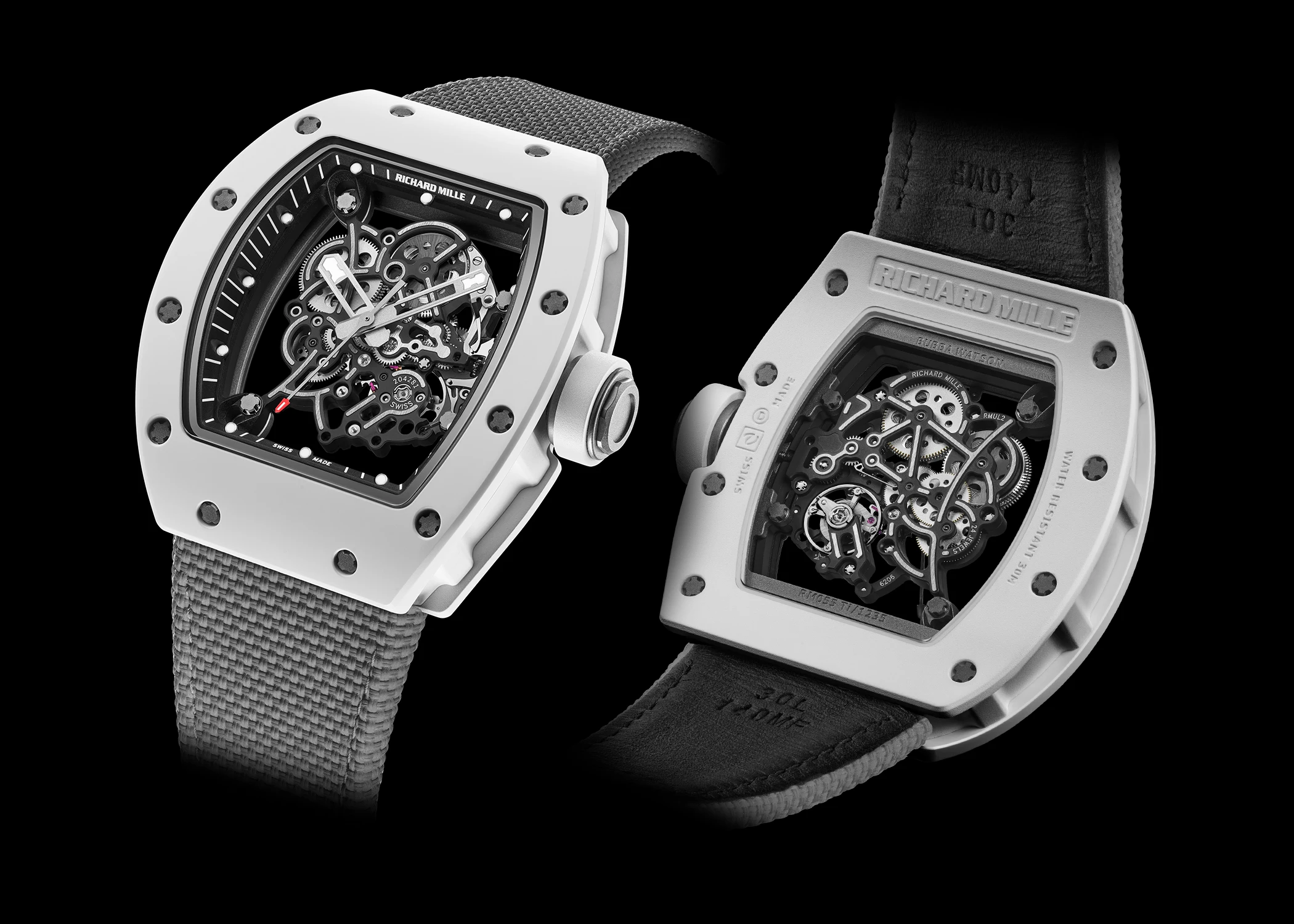
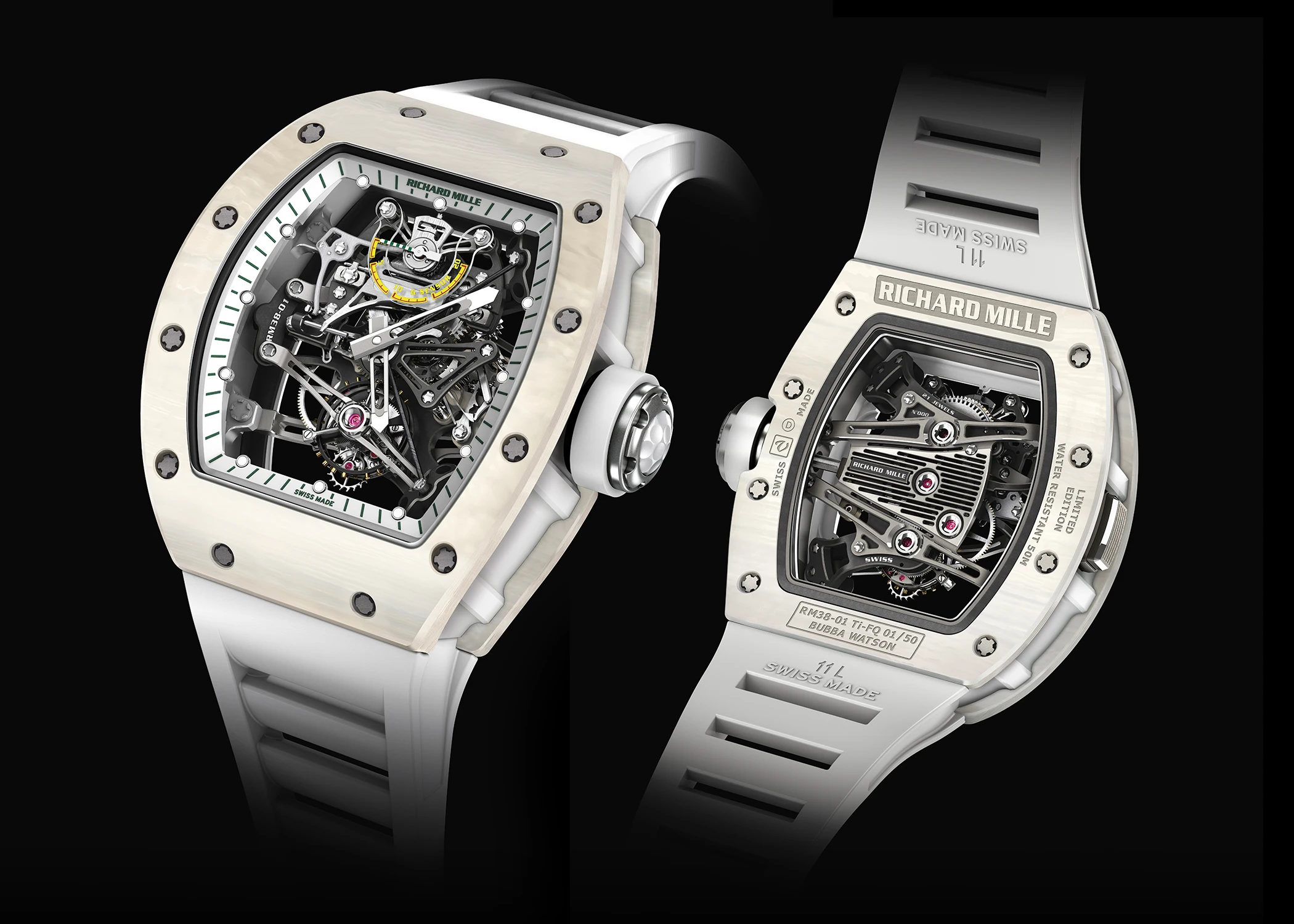
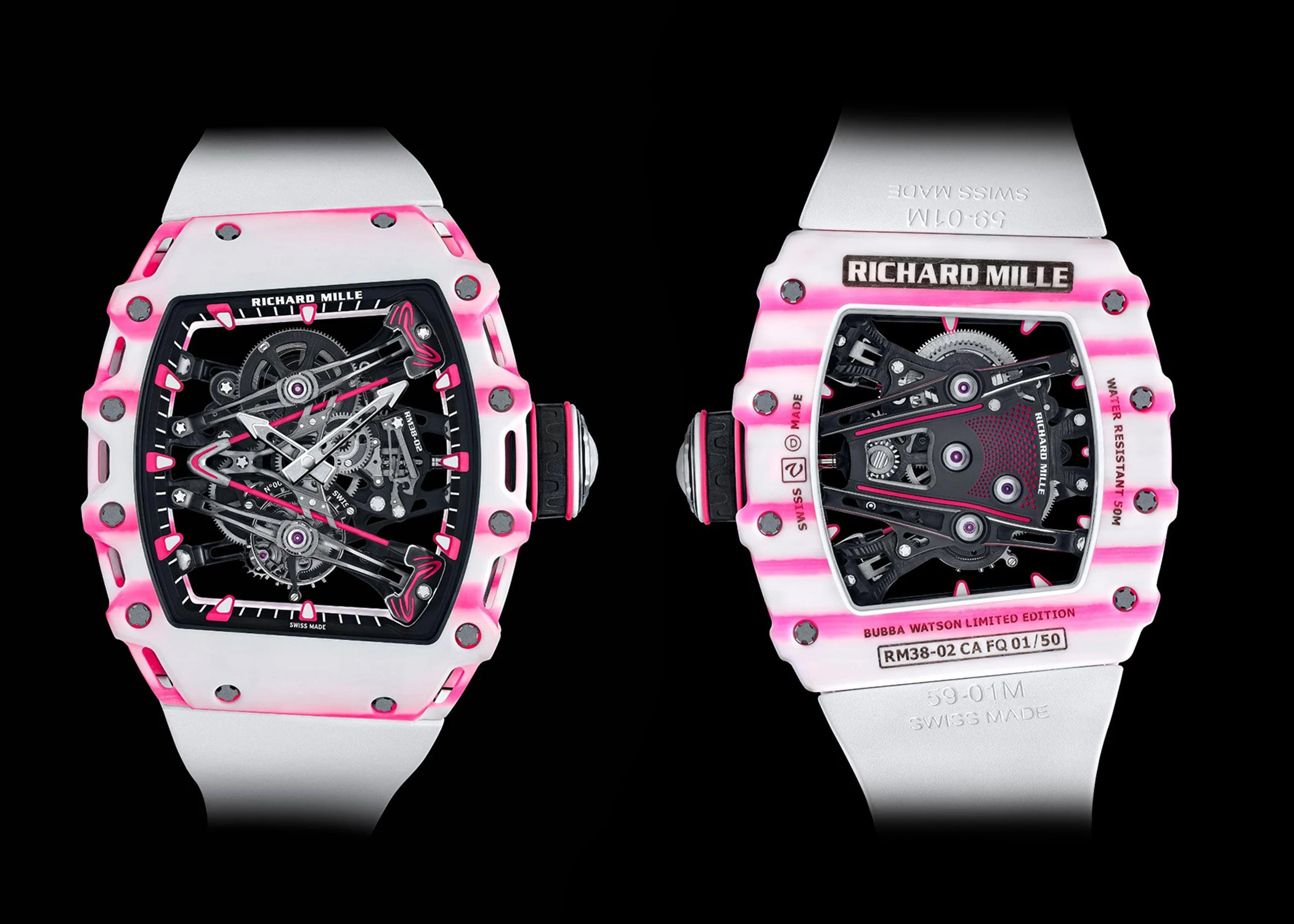
In golf, Bubba Watson became one of the brand’s most important partners from 2011 onwards. Three tourbillon calibres and one non-tourbillon calibre were specially developed for him. The partnership began in 2011 with the RM 038 Tourbillon Bubba Watson, designed to withstand the considerable acceleration forces generated by a golf swing. Wearing the RM 038, Watson won the Masters Tournament in Augusta, Georgia, in 2012, securing his first major championship title and giving Richard Mille exceptional visibility under real competitive conditions. Further models followed: the RM 055 in 2012, the RM 38-01 G-Sensor in 2014 and the RM 38-02 in 2022. Most recently, this year saw the introduction of the RM 55-01, a variation of the original RM 055 from 2012, equipped with the RMUL4 calibre, whose movement weighs less than five grams.
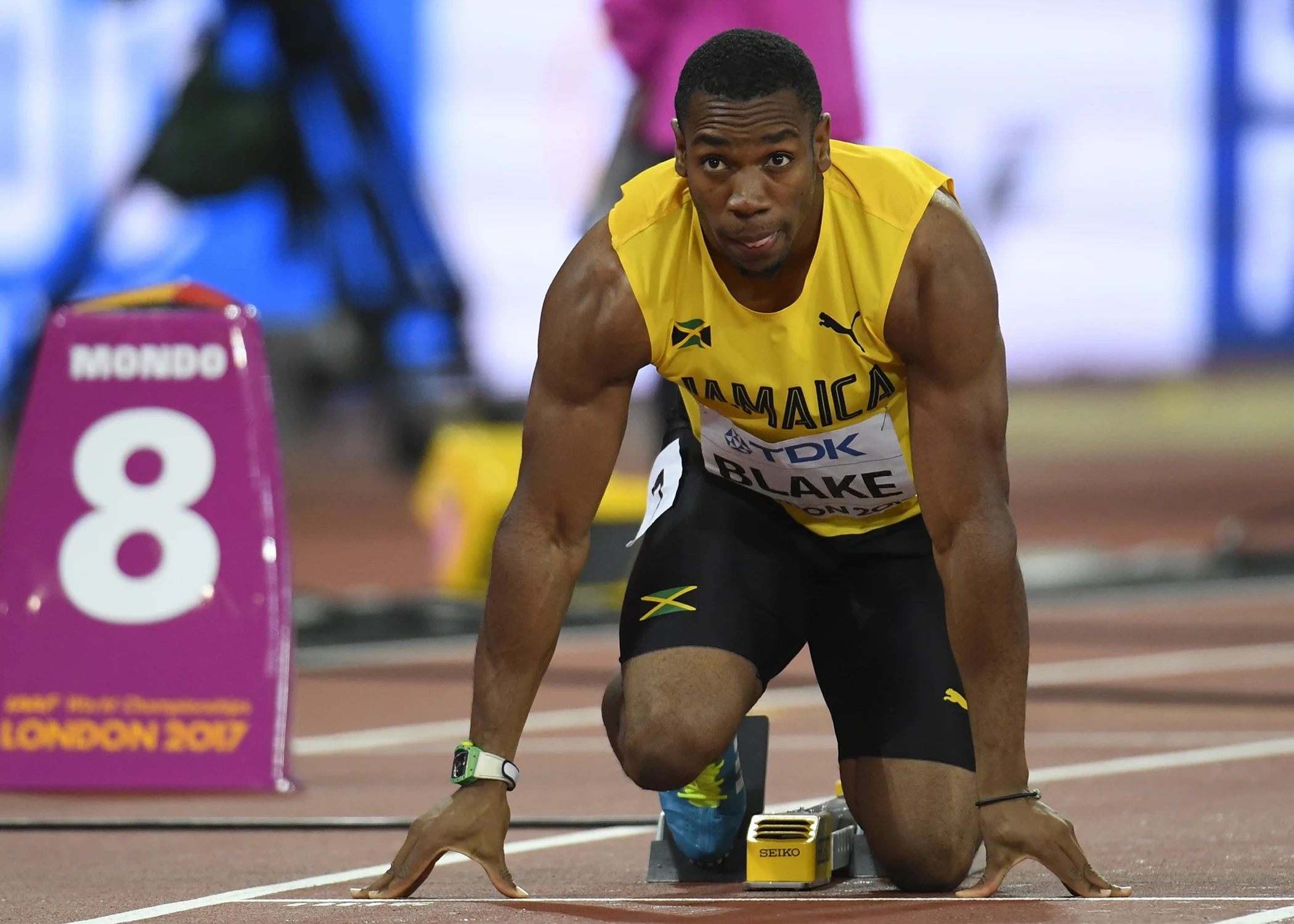
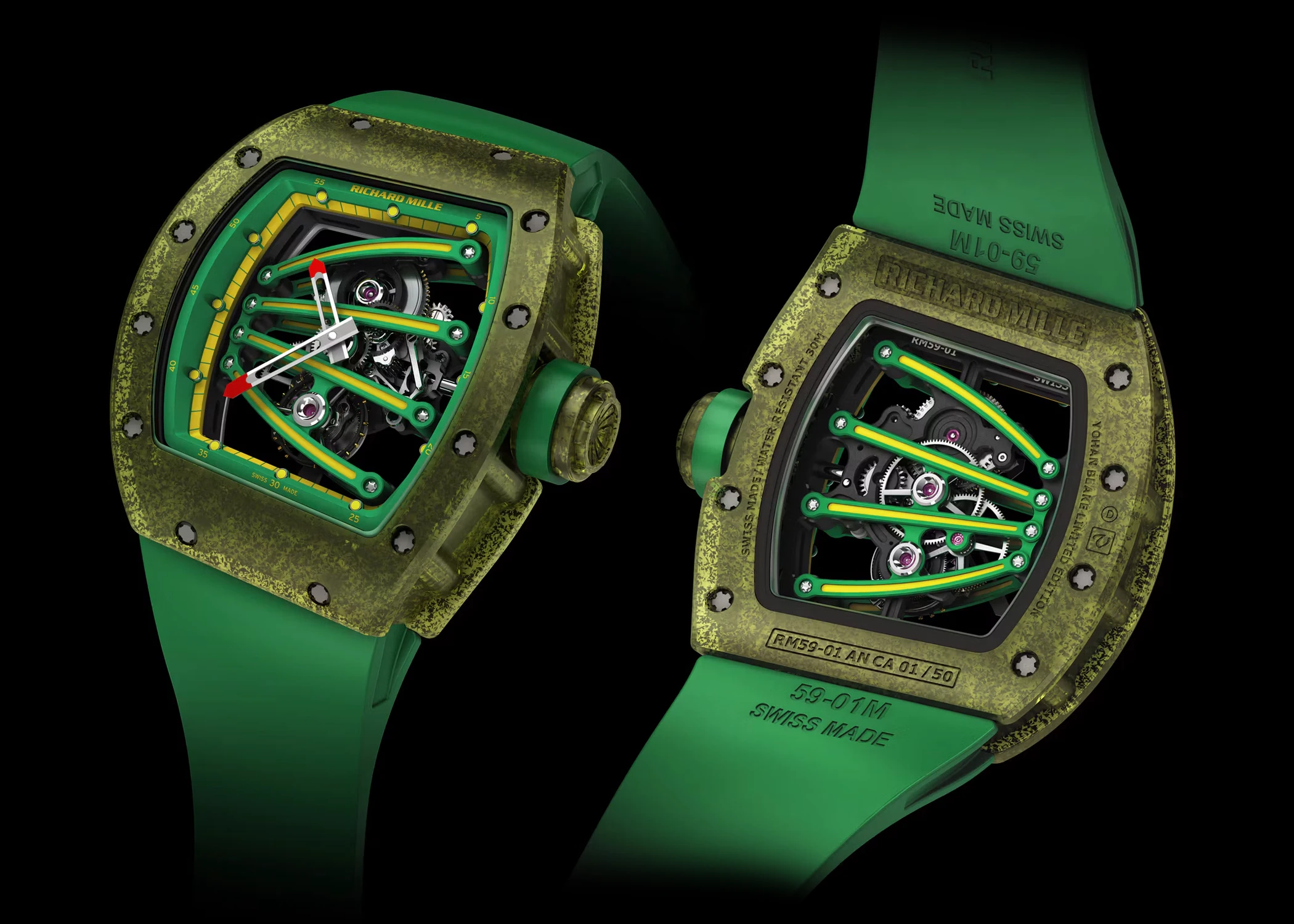
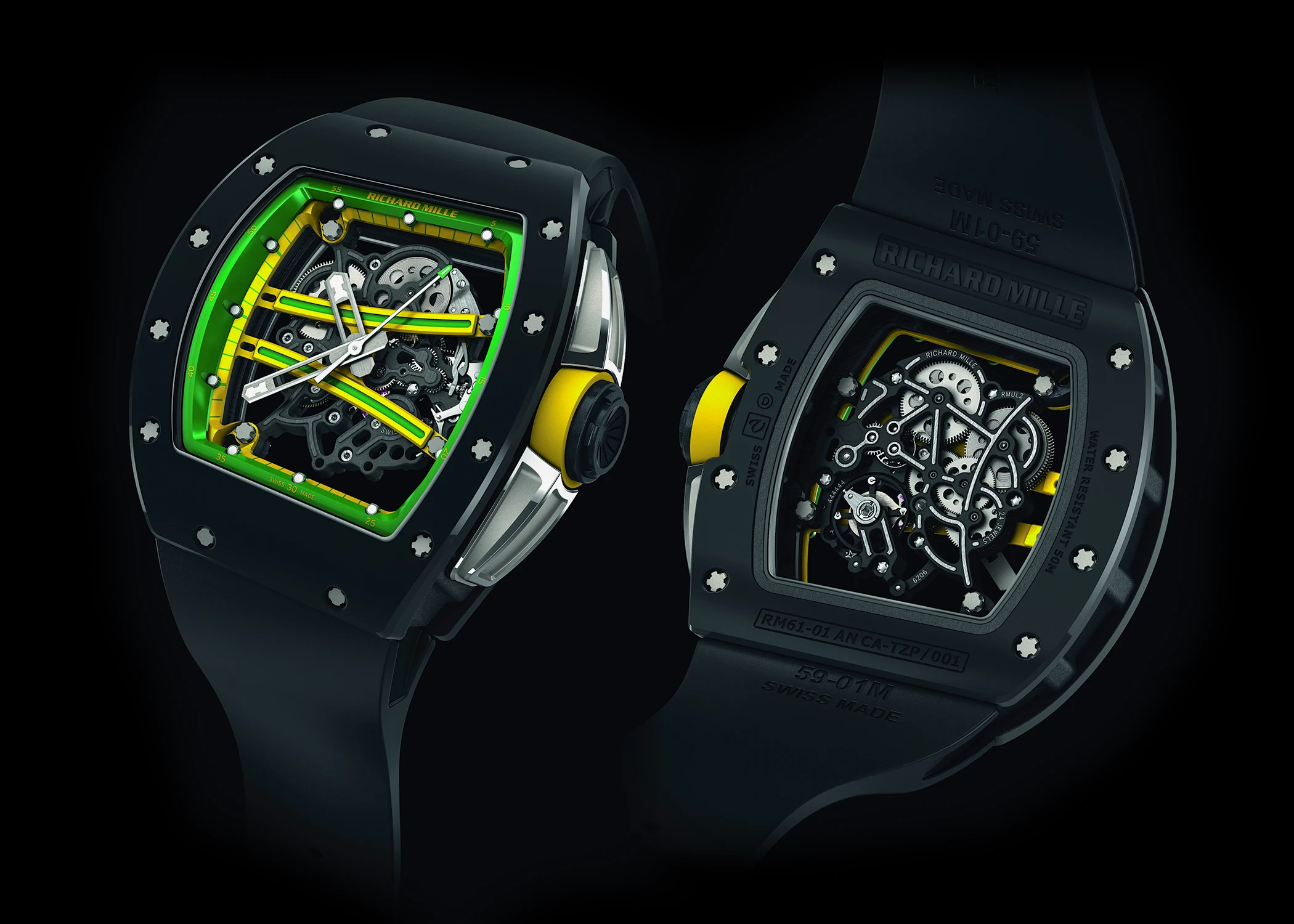
In sprinting, Yohan Blake became an equally distinctive partner. Richard Mille began working with the athlete shortly before the 2012 Olympic Games in London, where Blake competed in the 100-metre final. It was the fastest race in history up to that point: Usain Bolt won in 9.63 seconds, while Blake finished second in 9.75 seconds. By the end of the 2012 season, Blake was the second-fastest man of all time over both 100 and 200 metres. The RM 59-01 Tourbillon Yohan Blake, limited to 50 pieces, was introduced as early as 2013. Its asymmetrical case construction was tailored to Blake’s preference for wearing his watch on his right wrist and to the movement of his arm while sprinting. The case was made from a translucent composite material incorporating carbon nanotubes. The use of Anticorodal PB109 – an aluminium alloy containing aluminium, magnesium and silicon – for the bridges made the watch particularly lightweight and shock-resistant despite its tourbillon. At the same time, the bridges connected the Grade 5 titanium baseplate to the case. The RM 61-01 Manual Winding Yohan Blake, introduced in 2014, continued the partnership.
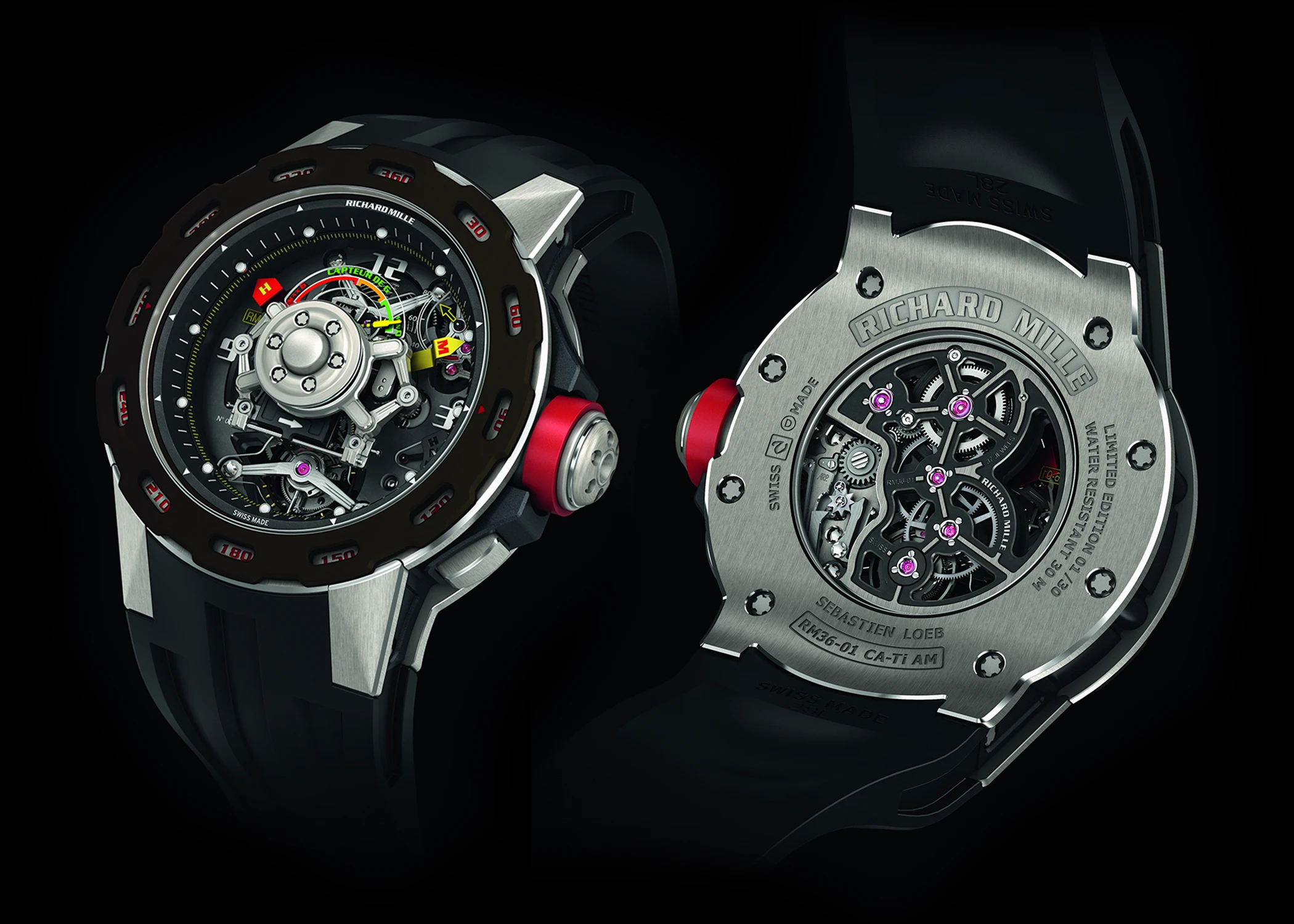
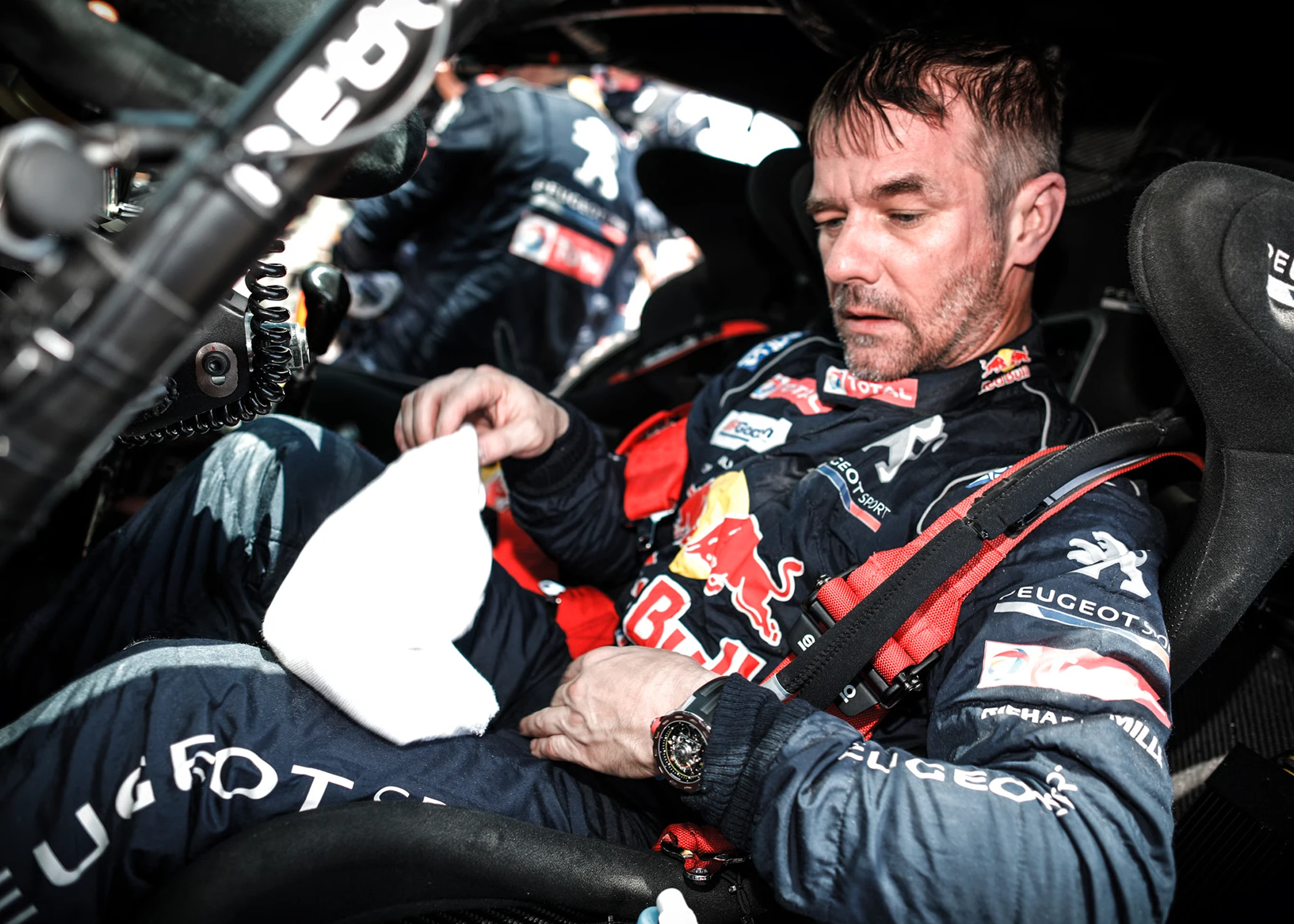
As for the world of car rallying, Richard Mille welcomed Sébastien Loeb into its world in 2013. Loeb is the most successful driver in the history of the World Rally Championship (WRC), having won the world title nine consecutive times. The RM 36-01 Tourbillon G-Sensor Sébastien Loeb, unveiled in 2014 and limited to 30 pieces, featured a mechanical G-force sensor that could be adjusted directly using the rotating ceramic bezel. The sensor could be used to manually measure both lateral and longitudinal acceleration of up to 6 g, whether cornering, accelerating or braking on straight sections of road. A coloured scale indicated whether the forces remained within a safe range (green zone) or had reached a level considered critical for the driver (red zone).
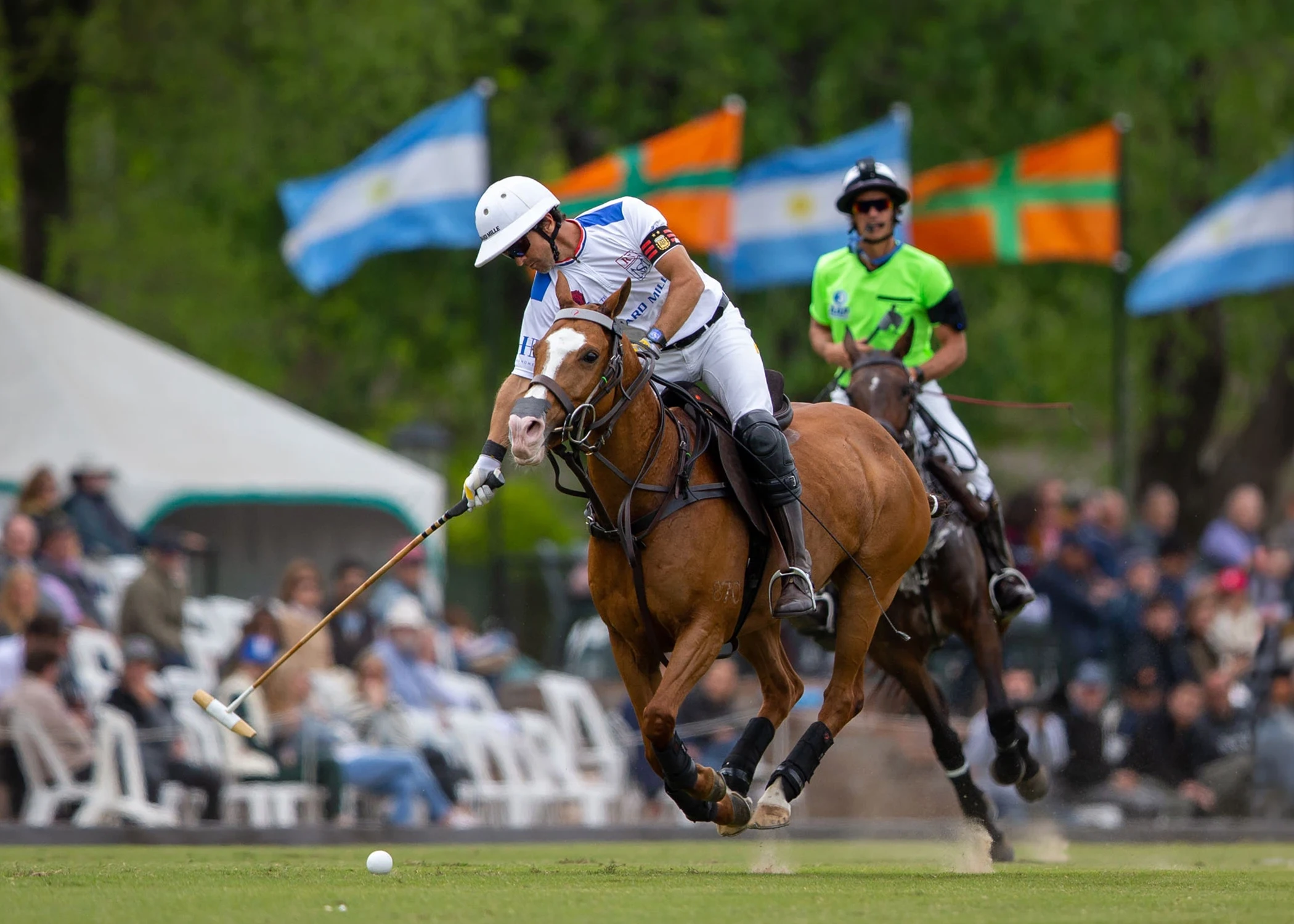
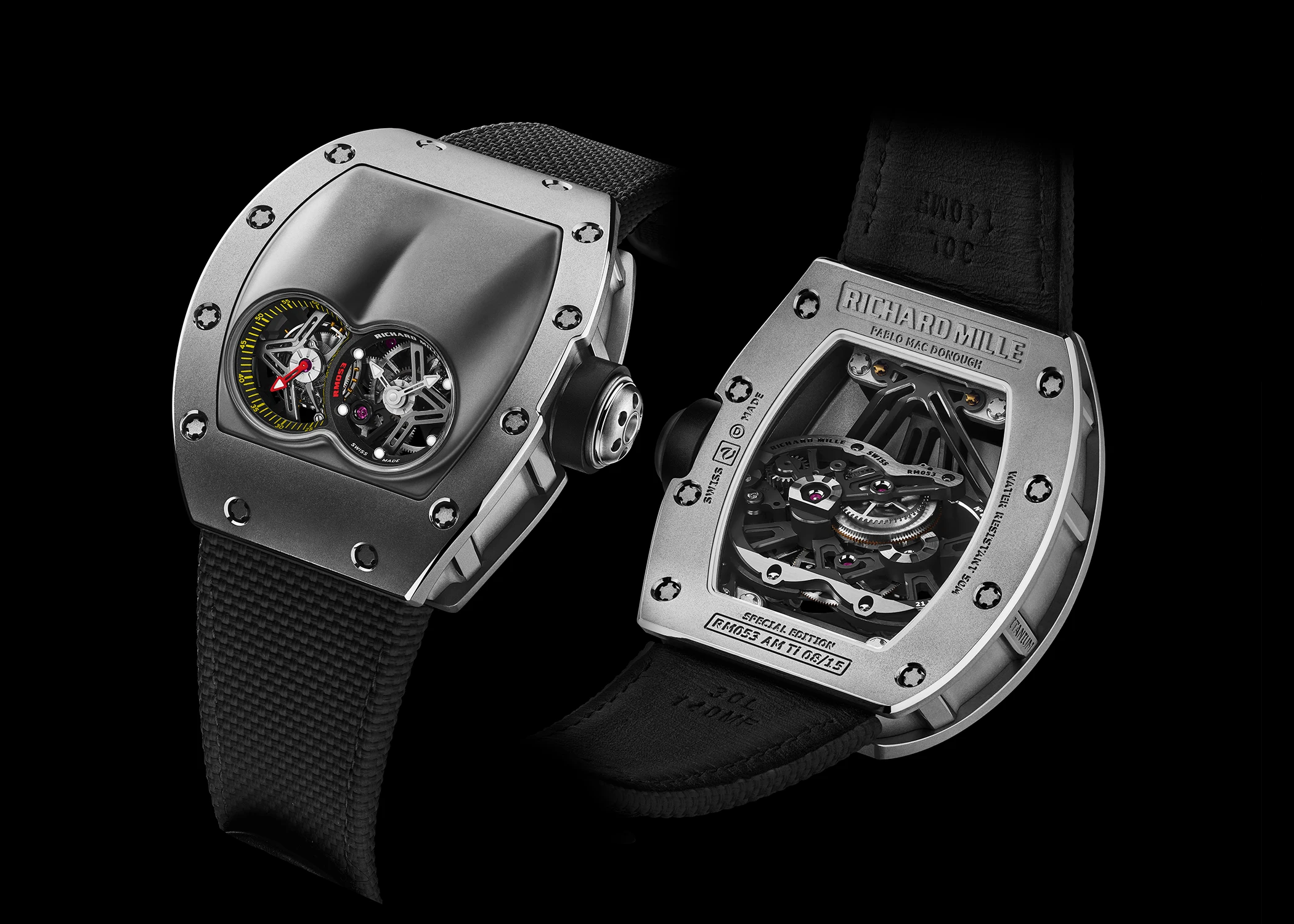
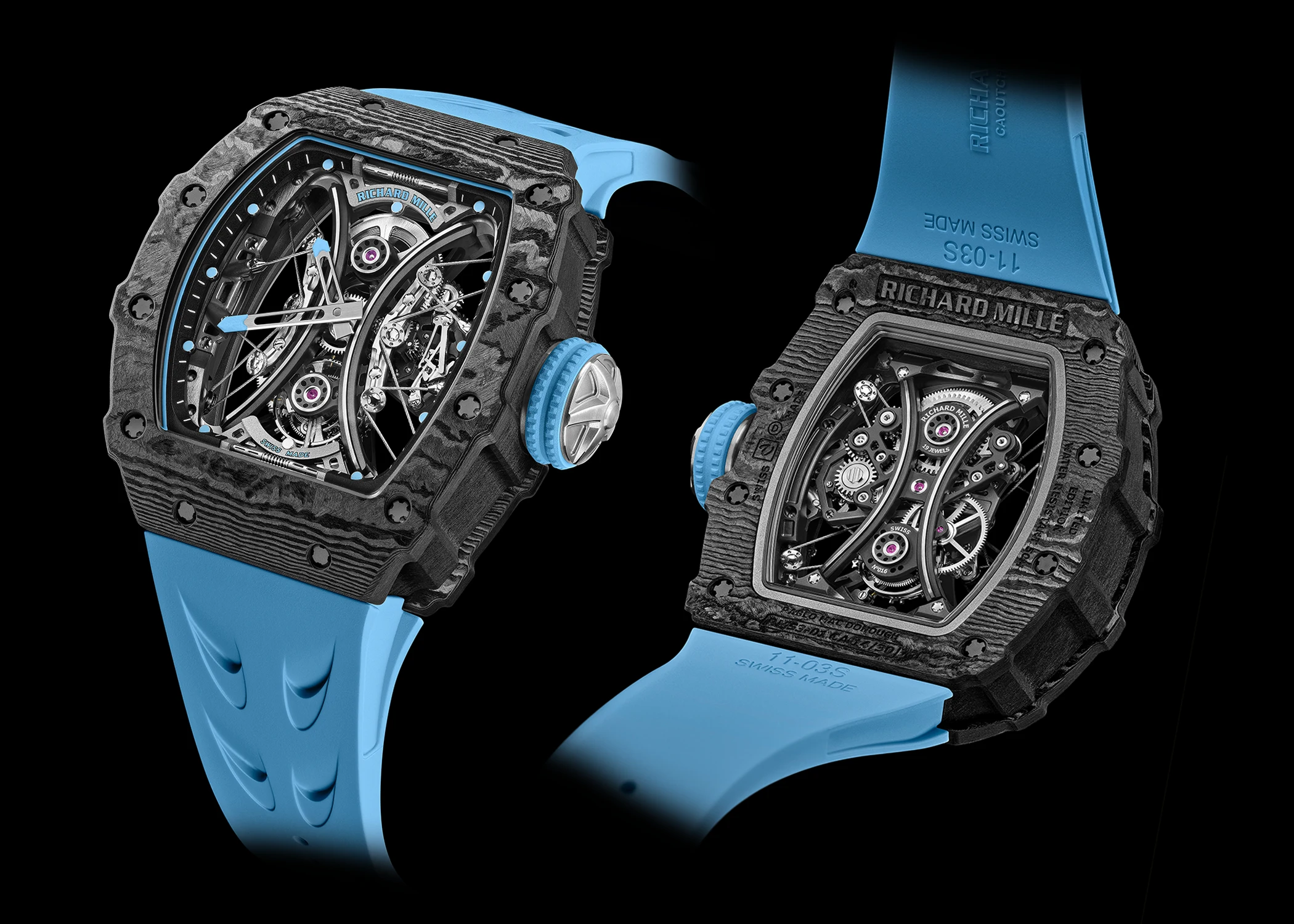
In polo, Richard Mille partnered with Pablo Mac Donough in 2012, initially developing the RM 053 that same year, followed by the RM 53-01 Tourbillon in 2018. Given that a polo ball or mallet can cause considerable damage to a mechanical watch, Richard Mille developed a cable-suspended movement for the RM 53-01. Its central baseplate was held in place by two braided steel cables, each measuring just 0.27 mm in diameter. Working with Stettler in Lyss, Switzerland, the brand also developed the first laminated sapphire crystal in watchmaking. The principle is familiar from automotive engineering: two sapphire crystal panes are bonded together by a thin polyvinyl film. In the event of a severe impact, such as a strike from a polo mallet, the crystal may break, but the fragments remain attached to the film rather than shattering uncontrollably.
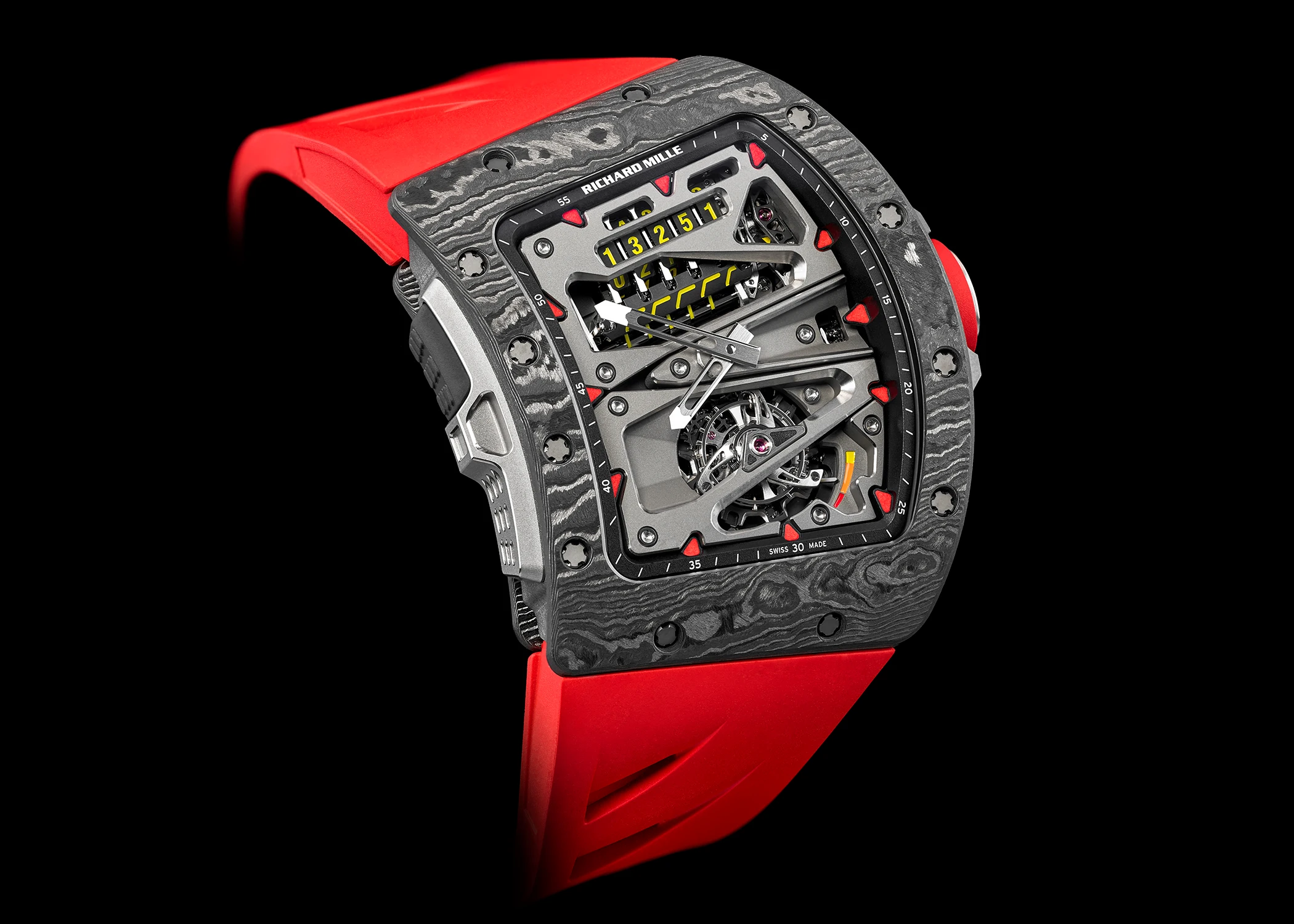
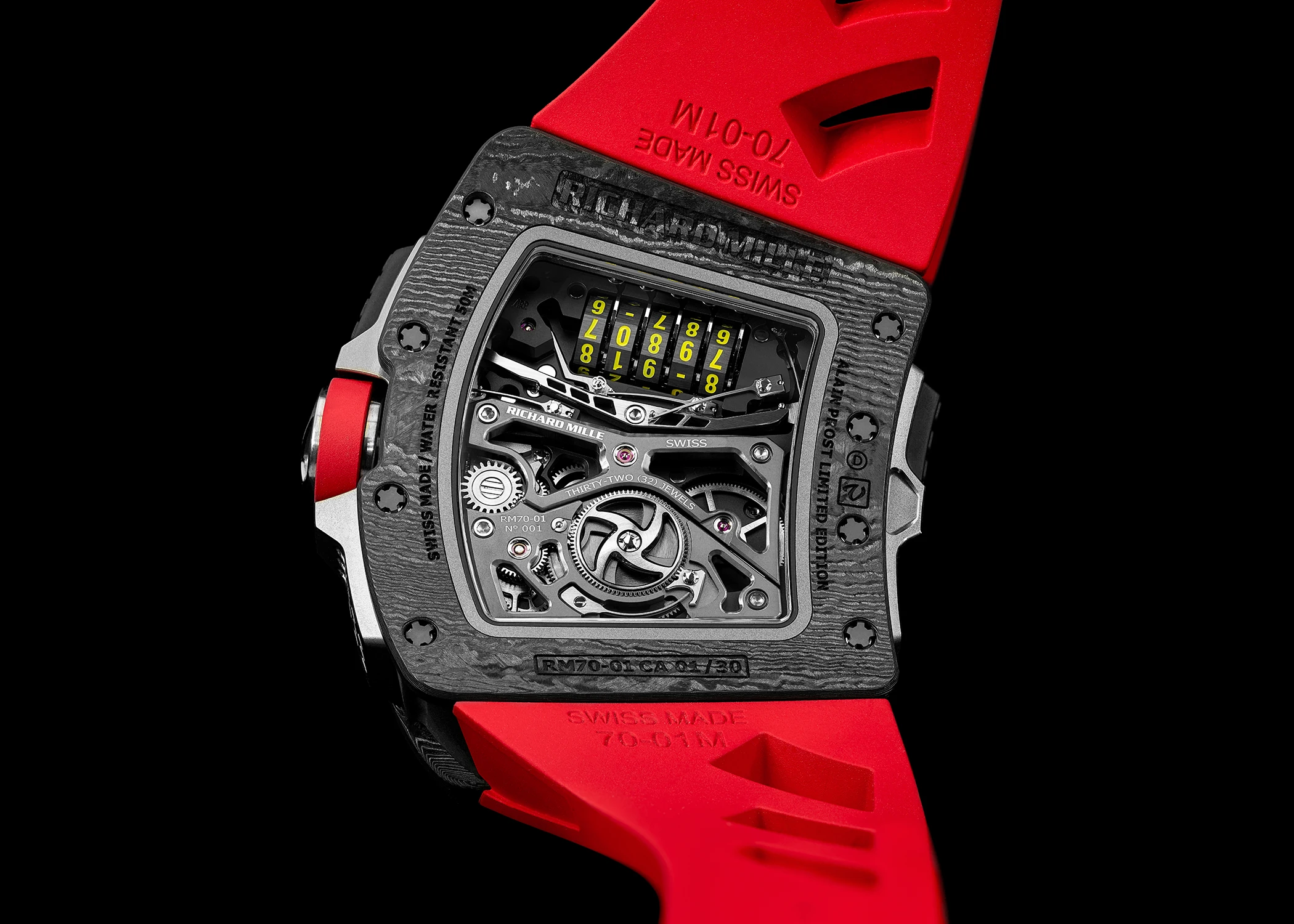
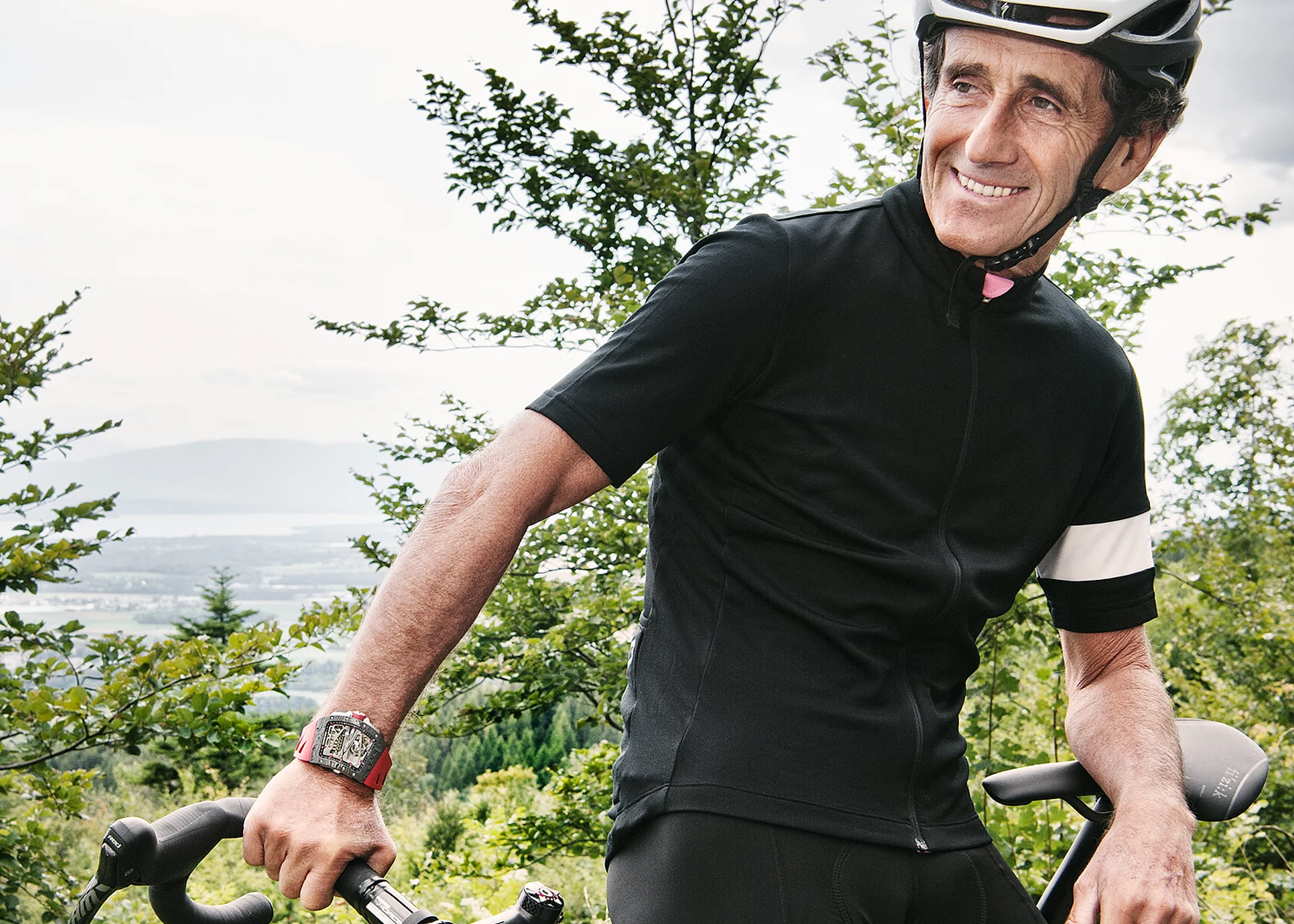
Alain Prost offers an example of how Richard Mille’s partnerships do not always centre exclusively on the sporting discipline for which an individual is best known. The four-time Formula 1 world champion became a brand partner in 2013. However, the jointly developed RM 70-01 Tourbillon Alain Prost, introduced in 2017 and limited to 30 pieces, was dedicated not to motorsport but to Prost’s passion for cycling. Its defining feature is a mechanical odometer with five rollers, allowing distances travelled to be added manually. The hand-wound calibre also features a tourbillon and a 70-hour power reserve. The asymmetrical Carbon TPT case was specifically designed to ensure optimal legibility while cycling.
Anyone who follows Formula 1 as a watch enthusiast today will hardly have failed to notice one thing: Richard Mille is currently the only watch brand supporting two racing teams simultaneously as an official team partner. Scuderia Ferrari and the McLaren F1 Team are two of the most historic teams in Formula 1. This dual presence is particularly visible on the racing cars themselves, where the Richard Mille logo appears on the halo, the cockpit protection device fitted to Ferrari’s distinctive red cars, and McLaren’s papaya-orange machines. All four current drivers – Charles Leclerc and Lewis Hamilton at Ferrari, and Lando Norris and Oscar Piastri at McLaren – also wear watches from the brand.
Yet the significance of the partnerships with McLaren and Ferrari extends well beyond their obvious visibility in Formula 1. Rather, they represent a further evolution of Richard Mille’s existing partnership strategy. The established formula of ‘athlete plus watch’ has developed into a technical collaboration involving the research and development departments of the respective companies. Richard Mille is therefore no longer simply present in motorsport as a sponsor, but works alongside partners whose own philosophies are similarly founded on materials research, lightweight construction and the highest levels of precision.
It is hardly surprising that Richard Mille and McLaren Racing entered into a ten-year partnership in 2016. Although the two brands have very different histories, they share an ambition to challenge established conventions and push the boundaries of what is technically possible. Richard Mille’s story began in 2001, when its first watch, the RM 001, made a statement with its tourbillon regulator and six-figure price tag, immediately setting the brand apart from the crowd. McLaren, meanwhile, already had decades of motorsport history behind it before setting new benchmarks in road-car engineering with the McLaren F1, unveiled in Monaco in 1992. The establishment of McLaren Automotive in 2010 marked a restructuring of this side of the business, which led, among other things, to the introduction of the McLaren P1 hybrid supercar in 2013. Three years later, in 2016, McLaren Racing entered into its ten-year partnership with Richard Mille.
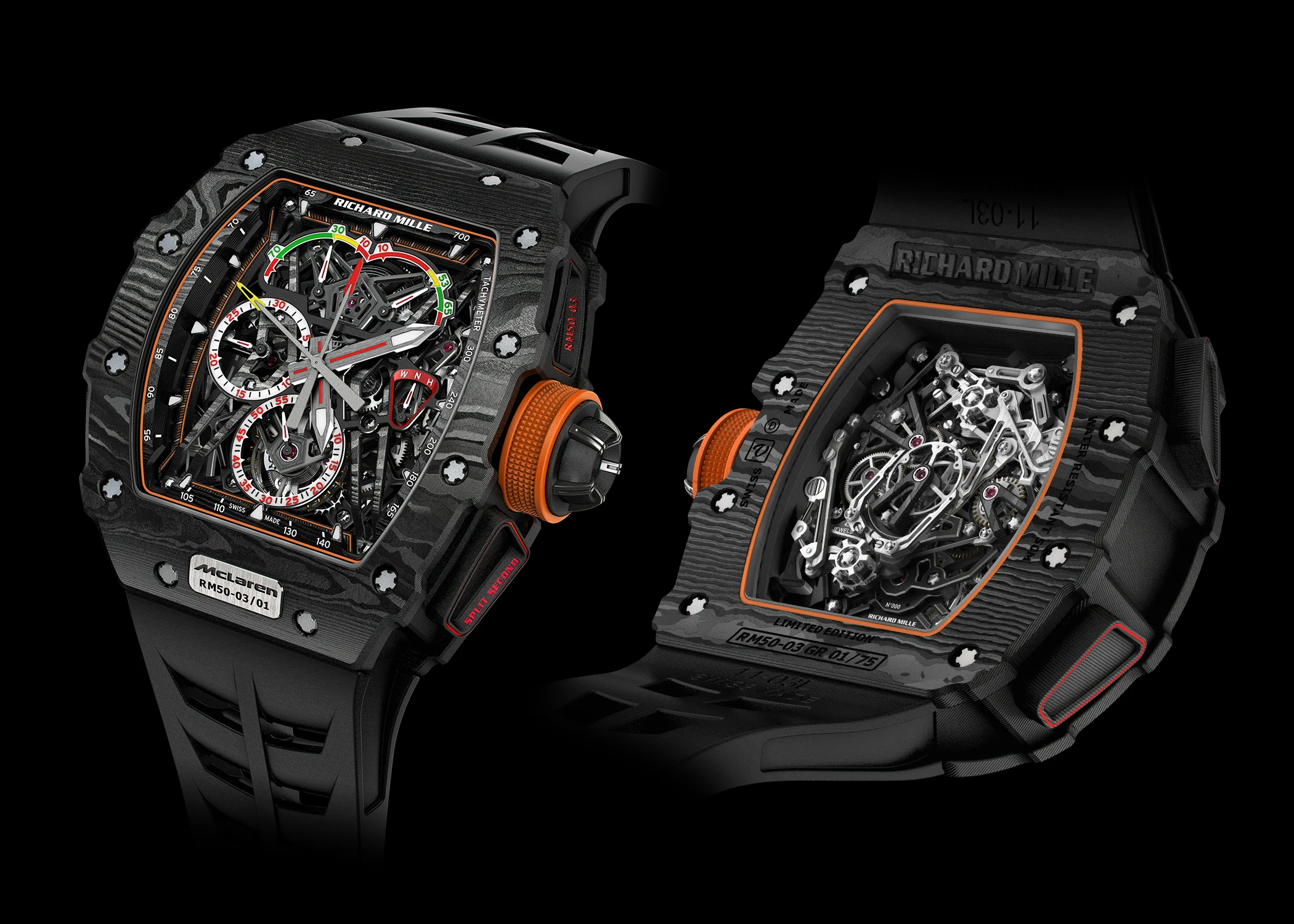
The first result of the collaboration was unveiled in 2017: the RM 50-03 Tourbillon Split-Seconds Chronograph McLaren F1. Its construction incorporated not only titanium and Carbon TPT but also introduced an entirely new material: Graph TPT, better known as graphene. Graph TPT is distinguished by the incorporation of graphene, a material that, according to Richard Mille, is six times lighter and 200 times stronger than steel. This enabled the RM 50-03 to weigh less than 40 grams including its strap, making it the lightest mechanical chronograph ever produced at the time of its launch. Richard Mille, McLaren Applied Technologies and the National Graphene Institute at the University of Manchester were all involved in developing the material.
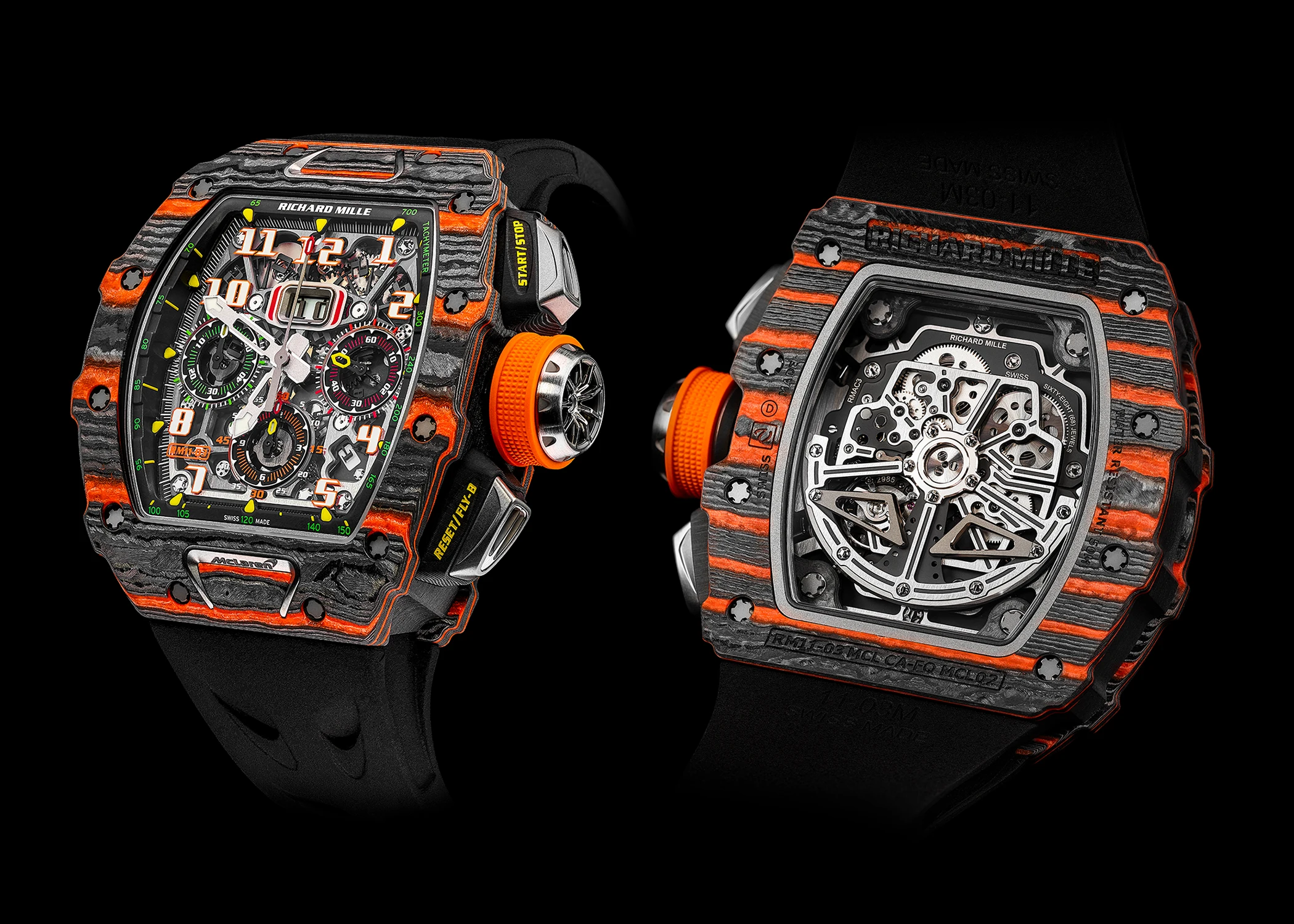
In 2018, the launch of the RM 11-03 Automatic Flyback Chronograph McLaren brought a watch paying tribute to the McLaren Senna. Limited to 500 pieces, the watch features a Carbon TPT case interwoven with orange Quartz TPT – a reference to McLaren’s signature colour. The titanium pushers echo the headlights of the McLaren 720S, while titanium inserts on the bezel take their inspiration from the air intake of the McLaren F1.
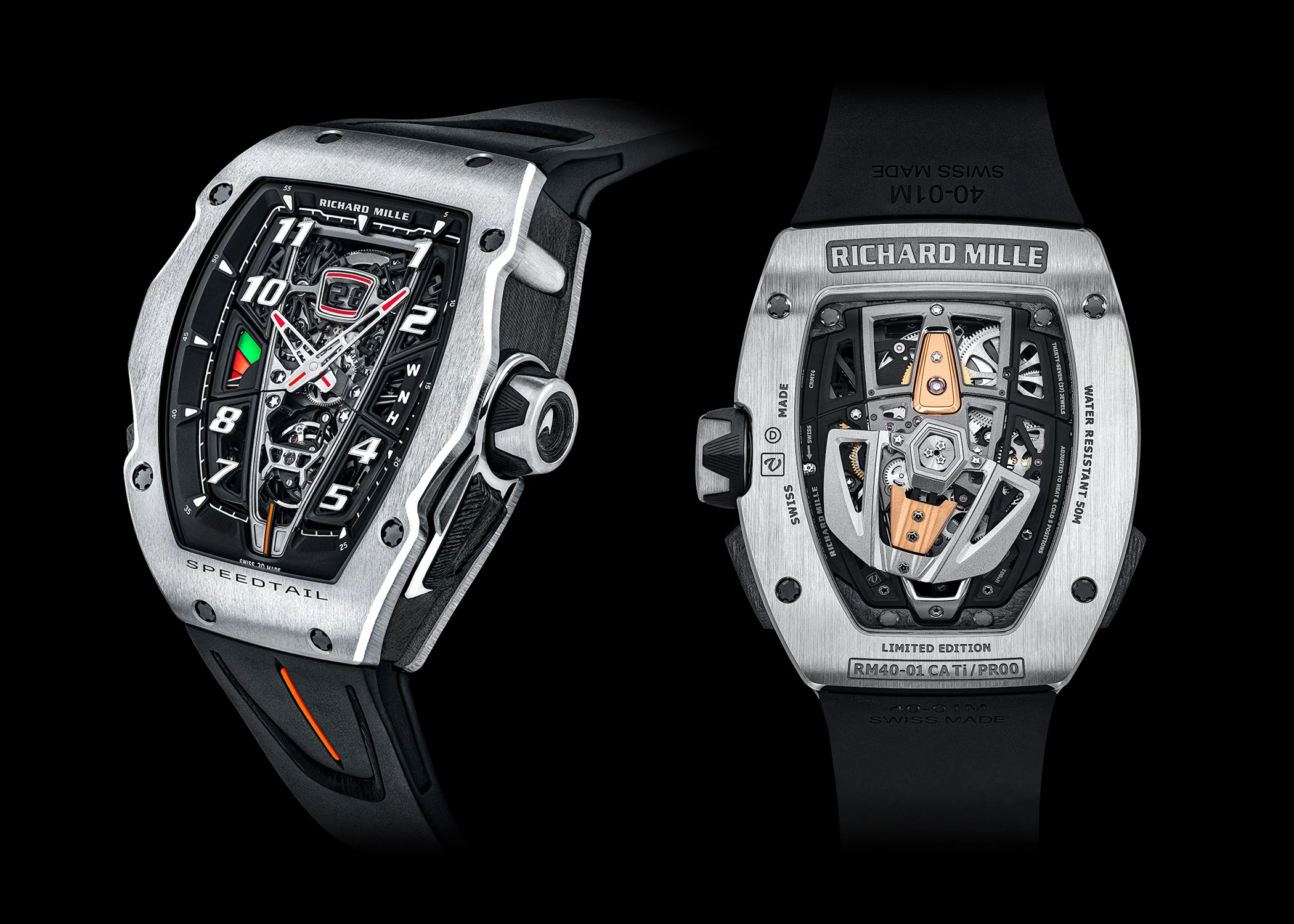
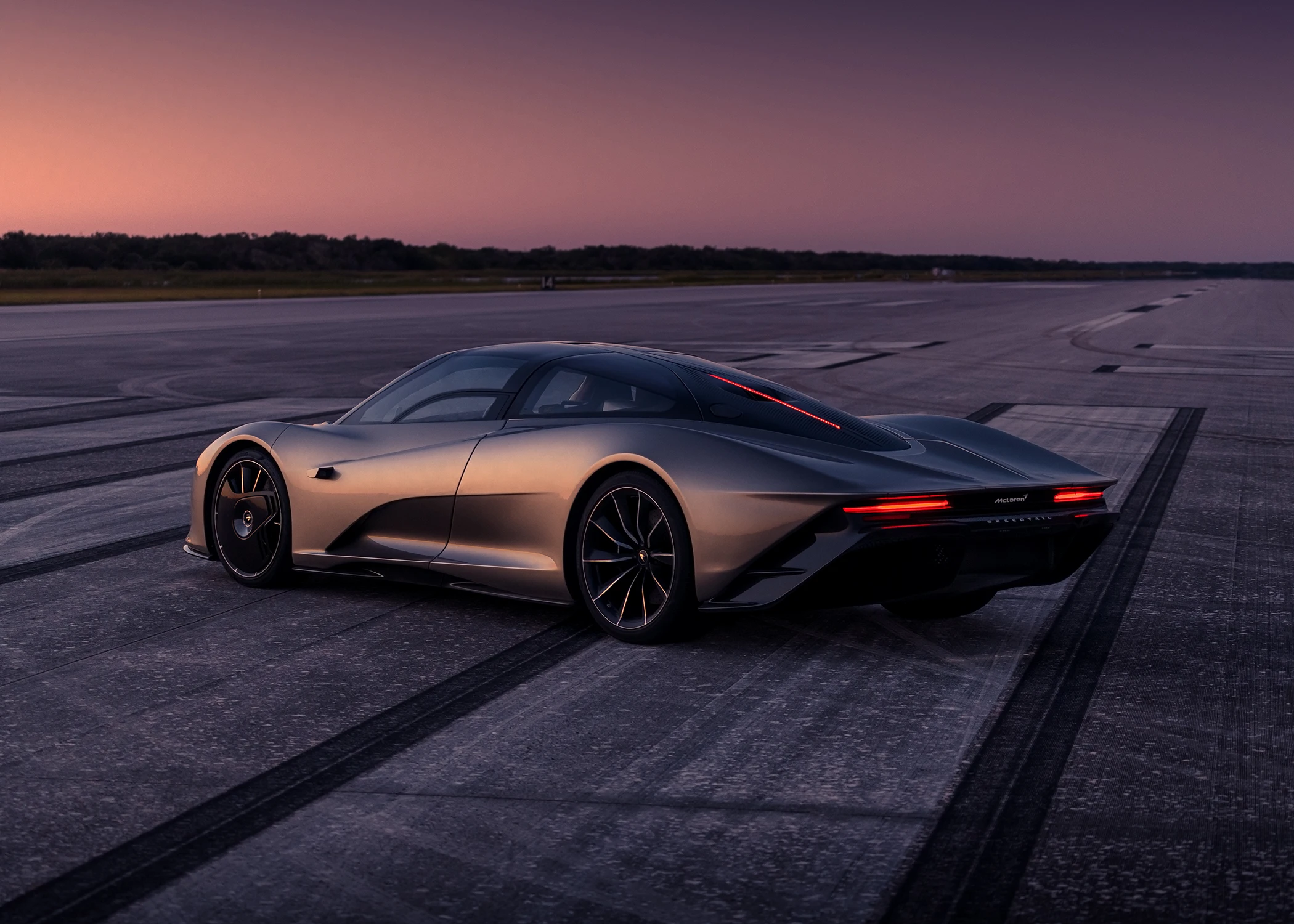
In 2018, McLaren unveiled its fastest road car: the Speedtail, which produces 1,070 horsepower and reaches a top speed of 403 km/h. To celebrate the achievement, Richard Mille unveiled the RM 40-01 McLaren Speedtail in 2021, limited to just 106 pieces. The development of its teardrop-shaped case alone required 2,800 hours of work spread over 18 months.
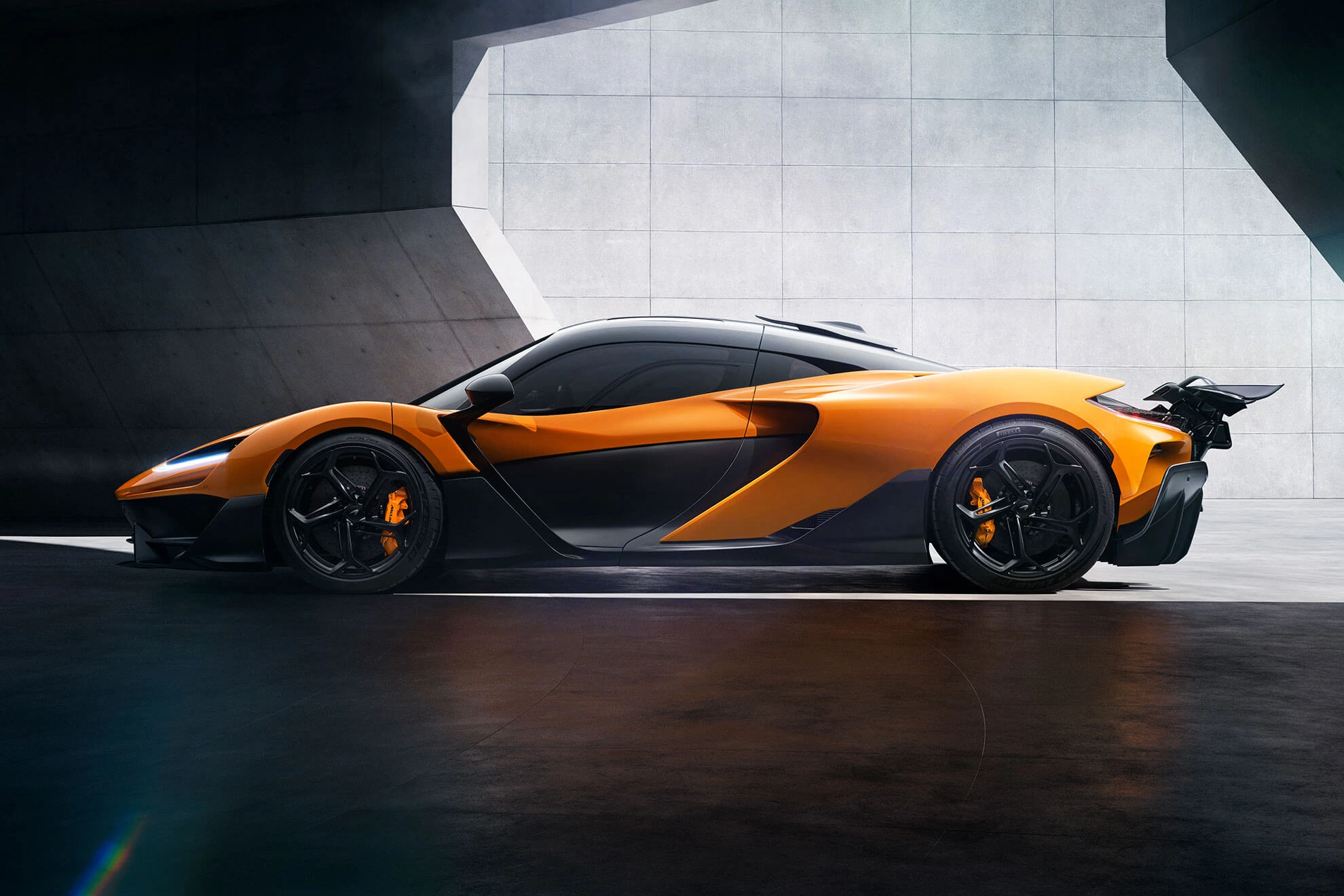
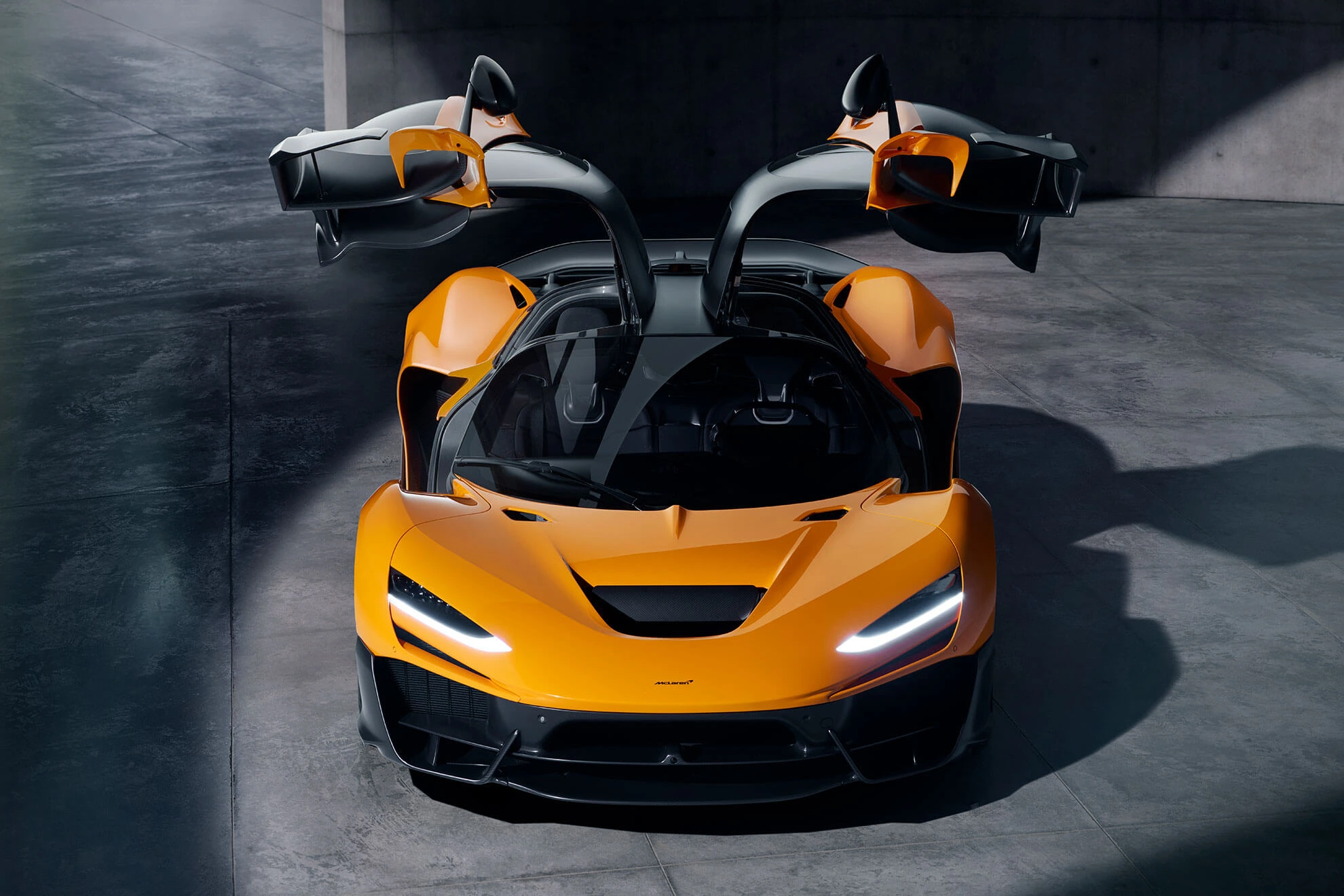
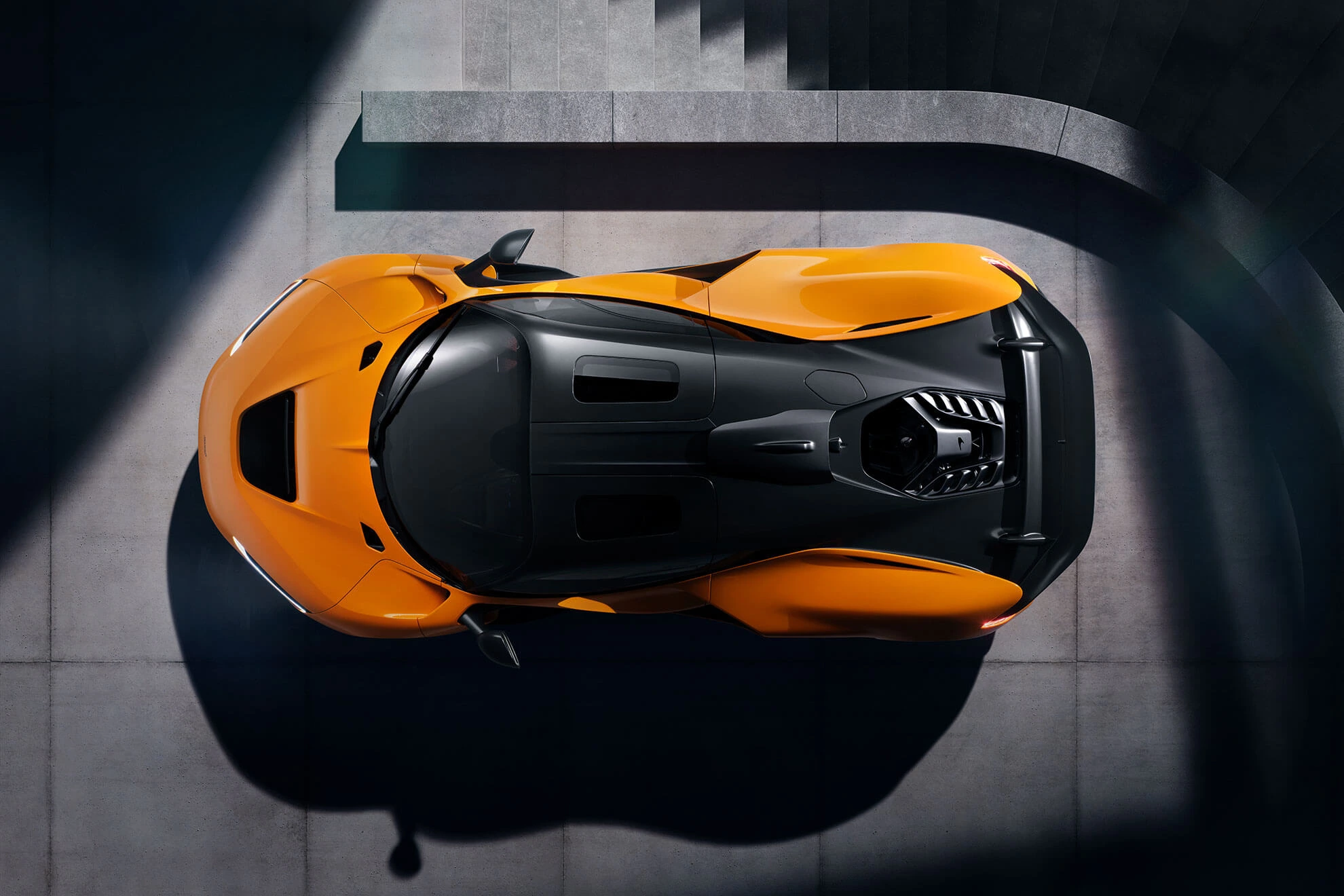
The latest result of the collaboration arrived in 2024: the RM 65-01 McLaren W1, limited to 500 pieces and representing the fourth watch jointly developed by the two partners. Its inspiration was the supercar of the same name, whose aerodynamic lines and so-called Aero-Cell architecture influenced the design of the case. Particularly elaborate is the construction of the bezel, made from Grade 5 titanium and Carbon TPT. At its thinnest point, the titanium section measures just 0.5 millimetres. Development of the watch had already begun in 2022, when Richard Mille’s engineers first examined a full-scale clay model of the McLaren W1 at the McLaren Technology Centre.
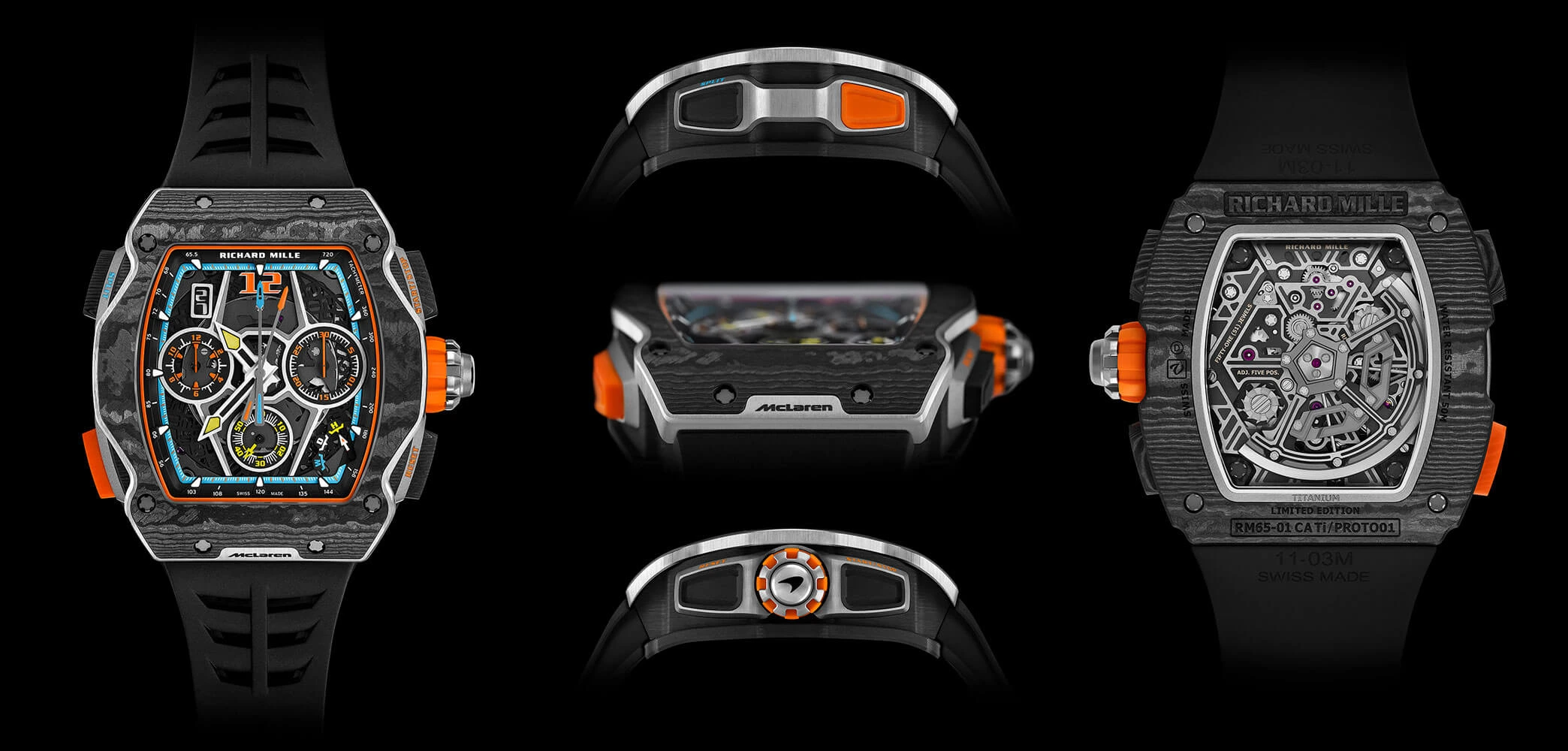
Inside beats the automatic RMAC4 calibre, a split-seconds chronograph operating at a frequency of 5 Hz, allowing intermediate times to be measured to an accuracy of one-tenth of a second. One distinctive feature is the rapid-winding function, which Richard Mille first introduced with the original RM 65-01 in 2020 as a supplement to the automatic winding mechanism. An additional orange pusher positioned at 8 o’clock allows the barrel to be wound at the press of a button, without having to operate the crown. After approximately 125 presses, the full power reserve of around 60 hours is available.
The construction of ultra-thin movements has long been regarded as one of the greatest challenges in haute horlogerie.The thinner a watch is intended to be, the more complex the construction of its movement becomes. Components must be miniaturised, rearranged or completely reimagined without compromising the movement’s functionality or chronometric stability. Richard Mille demonstrated just how far the concept of an ultra-thin watch could be taken in 2022 with the introduction of the RM UP-01 Ferrari, limited to 150 pieces.
This was the first joint creation to emerge from the partnership between Richard Mille and Ferrari, which began in February 2021. Compared with the collaboration with McLaren, the Ferrari partnership encompasses an even broader range of motorsport activities. It extends beyond Formula 1 to include the World Endurance Championship (WEC), GT racing, the Ferrari Challenge, the Ferrari Driver Academy and esports. Furthermore, the development and design departments of both companies work together on the conception of new watches.
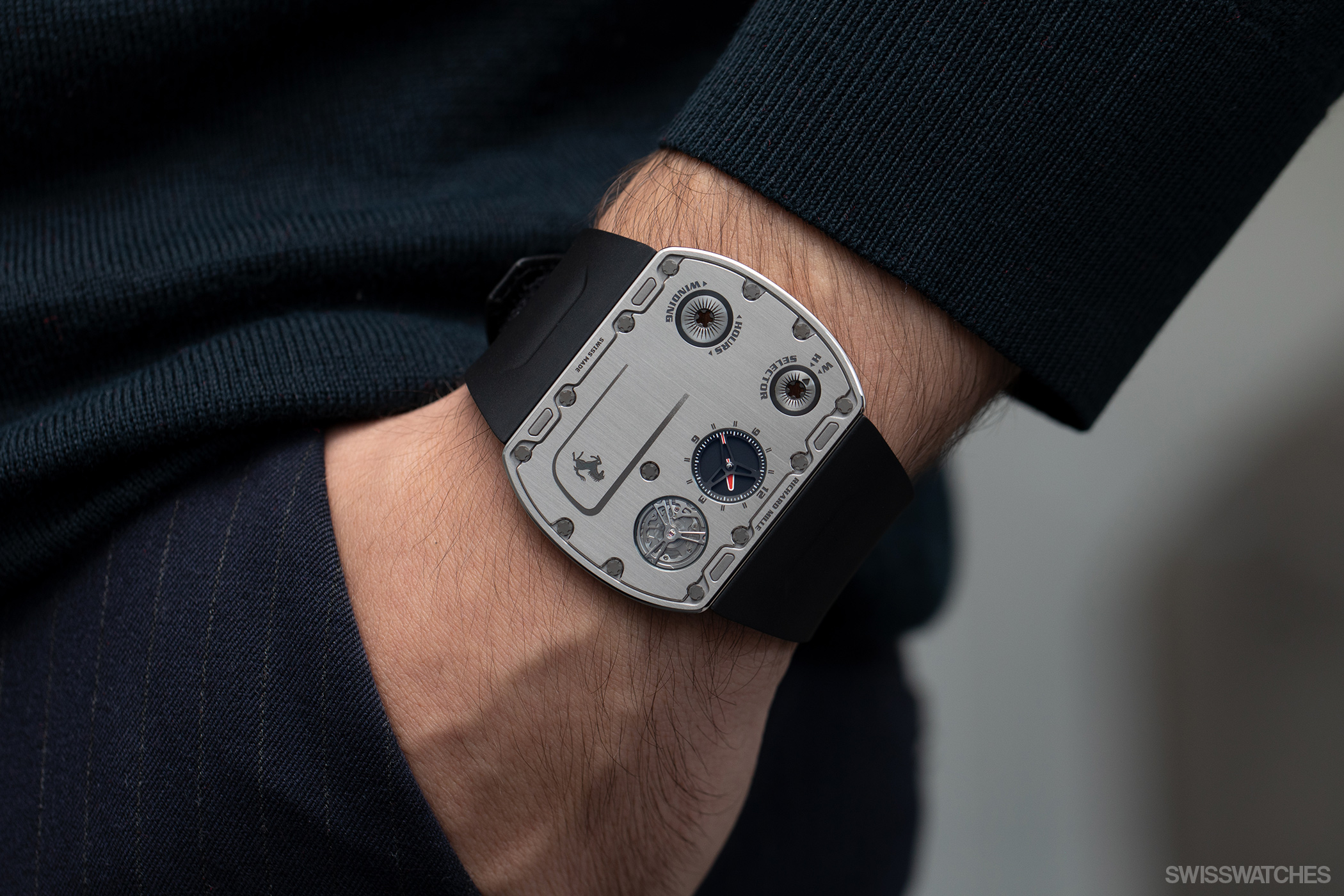
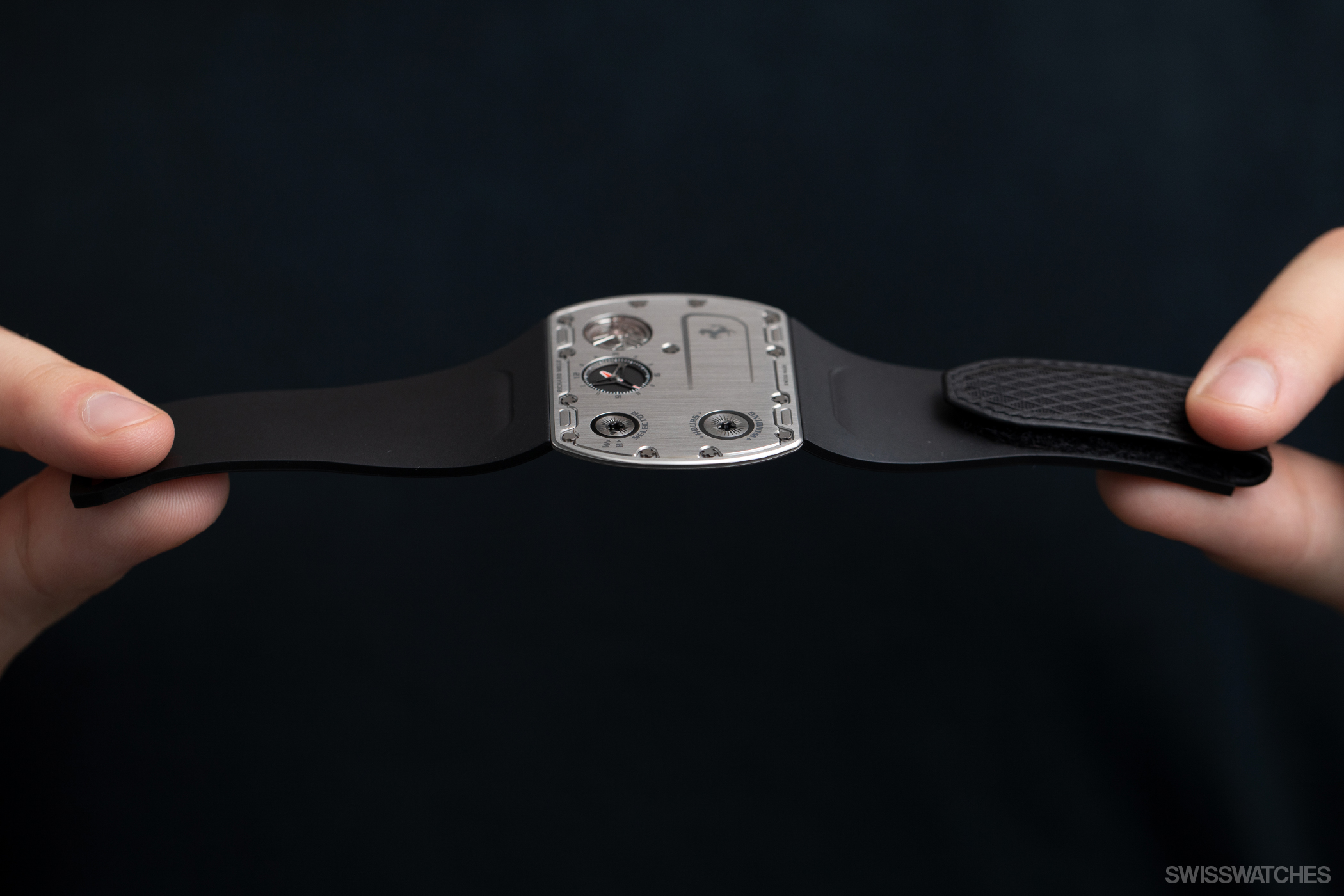
The RM UP-01 reversed the conventional approach to movement construction. Rather than stacking components on top of one another, its calibre spreads them across a large surface area. To achieve this, the brand even departed from its established design language, adopting a case measuring 51 by 39 millimetres and thus abandoning its traditional tonneau shape. In order to minimise the movement’s height, Richard Mille decided to return to a classical movement architecture, in which the movement is mounted inside the case rather than using the caseback as a baseplate – an approach frequently adopted in such demanding ultra-thin constructions.

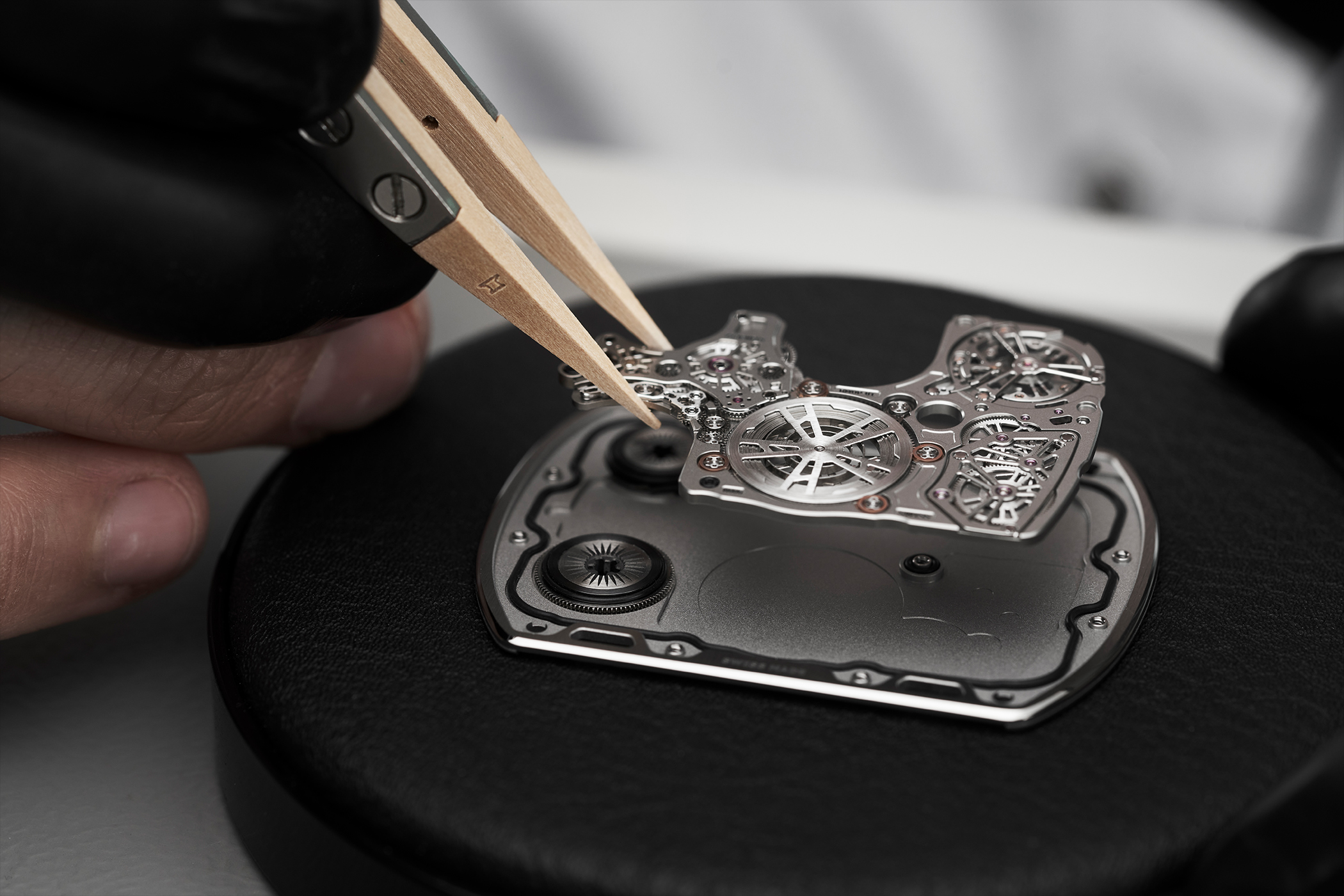
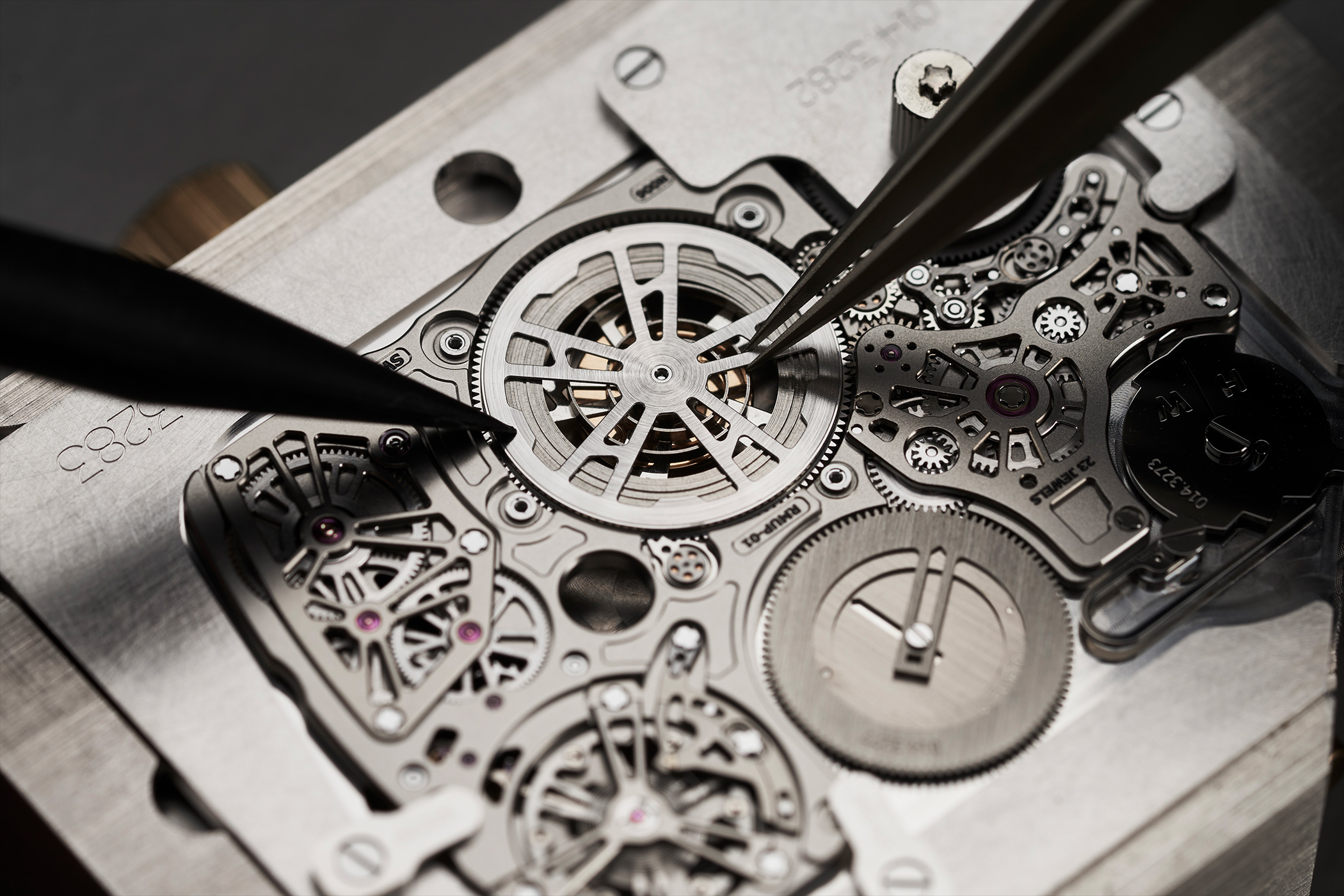
This was made possible in part by a newly developed escapement. In conventional Swiss lever escapements, the safety roller and guard pin contribute significantly to the overall height. Together, these components prevent the lever from rebanking. For the RM UP-01, Richard Mille and Audemars Piguet Le Locle (formerly Renaud & Papi) developed and patented a flat escapement that prevented rebanking through an extended lever fork with redesigned horns. The concept was completed by a Grade 5 titanium balance wheel with six regulating weights, an exceptionally flat balance spring and the elimination of a conventional crown. The movement offered a 45-hour power reserve and operated at a frequency of 4 Hz.
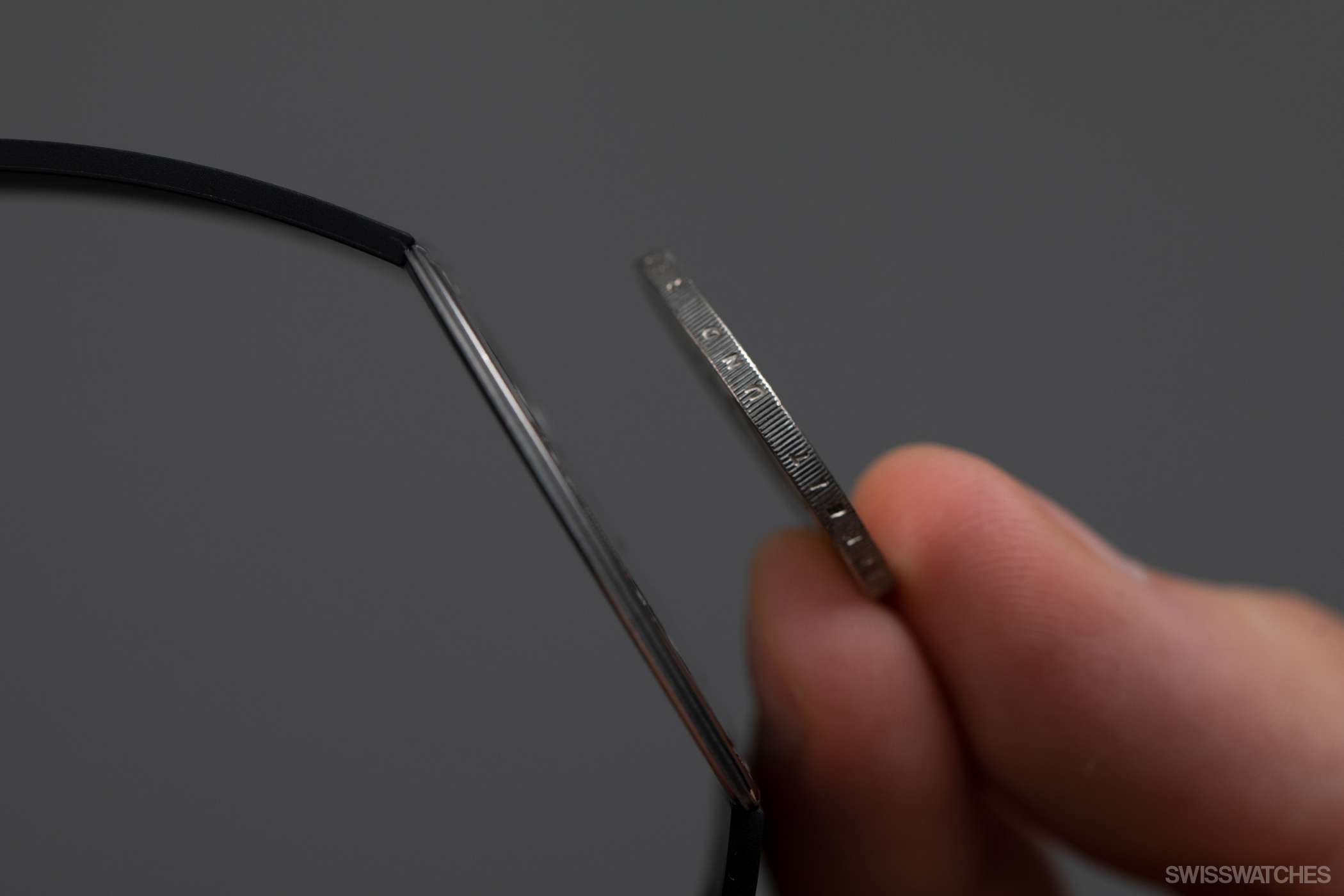
After more than 6,000 hours of development work and laboratory testing, the result was finally achieved: the movement measured just 1.18 millimetres in height, while the entire RM UP-01 Ferrari was only 1.75 millimetres thick. At the time of its unveiling in 2022, it was the world’s thinnest mechanical wristwatch. Just how impressive this case height really was became clear to us at the time through a simple comparison: holding a two-euro coin beside the case, we discovered that the watch was even thinner.
The second joint creation to emerge from the partnership between Richard Mille and Ferrari followed in 2025 with the RM 43-01 Tourbillon Split-Seconds Chronograph Ferrari. While the RM UP-01 had focused on reducing the overall height of the watch, Richard Mille now turned its attention to further developing the split-seconds chronograph. To achieve this, the RM43-01 calibre was completely redesigned over a three-year development process in collaboration with the brand’s longstanding movement partner, Audemars Piguet Le Locle (APLL).
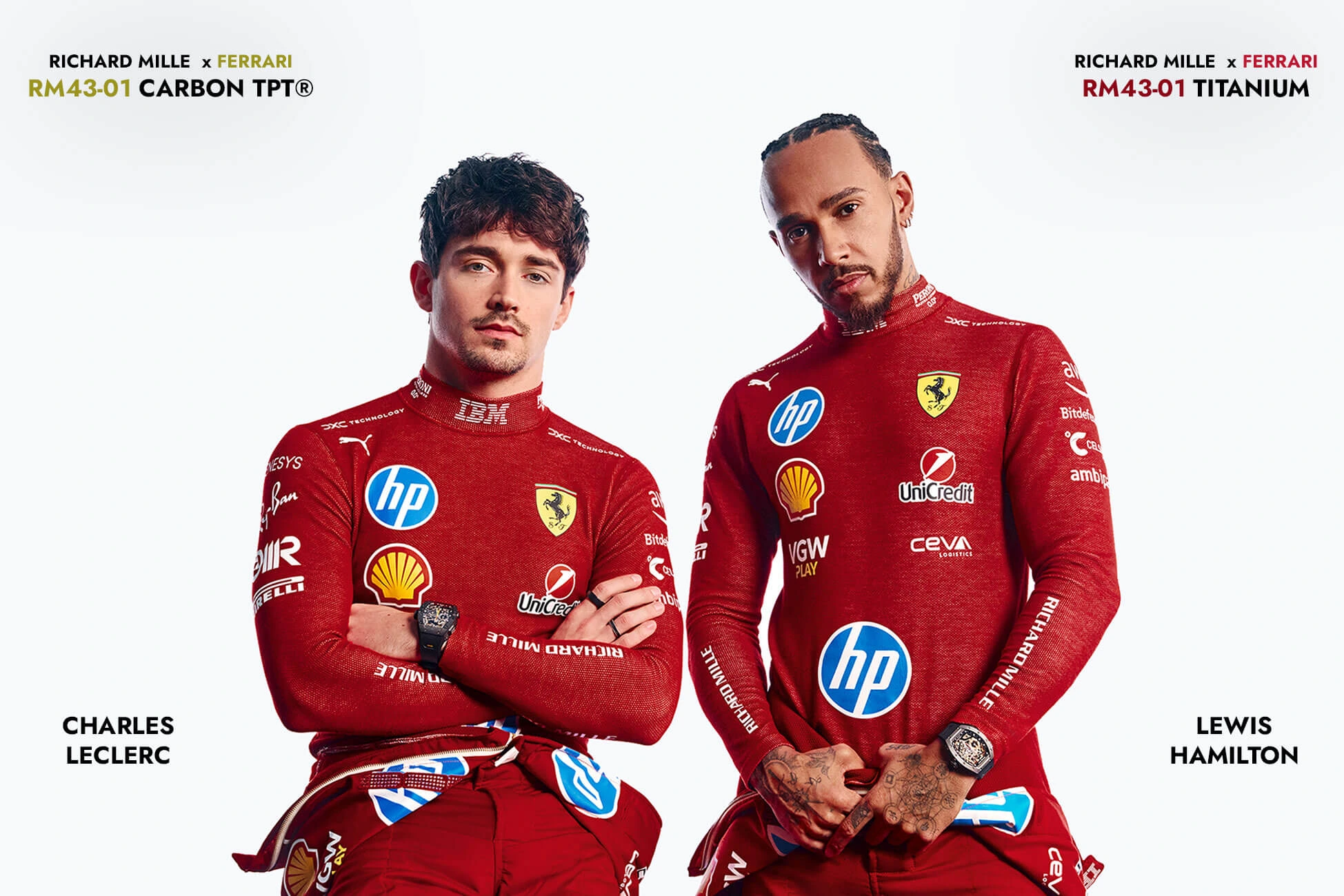
Particular attention was paid to the split-seconds mechanism, which enables the simultaneous measurement of multiple time intervals. Two column wheels, each featuring six columns, control the complex interaction of the individual components and are intended to ensure that the chronograph functions operate as smoothly and reliably as possible. The clamps responsible for stopping and releasing the split-seconds hand were also fundamentally redesigned. Instead of a conventional spring, a specially shaped blade mounted on the split-seconds wheel is used. These structural changes are intended not only to improve the mechanism’s precision and reliability but also to ensure that its fine adjustment remains stable over extended periods.


Thanks to these improvements, the split-seconds function can be activated more smoothly, while mechanical fluctuations and frictional losses are reduced. According to Richard Mille, the chronograph consequently requires only around half as much energy as the previous construction. This not only benefits precision but also enables a power reserve of approximately 70 hours, although the exact duration depends on how frequently and for how long the chronograph is in use. The tourbillon positioned at 5 o’clock deserves particular attention. According to Richard Mille, its manufacture requires three specialist watchmakers working for an average of three months.

One particularly unusual feature is the seconds display. Rather than using a conventional seconds hand, five rotating segments perform this function, moving together with the tourbillon and each marking a twelve-second interval. Together, they therefore represent a complete 60-second revolution. The tourbillon is supported by a construction of titanium and Carbon TPT, with its bridges visible on the dial side.


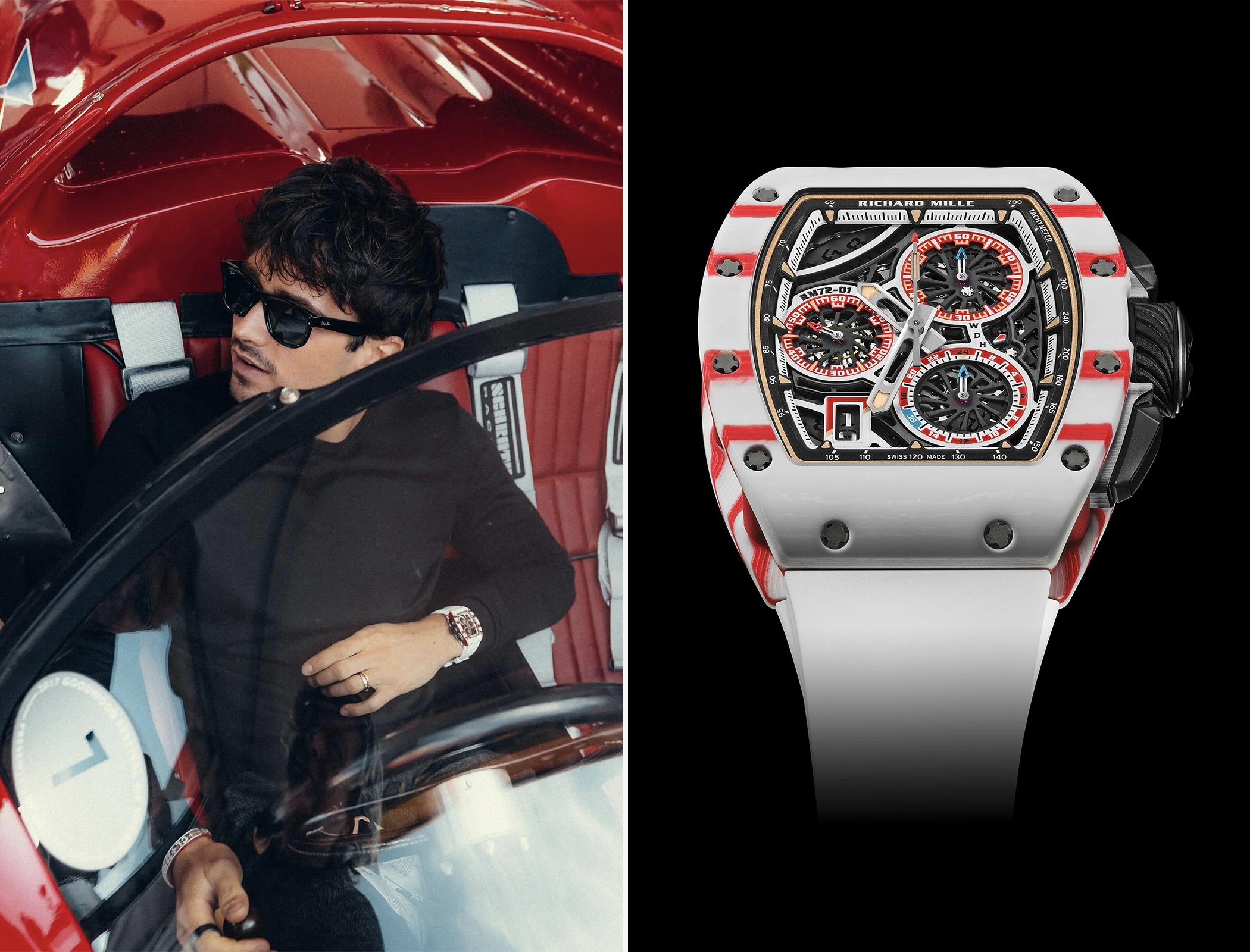
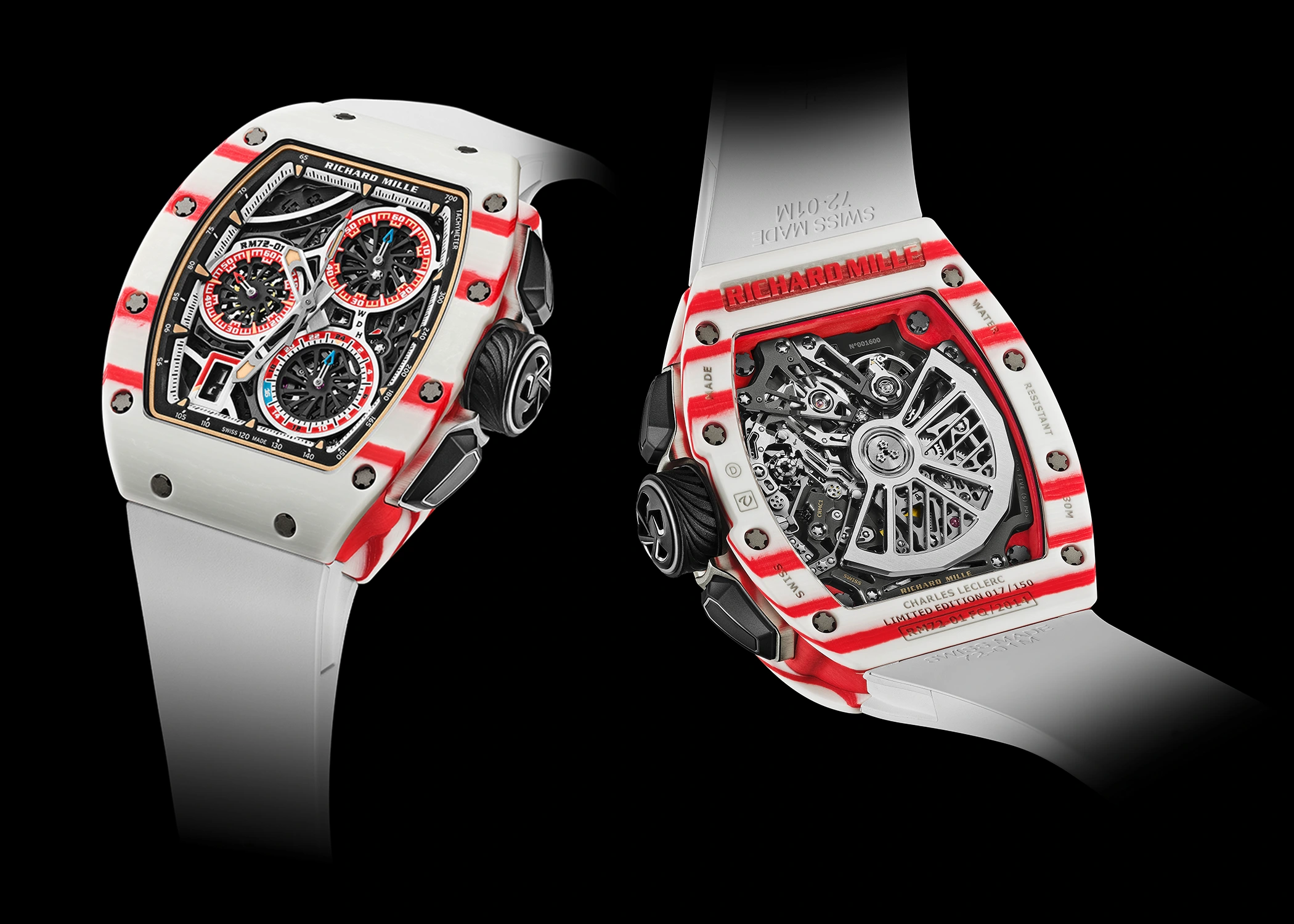
For Ferrari driver Charles Leclerc, Richard Mille created the RM 72-01 Automatic Lifestyle Flyback Chronograph ‘Charles Leclerc’. The watch was first spotted on Leclerc’s wrist in 2025, but was never officially presented by the brand. The technical foundation of the RM 72-01 Automatic Lifestyle Flyback Chronograph ‘Charles Leclerc’ is the CRMC1 chronograph calibre, introduced in 2020 as the first chronograph movement developed entirely by Richard Mille and manufactured in its own workshops in Les Breuleux. It is a flyback chronograph movement featuring what was, at the time, an innovative double-clutch system based on two tilting pinions for the chronograph seconds and minutes, which draw their energy from different parts of the movement. Despite comprising 425 components, the movement measures just 6.05 millimetres in height and offers a power reserve of approximately 50 hours.
Beyond the movement, this particular variation of the RM 72-01 is distinguished above all by its case. Made from red and white Quartz TPT, it reflects the national colours of Monaco, the home country of the Monegasque racing driver. The dial, with its large subdials for the chronograph minutes and hours as well as the small seconds display, also features a red and white colour scheme.
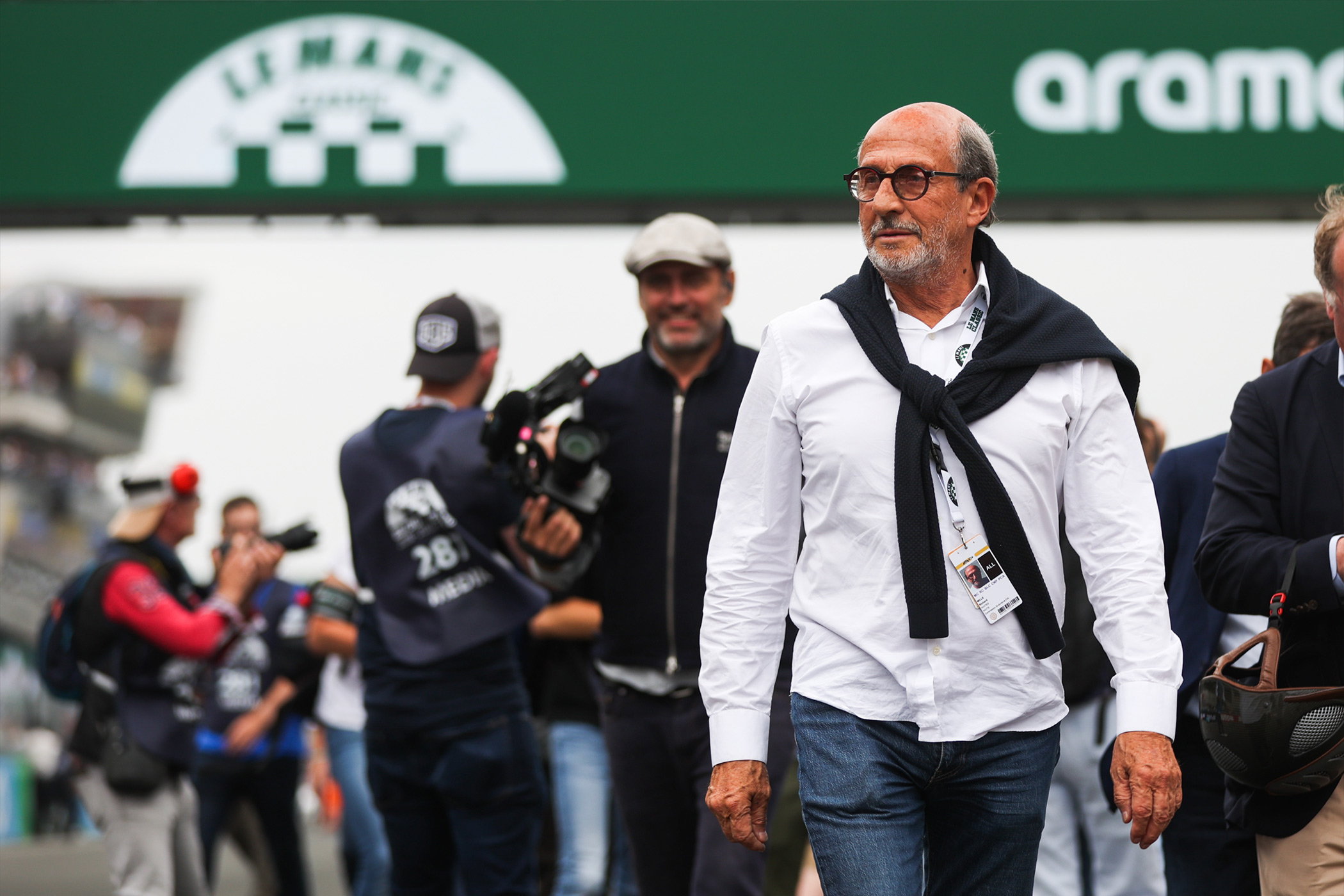
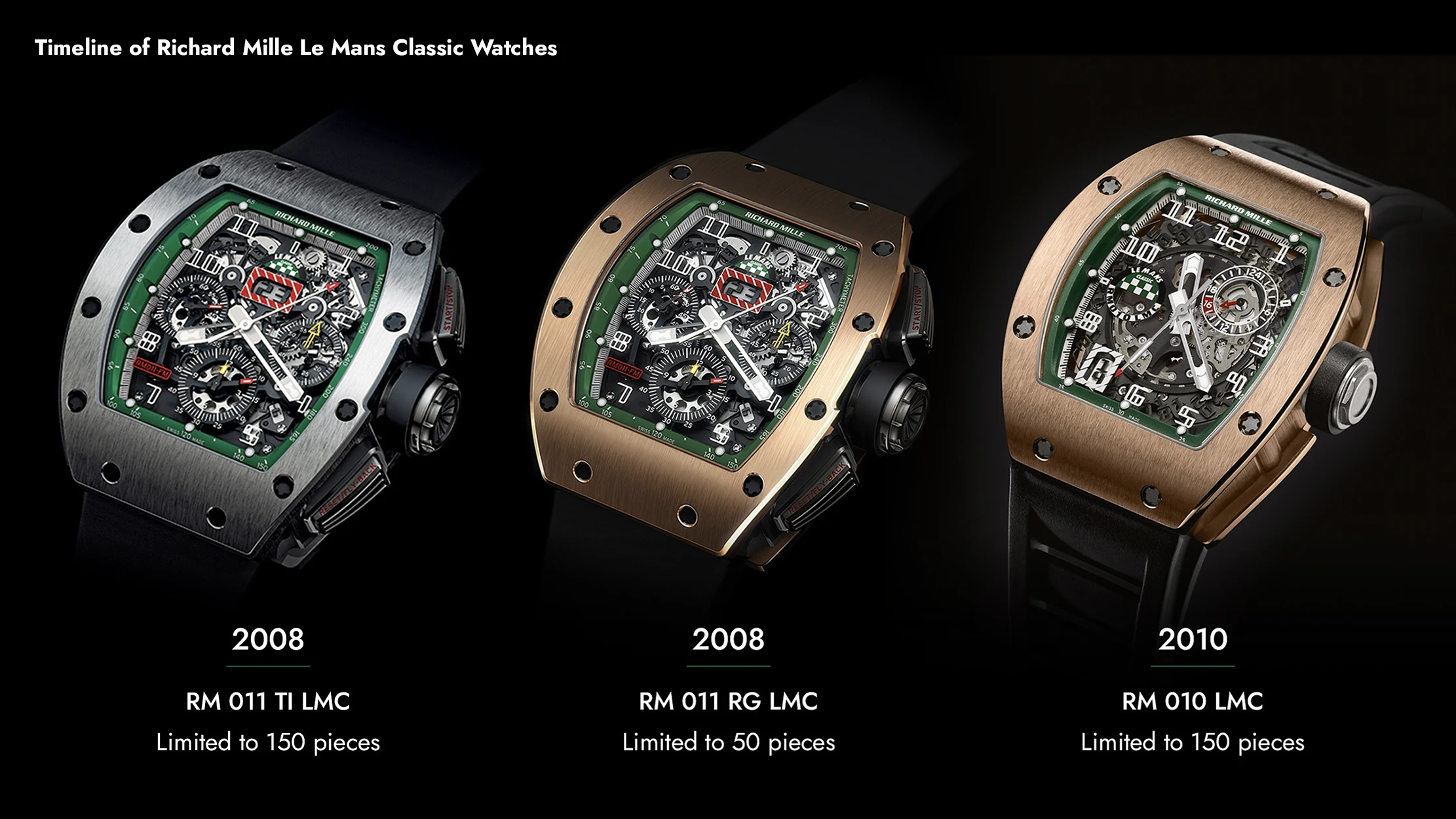
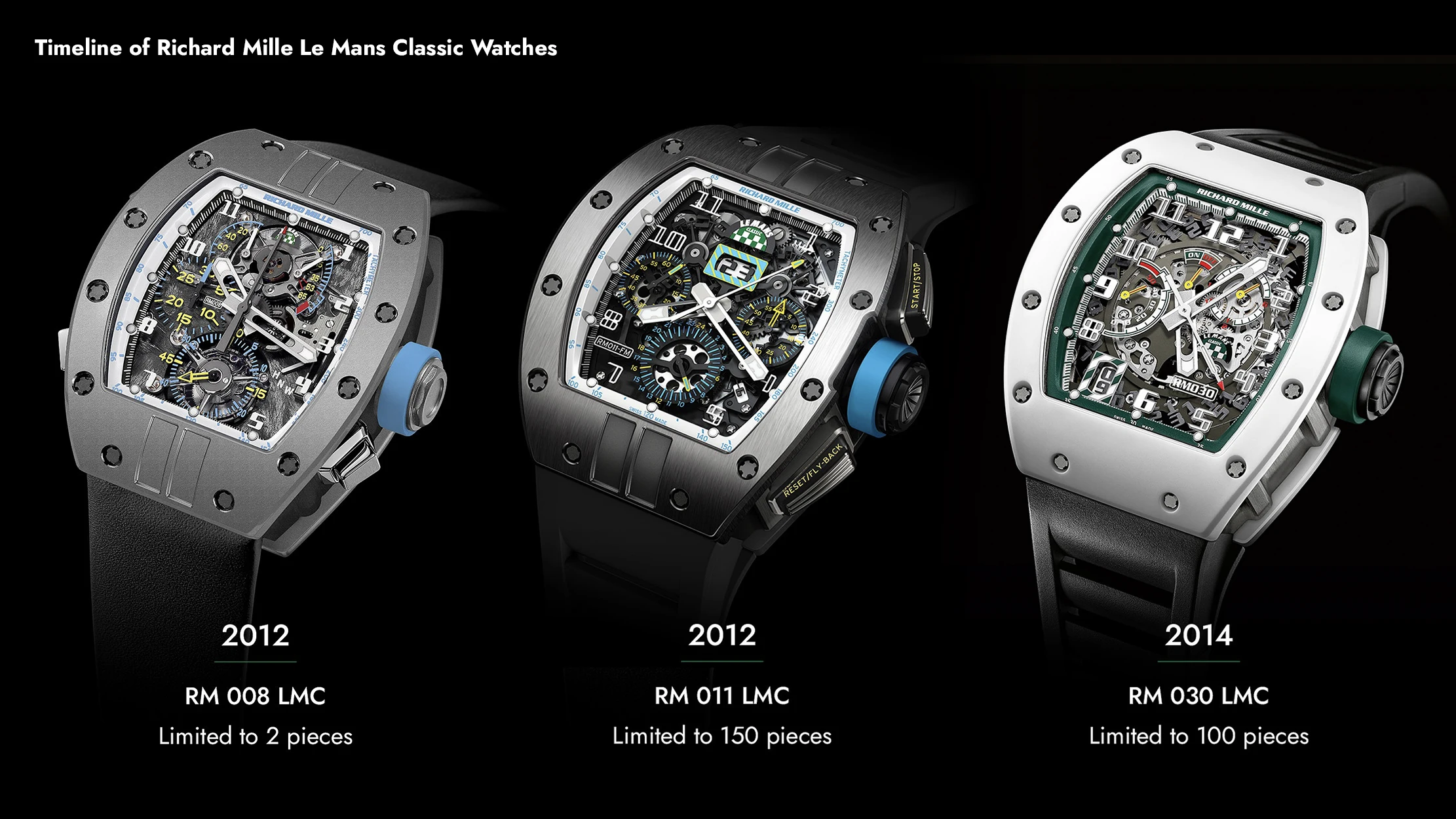
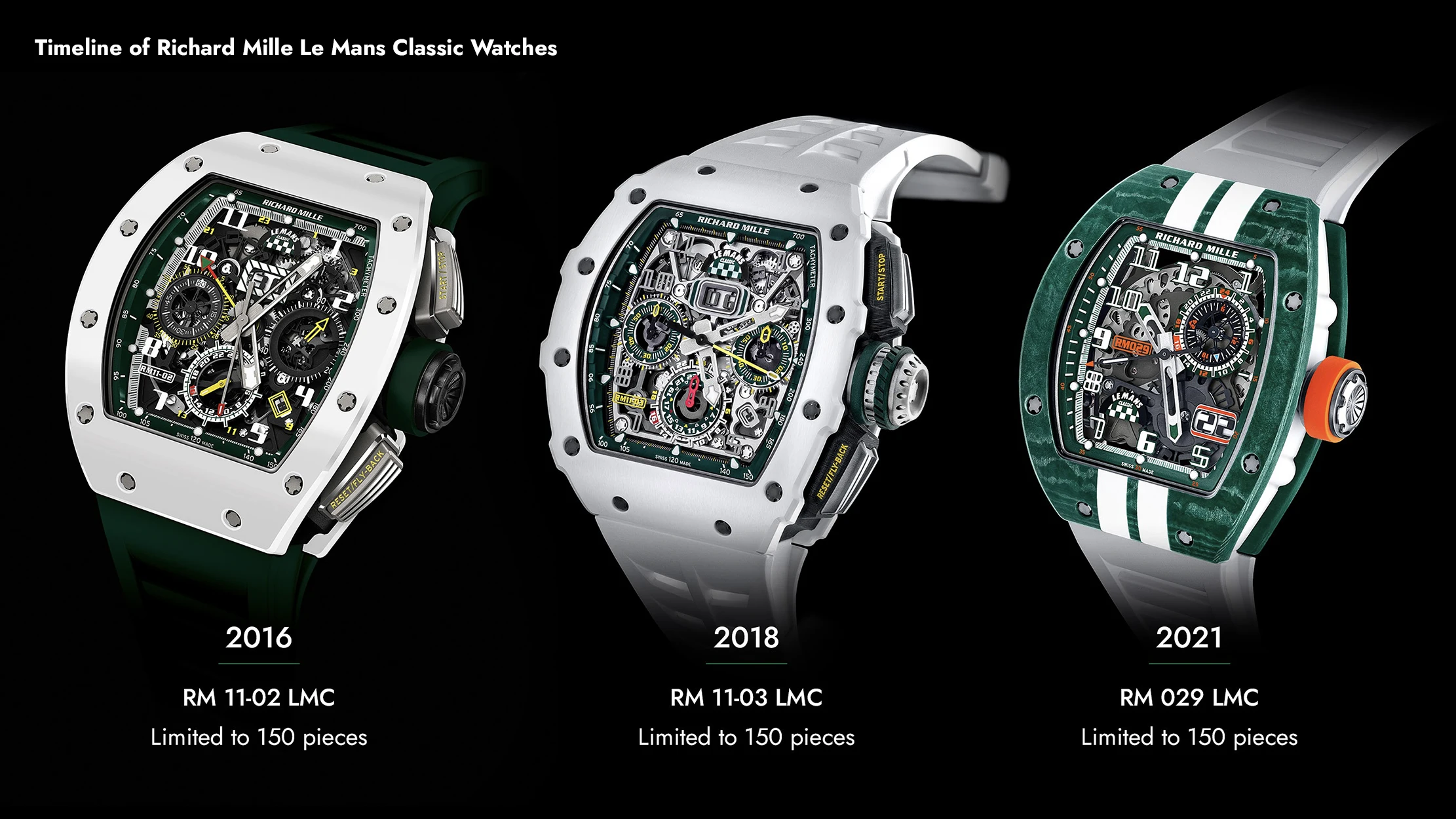
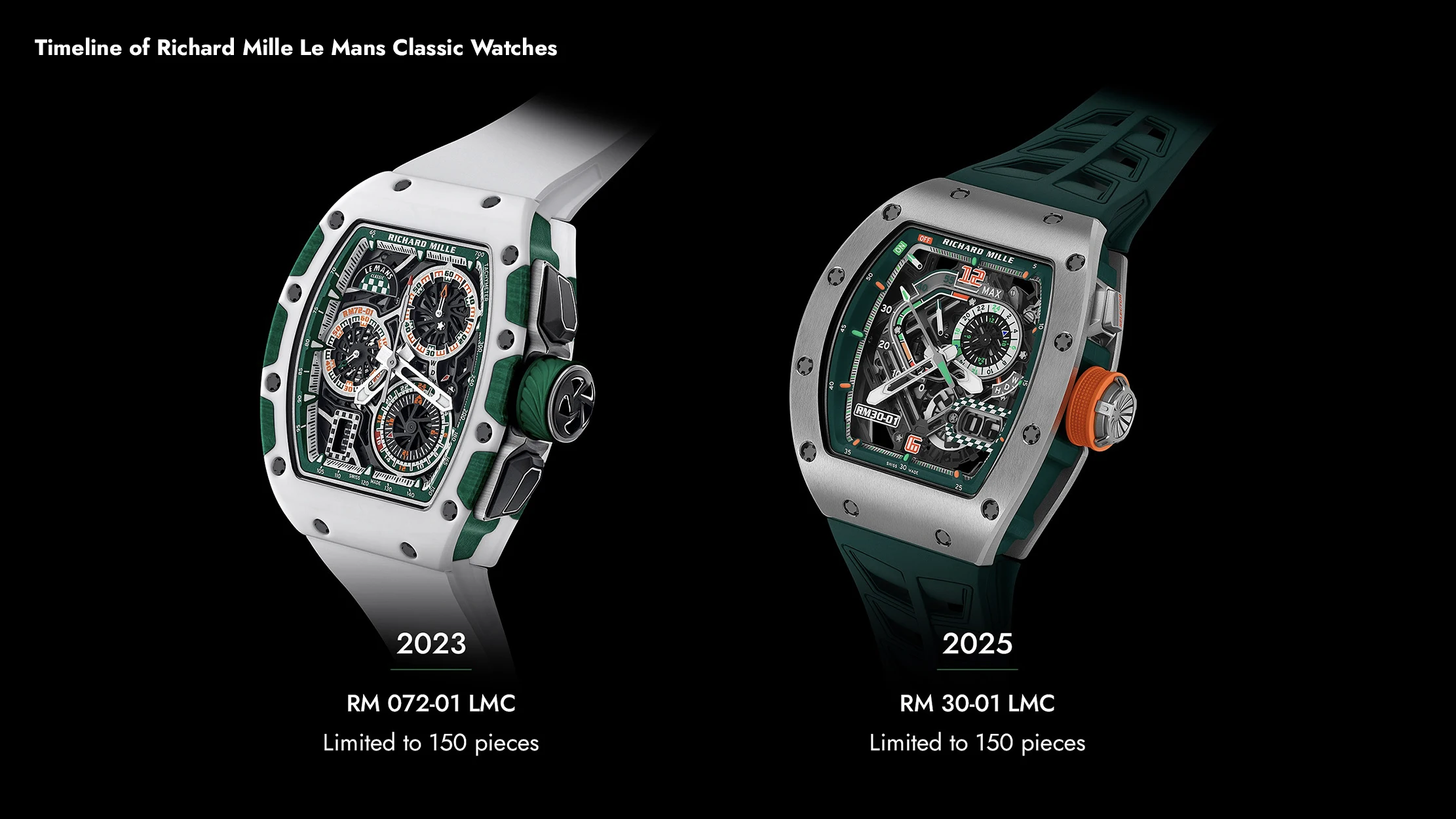
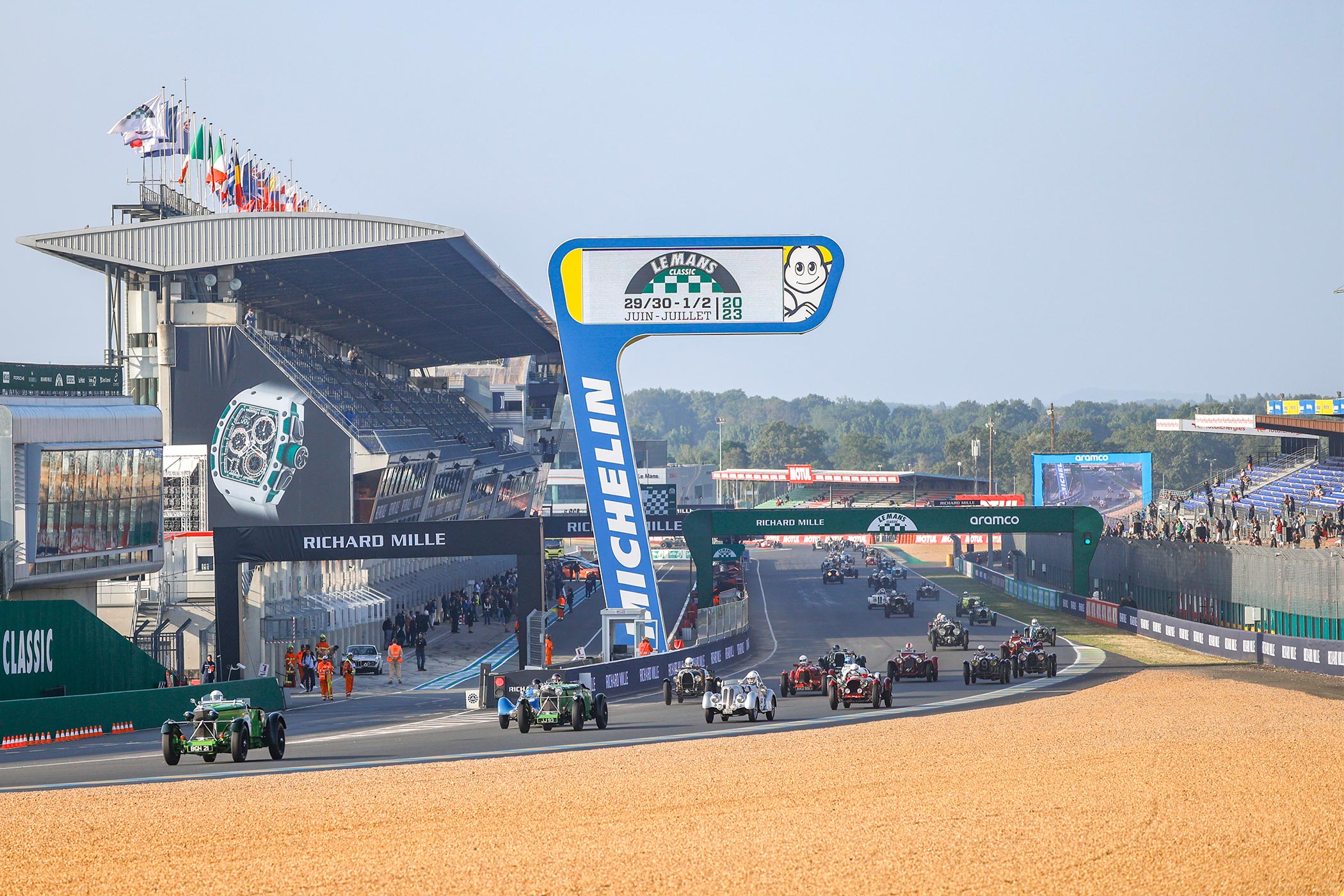
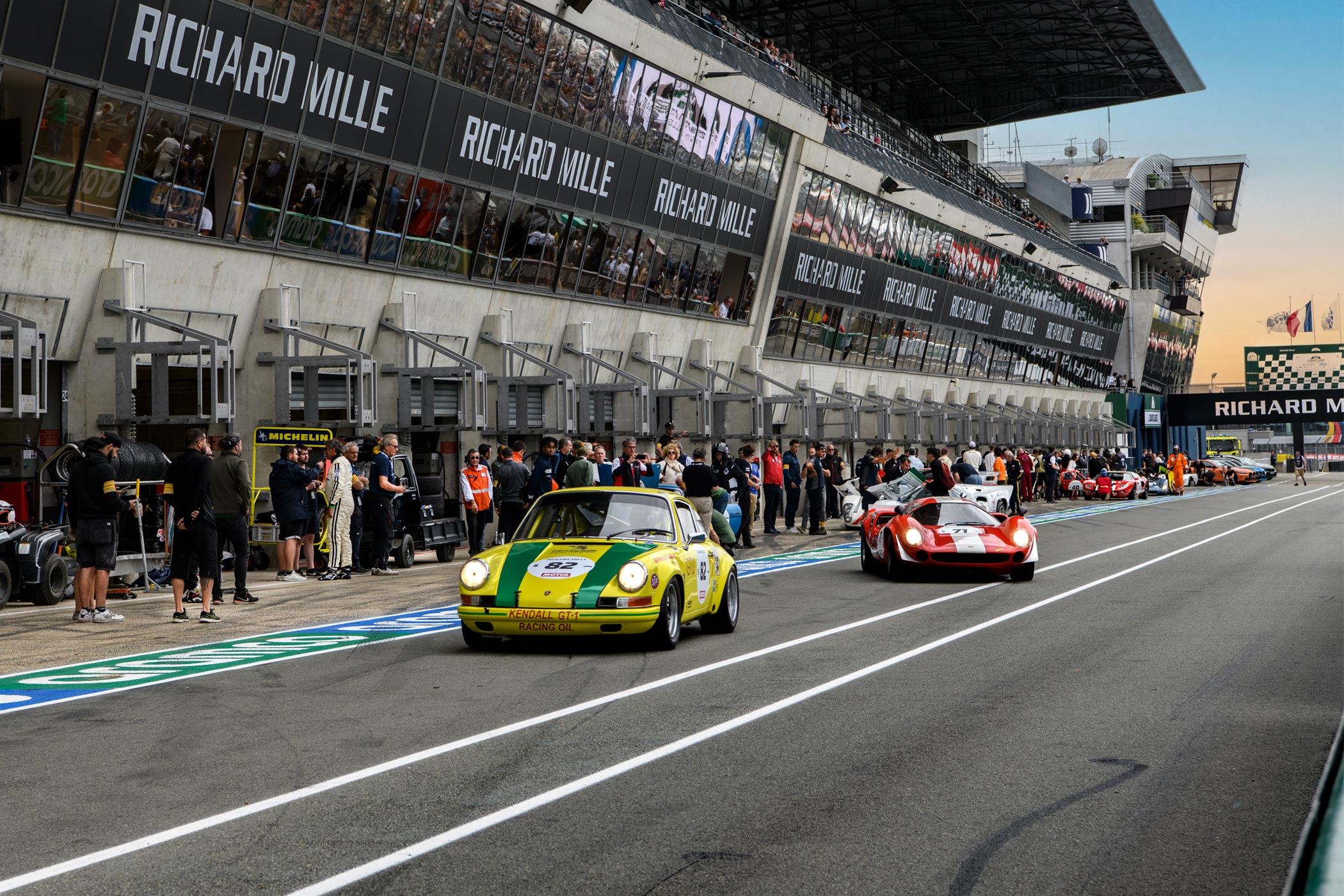
Alongside its individual partnerships, Richard Mille has built up its own portfolio of events over the years, either supporting them as a sponsor or establishing them itself. Le Mans Classic occupies a particularly important position in this regard. Richard Mille has been the principal sponsor of the historic motorsport event since its inaugural edition in 2002. Over the years, it has developed into one of the world’s most significant gatherings dedicated to historic endurance racing. The event celebrates the racing cars and personalities that have shaped the history of the 24 Hours of Le Mans. What makes Richard Mille’s involvement particularly noteworthy is that the brand does not merely support the event as a sponsor. Since 2008, it has developed a dedicated limited-edition watch for each edition of Le Mans Classic, incorporating the event’s distinctive colours while showcasing the brand’s watchmaking expertise.
For Richard Mille, Le Mans Classic is therefore far more than a conventional sporting sponsorship. Over the years, it has become a recurring platform for the presentation of new timepieces. According to Richard Mille, the RM 30-01 Le Mans Classic, unveiled in 2025, was already the tenth model developed specifically for the event. Limited to 150 pieces, the watch once again incorporates the traditional green-and-white colour scheme of Le Mans Classic.

Richard Mille’s passion for classic automobiles is also reflected in its involvement as principal sponsor of the International Concours of Elegance St. Moritz, better known as The ICE. The event takes place during the winter season in the Engadin, on the frozen surface of Lake St. Moritz. Over two days, the lake is transformed into a kind of open-air museum showcasing some of the rarest and most significant automobiles in history. The first day focuses on a static presentation, with historic vehicles displayed on the ice and assessed by a specialist jury according to their design, history and originality.

On the second day, the automotive classics come to life. Drivers take their vehicles around a specially prepared circuit on the frozen lake, giving the jury an opportunity to evaluate the cars from a dynamic perspective. The event concludes with awards for the most impressive vehicles across five categories, including ‘Concept Cars & One Offs’ and ‘Racing Legends’.


The Nürburgring Nordschleife remains one of the most demanding racing circuits in the world.Its ribbon of asphalt winds through 33 left-hand and 40 right-hand corners, negotiating more than 300 metres of elevation change through the forests of Germany’s Eifel region. Just how notorious the circuit had already become is reflected in its best-known nickname: the ‘Green Hell’. The name was coined by three-time Formula 1 world champion Jackie Stewart in 1968, after he won the German Grand Prix in extreme conditions of heavy rain and dense fog. To this day, the Nordschleife demands everything of its drivers. Changing asphalt surfaces, tight sequences of corners, the banked Caracciola-Karussell and long straights allowing correspondingly high speeds make every lap a challenge.

Since 2017, the Nordschleife and the Nürburgring Grand Prix circuit have together provided the setting for the Nürburgring Classic. The event was established to mark the circuit’s 90th anniversary and has since brought enthusiasts of historic racing cars and classic motorsport together in the Eifel region. The attraction lies not merely in admiring rare racing cars from past decades, but in experiencing them on the very circuit where motorsport history was once made. When the organisers approached Richard Mille ahead of the inaugural event in 2017 to propose a collaboration, they were met with considerable enthusiasm. The watchmaker has served as the event’s principal sponsor ever since, further expanding its portfolio of historic motorsport partnerships.


Richard Mille has also adopted this approach beyond motorsport. Having previously supported the Les Voiles de St. Barth sailing regatta as a sponsor, the brand established its own regatta for classic sailing yachts in 2023: the Richard Mille Cup. The event is open to owners and charterers of historic sailing vessels built before 1939, as well as particularly faithful reproductions of these classic yachts. In doing so, Richard Mille created its own platform dedicated to historic sailing and the traditional craftsmanship of yacht building.


Over the years, Richard Mille expanded its network beyond sport, establishing partnerships with personalities from music, art and popular culture. Some of these collaborations also involved the partners directly in the design of the watches themselves.
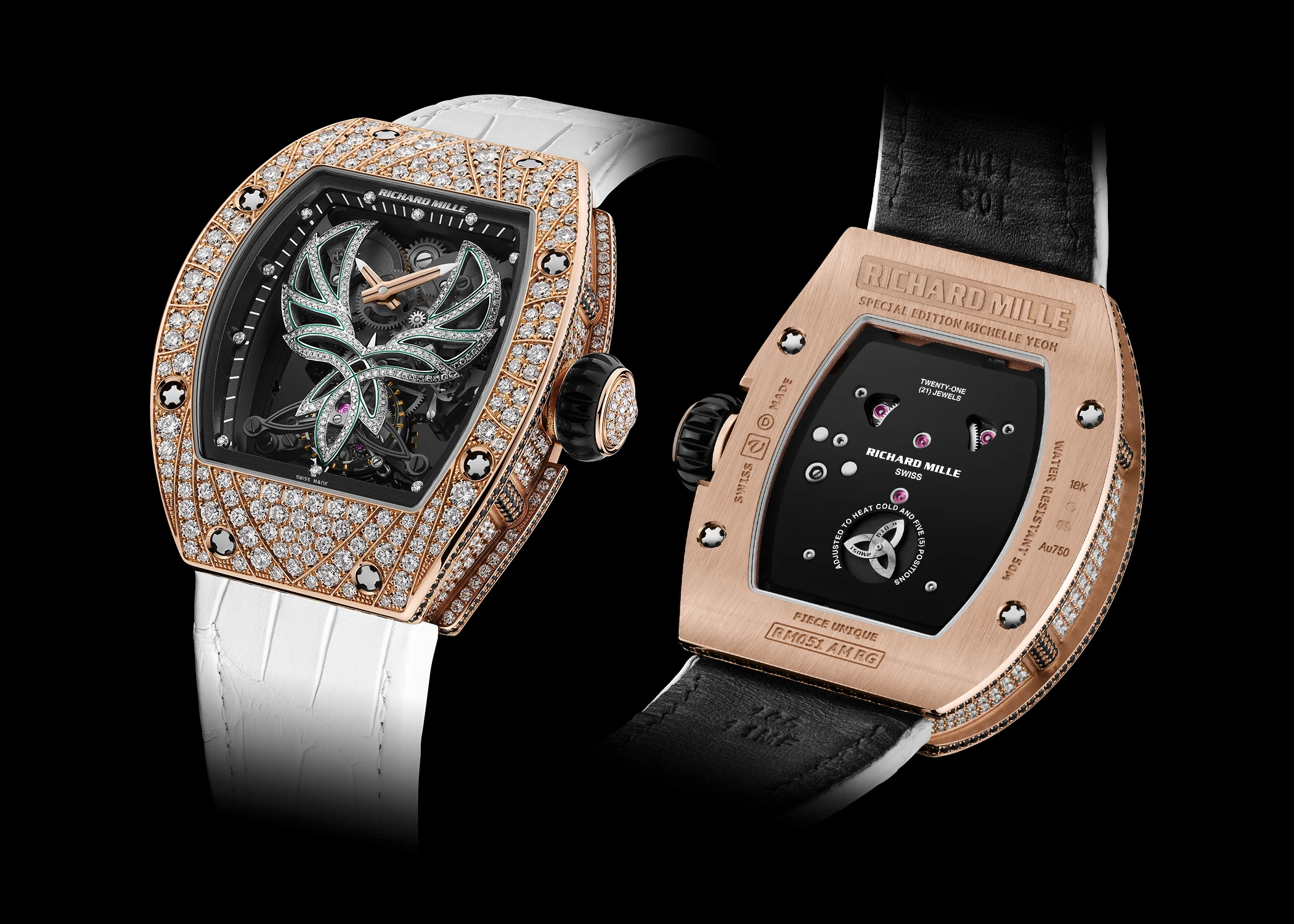
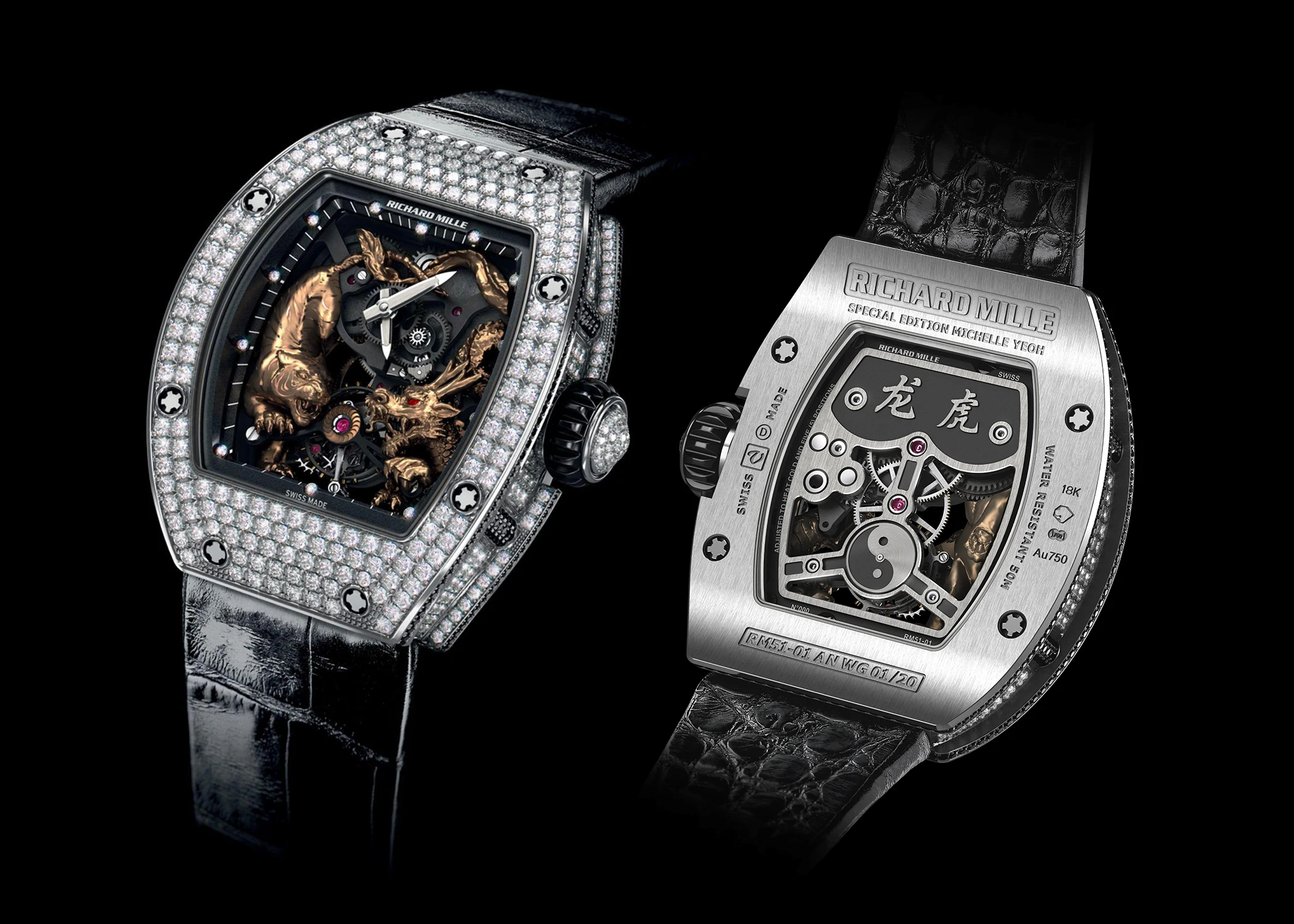
An early example is actress Michelle Yeoh. The collaboration began in 2011 and led to the RM 051 Phoenix Tourbillon, introduced that same year, followed by the RM 51-01 Tourbillon Tiger and Dragon Michelle Yeoh in 2014. According to Richard Mille, Yeoh was personally involved in the creative conception of both watches. For the RM 51-01, representations of a tiger and a dragon were incorporated into the tourbillon movement as handcrafted gold sculptures.

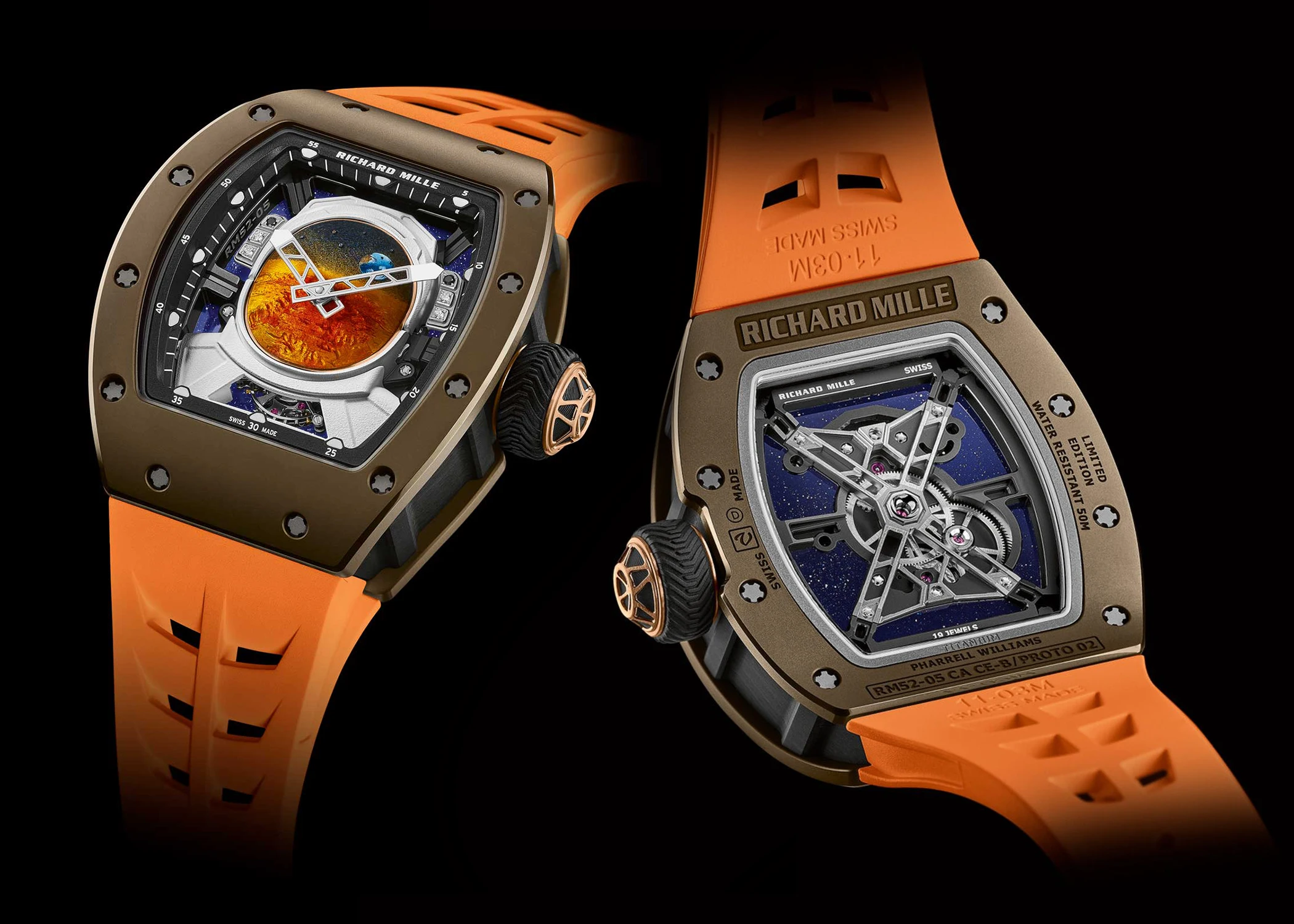
The partnership with Pharrell Williams also developed over many years. According to Richard Mille, the connection dates back to 2006, when the company’s founder noticed a reference to his watch brand in the lyrics of ‘Can I Have It Like That’, Pharrell’s collaboration with Gwen Stefani. Williams had long been an enthusiastic wearer of Richard Mille watches before the RM 52-05 Tourbillon Pharrell Williams became the first model to bear his name in 2019. Limited to 30 pieces, the watch was designed in collaboration with the musician and reflects his fascination with outer space. Its most striking feature is the dial, which depicts an astronaut on Mars, with the Earth reflected in the visor of his helmet.
Finally, it is worth taking a look at the most recent additions to Richard Mille’s network of brand partners. After all, they offer an early indication of the further watchmaking collaborations we might expect in the coming years.
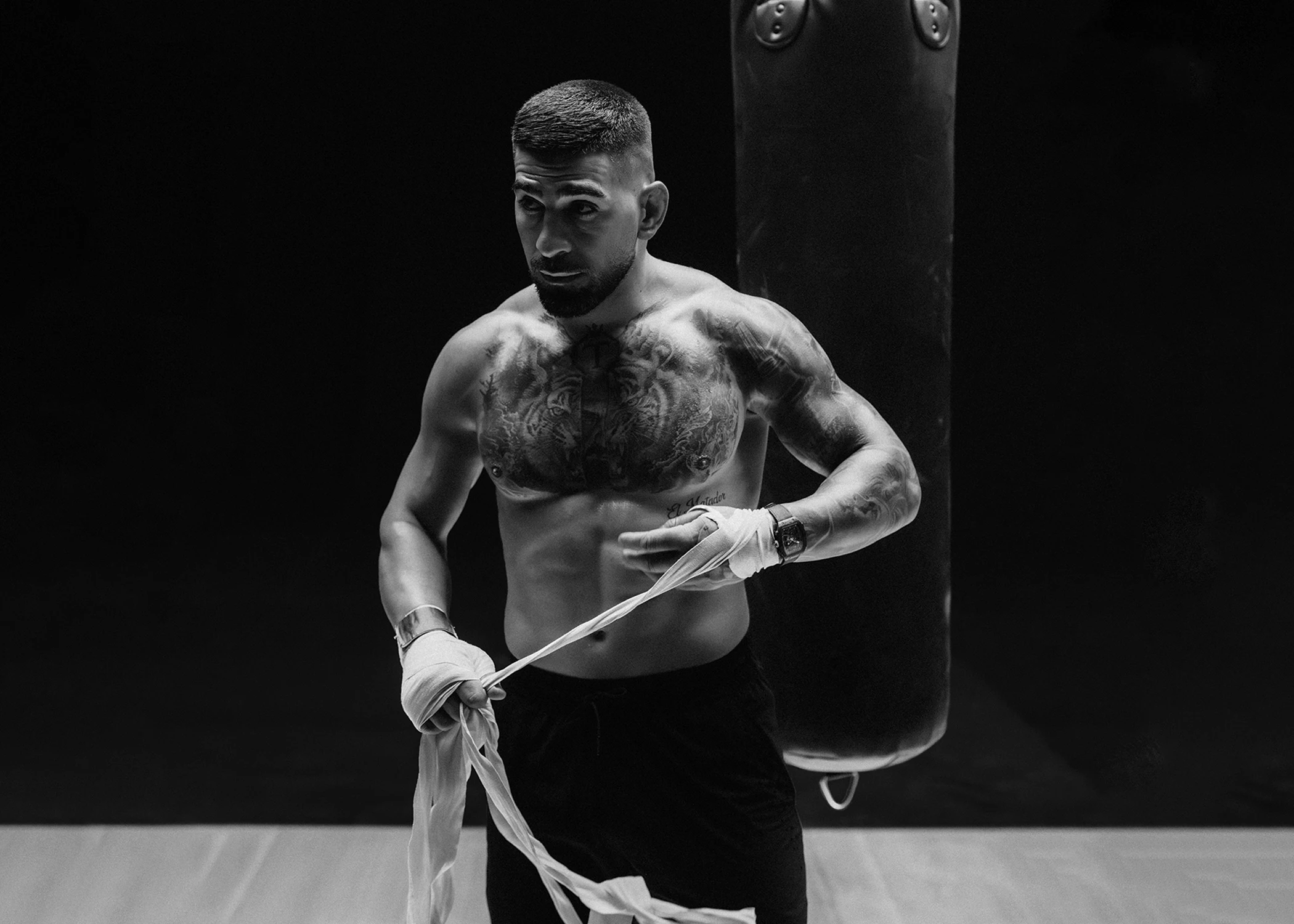
In March 2026, Richard Mille welcomed its first combat sports athlete into its circle of brand partners: Ilia Topuria. The 29-year-old Spanish fighter, who was born in Germany and has Georgian roots, is among the best-known personalities in the Ultimate Fighting Championship (UFC). On 17 February 2024, he defeated Alexander Volkanovski at UFC 298 to claim the featherweight world championship, which he subsequently successfully defended against Max Holloway. Following his move to lightweight, he secured the title in that weight class as well, defeating Charles Oliveira by knockout on 28 June 2025. This made Topuria the first fighter in UFC history to become an undefeated world champion in two different weight classes.
Topuria eventually suffered his first defeat on 14 June 2026, losing to Justin Gaethje at UFC Freedom 250. The event took place on the South Lawn of the White House in Washington, D.C. After four rounds, the fight was stopped by his corner, resulting in Topuria also losing his lightweight title. His current professional record therefore stands at 17 wins and one defeat. As a Richard Mille brand partner, he wears the RM 67-02 Automatic Extra-Flat outside the Octagon, an exceptionally lightweight automatic watch weighing just 32 grams in total.
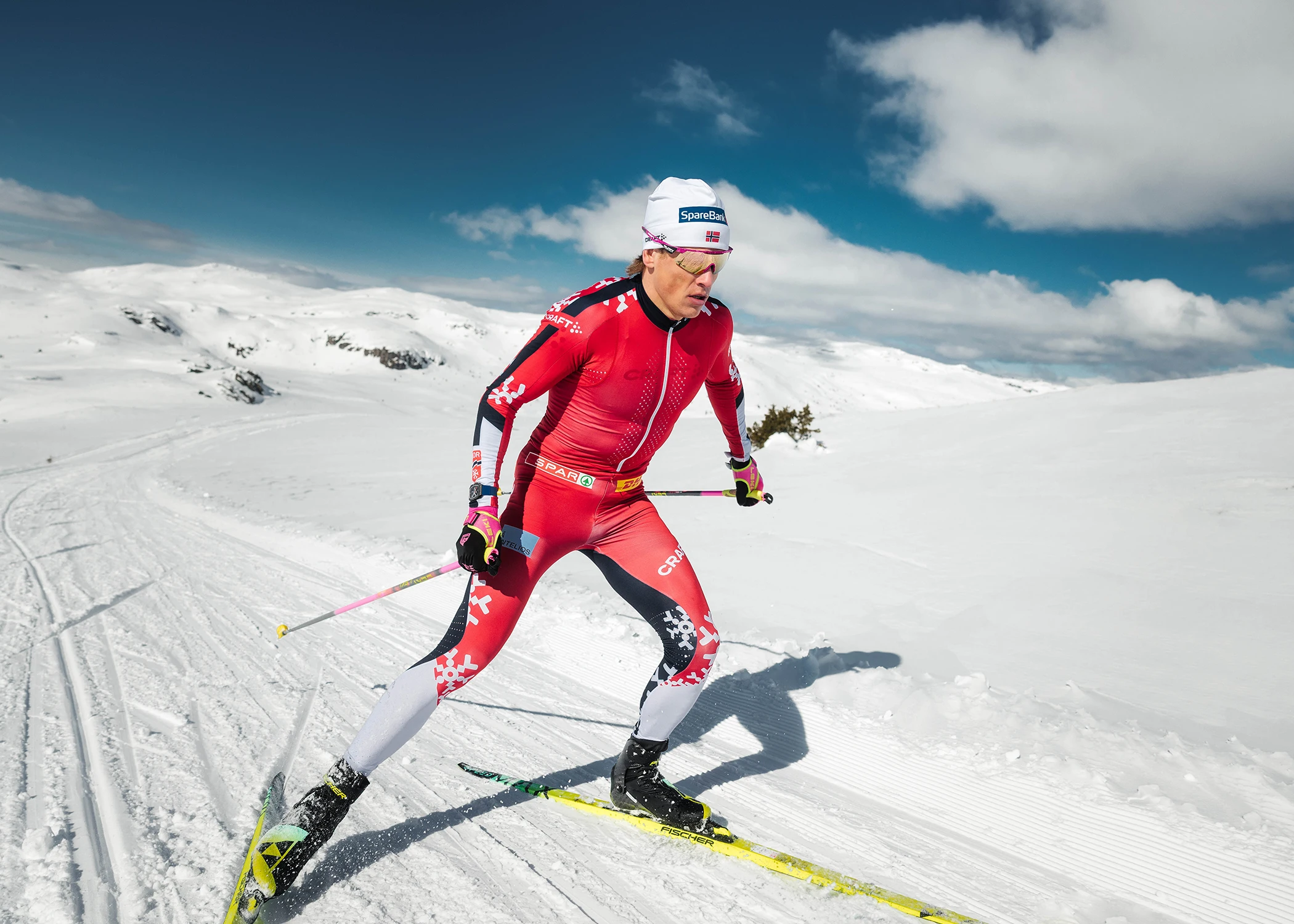
One of the latest additions to Richard Mille’s roster of brand partners is Norwegian cross-country skier Johannes Høsflot Klæbo, who joined the brand in April 2026. The partnership came about on the recommendation of his compatriot Johannes Thingnes Bø, one of the most successful biathletes in history, who has himself been associated with Richard Mille for many years.
Since becoming the youngest male Olympic champion in cross-country skiing at Pyeongchang in 2018, Klæbo has built an extraordinary record of achievements. These include 15 world championship titles, five overall victories in the Tour de Ski and six overall World Cup titles. At the 2026 Winter Olympic Games in Milan-Cortina, he won all six events in which he competed, bringing his personal tally to eleven Olympic gold medals. Measured by the number of gold medals won, this makes him the most successful Winter Olympian in history. According to Richard Mille, Klæbo wears the RM 67-02 Automatic Extra-Flat during competitions as a brand partner. Whether the partnership will eventually lead to a model developed specifically for him remains to be seen.
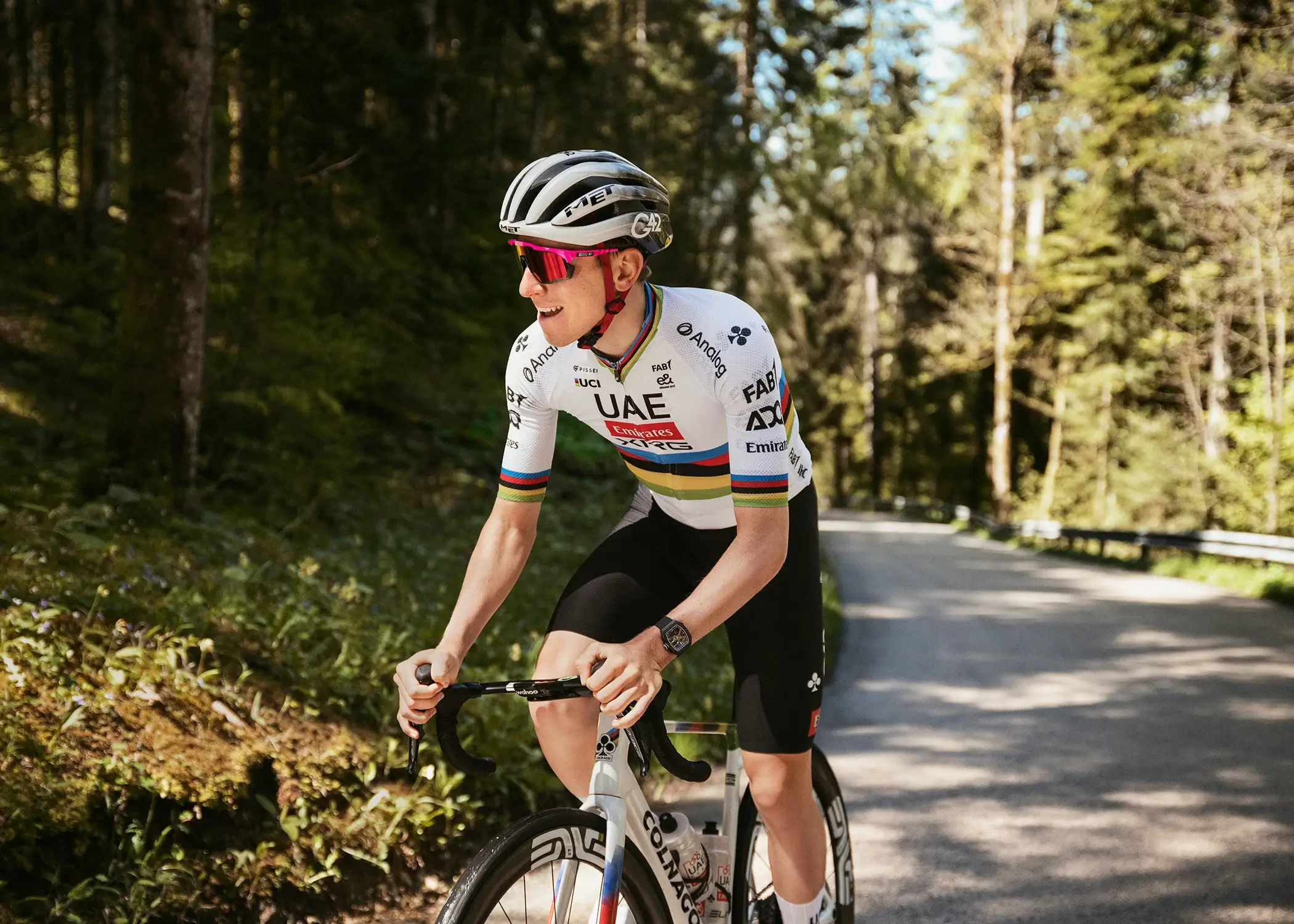
Richard Mille has also expanded its network of brand partners in cycling. Since 2021, the brand has supported UAE Team Emirates and, by extension, its star rider Tadej Pogačar, who became an official brand partner in his own right in 2026. The Slovenian first attracted attention in 2019, when he finished third in the Vuelta a España at just 20 years old. A year later, he won the Tour de France, becoming its youngest winner since 1904. He has since established himself as one of the most successful cyclists of his generation, with five Tour de France victories, one Giro d’Italia title and two world championship titles. In 2024, he also became the first rider since 1987 to achieve the so-called ‘Triple Crown’, winning the Giro d’Italia, Tour de France and Road World Championships in the same season.
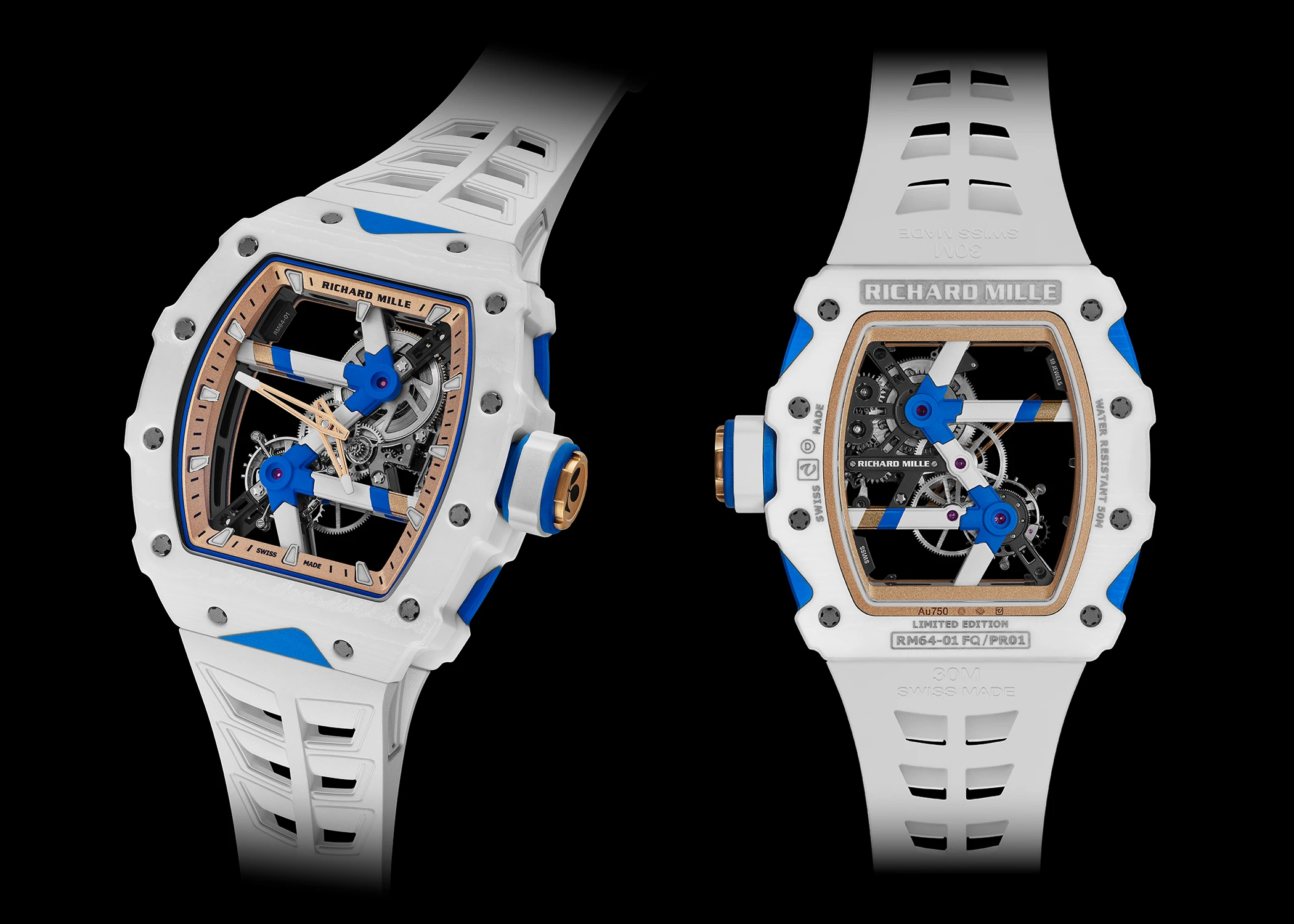
The connection between Richard Mille and cycling also resulted in a dedicated watch creation in 2026. Working with Italian bicycle manufacturer Colnago, whose racing bikes are used by Pogačar and UAE Team Emirates in competition, the brand developed the RM 64-01 Tourbillon Colnago. Limited to 50 pieces, the model incorporates numerous design elements inspired by Colnago racing bicycles. For example, the skeletonised architecture of the RM64-01 tourbillon calibre, comprising 274 components, evokes the construction of a bicycle frame, while the distinctive shapes of its bridges draw inspiration from the frame tubes of Colnago Master racing bicycles. The blue-and-white colour scheme and the cloverleaf logo on the crown also pay tribute to the Italian bicycle manufacturer.