The Swisswatches travel guide for watch enthusiasts who want to know what else there is to experience whilst visiting a boutique. In this series: Van Cleef & Arpels Vienna

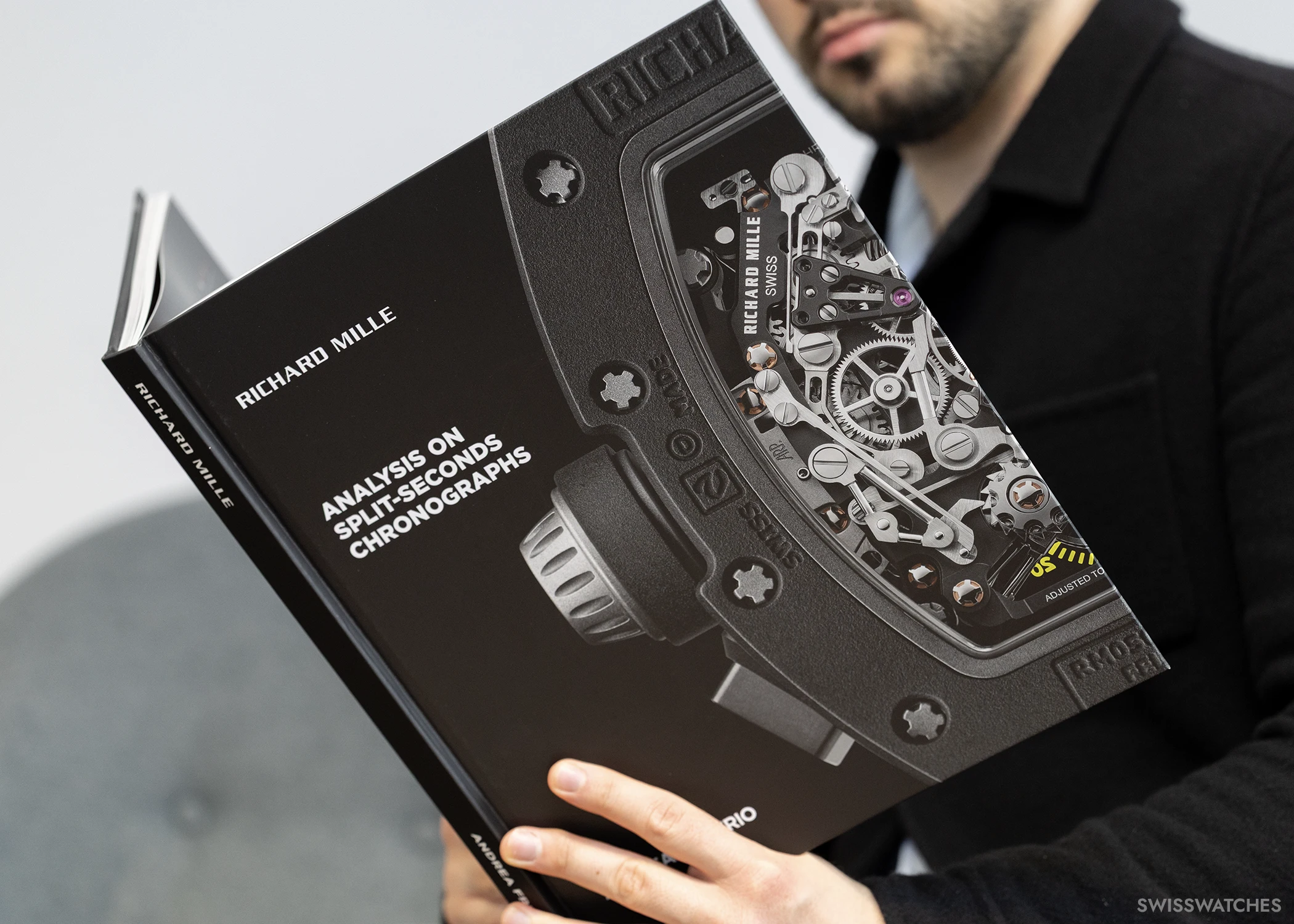
Andrea Frigerio is a mechanical engineer who developed an early interest in Richard Mille during his university years. He has channelled both his technical expertise and personal passion into a book dedicated to the brand’s split-seconds chronograph – a complication he considers often underestimated within the Richard Mille universe. On the occasion of the book’s release, we met Andrea in Munich to discuss his approach, his research, and the technical background of this complication.
My interest in watchmaking began during my early years at university. What fascinated me was the idea that a purely mechanical device could display such a wide range of complications and indications while remaining functional for centuries with only minimal maintenance. Unlike many modern devices designed with a limited lifespan, a mechanical watch is built to endure for generations. It was this long-term, technically driven perspective that first drew me to watches.
To be honest, I was not initially focused on specific brands. What really shaped my interest was exposure to specialised watch media, which allowed me to explore different approaches to watchmaking and gradually build a more technical understanding of the field.
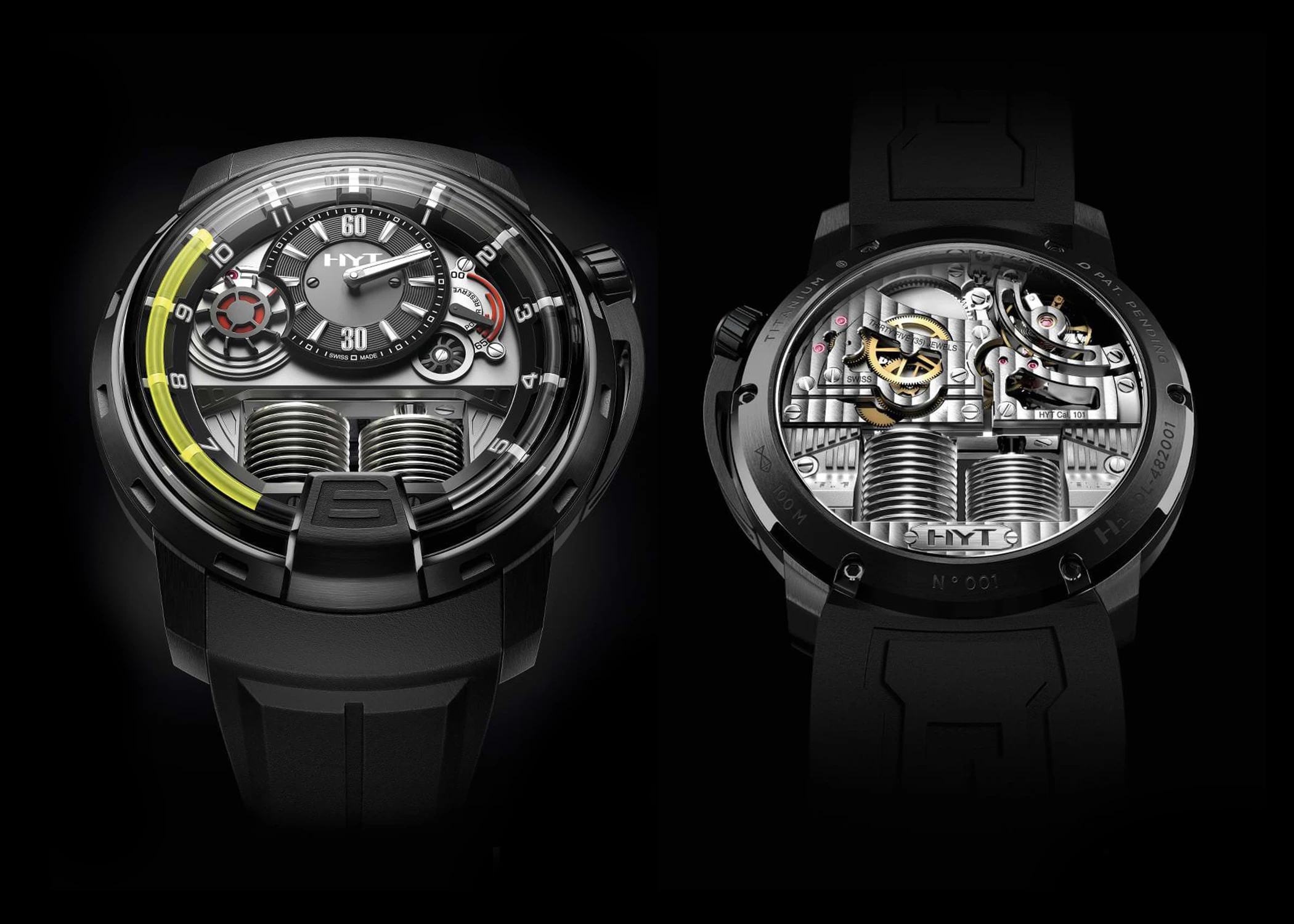
That exposure gradually drew me deeper into the watchmaking industry. I vividly remember being struck by brands like Richard Mille, as well as the Royal Oak Concept pieces from Audemars Piguet. I was also intrigued by HYT and its hydromechanical approach – particularly the idea of displaying time through fluid mechanics, which felt different from anything I had seen before.
In the early stages, Richard Mille was simply the brand that fascinated me the most in my reading – that is the honest reality of it. At the time, I was studying mechanical engineering, with a particular focus on materials science, dynamics, shock resistance, and the design of mechanical systems. What set Richard Mille apart was that I could directly relate these academic principles to the RM watches themselves.
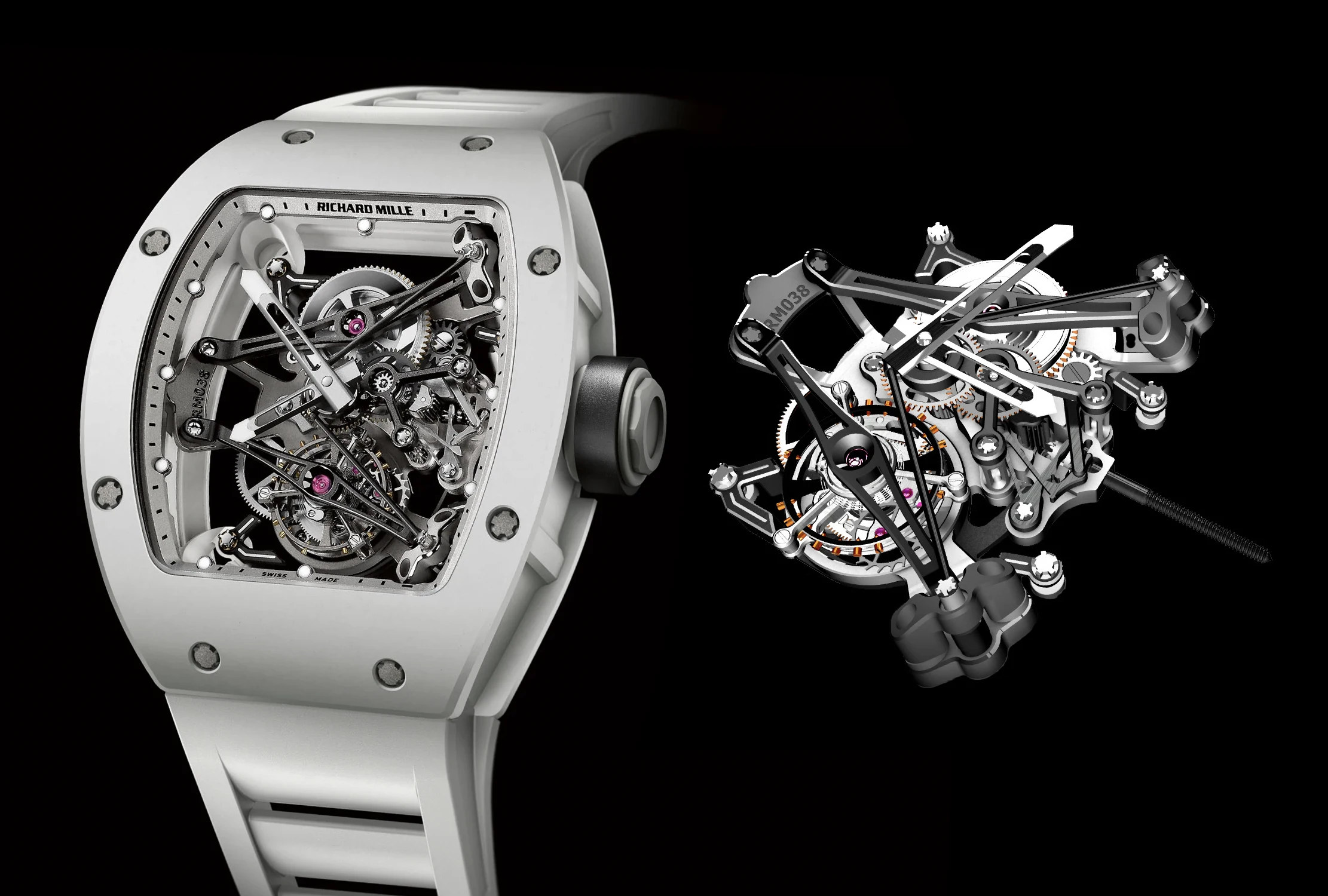
From a technical perspective, it was the brand I understood most intuitively. I could see, for example, why the case of the RM 038 Tourbillon “Bubba Watson” was made from a highly resistant and lightweight alloy such as magnesium WE54, or why the bridges were executed in Grade 5 titanium taking advantage of such complex shapes – materials and forms chosen specifically to withstand extreme shocks and mechanical stress. These were not abstract concepts for me; they aligned closely with what I was studying, and that clarity made the watches particularly compelling.
I was also fortunate in terms of timing. Between roughly 2010 and 2018, the brand experienced a notable peak in creativity. Each year, Richard Mille would present several new references with increasingly radical designs, reinforcing my interest from a technical perspective.
Ultimately, my fascination with Richard Mille stemmed from its distinctive combination of advanced materials and engineering techniques applied to micro-mechanics. Pricing was never the focus for me; it was simply a consequence of the technical content.
During my studies, I didn’t have access to any books on Richard Mille. That changed in 2018, when I visited the Milan boutique and was given the official Brand Book, which allowed me to deepen my understanding. Later, I also acquired the Richard Mille Monographie volumes – at the time volumes one and two, with a third edition now available.
These publications are substantial and basically a bible of Richard Mille watches: extensive, detailed, and highly comprehensive. In many ways, they function as a kind of reference work on the brand, documenting not only the watches themselves, but also the direction of its communication and positioning.
My initial concept was far broader. When I first proposed the idea of a book on Richard Mille, I had developed a kind of structural map that linked the various references to one another – with the aim of helping readers understand how different models are interconnected. If you look at how many Richard Mille references existed in 2020, when I began working on the book, the number was already significant. I counted more than 110 distinct references. By this, I mean unique references irrespective of variations in case material. Whether an RM 004 is executed in gold, platinum or titanium, it remains a single reference. To have developed over 110 different watches in less than 20 years is, in itself, a remarkable achievement.
In practice, however, many people struggle to interpret Richard Mille’s reference numbers. If you mention numbers such as 27, 38, 50, 56 or 72, they convey very little on their own. Without the underlying context, these references remain abstract. That was precisely the issue I wanted to address: to simplify what is, in essence, a coded system of communication – something not unique to Richard Mille, but equally present at brands such as Rolex, Patek Philippe or Audemars Piguet – and to make it more accessible.
In discussions with Theodore Diehl, company spokesman and horologist at Richard Mille, however, it became clear that such a comprehensive approach would be too extensive for a single project. We therefore chose to narrow the scope and concentrate on one specific complicationon.
The split-seconds chronograph emerged as the natural subject. From my perspective, it remains an underappreciated complication – not only among collectors, but also within journalistic coverage and the broader enthusiast community.
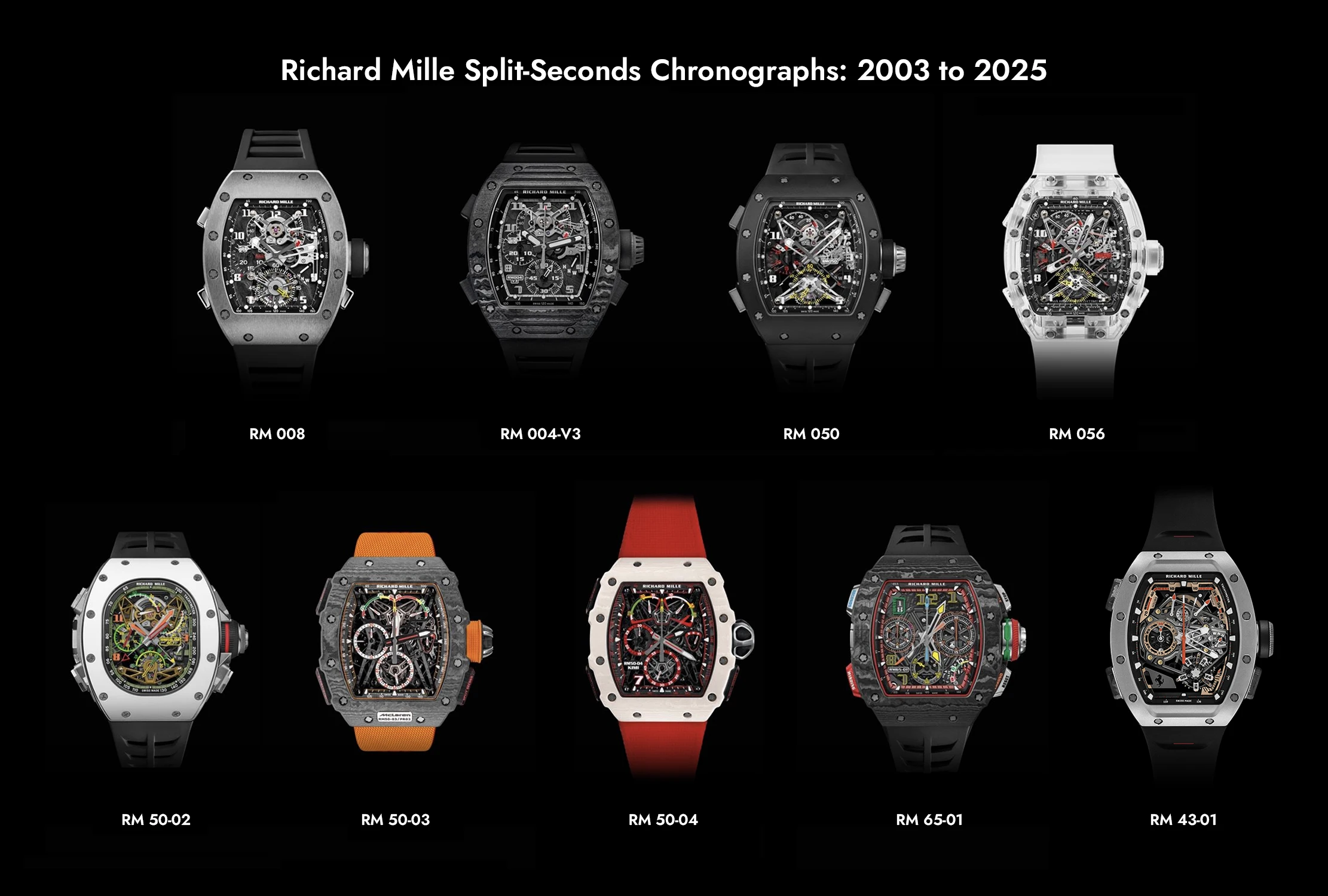
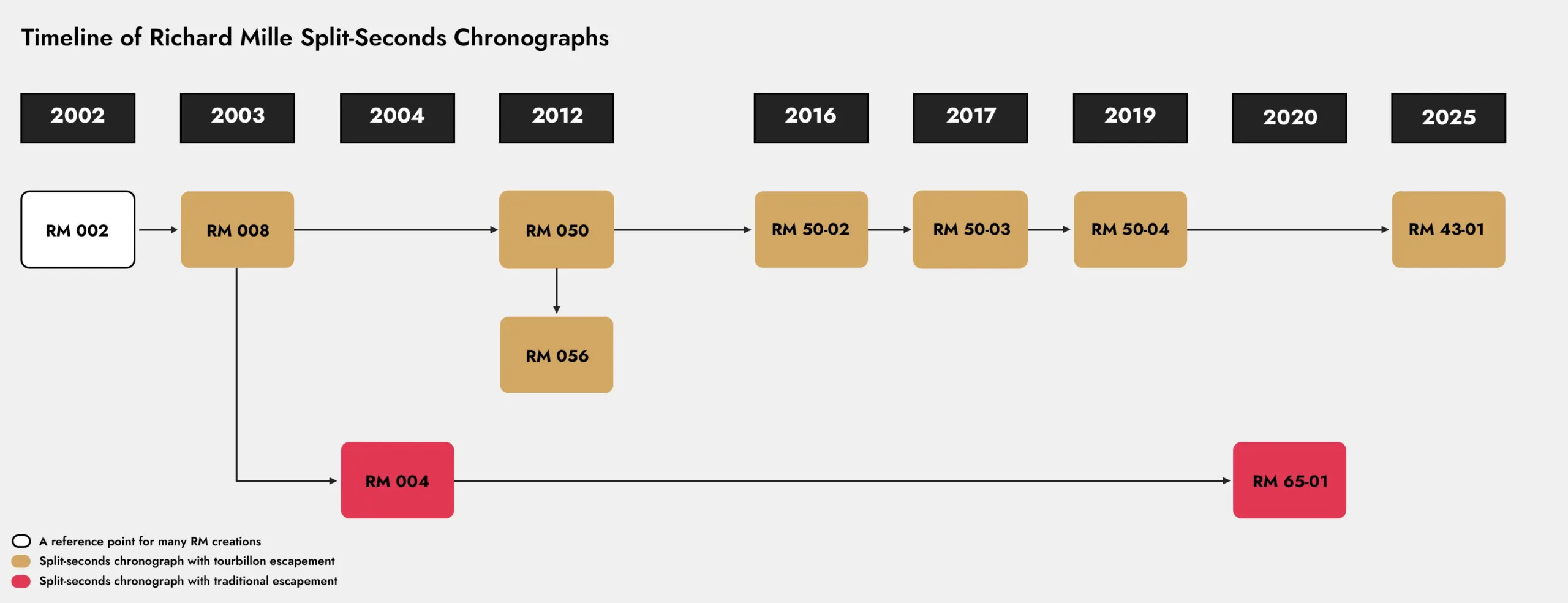
A timeline of Richard Mille split-seconds chronographs, based on a graphic by Andrea Frigerio.
In my view, the complication is often underestimated because its mechanical complexity is not widely understood. Many collectors and enthusiasts are familiar with the concept in principle, but not with how it is actually realised at a technical level.
In many cases, a split-seconds chronograph is constructed by adding a split-seconds module to an existing chronograph base movement. By contrast, Richard Mille approached the complication differently, developing it from the ground up with a fully integrated architecture, designed to be usable beyond the traditional constraints of high-complication watchmaking, including exposure to dynamic conditions.
This is precisely why we chose to concentrate on the Richard Mille Split-Seconds Chronograph. There is a considerable depth of engineering behind it, with numerous details. From my perspective, that makes it a particularly compelling subject – not only in terms of mechanics, but also in terms of how this complexity is communicated and understood.
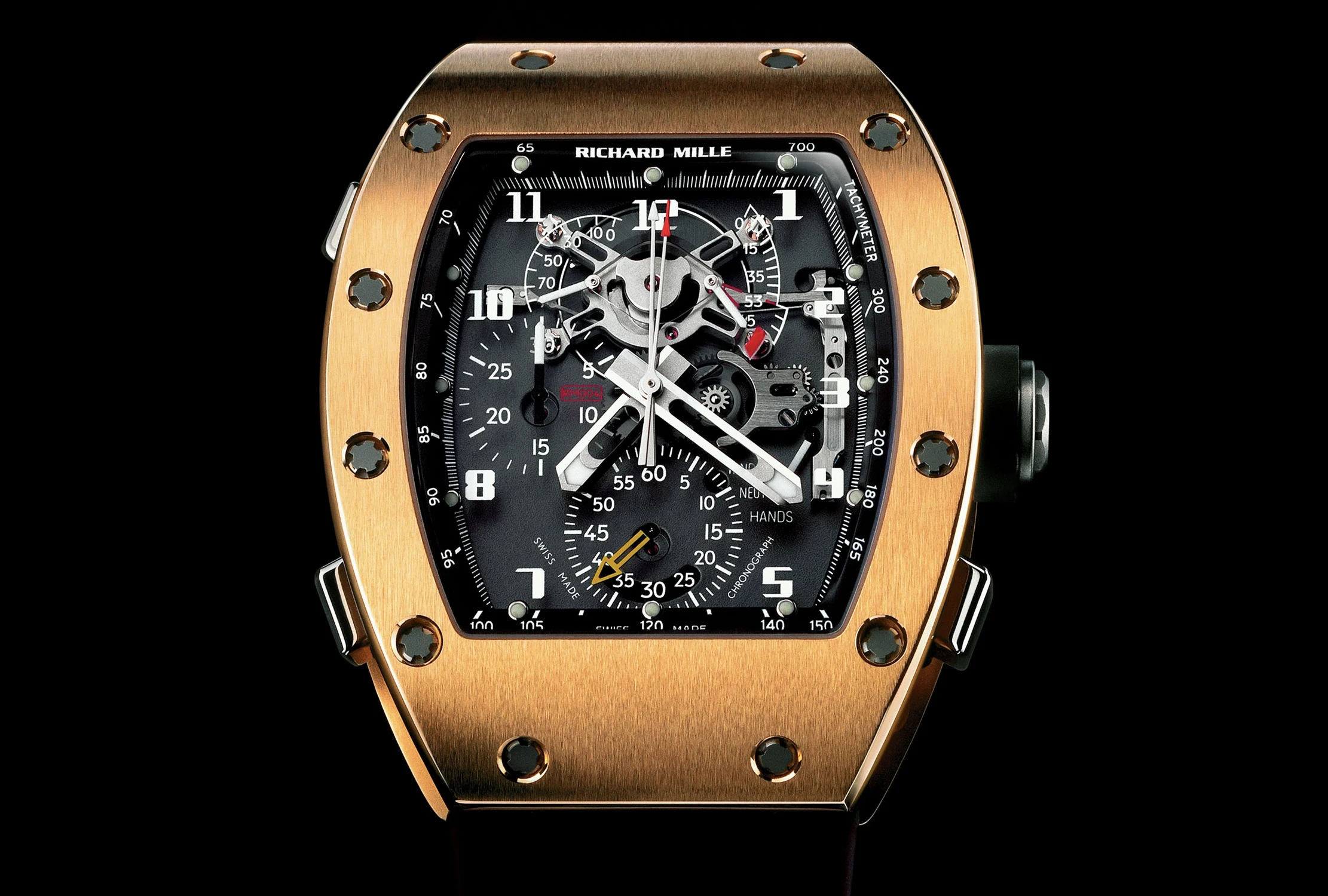
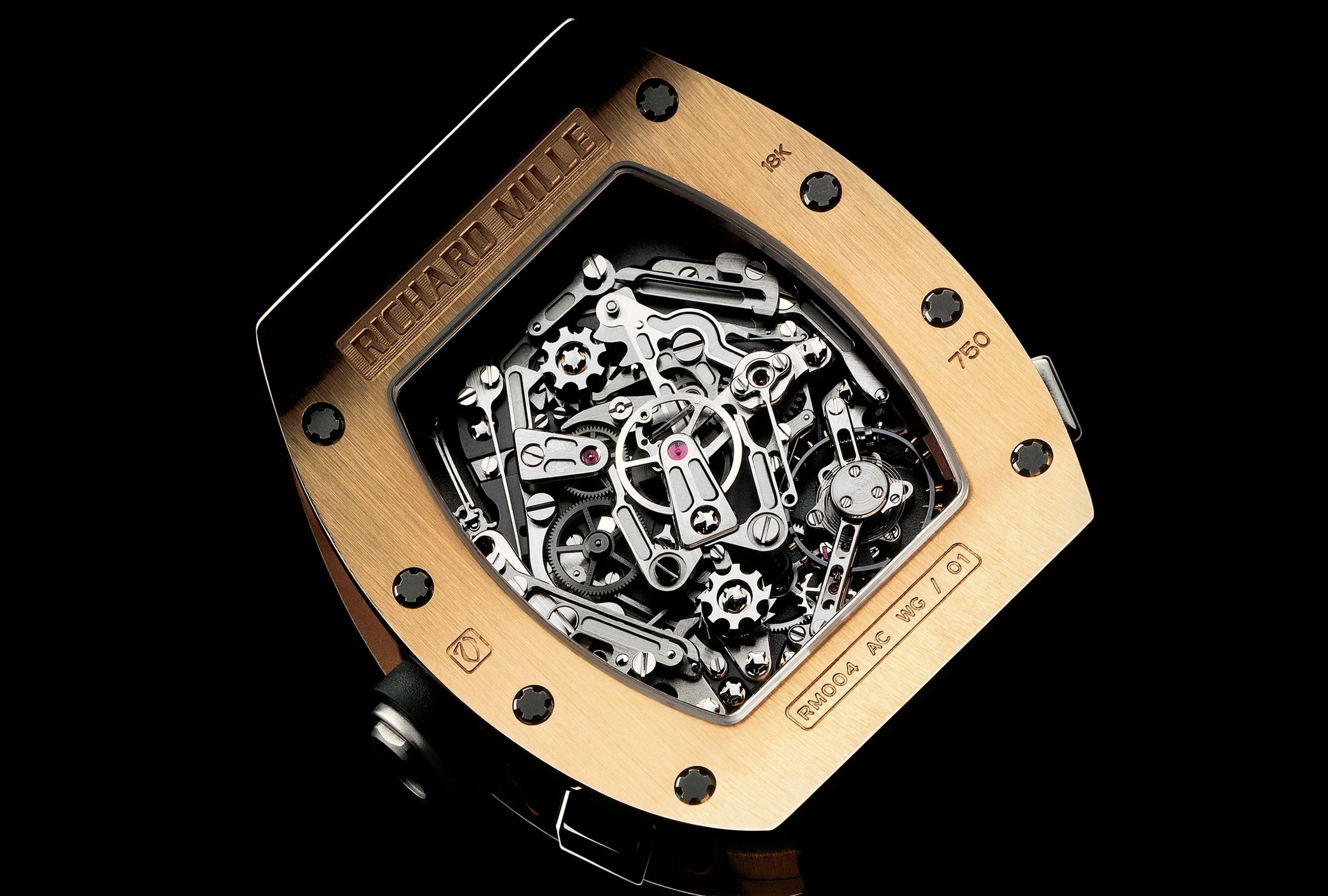
The RM 004-V1 from 2004, together with the RM 008-V1 from 2003, was among the first split-seconds chronograph movements to be developed entirely from scratch since the 1960s. It features a traditional escapement, a split-seconds chronograph with a 30-minute totaliser, as well as power-reserve, torque and function indicators.
There isn’t a single defining innovation – rather, it is the combination of several key developments that makes the difference.
First, the use of materials. At Richard Mille, titanium movements have effectively become standard. This is unusual within the wider watch industry. Manufacturing movement components in titanium requires entirely new production processes and expertise, which the brand developed from the ground up.
Secondly, there is the approach to component design. The shapes of the bridges and structural elements are not random; they are engineered to achieve specific mechanical performance targets, particularly in terms of rigidity, shock resistance, and weight optimisation. Taken together, this results in a design language that is fundamentally functional – and, in that sense, markedly different from traditional watchmaking.
A third important aspect lies in the architecture of the split-seconds chronograph itself. Here, the central challenge revolves around energy management: how power is distributed through the movement, and how the system absorbs and controls the instantaneous loads that occur when the split-seconds hand is engaged or reset. These are critical issues in any rattrapante construction.
Finally, skeletonisation plays a key role. In models such as the RM 050 Tourbillon Chronograph Felipe Massa, skeletonisation is executed at an exceptionally high technical level. Crucially, this should not be confused with simply removing the dial to expose the movement. In this respect, Richard Mille has developed a distinct and technically rigorous approach that goes far beyond conventional open-worked designs.
This is why the split-seconds chronograph at Richard Mille should not be seen simply as a traditional complication, but as a platform to explore new mechanical limits under real-world conditions.
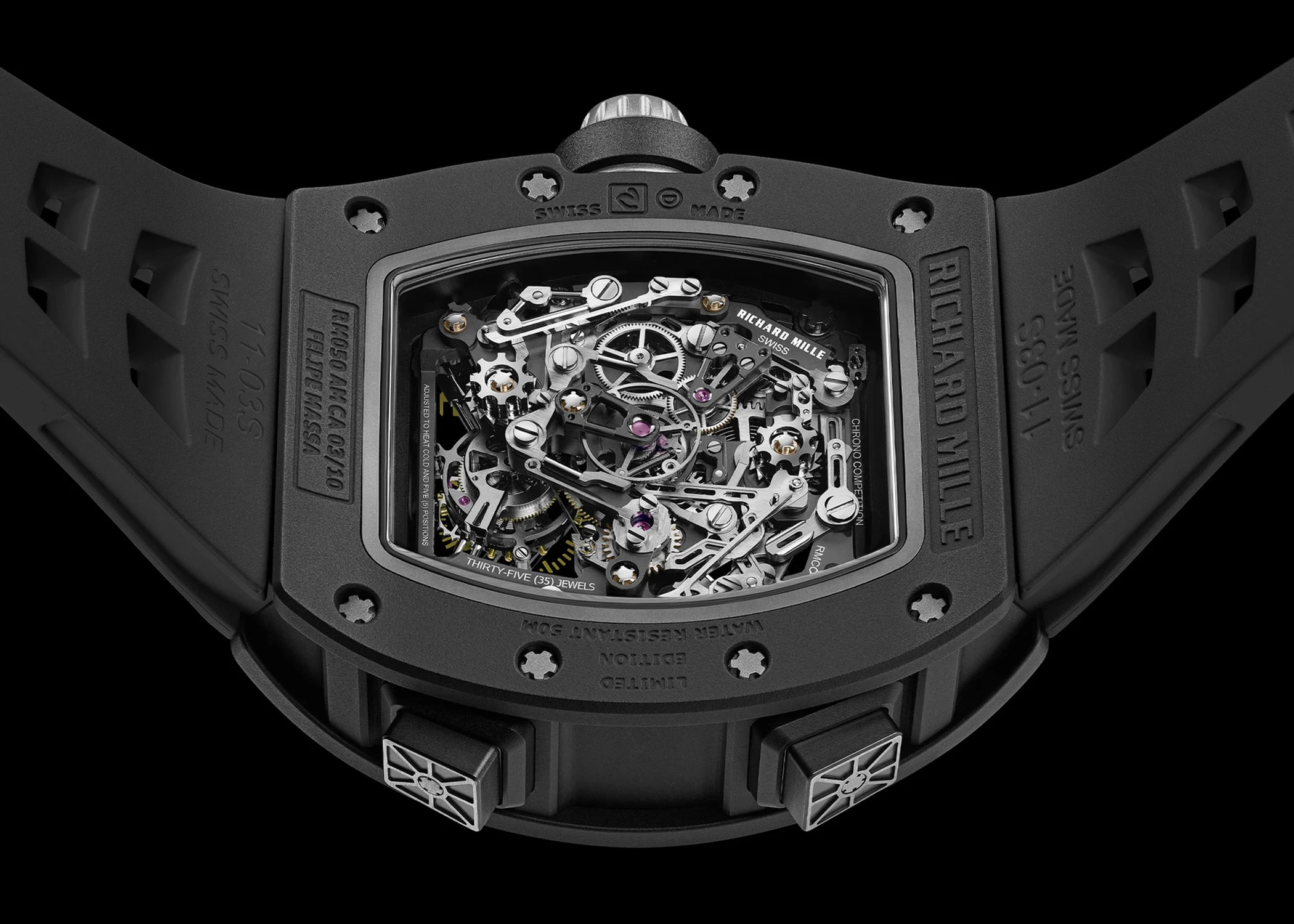
With the RM 050 Tourbillon Chronograph Felipe Massa from 2012, Richard Mille introduced the new RMCC1 calibre as an evolution of the RM 008. The movement made extensive use of titanium to achieve extreme lightness: despite comprising around 400 newly developed components, the calibre weighs just 9.5 grams. At the same time, the energy consumption of the split-seconds mechanism was reduced by 50 per cent.
Skeletonising a movement is a traditional practice in watchmaking. At its core, it involves removing non-essential material in order to reveal the mechanics, while also enhancing the visual appreciation of the movement’s architecture and finishing.
Richard Mille, however, has taken this concept further. Rather than treating skeletonisation primarily as an aesthetic exercise, the brand integrates it into the functional design of the movement. The geometry of the components is not only reduced, but deliberately shaped to meet specific performance targets.
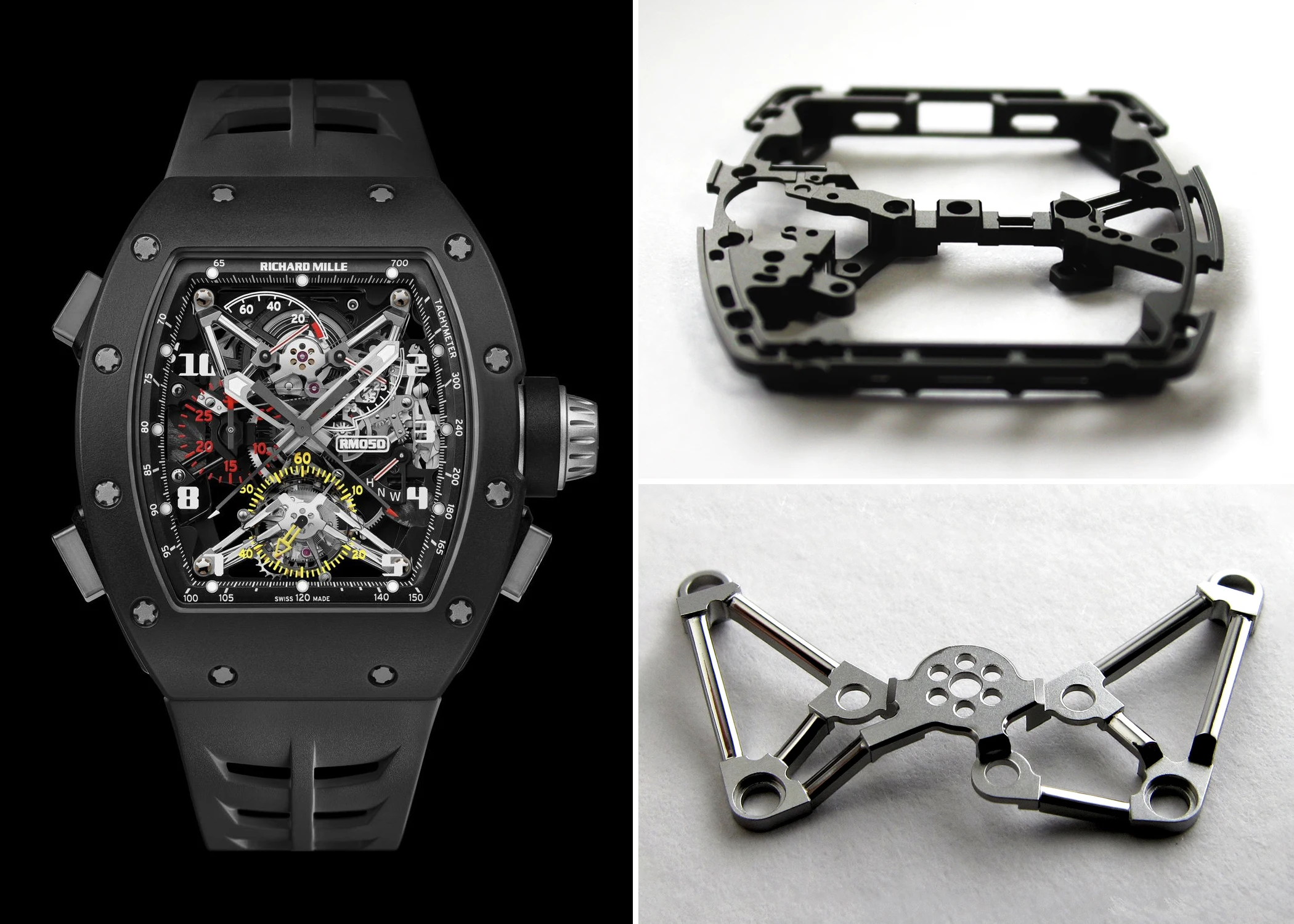
To date, nine split-seconds chronographs have been developed by Richard Mille, and each of them plays a role in the overall evolution of the complication. Their significance lies not only in their individual technical features, but in how each reference builds on the previous one – introducing incremental developments and refinements over time.
That said, two models stand out in particular.
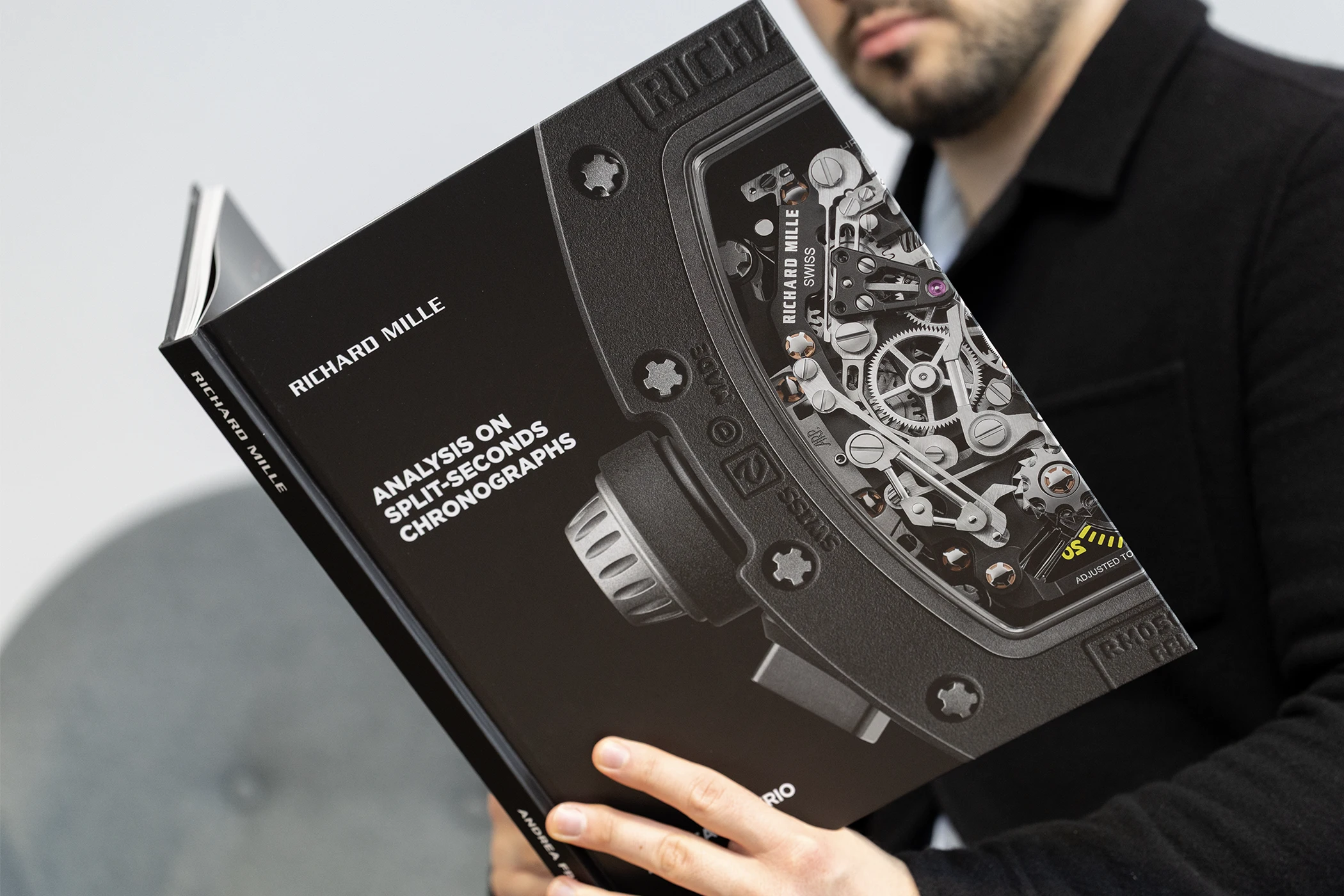
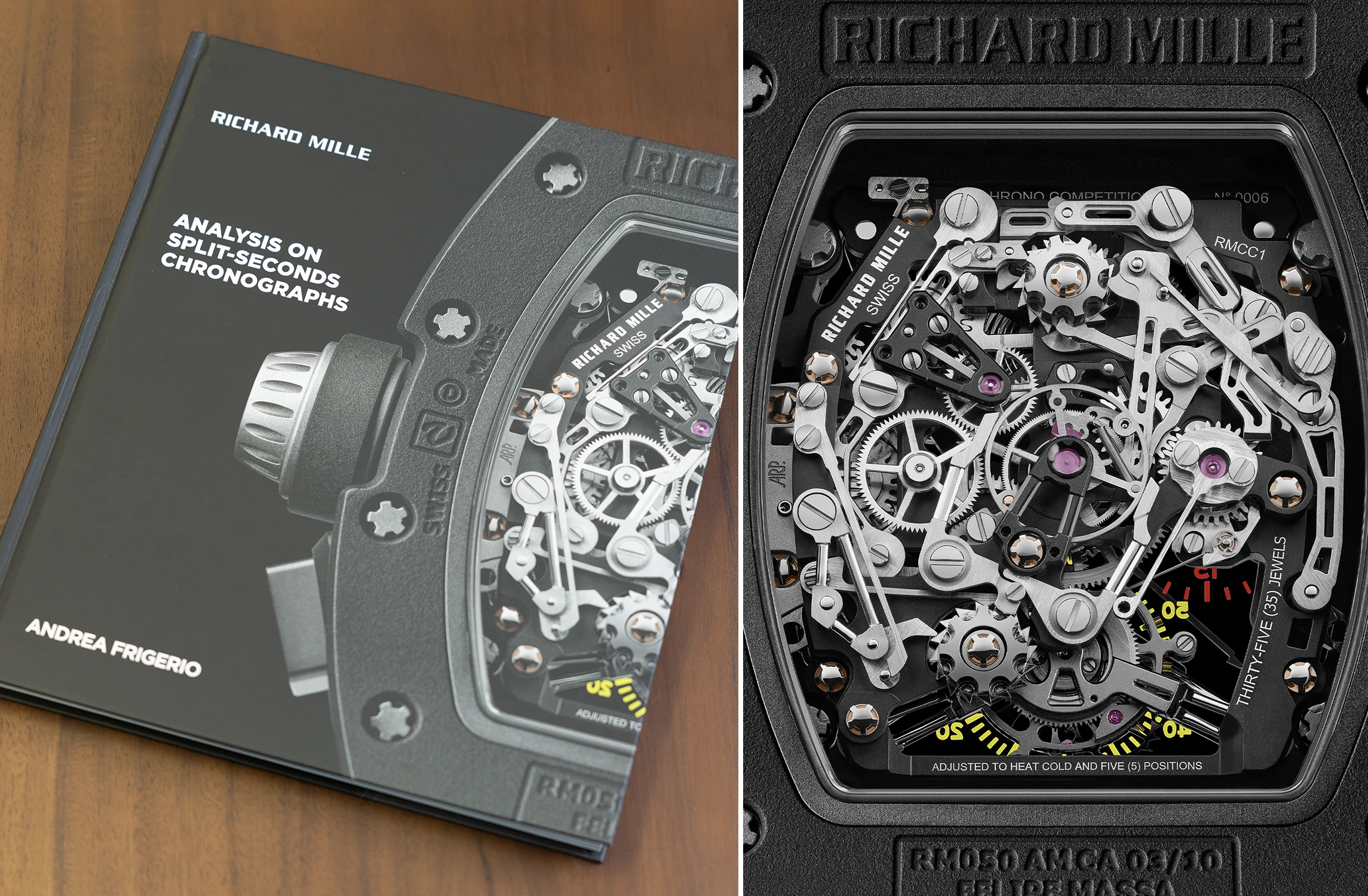
The first is the RM 050 Tourbillon Chronograph Felipe Massa. Its calibre, the RMCC1, is, in my view, one of the most accomplished and visually compelling movements ever produced. This is precisely why it was chosen for the cover of the book. Interestingly, the front cover of the book features the reverse side of the watch, while the back side of the book shows the dial side. This was a deliberate decision: the emphasis is on the movement, and in watchmaking, the movement is most clearly appreciated from the back.
The second key reference is the RM 004 Split-Seconds Chronograph, introduced in 2004. This model was fundamental, as it effectively marked the point at which Richard Mille began offering the split-seconds chronograph to a wider audience of potential customers. In that sense, it laid the groundwork for everything that followed.
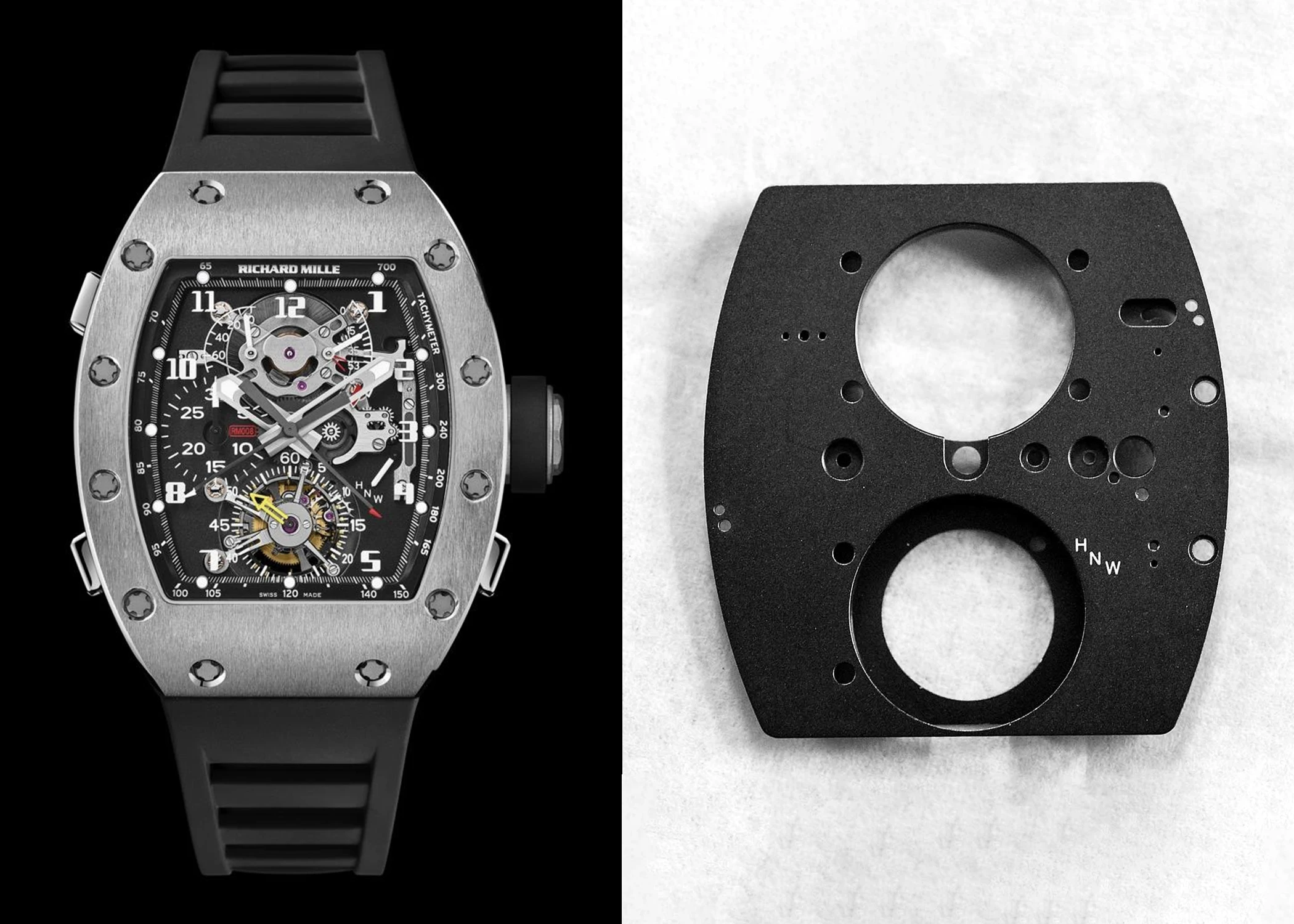
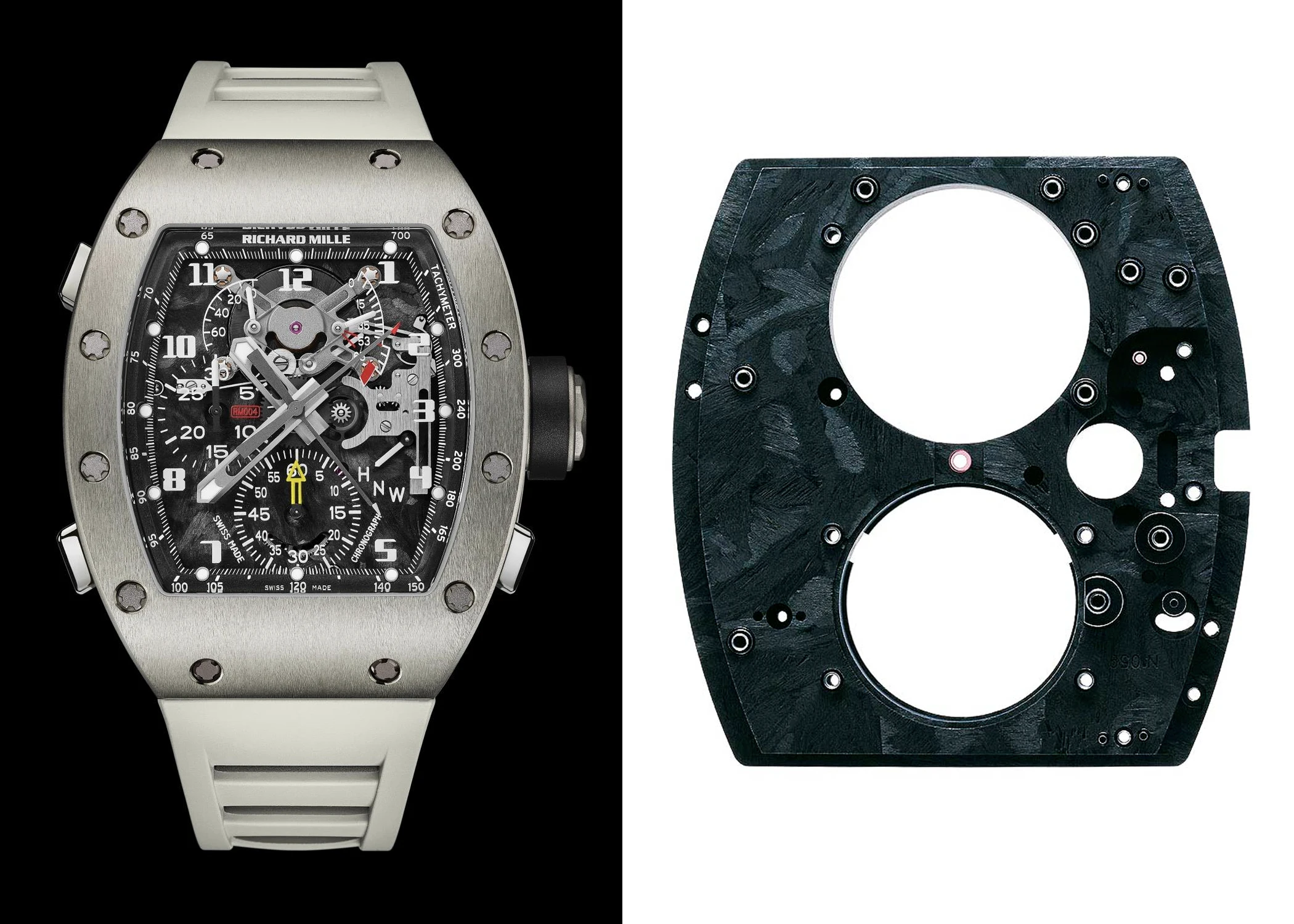
Credit © Revolutionwatch / Perpetualpassion
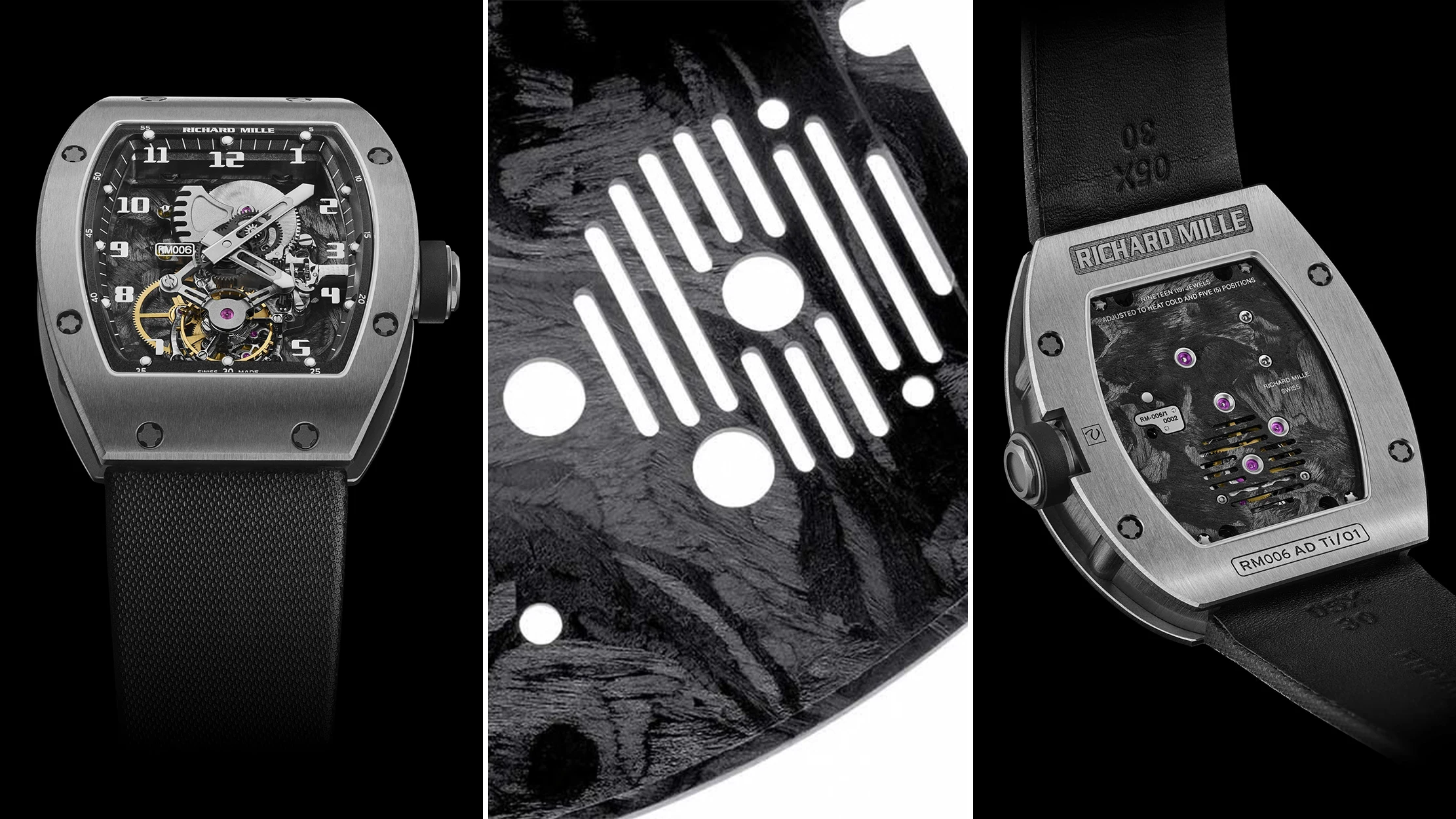
While not a split-seconds chronograph itself, the RM 006 Tourbillon Felipe Massa (launched in 2004 and limited to 25 pieces) introduced a carbon nanofibre baseplate that represented a major step in movement construction. This material innovation enabled new approaches to rigidity and weight reduction, which later influenced the development of more complex mechanisms, including split-seconds chronographs. In that sense, it can be seen as a foundational step in the broader evolution of the complication.
From a purely mechanical perspective, the fundamental objectives are shared across high-end watchmaking. Whether at Audemars Piguet, A. Lange & Söhne or Patek Philippe, the priorities behind a split-seconds chronograph remain consistent: optimising energy consumption, ensuring precise control of the split mechanism, and managing the instantaneous loads generated during operation.
What Richard Mille changed is not the complication itself, but the conditions under which it can reliably operate. This leads to a fundamentally different constructional philosophy.
First, the watches are conceived for continuous, everyday use. This has direct implications for the engineering: the movements are designed to withstand shocks and dynamic loads that would typically exceed the intended operating conditions of more traditionally constructed split-seconds chronographs.
Secondly, there is a pronounced emphasis on three-dimensional architecture. While integrated chronograph constructions are not unique in themselves, Richard Mille develops movements with a deeply spatial structure. Bridges, levers and supporting elements are not only arranged across multiple planes but are also systematically optimised – through material reduction and finely executed turned surfaces – to balance rigidity, weight and mechanical performance. In practical terms, this means that while traditional constructions focus on minimising friction and ensuring precision under controlled conditions, Richard Mille places additional emphasis on maintaining performance stability under dynamic loads, such as shocks or repeated actuation.
Finally, this approach extends to the finishing. Traditional split-seconds chronographs typically follow a classical decorative language, with techniques such as perlage or Côtes de Genève. Richard Mille departs from this convention. The finishing remains technically sophisticated but follows a more contemporary logic aligned with the functional and structural design of the movement. That said, this does not mean that Richard Mille movements are not hand-finished. On the contrary, bridges, levers and other components are handfinished to the highest standards, with each element receiving carefully executed anglage and surface finishing.
What differs is not the level of finishing, but the visual language. Richard Mille does not follow the traditional aesthetic codes of classical watchmaking, so the expected cues – such as perlage or Côtes de Genève – are often absent. Instead, the finishing is aligned with the brand’s broader engineering approach.
In that sense, understanding these movements requires a shift in perspective. If one evaluates them through the lens of traditional decoration, certain elements may appear unfamiliar. However, within their own framework, the level of execution remains consistent with high- end watchmaking standards.
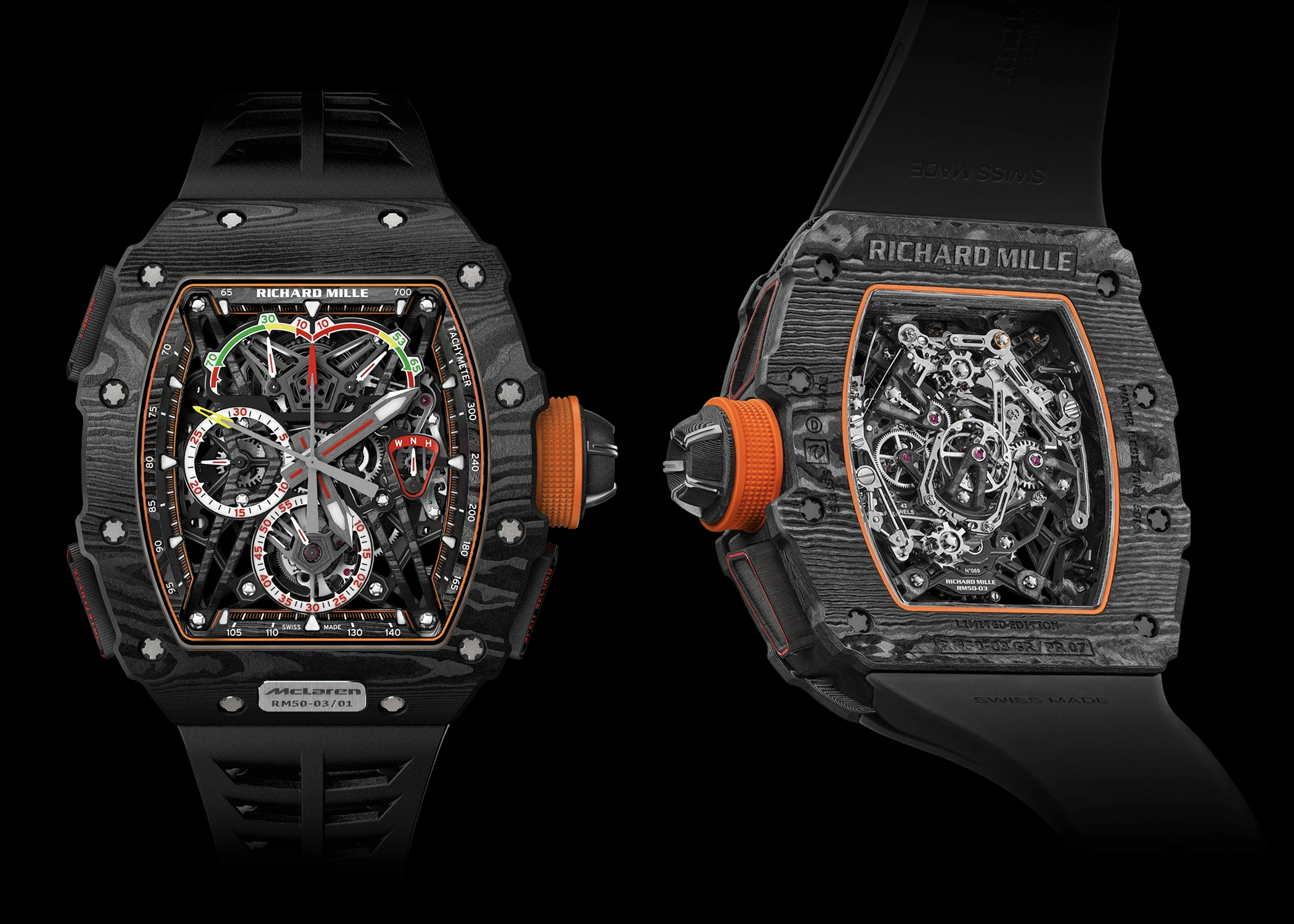
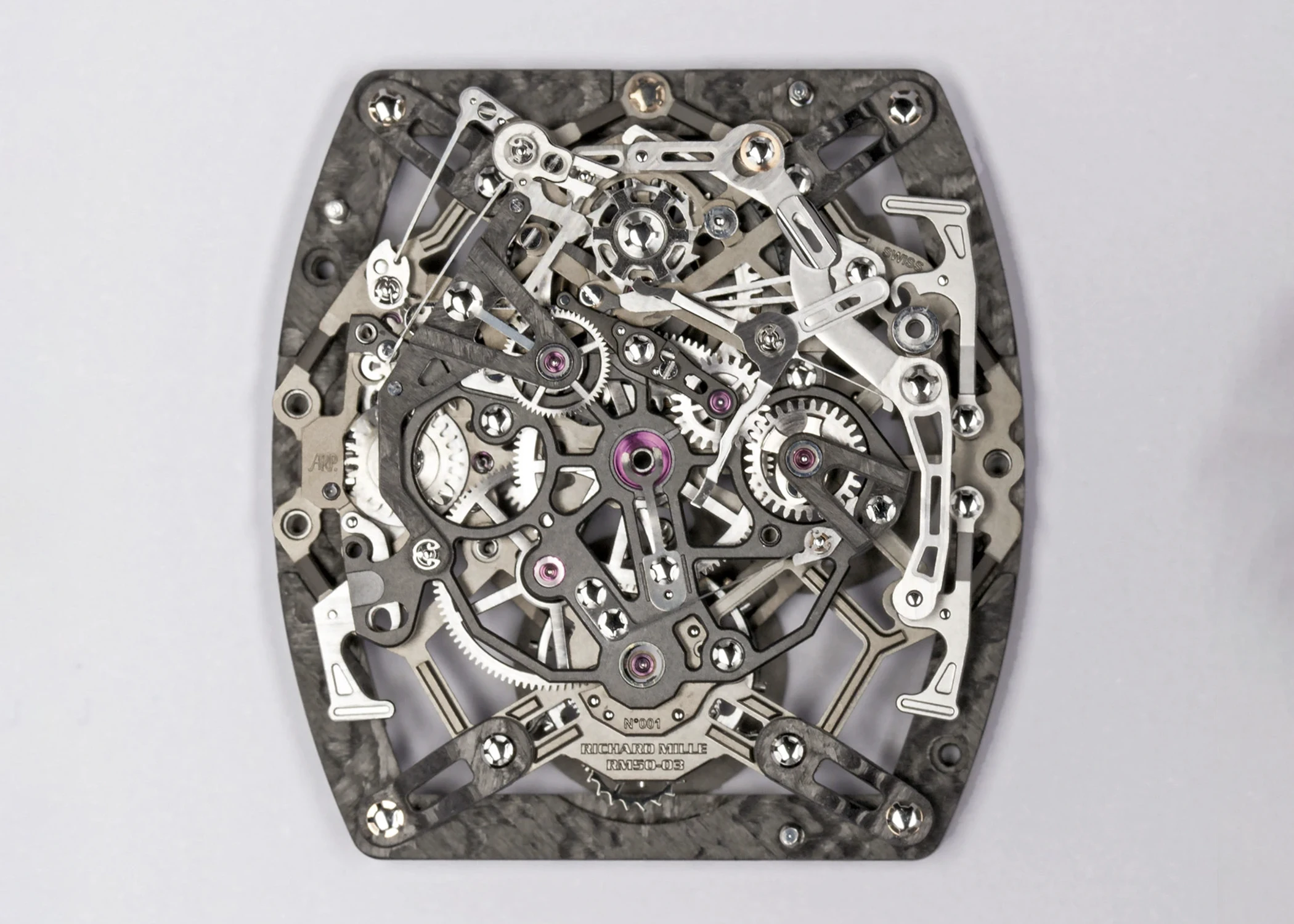
Inside the calibre of the RM 50-03, Richard Mille combined Carbon TPT® with titanium, resulting in a movement weighing just 7 grams. At the same time, the construction is designed to withstand shocks of over 5,000 g.
Not directly, in the sense that internal teams were not a primary source of new information. Their role was mainly to review and validate the material, rather than to provide it. This is partly because Richard Mille already publishes a considerable amount of technical data. The challenge is not their accessibility but understanding what lies behind the figures and specifications outlined in the documentation. documentation.
That is precisely where the book aims to add value: translating technical content into clear and accessible language, while preserving accuracy. The objective was to explain, in a structured way, how and why certain technical solutions evolve – effectively connecting point A to point B – without requiring the reader to have an engineering background.
Most of the research was conducted independently. I then had the opportunity to work closely with Theodore Diehl, company spokesman and horologist at Richard Mille, whose input was fundamental to achieve the result. He helped to refine the focus, highlight what was most relevant, and provided context and anecdotes that would otherwise have been difficult to obtain.
Once the manuscript was completed, the teams at Richard Mille’s headquarters and manufacturing sites reviewed the content. They made minor adjustments where necessary and, more importantly, validated the technical accuracy. In that sense, while the research itself was largely independent, the final result reflects a collaborative process involving multiple contributors.
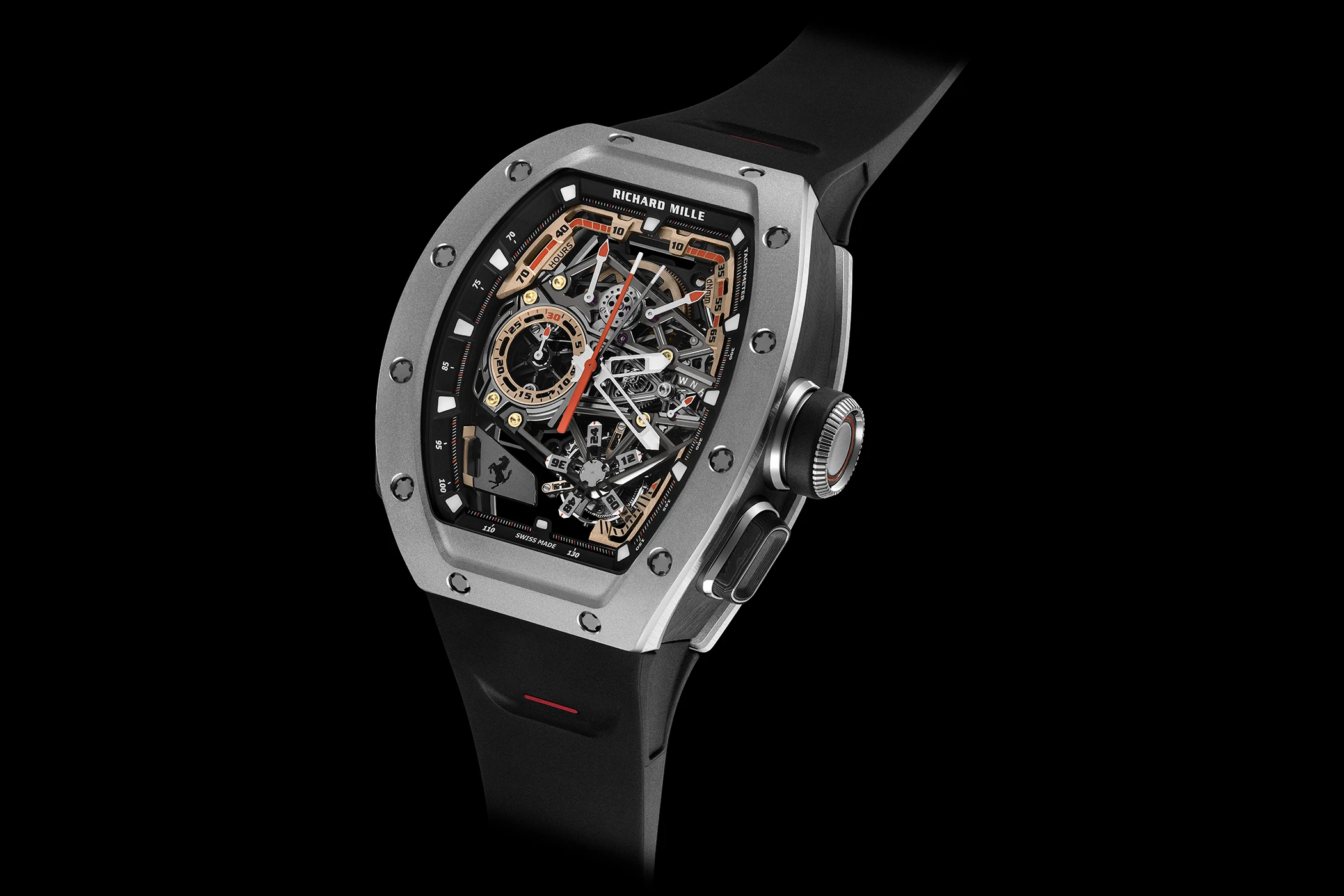
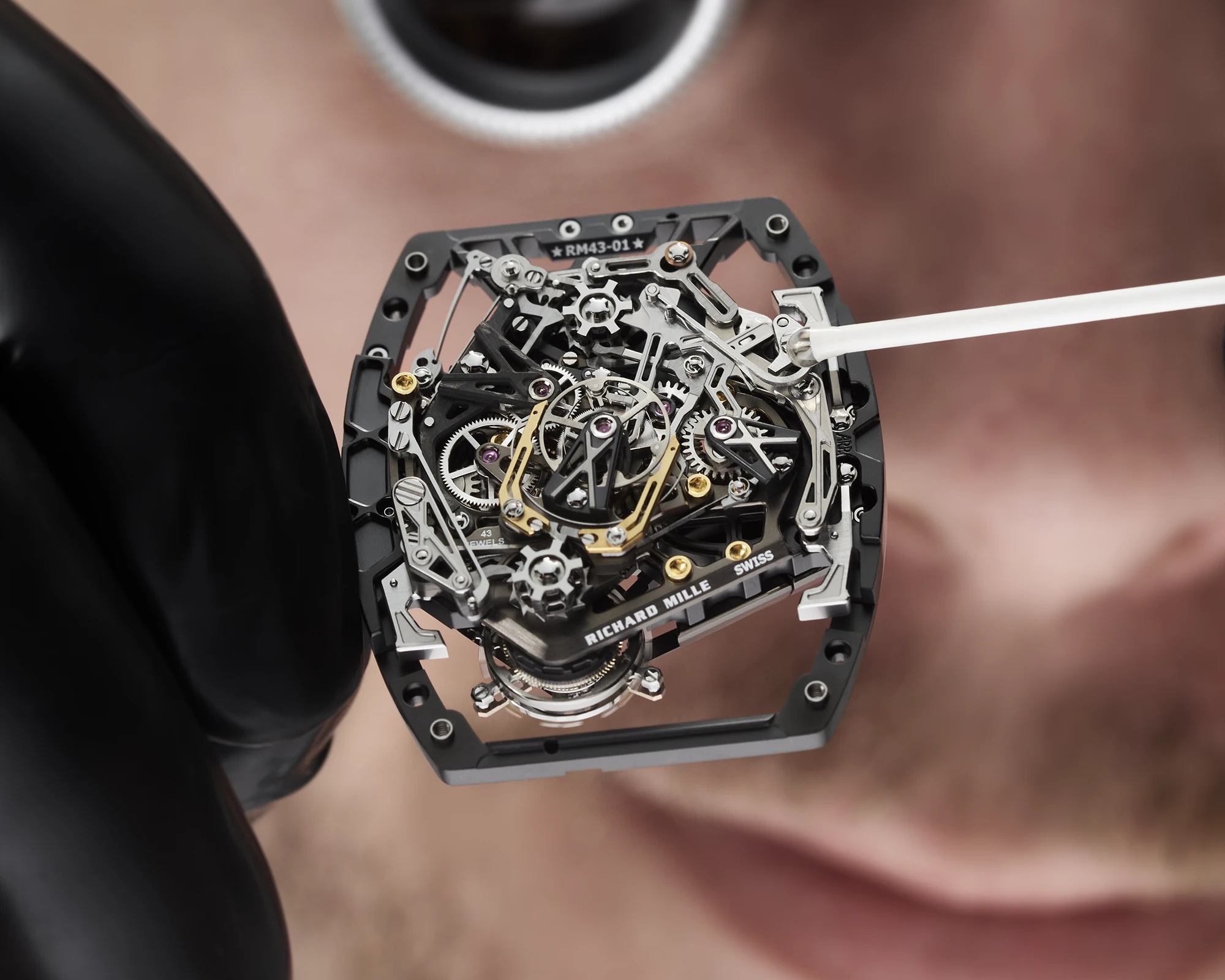
That is a good question. The book does not yet take into account the most recent novelty, the RM 43-01 Manual Winding Tourbillon Split-Seconds Chronograph Ferrari by Richard Mille, which I would still like to examine in more detail. What interests me in particular is how the architecture of the complication has been reconfigured within the movement – for instance, whether this new spatial arrangement allows for a more efficient management of energy flow.
At this stage, I would hesitate to speak of a technical limit. The evolution of such a complication is less about reaching an endpoint, and more about how far one can refine the interaction between materials, construction and energy management.
As for what might come next, there are no clear indications. Personally, I would be curious to see something like a triple split chronograph, or even a lap timer – although that is, admittedly, more a reflection of the technical potential than a realistic short-term expectation from my perspective.
Published by the Italian publisher Edizioni Complicate Digitali, the book Analysis on Split- Seconds Chronographs is available for purchase via the dedicated online store at the following link.