Our third Swisswatches Salon took place at a private location of the Rosewood Hotel in Munich and was dedicated to the most elegant genre in watchmaking: the dress watch.
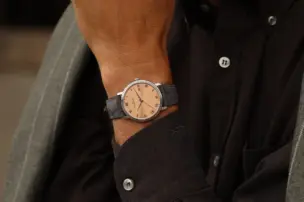
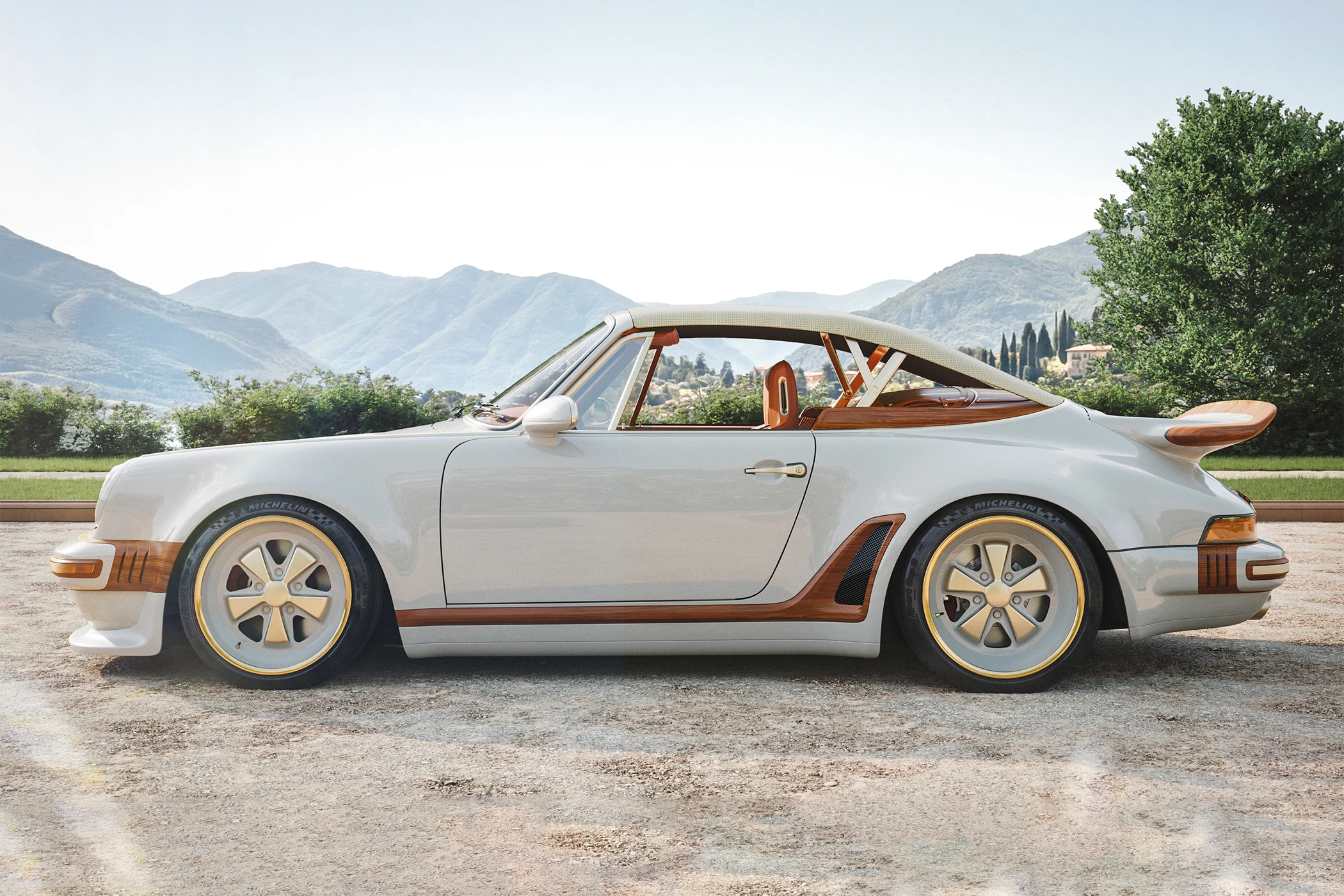
In the Porsche 911 Reimagined by Singer – Classic and Classic Turbo – the time can be read in two places: on a mechanical clock in the centre console and on a Tambour Automatic on the wrist, developed exclusively for this special edition. The real story behind this collaboration is therefore less about matching accessories and more about how watchmaking design can be transferred from the cockpit to a wristwatch and the accompanying travel kit.
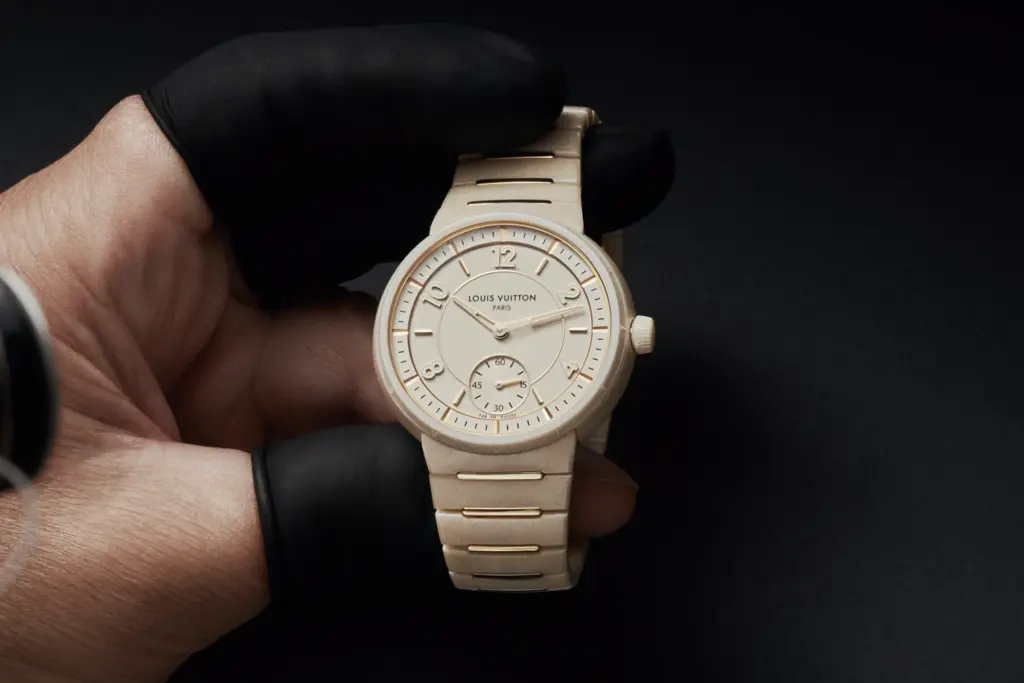
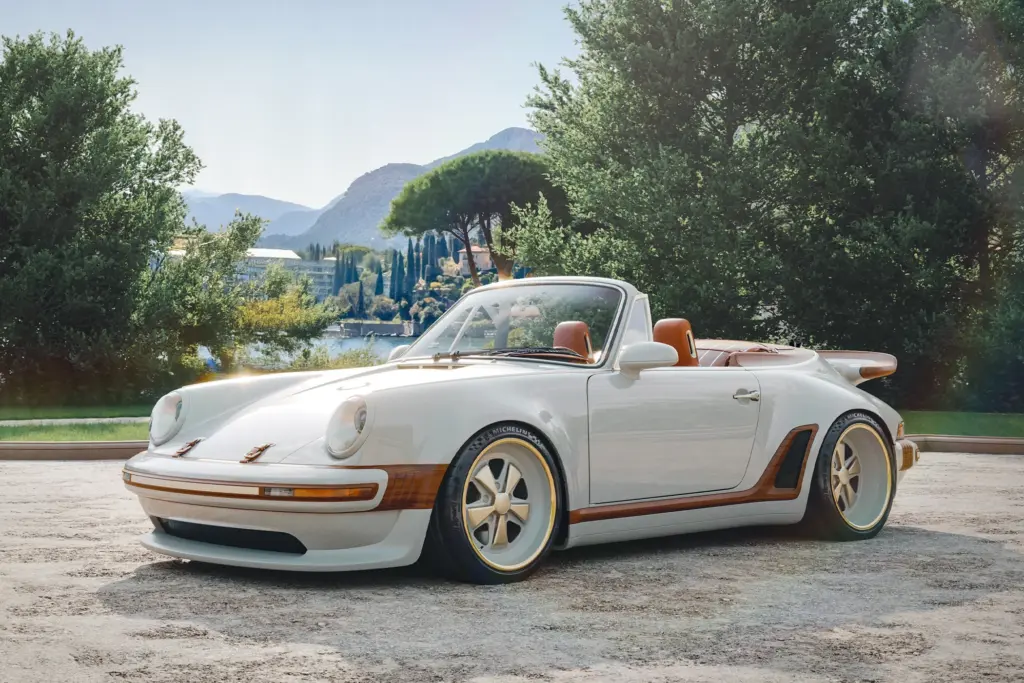
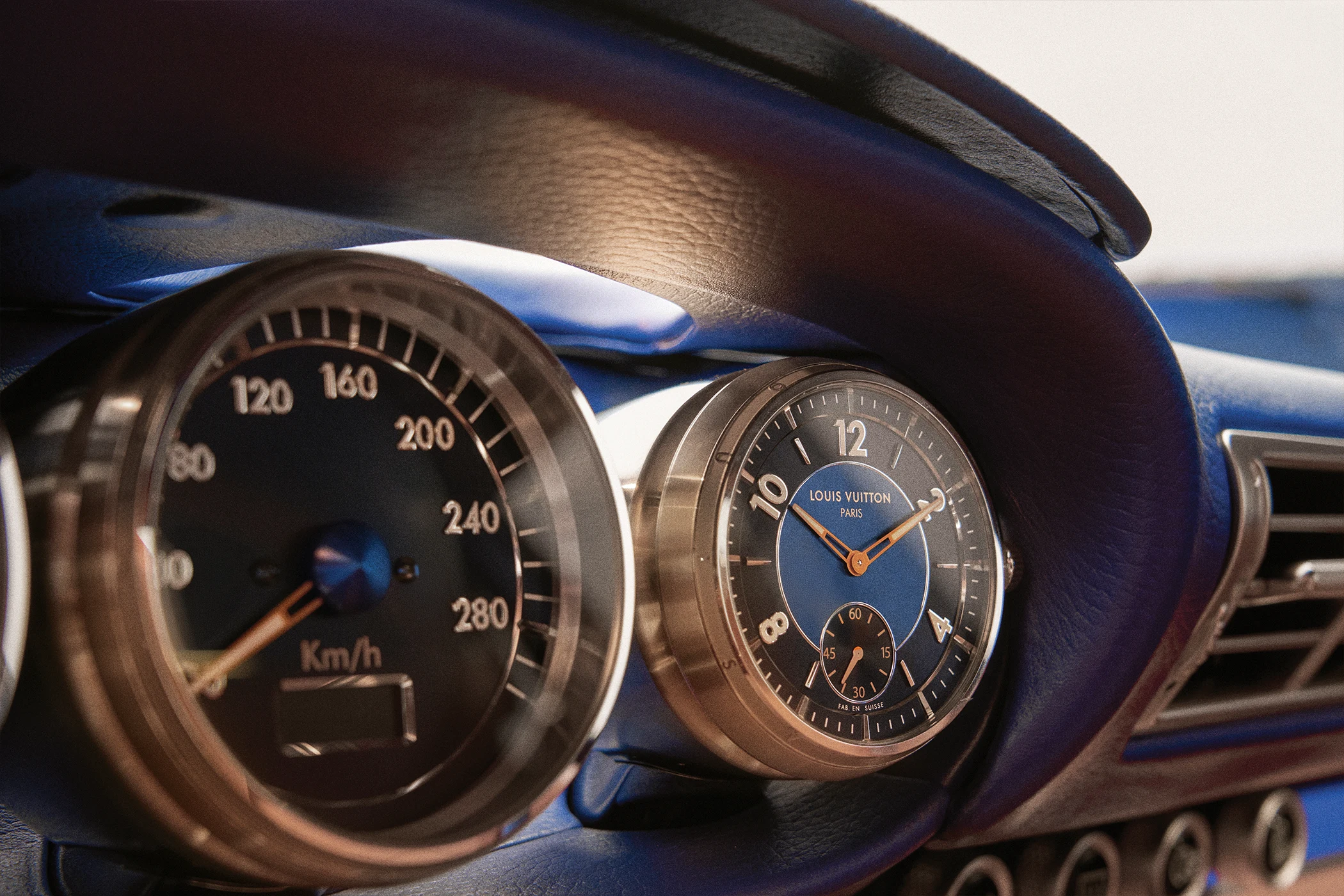
As part of their collaboration, Louis Vuitton and Singer have designed two different cars. For the Classic Coupé, finished in saffron and cobalt blue, a removable mechanical dashboard clock was initially created; its colour scheme – cobalt blue with orange accents – was also carried through to the other instruments in the interior. The second vehicle, a white Classic Turbo Cabriolet, also features a mechanical clock in the centre console; however, this has been coordinated to match both the white bodywork and the wood and gold tones of the interior. Exclusively for this Cabriolet, the Tambour Automatic was added as a matching timepiece for the wrist. It forms part of the Capsule Collection designed specifically for the Classic Turbo.

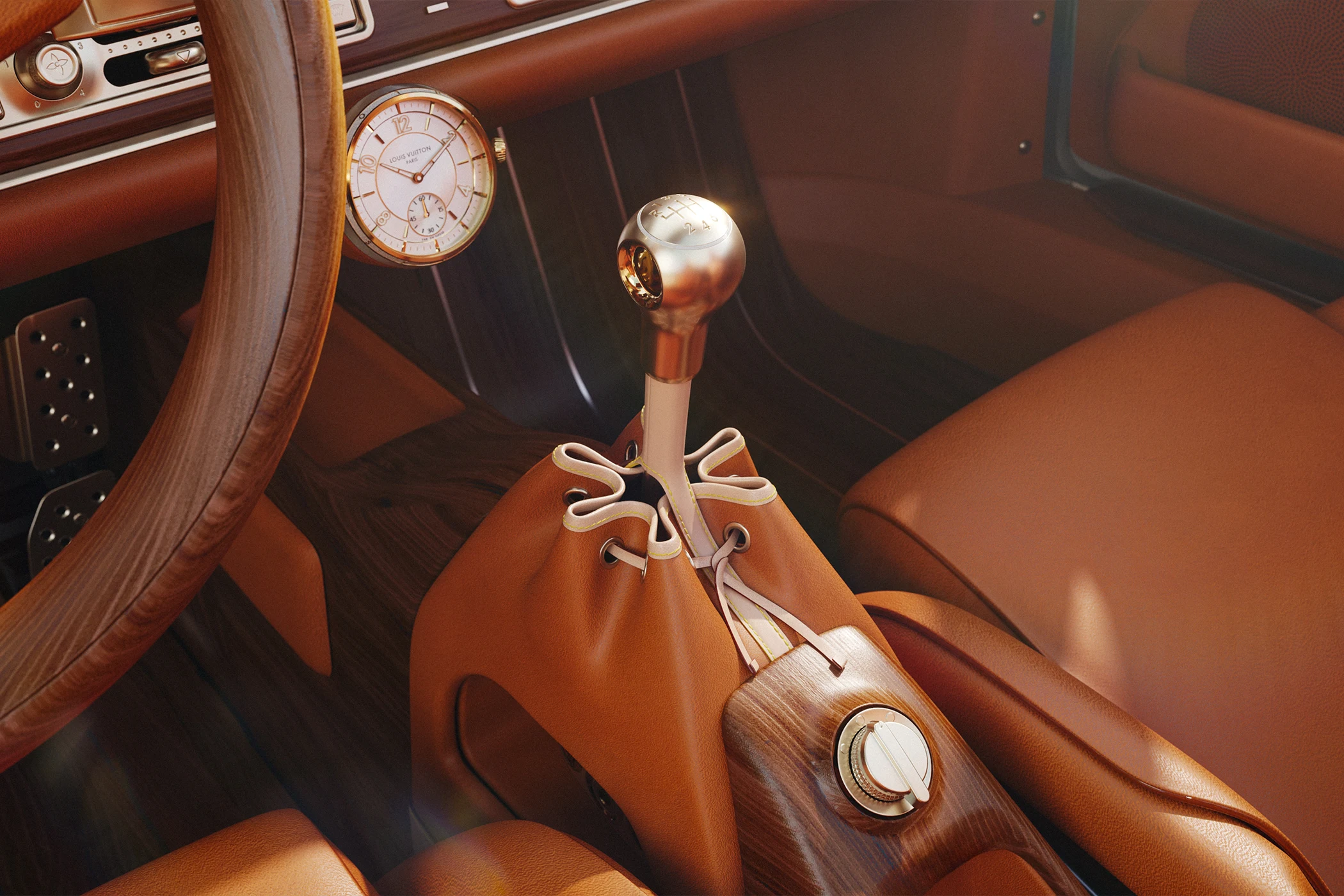
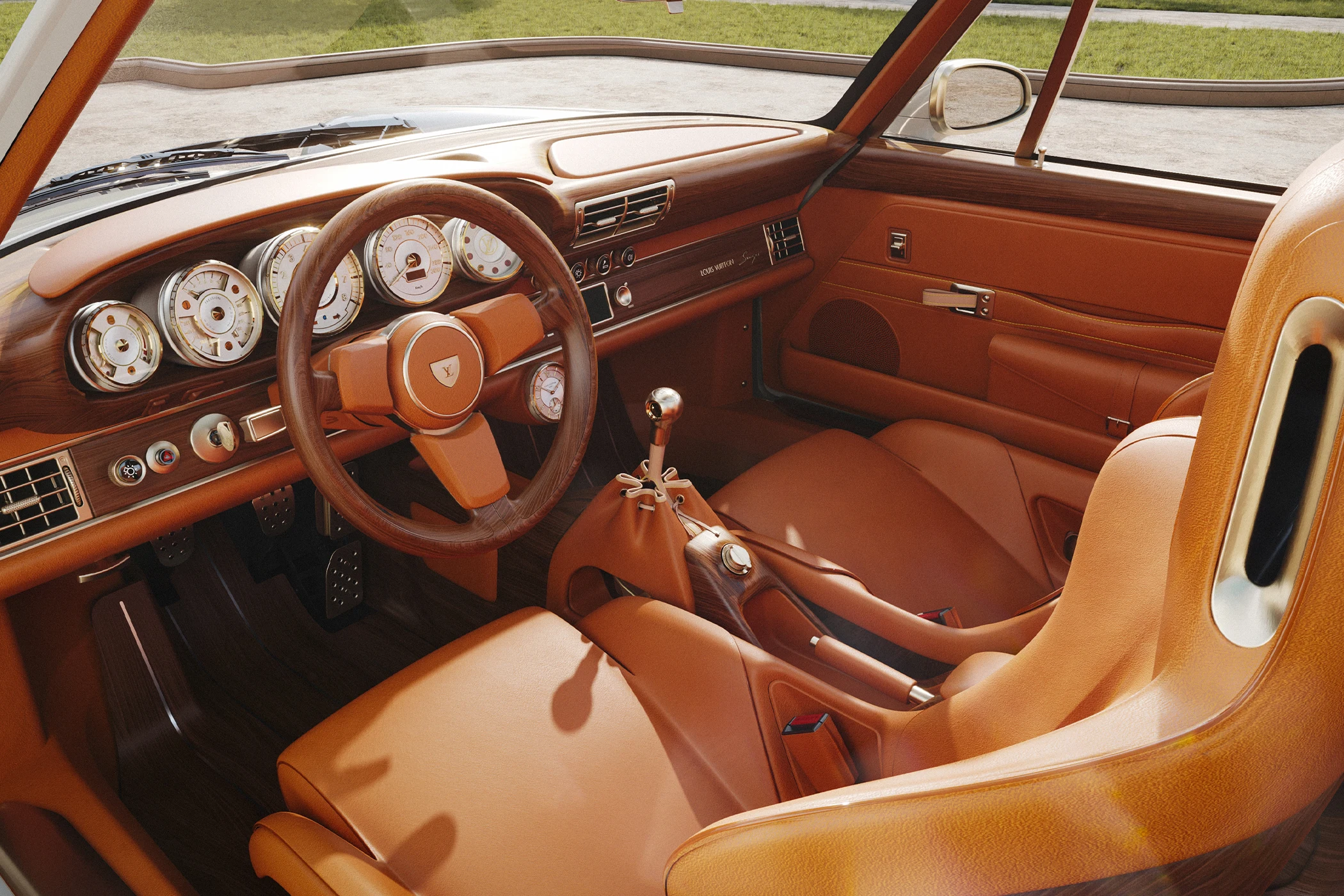
The position of the dashboard clock also differs between the two vehicles. In the Classic Turbo, it is not situated between the dials behind the steering wheel, but in the centre of the light brown leather-trimmed centre console. Gold-coloured dials, a dial that matches the body colour, and a matching gold-coloured ignition key ensure that it blends perfectly with the interior and the bodywork.
To clarify: Singer restores and customises Porsche 911s on behalf of their respective owners, but is neither affiliated with nor authorised by Porsche AG. Similarly, Singer Vehicle Design is not to be confused with the watch brand Singer Reimagined. The partnership described here is between Louis Vuitton and Singer.
A white convertible, a leather-trimmed centre console and, within it, not far from the gear lever, a mechanical clock: In the Porsche 911 Reimagined by Singer – Classic Turbo, the timepiece is not merely part of the instrument panel, but has its own dedicated space in the cockpit. The clock can even be removed from the car and used as a table clock; on the wrist, it is complemented by a Louis Vuitton Tambour Automatic.
This creates an unusual and particularly practical connection between driving and wearing. One remains part of the sports car as long as it is secured in the dashboard, whilst the other moves through the same space on the driver’s wrist.
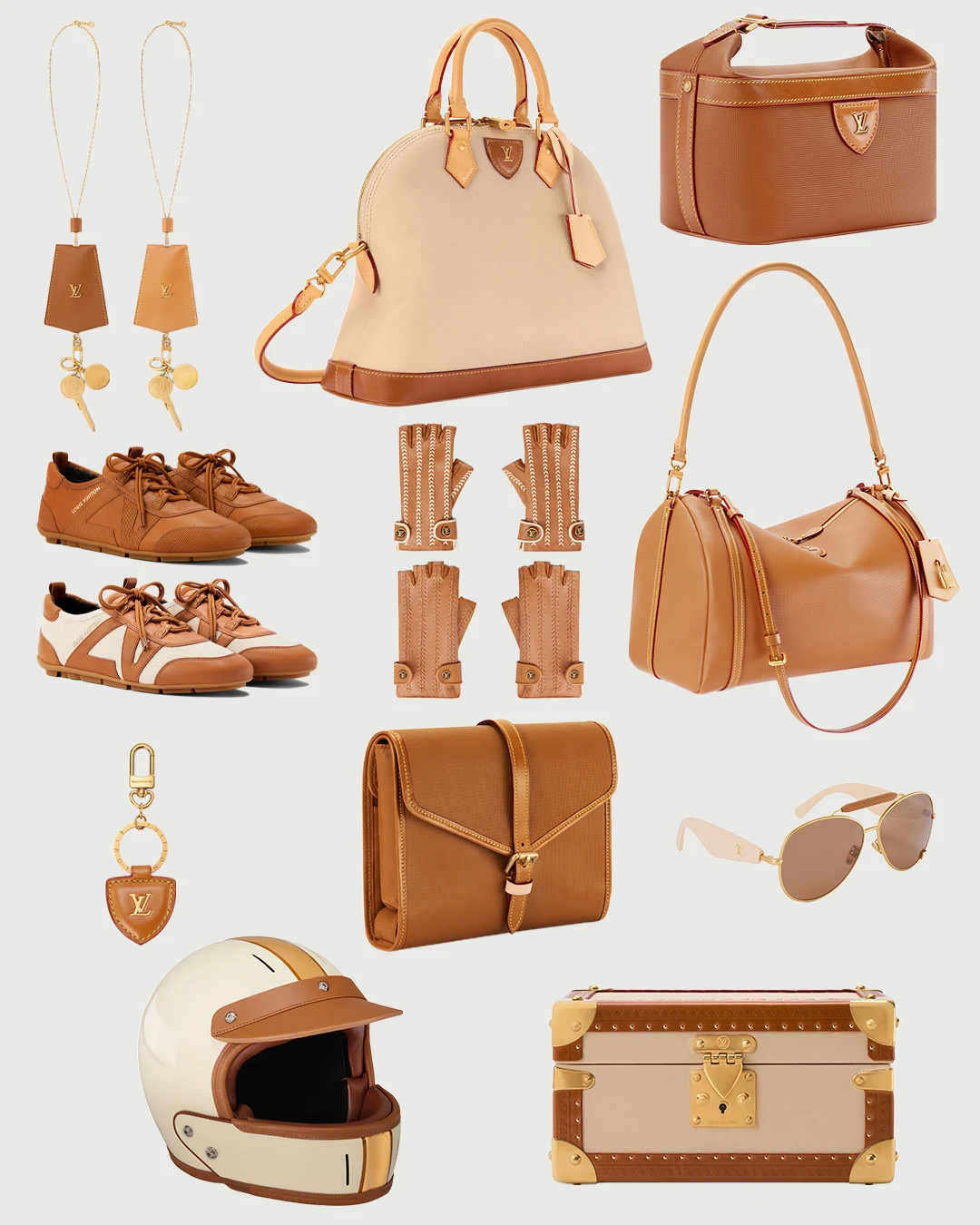
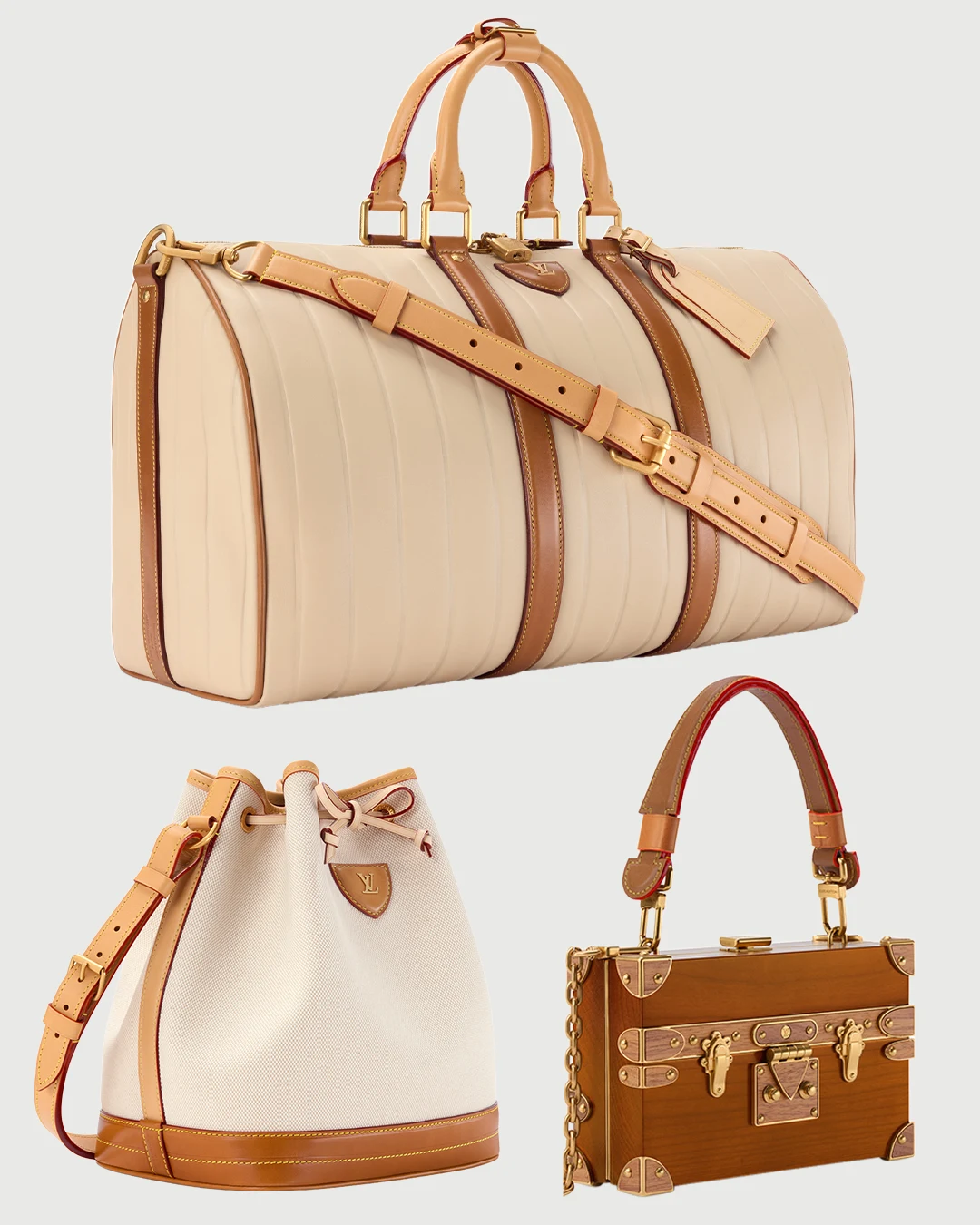
Further accessories included with the Porsche 911 Reimagined by Singer – Classic Turbo x Louis Vuitton:
“The adventure began with a request for a dashboard clock for a car reimagined by Singer,” says Jean Arnault, Head of Watches at Louis Vuitton. The mechanical timepiece was designed and crafted in the Swiss workshops of La Fabrique du Temps Louis Vuitton. This meant the project was conceived from the outset with watchmaking in mind: what was required was not merely a dashboard clock in the style of a classic round racing instrument, but a standalone mechanical timepiece.
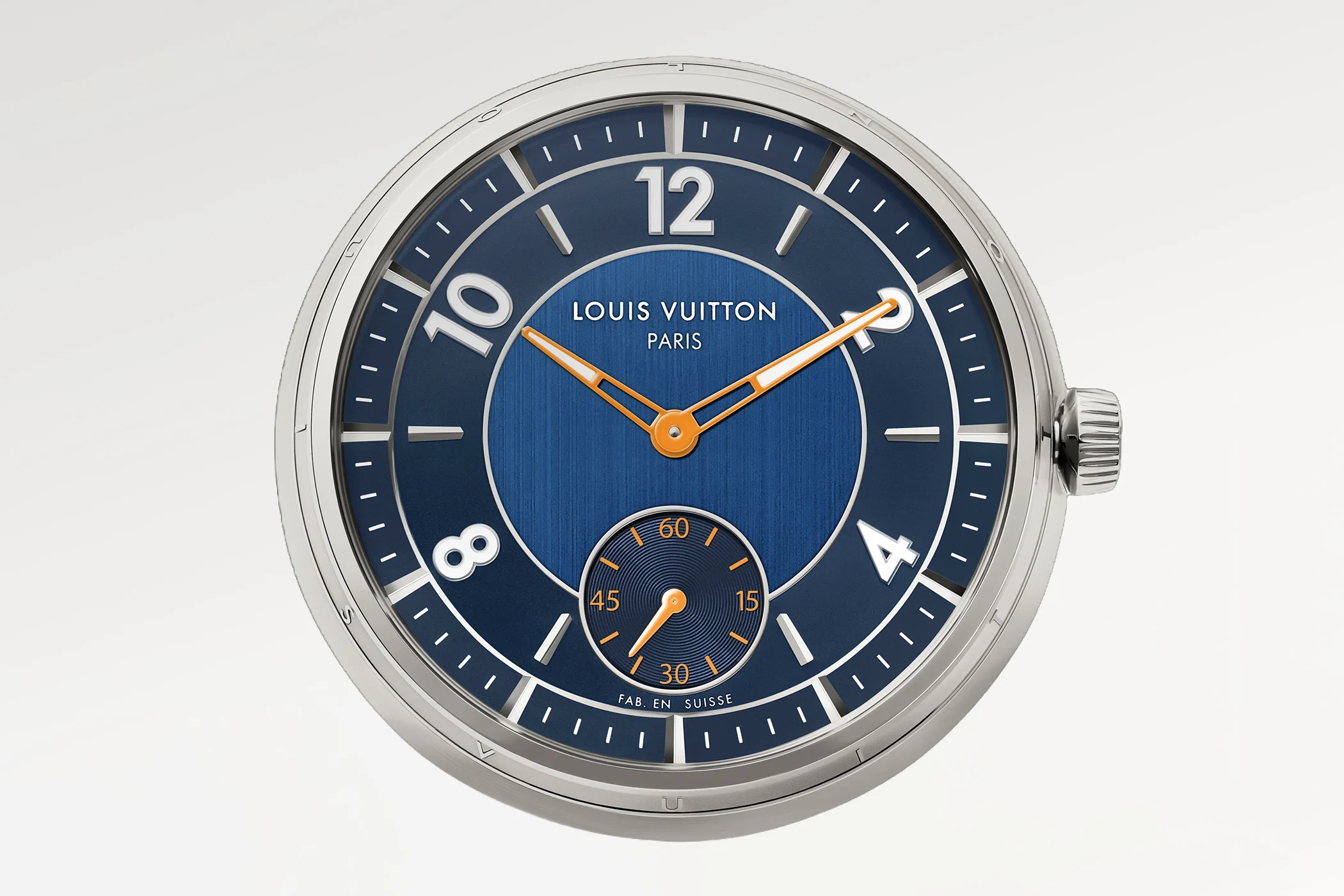
The design of the cockpit watch takes Louis Vuitton’s Tambour as its creative starting point. The bezel features twelve polished and engraved letters which, when combined, spell out the name ‘Louis Vuitton’ – one letter for each hour mark. The brand name thus also serves as a time scale.
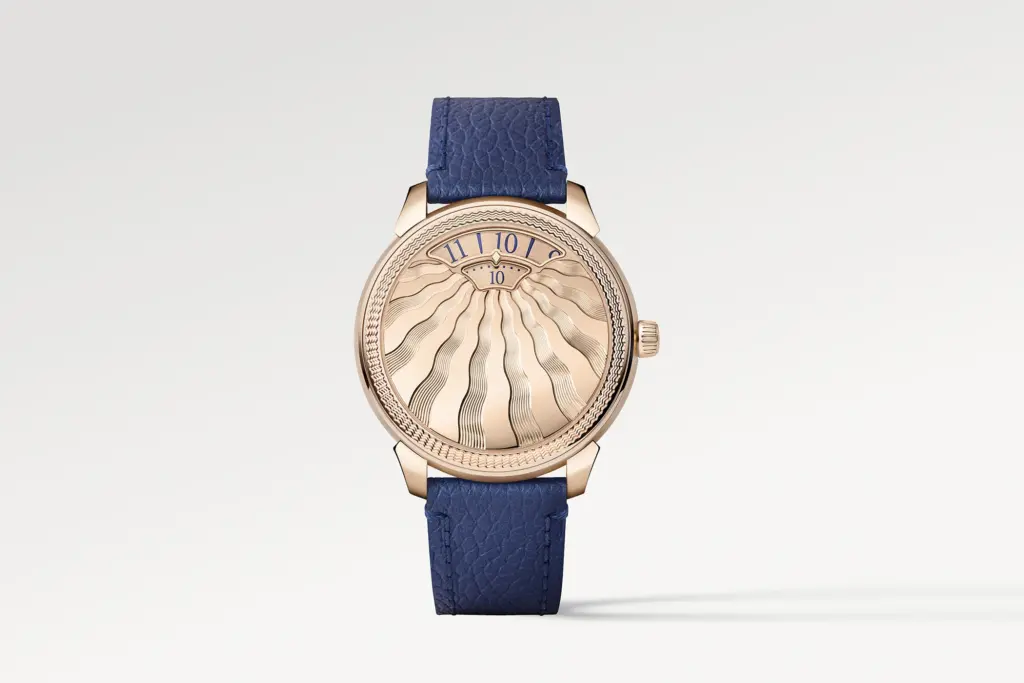
You can find out more about the Louis Vuitton Tambour Convergence Guilloché with Montres à Guichet time display here in our article
Both dashboard clocks have the same technical design. Their mechanical hand-wound movement displays the hours and minutes as well as a small seconds hand, and has a power reserve of eight days. It operates at 18,000 vibrations per hour, equivalent to 2.5 hertz, and has 22 jewels. The clock measures 81 × 24.7 millimetres; the accompanying stand measures 80.5 × 37.5 millimetres.
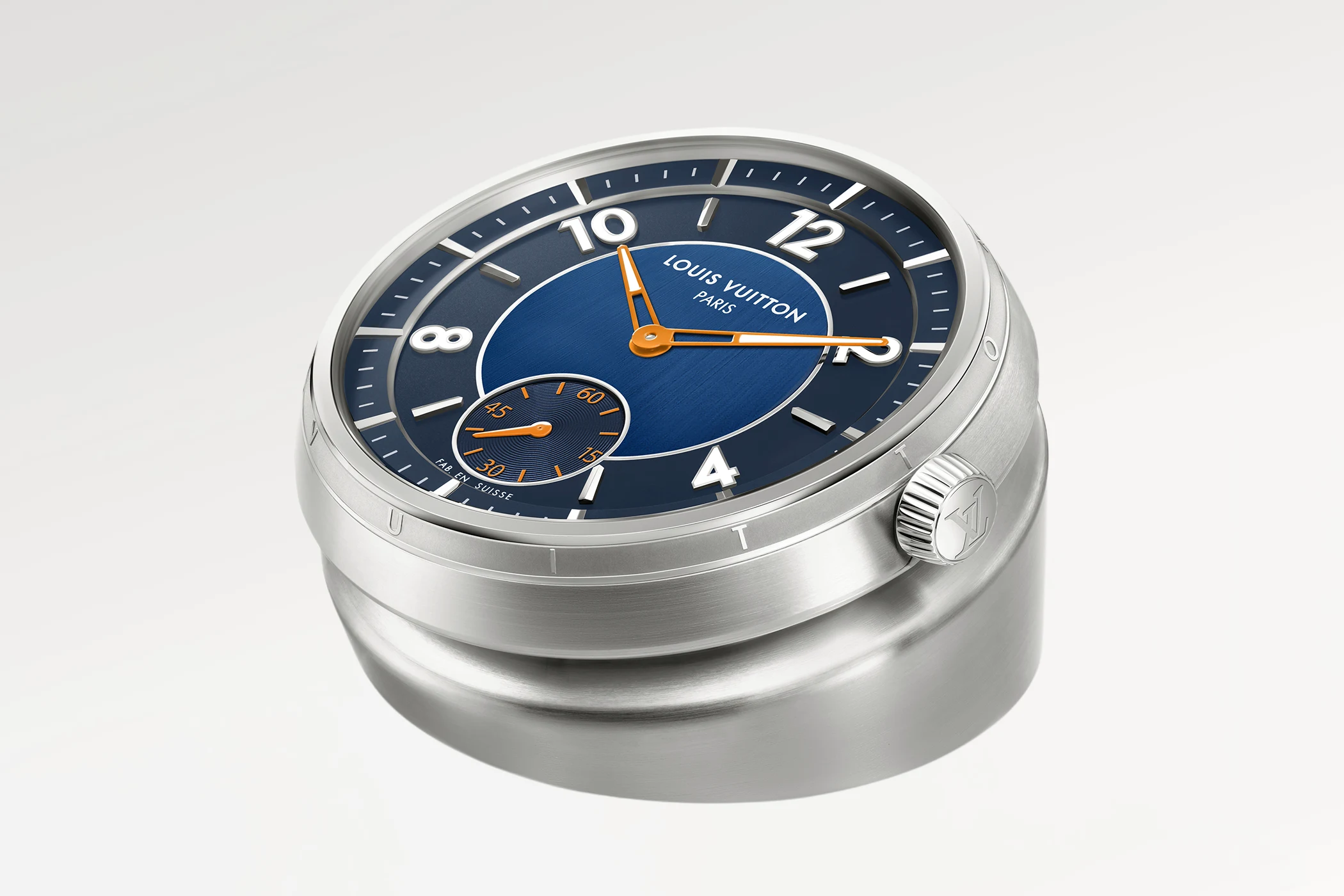
The clock remains versatile: in the Classic and Classic Turbo, it forms part of the centre console; outside the vehicle, it becomes a table clock. This flexible design also forms a link to the Tambour Automatic: in the Turbo Classic, the clock moves from the centre console to the table, whilst the other model brings the Classic Turbo’s design to the wrist.
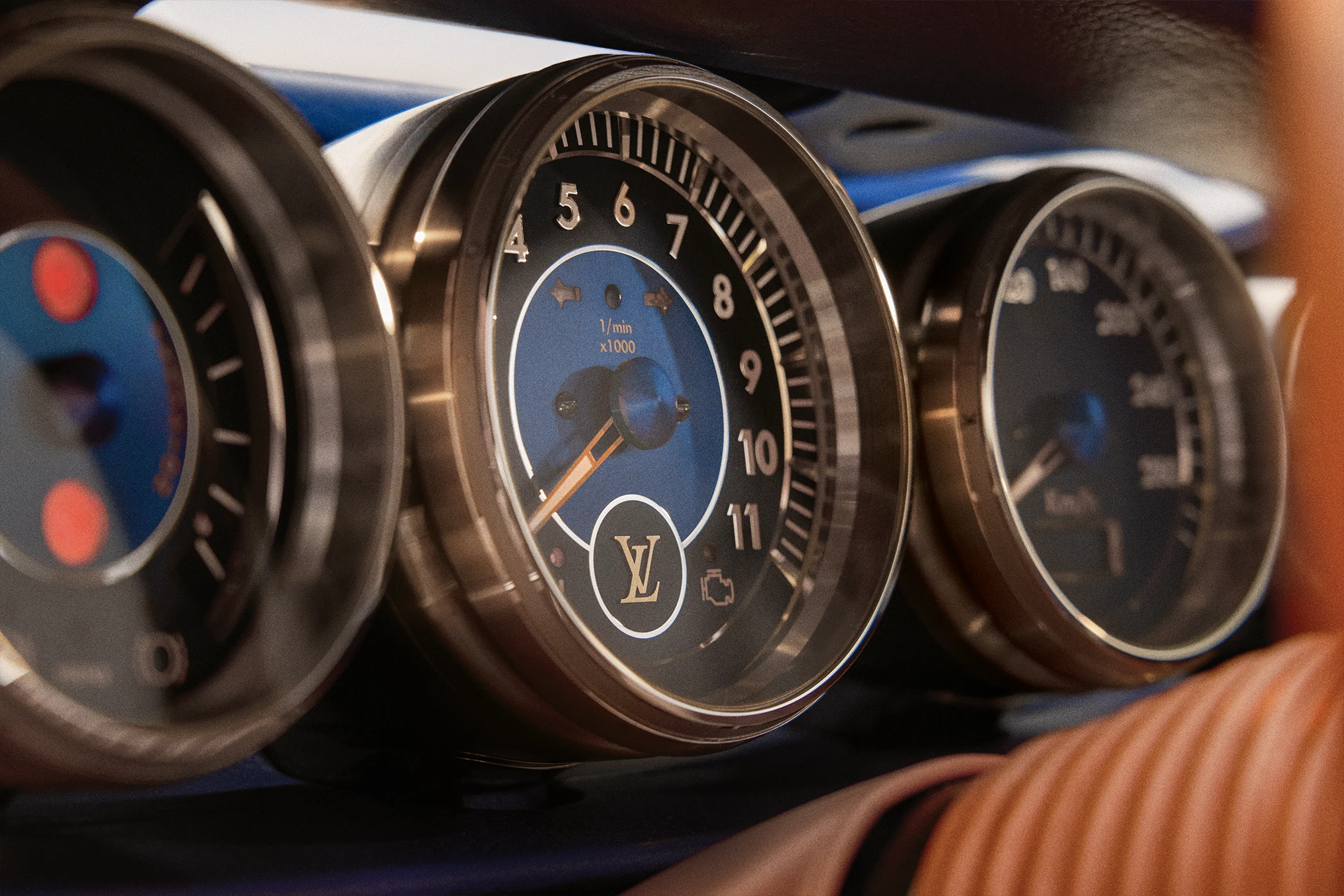
The work on the cockpit was not complete with the dashboard clocks alone. Louis Vuitton and Singer also spent around a year refining the other dials in both vehicles. In the Classic Coupé, the removable clock is positioned on the far right of the dashboard alongside four other round dials. In the Classic Turbo, by contrast, it is located separately in the centre console, behind the gear lever.
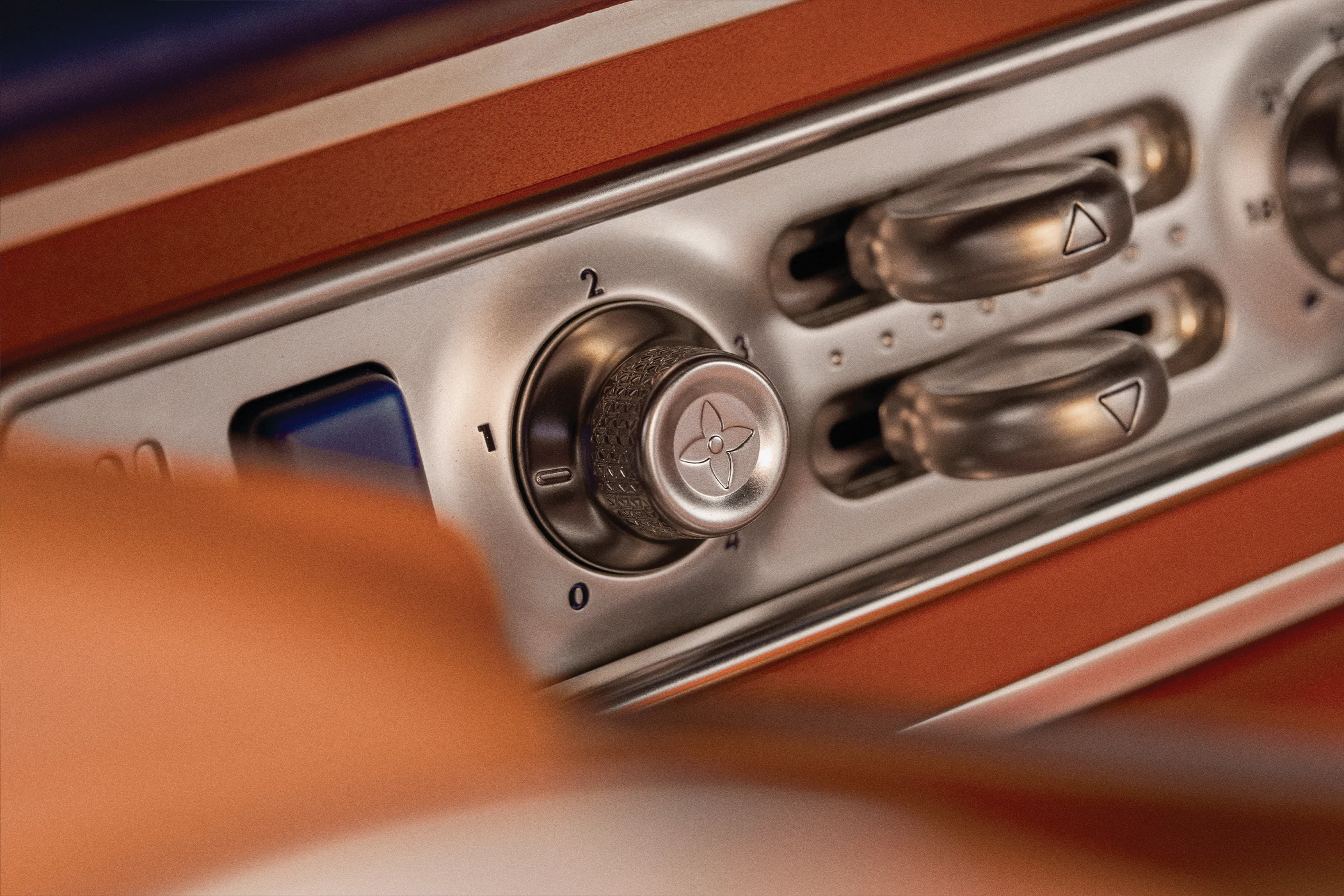
In addition, adjustment knobs, switches, locks, pull tabs and air vents were made of metal, often rhodium-plated and finished using techniques familiar from watchmaking for surface decoration: Polished and satin-finished surfaces, knurling and the reflections at their junctions not only had to look precise, but also had to withstand touch, vibration and the demands of driving. Depending on the component, the respective colour tones were achieved through anodising or electroplating.
The requirements for a car differ from those for a wristwatch: surfaces, edges and dials must not only be aesthetically pleasing, but must also be safe to operate and read whilst driving. Louis Vuitton and Singer were therefore unable to simply adopt the details and manufacturing techniques straight from the watchmaking textbooks; instead, they had to adapt them to the function of the cockpit and the requirements of the individual components.
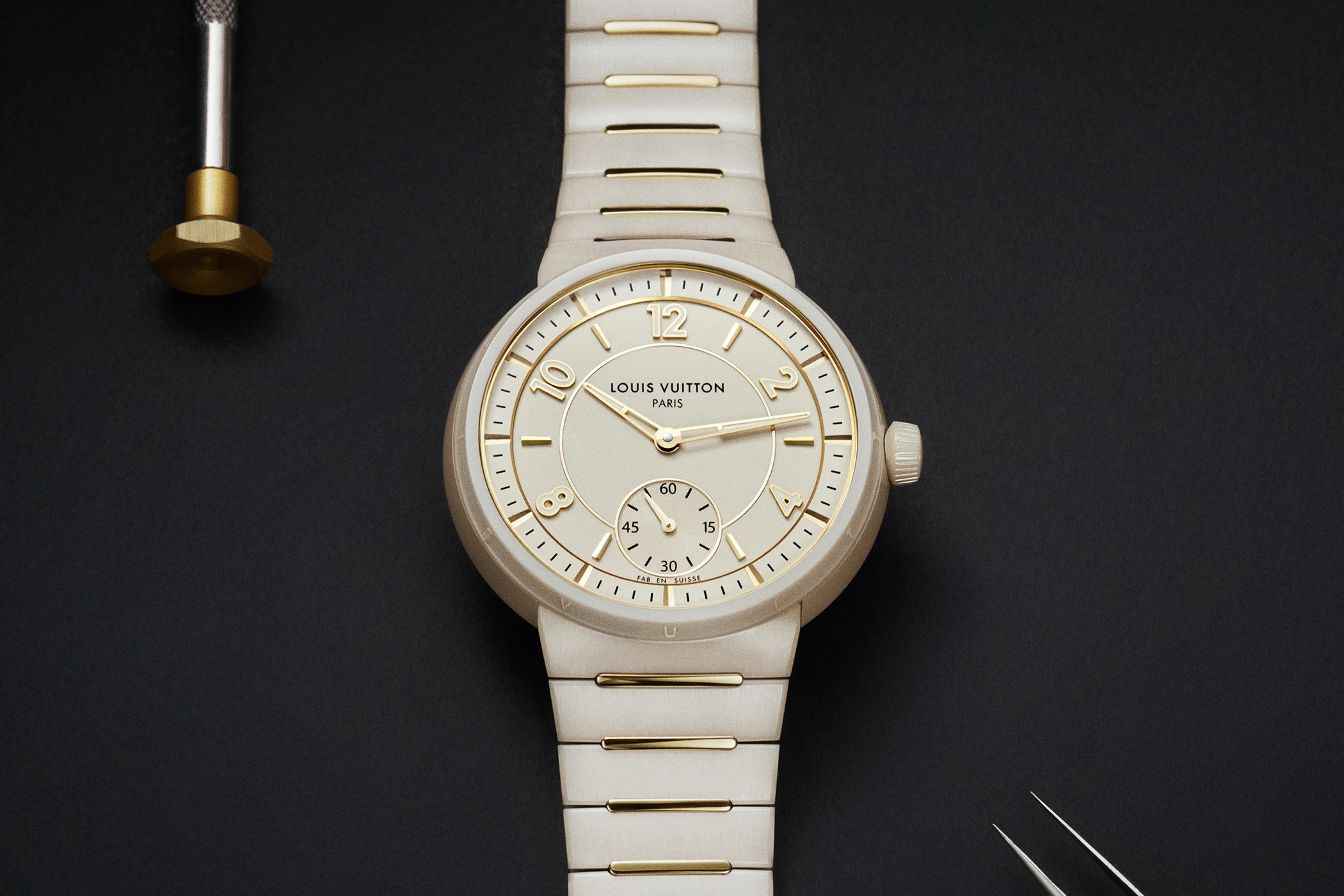
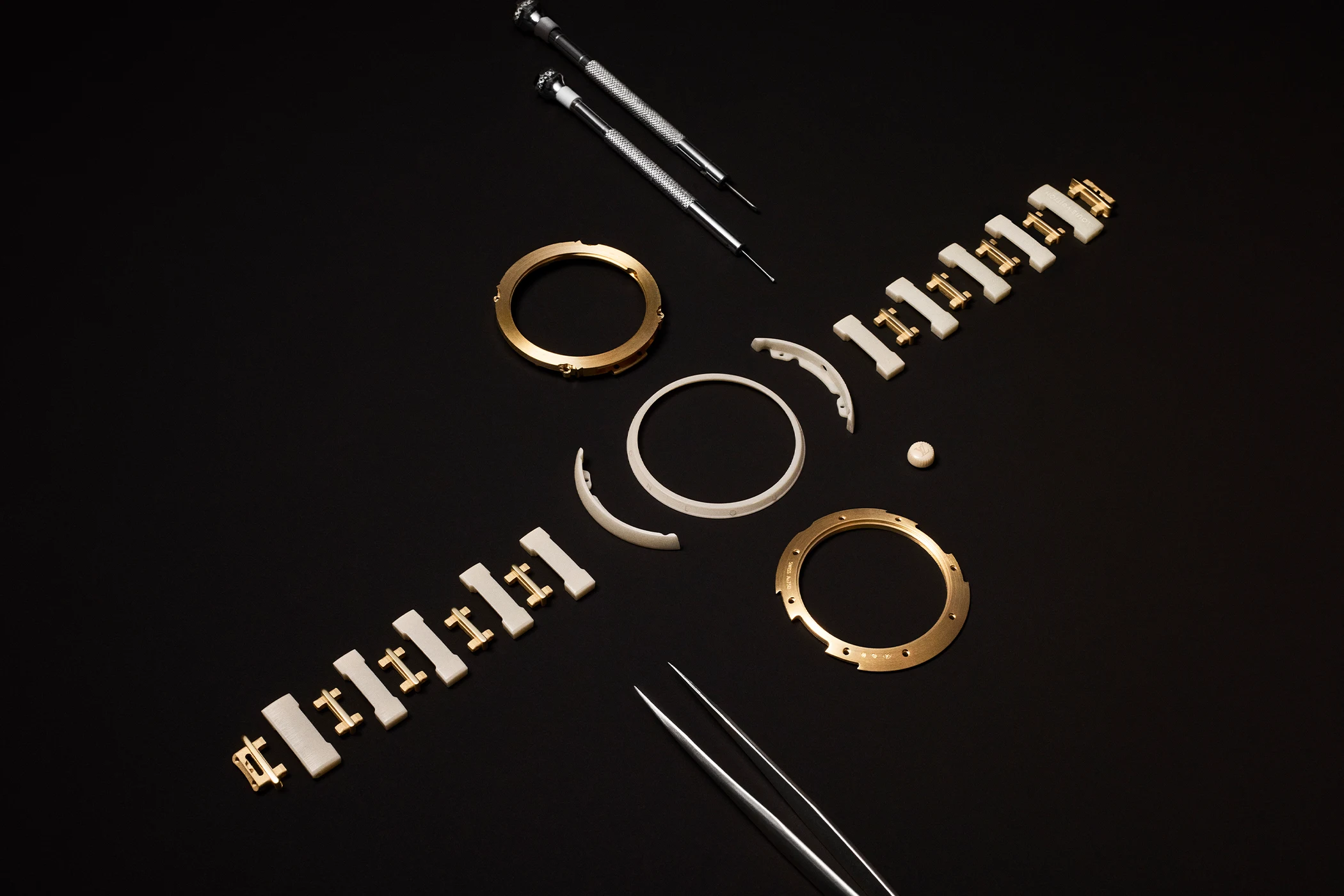
To complement the white Classic Turbo Cabriolet, there is a second timepiece alongside the removable dashboard clock: the Louis Vuitton Tambour Automatic for the wrist. Its 40-millimetre-wide and 8.3-millimetre-high case combines white ceramic with 750 yellow gold. The precious metal echoes the gold-coloured instruments and details in the Cabriolet’s interior.
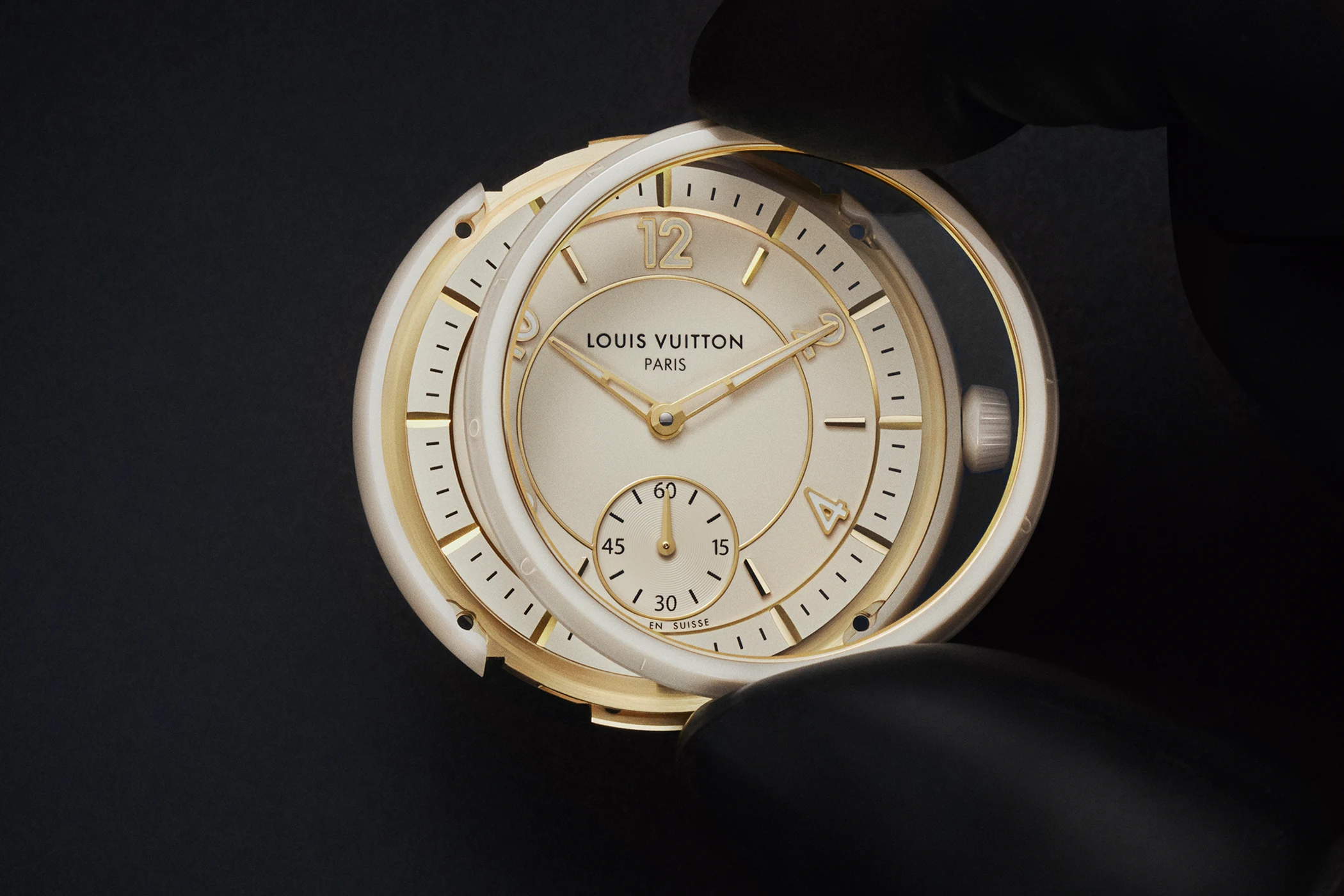
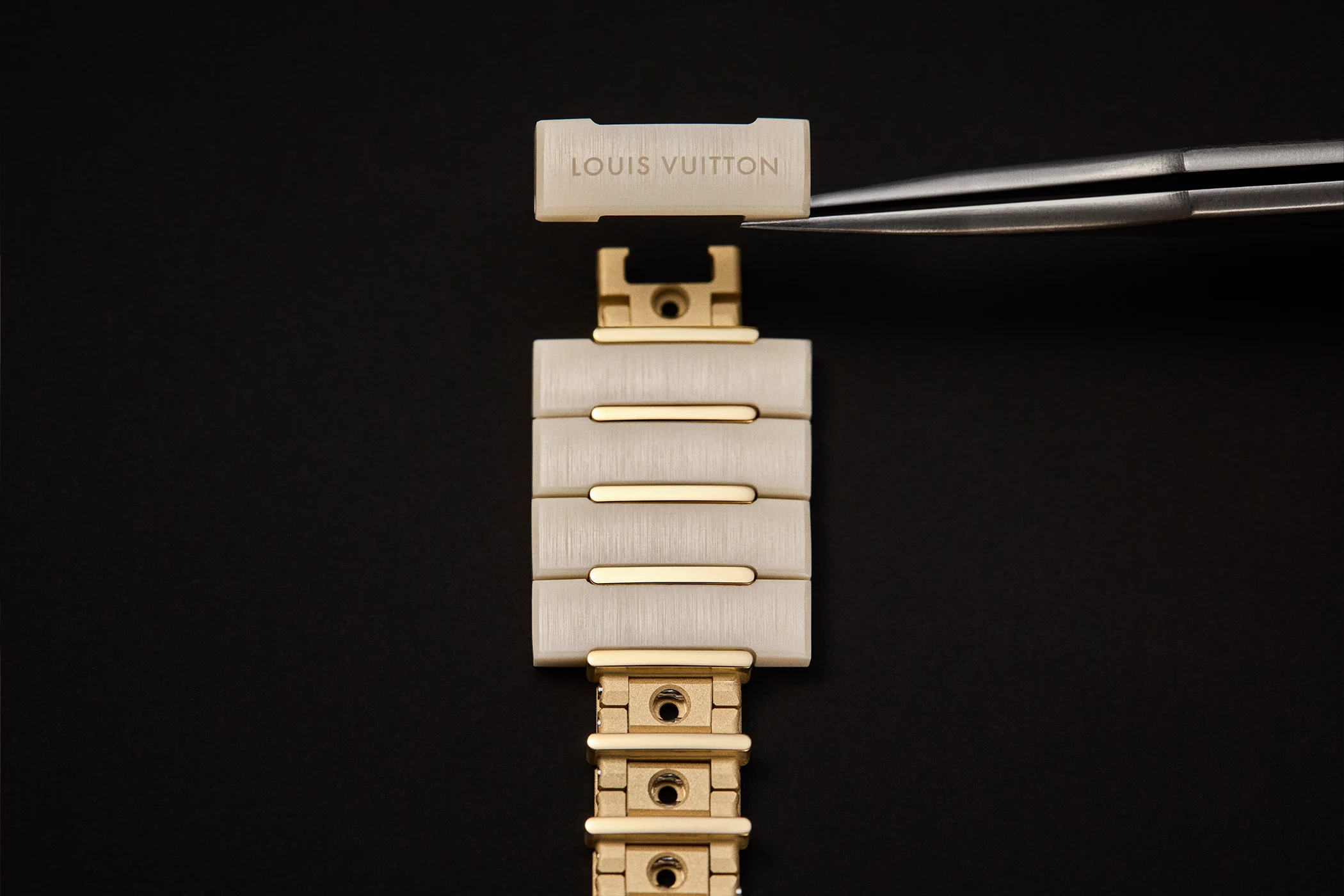
The bracelet has no visible pins and is fastened with a concealed, three-piece folding clasp in 750 yellow gold. The largely seamless transitions between the individual components reflect a design approach that is also evident in the finish of the newly designed cockpit.
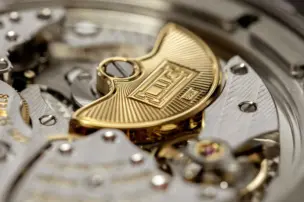
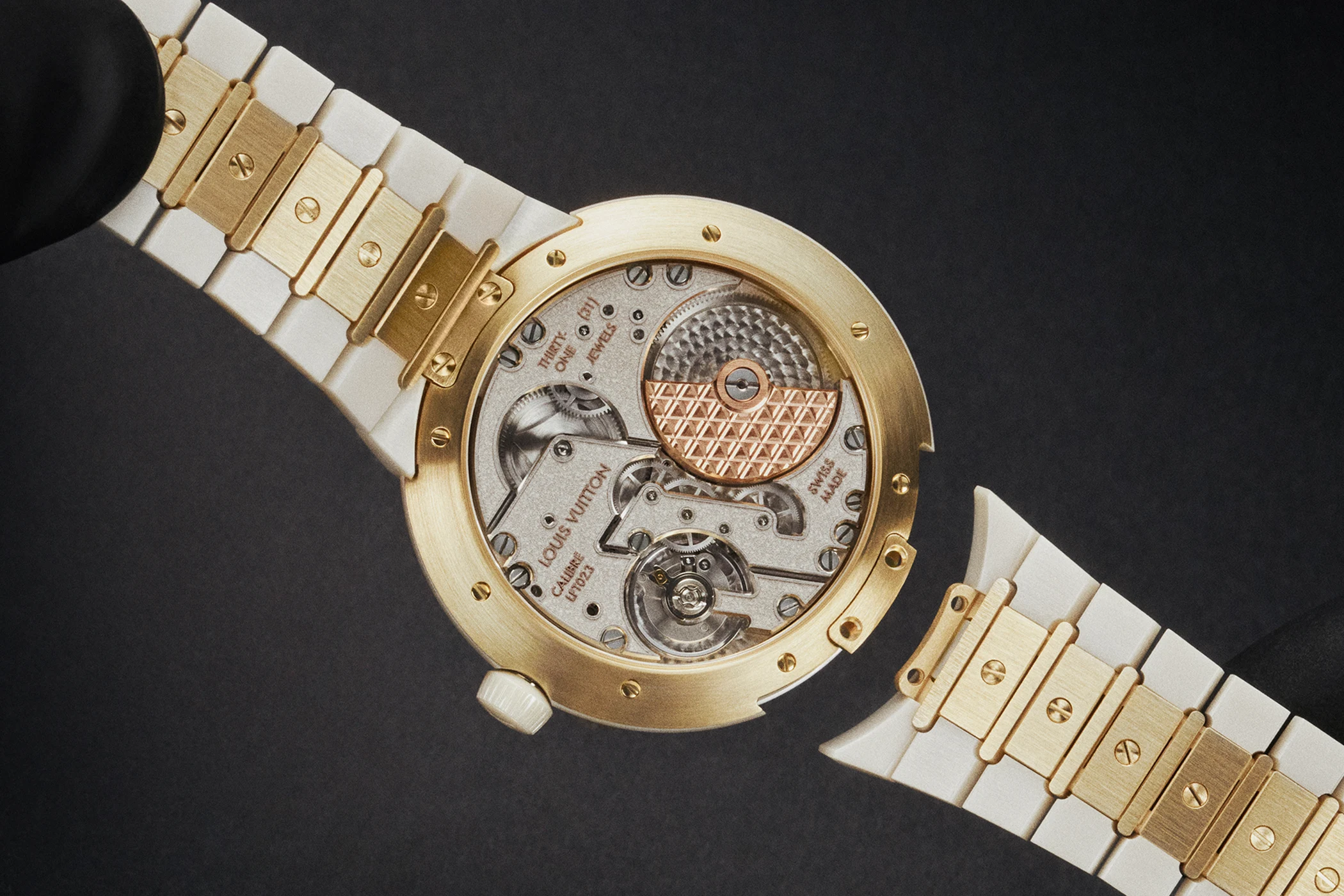
Inside, the watch is powered by the LFT023.01 mechanical self-winding calibre. The movement measures 30.6 millimetres in diameter and 4.2 millimetres in height. It displays the hours and minutes, as well as a small seconds hand, and offers a power reserve of 50 hours. Automatic winding is provided by a micro-rotor crafted from 916 rose gold. The LFT023.01 is certified as a chronometer by the Geneva Observatory in accordance with ISO 3159 and operates within a daily tolerance of minus four to plus six seconds.
The dashboard clock and the Tambour Automatic are stored separately. To this end, Louis Vuitton is reissuing the Coffret Trésor – first crafted by Georges Vuitton in 1896 – in two coordinated versions. One version holds the wristwatch on a cushion. The second houses the mechanical clock from the centre console in such a way that it can be removed straight away and fitted above the gear lever.
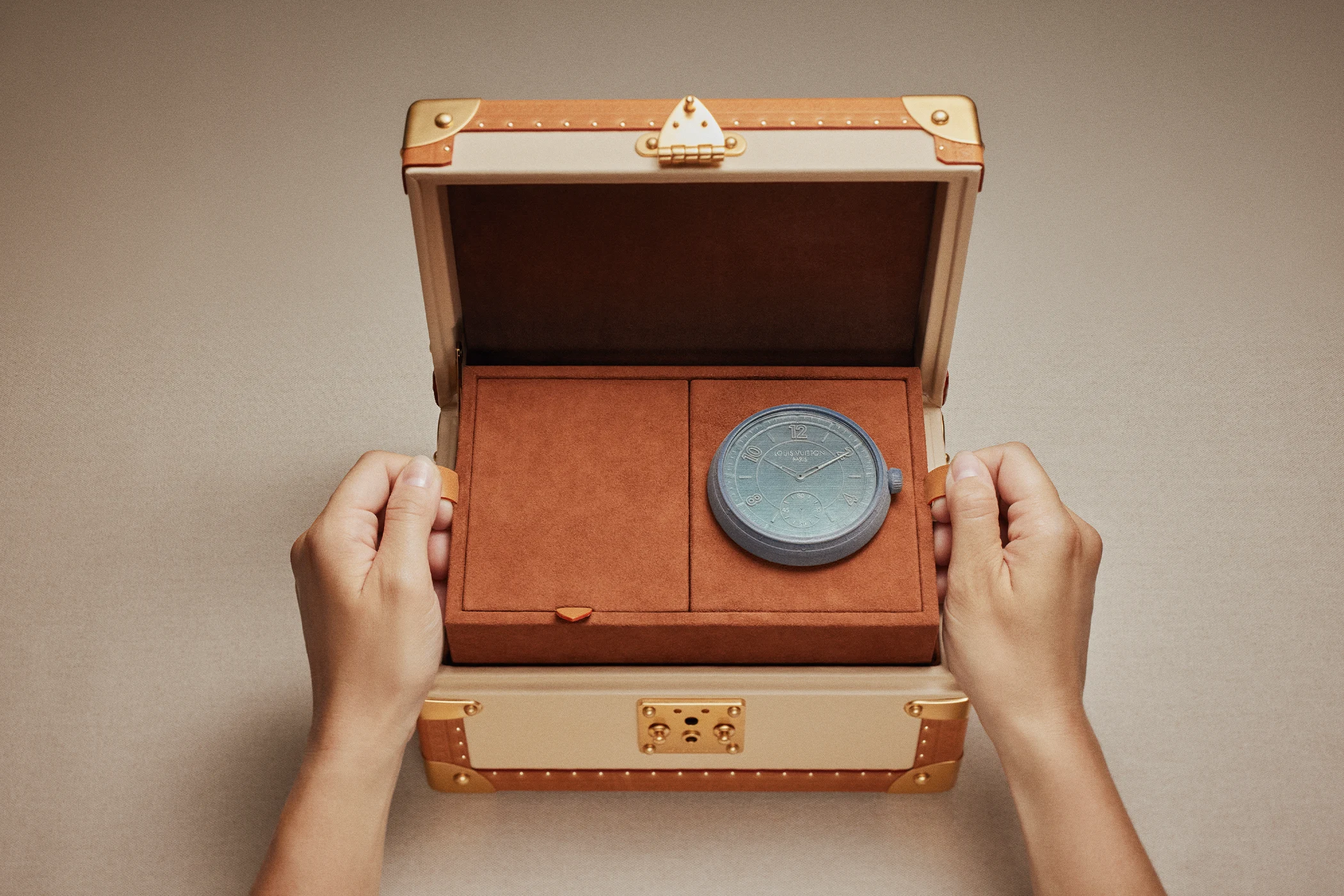
Additional accessories included with the Porsche 911 Reimagined by Singer – Classic x Louis Vuitton:

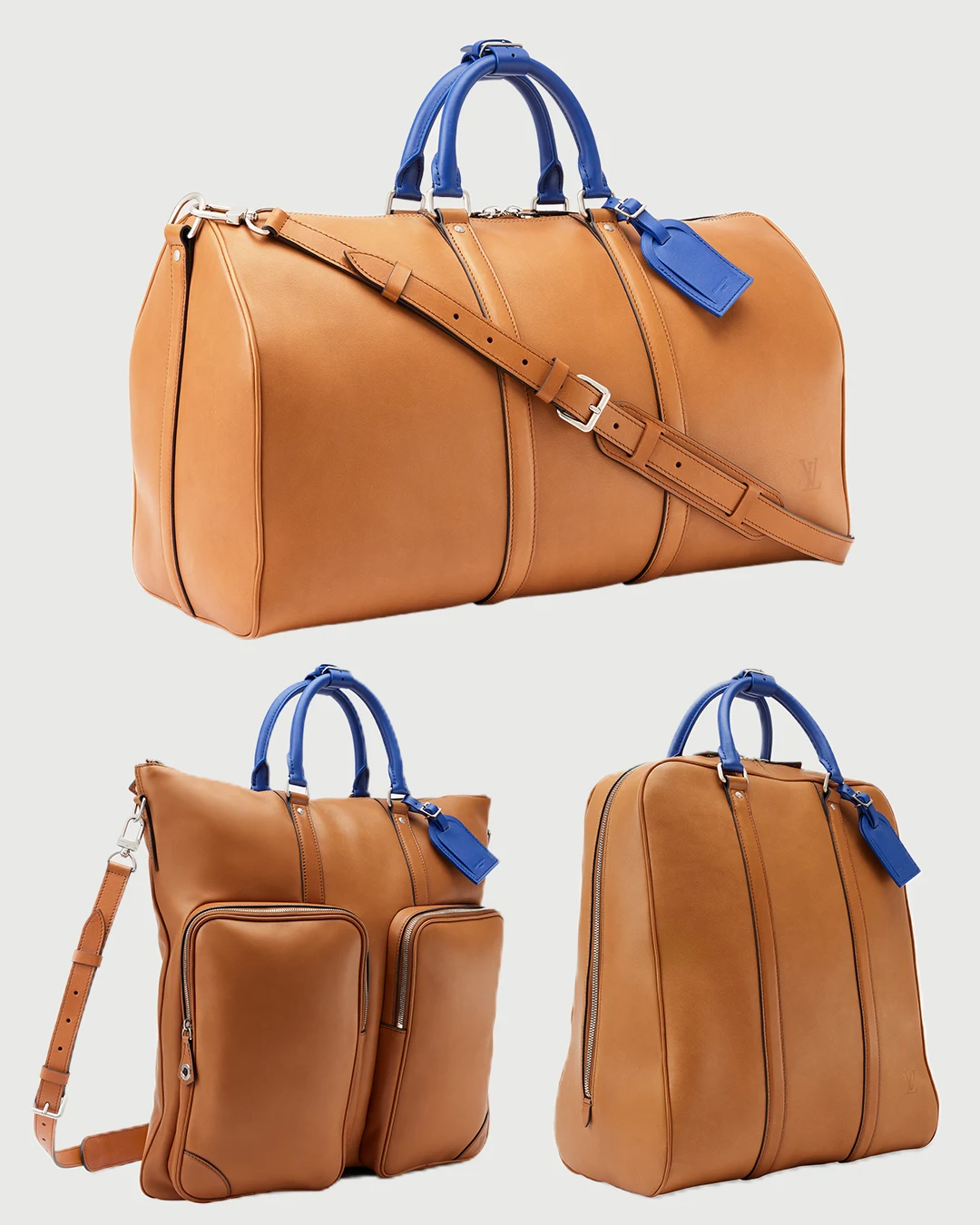
Clothing, gloves, a helmet, goggles and other bespoke luggage within the Capsule Collection complement the reference to Louis Vuitton’s historic travel heritage. However, these elements take a back seat to the watchmaking concept. The focus is on the various settings in which the two timepieces are used: the dashboard clock displays the time whilst in the vehicle and can subsequently be used as a table clock. The Tambour accompanies the driver on their wrist, independently of the car.