

Patek Philippe watches are never cheap – but just how expensive can they get? Here are the 15 most expensive Patek Philippe wristwatches of all time.

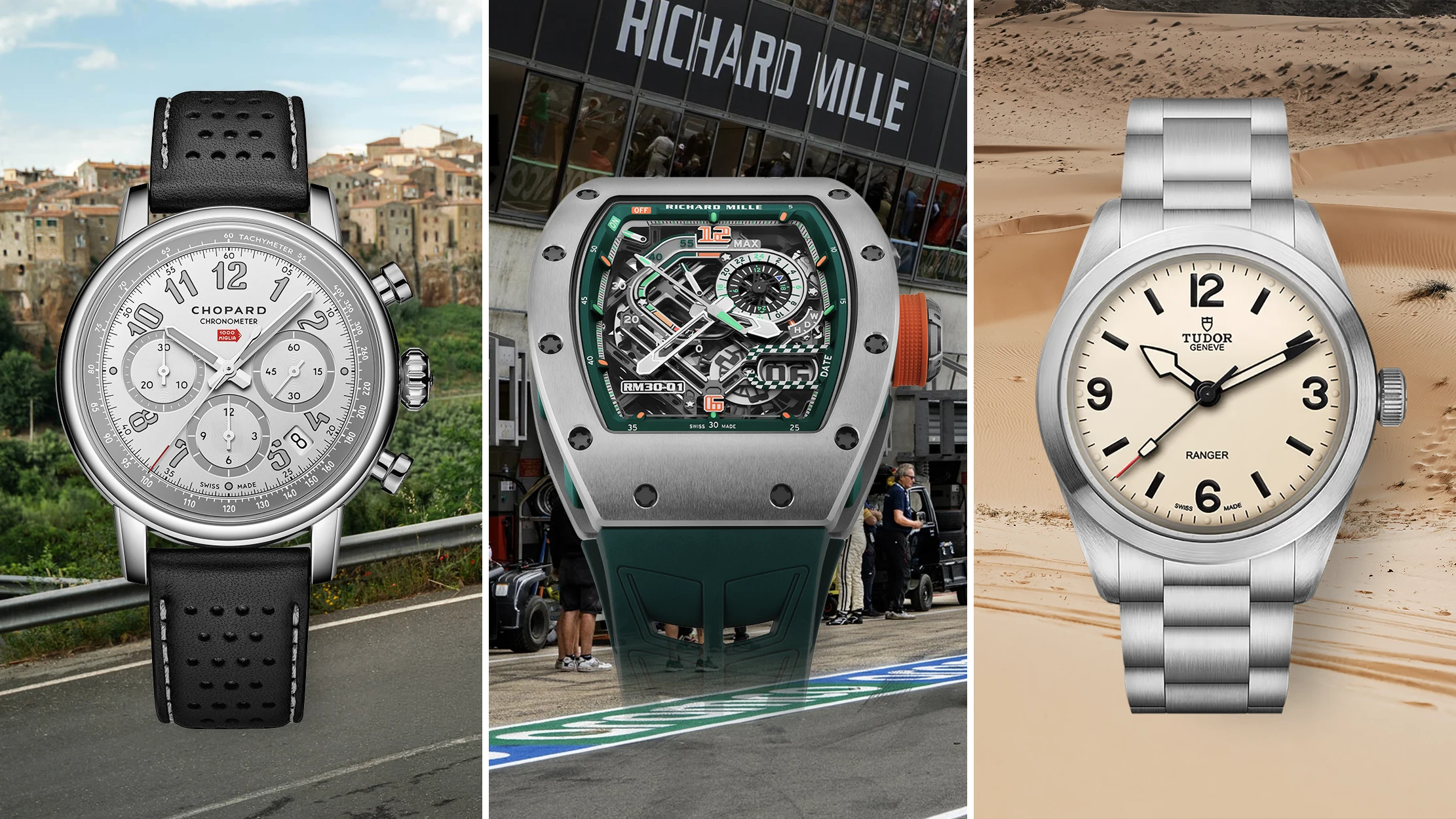
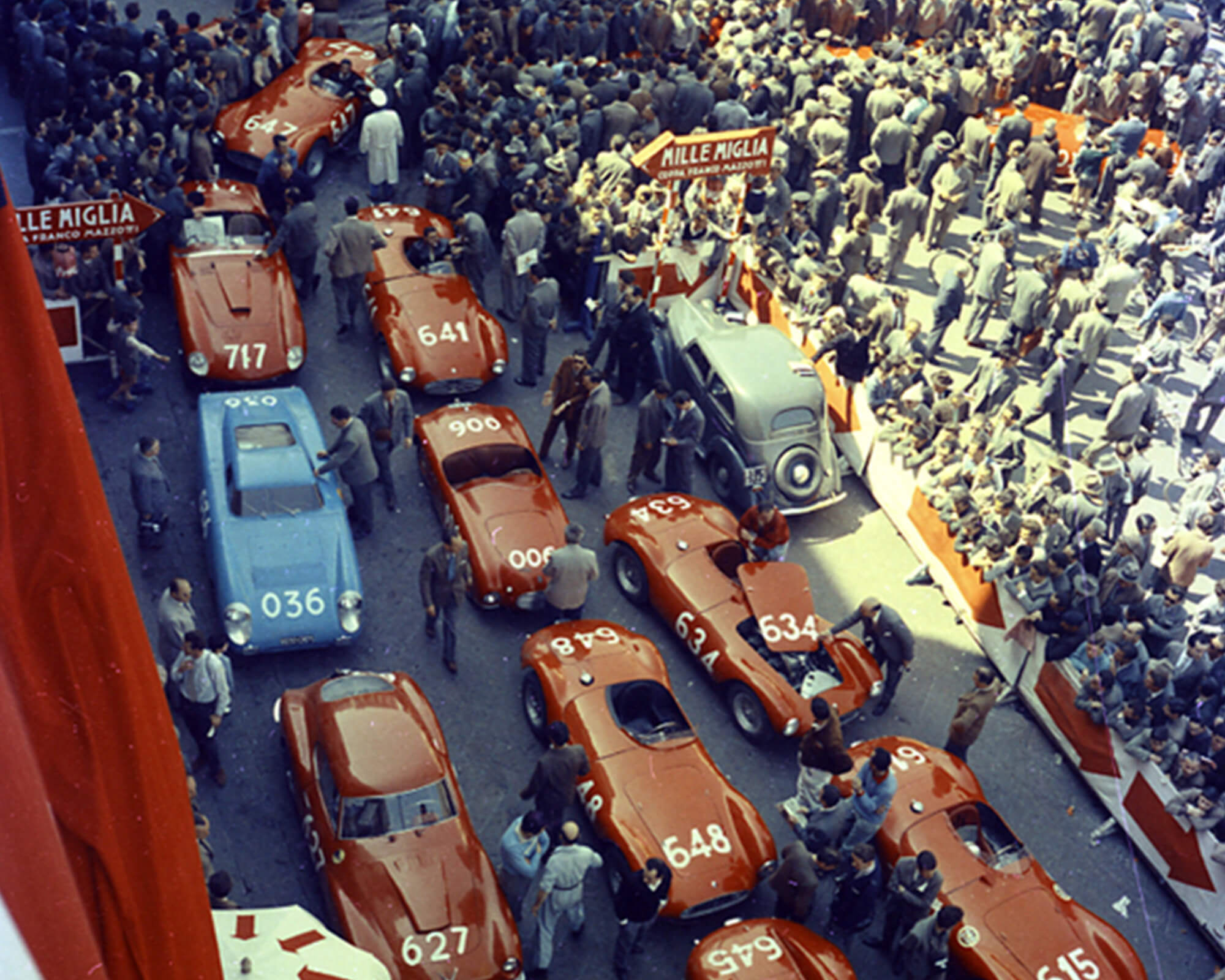
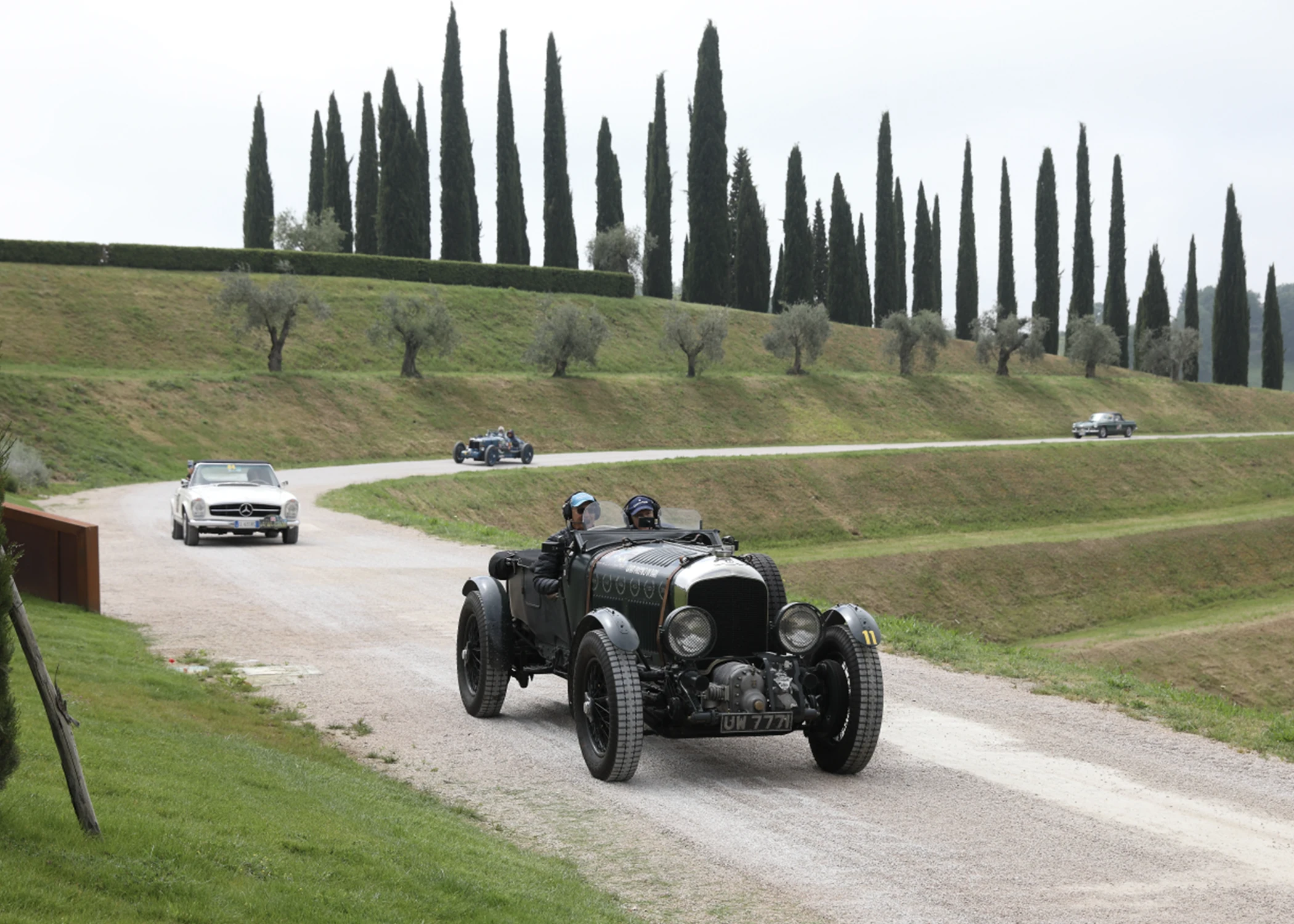
On 9 June 2026, the Mille Miglia will once again get underway — one of the most spectacular road rallies for classic cars, with Chopard as its long-standing partner. To mark the occasion, we present the best classic car rally watches and explore the mechanical timepieces most closely connected with historic motorsport events.
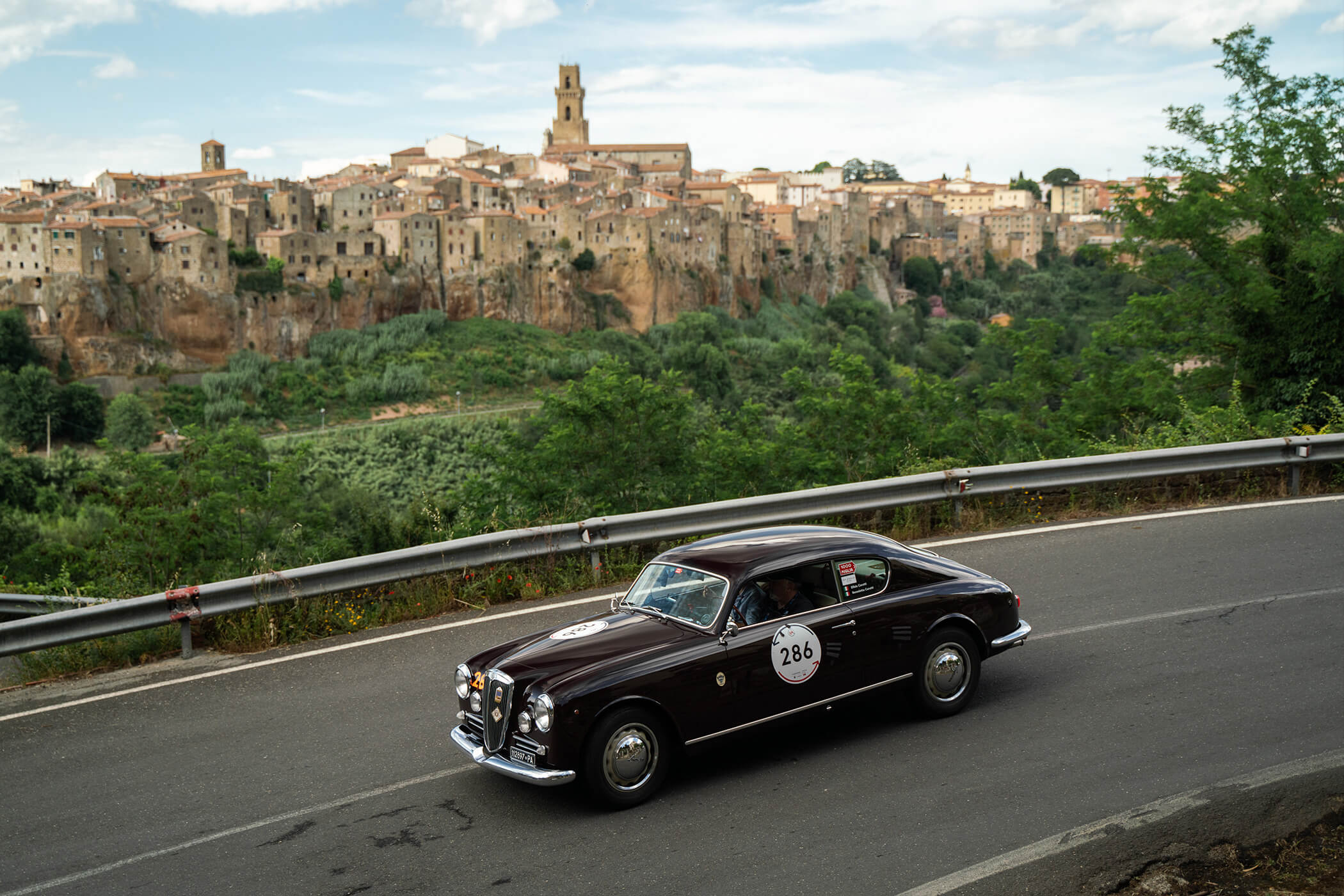
Strictly speaking, a classic car rally is not a race, even if it may look like one. It is an exercise in precision. Anyone aiming to win a regularity trial does not need to be the fastest, but the most accurate. Covering a prescribed route within a prescribed time, down to the very second, requires stopwatches or chronographs.
Since the invention of motor racing, they have belonged in the cockpit. And naturally, only mechanical watches are truly suited to classic automobiles. At many classic car rallies, nothing else is permitted in any case. It is therefore hardly surprising that there are several fascinating connections and partnerships between rallies for historic vehicles and watch brands.
Some partnerships between watchmaking and motor sport last only a few seasons; others endure for decades. Chopard and the Mille Miglia belong firmly to the latter category: since 1988, the Geneva-based manufacture has accompanied the legendary Italian road race as main sponsor and official timekeeper. From this association has emerged one of the best-known watch lines with genuine motor-sport DNA. The latest version tells a particularly compelling story.
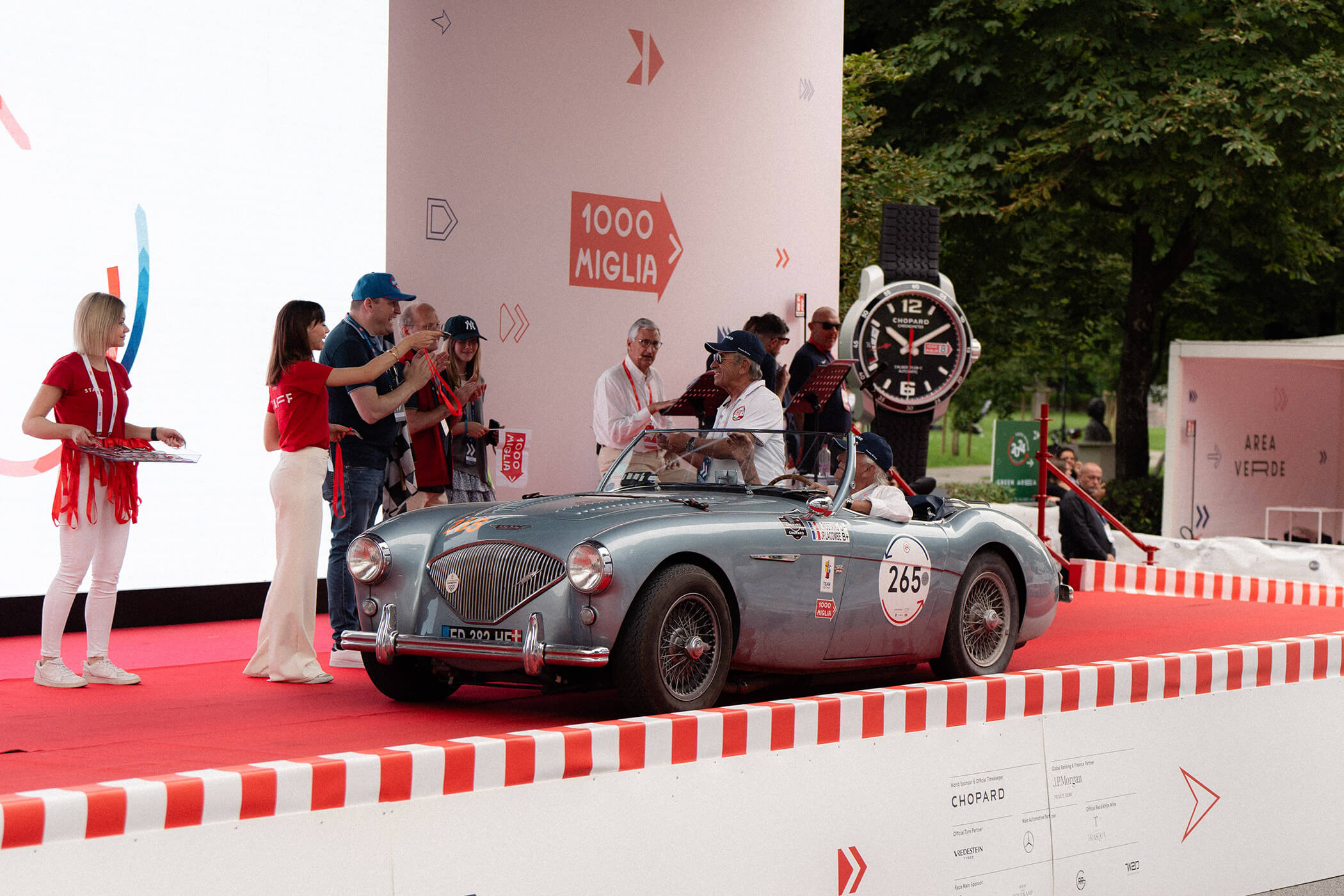
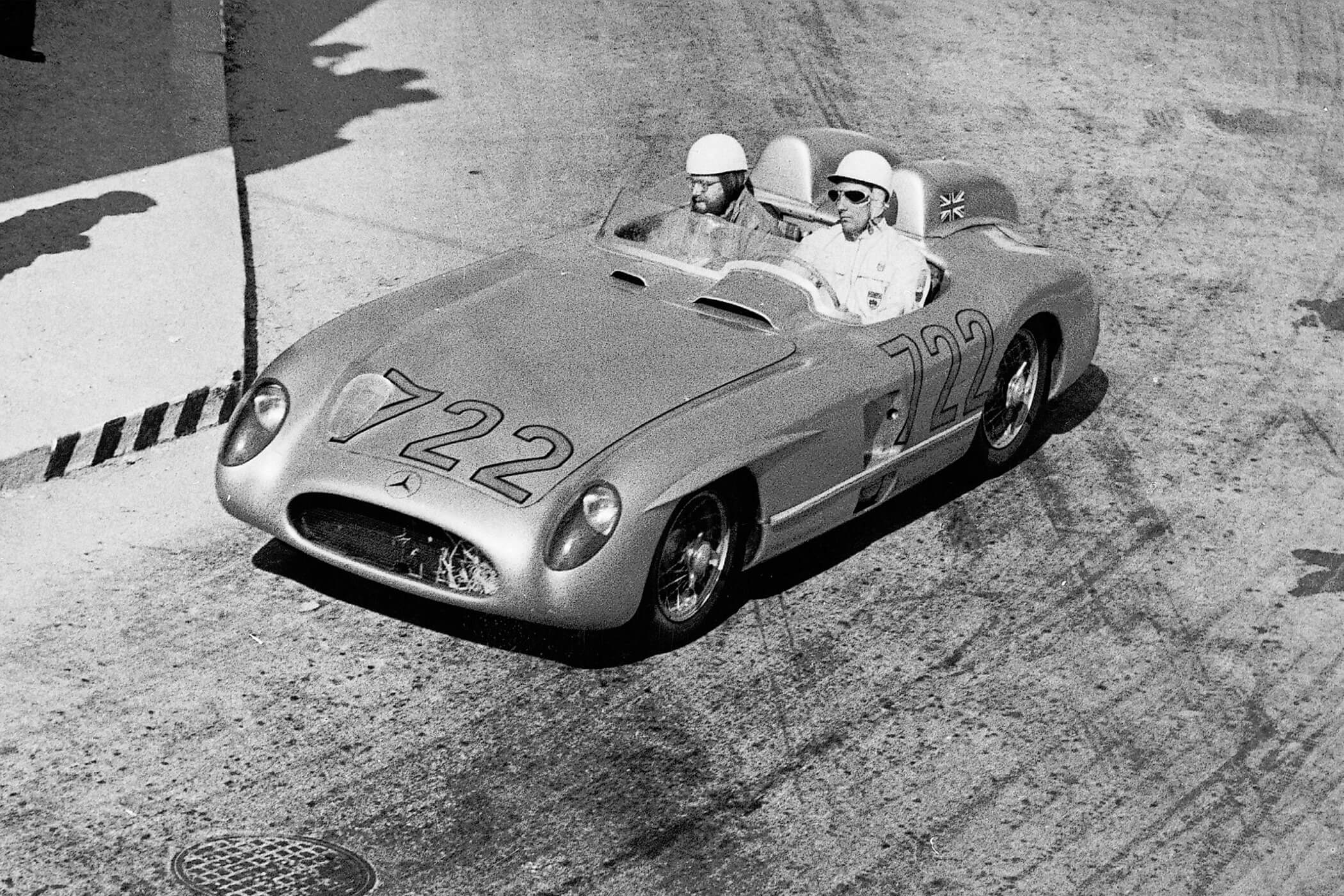
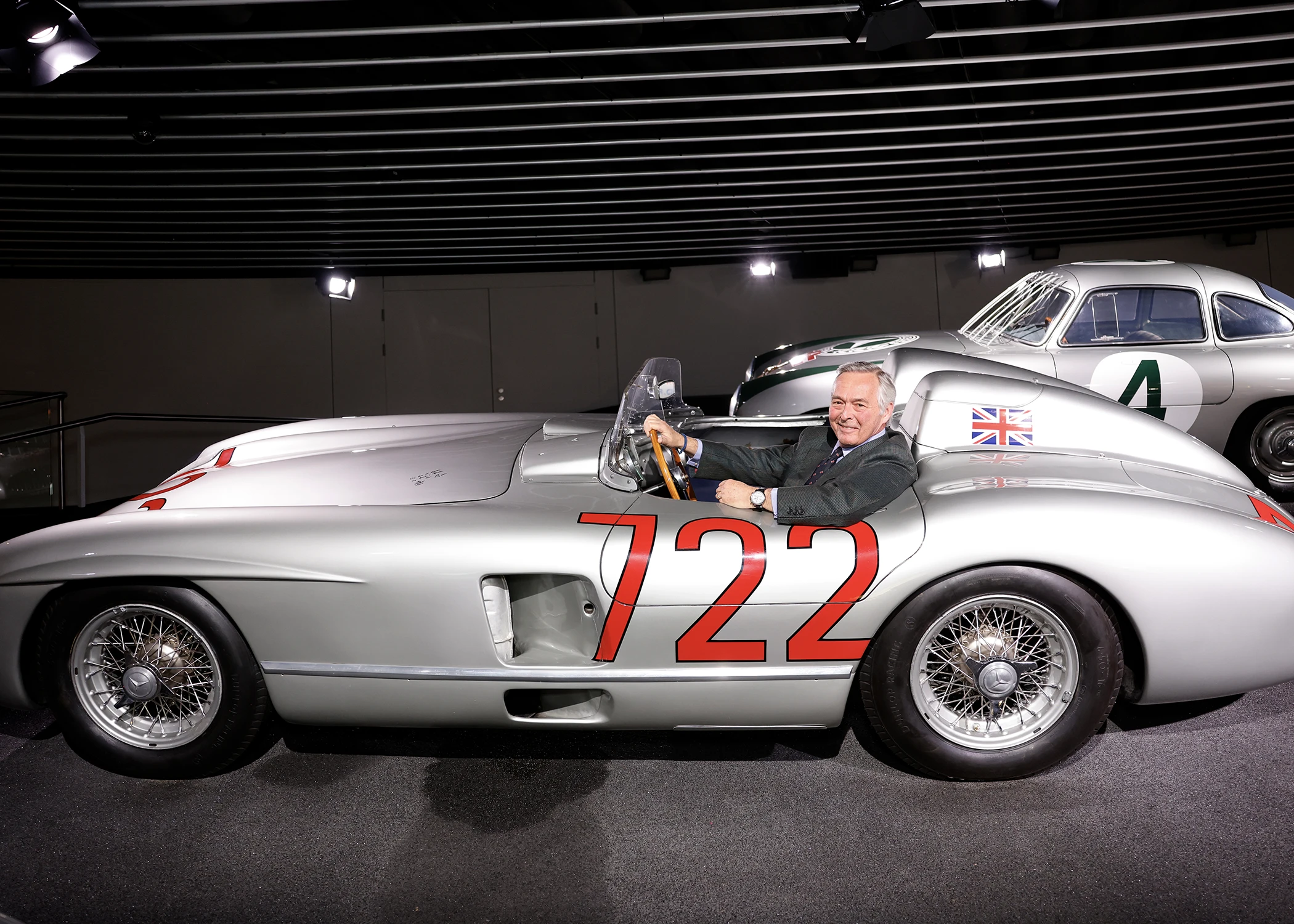
Between 1927 and 1957, the Mille Miglia was one of the most feared races in the world: around 1,600 kilometres from Brescia to Rome and back again, contested on public roads. Today, the name lives on as a regularity rally for historic vehicles, where the focus is not on maximum speed, but on precision and the pleasure of classic motoring. The importance Chopard attaches to the event is reflected in Co-President Karl-Friedrich Scheufele, who has personally completed the race 35 times.
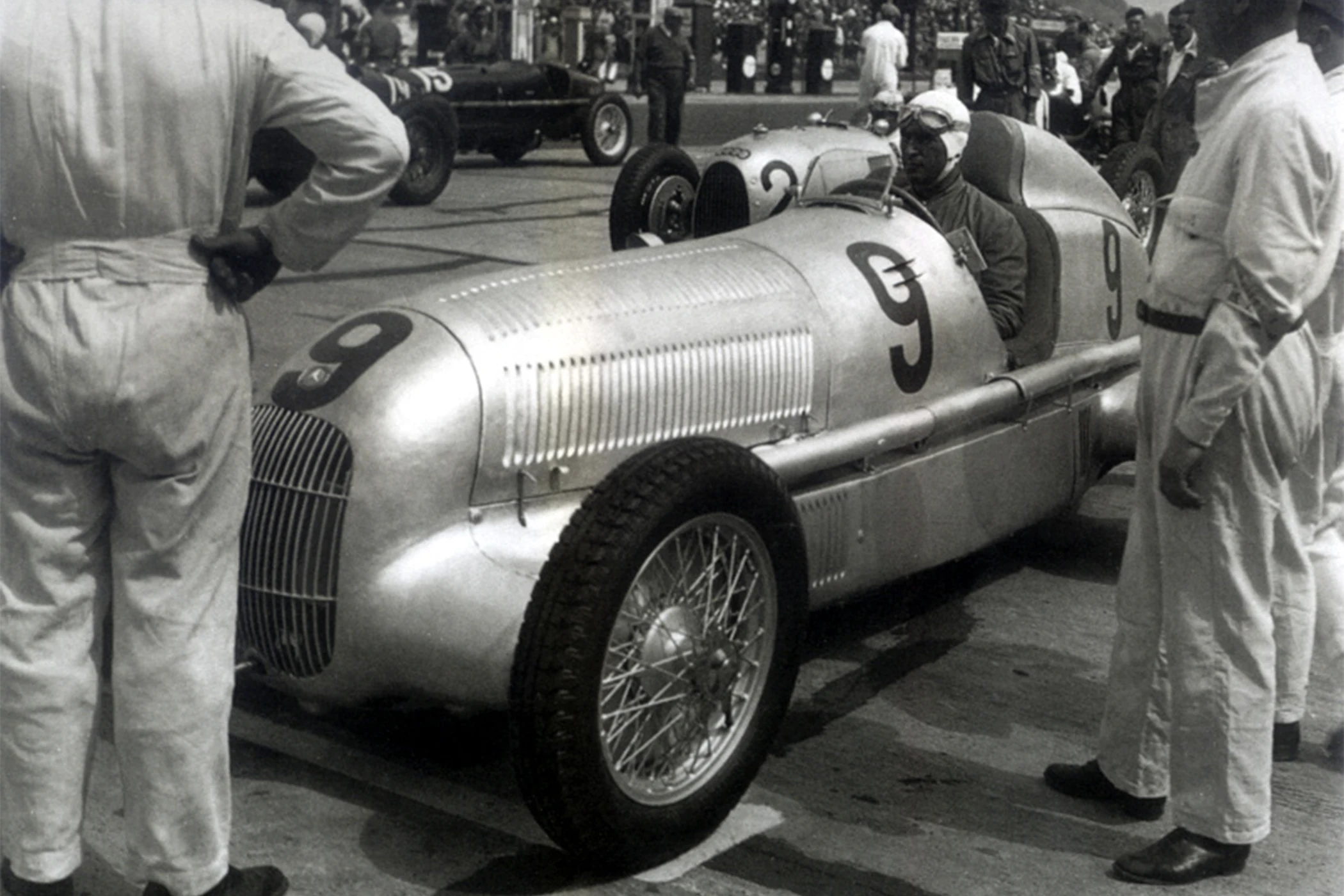
The new model is dedicated to a particular German tradition: the Silver Arrows. In the early 20th century, racing cars competed in the national colours of their respective countries: red for Italy, green for Great Britain and blue for France. Germany initially raced in white.
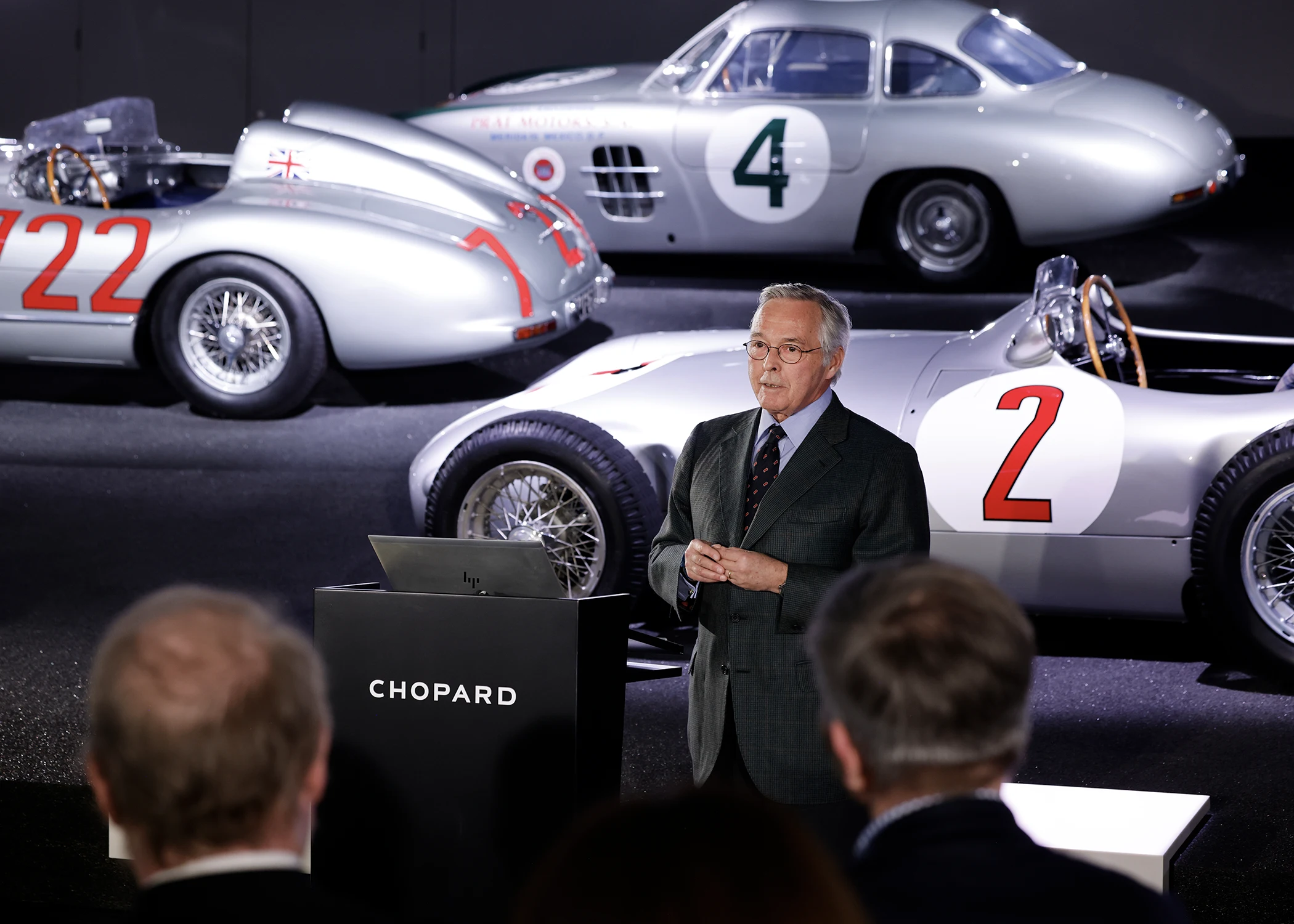
That changed in 1934. Mercedes-Benz and Auto Union entered their Grand Prix cars in bare aluminium. According to legend, the Mercedes W 25 was a single kilogram over the permitted maximum weight of 750 kilograms before the 1934 Eifel Race at the Nürburgring. Race manager Alfred Neubauer is said to have ordered the white paint to be sanded off overnight. By morning, the bare metal was gleaming, the car was within the limit, and the “Silver Arrows” were born.
Chopard draws on precisely this tradition of national racing colours with a series of country-specific special editions. The Speed Silver edition represents Germany, while a green version pays tribute to Great Britain, referencing British Racing Green, and a blue variant honours France, inspired by Bleu de France. Each of these versions is limited to 100 pieces and available exclusively in its respective country.
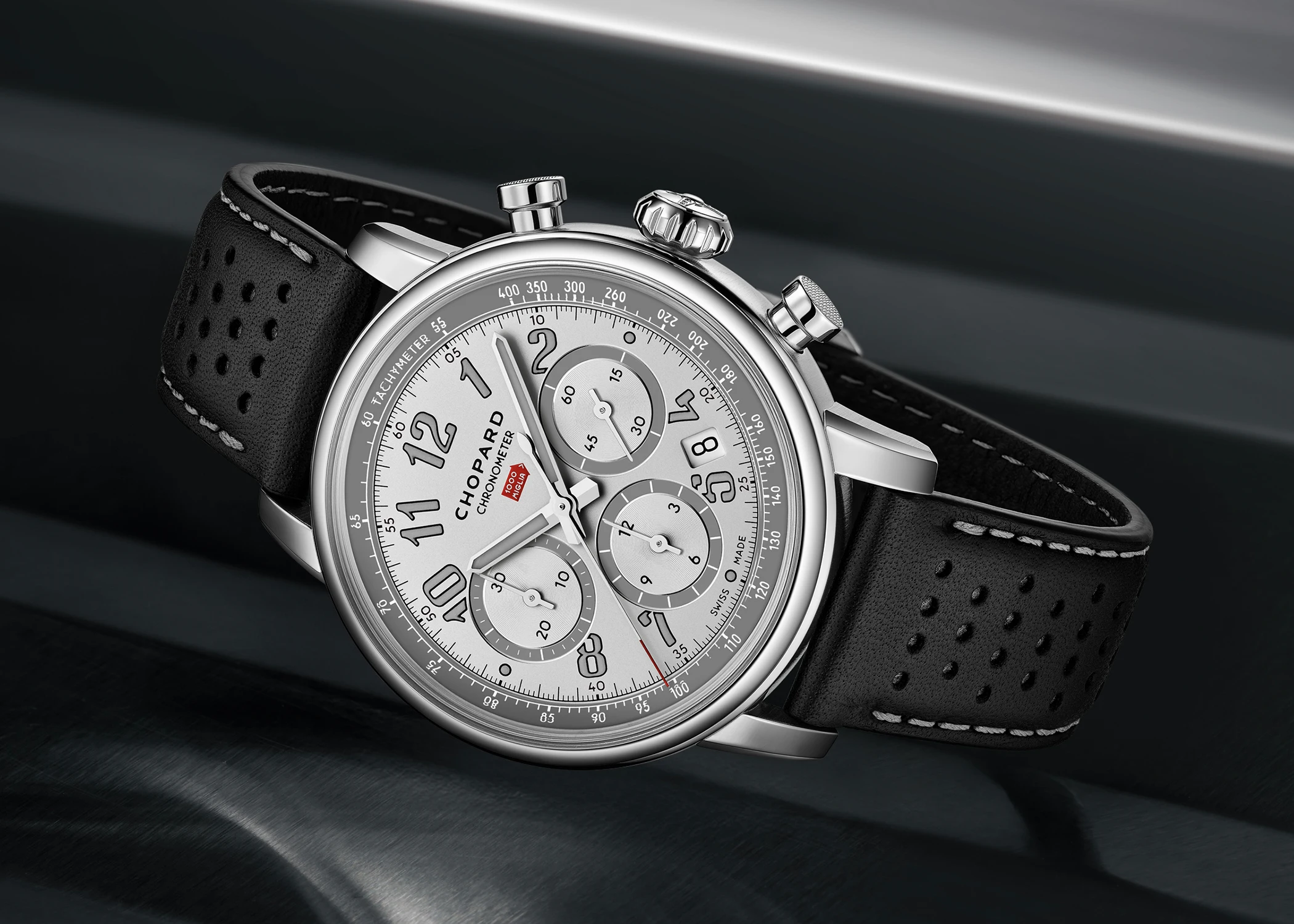
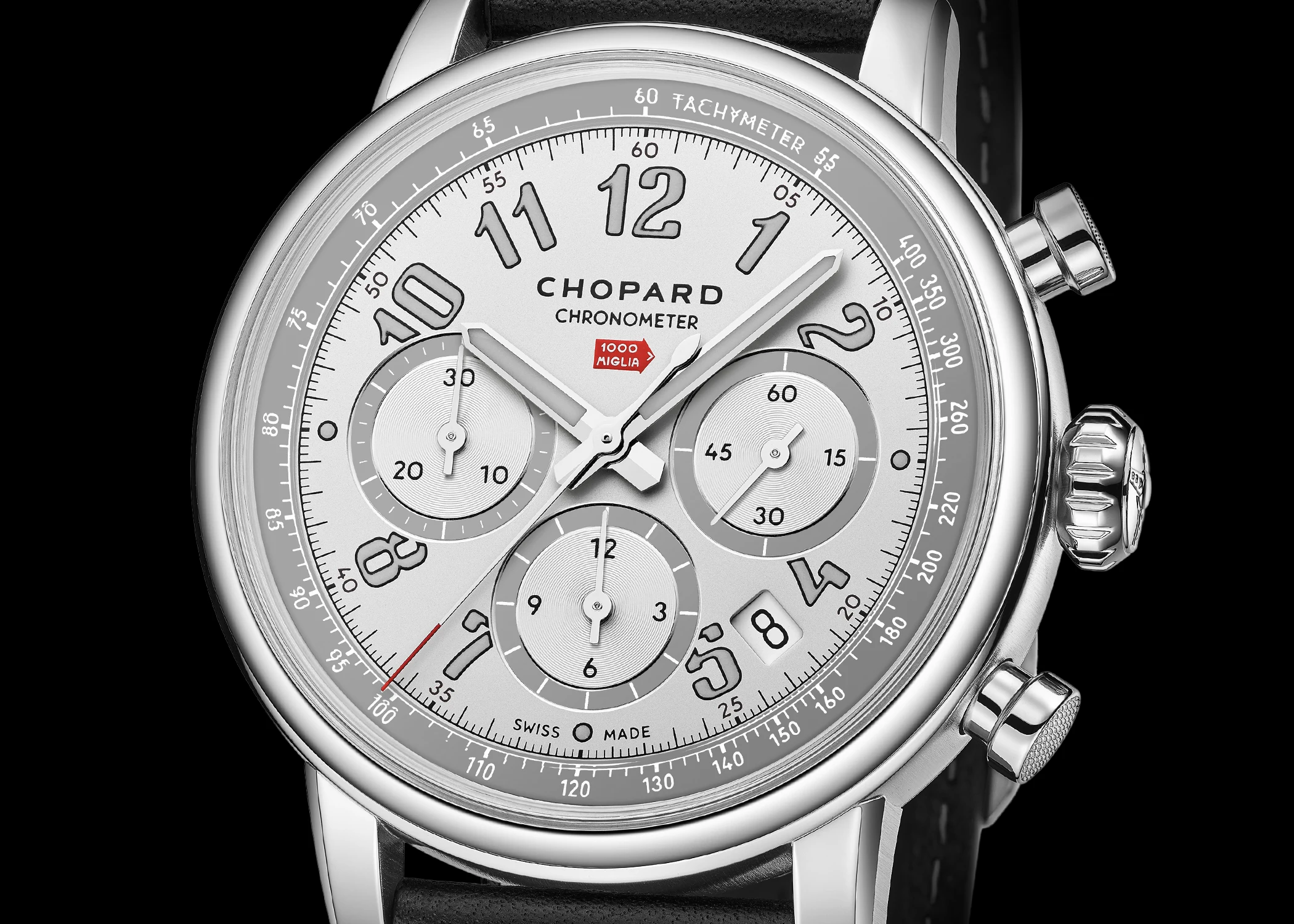
In the German model, the Mille Miglia Classic Chronograph Speed Silver, the silver-coloured dial surface is intended to evoke the softly gleaming bodywork of the Silver Arrows. Grey numerals and scales provide restrained contrasts, while the red, arrow-shaped Mille Miglia logo sits prominently at the centre. Its colour is echoed by the red tip of the chronograph seconds hand.
The case measures 40.5 millimetres in diameter and is made of Lucent Steel, a steel alloy with a high proportion of recycled material. Polished and satin-brushed surfaces alternate throughout. The automotive references are carefully considered: the knurled chronograph pushers are modelled on driving pedals, while the crown bears an engraving of a steering wheel. Above the dial is a highly domed sapphire crystal, lending the chronograph a sense of retro charm. Printed on the sapphire crystal caseback are two crossed flags: the chequered flag and the German colours of black, red and gold.
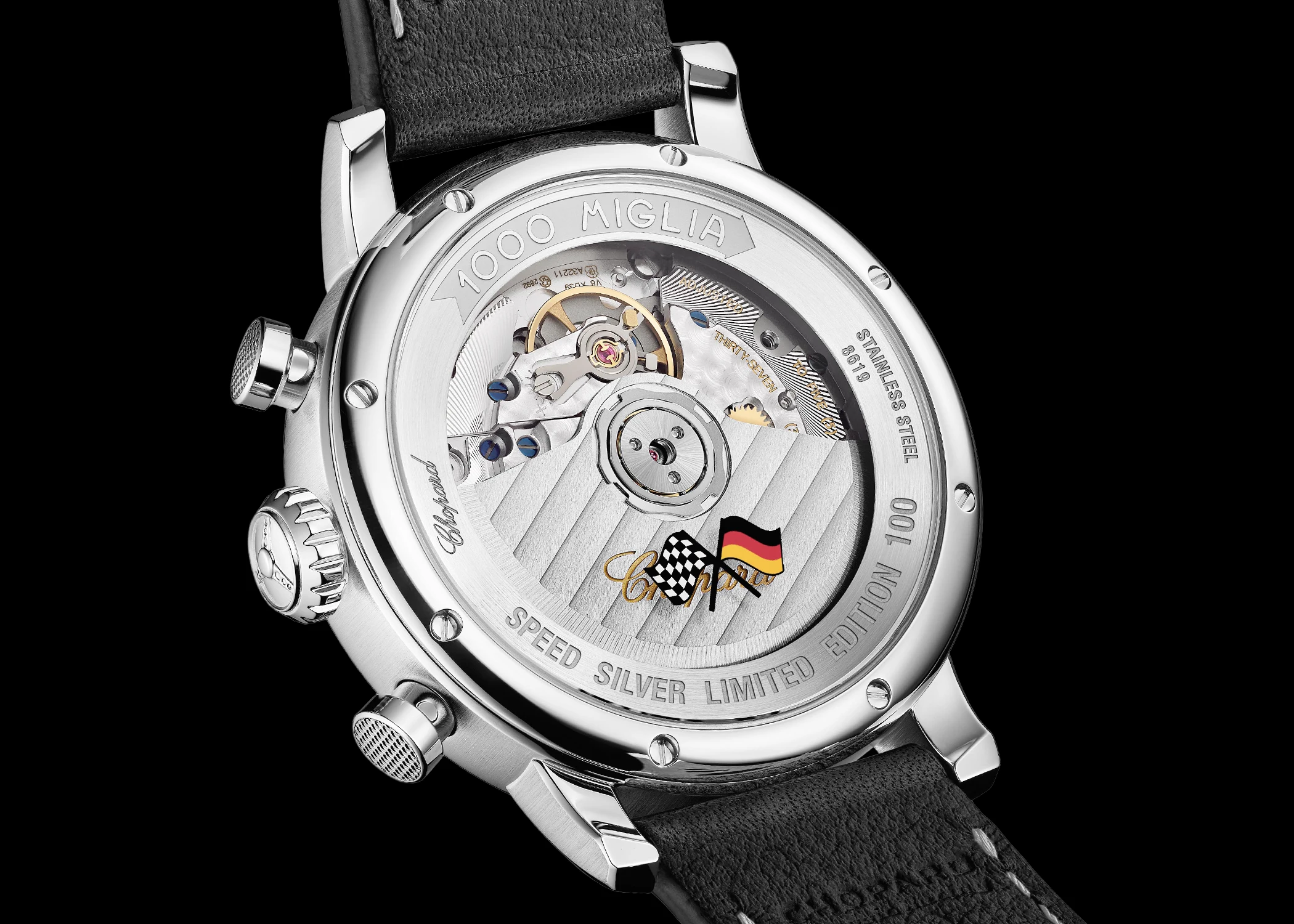
Inside is a COSC-certified automatic chronograph movement with a 54-hour power reserve, based on an evolution of the ETA calibre 2894. The model is completed by a perforated black rally strap. The Mille Miglia Classic Chronograph Speed Silver is limited to 100 pieces and available exclusively in Germany. The price is 11,300 euros.
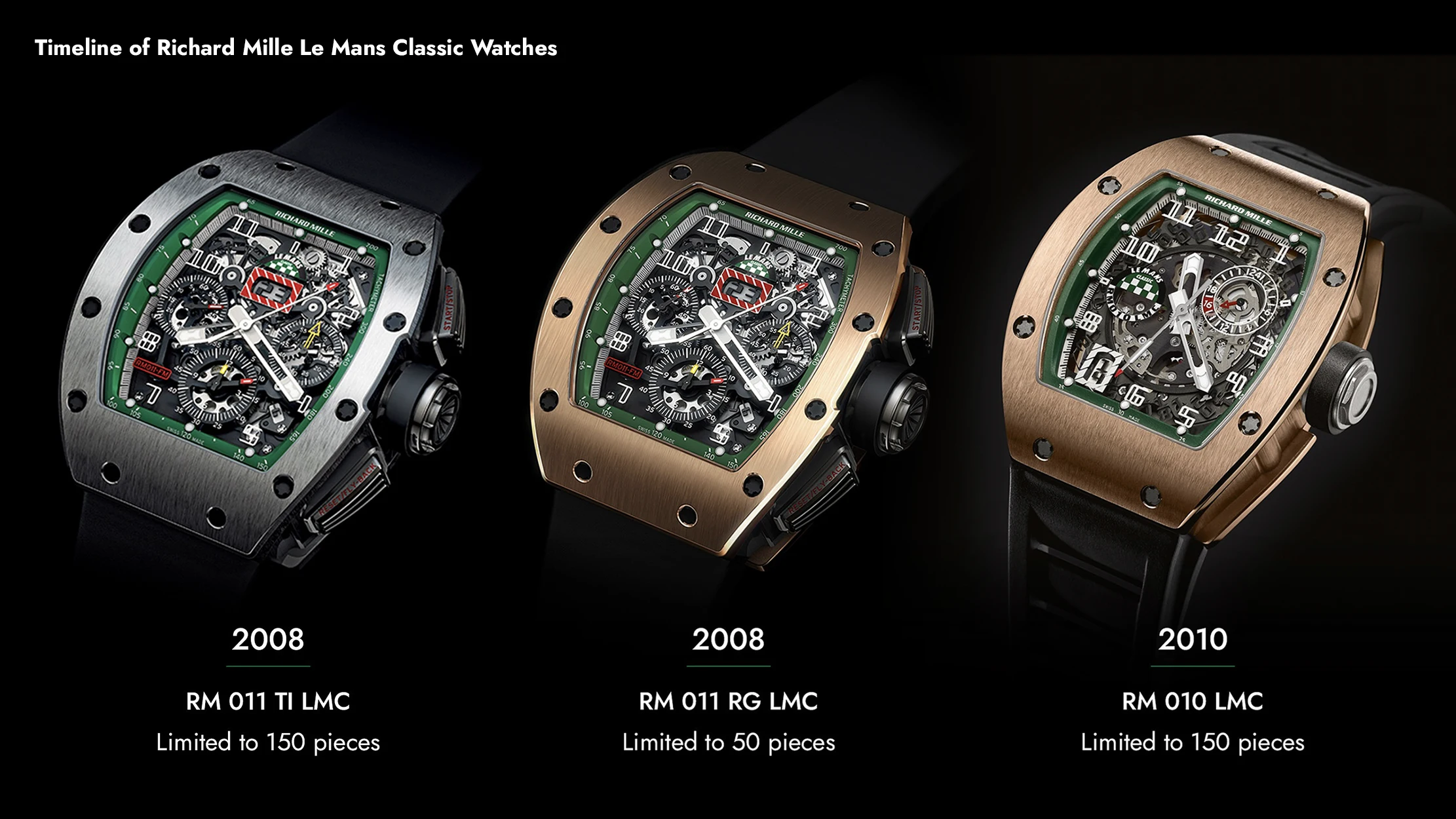
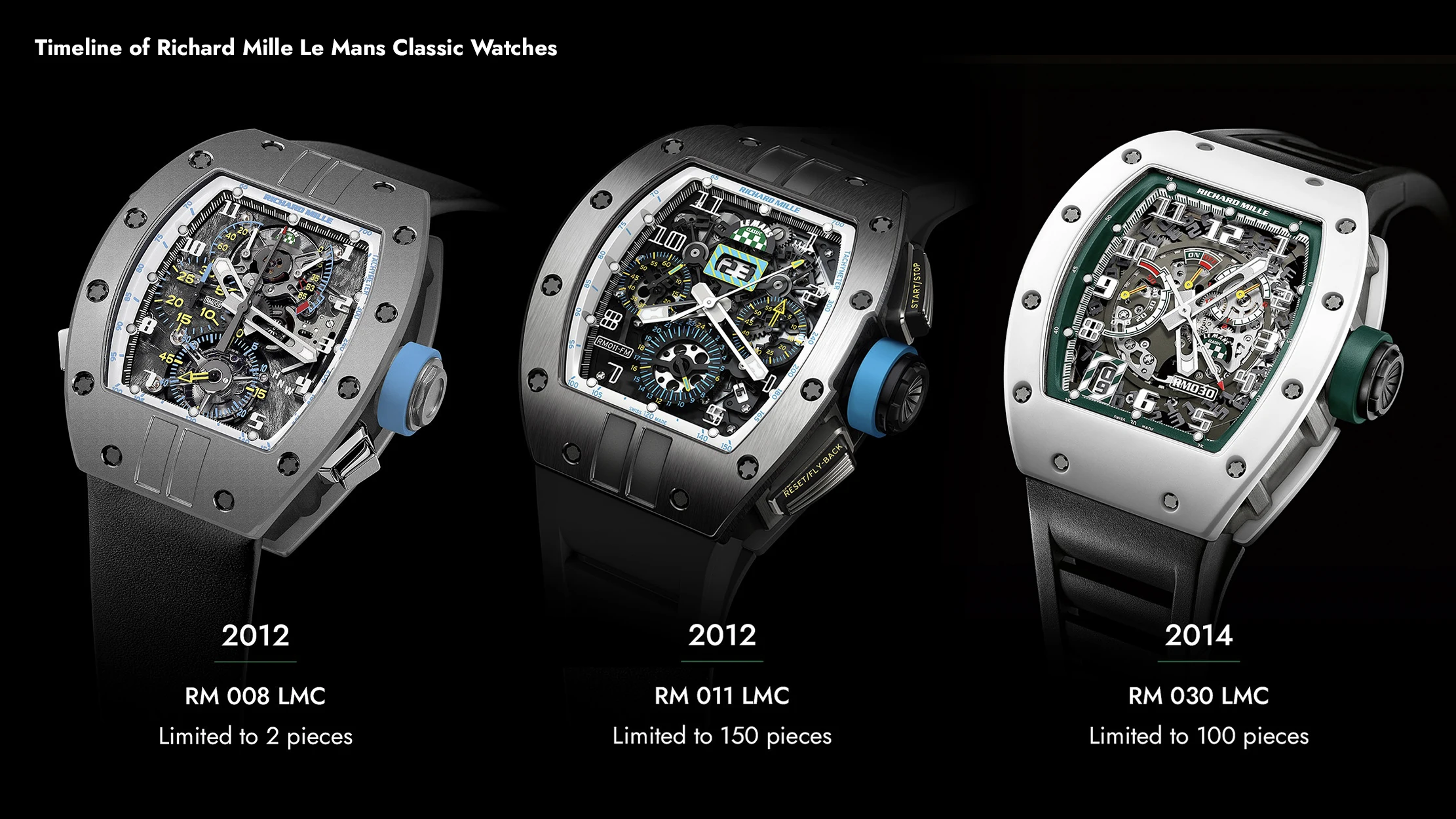
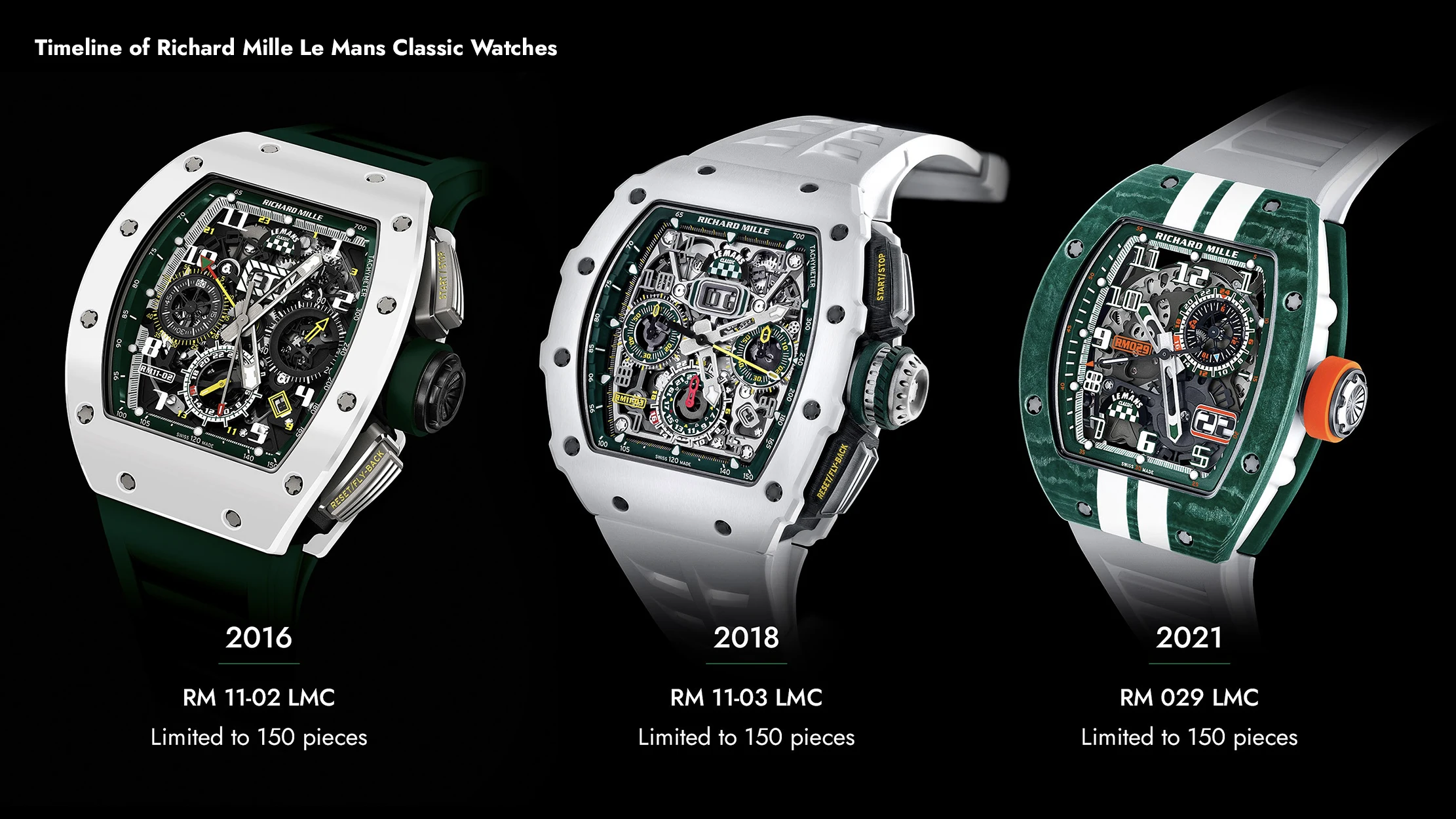
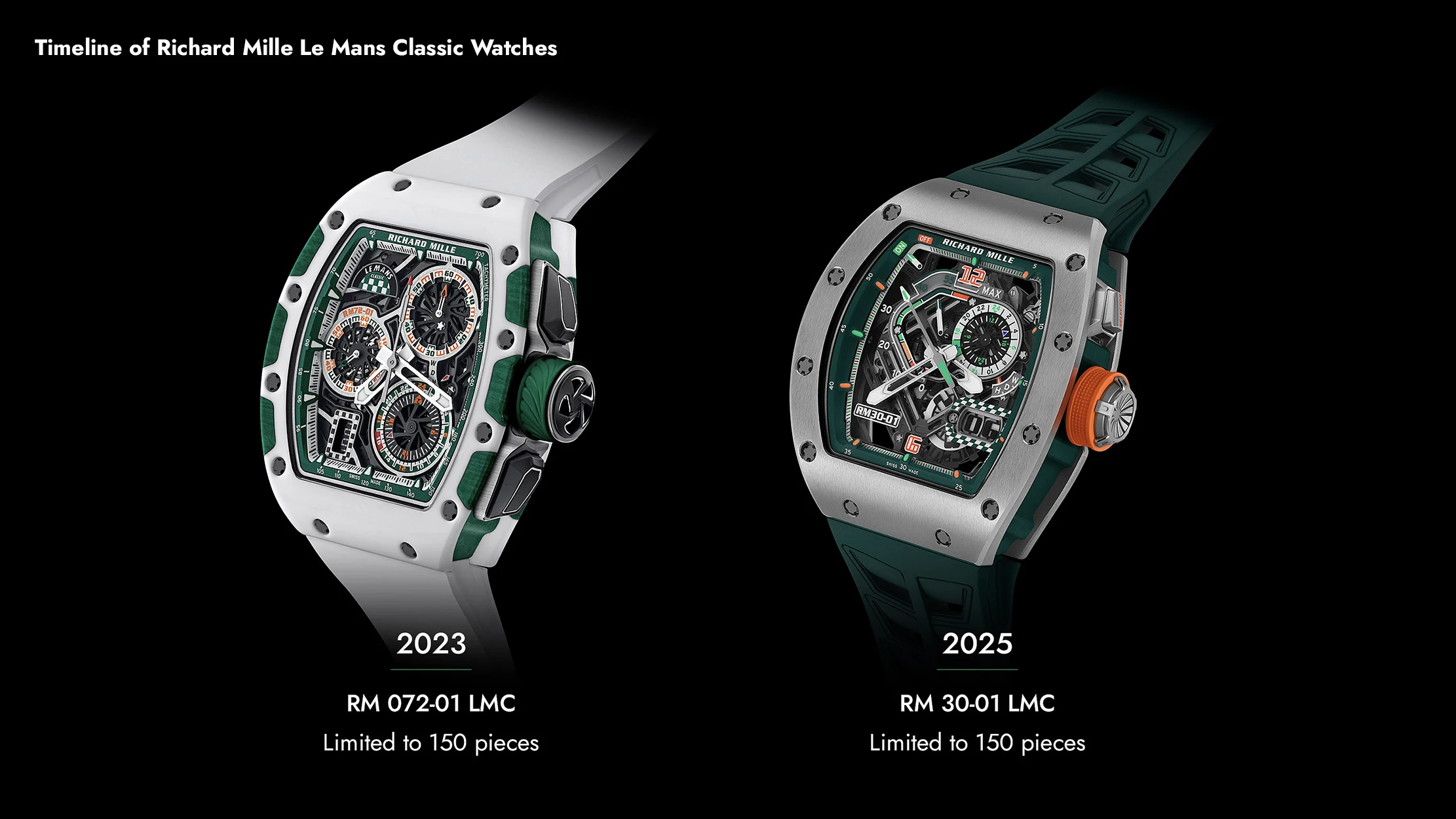
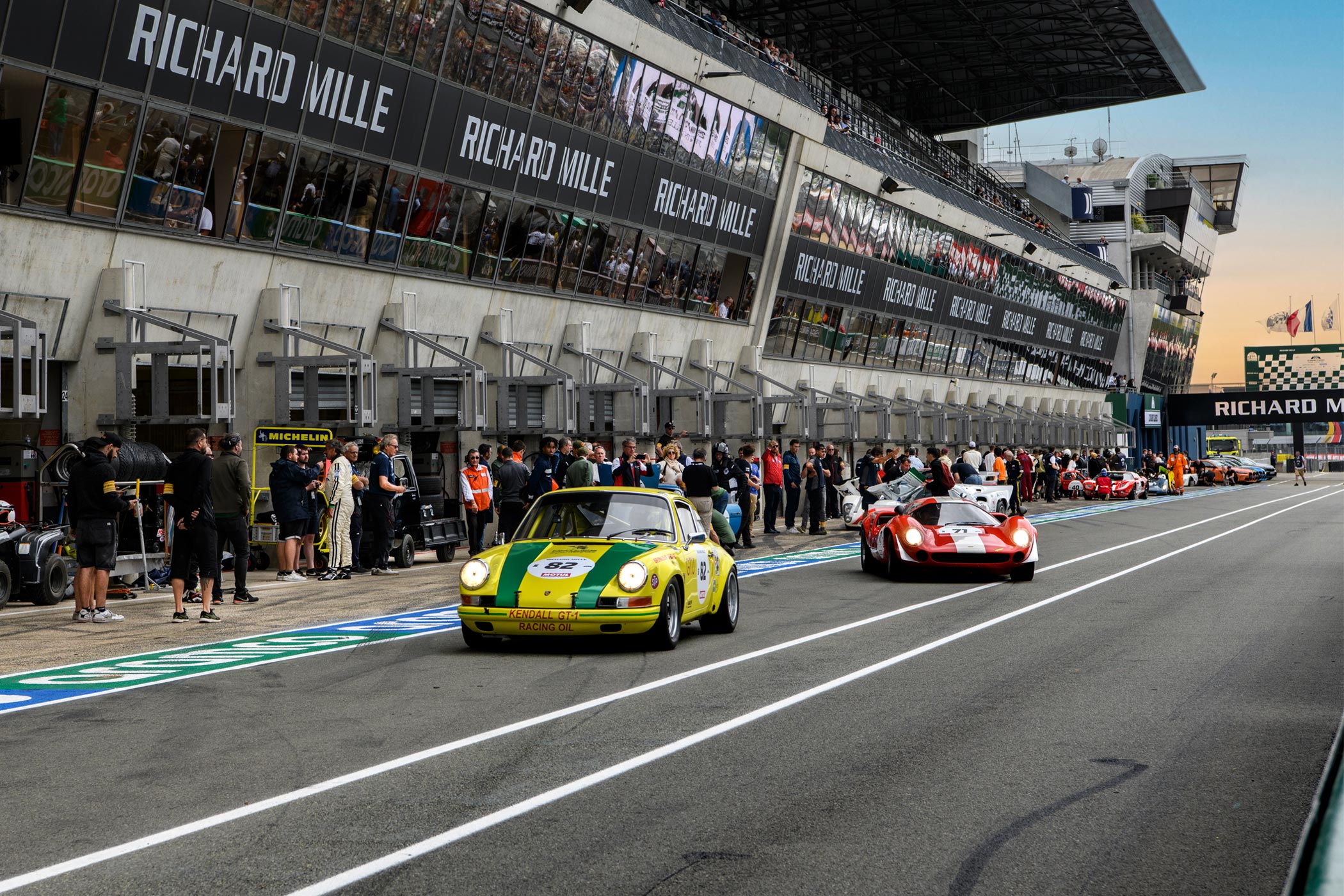
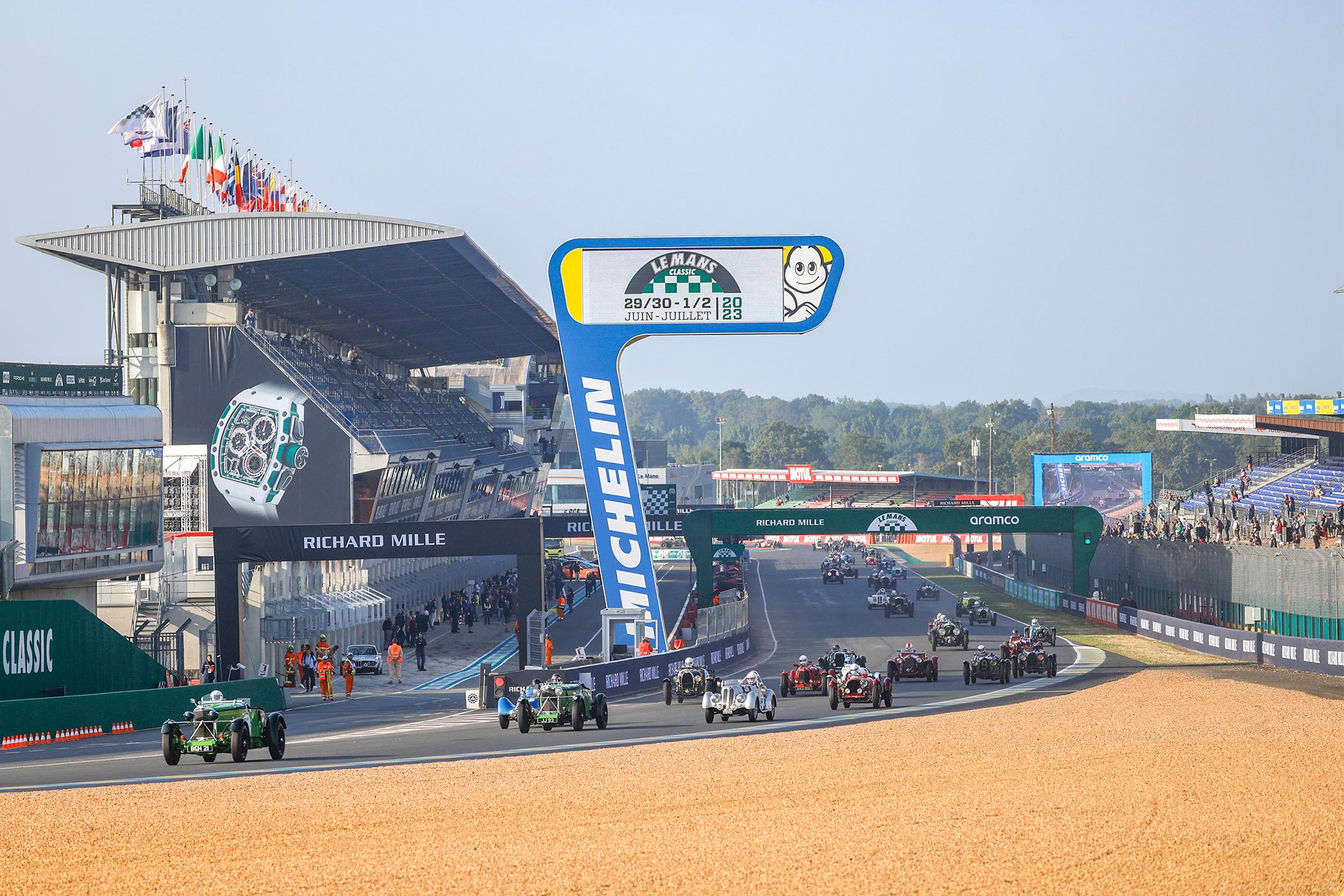
Richard Mille and Le Mans Classic also have a long-standing relationship: the watch brand has been a partner since the event was founded in 2008. Since 2025, the race for classic motor sport cars has no longer taken place every two years, but annually. The cars compete against rivals from the same era. In the case of the oldest former participants in the 24 Hours of Le Mans, this even includes the traditional Le Mans start, with drivers running to their cars. The circuit, too, is the same course at La Sarthe used for the 24 Hours of Le Mans.
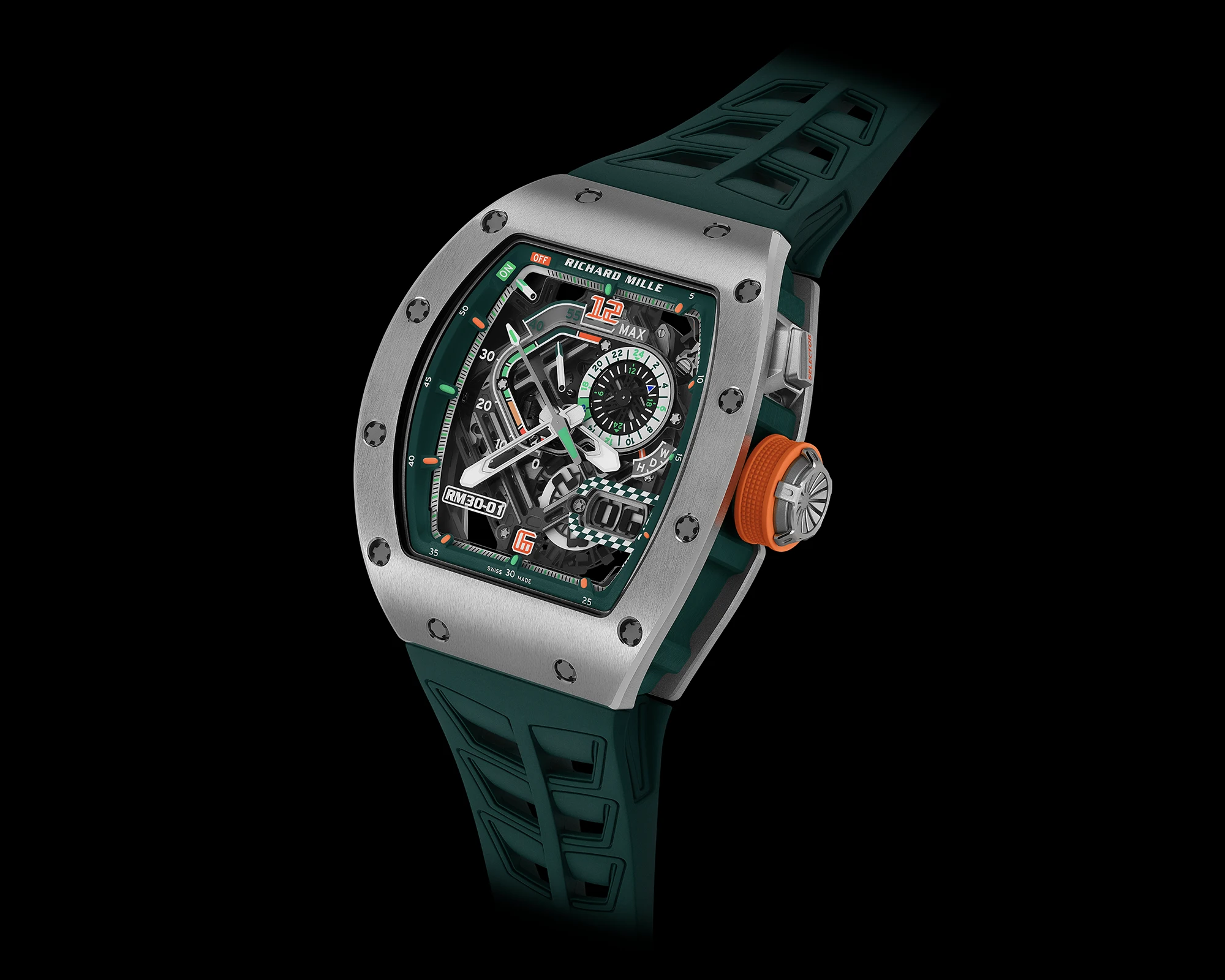
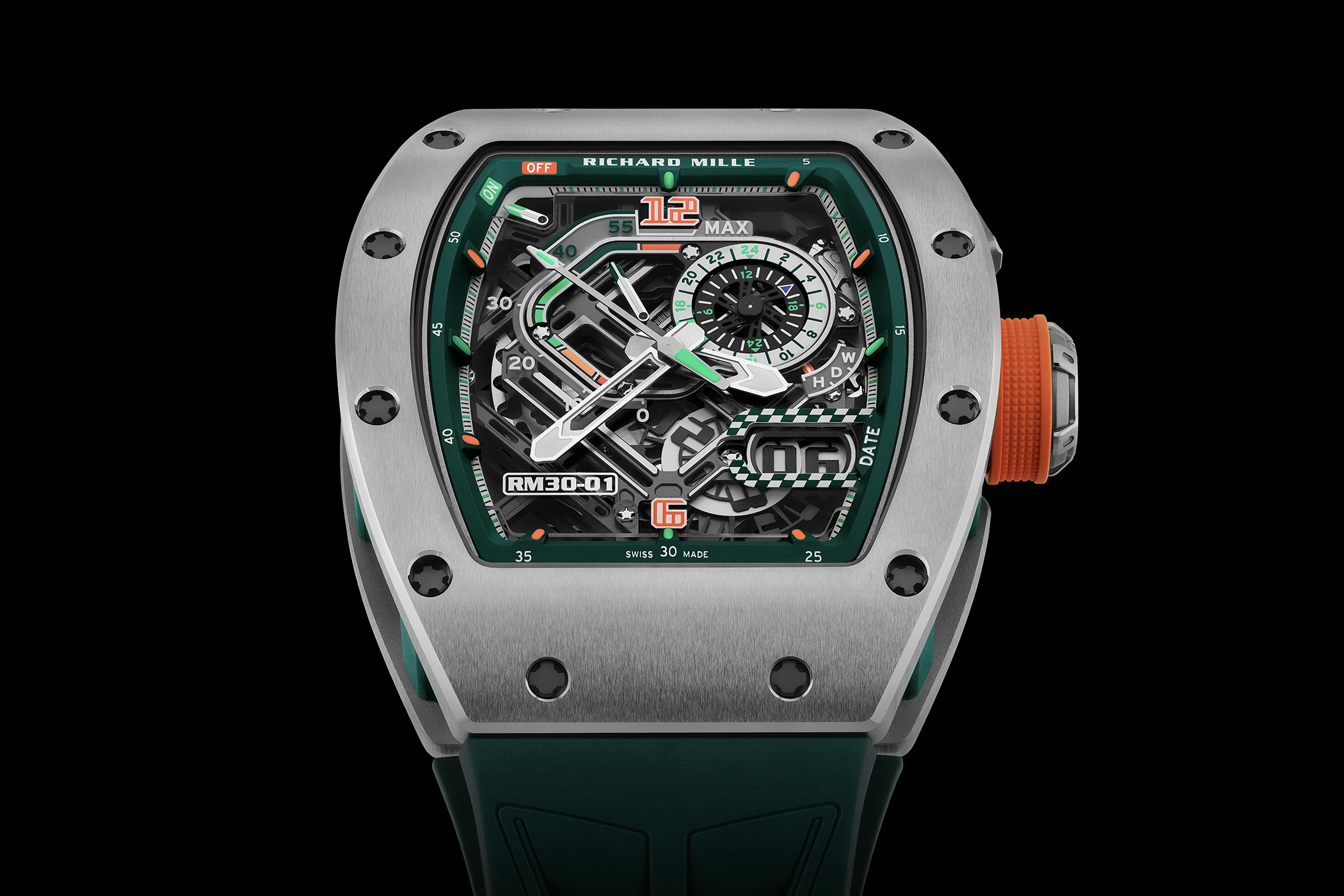
Founded by former racing driver Richard Mille, the watch brand is known for its technical, innovative and tonneau-shaped timepieces. The RM 30-01 Le Mans Classic, conceived for the race in France, is no exception. In green, the signature colour of Le Mans Classic, the caseband is made from the high-tech material Quartz TPT, as is the rubber strap with racing-car-inspired ventilation slits. The rest of the case is made from Grade 5 titanium, a light and robust alloy.
The function of the crown is changed via the pusher on the side of the case. An indicator points to the corresponding mode: W, D and H for winding, date setting and hand setting. The 24-hour display is designed in such a way that it can be used both to read the time, with the highlighted 16 marking the start and finish time, and to track the elapsed time over the course of the 24 hours. The oversized date surrounds the green chequered flag, while the designers shaped the power-reserve indicator in the form of the first section of the circuit.
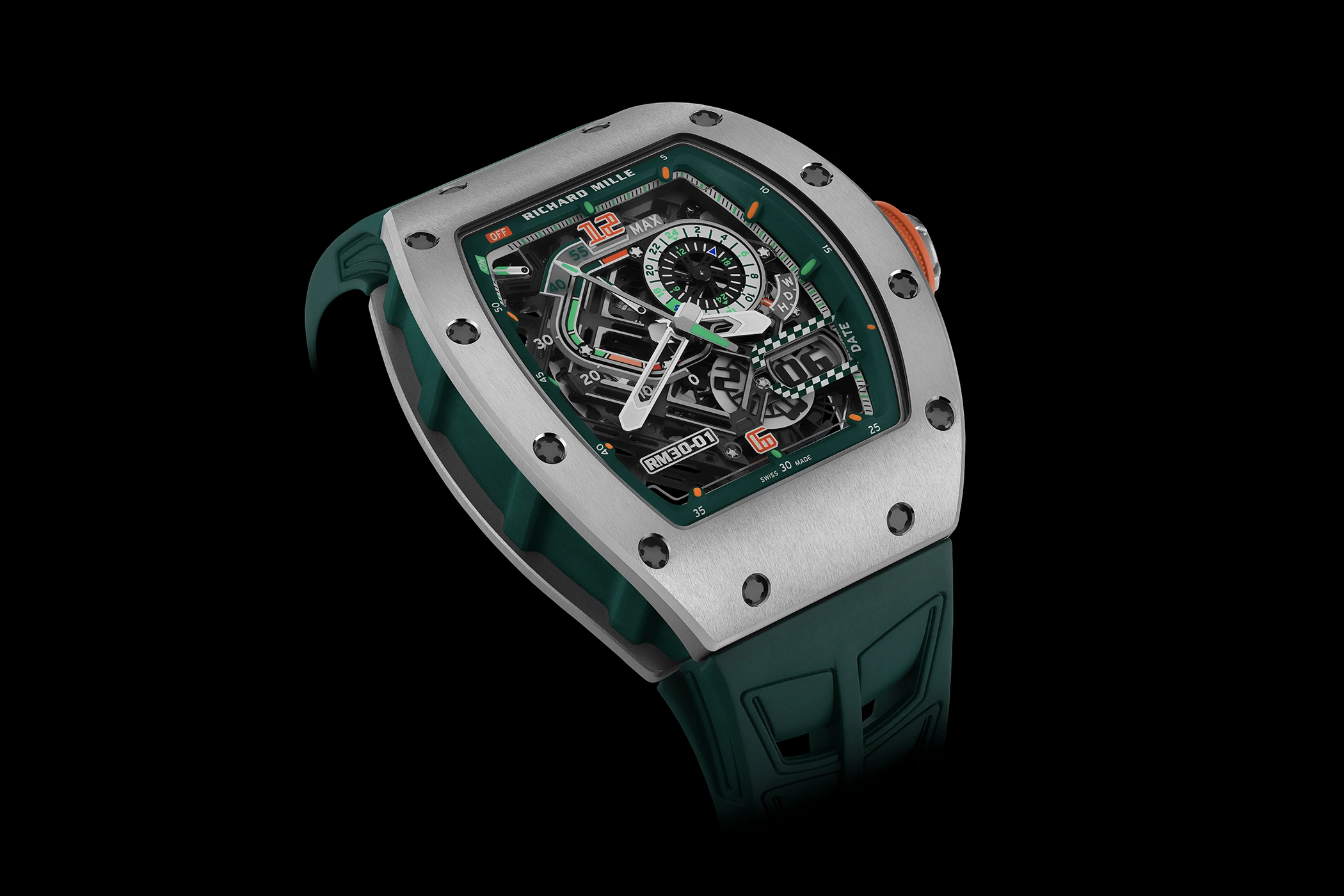
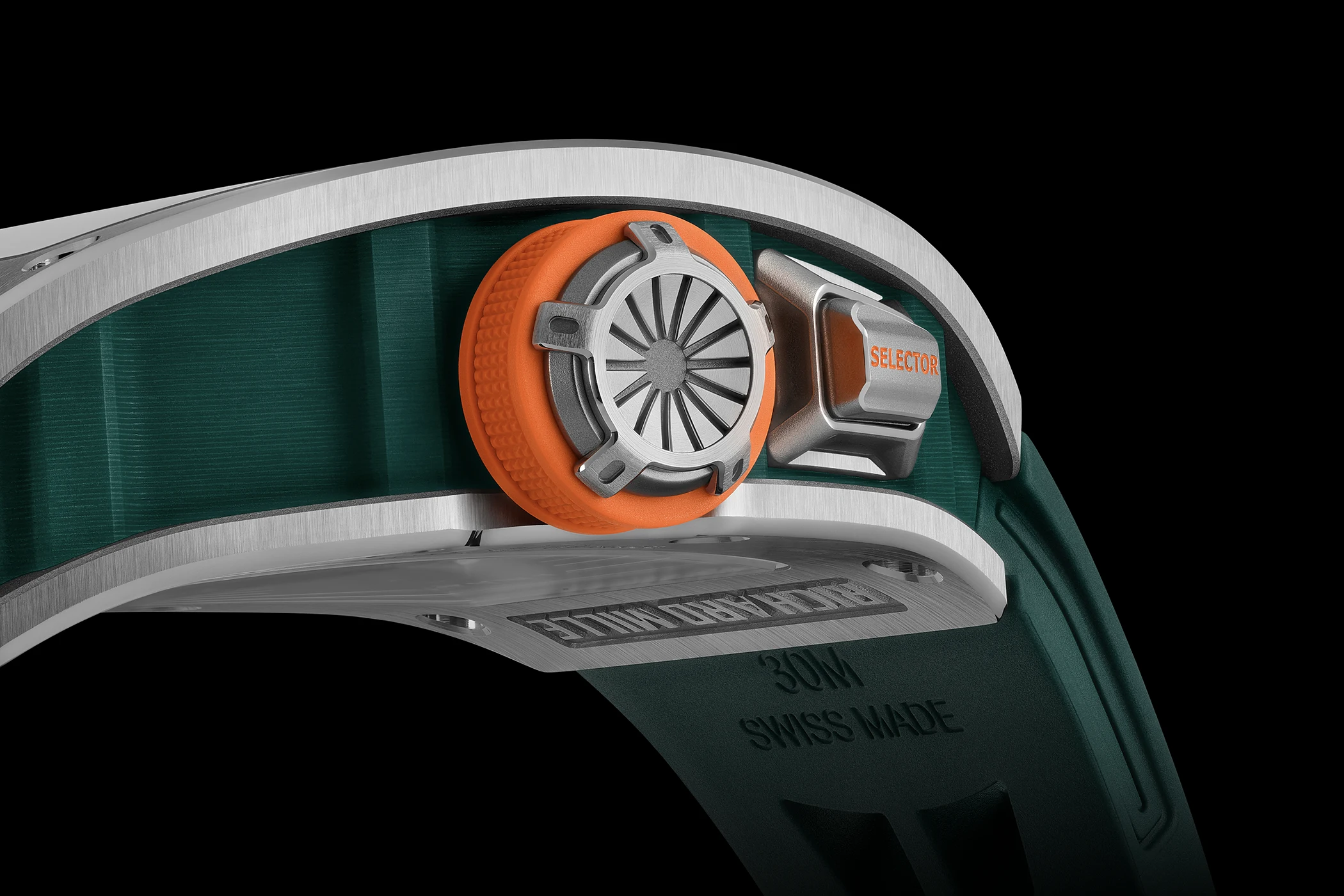
At the upper left, the On/Off indicator points to another technical feature of the manufacture calibre RMAR2: when the movement is fully wound, the rotor disengages from the double barrel in order to prevent wear and abrasion on the slipping bridle of the mainspring. At that point, 55 hours of power reserve have been built up. After 15 hours, the rotor re-engages to accumulate energy back up to its maximum level.
The unidirectional winding rotor is also fitted with two white-gold wings, which can be screwed into five different positions. This allows the watchmaker to adjust the torque, and therefore the winding performance, to the wearer and their movement profile: someone who moves a great deal requires less rotor torque to tension the mainspring.
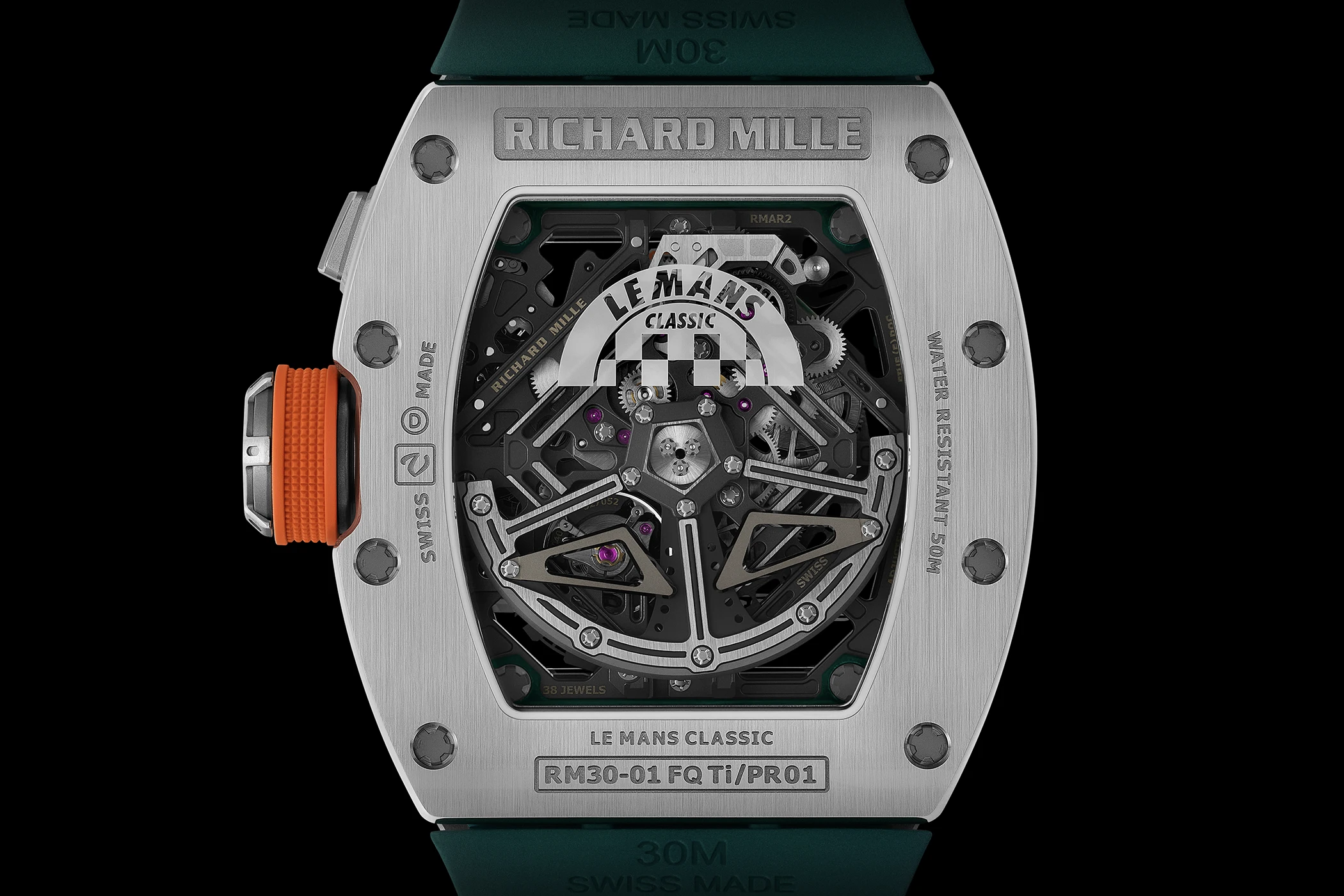
Like the baseplate and bridges of the movement, the rotor itself is made from Grade 5 titanium. The alloy consists of 90 per cent titanium, 6 per cent aluminium and 4 per cent vanadium, and is harder than pure titanium. The skeletonised movement can be viewed through the sapphire crystal caseback, which bears the Le Mans Classic logo.
The RM 30-01 Le Mans Classic is limited to 150 pieces and costs around 225,000 euros.
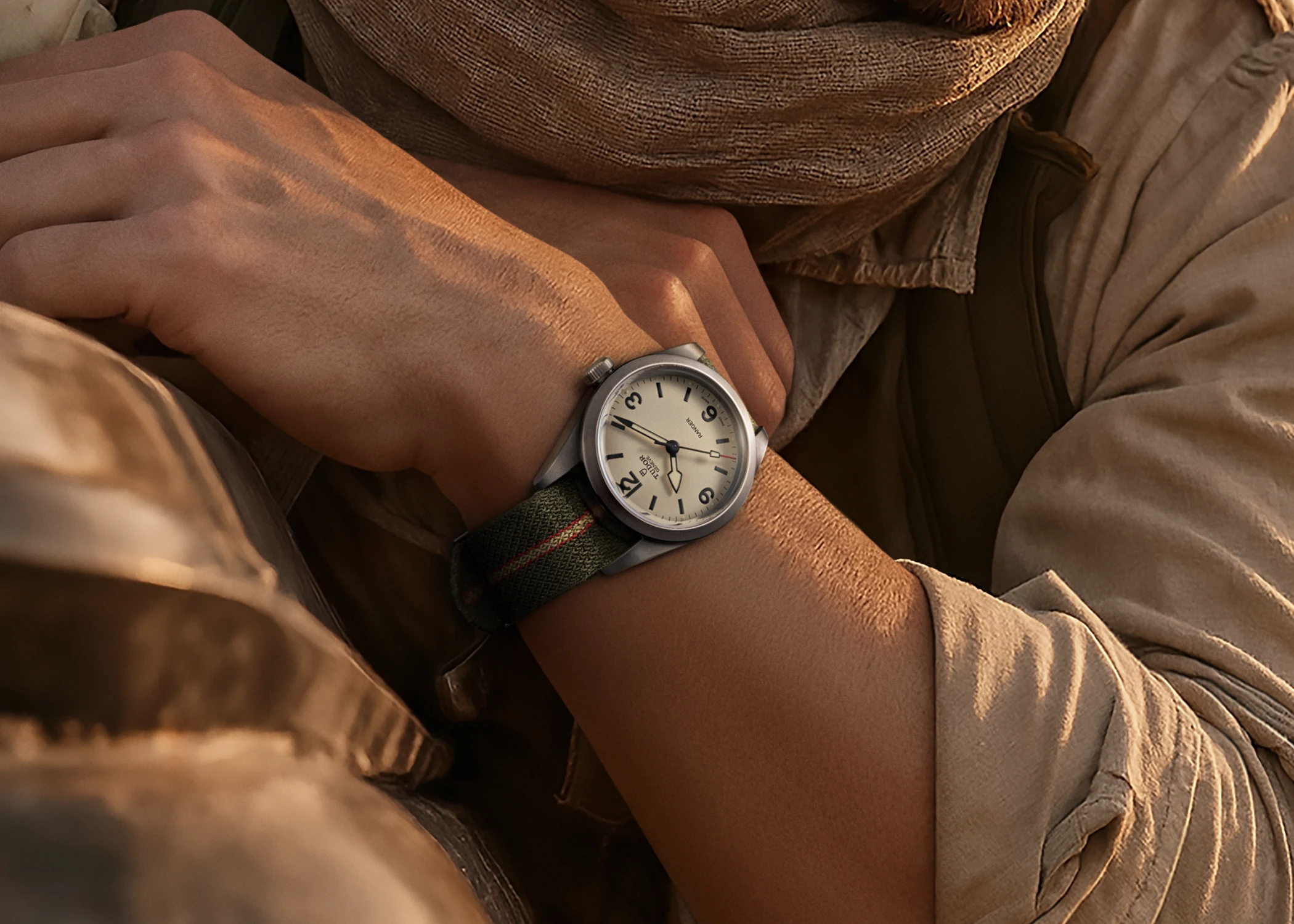
Tudor is one of the most successful watch brands of recent years. Rolex’s sister brand has built a loyal following, driven above all by the dive watches of the Black Bay family. Yet the Geneva-based brand has more to offer than divers: with its sand-coloured dial, the Ranger White Dune presents itself as a tool watch for the desert.
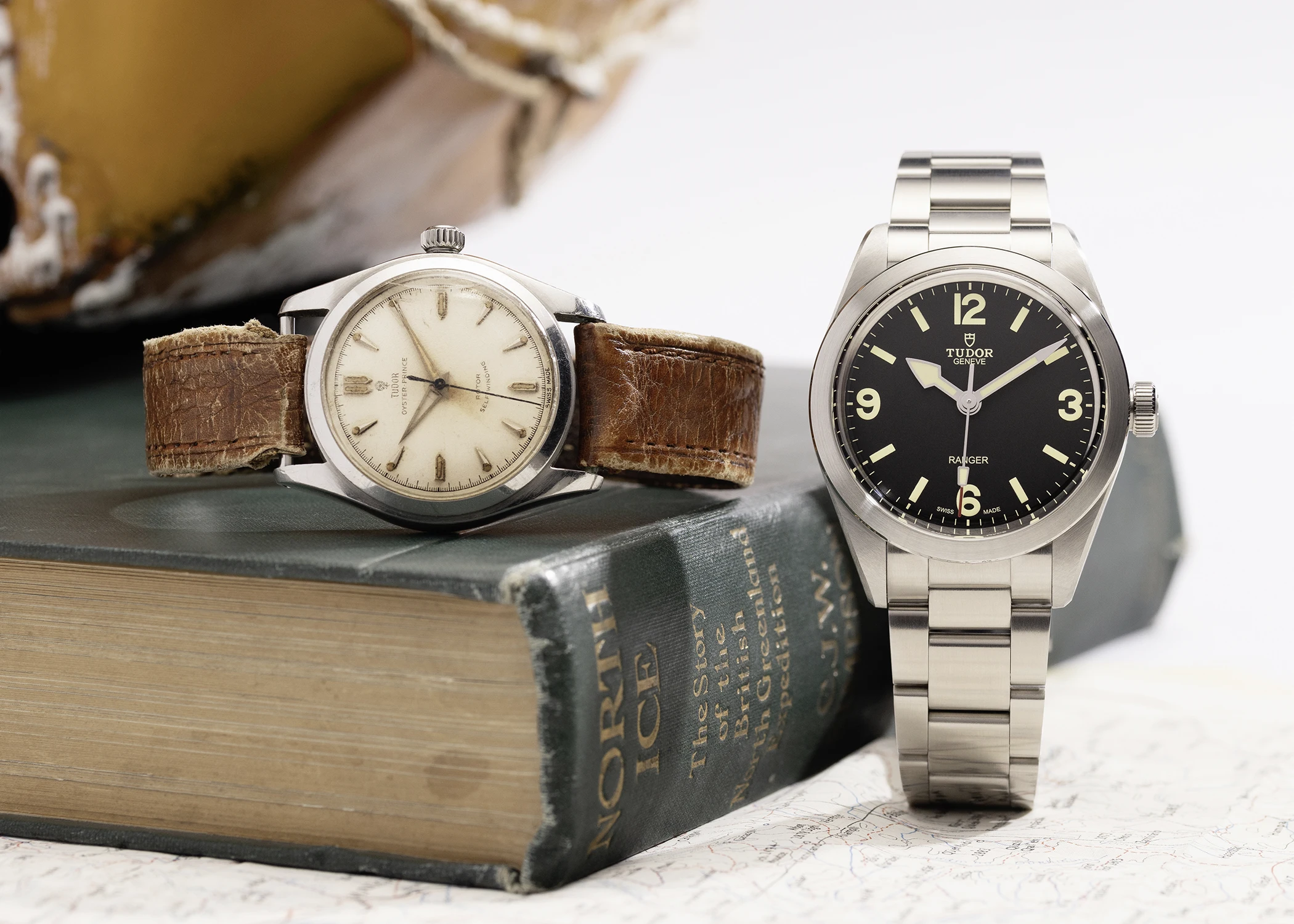
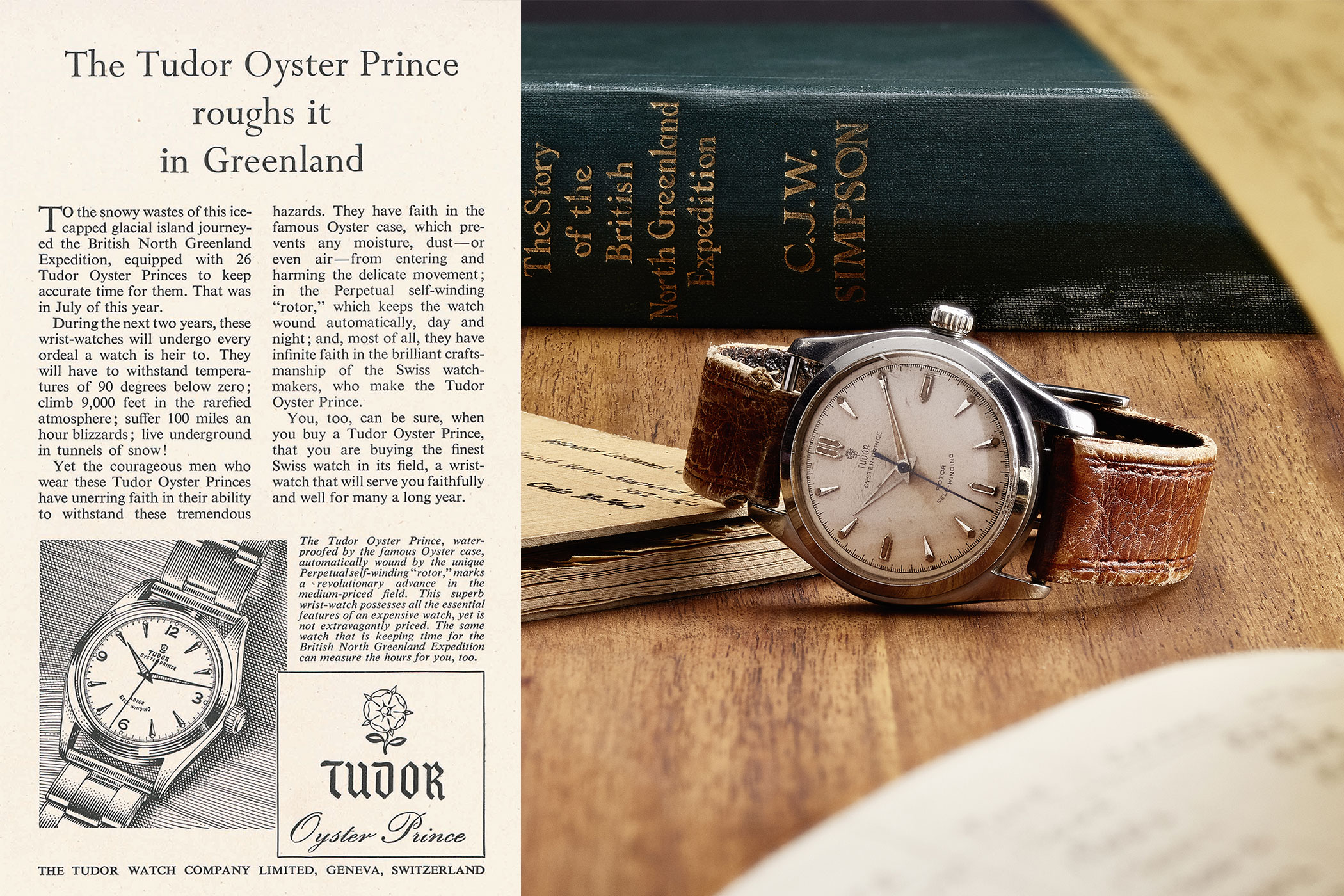
The Ranger is one of the manufacture’s most traditional tool-watch lines. Rolex and Tudor founder Hans Wilsdorf had the name protected as early as 1929. However, this robust companion made its first major appearance on the ice: in 1952, Tudor equipped the members of the British North Greenland Expedition.
In the years that followed, increasingly resilient models appeared. The face of the Ranger that continues to define the line today, with its distinctive arrow-shaped hands and prominent 3, 6, 9 and 12 numerals, became established from the mid-1960s onwards.
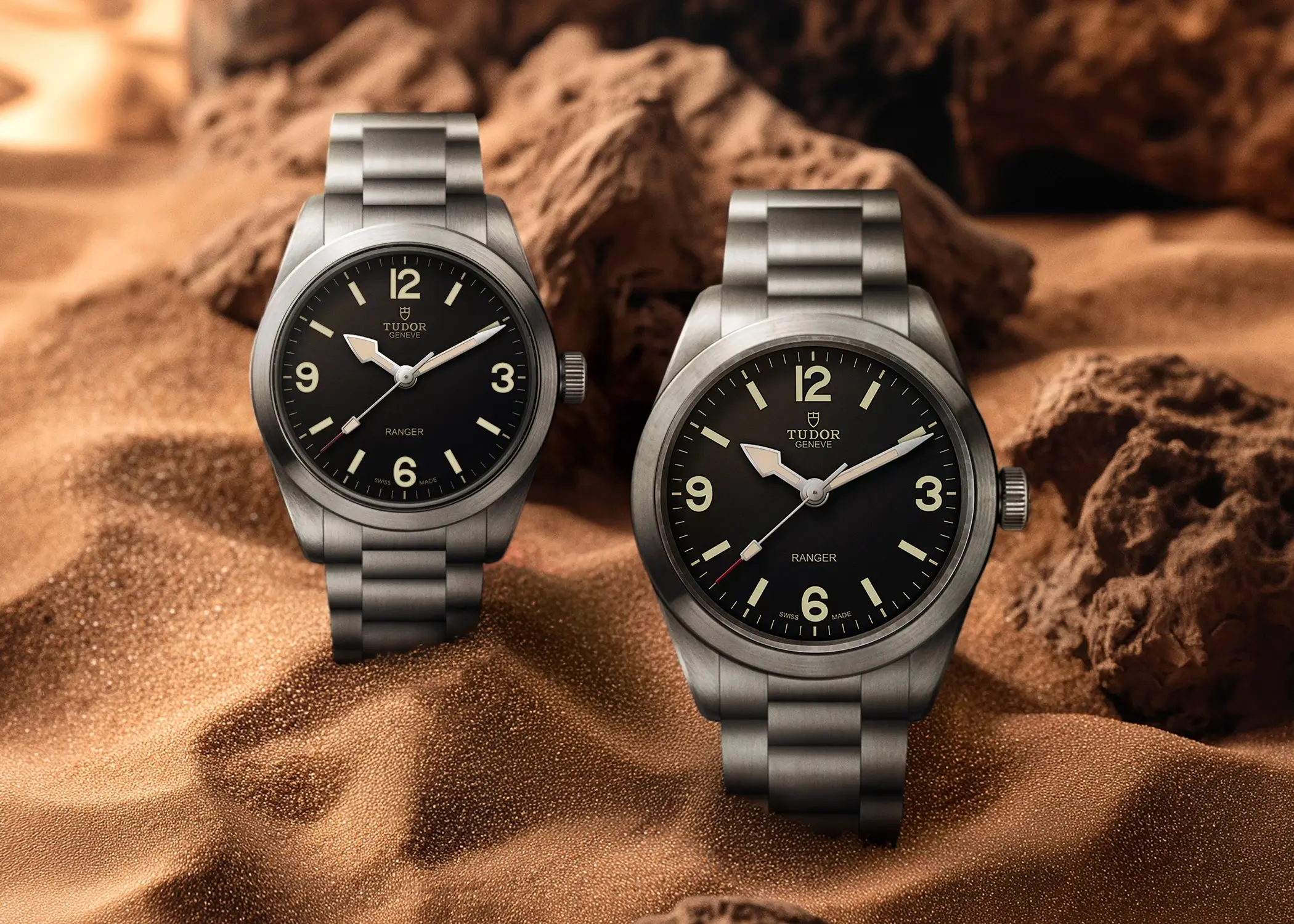
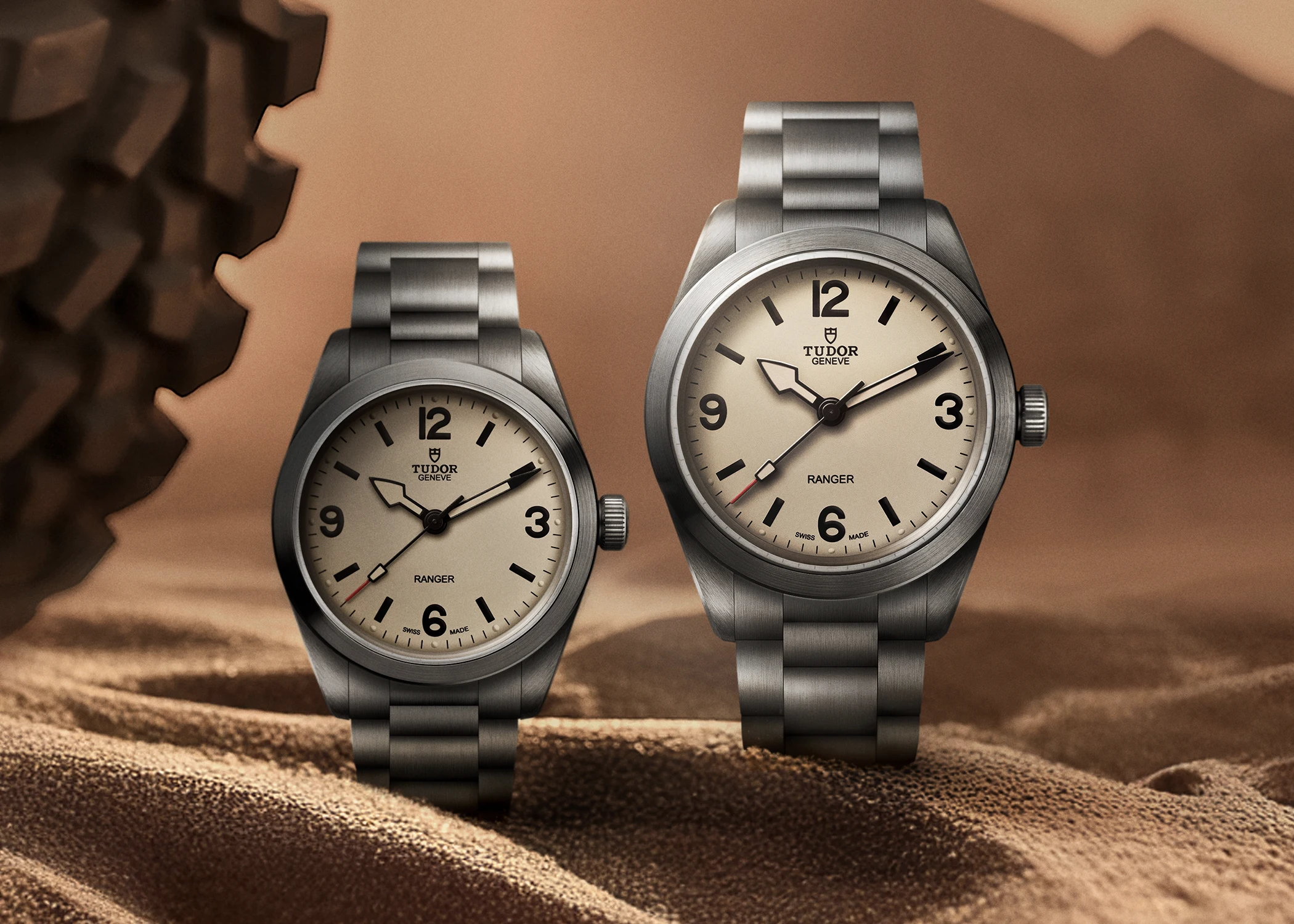
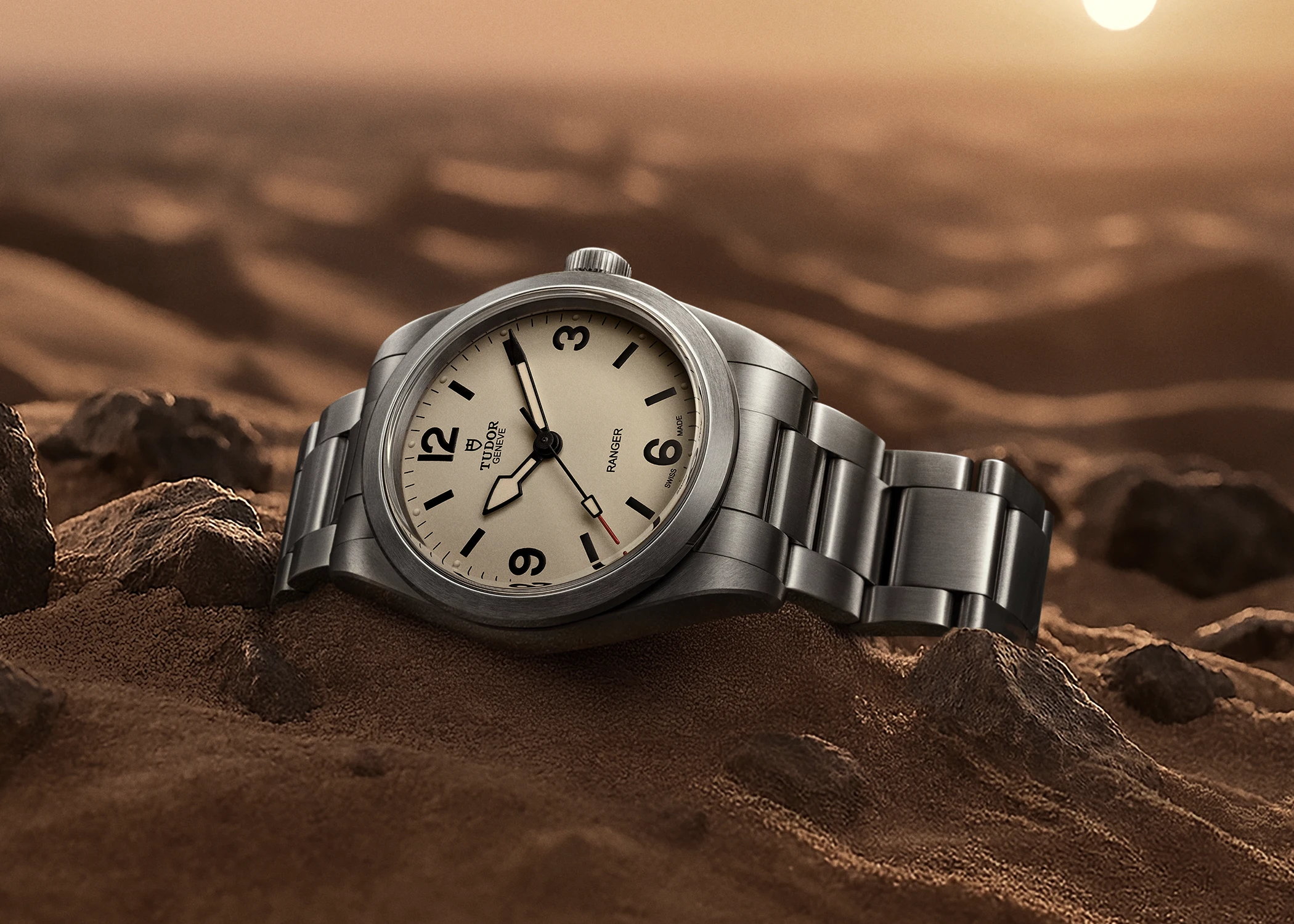
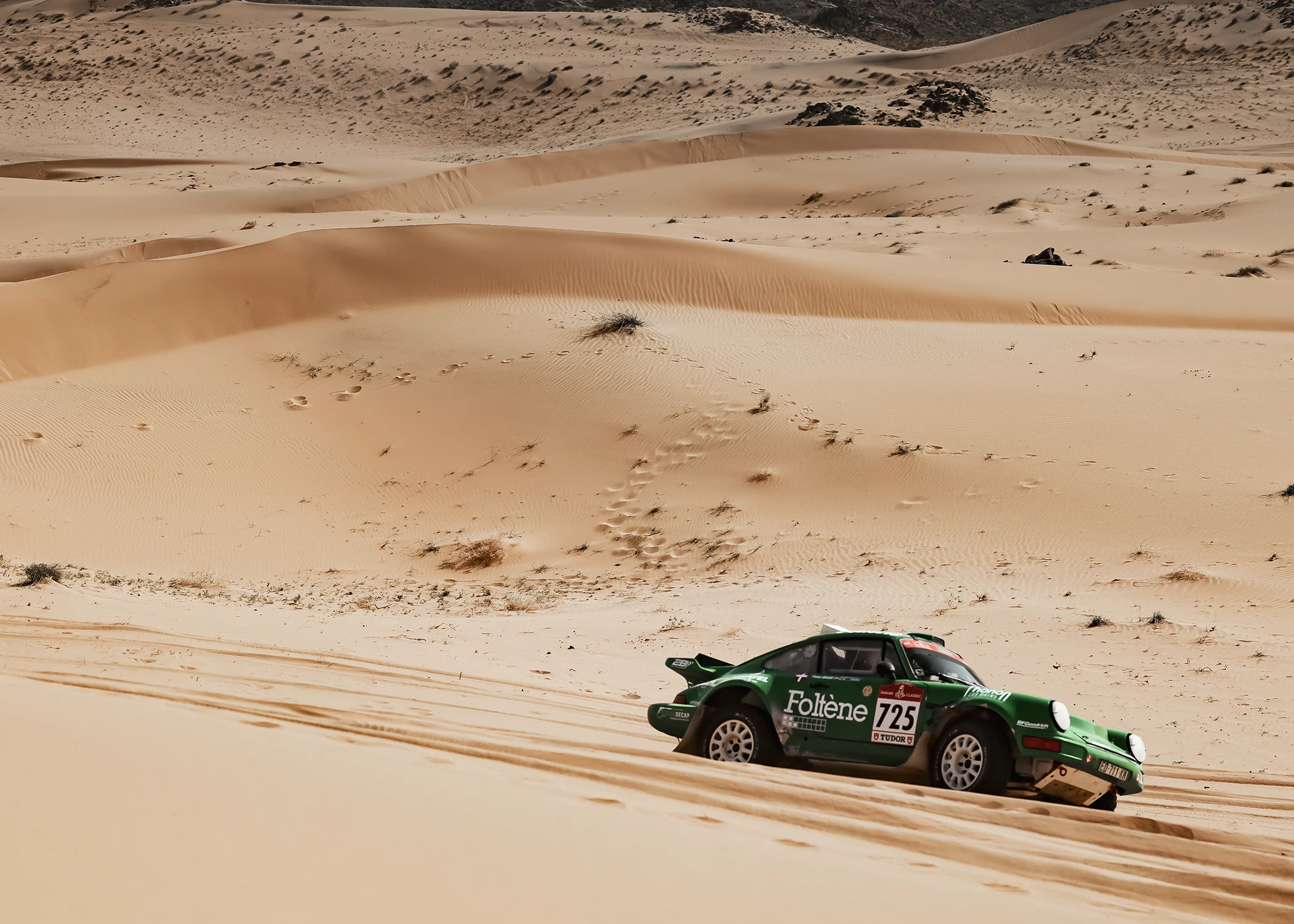
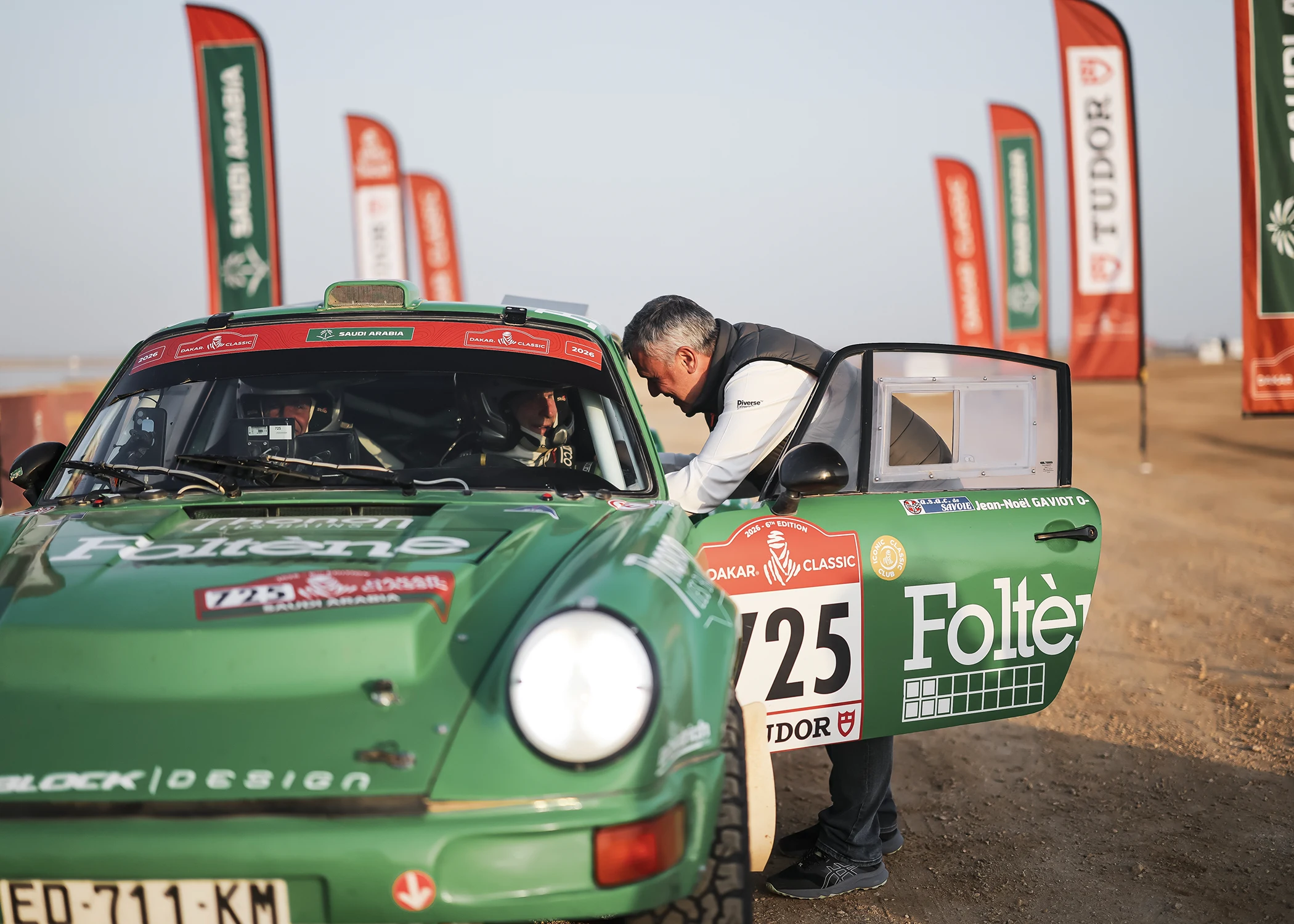
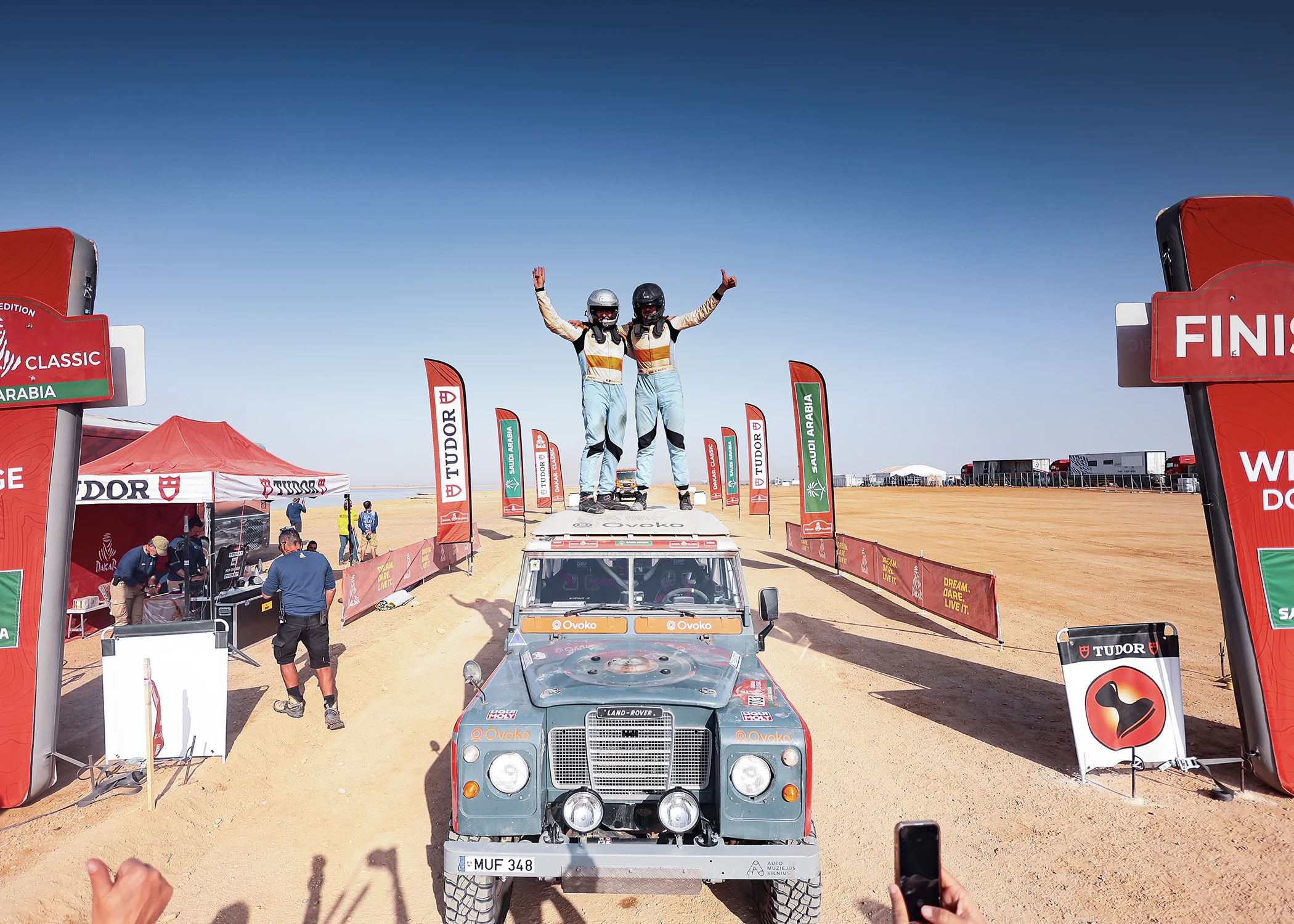
In 2022, Tudor revived the line and, in 2025, added a version with a matte, sand-coloured dial. The shade was not chosen merely in response to a trend in the fashion world: since 2025, Tudor has been the official timekeeper of the Dakar Classic and, in addition to its involvement in the main Dakar Rally, is therefore also a partner of a competition in which a tool watch has to prove its capabilities in searing heat, sand, dust and amid the constant vibrations of the cockpit.
The Dakar Classic has been held alongside the traditional Dakar Rally since 2021. It is a regularity and navigation rally for historic vehicles, in which victory is not decided by the highest speed, but by precision: teams are judged according to how accurately they match the average speeds set by the organisers on each stage.
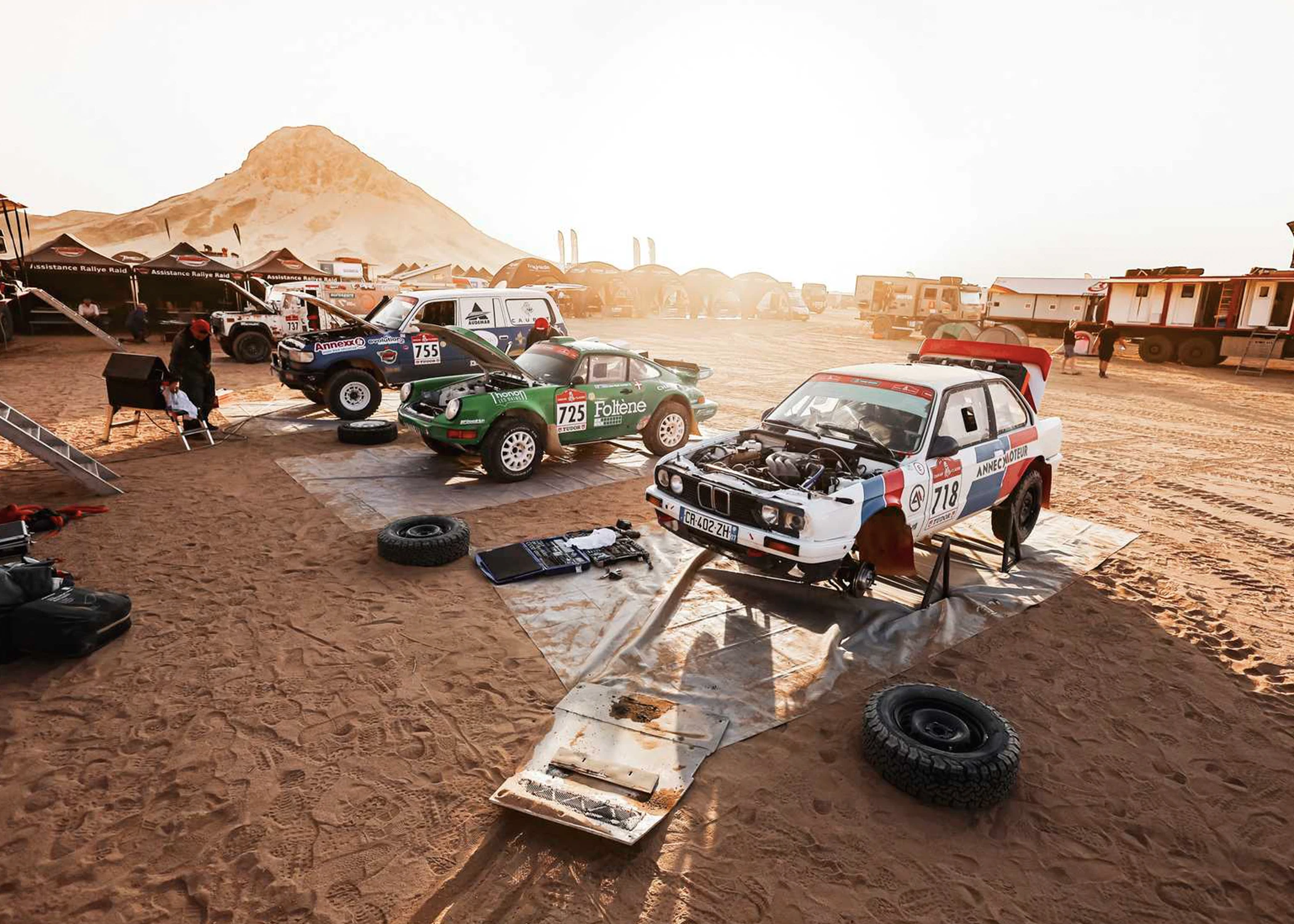
Eligible vehicles include cars and trucks built before 2005, among them icons such as the Porsche 959, the Mitsubishi Pajero and the classic Toyota Land Cruiser. The historic vehicles share the bivouac, logistics and liaison stages with the regular field, but complete their competitive sections on a parallel, more mechanically sympathetic route through the desert. Instead of pure timekeeping, the results are based on regularity and navigation tests, in which penalty points are accumulated.
The robust stainless-steel case of the Ranger White Dune measures 39 millimetres and is entirely satin-brushed in order to avoid distracting reflections from the desert sun. A screw-down crown and water resistance to 100 metres reliably keep both dust and moisture away from the movement.
Hidden behind the solid caseback is the manufacture calibre MT5402, an automatic movement with a generous 70-hour power reserve. Its construction, with a balance bridge and an amagnetic silicon hairspring, makes it particularly robust. A COSC certificate from the independent Swiss testing institute confirms a rate accuracy of -4 to +6 seconds per day. Tudor’s own in-house standards go even further: before a watch leaves the manufacture, it must run within a tolerance of -2 to +4 seconds per day.
Anyone purchasing the Ranger White Dune can choose between two wearing options. The satin-brushed stainless-steel bracelet uses Tudor’s T-fit clasp with rapid adjustment: without the need for tools, its length can be adjusted in five steps by a total of eight millimetres — a welcome detail in high heat, when the wrist can swell. The second version is the tightly woven fabric strap for which Tudor is known. It is produced in France on 19th-century Jacquard looms by the family-owned company Julien Faure in the Saint-Étienne region.
The Ranger 39 White Dune costs 3,530 euros on the stainless-steel bracelet and 3,210 euros with the three-colour fabric strap.
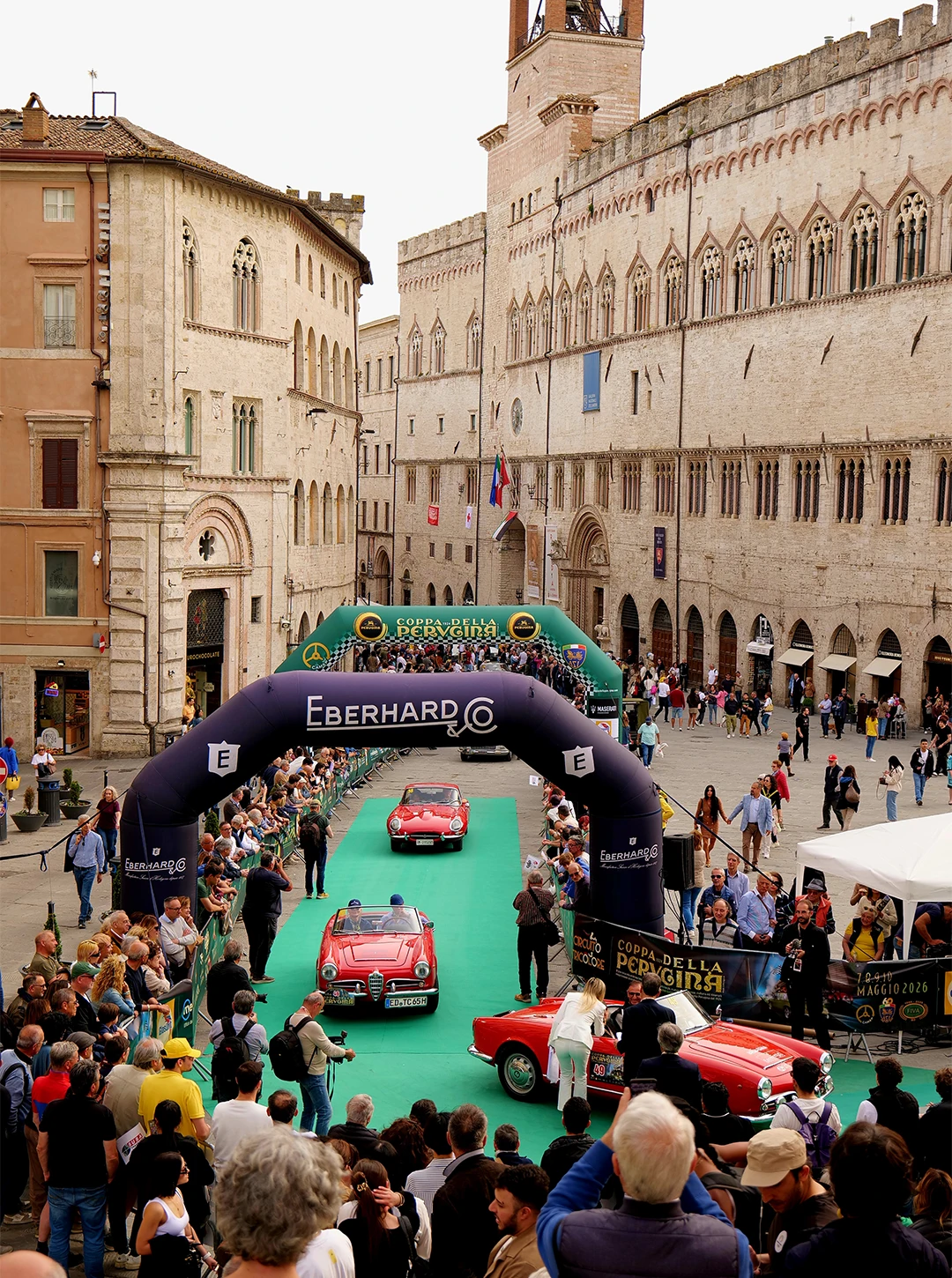
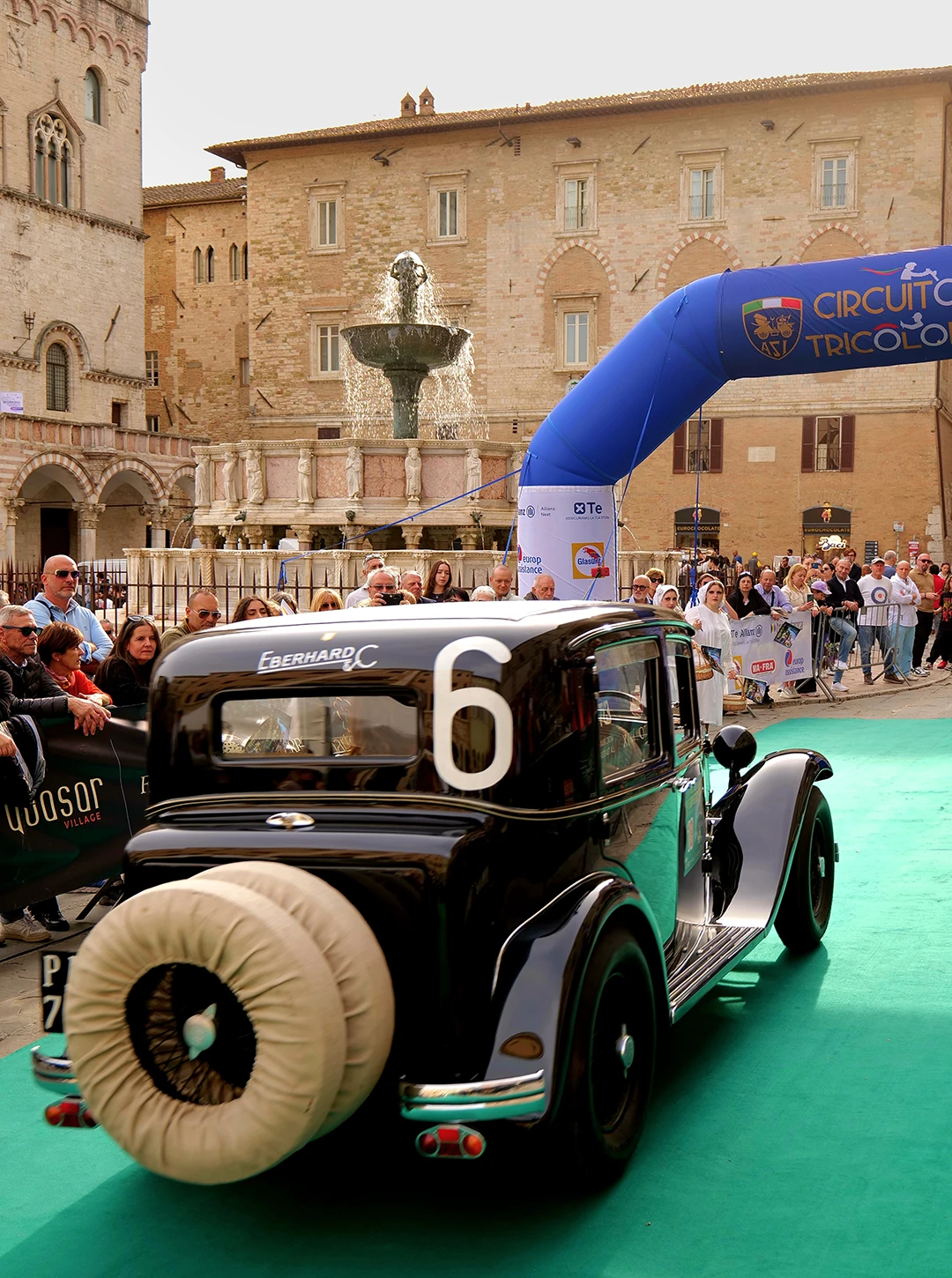
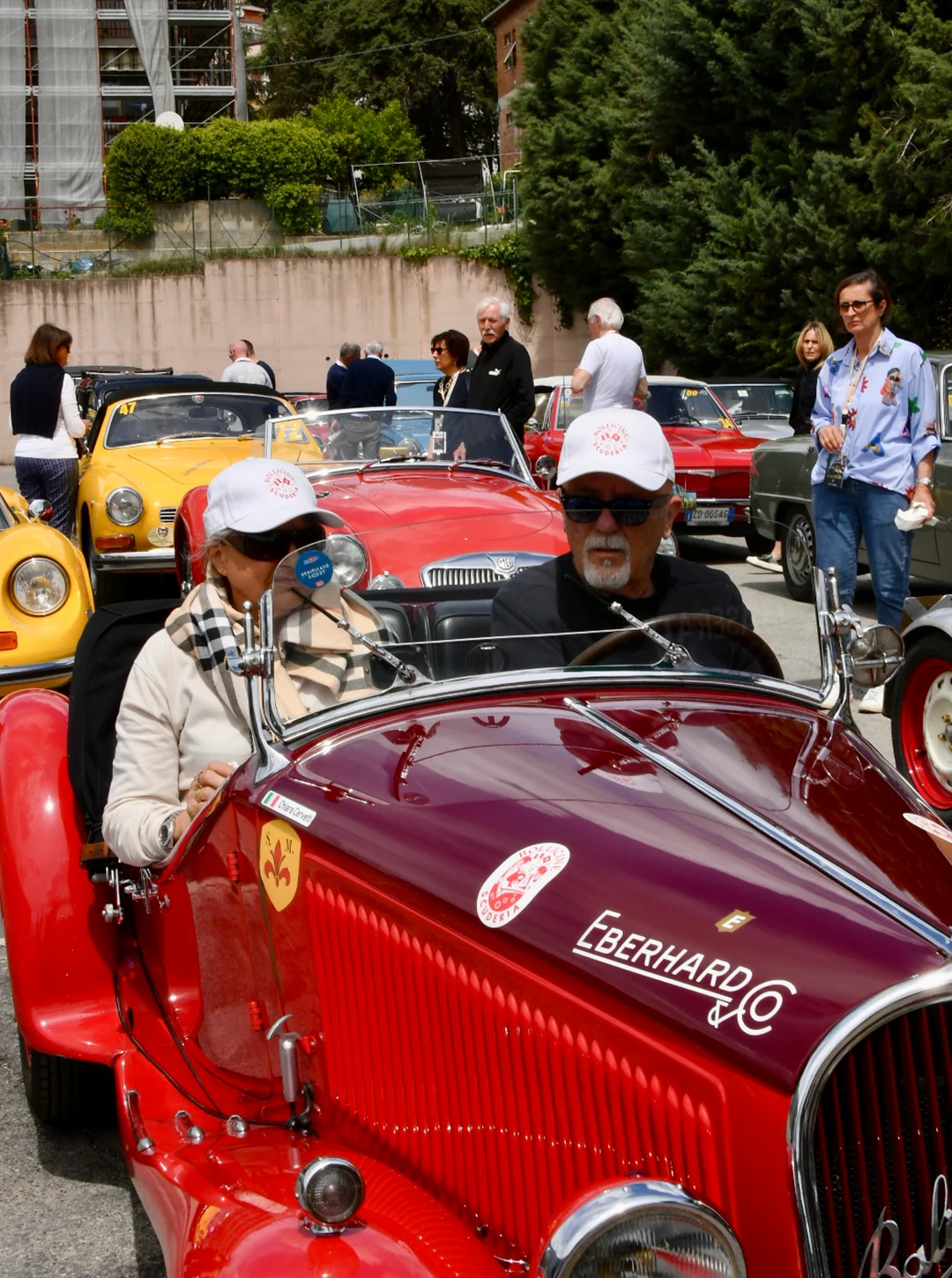
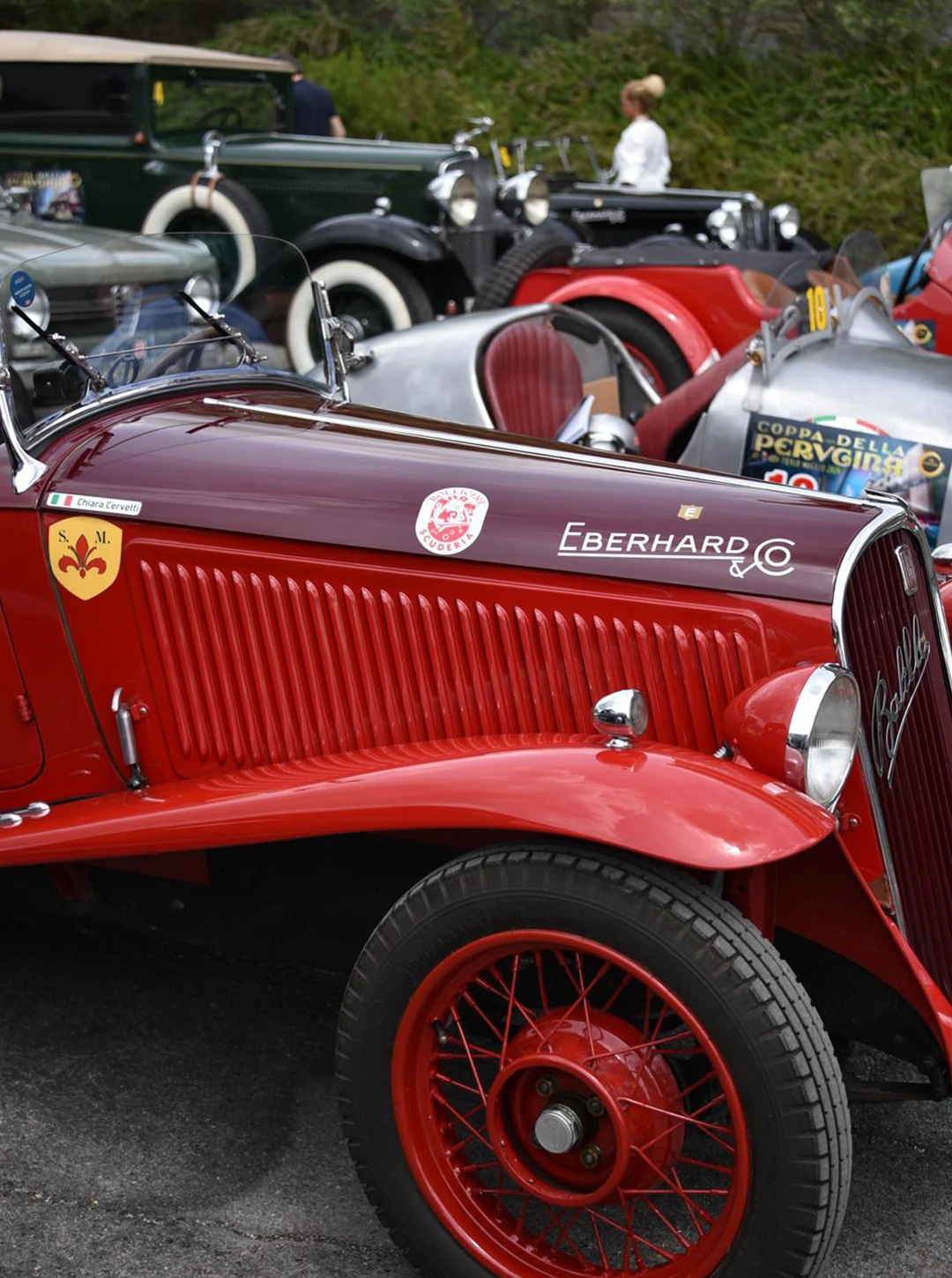
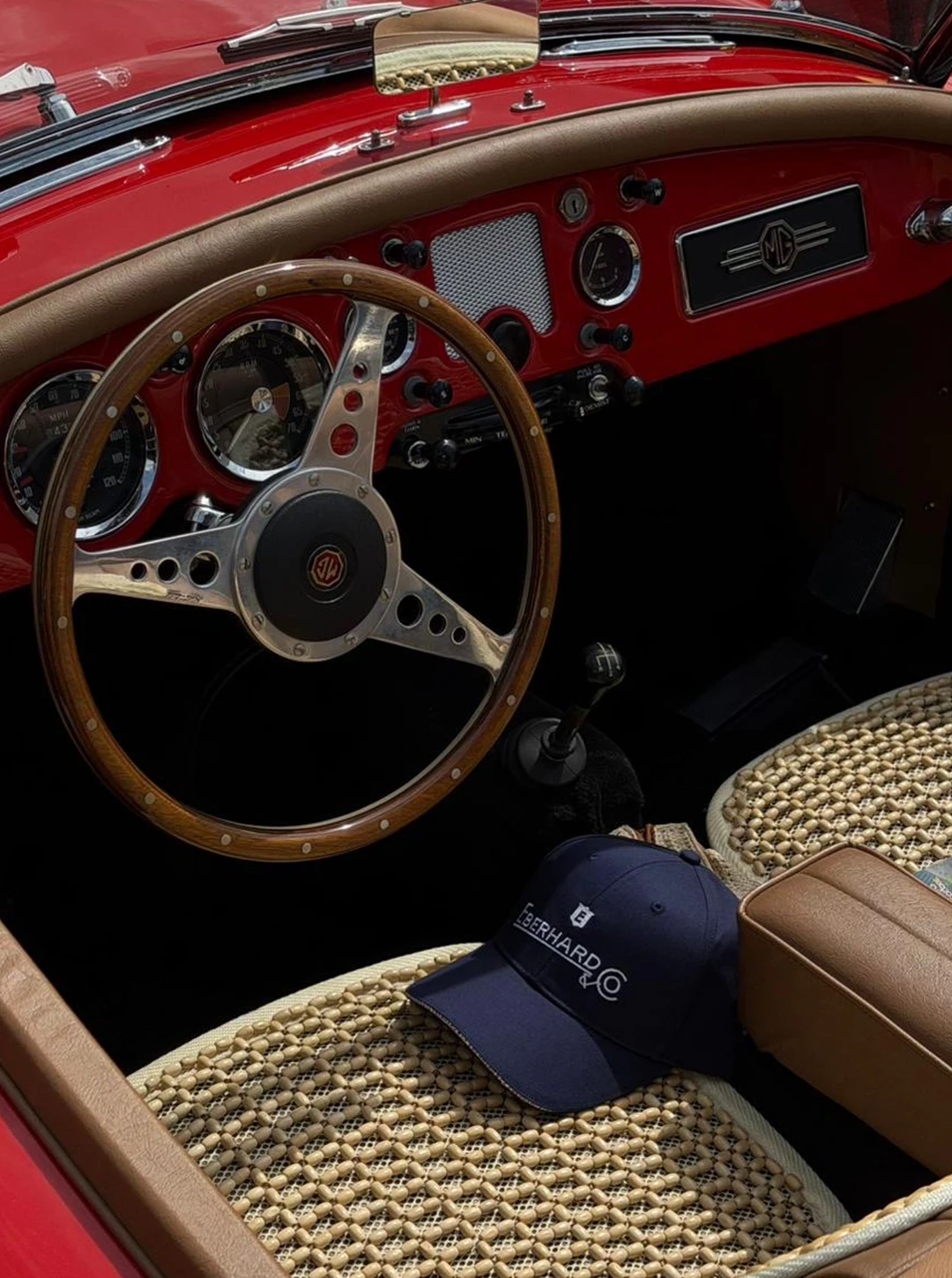
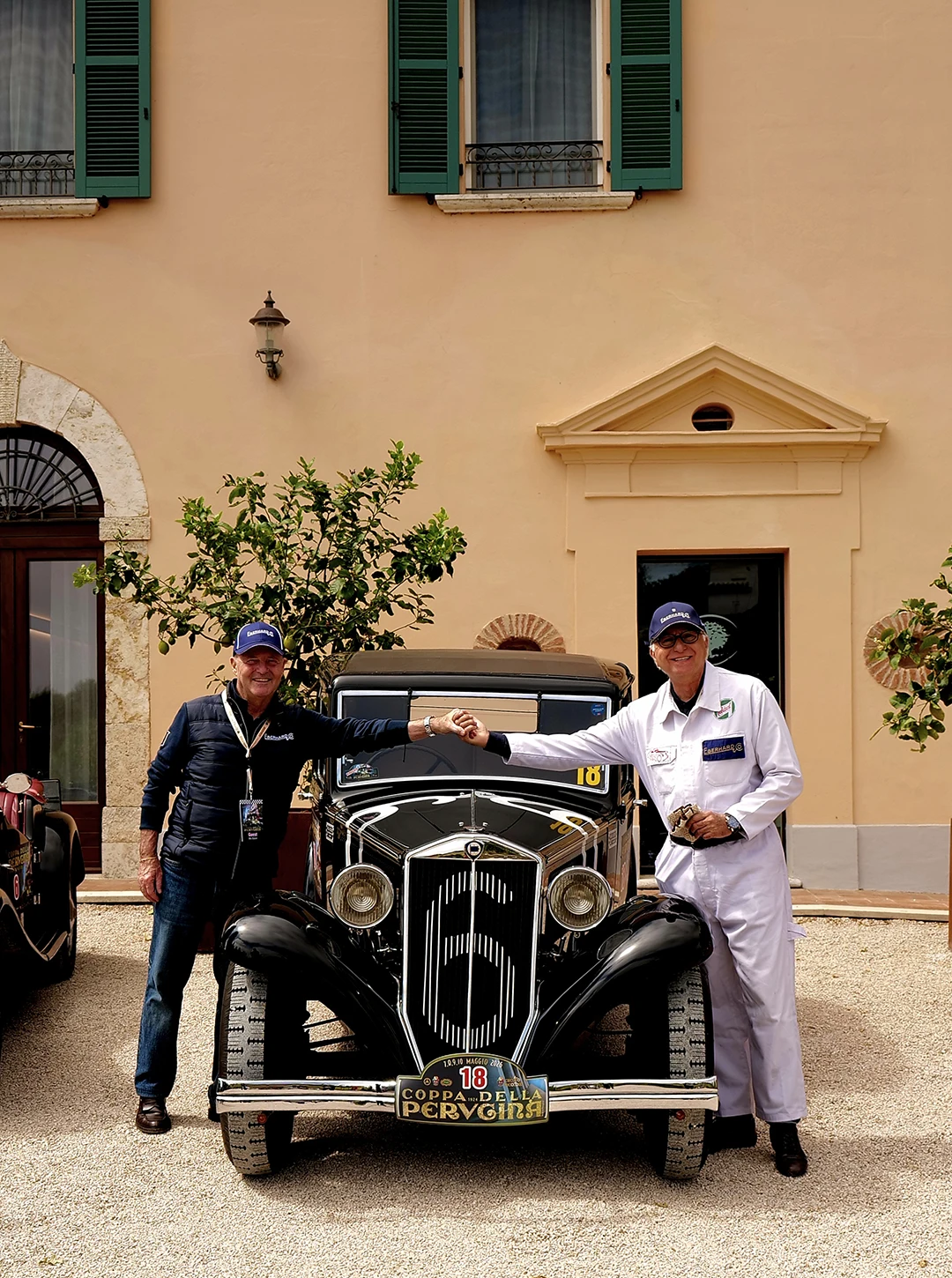
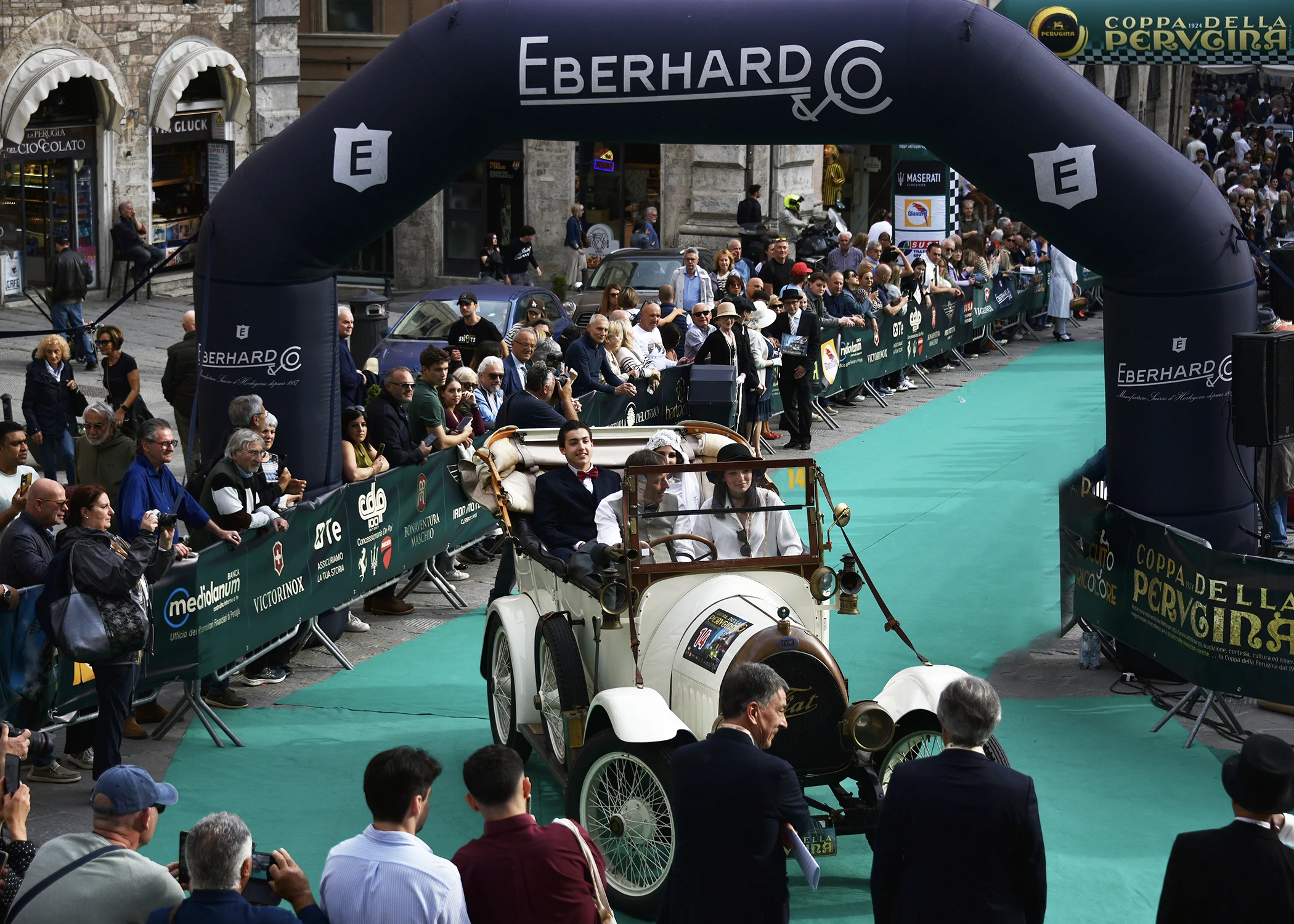
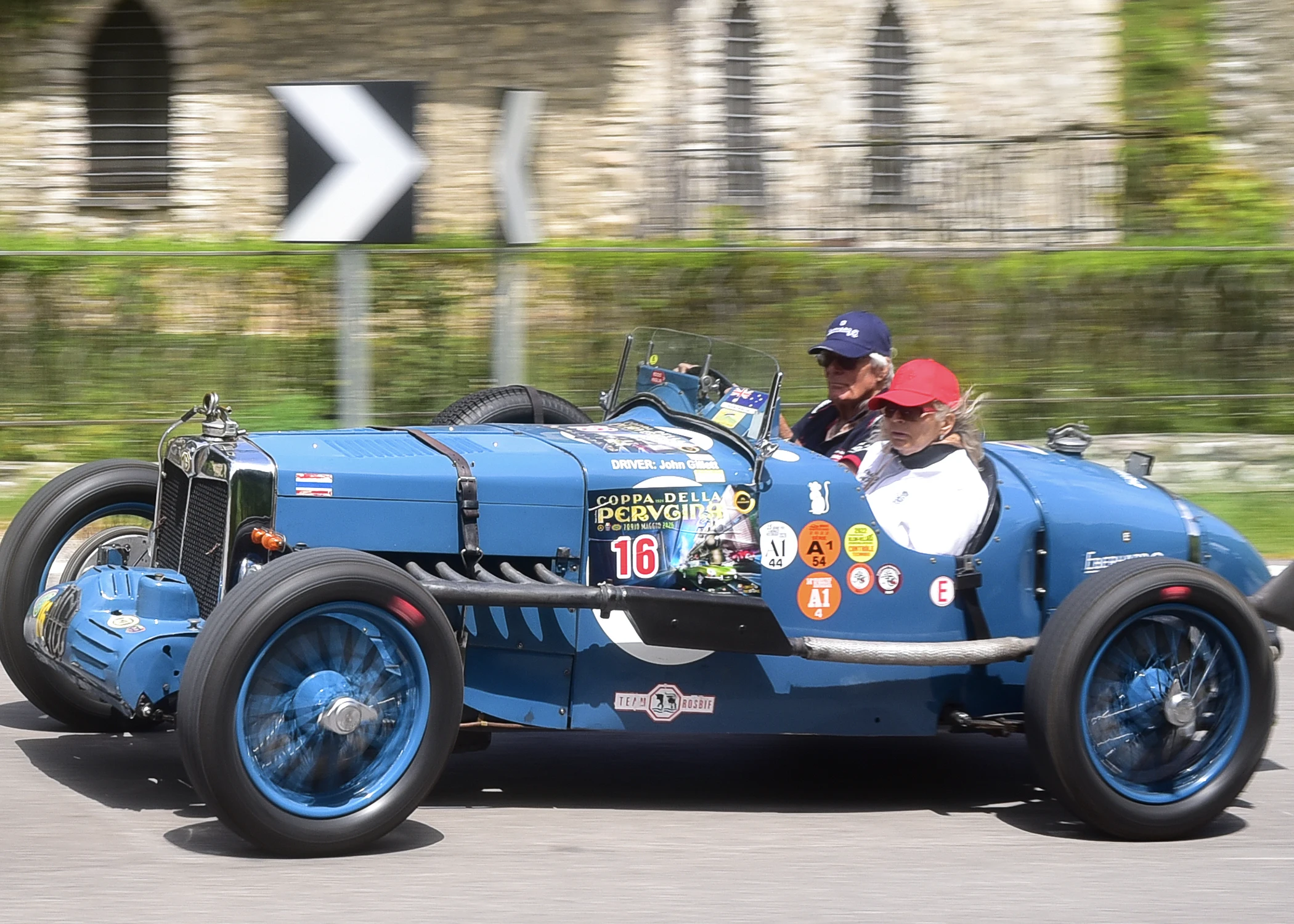
The brand has named an entire, tradition-rich line after the famous Italian racing driver Tazio Nuvolari. In addition, the Swiss watchmaker is a partner of various Italian classic car rallies, including the Coppa della Perugina. The regularity rally runs through Umbria and has a very particular charm thanks to its field of entrants, with vehicles built up to 1965 and 20 per cent open-top cars from before 1930. In 2026, the event also featured two-time World Rally Champion Miki Biasion, who is an ambassador for Eberhard & Co.
The Tazio Nuvolari watches, which Eberhard has been producing since 1992, revive the elegance of Italian racing cars from the 1930s. The latest model displays the racing driver’s logo on the dial: a tortoise bearing his initials. In 1932, the Italian poet Gabriele d’Annunzio gave the exceptional driver a tortoise amulet as a lucky charm, inscribed with the words: “To the fastest man, the slowest animal.” Another detail is also picked up in the watches: the yellow chronograph seconds hand recalls the yellow sweater that Nuvolari wore as a distinguishing feature in his lucky colour. Otherwise, the dial features an elegant Clous de Paris relief. The large numerals and hands are filled with vintage-style luminous material to support the retro design. On the rehaut is a tachymeter scale in km/h, from which the speed can be read. The bezel offers a further scale converting this into miles per hour. The perlage finish on the bezel recalls the dashboards of classic sports cars.
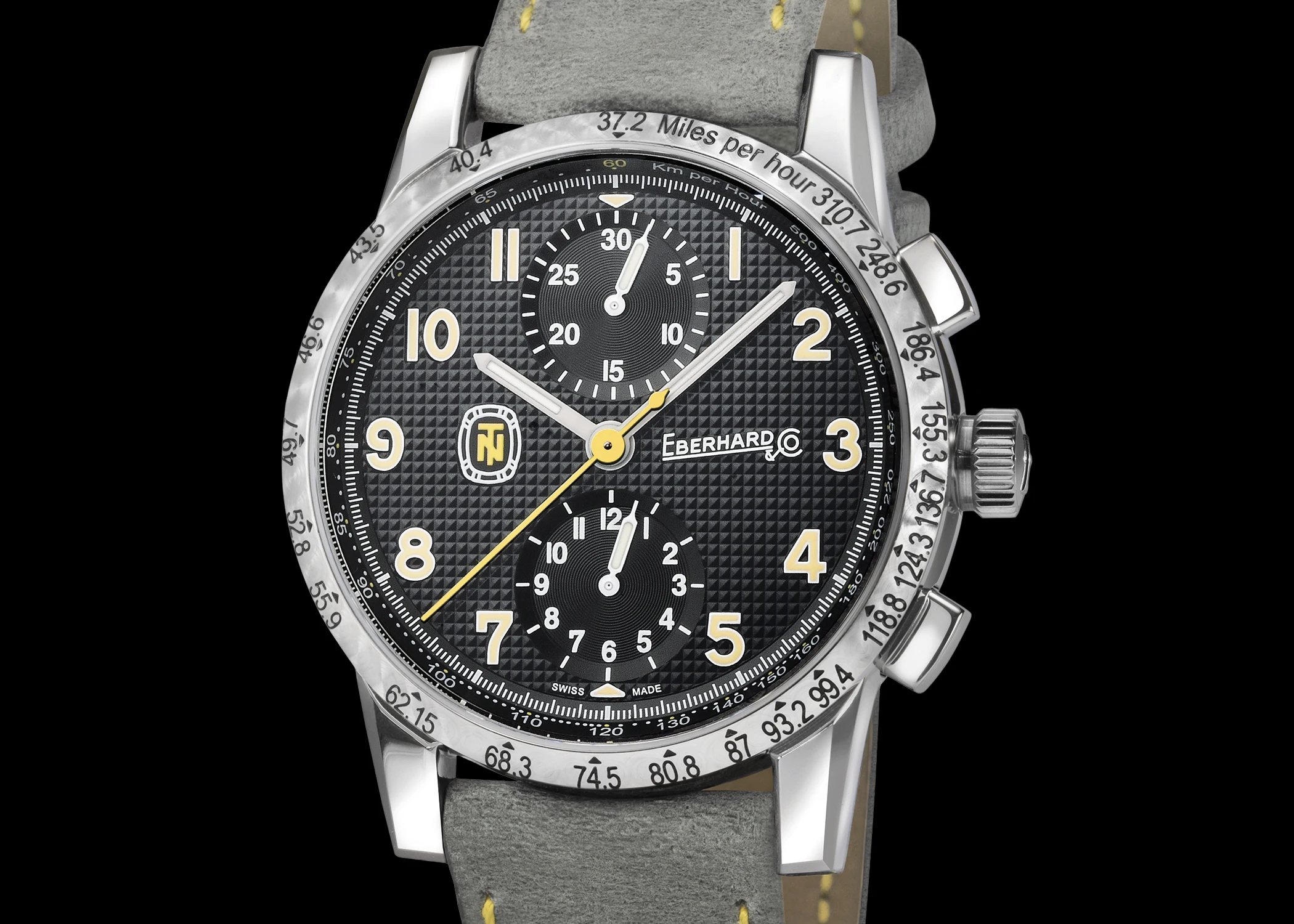
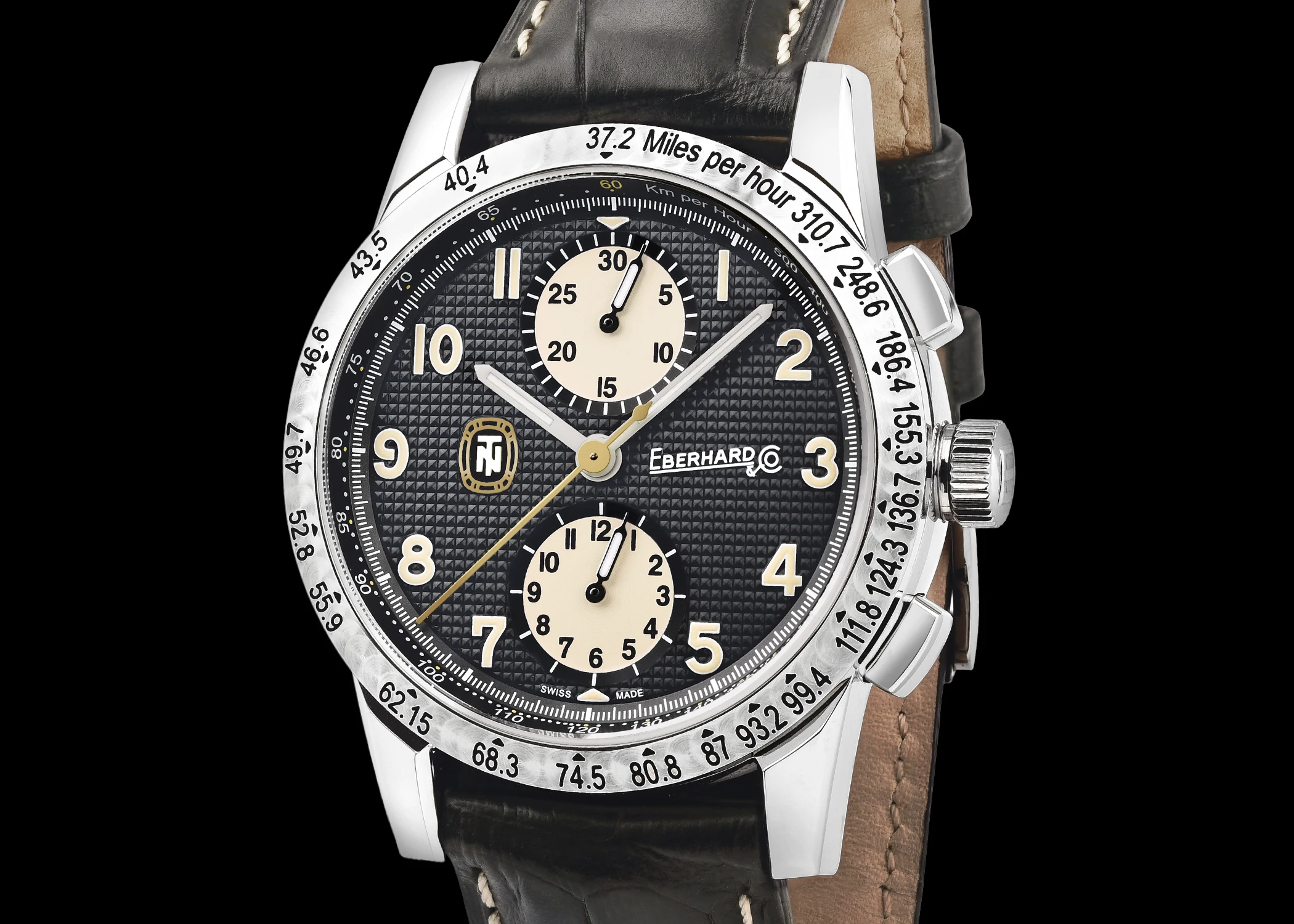
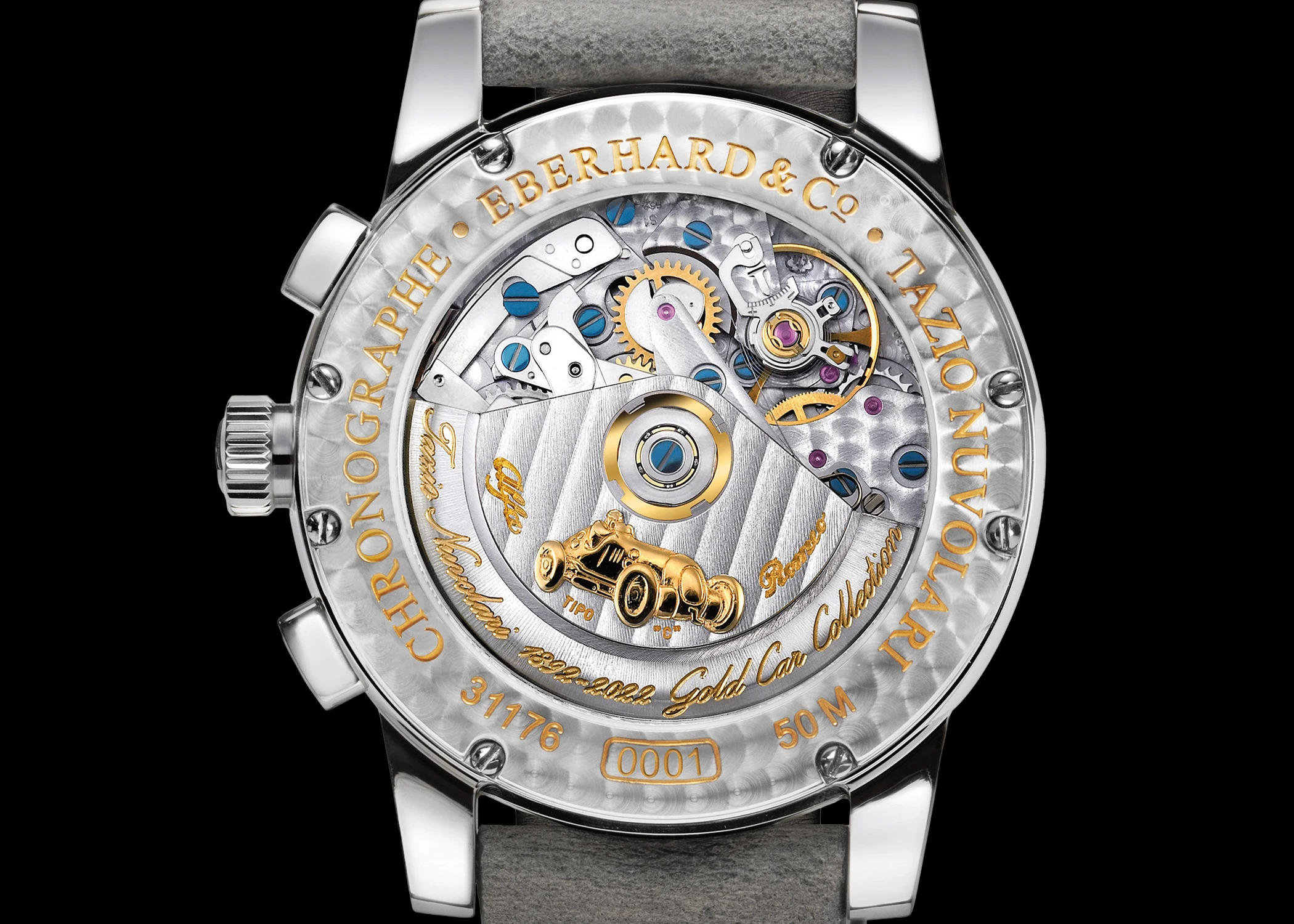
At 40 millimetres, the stainless-steel case is now somewhat more understated in size. Inside is the tried-and-tested automatic ETA-Valjoux 7750 calibre. Two versions are available: one with a closed caseback, priced at 3,800 euros, and the Gold Car Collection version, priced at 5,390 euros, with a sapphire crystal caseback, a decorated movement and a rotor bearing a gold relief of Tazio Nuvolari in the Alfa Romeo Tipo C.
Union Glashütte serves as official timekeeper at several classic car rallies, including the Silvretta Classic and Sachsen Classic, and regularly launches limited-edition models for these regularity rallies.
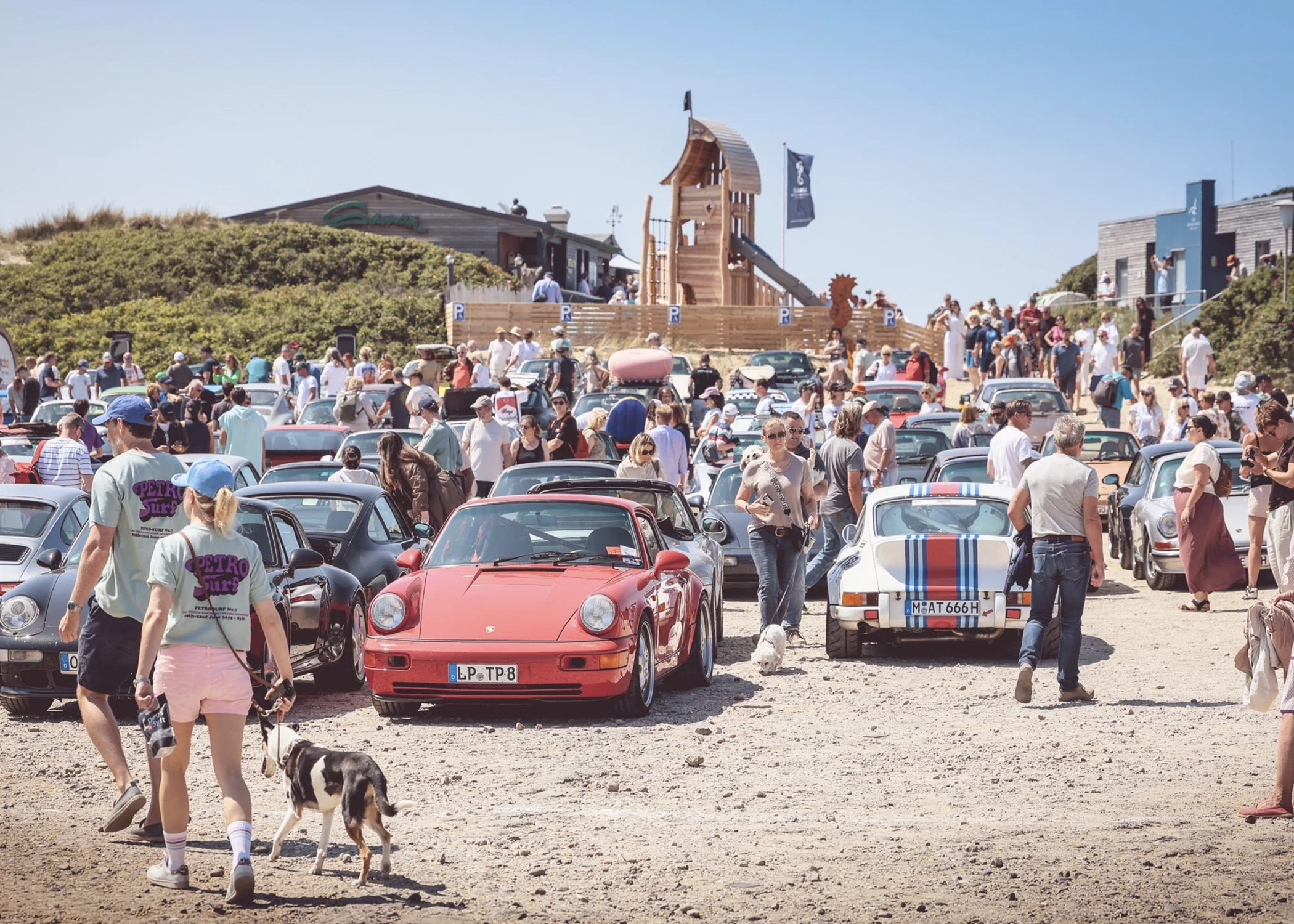
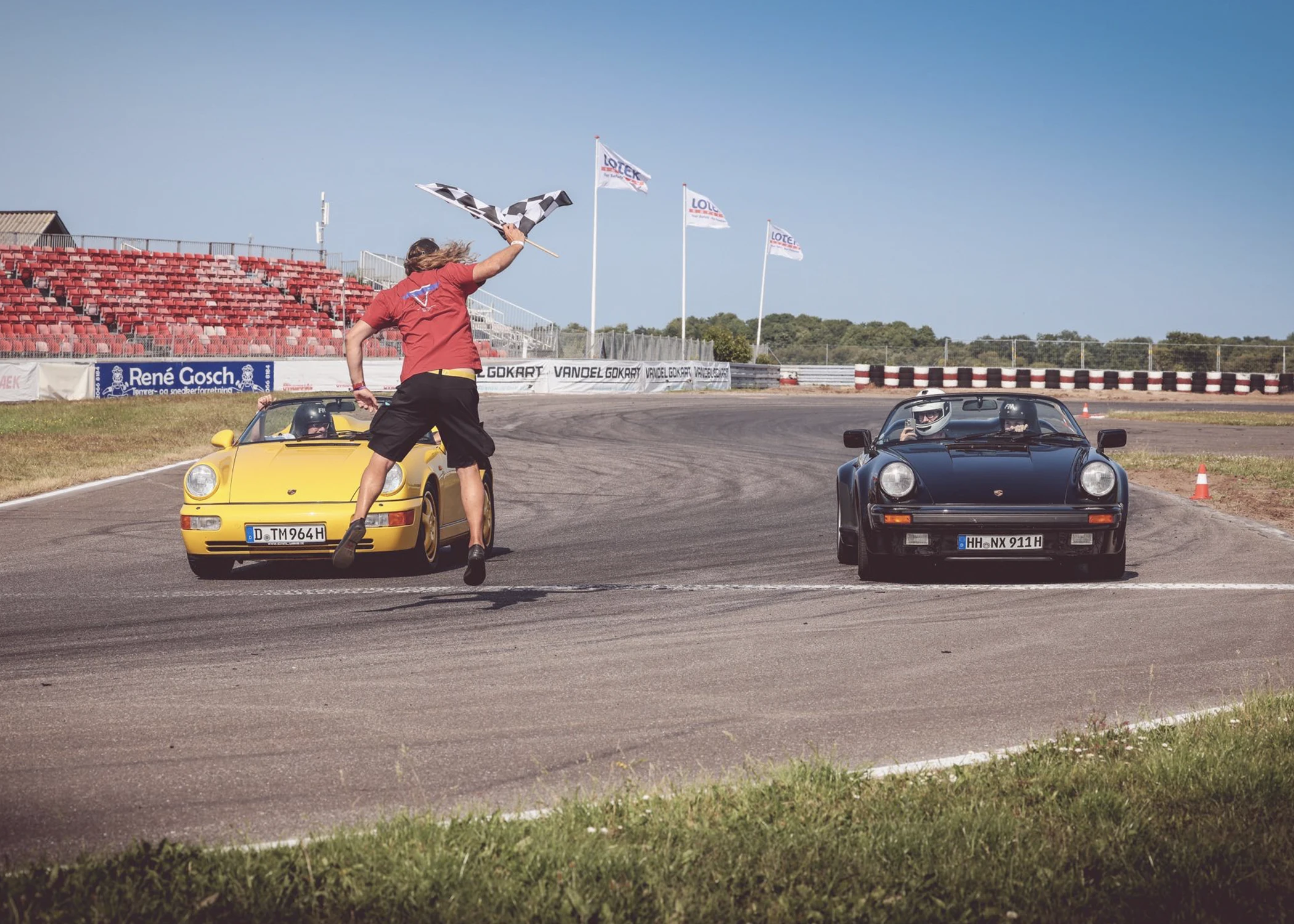
The latest limited-edition watch, however, was created for a very different event centred on classic vehicles: the Petro-Surf Festival for air-cooled 911s and transaxle Porsches. The event begins each year as a drive for around 100 participants in Denmark and ends on Sylt, where the cars are displayed for spectators for a full day, accompanied by a surf contest. The idea came to founder Ken Hake while he was working in California and, during surf sessions, saw surfers arriving at the beach in their old 911s. He wanted to bring this relaxed vibe — where cool stickers and modifications matter more than originality and factory paint — to Germany and to his home island of Sylt.
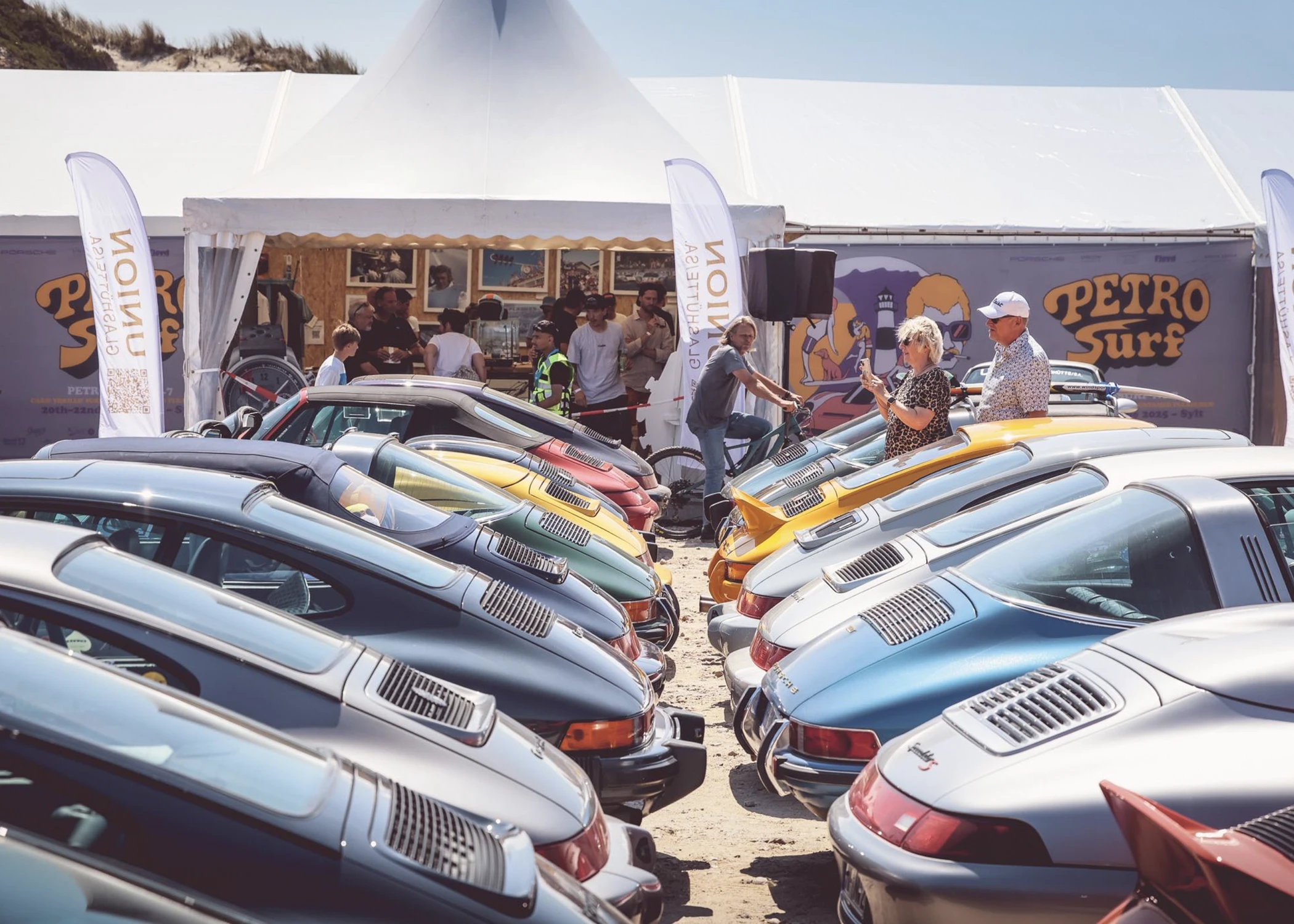
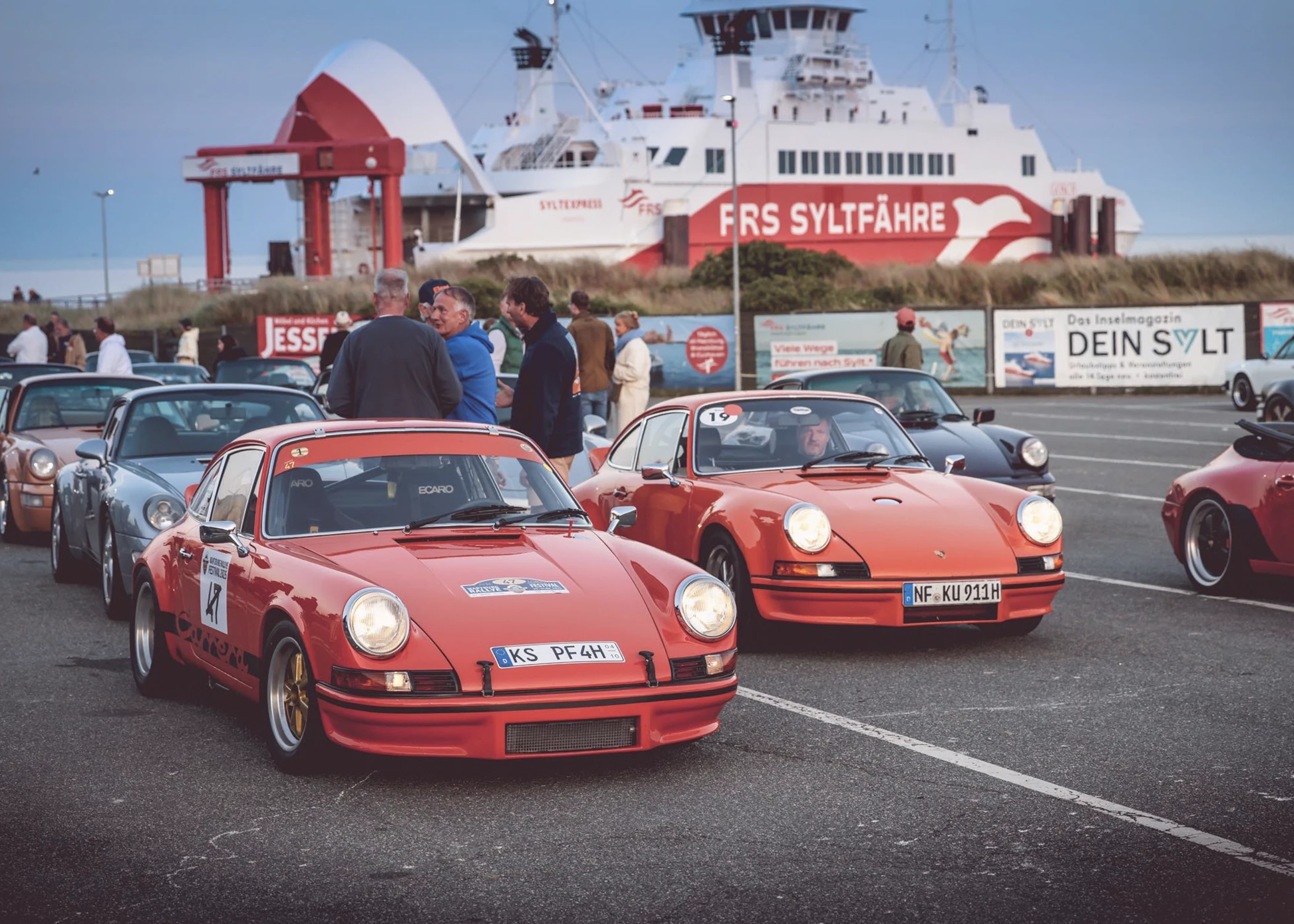
Credit © Marcus_Krueger
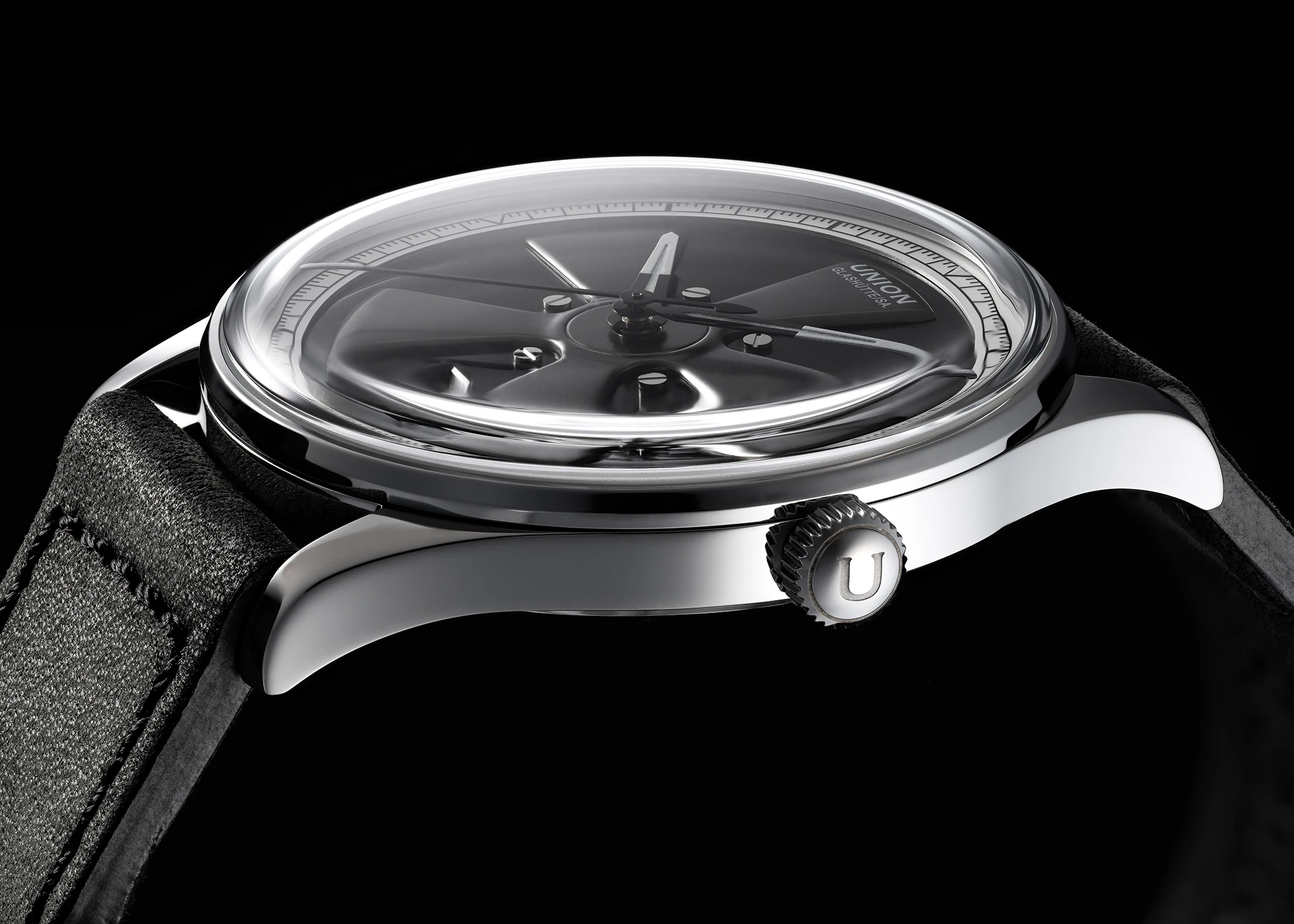
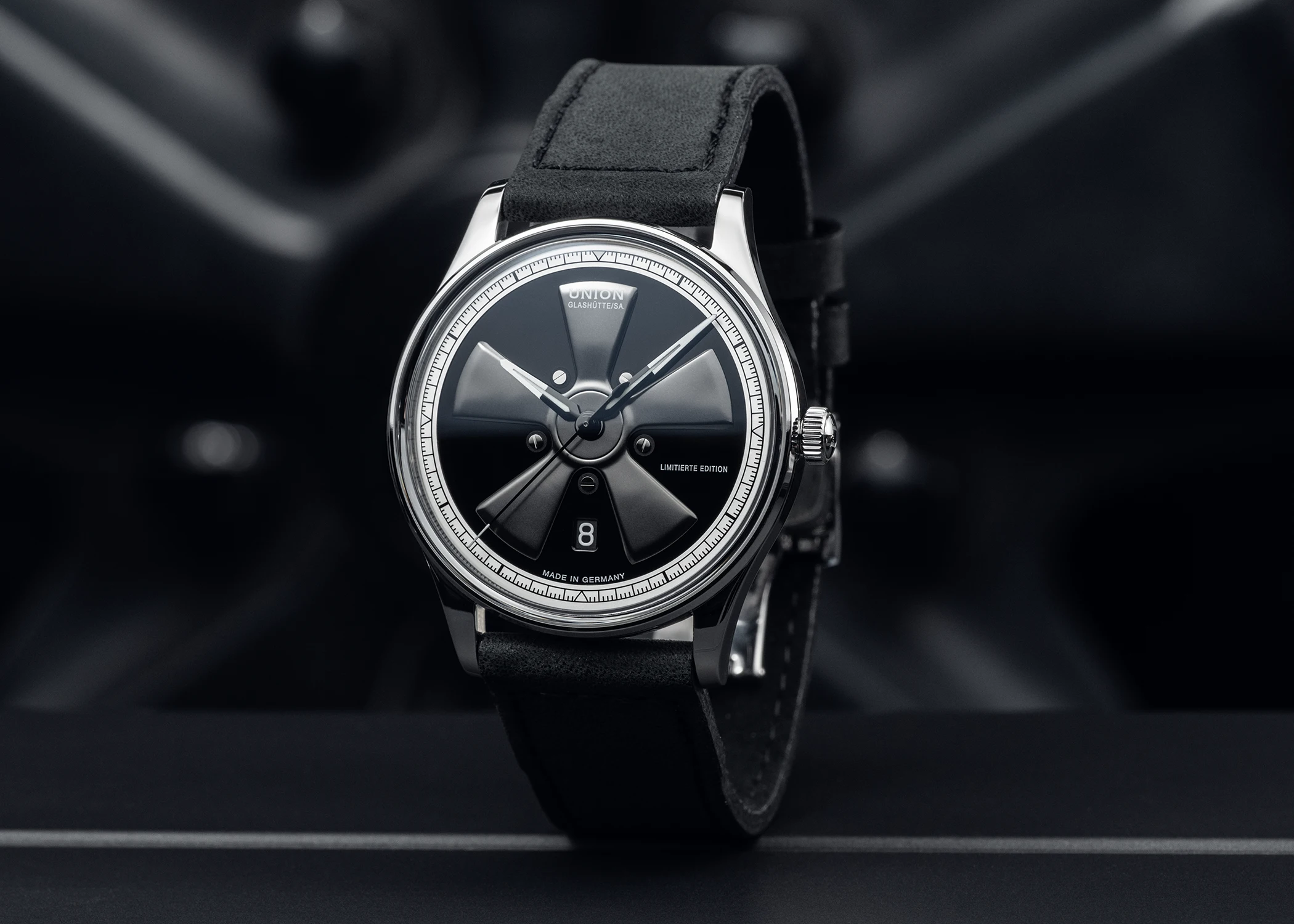
Union Glashütte has been a partner since 2025, and this year the brand is presenting the Noramis Date Edition Petro Surf 2026, limited to 200 pieces. The dial depicts a black Fuchs wheel rendered in relief, a design typical of the G-series Porsche 911 (1973–1989), making it a perfect fit for Petro-Surf. Even the five screw positions on the dial correspond to the original. The silver minute scale recalls the polished rim bed, through which the aluminium alloy once again became visible at the time.
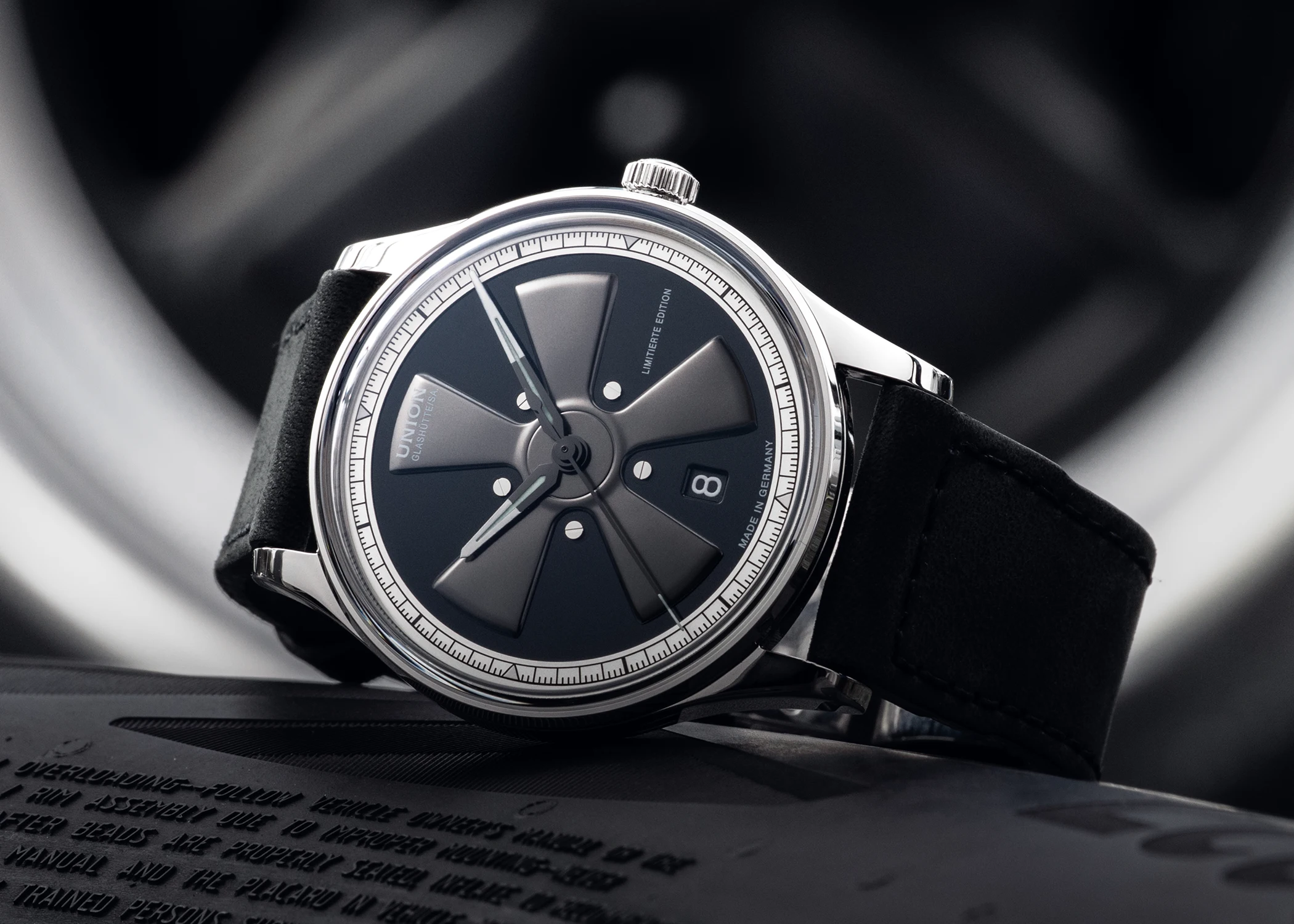
Visible beneath the sapphire crystal caseback is the automatic calibre UNG-07.S1, which is based on the ETA 2892 but assembled in Glashütte using some proprietary movement components. Among other features, it uses an amagnetic silicon hairspring which, together with the reduced frequency of 25,200 vibrations per hour, contributes to an improved power reserve of 60 hours.
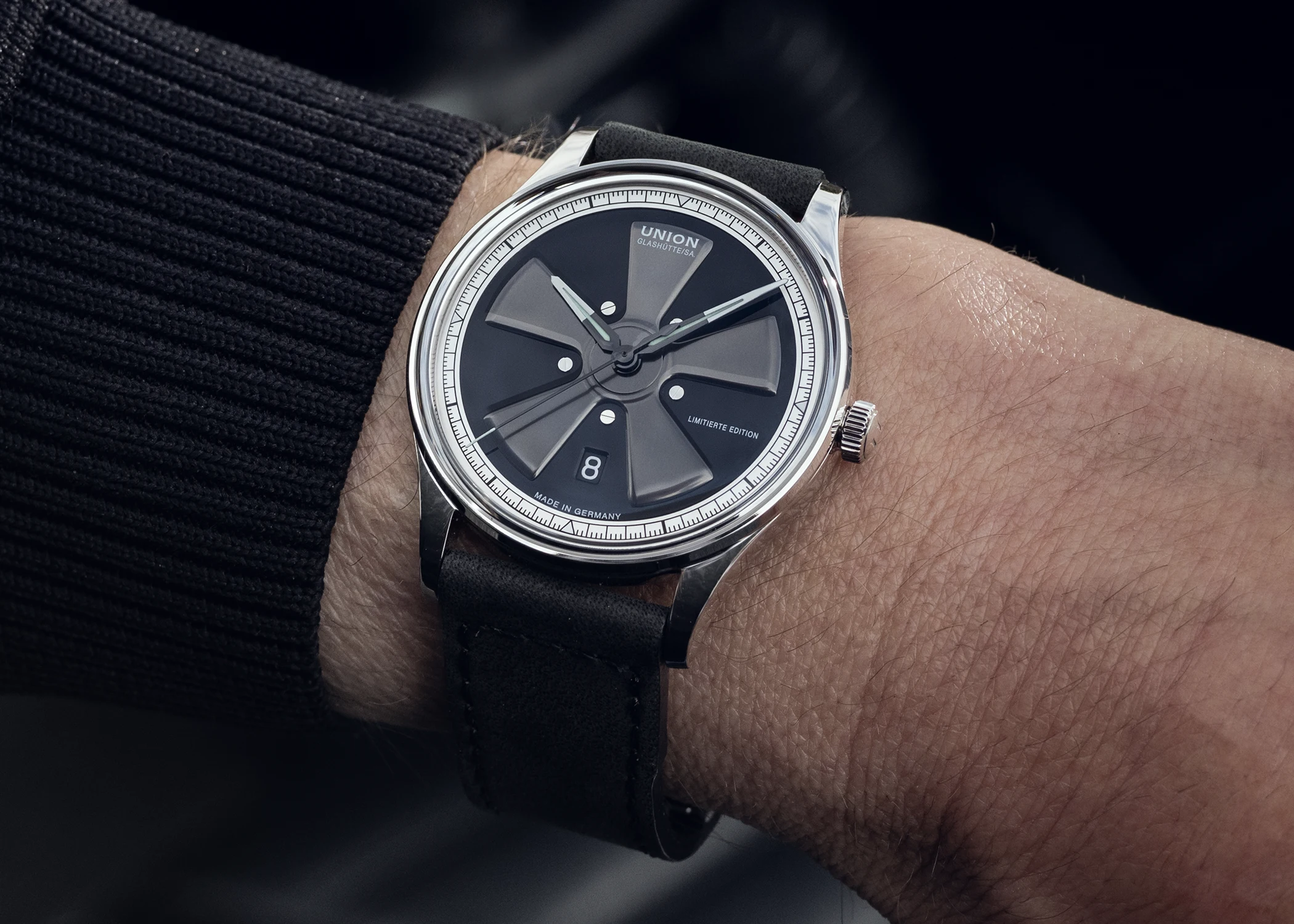
The stainless-steel case measures 40 millimetres in diameter and just 10.4 millimetres in height, and is water-resistant to 100 metres. With a black calfskin strap, the watch costs 2,780 euros.