Auction Season, Geneva November 2026: Five Trends That Defined the Auctions
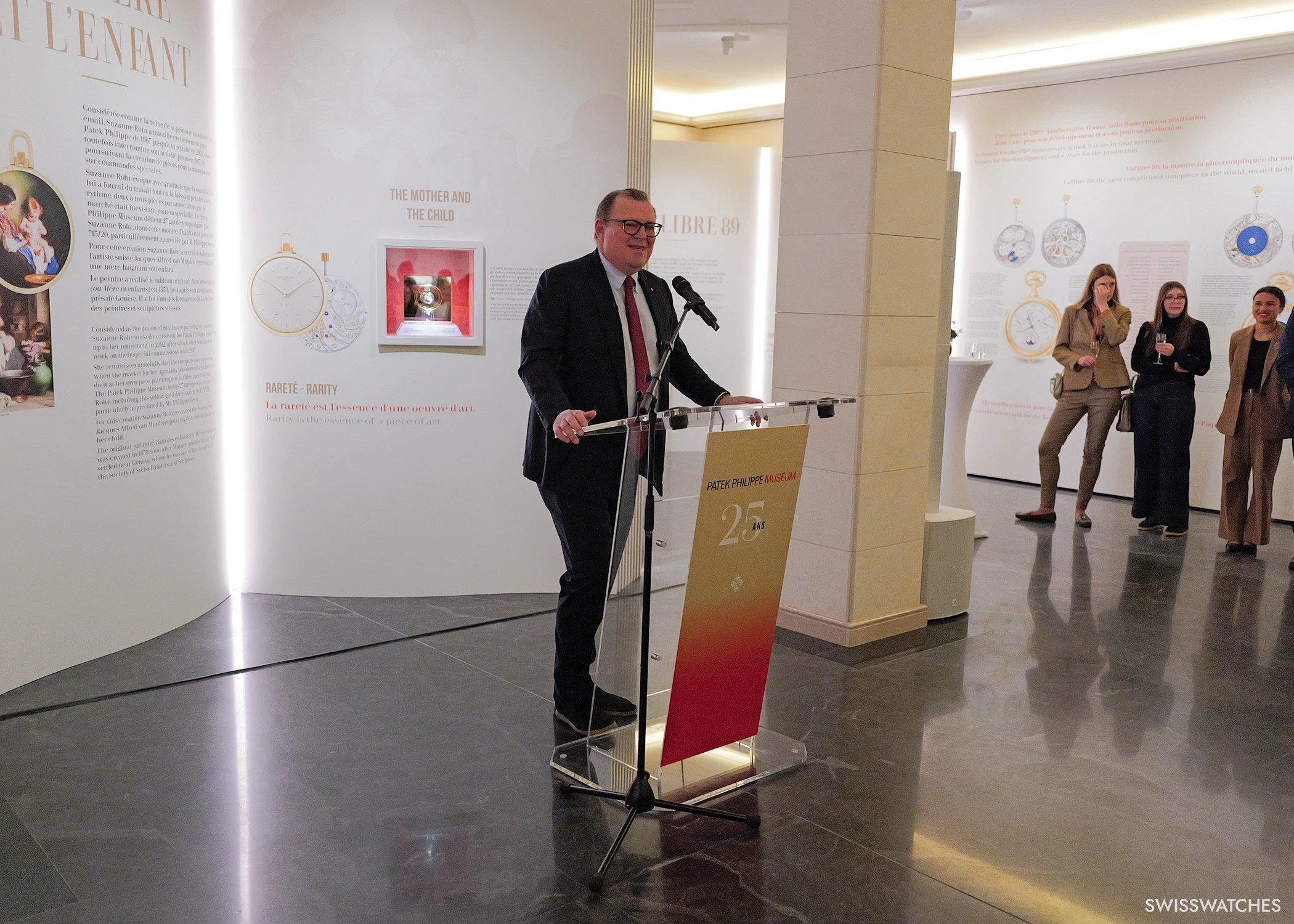
Thierry Stern stands in the entrance hall of Patek Philippe’s own museum in Geneva. He speaks about the extraordinary collection of historical timepieces, how it came into being, and his plans for what has become an integral part of Patek Philippe’s identity. After all, according to the definition of the International Council of Museums, ‘a museum is a not-for-profit, permanent institution in the service of society that researches, collects, conserves, interprets and exhibits tangible and intangible heritage.’
Yet Stern, the current president and owner of Patek Philippe, also openly admits how strange it feels that his father is unable to join him in celebrating the 25th anniversary this evening: ‘After all, he created this beautiful place.’
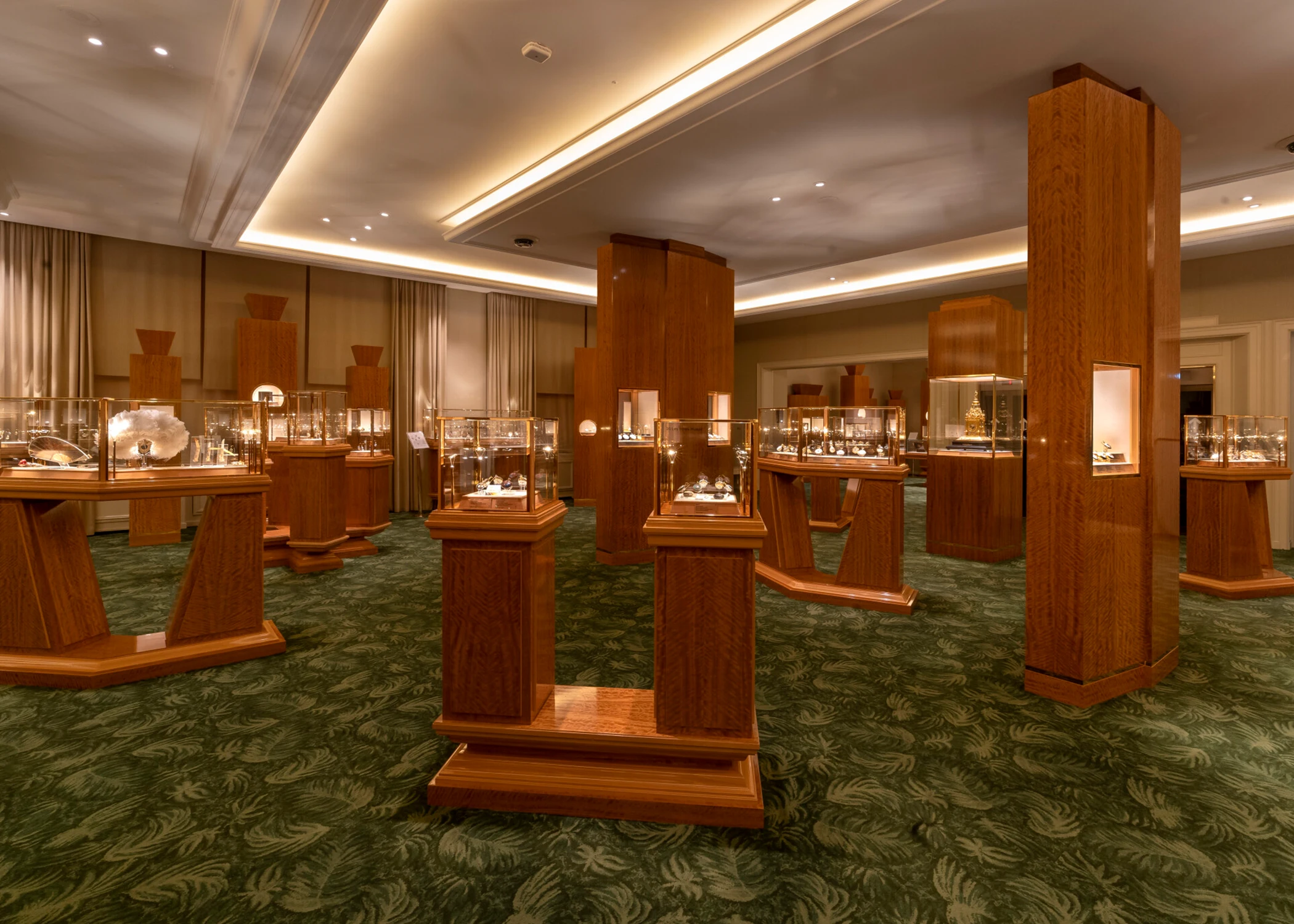
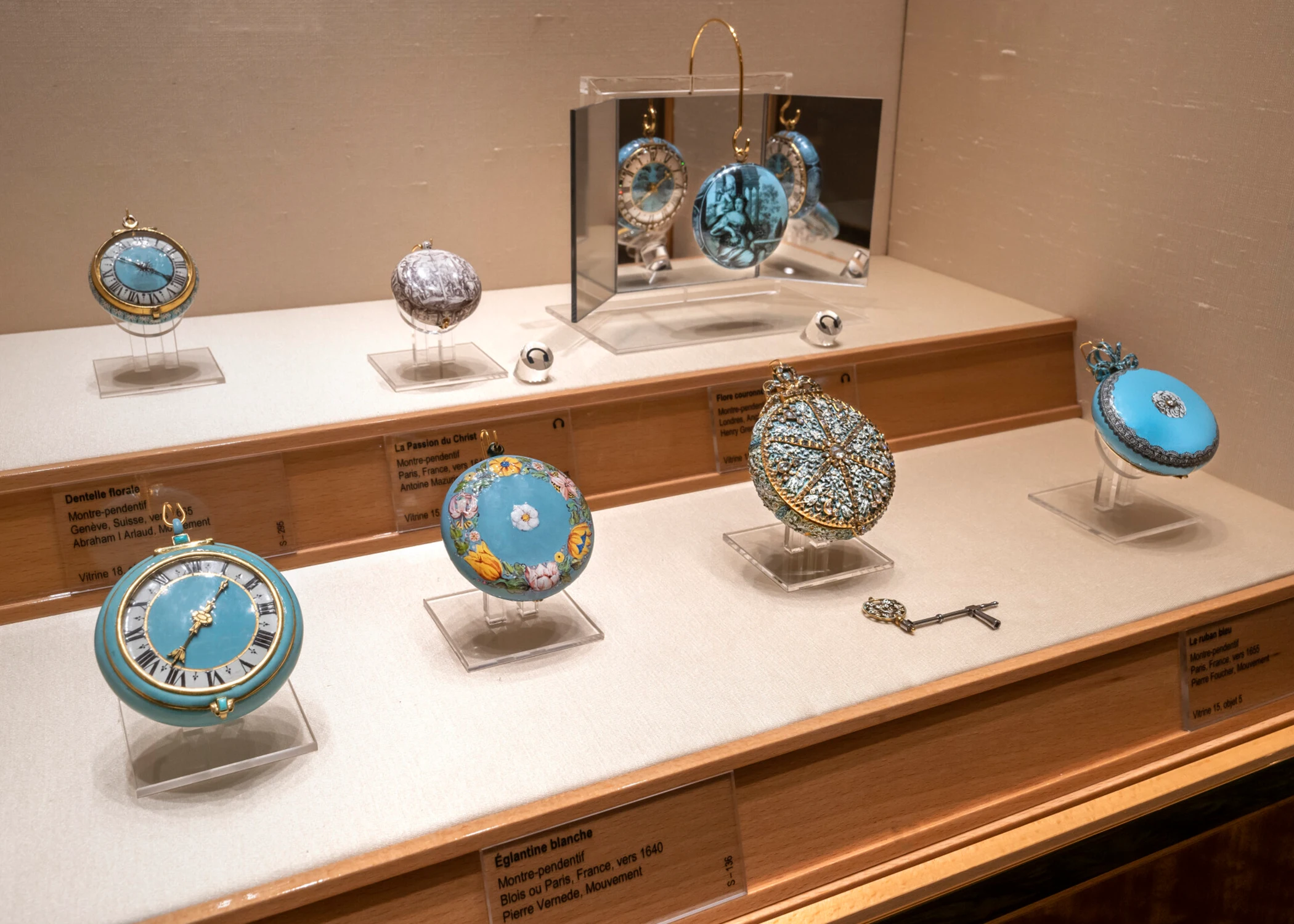
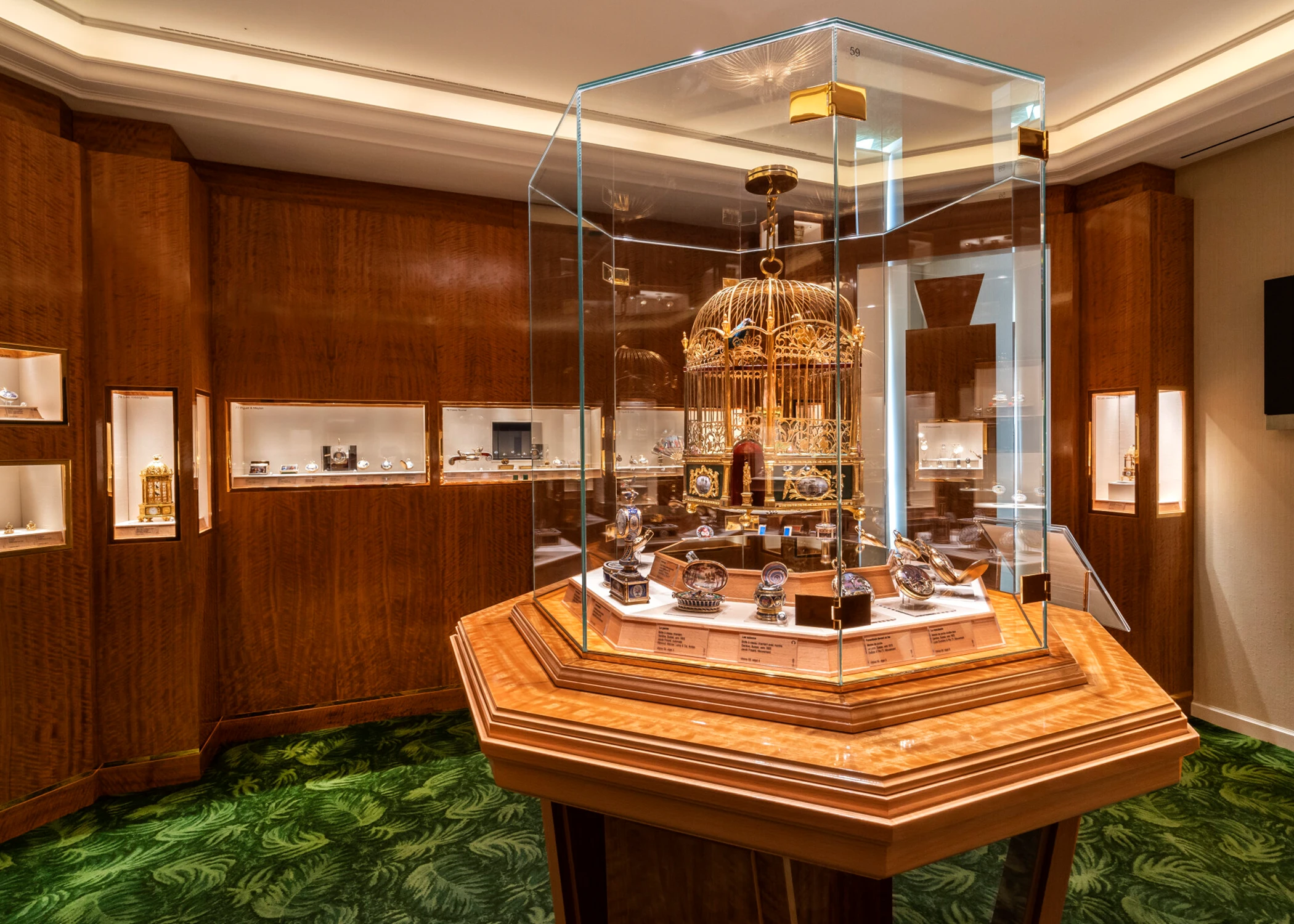
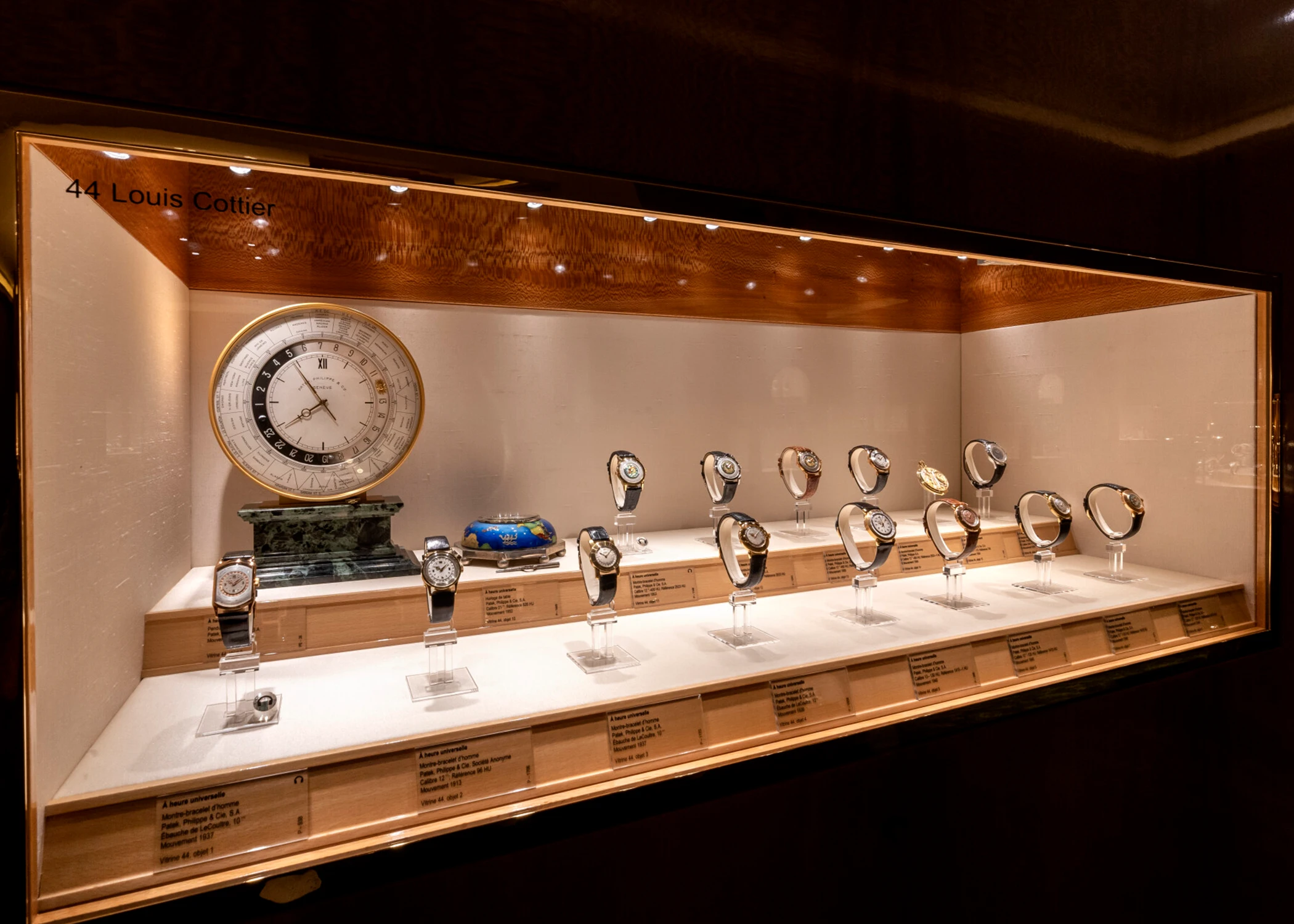
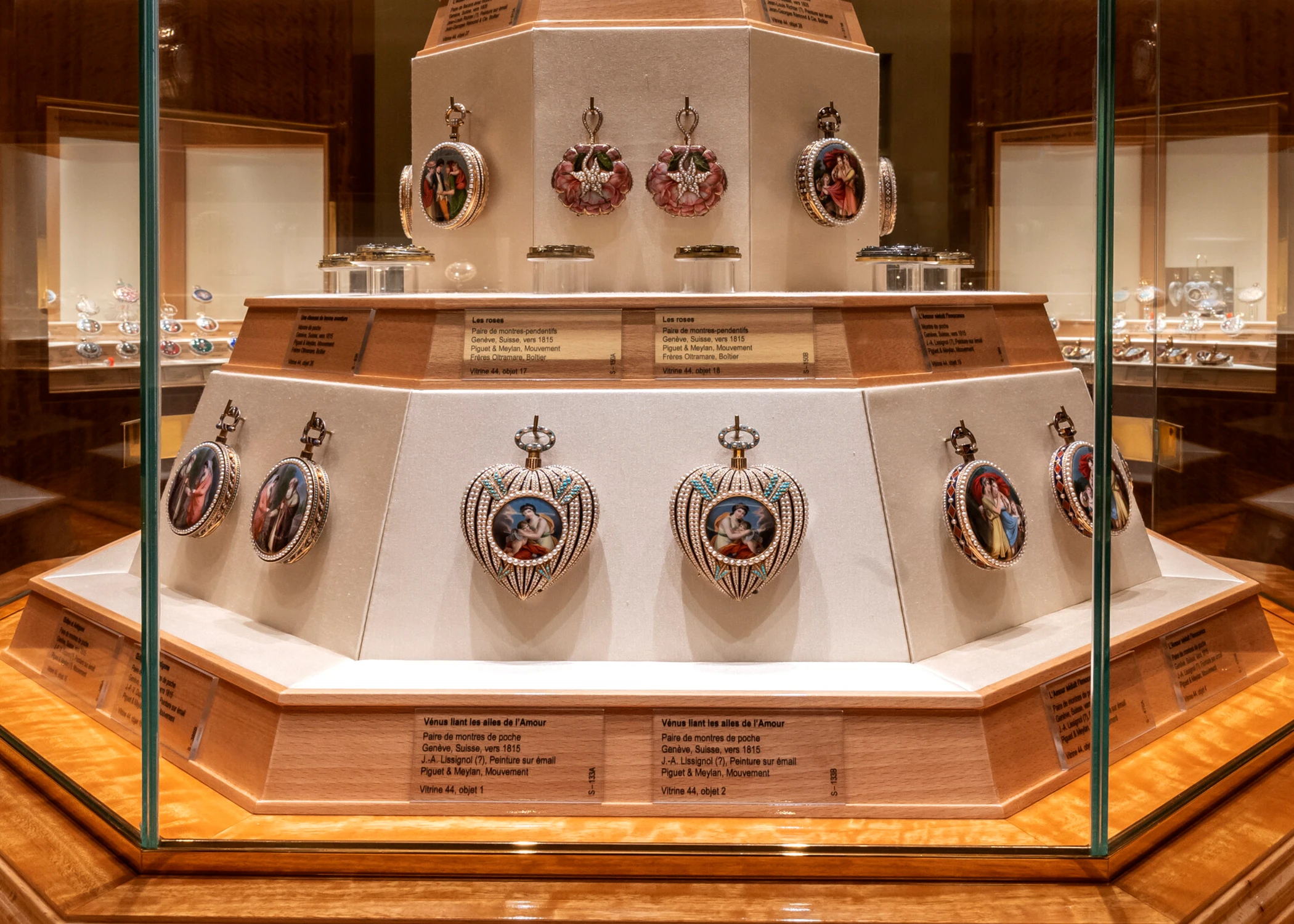
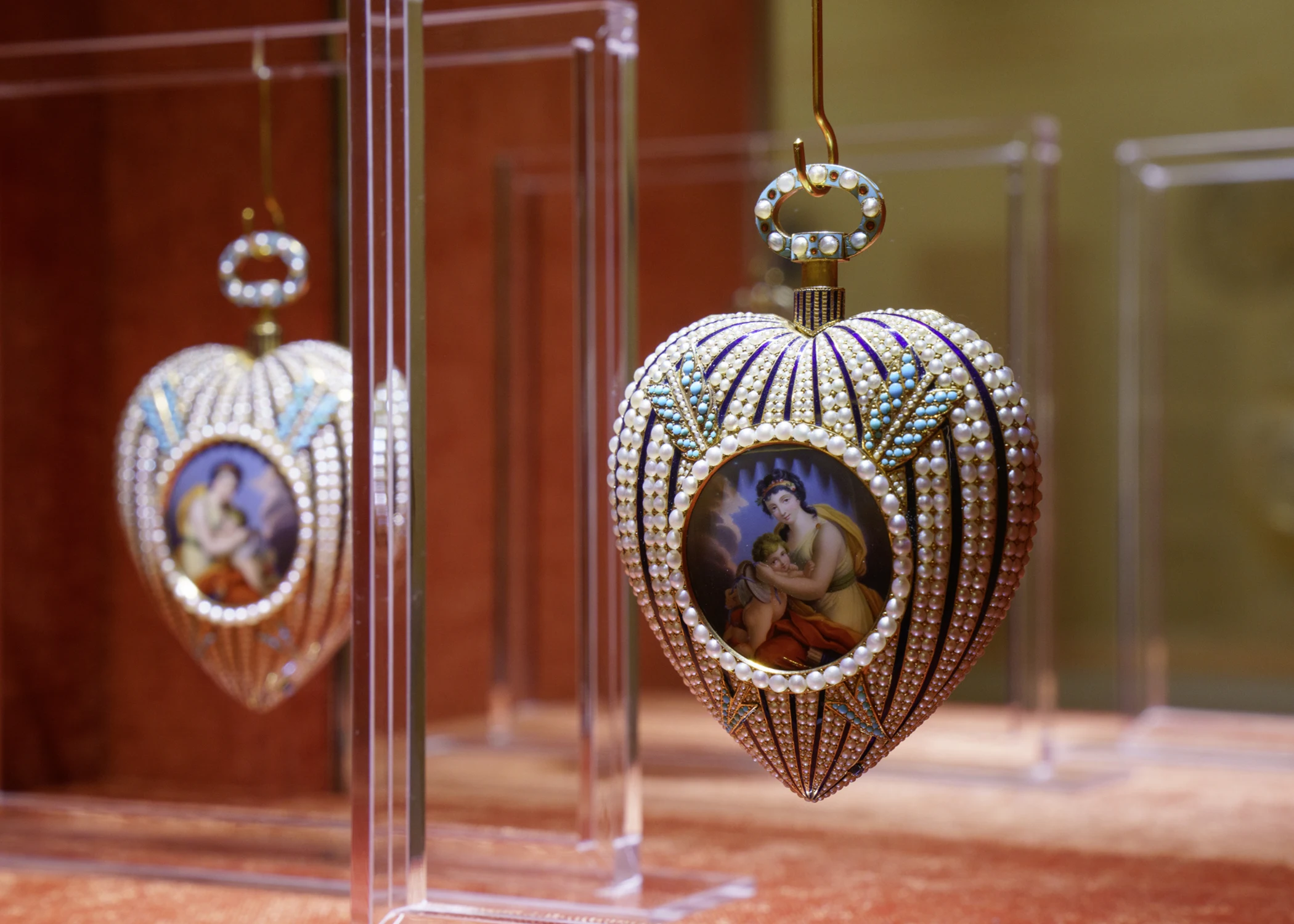
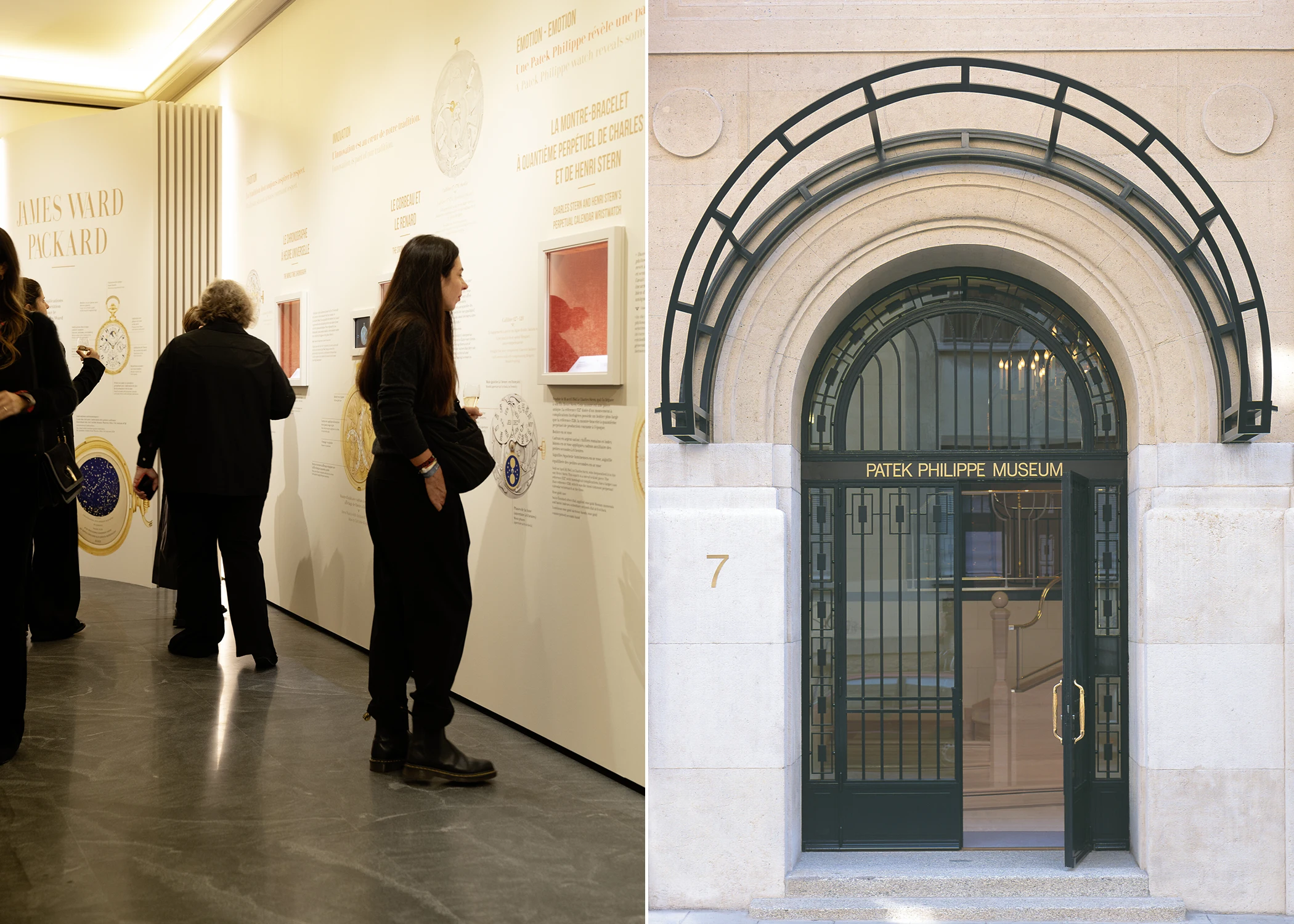
Philippe Stern passed away this summer at the age of 86, and the Patek Philippe Museum, with its 2,500 exhibits, forms part of his extensive life’s work. On Geneva’s Rue des Vieux-Grenadiers, watch enthusiasts can trace the history of watchmaking through countless exhibits, ranging from enamelled pocket watches bearing portraits of the noblemen who commissioned them to historically significant models and movements. Nowhere are Patek Philippe’s achievements documented more comprehensively, yet the museum is not solely dedicated to the history of the manufacture, but also showcases the work of other watchmakers.
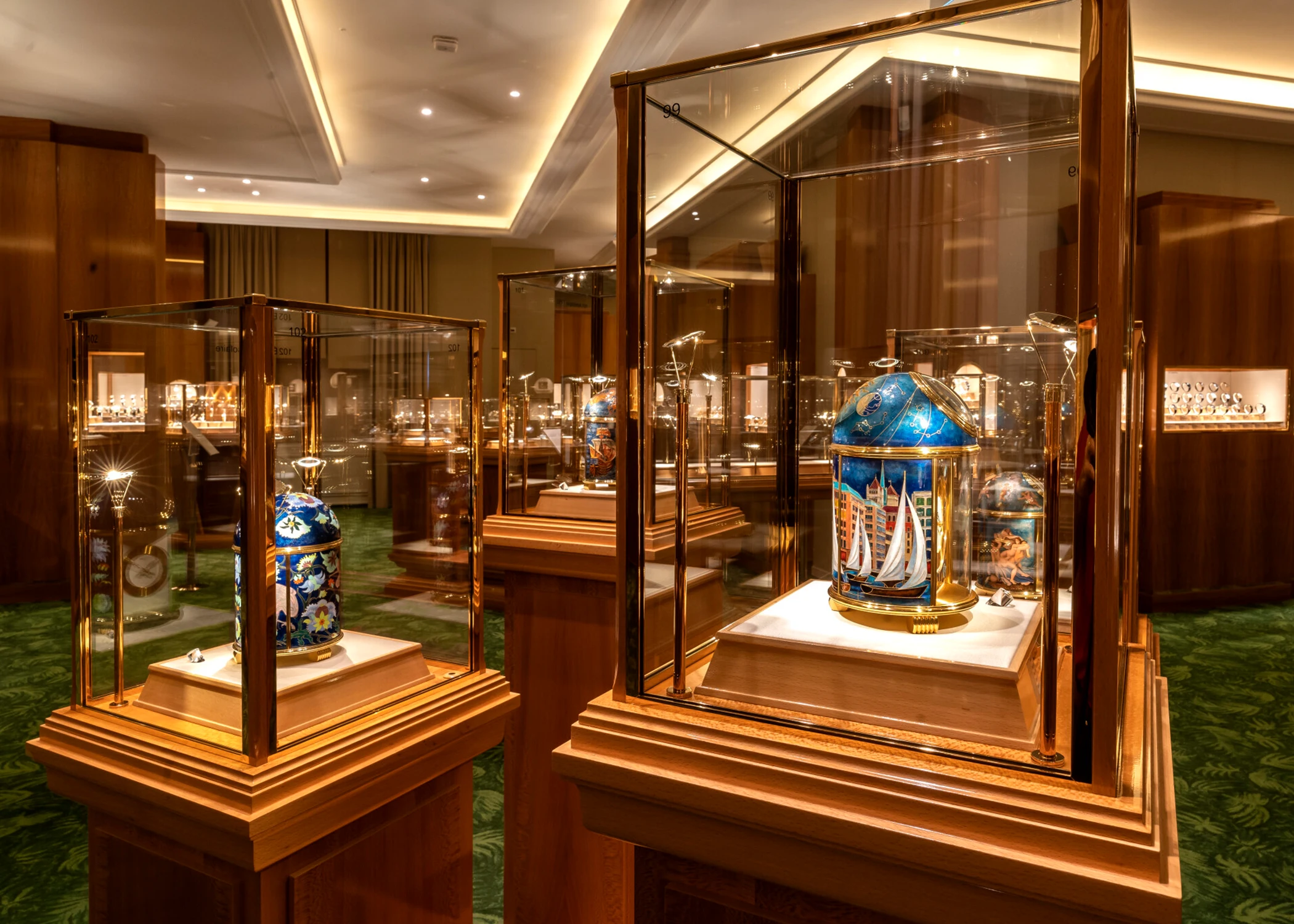
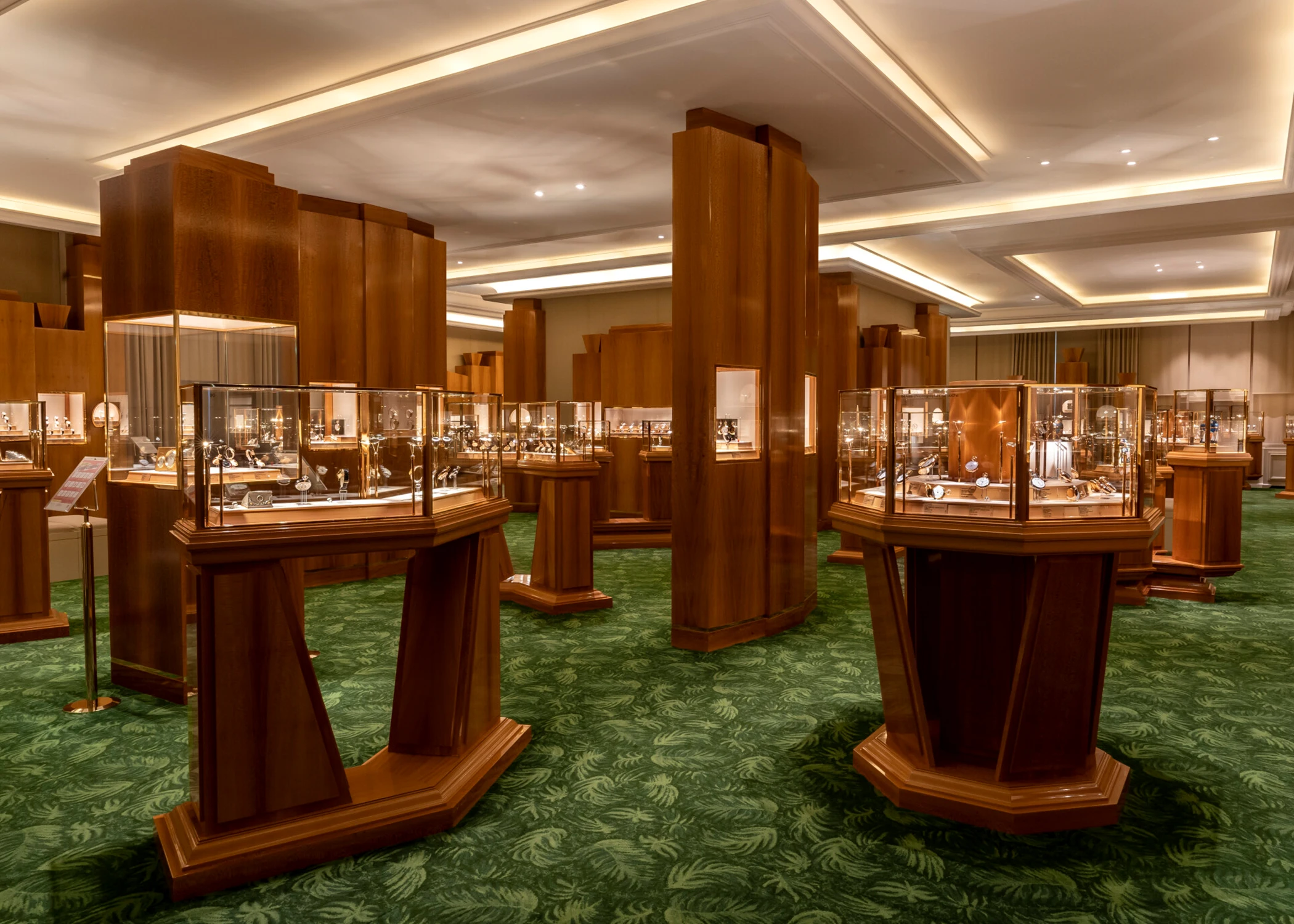
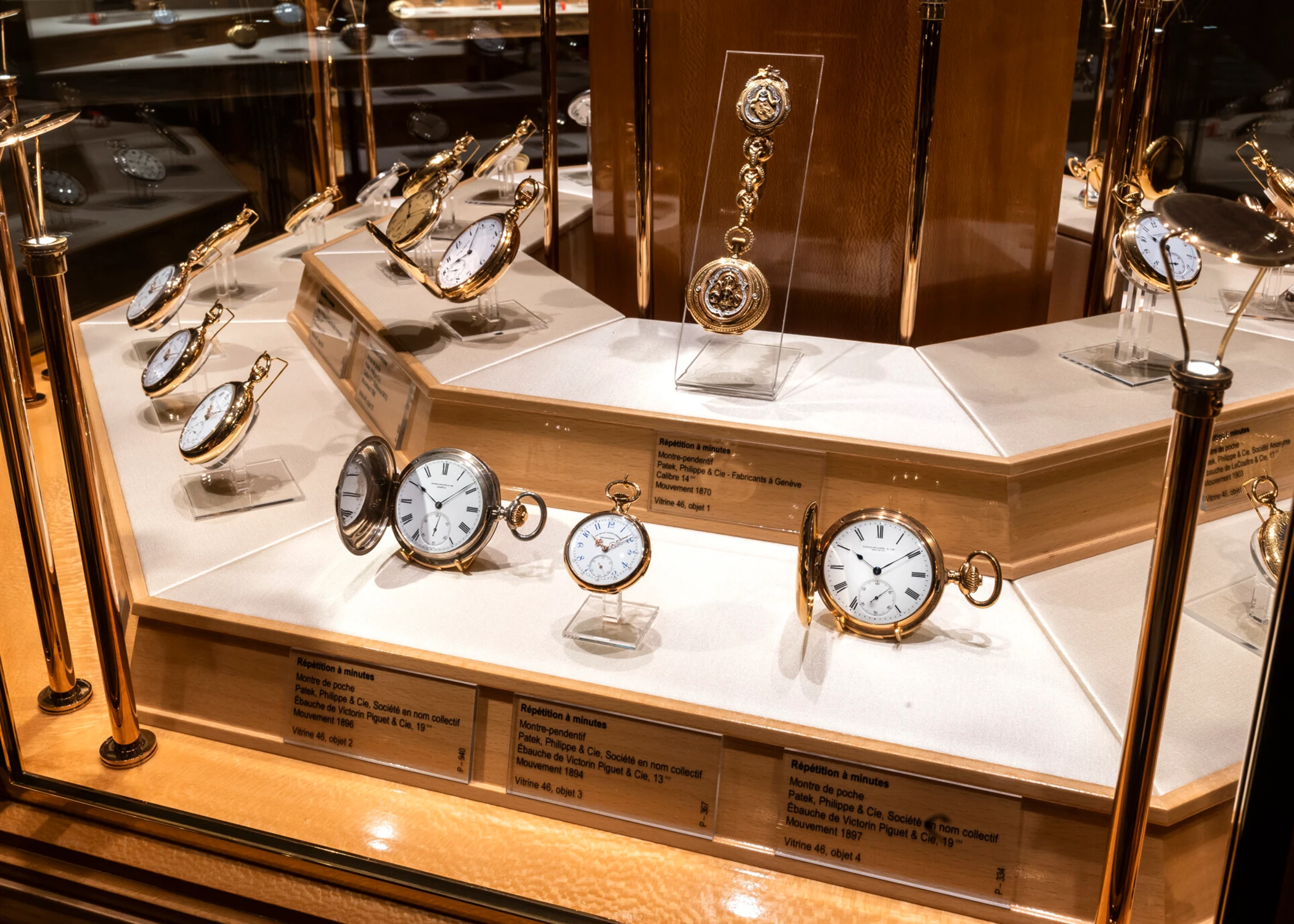
Philippe Stern began collecting historical watches at a young age, and it was this passion for collecting that ultimately led to the opening of the museum in 2001. Even at a time when mechanical watches were far less popular than they are today, Stern senior was convinced of the cultural and historical significance of these early timepieces. Back then, the family-owned company had nowhere near the financial resources it has today, although building a collection in the 1980s and 1990s was considerably less expensive. As Thierry Stern recalled in his opening address for the new exhibition: ‘In the past, we also missed out on some important pieces. My father would say, “Do you see this model? In 1985, I could have bought it for $17,000 – today, it’s worth $15 million!”’
Today, Stern could presumably acquire just about any watch in the world should he wish to do so. At the same time, the family-owned company’s collection already represents an unparalleled treasure, the significance of which extends far beyond the number of zeros in its monetary valuation. The museum demonstrates why watchmaking continues to fascinate us today – and why it held that very same power hundreds of years ago.
It is no secret, however, that the very word MUSEUM is enough to put quite a few people off. Too boring, too old-fashioned, too backwards-looking. Yet in watchmaking – an industry that largely defines and presents itself through its rich history – a museum of this kind is more than just an exhibition space and a cultural institution. It is also a tool that can support the manufacture in its day-to-day business. Thierry Stern therefore wants to place it even more firmly at the heart of the company’s communications. He is aware that, particularly among younger people, Patek Philippe is a familiar name as a watchmaker and the brand is held in high esteem. Yet few, when asked, would be able to explain why.
This is something that needs to change. The museum is therefore also featured on the manufacture’s website, new event formats are being planned, and, more broadly, the collection is intended to help convey the creative and technical capabilities of the house more effectively through a wide variety of channels.
A tour of the new exhibition, which runs in Geneva until 31 October 2027, reveals that while the museum team has not entirely departed from the museum’s existing concept, it has skilfully introduced new points of emphasis.
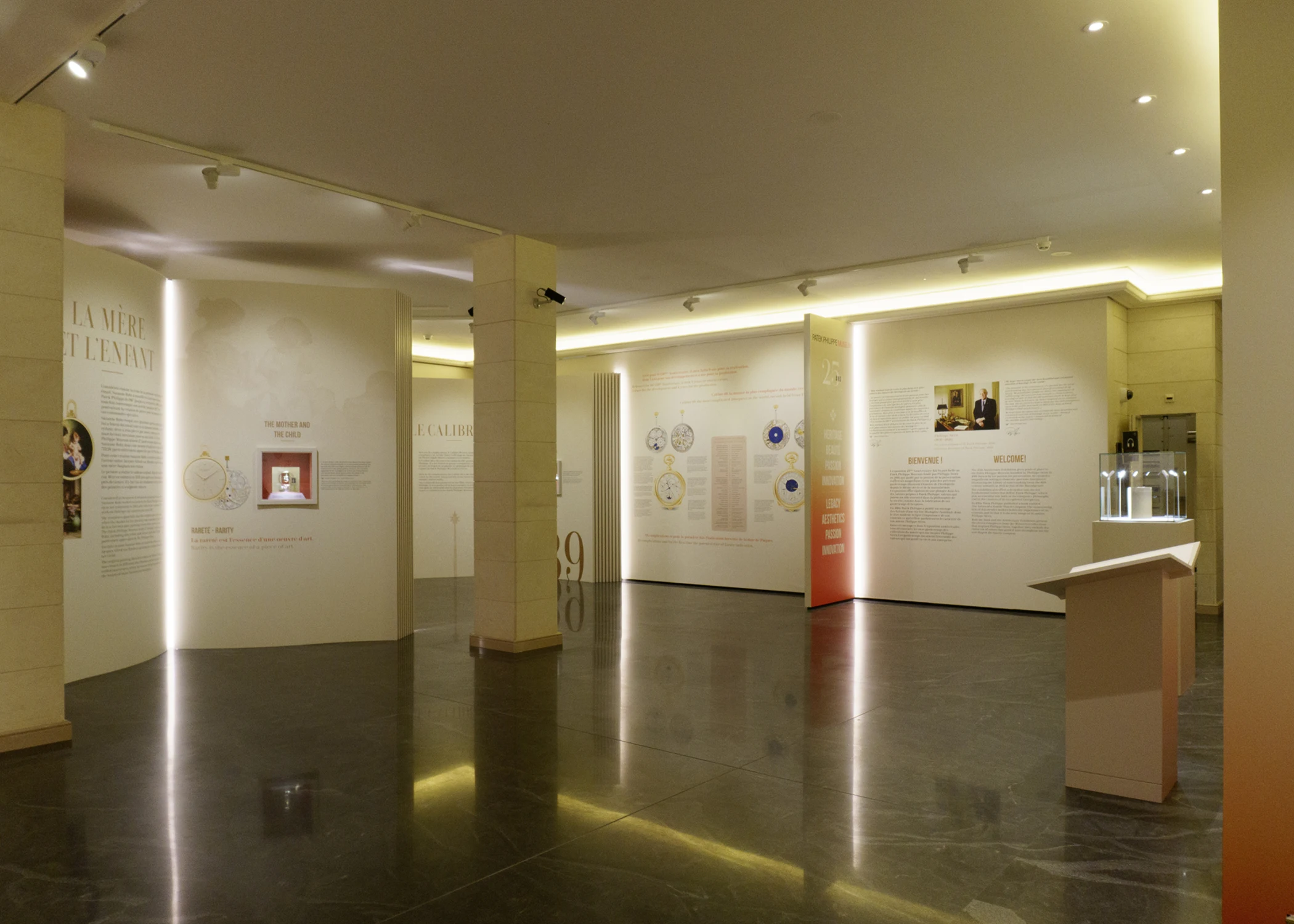
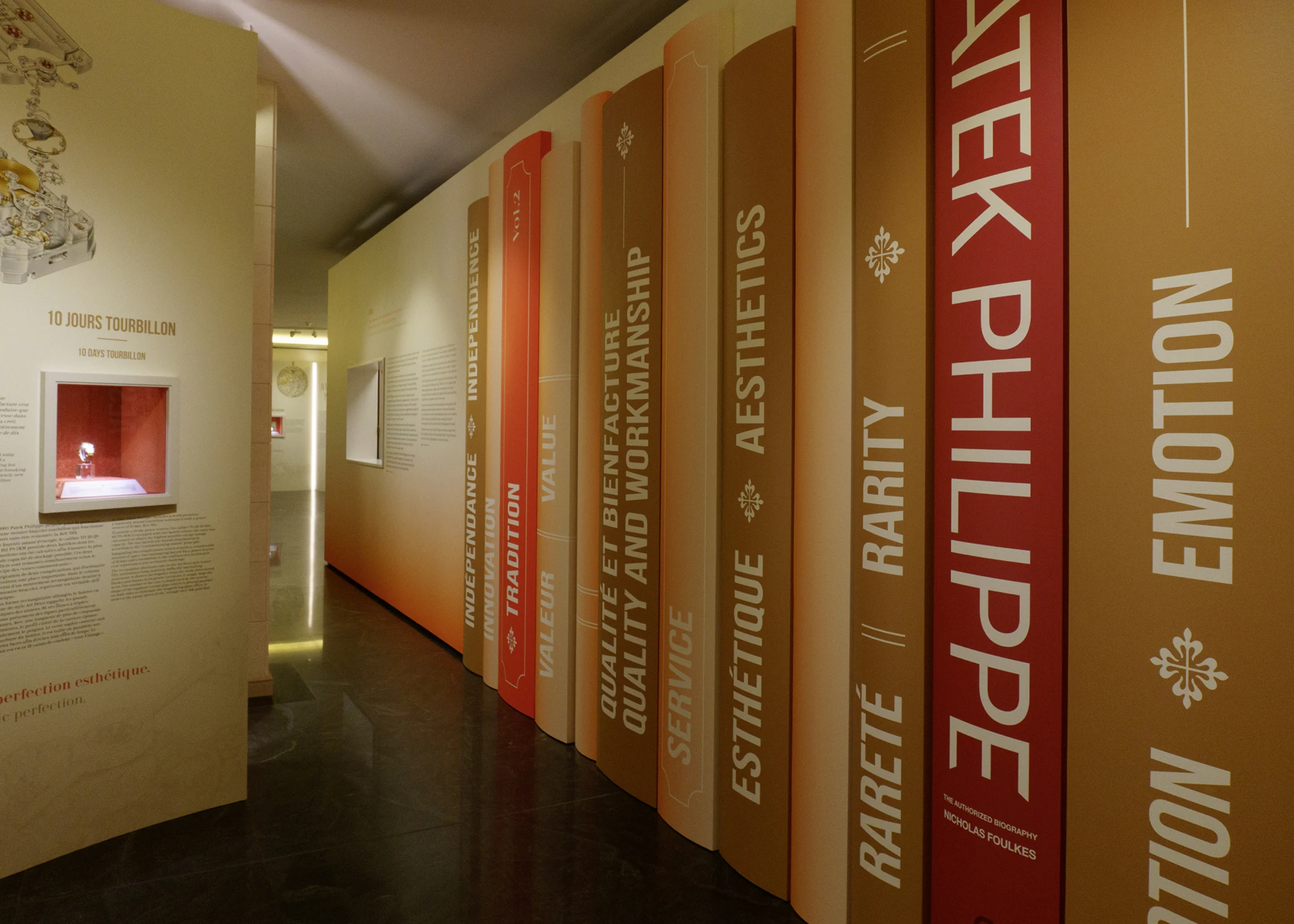
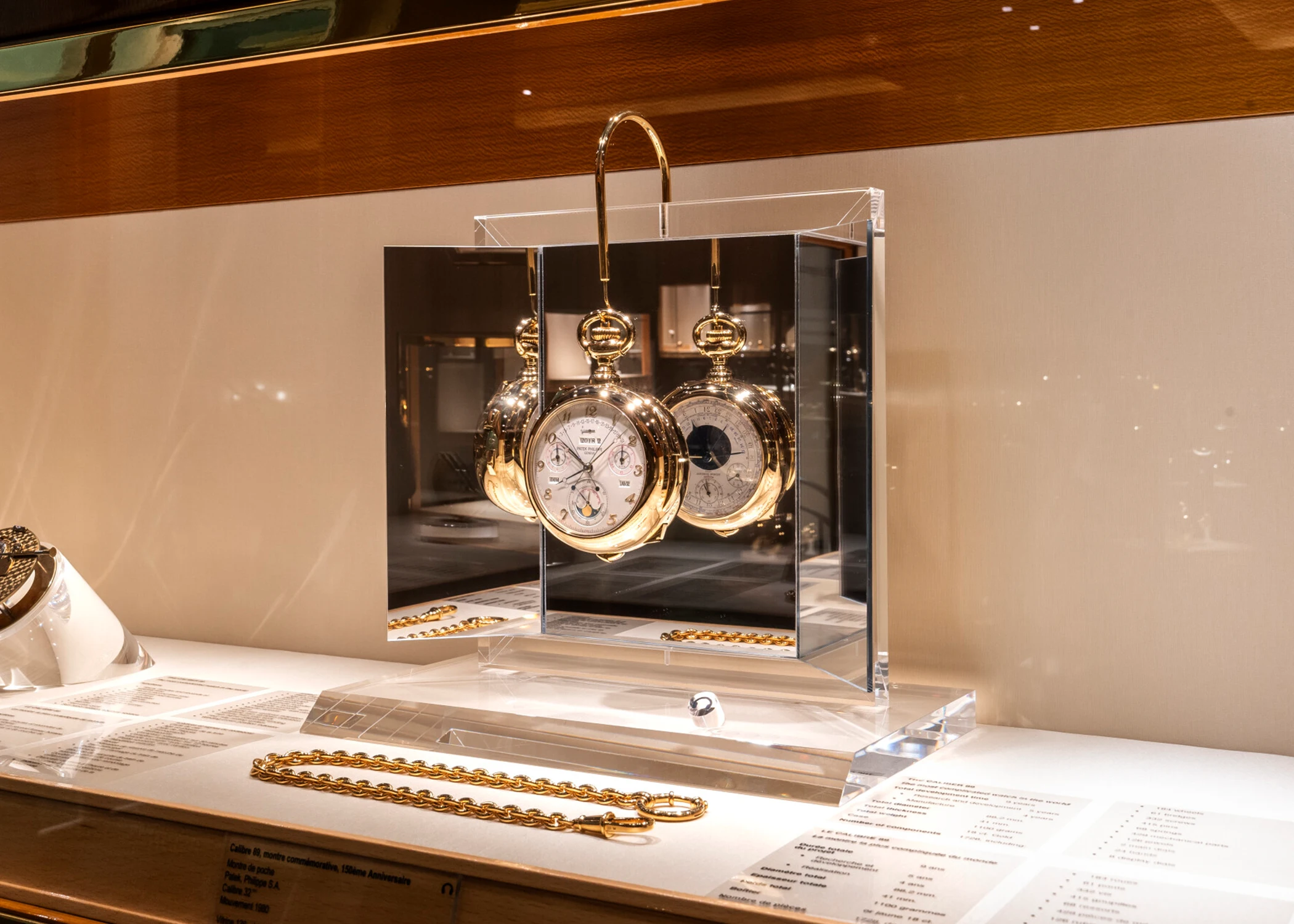
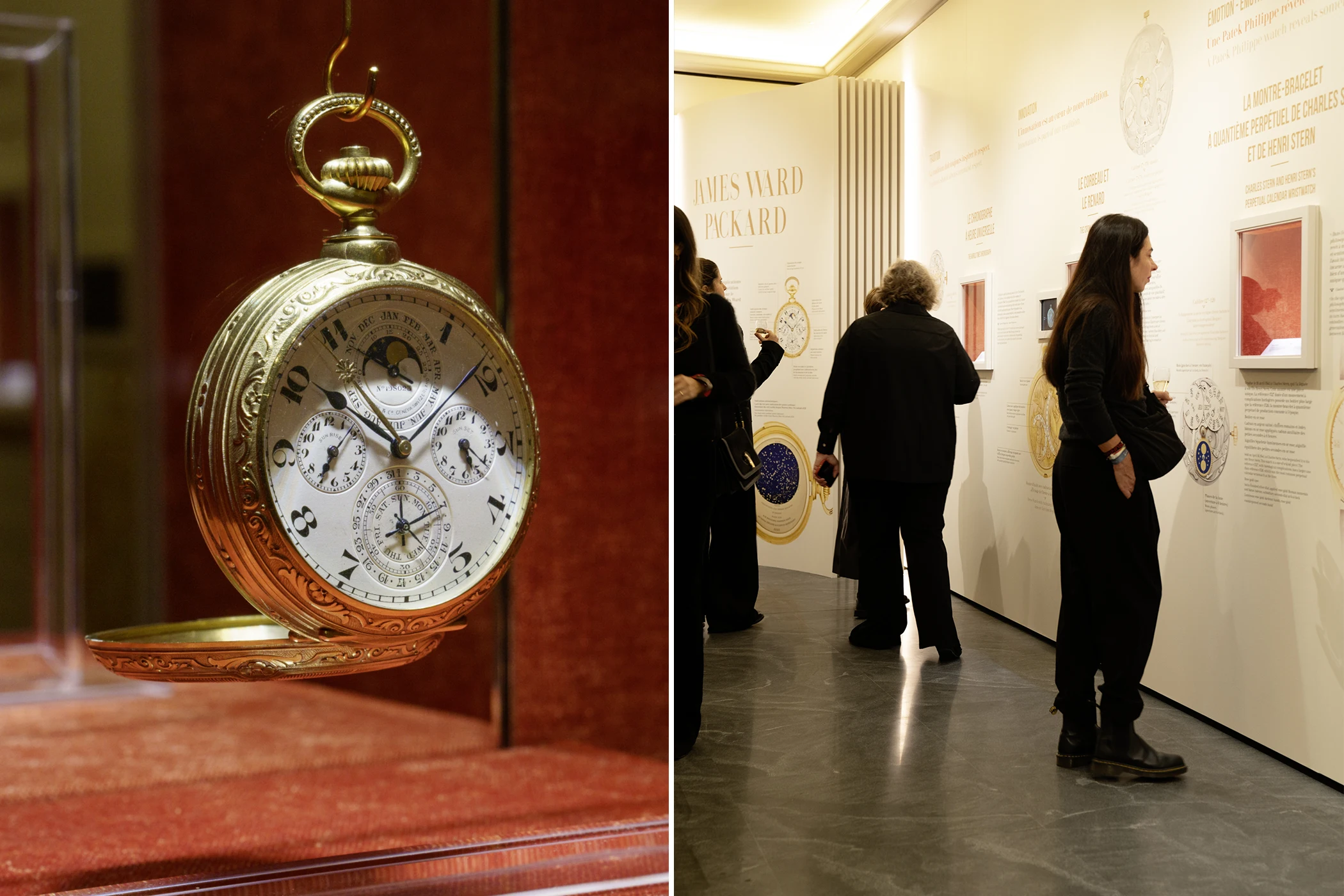
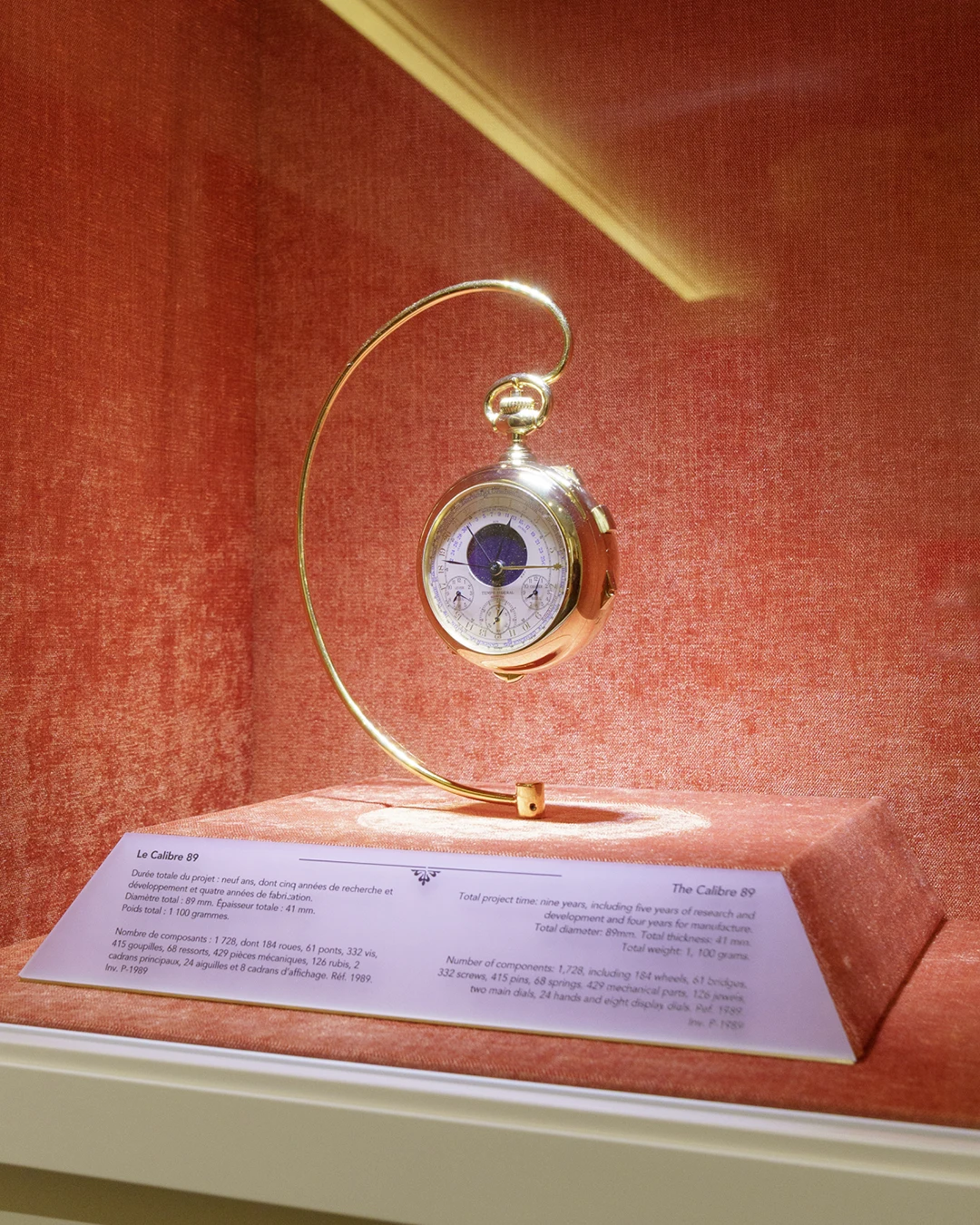
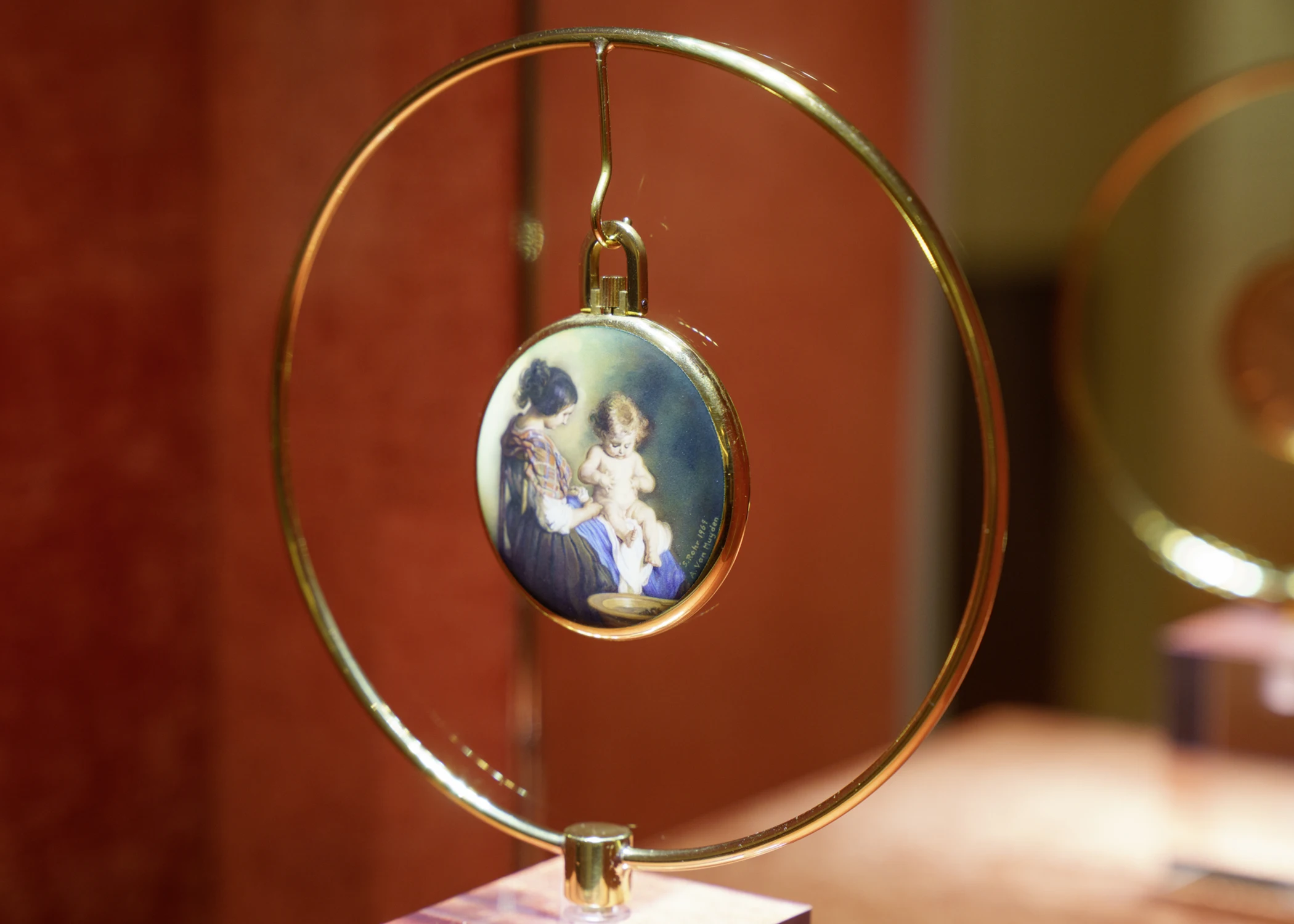
On the ground floor, the exhibition pays tribute to Philippe Stern and the ten company values he helped shape: independence, tradition, innovation, quality and fine workmanship, rarity, value, aesthetics, service, emotion and legacy. Alongside exhibits such as the Calibre 89, the famous James Ward Packard pocket watch and Suzanne Rohr’s enamel masterpiece ‘Mother and Child’ – a miniature rendition of Alfred van Muyden’s painting of the same name, created in 1969 – the exhibition makes use of a spacious display designed to resemble oversized books.
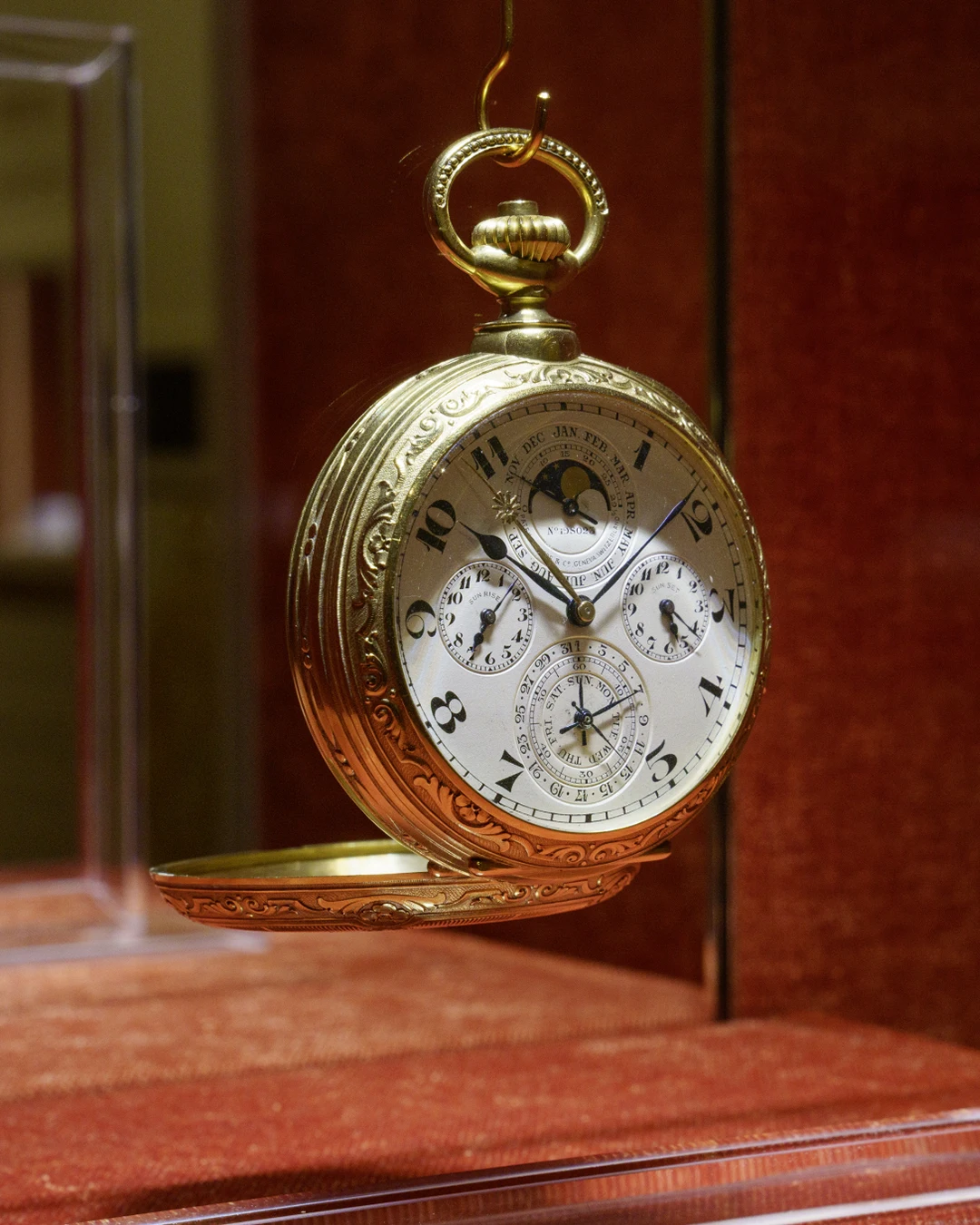
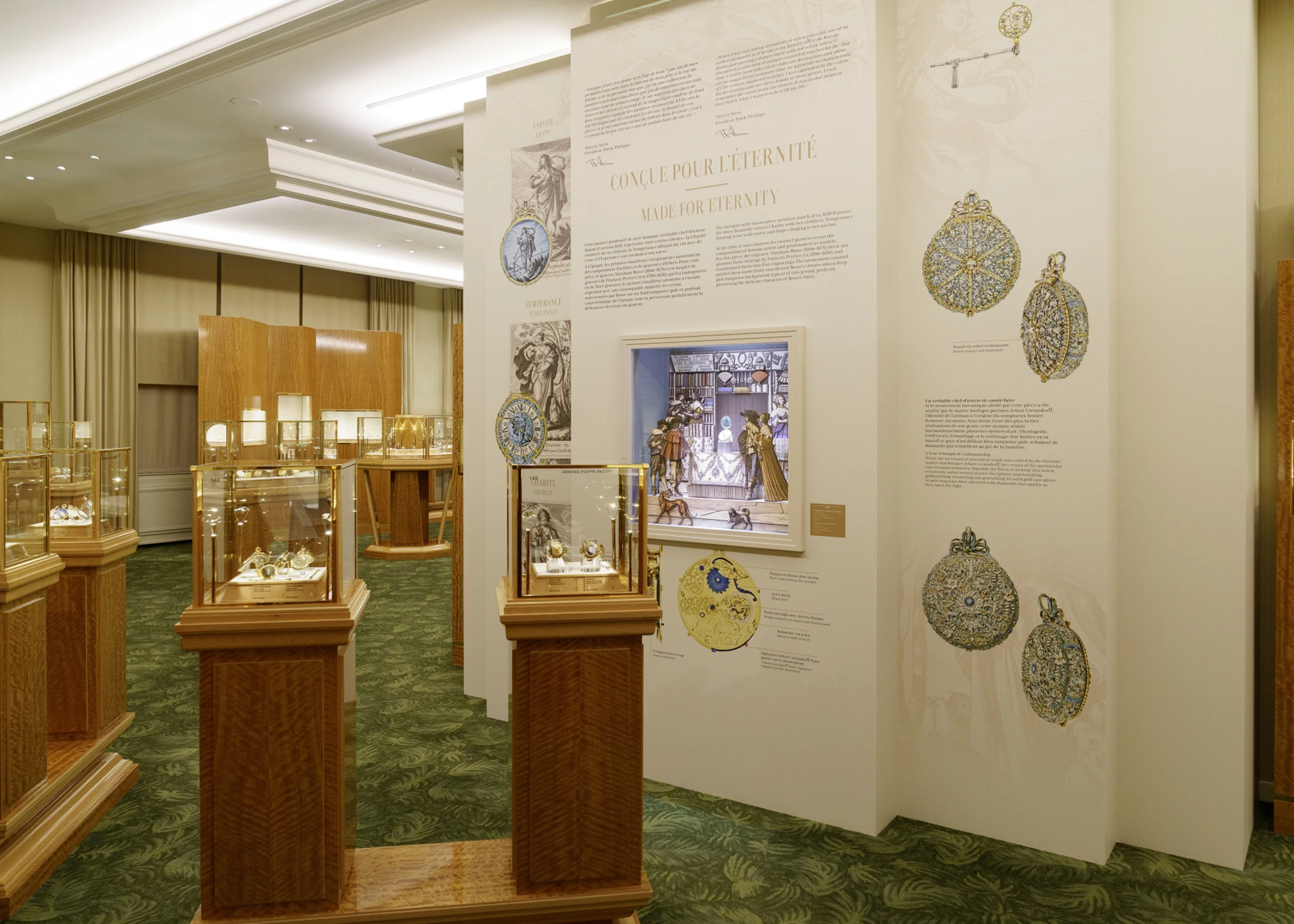
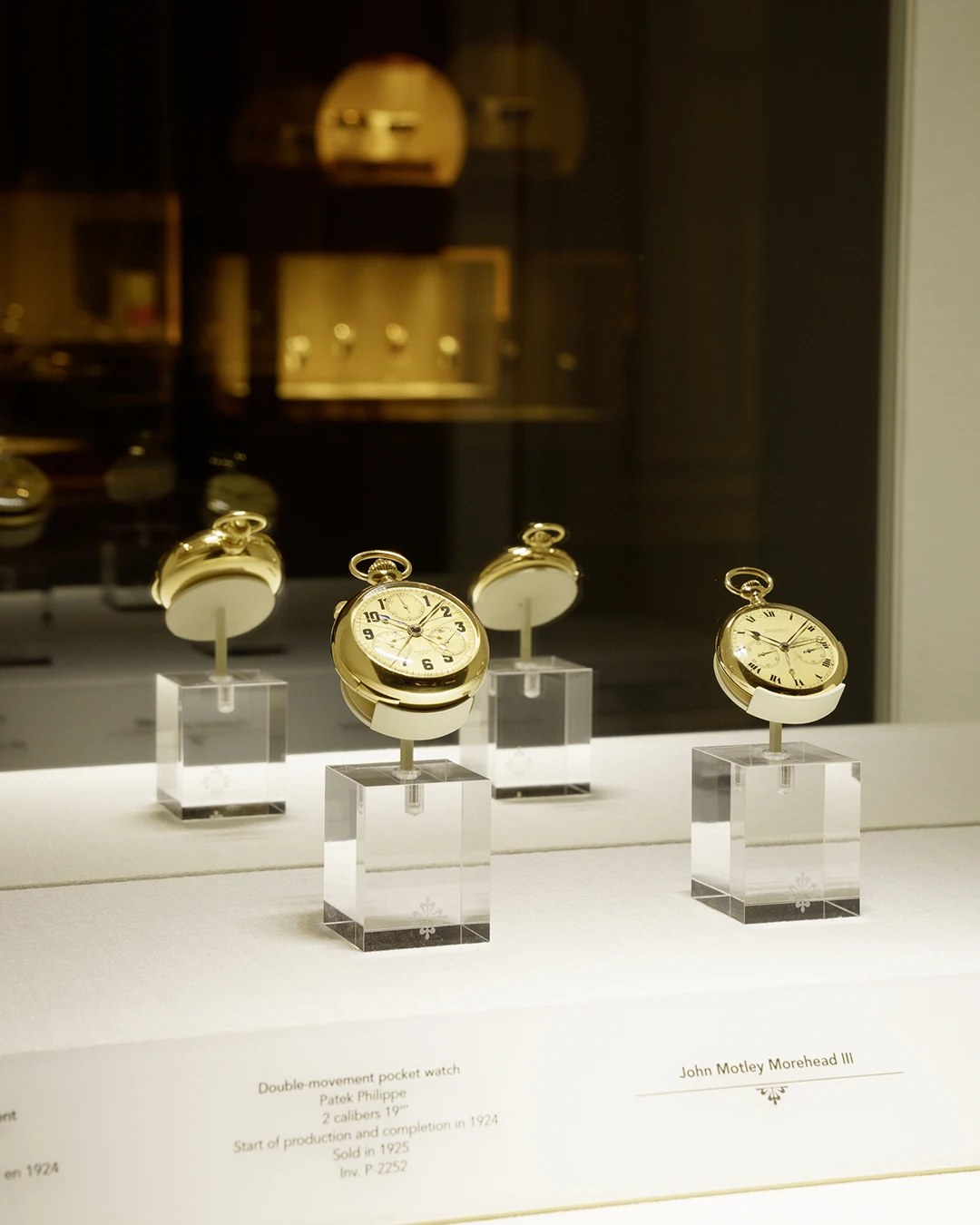
On the upper floors, the exhibition becomes more intricate in its presentation, deliberately placing three particularly remarkable timepieces in the spotlight: the so-called ‘Cremsdorff pocket watch’ dating from 1650, and two models commissioned by the industrialist John Motley Morehead III in the 1920s.
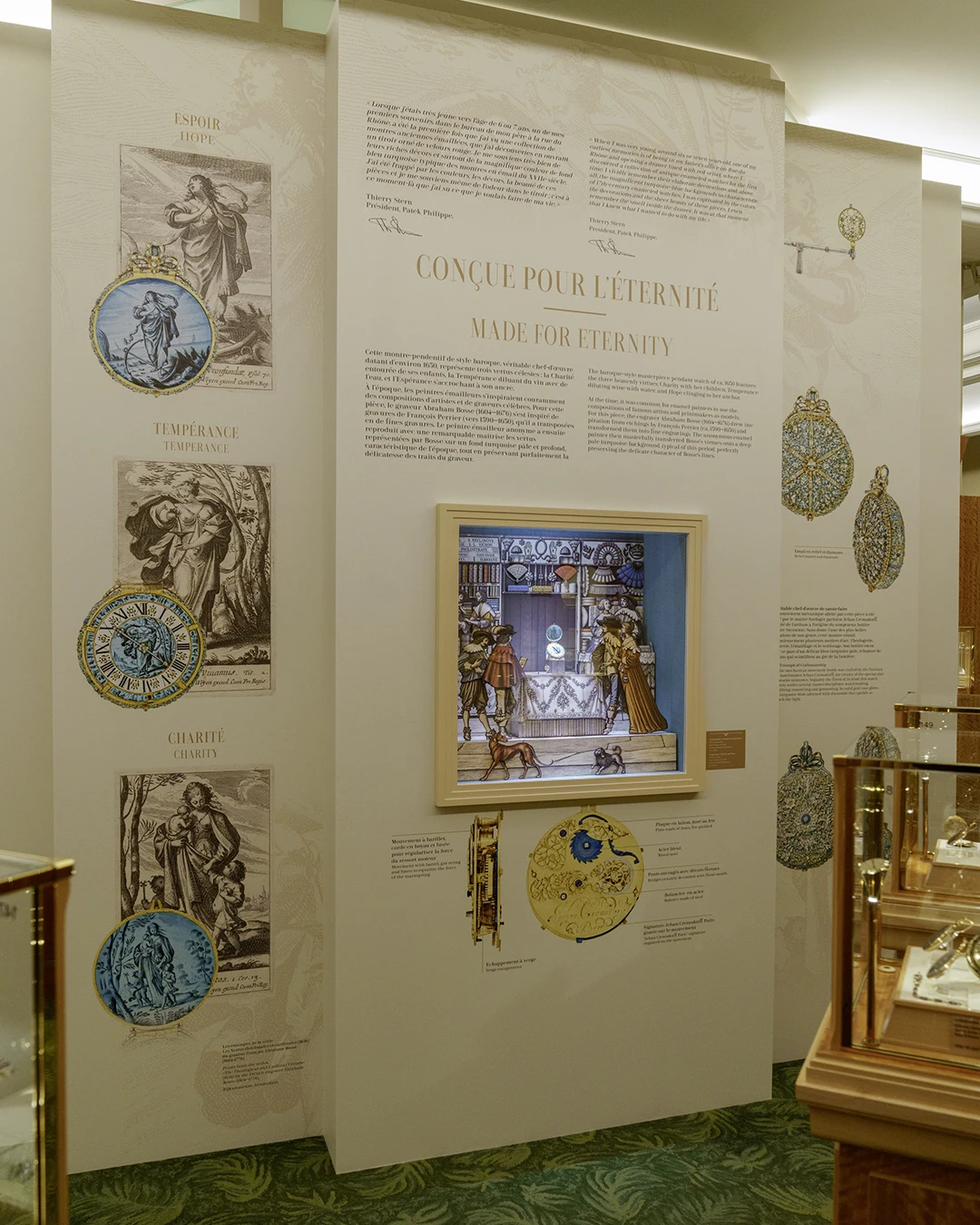
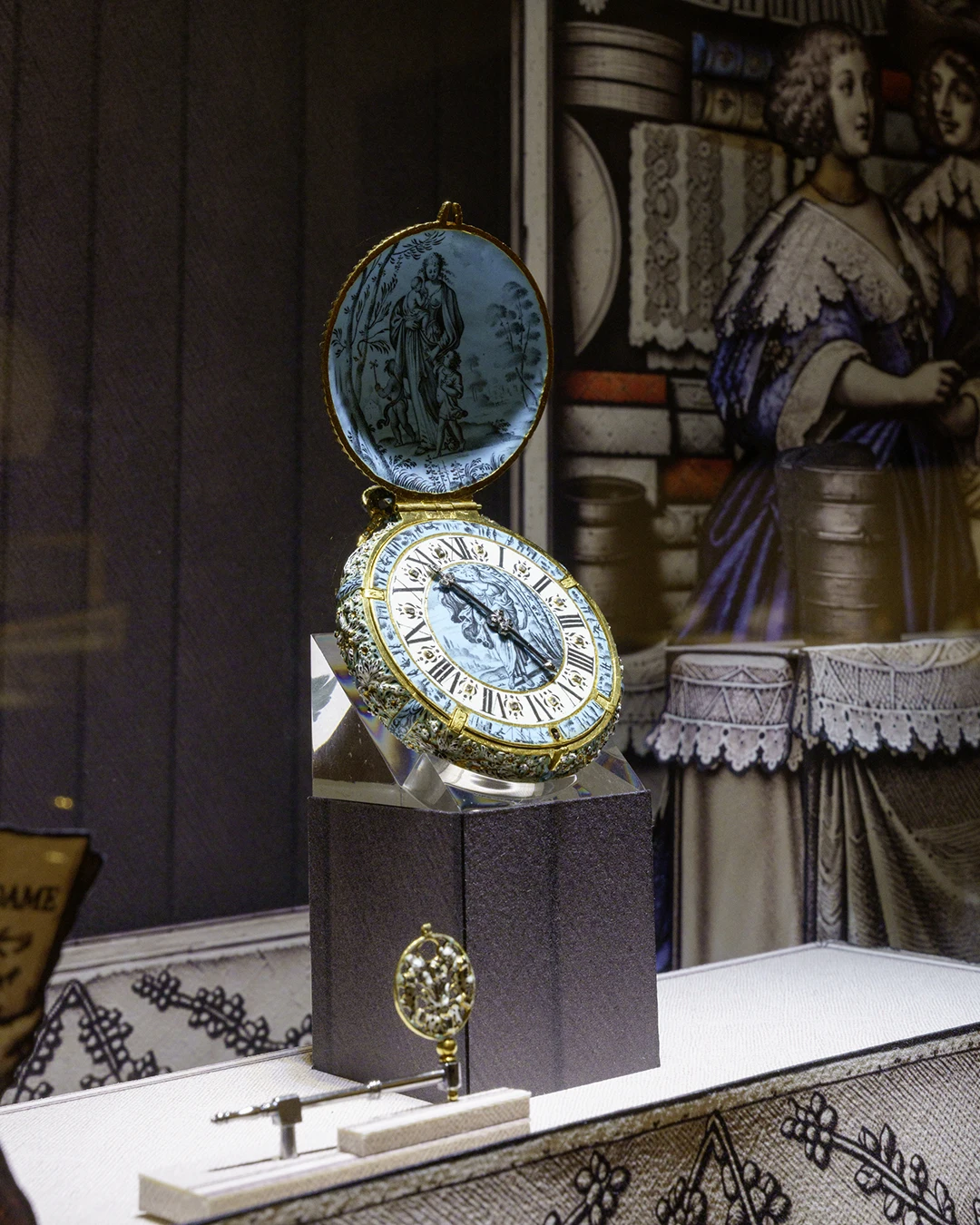
The gold case of the pocket watch created by Jehan Cremsdorff in 17th-century Paris is lavishly set with diamonds, with white floral motifs in relief against a pale blue enamel ground. The decorative motifs on the inside of the watch, meanwhile, depict the three heavenly virtues of charity, temperance and hope. Regarded as one of the finest and best-preserved pocket watches of its era, the timepiece was acquired by the museum at an auction in London in 2019.
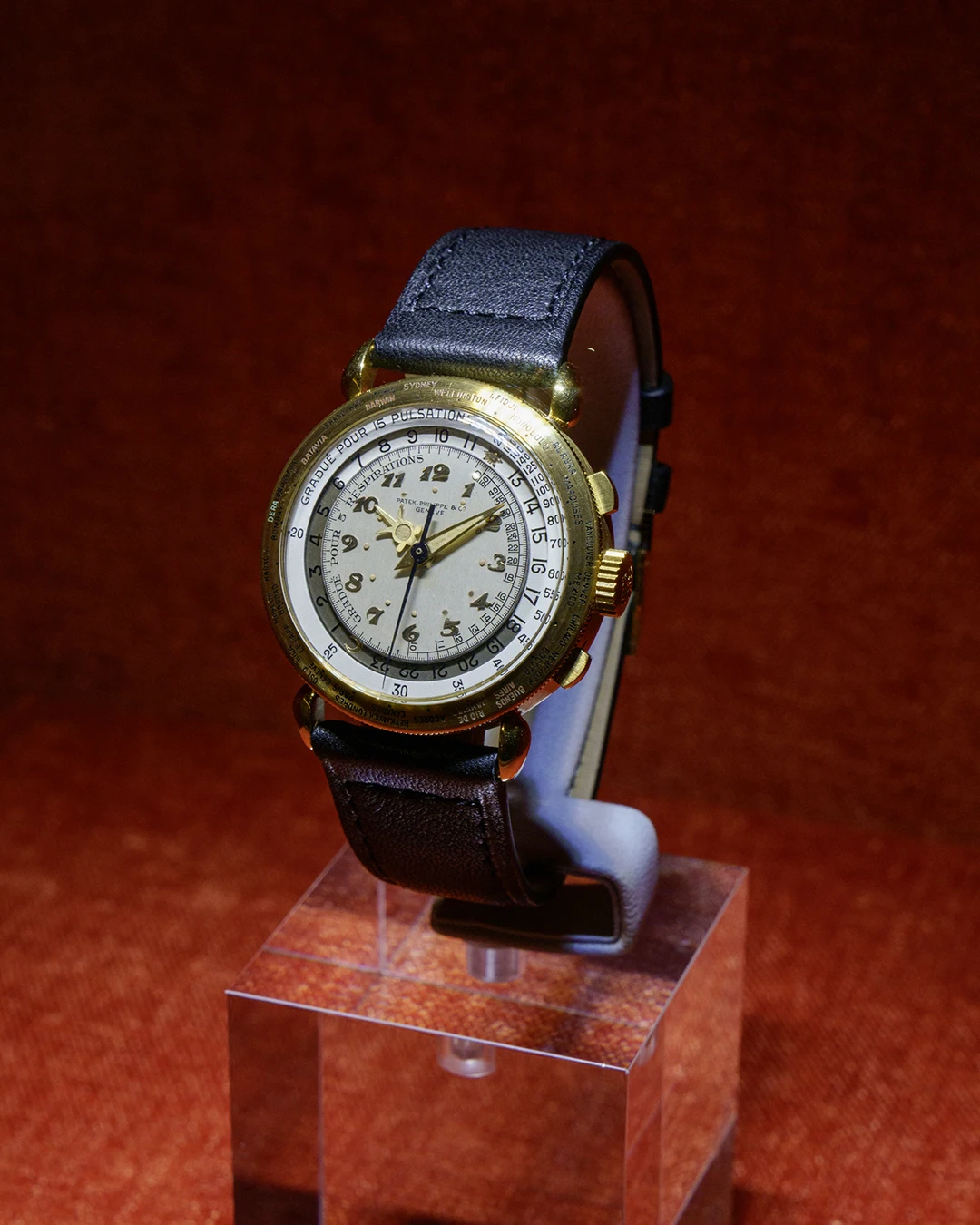
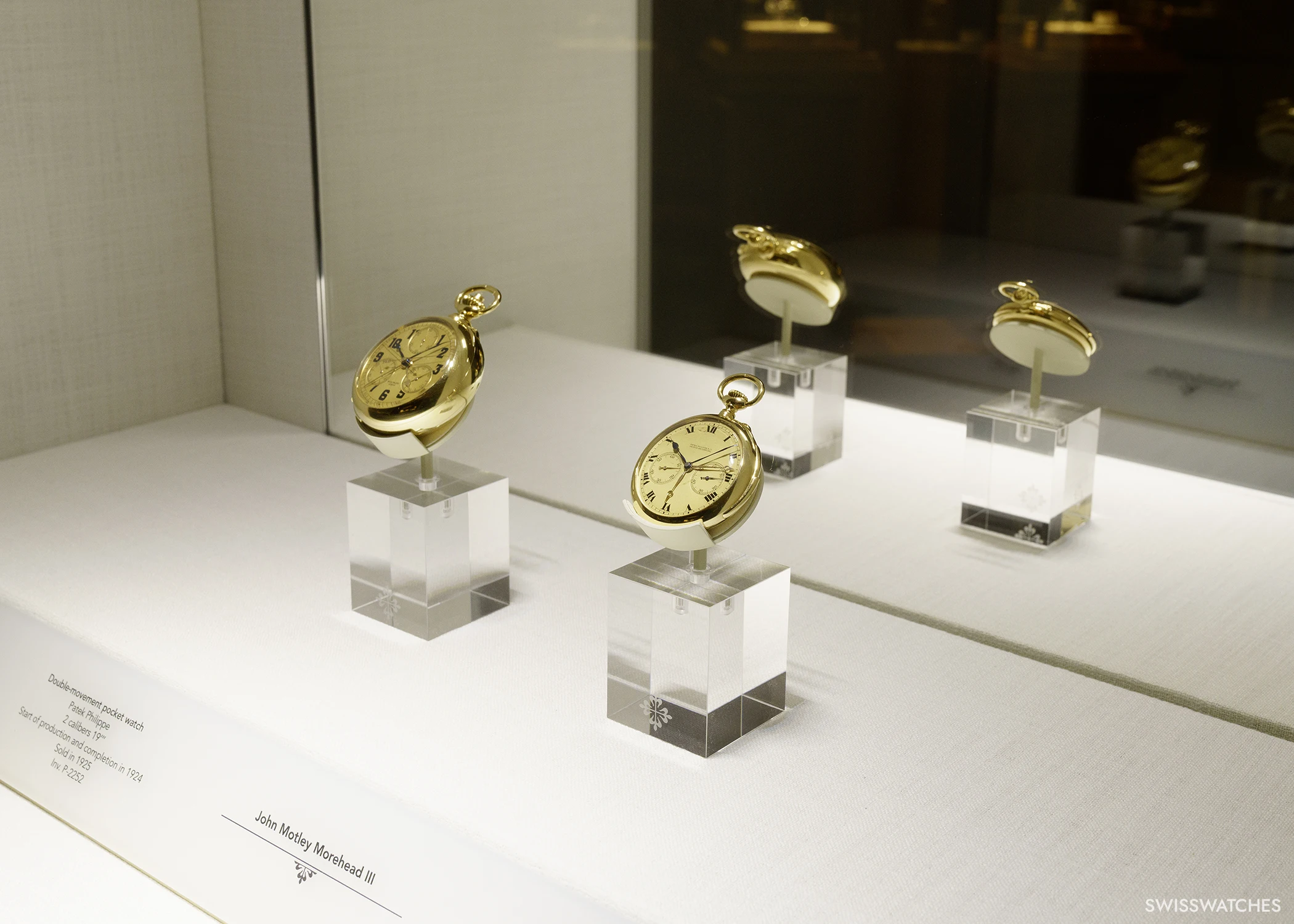
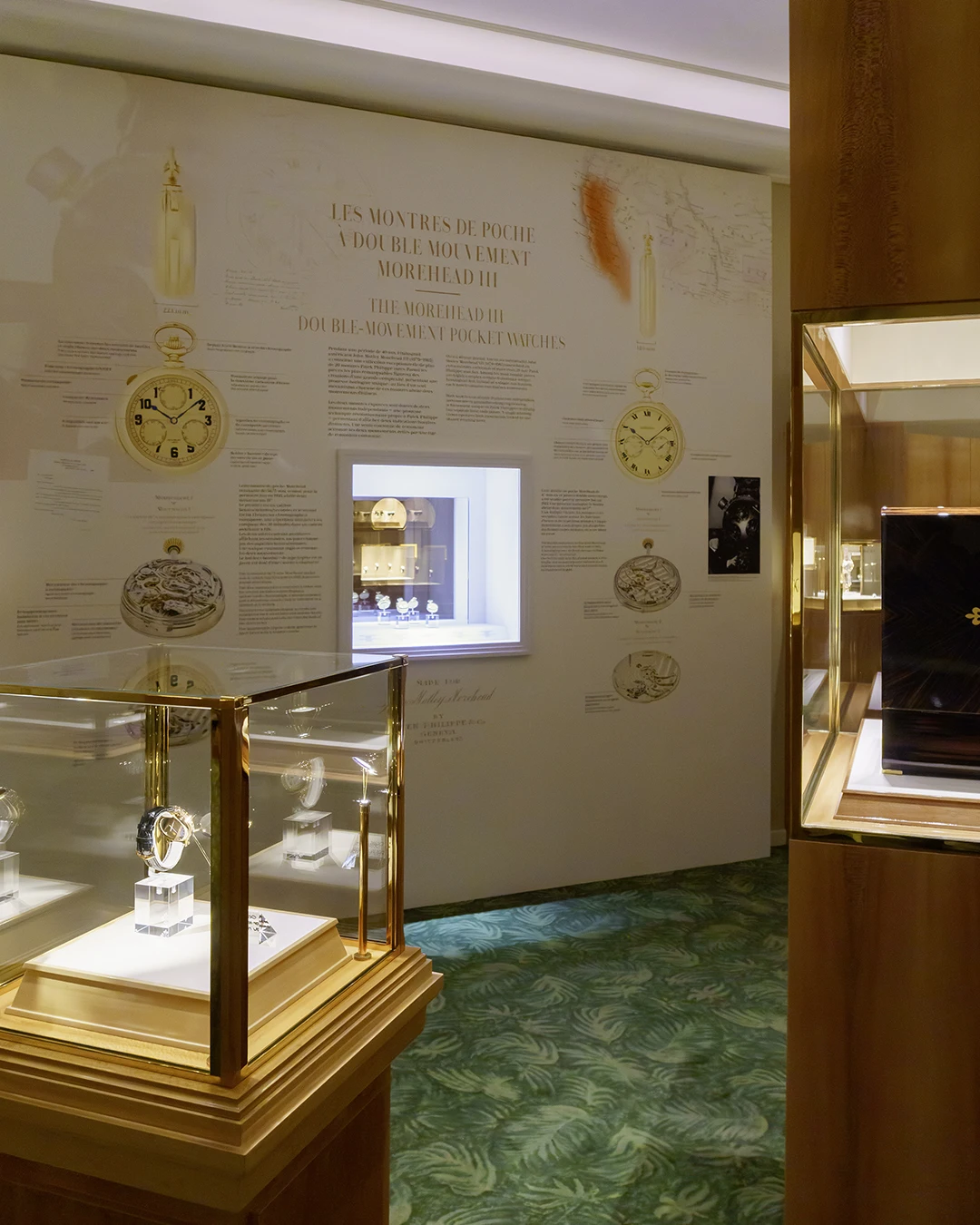
By comparison, the two Morehead pocket watches appear decidedly understated, despite their yellow gold cases and dials. Both watches feature two independently operating movements, allowing them to display two time zones. Both movements are wound via a single crown. The earlier version, dating from 1921, also features a minute repeater, while the version produced in 1924 complements this striking complication with a split-seconds chronograph. Together, these two unique pieces and the accompanying correspondence illustrate how discerning collectors and the manufacture worked together, continually spurring one another on to ever greater achievements.
More than one million visitors have already experienced the museum, and the aim is to ensure that it remains appealing to future generations. Philippe Stern originally founded it with the intention of creating a museum that would represent and strengthen not only his own company, but the entire Swiss watchmaking industry. His son Thierry is now setting about preparing the museum for the future, both in terms of its exhibition possibilities and the way it tells its story.
And what comes next? Well, Stern was accompanied at the opening by his son Adrien, who is currently undertaking a kind of trainee programme within the company, while also gaining first-hand experience of his father’s work and his interactions with the public. He therefore currently accompanies him to all important engagements. After all, Thierry Stern knows that there is no clearly defined training path for his role. How can one teach someone what it feels like to see their father’s first Nautilus already become a museum exhibit? Only experience and a lifetime spent with the brand can prepare a potential successor for the challenges the role entails on a daily basis. Yet here, too, a museum that documents just how far the family has come can play an important role. History worthy of a place in the museum is to continue being made.
Enter your email address and we'll send you a link to reset your password.
We have sent a confirmation link to . Open it to activate your account.