Porsche Design Chronograph 1 – All Titanium Numbered Edition: The Story of Two Milestones in One Watch
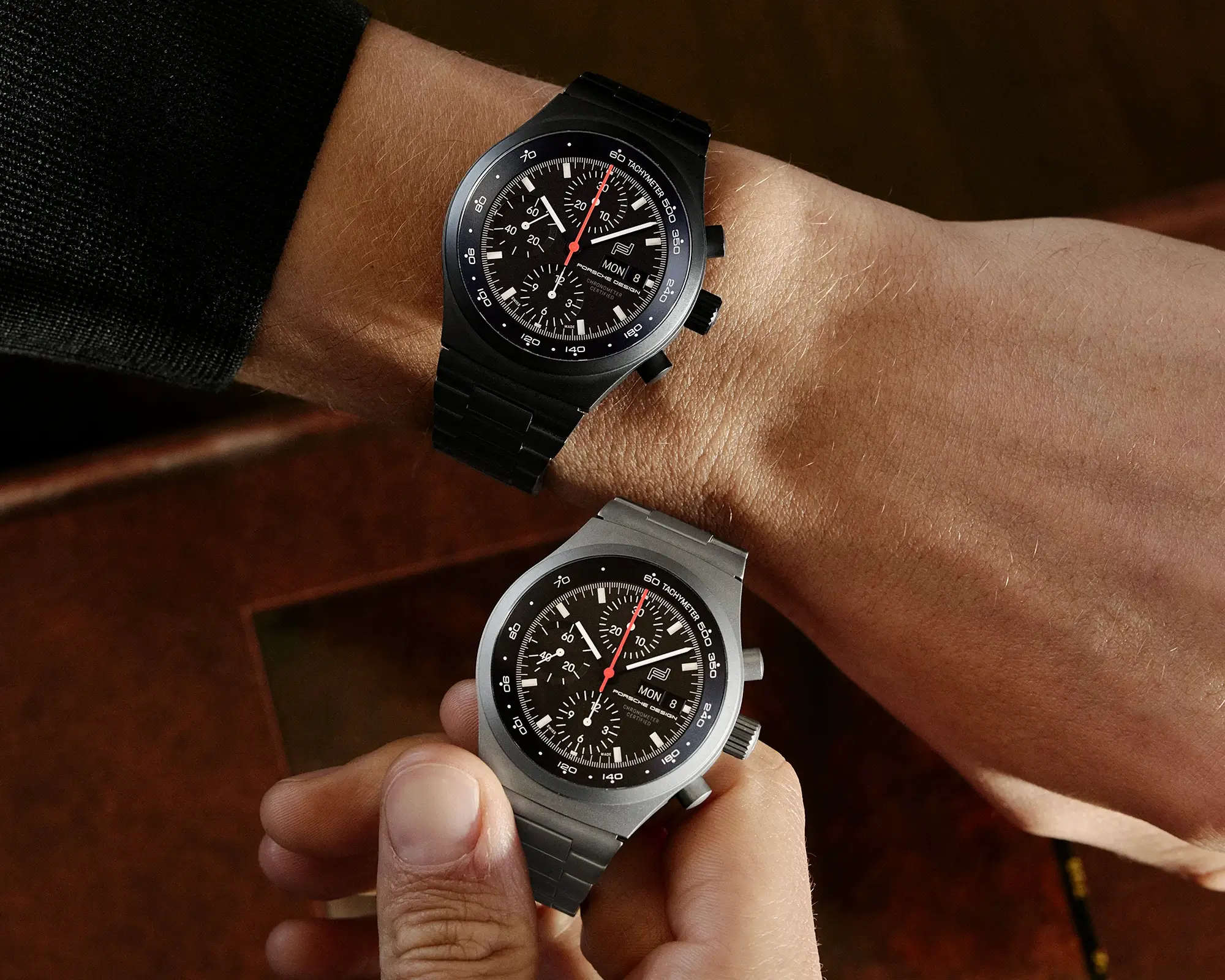
Porsche is regarded as the only automobile manufacturer with its own Swiss watch manufacture — and it all began in 1972 with the Chronograph 1, a model that remains closely associated with Porsche Design’s watchmaking to this day. Originally designed by Ferdinand Alexander Porsche, the creator of the Porsche 911, the Chronograph 1 now appears in a new iteration, the Porsche Design Chronograph 1 – All Titanium Numbered Edition, featuring a case and bracelet crafted entirely from titanium. The new model refers to two significant milestones in the history of Porsche Design: on the one hand, the first fully black timepiece, the Chronograph 1; on the other, the first serially produced wristwatch with a chronograph made entirely of titanium. In this article, we therefore not only take a closer look at the new model itself, but also explore the history of the two timepieces to which it traces its origins.
The History of the Porsche Design Chronograph 1 – The First Black Wristwatch
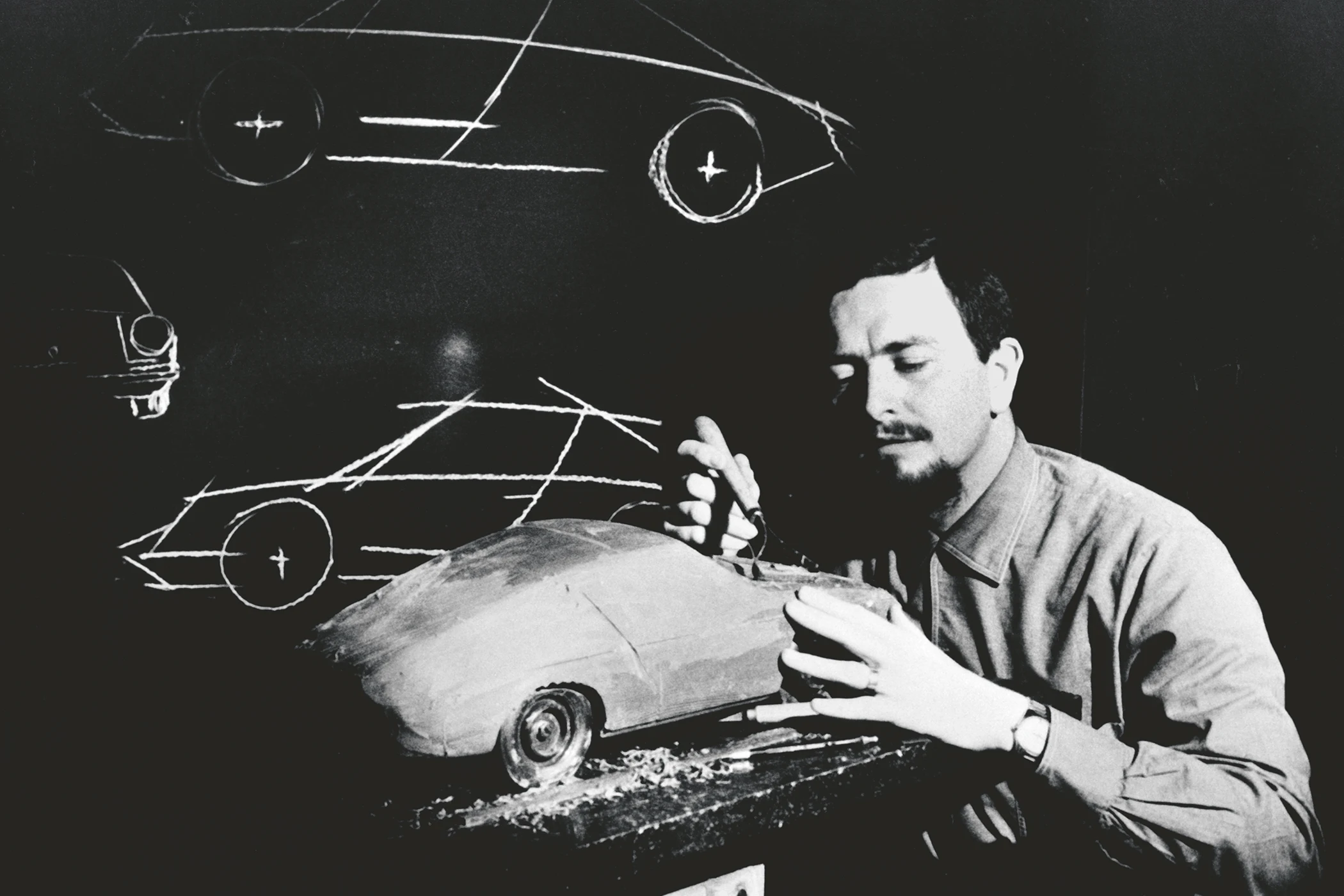
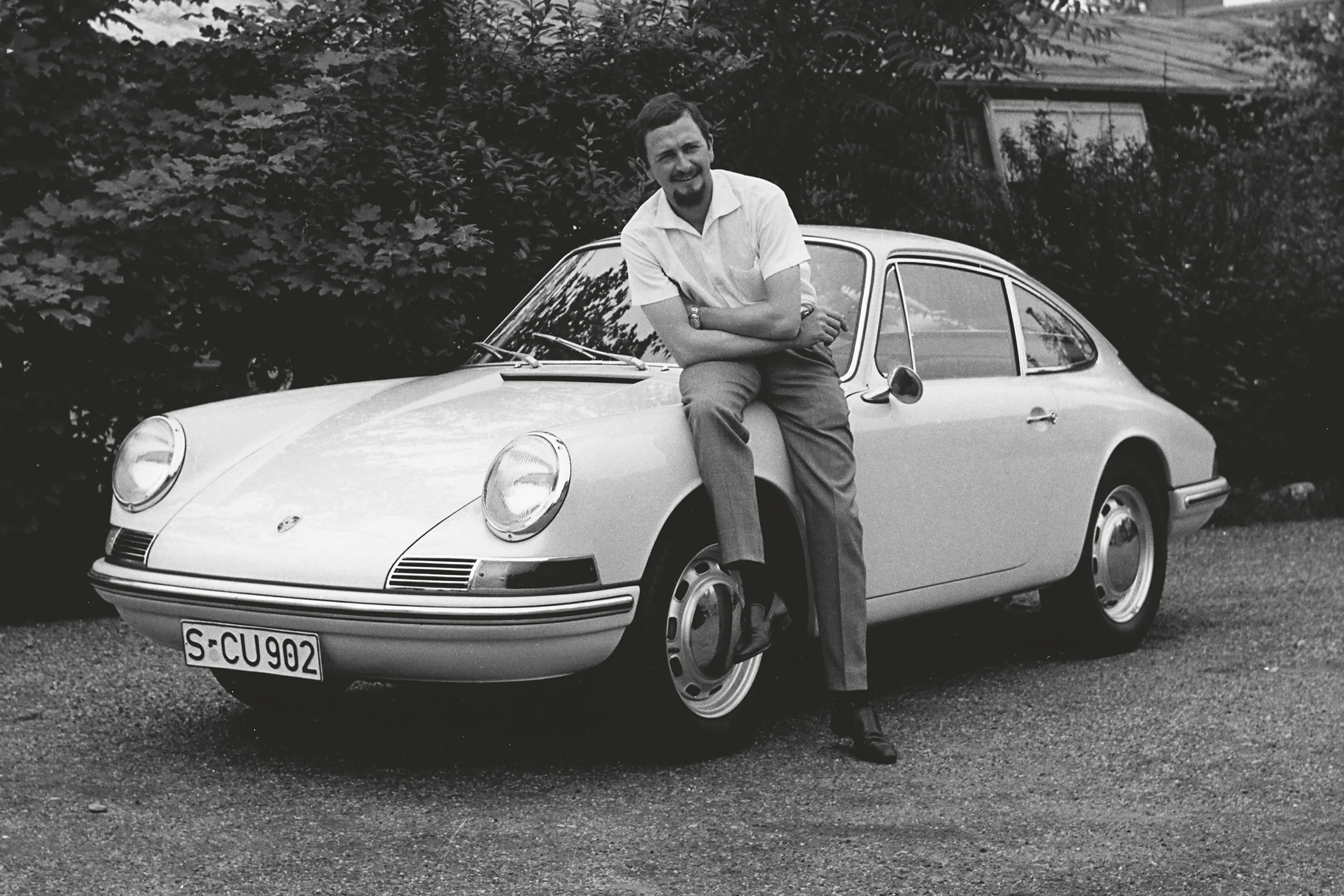
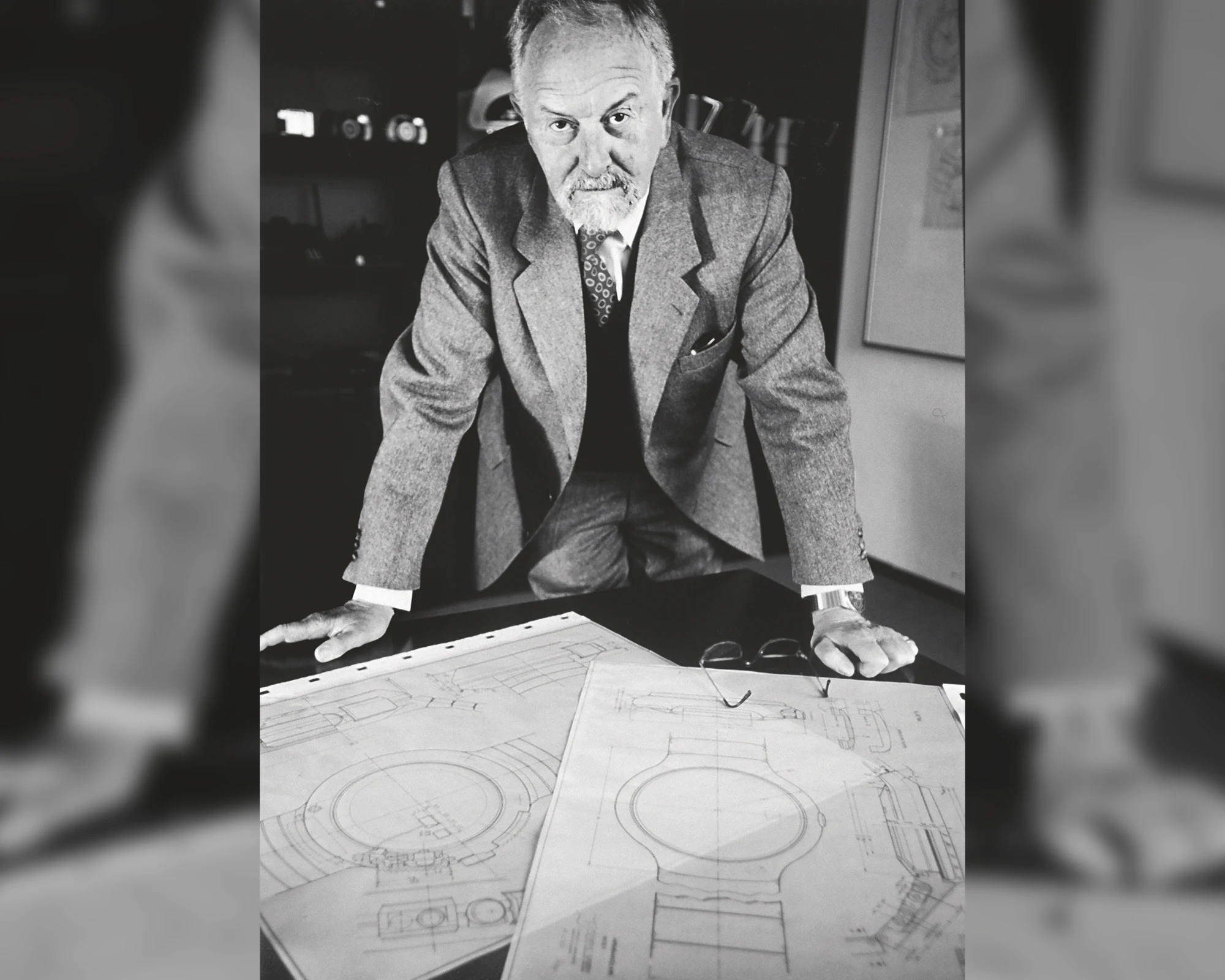
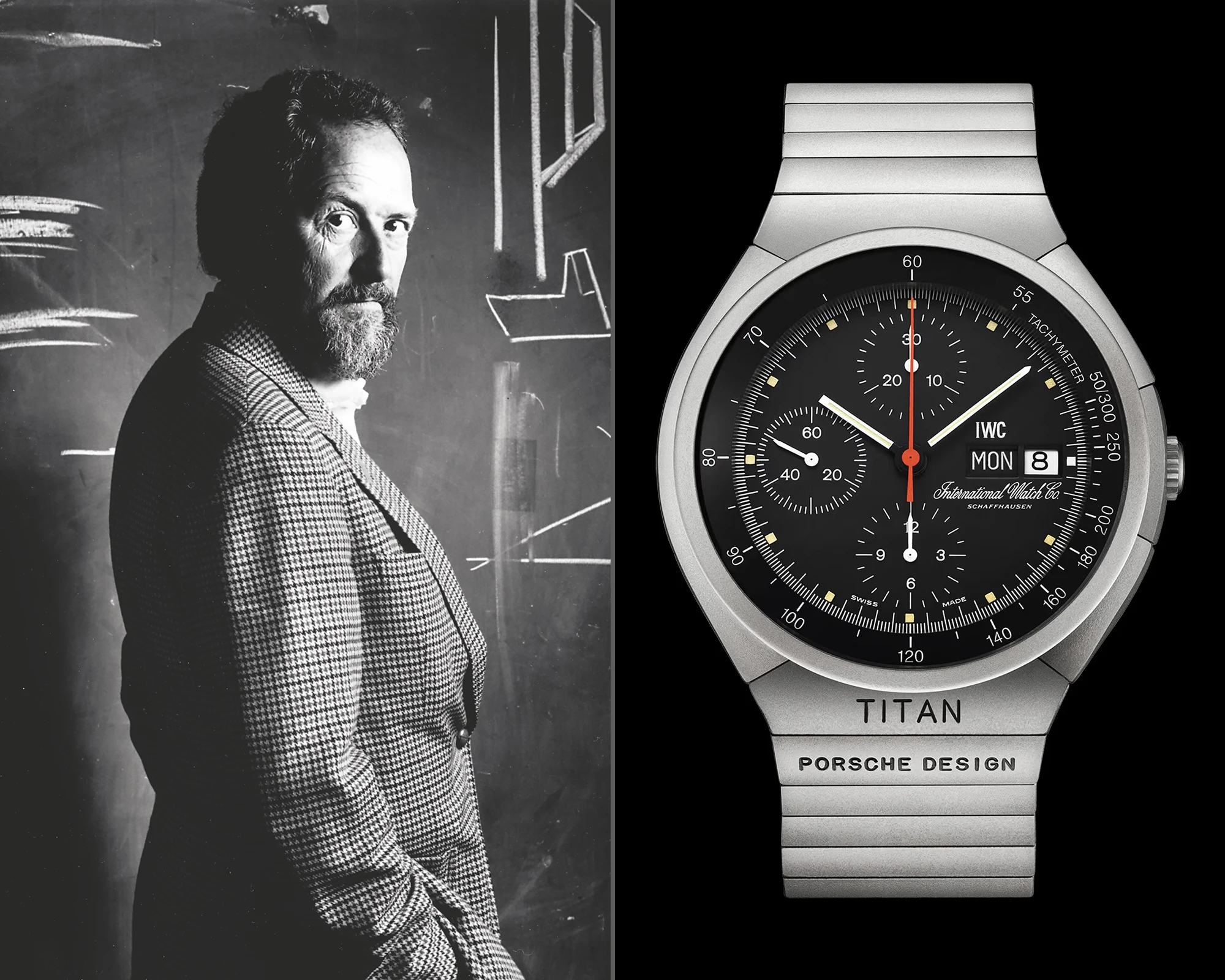
The Chronograph 1 can be traced back to Ferdinand Alexander Porsche, who left a lasting mark on automotive history. As chief designer at Porsche, he and his team created the Porsche 911 in 1963, designed the first 911 Targa with its removable hardtop in 1965, and conceived the Porsche 904 racing car with its fibreglass body. Yet his creative ambitions would soon extend beyond the automotive world — one of the fields he turned to was watchmaking.
In 1972, when the members of the Porsche family withdrew from the operational management of the company — a move required by the conversion of Porsche into a public limited company (AG) — Ferdinand Alexander Porsche founded his own design studio in Stuttgart together with his brother Hans-Peter. Two years later, he relocated the studio to Zell am See in Austria, the place where he had spent his childhood. However, two years before Ferdinand Alexander was able to establish his own design studio there, the newly incorporated Porsche AG entrusted the designer with what initially appeared to be a rather small commission: he was asked to create a wristwatch that could be presented as a gift to deserving Porsche employees. One guiding design principle stood above all others. As F. A. Porsche himself explained, his aim was “to create a watch that matched the car.”
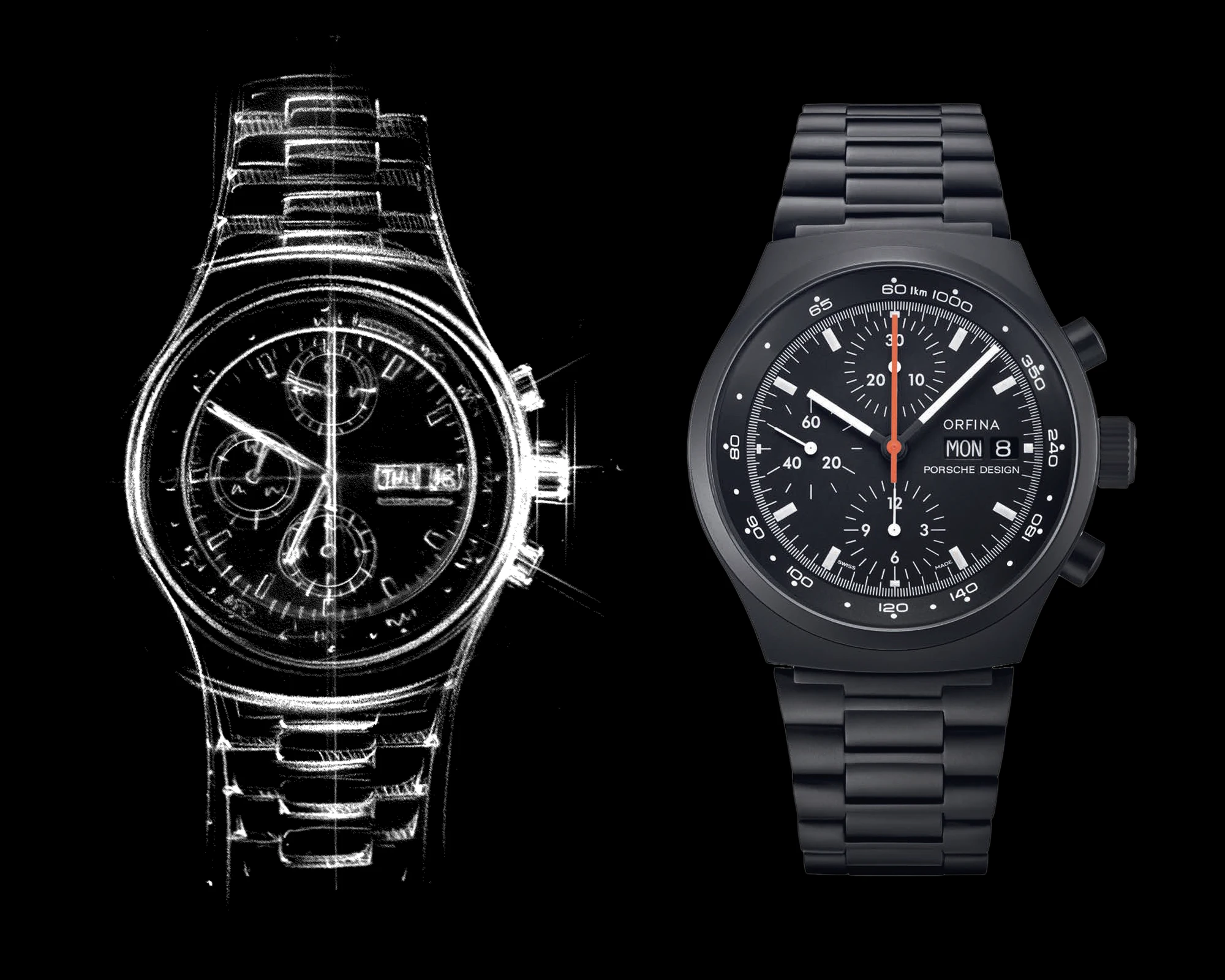
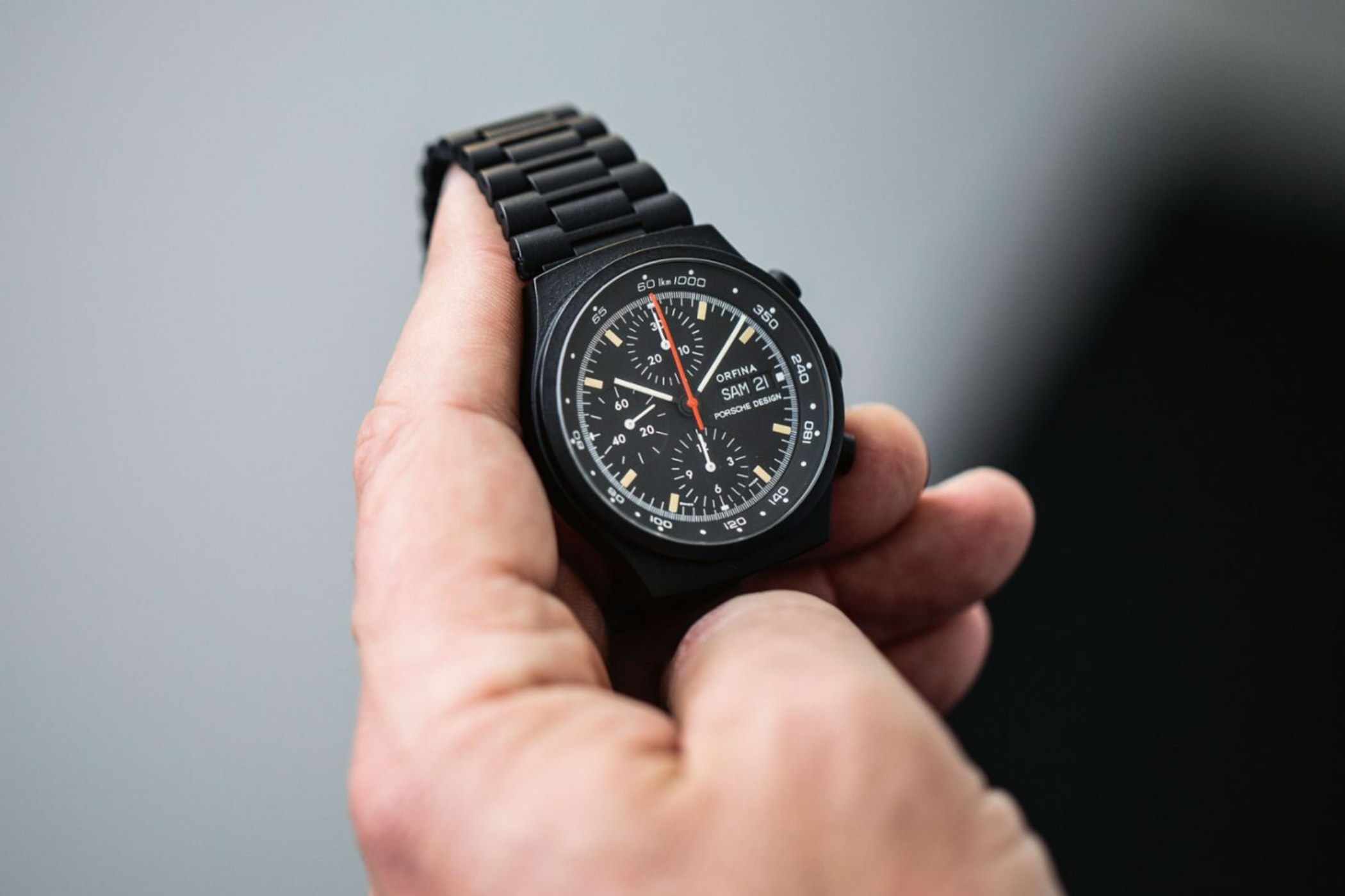
To achieve this, he created a watch defined solely by the principle that its form and construction should arise from function, transferring the design philosophy of the 911 sports car to the Chronograph 1 — and thus to the wrist. The design in particular was inspired by the black instrument panel of the 911: the most prominent expression of these principles is the dial, featuring a red central chronograph seconds hand, a 30-minute counter at 12 o’clock, a 12-hour counter at six o’clock, the rehaut with its tachymeter scale, and white numerals and indices that stand out in sharp contrast against the black dial. Alongside the dial and the rehaut, the case, bezel and bracelet — also executed entirely in black — were themselves regarded as a further expression of this design principle.
This was remarkable in that black had previously appeared in watchmaking primarily on dials and bezels, but not as the colour of cases and bracelets. The matte black characteristics of the dial, case, bezel and bracelet collectively evoked the glare-free instrument panel of a Porsche 911, while their uniform black aesthetic prevented reflections. With these features, the Chronograph 1 became the first entirely black wristwatch ever created.
Originally conceived as a watch for deserving Porsche employees and intended to be produced in a quantity of only around 20 pieces per year, the Porsche Design Chronograph 1 soon developed into a commercial success. Amid the Quartz Crisis, tens of thousands of examples were ultimately produced. Early versions of the Chronograph I were equipped with the Lemania 5100 movement (reference 7176s), while later models were fitted with the Valjoux/ETA 7750. These first watches were manufactured by the Swiss company Orfina.
The concept of glare-free legibility also quickly attracted the attention of numerous armed forces. The Chronograph I was used by NATO, the German Bundeswehr and the Swiss Army, as well as by the armed forces of the United Arab Emirates, and most notably by a squadron of the US Air Force, which commissioned the watches in Zell am See.
The First Serially Produced Wristwatch Made of Titanium
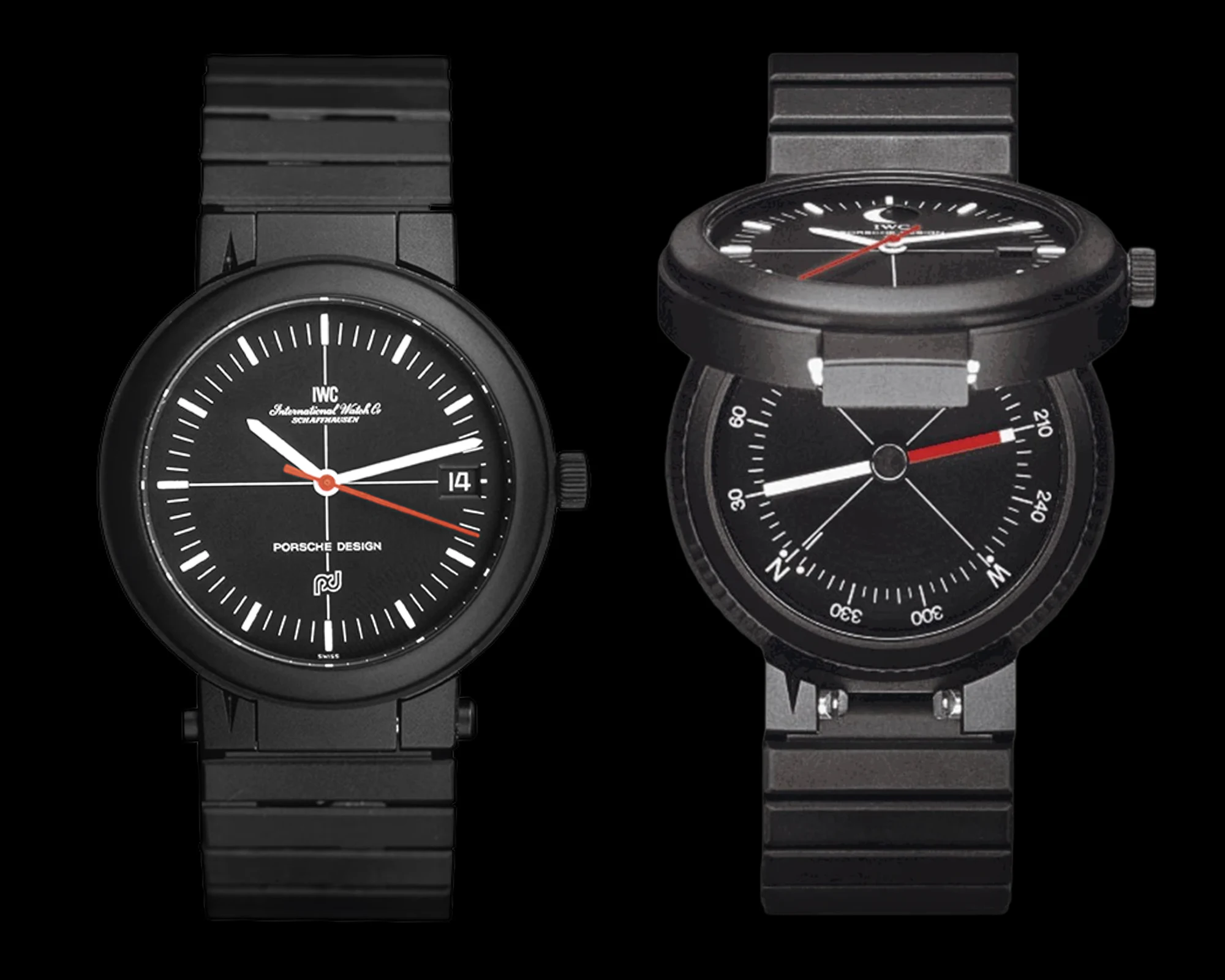
Yet the entirely black Chronograph 1 was not to remain the only milestone. In 1978, Porsche Design began a collaboration with IWC, which resulted in the IWC reference 3511 — a so-called compass watch that combined an anti-magnetic movement with a compass integrated into the hinged caseback. In addition, during this first joint project the partners also experimented with titanium as a material for the watch case — a metal that is difficult to machine but highly suitable for use in watchmaking.
The advantages of titanium over steel for watch cases are numerous. One of the most important is its significantly lower specific weight: titanium has only around 60 per cent of the density of steel, allowing for particularly lightweight timepieces. Another key benefit is the material’s high biocompatibility, meaning its excellent compatibility with the skin — an aspect that plays an important role in wristwatches. This property stems from a particular characteristic of titanium: if the surface is mechanically damaged, a stable oxide layer (so-called titanium oxide) forms immediately, sealing the metal. This protective layer largely prevents chemical interaction between the metal and the skin, which is why titanium is regarded as especially skin-friendly.
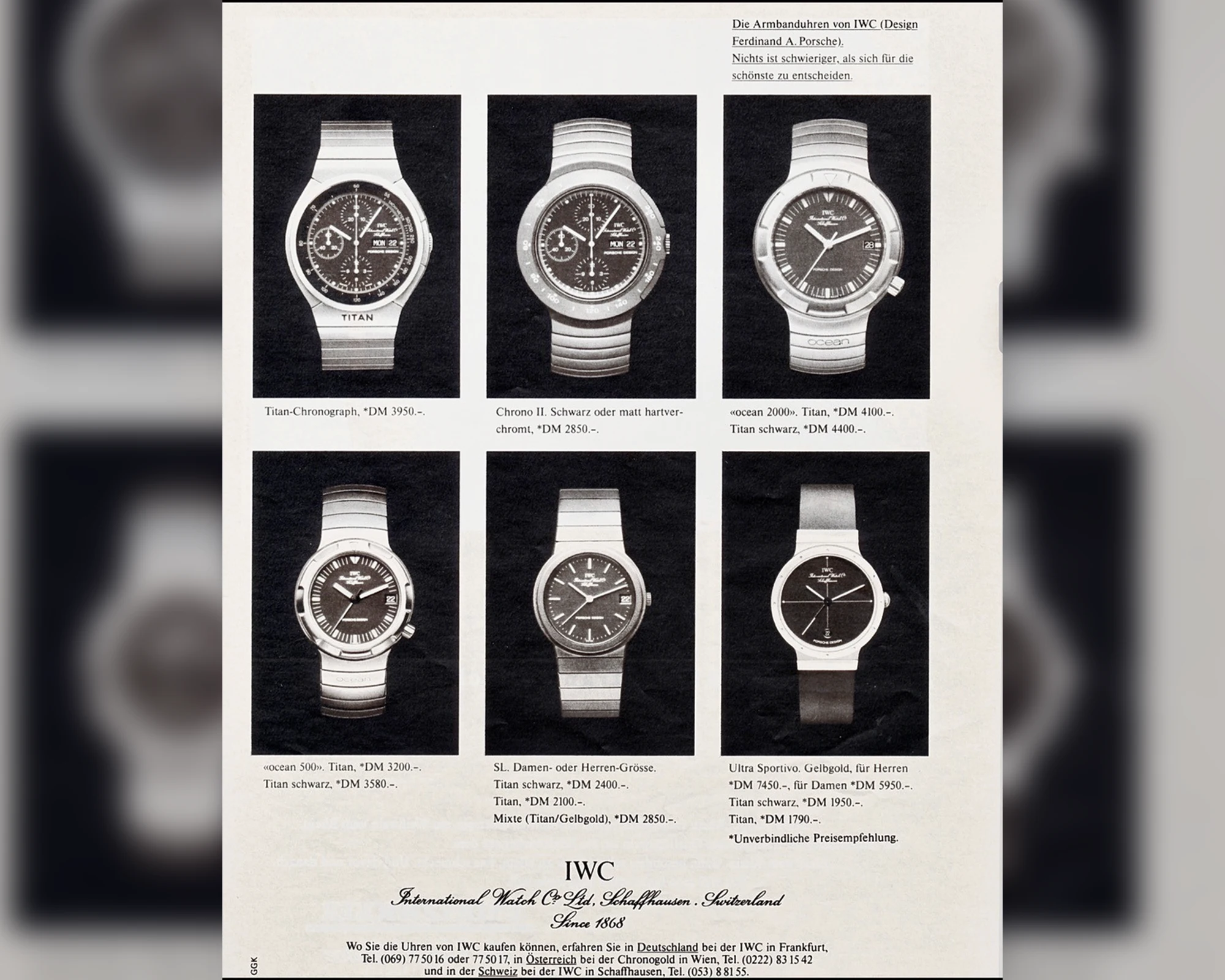
Based on the material expertise gained from this first project, a second titanium timepiece followed in 1981 at the Basel Watch Fair: the IWC Porsche Design Titan Chronograph. With this watch, the concept of the Chronograph 1 originally designed by Ferdinand Alexander Porsche was further developed. The watch, which succeeded the original chronograph, was considered remarkable for several reasons. It combined the lightweight, saltwater-, acid- and perspiration-resistant material titanium with the design concept of the Chronograph 1. At the same time, this timepiece was not only regarded as the world’s first serially produced wristwatch to feature the combination of a titanium case, titanium bracelet and a mechanical chronograph, but also as the first production wristwatch to incorporate chronograph pushers fully integrated into the case. Their large contact surfaces made starting, stopping and resetting the chronograph significantly easier. Inside the comparatively large 42 mm titanium case for its time beat the automatic Valjoux 7750 calibre, measuring 30 millimetres in diameter and 7.9 millimetres in height — a movement that had already proven itself in the Chronograph 1.
Today, all watches produced by Porsche Design are manufactured either from titanium carbide or titanium — including the new model, which we will now examine more closely in the next section.
The Chronograph 1 – All Titanium Numbered Edition in Detail
With the idea of transferring the design principles of the Porsche 911 instrument panel to the wrist, F. A. Porsche laid the foundation for Porsche Design’s watchmaking as it exists today. Even now, more than five decades after the original Chronograph 1 first appeared, Porsche Design remains closely committed to the timepiece once conceived by F. A. Porsche. The Chronograph 1 did, however, disappear from the brand’s product portfolio for a period, before returning to the catalogue in 2022 with a limited special edition of 500 pieces, presented alongside a restored 1972 Porsche 911 S 2.4 Targa.
Since then, the Chronograph 1 has once again taken centre stage in Porsche Design’s watchmaking and has been introduced in several variations. Following the Chronograph 1 – 1975 Limited Edition, launched in July 2025 and limited to just 350 pieces, the newly presented Porsche Design Chronograph 1 – All Titanium Numbered Edition represents the second edition of the Porsche Design Chronograph 1 made from uncoated titanium. The new model is freely available and can be purchased by any interested collector, regardless of whether they own a specific Porsche sports car. In contrast to the Chronograph 1 – 1975 Limited Edition, which was restricted to 350 pieces, production of the new model will, according to Porsche Design, not exceed 1,000 examples per year.
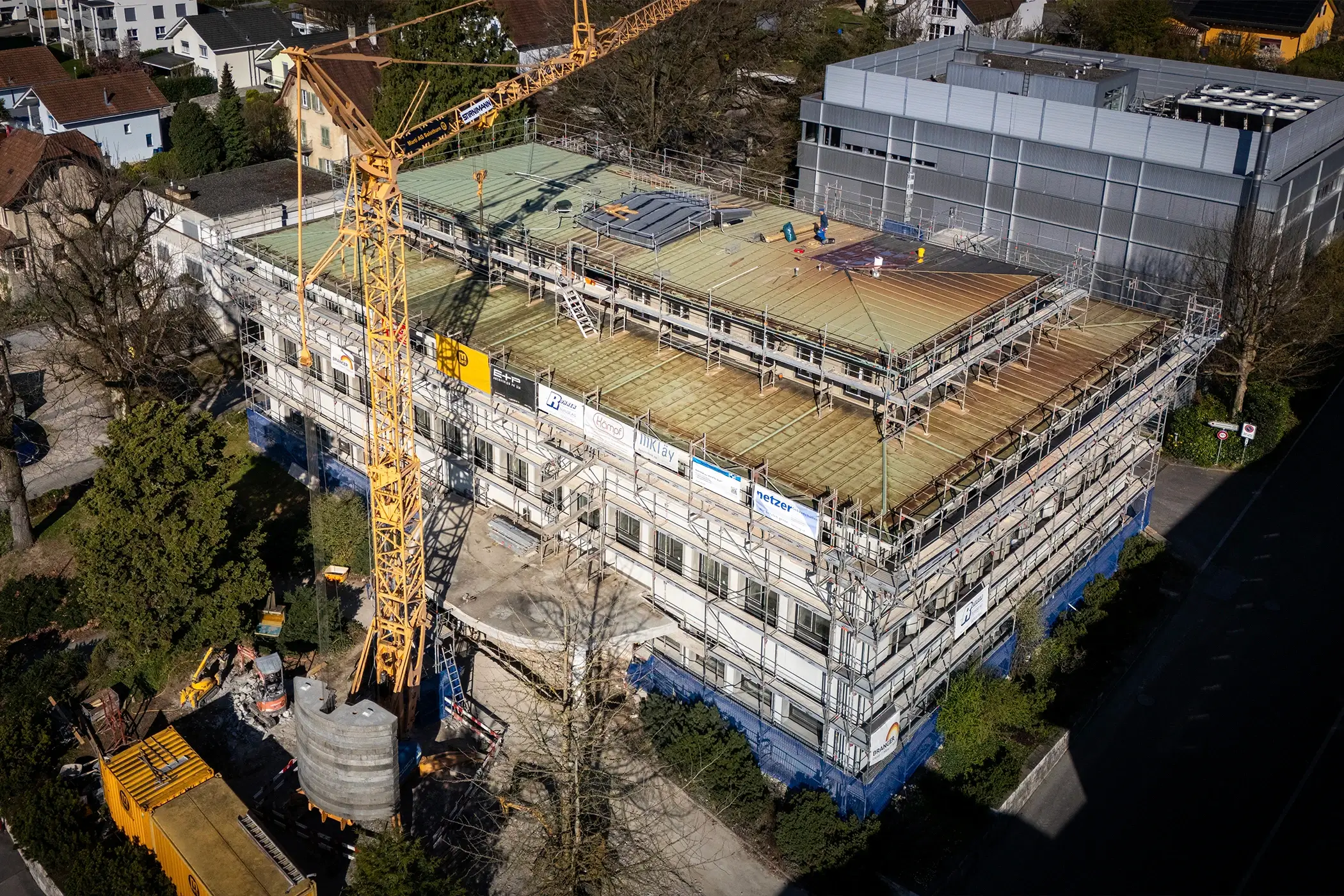
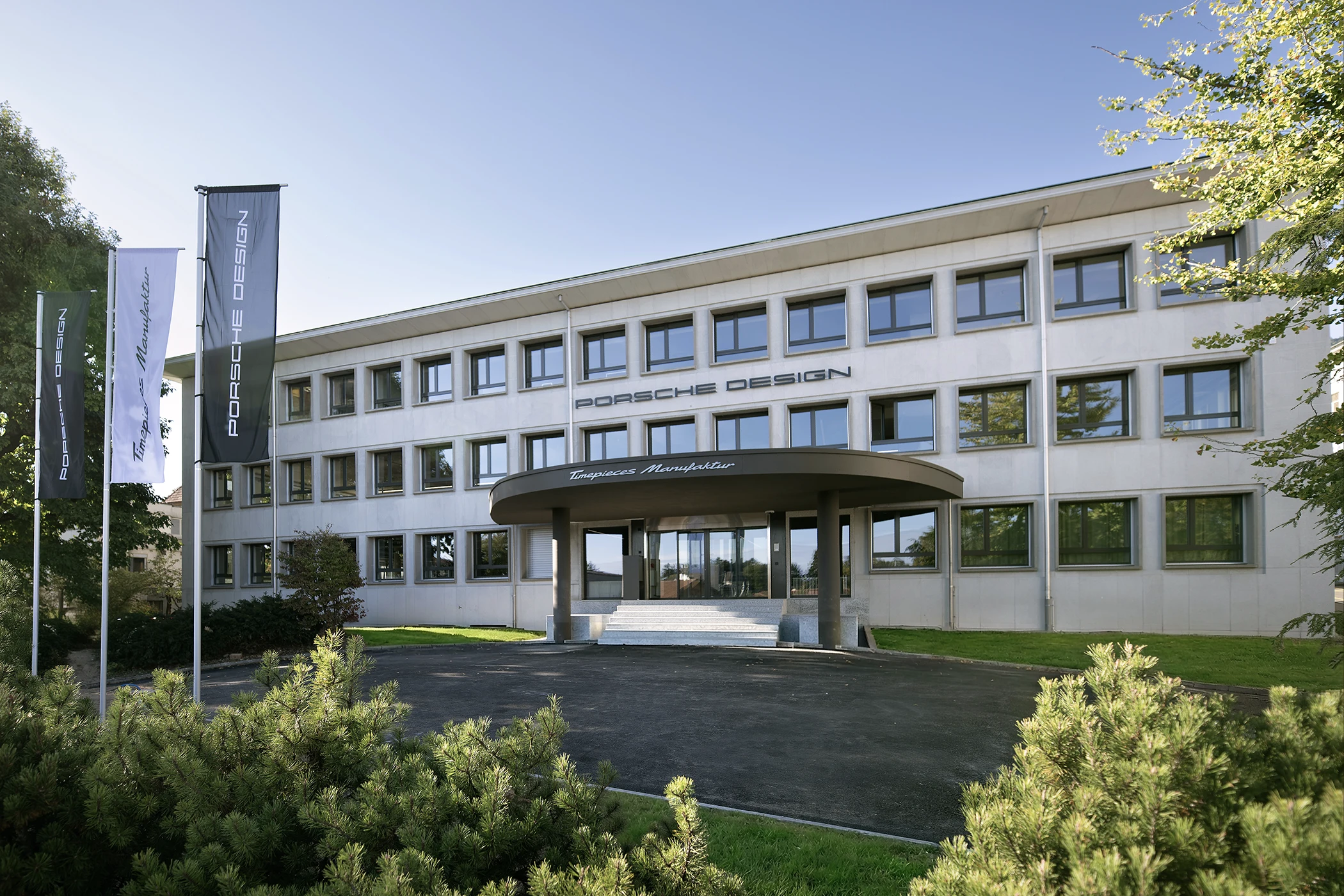
Like all Porsche Design watches today, the Chronograph 1 – All Titanium Numbered Edition is now manufactured at the new, modernised Porsche Design Timepieces manufacture in Grenchen, Switzerland, not far from the company’s previous location in Solothurn. As Rolf Bergmann, CEO of Porsche Design Timepieces AG, emphasises, it represents “the third official Porsche factory after the automobile production sites in Zuffenhausen and Leipzig.” Interestingly, the building into which the first employees moved in the summer of 2025 is historically closely connected to the manufacture. It is the former production facility of Eterna — the watch company that produced wristwatches for Porsche Design for around 15 years and was responsible for the Porsche Indicator model.
The Design of the Porsche Design Chronograph 1 – All Titanium Numbered Edition
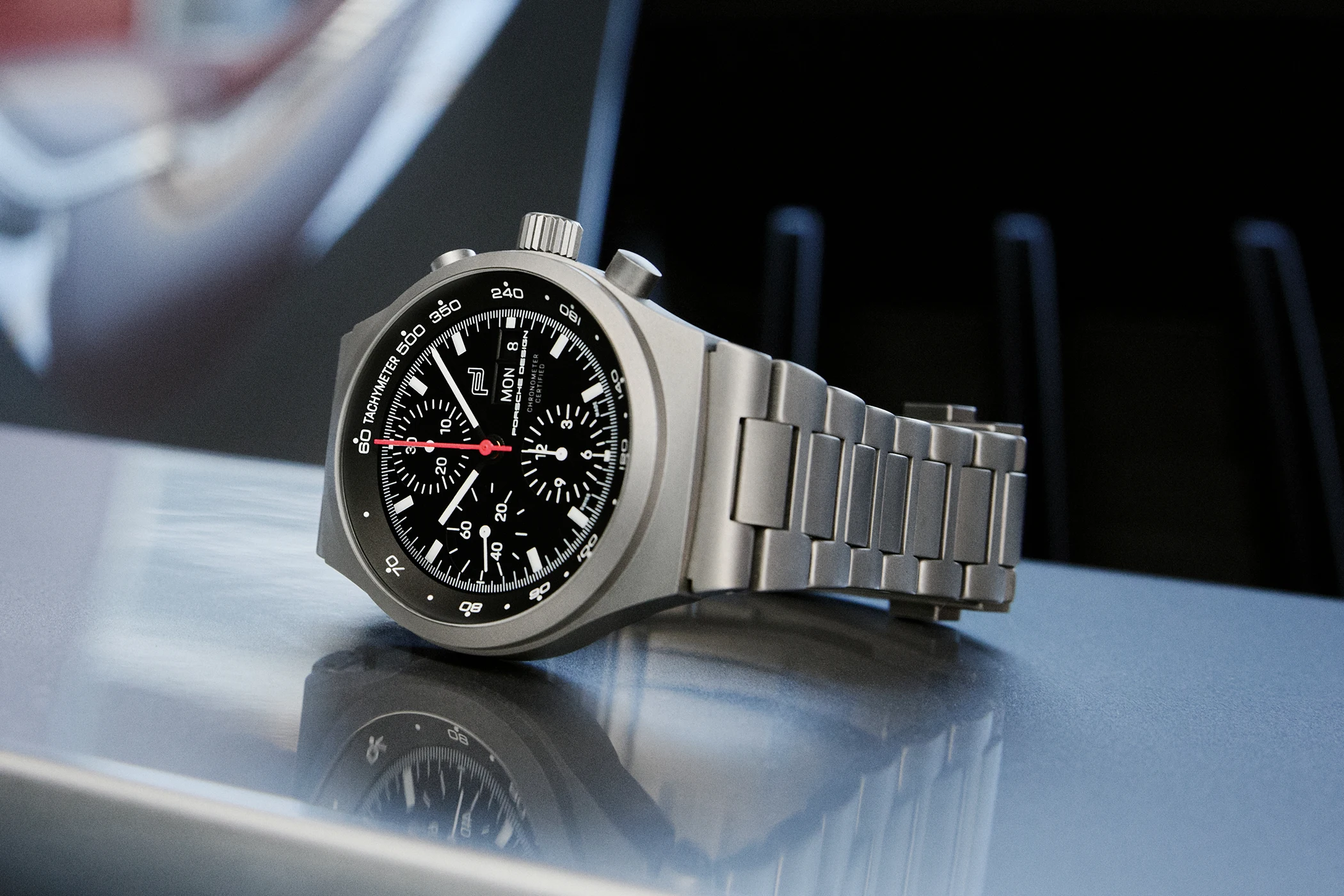
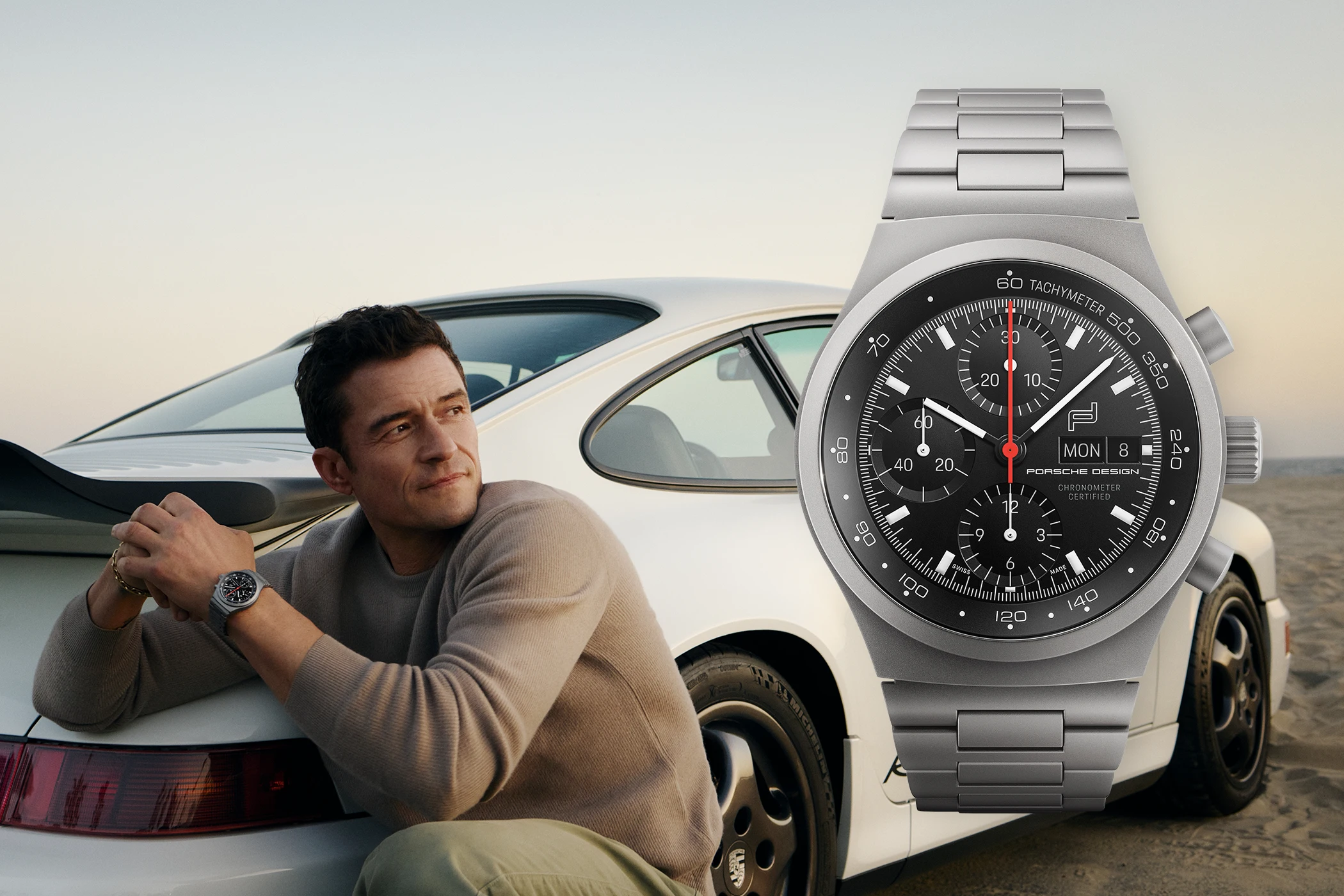
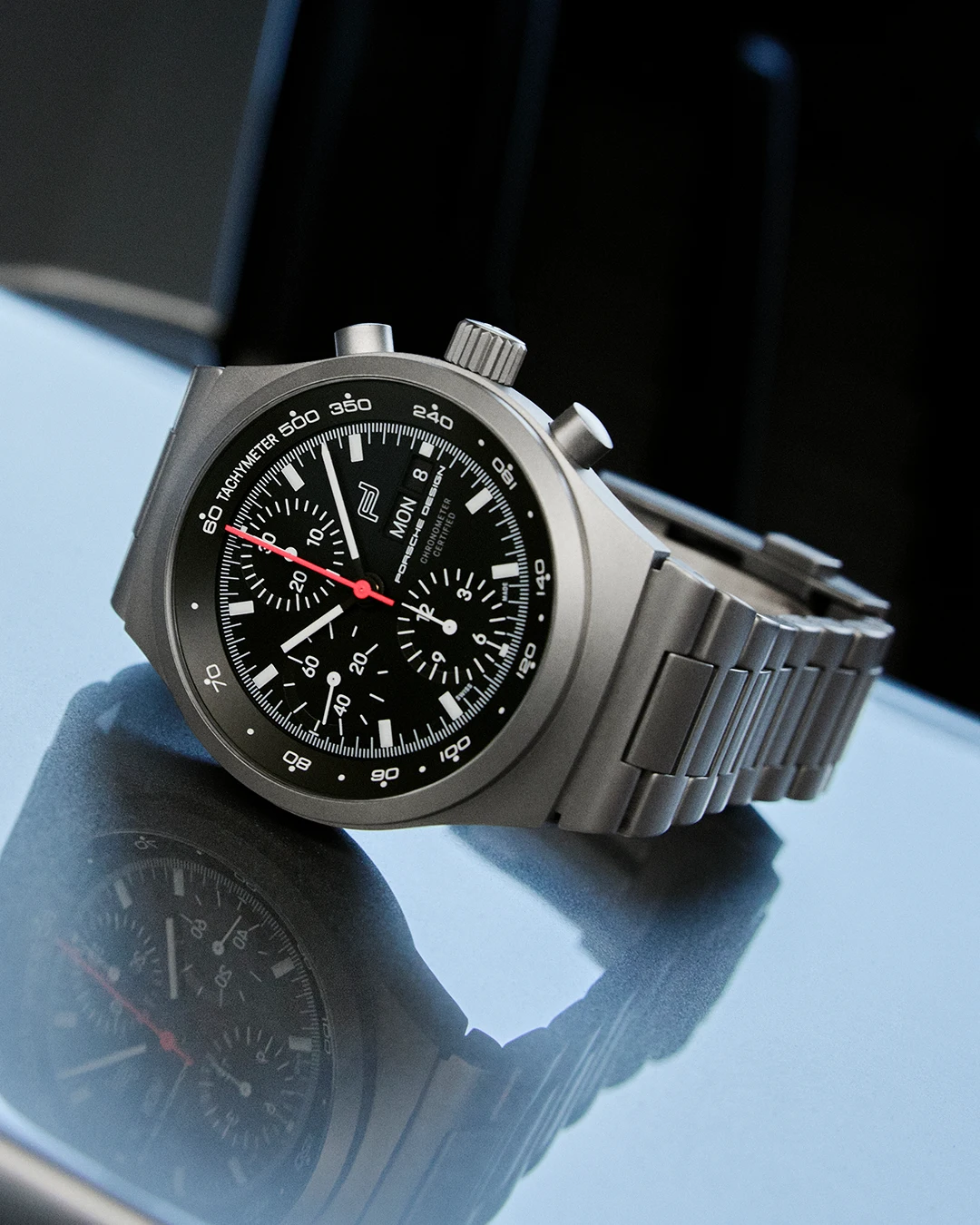
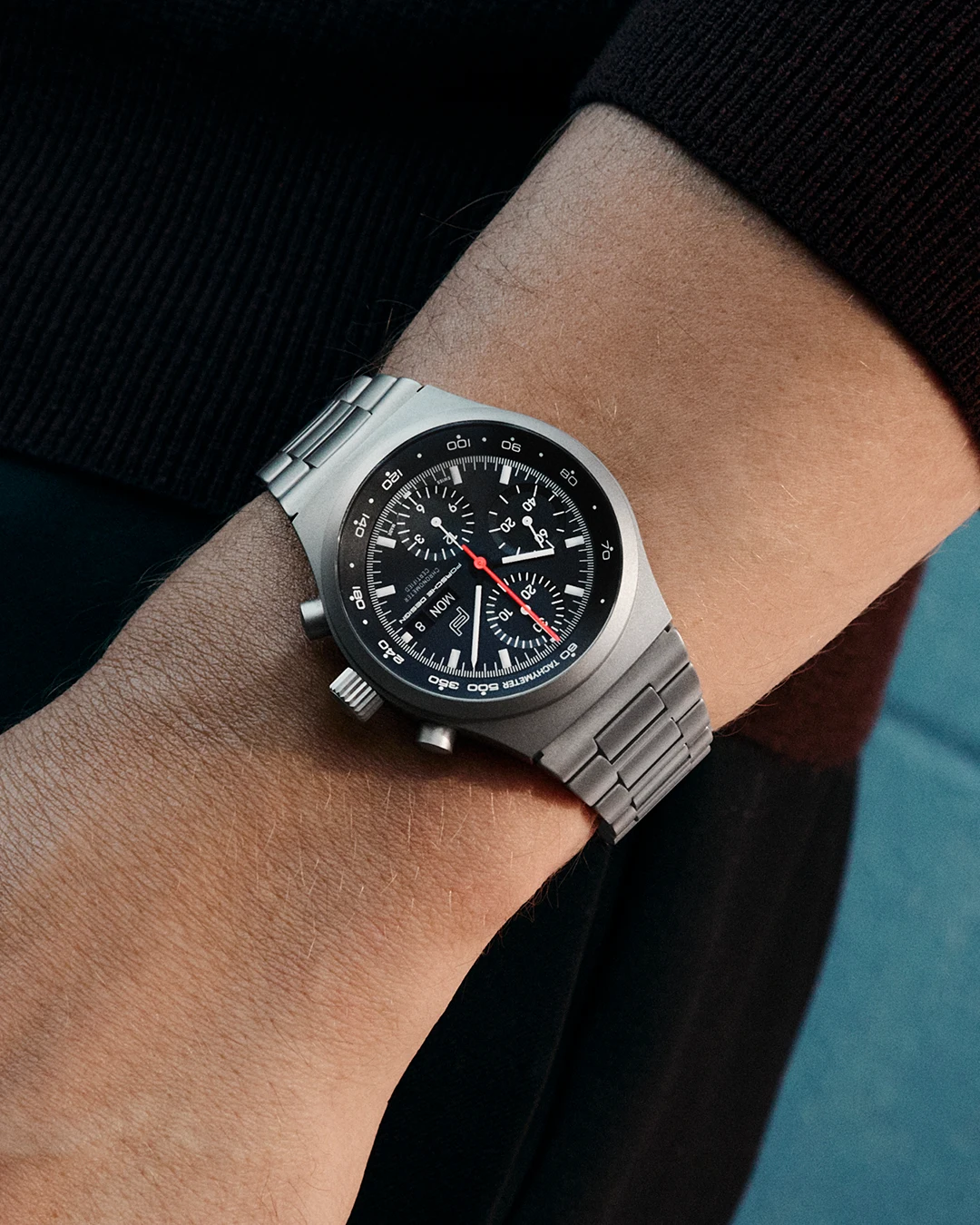
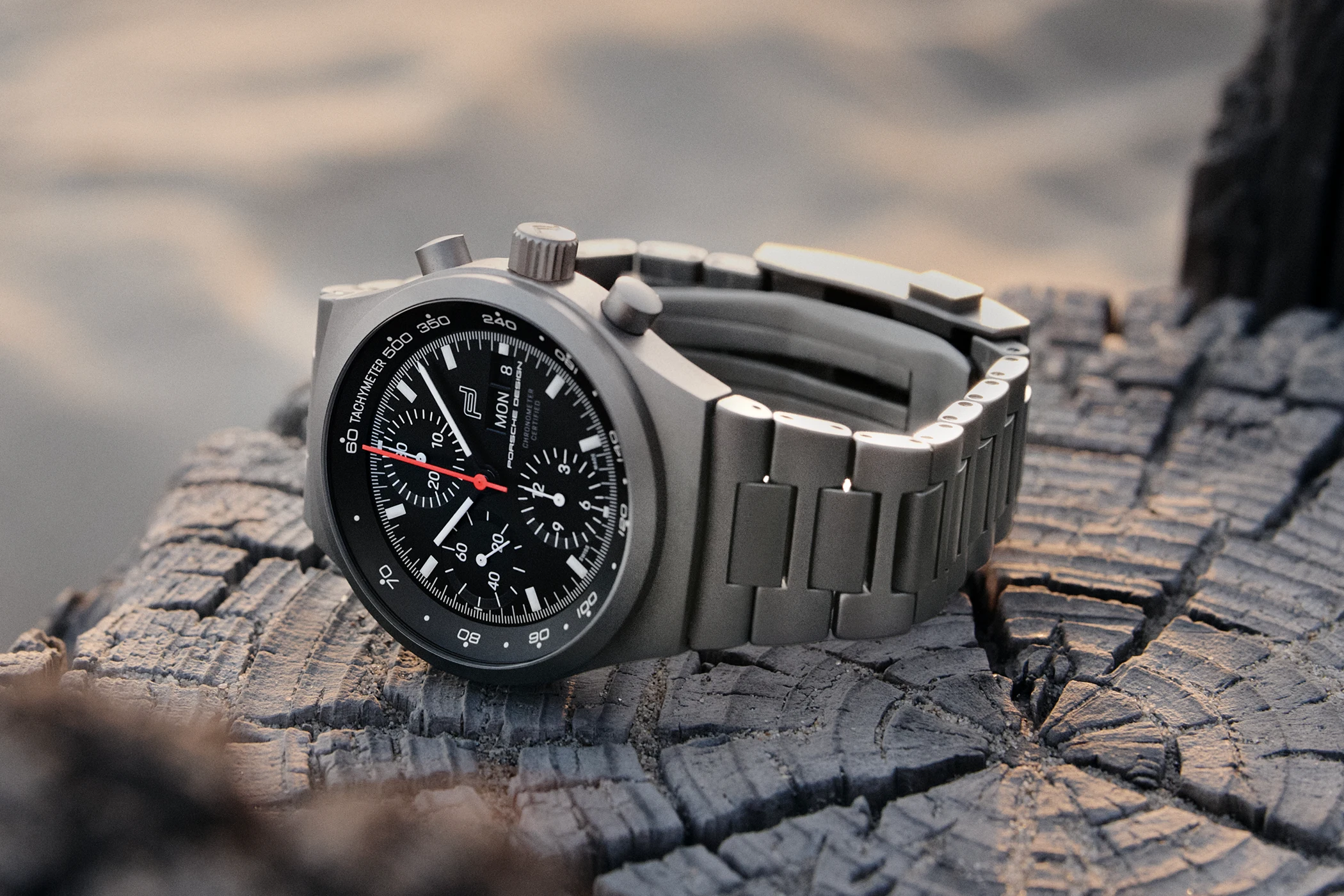
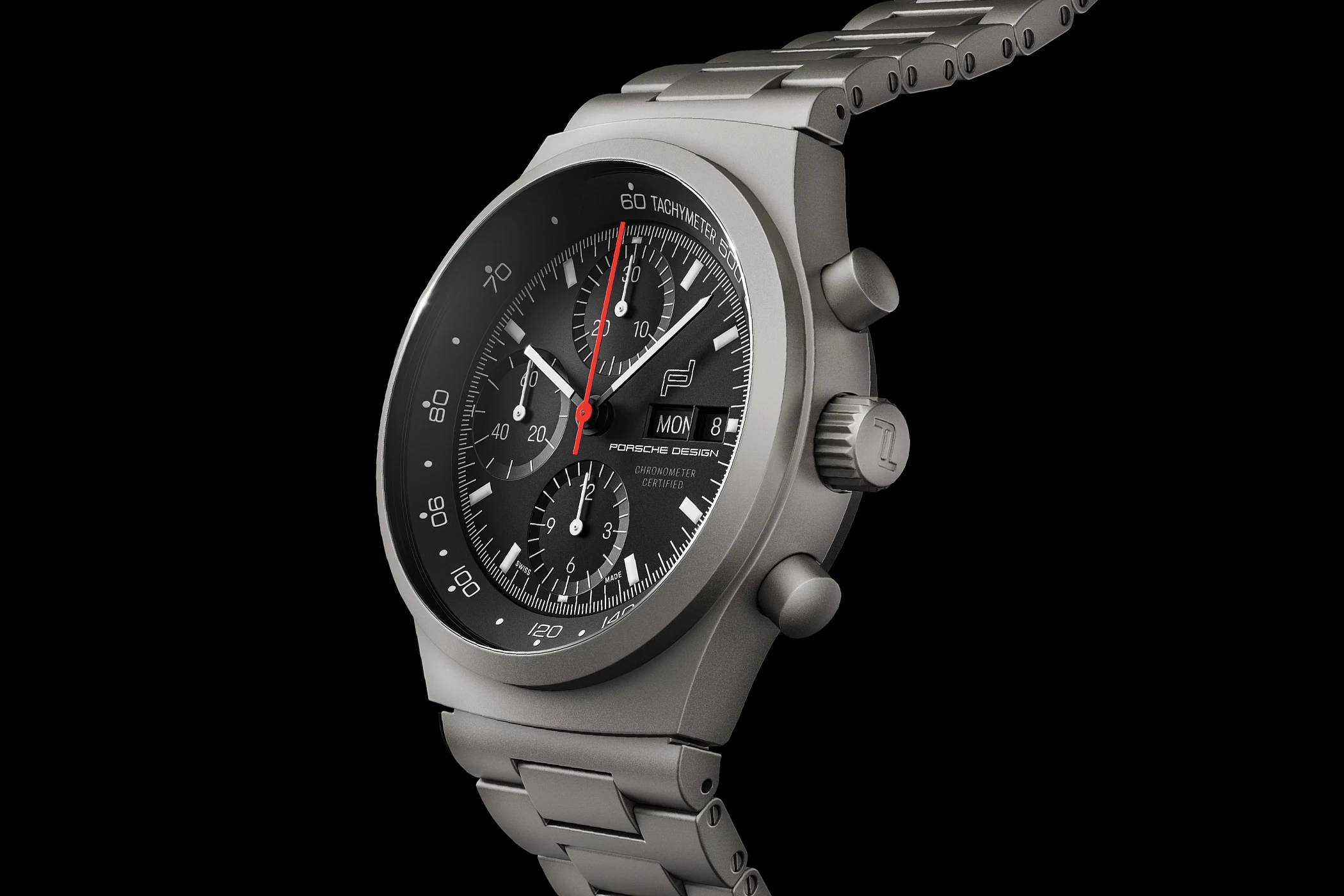
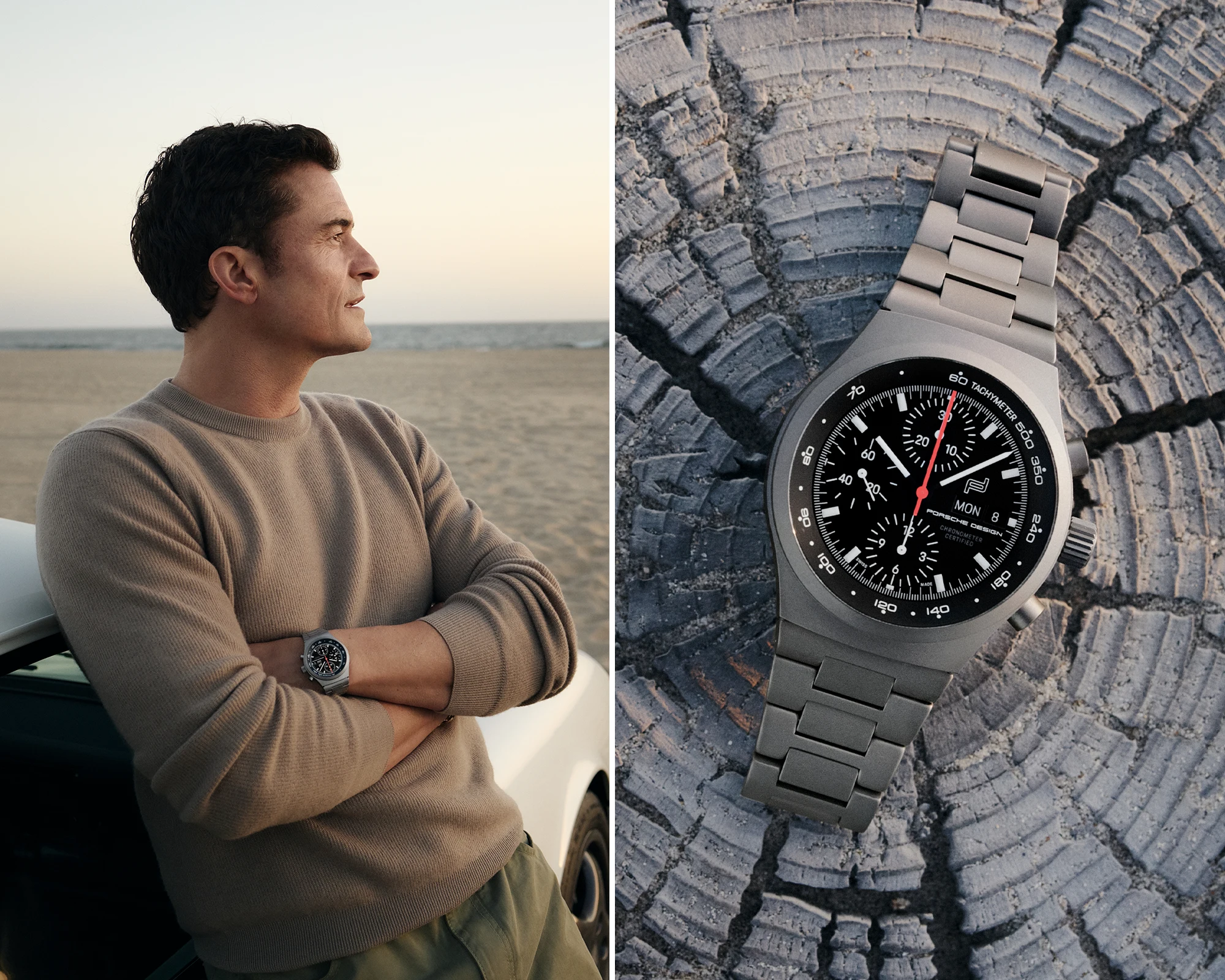
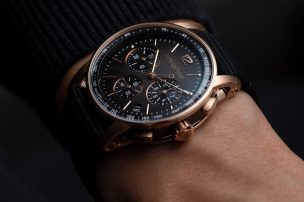
At first glance, little has changed in the design of the new model compared with the Chronograph 1 of 1972. The dial remains finished in a matte black tone. In keeping with the appearance of automotive instruments, the central chronograph seconds hand continues to appear in a highly visible red colour, and the overall dial layout has also remained unchanged: the day and date display is positioned at three o’clock, the 12-hour chronograph counter at six o’clock, the small seconds at nine o’clock, and finally the 30-minute chronograph counter at twelve o’clock. New, compared with the original model from 1972, is the arrow-shaped tip of the minute hand, which points towards the outer minute track.
The dial of the Porsche Design Chronograph 1 – All Titanium Numbered Edition is framed by a rehaut — the ring between the dial and the sapphire crystal — which is executed with a comparatively high and steep profile and a pronounced surface. It carries a tachymeter scale graduated from 500 to 60 units per hour, designed to calculate average speeds over a known distance in combination with the chronograph. The combination of the rehaut’s height, its strongly defined surface and the large numerals of the tachymeter scale reinforces the watch’s resemblance to a classic automotive instrument.
The Movement and Case of the Porsche Design Chronograph 1 – All Titanium Numbered Edition
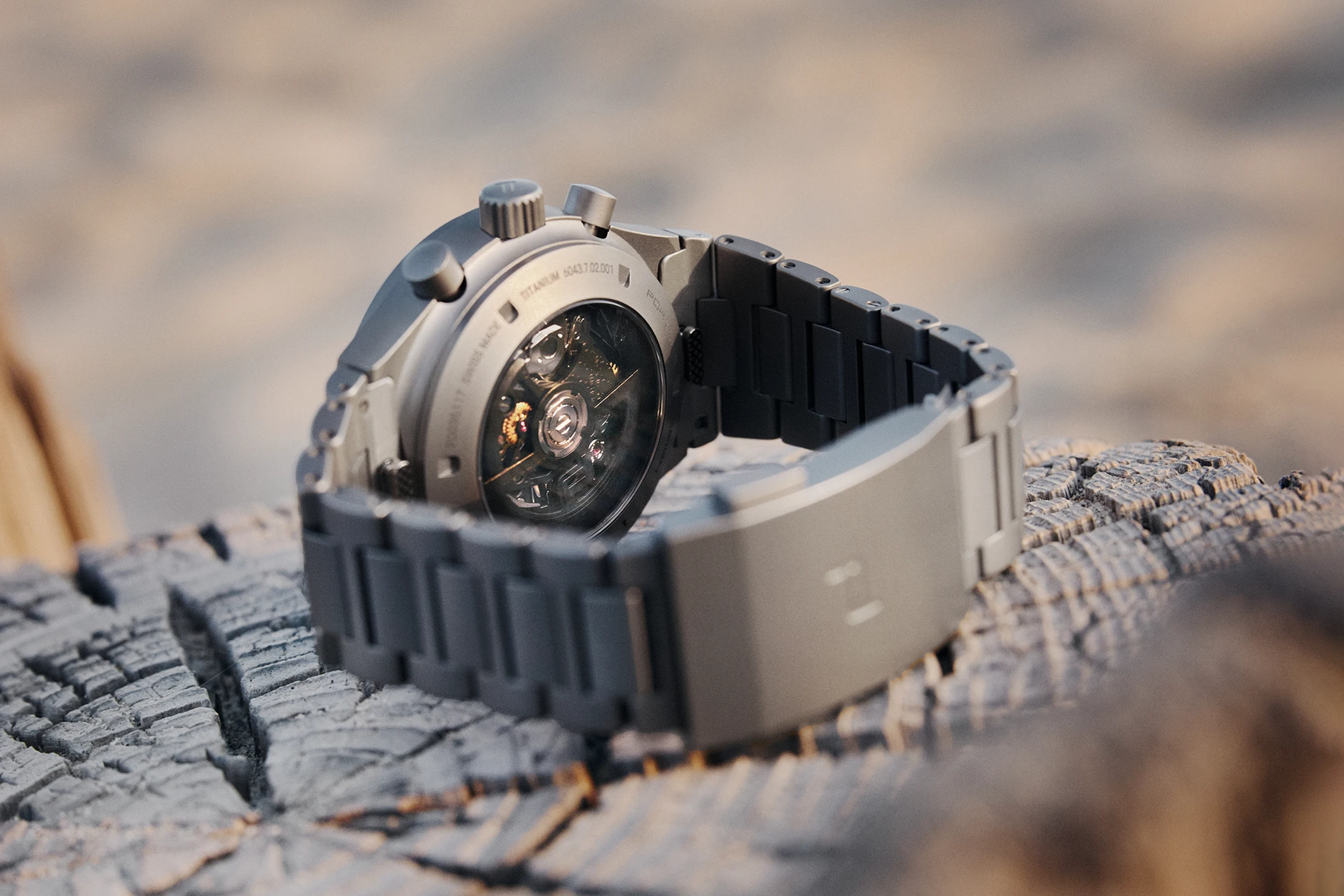
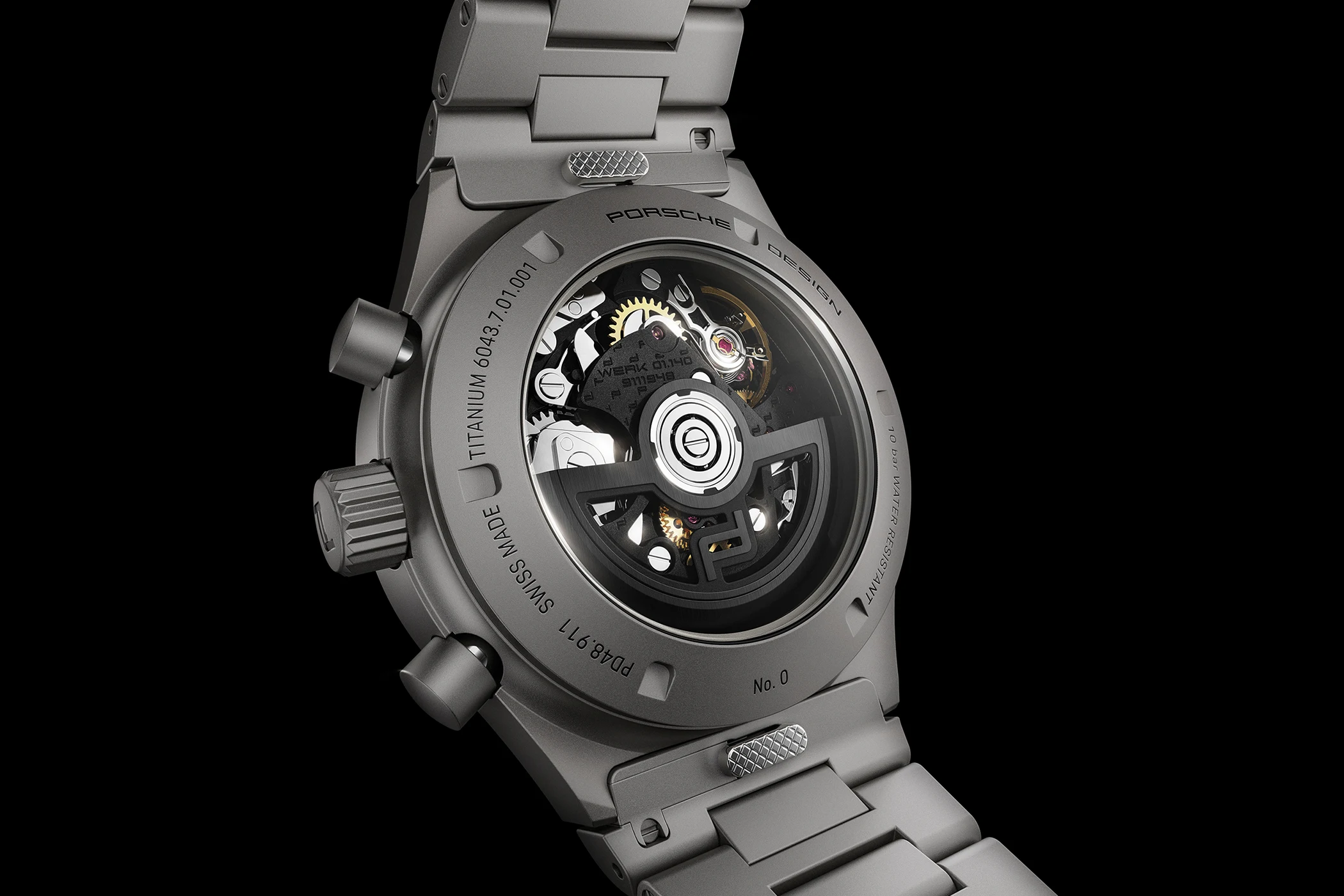
Inside the current watch, the Valjoux 7750 is no longer used — even though the Sellita SW500, a more or less exact clone of the movement, would be available — but rather the Porsche Design calibre WERK 01.140. Its diameter of 30 mm and height of 7.90 mm correspond exactly to the dimensions of the former Valjoux 7750 calibre. Although the Porsche Design calibre WERK 01.140 was developed at the brand’s previous in-house manufacture in Solothurn, it is based on a platform supplied by Concepto. Technically, it offers a power reserve of around 48 hours and operates at a frequency of 28,800 vibrations per hour (4 Hz), while featuring a unidirectional winding rotor. Instead of a traditional column wheel, the movement uses a cam mechanism to control the chronograph’s start, stop and reset functions, along with an oscillating pinion clutch to engage the chronograph mechanism with the movement.
With its glass bead-blasted titanium case and titanium bracelet, Porsche Design gives the new model the same material characteristics that were already present in the IWC Porsche Design Titan Chronograph of 1981: low density, high strength, pronounced resistance to corrosion and temperature, as well as anti-magnetic and skin-friendly properties. The case of the new Porsche Design Chronograph 1 – All Titanium Numbered Edition measures 40.80 mm in diameter and 14.15 mm in height, while the screw-down crown and the chronograph pushers are likewise made of titanium. Turning the watch over reveals the Porsche Design calibre WERK 01.140 through the sapphire crystal caseback, featuring a black-grey winding rotor with the Porsche Design logo. The sapphire crystal caseback is surrounded by the individual serial number of each watch as well as an indication of the case’s water resistance to 100 metres.
Price & Availability of the Porsche Design Chronograph 1 – All Titanium Numbered Edition
The new Porsche Design Chronograph 1 – All Titanium Numbered Edition will be available from April 2026 at a price of €7,950 (RRP) via porsche.com, as well as through Porsche Design stores, participating Porsche Centres and selected authorised watch retailers. As mentioned above, production of the timepiece is expected to be limited to 1,000 pieces per year.
Rexhep Rexhepi on the new RRCHF flyback chronograph: its construction, proportions, Grand Feu enamel dial, pricing, and the thinking behind his most ambitious creation to date.
To celebrate the 40th anniversary of its Classic Fusion line, Hublot is releasing three limited editions, taking inspiration from the 1980 Classic Original.
In partnership with the Musée du Louvre, Vacheron Constantin creates unique pieces as part of its "Les Cabinotiers" collection, which present paintings, drawings and sculptures from the Louvre's collection on the dial.