The Parmigiani Fleurier Carillon Tourbillon combines a carillon repeater, four gongs and a tourbillon in a new watch limited to five pieces.
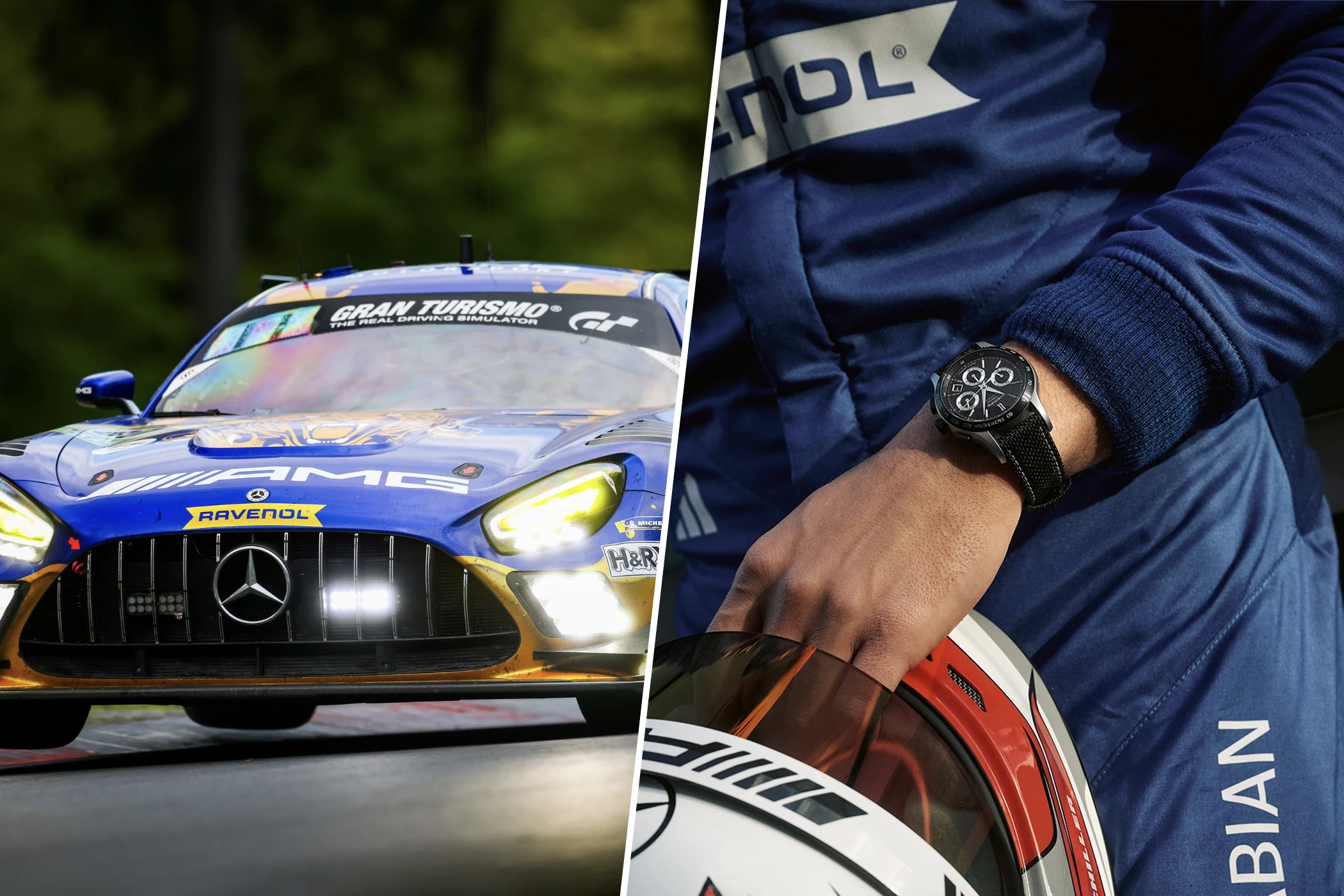
Wempe has been the official timekeeper of the 24 Hours of Nürburgring since 2026 and is showcasing two special limited-edition models. We visited the Ring to take a closer look at the partnership and the watches.
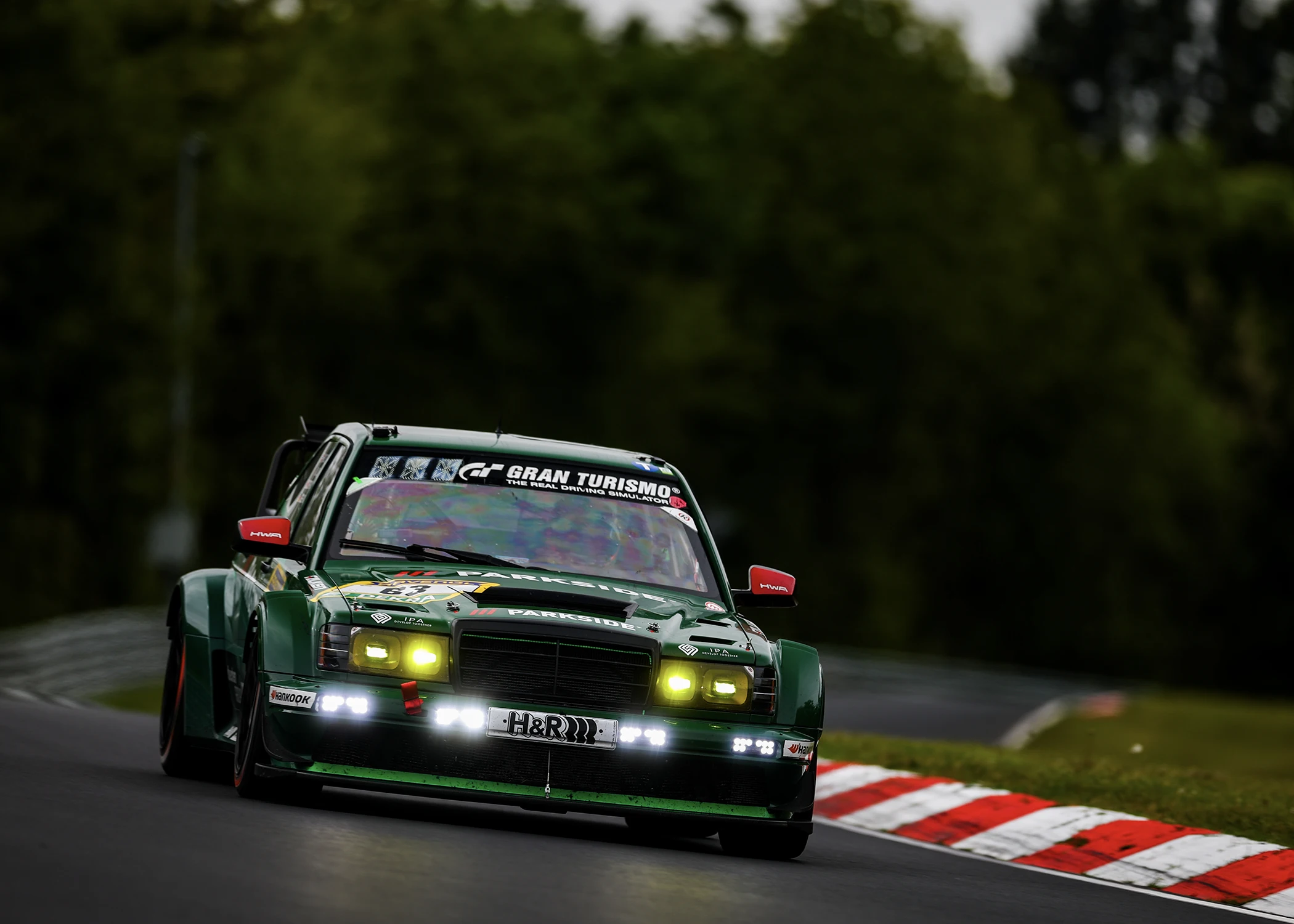
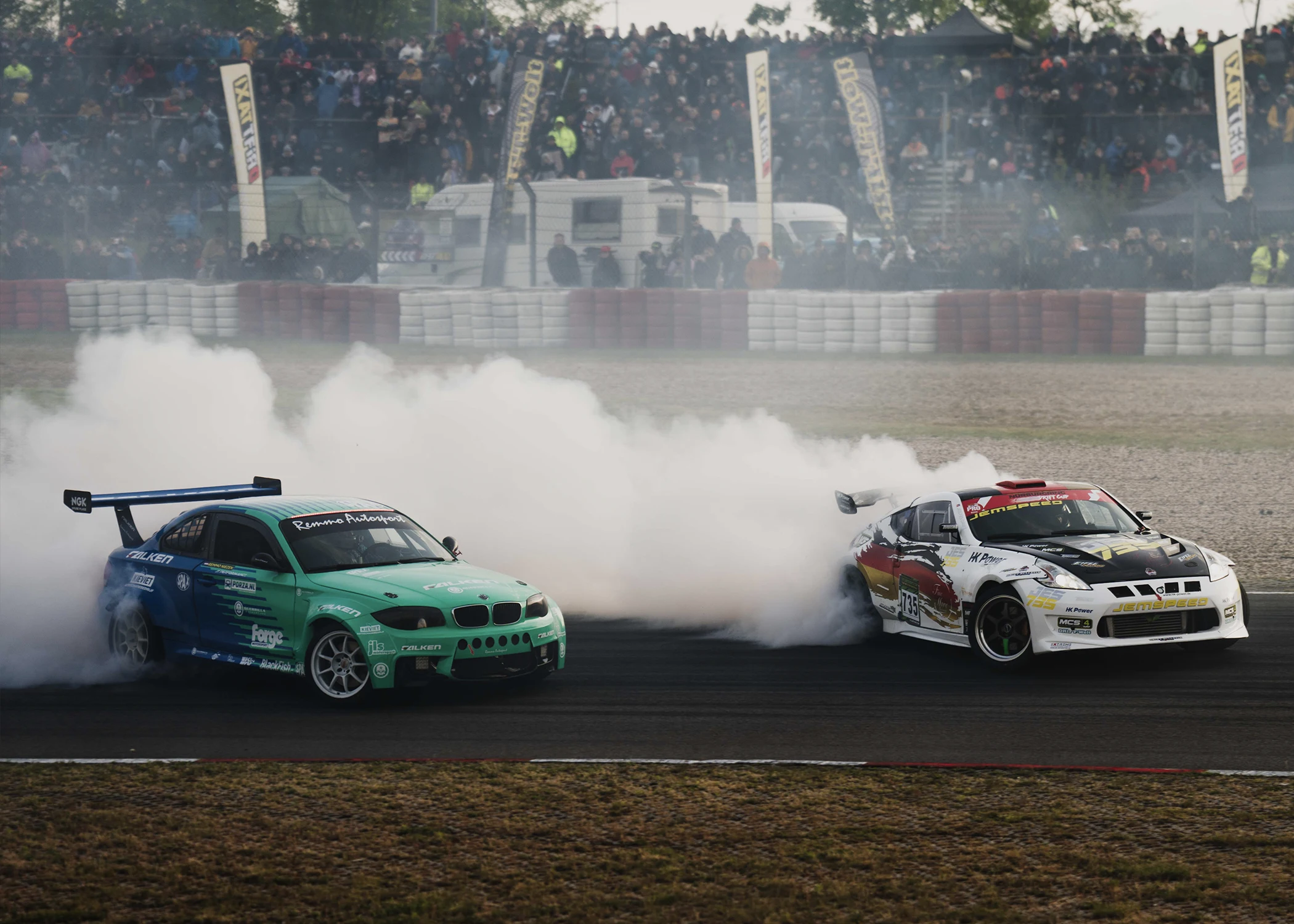
The two modified BMWs drift through the bend just a few centimetres apart, the engine revving at the redline, the sound of the exhaust drowning out the hip-hop beats, the tyres billowing into huge white clouds of smoke that shroud everything. We’re standing right next to the track for this show ahead of the 24-hour race. More and more drift cars follow, the spectators in the packed grandstands cheering. Before that, historic racing cars such as the Mercedes 190E Evo and the Porsche 964 RSR had already been on the track in their own heat.
Even before the race itself begins, you can tell that this motorsport event is something truly special. This is, of course, partly down to the circuit. The Nürburgring Nordschleife is one of the world’s most legendary circuits due to its length of over 20 kilometres, the significant elevation changes, the limited run-off areas and its history. Jackie Stewart coined the nickname ‘Green Hell’.
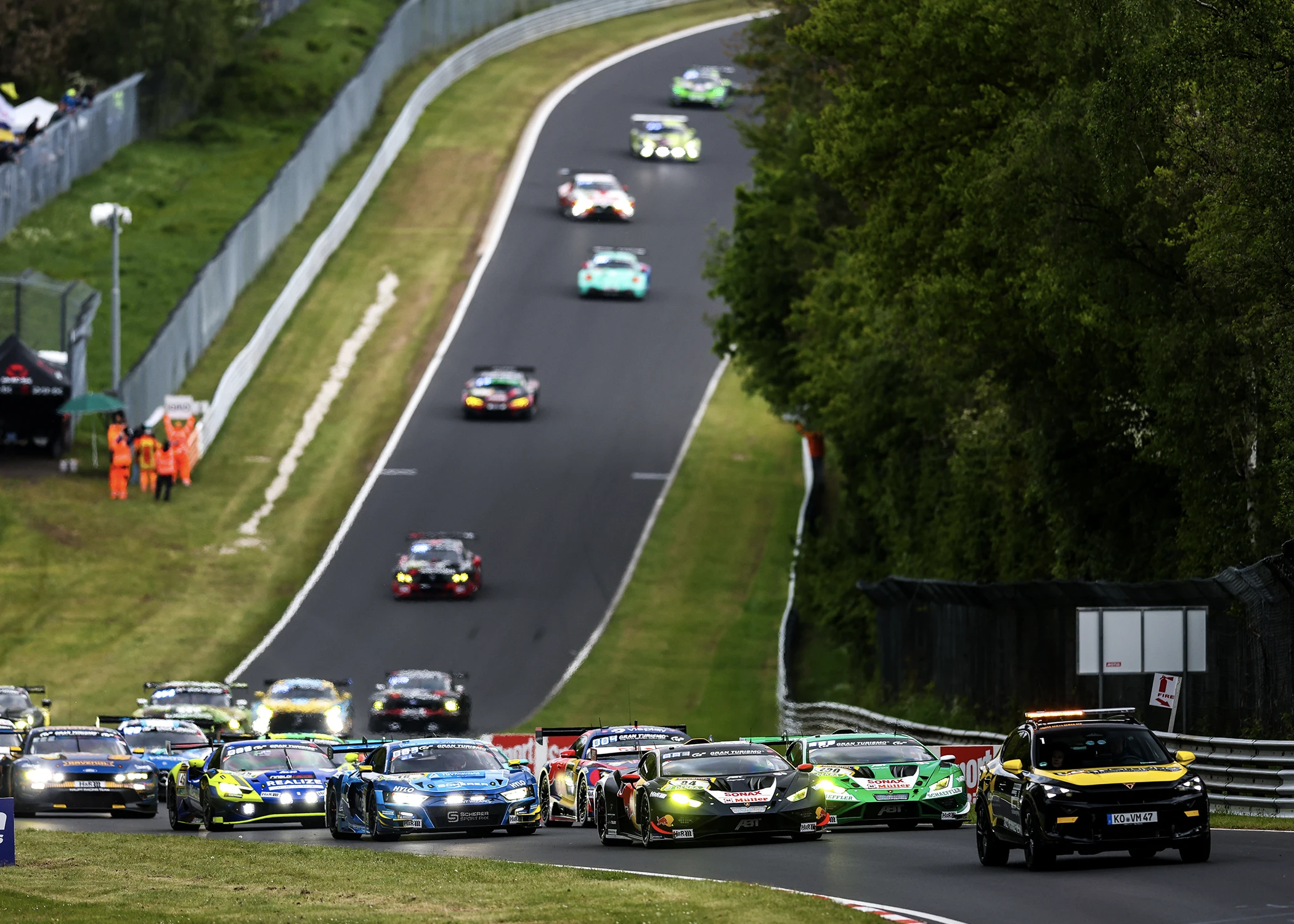
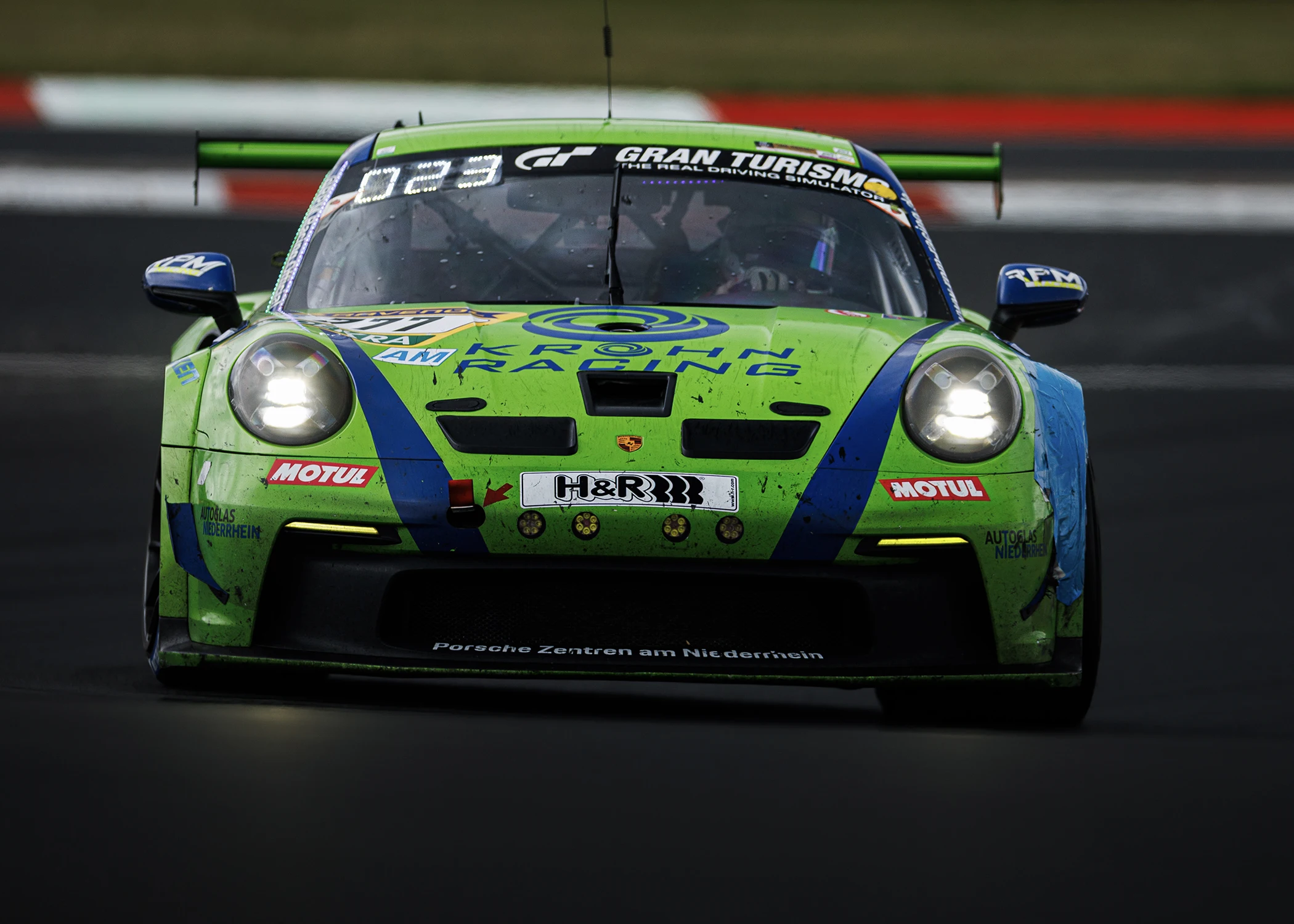
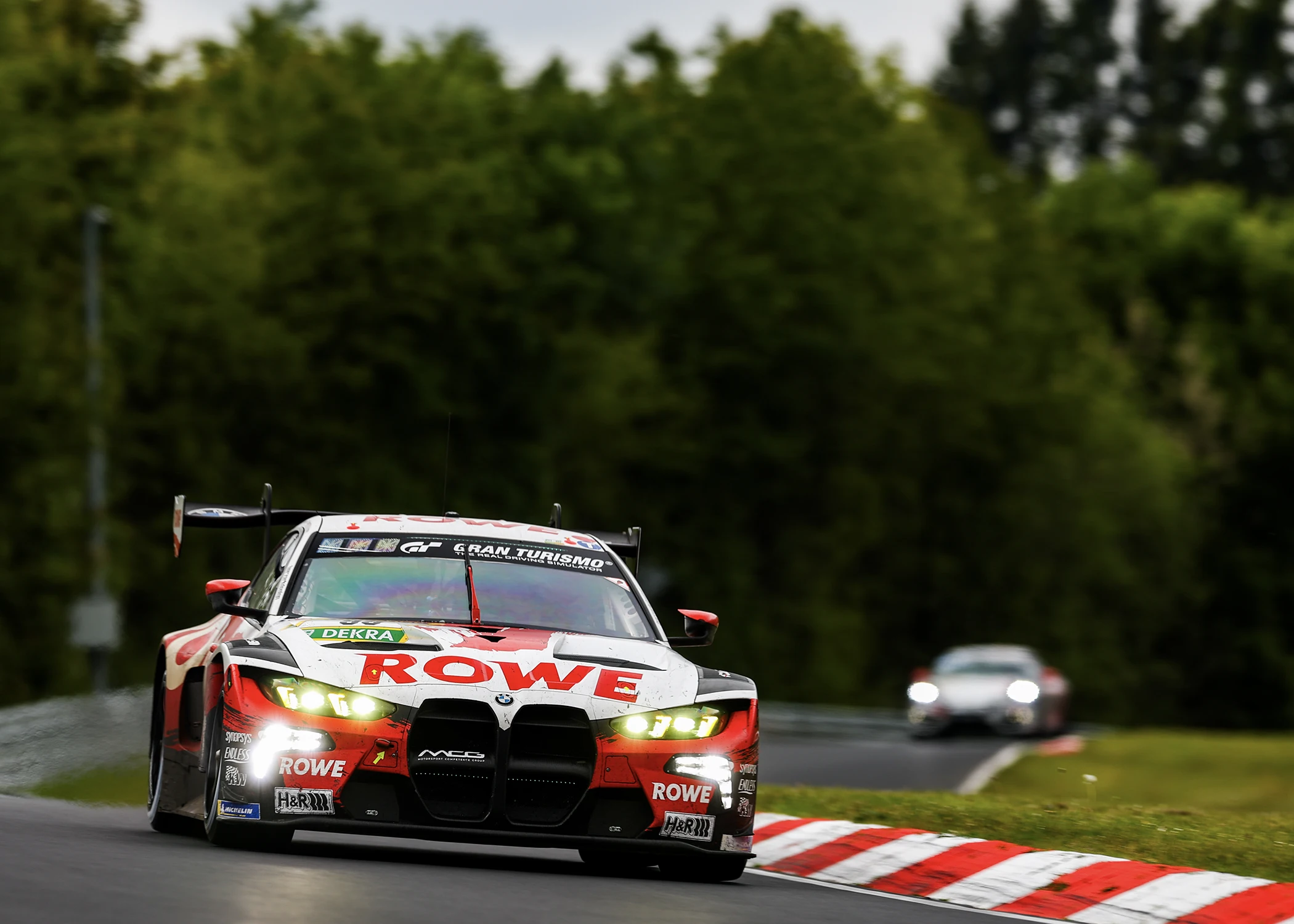
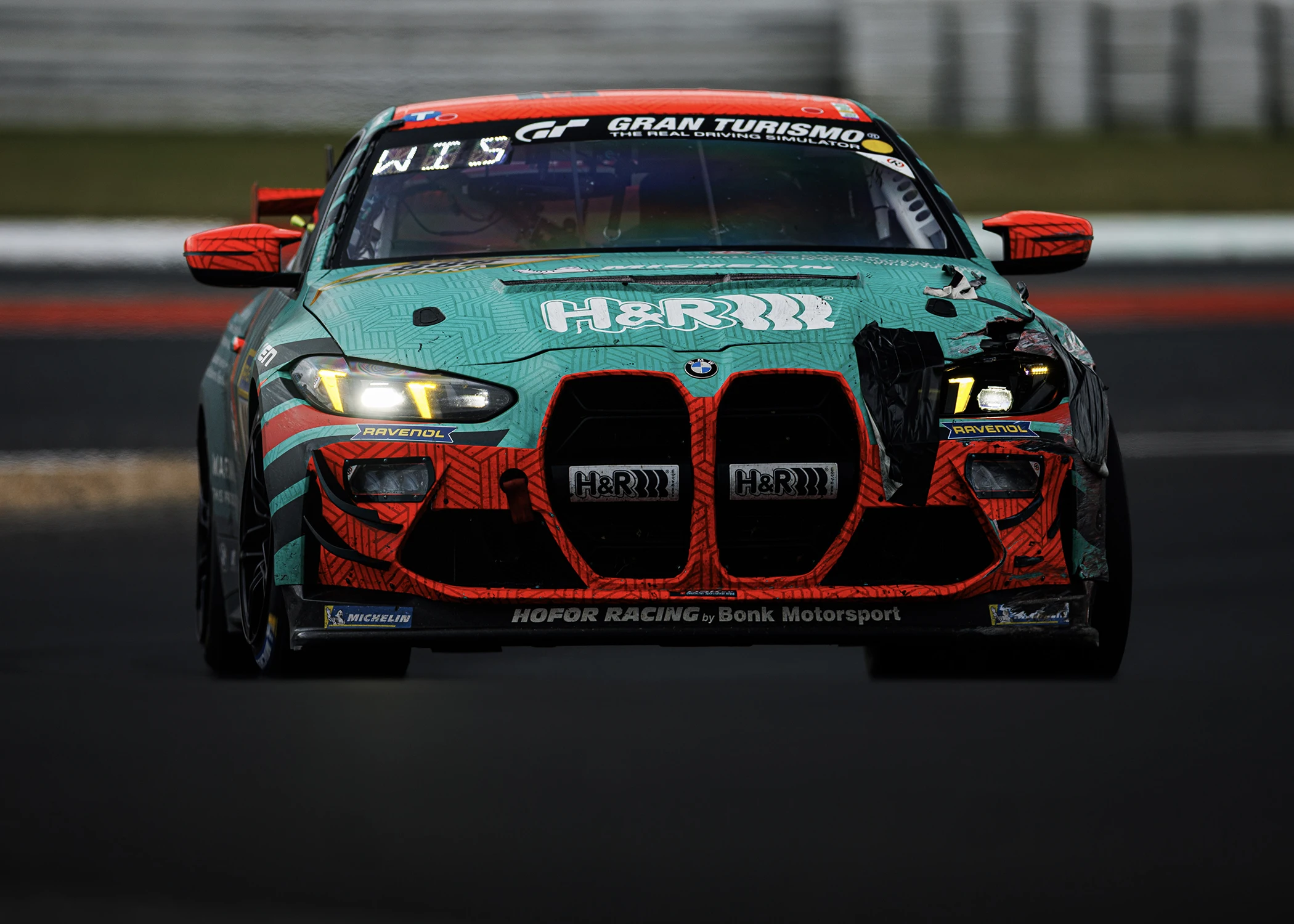
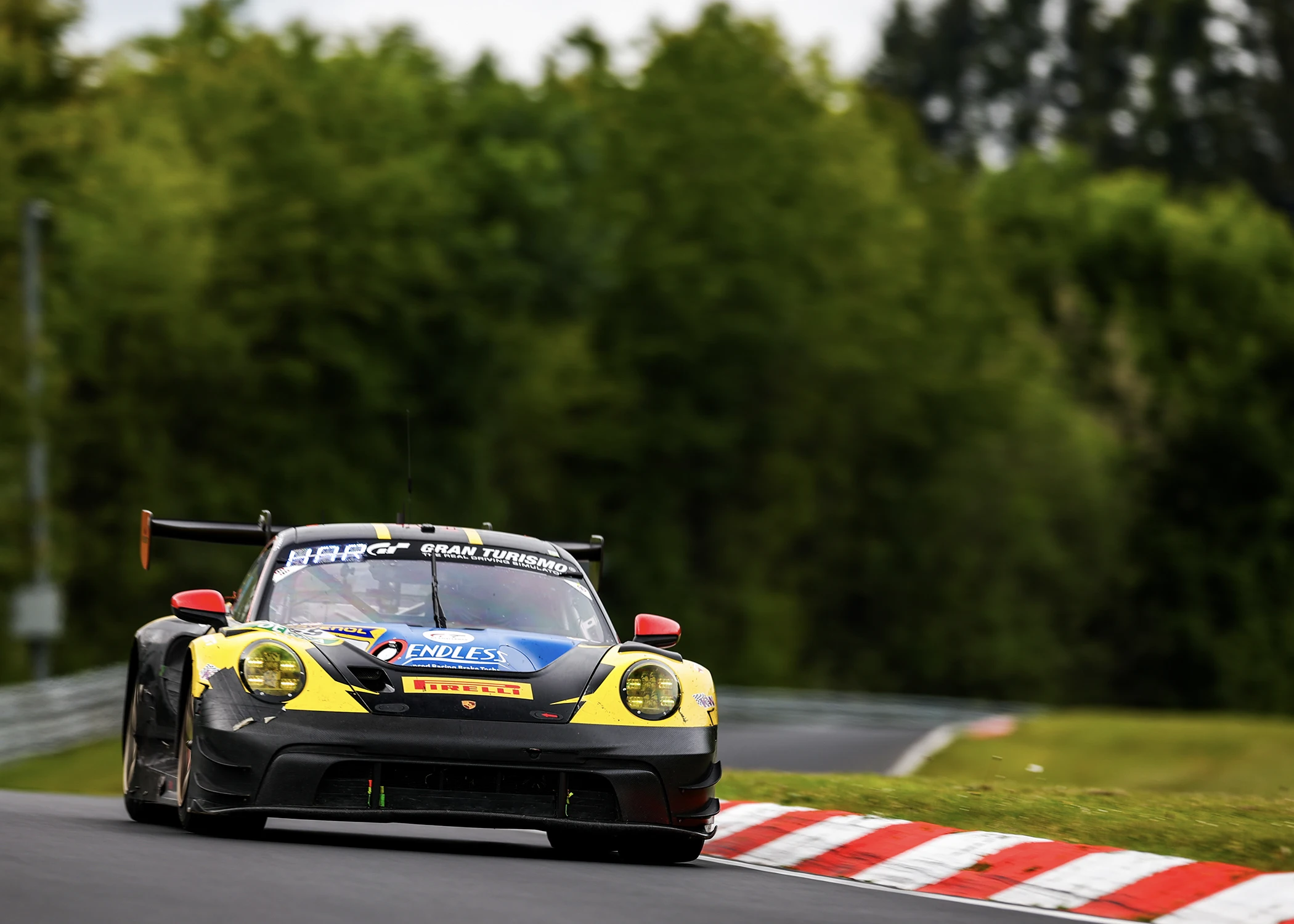
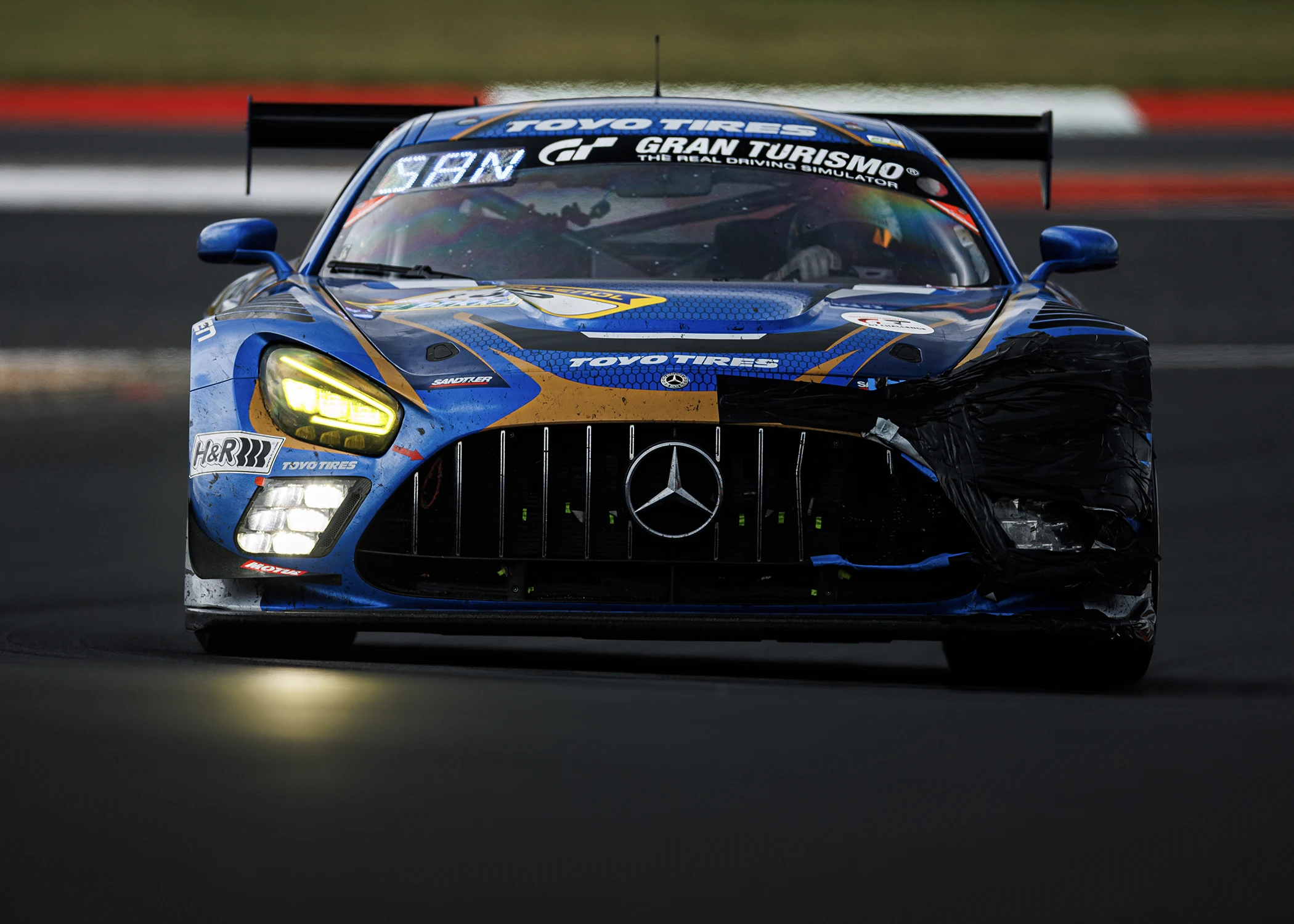
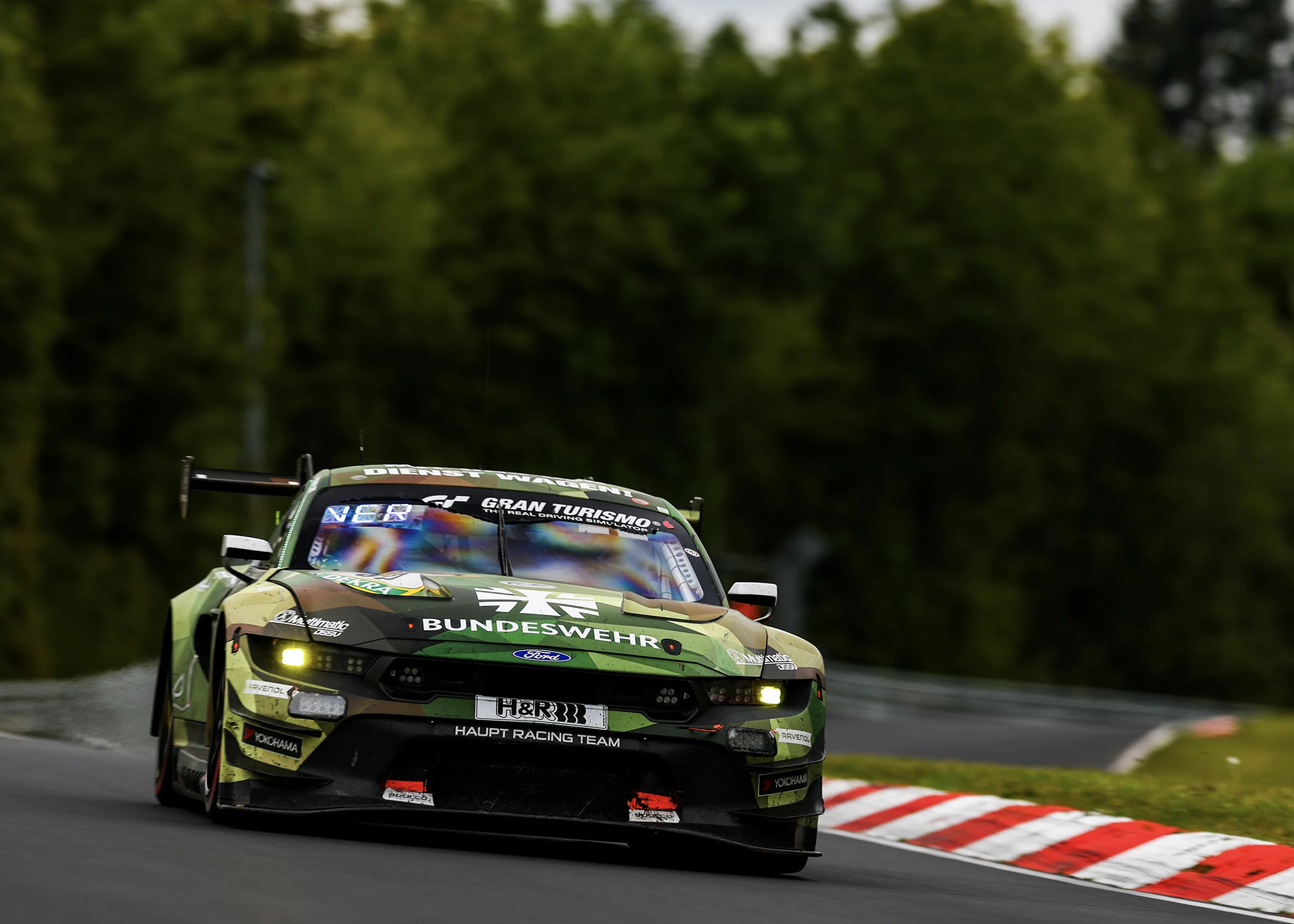
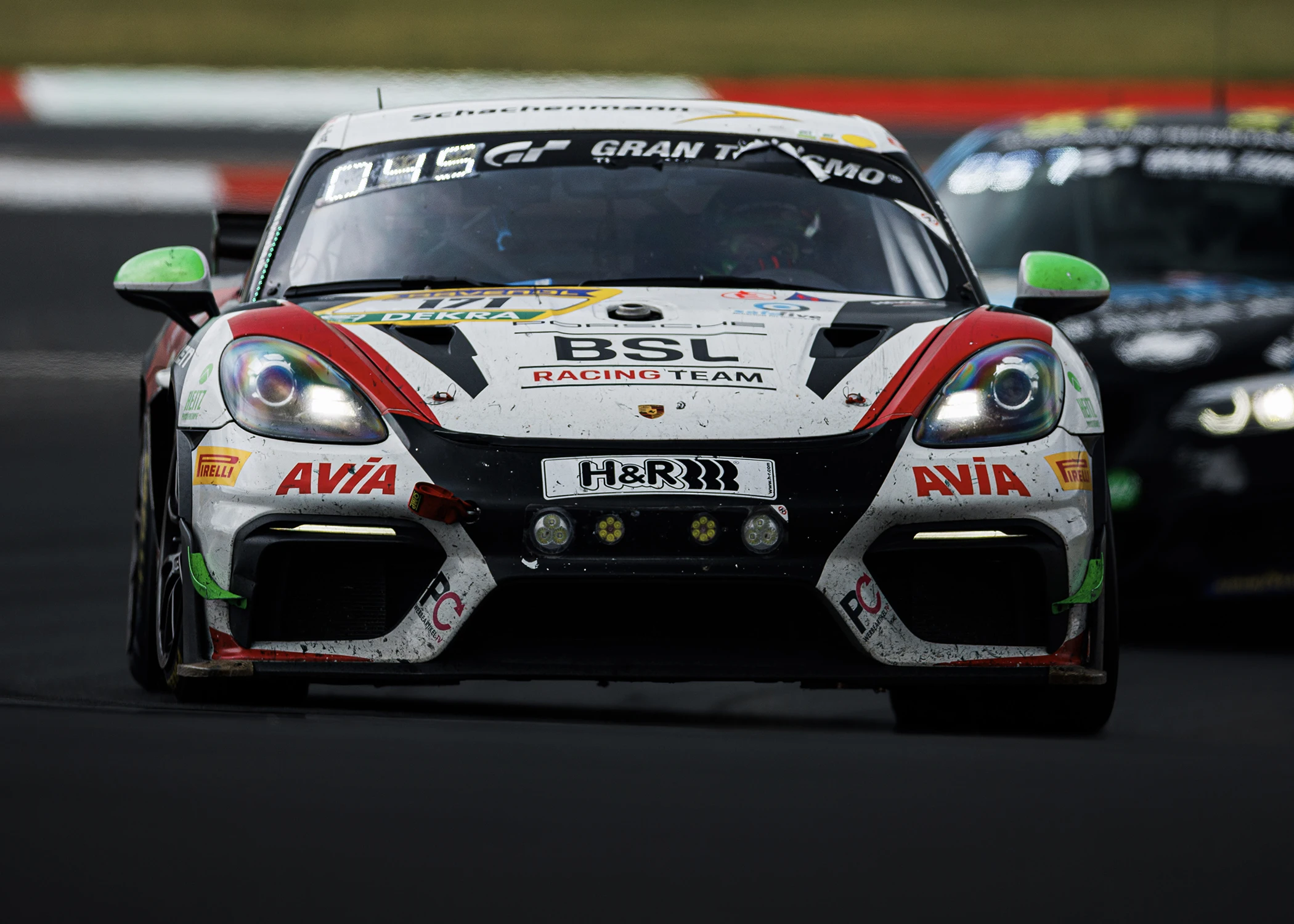
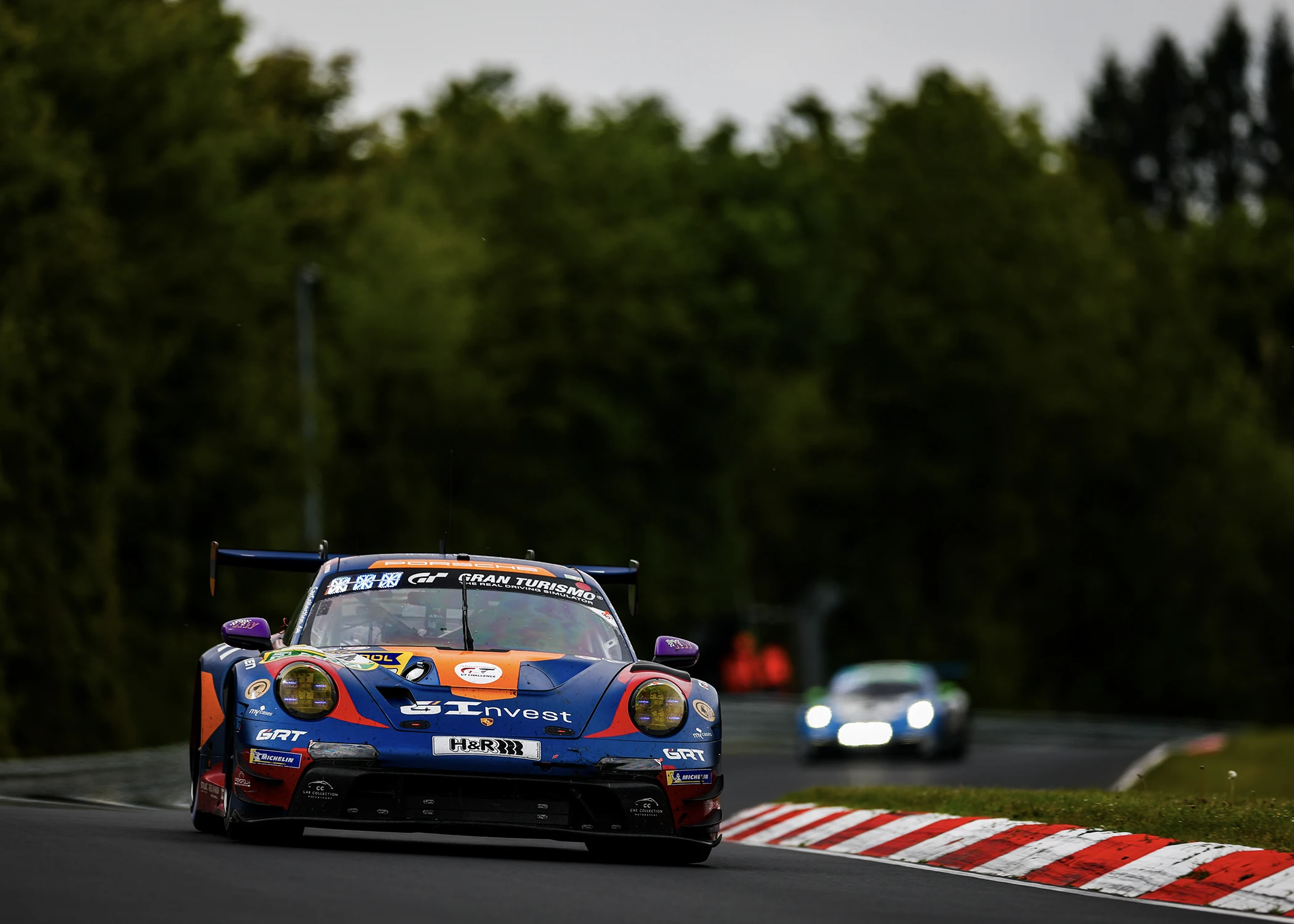
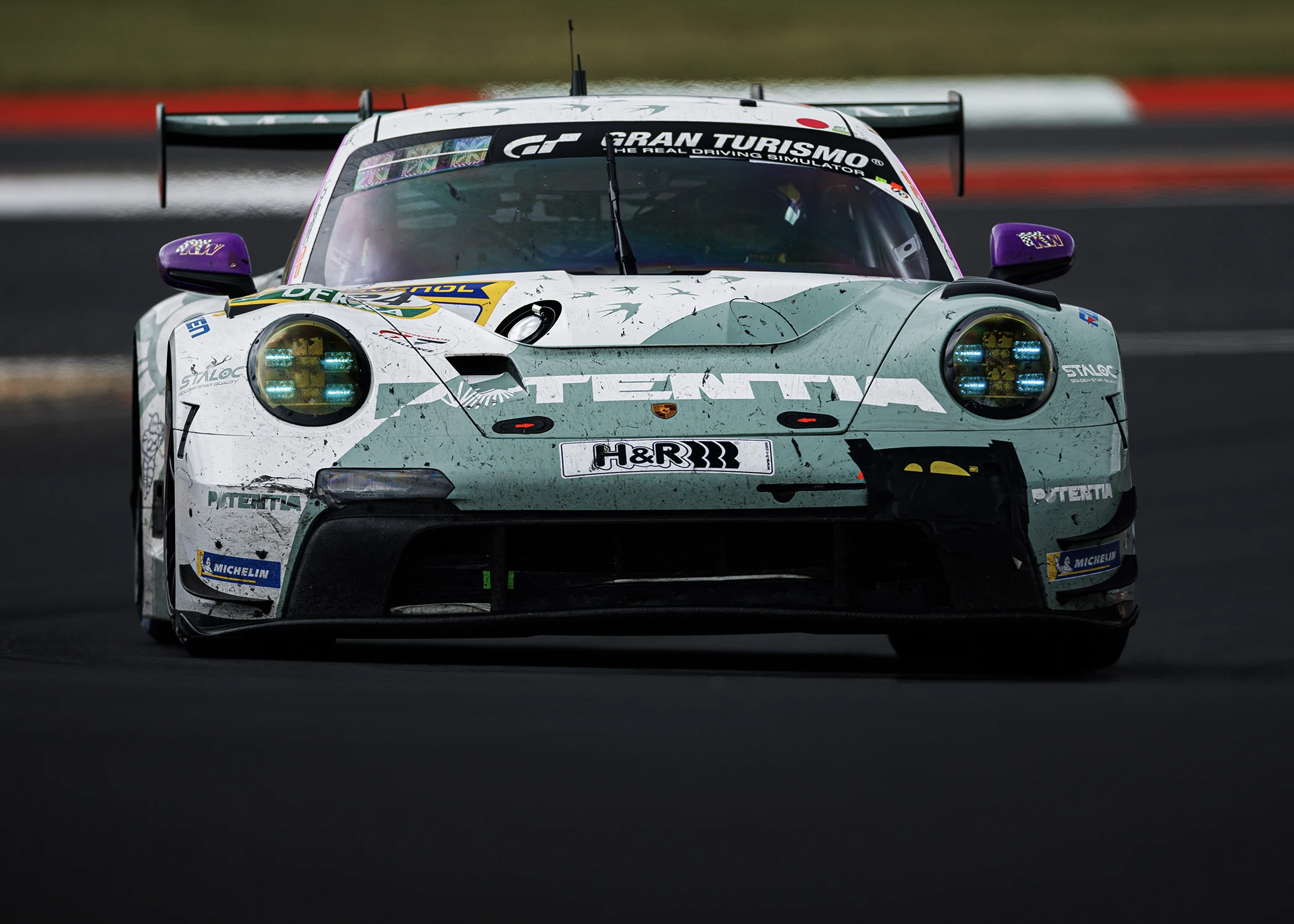
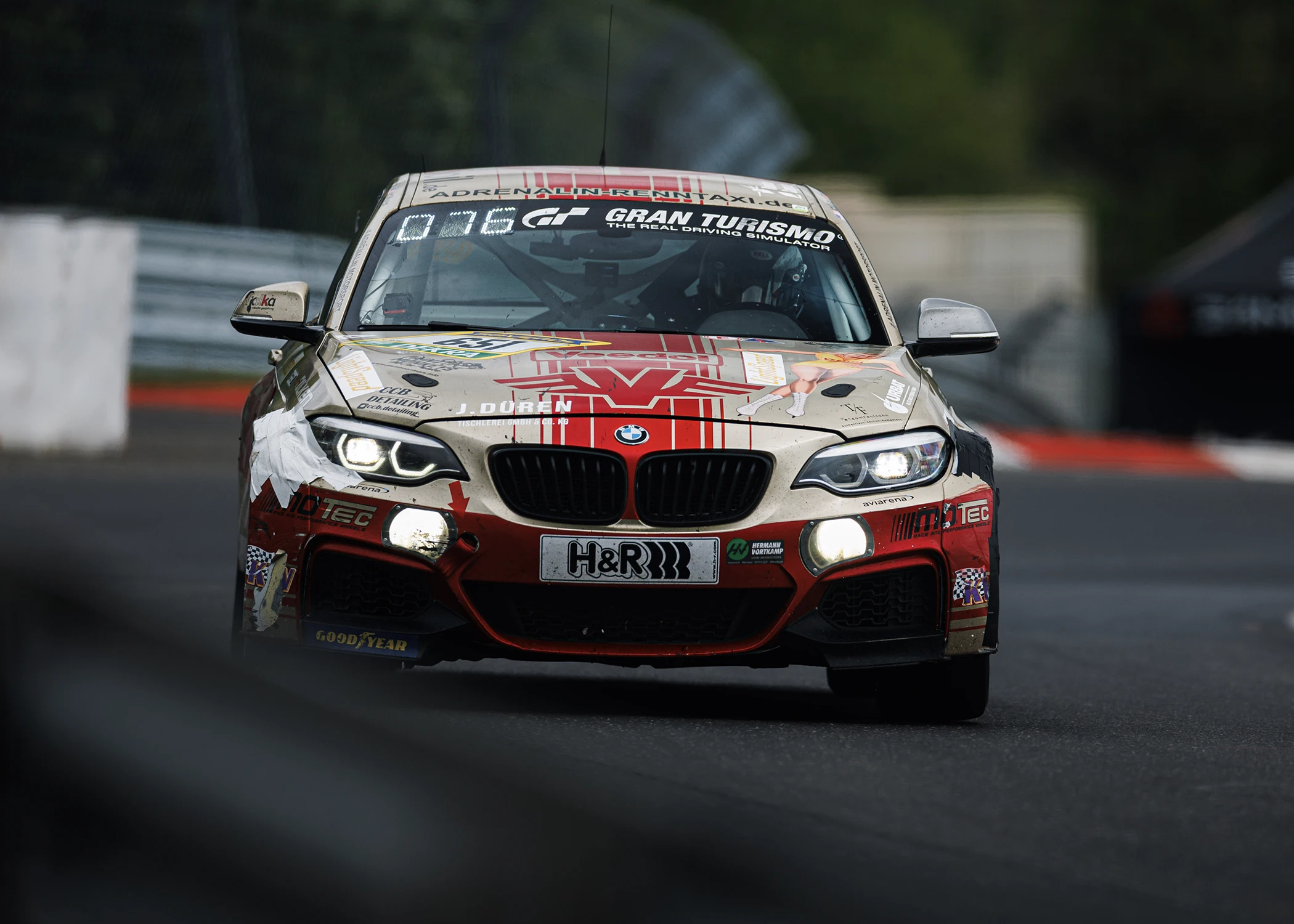
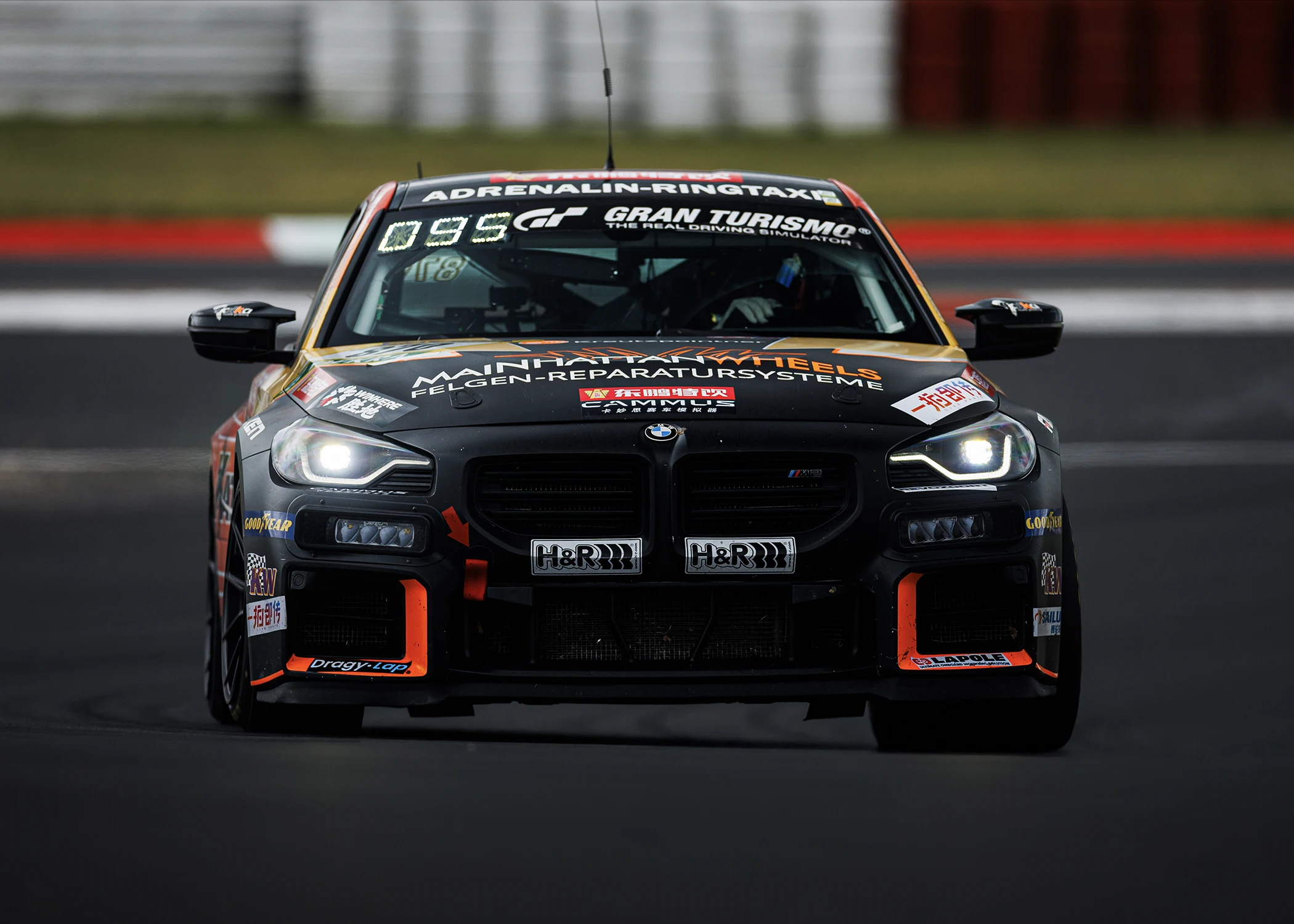
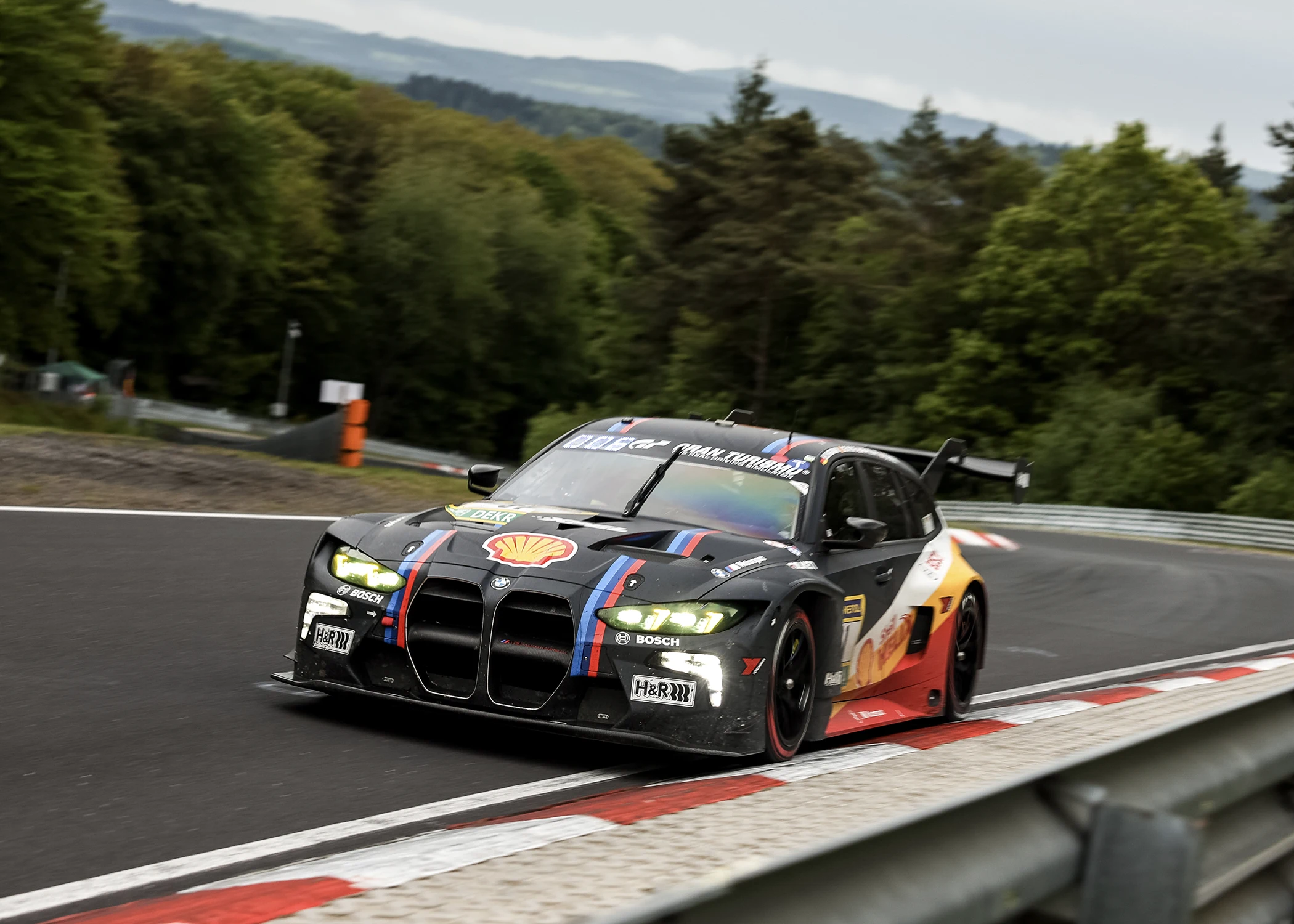
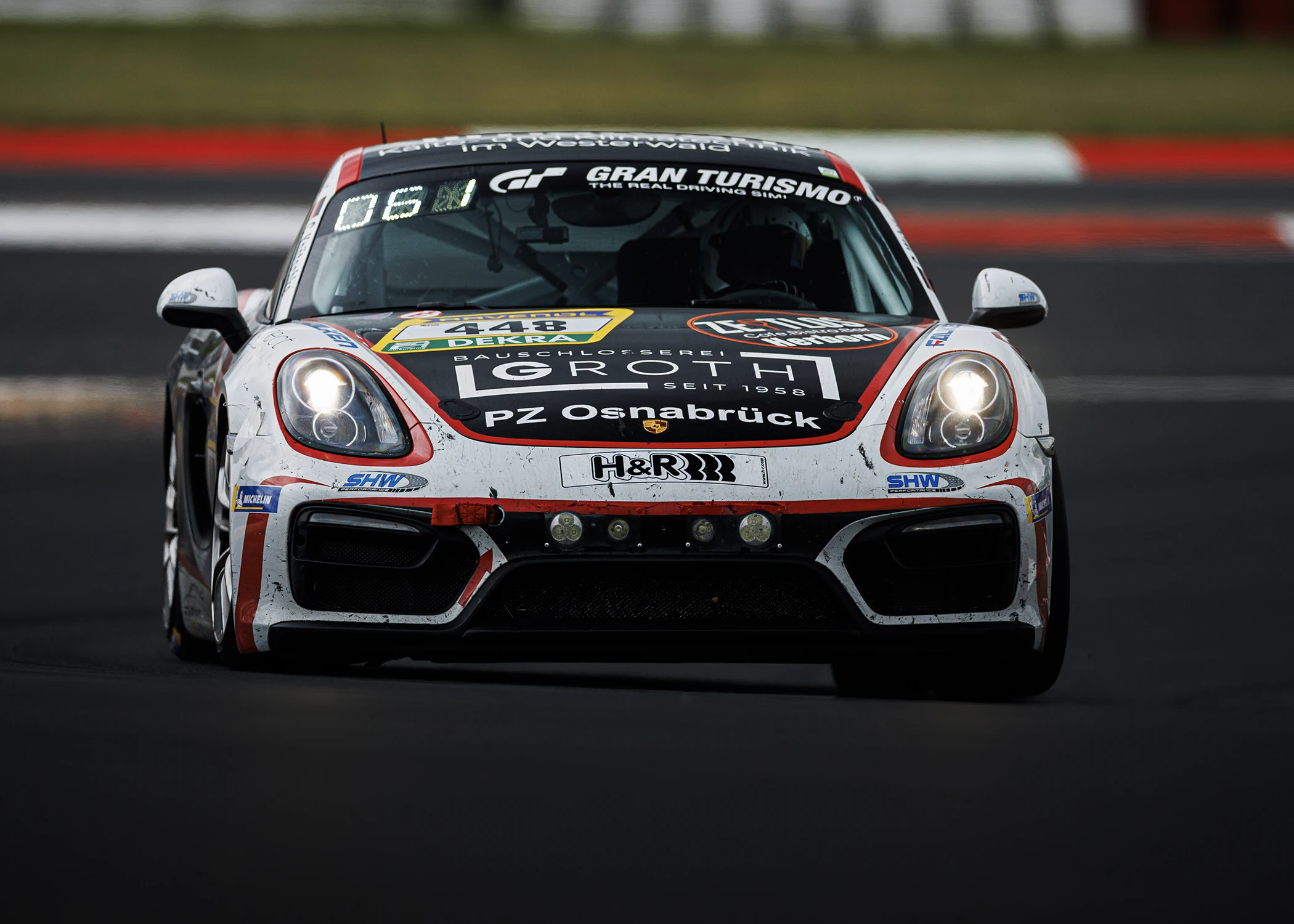
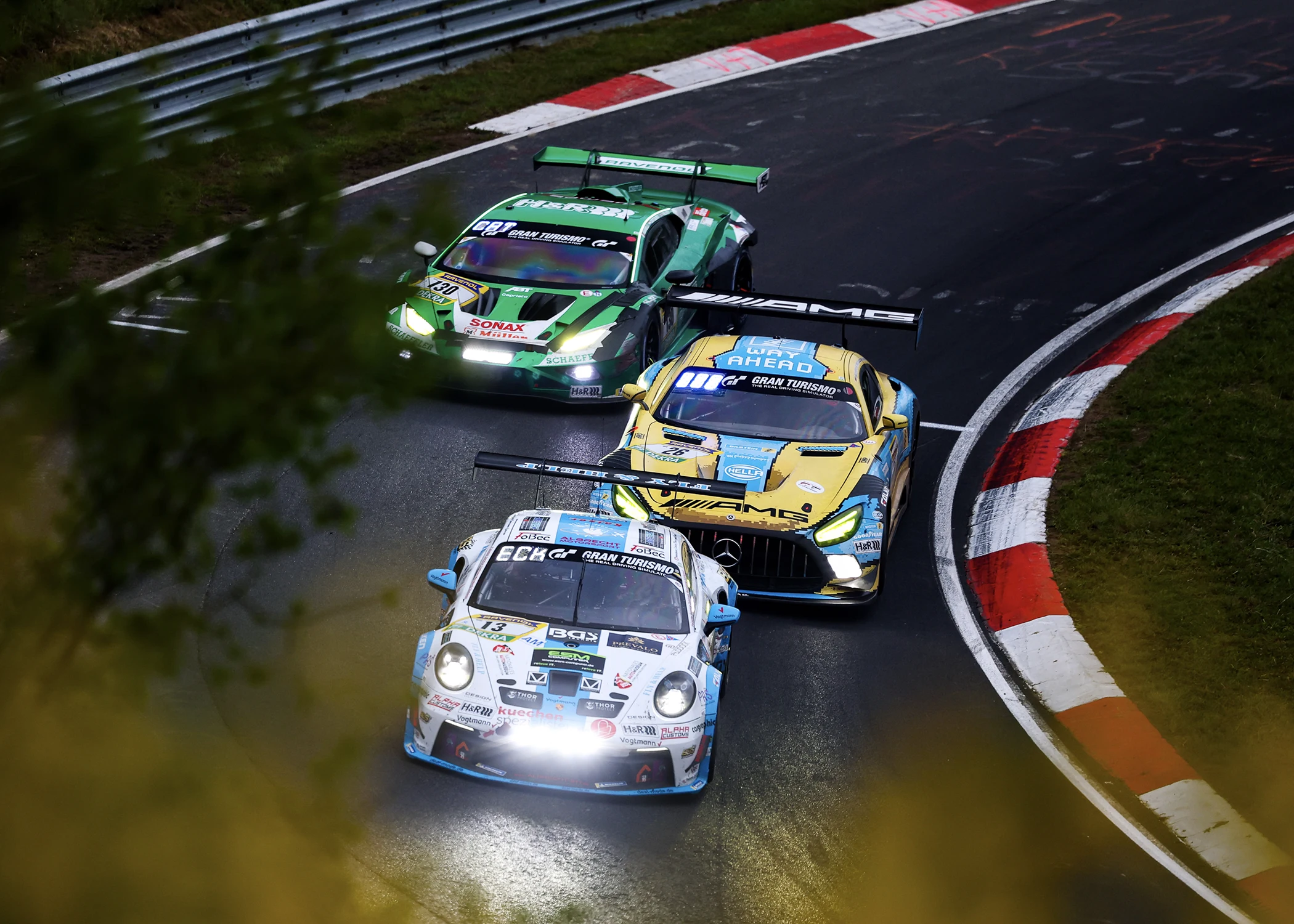
For the 24-hour race, the Grand Prix circuit is also used, meaning that each lap covers 25 kilometres. It is primarily production-based GT3 racing cars, such as the Porsche 911 GT3 R or the BMW M4 GT3 EVO, that battle it out for victory here. However, there are also slower cars from other classes on the track, right down to the crowd favourite, the Dacia Logan.
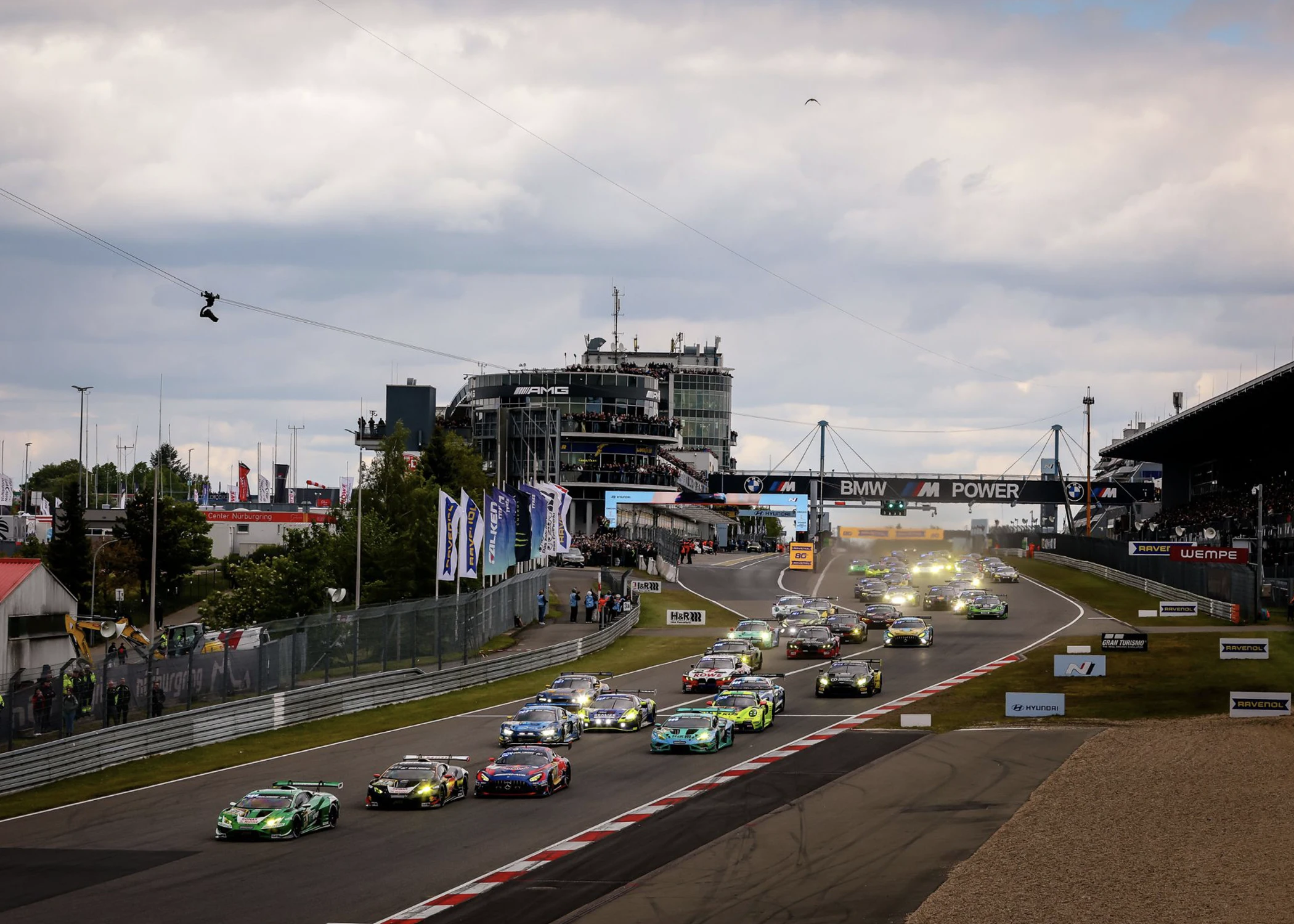
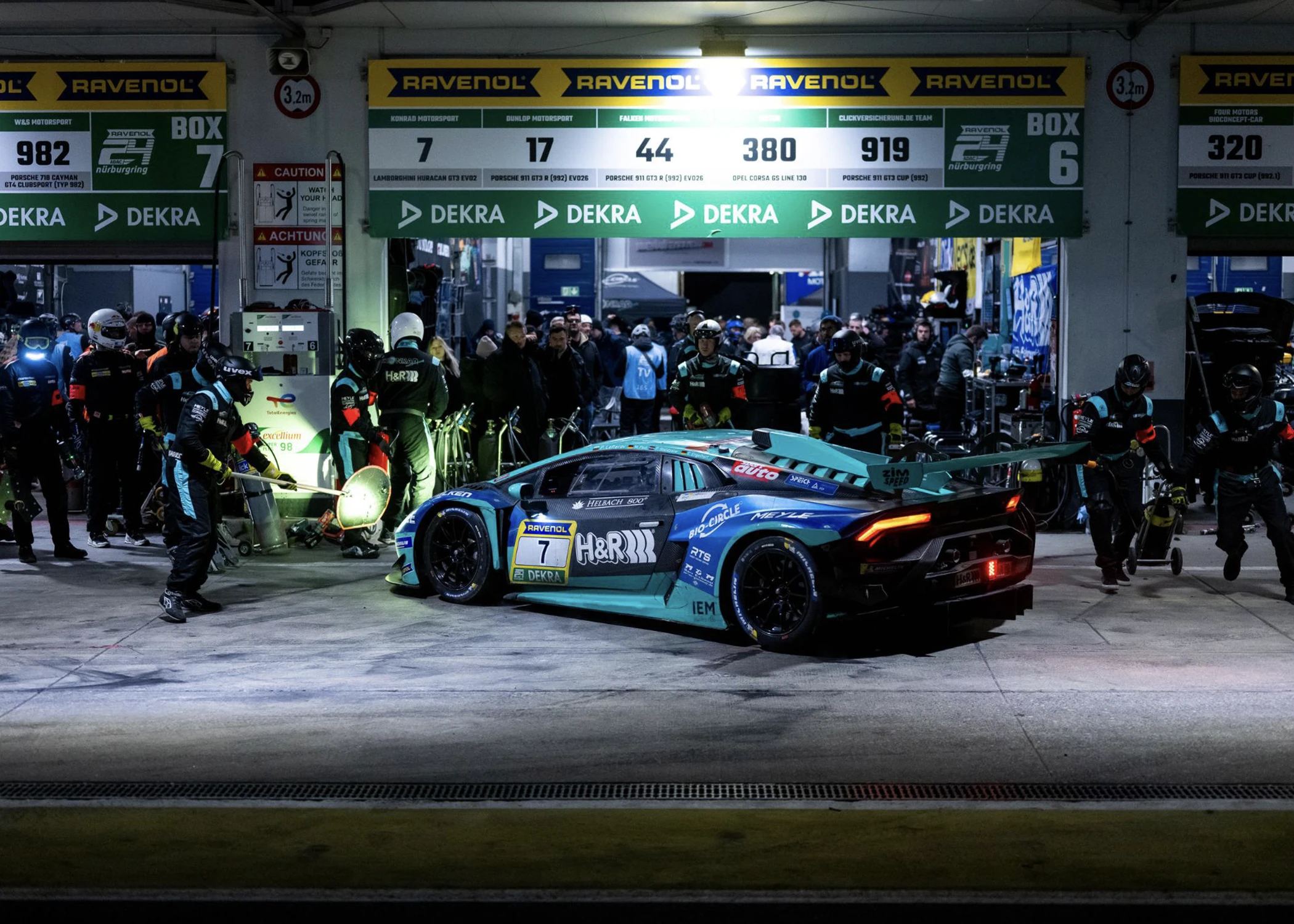
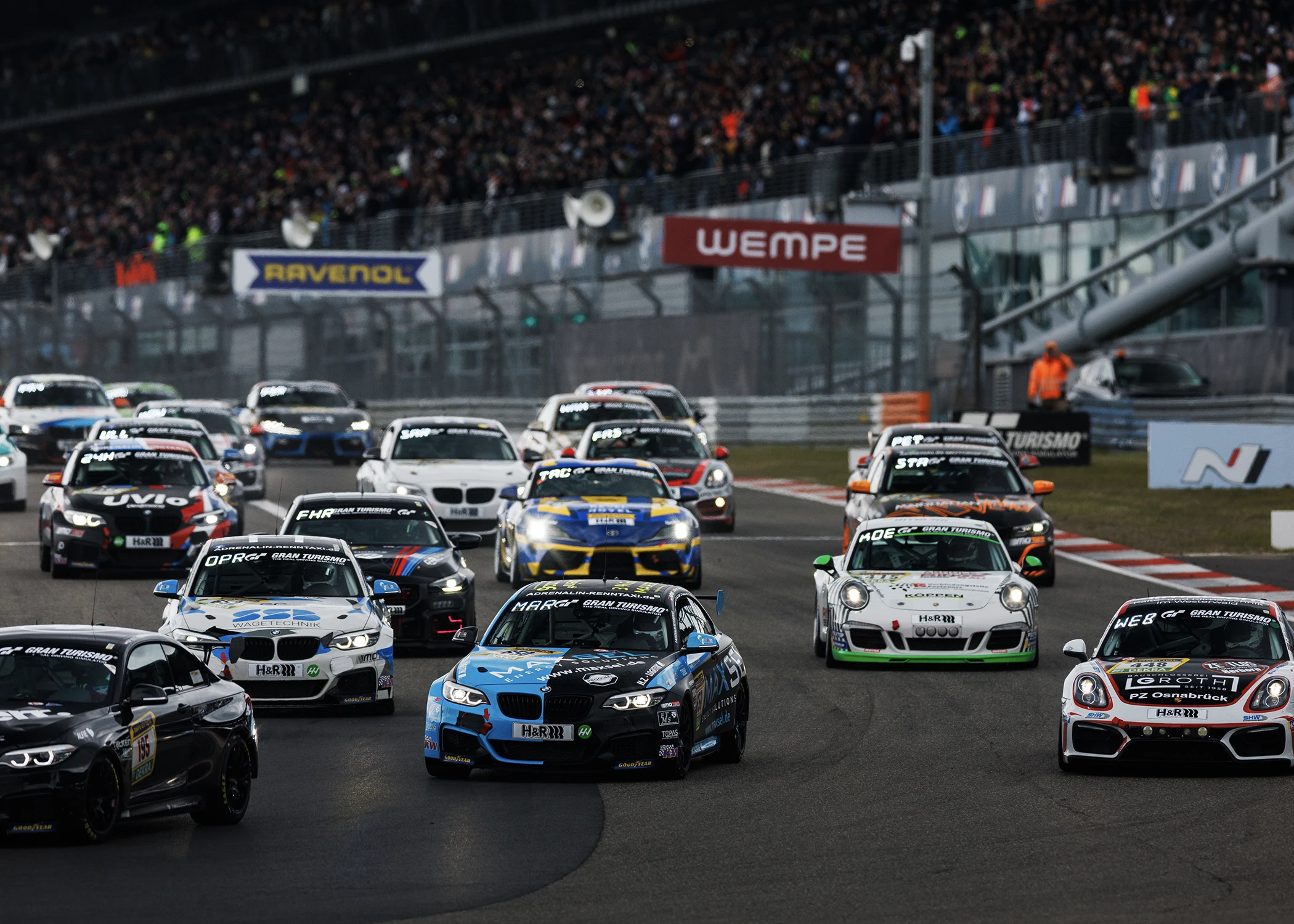
This year saw a new record with 352,000 spectators in attendance; the stands were completely sold out. This makes the 24 Hours of Nürburgring the world’s biggest motorsport event. Some people camp here for a week alongside the race track, giving the event a real festival atmosphere.
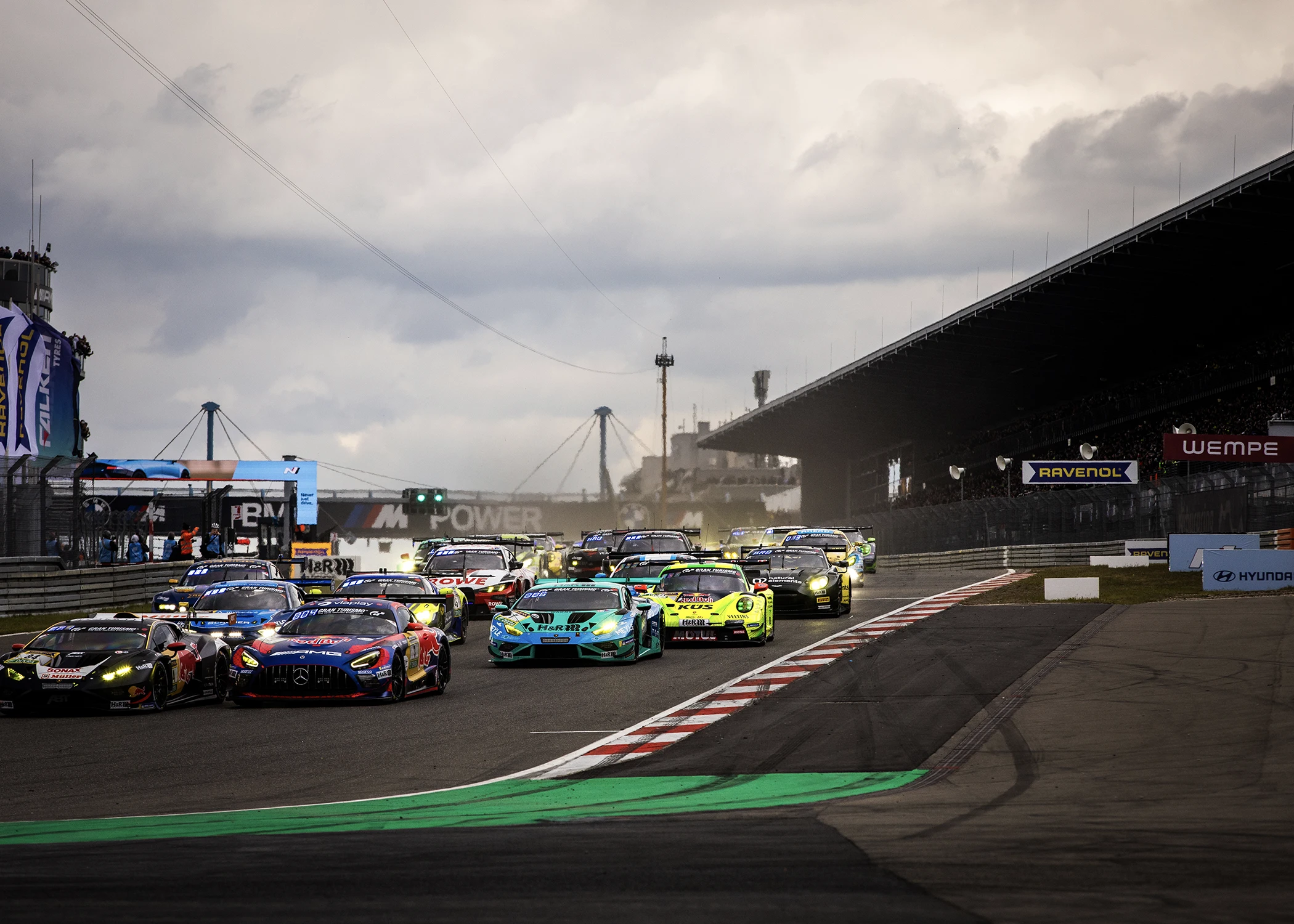
Even though the event and the racing teams obviously can’t do without sponsors, this is still honest racing like in the old days, and some of the drivers are amateurs who don’t earn their living from racing.
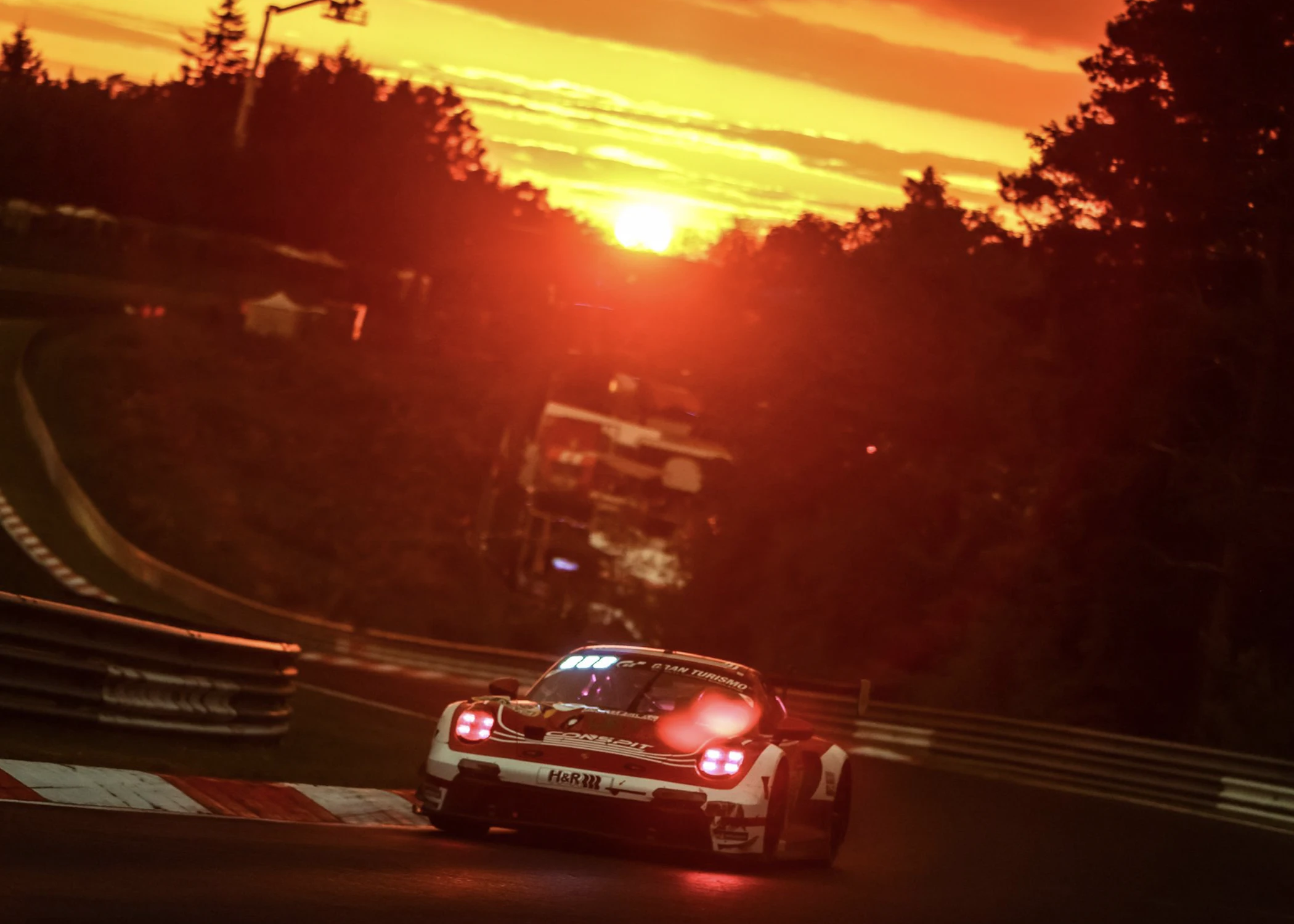
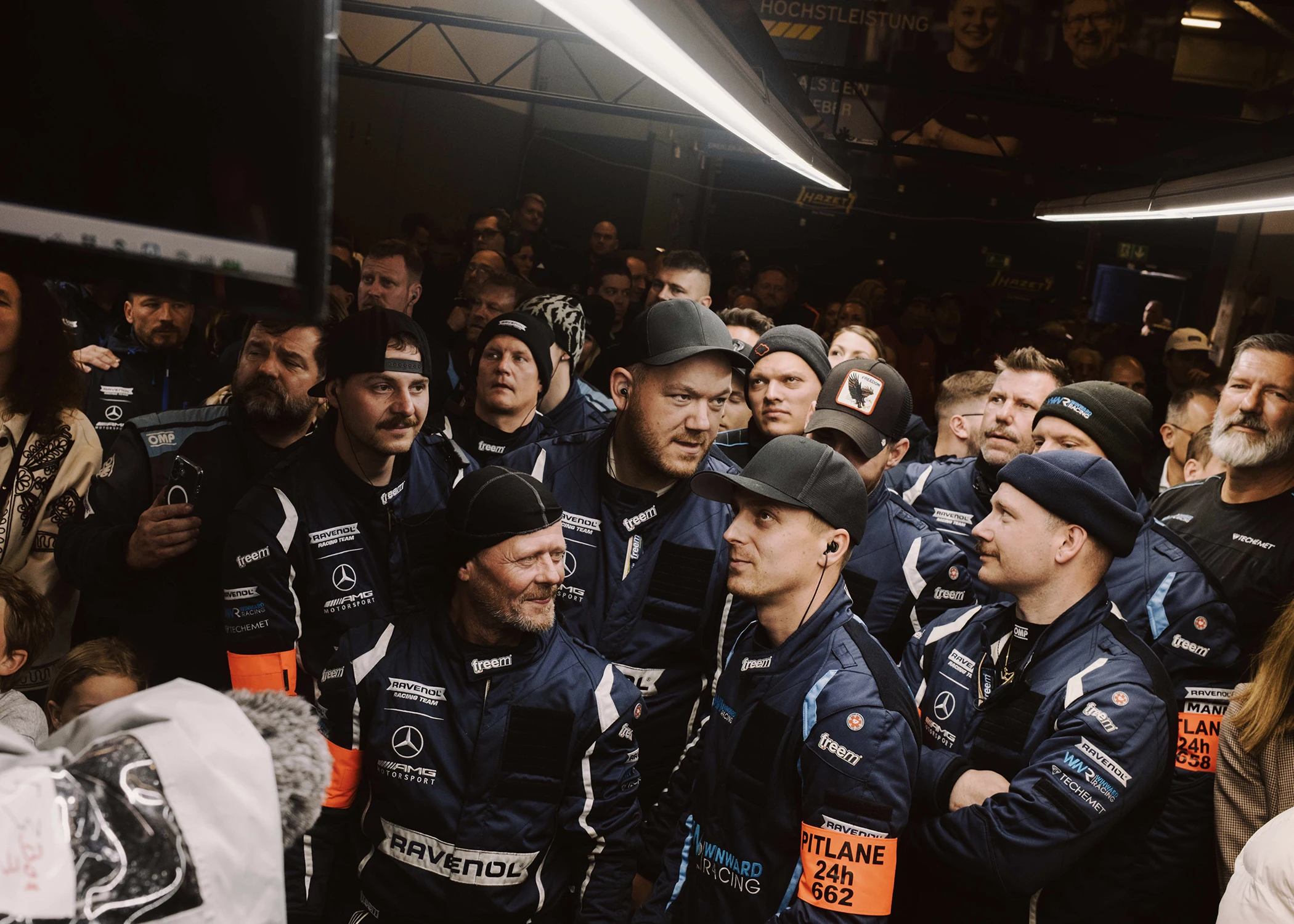
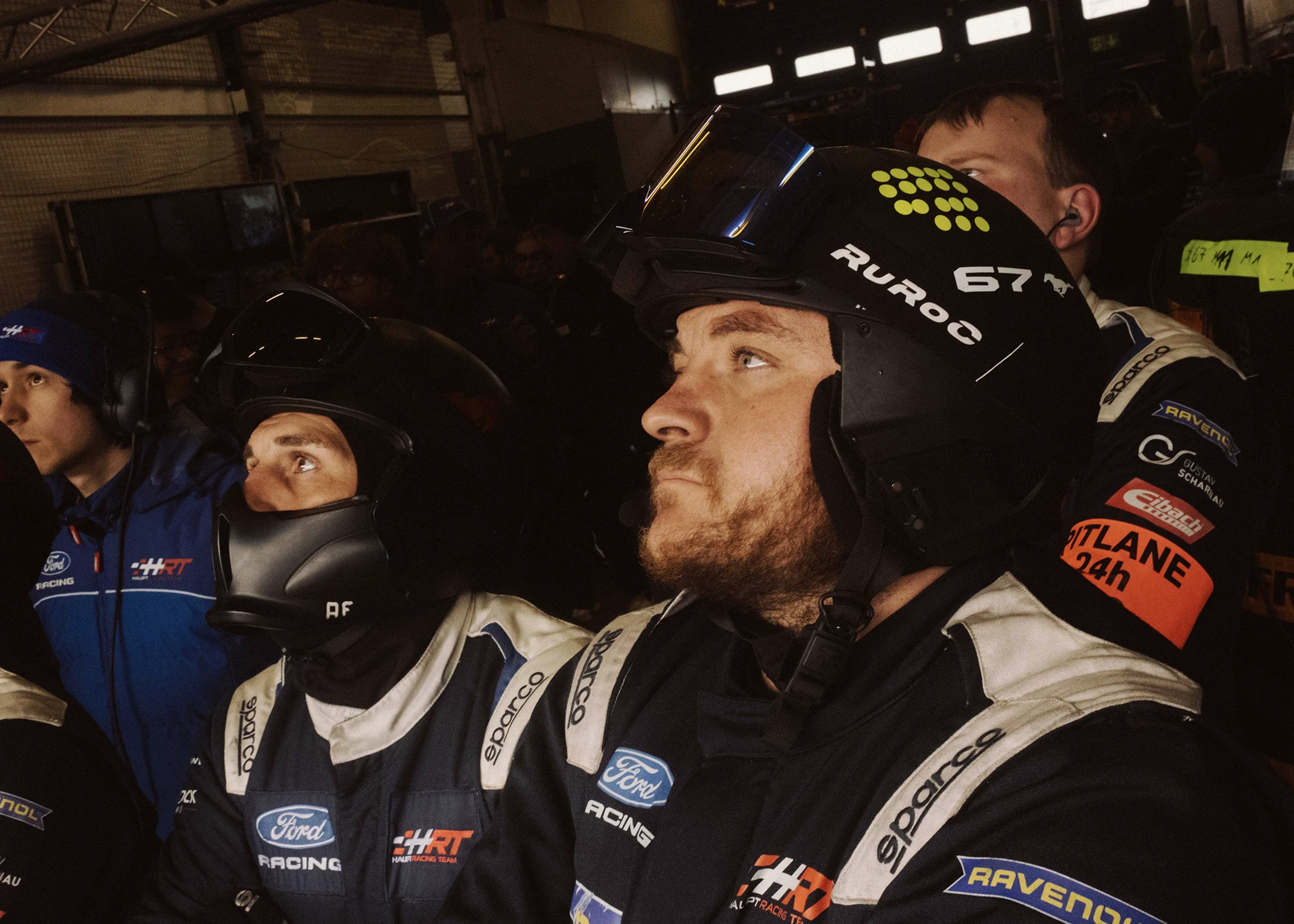
One true professional is Formula 1 star Max Verstappen. He set up his own small racing team specifically for this event and was determined to win at the Nürburgring. The huge turnout of spectators this year was also down to public interest in the four-time Formula 1 world champion.
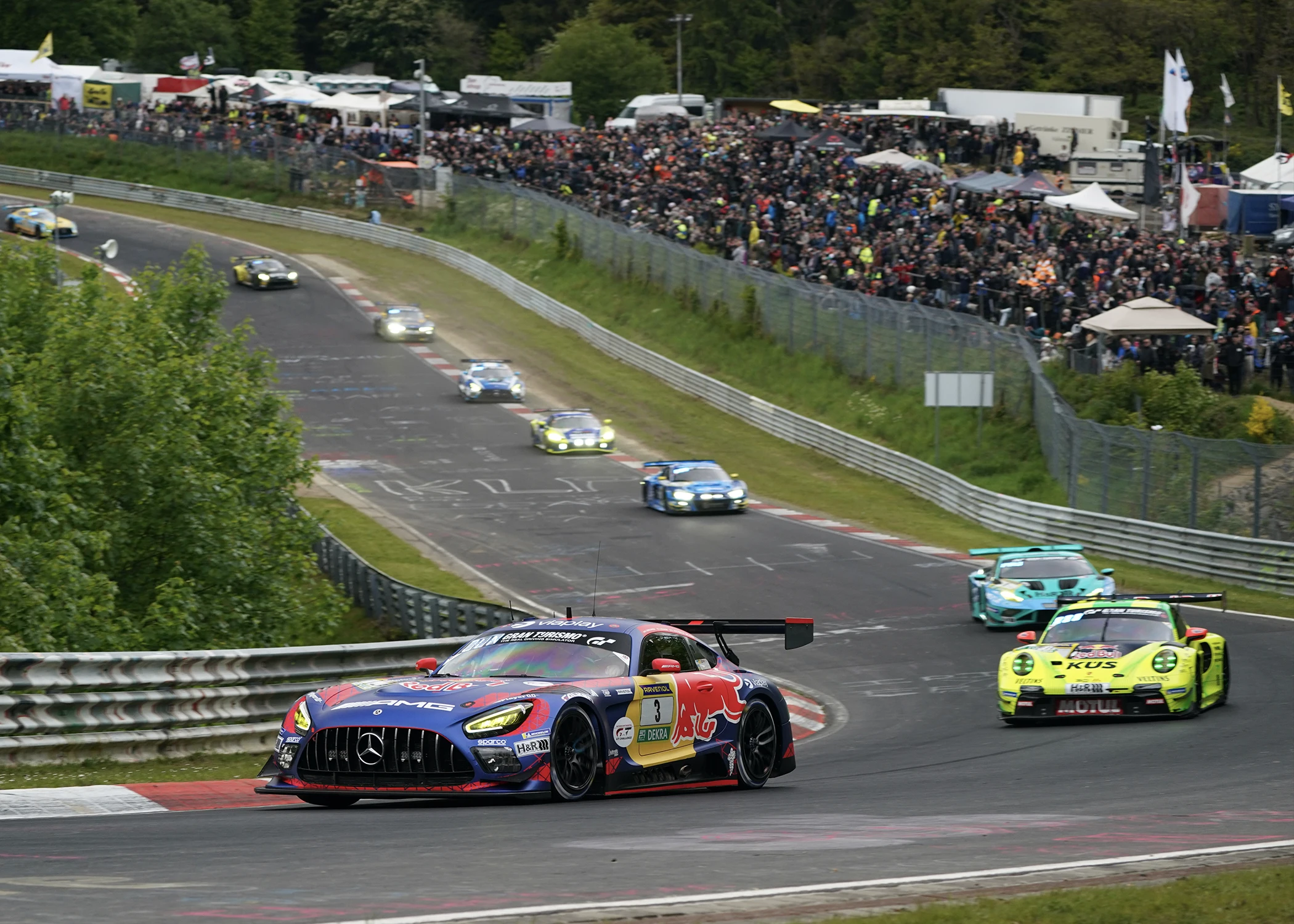
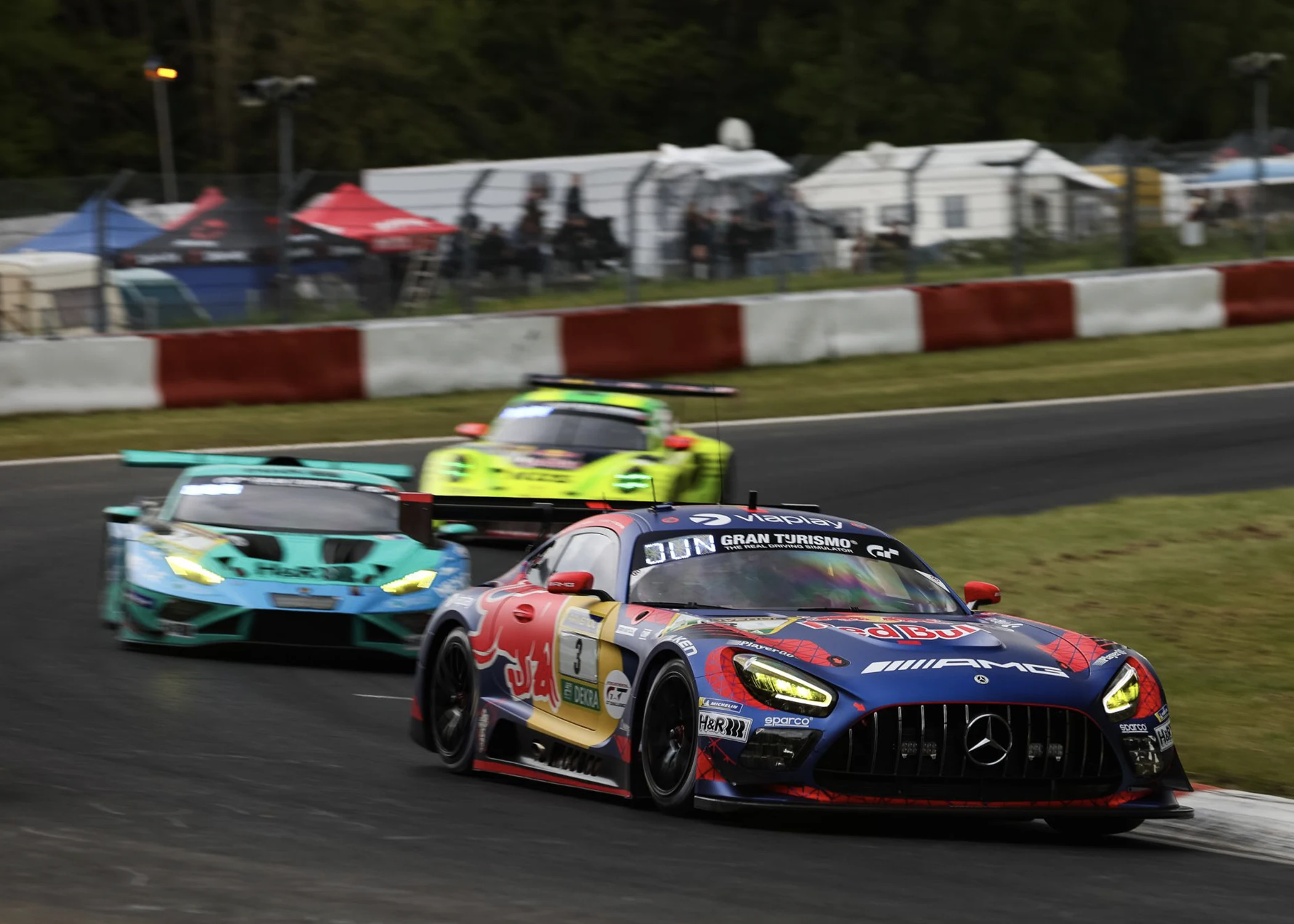
Max Verstappen’s Mercedes-AMG GT3, in its blue Red Bull livery, features the red Wempe logo on the rear window, just like every other car here. The jewellery brand also features prominently on signs, hoardings and in the live broadcast.
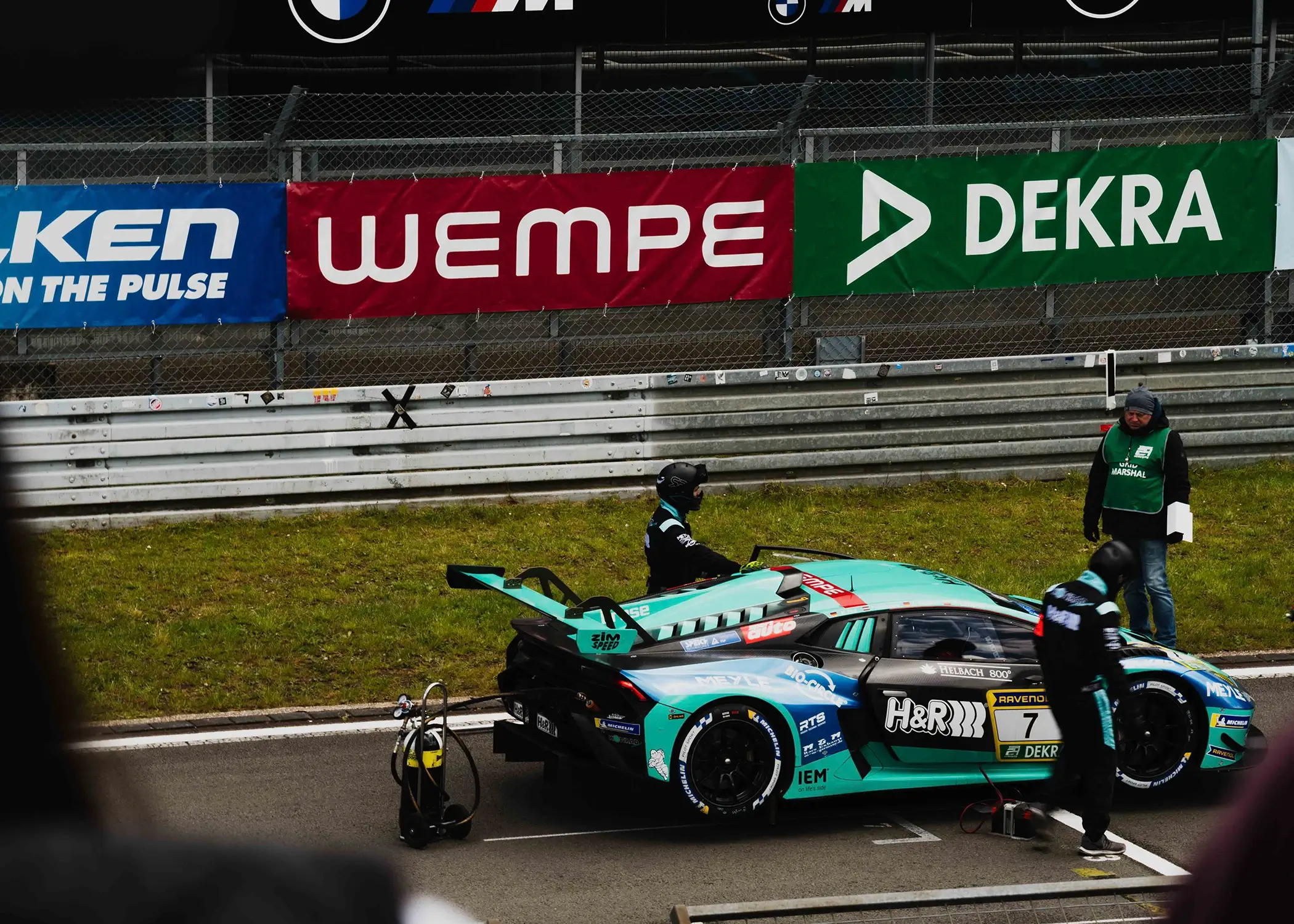
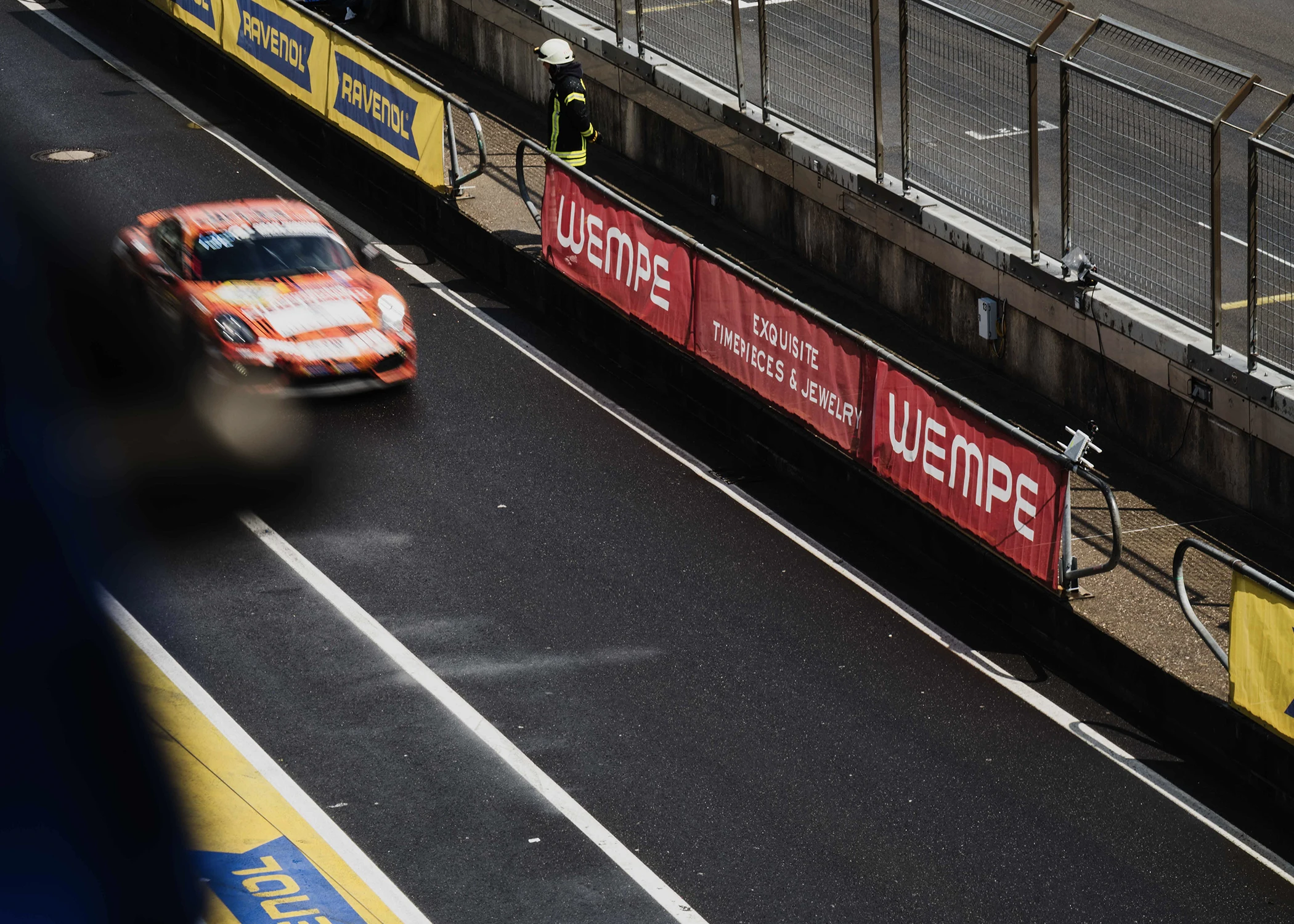
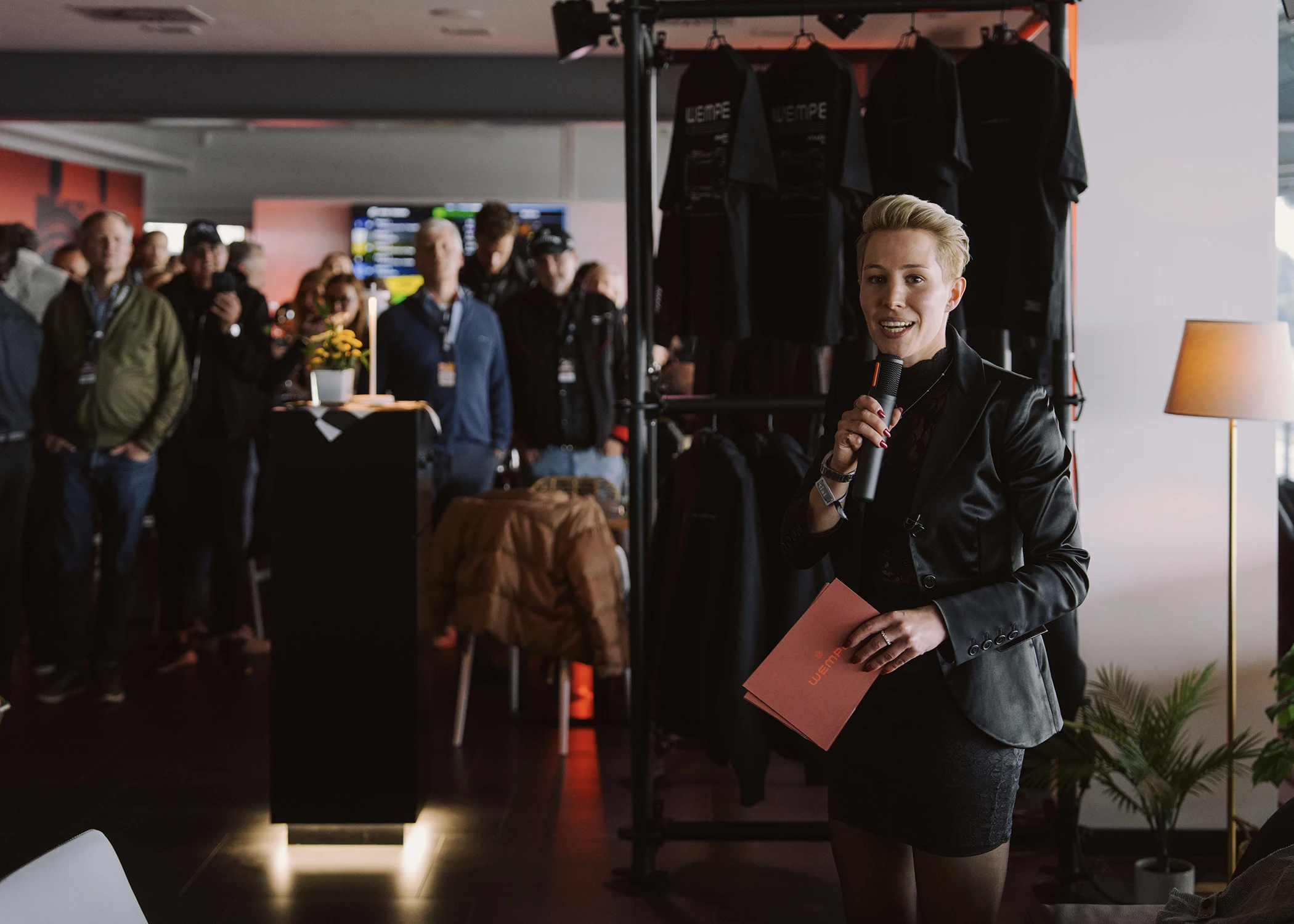
Chiara Wempe is a motorsport fan and attended the 24-hour race at the Nürburgring for the first time ten years ago. Now, on her initiative, Wempe is the official timing partner of the event and the Nürburgring Endurance Series (NLS). The 28-year-old, who is currently responsible for business development at Wempe, is presenting the partnership to guests in the Wempe Lounge, which overlooks the start-finish straight.
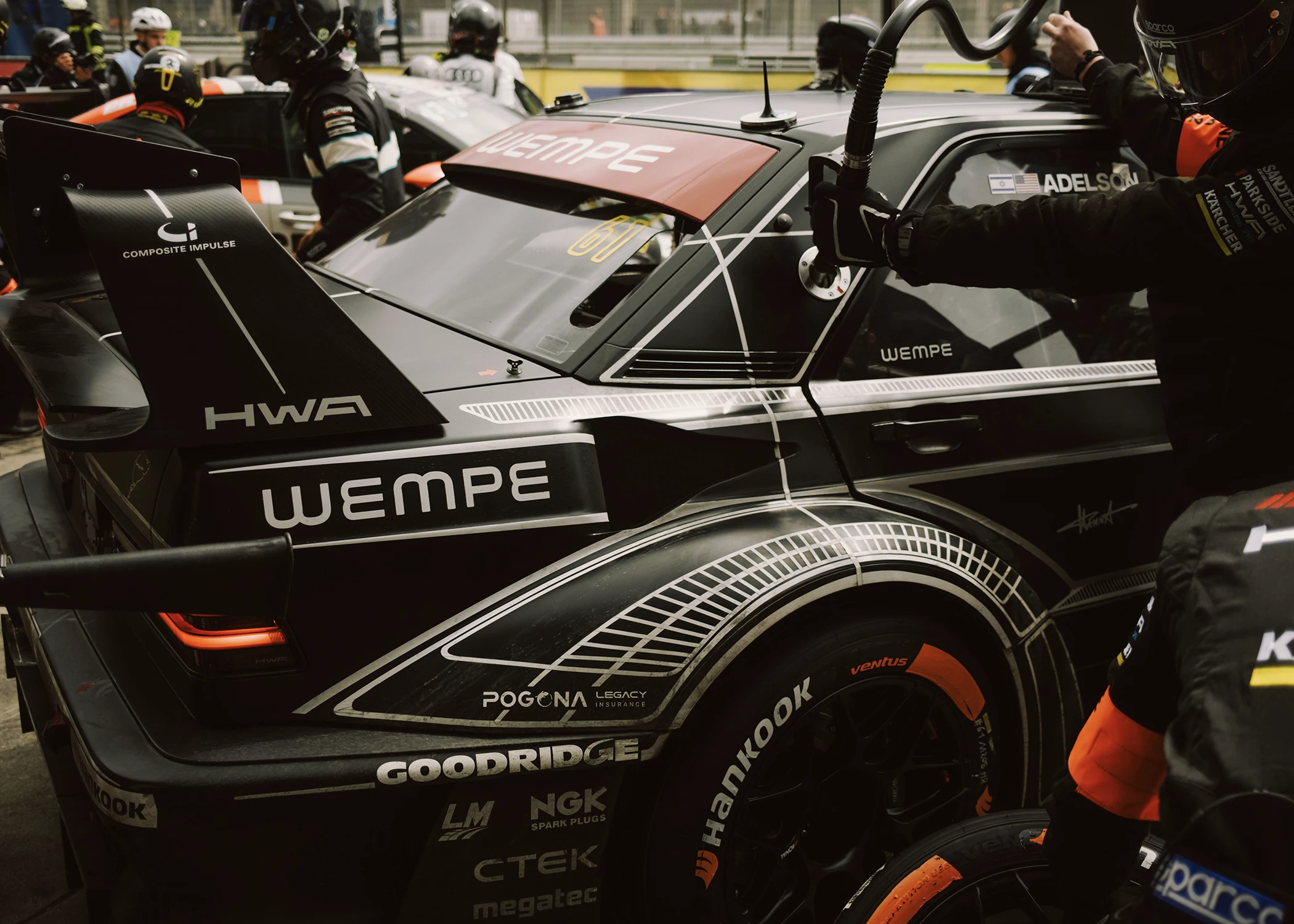
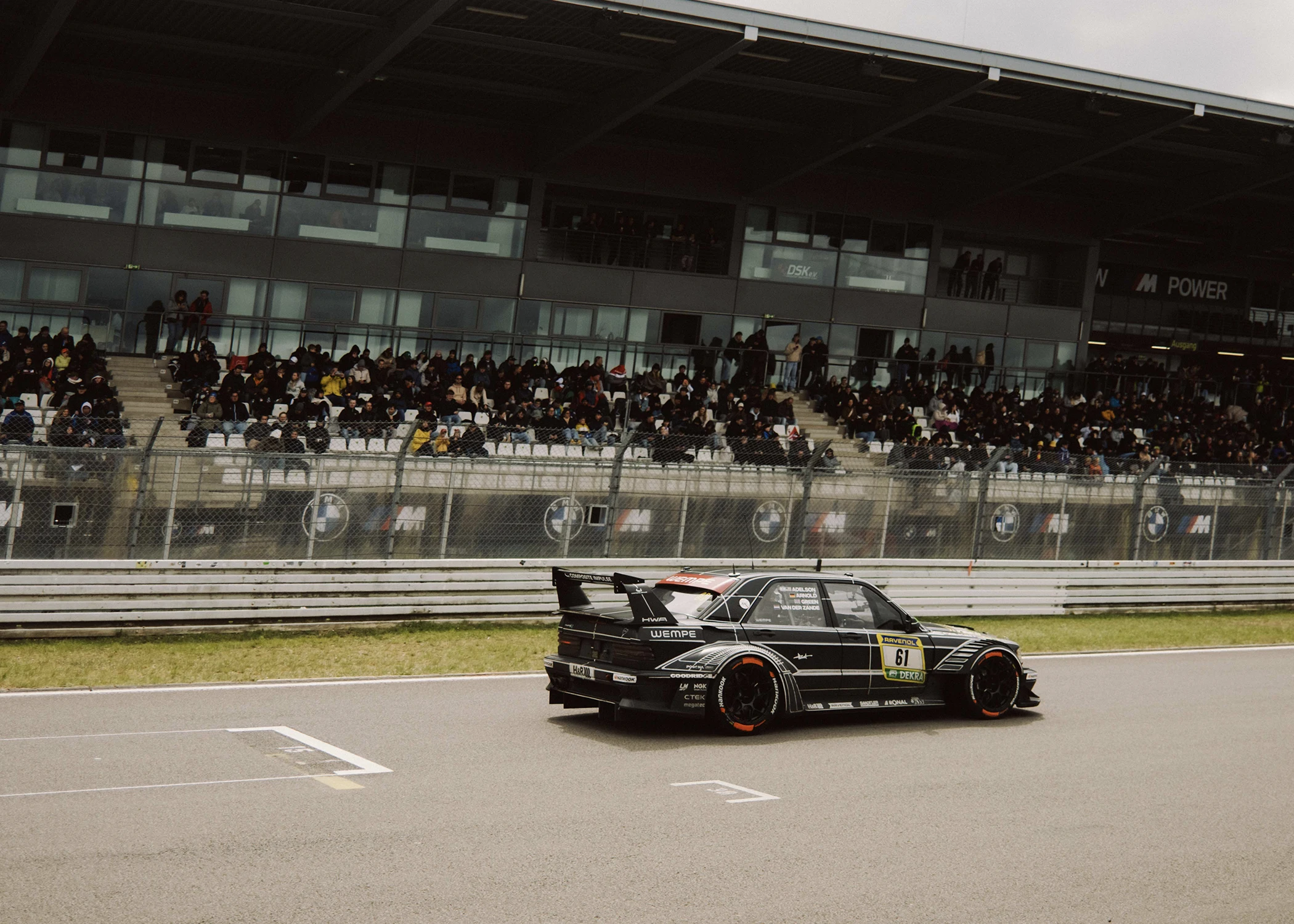
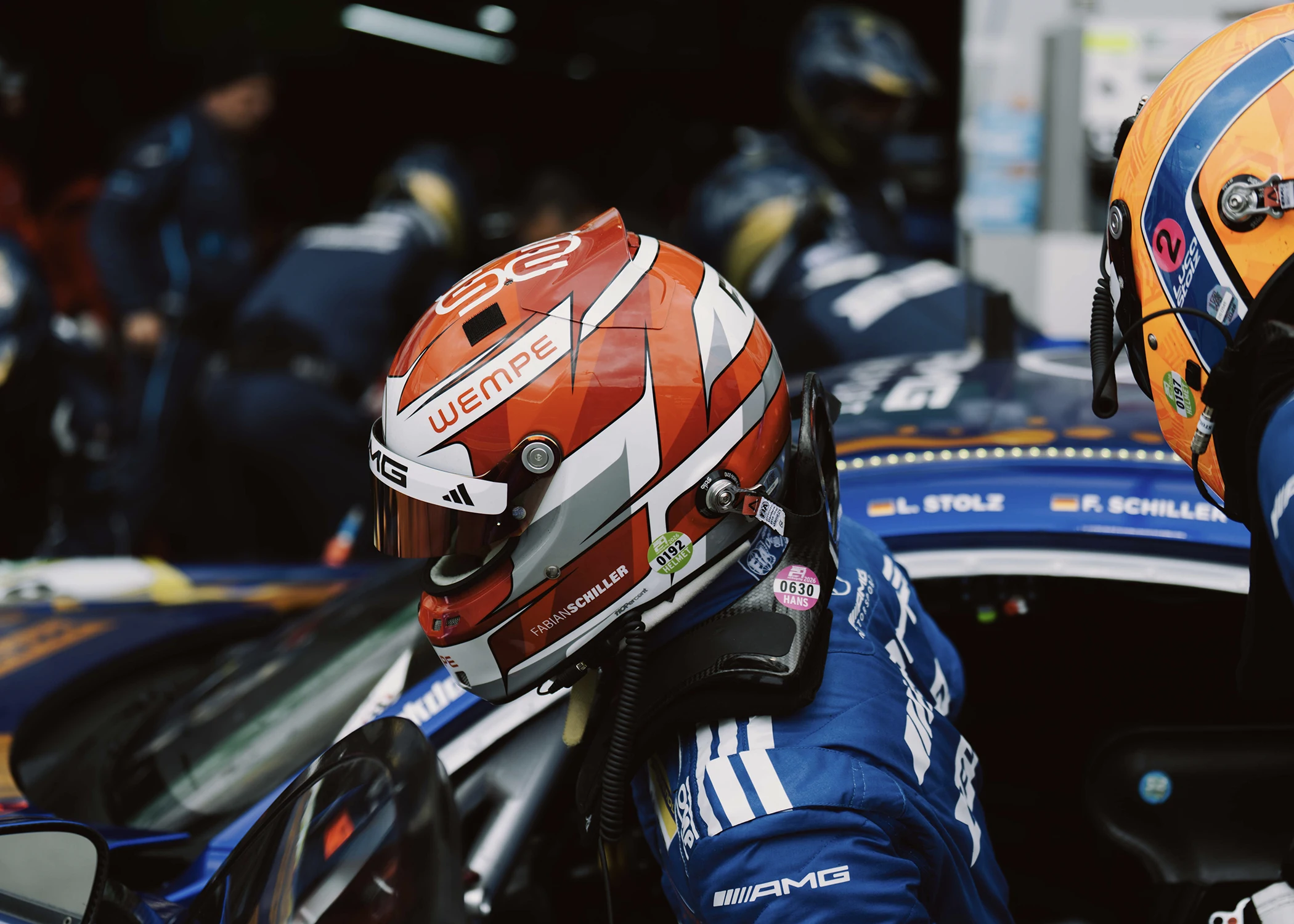
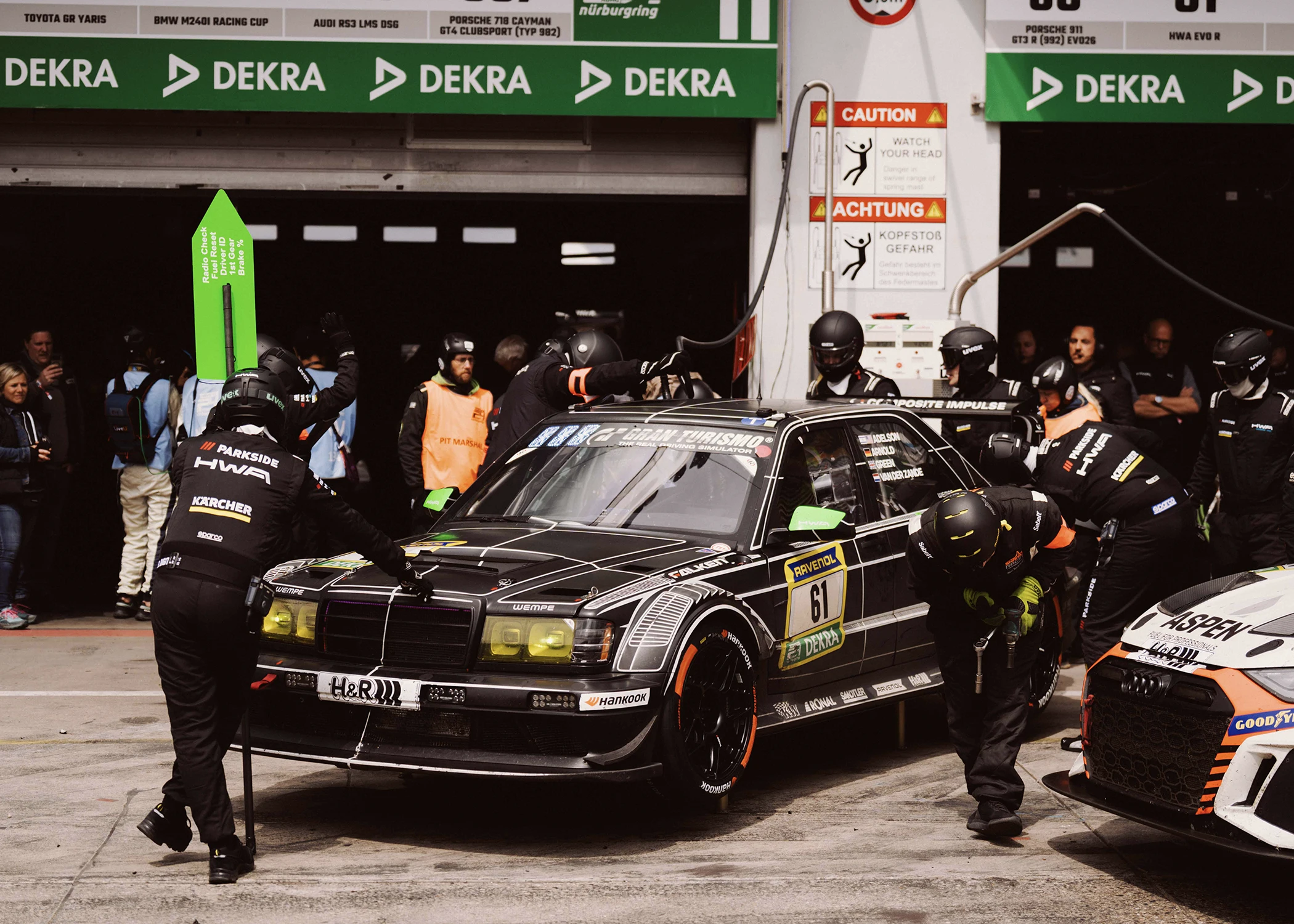
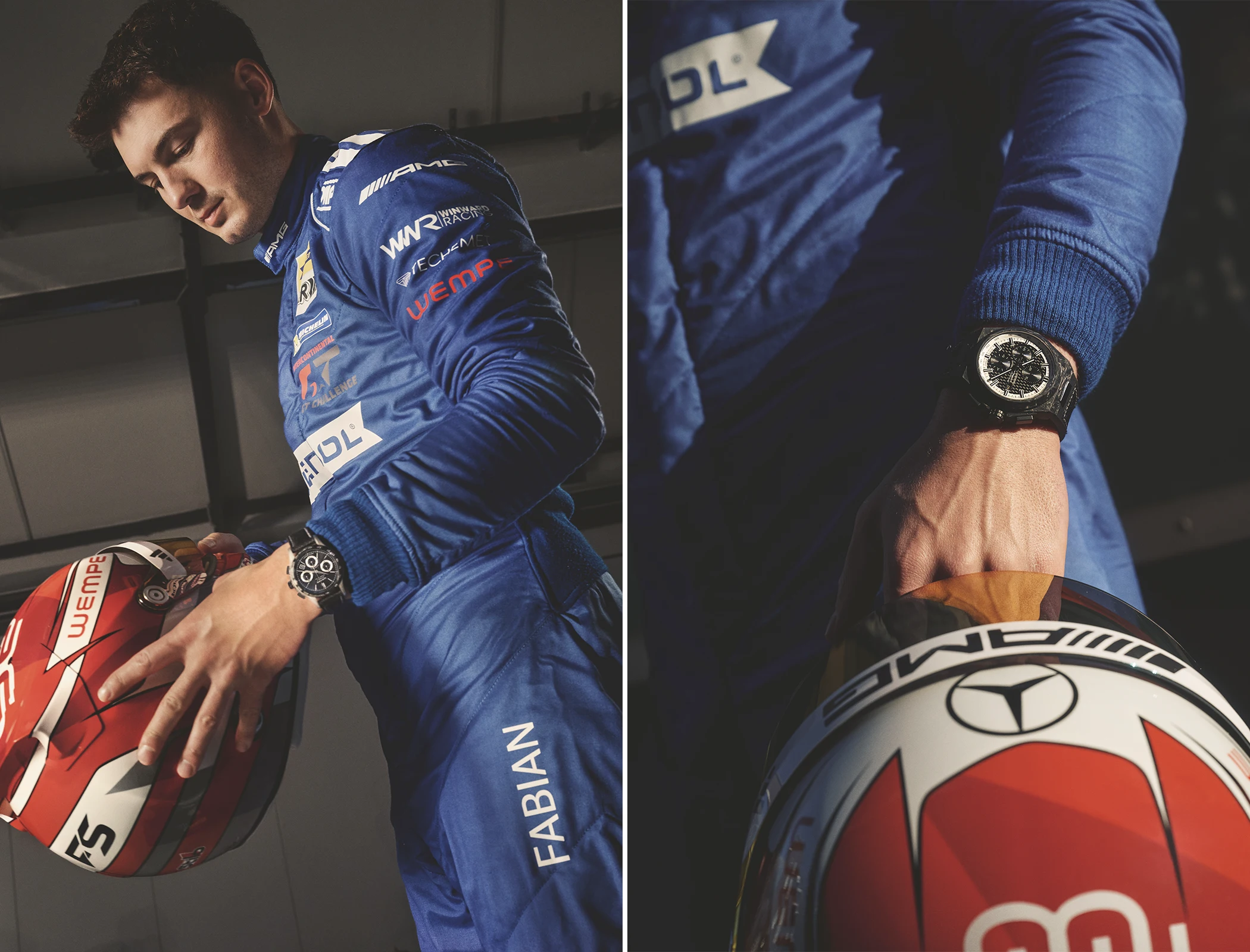
In addition to the official partnership with the 24 Hours of Nürburgring and the associated visibility, Germany’s largest jeweller – with 33 stores worldwide – has come up with a number of other exciting initiatives. For instance, there is a pop-up store on the Ring Boulevard featuring various promotions. Furthermore, Fabian Schiller, driver of the Mercedes-AMG GT3 bearing the number 80, is a brand ambassador sporting a special Wempe helmet. And Wempe has commissioned designer and artist Hanna Schönwald to create an art car: the Evo.R was developed by HWA as a tribute to the Mercedes 190E 2.5-16 Evo II. Schönwald covered the car with reflective stripes to emphasise its classic lines at dusk.
In the watch market, the link to motorsport is a popular theme. TAG Heuer has a strong presence, now including Formula 1; Rolex is synonymous with Le Mans and Daytona; Chopard is associated with the Mille Miglia; and IWC partners with Mercedes-AMG Petronas. What unites these brands is that they use motorsport as a showcase for technical precision, which is equally important in watchmaking and racing.
Wempe is taking a different approach here. Instead of an international platform such as Formula 1 or the World Endurance Championship, the Hamburg-based company is focusing on a national event with global appeal. The 24 Hours of Nürburgring is omnipresent in the media across the German-speaking world and now attracts an international audience. For a brand that has its roots in Hamburg and manufactures its watches in Glashütte, this is a logical positioning. Wempe is playing the German card, but at the very highest level.
To understand Wempe Glashütte i/SA, one must know the history of the observatory. The observatory on the Ochsenkopf, high above the Müglitz Valley, was built between 1904 and 1910 by the Urania Watchmakers’ Association to provide the watchmaking town with its own time signal. After decades of use as residential accommodation during the GDR era, the building fell into disrepair. In 2005, Wempe took over the ruins, restored them at great expense and established the German Chronometer Testing Centre there.
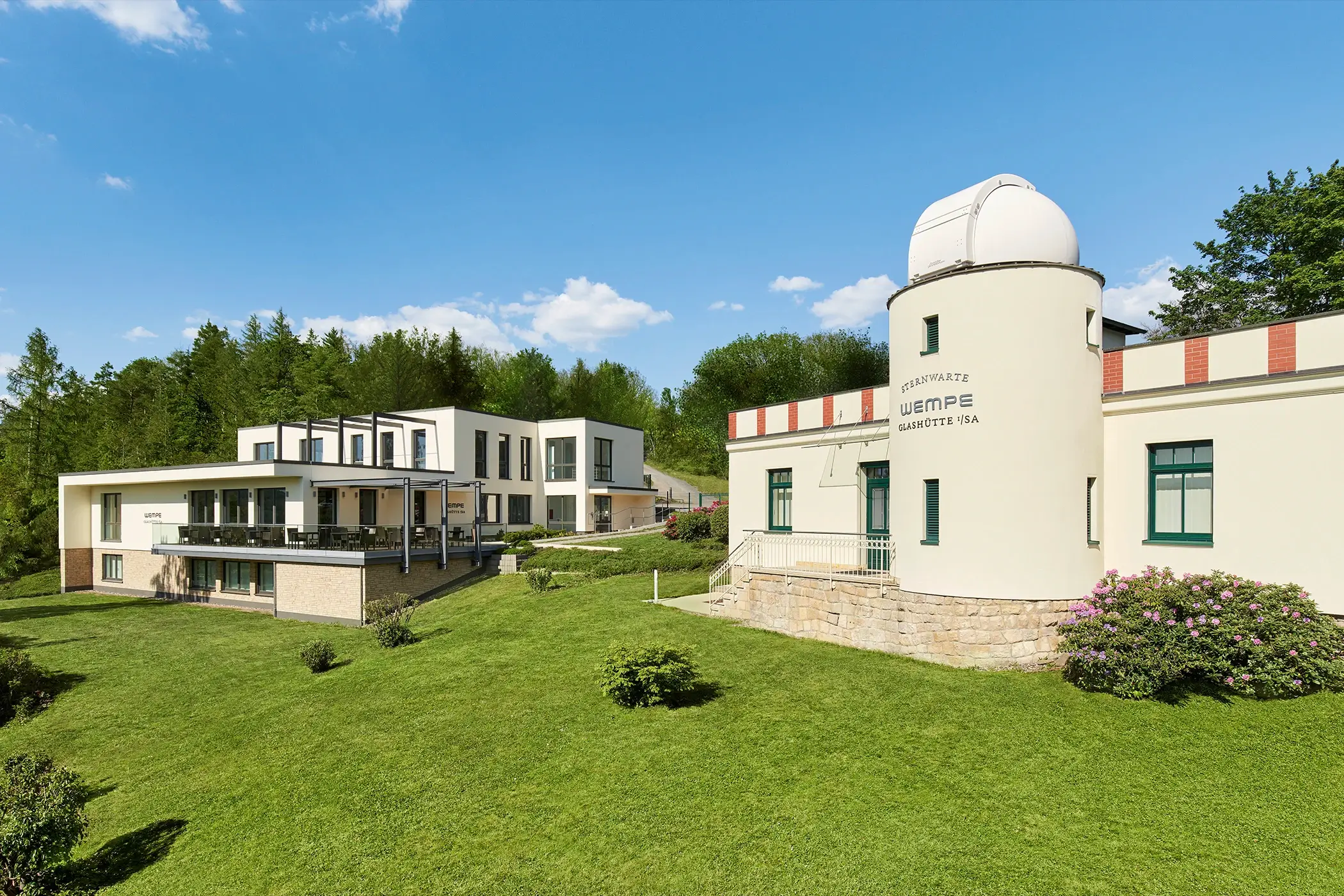
Until then, chronometer certification had been the preserve of the Swiss, who test their movements to COSC standards. Wempe developed DIN standard 8319 in collaboration with the Thuringian State Office for Consumer Protection and the Saxon State Office for Measurement and Calibration. The key difference from the Swiss variant is that it is not the bare movement that is tested, but the fully assembled watch. This is more demanding and makes more sense for the customer, as the accuracy of the timekeeping can be affected by the assembly process and the setting of the hands.
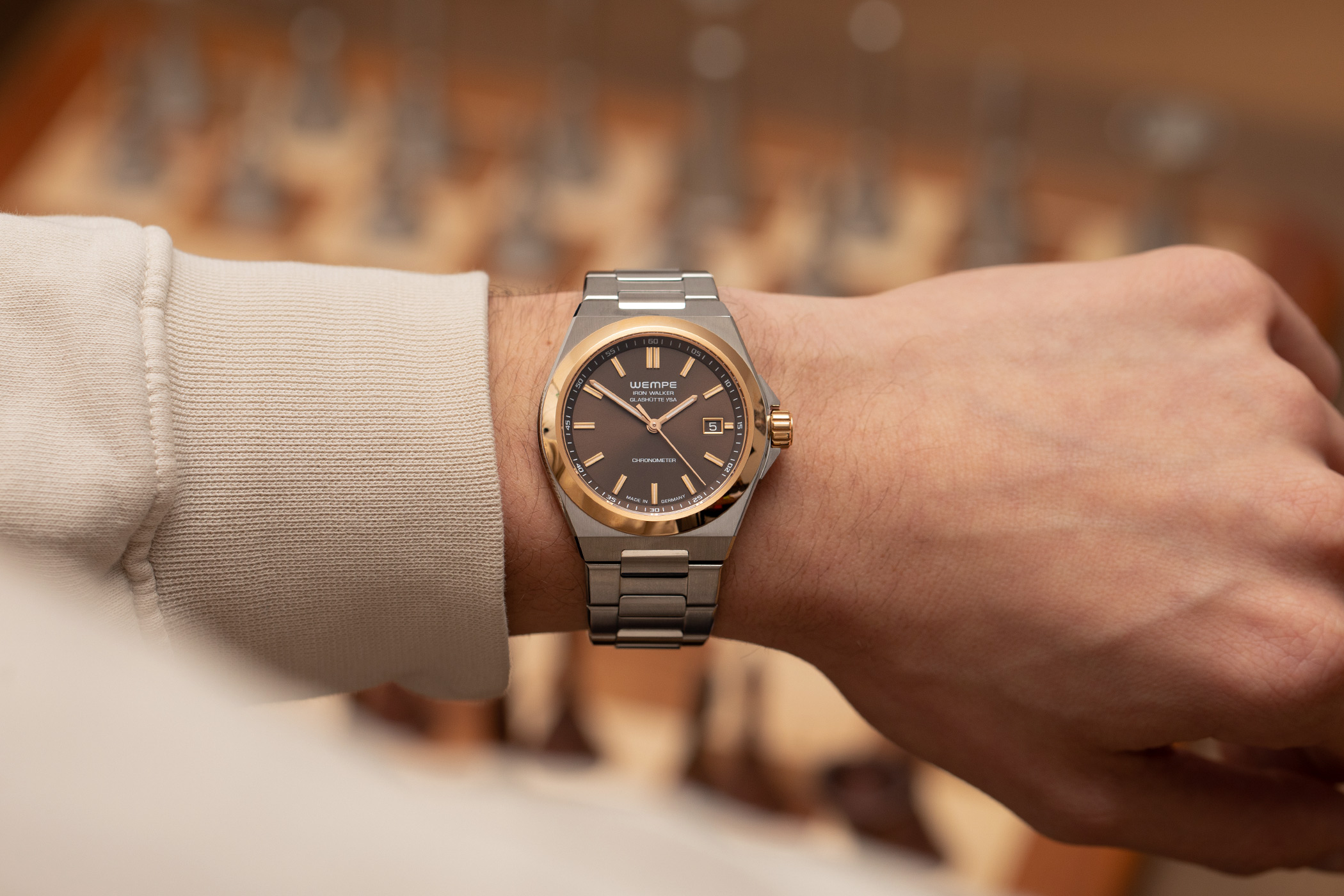
Since 2006, the Sternwarte has been producing the Chronometerwerke and Zeitmeister ranges, and since 2020 the Iron Walker. In 2024, a new training centre for watchmakers was opened directly at the Sternwarte.
To mark the launch of this partnership, which is set to run for at least three years, Wempe is unveiling two limited-edition chronographs, crafted at its own production facility in the former observatory in Glashütte. There, they are also certified as high-precision German chronometers – a rarity even amongst German manufacturers.
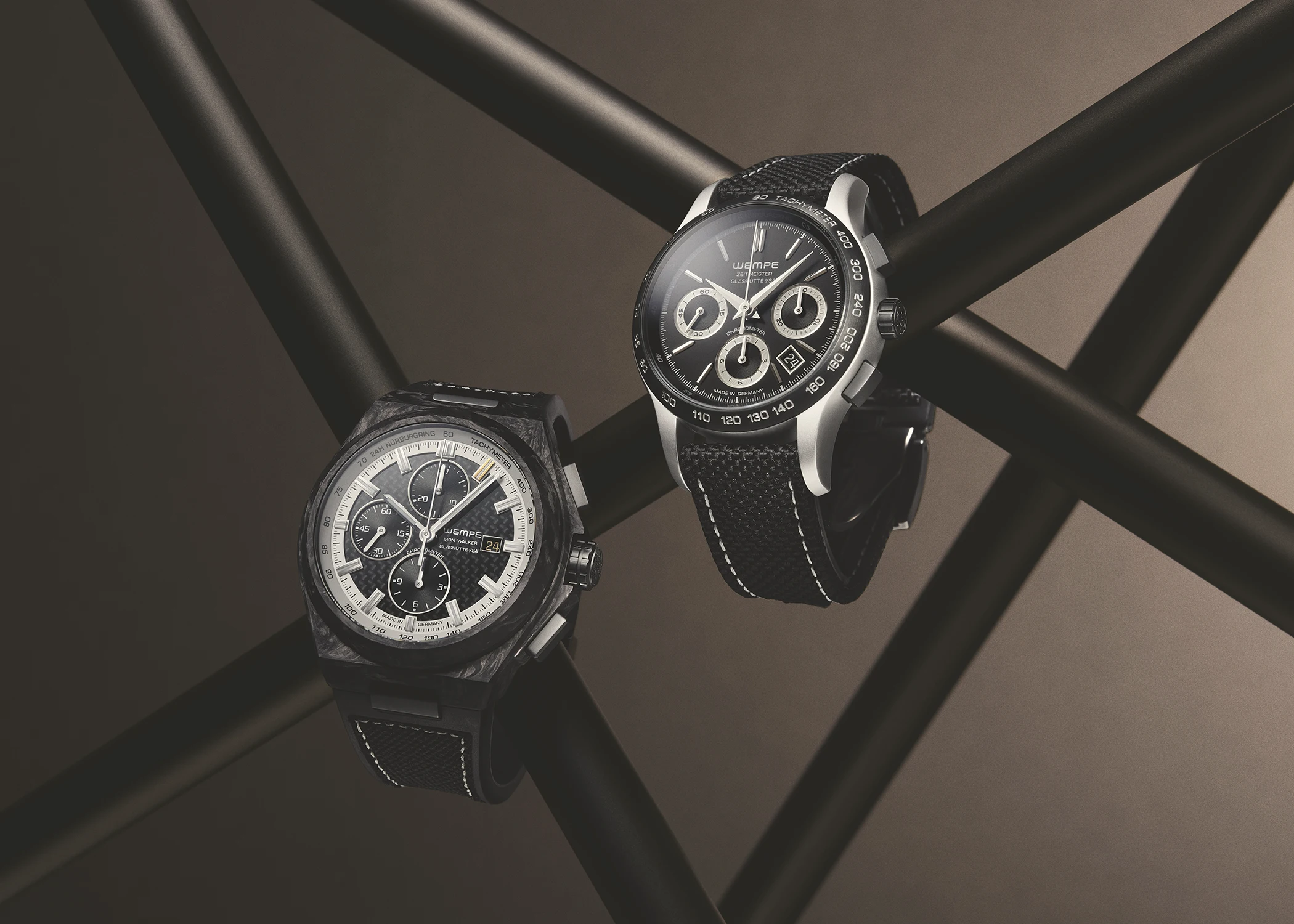
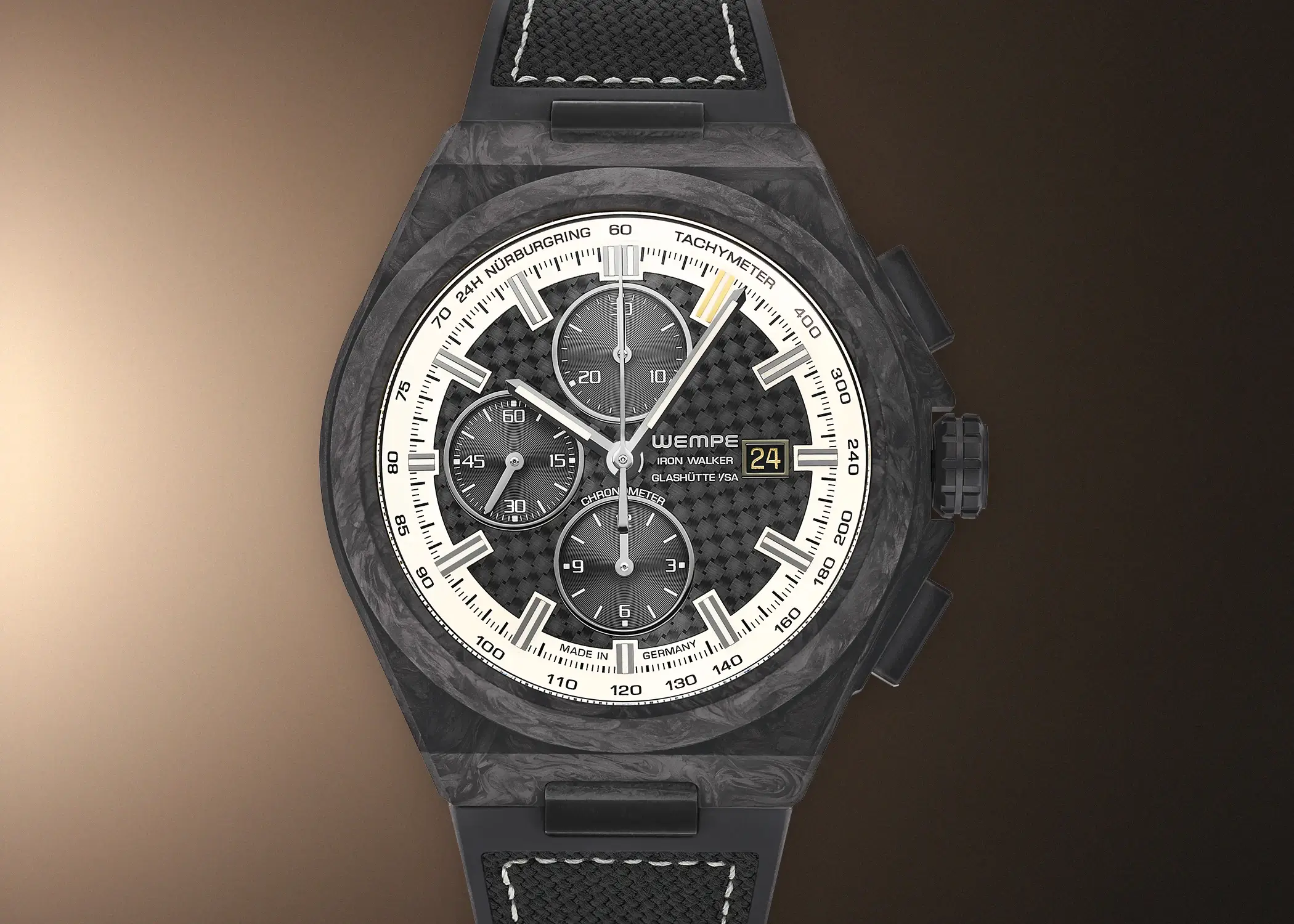
The Wempe Glashütte Iron Walker Chrono XL Carbon 24h Nürburgring Edition is limited to just 24 pieces. Five of these are reserved for the winning team. The 46-millimetre case is made from carbon fibre, the racing material used for the bodywork of most cars in the 24-hour race. Whilst forged carbon is used for the case, Wempe constructs the dial from woven carbon. The hour marker for the number one is finished in gold to designate this model as the winner’s watch. The number 24 is printed in gold on the date display, as a nod to the 24-hour race. The tachymeter scale bears the inscription “24h Nürburgring”. The caseback bears the race’s official logo and the engraving “1 of 24”.
Inside, the watch is powered by the SW500 automatic calibre from Swiss mechanical specialist Sellita. Even with the chronograph activated, it offers a power reserve of 56 hours. The model is secured on the wrist by a black rubber strap with a textile overlay and a folding clasp. The striking Iron Walker, with its clear motorsport reference, costs €6,924.
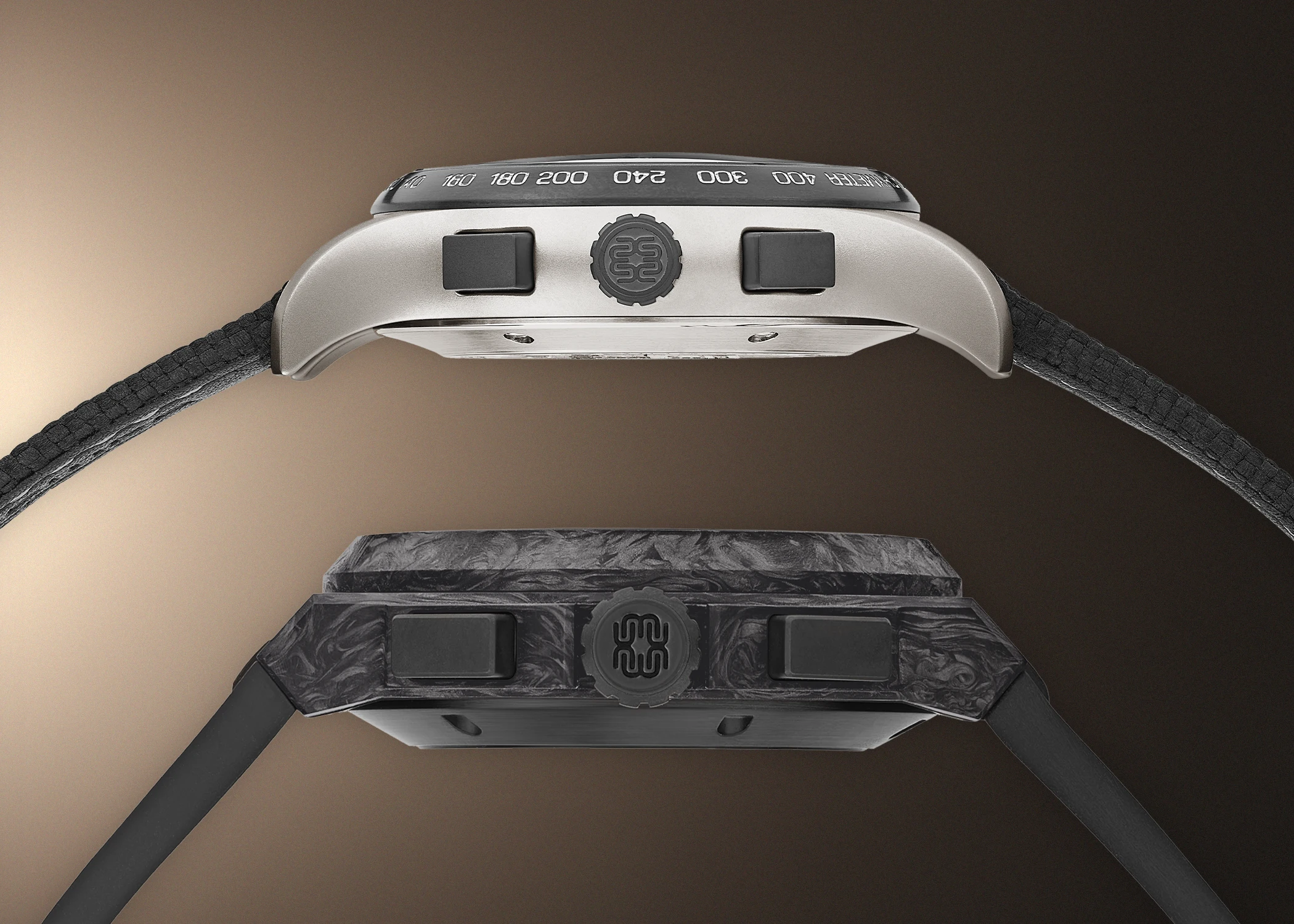
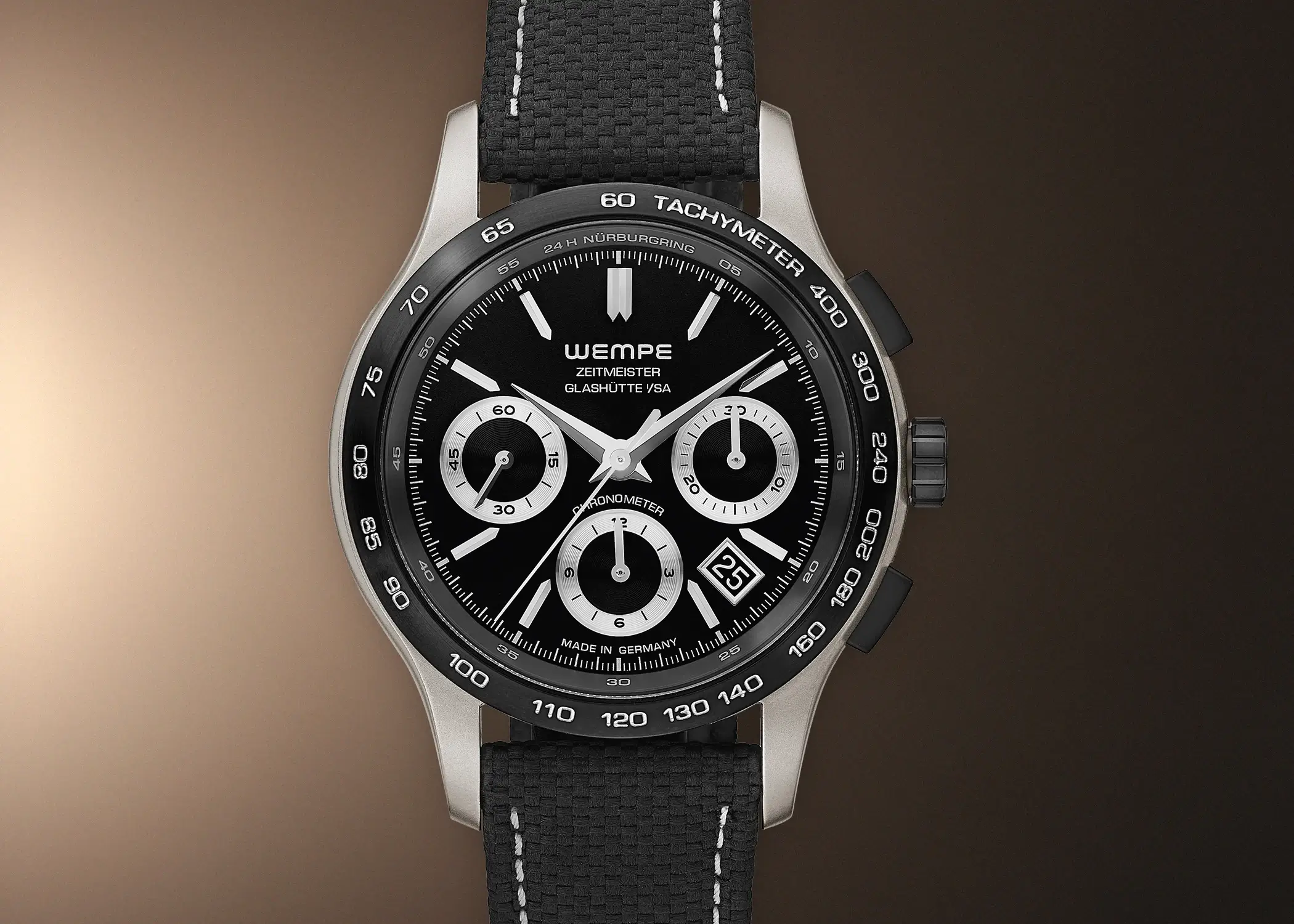
Somewhat more elegant, smaller and more harmonious on our wrist is the Zeitmeister Chrono 42mm Edition 24 H Nürburgring: it is produced in a limited run of 240 pieces, measures 42 millimetres in diameter and is crafted from stainless steel with a DLC-blackened tachymeter bezel. The pushers and crown are also black. Here, the lettering “24 H Nürburgring” appears on the flange with the minute track. We also liked the silver scale rings on the sub-dials.
The movement is the automatic calibre Eta 7753, a modified version of the tried-and-tested 7750 with differently arranged sub-dials. It offers a 48-hour power reserve and is also certified as a German chronometer. With a black textile strap and folding clasp, the limited-edition Zeitmeister Chrono costs €2,924. For a limited-edition chronometer chronograph of this quality, that is a fairly reasonable price.
The fact that Wempe adjusts both movements to German chronometer standards at the observatory is a mark of quality. The adjustment in accordance with DIN 8319 sets the movements apart from the crowd, without Wempe elevating them to the status of in-house calibres.
The Iron Walker Carbon is a technically unusual piece because Wempe combines two different carbon processes in a single watch. Forged carbon, as used in the case, is created from short carbon fibres that are pressed into a mould under high pressure and heat. The result is a marble-like structure that is unique every time. Woven carbon, as used on the dial, features the classic chequered pattern familiar from racing car bodies and is optimised for tensile strength.
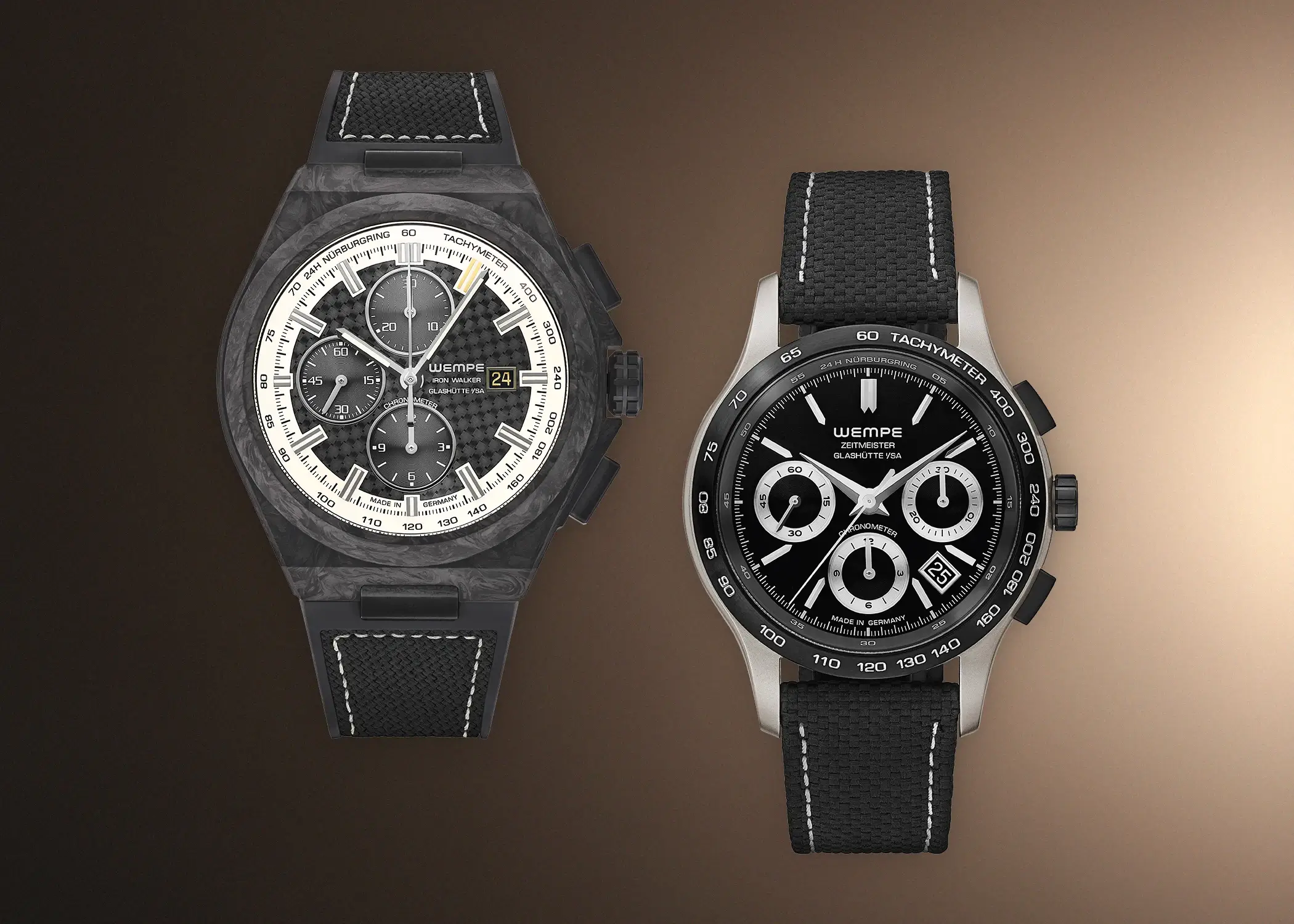
In the watch market, brands such as Audemars Piguet and Richard Mille have been working with carbon cases for years. However, the combination of both processes in a single watch is rare. Wempe has thus succeeded in creating a visual distinction between the case and the dial, which clearly sets this piece apart from other carbon watches.
We put the Zeitmeister through its paces straight away, but not in a racing car – the track was occupied at the time – but in a helicopter. With the watch on my wrist, we fly low over the Eifel. The small and manoeuvrable Robinson R44 Raven flies over the Grand Prix circuit and the Nordschleife, at times at a considerable angle, with the racing cars we’re battling against below us. From the air, the 25-kilometre-long track reveals its true scale. The speeds of the GT3 cars on the Döttinger Höhe are even more impressive from up here.
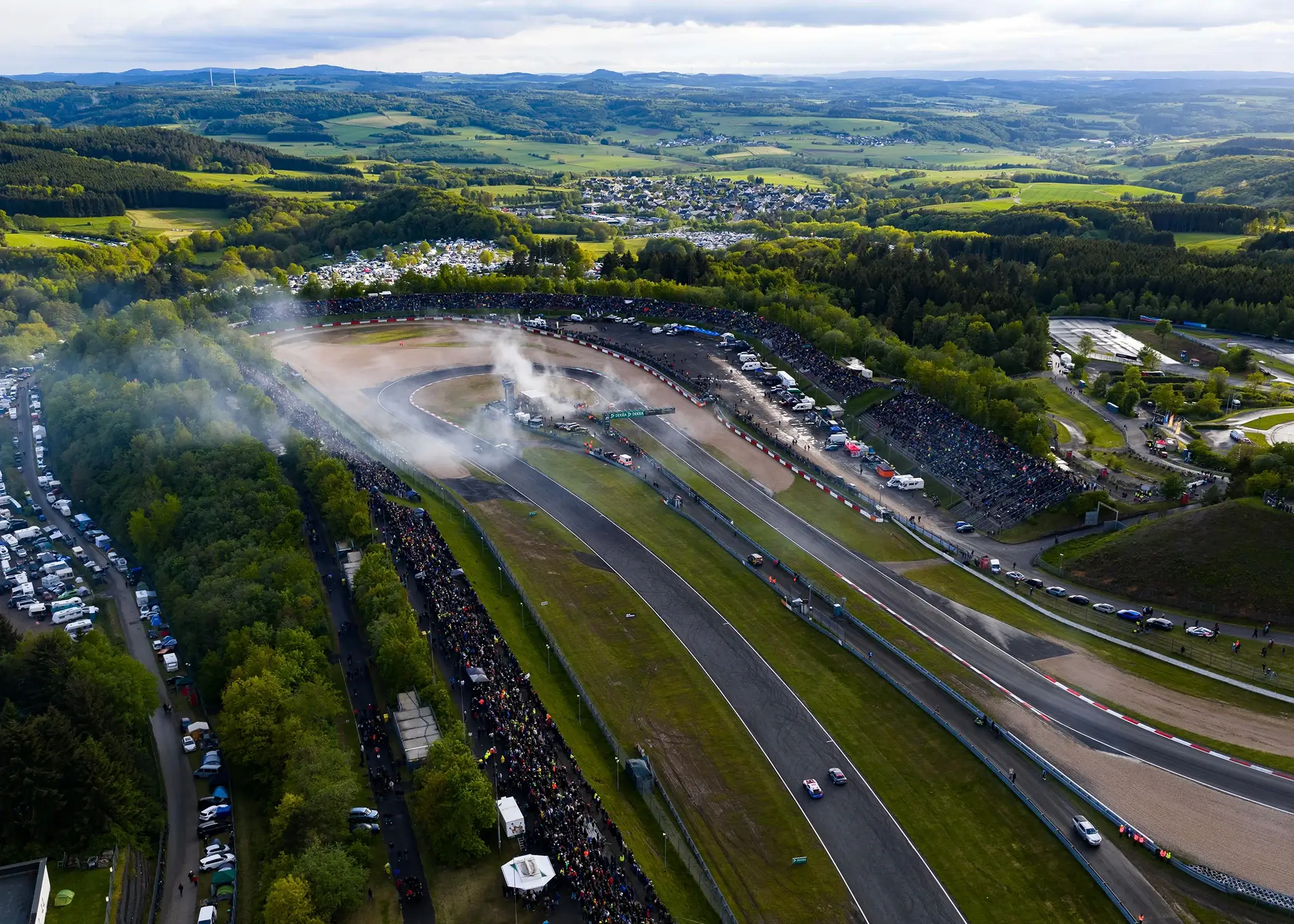
And the incredible number of spectators also becomes clearer from here: the packed grandstands, the large entertainment area with the Ferris wheel, and the countless camping areas along the track with their colourful lights. The watch runs precisely; the Swiss movement is unfazed by vibrations and changes in altitude, and we land safely back on a meadow.
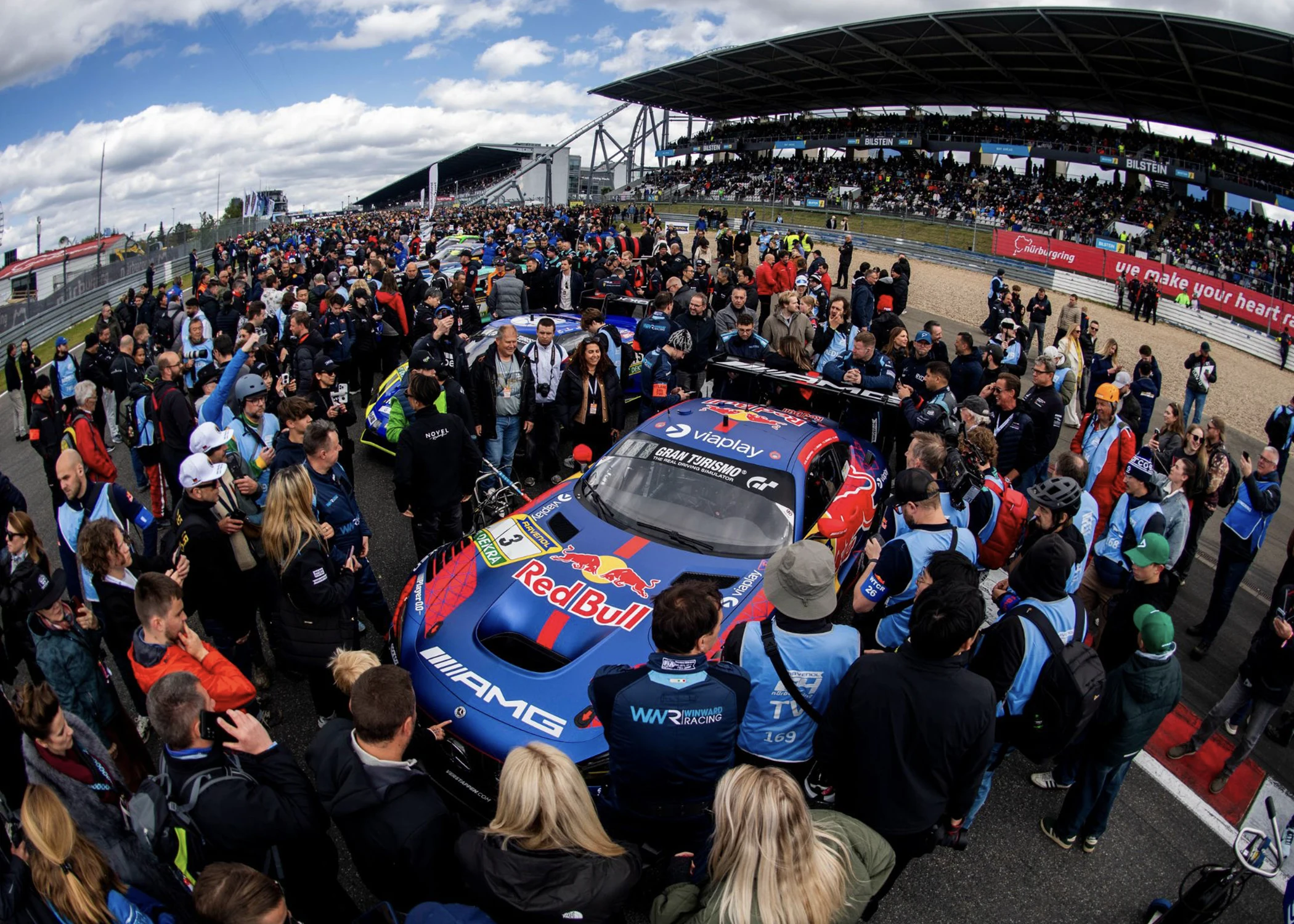
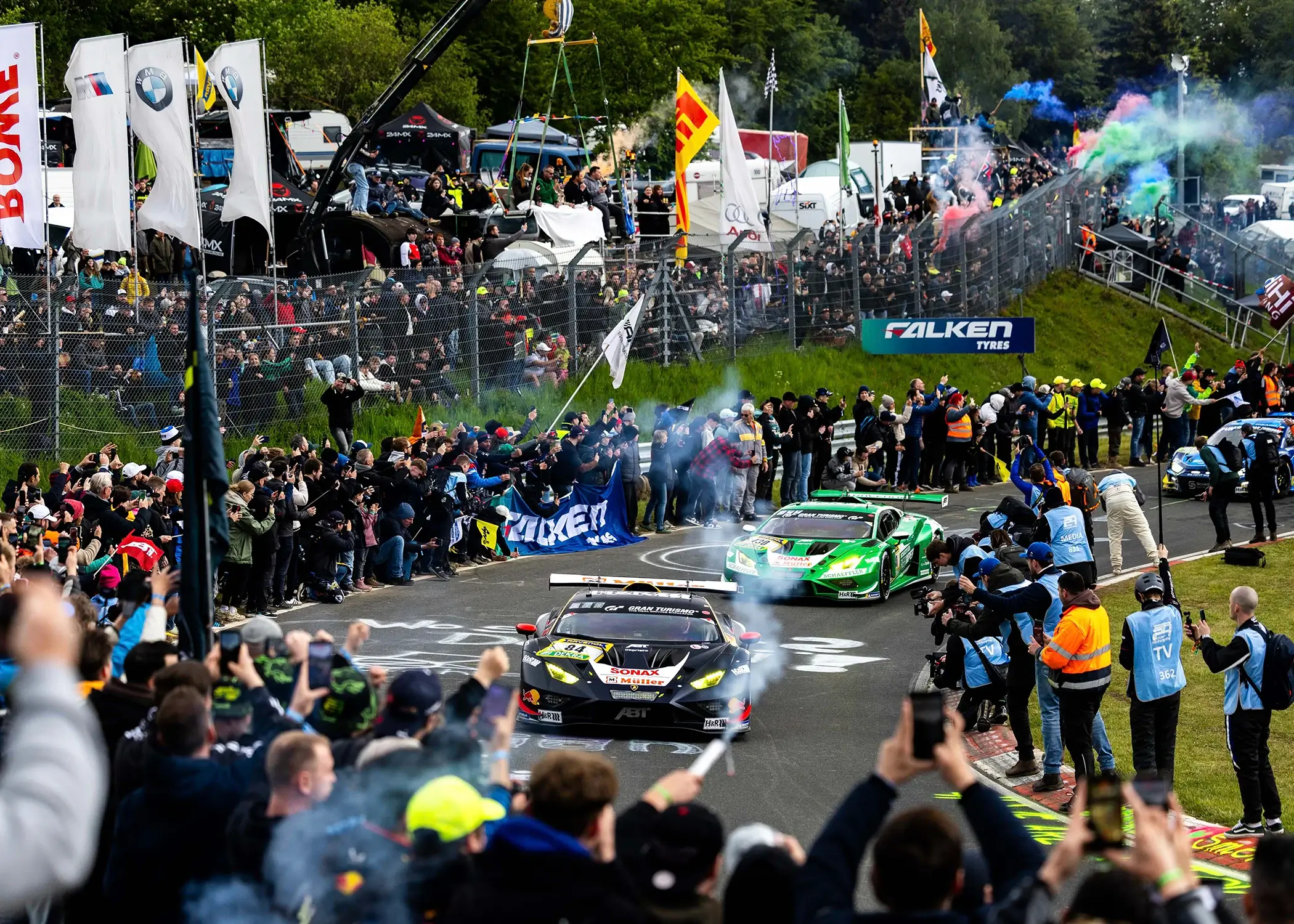
Now night is falling and the race takes on a different character: on the Ring, the cars seem to roar even louder. Overtaking in the dark becomes more challenging. At the camps along the track, fires are burning, people are barbecuing and celebrating, and perhaps someone is even getting some sleep.
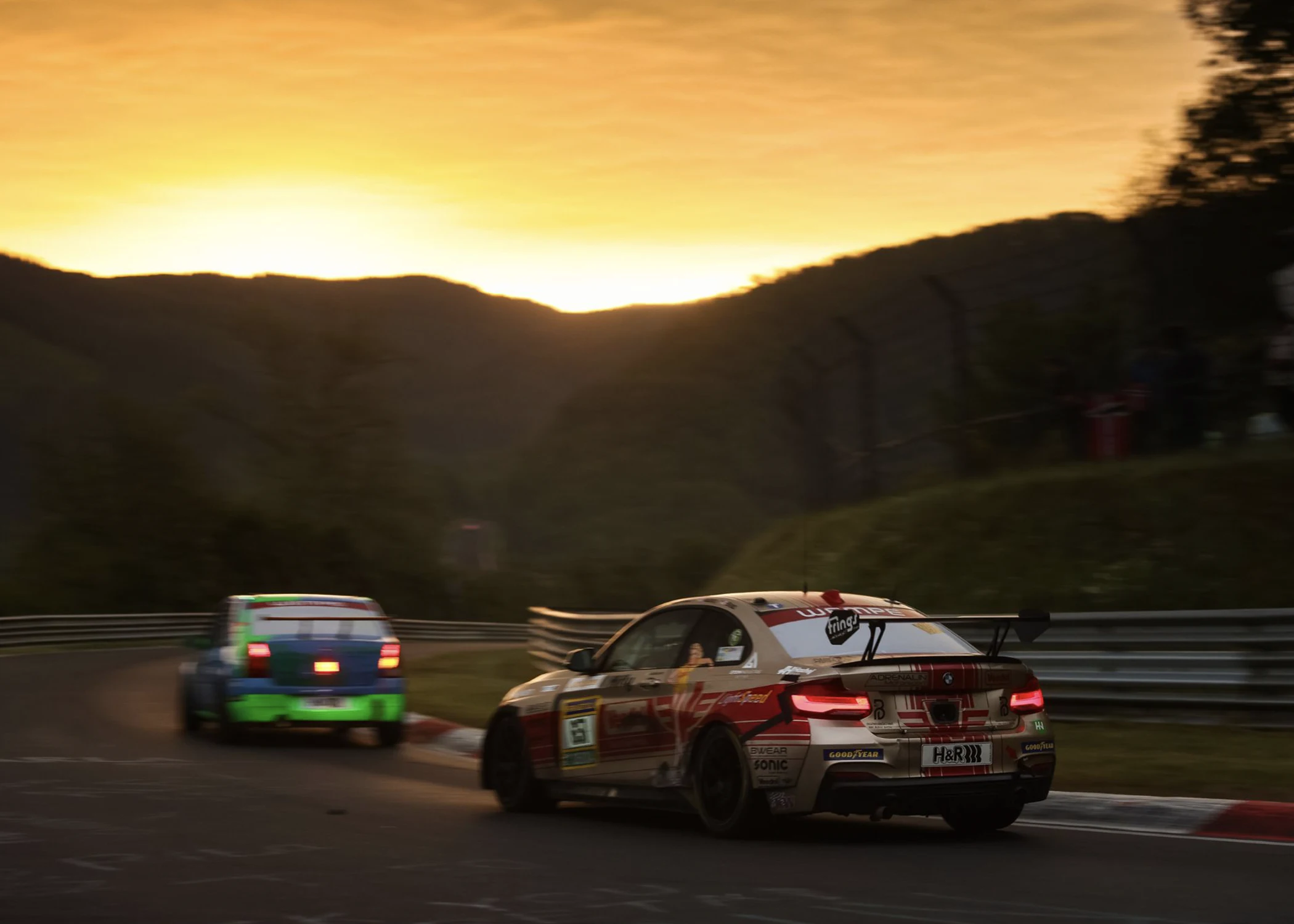
The Eifel weather remains changeable, with occasional showers prompting the teams to consider rain tyres. The favourites drop out one after the other: the Grello Porsche skids off the track on an oil spill, and last year’s winners, ROWE Racing, with their BMW M4 GT3 EVO, retire due to a mechanical failure.
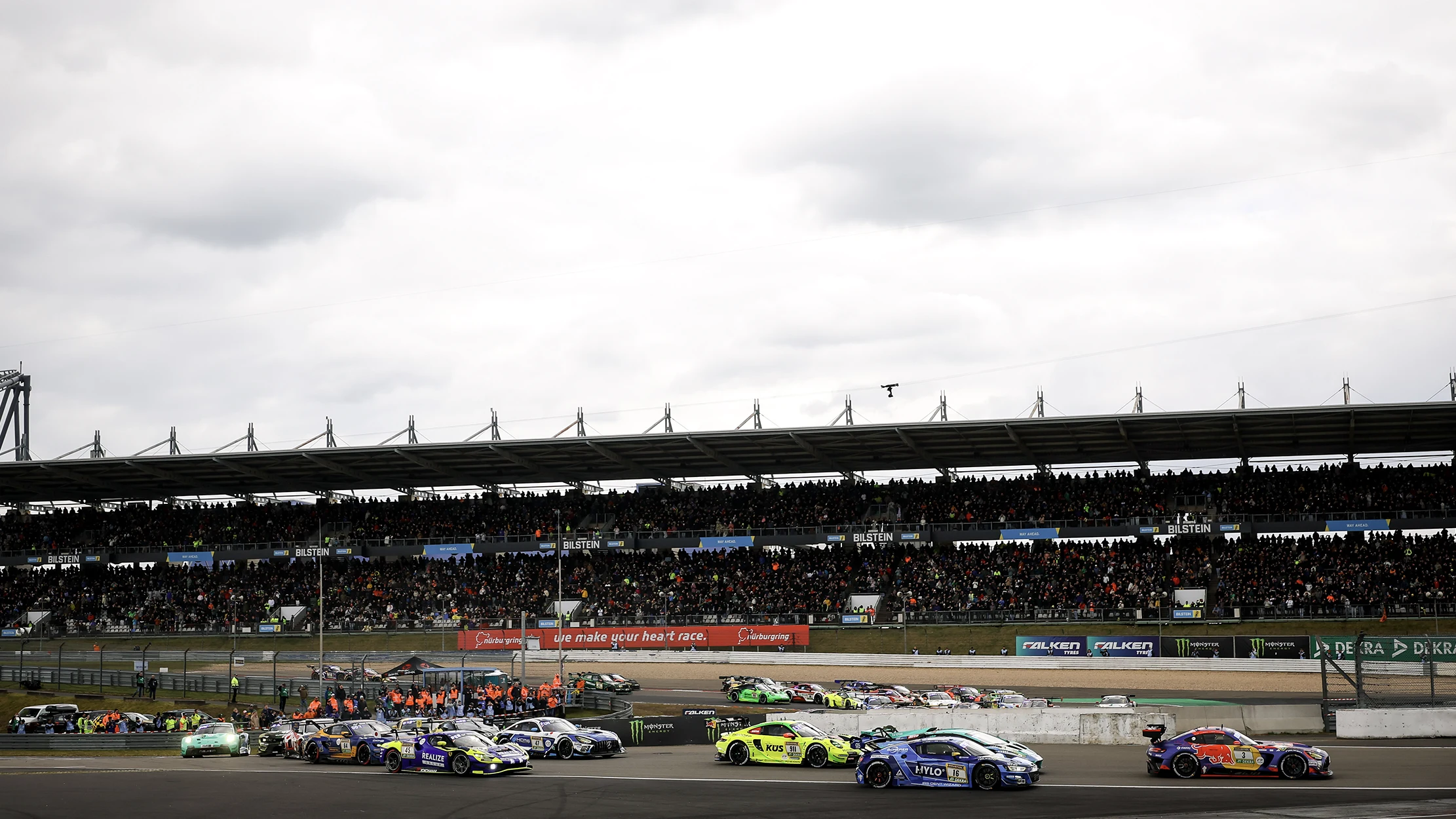
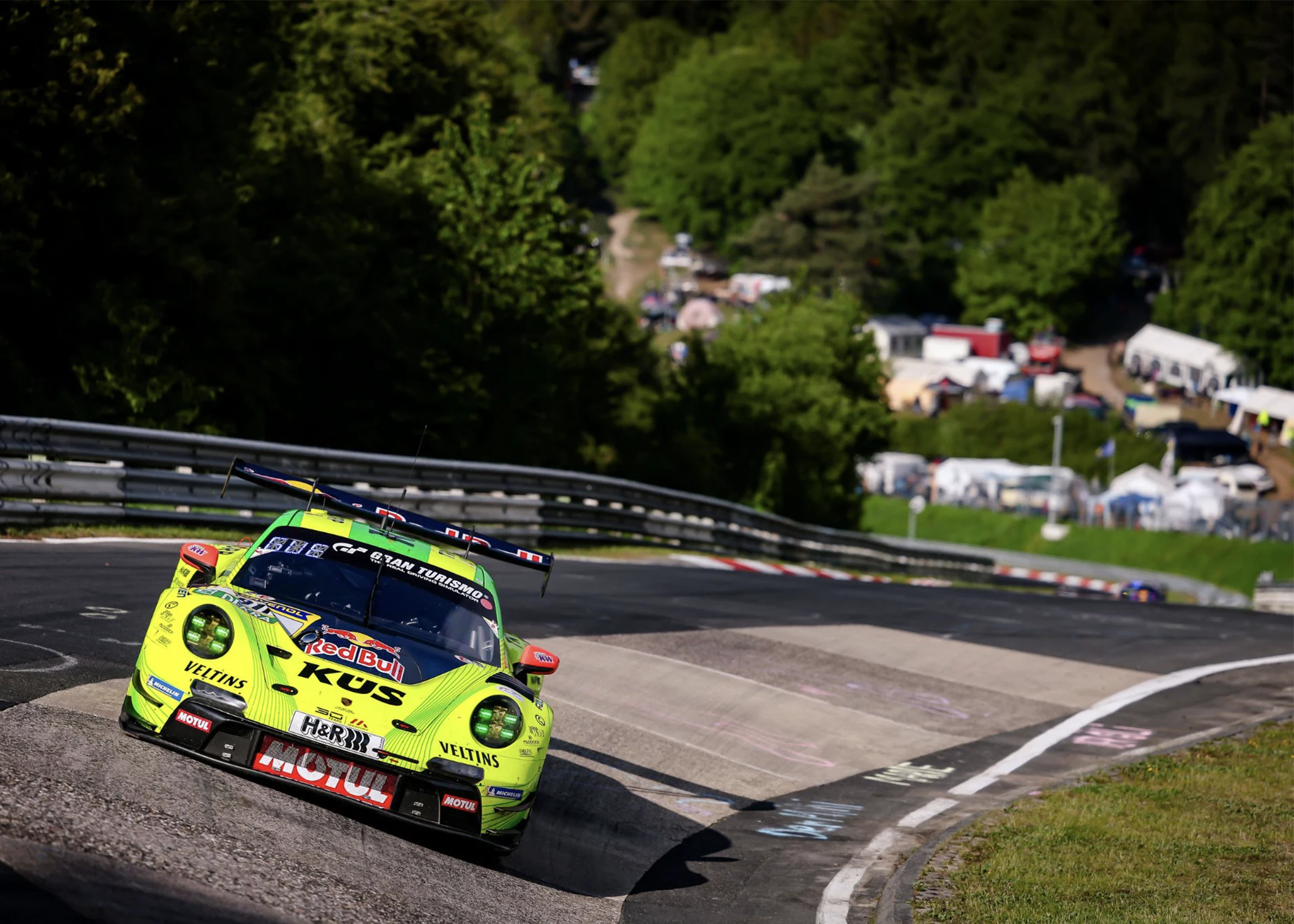
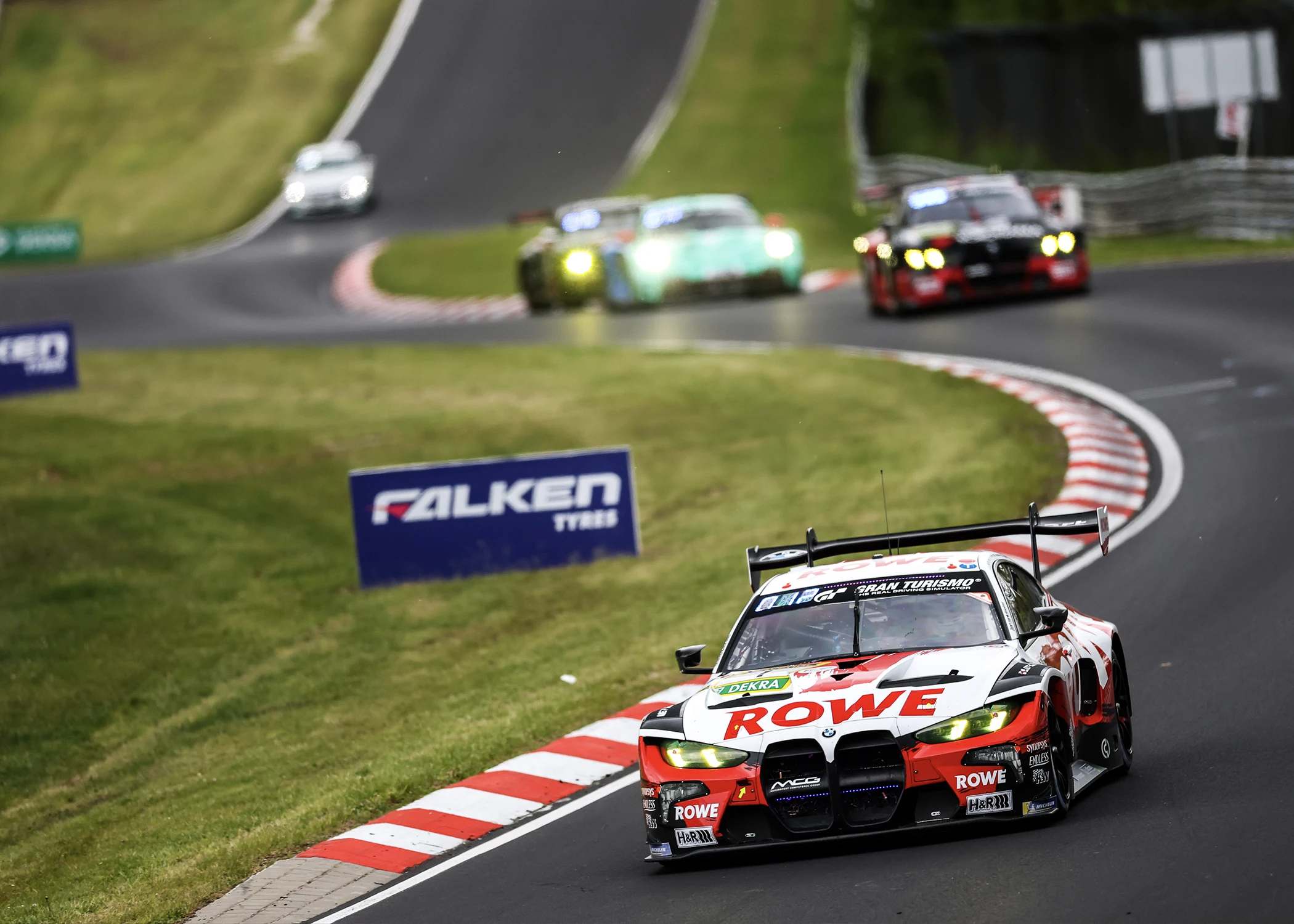
At 3 pm, the race ends after 24 hours. Everyone who now crosses the finish line and sees the chequered flag is applauded, because getting through the weather, the night and the heavy traffic without damage is a magnificent achievement.
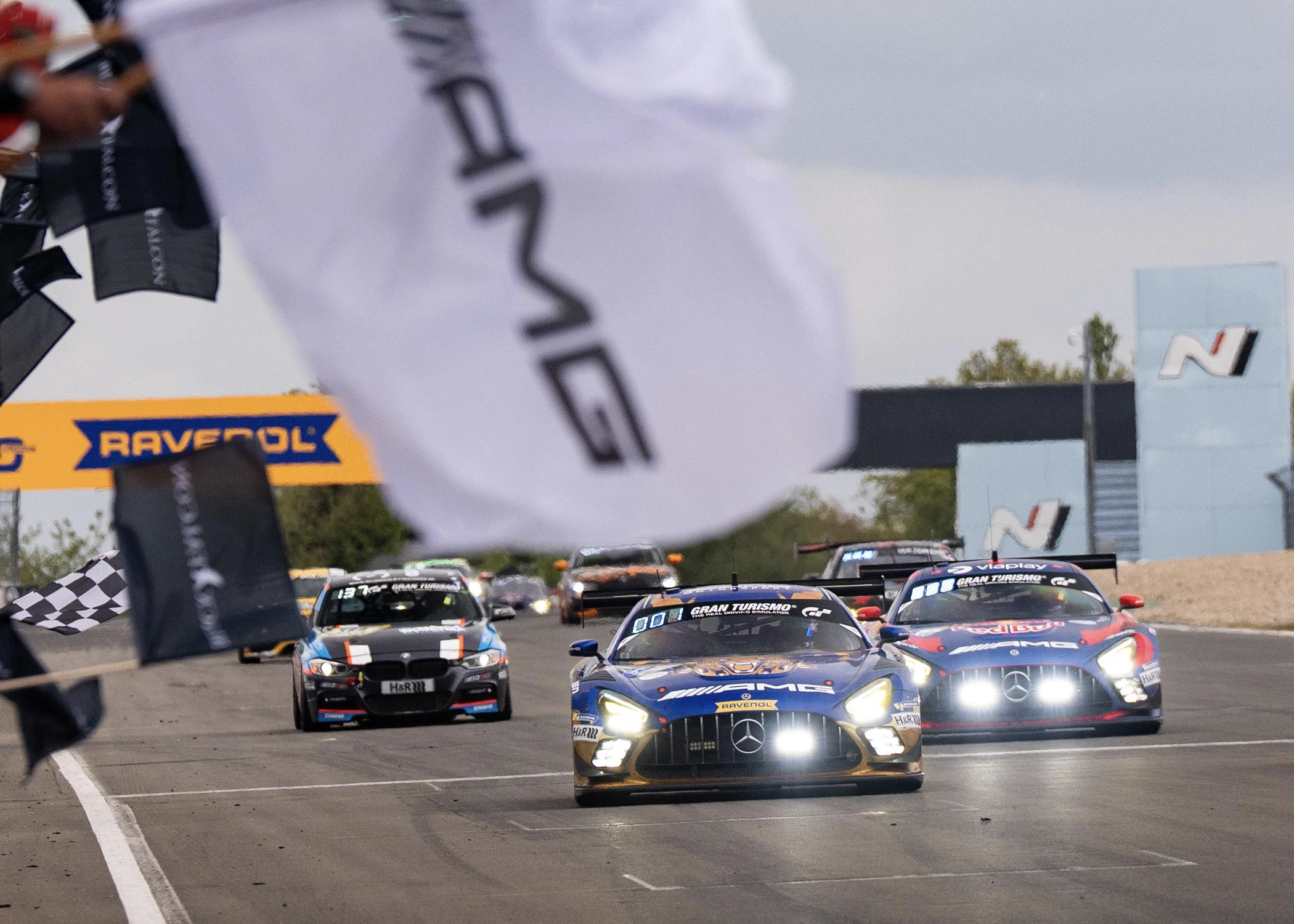
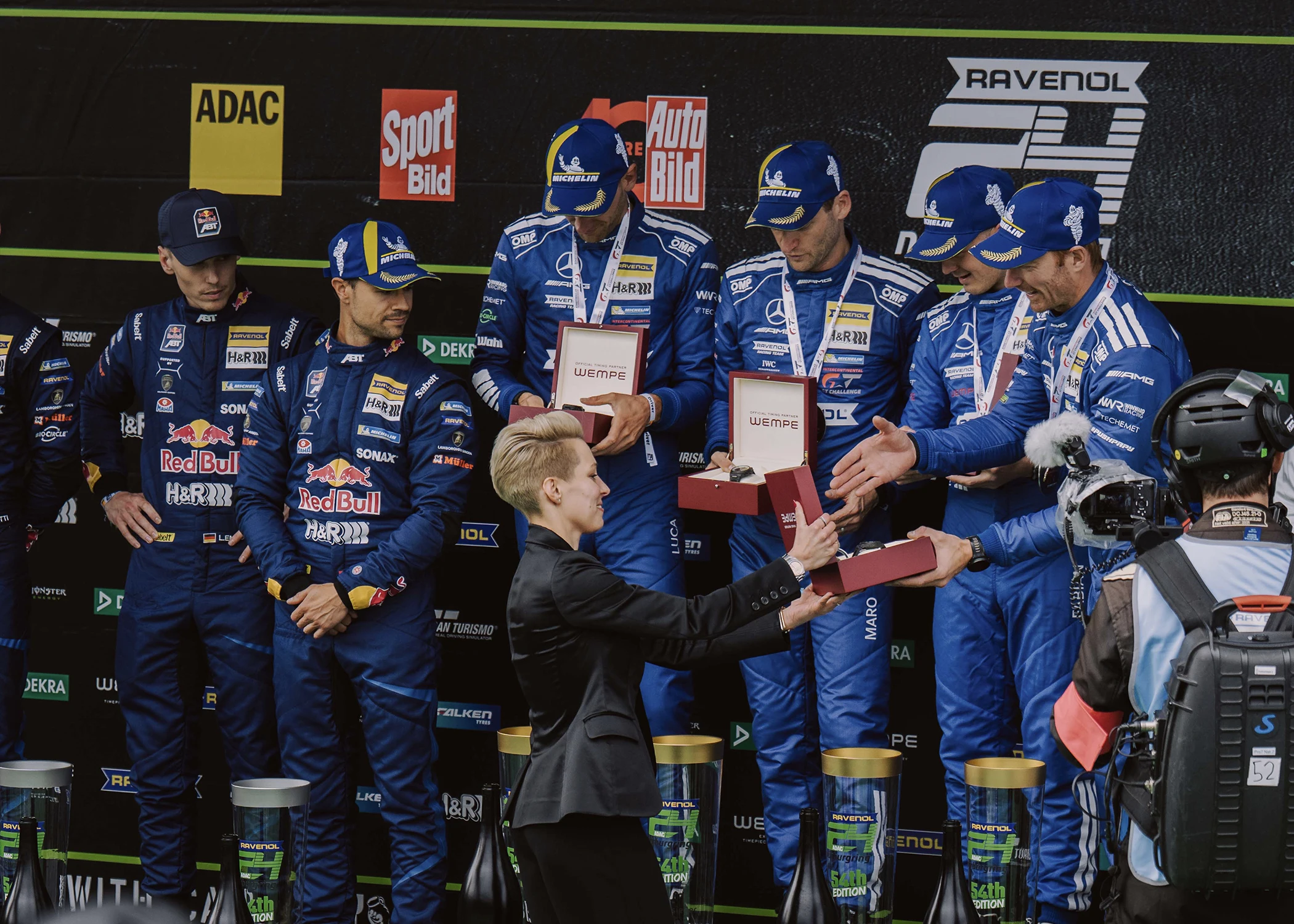
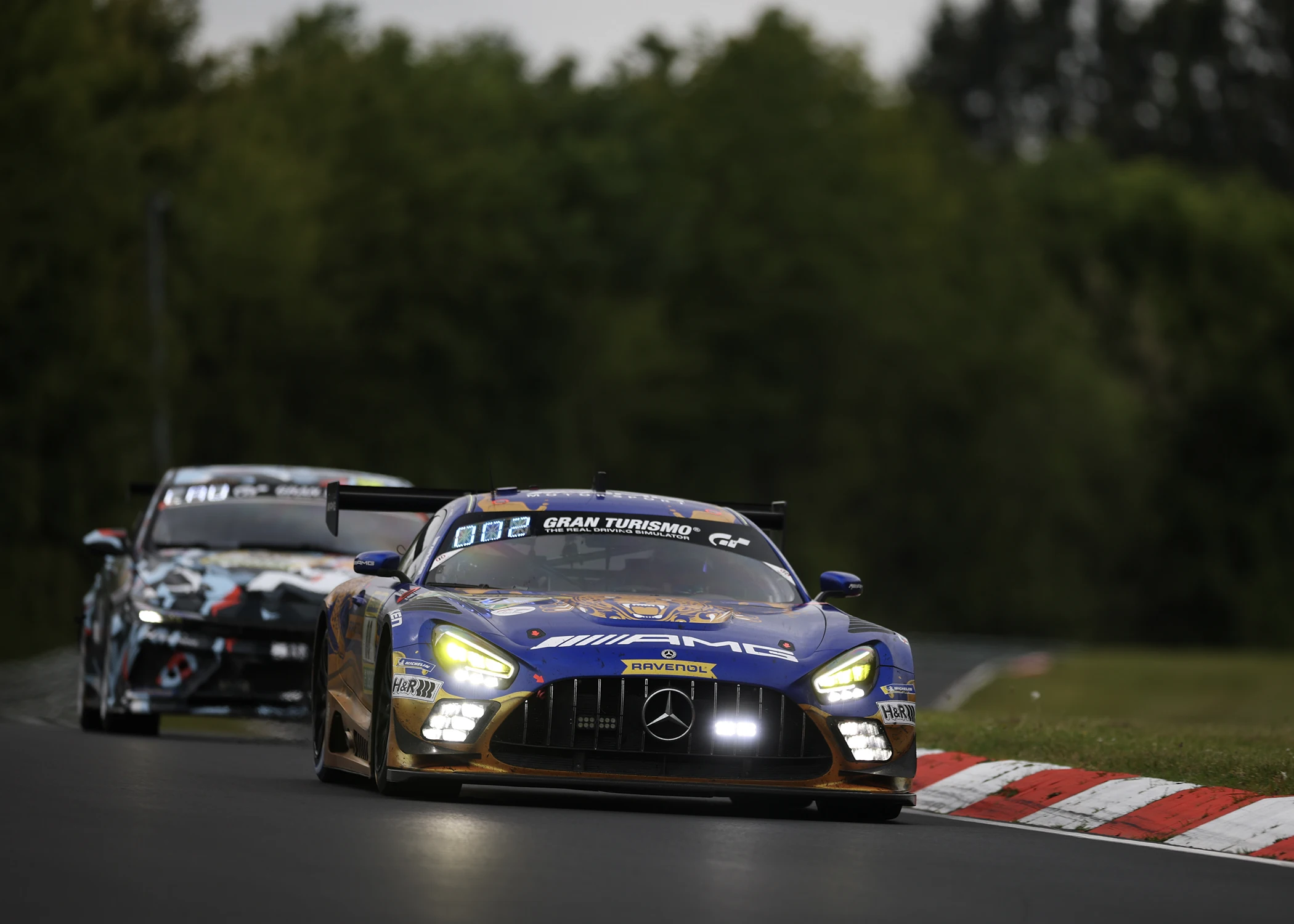
In the end, Mercedes wins the 24 Hours of the Nürburgring again after ten years. But it is not Max Verstappen who stands at the top of the podium – his leading car suffers a rear axle failure three and a half hours before the end of the race – but the sister car with Wempe ambassador Fabian Schiller, which takes the lead after 24 hours with 156 laps.
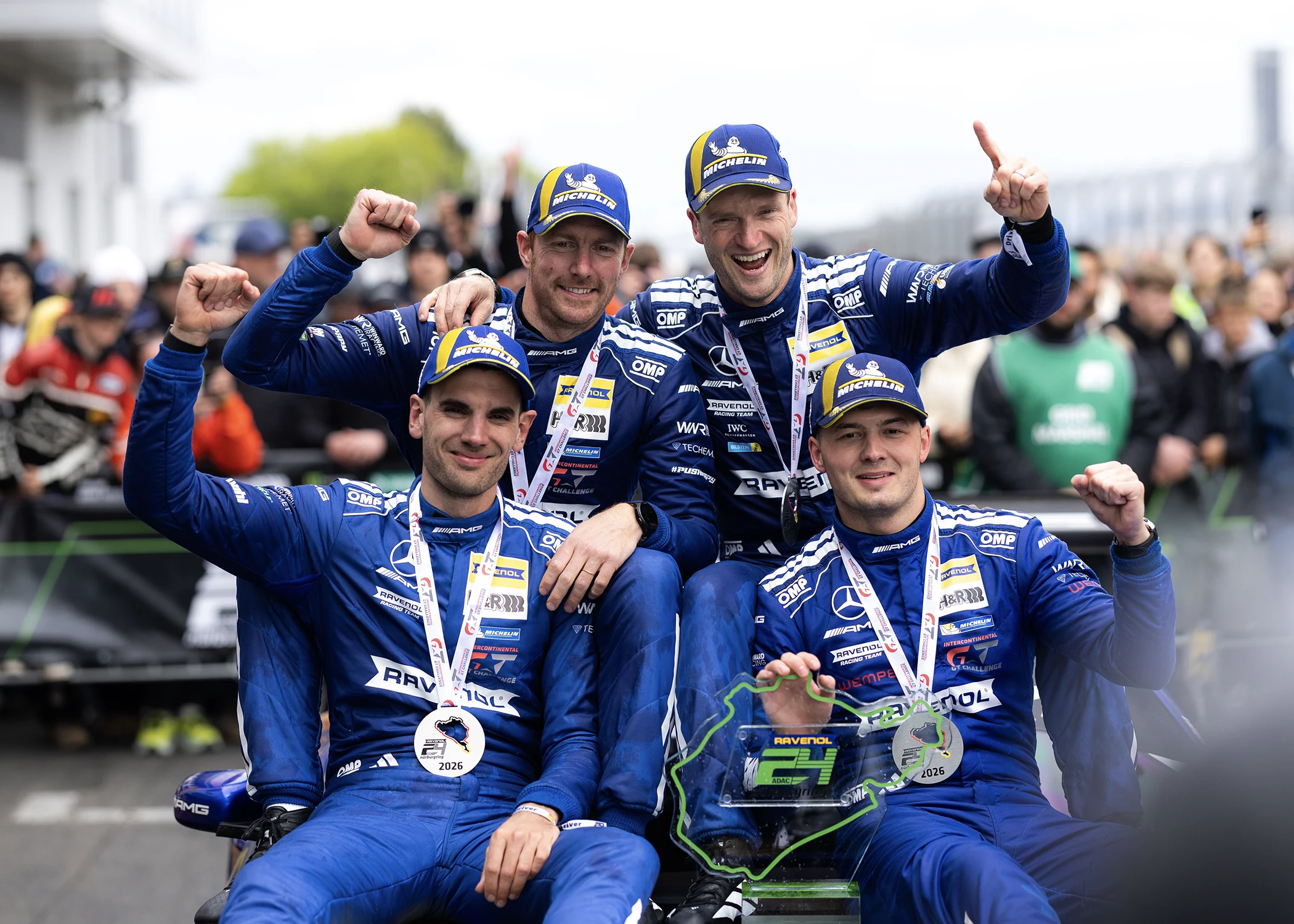
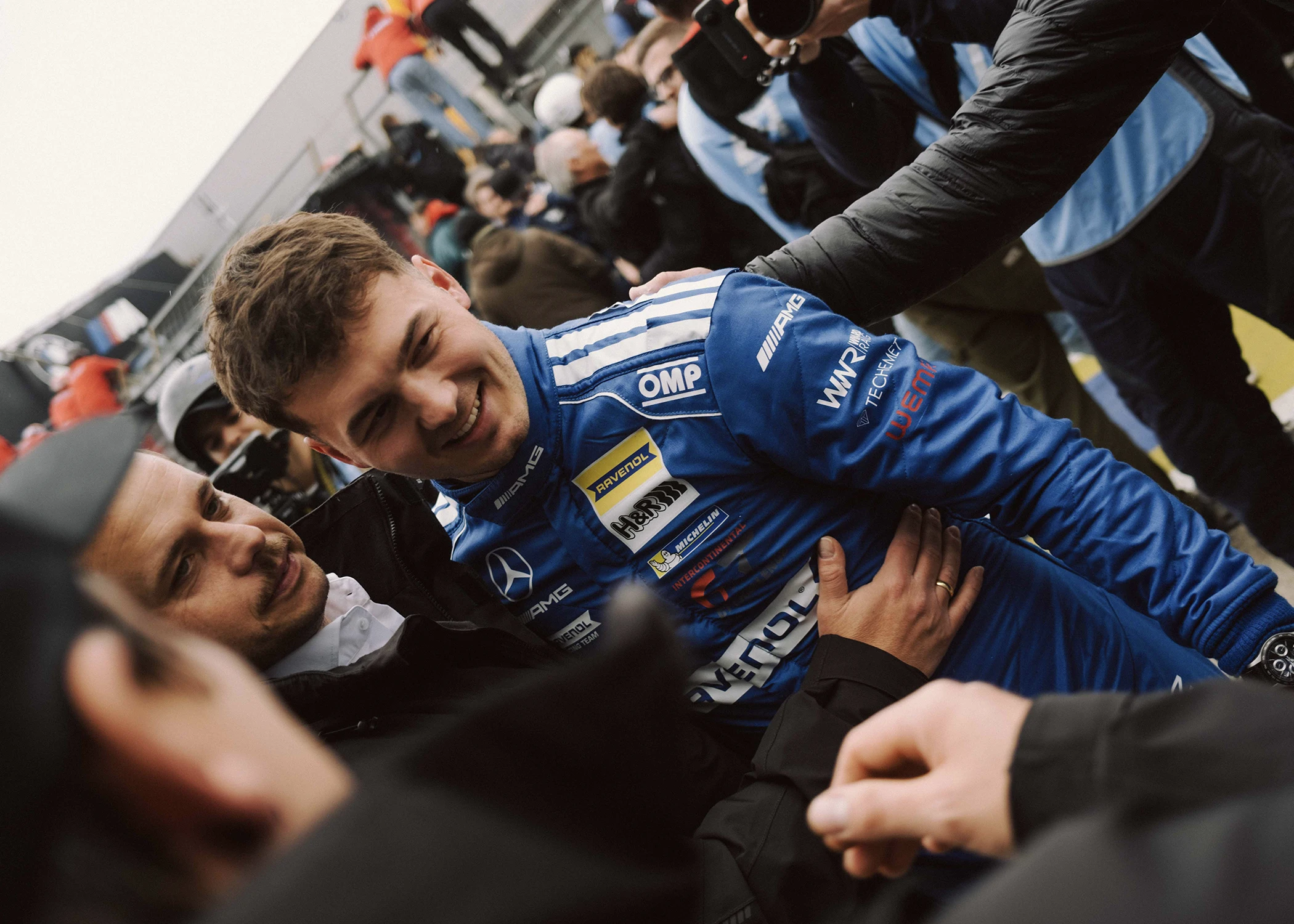
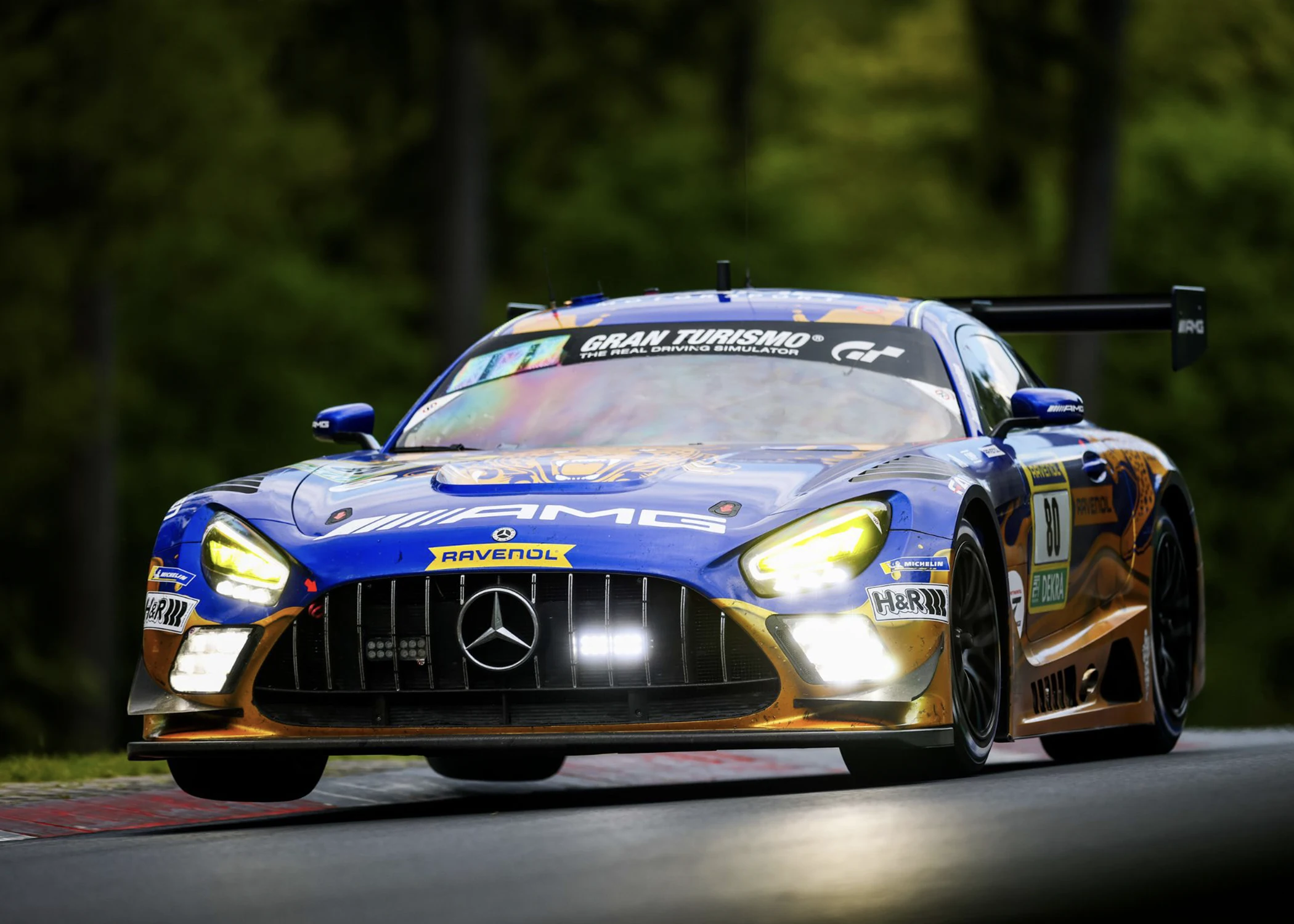
In the end, the Walkenhorst Aston Martin Vantage takes third place, the Abt-Lamborghini second, and at the very top of the podium stand the Mercedes-AMG drivers Maro Engel, Luca Stolz, Maxime Martin and Wempe brand ambassador Fabian Schiller.
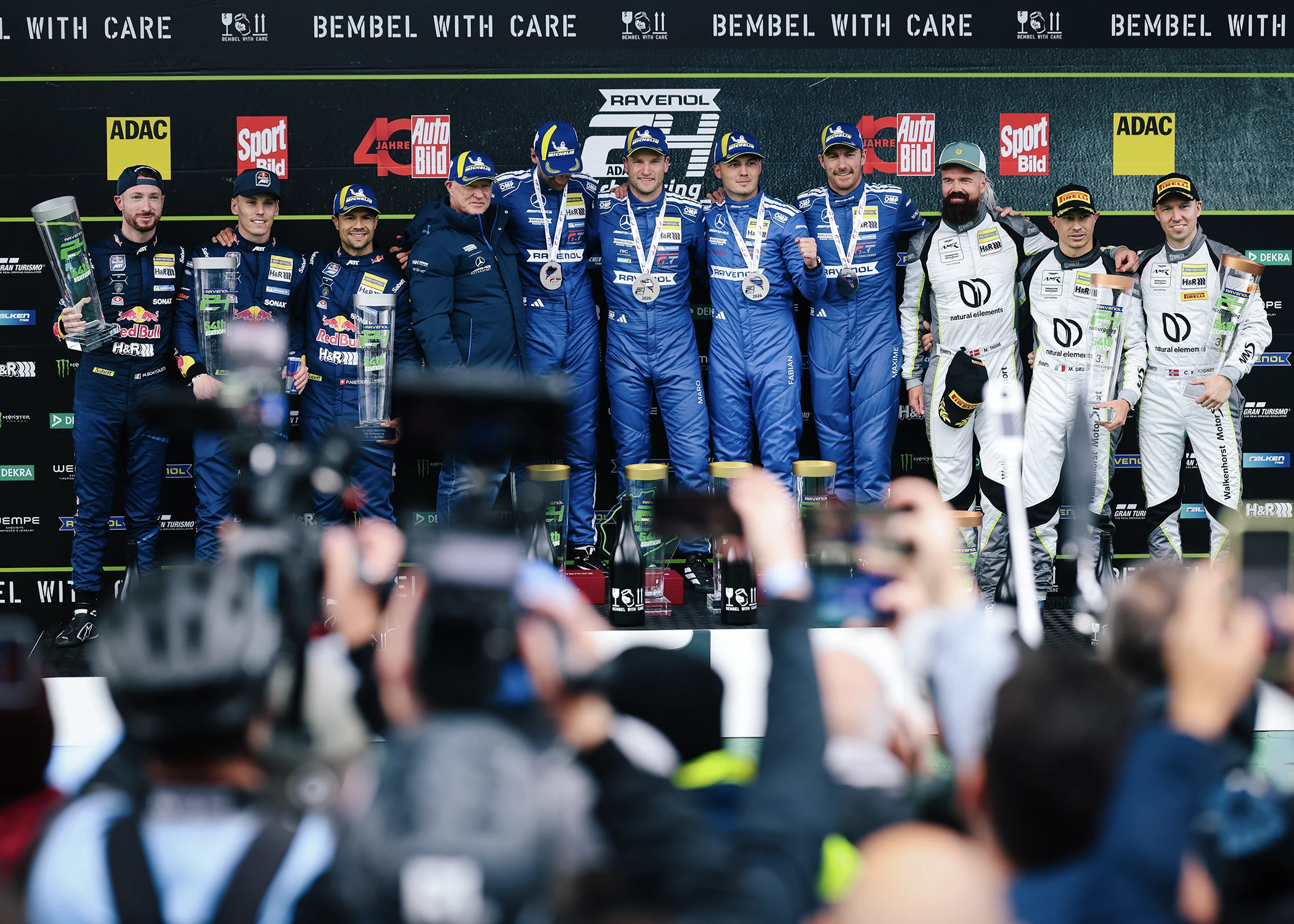
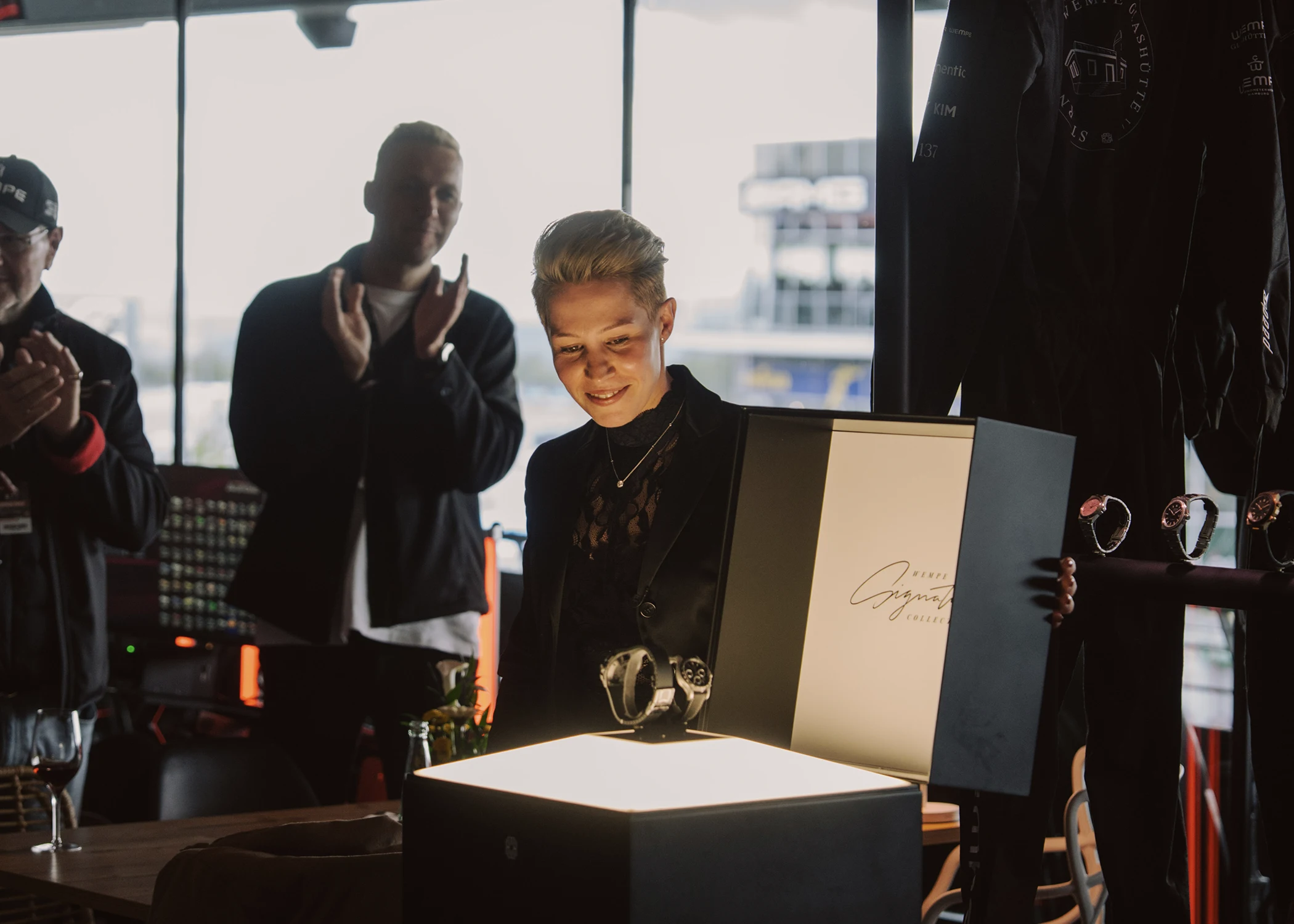
After the medals and the trophy, Chiara Wempe presented the winners with the Iron Walker Chronograph 24h Nürburgring Edition. Wempe could hardly have wished for a better debut for the new partnership. The guests’ enthusiasm was palpable, and anyone who wasn’t already a motorsport fan certainly was after these eventful 24 hours.