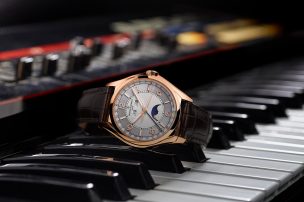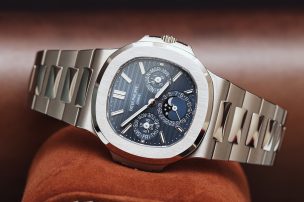
The new Chopard Alpine Eagle 41 AM introduces anti-magnetic technology, a moss green finish and the new Calibre 01.01-C to the collection.

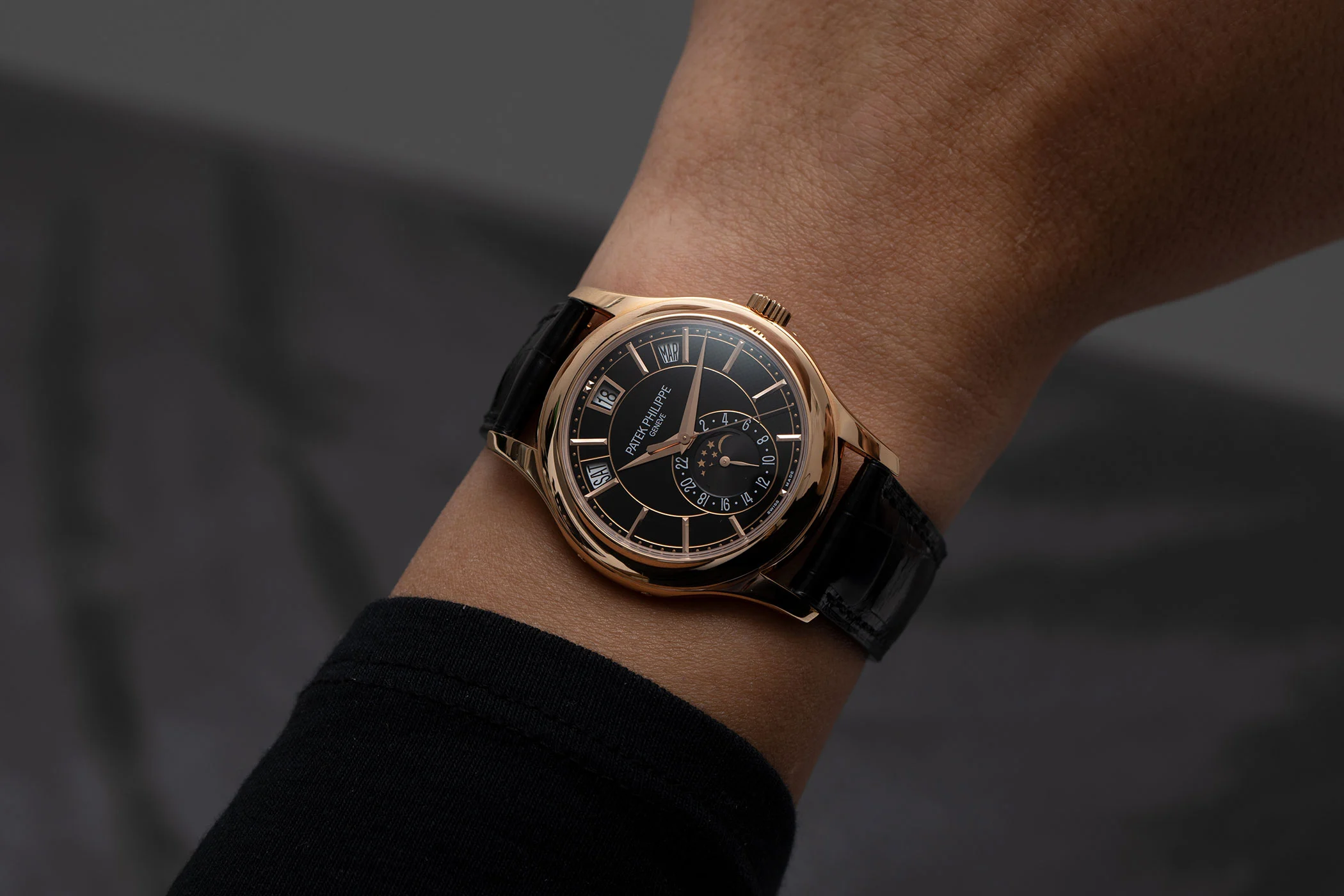
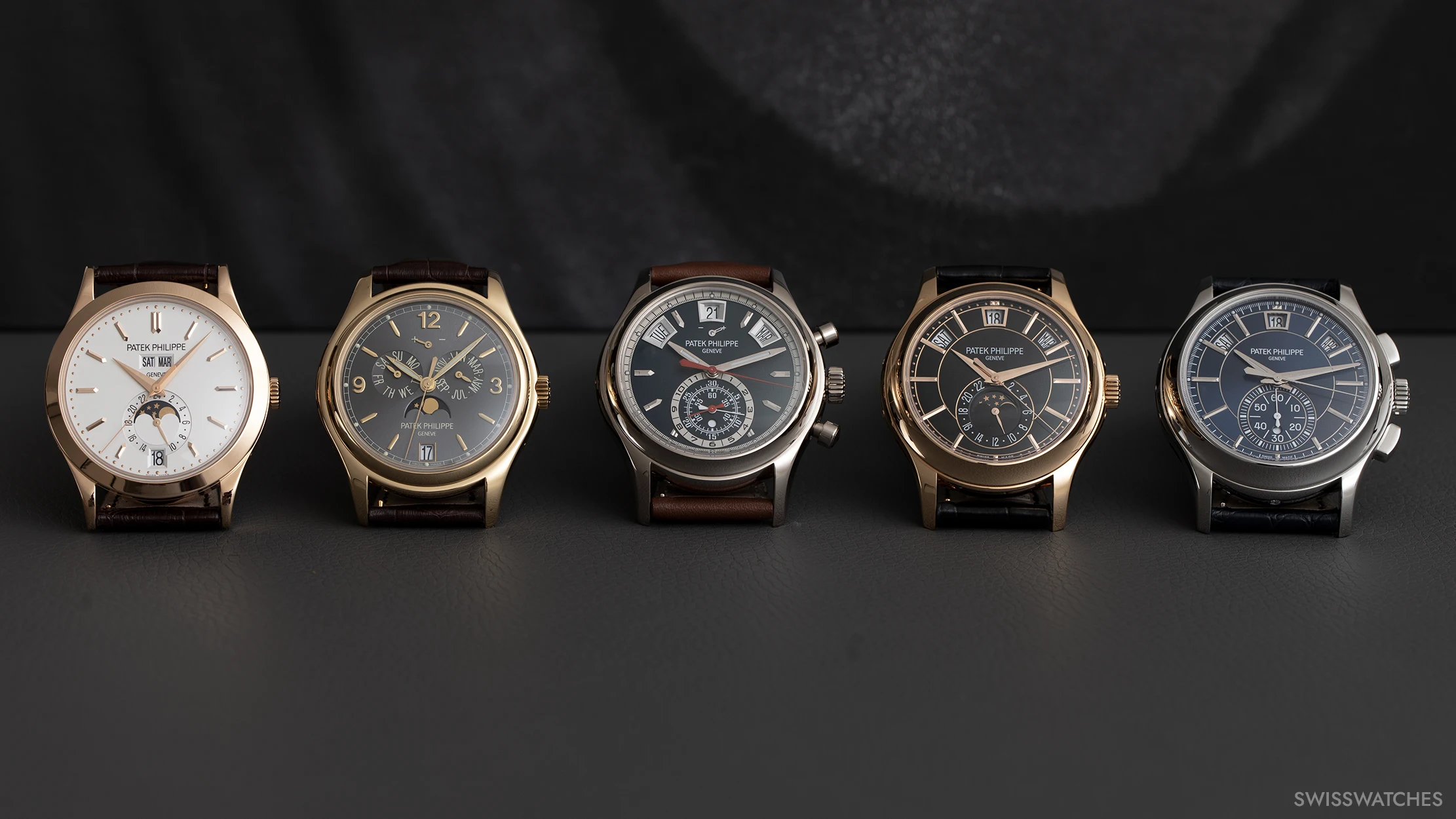
With the annual calendar, Patek Philippe has found a brilliantly simple solution to an age-old problem – to mark its 30th anniversary, Swisswatches has taken a detailed look at the most important models.
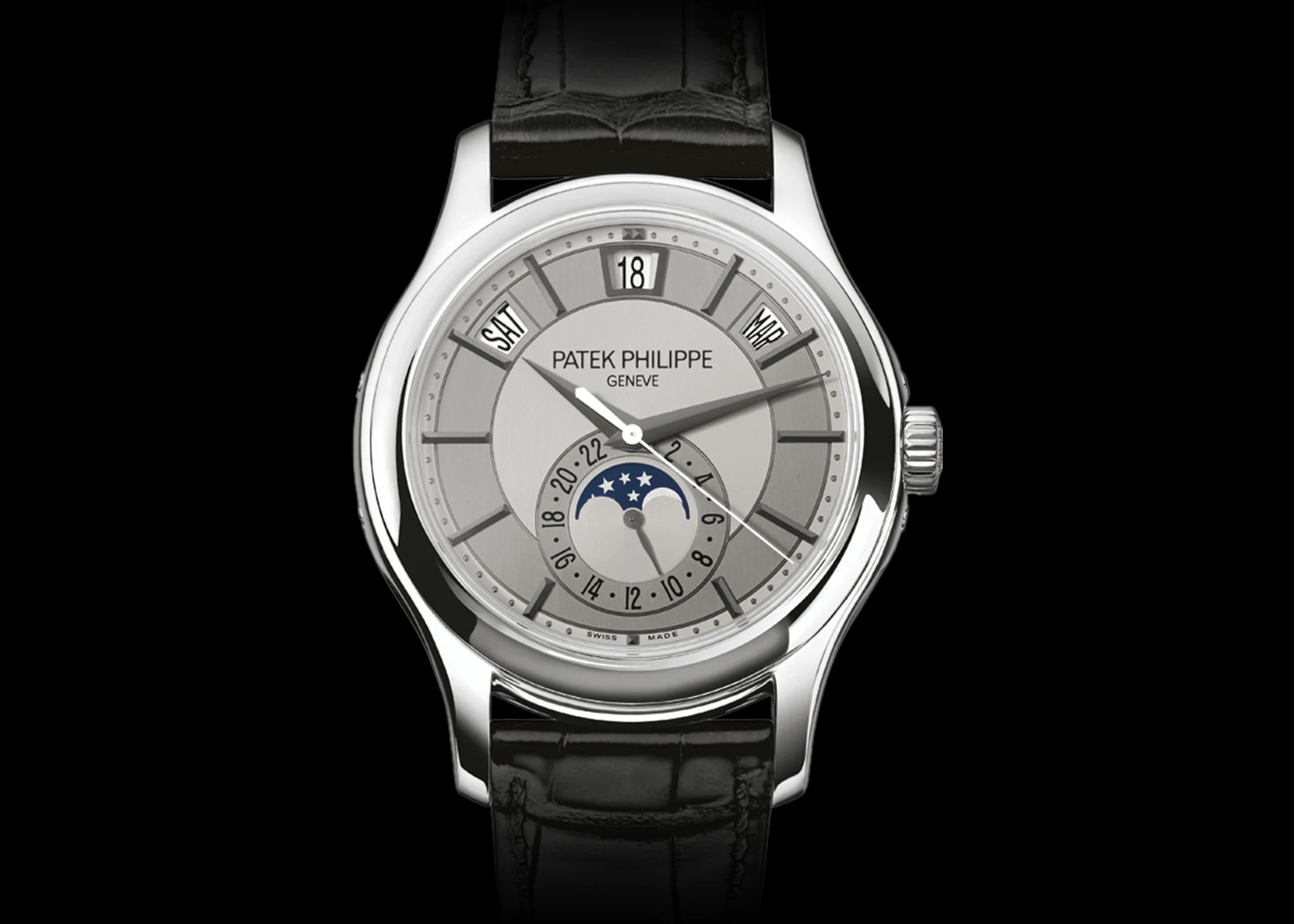
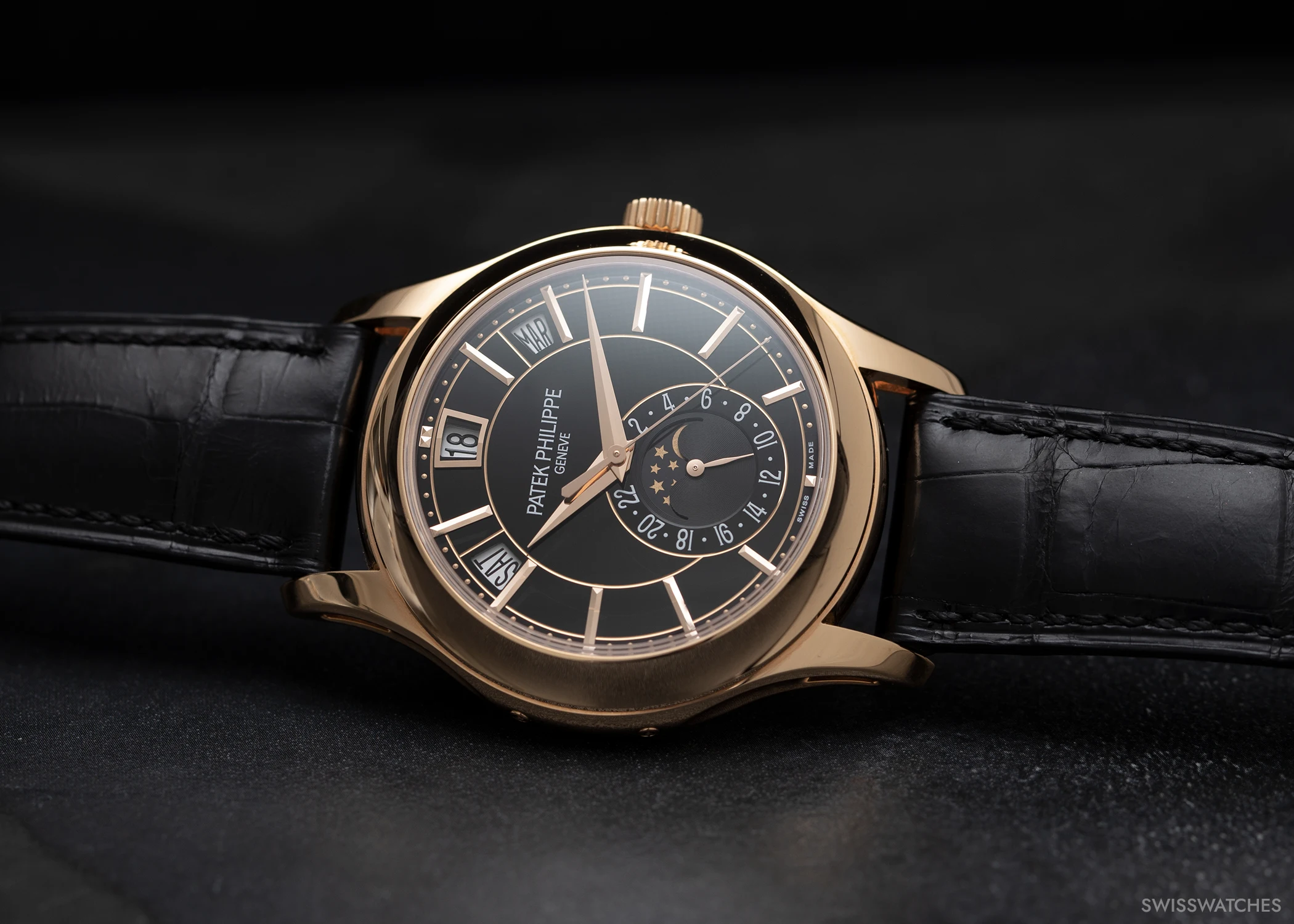
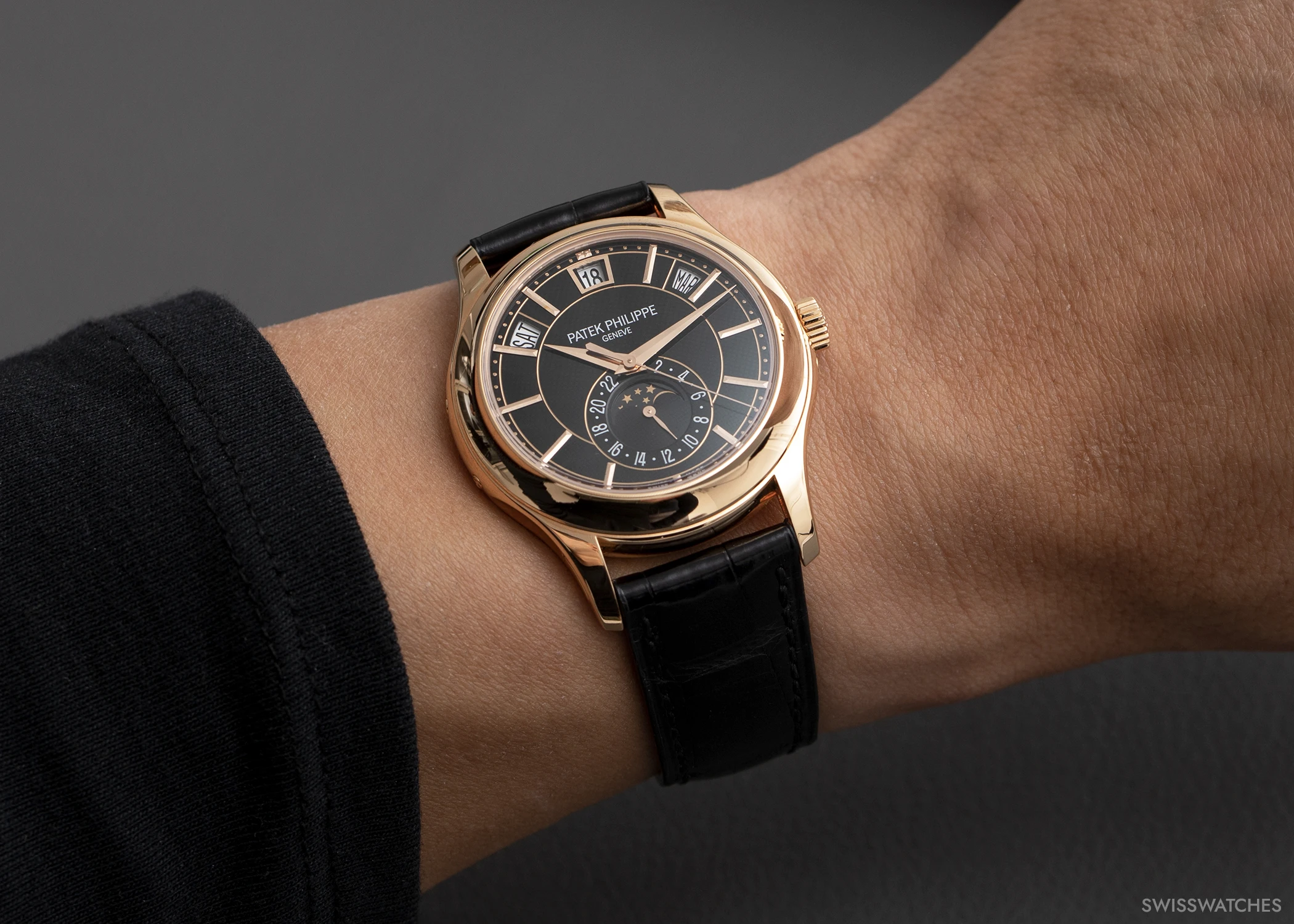
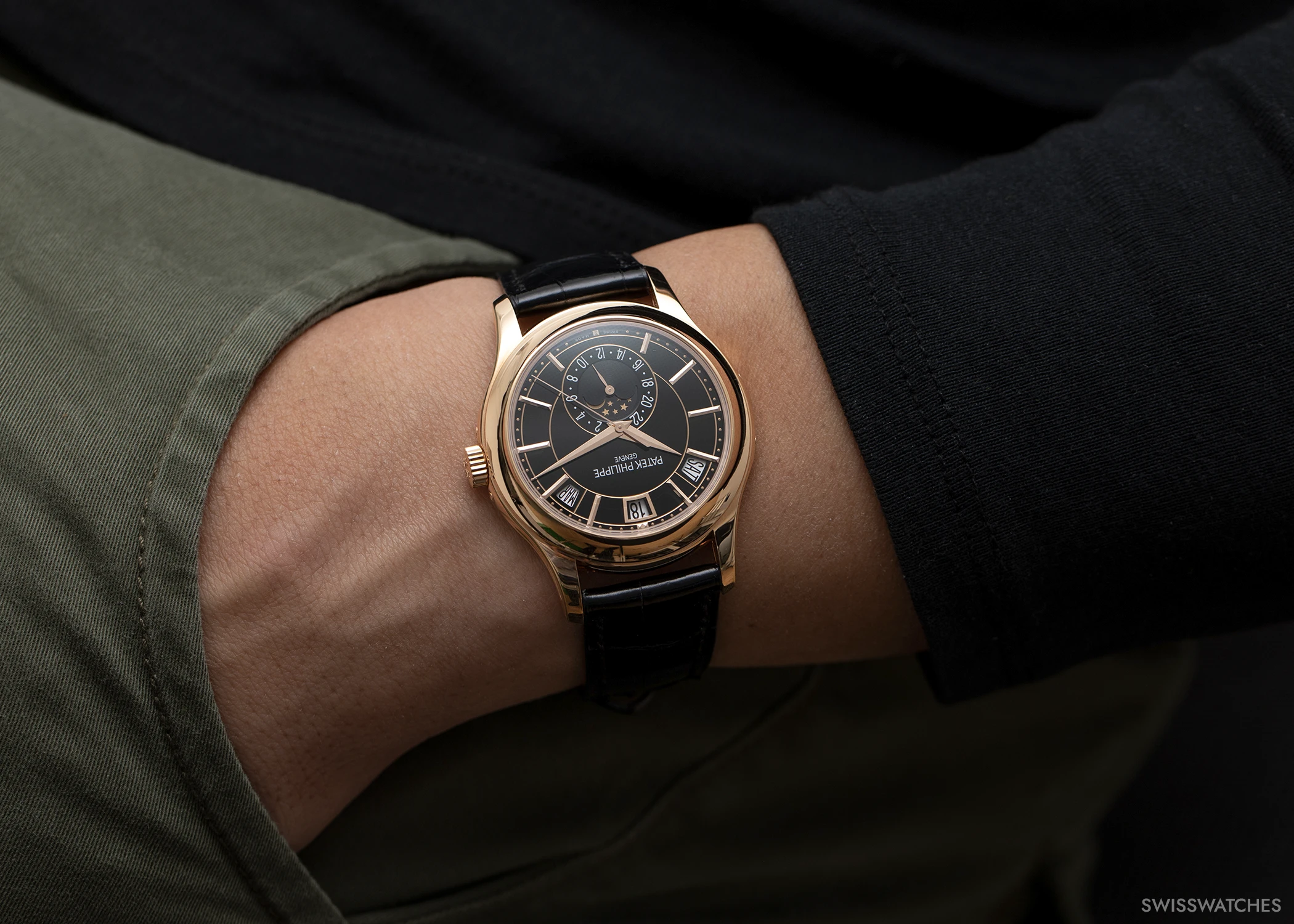
For 30 years, the Patek Philippe annual calendar mechanism has been the most elegant solution to a problem that has preoccupied humanity since the dawn of timekeeping. If you are a serious watch collector, you will certainly be familiar with this question from the uninitiated: if you were only allowed to keep one watch for the rest of your life, which would it be? Of course, the question is theoretical, even if history has repeatedly shown instances where people were grateful to have made it through with nothing more than a watch on their wrist. Yet, Patek’s Annual Calendar would be a prime candidate as an answer: ironically, at the very dawn of the digital age, one of the most practical complications in mechanical wristwatches was developed.
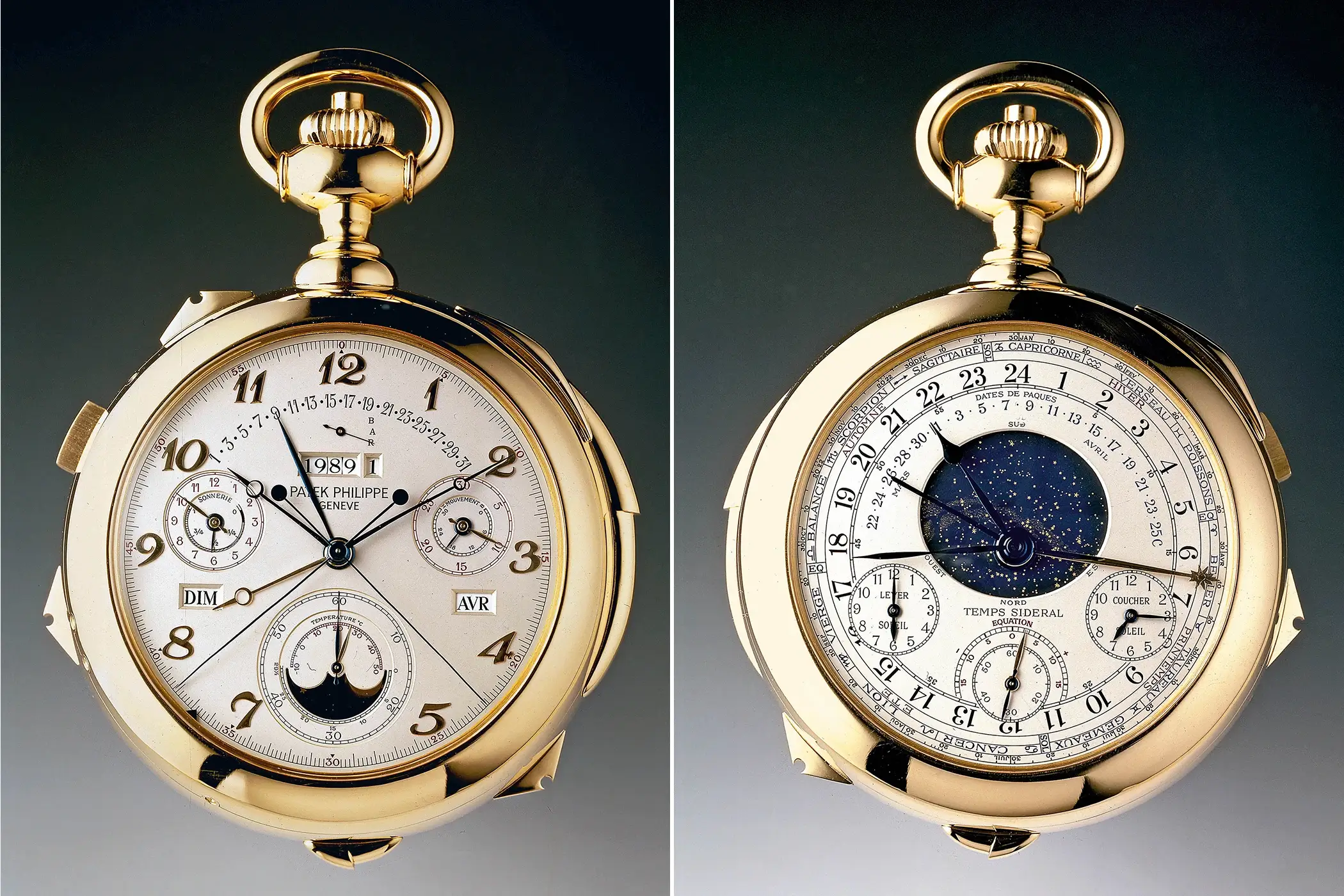
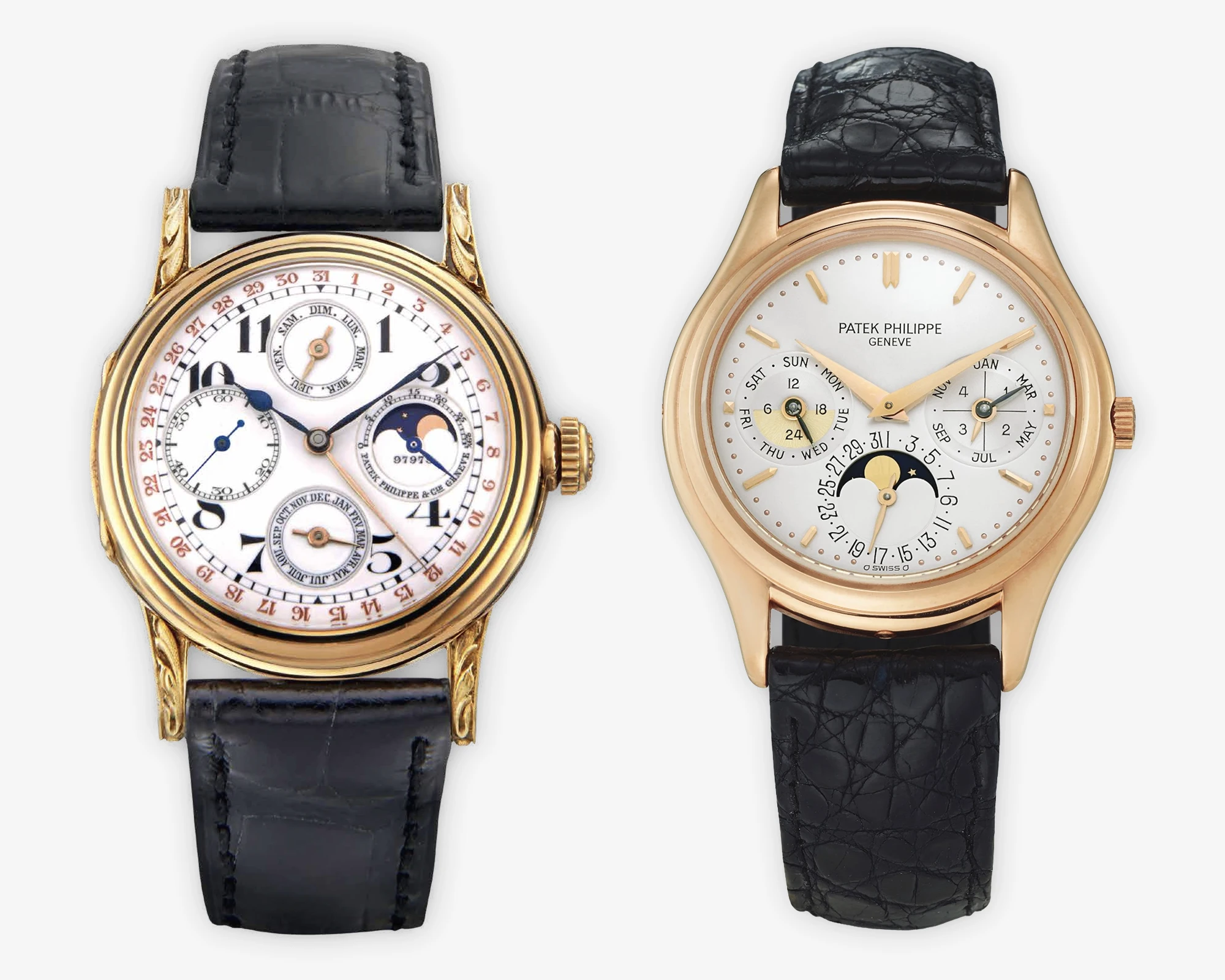
Notably, Patek Philippe never claimed to have ‘invented’ the annual calendar. However, nothing quite like it existed when the Geneva-based development department set to work on it in the early 1990s. The context: the legendary Calibre 89 pocket watch had recently been created for the brand’s 150th anniversary. This timepiece sparked a resurgence of interest in complications across the entire industry and subsequently encouraged many manufacturers to try their hand in this field once again.
In the preceding decades, as a result of the Swiss watch crisis and the boom in quartz watches, complicated mechanical wristwatches had all but vanished, and only a few customers remained interested in such models.
As one of the very few companies, the Stern family remained committed to complex mechanical watchmaking: Patek Philippe had never stopped manufacturing complications. It was a decisive step that solidified the manufacture’s leading position in this field and, thirty years on, continues to provide it with a formidable technical edge.
The direct consequence of this approach was the continued production of complex mechanical watches in the decade following the anniversary, while many Swiss competitors were still relying on mass-produced movements. With the comeback of mechanical watchmaking, concerns quickly arose about increasing market saturation in the top-tier segment. No one at the time foresaw its meteoric rise, and it seemed sensible to broaden the pool of potential customers by offering complications that were not only more affordable but also easier to operate.
The launch of an Annual Calendar created an immediate sensation among collectors: first presented at Basel in the spring of 1996, the newcomer was crowned ‘Watch of the Year’ by the Swiss magazine Montres Passion the following autumn. In a world transitioning into the digital age, awards of this nature were still significant events. As a long-standing member of the jury, the British watch expert Nicholas Foulkes recalled the jury meeting in an article for the Patek Philippe Magazine to mark the 20th anniversary of the first Annual Calendar’s launch: ‘The decision that year was reached unanimously and enthusiastically by all members, even though there were other outstanding candidates.’
The enthusiasm is easy to explain. Alongside its aesthetic and technical qualities, the model offered a truly useful, simple, yet entirely new complication. It sits between the simple calendar, which must be adjusted five times a year for months with fewer than 31 days, and the perpetual calendar, which requires no correction even in leap years but is significantly more expensive. If you would like to learn more about how the individual calendar mechanisms work, read our guide comparing the perpetual calendar, annual calendar, and complete calendar here.
This new mechanism only required adjustment once a year, at the end of February. It seemed so obvious, yet no one had come up with the idea until then, nor had anyone developed a suitable technical solution. Moreover, it required an exceptional manufacture not only to realise such a mechanism but also to bring it to market at the right moment: a few years earlier, such a watch would hardly have been marketable. The patent granted for this mechanism in 1996 demonstrates that timing in product development and sales is just as important as the product itself. The watch arrived at precisely the right point in the history of horology.
Naturally, the various methods of timekeeping and calendars seem very alien to modern cultures that no longer use them.
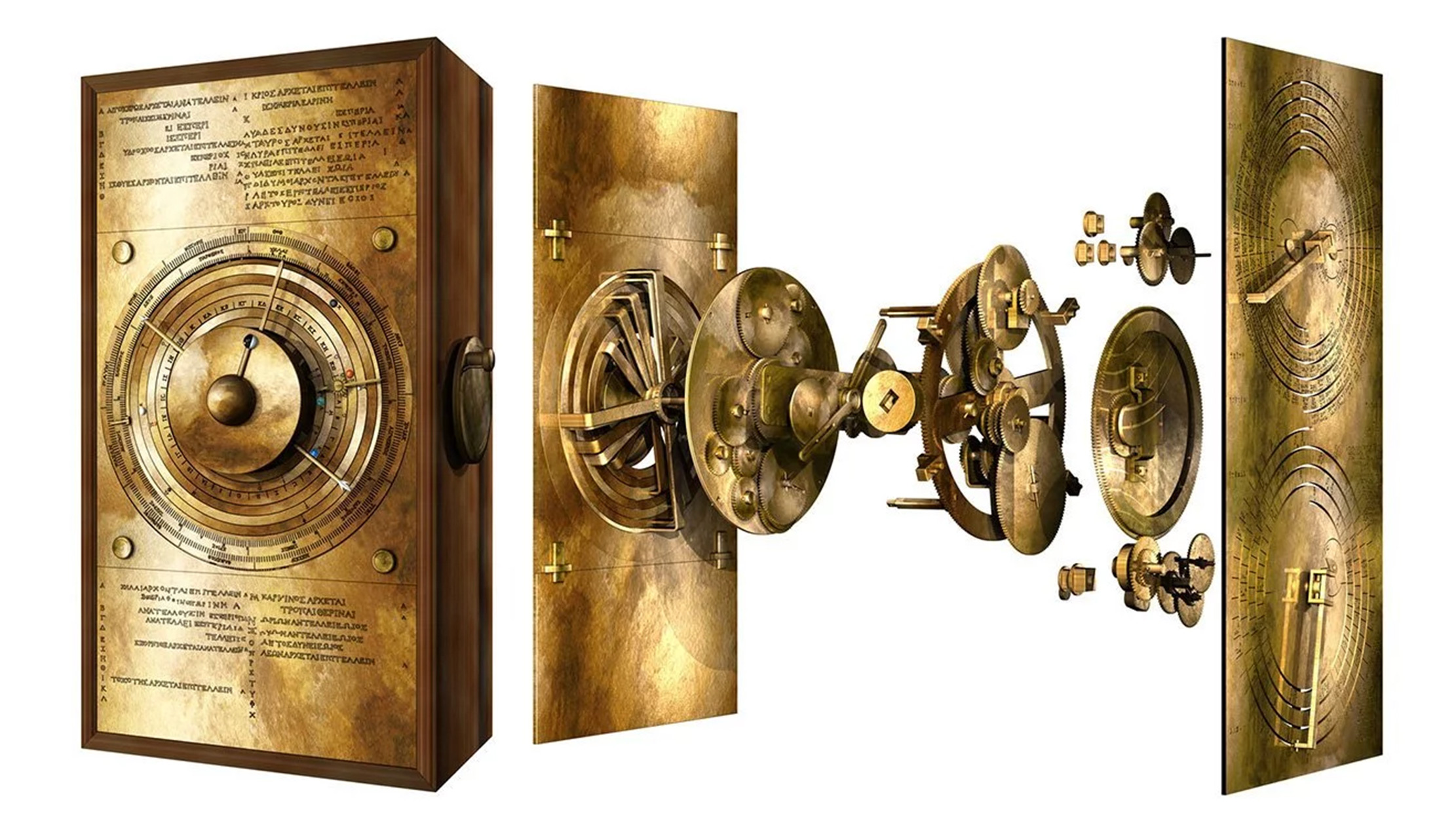
Although the Romans introduced the Julian calendar in 46 BC, which simplified the calendar system, they developed no specific mechanism to display it. The Greeks, by contrast, had already achieved astonishing technical breakthroughs significantly earlier. The famous Antikythera mechanism from the 2nd century BC was discovered around 1900 in the wreck of an ancient merchant ship and is the earliest known geared apparatus. It appears to have been a genuine calculating machine capable of determining the positions of certain stars and planets and predicting eclipses. Among other features, the device possessed over 30 gears and several dials bearing engraved instructions for use.
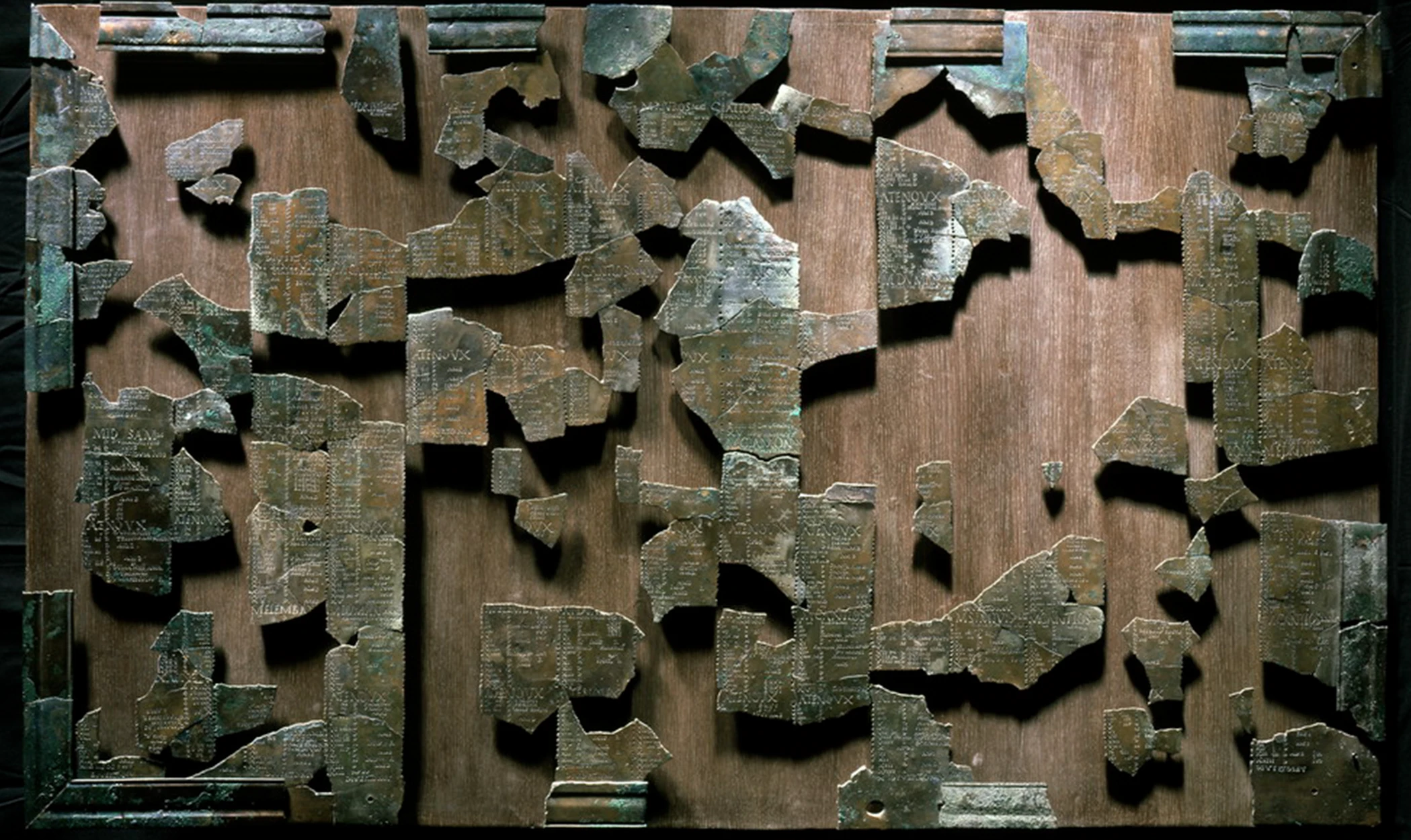
Even the Gauls were further ahead than the Romans—and not just when it came to Asterix’s magic potion. They observed the movements of celestial bodies and developed highly complex calendar systems. One example is the Coligny calendar from the 1st to 2nd century BC, which can be seen in the Gallo-Roman Museum in Lyon. The discovery was a sensation: the fragments, discovered in a field in 1897, turned out to be pieces of a bronze tablet measuring 148 × 90 cm. Written in a Celtic language but using Latin characters, the calendar represents a cycle of five years, each consisting of twelve months, mostly comprising 29 or 30 days. To harmonise the solar and lunar cycles, the Druidic astronomers had developed a highly complex system involving additional days and intercalary months.
“Unlike the mechanism discussed here, using the Coligny calendar required daily attention: the passing of the days was marked by a peg, which could be inserted into a hole in front of each line. It must have been very labourious, as it apparently functioned on a 30-year basis, suggesting that six similarly sized tablets – each covering five years – were needed.”
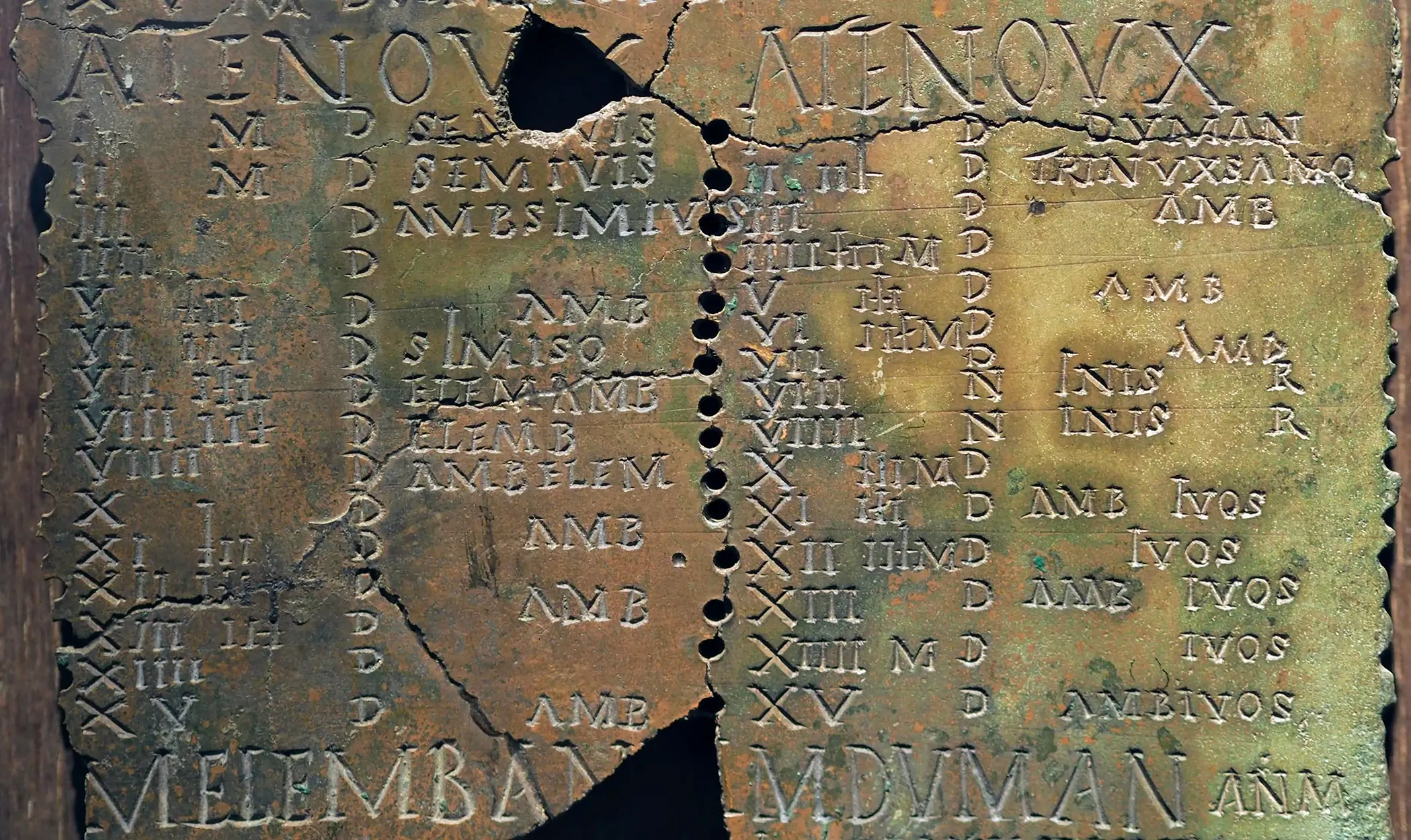
Gozitano, Fragment van de kalender, licensed under CC BY 4.0
This level of technical complexity remained unrivalled for over fifteen centuries and only reappeared with the astronomical clocks of the Middle Ages and the Renaissance. The miniaturised mechanisms of the 17th century were capable of displaying the time, date, day of the week, month, and moon phases on the dial of a pocket watch.
Towards the end of the 18th century, the perpetual calendar was developed, which accounts for leap years – a field in which Patek Philippe remains the undisputed leader, owing to its celebrated perpetual calendar wristwatches.
The Patek Philippe Annual Calendar is already regarded as an established classic within the manufacture’s collection; consequently, it is well worth tracing its history in detail.
It all began in 1991 with a diploma thesis initiated by Patek Philippe at the Geneva Engineering School. Such collaborations with schools and universities are a long-standing tradition at Patek Philippe and continue to this day, particularly in the field of microtechnology research in Neuchâtel. In this instance, the graduate was hired by Patek Philippe and still works for the manufacture today. His name is Cédric Fague, and thirty years later, he remains active in product development. From the outset, his brief was clear, having been set by the company’s then-head, Philippe Stern, father of the current president, Thierry Stern.
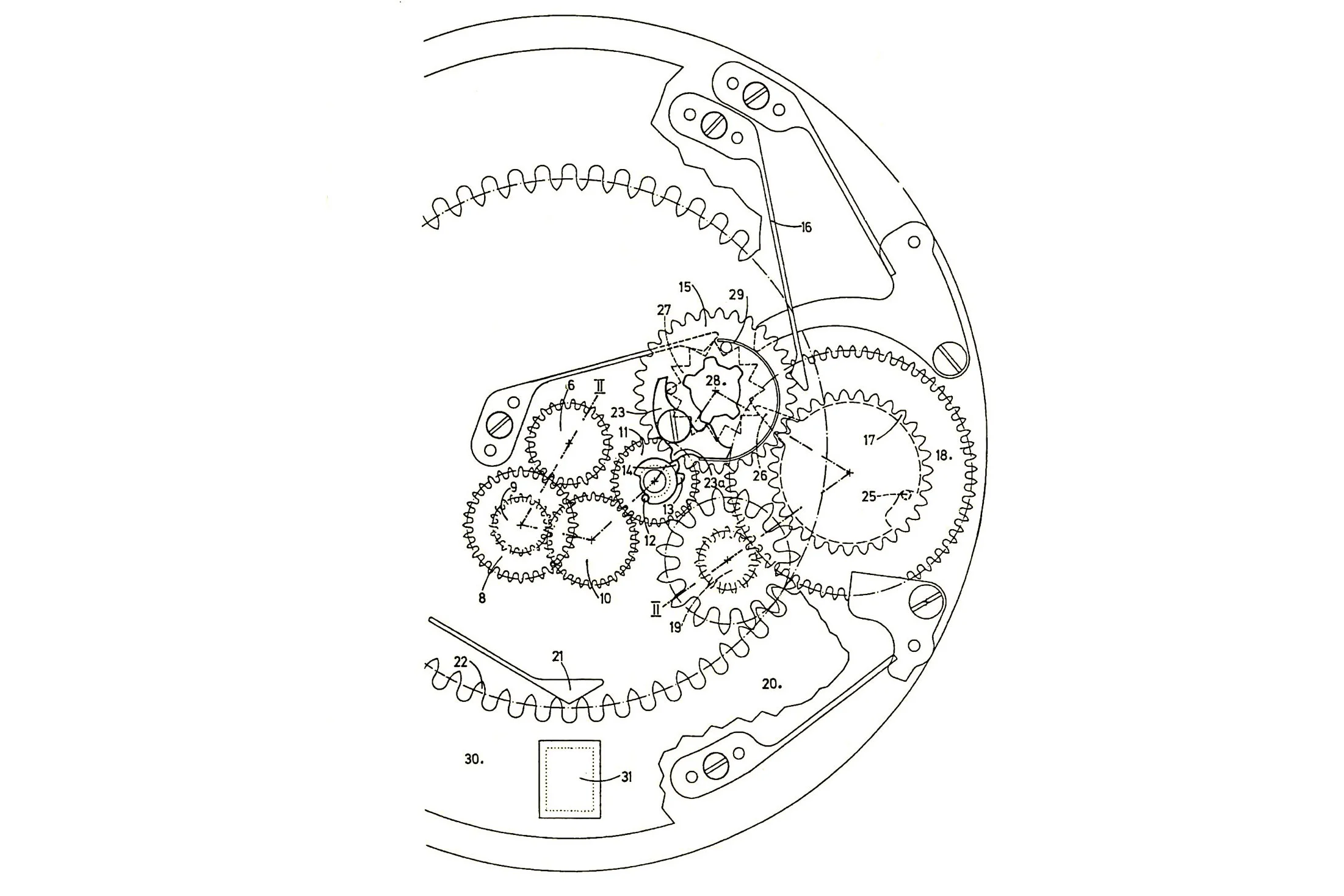
The objective was not to simplify the perpetual calendar – for example, by modifying the programme wheel that governs the 48 months of the four-year cycle between leap years. Rather, the aim was to take the simple calendar as a starting point and find an original, reliable, and robust solution that was both mechanically and financially efficient. Specifically, the goal was to develop a mechanism that did not rely on the levers, rockers, and large return springs that drive classic perpetual calendars, but was based instead on rotary components.
To understand the reasoning behind this radical approach, we must once again look to the past: thirty years ago, it was far more difficult to produce complex shaped components than it is today, in an era where multi-axis CNC milling machines have become the industry standard.
To obtain perfectly smooth and large rockers, complex and costly adjustments and fine-tuning had to be carried out during final assembly at the time. It was precisely this problem that the developers aimed to circumvent by designing the mechanism using turned parts. The choice of turned parts would simplify production at a reasonable cost while significantly increasing ease of use, durability, and suitability for everyday wear. The challenge remained to mechanically programme the transition from months with 30 days to the first day of the following month five times a year.
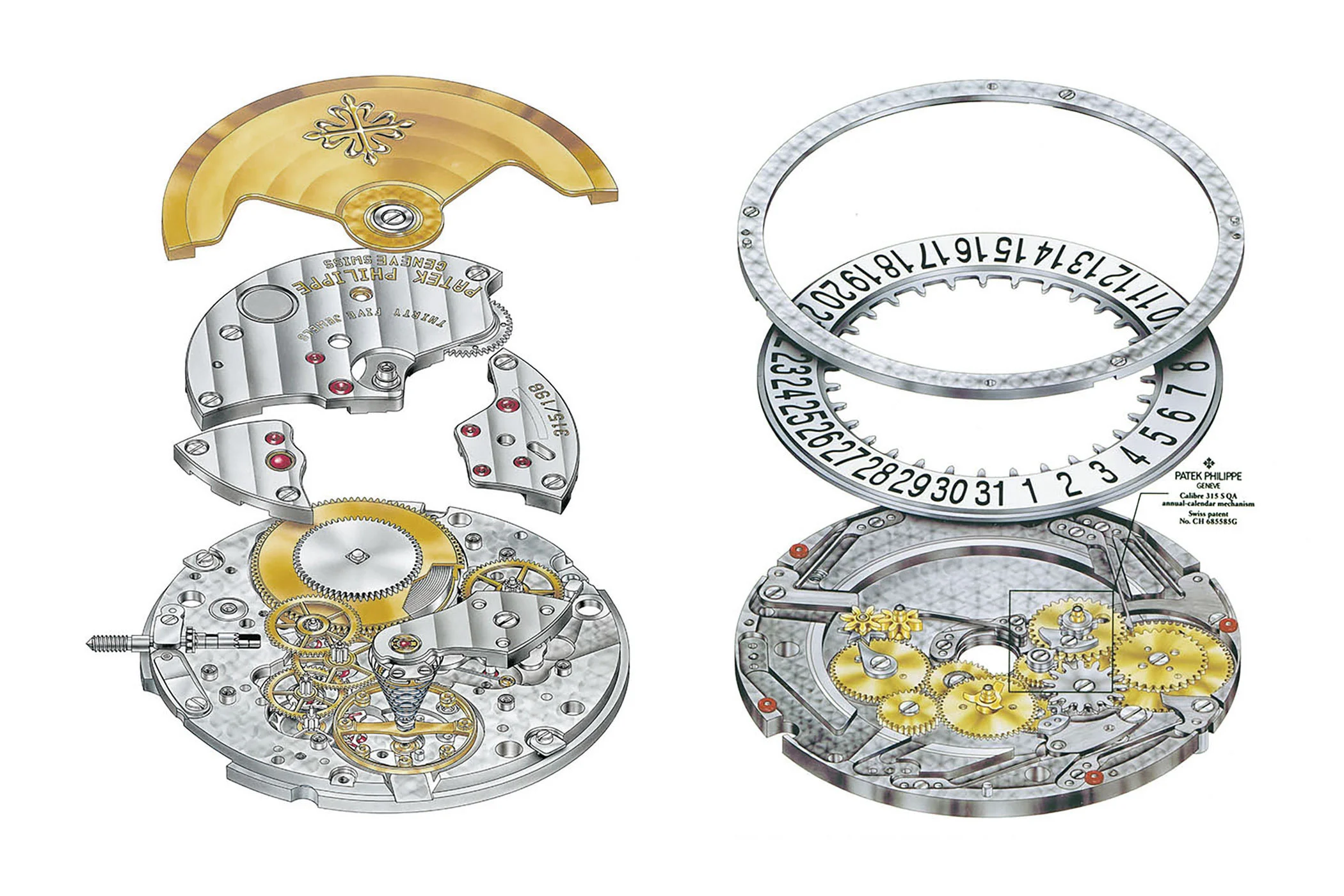
The solution was a wheel with 31 teeth carrying a 12-month disc. A small feeler, whose shape earned it the nickname “Dolphin”, tracks this disc to control the change to the next month on the 30th or 31st. As the prototypes improved from one development phase to the next, technicians and watchmakers worked together to simplify the construction and reduce complexity. One result was the decision to dispense with the return spring intended for the “Dolphin”. Theoretically, it was necessary; in practice, however, it proved to be dispensable, as its removal had no impact on the function.
By the end of the planning phase, despite efforts to simplify the design, the first annual calendar mechanism comprised more individual components than a perpetual calendar, and this remains the case even today. Consequently, the annual calendar with moon phases comprises nearly 330 parts, whereas a conventional perpetual calendar with a moon-phase display features only 275.
The explanation lies in the decision to use a system of wheels, all of which must be connected with pins and screws, rather than stacked components. The advantages of the concept also outweighed its sole drawback: the movement was intended to be slim. However, in 1996, the engineers designed a 2 mm thick mechanism, which increased the total height of the first calibre to 5.2 mm, meaning the corresponding case also had to be taller.
Yet the market embraced this watch immediately, taking the bolder proportions of the debut model in its stride.
This may also be explained by the fact that the company’s internal requirement for the dial to be perfectly legible was fully met. The date display of a mechanism bearing the name Annual Calendar must be immediately legible. While perpetual calendars typically feature a pointer date, preference was given to aperture displays and a more visually prominent date to ensure maximum readability. Over time, the corresponding discs were enlarged and their positions adjusted so that the day and month indications became even clearer. A sophisticated optimisation of the aperture displays also compensated for the inherent differences in height between the discs.
A simple figure illustrates just how popular this complication is today: in 2026, there are around 160 references in Patek Philippe’s current collection, 17 of which are annual calendars alone, ranging from men’s to ladies’ models, many in combination with other complicated mechanisms. These are by no means watches intended only for those who cannot afford a perpetual calendar. But more on that later.
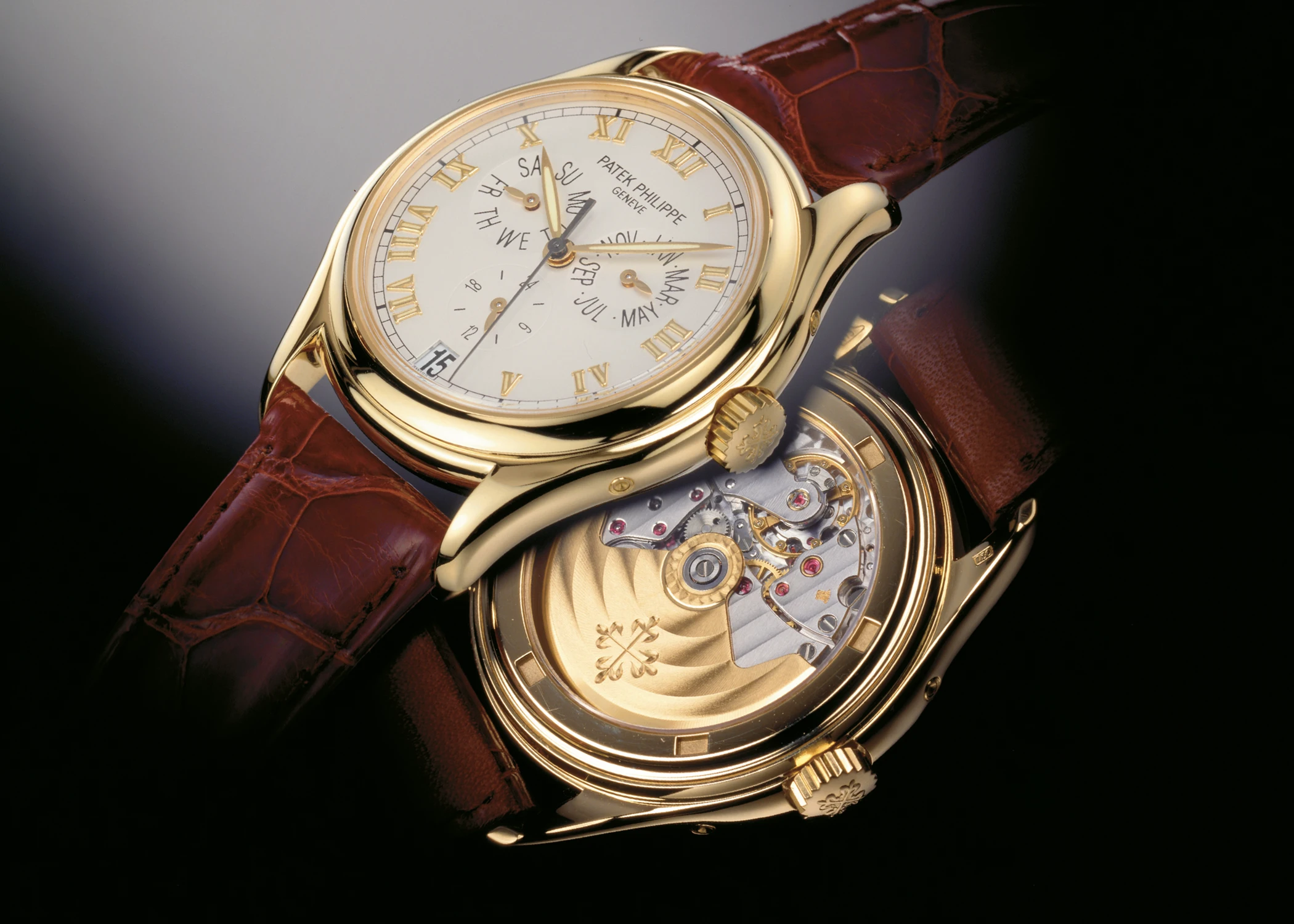
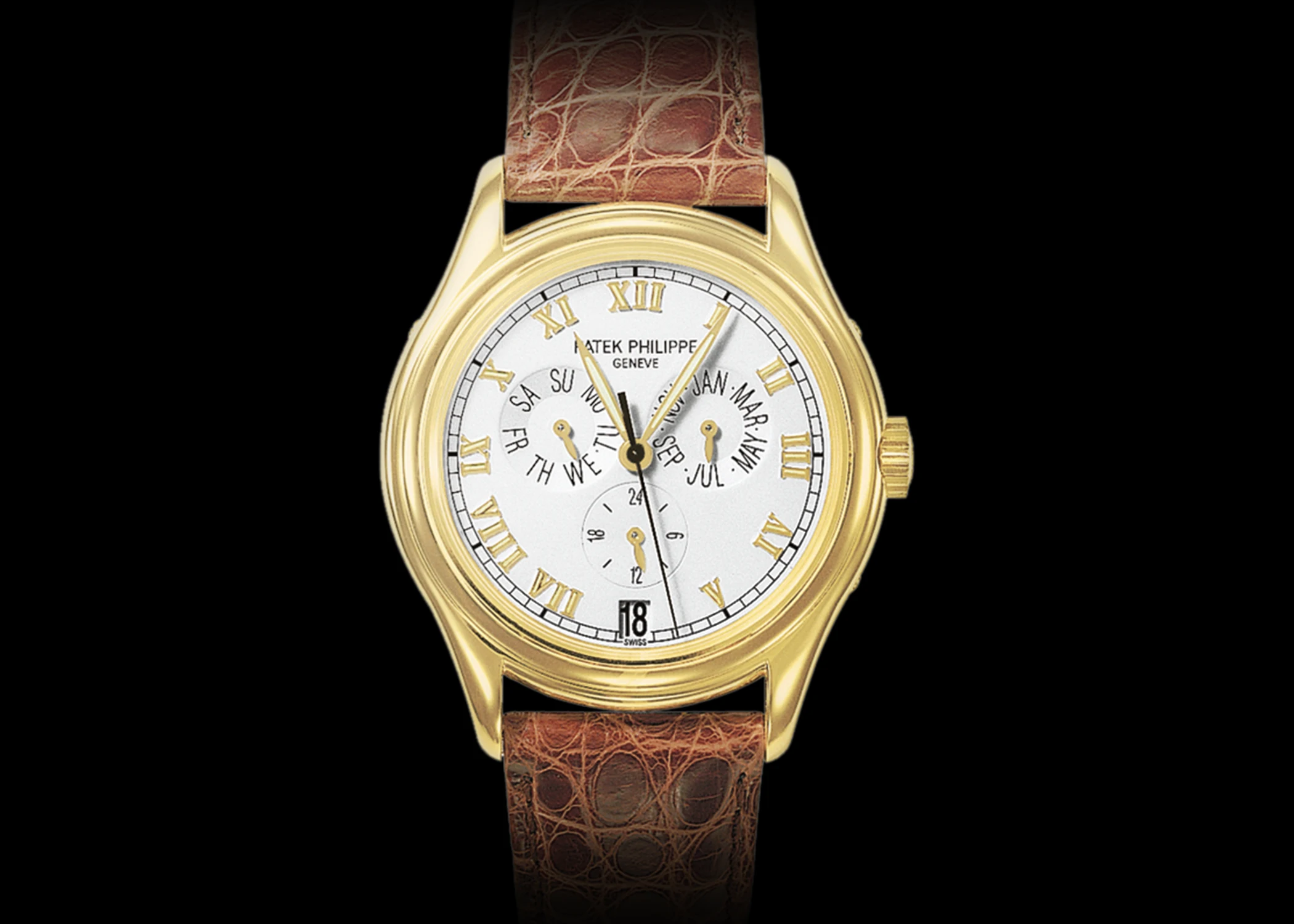
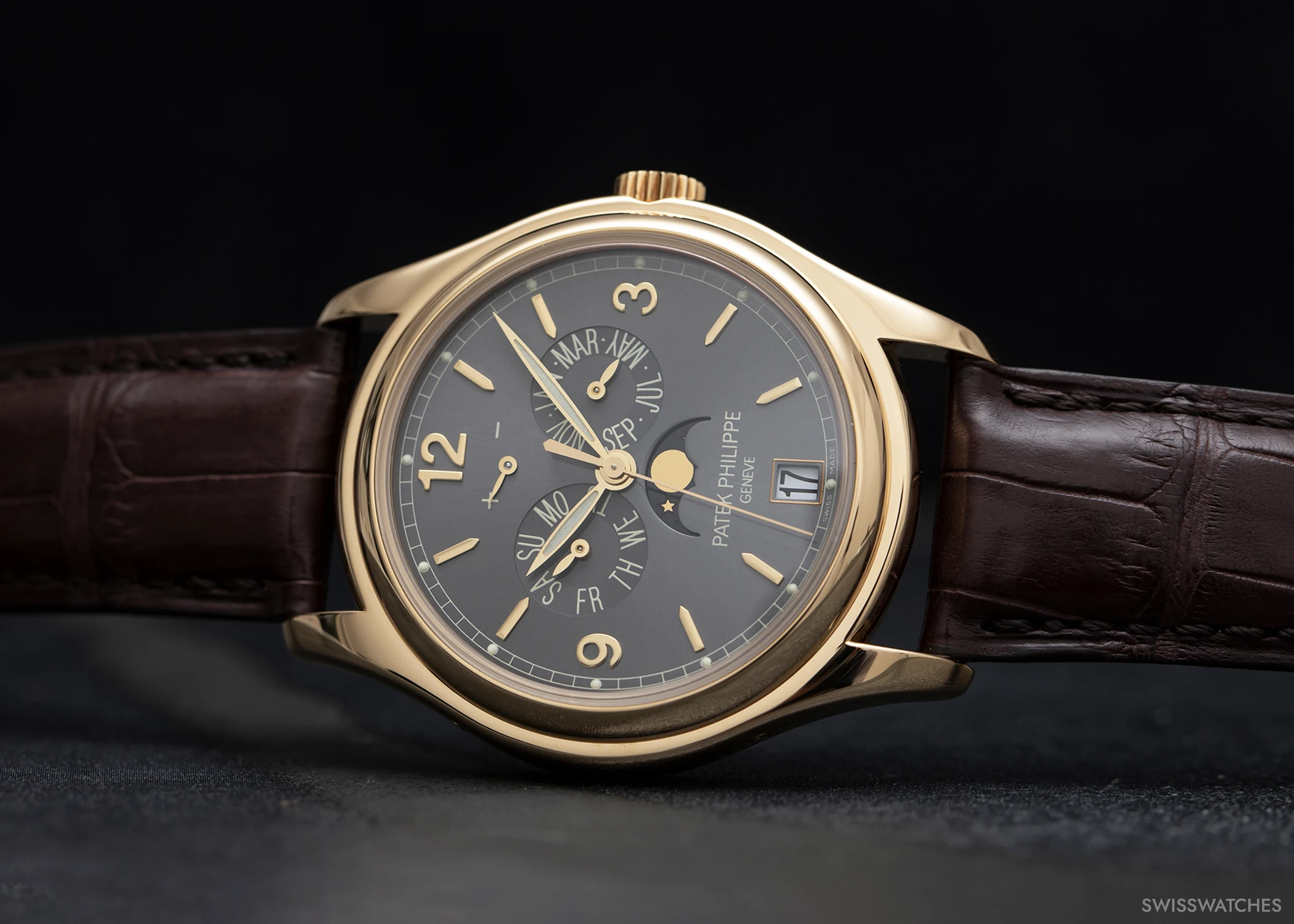
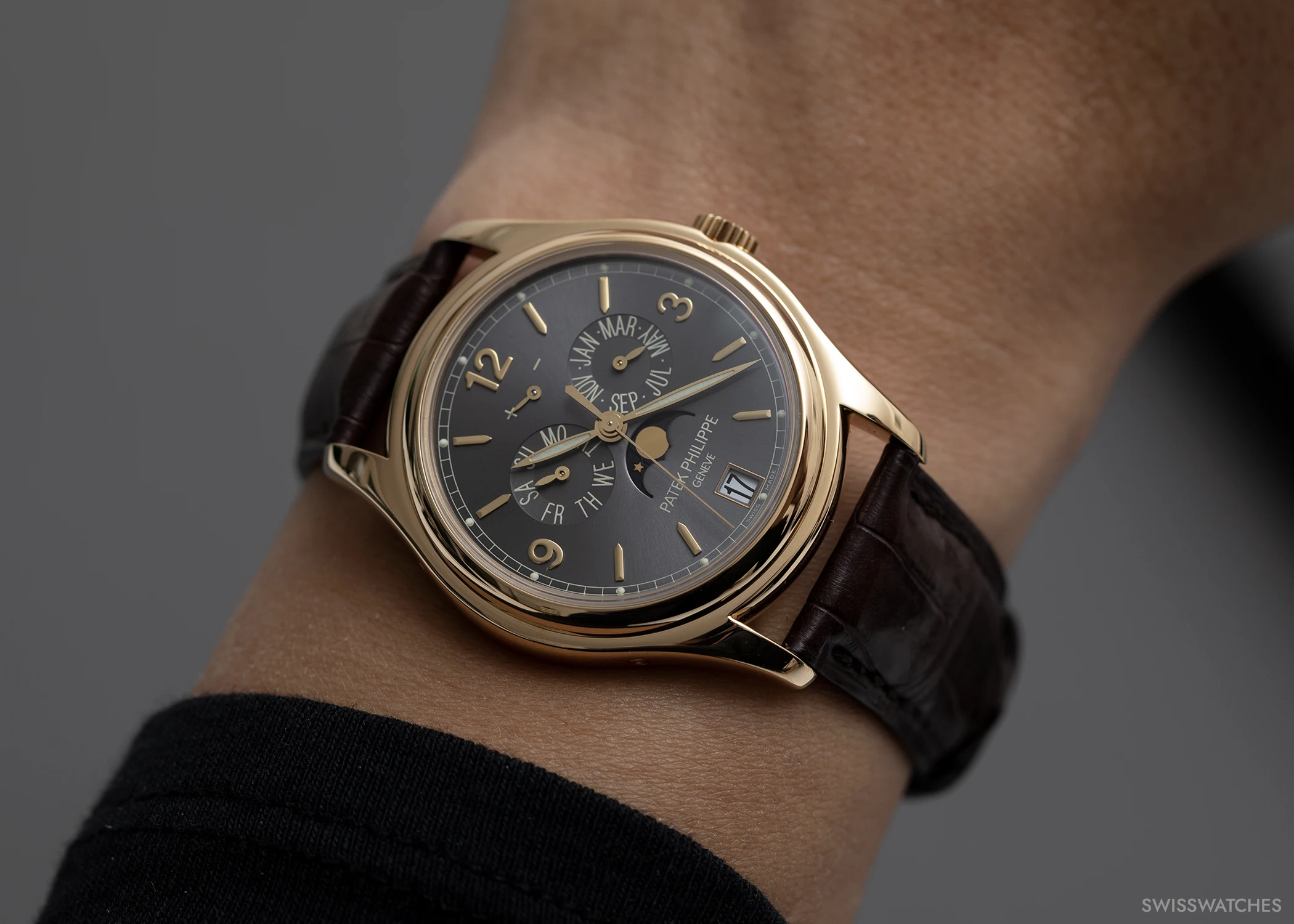
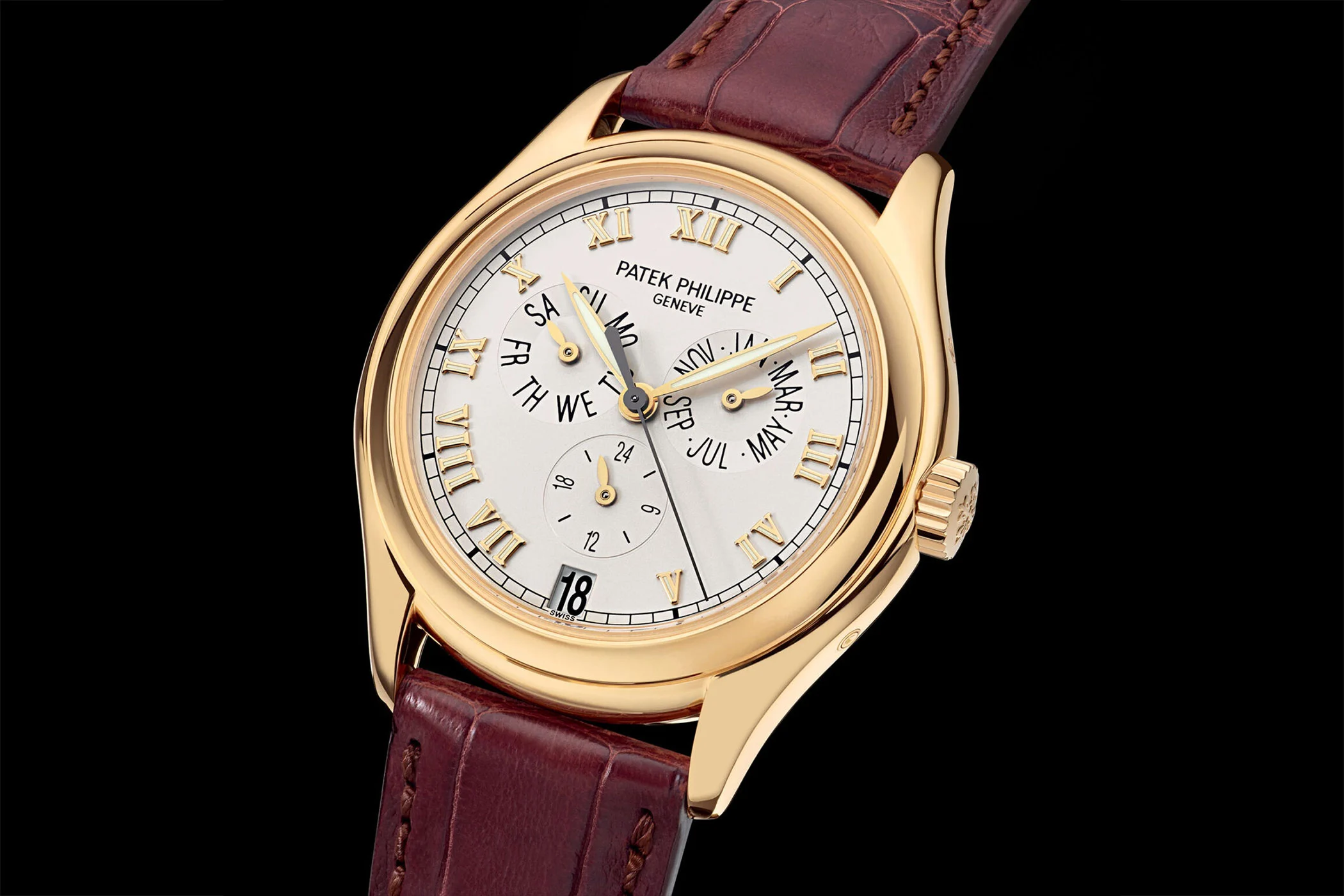
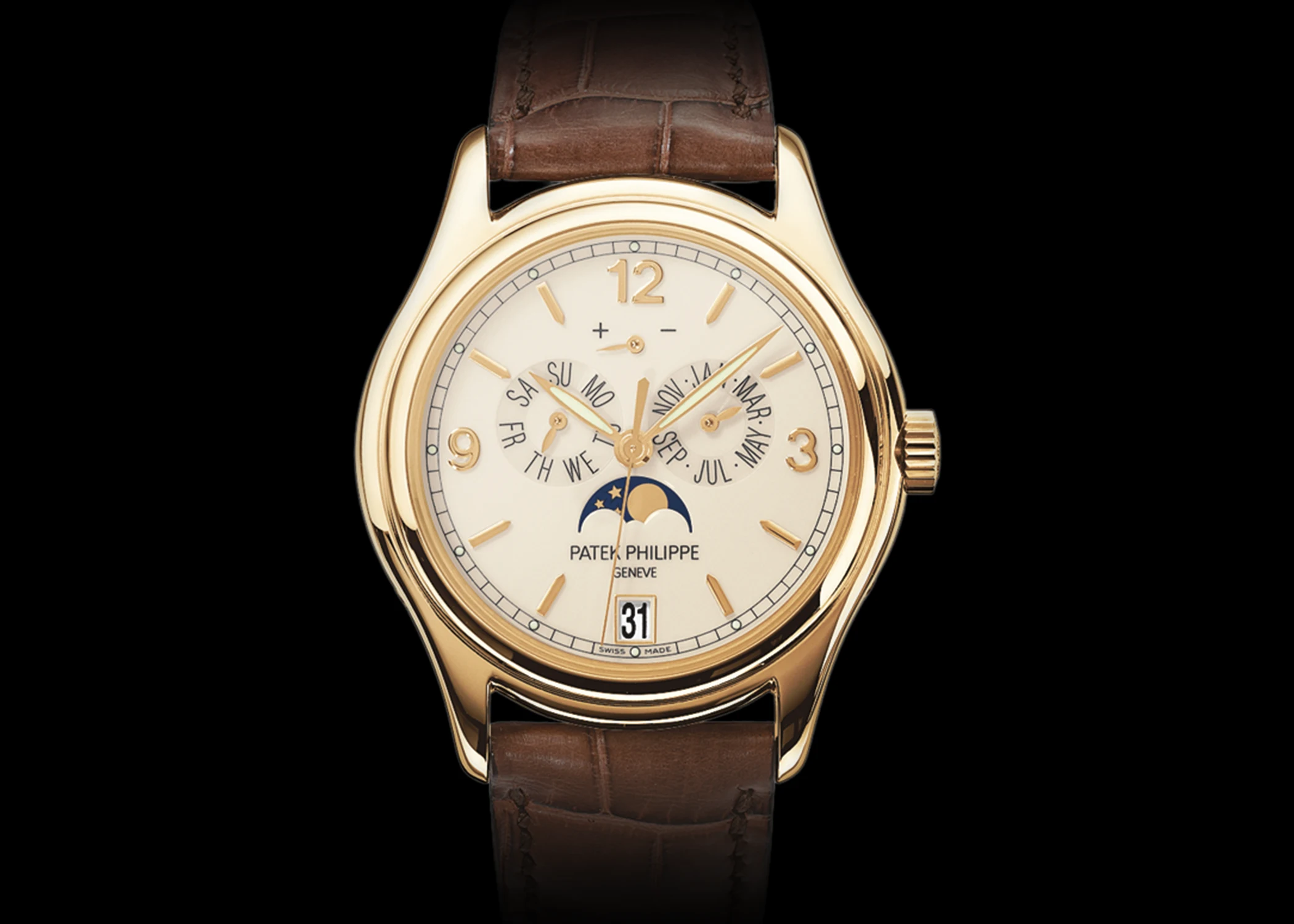
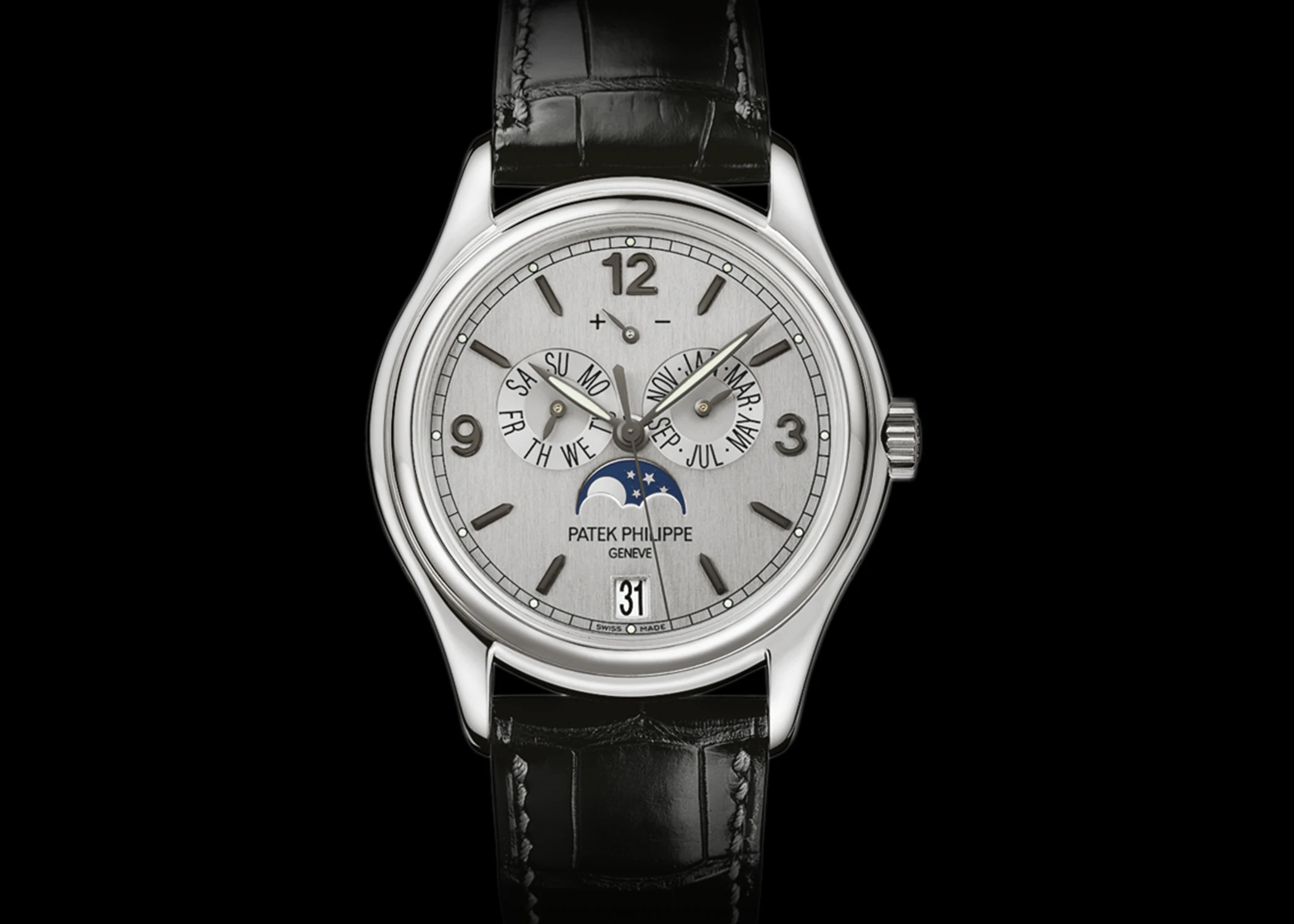
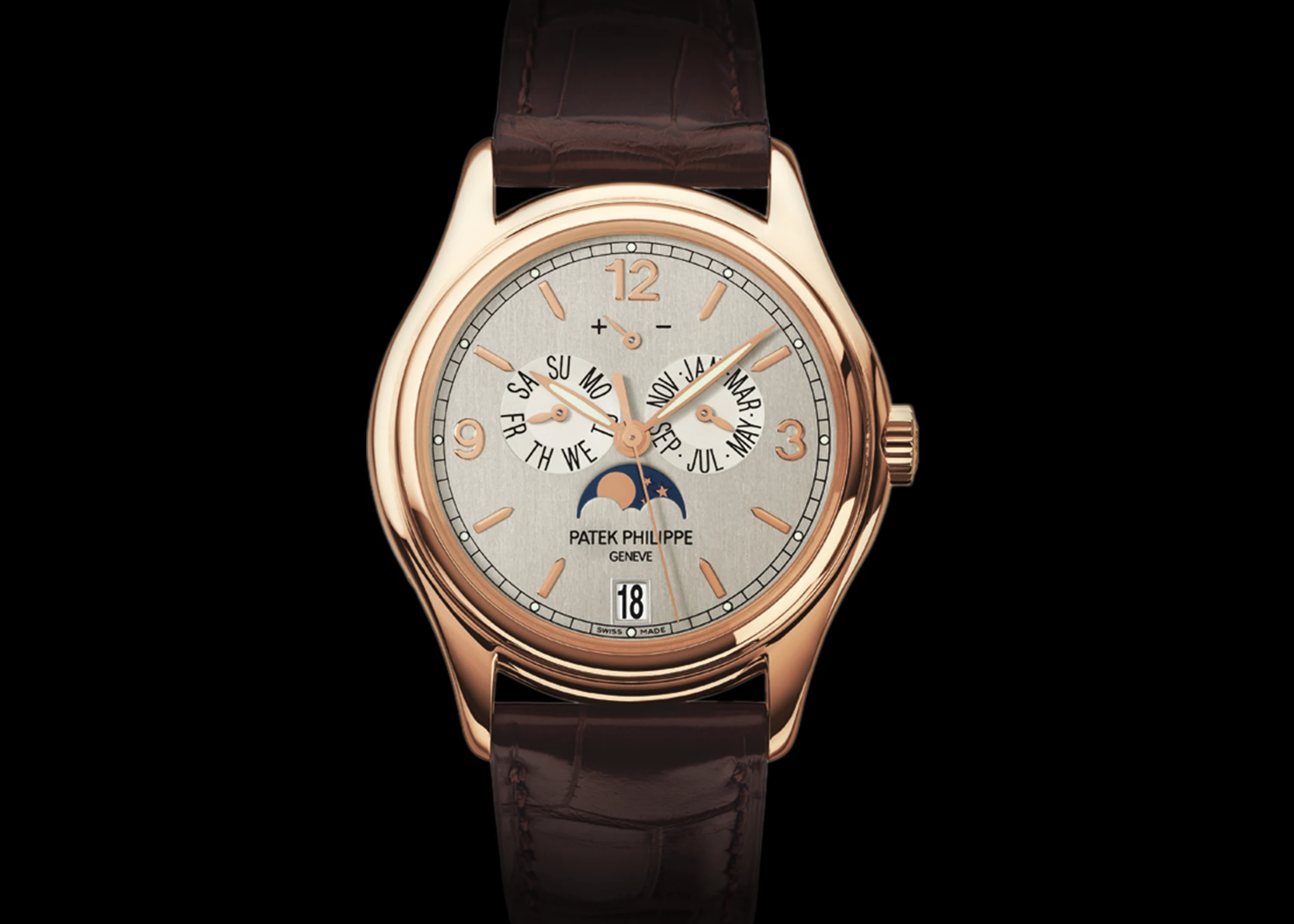
The Annual Calendar was launched as a round model featuring three sub-dials. The Ref. 5035 was an instant success and, as mentioned, received the ‘Watch of the Year 1996’ award. Equipped with the Calibre 315 S QA 24H (3 Hz), the Ref. 5035 had a case diameter of 37 mm. It was crafted in yellow, white, or rose gold, as well as platinum, featuring the Roman numerals that have since become iconic.
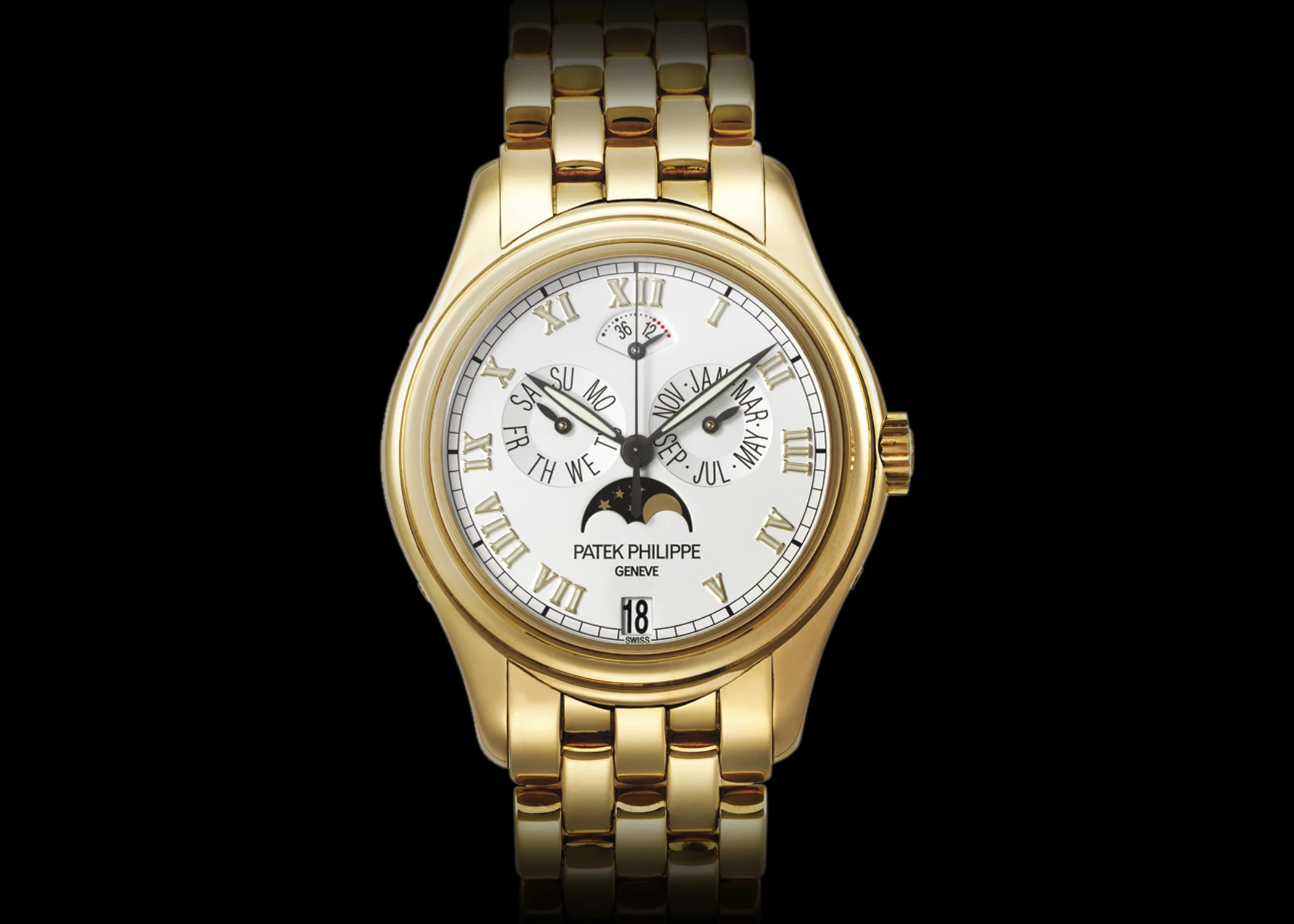
The movement was then optimised with a power reserve indicator and a highly precise moon-phase display, which replaced the 24-hour scale on the Ref. 5036/1; diameter: 37 mm. At the same time, this was the first model to feature a gold bracelet in 1998.
The power reserve indicator is positioned at 12 o’clock, while the moon phase display is located above the date window at 6 o’clock. As with the original annual calendar, the month and day of the week are displayed on two subsidiary dials. On the dial, the hours are marked by Roman numerals with gold appliqués, which, like the feuille hands, are luminescent. The use of the numeral IV instead of the IIII traditionally employed by watchmakers for the 4 o’clock marker is rather unusual.
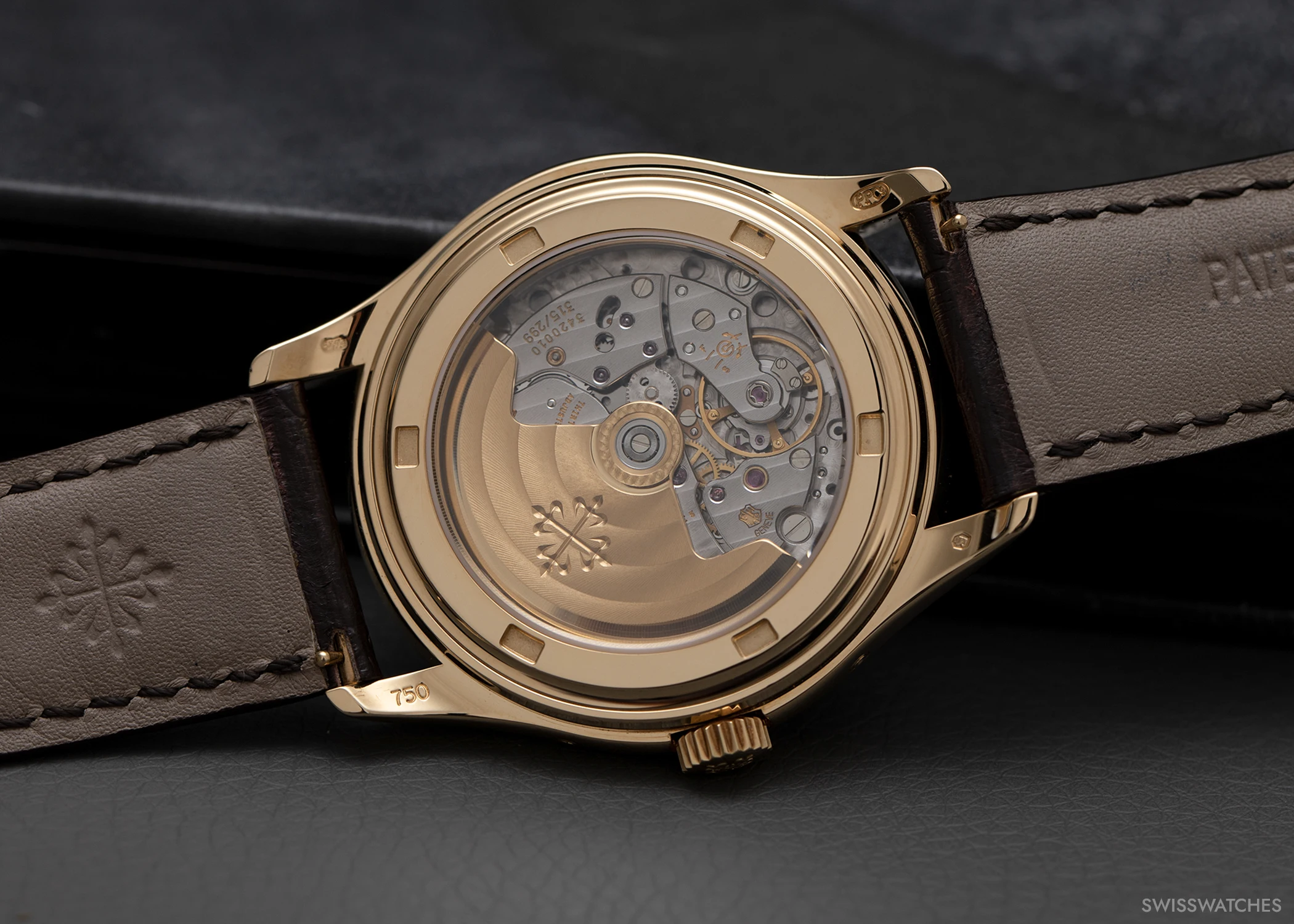
All three complications are driven by the movement; the automatic Calibre 315, which still bears the Hallmark of Geneva, comprises 61 components forming separate gear trains for the movement, the annual calendar, the moon phase display, and the power reserve indicator. The movement can be admired through a sapphire crystal case back. The annual calendar is adjusted on 1 March each year using a pusher. Available in yellow, white, and rose gold, this model was the first to feature a matching metal bracelet created exclusively for the annual calendar.
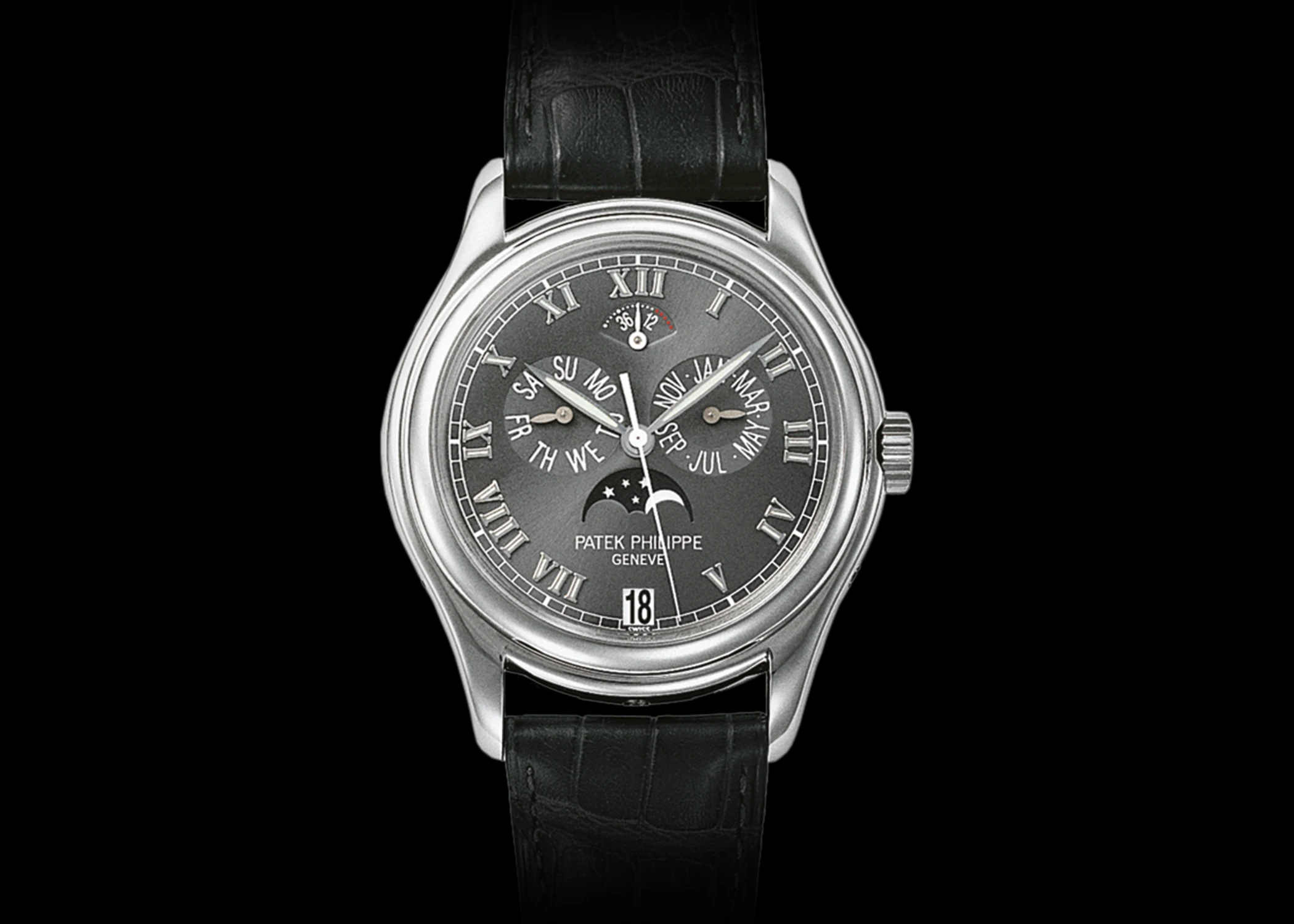
In 1999, the watch was released as the Ref. 5056, the second platinum model featuring an annual calendar on a leather strap. Thierry Stern, then newly appointed president of Patek Philippe, was responsible for the development of the Ref. 5056 in a 37 mm platinum case. The slate-grey dial remains strikingly contemporary to this day.
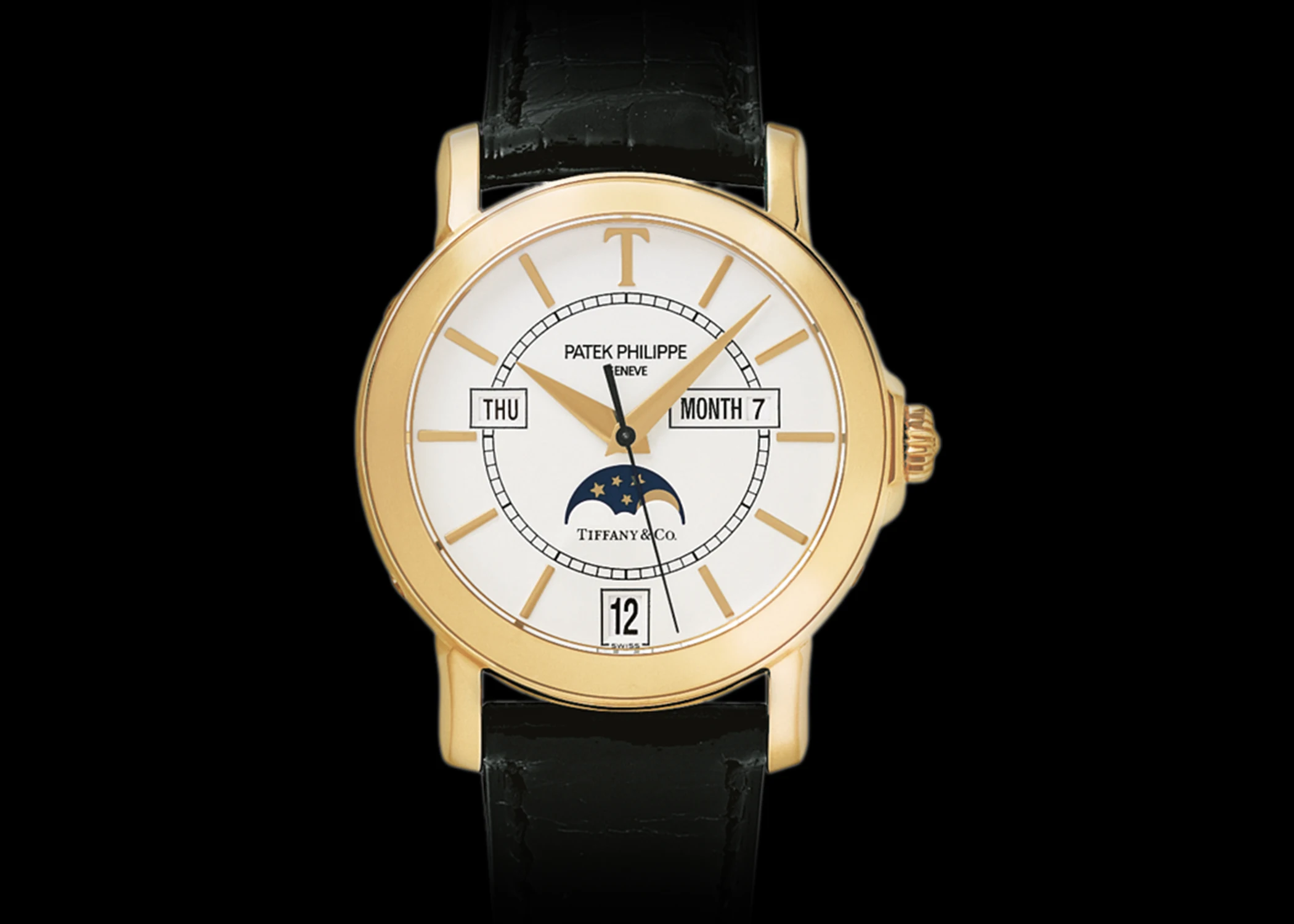
The 36 mm Ref. 5150 was launched to mark the 150th anniversary of the partnership with Tiffany & Co., hence the ‘T’ at 12 o’clock. The first annual calendar with windows displaying the day and month – the month being indicated by a numeral, which is unusual – was produced in limited editions of 150 pieces each in yellow, white and rose gold.
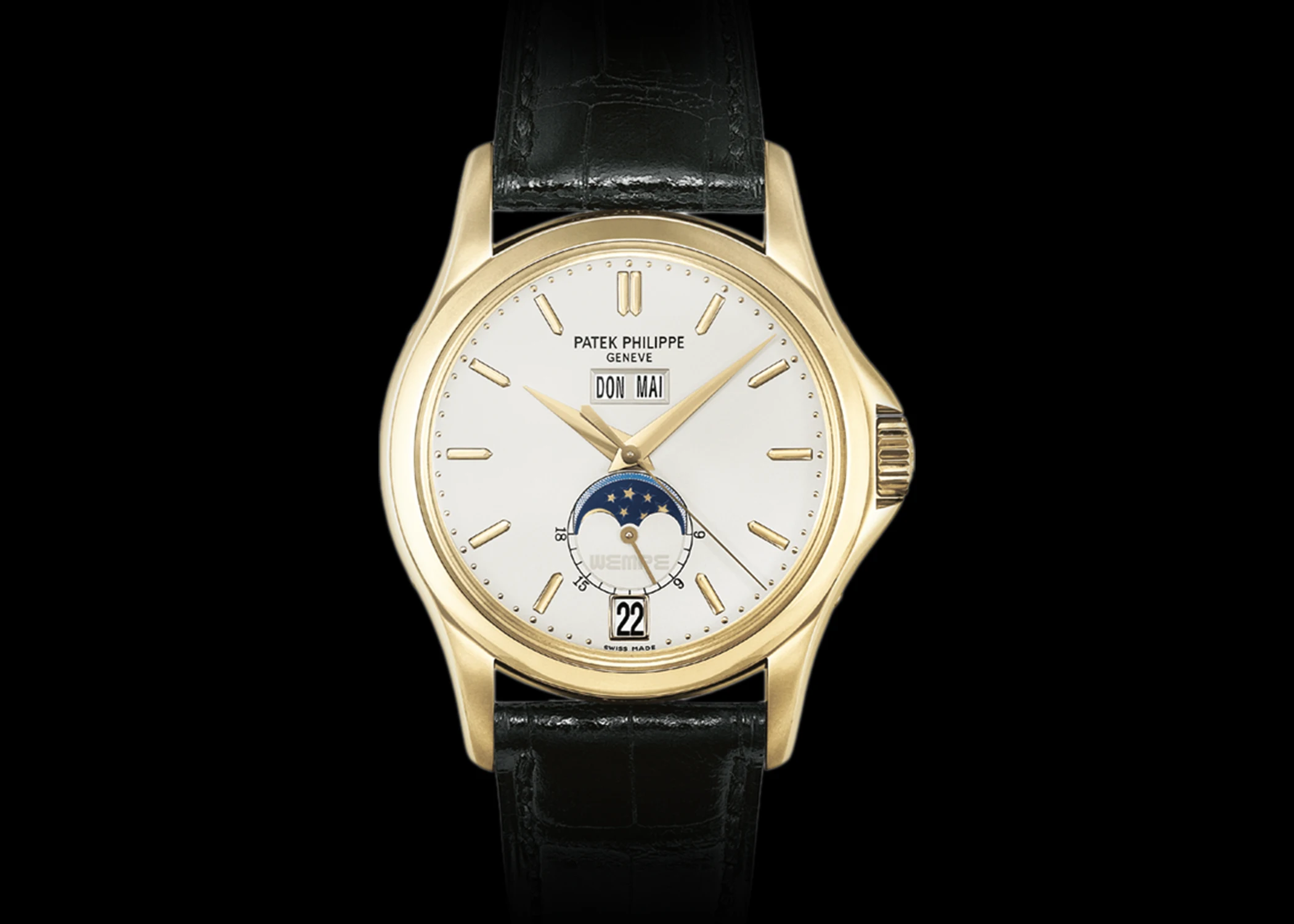
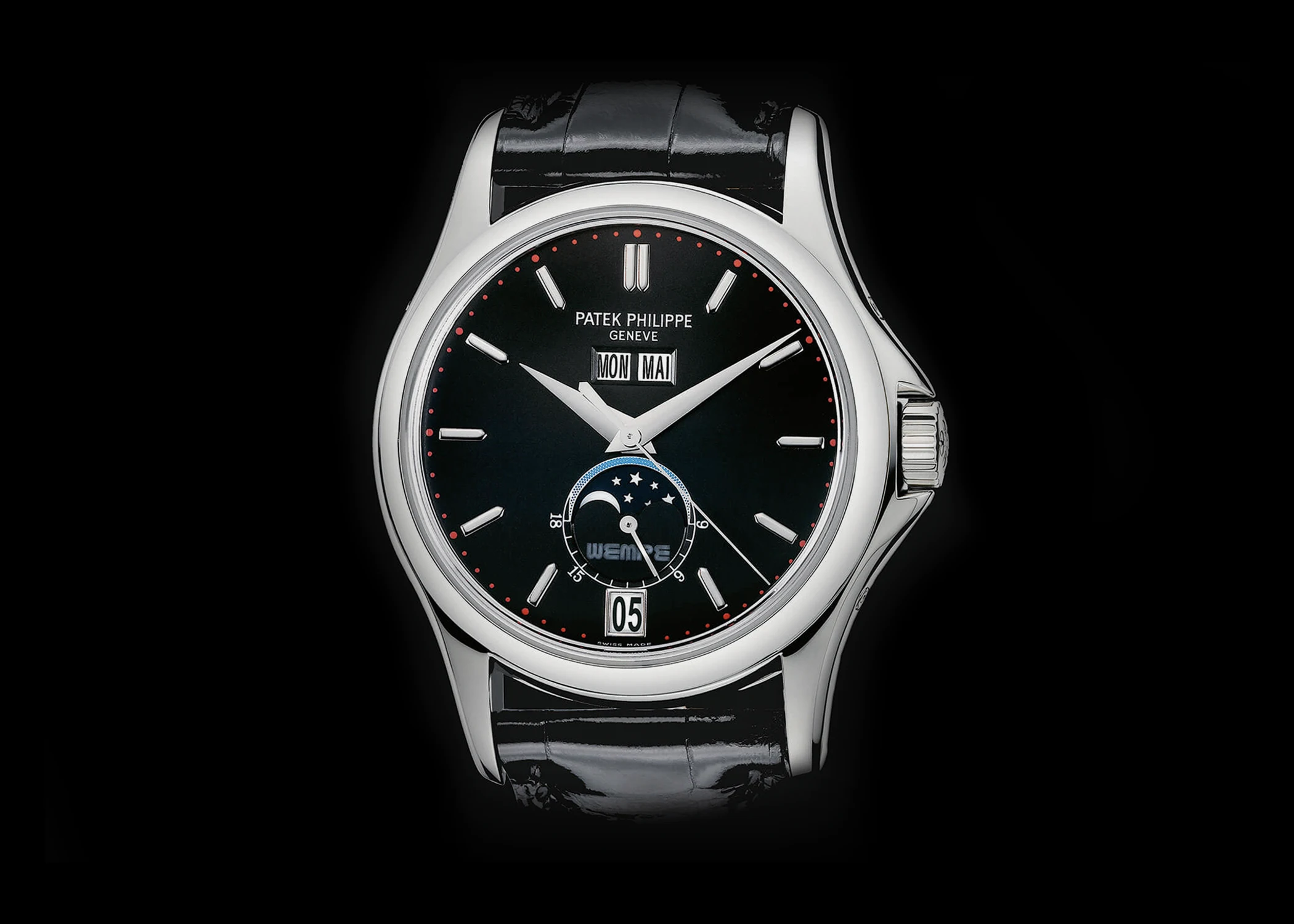
Patek Philippe has enjoyed a long-standing relationship with Wempe. The Hamburg-based jeweller has stocked the Geneva-based brand since 1929, and the Stern and Wempe families maintain a friendly relationship. To mark the 125th anniversary of the House of Wempe in 2003, the 36.5 mm Ref. 5125 was launched, reminiscent of the vintage references 3448 and 3450. Only 475 pieces were produced: 125 each in yellow, white and rose gold, and 100 in platinum. It will be interesting to see what Wempe and Patek will come up with together in two years’ time to mark the company’s 150th anniversary.
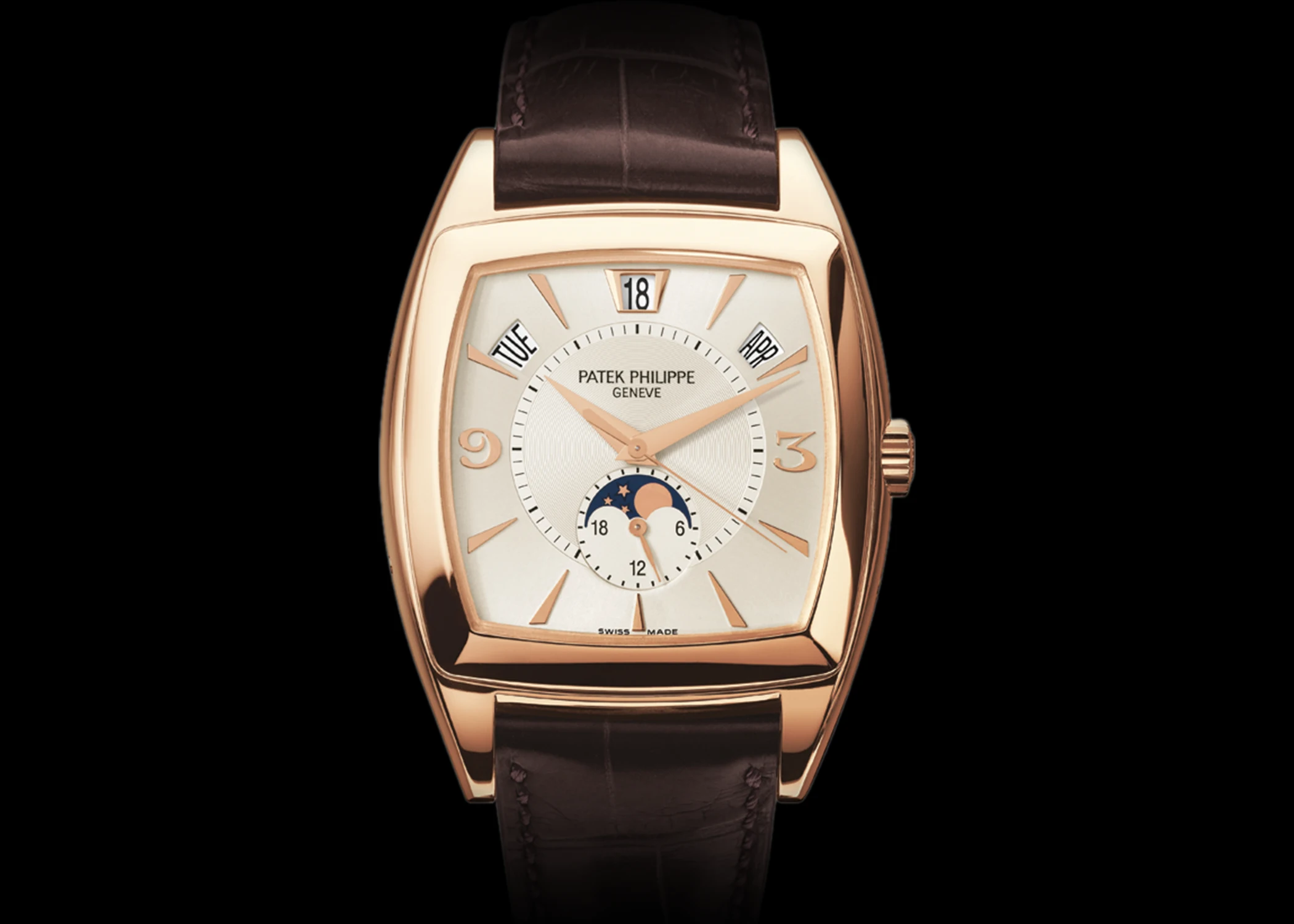
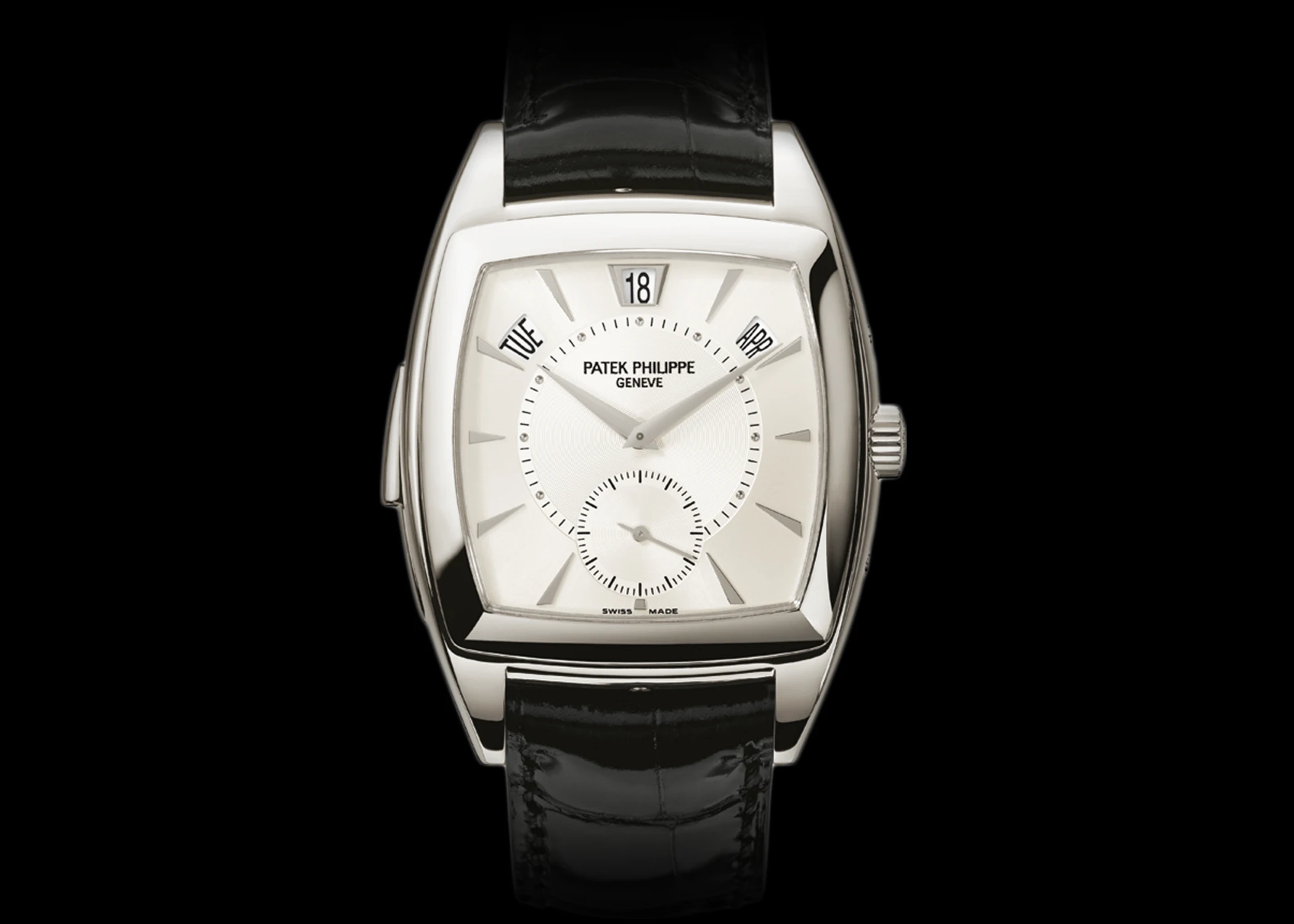
In fact, since its launch, there has hardly been a year in which the annual calendar has not featured an exciting new development: in 2004, the function was once again in the spotlight with the launch of the Gondolo Calendario Ref. 5135. It impresses with its familiar tonneau case, as well as the brand-new automatic movement and, for the first time, arched day, date and month windows. The 38 × 51 mm Gondolo Calendario Ref. 5135 was not only the first annual calendar featuring the Calibre 324 QA (4 Hz) movement and the first in the historic tonneau case, but above all the first model in the regular collection with the striking three-window display. Today, the men’s Gondolo is also rare because the last classic men’s references were discontinued in 2019 and the model is now part of Patek’s collection as a ladies’ watch.
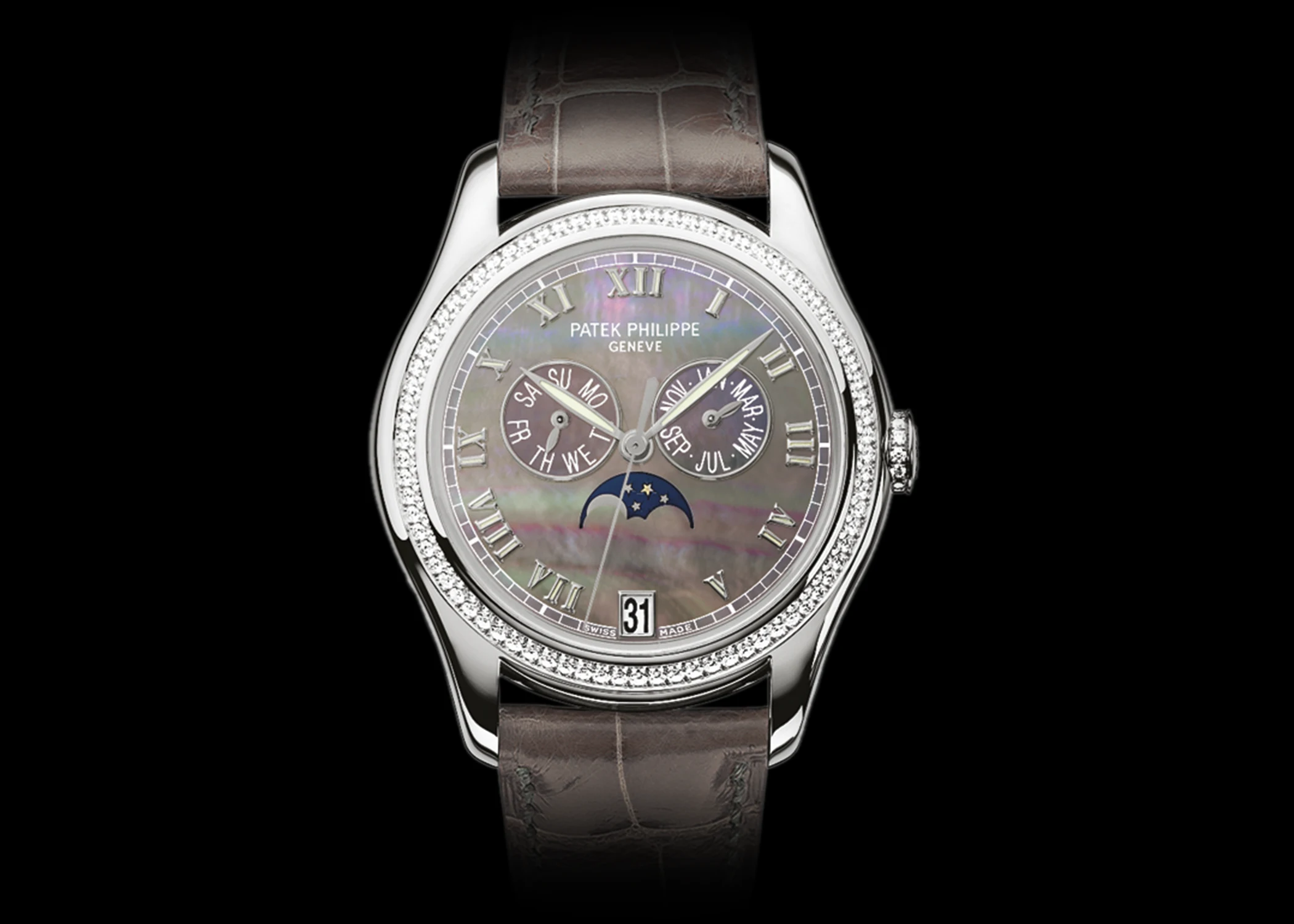
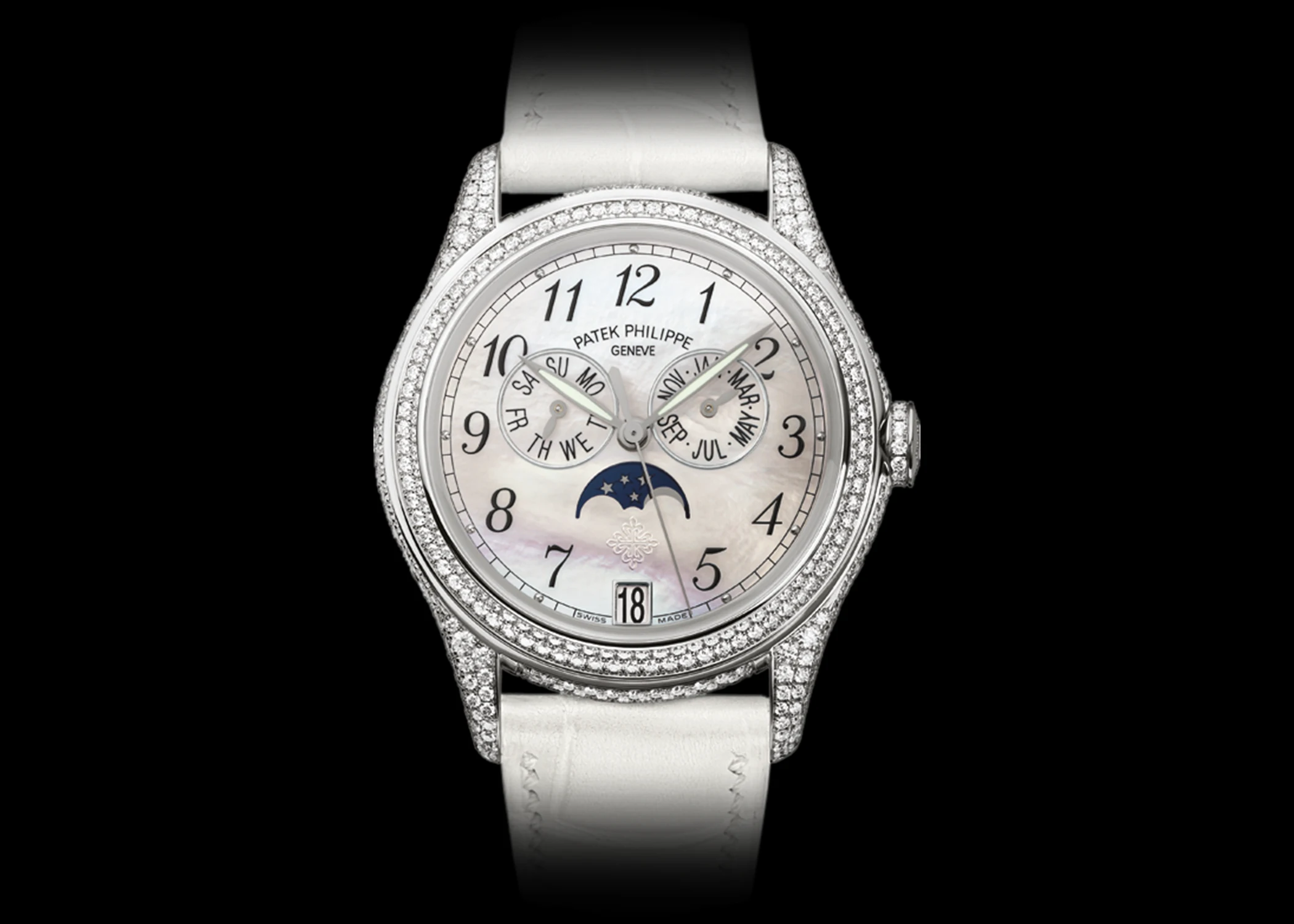
In response to the growing success of the annual calendar, Patek Philippe unveiled its first ladies’ model in 2005. The Ref. 4936, featuring a mother-of-pearl dial and diamonds, was followed the following year by a haute joaillerie model: the Ref. 4937 in white gold, set with 472 diamonds. The 37 mm Ref. 4936 was also one of Patek Philippe’s very first complicated ladies’ watches at the time. It featured a black Tahitian mother-of-pearl dial, whilst the yellow gold model and, later, the rose gold version featured white mother-of-pearl dials.
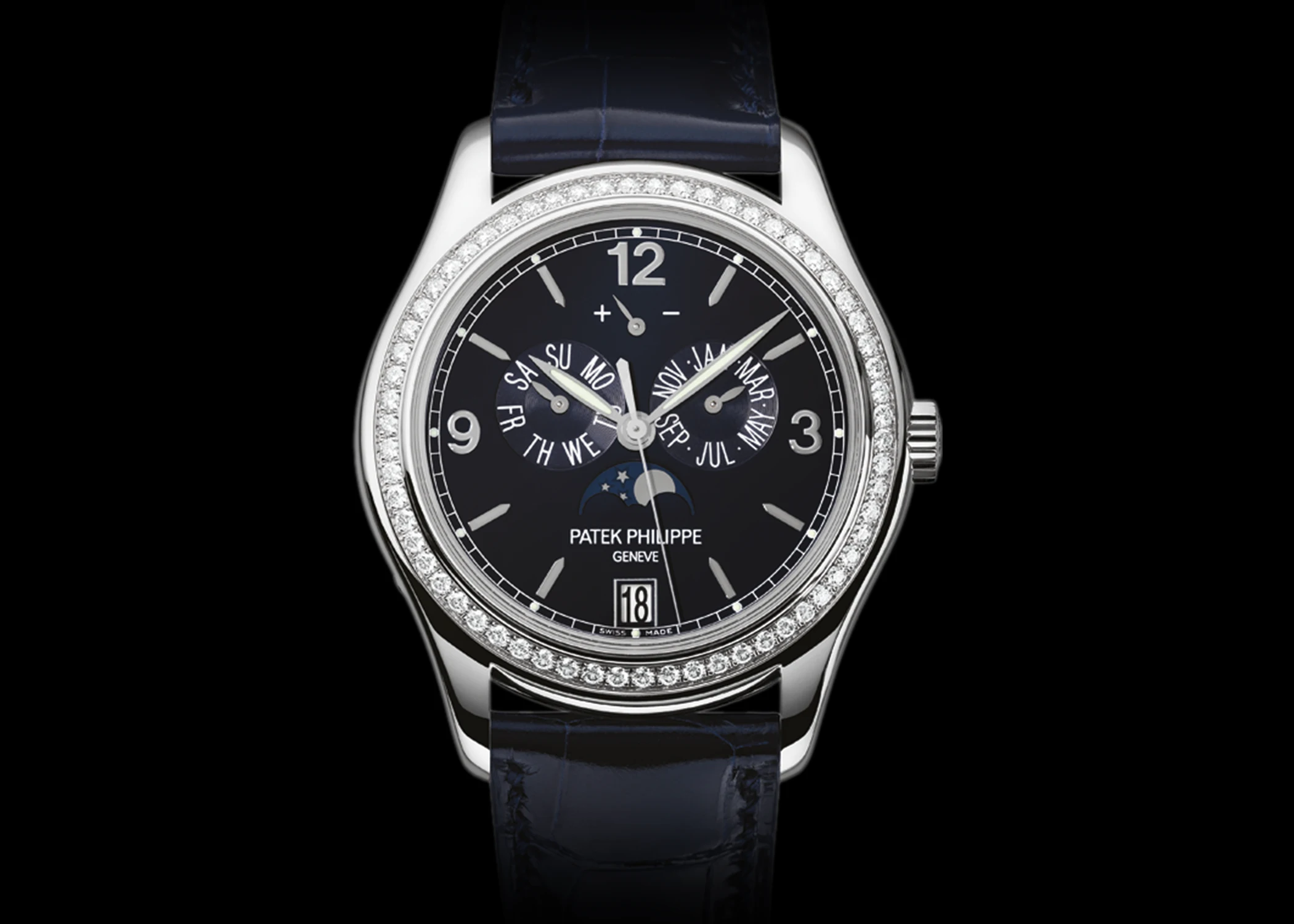
In the same year, Patek Philippe introduced a new model aimed at male collectors with the launch of a new basic model featuring a slightly larger diameter (39 mm instead of 37 mm) and finely crafted dials. This model, Ref. 5146, in yellow, rose or white gold or platinum with an alligator leather strap, was joined by the Ref. 5146/1, which was worn on yellow or white gold bracelets. The following year, the company launched an elegant, jewel-set white gold version, Ref. 5147, with a midnight blue lacquered dial framed by 62 diamonds.
The mechanism also features prominently in pioneering models such as the first three limited editions of the Patek Philippe “Advanced Research” concept. These include the Ref. 5250 from 2005, equipped with the first silicon escape wheel in the manufacture’s history, of which only 100 examples were produced in white gold. This was followed in 2006 by the Ref. 5350 in rose gold, whose movement featured both the Patek Philippe silicon escape wheel and the Spiromax balance spring made of Silinvar; 300 examples were produced.
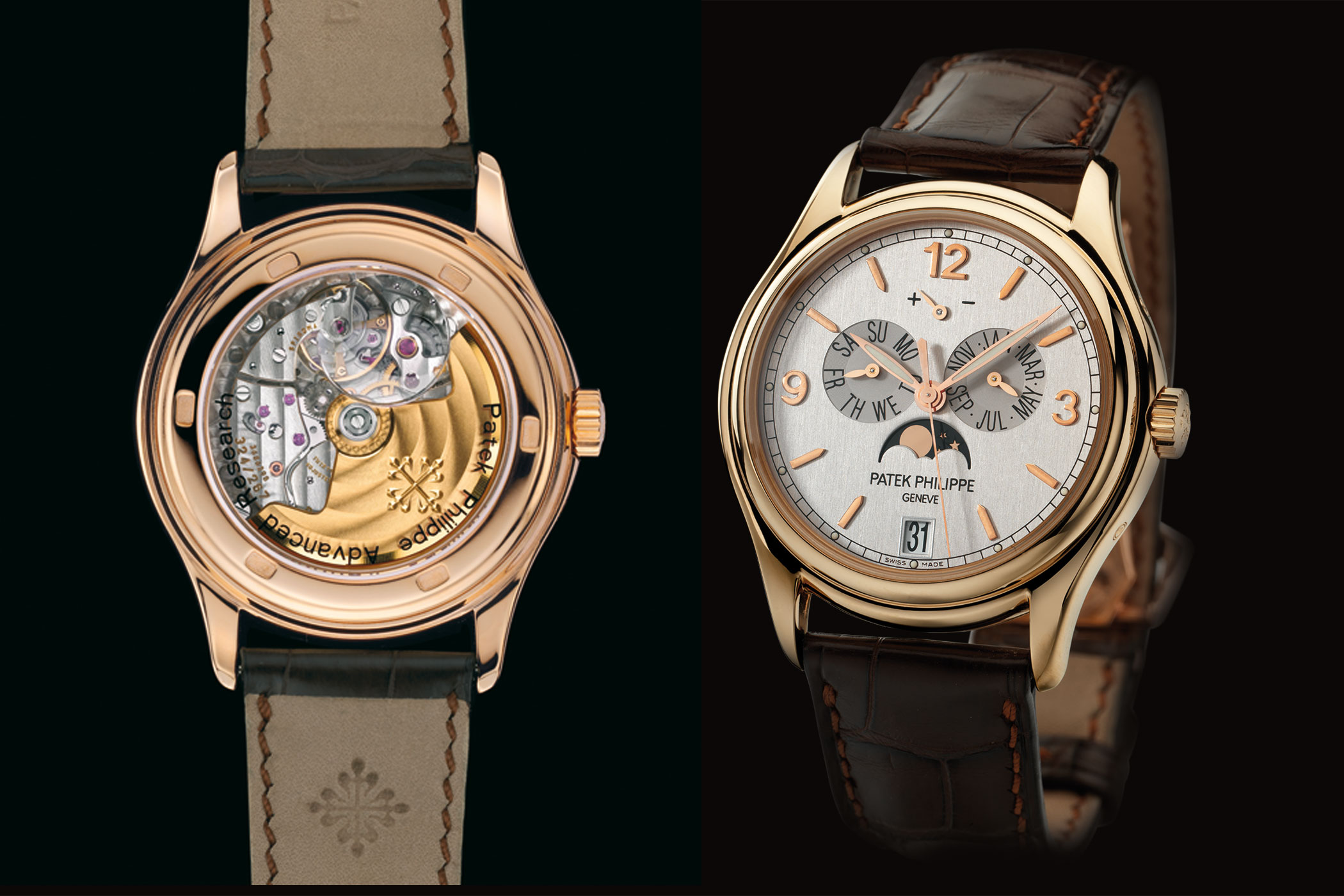
Two years later, in 2008, the Reference 5450 Annual Calendar was presented, limited to 300 pieces and marking the first time an Advanced Research watch was crafted in platinum. This model featured not only the Gyromax balance with a Spiromax spring but also the new Pulsomax escapement and a redesigned escape wheel, complemented by a silicon pallet fork. All of this is visible through the sapphire crystal caseback, which charmingly features an integrated Cyclops magnifier over the escapement group – similar to those found over the date window on well-known Rolex Oyster Date models, only significantly larger.
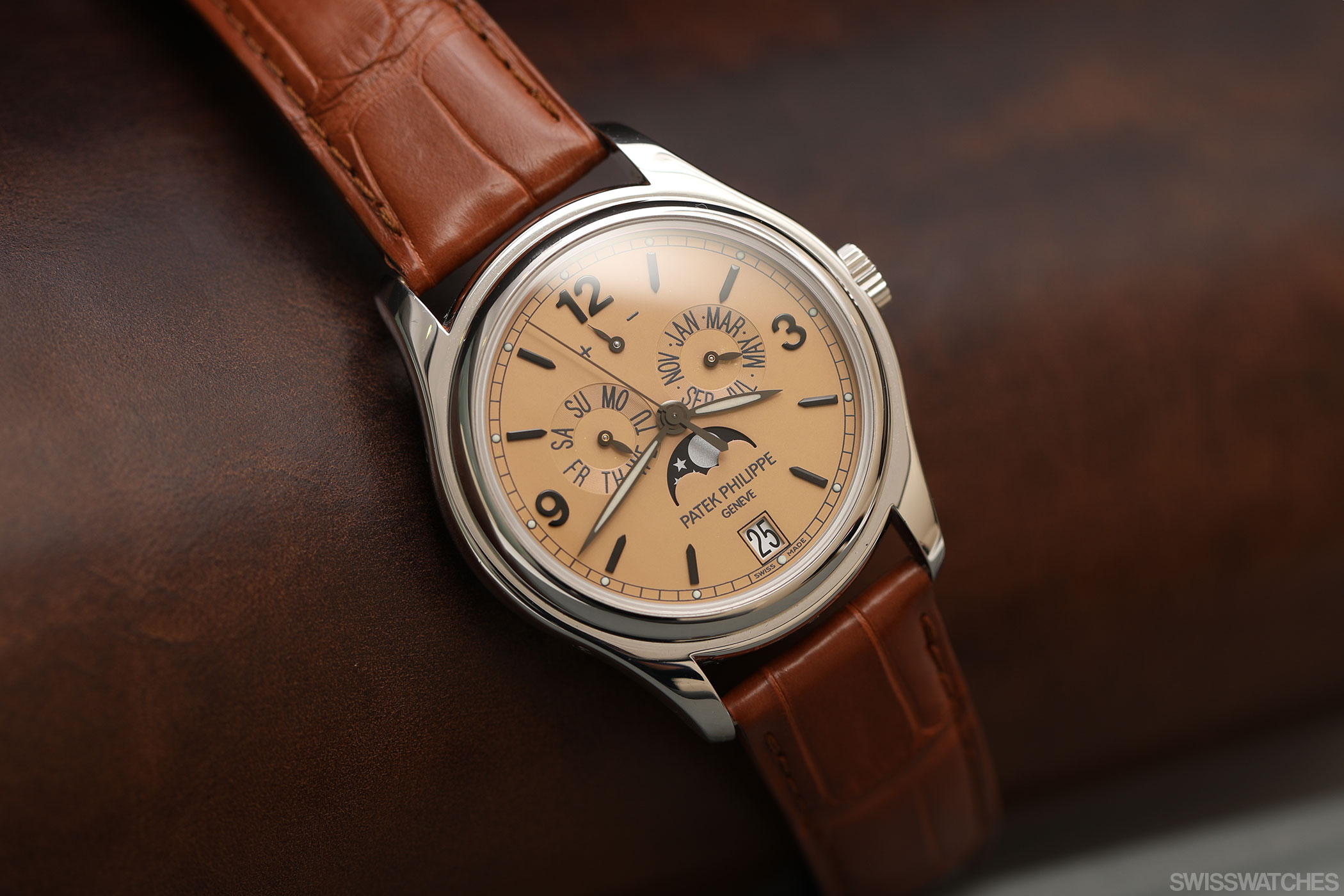
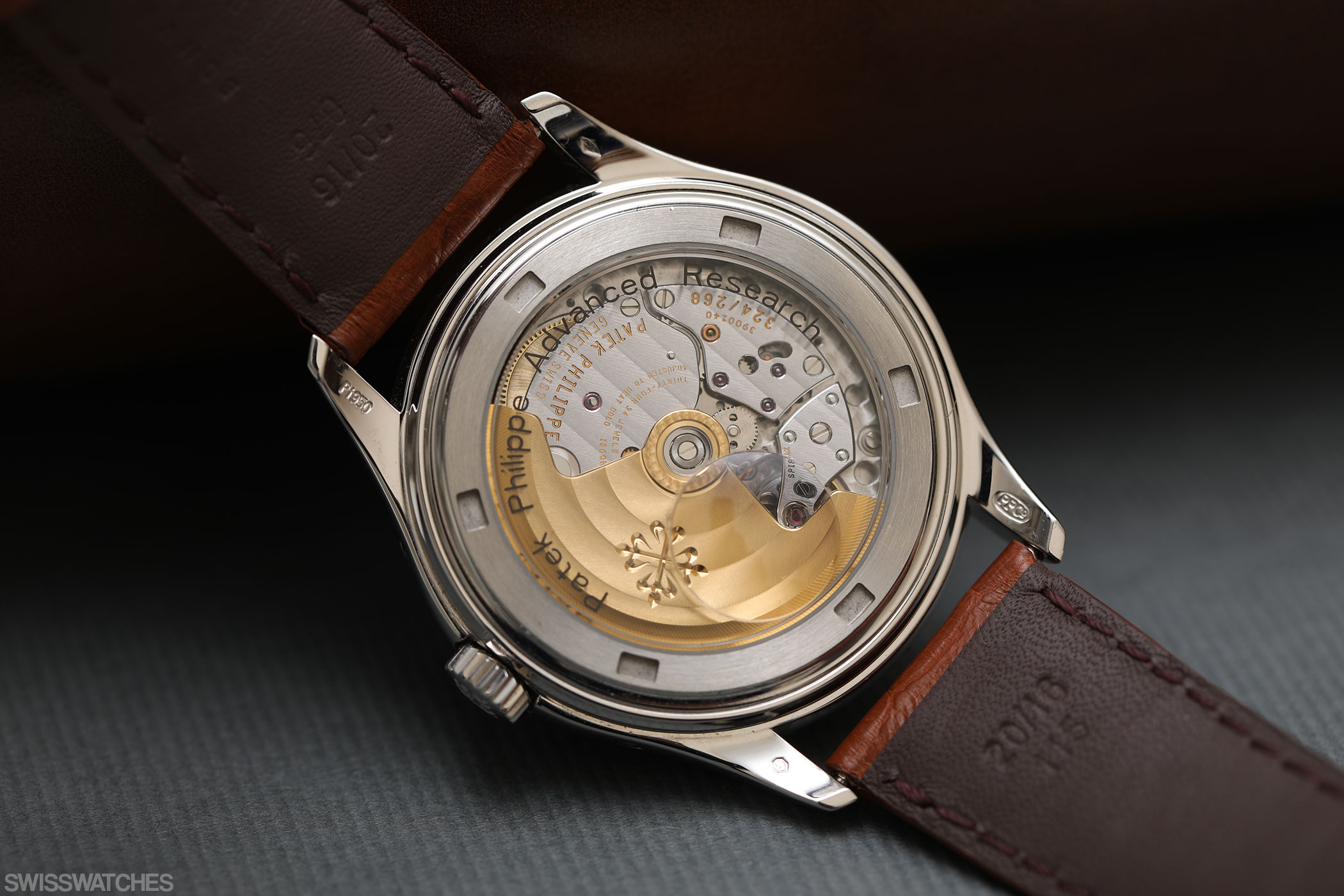
The Reference 5450P is particularly striking for its characteristic “Salmon” dial. As the first Advanced Research model in a platinum case, it naturally stands out due to the small diamond set between the lugs at six o’clock, which distinguishes all platinum watches from Patek Philippe. Notably, as the final Annual Calendar model in the collection, it was also the last model in the Advanced Research series to be awarded the Geneva Seal, as Patek Philippe transitioned all its timepieces to the new in-house Patek Philippe Seal in 2009.
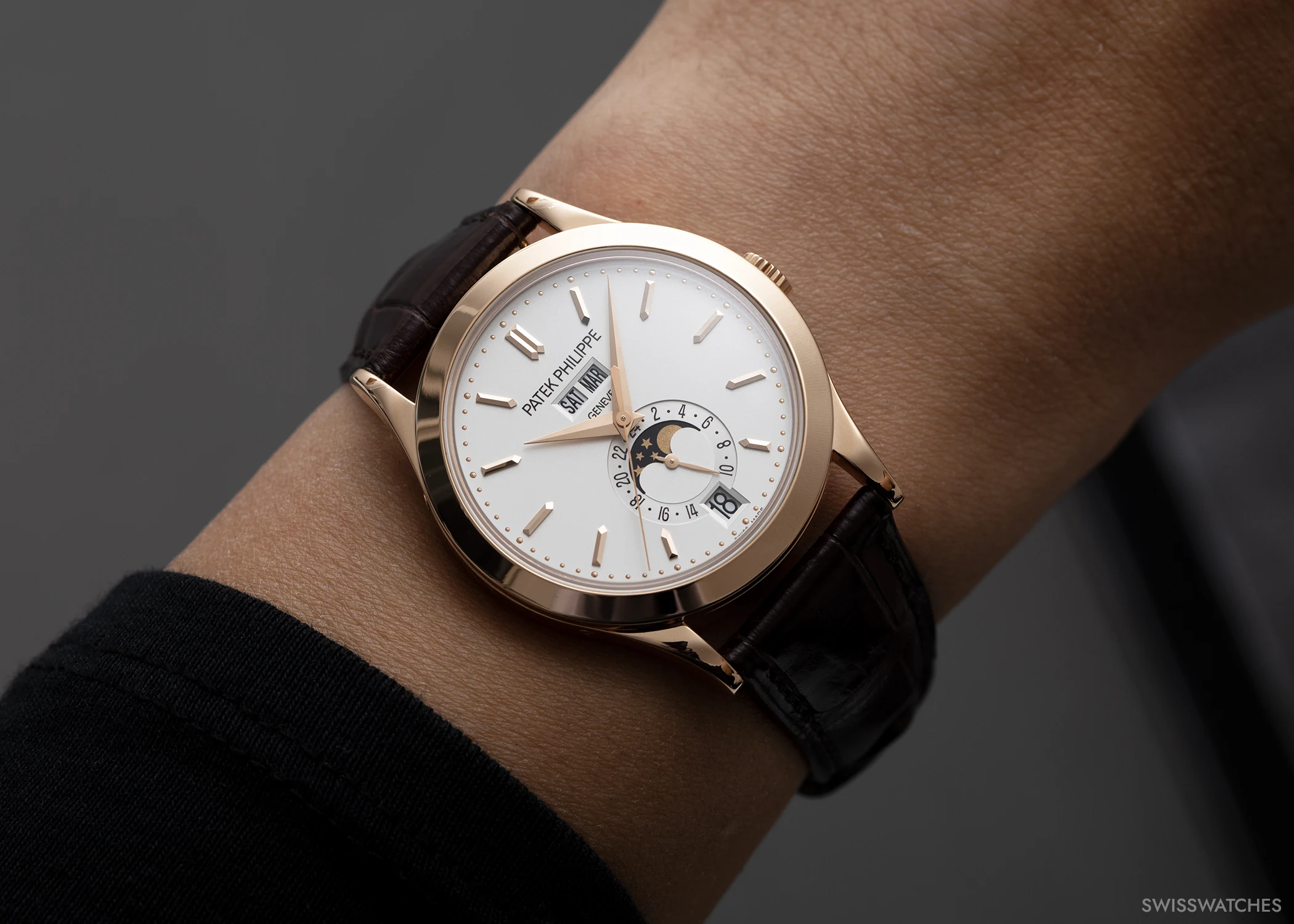
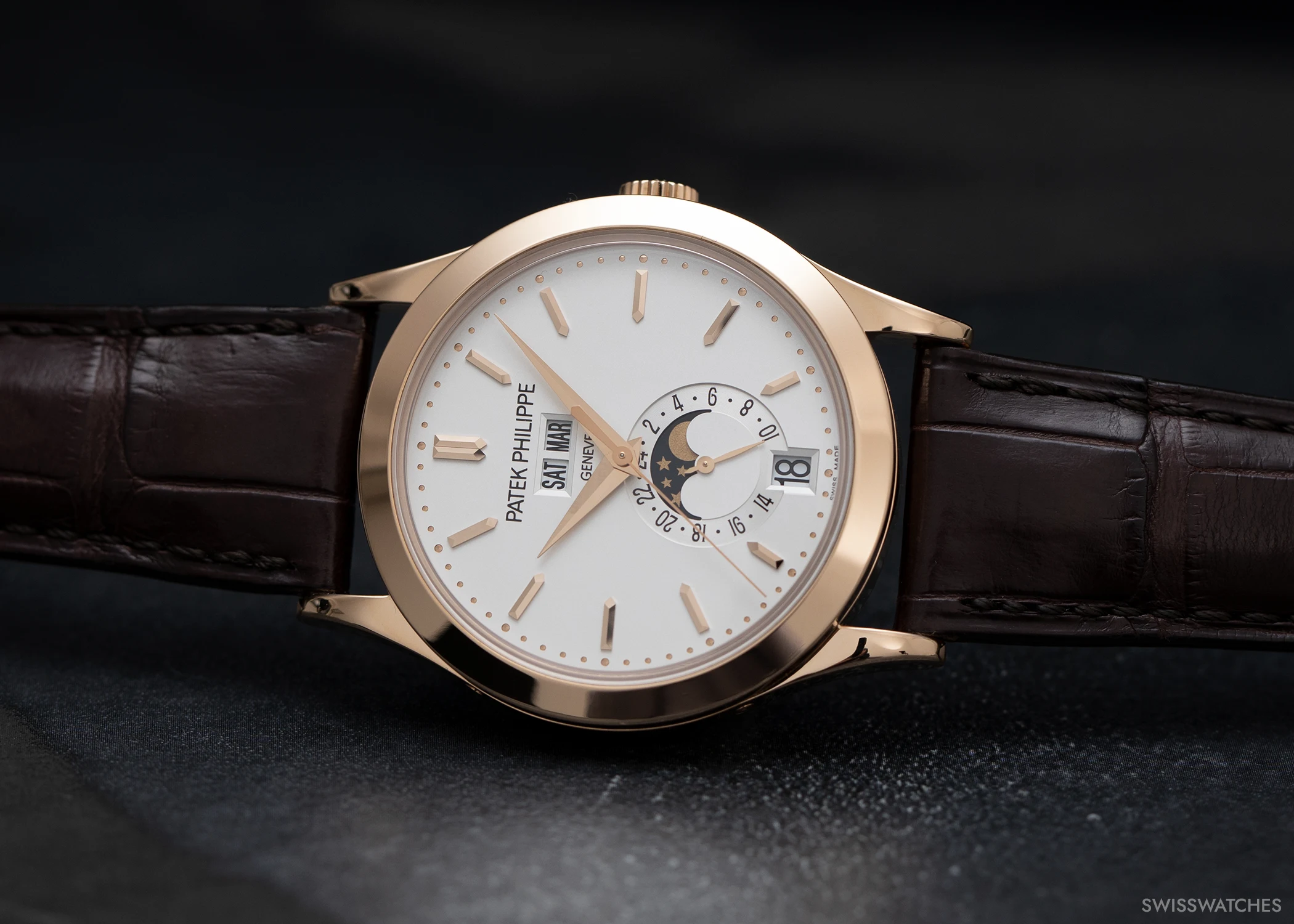
Things are moving at a rapid pace. In 2006, the movement was fitted into one of Patek’s most famous models, the Calatrava. The 38.5 mm Ref. 5396 was launched in rose gold and then in white gold. The earlier models featured sector dials with a vintage look, whilst later versions featured the classic Calatrava dial with applied baton hour markers.
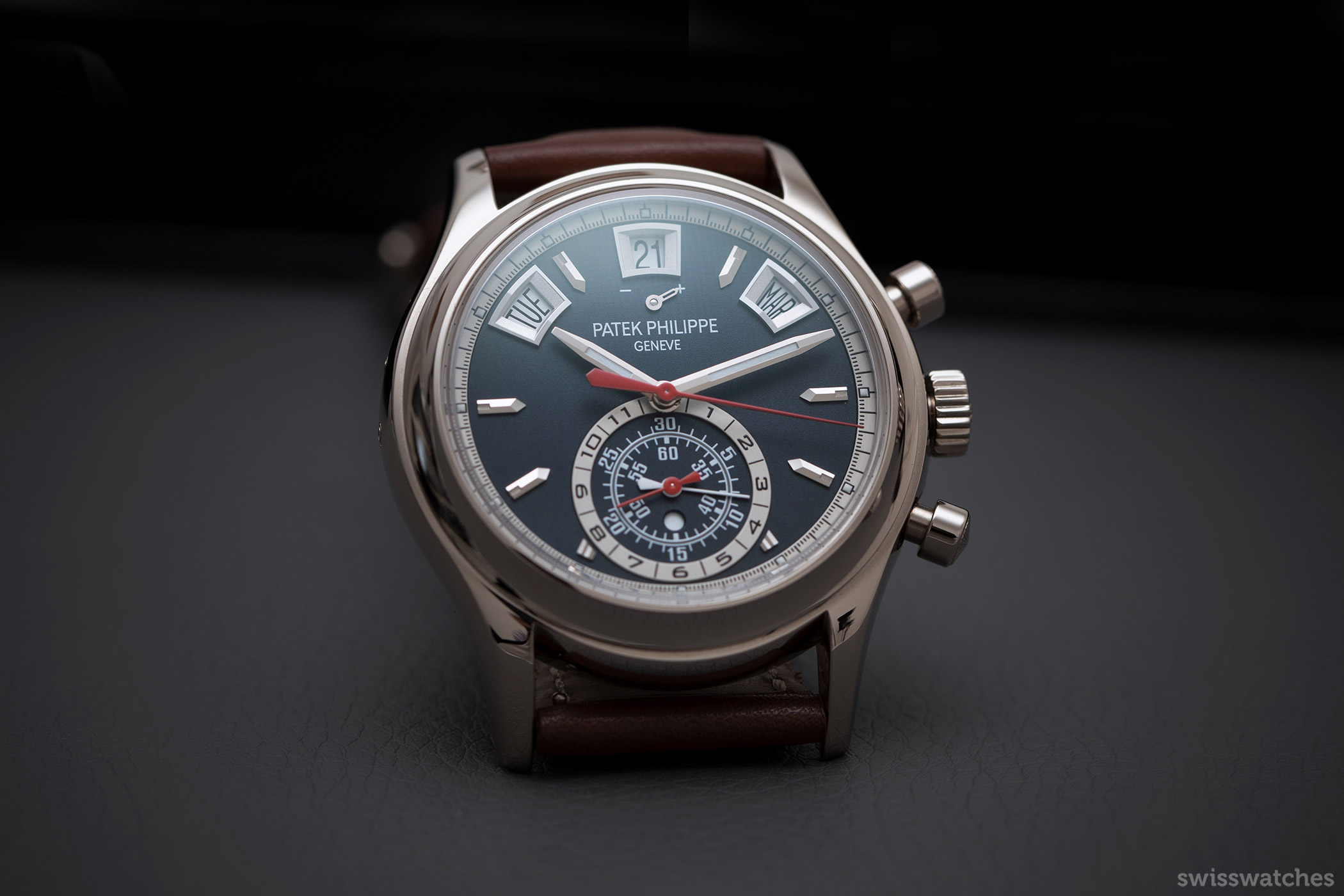
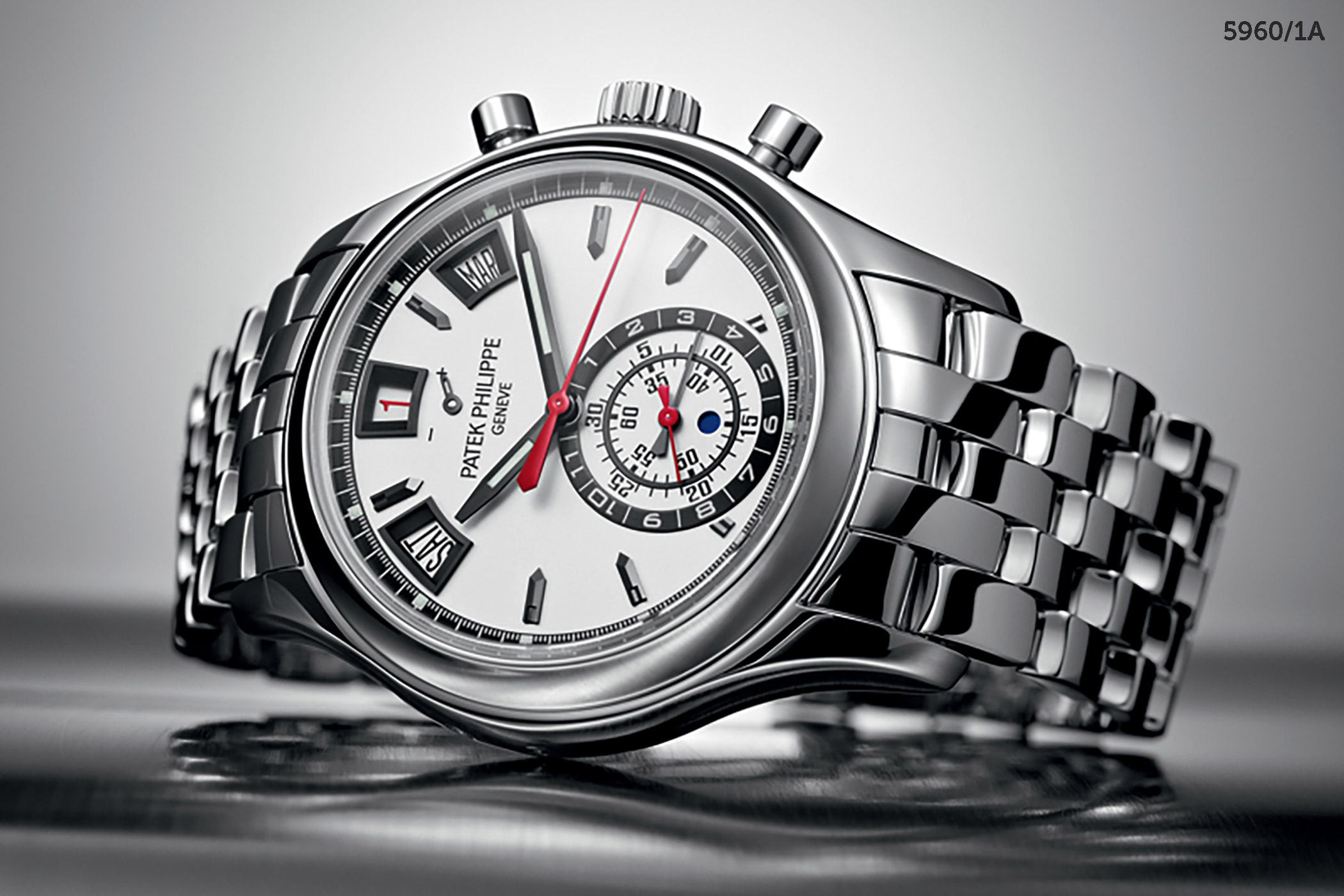
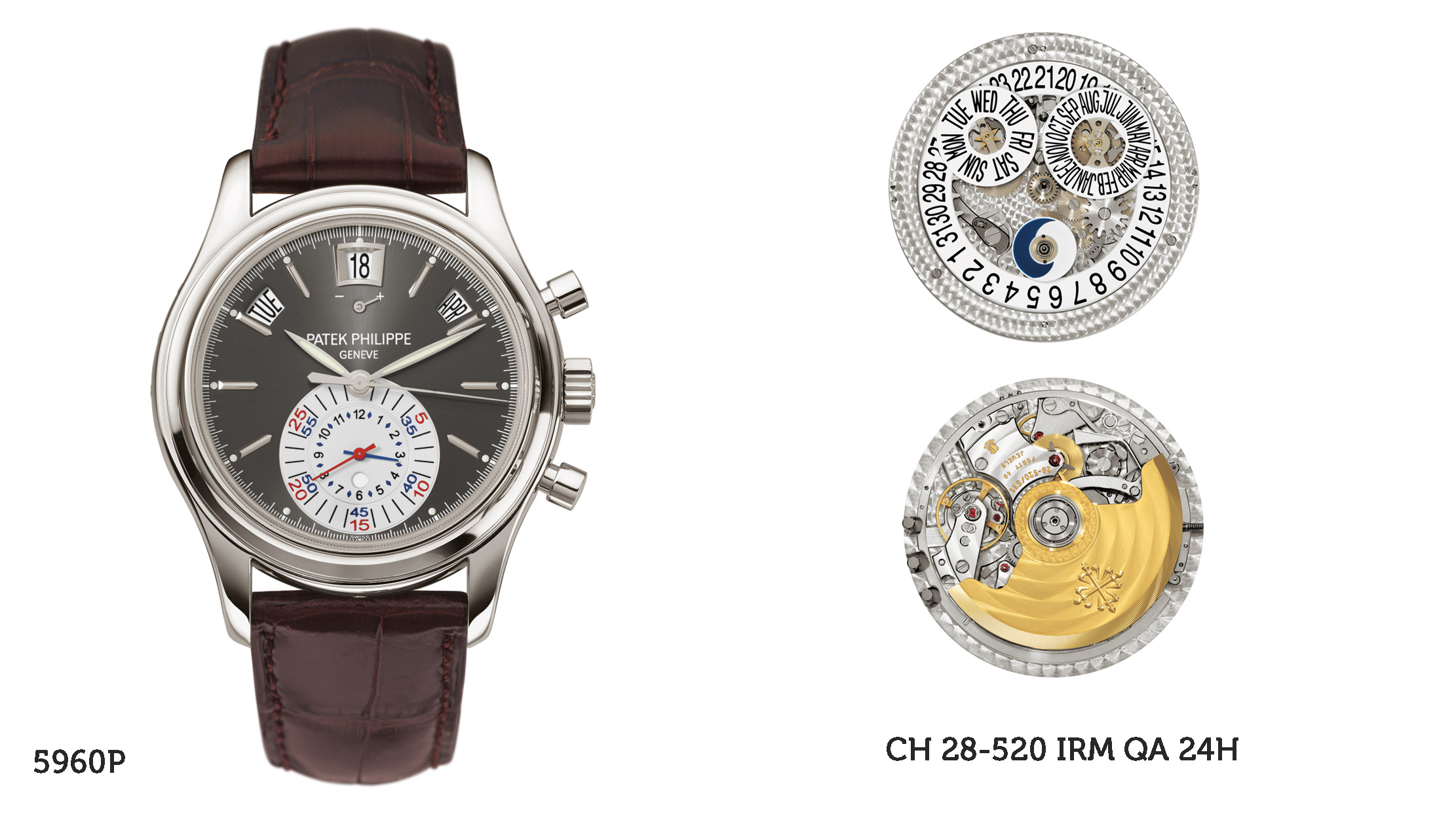
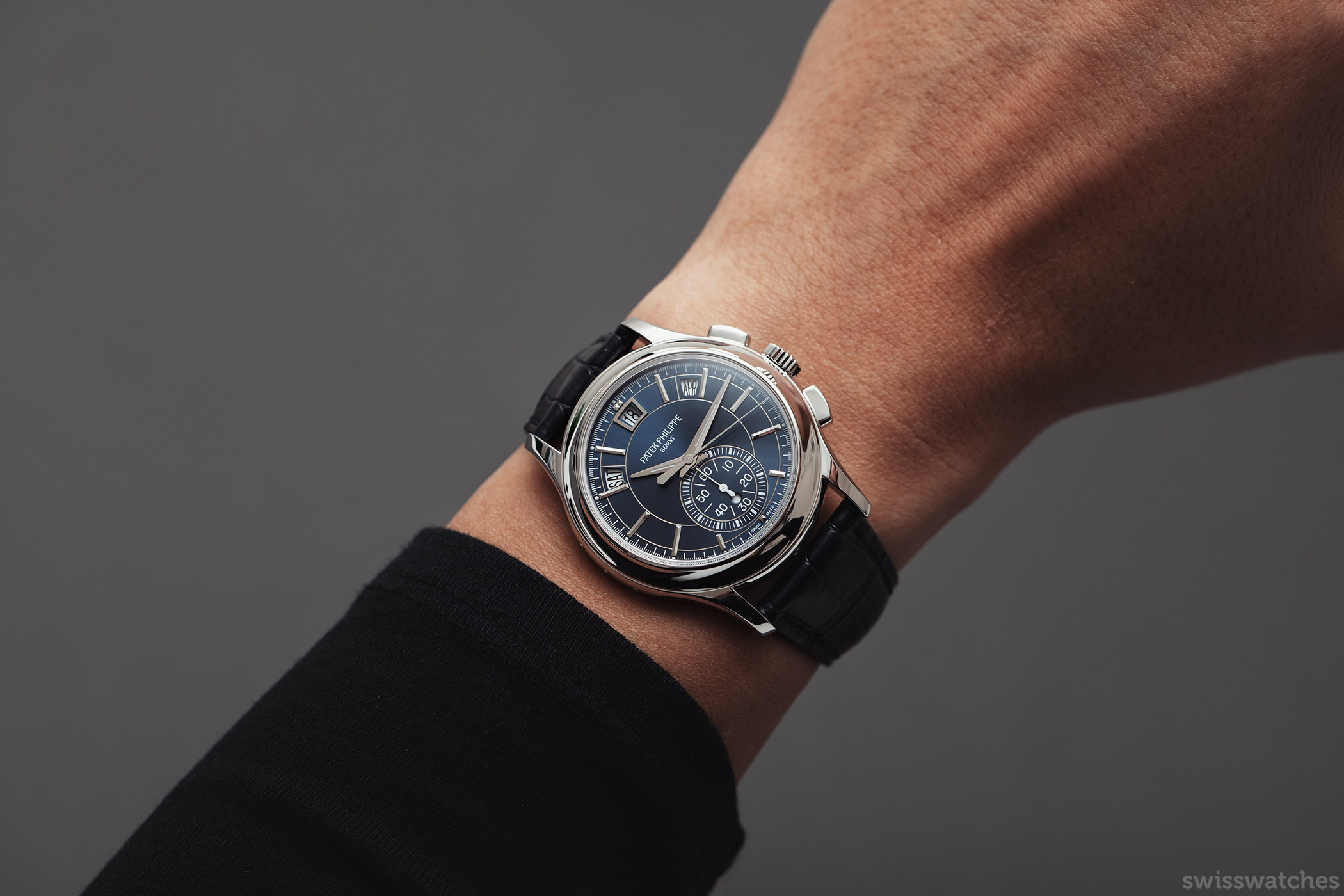
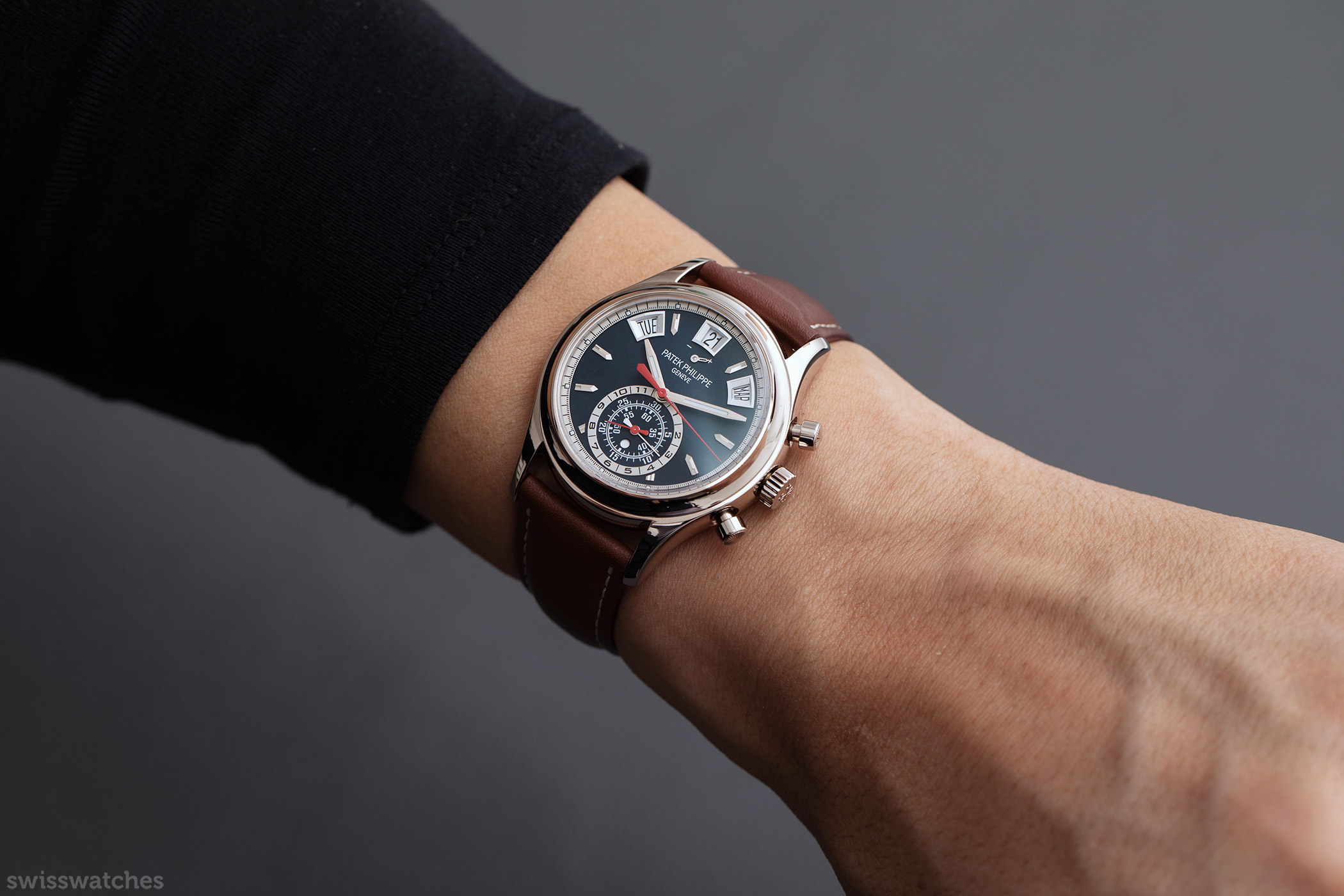
In 2006, the annual calendar was incorporated into the technically outstanding calibre of the Annual Calendar Chronograph Ref. 5960P – the first automatic chronograph to be developed and manufactured entirely in-house. When the Annual Calendar Chronograph Ref. 5960 was launched in 2006, it immediately captivated collectors with its rare combination of complexity and practicality for everyday use. “Aficionados have been waiting a long time for a new Patek Philippe chronograph,” said the company president, announcing the debut of the Ref. 5960.
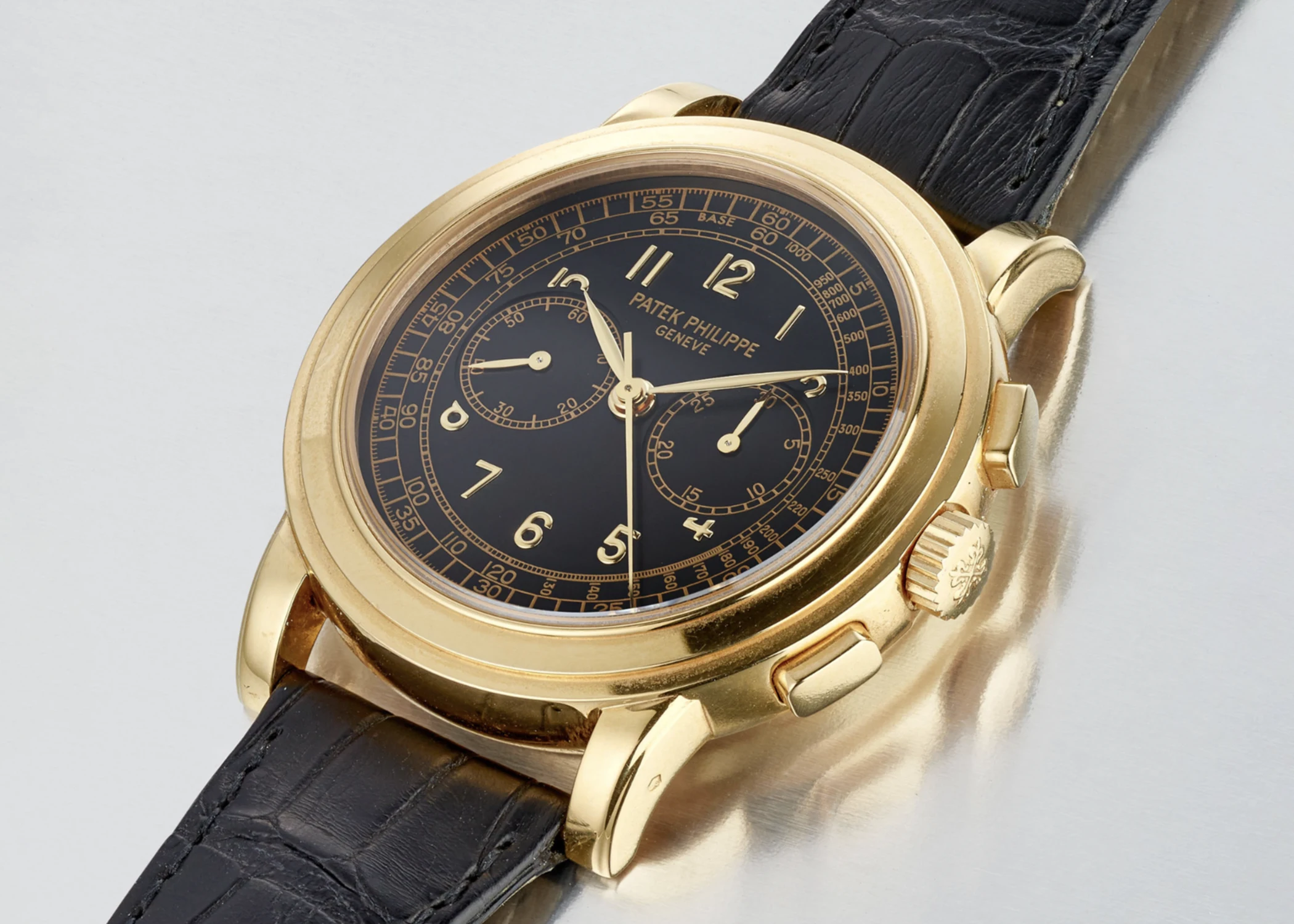
To understand the significance of Ref. 5960, one must look back to 1998, the year in which the Ref. 5070 chronograph, featuring two sub-dials, made its debut. This model heralded Patek Philippe’s return to chronograph manufacturing.
Credit © Christies
Thanks to its historically inspired design and generous dimensions, the 42 mm Ref. 5070 has become popular with collectors. An issue of Patek Philippe Magazine states: “For Patek Philippe, however, the model was a compromise in that it was fitted with the Calibre CH 27-70, a comprehensively revised and finished version of the Nouvelle Lémania ébauche. This hand-wound base calibre from the early 1940s, although universally popular, was showing its age. Furthermore, Philippe Stern, as president, had decided to make the manufacture self-sufficient and to produce all calibres in-house rather than relying on external suppliers.”
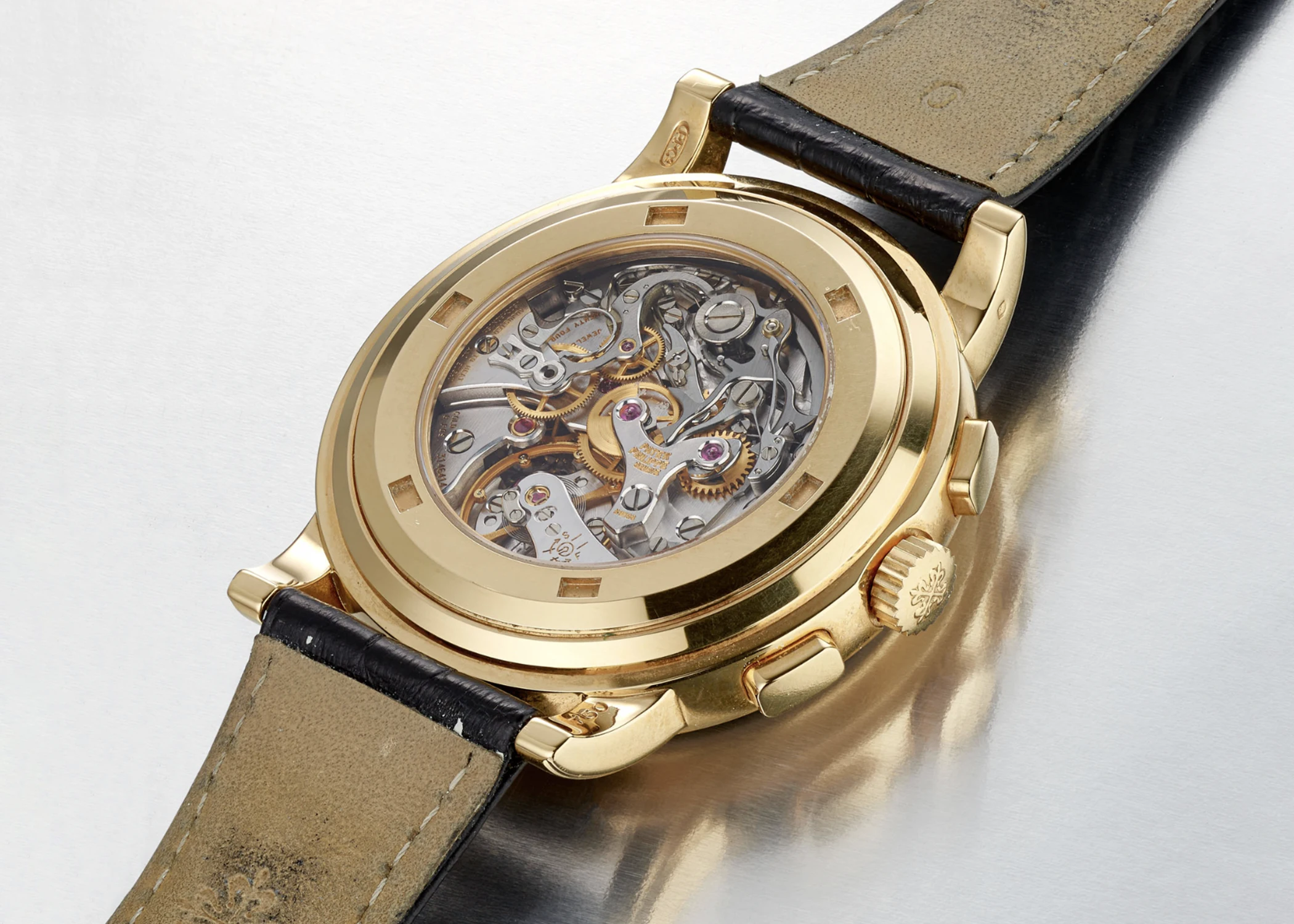
Credit © Christies
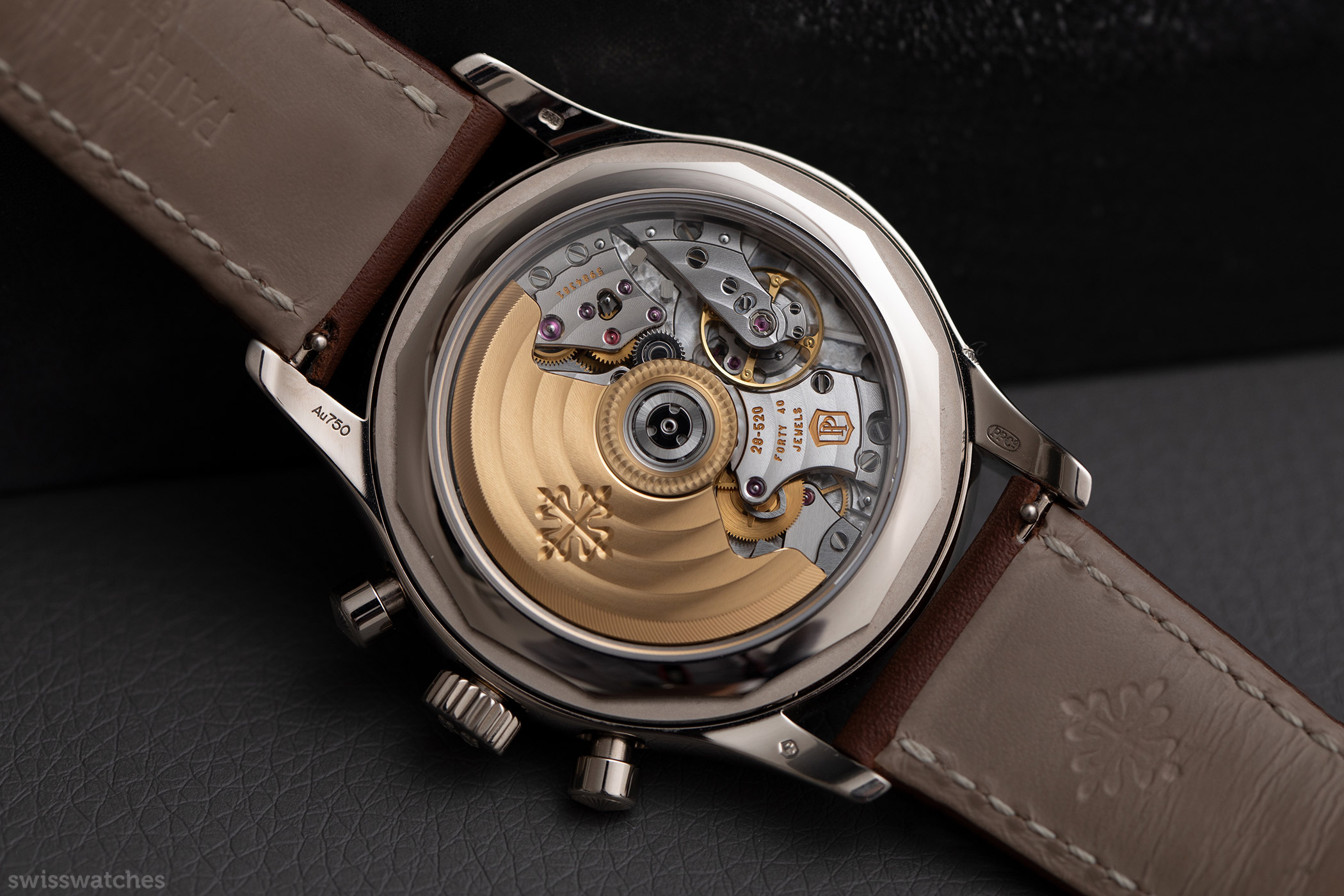
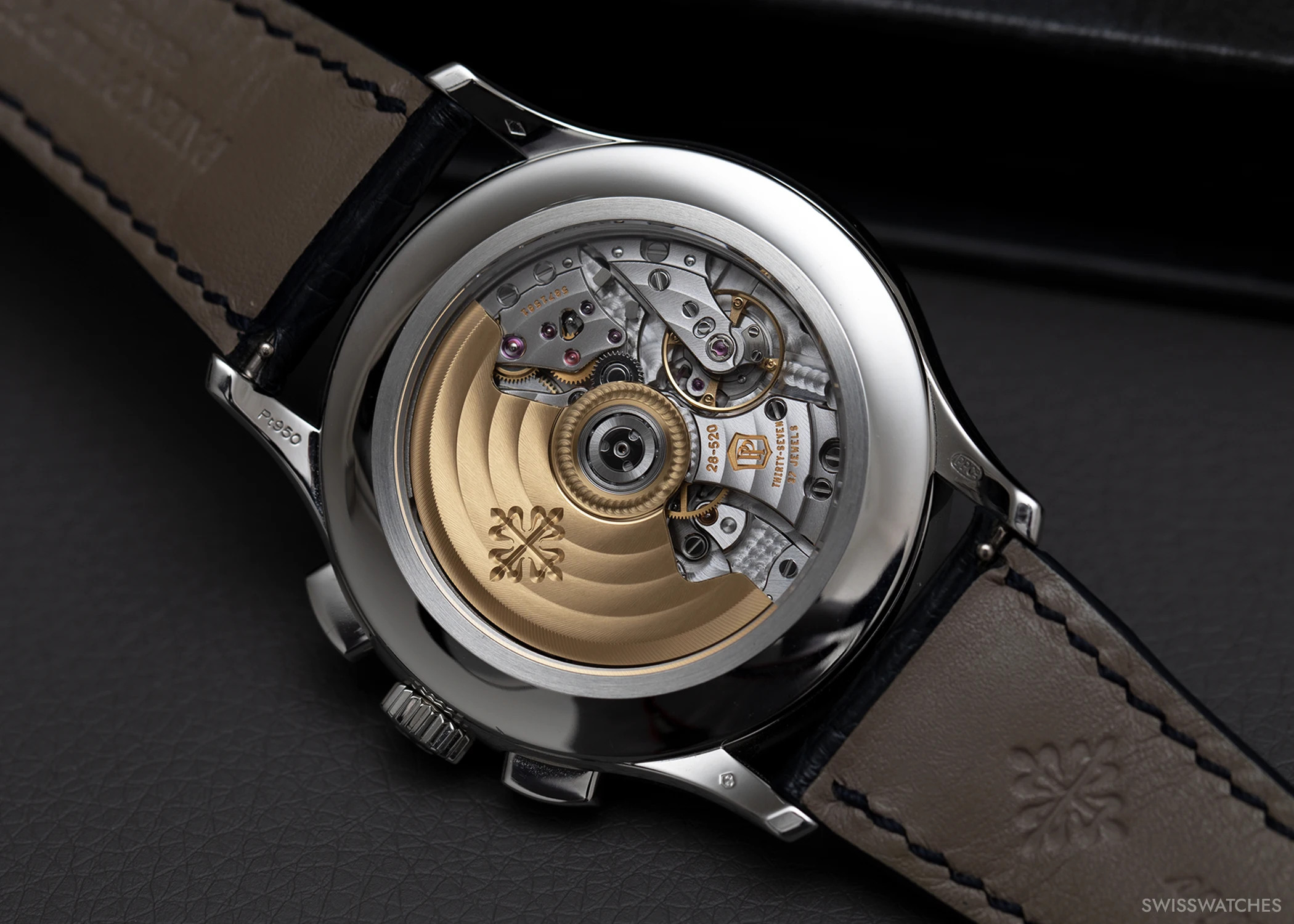
He was right. We got a taste of this in 2005, when the world’s thinnest split-seconds chronograph movement, the CHR 27-525 PS, was launched. But it was only with the CH 28-520 IRM QA 24H, which ticked away a year later in the Ref. 5960 with an annual calendar, that Mr Stern’s bold vision became clear.
The movement featured a flyback function based on a classic column wheel to control the start and stop functions, but with one key improvement: power was transmitted from the seconds wheel to the chronograph wheel not via a rocker arm with a clutch wheel, but instead via a disc clutch, in which two clutch discs engage or disengage to enable or interrupt power transmission.
Furthermore, thanks to the use of the seconds wheel, the movement did not require the traditional chronograph gear train, which should not be kept running continuously to prevent wear and tear. The new calibre allowed the chronograph hand to run continuously, meaning it could be used as a running seconds hand, whilst the flyback function enabled an immediate switch from the running seconds to the chronograph function.
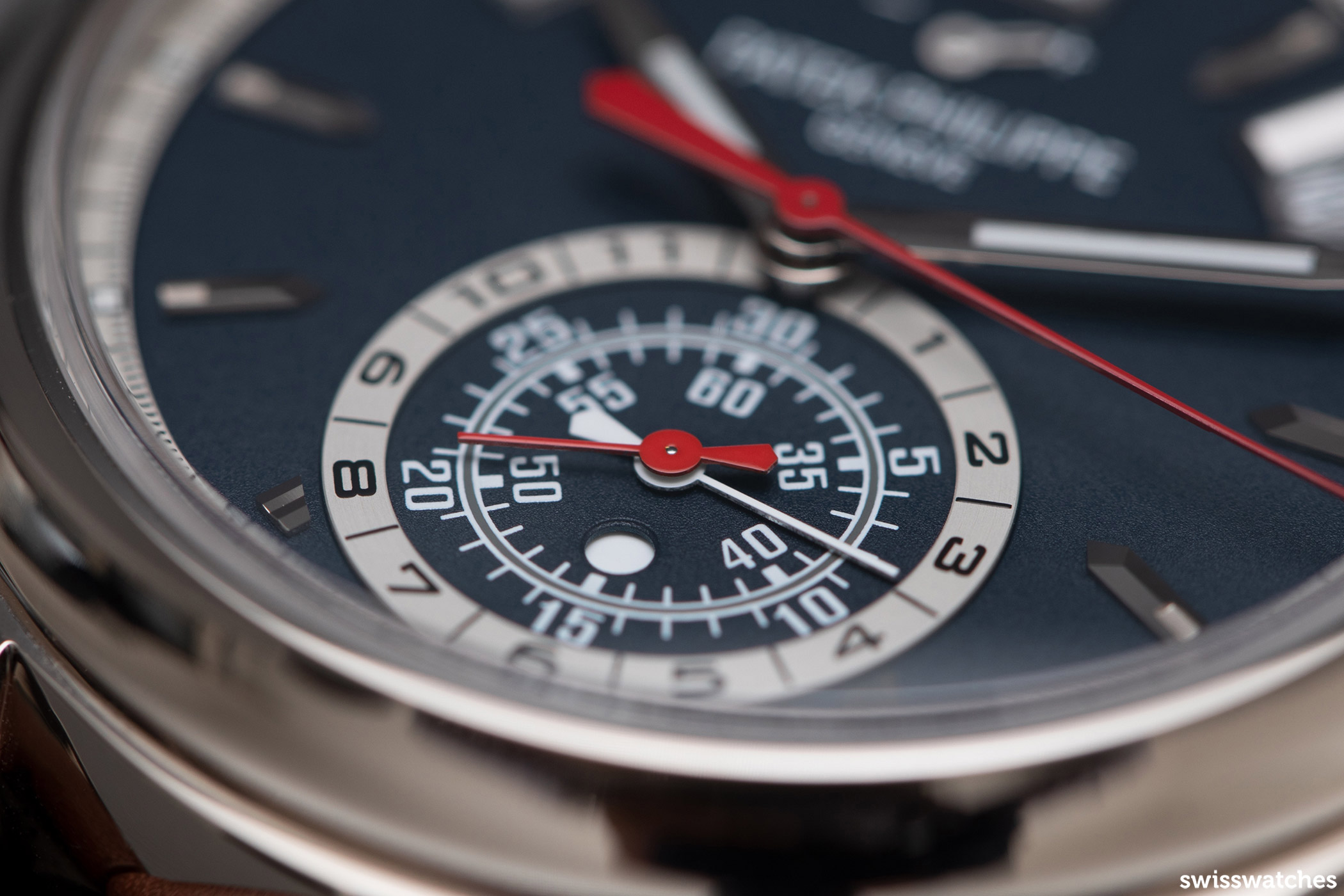
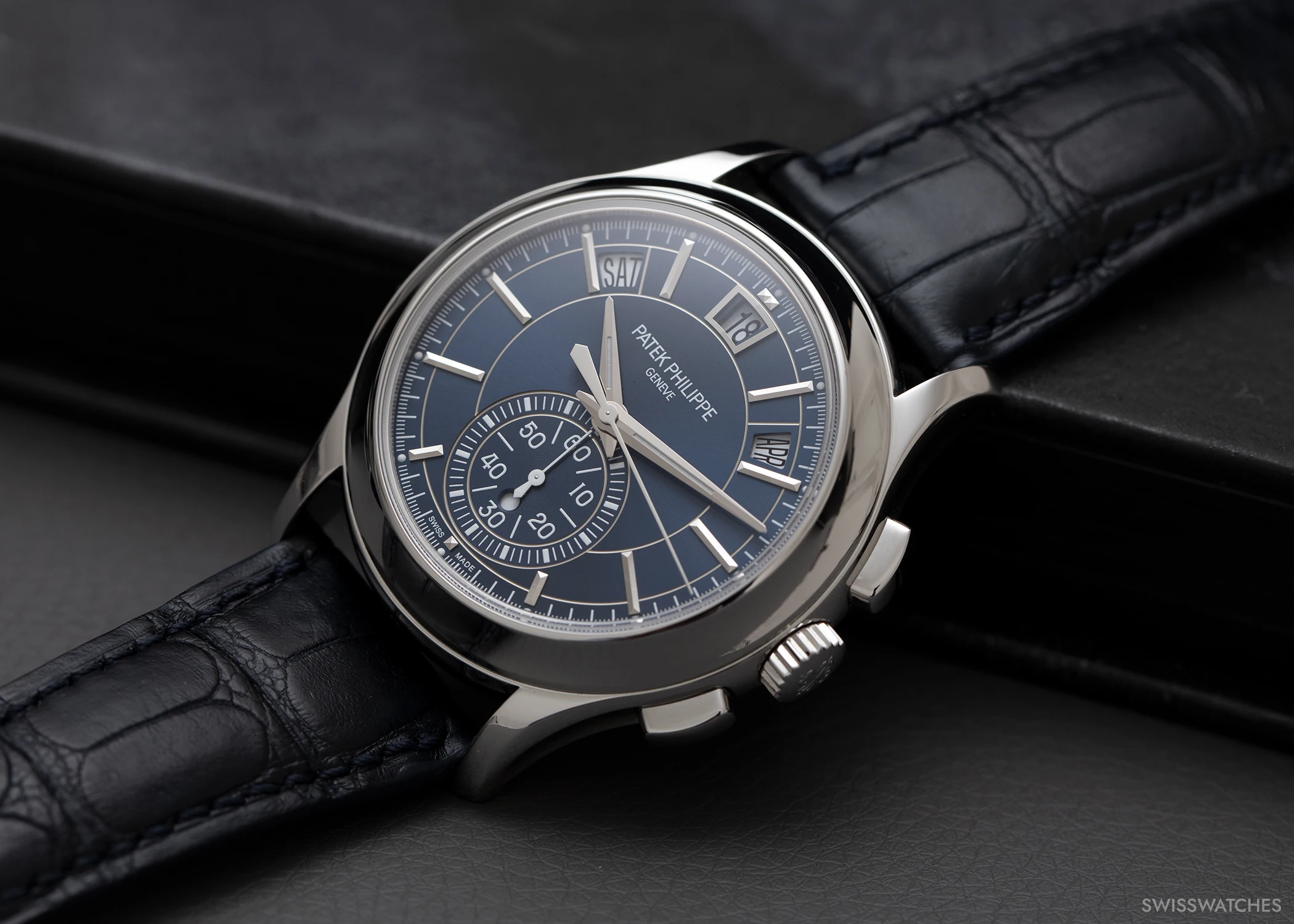
These technical advances were complemented by an equally innovative chronograph display: a single ‘porthole’ counter at 6 o’clock combined functions typically handled by separate displays into one totaliser. A long red hand counted the minutes on two outer concentric scales, from zero to 30 in red and from 30 to 60 in blue. A shorter blue hand recorded elapsed time on an inner scale, measuring up to 12 hours.
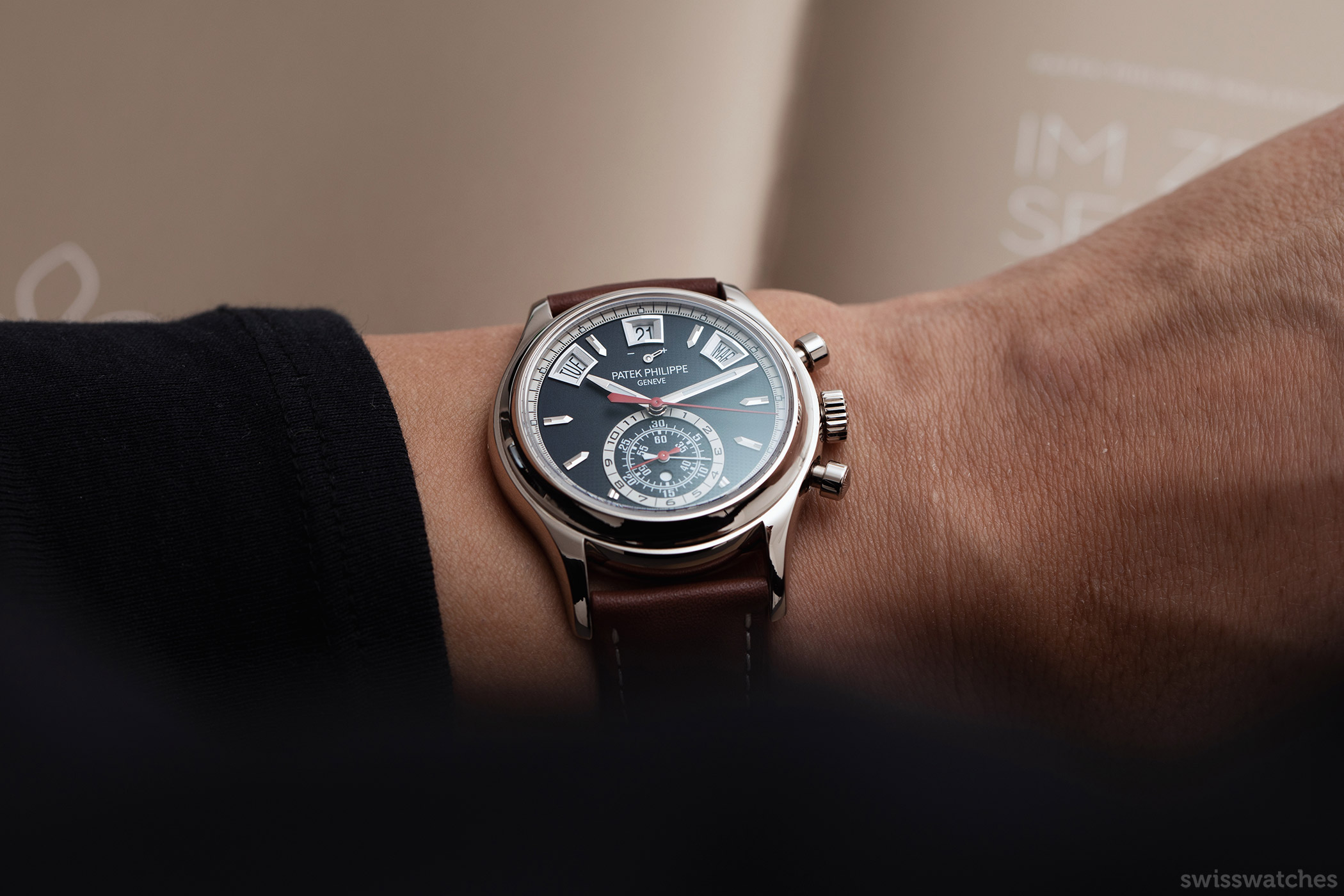
This sub-dial also featured a small window that alternated between white and dark blue to indicate day and night – and linked to the upper half of the dial, where the familiar three windows between 10 o’clock and 2 o’clock displayed the day of the week, date and month. The day/night indicator is adjustable via three pushers on the left side of the case and helped to update the calendar after a period of inactivity. The hour chronograph function alone makes the Ref. 5960 a milestone on the path to the modern Patek Philippe manufacture; the combination with the famous annual calendar mechanism makes the model historic.
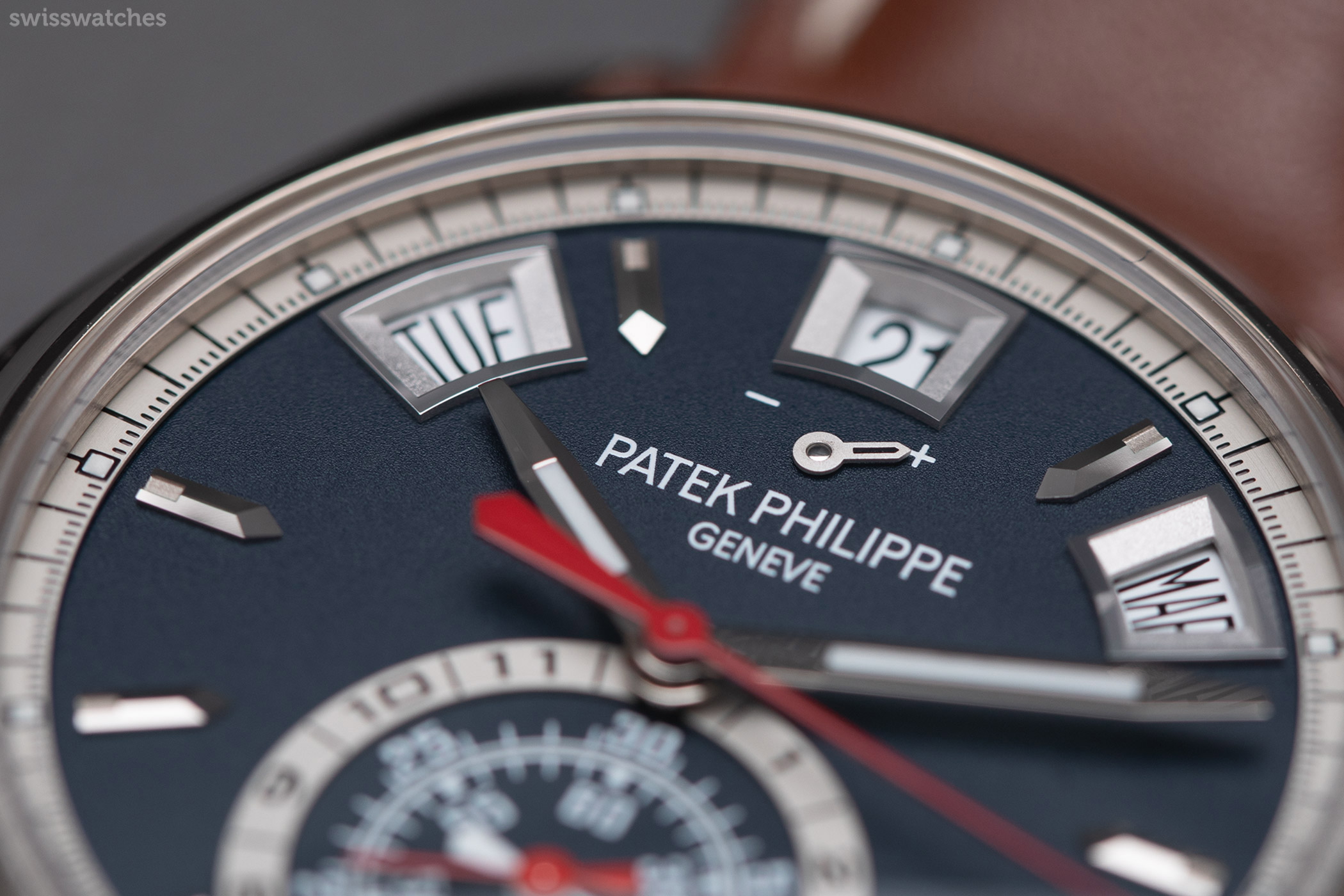
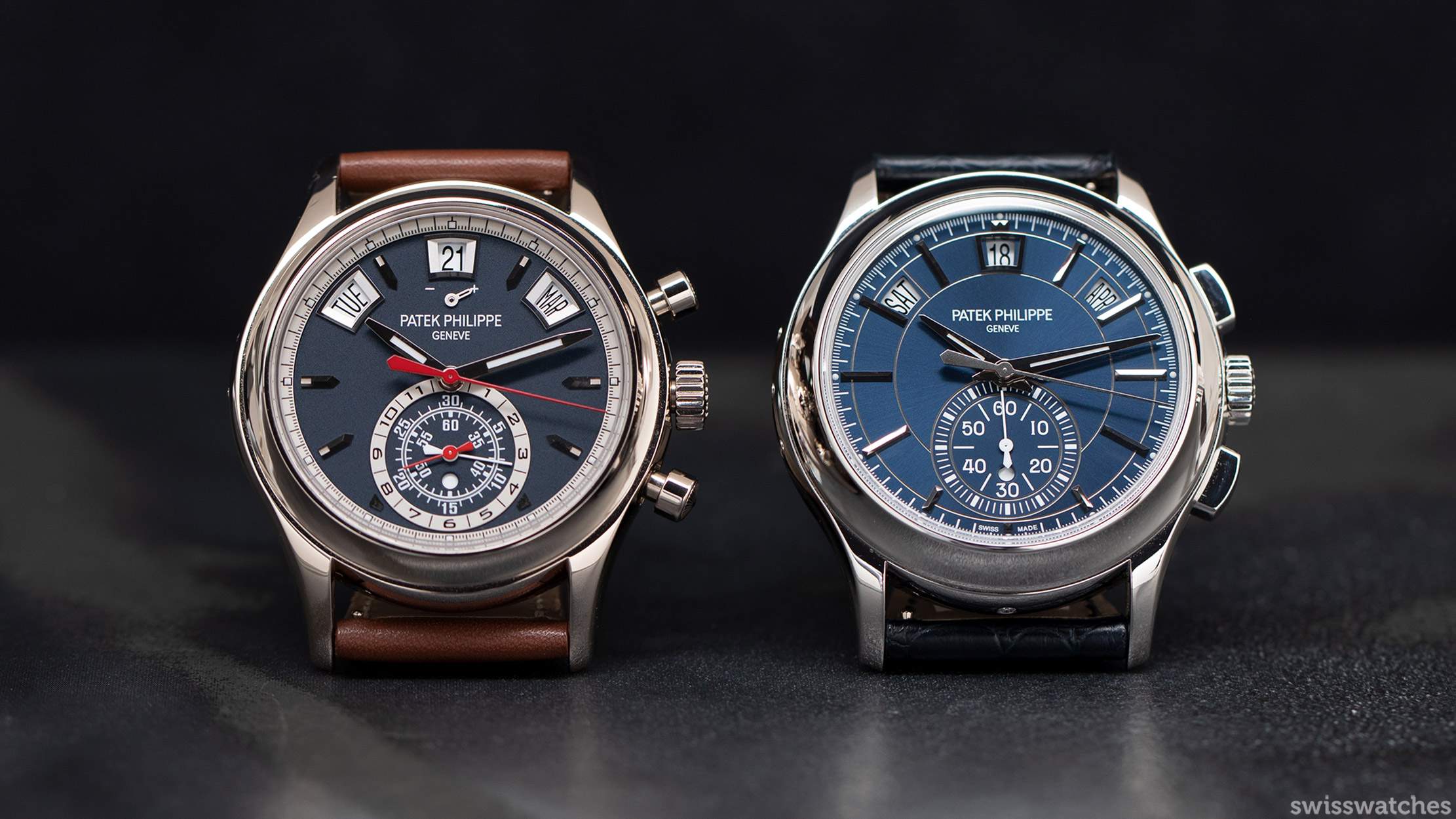
Another aspect of its significance becomes apparent when one compares the Ref. 5960 with chronographs featuring a perpetual calendar and manual winding, such as the legendary Ref. 1518 and Ref. 2499. With the Ref. 5960, the Manufacture offered, for the first time, a modern, user-friendly and more practical combination of calendar and chronograph functions. Given its emblematic contribution to the Patek Philippe canon, it was fitting that the Ref. 5960 was initially available only in the finest of all metals: platinum. This was followed in 2011 by the platinum chronograph annual calendar Ref. 5961P, with a diameter of 40.5 millimetres, a bezel set with 36 baguette-cut diamonds and baguette-cut diamonds as hour markers.
The 5960P from 2006 was replaced in 2015 by the Ref. 5905, featuring a larger 42-millimetre platinum case, a dial with concentric circles and square chronograph pushers. The first steel version of this model is the Ref. 5905/1A from 2021, which is still available today and features a dark green dial. It is perhaps the most appealing version of a sporty Patek Philippe currently available and certainly did not appear by chance in the same year that the Nautilus was discontinued.
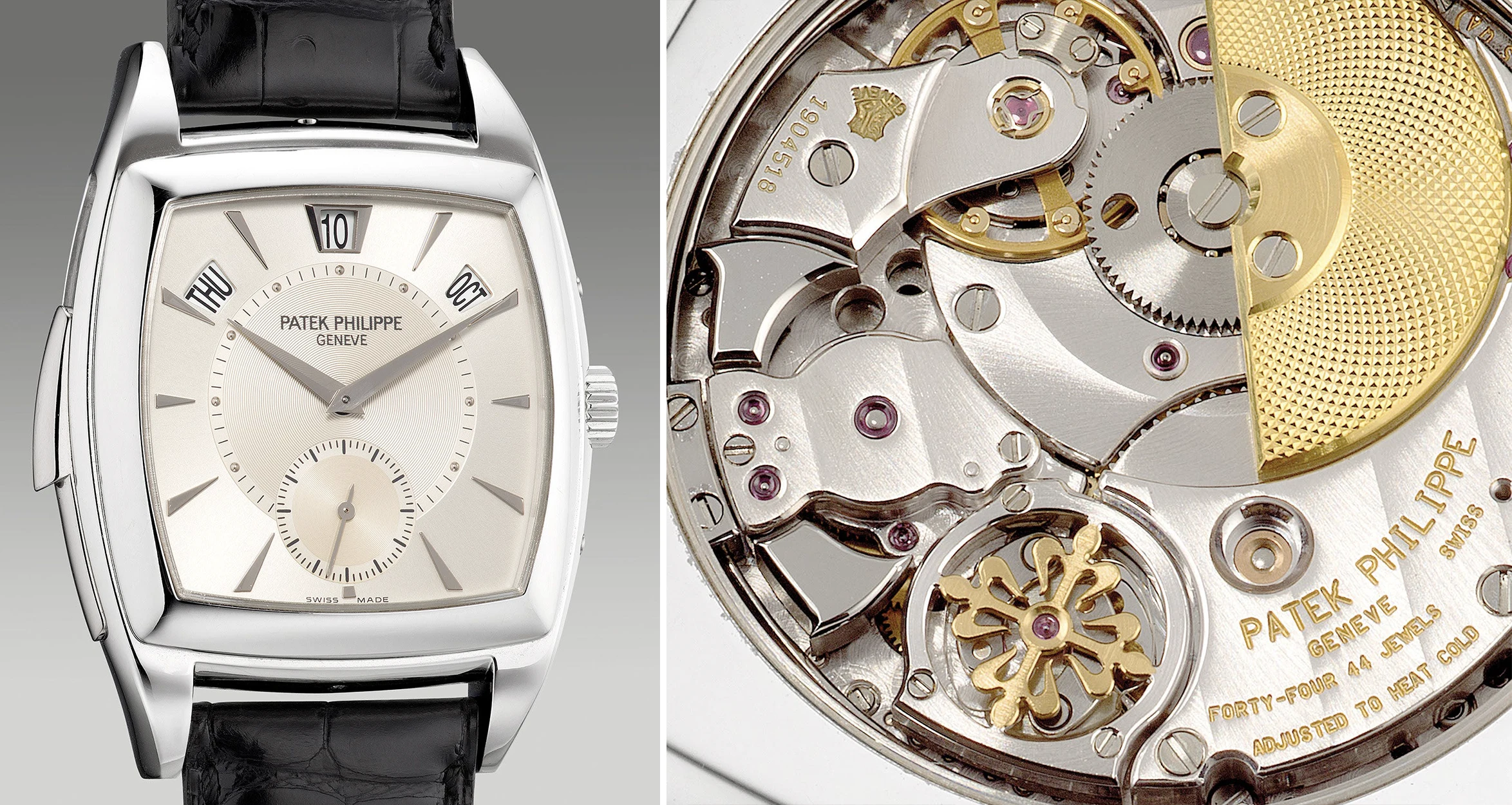
Highly complex movements are making a second appearance in the collection: the 38 × 51 mm Ref. 5033, featuring a tonneau-shaped case and a minute repeater, was the first annual calendar watch with a Grande Complication.
This model has been in production since 2006 and has so far been available in four versions: in platinum with a white dial (Ref. 5033P – 010 from 2006 to 2010) and in platinum with a black dial (Ref. 5033P-12), which was only available for one year from 2010 to 2011. In 2011, the Ref. 5033/100P – 010 was fitted with a bezel set with baguette diamonds and a white dial, whilst the Ref. 5033/100P – 001 from 2011–2015 also featured a bezel set with baguette diamonds.
According to auction house Phillips, however, the watch’s history goes back even further: Logan Baker writes on the auction of one of these rare pieces: “The Gondolo Minute Repeater Annual Calendar Ref. 5033 was first unveiled in 2002 in a limited edition of just ten watches. Nine were crafted in platinum, whilst a single piece was made in titanium. Patek Philippe, however, quickly decided to go beyond these first ten pieces and began producing a small number of additional examples each year, which were offered exclusively to its best clients. The exact total production figure is unknown, but it is estimated that around 80 different examples of the Ref. 5033 were produced over a period of ten years.” A very readable article, by the way.
Credit © Phillips
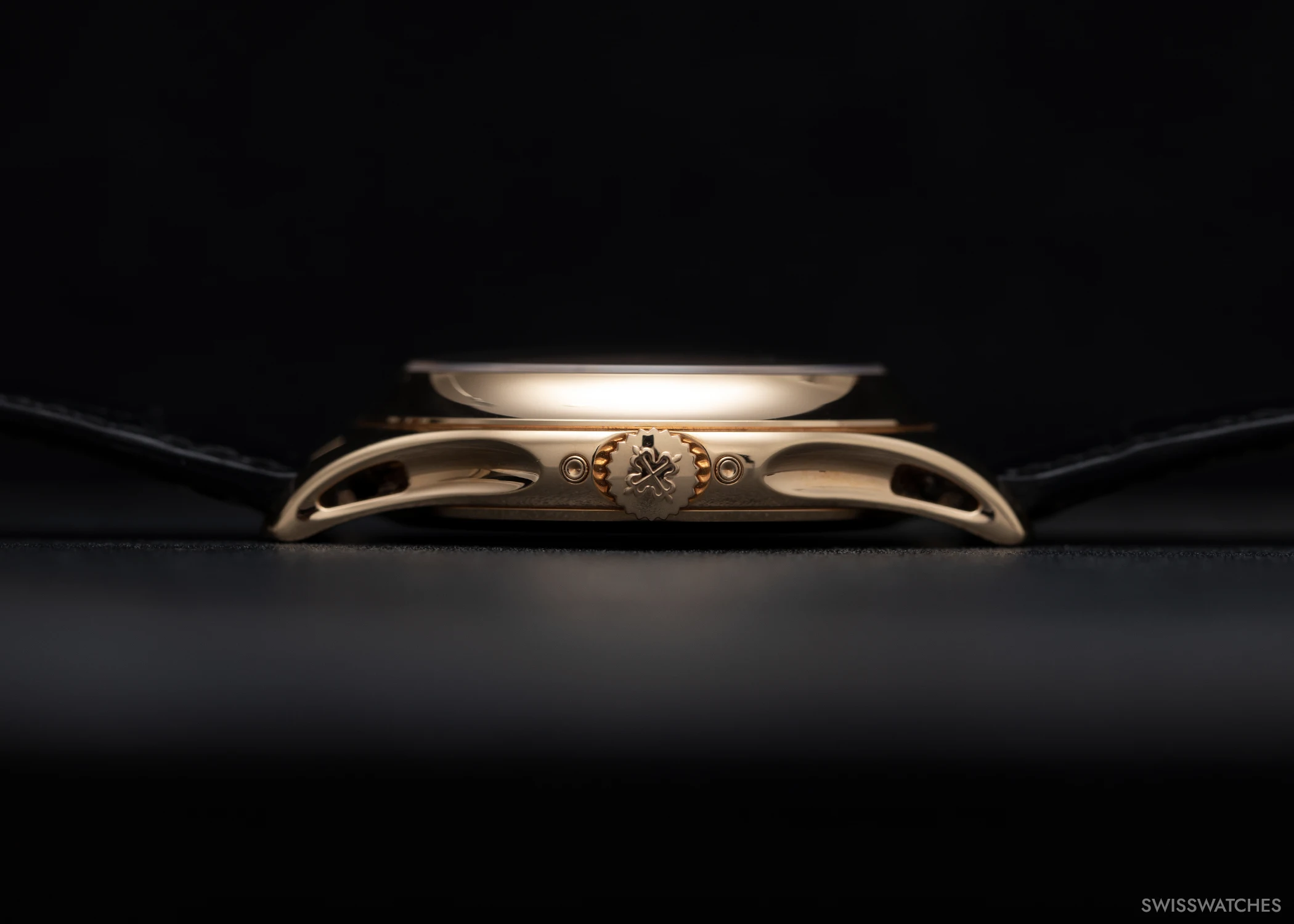
The 40 mm Ref. 5205G in white gold – also available in rose gold from 2013 onwards – features a new case with skeletonised lugs, large gold applied baton hands and a two-tone dial.
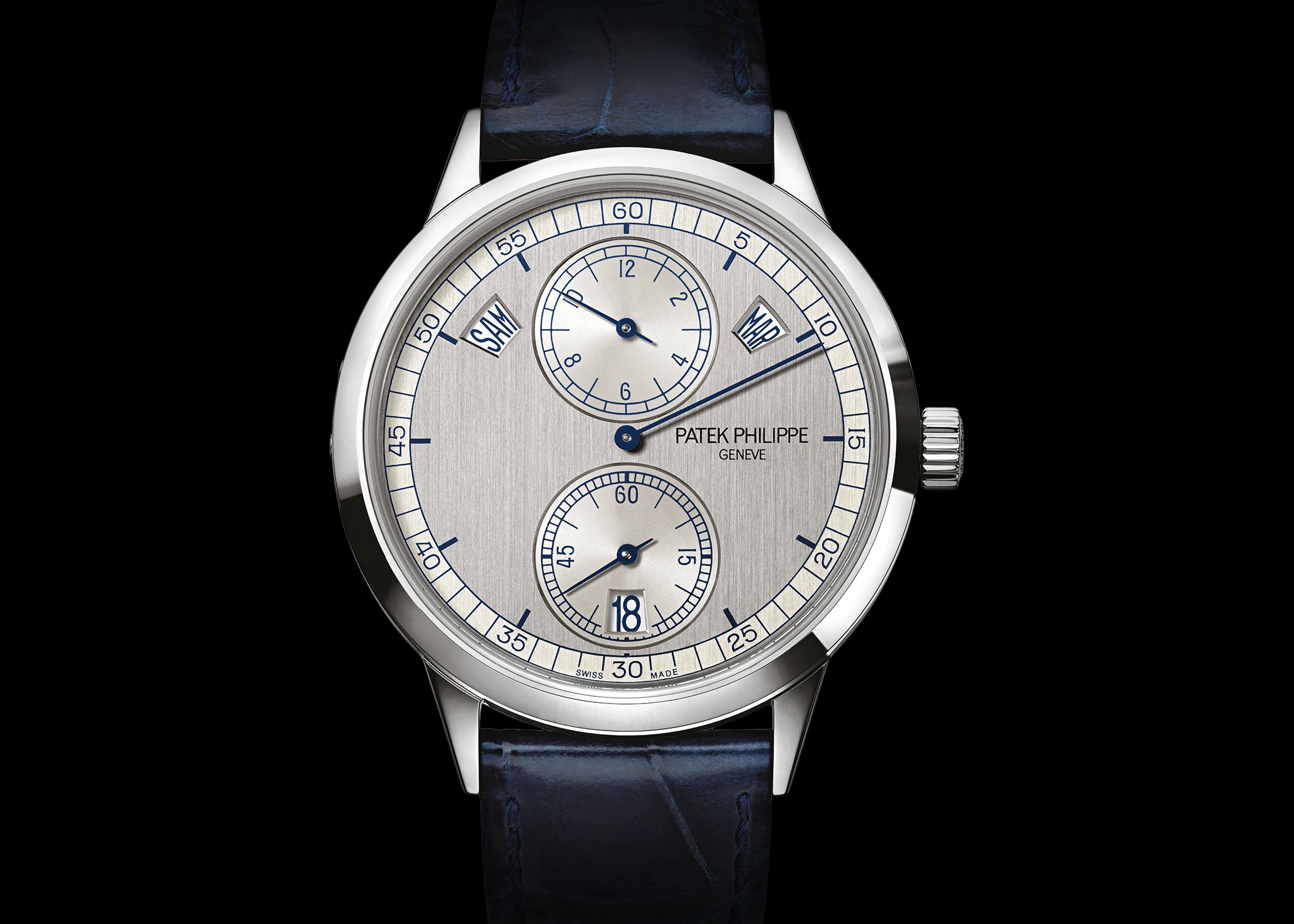
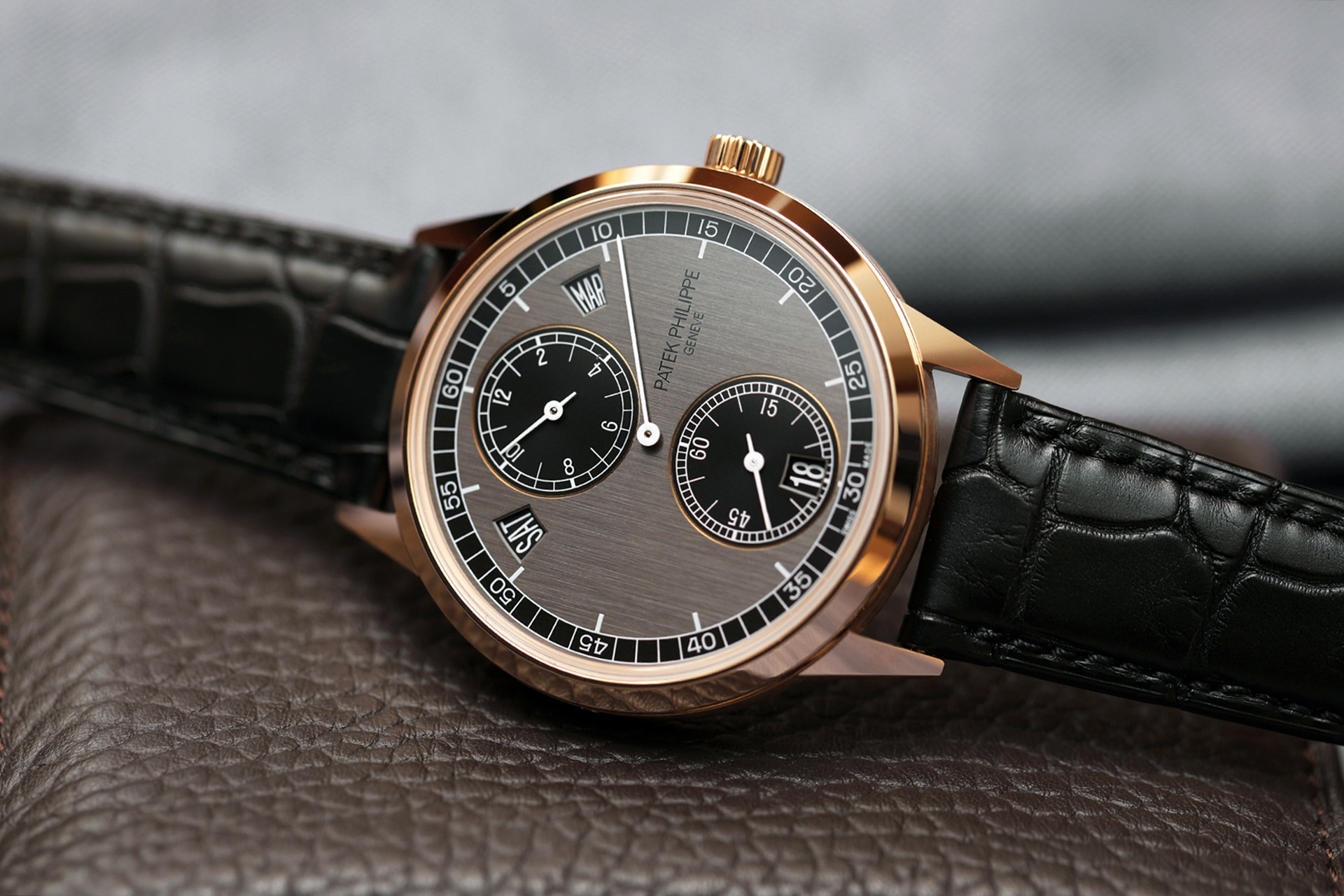
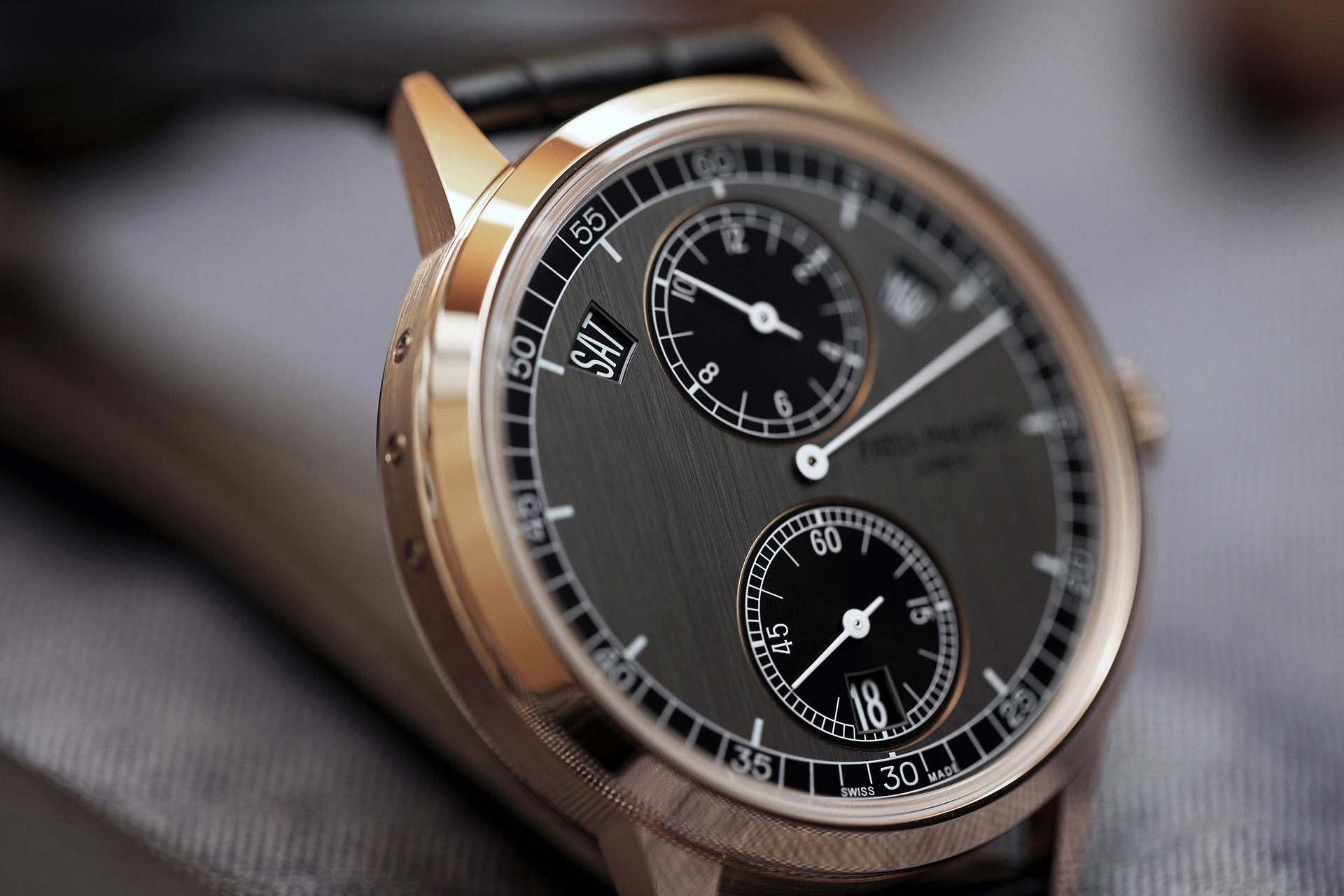
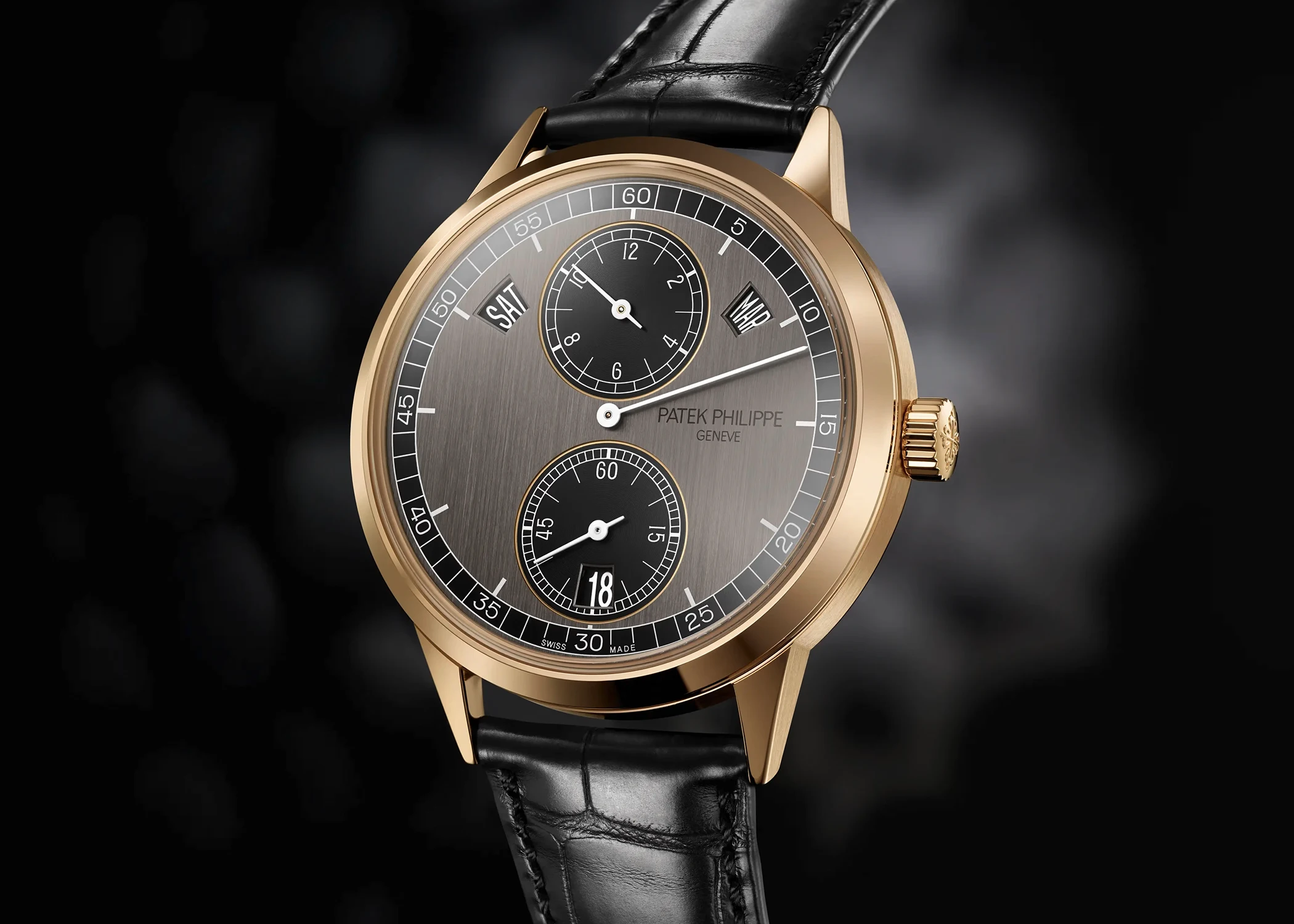
This model stands out within the entire history of Patek: with the Annual Calendar Reference 5235 Regulator, Patek Philippe introduced a completely new watch model that had never before featured in the manufacture’s collection. For the first time, a Patek Philippe wristwatch featured a distinctive regulator dial, characterised by a large minute hand in the centre, a small hour dial at 12 o’clock and a small seconds dial at 6 o’clock.
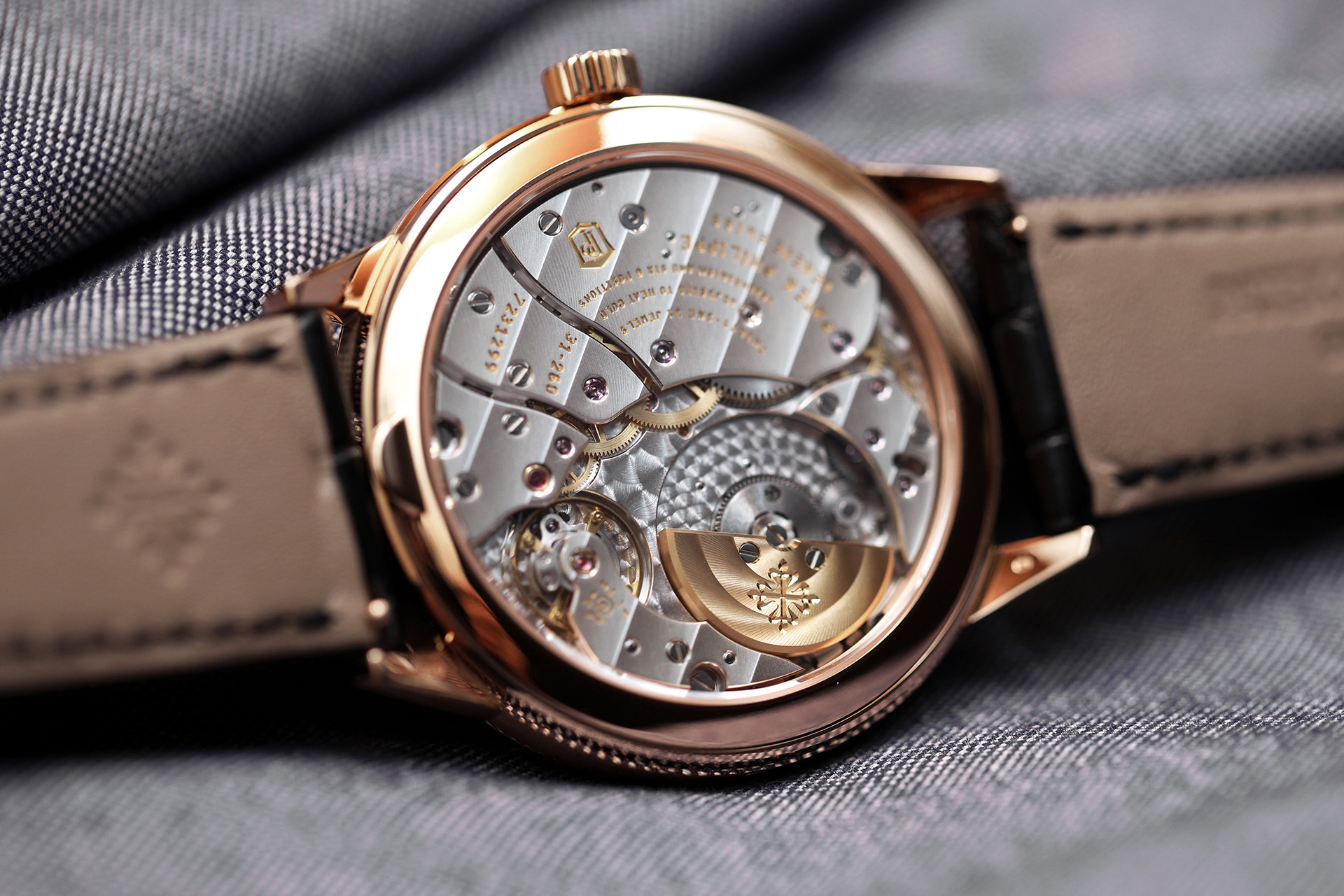
The model was powered by the new Calibre 31-260 REG, the first ultra-thin Patek Philippe automatic movement with a micro-rotor to feature a small seconds display at 6 o’clock. It was also the first entirely new base movement designed to incorporate Silinvar components: the escape wheel and anchor with Pulsomax escapement, as well as the Spiromax balance spring, are made from the innovative silicon derivative. The new wristwatch is completed by the annual calendar with window displays. The Silinvar components are completely non-magnetic, extremely shock-resistant, corrosion-resistant and do not require lubrication.
It is a clear commitment to the philosophy that a Patek Philippe watch should, above all, be an accurate and reliable timepiece.
The dial is, of course, a tribute to the precision timepieces that kept accurate time in observatories for over 200 years, until they were replaced by quartz and radio-controlled time standards. To ensure that watchmakers could always have an unobstructed view of the seconds hand when adjusting their watches, the hour display was positioned in such a way that its hand could not partially obscure the seconds dial for several hours each day. The President of Patek also used such clocks to regulate his wristwatches: one of these grandfather clocks was built as a regulator by Patek Philippe & Co at the beginning of the 20th century and is said to stand in the office of Honorary President Philippe Stern.
However, this entirely new regulating mechanism was not enough for the Patek Philippe engineers. Consequently, the finishing gear train – the wheels and pinions between the mainspring barrel and the escape wheel – was also completely redesigned. The profiles of the wheel teeth and pinion wings were analysed in detail, recalculated and individually designed for all wheels and pinions (minute wheel, small-wheel, second wheel with associated pinions). These new profiles improve the engagement of the wheel teeth and pinion flanges, reduce friction, increase tolerance for varying centre distances and enhance the efficiency of energy transmission from the mainspring barrel to the escape wheel. The result is a significant increase in efficiency whilst simultaneously reducing wear.
The innovative technologies of the new Regulator calibre 31-260 REG QA, designed to enhance efficiency and isochronism, have far-reaching implications: While the automatic calibre 240 beats at 21,600 vibrations per hour, the frequency of the new movement has been increased by almost 10 per cent to 23,040 vph or 3.2 Hz, whilst simultaneously increasing the power reserve. A higher frequency, in turn, makes it easier to adjust the movement’s accuracy to meet the specifications of the then-new Patek Philippe Seal (-3/+2 seconds per 24 hours). This had been introduced two years earlier, in June 2009.
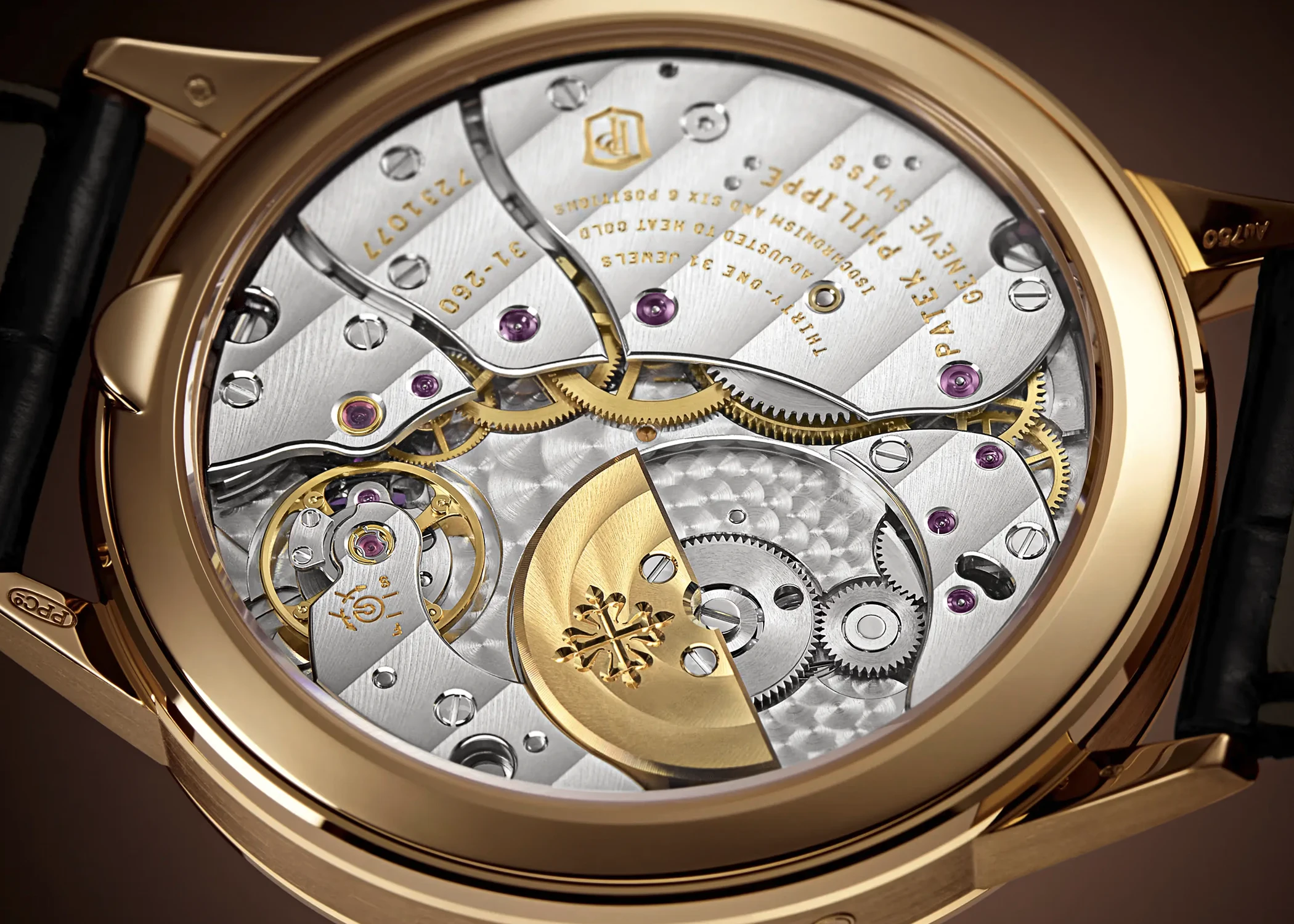
The fourth innovation was an extra-long mainspring for a particularly long power reserve. Thanks to the careful management of the driving energy, it was also possible to use a longer mainspring. The new Calibre 31-260 REG QA therefore achieves a power reserve of 60 hours despite its increased frequency and with just a single barrel (Calibre 240: 48 hours). The longer mainspring also has the advantage of a flatter torque curve, ensuring a stable amplitude and consistent timekeeping for the majority of the power reserve. The result is greater timekeeping accuracy over a longer period – the ability to take the watch off for a whole weekend without having to reset the time and calendar on Monday speaks to the watch’s practicality for everyday use.
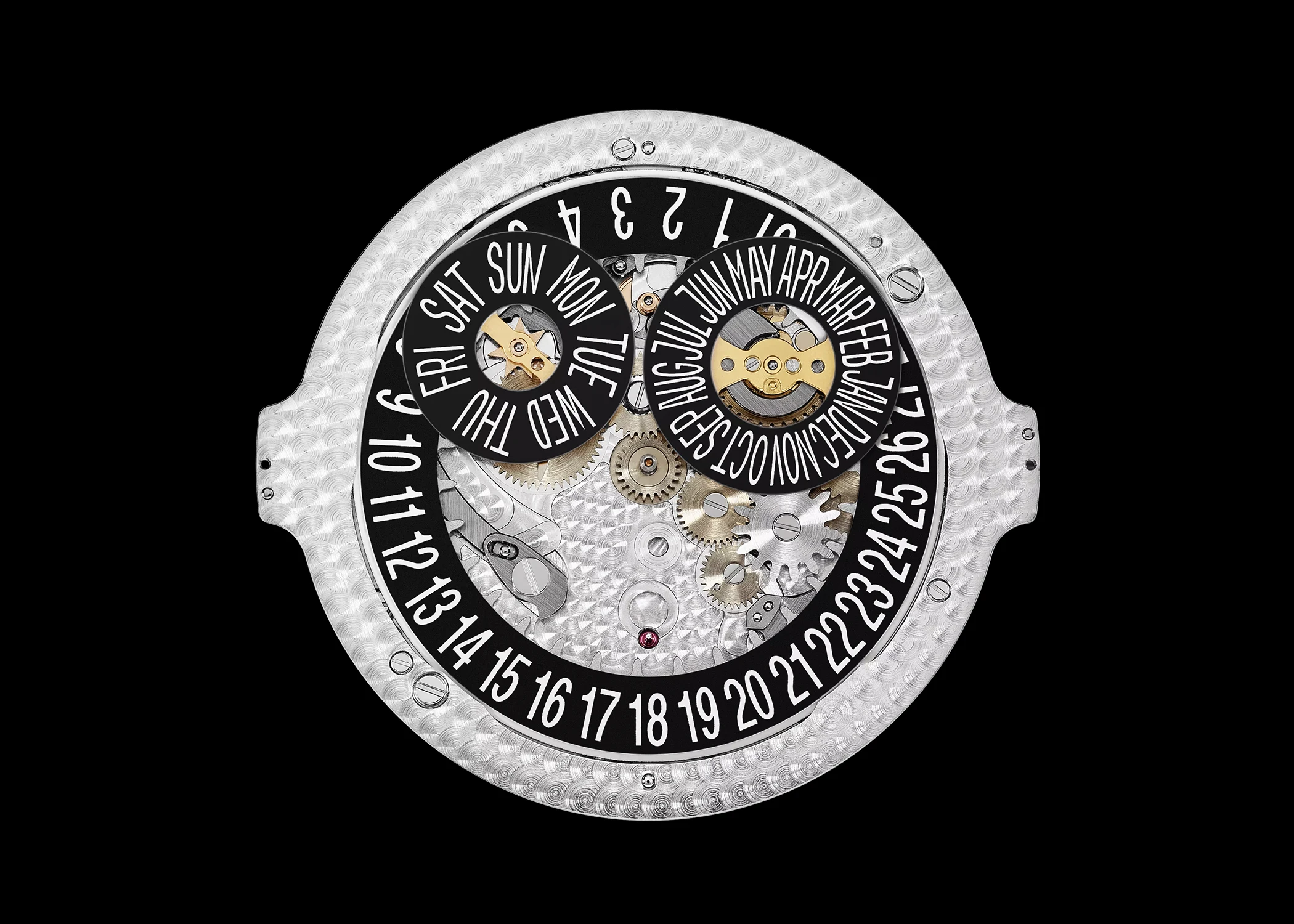
To ensure the new annual calendar regulator has the longest possible service life and long-term reliability, further innovations were introduced. As with all Patek Philippe automatic movements, the Calibre 31-260 REG QA can also be wound manually. However, the manual winding mechanism is automatically disengaged whenever the automatic winding mechanism is in operation. This increases winding efficiency and reduces wear. Furthermore, the 22-carat gold micro-rotor set into the mainplate is 0.3 mm thicker than that of the Calibre 240, which increases its mass. Compared to the Calibre 240, the new Calibre 31-260 REG QA had a frequency that was almost 10 per cent higher and a power reserve that was 25 per cent greater, which corresponds to an overall increase in efficiency of around 30 per cent.
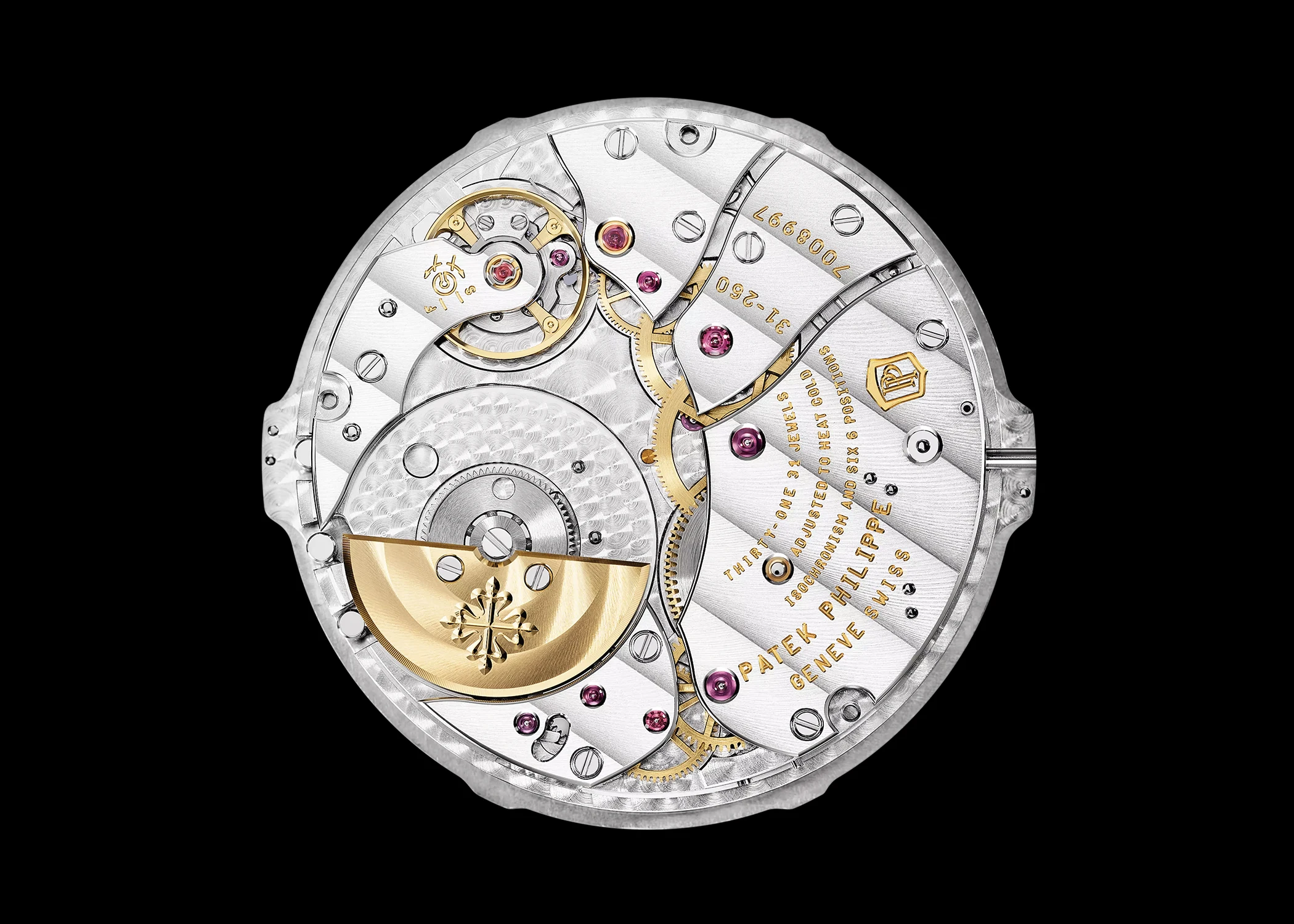
In 2019, this watch was succeeded by a gold version, reference 5235/50R, which remains the only Patek Philippe model with a regulator dial in the collection to this day. Six years ago, the Manufacture gave this model a new look. It combined a rose gold case with a vertically satin-finished dial in graphite grey and ebony black, adorned with white details. This striking design is complemented by rose gold baton hands, which in turn are reminiscent of the old regulator clocks. Three railway-track scales along the edge of the dial and around the subsidiary dials for the hours and seconds emphasise its timeless elegance.
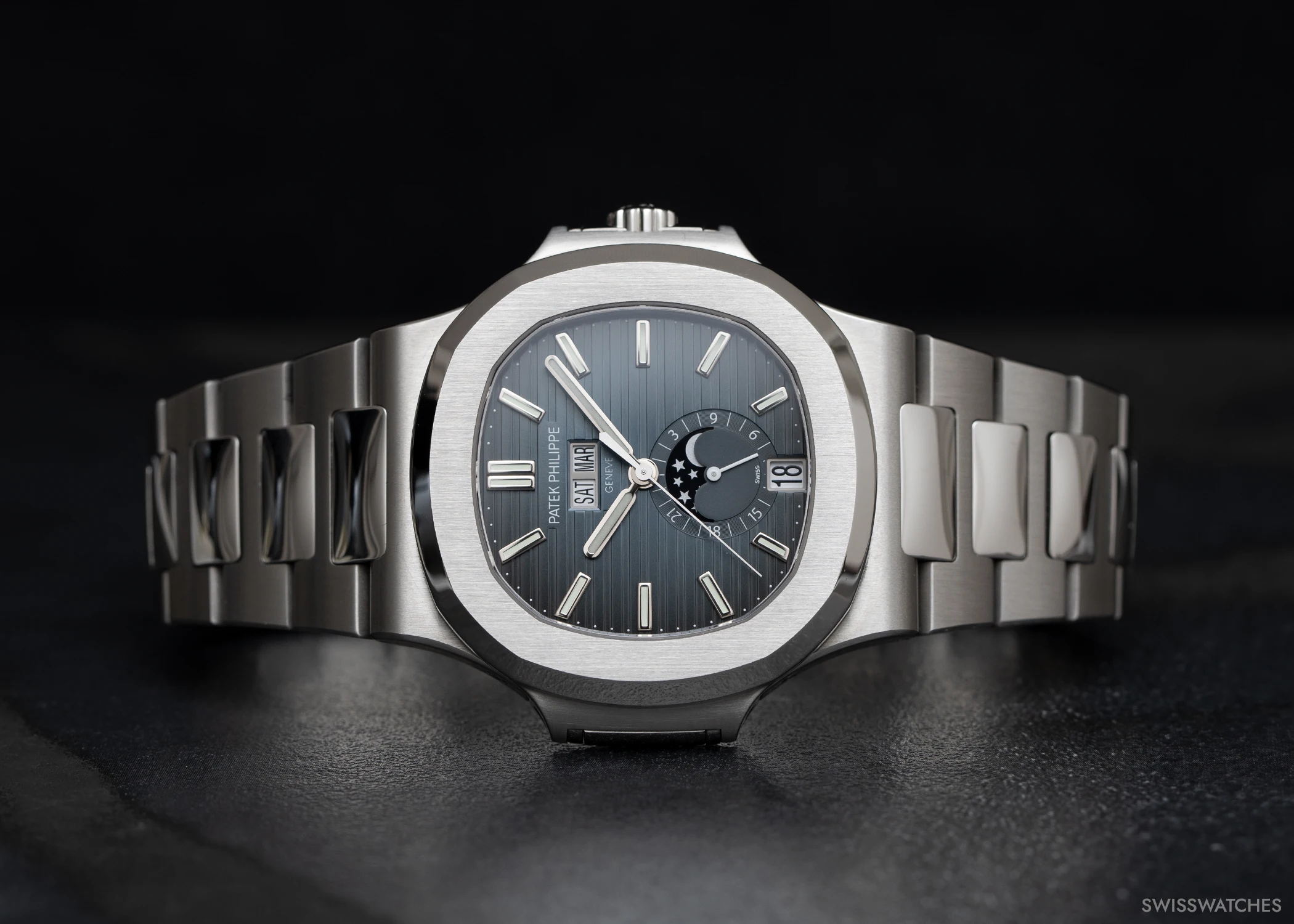
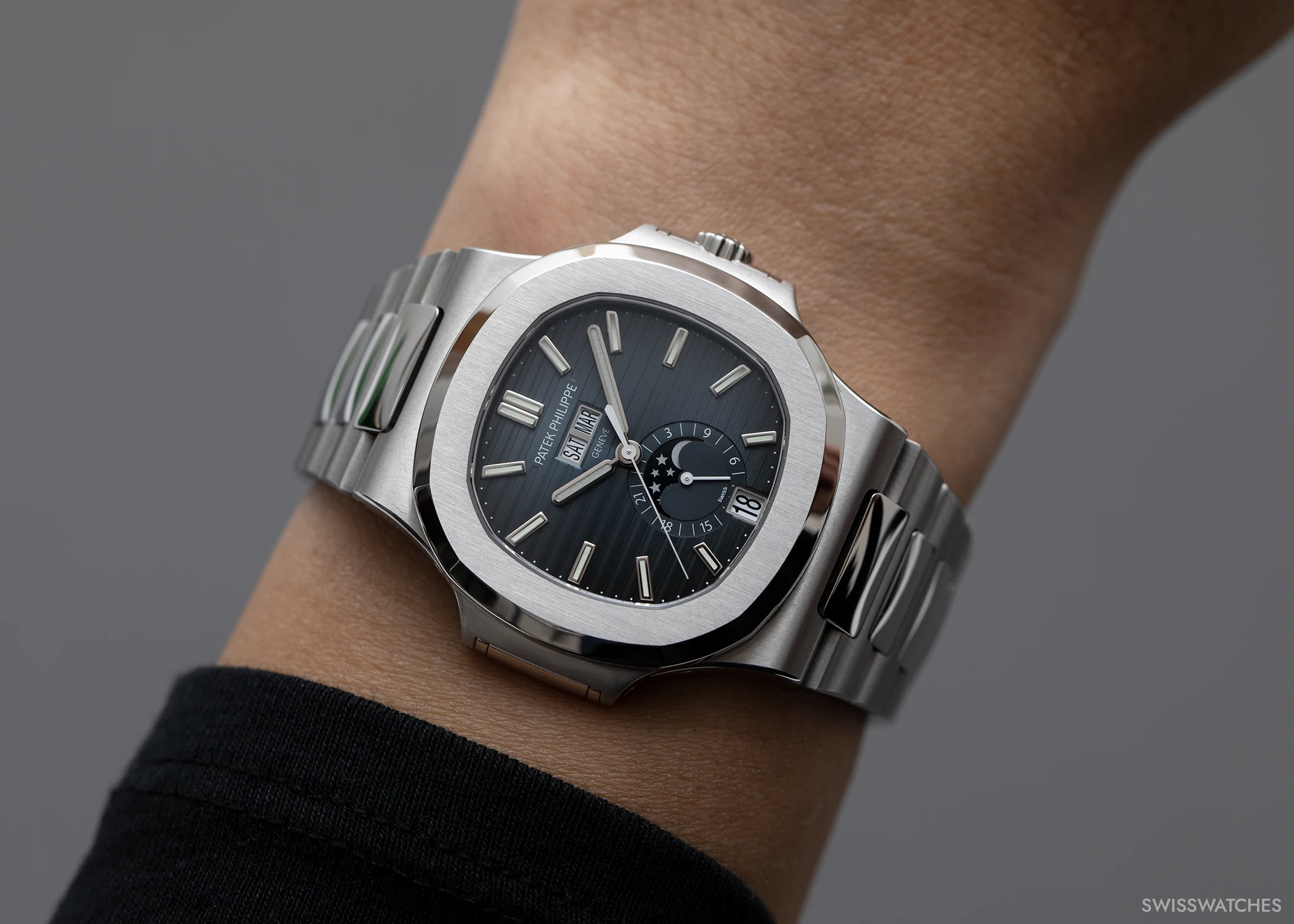
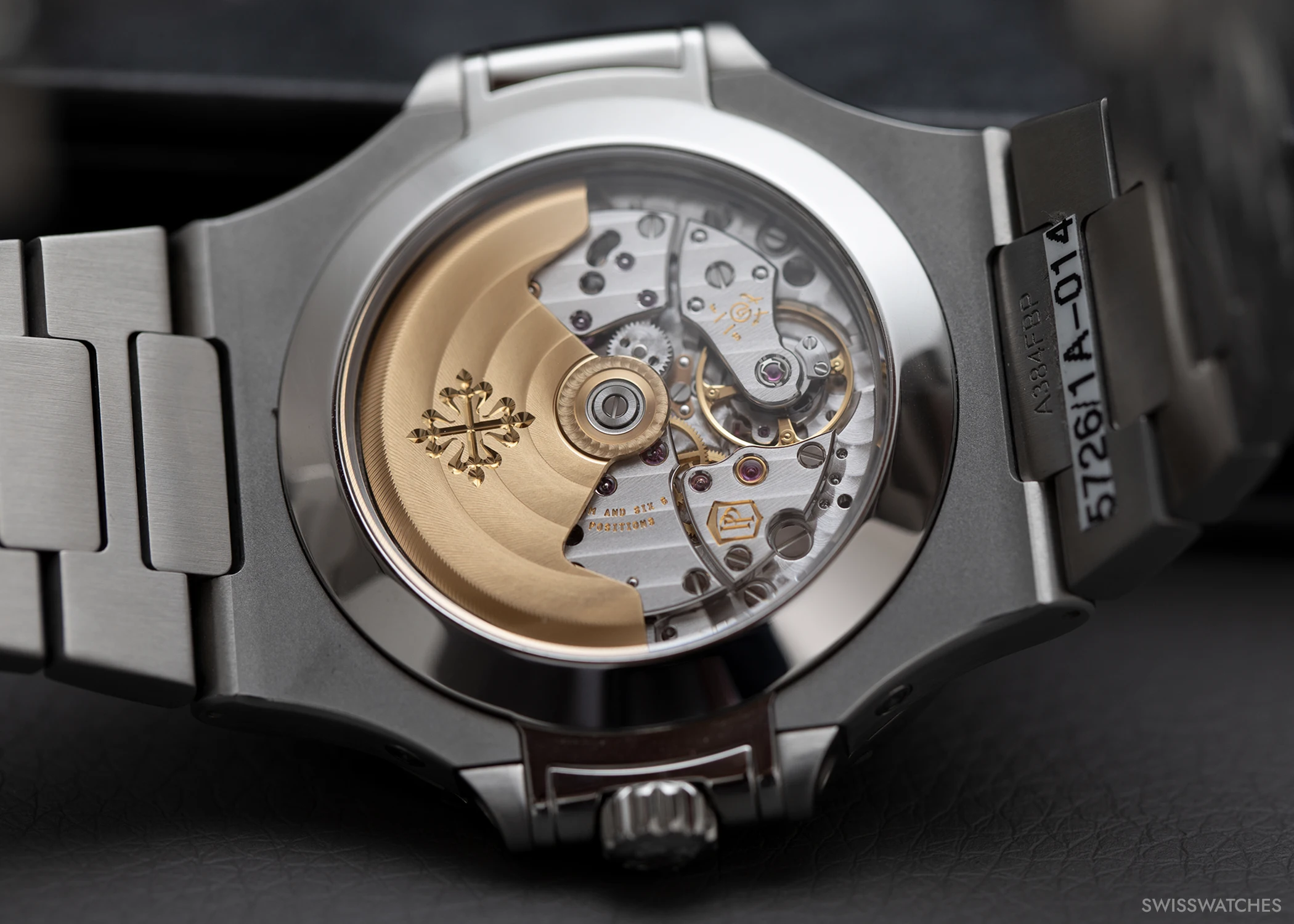
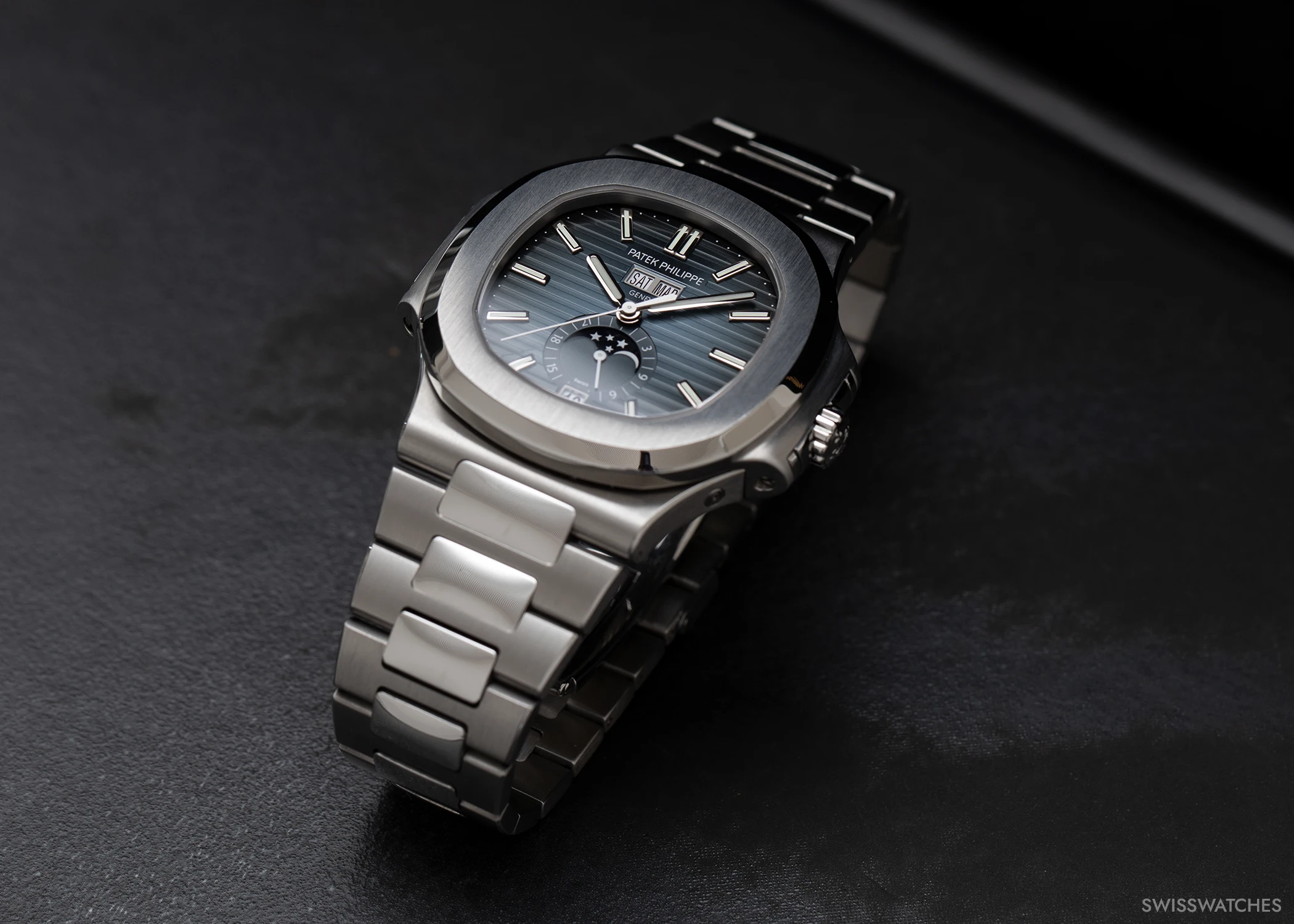
Sixteen years ago, Patek Philippe combined sporty style with sophisticated technology for the first time in the Nautilus collection with the Ref. 5726. The famous Gerald Genta design now featured, for the first time, an annual calendar, a moon phase display and a 24-hour display; however, the dial was grey and it was only available on a leather strap: This stainless steel Ref. 5726A was joined in 2012 by the first model with a stainless steel bracelet, the 40.5-millimetre Ref. 5726, also with a grey dial.
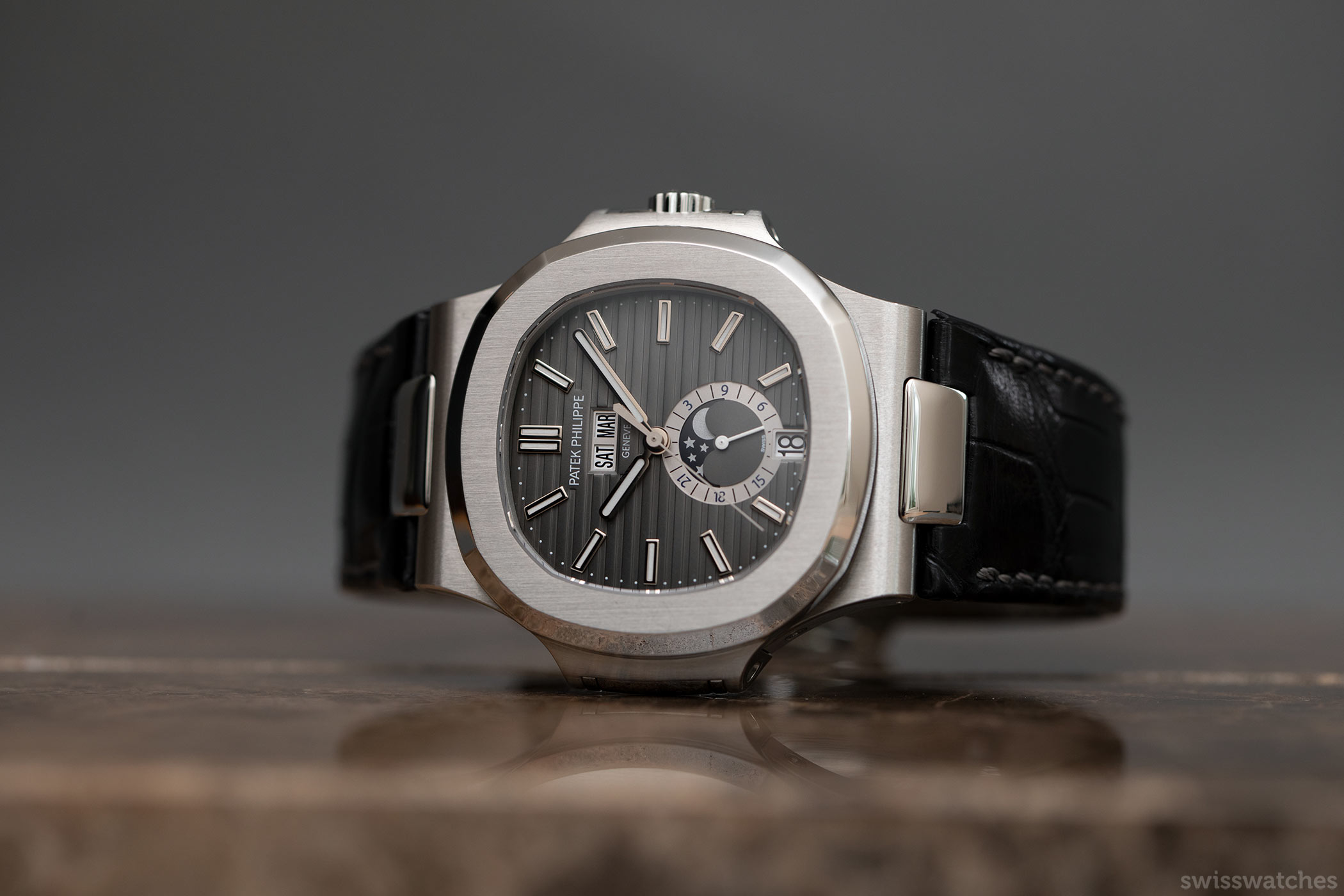
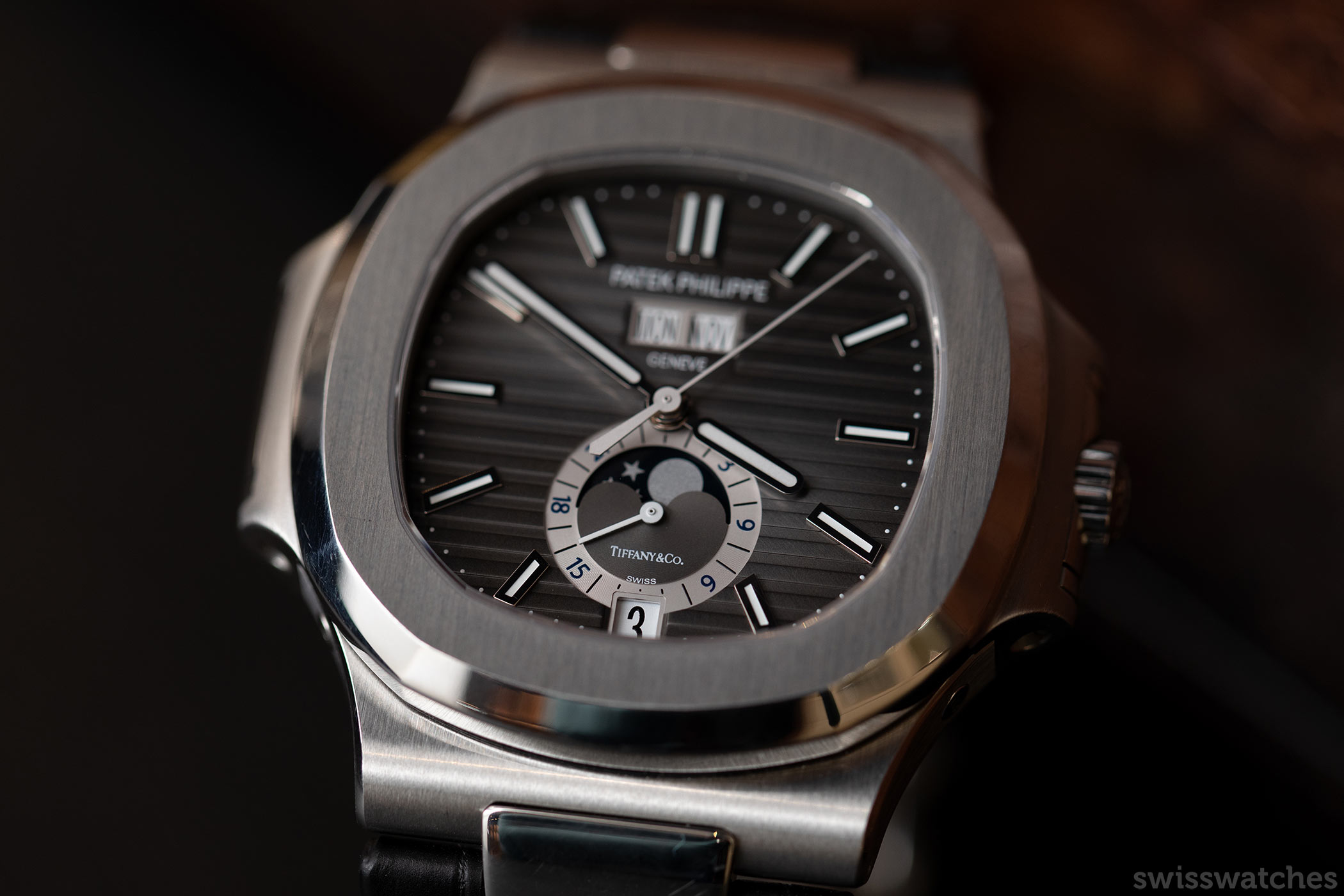
Two years before the steel model was discontinued (including the dark green and Tiffany dial variants), the Geneva-based manufacturer finally launched the much-coveted Reference 5726/1A in 2019, featuring a stainless steel bracelet – and, like the first Nautilus from 1976, an elegant blue dial. It will be interesting to see whether this watch makes a comeback to mark the 50th anniversary of the Nautilus and the 30th anniversary of the annual calendar!
An important detail: on the first Nautilus model with an annual calendar, the horizontal embossed pattern was accentuated by a subtle black gradient starting at the edge of the dial. Applied hour markers and hands in white gold with a luminescent coating indicate the hours and minutes, whilst a central hand indicates the seconds.
For the author, this model is a real phenomenon, as it is not only one of the most striking designs in the entire collection, but also the first chronograph to be produced in two versions in stainless steel: the Ref. 5960/1A with automatic winding also has a diameter of 40.5 millimetres. It was the first annual calendar chronograph with a stainless steel case and bracelet.
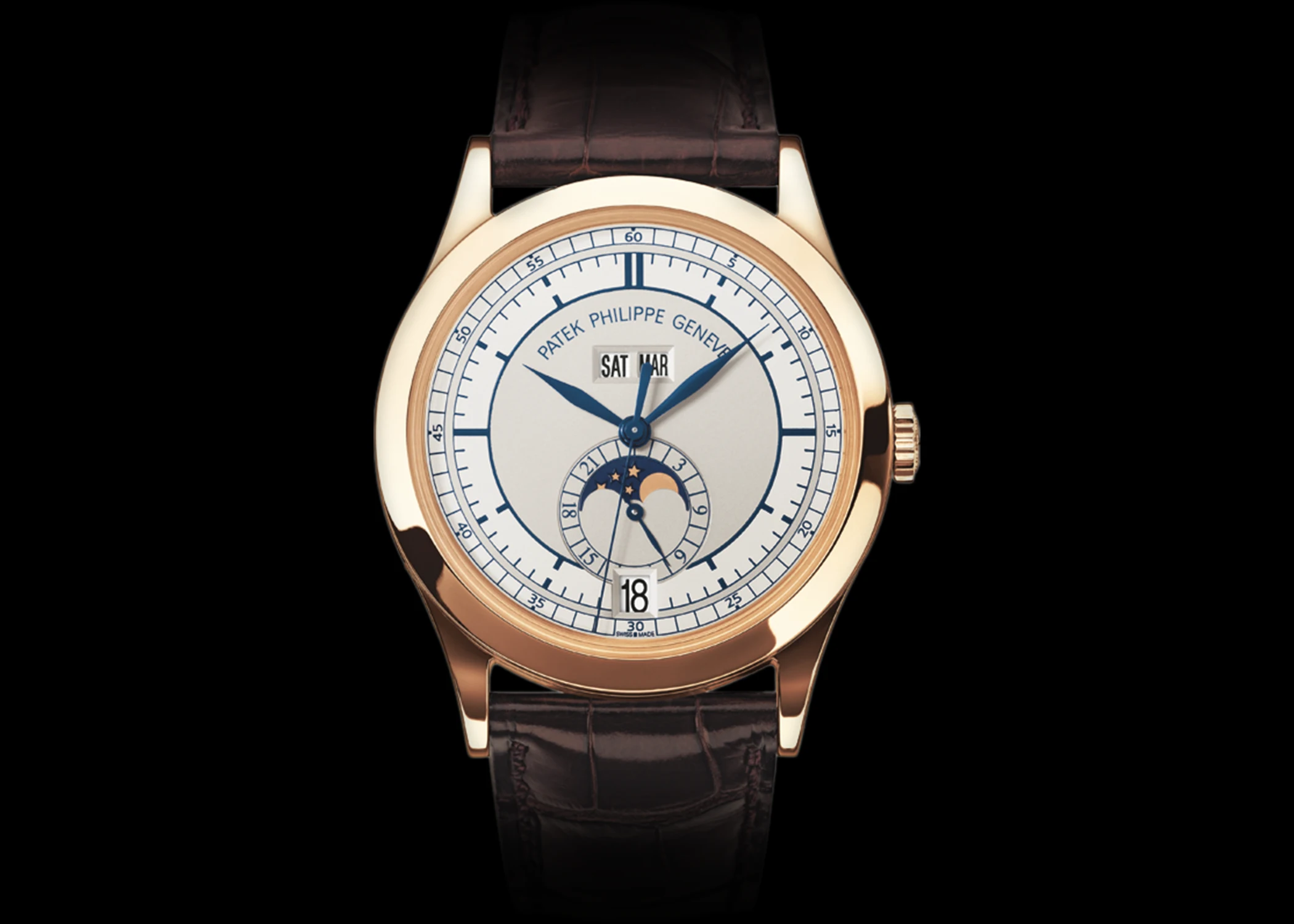
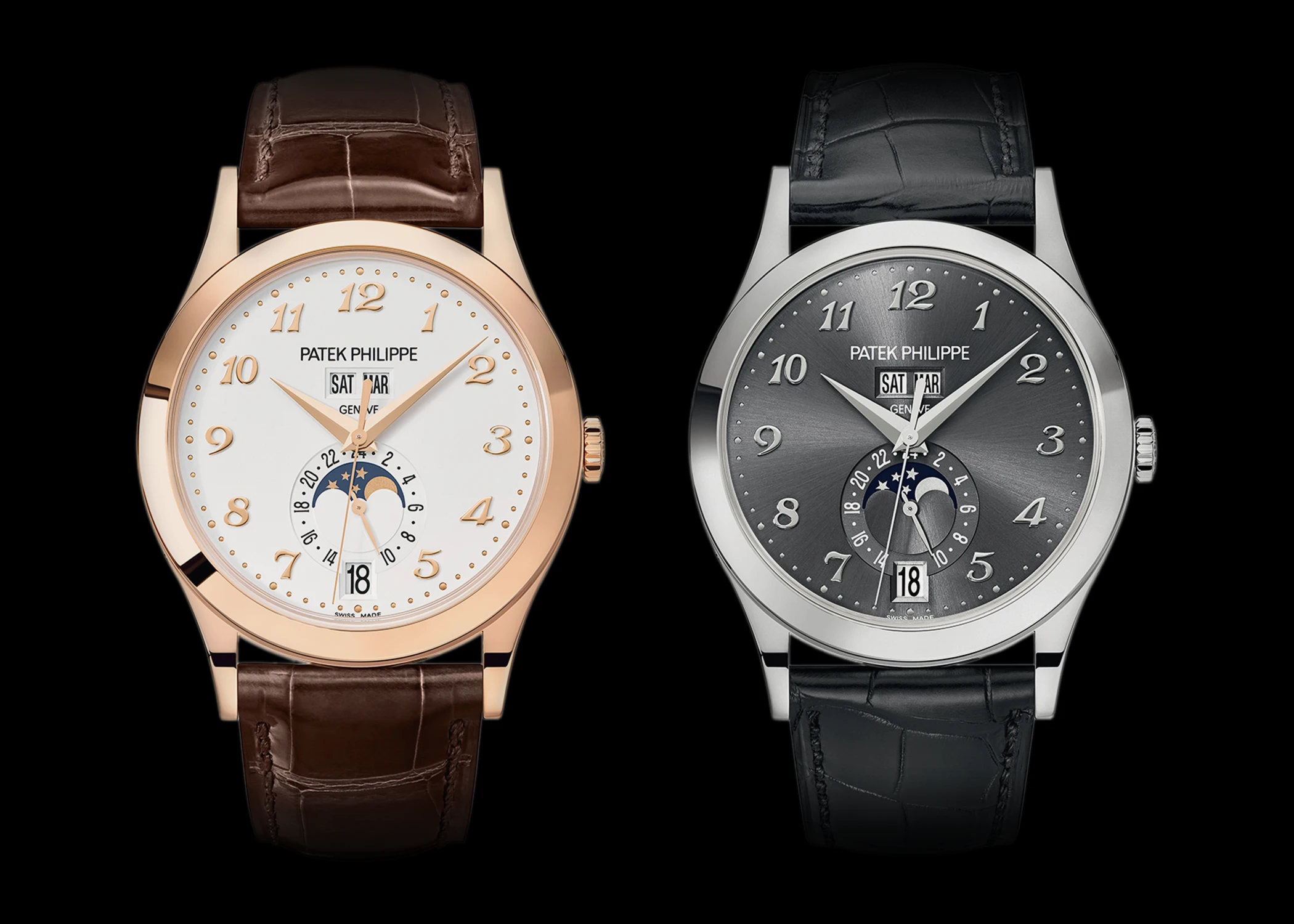
Launched to mark the 20th anniversary of the Annual Calendar, the Ref. 5396 in white gold has a diameter of 38.5 millimetres, features a new anthracite-coloured sunburst dial and is fitted with large applied Breguet numerals. It is also available in a rose gold case with an opaline silver-coloured dial. In both cases, the case shape is reminiscent of the iconic Calatrava 96. The two versions display the date and month in a linear double window.
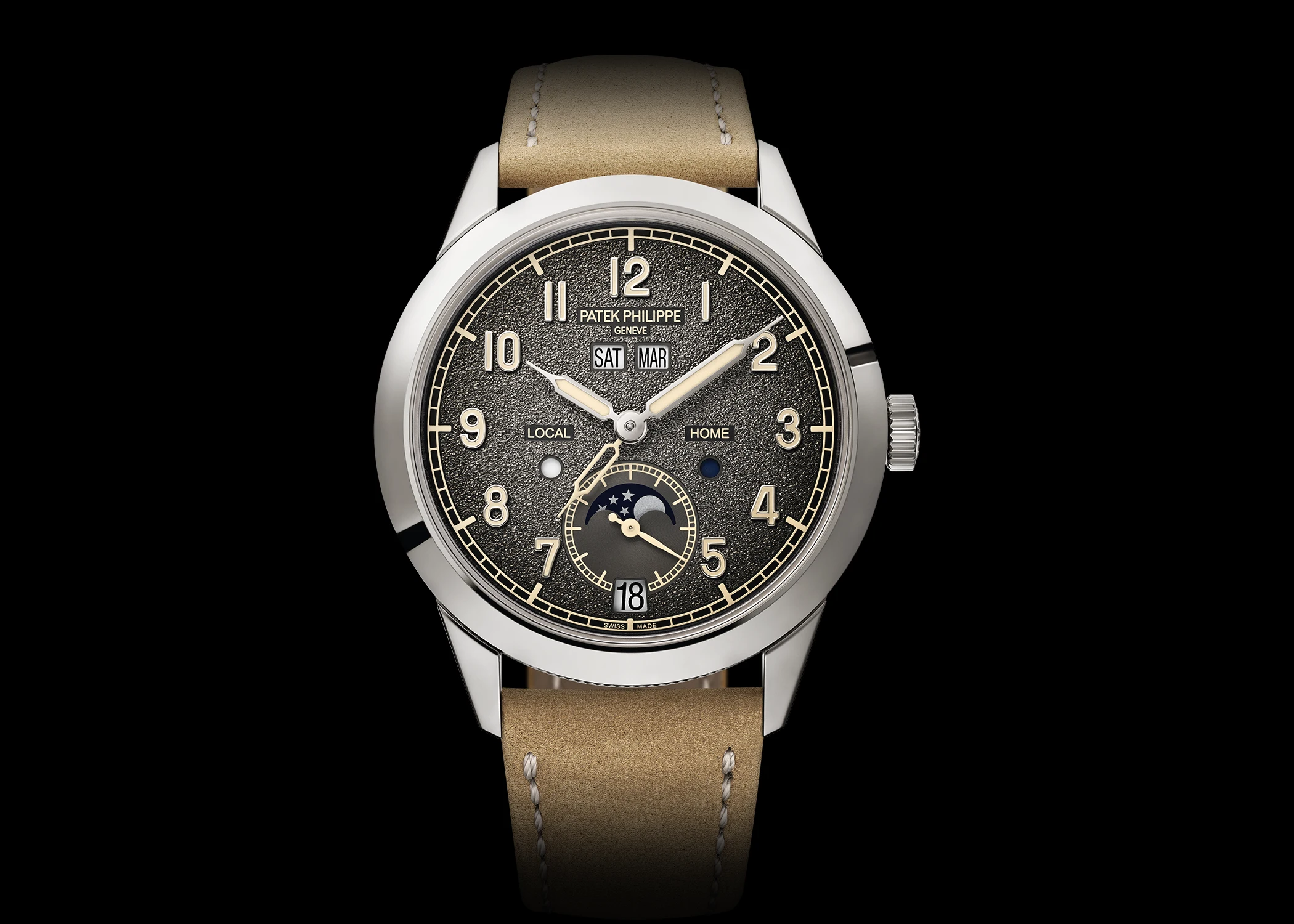
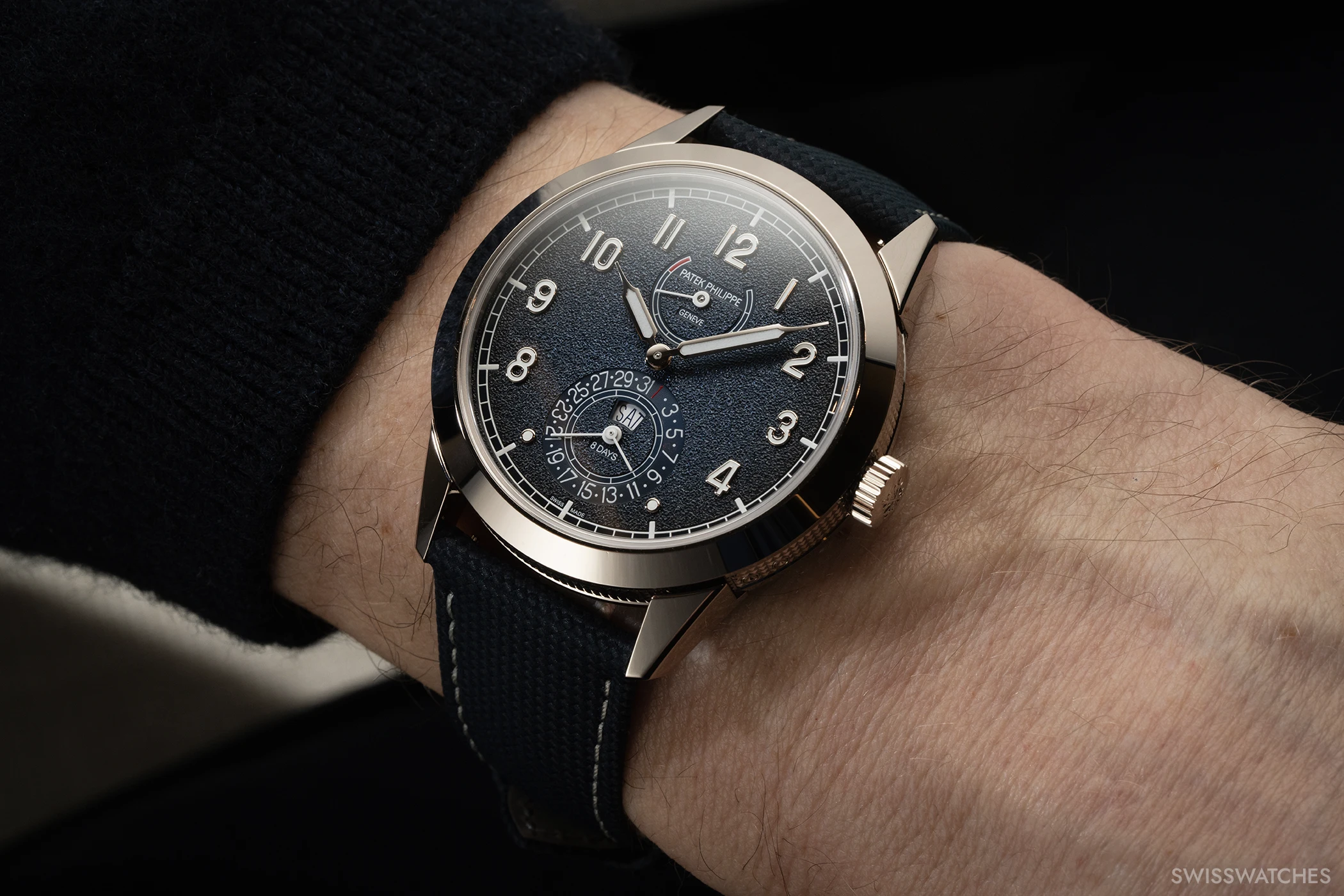
The year 2022 can also be described as a milestone for Patek Philippe and the annual calendar mechanism: two extremely useful complications are combined for the first time in a Patek Philippe watch. The Manufacture has combined two of its most important patented complications in a single watch: the annual calendar and the Travel Time system for displaying a second time zone. The result Ref. 5326G-001 is a travel watch whose date display is synchronised with the local time. When the time zone is adjusted, the date is automatically updated.
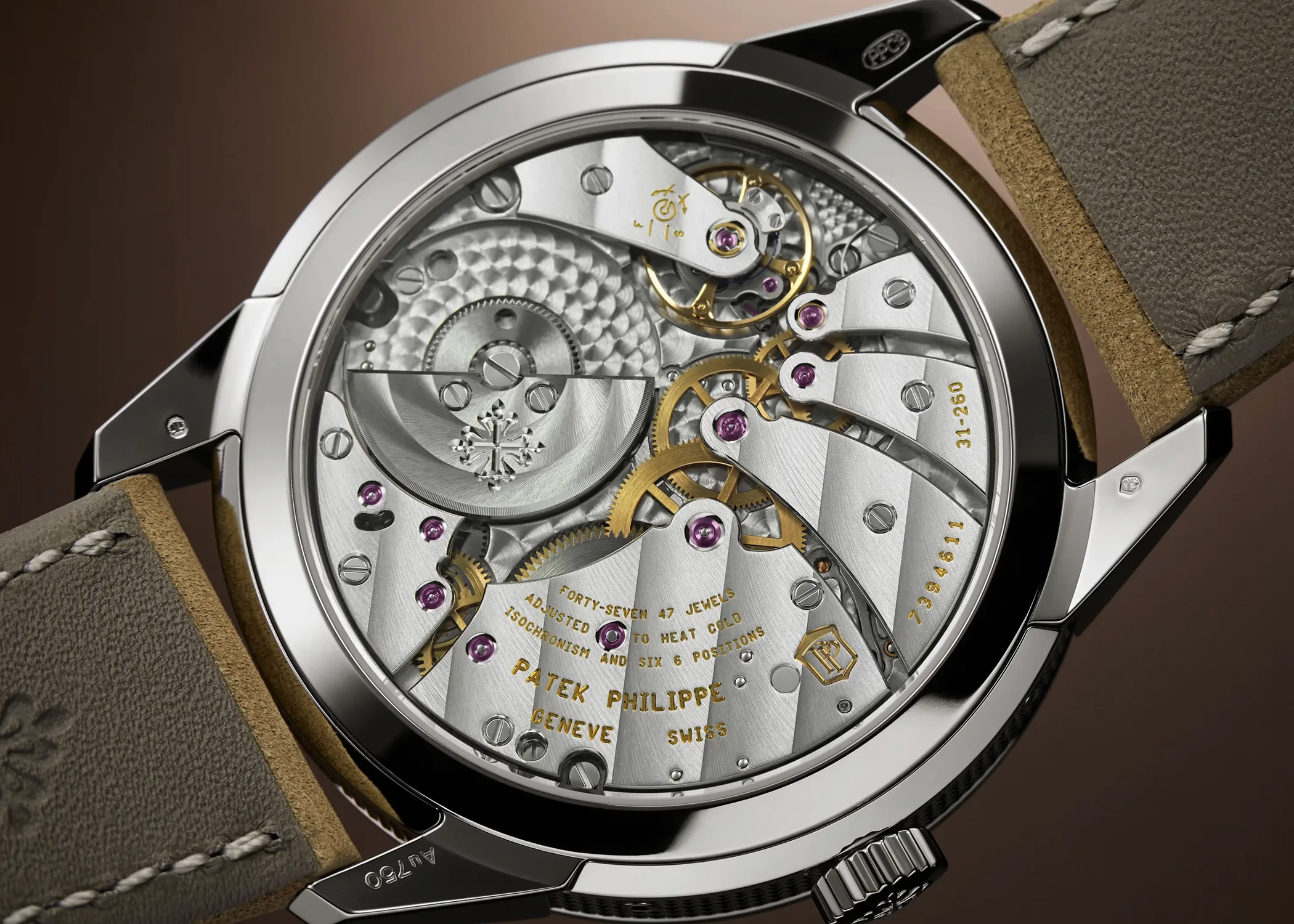
For the new automatic movement, Calibre 31-260 PS QA LU FUS 24H, which is protected by eight patents, the Manufacture even created a new Calatrava case. The sides feature the characteristic guilloché ‘Clous de Paris’ design. The vintage-style dial is reminiscent of the look of old cameras.
A year after the annual calendar, in 1997, came the Travel Time mechanism. It features a clutch mechanism based on a Patek Philippe patent from 1959! Its ingenious system, featuring a second hour hand, displays the time in a second time zone from the centre. Two pushers on the left side of the case advance and retreat the time zone in one-hour increments without affecting the movement’s operation.
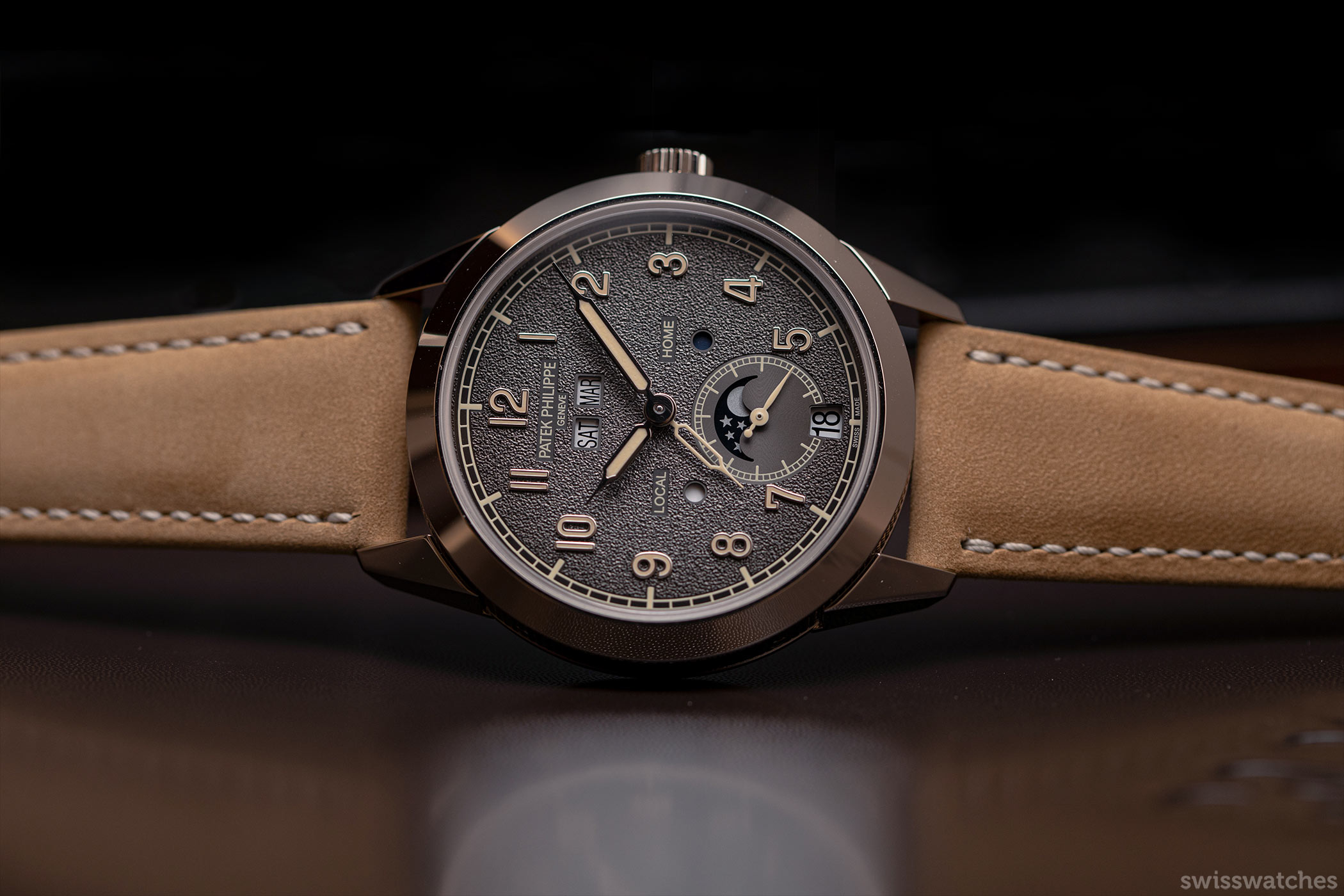
Combining the annual calendar with the travel-time function presented the developers with technical challenges. Not only did both mechanisms have to be housed within the same watch case, but the displayed date also had to be synchronised with the local time. At the same time, both mechanisms must move forwards or backwards simultaneously when the time zone is changed. In the new Calibre 31-260 PS QA LU FUS 24H, the Travel Time function therefore controls the annual calendar. It is the local time hour wheel that drives the calendar. A principle from the World Time Minute Repeater Reference 5531 (2017) was applied here: during the first minute repeater strike, which signals the local time, the world time mechanism controls the minute repeater.
Patek Philippe has also revised the Travel Time function for the new 5326G-001. Whilst the basic principle of two central hour hands remains the same – a solid hand for local time and a hollowed-out hand for home time – the designers have replaced the time zone pushers on the left side of the case with a setting mechanism via the winding stem. It can be set to three positions and debuted in 2021 in the Aquanaut Luce Travel Time reference 5269/200R-001. The wearer simply needs to pull the crown out to the middle position – turning it clockwise to advance, and anti-clockwise to delay – to adjust the local time hour hand in one-hour increments. According to Patek Philippe Magazine, this crown adjustment system was developed for aesthetic reasons. Patek Philippe apparently wanted a simple Calatrava-style design combined with a distinctive decoration on the sides of the case. The time in the home time zone is set by turning the crown to its outermost position.
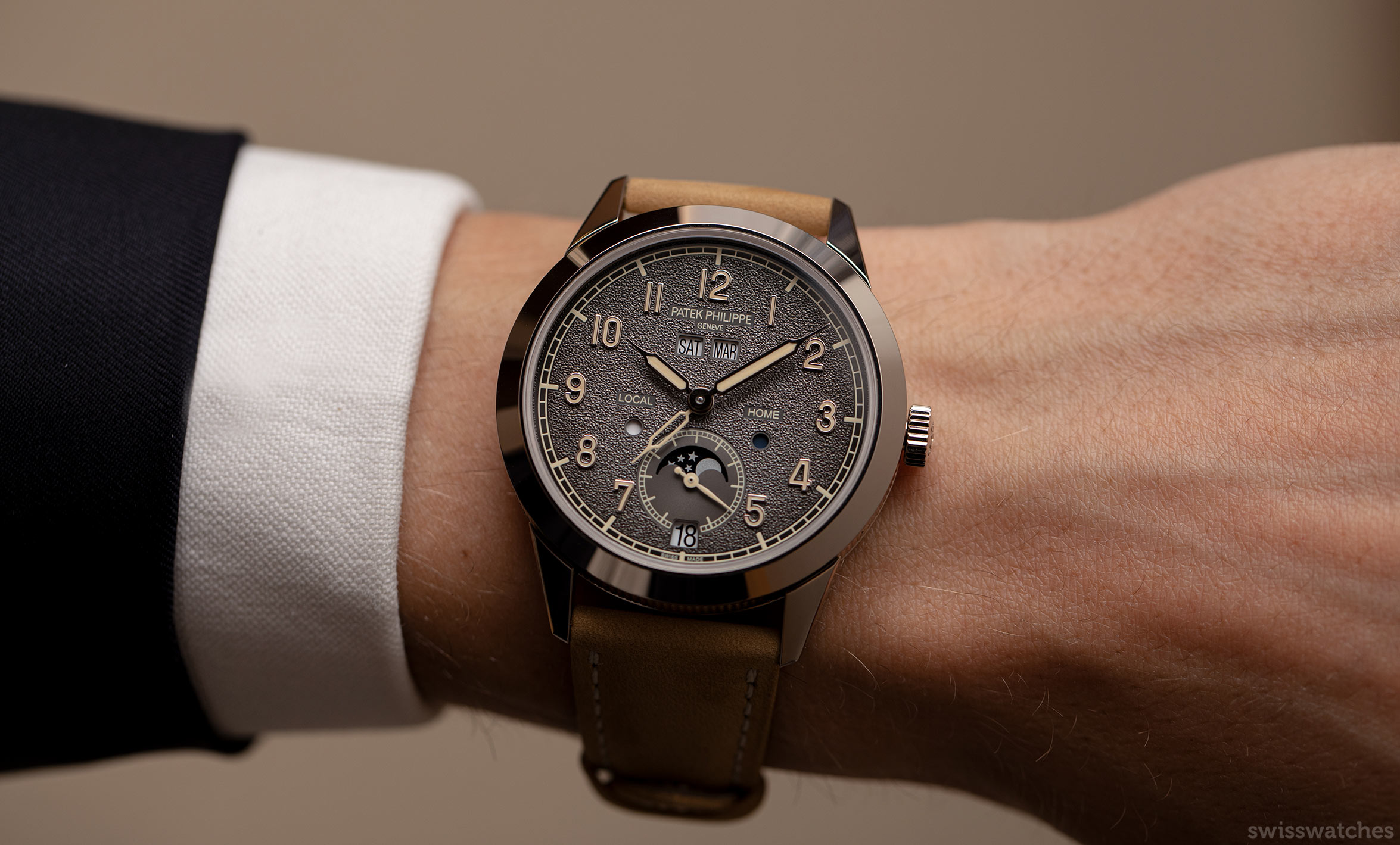
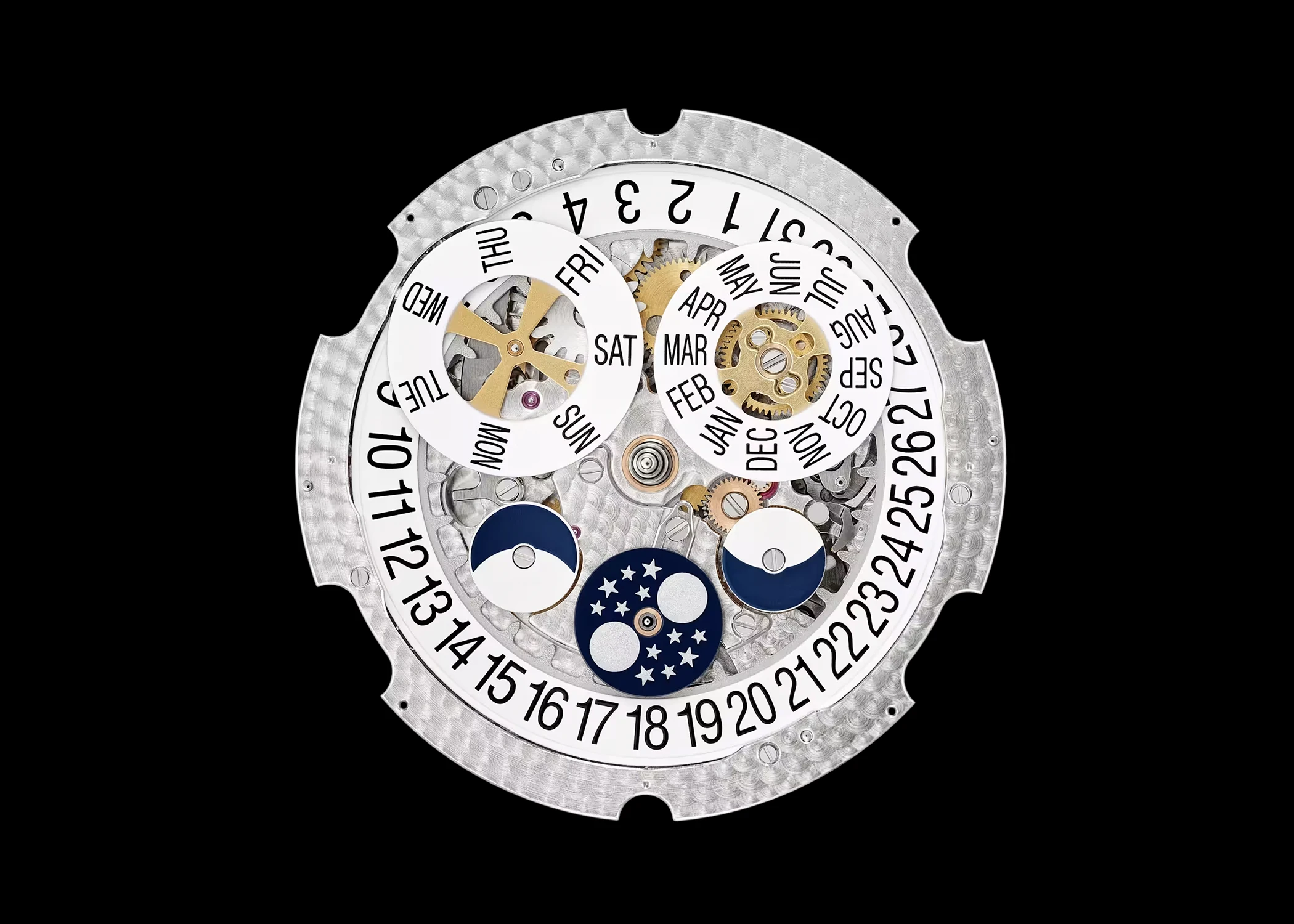
Is there really nothing to criticise in the thirty-year history of the annual calendar? Well, of course there is: in all previous annual calendars, the date change at midnight has taken around 90 minutes. This is a problem for a watch with a Travel Time function: it could cause a date discrepancy if the time zone is adjusted during this window. To ensure the wearer has the correct date display, Patek Philippe’s engineers have reduced the display changeover time for the annual calendar discs by a factor of five to approximately 18 minutes. It will be interesting to see whether, following the launch of the instantaneous Day-Date reference 5328G-001, Patek will succeed in transferring this technology to the annual calendar as well. Although a spontaneously jumping date requires a huge amount of energy, it would be of practical use.
But back to the Travel Time annual calendar: to optimise the efficiency, reliability and ease of use of the Calibre 31-260 PS QA LU FUS 24H, the designers have developed further innovations that have resulted in eight patents. For example, energy consumption and wear on components responsible for the transition from the 30th to the 1st and from the 1st to the 30th were reduced, without throwing the date out of sync when adjusting the time zone. Similarly, misalignments and double jumps in the displays have been eliminated, and damage to movement components has been prevented when the moon phase, month or day of the week is corrected within a time window that is actually officially and expressly discouraged. These refinements make the watch even more sophisticated.
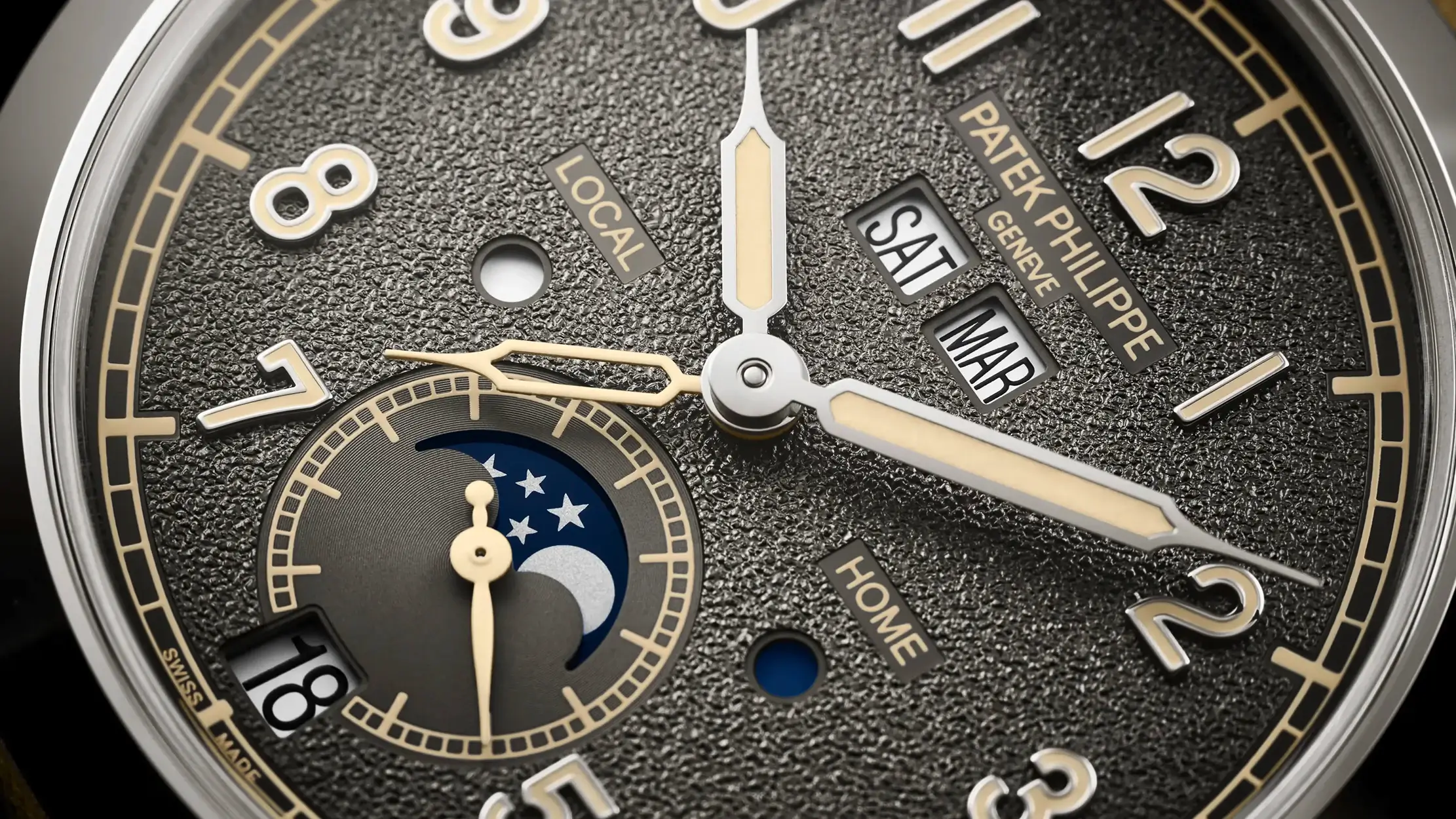
The most striking feature of the 5326G-001 is its vintage-style dial. It was entirely crafted by Cadrans Flückiger in Saint-Imier. This specialist has been part of Patek since 2004. The dial is anthracite in colour with a subtle black gradient towards the outer edge and features a slightly grained texture reminiscent of the casings of old cameras. The time is read via white gold Arabic numeral hour markers with a beige luminescent coating. The local time hours and minutes are indicated by Seringue hands in luminescent white gold. A skeletonised Seringue hand indicates the home time hours.
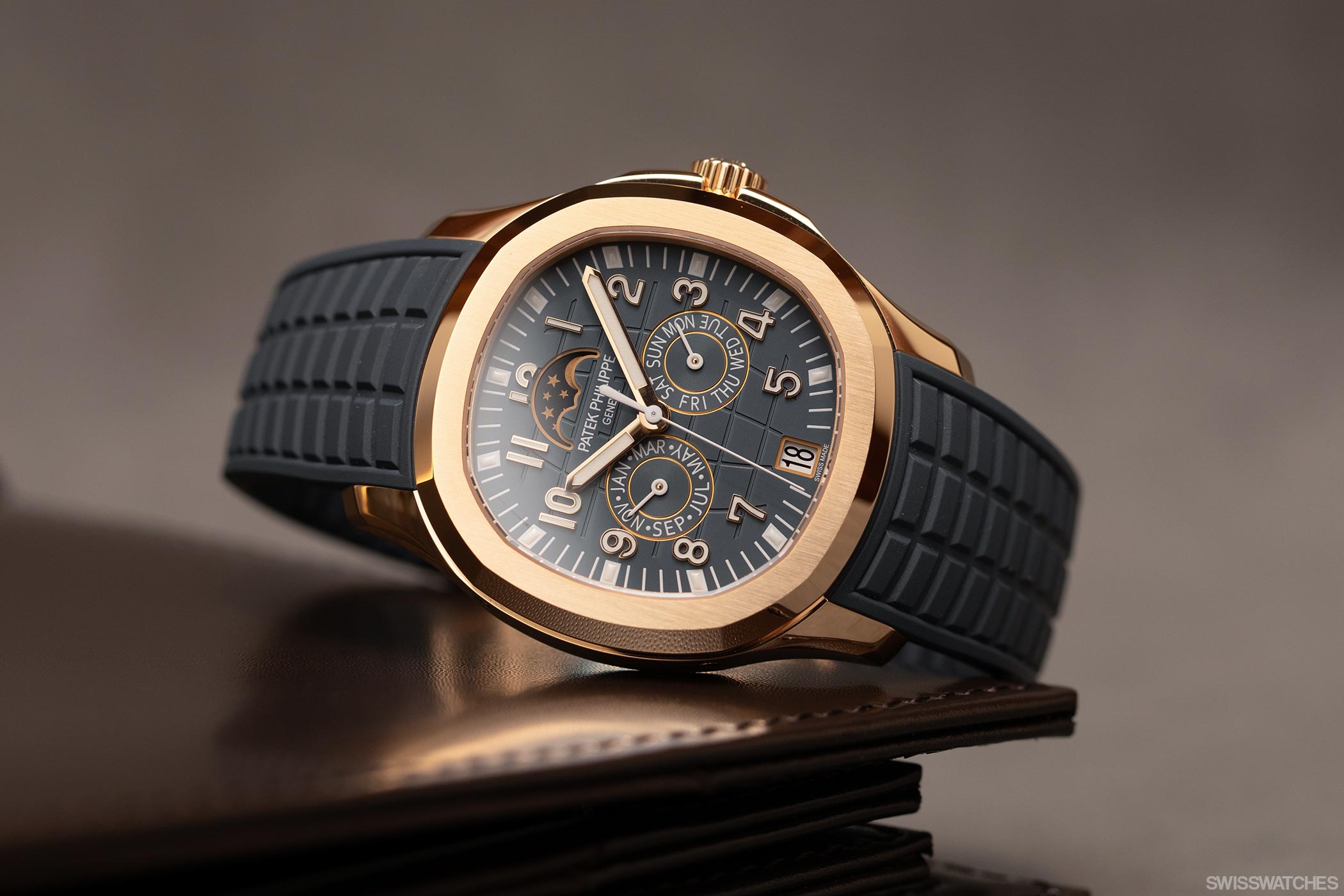
It was only three years ago that the sporty yet elegant Aquanaut Luce ladies’ watch Ref. 5261R-001 was fitted with this new, practical and user-friendly complication. With its blue-grey dial and strap, this rose gold model expanded Patek Philippe’s range of complications for women.
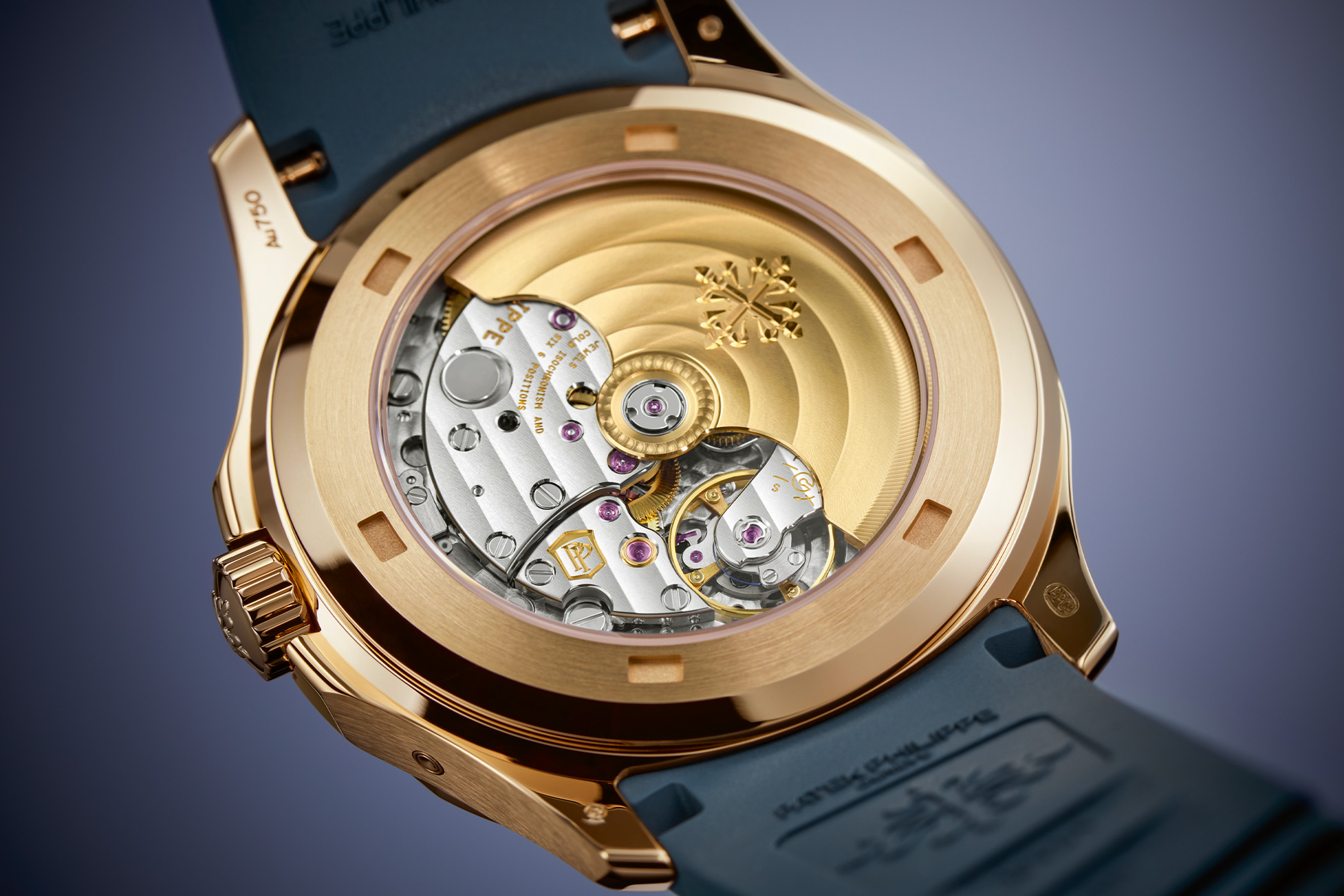
Launched in 2004, the Aquanaut Luce collection has, until now, served as the feminine interpretation of the Aquanaut wristwatches launched in 1997. For several years now, Patek Philippe has been expanding the sporty Aquanaut Luce range for women with various complications. Housed in a 39.9 mm diameter case, the automatic Calibre 26-330 S QA LU features a central rotor and an annual calendar module with an annual calendar and moon phases. A distinctive feature: the annual calendar module is positioned upside down. The date window is positioned at 6 o’clock, the day-of-the-week indicator at 3 o’clock and the month indicator at 9 o’clock. The architecture of the movement follows that of the base calibre 26-330, which was launched in 2019 with the Calatrava weekly calendar, reference 5212A-001.
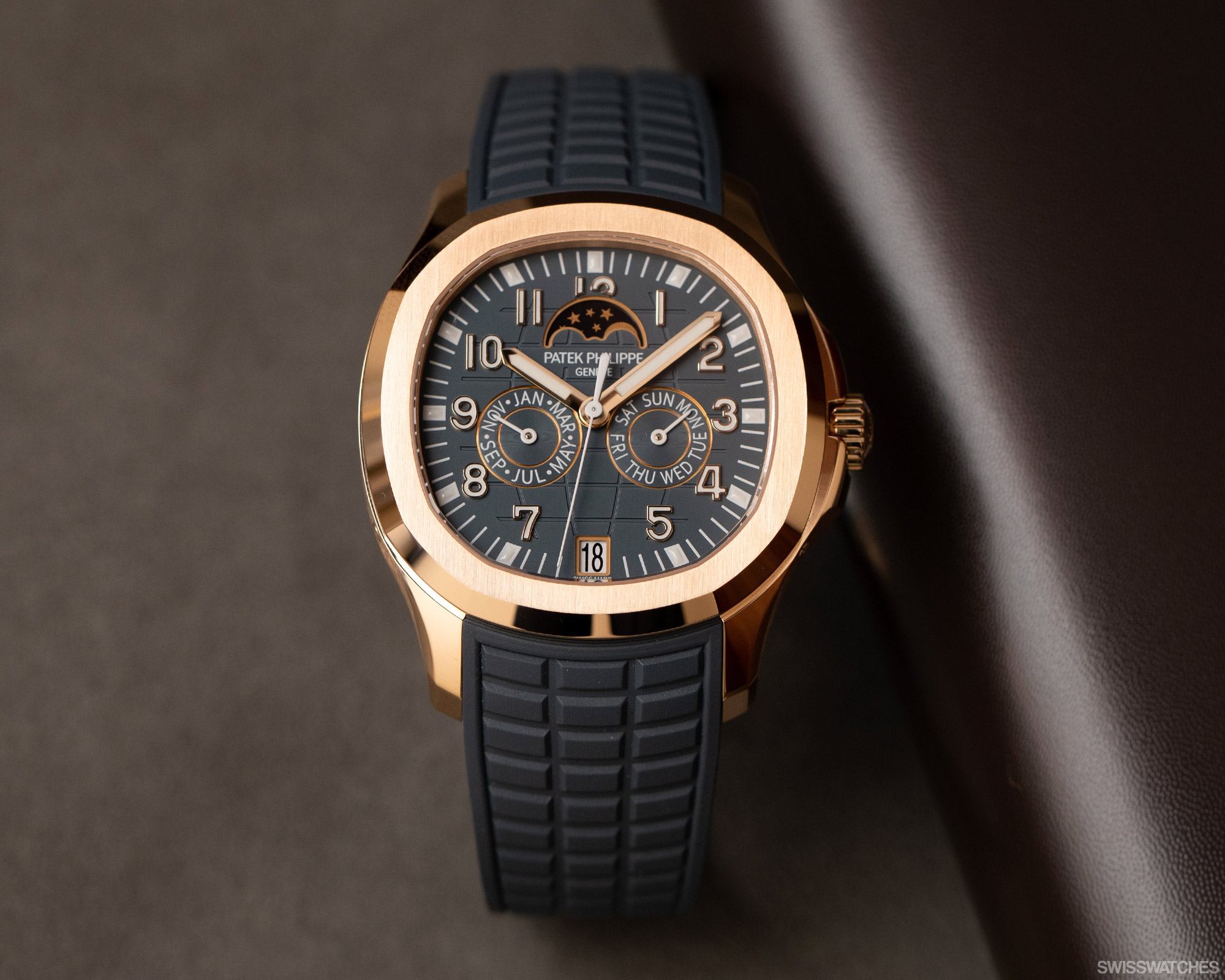
Thirty years after its introduction, the annual calendar has long been one of Patek Philippe’s bestsellers and remains based on the same mechanism, even after the patent has expired. It is therefore reasonable to assume that the function continues to have a strong future across the wider watch industry.
Major manufacturers have also adopted the complication: since 2012, the Saros annual calendar has been available in Rolex Sky-Dweller, with the month displayed via 12 apertures on the dial, and since 2015 in Omega Globemaster Annual Calendar as a Co-Axial calibre model. IWC Schaffhausen followed with the Portugieser Annual Calendar, even adopting Patek’s reference numbering: the reference corresponds to Patek’s first model, the 5035 (although the calibre at IWC is designated 52850).
German manufacturer A. Lange & Söhne has also offered such a function since 2010 with the Saxonia Annual Calendar, featuring the automatic in-house calibre L085.1 and, characteristically, a large date display.
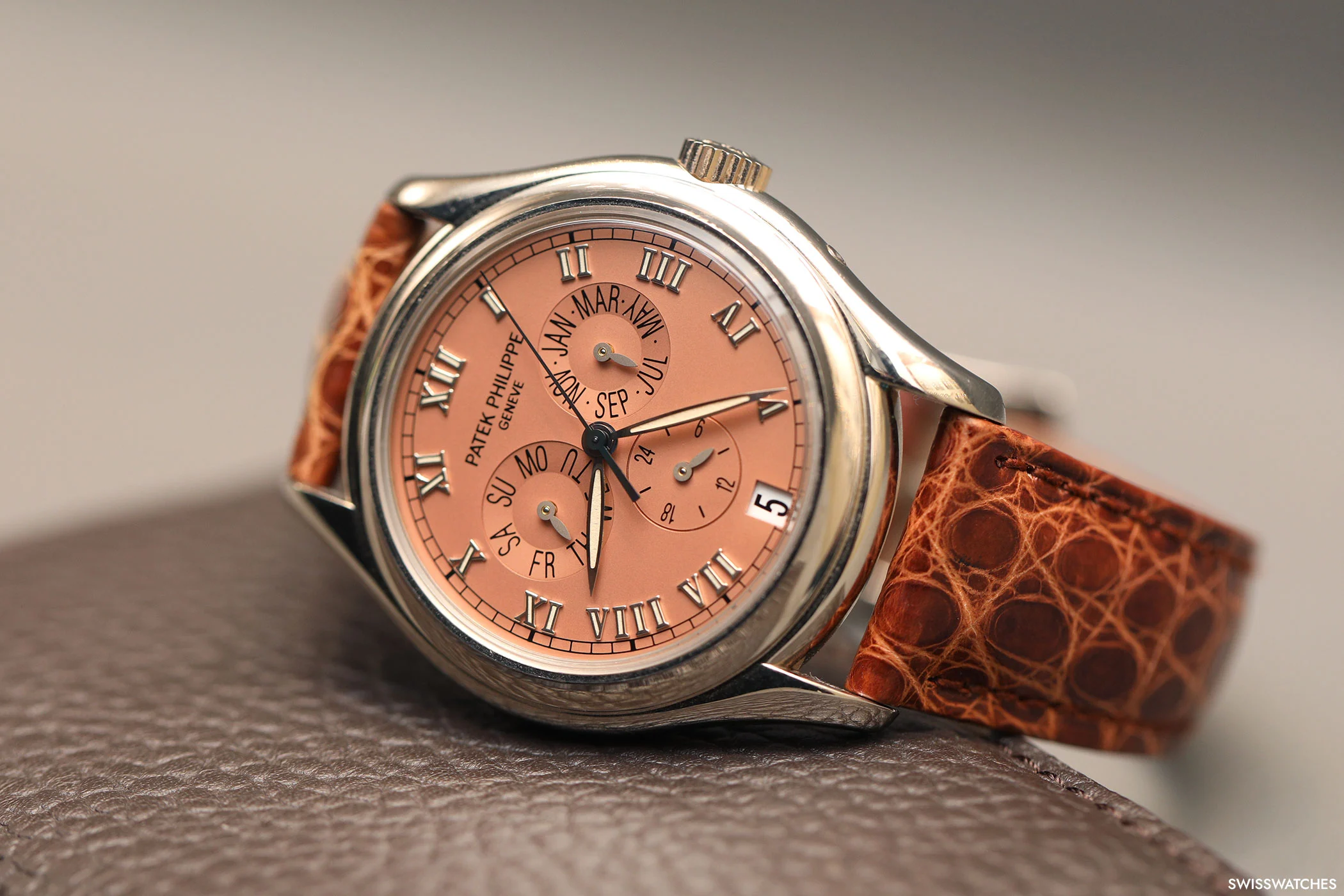
We don’t want to speculate too much about what the future holds for this Epoche model. Which model might be next? It would make just as much sense in the Calatrava Pilot range introduced by Thierry Stern as it would in the Cubitus range. But for 2026, other things took priority:
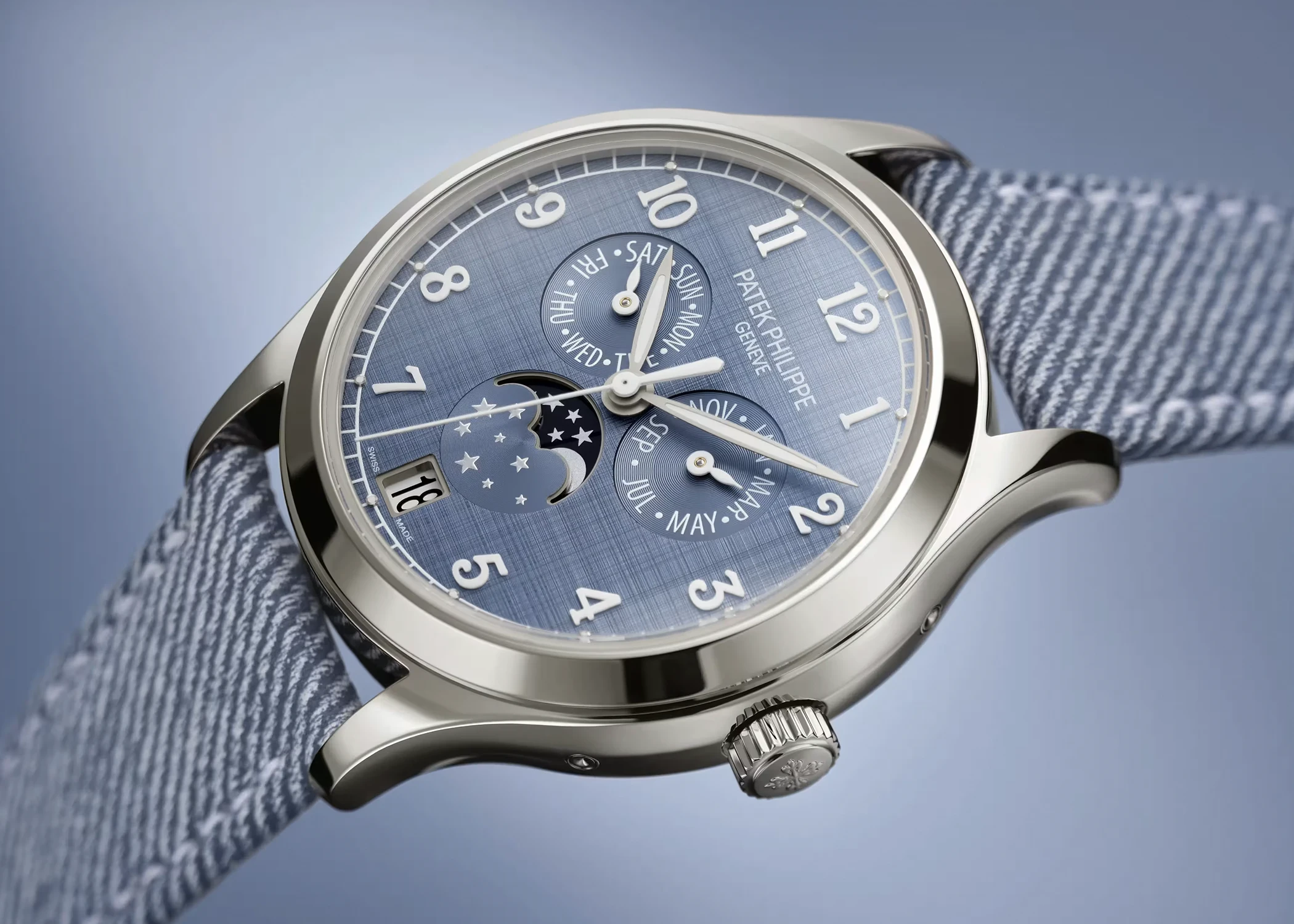
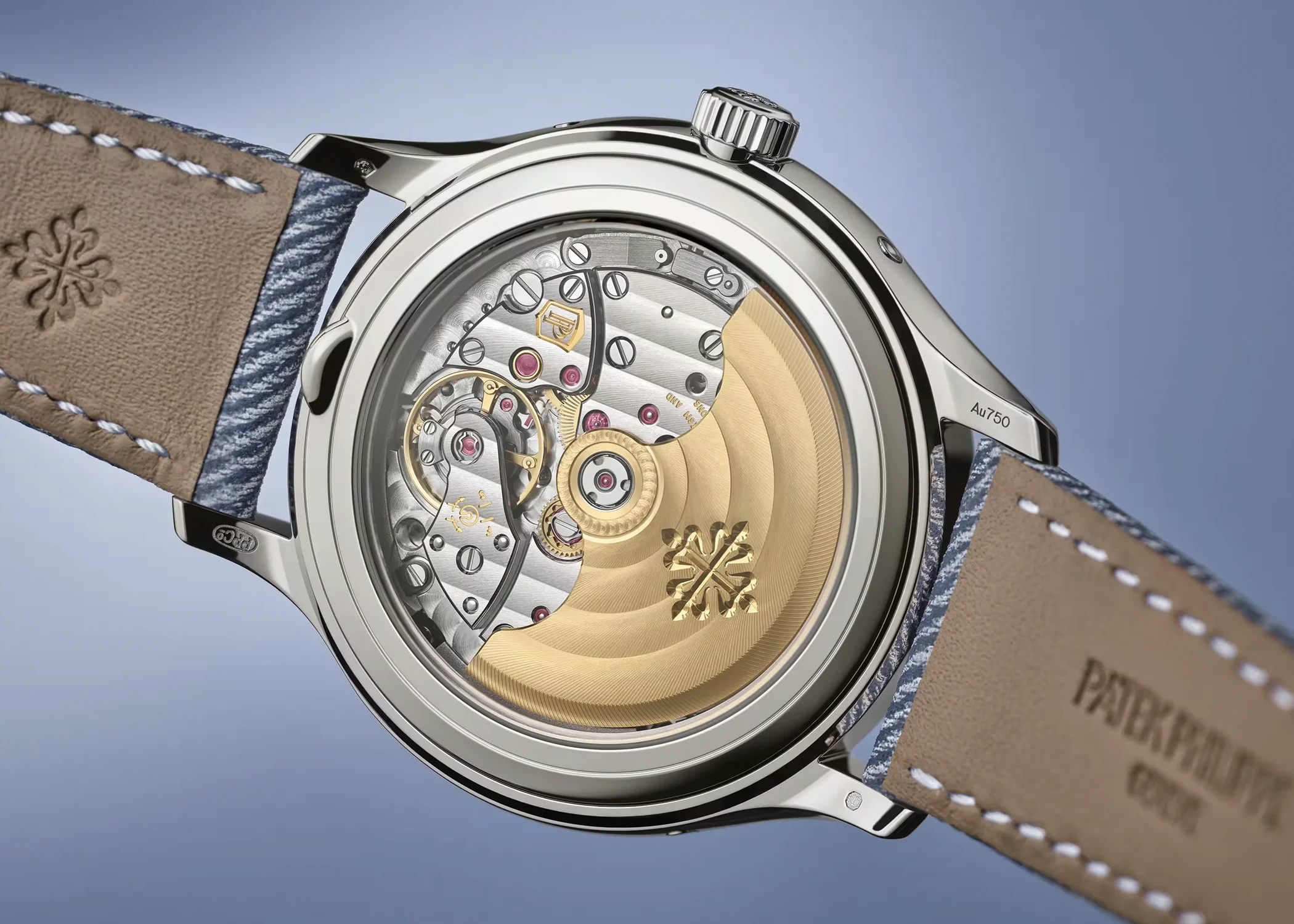
At the start of the watch year at Watches and Wonders 2026, things were surprisingly quiet around this complication: the 50th anniversary of the Nautilus and the new Celestial were the stars of the show, alongside two newly unveiled annual calendar models: The 4946G-001 Annual Calendar Moon Phase is intended as a design statement: the design, featuring a polished 38 mm white gold case, has been combined for the first time with a blue-grey dial, whose vertical and horizontal satin finish is reminiscent of raw shantung silk fabrics. The time is indicated by leaf-shaped white gold hands with a white luminescent coating, which glide over another distinctive feature of this new model: monoblock hour markers made of white luminescent material, ensuring optimal legibility and high contrast. A strap in blue-grey calfskin with a ‘jeans’ motif and contrasting white stitching, secured by a white gold clasp, emphasises the decidedly contemporary look of this model. The sapphire crystal case back, offering a view of the 26-330 S QA LU automatic movement, makes this watch an absolute eye-catcher from both sides.
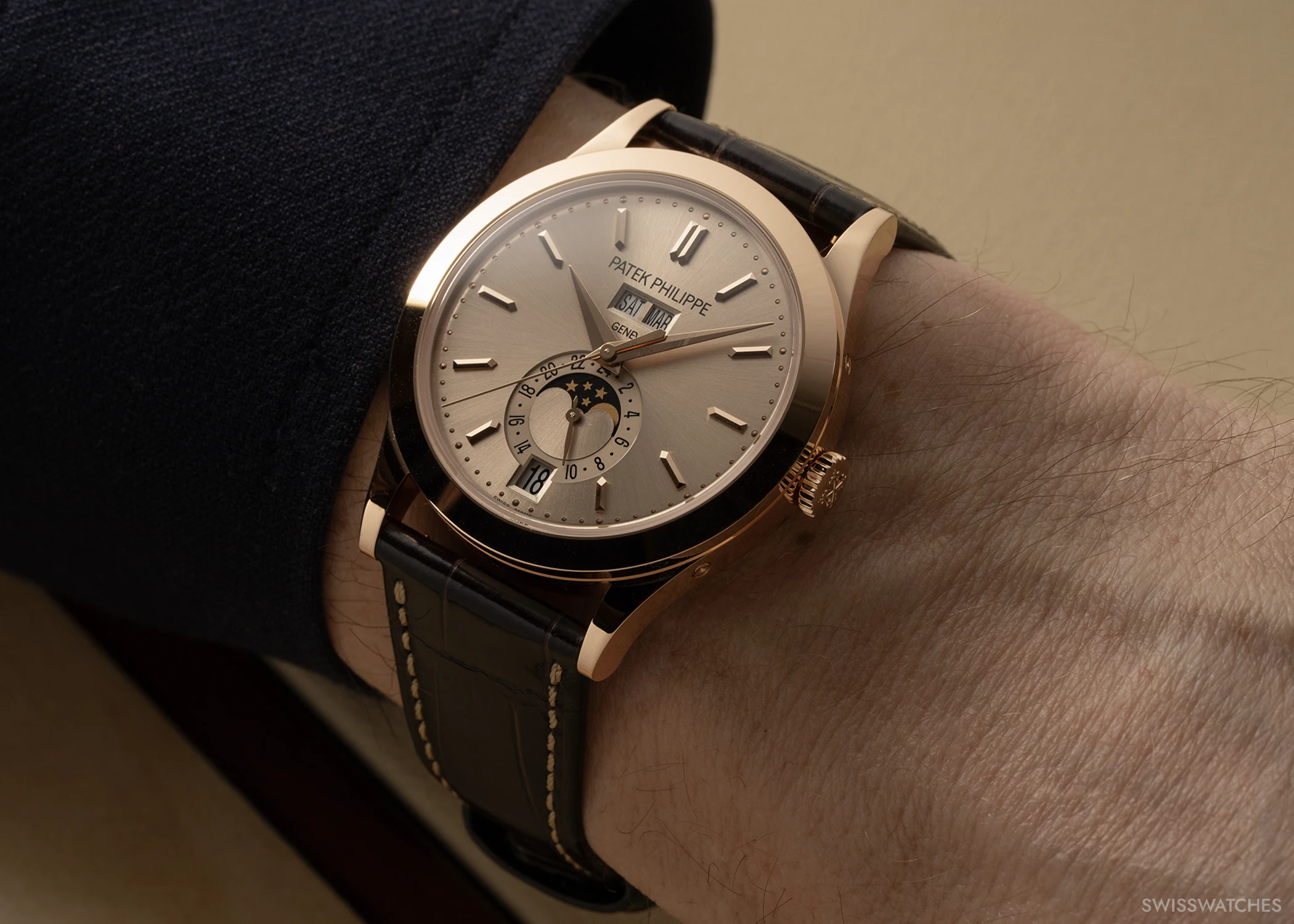
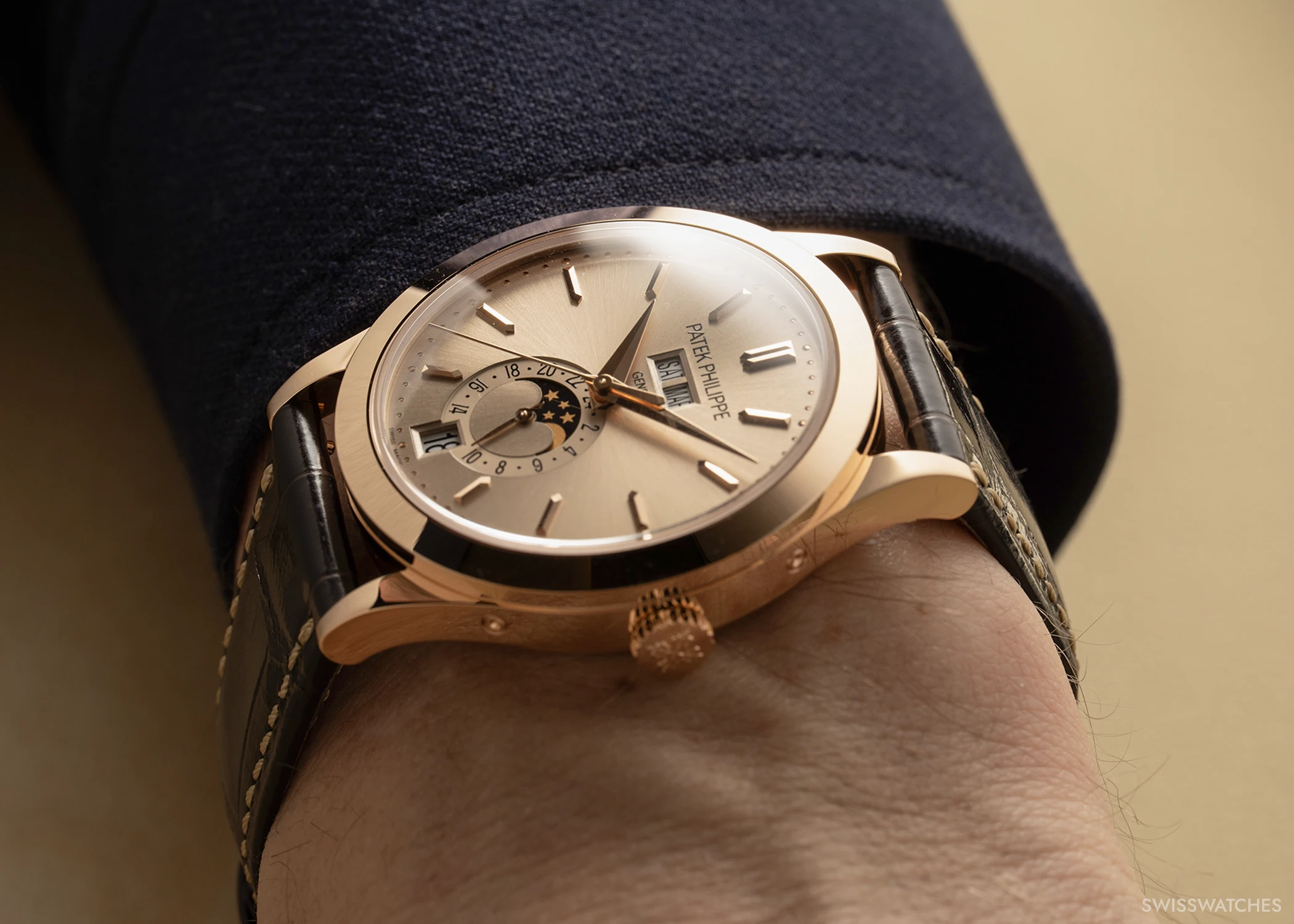
The second new model, the 5396R-016 Annual Calendar Moon Phase, by contrast, has a distinctly more classic look: the Calatrava design of the 38.5 mm rose gold case has been combined with a sand-beige ‘sunburst’ dial. With its dual window displaying the day of the week and month at 12 o’clock, a date display at 6 o’clock, and a sub-dial for the 24-hour display including moon phases, it joins the models in the Calatrava range first introduced in 2006, thereby celebrating the 20th anniversary of this watch collection. The faceted Dauphine hands are crafted from rose gold.
Perhaps one final tip for collectors of sought-after steel models from Patek Philippe: in addition to the coveted platinum references mentioned above, the Nautilus models and some ladies’ watches were also produced with steel cases. And it is, of course, no coincidence that the successors to the steel Nautilus, specifically the annual calendar models, are still in production today: With reference 5726/1A-014 (featuring a steel bracelet and a dark blue gradient dial) and as ref. 5726/A-001, the model with a grey dial and leather strap has been in the range continuously for 16 years since its initial launch. Alongside the Nautilus models, the steel reference with a steel bracelet and white dial certainly stands out, as does the annual calendar chronograph Ref. 5960/1A from 2014 and its currently still available successor with a green dial, which was introduced in 2021.
The British historian and watch expert Nicholas Foulkes has written extensively about Patek’s annual calendar. I would like to conclude with a quote from him, who also provided the editorial commentary for the first annual calendar: “It was to become known as a useful complication and play a major part in making the Manufacture what it is today. One should not forget what it was all about with the Ref. 5035.” There is nothing more to add to that. Without the Patek Philippe annual calendar, Patek Philippe would not be where the manufacture stands today: at the pinnacle of mechanical watchmaking.