Glashütte Original presents the Senator Chronograph and Navigator: a comparison of two designs, a flyback calibre and a 70-hour power reserve.

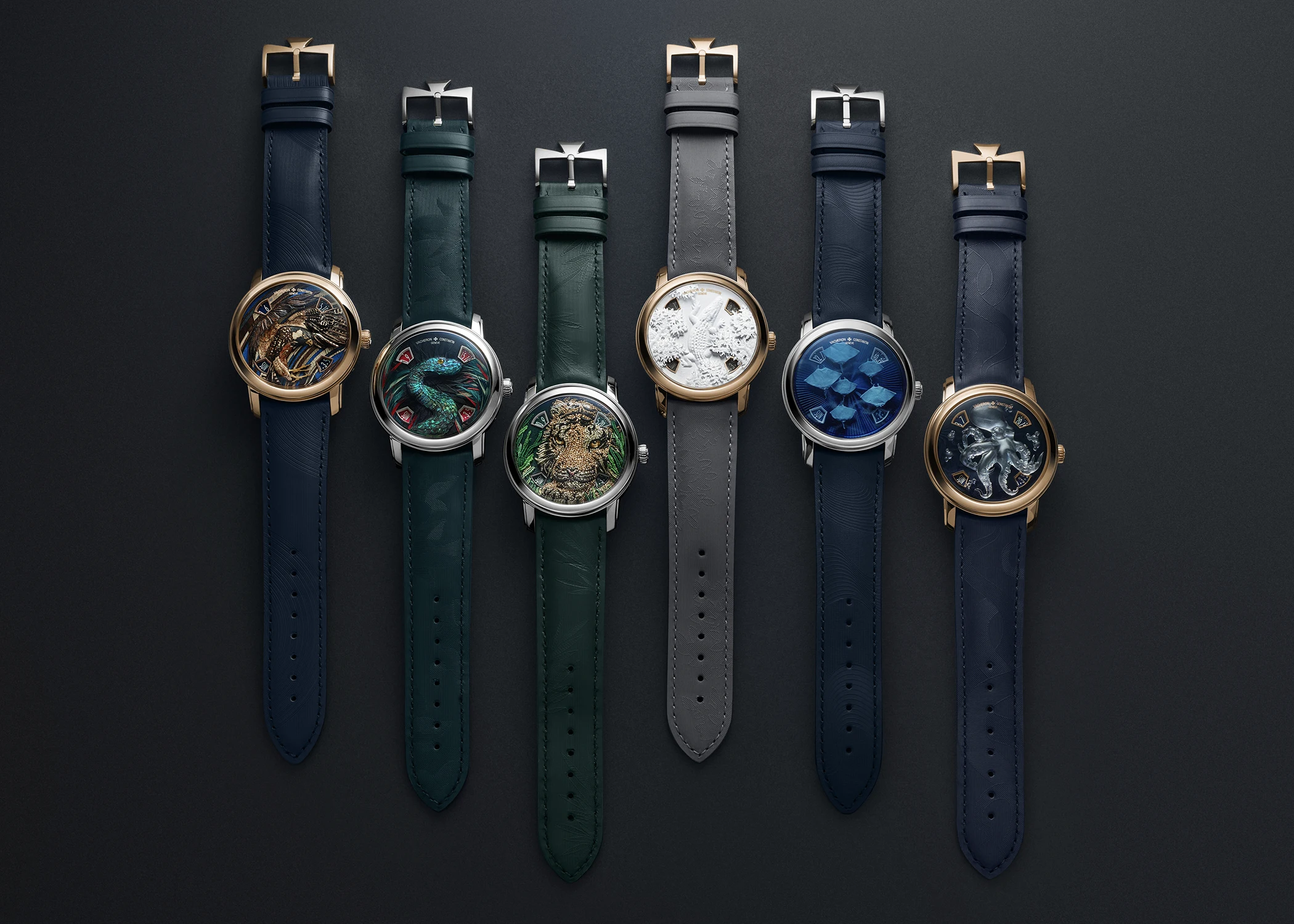
David Attenborough fans, take note. For its latest Métiers d’Art creations, Vacheron Constantin is showcasing its mastery of crafts by venturing into the animal kingdom – although rather than capturing its wild and enigmatic subjects in a BBC documentary, the Swiss horology house has rendered them in feathers, glass, paper, gold thread, wood and even microscopic origami.
The six new watches form the Métiers d’Art Tribute to the Animal Kingdom, created as part of Vacheron Constantin’s ‘One of Not Many Crafts Programme’. Yet behind the wildlife theme lies a wider ambition: to promote the future of craftsmanship through what Christian Selmoni, Maison Legacy and Style Director, describes as ‘creative incubation’. It’s an interesting term, and one that brings the promise of safeguarding coveted crafts in the Swiss watchmaking industry and beyond. Drawing artisans from beyond the traditional world of horological métiers d’art into direct dialogue with Vacheron’s own watchmakers and craftspeople, the idea is not simply to preserve existing savoir-faire, but to give it somewhere new to go.
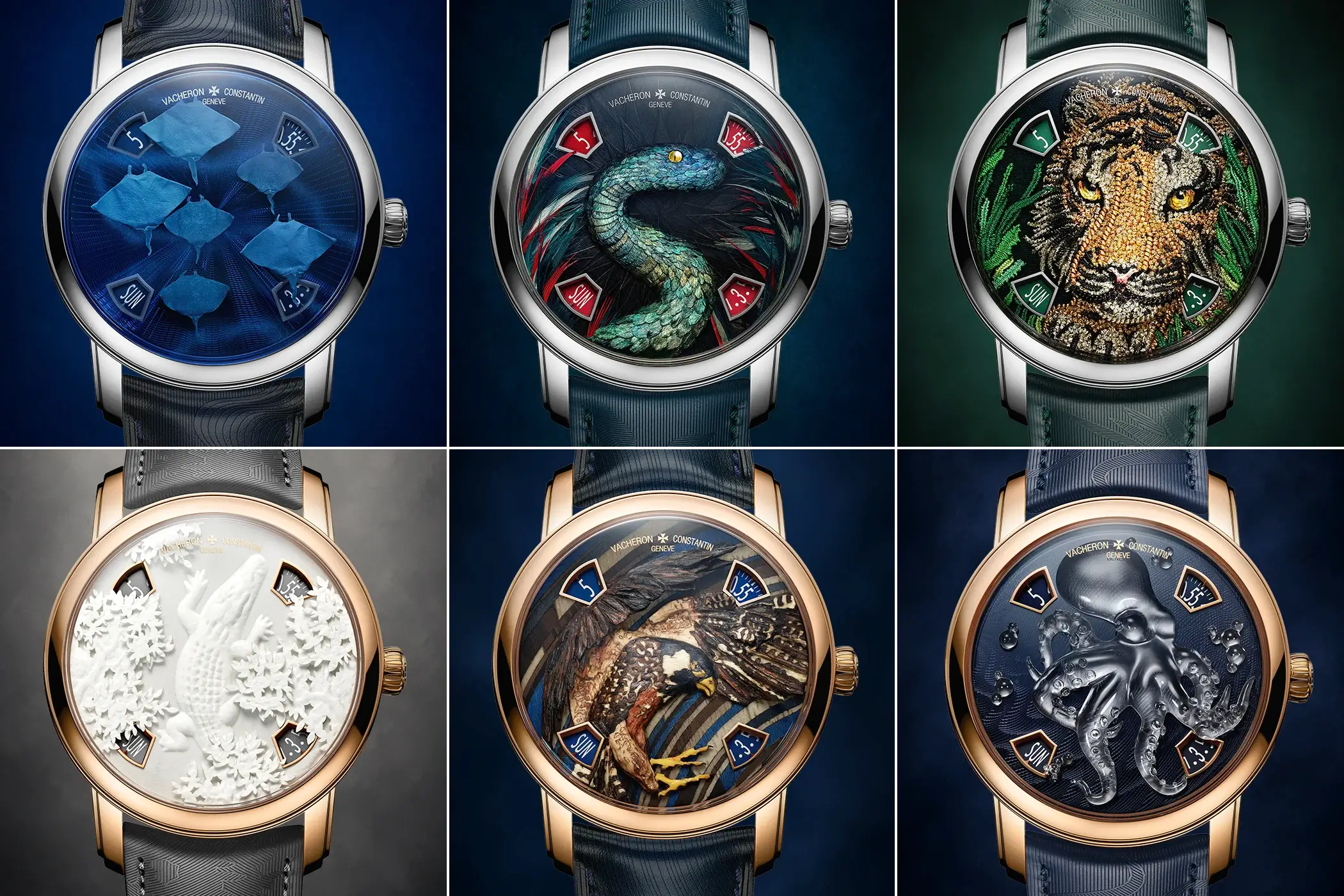
For this project, six independent artists specialising in featherwork, glass sculpting, micro-origami, gold embroidery, paper sculpting and wood marquetry were invited to transpose their respective crafts onto the scale of a watch dial. Working alongside Vacheron Constantin’s specialists, they encountered technical and creative problems neither discipline would necessarily face alone. In solving them, new tools, techniques and working methods emerged – knowledge that feeds back into both the artists’ individual practices and Vacheron’s own Métiers d’Art expertise – in the hope of expanding the vocabulary of artistic crafts within watchmaking.
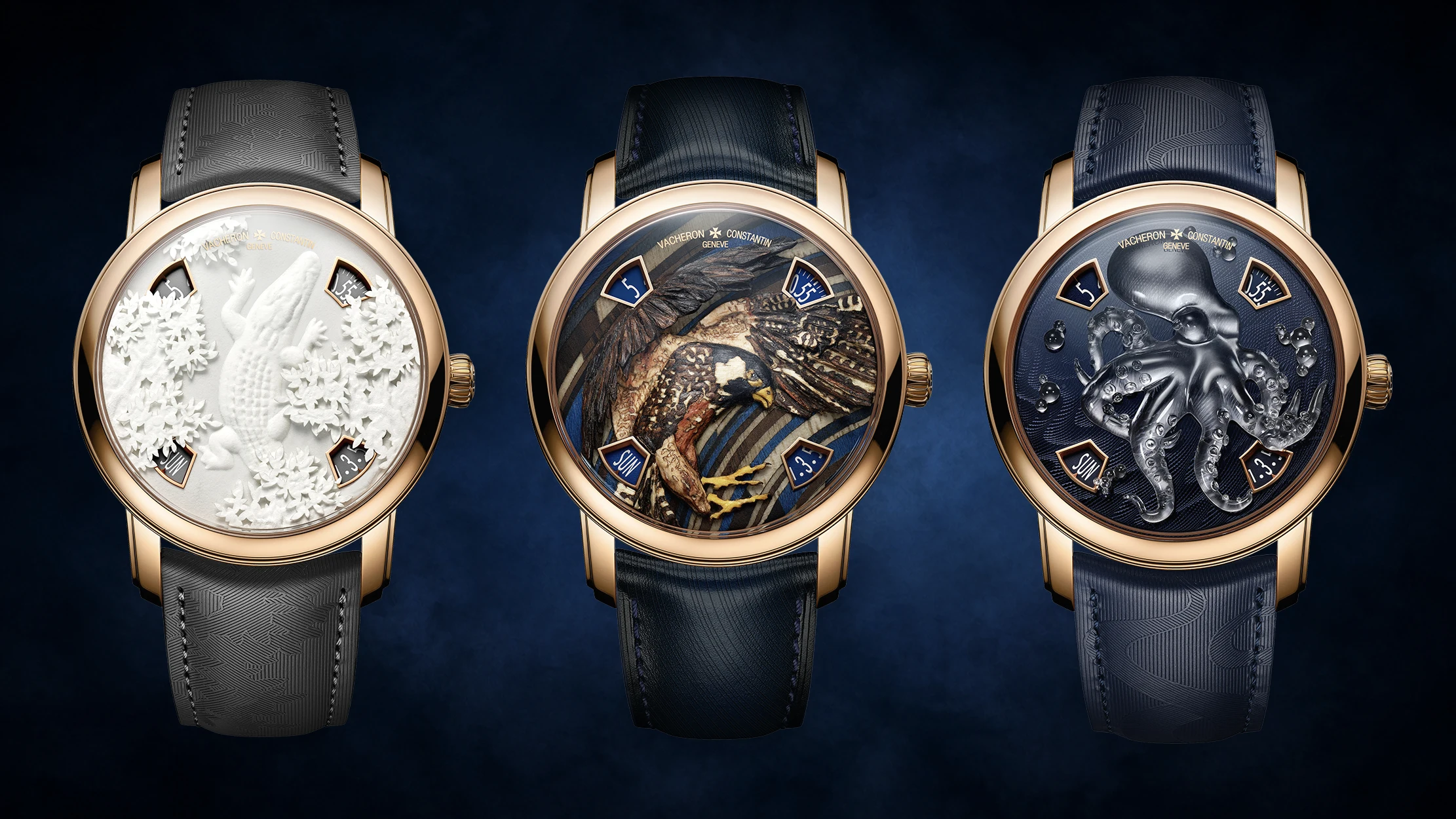
The constraints for the independent artists were considerable. Each artist had to work within a 42 mm case, with no more than four mm between the dial surface and sapphire crystal. While an in-house artisan is acclimatised to such a challenge, the crafts at play for the the Métiers d’Art Tribute to the Animal Kingdom were ordinarily associated with much larger works, yet suddenly had to operate within fractions of a millimetre. Years of research and prototyping followed, alongside the invention of new tools and processes. Vacheron Constantin’s expertise in miniaturisation, meanwhile, helped the independent artists reconcile their work with the delicate architecture of a fully functioning mechanical watch.
This makes Tribute to the Animal Kingdom more than an exercise in virtuoso decoration. The six watches effectively become miniature incubators for craft, testing what happens when established artistic practices meet the highly particular restrictions of haute horlogerie – think microscopic dimensions, resilience, aesthetics, usability, durability, longevity – and how those restrictions might, in turn, push the crafts themselves forward.
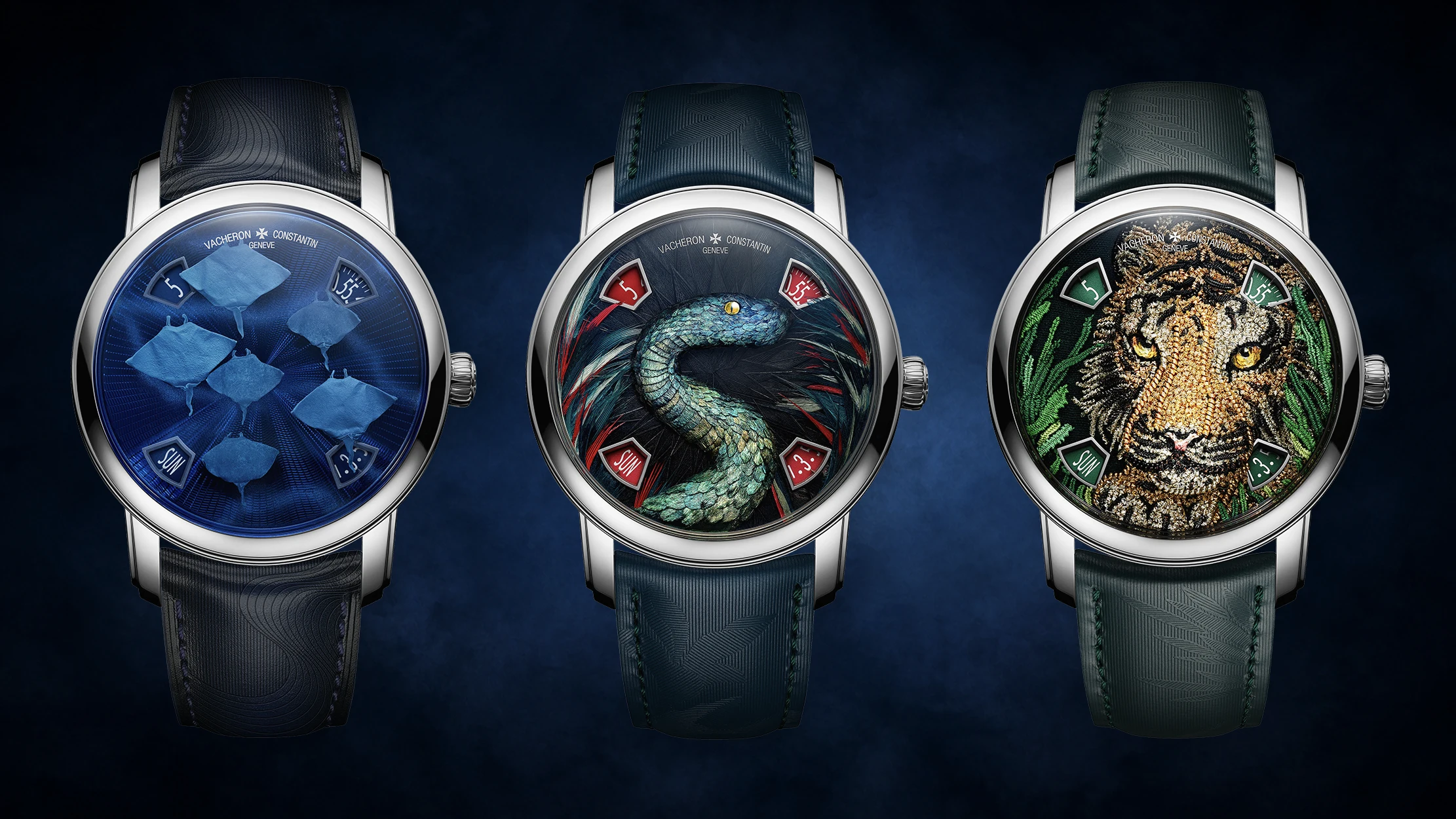
First up is Feathersnake, and it is one of the collection’s most immediately striking pieces. A serpent coils across the dial in shimmering blue-green tones, surrounded by dark foliage, while red peripheral display windows add a slightly sharper edge to the composition.
Mind-blowingly, the effect comes almost entirely from feathers. Young French artist Julien Vermeulen, who specialises in ‘featherart’, weaving and knitting, used more than 200 tiny pieces derived from just seven rare lophophore feathers to create the snake, while goose feathers form the surrounding foliage and background. The natural iridescence of the plumage produces its changing colour and convincing impression of scales.
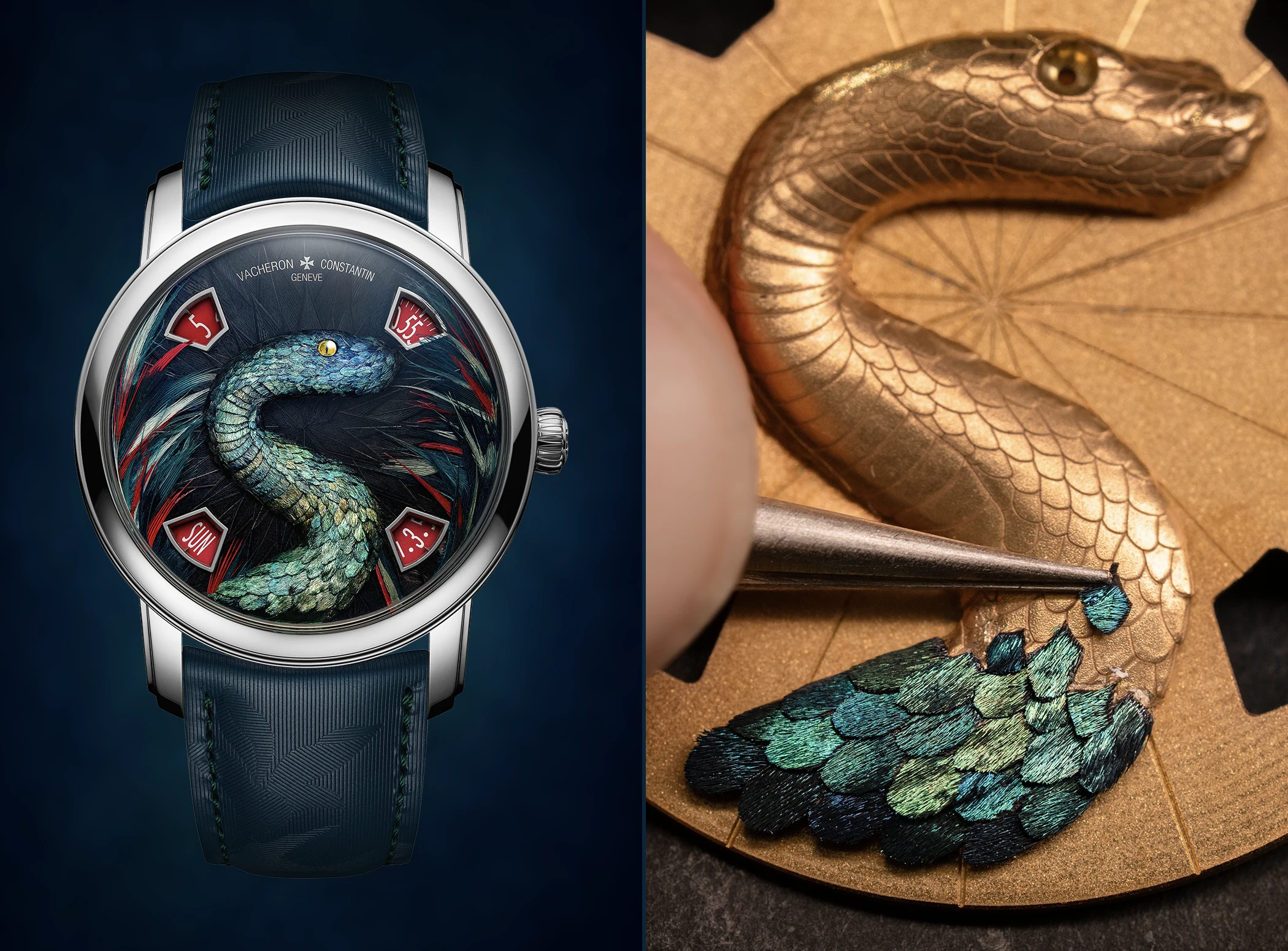
Despite the three-dimensional effect, the serpent rises only three millimetres above the dial. A specially developed metal appliqué beneath the feathers maximises its volume, while its eye – a tiny point of contrast amid the shifting plumage – is made from 18-carat gold and enamel.
The scale forced Vermeulen to rethink a craft he had first encountered while working at Jean Paul Gaultier and later studied at the Lycée Octave Feuillet before founding his own workshop in 2014. Each feather’s central quill had to be removed to reduce thickness while preserving the barbs, before the material was mounted on silk paper, cut and applied around the dial’s peripheral apertures. Conventional featherworking equipment proved inadequate, so Vermeulen fashioned a micro-scalpel from a reshaped needle and adapted another sewing needle to deposit microscopic quantities of glue. Some elements measured only a few tenths of a millimetre – small enough that even breathing too heavily could send them flying. The immense concentration required meant he could work for no more than four hours a day.
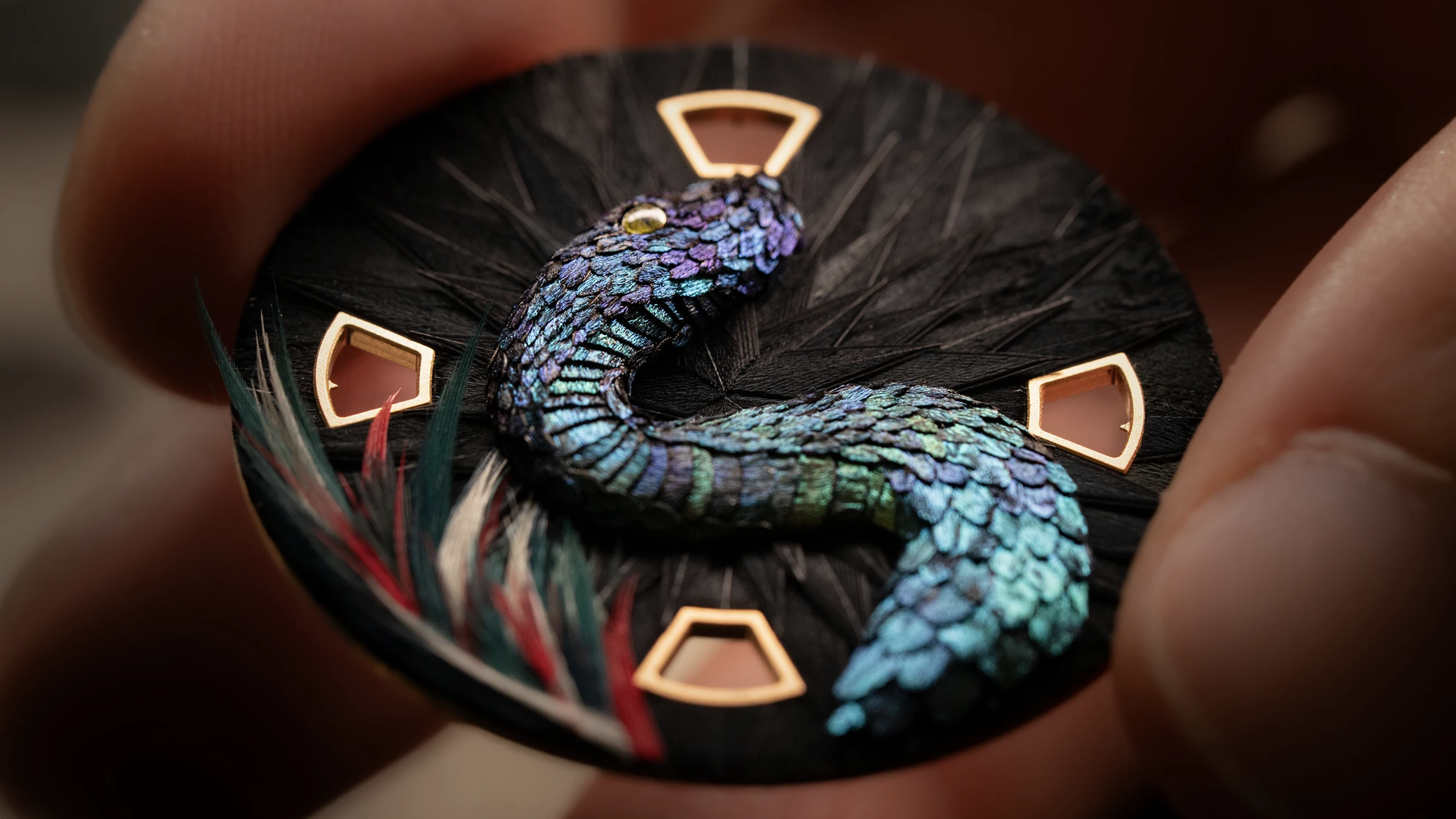
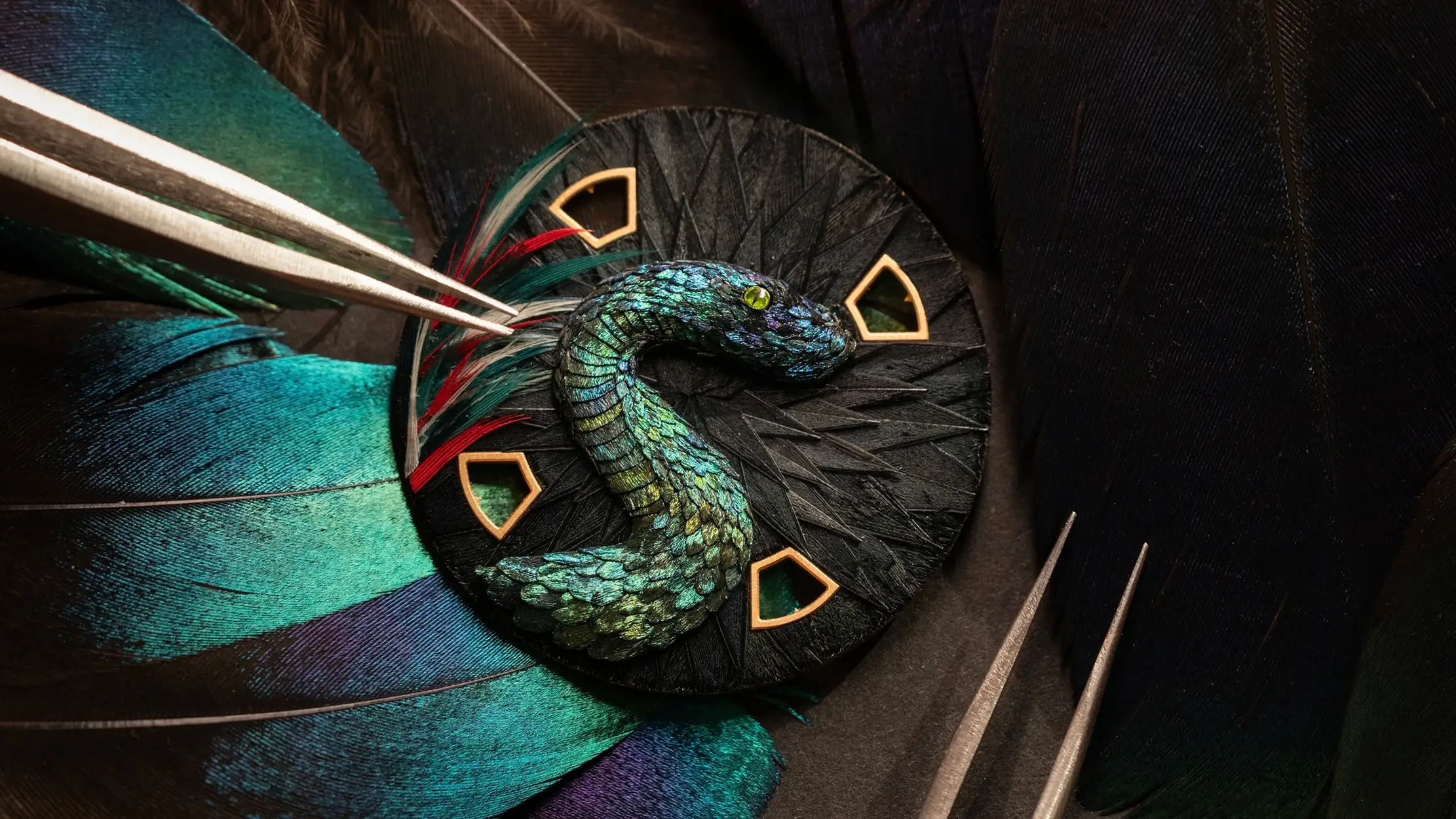
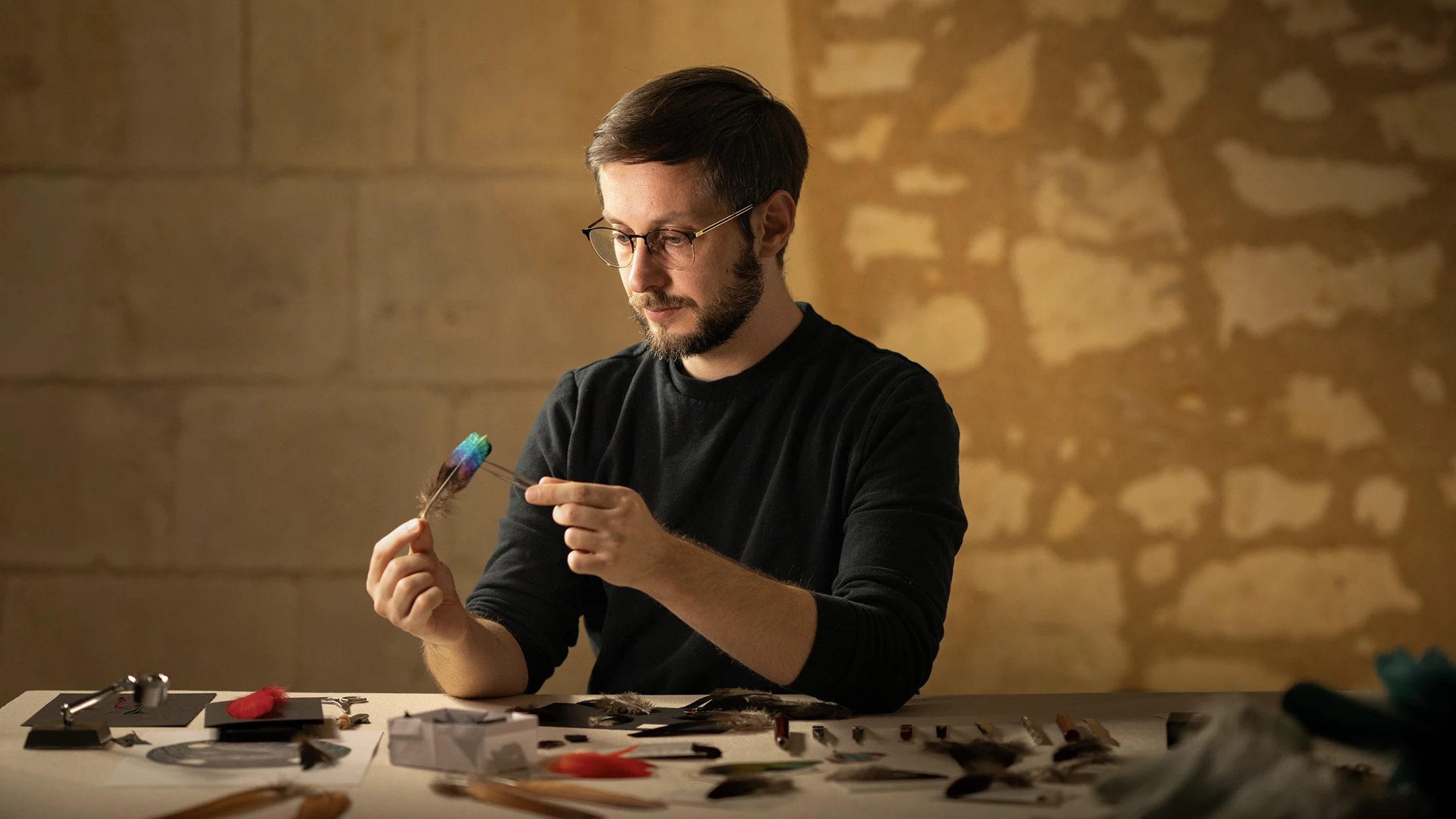
Including research and prototyping, the work took approximately 250 hours. It was also Vermeulen’s first time working with natural lophophore feathers and at such a microscopic scale – an example of the programme’s incubation principle producing not merely a miniature version of an existing craft, but a new way of practicing it.
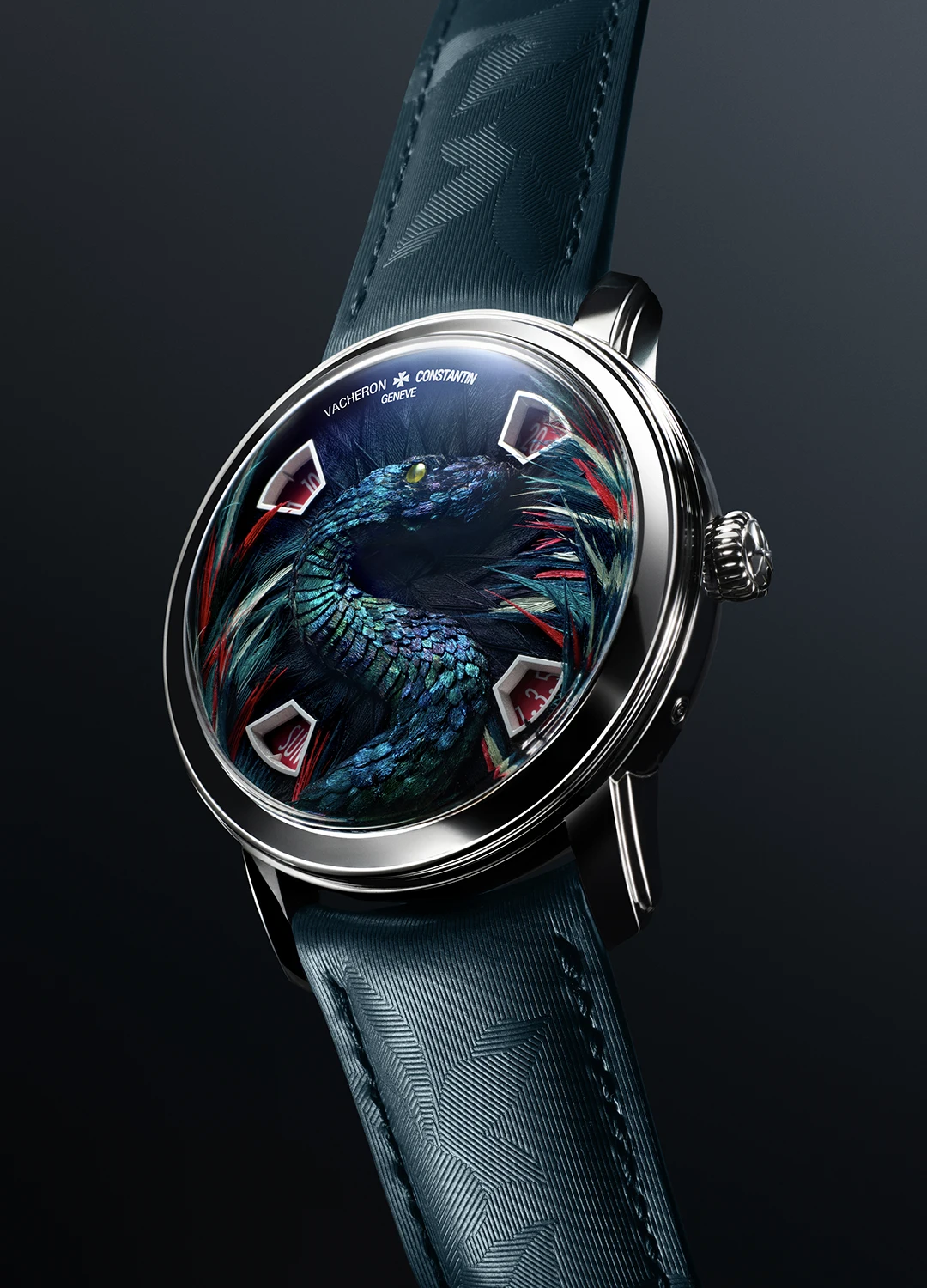
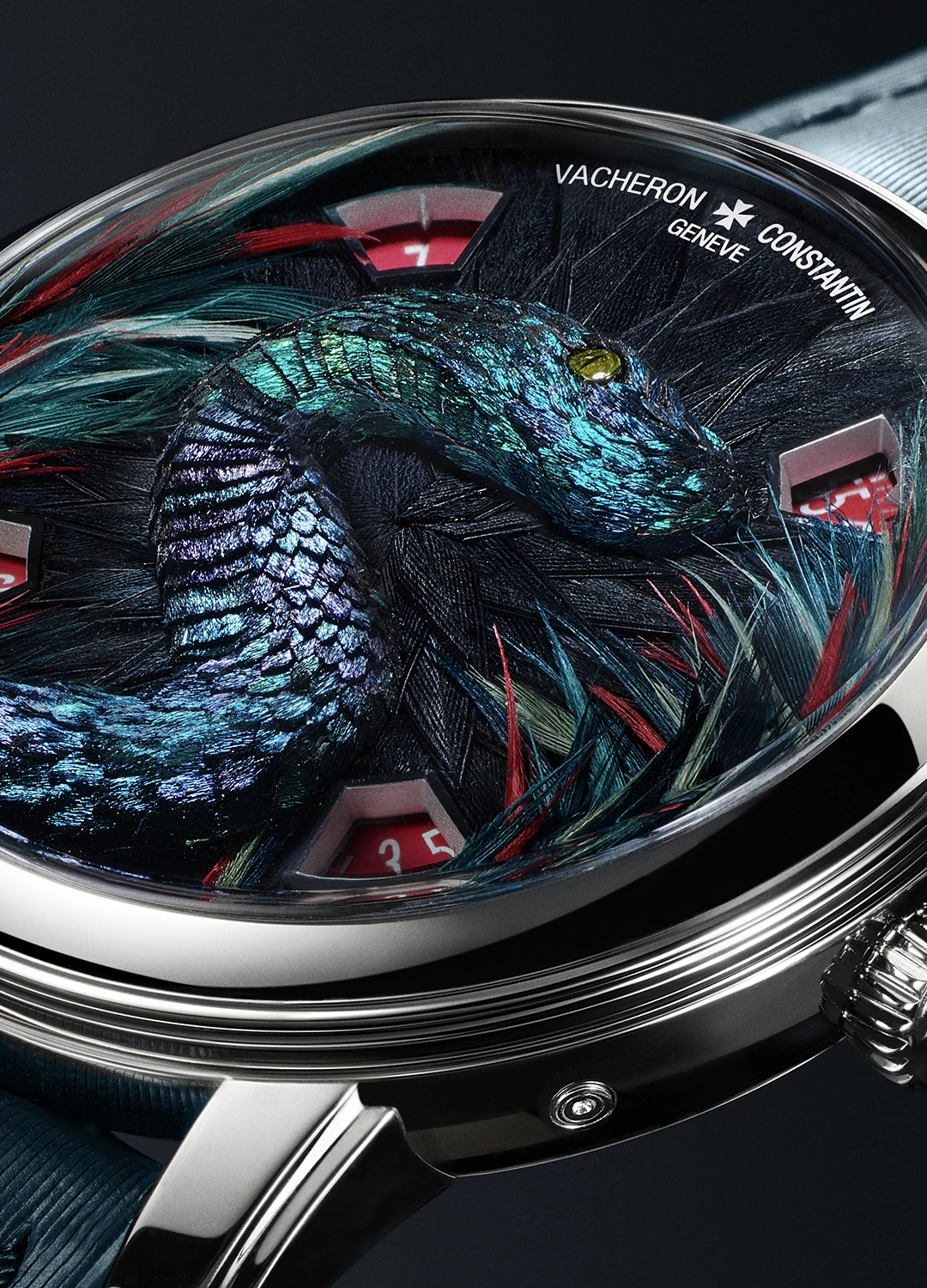
Reference 7630A/000G-H206, as it is also known, is housed in an 18-carat white-gold case measuring 42 mm in diameter and 12.9 mm thick, with a transparent sapphire crystal caseback (we’ll come to the movement later) and water resistance tested to 3 bar. The featherwork composition is applied to a coated brass structure, while a green calf leather strap (also worth a closer look) embossed with vegetal decoration extends the landscape beyond the dial and is secured by an 18-carat white-gold buckle.
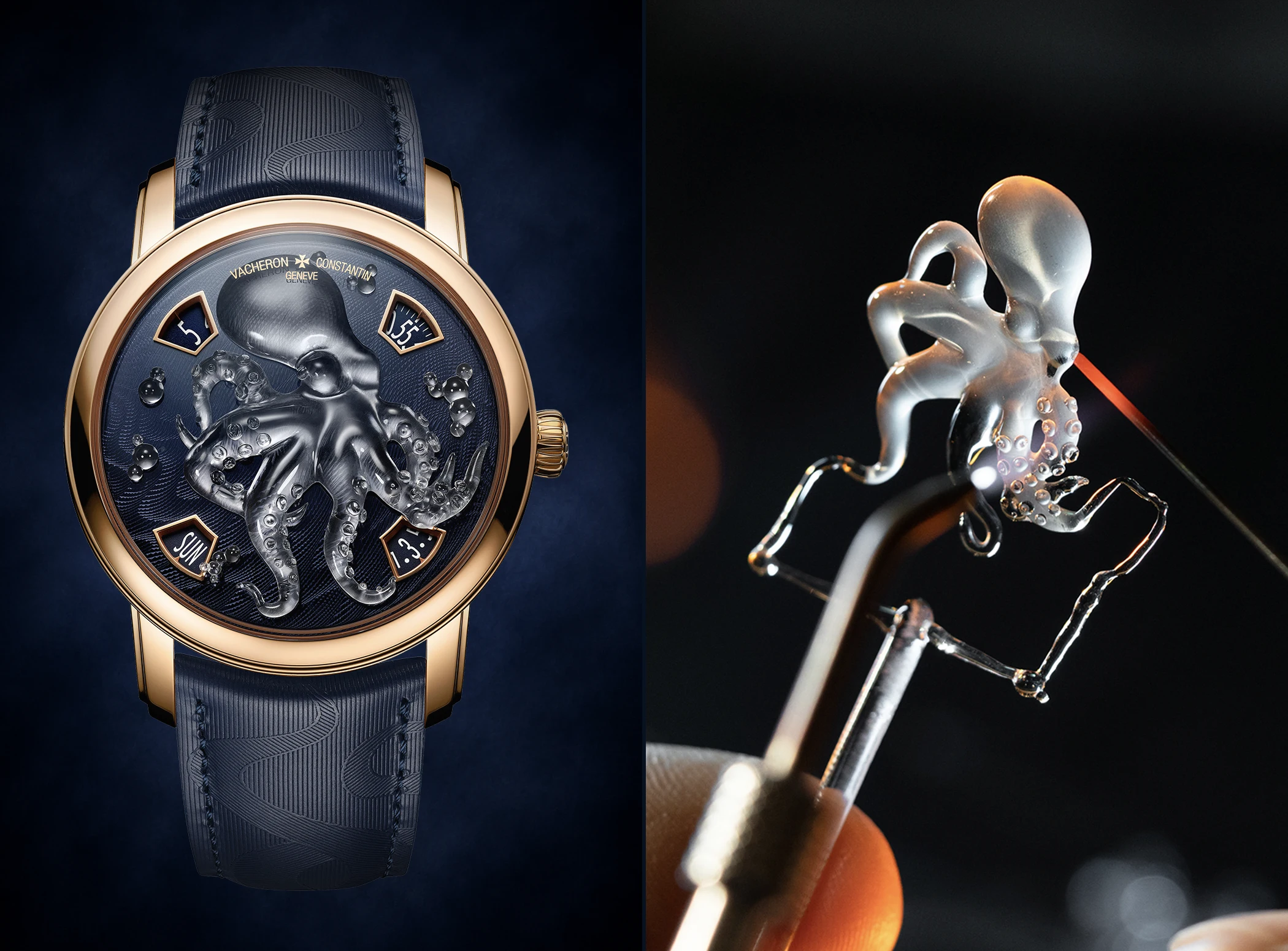
If Feathersnake draws the eye through colour, Glassoctopus is perhaps the most mesmerising of the six new Tribute to the Animal Kingdom watches. A completely transparent octopus appears to drift above a dark-blue, hand-guilloché gold dial, catching and distorting the light as though suspended in a nocturnal underwater world. It is the work of Italian glass artist Simone Crestani, known for transparent sculptures inspired by the natural and marine worlds, and who regards glass as ‘a form of beauty’.
Here, however, he was faced with an unprecedented miniature scale. The complete creature rises just 3.5 mm above the dial, requiring Crestani to develop a new technique for translating a complex three-dimensional sculpture into what Vacheron Constantin describes as a 2.5D form.
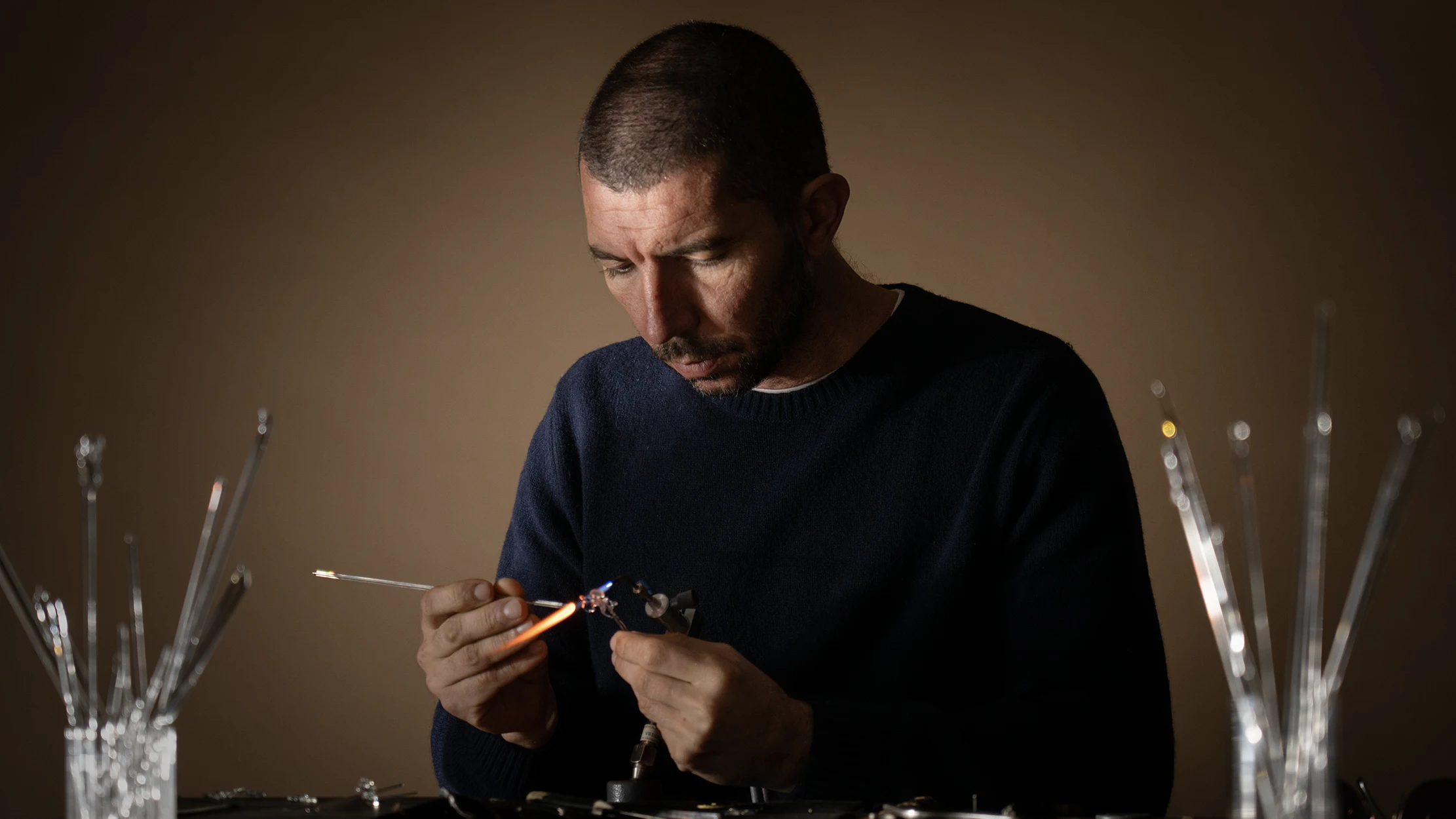
Tiny glass rods were melted and shaped using tungsten tools created specifically for the project. Each tentacle and individual sucker was constructed gradually, dot by dot, in a process almost akin to manual 3D printing. Reheating such fine threads of glass would otherwise cause them to collapse into tiny spheres through surface tension. The specially developed tools also allowed details to be impressed into the face and suckers without melting entire sections of the sculpture.
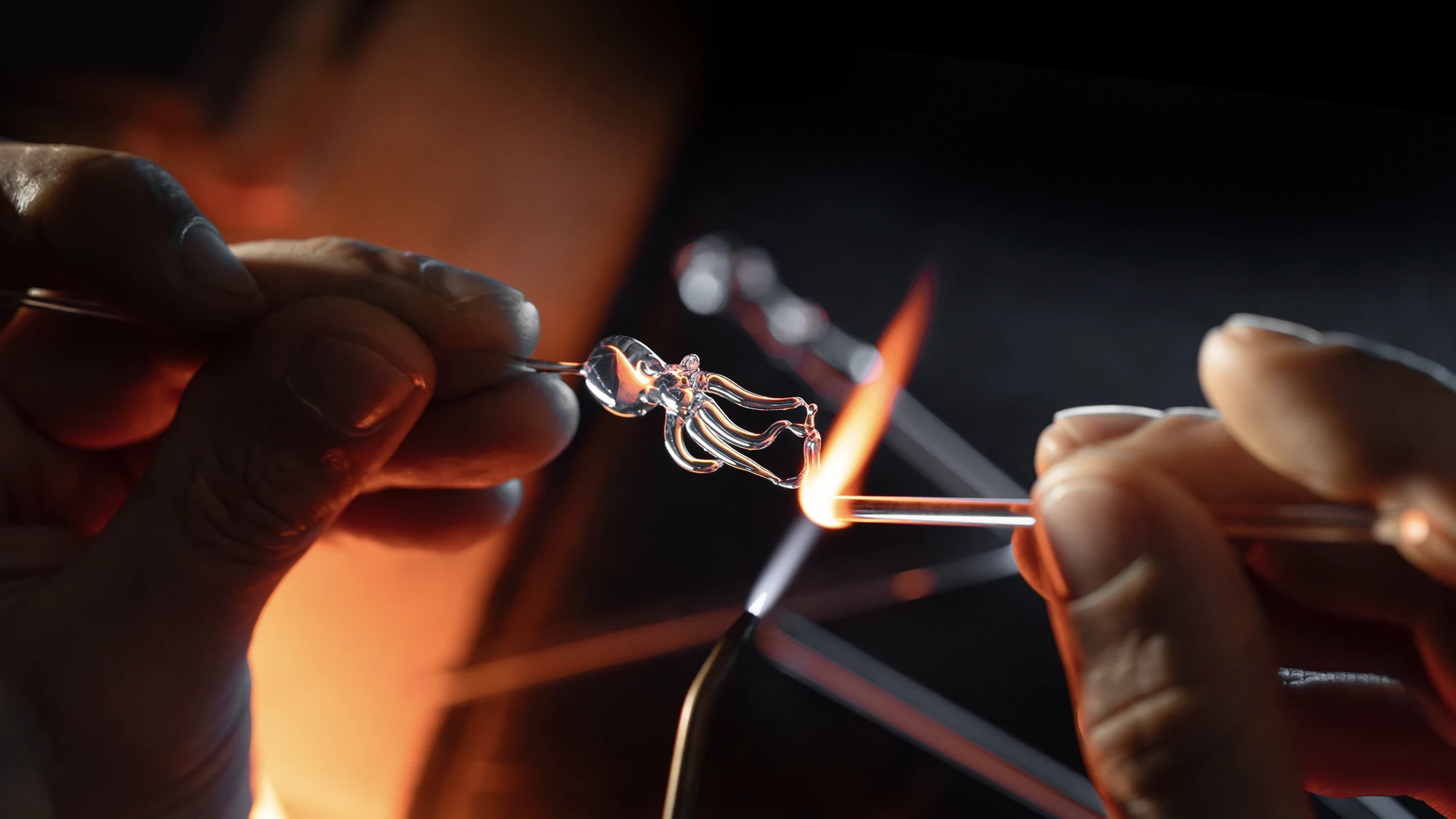
Transparency brought its own problems. Every change in thickness, overlap and refraction alters what can be seen beneath the glass, forcing Crestani to devise optical illusions that make the tentacles appear to cross without creating unwanted distortions.
Even their placement was partly dictated by the mechanics beneath. Two sections pass just above the four indication apertures, whose windows rise only two-tenths of a millimetre above the dial.
Development lasted more than a year, beginning with prototypes in spring 2025. Each prototype required at least three days, while the final batch consisted of four slightly different octopuses before the chosen version was selected.
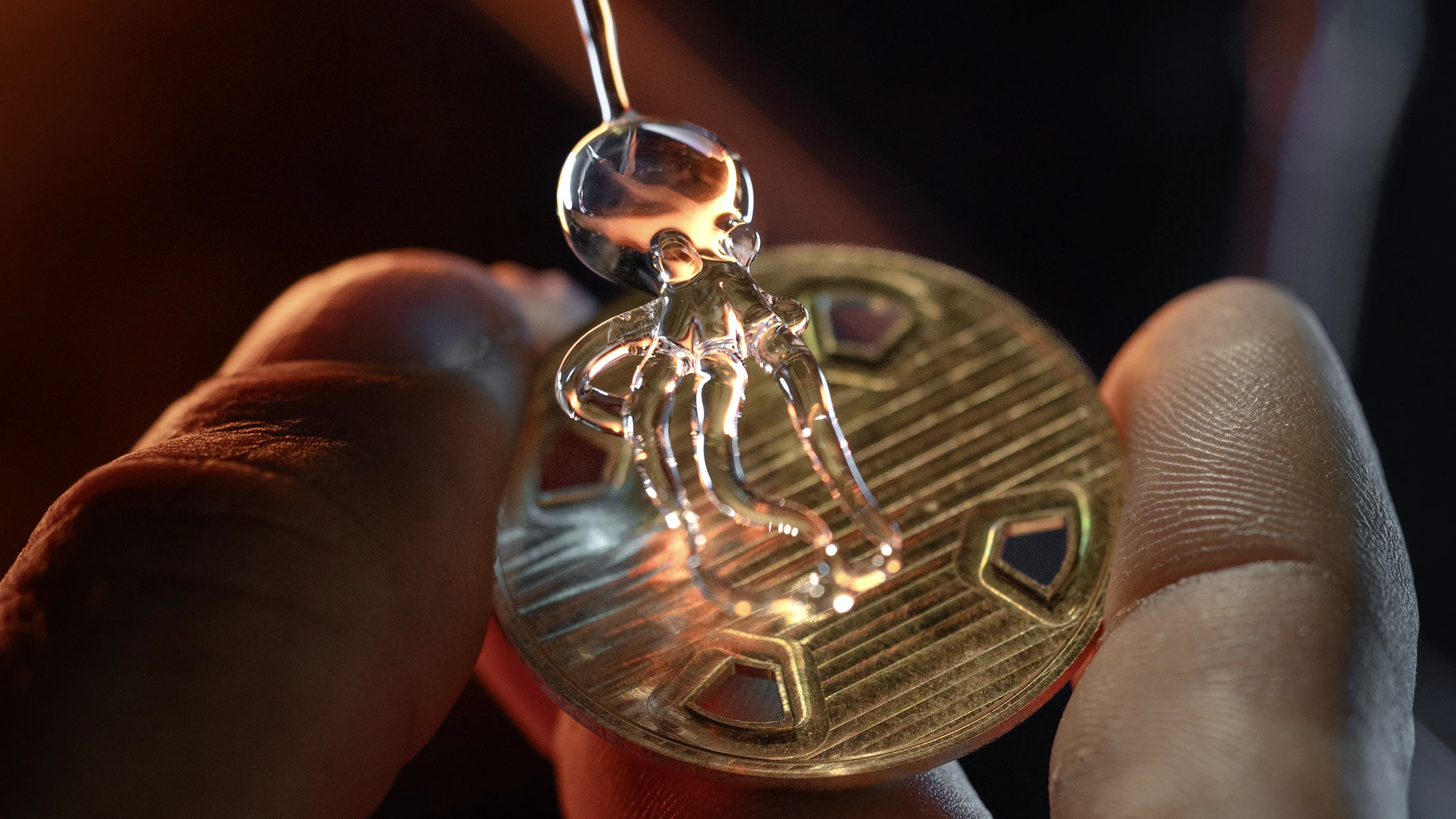
For Crestani, who has worked with glass for 25 years, the project resulted in a technique he had never previously used – and one he believes can now be applied to even smaller and more intricate work. It is perhaps the neatest example in the collection of incubation working both ways: traditional Swiss watchmaking gains a new artistic craft, while the independent artist leaves with a new branch of his own practice.
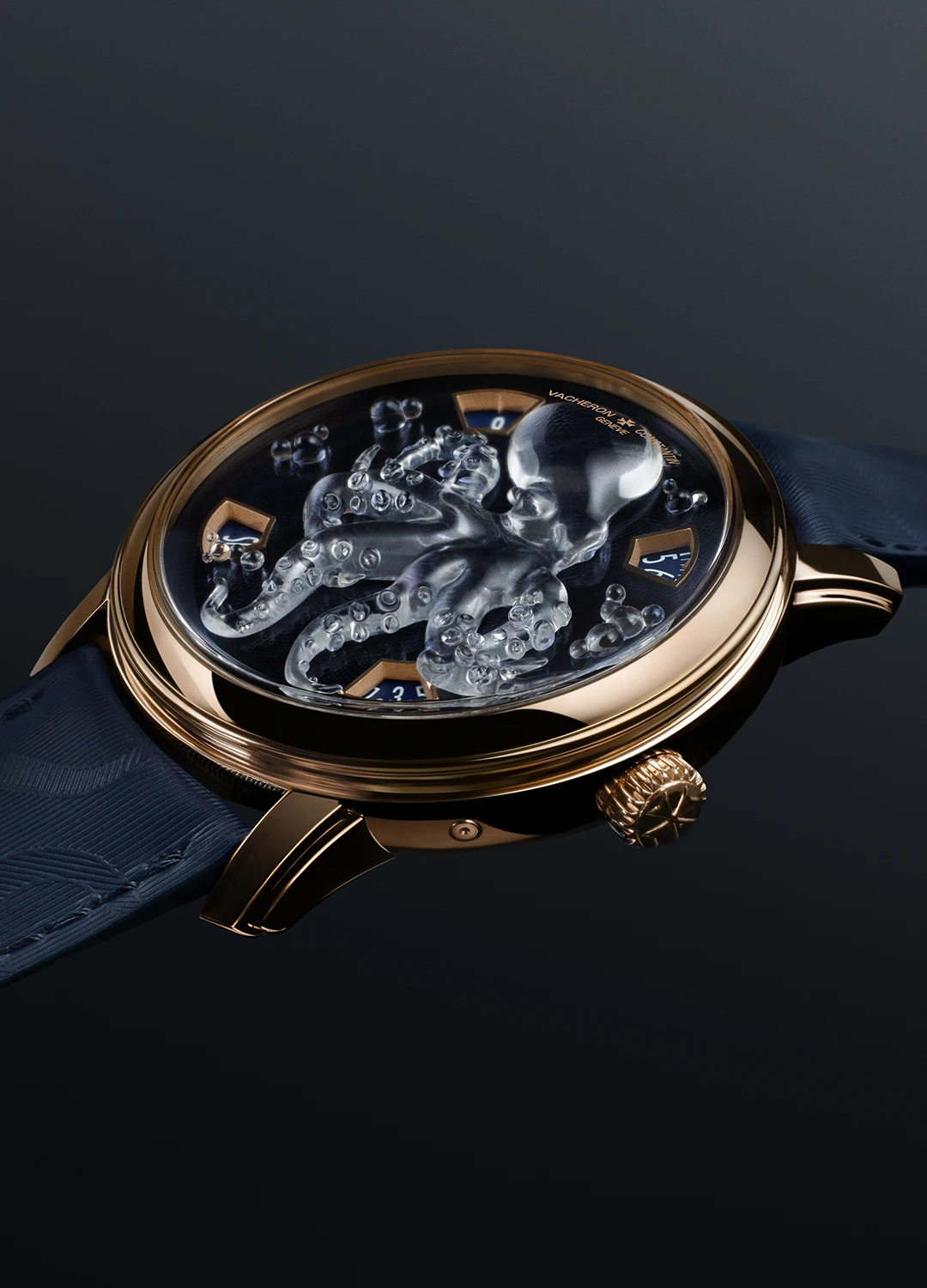
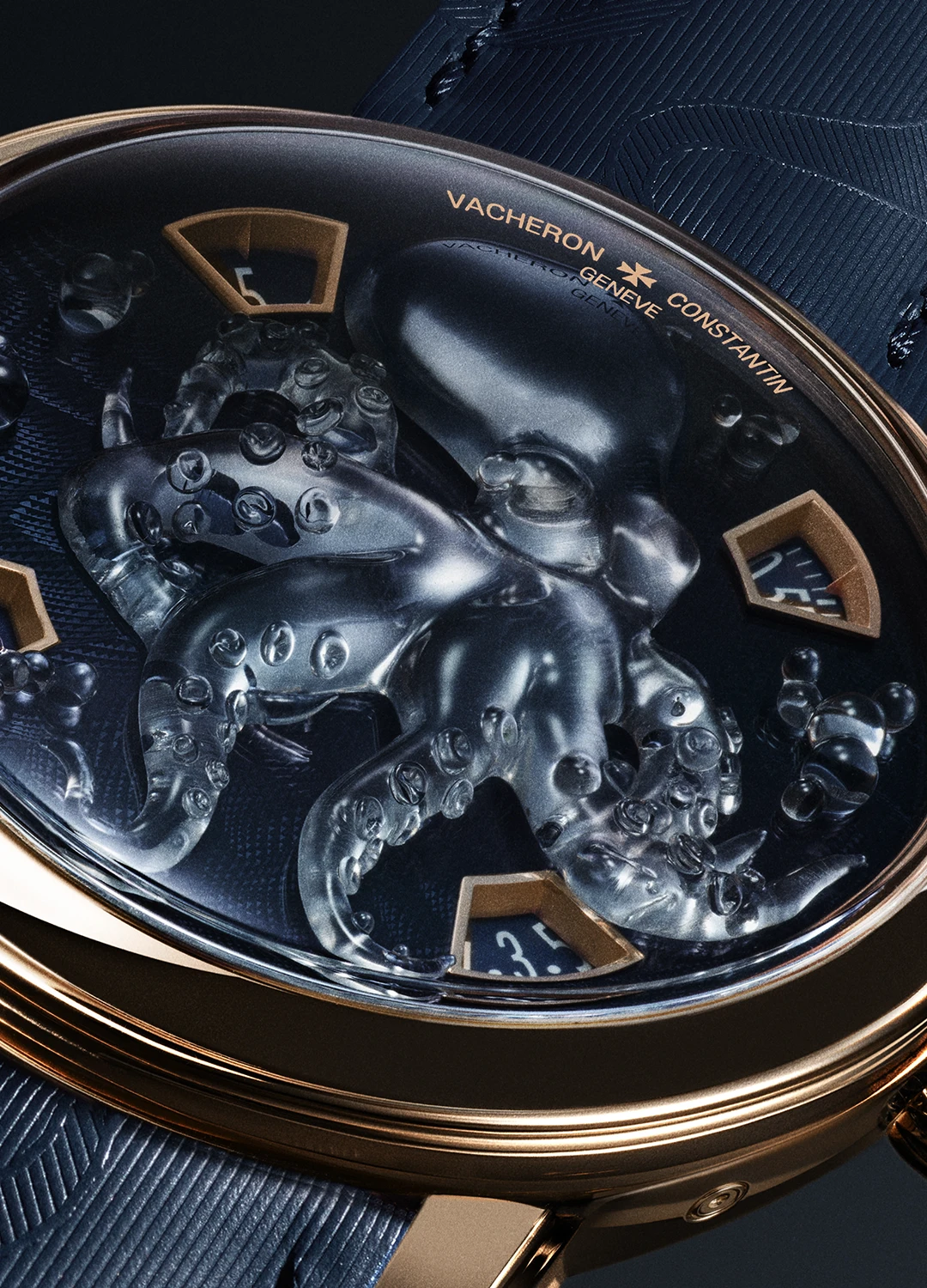
Reference 7630A/000R-H205 comes in an 18-carat 5N pink-gold case measuring 42 mm by 12.9 mm, with a transparent sapphire crystal caseback and water resistance tested to 3 bar. The hand-sculpted transparent octopus sits above a colour-coated, hand-guilloché 18-carat gold dial base. A blue calf leather strap embossed with octopus tentacles completes the piece, together with an 18-carat pink-gold buckle.
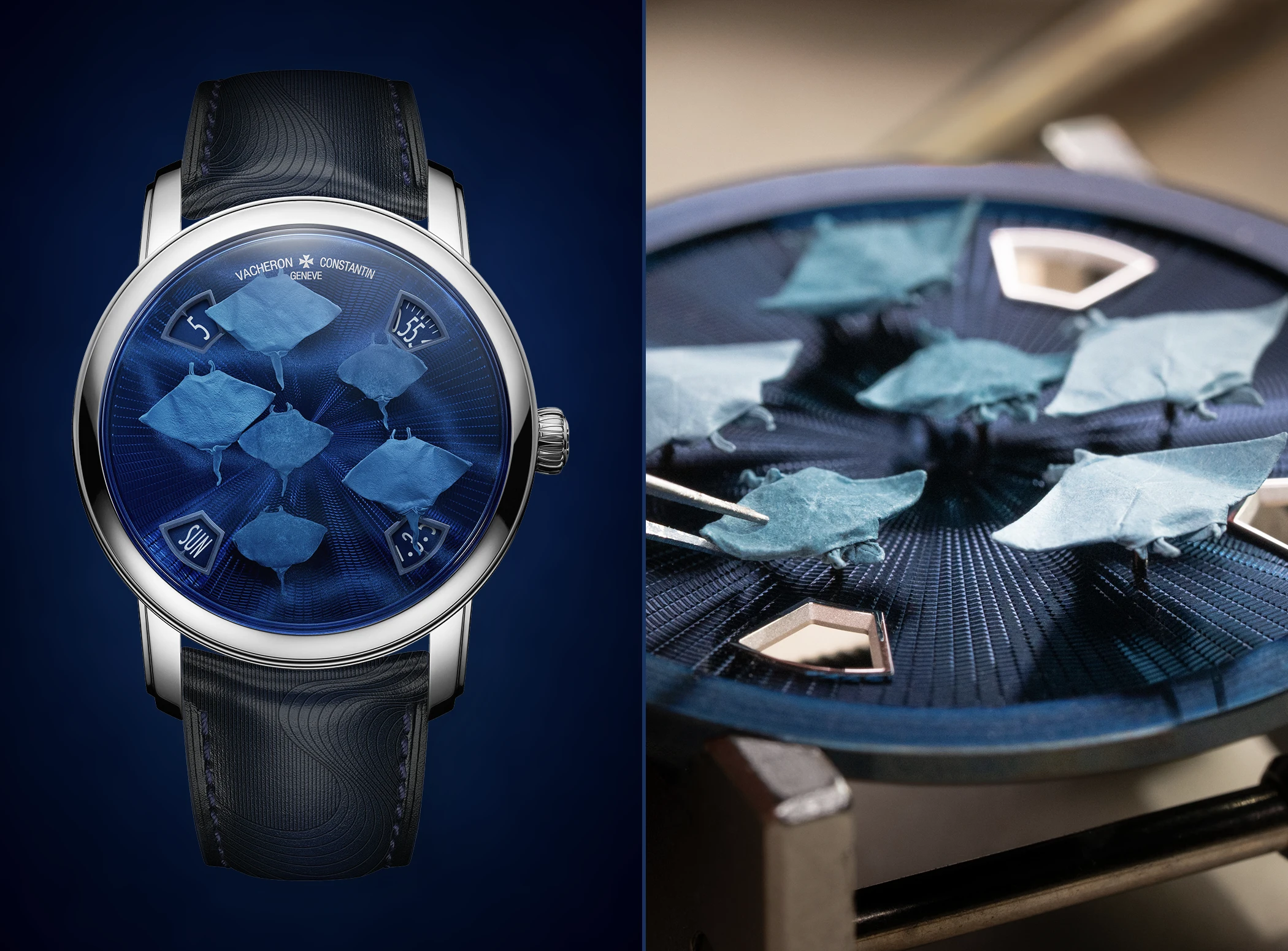
There is something particularly ethereal about the aptly titled Oraygami edition. Six miniature manta rays seem to float at different depths over a deep-blue dial, with their soft colour contrasts and a moiré effect across the crystal convincingly evoking the shifting light beneath the surface of water. The rays are made from hand-coloured Japanese paper by Germany-based micro-origami artist Anya Midori, who discovered the discipline less than a decade ago.
There was no existing pattern simply waiting to be miniaturised. Origami artists frequently work from folding sequences developed by other masters, but the particular shape and microscopic dimensions required in this case led Midori to devise an entirely new sequence. She began by studying photographs and videos of real manta rays, analysing their proportions, tails and movement through water before translating those observations into folds. This is evident to anyone who views the watch, with the movement of the rays masterfully depicted by Midori giving a realist, kinetic touch to this otherwise dreamy timepiece.
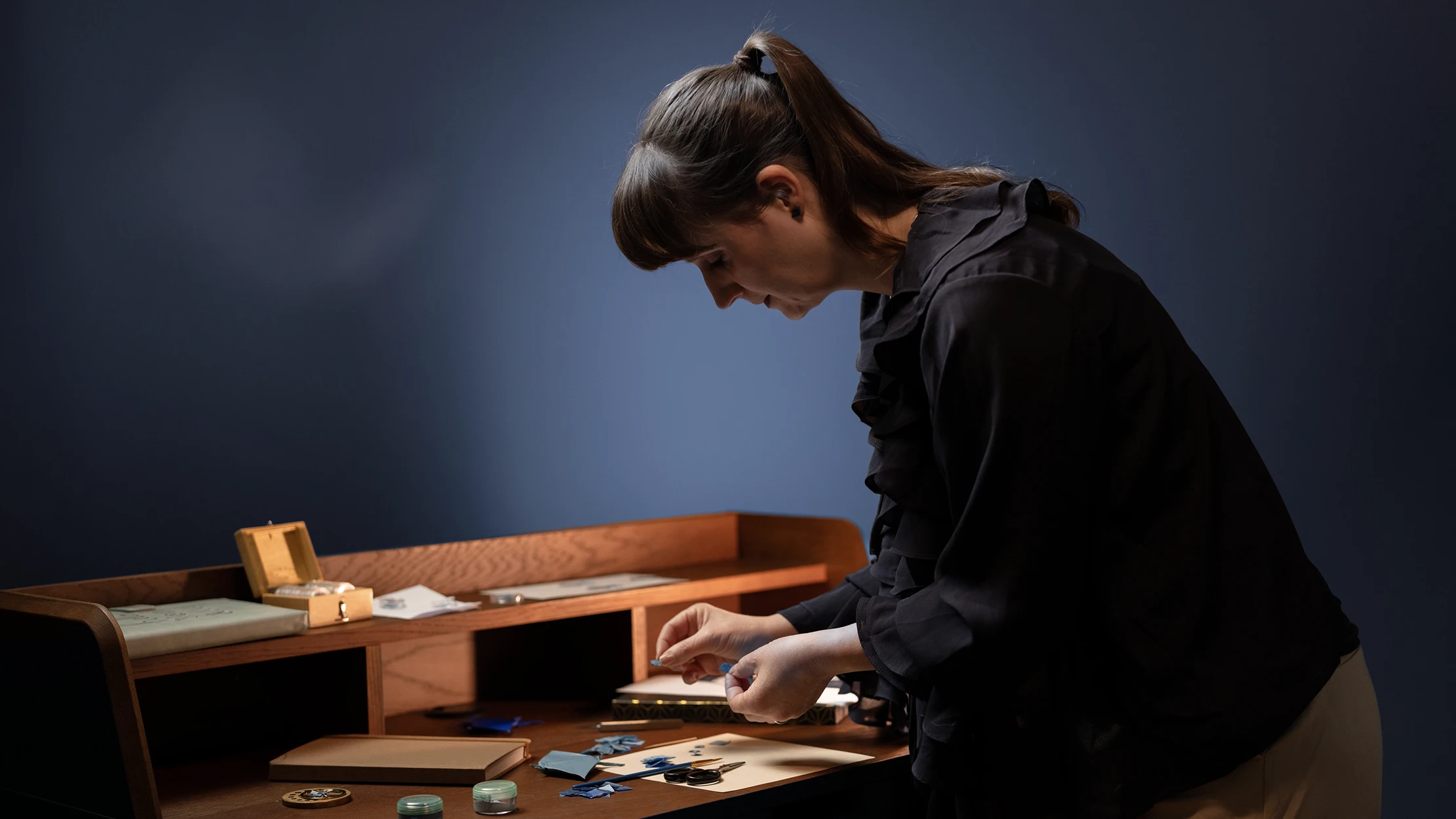
Then came the paper. The available Japanese papers did not offer the required shade of blue, so Midori experimented for the first time with dyeing her own using water, natural cellulose and acrylic pigment. At only 20 grams, around a quarter of the thickness of standard copier paper, every intervention altered its thickness, stiffness and flexibility. Eventually, the addition of cellulose provided enough malleability to produce softer, more organic forms rather than sharply geometric ones.
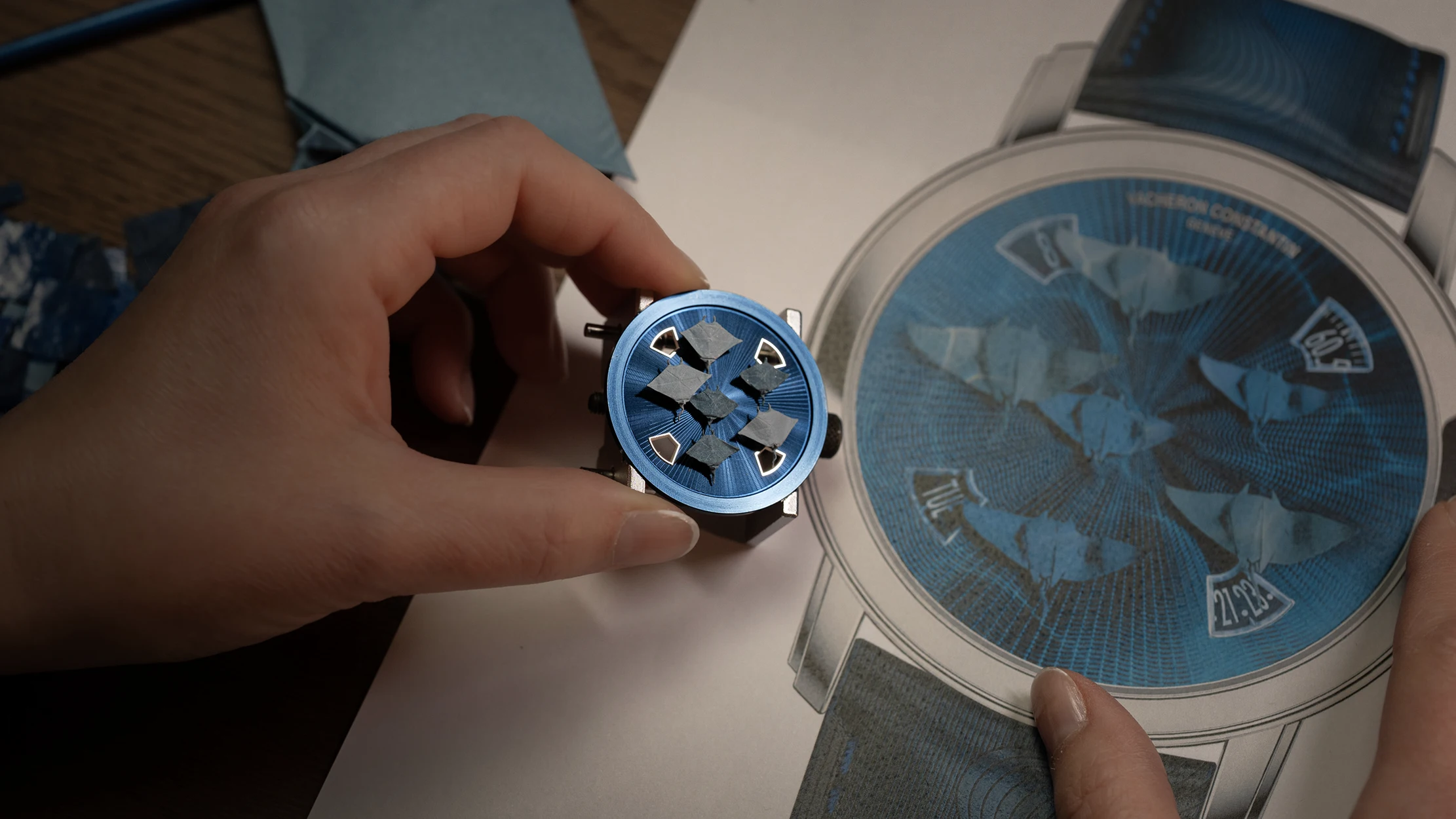
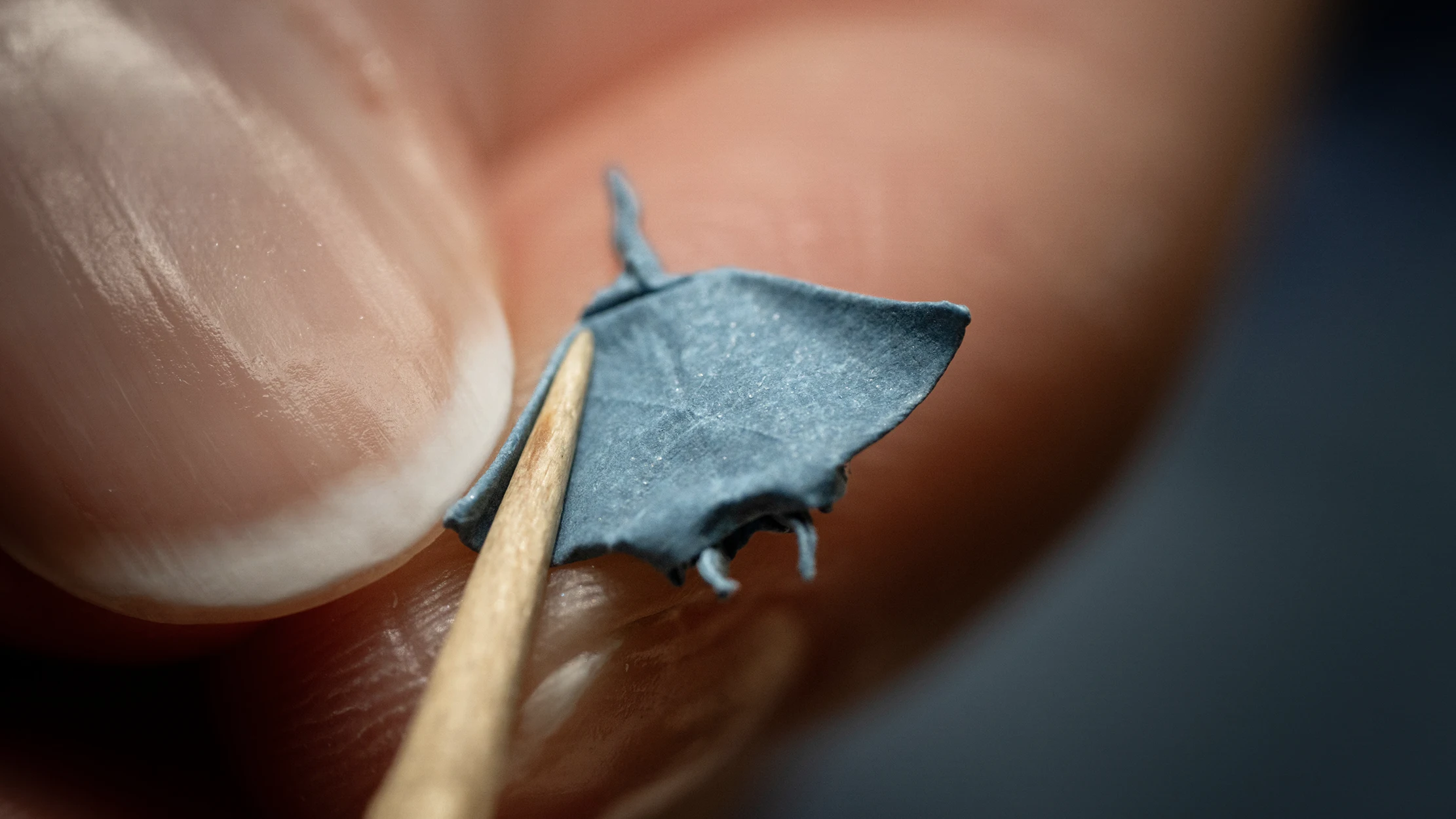
Before folding, each piece of paper measures only 9 to 12 mm, shrinking to approximately 6 to 8 mm once completed. The manta rays in the final composition range from 5 to 10 mm and are mounted on fine brass stems at different heights to create their weightless appearance and sense of movement.
Most remarkably, Midori folded them using only her fingers, fingernails and the tip of a toothpick, without a magnifying glass. Early pieces could require up to six hours each, while development stretched for more than two years, from the first discussions in summer 2024 until completion in 2026.
Midori describes it as the most significant project of her origami career so far, not least because she was involved from the beginning of the creative process rather than being asked simply to execute a finished idea. The resulting new folding sequences and experiments with dyed paper are another example of knowledge generated through the collaboration extending beyond the finished watch itself.
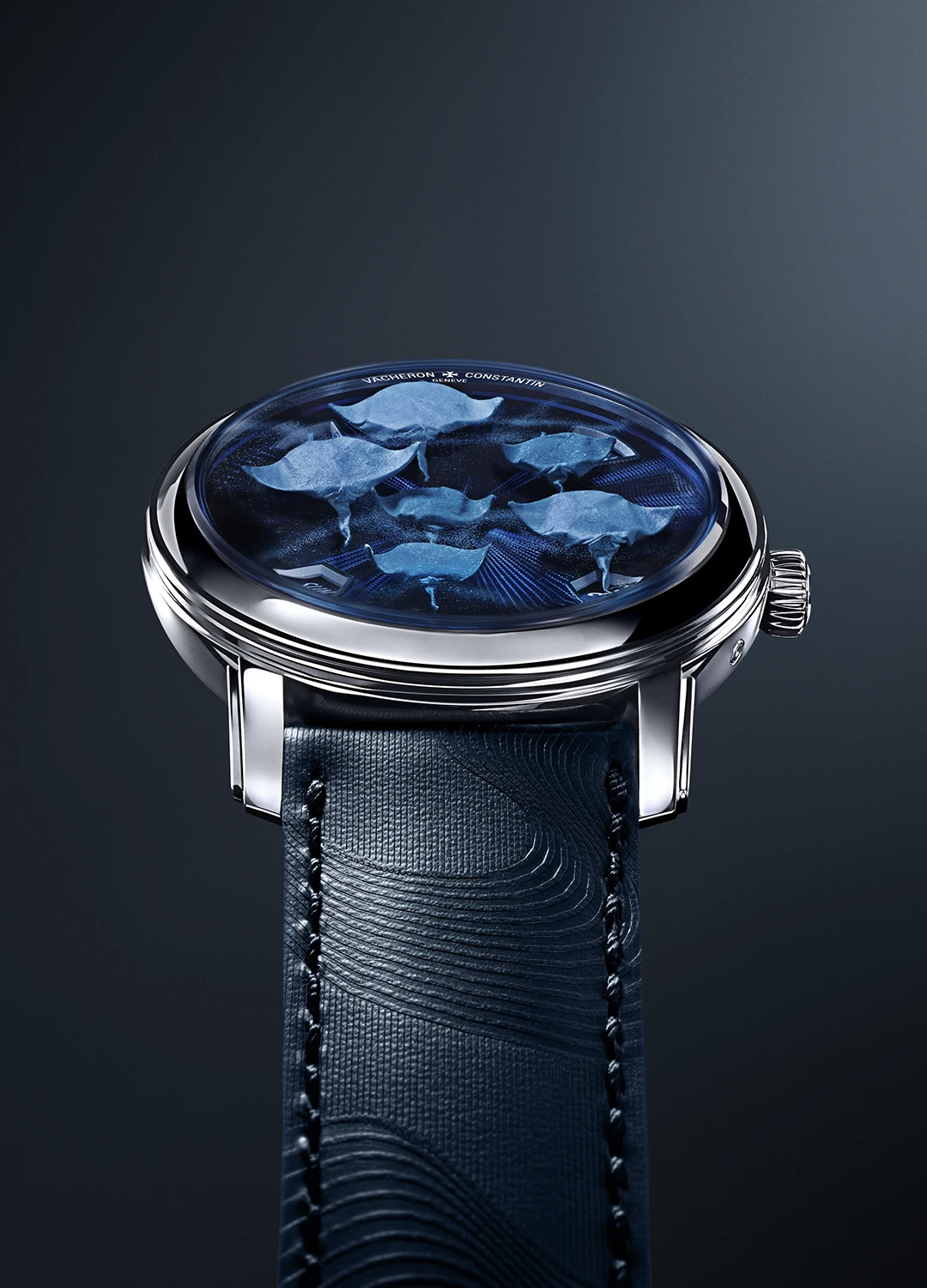
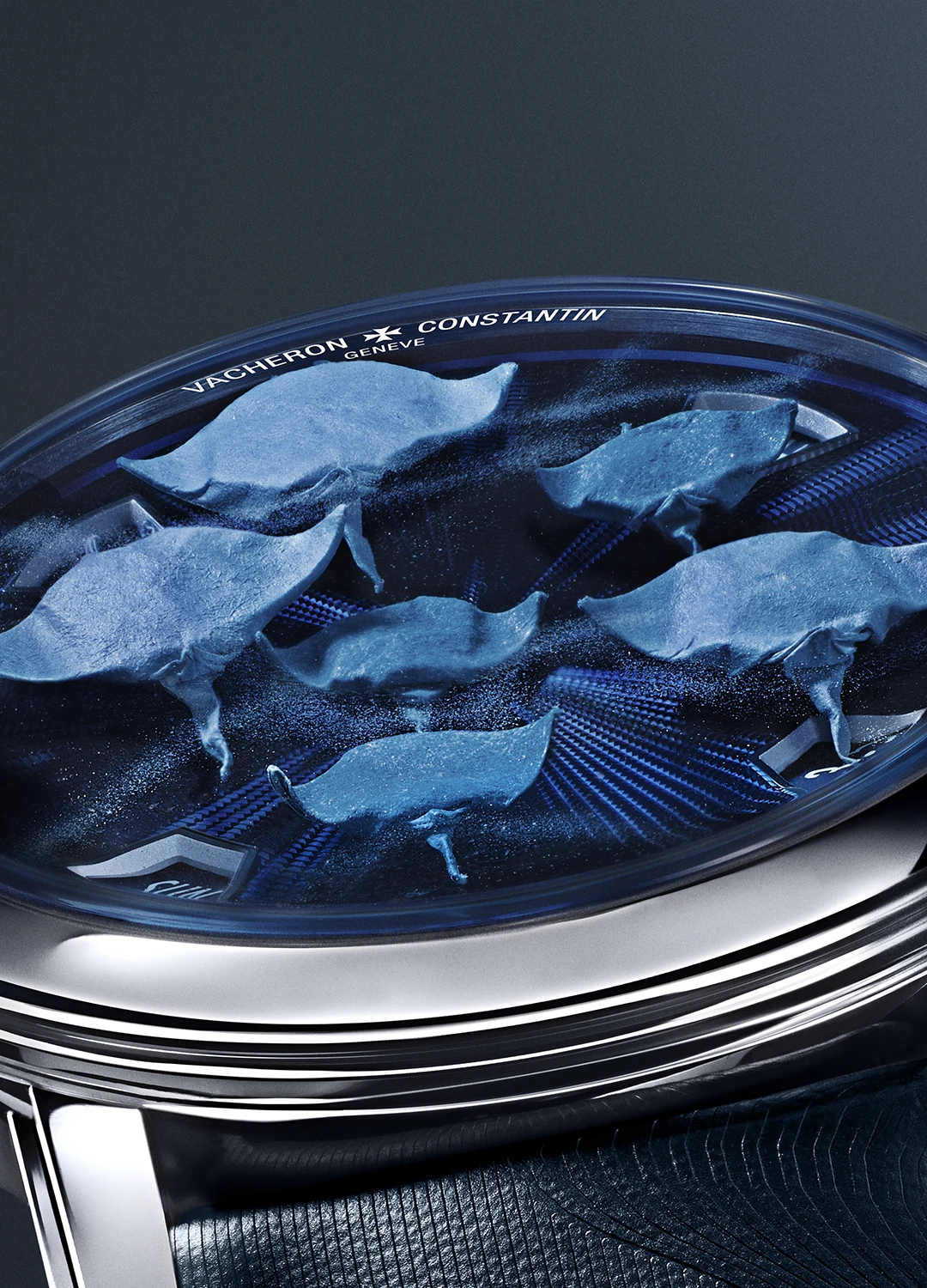
Reference 7630A/000G-H204 has an 18-carat white-gold case measuring 42 mm by 12.9 mm, a transparent sapphire crystal caseback and water resistance tested to 3 bar. Its six micro-origami rays sit on brass stems above a colour-coated, hand-guilloché 18-carat gold dial base, with the moiré effect incorporated into the crystal. A blue calf leather strap embossed with waves continues the underwater theme and is paired with an 18-carat white-gold buckle.
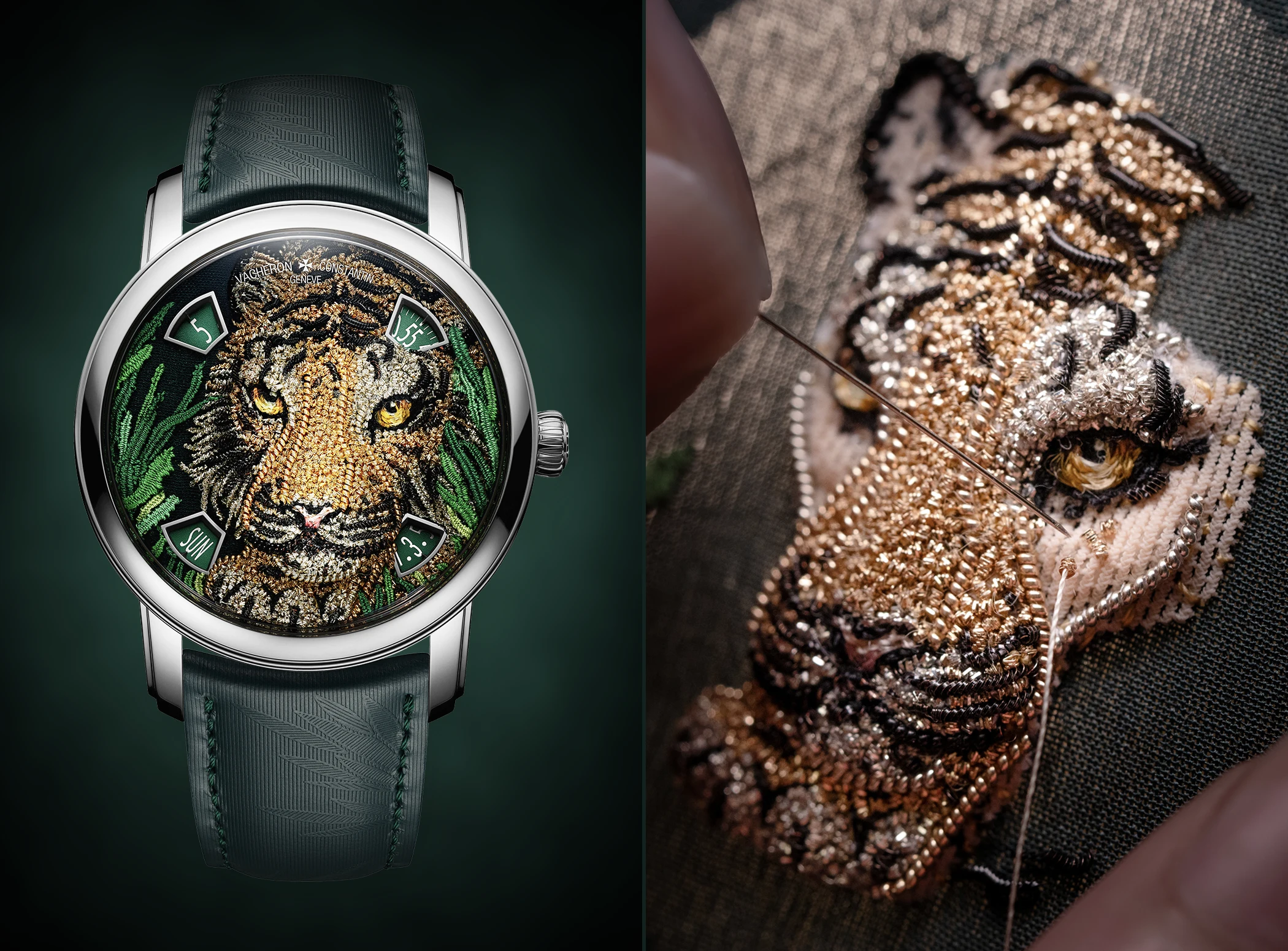
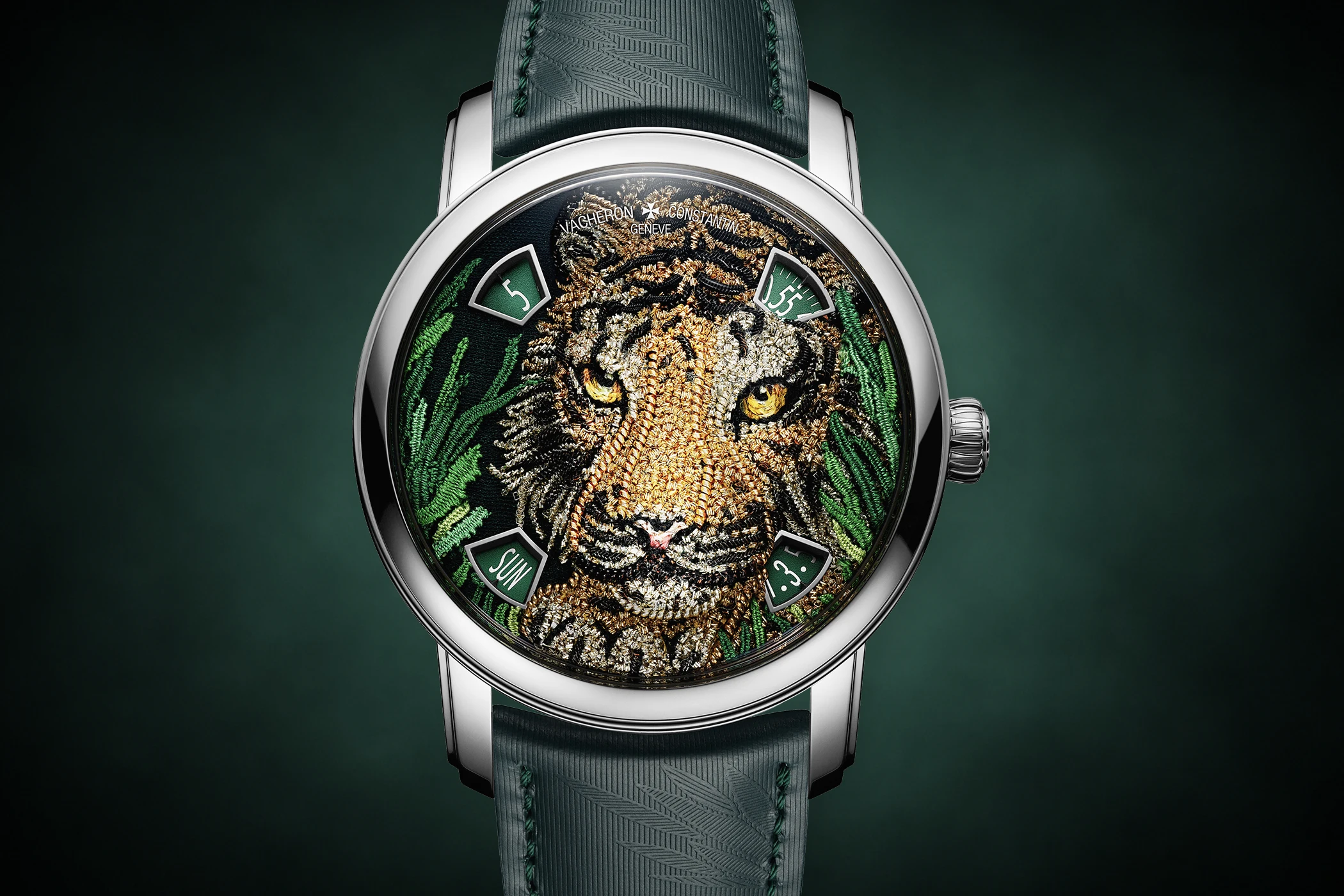
From Cartier to Chopard, jungle cats are no strangers to major jewellery and watch maisons, with many using the motif on some of their rarest and most exquisite pieces – making the Tigerbroidery edition immediately familiar in subject but considerably less so in execution. There is almost a fashion element to the piece: the tiger is neither enamelled, engraved nor gem-set, but embroidered in gold, giving the dial something of the richness and texture of couture.
British artist Laura Baverstock, a graduate of the Royal School of Needlework and member of the Worshipful Company of Gold and Silver Wyre Drawers, created the animal from 9-carat yellow- and white-gold embroidery wires. Its black stripes use specially developed ceramic-coated wires over a copper base, creating a dramatic chiaroscuro effect, while the surrounding jungle is embroidered onto green silk specially commissioned and dyed to a bespoke colour by a British silk manufacturer. The grasses are individually stitched in multiple shades of Japanese silk using textured weaving techniques.
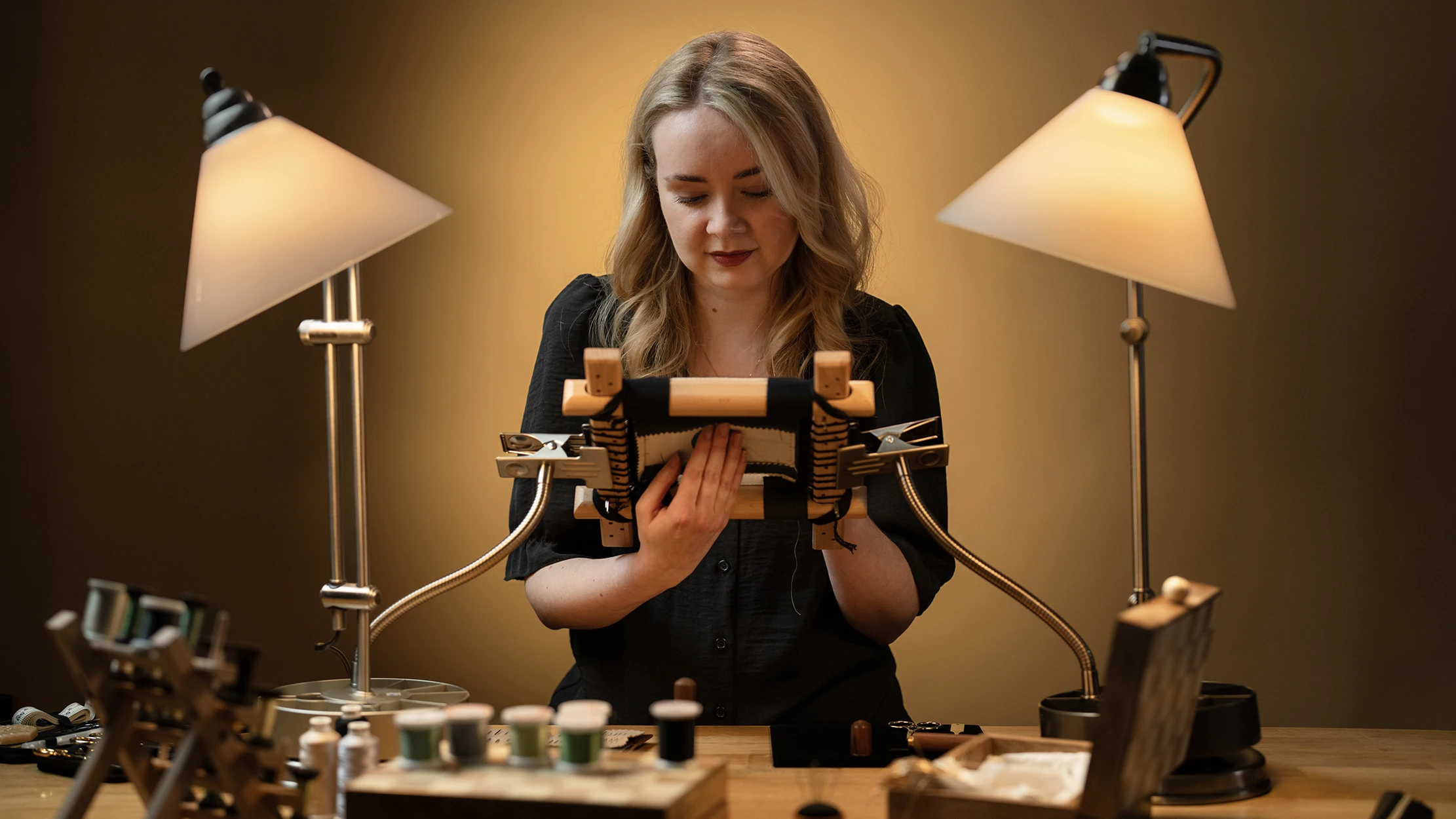
The gold itself presented one of the project’s biggest technical challenges. Traditional goldwork embroidery generally uses gilt wire containing only a small percentage of actual gold. Vacheron Constantin instead wanted the highest workable gold content, eventually settling on 9 carats. More gold, however, changes the flexibility and behaviour of the material.
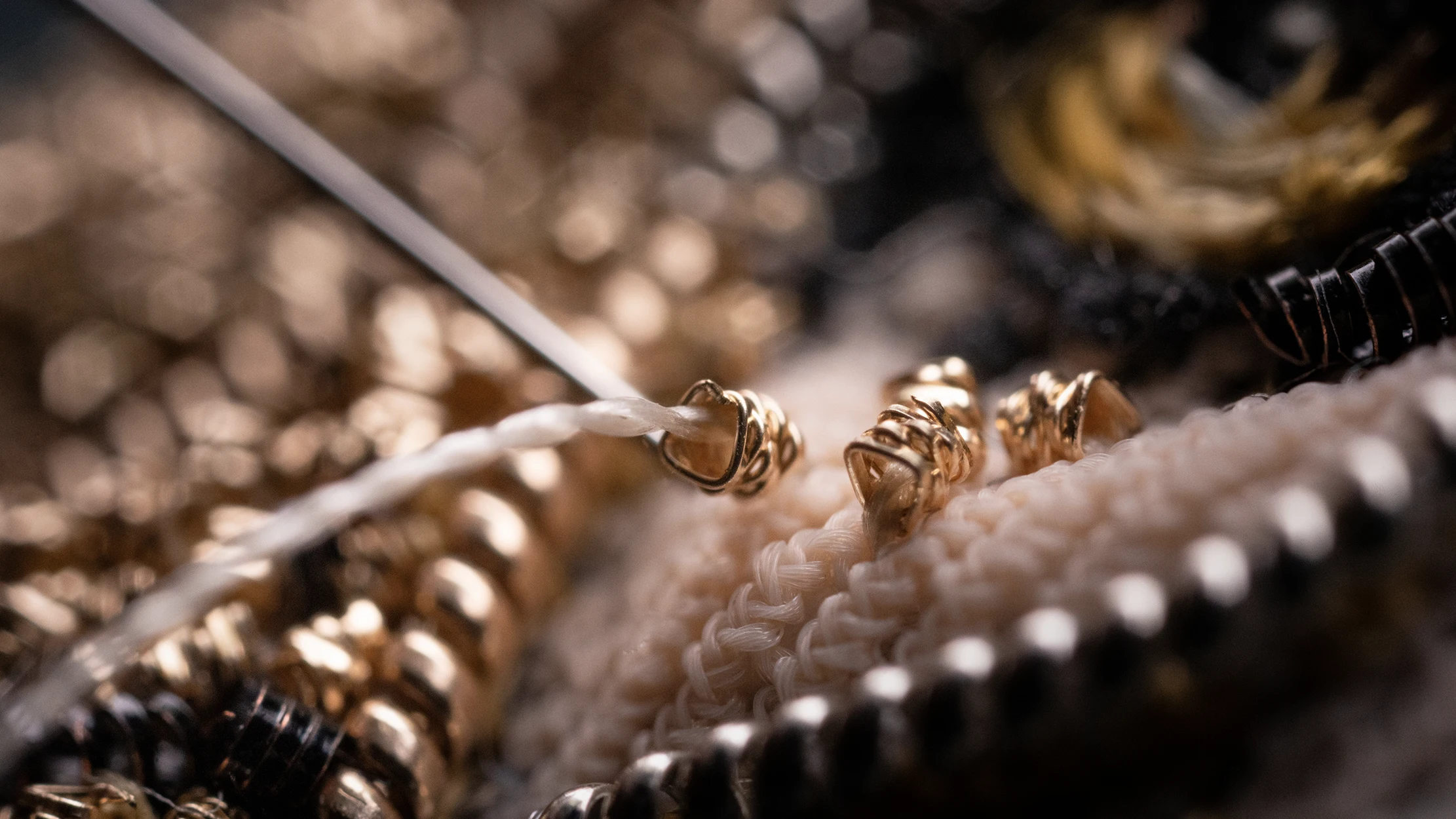
Entirely new miniature tools therefore had to be developed to twist and coil it into workable embroidery wire, in collaboration with specialist British manufacturers. Bespoke needles measuring just 0.25 mm were also created. Multiple prototypes were needed to find the right balance between softness and structural rigidity.
Meanwhile, the tiger itself consists of individually hand-cut fragments of gold wire measuring less than one millimetre, while its eyes alone required ten different shades of silk. The silk and cotton layers supporting the embroidery are mounted onto a specially engineered titanium dial plate; even this had to be reinvented, with multiple prototypes used to determine the exact positioning of perforations through which the embroidery could be stitched without compromising the movement beneath.
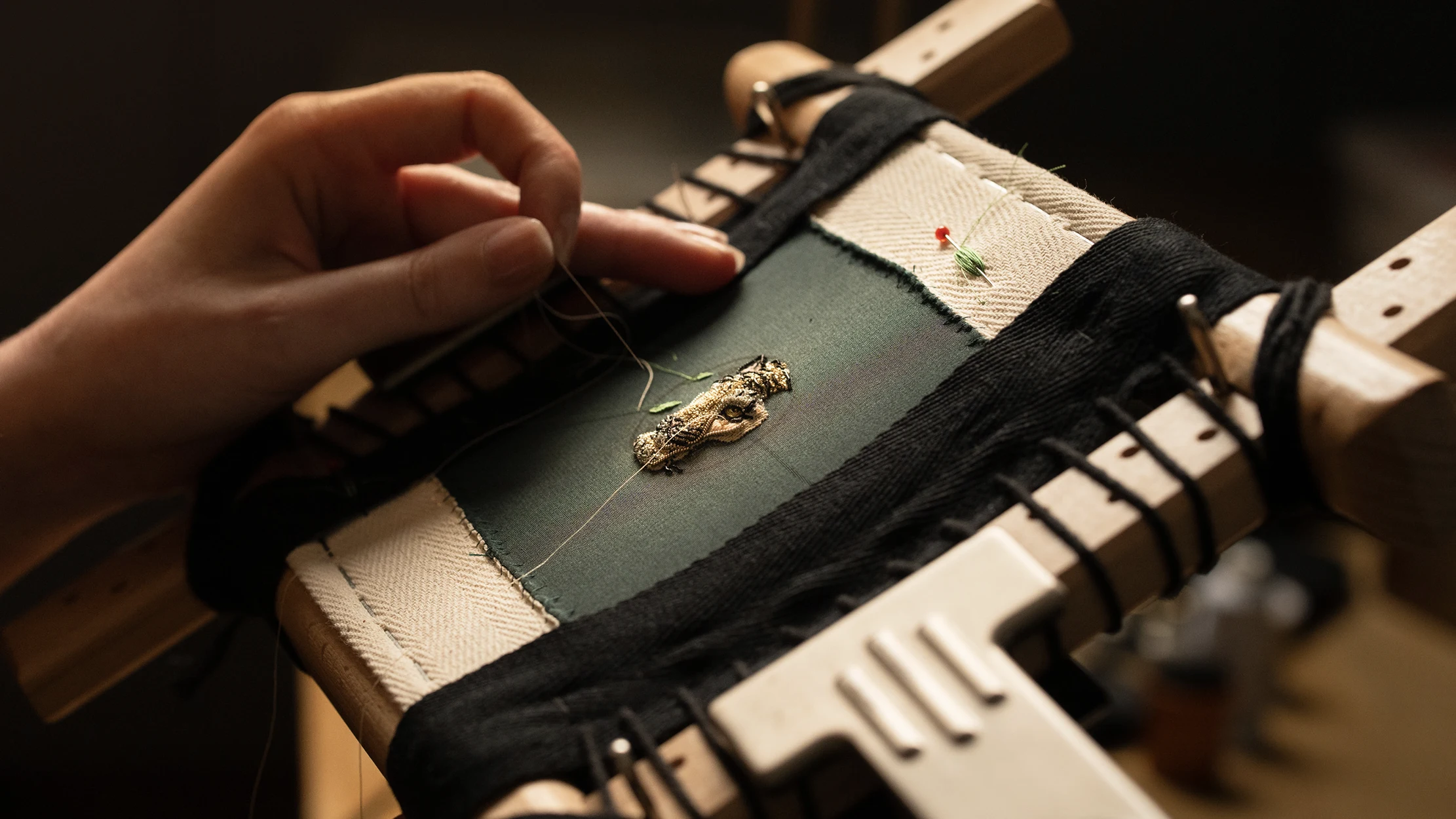
At its thickest, the embroidery could not exceed approximately three to four millimetres, around half the thickness Baverstock had previously employed in miniature goldwork. From preparing and stretching the silk to cutting the gold wires and assembling the final dial, the work required around 210 hours.
Baverstock, who has long been interested in natural forms, had also previously concentrated on animal faces rather than full bodies – her Panthera piece is well worth taking a look at – so the challenge of depicting a tiger in motion prompted further research through wildlife imagery and documentary footage. She describes the entire project as “a venture into the unknown” – an apt summary of the incubation process behind the collection.
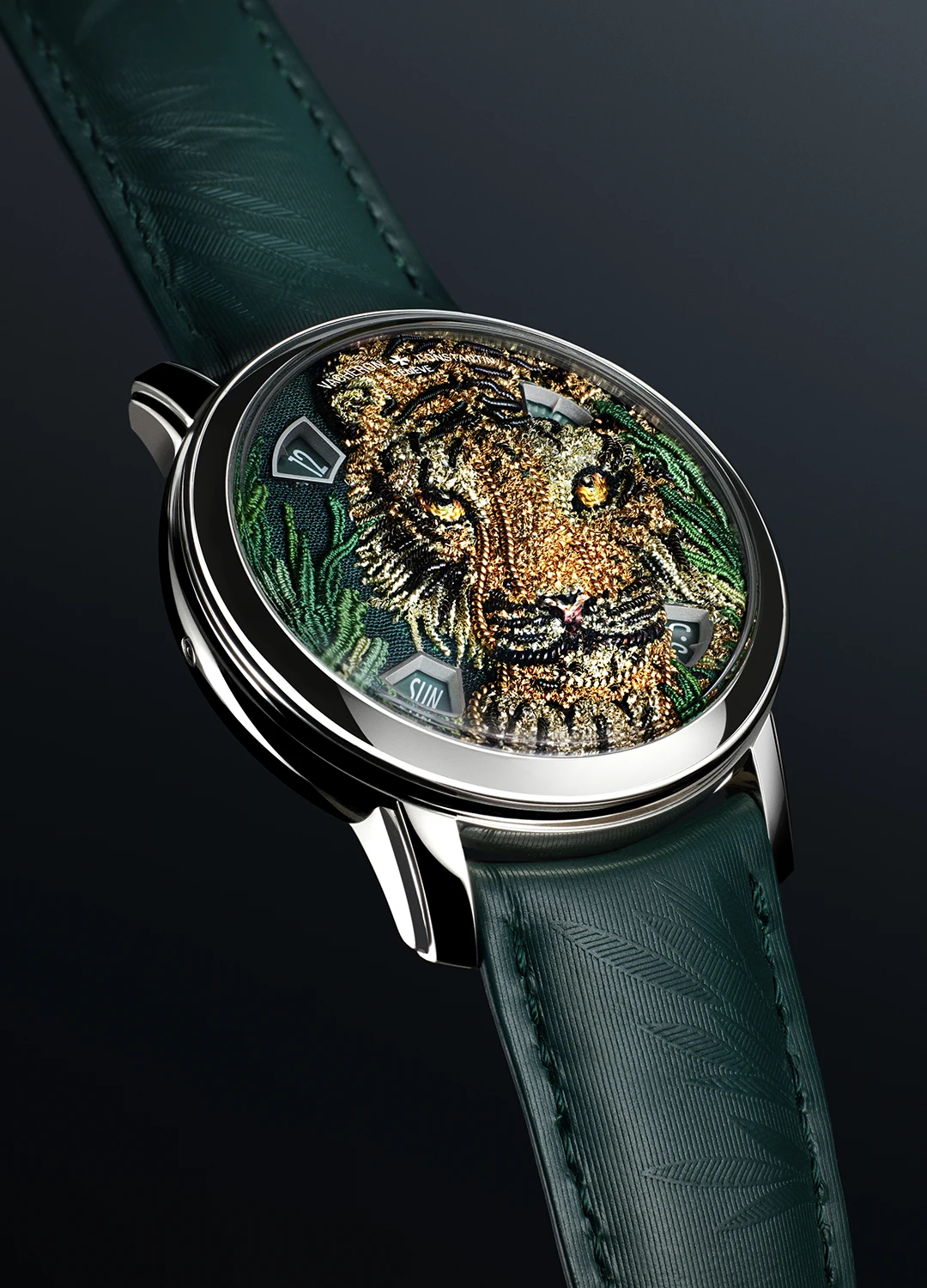
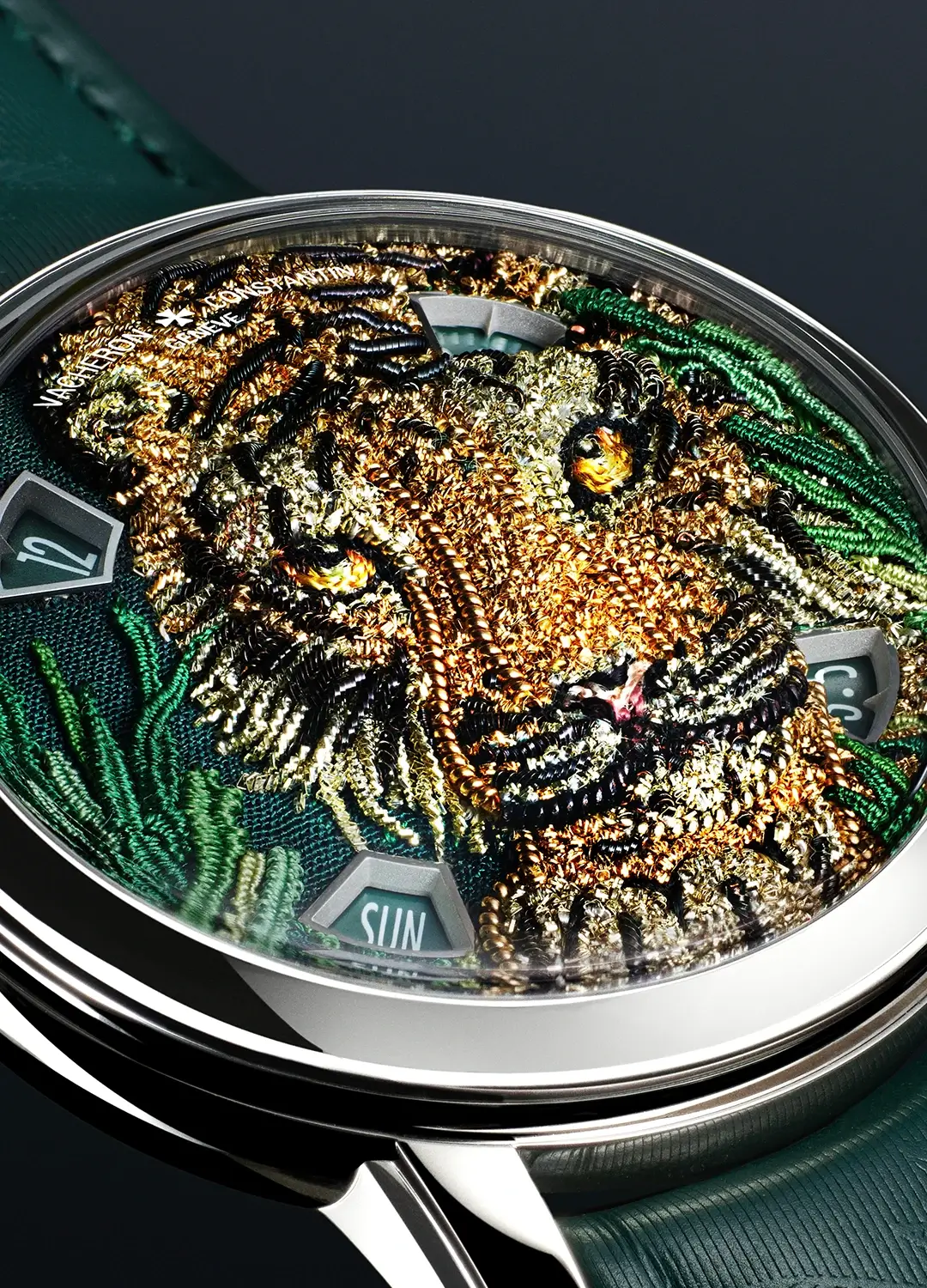
Reference 7630A/000G-H207 is housed in an 18-carat white-gold case measuring 42 mm by 12.9 mm, with a transparent sapphire crystal caseback and water resistance tested to 3 bar. The green silk and cotton dial base incorporates Japanese silk threads, 9-carat yellow- and white-gold embroidery, ceramic-coated copper wires and silk-embroidered eyes, all mounted on a coated brass structure. A green calfskin strap embossed with foliage and an 18-carat white-gold buckle complete what is arguably one of the collection’s most collector-oriented pieces.
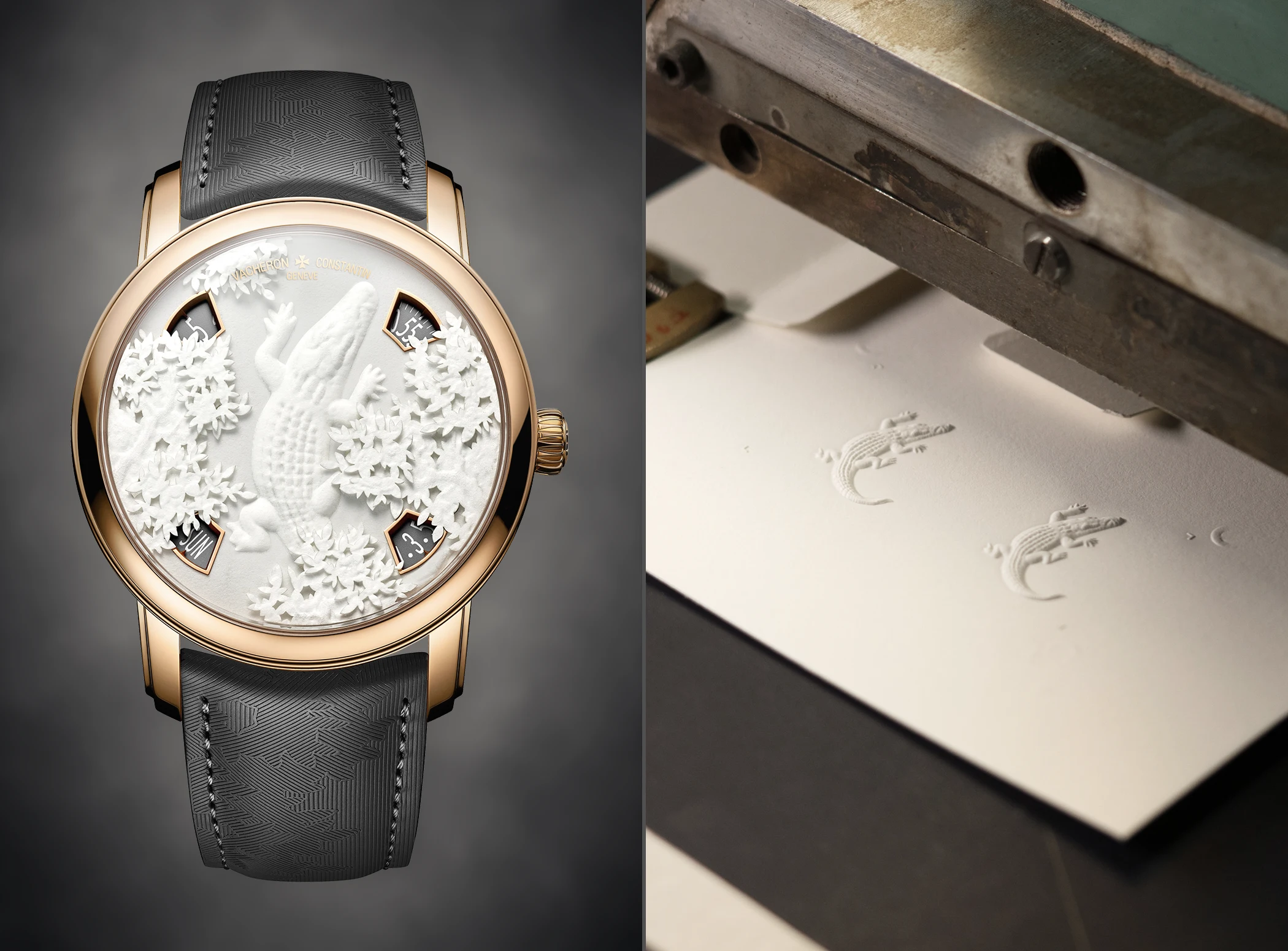
Against the saturated greens and blues elsewhere in the collection, the beautifully pristine Papercroc dial stands out precisely because it removes colour almost entirely. A white crocodile emerges through equally white vegetation, appearing at first glance to have been carved from porcelain. In reality, the entire composition is paper.
Paris-based artist Marianne Guély, originally trained in industrial design and known for paper sculptures ranging from monumental installations to minute objects, created the dial using white cotton paper in two different weights: 300 gsm for the crocodile and 250 gsm for the surrounding foliage. Embossing, laser cutting and hand assembly build a layered composition measuring only three millimetres high.
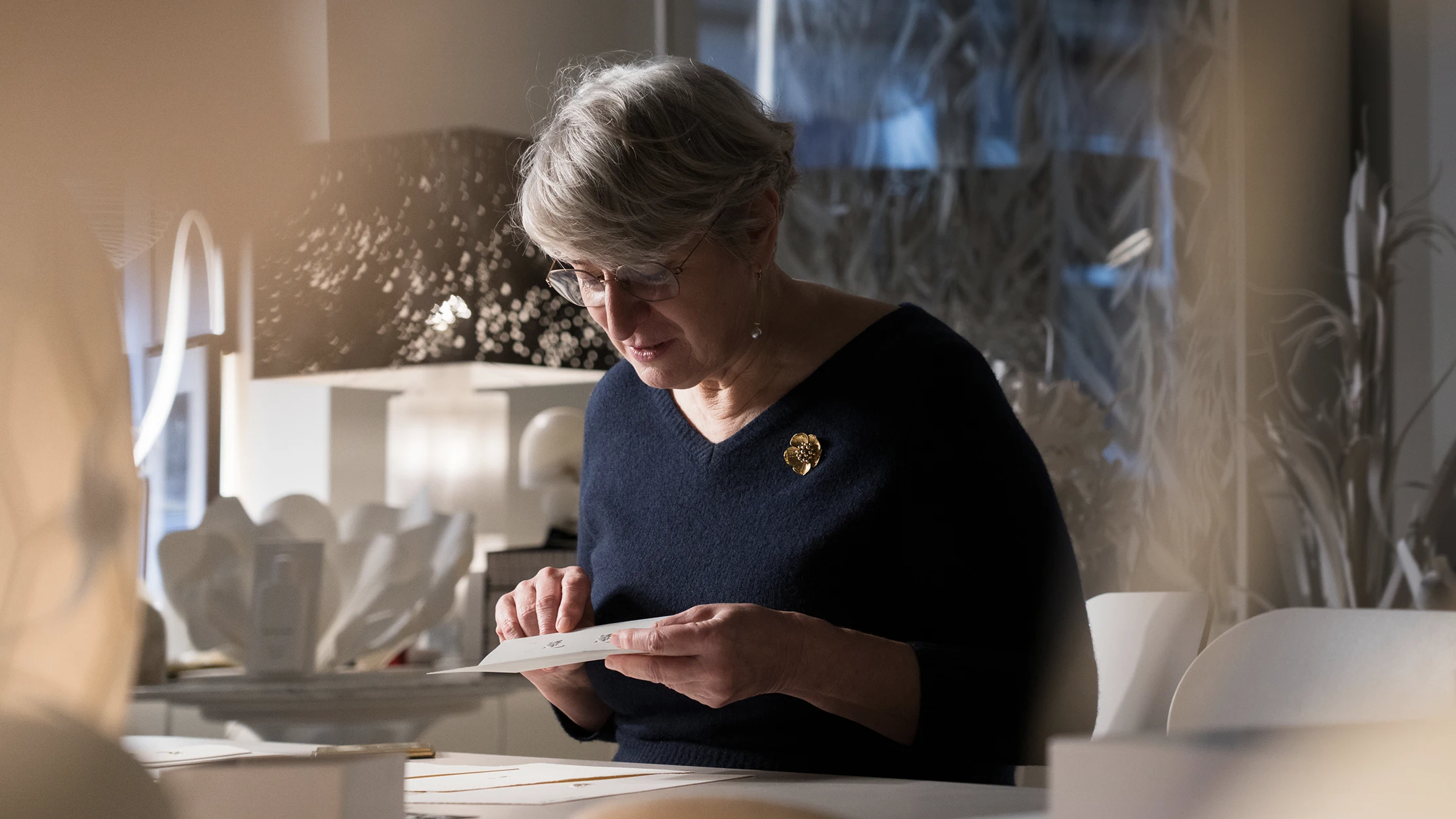
With virtually no colour contrast, the design relies on relief, texture, light and shadow. The crocodile needed sufficient volume to appear sculptural without exceeding the space beneath the crystal, while the vegetation risked becoming illegible at such a small scale.
Months of experimentation followed. Bespoke brass matrices engraved with the crocodile’s scales and foliage were heated to 60–70°C before being pressed into the paper under intense pressure. Different embossing tools, pressure calibrations and prototypes were tested until the foliage remained recognisable without becoming overly literal.
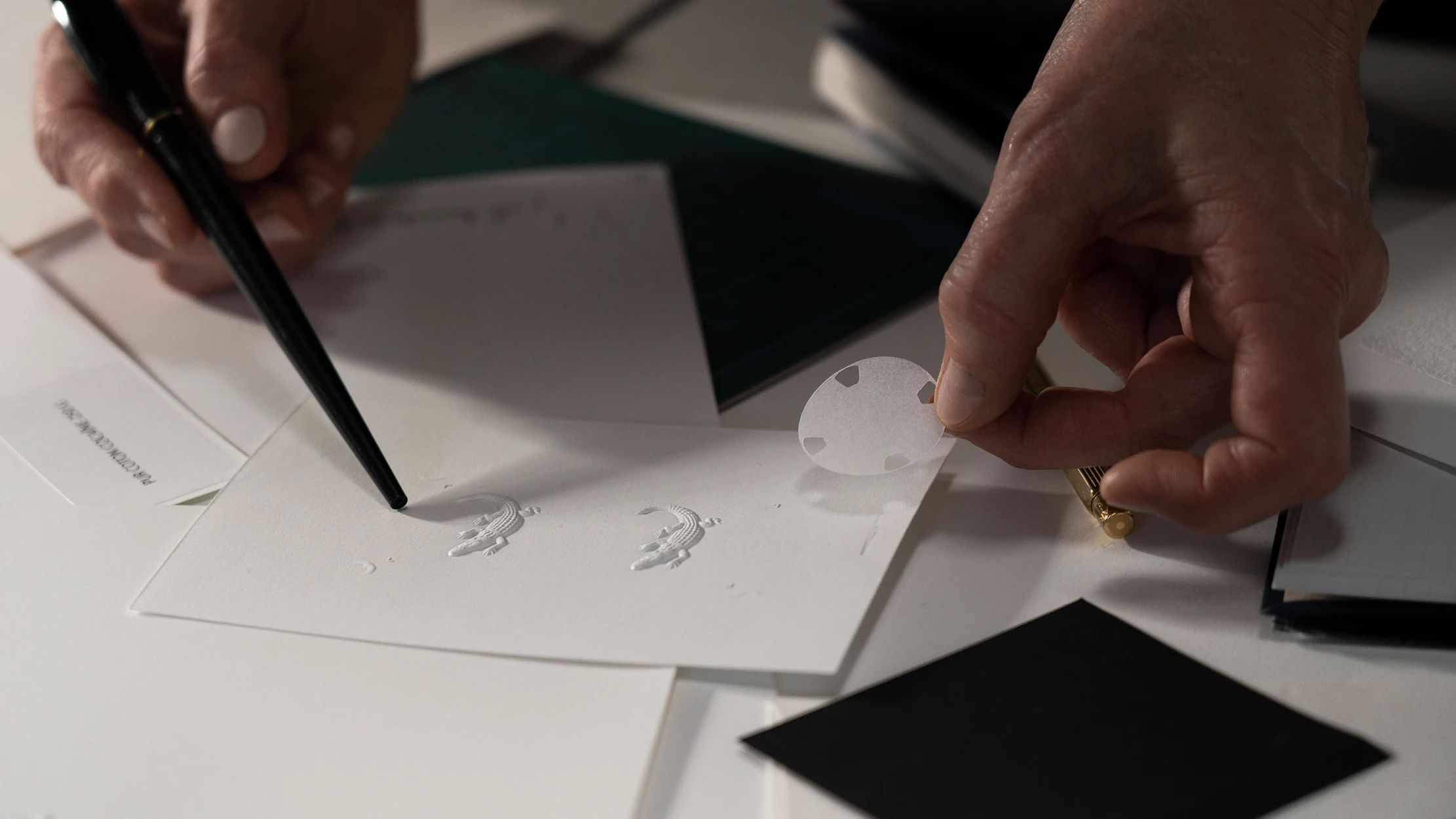
The material presented another challenge. Natural-fibre papers can fray, while the pressure of embossing risked tearing or warping them. After extensive testing, Guély selected an acid-free white cotton paper whose grain, grammage and velvety surface could withstand the process. Layering pieces in slightly different positions and dimensions then creates the subtle shadows that give the crocodile its sculptural presence. The four display apertures were incorporated into the composition, with the animal appearing to nestle naturally between them.
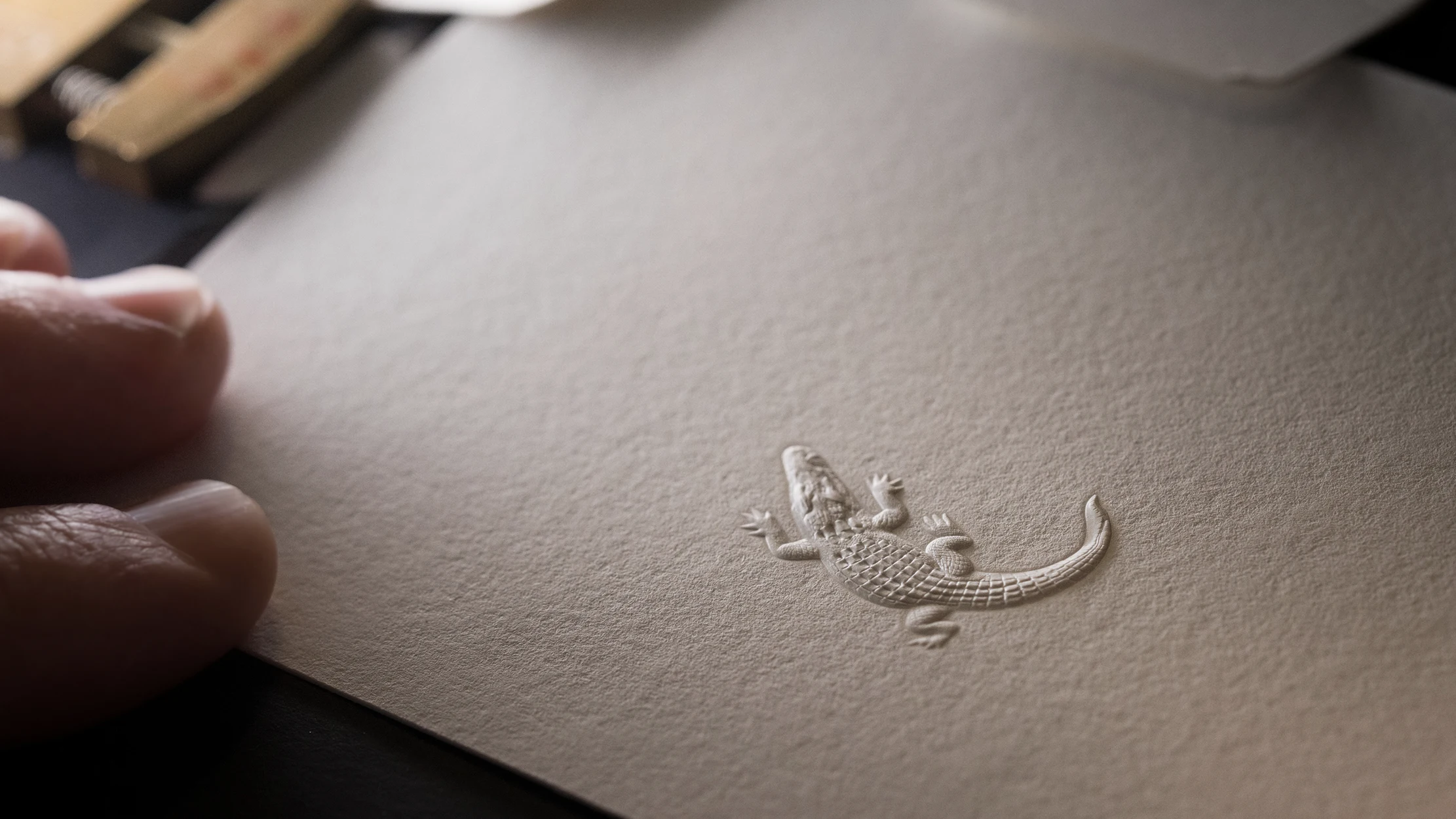
The collaboration extended beyond Vacheron Constantin and Guély’s own studio. When microscopic burrs appeared along the edges of laser-cut natural fibres, the Maison connected her team with specialists in ultra-precise laser cutting. Guély points out that the tiny finished sculpture is therefore the product of a much broader network of craftspeople, artists and technicians – exactly the sort of exchange the ‘One of Not Many Crafts Programme’ was created to encourage. With its incredible artistic background not quite apparent at first glance, there’s no doubt this minimalist piece will win the hearts of the Vacheron collector community.
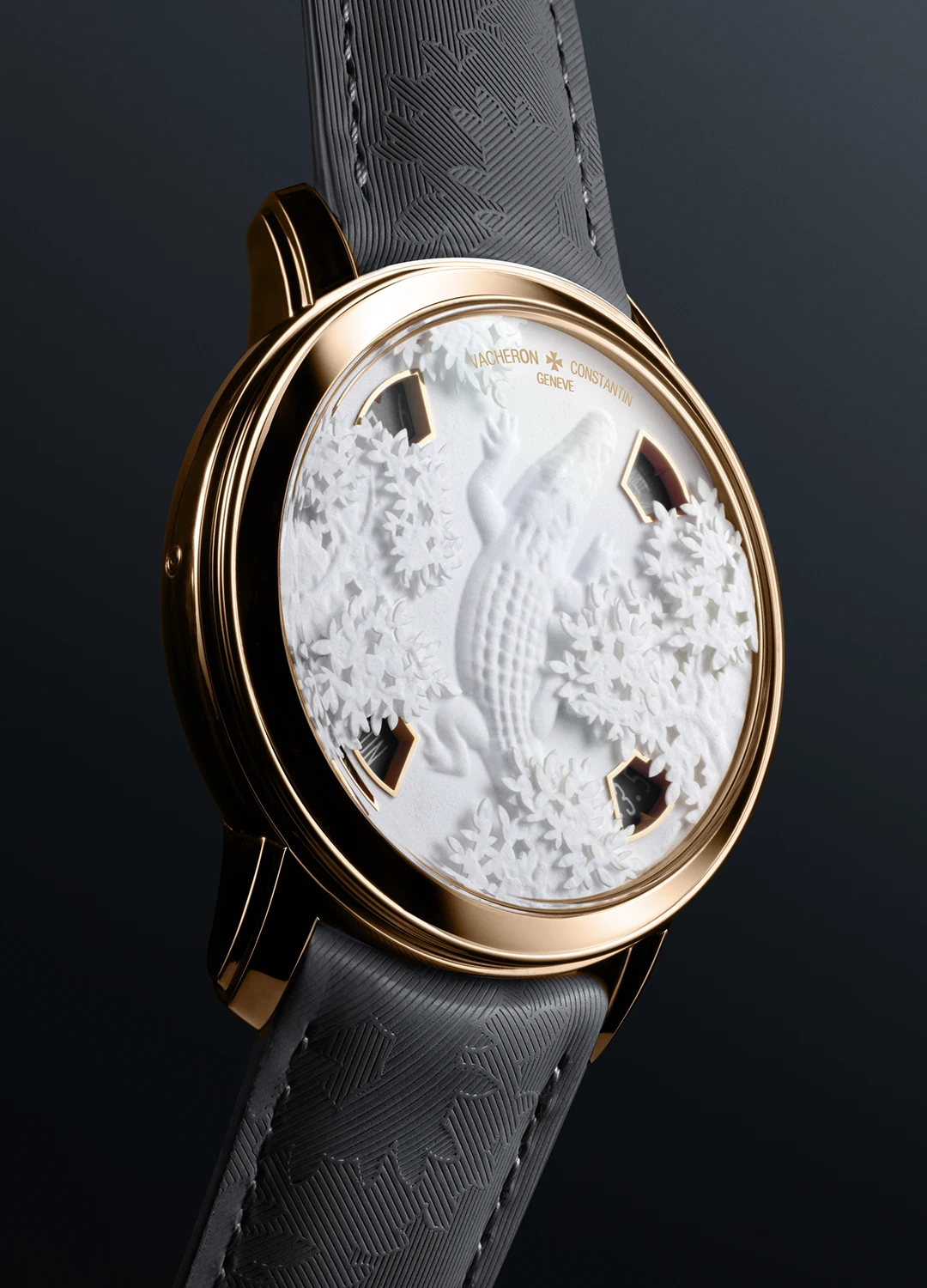
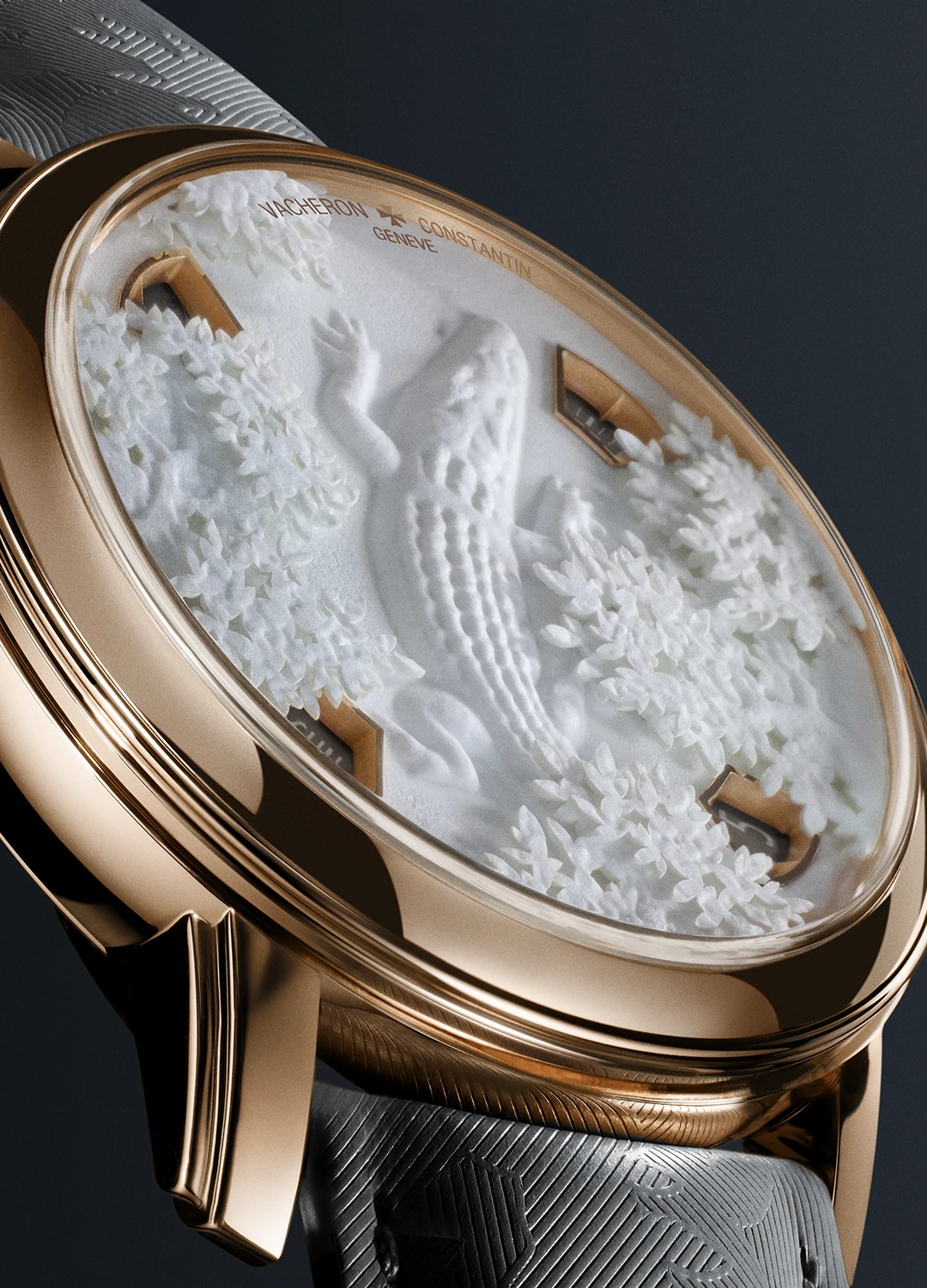
Reference 7630A/000R-H202 pairs the monochromatic dial with an 18-carat 5N pink-gold case measuring 42 mm by 12.9 mm, a transparent sapphire crystal caseback and water resistance tested to 3 bar. The frameless embossed crocodile is made from 300 gsm white cotton paper, the embossed and cut foliage from 250 gsm paper, with the composition sitting on a coated brass structure. A grey calf leather strap embossed with foliage and an 18-carat pink-gold buckle maintain the restrained aesthetic.
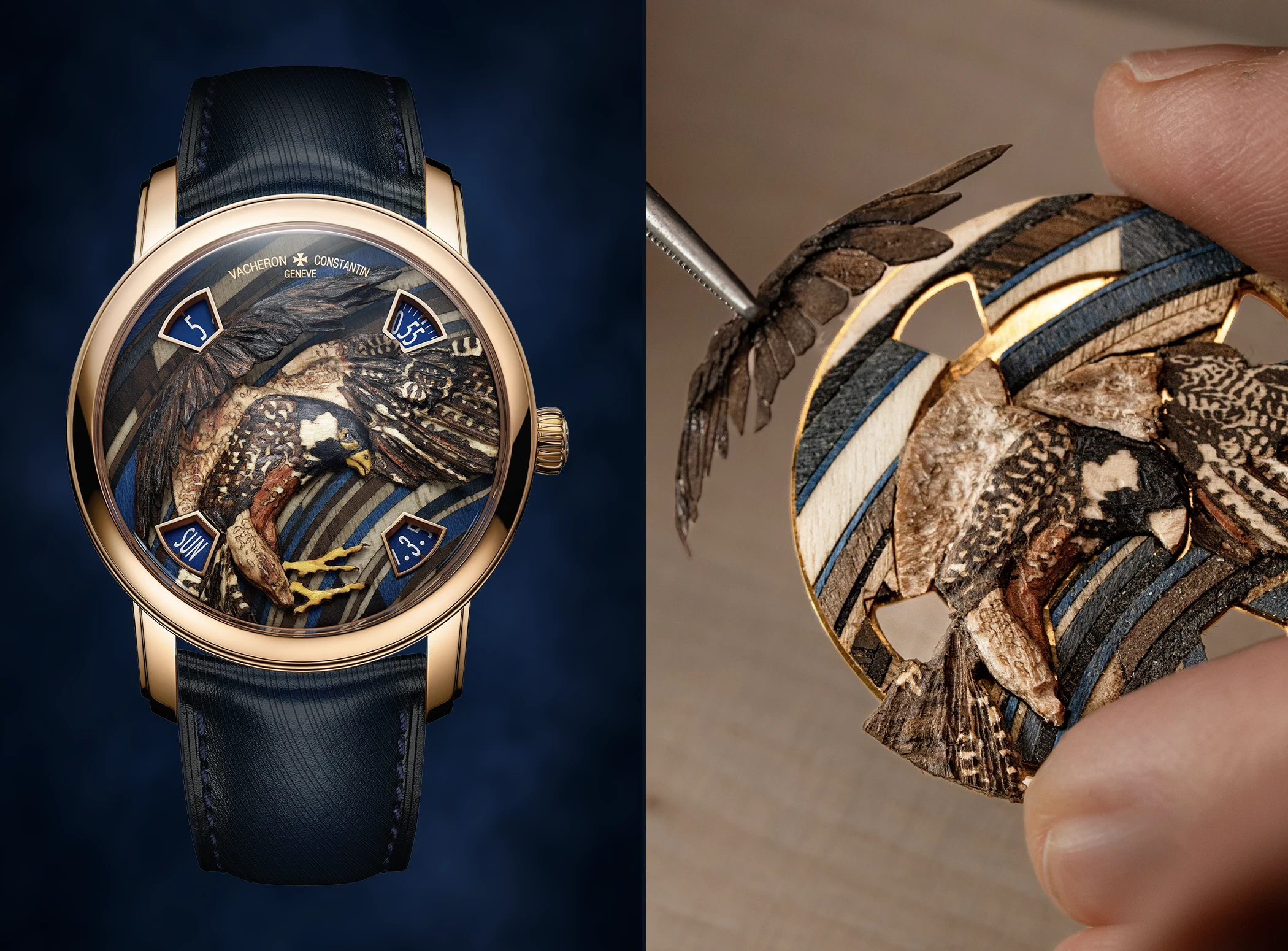
Finally comes Woodenwings, where a fierce falcon seems caught in the split second before taking flight. The natural grains, earthy tones and sculptural wing give it an almost monumental quality despite the tiny dimensions – a wilderness scene compressed onto the wrist.
Created by Anna Le Corno, an architecturally trained graduate of Paris’s École Boulle, the falcon uses 12 different wood species with contrasting grains, colours and textures: figured birch, spalted horse chestnut, lacewood sycamore, ziricote, yellow pearwood, tulipwood, ash, birch, madrone burl, smoked eucalyptus, smoked oak and plane tree. Dyed wood, including dark blue-dyed birch, brings brighter colour into the otherwise natural palette.
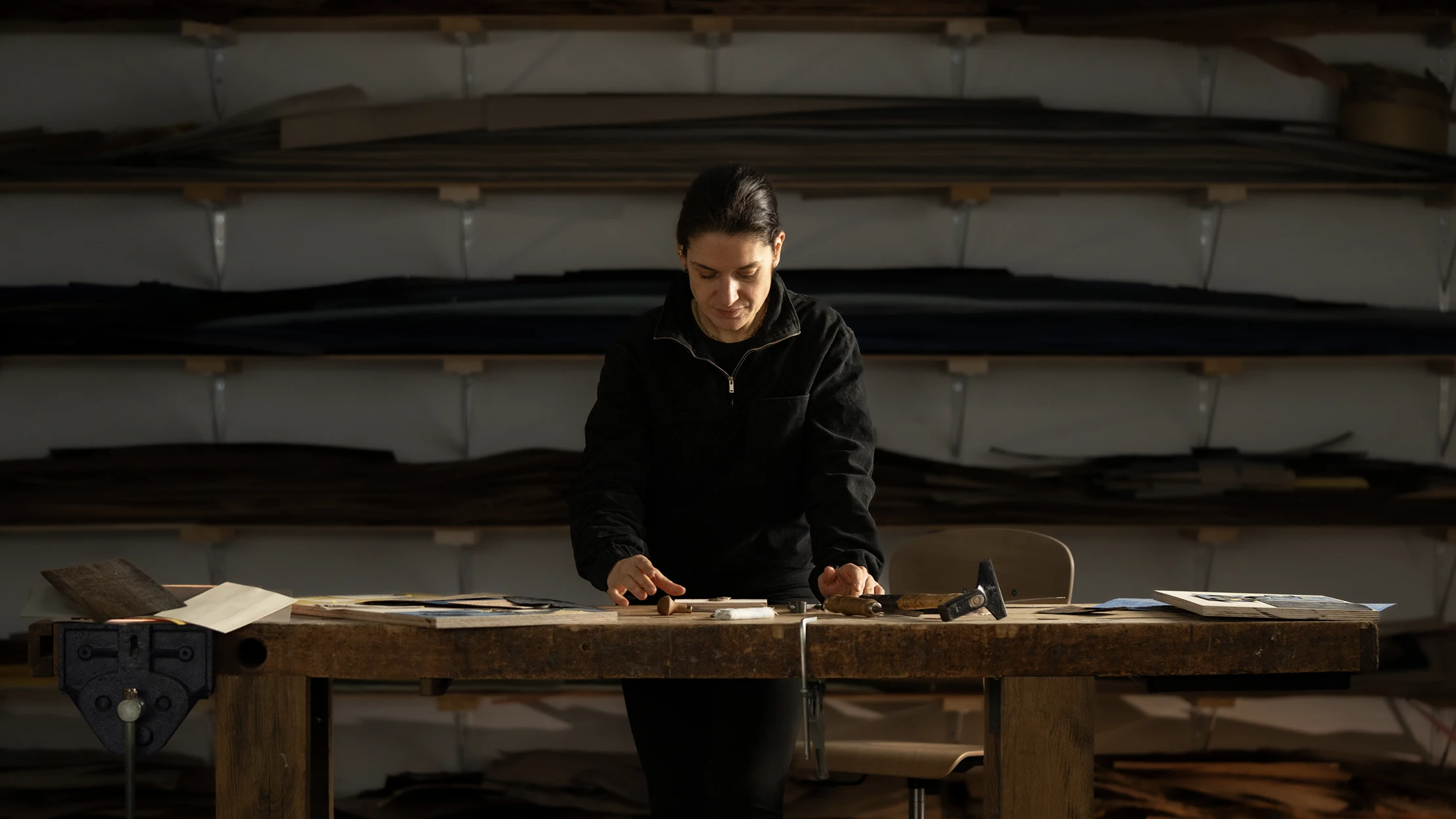
Three forms of marquetry create the dial. Circular marquetry, adapted from furniture making, forms the abstract concentric background. Sculpted layered marquetry builds the falcon’s body from veneers assembled into a sandwich-like structure and subsequently carved by hand. Finally, a new ‘feather-by-feather’ assembly technique was developed specifically for the wing.
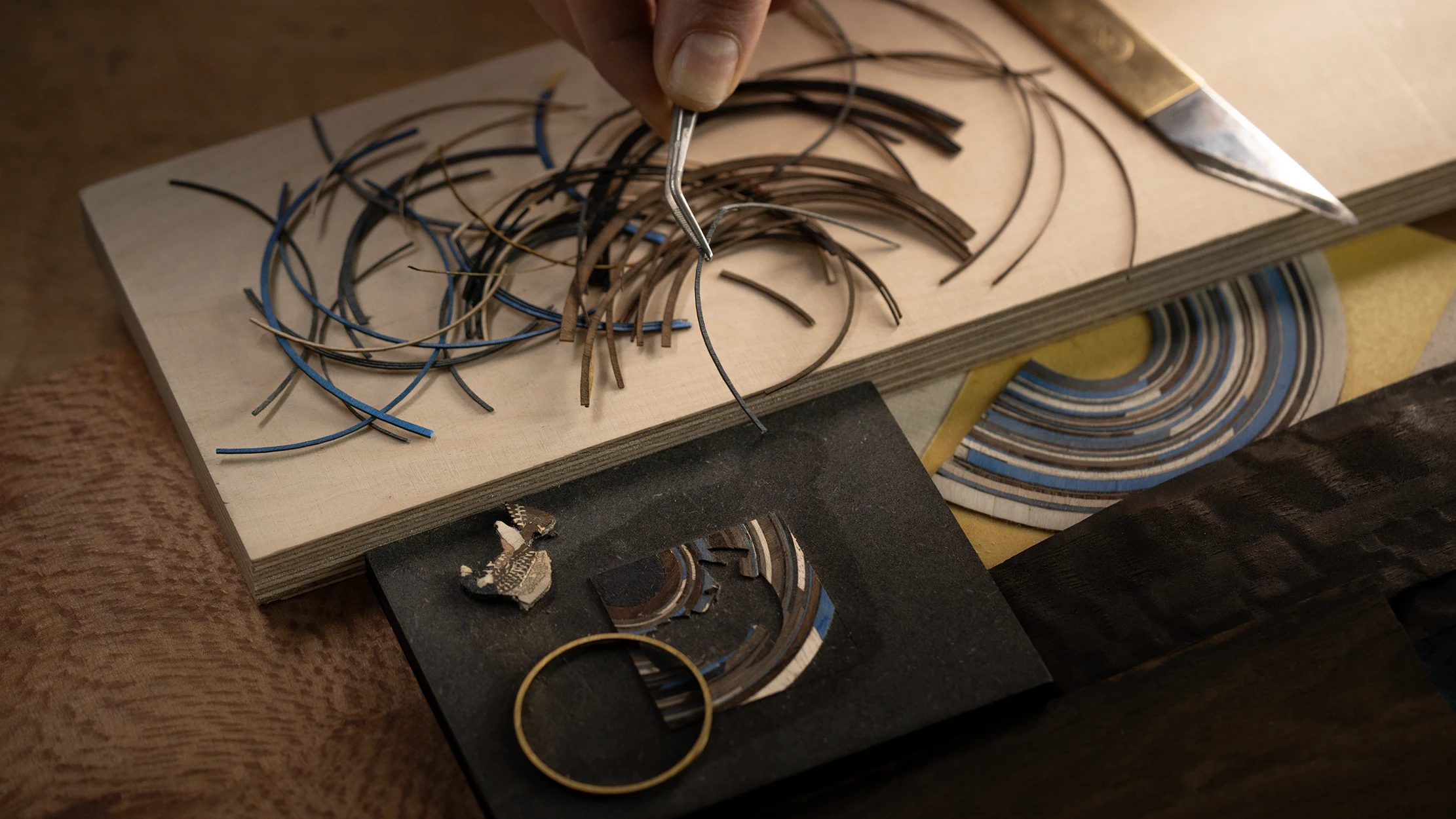
Again, traditional tools became unusable at this scale. Le Corno turned instead to surgical-style scalpels, microscopic carbide bits sourced from Japan and the US, and custom-made sanding tools assembled in her studio. Much of the work was carried out under binocular magnification, forcing an artist accustomed to large furniture and sculptural objects to completely recalibrate her movements.
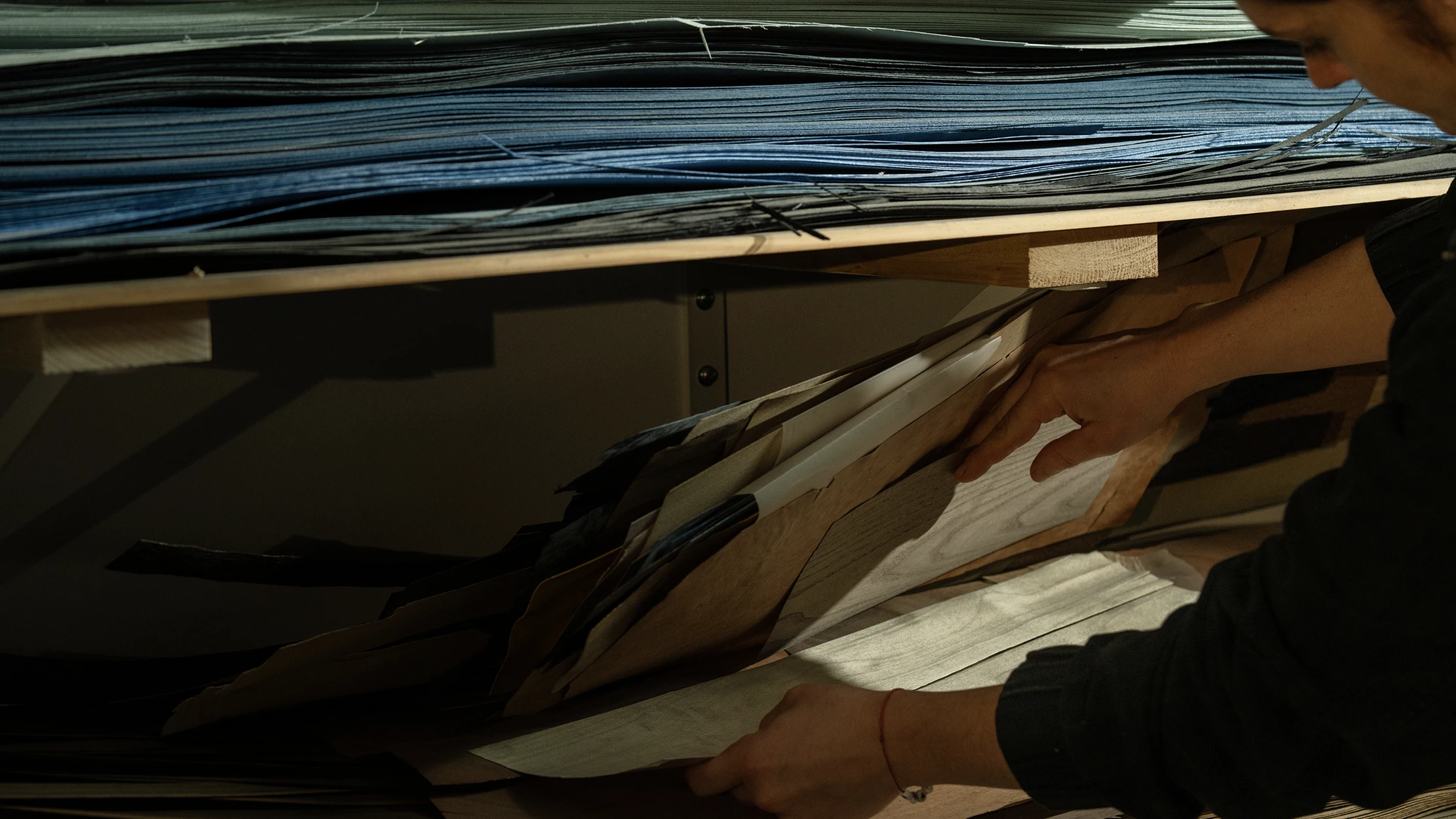
The finished composition is only three millimetres high. The curved feathers of the wing are cantilevered above the dial, their tips reaching the very limit of the available space beneath the crystal. The wood itself also had to be reconsidered: species perfectly suited to furniture could become too fibrous or fragile at microscopic scale, meaning structural behaviour and density became as important as colour and grain. The four indication apertures were incorporated into the composition from its earliest stages.
For Le Corno, the experimentation also revealed new possibilities in a material she already knew intimately. Ideas that seemed merely theoretical proved workable at microscopic scale, often producing unexpected effects and prompting further experimentation as the project developed.
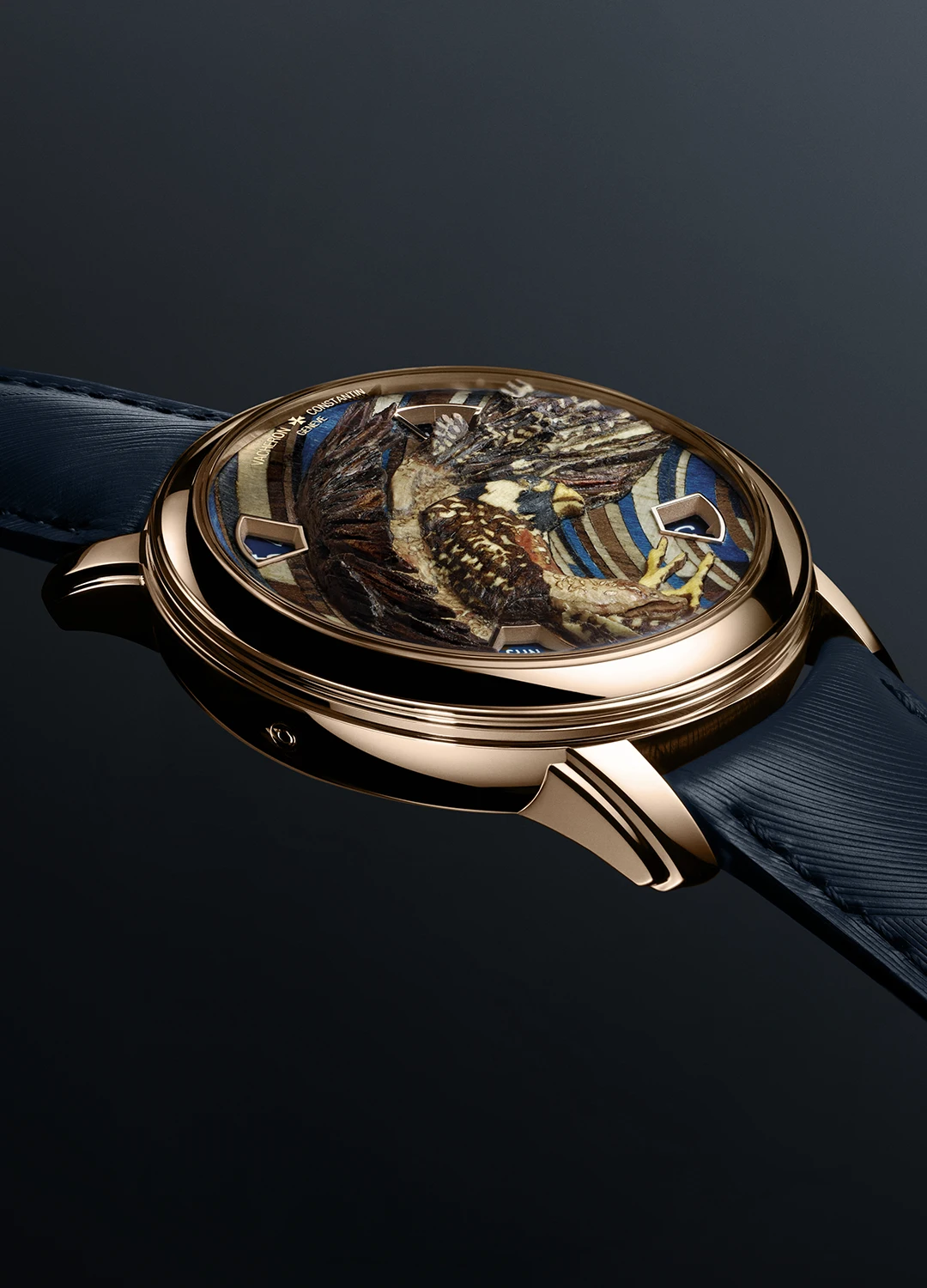
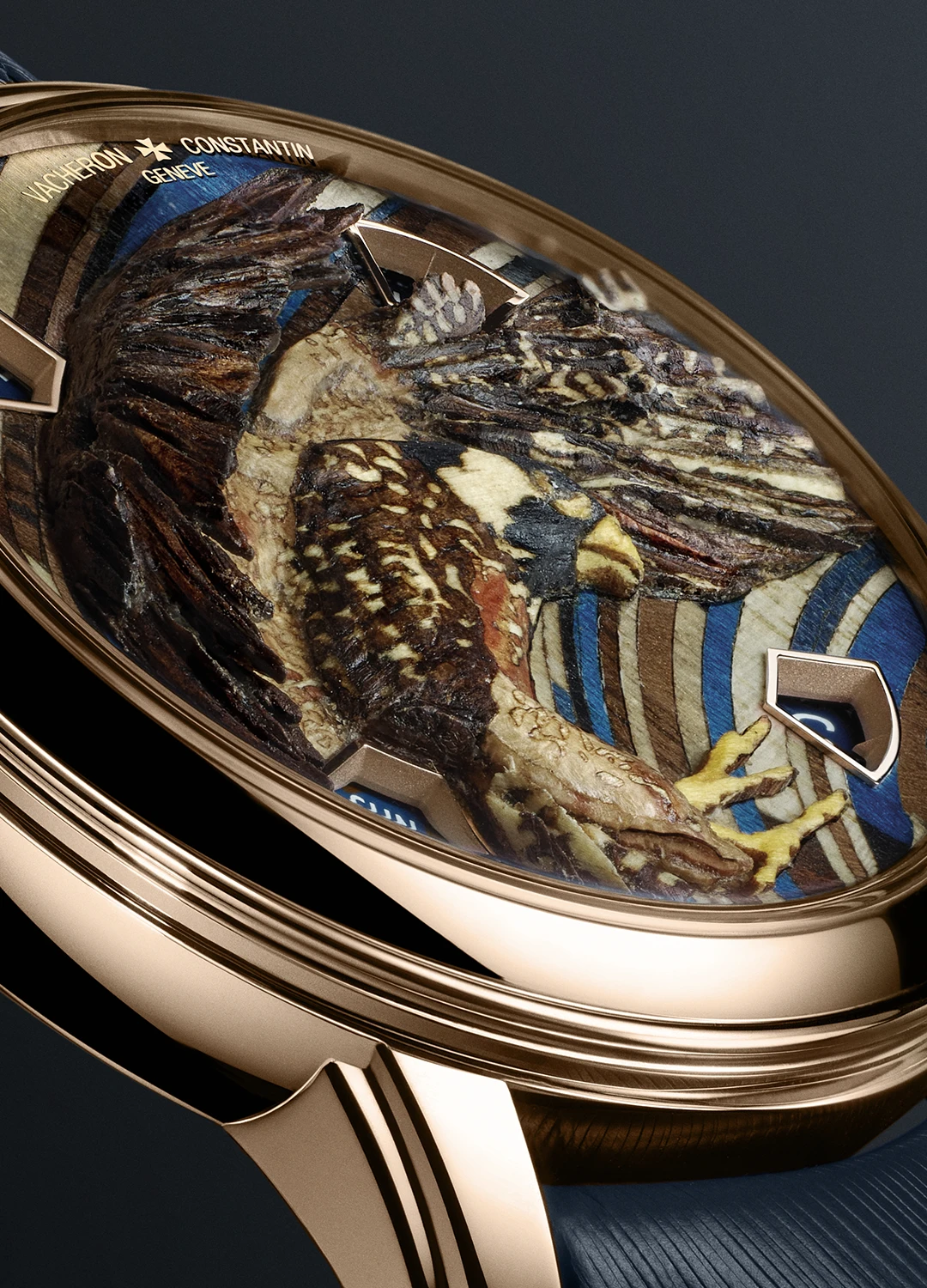
Reference 7630A/000R-H203 has an 18-carat 5N pink-gold case measuring 42 mm in diameter and 12.9 mm thick, with a transparent sapphire crystal caseback and water resistance tested to 3 bar. The hand-sculpted marquetry is mounted on a coated brass structure, while a blue calf leather strap embossed with striped decoration is secured by an 18-carat pink-gold buckle.
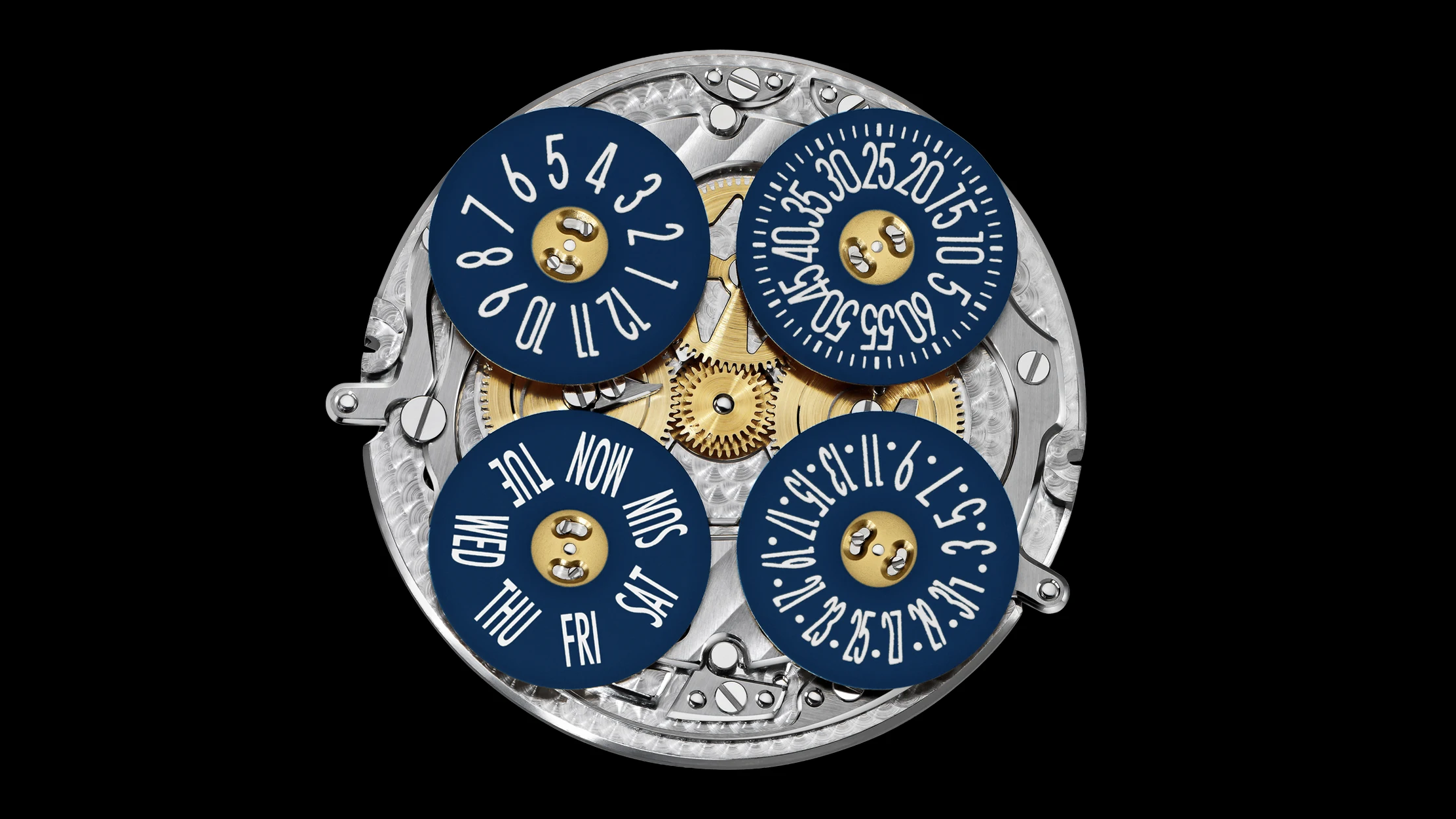
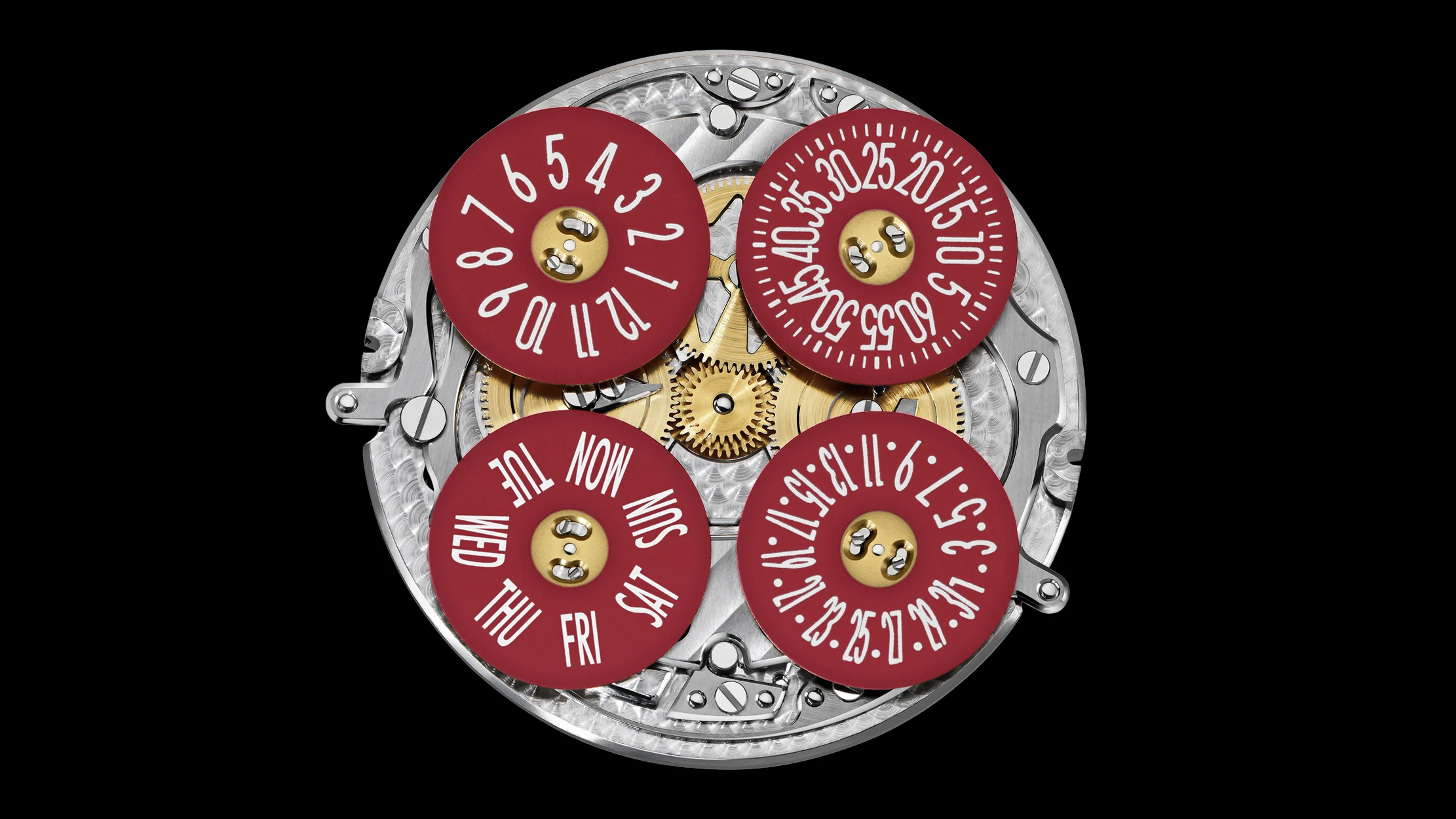
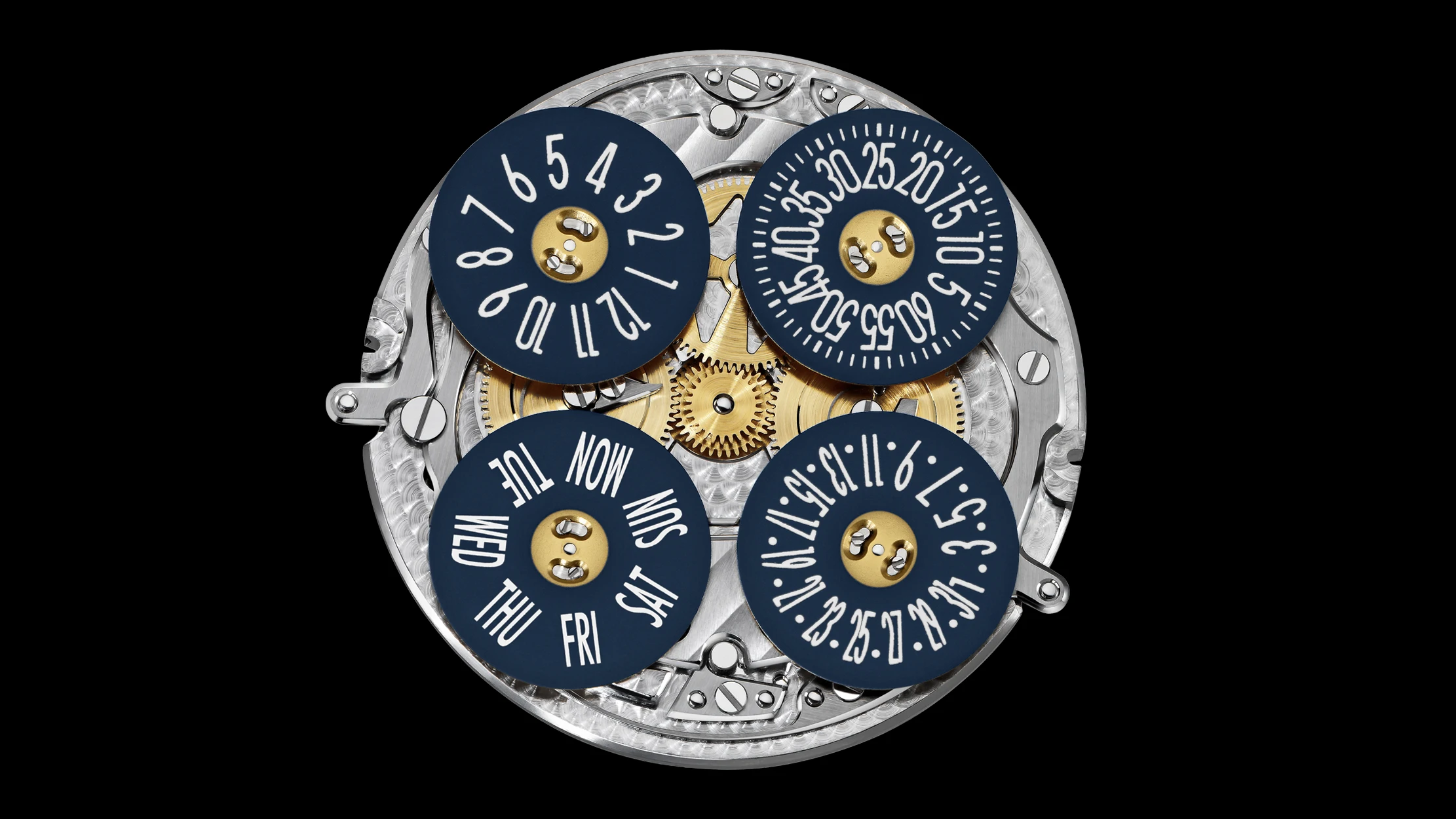
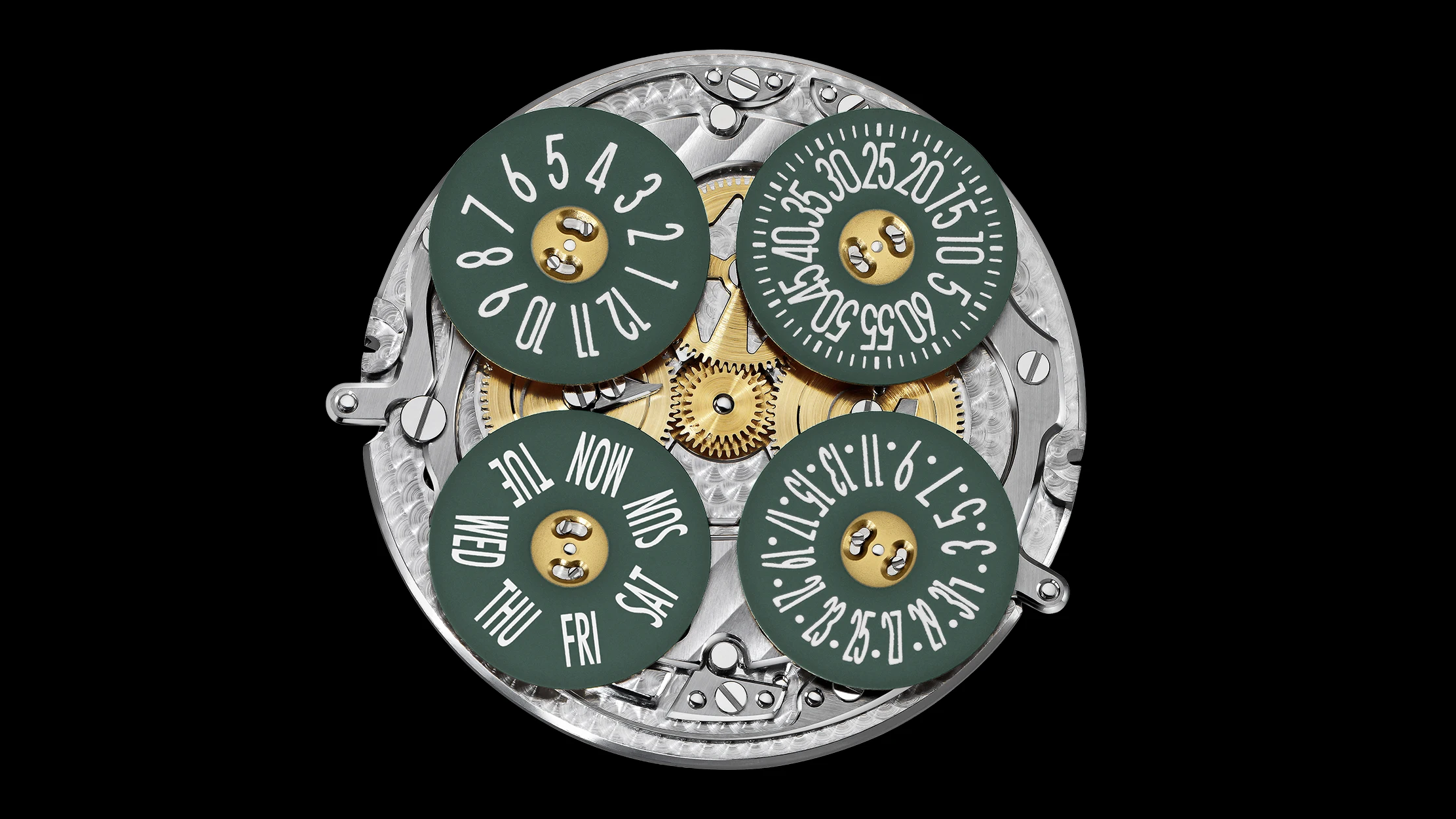
All six watches are powered by Vacheron Constantin’s self-winding Calibre 2460 G4, and its architecture is fundamental to the project. Rather than placing conventional hands across the centre of the dial, the calibre displays the hours, minutes, day of the week and date through four apertures, as is most immediately evident on the Feathersnake edition. The central surface is consequently left free for the artists – a practical detail when your dial contains everything from cantilevered wooden feathers to a glass octopus. Vacheron Constantin’s watchmakers also adapted the calibre’s features and finishes to integrate with the overall aesthetic of the pieces.
The mechanical, self-winding movement measures 31 mm in diameter and 6.05 mm thick, contains 237 components and 27 jewels, beats at 4 Hz and provides a 40-hour power reserve.
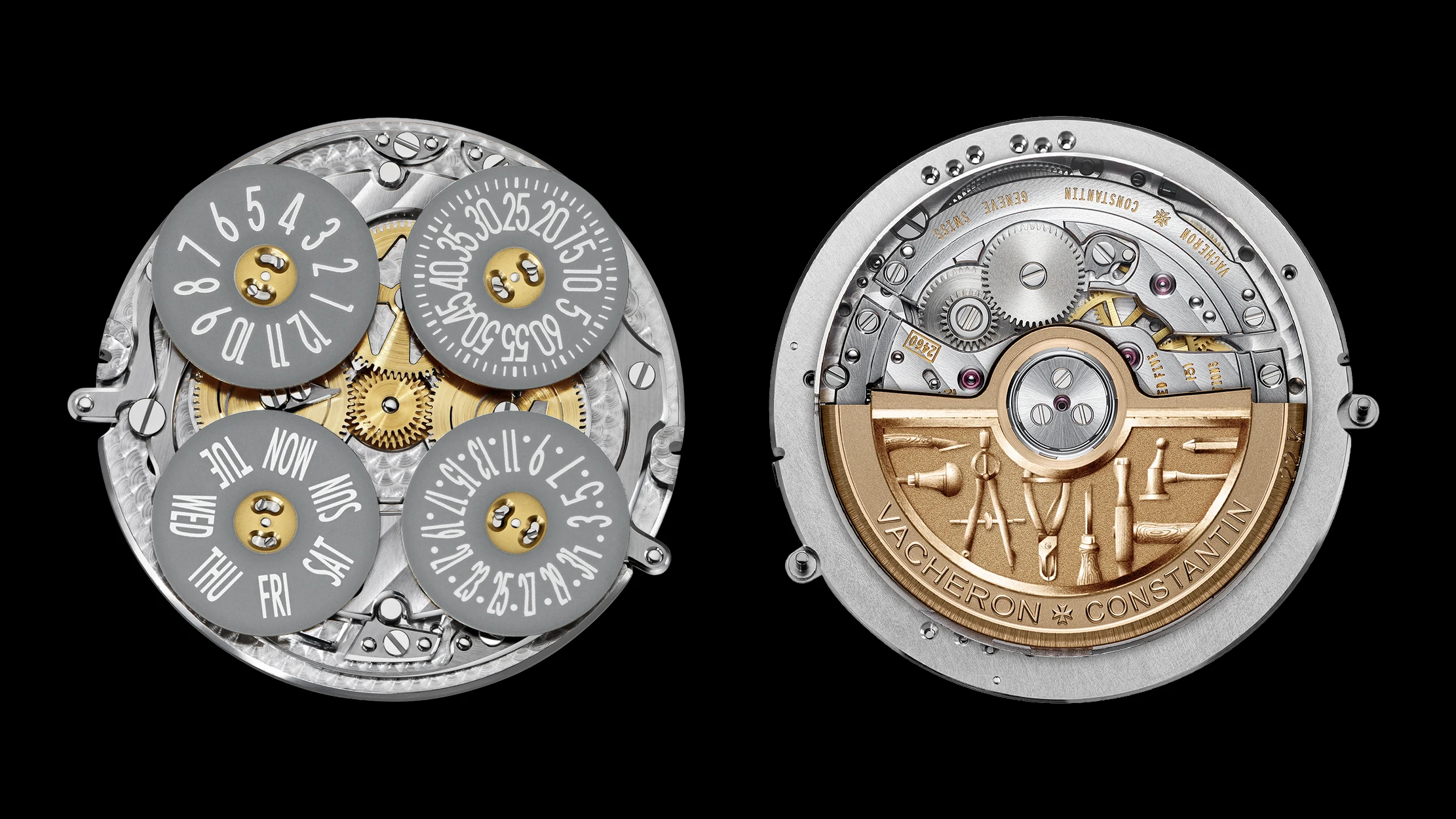
There is one further detail shared by the six watches. Each calibre receives a specially designed 22-carat gold oscillating weight, hand-engraved with motifs inspired by the tools used by master artisans. Visible through the sapphire crystal caseback, it brings the collection’s celebration of craft onto the movement itself. It’s an unusual and beautifully artistic touch, and reminds us of how Vacheron Constantin, despite its global reach and formidable status as a watchmaker, continues to treasure not only the crafts and independent artists, but the tradition and creativity behind them.
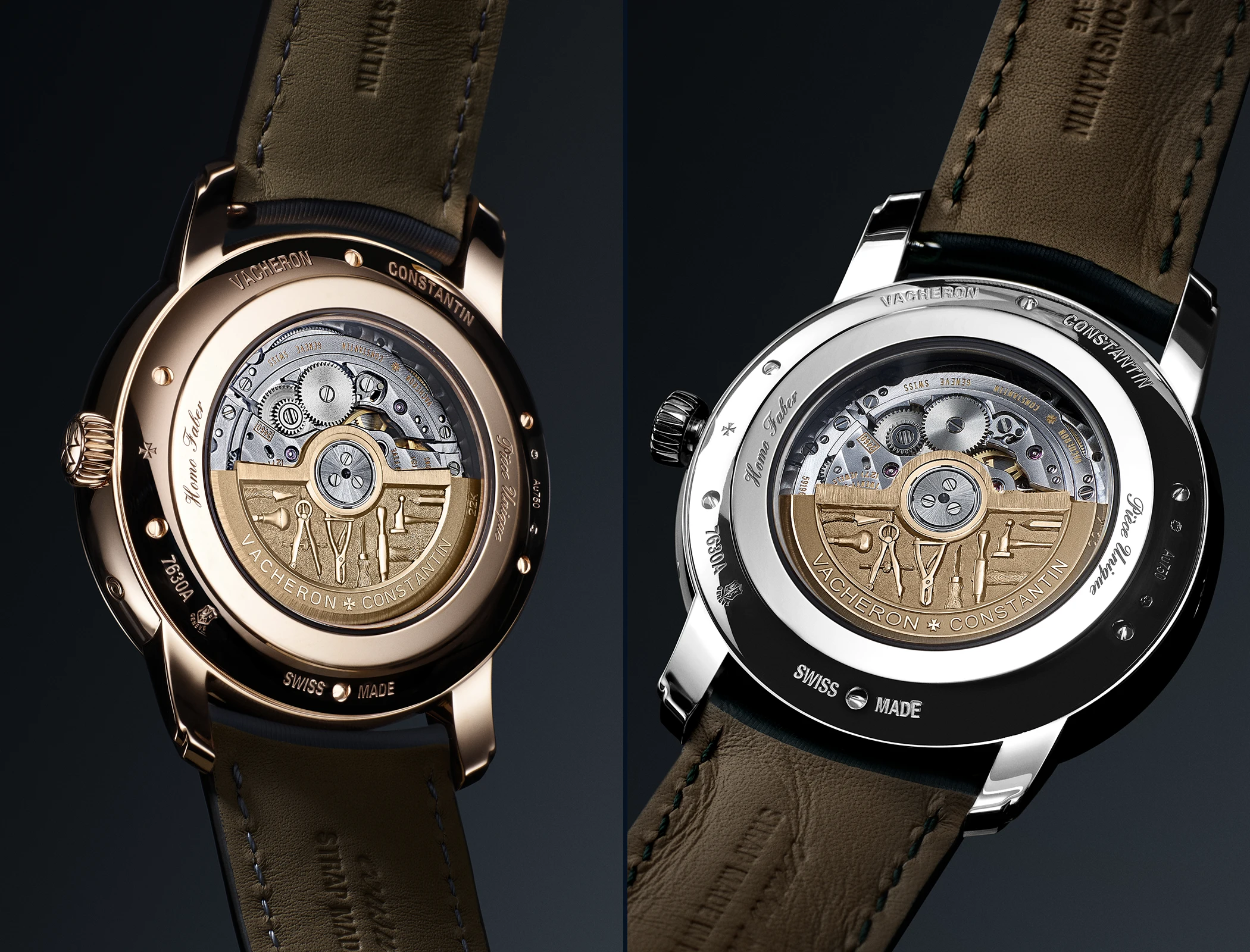
With dials this elaborate, the straps could easily have been allowed to become an afterthought. Fortunately, Vacheron Constantin did no such thing. Each watch receives a dedicated calf leather strap embossed with a motif echoing its dial: vegetal forms for Feathersnake, octopus tentacles for Glassoctopus, waves for Oraygami, foliage for Tigerbroidery and Papercroc, and stripes for Woodenwings. Together with the specially engraved oscillating weights, they form the two design elements connecting the otherwise very different watches.
As with the tools on the movement’s rotor, the straps are a playful and imaginative touch – one can imagine they were rather fun for Vacheron Constantin’s designers to devise. More importantly, they prevent the craftsmanship from ending abruptly at the case, with the visual language subtly continuing onto the wrist.
Of course, animals themselves are nothing new at Vacheron Constantin. Nature and fauna have long provided the Maison’s artisans with opportunities to develop and combine different crafts.
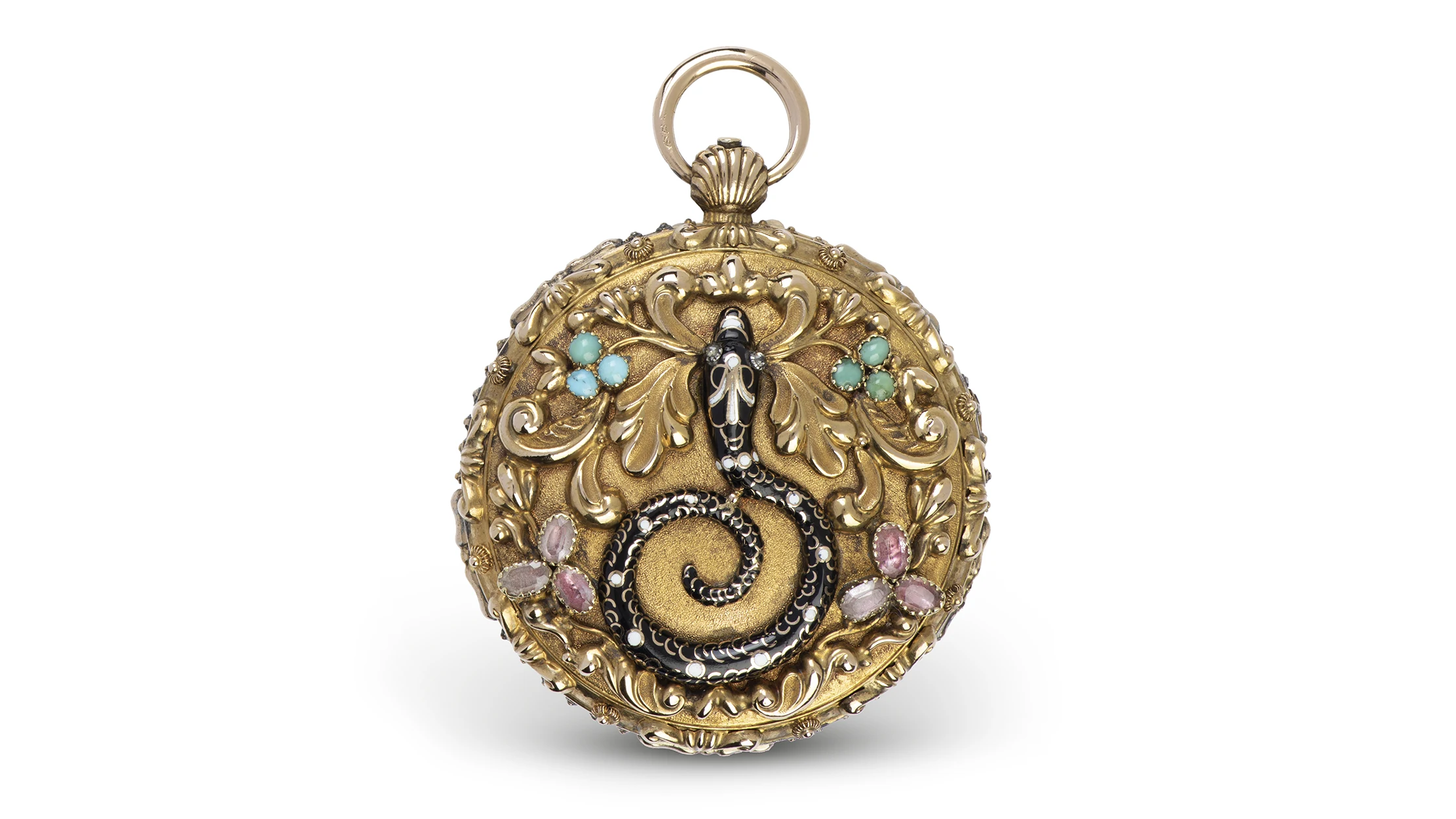
An 1826 18-carat yellow-gold pocket watch, reference 10200, combined a black enamel serpent with turquoise and amethyst relief decoration, a silver dial with 12 Roman numerals and a 17-ligne key-wound movement. By this period, Vacheron Constantin was already producing numerous objects decorated using artistic crafts.
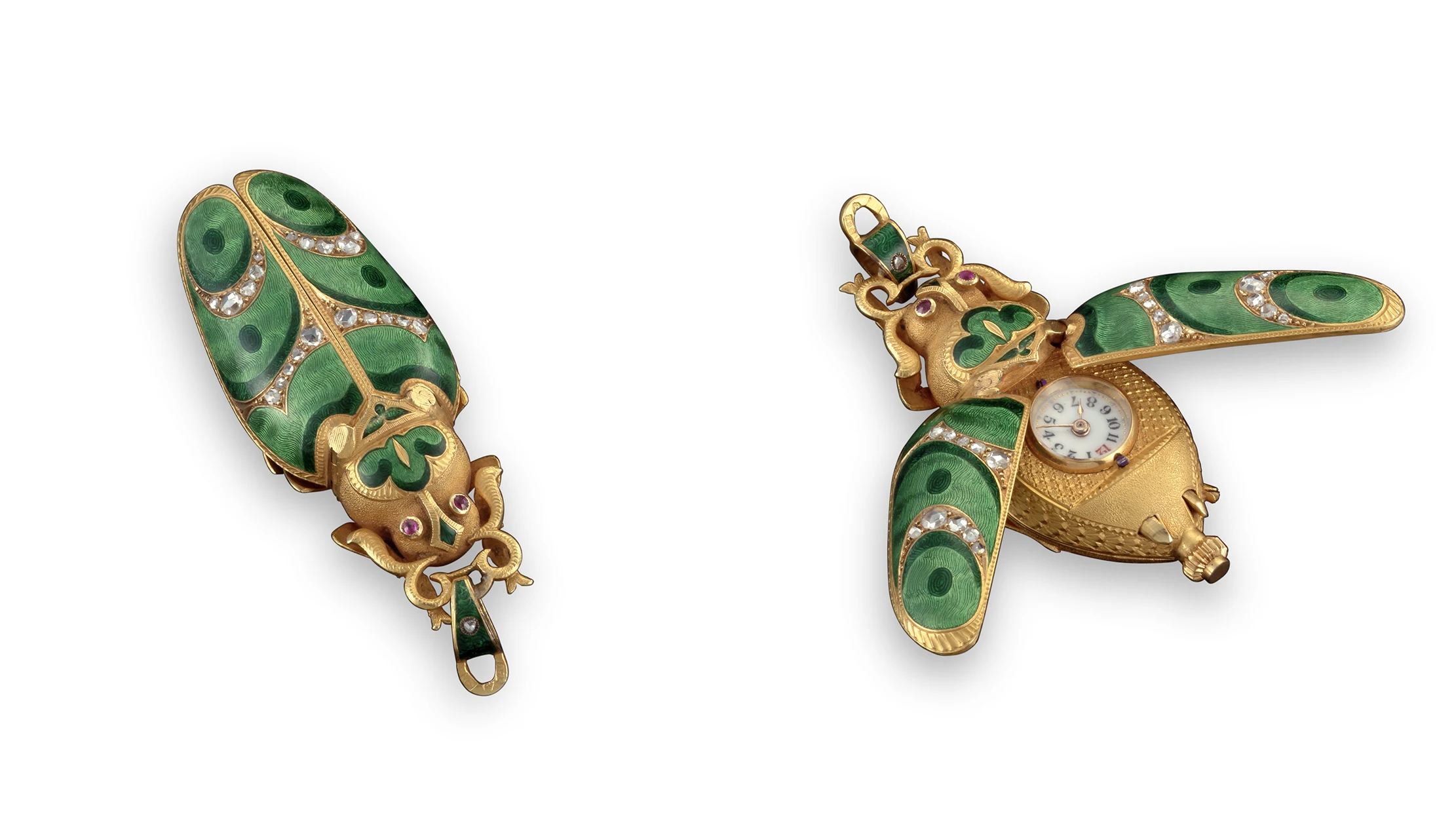
In 1910, reference 10556 took the form of an 18-carat yellow-gold scarab pendant watch with green and black enamel wings set with diamonds and rubies. Opening the wings revealed a white enamel dial with Arabic numerals and a 7-ligne manual-winding movement.
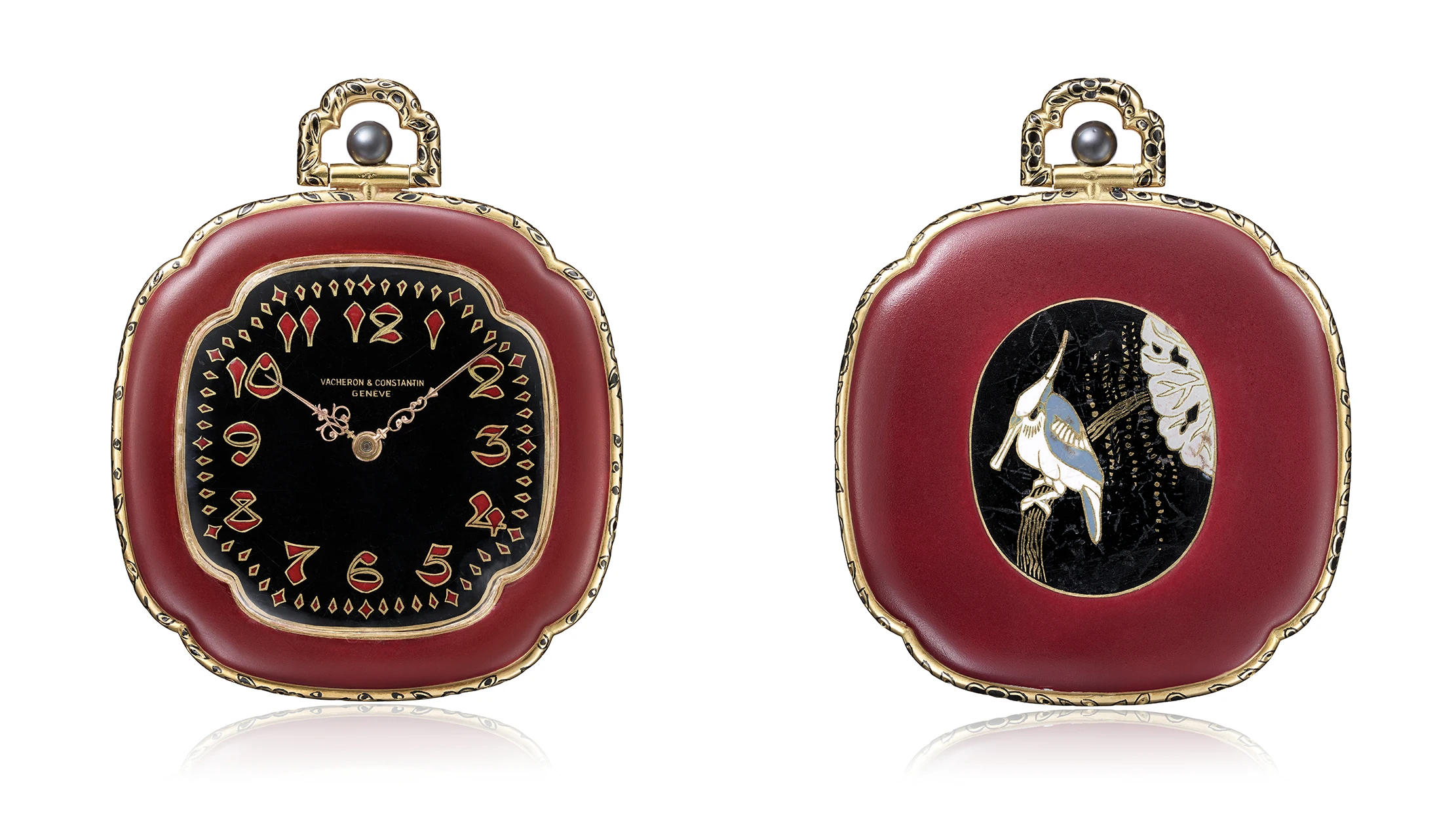
A 1923 yellow-gold pocket watch, reference 10222, meanwhile used Chinese lacquer to depict a bird in an Art Deco composition, reflecting Vacheron Constantin’s work with Ferdinand Verger and later Verger Frères, as well as the period’s fascination with Asian art and the decorative traditions of ancient Egypt and Greece.
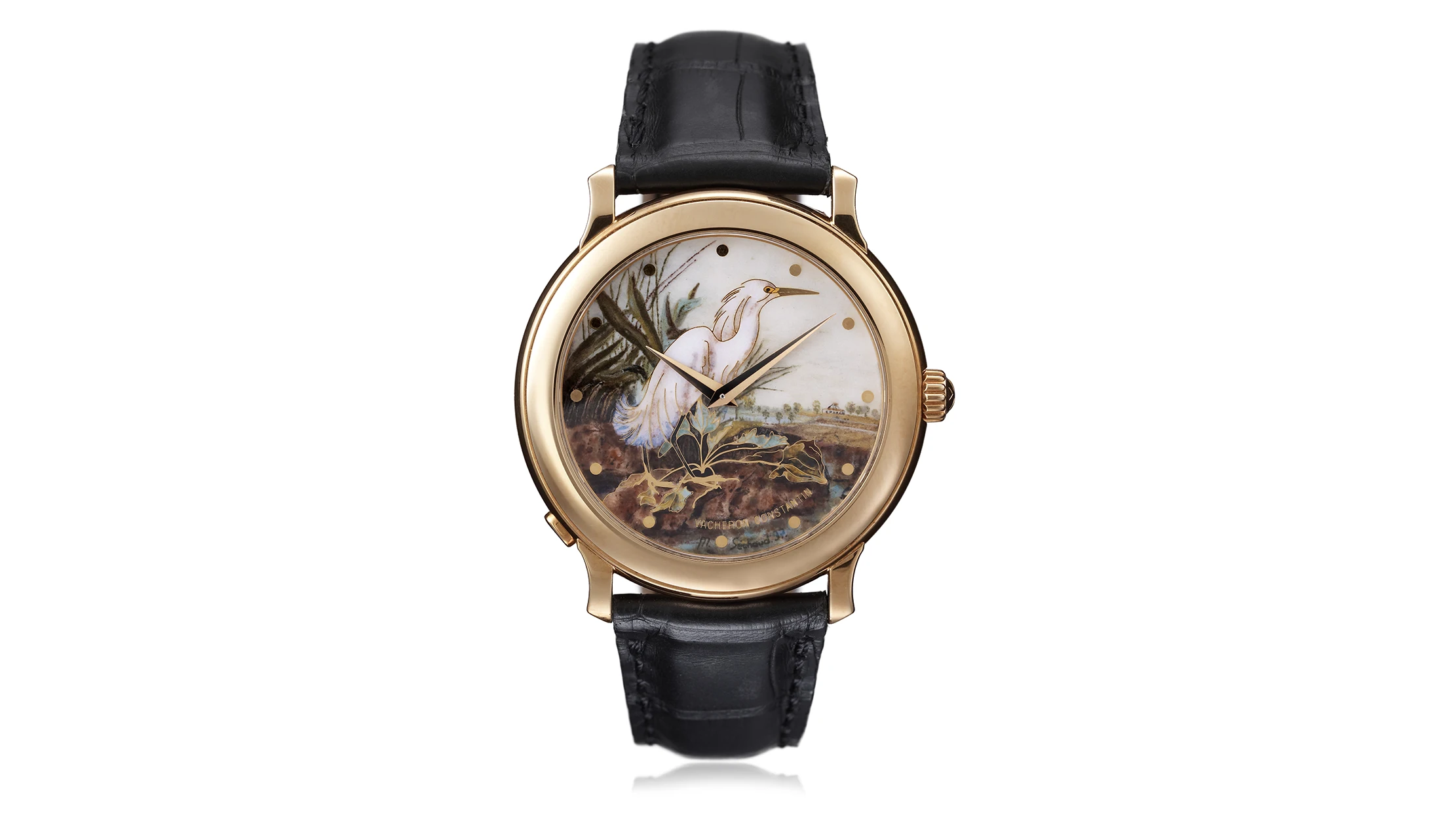
The theme continued into modern watchmaking. In 1996, Vacheron Constantin presented around ten models inspired by John James Audubon’s Birds of America. Their dials reproduced individual plates using champlevé and miniature enamelling, with creations such as this series and Mercator helping to drive the renaissance of Grand Feu enamel in haute horlogerie during the mid-1990s.
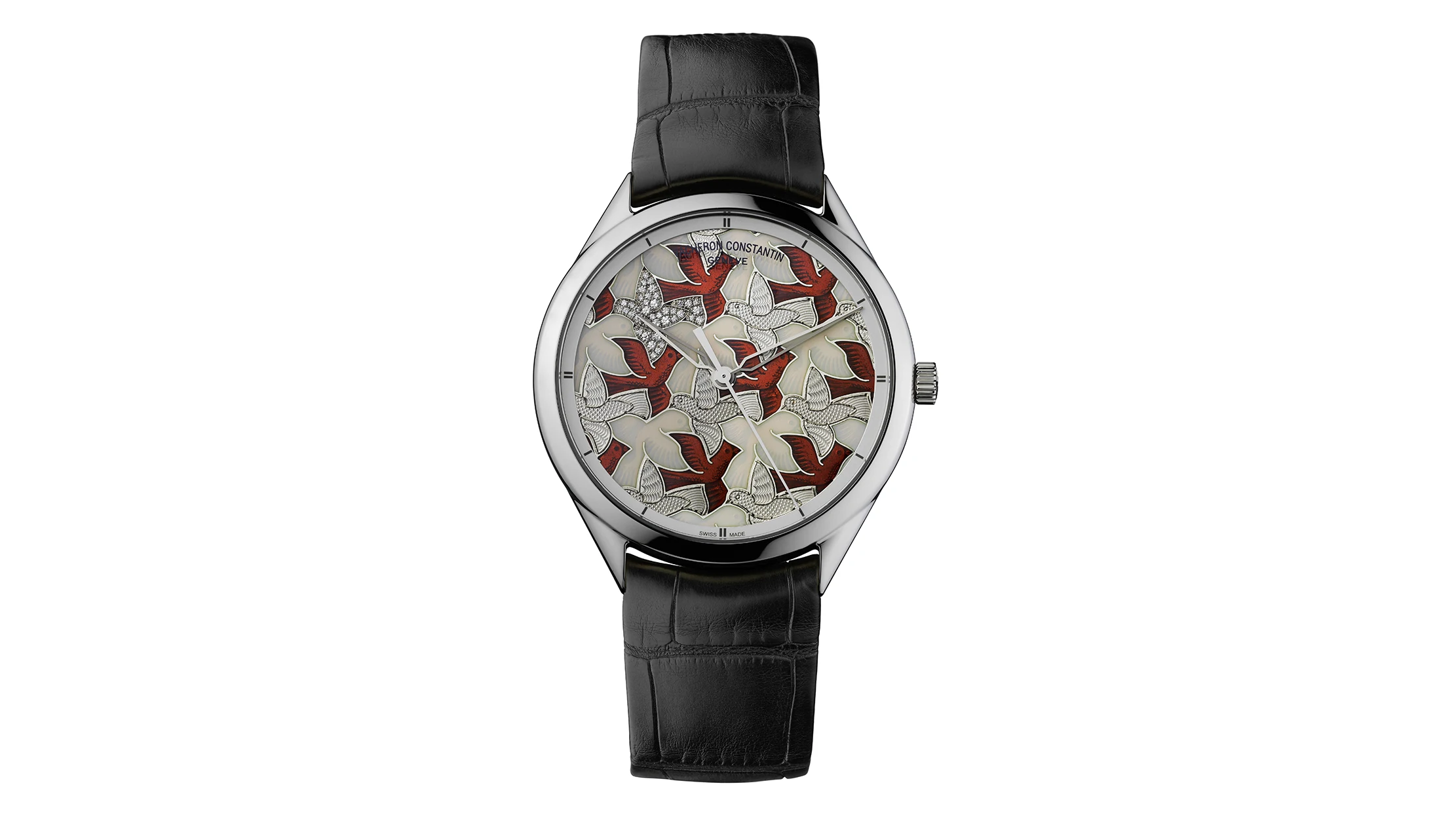
The Métiers d’Art Univers Infinis of 2011 subsequently combined engraving, hand-guilloché, red and opalescent beige Grand Feu enamel and gem-setting – including 40 diamonds on one dove – in an 18-carat white-gold watch inspired by M. C. Escher’s tessellations.
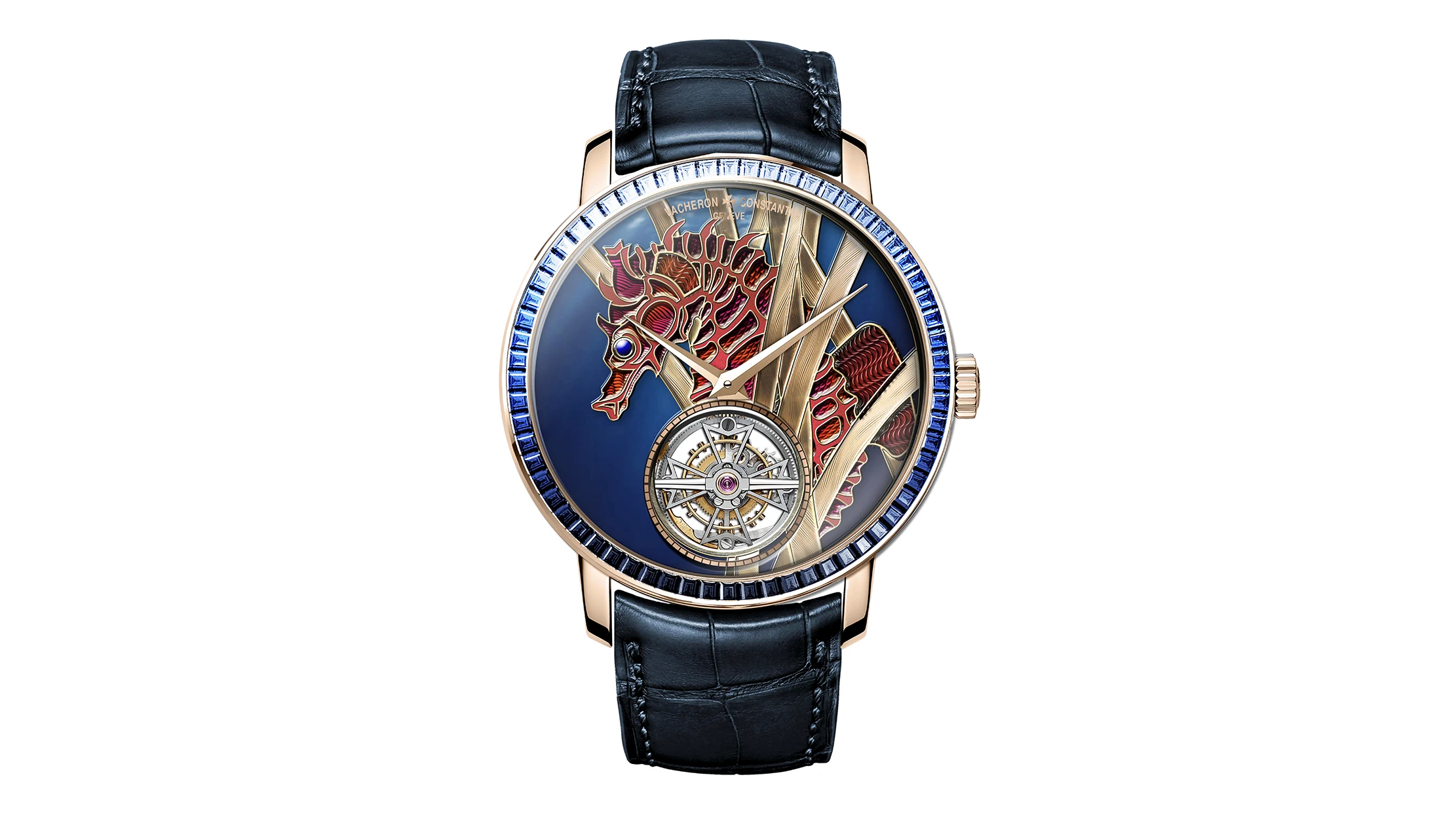
In 2022, the unique Les Cabinotiers Tourbillon Joaillerie – Hippocampe united guilloché, engraving, cloisonné enamel and gem-setting on an 18-carat pink-gold seahorse watch set with a gradient of 74 sapphires and powered by the tourbillon-equipped Calibre 2160.
The animal kingdom is therefore familiar territory. What is new here is where Vacheron Constantin has chosen to look for the craftsmanship with which to interpret it.
Vacheron Constantin has maintained workshops dedicated to traditional Métiers d’Art including guillochage, engraving, enamelling and gem-setting, while partnerships with institutions such as the Louvre and The Metropolitan Museum of Art form part of its wider efforts to safeguard artistic activity and encourage public appreciation and education. The ‘One of Not Many Crafts Programme’ takes that philosophy in a slightly different direction: preservation through experimentation rather than preservation alone.
That distinction is what makes Tribute to the Animal Kingdom particularly interesting. A feather artist has created new microscopic tools. A glass sculptor has developed a technique unlike anything he used during his previous 25 years of practice. An origami artist has invented a folding sequence and learned to colour paper specifically for it. Gold embroidery has required new wires, needles and tools developed with specialist manufacturers. Paper sculpture has brought together an artist, watchmakers and ultra-precise laser-cutting specialists. Furniture-scale marquetry has acquired a new feather-by-feather construction method. In each case, the finished watch is only one result of the collaboration. The other is the knowledge acquired along the way; techniques and approaches that can now be carried into future work.
This is the compelling idea behind Vacheron Constantin’s latest Métiers d’Art project. These six concept watches do not treat craftsmanship as something static to be preserved behind glass. Instead, the manufacture is creating an environment in which artisans can test the limits of their materials, borrow expertise from other disciplines and develop techniques they did not have before.
While the animals provide the visual and creative hook for collectors, the real subject of Métiers d’Art Tribute to the Animal Kingdom is what happens to craftsmanship when it is given room – albeit only four mm of it at times – to evolve.