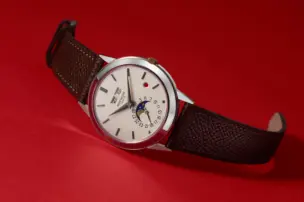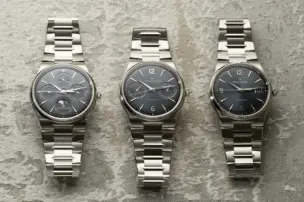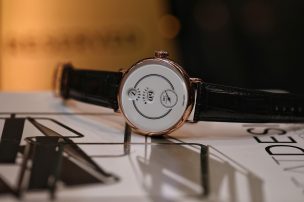





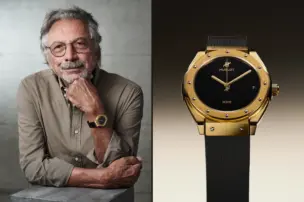
Hublot presents the Classic Fusion Tributo, a new watch that reinterprets Hublot’s very first timepiece launched 46 years ago.
As with any comparison, analogies have their limits. Yet we must be permitted to ask which watches and brands possess the long-term potential to succeed established houses and renowned icons? Just as Patek Philippe once set out to dethrone Vacheron Constantin – then the most coveted brand among rulers and the high nobility – it is by no means impossible that today’s grandees, Rolex, Patek Philippe, and their peers, might eventually meet a similar fate.
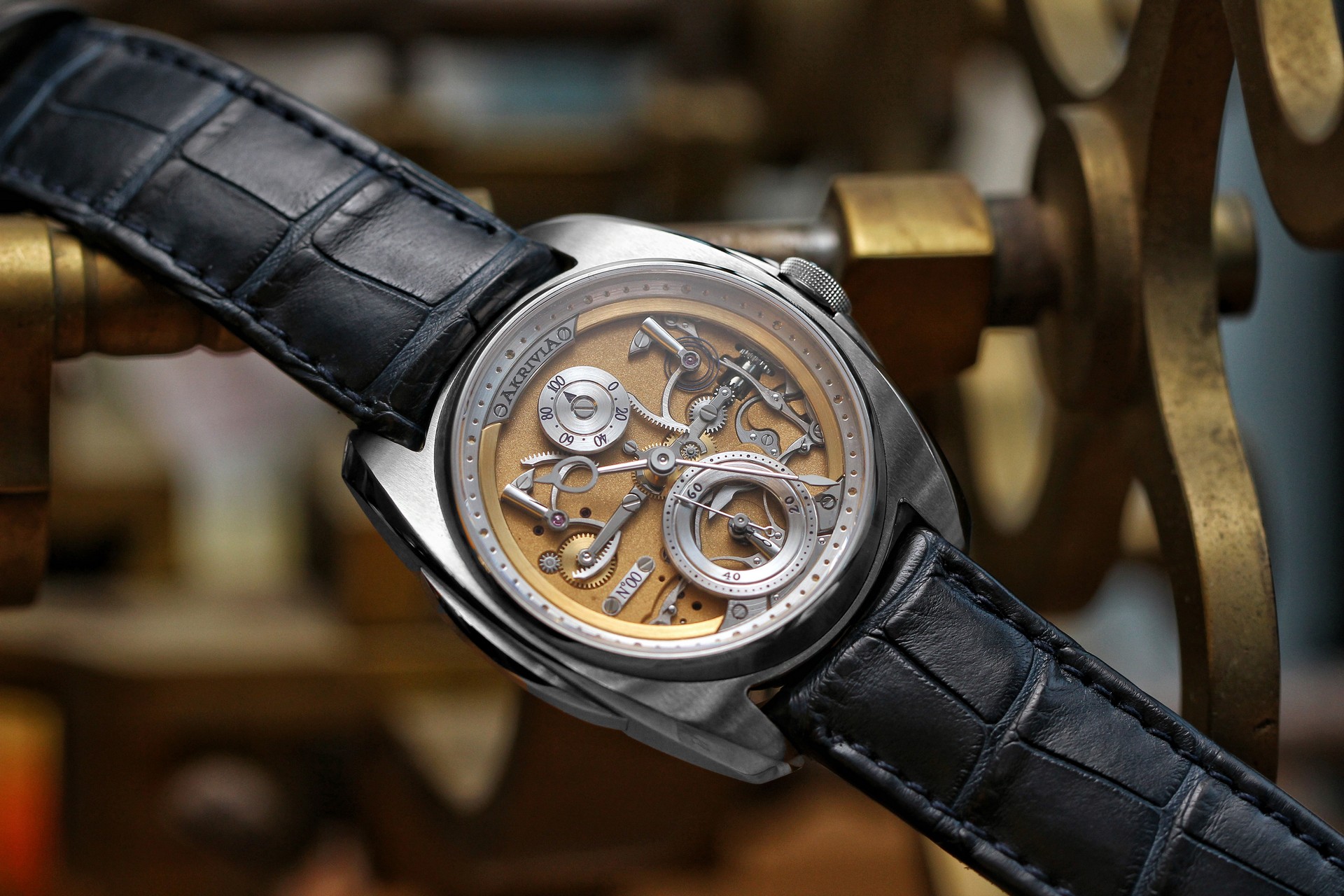
Don’t believe it? It may sound a touch far-fetched, but one need only examine the auction results of recent months: In December 2025, Phillips in New York auctioned the unique prototype F.P. Journe FFC from Francis Ford Coppola’s collection for $10.8 million – a world record for an independent watchmaker, set after an eleven-minute bidding war. Merely six months later, that record was history: an F.P. Journe Chronomètre à Résonance “Souscription No. 007” fetched $13.92 million at Phillips. And in Geneva, in May 2026, a stainless steel Akrivia AK-06 achieved $3.8 million – a world record for Rexhep Rexhepi, nearly four times its high estimate.
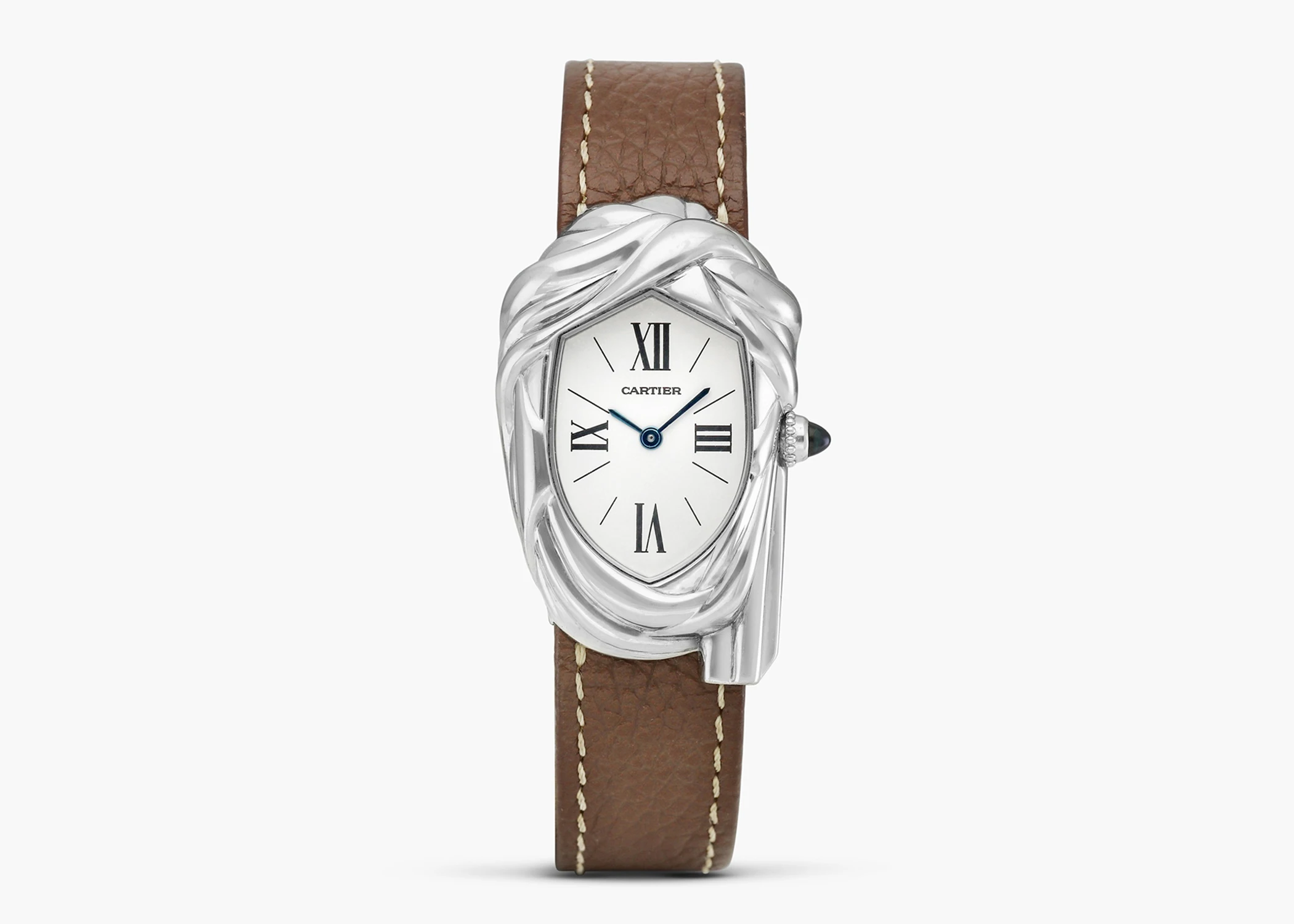
Nor are independent watchmakers alone in shifting the hierarchy: The white gold Cartier Cheich (a 1/1 model from 2010) holds the current world record for the most expensive Cartier watch ever auctioned, fetching HKD 26.52 million (approx. USD 3.41 million). This unique piece was sold in September 2026 at Sotheby’s “Important Watches” auction in Hong Kong. Cartier is thus catching up with traditional collectors’ brands like Patek Philippe; a 1924 Patek single-button chronograph brought just under USD 2 million at an auction earlier this year. A jeweller whose horological credibility was barely acknowledged in collector circles twenty years ago is now competing in the same league. Something is afoot. Hierarchies are shifting.
Credit © Sothebys
Why Hermès, then? Because here is a Maison systematically working with the single most vital asset for enhancing a watch’s long-term value, and one that is curiously underrated in the watch industry: time. The H08 was launched in 2021, meaning it has only just turned five years old. The Patek Philippe Nautilus, meanwhile, celebrates its fiftieth anniversary in 2026. The comparison is inevitably imperfect; it is not one between two established icons, but between an existing icon and a potential future one. Patek finds itself defending its title, but Hermès is not launching a hasty assault; it, too, thinks in terms of decades when it comes to watchmaking.

First, though: why compare these two timepieces at all? Both are intended as sports watches with distinctive case shapes. The Nautilus was the watch of the emerging Jet Set era, aimed at a globally travelled, sporty luxury clientele who demanded flawless style whether lounging poolside or sitting in a business meeting. The H08 is the watch of the generation of heirs – those who traversed the globe long before attending their first board meeting, and for whom luxury steel watches like the Patek Philippe Nautilus, the Rolex Daytona, or AP’s Royal Oak are the watches of their fathers.
This younger generation has, until now, worn a smartwatch at most, defining themselves through fashion labels far more than their parents ever did. It seems only logical, then, that Hermès should bring its undisputed authority in manufacture production into watchmaking. And this much holds true: back in 1976, Patek was a watch manufacture without a true steel sports watch. In 2021, Hermès was a house without a modern, sporty, highly versatile mechanical men’s watch tailored for Gen Z.
Designed by Gérald Genta, the 1976 Nautilus was, curiously enough, a watch Patek did not strictly need at the time, yet without which Patek would not be what it is today. Featuring a steel case inspired by a ship’s porthole, a rounded octagonal bezel, a two-part construction, and a horizontally embossed dial, it was pricier in stainless steel than a gold Calatrava – a detail that left many dealers and customers utterly baffled at the time.
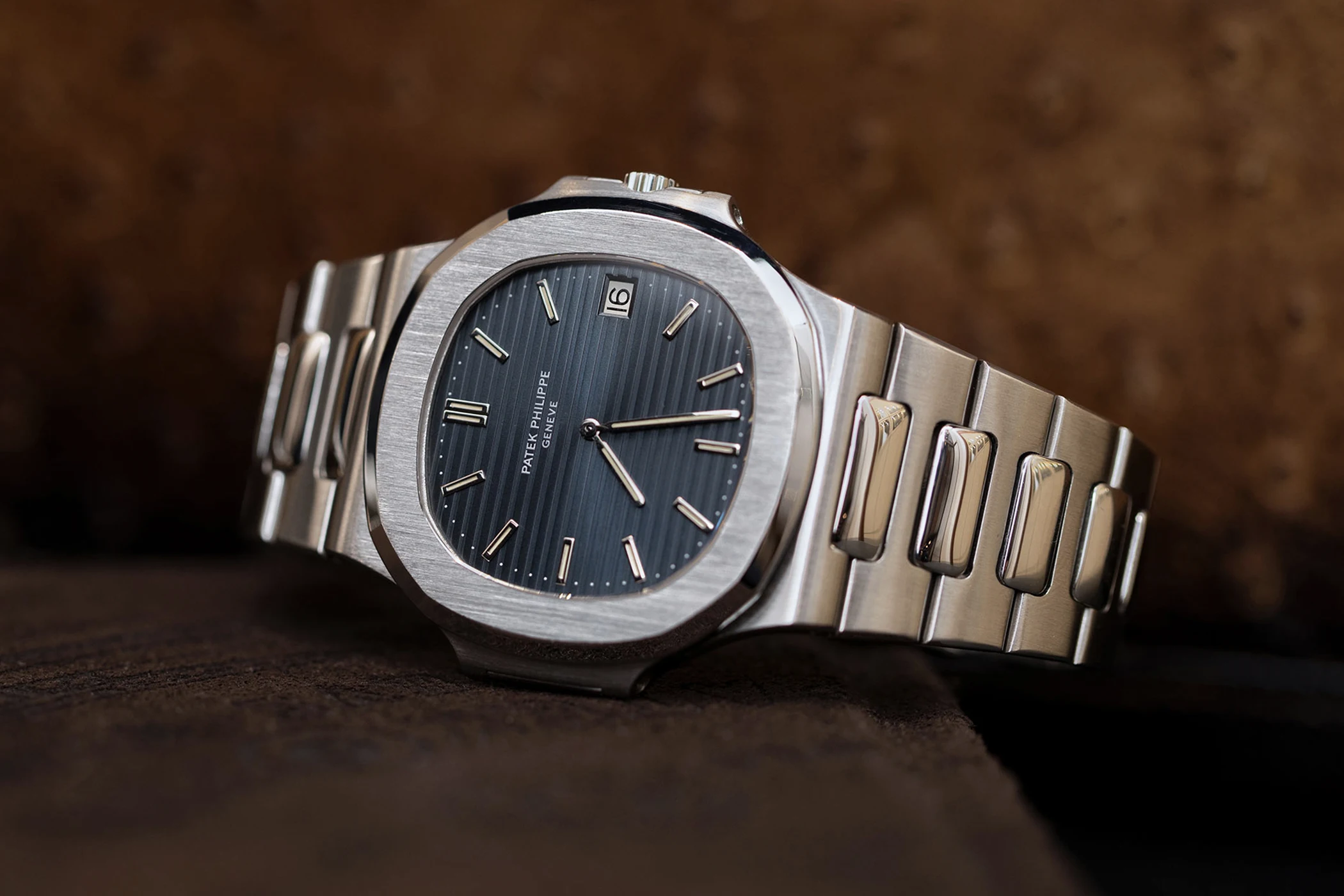

Nor was it an instant triumph. The moniker “Jumbo” was hardly an affectionate pet name. Reference 3700/1A remained a niche watch for years; it was only the smaller 3800, introduced in 1981, that significantly broadened its success. And it took Reference 5711 from 2006 – and even more so, its discontinuation in 2021 – to elevate it to legendary status. Today, the list price for the 5811/1G in Germany stands at €76,020, up from €68,620 at its 2022 launch. On Chrono24, mint examples command between roughly €150,000 and €210,000 – two to three times retail. The discontinued steel 5711, which last retailed at €29,080 in Germany, currently trades from around €120,000 upwards. The lesson of the Nautilus is clear: a watchmaking icon is never born on launch day. It is forged through 30 years of unwavering commitment to a singular vision – and the prudent decision never to overproduce it. Thus, over the past two decades, Patek Philippe has reaped the rewards sown 30 years prior.
What surprises at first is that the H08 was a collaborative effort – communicated with a level of openness unusual for a brand of such stature and repute. For three years, it was developed jointly by Véronique Nichanian (Creative Director of the men’s universe), Pierre-Alexis Dumas (Artistic Director of the house), and Philippe Delhotal (Creative Director of Hermès Horloger). It debuted at the Watches & Wonders trade fair in 2021 – coincidentally, the very year the steel Nautilus was retired.
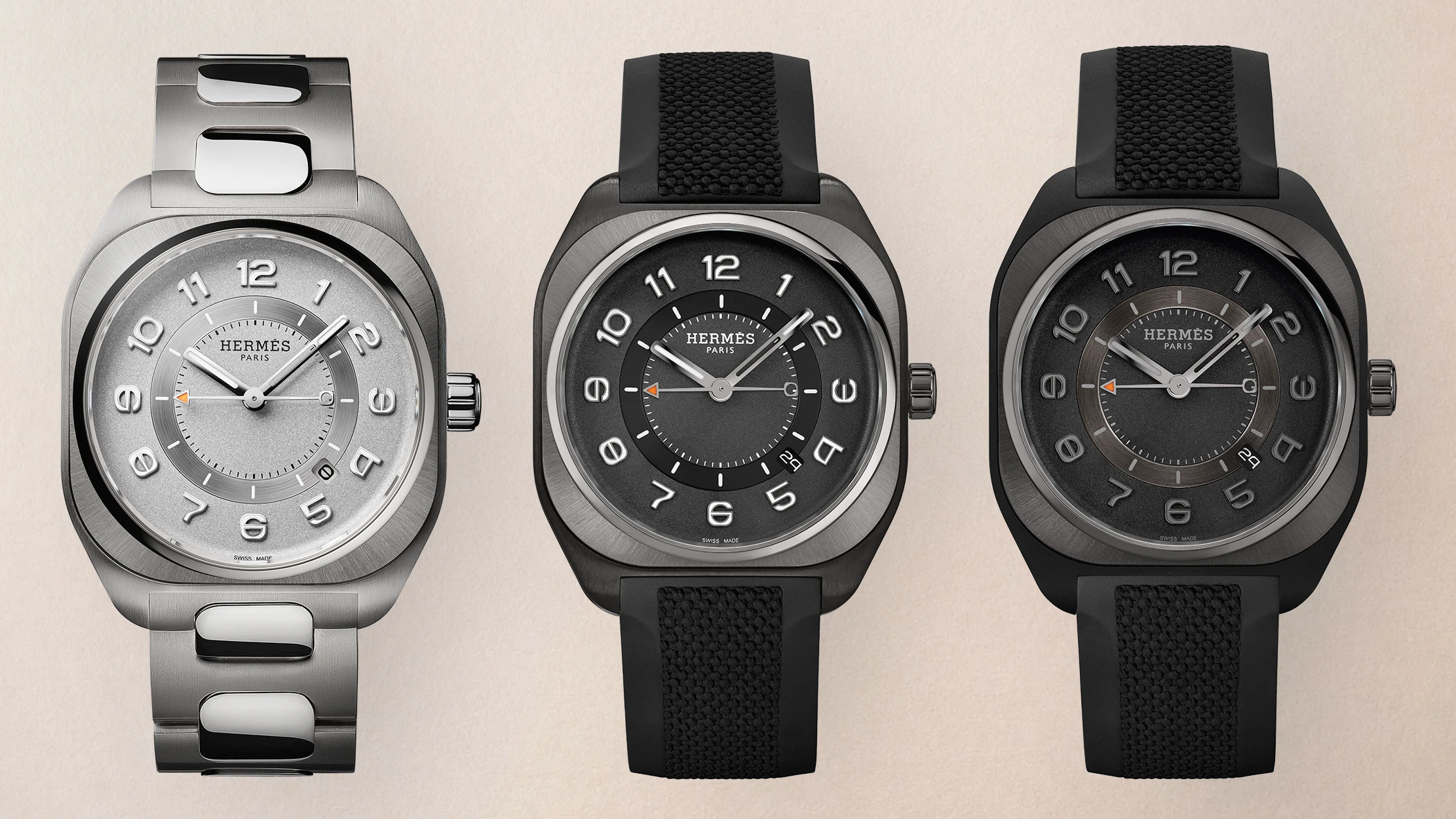
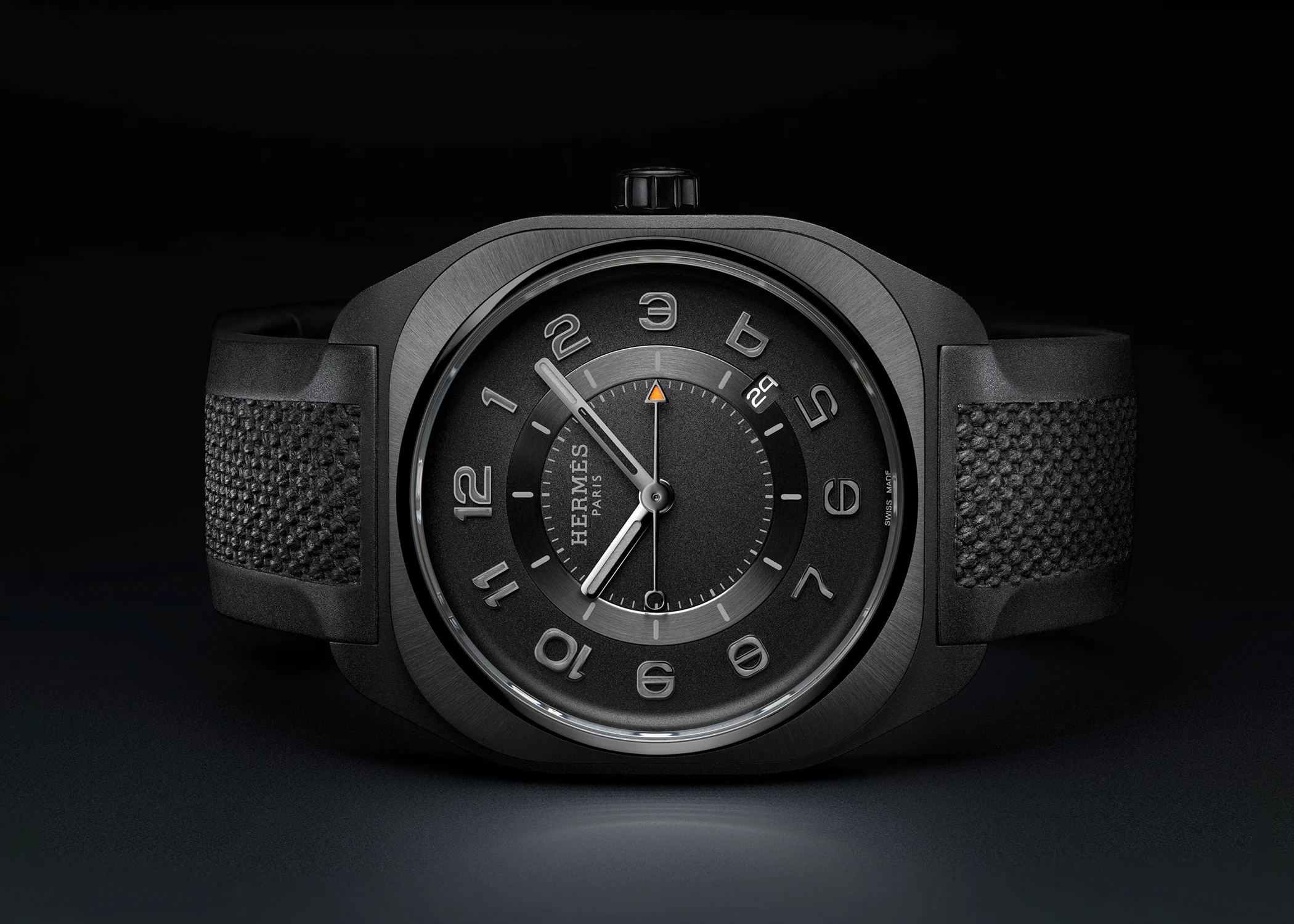
Unusual then, but standard today, it was available in boutiques on the very day of its release. Three case execution options were introduced: titanium, black DLC-coated titanium, and a graphene composite utilized by Hermès for the very first time. Hermès itself refrained from calling it a sports watch, labeling it instead an “all-terrain” watch – equally at home paired with shorts or a tailored suit. Crucially for a luxury house whose reputation rests on leather handbags like the Birkin, there were no leather straps. An Hermès creation entirely devoid of leather elements can only be viewed as a deliberate challenge to its own comfort zone.
Speaking to Forbes at the launch, Laurent Dordet, CEO of Hermès Horloger, explained that the intention was to expand the house’s masculine universe with a sporty timepiece crafted in its signature style.
First, it represents the house’s eighth watch collection. The more poetic interpretation is that Hermès associates the name with the concept of “from nothingness to eternity” – the numeral 0 symbolizing nothingness, and 8 representing infinity. Added to this is a third, typographic dimension explained by Delhotal himself: the 0 mirrors the shape of the bezel, while the 8 echoes its contours. The watch’s name is thus embedded in its very design language. Anyone familiar with Hermès knows this is precisely the playful obsession with detail that characterizes how the French house crafts its products – a touch rarely found outside Hermès.
Today, the H08 serves as the flagship for mechanical men’s watchmaking at Hermès and, alongside the Cut (introduced in 2024), forms the second pillar of its modern collection. The broader economic landscape presents challenges even for a listed conglomerate like Hermès: official figures show the watch division contracted by 2% in 2025 and 4% in Q1 2026, before rebounding by 4% in Q2.
Hermès views this simply as a post-boom normalization. Where many corporate groups would adopt a short-term strategy, Hermès takes a different view. Here lies another parallel to Patek: investment remains remarkably robust regardless. In July 2025, Hermès Horloger announced plans to expand its Le Noirmont site to 11,000 square metres by 2028, adding approximately 100 staff to its existing workforce of 150.
To invest in expanding production during an economic lull is to think in decades rather than quarters. For the H08, this means it is no mere byproduct of favourable market conditions, but the vessel for a strategy older than the watch itself. Delhotal recalled to the Swiss publication Bilanz in November 2025 the brief given to him when he joined Hermès in 2008: to stand shoulder-to-shoulder with the finest in horological skill, while remaining entirely distinct in every other respect.
This statement is no idle boast; it reflects the philosophy underpinning every product category within the house. Yet craftsmanship is one thing, design another. To my mind, the true achievement of the H08 lies in its instant recognizability from across the street, even without the “Hermès” name on the dial. The H08 evokes familiar design cues while maintaining a distinct identity – the exact prerequisite for collectability. One thing is certain: a watch identifiable solely by its brand logo will never become an icon.
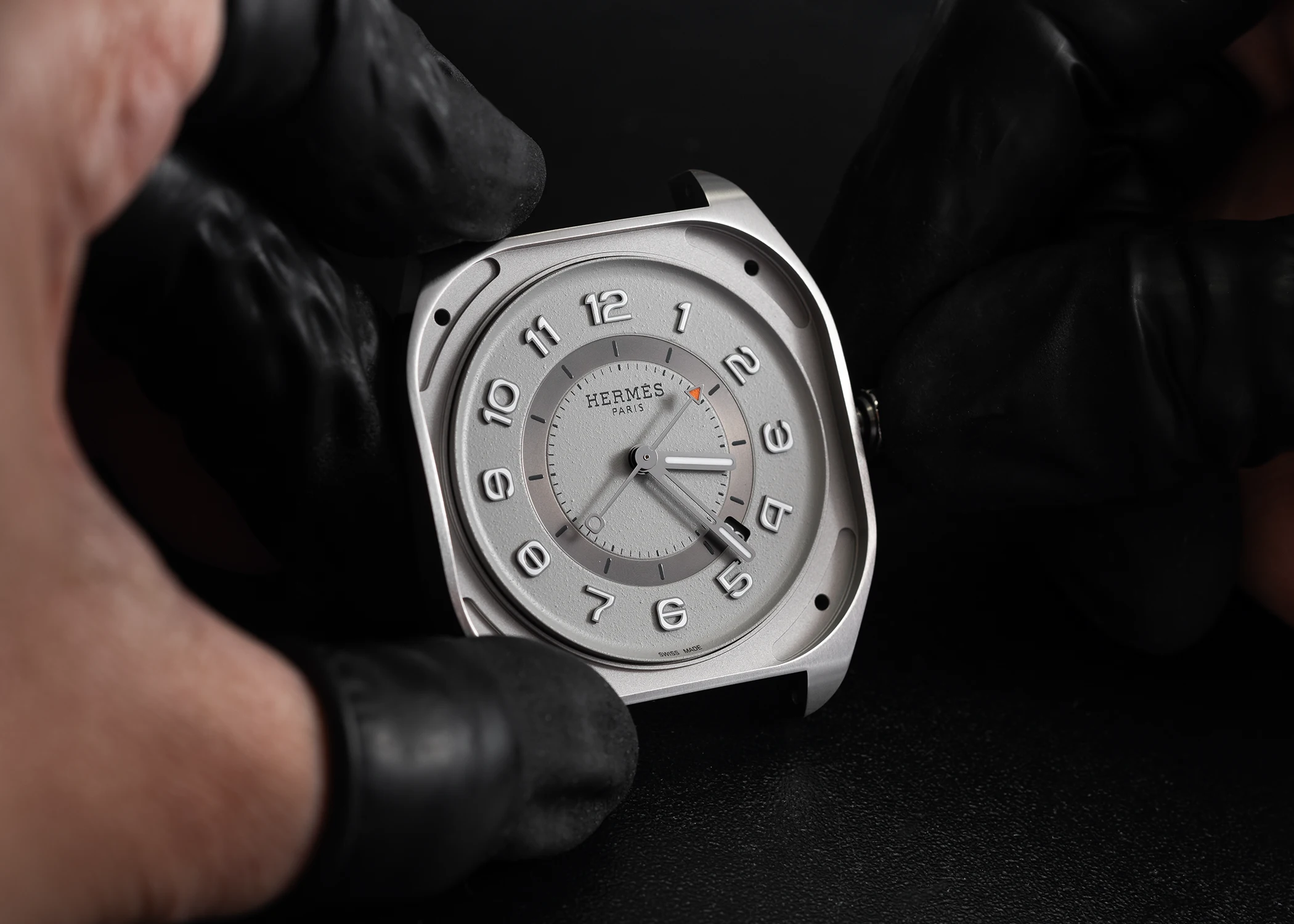
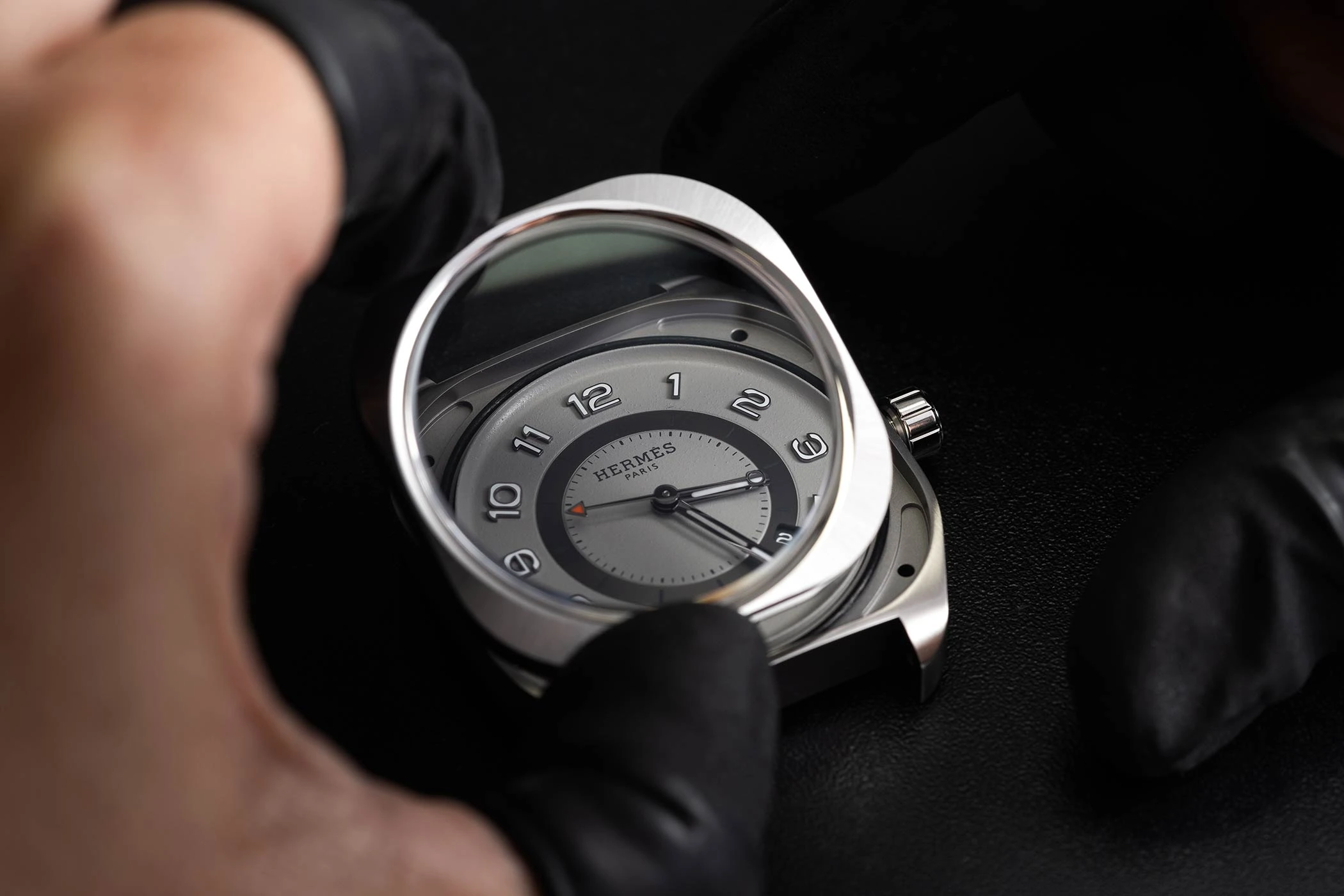
Measuring 39 mm in width, 42 mm lug-to-lug, and under 11 mm in height, the H08 offers water resistance to 100 metres. Structurally, it appears at first glance to be a square, though it is anything but: the corners are softened, the bezel tapers subtly towards the waist, and the inner dial frame is round and mirror-polished. A circle within a square – the classic Hermès exercise seen in the Cape Cod and Carré H, executed here without a trace of nostalgia.

In interviews, Delhotal never tires of emphasizing that an ill-chosen font can ruin an entire dial. He is quite right: as with many Hermès designs, the numerals on the H08 feature a bespoke typeface – functional and legible, with geometric cues borrowed directly from the case shape. In a launch interview, he noted that the typography was designed not to demand attention, but to integrate seamlessly into the overall aesthetic. It does precisely that – yet remains the very first feature observers point to when asked what strikes them about the watch.
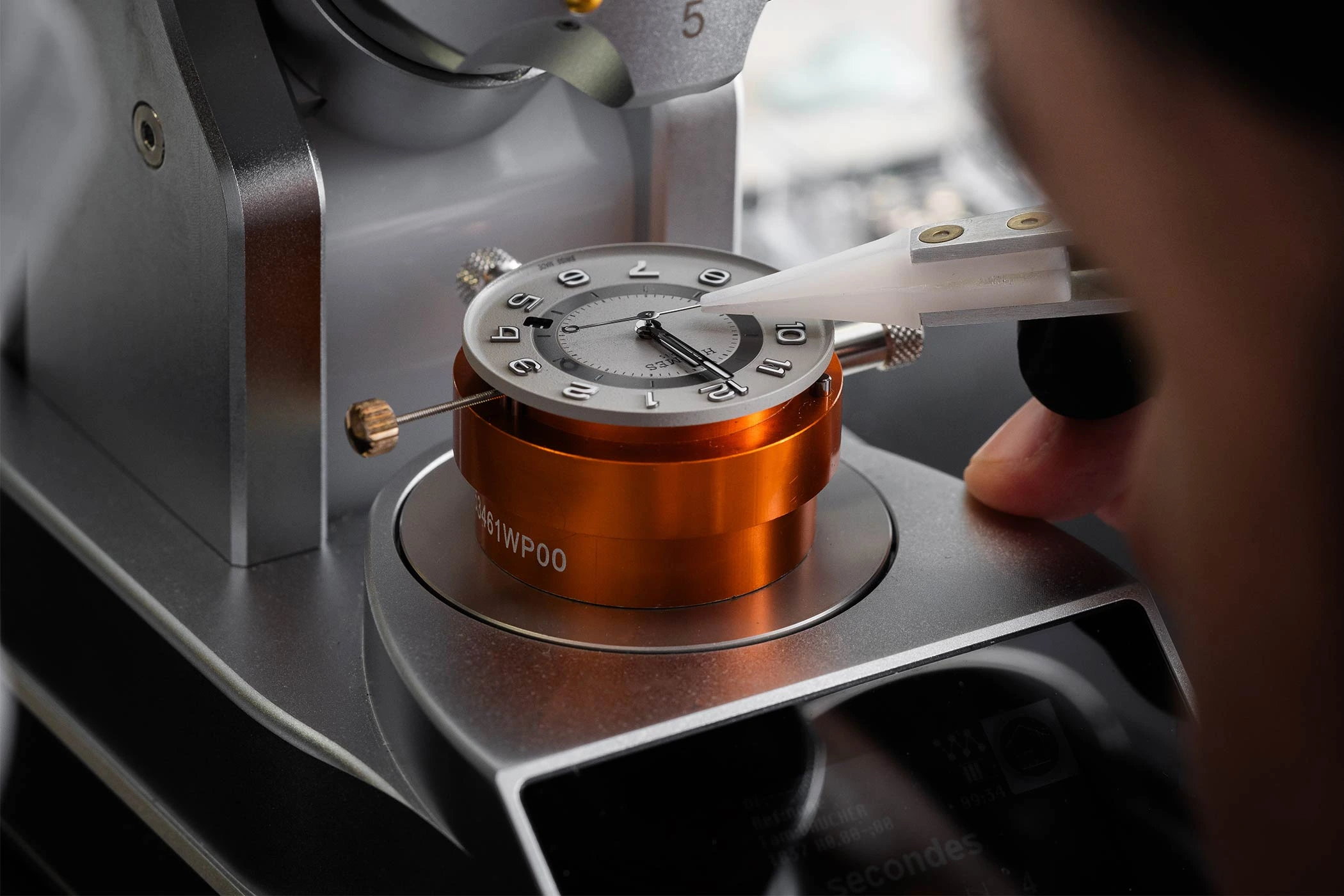
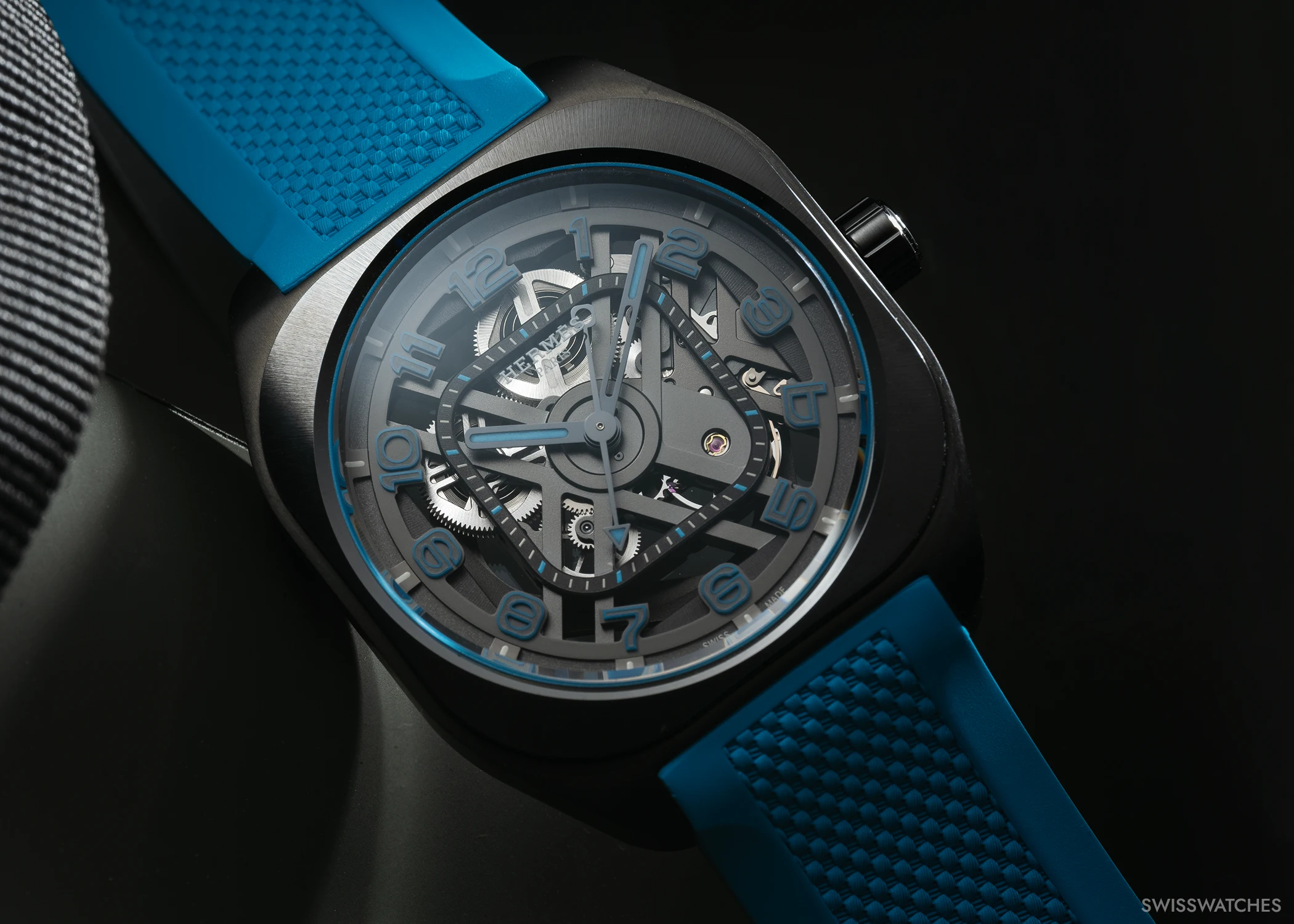
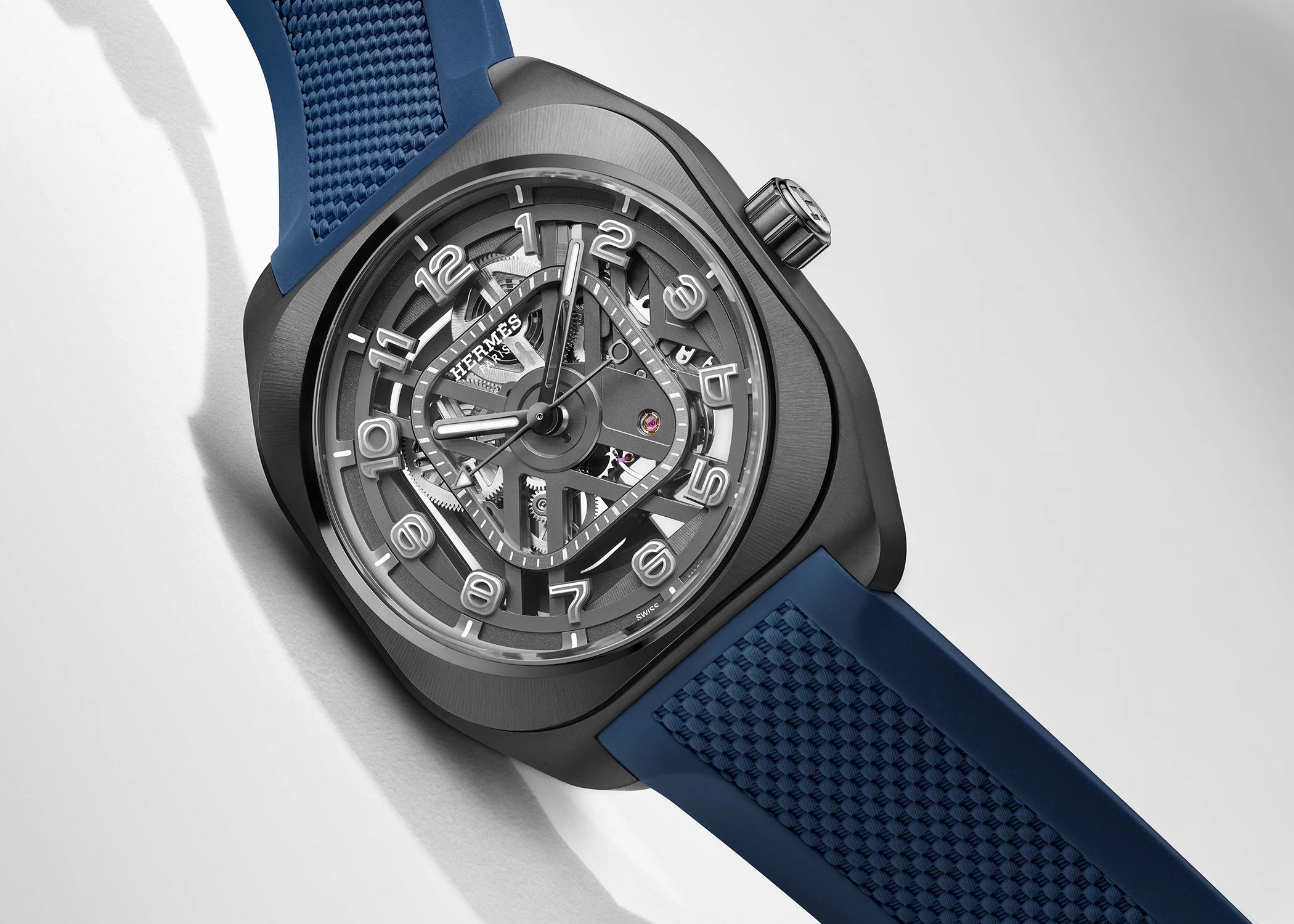
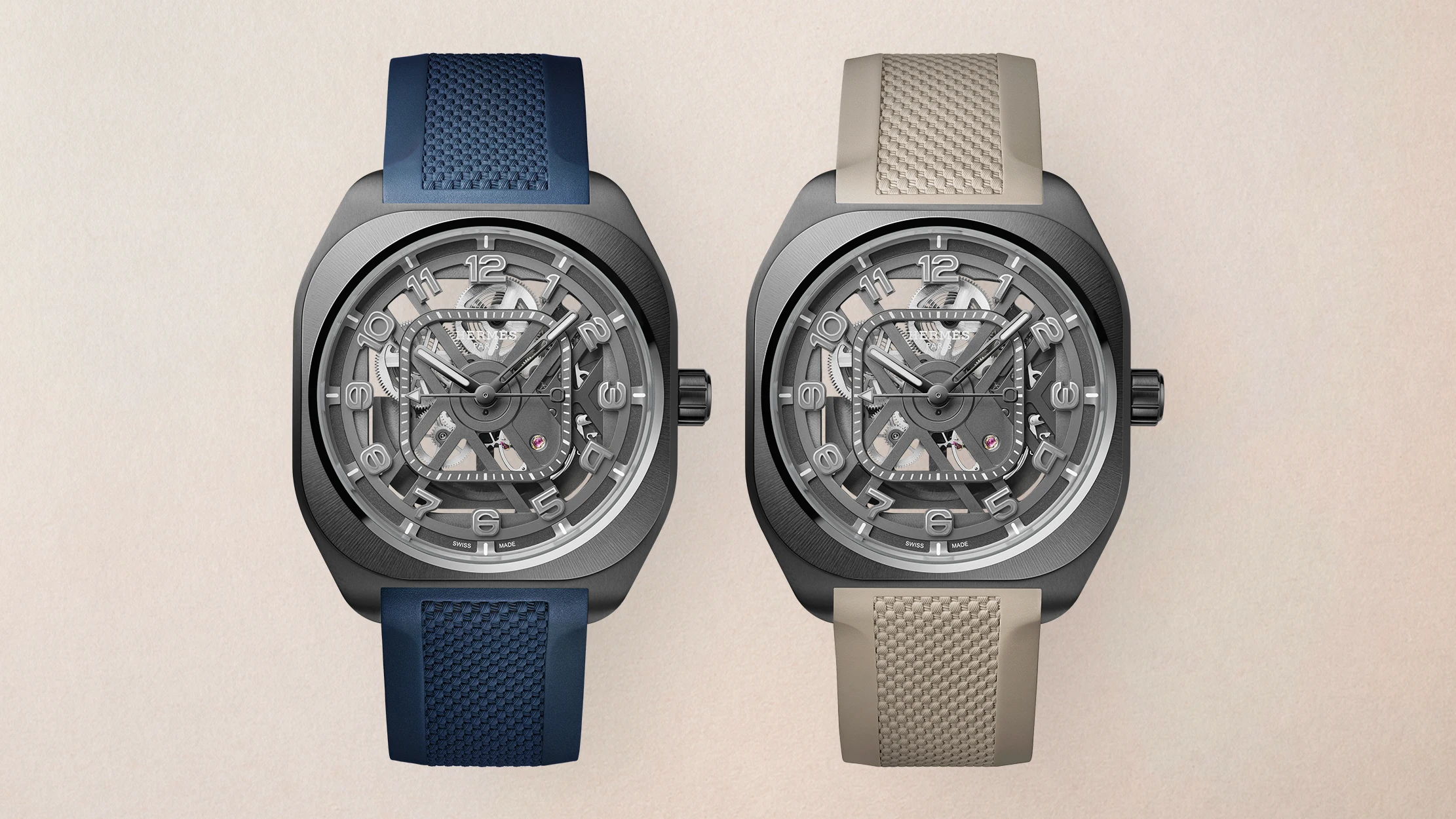
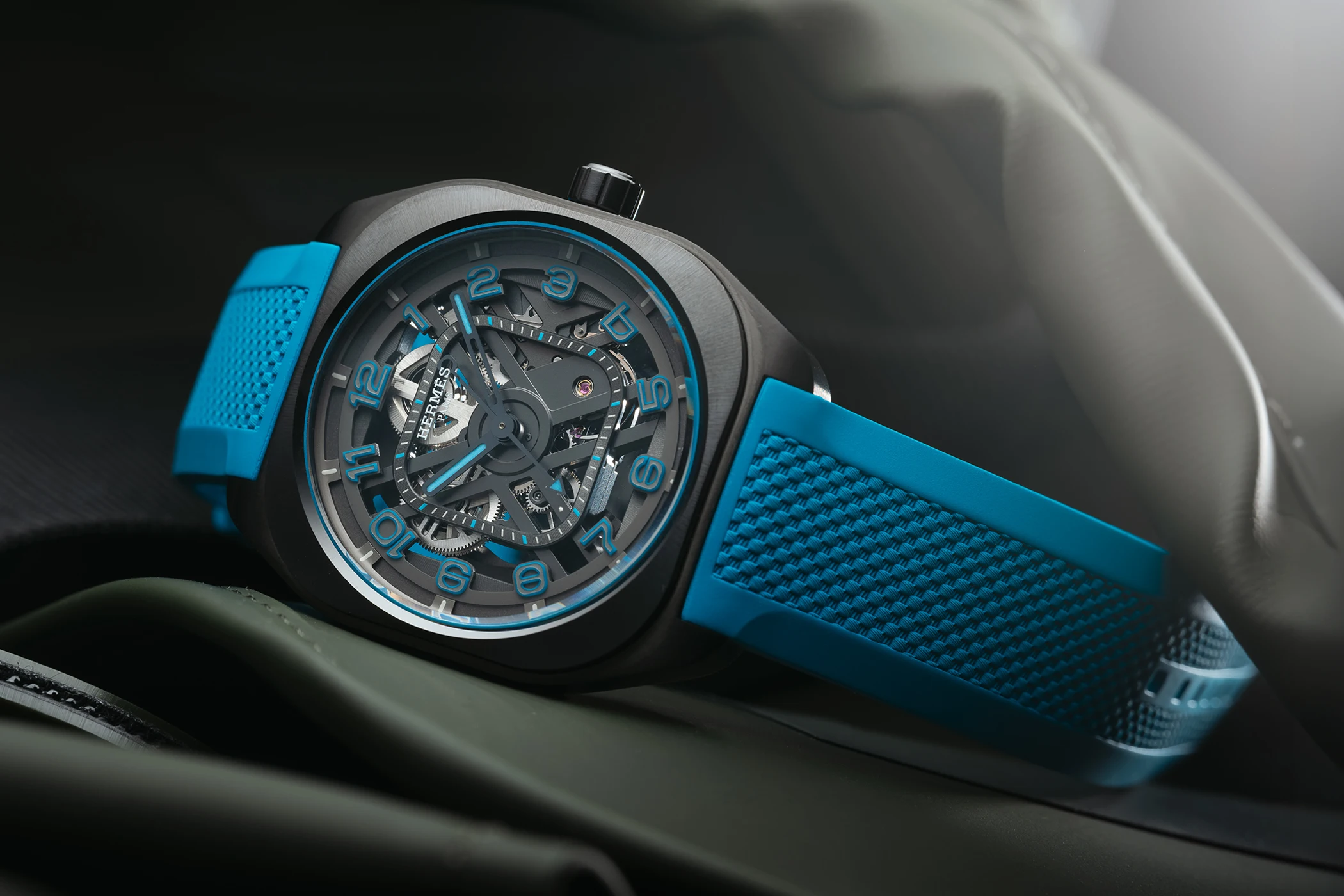
The H08 Squelette debuted at Watches & Wonders in April 2026 after three years in development, marking the line’s very first skeletonized model – launched on its fifth anniversary and 20 years after Hermès took its initial stake in movement manufacturer Vaucher. It stands as a celebration of a fruitfully close partnership. Hermès has showcased open-worked movements before, such as in the Arceau, but never within its sportiest line. Why skeletonize now? On one hand, Pierre-Alexis Dumas sets an annual theme spanning all the house’s métiers; for watchmaking in 2026, it was “mysterious mechanics”. On the other hand, the concept inherently suits the H08: speaking to Wallpaper magazine, Delhotal explained that this architectural approach highlights lightness through open movement construction and technical materials.
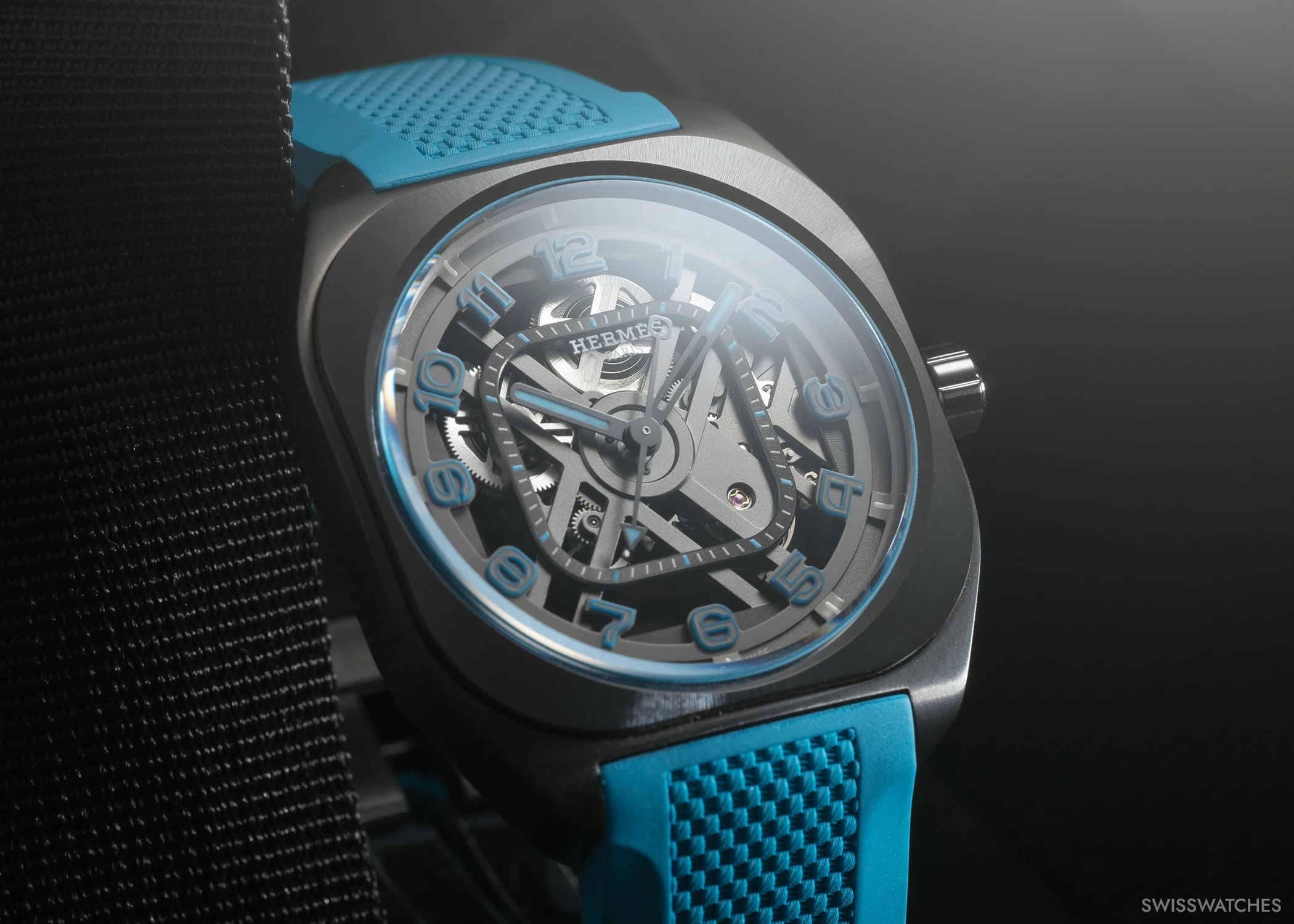
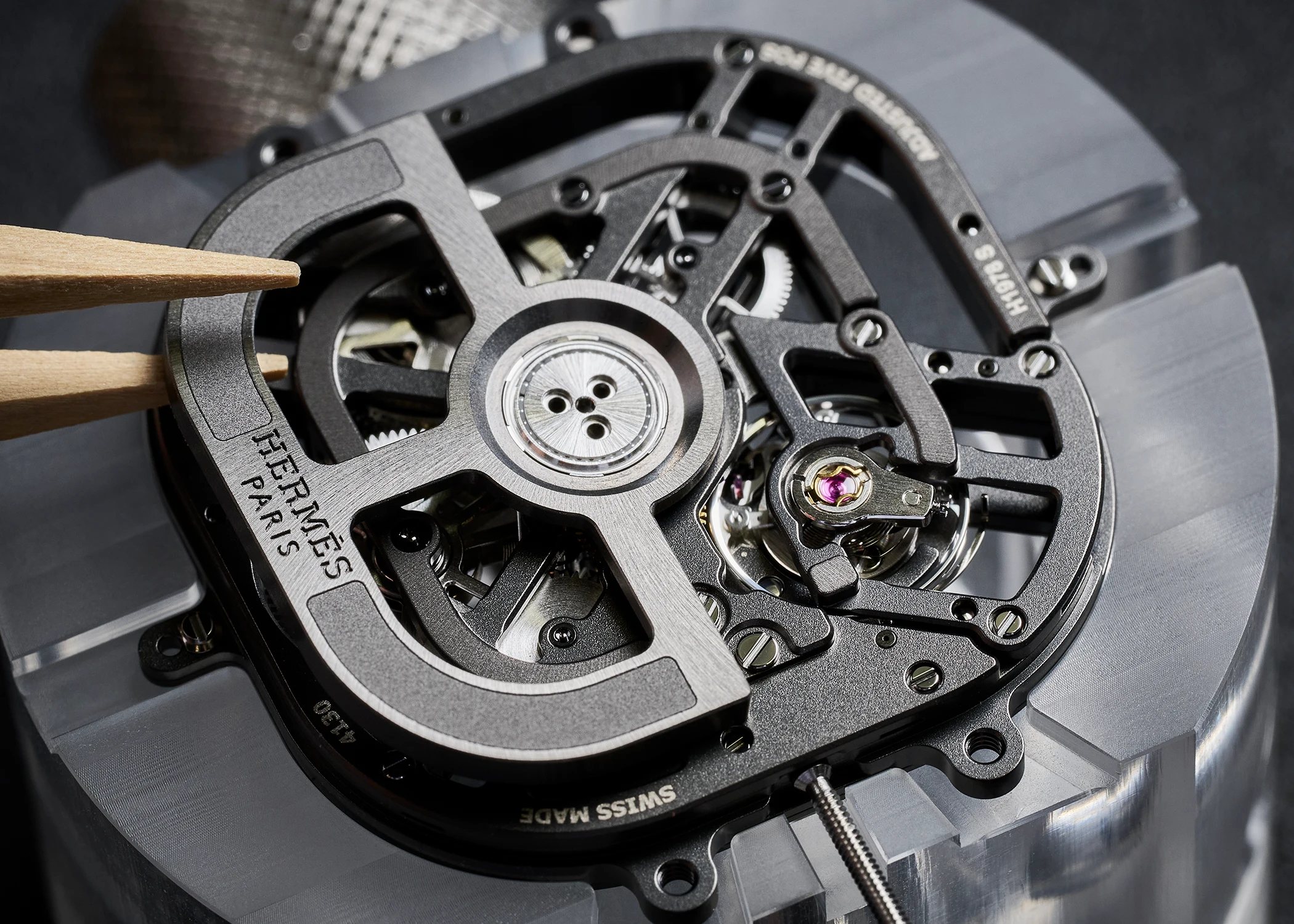
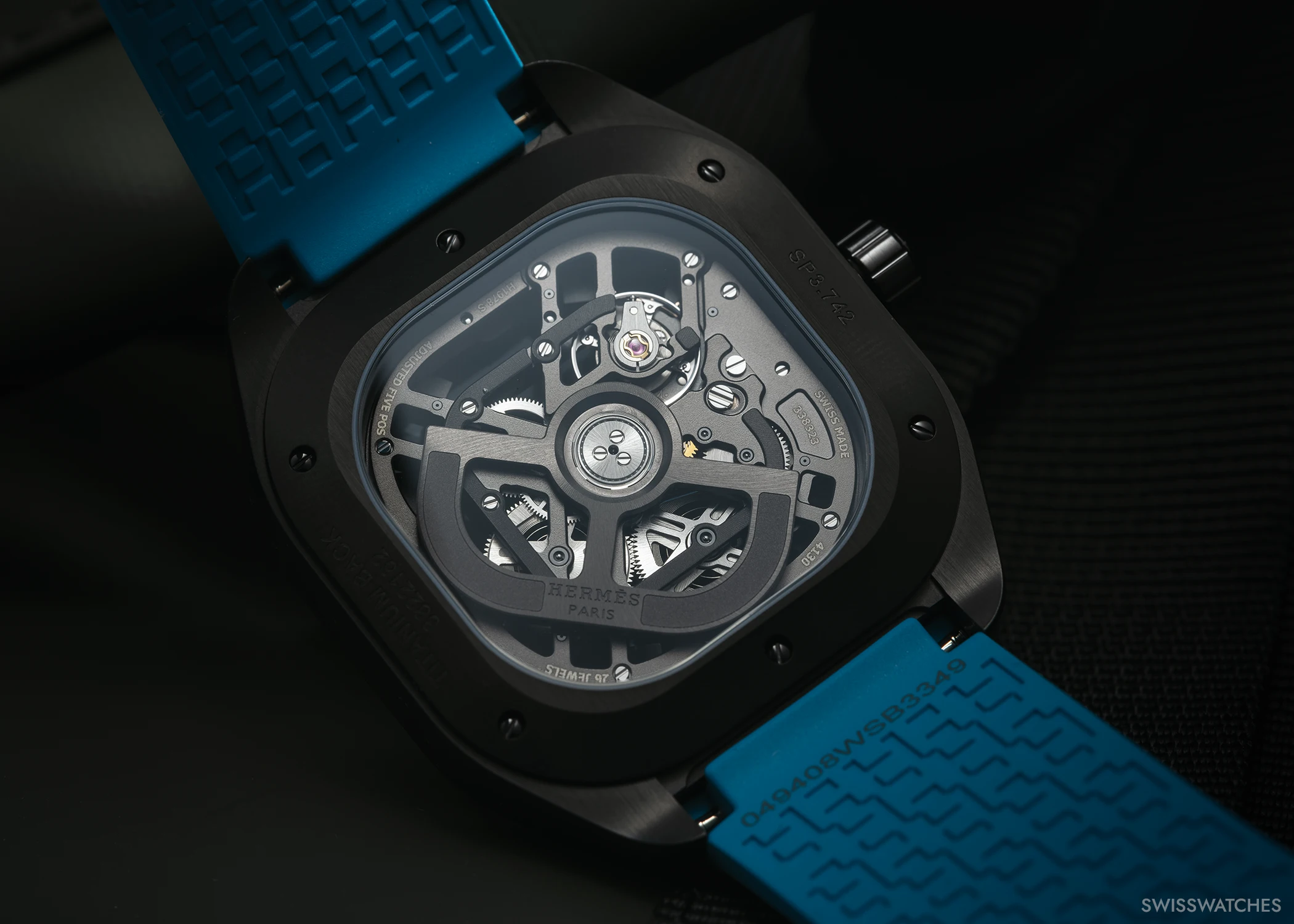
The titanium skeleton structure allows for a play on transparency without compromising durability – he describes it as a framework, both architectural and bold. Hermès explicitly avoided delicate, lace-like skeletonization, opting instead for a structure reminiscent of “a metallic framework”. Ultimately, this aligns with the house’s overarching ethos. The DNA of Hermès is restraint – preferring subtraction over addition. Skeletonization is precisely that concept pursued to its logical conclusion – and, as one might add with a subtle smile, an 18th-century French invention, not a Swiss one. André-Charles Caron (1698–1775), clockmaker to King Louis XV in Paris, is credited as its inventor, having removed material from the mainplates and bridges of a pocket watch around 1760 to expose the mechanism.
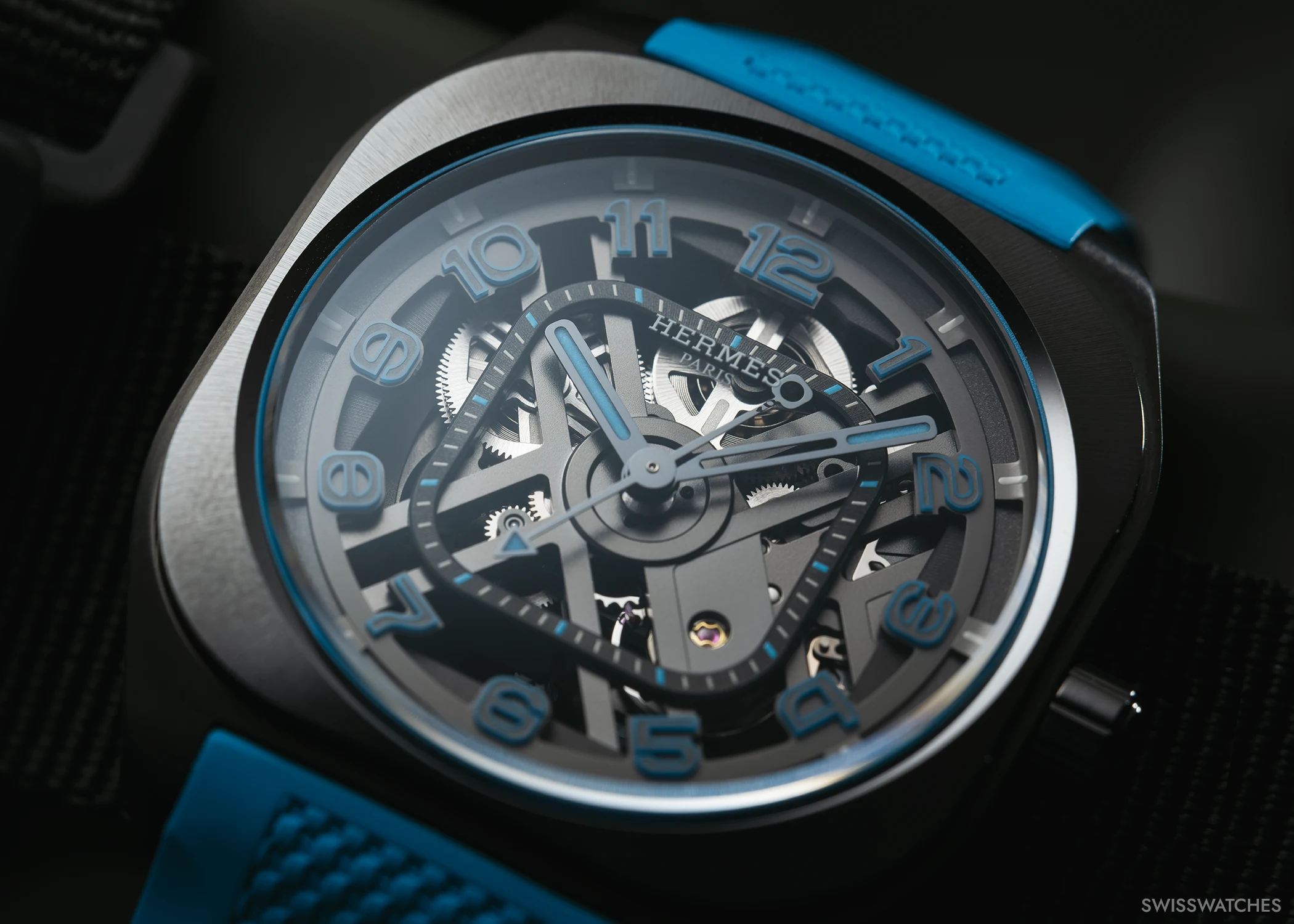
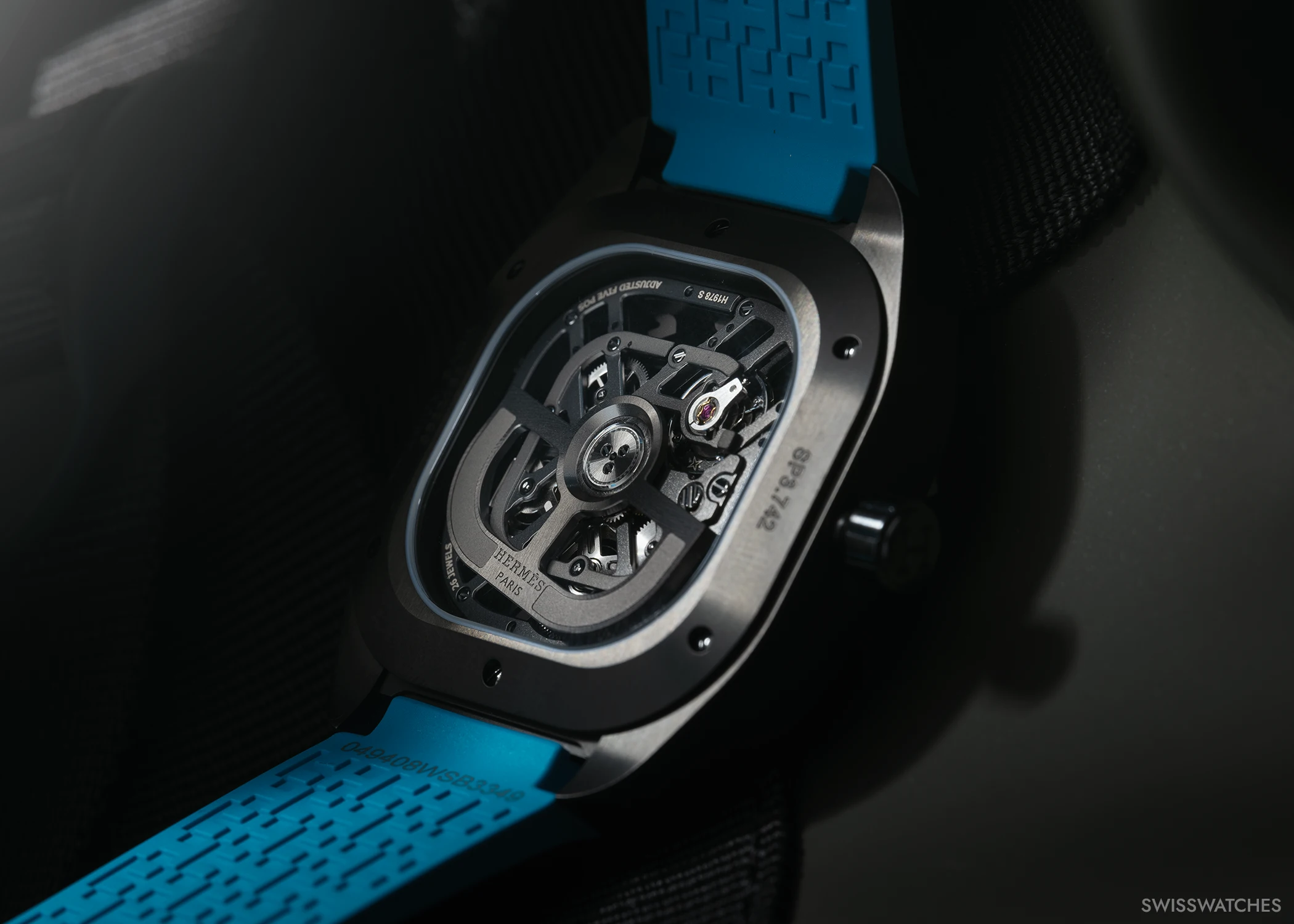
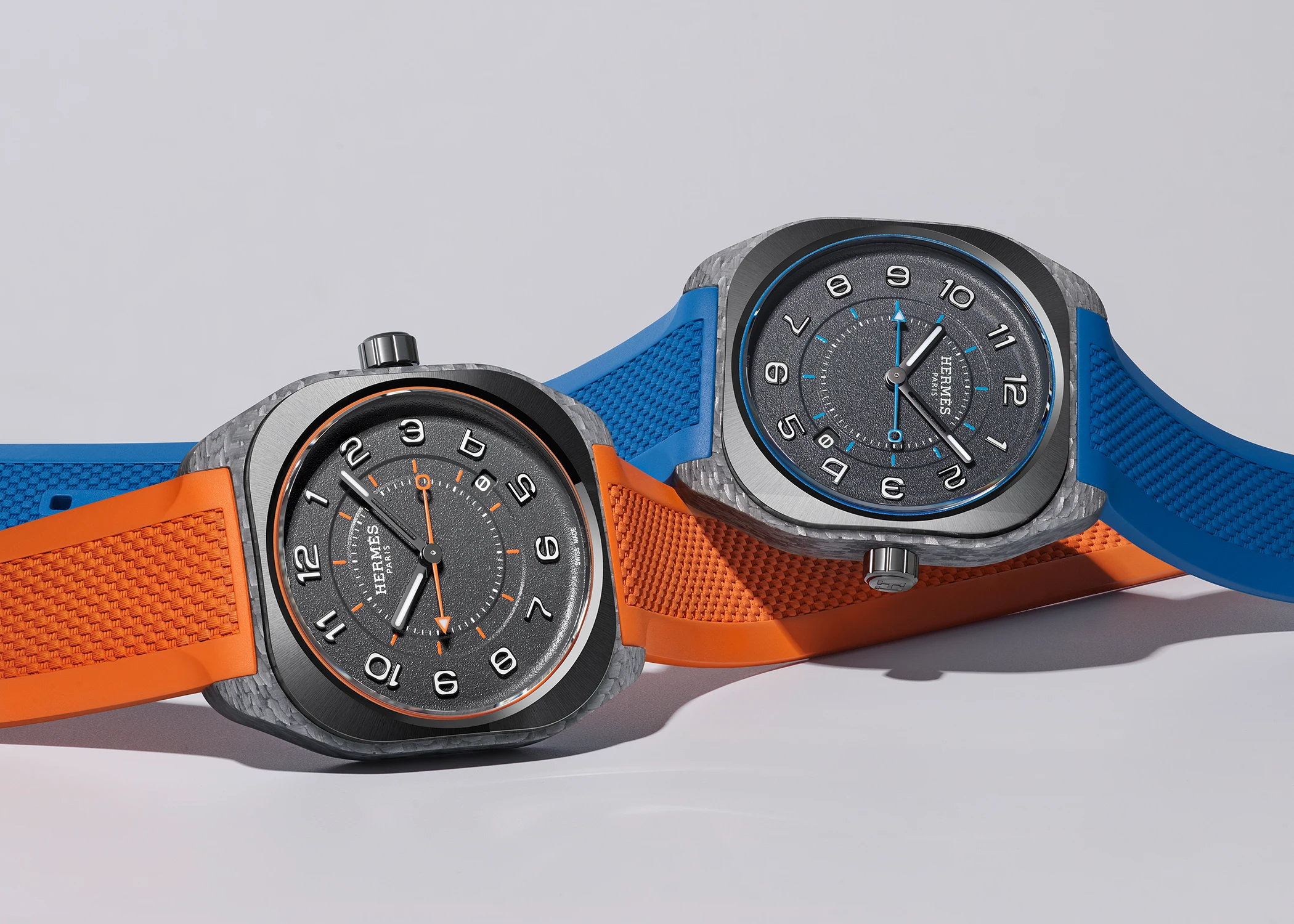
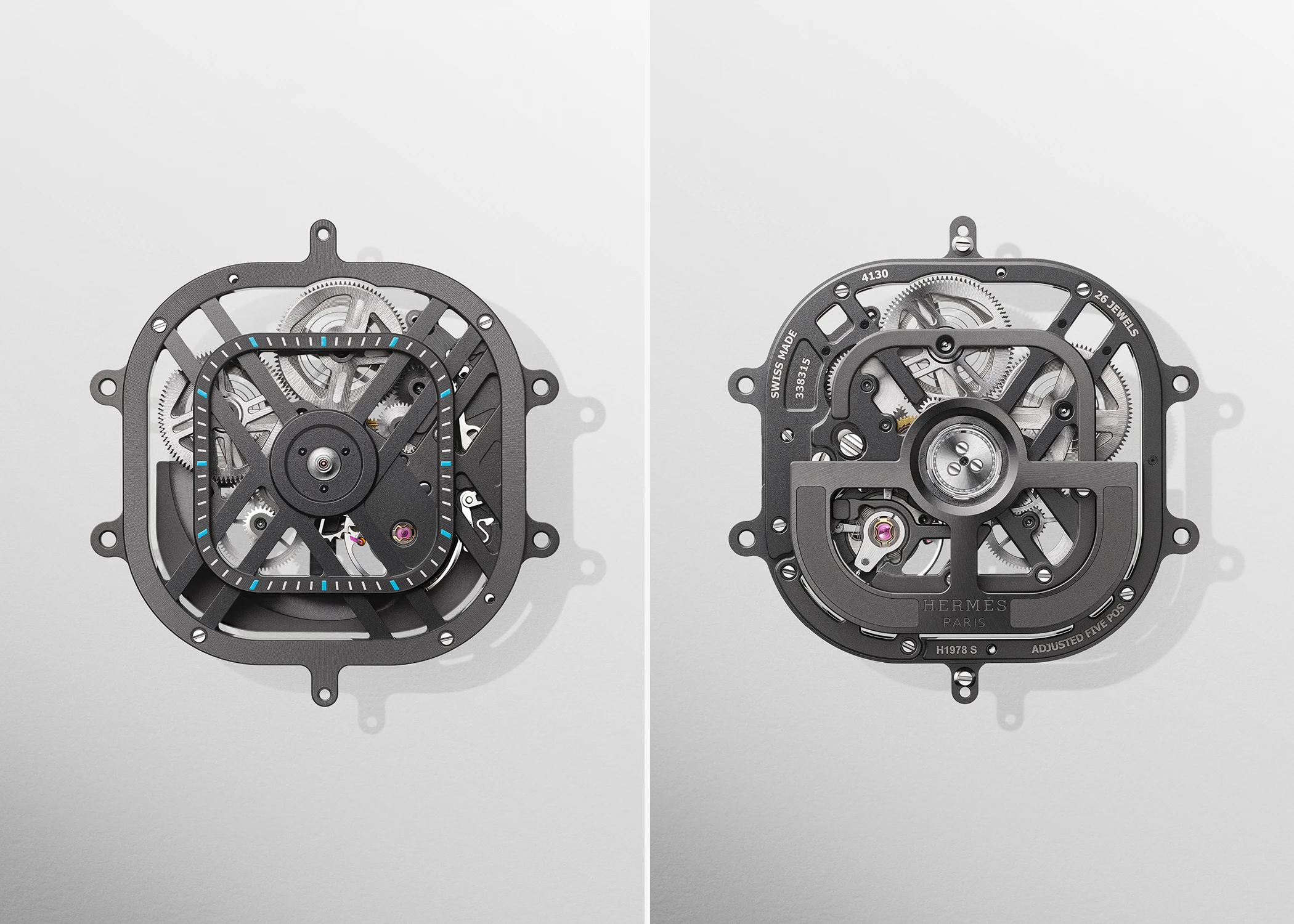
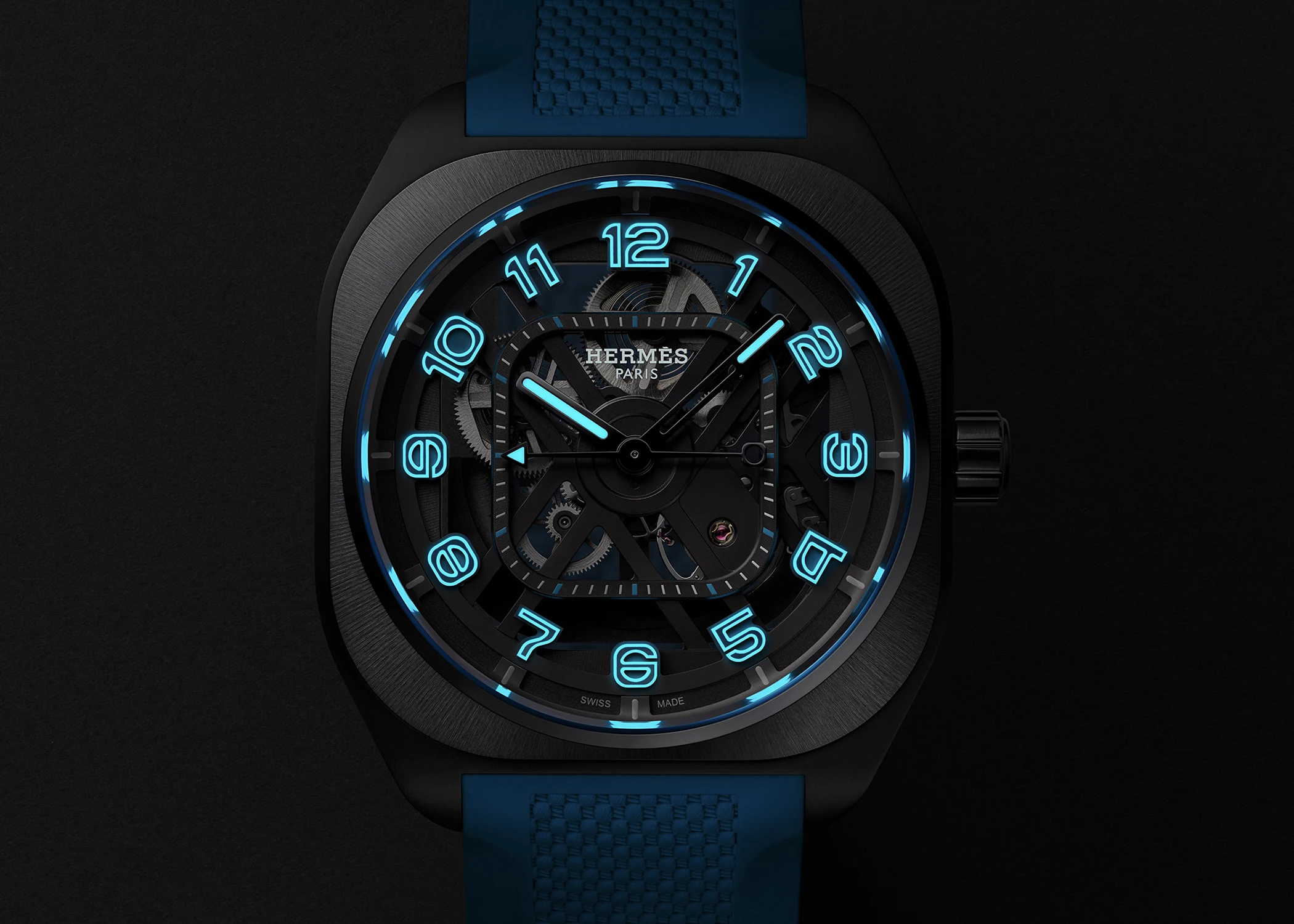
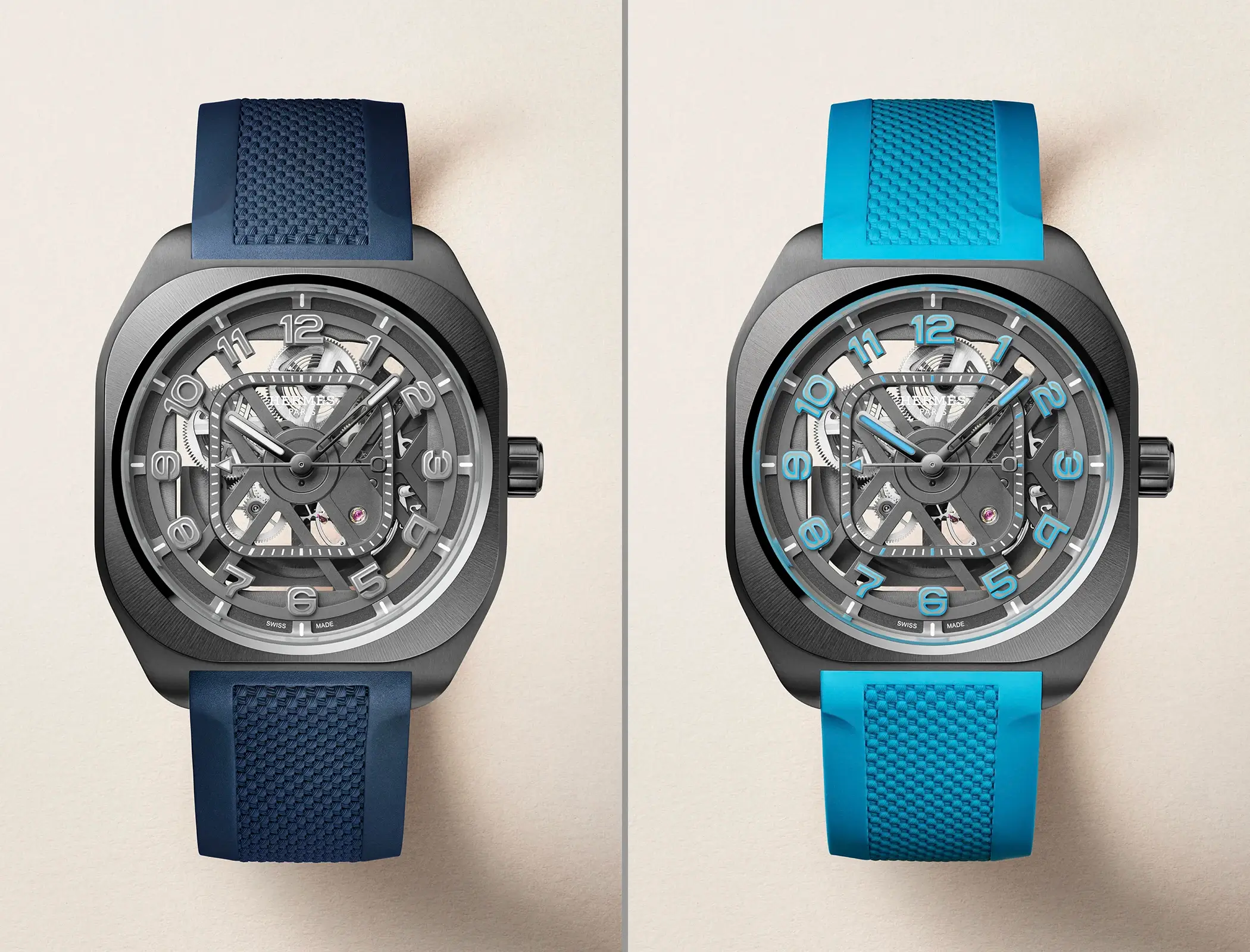
The result on the dial: applied Arabic numerals rest on a grey, transferred minute ring that appears to float above the open movement. Super-LumiNova coats the numerals and the black PVD-coated, semi-openworked hands; in the “Bleu Zanzibar” edition, the numerals and hands glow in a vivid blue, while the alternative execution is styled entirely in grey. The movement itself echoes the overall geometry: the semi-square tungsten rotor adopts the cushion shape of the case, while the caliber designation – H1978S – pays homage to the founding year of La Montre Hermès in Bienne. What becomes a mere technical exercise for other brands remains an expression of pure design here.
With the H08, Hermès capitalizes on the greatest advantage a young watch manufacture can enjoy. Patek simply cannot experiment with the Nautilus anymore: once a watch becomes an icon, every modification to a 50-year-old design is seen as tampering with a sacred artifact – as demonstrated by the flurry of reactions to the 2024 launch of the Cubitus, which references its cousin quite explicitly. Hermès bears no such shackles. The H08 remains young enough to permit experimentation. It stems, after all, from a house that considers colour and material its core domain. The risk involved is therefore minimal. It is precisely these core strengths that render it less loud and cumbersome – not only when compared to the Cubitus, Patek’s newest sports watch, but significantly more playful than the classic Nautilus.
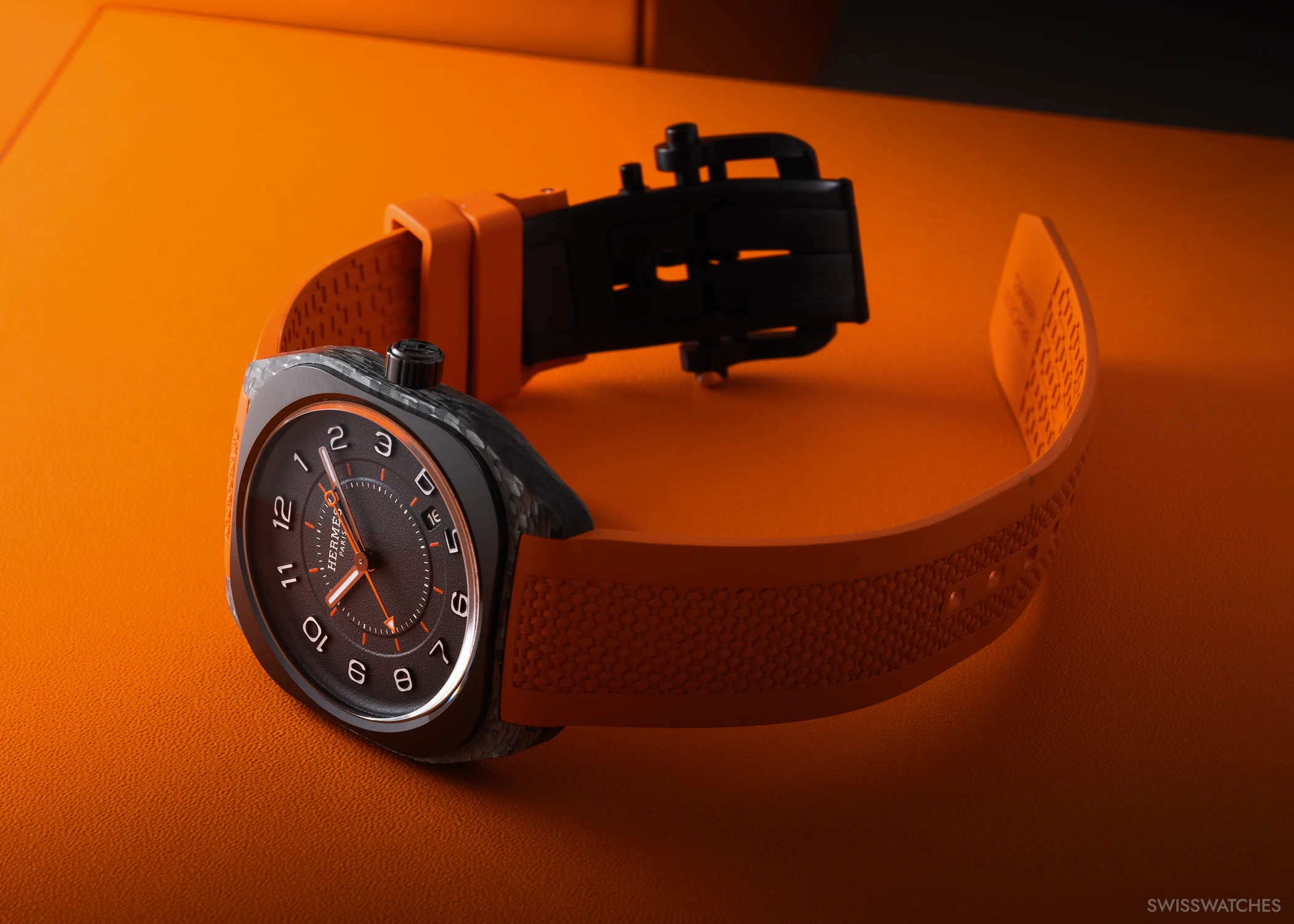
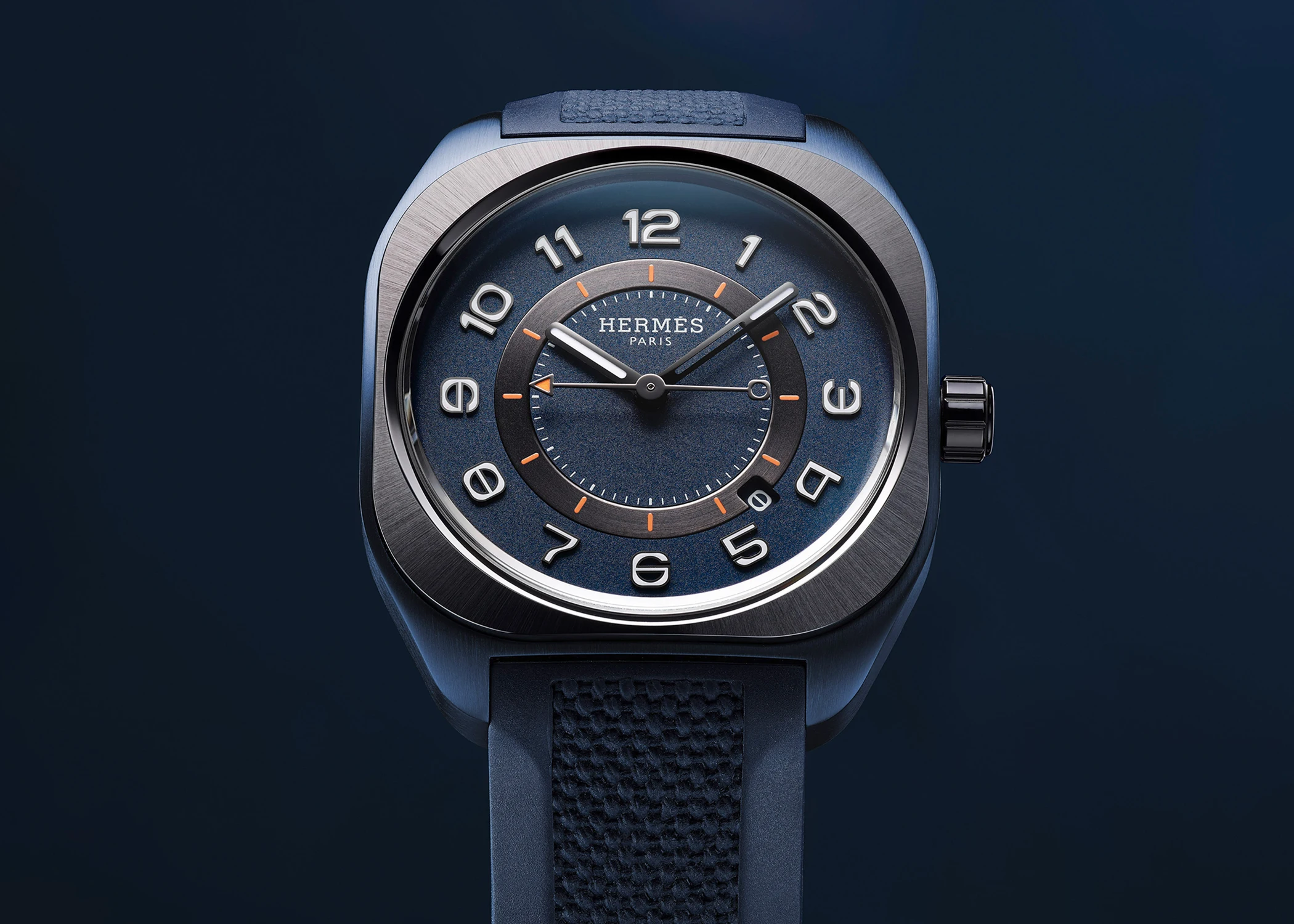
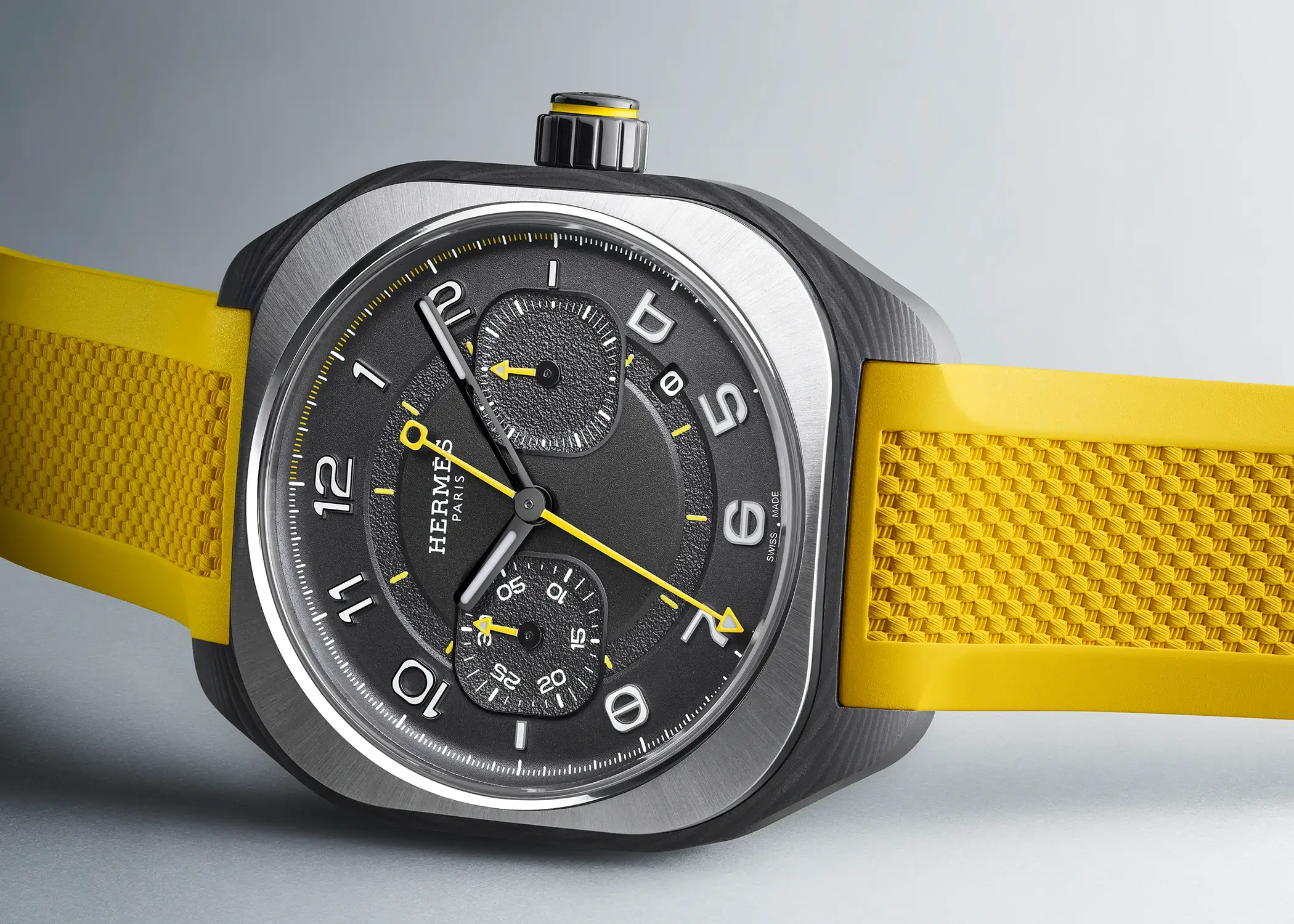
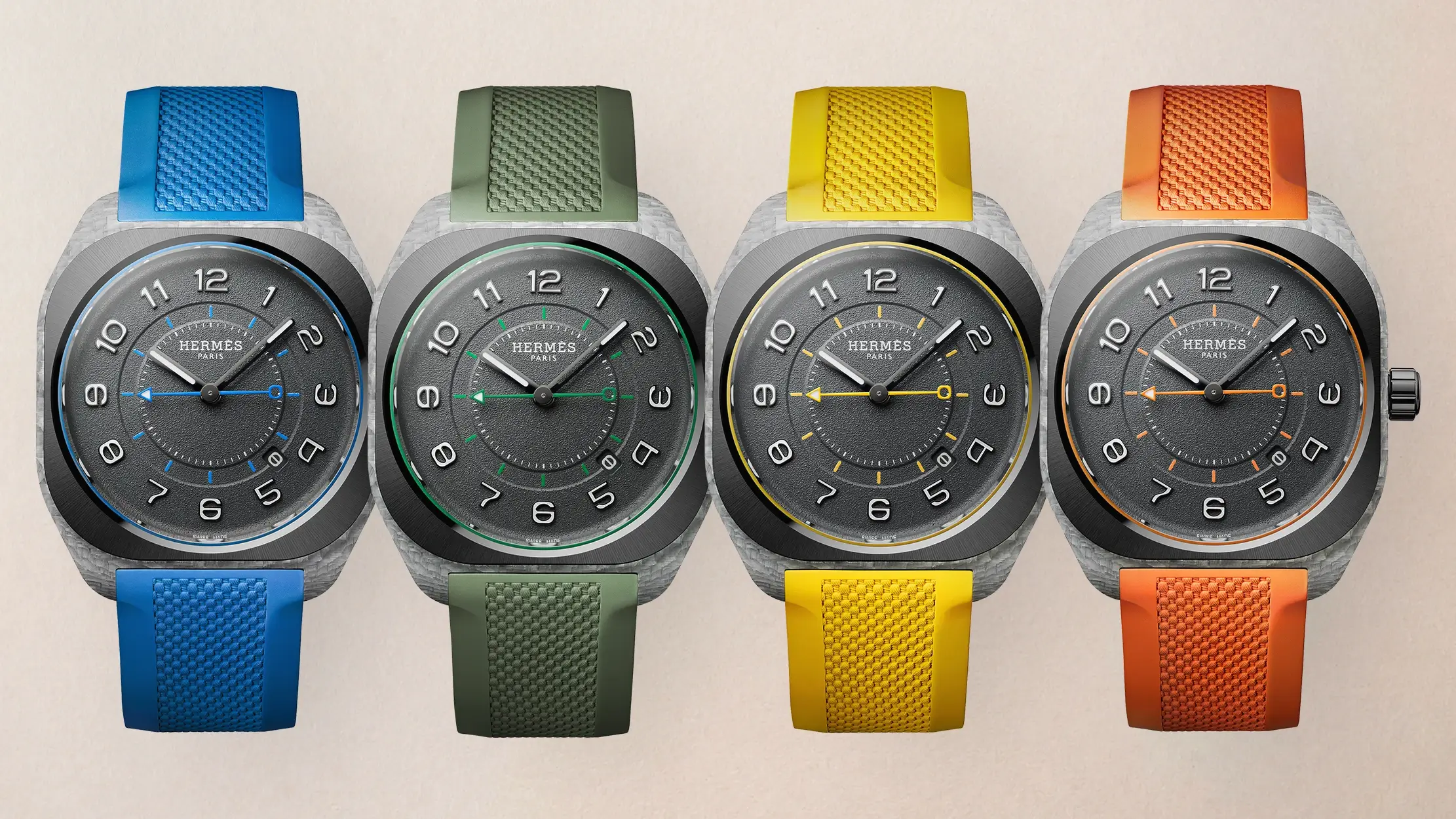
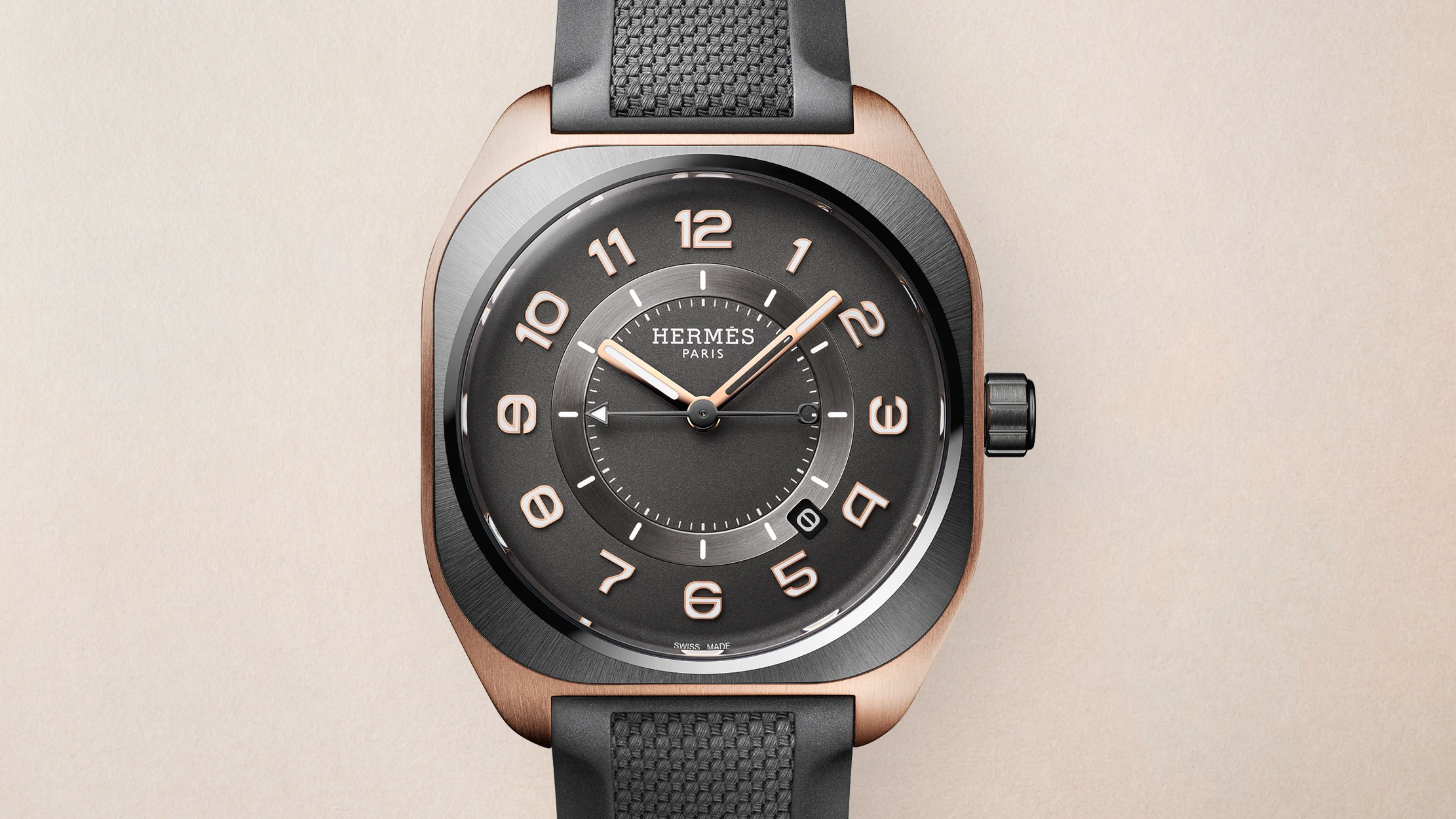
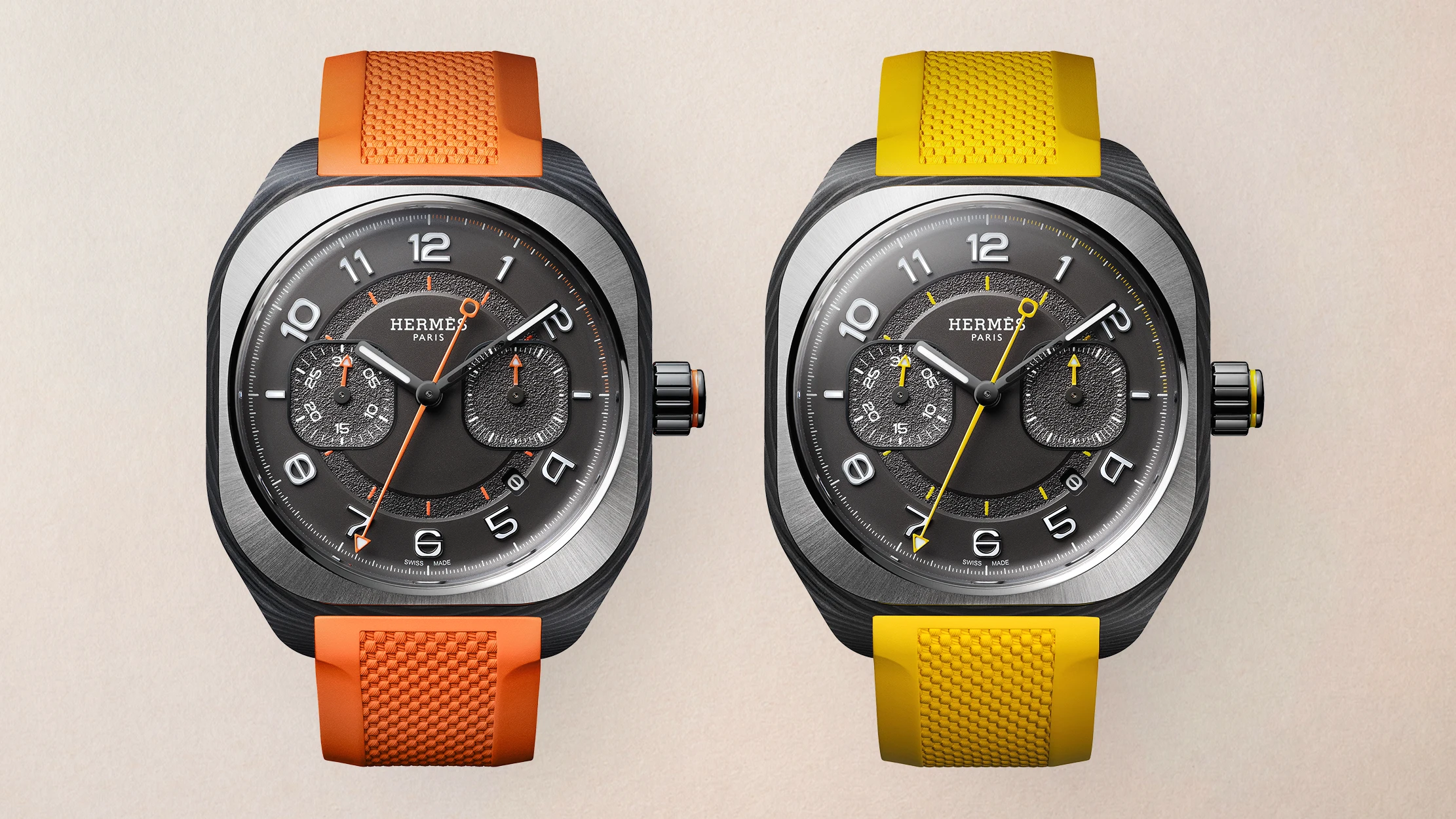
The colour story of the H08 can be traced year by year. In 2021, it launched in near-monochrome: grey titanium, black DLC-coated titanium, and black graphene, punctuated only by a touch of orange at the tip of the seconds hand – the signature shade representing Hermès since the war years, when, as legend has it, only orange cardboard was available for packaging. In 2022 came the Deep Blue Titanium, featuring a blue PVD-coated case and dial. In 2023, the house introduced a rose gold edition in black and rosé, alongside four glass-fibre models (not to be confused with carbon fibre) boasting concrete-grey dials accented in yellow, green, blue, or orange, each paired with a matching rubber strap. The chronograph was unveiled in orange in 2023, with a Naples Yellow version following in 2025. Also in 2025, two titanium models arrived: one entirely in grey with an orange-tipped seconds hand, and another featuring a black ceramic bezel with numerals in Bleu Saint-Cyr, a soft lilac-blue.
Finally, the 2026 Squelette comes in grey with straps in Dune, Vert Moyen, or Bleu Abysse, alongside Bleu Zanzibar accents on either a tonal or black strap. Names like Bleu Saint-Cyr or Bleu Zanzibar originate directly from the house’s colour nomenclature used for leather and silk – meaning the watch speaks the exact same aesthetic language as the handbags. How deeply embedded colour culture is at Hermès becomes evident in Le Noirmont, where electroplating for a specific shade of blue requires initial gold-plating followed by controlled oxidation. The component shifts in real time from copper to aubergine before reaching the desired deep blue, requiring the technician to capture the exact right moment. No other watch manufacture inherits such a rich heritage of colour; at Hermès, everything belongs to a unified colour system.
The case materials similarly tell the story of the line’s evolution. In 2021, the H08 debuted with three options: titanium, black DLC-coated titanium, and a graphene composite paired with a ceramic bezel. This marked Hermès’s first use of graphene – a material previously seen almost exclusively in Richard Mille timepieces at vastly higher price points. Blue PVD-coated titanium followed in 2022. In 2023, experimentation doubled down: the coloured models received cases crafted from woven glass fibre coated with aluminum and slate powder, revealing a visible cross-weave pattern and a silvery sheen.
The chronograph, by contrast, featured a carbon-fibre composite infused with graphene powder. That same year saw the arrival of the H08 in rose gold combined with titanium and ceramic – three distinct materials in a single case. By 2026, the Squelette brought this material exploration directly into the movement itself: DLC titanium on the exterior, paired with a titanium mainplate and a tungsten rotor within. Such material diversity in a five-year-old collection is extraordinary – and it is precisely why the H08 did not become just another steel sports watch clone, but a definitive wristwatch for the 21st century.
Then there are the straps. On many classic timepieces, leather straps feel almost like an afterthought, but at Hermès, they are integral to the design – and on the H08, their evolution can be tracked year by year. In 2021, the line launched on black or orange rubber, blue or black woven polyamide fabric, and, for the titanium model, a titanium bracelet whose brushed outer links frame a polished, rounded central link. Hermès deliberately refrained from using leather – a notable departure from its usual practice, considering it crafts bespoke leather straps even for the Apple Watch. Delhotal explained to Gentlemen’s Watch that the strap for an all-terrain timepiece needed to withstand rigorous wear.
In 2022, the H08 Deep Blue Titanium was fitted with a blue rubber strap and a black DLC titanium clasp. In 2023, the coloured models introduced rubber straps featuring a textured weave pattern matching their respective accent shades, while the chronograph was paired with orange; Naples Yellow joined the chronograph lineup in 2025. That same year, choices for the titanium models expanded significantly: titanium bracelet, rubber in orange, Bleu Abysse, or black, fabric in blue or black, and, for the Bleu Saint-Cyr version, rubber in dark grey or Bleu Saint-Cyr. Finally, in 2026, the Squelette arrived on rubber in five hues ranging from Dune to Bleu Zanzibar, complete with a DLC titanium folding clasp.
Added to this is a key structural detail: Hermès designs the strap attachment so it sits flush against the case without overlapping at the top – a process requiring additional production steps, but yielding a cleaner silhouette. Furthermore, Hermès is among the very few watchmakers boasting its own dedicated leather strap workshop – comparable perhaps only to Montblanc’s Pelletteria in Florence. Located in Brügg since 2006, the Hermès workshop employs hand-sewn saddle stitching, back-stitching the final three stitches for durability. A standard calfskin strap here costs around €225, and the house will happily craft such straps for watches from other brands upon request.
Perhaps the most direct connection between the Patek Nautilus and the Hermès H08 is a person: Philippe Delhotal joined Hermès in 2008 following stints at Piaget, Jaeger-LeCoultre, and Favre & Perret – and most relevantly, after roughly five years as Creative Director at Patek Philippe. While not decades, those were formative years spent in a pivotal role. What he brought with him was less a specific style than a benchmark: at Patek Philippe, he would have learned how crucial proportions and typography are in deciding whether a watch possesses true classic potential.
Delhotal himself dates the key turning points for Hermès watchmaking to 2011 with the Arceau Le Temps Suspendu – the moment he notes Hermès began to be taken seriously as a watchmaker – and 2019 with the L’Heure de la Lune, which he still wears today. That a designer with a Patek pedigree created the H08 does not automatically make it a Nautilus. It does, however, explain why, after just five years, it holds its own in the comparison.
Five years, five stages of development. The H08 continues its steady move upmarket.
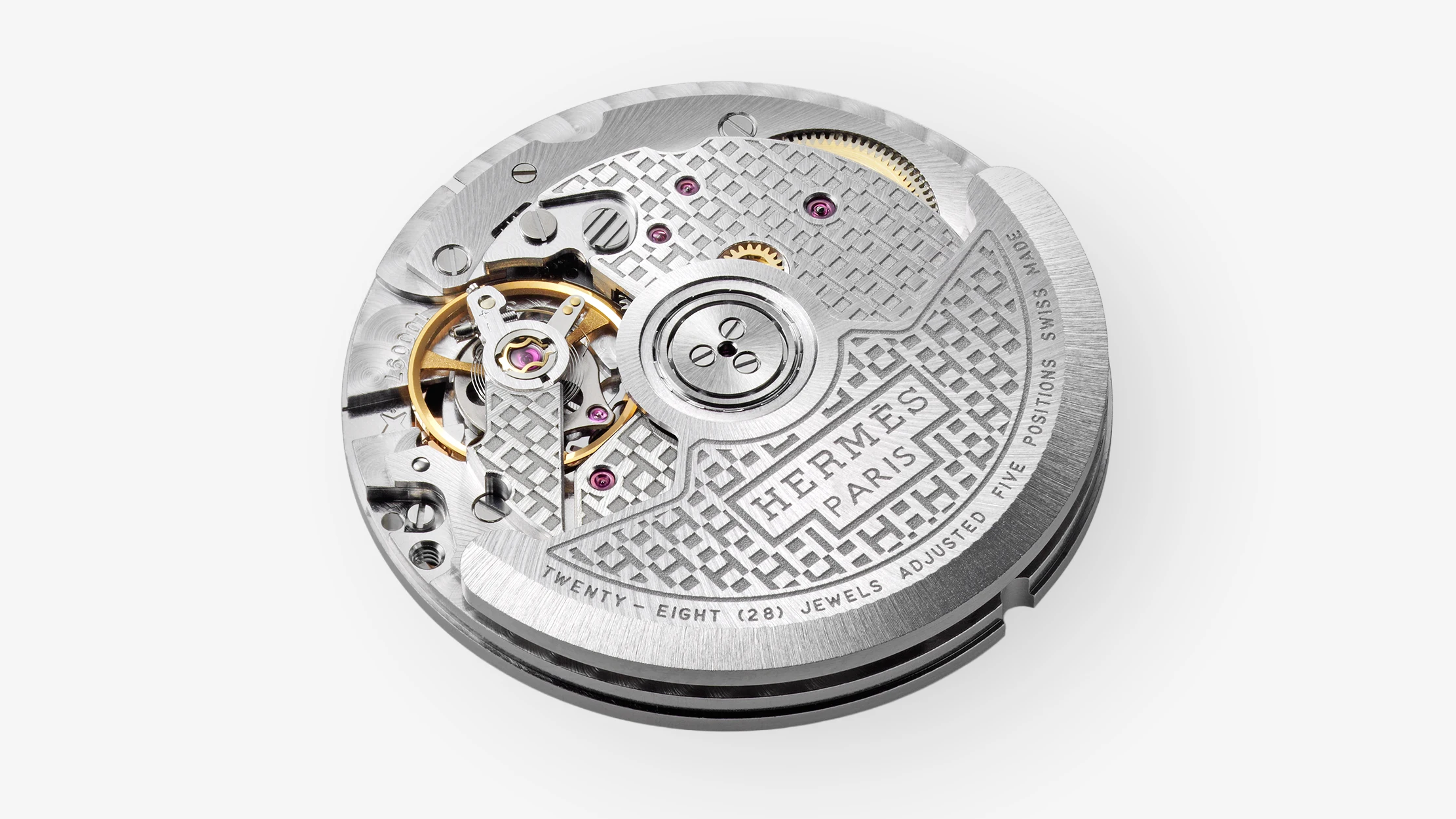
Unveiled at Watches & Wonders 2021 in three case executions, it housed the Vaucher-based Caliber H1837 – an automatic movement featuring twin barrels, a 4 Hz frequency, and a 50-hour power reserve, with a date display at 4:30. Entry prices started at €4,900 on rubber or fabric, rising to €5,400 on the titanium bracelet and €8,000 for the graphene edition.
While the 2022 Deep Blue Titanium introduced colour into the lineup, Hermès made it a defining principle in 2023. Four models featured glass-fibre composite cases, polished black ceramic bezels, and accents in yellow, green, blue, or orange, priced at €7,000. Lighter, sportier, and bolder than the original, this group is perhaps the most intriguing for collectors, as Hermès deliberately began differentiating character rather than merely varying materials.
Also debuting at Watches & Wonders 2023 was the H08 in rose gold. Featuring a rose gold case middle, a black DLC-treated titanium case back, and a black ceramic bezel and crown, it combined three distinct materials in one case. It represented the line’s first push into a higher tier of luxury and price.
Measuring 41 mm, the chronograph’s cushion case is crafted from a carbon-fibre composite infused with graphene powder, topped by a satin-brushed titanium bezel. The monopusher is seamlessly integrated into the crown. Powered once again by the Vaucher H1837 base fitted with a 212-component chronograph module, it offers a 46-hour power reserve. Revolution lauded this approach as pragmatic and logical – a sentiment I fully share: Hermès chose to iteratively refine a proven caliber rather than chase an entirely new in-house chronograph movement. Announced in 2023 around €15,000, it launched at retail for €12,000, with the orange version currently priced at €12,300. A Naples Yellow variant was added in 2025.
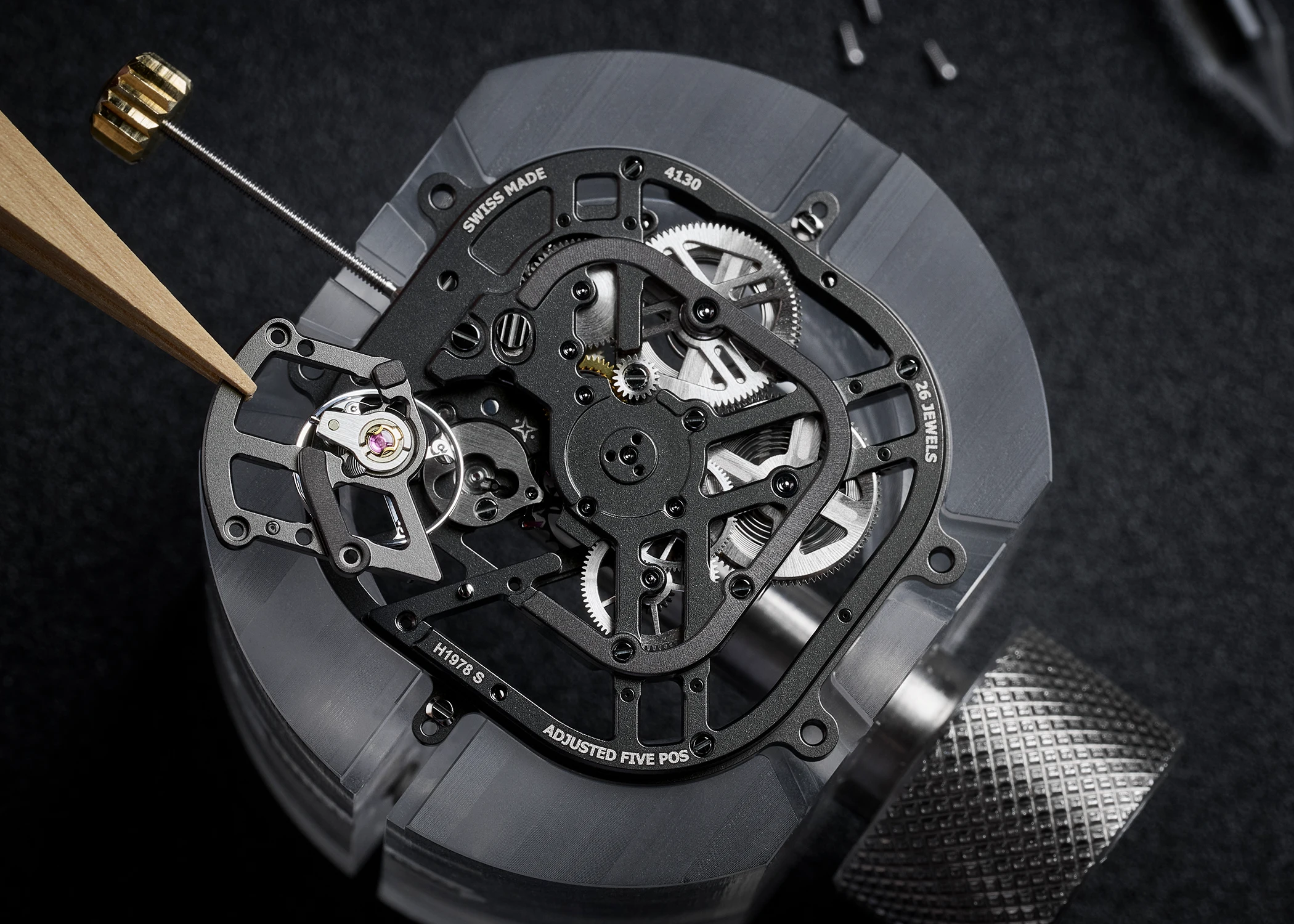
The latest addition, the H08 Squelette, aims to complete the move upmarket. Introduced at Watches & Wonders 2026 and priced at €20,000, it comes in a 39 mm DLC titanium case with a satin-finished ceramic bezel. Inside ticks the new Caliber H1978S, built on the Vaucher 4100 family, comprising 168 components, 26 jewels, twin barrels, and a 60-hour power reserve. The unseen details are what make it particularly compelling: the mainplate is titanium rather than brass, requiring roughly two hours to machine – three times longer than usual due to titanium’s toughness and tool wear. The rotor is made of tungsten, whose high density compensates for mass lost through skeletonization. Small zirconium spheres serve as spacers to prevent the wider rotor from striking the titanium bridges during impacts. Add to this a stress test simulating ten years of intensive wear and a matching ten-year manufacturer warranty, and you have Hermès Horloger’s most confident statement to date.
Five criteria consistently prove decisive in practice: instant recognizability, original design identity, exceptional quality relative to price, alignment with the spirit of the times, and the ability to perfectly embody the brand’s core values. The H08 effortlessly satisfies four of them. The fifth – which is rarity – is where things become more complex. But let us take them in turn:
I mentioned the cushion shape, the distinct numeral typography, and the circle within a square. The H08 is instantly identifiable even in a thumbnail-sized Instagram image – a feat perhaps only a dozen models worldwide achieve in the sports watch segment.
Crucial for long-term prospects: the original release was no mere trial balloon. The finishing was praised from the start, even by observers typically skeptical of Hermès. Five years, five deliberate steps, with zero compromise. And, far more uniquely: no entry-level dilution through cheaper quartz movements. There is no quartz H08, no 34 mm version tailored for a mass market, and no brand collaboration that cheapens the collection.
Here one must be precise, particularly when challenging industry giants. Since its 2021 launch, the H08 has relied on the H1837 – a movement Hermès had previously deployed in other men’s models. Based on the Vaucher VMF 3000, it is a compact, ultra-thin, industrially decorated movement with twin barrels.
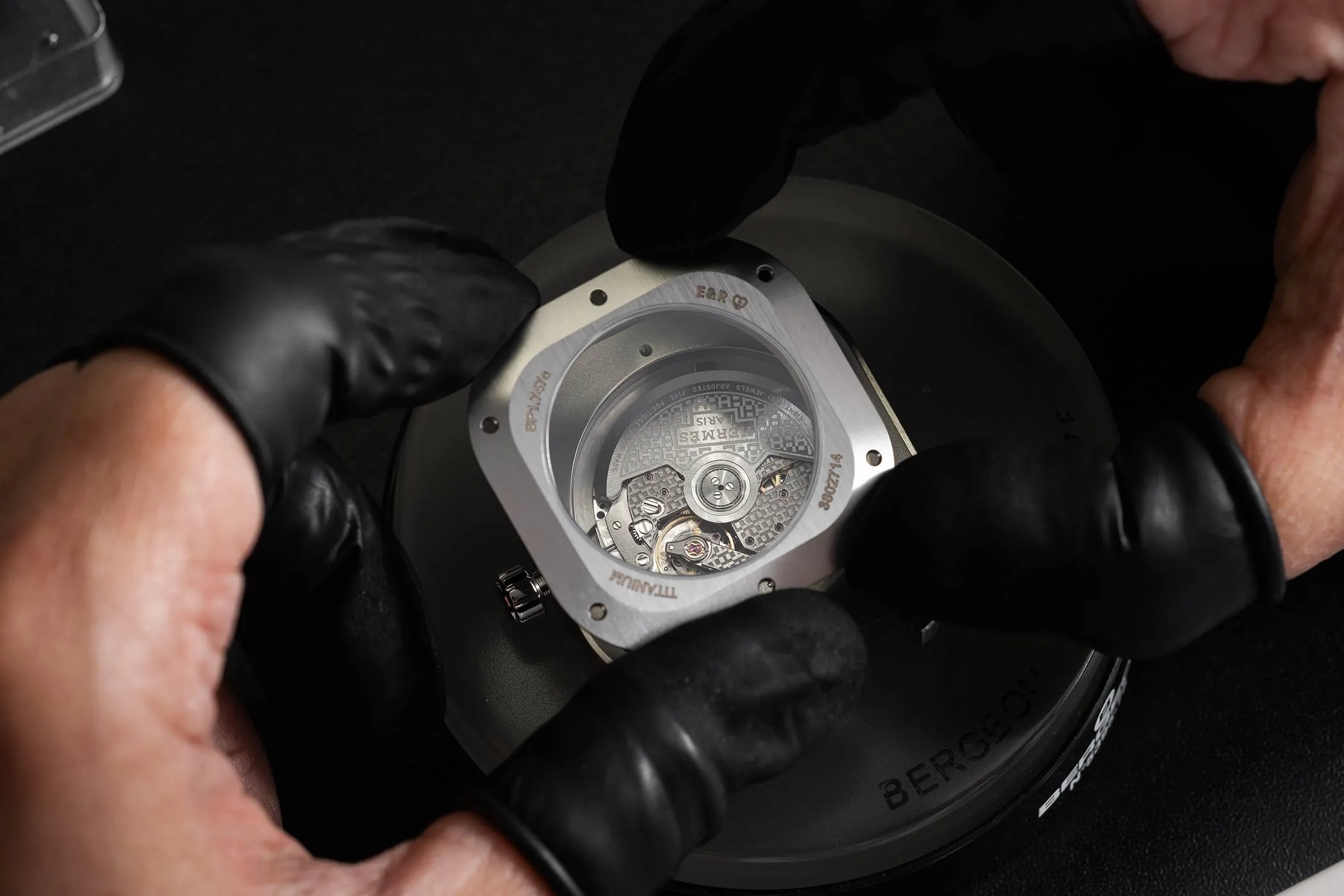
With the Squelette’s H1978S, however, the internal mechanics undergo a fundamental transformation: for the first time, the line receives a dedicated movement featuring a titanium mainplate, tungsten rotor, 60-hour power reserve, and a ten-year warranty. In the same year, Hermès increased its stake in Vaucher – held at 25% since 2006—to 40% in early April. Considering Vaucher also supplies Richard Mille, Audemars Piguet, TAG Heuer, and Parmigiani Fleurier, Hermès is securing growing influence over one of the finest movement makers in the industry.
This point goes decisively to Paris: culturally, Hermès is currently perhaps the most powerful luxury brand in the world, enjoying a level of desirability no watch brand can simply buy – not even Rolex. Scarcity, however, is a different story: the H08 is not a watch you have to wait for; it is readily available. That represents a strength today – yet could prove the single greatest hurdle on its journey to icon status tomorrow.
Even so, Hermès has systematically managed its production volume. In the early 2000s, according to Oliver Müller, founder of watch consultancy LuxeConsult, the house produced around 280,000 watches annually – mostly quartz models priced under 1,000 Swiss francs, serving primarily as an entry point into the Hermès universe.
Since then, Hermès has slashed annual production by roughly three-quarters while raising average price points substantially, as reported by the Wall Street Journal in September 2026. Morgan Stanley estimates current production at around 60,000 watches per year. That is roughly on par with Chanel; Cartier produces ten times that amount according to the WSJ, while Rolex produces approximately 1.15 million watches based on estimates by Morgan Stanley and LuxeConsult. Curiously, Hermès’s figures are not far removed from Audemars Piguet or Patek Philippe (each around 50,000 to 70.000 watches per year).
How many of those 60,000 watches are H08 models remains undisclosed. Nevertheless, revenue is substantial: since 2019, the watch division has nearly tripled, generating €577 million in 2024 – on par with IWC or Jaeger-LeCoultre – and €549 million in 2025. Müller noted to the WSJ that Hermès has now achieved “a certain legitimacy in watchmaking”. It should be noted, however, that according to Bilanz, around half of all Hermès watches still utilize quartz movements. The mechanical H08 models therefore represent only a fraction of an already modest total volume.
For anyone buying an H08 today with an eye on 2071 – the moment it reaches the same age as the Nautilus today – the smartest focus is on distinctive first-generation models. Topping the list are the 2021 titanium editions, ideally on the titanium bracelet with original box and papers: they embody the first generation, the purest execution, and the clearest connection to the origin – and can conveniently be acquired below retail today. Equally compelling are the composite models: the 2021 graphene piece and the 2023 glass-fibre variants. They offer a story in material innovation unmatched by any rival in this price segment, while the vibrant coloured executions boast the strongest visual identity in the collection.
The risk lies in long-term durability: how composite cases fare after thirty years remains unknown today. Then there is the first chronograph – the orange monopusher featuring the pusher integrated into the crown – representing the collection’s debut complication. First iterations have historically proven a reliable category at auction. Finally, the first Squelette houses the line’s first bespoke caliber, tested for ten years of wear and backed by a decade-long warranty. Should Hermès maintain this trajectory, retrospectives will likely point to this model as the precise moment the H08 transitioned from a design object to a statement of horological independence.
The H08 currently starts at €7,100, with titanium models ranging between €7,100 and €9,350, the chronograph at €12,300, and the Squelette at €20,000. Compared to a Nautilus 5811/1G at €76,020 retail, this remains a fraction of the price, leaving ample headroom even against a Royal Oak “Jumbo” 16202. In 2021, the H08 started at €4,900; entry pricing has risen over 40% in five years. While luxury prices across the board surged in the post-Covid era, Hermès must take care not to raise prices disproportionately before fully establishing its authority as a watch manufacture. Collectors, on the other hand, should welcome the medium-term streamlining of the range and the steady upward movement in retail pricing as they look to enter the brand.
Market research across Chrono24 and eBay presents a clear picture today: early titanium H08 models are listed between roughly €3,400 and €5,000. A 2023 Deep Blue Titanium complete with box and warranty was offered around €3,800, while a 2025 green glass-fibre model retailing at €8,150 in Germany sold for the equivalent of roughly €3,800. Chrono24 places the overall collection in a range spanning €3,900 to €15,000. As of today, the H08 trades significantly below retail – in some cases at half price. To be fair: fifteen years ago, as I experienced firsthand, even the Nautilus could occasionally be bought at a discount from authorized dealers. The sole notable exception showing market strength is the limited Hodinkee edition, trading on Chrono24 well above standard production models: where true scarcity is introduced, the market mechanism functions at Hermès as well.
Anyone seeking to collect an early H08 today pays no collector’s premium. For a buyer, that is the best possible news. Yet – and this is why I maintain the thesis remains valid – it was precisely the same for the Nautilus for twenty years. The 3700 was a tough sell in the 1980s. Value appreciation is a lagging indicator.
The primary objection voiced by collectors today concerns the brand itself: Hermès is not a pure play watchmaker. Online forums frequently frame this in pointed terms, calling it a fashion house that gains entry to horology purely through high pricing. That is an argument I believe I have clearly disproven.
In 2025, the watch division generated €549 million – roughly 3.5% of the group’s total revenue of €16 billion. It was also the sole segment to contract recently (down 2%), whereas leather goods and saddlery grew by 13% at constant exchange rates. Yet that counter-argument misses a vital historical lesson. Speaking to WirtschaftsWoche in May, Florian Craen, Executive Vice President of Sales & Distribution at Hermès, recalled that in the late 1980s, Japanese customers accounted for nearly half of company revenue—”and at that time, half of our global sales consisted of silk scarves and ties”.
Today, Japan accounts for less than 10%. “Had we invested solely in silk in Japan, we would no longer exist.” Instead, Hermès now successfully sells sneakers, furniture, cosmetics, and fine jewellery – categories in which no one would have credited the house decades ago. Dismissing Hermès in any category based on current revenue share reflects a fundamental misunderstanding of how the house operates. The watch division itself offers the proof: it has nearly tripled since 2019.
For collectors, the key factor is that Hermès, as a family-controlled listed enterprise, thinks in generations rather than quarters. Amid a wider industry slowdown, it is expanding its manufacture through 2028, hiring 100 additional staff, and increasing its Vaucher stake to 40%. In doing so, it preserves the capacity to carry exceptional design into the next generation – the true core competence of the house, as seen in Henri d’Origny’s 1978 Arceau or the bestselling Cape Cod.


Hermès continuously reinterprets its classics – the exact discipline required of a collection aspiring to icon status. Crucially, and frequently underestimated: Hermès controls 100% of its distribution. Hermès is available strictly at Hermès. There are no third-party dealers, no discounting pressure, and no reliance on retail partners forced to write off stock in lean years. Hermès CEO Axel Dumas, himself a descendant of the founding family, has publicly voiced frustration over Birkin bags ending up on the secondary market; a house with that mindset will maintain strict control over watch availability as well. The fact that the watch division rebounded by 4% in Q2 2026 points toward a broader normalization.

If we are honest, very few of us writing about mechanical wristwatches today – myself in my fifties included – truly understand what Gen Z wants. Who would have predicted that millions of young people would embrace a quartz Swatch Speedmaster, or purchase a mechanical pocket watch collaboration between Audemars Piguet and Swatch?
Fifteen years ago, I would have given Cartier a chance in Germany purely as a women’s brand; the Calibre de Cartier was a total flop at launch. Today, young women adore Cartier – especially since Taylor Swift was photographed wearing a Santos Demoiselle for her engagement – while young men wear Cartier as if it were the most natural choice in the world.
What is certain is that the next generation gravitates toward major names – behemoths like Cartier, but equally Hermès. They possess a sharper eye for detail, and they clearly favour a more playful approach to horology’s sacred cows. Did Rolex not recently auction off brightly coloured Daytonas?
As I noted at the outset: every comparison is flawed. Hermès has a long path ahead, and the weight of responsibility is heavy: over the next decade, it simply cannot afford a single horological misstep. Retail prices have already climbed noticeably, while the secondary market currently offers almost no premium for tomorrow’s potential icon.
Yet a house committed to delivering the finest product in every category – one actively investing in its own manufacture and expanding its stake in a top-tier movement maker while others cut back – clearly has a master plan. The fact that Hermès retains 100% control over product availability means it holds all the levers. Whether it becomes Hermès’s own Nautilus will be decided not by us, but by collectors around the year 2050 – it took the Nautilus roughly 30 years to achieve icon status, after all. I, for one, would certainly not bet against Hermès. And besides, once something becomes glaringly obvious, there is no longer any joy in writing about it.