Rémi Jomard discusses Piaget’s Polo Minute Repeater, ultra-thin movements, acoustics and the balance between technical innovation and design.

Dong, Dong – Ding-Dong – Ding, Ding, Ding. This sequence of chimes indicates that it is 2.18. That’s right, we’re talking about the minute repeater, which many regard as the pinnacle of watch complications. As well as its almost poetic form of audible time-telling, it is, above all, technically highly demanding and is mastered by only a handful of manufacturers. Piaget is one of them.
Following on from the Polo Perpetual Calendar Ultra-Thin and the Polo Flying Tourbillon Moonphase, the new Piaget Polo Minute Repeater is further proof of Piaget’s commitment to combining the very highest standards of watchmaking expertise with an exceptionally slim design.
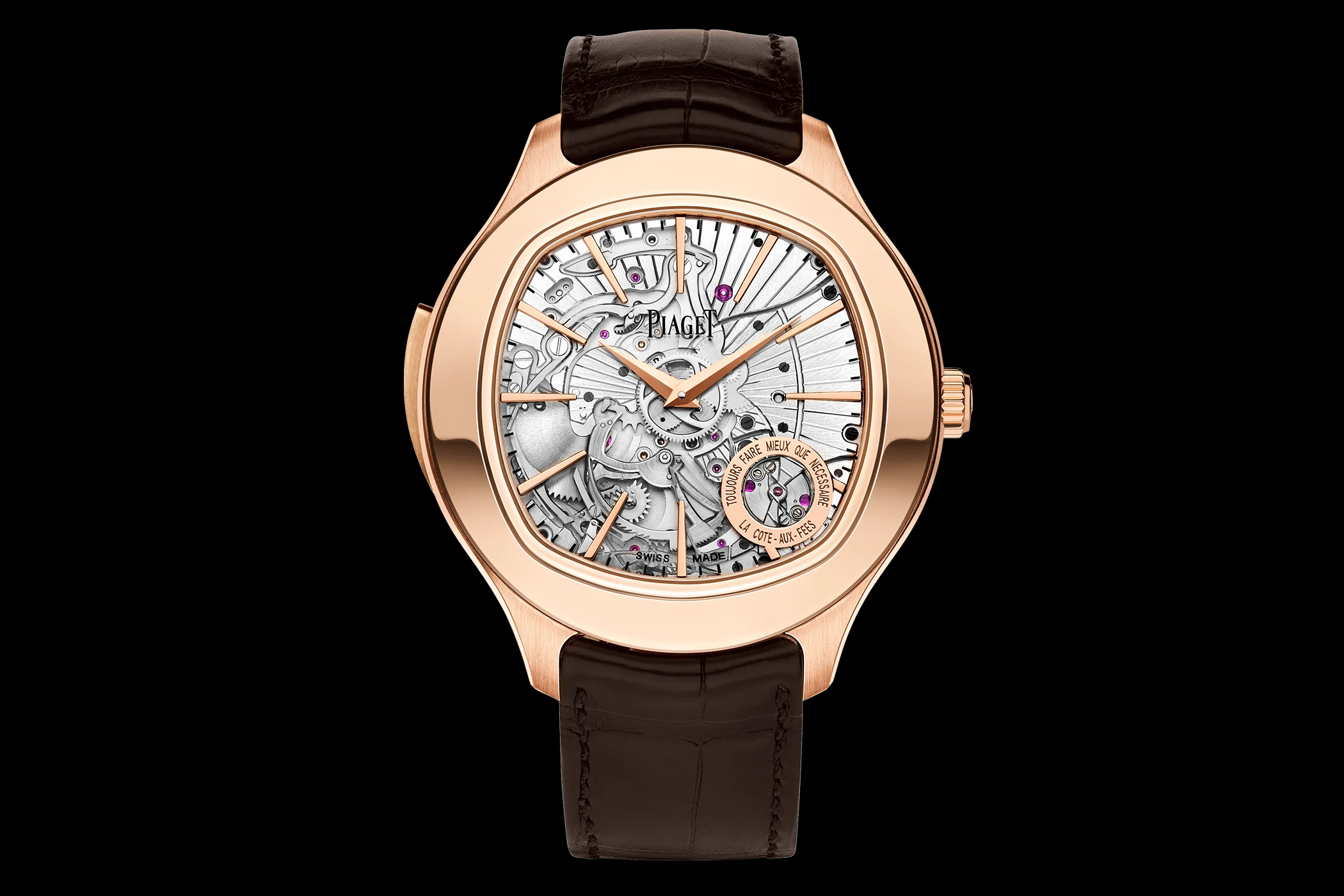
The manufacture had already presented such a blend of haute horlogerie back in 2013 with the Polo Emperador Coussin, which at the time was the world’s thinnest mechanical watch with automatic winding and a minute repeater in its case.
With its complex minute repeater mechanism, the new Polo now adds another melodious chapter to its story. This year’s limited edition of just five pieces reflects the considerable craftsmanship involved in producing a minute repeater. However, the Piaget Polo Minute Repeater is not, in principle, a limited edition.
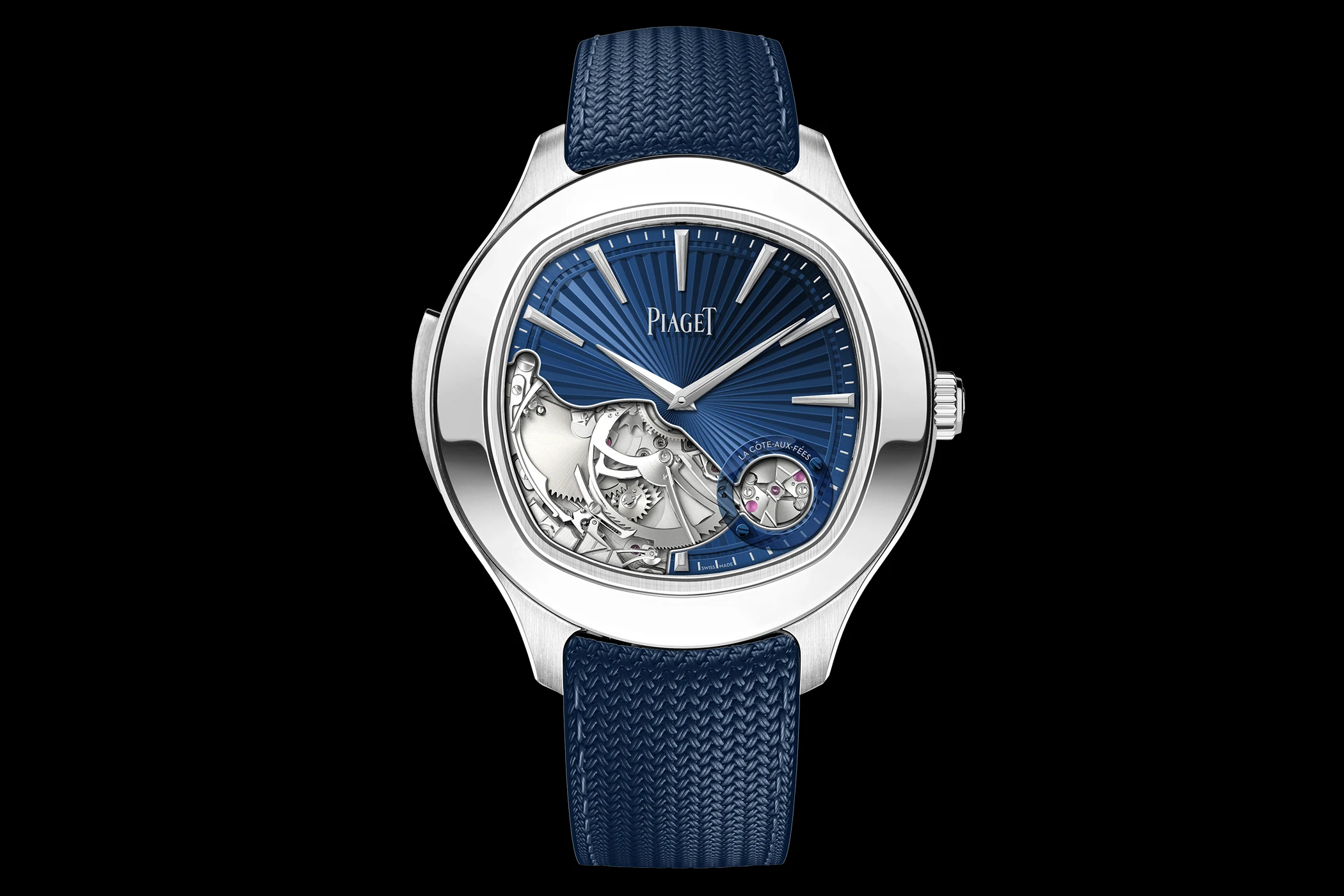
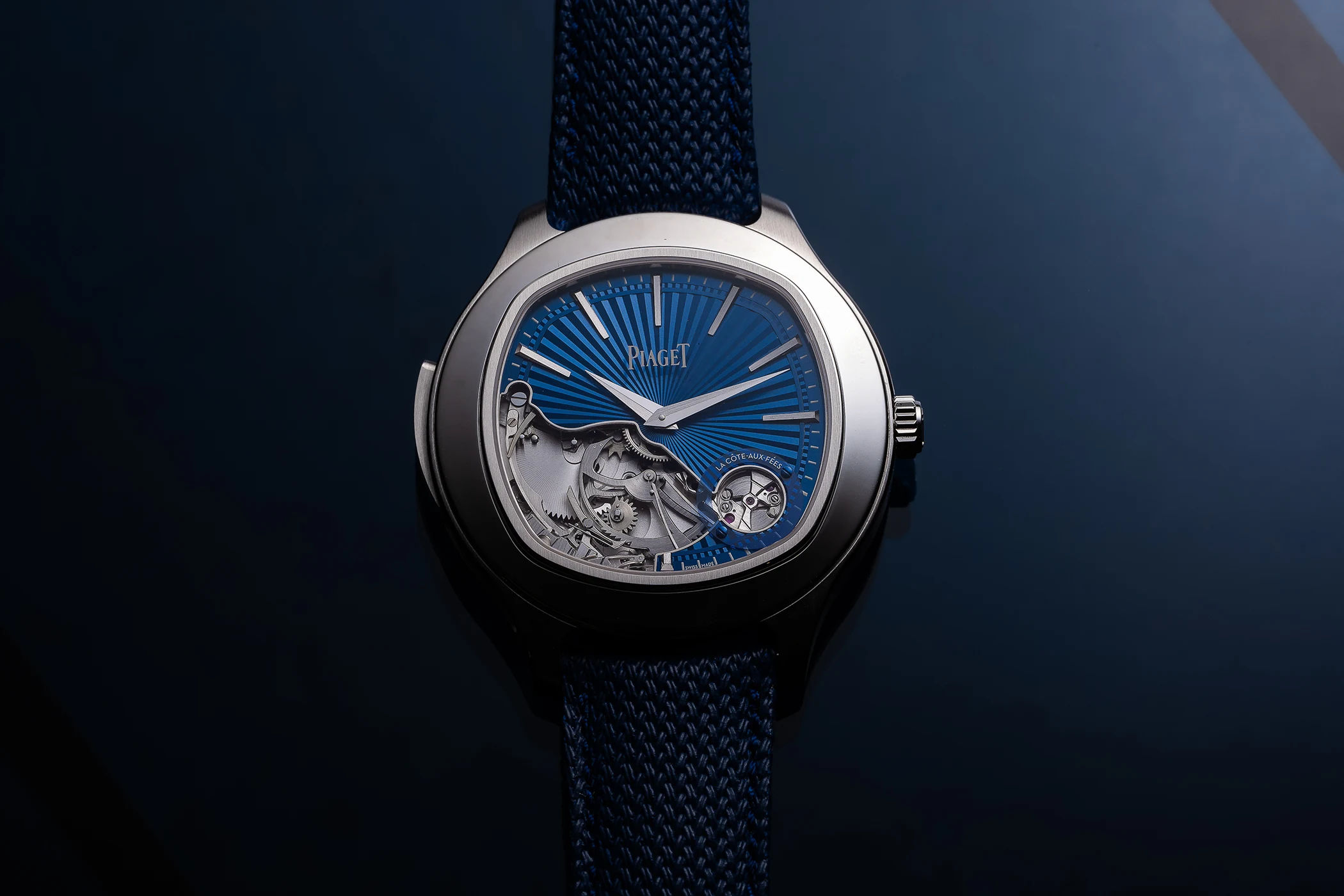
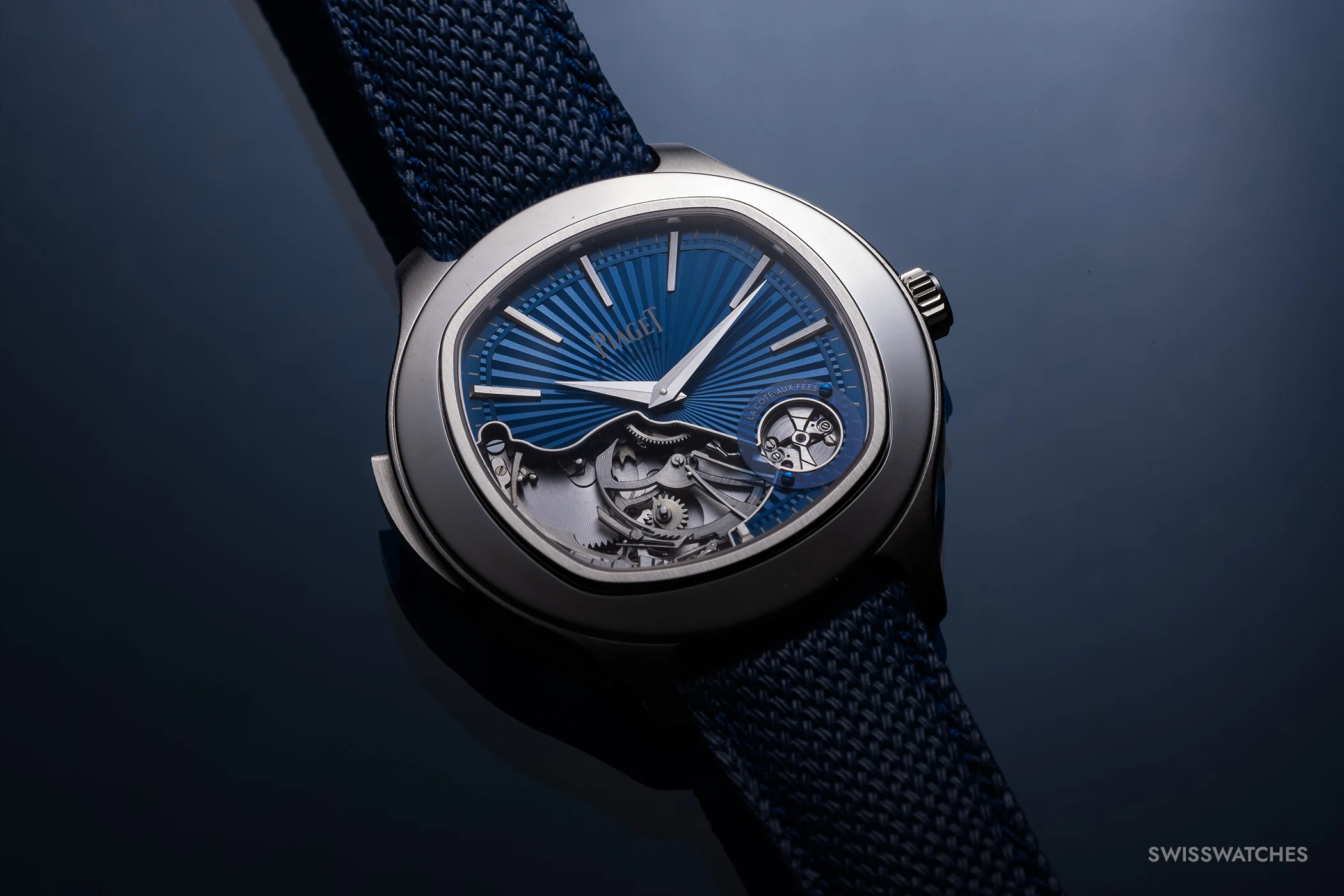
The dial of the Piaget Polo Minute Repeater is crafted from gold with a blue PVD coating and is hand-guilloché. The result is a radiant sunburst finish. It takes around 50 hours to finish each individual dial.

The partially openwork construction is reminiscent of the half-mask from The Phantom of the Opera. Whilst in the musical it conceals the Phantom’s disfigured face, the dial of the Piaget Polo Minute Repeater offers a glimpse of the beauty of its inner workings.
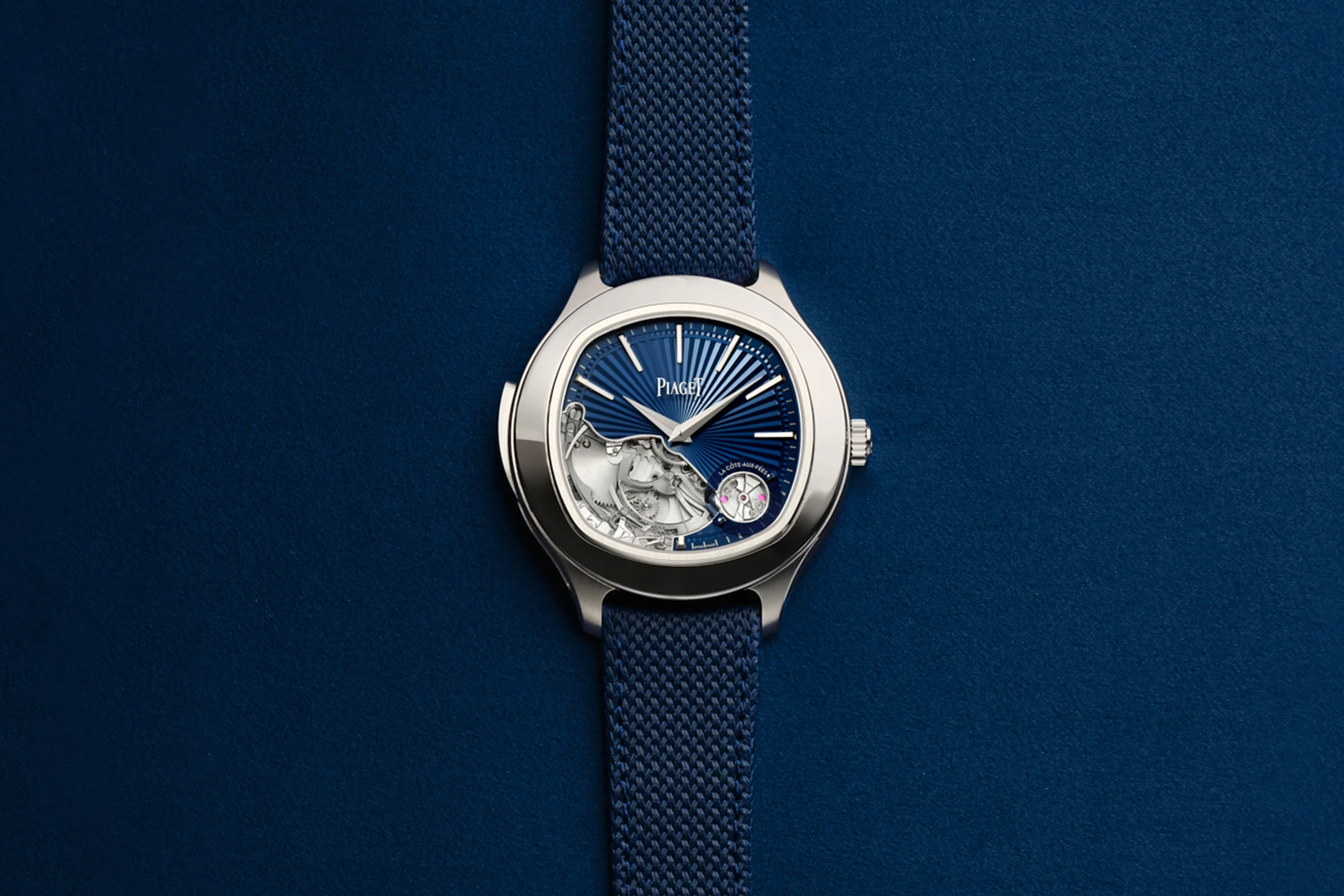
For example, between 4 and 5 o’clock, there is a ring of smoky-blue sapphire bearing the inscription ‘La Côte-aux-Fées’, the village in the Swiss Jura where Piaget was founded in 1874. It frames the special minute-repeat regulator, whose function is to limit and stabilise the speed of the striking mechanism so that the chimes sound at a steady rhythm.
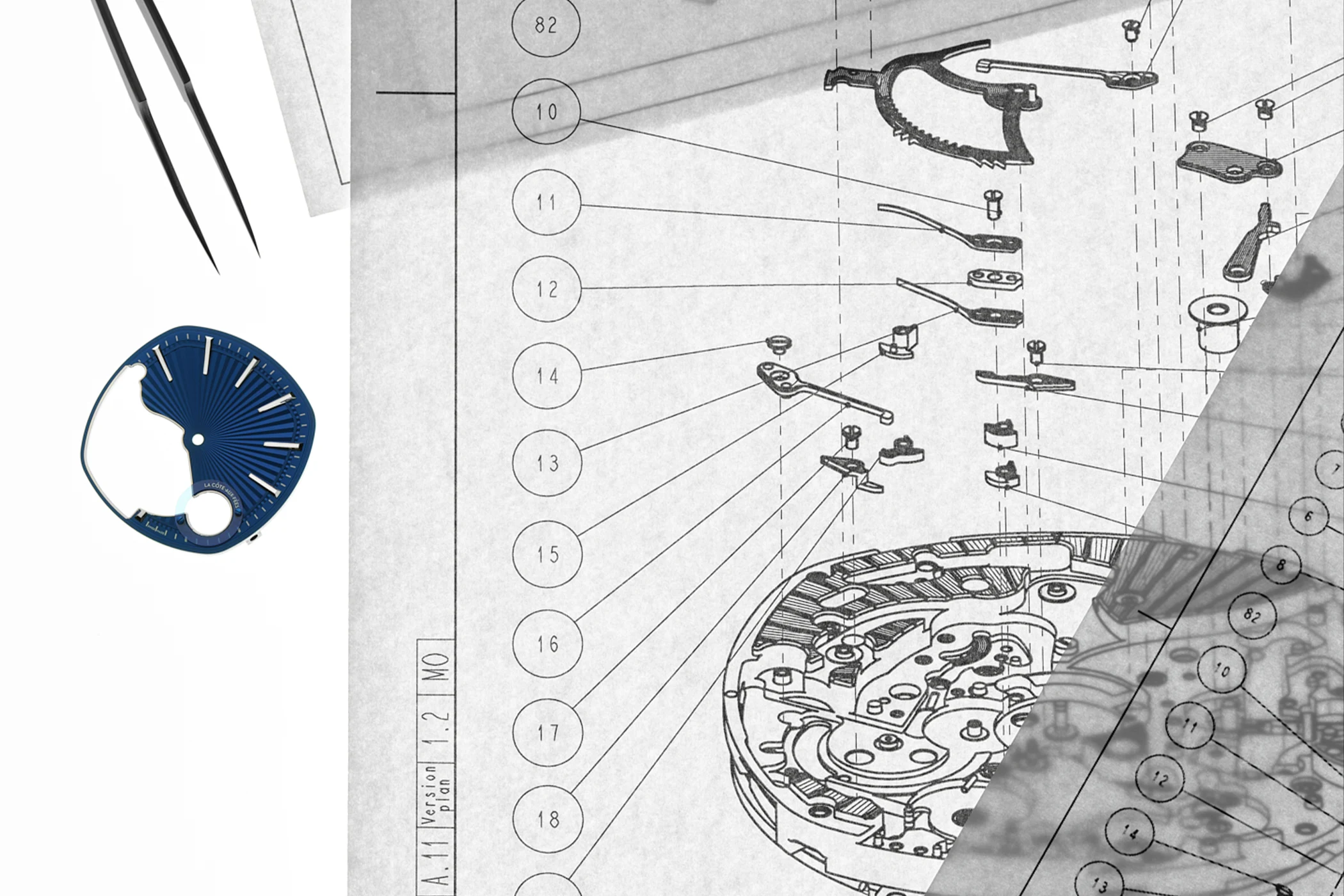
The open-worked design of the dial also offers a view of other components of the complex striking mechanism. Between 6 and 10 o’clock, the hammers, levers and wheels of the minute repeater, amongst other things, can be seen.
Six engineers at the Piaget Manufacture spent three years developing the 1290P movement. The result was unveiled in 2013 in the Emperador Coussin Automatic Minute Repeater. It was based on the Calibre 1200P, which is just 2.35 millimetres thick and which Piaget described as the world’s thinnest automatic mechanical movement when it was launched in 2010.
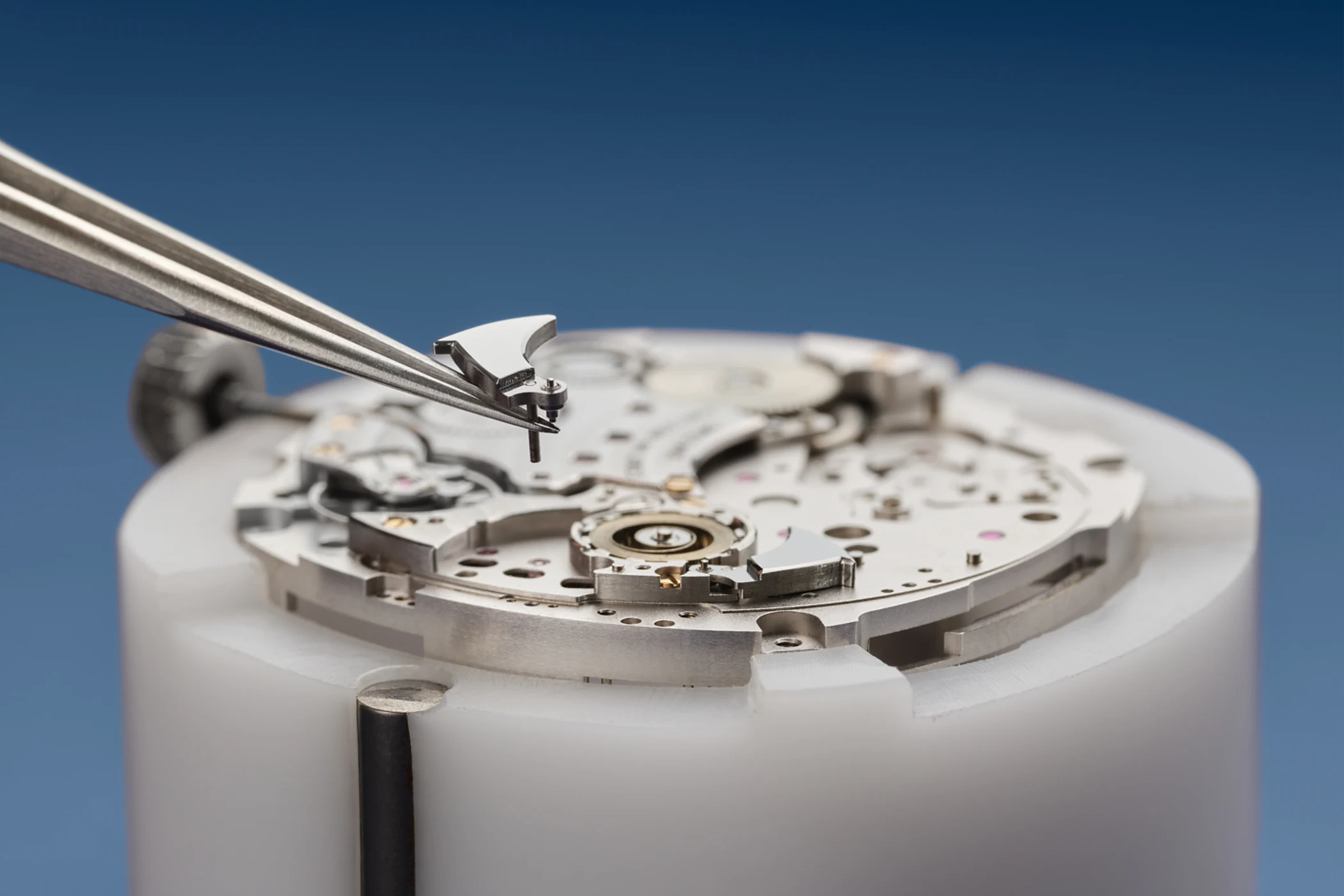
The 1290P calibre now comprises 430 components and is also an exceptionally intricate ultra-thin mechanical manufacture movement with automatic winding and a minute repeater. The assembly process alone at the manufacture in La Côte-aux-Fées takes 80 hours.
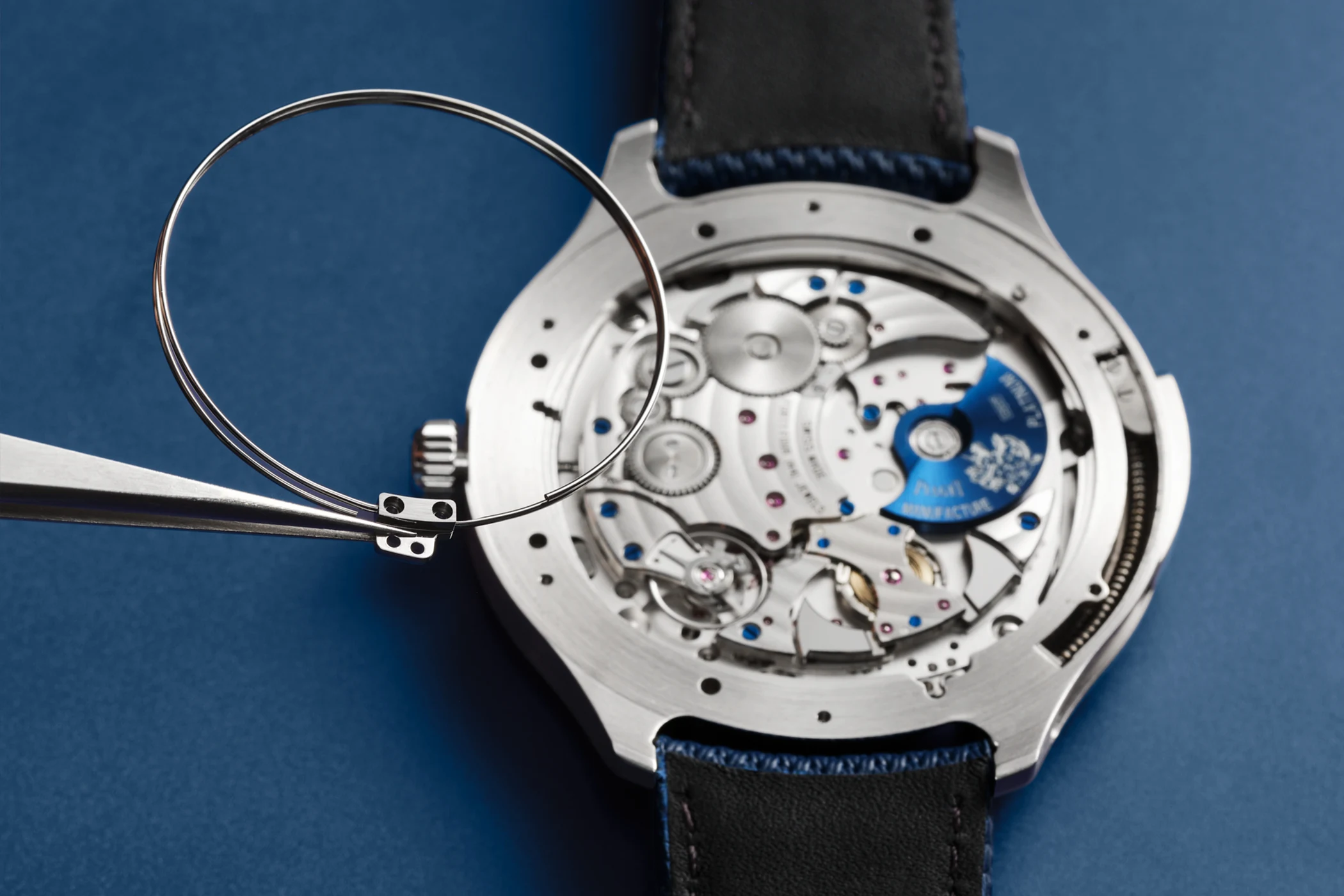
It displays the hours and minutes. What makes it special is that Piaget has integrated the complex striking mechanism into a case just 4.8 millimetres thick and 34.9 millimetres in diameter. It beats at a leisurely rate of 21,600 vibrations per hour (3 Hz) and offers a power reserve of around 40 hours.

At 0.12 millimetres, some of the wheels are barely thicker than a human hair, which measures around 0.08 millimetres. For some components, the height has even been reduced to 0.07 millimetres. The micro-rotor, with its blue PVD coating, is made of platinum to provide sufficient mass for automatic winding despite its small dimensions.
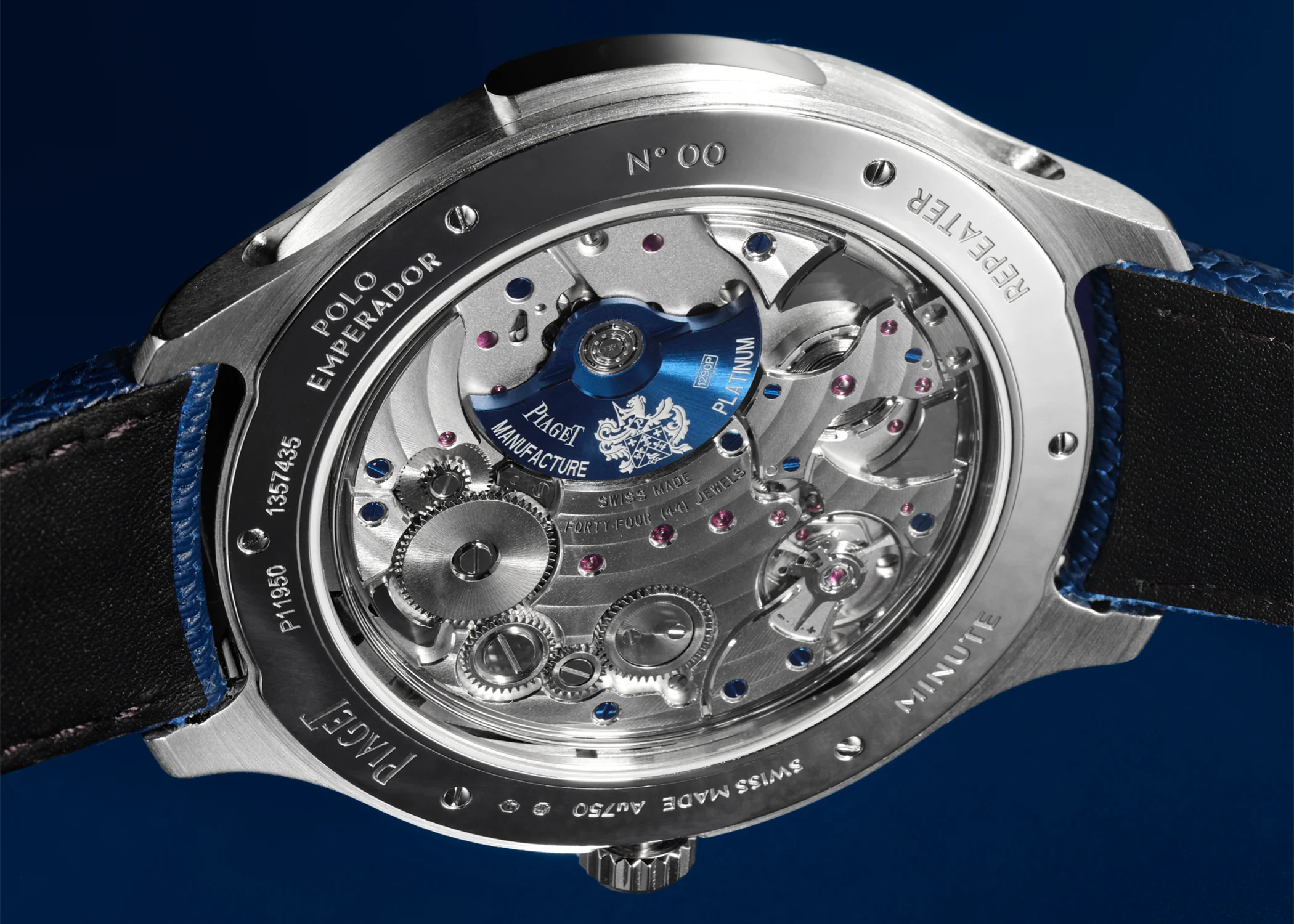
The pursuit of an ultra-thin design is also reflected in the unusual arrangement of the repeater slide: unlike usual, it is operated downwards rather than upwards. The Calibre 1290P also features a special mechanism for a particularly precise hour jump at the end of the 59th minute. This ensures that the time display and the acoustic signal remain synchronised as precisely as possible.
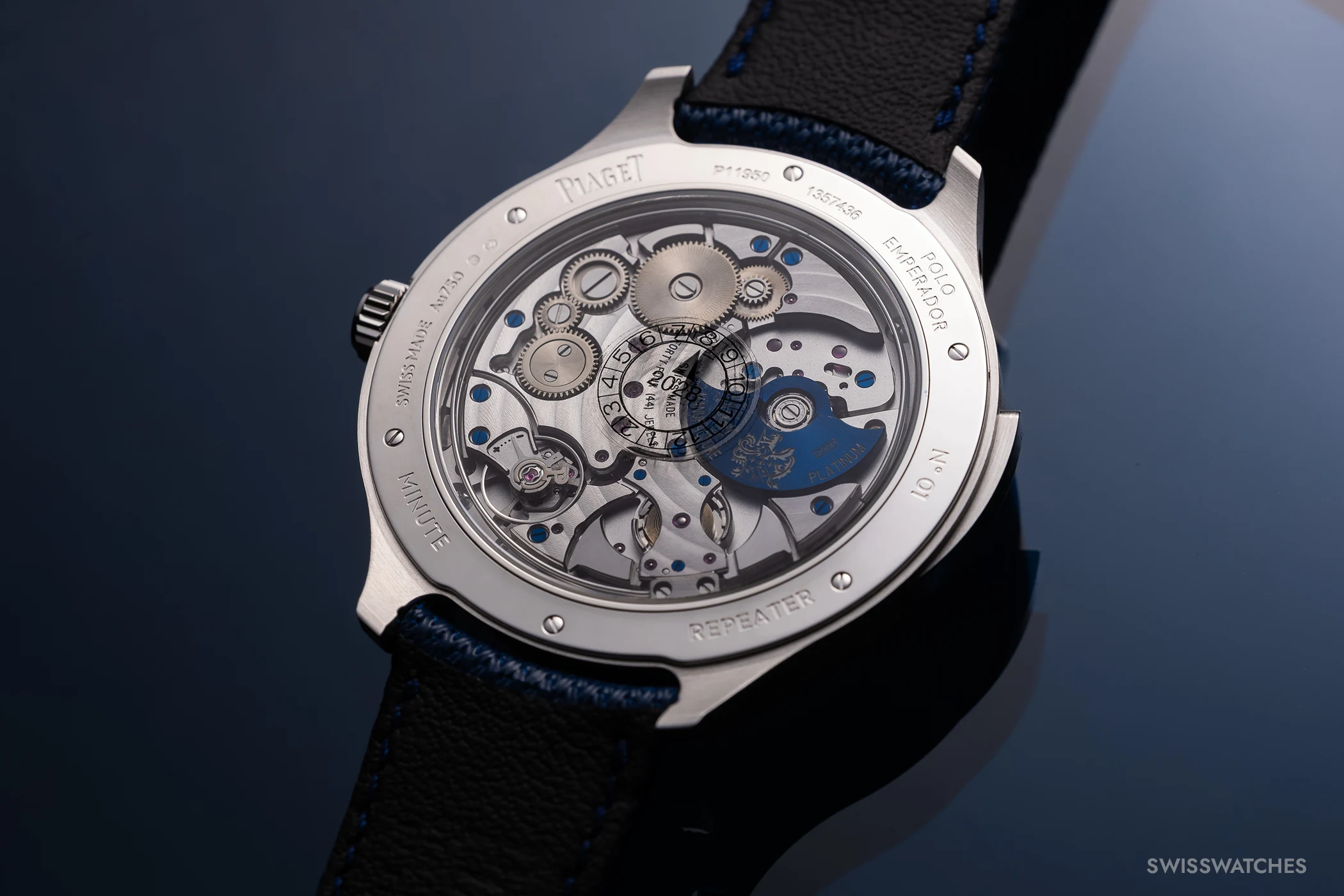
If, for example, the minute repeater is triggered at 11:59:59, it indicates 11 hours, three quarters of an hour and 14 minutes – in other words, 11:59. It does not strike twelve hours simply because the next hour is about to begin.
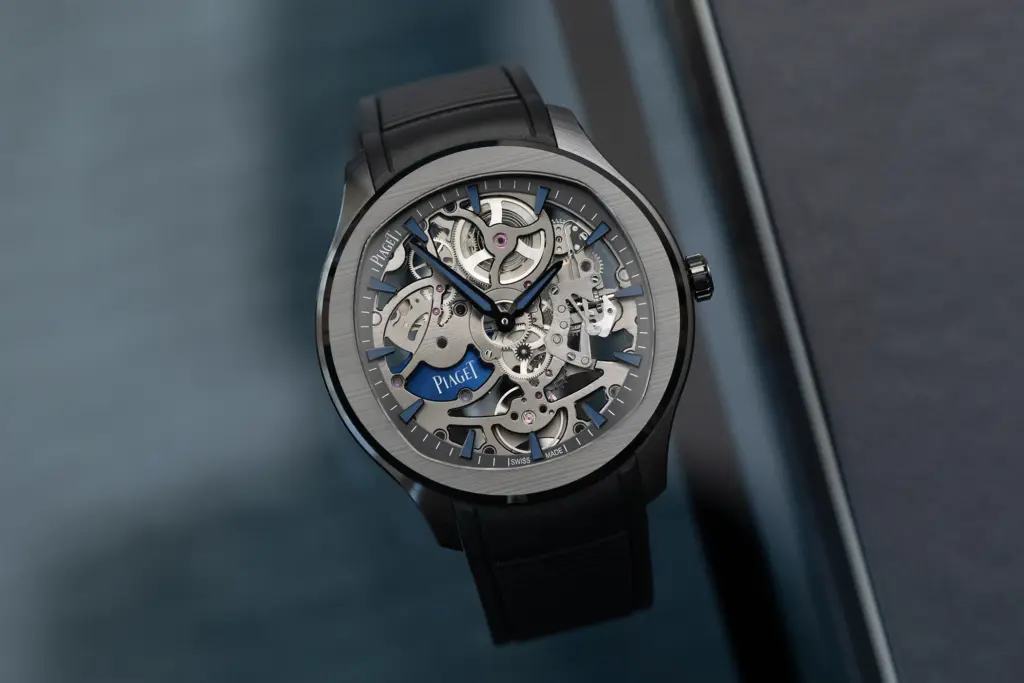
You can find out more about the Piaget Polo Skeleton Ceramic here in our article
The counterpart to this technical sophistication is the meticulous finishing of the movement, which takes several weeks to complete. The circular Côtes de Genève finish is complemented by, amongst other features, hand-bevelled and filed bridges, hand-chamfered bridges, hammers polished to a high gloss, the engraving of the Piaget coat of arms on the rotor, and blued screws.
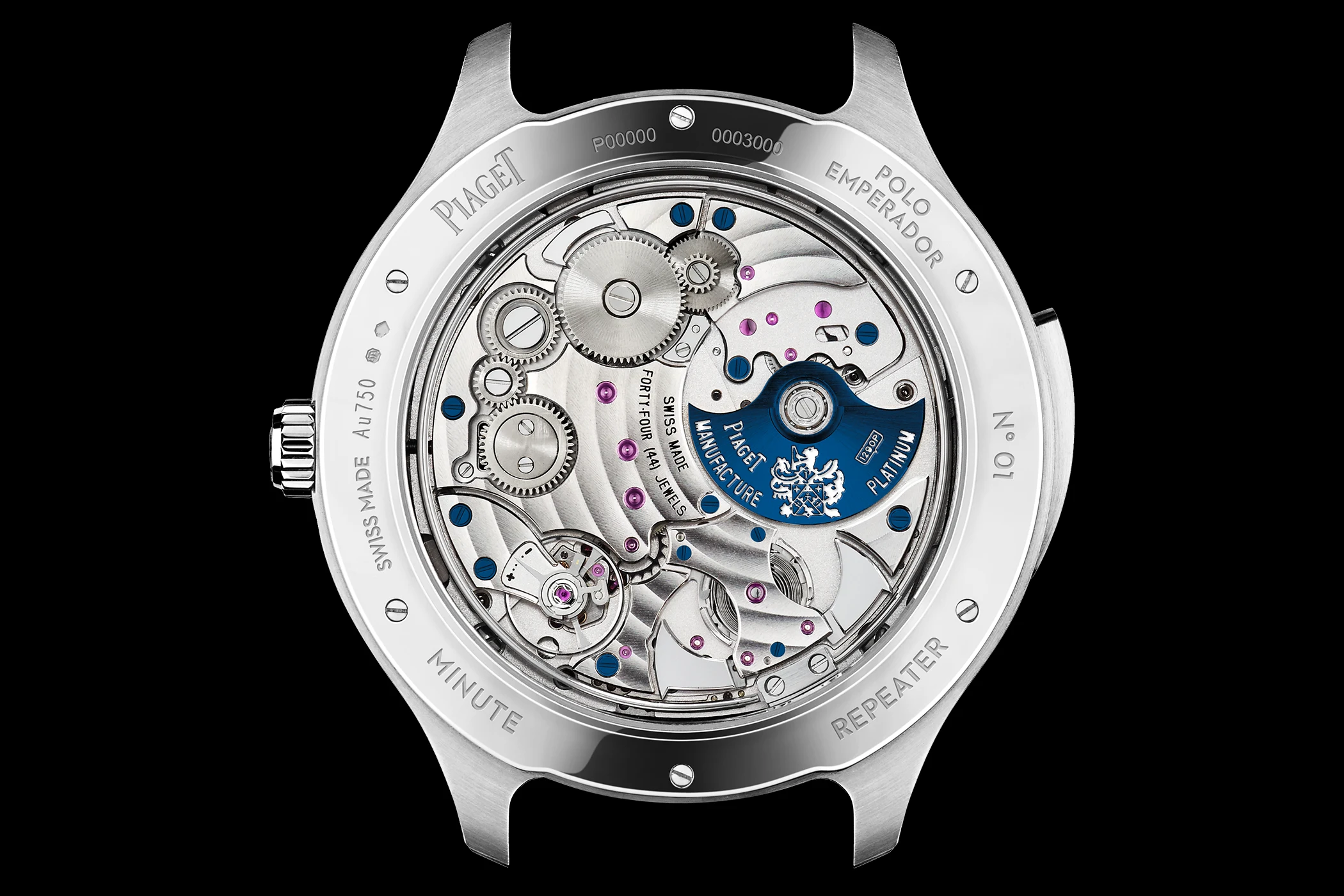
The case of the Piaget Polo Minute Repeater, water-resistant to 3 bar, is crafted from rhodium-plated white gold and, whilst boasting an impressive diameter of 48 millimetres, is just 9.3 millimetres thick.
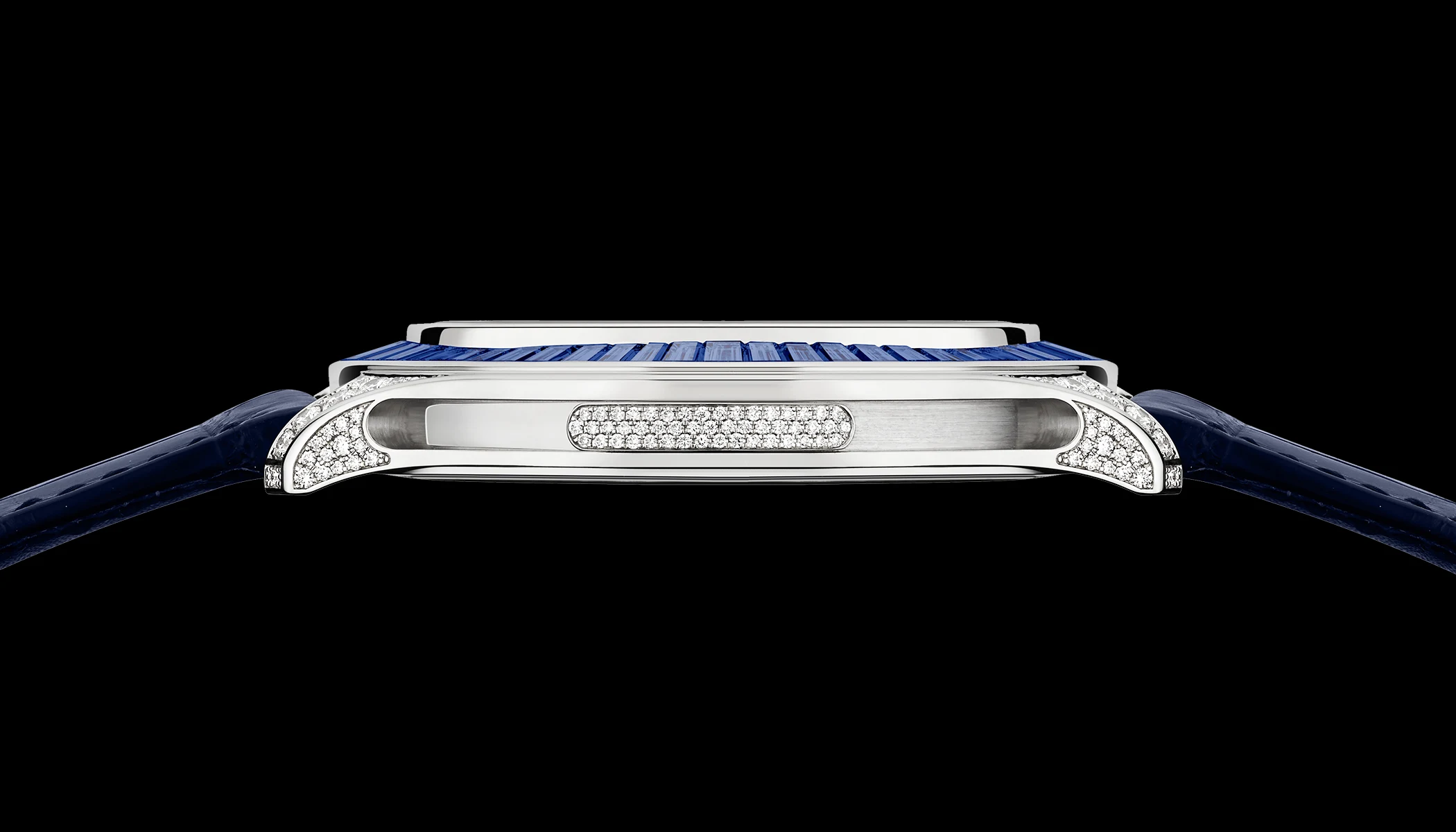
In a minute repeater, the case plays a crucial role in the sound quality. To achieve optimum resonance, a cavity as large as possible has therefore been created. The movement is secured within it by four brackets, which also transmit the vibrations of the striking mechanism to the case. Four screws, which connect the gongs to both the case and the movement, provide additional reinforcement for the sound transmission.
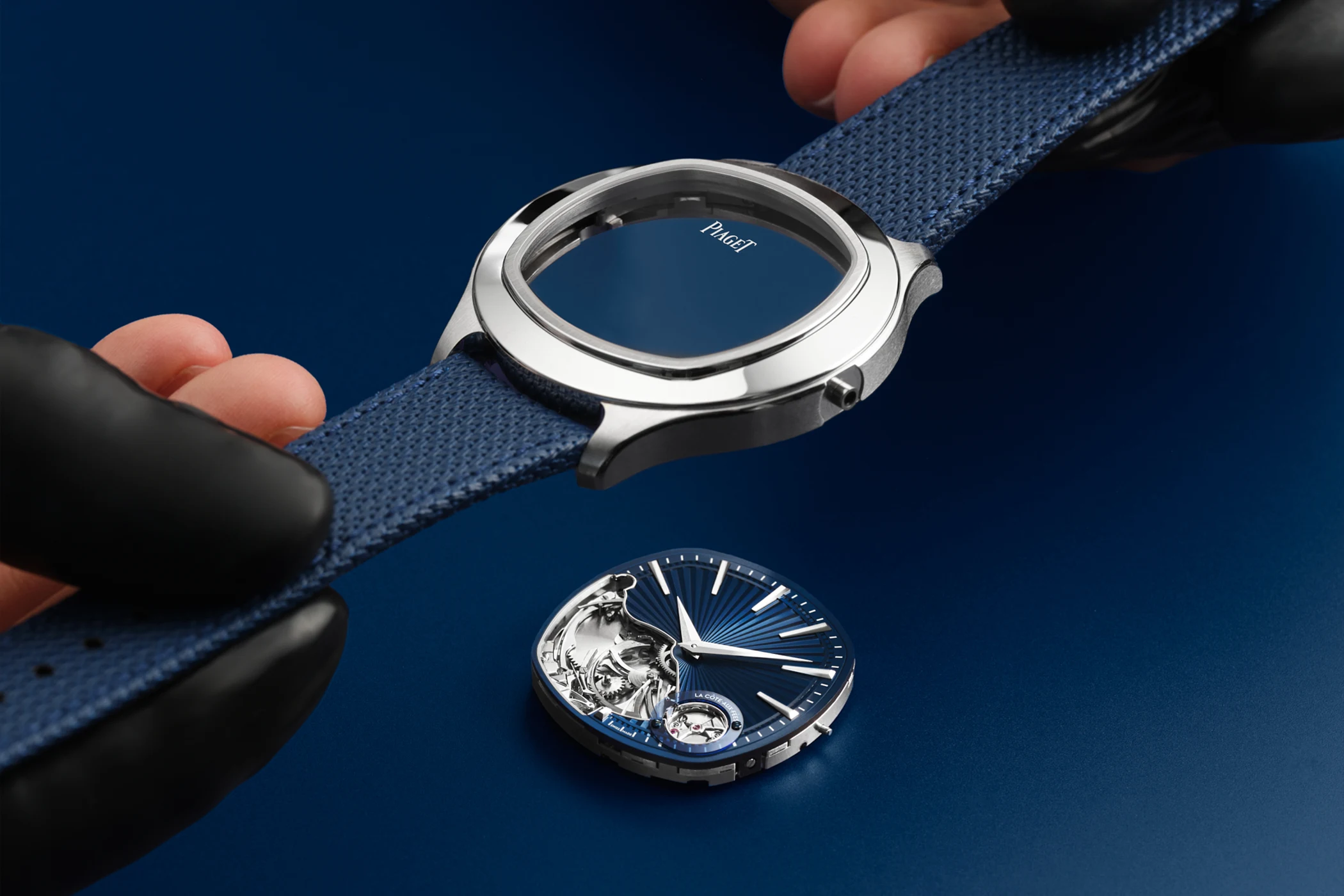
Furthermore, the case features the characteristic Piaget Polo design: The interplay between the round dial and the cushion-shaped case with rounded corners is a design that has been a defining feature of the collection since the first Piaget Polo was launched in 1979. Added to this is the repeater slide on the left-hand side of the case, which – unlike is usually the case – is operated downwards rather than upwards.
Despite all its technical and aesthetic finesse, a minute repeater is defined first and foremost by its sound, which should be harmonious and of an appropriate volume. At 64 decibels – Piaget compares this figure to the volume of an average conversation of around 65 decibels – the Piaget Polo Minute Repeater sounds not only powerful but also with remarkable endurance.
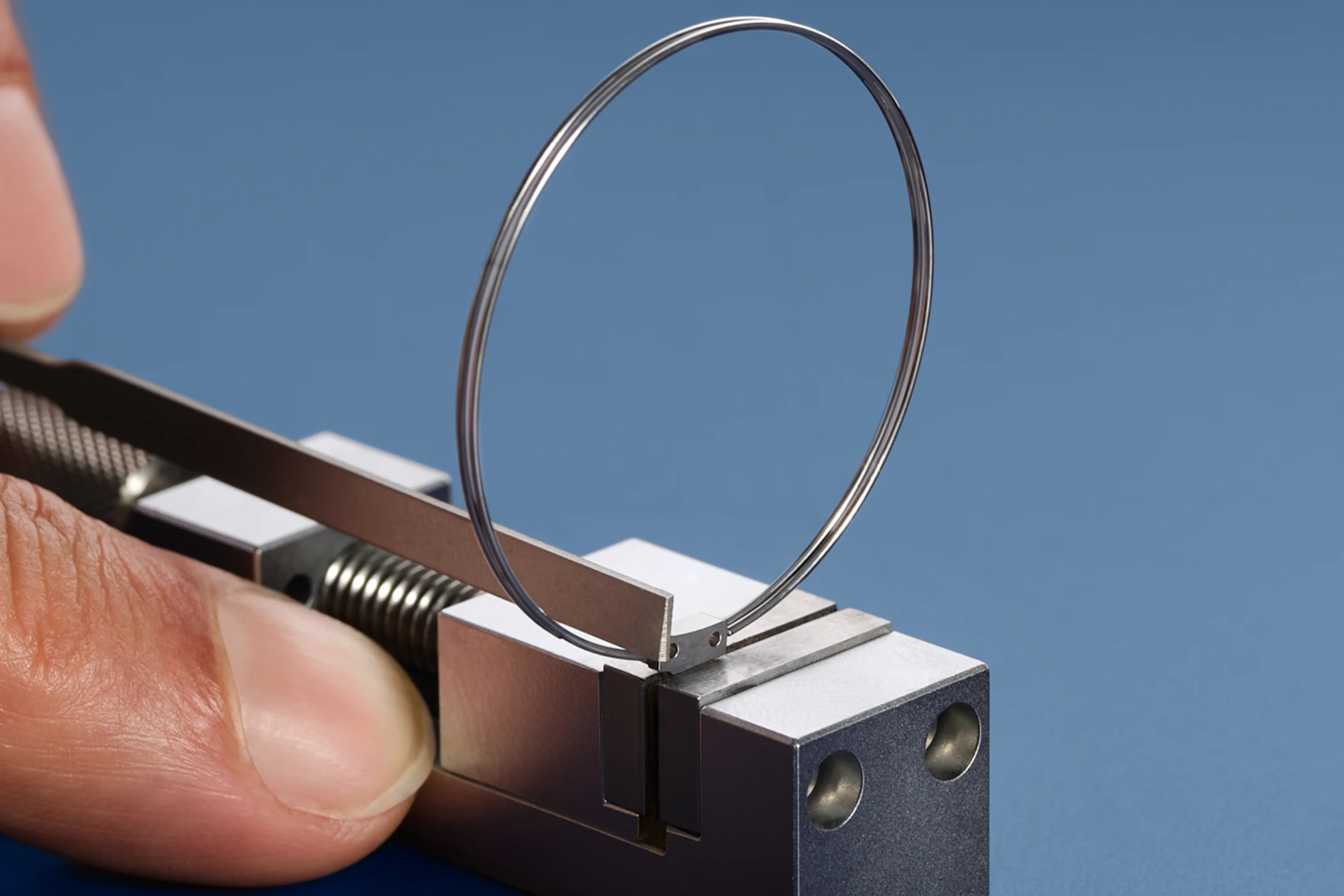
The damping factor of 2,600 specified by Piaget ensures a long and resonant decay of the tones. The hours are struck in G sharp, the minutes in A sharp; when combined, this produces the double tone of the quarter-hours.
In addition to the Piaget Polo Minute Repeater with a blue sunburst dial, Piaget is presenting a Haute Joaillerie version. Its bezel is set with baguette-cut blue sapphires, whilst the case is adorned with a combination of baguette- and brilliant-cut diamonds. The dial is completely transparent, revealing the intricately finished movement.
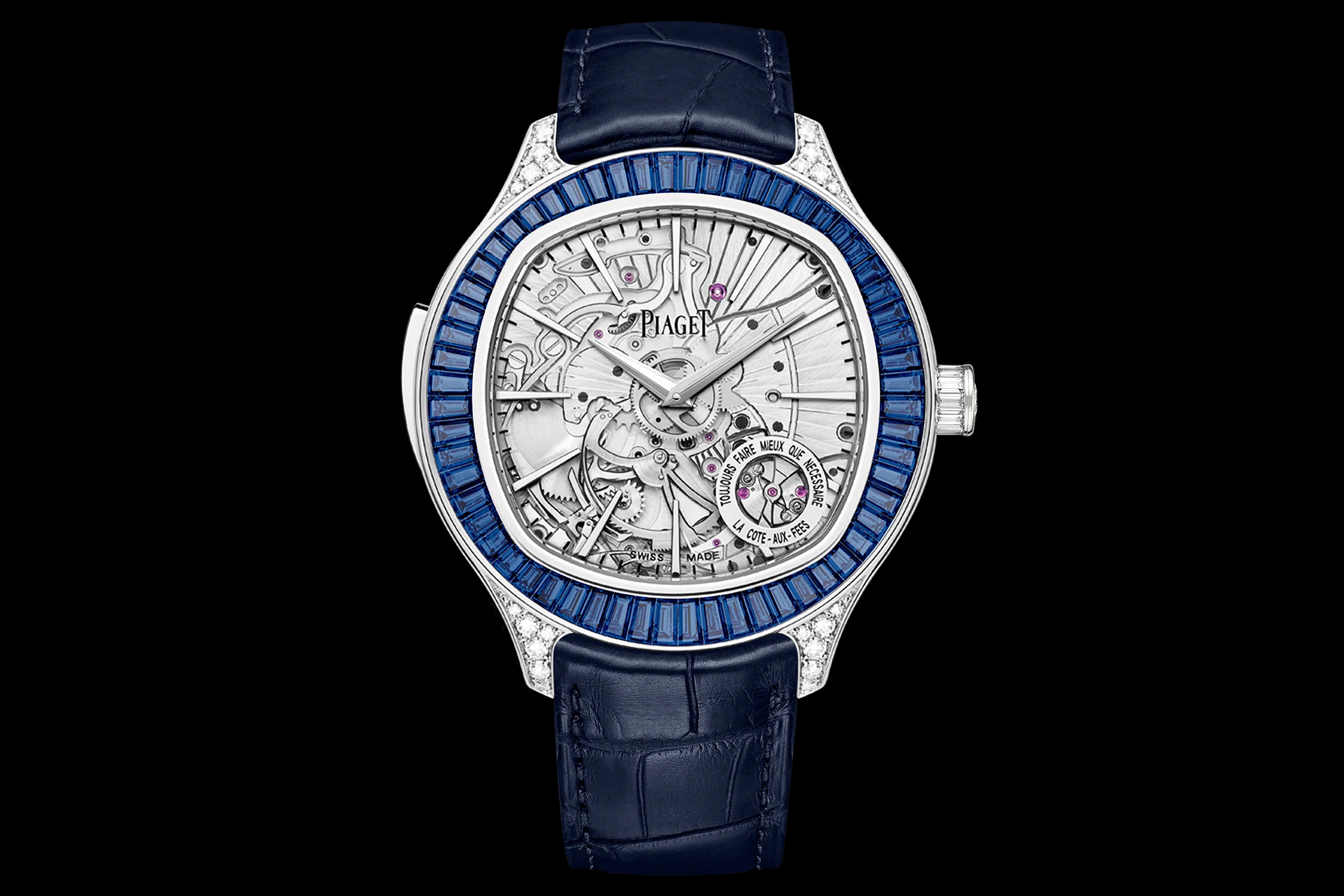
The Piaget Polo Minute Repeater with a blue sunburst dial (Ref. G0A51038) costs 417,000 euros; the price for the Haute Joaillerie version (Ref. G0A51017) is available on request. Both watches will be available from November 2026.
Piaget
Piaget Polo Minute Repeater
G0A51038
18-carat white gold
48 mm × 9,3 mm
3 ATM / 30 m
Partially open gold dial, hand-guilloché, blue PVD coating, smoky blue sapphire ring
Blue, textured calfskin; with alligator leather accents
Piaget Manufacture Calibre 1290P, ultra-thin minute repeater, 430 components, platinum micro-rotor
Automatic
approx. 40 hours
21.600 A/h (3 Hz)
Hours, minutes, minute repeater
EUR 417.000