Review of the Frederique Constant Classics Moneta Handwinding: manual winding, 63-hour power reserve, limited to 999 pieces – for 1,950 euros.
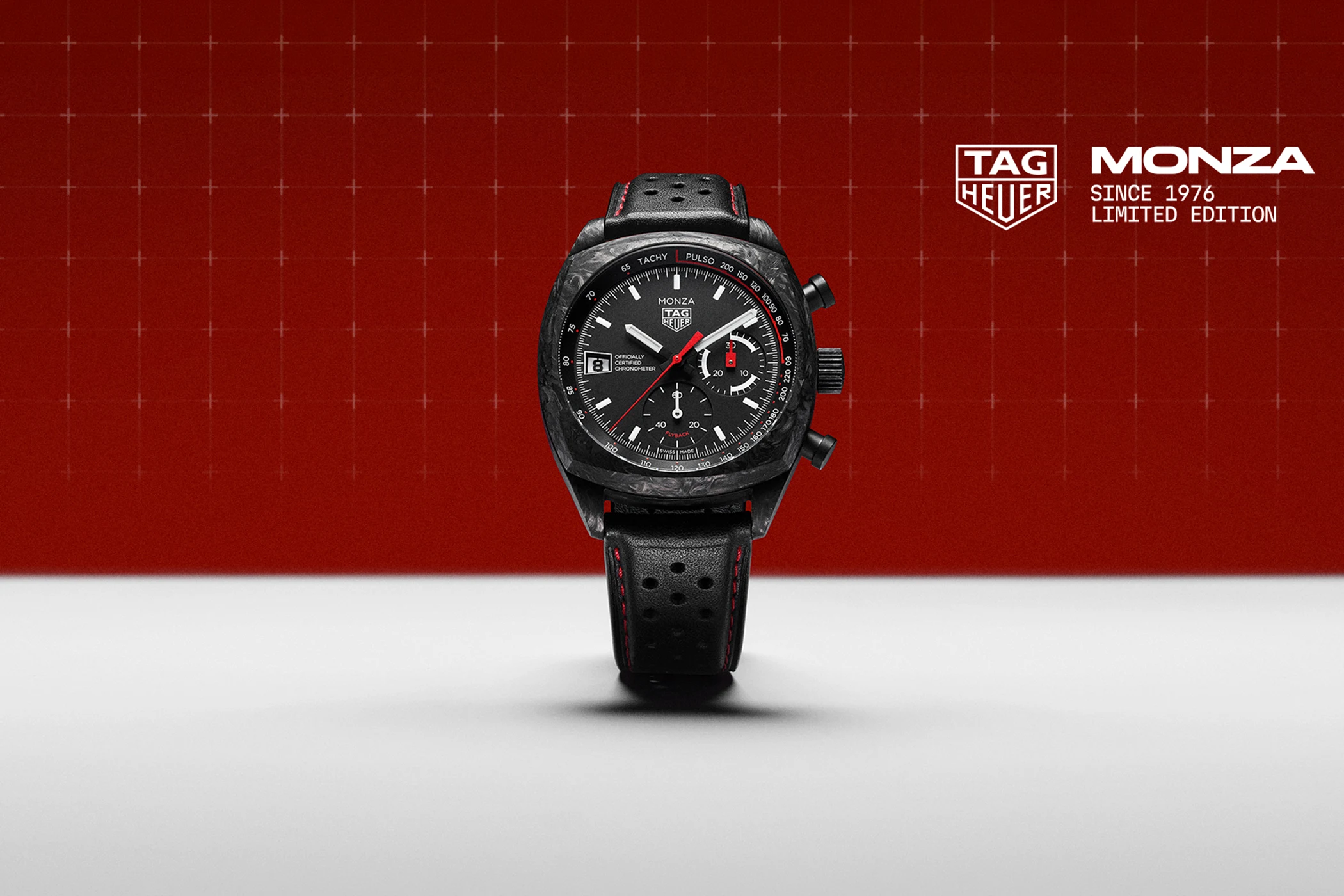
From 1971 to 1979, Heuer was the official timekeeping partner of Scuderia Ferrari. In 1975, Niki Lauda secured the World Championship title by finishing third in the Italian Grand Prix at Monza, whilst his Ferrari team-mate Clay Regazzoni won the race. To mark this double success, Heuer launched the first Monza in 1976. To mark the 50th anniversary of the first Heuer Monza, the new TAG Heuer Monza Flyback Chronometer features the same colours and dials.
On 7 September 1975, Clay Regazzoni won the Italian Grand Prix for Ferrari. Behind runner-up Emerson Fittipaldi, his then team-mate Niki Lauda crossed the line in third place; these four World Championship points were enough for the Austrian to secure the World Championship title ahead of schedule at Monza. Ferrari also won the Constructors’ Championship – the Formula 1 team standings – that same season. This completed Ferrari’s first double title victory since 1964. To mark the occasion, Heuer launched the first ‘Monza’ in 1976, named after the circuit where Lauda had secured the title and Regazzoni had won the race.
From 1971 onwards, Heuer worked as Scuderia Ferrari’s timekeeping partner and, amongst other things, provided the electronic Centigraph system, which enabled the number of laps, the last lap time and the total time for several cars to be recorded simultaneously, accurate to one thousandth of a second. Heuer was therefore not merely a sponsor, but a functional partner of the racing team and was involved in the team’s day-to-day operations.
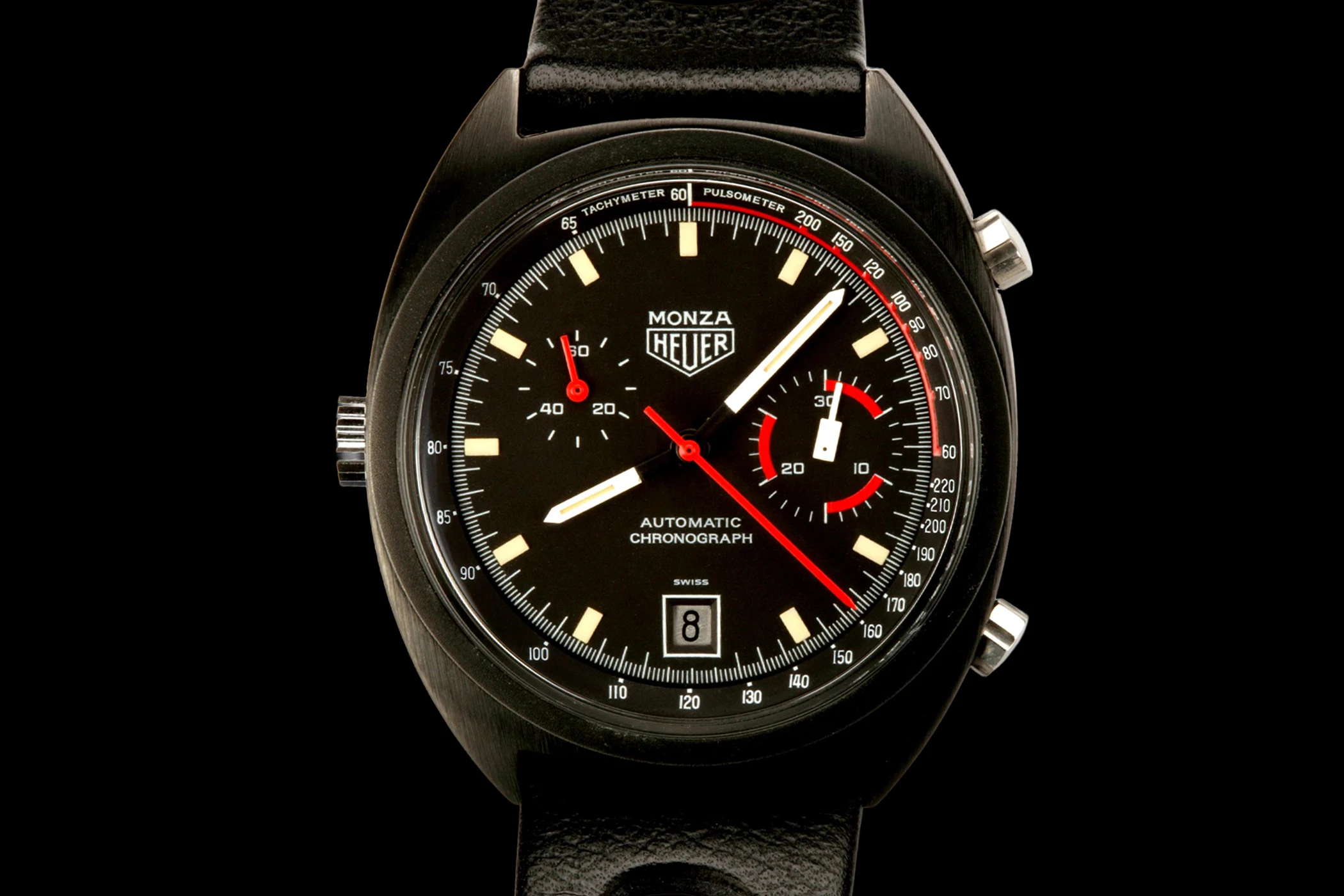
The Heuer Monza, launched in 1976, featured a functional design and was positioned as a comparatively affordable model in the range at the time, priced at 219 US dollars. Its case adopted the geometry of the 1969 automatic Carrera, but was made of brass – a base metal – finished with a black chrome coating. The dial and sub-dials were matt black, the luminous hands were painted white, and red markings highlighted the chronograph displays. It is precisely this colour scheme that the 2026 anniversary edition revisits.
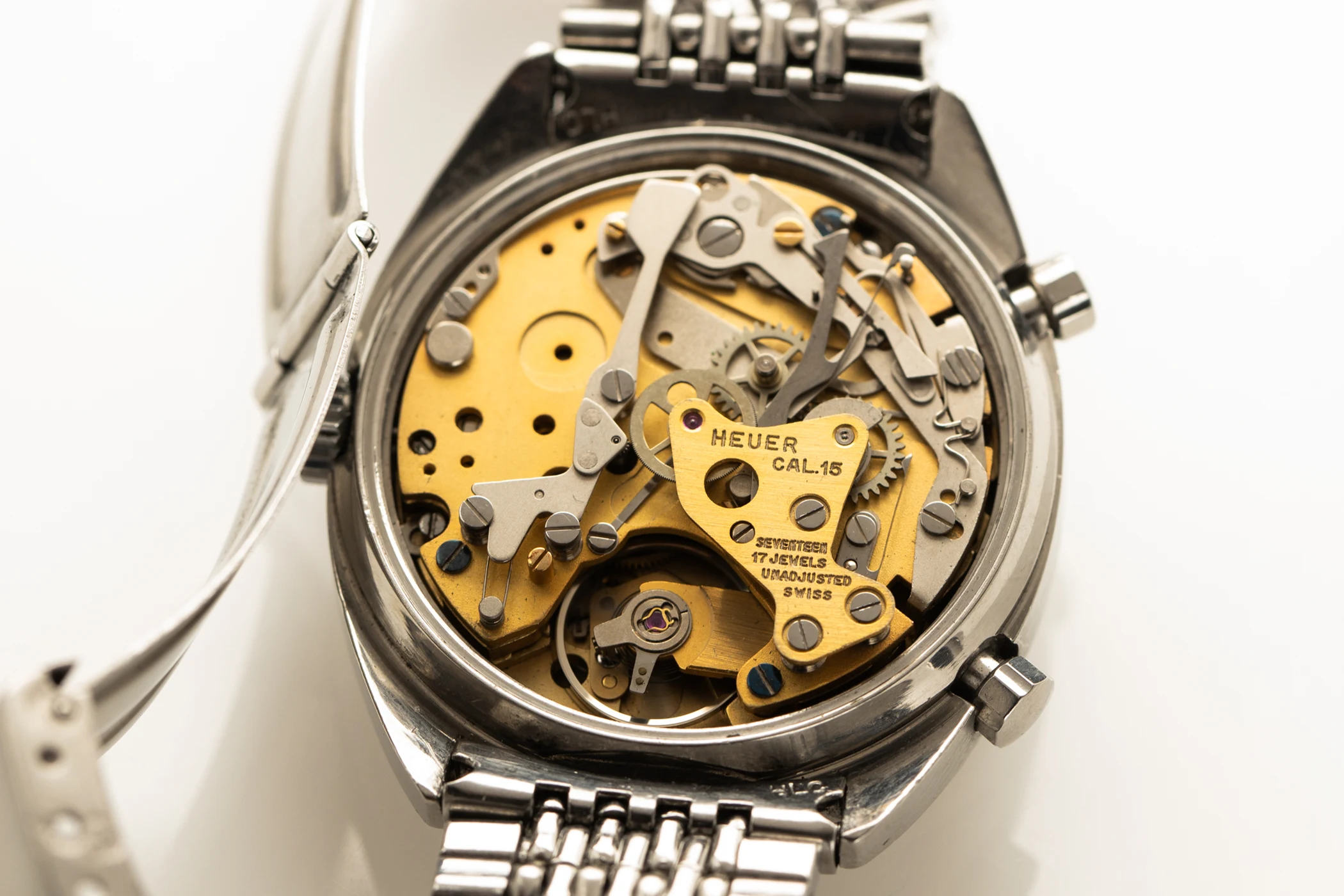
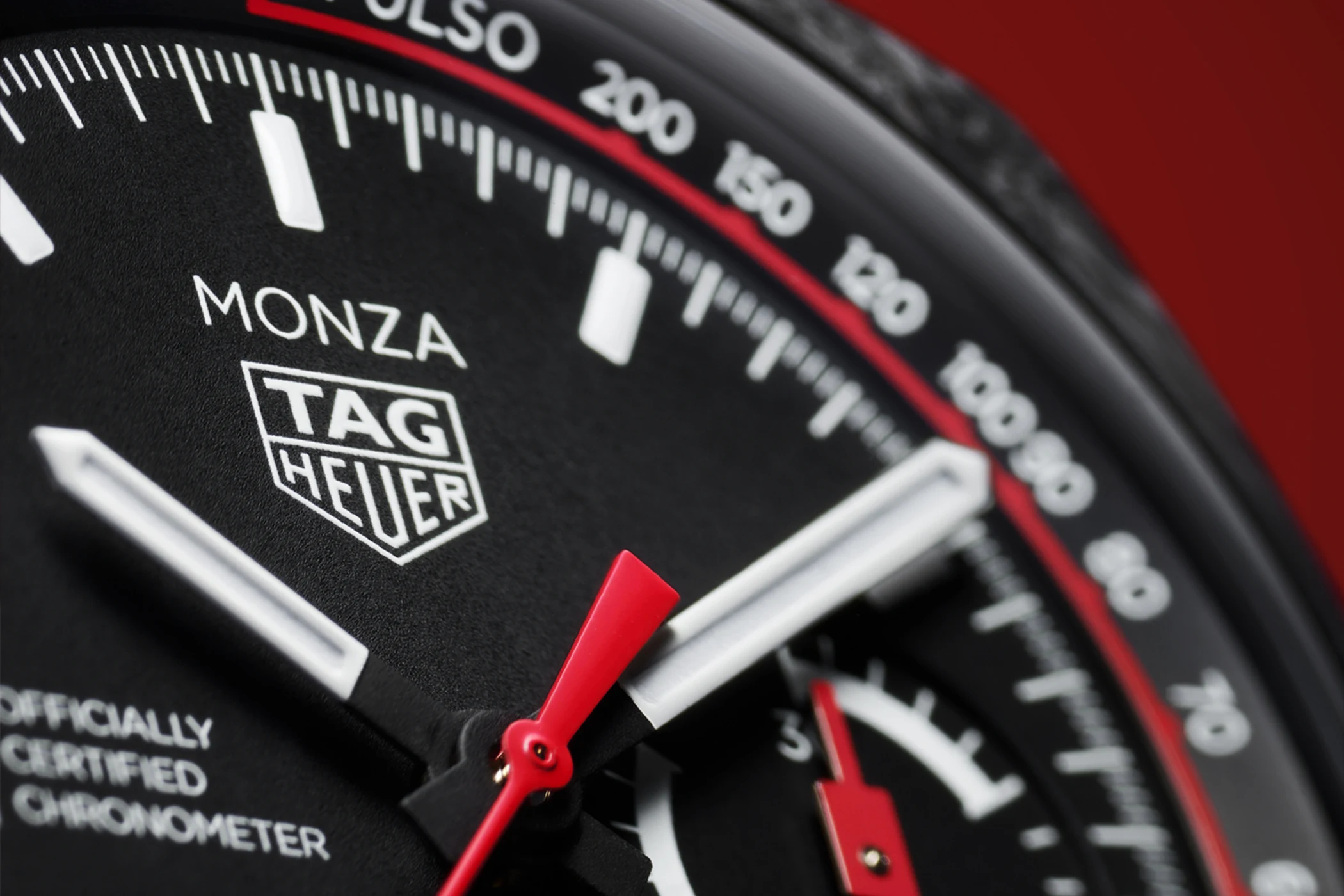
The bezel featured two scales side by side: the tachymeter scale was used to calculate an average speed over a known distance, whilst the pulsometer was used to determine the heart rate based on the number of beats counted. The first Monza was powered by the automatic Calibre 15, the simpler version of the more expensive Calibre 12. It featured the 30-minute counter at 3 o’clock and the small seconds at 10 o’clock; Heuer omitted the hour counter found on the Calibre 12.
In the 1977 US catalogue, the Monza cost 219 dollars, whilst the Carrera, Jarama and Cortina were priced between 345 and 365 dollars. What matters is not converting the price from back then to today’s terms, but rather its positioning within the same product range: with a brass case instead of stainless steel and the Calibre 15 instead of the Calibre 12, Heuer offered the Monza as a comparatively affordable automatic chronograph.
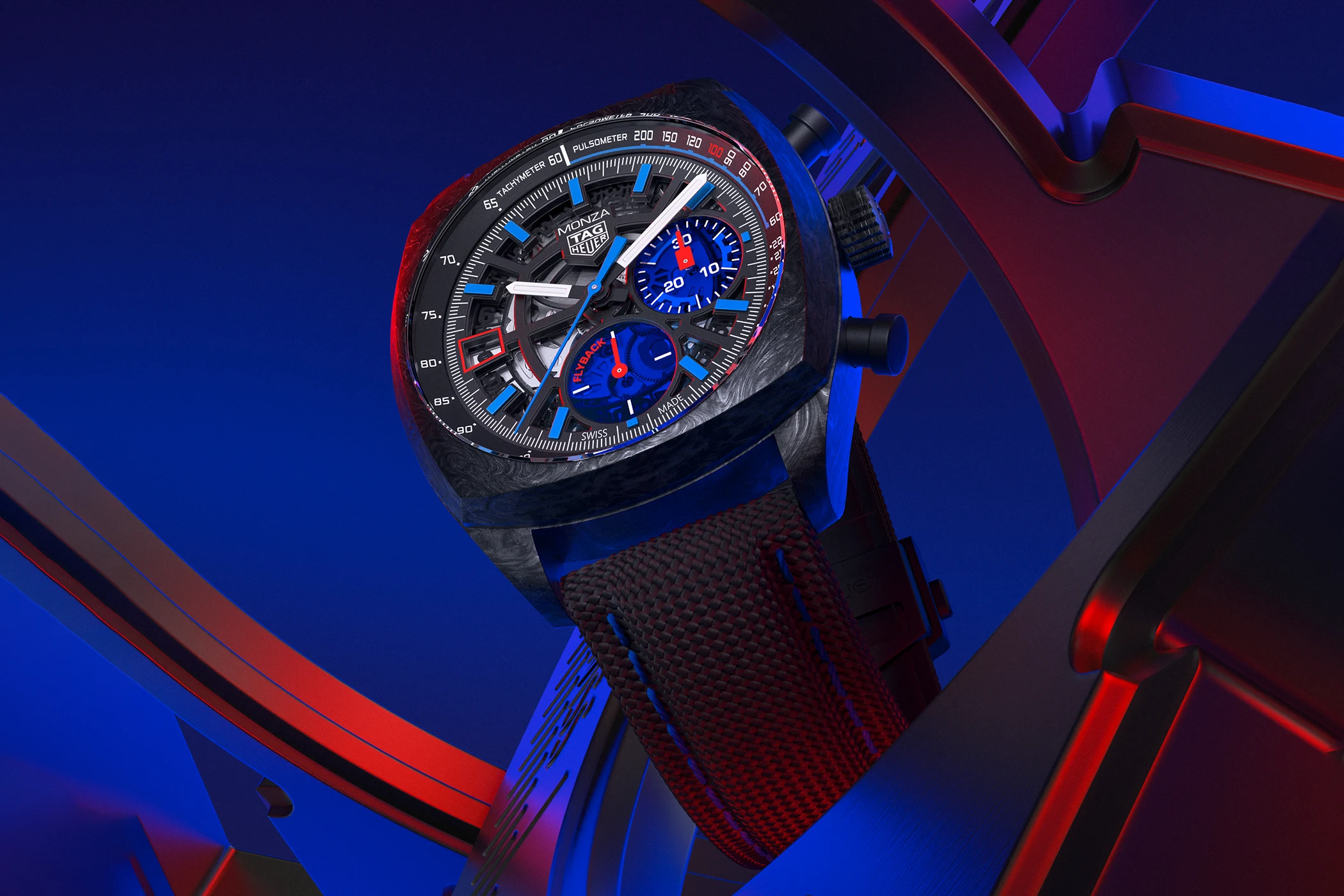
In 2023, the TAG Heuer Monza Flyback Chronometer was given a 42-millimetre cushion-shaped case made of forged carbon, a skeletonised dial with blue sapphire crystal sub-dials, and a COSC-certified flyback chronograph calibre. From this point onwards, it was no longer the 1976 chronograph but the modern carbon construction that formed the basis for further Monza models.
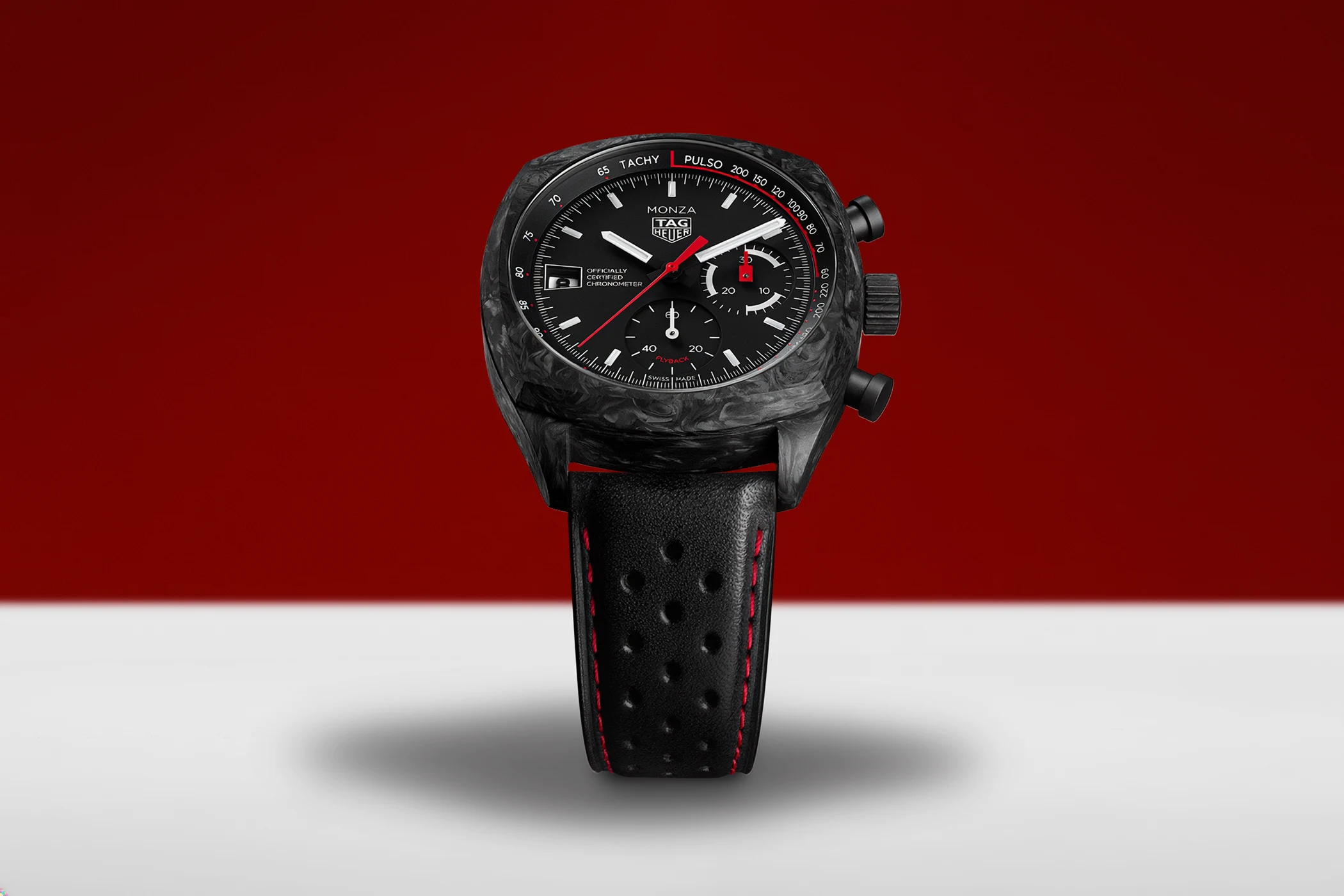
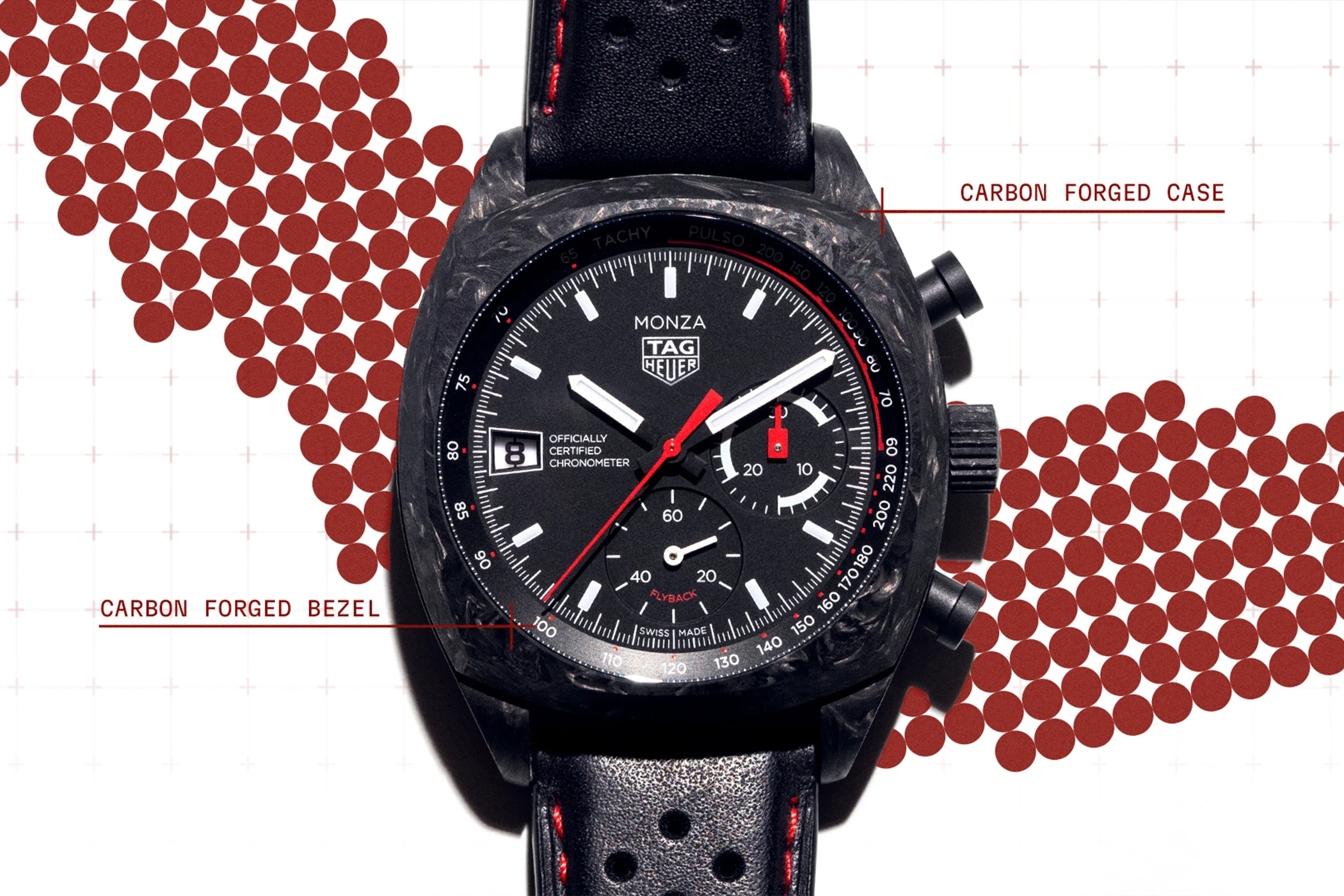
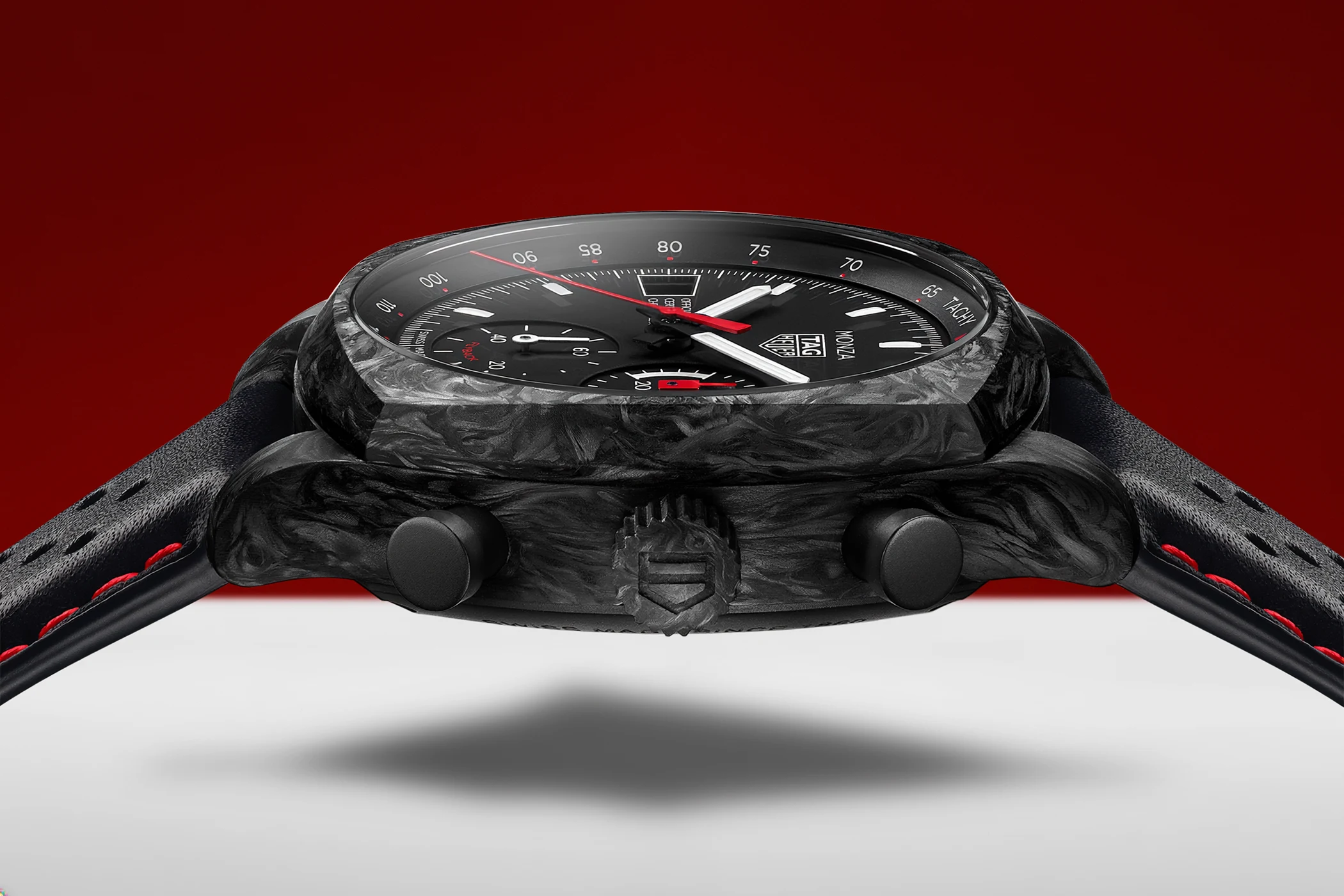
The TAG Heuer Monza Flyback Chronometer, marking the collection’s 50th anniversary, builds on this legacy, as both the case and the bezel are still crafted from forged carbon. A 42-millimetre case diameter, sapphire crystal with anti-reflective coating on both sides and water resistance to 100 metres emphasise that this is not a technical 1:1 homage to the original brass watch.
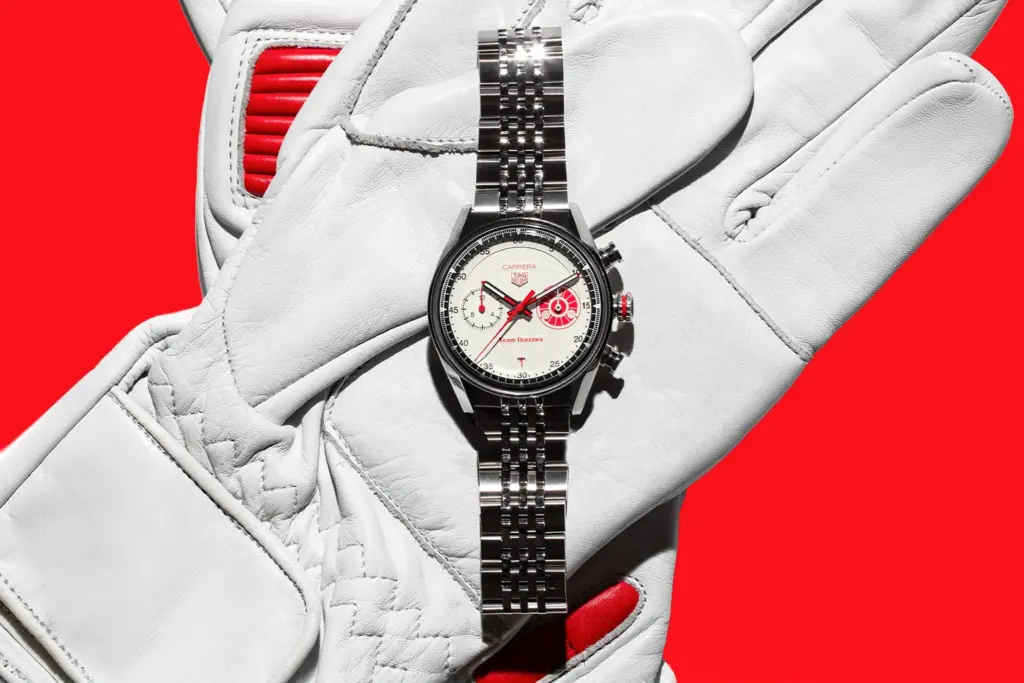
You can find out more about the recently launched TAG Heuer Carrera x Team Ikuzawa here in our article.
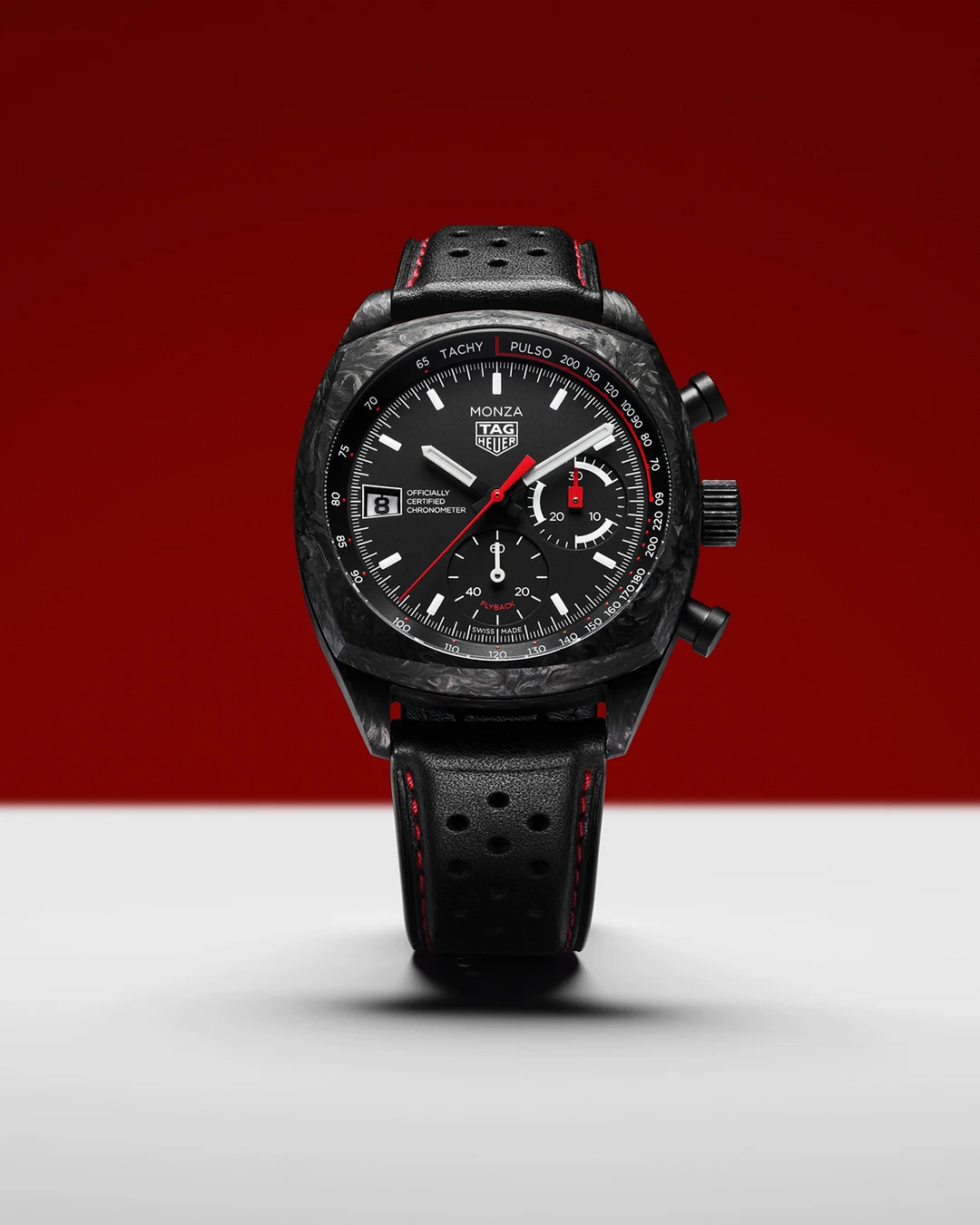
The anniversary edition replaces the skeletonised dial and blue sapphire crystal sub-dials of the 2023 Monza Flyback with a matt black dial. The chronograph minutes counter is positioned at 3 o’clock, the small seconds at 6 o’clock and a diagonally inserted date window at 9 o’clock. White hands and hour markers with Super-LumiNova stand out clearly against the dark background; the red central chronograph hand and sparingly placed red accents further echo the Monza design language of 1976. The tachymeter and pulsometer also return to the black rehaut.
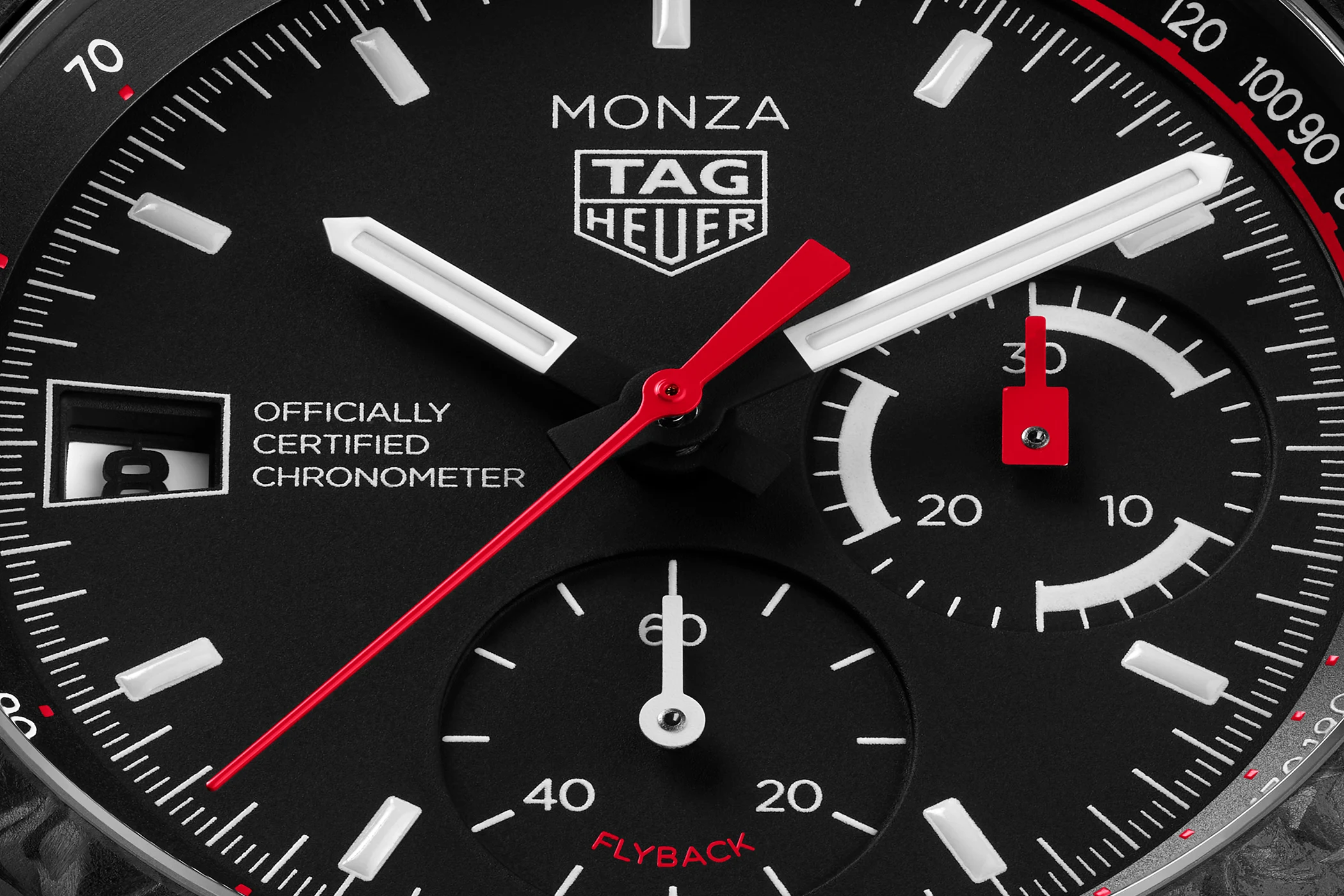
The TAG Heuer Monza Flyback Chronometer’s automatic in-house calibre TH20-12 is equipped with a flyback function and is certified as a chronometer by the COSC. Whilst the chronograph is running, it can be reset to zero and restarted immediately with a single press. In motor racing, this flyback function makes it easier to record successive laps or sections of the track, as there is no need to stop, reset and restart the chronograph separately.
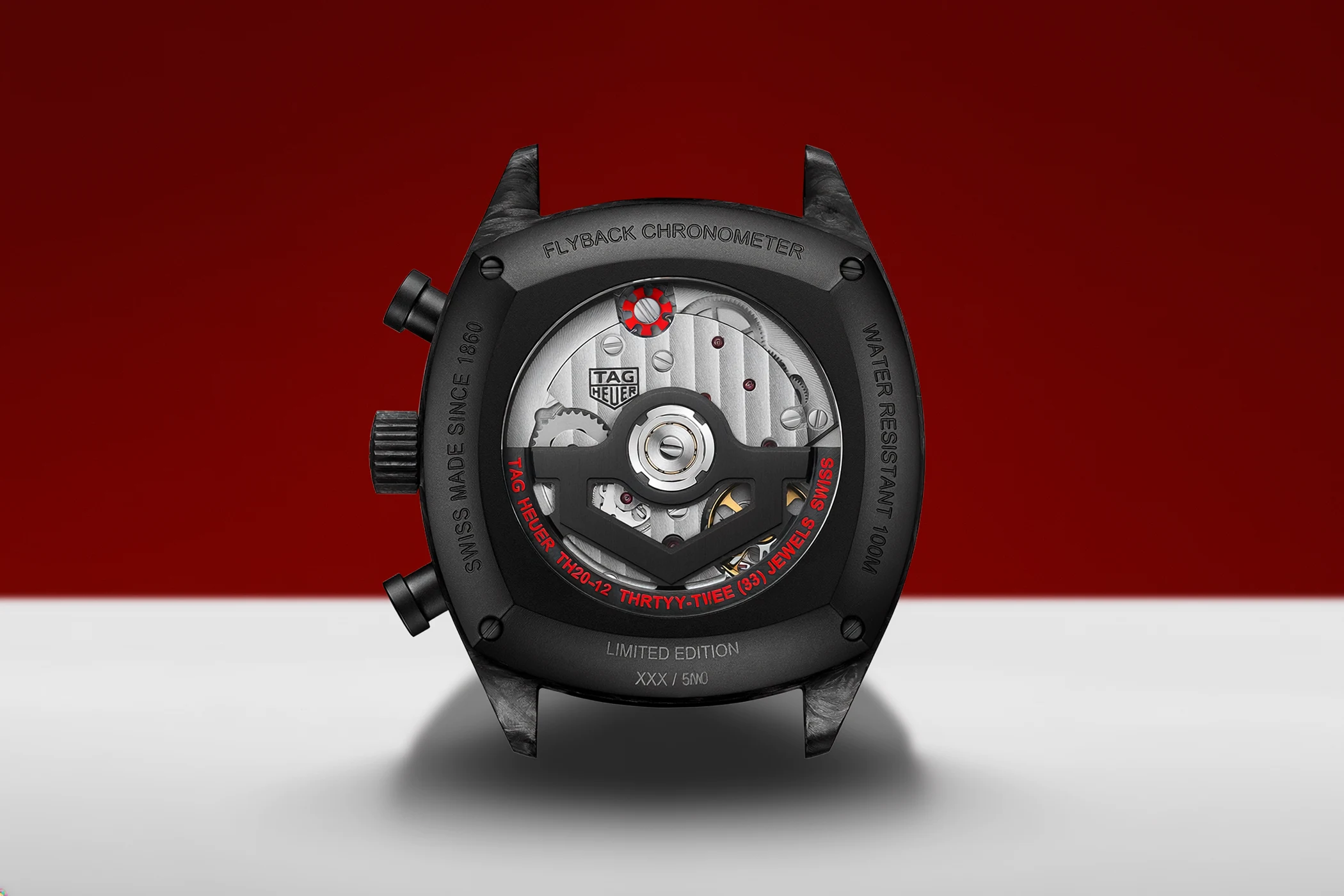
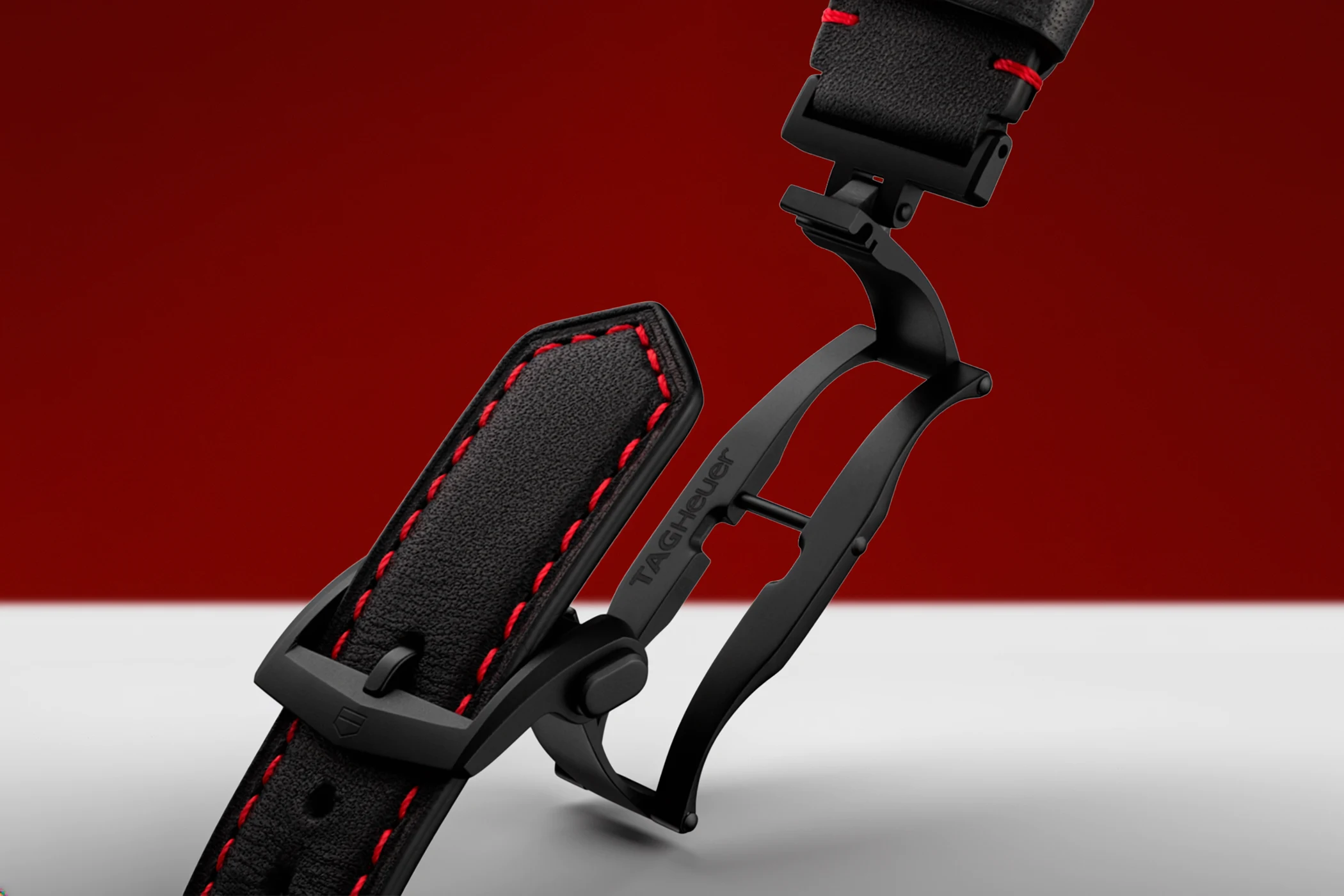
The sapphire crystal caseback on the rear of the black Grade 2 DLC-coated titanium case allows the movement to be seen. The black, perforated calfskin strap, with its red stitching, echoes the accents of the dial. The folding clasp is made of Grade 2 titanium with a black DLC coating.
With a limited run of 500 numbered pieces and a price of 13,350 euros or 12,600 Swiss francs, the TAG Heuer Monza Flyback Chronometer has moved a long way from its former role as an entry-level model. Available from September 2026, the Flyback chronograph is therefore less a reissue than a carefully balanced variation on the Carbon platform created in 2023.
TAG Heuer
Monza Flyback Chronometer
CR5092.FC8372
Limited to 500 pieces
Carbon, carbon bezel, titanium case back with sapphire crystal
Diameter: 42 mm
100 m
Matt black, white illuminated dials, red accents, tachymeter & pulsometer
Black calfskin with red stitching
TAG Heuer TH20-12, COSC-certified
Automatic
80 hours
28,800 A/h (4 Hz)
Hours, minutes, chronograph, flyback, small seconds, date
€13,350