Omega Constellation Observatory: analysis of design, precision and pricing, contextualising the divided reactions within the watch community.

With the new Omega Constellation Observatory collection, the brand presents, for the first time, two-hand watches that have been awarded Master Chronometer certification. This has been made possible by an acoustic testing method developed at the Laboratoire de Précision, which eliminates the need for a seconds hand previously required for rate measurement. The new Omega Constellation Observatory collection comprises nine references and is powered by two newly developed calibres that undergo both chronometer and Master Chronometer testing without a seconds indication. Here are the new Omega Constellation Observatory models in detail.


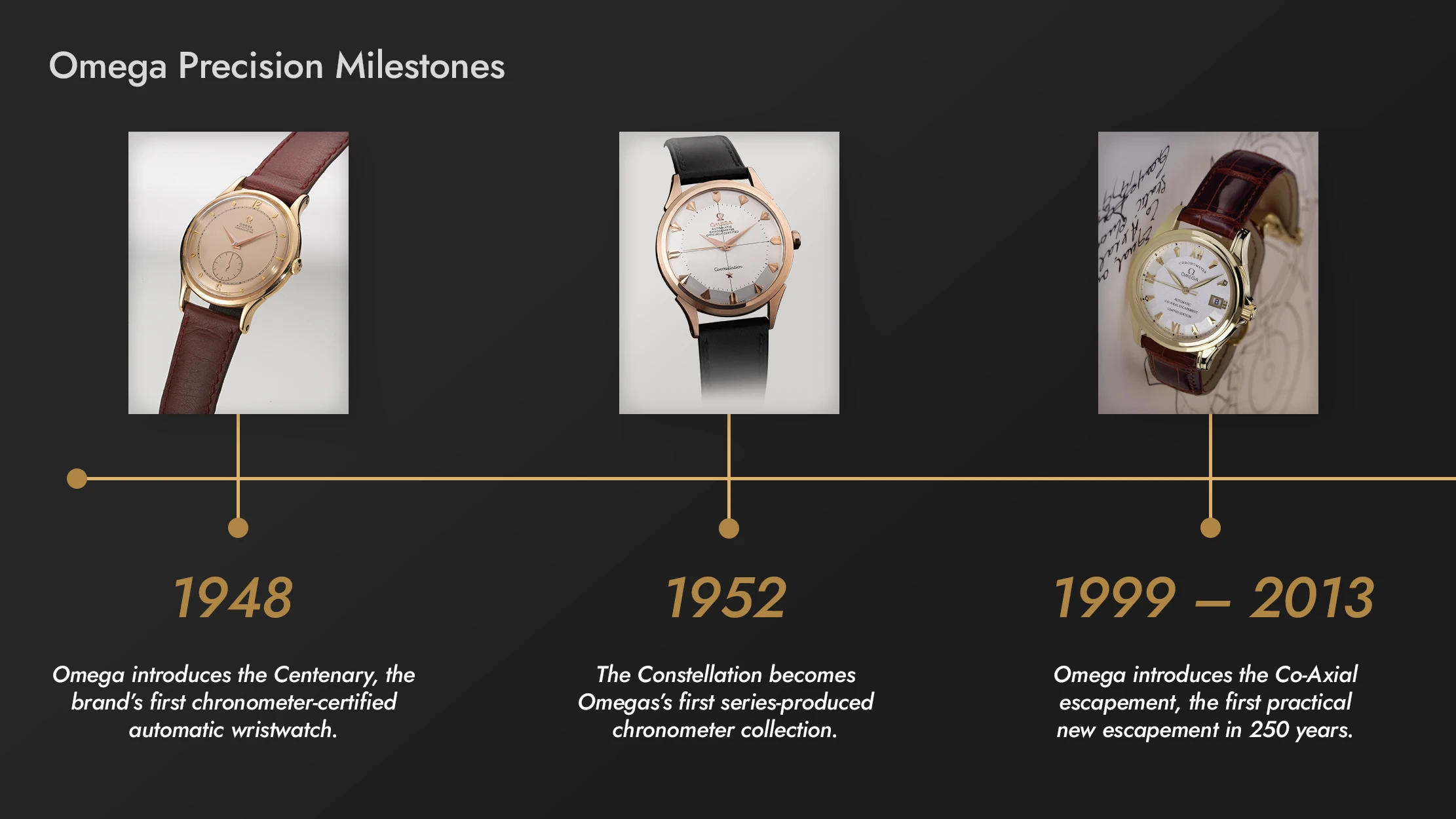
Omega has long been regarded as one of the key players in the field of precision—through developments such as the Co-Axial escapement, the Master Chronometer certification, and, more recently, the Spirate system, the brand consistently pursues the goal of improving and reliably certifying the rate accuracy of its watches.
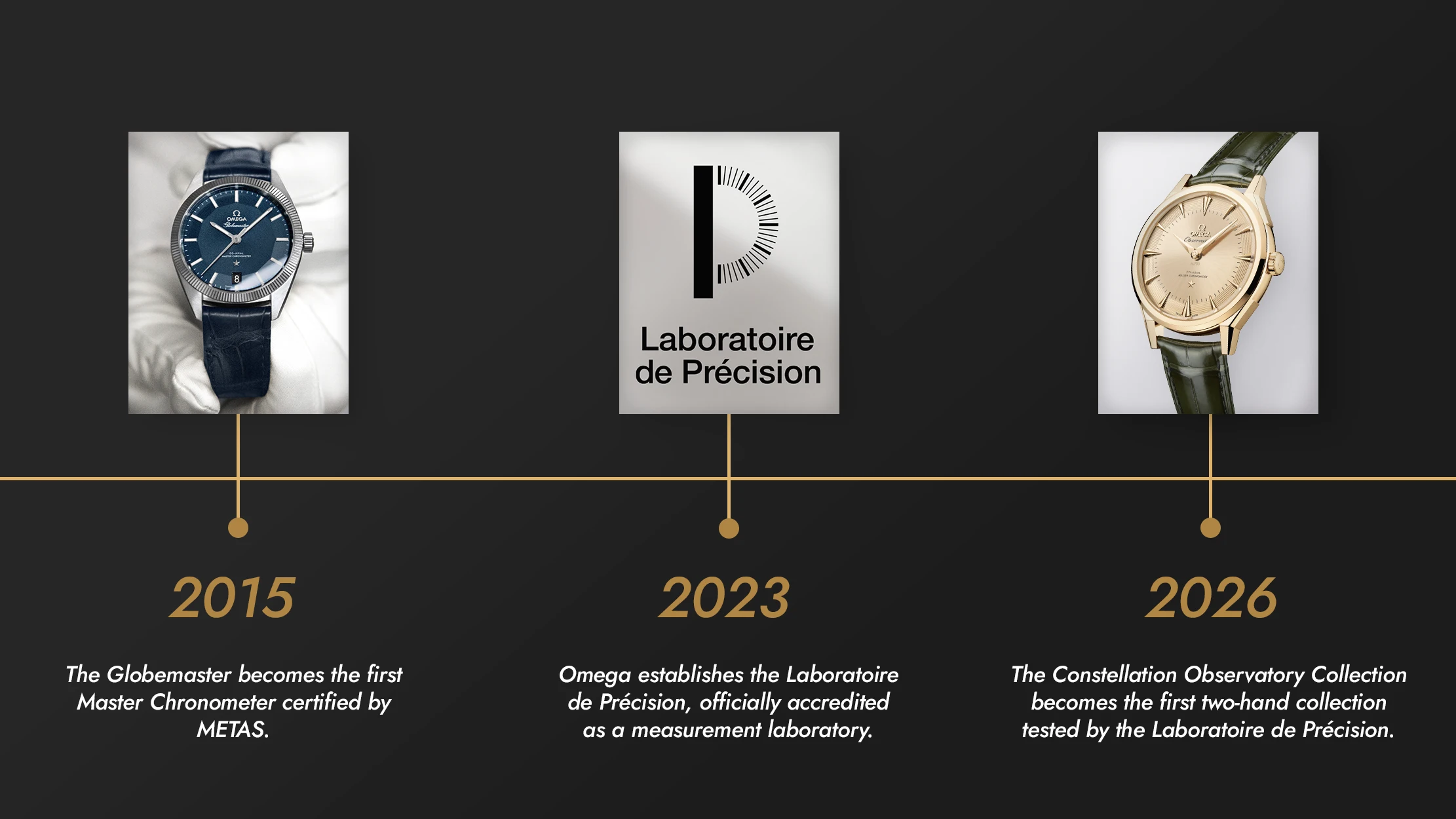
The latest step in chronometry came in 2023, when Omega established the Laboratoire de Précision, a new officially authorised testing laboratory for chronometers, thereby positioning itself as a counterpart to the COSC (Contrôle Officiel Suisse des Chronomètres). The laboratory operates as a neutral and independent certification body with its own management. Accredited by the Swiss Accreditation Service (SAS) as a testing laboratory in accordance with ISO/IEC 17025:2017, the Laboratoire de Précision offers all brands and movement manufacturers reliable and impartial chronometric testing of movements, meeting the requirements of the fifteen-day chronometer testing procedure defined by ISO 3159, widely recognised as the chronometer standard. In addition, the Laboratoire de Précision is also recognised by METAS for the ten-day Master Chronometer certification.

The Laboratoire de Précision distinguishes itself from the COSC—long regarded as the benchmark authority in chronometer testing over the past 50 years—through two key features. Firstly, every single oscillation of the calibre is measured and evaluated. This is achieved through a fully integrated testing unit that combines all processes of both chronometer and Master Chronometer certification within what is known as Dual Metric Technology. This technology merges the conventional chronometer testing method—based on photographic recordings of the seconds hand position—with the continuous acoustic monitoring of a movement’s ticking sound. According to Omega, this approach offers a significant advantage: “The volume of data generated during testing, analysed using industrial methodologies and big data techniques, enables brands and movement manufacturers to gain a far deeper understanding of the chronometric performance of their calibres, while simultaneously improving overall rate accuracy.”



Secondly, the acoustic monitoring employed in Dual Metric Technology generates continuous data from the very first second, whereas the conventional method—based on photographic capture of the seconds hand—provides only two measurement points per day. In addition, Dual Metric Technology performs continuous measurements throughout the entire fifteen-day chronometer testing period, in contrast to the COSC method, where rate measurements are taken at 24-hour intervals. The analysis carried out by the Laboratoire de Précision covers, among other factors, frequency deviations, sensitivity to temperature and pressure, positional variations, and amplitude fluctuations. This is complemented by the recording of environmental parameters such as temperature, position, and air pressure over the full duration of testing—15 days for chronometer certification and a total of 25 days for Master Chronometer certification.
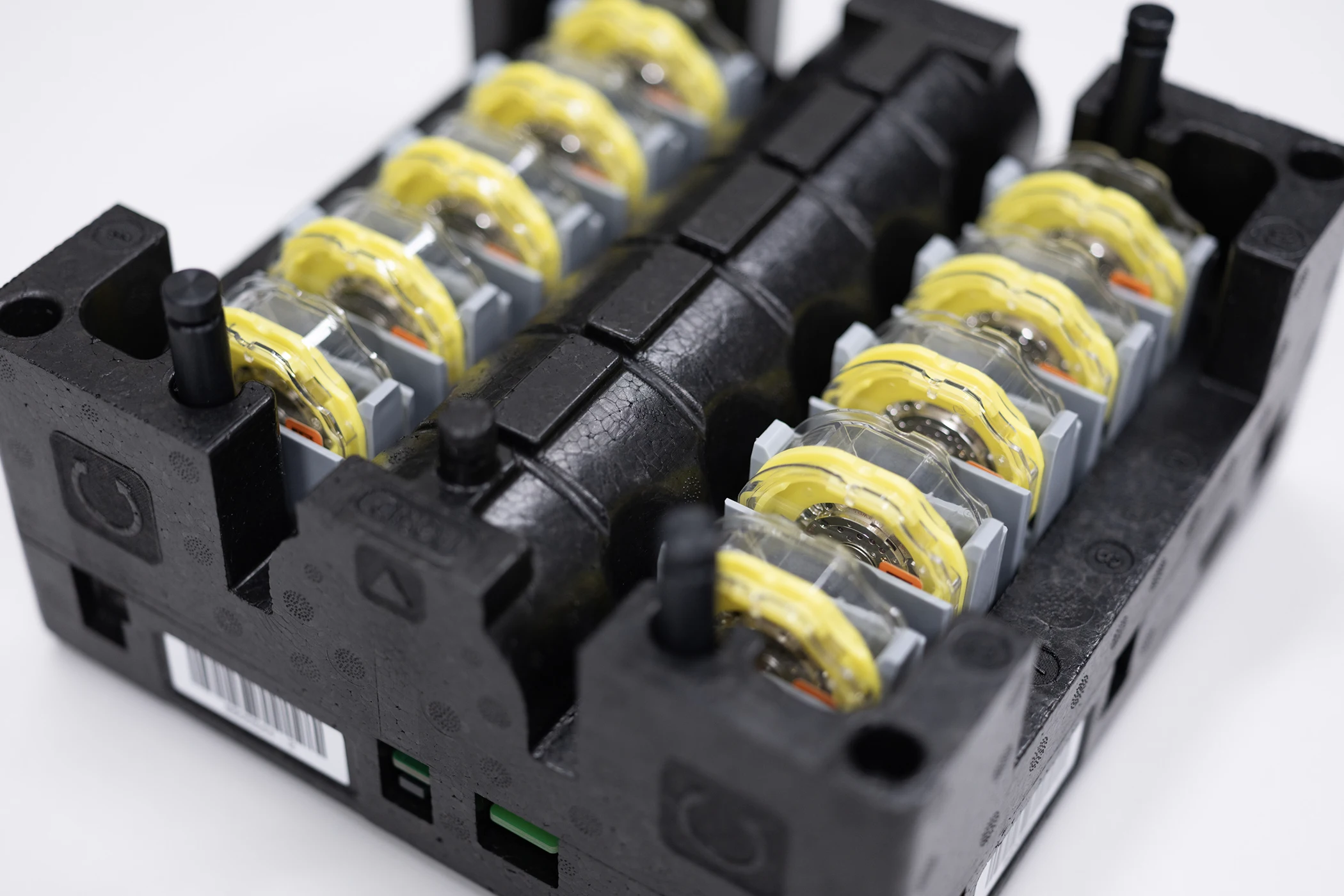
The establishment of its own chronometer testing facility means, in general terms, that Omega’s Laboratoire de Précision now assumes the role previously held by the COSC in the Master Chronometer process—an organisation that had served as the brand’s central partner in the certification of chronometers for more than 50 years. In doing so, it is effectively replaced by a testing centre designed to meet Omega’s own technical requirements. This provides Omega with the ability to analyse the precision of its calibres in a more targeted manner and to further refine minimal tolerances accordingly, while at the same time allowing the entire Master Chronometer process to be more closely integrated into the brand’s value chain. For the Swatch Group in particular, the Laboratoire de Précision could also mean that watches from other group brands—such as Longines—may be submitted to chronometer testing at one of the two dedicated facilities in Biel/Bienne or Villeret.
Secondly, the introduction of Dual Metric Technology enables Omega to subject watches without a seconds hand to Master Chronometer testing, as the acoustic monitoring of the movement’s oscillation renders the previous requirement for a seconds display obsolete. Omega demonstrates what this looks like in practice with the newly introduced Omega Constellation Observatory collection. It represents the brand’s first two-hand collection to be awarded Master Chronometer status using this acoustic testing method at the Laboratoire de Précision—without the need for a seconds hand.
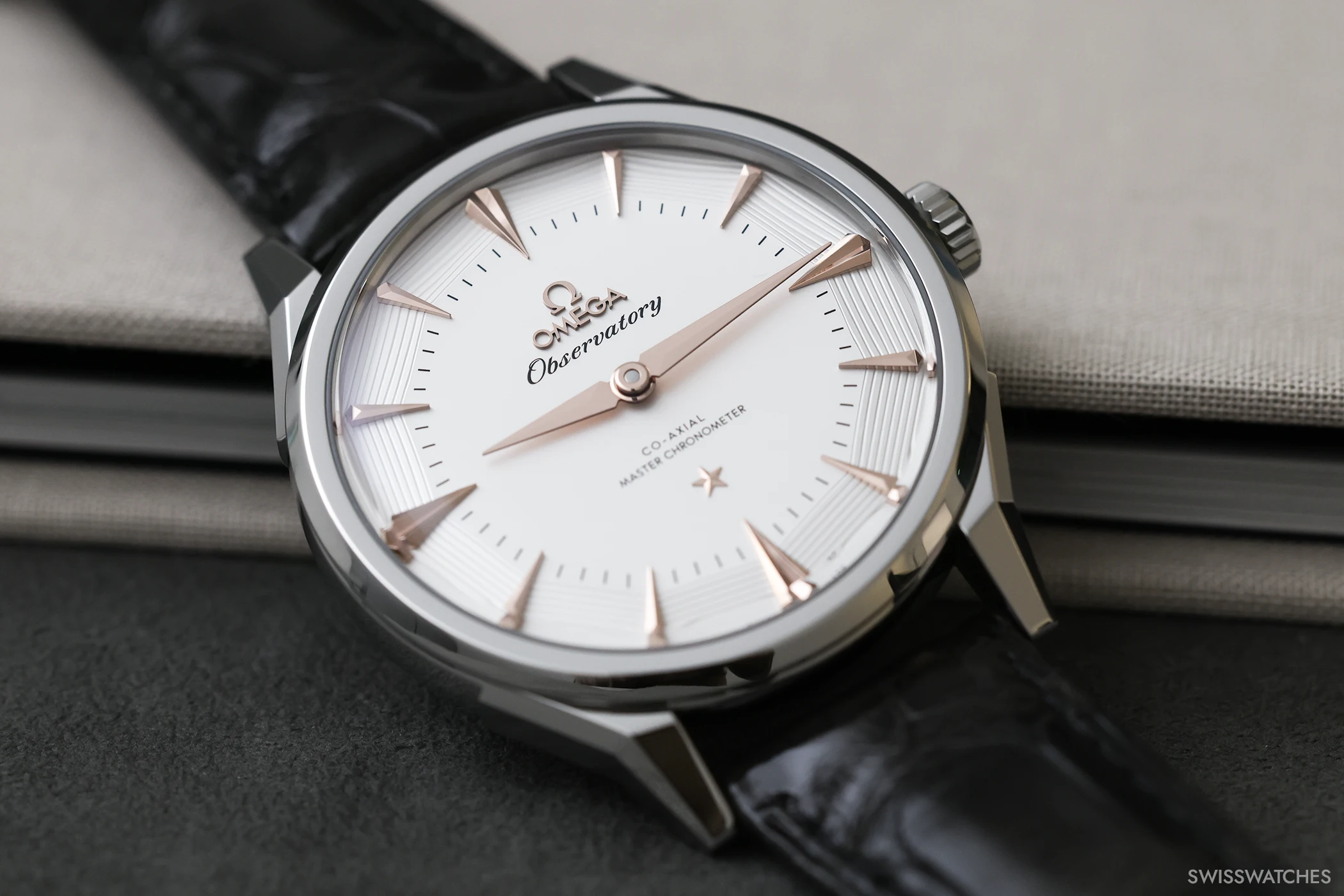
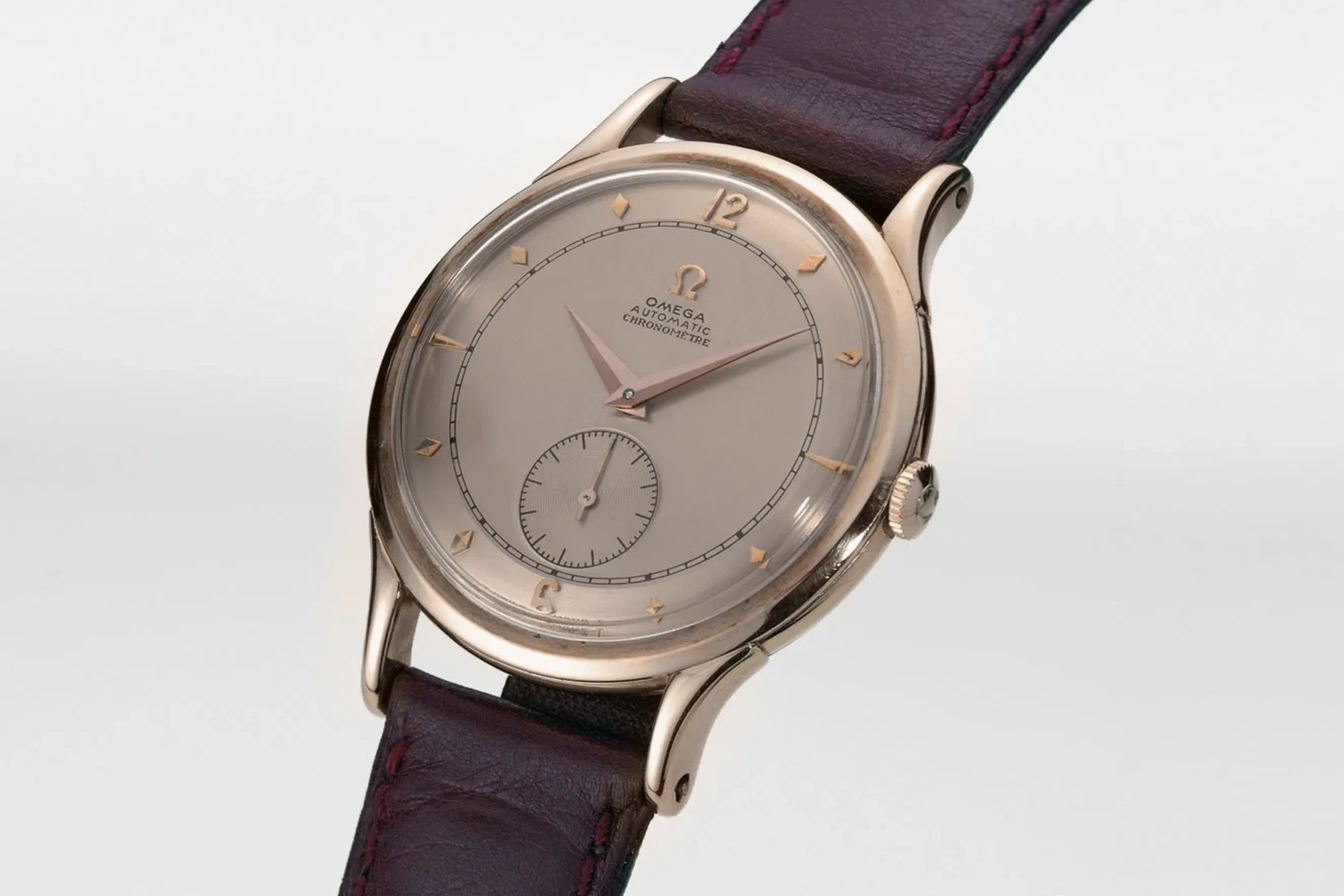
The foundations of the new Omega Constellation Observatory models can be traced back to 1948, when Omega celebrated its centenary and, on that occasion, introduced the “Centenary”—the brand’s first automatic wristwatch to be certified as a chronometer. Initially conceived as a one-off limited edition of around 6,000 pieces, the model proved highly popular.
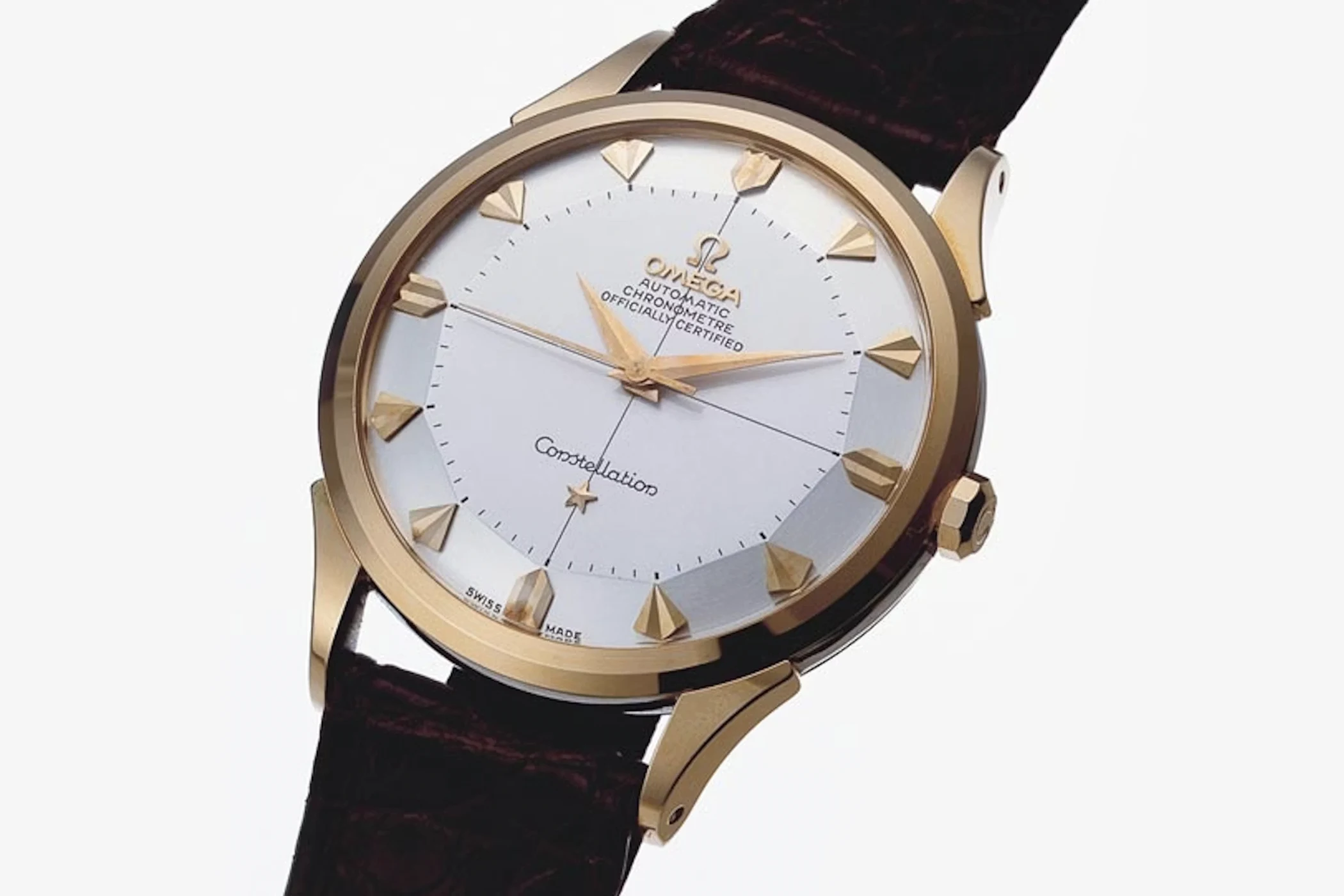
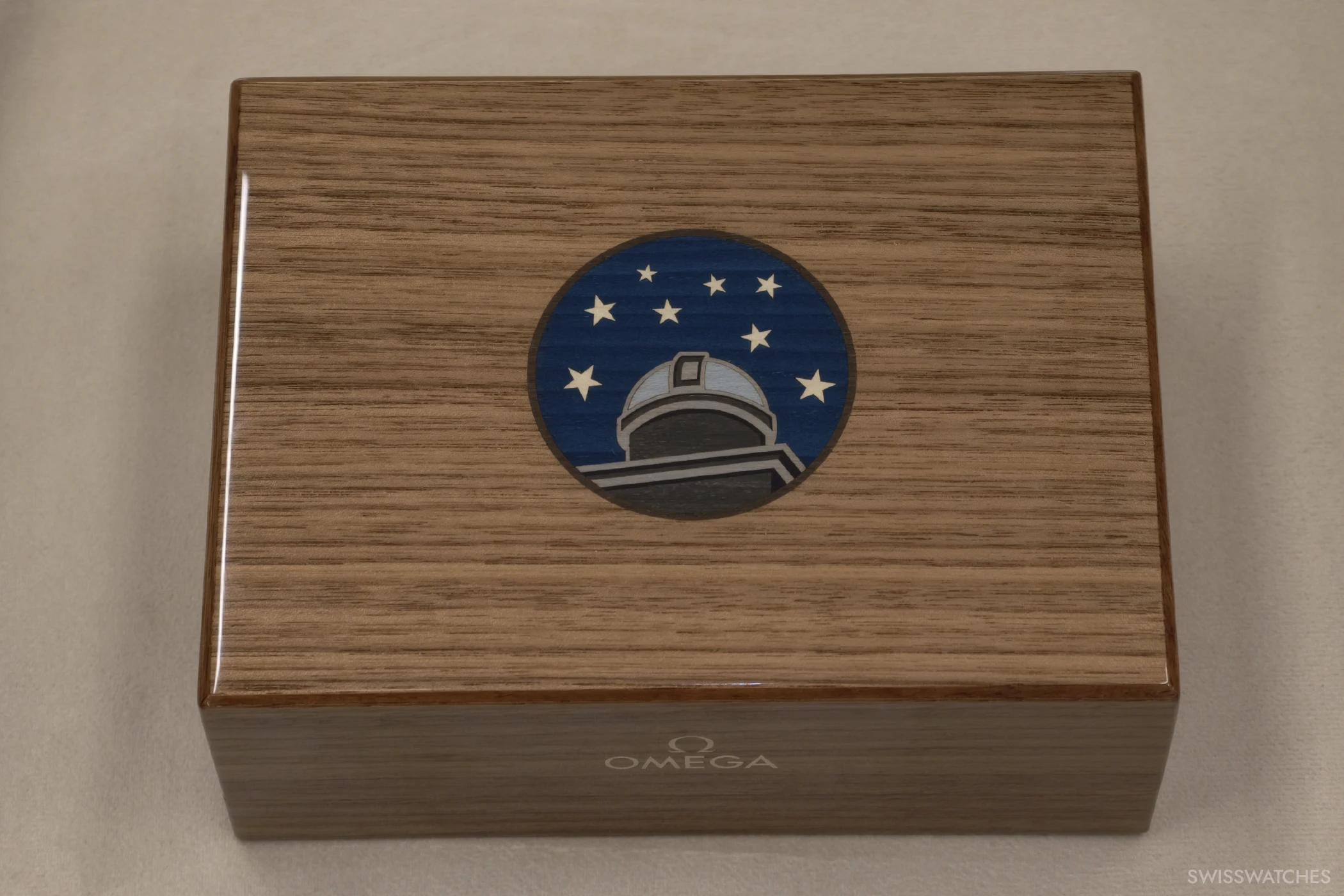
It was followed in 1952 by a watch that built upon the same concept of high precision and presented it once again in an elegant overall package: the Omega Constellation. The watch takes its name from the emblem on the caseback, depicting an observatory beneath eight stars. These eight stars symbolise two chronometer records and six first-place awards achieved by Omega between 1933 and 1952 at Kew-Teddington and the Geneva Observatory.
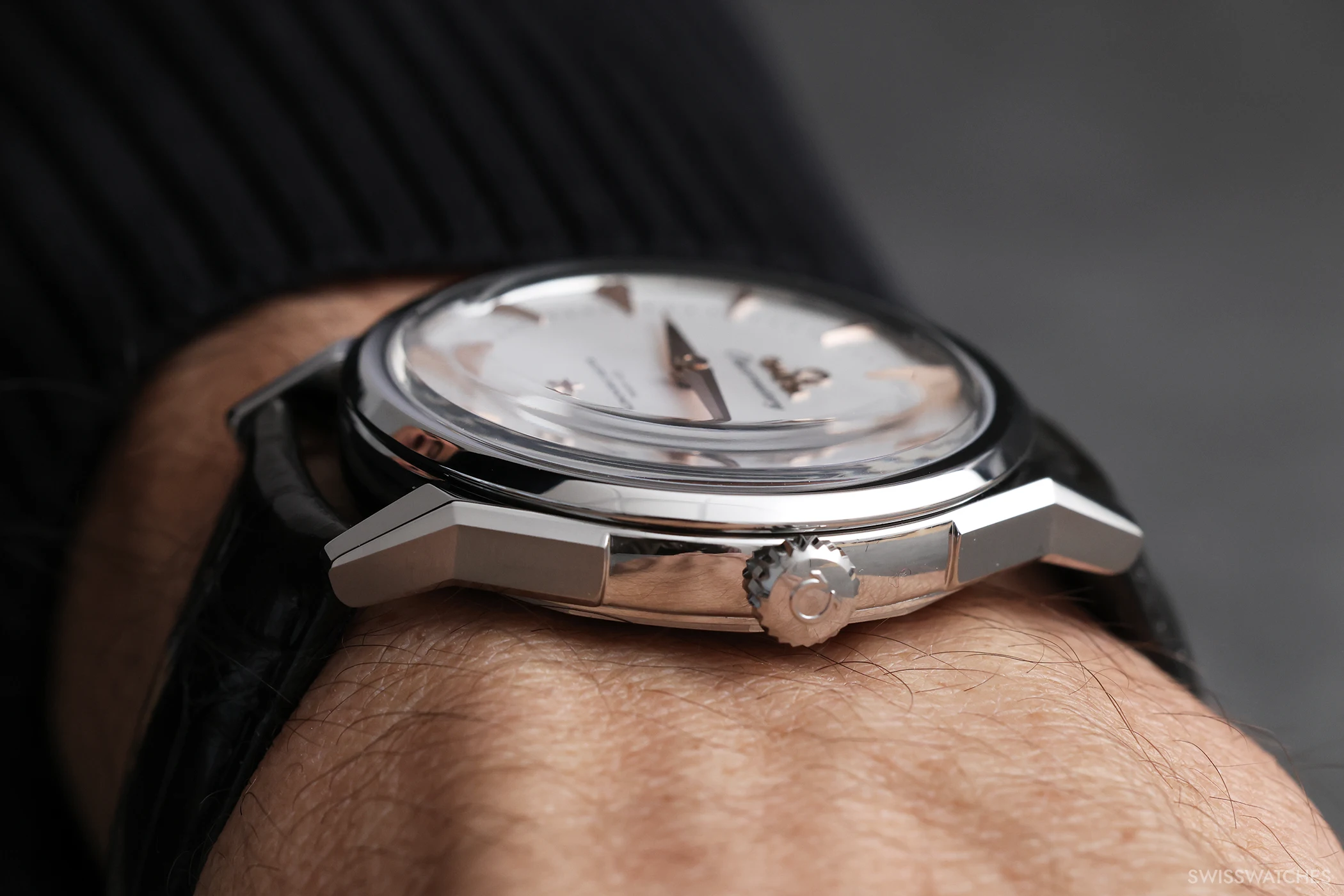
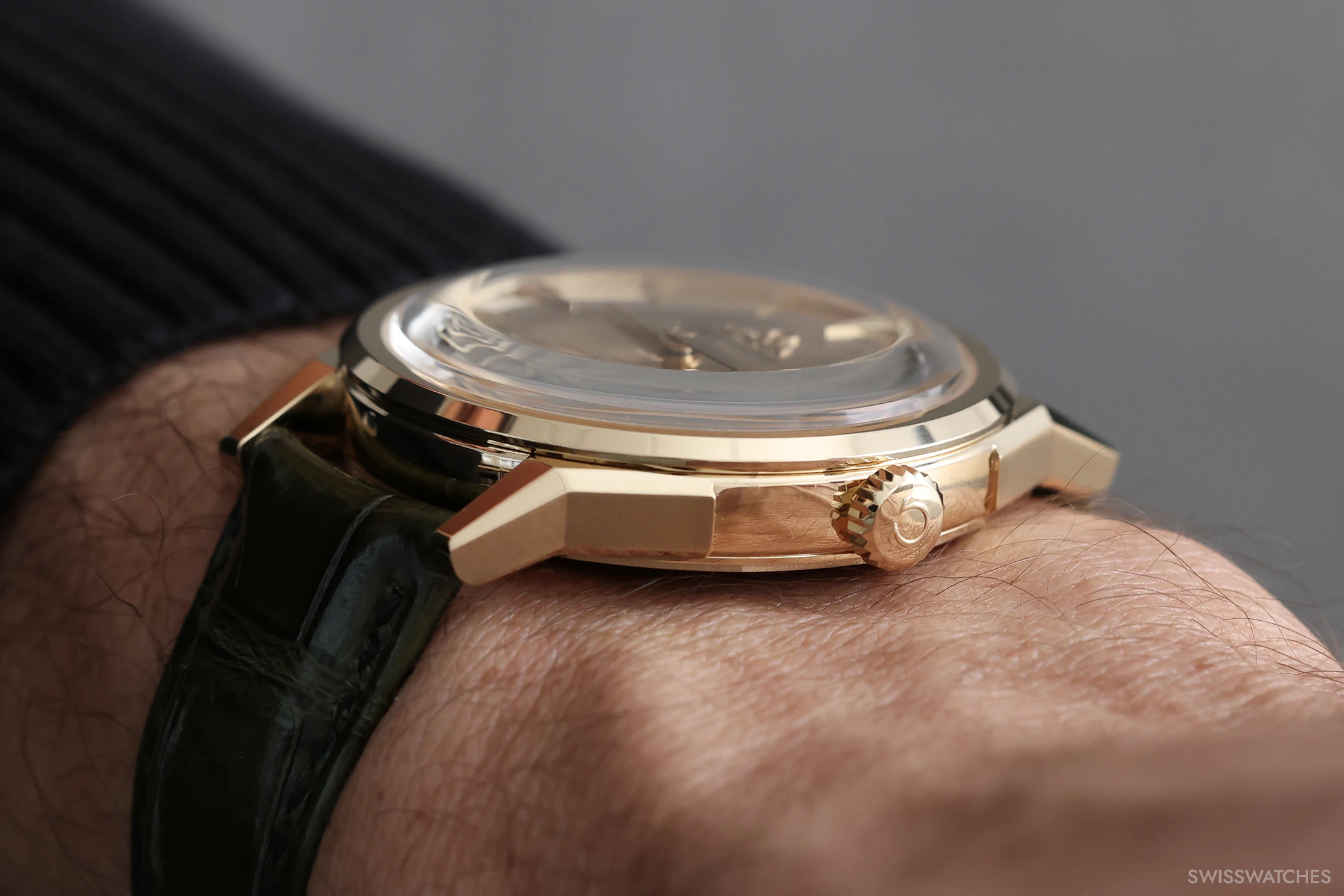
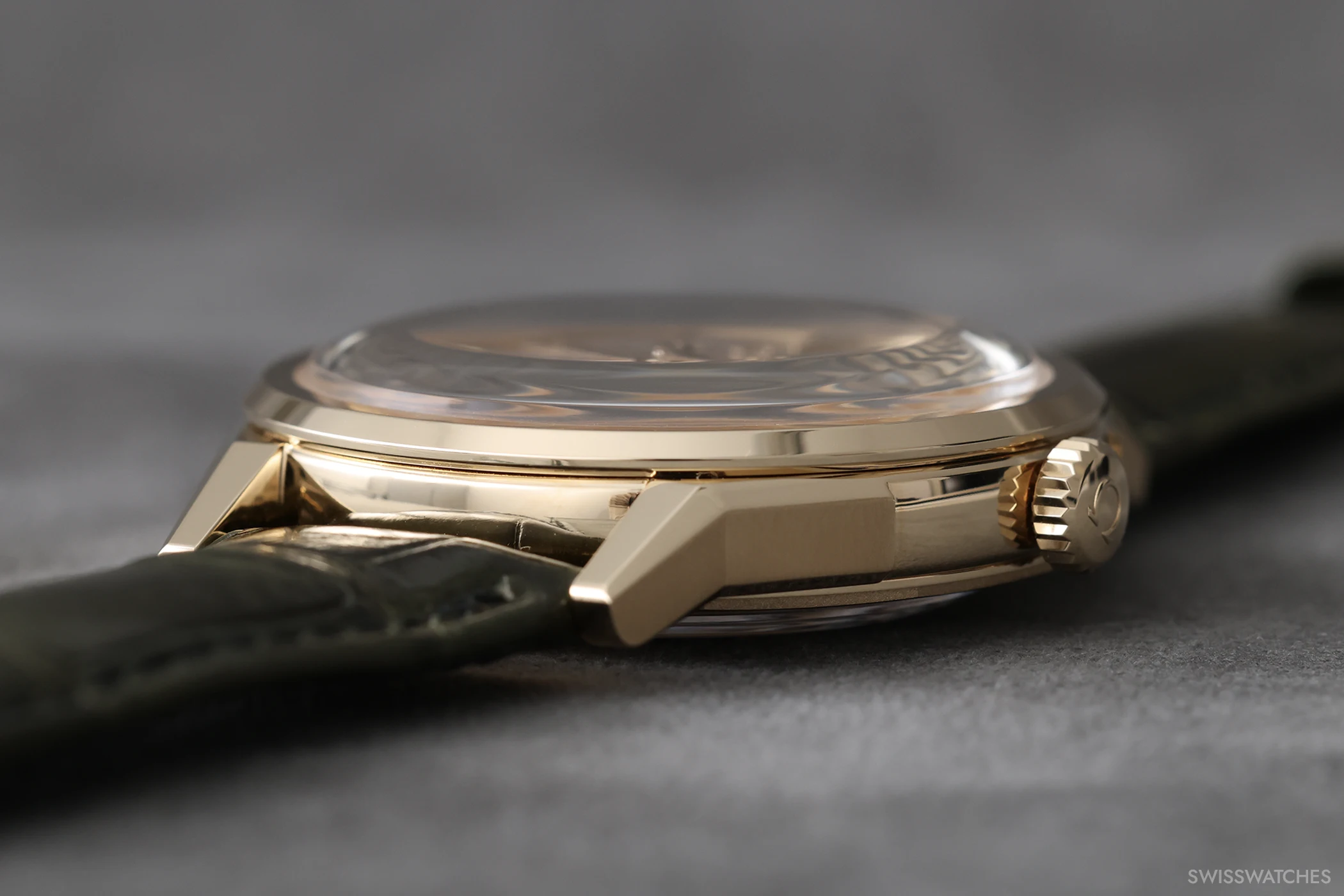
With this latest evolution of the Omega Constellation Observatory line, Omega presents models that draw their aesthetic inspiration from the design language of historical Constellation watches. The new Omega Constellation Observatory collection is initially presented in nine versions, all of which are unified by a 39.4 mm case, a lug-to-lug length of 47.20 mm, and the depiction of an observatory on the rotor visible through the caseback. To further echo the design of earlier Constellation models, the cases are fitted with the characteristic “dog-leg” lugs.
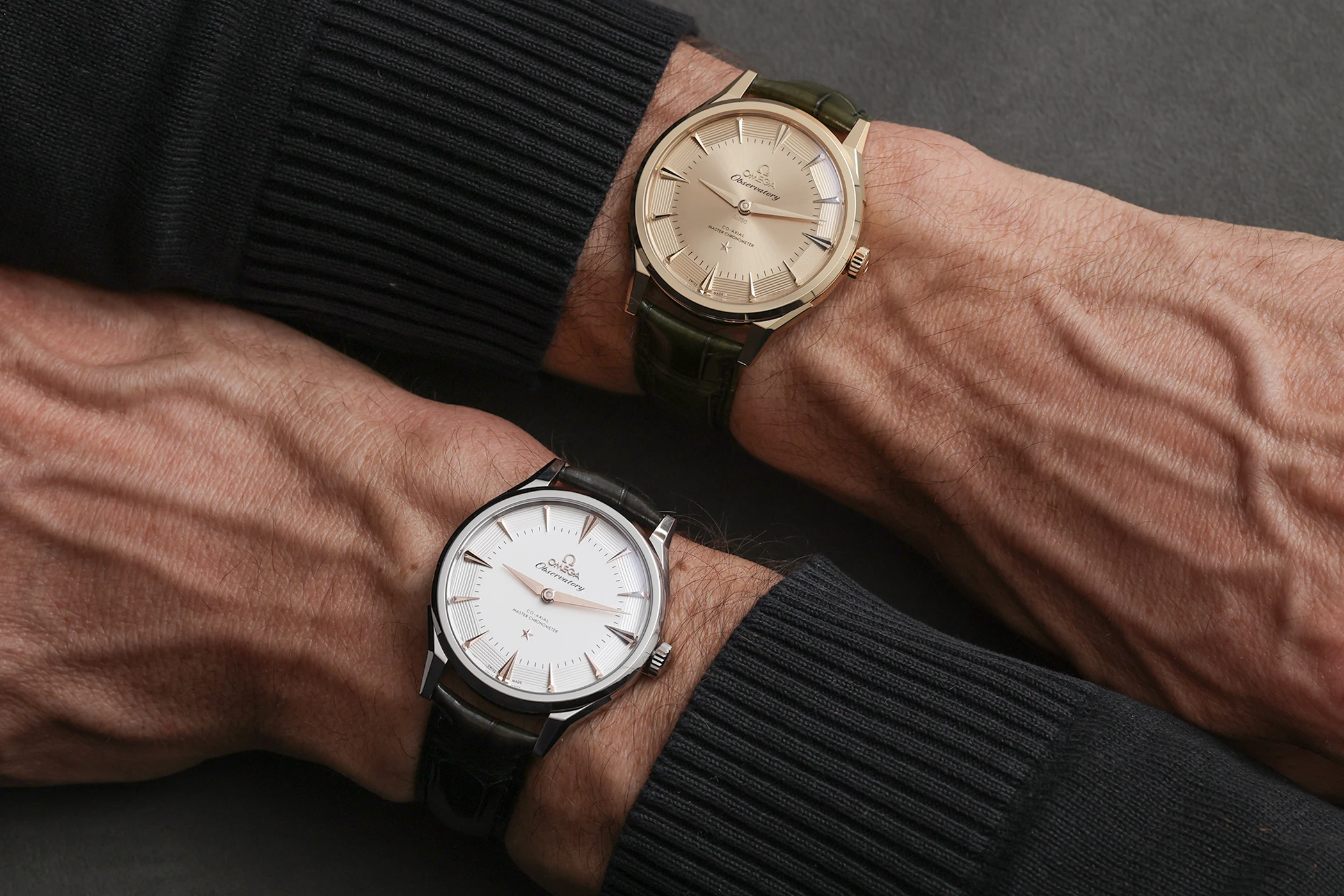
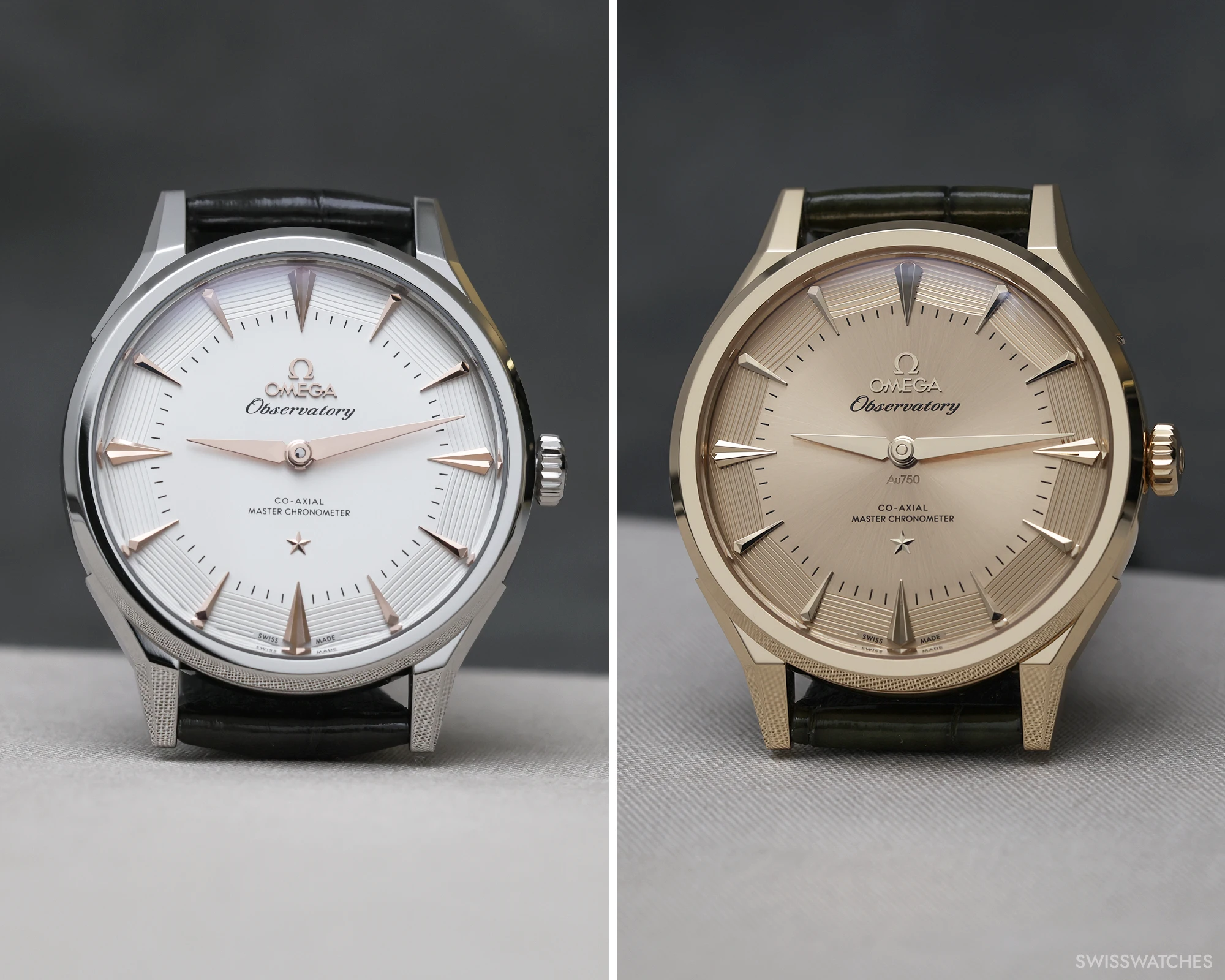
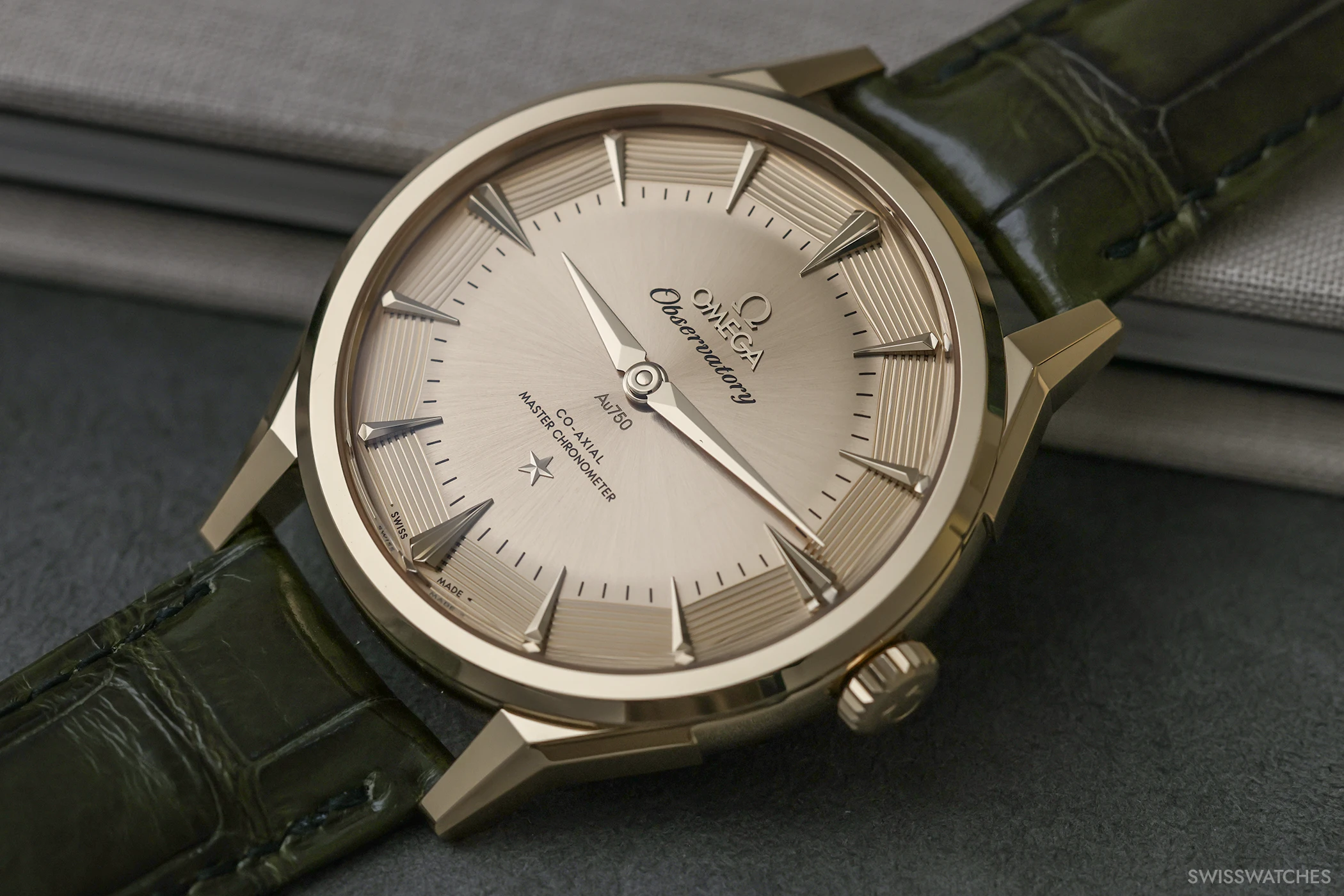
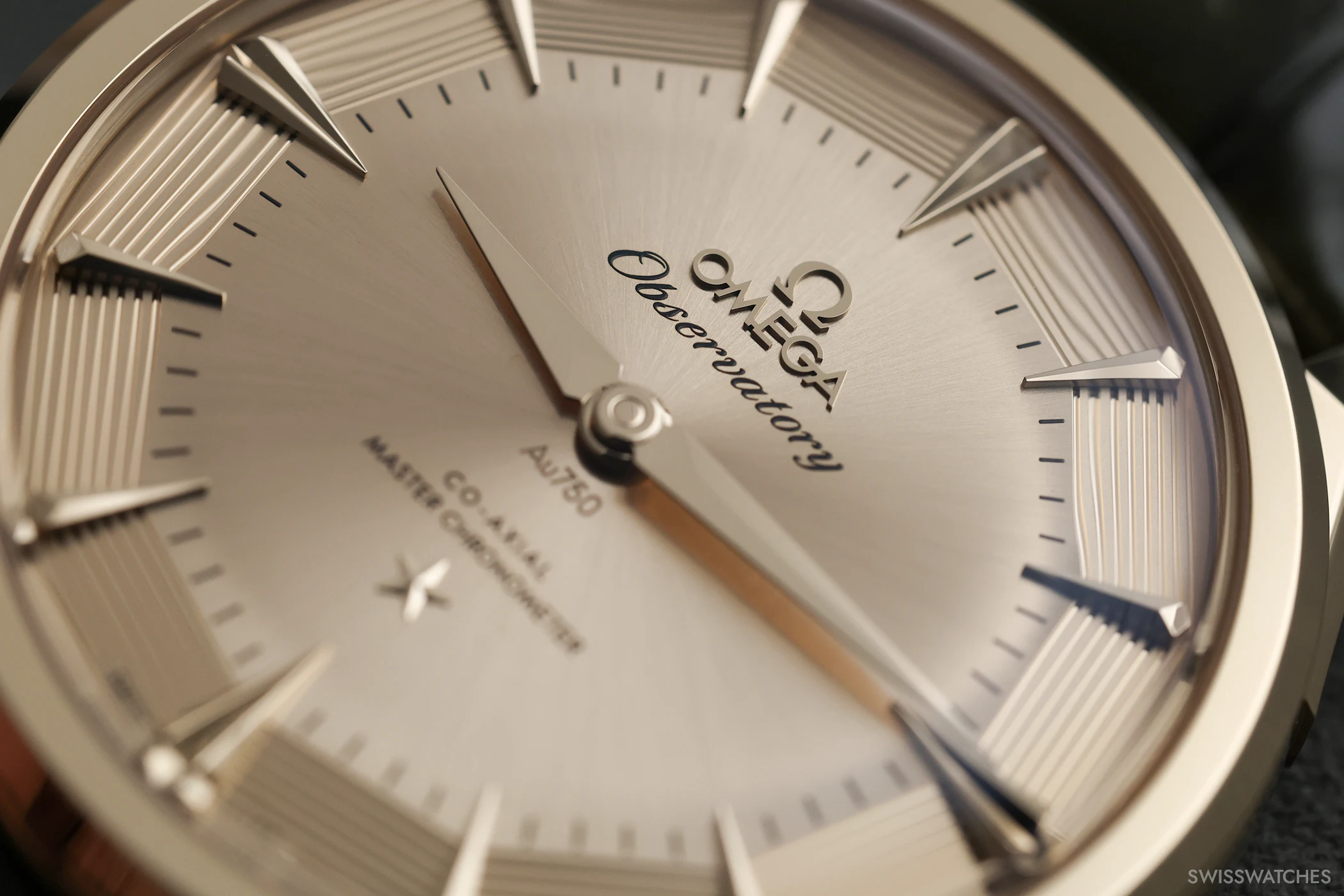
The most defining visual element of these Omega Constellation Observatory models, however, is the dial. Each features a slightly domed, twelve-faceted dial—commonly referred to as a “pie-pan” dial, a nod to its resemblance to an inverted pie tin. On the recessed outer sections of all dials—except for the version with a black ceramic dial—finely guillochéed, concentric lines extend towards the edge of the case, enhancing the overall sense of depth.
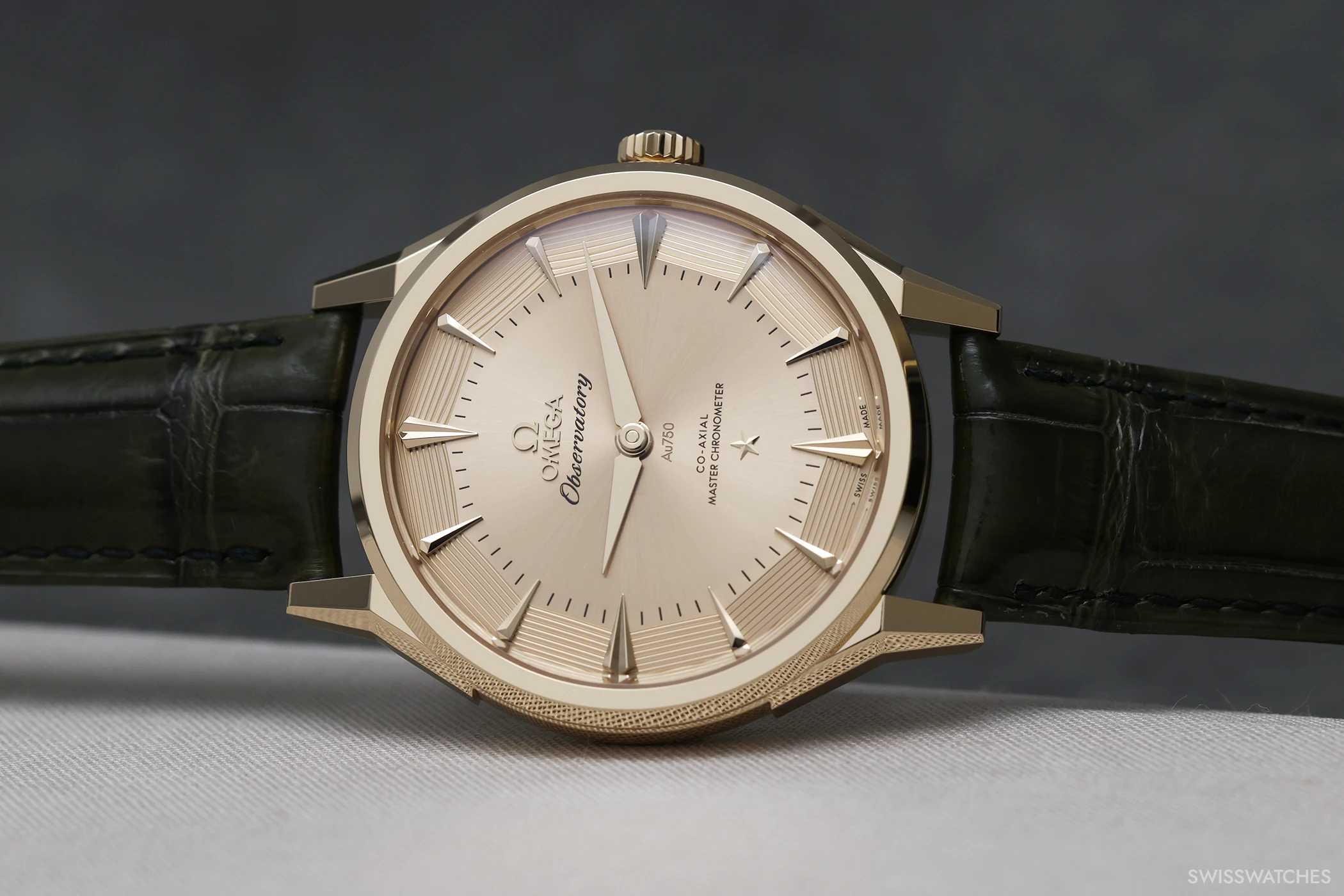
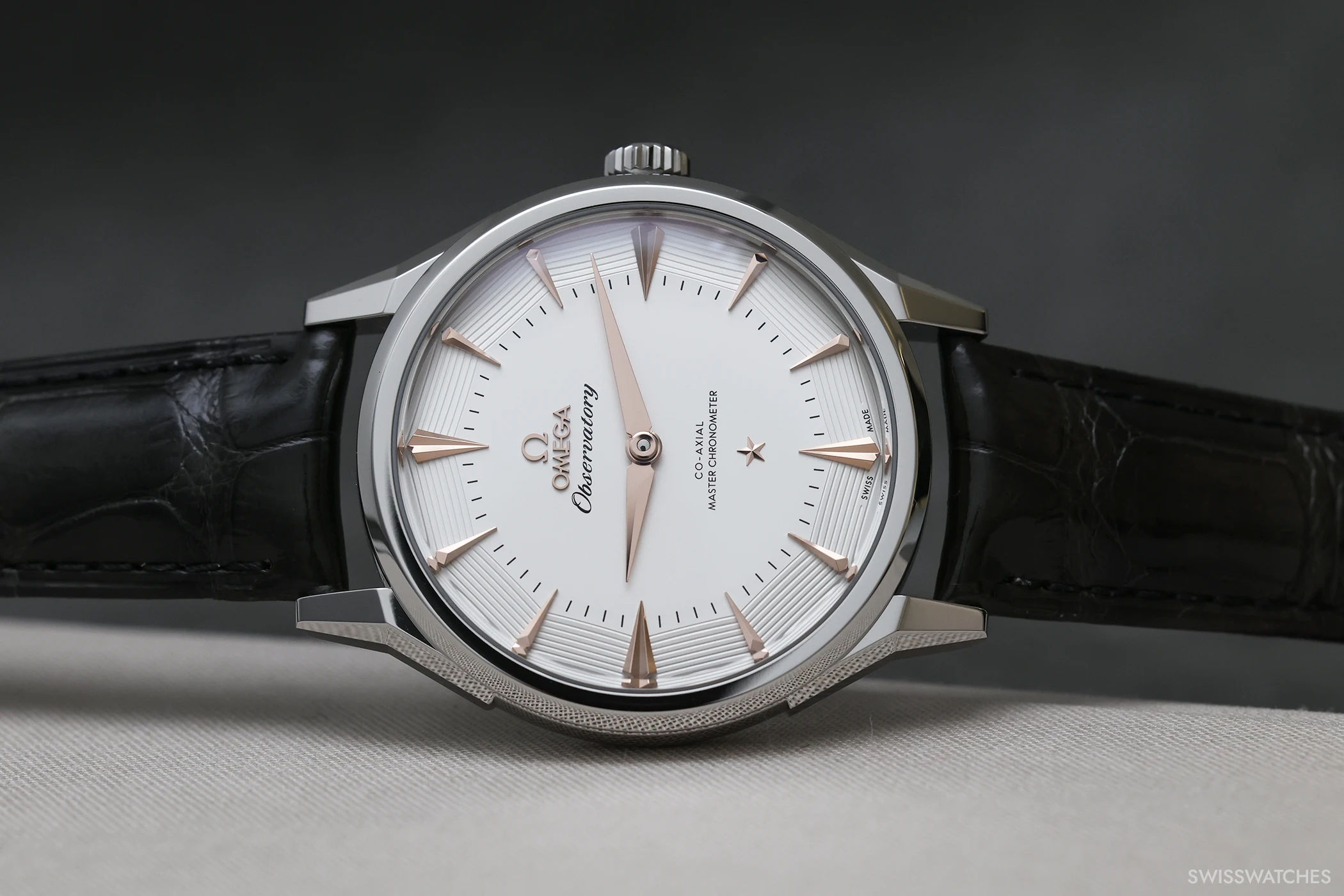
Across all Omega Constellation Observatory models, the dial layout follows a clearly defined structure.
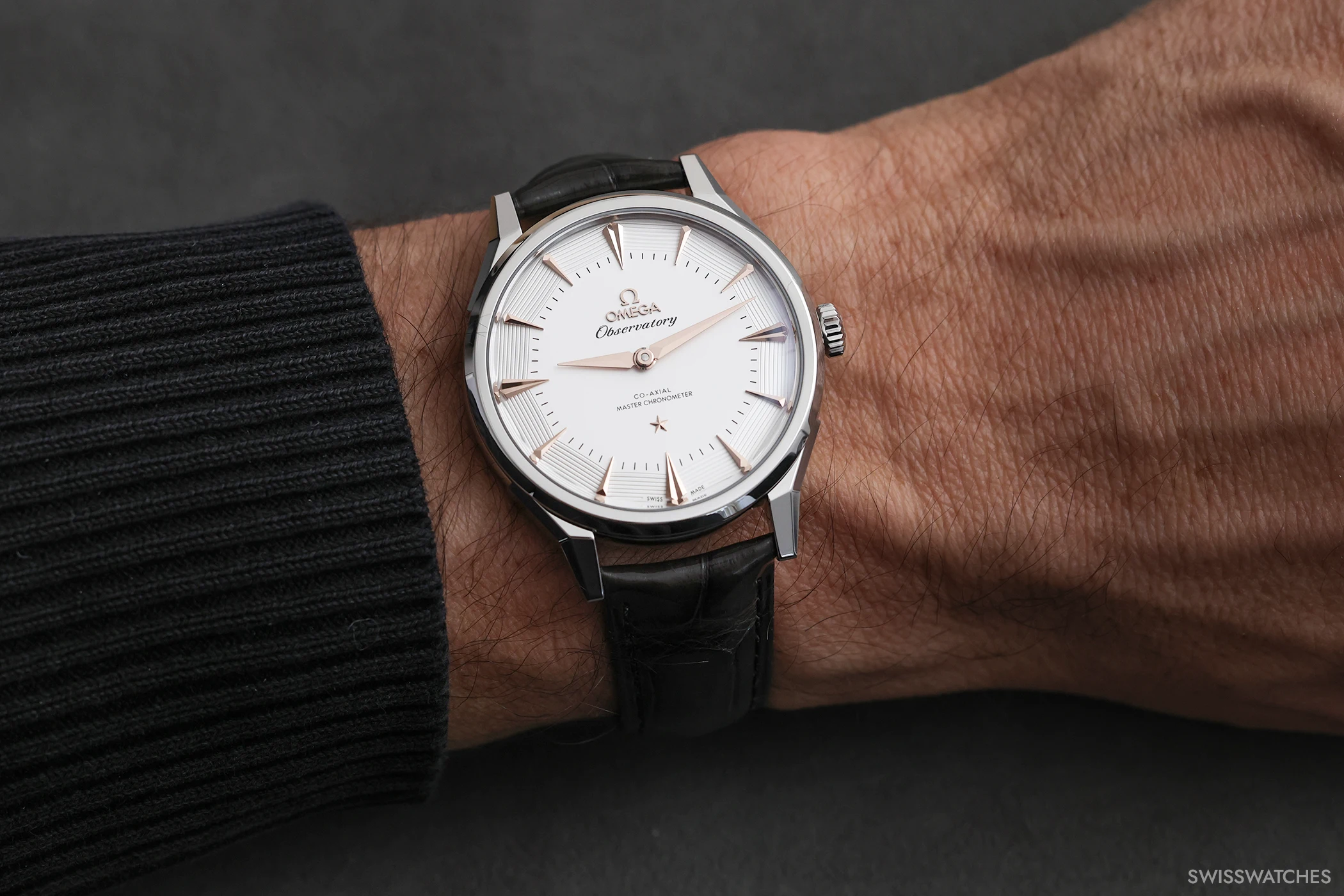
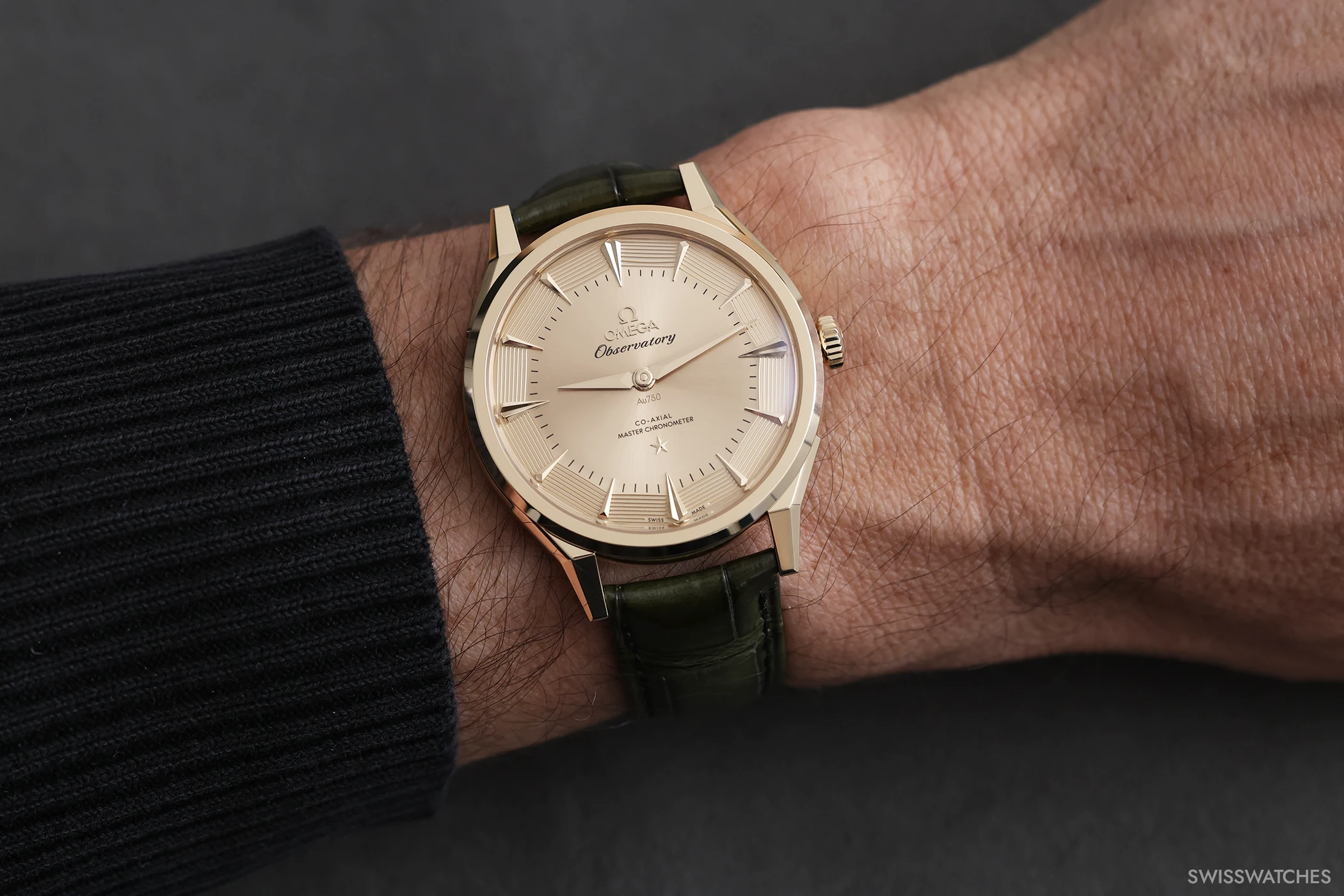
The hour markers are executed in an arrow-shaped geometry, which Omega describes as “kite-shaped”, and are faceted and polished, allowing them to reflect the light. The indices at 3, 6, 9, and 12 o’clock are longer and more prominently proportioned, adding further visual structure to the dial. In keeping with historical Constellation models, the hour and minute hands are dauphine-shaped, faceted, and polished, contributing to a balanced and refined overall aesthetic. Beneath the applied, three-dimensional Omega logo sits a curved “Observatory” inscription, while the “Co-Axial Master Chronometer” designation is positioned in the lower section of the dial. At 6 o’clock, an applied star—a classic Constellation element—references the chronometer heritage of the line.
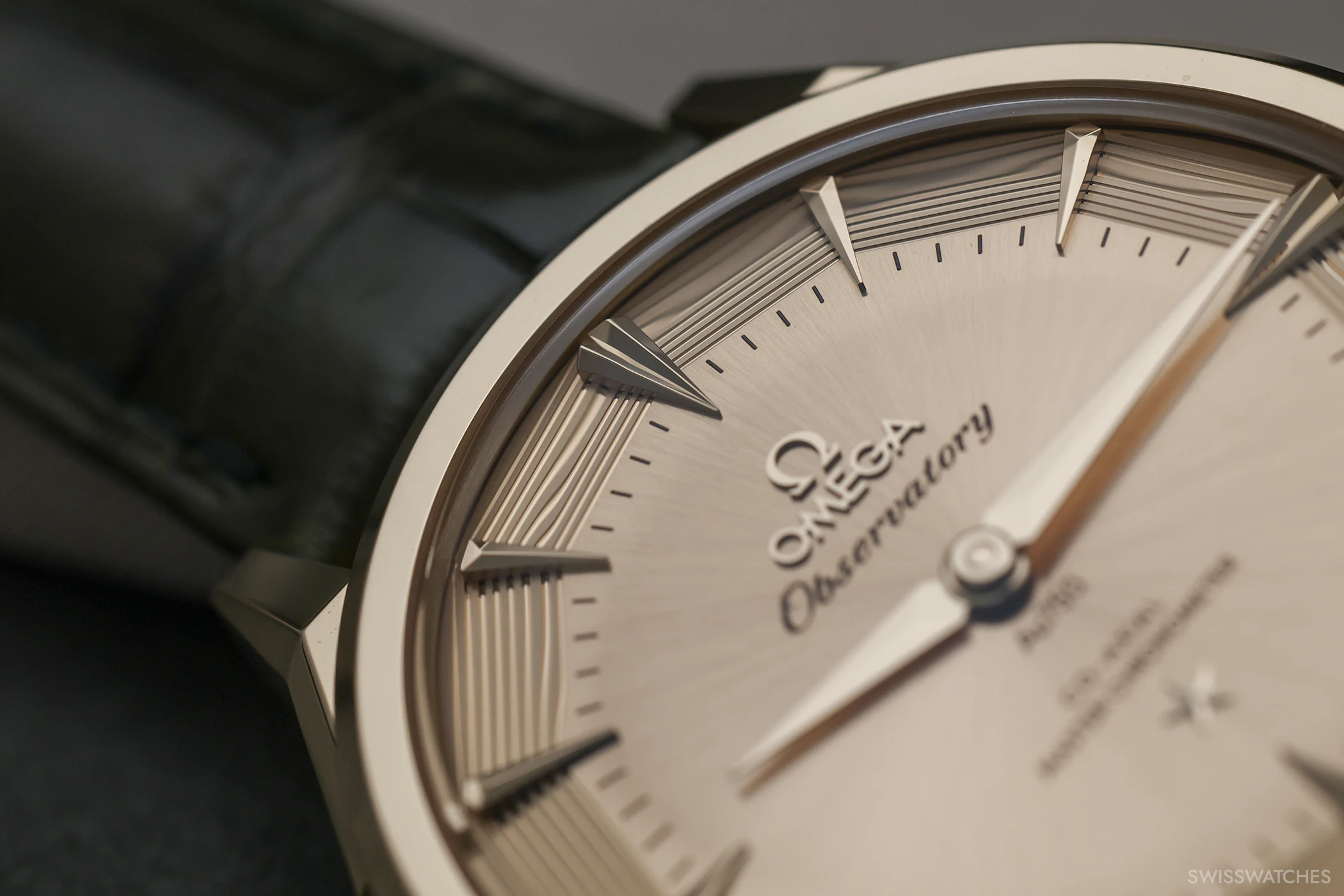
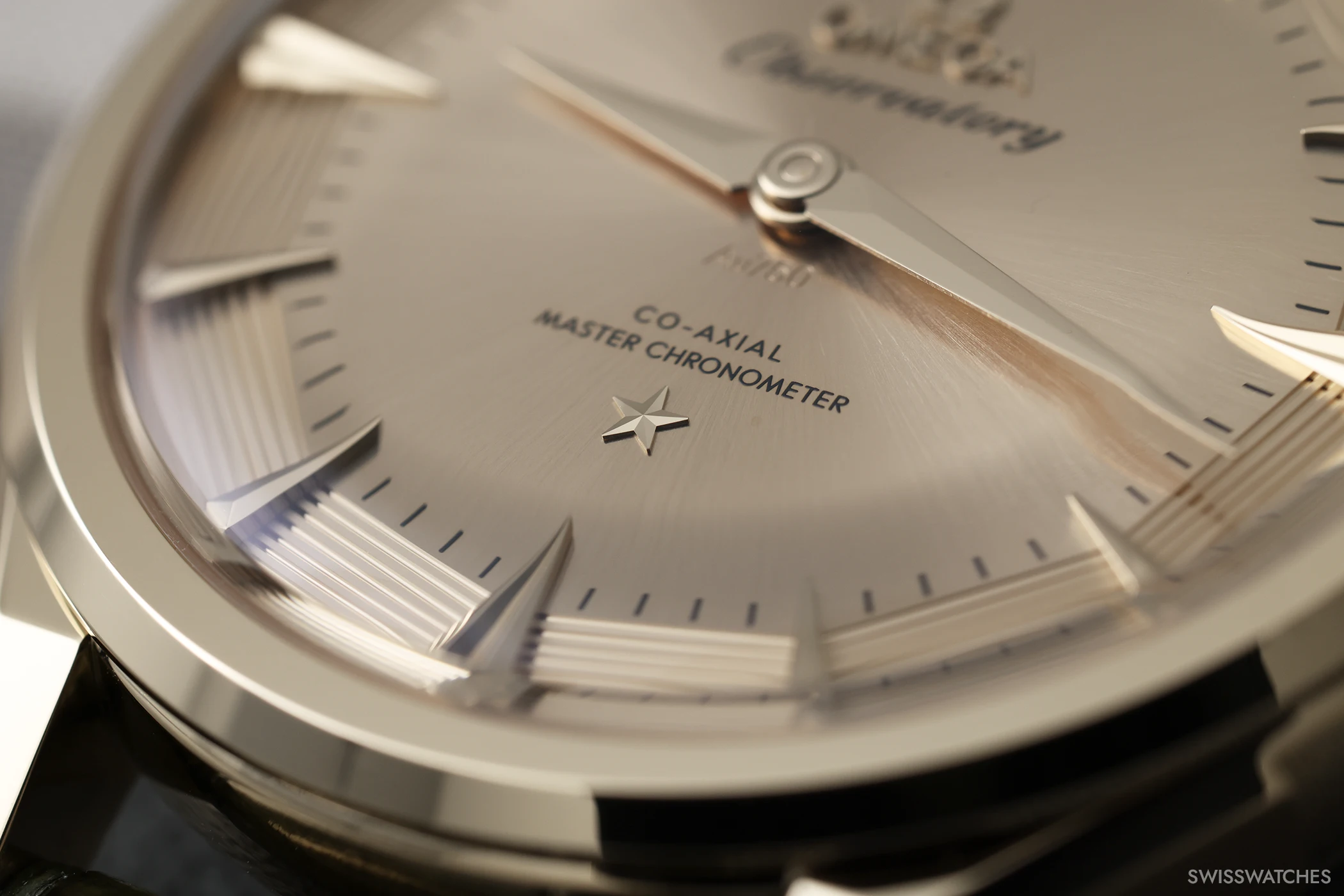
Moving from the shared characteristics to what distinguishes the nine Omega Constellation Observatory variants: four versions of the new Constellation are crafted from the brand’s proprietary stainless-steel alloy, O-Megasteel. These are available in a bi-colour configuration with a silver dial and Sedna Gold-coloured indices and hands, as well as in versions with a black ceramic dial, a blue dial, and a green dial—each fitted with stainless-steel indices and hands. The model with the black ceramic dial is paired with a matching black leather strap; the silver-dial variant is fitted with an anthracite leather strap, while the blue and green versions are presented on corresponding blue and green leather straps.

A further four Omega Constellation Observatory variants, crafted from 18-carat gold, lend the watch a more elevated appearance. Here, too, differences in material composition define each model. The first version is made entirely of Moonshine Gold—Omega’s proprietary yellow-gold alloy—with both the case and all dial components executed in this material. The second variant is rendered in Sedna Gold, Omega’s red-gold alloy, with case and dial likewise fully composed of this material. The third 18-carat gold version is produced in Omega’s “Canopus” white gold, combining a silver dial with a case, indices, and hands made from Canopus white gold.
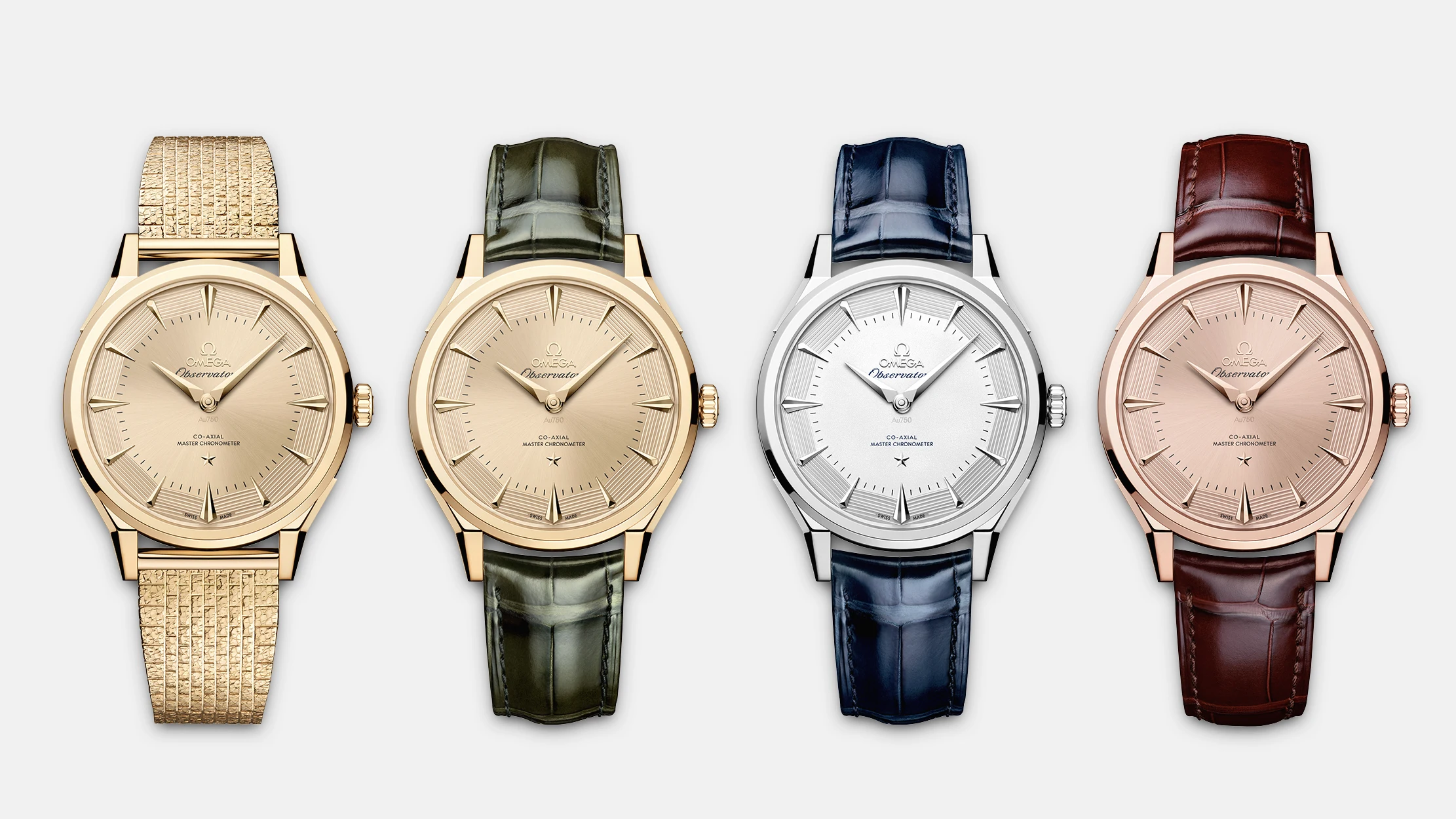
As for the straps, the Moonshine Gold variant is available either on a dark green leather strap or on a nine-link mesh bracelet in 18-carat Moonshine Gold featuring a “brick” pattern inspired by historical metal bracelets. The Sedna Gold version is paired with a coordinated burgundy leather strap, while the Canopus Gold model is fitted with a blue leather strap. With the addition of the platinum-gold edition—the ninth and final reference—the new Constellation generation brings together all four of Omega’s precious-metal alloys within a single collection for the first time.
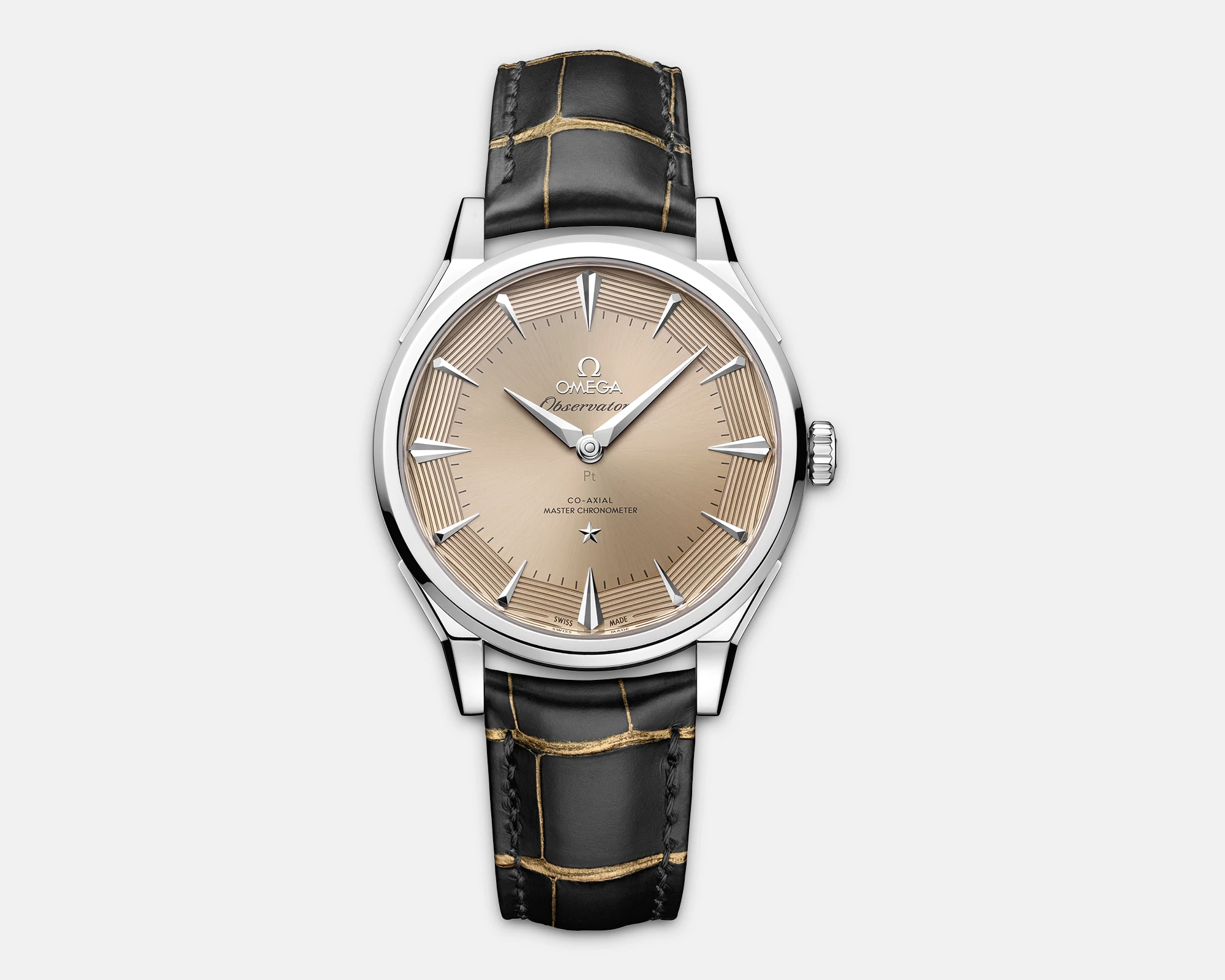
Although the case diameter of all nine references is identical at 39.4 mm, differences emerge in case height. All models—except for the platinum version—measure 12.23 mm in height, while the platinum version is slightly taller at 12.32 mm. This is due to the observatory medallion, which is executed in enamel in the platinum version and necessitates a slightly increased movement height, which is correspondingly reflected in the case.
The nine references within the new Omega Constellation Observatory collection are powered by two newly developed calibres, both based on a shared architecture featuring a skeletonised rotor. They are distinguished by polished and bevelled edges, a rounded outer rotor section, and an applied Constellation observatory medallion. The movements are offered in three executions: Grand Luxe, Luxe, and Standard.
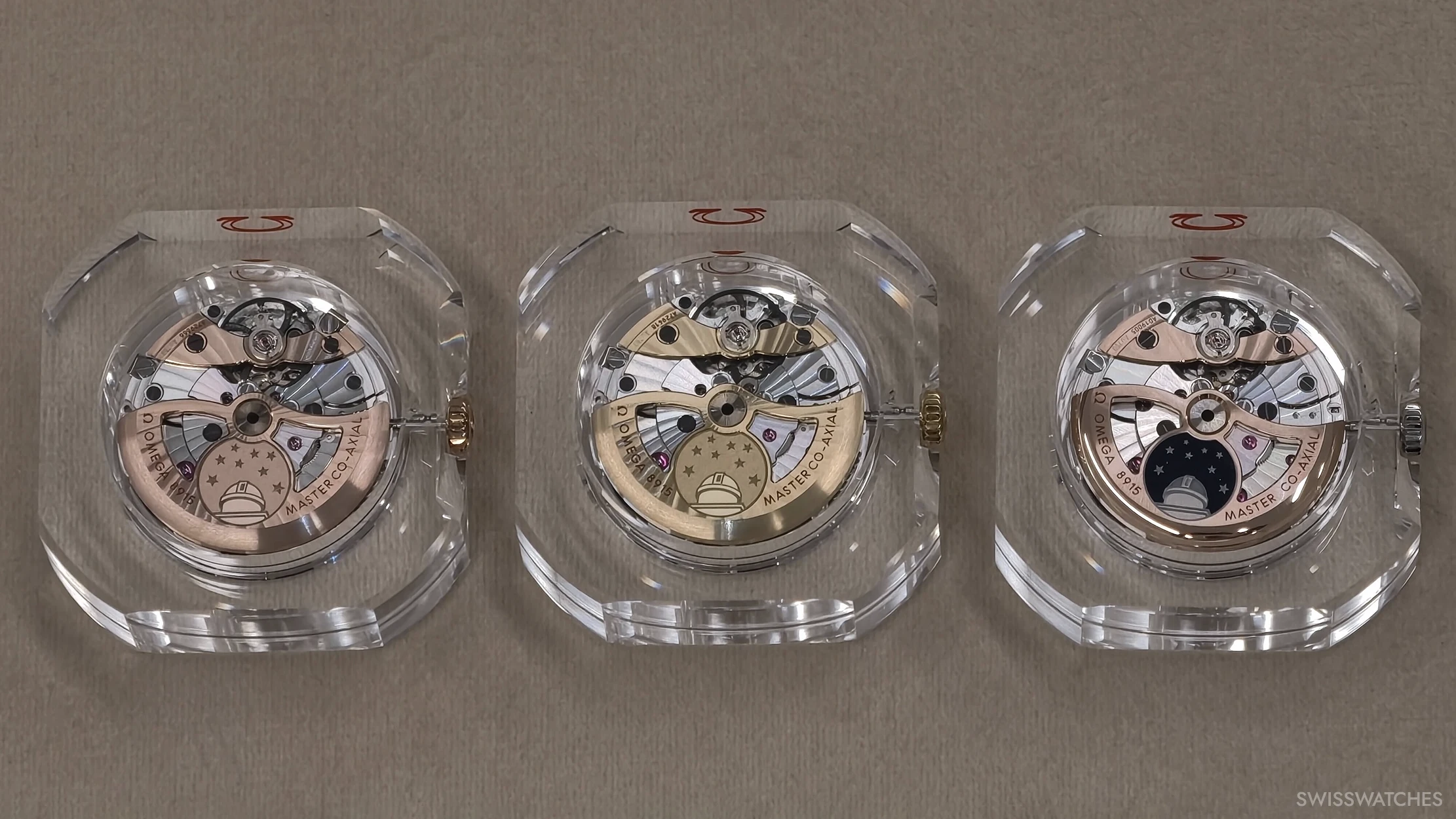
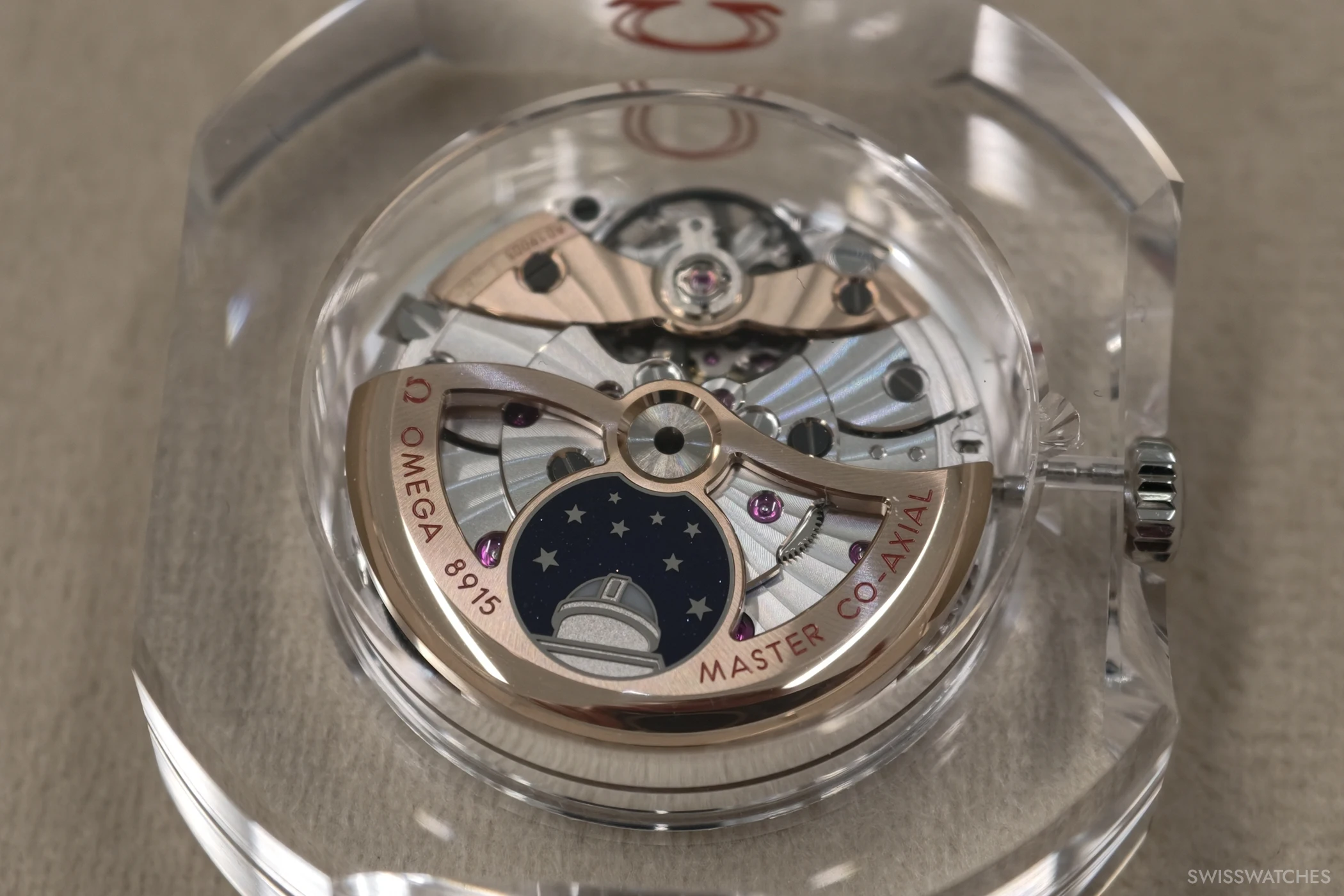
At the top of the range is the calibre 8915 Grand Luxe, used in the platinum-gold version. Its defining characteristics include a rotor base in 18-carat Sedna Gold with a fine spiral finish and a polished outer zone. As in historical Constellation models, the observatory medallion is prominently positioned on the rotor, here executed in 18-carat white gold. The emblem is laser-engraved and depicts a dark blue sky made of aventurine glass with eight stars, complemented by an observatory dome filled with translucent white opal enamel.
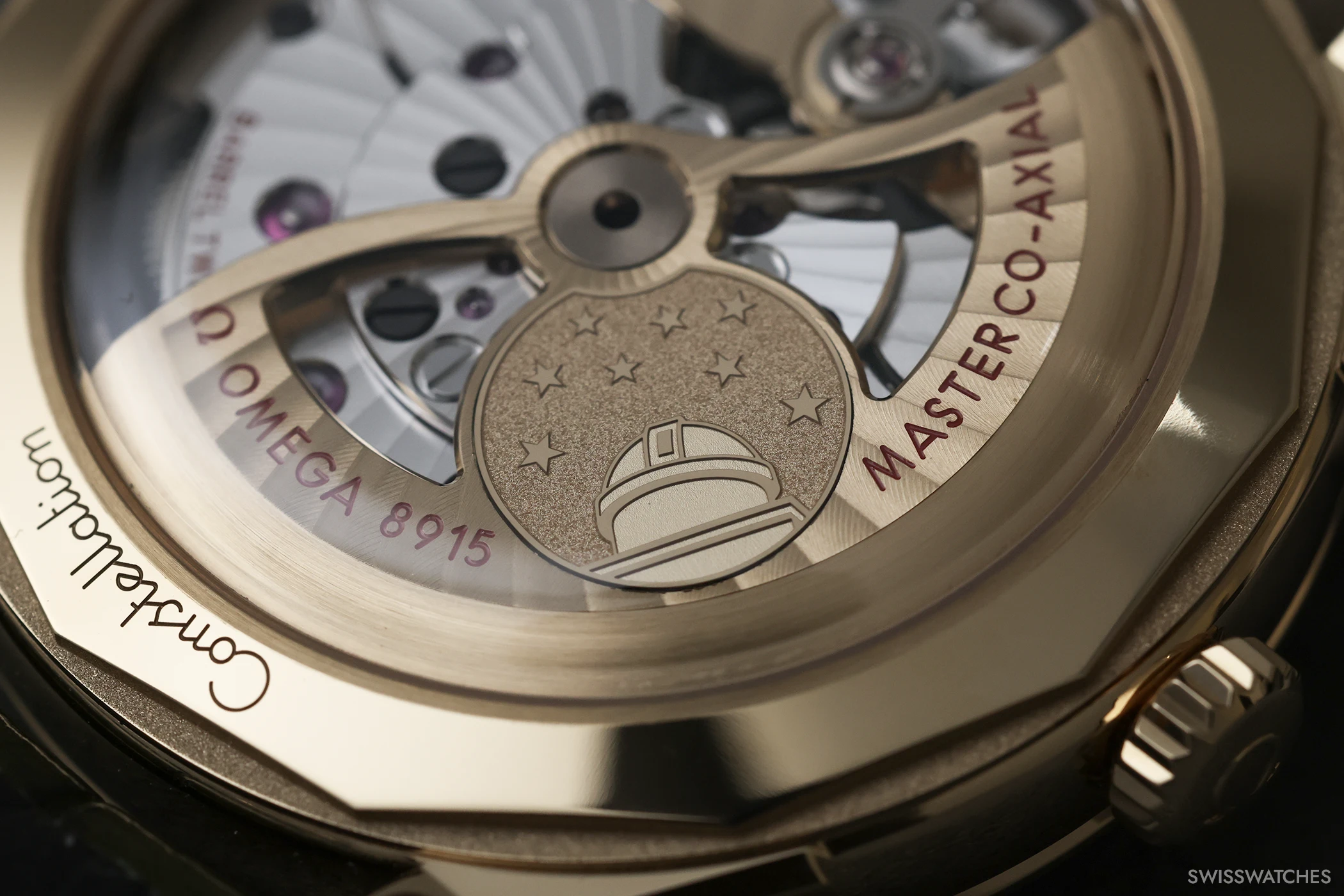
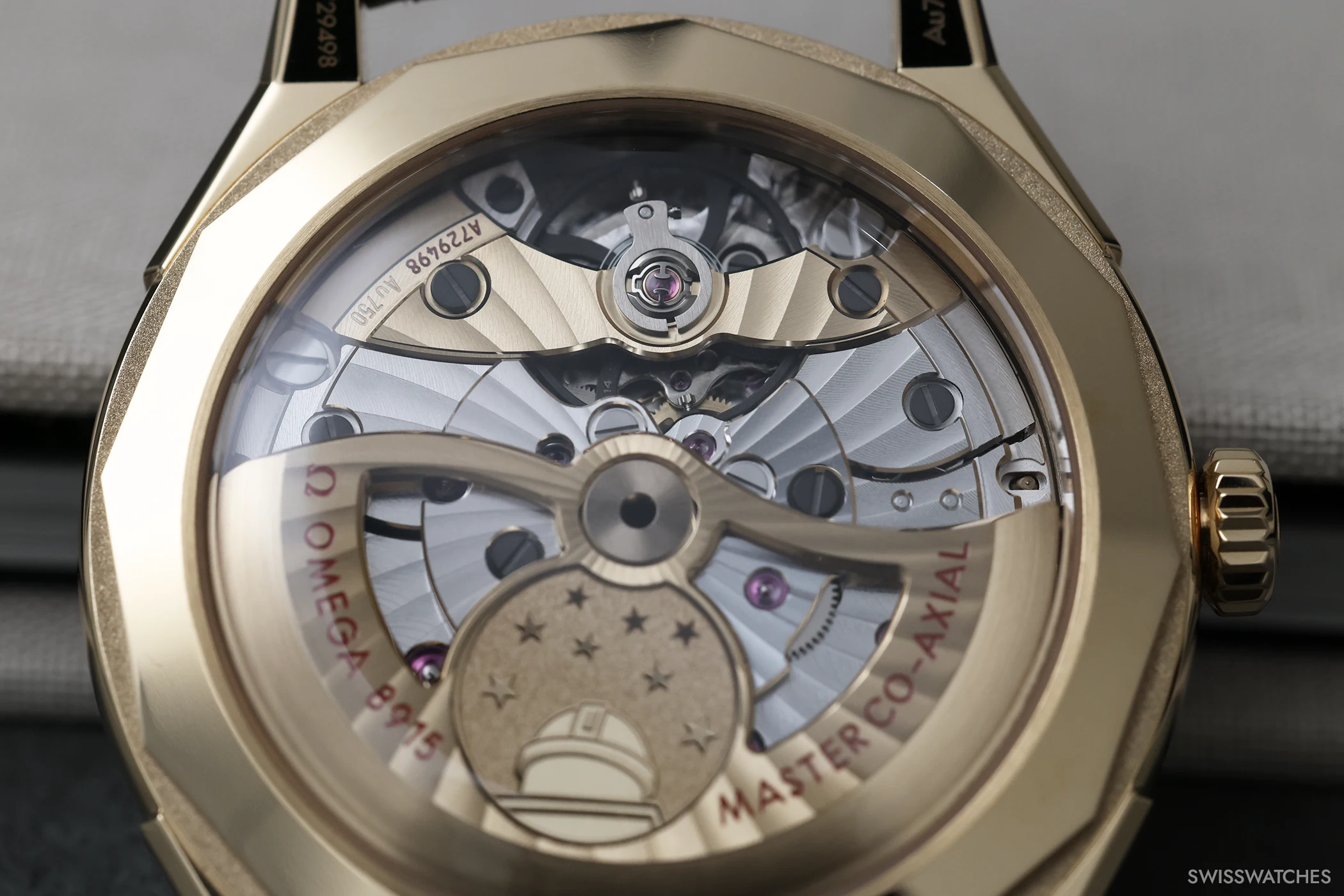
Next is the calibre 8915 Luxe, reserved for all models in 18-carat gold. Here, the rotor base features Geneva waves in an arabesque style, combined with a horizontally brushed outer zone. The version in 18-carat Moonshine Gold marks the first time Omega has used both a rotor and a balance bridge made of 18-carat Moonshine Gold. The model crafted entirely from Sedna Gold correspondingly features the rotor, the observatory emblem, and the balance bridge in Sedna Gold. Finally, the Canopus Gold variant presents a bi-colour execution, with both the rotor and the balance bridge made from Sedna Gold.
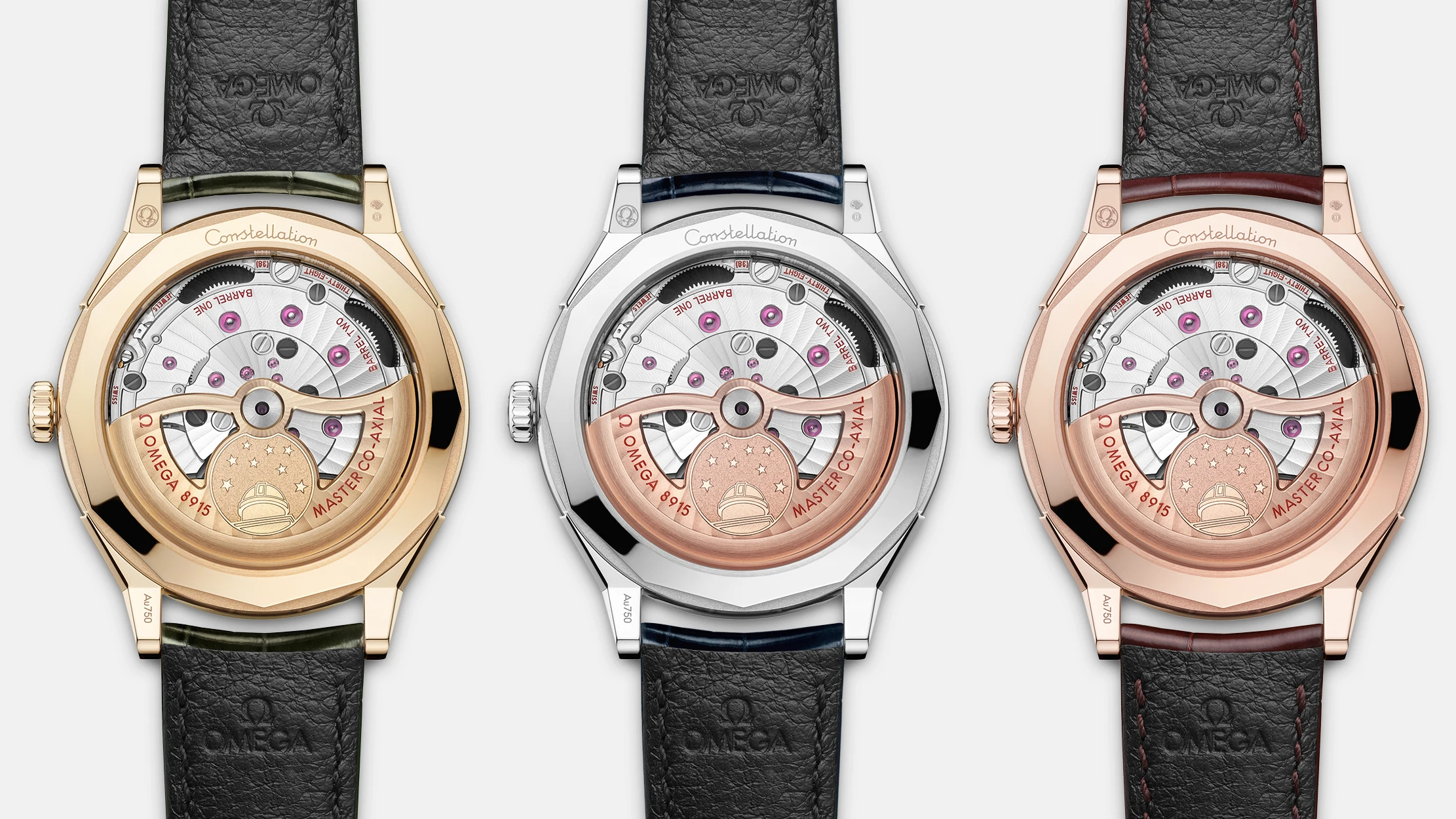
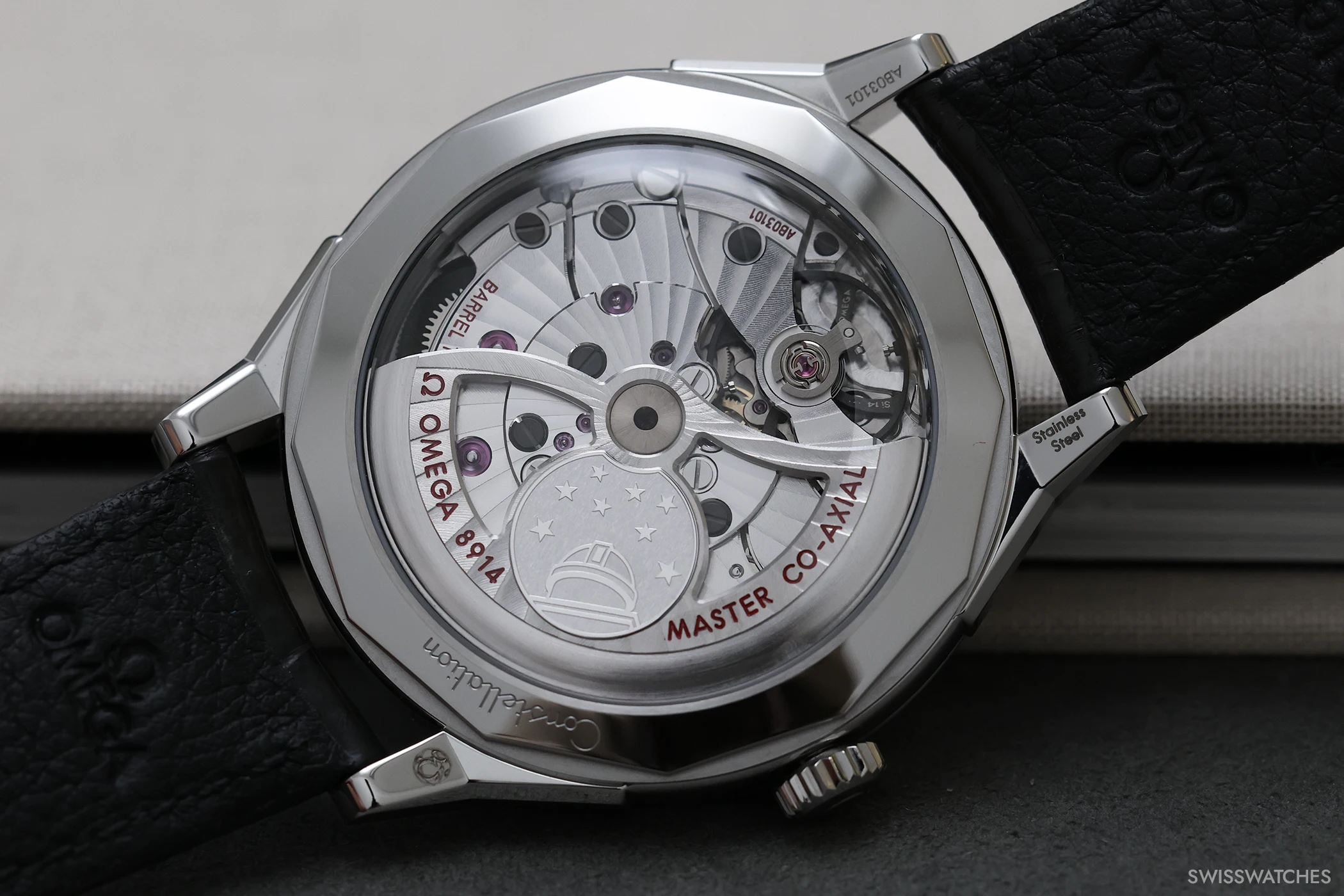
The calibre 8914 Standard, positioned as the third execution, is structurally identical to the calibre 8915 Luxe but is finished in a rhodium-plated aesthetic. This calibre can be observed through the sapphire caseback in each of the stainless-steel models—crafted from Omega’s proprietary O-Megasteel. In these versions, both the rotor and the balance bridge are likewise made of stainless steel.
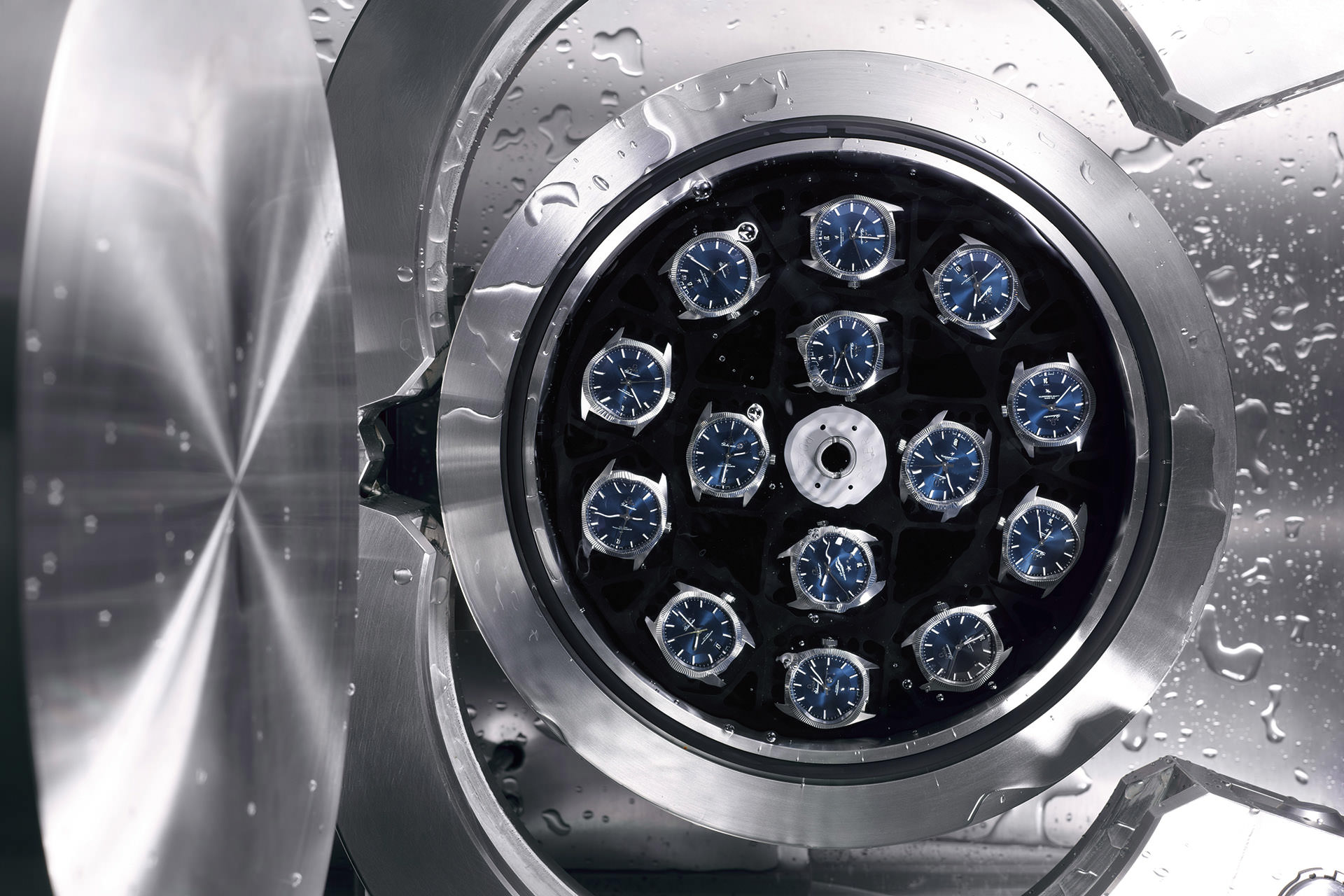
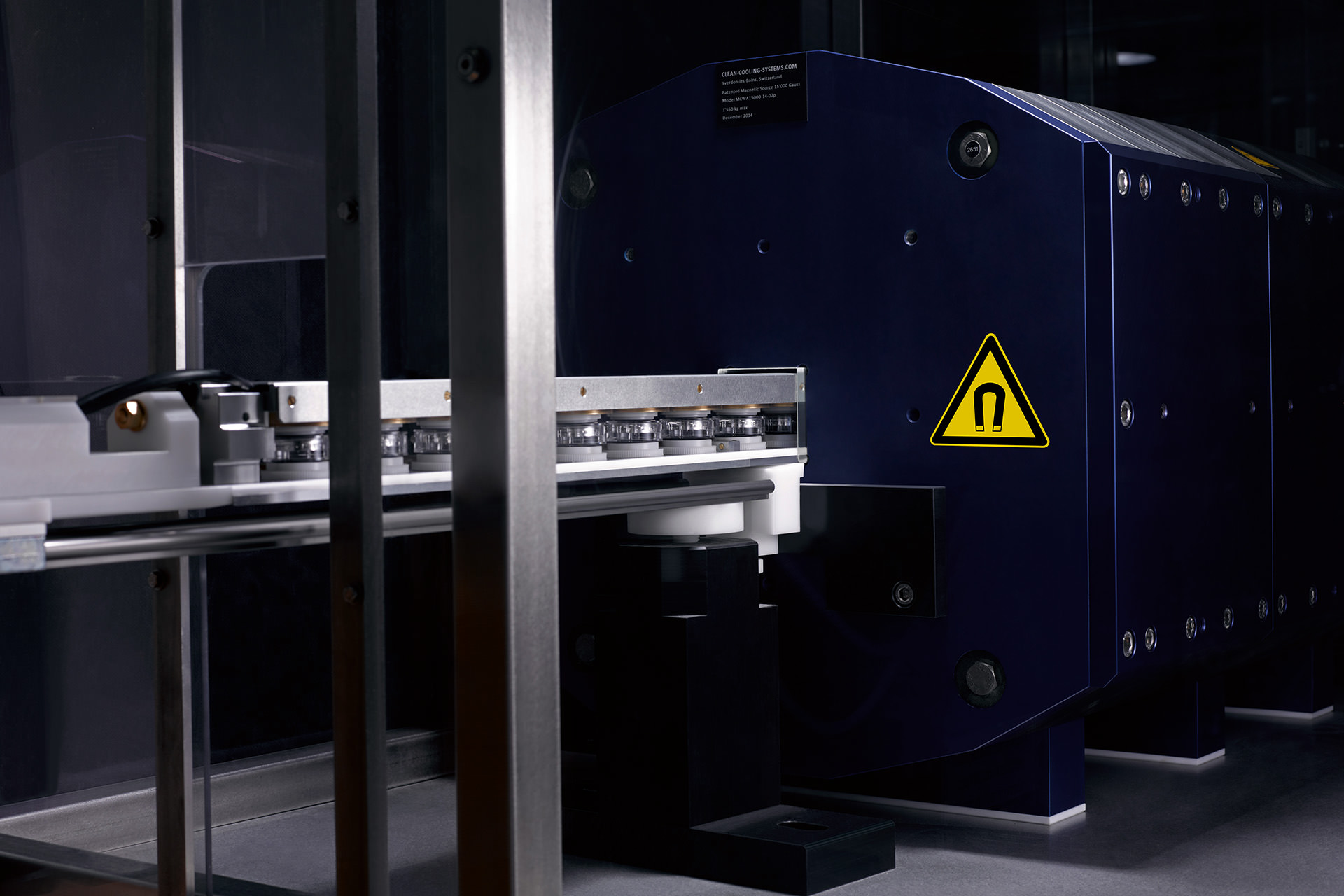
The movements lead to the defining feature of the new models: for the first time in Omega’s history, two-hand watches—displaying only hours and minutes—have successfully undergone both chronometer and Master Chronometer testing without the need for a seconds hand. In order for a movement to be designated a Master Chronometer, it must pass a defined testing procedure conducted by METAS. During this process, the movement is tested both as individual components and as a fully assembled watch, and must pass a total of eight tests. Particular emphasis is placed on magnetic resistance, water resistance, and power reserve. Watches that achieve this certification exhibit the following characteristics: they are resistant to magnetic fields of up to 15,000 gauss, water-resistant to depths of up to 200 metres, and must operate within a daily deviation range of 0 to +5 seconds—making them five seconds more precise than the requirements set out by ISO 3159 (−4 to +6 seconds per day).

With the new Omega Constellation Observatory, the brand aims to expand its core offering of two-hand models while further enhancing their appeal through Master Chronometer certification. To achieve this, the brand draws on the heritage of the Constellation line, first introduced in 1952—a decision likely to resonate with collectors, as Omega once again takes clear inspiration from the vintage references that are so highly regarded today. But how do the new models wear?
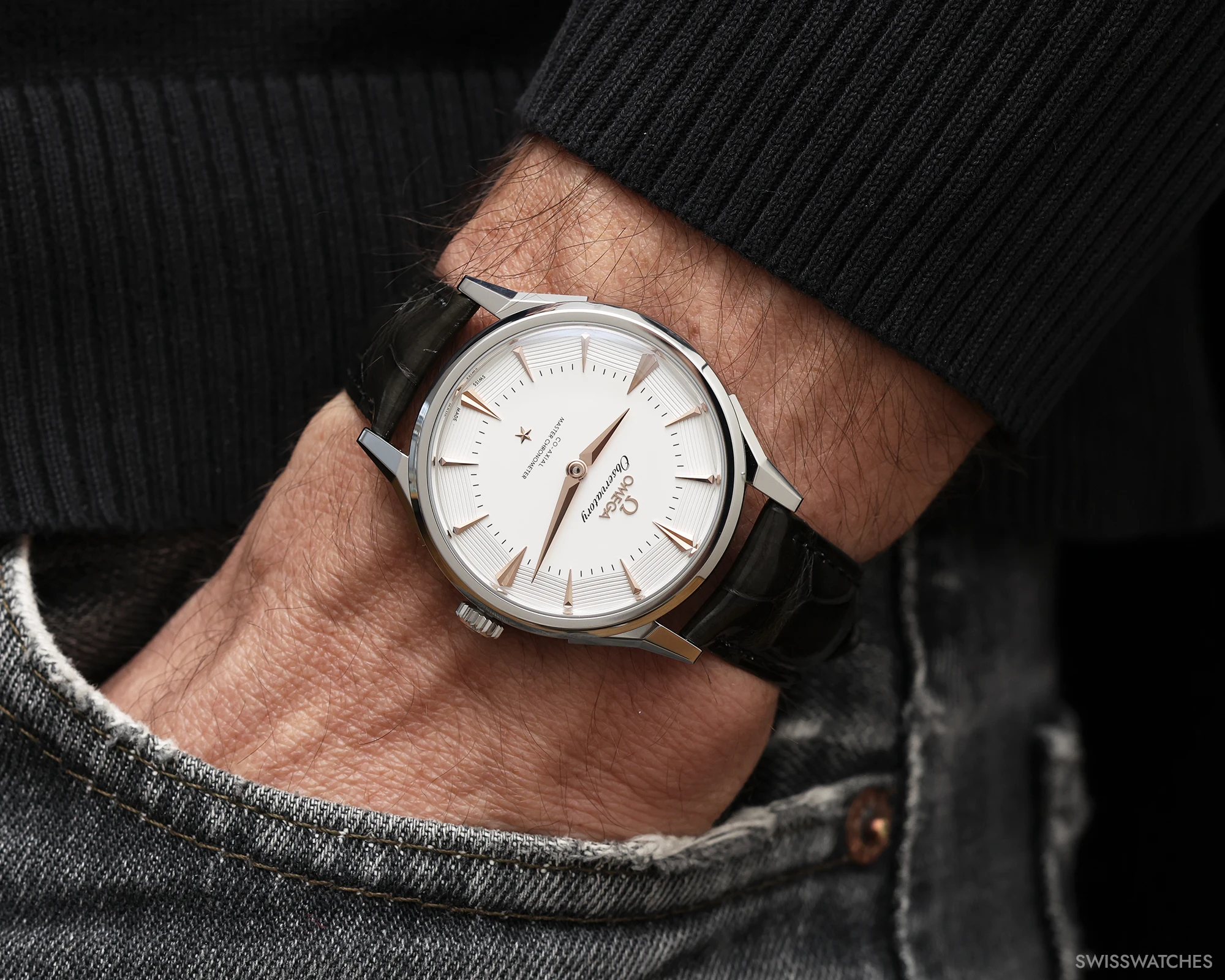
On the wrist, the new Constellation benefits from integrated “dog-leg” lugs that do not protrude excessively from the case, resulting in a comfortable fit. The 39.4 mm case diameter strikes a well-balanced middle ground, making it suitable for both smaller and larger wrists. As for the dial, the concentric grooves create a pronounced sense of depth, while the polished indices and hands reflect the light effectively. Overall, the new models convey a refined aesthetic, shaped by the interplay of modernised elements—such as the indices and hands—and historical design cues, including the lugs and the pie-pan dial.
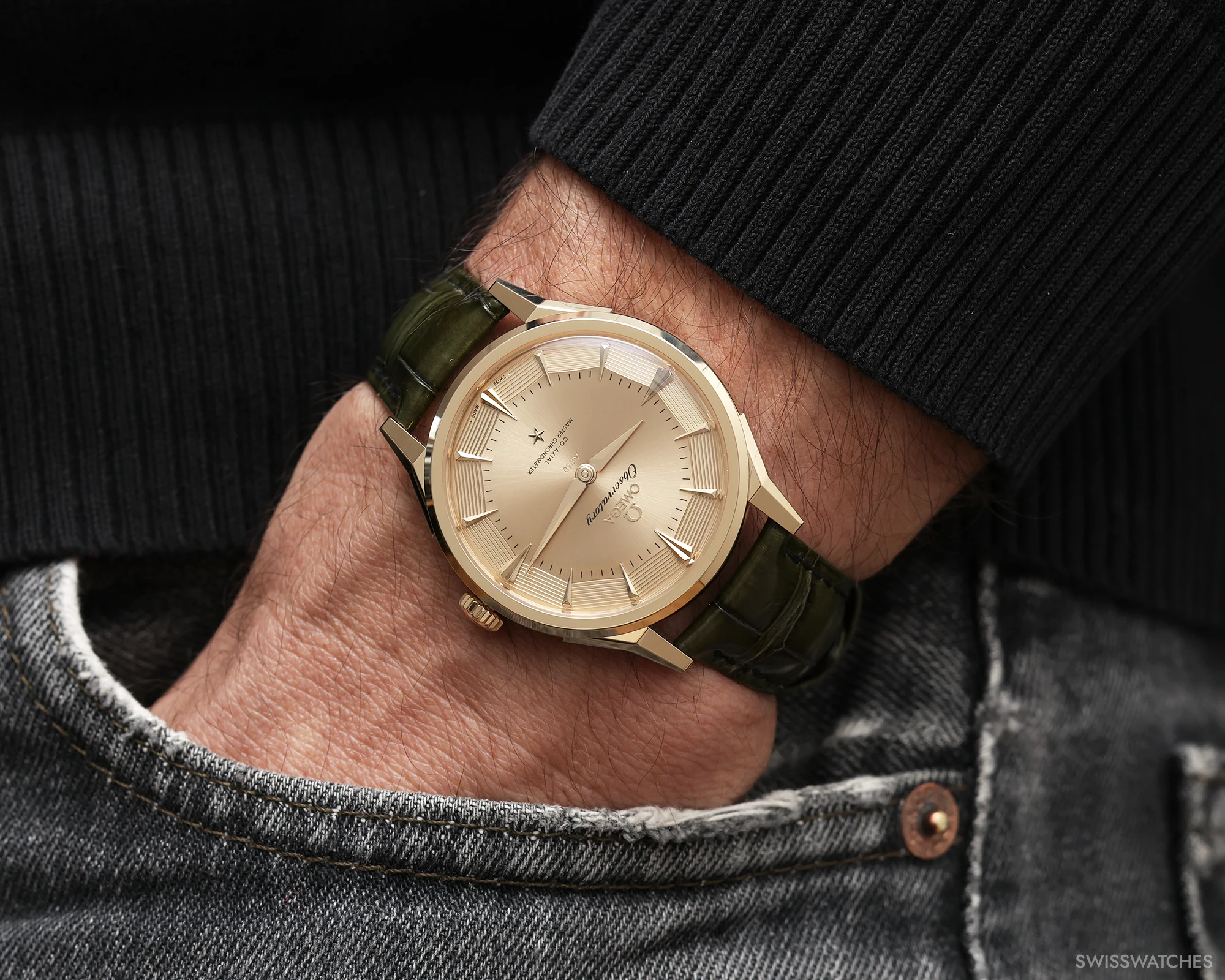
Finally, the question of pricing remains. The stainless-steel models represent the most accessible entry point, with the bi-colour version as well as the blue and green variants each priced at €10,600, followed by the model with a black dial at €11,800.
At the upper end of the range are the gold models: the Moonshine Gold version is priced at €36,700 on a leather strap and €57,200 on the gold bracelet. The Sedna Gold variant is also set at €36,700, while the Canopus white-gold model is priced at €42,700. Completing the line-up is the platinum version, which comes in at €56,000.
Also read here our article on the best gold dress watches.