Spring Drive U.F.A. Ushio 300 Diver: Grand Seiko’s most precise diver with new calibre, 300 m water resistance and a more compact case.

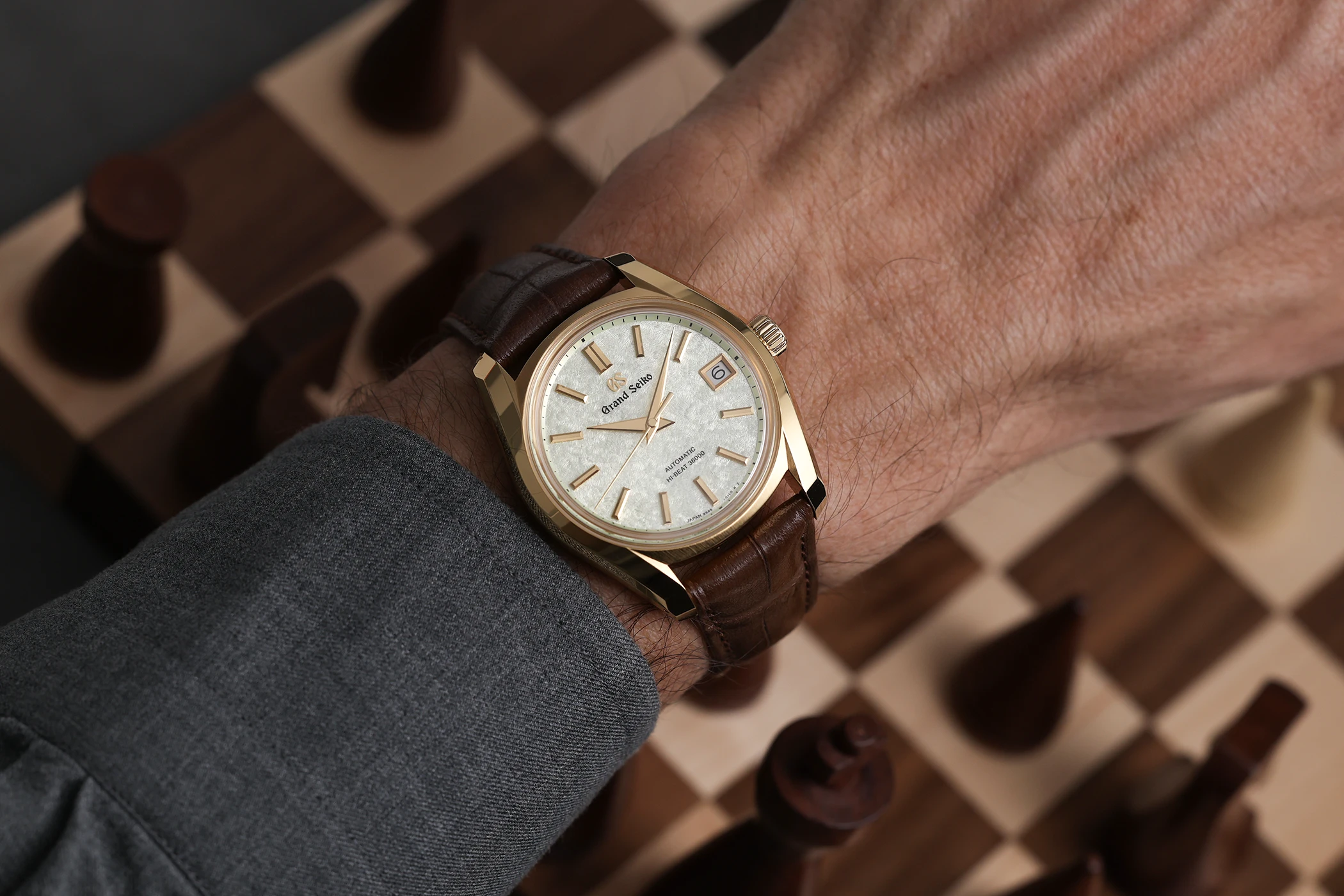
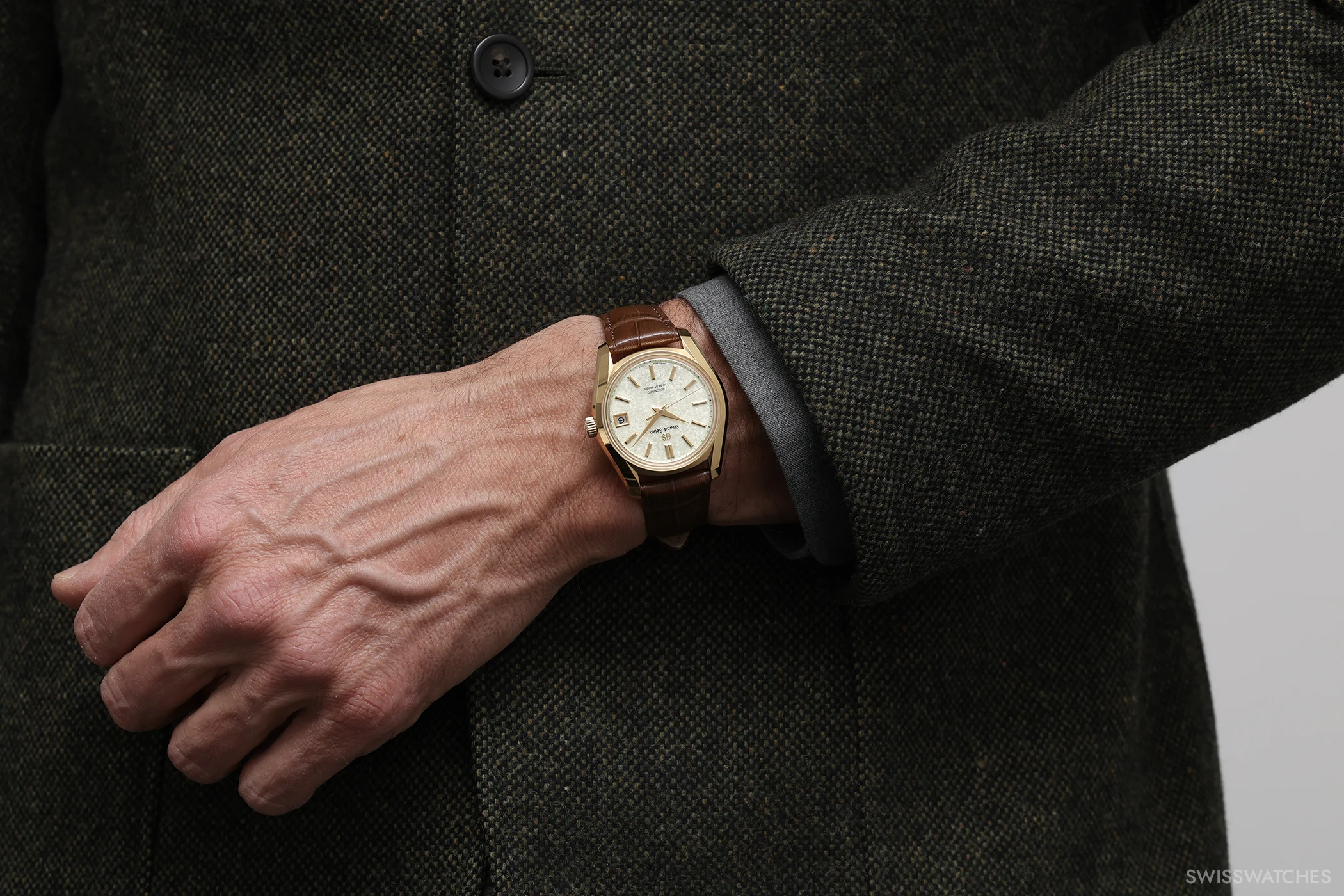
The new SBGH376 “Sakura-Wakaba” is dedicated in its design to the transition from spring to summer and is presented for the first time in a 38 mm case crafted from 18-carat yellow gold.
Grand Seiko watches are deeply rooted in Japanese aesthetics, consistently translating these principles into the design of their dials. This is equally true of the new Grand Seiko SBGH376 “Sakura-Wakaba”, unveiled at Watches and Wonders 2026. Its dial captures a fleeting moment in spring, when cherry blossoms and the delicate green of young leaves appear simultaneously on the branches. The case construction, meanwhile, draws on the Grand Seiko 62GS from 1967, the brand’s first automatic wristwatch. In the following, we take a closer look at this new release—encountering along the way a number of Japanese terms and design principles that have been incorporated into the Grand Seiko SBGH376 “Sakura-Wakaba”.
At the centre of the dial variation referred to by Grand Seiko as “Sakura-Wakaba” – a term that can be translated as “cherry blossoms and young leaves” – lies a particular moment in spring when nature fully begins to awaken: the so-called Hazakura. This phase falls between Kokuu (Grain Rain) and Rikka (The beginning of summer), the sixth and seventh of the 24 Japanese seasonal divisions (sekki). During this brief period, cherry blossoms begin to fall while, at the same time, the first fresh, delicate green leaves emerge on the branches. In Japanese aesthetics, this moment marks the transition from spring to summer.
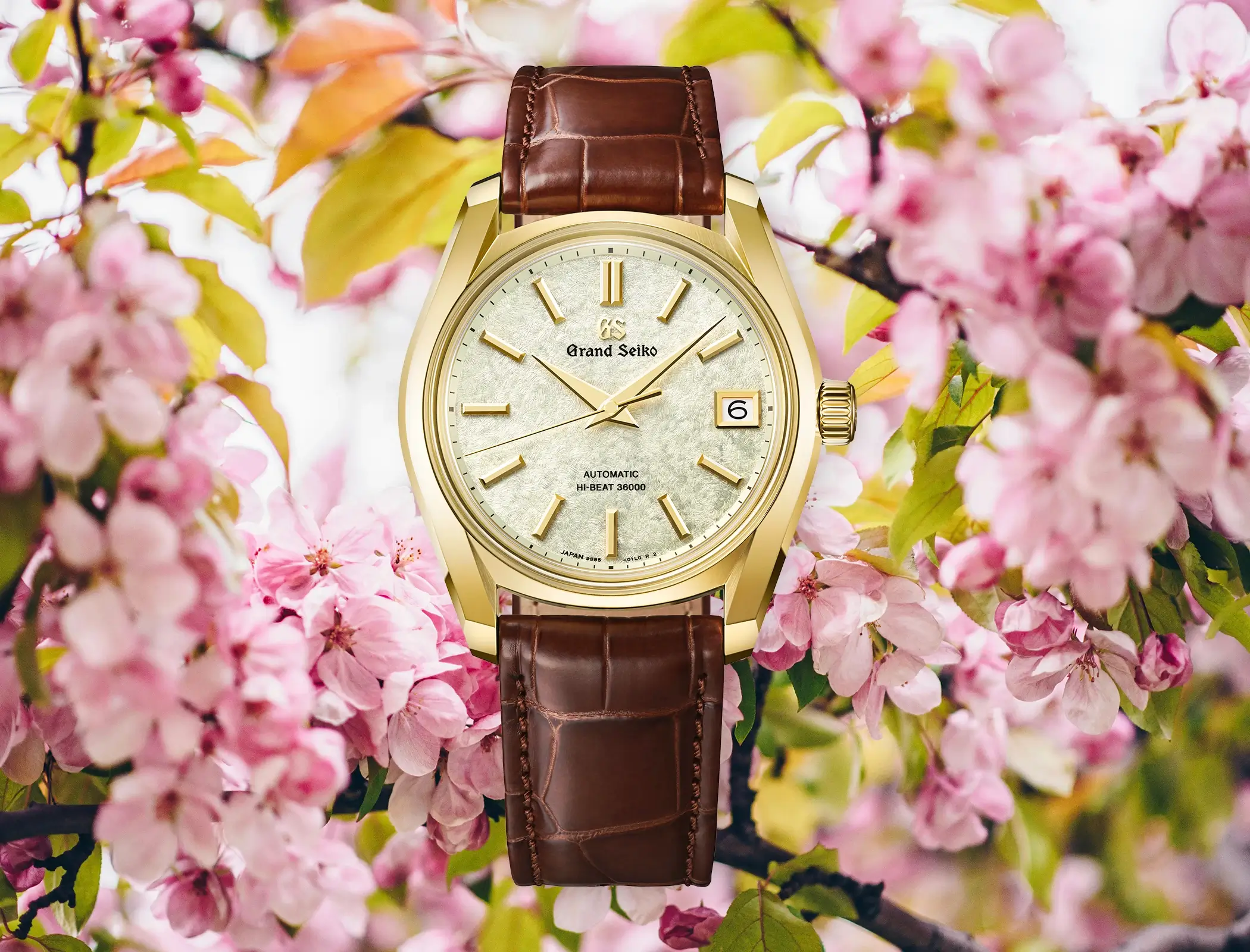
Grand Seiko captures this transitional phase of Hazakura in the “Sakura-Wakaba” dial by drawing on the Japanese design principle of mitate, in which a scene is not depicted literally but instead interpreted through colour, form, and surface texture. Perhaps the most widely recognised example of this approach is the Zen garden, where stones stand in for islands, rocks, or mountains, and raked patterns in sand or gravel evoke waves or currents—using minimal means to suggest a complete landscape in the viewer’s mind. Grand Seiko translates this technique to its dials: as recently as Watches and Wonders 2025, the brand introduced two models within the Evolution 9 Collection whose geometrically structured, crystalline surfaces evoke the frost-covered trees of the Kirigamine Highlands during winter.
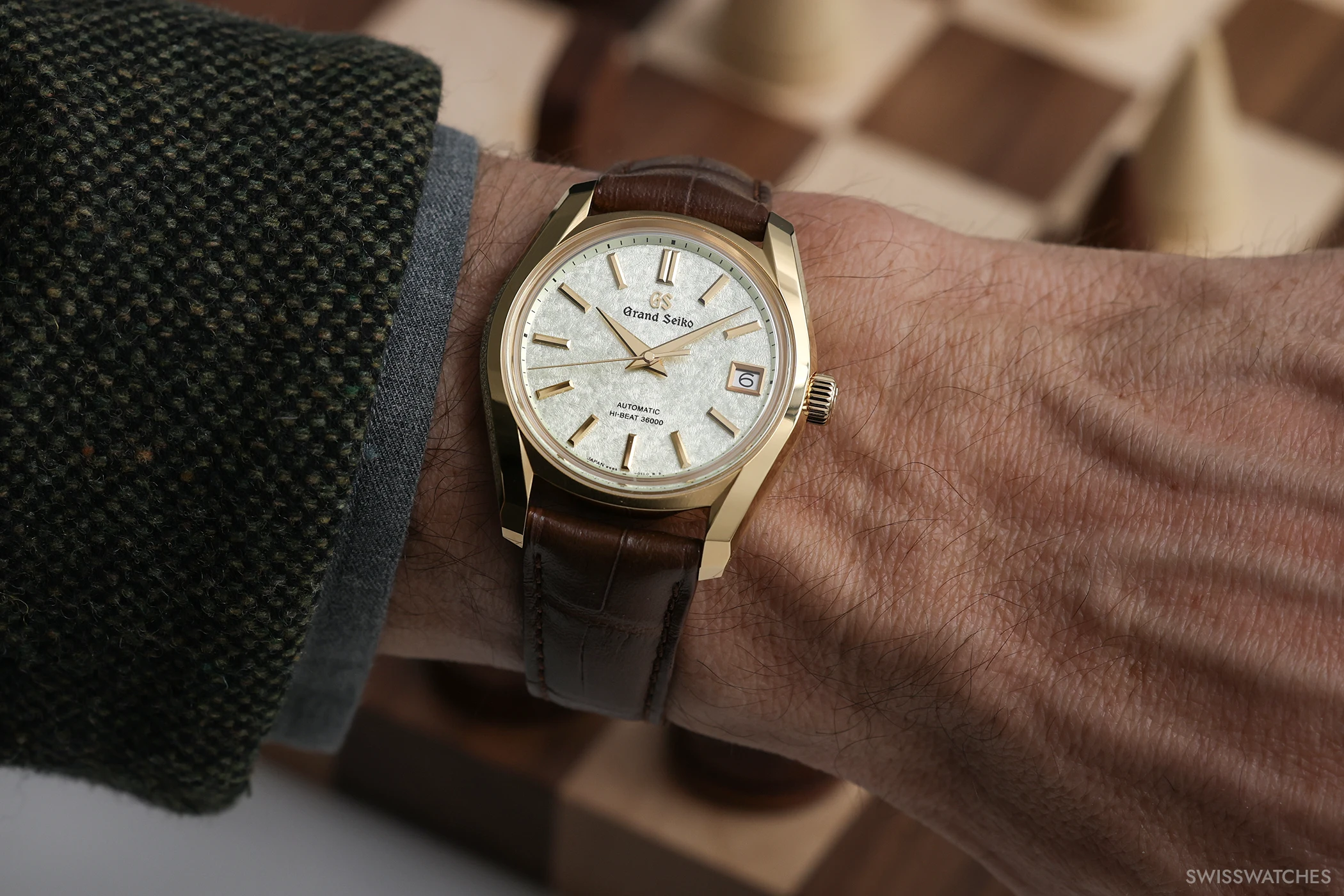
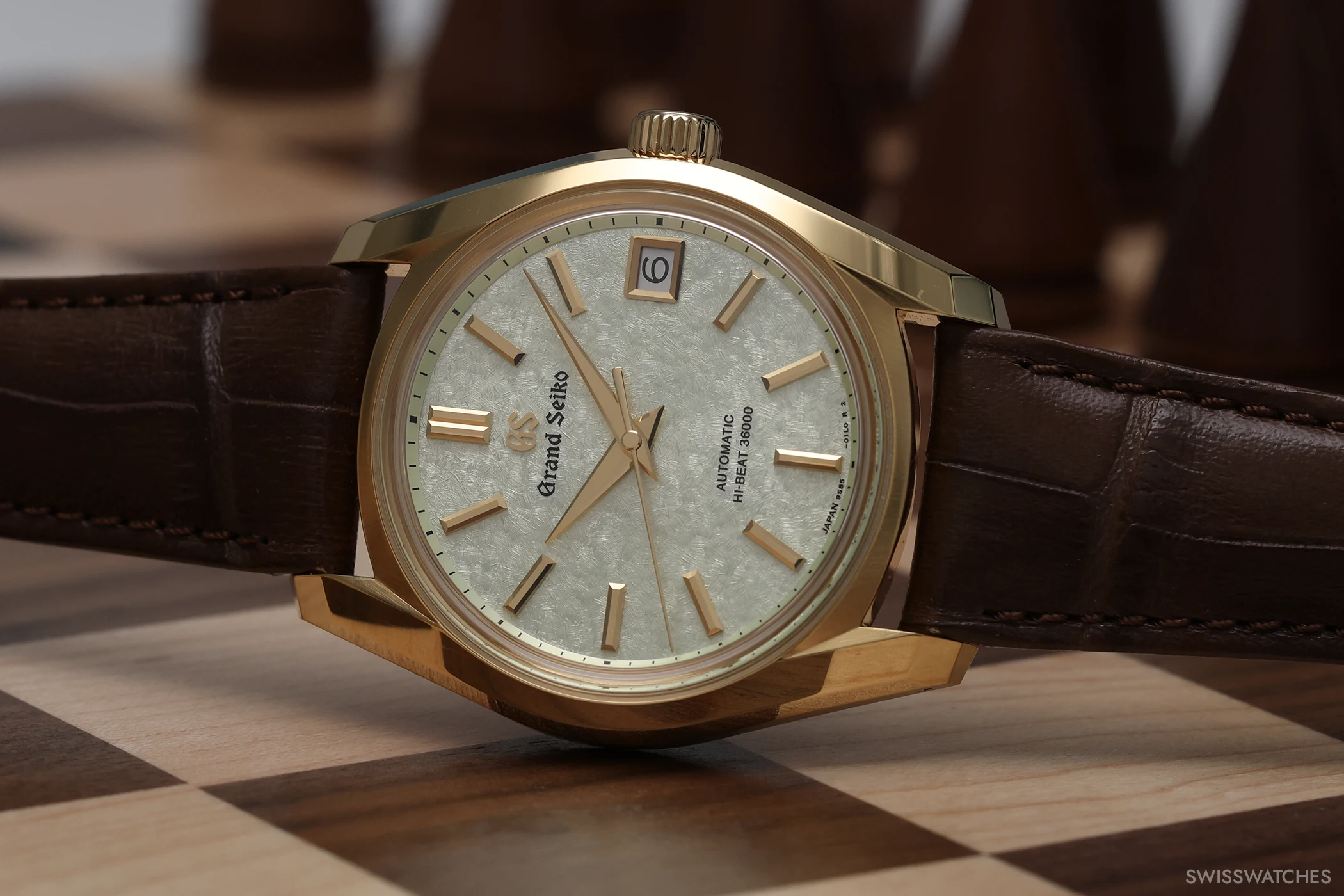
In the case of the new Grand Seiko SBGH376 “Sakura-Wakaba”, the dial is stamped with a pressure of up to 200 tonnes to create a texture inspired—both in colour and surface structure—by the transitional Hazakura period, when pink cherry blossoms and fresh green leaves appear simultaneously. The result is a light, golden-green dial with a subtle shimmer, framed by a matching green chapter ring. Across this dial, one finds elements that all adhere to the principles of the “Grammar of Design”, a framework formulated in 1962 by Taro Tanaka with the aim of establishing stricter manufacturing standards and a coherent design language—ultimately enabling Seiko to reach the quality level of Swiss watchmakers.
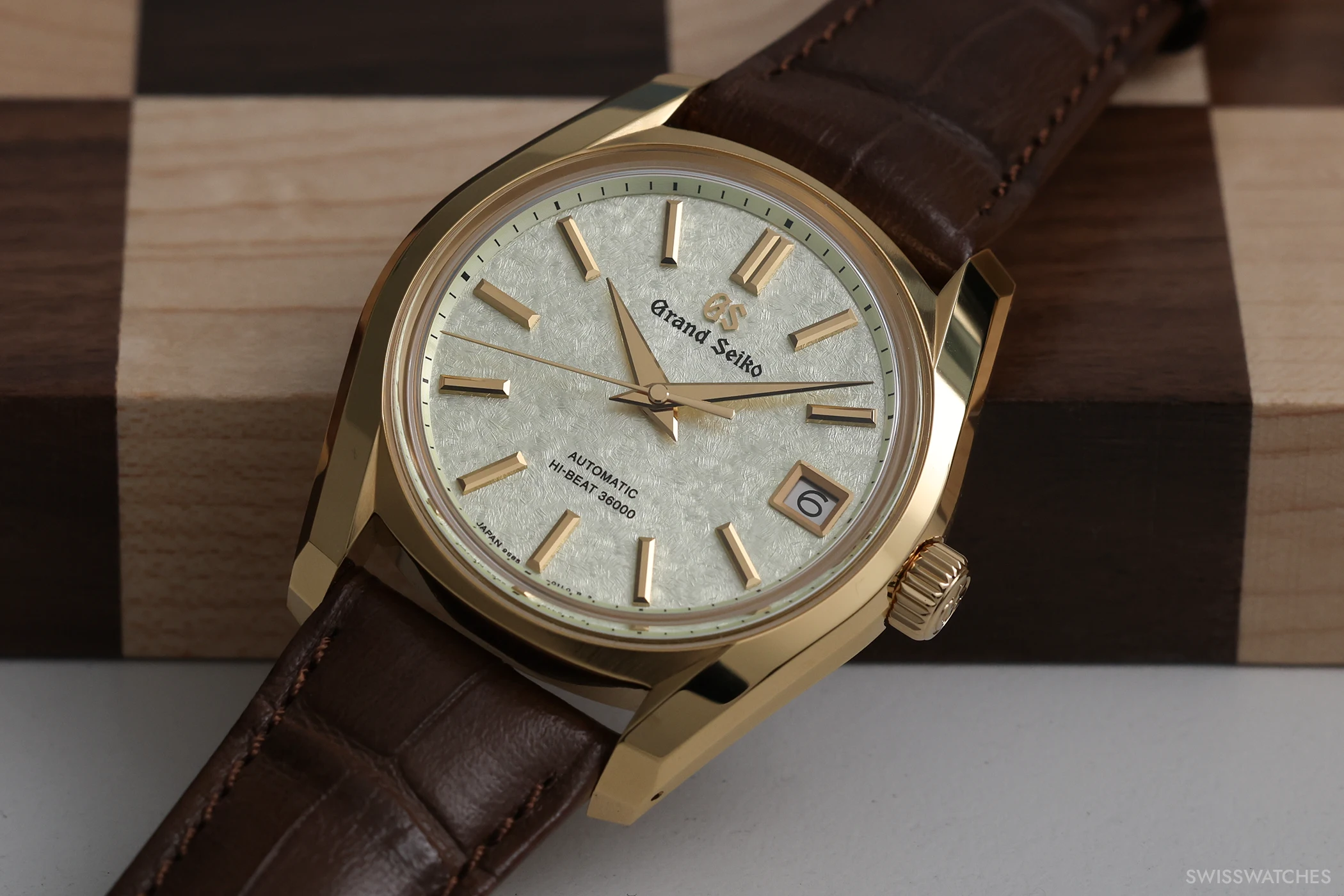
This design philosophy defined five core principles that continue to shape Grand Seiko’s aesthetic to this day, two of which are particularly central. First, all surfaces and angles—from the case to the dial, hands, and indices—should be flat and geometrically precise in order to reflect light as effectively as possible. Second, the watch should present no visual distortion from any viewing angle; consequently, cases and dials are finished to a mirror polish.
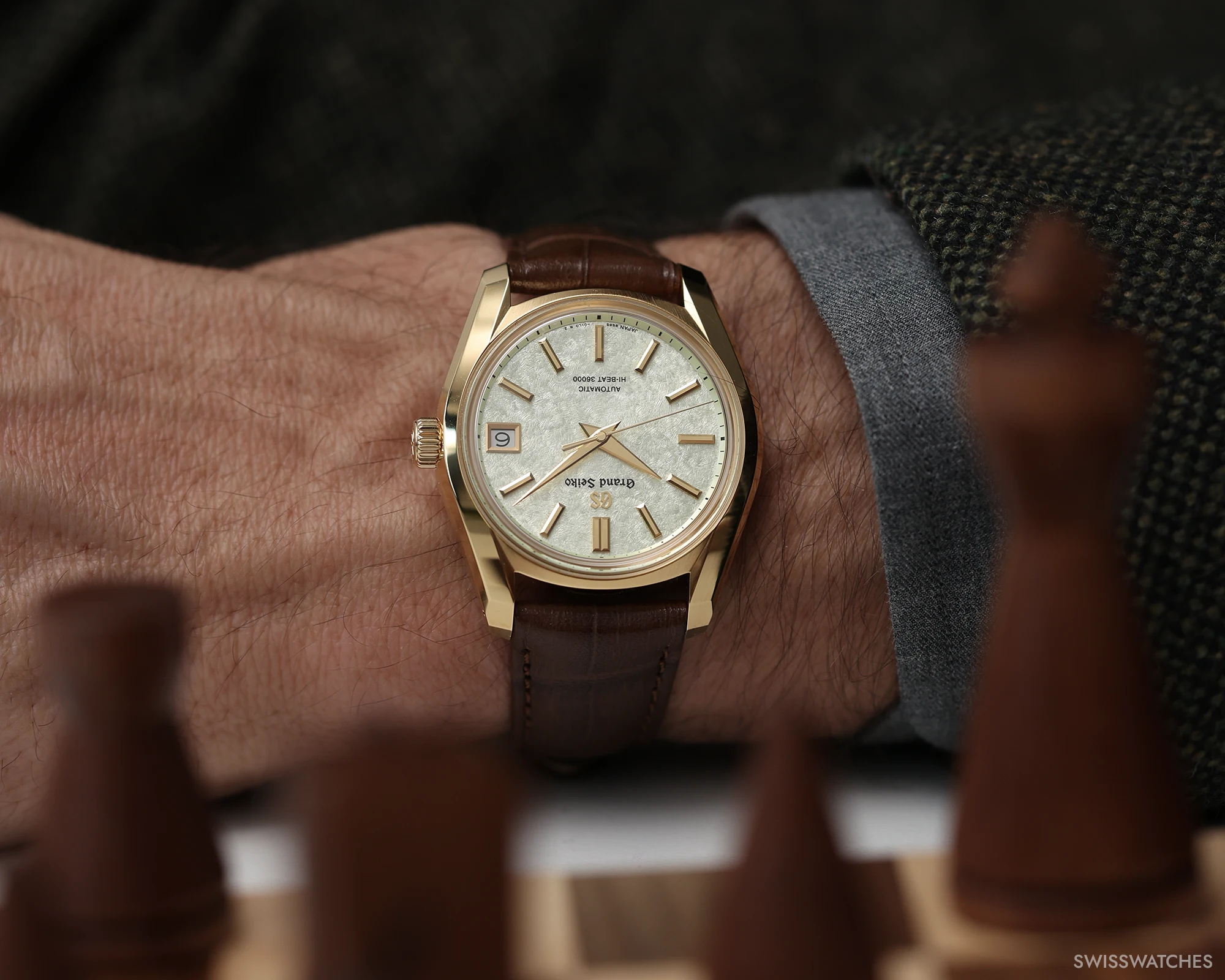
Following this framework, the three key elements of the dial are executed accordingly. Most prominent are the deliberately wide, gold-toned, faceted baton indices. In line with the “Grammar of Design”, they feature mirror-polished upper surfaces as well as sharply defined edges and bevels, achieved through Zaratsu polishing. Secondly, the hands—also rendered in gold—take the form of classic dauphine hands. They are defined by a central polished ridge that separates two angled planes, creating their characteristic geometry while ensuring that at least one surface always reflects light. Thirdly, a date window is positioned at 3 o’clock, integrated harmoniously into the dial and likewise executed in gold to maintain visual coherence with the hands and indices.
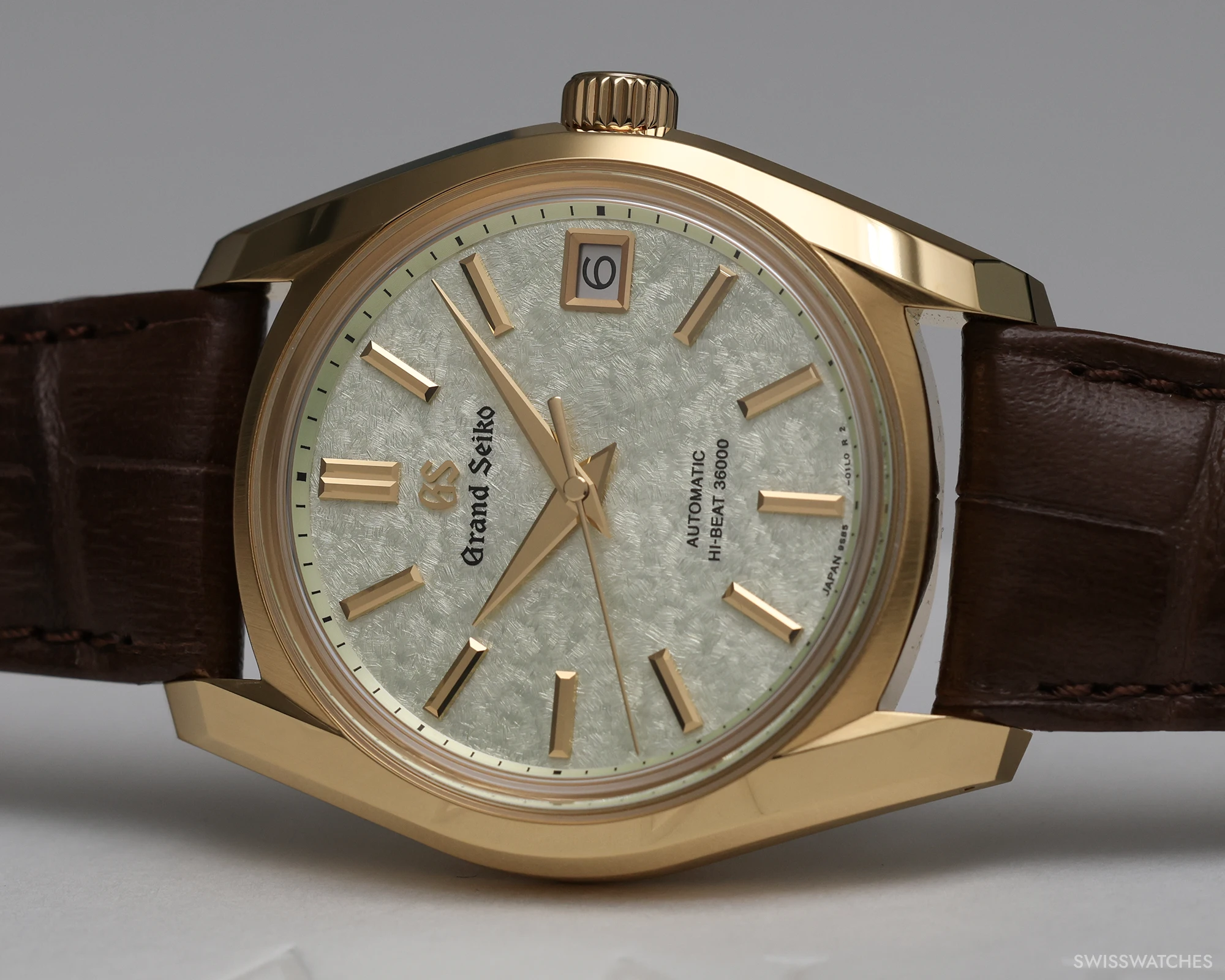
In terms of its construction, the new Grand Seiko SBGH376 “Sakura-Wakaba” draws on the aesthetic heritage of the Grand Seiko 62GS from 1967—Grand Seiko’s first automatic wristwatch—whose design differs in several respects from that of contemporary timepieces. The sapphire crystal is mounted directly onto the case, eliminating the need for a separate bezel. This construction not only contributes to a slimmer overall profile but also allows light to reach the dial unobstructed, enhancing the visibility of both the dial and its components. Another defining feature lies in the case itself: the lugs are long and broad, extending clearly from the case body.
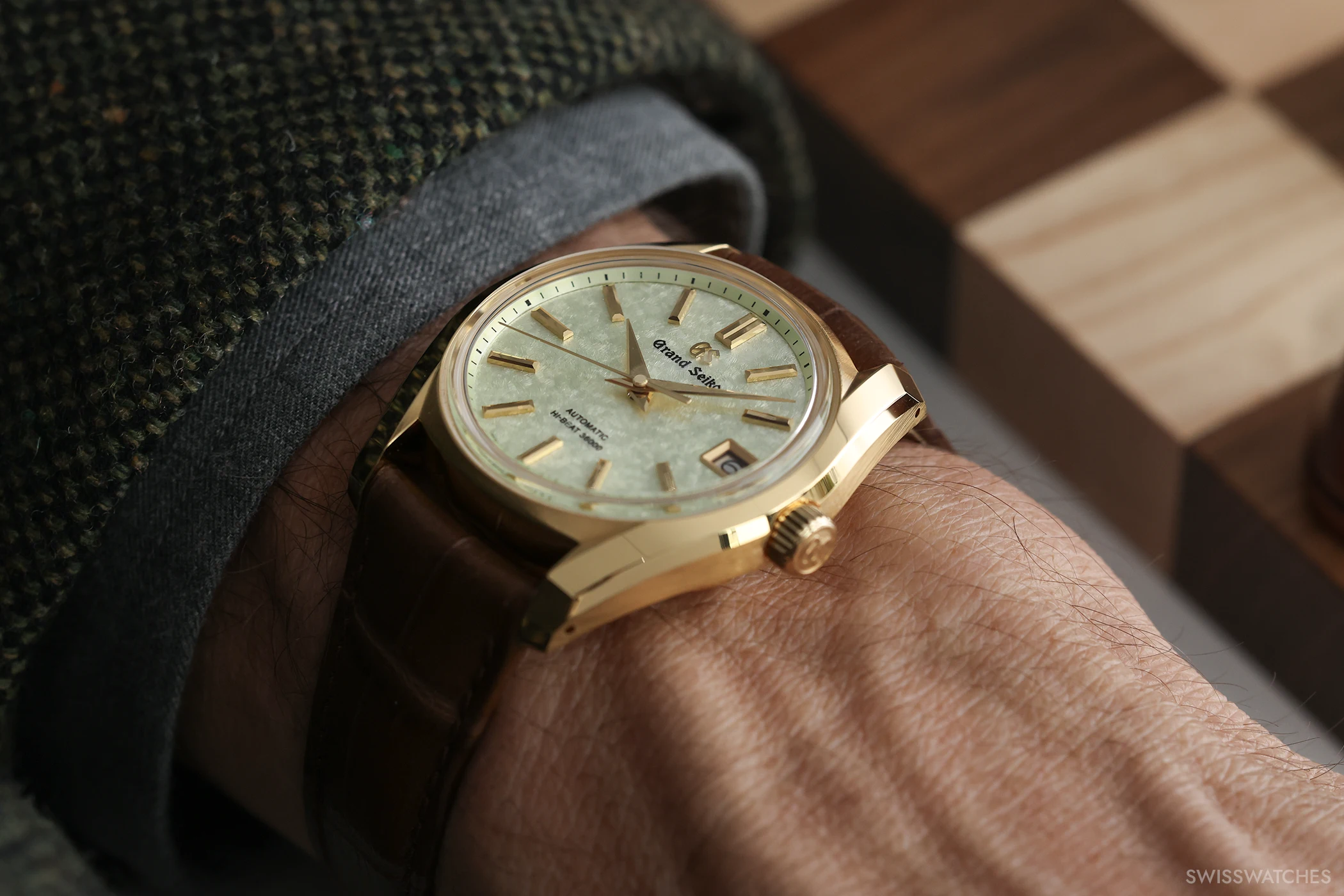
The new Grand Seiko SBGH376 “Sakura-Wakaba” adopts this design language and is realised for the first time in a 38 mm case crafted from 18-carat yellow gold. Executed in accordance with the “Grammar of Design”, the Zaratsu polishing technique is also applied to the case, most notably in the mirror-polished surfaces contrasted by brushed case flanks. The watch has a case height of 12.9 mm and offers water resistance of 10 bar (100 metres).
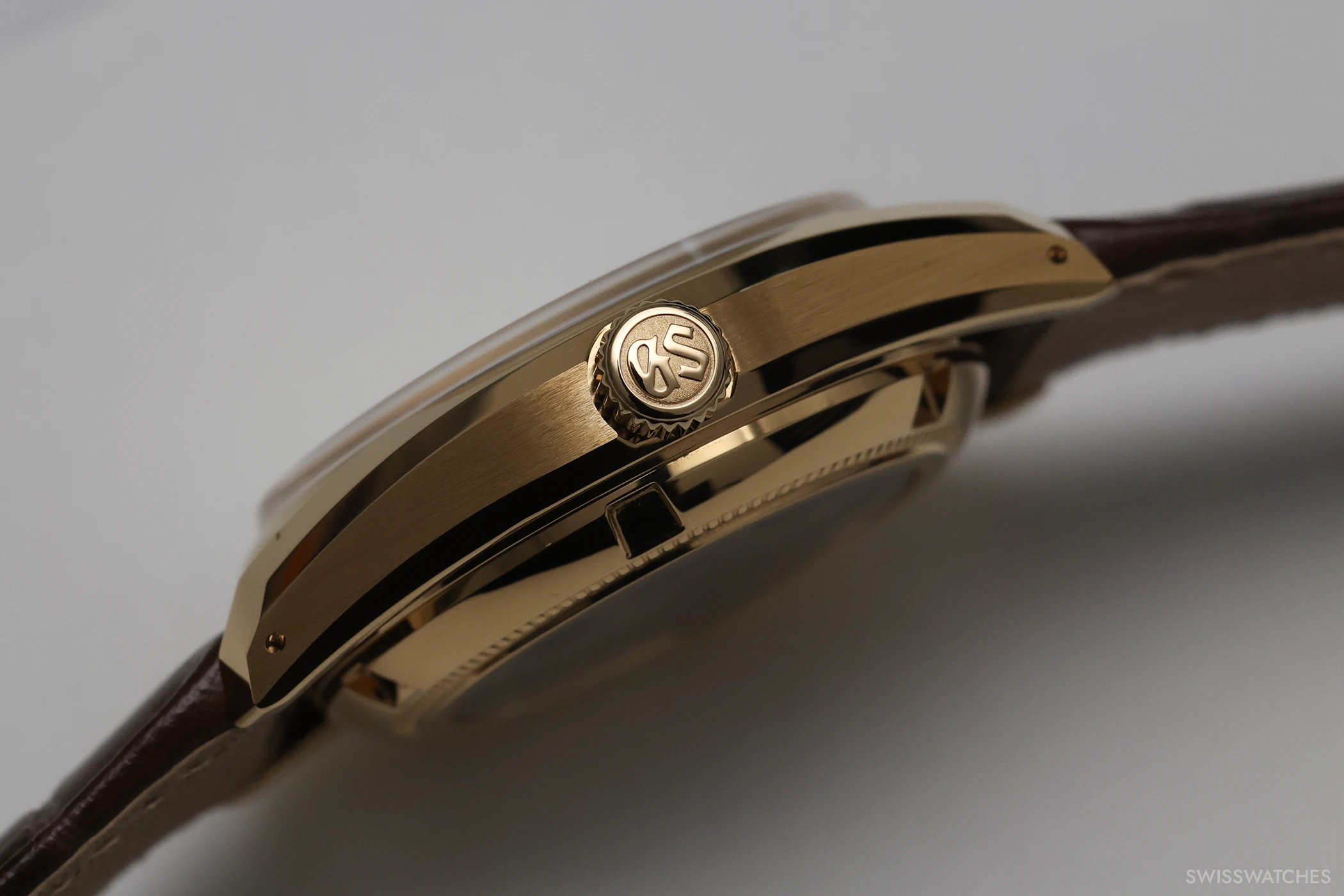
Inside the new Grand Seiko SBGH376 “Sakura-Wakaba” operates the automatic Hi-Beat calibre 9S85, manufactured at the Grand Seiko Studio Shizukuishi. The movement measures 28.4 mm in diameter and 5.9 mm in height. It runs at a frequency of 36,000 vibrations per hour—equivalent to 10 beats per second—thereby achieving a daily rate accuracy of +5 to −3 seconds. The power reserve is approximately 55 hours.
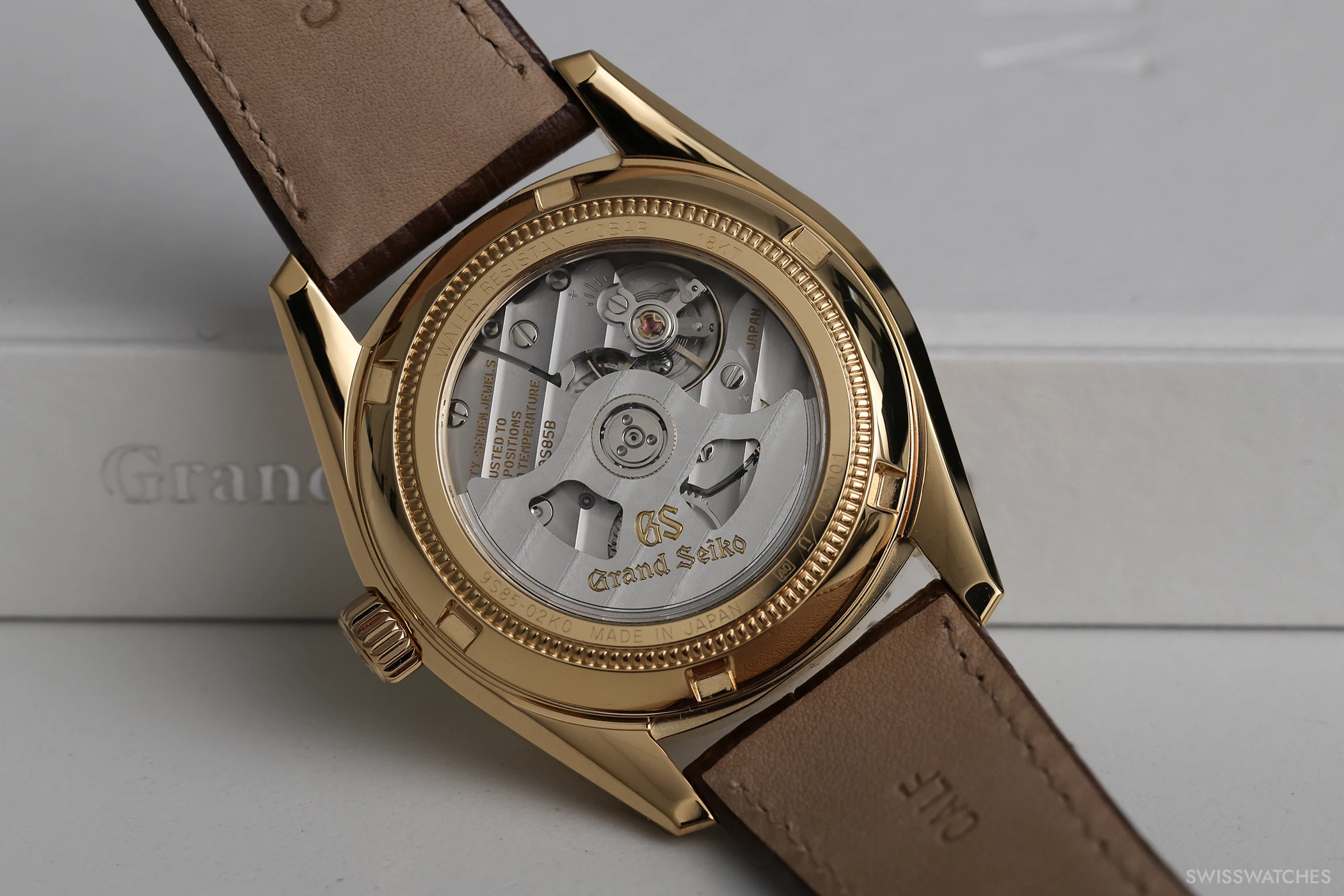
To achieve these performance values, Grand Seiko employs its proprietary Spron alloys for both the mainspring and hairspring, precision-machined gear trains, and MEMS technology for the production of the escape wheel and pallet fork. This micro-electromechanical manufacturing process allows for lightweight, highly precise components with minimal tolerances. Finally, the movement, including the winding rotor, is visible through the screw-down sapphire case back.
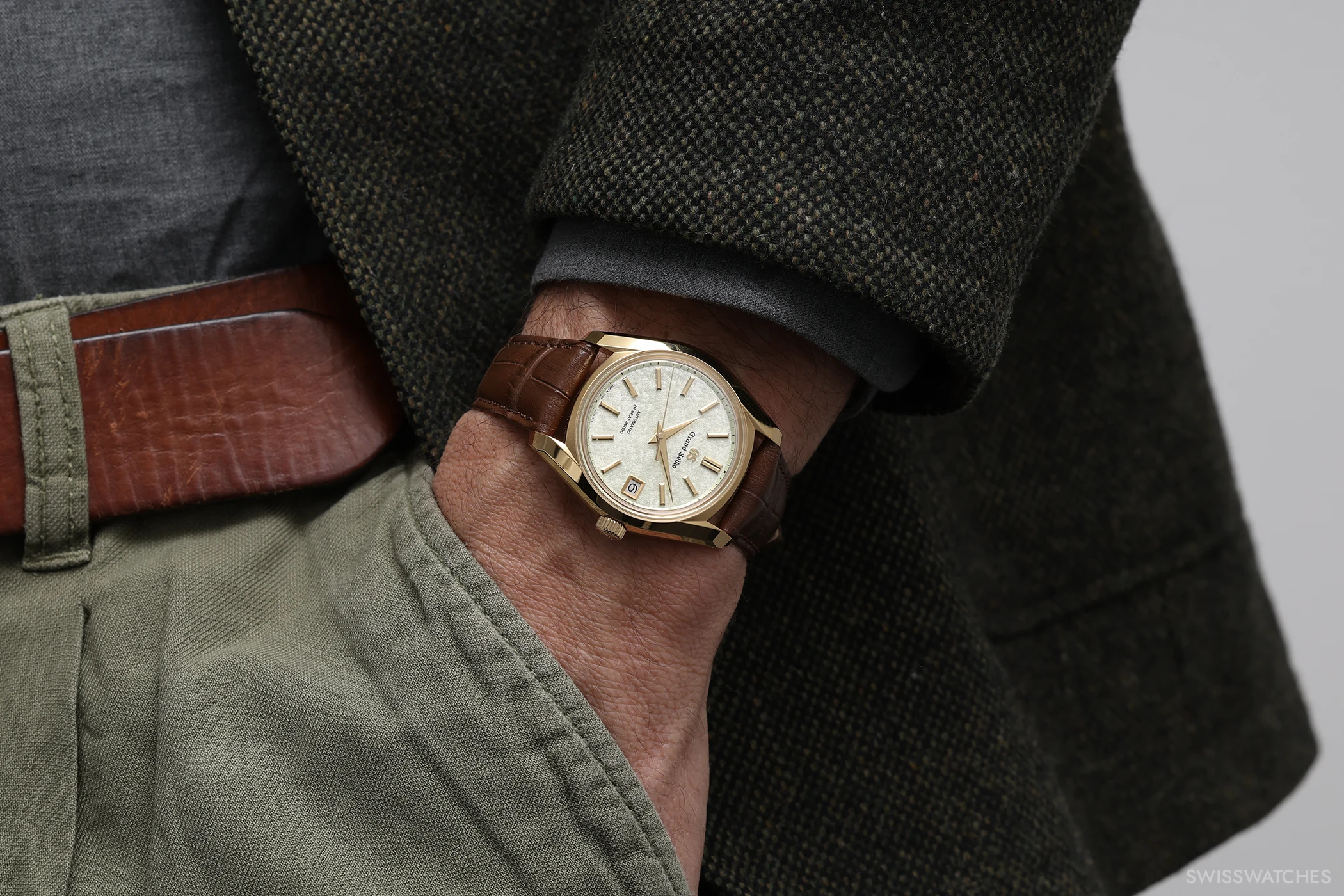
The new Grand Seiko SBGH376 “Sakura-Wakaba” will be available from July 2026 via Grand Seiko boutiques and selected retailers worldwide. It is presented on a brown crocodile leather strap with a pin buckle in 18-carat yellow gold. The price in Europe is €33,500.