Watches in Space: From Gagarin to the ISS, discover the most important mechanical wristwatches in space history and their real mission use.

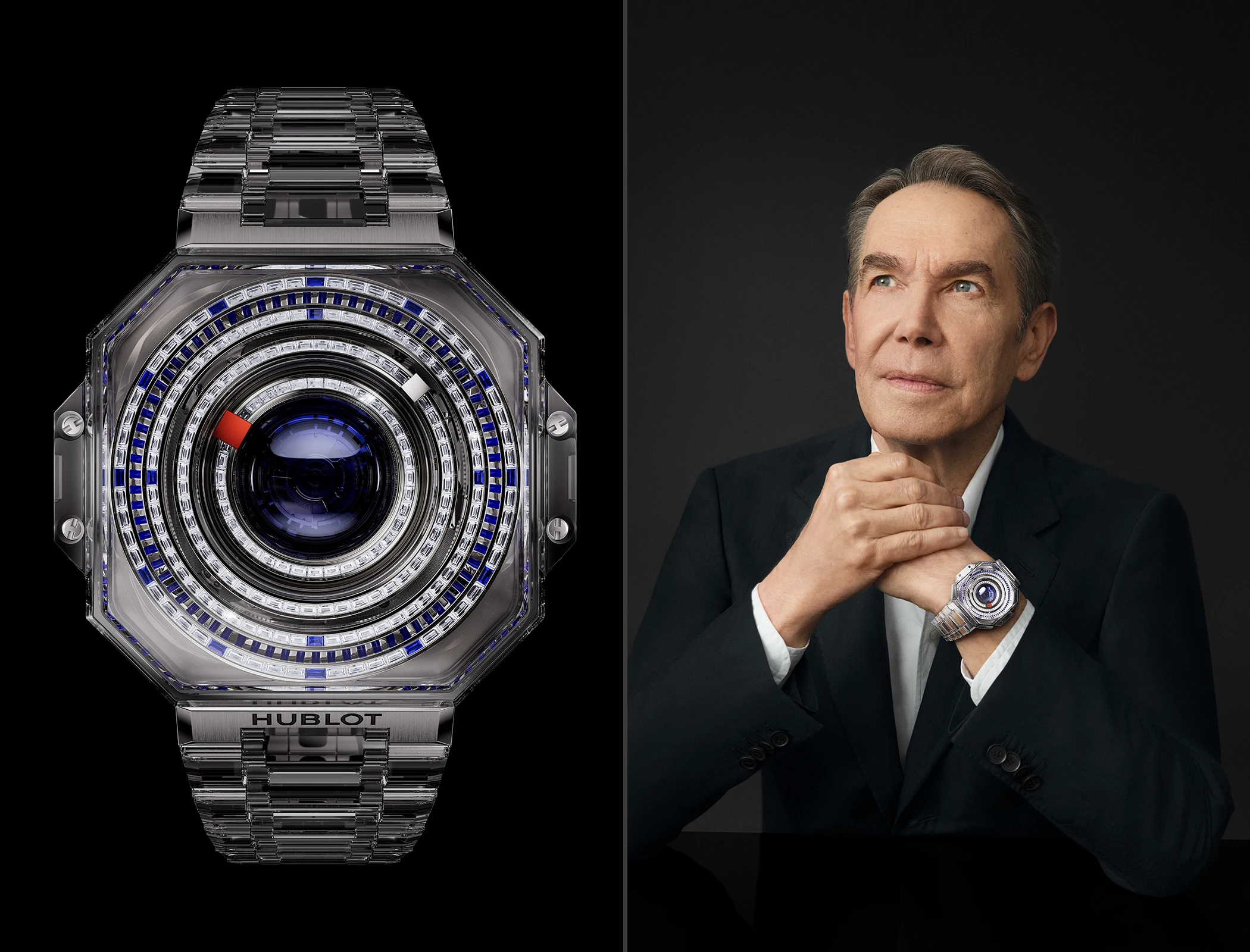
Hublot’s Masterpiece collection serves as a platform for the brand to explore technical concepts beyond its regular model lines and put them into practice in highly limited manufacture pieces. Most recently, Hublot announced a partnership with American pop artist Jeff Koons, who is perhaps best known for his oversized balloon sculptures. His work is often characterised by highly polished surfaces, intense colours and the transformation of familiar forms. Hublot now draws on these design elements in the new MP-14 Origin by Jeff Koons, combining them with the manufacture’s first central automatic tourbillon and an unusually constructed time display comprising four rings. Here is a closer look at the new timepiece.
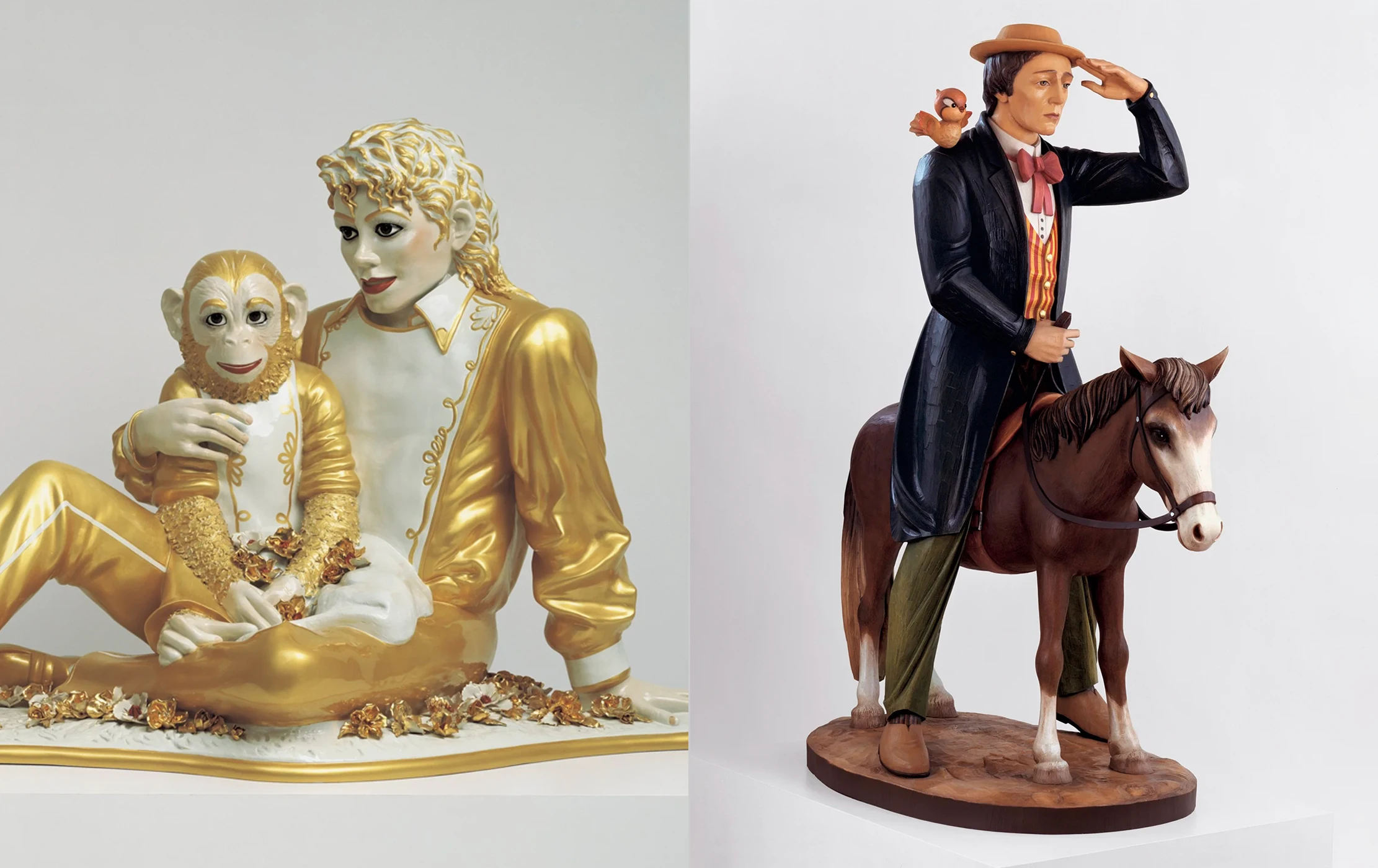
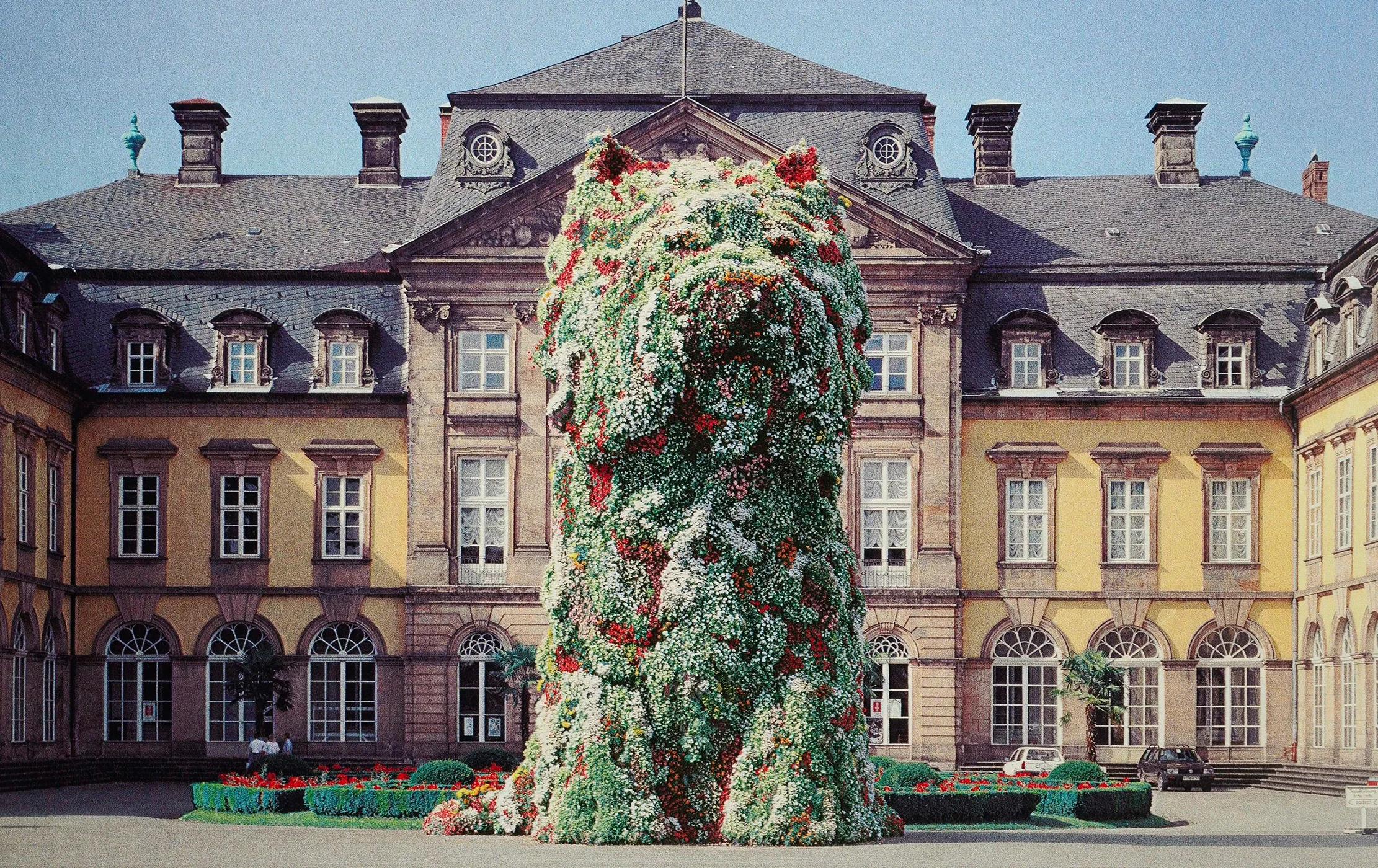
Born on 21 January 1955 in York, Pennsylvania, Jeff Koons has built an artistic oeuvre characterised by series and works often executed on a monumental scale and with highly polished surfaces. In the 1980s, he created, among other works, the Banality series (1988), which parodied everyday life and popular culture through pieces such as Michael Jackson and Bubbles and Buster Keaton. In 1992, Koons also broke new ground with the monumental floral sculpture Puppy, which was first exhibited in Bad Arolsen.
Credit © Douglas M. Parker Studios and Jeff Koons / Credit © Jeff Koons
Credit © Jeff Koons
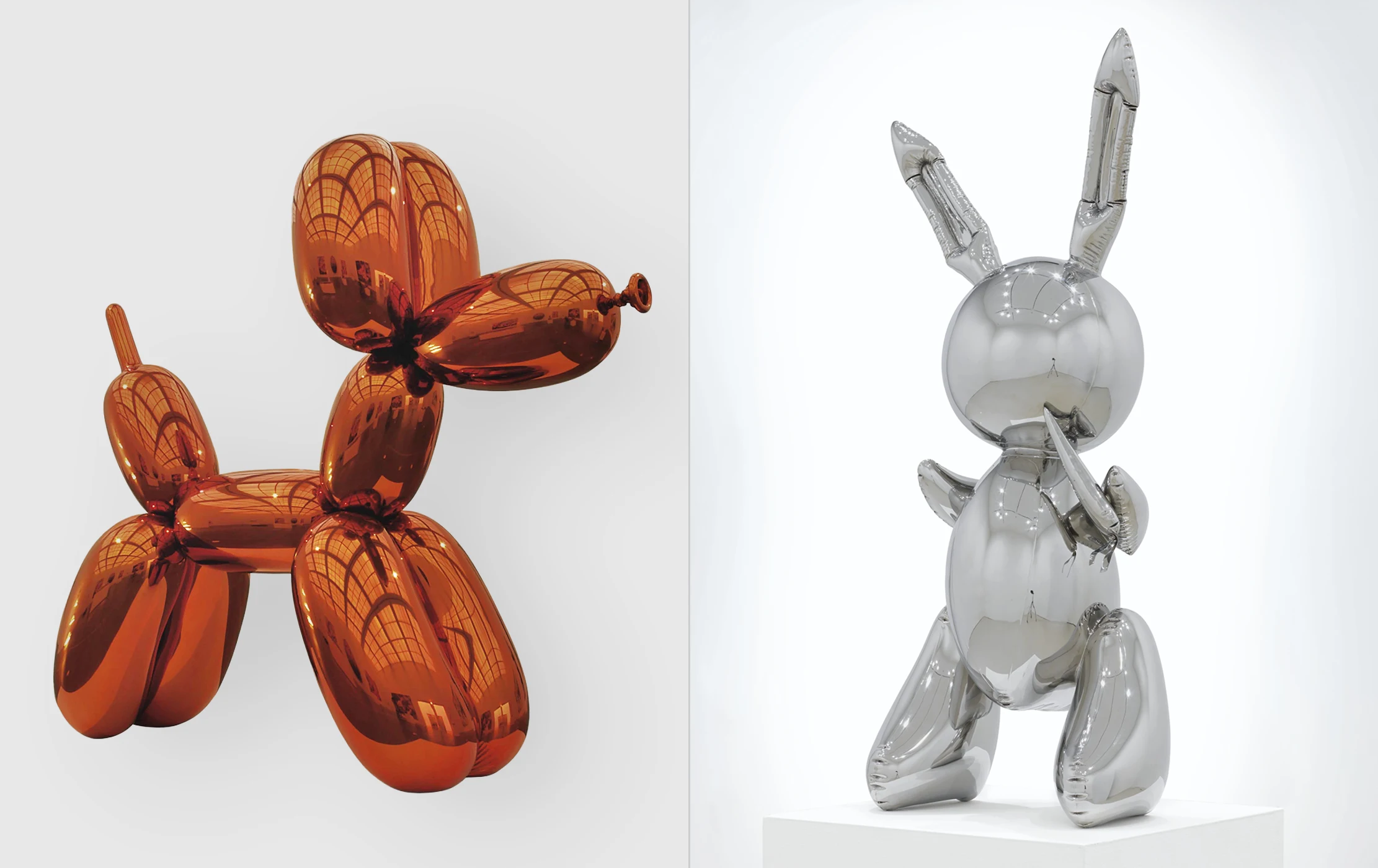
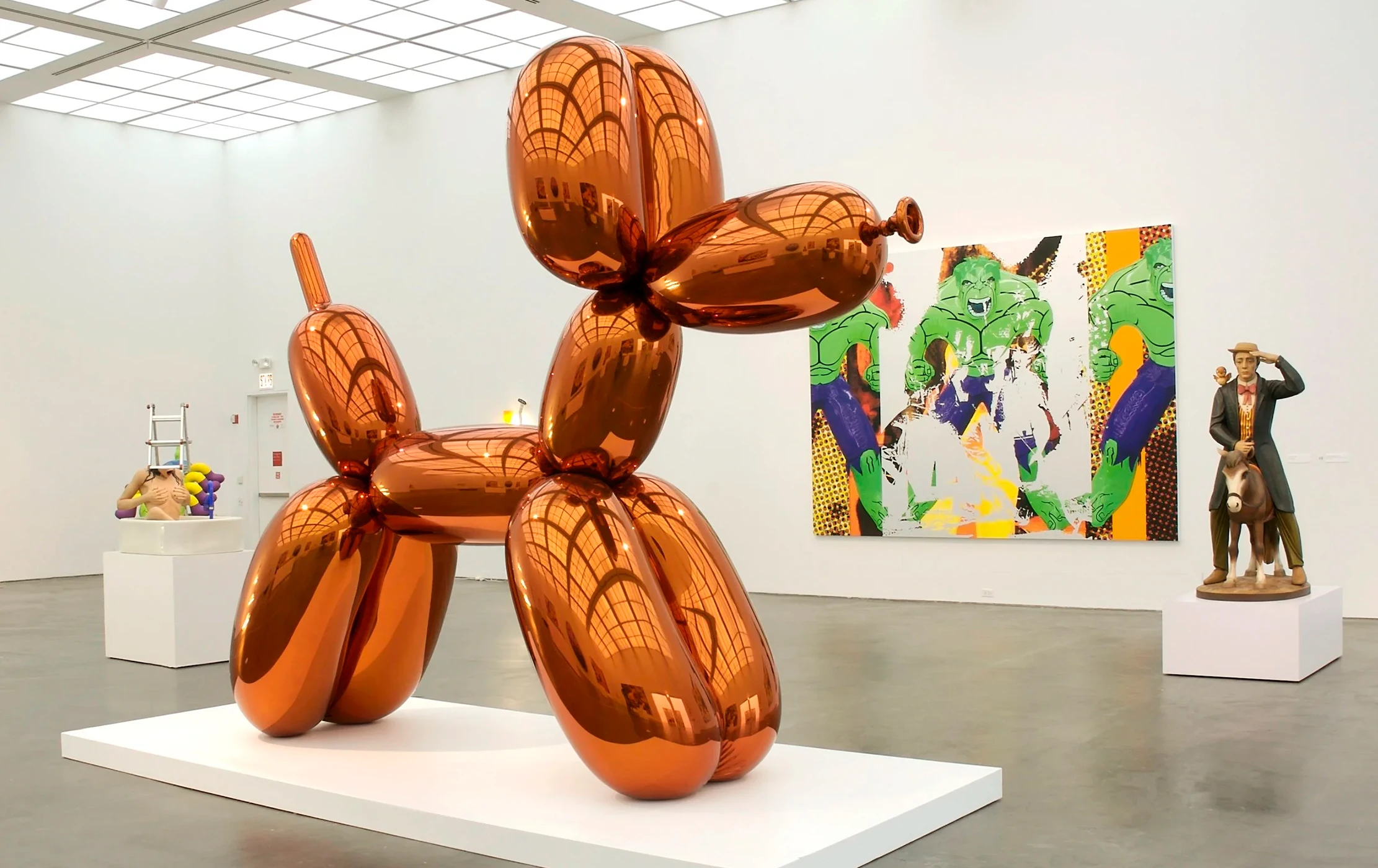
From 1994 onwards, Koons created what would become some of his best-known works as part of the Celebration series, which included oversized stainless-steel sculptures resembling balloon animals. Among them was Balloon Dog (1994–2000), a work that transformed the simple form of a party balloon into a monumental sculpture. By the 2010s at the latest, Koons was also setting records on the art market: Balloon Dog (Orange) sold for $58.405 million at Christie’s New York in 2013, while Rabbit (stainless steel, 1986) fetched $91.075 million at auction in 2019 – each setting a record price for a work by a living artist at the time.
Credit © Christies / Credit © Christies / Credit © Jeff Koons
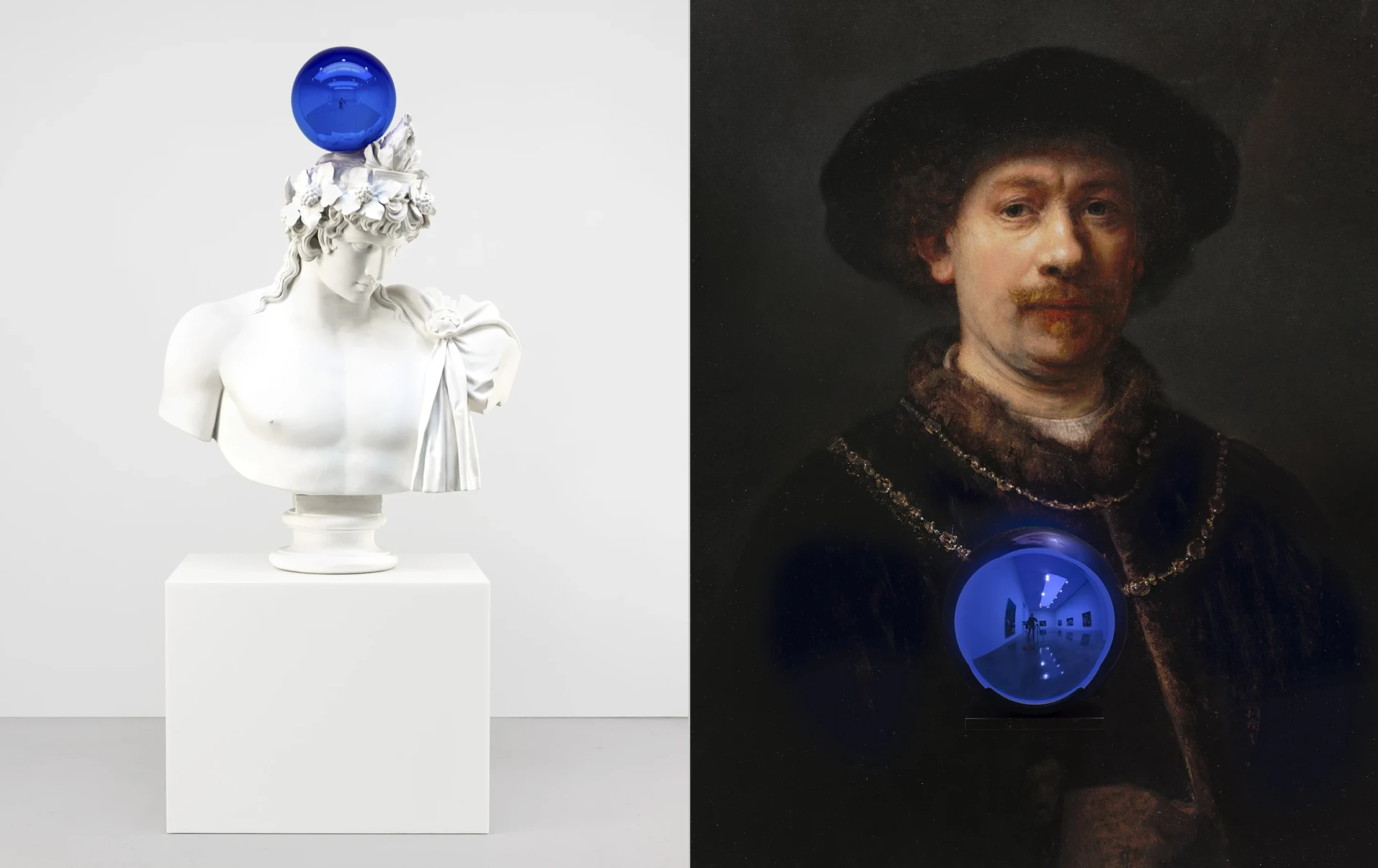
From 2013 onwards, Koons introduced the characteristic blue glass spheres of his Gazing Ball works, which would later influence the design of the MP-14 Origin. The Gazing Ball Sculptures, begun in 2013, combined white plaster sculptures with blue glass spheres. These were followed by the Gazing Ball Paintings, created predominantly between 2014 and 2015, which paired reproductions of Old Master paintings with the same distinctive blue glass spheres. These works inspired the blue sapphire dome above the MP-14 Origin’s central tourbillon, which we will now examine in greater detail.
Credit © Jeff Koons and Tom Powel Imaging
Hublot’s Masterpiece collection, which followed the Big Bang, King Power and Classic Fusion lines, was launched in 2011 as a result of the brand’s growing focus on grand complications. Jean-Claude Biver, Hublot’s CEO at the time, described the collection as the next step towards “more watchmaking, more expertise, more innovation”. From then on, 30 employees dedicated exclusively to grand complications were tasked with turning this ambition into reality.
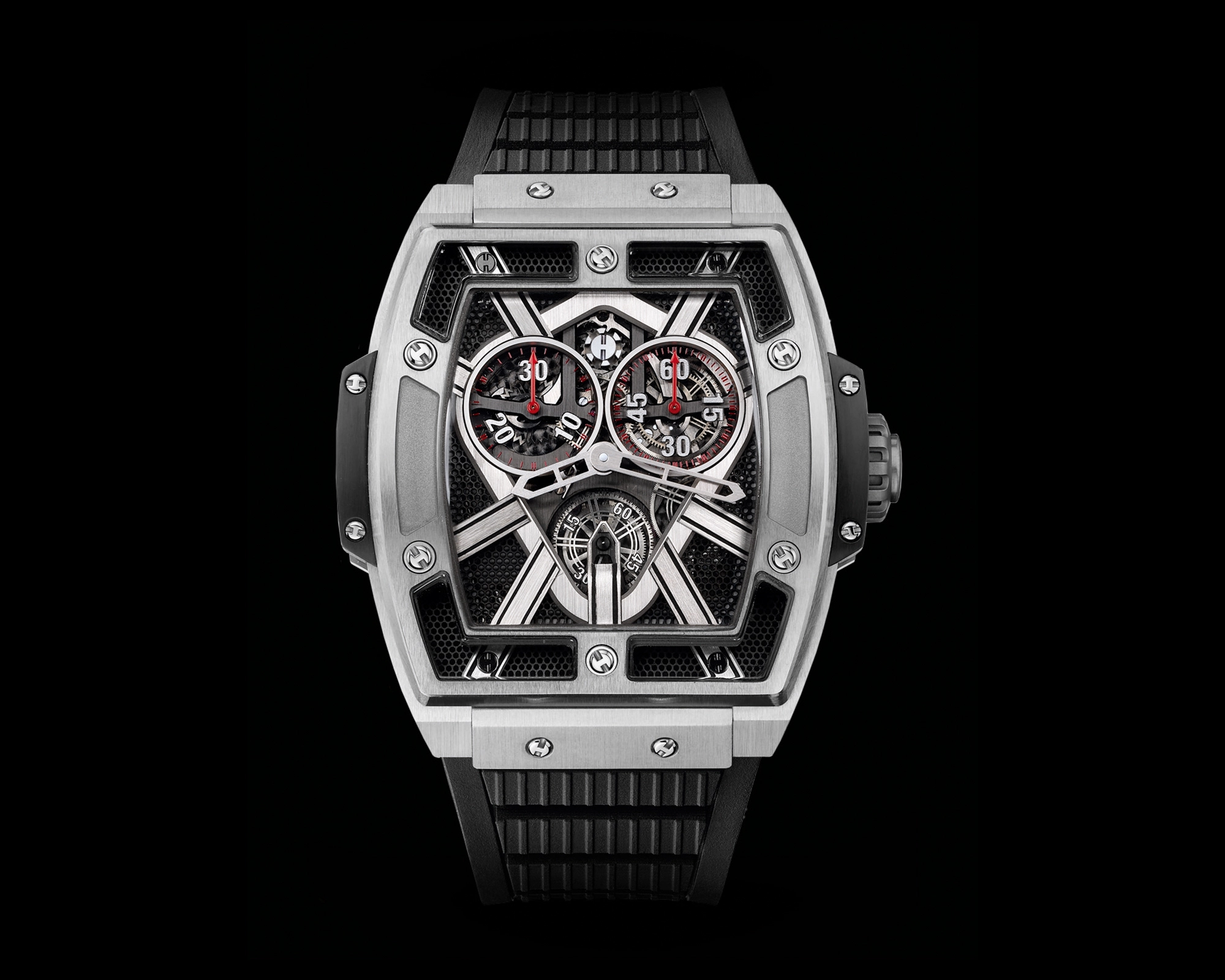
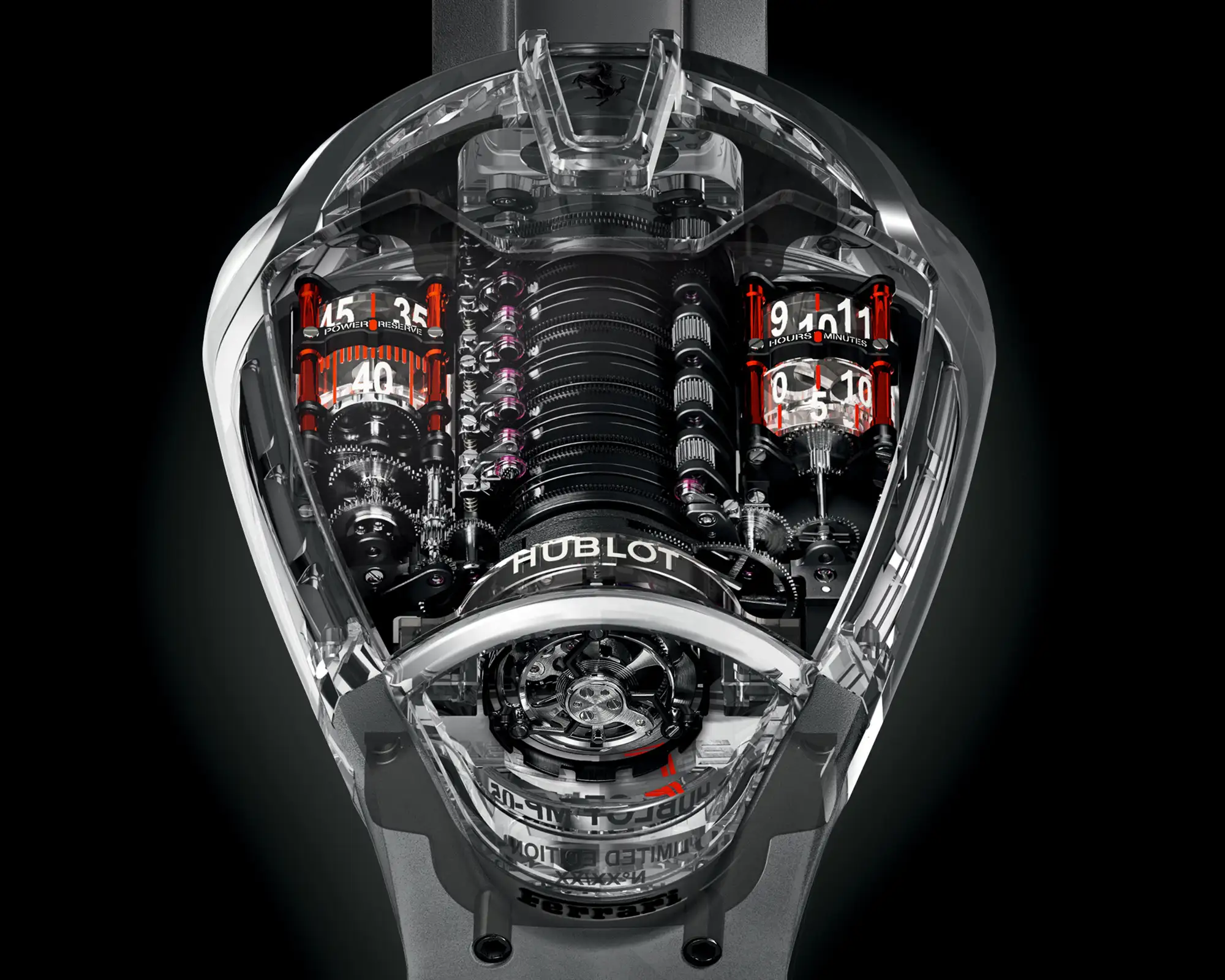
This resulted in timepieces such as the MP-01 of 2011, whose HUB5100 monopusher column-wheel chronograph calibre was the first manufacture movement to be developed entirely in-house and produced by Hublot’s High Complications department, and the MP-05 LaFerrari of 2013. With its vertically arranged tourbillon and 11 mainspring barrels, the latter offered an impressive power reserve of 50 days (!) and set a world record at the time.
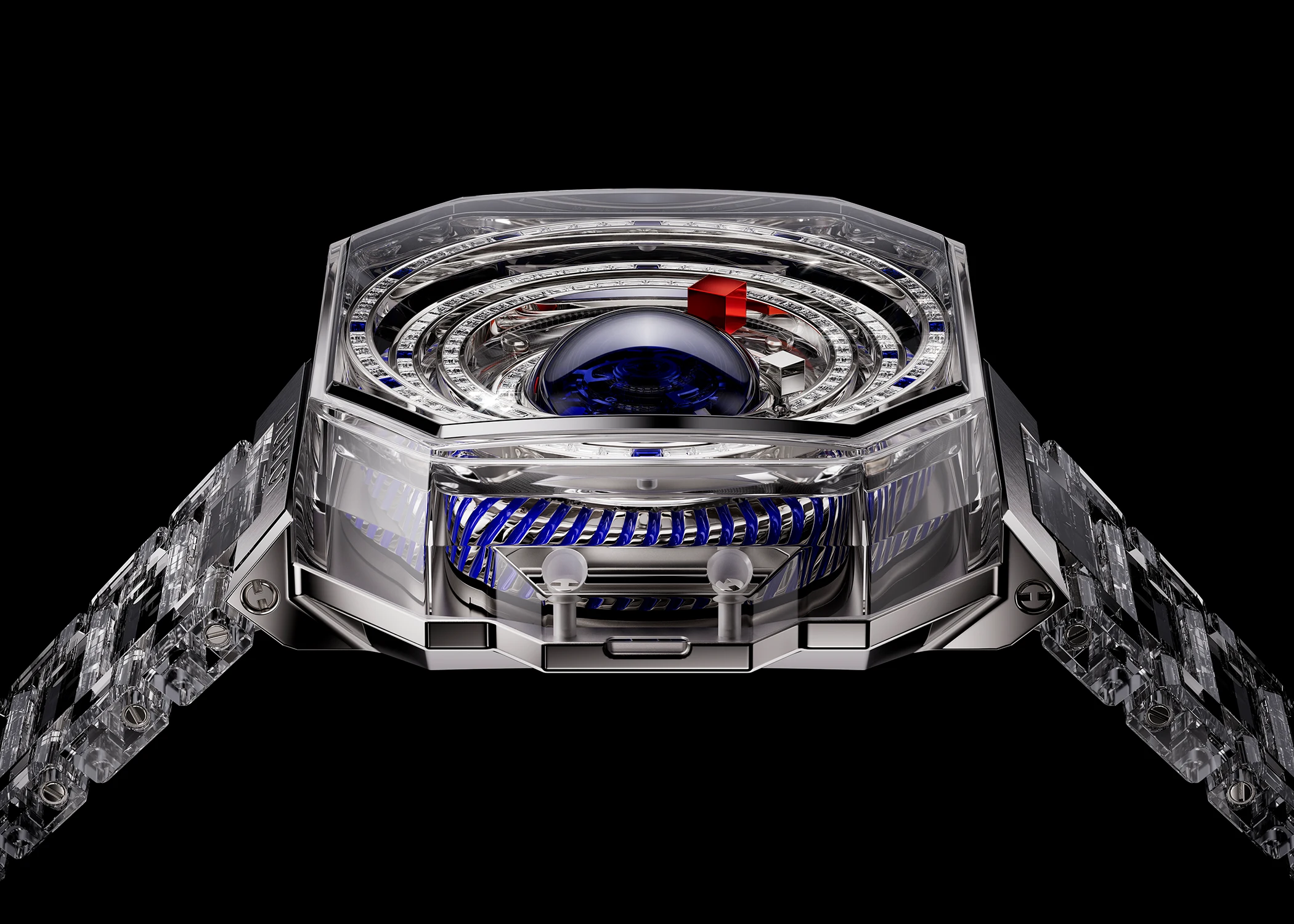
The latest addition to the Masterpiece collection, the Hublot MP-14 Origin by Jeff Koons, now follows in the footsteps of a series defined by technical innovation, unconventional design and a fusion of tradition with a vision of the future. In keeping with this concept, the MP-14 Origin features a futuristic-looking octagonal 44 mm case made from transparent sapphire, which requires around 534 hours of machining. Titanium is also used for the caseback, the screws securing the case flanks positioned at 3 and 9 o’clock – referred to by Hublot as “ears” – as well as the screws of the sapphire bracelet.
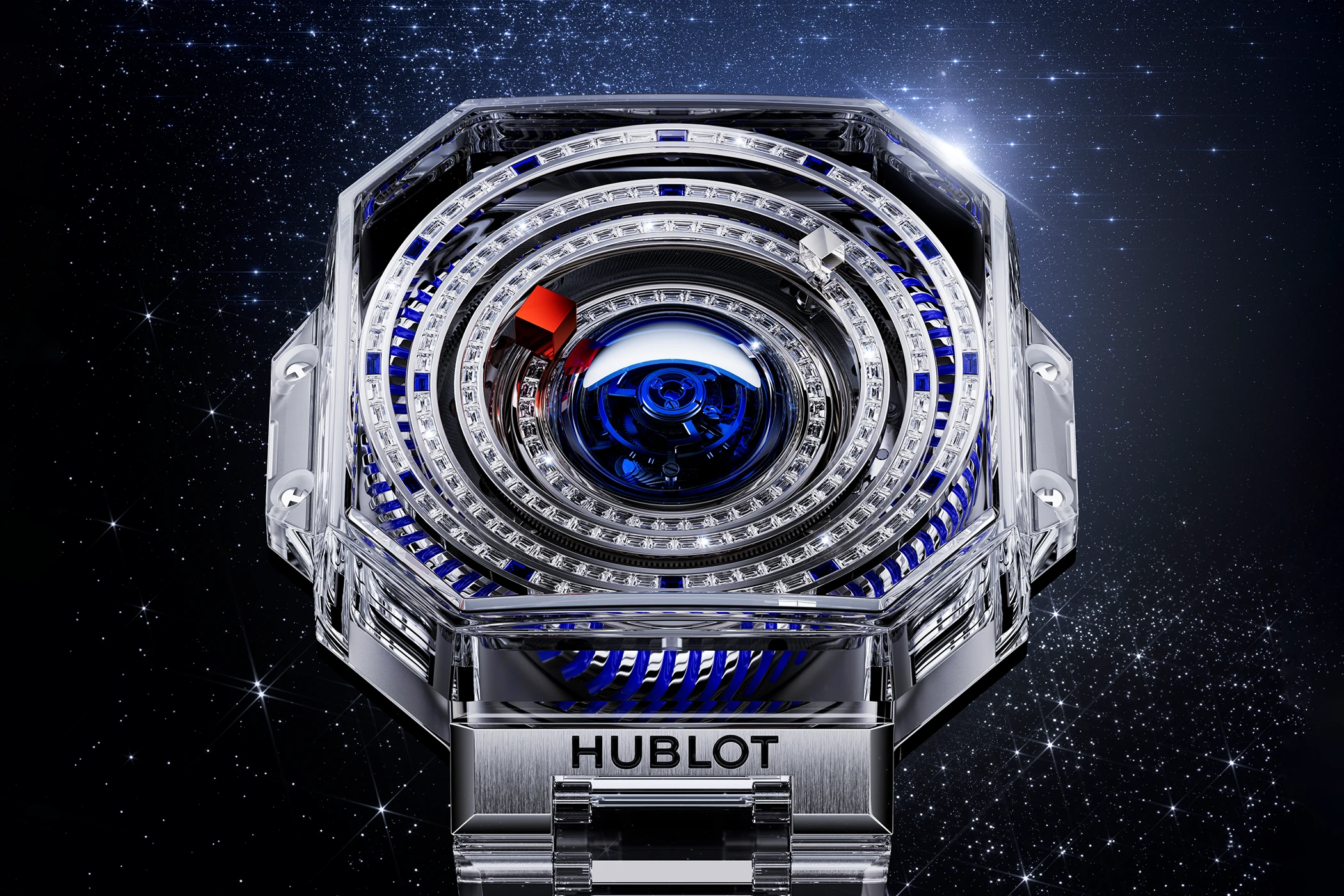
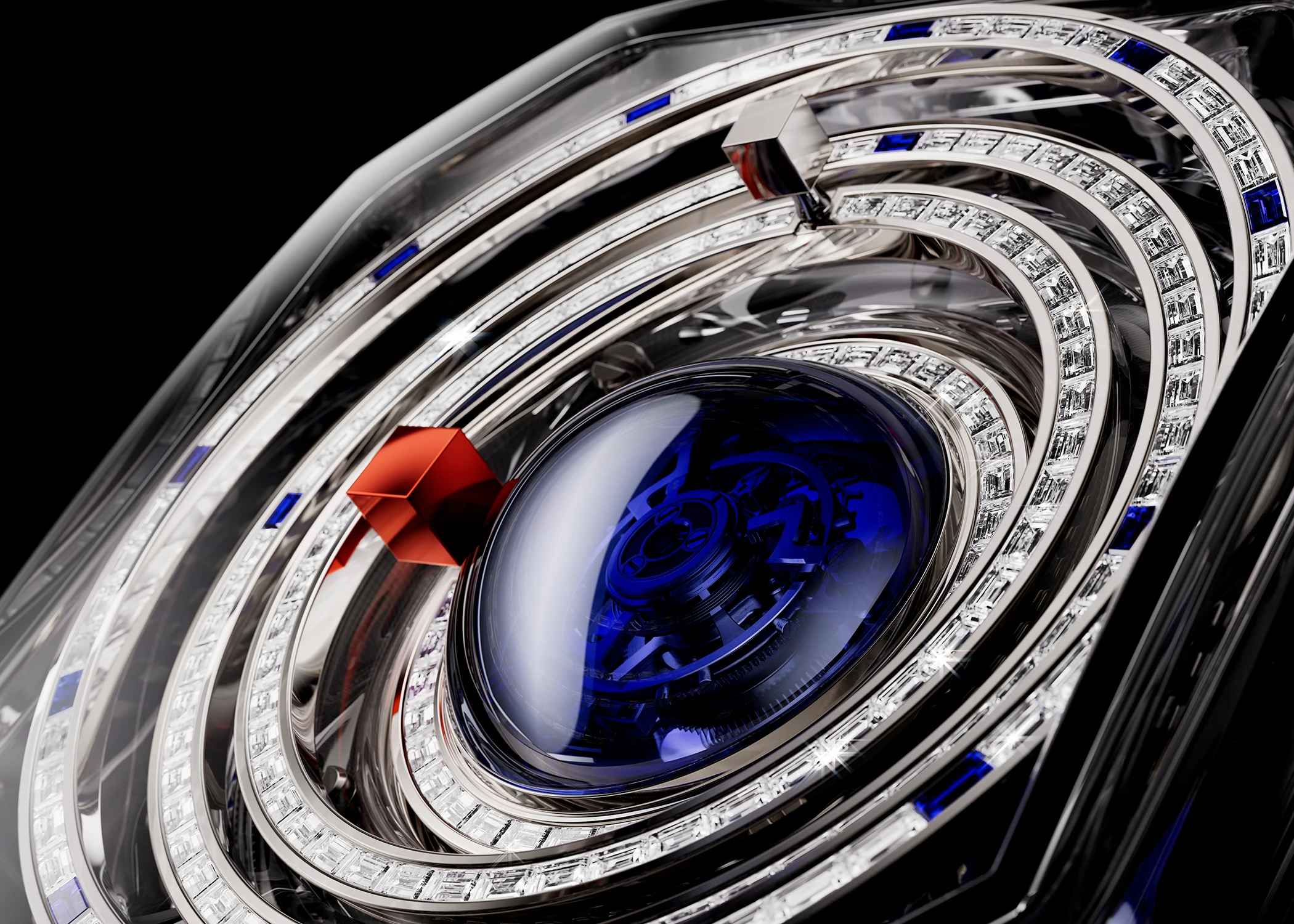
What makes the Hublot MP-14 Origin by Jeff Koons particularly distinctive, however, is what lies inside the case – namely the dial and the movement. The dial is composed of four white-gold rings set with baguette-cut diamonds and blue sapphires, which together form the time display.
Two rotating rings indicate the hours and minutes. They can be identified by two display cubes attached to them and rotating with the rings: one cube in polished stainless steel coated with translucent red lacquer indicates the hours, while a second polished stainless-steel cube displays the minutes.
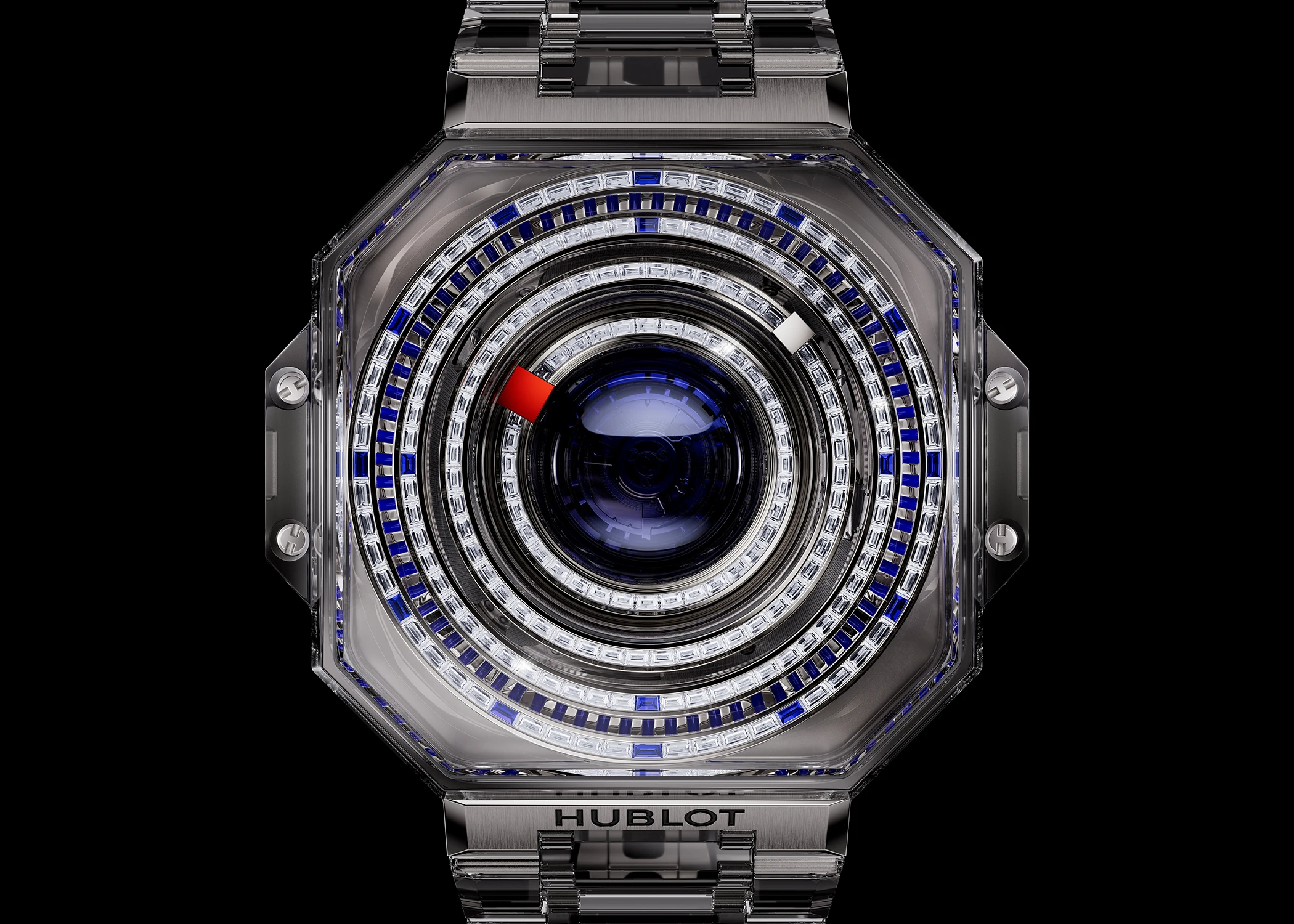
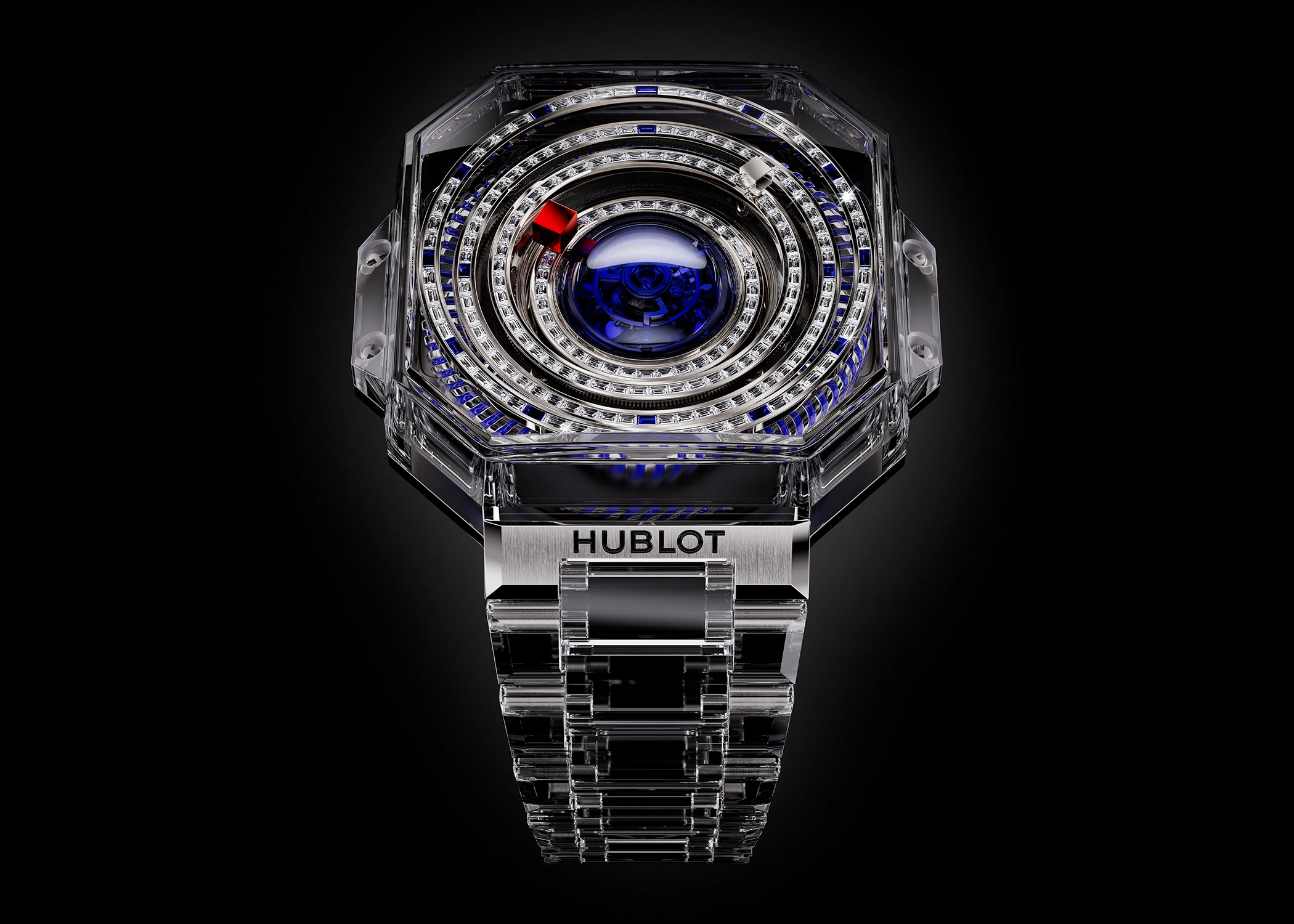
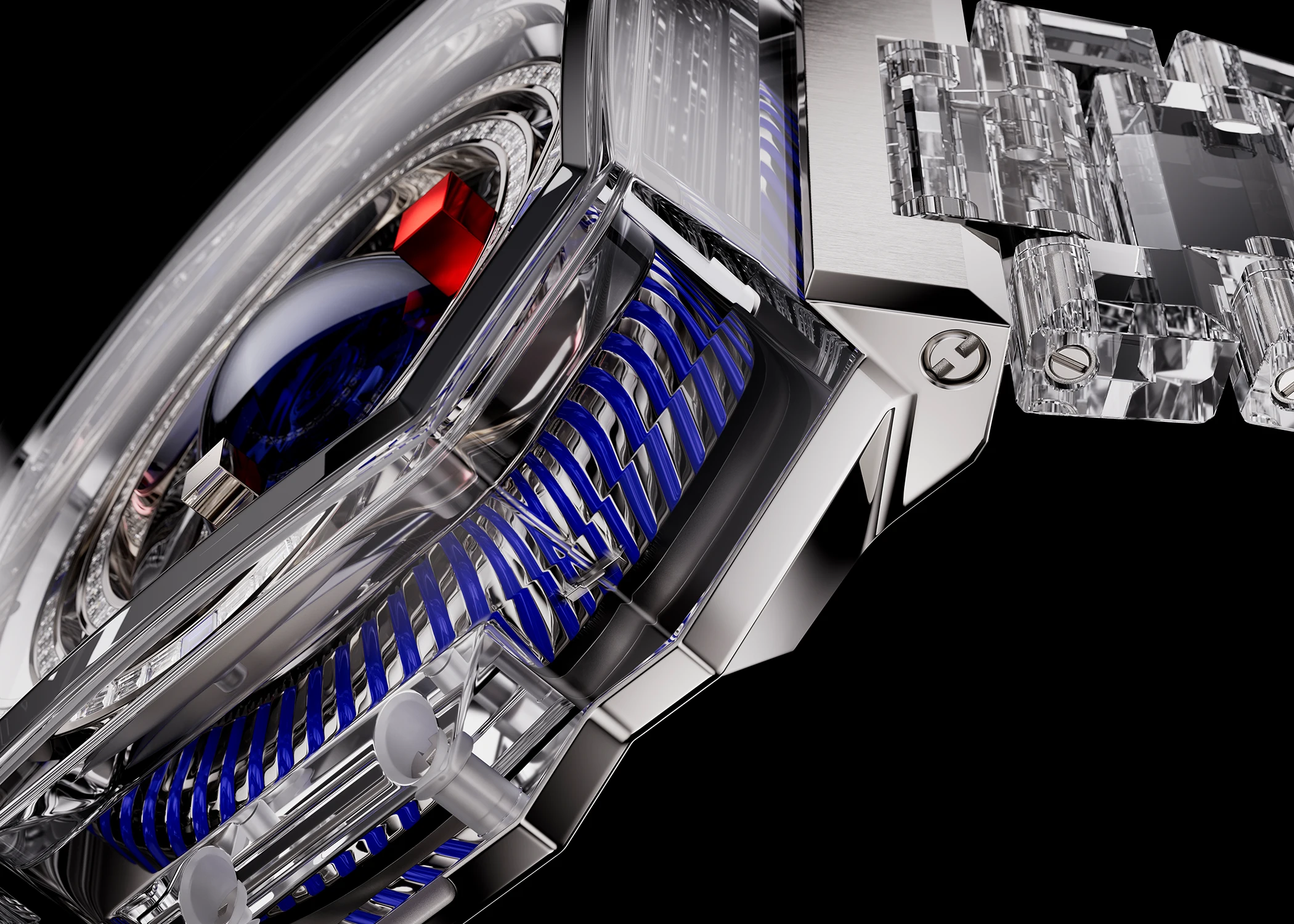
Together with the two additional outer rings, which remain fixed in place, they form the complete time display. The inner minute ring is set with 56 diamonds and four blue sapphires marking the quarter hours, while the outer hour ring is set with 48 diamonds and 12 blue sapphires indicating the hours. In total, the four rings are set with 202 stones weighing approximately 2.6 carats.
At the centre of the rings sits a transparent sapphire dome inspired by Koons’ Gazing Ball works, which has been hand-coated with translucent blue lacquer by a miniature painter. Beneath it, at the very heart of the watch, lies Hublot’s first central automatic tourbillon, which also serves as the starting point of the entire system.
This system is powered by the manufacture HUB9014 movement, which comprises 594 components, measures 39.20 mm in diameter and 14.65 mm in height, and is wound by a peripheral anthracite-coloured oscillating weight. It operates at a frequency of 3 Hz (21,600 vibrations per hour) and offers a power reserve of 60 hours.
The movement construction of the Hublot MP-14 Origin by Jeff Koons also incorporates two concealed crown systems on the caseback, allowing the watch to be wound and the time to be set without these controls being immediately recognisable as such. The winding system is located beneath the “ENERGY PULSE” engraving, while the time-setting mechanism is indicated by the inscription “COSMIC ALIGN”.
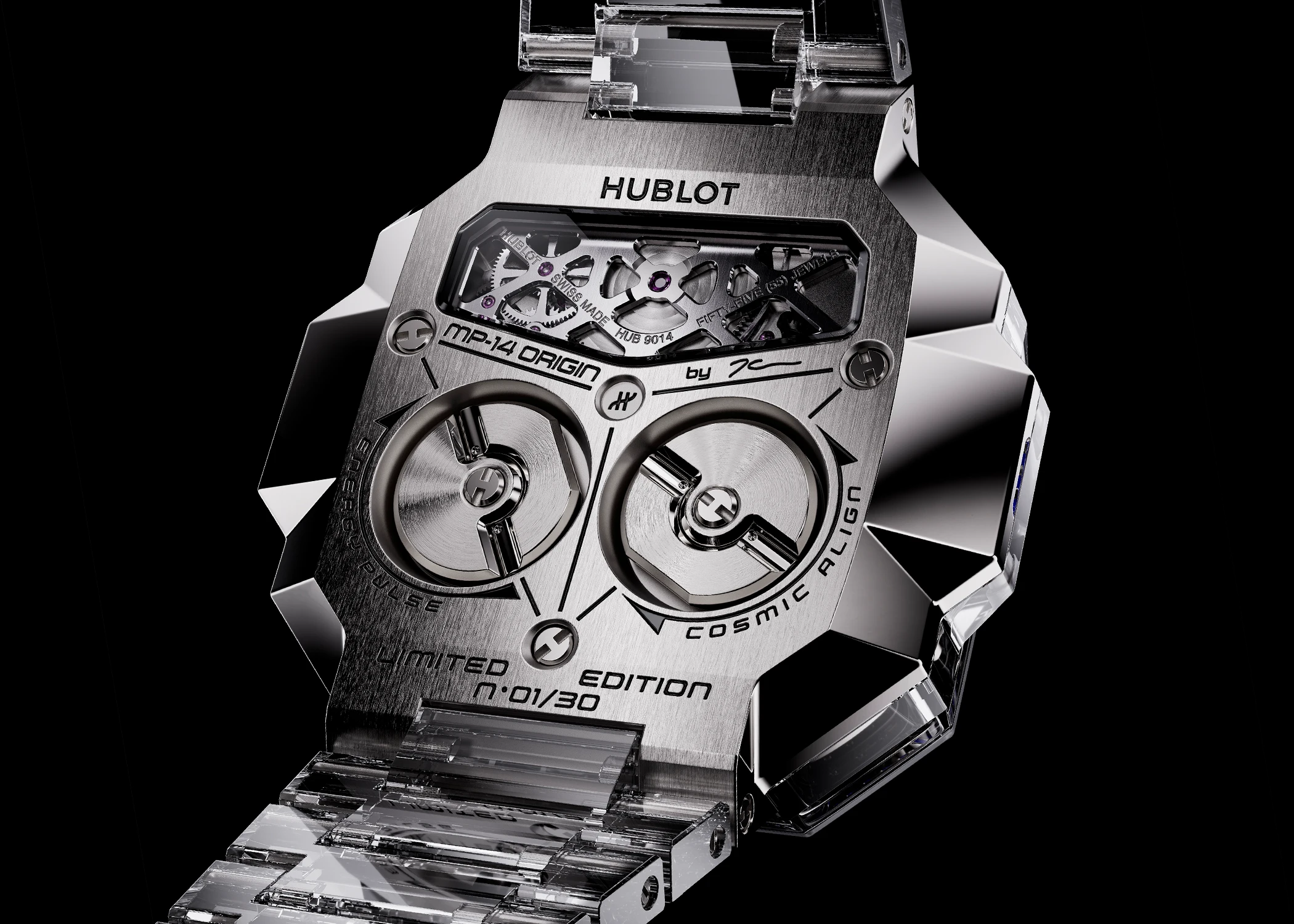
Limited to 30 pieces, the Hublot MP-14 Origin by Jeff Koons is available from selected Hublot points of sale. It is priced at EUR 479,000.

Hublot
MP-14 Origin by Jeff Koons
914.NJ.0100.JX.9941
Polished sapphire crystal with a titanium caseback
Diameter: 44 mm
Height: 20 mm
30 metres
Four rings in polished white gold form the time display:
The hours are indicated by a rotating ring set with 35 diamonds and a red cube, together with a fixed ring set with 48 diamonds and 12 blue sapphires marking the hours.
The minutes are indicated by a rotating ring set with 47 diamonds and a grey cube, together with a fixed ring set with 56 diamonds and 4 blue sapphires marking the quarter hours.
Sapphire crystal with a titanium folding clasp
HUB9014
Automatic winding with a peripheral oscillating weight
60 hours
21,600 vibrations per hour (3 Hz)
Central tourbillon with hours and minutes display
EUR 479,000